The Best Places to Travel and Photograph in October
One October morning in Tuscany, the fog was so thick I could barely find the road. I drove at walking speed toward Podere Belvedere, pulled over, and waited. Twenty minutes later, the sun broke through, and the cypress trees rose out of the white one by one. That is October for a photographer. The light gets lower and warmer, the air turns cold enough to make fog, and the summer crowds go home. If you are wondering about the best places to travel in October, start with the places where those three things come together.
Timing matters as much as destination. Visit Vermont two weeks early, and you get green hills. Visit two weeks late, and you get bare branches. October rewards photographers who plan around fall color windows, valley fog, softer sun angles, and the end-of-summer heat. It also asks you to move fast, because the best conditions in several of these places last only a week or two.
These are the destinations I return to in October, the ones where I have stood behind the camera myself and know what the month does to the light. I have listed them roughly in calendar order, from the early October peak in Vermont to the late October color along Skyline Drive.
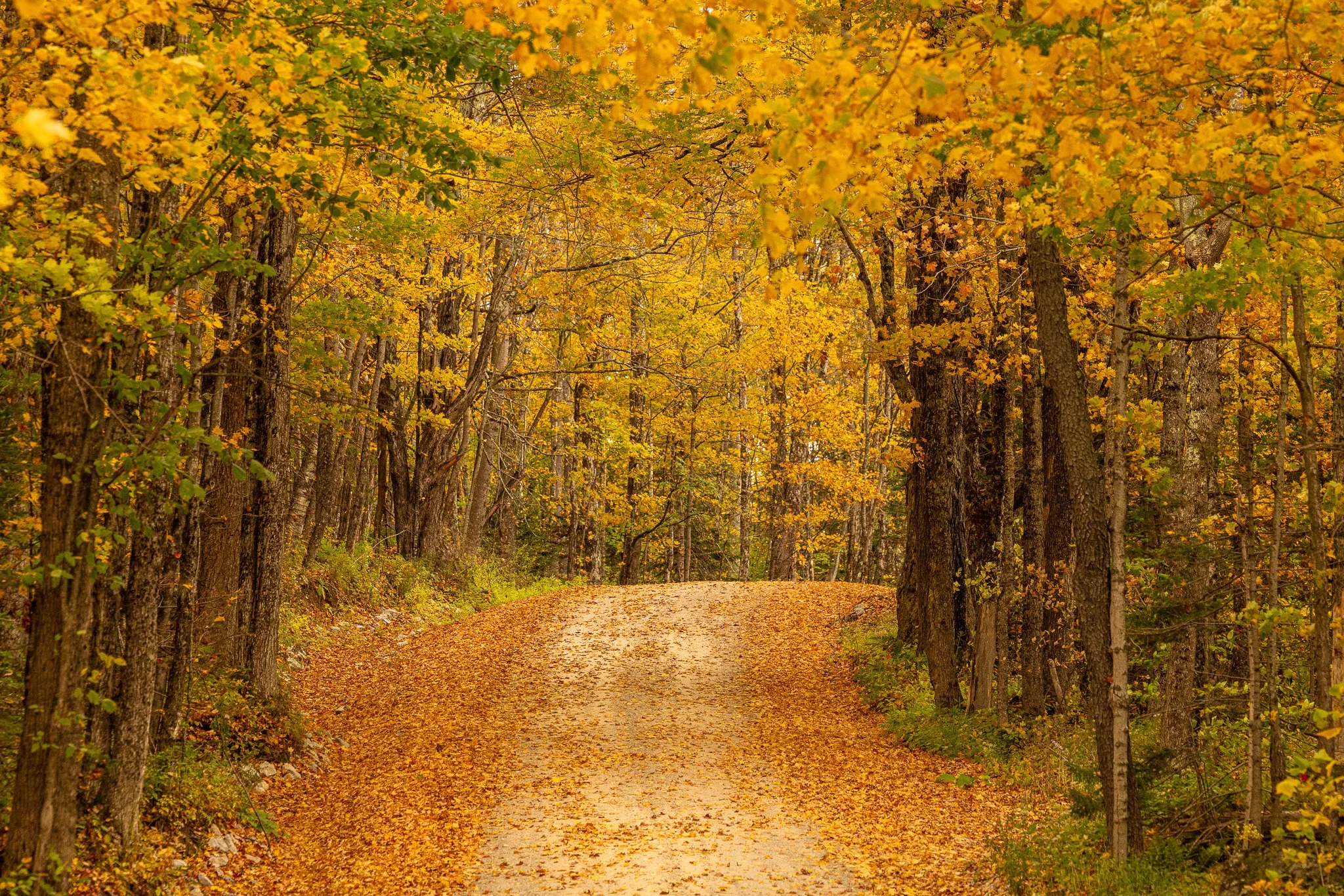
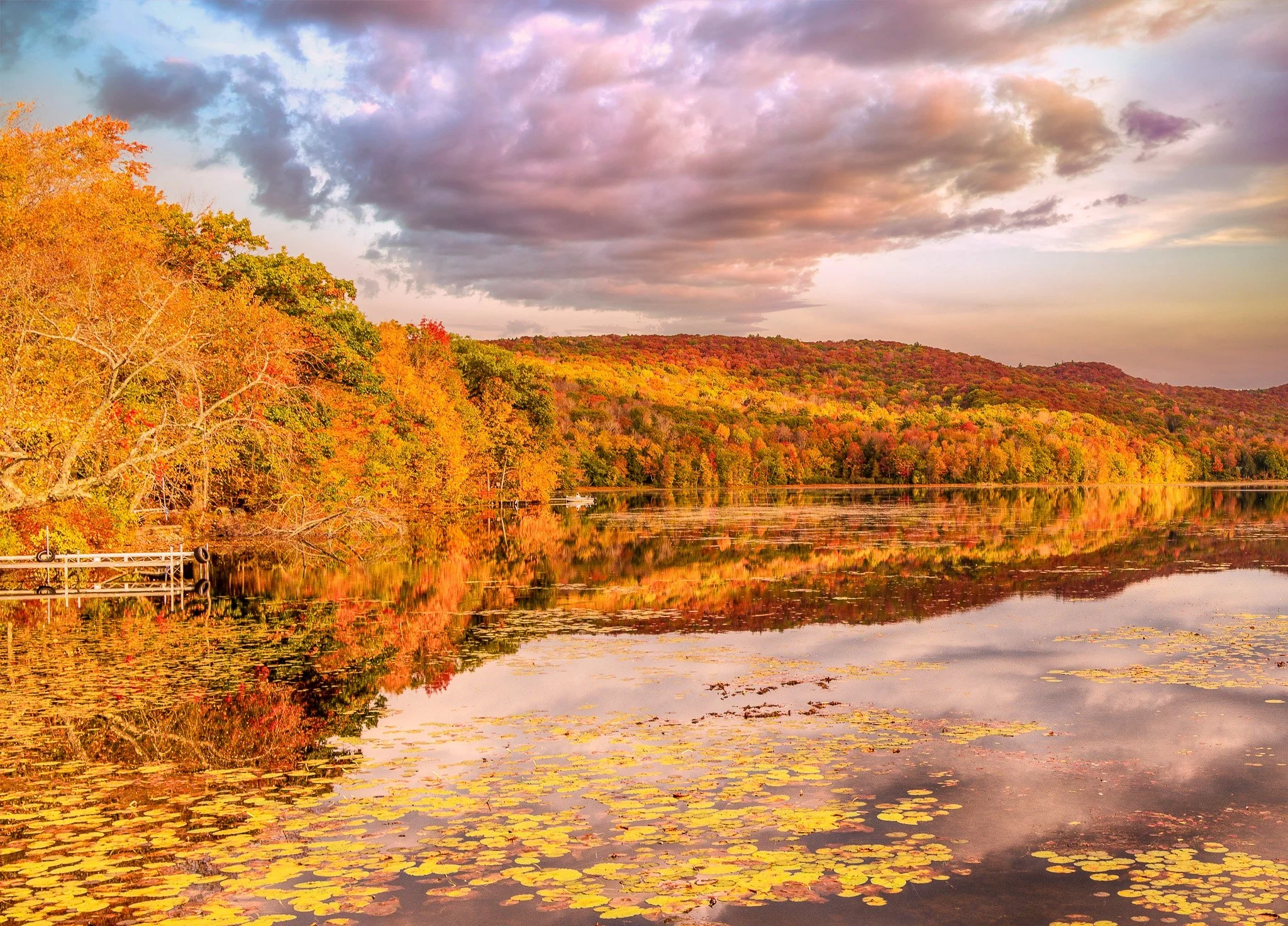
A small rural road in Northern Vermont
How I Chose These October Destinations
I chose every place on this list for what October specifically gives a photographer: peak fall color, reliable morning fog, comfortable temperatures after a hot summer, or the thinning of peak season crowds. Popularity played no part. Each destination earned its place because this month is one of the best times of year to photograph it, and I have photographed each one myself.
1. Stowe and Woodstock, Vermont
Why October
Vermont in October is the reason fall foliage photography exists as a genre. Stowe typically peaks in the first two weeks of October, when the sugar maples around Mount Mansfield turn gold, orange, and red. Woodstock sits lower and usually trails Stowe by about a week, so you can photograph peak color twice on one trip. Cool nights and warm afternoons also fill the valleys with morning fog. Come in late September, and you miss the reds. Come in late October, and the wind has already stripped most of the trees.
What to Photograph
I have photographed Stowe four to five times in the fall, always chasing that one perfect week of peak color. Smugglers' Notch is my favorite place in the area. What surprised me most was the light there: it filters through the maples clinging to the cliff walls and shifts constantly, creating pockets of color and shadow unlike anywhere else in the region. Add the white steeple of Stowe Community Church against the hillsides, Moss Glen Falls, Bingham Falls, and Emily's Covered Bridge, and you can fill a week.
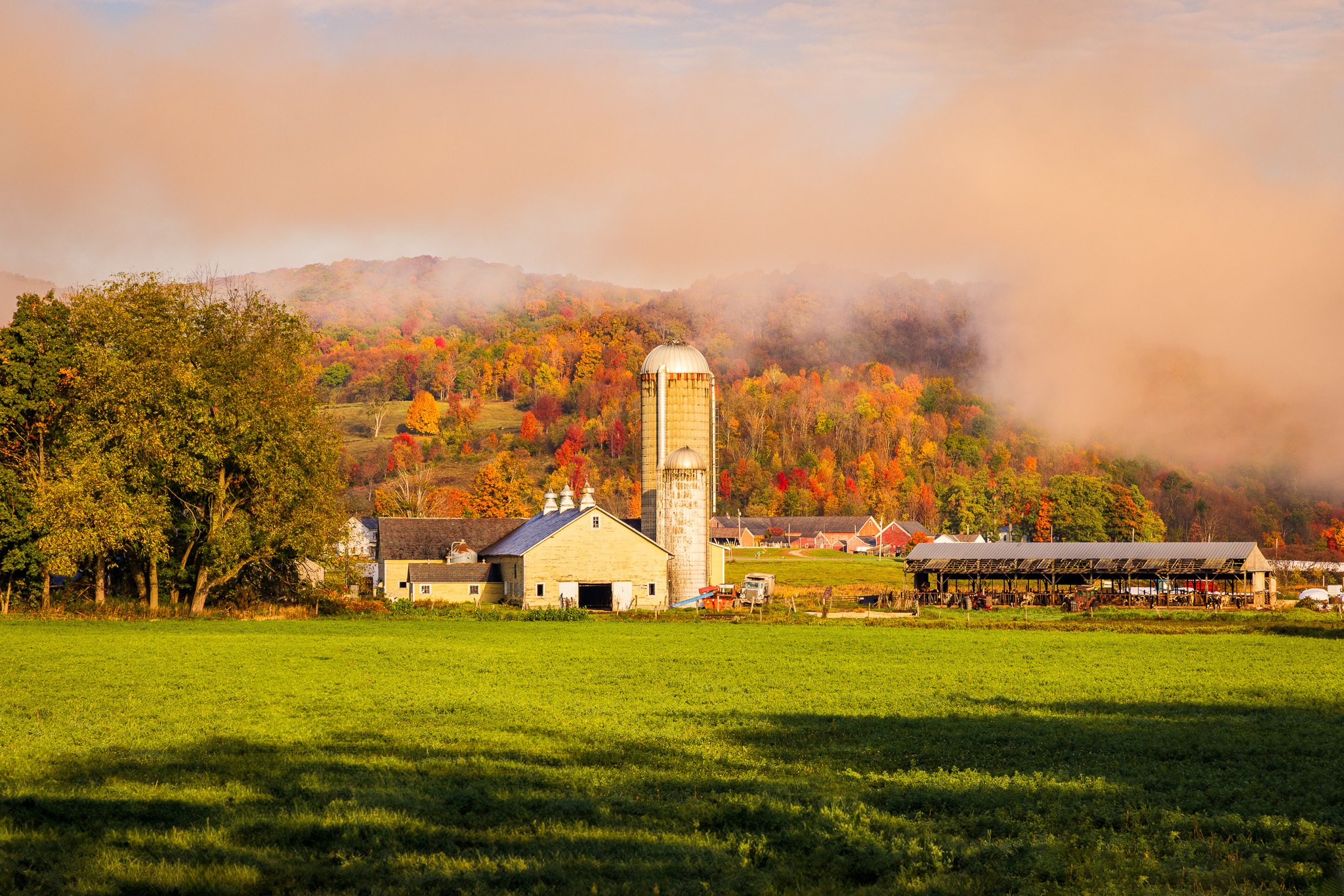
Around Woodstock, I always return to Lake Bomoseen; it’s my favorite spot, and the reflections on that lake are just insane. Sleepy Hollow Farm in Pomfret, Jenne Farm, Kent Pond, and the Middle Covered Bridge in the village round out the classics. Some of my favorite frames, though, came from roads I had never driven before.
Best Time to Shoot
Sunrise comes around 7 am in early October and later as the month goes on. Be at your spot 30 minutes before, because the fog burns off quickly once the sun clears the ridges. Mid-morning is best inside Smugglers' Notch, when the sun finally spills into the gorge. Late afternoon light works well on the Stowe church and the covered bridges. Overcast days are a gift for the red barns at Jenne Farm, where soft light makes the colors richer.
Photography Tips
Mirrorless and DSLR: I shoot Vermont with a Canon R5 Mark II, a 15-35mm, and a 70-200mm. The wide lens handles waterfalls, bridges, and the Notch. The 70-200mm compresses the Stowe steeple against the hillside and isolates barns on distant slopes. A circular polarizer is essential here; it cuts glare on wet leaves and deepens the color. Bring an ND filter for silky water at Moss Glen Falls, and a tripod for pond reflections at sunrise.
iPhone: When you photograph bright foliage, tap the screen and pull the exposure slider down slightly. It holds detail in the reds and yellows that the phone would otherwise blow out. At Kent Pond, hold the phone upside down right at the waterline so the lens sits just above the surface for a mirror reflection. At Moss Glen Falls, shoot a Live Photo and switch it to Long Exposure for smooth water.
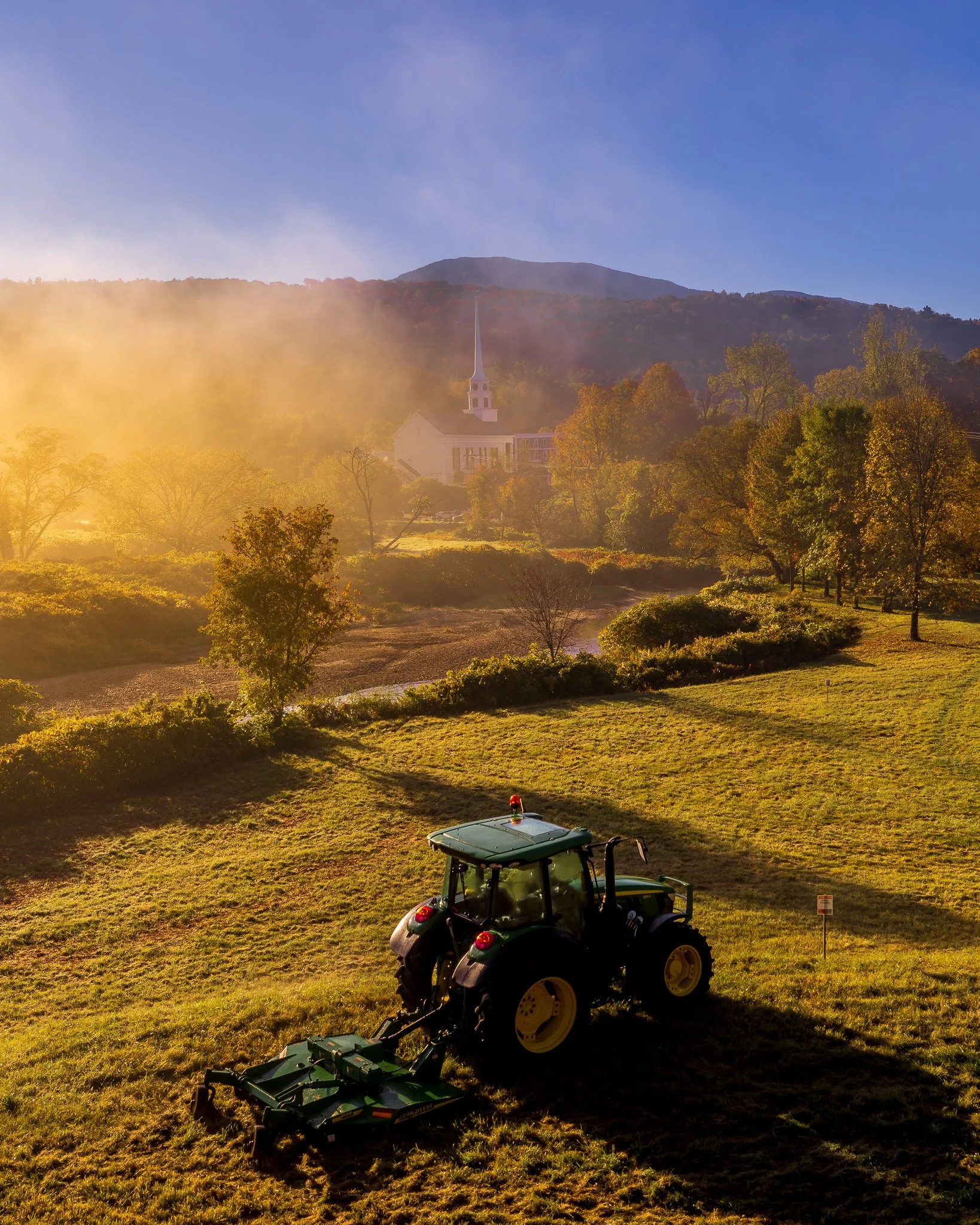
Stowe, Vermont
What to Watch Out For
Peak color lasts about a week, and one windy rainstorm can strip the trees overnight. Sleepy Hollow Farm is a working farm on private property, so shoot from the roadside and never walk onto the land. Weekend crowds at the famous spots can be heavy.
Planning Notes
Expect mornings in the 30s°F (around 1 to 4°C) and afternoons in the 50s°F (around 10 to 15°C). You need a car. Cell service is spotty, so download offline maps before you leave. In Stowe, I love The Lodge at Spruce Peak, with Topnotch Resort as another luxury option and the historic Green Mountain Inn right in the village. In Woodstock, the Woodstock Inn & Resort is my favorite, and The Shire Woodstock puts you on the river within walking distance of town. Book October lodging months ahead. For dinner in Stowe, reserve Hen of the Wood. We went back to The Roastery Coffee every single morning.
📷 Pro Photographer Tip
Plan to drive, and plan to get lost on purpose. Fall color photography in Vermont happens on old farm roads and mountain roads, not in the village centers, and an hour's drive between locations is part of the job. My favorite Woodstock frames all came from unmarked dirt roads I turned down on a whim. And at Merck Forest, do not drive all the way up for sunset. Stop at the large field on the right on the way in, where the forest drops below you and the sun sets just to the left.
I have photographed Stowe three times in the fall. My Stowe Travel and Photography Guide has the exact pull-offs in Smugglers' Notch, the covered bridges, and a four-day foliage itinerary. For the farms, lakes, and back roads further south, start with my Woodstock Travel and Photography Guide.
2. Lake Bled, Slovenia
Why October
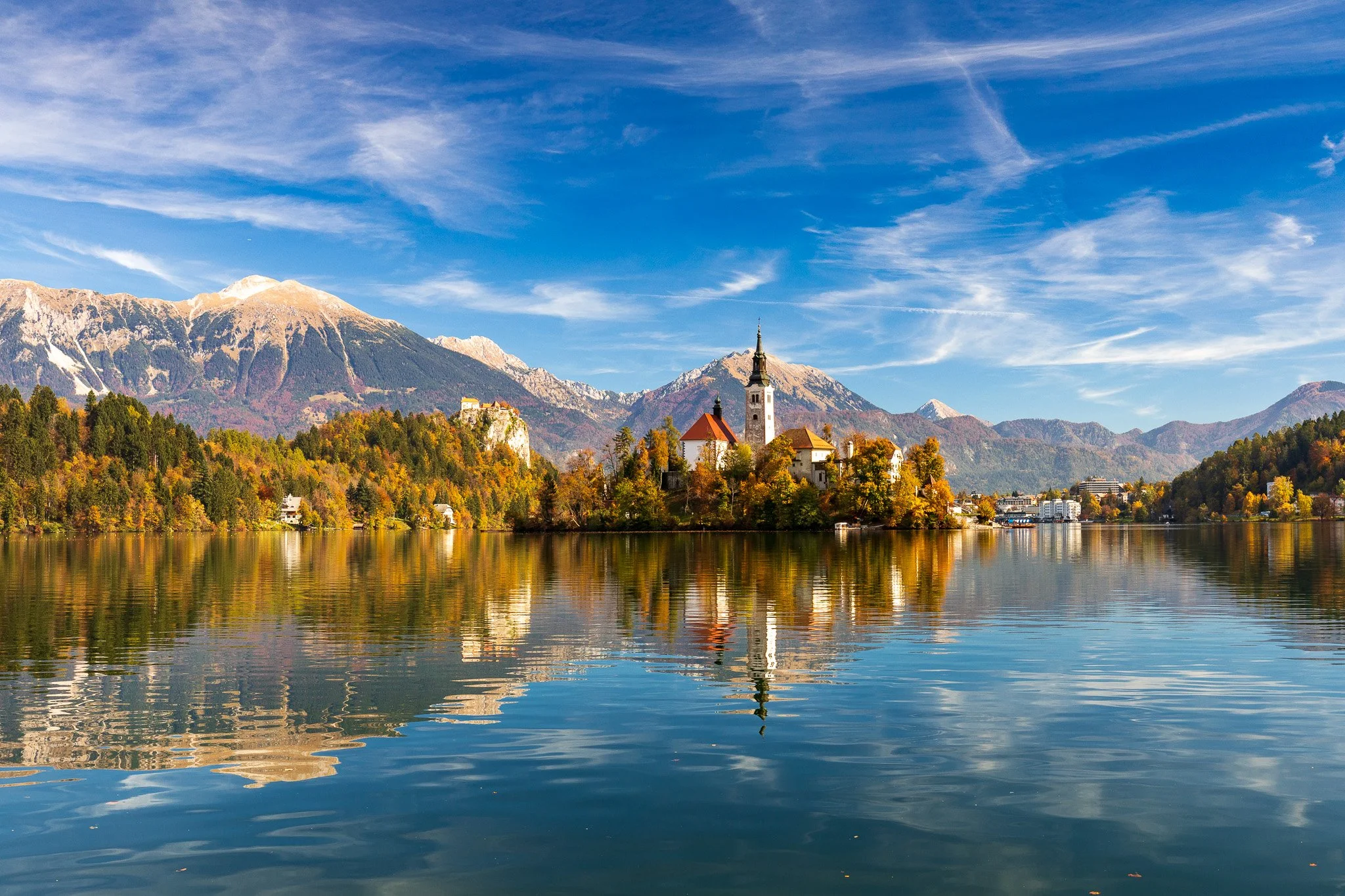
Autumn color around Lake Bled usually peaks in mid-October. The summer crowds are gone, the beech and larch forests around the lake turn orange and bronze, and the first snow often dusts the Julian Alps behind the castle. October also brings a real chance of mist sitting low on the water at dawn. In summer, you get turquoise water and crowded viewpoints. In October, you get color, fog, and room to set up your tripod.
What to Photograph
I have been to Lake Bled three times. On my first visit, in October, I came around a bend in the late afternoon and the lake opened up in front of me: the island church, the castle on its cliff, the mountains behind. I stopped walking. I stood there for several minutes before I lifted my camera.
What I love most in the fall is simply walking around the lake. The loop is about 6 kilometers (3.7 miles), and the view changes every few minutes. Autumn leaves float on the water near the shore and make a natural foreground for the island church. Climb to Ojstrica or Mala Osojnica for the classic elevated view, photograph the castle from lake level in late afternoon, and ride a traditional pletna boat across to the island.
Best Time to Shoot
Sunrise lands around 7:30 am for most of October. On the last Sunday of the month, Europe falls back an hour, and sunrise suddenly arrives around 6:45 am. The Ojstrica climb takes about 20 to 30 minutes from the trailhead, so leave in the dark with a headlamp. Morning mist rarely lingers long after sunrise. Late afternoon light warms the castle cliff from the west, and blue hour over the lake works beautifully with a tripod.
Photography Tips
Mirrorless and DSLR: A 16-35mm is essential on Ojstrica and Mala Osojnica, where you need every millimeter to fit the island, castle, and Alps in one frame. A 70-200mm from the southern shore compresses the island church and castle into one layered composition. A polarizer deepens the green of the water and cuts surface glare. A tripod is not optional for the pre-dawn viewpoints or blue hour.
iPhone: Use the ultrawide camera from Ojstrica and shoot in ProRAW if your phone offers it. At the shoreline, crouch as low as you can so the ultrawide skims across the water for the reflection. Press and hold on the bright sky to lock exposure before you compose, so the clouds keep their detail.

Lake Bled during the Fall
What to Watch Out For
October brings rain, and fog can sit on the lake for an entire morning. Build extra days into your trip. If you plan to add Vintgar Gorge, check the closing date before you go; the official autumn hours run 9 am to 3 pm until the end of the season, and there is no public parking at the gorge entrance.
Planning Notes
Expect days around 59°F (15°C) and mornings near 41°F (5°C). Stay at the lake rather than day-tripping from Ljubljana; sunrise and blue hour only work if you sleep in Bled. My favorite is the Grand Hotel Toplice, right on the water. Vila Bled, Tito's former summer residence, is the most historic choice, and Hotel Triglav Bled is a strong mid-range option. Reserve dinner at Strelec inside Bled Castle, and do not leave without a kremšnita cream cake at the Park Café, where the original recipe began. Ljubljana is about 45 minutes away by bus or car.
📷 Pro Photographer Tip
Walk the full loop on your first afternoon without a tripod and treat it as scouting. Note where leaves collect along the shoreline and where the island lines up with the castle. The next morning, go straight to those spots. The floating leaves are October's real gift at Bled, and they move with the wind, so the best foreground changes daily.
I have photographed Lake Bled four times, and it still surprises me. My Lake Bled Travel and Photography Guidecovers the viewpoints, the trail to Ojstrica, and exactly where to stand on the shore for the island and castle in one frame.

Lake Bled with Fall Colors
3. Tuscany's Val d'Orcia, Italy
Why October
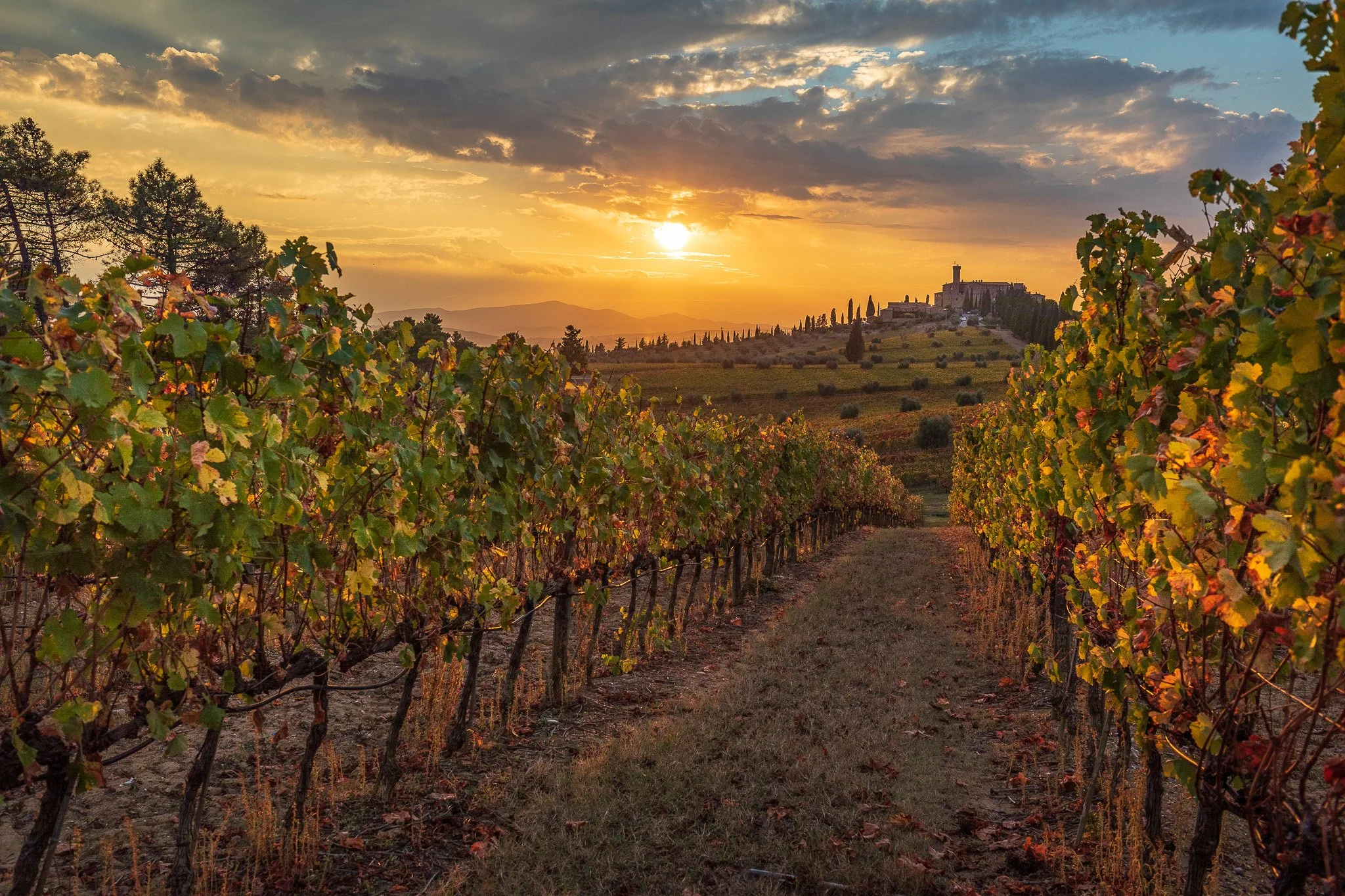
October and November bring the best chance of low fog in the Val d'Orcia all year. Cold nights and still air fill the valleys with mist, and the hilltops and cypress trees rise above it at sunrise. The summer heat is gone, and the tour buses thin out. The harvest also brings life to the wineries around Montalcino and Montepulciano, and the olive harvest usually begins in late October.

Madonna di Vitaleta Chapel
What to Photograph
I have photographed Tuscany many times, in spring, summer, and fall. For fog, autumn wins. I have been here in October fog so thick I could barely find the road. Podere Belvedere at sunrise is the classic, and it becomes extraordinary with mist in the valley below. Add the Madonna di Vitaleta chapel from the SR22, the cypress row at Poggio Covili, the winding cypress road near Monticchiello, and the clay hills of the Crete Senesi, which look their most sculptural in autumn light.
The fields look different in October. They are bare, brown, and freshly plowed, not green. Photograph that texture on purpose. Plowed earth in low side light, with a line of cypress trees and fog behind it, makes a stronger October image than any attempt to recreate the spring postcard.
Best Time to Shoot
Sunrise falls between roughly 7:15 and 7:30 am for most of October, then jumps to about 6:45 am after the clocks change on the last Sunday of the month. Arrive 30 to 40 minutes early; the sky changes quickly once color arrives. Fog usually lifts within an hour or two of sunrise. Late afternoon works well for the Vitaleta chapel up close and the cypress groves outside San Quirico.
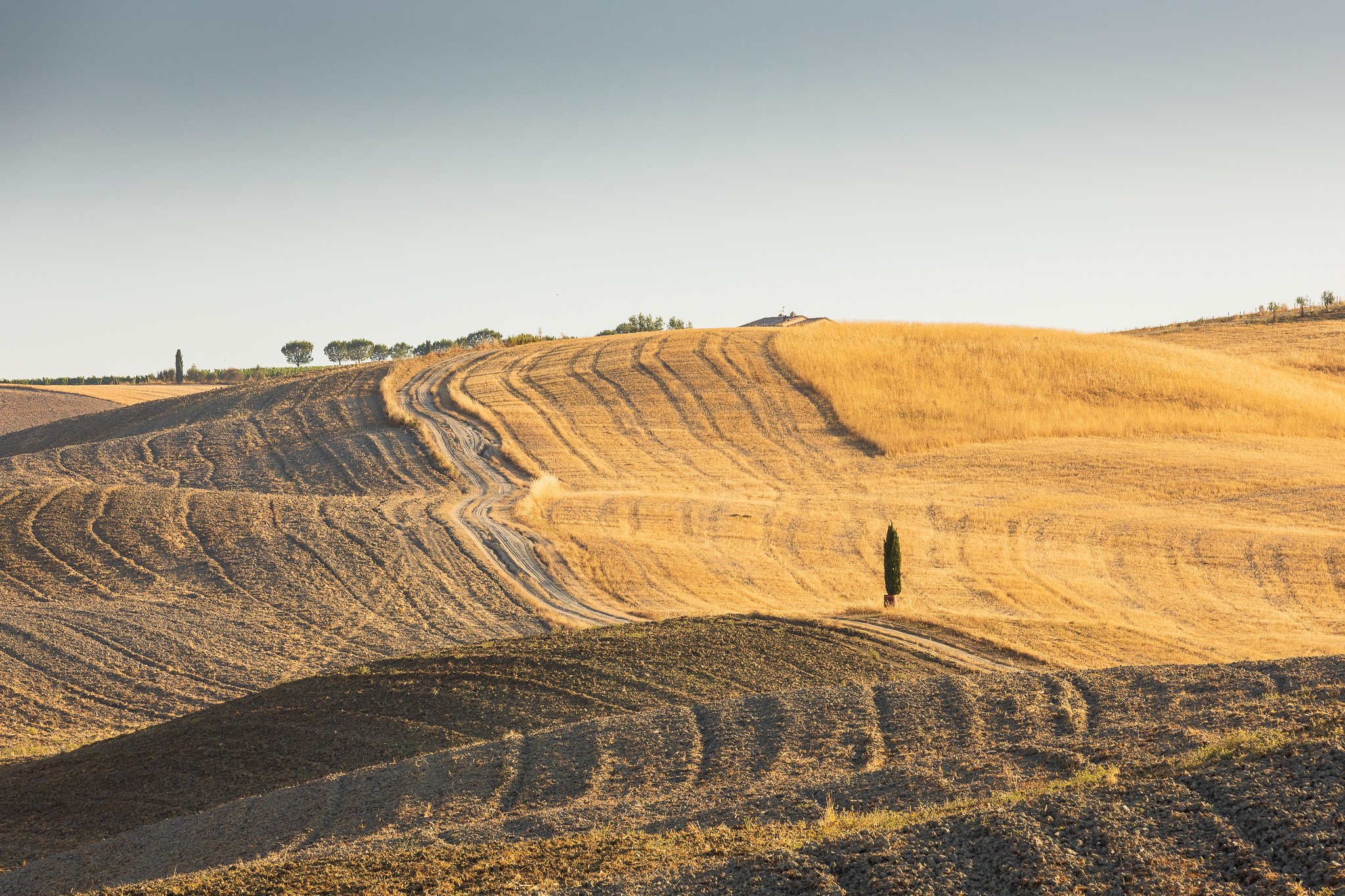
The wheat fields of Tuscany
Photography Tips
Mirrorless and DSLR: A 70-200mm is your most important lens in fog. It compresses layers of hills and isolates the chapel or a single farmhouse floating above the mist. A 16-35mm handles the hill towns and the cypress rows. Bring a sturdy tripod, extra batteries for cold mornings, and a rain cover, because autumn weather changes fast.
iPhone: At Belvedere, use the main 1x lens instead of the ultrawide. The ultrawide distorts the gentle curves of the hills into something unnatural. Switch to ProRAW during blue hour before sunrise, when the difference between the bright sky and the dark valley is at its greatest.
What to Watch Out For
Fog is likely in October, but never guaranteed, so plan several mornings. Most hilltop towns operate limited traffic zones (ZTL) in their historic centers; park outside the walls, because the fines arrive by mail weeks later.
Planning Notes
Expect afternoons around 68°F (20°C) early in the month and cooler by the end, with mornings near 48°F (9°C). You need a car; rent in Rome, Florence, or Siena. Base yourself in San Quirico d'Orcia or Pienza. We loved our stay at Castello Banfi Il Borgo near Montalcino, and Rosewood Castiglion del Bosco stays open into early November. For photographers, Wellness Center Casanova just outside San Quirico is my top pick, because it sits close to Belvedere with parking right in front. Reserve a table at Osteria La Porta in Monticchiello, which has one of the best terrace views in the valley.
📷 Pro Photographer Tip
From Belvedere, walk down the same road for about 90 seconds, follow the hedge until you find an opening, and cut through. You will find four cypress trees in a tight cluster at Croce di Prata. Most photographers never see them. Shoot them in the same pre-dawn window as Belvedere, and you leave with an image nobody else in the lineup captured.
I have lost count of how many times I have driven into this valley. My Val d'Orcia Travel and Photography Guide has GPS points, a sunrise and sunset plan, and the back roads between San Quirico and Pienza where I found some of my favorite frames.
4. Shenandoah National Park, Virginia
Why October
Fall color in Shenandoah generally peaks in the last half of October, a few weeks after New England. It arrives earlier in the park's northern section and at higher elevations, so you can follow the color along Skyline Drive as the month goes on. Cold mornings also fill the hollows with fog, and the Blue Ridge turns into layer after layer of color at sunrise. If you missed Vermont's window, Shenandoah gives you a second chance.

What to Photograph
I have been to Shenandoah more than two dozen times, because it is so close to home in Washington, DC. For years, I thought fall was the only reason to go. I was wrong; it is beautiful year round. But October is still when the park is at its best. Photograph layered ridges from the overlooks along Skyline Drive, fog in the valleys at dawn, the Big Meadows area, and the waterfalls along the central section. Outside the park, the old barns on the farm roads around Little Washington have faded beautifully over the years.
Best Time to Shoot
In late October, sunrise comes around 7:30 am and sunset around 6:30 pm. East-facing overlooks work at sunrise, when the fog sits in the valleys below. West-facing overlooks catch sunset over the Shenandoah Valley. Midday light is flat, so use it to drive, hike, or eat.

Photography Tips
Mirrorless and DSLR: A 70-200mm is the lens for Shenandoah. It stacks the receding ridges into layers and isolates bands of color on distant slopes. A wide lens handles waterfalls and foreground trees at the overlooks. Use a polarizer on the foliage, but watch the sky; at wide angles, it can darken one side unevenly.
iPhone: Switch to the 2x or 3x lens to layer the ridgelines instead of going wide; the ultrawide shrinks the mountains into a thin strip. Press and hold on the sky to lock exposure before sunrise so the color in the clouds survives.
What to Watch Out For
October weekends bring heavy traffic on Skyline Drive, and the speed limit is 35 mph, so everything takes longer than you expect. Drones are not allowed in national parks. If you plan to hike Old Rag, you need a separate day-use ticket from March through November in addition to your park entrance pass.
Planning Notes
Expect highs around 60°F (16°C) on the ridge and mornings in the 40s°F (about 4 to 9°C), colder than the valley. Shenandoah is about 90 minutes from Washington, DC. We have stayed at the Inn at Little Washington, a bucket-list hotel with a two-Michelin-star restaurant. We have also stayed at the White Moose Inn a few times and loved it; the service is fantastic, the people who run it are genuinely warm, and the food options are great. Book October weekends well ahead.
📷 Pro Photographer Tip
The biggest mistake people make with Shenandoah is treating it like a quick day trip. Stay overnight so you are on Skyline Drive before sunrise, when the fog is in the hollows, and the overlooks are empty. I usually enter at Thornton Gap and drive south toward Big Meadows, stopping wherever the light is working.
I have photographed Shenandoah more than two dozen times, in every season. My Shenandoah National Park Travel and Photography Guide covers where to stay, where to eat, and how to plan a photography weekend just 90 minutes from DC.

5. Marrakech and the Atlas Mountains, Morocco
Why October
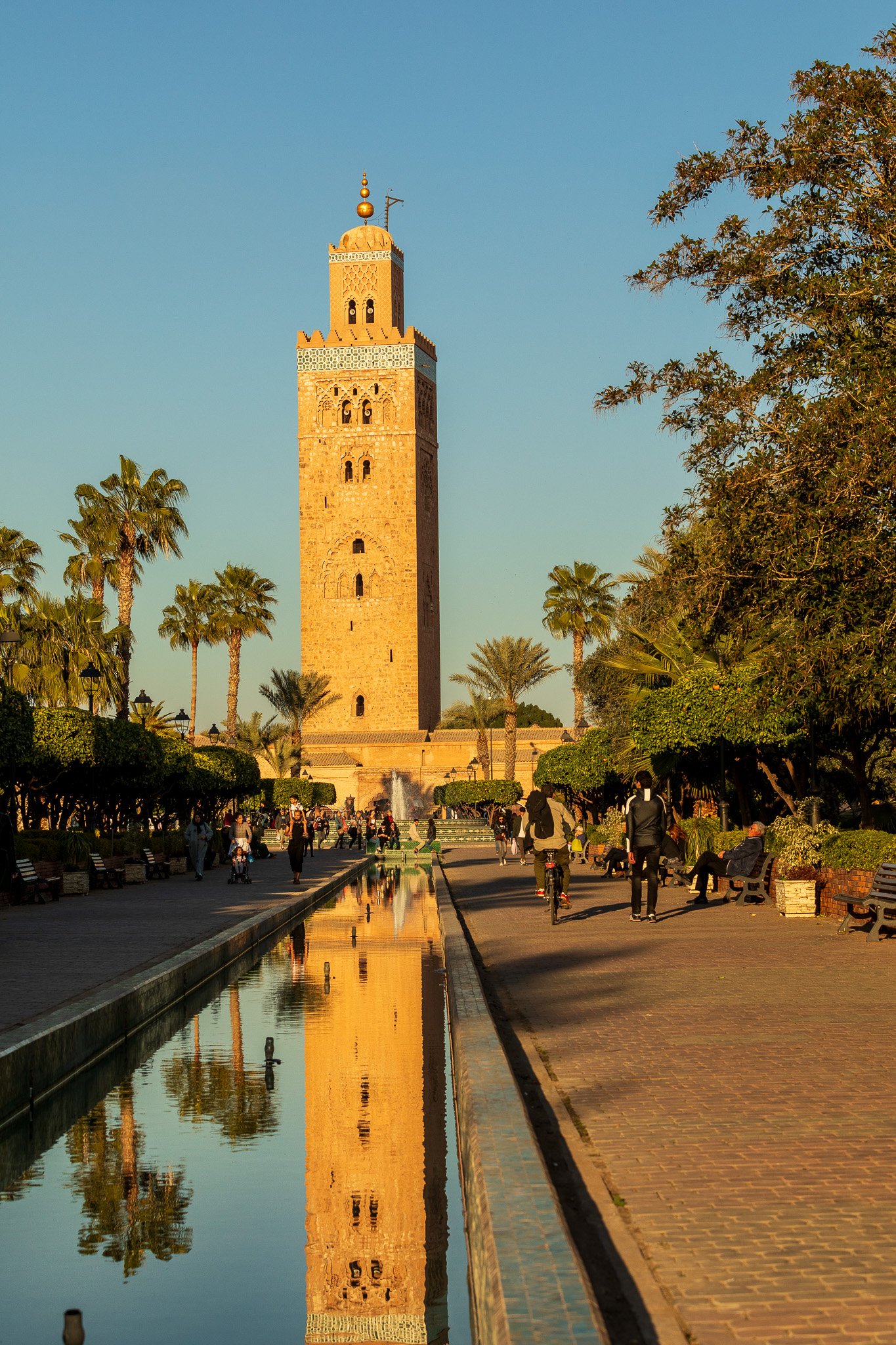
October is when Marrakech becomes comfortable again. The summer heat breaks, afternoon highs ease from the low 80s°F toward the 70s°F, and the lower sun angle stretches warm light deeper into the medina. In the High Atlas, about an hour away, the temperature is right for walking and village visits. For photographers tired of foliage, Marrakech gives you something completely different: color, texture, and people.

The Souks of Marrakech
What to Photograph
I have photographed Morocco in the fall and in late winter. In Marrakech, I love the medina in the afternoon. The light comes through the covered souks and turns golden, and you watch people walking through the market past the antiques and the crafts for sale. It is some of the most beautiful light I know in any city, and it is worth planning your day around. Add the rooftops at sunset and the evening scene in Jemaa el-Fnaa.
In the Atlas Mountains, the story changes to scale and quiet. My mountain trip was in late winter, when snow covered the peaks, so October will look different: warmer earth tones and dry valleys. What does not change is the Saturday souk in Asni, where Amazigh families come down from the surrounding villages. When a vendor sells a tagine, they place a tomato on top to mark it as sold. It is a small detail, and a perfect photograph.
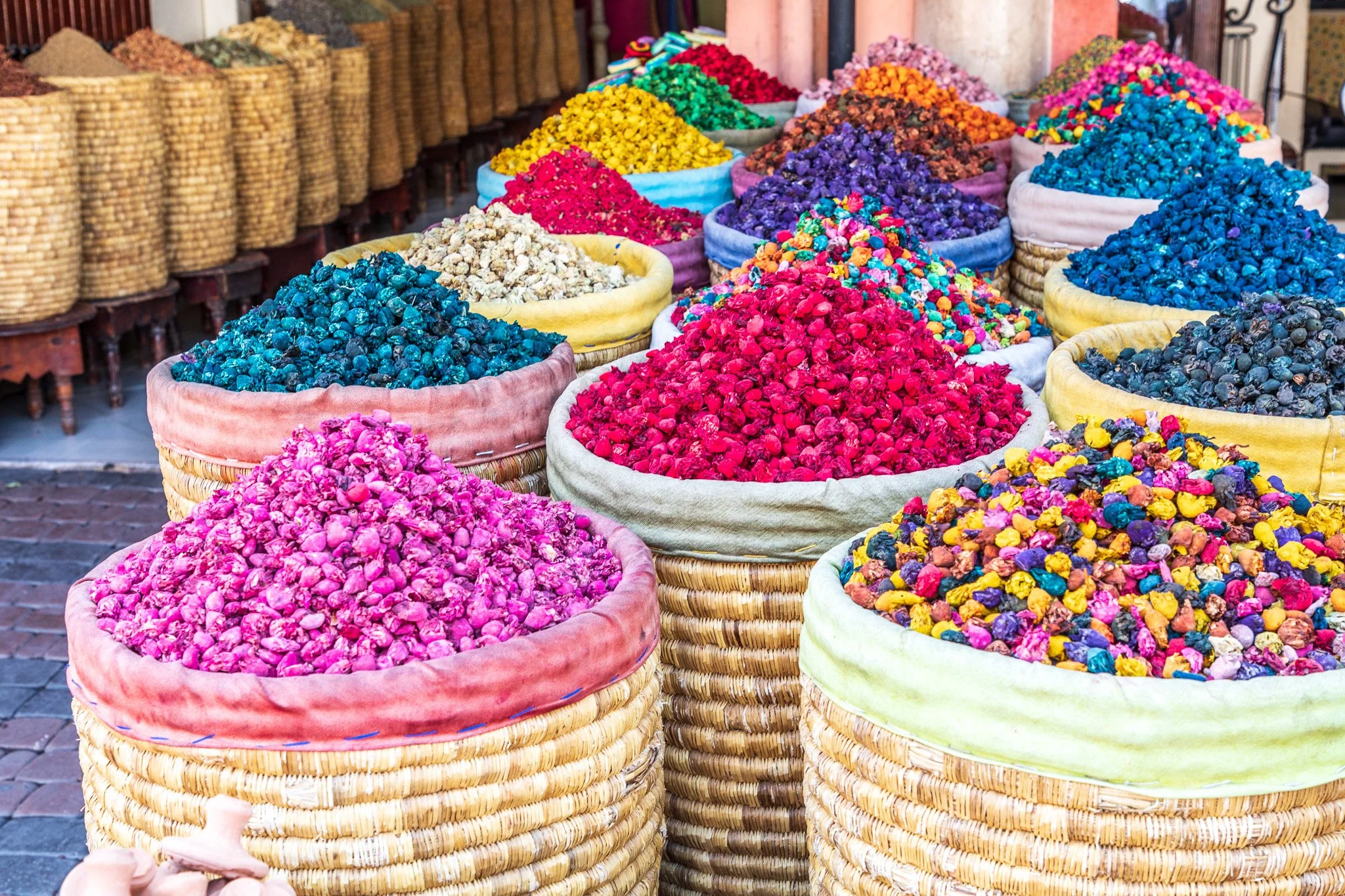
The Spice Market in the Souks of Marrakech
Best Time to Shoot
In mid-October, sunrise comes around 7:35 am and sunset around 7 pm. Photograph the souks in the afternoon, when light cuts through the covered lanes in beams. Rooftops work best in the last hour before sunset. In the Atlas, shoot the valleys in the first and last two hours of daylight; midday mountain light turns flat and harsh.
Photography Tips
Mirrorless and DSLR: A 24-70mm or a 35mm prime keeps you small and quick in the souks. Expose for the highlights inside the beams of light and let the shadows fall off; the drama lives in that contrast. In the Atlas, a 70-200mm compresses terraced hillsides and pulls distant villages into the frame. Leave the drone at home.
iPhone: Use the 2x or 3x lens in the souks so you can work from a natural, conversational distance instead of pushing a phone into someone's face. When you shoot into a beam of light, press and hold on the brightest area to lock exposure, then pull the slider down so the beam keeps its shape.
What to Watch Out For
October is now one of Marrakech's busiest months, so book riads early. Always ask before photographing people; many will say no, some will ask for payment, and performers in Jemaa el-Fnaa expect a tip. Morocco prohibits importing or using drones without prior authorization, and customs will confiscate undeclared drones.
Planning Notes
Expect highs around 82°F (28°C) early in the month, cooling through October, with evenings around 60°F (16°C). The Atlas runs noticeably cooler, so pack a layer. In Marrakech, we stayed at La Mamounia, the icon of the city, and I can vouch for it without hesitation; the gardens and pool are made for golden hour. Royal Mansour, a collection of private riads built by Moroccan artisans, is one of the most extraordinary hotels in the world. If you want to sleep inside the medina, El Fenn is colorful, full of art, and puts you in the heart of the action. For a more traditional riad, Riad Kniza has warm hospitality and a remarkable antique collection, and Riad Kheirredine has some of the best rooftop views in the medina for an early morning shoot with mint tea in hand. In the Atlas, we stayed at Kasbah Tamadot above the Asni Valley, and it was one of the highlights of our trip. Check whether it has reopened before you plan around it, because it closed for renovation through 2026. Kasbah du Toubkal above Imlil offers a quieter, more remote base. Hotels arrange private transfers from Marrakech, and the drive takes about an hour.
📷 Pro Photographer Tip
In Asni, ask your hotel to arrange a local guide for the Saturday souk. Our guide explained what we were seeing and introduced us to vendors, and that access changed the photography entirely. Without an introduction, you are an observer. With one, you become part of the scene, and people are far more comfortable in front of your camera.
I have photographed Morocco in two different seasons. Start with my Marrakech Travel and Photography Guide for the medina and the souks, then continue with my Atlas Mountains Travel and Photography Guide for the valleys, the Asni souk, and where to stay above the valley.
Continue Planning Your Next Photography Adventure
If this month's destinations have you planning, these guides make natural next chapters.
Acadia National Park, Maine: About four hours from Stowe, Acadia pairs perfectly with a Vermont foliage trip. The guide shows you where to photograph Cadillac Mountain at sunrise and the granite coastline in fall light.
Ljubljana, Slovenia: Just 45 minutes from Lake Bled, Slovenia's capital adds architecture and river light to a lake-and-mountain trip. The guide covers the Triple Bridge at blue hour and the best views of the castle.
Siena, Italy: Less than an hour from San Quirico d'Orcia, Siena gives you a city day between fog-chasing mornings. You will learn when to photograph the Piazza del Campo and the Duomo without crowds.
Hallstatt, Austria: If Lake Bled's autumn mood speaks to you, Hallstatt offers another alpine lake village with a completely different character. The guide shows you where to stand for the classic view and how to avoid the day-tripper rush.
Photography Planning Tips for October
Camera gear: October rewards two lenses above all. A 70-200mm is the most useful lens on this list; it compresses fog layers in Tuscany, ridges in Shenandoah, the island at Bled, and steeples in Vermont. Pair it with a 15-35mm or 16-35mm for waterfalls, viewpoints, and hill towns.
Filters: A circular polarizer is essential for foliage, wet leaves, and lakes at every destination except the souks. Bring an ND filter if you plan to photograph waterfalls in Vermont or Shenandoah.
Drones: Rules vary widely on this list. Drones are banned in US national parks, including Shenandoah. Morocco prohibits drones without prior authorization. Vermont, Slovenia, and Italy allow recreational flights under local rules, but check current regulations before every trip.
Clothing and weather: Pack layers. You may start a Vermont morning near freezing and end the month in Marrakech at 80°F (27°C). Bring a warm hat and gloves for pre-dawn fog shoots, waterproof shoes for wet grass and trails, and a rain cover for your camera.
Sunrise and sunset planning: Europe ends daylight saving time on the last Sunday of October, and the United States follows on the first Sunday of November. Sunrise suddenly arrives an hour earlier by the clock, which makes fog mornings easier to catch. Check exact times in PhotoPills for each location before you go.
Packing: Bring extra batteries, because cold mornings drain them fast. Pack a headlamp for pre-dawn hikes at Bled and a microfiber cloth for dew and fog on your lens.
Frequently Asked Questions About Traveling in October
What are the best places to travel in October for photography? Vermont, Lake Bled, Tuscany's Val d'Orcia, Shenandoah National Park, and Marrakech are among the best. Each offers something October does especially well: peak fall color, morning fog, or comfortable temperatures after summer heat. Together, they cover foliage, landscape, and street photography.
When is peak fall foliage in Vermont? Stowe usually peaks in the first two weeks of October. Woodstock and lower elevations typically peak about a week later. Check a foliage tracker as your trip approaches, because the exact timing shifts every year.
Is October a good time to photograph Tuscany? Yes. October and November bring the best chance of valley fog in the Val d'Orcia, and the crowds are smaller than in spring. Expect brown, plowed fields rather than green hills, and treat that texture as part of the image.
When is peak fall color in Shenandoah National Park? Color generally peaks in the last half of October. It arrives earlier in the northern section and at higher elevations. That makes Shenandoah a strong option if you miss New England's peak.
Is October a good month to visit Marrakech? Yes. The summer heat breaks, and afternoons settle into the high 70s to low 80s°F (about 25 to 28°C). It is now one of the city's busiest months, so book riads early.
What lens is best for fall foliage photography? A 70-200mm telephoto is the most versatile lens for foliage. It compresses layers of color and isolates barns, steeples, and trees from busy hillsides. Pair it with a wide-angle lens for waterfalls and close foregrounds.
Do I need a polarizing filter for autumn photography? A polarizer makes a bigger difference in fall than in any other season. It removes glare from wet leaves and water and deepens color. Rotate it slowly while you look through the viewfinder to find the strongest effect.
What time of day is best for photographing fog? Fog is usually strongest from about 30 minutes before sunrise to an hour after. It forms best after clear, cold, still nights. Be in position early, because it can lift within minutes once the sun hits the valley.
Can I fly a drone at these October destinations? Not everywhere. Drones are banned in US national parks, including Shenandoah, and Morocco prohibits them without prior authorization. Vermont, Slovenia, and Italy allow recreational flights under local rules, so check current regulations before you pack yours.
Is October crowded at these destinations? It depends on the place. Vermont and Shenandoah draw big weekend crowds during peak color, and Marrakech is busy all month. Lake Bled and the Val d'Orcia are noticeably quieter than in summer, especially at sunrise.
Want to improve your photography while exploring some incredible destinations? Join me on one of my photography workshops! You can find all the details, including upcoming destinations and dates, through the links below.
Let's Stay Connected!

Discovering the World Through My Lens
Some photographers chase destinations. Others chase light. This book is about both.
Discovering the World Through My Lens is a visual journey across five continents and dozens of countries, shot over a lifetime of travel by Washington DC-based photographer and author Vito L. Tanzi. From the red dunes of Namibia to the canals of Venice, the Dolomites to the deserts of the UAE, the streets of Lisbon to the rainforests of Costa Rica, each image was made by someone who was actually there, on foot, early in the morning, waiting for the light.
This is not a catalog of famous landmarks. It is a record of what happens when a photographer slows down, pays attention, and stays long enough for the extraordinary to appear.
50 photographs. 30 destinations. Five continents. Every image presented full page with nothing between you and the photograph.
Paris. Iceland. Tanzania. Singapore. The Lofoten Islands. Tuscany. Antelope Canyon. Monument Valley. And much more.
If you have ever wanted to see the world differently, this is where to start.

🎓 Adobe Lightroom One-to-One Training
Master Post-Processing. Elevate Your Photography.
Post-processing is the final — and arguably most transformative — step in your photography workflow. Adobe Lightroom is an essential tool for today’s digital photographers, combining powerful editing tools with an intuitive system for organizing and showcasing your images professionally.
Whether you're just getting started or looking to refine your editing skills, I offer customized one-to-one Lightroom training designed to help you create images you’ll be proud to share.
---
💻 Why One-to-One Online Lightroom Training?
Over the years, I’ve found that personalized training is the most effective way to learn Lightroom. Unlike group sessions, a one-to-one format allows us to move at your pace, focus on your specific goals, and eliminate the frustration of mismatched experience levels.
Plus, with online sessions via Zoom, you can learn from the comfort of your home — no travel or accommodation needed. It's the most convenient, cost-effective, and time-efficient way to upgrade your editing game.
---
🧠 Tailored Topics to Match Your Goals
Our training is completely customizable, but here’s an outline of the modules we can cover — either in full or à la carte.
---
🔧 Lightroom Setup – Part 1: Getting Started
Set up Lightroom properly for long-term success. We’ll tackle the fundamentals to create an efficient, organized workflow:
- What Lightroom is (and isn’t)
- How the interface and modules work
- Setting preferences for your needs
- Understanding the Catalog and folder system
- Importing images efficiently
- Adding keywords during import
---
🗂 Lightroom Setup – Part 2: Organize Like a Pro
Build a storage system that grows with you:
- Folder structure tips and best practices
- Moving and renaming files within Lightroom
- Reviewing, rating, and filtering images
- Creating Smart Collections and Collection Sets
- Keywording strategies and metadata organization
---
🎨 Lightroom Editing – Part 1: Core Editing Skills
Master the Develop module and create consistent, polished images:
- Global adjustments in the Basic panel
- White balance, contrast, vibrance, and saturation
- Cropping and converting to black & white
- HSL panel tuning
- Sharpening and noise reduction
- Creating and saving presets
- Exporting for print, web, or social media
---
✨ Lightroom Editing – Part 2: Advanced Techniques
Take your editing to the next level with creative, selective tools:
- Radial and Gradient filters
- The Adjustment Brush
- Advanced masking and luminosity adjustments
- Enhancing portraits (skin, eyes, teeth)
- Spot removal and basic cloning
- Merging for HDR and panoramas
---
💼 Session Details & Pricing (USD)
Tailored One-to-One Lightroom Tuition:
- Single Session (2 hours): $199
Before our session, we’ll have a brief consultation to customize your training plan and ensure it meets your exact needs.
---
Ready to take control of your editing workflow and bring out the best in your images?
Let’s work together to turn your vision into vivid, powerful photos.
📩 Get in touch to schedule your personalized Lightroom session.