Portland, Oregon Travel & Photography Guide: Best Photo Spots, Things to Do & Hidden Gems
After more than 25 years of traveling around the world, I still hadn't made it to the Pacific Northwest. Portland finally fixed that.
On our first morning, before I'd even had coffee, I grabbed my camera and started walking. No plan, which is usually my favorite way to meet a new city. I walked past the Keep Portland Weird mural, the White Stag sign, and three or four people already waiting outside Voodoo Doughnut. People were out walking their dogs.
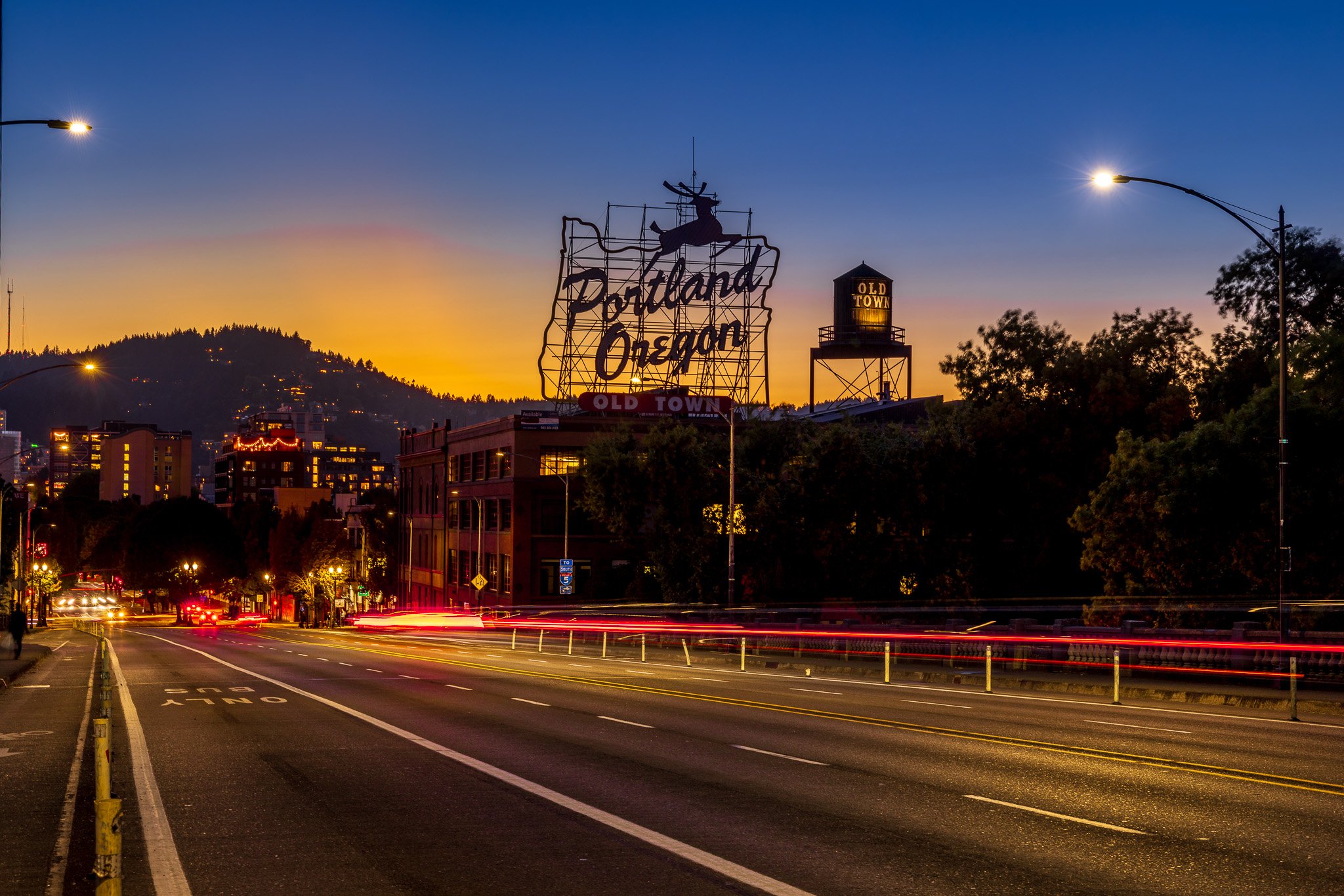
The Portland Stag Sign at Sunset
What I remember most, though, wasn't any of it. It was how friendly everyone was.
People actually said hello.
Not the polite little head nod we have perfected in big cities. An actual, cheerful "Good morning." By the third person, I had started saying hello first.
That pretty much set the tone for Portland.
The city's easygoing quality sneaks up on you. We visited the Portland Japanese Garden, then came back two days later without cameras simply because we wanted to sit there again. We found a bench, listened to the water moving over the rocks, and did absolutely nothing for a while. It was wonderful.
Powell's City of Books had a similar effect on us. It occupies an entire city block and feels less like a bookstore than a place where you could accidentally disappear for an afternoon. Instead of pointing us toward whatever happened to be on the bestseller list, the staff recommended books we had never heard of. I walked out with three.
And then there is Mount Hood.
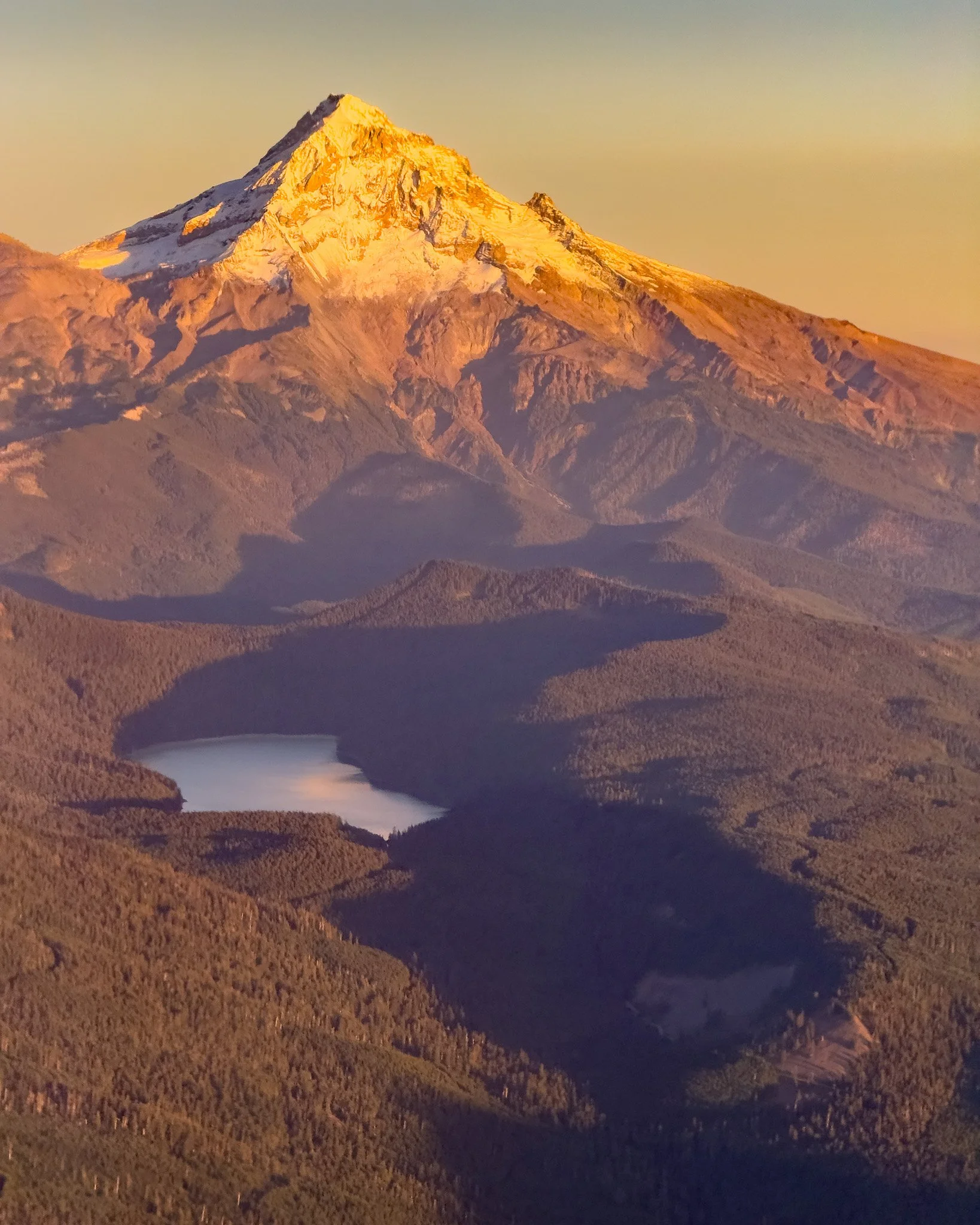
From our flight into Portland
On a clear day, it seems to hover over Portland as if somebody painted it into the background. It's a constant reminder of how close the wild country is. Drive less than an hour east, and you can be standing in the mist at the base of Multnomah Falls, trying to keep your camera dry, or climbing the short, steep trail to Wahkeena Falls.
Back in the city, Portland gives photographers plenty to work with. You will find murals across the Alberta Arts District and downtown, gardens, bridges, and the Burnside Skatepark under the east end of the Burnside Bridge.
And yes, there is coffee. Lots of coffee.
Was every place we tried extraordinary? Of course not. A couple of coffee shops had reputations bigger than their coffee, and at least one dessert looked much better than it tasted. That is part of traveling. You try things. Some become favorites, others become stories.
What surprised me most about Portland was how much I enjoyed simply being there.
Many travelers treat Portland as the starting point for somewhere else. They fly in, rent a car, and immediately head for the Oregon Coast, Mount Hood, or the Columbia River Gorge.
I would not rush. Give Portland some time.
Spend a morning wandering with your camera. Spend a few hours at the Japanese Garden or the International Rose Test Garden instead of thirty minutes. Get lost inside Powell's. Photograph the murals. Drink too much coffee. Eat well. Then head for the mountains or the coast.
In this Photography and Travel Guide to Portland, I share the places and experiences I think are worth building your visit around. You will find my favorite photography locations, when and where to photograph them, practical travel advice, and camera and gear recommendations. Naturally, you'll also find some of my favorite places to eat and drink coffee.
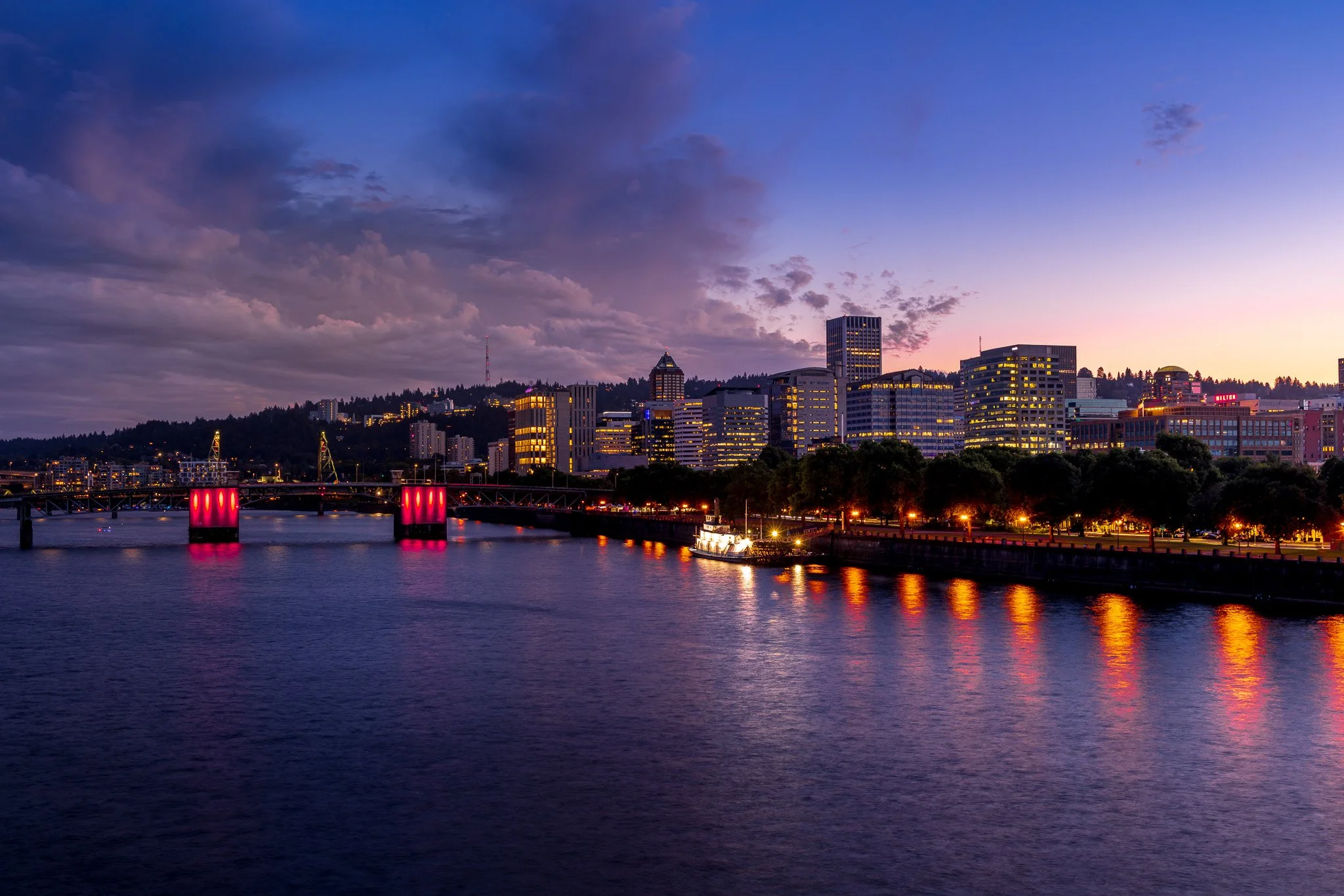
Downtown Portland at sunset
Where to Stay
For a first trip, base yourself downtown or in the Pearl District. Both put you within walking distance of Powell's, the Portland Art Museum, and plenty of food carts. Washington Park, home to the Japanese Garden and the International Rose Test Garden, is a short ride away. And Vista House and the Columbia River Gorge are an easy early-morning drive from either neighborhood.
Luxury Hotels
The Ritz-Carlton, Portland. Downtown at 900 SW Washington Street, a short walk from Powell's and the Portland Art Museum. Rooms sit as high as the 19th floor, with views over the skyline toward the Cascades. Our room had a clear line to Mount Hood. Request one if you can. Bellpine, the restaurant on the 20th floor, has a view worth seeing even if you eat elsewhere most nights. We had our first dinner there, and the view held up. It makes a strong, central base for everything in this guide.
The Nines. The hotel occupies the upper floors of the old Meier & Frank department store, a downtown landmark since 1909, right across from Pioneer Courthouse Square. The lobby is a light-filled atrium on the 8th floor. For photographers, the real draw is Departure, the open-air rooftop restaurant and bar on the 15th floor, with views over the city and the river toward the mountains. Go up at blue hour, even if you are staying somewhere else.
Kimpton RiverPlace Hotel. Right on the Willamette River, with river-facing rooms and easy access to the waterfront path. It's good for early morning shots along the water before the rest of the city is up.
Mid-Range and Boutique
The Hoxton, Portland. A well-designed hotel with Deadstock Coffee in the lobby, which is worth a stop on its own. Head up to Tope, the rooftop taqueria, for views over the city. The catch is the location. It sits in Old Town Chinatown, one of the rougher parts of downtown. The hotel itself feels safe and well-run, but stick to daylight hours if you are walking the surrounding blocks.
Kimpton Hotel Vintage Portland. Downtown in a historic brick building, with a design built around Oregon wine and an art-forward edge, including graffiti-inspired artwork. Don't miss the daily wine tasting in the lobby. It's a good boutique option if you want personality over polish.
Hotel deLuxe. Near Providence Park, with an old Hollywood theme running through the design. It's a solid boutique pick if you want more character than a standard downtown chain.
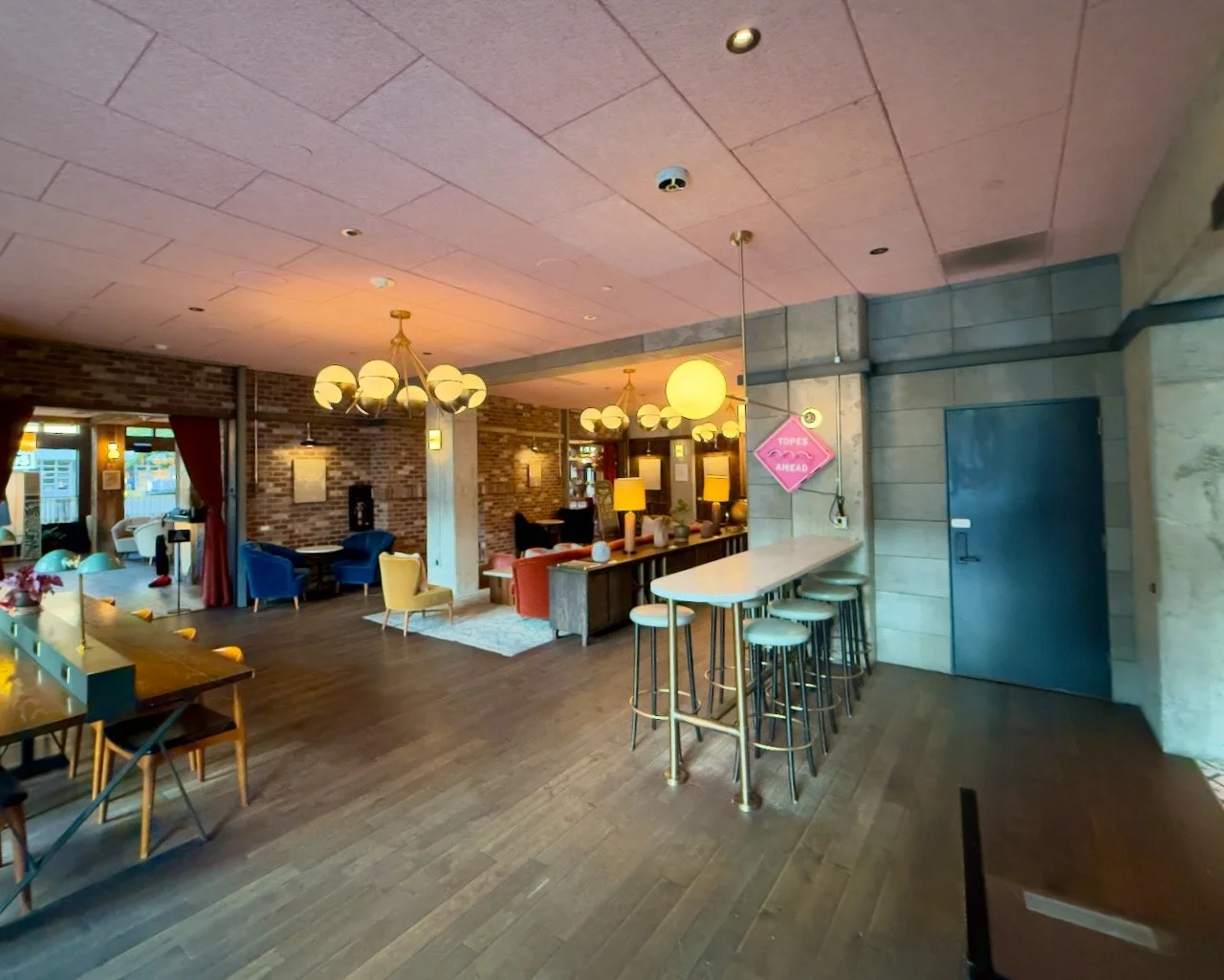
The Hoxton Hotel
Best Time to Visit
We visited in September, and I would happily go back at the same time. The temperatures were comfortable the whole trip, and from our hotel room we could see Mount Hood clearly. Watching the sunrise over the mountain one morning was worth getting up early for.
September is one of the best months for Portland. Summer weather usually holds, with highs in the mid-to-upper 70s and cool mornings in the 50s. Early in the month, you can still get a hot day, and rain picks up as the month goes on. The summer crowds also thin out after Labor Day. The International Rose Test Garden was still in bloom when we visited, so you won't miss the roses entirely. It's also an ideal time to continue down the Oregon Coast.
The one thing to watch in September is wildfire smoke. We had clear skies, but some years smoke from Oregon fires settles over the city for days and hides Mount Hood completely. Check air quality forecasts before you go, and build a little flexibility into your plans.
For roses at their peak, go in late May or June. The gardens are at their fullest then, and the Rose Festival fills the city in June. Expect more people and longer days. For fall color, come in late October. The maples at the Portland Japanese Garden are at their best then, though you trade that for more rain. From November through March, Portland is gray and wet. The light is soft and the gardens are quiet, which suits moody, close-up work, but don't count on seeing Mount Hood.
At the Gorge, September's drier conditions mean the waterfalls run lower than in spring. You'll still feel the mist at Multnomah Falls, and the clearer skies often give you better light. If waterfalls are the priority, plan for April or May, when snowmelt has them at full force.
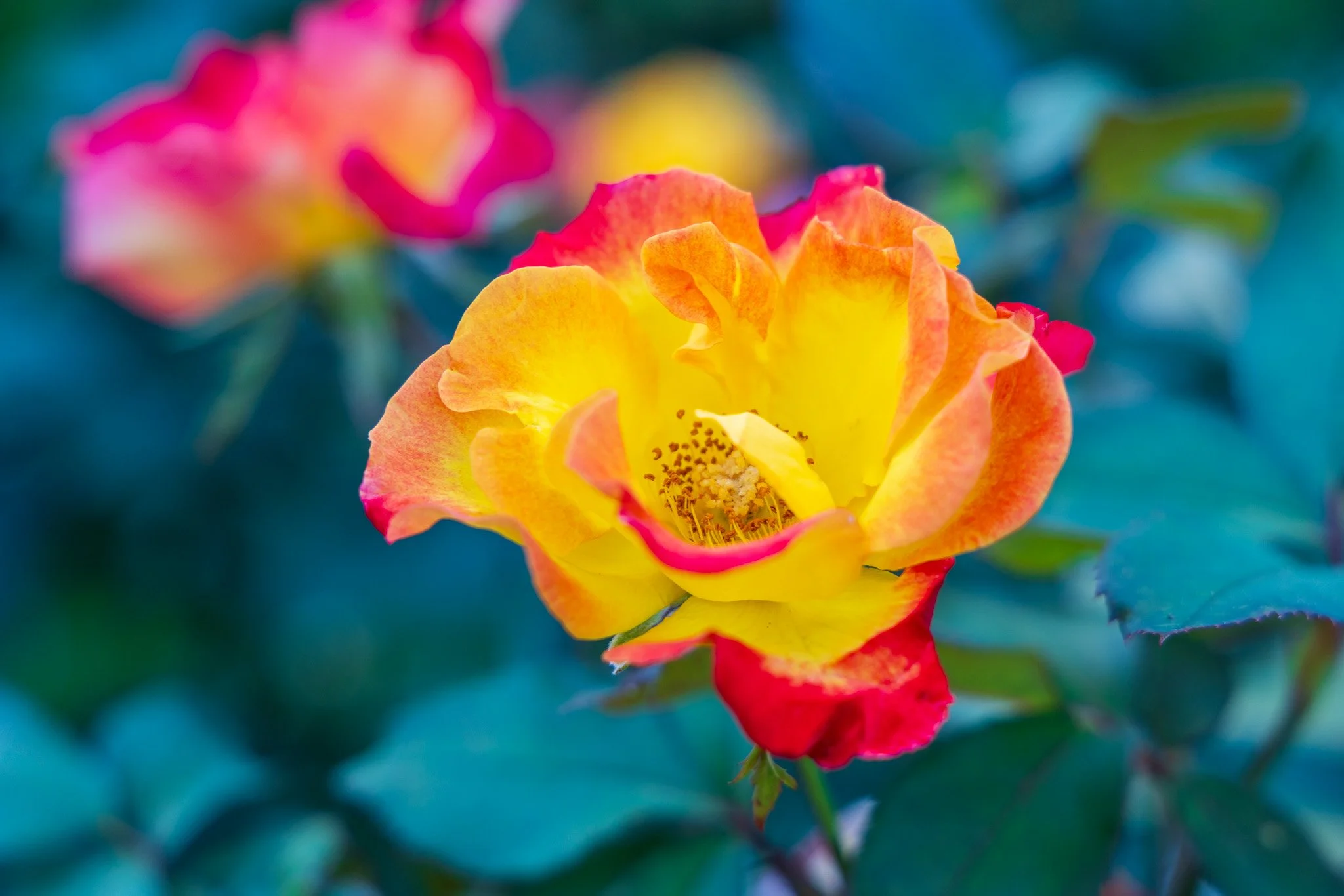
The International Rose Test Garden
Getting Around
Landing at PDX is painless. It is roughly a five- to ten-minute walk from the gate area to the rental car counters, and the drive from the airport into downtown or the Pearl District takes about fifteen minutes.
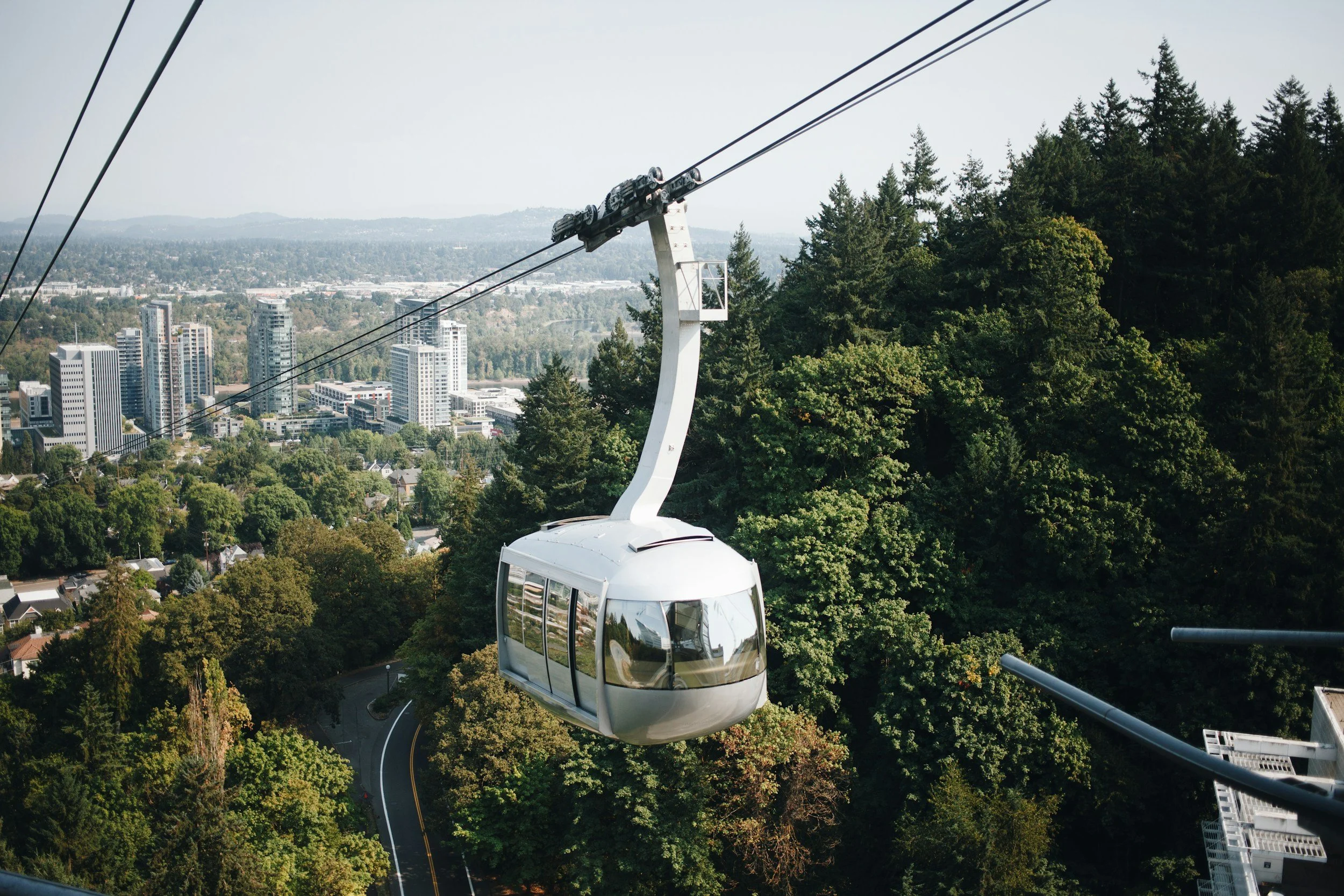
Portland is walkable at its core, and the streetcar covers a lot of ground if you do not want to drive downtown. Uber and Lyft both work well here, and they're easier than hunting for parking downtown at night. The aerial tram is worth a ride for the view from the top, but treat it as a photo stop rather than a way to get around. That said, you will want a car for the day trip out to Vista House and the Columbia River Gorge, since it is roughly a 45-minute drive east of the city on the historic highway.
Parking near Washington Park can be tight on weekends, especially during rose bloom season, so plan to arrive early if you are shooting the Rose Test Garden or the Japanese Garden at opening.
Download Near Me Now before your trip. It's Travel Portland's official visitor app, built to point you toward nearby restaurants, coffee shops, food carts, and things to do based on your location. It's handy for filling gaps in your itinerary on the fly. For street parking, download Parking Kitty ahead of time. It works like ParkMobile and lets you pay for metered spots from your phone instead of hunting for change or a working meter.
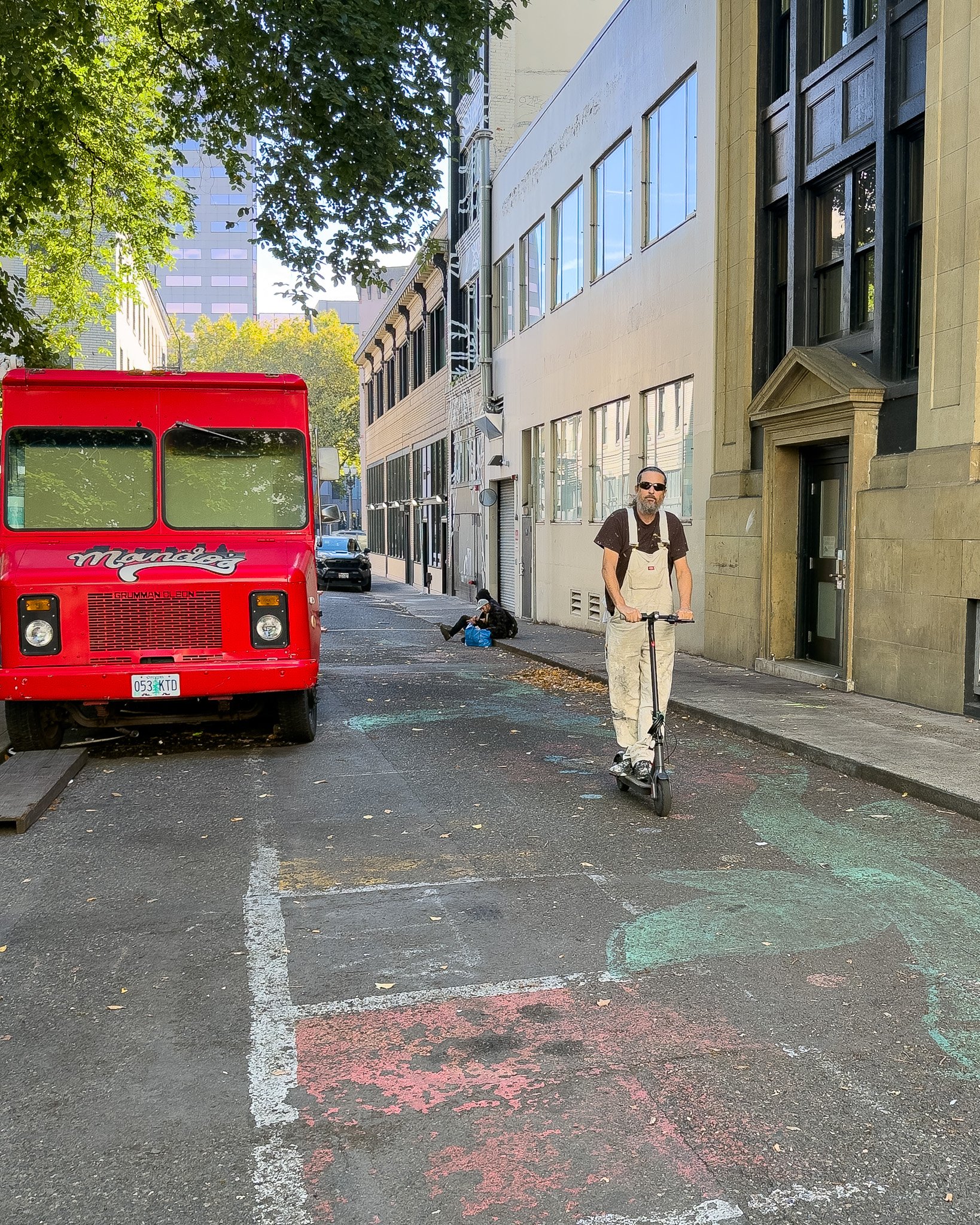
Scooting around Portland
Ideal Duration of Stay
We spent four nights in Portland, and three to four days is the sweet spot. It gives you time to see the highlights without rushing, and it leaves room to go back to a place you love. We did exactly that with the Japanese Garden.
Two days covers the essentials. Spend one day in Washington Park for the Japanese Garden and the International Rose Test Garden. Spend the other downtown, with Powell's, the food carts, and the murals. You'll see a lot, but you'll feel the clock.
Three days is what I recommend. Add a morning drive out to Vista House and Multnomah Falls, then come back for an afternoon in the Alberta Arts District. End the day at the Burnside Skatepark in late afternoon, when the most skaters are out.
Four to five days lets you slow down the way Portland deserves. Return to your favorite garden without a camera. Spend a full day on the Gorge waterfalls instead of a half day. If the weather is clear, add a day trip toward Mount Hood.
If Portland is your starting point for the Oregon Coast, give it at least two full days before you head out. Arriving, picking up a car, and settling in takes more out of you than you expect. The coast will still be there.
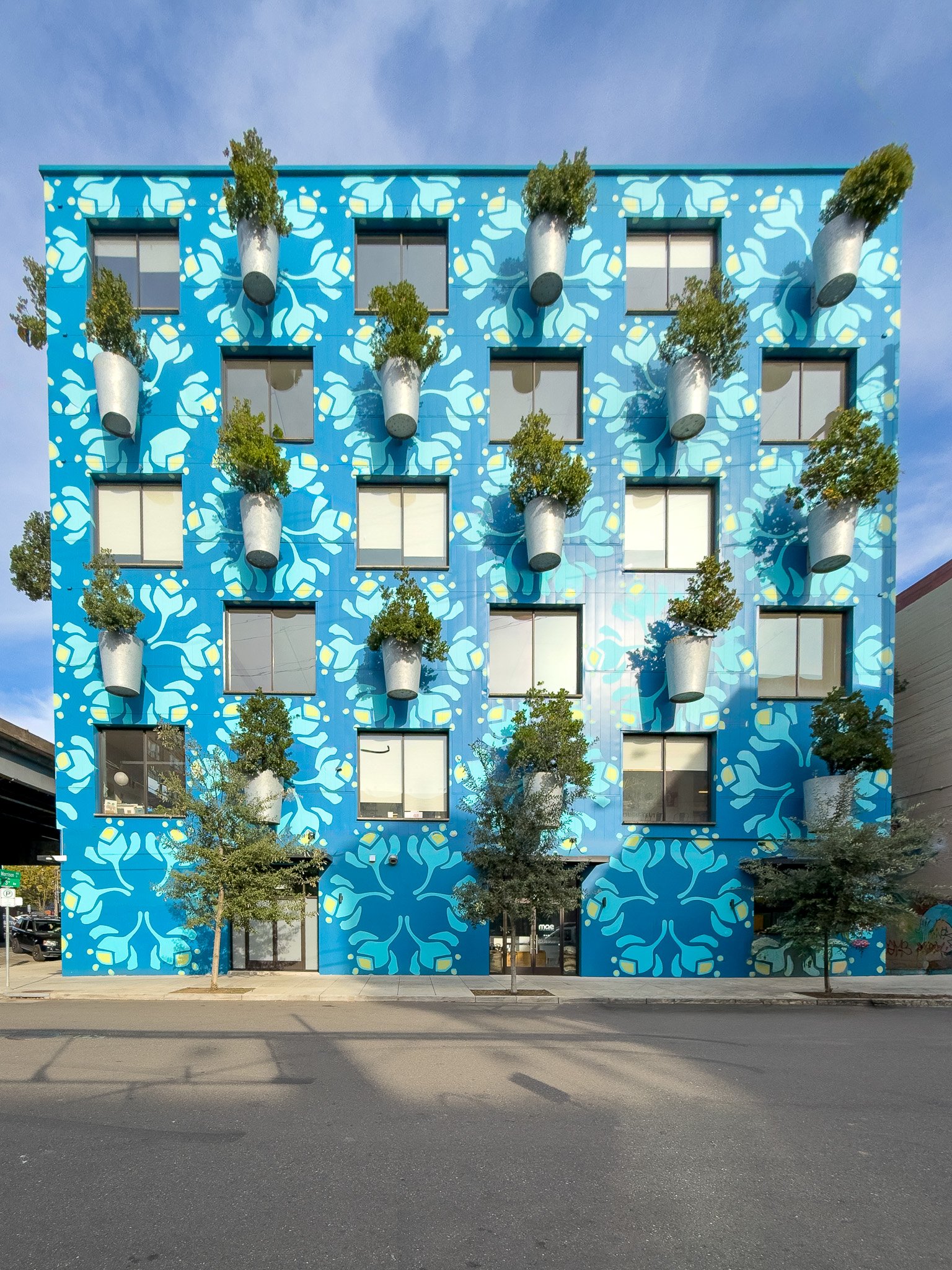
Portland has so many colorful buildings
Dining and Coffee
Portland's reputation for food and coffee is well earned. Every meal we had was good enough that you could tell people take real pride in what they serve, and the service was warm and attentive nearly everywhere we went. Not every place lived up to its reputation, and I'll tell you which ones.
Restaurants
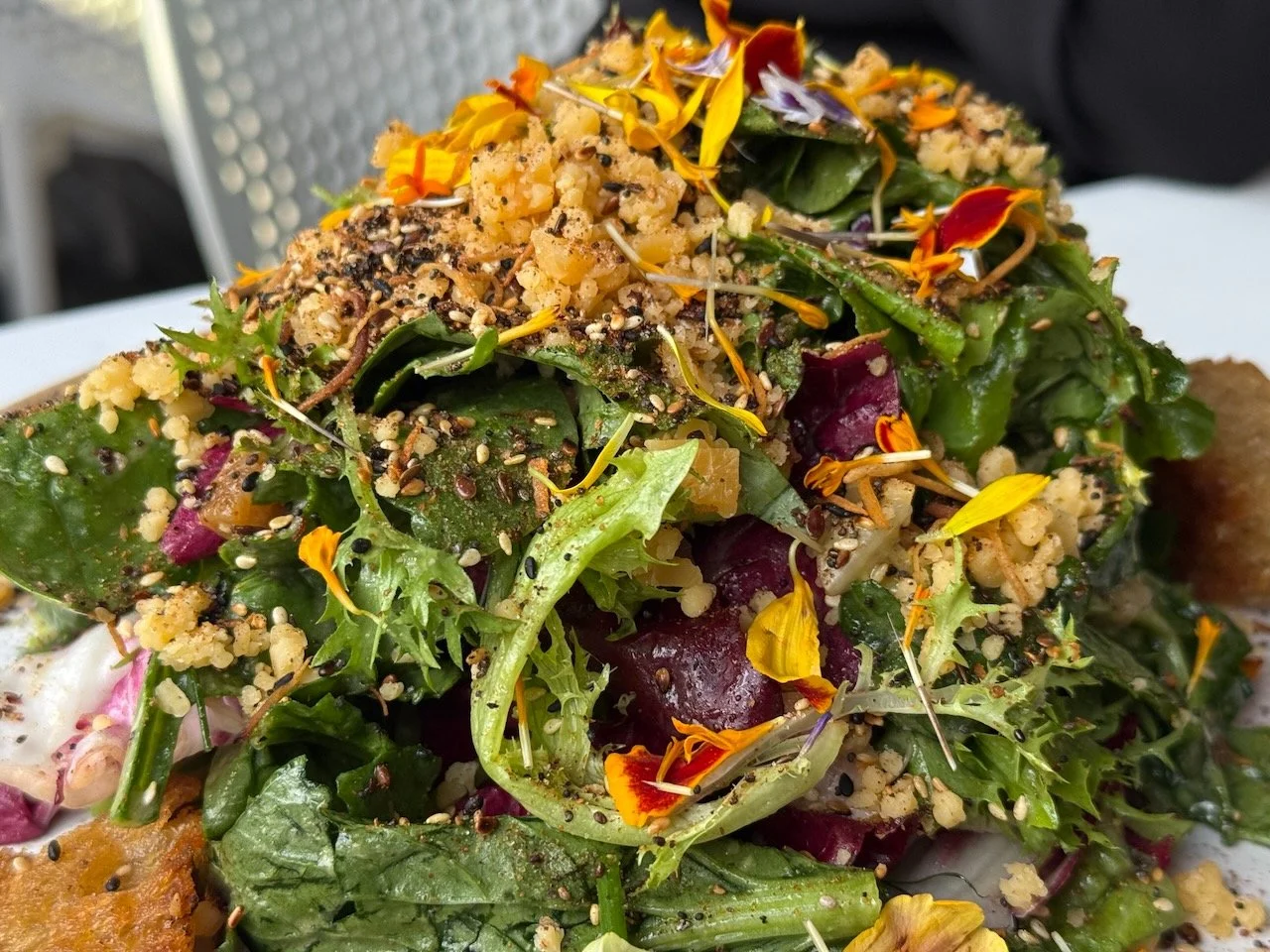
G Love. In Slabtown, a neighborhood that turned out to be one of the nicer surprises of the trip. The menu leans vegetable-forward but includes fish and meat, and everything tasted fresh. It's farm to table done right. Service was great, and we sat outside, which suited the neighborhood. This was my favorite restaurant in Portland, and it's worth planning a dinner around.
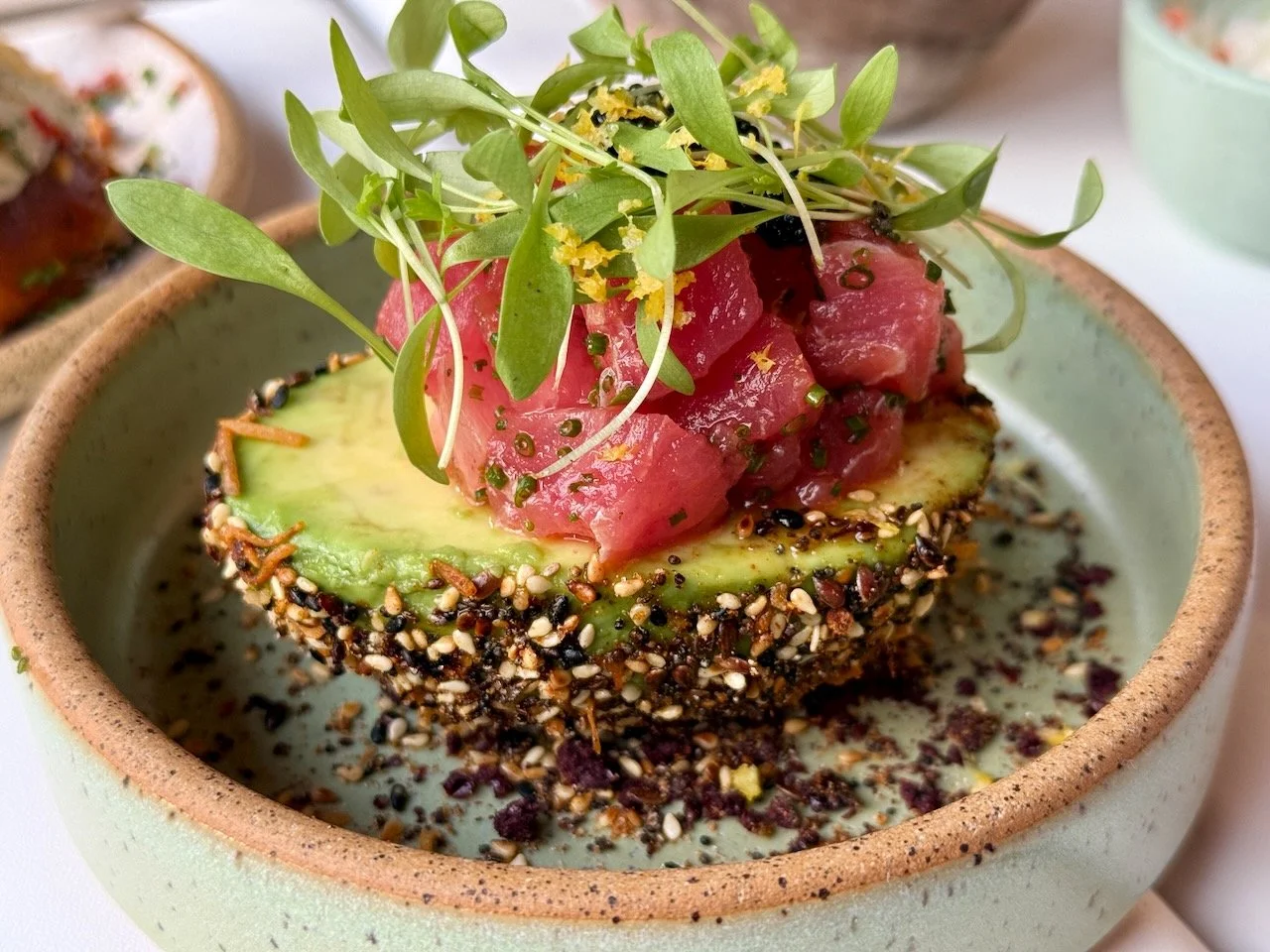
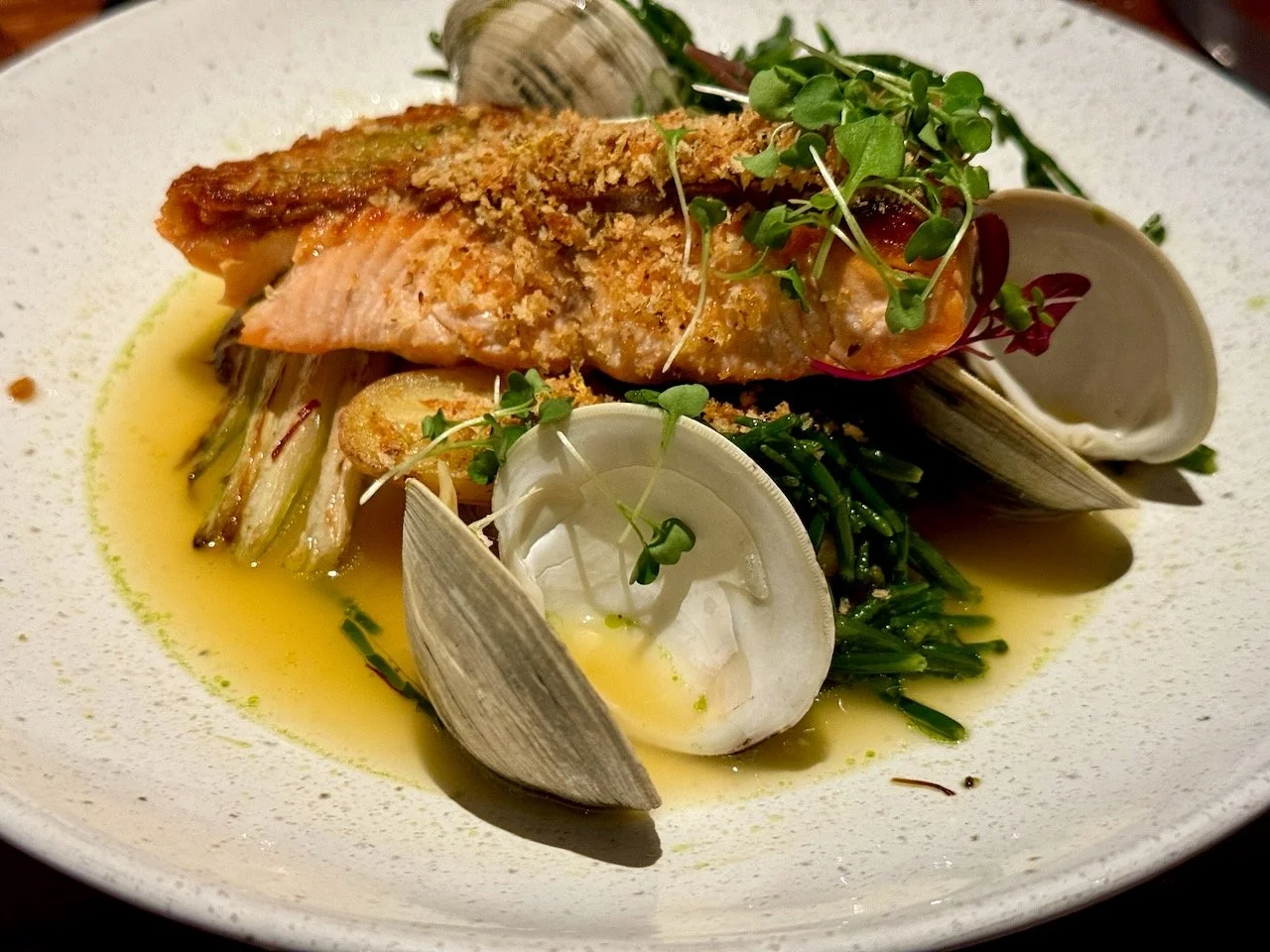
Bellpine. The main restaurant at the Ritz-Carlton, on the 20th floor. The menu leans Mexican-inspired Pacific Northwest, and the room looks out over the city toward the Cascades. On the right evening, you'll have a clear line to Mount Hood. We had the tuna tacos and the king salmon, and both were excellent. The salmon tasted as fresh as you'd hope for in the Pacific Northwest. Book it even if you are not staying at the hotel.
Jake's Grill. A few blocks from the Ritz-Carlton, and busy enough on a weeknight that you can tell it's a local favorite. We started with a shrimp cocktail and a Dungeness crab cocktail, both fresh. The bread came out hot from the oven and is worth ordering on its own. The salmon was excellent. The steak ran a little overcooked but was still good. The rhubarb crisp was the weak point, which surprised me from a kitchen this solid. Overall, it's a strong pick.
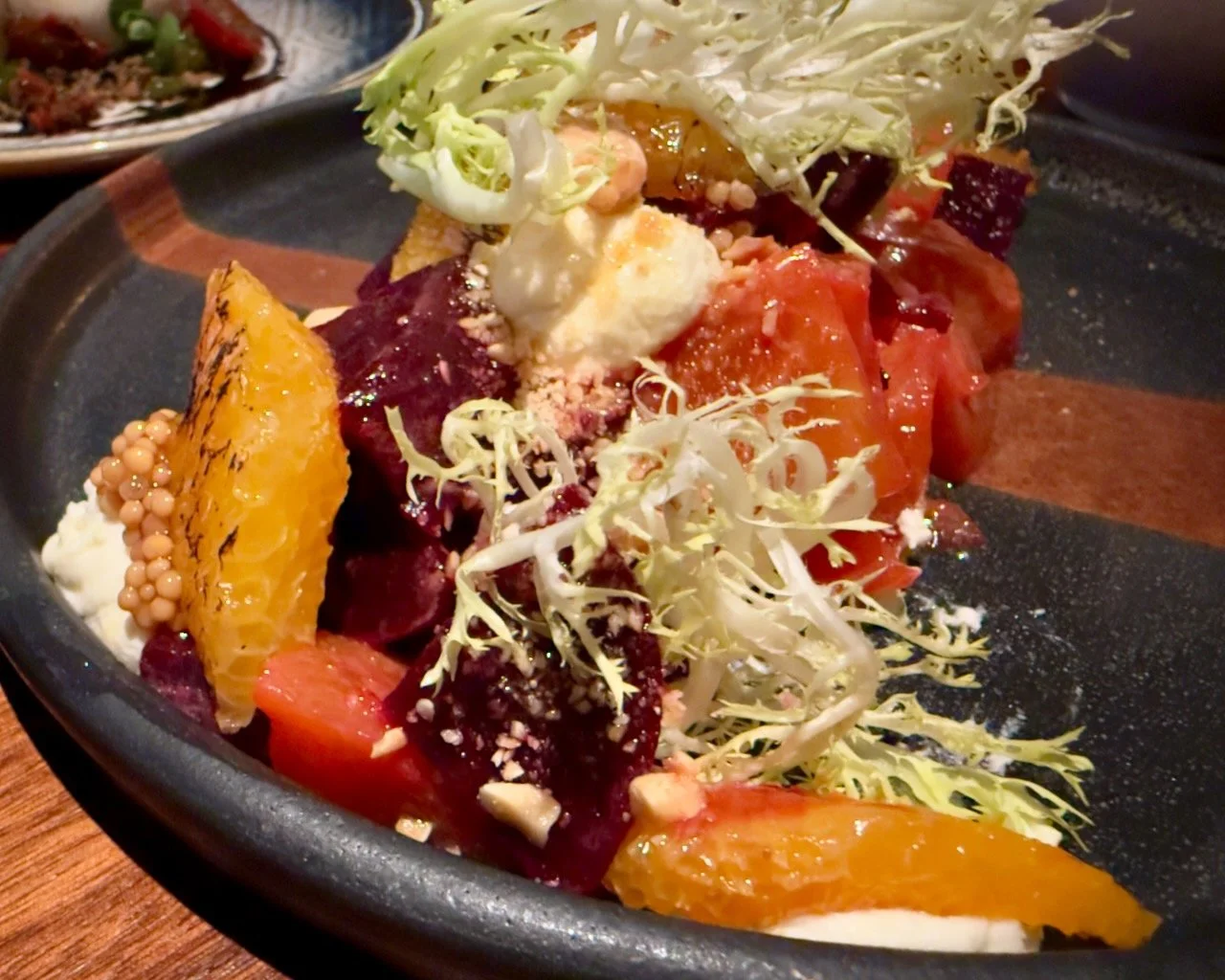
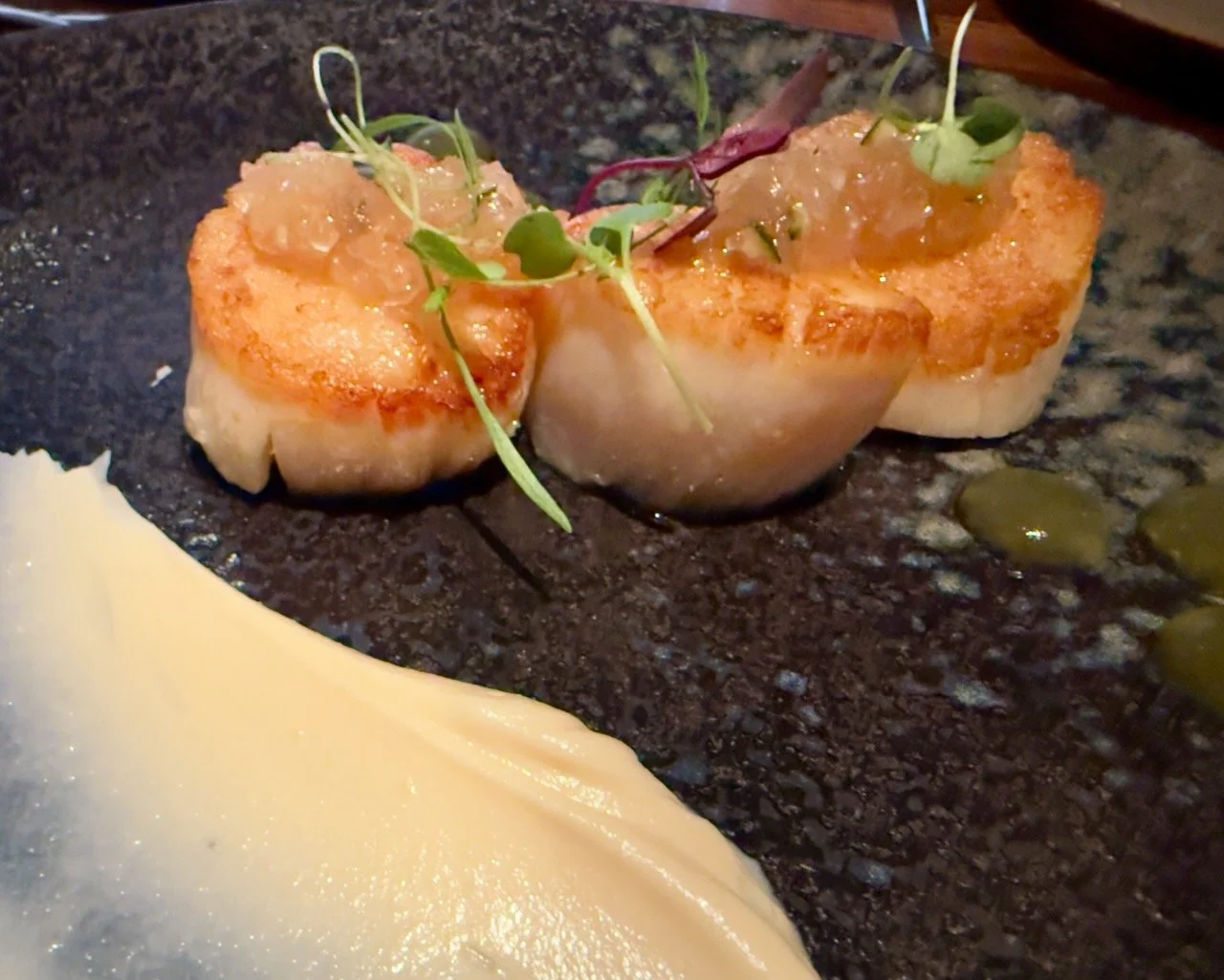
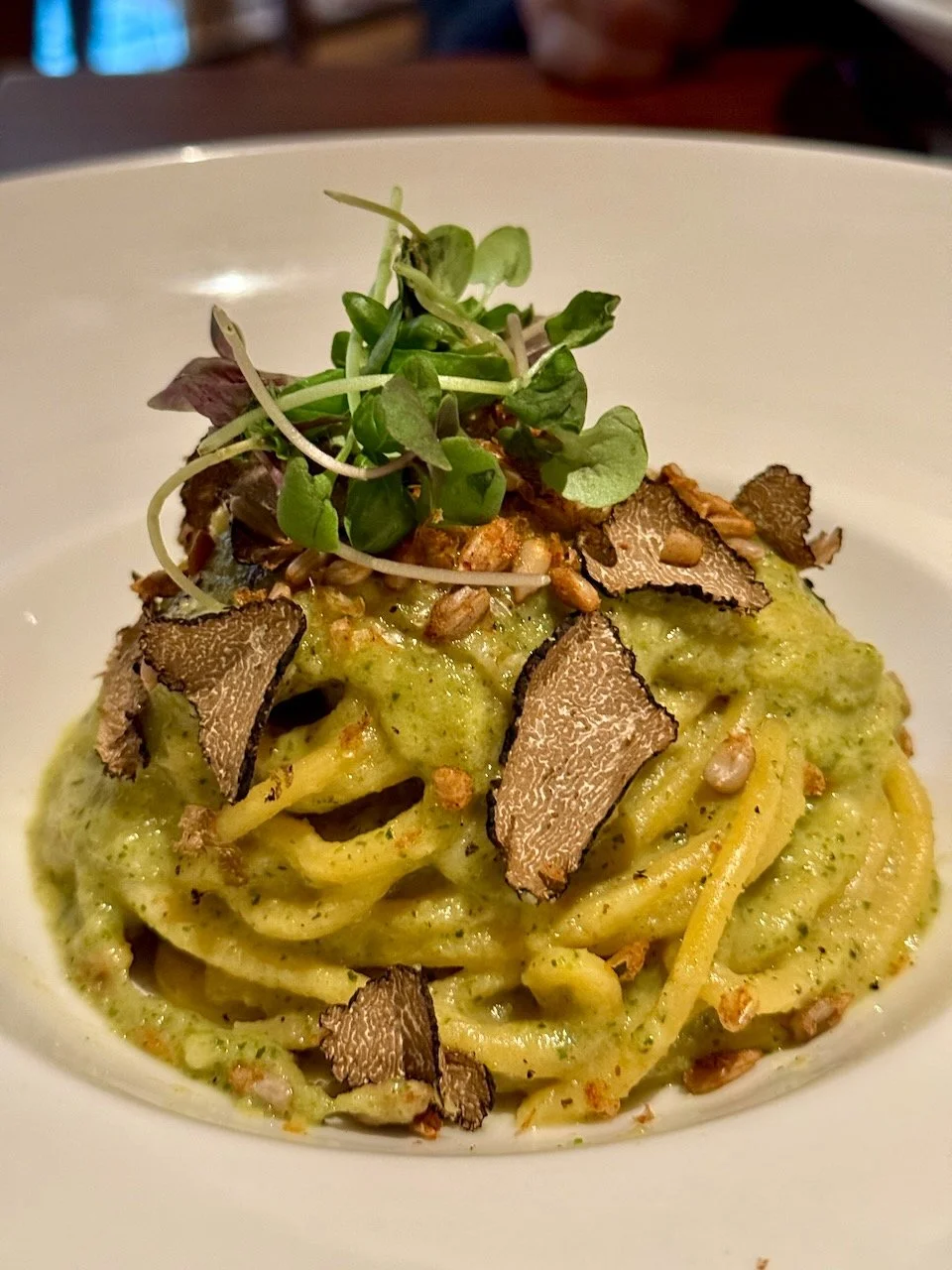
Mucca Osteria. A solid Italian restaurant two blocks from our hotel, with good service and a pleasant room. The bread stood out on its own, both the focaccia and the sourdough. The burrata, roasted beets, and scallops were all very good, and the pasta was excellent. My salmon came out a little underflavored, and dessert was average. Still, it's a good, recommendable dinner.
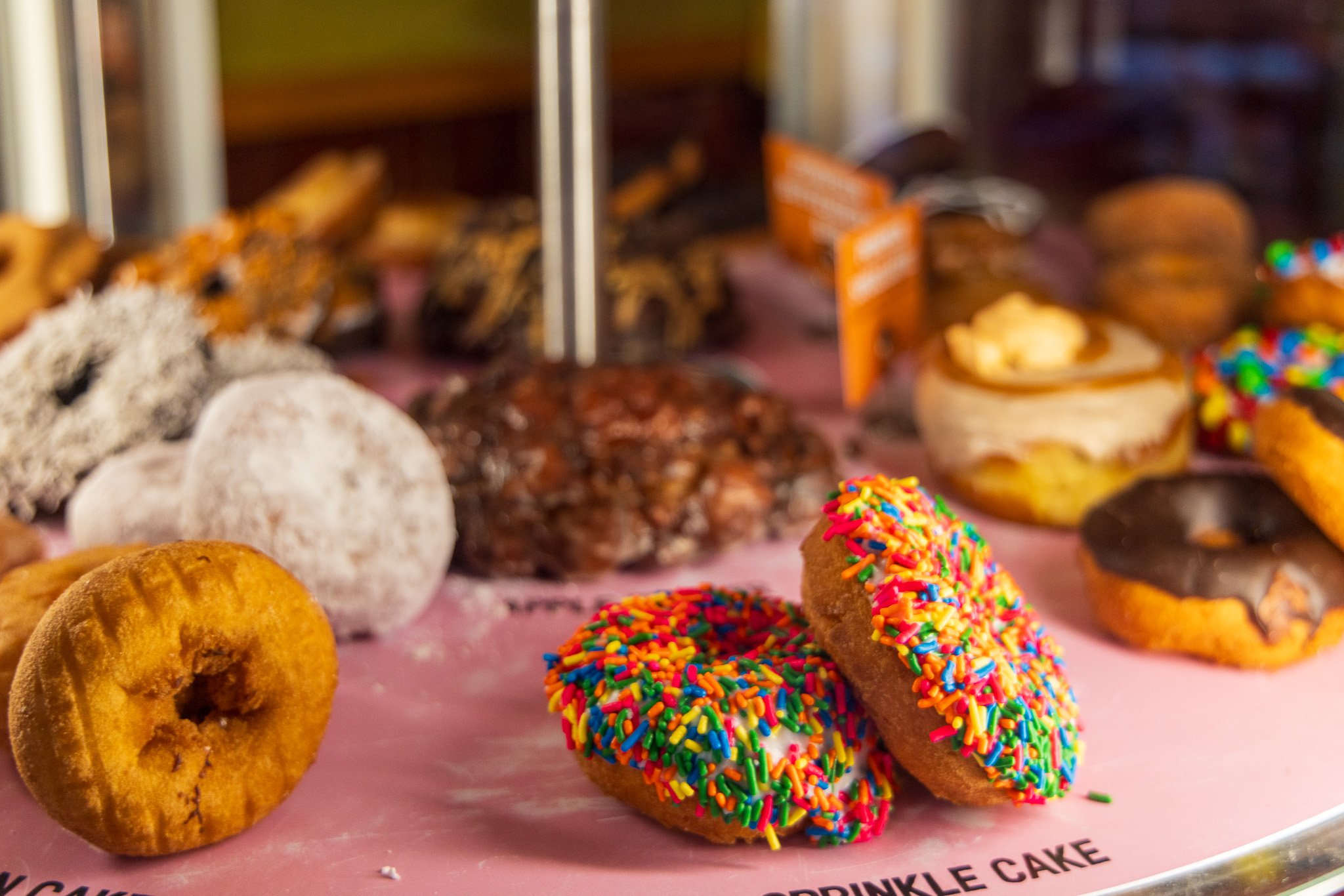
Voodoo Donuts and institution in Portland
Breakfast and Lunch
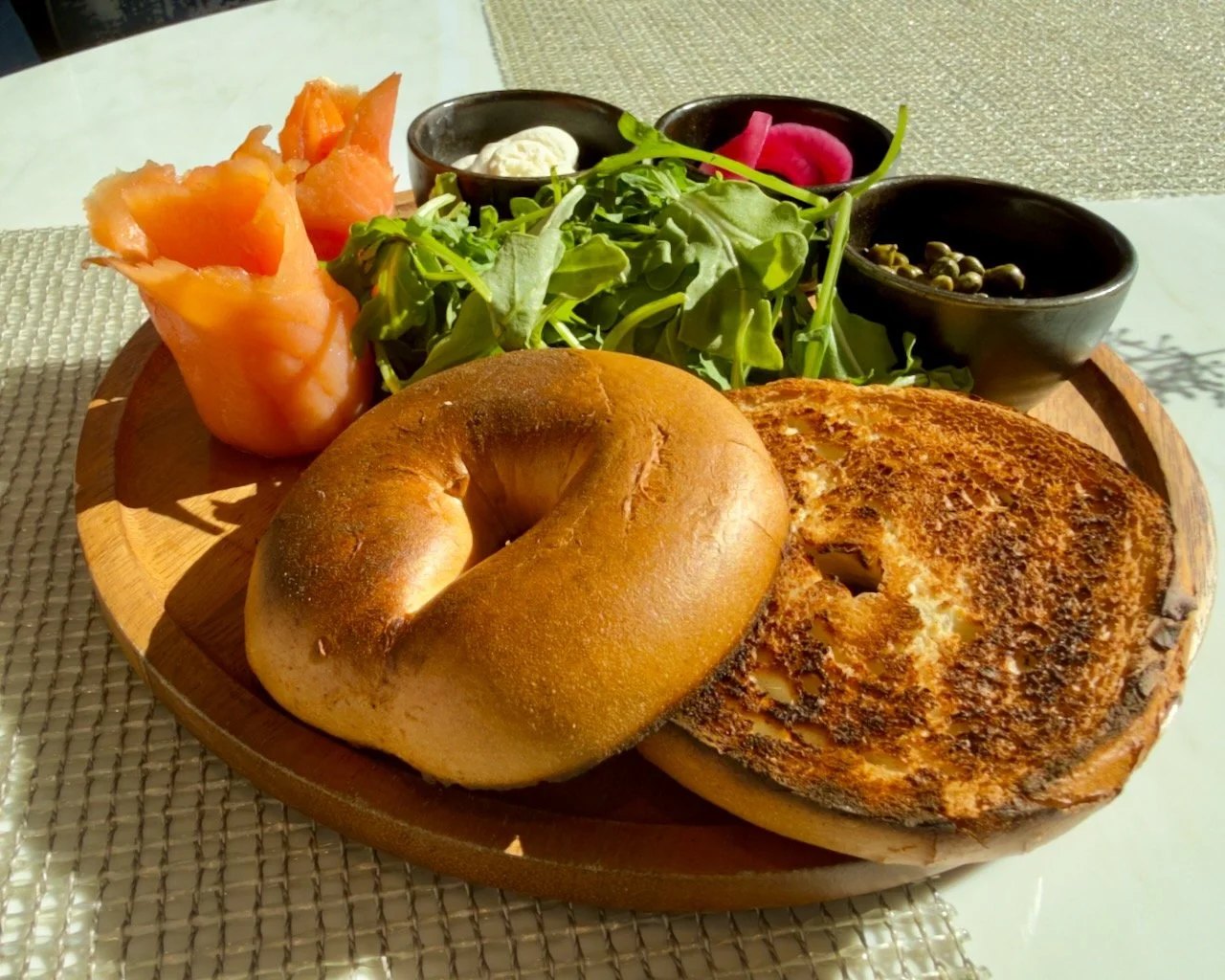
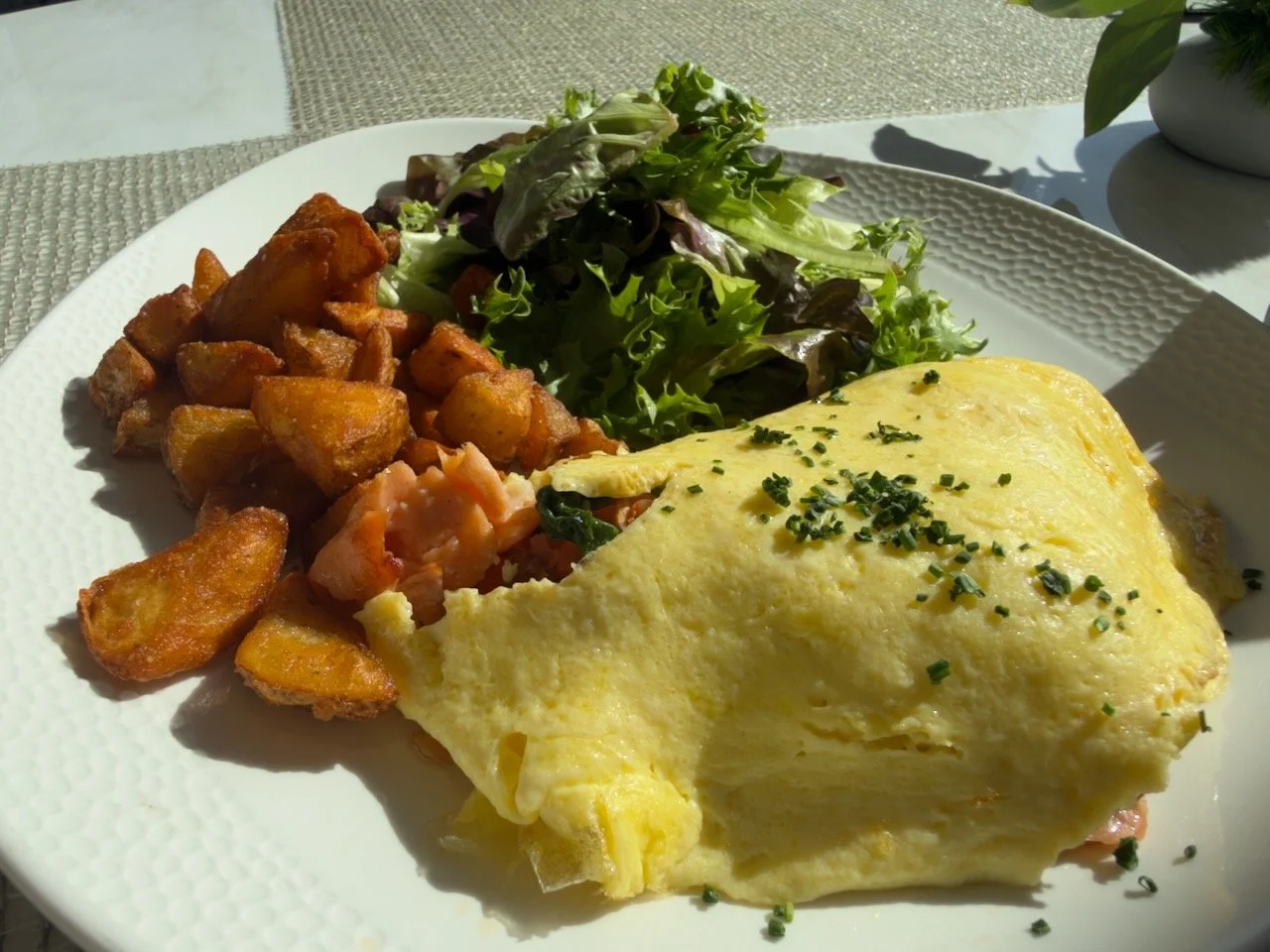
Cheryl's on 12th. A large, popular breakfast spot with a diner feel and a real restaurant setting. The menu covers the classics, plus some surprises: granola, oatmeal, burritos, and a Portuguese fried rice worth trying if you want something different. My vegetarian breakfast burrito was excellent, and the coffee was good. It's a solid choice before a full day of shooting.
Umami Café. Inside the Portland Japanese Garden, in a modern glass teahouse designed by Kengo Kuma. Make a reservation, since the wait can run long without one. We tried the Bartlett pear and apricot sando and the tofu katsu sando, along with mugicha roasted barley tea and a lavender honey tea. Everything was refreshing and well balanced. It makes a good pause in the middle of the garden.
Lardo. Sandwiches, and really good ones. It's a solid lunch stop between shooting locations downtown.
Sweets
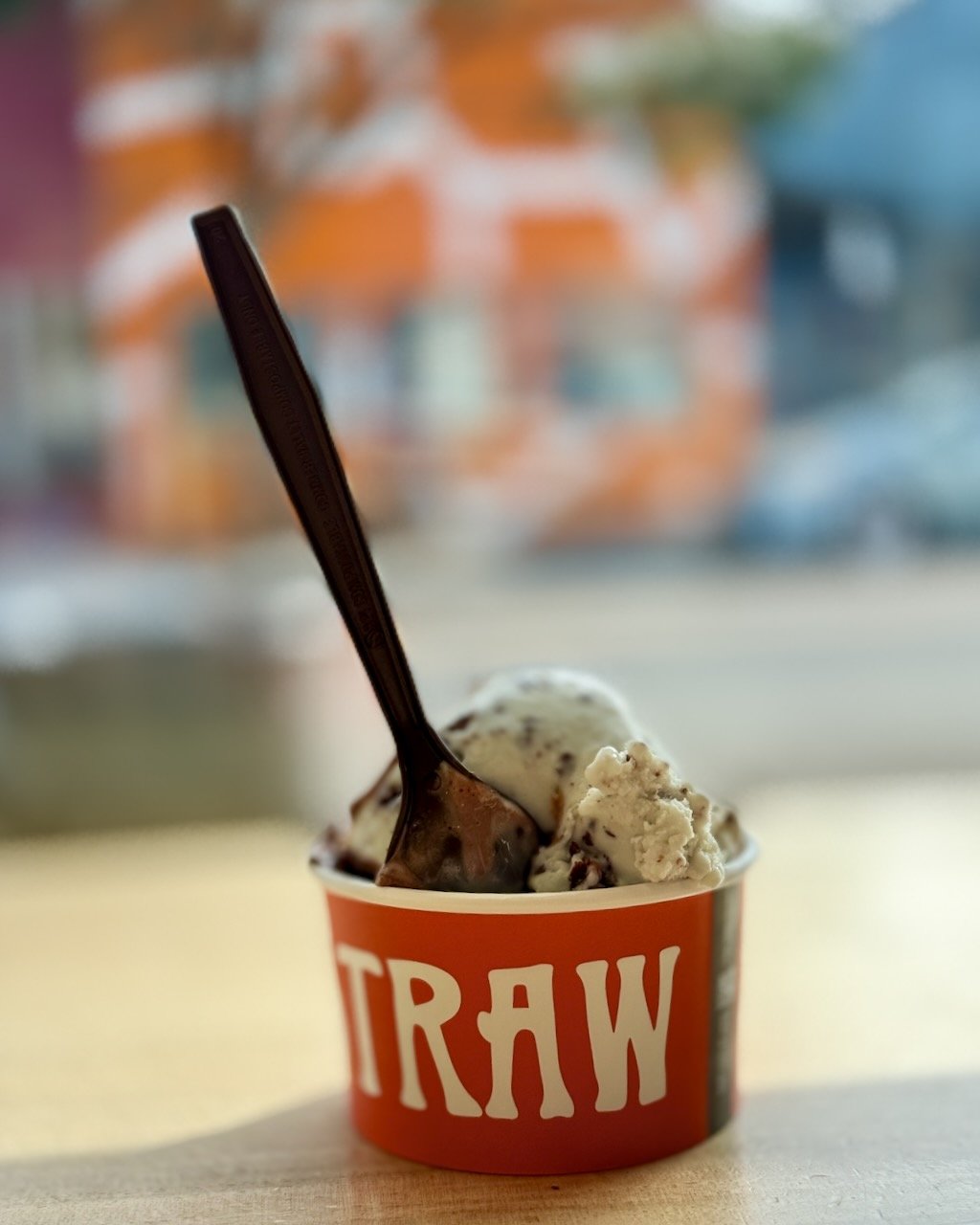
Salt & Straw. Portland-born ice cream with inventive, rotating flavors. We'd ordered it shipped before, but visiting the original NE Alberta store was a different experience. The flavors were as unique as advertised, and the ice cream was creamy and well made across the board. Expect a line, especially in the evening.
Voodoo Doughnut. The famous one, and worth a stop for the novelty alone. Don't overthink the menu. I asked the person at the counter for their most popular doughnuts and walked out with a classic glazed, one topped with gummy worms, and a seasonal pumpkin spice. The decorated ones looked great, but the plain glazed was our favorite. The city's pastry scene runs deeper elsewhere, but you can't come to Portland and skip it entirely.
Blue Star Donuts. The more food-forward answer to Voodoo, with brioche doughnuts and rotating seasonal flavors. Try both if you're doing a doughnut crawl.
Mixed Results
Cadeja. A breakfast spot that landed in the middle of the pack. The coffee was decent, the food was fine, and the space felt a little worn compared to the other stops on this list. It's not a must, but it's not bad if it's convenient to where you're staying.
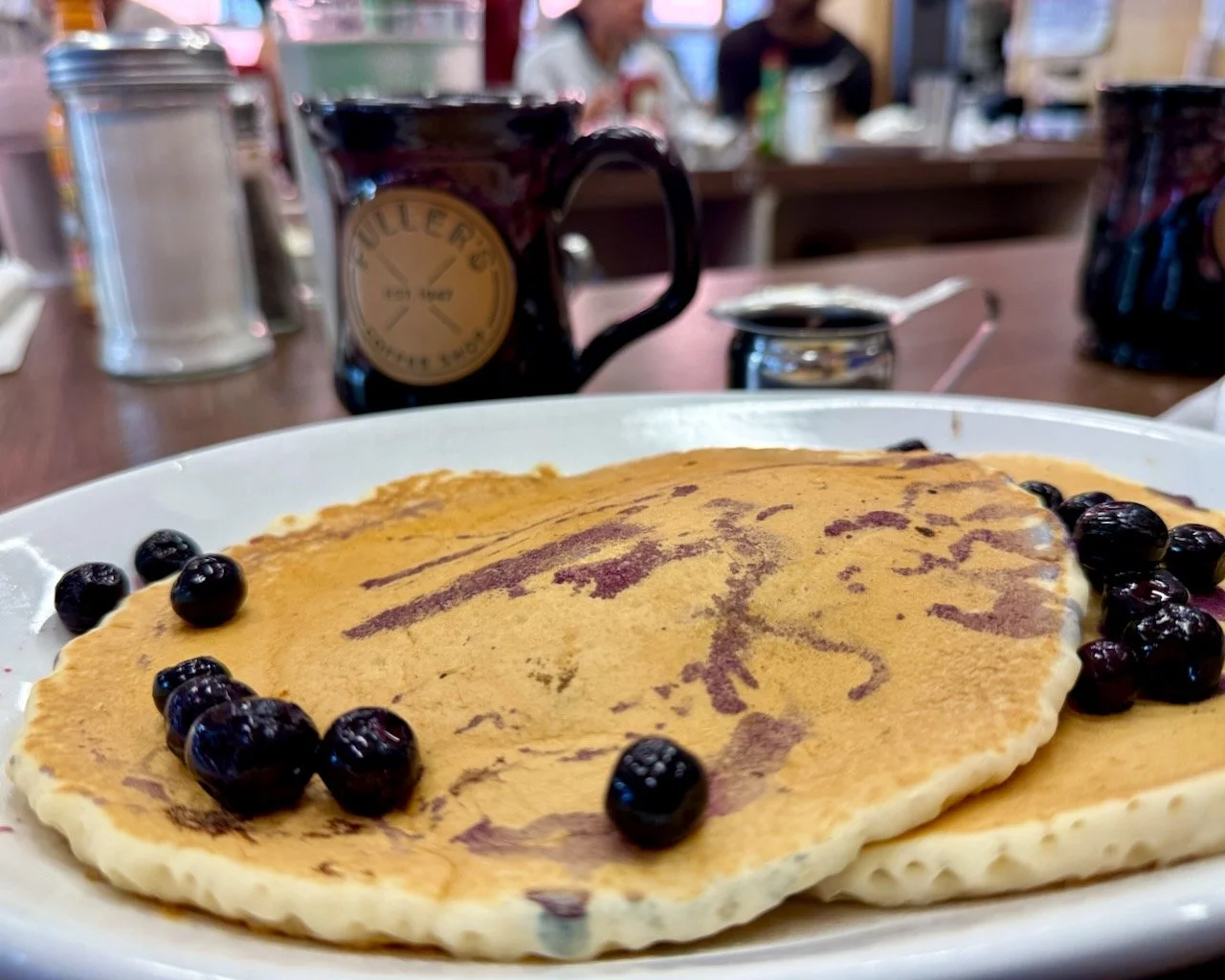
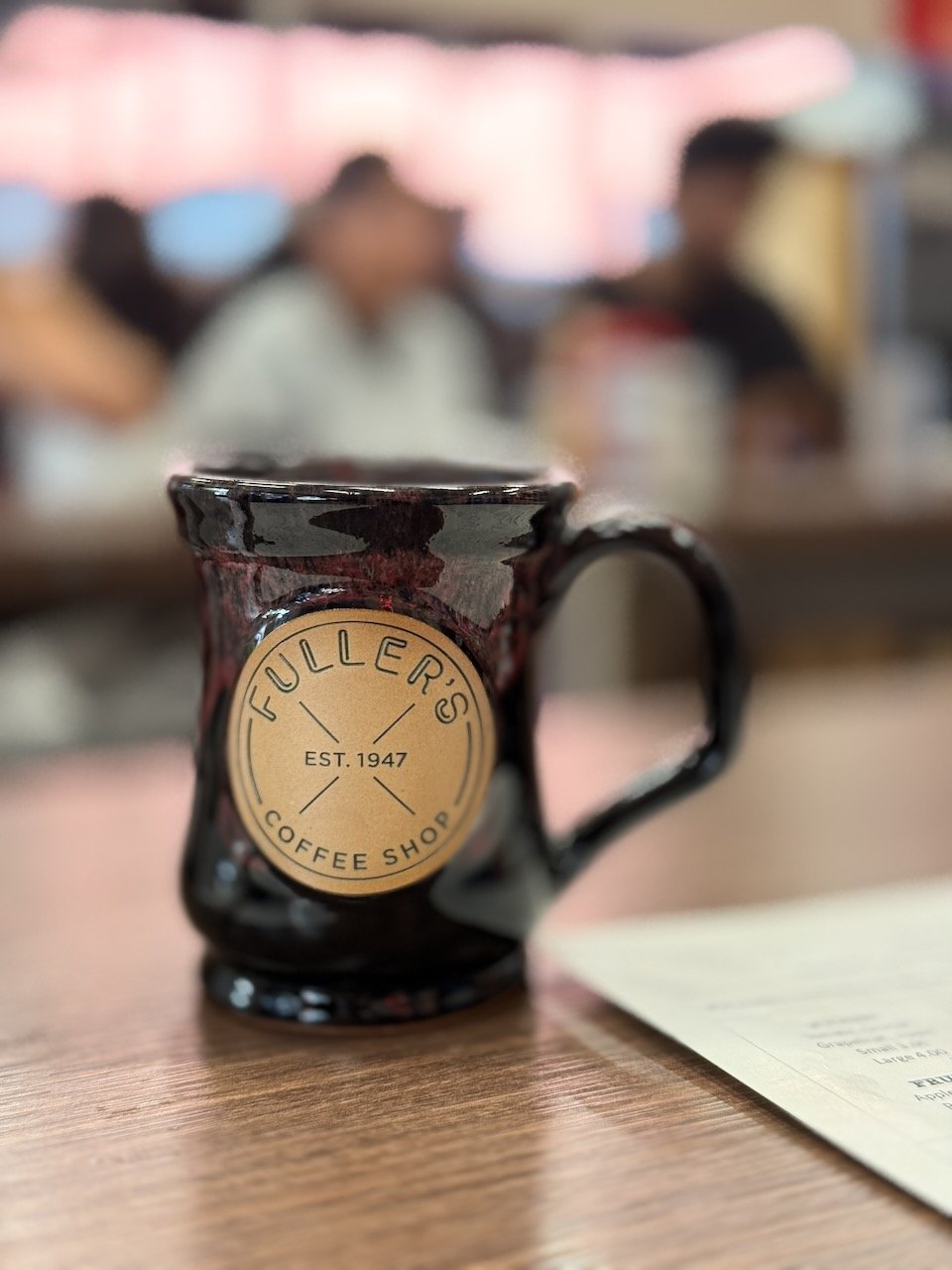
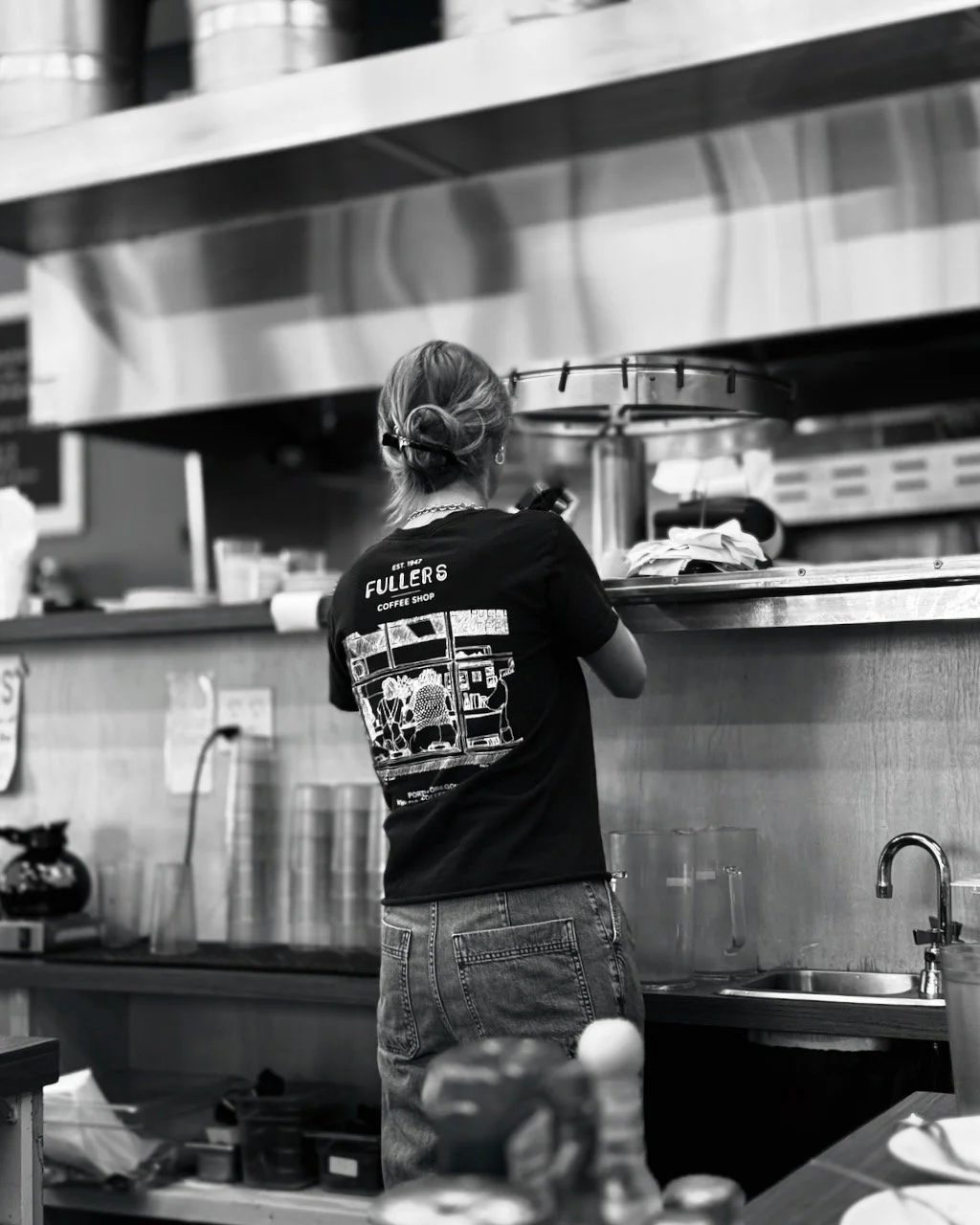
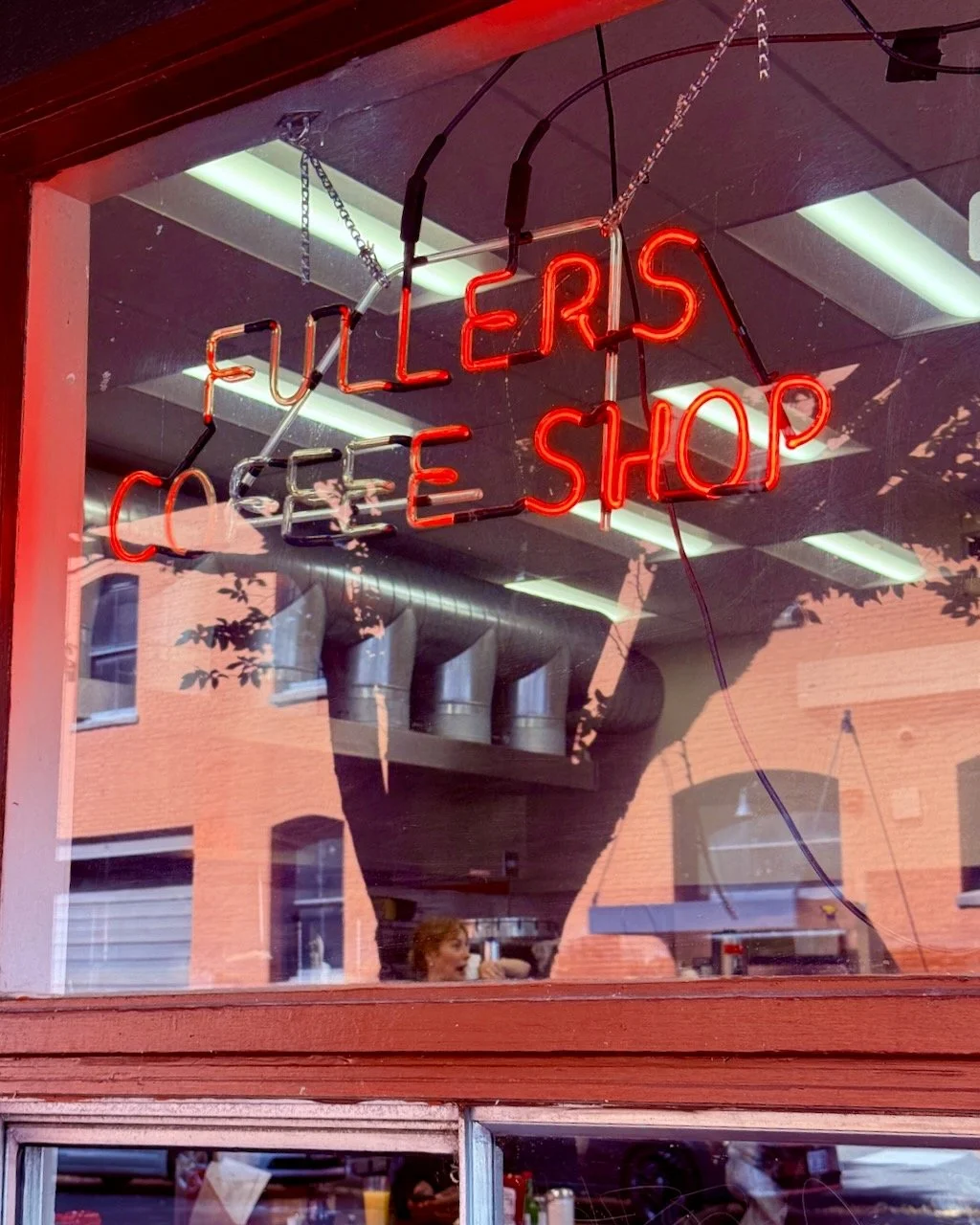
Fuller's Coffee Shop. A longtime Portland institution that didn't live up to its reputation for us. It looks like an old diner, and the food, coffee, and service were all average. We had the pancakes and an egg sandwich, and neither stood out. Skip it unless the history itself is the draw.
Coffee
Portland has more good coffee than you could drink in one trip. We tried a lot of it, and these are my picks, starting with the best. Most are downtown, within a few blocks of each other, so you can easily work two or three into a day of shooting.
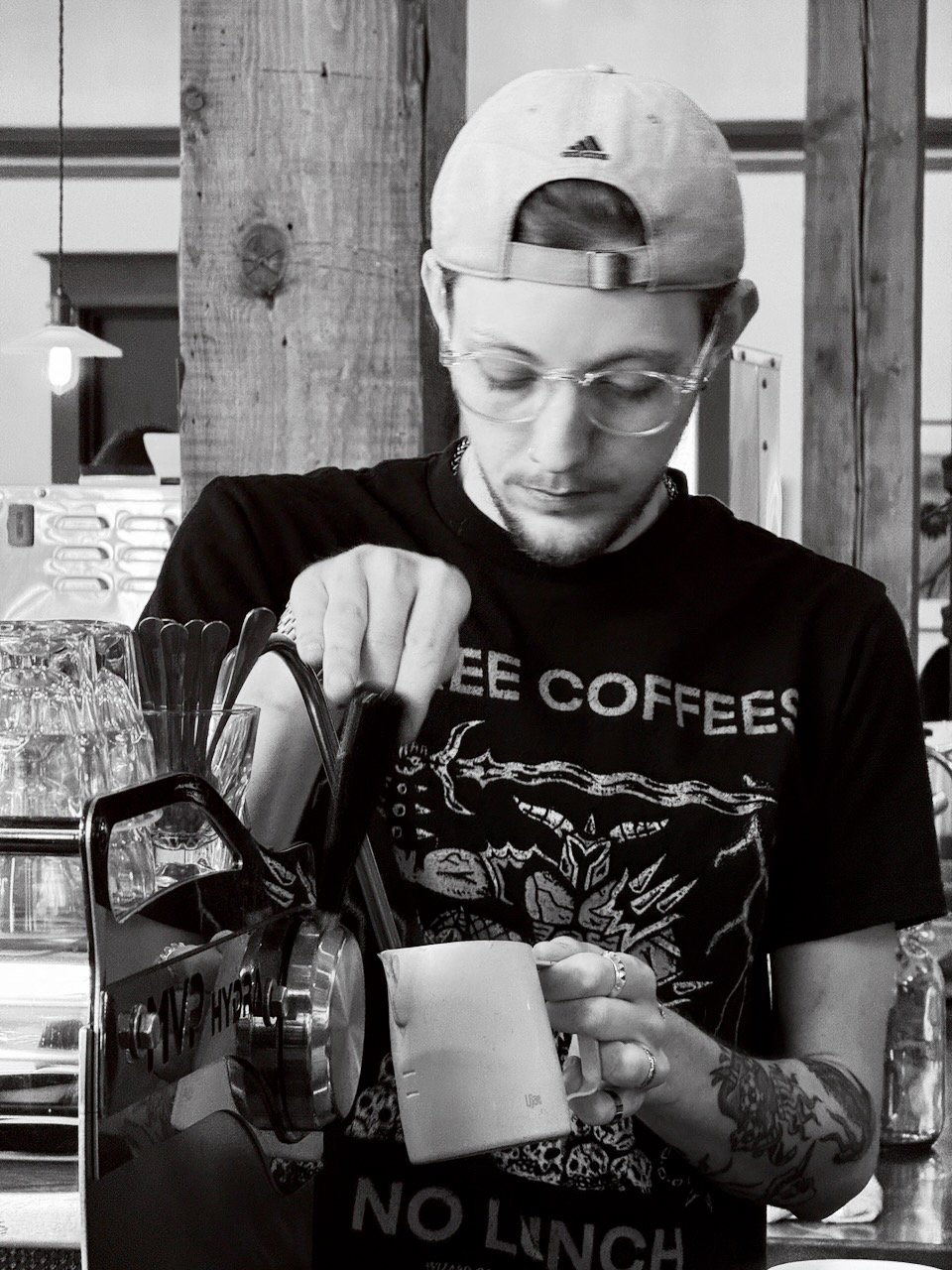
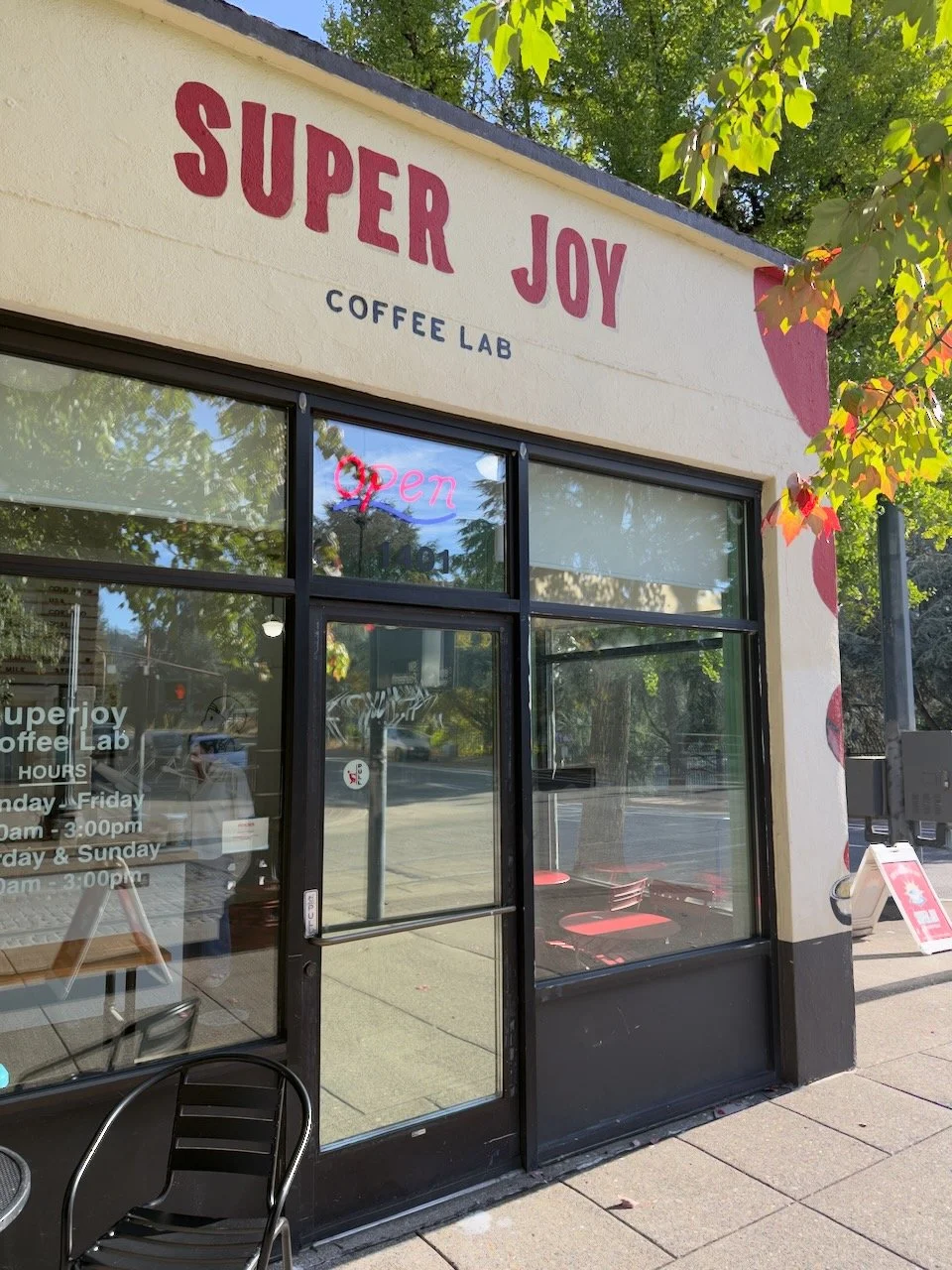
Superjoy Coffee Lab. Downtown on SW Yamhill, and my favorite coffee in Portland. Superjoy roasts beans from around the world, including from China's Yunnan province, and builds drinks around Chinese-inspired flavors. I had the Persian latte and a cortado, and both stood out for different reasons. The cortado had real texture and a complex, well-balanced espresso behind it. I went into the Persian latte a little skeptical, worried the flavoring would fight the espresso. Instead, it turned out to be one of the best-crafted coffee drinks I've had: smooth, not too sweet, with the coffee still clear underneath. I came back a second morning for a flat white, and it may have been the single best cup of the trip. The staff are friendly, and there's a nice outdoor seating area if the weather cooperates.
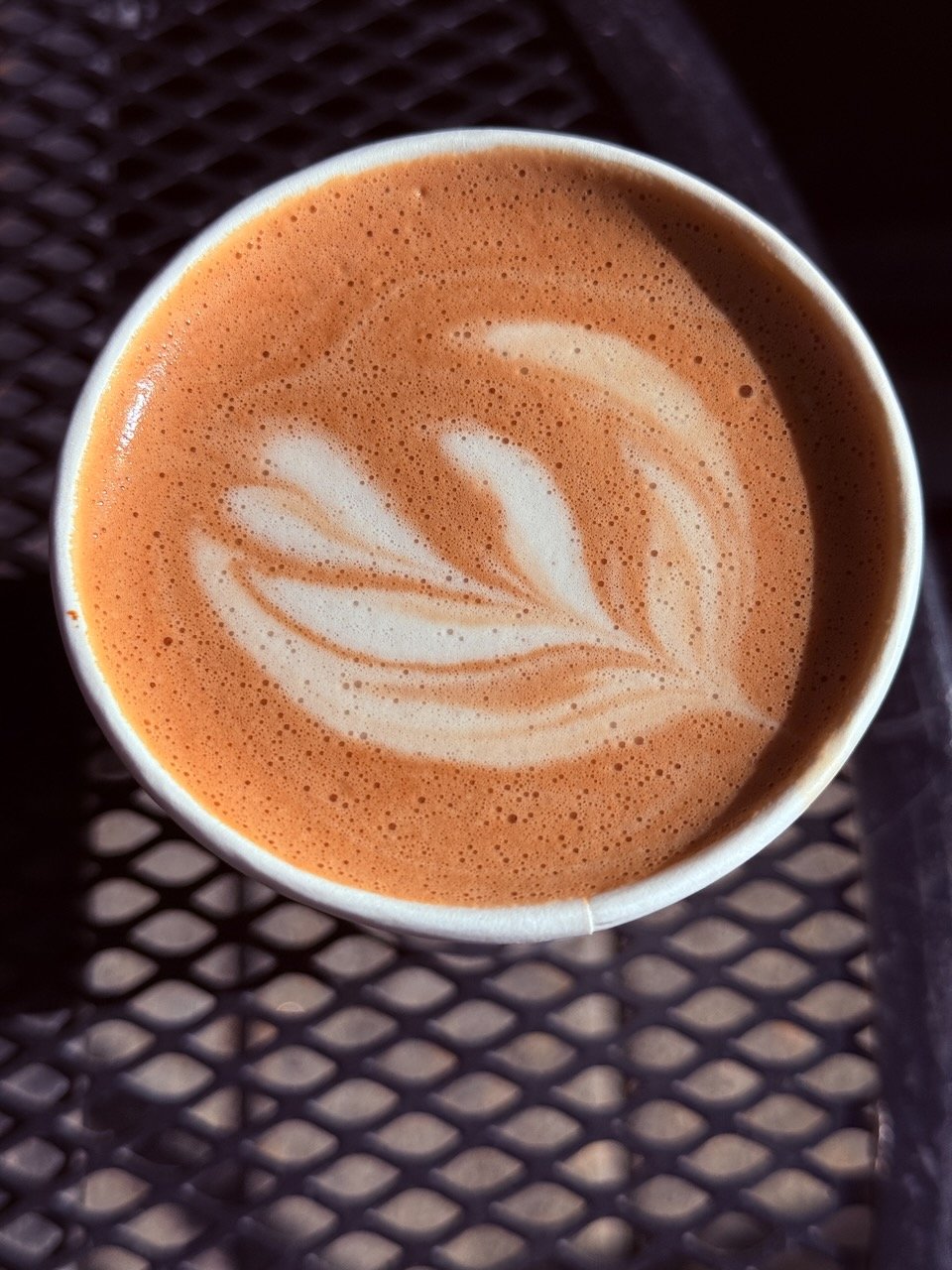
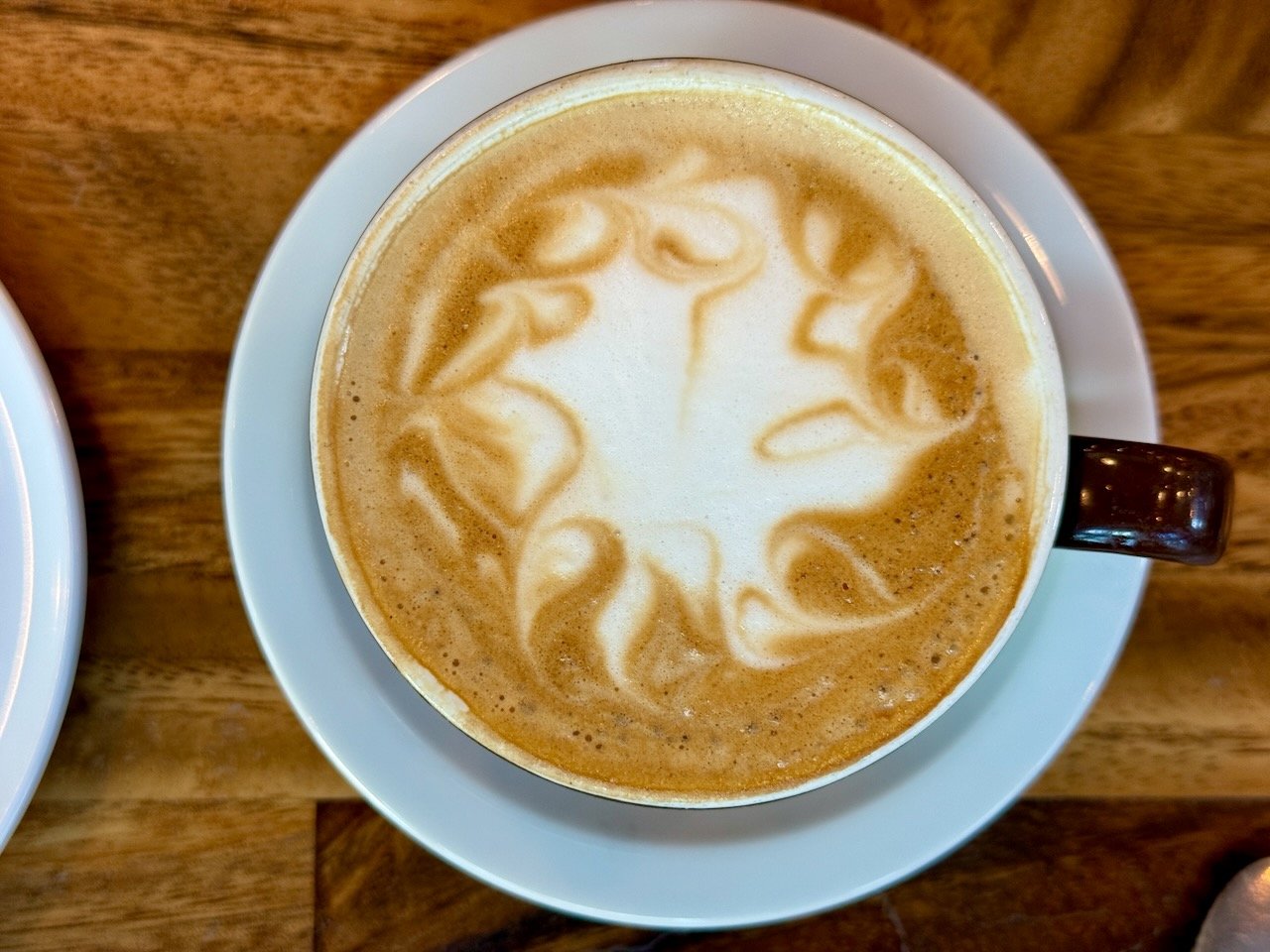
Coava Coffee. We went to the café on SE Hawthorne. The coffee is smooth enough that I bought a bag of beans to keep drinking it at home. The staff were welcoming without being precious about it, and the latte art was some of the best I saw in the city. It's a good space for settling in with your camera bag and editing between shoots.
Never Coffee. Downtown on SW 12th Avenue, and our last stop in Portland, grabbed on the way out of town toward the coast. The coffee was among the best of the trip. The pastries were average, but the coffee alone is worth the stop.
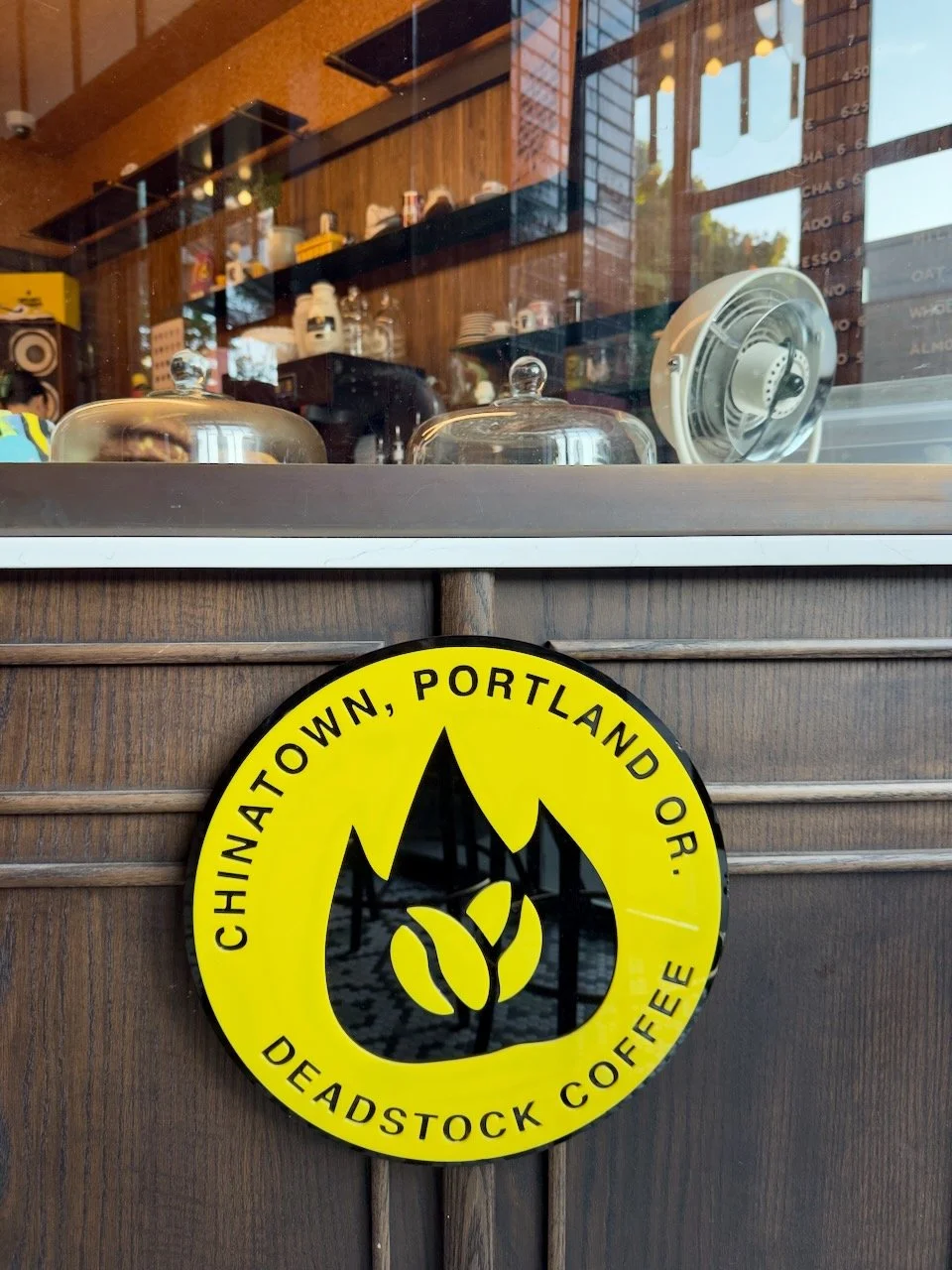
Deadstock Coffee. Inside The Hoxton in Old Town Chinatown. This was my first coffee of the trip, and it set a high bar. My flat white was well made, and they sell bags of their coffee to take home. The walls of vintage Nike sneakers are a fun detail if you're into sneaker culture.
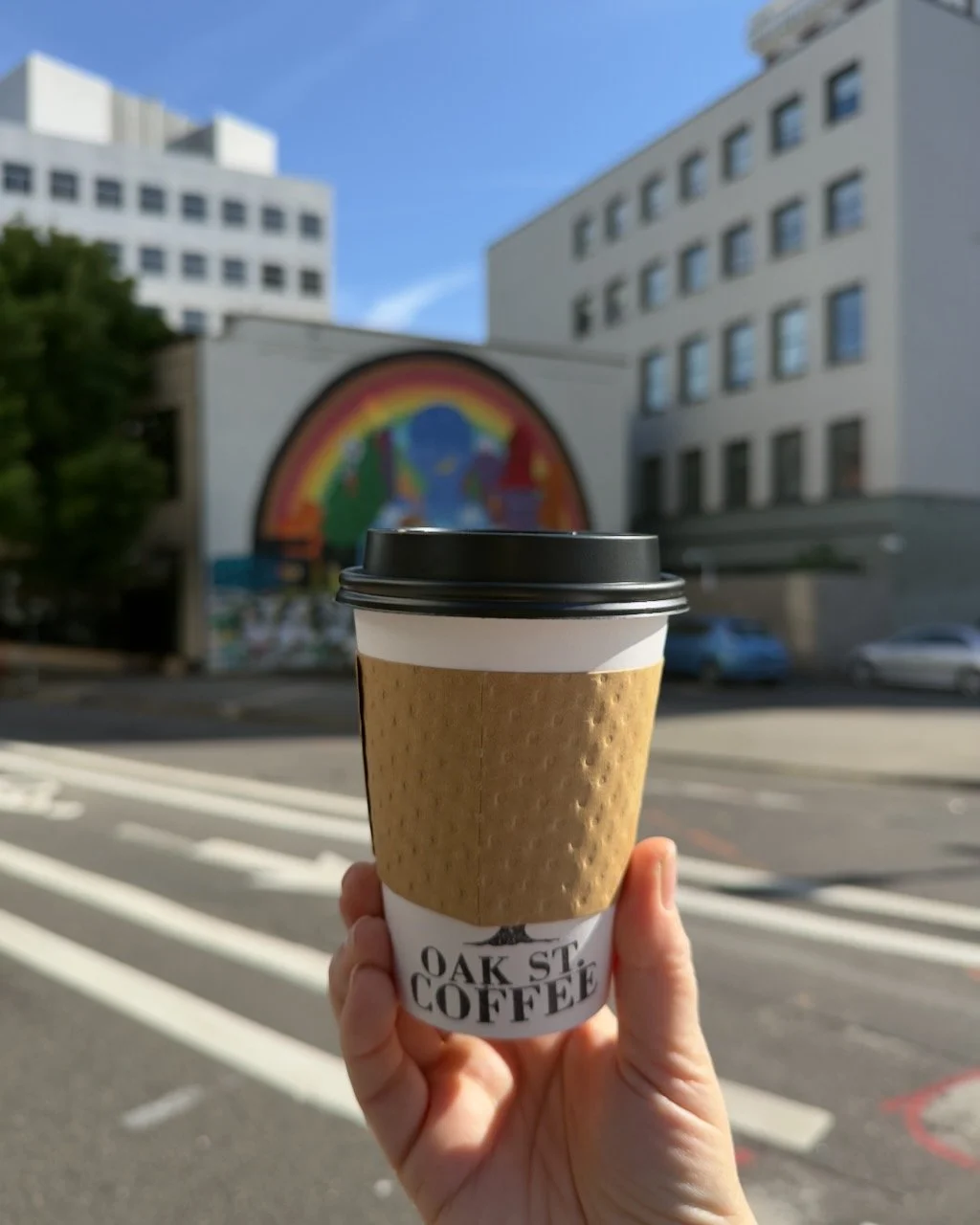
Oak St. Coffee. A small walk-up stand inside the parking garage at SW Oak and Broadway, across from the Benson Hotel. It's easy to miss, and worth finding. I had a white mocha with a homemade coconut caramel sauce, smooth with just the right amount of sweetness, and the almond poppyseed muffin held its own. On a later visit, my flat white was smooth with a slightly chocolatey note. You can tell the owner cares about both the coffee and the people buying it. It closes early afternoon, so make it a morning stop.
Less and More. In an office building lobby on SW 6th Avenue, right next to Pioneer Courthouse Square. We went back more than once. The tiramisu latte and the black sesame latte were both well made, with real flavor rather than just sweetness. The owner and staff are friendly, and drinks come out fast, which matters when you're trying to keep a shoot on schedule. Its coffee comes from the same roaster as Superjoy, so if you love one, try the other. The original location is a few blocks away, inside a converted 1970s bus shelter on SW 5th Avenue. It's worth a quick photo even if you get your coffee at the Square.
Stumptown Coffee. Downtown on SW Harvey Milk Street, next to the Ace Hotel. Stumptown is a Portland institution, and the name that put the city's coffee on the map. I went in to see whether the coffee still lives up to the reputation, and it does. It was excellent. Look for the mural at the entrance before you head inside.
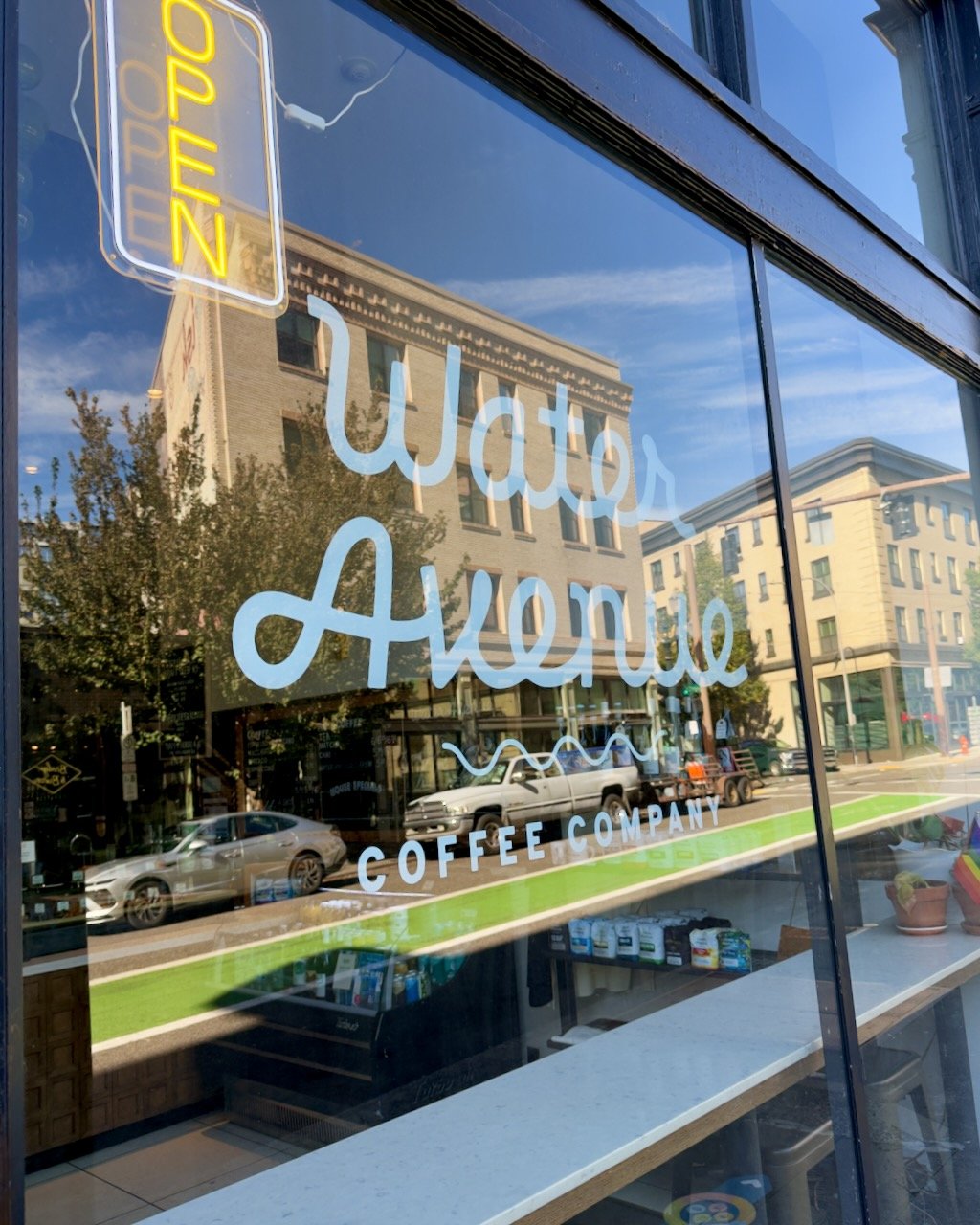
Water Avenue Coffee. Two blocks from the Ritz-Carlton. The coffee was quite good, and the pastry selection was solid. The staff were especially friendly, and we ended up talking with them for a while, picking up several good local tips for the rest of the trip. Go for the conversation as much as the coffee.
Case Study Coffee. Downtown on SW 10th Avenue. The space is well designed and worth seeing. The coffee was a bit acidic for me, so treat this as a stop for the interior and atmosphere rather than a must-have drink.
Photography Gear to Bring
Cameras
I shot Portland with my Canon EOS R5 Mark II and my Leica Q3. Any modern full-frame mirrorless body will do the job for your main camera, whether that's a Sony A7R V, a Nikon Z8, or similar. The Q3 turned out to be a natural fit for Portland's murals and neighborhoods. It's small, quiet, and easy to raise without drawing attention, which matters in a city where people are this friendly. You end up in conversations instead of standoffs.
Lenses
A standard zoom, 24–70mm or 24–105mm, covers most of what you need in the gardens and downtown. Bring a wide-angle, 15–35mm, for the interior of Powell's and for wider scenes inside the Japanese Garden. A 70–200mm is useful at Vista House and along the Gorge, where you'll want to compress the cliffs and river below.
If Mount Hood is on your list, and it should be, bring more reach. The mountain sits roughly fifty miles from downtown. At 200mm it's a small shape on the horizon. At 400–500mm it looms over the skyline the way your eye remembers it. A 100–500mm is the most practical way to get there without a heavy telephoto.
Accessories
A tripod is worth carrying for long exposures at the Gorge waterfalls. At the Japanese Garden, non-members pay a fee to use one because the paths are narrow, so decide in advance whether you need it. At Powell's, handhold or ask the staff first; a tripod in a crowded aisle won't make you friends.
Bring ND filters for the Gorge. Smoothing moving water there is one of the most rewarding techniques on this trip. Pack a rain cover too. You may not need it in September, but you will need it at Multnomah Falls, where the mist drifts across the viewing area in any season. From October through spring, treat it as essential.
Drones
Leave the drone at home for most of this trip. Vista House sits on Oregon State Parks land, and Oregon State Parks prohibits drone takeoff and landing on park property outside designated areas. The Japanese Garden is private property. Anywhere else, check the B4UFLY app before you fly, since parts of the city sit in controlled airspace near PDX.
iPhone Tips
The Japanese Garden and the International Rose Test Garden both photograph well on a phone if you use Portrait mode selectively. Save it for individual blooms or garden details rather than wide scenes, where it flattens the layered depth that makes these gardens work.
At Powell's, switch to the 0.5x lens to take in the scale of the shelves. In the dimmer sections, let Night mode kick in when it appears, and hold still. Mixed lighting can push your shots warm, so check the white balance when you edit.
For the Keep Portland Weird mural and other street art, shoot straight on rather than at an angle to keep the lines from skewing.
At Multnomah Falls, shoot a Live Photo, then switch the effect to Long Exposure in your Photos app. You'll get smooth, silky water without a tripod or filter.
For Mount Hood from the city, use your phone's longest telephoto lens. It won't match a 500mm, but it will make the mountain read as a mountain rather than a smudge.
Best Photography Locations
Portland Japanese Garden
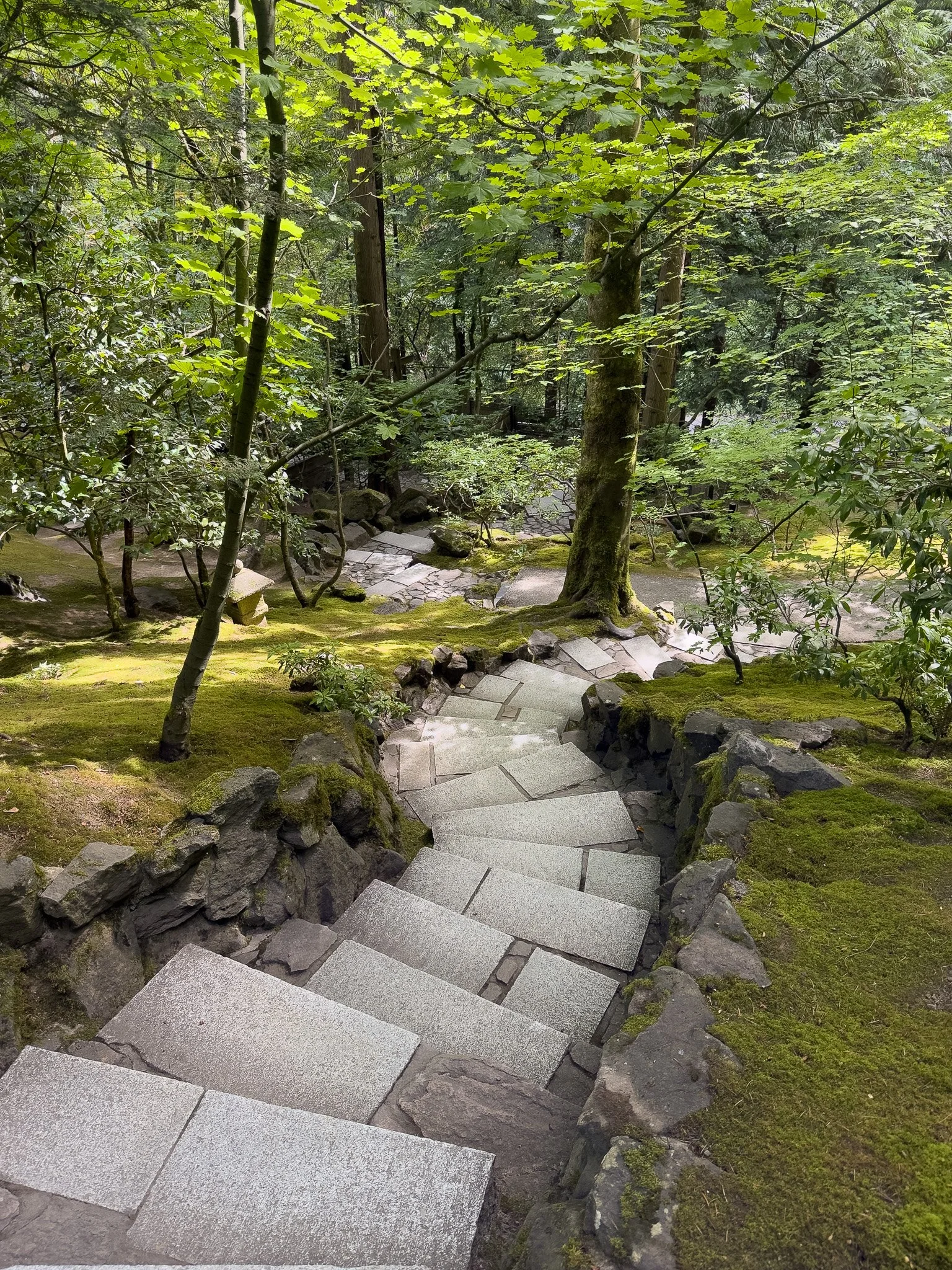
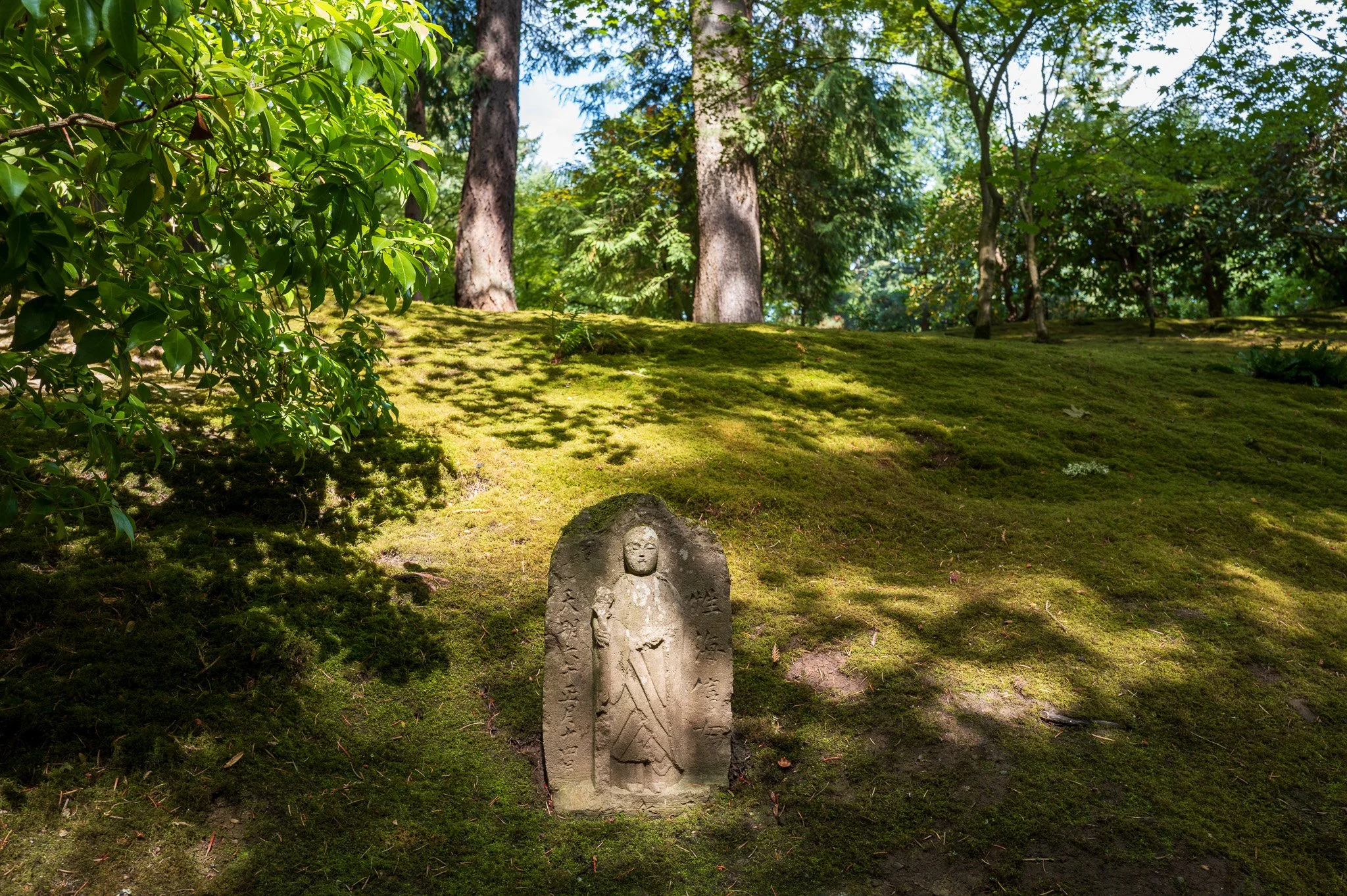
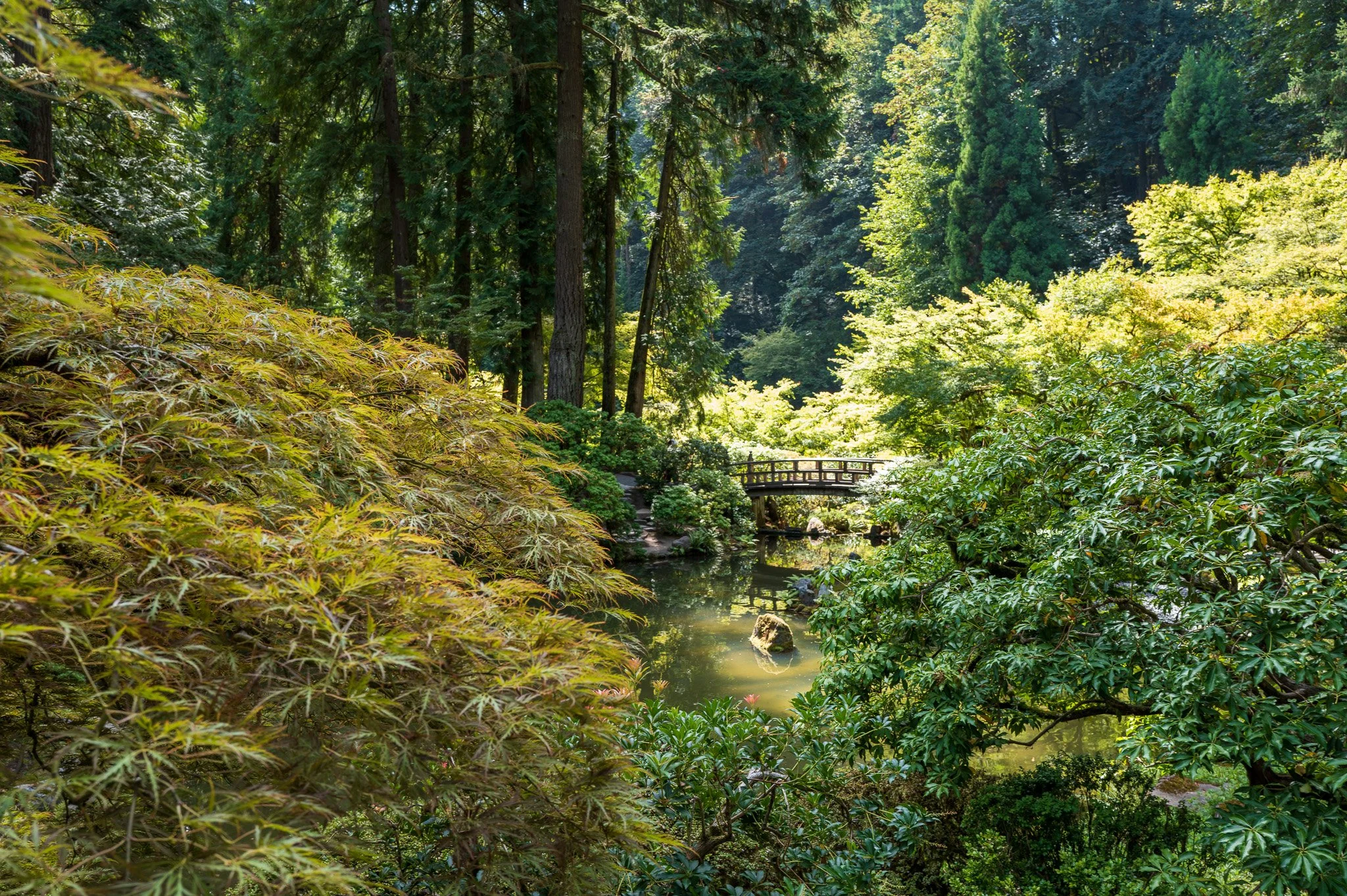
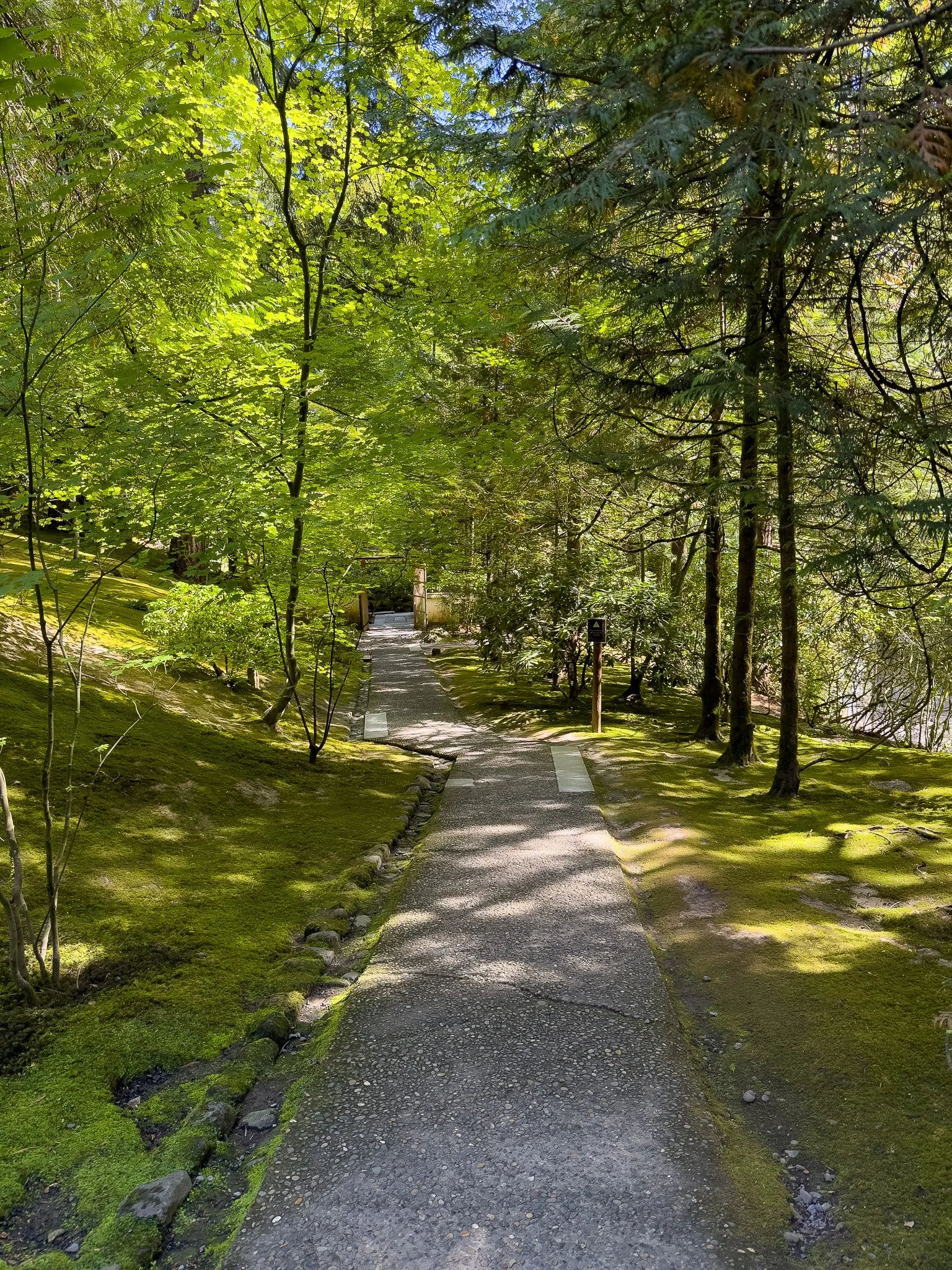
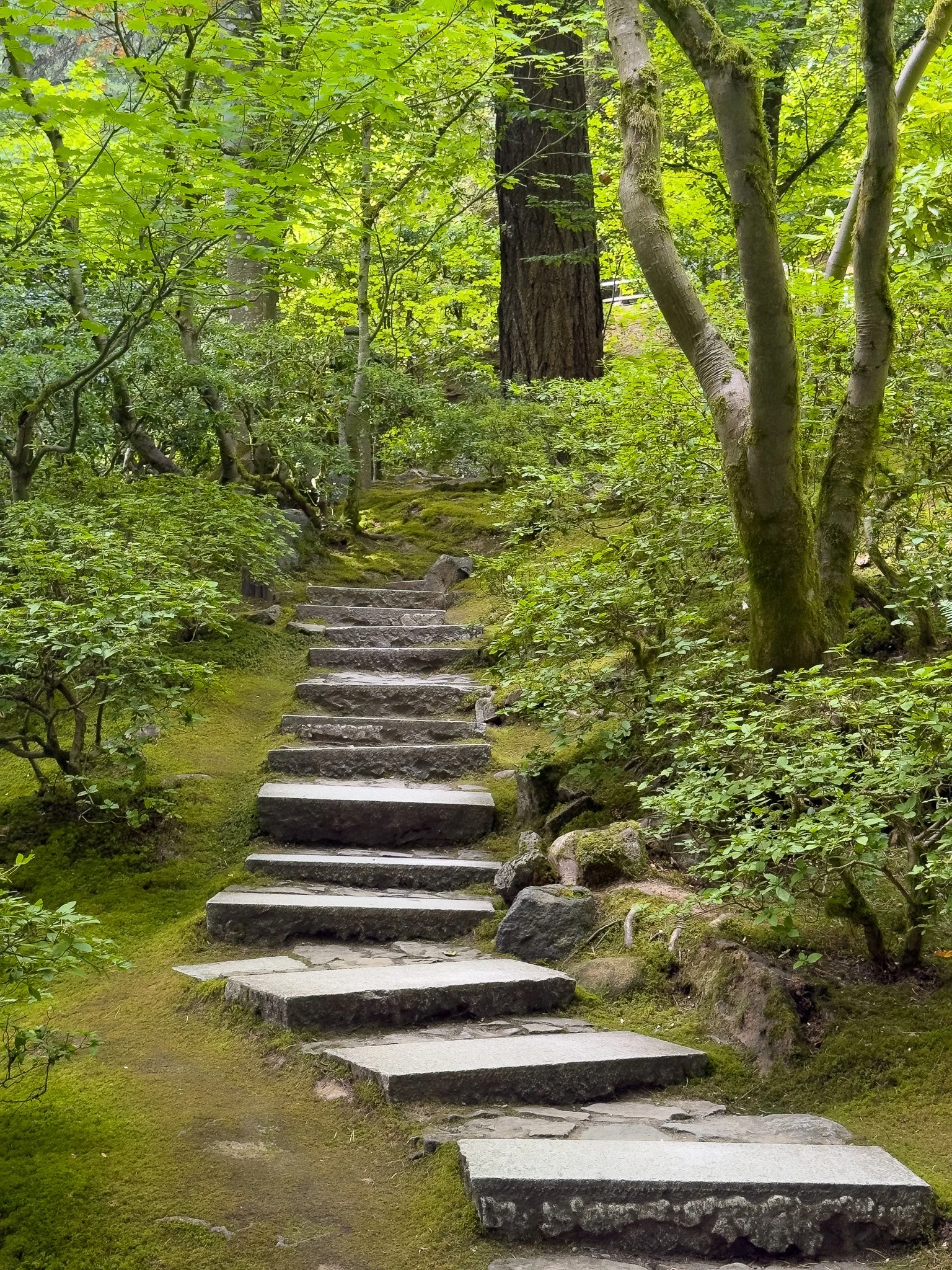
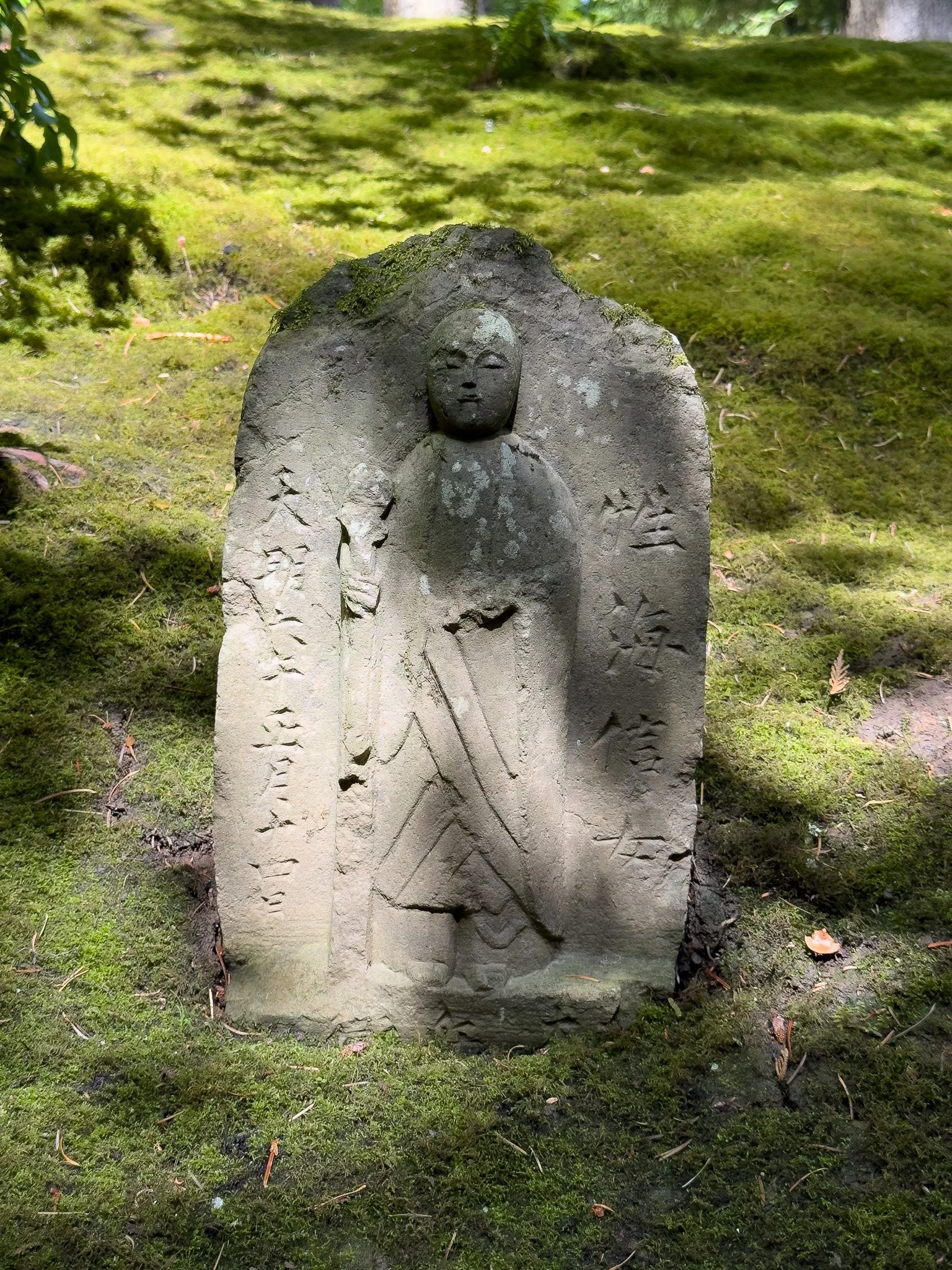
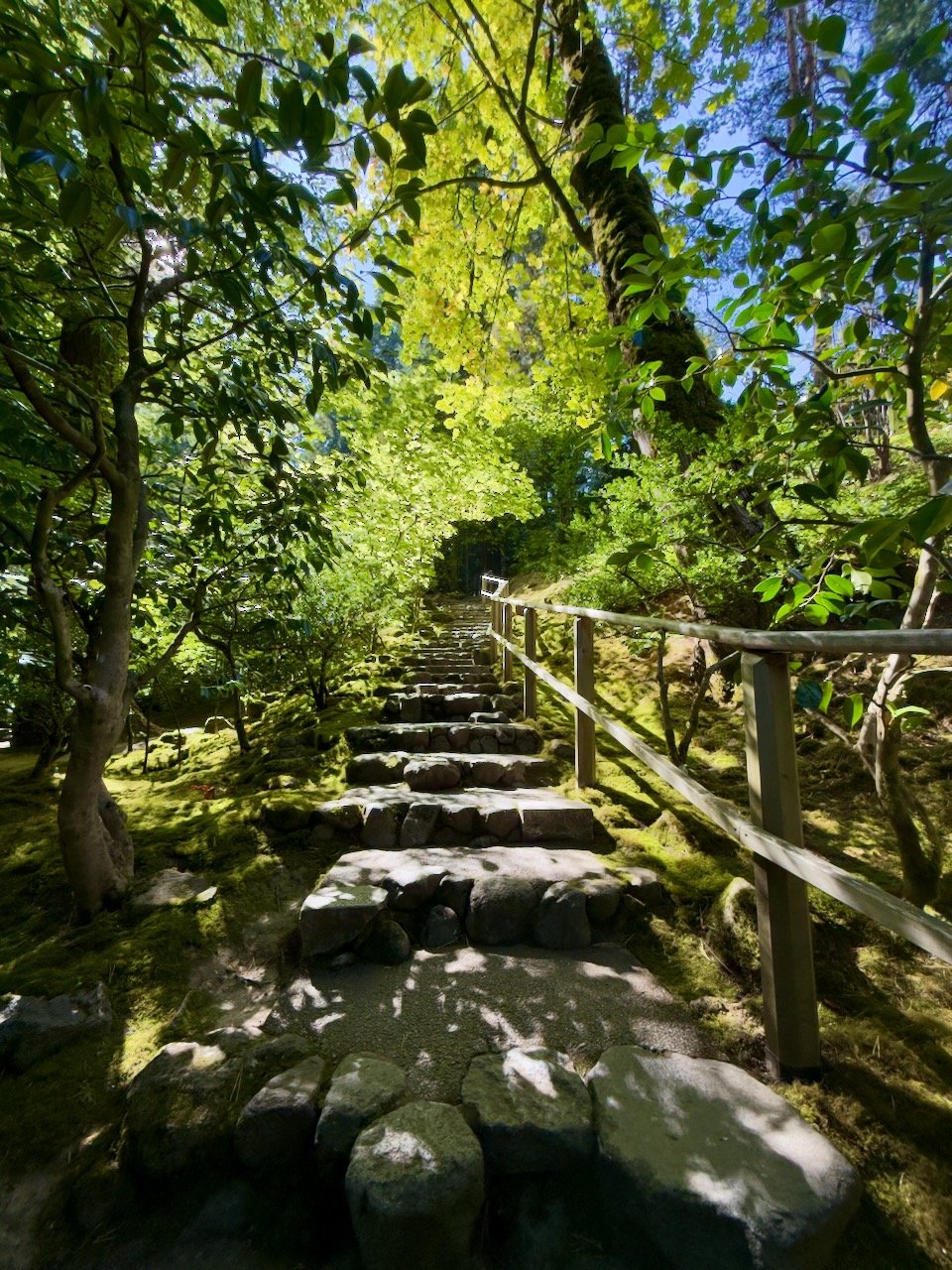
Widely considered one of the most authentic Japanese gardens outside Japan, this is the anchor photography stop in Portland. Eight garden styles share a compact hillside site in Washington Park, each with its own character, from the Strolling Pond Garden to the Sand and Stone Garden.
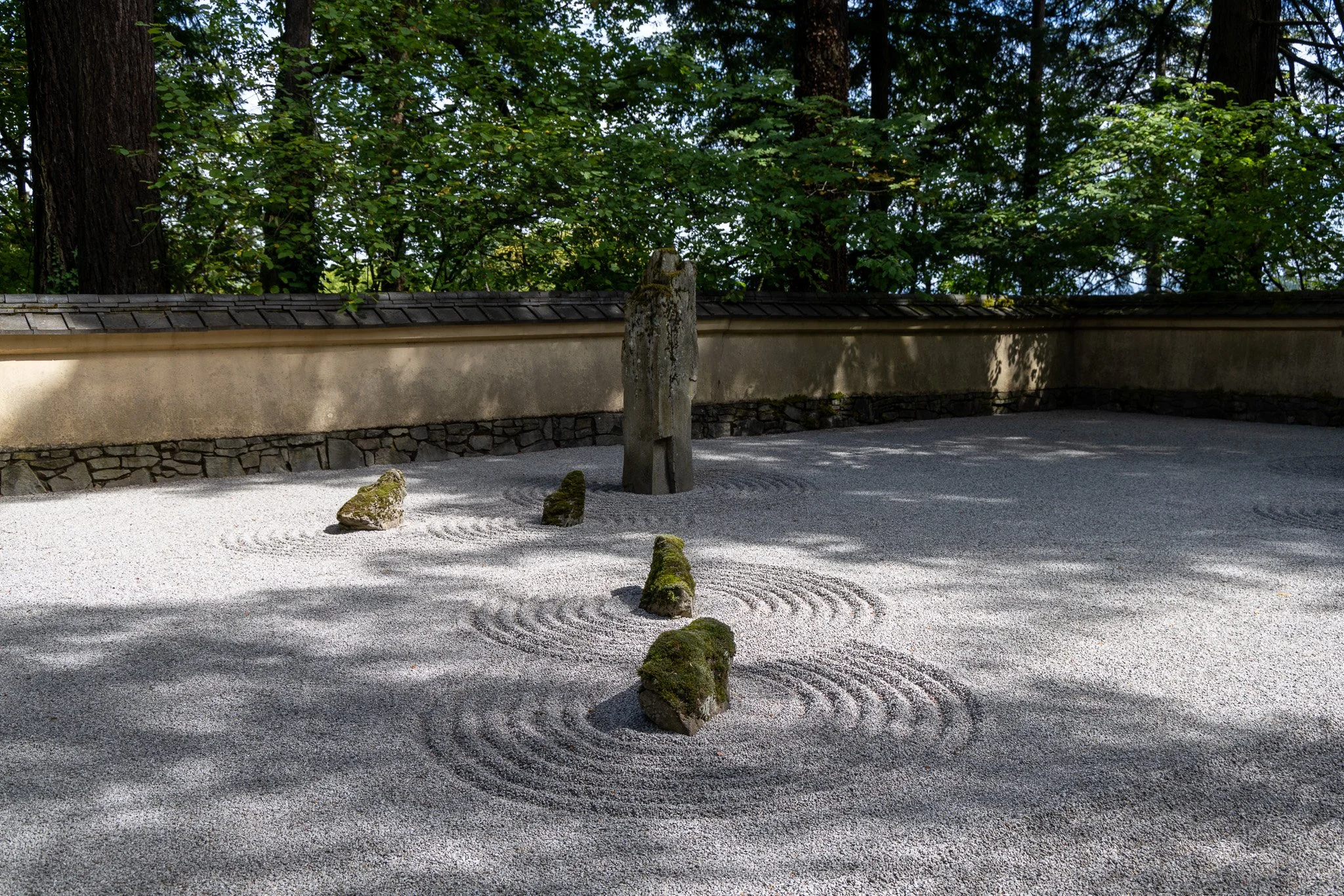
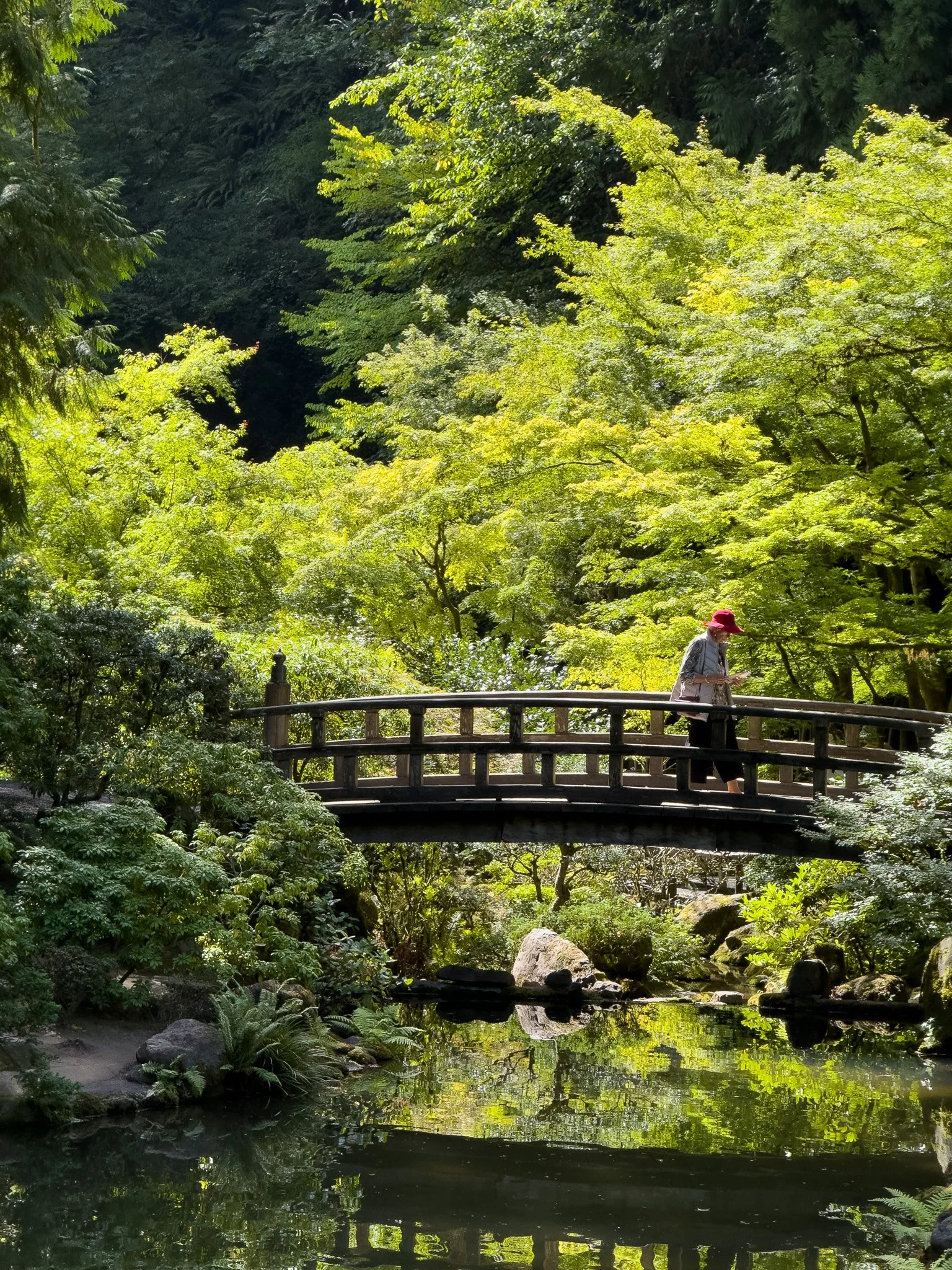
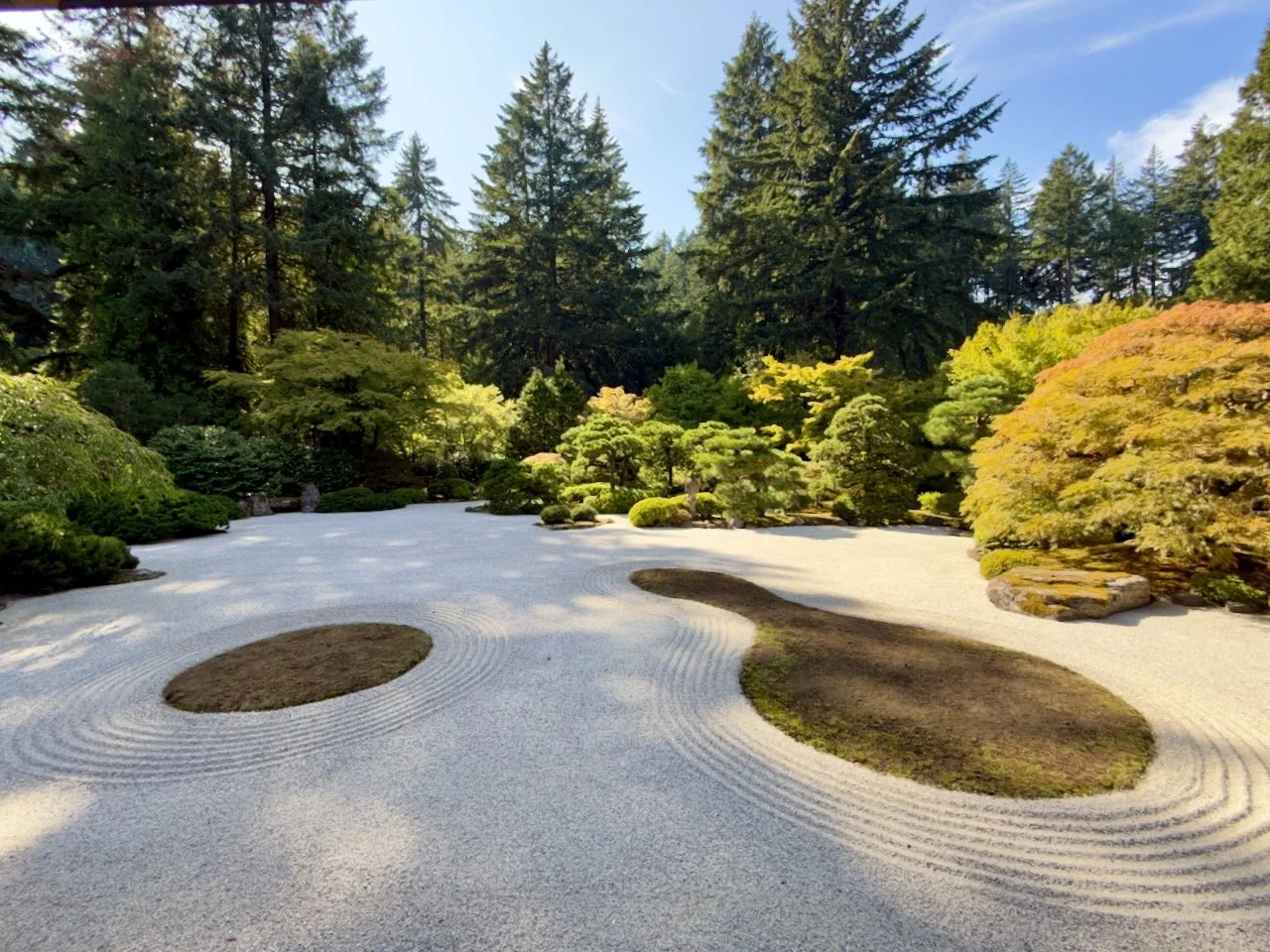
The light filtering through the maples changes the mood of the space through the day, and every turn in the path gives you another angle. I loved the Sand and Stone Garden, the Zen garden, with its raked gravel and quiet pathways. My favorite photograph, though, came at the bridge over the pond, when a woman in a red hat walked across it. One spot of color against all that green made the frame. The Umami Café, designed by Kengo Kuma, is worth photographing for the architecture alone. We liked the Garden enough to return two days later without our cameras. It's one of the most peaceful places in the city if you give it time.
📷 Pro Tip: Arrive right at opening on a weekday, when the Garden is quiet. At the bridge in the Strolling Pond Garden, frame your composition first, then wait. An empty bridge is pretty; a single person crossing it, especially in a bright color, gives the scene scale and a story. In the Sand and Stone Garden, shoot along the lines of the raked gravel rather than across them, and let the pathways lead the eye. A 24–70mm handles most of the Garden. Bring a 70–200mm for isolating details, like a single maple leaf against moss. Overcast days give you soft, even light, and a light rain makes the moss glow. The Pavilion overlook promises a view of Mount Hood, but on our visit we could barely make it out, so treat it as a bonus rather than a plan.
📱 iPhone Tip: At the bridge, lock your focus and exposure by pressing and holding on the bridge, then wait for someone to walk into the frame. Switch to Burst mode, by holding the shutter and sliding left, so you catch the step where they're centered. In the Zen garden, get low and use the 1x lens to let the raked lines run into the distance.
Best time: Opening time, or overcast afternoons for even light. Late October for fall color.
Access: Paid admission. Tripods carry an extra fee for non-members, and portrait sessions aren't allowed. Candid photos of other visitors are fine, but don't block the paths while you wait for your moment. The Garden is in Washington Park and reachable by car, MAX light rail, or the seasonal Washington Park shuttle.
International Rose Test Garden
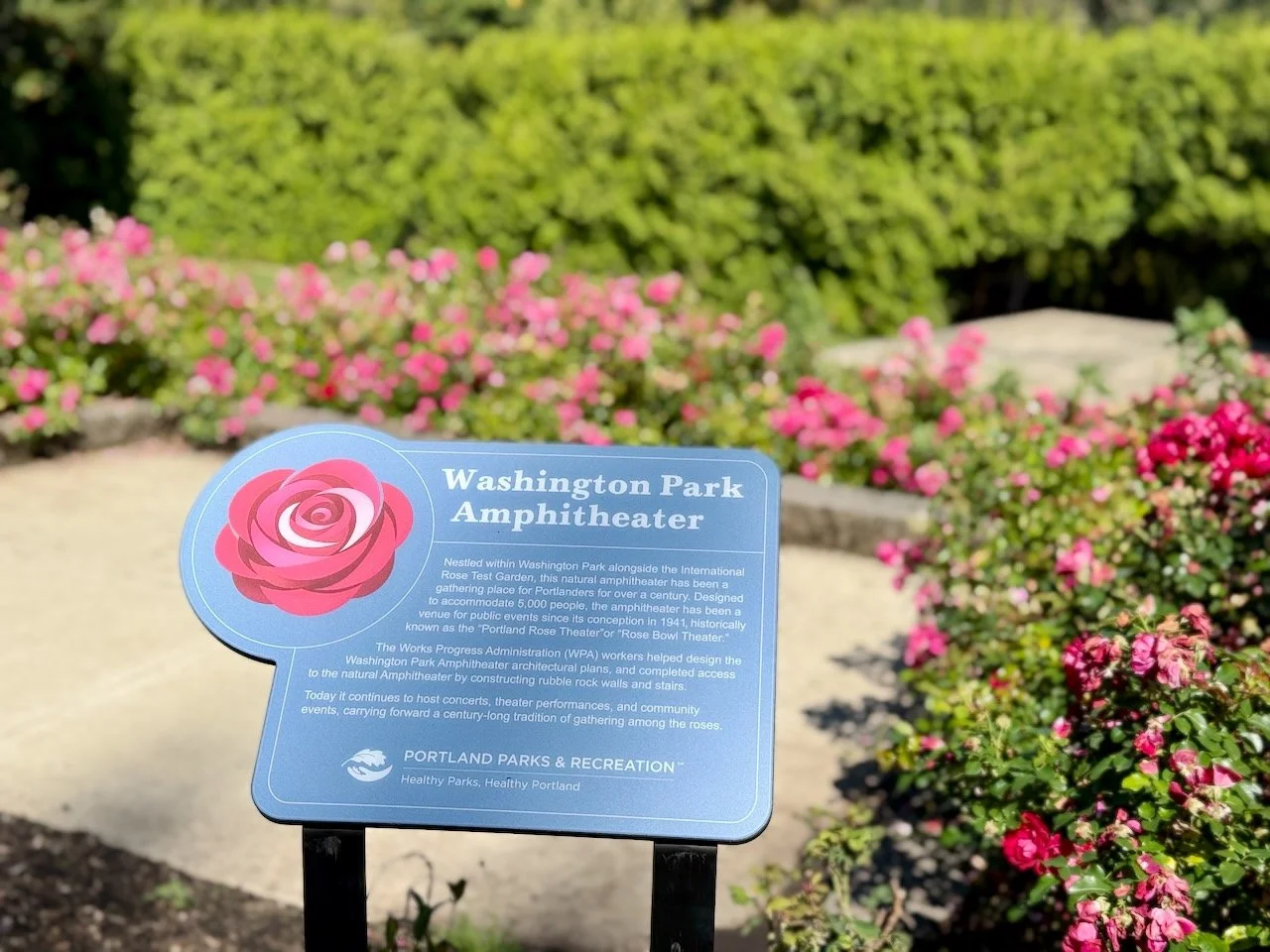
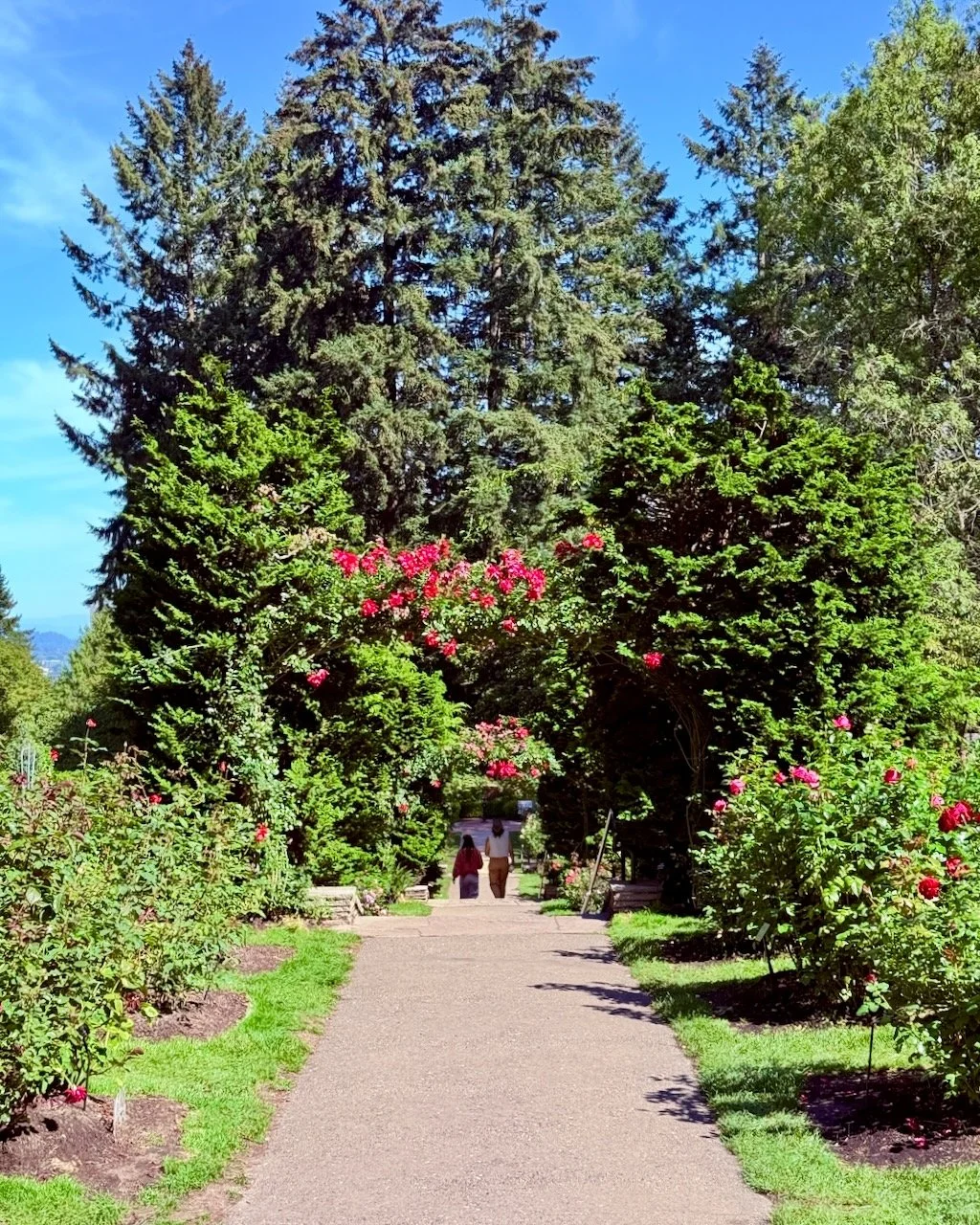
Just down the hill from the Japanese Garden in Washington Park, this is one of the oldest continuously operating rose test gardens in the United States. The grounds turned out to be much bigger than I expected, set on a hill high above the city. Walk slowly, because the fragrance is strong and changes distinctly from one variety to the next.
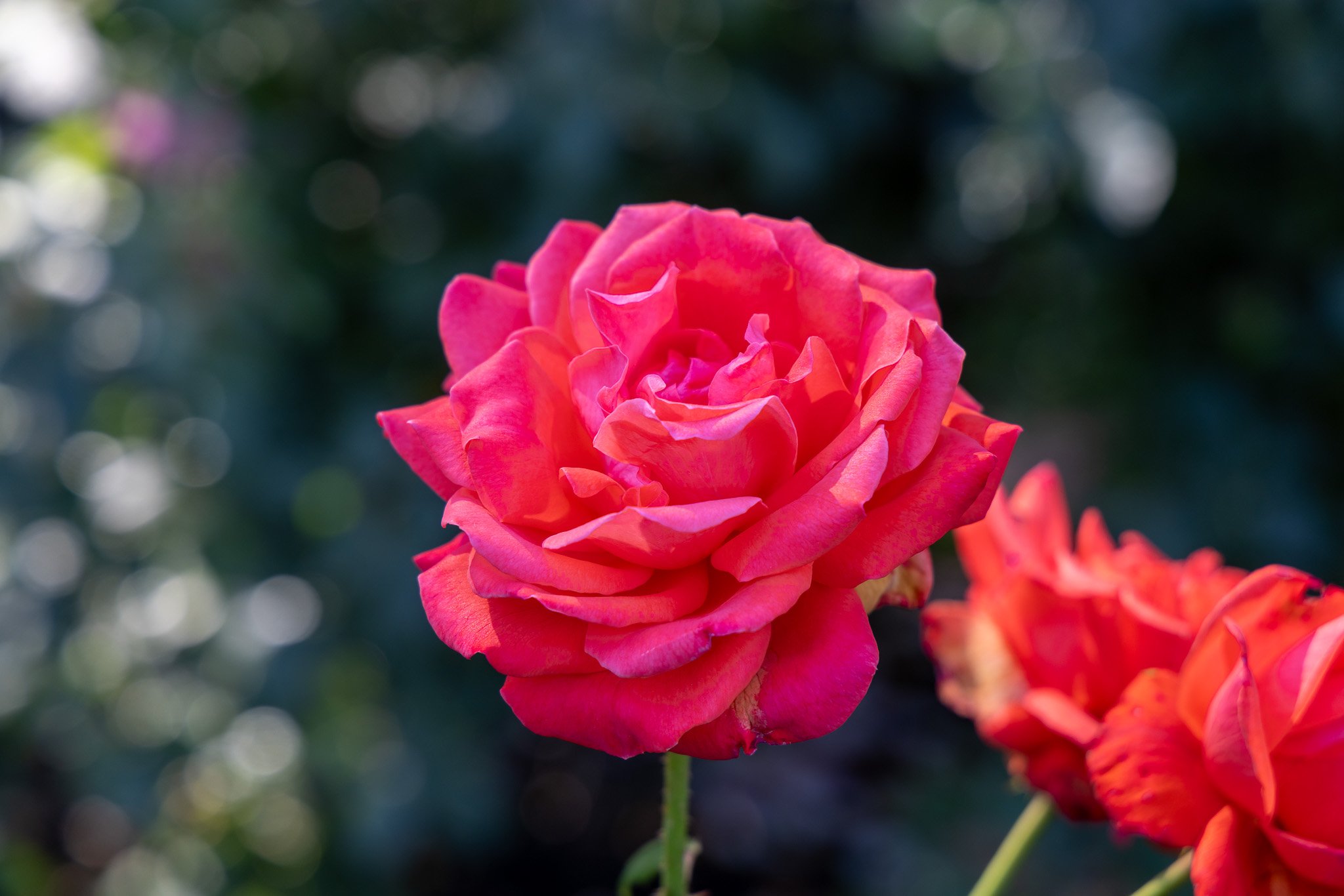
We visited in September, and the roses were still in bloom. My favorite was the Sunset Horizon floribunda, which opens bright yellow and shifts through deep pink to cherry red as it ages. On a single bush, you can find all three colors at once, which makes it a gift for photographers. But don't spend the whole visit behind the camera. It's a beautiful place to simply sit and look at the roses.
📷 Pro Tip: We went in mid-afternoon, and that light works well here. The sun comes from behind you as you face the city, lighting both the blooms and the skyline. Use the terraced beds to put roses in the foreground with downtown behind them. Stop down to f/8 or f/11 with a 24–70mm if you want both the blooms and the skyline sharp. For close-ups, switch to a 70–200mm or a 100mm macro at a wide aperture to isolate a single bloom. If you can come back in the morning, you'll get a different garden: roses backlit, with the sun glowing through the petals. On a very clear day, Mount Hood can appear behind the city. We didn't see it on our visit, so treat it as a bonus.
📱 iPhone Tip: Use Portrait mode on a single bloom, and look for a multicolored bush like the Sunset Horizon so one frame shows the whole color shift. For the skyline shot, switch back to Photo mode so the city stays sharp, and tap on the roses to set your focus.
Best time: Mid to late afternoon for the skyline and front-lit blooms. Morning for backlit petals. Peak bloom runs late May through June, but the roses were still going strong when we visited in September.
Access: Free and open to the public. Parking is paid and tight on weekends, so arrive early and use Parking Kitty. Stay on the paths and leave the roses alone, since these are working test beds.
Street Photography in Portland
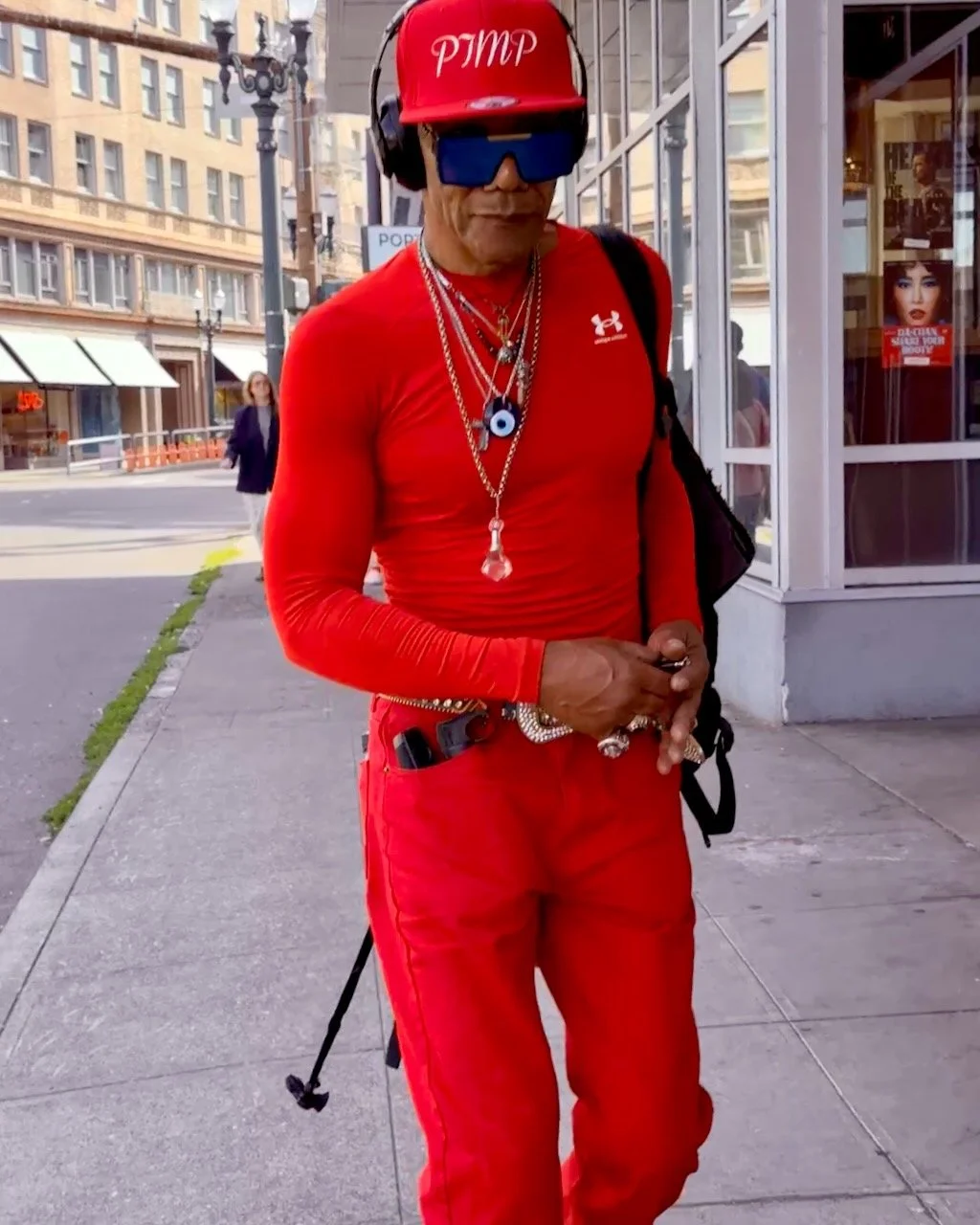
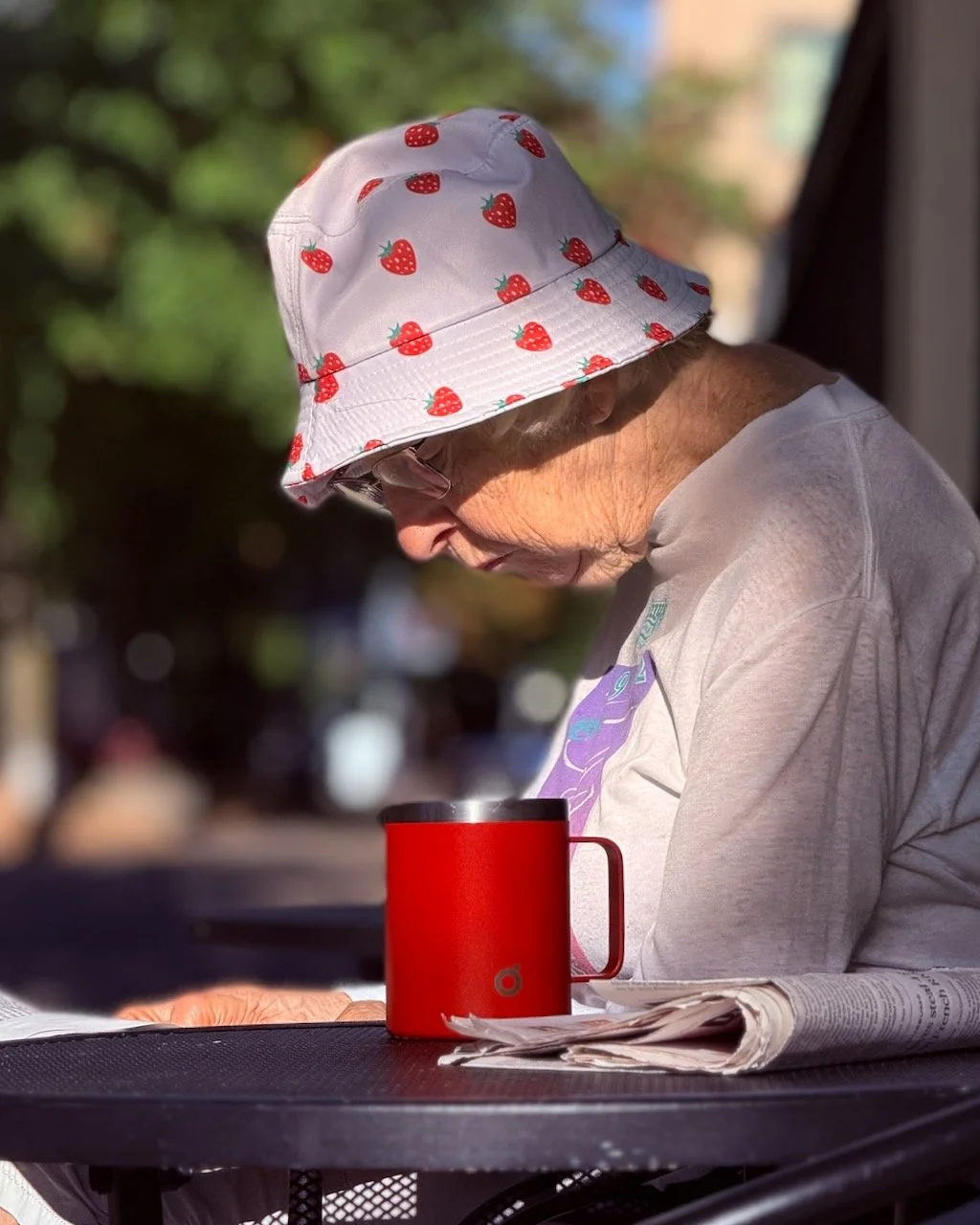
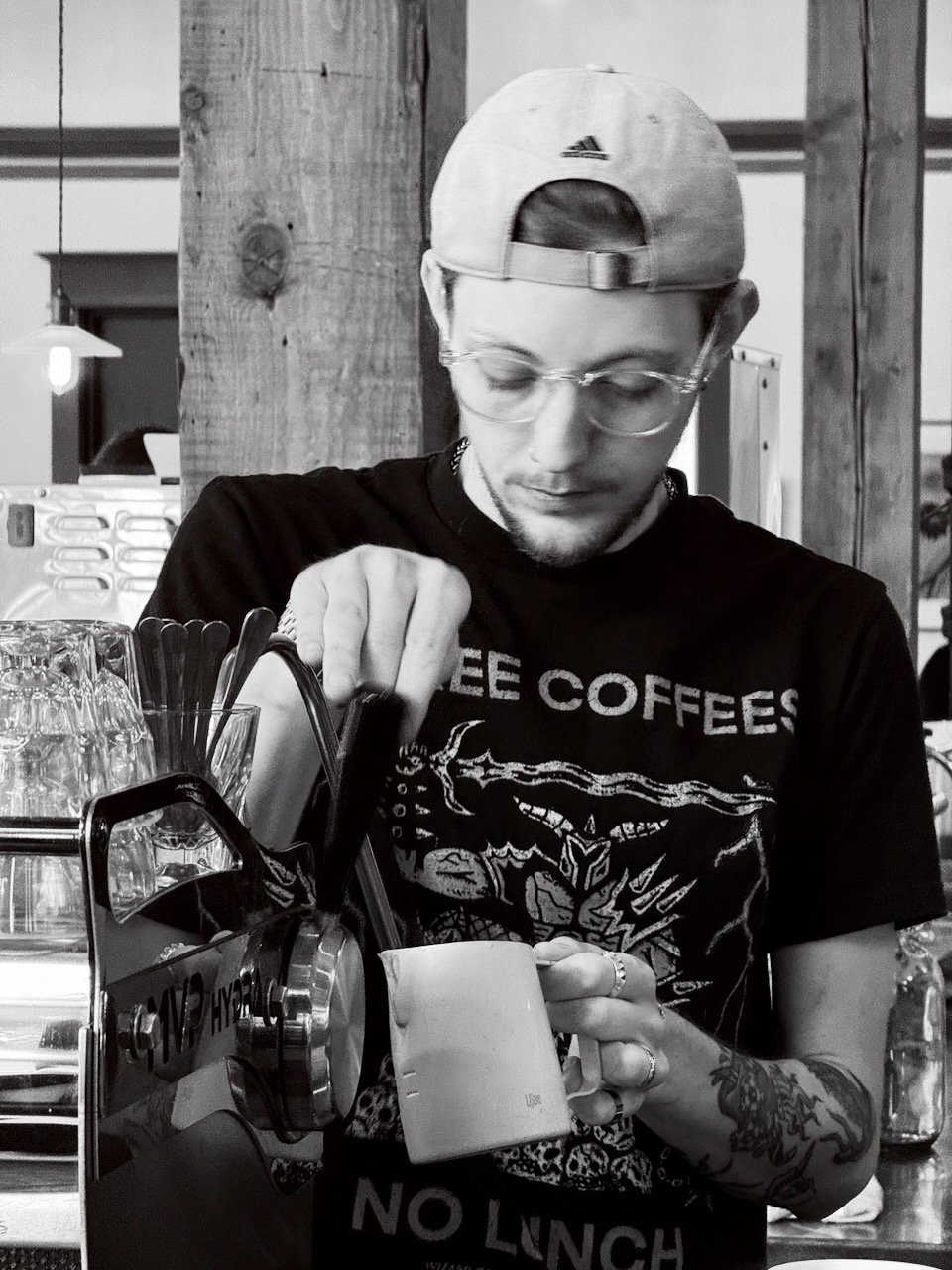
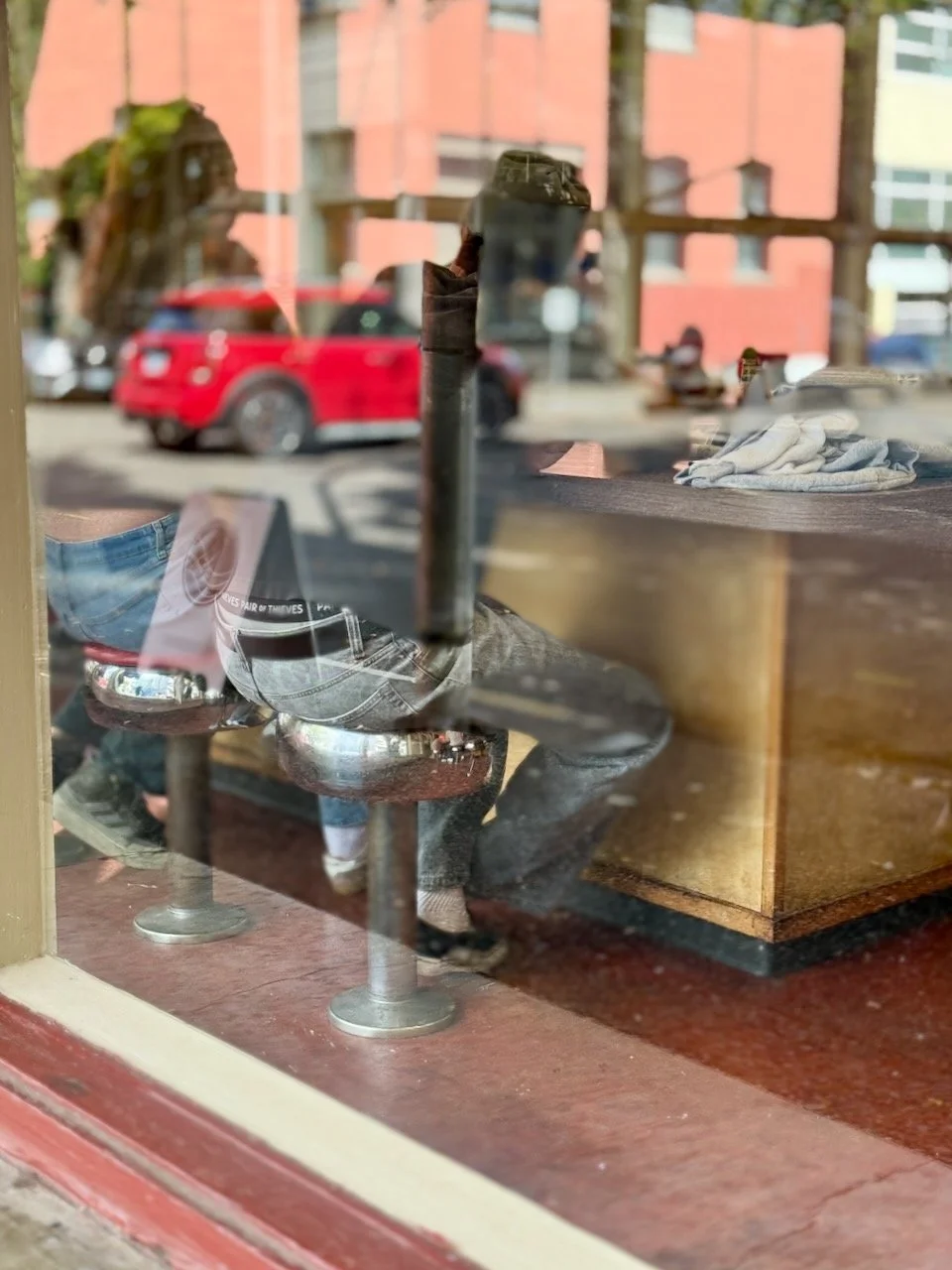
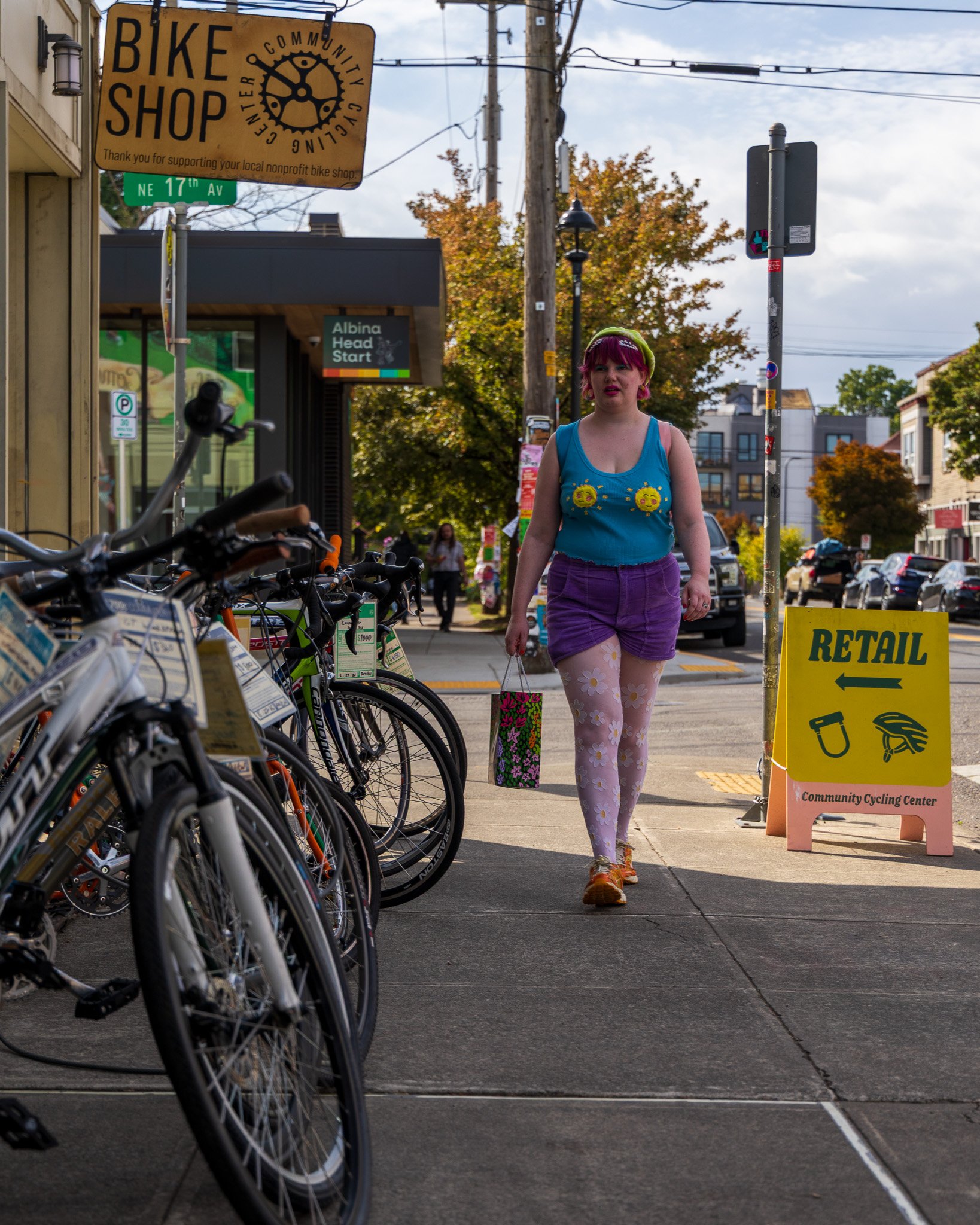
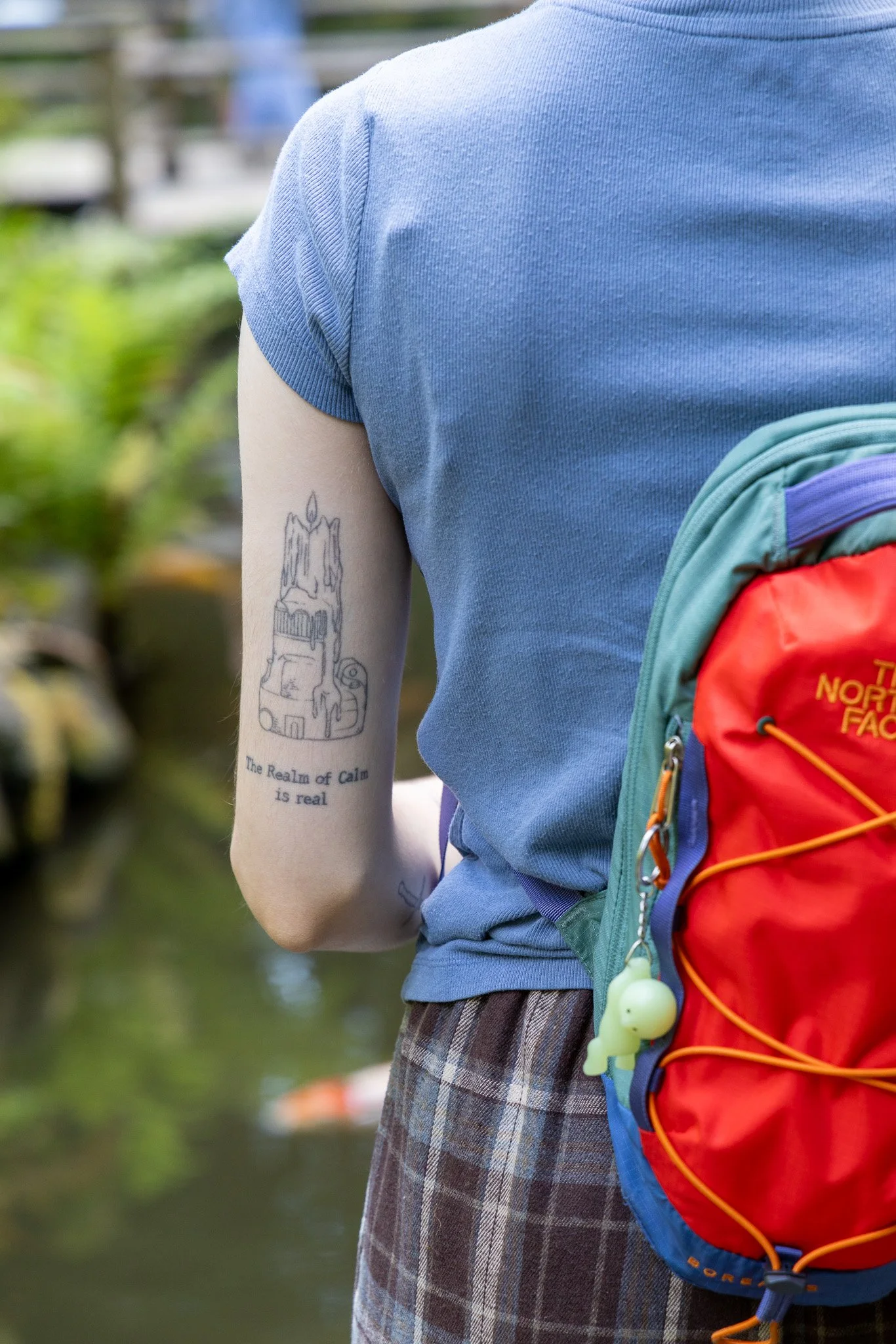
Portland rewards a photographer who walks with no fixed destination. That's how I spent our first morning, camera in hand and no plan, and it set the tone for the whole trip. Between the coffee shops, the food carts, the murals, and some of the friendliest people I've met in any American city, the stream of candid moments never stops. The best of it, for me, was downtown and along NE Alberta Street. Both are full of people worth photographing.
📷 Pro Tip: Work downtown in the morning. Start at Pioneer Courthouse Square, where the city converges and people linger, then walk the surrounding blocks as the coffee crowd heads to work. Save Alberta for the afternoon, when the street fills up. We started with ice cream at Salt & Straw and then wandered the neighborhood, and that's the way to do it. The line outside Salt & Straw is a steady source of characters, and the murals make ready-made backdrops. Find a good wall, frame it, and wait for someone interesting to walk into it. I shot much of this with my Leica Q3. Its 28mm lens keeps you close and part of the scene, and the small body doesn't put people on guard. A 24–105mm works if you'd rather react from a distance. Here's the Portland advantage: people say hello. Say it back, smile, and ask. You'll get more portraits and better conversations than you would in most cities.
📱 iPhone Tip: Keep your phone in hand with the camera ready, and use the 1x lens. It's the closest match to a 28mm and keeps your frames natural. Shoot in Live Photo so you can choose the exact moment afterward. On Alberta, set up in front of a mural, lock focus and exposure by pressing and holding on the wall, then wait for your subject.
Best time: Mornings downtown. Afternoons and early evenings on Alberta.
Access: Free and public. Downtown is easy on foot from most hotels. Alberta is a short Uber ride from downtown.


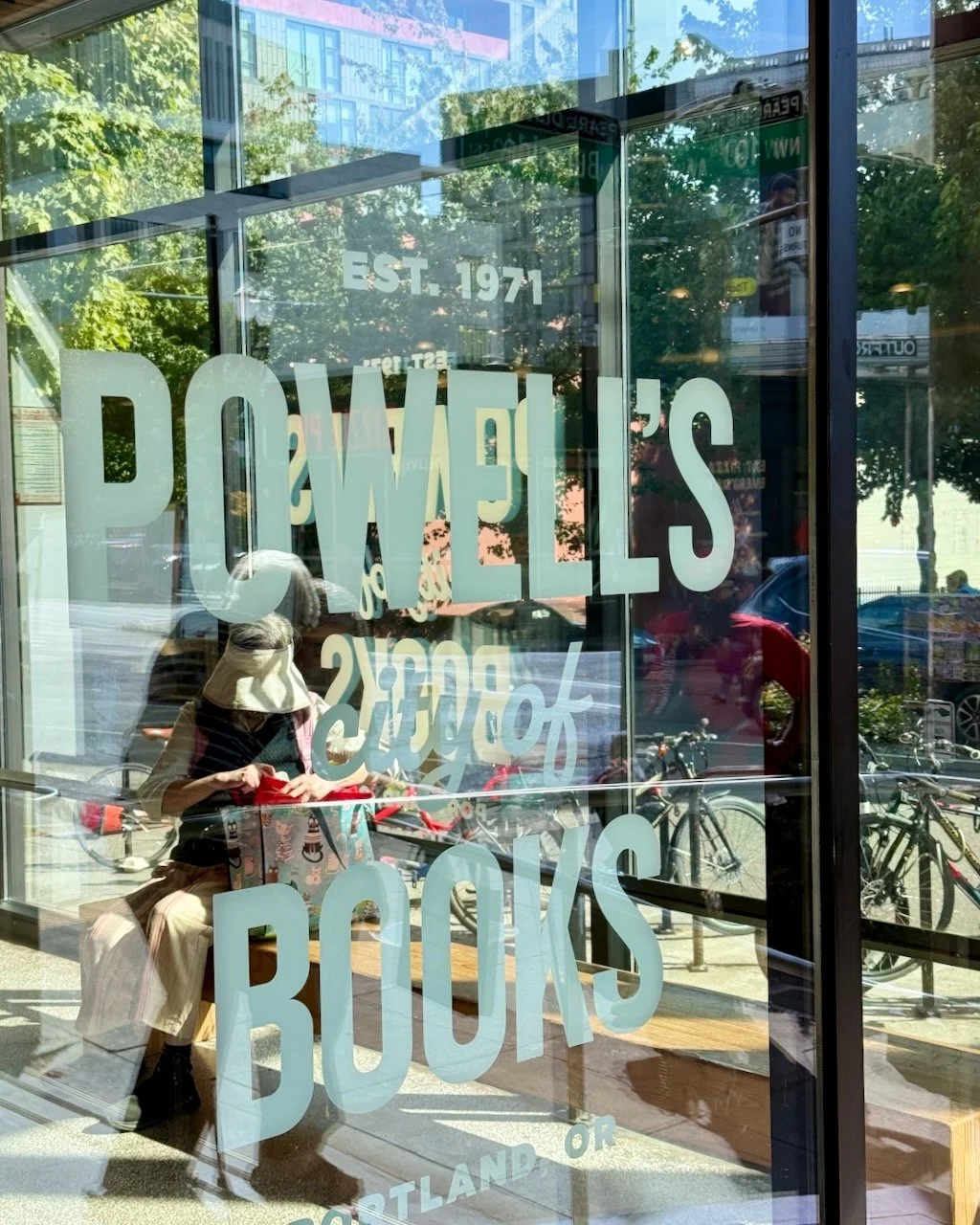
Powell's City of Books
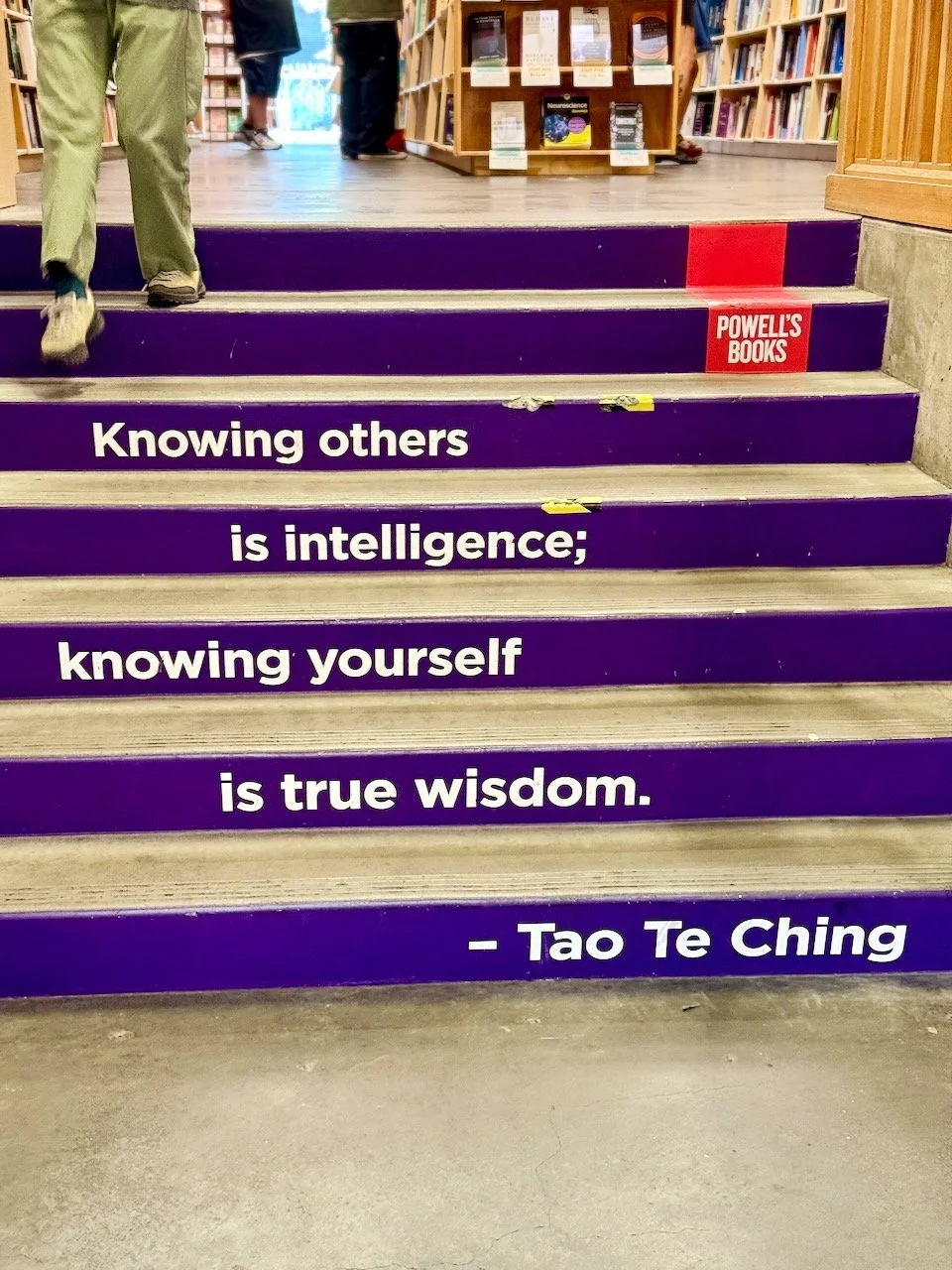
Powell's is the largest independent bookstore in the world, and it fills an entire city block. I had never seen a bookstore this size, with everything from rare editions to staff picks spread across nine color-coded rooms. For photographers, the real find is the photography section. It's huge, with more books on the craft and more monographs from photographers than I've seen in one place. Give yourself time there. I walked out with three books.
We came back a second time, and it reinforced something for me. So many good books never make a bestseller list because those lists often reflect marketing budgets as much as quality. A store this size surfaces work you would never find otherwise. Build real time into your visit. This is not a quick photo stop.
📷 Pro Tip: The best photographs here are of people. Readers lose themselves in the aisles, sitting on the floor, leaning against the shelves, or holding a book up to the window light, and that's what I photographed most. Work quietly with a small camera. My Leica Q3 was ideal, because it's discreet enough that no one looked up. Look for people framed by the shelves, and use the window light along the store's edges. For the architecture, a 15–35mm takes in the height of the shelves and the exposed structure. Handhold rather than set up a tripod, since the aisles fill quickly. Afterward, grab a coffee at Guilder, the café in the store's southwest corner. The window seats look onto Burnside and make a good spot for people watching. Keep it candid and respectful. People come here to get lost in a book, not to pose, so if someone notices you, smile, and if they seem uncomfortable, move on.
📱 iPhone Tip: Turn off the shutter sound by using the silent switch so you don't break anyone's concentration. Use the 1x lens for people in the aisles, and the 0.5x lens from the end of a long aisle for the scale of the stacks, holding the phone level so the shelves stay straight.
Best time: Weekday mornings for quiet aisles. Weekend afternoons if you want more people in your frames.
Access: Free to browse. On West Burnside at the edge of the Pearl District, a short walk from downtown hotels.
Keep Portland Weird Mural
Portland's unofficial motto is painted in big letters high on the side of a building at 350 W Burnside, and it's one of the most recognizable photo stops in the city. I walked past it on our first morning, on the way to the line at Voodoo Doughnut around the corner. It's a quick stop, but you can't photograph Portland's culture without it.
📷 Pro Tip: Come in the morning, before people start posing beneath it. Because the sign sits high on the wall, you'll be shooting upward. Cross the street and back up to keep the lines from converging, then straighten the verticals in post. A 24–70mm gives you room to work. Pair it with a doughnut at Voodoo, which is around the corner.
📱 iPhone Tip: Use the 1x lens from across the street, then use the Crop tool's perspective correction in Photos to straighten the building.
Best time: Morning, before the crowds.
Access: Free and public, in Old Town. Fine in daylight; I wouldn't walk this stretch after dark.
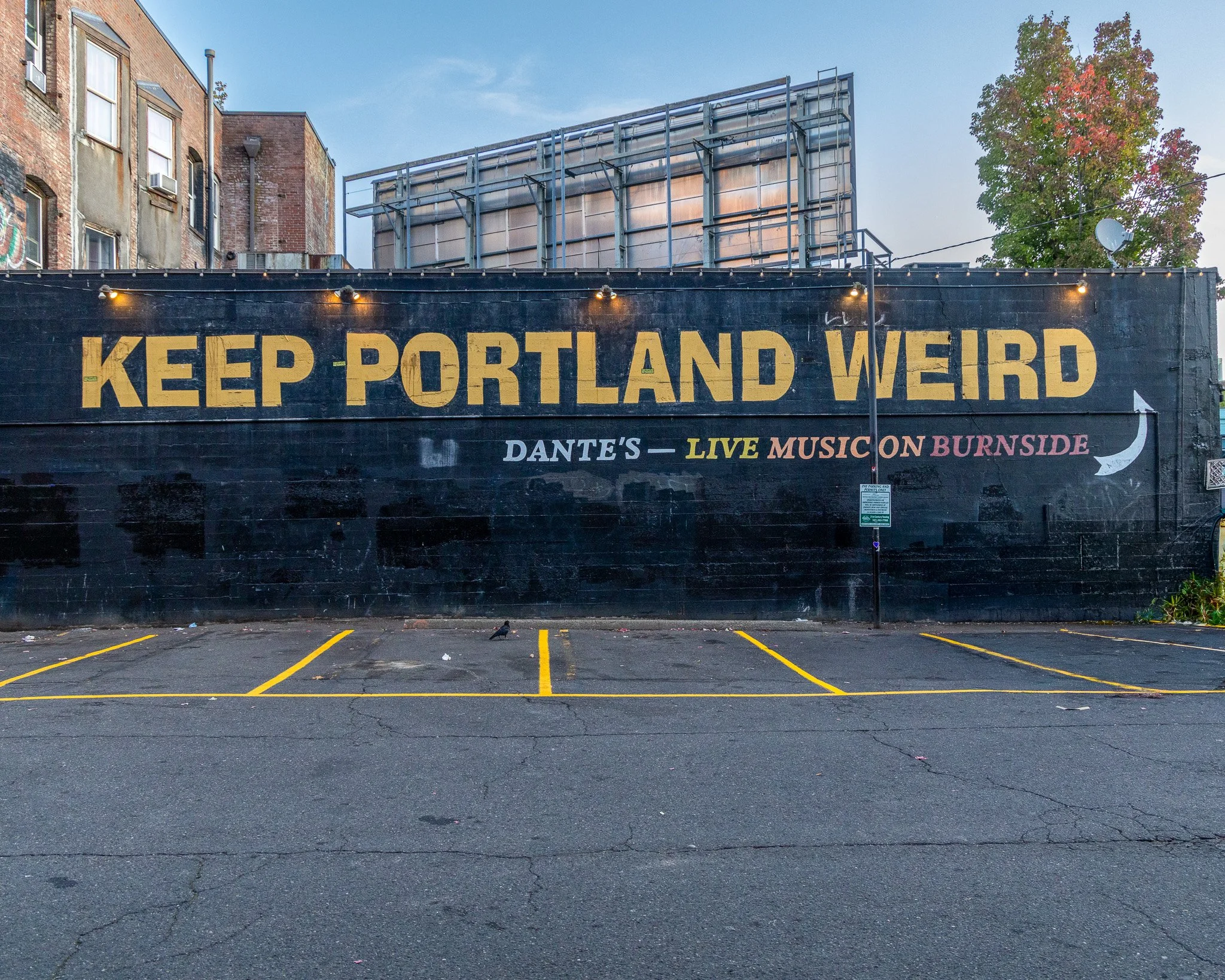
The famous Keep Portland Weird Sign right by Voodoo Donuts
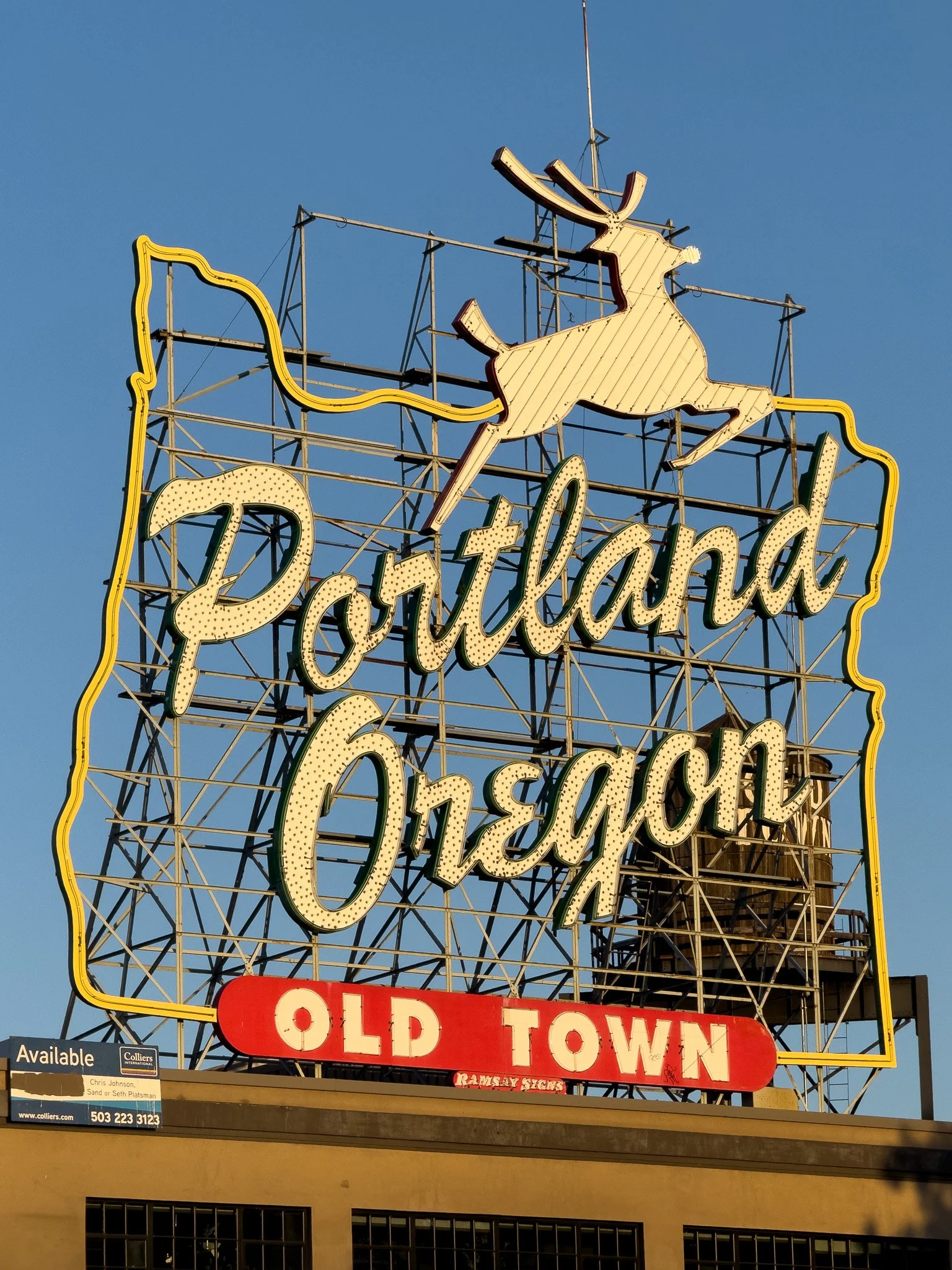
Welcome to Portland Sign “White Stag”
The White Stag sign, with its leaping deer and "Portland Oregon" in big letters, stands at the west end of the Burnside Bridge and is the city's best-known landmark sign. I photographed it on our first morning, on the way to Voodoo Doughnut. It's a quick, easy stop, and it belongs on the same route as the Keep Portland Weird sign a few blocks away.
📷 Pro Tip: Early morning is the easy, safe choice. The light is soft, the streets are quiet, and you can work it from several angles without hurry. A 24–70mm covers it from street level. If you want the neon lit, come at blue hour, just after sunset, when the sign glows against a deep blue sky rather than a black one. Shoot from the Burnside Bridge or the riverfront, where a 70–200mm lets you compress the sign against the buildings behind it. Or do what locals suggest: drive in, get your shot, and get back in the car rather than lingering.
📱 iPhone Tip: In the morning, use the 1x lens and step back far enough to include the leaping stag and the full sign. At night, brace your phone against the bridge railing and let Night mode do the work. Tap on the sign and drag the exposure slider down slightly so the neon doesn't blow out.
Best time: Early morning for an easy, quiet shot. Blue hour if you want the neon lit.
Access: Free and public, in Old Town. Fine in daylight. After dark, shoot from the bridge or from your car rather than walking the surrounding blocks.
Street Art and Graffiti
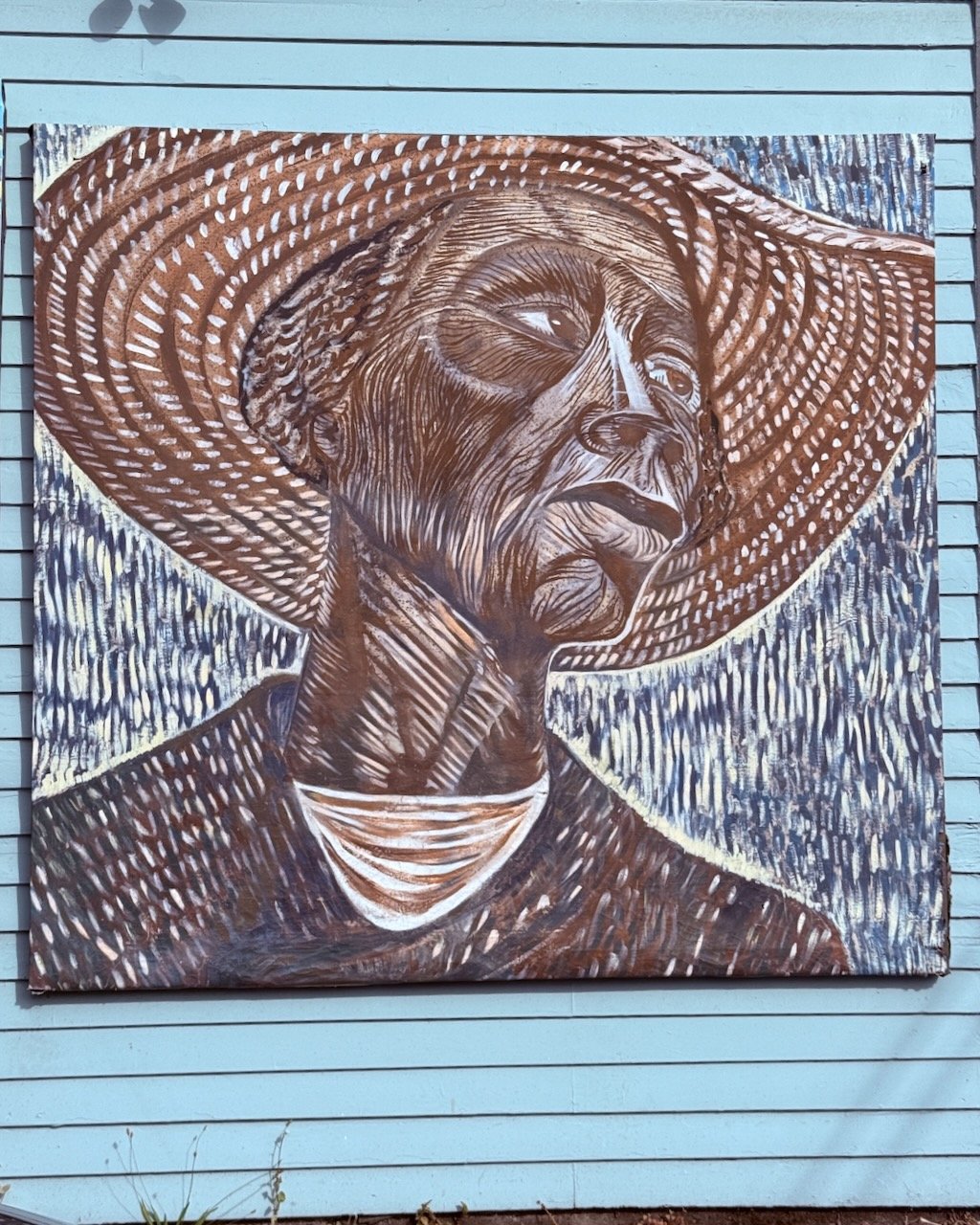
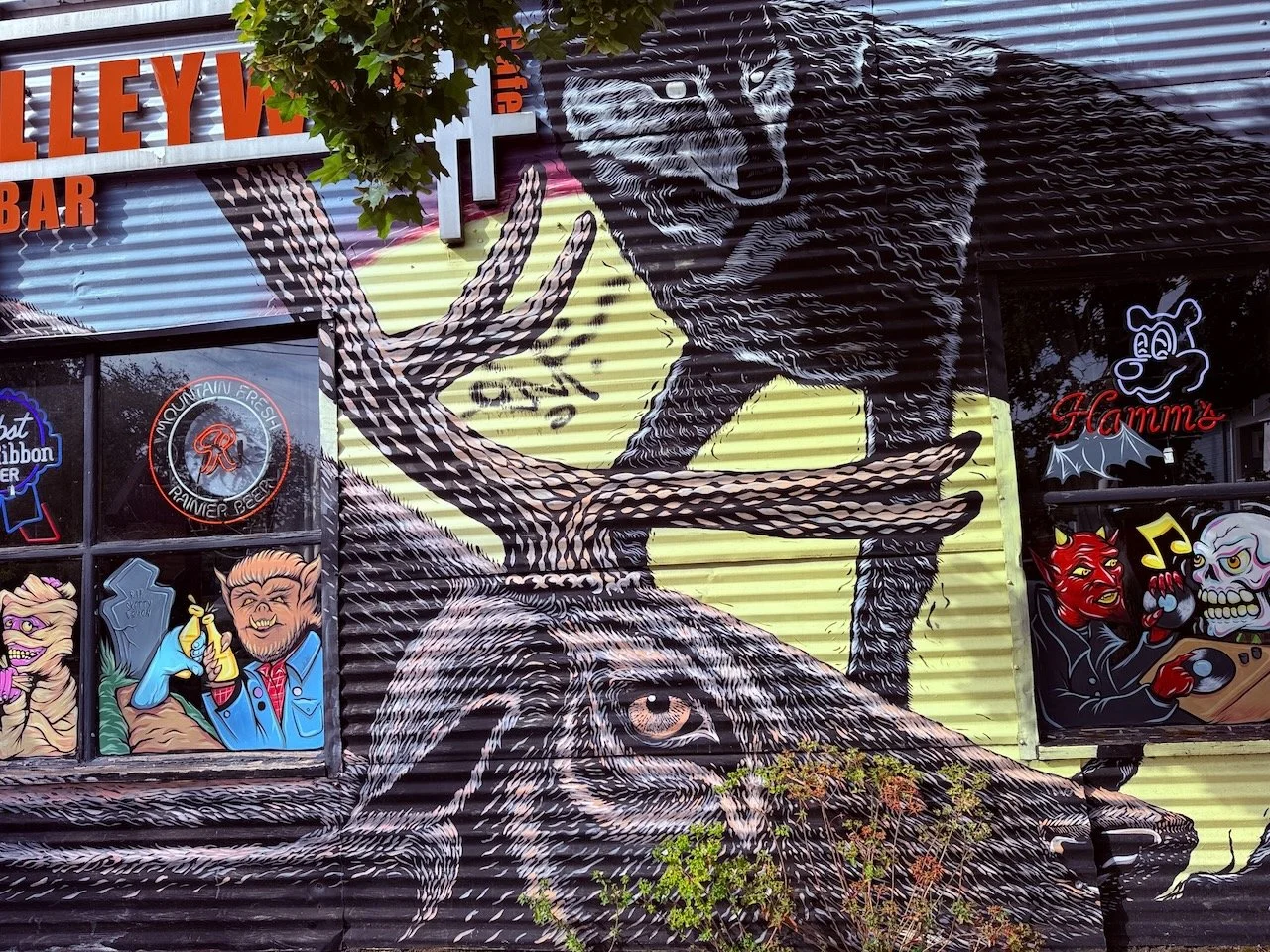
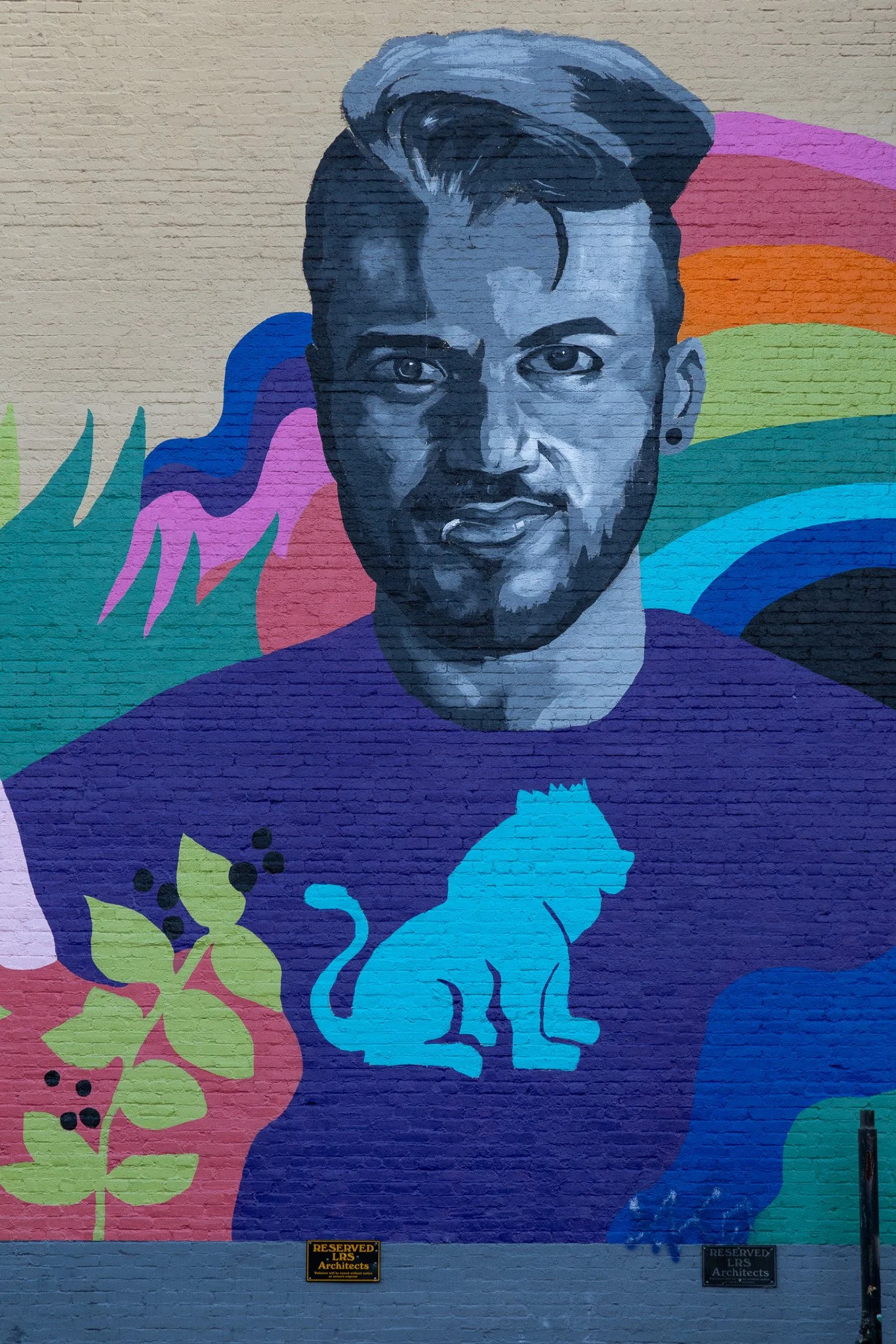
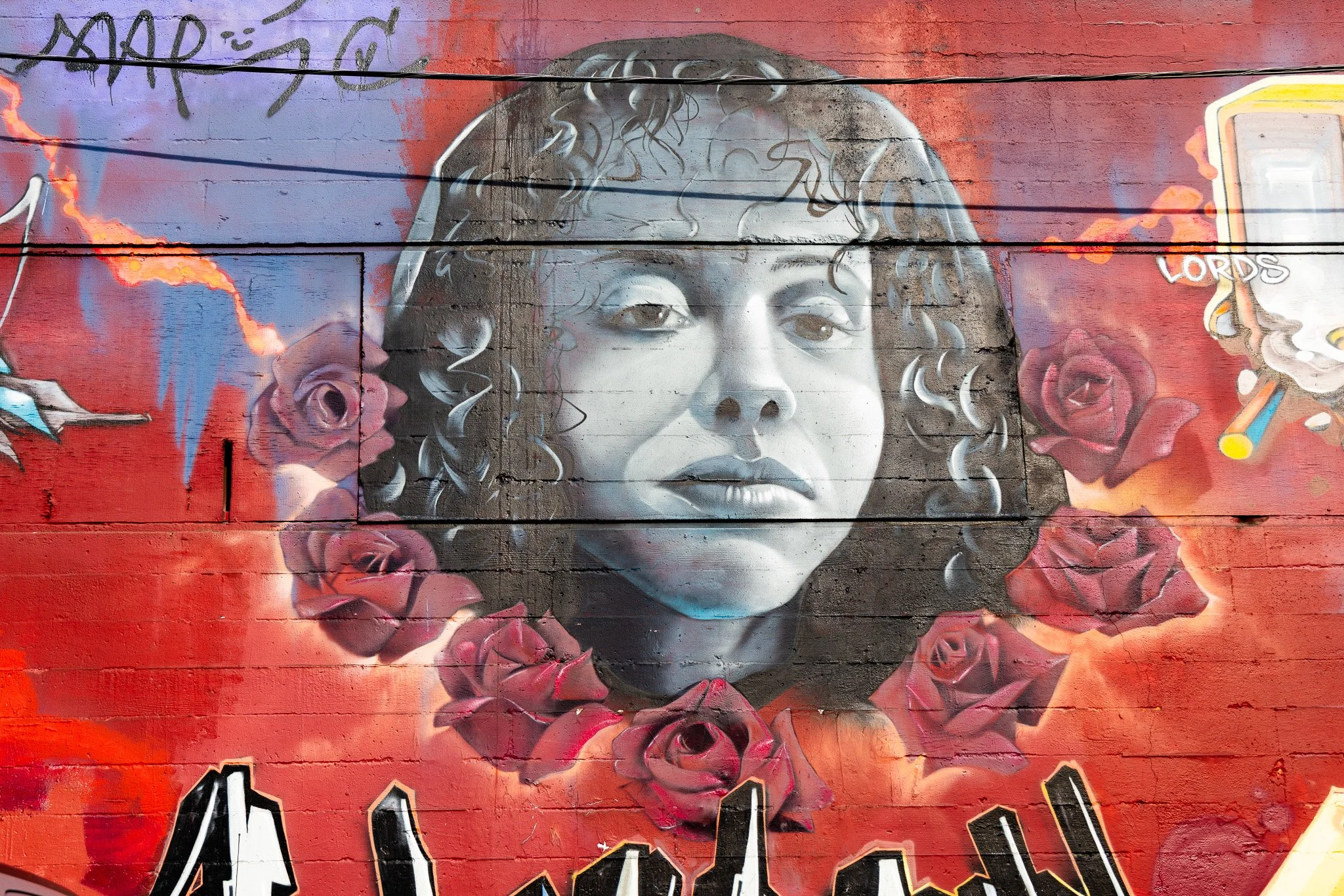
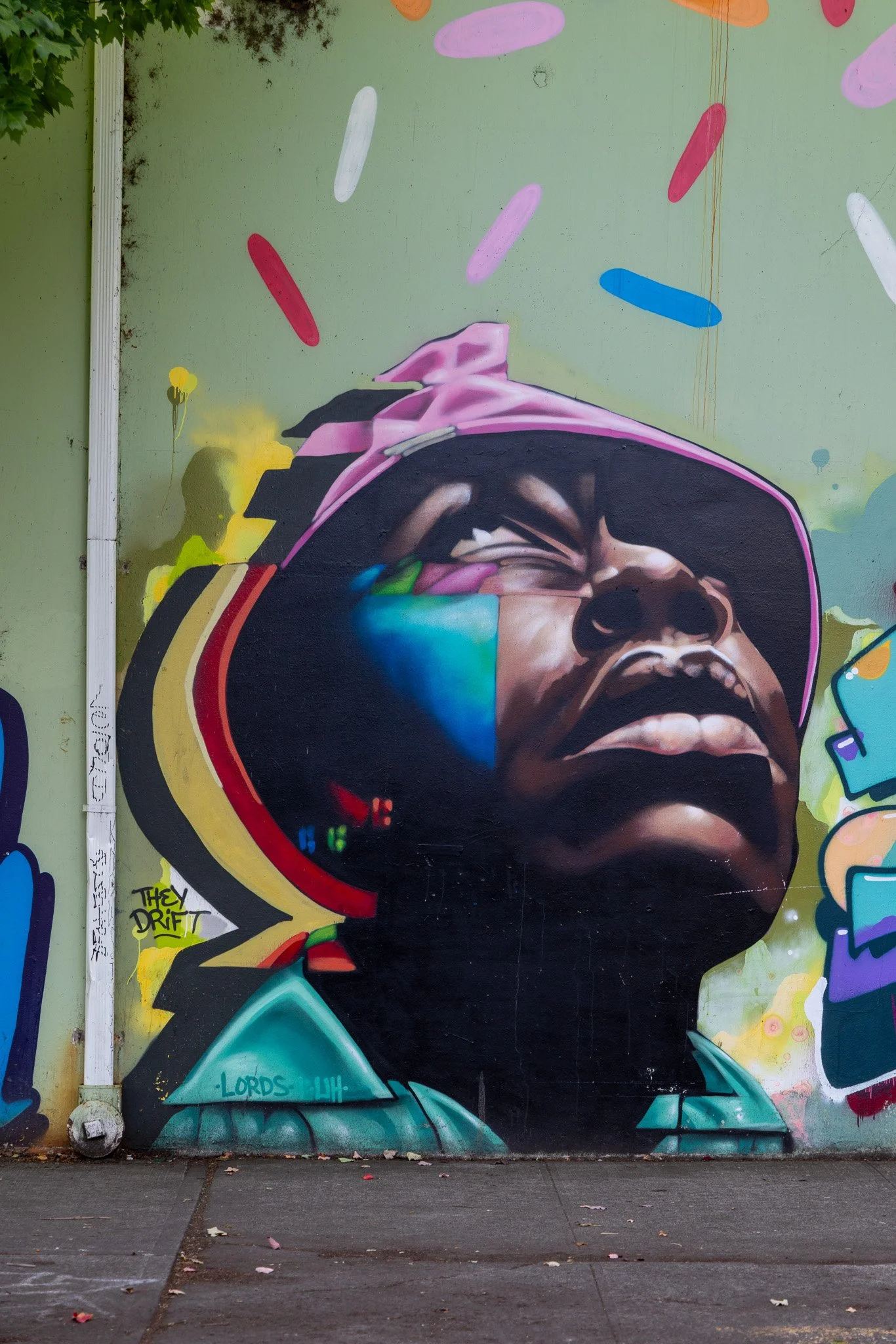
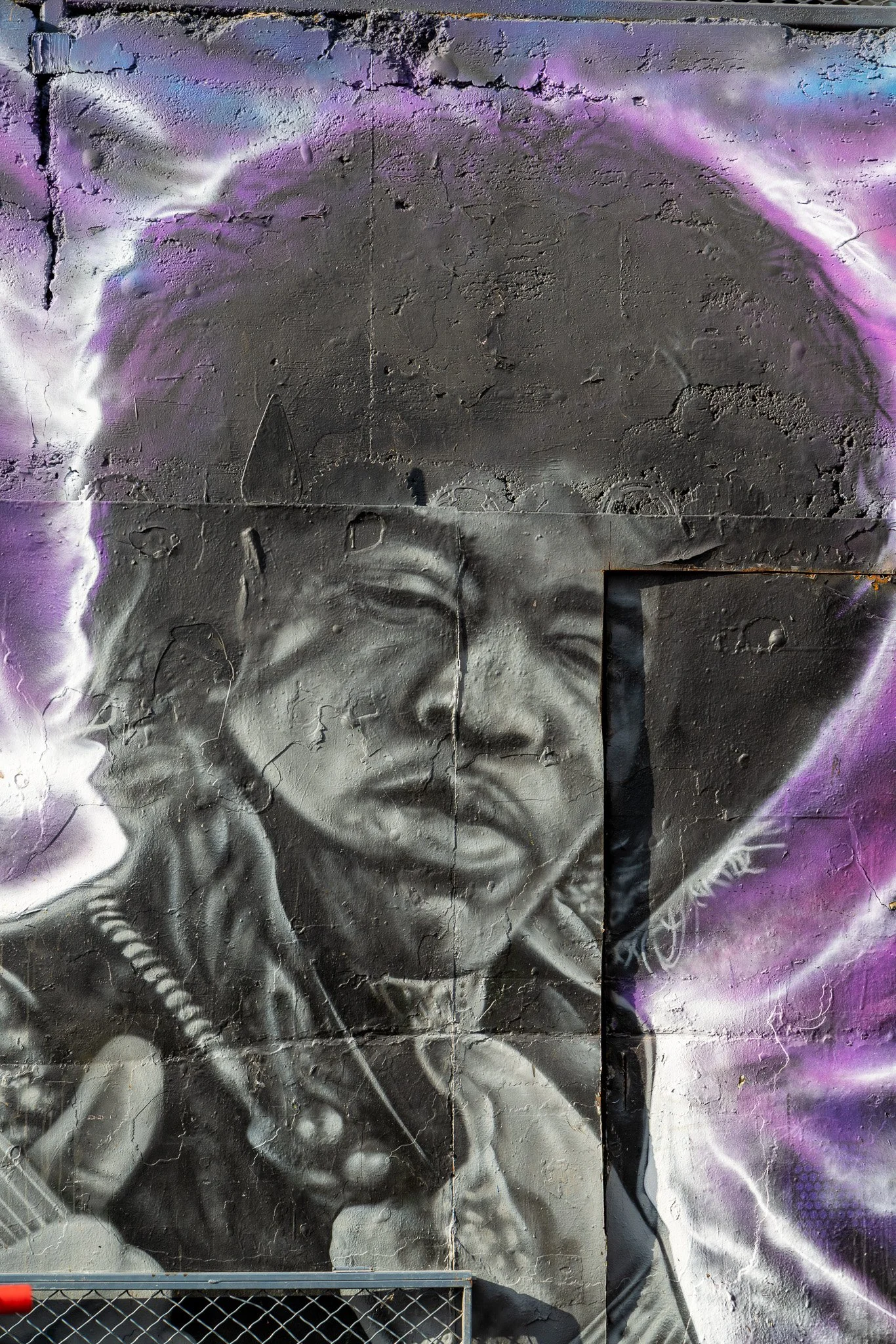
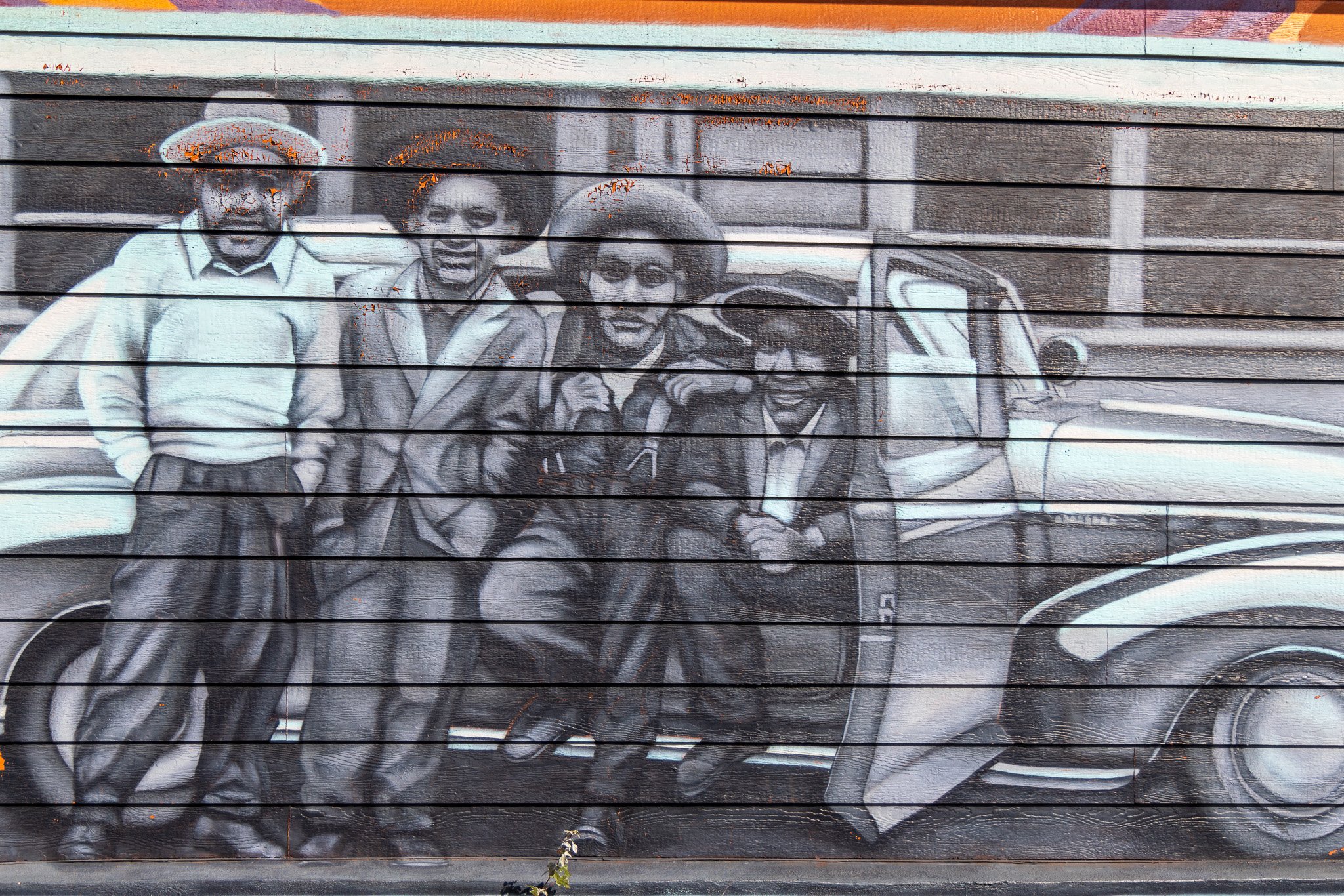
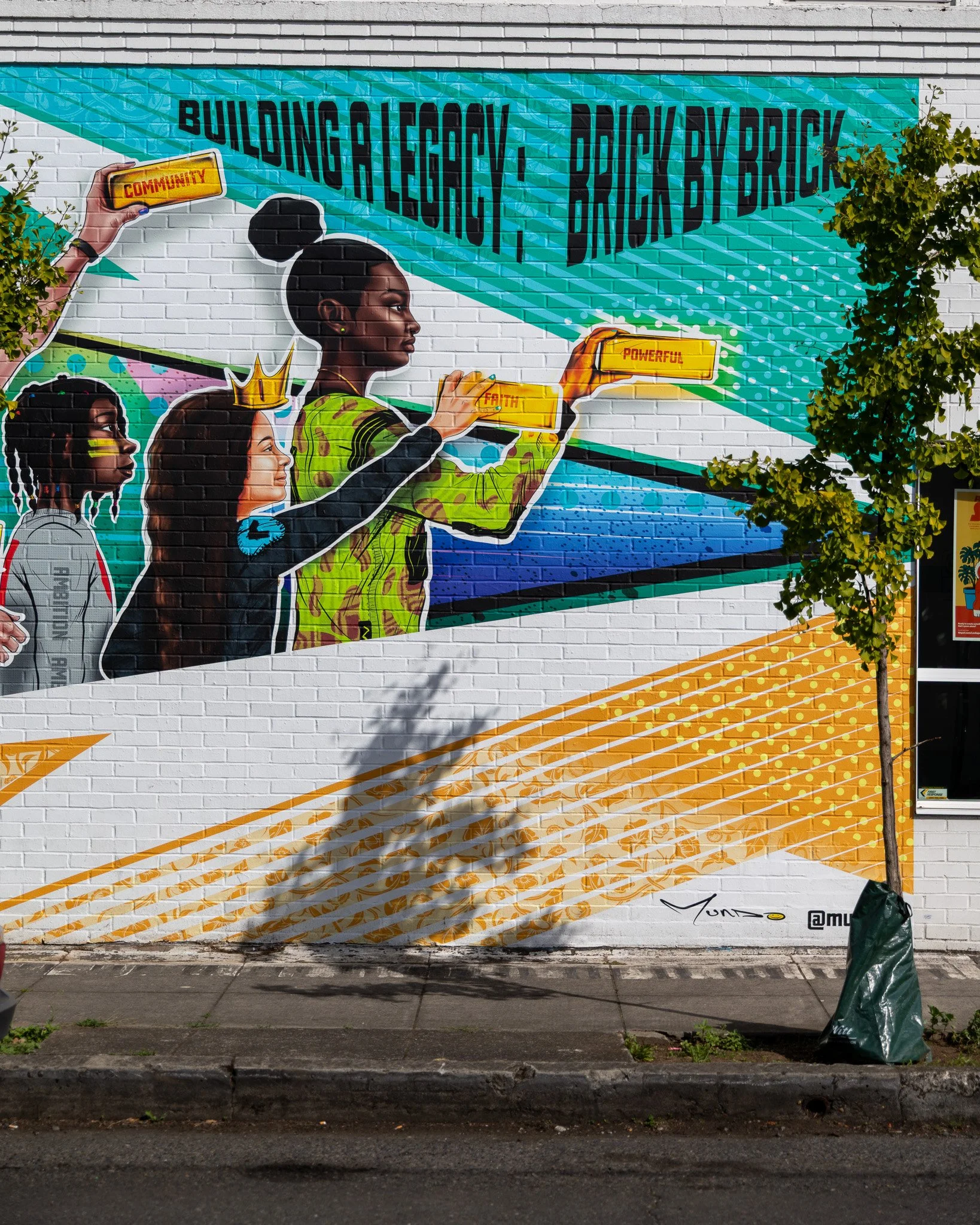
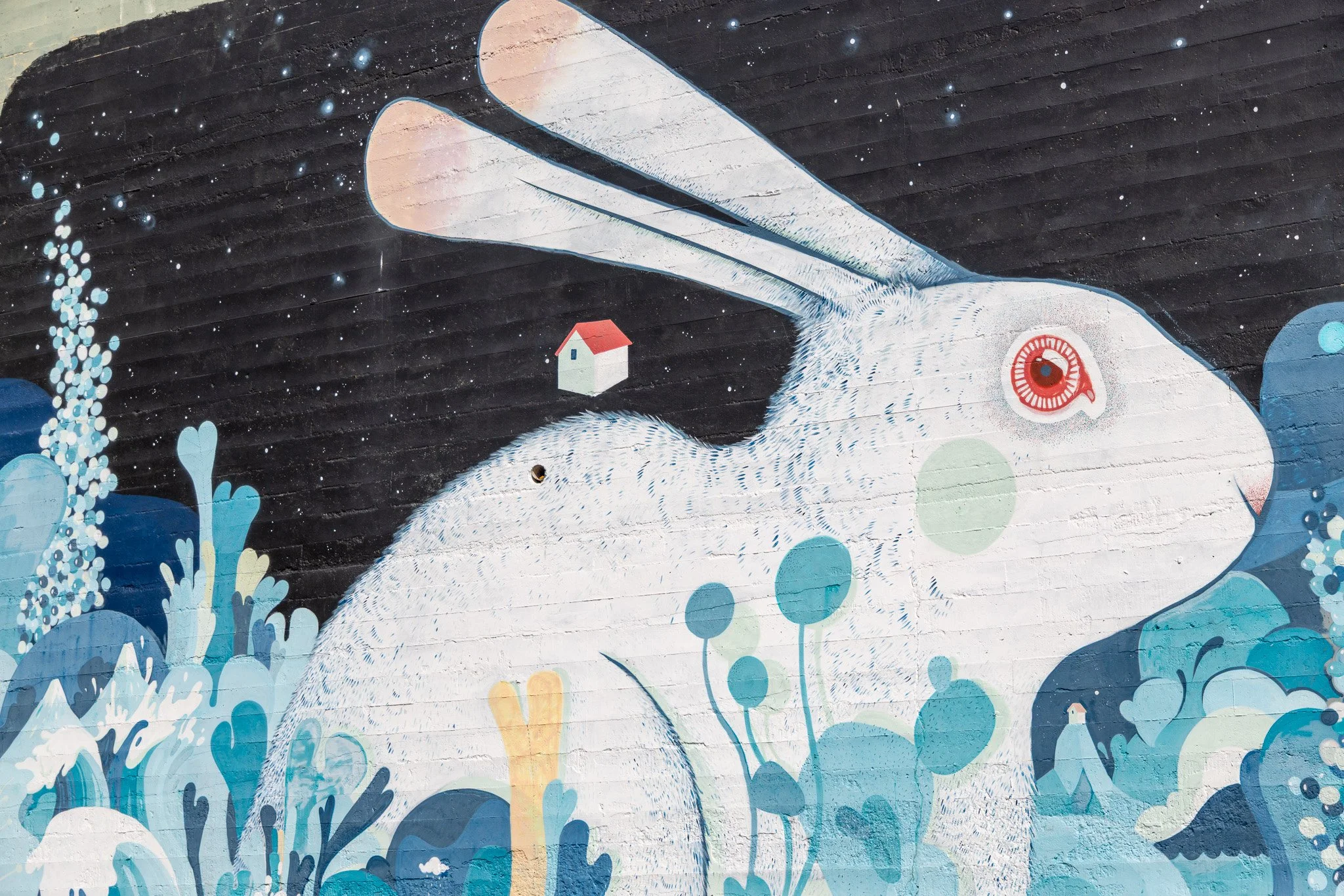
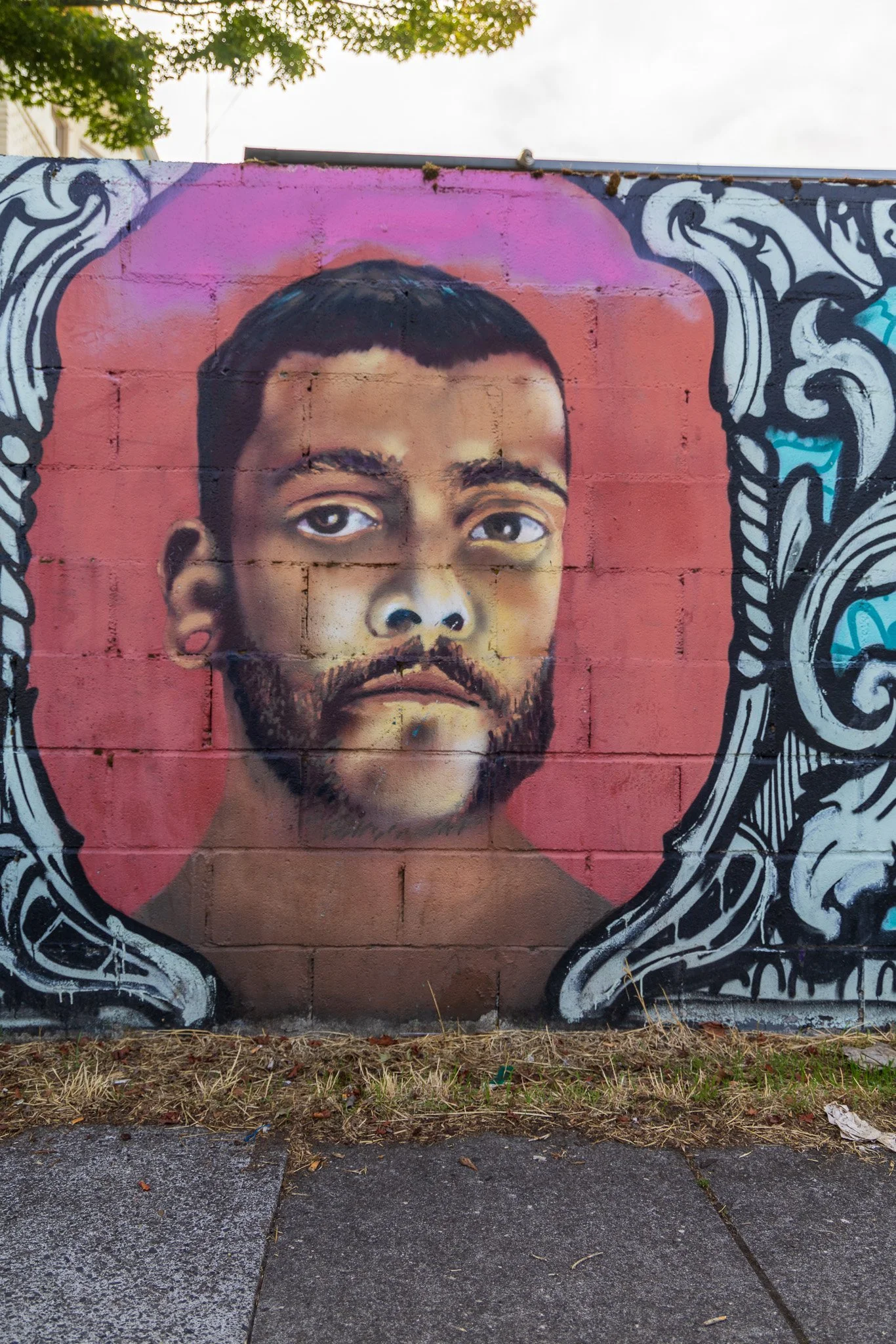
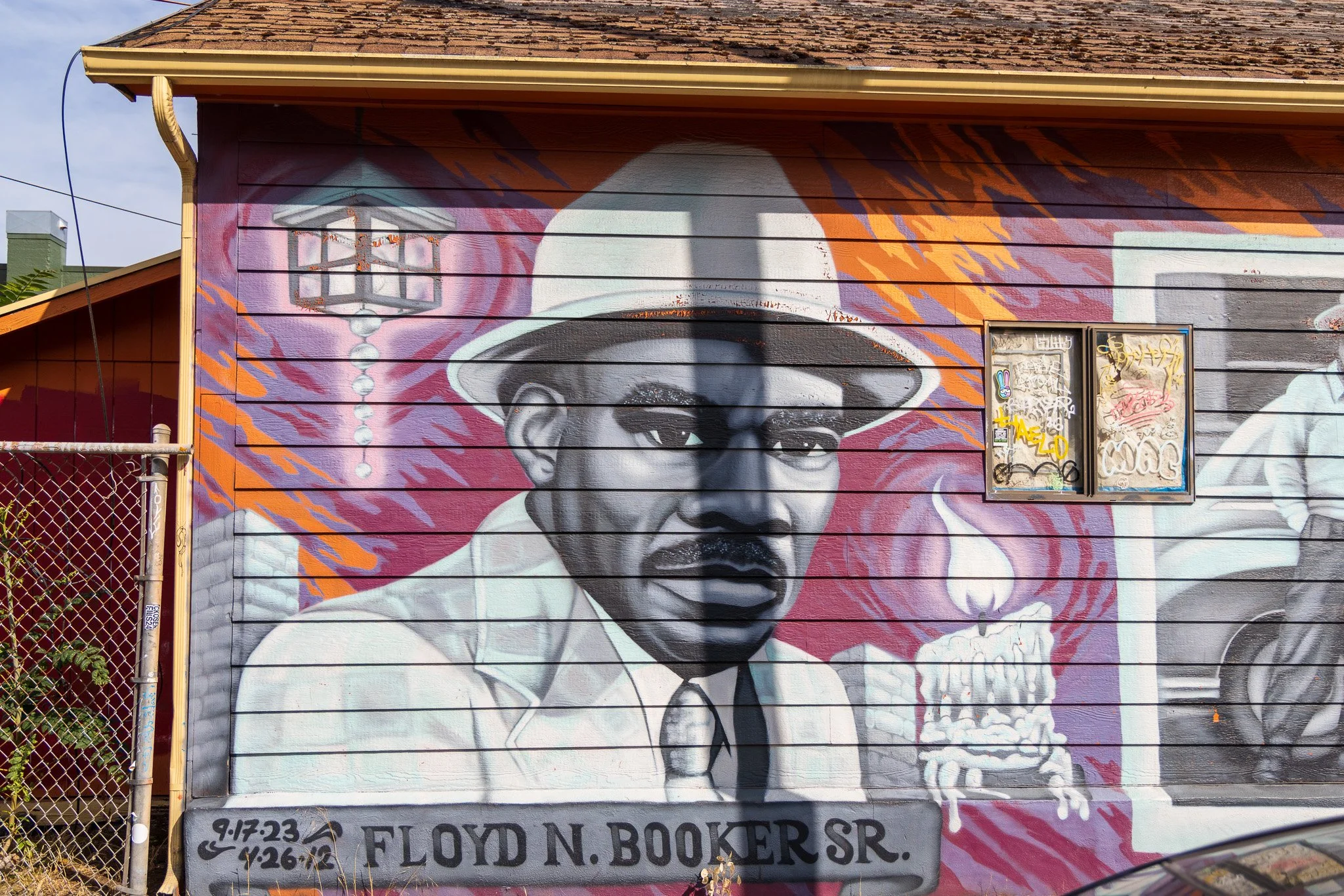
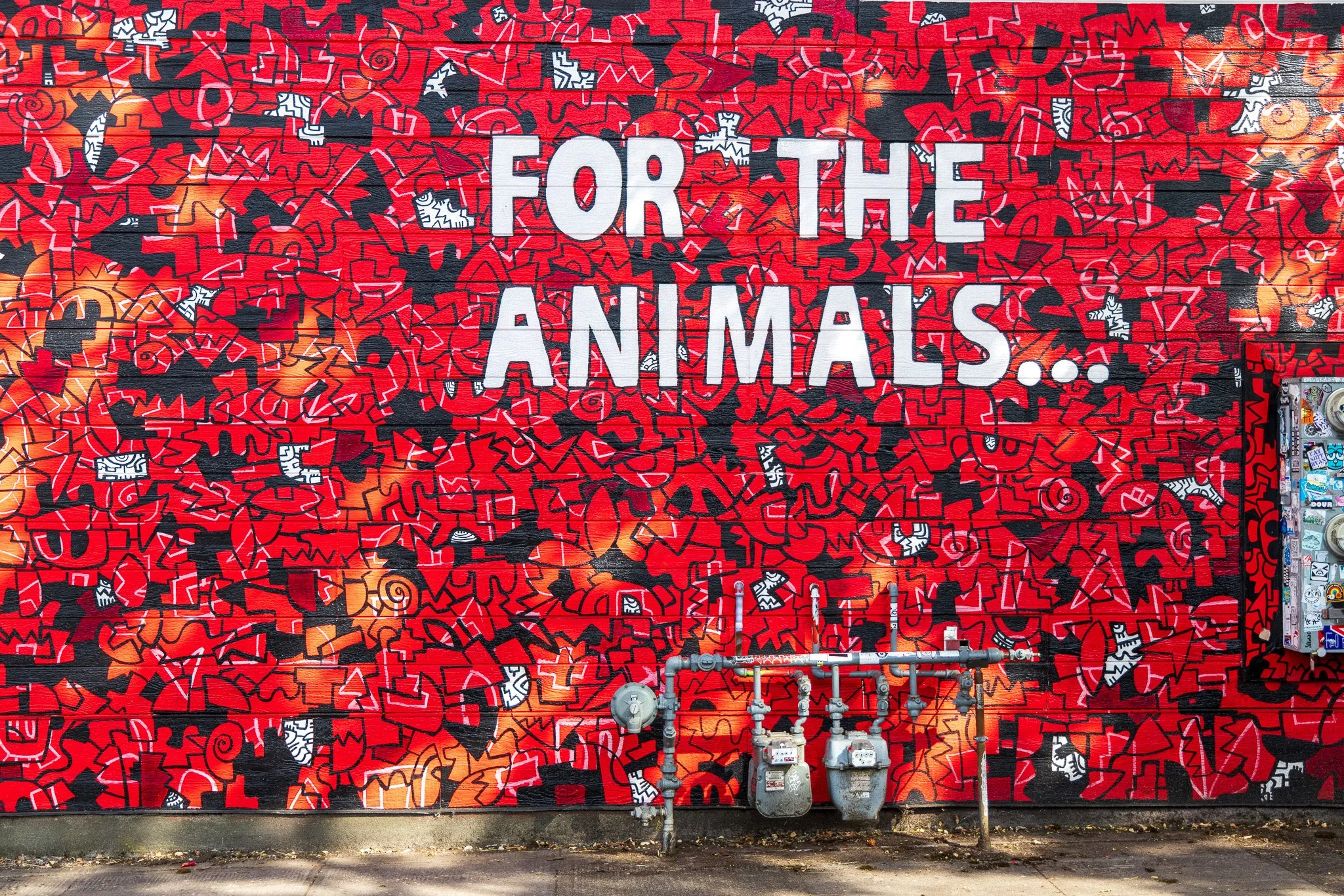
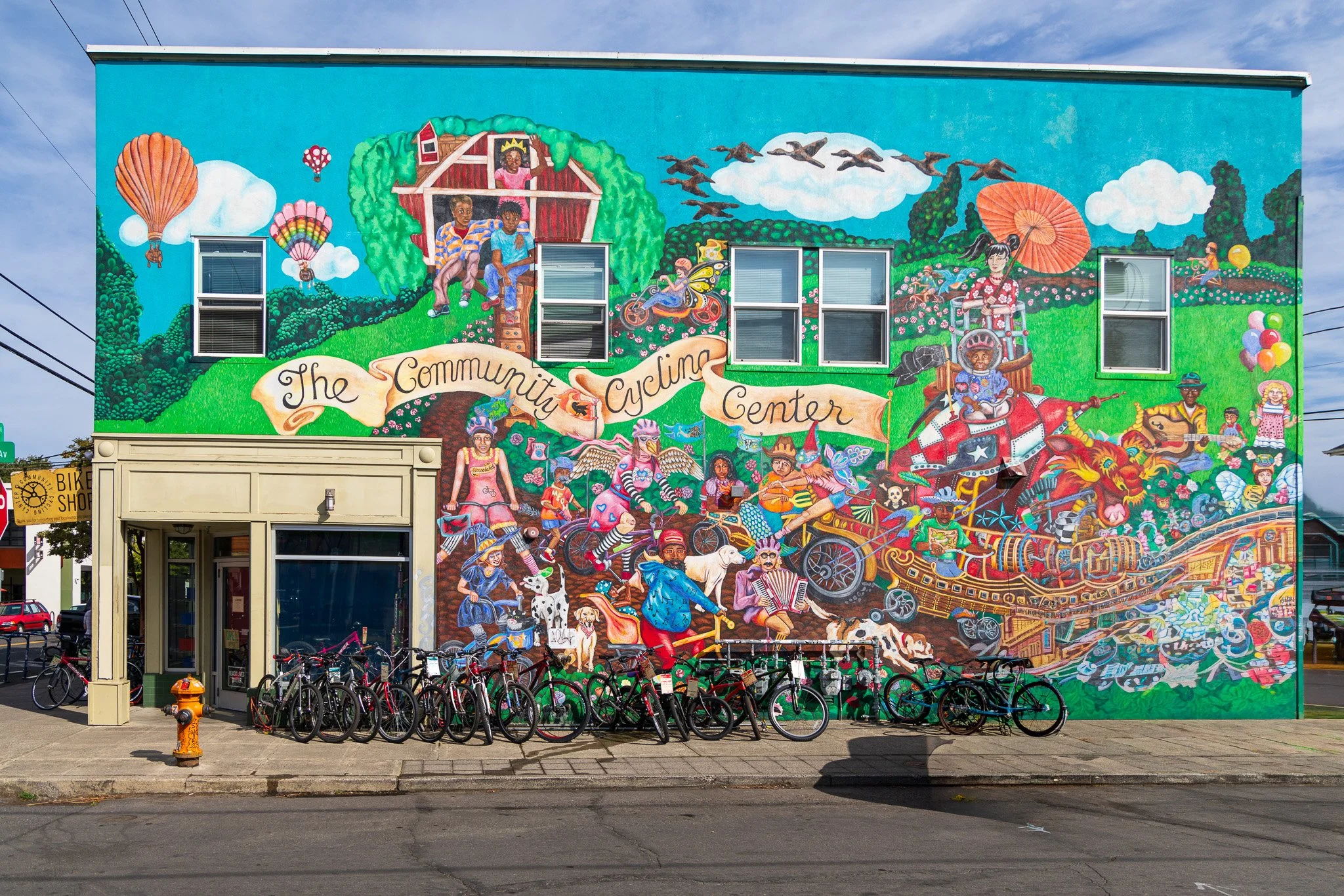
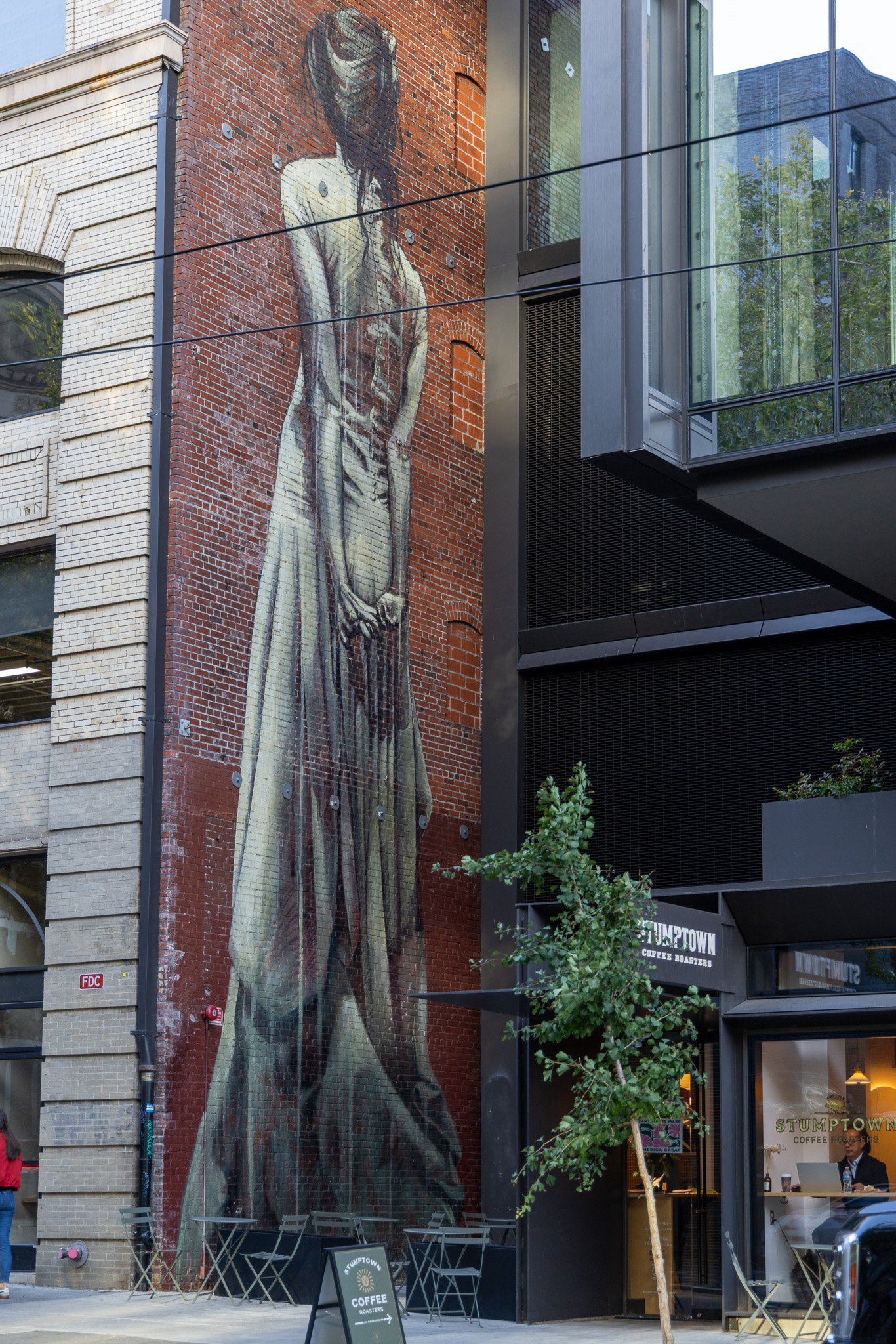
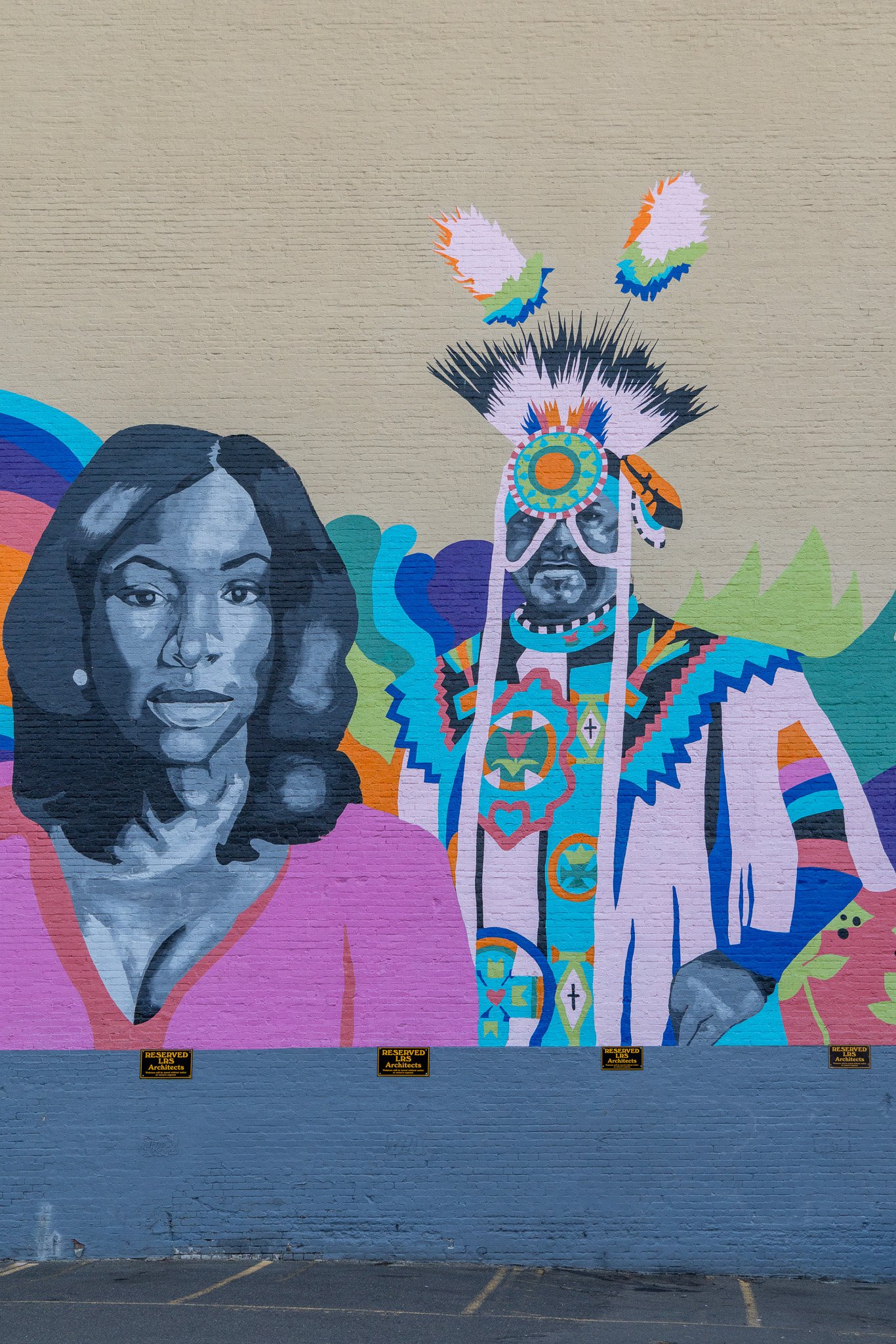
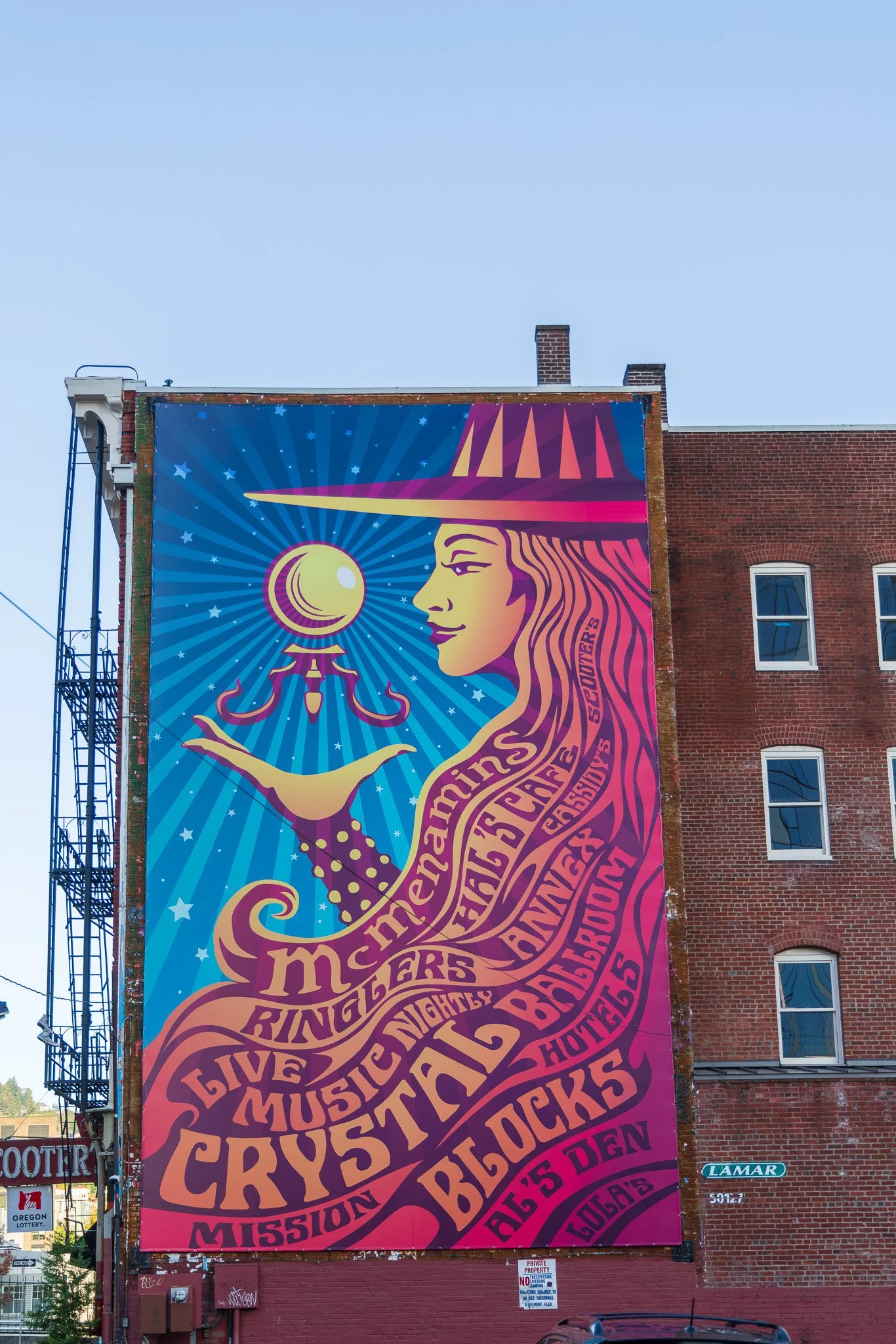
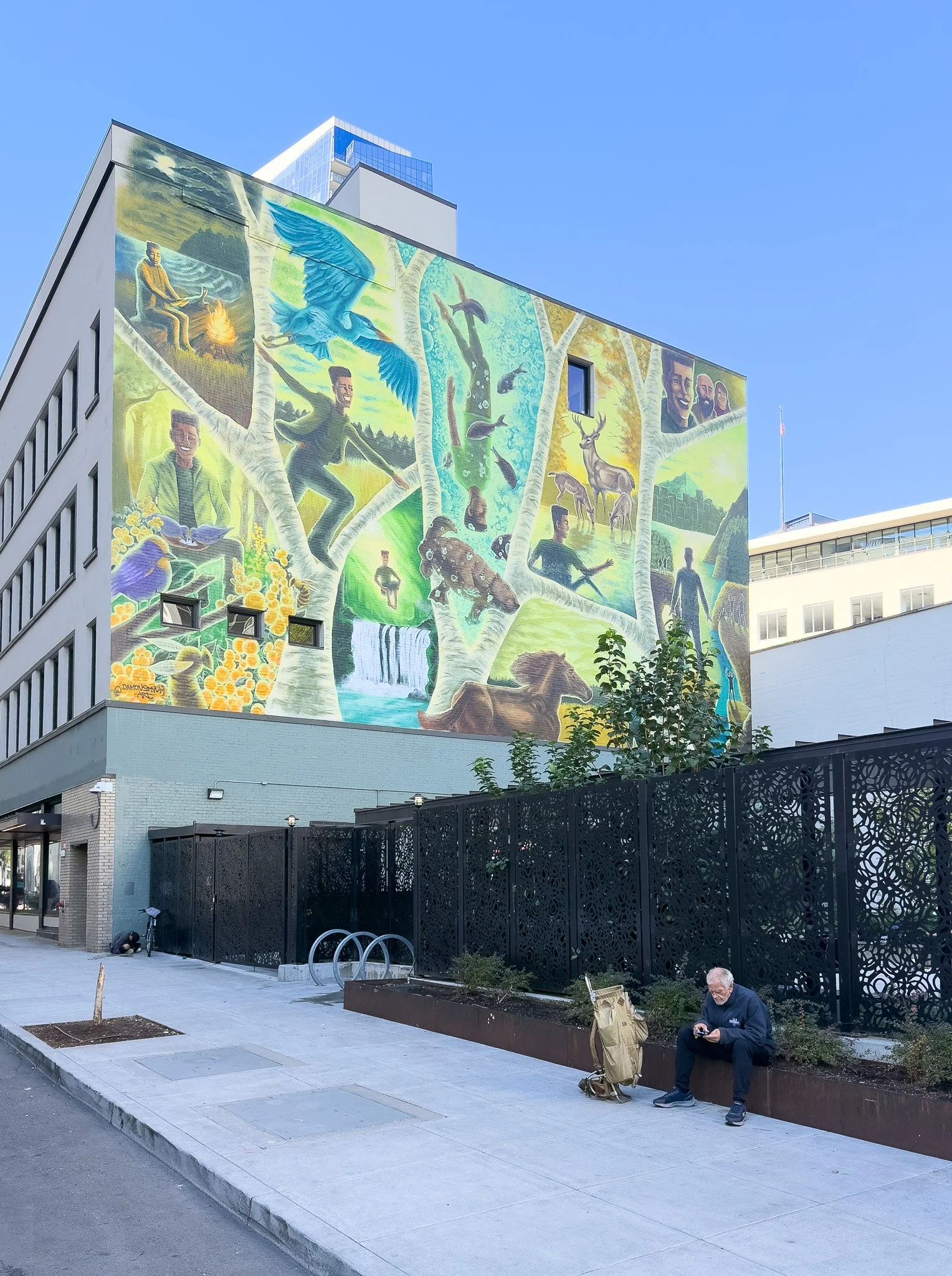
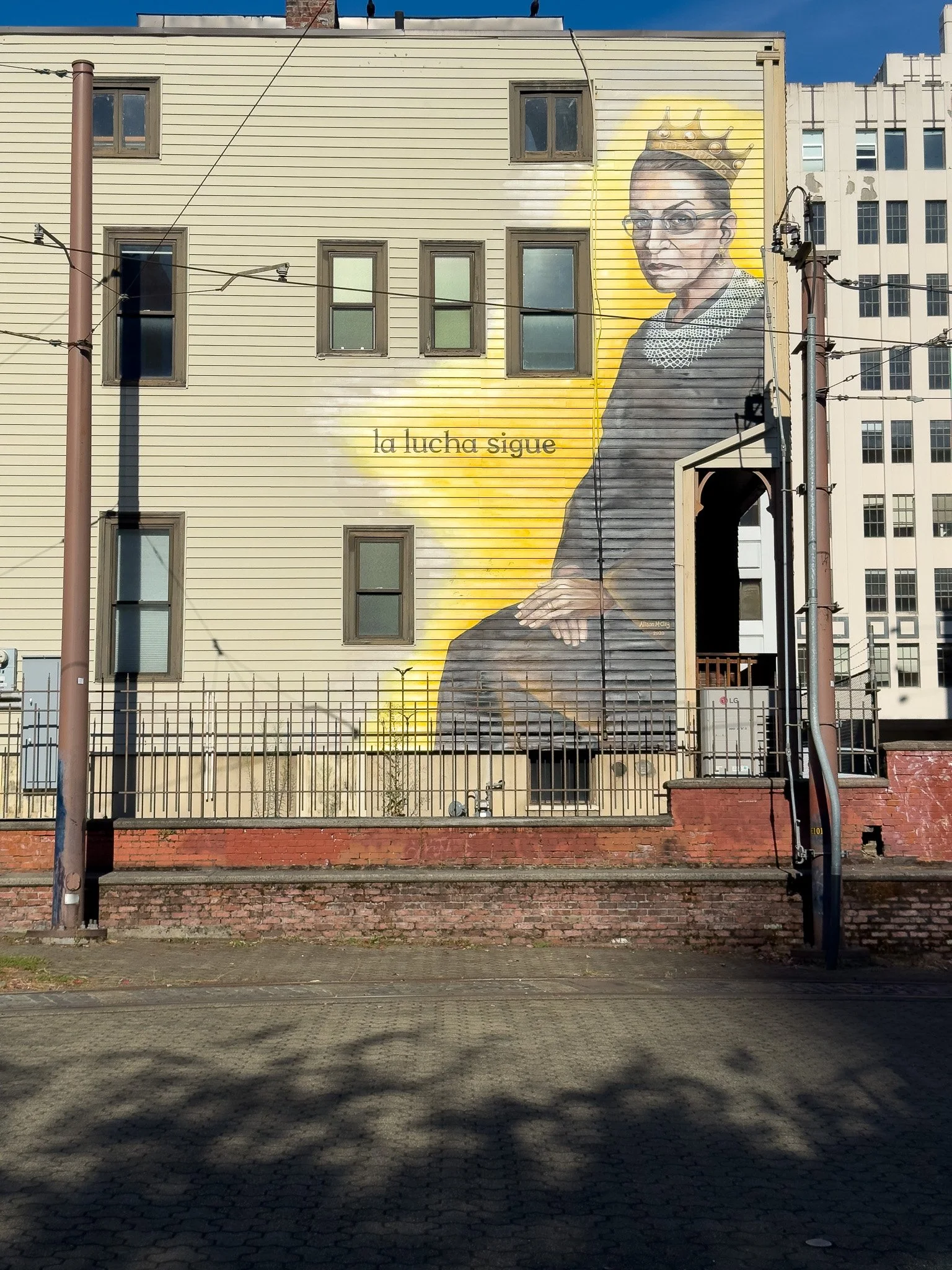
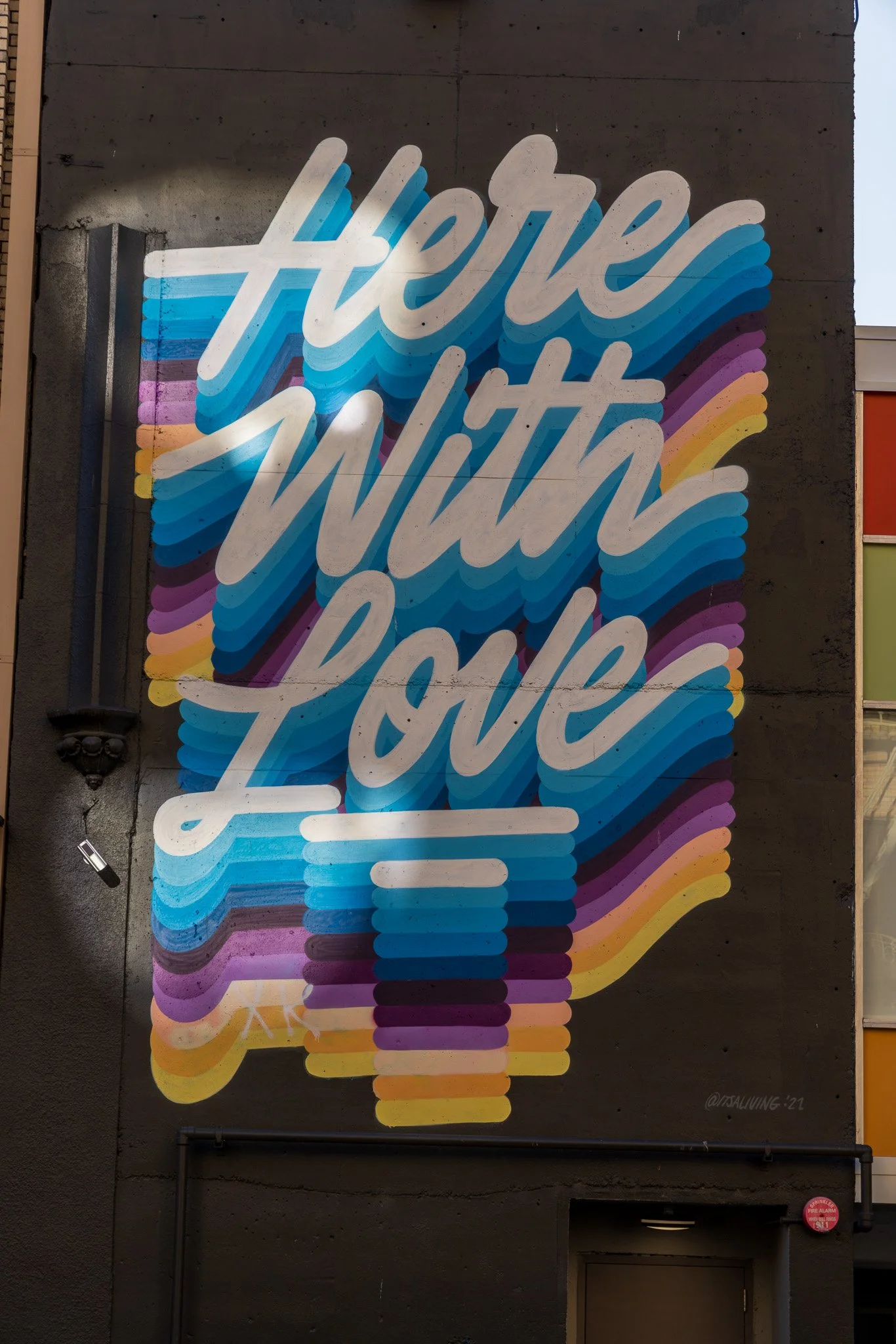
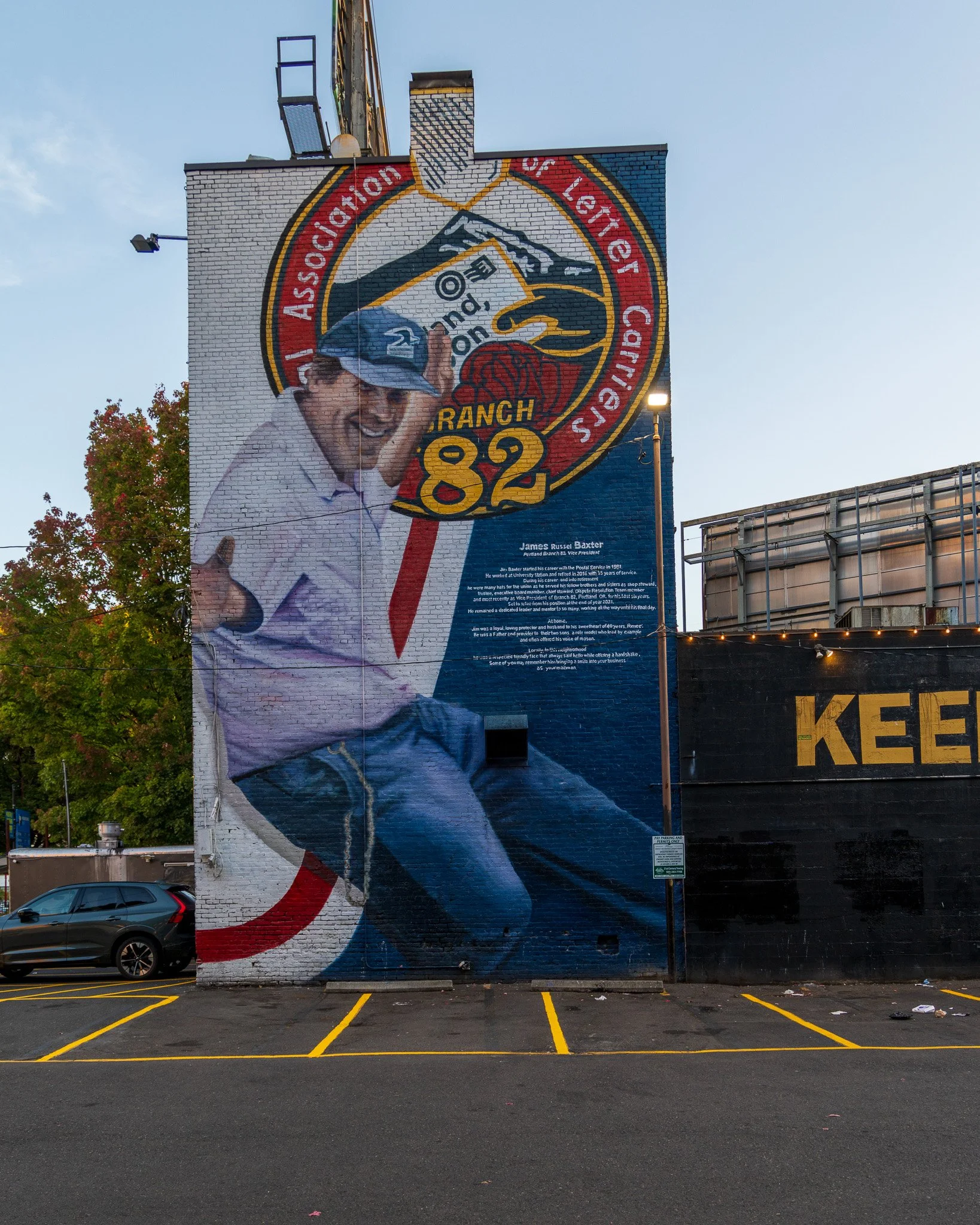
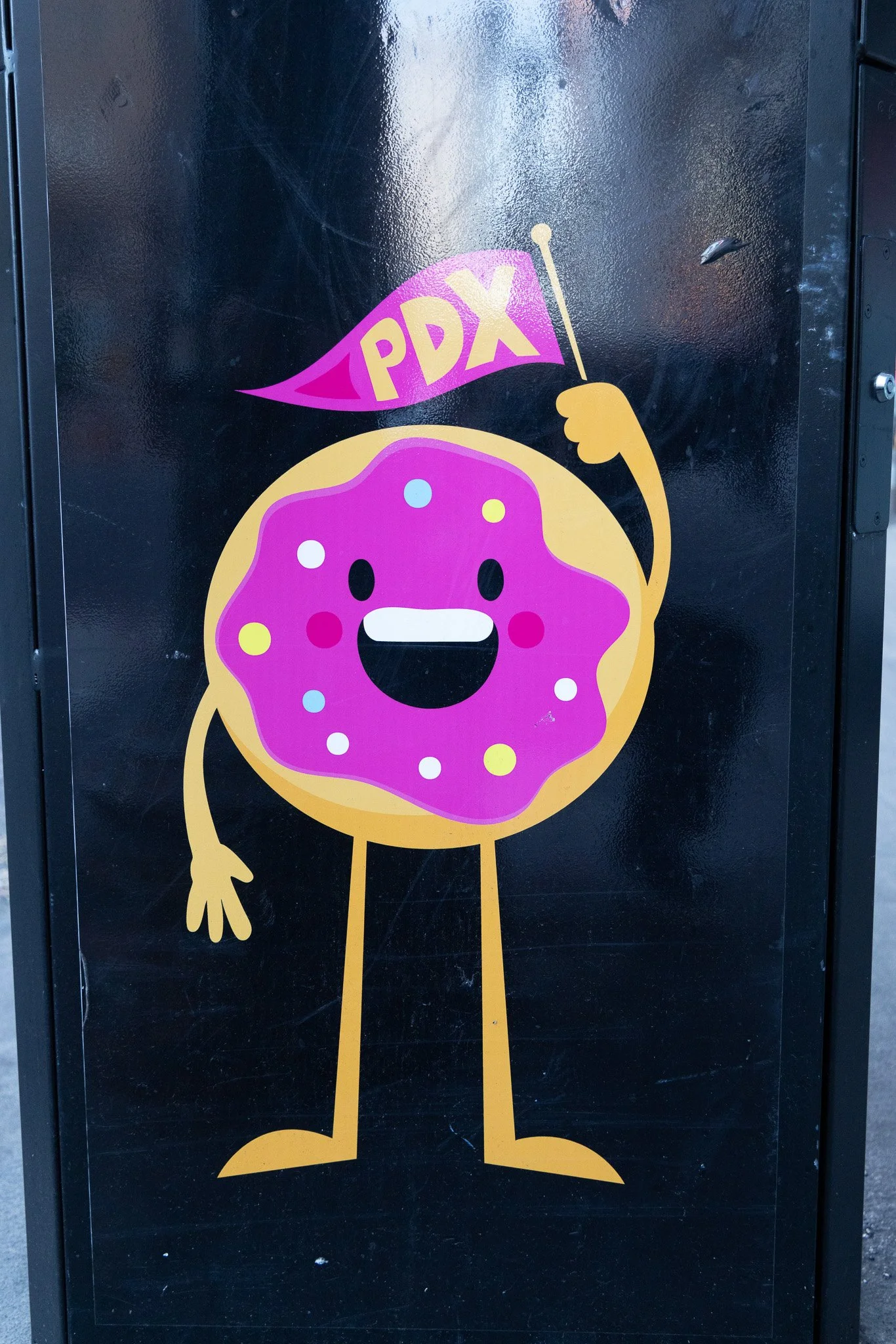
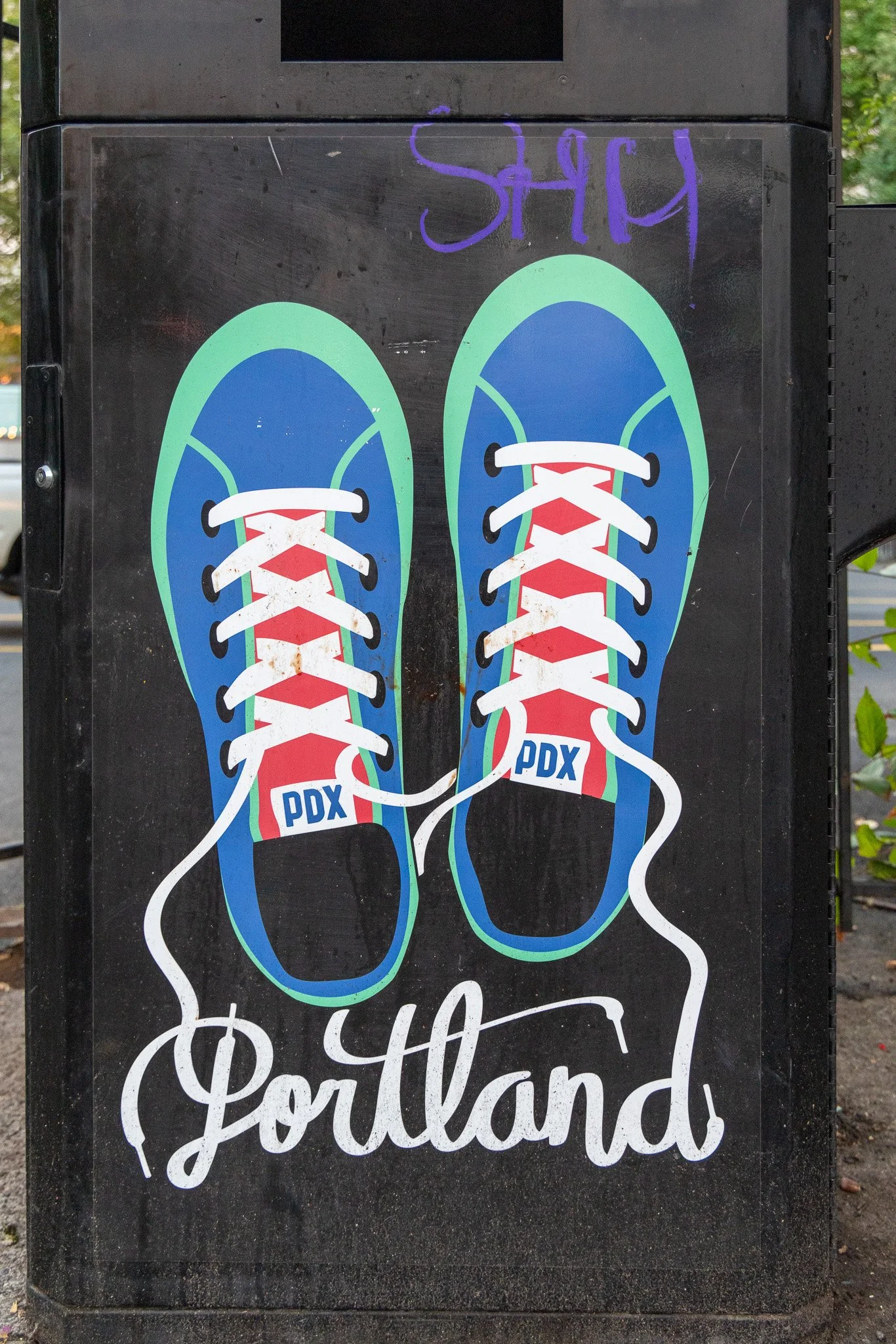
Portland's street art runs deep, and it rewards treating it as a theme rather than a single stop. I drove the entire city looking for murals and found them everywhere, on the sides of shops, in parking lots, under bridges, and down residential side streets. The Alberta Arts District has the heaviest concentration, and it's where we wandered on foot after ice cream at Salt & Straw. Downtown has the most famous piece, the Keep Portland Weird sign, painted high on the side of a building at 350 W Burnside.
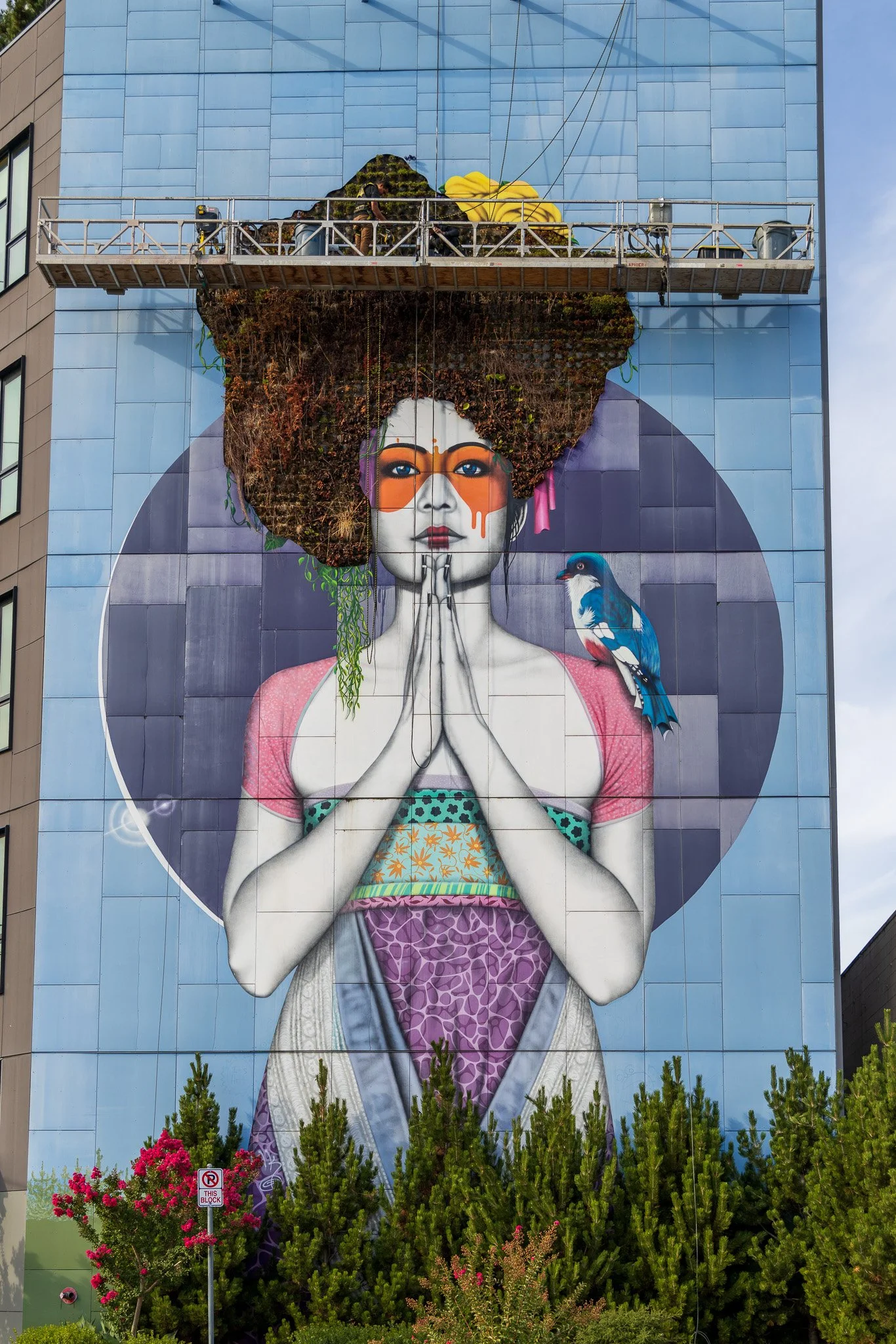
My favorite was Aspire, by the street artist Fin DAC, on the side of a building at SE 9th and Division. A woman with her hands pressed together stands in front of a giant purple circle, with a blue bird on her shoulder. Her hair is a living wall of real plants. It was the first time Fin DAC worked with living plants, and when I photographed it, a crew was up on a suspended platform tending the hair. A mural that needs gardeners is about as Portland as it gets.
📷 Pro Tip: Treat it like a road trip. Use the Art & History filter in the Near Me Now app to find murals near you, drive between neighborhoods, then park and explore each area on foot. Overcast days are a gift here. The light is even, the colors stay true, and you avoid the hard shadows and glare that midday sun throws across a painted wall. On sunny days, work in early morning or late afternoon, when side light brings out the texture of brick and paint. A 24–70mm or 24–105mm handles most of it. Get close for a single detail, then pull back for the full wall. Better yet, frame the wall and wait for someone to walk past; a person in front of a mural turns a record shot into a photograph. At Aspire, the mural rises several stories, and shrubs cover its base, so cross Division and back up to get the whole figure. Then switch to a 70–200mm to isolate the bird or the face. For Keep Portland Weird, cross the street and back up, since you'll be shooting upward, then straighten the verticals in post. Many murals sit on private property, so stay on public ground, and if you post your shots, credit the artist.
📱 iPhone Tip: Stand square to the wall and use the 1x lens to avoid distortion. If you can't back up far enough, use the 0.5x lens, then use the Crop tool's perspective correction in Photos to straighten the edges. At Aspire, use the 3x or 5x lens to pull in the bird and the living hair.
Best time: Overcast days, or early morning and late afternoon for side light. Morning for Keep Portland Weird, before people start posing beneath it.
Access: Free and public, across the city. A car makes it easy to cover several neighborhoods in a day. Aspire is on SE Division at 9th, in Southeast Portland. Old Town is fine in daylight, but I wouldn't walk it after dark.
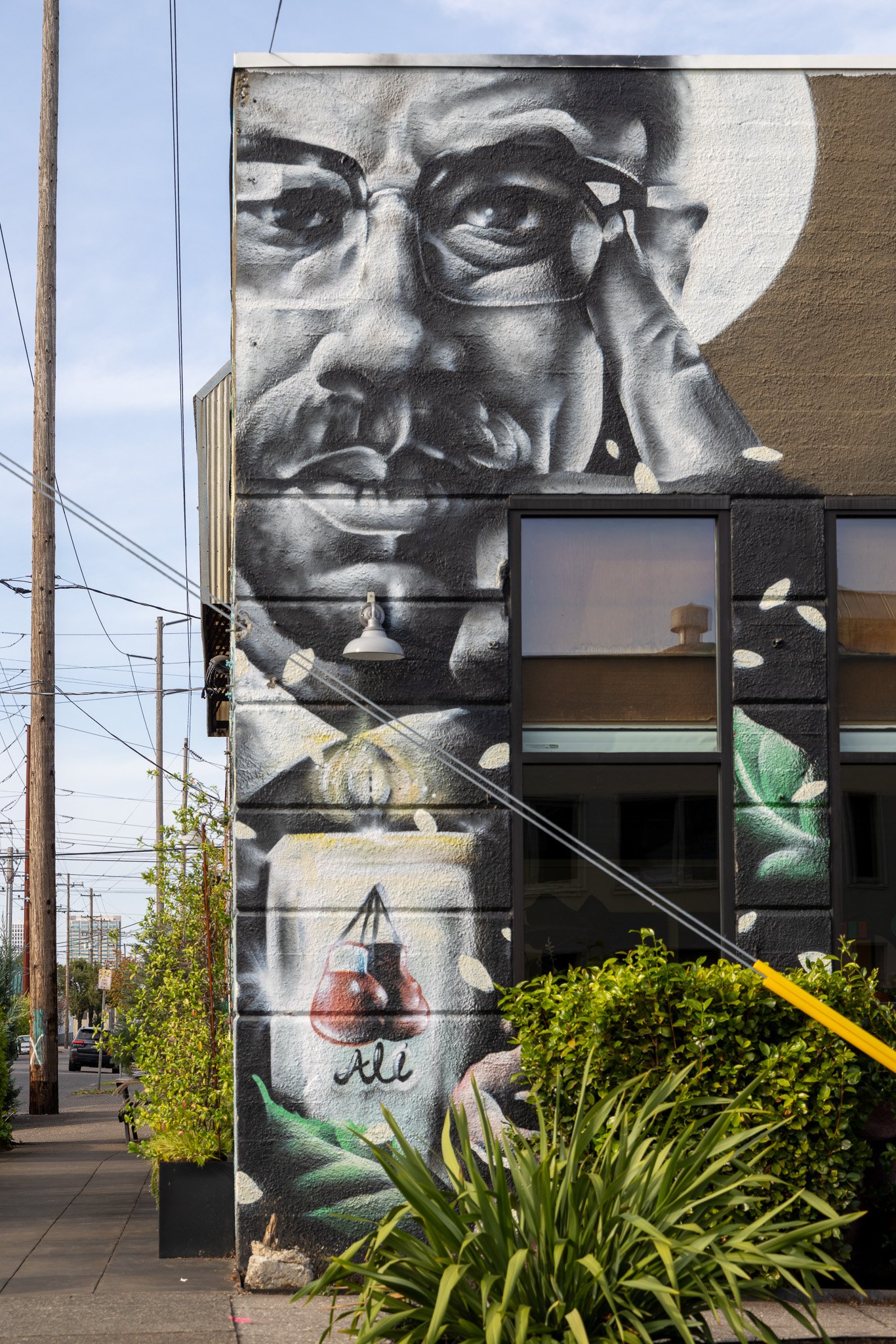
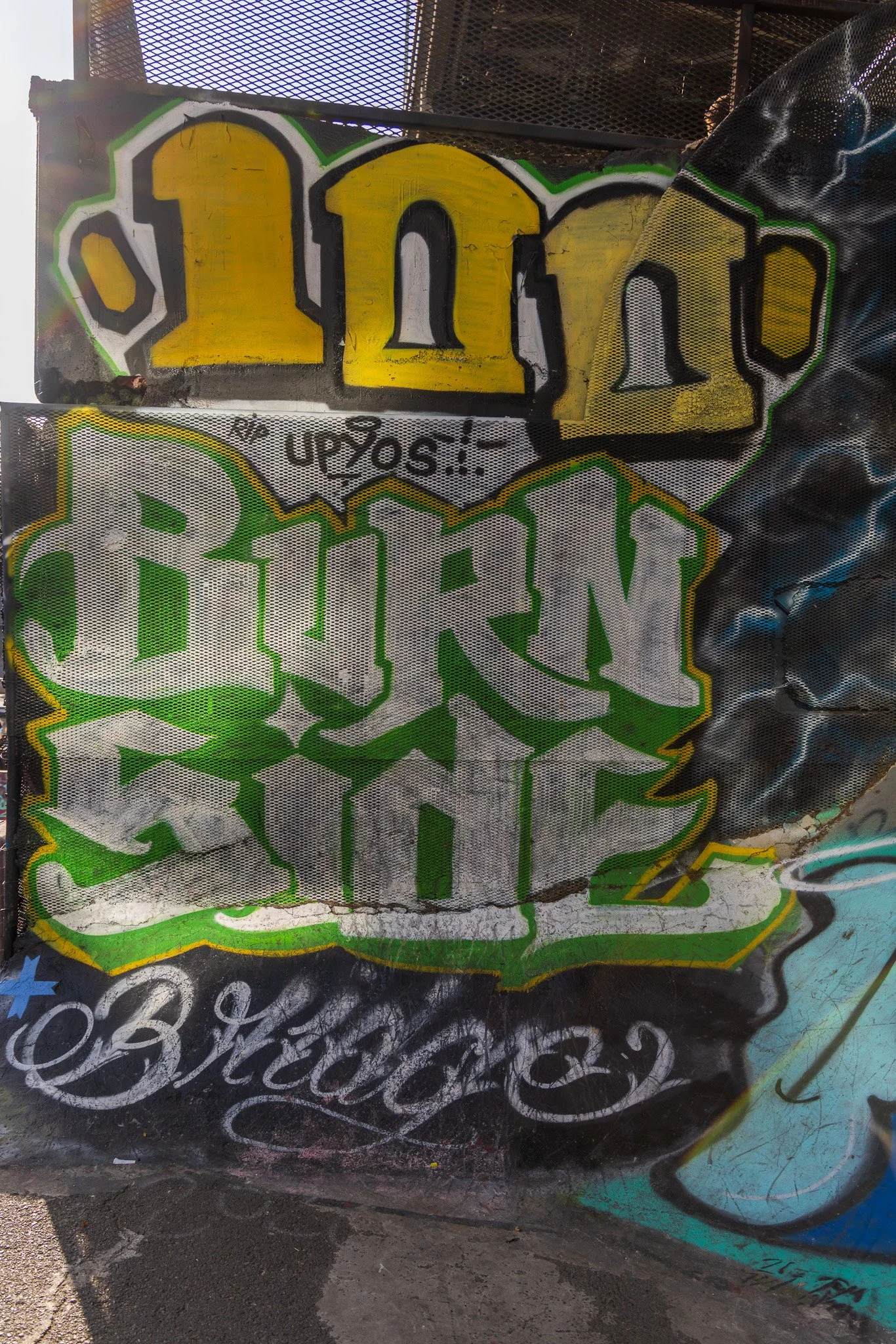
Burnside Skatepark
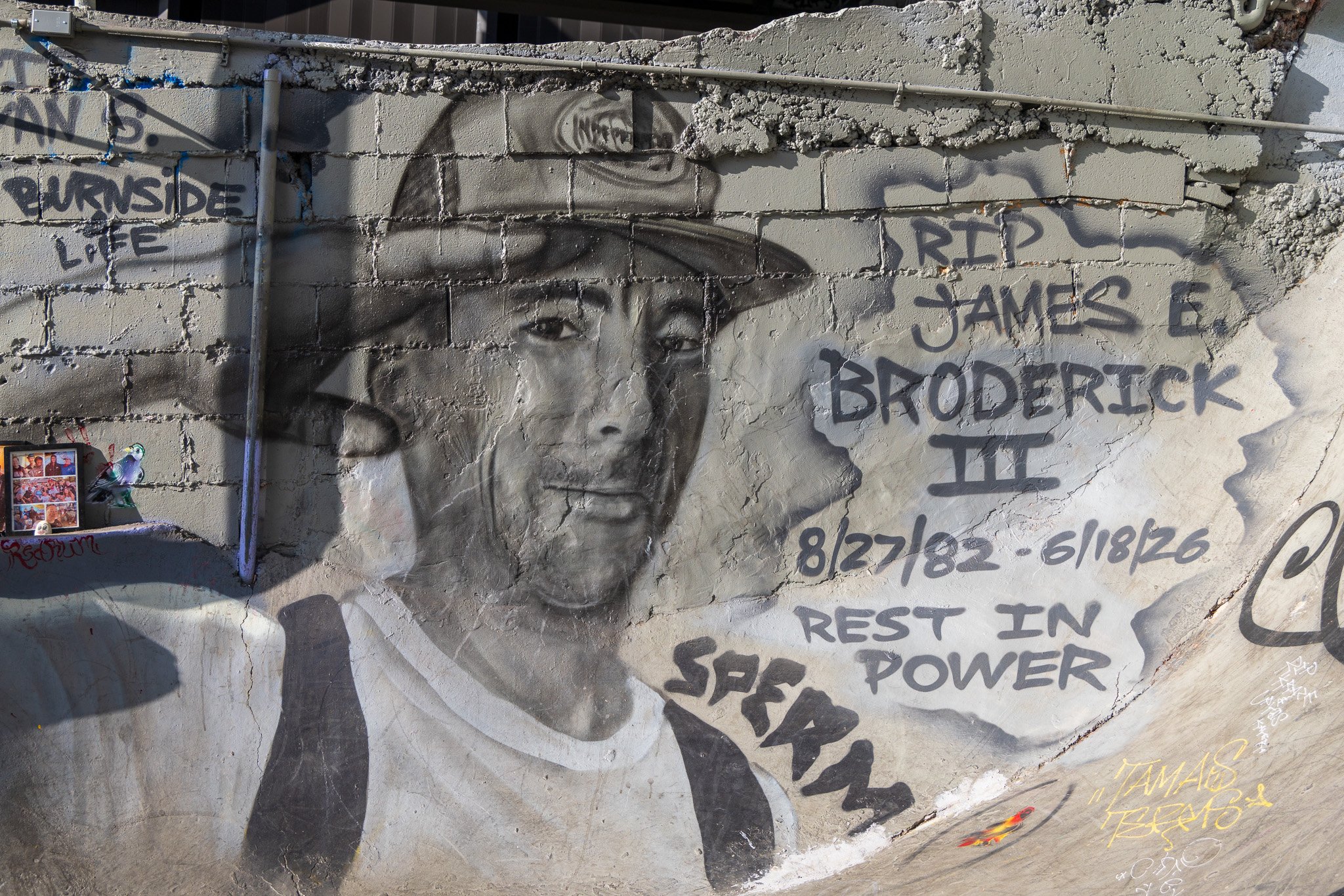
Under the east end of the Burnside Bridge sits the world's first DIY skatepark. In 1990, a group of skaters poured concrete into an empty lot beneath the bridge without permits, and they kept building. Today it's famous among skaters worldwide, and it's still built, maintained, and run by the people who ride it. Between the skaters and the graffiti covering every surface, it's a great place to shoot if street and action photography interest you more than landscapes. When I visited, I stopped to talk with the skaters, and they were as friendly as everyone else in Portland. That conversation made the photographs better.
📷 Pro Tip: Watch before you shoot, then introduce yourself. This is the skaters' space, not a city park, so stay out of the bowls and off the lines riders use, and ask before you photograph anyone up close. Once they know you're respectful, most skaters are happy to have a photographer around, and some will even tell you which trick is coming next. An apartment building next door blocks much of the daylight, so expect shade and artificial light under the bridge. Raise your ISO and use a fast shutter speed, 1/1000 second or faster, to freeze a skater in the air. Or slow it down and pan with a rider for motion blur against the graffiti. A 70–200mm lets you work from the edge without getting in the way. A 16–35mm, used from a safe spot at the lip of a bowl, gives you the dramatic, close-up skate shot, but only if the skaters say it's fine.
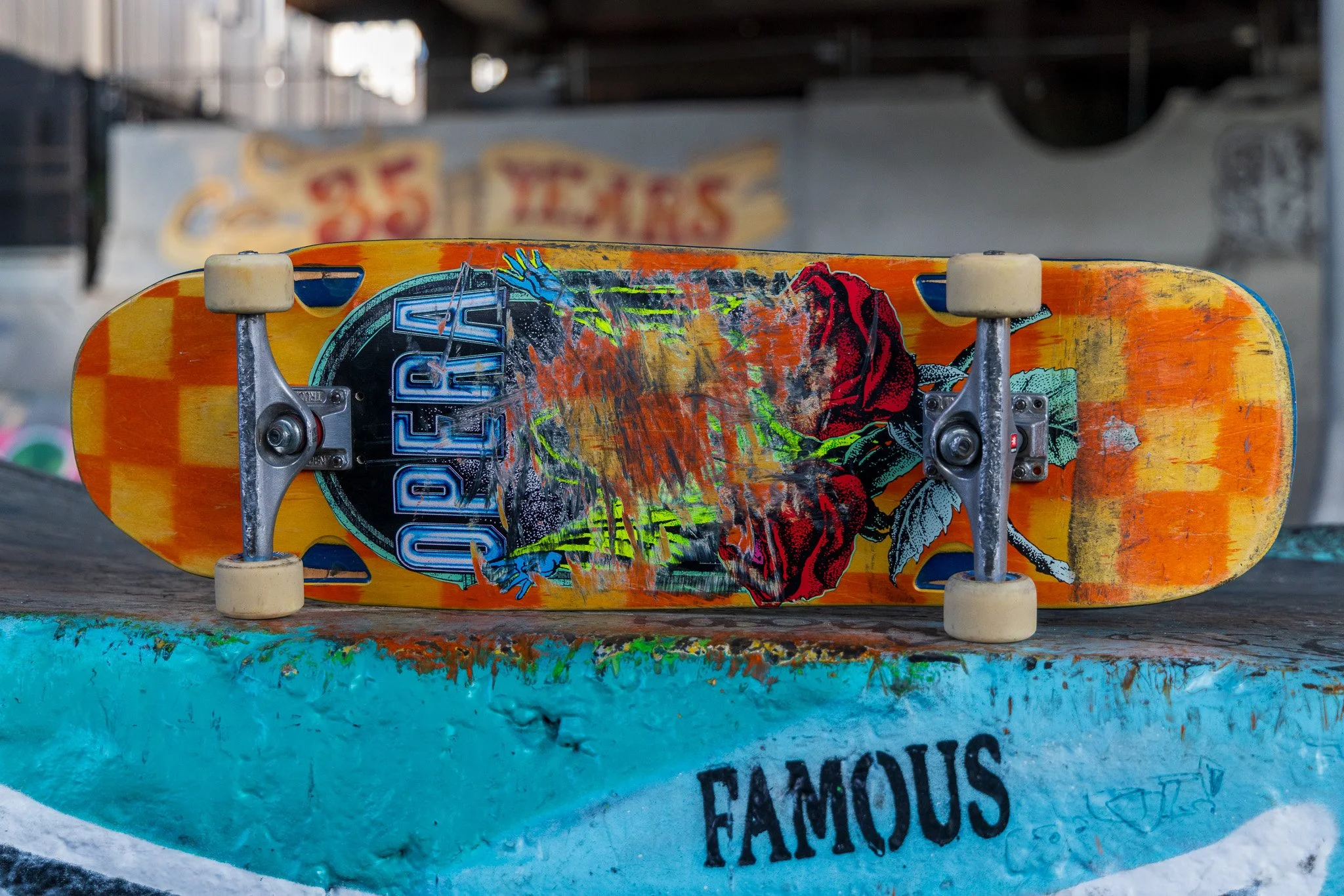
At Burnside Skatepark
📱 iPhone Tip: Use Burst mode, by holding the shutter and sliding left, to catch the peak of a trick. Or shoot a Live Photo and choose the exact frame afterward.
Best time: Late afternoon, when the most skaters are out.
Access: Free and open to anyone, under the east end of the Burnside Bridge. Check that it's open before you go, since bridge work could affect it. Like Old Town across the river, it's a daytime visit; leave before dark.
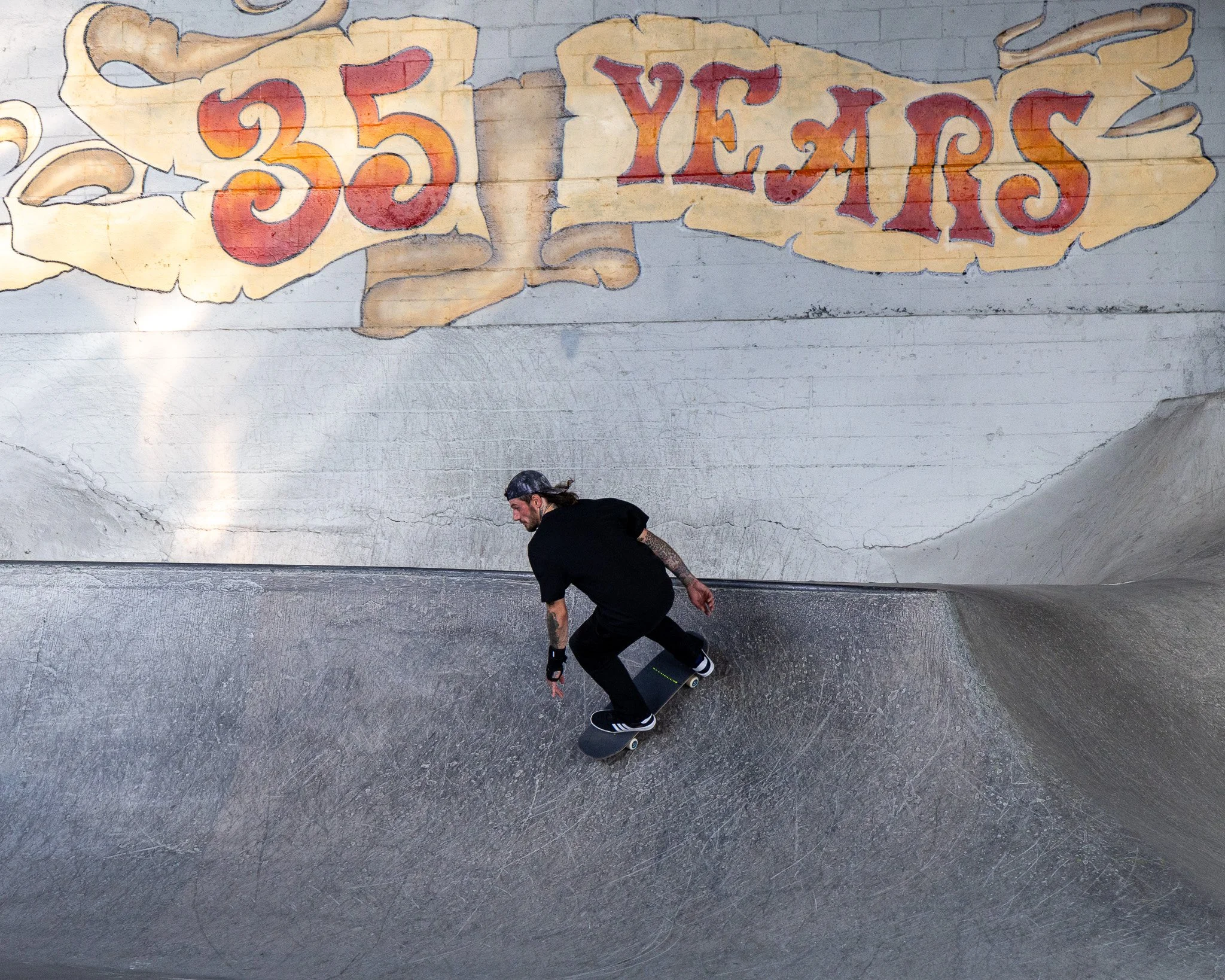
At Burnside Skatepark
Portland Aerial Tram
Connects the South Waterfront to the Oregon Health and Science University campus on Marquam Hill, and it gives you one of the better elevated views of the city and the Willamette River without a long hike.
📷 Pro Tip: Ride it near sunset for the best light over the river and the West Hills. A wide angle works well from inside the tram car looking out, and the upper station platform gives you a clean, unobstructed view for a longer lens shot of the skyline.
Best time: late afternoon through sunset. Access: paid ride; check current fare and schedule.
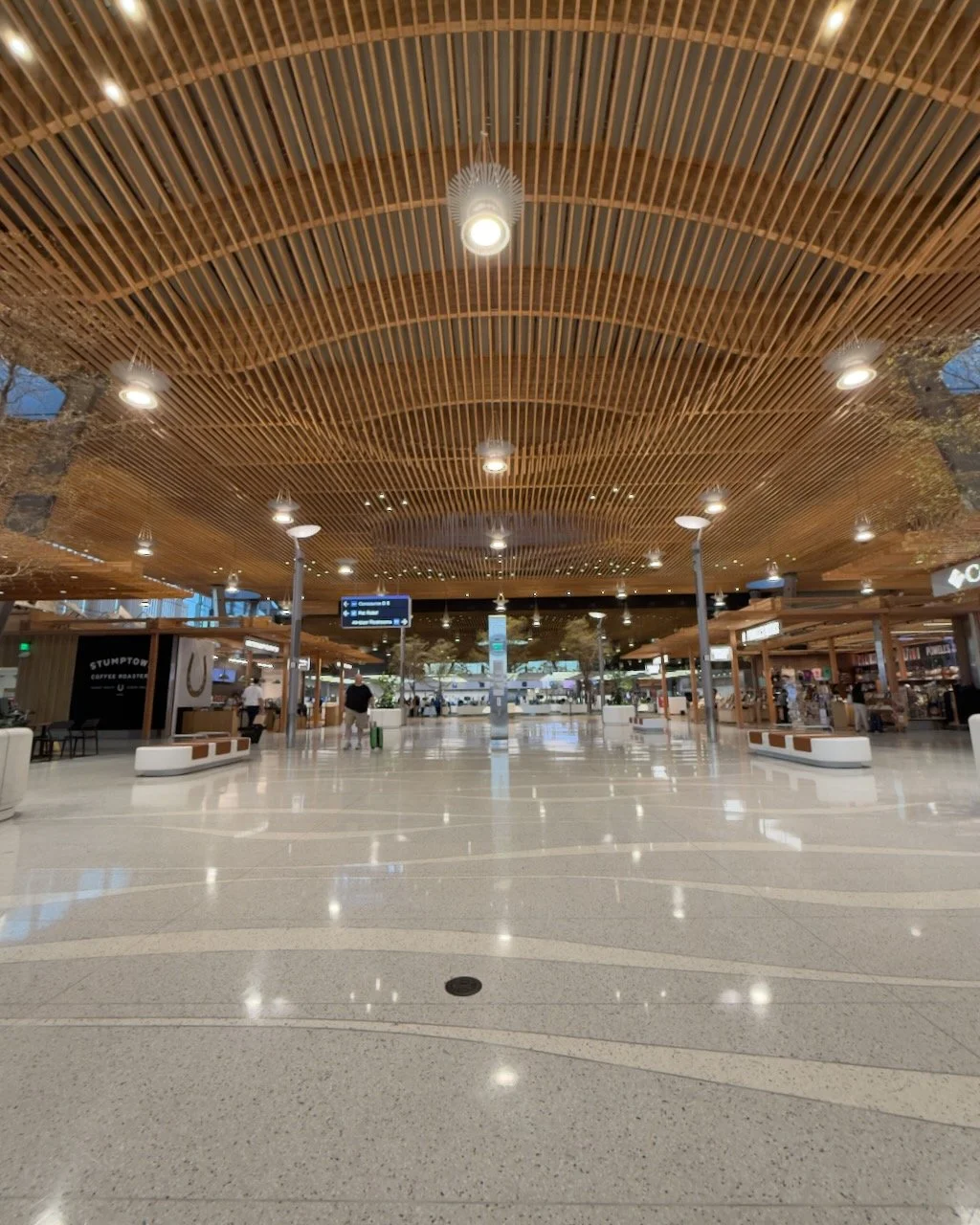
Portland International Airport (PDX)
Don't rush through PDX on your way to the rental car counter. The renovated main terminal sits under a nine-acre mass timber roof, built from Douglas fir harvested within 300 miles of the airport. With 49 skylights cutting through the timber lattice, and 72 trees and 5,000 plants on the floor below, it feels more like walking through a forest canopy than standing in an airport. We flew into Portland and out of Seattle, so this was our first look at the Pacific Northwest, and it set the tone for the whole trip. [One detail you noticed walking through.]
Look for the PDX carpet too. The teal, geometric pattern became an internet star years ago, and when the old carpet came out, travelers mourned it. The new terminal brought back sections of the original near the security checkpoints, so you can still take the classic shot of your shoes.
📷 Pro Tip: Give yourself fifteen extra minutes after you land before heading to the rental cars. Shoot the roof from below with a 15–35mm, and look for a frame where the trees and skylights line up to show the scale. Midday arrivals get the strongest light through the skylights. Handhold, since tripods don't belong in a busy terminal, and stay away from security screening areas and staff. If you're flying out of PDX instead, arrive early and do the same on your way to your gate.
📱 iPhone Tip: Use the 0.5x lens and tilt the phone up under a skylight to capture the timber lattice. For the carpet, hold the phone straight down and include just the tips of your shoes.
Best time: Midday, for the skylight light.
Access: Free in the public areas of the main terminal.
Multnomah and Wahkeena Falls, Columbia River Gorge
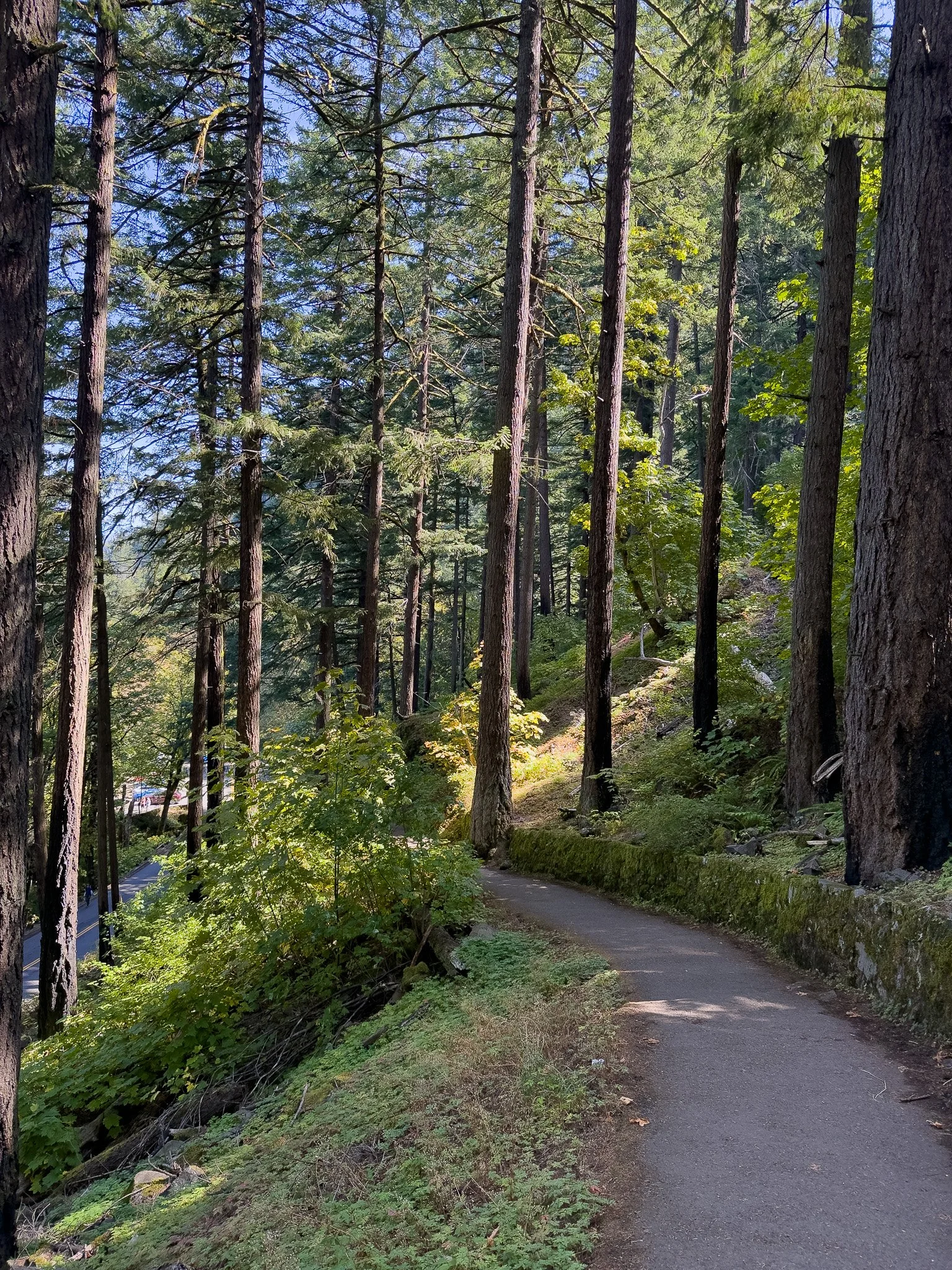
Less than an hour east of downtown, the Columbia River Gorge opens up, and it feels a world away from the city. We spent a day driving the area and chasing waterfalls.
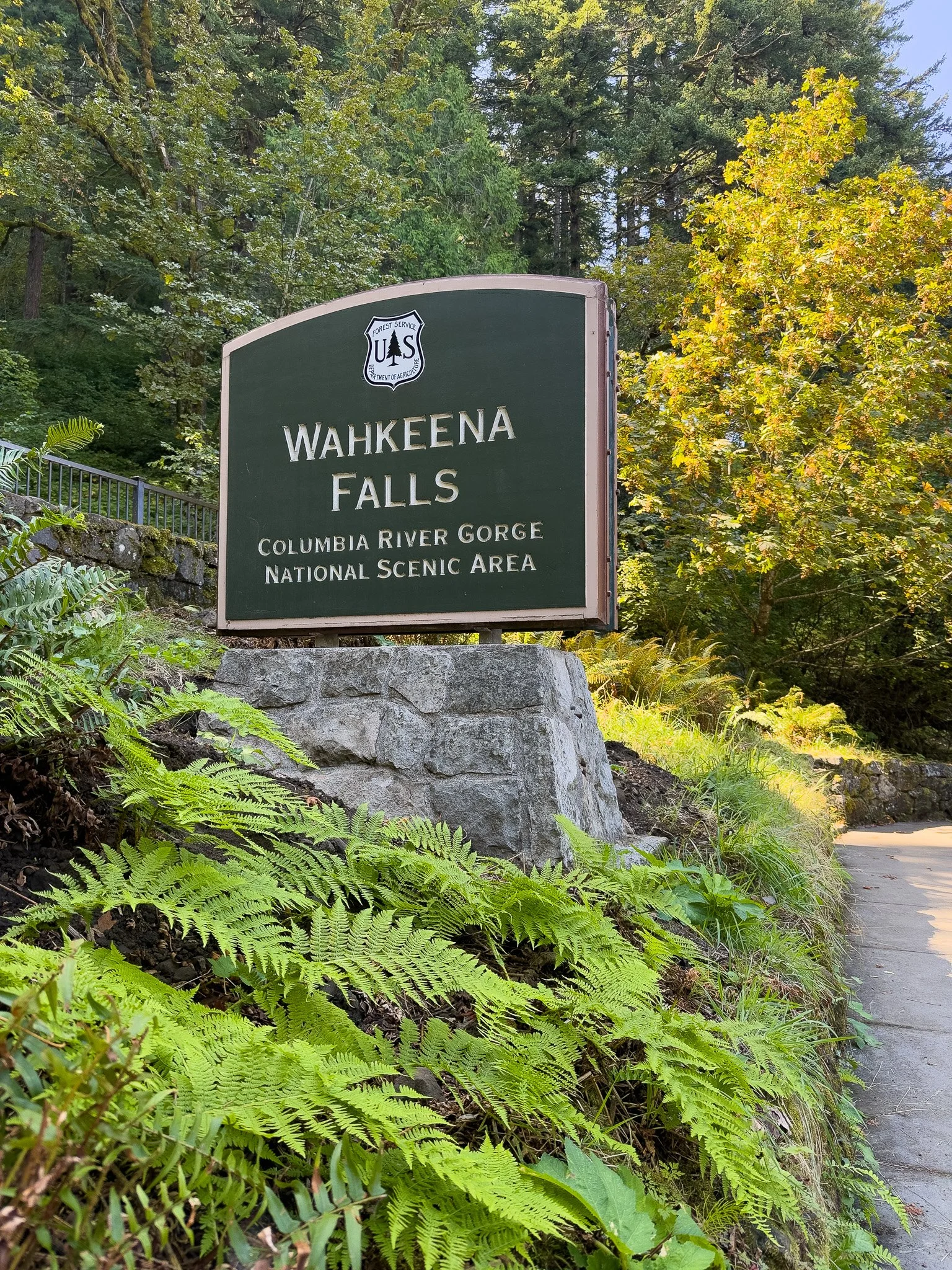
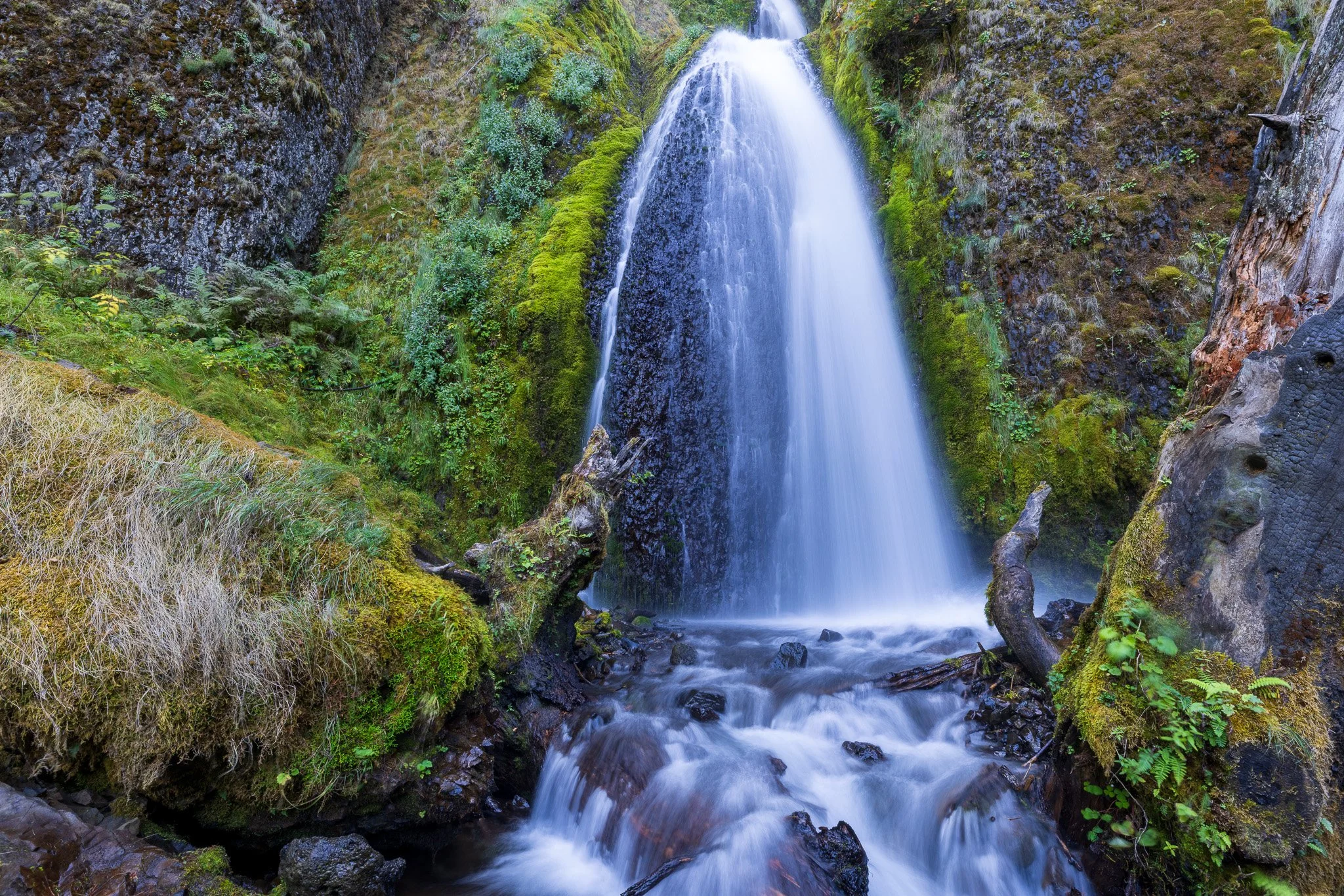
I loved seeing Multnomah Falls. It's an easy walk from the parking lot, and the falls drop in two tiers down a basalt cliff. We stood at the base and got sprayed by the mist while trying to keep our cameras dry. Even in September, with the water at its lowest, it was worth the drive. Afterward, I drove a short way west to Wahkeena Falls and hiked up to the falls. The trail is short but steep, so take your time. It's quieter than Multnomah, and the water tumbles down the rock in a long cascade rather than a single drop. If you only have time for Multnomah, you'll still leave happy, but Wahkeena is where I'd go to get away from the crowds.
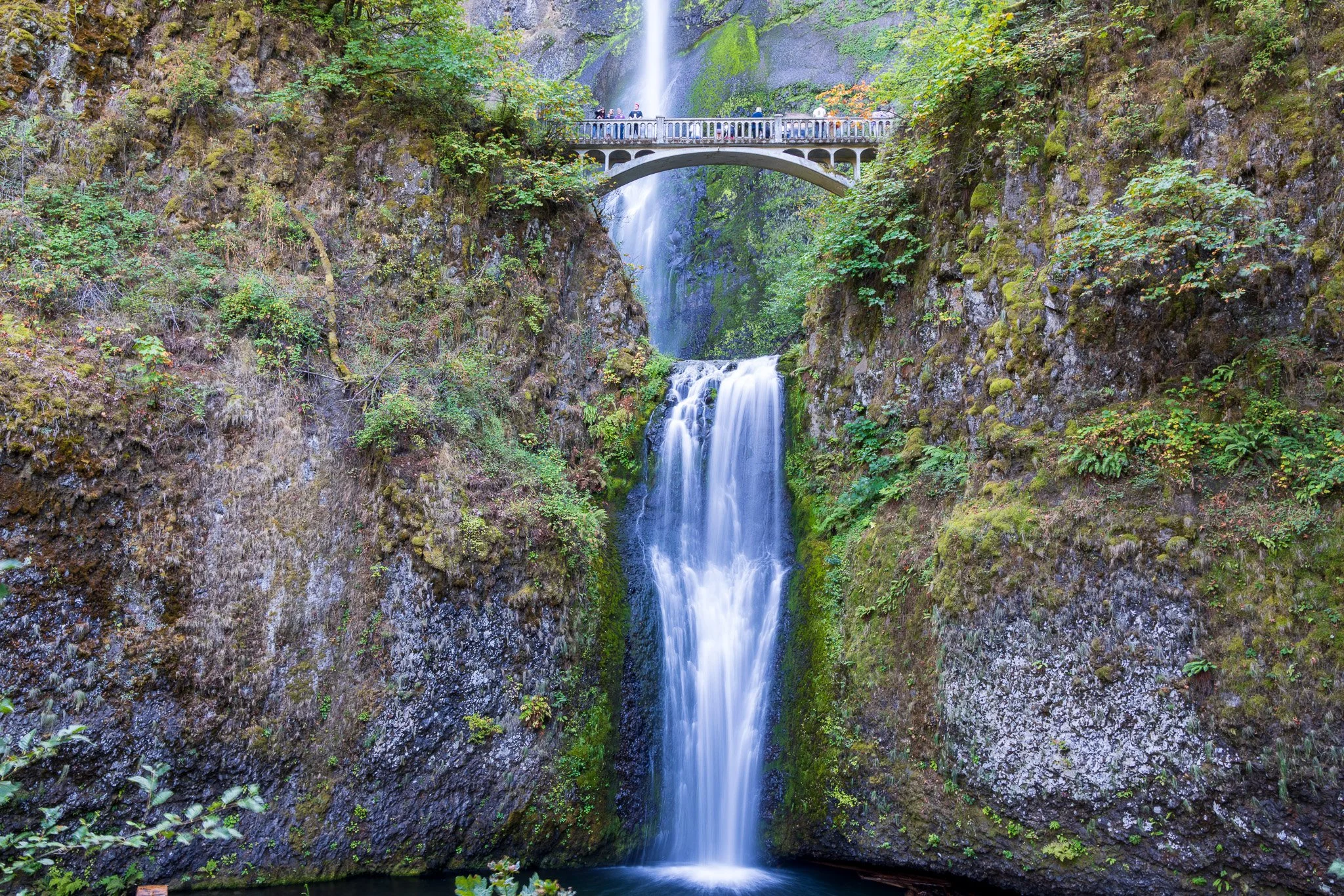
Multnomah Falls Bridge
On the drive out, consider a stop at Vista House, the stone observatory at Crown Point. It sits on a bluff high above the Columbia River, with views straight down the Gorge, and it's right on the way.
📷 Pro Tip: At Multnomah Falls, frame the upper falls with the Benson Bridge across the middle, and use your tripod and ND filter to smooth the water. The lower viewing area gets crowded, so set up at the edges and keep your footprint small. At Wahkeena, you'll have more room to work. A 24–70mm and a slow shutter speed bring out the layers of the cascade. Overcast days suit both falls best. Keep a rain cover or microfiber cloth in your pocket, because the mist reaches the viewing areas. If you stop at Vista House, the classic photograph of it comes from the Women's Forum viewpoint just to the west, where a 70–200mm at sunrise frames the building on its cliff with the Gorge behind it.
📱 iPhone Tip: At either waterfall, shoot a Live Photo, then switch the effect to Long Exposure in your Photos app for smooth, silky water without a tripod. At Women's Forum, use the 3x or 5x lens to bring Vista House closer.
Best time: Overcast days at the falls. Spring for the strongest water. Sunrise at Women's Forum if you add Vista House.
Access: Free viewpoints and trailheads. Multnomah Falls is an easy walk from the parking lot. The trail to Wahkeena is short but steep, so wear good shoes and pack your gear light. Vista House is on Oregon State Parks land, where drones can't take off or land. From late May to early September, parking at the Multnomah Falls I-84 lot requires a timed use permit, and a permit doesn't guarantee a spot. Visitors arriving by transit, shuttle, or bike don't need one. Check the current status of the Historic Columbia River Highway before you go, since construction has closed sections in recent seasons.
Festivals and Events
Art in the Pearl Fine Arts and Craft Festival, September. A free outdoor art fair in the North Park Blocks, with juried artists showing work across painting, sculpture, ceramics, and photography itself. Good for portraits of artists at their booths and detail shots of the work, and it lands right in your window.
Swan Island Dahlia Festival, August through September. Fifty acres of dahlias in bloom, run by Swan Island Dahlias in Canby, about 25 minutes south of Portland. The 2026 festival runs Wednesday through Sunday plus Labor Day, the full stretch from August through the end of September, so it will be running whenever you're there. Strong stop for garden and macro photography specifically, since it is a single flower in enormous variety rather than a mixed garden.
Portland Saturday Market. A large outdoor arts and crafts market along the waterfront under the Burnside Bridge, running weekends from spring into the holidays. Good for street photography and market scenes, and it should still be running during a September visit.
Rose City Comic Con, September. A three day comic and pop culture convention at the Oregon Convention Center, with heavy cosplay. Worth knowing about if portrait and character photography interests you more than landscapes, though it is an indoor, ticketed event rather than a casual stop.
A note on etiquette: if you are photographing cosplayers at Rose City Comic Con or artists at Art in the Pearl, ask before shooting close portraits. Most people at both events are glad to be photographed, but asking first is standard practice and keeps the interaction easy for both of you.
FAQs
How many days do I need in Portland? Two to three days at a relaxed pace, one day for the gardens and Washington Park, one day for downtown and the food cart scene, and a half day for the drive out to Vista House and the Gorge. If you are bookending a longer Oregon Coast trip, two days on each end works well.
Is Portland walkable, or do I need a car? Downtown and the Pearl District are walkable, and the aerial tram and streetcar cover a good amount of ground without a car. You will want one for the day trip out to Vista House and the Columbia River Gorge, since it is roughly 45 minutes east of the city.
Is Portland safe for photographers, including at night? Most of the city is fine, but a few of the popular photo stops, the area around Voodoo Doughnut, the Keep Portland Weird mural, and the Welcome to Portland sign, sit in a part of downtown that is better shot in daylight. I would not plan on lingering there after dark.
When is the best time to visit for photography? September is a strong window, comfortable weather, manageable crowds, and clear skies for the drive out to the Gorge, though the waterfalls run less dramatic than in spring since water levels are lower. The gardens are past peak spring bloom by then, so expect structure and greenery over a full bloom shot.
Do I need to pay for parking, and is there an app for that? Yes, parking near Washington Park and downtown is often metered. Parking Kitty works like ParkMobile and lets you pay for street parking from your phone.
What gear should I bring? A standard 24 to 70mm zoom covers most of the city and the gardens. Add a wide angle for interiors like Powell's and the Grotto, a telephoto for Vista House and the Gorge, and a tripod with ND filters if you want longer exposures on the waterfalls.
Final Thoughts
I came into this trip with a real gap in my travels. After more than twenty-five years of traveling and photographing around the world, I had never set foot in the Pacific Northwest.
Portland changed that in a way I did not expect.
What stayed with me most were not just the obvious highlights. It was the strangers who said hello first on an early morning walk, going back to the Japanese Garden a second time simply to sit and listen to the water, and a dinner at G Love in Slabtown that turned into one of my favorite meals of the entire trip.
Those small moments add up. They are what give you a real feeling for a place.
Portland is easy to treat as a stop on the way to the Oregon Coast, but I think that sells the city short. Between the gardens, the neighborhoods, the murals, the food carts, the coffee, and the easy access to the Columbia River Gorge, there is plenty here to justify spending a few days.
And for photographers, Portland is especially fun because the variety is so good. You can photograph city streets in the morning, gardens a few hours later, waterfalls in the afternoon, and still be back downtown in time for dinner.
Most of all, Portland surprised me. I expected it to be interesting. I did not expect to enjoy it as much as I did.
I would happily come back.
And next time, I would stay a little longer.
If you are planning a larger trip through the Pacific Northwest, my guides to Cannon Beach, Bandon Beach, and Seattle are natural companions to this one.
My Photography & Travel Guide to Cannon Beach. About ninety minutes west of Portland, and the easiest way to add the Oregon Coast to a Portland trip. Haystack Rock, wide sandy beaches, and some of the best sunset light in the Pacific Northwest.
My Photography & Travel Guide to Seattle. Three hours north, and the natural bookend to a Pacific Northwest road trip. We flew into Portland and out of Seattle, and the two cities make a great pair, one easygoing and green, the other bigger, busier, and built around the water.
My Photography & Travel Guide to Bandon Beach. If Portland leaves you wanting wilder scenery, drive south to Bandon. The sea stacks rising out of the surf make it one of the most photogenic stretches of coastline in the country, and it's worth the longer drive.
Want to improve your photography while exploring some incredible destinations? Join me on one of my photography workshops! You can find all the details, including upcoming destinations and dates, through the links below.
Let's Stay Connected!

🎓 Adobe Lightroom One-to-One Training
Master Post-Processing. Elevate Your Photography.
Post-processing is the final — and arguably most transformative — step in your photography workflow. Adobe Lightroom is an essential tool for today’s digital photographers, combining powerful editing tools with an intuitive system for organizing and showcasing your images professionally.
Whether you're just getting started or looking to refine your editing skills, I offer customized one-to-one Lightroom training designed to help you create images you’ll be proud to share.
---
💻 Why One-to-One Online Lightroom Training?
Over the years, I’ve found that personalized training is the most effective way to learn Lightroom. Unlike group sessions, a one-to-one format allows us to move at your pace, focus on your specific goals, and eliminate the frustration of mismatched experience levels.
Plus, with online sessions via Zoom, you can learn from the comfort of your home — no travel or accommodation needed. It's the most convenient, cost-effective, and time-efficient way to upgrade your editing game.
---
🧠 Tailored Topics to Match Your Goals
Our training is completely customizable, but here’s an outline of the modules we can cover — either in full or à la carte.
---
🔧 Lightroom Setup – Part 1: Getting Started
Set up Lightroom properly for long-term success. We’ll tackle the fundamentals to create an efficient, organized workflow:
- What Lightroom is (and isn’t)
- How the interface and modules work
- Setting preferences for your needs
- Understanding the Catalog and folder system
- Importing images efficiently
- Adding keywords during import
---
🗂 Lightroom Setup – Part 2: Organize Like a Pro
Build a storage system that grows with you:
- Folder structure tips and best practices
- Moving and renaming files within Lightroom
- Reviewing, rating, and filtering images
- Creating Smart Collections and Collection Sets
- Keywording strategies and metadata organization
---
🎨 Lightroom Editing – Part 1: Core Editing Skills
Master the Develop module and create consistent, polished images:
- Global adjustments in the Basic panel
- White balance, contrast, vibrance, and saturation
- Cropping and converting to black & white
- HSL panel tuning
- Sharpening and noise reduction
- Creating and saving presets
- Exporting for print, web, or social media
---
✨ Lightroom Editing – Part 2: Advanced Techniques
Take your editing to the next level with creative, selective tools:
- Radial and Gradient filters
- The Adjustment Brush
- Advanced masking and luminosity adjustments
- Enhancing portraits (skin, eyes, teeth)
- Spot removal and basic cloning
- Merging for HDR and panoramas
---
💼 Session Details & Pricing (USD)
Tailored One-to-One Lightroom Tuition:
- Single Session (2 hours): $199
Before our session, we’ll have a brief consultation to customize your training plan and ensure it meets your exact needs.
---
Ready to take control of your editing workflow and bring out the best in your images?
Let’s work together to turn your vision into vivid, powerful photos.
📩 Get in touch to schedule your personalized Lightroom session.
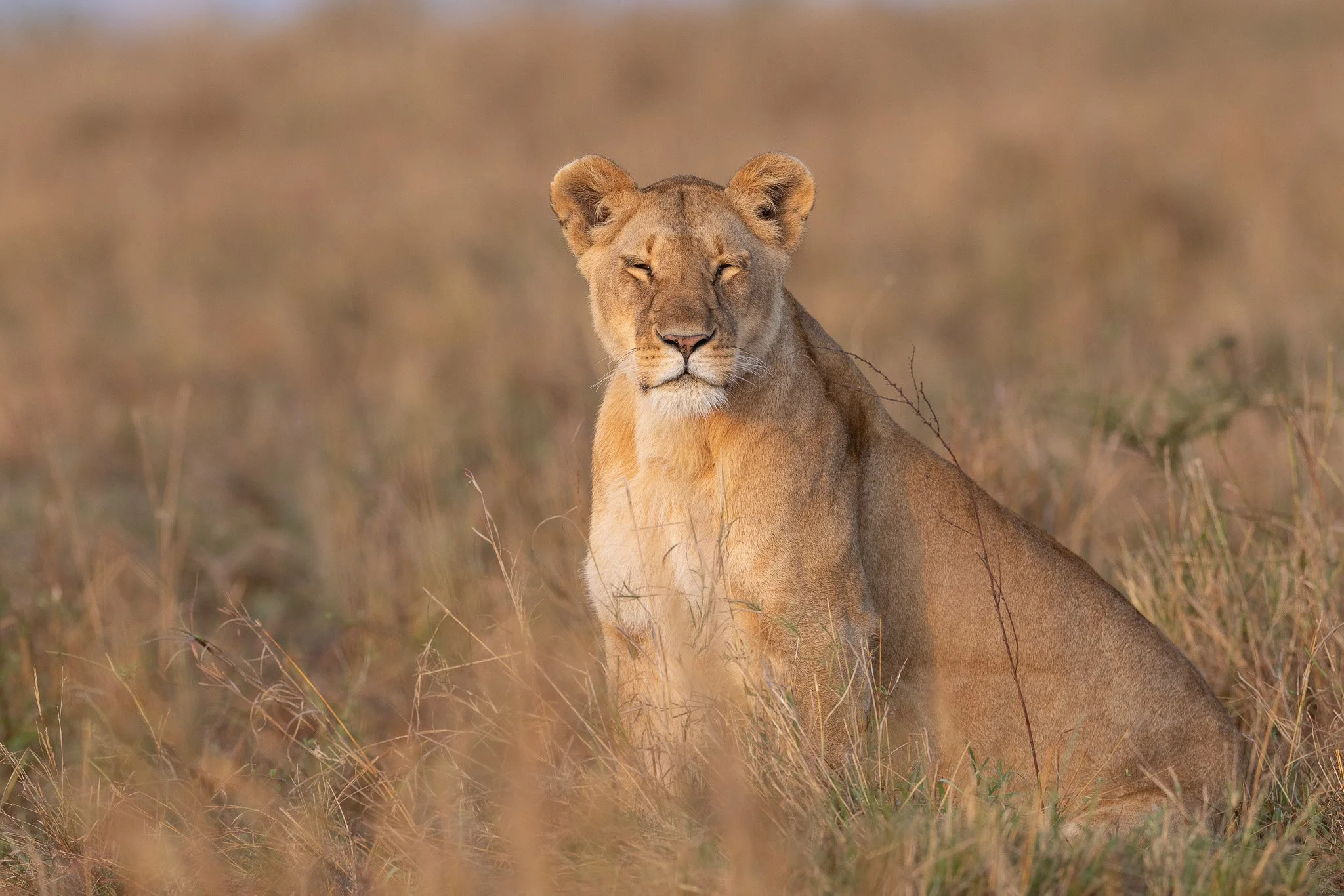
In Chasing Wildlife: A Journey into the Beauty of Animals Around the World, travel photographer Vito L. Tanzi brings together some of his favorite wildlife photographs from years of exploring Africa, Asia, and the Americas.
Within these pages, tigers emerge from the forests of India, elephants roam beneath the African sun, puffins gather along windswept coastlines, and hummingbirds hover in the cloud forests of Costa Rica. You will encounter leopards resting in trees, rhinos moving through clouds of dust, young cheetahs discovering their world, and sea lions basking on the volcanic shores of the Galápagos.
Each photograph captures more than an animal. It preserves a brief connection between photographer, wildlife, and place. Some encounters feel powerful. Others feel playful, peaceful, or unexpectedly intimate. Together, they reveal the remarkable variety of life with which we share this planet.
Chasing Wildlife is also a quiet reminder that these animals and their habitats cannot be taken for granted. Through 120 pages of photography, Vito invites you to look closer, care more deeply, and appreciate why protecting the natural world matters.
Created for wildlife lovers, travelers, photographers, and anyone who still feels a sense of wonder when an animal steps into view, this book offers a journey around the world without asking you to pack a single suitcase.