Marrakech, Morocco Travel & Photography Guide: Best Photo Spots, Things to Do & Hidden Gems
I have been visiting Marrakech for years, and it still hits me the same way every time I arrive.
The smells come first: cumin, charcoal, rose water, leather, diesel. Then the colors. Terracotta, saffron, cobalt, and emerald, layered across every surface from zellige tiles to hand-dyed silk hanging in the souks. Then the noise. The Medina moves on its own schedule and does not pause for anyone. On my first visit, I stood at a crossroads of four narrow alleyways with absolutely no idea which direction I had come from. A motorbike passed close enough to brush my jacket. A vendor gestured at a carpet I had no intention of buying. Somewhere above the rooftops, a muezzin called the afternoon prayer. I pulled out my camera and started shooting. I did not stop for hours.

Sunset in the Medina
We spent four nights in Marrakech before driving into the Atlas Mountains for another four. That balance worked beautifully. The city first, the quiet second. What I noticed most was how different Marrakech felt from my years living in Beirut. Arabic is my language, yet Moroccan Darija sounded like a different world. Moroccans understood us clearly when we spoke, but their replies moved so fast we often smiled and guessed at the meaning. It was a reminder of how beautifully diverse the Arab world truly is, and how much more there is to discover within it. The city is visually layered in a way that rewards patience, and it challenges photographers in the best possible sense. The light is unpredictable. The access is earned. The images, when they work, feel alive.

The Koutoubia Mosque
In this Photography Guide to Marrakech, I share the places and experiences that continue to draw me back. You will find my favorite photography locations, guidance on when and where to shoot, practical travel tips, and gear recommendations, along with cultural insights to help you explore and photograph Marrakech with confidence, respect, and ease.

In the Souks
Photographer's Notes
Before you go, here are my own takeaways.
Favorite Season: Spring
Favorite Location: The Medina Souks
Favorite Sunrise/Sunset Location: Koutoubia Mosque
Favorite Hotel: La Mamounia
Favorite Café: Café des Épices
Favorite Lens: 24-70mm f/2.8
Would I Return? That's exactly why I keep coming back.
A Quick Note on Language
One of the most fascinating parts of Marrakech is navigating the language. The primary spoken language is Moroccan Arabic, known as Darija. Even with fluent Arabic, I often found myself working hard to follow conversations. Moroccans understood me clearly, but their replies moved fast.
Many people also speak Tamazight (Berber), reflecting the deep Amazigh heritage of the region. French is widely understood and spoken throughout hotels, restaurants, and business settings, a legacy of Morocco's time as a French protectorate. English is increasingly common in tourist-facing areas.
My advice: learn a few basics before you arrive. A polite "Salam Alaikum" or "Bonjour" will open doors. People here respond warmly to the smallest effort.
A Few Useful Phrases
Salam Alaikum (Hello)
Bikham? (How much?)
Hadi bezaf (This is too expensive)
Shukran (Thank you)
La, shukran (No, thank you)
Where to Stay in Marrakech
If it is your first time in Marrakech, stay inside the Medina. Full stop. The old city places you in the center of everything, and that immersion is the point. The souks, palaces, gardens, and photography spots are all walkable. When you step outside your riad door in the morning, Marrakech begins immediately.
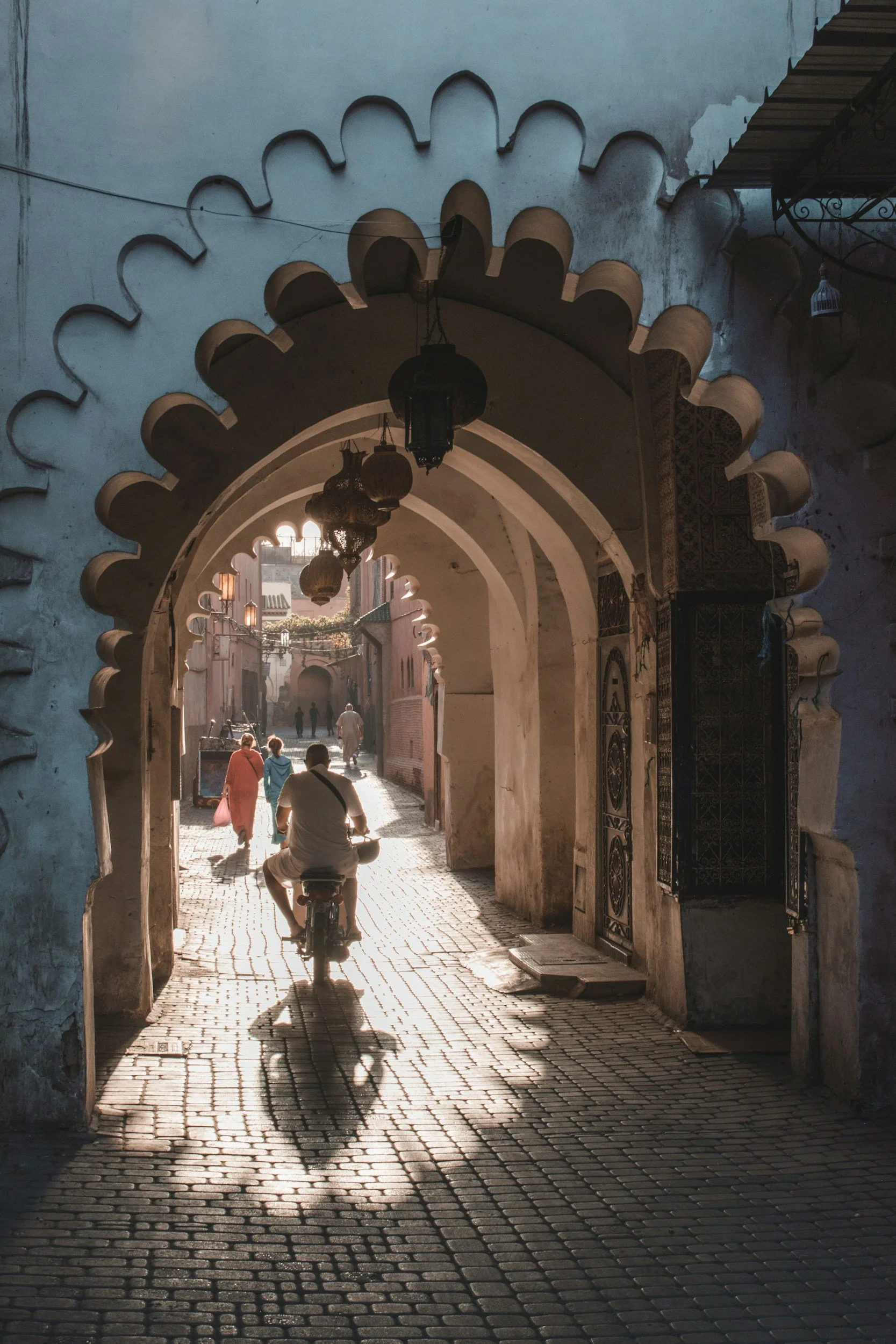
Staying in a traditional riad is one of the great pleasures of this city. From the outside, they look like plain doorways in an unmarked wall. Step inside, and a courtyard opens up: carved wood, tiled fountains, lush plants, and a rooftop terrace with views over the sea of terracotta rooftops. Staying in one place is an experience in itself.
If you prefer more space, gardens, and resort amenities, there are extraordinary luxury properties just outside the Medina walls as well.

Luxury Hotels in Marrakech
La Mamounia is the undisputed icon of Marrakech hospitality. We have stayed here, and we can vouch for it without hesitation. The grounds alone are worth the visit, with lush gardens, towering palms, a pool that feels made for golden hour light, and Moroccan design executed with exceptional restraint and elegance. It sits a five-minute walk from the Medina walls, which is an ideal position: close to the action, but quiet enough to sleep. Winston Churchill painted here. Yves Saint Laurent loved it. You will understand why from the moment you arrive.
Royal Mansour is arguably one of the most extraordinary hotels in the world. Commissioned by King Mohammed VI and built entirely by Moroccan artisans, the property consists of private riads rather than standard rooms. The level of craftsmanship is genuinely breathtaking. The gardens, spa, and restaurant make this a destination in its own right. If the budget allows, it is unforgettable.
El Fenn sits inside the Medina itself and operates on a different energy than the grand resort properties. It is colorful, confident, filled with art, and immediately comfortable. Rooftop pool, design-forward rooms, and a team that genuinely looks after guests. For photographers who want to be in the heart of the action, this is the move.

La Mamounia
The grounds of the Mamouna are stunning.


Mid-Range Hotels in Marrakech
Riad Kniza is a beautifully restored riad with authentic Moroccan character and warm, attentive hospitality. The antique collection throughout the property tells its own visual story. Excellent value for what you get.
Riad Dar Anika delivers the riad experience at a more accessible price point without cutting corners on charm. It is well-located inside the Medina and consistently well-reviewed for its welcoming atmosphere.
Riad Kheirredine offers some of the best rooftop views in the Medina. If you want a terrace for early morning shooting with a cup of mint tea in your hand, this is a strong choice.

How Many Days Should I Stay in Marrakech
Plan for three to five days in Marrakech, and do not let anyone rush you through it.
The first day often feels like a sustained assault on the senses. The Medina is loud, dense, and disorienting in the best possible way. By day two, you start reading the rhythm. By day three, you are photographing with real intention.
Three days cover the essential locations: the souks, the major palaces, Majorelle Garden, and a few rooftop sunsets. Five days give you space to revisit locations at different times of day, take a cooking class, add a day trip into the Atlas Mountains, and linger over long Moroccan dinners without watching the clock.
For photographers specifically, time is a gift in Marrakech. Return to the same alleyway at sunrise, then at sunset. Watch how light behaves differently on those terracotta walls throughout the day. That repetition is where your best images come from.
A Suggested Itinerary for Marrakech
Day 1: Arrive, orient yourself, walk Jemaa el-Fnaa at sunset, photograph the square as the food stalls come alive.
Day 2: Ben Youssef Madrasa early (before 9am), souks mid-morning, Majorelle Garden in the afternoon, rooftop blue hour.
Day 3: Bahia Palace at opening, Koutoubia Mosque exterior in morning light, Marrakech Museum, free afternoon for wandering.
Day 4: Atlas Mountains day trip or cooking class.
Day 5: Return to your favorite spots with fresh eyes. This is often when the best images happen.

Best Time of Year to Visit Marrakech
The best windows for photographers are spring (March through May) and fall (September through November).
During these months, temperatures are warm and manageable. You can shoot at sunrise, rest during midday, and be back out for golden hour without battling extreme heat. The light in spring is particularly beautiful: soft, directional, and flattering on the terracotta tones that define the city's visual identity.
Spring also brings the Majorelle Garden to its peak. The cobalt blue walls and dense plantings look their richest in soft spring light. If your goal is that iconic shot, spring is your window.
Summer (June through August) is genuinely brutal. Temperatures regularly exceed 100°F. You can still visit, but you have to build your entire day around early mornings and late evenings. Everything else becomes about survival, not photography.
Winter (December through February) is cooler than most people expect. Days are often pleasant and uncrowded. Evenings can be cold, especially on open rooftops and in riads with open courtyards. But winter also means soft, low-angle light throughout the day, which is a serious advantage for photographers. This is when I visited, and the light in February surprised me with its quality.
If crowds are a concern, avoid the weeks around major Islamic holidays, when domestic tourism peaks. Ramadan is a fascinating time to visit culturally, but restaurant and café access shifts significantly.
Getting Around Marrakech
The best way to explore Marrakech is on foot, especially inside the Medina.
The old city is compact, dense, and largely inaccessible to cars. Walking lets you notice the details: textured walls, artisans at work, the shifting geometry of light between buildings. As a photographer, this is where everything happens. Slow down. Look up. Look into doorways.
That said, walking in the Medina requires constant alertness. Motorbikes move fast through tight alleyways. Donkeys carry goods. You need to step aside quickly and often. Lean into it. That energy is part of the visual story.
For longer distances or when returning from outside the Medina, taxis are your best option. Agree on a price before getting in, or confirm the meter is running. This avoids the awkward conversation that otherwise happens at your destination.
Uber and Bolt do not operate in Marrakech. Local taxi apps exist but are inconsistently available. Standard taxis remain the most reliable option.
Renting a bike or scooter can work in the newer Gueliz district. Inside the Medina, I would not recommend it. The streets are too unpredictable.
One practical note for photographers carrying gear: hire a guide through your riad for at least half a day inside the souks. It orients you, helps you navigate with confidence, and reduces the friction that can kill a shooting day. Be aware that guides often have relationships with shopkeepers. Stay polite but firm if you are not interested in purchasing.

Where to Eat in Marrakech
The food in Morocco is extraordinary, and Marrakech is its best showcase.
Moroccan cuisine layers Berber, Arab, Andalusian, Mediterranean, and French influences into something fragrant, complex, and deeply satisfying. The spices here are not about heat. They build depth. Cumin, saffron, cinnamon, ras el hanout, preserved lemon, and fresh herbs combine in ways that take a single bite from simple to memorable.
Tagine is the dish you will order most, and for good reason. Slow-cooked in a clay pot, it keeps everything tender and infused with flavor. Chicken with preserved lemon and olives is a classic. Lamb with prunes and almonds delivers a beautiful balance of savory and sweet. Couscous, traditionally served on Fridays, is comforting and celebratory in equal measure. Pastilla, a flaky pastry filled with spiced meat and dusted with powdered sugar and cinnamon, is the kind of dish that stops a conversation.
And then there is mint tea. Sweet, fragrant, poured from high above the glass in a theatrical arc. It is not just a drink. It is the city's form of welcome.

Here are a few types of dishes to try:
Tagine: A slow-cooked stew made with meat (usually chicken or lamb), vegetables, and a variety of spices, often including saffron, cumin, and cinnamon. It is named after the earthenware pot in which it is cooked.
Couscous: Traditionally served on Fridays, this dish consists of steamed semolina grains topped with meat (often lamb or chicken) and vegetables, and flavored with a rich broth and spices.
Pastilla (Bastilla): A savory-sweet pie made with layers of thin, flaky pastry filled with spiced meat (typically pigeon or chicken), almonds, and eggs, and dusted with powdered sugar and cinnamon.
Harira: A traditional Moroccan soup made with tomatoes, lentils, chickpeas, and meat (usually lamb), flavored with a mix of herbs and spices. It is often eaten to break the fast during Ramadan.
Mechoui: A whole lamb or mutton roasted on a spit, seasoned with spices like cumin and paprika, and typically served at special occasions.
Kefta Tagine: Meatballs made from minced beef or lamb, cooked in a rich tomato sauce and often topped with eggs.
Briouats: Savory pastries filled with spiced meat (usually lamb or chicken), cheese, or vegetables, and fried until crispy.
Zaalouk: A flavorful salad made with cooked eggplant and tomatoes, seasoned with garlic, paprika, and cumin, and served as a side dish or dip.
Chebakia: A sweet treat made from dough shaped into flowers, fried, and then soaked in honey and sprinkled with sesame seeds. It is especially popular during Ramadan.
Mint Tea: While not a food, Moroccan mint tea is a staple of the local diet. It is made with green tea, fresh mint leaves, and a generous amount of sugar, and is a symbol of Moroccan hospitality.


Restaurant Picks in Marrakech
Nomad is where I go when I want modern Moroccan cooking with a rooftop view over the souks. The menu takes classic Moroccan flavors and gives them a lighter, contemporary treatment without losing authenticity. The upper terrace is excellent for an afternoon break.
Le Jardin is exactly what it sounds like: a beautiful garden restaurant tucked into the Medina. We came back for lunch twice. The setting is calm, the food is fresh, and it provides the perfect mid-day reset after a morning in the souks.
Al Fassia is an institution. Run entirely by women, it serves some of the most precise and generous traditional Moroccan cooking in the city. The bastilla here is exceptional. Reservations are a smart move.
Dar Yacout is the place for a special dinner. The setting, a series of interconnected rooms in a historic palace, and the multi-course Moroccan feast make this an event rather than just a meal. Arrive hungry.
Café des Épices is a souk-side café with terrace views over the spice market. Good food, excellent people-watching, and a natural pause point in the middle of a shooting day.
Terrasse des Épices sits above the Medina with strong panoramic rooftop views. Reliable food and one of the better spots for blue hour drinks.
Coffee Shops in Marrakech
Café des Épices doubles as my default coffee stop. Strong espresso, souk views, and a spot to download photos and review the morning's shoot.
Atay Café has a relaxed rooftop terrace and good coffee. The kind of place where an hour passes before you notice.
Café Clock blends Moroccan and international options in a comfortable, welcoming setting. Reliable wifi and a mixed local-tourist crowd make it an easy choice.

In the Medina
Photography Gear to Bring for Marrakech
Marrakech rewards versatility. You want a kit that is comprehensive enough to handle architectural interiors, fast street scenes, and rooftop landscapes, but light enough to carry through the Medina all day without exhaustion. Camera bags attract attention. Choose something discreet.
Mirrorless Kit
Camera Bodies: Canon EOS R5 Mark II, Sony A7R V, or Nikon Z8. All three handle the high-contrast light of the Medina well. Fast autofocus matters here because subjects move quickly and opportunities close fast.
24-70mm f/2.8: Your workhorse. Handles street scenes, architecture, food photography, and environmental portraits. If I could bring only one lens, this would be it.
16-35mm wide-angle: Essential for riad interiors, madrasa courtyards, and tight alley compositions where you cannot step back far enough. Also excellent for dramatic sky shots above the roofline.
50mm or 85mm prime: The 50mm keeps you light and quick. The 85mm gives you subject separation for portraits and lets you compress the geometry of the souks beautifully. A fast prime is worth carrying.
70-200mm: Useful for isolating minarets, compressing distant architectural details, and photographing candid moments from a respectful distance in the square. Heavier to carry all day, but worth it for dedicated shooting sessions.
Tripod: A lightweight travel tripod earns its weight at blue hour from rooftop terraces. Note that tripods may not be welcome inside some sites. Check on entry.
Circular polarizer: Manages harsh midday light and enriches the blues and reds that define Marrakech's color palette.
Extra batteries and cards: You will shoot more than you expect. The Medina does not have convenient charging points.
Discreet camera bag: This is genuinely important in Marrakech. Avoid flashy branding. The less conspicuous you look, the better your experience will be.
iPhone Photography
For Majorelle Garden: Use Portrait Mode on the cobalt blue walls with the yellow accents in background. The color contrast is so graphic that even a phone renders it beautifully. Shoot in the first hour after opening to avoid crowds in the frame.
In the souks: Switch to the ultrawide lens. The narrow alleyways compress visually in a way that the ultrawide captures honestly. Shoot into the light for silhouettes of vendors and passing figures.
At Jemaa el-Fnaa at dusk: Use Night Mode as the food stalls light up. The warm glow of the grills against the deep blue sky is exactly the kind of scene Night Mode handles well. Lock exposure on the lit stalls to keep the sky from washing out.
For riad interiors: The iPhone's ultrawide handles the tight courtyard spaces well. Look for the reflection in the central fountain as your foreground anchor. Use ProRAW if your phone supports it to retain the full dynamic range between the lit courtyard and shadowed arches.

In the Medina
Best Photography Locations in Marrakech
Jemaa el-Fnaa
Jemaa el-Fnaa is the beating heart of Marrakech, and it is one of the most challenging and rewarding photography locations I have encountered anywhere.
When you step into the square, it feels as if the entire city has gathered in one place. The energy is constant and layered. Vendors call out. Smoke rises from food stalls. Musicians play. Snake charmers work the edges. Tourists hesitate at the entrance. Locals weave confidently through the middle. By day, the square delivers layered street scenes and candid storytelling at every turn. By late afternoon, it transforms. As the sun drops, food stalls multiply, grills fire up, and the air fills with spice and charcoal smoke. From above, it becomes a completely different visual experience: a grid of glowing carts and moving figures against the darkening city.
📷 Pro Tip: Visit twice. Come during late afternoon (around 4pm) to photograph the square during its daytime street scene character, then stay through sunset to capture the transformation as the food stalls ignite. For overhead shots of the square in its evening form, climb to any of the café terraces lining the north side. Position yourself with a 24-70mm for the wide establishing shots, then switch to a 70-200mm to compress and isolate specific stories within the crowd. If you want to photograph the performers or vendors up close, ask first and offer a small tip. It is expected and appropriate.
Best time: Late afternoon through blue hour. Access: Free. Walking distance from any Medina riad.
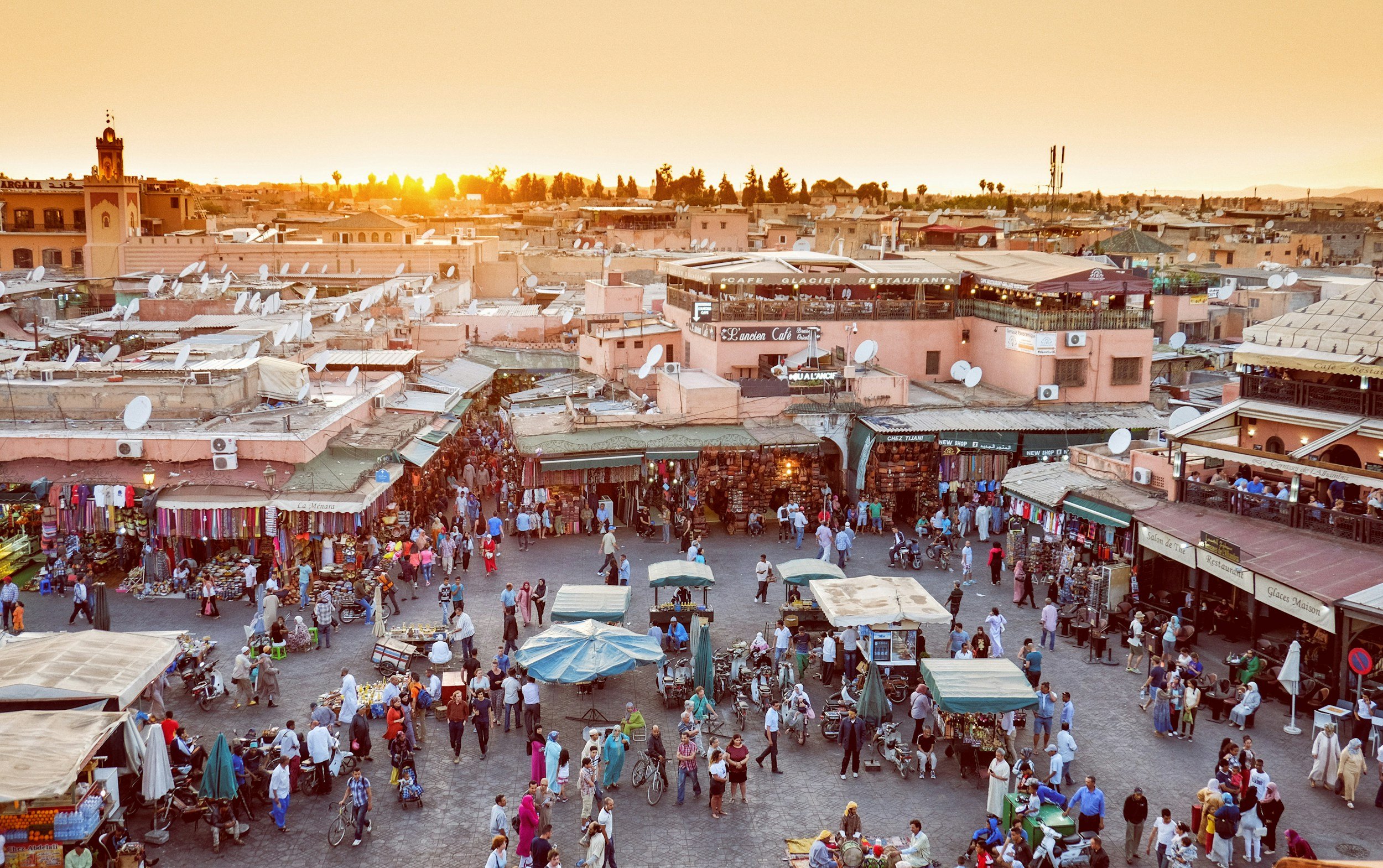
By day, the square offers layered street scenes and candid storytelling. By late afternoon, it begins to transform. As the sun sets, the food stalls multiply, grills fire up, and the air fills with the scent of spices and charcoal. From above, it becomes a completely different visual experience.

A Water Seller
Jardin Majorelle (Majorelle Garden)
Jardin Majorelle is one of the most visually distinctive places in Marrakech, and possibly in all of North Africa.
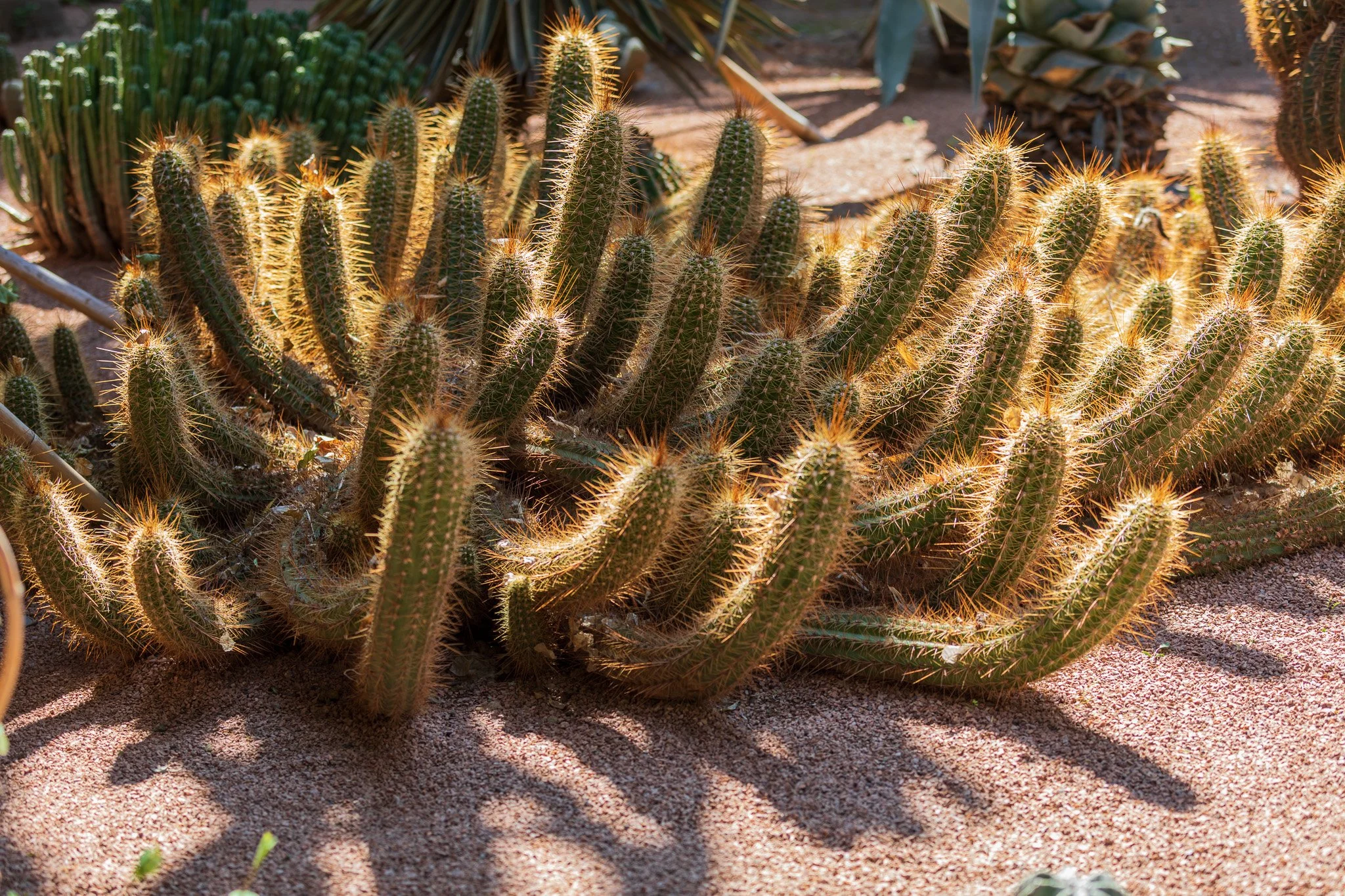
French artist Jacques Majorelle began creating this botanical sanctuary in the 1920s. Today it holds more than 300 plant species from five continents. But what makes it unforgettable is the color. The intense cobalt blue known as Majorelle Blue covers every structure and surface, throwing into sharp contrast the bright yellow accents, the cascading greens of palms, cacti, and bamboo, and the terracotta pathways running between them. It is graphic, bold, and exceptionally photogenic. Yves Saint Laurent famously said that Marrakech taught him color. You understand exactly what he meant the moment you walk through the gate.
The garden also houses the Musée Yves Saint Laurent next door, worth an hour for anyone interested in fashion, design, or architecture.
Important: advance ticket booking online is now required. Walk-up entry is not guaranteed, especially on weekends and during peak season. Book before you travel.
📷 Pro Tip: Arrive at opening time. The garden fills quickly, and the early light is softer and more flattering on those blue walls. Position yourself along the central pathway with a 16-35mm to capture the depth of the plantings against the blue structures. For close-up detail shots, look for the interplay between the cobalt walls and specific plant textures: cacti spines, bamboo shadows, overhanging palm fronds. A polarizer helps saturate the colors without blowing out the blue. Midday light is harsh and creates distracting shadows. If you arrive late in the day, shoot looking west to catch warm light on the walls during the last hour before closing.
Best time: Early morning at opening. Access: Paid entry; advance booking required at jardinmajorelle.com.
““Marrakech taught me color. Before Marrakech, everything was black.” ”

This garden feels completely different from the Medina. It is calm. Ordered. Controlled. That contrast makes it a perfect reset after the chaos of the souks.

The museum is located near the beautiful Majorelle Garden, another must-see attraction in Marrakech, which was also owned by Saint Laurent and his partner Pierre Bergé. The museum showcases a vast collection of Yves Saint Laurent’s haute couture creations, as well as temporary exhibitions, a research library, and an auditorium.


Koutoubia Mosque
The Koutoubia Mosque is the architectural anchor of Marrakech. Its 77-meter minaret is visible from much of the Medina and defines the city's skyline in the way the Eiffel Tower defines Paris or the Colosseum defines Rome.
Completed in the 12th century, it is the largest mosque in Marrakech and one of the most important historic buildings in Morocco. Its name comes from the Arabic word for booksellers, because the surrounding area once housed a thriving market for manuscripts and books. Non-Muslims may not enter the mosque itself, but the exterior, gardens, and surrounding grounds offer strong compositions at all times of day.
📷 Pro Tip: Photograph the Koutoubia from the surrounding gardens during golden hour, both at sunrise and sunset. The warm light brings out the depth and texture of the stone, and the minaret catches color beautifully against a blue or orange sky. For sunset, position yourself to the west of the mosque and use the 70-200mm to isolate the upper section of the minaret against the sky. For a more contextual shot that includes the mosque within the city, look for elevated vantage points from nearby rooftop cafés. At blue hour, the lit minaret against the deep blue sky creates one of the most striking images you can bring home from Marrakech.
Best time: Sunrise and sunset. Access: Exterior and gardens are free. Interior not accessible to non-Muslims.

For photographers, the best time to visit the Koutoubia Mosque is during the golden hours—just after sunrise and before sunset.

Ben Youssef Madrasa
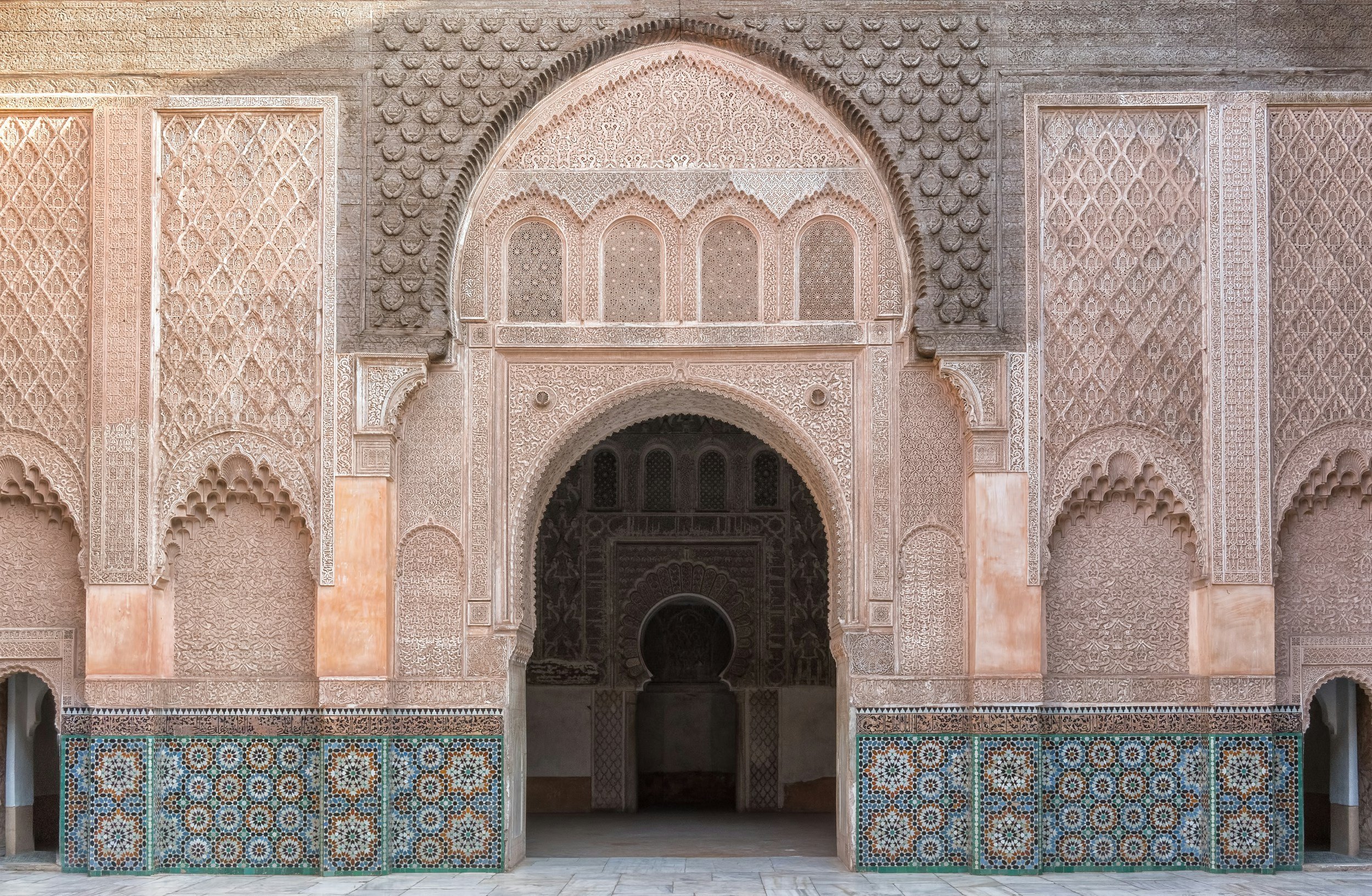
Ben Youssef Madrasa is the finest example of Moroccan Islamic architecture I have photographed, and it ranks among the most beautiful buildings I have visited anywhere in the world.
Completed in 1564, this former Islamic college once housed hundreds of students who came from across the region to study theology and law. Today it stands as a monument to the precision and artistry of Moroccan craft. The central courtyard is framed by carved cedar wood screens, intricate stucco work, geometric zellige tilework, and a tranquil reflecting pool that mirrors the sky. Every surface feels intentional. Every detail invites you closer. The symmetry of the space means that wherever you stand, you are looking at a composed frame.
📷 Pro Tip: Arrive as early as possible, before 9am if the site allows early access. The courtyard faces skyward, so the quality of light depends entirely on the sun's position and the sky above. An overcast morning creates the softest, most even light across the tilework. Clear mornings produce direct light on portions of the courtyard while leaving other sections in deep shadow, which creates dramatic contrast but also exposure challenges. Use your 16-35mm wide-angle to capture the full courtyard from the entrance archway, then move in with a 24-70mm for detail shots of the stucco patterns and carved wood. The reflecting pool makes an excellent foreground element. Shoot from a low position to include the pool surface in the frame.
Best time: Early morning at opening. Access: Paid entry. Located in the northern Medina, walkable from most riads.
Bahia Palace
Stepping into the Bahia Palace feels like walking into a storybook. Built in the late 19th century for the Grand Vizier Si Moussa and later expanded by his son Bou Ahmed, the complex stretches across eight hectares and includes more than 150 rooms, serene courtyards, lush gardens, and beautifully preserved harem quarters.
The name Bahia means brilliance, and the palace earns it. The craftsmanship is extraordinary: painted cedarwood ceilings, intricate zellige tilework, arched doorways, and central courtyards shaded by orange trees. Unlike the madrasa, which is compact and intense, Bahia unfolds slowly across interconnected rooms and garden spaces. It rewards wandering.
📷 Pro Tip: The painted cedarwood ceilings are among the most photogenic details in Marrakech. Use a wide-angle lens (16-35mm) and shoot straight up from the center of the room to capture the full geometric pattern. The challenge is exposure: the interiors are shaded, and shooting upward toward bright windows creates significant contrast. Use exposure compensation or HDR processing to retain detail in both the ceiling pattern and the framing architecture. The courtyard orange trees cast beautiful dappled shadows on the tilework during midmorning. Avoid midday when tour groups are heaviest.
Best time: Late morning before crowds peak. Access: Paid entry. Located in the southern Medina near Jemaa el-Fnaa.

The Marrakech Museum
The Marrakech Museum is one of the most underrated photography locations in the city, and one I come back to specifically for interior architectural shots.
Housed inside the historic Dar Menebhi Palace, it blends into the Medina from the outside. Step through the entrance and the central courtyard opens dramatically beneath a massive traditional chandelier. Intricate tilework, carved plaster, and wooden balconies frame the space from above. The interplay between shadow and light creates strong geometric compositions that work at almost any time of day. The central fountain anchors the courtyard as a natural foreground element, and the surrounding arches guide the eye through the frame without any compositional effort from the photographer.
📷 Pro Tip: Use a 16-35mm wide-angle to capture the full courtyard from the entrance archway. The chandelier overhead serves as a natural leading element in vertical compositions. Shoot during midmorning when direct light enters the courtyard from above and creates the most dramatic contrast on the tilework. For detail shots of the carved plaster, use a 24-70mm and look for sections where raking light picks out the relief pattern. The museum is less crowded than the madrasa and palace, which makes it easier to take your time and set up without pressure. Do not rush this one.
Best time: Midmorning for interior light. Access: Paid entry. Located in the northern Medina near Ben Youssef Madrasa.

The interplay between shadow and light creates strong geometric compositions. The central fountain anchors the courtyard, while the surrounding arches naturally guide your eye through the frame.
The museum itself features contemporary and traditional Moroccan art, manuscripts, and decorative objects, but even if you are not focused on exhibitions, the building alone is worth the visit.


Medina Souks
The souks were my favorite part of Marrakech. I will say that directly.
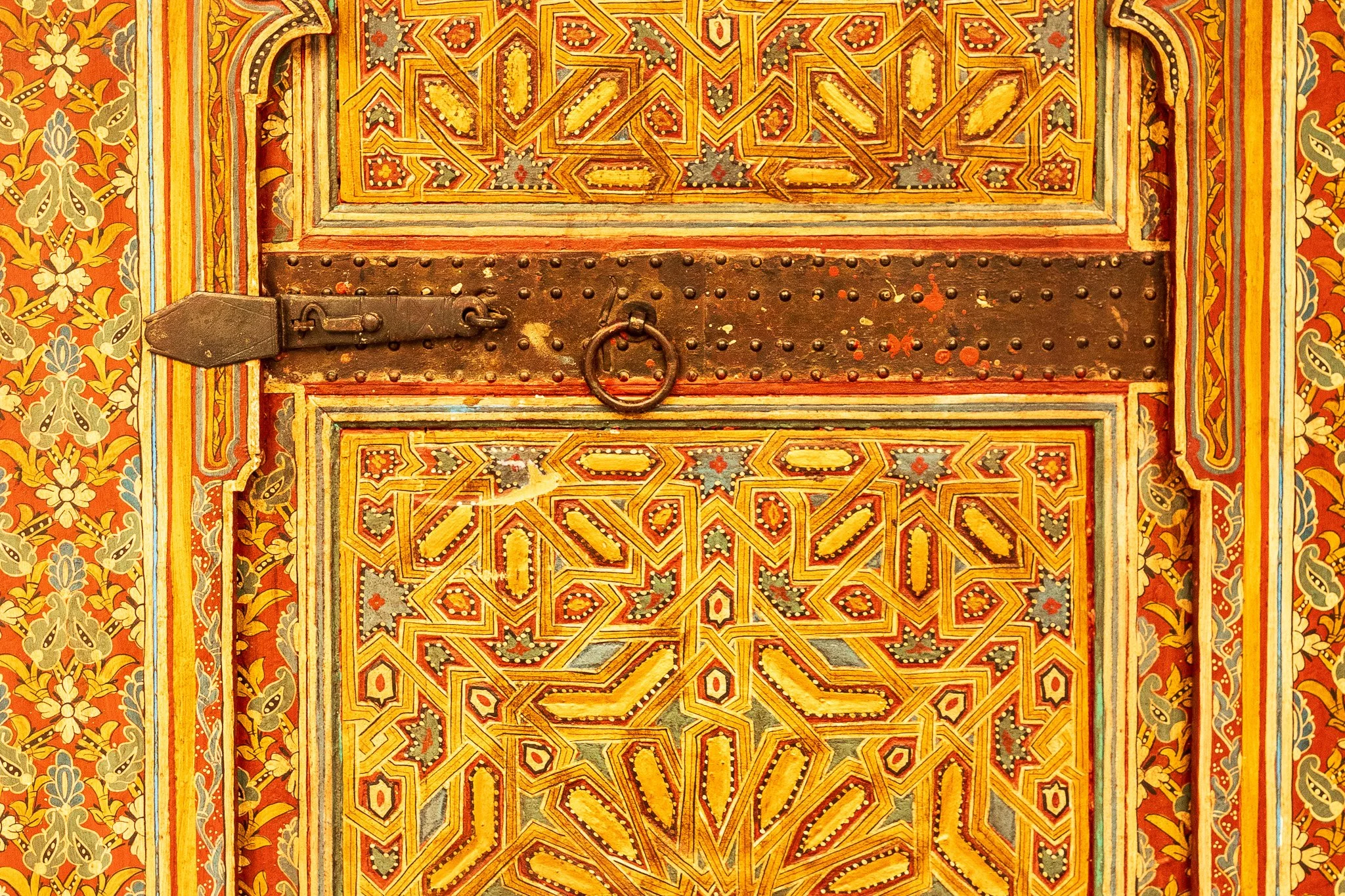
The Medina is a UNESCO World Heritage Site, and once you step inside, you understand exactly why. It feels endless. Alley after alley twists and narrows, sometimes to barely shoulder width. There is no grid. There is no clear orientation. It is a living maze that changes character by district: one section for leather goods, another for spices, another for lamps, another for carpets stacked floor to ceiling. Artisans work in open doorways. Light filters down through wooden lattice screens overhead. The smells shift every twenty meters.
I will be honest: it also caught me off guard. The snake charmers in Jemaa el-Fnaa were not something I anticipated, and they require a certain kind of photographer confidence to approach. Wandering the souks without a guide on day one can feel overwhelming. I recommend hiring a guide through your riad for a half-day orientation. Once you understand the structure, you can return and explore independently.
📷 Pro Tip: The best souk photography happens in the first two hours after sunrise and the last ninety minutes before sunset. Midday light in the narrow alleyways is harsh and patchy, with blown-out patches where sunlight falls directly and deep black shadows where it does not. In early morning or late afternoon, the light becomes softer and more directional, filtering beautifully through the overhead screens. Use a 50mm or 85mm prime and wait for subjects to move into the light. Look for frames within frames: doorways, arches, and hanging lanterns naturally compose the scene for you. Ask permission before photographing individuals and offer a tip where appropriate. Most vendors are accustomed to photographers and respond well when approached respectfully.
Best time: Early morning or late afternoon. Access: Free. Navigate from Jemaa el-Fnaa heading north.

Marrakech's medina, which means "city" or "town" in Arabic, is a historic walled city with a labyrinth of alleys and stalls upon stalls to stroll through. Don’t be afraid to get lost in the alleys and tiny streets.


Negotiating in Marrakech's markets, or souks, is an art. Here are some tips to help you navigate and negotiate effectively: Refrain from too much enthusiasm for whatever you buy. Start low and ask for half of what the vendor quoted you. Engage in small talk with the vendor. Finally, if you are not getting a fair price from the vendor, thank them and walk away.
Festivals & Events
Marrakech International Film Festival (November/December): One of the most significant film festivals in Africa and the Arab world. The city transforms during festival week, with screenings in Jemaa el-Fnaa and events throughout the Medina. The visual energy of crowds gathered beneath the open sky of the square for outdoor screenings is exceptional for documentary-style photography.
Marrakech Popular Arts Festival (July): A multi-day celebration of traditional Moroccan music, acrobatics, and dance. Performances take place in Jemaa el-Fnaa and across the city. The festival preserves and celebrates Berber and Amazigh cultural traditions and is one of the most photographically rich events in Morocco's annual calendar.
Ramadan: Timing shifts each year based on the lunar calendar. Visiting during Ramadan is a culturally immersive experience unlike any other. The Medina quiets during the day but transforms completely at Iftar, when the fast breaks at sunset. Jemaa el-Fnaa fills with families, vendors, and celebration. For photographers, the light and energy at Iftar are extraordinary. Note that restaurant access changes significantly during this period. Plan accordingly.
Eid al-Adha: One of the most important Islamic holidays, celebrating the end of the Hajj pilgrimage. The city fills with energy and communal gathering. Photographing the preparations and celebrations requires cultural sensitivity and a respectful approach, but the visual storytelling opportunities are exceptional.
Rose Festival, El Kelaâ des M'Gouna (May): Not in Marrakech itself, but a few hours' drive south. The Dadès Valley rose harvest produces one of Morocco's most visually extraordinary events: rose petals covering village streets, women in traditional dress, and distillation workshops operating through the day. Worth a day trip for photographers committed to capturing Morocco beyond the city.
Frequently Asked Questions About Visiting Marrakech
Is Marrakech safe?
Yes, for the areas most visitors go. Normal city awareness applies in the Medina's dense, crowded alleyways, where pickpocketing is the real risk, not violent crime. Hiring a guide for your first half-day helps you get oriented quickly.
Is Marrakech expensive?
It can be, especially the grand riads and luxury hotels, but there's real range. Street food and casual meals cost very little, and the souks reward negotiation, starting low and expecting to settle around half the initial quote.
Do you need a car in Marrakech?
No, and it's actively discouraged inside the Medina, which is largely inaccessible to cars anyway. Walking is the best way to shoot it. Taxis handle longer distances; Uber and Bolt don't operate here.
What are the best photo spots in Marrakech?
Jemaa el-Fnaa at blue hour as the food stalls ignite, Majorelle Garden at opening for the cobalt walls in soft light, and the Koutoubia Mosque at sunset are three I return to constantly. The full list with Pro Tips is above.
What surprised you most about photographing Marrakech?
How different Moroccan Darija sounded from the Arabic I've spoken my whole life. Moroccans understood me clearly, but their replies moved so fast we often smiled and guessed at the meaning. It was a reminder of how beautifully diverse the Arab world truly is.
How many days do you need in Marrakech?
Three to five days. Three covers the essentials; five gives you room to revisit locations at different times of day and add an Atlas Mountains day trip.
Do you need to book Majorelle Garden tickets in advance?
Yes, essential now. Advance online booking is required, walk-up entry isn't guaranteed, especially on weekends and during peak season.
Is it appropriate to photograph people in the souks?
Ask first, and offer a small tip where appropriate, it's expected and appreciated. Most vendors are used to photographers and respond well when approached respectfully.
Final Thoughts
Marrakech is not a city that lets you stay comfortable. It challenges you, disorients you, and forces you to slow down, look harder, and approach the frame differently than you do anywhere else. That is exactly why I keep coming back.
There is something that happens around day three. The Medina stops feeling like a maze and starts feeling like a neighborhood. You begin to recognize faces in the souks. You know which alley leads where. You arrive at a location you have already photographed and see it differently because the light has shifted, and you are no longer just reacting to the chaos. You are working within it.
That is when Marrakech opens up. And that is when the real images happen.
Go. Give it five days if you can. Wander without an agenda. Order something unfamiliar. Learn a few words before you arrive. And do not miss a single sunset from a rooftop terrace.
Want to improve your photography while exploring some incredible destinations? Join me on one of my photography workshops! You can find all the details, including upcoming destinations and dates, through the links below.
Let's Stay Connected!
Other Guides Worth Reading
My Photography & Travel Guide to the Atlas Mountains, Morocco. We drove into the Atlas Mountains the morning we left Marrakech, and those four days completely changed the trip. Snow-capped peaks, Berber villages, dramatic gorges, and light that shifts by the hour. The Atlas is the natural next chapter after Marrakech, and the two together tell the full story of Morocco.
My Photography & Travel Guide to Cairo, Egypt. If Marrakech lit a spark for North African and Arab world travel, Cairo will turn it into a fire. The pyramids, the Khan el-Khalili bazaar, the Islamic Cairo skyline at sunset: this is a city that demands at least one visit in a lifetime. I have spoken Arabic my entire life, and Cairo still managed to humble me with its scale and energy.
My Photography & Travel Guide to Istanbul, Turkey. Marrakech and Istanbul share something essential: they are cities built at the crossroads of worlds. The same call to prayer you hear over Marrakech's rooftops echoes across the Bosphorus. The same layering of Islamic architecture, bazaar culture, and extraordinary food connects them. Istanbul is the natural companion destination for anyone who falls in love with Marrakech.
Are you carrying too much camera equipment, but still coming home disappointed with your travel photographs?
You are not alone. Many photographers fall into the packing trap. They bring too much, plan too little, and spend their trip scrambling to capture photographs instead of enjoying the experience.
Capture the World offers a better approach.
In this practical guide, travel photographer Vito L. Tanzi shares the five step system he uses to plan photography trips, pack with purpose, work with the best light, and return home with stronger images.
Inside, you will learn how to:
• Travel lighter without sacrificing image quality
• Choose destinations that match your photography goals
• Visit at the right time for weather, light, wildlife, festivals, or seasonal conditions
• Build a photography itinerary around sunrise, sunset, blue hour, and changing weather
• Select the equipment you will actually use
• Find promising locations before you arrive
• Avoid the stress and exhaustion that can ruin a photography trip
• Stay flexible when weather, crowds, or travel plans change
This guide includes practical planning advice, useful photography tools, real travel examples, and a complete system you can use again and again.
Whether you are preparing for your first international photography trip or planning a weekend closer to home, Capture the World will help you travel with greater purpose, photograph with more intention, and spend less time worrying about what is inside your camera bag.
Because the best photography trip is not the one where you carry everything.
It is the one where you are ready when the right moment appears.
📸 Format: PDF download
Instant Download

🌅 Wake Up & Shoot: Join My DC Sunrise Monuments Photography Workshop!
Washington, DC | $99 per person | Max 6 participants or $199 Private
Ready to turn your early wake-up call into something unforgettable? Come chase the morning light with me through Washington, DC’s most iconic monuments—before the crowds roll in and while the city glows in that perfect golden hour.
This sunrise photo walk is a favorite for beginners and hobbyists, but it’s just as inspiring for seasoned shooters looking to capture DC in a whole new light. I offer a few of these group workshops each year (plus private tours for 1–6 people). I can also do private workshops.
What You’ll Learn:
📷 Composition techniques to transform snapshots into showstoppers
✨ How to work with reflections, shifting light, and movement
⏱ Tips on long exposures—even in changing morning light
We’ll Photograph:
The Lincoln Memorial, Vietnam Memorial, Korean Memorial, Jefferson Memorial, Tidal Basin, WWII Memorial, and the Washington Monument—plus any golden light gems we discover along the way.
Meet-Up Spot:
We’ll meet at the bottom of the steps leading up to the Lincoln Memorial. Click here for the location on Google Maps.
Gear Guide:
Bring your DSLR or mirrorless camera with a zoom lens (24-70mm or 24-105mm is perfect), a sturdy tripod, and if you’ve got them, an ND filter and remote shutter release. Need a tripod? I’ve got one available—just email me in advance to claim it.
Skill Level: Beginner to Intermediate (and Curious Travelers!)
If you're new to your camera, don’t worry—I’ve taught hundreds of beginners and promise to keep things fun and jargon-free. You’ll get personalized tips tailored to your level, so you leave with new skills and photos you’re proud of.
Fitness Level: Casual and Comfortable
This is a relaxed 2-hour stroll—no hiking, no racing. Just beautiful light, wide paths, and time to pause, set up, and enjoy the process.
What’s Included:
✔️ On-location photography instruction
✔️ Follow-up image review + feedback session via Zoom
Cancellation Policy:
🗓 Full refund if canceled 48+ hours in advance
🚫 No refunds for late cancellations unless your spot is filled
Want to Book a Private Tour Instead?
Let’s create a customized photo walk for you or your group—just shoot me an email.
📧 Contact Vito L. Tanzi email me at vito@chasinghippoz.com