San Gimignano, Italy Travel & Photography Guide: Best Photo Spots, Things to Do & Hidden Gems
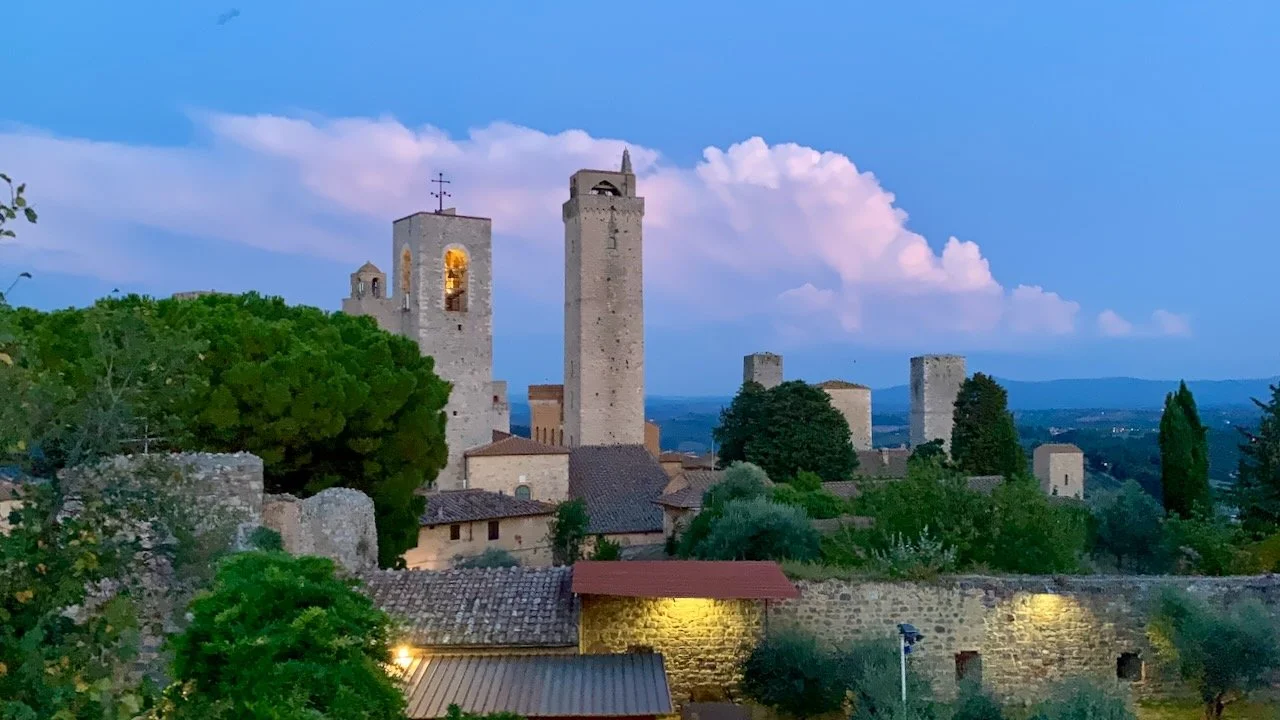
Coming around the last bend in the road from Florence or Siena, fourteen medieval stone towers rise from a hilltop against the Tuscan sky, exactly as they did in the 13th century. I have made that approach more times than I can count, and the sight still lands every single time.
I keep coming back to San Gimignano because it rewards you differently depending on when you are there. Most visitors arrive by coach at 10am, walk the two main streets, buy a gelato, and leave by 3pm. They see the town at its most crowded and its most ordinary. I am not criticizing them; I was one of them the first time. But they are missing the real experience entirely.
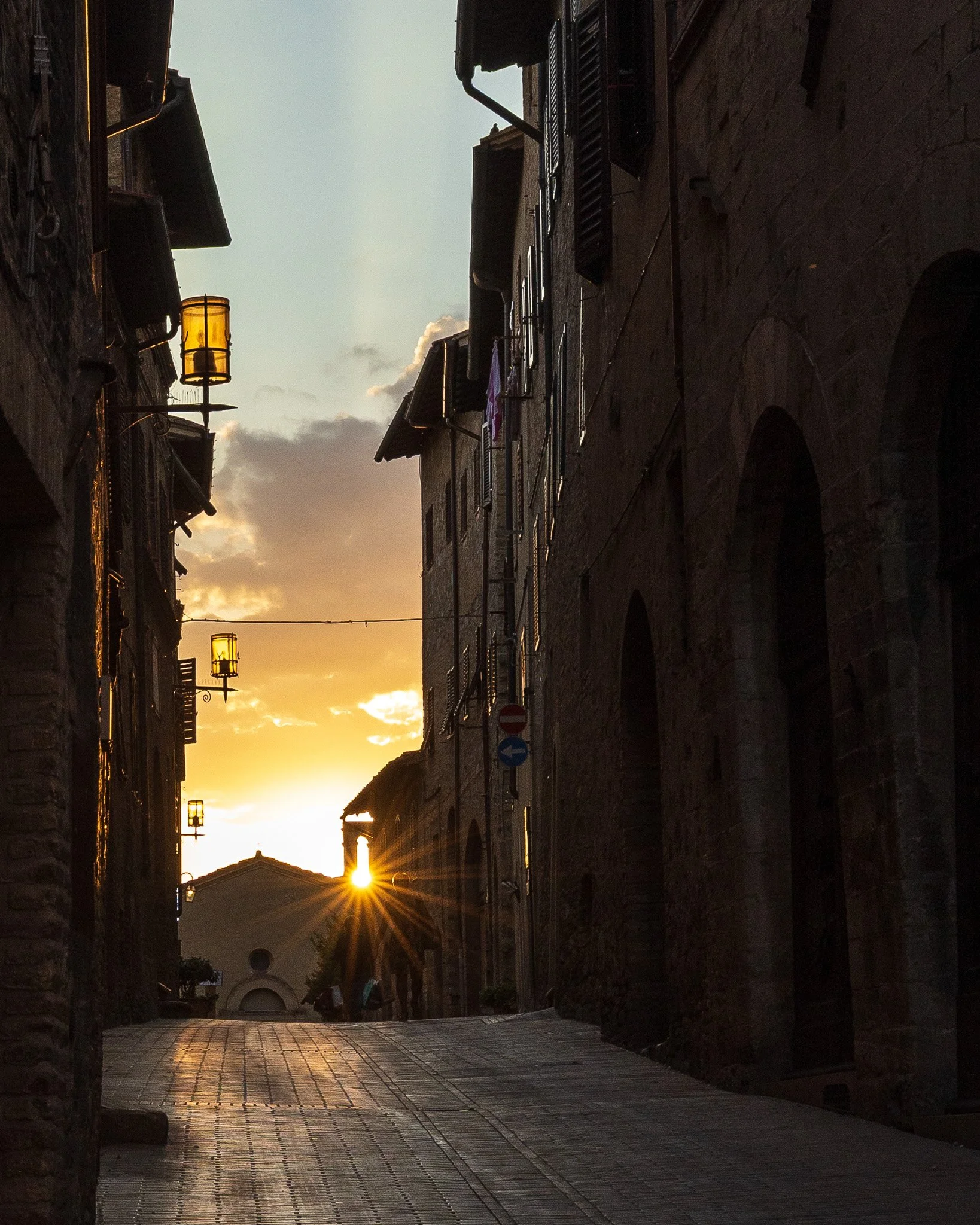
The real San Gimignano belongs to the people who stay overnight. After the coaches pull away in the late afternoon, something shifts. The piazzas quiet down, the light goes amber and warm, the towers catch the last hour of sun and glow against the sky in a way that no photograph from midday can touch. That evening version of the town is what kept bringing me back, and it is what eventually convinced me to stay overnight on every visit since.
My most memorable afternoon here had nothing to do with a perfect forecast or a gear decision. My wife and I wandered into a small gallery off one of the side streets and stopped to look at a painting. The owner introduced himself, an artist who had come from Egypt decades ago and built his life here. When my wife spoke to him in Arabic, his face completely changed. He closed the shop, walked us through back lanes and private passages, and showed us overlooks that most visitors never find. He turned a Tuesday afternoon into one of those travel stories we still tell years later.
That is what San Gimignano does when you slow down. It opens up.
In this Photography Guide to San Gimignano, I share the places and experiences that continue to draw me back. You will find my favorite photography locations, guidance on when and where to shoot, practical travel tips, and gear recommendations, along with cultural insights to help you explore and photograph San Gimignano with confidence, respect, and ease.
Photographer's Notes
Before you go, here are my own takeaways.
Favorite Season: April through early June
Favorite Location: Piazza della Cisterna
Favorite Hotel: L'Antico Pozzo
Favorite Restaurant: Cum Quibus
Favorite Gelato: Gelateria Dondoli
Favorite Lens: 24-70mm f/2.8
Would I Return? Every time I'm in the area, I visit.
Where to Stay in San Gimignano, Italy
San Gimignano is a small town, and that is part of its appeal. The best strategy is to stay inside the walls or just outside them, so you can reach the piazzas at dawn before the coaches arrive and linger at sunset after the day-trippers have gone. There is no bad neighborhood here; every street is photogenic. But staying central means you wake up inside the magic.
Luxury Options in San Gimignano, Italy
L'Antico Pozzo. This 15th-century townhouse sits on Via San Matteo, one of the main lanes through the historic center, and was restored under the supervision of Italy's Fine Arts authority. The rooms are individual in character, with stone walls, exposed beams, and antique furnishings that feel genuinely historic rather than staged. The location is ideal for photographers: step outside the door, and you are already in the frame. It is the kind of place that sets the tone for the whole trip.
Relais Santa Chiara is positioned just outside the city walls at the south end of town. It offers easy parking, a pool, and views across the surrounding vineyards and countryside. The rooms are well-appointed without trying too hard, and the property feels calm in the way that places just outside the old walls often do. A short walk uphill and you are inside the towers. A short walk back and you have a glass of Vernaccia waiting for you.
Borgo Pignano. For photographers who want to experience the broader Tuscan countryside and not just the hilltop town, Borgo Pignano is one of the finest estate properties in the region. This restored hamlet sits within its own organic farm, with infinity pool views across the Val d'Elsa. The drive to San Gimignano takes about 15 minutes, which means you can time your arrivals and departures to match the light. The food, grown on the estate, is exceptional.
Mid-Range & Boutique Options
Hotel La Cisterna Right on Piazza della Cisterna, as central as it gets. The rooms are clean and simply furnished, and some have direct views over the square. The location alone justifies the booking. Waking up above one of the most beautiful medieval squares in Tuscany and walking downstairs for an espresso before the crowds arrive is worth more than most hotel amenities.
Mormoraia Set in the countryside about four kilometers from the walls, Mormoraia is a well-run agriturismo with Tuscan-style rooms, handmade terracotta floors, an outdoor pool with a hot tub, a sauna, and genuine farm breakfasts. It attracts photographers because several rooms overlook the hillside toward San Gimignano, and the evening light from the property is beautiful. A great base for anyone who wants countryside quiet with easy town access.
Podere Bellavista A family-run country house perched on a hillside above vineyards and olive groves with views directly toward the towers. The hosts are the kind of people who make you feel genuinely welcome, the meals are prepared from what grows around you, and the atmosphere is what most Tuscany travelers are dreaming of when they book their trip. It is unpretentious and real.
Best Time to Visit San Gimignano, Italy
April through early June is the best window for photography. The light in late spring has warmth and direction without the bleaching harshness of midsummer. The countryside surrounding the town is green and layered, poppies appear in the fields below the walls, and the crowds are manageable. Golden hour in May stretches past 8 pm, giving you long evenings to work with.
September and October run a close second. The harvest brings activity to the vineyards and olive groves around the town, the light softens after the summer glare, and the hills shift from pale gold to richer amber tones. Early September still carries some summer crowds, but by the last two weeks of September, you will have the lanes largely to yourself by early morning.
July and August are genuinely challenging. San Gimignano is one of the most visited towns in Tuscany, and the summer peak is intense. Midday shooting becomes uncomfortable and often impossible. If you go in summer, plan to shoot at sunrise and sunset only, and spend the middle of the day elsewhere.
Winter is underrated. December through February, the town is quiet, the light is cool and horizontal, and the fog that settles into the valleys below the walls creates moody, layered images that summer cannot deliver. Cold, but worth considering.
Getting Around San Gimignano, Italy
San Gimignano is small enough that you will do nearly everything on foot. The walled town is compact, the main streets are flat enough in most areas, and the best photography happens when you are moving slowly through the lanes rather than rushing. Bring good shoes. The cobblestones are uneven and your ankles will know it by day two if you are wearing the wrong footwear.
Most visitors arrive by car and park in the large lots outside the walls at Parcheggio Montemaggio or Parcheggio San Giovanni. From Florence, the drive takes about 75 minutes. From Siena, about 40. There is no direct train to San Gimignano; the nearest station is Poggibonsi, with buses connecting to the town.
Taxis serve the town and can be arranged through your hotel. Uber does not operate in this part of Tuscany; the standard Italian taxi system applies. For day trips to the surrounding countryside or nearby hill towns like Volterra or Certaldo, a rental car makes everything easier. The countryside roads around San Gimignano are among the most beautiful driving routes in Italy, and having your own vehicle means stopping when the light is right.
How Many Days Should You Visit San Gimignano, Italy
Two nights is the honest minimum, and three nights is the right answer for photographers.
One day is enough to cover the main squares and climb Torre Grossa, but it leaves no room for the light you actually want. Day-trippers get the midday version of San Gimignano. That is the least interesting version.
Two nights give you two golden hours and two blue hours, plus a quiet early morning inside the walls. Three nights give you all of that, plus a relaxed afternoon in the countryside, a wine tasting at a local cantina, and the patience to wait for the shot instead of chasing it.
If you are building a Tuscany itinerary, San Gimignano pairs naturally with Siena (40 minutes south), Volterra (30 minutes west), and the Val d'Orcia (about 90 minutes south). A five-day loop through this part of Tuscany is one of the most satisfying photography trips in Italy.
Where to Eat in San Gimignano, Italy
The food in San Gimignano runs from excellent trattorias serving wild boar and pici pasta to a gelato counter that genuinely has a claim on the title of world's best. The local wine, Vernaccia di San Gimignano, is a crisp, mineral-driven white that pairs perfectly with the heat of a summer afternoon and deserves more respect than it usually gets. Drink it here, where it is grown.
My personal recommendation for any visit: start at Gelateria Dondoli and build everything else around it.
Restaurants
Cum Quibus Via San Martino 17. This is the dinner destination in San Gimignano. Candlelit stone passageways, a menu built around the best local ingredients, and a kitchen that takes the territory seriously. The fresh-caught fish served with salmoriglio sauce is exceptional, and the stuffed rabbit is one of those dishes you think about long after you leave. Book ahead; the space is intimate and fills quickly.
Ristorante La Mandragola, tucked just inside the walls with a canopied outdoor terrace, is the kind of place you find after walking past it twice. The cooking is honest Tuscan: pici with wild boar ragu, ribollita with good bread, bistecca sourced nearby. It is reliable in the way that the best local restaurants are, which means you will likely order the same things you ordered last time because they were that good.
LINFA A lighter, more modern room with exposed brick and natural materials. Good for lunch, particularly if you want something fresh and contemporary after a morning of walking. The menu leans toward lighter preparations and seasonal produce, and the atmosphere is unhurried in the way you want midday to feel.
Enoteca Gustavo More wine bar than restaurant, but the cured meats, cheeses, and crostini are worth the stop. This is where you come with a glass of Vernaccia, a plate of pecorino and prosciutto, and no agenda for the next two hours. Exactly right.
Osteria delle Catene Via Mainardi 18. A neighborhood-style osteria with honest food and fair prices, popular with locals who work in the town. The pici with truffle sauce and the gnocchi with cheese cream are the dishes people come back for. No pretense, no performance, just good Tuscan food at a reasonable pace.
Coffee & Gelato
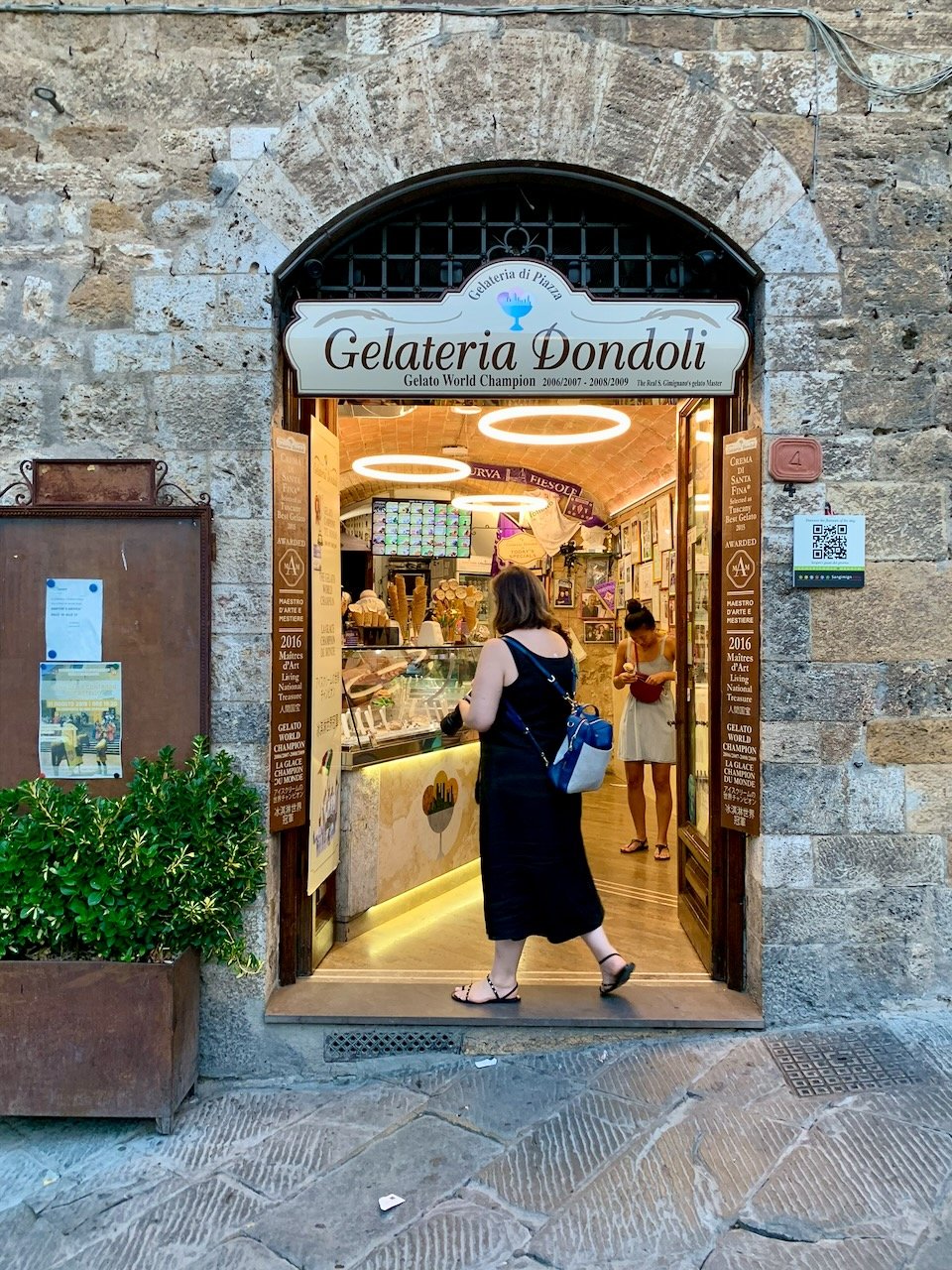
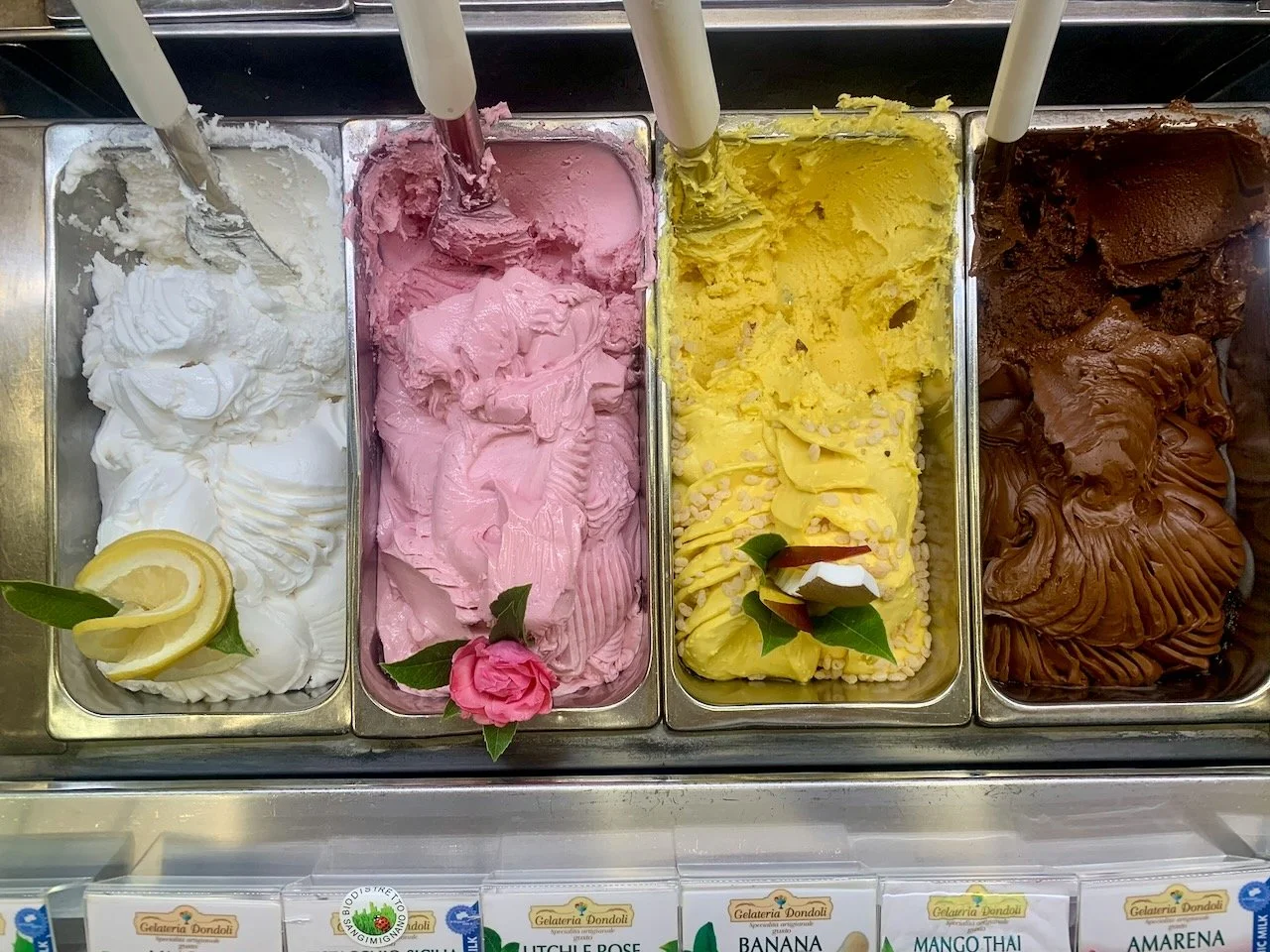
Gelateria Dondoli Piazza della Cisterna. Sergio Dondoli is a two-time Gelato World Champion, and a stop here is the single most compelling reason to visit San Gimignano. I am not being dramatic; this is genuinely some of the best gelato anywhere in Italy. The flavors rotate with the seasons, but the signatures, including Vernaccia-infused sorbet, rosemary and raspberry, and the saffron-based Crema di Santa Fina, are unlike anything you will find elsewhere. Go twice. Shoot the cones in the late afternoon light on the piazza. The two are not mutually exclusive.
Bar, I Combattenti, a proper Italian bar on the main square where locals actually drink their espresso. Stand at the counter, order a macchiato, and watch the town start its morning. No tourist theater, just a functioning neighborhood bar that happens to sit inside a medieval masterpiece.
Caffè delle Erbe Piazza delle Erbe, right next to the Duomo. Good for an afternoon coffee with views across the square. Outdoor seating is tight and in demand; arrive slightly off-peak to get a table with the towers in your sightline. A natural spot for people-watching and editing images between shoots.
Photography Gear to Bring to San Gimignano, Italy
DSLR and Mirrorless Kit
The town itself calls for wide and standard focal lengths; the surrounding countryside is where a telephoto earns its spot in the bag.
Camera bodies: The Canon EOS R5 Mark II and Sony A7R V both handle the mix of high-contrast architectural scenes and low-light twilight well. The Nikon Z8 is equally capable. Any of these handles the resolution demands of architectural work and the sensitivity demands of blue hour inside the lanes.
Wide zoom (16-35mm or 15-35mm): Essential for the piazzas, the lanes, and the interior of the Collegiata. A wide lens inside the piazzas captures scale without distortion if you are careful with your camera angle.
Standard zoom (24-70mm): Your workhorse. The majority of your shooting in the streets and at the towers will happen in this range. The compression at 70mm is useful for flattening architectural details on the towers.
Telephoto (70-200mm): Pack this for the exterior viewpoints and countryside shots. From the panoramic overlooks outside the walls, a telephoto lets you pull the towers out of the landscape and isolate them against the sky.
Tripod: Non-negotiable for blue hour and twilight inside the piazzas. The light drops fast once the sun goes below the surrounding hills. A Platypod works well on the uneven cobblestones.
ND filters: A 6-stop ND opens up long-exposure possibilities on the piazzas during the day, smoothing the movement of visitors into an impressionistic blur. The Kase ND system handles the variable Tuscan light well.
Extra batteries and cards: The shooting days in San Gimignano are long if you are working sunrise to sunset. Carry at least two extra batteries and a backup to a Samsung T7 at the end of each session.
Drone: San Gimignano sits within the Siena province. Italian drone regulations require registration and, depending on your equipment class, authorization for flights near populated areas. The airspace around the historic center and the UNESCO-protected zone requires particular attention. Verify current ENAC regulations before flying. The aerial perspective of the towers from the countryside is extraordinary if you can fly legally from an open field outside the walls.
iPhone Advice
San Gimignano is one of the most iPhone-friendly destinations in Italy, and that is saying something.
Use the ultrawide for the piazzas: Piazza della Cisterna is triangular and tight. The ultrawide lens captures the full geometry of the space without the barrel distortion of older wide options. Keep the horizon level to avoid the converging verticals that make architectural shots look careless.
Use Portrait Mode on the lanes: The narrow passages between the stone buildings compress beautifully on iPhone Portrait Mode. The subject-background separation between a person walking the lane and the receding medieval walls behind them works surprisingly well, even at relatively long distances.
Shoot Dondoli's gelato in the afternoon light: The warm light that falls across Piazza della Cisterna from about 4pm onward is gelato photography gold. Set the exposure manually to avoid blowing out the cone. Shoot from slightly above and to the side, not directly down. Use the 1x or 2x lens, not the ultrawide, for food.
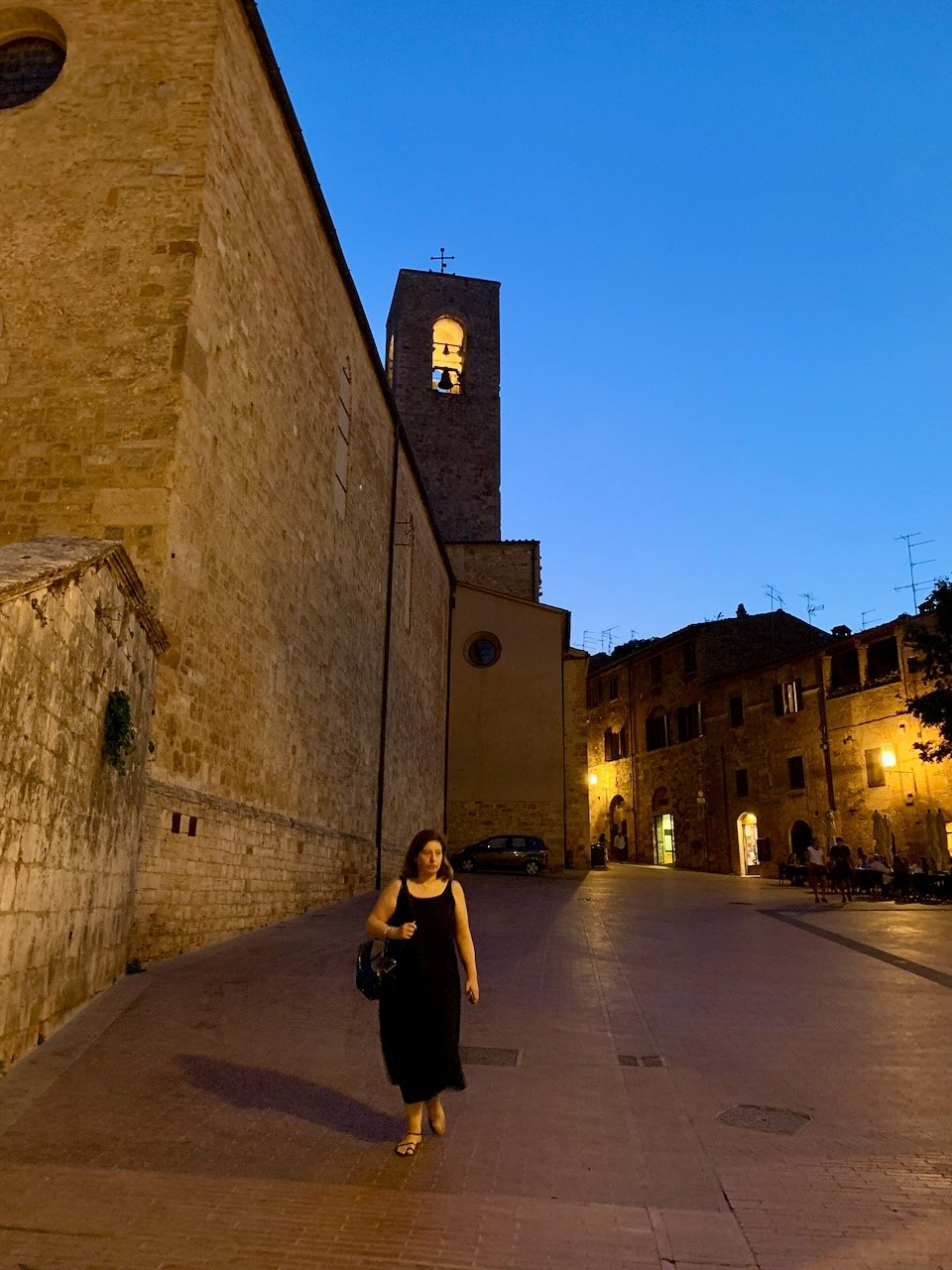
Shoot the towers at blue hour on ProRAW: The fifteen minutes after sunset, when the sky turns deep blue and the stone towers go warm amber against it, is the best light of the day. iPhone ProRAW captures enough dynamic range to hold both the bright towers and the dark sky without merging everything into a muddy middle tone. Bracket a few exposures and merge in Lightroom Mobile.
Best Photography Locations in San Gimignano, Italy
Piazza della Cisterna
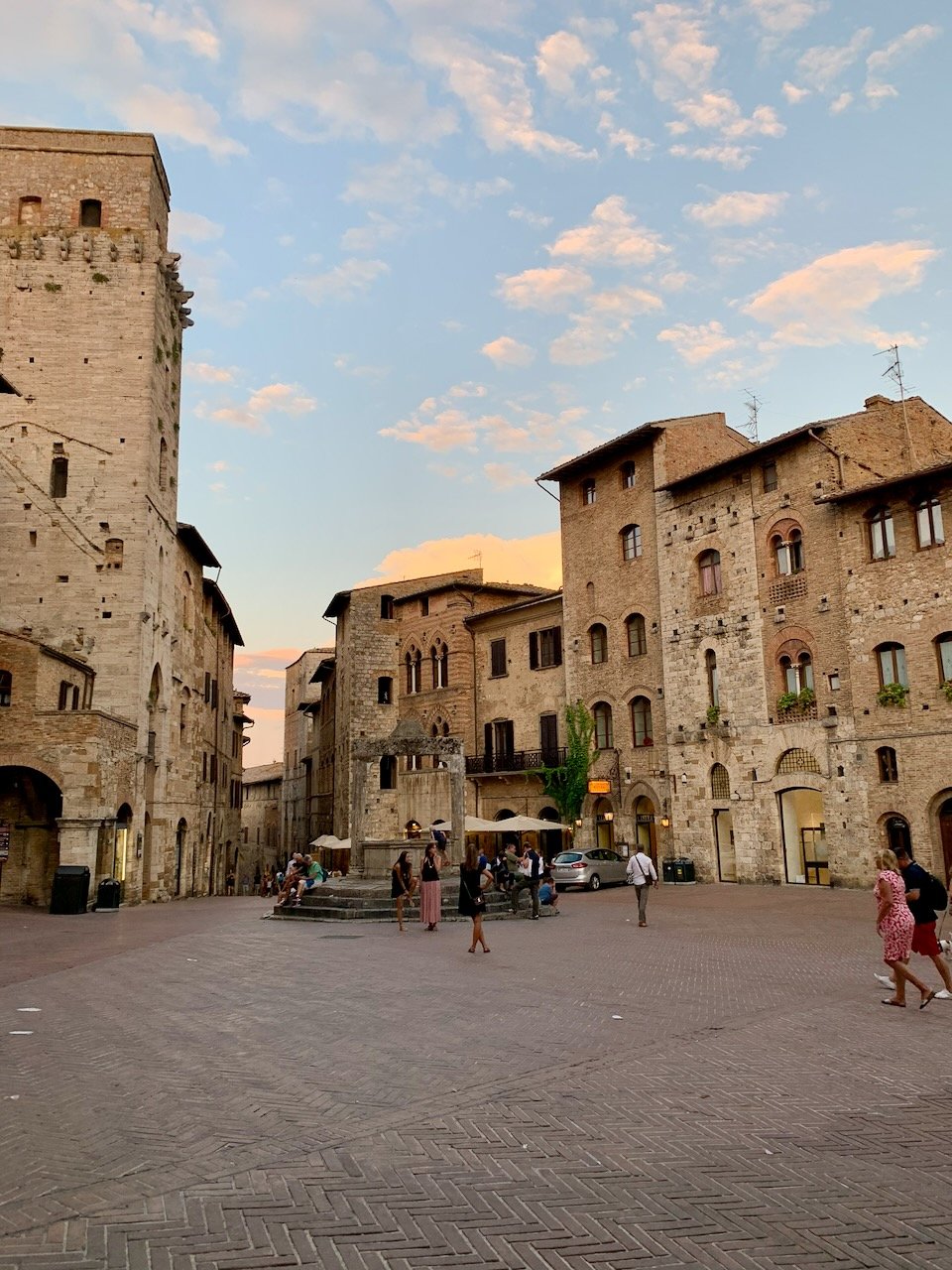
Piazza della Cisterna is the heart of San Gimignano and one of the most beautiful medieval squares in Europe. The triangular space is enclosed by 13th-century palaces and towers on all sides, with a 1287 cistern at its center still anchoring the whole composition. It is where the town gathers, where Dondoli's gelato counter draws its faithful, and where the light in the late afternoon does things to stone that justify every hour of the drive from Florence.
The geometry of the piazza changes completely depending on where you stand. From the northeast corner, you frame the towers against a narrow wedge of sky. From the center, the surrounding buildings compress into layers. At blue hour, reflections off the ancient cistern catch the warm glow of the streetlamps.
📷 Pro Tip: Arrive at blue hour, roughly 20 to 30 minutes after sunset, when the stone warms to amber and the sky behind the towers shifts to deep blue. Position yourself at the southern end of the piazza and shoot north with a 24-35mm focal length to keep the full triangular composition in frame. The cleaning crews typically pass through around 7am, before most visitors arrive, leaving a quiet window of about 45 minutes for uncluttered shots. Tripod essential for blue hour work.
Best time: Late afternoon golden hour; blue hour after sunset. Access: Free, public space. Walk north from Porta San Giovanni, five minutes into the historic center.
Torre Grossa and the Tower Skyline
There were once 72 towers in San Gimignano, built by rival families as symbols of wealth and power. Fourteen remain today, and their silhouette against the Tuscan sky is one of the most recognizable images in all of Italy. Torre Grossa is the tallest surviving tower and the only one open to the public. The climb is steep and narrow, but the 360-degree view from the top is worth the effort on every count.
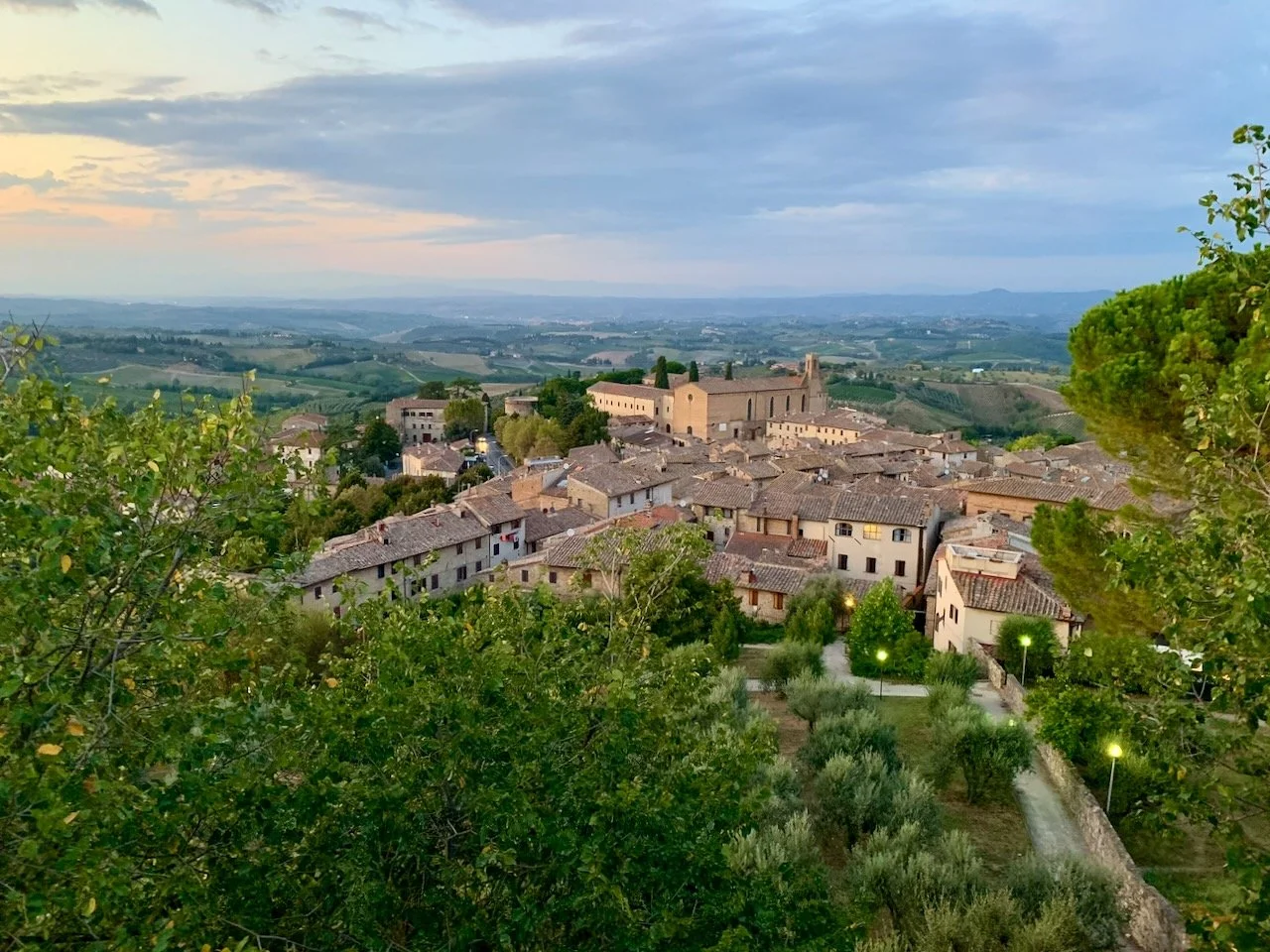
From the top, you are level with or above the neighboring towers, which gives you a perspective that is impossible to replicate from street level. The surrounding countryside, the Val d'Elsa opening to the north, the vineyards and olive groves in every direction, and the rooftops immediately below create a composition that shifts completely depending on where you turn.
📷 Pro Tip: Climb Torre Grossa in the late afternoon, when the sun is low and raking light catches the faces of the other towers and the terracotta rooftops below. A 24-70mm zoom gives you flexibility between wide establishing shots and tighter tower details. In the morning, the sun rises to the east over the Val d'Elsa; shoot west toward the towers that catch the low backlight. Avoid midday entirely; the flat overhead light removes all texture from the stone. The tower opens with the Palazzo Comunale; buy your ticket at the museum entrance.
Best time: Late afternoon for warm tower light; early morning for directional side-lighting. Access: Paid, combined with Palazzo Comunale. Located on Piazza del Duomo, a two-minute walk from Piazza della Cisterna.
The Exterior Viewpoints and Country Roads
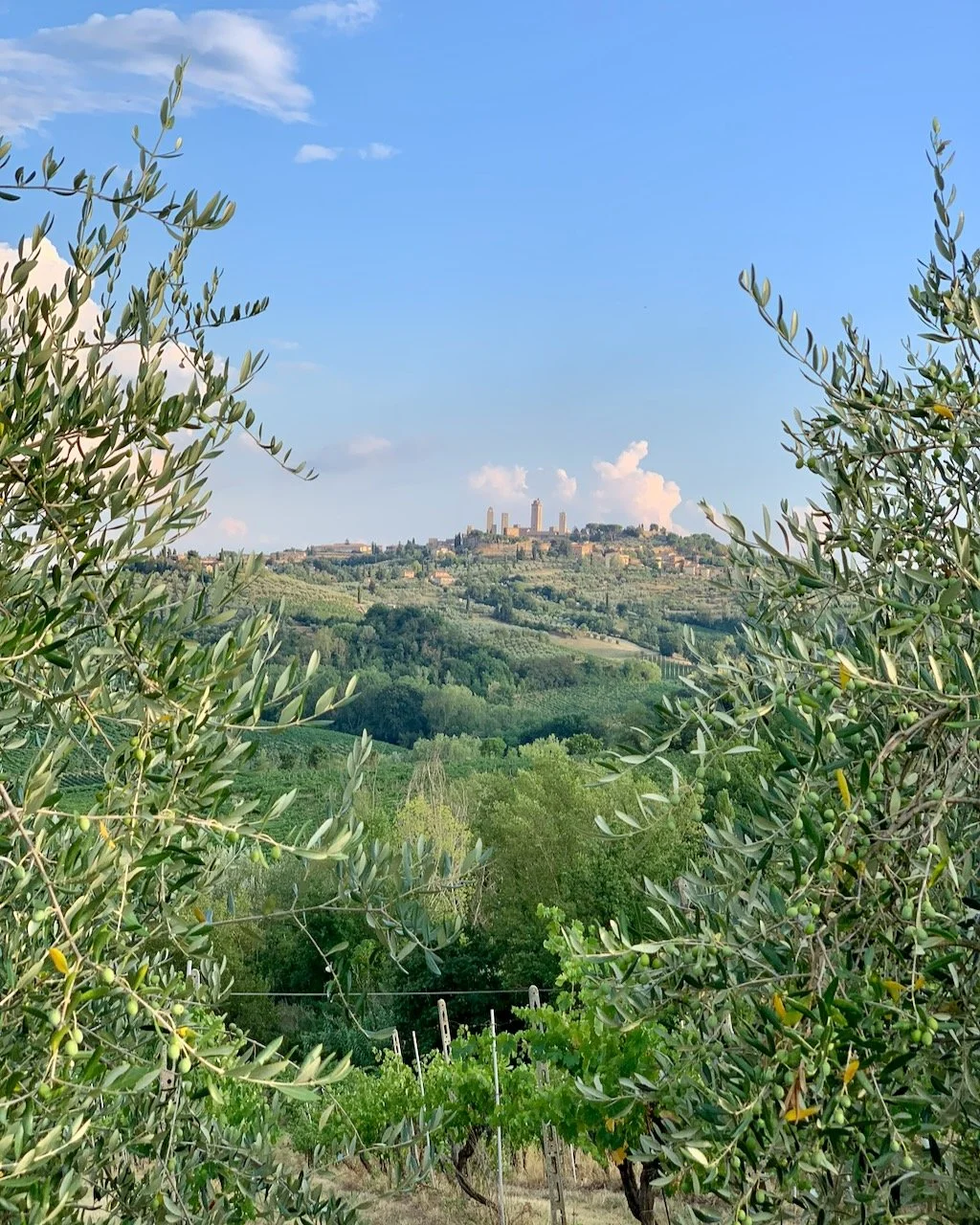
The most dramatic images of San Gimignano are not made inside the walls. They are made from the surrounding countryside, where the full profile of the town and its towers rises from the Tuscan hills like something from a fairy tale. The roads that ring the town at lower elevations, particularly to the south and west, offer unobstructed sightlines across agricultural land with the towers as your horizon.
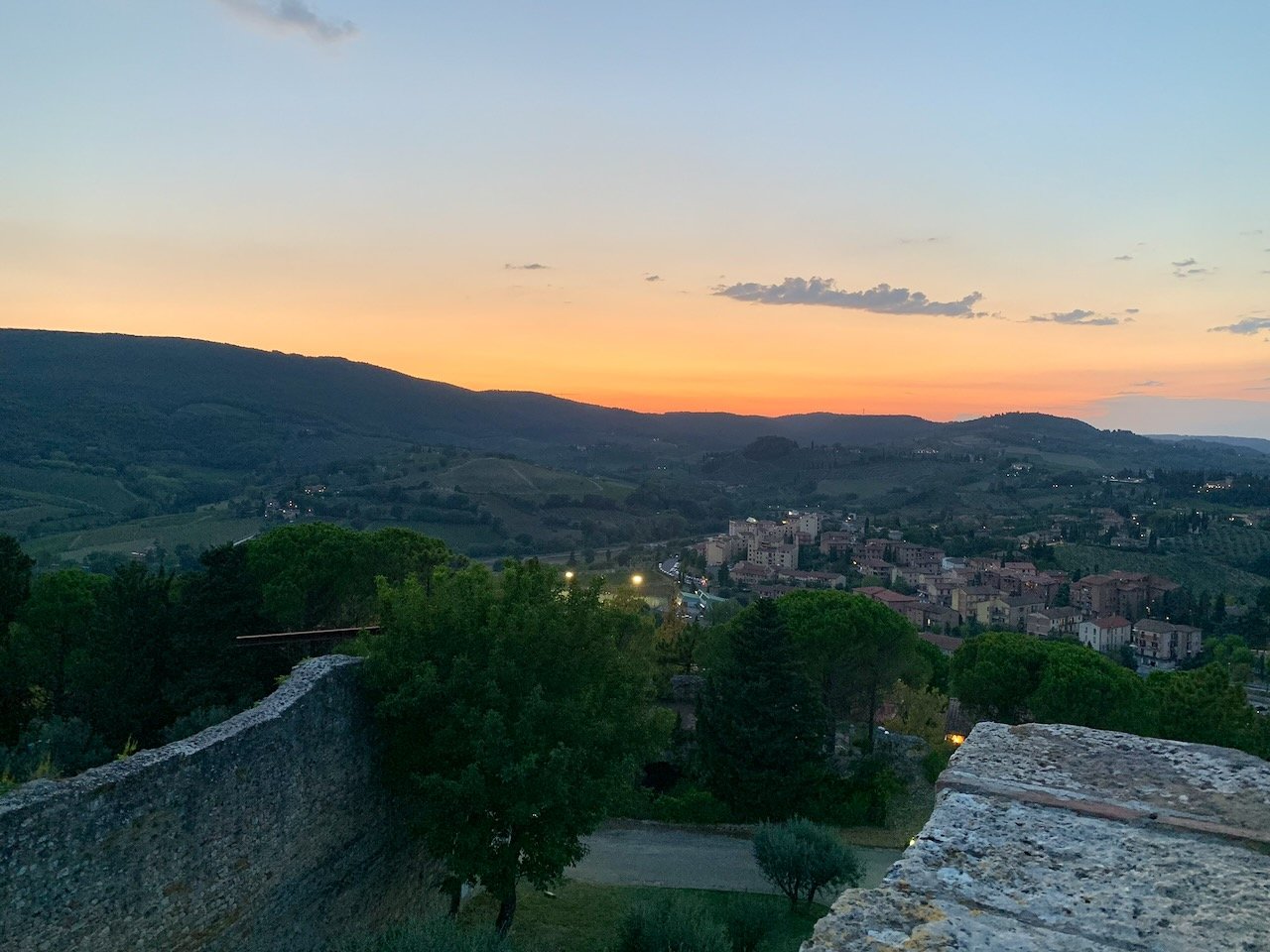
The light on these exterior shots works best in two windows: the half hour before sunrise, when the sky behind the towers goes rose and lavender and the towers themselves are still in silhouette, and the last thirty minutes before sunset, when warm light rakes across the stone from the west and the surrounding landscape turns golden.
📷 Pro Tip: Drive the SP1 road south from San Gimignano toward Monteoliveto and pull over at any of the farm access tracks on the right side of the road heading south. You are looking northeast at the towers with largely open fields between you and the hilltop. A telephoto in the 100-200mm range compresses the foreground vineyards against the towers and creates the layered Tuscany compositions that appear on every travel magazine cover. Come back to the same spot at different times of day; the light changes the image completely. For drone photography, these open agricultural fields outside the protected zone may offer legal operating areas, but verify ENAC authorization requirements before flying.
Best time: Sunrise and the 30 minutes before sunset. Access: Free, accessible by car. Approximately five minutes south of San Gimignano on the SP1 heading toward Colle Val d'Elsa.
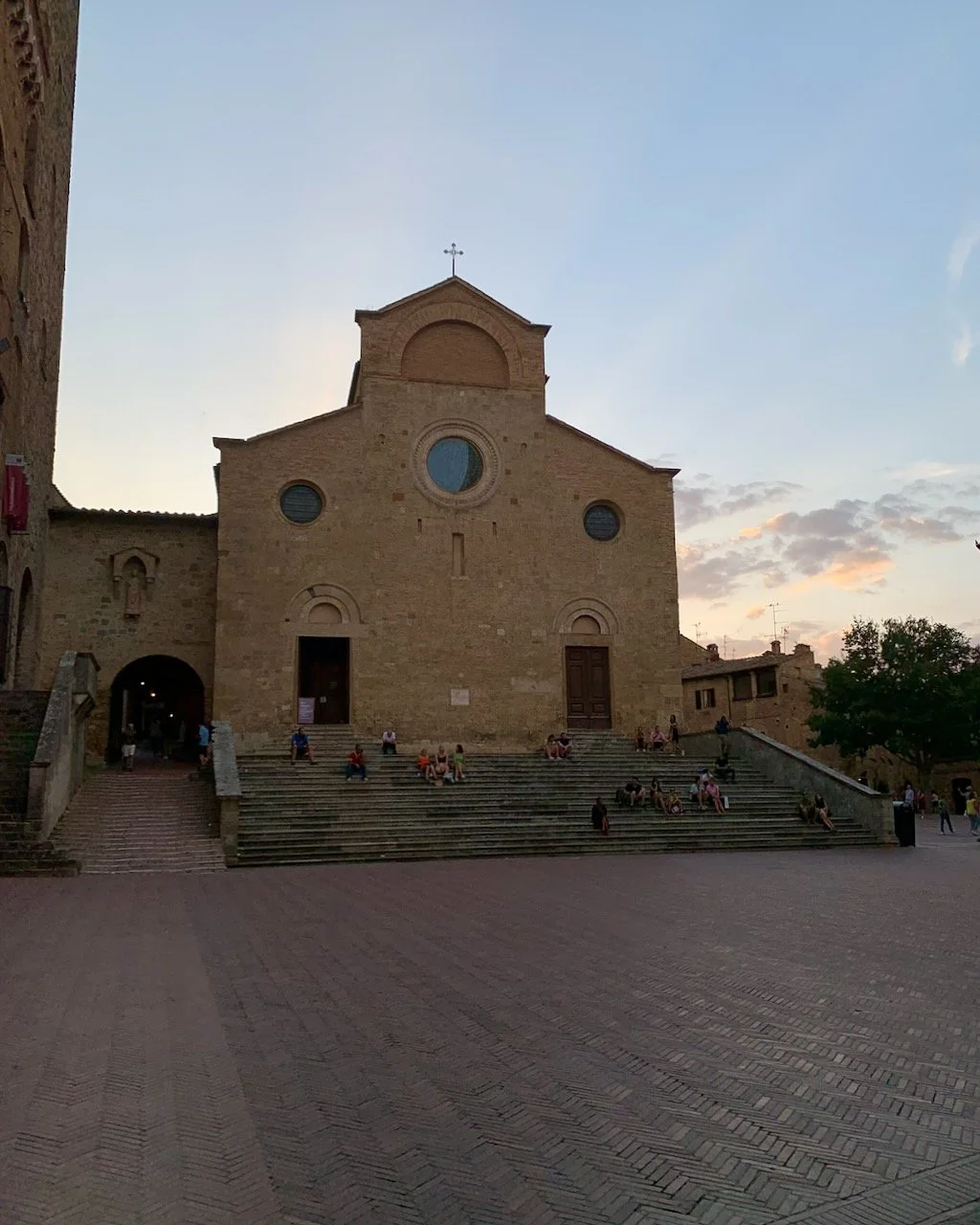
The Collegiata di Santa Maria Assunta (The Duomo)
From the outside, the Collegiata looks restrained, almost plain. Step inside, and the scale of what awaits you takes a moment to absorb. The interior walls are covered floor to ceiling in fresco cycles by Benozzo Gozzoli, Barna da Siena, Bartolo di Fredi, and Domenico Ghirlandaio. The Old Testament scenes on the left nave, the New Testament scenes on the right, and the Last Judgment on the rear wall represent one of the most complete surviving medieval fresco programs in Italy.
For photographers, the challenge here is light management. The frescoes are lit primarily by natural light through the windows, which creates a dramatic but uneven illumination. The quality of light inside changes significantly between morning and afternoon.
📷 Pro Tip: Visit in the morning when the light enters from the east-facing windows and reaches the northern nave. Set your camera to a high ISO and use a wide aperture to keep shutter speeds workable without flash, which is prohibited. A 24-70mm lens covers most of the composition needs inside; a 35mm prime lets you work in the tighter side chapels. Tripods are typically not permitted, but some photographers use a monopod or brace against the pews for stability. The Ghirlandaio chapel in the right transept, with its fresco of Santa Fina, repays close attention and careful exposure. Photography is permitted inside; respect the other visitors and keep equipment movement quiet.
Best time: Morning light, Tuesday through Sunday. Access: Paid admission. Piazza del Duomo, adjacent to Piazza della Cisterna.
The City Walls and Gate Passages
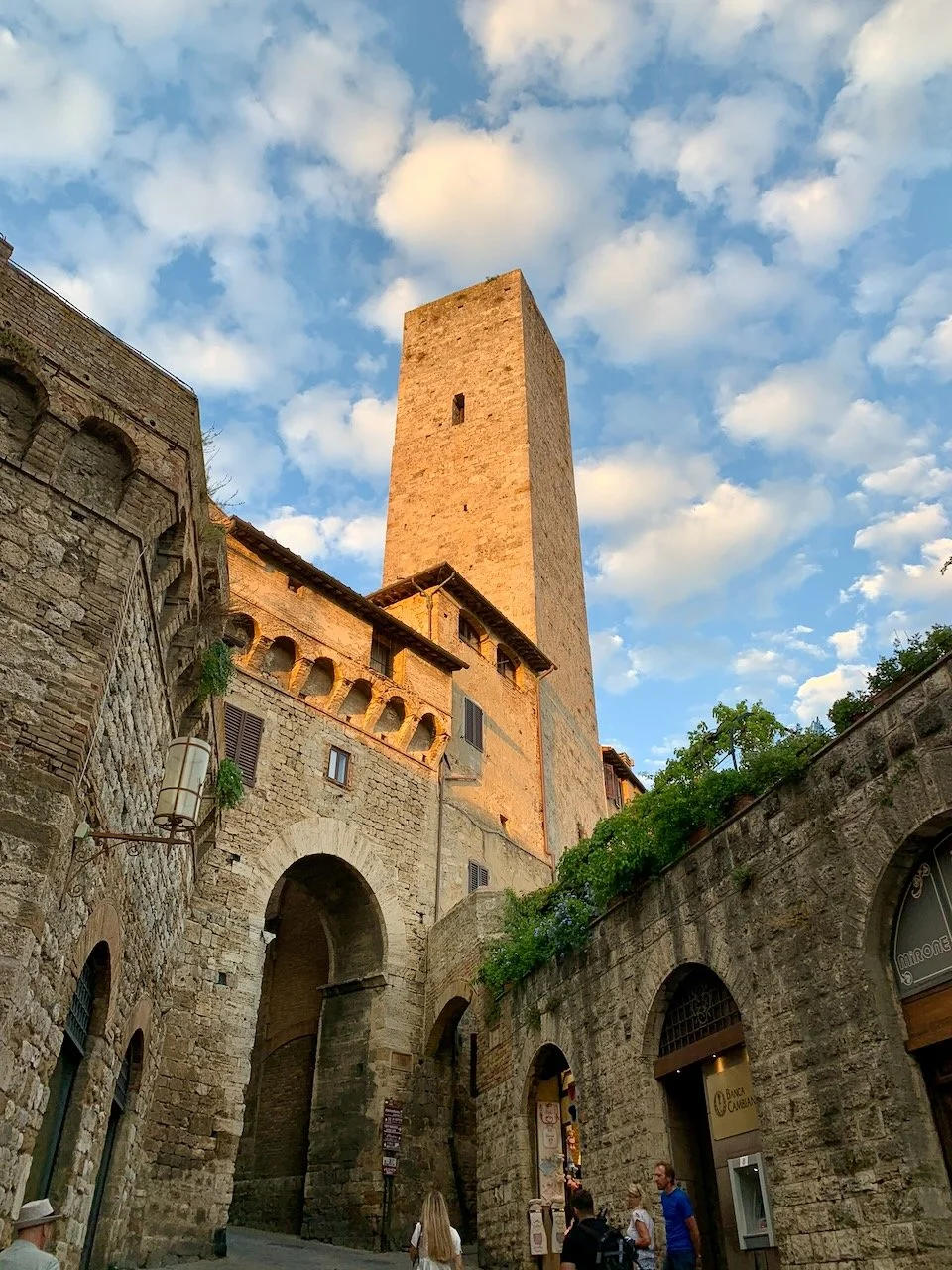
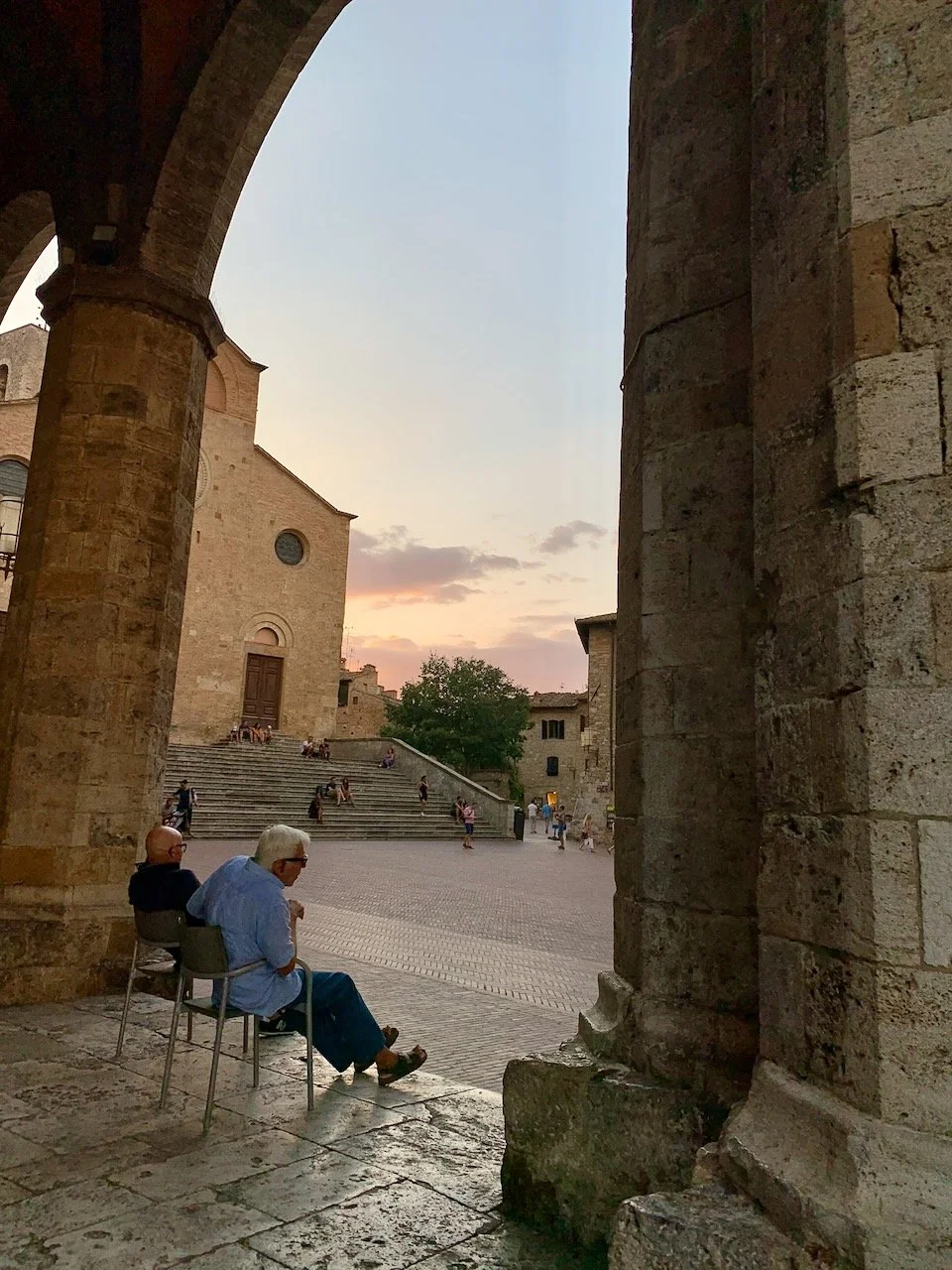
The walls of San Gimignano are often photographed from the outside and overlooked from within. The gate passages, particularly Porta San Giovanni at the southern end and Porta San Matteo at the northern end, offer some of the most graphically strong images in town. The stone archways frame views through them like natural vignettes: a narrow passage of cobblestone, towers visible in the distance, a single figure passing through the light.
The walls themselves, walkable for much of their length, give you a different angle on the surrounding countryside. The light here in the morning, when the shadows of the crenellations fall long and horizontal across the walkway, creates geometric patterns that reward a tight lens.
📷 Pro Tip: Position yourself inside the gate passage at Porta San Giovanni roughly 30 minutes after sunrise, shooting outward toward the south. The morning light falls directly through the arch, creating a bright exterior scene against a shadow-framed foreground. A 35mm or 50mm lens keeps the perspective natural and the composition clean. For the interior view, shoot from just outside the gate inward toward the towers at golden hour; the long light rakes through the archway and illuminates the lane ahead with a warmth that wider, flatter light cannot replicate. These gate passages are rarely crowded before 9am.
Best time: Early morning and late afternoon. Access: Free. Porta San Giovanni is the main southern entrance, a five-minute walk from the parking areas.
The Back Lanes and Hidden Overlooks
This is the section of the guide that most people never find, because most people follow the two main streets (Via San Giovanni and Via San Matteo) from gate to gate and consider the town covered. They have missed most of it.
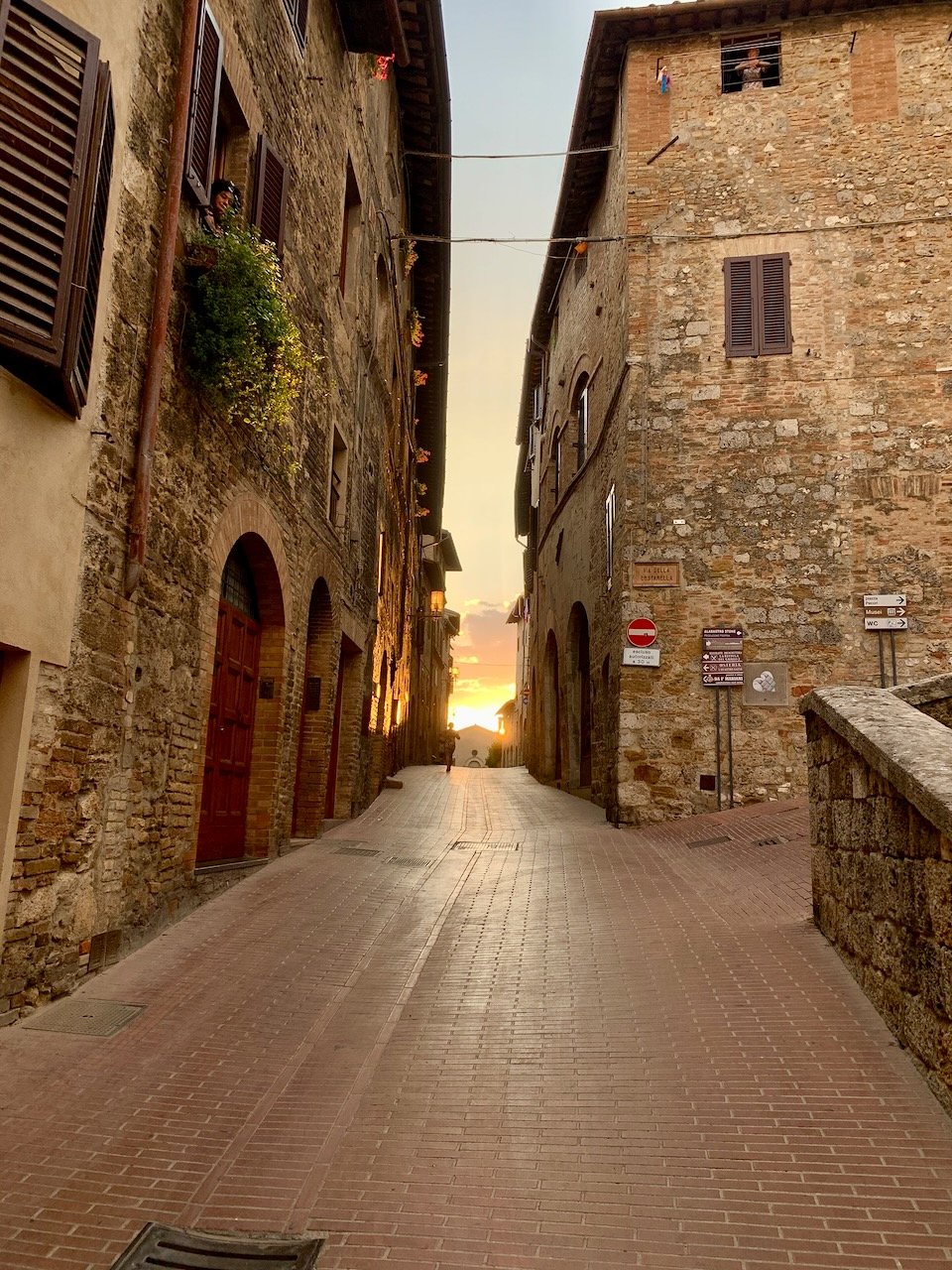
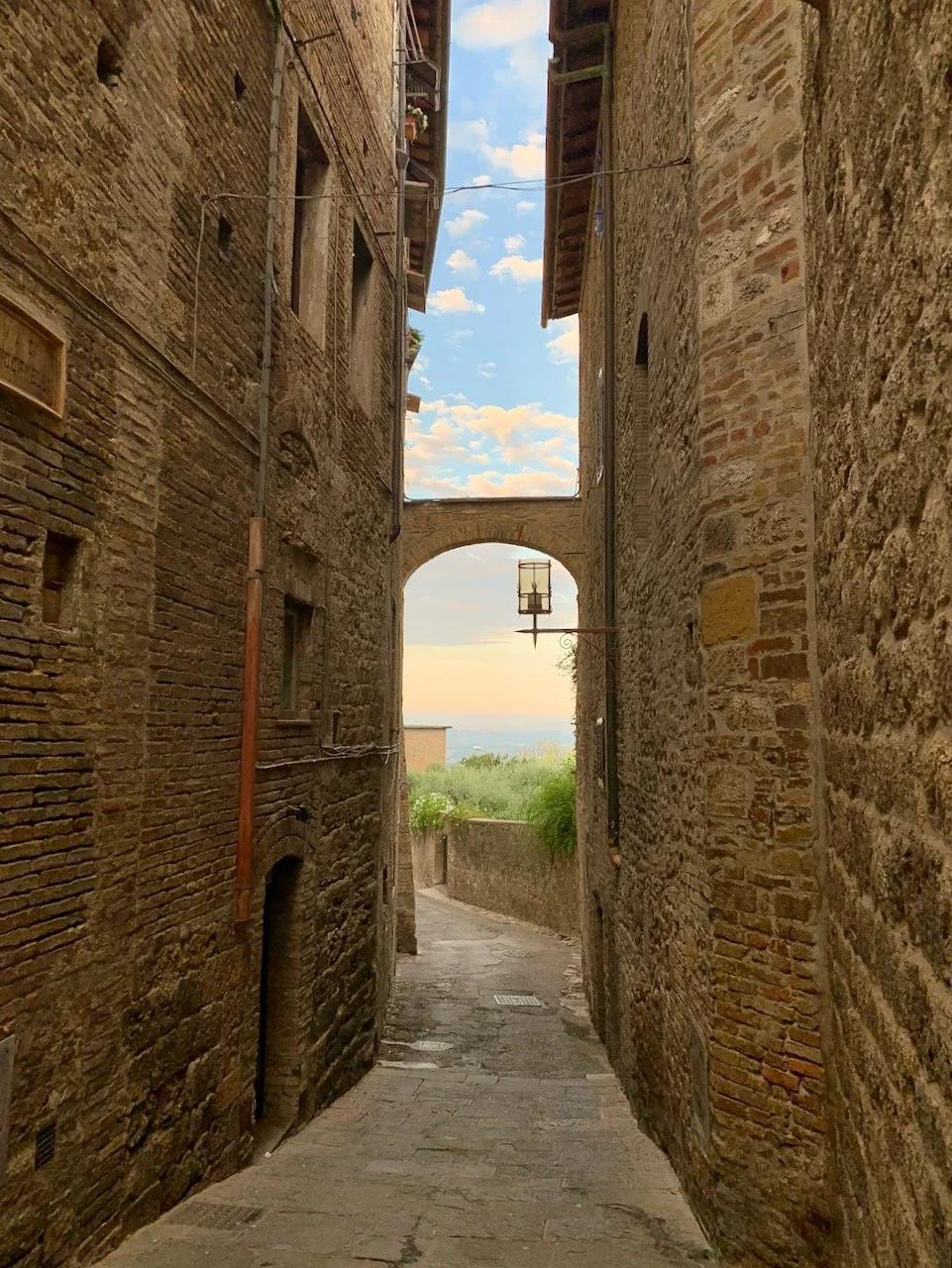
The lanes that branch off these main arteries run narrower, steeper, and quieter. They pass private gardens, crumbling walls with cats asleep on ledges, laundry hung between medieval stones, and occasional passages that open suddenly to views across the valley that have no railing and no crowd. These are the overlooks that a generous local, a gallery owner who turned out to be from Alexandria, once walked us to after closing his shop for the afternoon.
📷 Pro Tip: Leave Via San Giovanni or Via San Matteo at any side lane and simply follow it. Keep your 35mm prime on and shoot on instinct. The best frames here are intimate: a doorway with a hanging plant, the compression of a narrow passage toward a sliver of light, the towers glimpsed between rooftops. Do not be in a hurry. The town is small enough that you cannot get truly lost, and the lanes that seem to go nowhere often end at a wall with a view. The back quarter of the town near the Rocca di Montestaffoli is particularly undervisited and rewards slow walking. Early morning is the best time; by 10am, even the back lanes have visitors.
Best time: Early morning, first 90 minutes after sunrise. Access: Free, all public streets. Begin from Piazza della Cisterna and explore laterally.
Festivals & Events
Ferie delle Messi (Medieval Harvest Festival) Held over a June weekend, this is San Gimignano's most visually dramatic annual event. The town's historic quarters, called contrade, compete in medieval games, archery, and a jousting competition staged within the walls. Flag-throwers, costumed processions, and medieval musicians fill the lanes for most of the weekend. The costumes are authentic in construction and the atmosphere is genuinely festive rather than performative. For photographers, the afternoon processions through the narrow lanes are the primary target; use a telephoto to isolate costumed figures against the tower background.
Vernaccia Wine Festival (Regina Ribelle) Held in late spring, usually May, this annual celebration of San Gimignano's DOCG white wine fills the piazzas with tasting tables, winemaker talks, and evening concerts at the Rocca di Montestaffoli. The festival is intimate by Italian standards and attracts serious wine people alongside casual visitors. Photographically, the combination of candlelit tastings in the piazzas at dusk, the vineyard setting, and the energy of a local festival makes this a strong shooting weekend.
Festa di Santa Fina Celebrated twice a year, in March and on the first Sunday of August, this festival honors San Gimignano's patron saint with masses at the Collegiata, processions through the town, and a flower market in late summer. The August celebration draws local families and produces genuine street photography opportunities: candid portraits, traditional dress, and the quiet intimacy of a town celebrating its own history rather than performing for tourists.
Music Under the Towers Running through the summer months, this outdoor concert series uses the piazzas and the Rocca di Montestaffoli as performance spaces. The combination of medieval architecture, summer evening light, and live music creates a relaxed, photogenic atmosphere. Arrive early to position yourself for the best angle on the performers with the towers behind them.
Christmas Markets December brings a quieter, more intimate side of San Gimignano. The markets that appear in the piazzas in late November and December offer craft stalls, roasted chestnuts, and mulled wine against a backdrop that needs no additional decoration. The low winter light and smaller crowds make this one of the best photography windows of the year.
Frequently Asked Questions About Visiting San Gimignano
Is San Gimignano worth an overnight stay, or is a day trip enough?
Stay overnight, don't just day-trip it. Most visitors see it from a tour bus window between Florence and Siena, and that's the least interesting version of the town. Two nights gives you two golden hours, two blue hours, and a quiet early morning inside the walls before anyone else arrives.
Do you need a car to visit San Gimignano?
Yes, effectively. There's no direct train, the nearest station is Poggibonsi with connecting buses, and the countryside viewpoints and nearby towns like Volterra are only practical to reach by car.
Is San Gimignano expensive?
Not particularly. Gelateria Dondoli and casual trattorias offer real value, and even a special dinner at Cum Quibus is reasonable compared to equivalent fine dining elsewhere in Tuscany.
What are the best photo spots in San Gimignano?
Piazza della Cisterna at blue hour, Torre Grossa's 360-degree summit view at late afternoon, and the exterior viewpoints along the SP1 road at sunrise are three that consistently deliver. The full list with Pro Tips is above.
Can you fly a drone in San Gimignano?
Not within the walled historic center or the UNESCO-protected zone. Open agricultural fields outside that boundary may offer legal operating areas, but verify current ENAC authorization requirements before flying anywhere near the town.
What surprised you most about San Gimignano?
Wandering into a small gallery with my wife and meeting the owner, originally from Alexandria. When she began speaking to him in Arabic, his whole face changed. He closed the shop, led us through back lanes and private passages to overlooks I never would have found alone, and turned an ordinary afternoon into one of the travel stories we still tell. That's what this town does. It's small enough to hold room for encounters like that, and they tend to be unforgettable.
How many days do you need in San Gimignano?
Two nights minimum, three is the right answer for photographers who want a relaxed countryside afternoon and a proper wine tasting alongside the golden hour shots.
Is San Gimignano worth combining with Siena or the Val d'Orcia?
Yes, both work beautifully. Siena is forty minutes south with the Piazza del Campo and a Duomo that stops you mid-step. The Val d'Orcia is an hour south for pure Tuscan landscape, cypress-lined roads, and rolling hills. Together, the three make one of the best photography loops in Italy.
Final Thoughts
San Gimignano is one of the most photographed small towns in Italy, and it earns every frame. But the version most people see, from a tour bus window or in a two-hour stop between Florence and Siena, is not the one that stays with you.
The version that stays with you is the one you find at 6 am when the piazzas are empty, and the towers catch the first light of the day. It is the one you find when you walk past the main streets and into the lanes that go nowhere in particular. It is the one that arrives when a stranger closes his shop and shows you his town with genuine pride, and you realize that the best photographs you will ever take are not of places but of moments like that.
Go. Stay at least two nights. Get up before sunrise on your first morning, and do not leave until you have seen the towers in golden hour light at least once. You will be planning your return before you reach the parking lot.
If you would like to join a future photography workshop, visit my Workshops page for current offerings and upcoming dates. You can also connect with me on Instagram (@chasinghippoz) and Facebook, or subscribe to the newsletter for travel photography tips, destination guides, and behind-the-scenes stories from more than 75 countries. I look forward to sharing the journey with you.
Explore More of Italy and Tuscany
My Photography & Travel Guide to Florence, Italy - Florence is the natural gateway to San Gimignano and one of the great photography cities in the world. Piazzale Michelangelo at dawn, the Ponte Vecchio at blue hour, the frescoes at Santa Croce, and the Oltrarno neighborhood in morning light: Florence rewards a slow photographer more than almost any other Italian city. If you are flying into Tuscany, build Florence into your arrival or departure. The two cities together make a complete Tuscan photography trip.
My Photography & Travel Guide to Siena, Italy - Forty minutes south of San Gimignano, Siena offers the Piazza del Campo, one of the great medieval squares in Europe, and a Duomo that stops you mid-step on your first approach. I have been to Siena more than a dozen times, and it still delivers. Stay overnight to photograph the city before the day-trippers arrive from Florence. San Gimignano and Siena as a two-night combination is one of the best photography itineraries in Italy.
My Photography & Travel Guide to the Tuscany Val d'Orcia - An hour south of San Gimignano, the Val d'Orcia is one of the most photographed landscapes in the world, and rightfully so. The cypress-lined roads near Pienza and Monticchiello at golden hour, the rolling hills, and the hilltop towns rising from the landscape represent a different scale of Tuscany than you find in the walled towns. San Gimignano, Siena, and Val d'Orcia together form a three-destination loop that covers everything from medieval architecture to pure Tuscan landscape.
Photography should feel exciting, not confusing.
If you have ever picked up a camera and thought, “Now what?” this book was written for you.
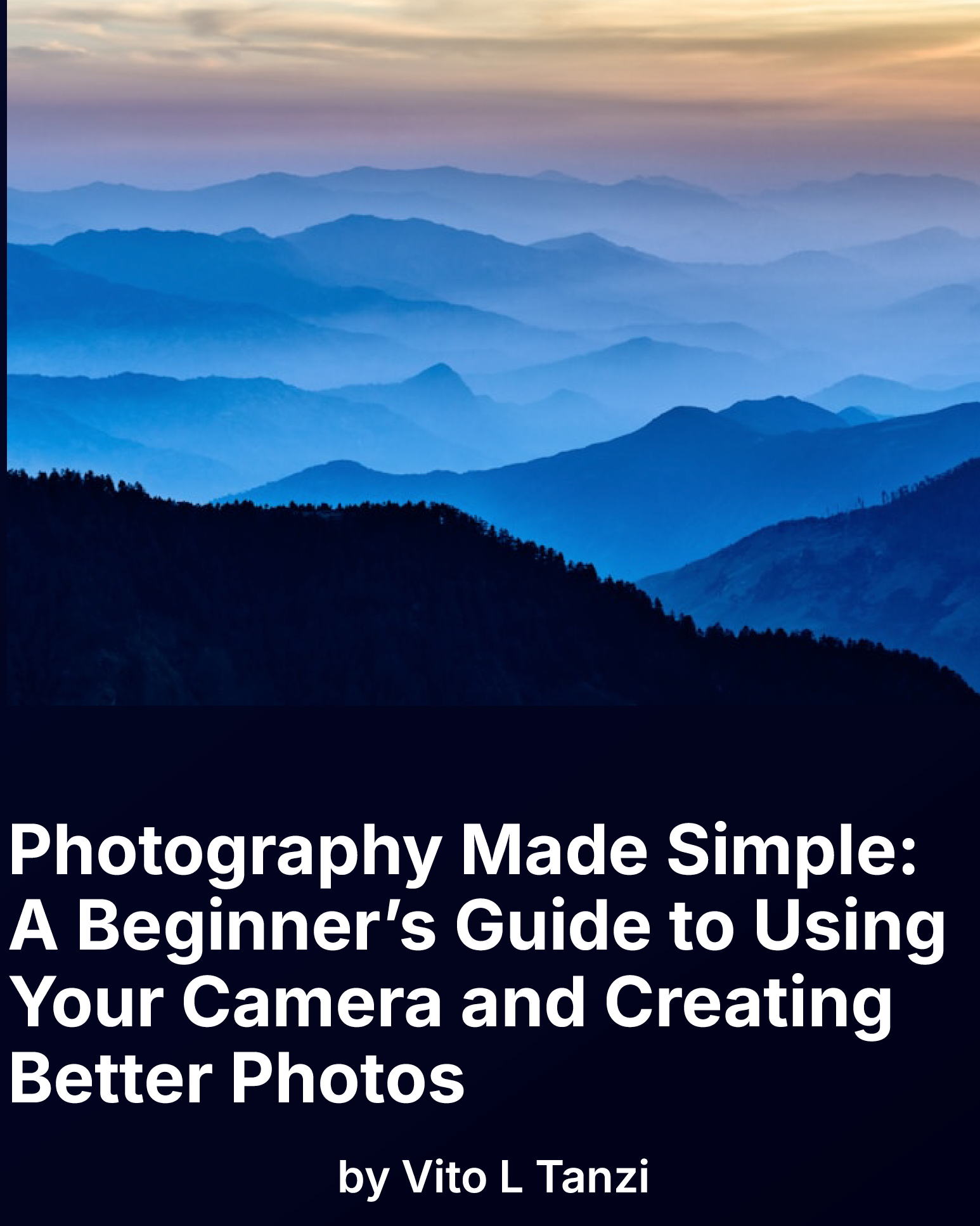
Photography Made Simple is a clear, encouraging guide for adults who want to understand photography without getting buried in complicated terminology, technical formulas, or endless equipment advice.
Whether you use a DSLR, mirrorless camera, or smartphone, Vito L. Tanzi walks you through the essential skills you need to take more intentional, creative, and consistently better photographs.
Inside, you will learn:
• The camera settings that matter most when you are getting started
• How aperture, shutter speed, and ISO work together
• How to create sharper photographs and choose the right focus settings
• How to use light and composition to make your images more interesting
• Practical techniques for portraits, landscapes, travel, and everyday photography
• What equipment you actually need, and what you can safely ignore
• How to improve your photographs without buying a new camera
You will also find practical exercises, simple cheat sheets, and helpful advice for organizing and editing your photographs.
This is not a textbook. It is a friendly, practical guide designed to help you move beyond full Auto, understand what your camera is doing, and feel more confident every time you press the shutter.
Photography is not only about learning settings. It is about learning to notice light, color, emotion, and the small details most people walk past.
Photography Made Simple will help you see the world differently, and capture it the way you imagined.
📸 Format: PDF download
Pages: 100+
Perfect for: Beginners, hobbyists, and anyone ready to take better photos without the stress