Siena, Italy Travel & Photography Guide: Best Photo Spots, Things to Do & Hidden Gems
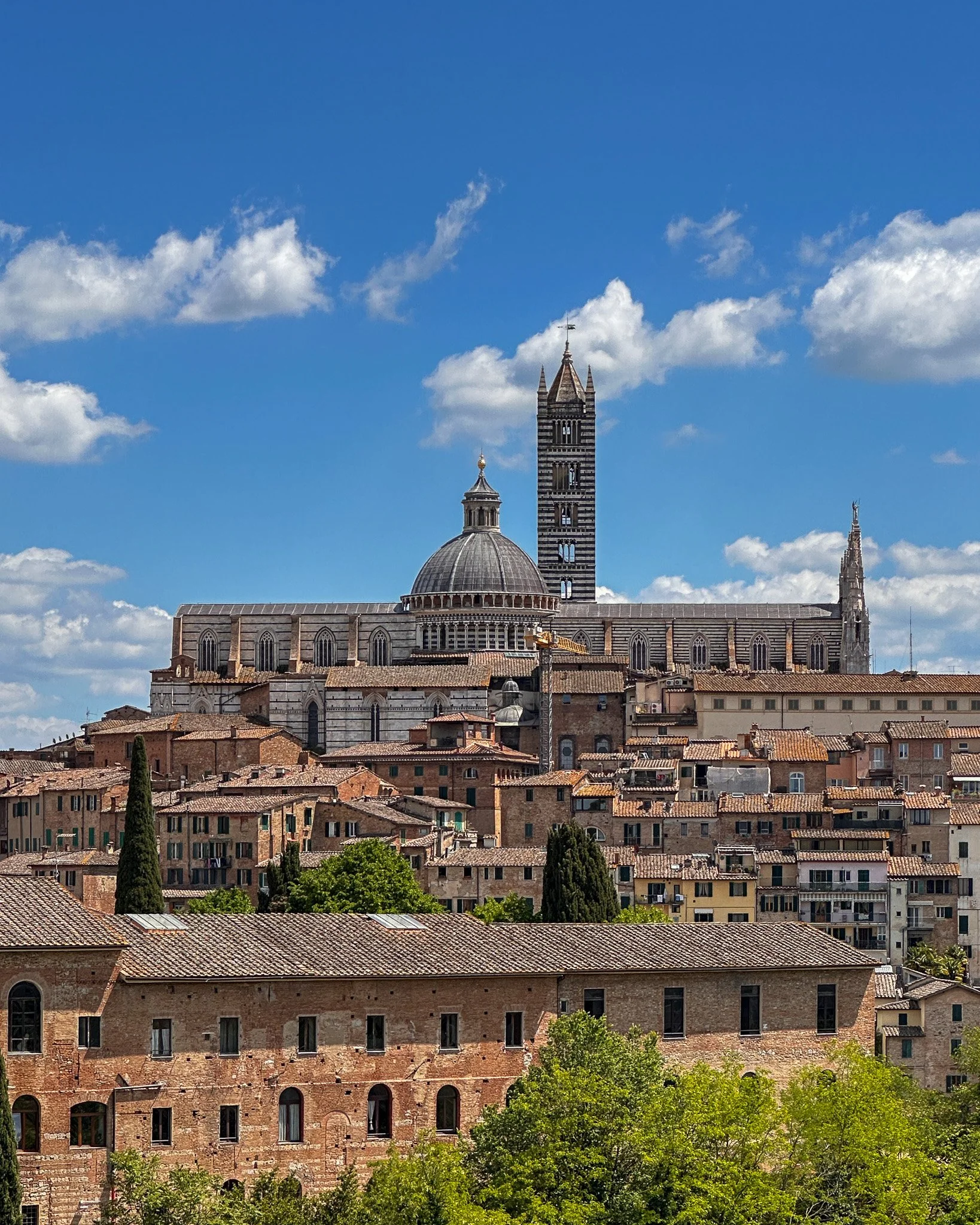
I have been to Siena about a dozen times, and I still feel the same pull every time I round a corner and the Duomo comes into view. There is no building quite like it in the world. The façade hits you like a visual punch, and you just stop. Your camera comes up, and you realize you are nowhere close to capturing what you are seeing.
That is Siena. It does not ease you in. It grabs you.
Siena's entire historic center is a UNESCO World Heritage Site, and the city wears that status well without feeling like a museum. People live here. Contrade flags hang from balconies. Merchants open their shutters in the morning light. The terracotta rooflines stack and shift across the hillside in patterns that have not changed in centuries. For a photographer, the challenge is not finding subjects. It is slowing down enough to shoot them properly.
The city rewards early risers. During the day, especially in summer, day-trippers pour in from Florence, and Piazza del Campo fills quickly. But stay overnight, and you get the version of Siena most visitors never see. Before 8 am, the Campo belongs to you, the pigeons, and a few locals nursing an espresso at Bar Il Palio. That is when the light falls at the right angle, the piazza curves away in clean geometry, and you can work without anyone walking through your frame.
In this Photography Guide to Siena, I share the places and experiences that continue to draw me back. You will find my favorite photography locations, guidance on when and where to shoot, practical travel tips, and gear recommendations, along with cultural insights to help you explore and photograph Siena with confidence, respect, and ease.
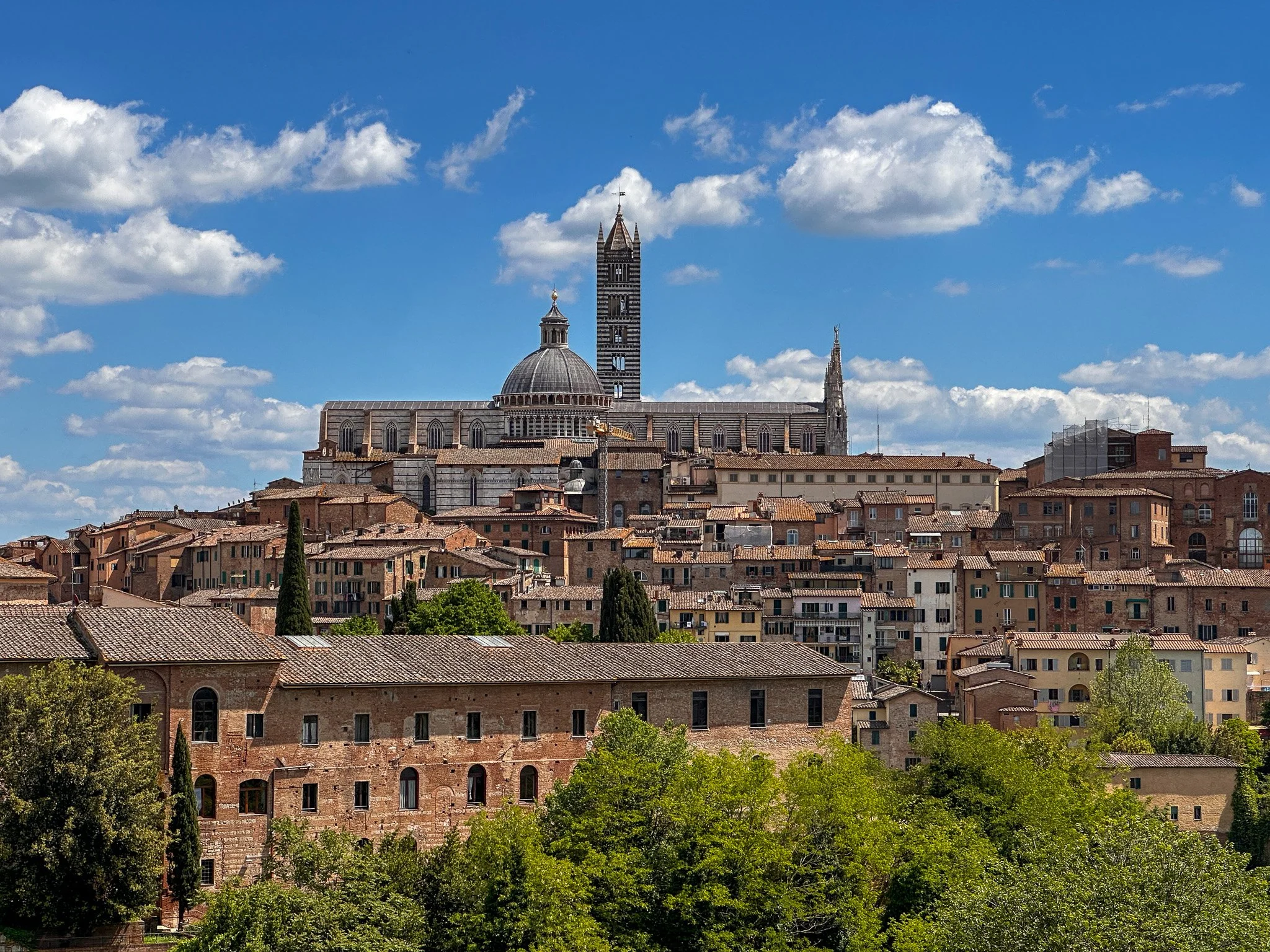
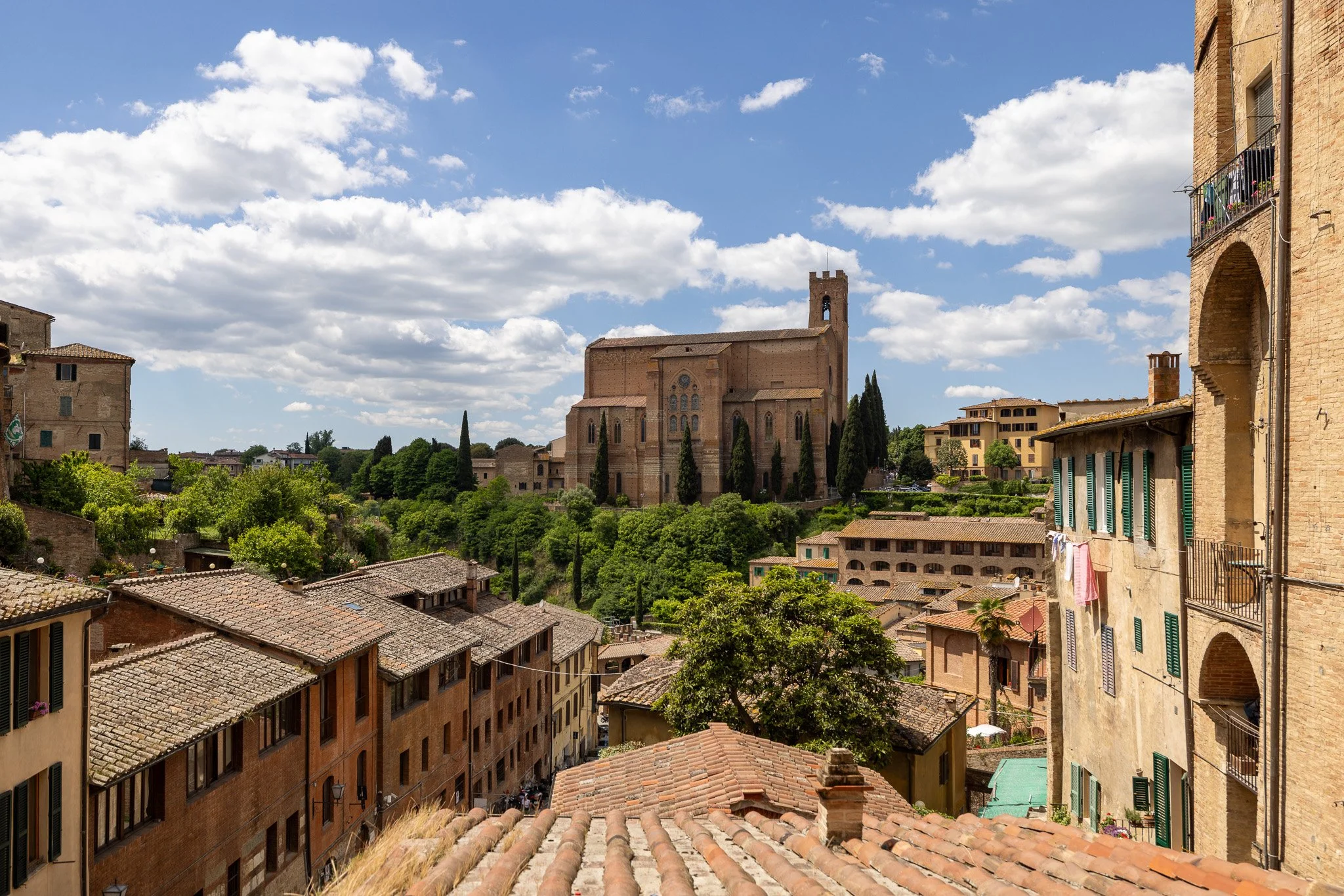
View from Basilica Cateriniana San Domenico
Photographer's Notes
Before you go, here are my own takeaways.
Favorite Season: Spring (April through June)
Favorite Location: Piazza del Campo
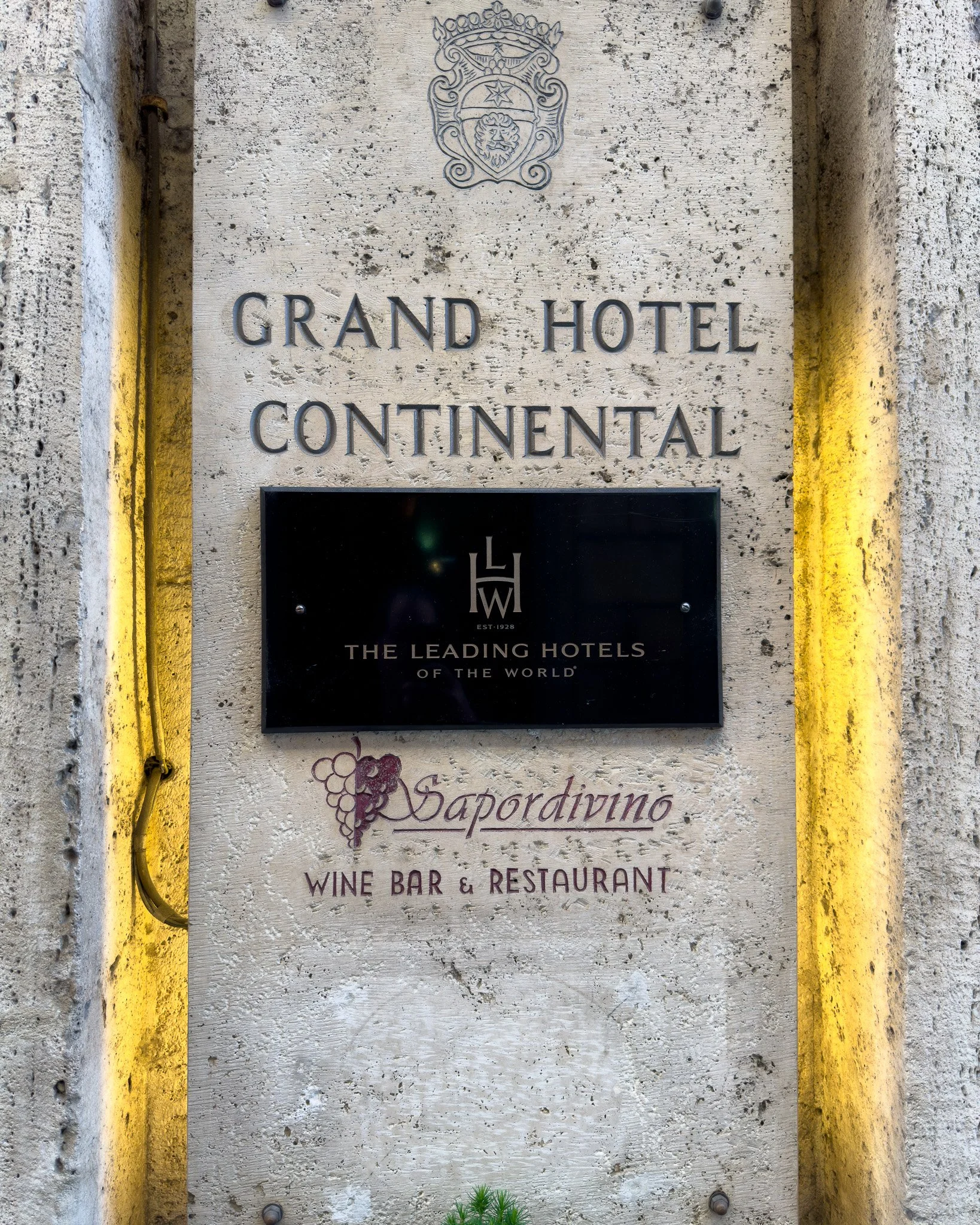
Favorite Hotel: Grand Hotel Continental Siena
Favorite Restaurant: Osteria La Sosta di Violante
Favorite Café: Caffè Nannini
Favorite Gelato: La Vecchia Latteria
Favorite Lens: 16-35mm f/2.8
Would I Return? Yes, I enjoy going back each time.
Where to Stay in Siena, Italy
The best neighborhood for photography access is the historic center, inside the medieval walls. Everything worth shooting is walkable, and staying inside means you get the city before and after the crowds. There is no subway here. You walk. Being centered saves enormous time when you are chasing light at 6 am or coming back from a blue hour shoot at the Torre del Mangia.
Luxury Hotels
Grand Hotel Continental Siena (Starhotels Collezione) The Grand Hotel Continental is the only five-star hotel in Siena's historic center, and its location is unbeatable. It occupies a 17th-century palazzo just steps from Piazza del Campo, with 51 rooms dressed in the kind of frescoed ceilings and antique furnishings you would expect from a building of this age. The Sapordivino restaurant and wine cellar, carved into the base of a medieval tower, are reason enough to return after a long day shooting. If you can get a room with a Duomo-facing terrace, do it.
Relais degli Angeli. This intimate period residence sits a few steps from the Campo in a restored noble palazzo with frescoed ceilings and individually furnished rooms. With only eight rooms, it feels more like staying in a private home than a hotel, and the rooftop terrace makes it genuinely useful for photographers who want to shoot from an elevated position at golden hour. Book well in advance.
Villa Ermellina Siena (Tribute Portfolio Hotel by Marriott) If you prefer to be outside the walls with more breathing room, Villa Ermellina is the right answer. The property sits within a 40,000-square-meter park with rose gardens, lavender fields, a panoramic pool terrace, and views toward Siena's skyline. It is a 15-minute walk to the historic center, which is perfectly manageable. This one opened recently and has quickly earned strong reviews for its service and atmosphere.
Mid-Range & Boutique Hotels
Palazzo Ravizza One of Siena's most beloved hotels, and one of the oldest, Palazzo Ravizza has been welcoming guests since 1922. It is a family-run property with 38 rooms, a private garden with panoramic views over the Sienese hills, and on-site parking, which is genuinely rare for a hotel this close to the center. The rooms vary in character, and some have frescoed walls or terracotta floors. Couples rate the atmosphere exceptionally high.
Hotel Athena A solid, well-positioned mid-range option with a rooftop terrace that gives you a clean 360-degree view over the city. If you cannot get into one of the options above, Hotel Athena lets you photograph the skyline without paying luxury rates. Worth reserving a terrace-view room specifically.
Hotel Minerva A reliable, centrally positioned hotel just outside the ZTL zone, which matters if you are arriving by car and do not want to navigate Siena's notoriously strict traffic restrictions. The staff is friendly and knowledgeable about the city, and the location puts you within walking distance of the main photography spots without the complexity of navigating the restricted historic core with a vehicle.
Best Time to Visit
Spring (April through June) is my first choice for Siena. The light is warm and directional without the harsh midday contrast of summer. The crowds are manageable before late June. Wildflowers are still visible on the hillsides surrounding the city, which helps if you are doing any landscape work from the viewpoints. Morning temperatures are cool enough to shoot comfortably, and golden hour can stretch beautifully past 7pm by late May.
Autumn (September through October) is a close second. The summer crowds thin out noticeably after early September, the light takes on a more golden quality as the sun drops, and the city starts to feel more like itself again rather than a tourist destination. The Palio on August 16 marks the end of the busiest period; if you can arrive the week after, you get the atmosphere without the chaos.
Summer (July through August) brings the famous Palio and the most dramatic color and energy in the city, but also the heaviest crowds and the hardest light. If you are specifically there for the Palio, it is worth tolerating both. Otherwise, the shoulder seasons give you far better photography conditions.
Winter (November through March) is quiet, occasionally cold, and mostly uncrowded. The Duomo exterior and the Piazza del Campo both photograph well in overcast winter light, which softens shadows and reduces the blown-out sky problem that summer midday creates. If you do not mind fewer dining options and some closures, it is an underrated time to visit.
Parking Facilities:
If you are visiting Siena for the day, try to get there early. Parking can be challenging to find. Here are a few places where I usually can find parking:
Parcheggio Santa Caterina: This parking lot is centrally located and within walking distance to the city center. It's a convenient choice if you want to explore Siena on foot.
Address: Via Esterna di Fontebranda, 27, 53100 Siena SI, Italy
Approximate Cost: €2 per hour
Parcheggio Il Campo: Situated near the famous Piazza del Campo, this parking facility is ideal for those who want quick access to the main attractions.
Address: Via di Fontanella, 2, 53100 Siena SI, Italy
Approximate Cost: €2 per hour
Parcheggio Stadio Fortezza: This large parking area is located near the Medici Fortress and is a bit further from the city center, but it offers more availability and is still within a reasonable walking distance.
Address: Fortezza Medicea, Viale Vittorio Veneto, 53100 Siena SI, Italy
Approximate Cost: €2 per hour
Tips for Parking in Siena:
Arrive Early: Parking lots can fill up quickly, especially during peak tourist season. Arriving early in the morning will increase your chances of finding a spot.
Use Public Transport: Consider using Siena's public transport if parking is limited. There are convenient buses that can take you close to the city center.
Pay Attention to ZTL Zones: Siena has many restricted traffic zones (ZTL) where unauthorized vehicles are not allowed. Be mindful of these areas to avoid fines.
Parking in Siena can be a bit challenging due to its medieval layout, but with a little planning, you can find convenient options to explore this charming city.
Getting Around Siena, Italy
Siena is a walking city. Full stop.
The historic center is car-free, one of the most strictly enforced ZTLs in Italy, and has been since 2004. Electronic cameras monitor every entrance 24 hours a day. If you drive into the ZTL without authorization, the fine will find you months after you get home. Do not risk it. Park outside the walls and walk in.
The three most useful parking areas are Parcheggio Santa Caterina near Via Fontebranda, Parcheggio Il Campo on Via di Fontanella, and Parcheggio Stadio Fortezza near the Medici Fortress. All have clear pedestrian routes into the center. Arrive before 9 am on weekends and in summer to secure a spot.
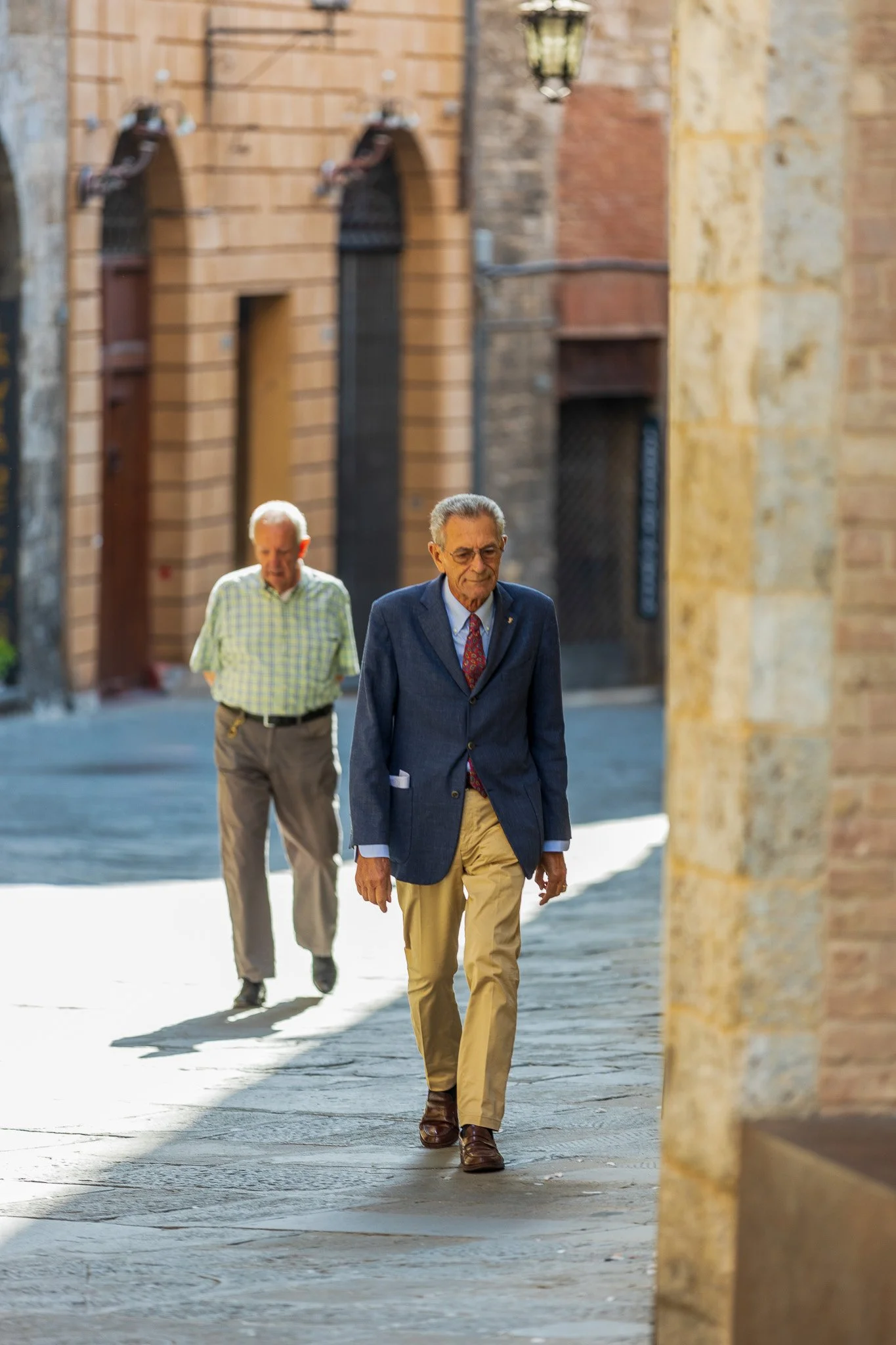
Within the city, you walk. The center is compact enough that every major photography location in this guide is reachable on foot within 10 to 15 minutes from the Campo. This is a real advantage if you are moving quickly between locations to chase changing light. Wear comfortable shoes. The streets are cobblestoned and hilly in places.
Local buses (Tiemme) serve the city and connect the parking areas near the walls. Ride-hailing apps like Uber and Bolt do not operate in Siena. Local taxis are available, though for most purposes inside the historic center they are unnecessary. If you are arriving from Florence by train, the Siena railway station is just outside the city walls and a 20-minute walk or short bus ride from the center.
How Many Days Should I Visit
Two nights minimum. One night is workable but leaves you scrambling. Two nights give you at least two mornings, which is the currency that matters in Siena.
A three-to-four-day visit at a photographer's pace works like this:
Day 1: Arrive in the afternoon, settle in, and walk the city to orient yourself. Shoot the Campo at golden hour from the upper end near the Palazzo Pubblico. Dinner in the historic center.
Day 2: Early morning at the Campo before 8 am. Move to the Duomo before it opens for the exterior in morning light. Spend two to three hours inside when it opens. Afternoon: explore Via di Città and the alleyways around San Cristoforo. Blue hour at Torre del Mangia.
Day 3: Morning shoot from Basilica San Domenico for the classic Duomo skyline view. Take the Porto Salaria viewpoint along Via Diacceto. Afternoon drive into the Crete Senesi or Val d'Orcia for landscape shots. Return for a final evening in the Campo.
Day 4 (optional): Day trip to Montepulciano or Montalcino if the Tuscan landscape is part of your itinerary.
Where to Eat in Siena, Italy
Siena eats well, and it eats Tuscan. Pici pasta, wild boar ragù, ribollita, pecorino, and one of the great wine regions in the world, essentially surrounding the city. The rule I follow: if there is a menu in English posted on the door with a person standing outside pulling you in, keep walking. Walk two more streets. The good places do not need to advertise.
One place I always make time for is La Vecchia Latteria on Via San Pietro, just down from the Duomo. It is a gelato shop, and after a long morning shooting in the heat, a cone of crema is one of the more civilized things you can do in Italy.
Osteria La Sosta di Violante is a genuine Sienese osteria with vaulted brick ceilings, rustic wooden tables, and a menu that changes with the seasons. Chef Duccio runs a tight kitchen focused on local tradition. The pici with hand-sliced capocollo ragù is the dish everyone talks about for good reason. Book ahead, especially for outdoor seating.
Antica Osteria da Divo, located near the Duomo in rooms carved into the soft volcanic rock beneath the city, is the most atmospheric dining space in Siena. The cavelike interior is cool in summer and genuinely dramatic. The menu runs toward traditional Tuscan, with braised meats and seasonal truffles handled well. One of the highest-rated restaurants in the city, and deservedly so.
Trattoria Papei Classic is unpretentious and reliably good. Trattoria Papei has been feeding locals and known visitors for years in a simple room just off the Campo. Order the ribollita if it is on the menu, and do not skip the house wine.
Osteria Permalico A newer addition to the Sienese dining scene and one worth seeking out. Square gnocchi, clever seasonal ingredients, and a warmth from the staff that makes it feel like a neighborhood place, even though it is on tourist radar now. Mid-range in feel and price.
Ristorante Tar-Tufo. If truffles are your thing, this is your restaurant. Specializes in truffle-based dishes with a seafood leaning, and consistently earns strong reviews for both the food and the execution. Go for a special evening rather than a casual lunch.
Coffee
Caffè Nannini on Banchi di Sopra is the historic café of Siena, and one of the best-known in Tuscany. The espresso is excellent, the pastries are fresh, and the marble interior has the kind of unhurried elegance that makes you want to sit longer than you planned. A morning ritual.
Bar Il Palio on the Campo itself gives you espresso with one of the great views in Italy. The coffee is good, the location is better. Go early before the Campo fills up, claim a table on the rim, and watch the light move across the shell-shaped piazza.
Caffè La Fortezza near the Medici Fortress is a modern café, well-positioned if you are shooting the northern part of the city, and a reliable spot for editing or a quiet midday break away from the tourist concentration.
Photography Gear to Bring
Siena is an architecture and street photography destination at its core, with some landscape potential if you venture into the hills. Pack accordingly.
Camera bodies: Canon EOS R5 Mark II, Sony A7R V, or Nikon Z8. Any of these handles the interior low-light work inside the Duomo and the high-dynamic-range challenges of shooting white marble façades against bright Tuscan sky.
Wide-angle lens (16-35mm): Essential. The Duomo exterior and Piazza del Campo both demand it. You will not do justice to either space without going wide. This is the lens that earns its keep most consistently in Siena.
Standard zoom (24-70mm): Your all-day workhorse. Street photography, café scenes, portrait moments during the Palio, and architectural details.
Telephoto (70-200mm): Useful for compressing the terracotta rooflines from the San Domenico viewpoint, pulling in Torre del Mangia from across the city, and isolating details on the Duomo façade from a distance.
Tripod: Bring one. Blue hour in the Campo and interior shots inside the Duomo with a longer exposure will reward the extra weight. A compact travel tripod is sufficient.
ND filters (3-stop and 6-stop): If you want long exposures in the piazza during daylight with people moving through the frame, a 6-stop ND can stretch your shutter to 30 seconds and turn the crowd into a ghost blur while the architecture stays sharp.
Extra batteries and cards: Always. Long shooting days in the Italian sun drain batteries faster than you expect.
Samsung T7 SSD: Back up every night without exception.
iPhone Tips for Siena
Piazza del Campo: Use the iPhone's ultrawide lens from the upper rim of the Campo to capture the full shell shape. Get there before 8 am and shoot toward the Torre del Mangia for a clean composition with the morning light coming from the east. The ultrawide at this angle compresses naturally and makes the piazza look even more theatrical.
The Duomo exterior: Switch to your standard lens (1x) rather than ultrawide for the façade. Ultrawide at close range will distort the Gothic arches and make the proportions look wrong. Step back across the Piazza del Duomo and shoot straight on. Use Portrait Mode on architectural detail shots, particularly the marble sculptures in the lower sections of the façade.
Interior of the Duomo: Low light, strict tripod policies, and bright windows make this challenging. Use Night Mode to handle the exposure without introducing too much noise. Lock your focus on the black and white marble floor pattern and let the overhead frescoes fall slightly darker for a more dramatic result. Do not use flash. Ever.
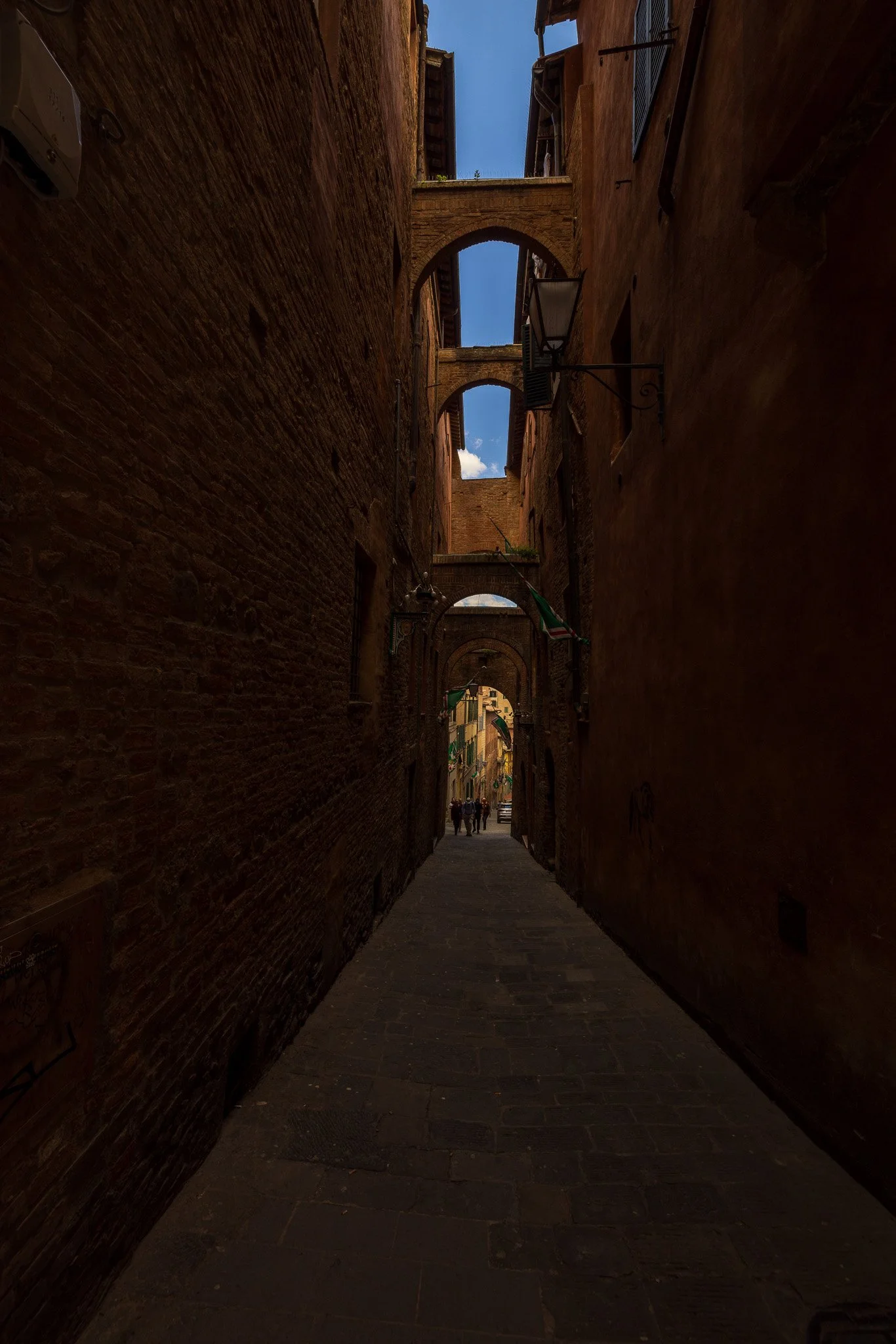
Alleyways: The narrow streets of Siena create natural leading lines. Wait for a person to enter the far end of the alley and shoot them in silhouette with the brighter street behind. This is one of those shots that looks far more intentional than it is.
Best Photography Locations in Siena, Italy
Here are some of the best locations to capture stunning images:
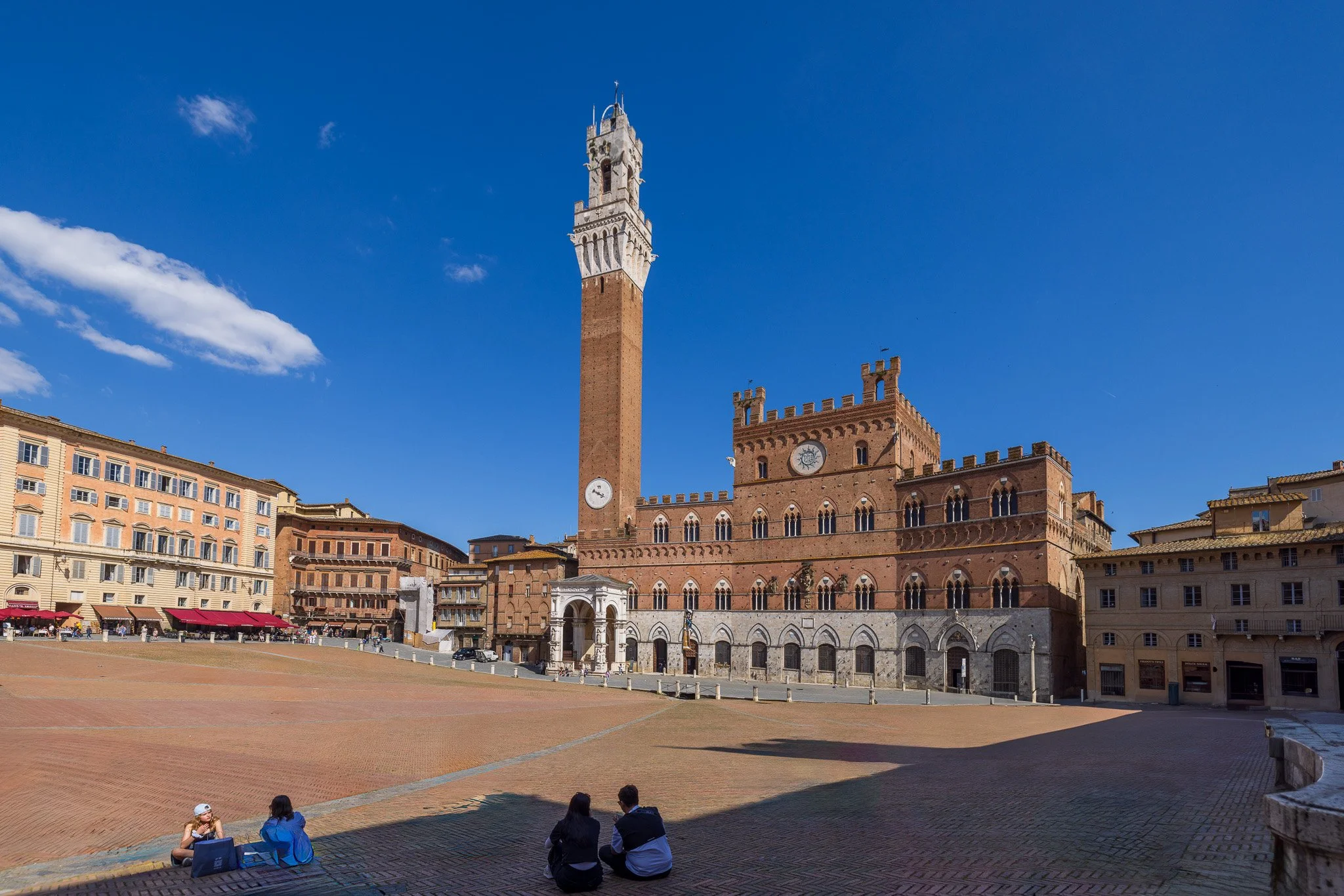
Piazza del Campo
Piazza del Campo is one of the great public spaces in Europe, and its shell-shaped plan, sloping gently down toward the Palazzo Pubblico, makes it unlike any other piazza in Italy. Eleven streets feed into the Campo from the rim, each one a natural frame for the tower beyond. The brickwork underfoot runs in herringbone patterns radiating from the center, and the whole thing reads as graphic from above and cinematic at ground level.
The photography challenge is the crowd. During peak summer days, the Campo fills with tourists, and the clean composition you want becomes difficult. The solution is simple: stay overnight.
📷 Pro Tip: Position yourself at the upper rim of the Campo near the Fonte Gaia, facing southeast toward the Torre del Mangia. Shoot between 7 am and 8:30 am when the morning light catches the brick in warm raking light and the crowds are thin. Use a wide-angle lens at 16-24mm to capture the full sweep of the piazza. If you want the tower isolated, move to the lower left of the shell and shoot upward at 35mm with the Palazzo Pubblico facade framing the right side of the frame. At blue hour, the tower and the Palazzo light up beautifully; set up your tripod near the central Fonte Gaia fountain and shoot with a 30-second exposure to render the sky as a deep gradient.
Best time: Early morning (7-8:30 am) and blue hour (30-45 min after sunset). Access: Free, 24 hours. Five-minute walk from most hotels in the historic center.
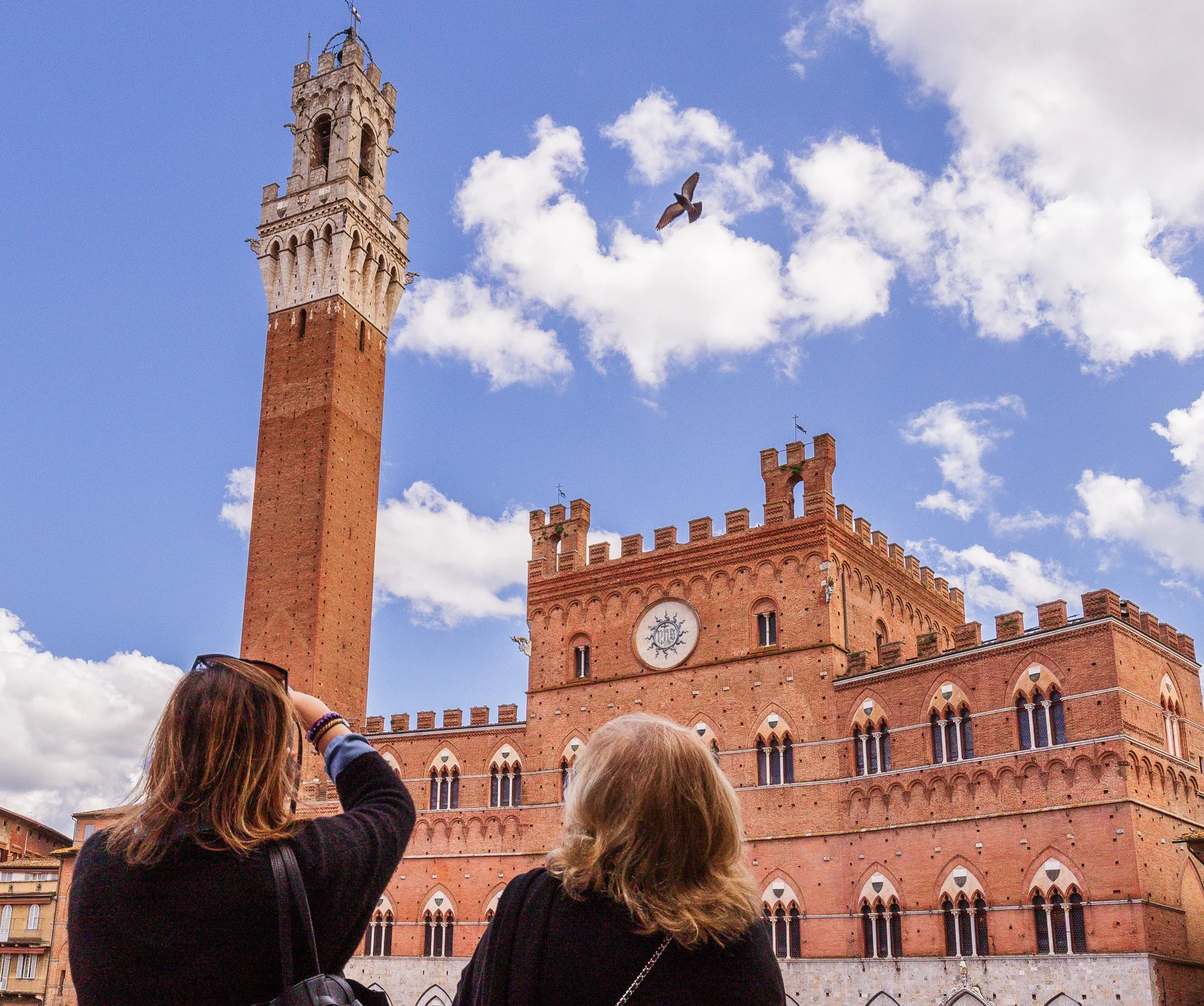
The Campo is quite large and often very crowded. So if you stay overnight you will be able to get shots without too many people in the scene.
The Duomo of Siena (Cattedrale di Santa Maria Assunta)
The Duomo is the reason you come to Siena. Full stop. The façade is an exercise in extravagance: white marble, green marble, and dark Carrara stone in horizontal stripes, three Gothic arches rising to bronze doors, statues in every niche, and a rose window that glows pink at sunrise when the light comes from behind it. I have stood in front of this building more than a dozen times and it still commands attention.
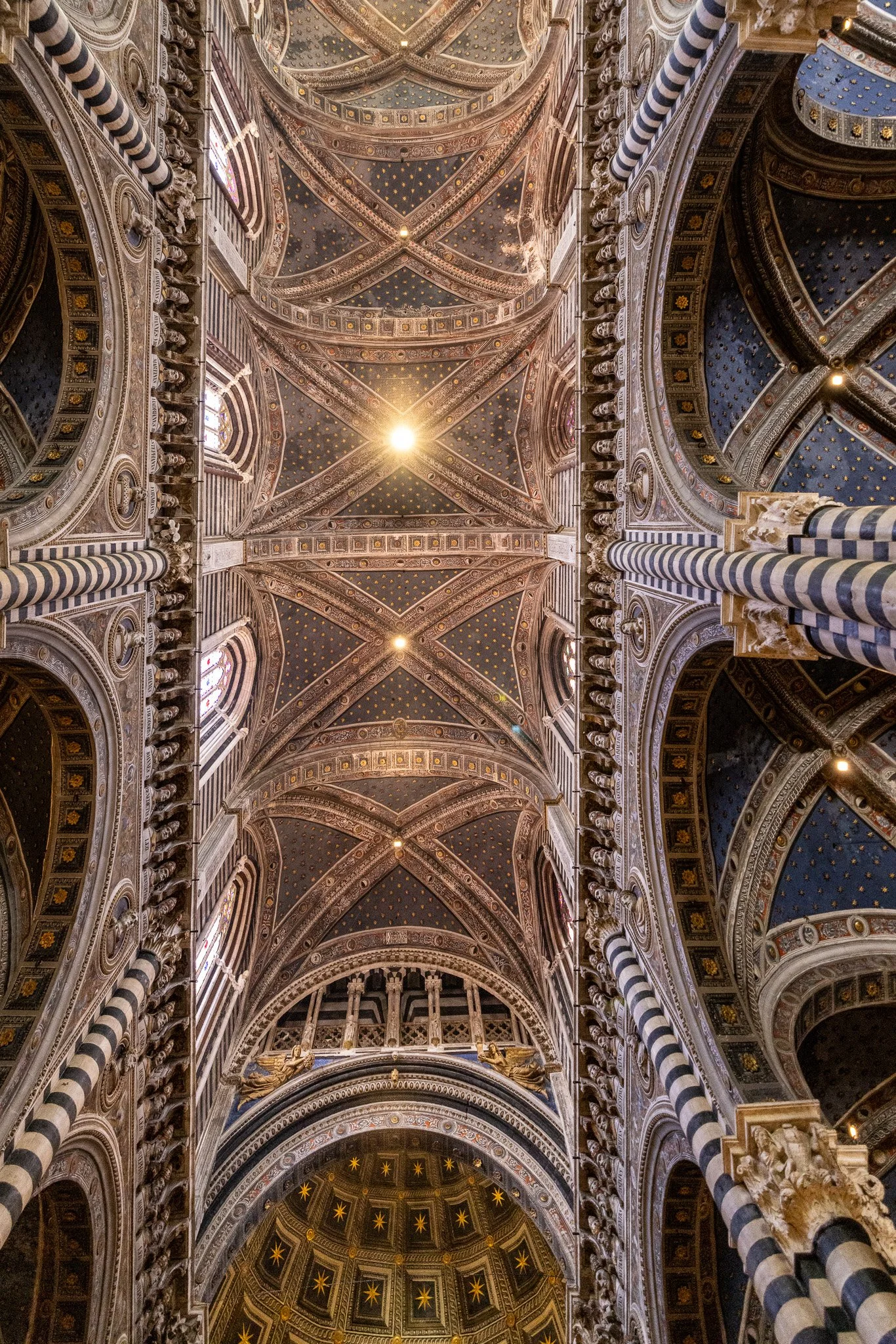
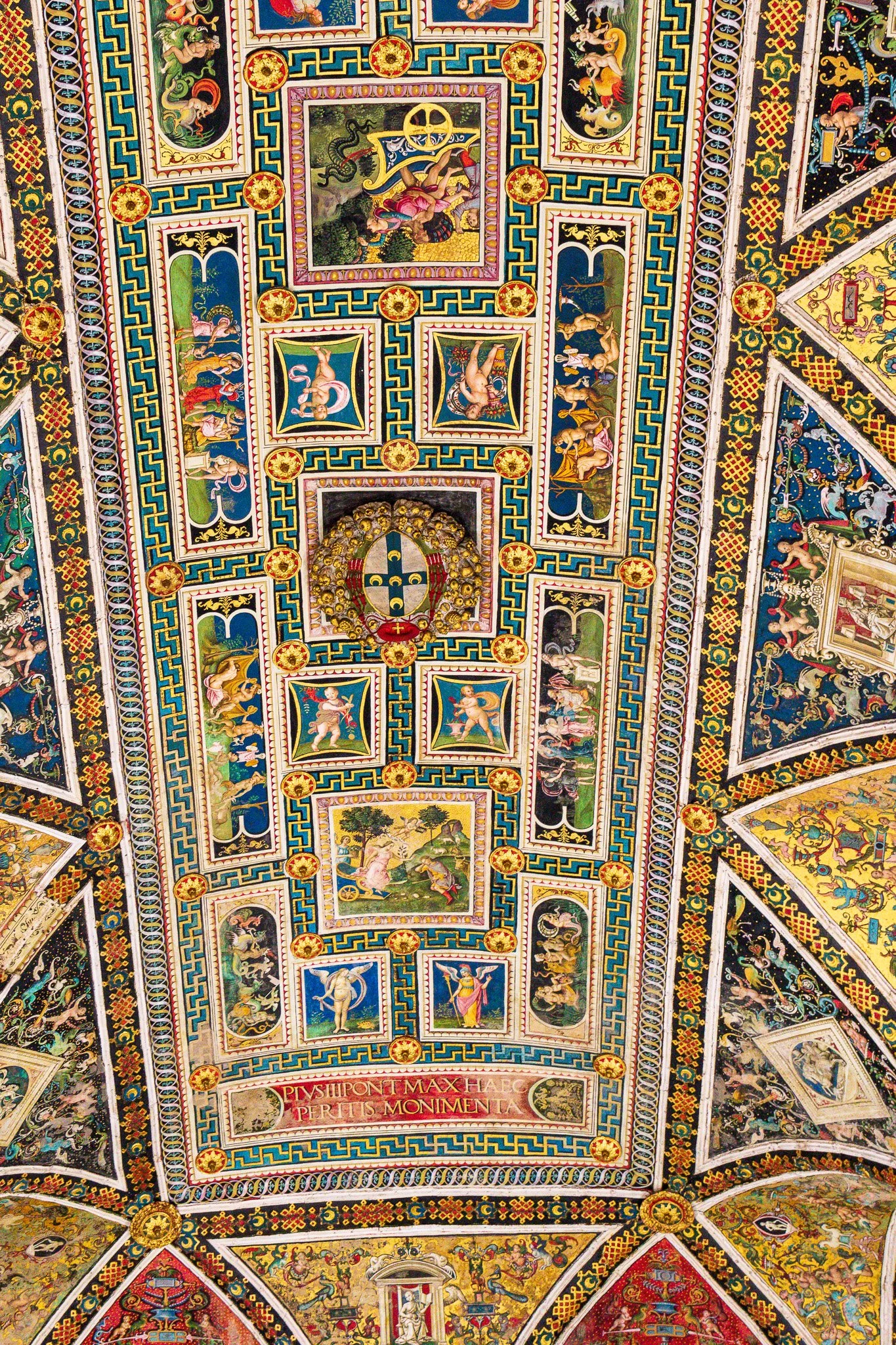
Inside, the richness is equally overwhelming. The black and white marble floor, covered for most of the year except in late August and September, is made of 56 inlaid narrative panels depicting biblical allegories. Donatello, Bernini, and Michelangelo all left work here. The Piccolomini Library off the left nave has floor-to-ceiling frescoes by Pinturicchio in colors that still read vivid 500 years later. The dome interior looks upward through a gold-starred blue ceiling toward the lantern. This is one of the most photogenic interiors in Italy.
📷 Pro Tip: For the exterior façade, arrive before the Duomo opens (typically 10:30am, earlier in low season) and shoot the façade from across Piazza Jacopo della Quercia using a wide-angle lens at 16-20mm. The light hits the white marble from the east in the morning, creating a brilliant white glow against the sky. Avoid midday sun, which bleaches the detail in the white sections. Inside, switch to your standard zoom and work at ISO 1600-3200 without a tripod (check current tripod policy at the entrance). Shoot the marble floor from a low angle for a graphic perspective, and tilt up at the dome for the gilded interior. The Piccolomini Library requires a separate ticket and absolutely warrants it. Photograph the frescoes by positioning yourself in the center of the room and using a wide-angle lens to capture all four walls together.
Best time: Exterior: early morning (before 9am). Interior: midday when light enters through the windows at the best angle. Access: Admission required; combination tickets available for the Duomo, Piccolomini Library, and Museo dell'Opera. Book online to avoid queues.
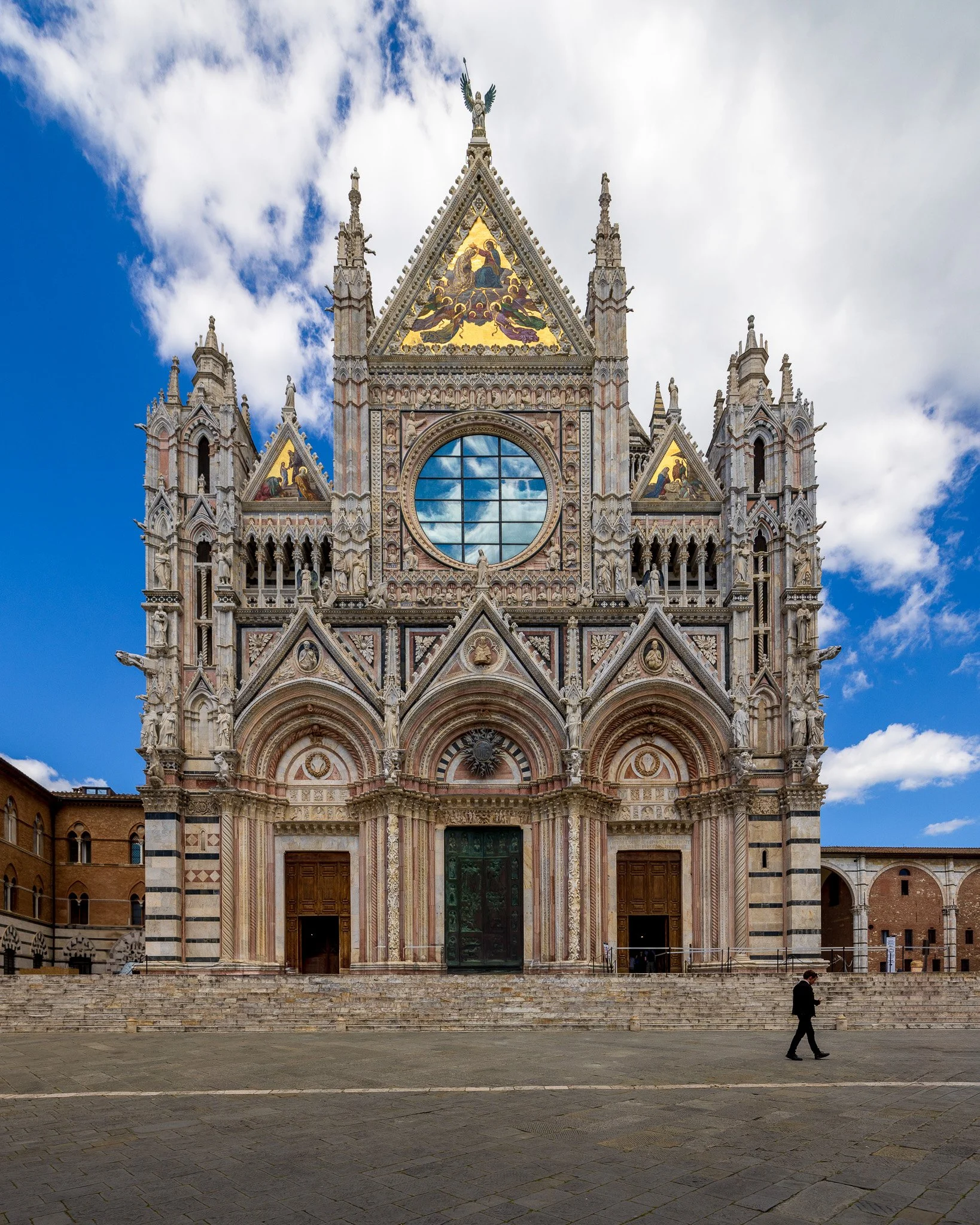
The Cathedral is stunning!! If you only have time to see one thing in Siena, this is where you should spend your time. While the exterior is incredible the inside is equally stunning.
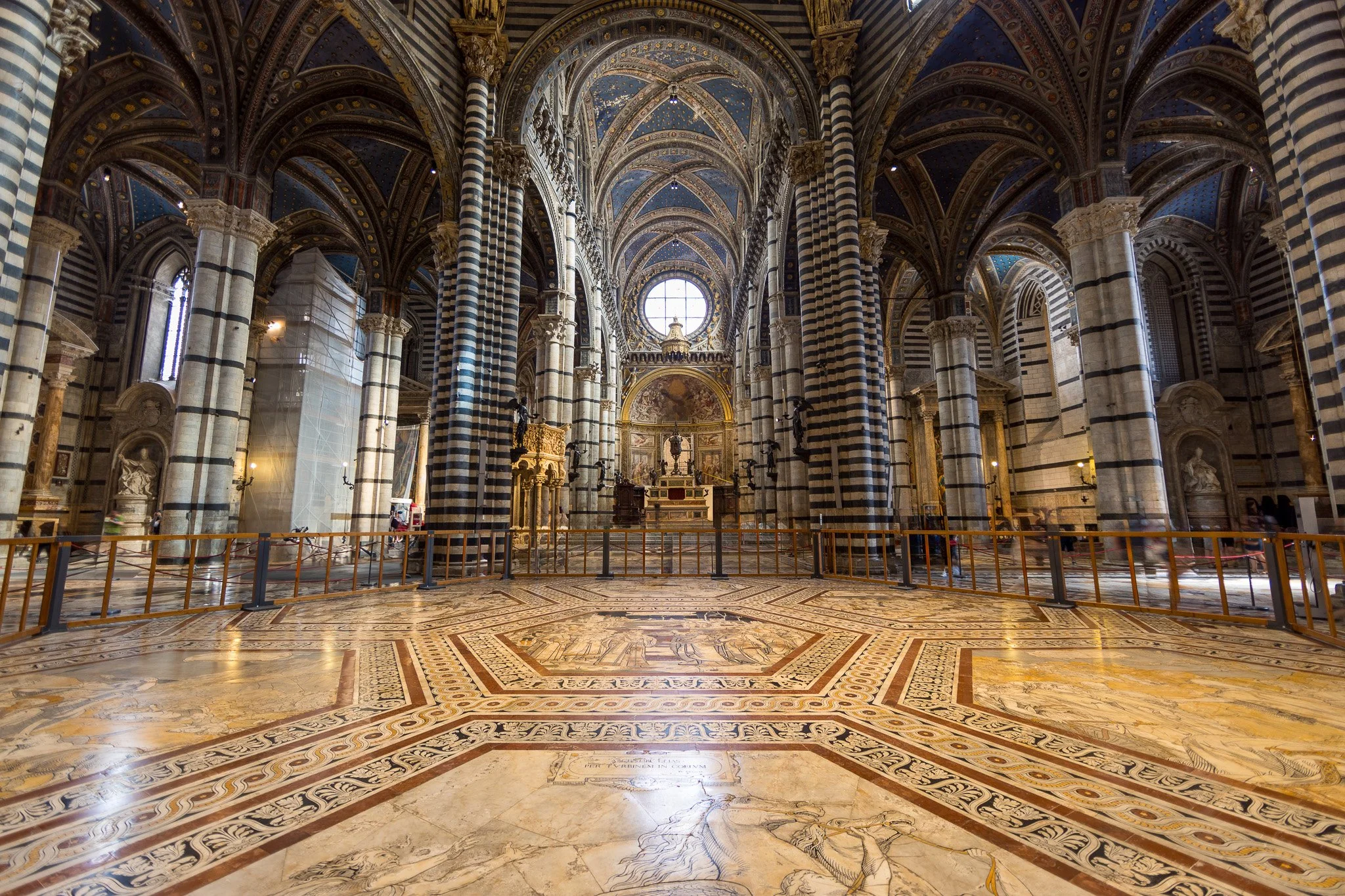
Inside the Cathedral
Do not forget to photograph the interior of the dome. The interior is equally impressive, with intricate frescoes and decorative elements that reflect the grandeur of the cathedral. The lantern at the top of the dome was added later and enhances the overall aesthetic, allowing light to illuminate the interior beautifully.
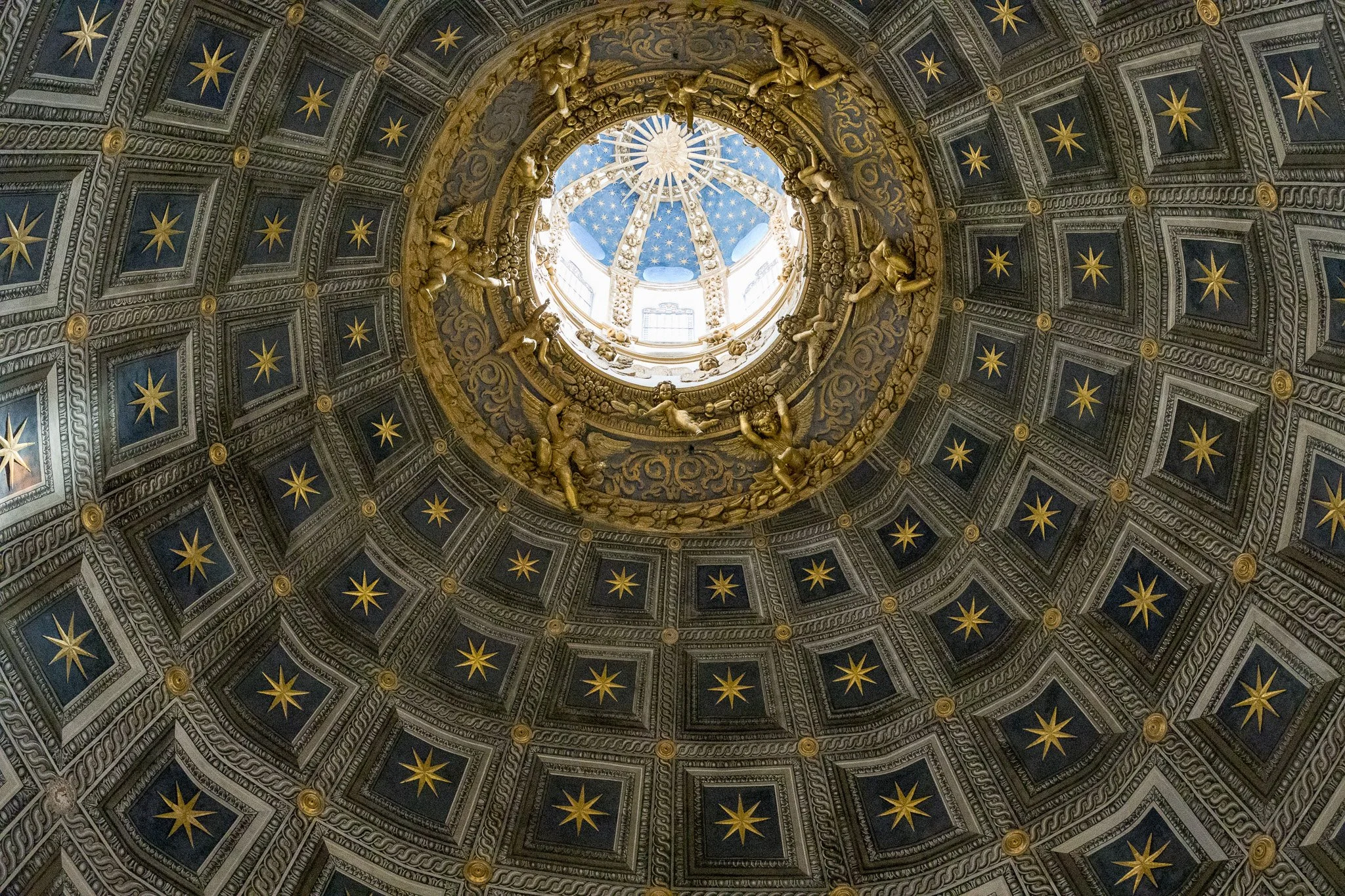
You could spend hours inside photographing every corner.
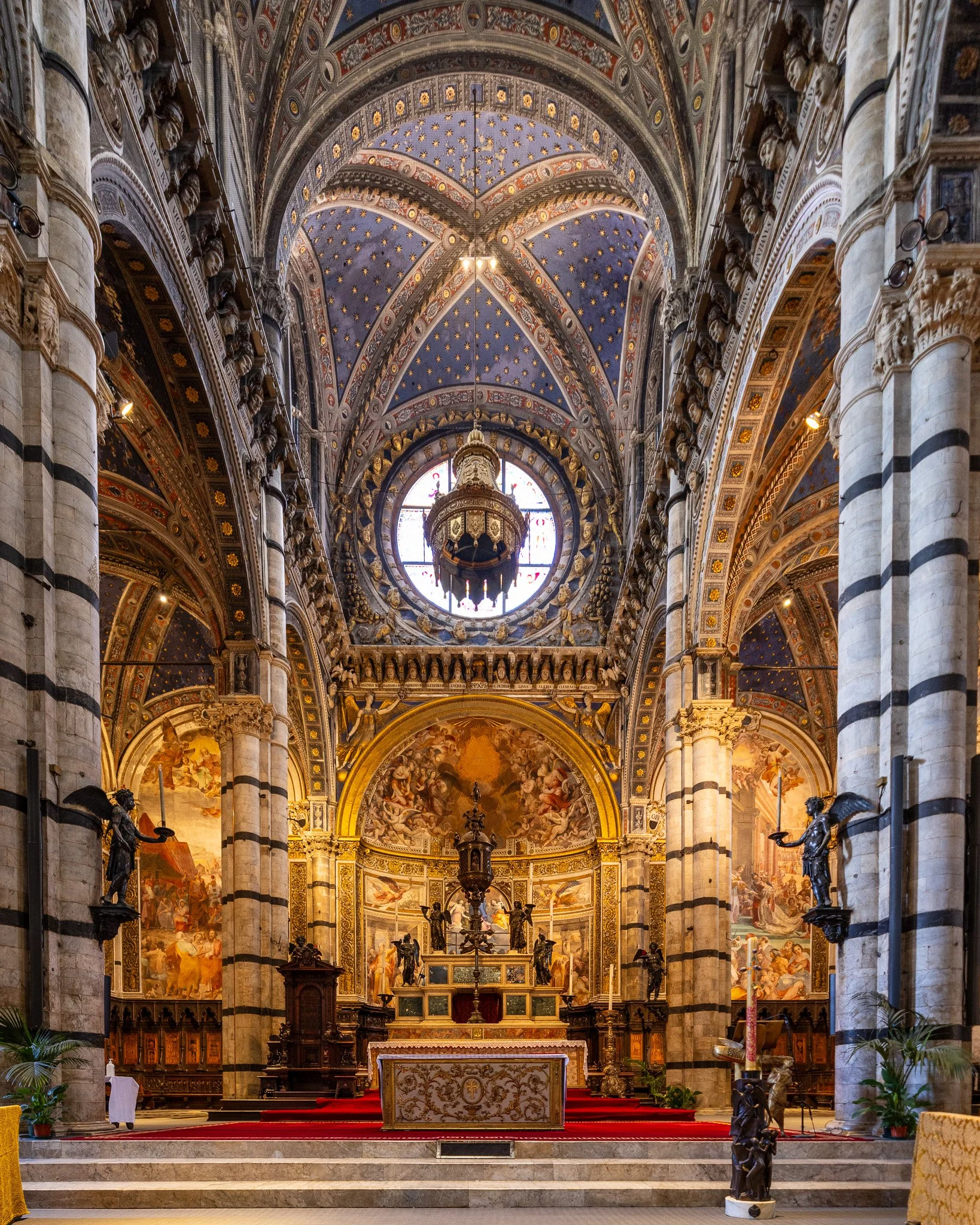
Even the ceiling is just breathtaking.
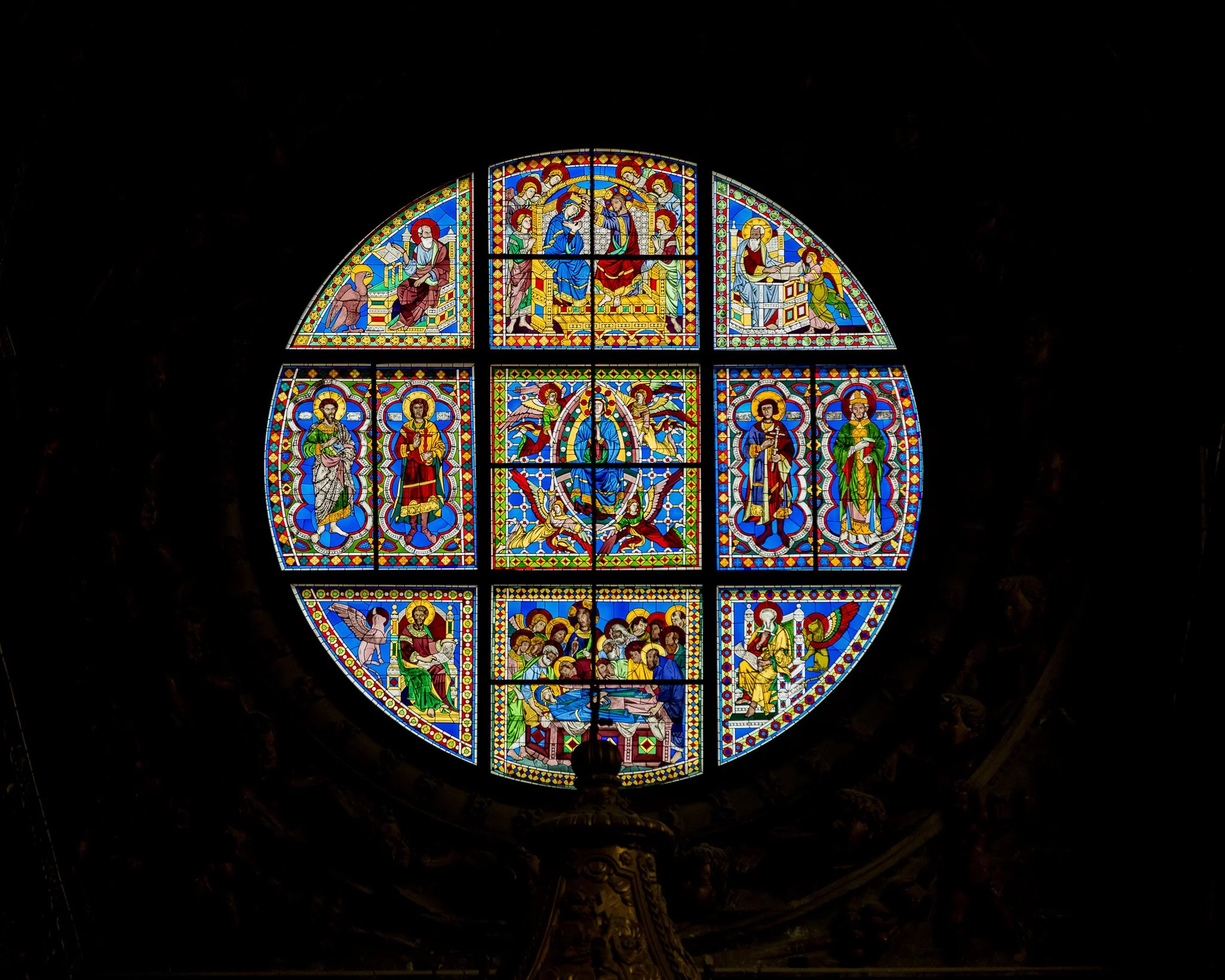
The most notable stained glass window is the rose window located in the apse, behind the high altar. This window was designed by Duccio di Buoninsegna, one of the most important painters of the 14th century.
Finally, do not miss The Piccolomini Library. The Piccolomini Library was commissioned by Cardinal Francesco Piccolomini Todeschini (later Pope Pius III) to honor the memory of his uncle, Enea Silvio Piccolomini, who became Pope Pius II. The library was designed to house the cardinal's precious book collection and to serve as a tribute to his illustrious uncle.
Basilica Cateriniana San Domenico — The Skyline Viewpoint
Most people go to San Domenico to see the relic of Saint Catherine of Siena preserved in the Cappella delle Volte. That is worth your time. But the real reason photographers come here is the view from the piazza in front of the basilica, which gives you one of the two or three best angles of the Duomo and the Siena skyline in the city. The Gothic basilica itself is imposing and worth photographing, but the view east from its terrace is what earns the walk up.
📷 Pro Tip: Stand at the northeast corner of the parvis (the open terrace in front of the basilica) and shoot east toward the Duomo. Use a telephoto lens at 70-100mm to compress the distance and make the Duomo appear larger relative to the foreground rooflines. Sunrise is the ideal time: the light comes from behind you, illuminates the Duomo's white marble directly, and the sky behind it often runs through pink and orange tones. A tripod lets you shoot at a slower shutter speed and retain shadow detail in the darker foreground buildings. If you have a drone and have verified it is permitted in this specific location via D-Flight before flying, the elevated angle over this area is exceptional, though the UNESCO historic center status means you should check regulations thoroughly before flying anywhere in Siena.
Best time: Sunrise and early morning. Access: Free access to the terrace and exterior. The basilica itself is free to enter. Ten-minute walk from Piazza del Campo.
Porto Salaria & Via Diacceto — The Hidden Viewpoint
This is one I keep to myself, but it is worth sharing. Along Via Diacceto, near the Porto Salaria gate, there is a lookout point that gives you a quiet, slightly elevated view toward the Basilica San Domenico and the steep streets that fall away below the northern city. There are a few small shops and a café here, and almost nobody who is not local or specifically looking for it.
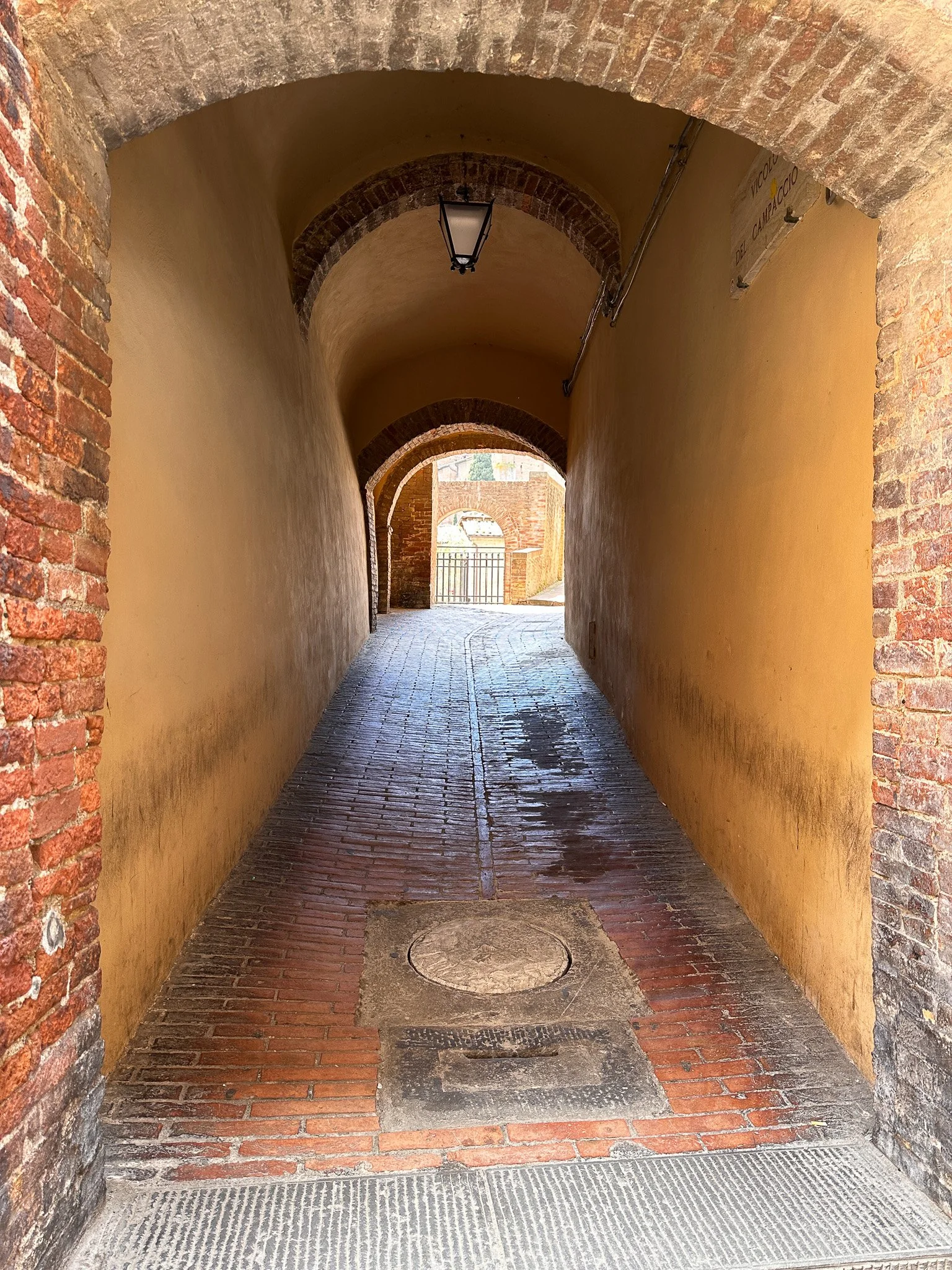
The alleyways that fan out from this area are among the most photogenic in the city. Siena is full of narrow vicoli, but the ones around Via Diacceto and the streets below San Domenico have a particularly good quality of light in the afternoon, when the sun angles down into the passages from the west and creates long shadow patterns on the stone.
📷 Pro Tip: Come in the afternoon between 3 pm and 5 pm when the western sun reaches down into the narrow streets. Use a 35mm prime or 50mm equivalent to capture a person walking through an alley, framed between the walls, with the brighter street beyond. The key is patience: find your composition first, then wait for a person to walk into it. For the viewpoint itself, shoot with a 70-135mm lens looking northwest toward San Domenico, using the rooflines of the lower streets to create layered depth in the foreground.
Best time: Afternoon (3-5 pm) for the alleyways; early morning for the broader viewpoint. Access: Free, no restrictions. Easy 10-minute walk from the Duomo.
I love the numerous alleyways in Siena.
There are dozens and dozens of alleyways.
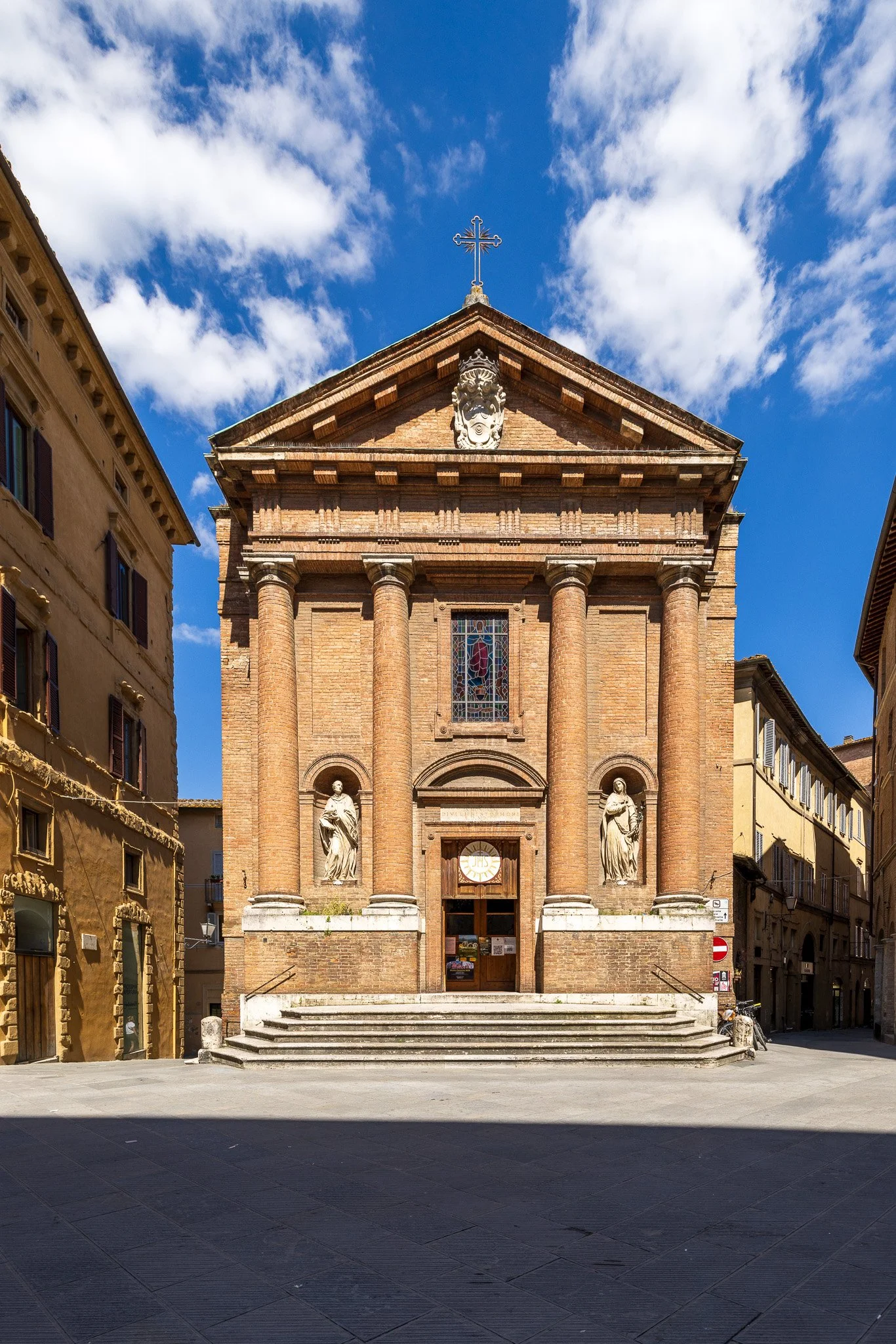
Saint Christopher's Church
San Cristoforo is one of the oldest churches in Siena, dating from the 11th century, and it sits quietly on Piazza Tolomei without attracting the crowds that flock to the Duomo. It played a significant role in the city's medieval governance, serving as a meeting place for the Council of the Republic of Siena. Today, it is a calm, photogenic stopping point for architectural detail work.
📷 Pro Tip: Photograph the façade from across Piazza Tolomei in morning light, which falls directly on the stone frontage from the east. Use a 50-85mm lens for clean architectural compression without distortion. The surrounding piazza and loggia give you good foreground framing options. Look for the play of shadow from the arcade across the stone at around 9-10 am, which creates texture in the relatively flat façade.
Best time: Morning (8:30-10 am). Access: Free. Located just off Via Banchi di Sopra, a two-minute walk from the Campo.
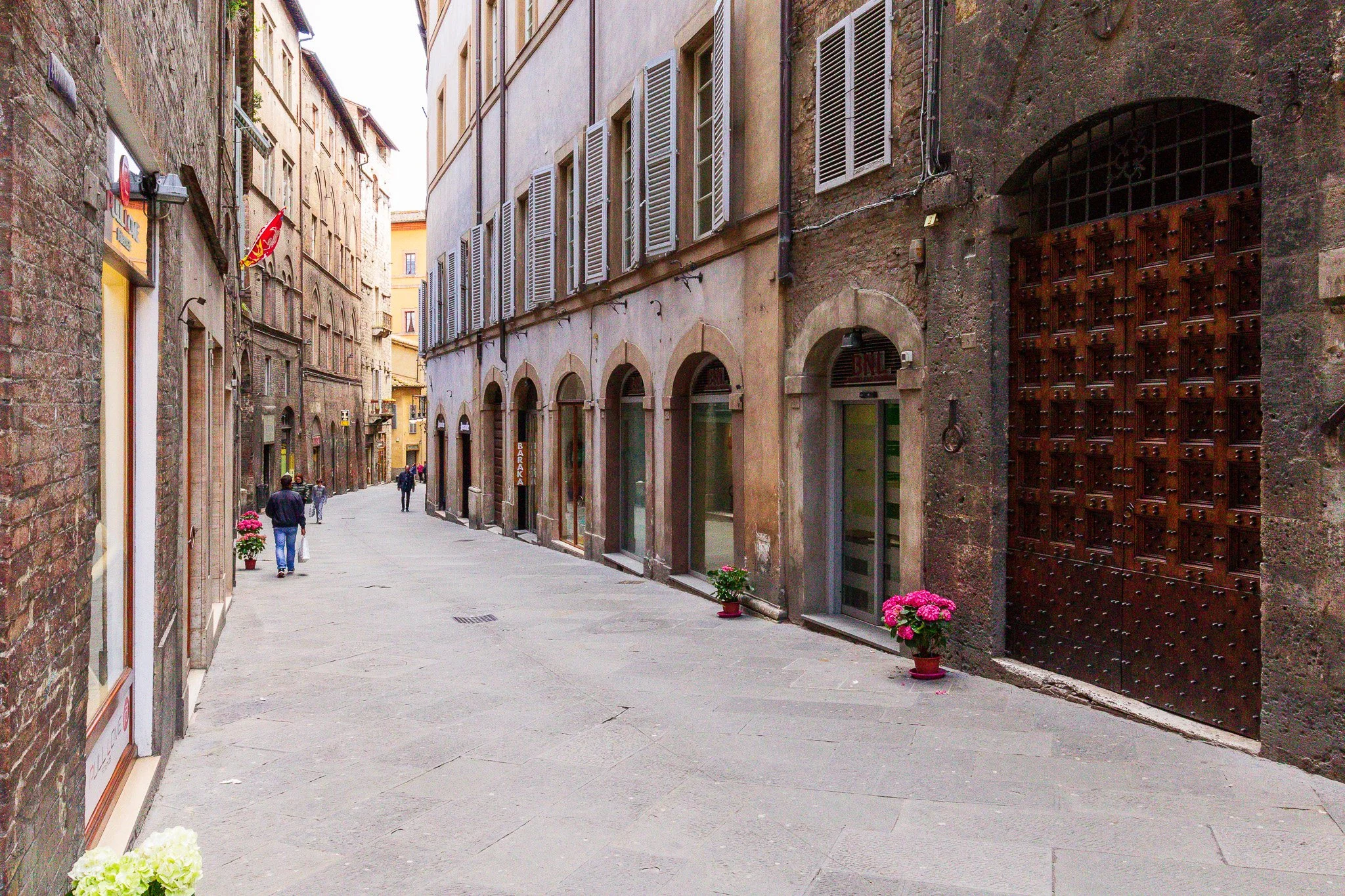
Via di Città
Via di Città is Siena's main pedestrian artery connecting the Campo to the Duomo area, lined with medieval palaces, art galleries, and shops. It curves gently through the city with consistent medieval architecture on both sides, and at the right time of day, the narrow street channels light from the west beautifully.
📷 Pro Tip: Shoot toward the Duomo in the late afternoon, with the sun behind you, warming the stone façades on the left side of the street. Use a 35-50mm lens and shoot from a low position to include the stone pavement as a leading line. The best single frame on this street is from a position about 30 meters east of the intersection with Via di Stalloreggi, looking west at around 5 pm in spring or summer. Wait for the street to clear momentarily between groups and shoot in a burst.
Best time: Late afternoon (4-6 pm) in spring and summer. Access: Free, open 24 hours.
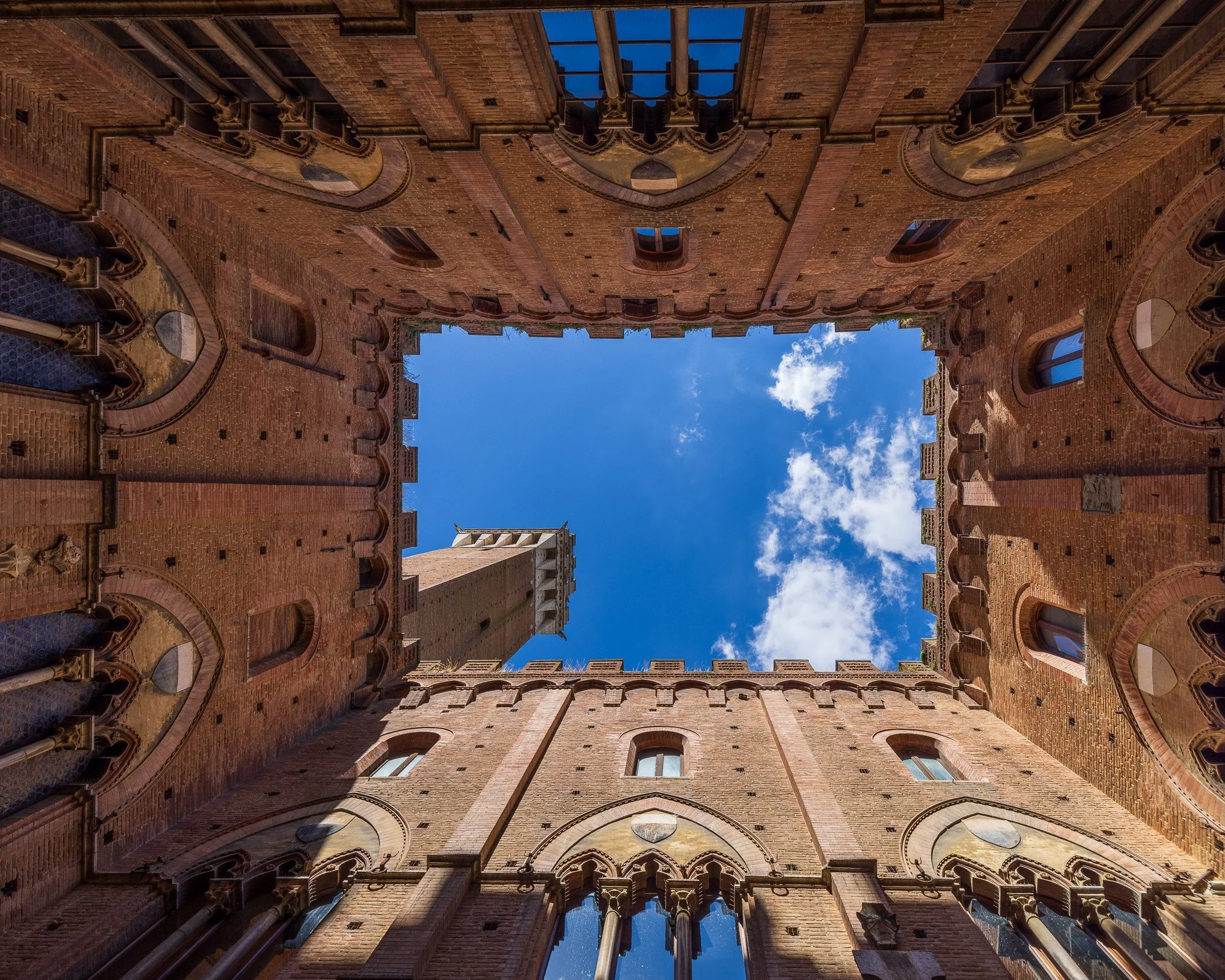
Torre del Mangia
The Torre del Mangia stands 87 meters above the Campo and is one of the tallest medieval towers in Italy. You can climb it for a birds-eye view over the city (worth doing at least once), but for photography, the interior courtyard of the Palazzo Pubblico gives you the most dramatic ground-level perspective of the tower. The courtyard is free to enter and accessible in the evening, which most visitors do not know.
📷 Pro Tip: Enter the Palazzo Pubblico courtyard from Piazza del Campo through the main archway. Position yourself at the far end of the courtyard, near the well, and point straight up at the tower with your wide-angle lens at 16-20mm. Include the Gothic arcade framing the lower portion of the shot to give it scale and architectural depth. A morning or evening shoot in the courtyard avoids harsh shadows in the narrow space. For the tower from outside, shoot from the northwest corner of the Campo using a 35-50mm lens and include the curve of the brick piazza in the foreground to anchor the composition.
Best time: Morning or evening for the courtyard; golden hour for the tower exterior from the Campo. Access: The courtyard is free. Tower climb requires a ticket purchased at the Palazzo Pubblico.
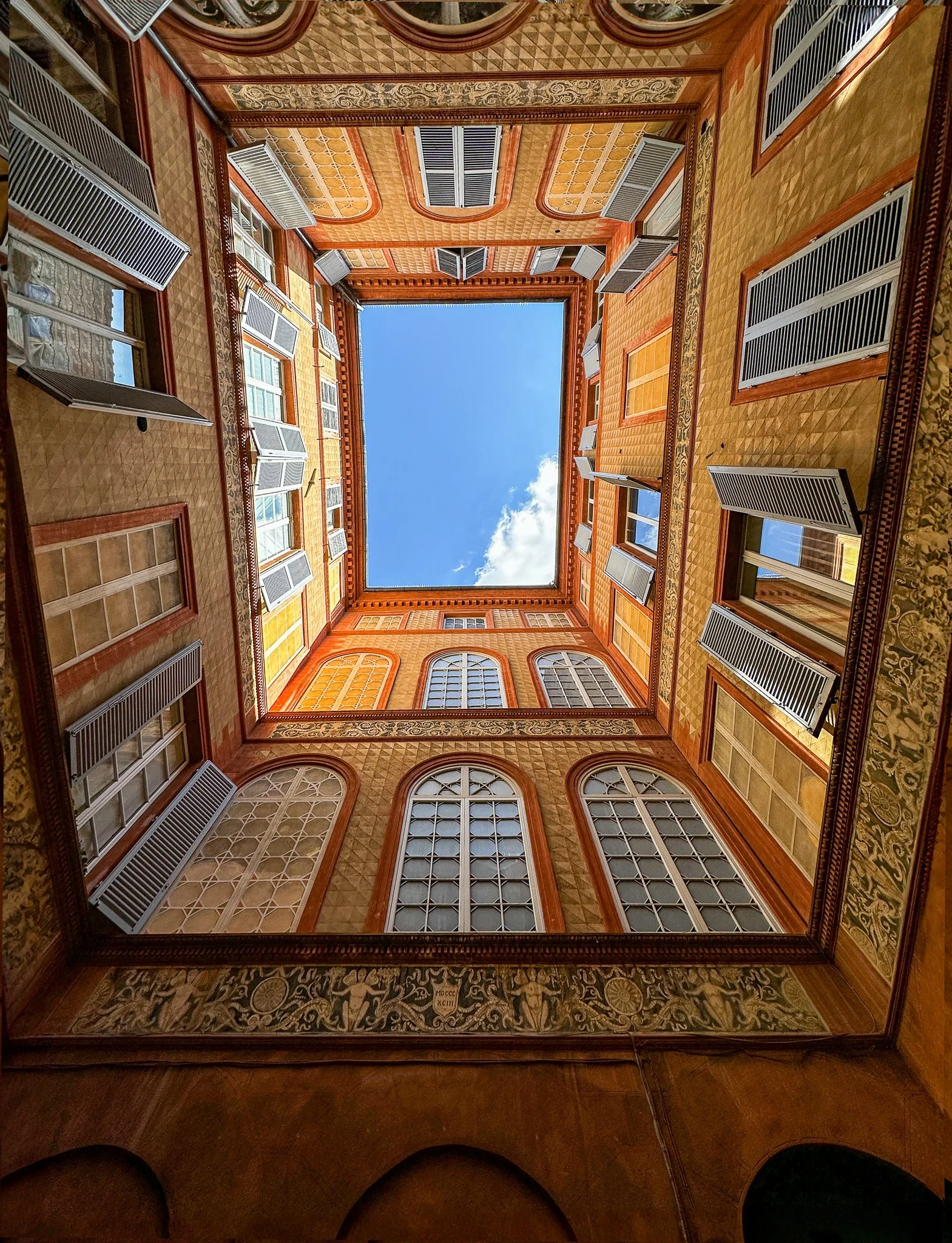
Siena Courtyard: (Address: Via dei Montanini, 132)
One of the many beautiful courtyards in Siena. The spot is a bit away from the main attractions, so there aren't too many people there. But I think it is worth the walk!
Festivals and Holidays
Palio di Siena The Palio is run twice: once in July and once in August. It is one of the most photographed events in Italy and among the most genuinely medieval experiences you will find anywhere in Europe. Ten horses representing ten of Siena's seventeen contrade race three times around the perimeter of Piazza del Campo in just over a minute, riding bareback, with an intensity that makes it feel like nothing is a performance. The days leading up to the race, including the trial heats, the medieval procession in full historical costume, and the contrade dinners the night before, are as photogenic as the race itself, and considerably less crowded.
To photograph the Palio from the Campo itself, you stand in the unreserved center of the piazza, arrive hours early, and do not leave. Balcony seats require connections or significant expense and booking well in advance. For photographers, a position on the inside perimeter of the track gives you the best angle for the horses at speed, but securing it requires arriving at the Campo before noon for an evening race.
Corteo Storico (Historical Procession) The day before each Palio, a procession of around 600 participants in 15th-century costumes walks through the city, with representatives from all 17 contrade, the Palazzo Pubblico, the Republic of Siena, and allied cities. This is one of the most photographically rich events of the year. Use a telephoto to isolate the banners, the flag throwers, and the costumed magistrates against the medieval backdrop of the Campo. The procession enters the piazza in the late afternoon with excellent directional light.
Settimana Musicale Senese Siena hosts a classical music festival in late July, filling historic churches and the Palazzo Chigi Saracini with performances. Not primarily a photography event, but excellent for interior architectural photography during performances if permitted, and for capturing musicians and audiences in the dramatic concert spaces.
Christmas and Advent Markets (December) The weeks leading up to Christmas see the Campo and surrounding streets decorated, markets appearing in the piazzas, and a quieter, more intimate version of the city. The decorations add color to the medieval stone, and the reduced crowds make December a legitimately attractive time to photograph.
Frequently Asked Questions About Visiting Siena
Is Siena worth visiting as a day trip from Florence?
It works, but staying overnight is much better. Day-trippers pour in from Florence during the day, and Piazza del Campo fills quickly. Stay even one night and you get the Campo before 8am almost entirely to yourself.
Do you need a car in Siena?
No, and it's actively discouraged. The historic center is a strictly enforced car-free ZTL zone with 24-hour camera monitoring. Park outside the walls and walk in, everything worth shooting sits within 10-15 minutes on foot from the Campo.
Is Siena expensive?
Not particularly. Casual osterias and trattorias off the main tourist paths offer real value, and even standout places like Antica Osteria da Divo are reasonable for the quality.
What are the best photo spots in Siena?
Piazza del Campo before 8:30am, the Duomo facade in early morning light, and the Basilica San Domenico terrace for the classic skyline view are three that consistently deliver. The full list with Pro Tips is above.
Can you fly a drone in Siena?
Check current regulations before flying, given Siena's UNESCO World Heritage historic center status, restrictions likely apply. Verify through D-Flight before attempting to fly anywhere in the city.
What surprised you most about Siena?
The beauty of the Duomo. I've stood in front of it more than a dozen times, and it still commands attention every single time, the facade hits you like a visual punch before you've even had a chance to raise your camera.
How many days do you need in Siena?
Two nights minimum, three to four for a proper photographer's pace with time to explore the Val d'Orcia or take a day trip to Montepulciano or Montalcino.
Is it worth planning a trip around the Palio?
Yes, if you can time it. Run twice yearly in July and August, it's one of the most genuinely medieval experiences left in Europe. Arrive at the Campo hours early to secure a viewing position, and don't miss the Corteo Storico procession the day before.
Is Siena worth combining with Florence or the Val d'Orcia?
Yes, both are natural pairings. Florence is an hour north by train for Renaissance grandeur; the Val d'Orcia is a half-day drive for the rolling Tuscan landscape that surrounds Siena itself.
Final Thoughts
After all these visits, the image I keep coming back to is the early morning at the Campo. No people. The brick is glowing in the first horizontal light. The Torre del Mangia casts a long shadow across the piazza. The whole thing is quiet and still before the city wakes up.
Siena does not have the flash of Rome or the scale of Florence. It is something more concentrated and more itself. Every street goes somewhere interesting. Every corner has a texture or a detail worth photographing. And the Duomo, every single time, reminds me why I carry a camera.
Stay at least two nights. Get up early. Walk the city before breakfast. Come back to the Campo at blue hour. These are not complicated instructions. They just work.
Want to improve your photography while exploring some incredible destinations? Join me on one of my photography workshops! You can find all the details, including upcoming destinations and dates, through the links below.
Let's Stay Connected!
Explore More of My Italy Guides:
My Photography & Travel Guide to Tuscany (Val d'Orcia) The landscape that surrounds Siena. Rolling golden hills, cypress trees on ridgelines, and medieval hilltowns rising from the valleys. A half-day drive from Siena connects the two perfectly, and the light in the Val d'Orcia at sunrise rivals anything in Europe.
My Photography & Travel Guide to Florence: An hour north by train or car, Florence is the natural companion to a Siena visit. The Uffizi, Ponte Vecchio, Piazzale Michelangelo — everything Siena is not in terms of scale and Renaissance grandeur. The two together tell the full story of medieval and Renaissance Tuscany.
My Photography & Travel Guide to Assisi Two hours east of Siena, across the Apennines, Assisi sits on a hillside in Umbria with the kind of medieval silence that Siena shares. The Basilica of Saint Francis is one of the great photographic interiors in all of Italy. If you are doing a Tuscany and Umbria circuit, Assisi belongs on the itinerary.
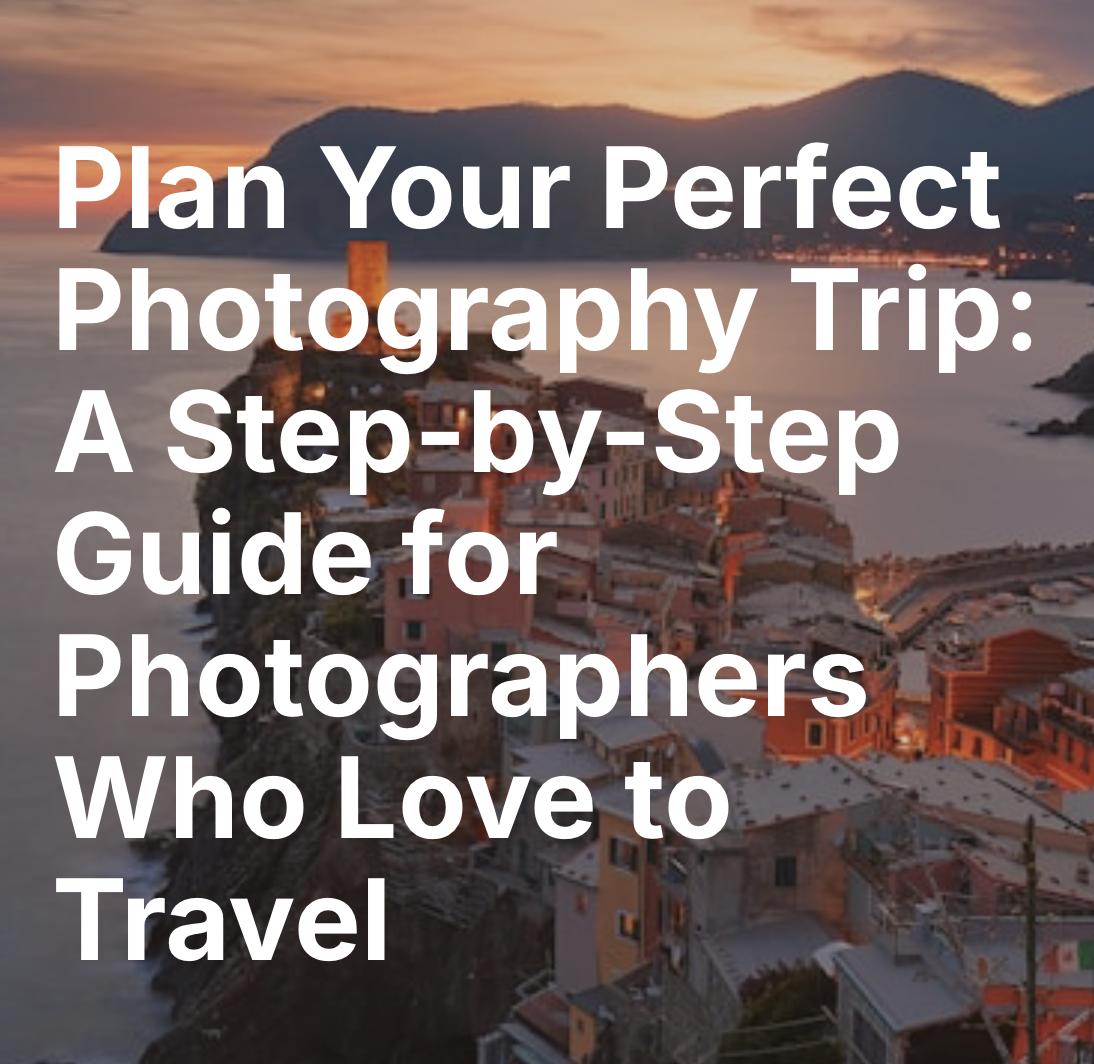
Are you carrying too much camera equipment, but still coming home disappointed with your travel photographs?
You are not alone. Many photographers fall into the packing trap. They bring too much, plan too little, and spend their trip scrambling to capture photographs instead of enjoying the experience.
Capture the World offers a better approach.
In this practical guide, travel photographer Vito L. Tanzi shares the five step system he uses to plan photography trips, pack with purpose, work with the best light, and return home with stronger images.
Inside, you will learn how to:
• Travel lighter without sacrificing image quality
• Choose destinations that match your photography goals
• Visit at the right time for weather, light, wildlife, festivals, or seasonal conditions
• Build a photography itinerary around sunrise, sunset, blue hour, and changing weather
• Select the equipment you will actually use
• Find promising locations before you arrive
• Avoid the stress and exhaustion that can ruin a photography trip
• Stay flexible when weather, crowds, or travel plans change
This guide includes practical planning advice, useful photography tools, real travel examples, and a complete system you can use again and again.
Whether you are preparing for your first international photography trip or planning a weekend closer to home, Capture the World will help you travel with greater purpose, photograph with more intention, and spend less time worrying about what is inside your camera bag.
Because the best photography trip is not the one where you carry everything.
It is the one where you are ready when the right moment appears.
📸 Format: PDF download
Instant Download