Florence, Italy Travel & Photography Guide: Best Photo Spots, Map, Sunrise Tips & Hidden Gems
Florence has been part of my life since I was a child, and it has never once let me down. I have been coming here for decades, and for the past twenty years, my wife and I have made it a recurring destination, sometimes for a long weekend, sometimes for a week. We have talked more than once about moving here. That tells you everything you need to know about how we feel about this city.
What keeps drawing us back is not any single thing. It is the combination. Florence is compact enough to feel manageable, yet rich enough that you could spend a month here and still discover something new every morning. Within a few blocks, you move from world-class Renaissance architecture to a family trattoria that has been serving the same pasta for generations. And if you need a change of scenery, the Chianti road and the rolling hills of Tuscany are less than an hour away.
For photographers, Florence is as close to perfect as a city gets. The light here is extraordinary. In the early morning, it falls across the terracotta rooftops in long, warm bands that make even an empty street feel like a painting. The architecture gives you geometry and texture in every direction. The Arno reflects the city back at you in ways that reward patience and a tripod. And the people, the butchers, the nuns crossing Piazza del Duomo, the elderly men reading newspapers outside a café, give you the kind of street photography moments you cannot stage.
In this Photography Guide to Florence, I share the places and experiences that continue to draw me back. You will find my favorite photography locations, guidance on when and where to shoot, practical travel tips, and gear recommendations, along with cultural insights to help you explore and photograph Florence with confidence, respect, and ease.
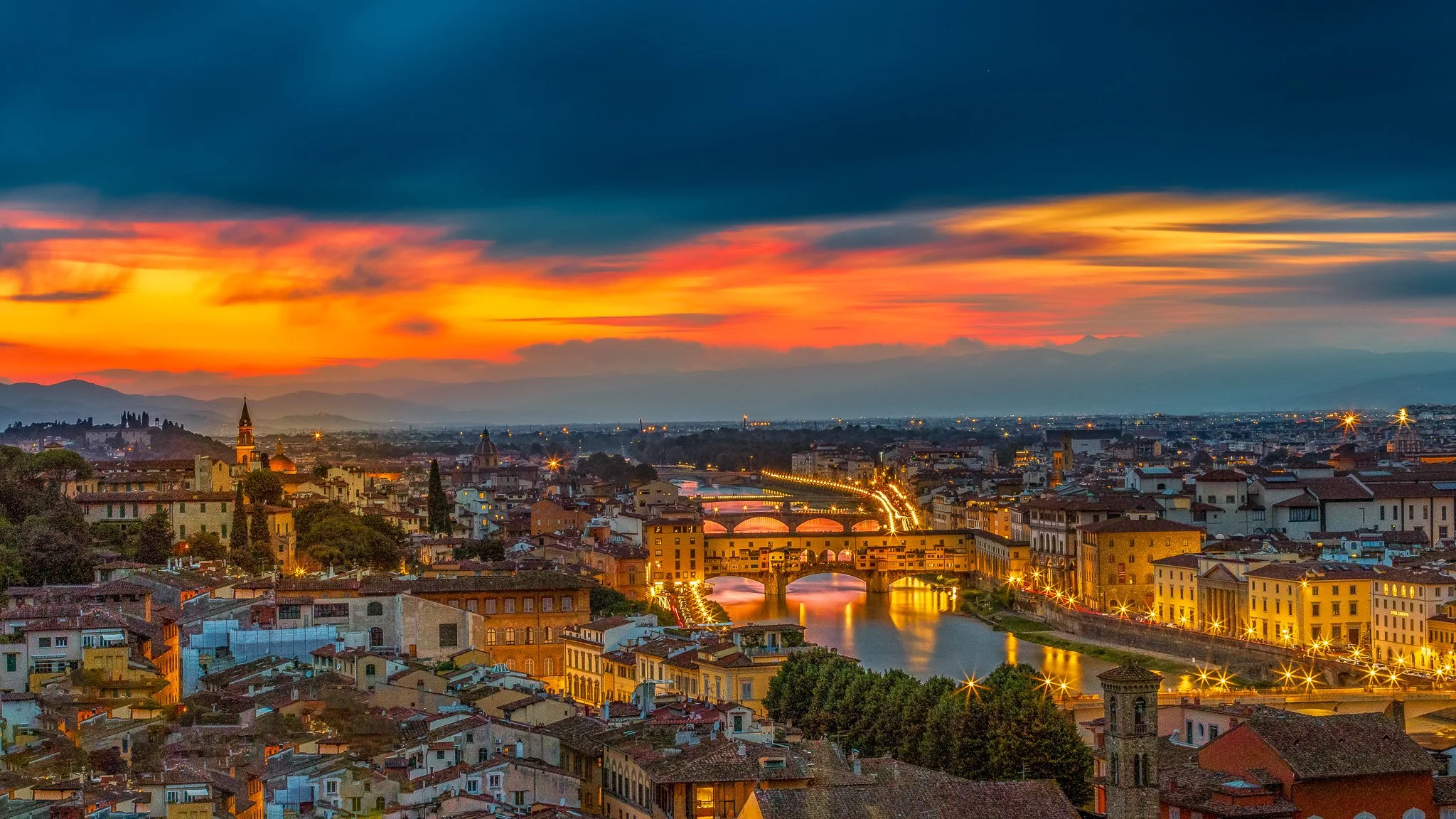
Renaissance architecture, terracotta rooftops, and warm Tuscan light in the heart of Florence, Italy.
It is also a city that shaped the course of art and thought. It’s the birthplace of the Renaissance and home to the works of Michelangelo, Botticelli, and Brunelleschi. But it’s also a place where local butchers still hand out free crostini, and nonnas hang laundry between Renaissance-era windows. The contrast is what makes it fascinating.

Sunrise at the Duomo: The Cathedral of Santa Maria del Fiore glowing in the early morning light before Florence wakes up.
As a photographer, I’m drawn to Florence’s textures — peeling paint on palazzo walls, glowing terracotta rooftops, and marble facades that shift color with the day’s light. There’s visual drama in its alleyways and symmetry in its piazzas. Whether you’re shooting with a DSLR or just your phone, Florence will stretch your eye and slow your pace — in the best way.
In this guide, I’ll walk you through my favorite corners of Florence — the unforgettable views, cozy cafés, memorable meals, and quiet alleys that reveal the city’s true magic. Whether you’re traveling with a mirrorless camera or just your phone, you’ll find inspiration, practical tips, and plenty of ideas to help you experience Florence through all your senses. Whether it’s your first time or your fifth, Florence will give you something new to see — if you know where to look.
Photographer's Notes
Before you go, here are my own takeaways.
Favorite Season: Spring
Favorite Sunrise Location: The Duomo
Favorite Sunset Location: Piazzale Michelangelo
Favorite Neighborhood: Oltrarno
Favorite Hotel: Four Seasons Hotel Firenze
Favorite Café: Ditta Artigianale
Favorite Lens: 15-35mm f/2.8
Would I Return? Yes, absolutely. We've even considered moving there.
How to Get to Florence
Florence is surprisingly easy to reach, whether you're arriving from elsewhere in Italy or flying in from abroad. The city’s airport, Florence Peretola Airport (FLR), is small but well-connected, especially via hubs such as Rome, Milan, and major European cities. From the airport, it’s about a 20-minute taxi ride or a short tram ride into the city center.
If you're coming by train, which I often recommend for photographers, Santa Maria Novella Station is right in the heart of Florence. It’s well-connected to Rome, Venice, Milan, and even smaller Tuscan towns like Pisa and Lucca. The high-speed trains (Frecciarossa and Italo) are fast, scenic, and drop you right into the action.
Driving in? Think twice. Parking is scarce, and most of the historic center is a restricted traffic zone (ZTL). ZTL in Italy stands for "Zona a Traffico Limitato", or Limited Traffic Zone. These are restricted areas, typically located in historic city centers like Florence, where access by car is limited to specific vehicles (such as residents, taxis, or delivery vans) and is only permitted during certain hours. If you enter the area without a permit, you will be subject to a fine. That’s why I usually recommend skipping the rental car unless you’re headed out to the countryside.

When to Go to Florence, Italy?
Florence rewards photographers in every season, but each one asks something different of you.
Spring (April and May) is when the city looks its most polished. The light is clean, the wisteria is climbing the old walls, and the Boboli Gardens are in full bloom. Temperatures sit in a comfortable range for walking all day, and you can shoot golden hour without setting an alarm for 4 a.m. The one caveat: May has gotten noticeably busier in recent years. If you want spring without full tourist-season crowds, early April before Easter is the sweet spot. After Easter, the city starts filling up fast.
Summer (June through August) is the most challenging season for photography and comfort. The midday heat is intense, the piazzas are packed, and the light between 10 a.m. and 5 p.m. is flat and harsh. That said, summer golden hours are long and genuinely beautiful. The trick is to structure your days around the light: out early, rest midday, shoot again from late afternoon through blue hour. If you visit in summer, commit to that rhythm, and you will still come home with great images.
Fall (September and October) is my personal favorite time to be in Florence, and the best season for photography. The summer crowds thin out after Labor Day, the light takes on that warm amber quality that makes terracotta glow, and the Chianti vineyards just outside the city turn gold. The pace of the city shifts noticeably. Restaurants are easier to get into. The streets feel lived-in rather than overrun. October especially has a quality of light in the late afternoon that I have not found anywhere else in Italy.
Winter (December through February) is Florence at its most photogenic for a certain kind of image. Morning fog sits low over the Arno. The Duomo emerges from the haze in ways that no other season replicates. The holiday lights in December add warmth to blue hour shots. Crowds are minimal, which means you can photograph Ponte Vecchio at sunrise with almost no one in the frame. Pack layers, embrace the cold, and you will have the city largely to yourself.
For photographers, the honest answer is: avoid July and August if you can. If you cannot, go early and go late. Every other season has something real to offer.
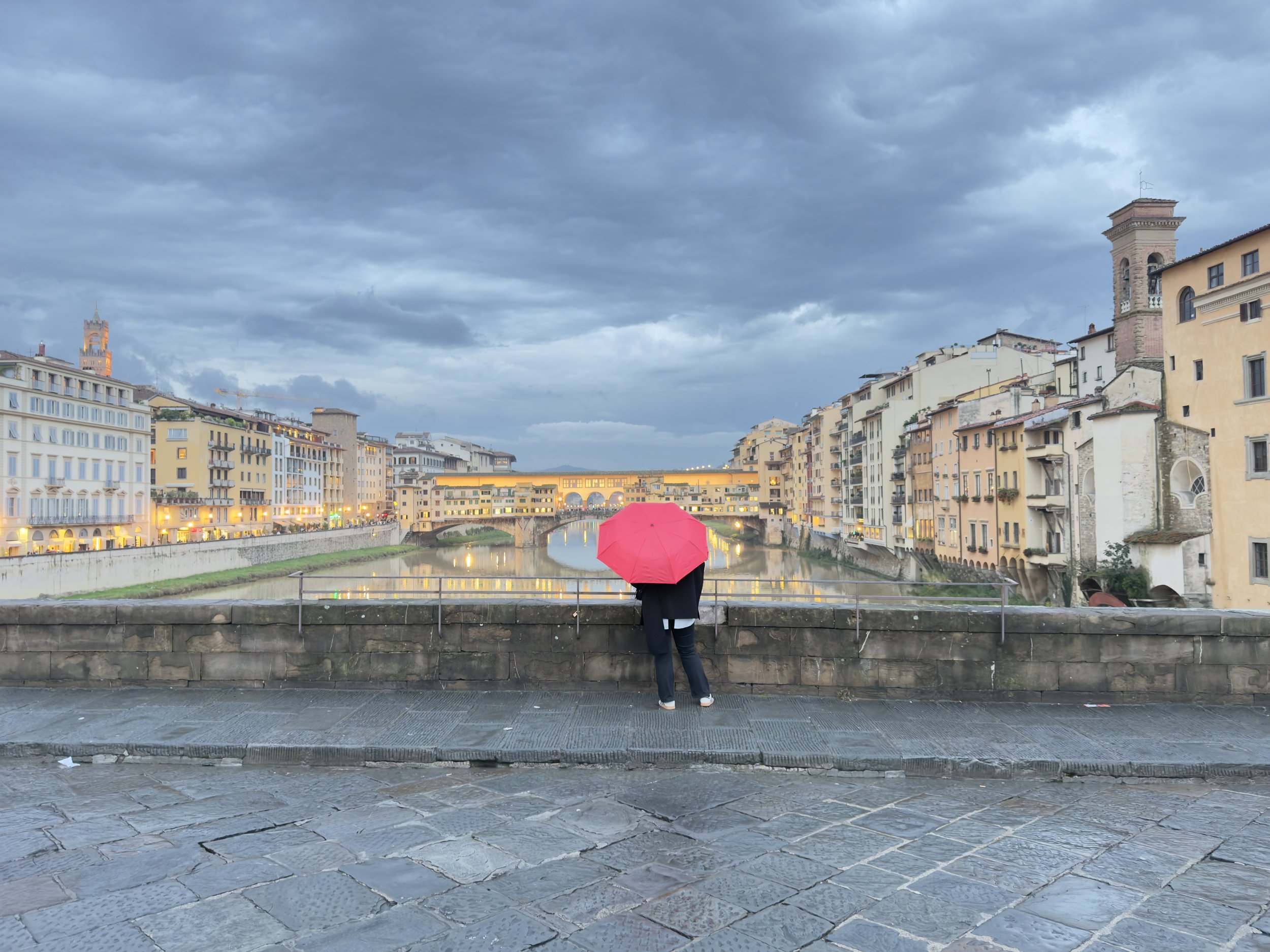
Taking in the view of Ponte Vecchio along the Arno River, one of those Florence scenes that never gets old.
Where to Stay in Florence, Italy
Florence is compact enough that you are never far from the action, but the neighborhood still matters, especially if you want to step out at 6 a.m. with a camera and not waste thirty minutes getting somewhere worth photographing.
My top picks: Oltrarno for atmosphere, the area near the Duomo and Ponte Vecchio for pure convenience, and the Santa Croce neighborhood if you want a slightly quieter base that is still completely walkable.

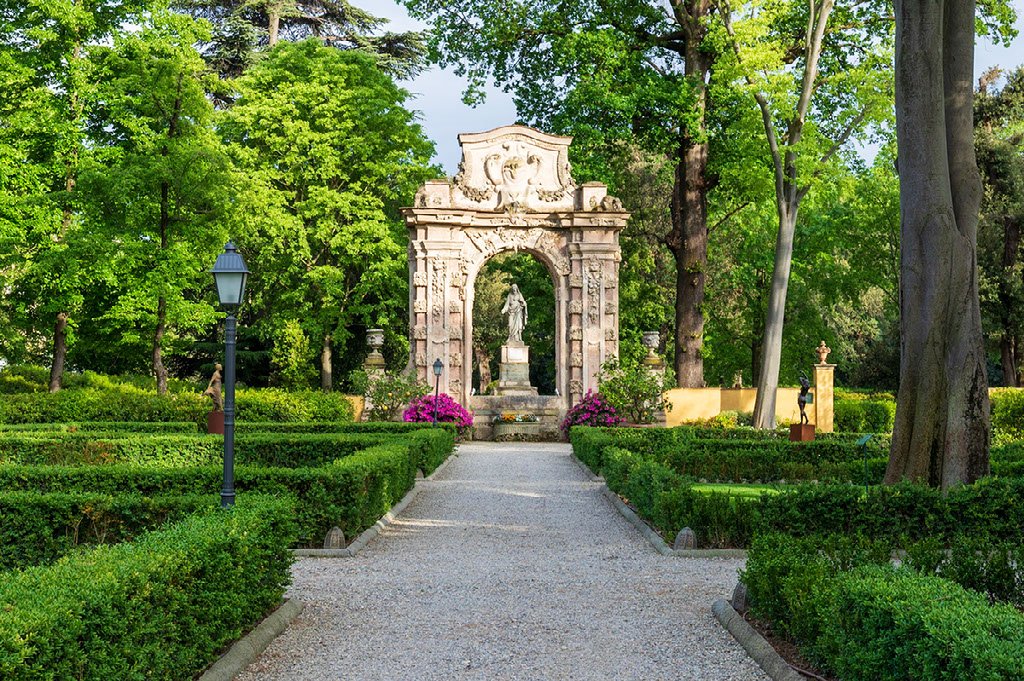
The private garden at AdAstra Hotel offers a peaceful escape in Florence’s Oltrarno neighborhood.
Luxury Hotels in Florence, Italy
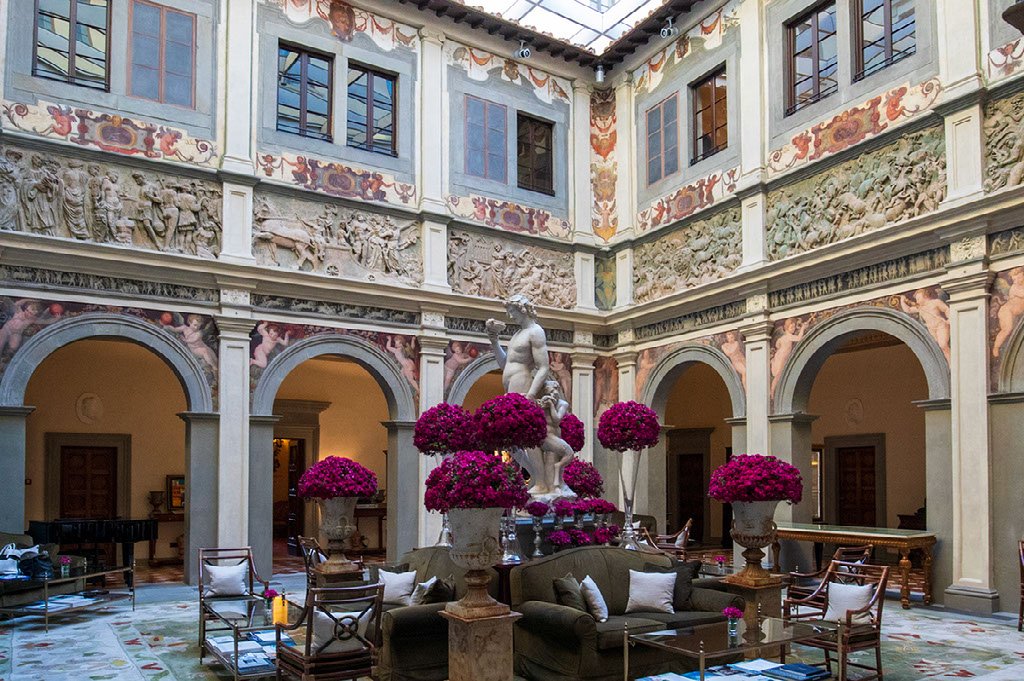
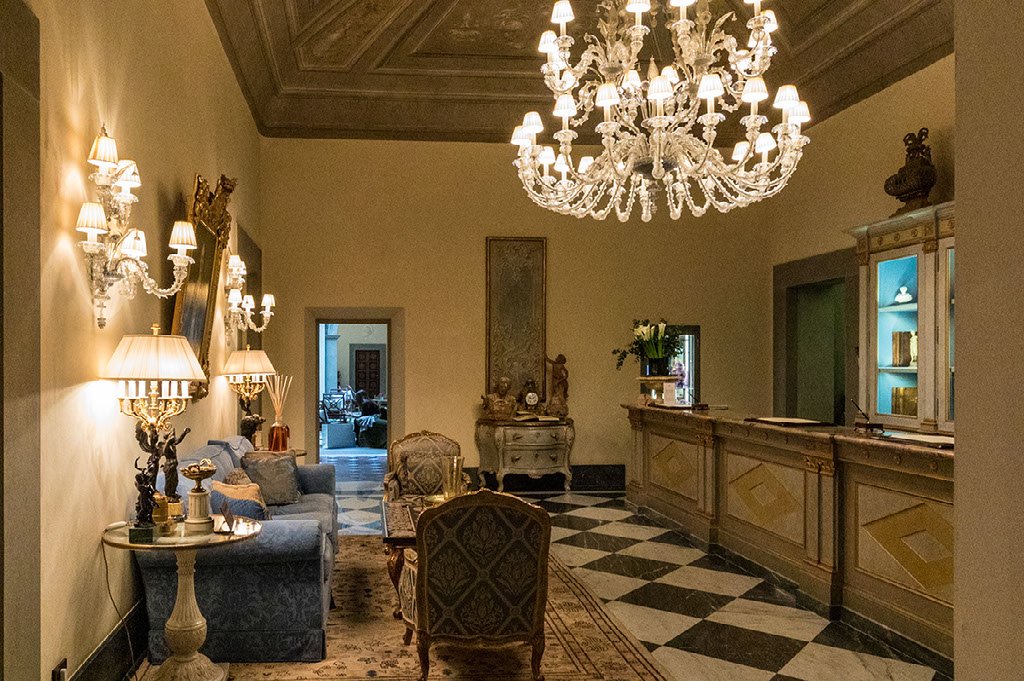
Four Seasons Hotel Firenze is the best hotel in Florence, and I do not think it is close. It occupies two connected Renaissance palazzos and sits inside an 11-acre private garden, the largest of any hotel in the city center. The morning light in that garden is extraordinary. Walking those paths before breakfast, when the city is still quiet, and the fountains are running, is one of those hotel experiences you remember for years. It ranked 9th on the World's 50 Best Hotels list in 2025, which tells you everything you need to know. The Michelin-starred Il Palagio restaurant is worth a dinner even if you are not staying there.
Hotel Lungarno sits right on the Arno, owned by the Ferragamo family, and the views from the riverside rooms and dining terrace are as good as it gets in this city. We had breakfast there, watching the light shift on the Ponte Vecchio, and genuinely considered canceling the rest of the day's plans. The location puts you steps from the bridge and deep into the photography sweet spot of the city.
Portrait Firenze is Hotel Lungarno's design-forward sister property, also part of the Lungarno Collection, and it sits equally close to the Ponte Vecchio. The rooms are sleek and modern with handcrafted Florentine furniture, and the Arno-view suites at blue hour are as good a photography vantage as any rooftop bar in the city. If Hotel Lungarno is classic Florence, Portrait is its sharper, more contemporary twin.
Boutique and Mid-Range
Hotel Davanzati is a reliable, family-run hotel in the heart of the historic center. The owners are genuinely warm, the location is ideal for early morning walks to the Duomo and Piazza della Signoria, and it punches well above its price point for central Florence.
Soprarno Suites puts you in the Oltrarno, which is where I always tell photographers to spend at least a few mornings. The neighborhood has a different texture to the tourist-heavy north bank, with artisan workshops, quiet courtyards, and streets that reward slow walking with a camera.
AdAstra Hotel is a beautiful boutique property that feels like staying in the private home of a Florentine family with very good taste. The interior light and architectural details give you compositions before you even leave the building.

Breakfast overlooking the Arno River at Hotel Lungarno, with Ponte Vecchio just outside the window.
How Many Days to Visit Florence
Florence is one of those cities that reveals itself in layers. A first-time visitor can hit the highlights in three days. Someone who has been before, or who is serious about photography, will find that five days is closer to the right pace. My wife and I have done both, and the five-day trips are always the ones we talk about afterward.
Here is how I would structure a visit depending on how much time you have.
Three Days
Three days is enough to cover the essential photography locations without rushing. Use the first morning for Piazzale Michelangelo at sunrise, then work your way down through the Oltrarno and across Ponte Vecchio before the crowds arrive. Spend the afternoon at the Uffizi or the Accademia, then return to the river at blue hour. On your second day, go deep into the historic center: the Duomo, Piazza della Signoria, Palazzo Vecchio, and the streets of San Lorenzo. Save your third day for the quieter corners, the Medici Riccardi Palace, Santa Croce, the Mercato Centrale, and a long lunch somewhere you do not feel rushed.
Five Days
Five days let you breathe and shoot properly. Add a morning in the Boboli Gardens when the light is low and the tourists have not arrived yet. Dedicate one full evening to rooftop shooting at blue hour. Use one day for a drive into Chianti or the Val d'Orcia, which is less than ninety minutes away and worth every minute. On your last morning, go back to your single favorite location and shoot it again with everything you have learned about the light during the week. That second visit almost always produces the best images of the trip.
A Note on Pacing
Florence in summer especially rewards the split-day approach: out early, rest from noon to three, then back out for afternoon and evening light. Do not try to shoot through midday heat. The images will disappoint you and so will your feet. Build rest into the plan from the start and you will come home with better work.

Sunset on the Arno: Sunset colors reflecting across the Arno River in the heart of Florence.
Getting Around Florence
The best thing about Florence for photographers is that the entire historic center is walkable. Most of the locations you want to shoot are within a twenty-minute walk of each other, and the narrow streets reward slow movement. The city is genuinely one of the most foot-friendly in Europe.
A few practical things worth knowing before you arrive.
On foot is how you will spend most of your time, and that is a good thing. Wear comfortable shoes with real support. The streets are cobbled throughout the historic center, and after a full day of shooting, you will feel every stone. A well-fitted backpack or crossbody camera bag is better than a shoulder bag on uneven ground.
Taxis are reliable and easy to find at designated taxi stands near Santa Maria Novella station, Piazza della Repubblica, and Piazza San Marco. The main app for booking taxis in Florence is itTaxi, which works well and saves you the guesswork of flagging one down. Uber operates in Florence but with limited availability compared to other major Italian cities. For most situations, itTaxi or a stand taxi is the faster option.
Public buses run throughout the city and are useful for reaching Piazzale Michelangelo if you do not want to walk the hill, or for day trips to Fiesole. The ATAF system is straightforward, and tickets can be purchased at tabacchi shops or via the Moovit app. For photography-focused travel within the historic center, you will rarely need a bus.
Bikes and scooters are available for rent and can be fun for exploring the Oltrarno or the riverside paths, but use caution in the narrow lanes of the centro storico. Carrying camera gear on a bike through cobbled streets is manageable but requires a secure bag.
Driving into the historic center is something to avoid entirely. The ZTL (Zona a Traffico Limitato) covers most of the area tourists want to be in, and the fines for entering without a permit arrive in the mail weeks later with no warning. If you are renting a car for a Chianti or Tuscany day trip, pick it up and drop it off at a location outside the restricted zone, or use the parking at Piazzale Michelangelo and walk down.
One security note worth taking seriously: Piazza del Duomo and the San Lorenzo market area are the two highest-density pickpocket zones in the city. Keep your camera on you, not in a bag hanging loosely behind you, and be especially alert in tight crowd situations.

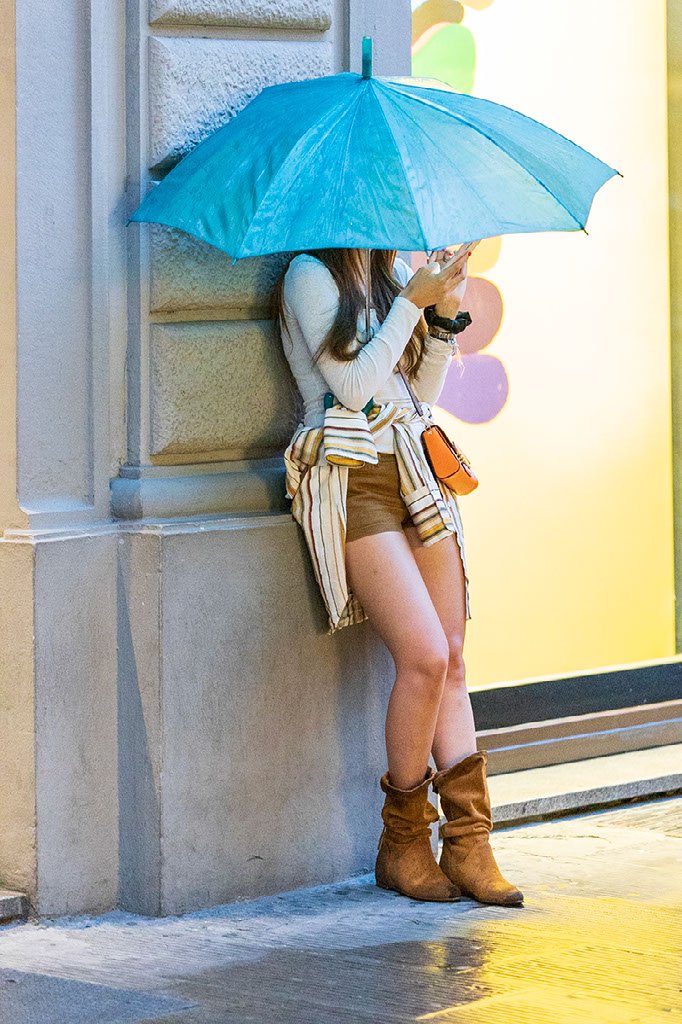
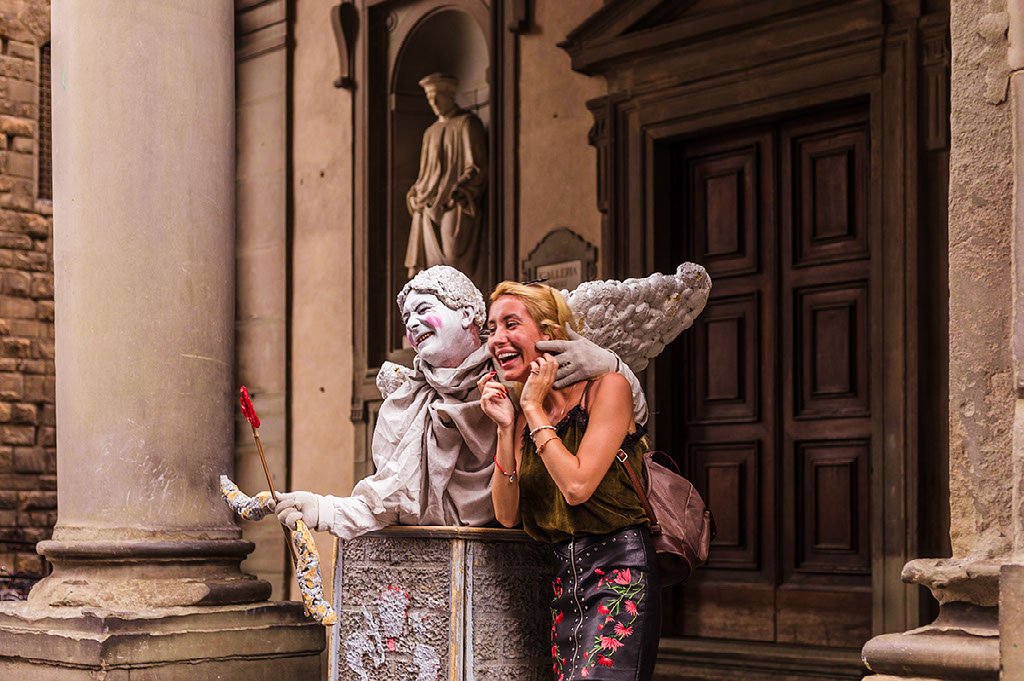
The people of Florence bring as much character to the city as its famous architecture.
Where to Eat in Florence
Florence takes food seriously. Not in a precious, Instagram-first way, but in the way that families argue for decades about which trattoria makes the best bistecca. After decades of eating my way through this city, here are the places I keep returning to.

A taste of traditional Tuscan cooking in Florence, where simple ingredients usually make the best meals.
The restaurant scene has dramatically changed in Florence over the past few years. While there are plenty of options for Italian cuisine, you will now see cuisines from all over the world. I usually prefer the family-run trattorias, but there are options in every price range. For the meat eaters, do not miss the chance to try the “bistecca alla Fiorentina.”

A taste of traditional Tuscan cooking in Florence, where simple ingredients usually make the best meals.
Restaurants in Florence, Italy
Enoteca Pinchiorri is the best restaurant in Florence and one of the finest in Italy, holding three Michelin stars. It is a special-occasion restaurant in every sense: the room is elegant, the service is unhurried, and the wine list is among the most remarkable you will encounter anywhere in Europe. If you are going to do one formal dinner in Florence, this is the one.
Buca Mario is Florence's oldest restaurant, founded in 1886, and still delivering classic Tuscan cooking in a vaulted underground room near Piazza della Repubblica. Order the ribollita, the pappardelle with wild boar, or the bistecca fiorentina if you are hungry. This is the kind of place that reminds you why Florentine cooking became famous in the first place.
Trattoria Sergio Gozzi is the opposite of fancy and completely wonderful. It opened in 1915 near the Mercato di San Lorenzo and has barely changed. Communal tables, a chalkboard menu, and cooking that tastes like someone's grandmother made it because someone's grandmother probably did. Arrive early because it fills up fast and there are no reservations.
All'Antico Vinaio on Via dei Neri is the original location of what has become a global sandwich empire, and the original is still the best. The schiacciata sandwiches loaded with Tuscan salami, pecorino cream, and artichoke cream are genuinely extraordinary. The lines can be long, but they move quickly. Eat it on the street, standing up, as intended.
Buca dell'Orafo sits near Ponte Vecchio and is a reliable, warm trattoria with river views from some tables. It is not a hidden gem, but the food is consistent and the location makes it one of the better options for a relaxed dinner after an evening shoot on the bridge.
Oltrarno Osteria is where you go when you want to eat like a local rather than a tourist. The Oltrarno neighborhood has a different energy from the north bank, and the restaurants here reflect that. Simpler, quieter, and honest in a way that the more touristic spots sometimes are not.
Coffee
Florence is not a city where you linger over a laptop at a café table. Coffee culture here is quick and standing: espresso at the bar, a brief exchange with the barista, then back to your day. That said, a few places reward a slower visit.
Caffè Concerto Paszkowski on Piazza della Repubblica is one of the oldest cafés in Florence and one of the most beautiful interiors in the city. The wooden paneling, the terrace, and the mid-morning light make it a genuine pleasure to sit for a second coffee and watch the piazza wake up.
Ditta Artigianale is the best specialty coffee in Florence, with locations in the historic center and in Oltrarno. If you need to sit down and edit images for an hour, this is where I would send you. Good wifi, good light, excellent coffee, and an atmosphere that does not make you feel rushed.
Caffè Rivoire on Piazza della Signoria has arguably the best people-watching perch in the city. The coffee is good, the hot chocolate in winter is exceptional, and the view across the piazza toward Palazzo Vecchio is as good as it gets for a morning break between shoots.

Coffee at Ditta Artigianale in Oltrarno, one of my favorite café stops in Florence.
One fun new place we recently discovered is Vivoli. It has become a bit of an Instagram hot spot because they make an affogato with a twist. They place vanilla ice cream in a coffee cup and then add hot espresso.
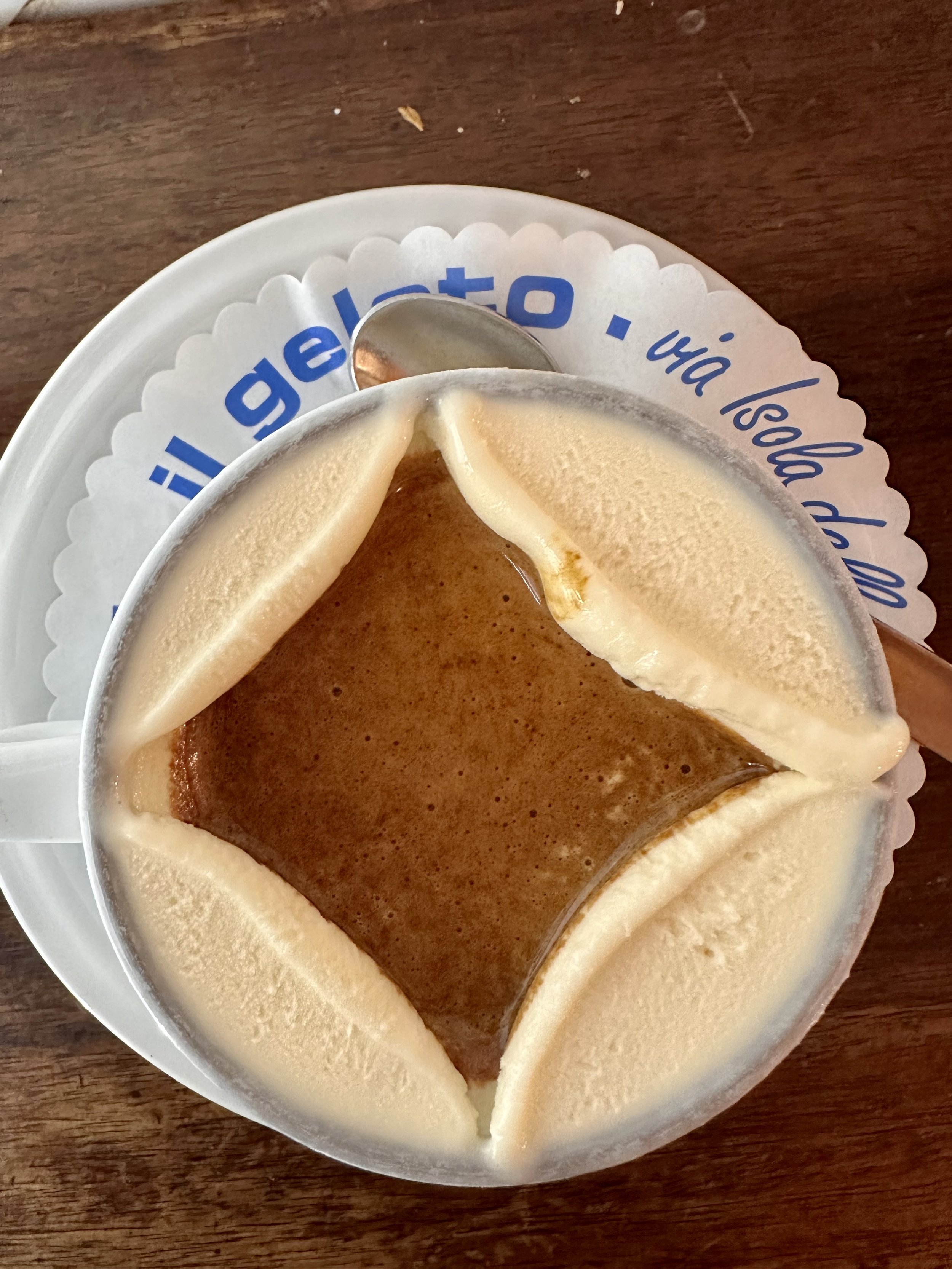
The famous affogato at Vivoli, made with creamy gelato and a shot of hot espresso.
Gelato
Gelato that is brightly colored and stacked high is most likely made with all sorts of preservatives. Gelato, when served outside of a cool container (like stainless steel bins you’ll see at a quality Gelateria), without preservatives and chemicals, would just melt.
The best gelato is made with simple ingredients (milk, sugar, and fruits or chocolate) and doesn’t include preservatives, chemicals, artificial colors, or artificial flavors.
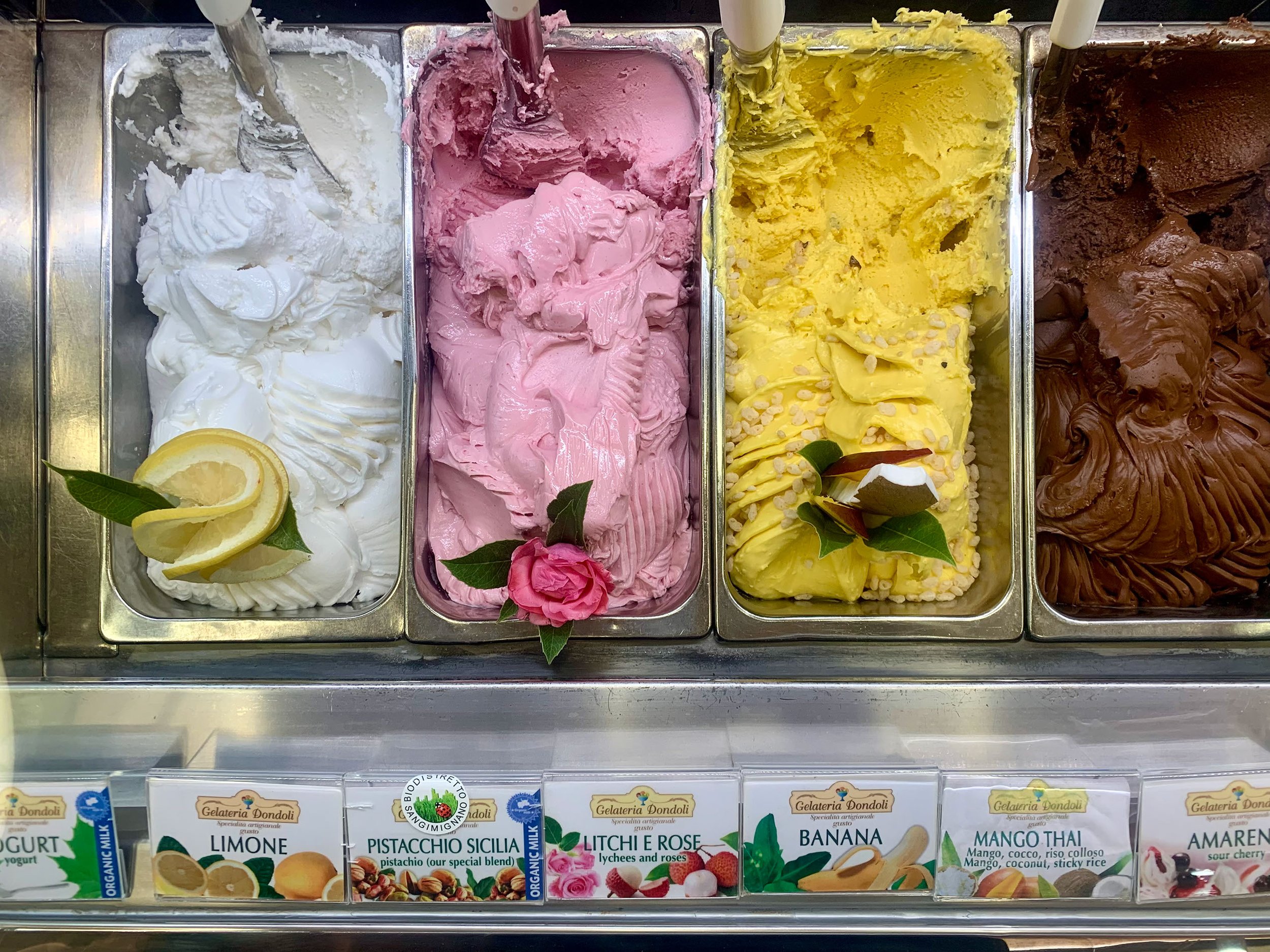
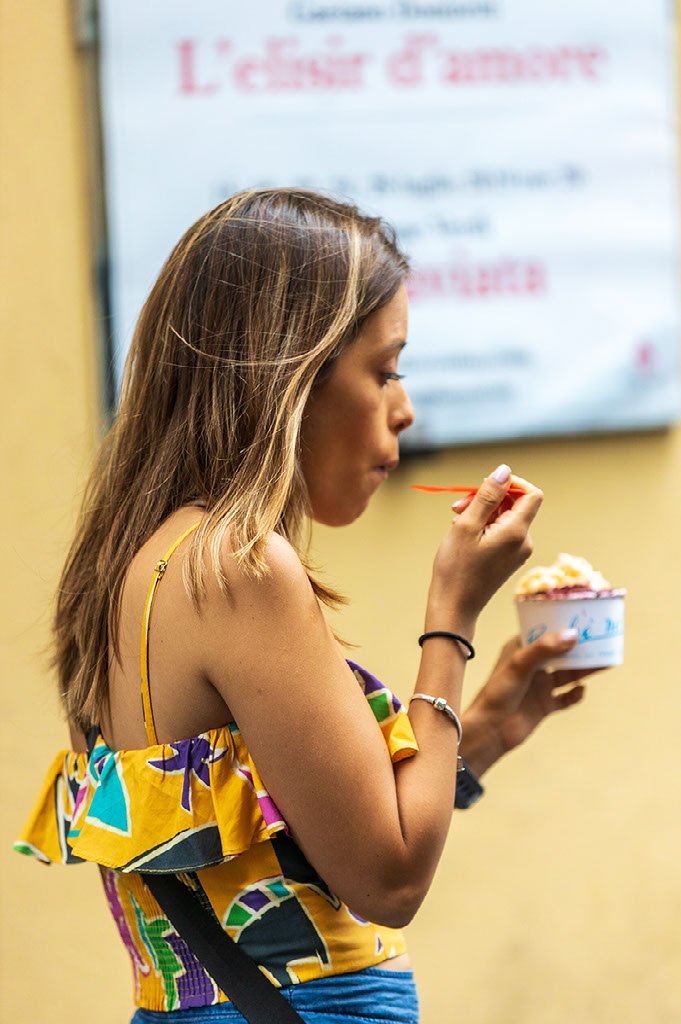
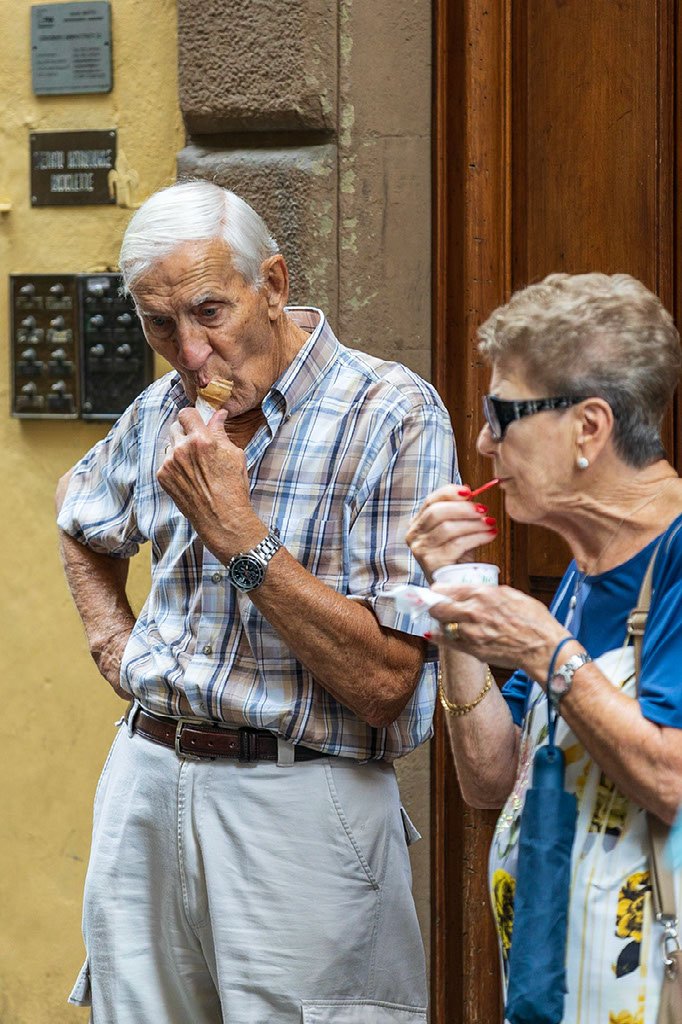
Proper Italian gelato in Florence, because photography requires fuel.
Two places I always visit.
Vivoli has been making gelato since 1930 on Via dell'Isola delle Stinche, and it remains one of the best in the city. The affogato here, espresso poured over their signature cream gelato, is one of those food memories that stays with you. In 2025, they opened a dedicated Affogato Bar next door to the original shop, which tells you everything about how popular it has become. The pistachio is also exceptional. Go in the afternoon when you need a reason to slow down.
Gelateria dei Neri in the Santa Croce neighborhood is less famous than Vivoli but just as good and considerably quieter. The flavors rotate seasonally, and they do not pile the gelato into theatrical towers. It is honest, well-made gelato from people who care about what they are serving.
A practical note on gelato quality: the best gelato is stored in covered stainless steel bins, not piled high in colorful mounds. Bright colors and theatrical presentation are almost always a sign of artificial ingredients. Trust the bins.
Photography Gear for Florence, Italy
The city gives you everything: architecture, street life, low-light interiors, golden hour across the Arno, and misty winter mornings on the bridges. Your gear choices should reflect that range.
Cameras
Any of the current full-frame mirrorless bodies handle Florence beautifully. I shoot with the Canon EOS R5 Mark II, the Sony A7R V, and the Nikon Z8, depending on the trip and the assignment. All three deliver the resolution and dynamic range you need for the architecture and the low-light sensitivity for shooting inside churches and museums without a flash. For casual street work and travel days, a compact mirrorless or even a capable smartphone gets you further than you might expect.
Lenses
Bring more range than you think you need. Florence is a city of both intimate alleys and sweeping panoramas, sometimes within a five-minute walk of each other.
A wide zoom in the 16-35mm range is essential for the architecture. The Duomo, the interior of Santa Croce, the view from Piazzale Michelangelo at dawn: all of these demand a wide perspective. A standard zoom in the 24-70mm range will be your most-used lens for street photography and restaurant shots. A short telephoto in the 70-200mm range earns its place for compressing the rooftop layers visible from elevated viewpoints, and for isolating details on the Duomo facade from street level that you simply cannot reach any other way. A fast prime, either a 35mm or 85mm, is worth the bag space for available-light shooting inside museums and for the kind of street portraits that require a shallow depth of field and quiet discretion.
Accessories
A sturdy travel tripod is non-negotiable for Florence. The blue hour shots on Ponte Vecchio, the long exposures on the Arno, the early morning views from Piazzale Michelangelo before the light fully arrives: all of these require one. A carbon fiber travel tripod keeps the weight manageable on a city that you cover almost entirely on foot.
Bring a circular polarizer for shooting the Arno in bright conditions. The reflections and glare can be dramatic, and a polarizer lets you control what you keep and what you cut. A set of ND filters is useful for long exposures on the bridges during daylight hours if you want to smooth the water and remove pedestrians from the frame.
Pack a rain cover for your bag. Florence gets rain in spring and fall, and a wet cobblestone street after a shower is one of the best things you can photograph in this city. You want to be shooting, not sheltering.
Drone
Drone photography in Florence's historic center is heavily restricted. The entire UNESCO-protected centro storico falls under controlled airspace, and flying without explicit authorization is prohibited and actively enforced. If you want aerial imagery of the city, use the elevated viewpoints: Piazzale Michelangelo, the Forte Belvedere, and the rooftop terraces, rather than risk your equipment and a significant fine. The views from those positions are genuinely extraordinary and in many ways more interesting than straight-down drone footage anyway.
Shooting with Your Phone
A current flagship smartphone, iPhone or Android, handles Florence better than most people expect. The wide and ultrawide lenses work well for street and architecture. Use night mode on the bridges after dark and on the narrow streets of the Oltrarno. The limitation is in the low-light performance inside the museums and churches, where a dedicated camera with a fast prime will consistently outperform a phone. Use both. They serve different moments.

Early morning light along the Arno River near Ponte Vecchio.
Best Places to Photograph In Florence
Florence is one of the most photographed cities in the world, and for good reason. Every time I visit, I find something I missed before. These are the locations I come back to on every trip, plus the ones I wish someone had told me about earlier.
One note before you start: book your museum tickets in advance. The Uffizi, the Accademia, and the Duomo all have timed entry, and the lines without a booking can cost you half a morning.
📍 Interactive Florence Travel & Photography Map
Piazzale Michelangelo
There is no better panoramic view of Florence, and anyone who tells you otherwise is wrong. From this terrace on the hill above the Oltrarno, you get the full city spread out in front of you: the Duomo, the Arno, the bridges, the terracotta rooftops rolling toward the hills. It is the classic Florence image, and it earns that status every single time.
I have shot this view at every hour and in every season. Nothing beats it at first light. The city is quiet, the fog sometimes hangs low over the river, and the warm tones of the buildings glow before the direct sun burns everything flat.
Pro Tip: Arrive at least thirty minutes before sunrise and position yourself on the left side of the terrace for the best angle on the Duomo. Bring a tripod, a wide zoom (16-35mm), and a telephoto (70-200mm) to compress the layers of rooftops. In autumn, look for morning mist sitting in the valley below the hill. That is the shot that makes people ask which filter you used. No filter needed.
Sunset here is a completely different experience and worth a separate visit. As the light fades, the terrace fills with locals and visitors, musicians set up and play everything from Italian folk songs to jazz to whatever the crowd requests, and the whole thing turns into something between a concert and a neighborhood gathering. The photography shifts from architecture to people and atmosphere. Shoot wide to capture the crowd against the glowing city, then switch to a longer lens to isolate the musicians or the faces of people watching the sun drop behind the hills. It is one of those Florence moments that does not appear in guidebooks but stays with you long after the trip.
The classic panoramic view of Florence from Piazzale Michelangelo, with the Duomo rising above the terracotta rooftops.
Walking the Streets of Florence
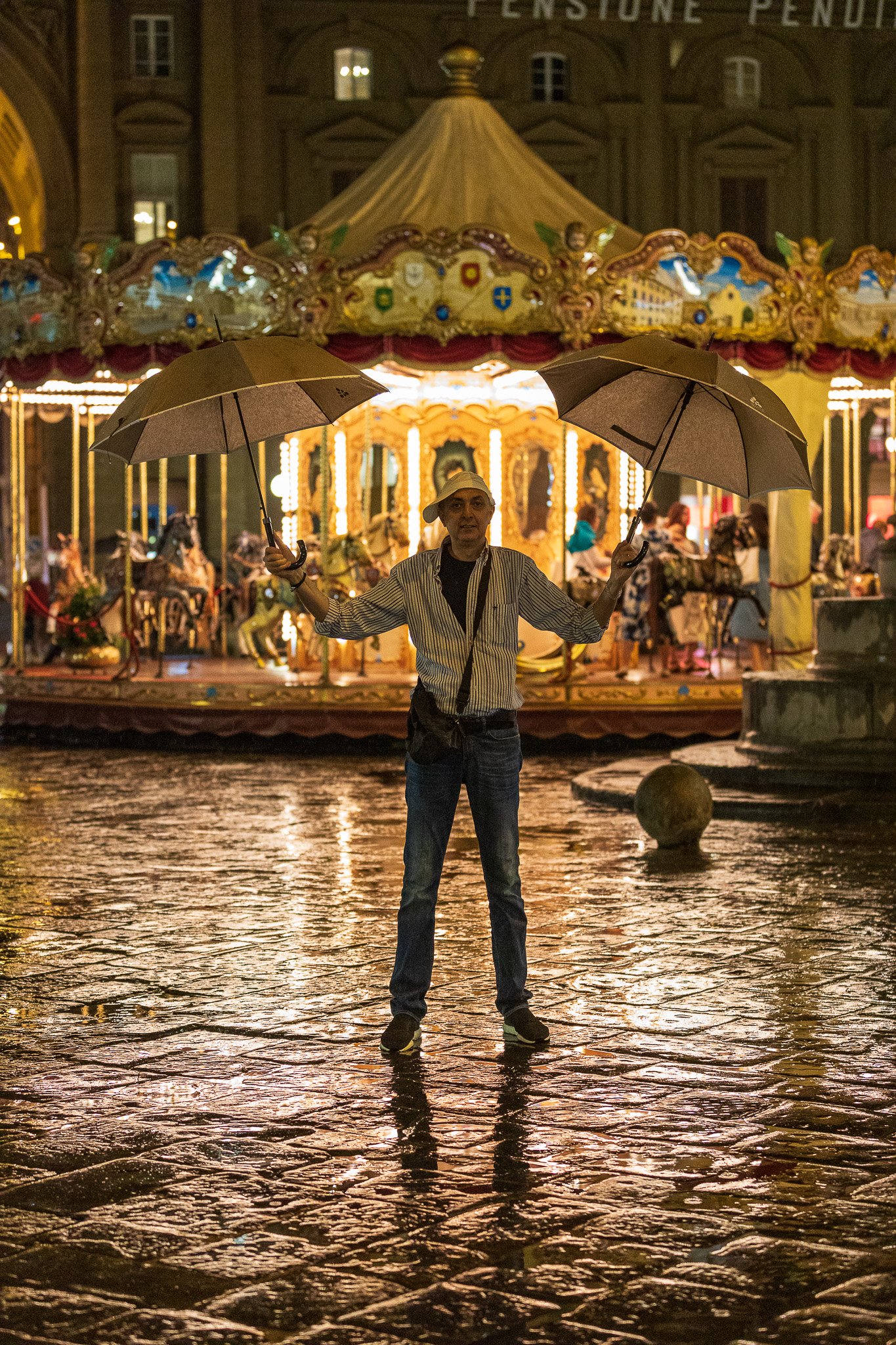
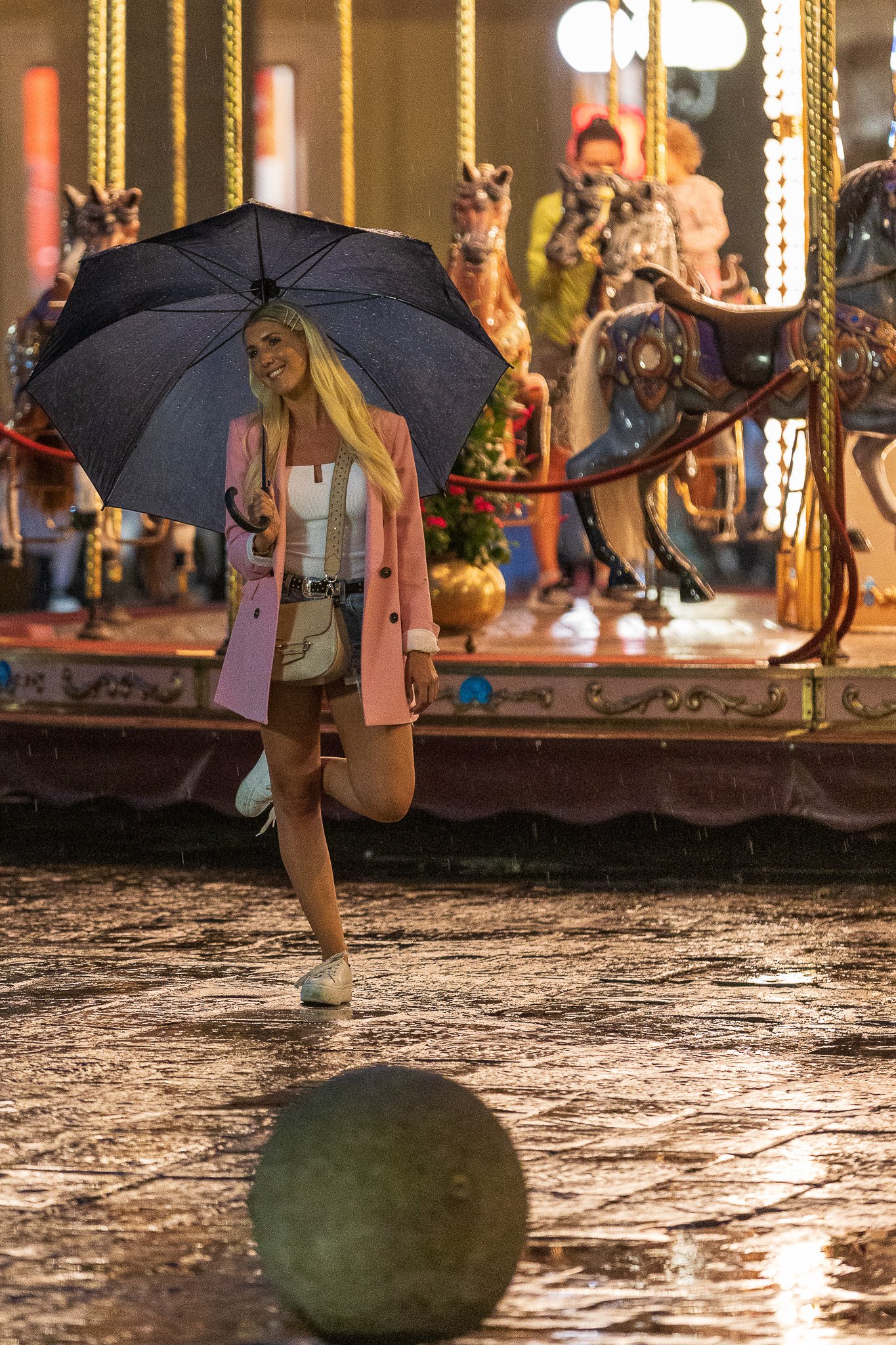
My favorite photos are often taken while walking the streets of a new city, capturing people and moments that bring the city to life.
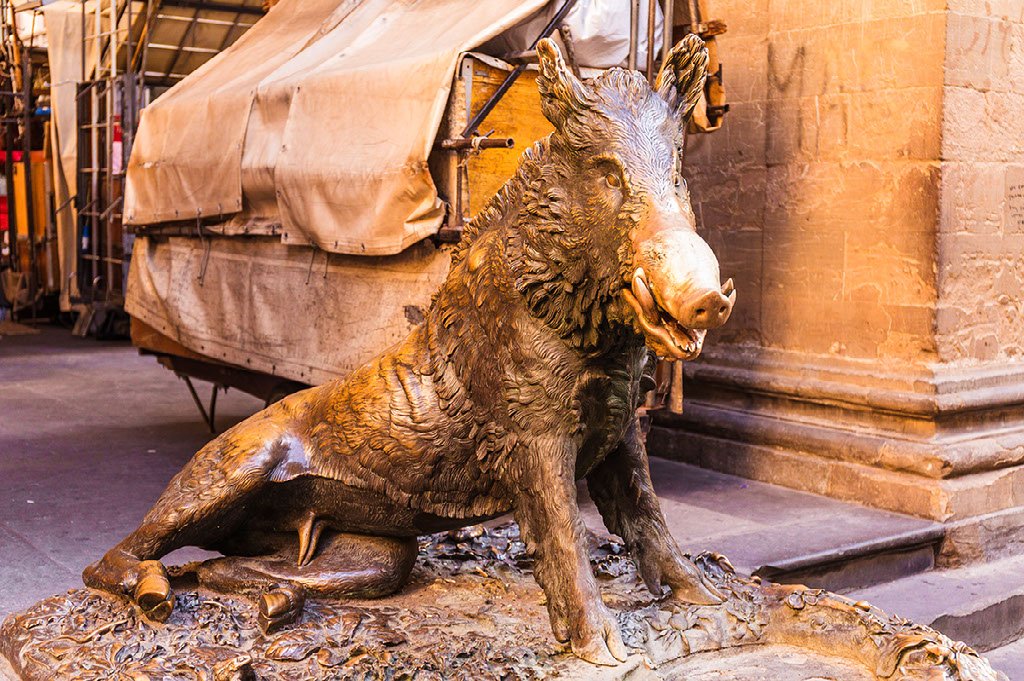
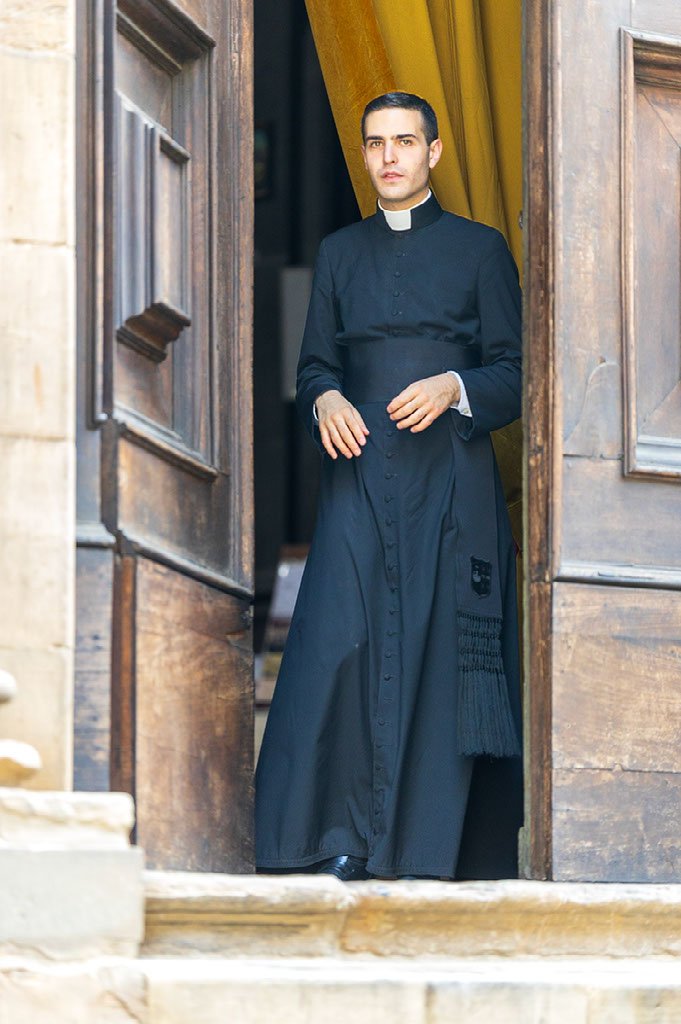
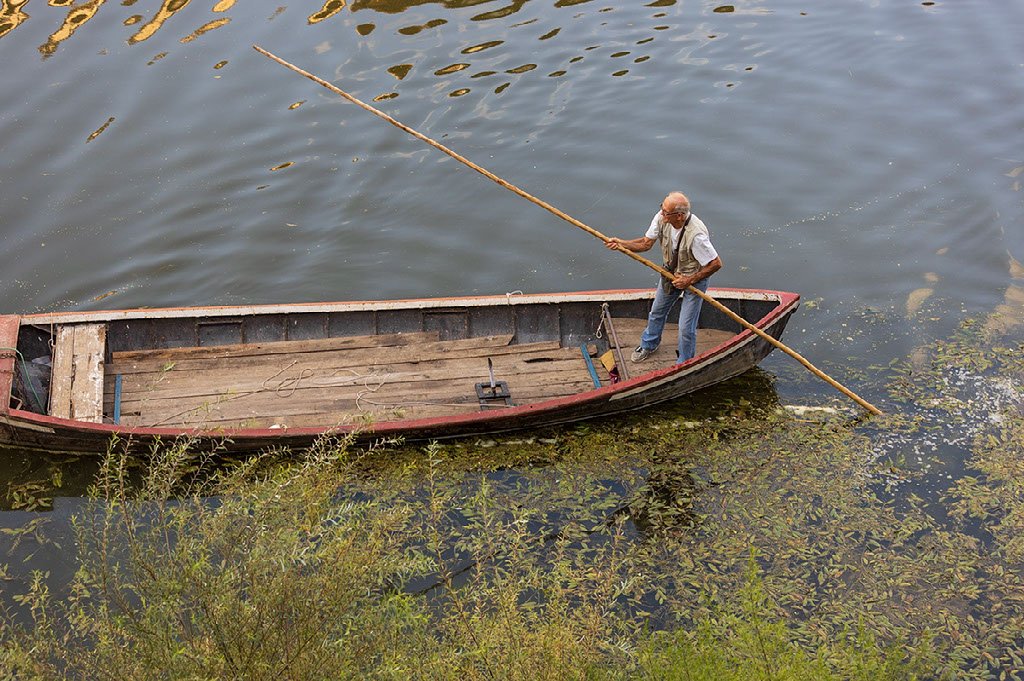
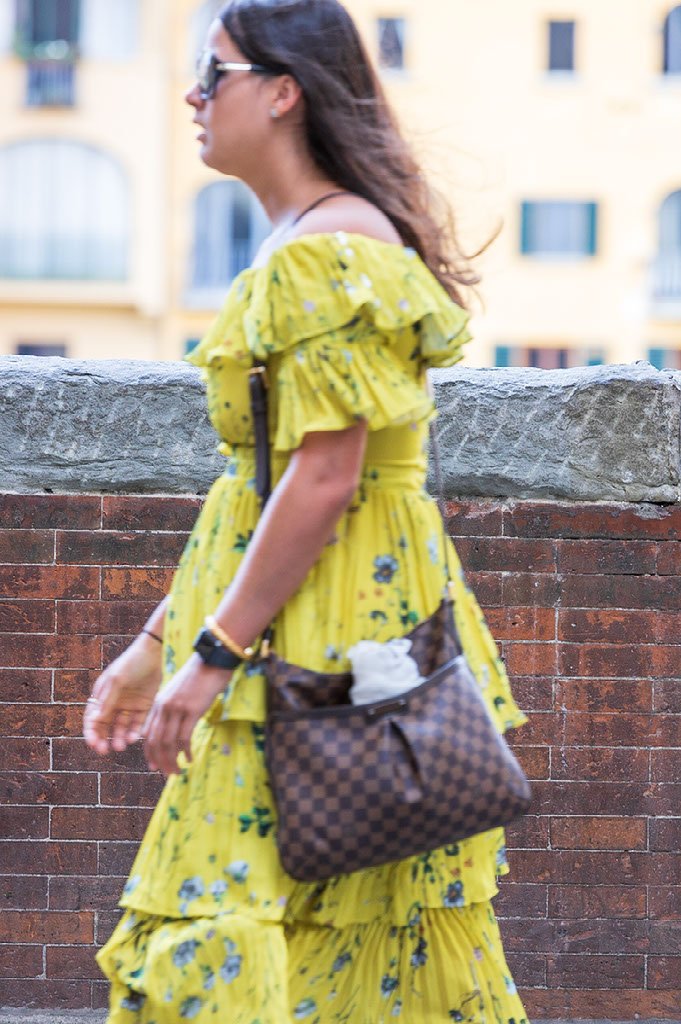
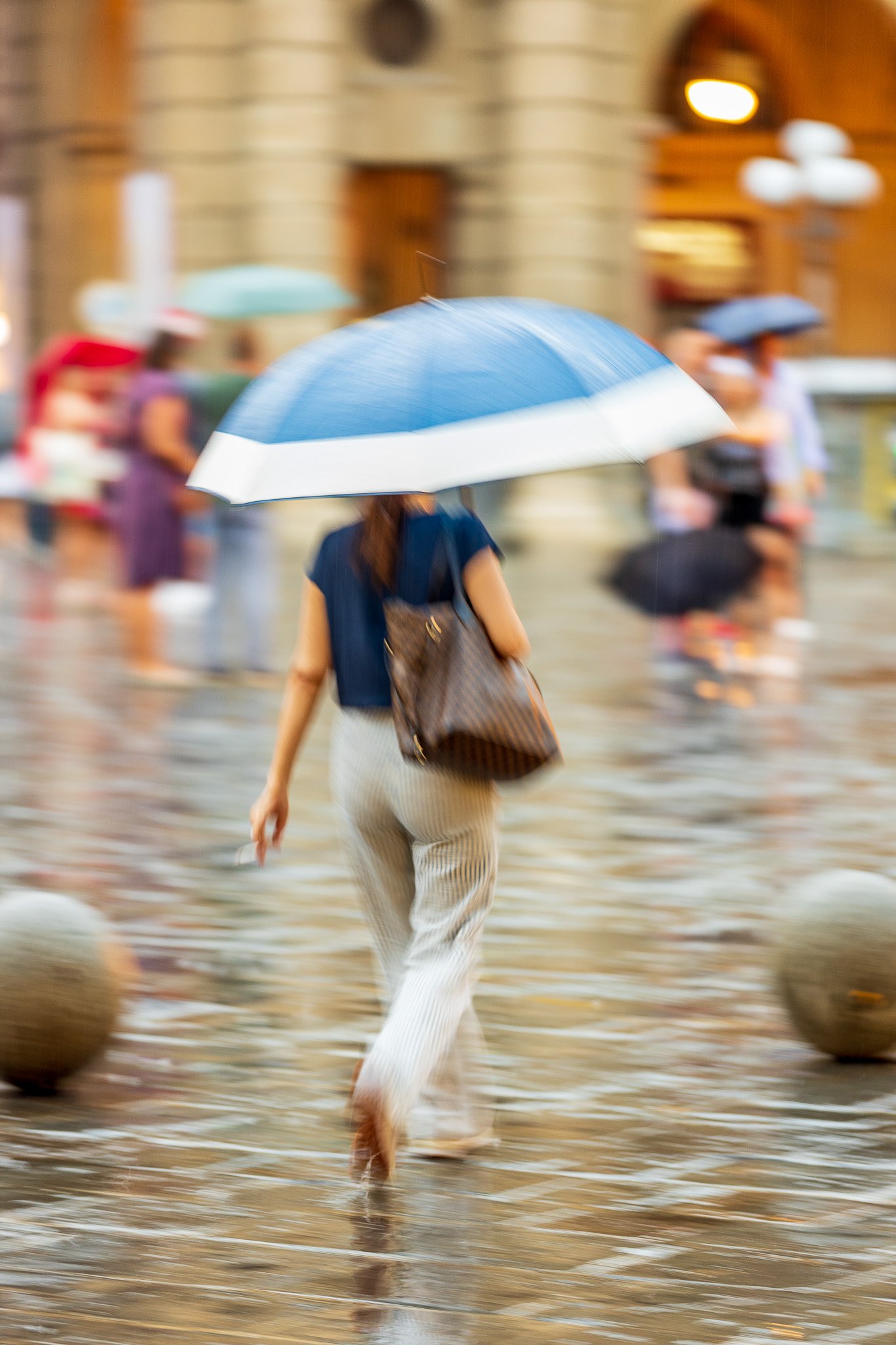
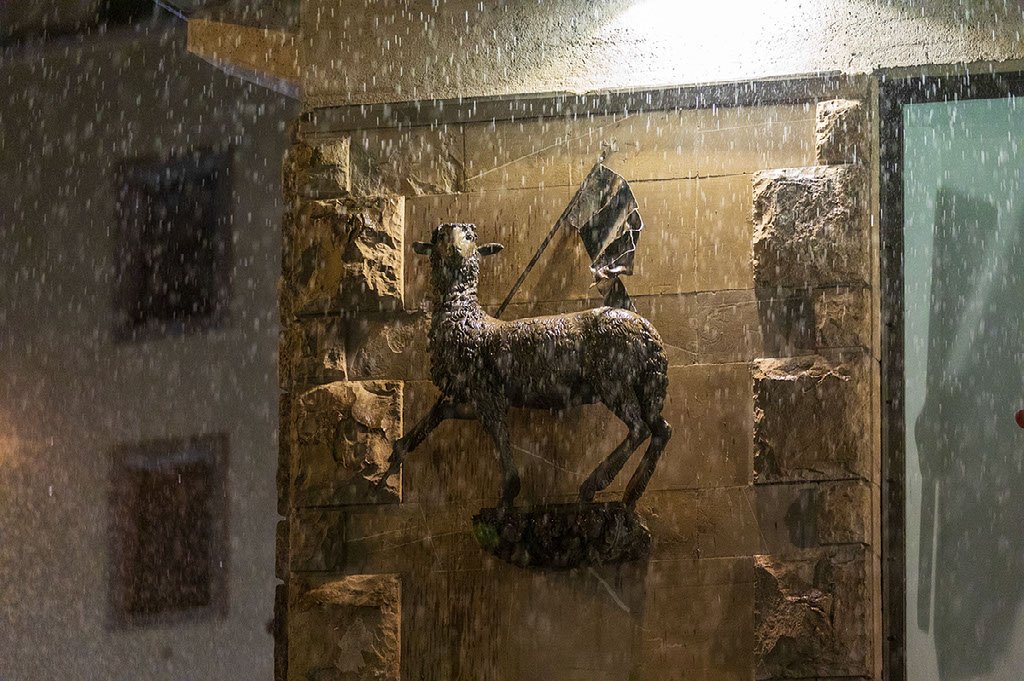
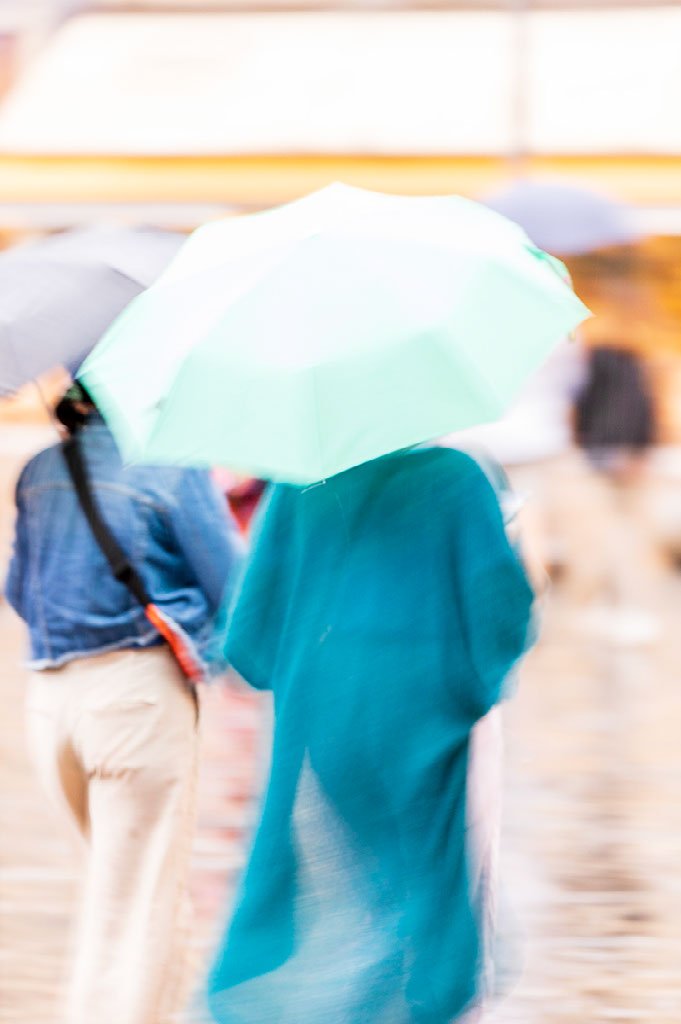
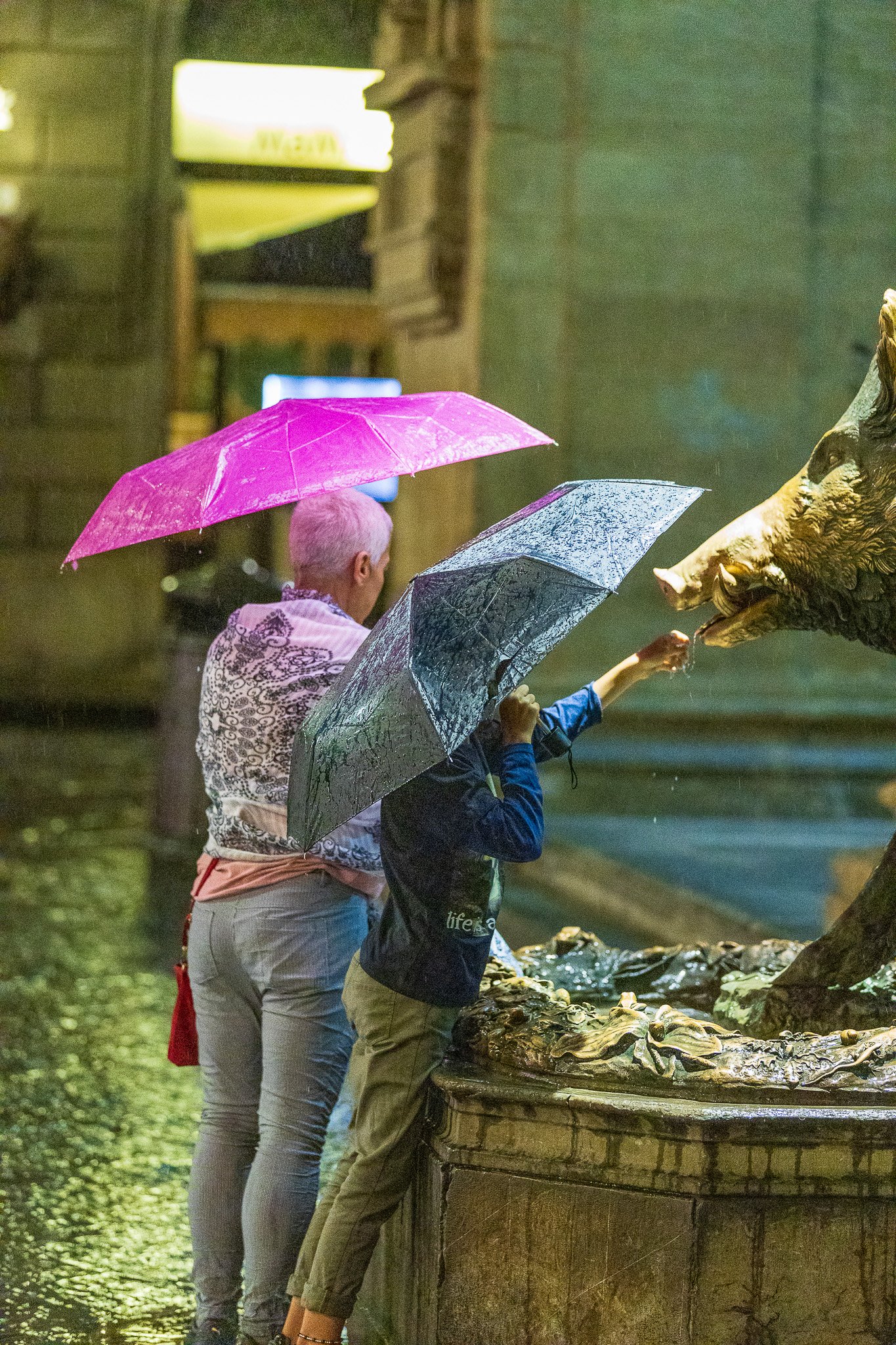
Looking for Reflections
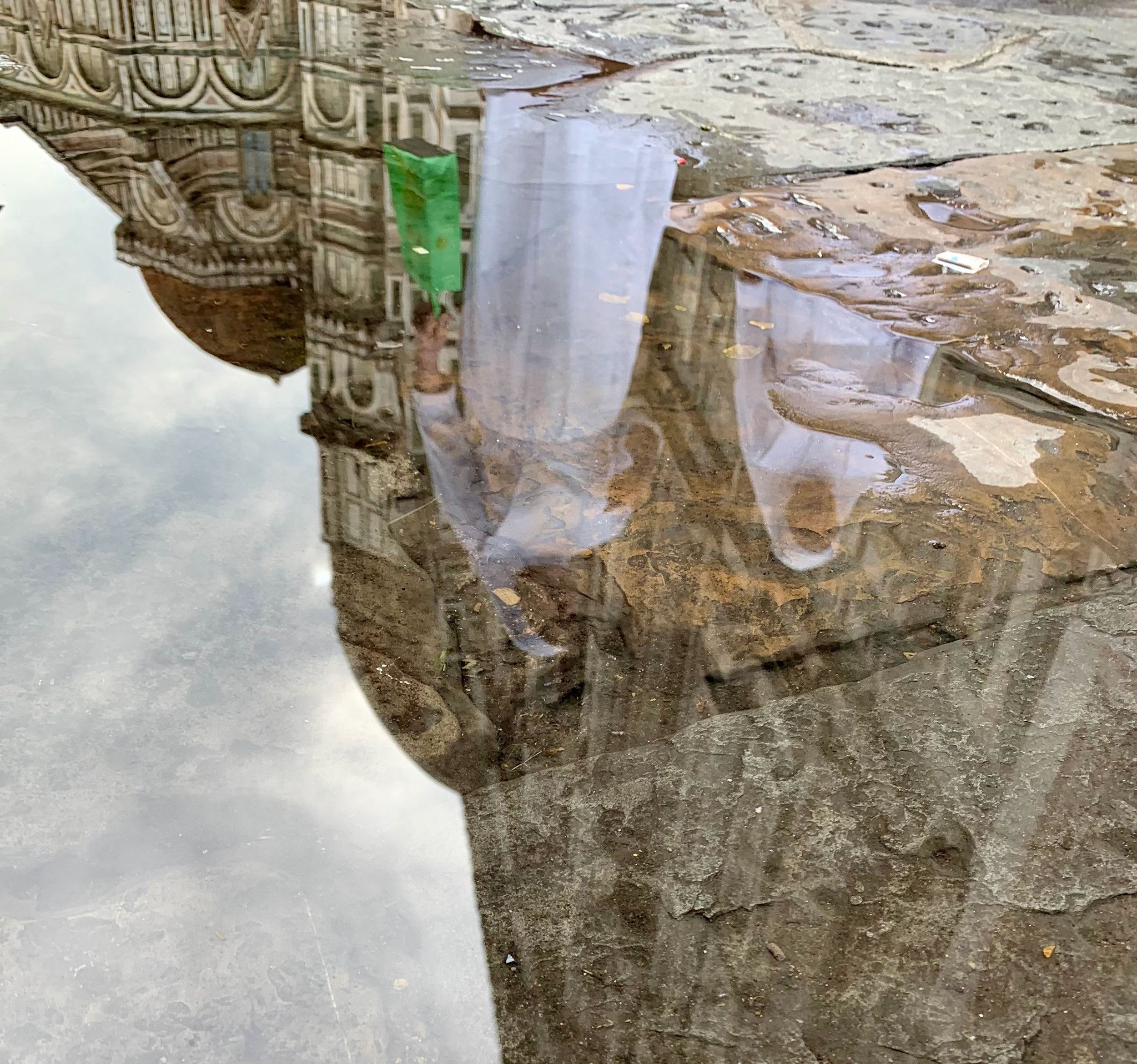
I love looking for reflections. Many times, when a location is very crowded, a reflection is a wonderful way to capture a moment like these 2 nuns walking in front of the Duomo.
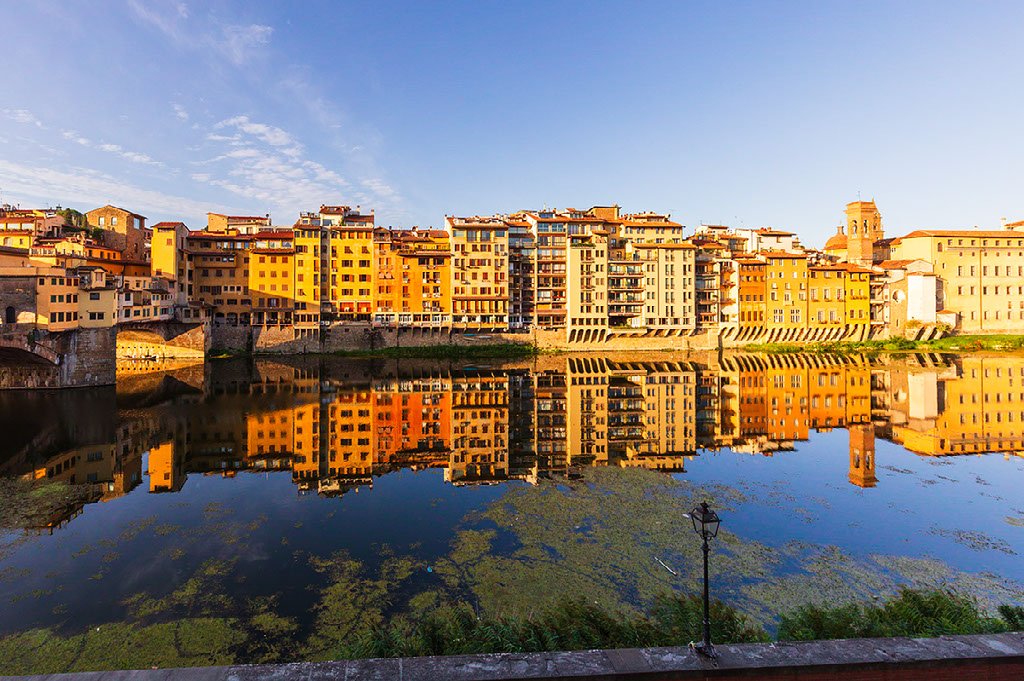
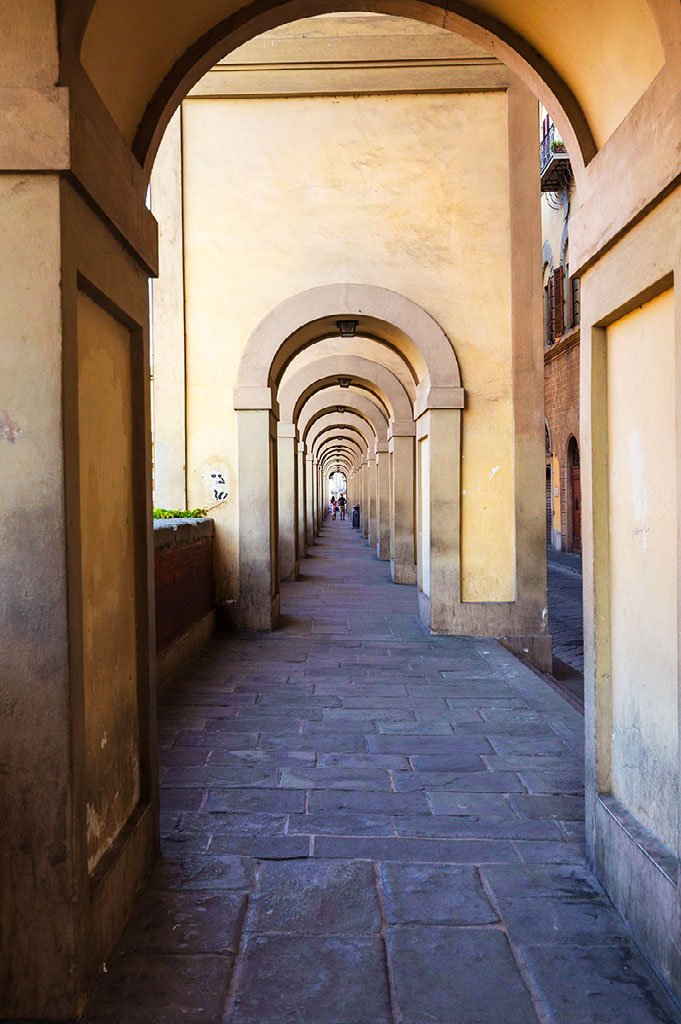
Walking along the Arno River by the Ponte Vecchio
One of my favorite areas for photography is to walk along the Arno River in the early morning. You will capture beautiful scenes as the light changes.
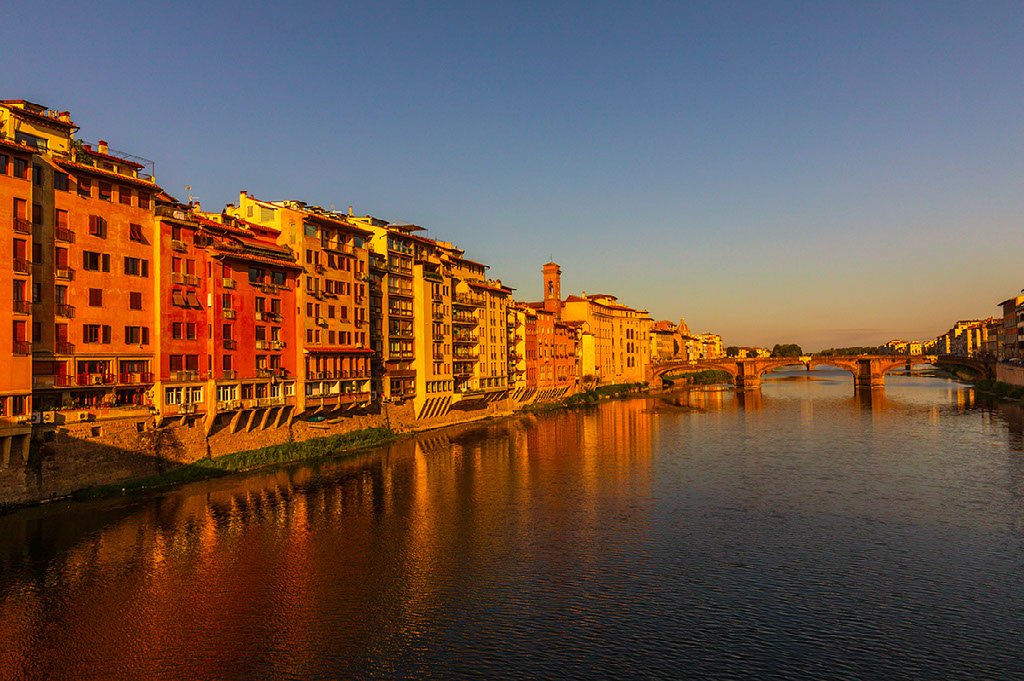
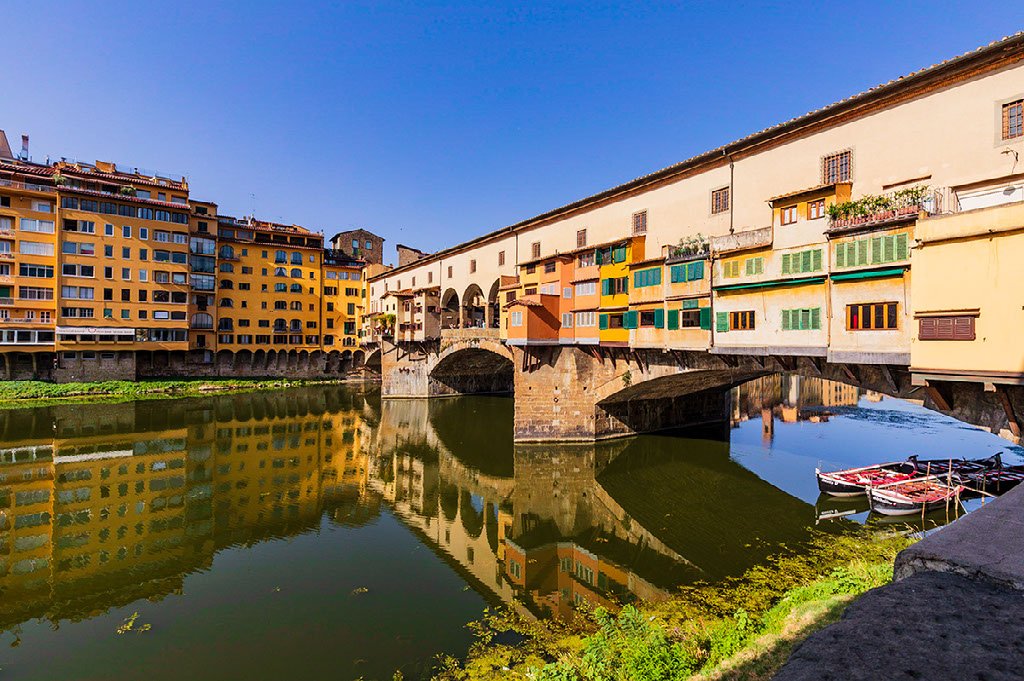
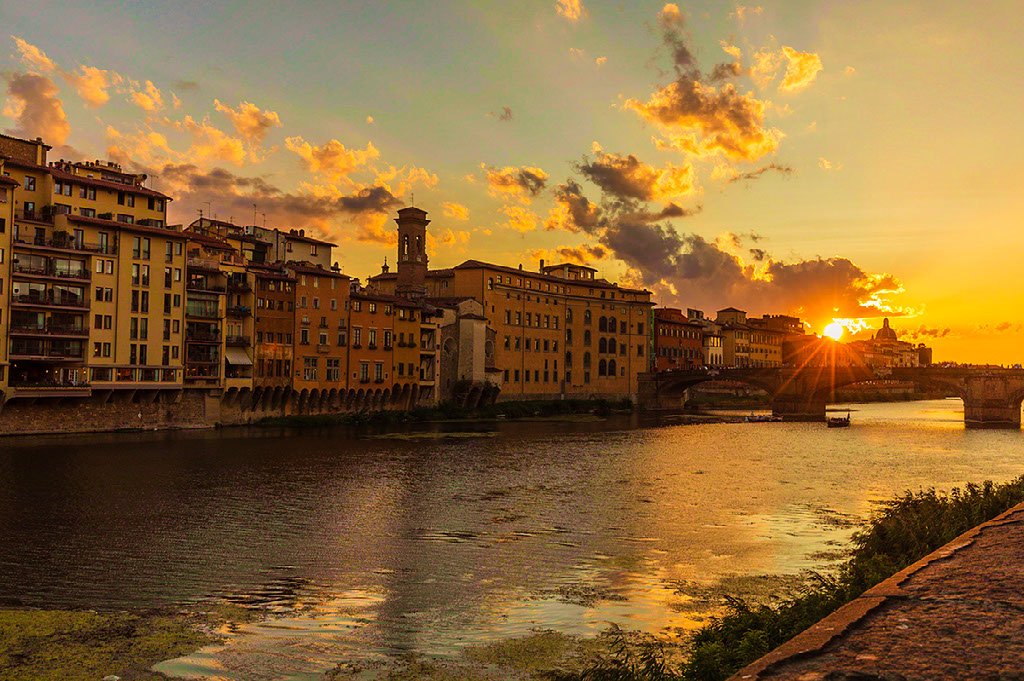
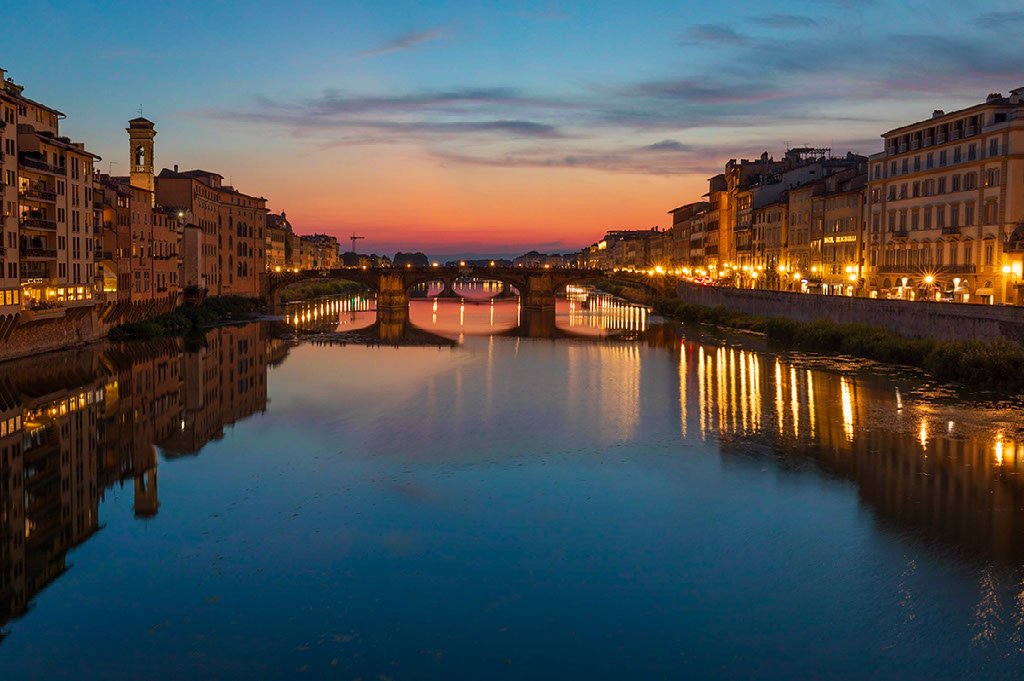
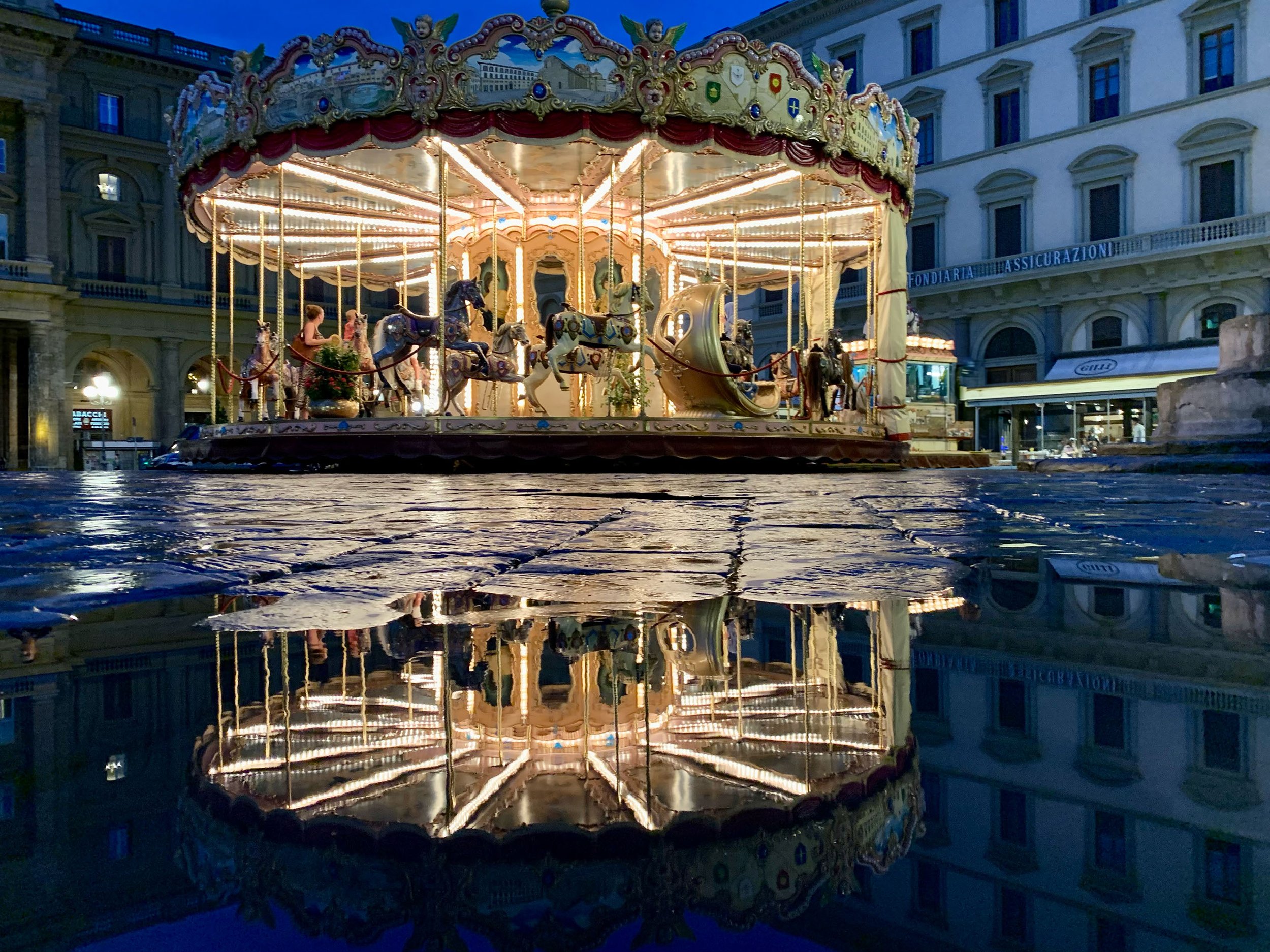
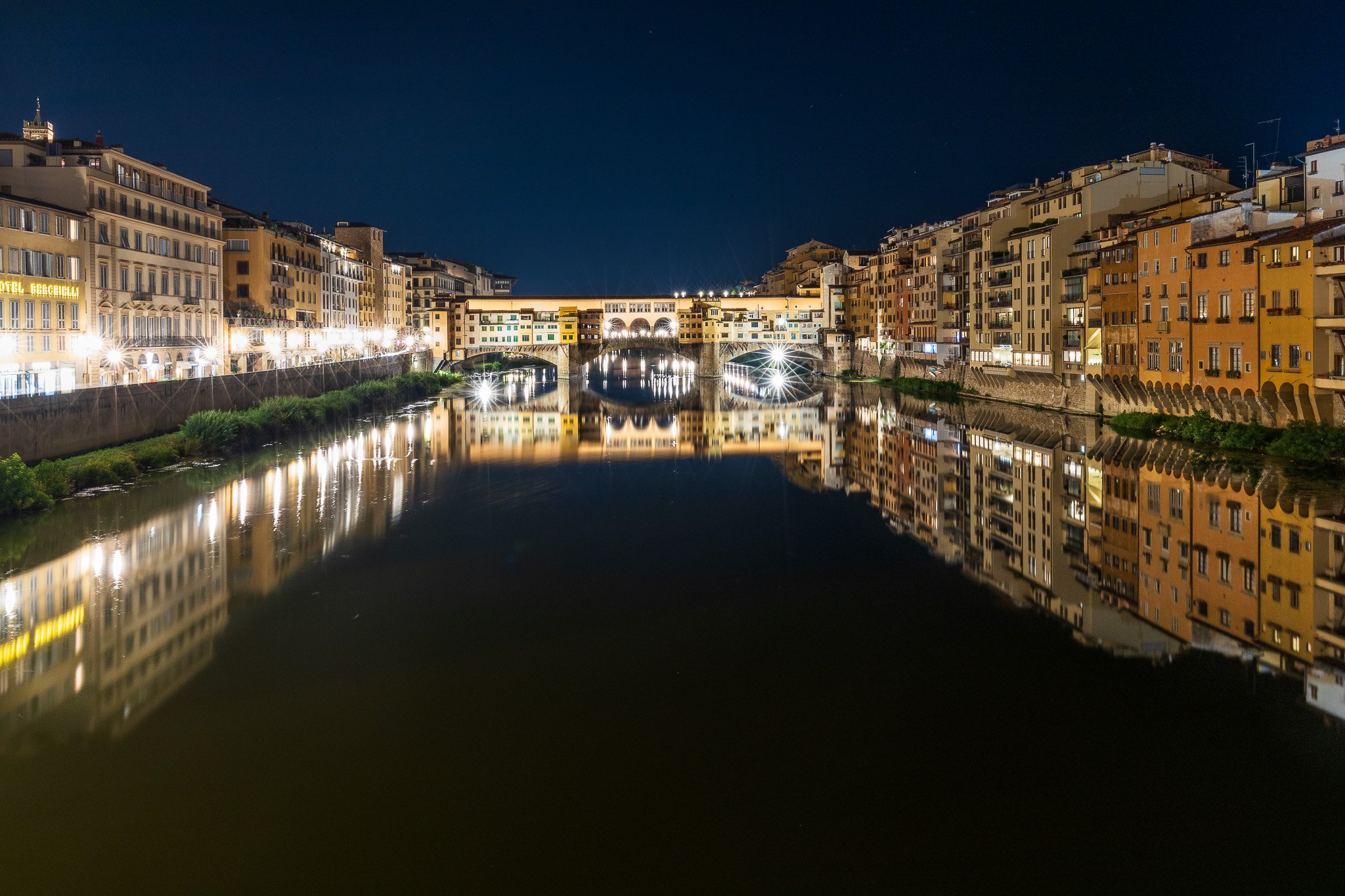
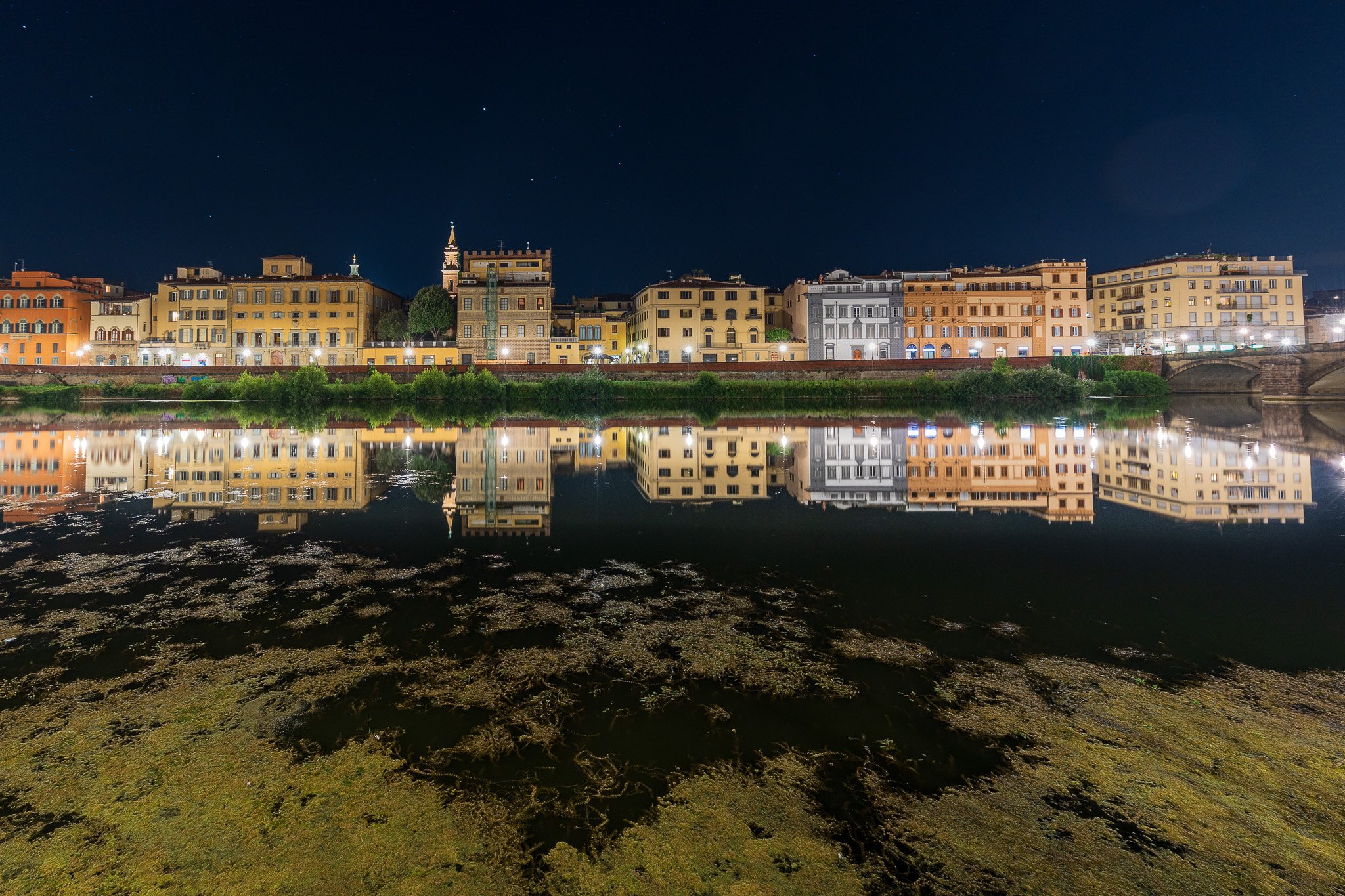
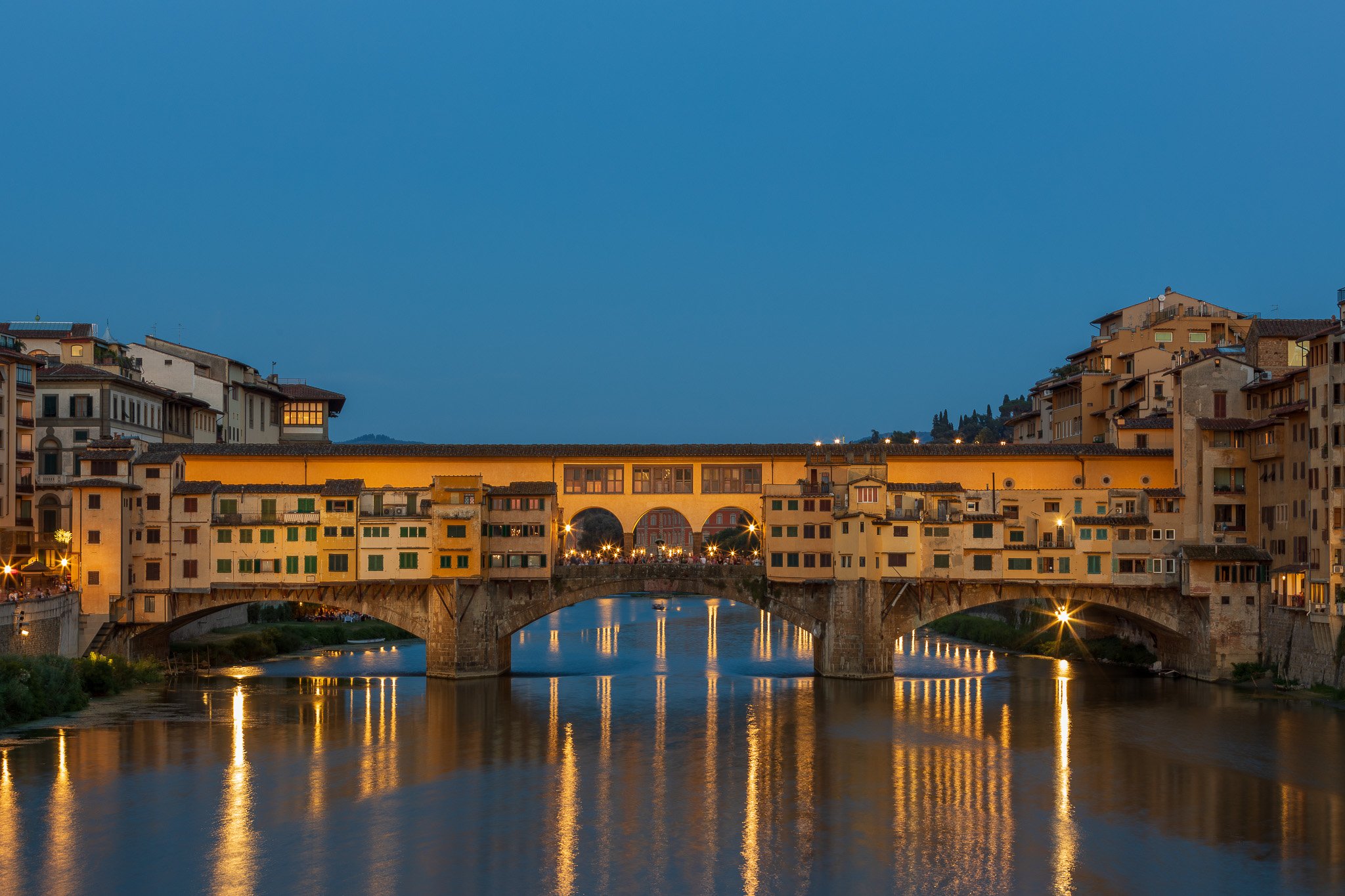
And at night, you can get some great shots with beautiful reflections.

Florence after dark, with city lights reflecting across the Arno River.
Palazzo Vecchio
This is Florence's civic heart, and one of its most photogenic spaces. The 94-meter tower of Palazzo Vecchio anchors the piazza, which is effectively an open-air sculpture gallery with the Loggia dei Lanzi on one side. Michelangelo's David in the square is a copy, but the original is five minutes away at the Accademia, and the copy holds its own in the context of the piazza.
I have photographed this square in the early morning, in evening light, and at night, and each version is completely different. The predawn hour, when the piazza is lit by its own lamps and completely empty, is unlike anything else in the city.
Pro Tip: Arrive before 7 a.m. for empty piazza shots. The tower catches warm light on its eastern face in the morning. For the full piazza composition, use a wide zoom from the far end near the Uffizi entrance. At night, a tripod and long exposure lets you capture the lamp-lit cobblestones with a smoothness that feels painterly. In autumn, the warm evening light on the tower stone is exceptional.

Palazzo Vecchio and Piazza della Signoria photographed during blue hour in Florence.
Piazzale degli Uffizi
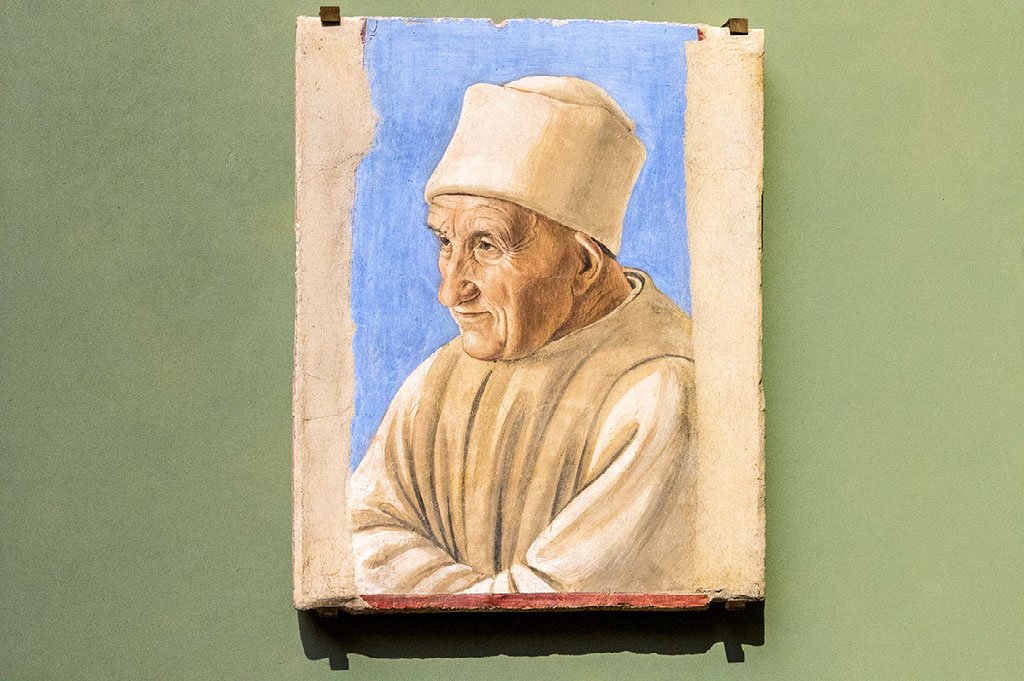
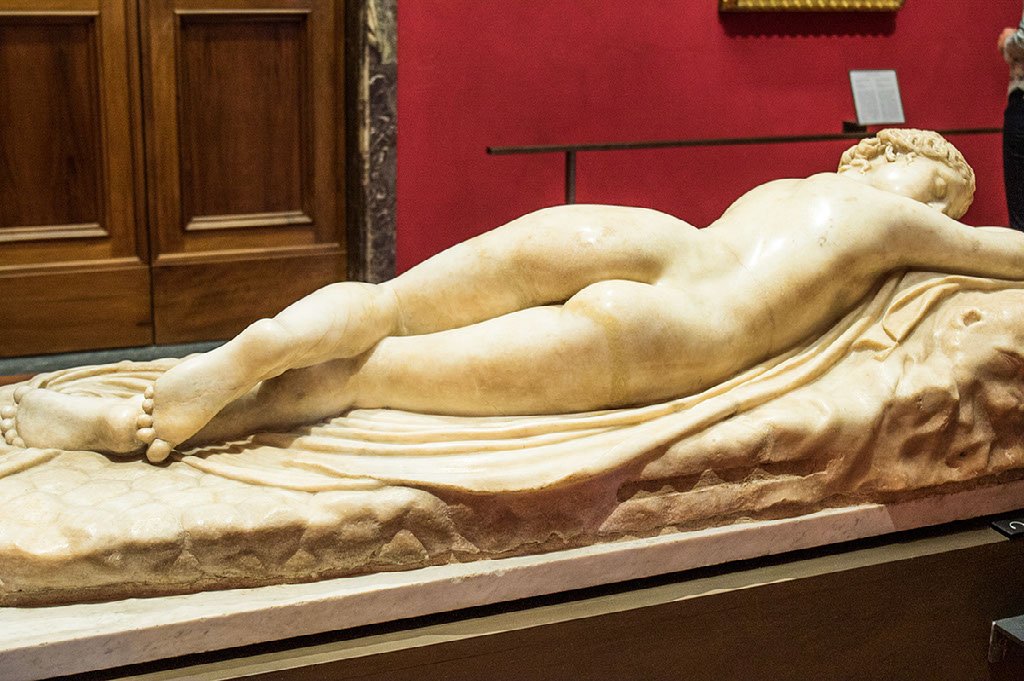
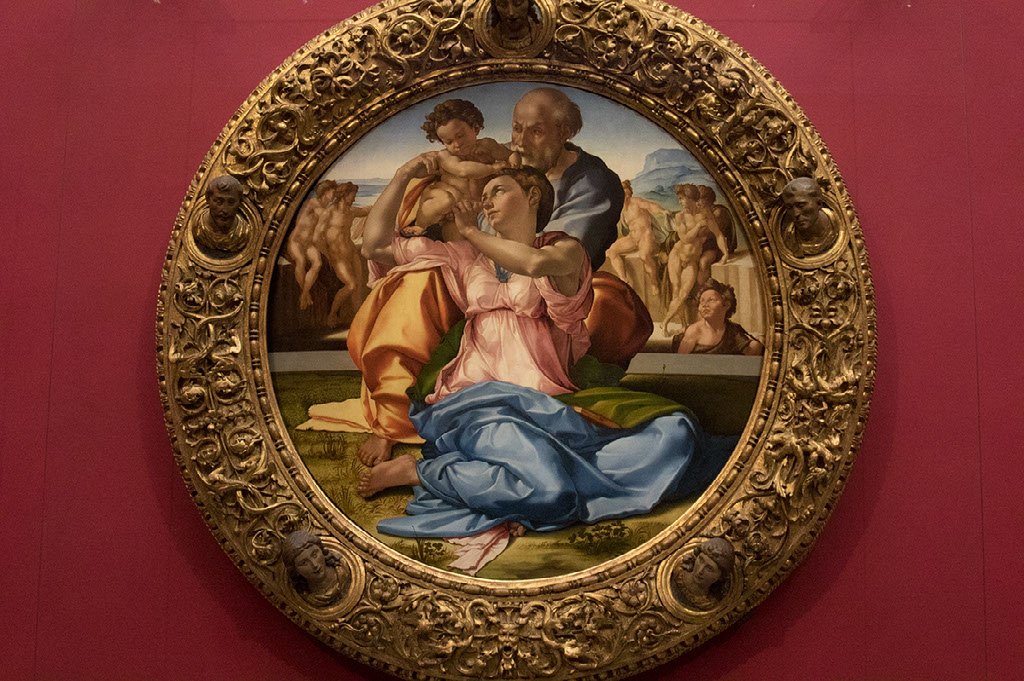
The Uffizi needs no introduction as a museum. Botticelli's Birth of Venus, Michelangelo's Doni Tondo, Leonardo da Vinci's Annunciation: the collection is beyond description. As a photography location, however, the interior is more restricted than many visitors expect. Flash photography is prohibited throughout, and some works have specific photography restrictions.
What most visitors overlook is the Uffizi courtyard, which is one of the finest architectural spaces in Florence. The long, symmetric colonnaded corridor is extraordinary in the early morning before the crowds arrive.
Pro Tip: Book tickets well in advance, especially in spring and summer. For interior photography, use a fast prime (35mm or 50mm at f/1.8 or wider) and push your ISO to 3200 or above. No flash, no tripod inside. The courtyard is best shot in the early morning when the light enters from one end and rakes across the columns. From inside the Uffizi on the upper floor, there is a terrace with an elevated view of Ponte Vecchio and the Arno that most visitors walk right past.
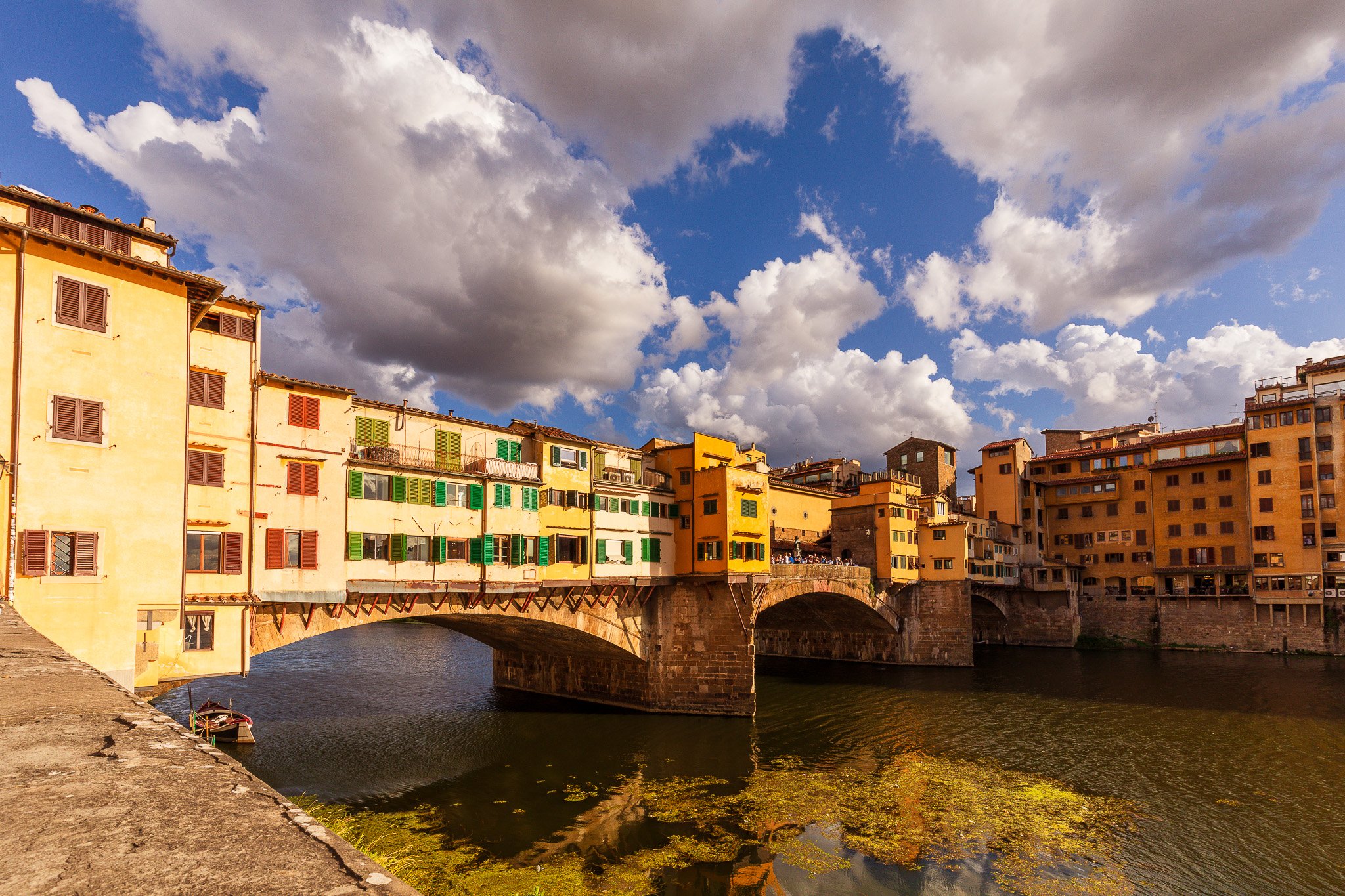
Ponte Vecchio
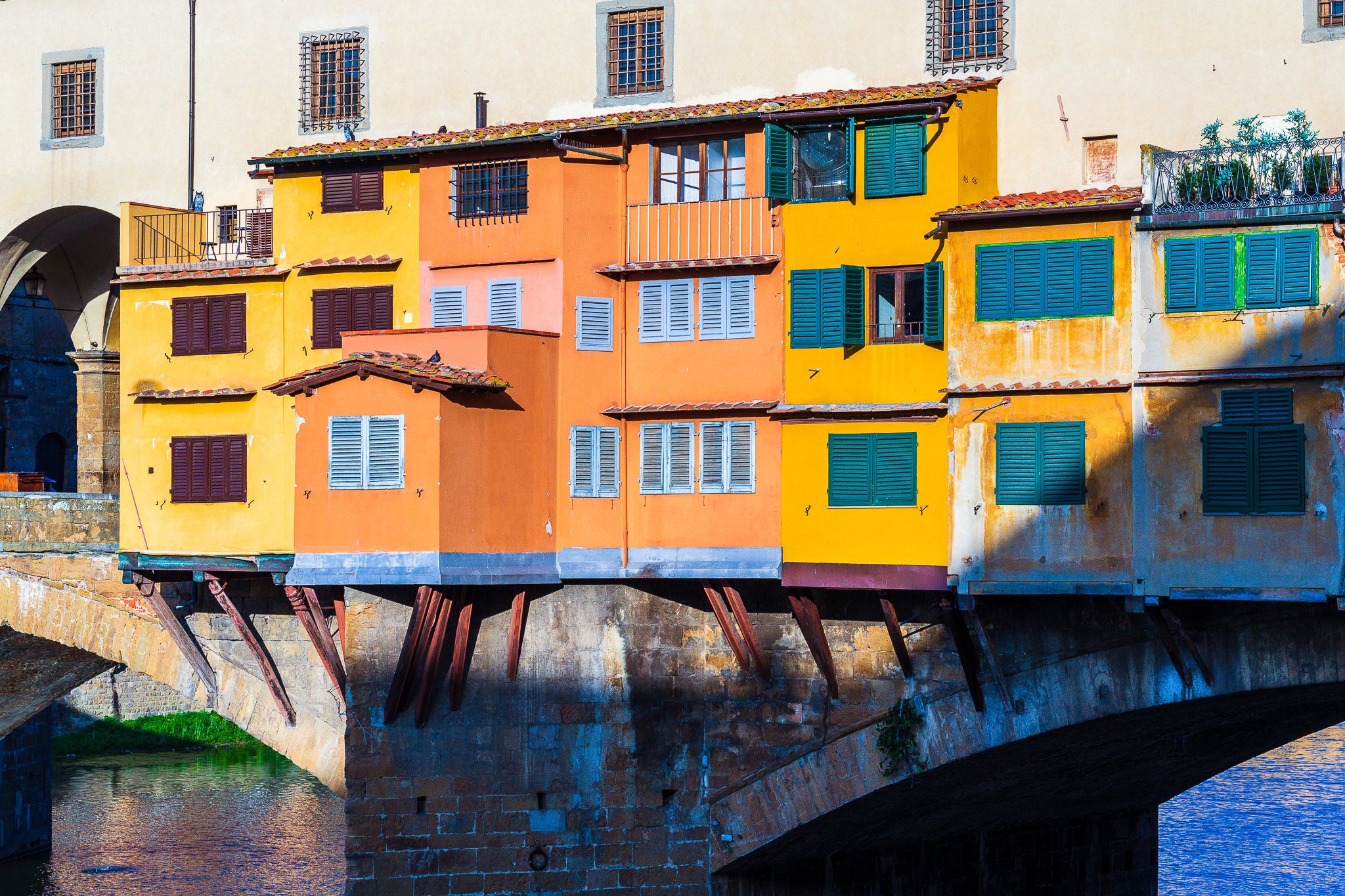
Florence's most iconic bridge has been standing since 1345 and still stops people in their tracks. The gold jewelry shops cantilevered over the Arno, the medieval architecture, the view up and down the river from the center of the bridge: it is everything a photograph should be.
The trick with Ponte Vecchio is timing. During the day in peak season, it is wall-to-wall tourists and nearly impossible to get a clean composition. At 6 a.m., it is a different world entirely. My wife and I have walked across it in the early morning in near silence, with just the sound of the river below and the shutters of the shops still down.
Pro Tip: Shoot from the bridge at blue hour or just after sunrise for the best light on the Arno. For shots of the bridge rather than from it, walk one bridge west to Ponte Santa Trinita (see below) for the definitive angle. A tripod is essential for long exposures from the bridge at night. Use a 24-70mm for the full bridge view and switch to your telephoto to isolate the shop overhangs and reflections in the water. In winter, fog over the Arno at dawn turns this into one of the most atmospheric shots in Italy.
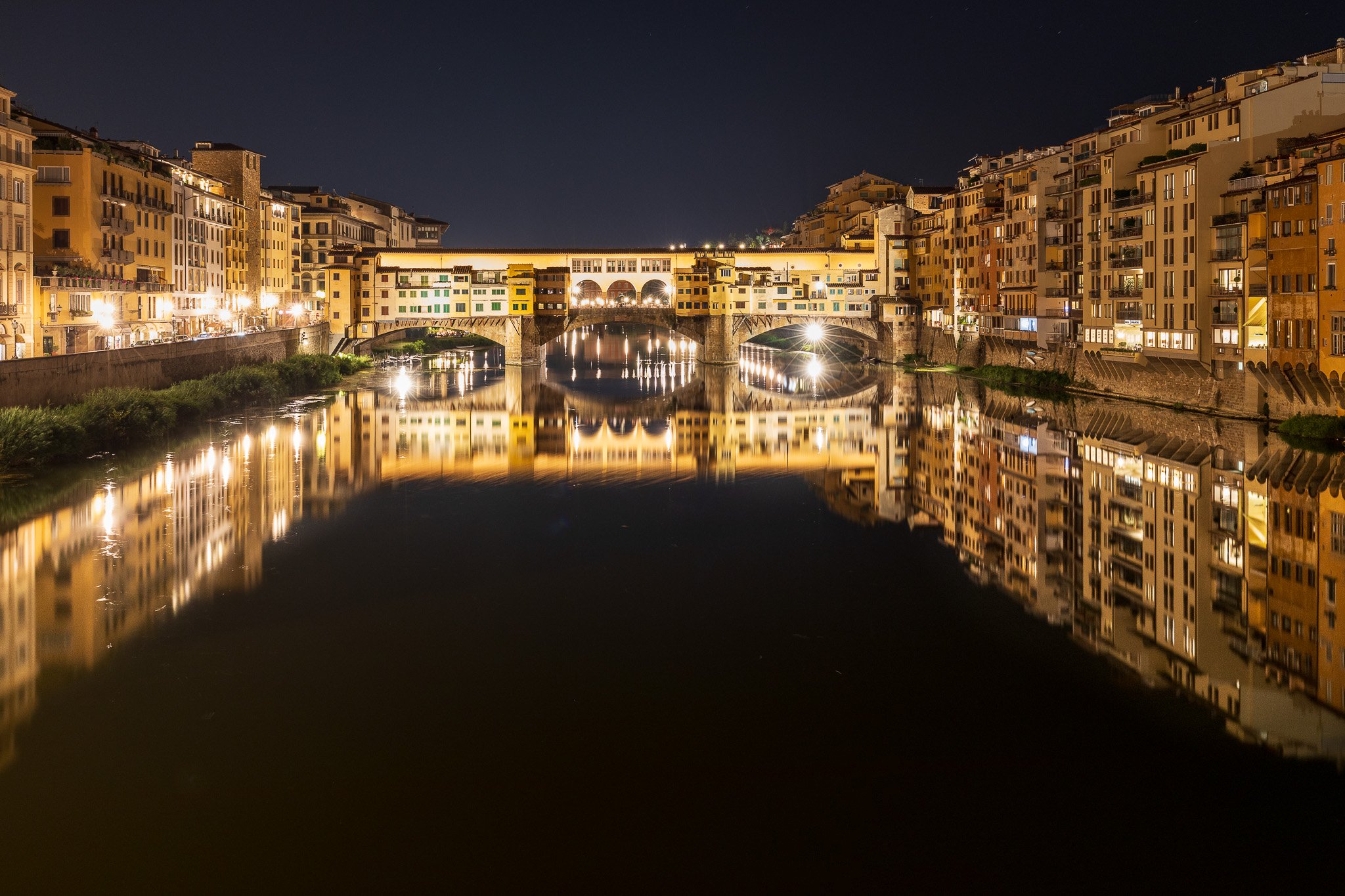
Ponte Vecchio crossing the Arno River, one of the most recognizable views in Florence.
A classic shot is to photograph an empty bridge with the top of the Duomo in the background. At night, you can shoot amazing sunset shots from the bridge.
Ponte Santa Trinita
This is the location that separates photographers from tourists in Florence. Everyone goes to Ponte Vecchio. Photographers go to Ponte Santa Trinita.
Standing at the center of this 16th-century bridge and looking east, you get the definitive photograph of Ponte Vecchio: the full bridge framed by the Arno, with the hills of the Oltrarno rising behind it. It is a cleaner, more compelling composition than anything you will get standing on Ponte Vecchio itself. The bridge also has its own architectural beauty, with three elliptical arches and statues of the four seasons at each end.
Pro Tip: Shoot from the center of the bridge at sunset, facing east toward Ponte Vecchio. A 50mm or short telephoto (70-100mm) gives you the best compression for this shot. Arrive thirty minutes before sunset to lock in your position; it gets busy. For a less-contested version of the same shot, try the neighboring Ponte alle Carraia to the west, which gives you a slightly different angle with more of the Arno in frame. Early morning here is almost entirely crowd-free.
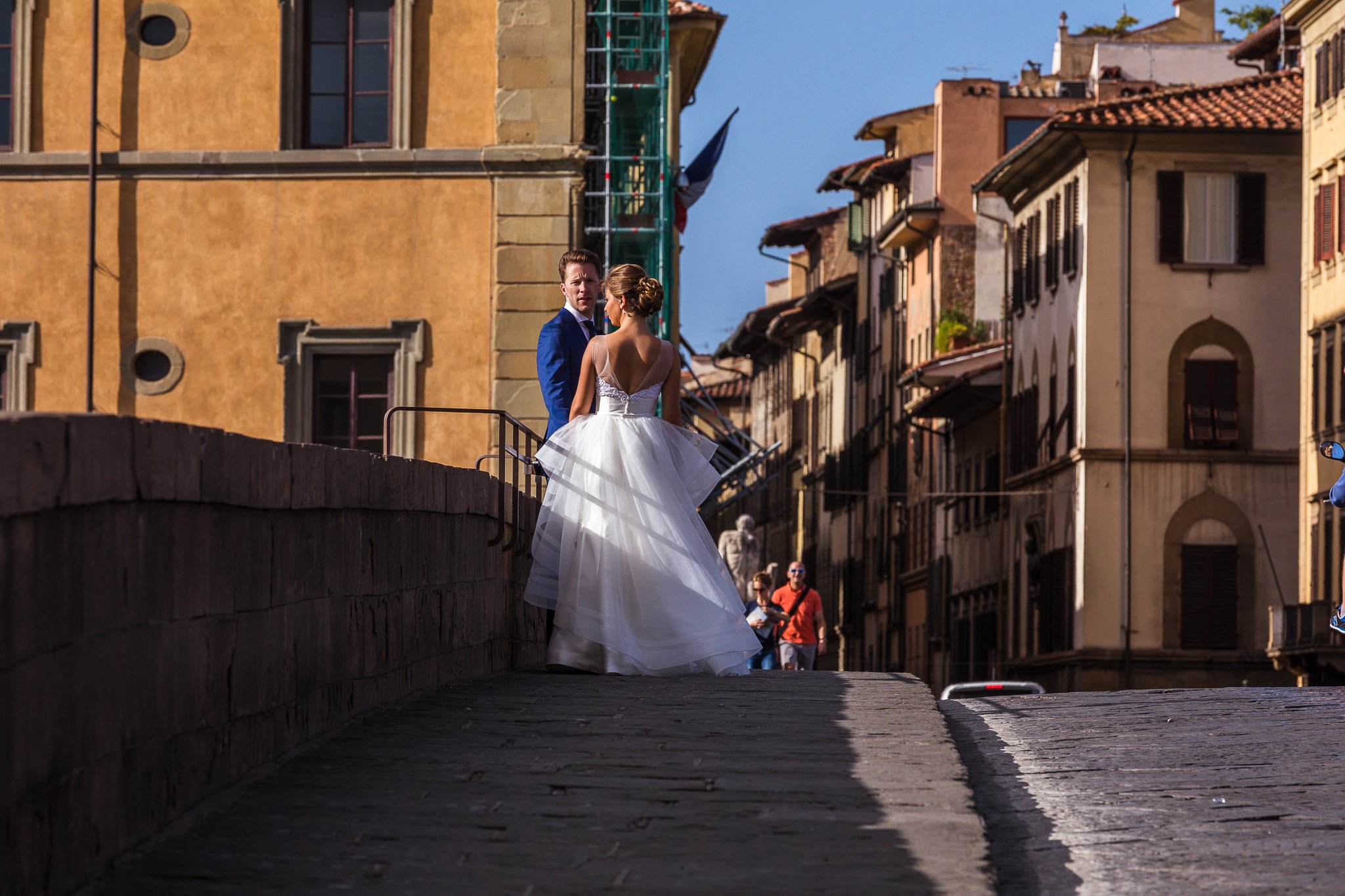
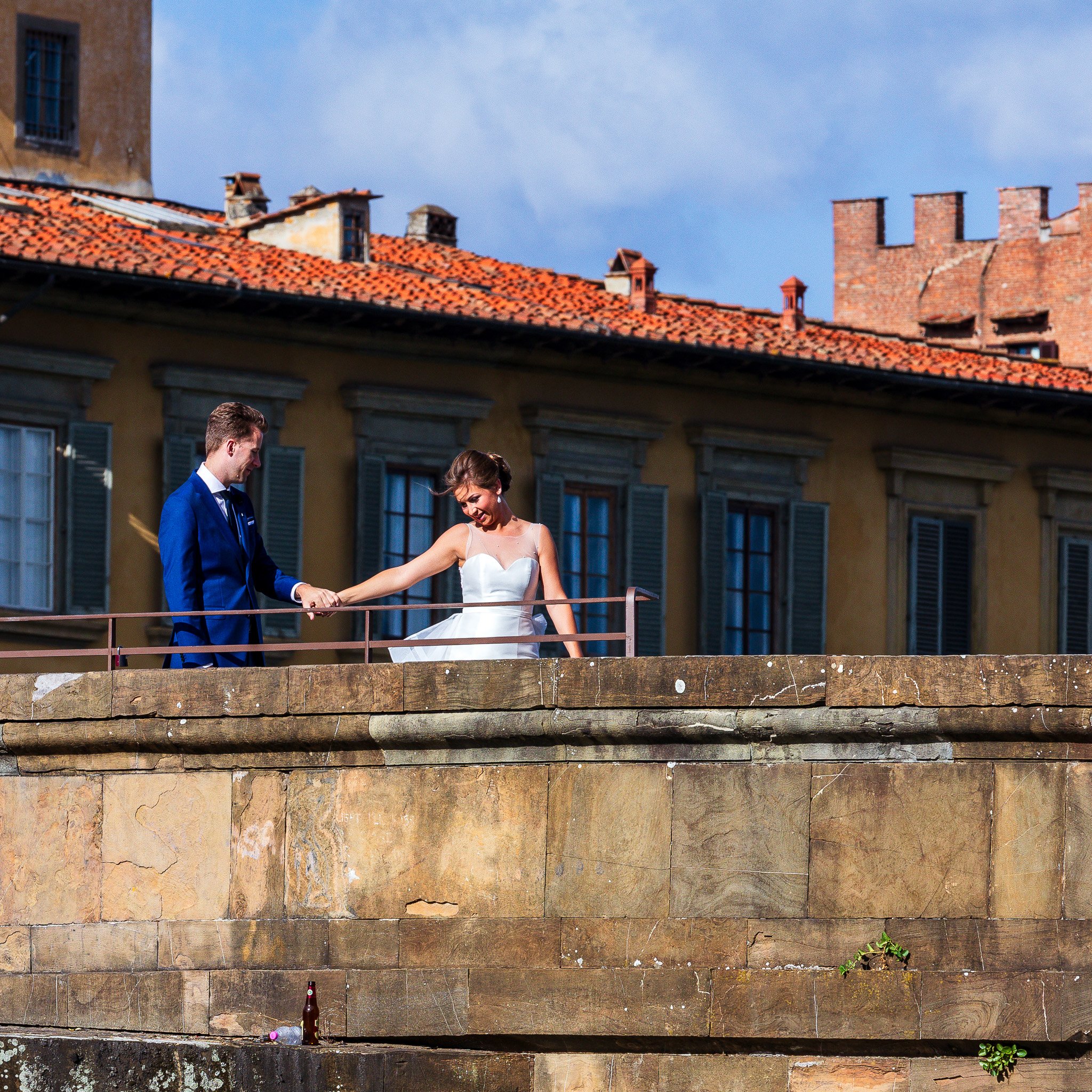
The Duomo
No city in the world has a cathedral like this one. The Duomo di Firenze, with Brunelleschi's dome and Giotto's Bell Tower rising beside it, is one of the great architectural achievements in history. As a photography subject it is extraordinary, and also genuinely difficult. The scale is almost too large for a single frame.
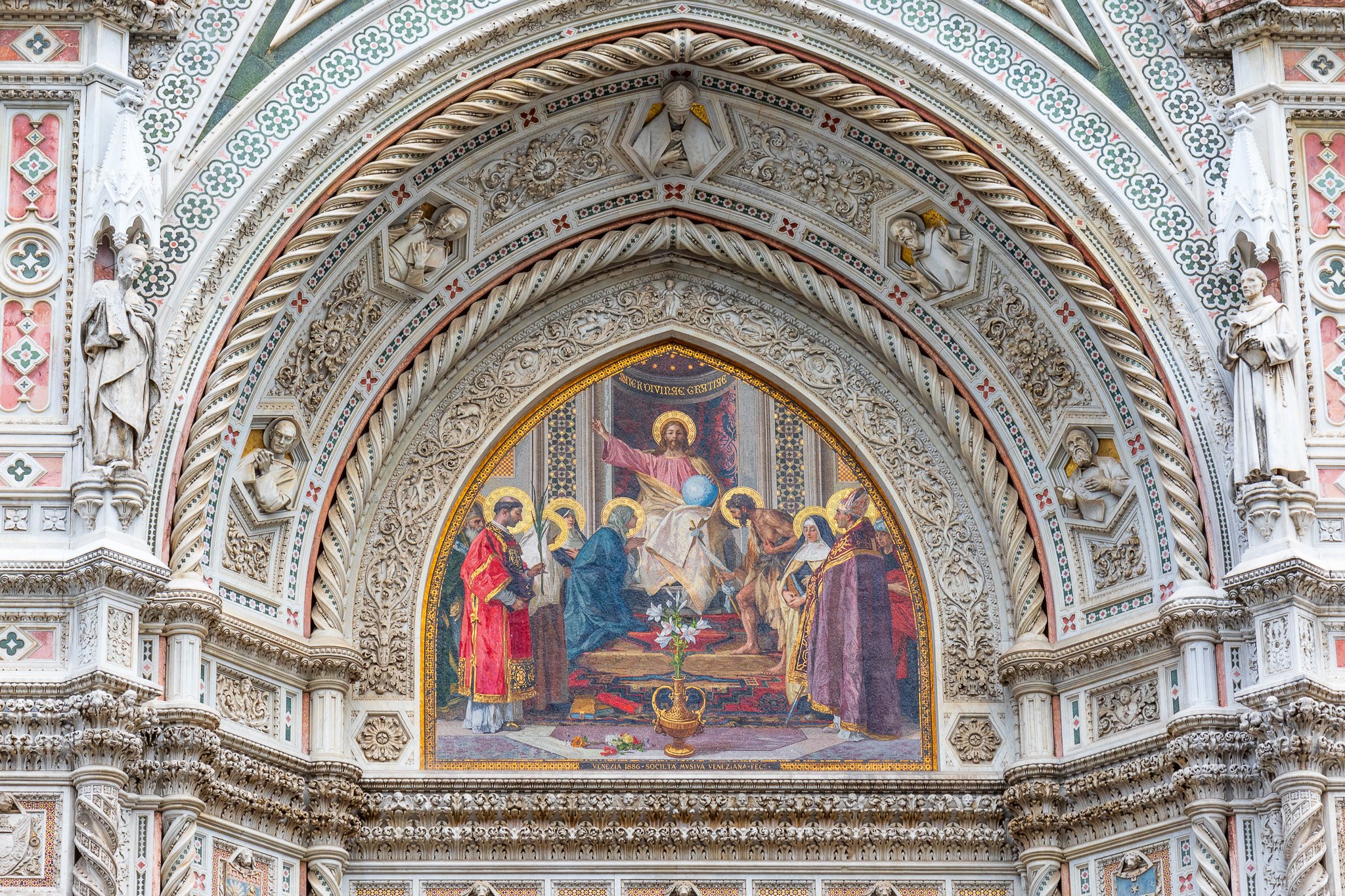
I have photographed the Duomo from every angle over many visits. The detail in the marble facade rewards a telephoto lens. The geometry of the piazza rewards a wide angle. And the view from the top of the Bell Tower, 414 steps up, rewards the climb with one of the best elevated views in Florence, including the dome itself from the same height.
Pro Tip: The Duomo is surrounded by narrow streets, which means wide-angle distortion is unavoidable at close range. Embrace it, or step back to Via dei Calzaiuoli for a more compressed view using a 70-200mm. For the facade detail, use a telephoto and shoot in the hour after sunrise before the piazza fills with tour groups. If you want the Bell Tower view, book timed entry in advance. The best light on the dome from the tower is in the morning, looking west. Avoid midday: the shadows are harsh and the crowds are at their peak.
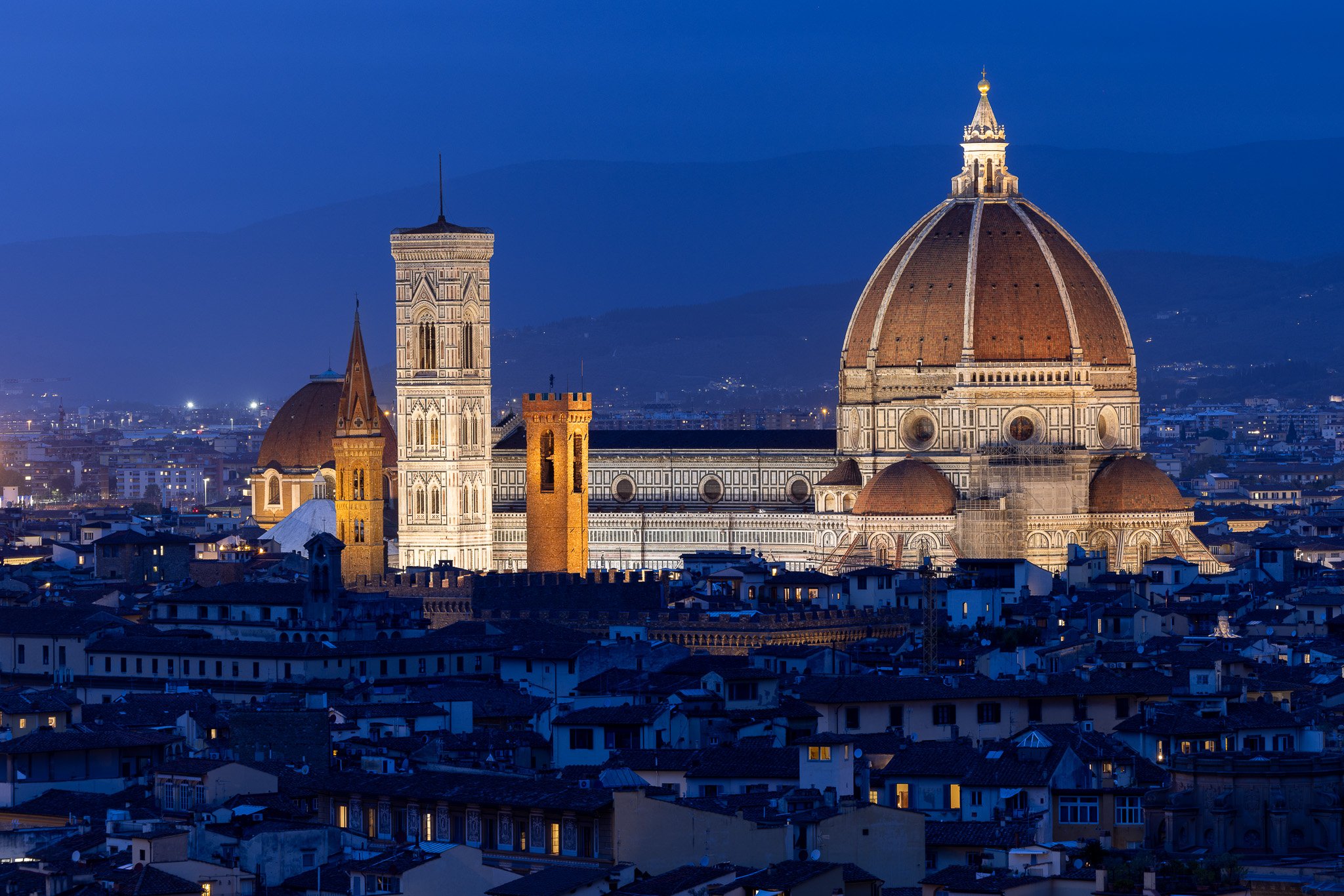
The Cathedral of Santa Maria del Fiore and Giotto’s Bell Tower during blue hour in Florence.
The Duomo was completed in 1436, with the dome designed by Filippo Brunelleschi. The best time to capture photos of the entire Duomo is either very early in the morning, before the crowds, or late at night.
The crown jewel of Florence is, without doubt, the Cathedral of Santa Maria del Fiore. This beautiful cathedral comprises three distinct sections, each representing a great Florence photo spot with unique photography opportunities: the cathedral itself, Giotto’s Bell Tower, and the iconic Brunelleschi’s Dome.
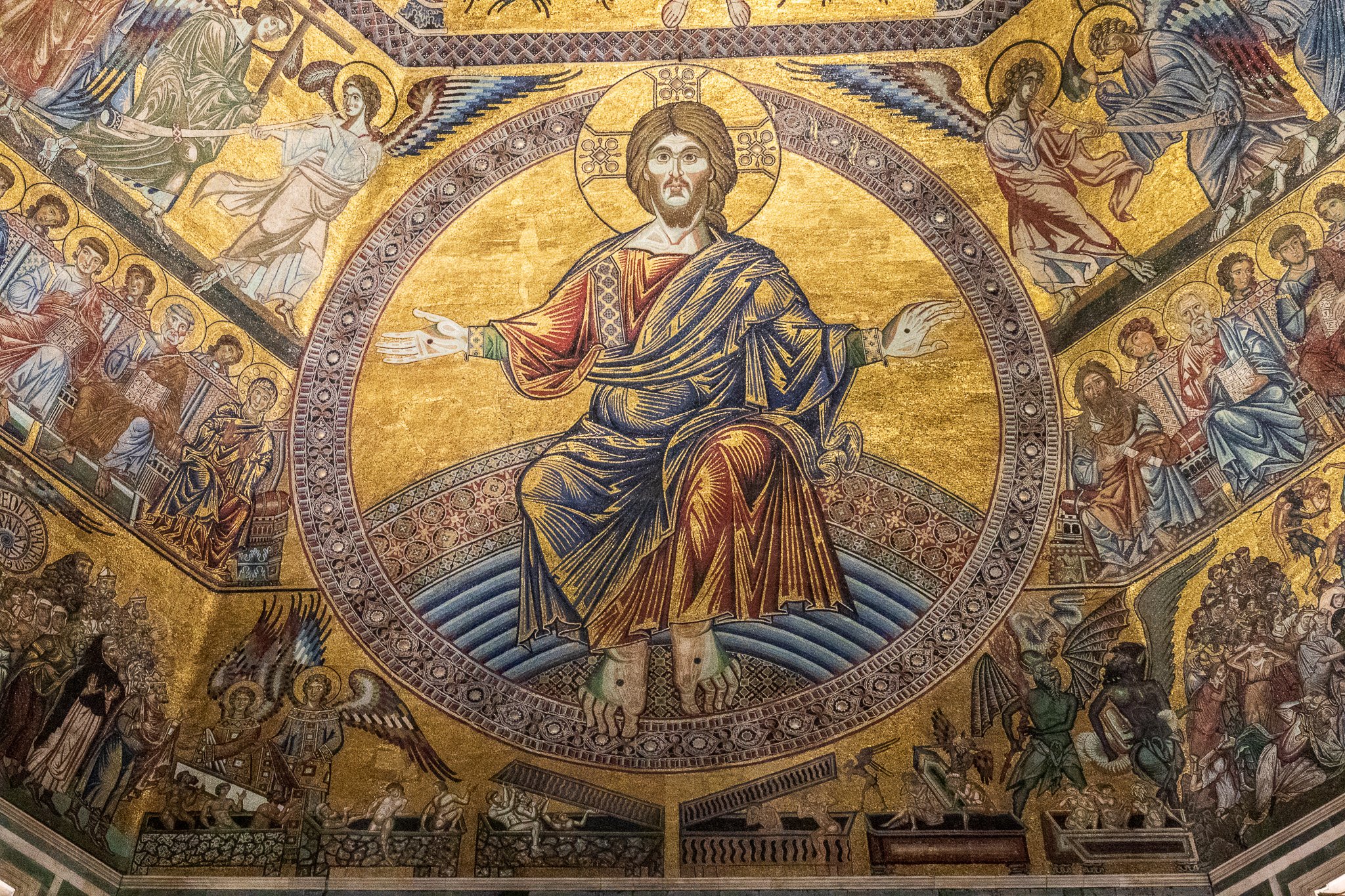
Riccardi Medici Palace
This is one of the most rewarding and least crowded photography locations in the historic center. The Medici Riccardi Palace, built in 1444, is the original Medici family home and contains the extraordinary Cappella dei Magi, a private chapel with floor-to-ceiling frescoes by Benozzo Gozzoli. The light inside is dim and warm, and the detail in the frescoes is extraordinary.
The interior courtyard is also worth your attention: a perfectly proportioned Renaissance space with columns, arches, and a quality of silence that feels genuinely rare in central Florence.
Pro Tip: Photography is permitted in the Cappella dei Magi without flash. Use a fast prime at its widest aperture, push your ISO high, and shoot handheld in burst mode for sharpness. The frescoes are best captured in sections rather than trying to fit the whole room in one frame. Visit on a weekday morning when the palace is quietest. Check opening hours in advance as they vary seasonally.
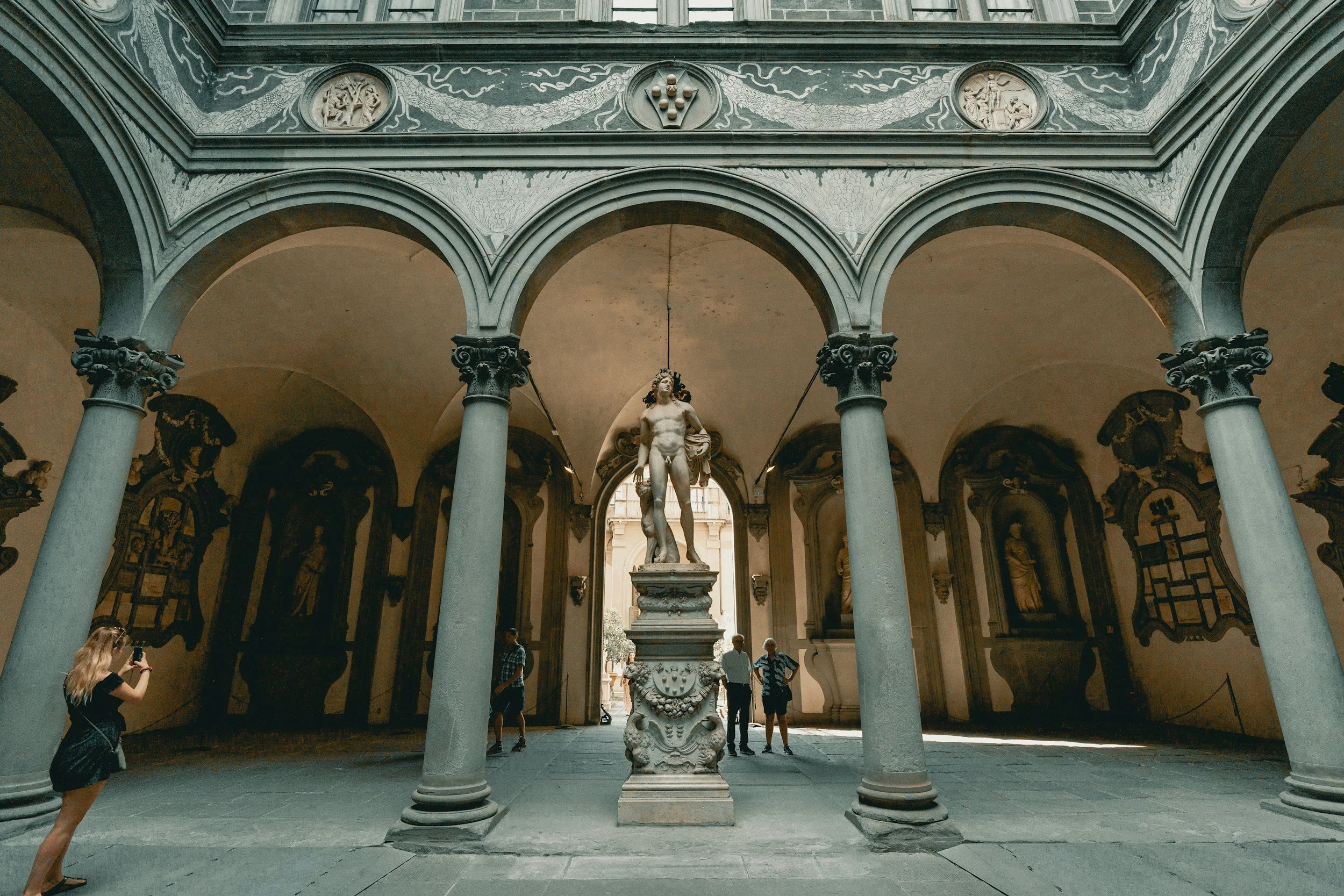
Renaissance architecture and quiet symmetry inside Florence’s Medici Riccardi Palace.
The Oltrarno Neighborhood
The Oltrarno is not a single location but a state of mind. Cross to the south bank of the Arno, and you enter a neighborhood that feels genuinely different from the rest of the city. Artisan workshops, small wine bars, quiet courtyards, and streets with a patina that the north bank has largely lost to tourism.
My wife and I have spent entire mornings here just walking, shooting whatever presented itself. A blacksmith's workshop with light pouring through a doorway. An old woman hanging laundry from a Renaissance window. A carpenter is measuring wood on the pavement outside his shop. The Oltrarno is where street photography in Florence happens.
Pro Tip: Come early, before 9 a.m., when the streets are quiet and the artisans are just opening. A 35mm prime is the ideal lens here: inconspicuous, fast, and perfect for the scale of the narrow lanes. The streets around Via Maggio, Borgo San Jacopo, and Piazza Santo Spirito are the most rewarding. In the evening, the bar terraces around Piazza Santo Spirito fill up with locals rather than tourists, giving you a completely different kind of people-watching shot.
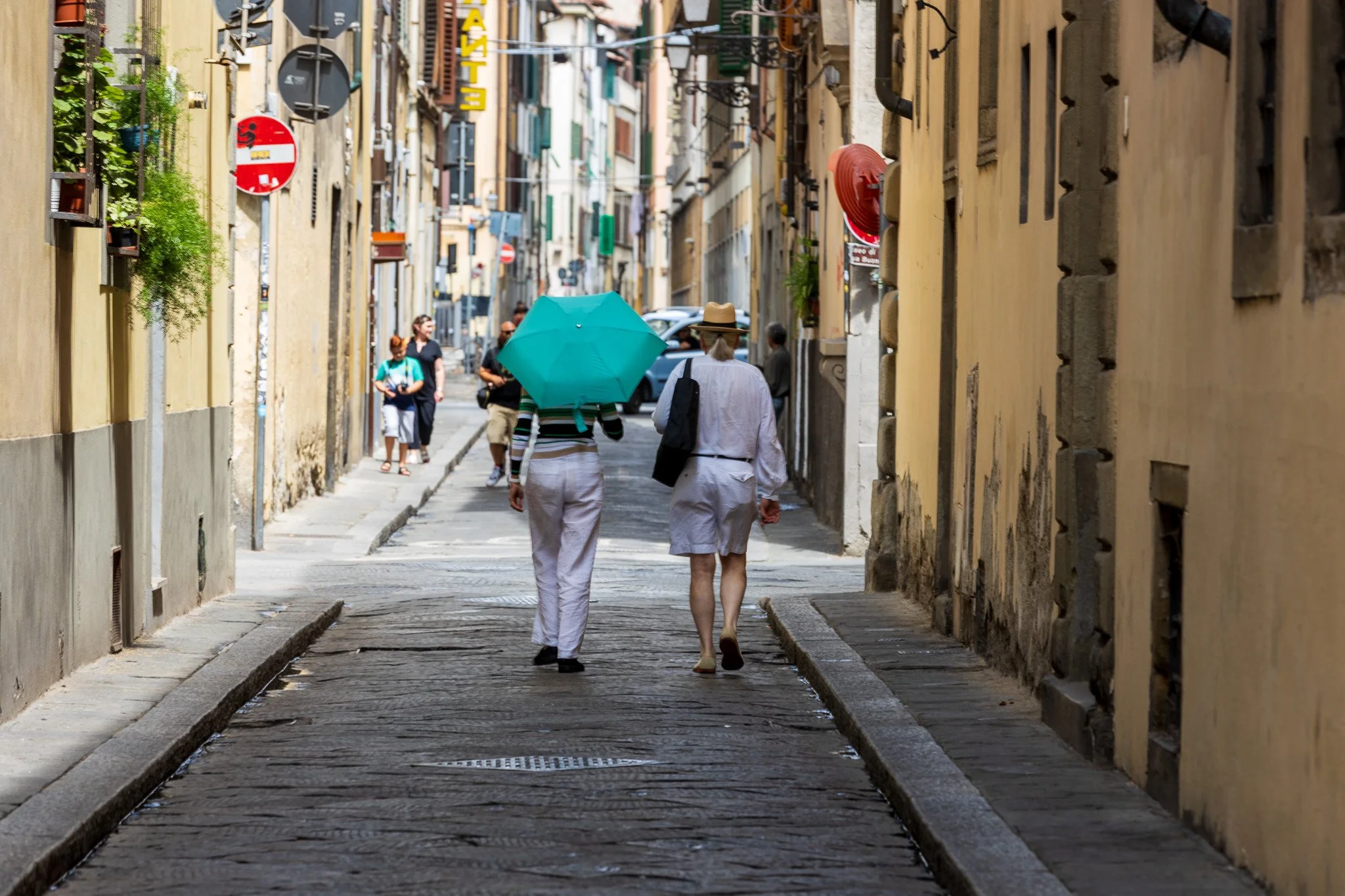
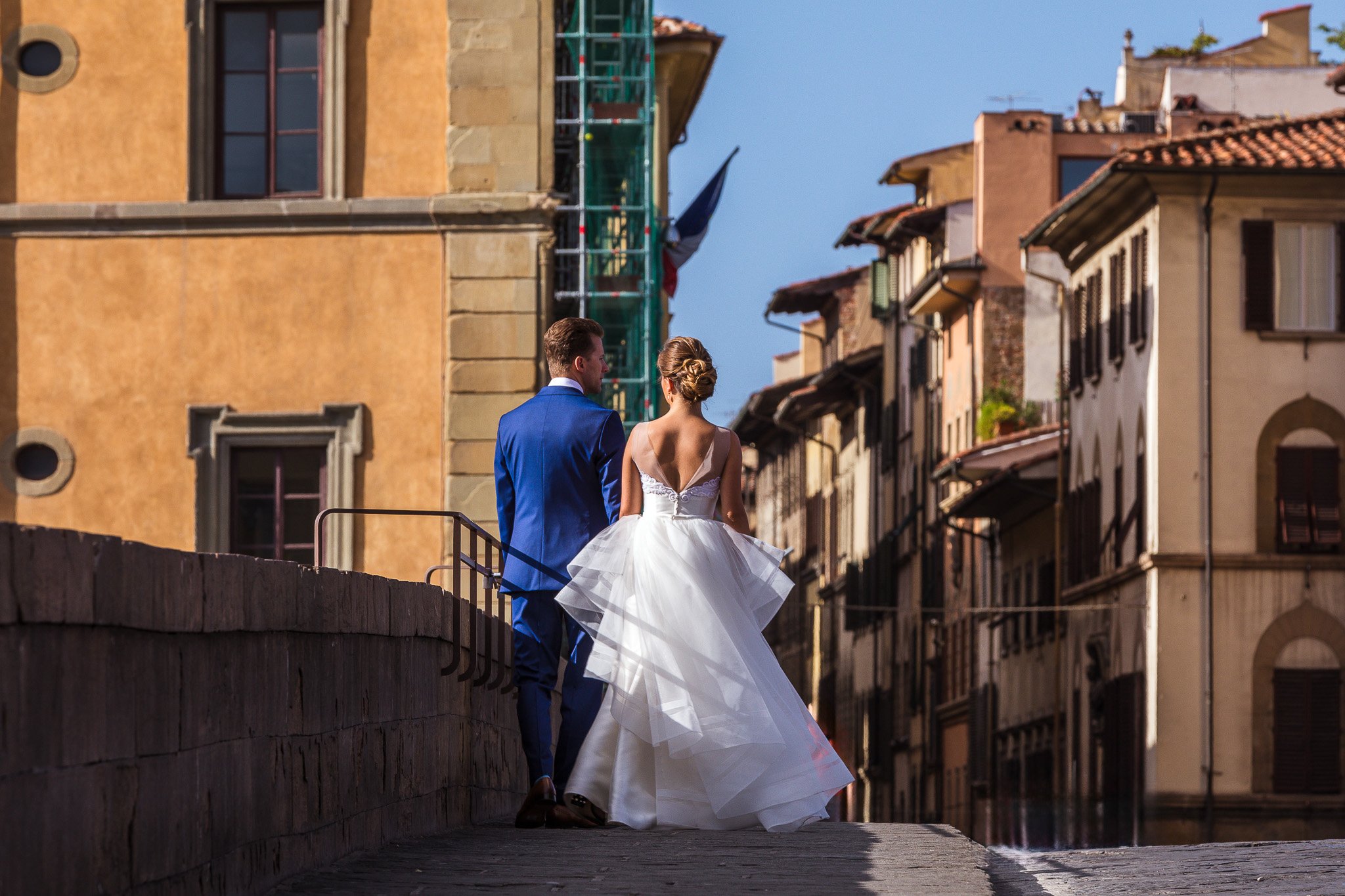
Small moments often make my favorite travel photographs in Florence.
Piazza di Santa Croce
The Basilica of Santa Croce is the largest Franciscan church in the world and the burial place of Michelangelo, Galileo, and Machiavelli. The Gothic facade is one of the finest in Florence. The piazza in front of it is one of the most spacious and photogenic public spaces in the city, which makes it a natural setting for the Calcio Storico, Florence's medieval football tournament held here each June.
The neighborhood around Santa Croce has a different texture from the tourist-heavy areas near the Duomo: more lived-in, quieter, with excellent street photography along the side streets.
Pro Tip: The facade catches the best light in the morning, from the east. A wide zoom covers the full facade from across the piazza. For interior photography, a fast prime and high ISO are essential. The cloisters beside the basilica are quiet and beautiful at any time of day. If you are in Florence in June, the Calcio Storico in this piazza is one of the most visually intense events you will photograph anywhere in Italy.

The Basilica of Santa Croce overlooking one of Florence’s most beautiful open piazzas.
Santa Maria Novella Pharmacy
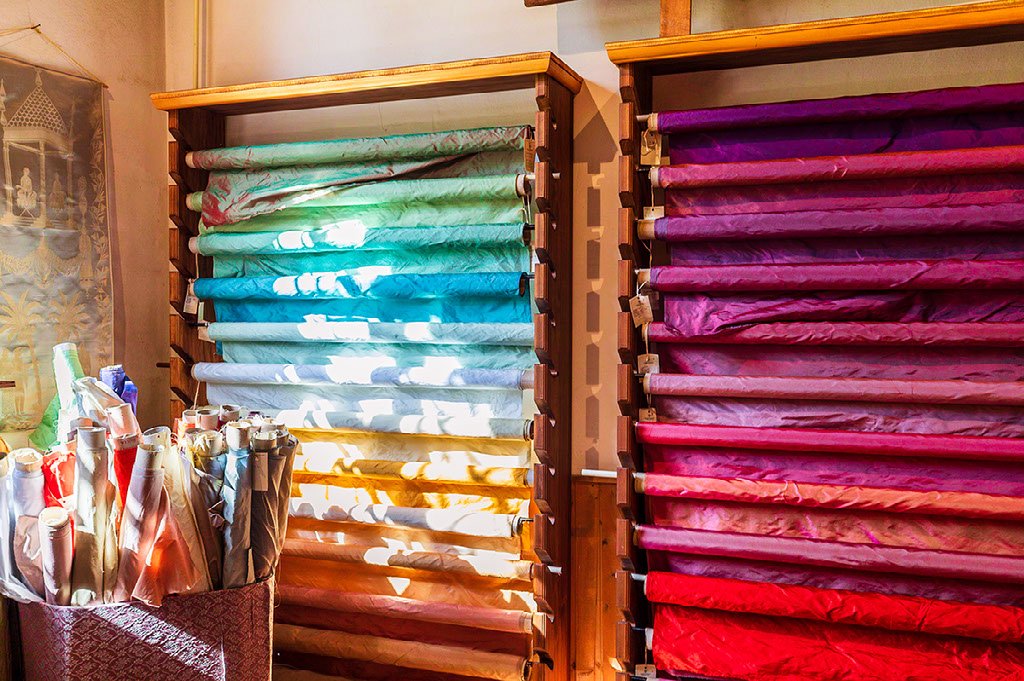
A visit to Florence is not complete without a visit to Officina Profumo-Farmaceutica di Santa Maria Novella. They have been making perfumes since 1381. The building is just gorgeous.
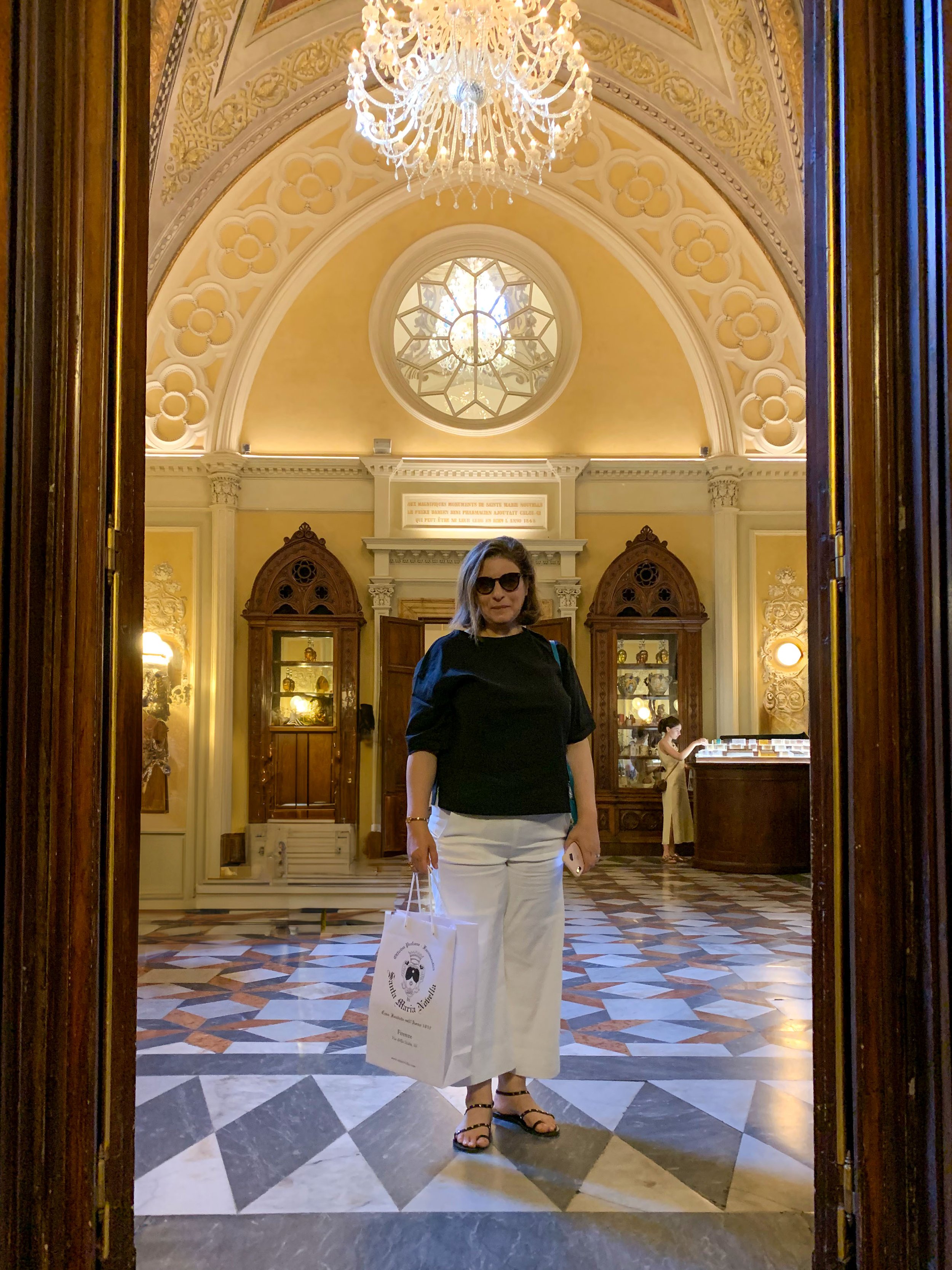
The spectacular interior of Officina Profumo-Farmaceutica di Santa Maria Novella, one of Florence’s most beautiful historic shops.
Mercato Centrale Firenze
It is a wonderful food market near Mercato di San Lorenzo. On the second floor, you will find dozens of small food vendors that make delicious pizza, pasta, panini, and all sorts of other items. You can also buy all sorts of Italian specialties like Truffles.
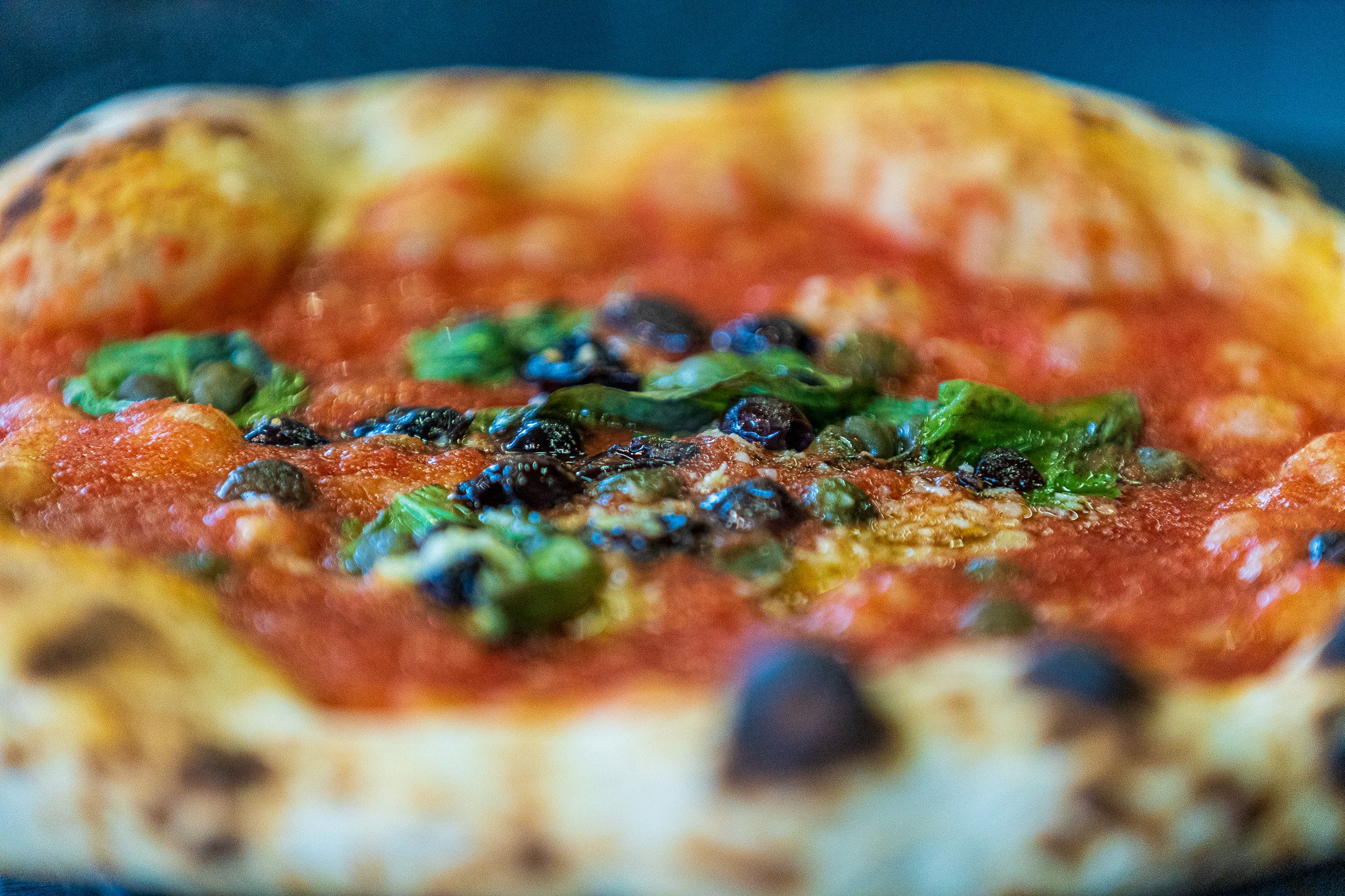
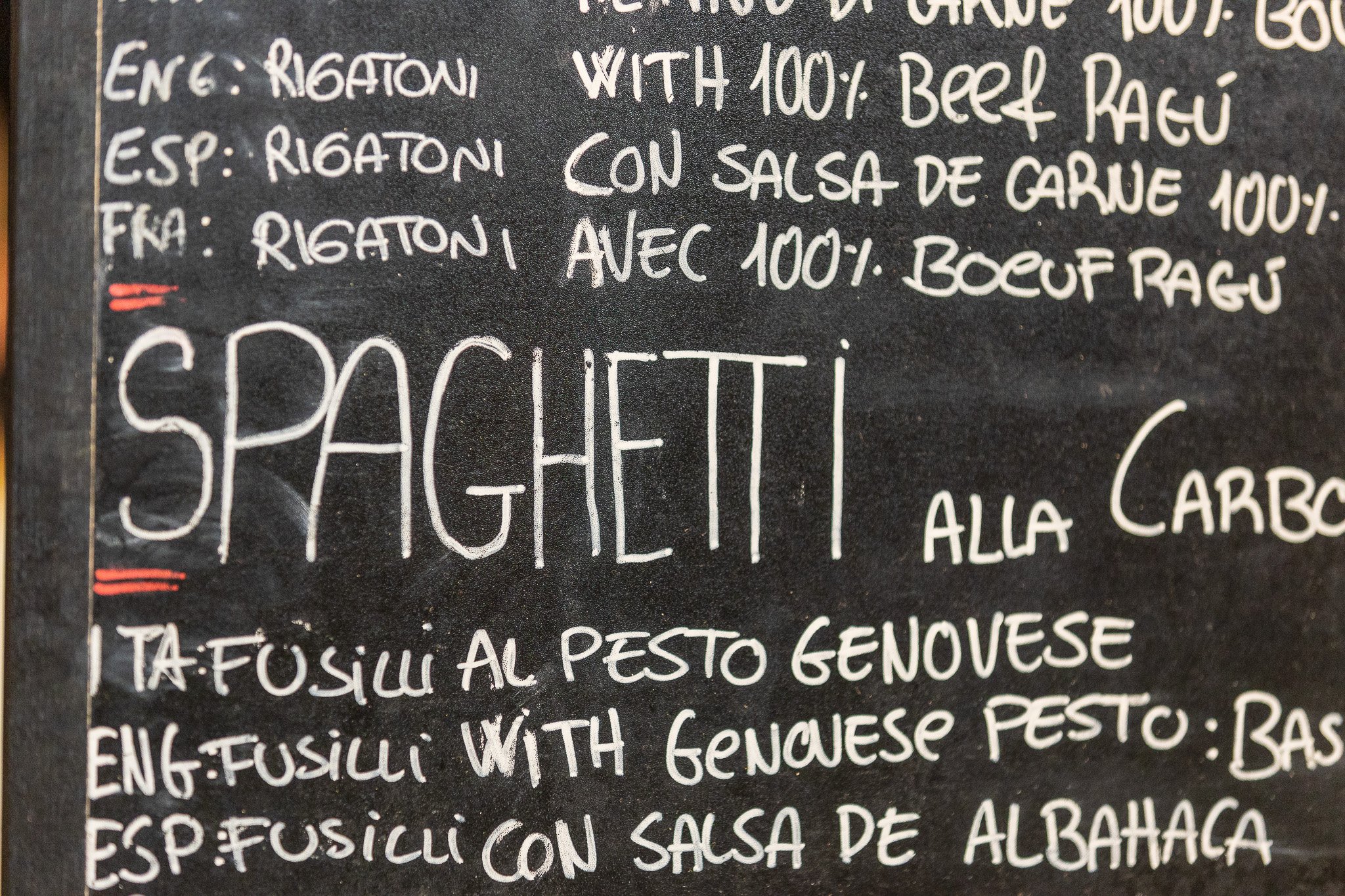
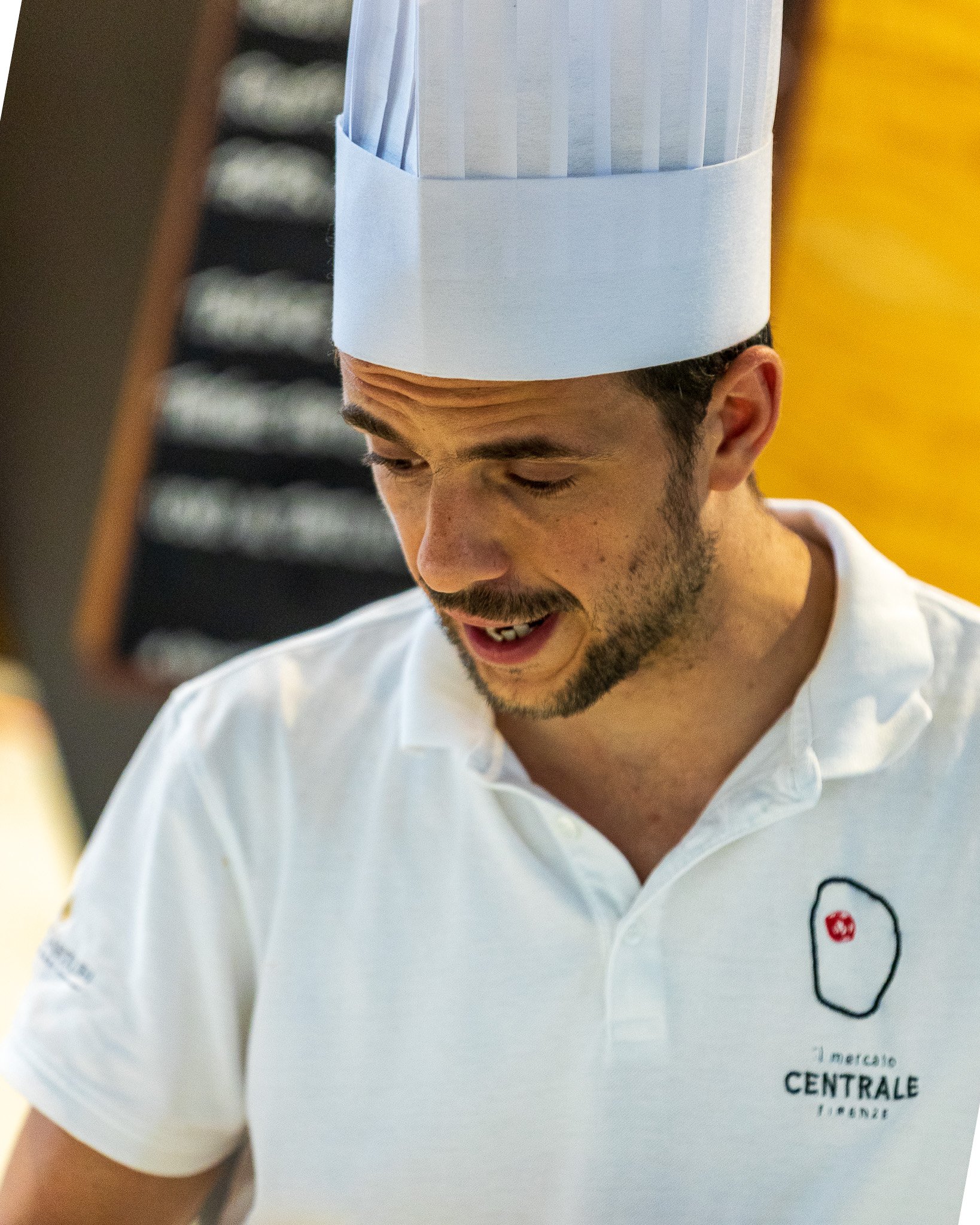
San Marco Museum
San Marco should not be missed. It includes a church and a convent, which is now the Museo Nazionale di San Marco. The main attraction is to see the paintings of Fra Angelico.
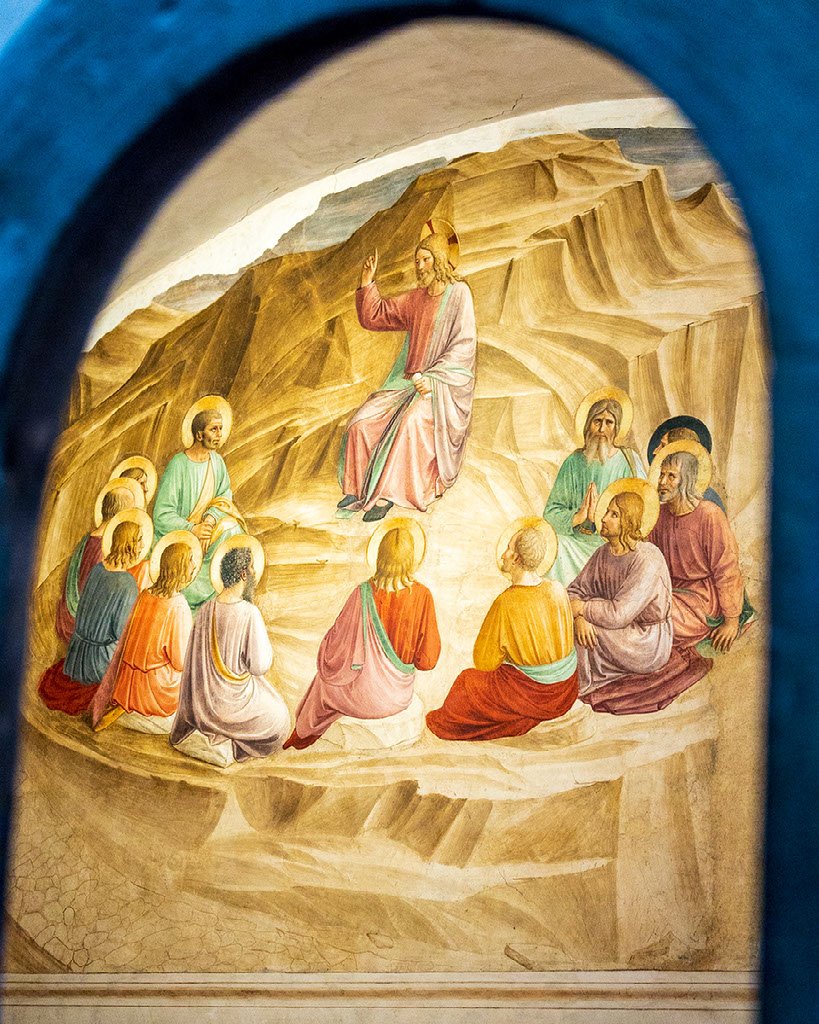
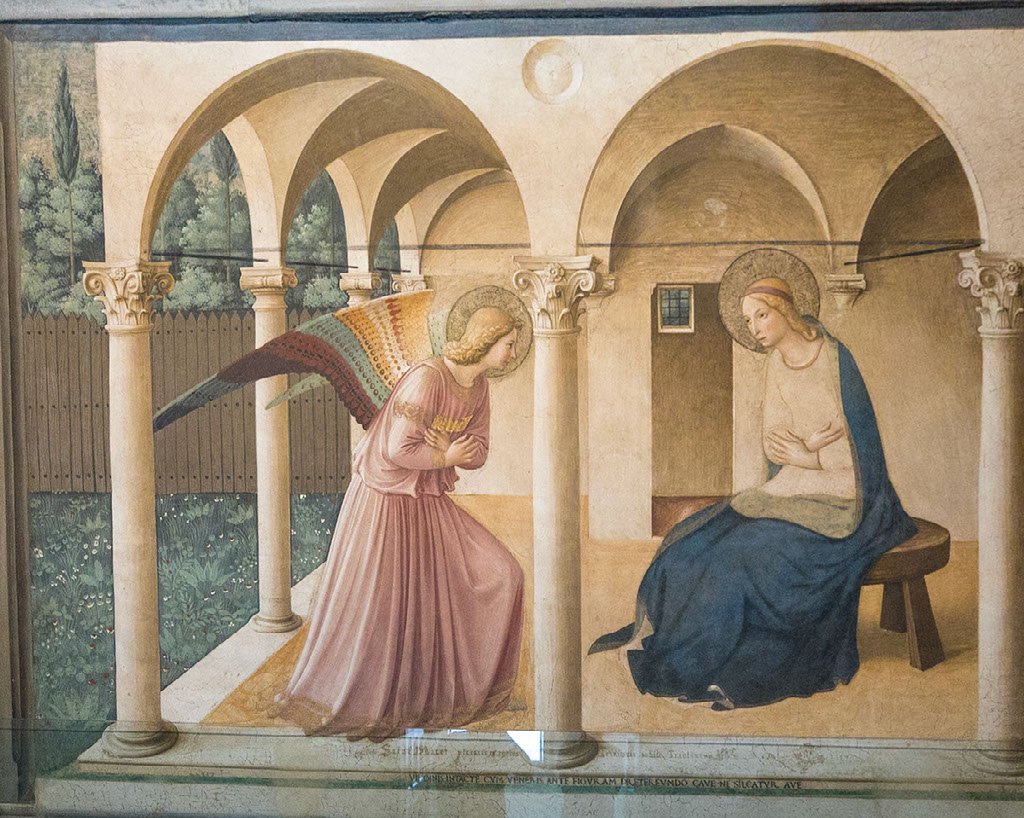
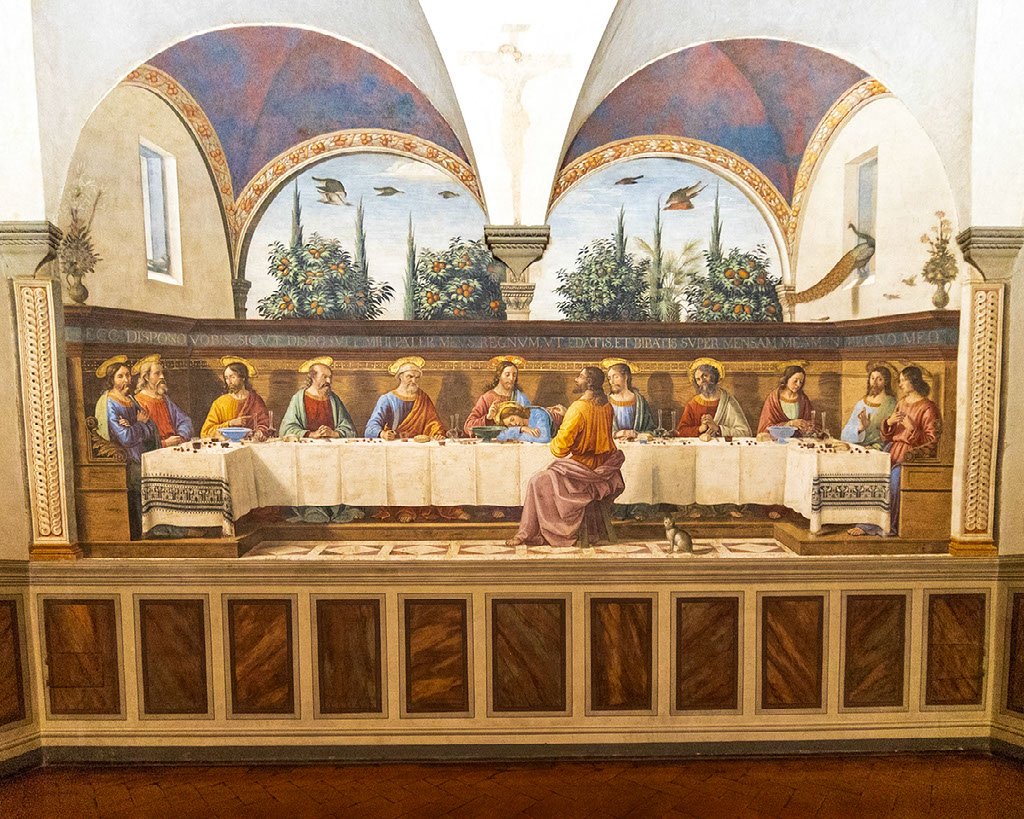
Galleria dell’ Accademia
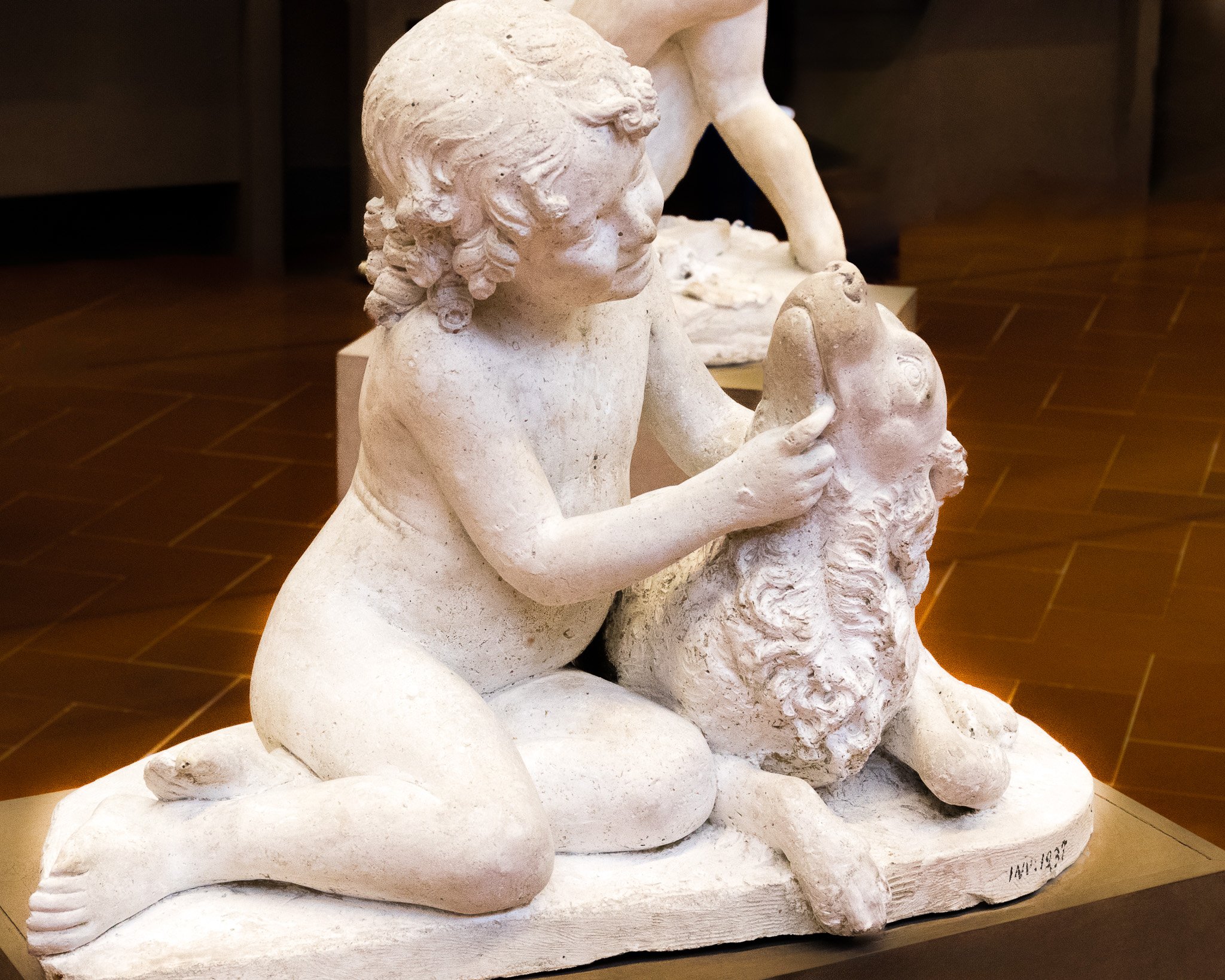
The "Gallery of the Academy of Florence" is one of Florence's main attractions, and it is recommended to purchase tickets in advance online. It is, of course, best known for housing Michelangelo's sculpture, David. There is also a sculpture room next to the Statue of David, where you will find one of my favorite sculptures, “The Girl and Her Dog.”
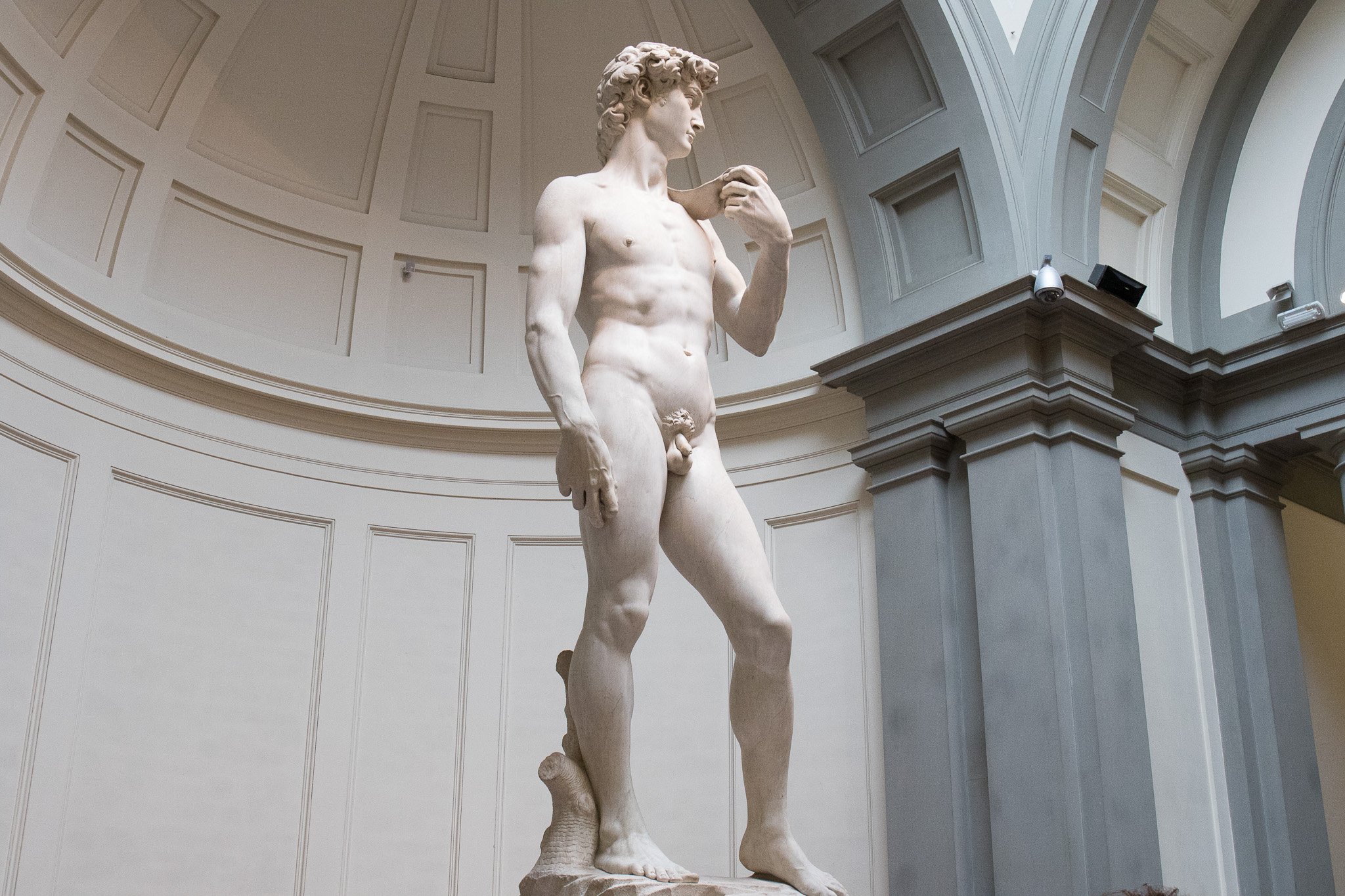
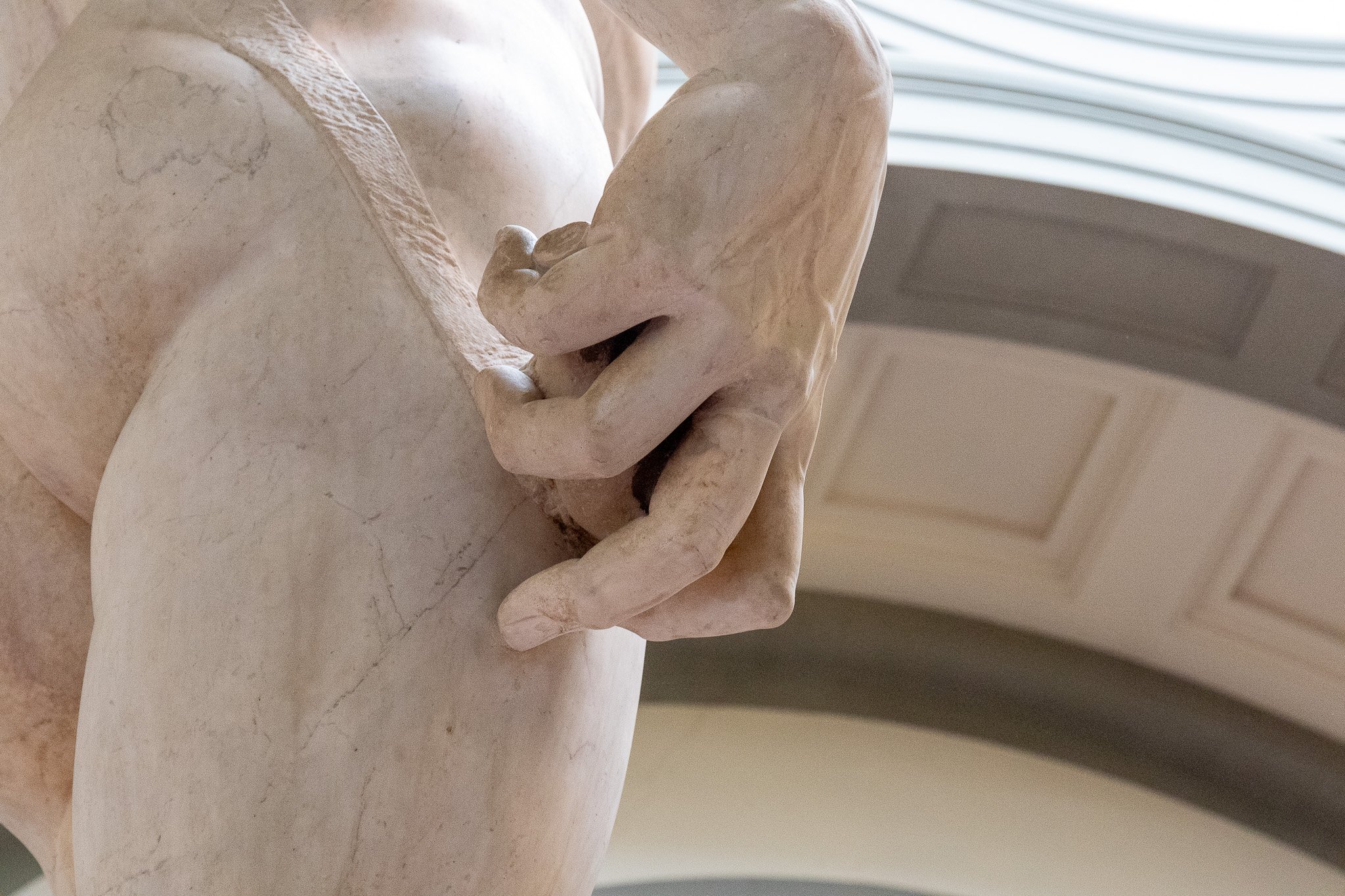
Westin Excelsior Hotel Rooftop & Grand Hotel Baglioni
Both hotels feature fantastic rooftop terraces, offering incredible city views. There is a bar on the top of the Westin, where you can enjoy a drink and watch an amazing sunset.
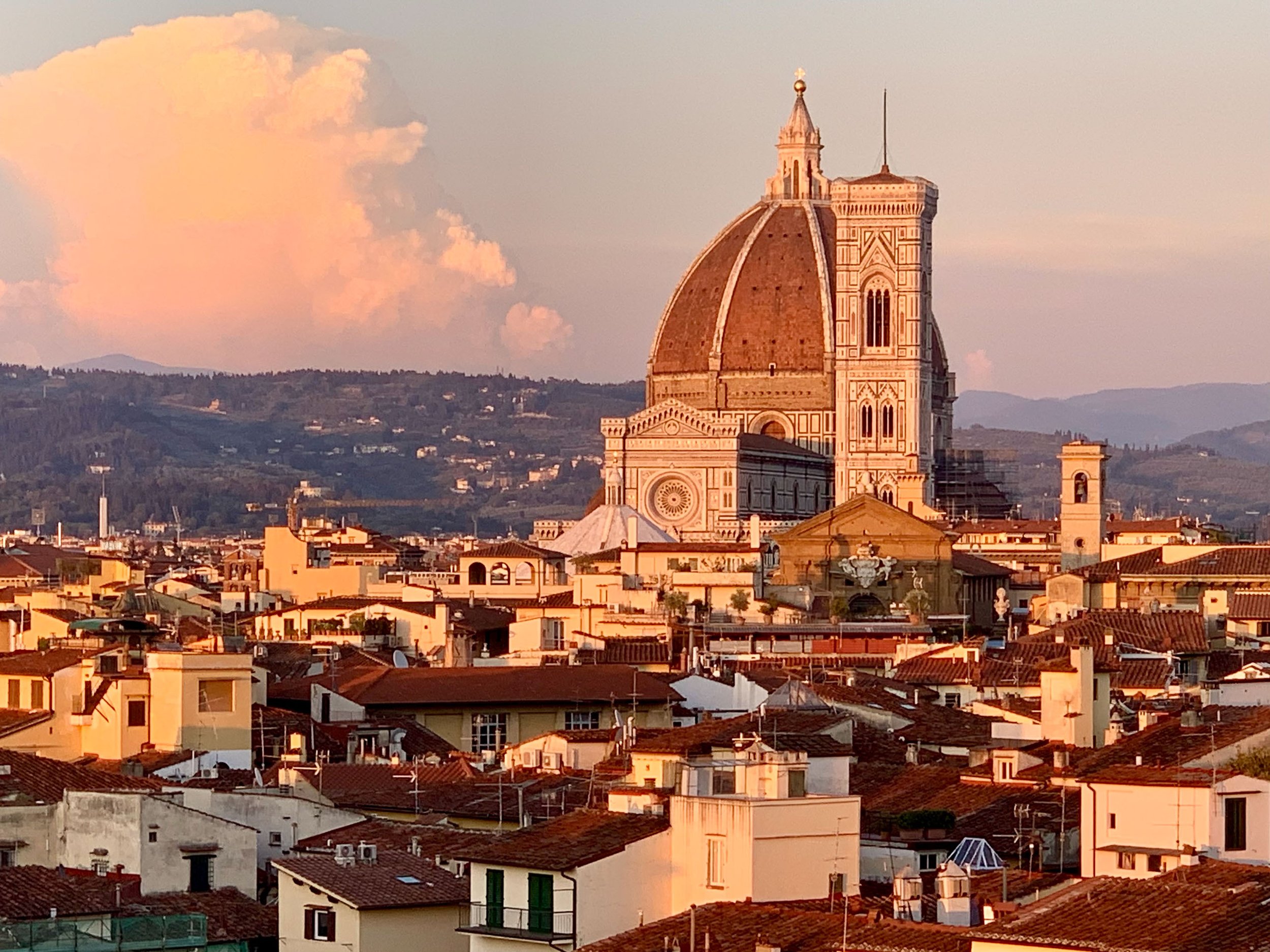
Florence from above, with the Duomo dominating the city’s terracotta skyline.
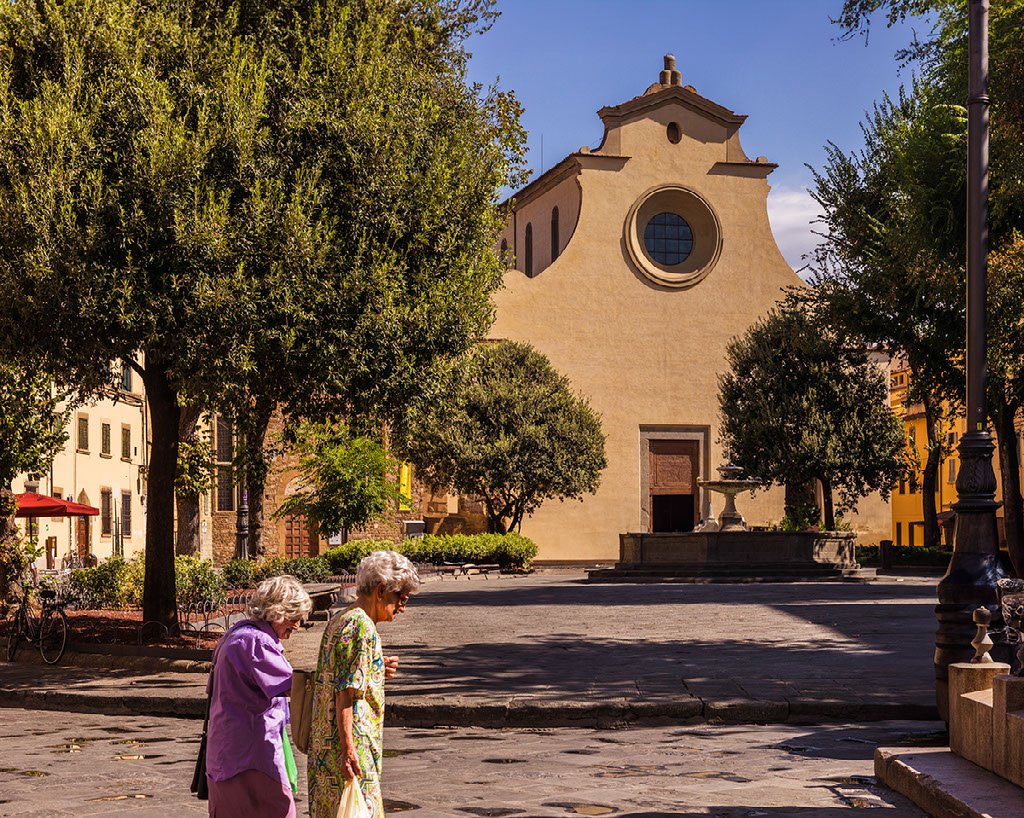
Piazza Santo Spirito
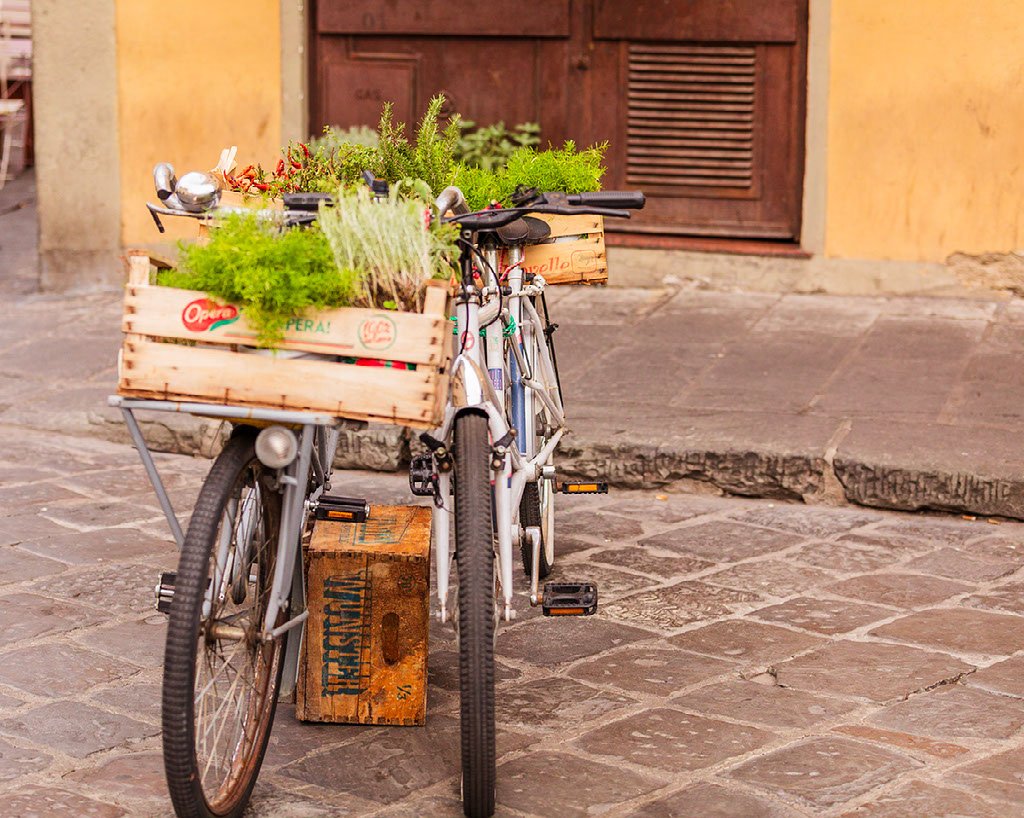
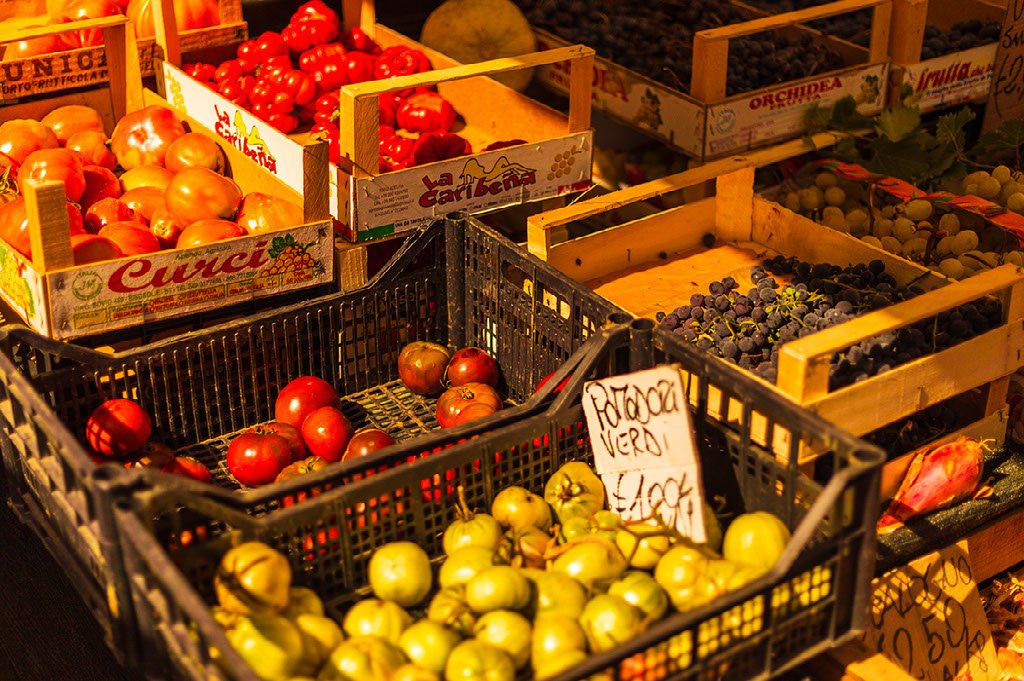
For those who truly want to know the real Florence, where the Florentines reside, a trip to the Oltrarno area is a must. The ”Oltrarno” is the area on the other side of the Arno River (the side opposite of the river to the Duomo). This area encompasses the Santo Spirito district, the Florentine equivalent of the rive gauche, or left bank. In the Oltrarno, you will find local artists, small coffee shops, and wonderful restaurants.
The Pitti Palace & Boboli Gardens
The Boboli Gardens behind the Pitti Palace are one of the most beautiful Renaissance gardens in Italy, and one of the most underused photography locations in Florence. The terraces, fountains, statuary, and cypress allées give you compositions that feel completely removed from the busy city just outside the walls.
Giardino Bardini, the lesser-known garden just east of Boboli, is in some ways even more photogenic. The wisteria pergola in spring is extraordinary, and the terraced garden gives you elevated views of the Oltrarno and the city skyline.
Pro Tip: Go early, before 10 a.m., when the light is low, and the gardens are still quiet. In spring, the wisteria at Giardino Bardini peaks in April, and the light through the purple blooms in the morning is genuinely one of the best shots in Florence at that time of year. Bring a wide zoom for the garden vistas and a telephoto for the statuary details. Boboli is also excellent in winter when the hedges are frosted, and the fountains catch cold morning light.
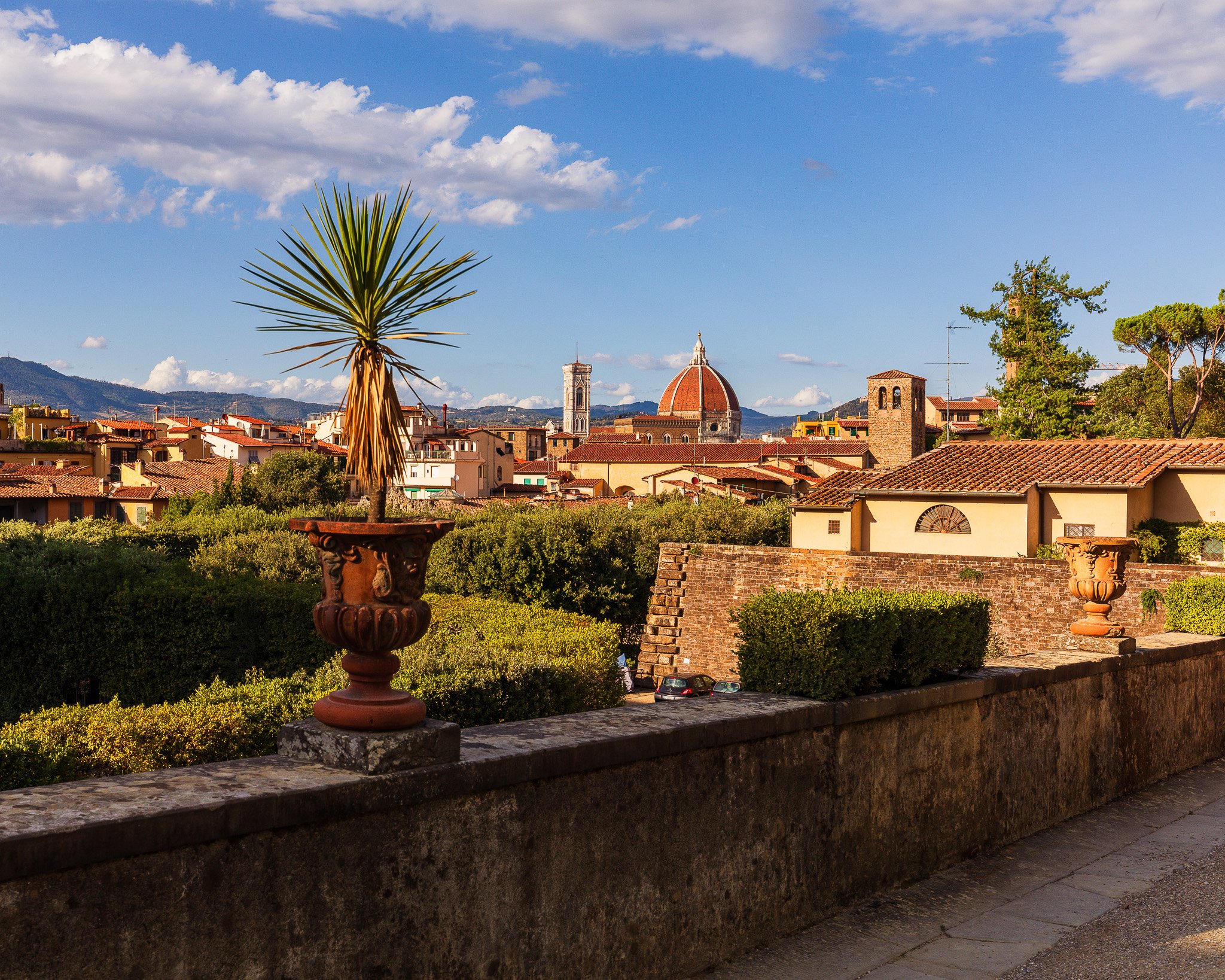
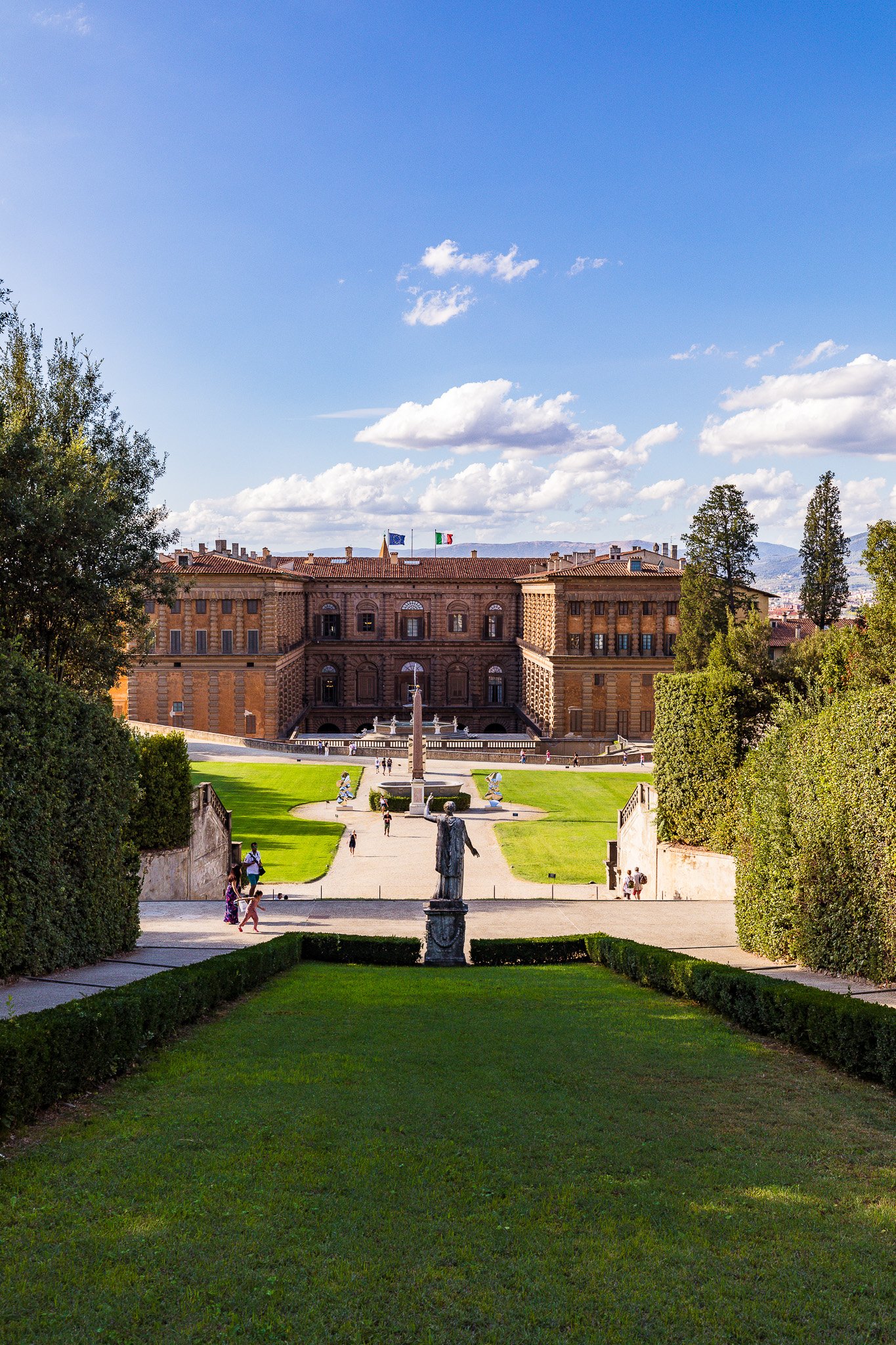
These gardens make up the largest green area in Florence. The park hosts centuries-old oak trees, sculptures, and fountains. It’s just a peaceful place to take a stroll.
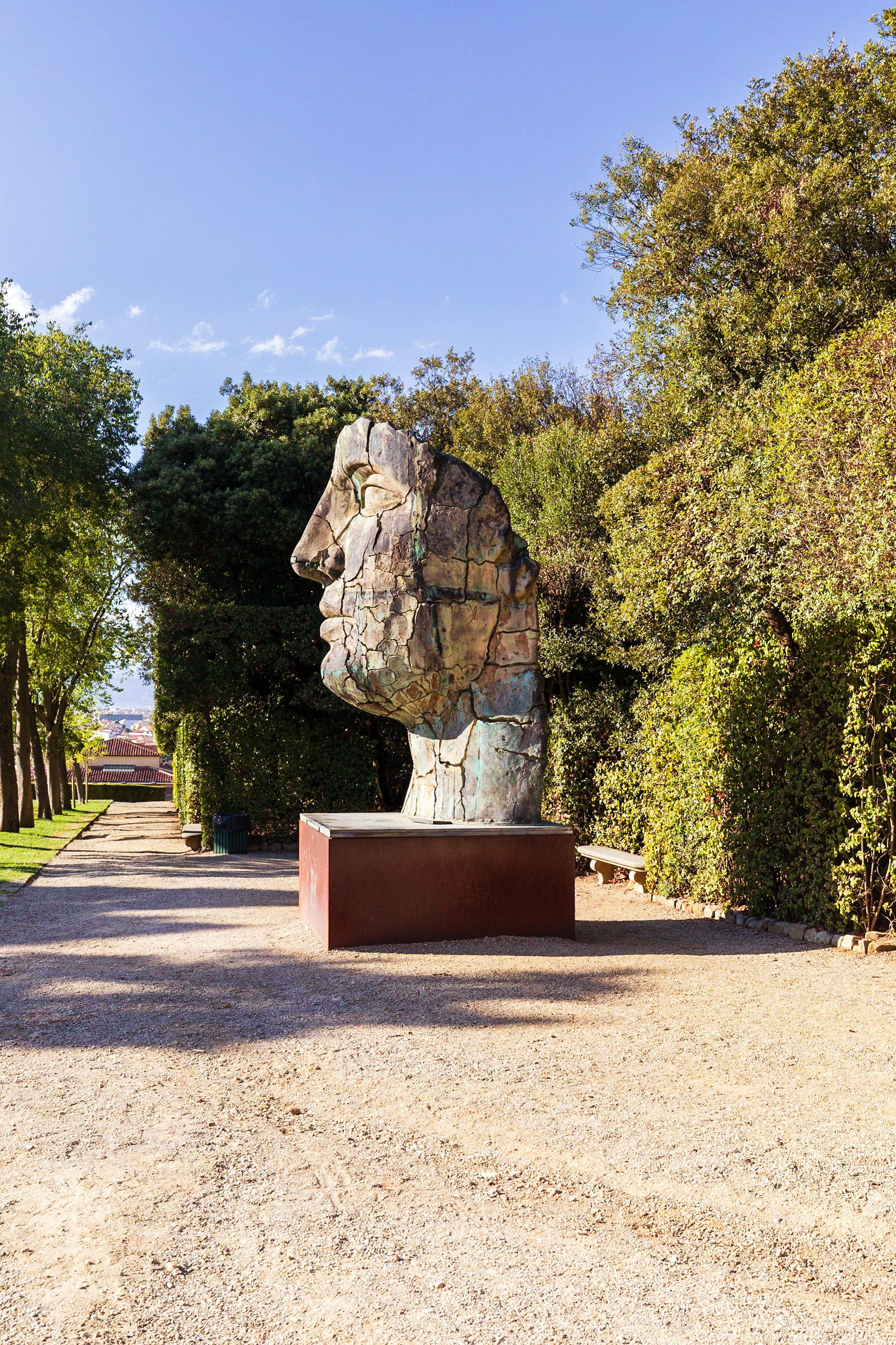
Statues, cypress trees, and sweeping views make the Boboli Gardens a completely different side of Florence.
San Niccolo Tower
The Tower of San Niccolò, built in 1324, was once part of a gate or porta for the former defensive walls of Florence. It is located in the Oltrarno on the way to the Piazzale Michelangelo.
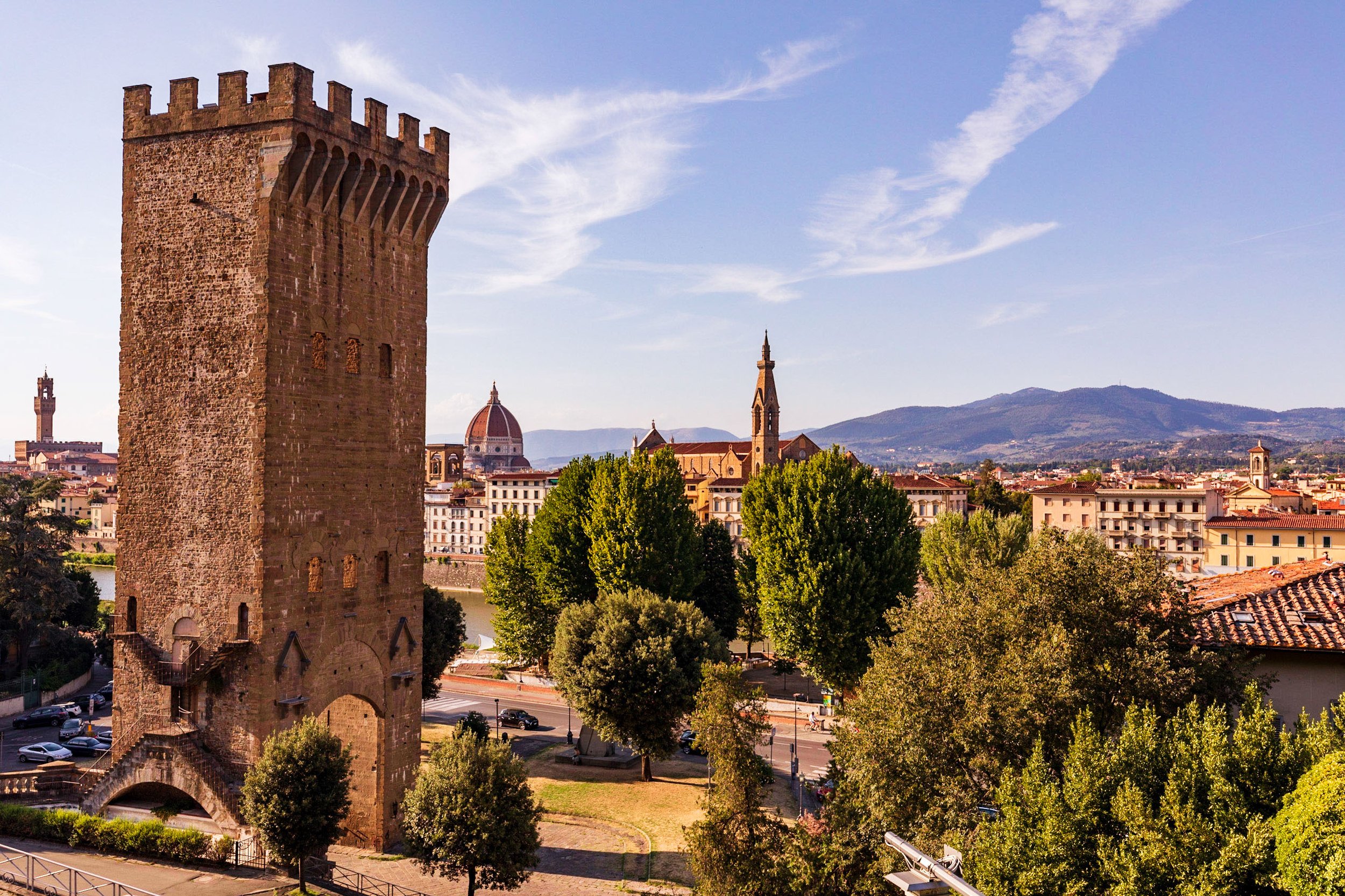
The medieval Tower of San Niccolò stands at the edge of Florence’s Oltrarno neighborhood.
Best Day Trips from Florence
If you have an extra day or two, Florence is a perfect base for exploring more of Tuscany. The train network is excellent, and several gems are just an hour or two away — ideal for a quick getaway with your camera. One of the most incredible drives in the world is the “Chiantigiana or SR 222”. It is a road that circles the entire Chianti area, from Florence to Siena. It's just one amazing view after another, with plenty of places to stop for a bite to eat or a scoop of gelato.
Fiesole: Just 20 minutes from Florence by bus, this quiet hillside town offers panoramic views of the city and Roman ruins. Come in the late afternoon for soft light over the skyline.
Pisa: Yes, it has the Leaning Tower, but go early or late to avoid crowds. The Camposanto and surrounding architecture offer surprising angles for photography beyond the cliché.
Lucca: One of Tuscany’s most photogenic small cities, with tree-lined walls you can walk or bike, quiet piazzas, and Renaissance charm. Great for golden hour street scenes.
Chianti Region: Rent a car for the day and drive through rolling vineyards, medieval villages, and sun-drenched fields. It’s Tuscan postcard material — and a dream for landscape photographers.
Siena: A little farther (about 1.5 hours), but worth the trip. Gothic architecture, rich colors, and the fan-shaped Piazza del Campo make for stunning photos, especially in low light.
San Gimignano: A medieval hill town known for its unforgettable skyline of stone towers. It’s often called the "Manhattan of the Middle Ages," and once you see the vertical silhouettes rising from the Tuscan countryside, you’ll understand why. Wander its cobbled streets, sip Vernaccia wine at a sunlit café, and climb the Torre Grossa for panoramic views of vineyards and tiled rooftops. It’s an easy day trip by car or with a guided bus tour from Florence.

The medieval towers of San Gimignano rising above the Tuscan countryside, an easy photography day trip from Florence.
Festivals and Events
Florence has a rich calendar of events that reward photographers willing to plan around them. These are the ones worth knowing about.
Scoppio del Carro (Explosion of the Cart)
Held on Easter Sunday in Piazza del Duomo, this is one of the most visually extraordinary events in Italy. A cart packed with fireworks is drawn through the city by white oxen and positioned in front of the cathedral. At the stroke of noon, a mechanical dove is released from the altar inside the Duomo, travels down a wire, and ignites the cart in an explosion of fireworks and smoke in the middle of the piazza. The crowds are enormous, the noise is tremendous, and the visual drama is unlike anything else in Europe.
Photography etiquette: arrive at least two hours early to secure a position near the cart. The explosion lasts only seconds, so lock your focus in advance and shoot in burst mode. A telephoto lens lets you capture the white oxen and the cart detail in the buildup, which is as photogenic as the explosion itself. Be respectful of local families for whom this is a serious religious event.
Calcio Storico Fiorentino
Held in June in Piazza Santa Croce, this is medieval football played in 16th-century costume, and it is exactly as intense as that sounds. Four historic neighborhoods of Florence compete in matches that combine football, rugby, and wrestling into something that has very few modern parallels. The costumes, the sand-covered piazza, the drumming processions before each match, and the raw physicality of the game itself give photographers an extraordinary range of subjects.
Photography etiquette: tickets are required and sell out quickly. Book well in advance. A telephoto lens is essential from the stands. The pre-match procession through the city center, with players and flag-throwers in full Renaissance costume, is often more photogenic than the match itself and is free to watch.
Maggio Musicale Fiorentino
Running from April through July, Florence's annual music festival is one of the oldest and most prestigious in Europe. Performances take place at the Teatro del Maggio, but the festival also spills into outdoor venues and historic spaces around the city. For photographers, the outdoor events in courtyards and piazzas offer beautiful environmental portraits and performance shots in architectural settings that you simply cannot replicate anywhere else.
Photography etiquette: indoor performances generally prohibit photography. Outdoor events vary. Always check the rules for each specific venue before raising your camera.
Festa della Rificolona
Held in September in the evening before the feast day of the Virgin Mary, this is one of Florence's most charming and least-known events for visitors. Children and adults carry handmade paper lanterns through the streets toward Piazza della Santissima Annunziata, creating a procession of glowing color through the dark city. It is a genuinely local event and one of the best opportunities for atmospheric night photography in Florence.
Photography etiquette: this is a family celebration. Photograph the lanterns and the atmosphere rather than singling out individual children. A fast prime and high ISO handle the low light well. The procession routes through the Oltrarno and the historic center are both worth following.
Frequently Asked Questions About Visiting Florence
Is Florence expensive?
It can be, especially the well-known restaurants near the Duomo, but there's real range. Family-run trattorias, standing espresso at the bar, and schiacciata sandwiches from All'Antico Vinaio let you eat exceptionally well without a fine-dining price tag.
Is Florence safe?
Yes, it's one of the more relaxed Italian cities to walk. Pickpocketing around Piazza del Duomo and the San Lorenzo market is the real risk, not violent crime. Keep your camera close and be alert in dense crowds.
Do you need a car in Florence?
No, and it's actively discouraged. The historic center falls under Italy's ZTL restricted traffic zone, and fines for entering without a permit arrive by mail weeks later. Walking covers nearly everything; save a rental car for Chianti or Tuscany day trips.
What are the best photo spots in Florence?
Piazzale Michelangelo at sunrise, Ponte Santa Trinita at sunset for the definitive Ponte Vecchio shot, and the Oltrarno's quiet streets are three I return to constantly. The full list with Pro Tips is below.
Can you fly a drone in Florence?
No. The entire UNESCO-protected historic center falls under controlled airspace, and flying without authorization is actively enforced. Use elevated viewpoints instead, Piazzale Michelangelo and Forte Belvedere both give you views a drone couldn't improve on.
What surprised you most about photographing Florence?
How much incredible architecture and art exists in such a small space. You don't expect a city this compact to hold this much history and this much to photograph within a twenty-minute walk of nearly everything.
How many days do you need in Florence?
Three days cover the essentials. Five days lets you breathe, revisit your favorite location once you understand the light, and fit in a Chianti or Val d'Orcia day trip.
Do you need to book museum tickets in advance?
Yes, essential for the Uffizi, the Accademia, and the Duomo's Bell Tower. All have timed entry, and showing up without a booking can cost you half a morning in line.
Final Thoughts
Florence does not need defending. It has been one of the great cities of the world for six hundred years and it will continue to be long after the rest of us are gone. What I can tell you, after a lifetime of visits, is that it rewards the people who come back.
On the first trip, you see the monuments. On the second trip, you start to understand the neighborhoods. By the third or fourth visit you have favorite tables, favorite light, favorite corners that nobody else seems to stop at. My wife and I have talked seriously about moving here more than once. We have not done it yet, but the conversation keeps coming back, and that tells you something about the hold this city has on people.
For photographers, Florence is as close to an ideal city as I have found anywhere in the world. The light is extraordinary across every season. The architecture gives you geometry, texture, and scale in every direction. The people, the markets, the river, the hills just outside the city: there is no shortage of subjects, and no risk of running out of reasons to return.
Come with time to spare. Go out early. Stay out late. Eat well and walk slowly. The city will take care of the rest.
Want to improve your photography while exploring some incredible destinations? Join me on one of my photography workshops! You can find all the details, including upcoming destinations and dates, through the links below.
Let's Stay Connected!
If you are planning a broader Italy trip, these three guides pair naturally with Florence.
My Photography and Travel Guide to Rome, Italy. Florence and Rome are two hours apart by high-speed train and together they make the definitive Italian photography trip. Florence gives you the Renaissance; Rome gives you two thousand years of everything else. The light in Rome is different, the scale is different, and the two cities complement each other in ways that make the combination more than the sum of its parts.
My Photography and Travel Guide to Cinque Terre, Italy. A two-hour drive or train ride from Florence, and one of the most photogenic coastlines in Europe. Five villages stacked on cliffs above the Ligurian Sea, connected by trails with views that reward every lens in your bag. The contrast with Florence could not be sharper, and that contrast is exactly why the two work so well together on the same trip.
My Photography and Travel Guide to the Dolomites, Italy. A two-hour drive northeast of Florence and one of the greatest landscape photography destinations on earth. I have been to the Dolomites five times, and I am still not done with them. The jagged pink peaks at sunrise, the alpine meadows, the mirror lakes at dawn: it is a completely different Italy from Tuscany, and that contrast is exactly what makes the combination work. Florence and the Dolomites together give you the full range of what this country offers photographically, from Renaissance art and terracotta rooftops to raw mountain light that changes by the minute.

🌅 Wake Up & Shoot: Join My DC Sunrise Monuments Photography Workshop!
Washington, DC | $99 per person | Max 6 participants or $199 Private
Ready to turn your early wake-up call into something unforgettable? Come chase the morning light with me through Washington, DC’s most iconic monuments—before the crowds roll in and while the city glows in that perfect golden hour.
This sunrise photo walk is a favorite for beginners and hobbyists, but it’s just as inspiring for seasoned shooters looking to capture DC in a whole new light. I offer a few of these group workshops each year (plus private tours for 1–6 people). I can also do private workshops.
What You’ll Learn:
📷 Composition techniques to transform snapshots into showstoppers
✨ How to work with reflections, shifting light, and movement
⏱ Tips on long exposures—even in changing morning light
We’ll Photograph:
The Lincoln Memorial, Vietnam Memorial, Korean Memorial, Jefferson Memorial, Tidal Basin, WWII Memorial, and the Washington Monument—plus any golden light gems we discover along the way.
Meet-Up Spot:
We’ll meet at the bottom of the steps leading up to the Lincoln Memorial. Click here for the location on Google Maps.
Gear Guide:
Bring your DSLR or mirrorless camera with a zoom lens (24-70mm or 24-105mm is perfect), a sturdy tripod, and if you’ve got them, an ND filter and remote shutter release. Need a tripod? I’ve got one available—just email me in advance to claim it.
Skill Level: Beginner to Intermediate (and Curious Travelers!)
If you're new to your camera, don’t worry—I’ve taught hundreds of beginners and promise to keep things fun and jargon-free. You’ll get personalized tips tailored to your level, so you leave with new skills and photos you’re proud of.
Fitness Level: Casual and Comfortable
This is a relaxed 2-hour stroll—no hiking, no racing. Just beautiful light, wide paths, and time to pause, set up, and enjoy the process.
What’s Included:
✔️ On-location photography instruction
✔️ Follow-up image review + feedback session via Zoom
Cancellation Policy:
🗓 Full refund if canceled 48+ hours in advance
🚫 No refunds for late cancellations unless your spot is filled
Want to Book a Private Tour Instead?
Let’s create a customized photo walk for you or your group—just shoot me an email.
📧 Contact Vito L. Tanzi email me at vito@chasinghippoz.com
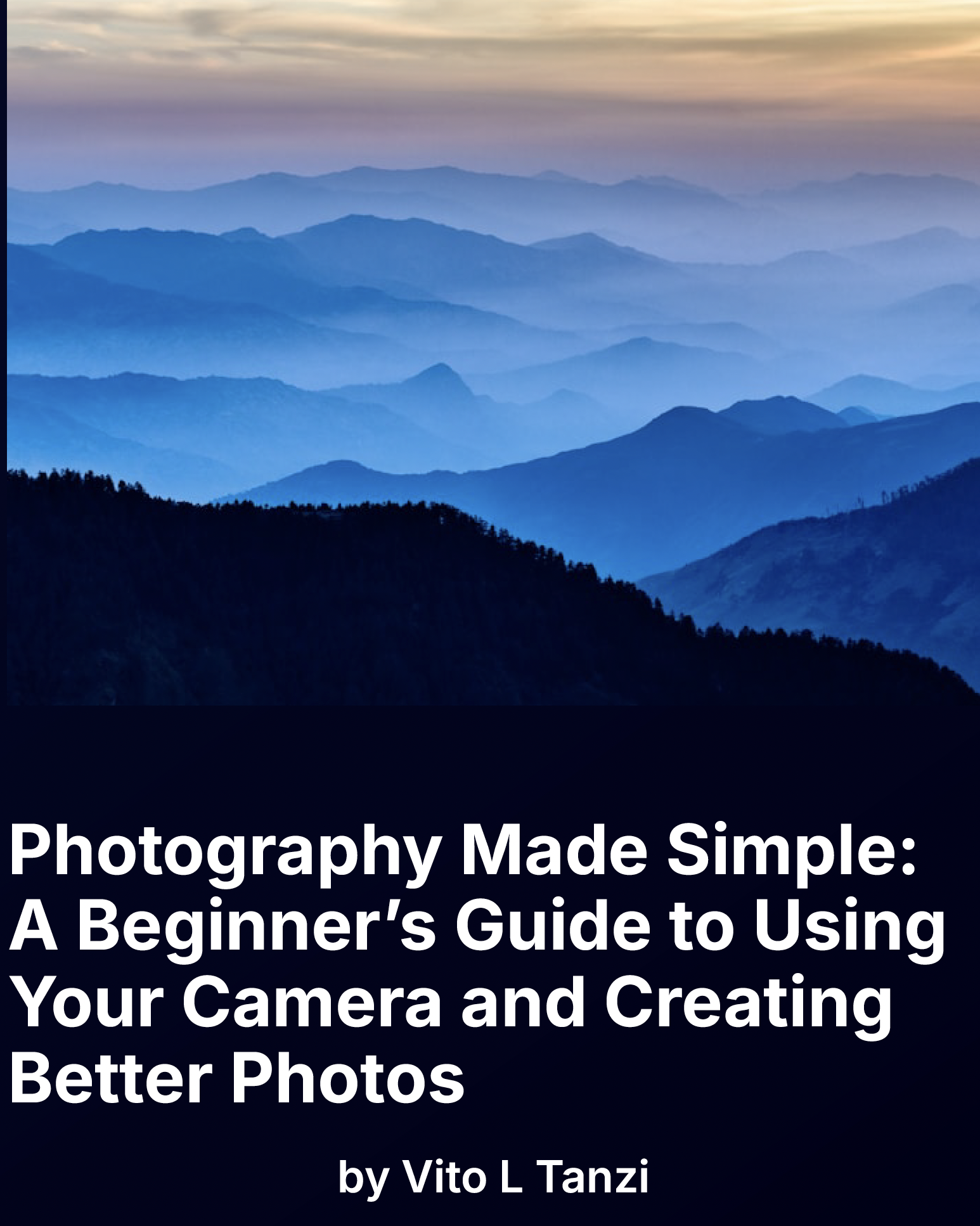
Finally—a beginner-friendly photography guide that makes sense.
If you've ever picked up a camera and thought, "Now what?" this is the book for you.
Photography Made Simple is written for adults who are just starting out and want a clear, encouraging, real-world approach to learning photography. Whether you're using a DSLR, mirrorless, or just your smartphone, this guide walks you through the basics—without the jargon or tech overwhelm.
Inside, you'll learn:
The only camera settings you really need to know to get started
How to shoot sharper, more intentional photos using light and composition
Simple tips for portraits, landscapes, travel, and everyday life
What gear you do (and don’t) need
How to create better photos without upgrading your camera
You’ll also get practical exercises, cheat sheets, and tips for organizing and editing your images—plus the confidence to shoot off Auto Mode for good.
This is not a textbook. It’s a friendly guide to seeing the world with fresh eyes—and finally capturing what you see the way you imagine it.
📸 Format: PDF download
Pages: 100+
Perfect for: Beginners, hobbyists, and anyone ready to take better photos without the stress