Milan, Italy Travel & Photography Guide: Best Photo Spots, Things to Do & Hidden Gems
Milan does not try to impress you. It just does.
I have been coming here for years, drawn back by equal parts photography, food, and a circle of friends who have made this city feel like a second home. Every visit confirms the same thing: Milan rewards people who pay attention. The light changes fast here, the streets shift personality from block to block, and the city has a visual confidence that very few places in the world can match.
For photographers, the range is extraordinary. You can spend a morning with a wide-angle lens pointed at the Gothic spires of the Duomo and an afternoon chasing street portraits in Brera, where the people are, without question, the best-dressed subjects you will ever find. By evening, the Navigli canals settle into a warm glow of aperitivo lights and reflections that beg for a tripod and a slow shutter.
My clearest memory of Milan is from a sunrise I almost talked myself out of. I set an alarm for 4:30 am, stepped into Piazza del Duomo while the city was still asleep, and had the entire square to myself. The marble cathedral caught the first light and turned a shade of gold I had never seen before and have never quite replicated since. That single frame is why I keep coming back.
In this Photography Guide to Milan, I share the places and experiences that continue to draw me back. You will find my favorite photography locations, guidance on when and where to shoot, practical travel tips, and gear recommendations, along with cultural insights to help you explore and photograph Milan with confidence, respect, and ease.

The Duomo di Milano glowing in the first light of sunrise, before Piazza del Duomo fills with crowds.
Photographer's Notes
Before you go, here are my own takeaways.
Favorite Season: Spring, especially May, and autumn
Favorite Location: Piazza del Duomo at sunrise
Favorite Hotel: Park Hyatt Milano
Favorite Restaurant: Trattoria Milanese
Favorite Café: Marchesi 1824
Favorite Lens: 16-35mm f/2.8
Would I Return? Yes, absolutely, I have many good friends who live here.
Where to Stay in Milan, Italy
The best base for photographers is the historic center, specifically the area between the Duomo and the Brera district. Everything you want to shoot in the mornings is within walking distance, and you can be in position before sunrise without coordinating transport or wasting the best light.
Luxury Hotels in Milan, Italy
Park Hyatt Milano is where I keep coming back. The location is the main reason: it sits directly facing the entrance to the Galleria Vittorio Emanuele II, which means you can be shooting inside the Galleria or in Piazza del Duomo within two minutes of stepping out the front door. The rooms are spacious and well-appointed, the breakfast is excellent, and the staff handles early alarm call requests without batting an eye. For a photographer who wants zero friction between the hotel and the first shot of the day, this is the right choice.
Four Seasons Hotel Milano occupies a converted 15th-century convent in the heart of the Fashion District, tucked between Via Montenapoleone and Via della Spiga. I have stayed here many times and it remains one of the best hotels in Italy. The rooms are high-ceilinged and serene, the garden courtyard is a genuine escape from the city, and the service is exceptional. The property recently completed a full renovation, so everything is fresh. It is also an ideal base for Brera street photography, which is essentially at your doorstep.
Bulgari Hotel Milano sits in a private garden in the Brera district and is one of the most architecturally interesting luxury hotels in the city. The building and its surroundings are worth photographing in their own right.
Mid-Range Hotels
Palazzo Segreti is a boutique hotel a short walk from the Duomo with a quiet, residential feel that is a welcome contrast to the energy of the city outside. Small, well-designed, and well-located.
The Yard Milano in the Navigli district is a strong pick if you plan to spend time shooting the canals. The design is distinctive, the cocktail bar draws locals, and the neighborhood gives you a completely different Milan experience from the historic center.
Room Mate Giulia is a solid mid-range option in the center with stylish design, friendly staff, and a location that puts you close to the Duomo metro stop and most of the major photography locations.

The entrance to the Portrait Hotel in Milan, Italy
Best Time to Visit Milan, Italy
Spring and autumn are the sweet spots for photographing Milan. April through June brings mild temperatures, longer golden hours, and a city that feels energized without being overwhelmed by tourists. The light in May is particularly good, soft and directional in the early morning, which is exactly what the Duomo's marble facade deserves. Autumn, September through October, delivers similar conditions with the added bonus of warmer tones as the season turns.
Summer works, but July and August come with heat, haze, and crowds around the major landmarks. Many Milanese leave the city in August, which gives the streets an oddly quiet quality that can actually be interesting for street photography. Just be prepared for the heat if you are shooting midday.
Winter is underrated. December and January bring a stillness to the city, and on foggy mornings, the Duomo and the Galleria take on an almost cinematic atmosphere. Fashion Week in February also fills the streets with extraordinary people-watching opportunities if street and portrait photography are your focus.
If you want the best balance of light, manageable crowds, and comfortable shooting conditions, plan your trip for late April, May, or the first half of October. Arrive early every morning. Milan's most iconic locations transform between 5:30 and 7:30 am, before the tour groups and commuters take over.
Getting Around Milan, Italy
Milan is one of the most walkable major cities in Italy, and for photographers, that matters. The historic center is compact enough that you can move between the Duomo, the Galleria, Brera, and Sforza Castle entirely on foot. Walking is almost always the right call when you have a camera bag on your shoulder and no fixed schedule.
When you need to cover more ground, Milan's metro system is clean, reliable, and easy to navigate. Four lines connect the city center to neighborhoods like Navigli and Porta Nuova without much hassle. A day pass is worth it if you plan to move around a lot. Trams are another option, and the vintage orange Carrelli trams that still run on several routes are worth riding for their own sake as photographic subjects.
Uber and Bolt both operate in Milan and work well for late-night or early-morning trips when you are carrying gear and do not want to deal with public transit. Standard taxis are available at ranks near the Duomo and the train stations.
Renting a car inside the city makes no sense. Traffic is dense, parking is expensive, and the areas you most want to photograph are either pedestrian zones or heavily restricted. Save the car for day trips outside the city.
One practical note: cobblestones are everywhere in the historic center. A rolling suitcase or a bag with wheels is more of a liability than a convenience. Pack smart and carry what you need on your back.
Ideal Duration of Stay
Three days is the minimum to photograph Milan properly. Five days is the sweet spot if you want to shoot locations at the right light without feeling rushed.
Here is how I would break it down:
Day 1: The Historic Center Start at Piazza del Duomo before sunrise. You want to be in position by 5:30 am. Spend the morning working the cathedral from every angle, then move inside the Galleria Vittorio Emanuele II as the light begins to pour through the glass dome. Afternoon is ideal for the rooftop of the Duomo, where the forest of spires and the distant Alps on a clear day give you a completely different set of compositions. End the day with an aperitivo somewhere near the Galleria.
Day 2: Brera and Sforza Castle. Dedicate the morning to Sforza Castle at sunrise, then walk into the Brera district as the neighborhood wakes up. Spend the rest of the day shooting street photography. The fashion houses, the well-dressed locals, and the mix of old architecture and modern energy make Brera one of the best street photography neighborhoods in Europe. Take your time here.
Day 3: Navigli and Porta Nuova Head to the Navigli canals in the morning for reflections while the light is low and the canal bars are still quiet. Spend the afternoon at Bosco Verticale and the Porta Nuova district for architectural contrast. Return to Navigli at blue hour for your final shots of the trip.
Days 4 and 5 (if you have them): Use the extra time to revisit your favorite locations in different light, explore street photography deeper into neighborhoods you have not covered, or take a day trip to Lake Como, which is less than an hour by train and worth every minute.
Where to Eat in Milan, Italy
Milan takes food seriously. This is a city where the risotto alla Milanese has been perfected over generations, where aperitivo is a daily ritual rather than a trend, and where the best meals happen at tables that are not always easy to get into. Reservations matter here, especially at the better places.


Restaurants Milan, Italy
Trattoria Milanese is the place I send friends when they want to eat the way the city actually eats. Classic Milanese dishes, no surprises, no gimmicks. Order the risotto or the ossobuco, and you will understand why this city has never needed to dress its food up.
Nerino Dieci Trattoria is a local favorite near the Duomo that manages to stay genuinely good despite its location. The risotto alla Milanese here is one of the best versions in the city; the portions are honest, and the room has energy without being loud. Book ahead.
Giacomo in the Brera district is a Milanese institution that has been drawing fashionistas and food lovers in equal measure since 1958. The interior feels like a classic trattoria should, the ingredients are excellent, and the cooking is confident. Go outside of Fashion Week if you want to focus on the food rather than the scene.
Ratanà is where the city's food-forward crowd eats. Chef Cesare Battisti sources ingredients from within an hour of the city and runs a menu that is firmly rooted in Lombard tradition but never stuck in it. The setting, a converted cinema building in the Porta Nuova area, is worth the visit alone.
Camparino in Galleria is not strictly a restaurant, but no list of where to eat and drink in Milan is complete without it. Order at the bar rather than at a table, stand close to the original wall mosaics, and have a Campari Seltz. It has been the home of the Milanese aperitivo since 1915, and that history alone earns its place here. Go early in the evening before the tourist crowd arrives.
La Latteria is a shoebox-sized institution in the Brera area with fewer than ten tables, no social media presence, and zero interest in impressing anyone. It closed in 2023, was rescued by a member of the Loro Piana family, and reopened in 2025 with the original owners still running the kitchen. The pasta with jalapeño and lemon zest is unlike anything else in the city.


Coffee
Marchesi 1824 is where I stop every morning when I am in Milan. Prada owns it now, and the elegance shows, but the coffee and pastries remain the point. The original location near the Brera district is the one to go to.
Pavè is the right call when you need to sit down, edit photos, and stay a while. The furniture is vintage, the service is relaxed, and the coffee is excellent. It attracts a creative crowd, and nobody will rush you.
Orsonero is Milan's best specialty coffee shop, run by a Canadian who arrived with a mission to change the city's espresso culture and largely succeeded. If you care about how your coffee is sourced and roasted, this is your place.
Photography Gear to Bring
Milan rewards photographers who travel light and move fast. The city's best moments happen early, often unexpectedly, and in tight spaces where a full kit becomes a liability. Here is what I bring.
DSLR and Mirrorless Kit
The Canon EOS R5 Mark II is my primary body in Milan. The autofocus system handles street photography and fast-moving subjects in Brera without hesitation, and the high-resolution files hold up beautifully for the detailed architectural work at the Duomo and the Galleria. The Sony A7R V and Nikon Z8 are equally strong options if those are your systems.
For lenses, the 16 to 35mm is the workhorse here. The Galleria's glass dome, the Duomo's facade, and the Bosco Verticale all require wide coverage to do them justice. The 24 to 70mm handles everything else, from street portraits in Brera to detail shots in the canals at Navigli. I bring the 70 to 200mm specifically for the rooftop of the Duomo, where compressing the spires against the city creates a completely different image from what you get at street level.
A sturdy tripod is essential for blue hour at the Navigli canals and the pre-dawn work at Piazza del Duomo. I use a Platypod for low-angle shots on the marble piazza when I do not want to carry the full tripod. Bring a 6-stop and a 10-stop ND filter for long exposures on the canals and for managing bright midday light on the white marble of the Duomo.
Pack extra batteries. Cold mornings and heavy autofocus use drain them faster than you expect. Two spares minimum. Bring a Samsung T7 SSD for on-the-go backup after long shooting days.
Drone note: Milan is a restricted airspace zone. Flying over the historic center, the Duomo, and most of the city is prohibited without prior authorization. Check the Italian ENAC regulations and the D-Flight app before you travel if this matters to your work.
iPhone Tips for Milan
Milan is one of the best cities in the world for iPhone street photography. The people are well-dressed, the streets have strong graphic geometry, and the light in golden hour turns ordinary facades into something cinematic.
Use Portrait Mode in Brera for environmental portraits against the fashion house windows. The subject separation works especially well on narrow streets where the background compression feels natural rather than artificial.
For the Galleria Vittorio Emanuele II, switch to the ultrawide lens and position yourself directly under the central glass dome. Point straight up. The symmetry of the ironwork and glass at this angle produces one of the most graphic shots in the city, and it works just as well on an iPhone 15 Pro as it does on a full-frame mirrorless body.
At the Navigli canals during blue hour, use Night Mode and brace the phone against a wall or railing. The reflections of the canal lights on the water respond beautifully to a slightly longer exposure, and the iPhone handles the mixed light sources better than you might expect.
At the Duomo before sunrise, shoot in ProRAW if your phone supports it. The dynamic range between the dark marble and the first warm light on the spires is significant, and ProRAW gives you the latitude in post to pull detail from both ends without blowing either.
Best Photography Locations in Milan, Italy
Milan is a photographer's paradise, offering a mix of iconic landmarks and hidden gems. Here are some must-visit spots:
Duomo di Milano
The Duomo is the center of gravity for photography in Milan, and it earns that status. Construction began in 1386 and took nearly six centuries to complete. The result is one of the most ornate Gothic cathedrals in the world, with approximately 3,400 statues, 135 gargoyles, and a white marble facade that changes character completely depending on the light and the hour.
The piazza in front of the cathedral is your primary composition space. At ground level, you are working with scale, symmetry, and the relationship between the cathedral and the people moving through the square. Early morning removes almost all of that human element and gives you the marble and the architecture in near silence.

The Duomo di Milano illuminated during blue hour before sunrise in Piazza del Duomo.
📷 Pro Tip: Arrive before 5:30 am. In spring and summer, the first light hits the facade between 5:45 and 6:15 am and turns the white marble a deep gold that lasts only about twenty minutes. Position yourself on the central axis of the piazza for symmetry, or move to the far left or right corner for a diagonal composition that shows both the facade and the side spires. A wide-angle lens between 16 and 24mm handles the full facade from the piazza. For detail work, switch to the 70 to 200mm and isolate individual statues or gargoyle pairs against the sky. Bring a tripod for blue hour, which delivers some of the most dramatic light of the day here.
Best time: Pre-dawn through golden hour, or blue hour at dusk. Access: Free to enter the piazza; paid entry for the cathedral interior and rooftop terraces. Duomo metro stop, one minute on foot.


Rooftop of the Duomo
Most visitors photograph the Duomo from below. The photographers who come back with the images that stop people mid-scroll are the ones who went up. The rooftop terraces sit among the spires and statues at close range, and the views across the city extend to the Alps on a clear day.
The density of Gothic sculpture up here is extraordinary. You are walking among the same stone figures that have looked down on the city for centuries, and at close range they reveal details that are completely invisible from the piazza below.
📷 Pro Tip: Go early, right when the terraces open. The light is best in the morning, and the crowds build quickly after 10 am. A 24 to 70mm lens handles most compositions up here, letting you include both the foreground spires and the city stretching behind them. For tighter work isolating individual statues against the sky, the 70 to 200mm is the right choice. On a clear day, position yourself on the north-facing terrace and look toward the Alps. That combination of Gothic stonework in the foreground and snowcapped mountains in the distance is one of the more remarkable frames in all of Italy.
Best time: Early morning, right at opening. Access: Paid entry, stairs or elevator options available. Duomo metro stop, five minutes on foot.
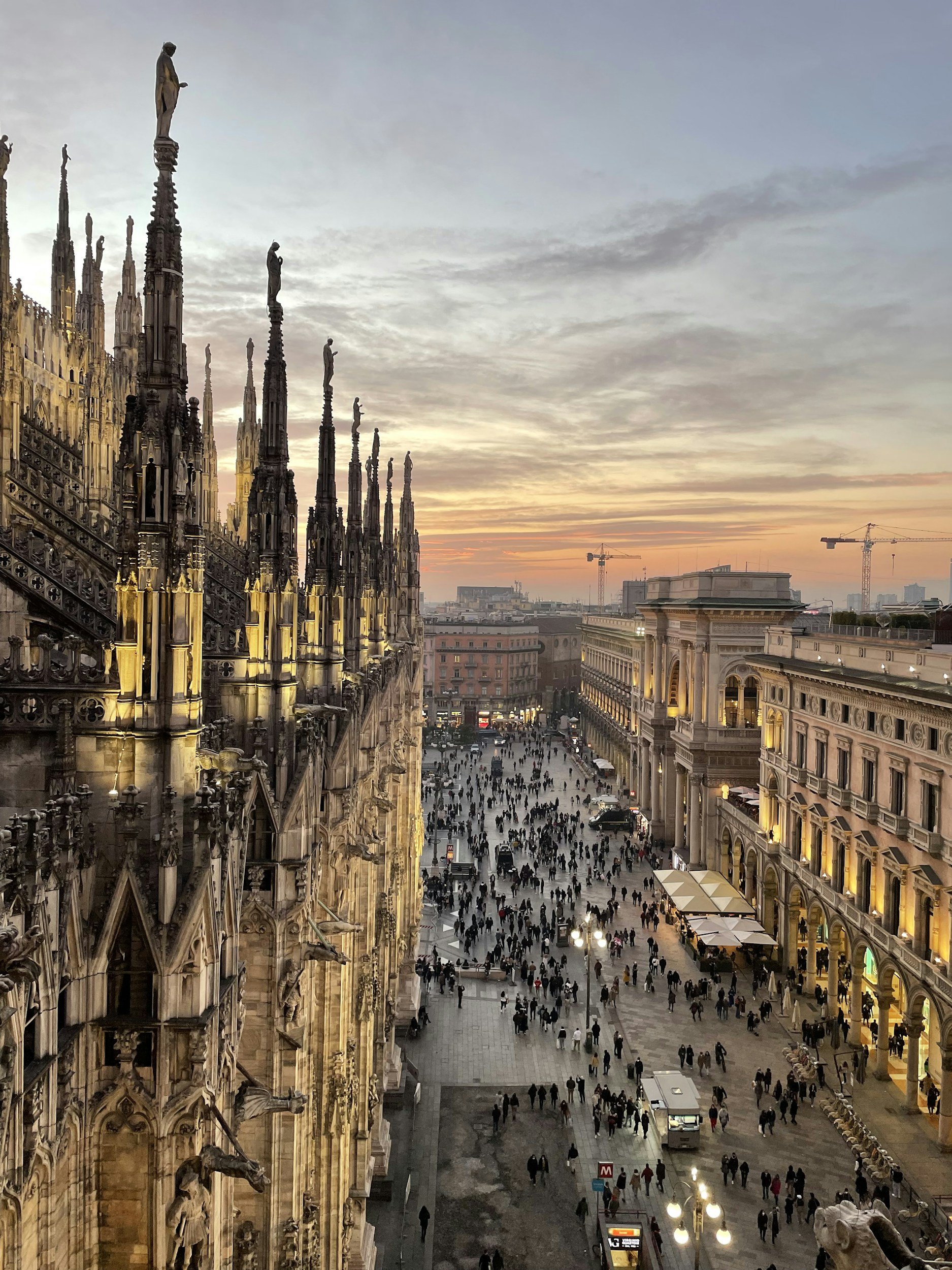
Among the Gothic spires on the rooftop terraces of the Duomo di Milano.
Galleria Vittorio Emanuele II:
The Galleria sits directly adjacent to the Duomo and is one of the most photographically compelling interiors in Europe. Built between 1865 and 1877, it features a barrel-vaulted glass and iron roof running the full length of the arcade, converging on a central octagonal space covered by a towering glass dome. The combination of natural light, 19th-century ironwork, and ornate mosaic floors makes it genuinely difficult to take a bad photograph here.
The light inside changes dramatically by hour. Early morning, before the shops open, delivers clean, even light through the glass ceiling with almost no people. Midday turns the floor into a canvas of reflected light and shadow geometry. Evening brings warm artificial light that mixes with the last of the natural light in a way that rewards slow exposures.
📷 Pro Tip: I always photograph the Galleria before the Duomo, while the light is fresh and the space is empty. Get here by 6 am and you will have the entire arcade to yourself. Position yourself at one end of the main gallery and shoot down the full length of the barrel vault with a wide-angle lens at 16 to 24mm. Then move to the central dome and point directly up. That overhead shot of the ironwork and glass is one of the most graphic images in Milan, and it works whether you are shooting with a mirrorless body or an iPhone. For detail shots of the floor mosaics, get low and use the geometry of the tile pattern as a leading line toward the dome above.
Best time: 6 to 8 am before crowds arrive, or late evening for mixed light. Access: Free, open daily. Duomo metro stop, two minutes on foot.

The Galleria Vittorio Emanuele II before sunrise, when Milan’s famous arcade is nearly empty.
Make sure to photograph the ceiling

Looking up at the glass and iron dome of the Galleria Vittorio Emanuele II in Milan.
Sforza Castle (Castello Sforzesco)
The Castello Sforzesco is a 15th-century fortress that anchors the northern edge of the historic center. It is massive, serious, and surprisingly photogenic at the right time of day. The main tower rises above the entrance gate in a way that rewards both wide environmental shots and tighter architectural details.
The large courtyard inside the castle walls offers a completely different set of compositions from the exterior, with covered arcades, stone columns, and quieter light than the open piazza outside. The park behind the castle, Parco Sempione, gives you a green foreground element and longer distance views of the towers.
📷 Pro Tip: Sunrise is the move here. The main tower and the gate catch the first light from the east and the warm tones on the stone are a significant upgrade over the flat midday version of the same scene. Position yourself on the central axis of the approach to the main gate for the classic symmetrical composition, then explore the sides for less obvious angles. A 24 to 70mm handles most of what you need here. The courtyard inside is best in the morning when the light enters at a low angle through the archways and creates strong shadow patterns on the stone. Come back at blue hour for a completely different mood.
Best time: Sunrise and blue hour. Access: Free entry to the grounds and courtyard. Metro line 1 to Cairoli, five minutes on foot.

Castello Sforzesco glowing in the warm morning light at sunrise in Milan.
Brera District:
Brera is Milan's most photogenic neighborhood for street photography. The combination of cobblestone streets, independent art galleries, fashion boutiques, and one of the most well-dressed populations in Europe makes every block a potential frame. People here are not dressed up for a special occasion. This is simply how they look on a Tuesday morning.
The streets around Via Brera and the Pinacoteca di Brera gallery have the strongest concentration of photographic subjects. The narrow lanes, the contrast between old stone facades and modern shop windows, and the constant movement of people create the conditions for the kind of street photography that requires patience more than luck.
📷 Pro Tip: Mid-morning on weekdays is the best time to work on Brera. The neighborhood is active but not yet saturated with weekend visitors, and the locals going about their day are less aware of cameras than they are on busier afternoons. A 35mm or 50mm prime lens is the ideal tool here; it gives you a natural field of view that does not feel intrusive and forces you to engage with your subjects at a distance that produces more intimate images. The area in front of Stefano Ricci's flagship store consistently produces strong environmental portrait opportunities. Shoot wide open for subject separation from the elaborate window displays behind your subjects, which turn into rich abstract backgrounds at f/1.8 or f/2.
Best time: Mid-morning on weekdays. Access: Free. Lanza metro stop, five minutes on foot.
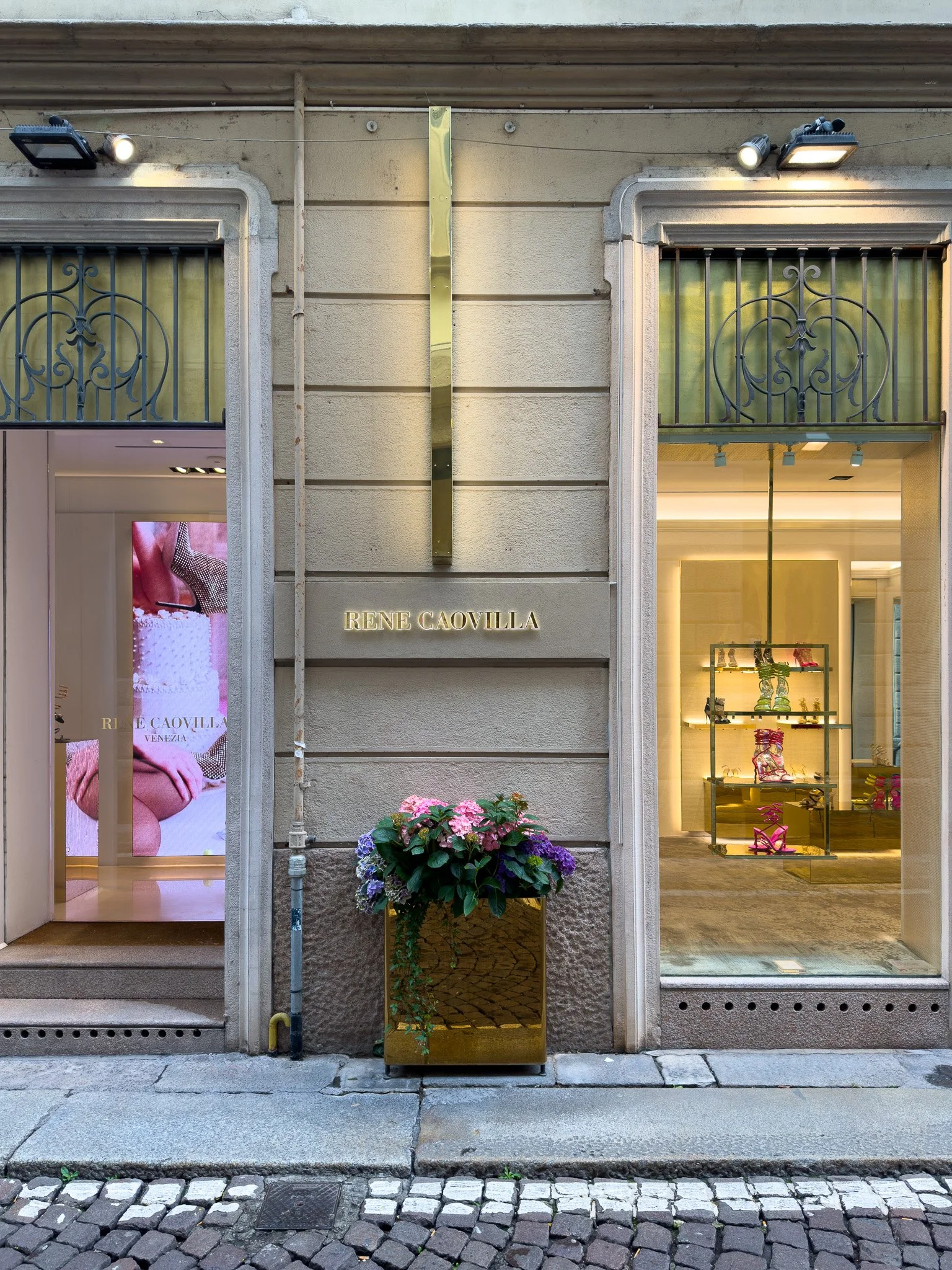
Fashion boutiques, cobblestone streets, and everyday life in Milan’s Brera district.
I loved exploring all the windows of the fashion houses in this area. It is a shoppers paradise.


Bosco Verticale:
The Bosco Verticale towers in the Porta Nuova district are among the most photographed pieces of contemporary architecture in Italy, and for good reason. Two residential towers covered in over 900 trees and thousands of shrubs create a visual contrast with the surrounding glass and steel of the modern business district that is genuinely arresting. Completed in 2014, they have aged into the urban landscape in a way that makes the greenery look more organic with every passing season.
The towers reward multiple approaches. From a distance, the mass of green against the hard geometry of the surrounding city is the story. Up close, the individual trees and terraces take over, and the scale of the engineering becomes clear.
📷 Pro Tip: Photograph the Bosco Verticale from Piazza Gae Aulenti, the elevated public square at the base of the towers. From here, the geometry of the buildings resolves correctly, and you can use the clean lines of the piazza as a foreground element. A 24 to 70mm at the mid-range handles the full towers comfortably from this distance. For a tighter, more abstract treatment, move in close with a wide-angle lens and point upward from the base of the building; the perspective distortion works in your favor here, drawing the eye up through the layers of greenery. Early morning, before 8 am, gives you the softest light and the fewest people. The large mural on the adjacent building is worth a separate frame while you are in the area.
Best time: Early morning for soft light, golden hour for warm tones on the greenery. Access: Free, public space. Porta Nuova or Gioia metro stop, ten minutes on foot.

The tree covered towers of Bosco Verticale rising above Milan’s modern Porta Nuova district.
Navigli District
The Navigli canals in the southwest of the city are Milan's most atmospheric neighborhood for evening photography. Two main canals, the Naviglio Grande and the Naviglio Pavese, are lined with bars, restaurants, and converted warehouses that light up beautifully at dusk. This is where the city exhales after work, and the energy that comes with aperitivo hour adds human interest to every frame.
The reflections of the canal-side buildings on the water are the primary subject here. In calm conditions, the water mirrors the warm lights of the bars and the colored facades in a way that turns a straightforward urban scene into something almost painterly.
📷 Pro Tip: Plan to arrive ninety minutes before sunset and stay through blue hour. The transition from golden hour to blue hour at the Navigli is one of the best light shows in the city. Set up your tripod at the edge of the Naviglio Grande and work with a 24 to 70mm at the wider end to capture both the reflections and the activity along the canal bank. A 6-stop ND filter during the brighter part of the evening lets you smooth the water surface and introduce motion blur into the pedestrians moving along the canal, which removes the clutter and simplifies the composition. The bridges over the canal provide elevated angles that compress the reflections and the buildings into a tighter, more graphic frame.
Best time: Golden hour through blue hour. Access: Free. Porta Genova metro stop, ten minutes on foot from the city center.
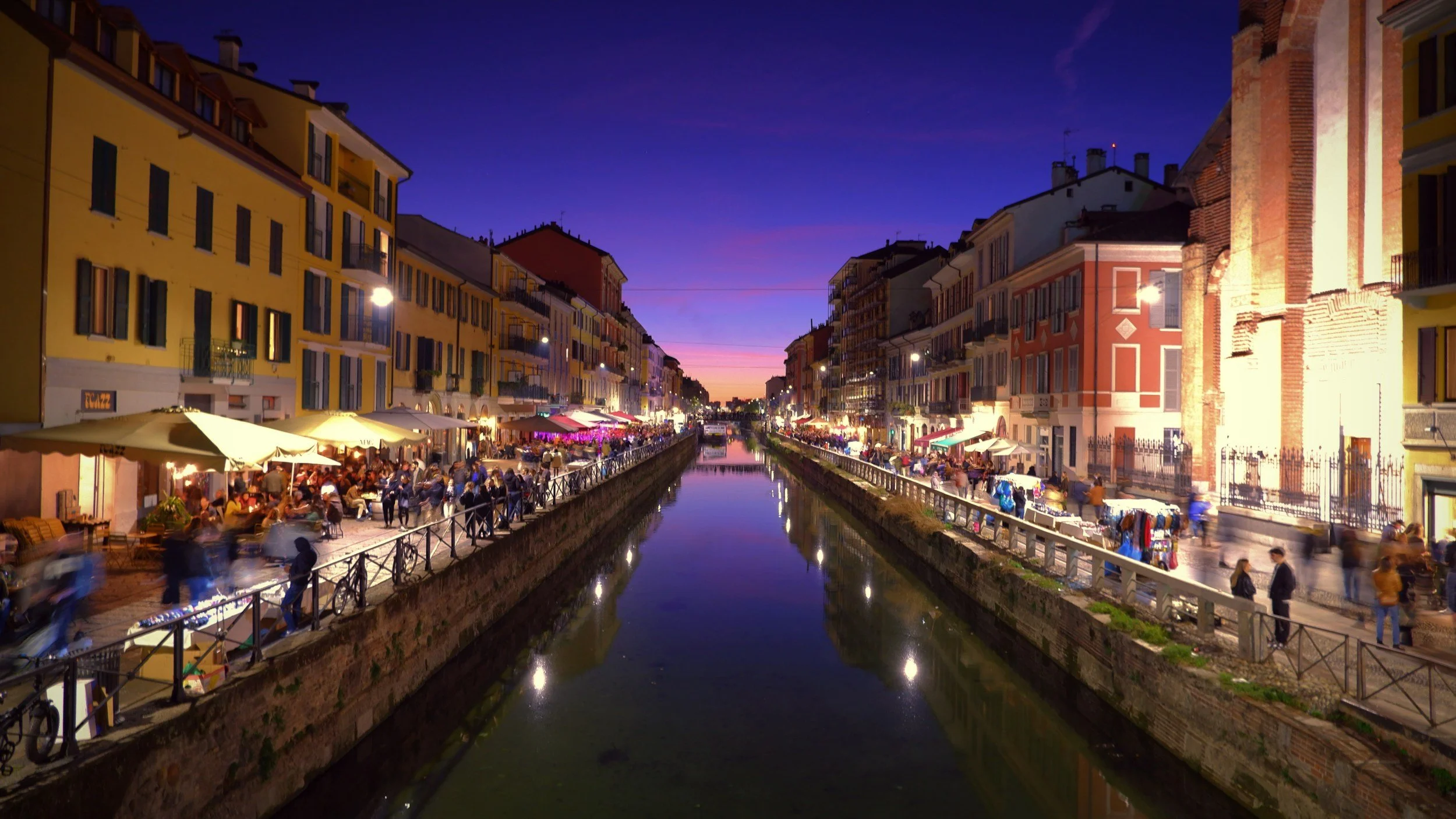
Evening reflections along the Navigli canals, one of Milan’s best locations for blue hour photography.
Trams
The trams of Milan are iconic and a significant part of the city's charm. Milan's tram system, one of the oldest in the world, dates back to the late 19th century. With their vintage design and classic orange and yellow colors, these trams remind me of the trams you might see in Lisbon.

A classic Milan tram moving through the city during blue hour.
Street Photography
Milano is a fantastic city for Street Photography. Being the fashion capital of Italy, people are very well-dressed.

An environmental portrait on the streets of Milan, where fashion and everyday life often share the same frame.
I found many people to photograph in front of Stefano Ricci's shop. I love environmental portraits that show people in everyday life.


Graffiti in Milan, Italy
I am always looking for wonderful Street Art/Murals. This one is located next to the Bosco Verticale.

A large street art mural near Bosco Verticale in Milan’s Porta Nuova district.
Special Events and Festivals
Milan's event calendar is as well-curated as its fashion. The city hosts several annual events that transform it photographically, pulling in extraordinary people, temporary installations, and street energy that you simply cannot find at any other time of year.
Milan Fashion Week
Fashion Week happens twice a year, in February and September, covering the men's and women's collections respectively. The runway shows themselves are industry-only, but the streets around them are completely open to anyone with a camera. Brera, Tortona, and Porta Venezia fill with photographers, editors, models, and buyers dressed in ways that make every corner of the city a potential frame. The people-watching during Fashion Week is among the best in the world, full stop. If street and portrait photography are your focus, plan your trip around one of these weeks. The energy outside the venues is often more interesting than whatever is happening inside.
Salone del Mobile and Fuorisalone (Milan Design Week)
Held every April, the Salone del Mobile is the largest furniture and design fair in the world, drawing roughly 500,000 visitors over its run. The fair itself is held at Rho Fiera on the outskirts of the city, but the Fuorisalone events spread across the entire city and are largely free and open to the public. Brands, architects, and designers take over historic courtyards, converted warehouses, and public squares with installations that are often extraordinary to photograph. The Brera Design District is the most concentrated area for Fuorisalone events and the most visually rewarding. Come with a wide-angle lens and no fixed agenda. Some of the best images from this week come from stumbling into a courtyard you had no intention of entering.
PianoCity Milano
PianoCity happens in May and is one of the most charming events in the city's calendar. Over a single weekend, hundreds of piano concerts take place simultaneously across Milan, in piazzas, private homes, courtyards, museum gardens, and unconventional urban spaces. It is a gift for photographers. The combination of live music, candid audience reactions, and the range of intimate and monumental settings gives you material that is genuinely different from anything else the city offers. Keep your 35mm or 50mm prime ready and move through the city from one concert to the next.
Carnevale Ambrosiano
Milan's Carnival is distinct from the rest of Italy in timing and character. While Venice and the rest of the country celebrate Carnevale before Lent, Milan follows its own Ambrosian calendar and holds its Carnival four days later, on the Saturday after Ash Wednesday. The result is a celebration that feels genuinely local rather than tourist-facing. The costumes are elaborate, the mood is festive, and Piazza del Duomo becomes a gathering point for some of the most vivid portrait subjects you will find in the city all year.
Etiquette across all events: Milan crowds are generally aware of cameras and photographers. Street portraits during Fashion Week are usually welcomed, but ask before getting close to someone in an extraordinary outfit. During the Fuorisalone, respect the installation spaces; many are inside private properties opened temporarily to the public. At PianoCity, silence your shutter or switch to electronic shutter mode out of respect for the musicians and the audience.
Frequently Asked Questions About Visiting Milan
Is Milan worth visiting compared to Rome or Florence?
Yes, it offers something different, quiet confidence rather than overwhelming grandeur. Milan doesn't perform for tourists the way some Italian cities do, and for photographers who appreciate strong geometry and world-class street style, that's part of the appeal.
Do you need a car in Milan?
No, and it makes no sense inside the city. The historic center is highly walkable, and the metro covers everything else efficiently. Save a car rental for day trips, like Lake Como, less than an hour away by train.
Is Milan expensive?
It can be, especially the standout restaurants and hotels, but there's real range. Aperitivo culture keeps evenings affordable, and classic trattorias like Trattoria Milanese let you eat exceptionally well without a special-occasion price tag.
What are the best photo spots in Milan?
Piazza del Duomo before sunrise, the Galleria Vittorio Emanuele II at 6am before the crowds, and the Navigli canals through blue hour are three that consistently deliver. The full list with Pro Tips is above.
Can you fly a drone in Milan?
No, not without prior authorization. Milan's historic center, including the Duomo, sits within restricted airspace. Check Italian ENAC regulations and the D-Flight app before traveling if this matters to your work.
What surprised you most about Milan?
Setting an alarm for 4:30am that I almost talked myself out of, then stepping into Piazza del Duomo while the city was still asleep and having the entire square to myself. The marble cathedral caught the first light and turned a shade of gold I'd never seen before and have never quite replicated since. That single frame is why I keep coming back.
How many days do you need in Milan?
Three days minimum for a focused photography visit; five is the sweet spot if you want to shoot at the right light without feeling rushed.
Is Milan worth combining with Florence or Venice?
Yes, both work well. Florence is four hours south by train and offers Renaissance density that complements Milan's modern confidence. Venice makes for a striking contrast, ancient and fragile against Milan's contemporary energy.
Final Thoughts
Milan stays with you in a specific way. Not with the overwhelming grandeur of Rome or the romantic weight of Venice, but with a kind of quiet confidence that takes a visit or two to fully appreciate. The city does not perform for tourists. It simply goes about its business, looking extraordinary in the process, and invites you to keep up.
For photographers, that confidence is a gift. The light here is generous, the architecture gives you strong geometry at every scale, and the people are among the most photogenic subjects in Europe. Milan rewards early mornings and unhurried afternoons. It rewards photographers who put the camera down long enough to have a proper aperitivo, eat well, and come back the next morning with a clearer eye.
Every time I leave, I am already thinking about the next visit.
Want to improve your photography while exploring some incredible destinations? Join me on one of my photography workshops! You can find all the details, including upcoming destinations and dates, through the links below.
Let's Stay Connected!
If this guide has sparked ideas for your Italy trip, here are three destinations worth combining with Milan.
My Photography and Travel Guide to Florence, Italy — Florence is four hours south by train and the logical next chapter for anyone who falls in love with Milan's architecture. The Duomo, the Uffizi, the Arno at golden hour. It is one of the most photographically dense cities in Europe and a natural companion to a Milan trip.
My Photography and Travel Guide to Venice, Italy — Milan and Venice are connected by more than geography. The Veneto region's influence on northern Italian design and culture runs deep, and the contrast between Milan's modern confidence and Venice's ancient fragility makes the two cities one of the most rewarding back-to-back trips in Italy.
My Photography and Travel Guide to Zurich, Switzerland — Less than three hours from Milan by train, Zurich is one of the most underrated photography destinations in Europe. The old town, the Limmat River at golden hour, and the Alps visible on a clear day from the city's elevated viewpoints make it a natural next stop for anyone coming north from Milan.
Are you carrying too much camera equipment, but still coming home disappointed with your travel photographs?
You are not alone. Many photographers fall into the packing trap. They bring too much, plan too little, and spend their trip scrambling to capture photographs instead of enjoying the experience.
Capture the World offers a better approach.
In this practical guide, travel photographer Vito L. Tanzi shares the five step system he uses to plan photography trips, pack with purpose, work with the best light, and return home with stronger images.
Inside, you will learn how to:
• Travel lighter without sacrificing image quality
• Choose destinations that match your photography goals
• Visit at the right time for weather, light, wildlife, festivals, or seasonal conditions
• Build a photography itinerary around sunrise, sunset, blue hour, and changing weather
• Select the equipment you will actually use
• Find promising locations before you arrive
• Avoid the stress and exhaustion that can ruin a photography trip
• Stay flexible when weather, crowds, or travel plans change
This guide includes practical planning advice, useful photography tools, real travel examples, and a complete system you can use again and again.
Whether you are preparing for your first international photography trip or planning a weekend closer to home, Capture the World will help you travel with greater purpose, photograph with more intention, and spend less time worrying about what is inside your camera bag.
Because the best photography trip is not the one where you carry everything.
It is the one where you are ready when the right moment appears.
📸 Format: PDF download
Instant Download
✈️ Travel Photography Planning Sessions
One-on-One Trip Planning with a Professional Travel Photographer
Don’t miss the shot. Let me help you plan for it.
Overview
Planning a photography-focused trip can be overwhelming. From figuring out the best places to shoot, to when the light is just right, to knowing which lens to pack — there are a lot of decisions to make.
This one-on-one Zoom session is your chance to get personalized travel photography advice from someone who’s spent the past 25 years exploring cities, coastlines, and wild places around the world — camera in hand.
Whether you're headed to Paris, Patagonia, Tokyo, or Tuscany, I’ll help you make sure your photography trip is well-planned and creatively inspired, so you come home with the images you dreamed of (and then some).
What’s Included
✅ Photography Location Planning
I’ll help you create a customized itinerary of the best photo spots, including off-the-beaten-path gems and iconic views.
✅ Best Times to Shoot
Get expert advice on lighting, golden hour, blue hour, and seasonal conditions for each location.
✅ Gear Recommendations
Not sure whether to bring the telephoto or the prime? We’ll walk through your gear and make sure you’re bringing the right tools for your destination and style.
✅ Hotel and Base Recommendations
Stay where it’s convenient for sunrise shoots and late-night strolls with your camera. I’ll recommend hotels that are photographer-friendly and well-located.
✅ Custom Travel Tips
From sunrise entry times to tripod rules at major landmarks, you’ll get insider tips to save time, avoid tourist traps, and make the most of your trip.
Who It’s For
This service is for anyone who:
Is planning a trip and wants to prioritize photography
Wants expert insight on the best places to shoot and how to get there
Is tired of missing the shot because of poor planning or bad timing
Is a beginner, enthusiast, or professional photographer looking for guidance before a trip
How It Works
Book a Session
Choose a time that works for you and tell me where you're headed.Share Your Plans
You’ll fill out a quick questionnaire so I know your travel dates, interests, and photography style.One-on-One Zoom Call (60 minutes)
We’ll meet via Zoom and walk through your trip together — from location ideas to gear and timing. You'll leave with a custom PDF full of notes and suggestions.Follow-Up Support
Get one round of email Q&A after your session to clarify anything as your plans evolve.
Why Work With Me?
I’ve spent the last 25 years photographing the world — from major cities to remote islands. I know what it’s like to travel and shoot under pressure, and I love helping people get the most out of their trips. This is not just about hitting “popular spots” — it’s about crafting a creative and efficient plan tailored to your trip, your gear, and your goals.
Pricing
$125 / Session
Includes:
60-minute Zoom call
Custom PDF summary with photography spots, gear tips, and travel recommendations
One follow-up email with additional Q&A
Introductory rate available through September 2025
Ready to Plan Your Trip?
Let’s make sure you’re ready — so when the light is perfect, you’re in the right place with the right gear.
Questions?
Please email me at vito@chasinghippoz.com if you're not sure whether this is right for you. I'm happy to chat.