Dolomites, Italy Travel & Photography Guide: Best Photo Spots, Things to Do & Hidden Gems
I have been to a lot of mountains. The Alps, the Rockies, the Himalayas, and the Atlas Range in Morocco. But when the gate to Hotel Forestis opened on our first evening in the Dolomites, and I saw those peaks catch the last of the day's light, I understood immediately why photographers keep coming back. Some places give you a good photo. The Dolomites give you a reason to rethink what photography is for.
We have visited five times now, with trips in September 2021 and September 2023 among them, and I will be honest: each visit has been better than the last. Not because the mountains changed, but because I kept learning where to be, when to go, and how to slow down enough to actually see it. The Dolomites reward patience. They punish the rushed.
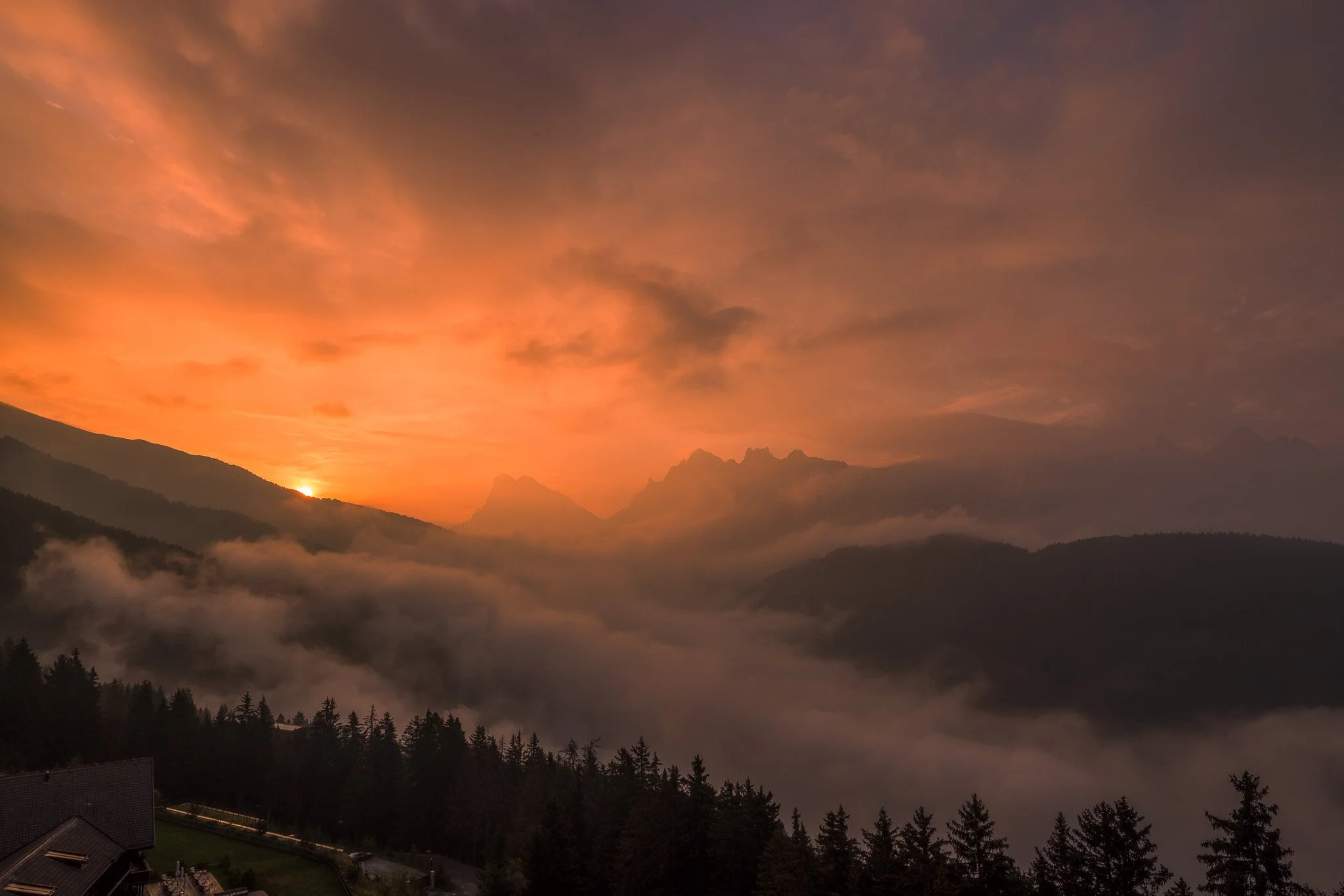
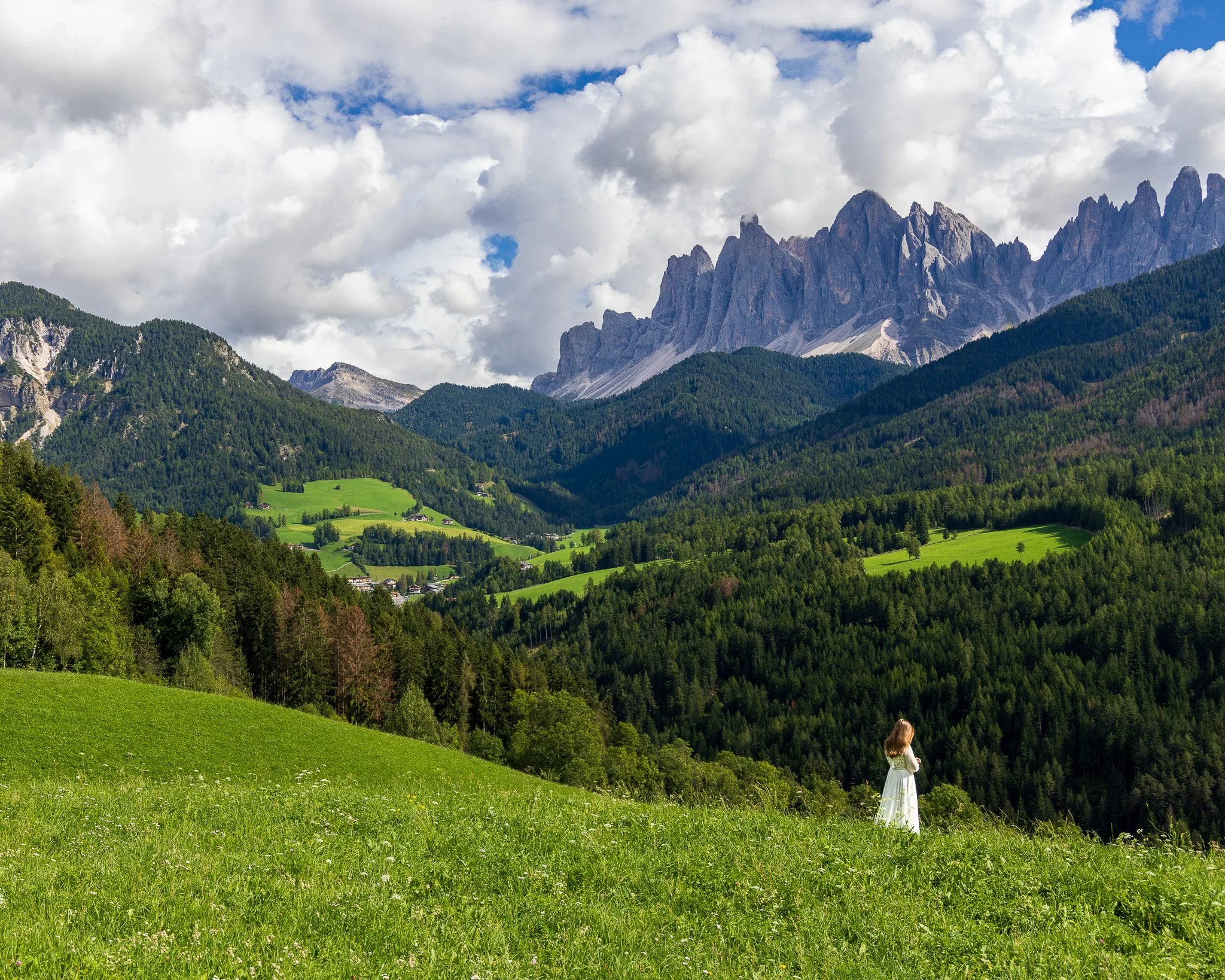
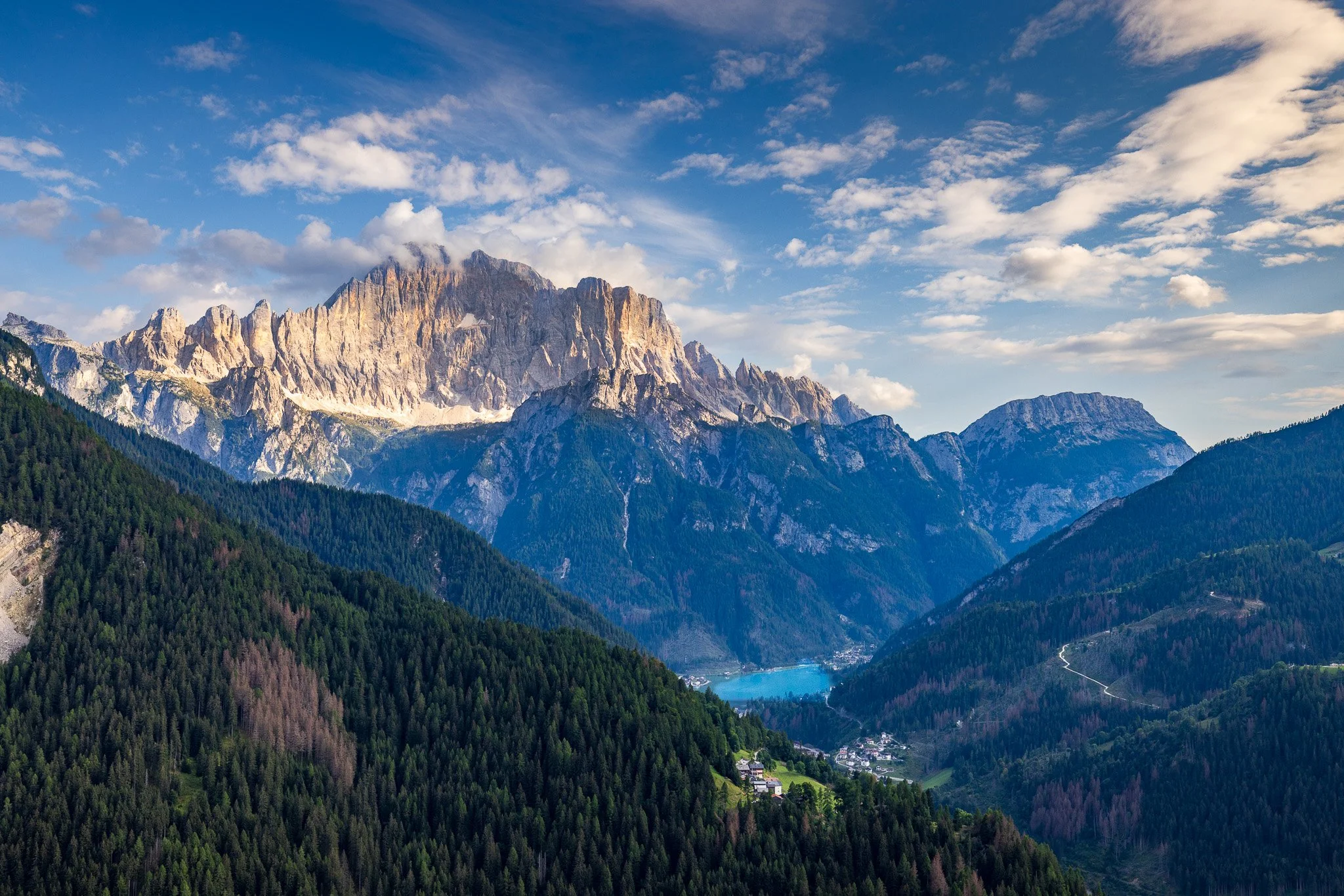
Visually, this place is unlike anywhere else in Europe. The rock formations are dramatic to the point of feeling unreal, and the light does things here that I have not seen replicated anywhere else. Alpenglow turns the peaks deep red and orange at dusk. Morning fog rolls through the valleys while the summits stay sharp and clear. The meadows of Alpe di Siusi stretch out in every direction, framed by rock walls that make your wide-angle lens feel inadequate. Add in the tiny churches, the farm animals grazing at elevation, and the cultural mix of Italian warmth and Tyrolean precision, and you have a destination that can fill a week and still leave you with a list of things you did not get to.
There are basically two zones to understand. The South Tyrol area, also called Südtirol or Alto Adige, runs north toward the Austrian border and is predominantly German-speaking. The further south and west you go, the more Italian it becomes. The local Ladin language adds a third layer. This matters practically because the same location can appear under three different names in Google Maps, which will drive you absolutely insane. Plan for it.
In this Photography Guide to the Dolomites, I share the places and experiences that continue to draw me back. You will find my favorite photography locations, guidance on when and where to shoot, practical travel tips, and gear recommendations, along with cultural insights to help you explore and photograph the Dolomites with confidence, respect, and ease.
Photographer's Notes
Before you go, here are my own takeaways.
Favorite Season: September
Favorite Sunrise Location: Alpe di Siusi
Favorite Sunset Location: Church of St. John, Villnöß
Favorite Hotel: Hotel Forestis
Favorite Restaurant: Forestis Hotel Restaurant
Favorite Café: Lupo Bianco
Favorite Lens: 15-35mm f/2.8
Would I Return? I will keep going back in September.
The Best Time To Visit the Dolomites, Italy
September and early October are the clear winners for photographers. The light is softer and warmer than in peak summer, the meadows still have color, and the crowds thin out considerably after the first week of September. Alpenglow is strongest in the fall. On our September visits, we regularly saw the peaks turn deep red and orange at dusk, the kind of light that makes you stop whatever you are doing and just stare.
April through early June is the shoulder season sweet spot before summer crowds arrive. Snow on the peaks and green meadows in the valleys create a strong contrast. Some gondolas and roads open late depending on winter snowfall, so check access conditions before you go. The Tre Cime toll road, for example, typically does not open until late May, and that date shifts year to year.
July and August are beautiful but busy. Very busy. Lago di Braies in July looks like a theme park. Seceda on a weekend in August has queues. If summer is your only option, go early and stay late. Sunrise at most locations means being in position before 5:30 am. It is worth the alarm.
Avoid: mid-November through late March unless you are there for skiing. Many mountain roads close, gondolas go to ski-only schedules, and several photography locations become inaccessible without hiking gear.
A note on weather: mountain conditions change fast. The afternoon storms from June through August are frequent and powerful. In our experience, mornings are almost always clear, which makes pre-dawn starts essential. Bring a rain cover for your gear regardless of the season.
So, How Do You Get to the Dolomites, Italy
Most photographers will arrive by driving from Venice (about 2.5 to 3 hours), Milan (3 to 3.5 hours), or Salzburg, Austria (about 3 hours). Bolzano Airport is the closest, but flight options are limited. For international travelers, Venice Marco Polo or Munich are the most practical entry points.
A rental car is not optional here. You need one. The Dolomites do not work without a car, and the flexibility to stop spontaneously for a photo along the SP29 or the Sassolungo road is part of the experience. On our first drive from Venice, I stopped 267 times. Well, it felt like 267 times. We arrived after dark.
Important: Get a car with power. These are real mountains with steep grades and tight switchbacks. Navigation matters too. Do not rely on your phone in the valleys because you will lose signal regularly. A proper GPS or downloaded offline maps are essential.
On the Drive to the Forestis
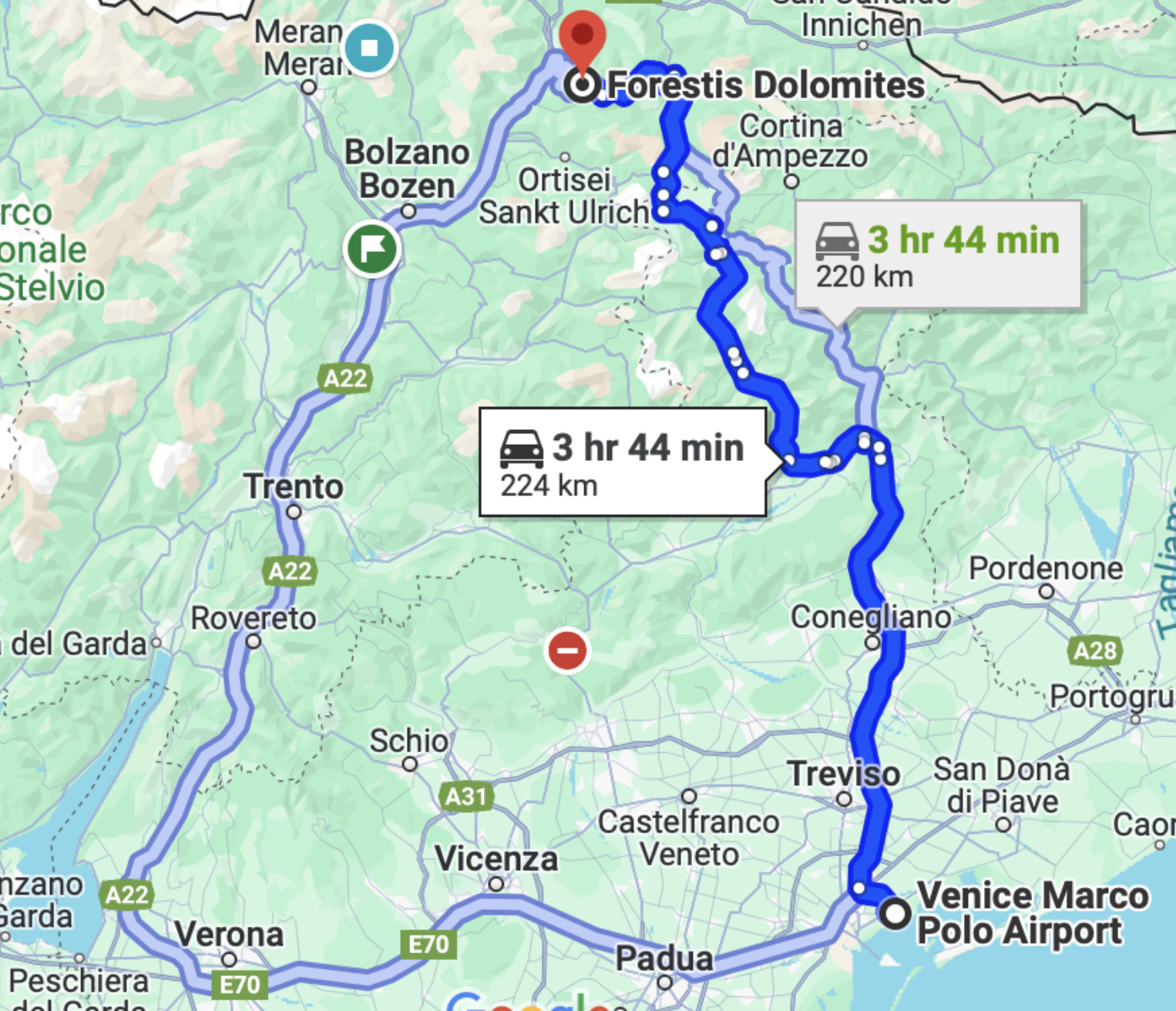
On our first trip to the Dolomites from Venice's Marco Polo International Airport, I took 267 photos. I would have taken more photos, but it rained and started getting dark. So it took us about 5 hours to arrive instead of 3.
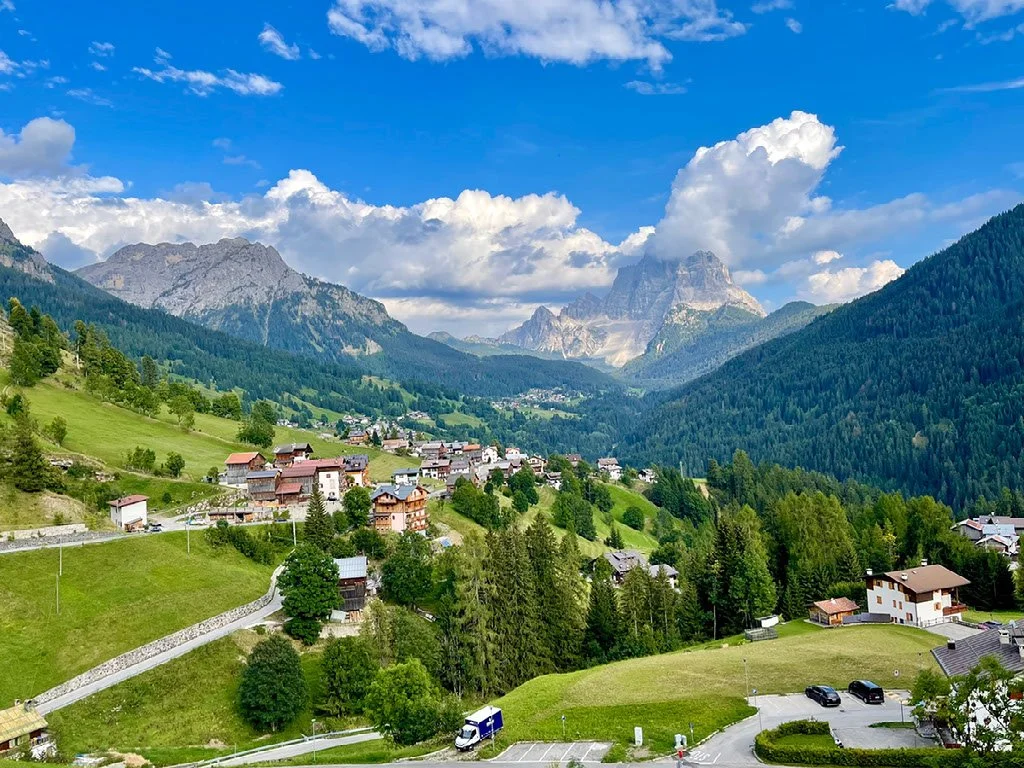
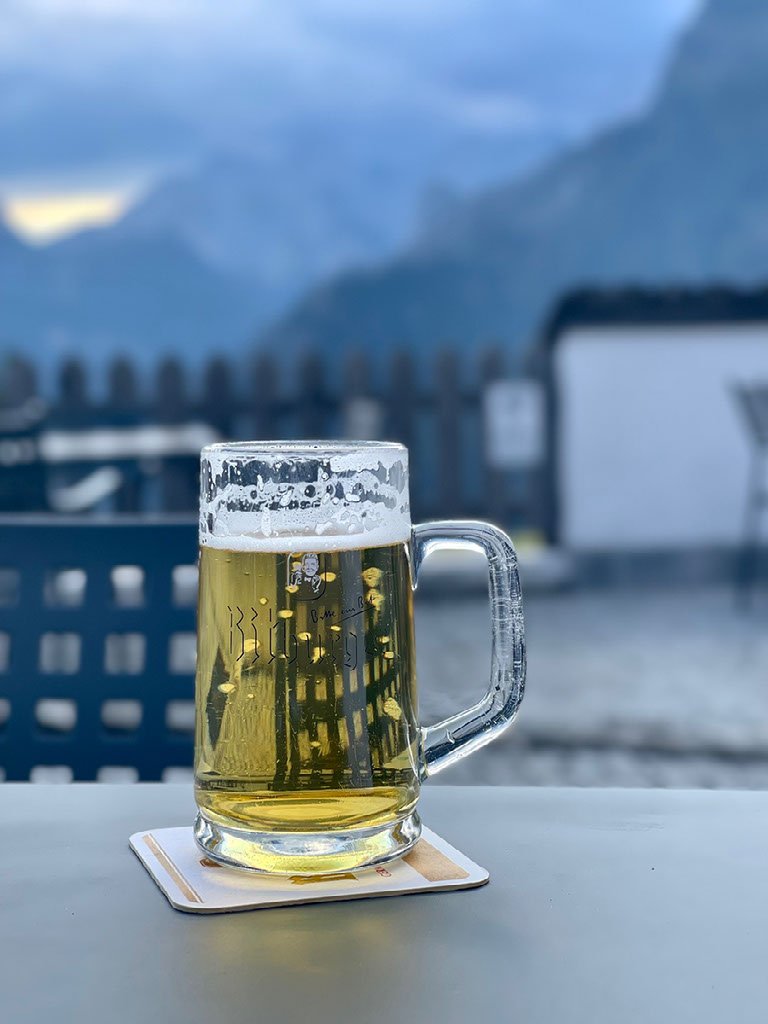
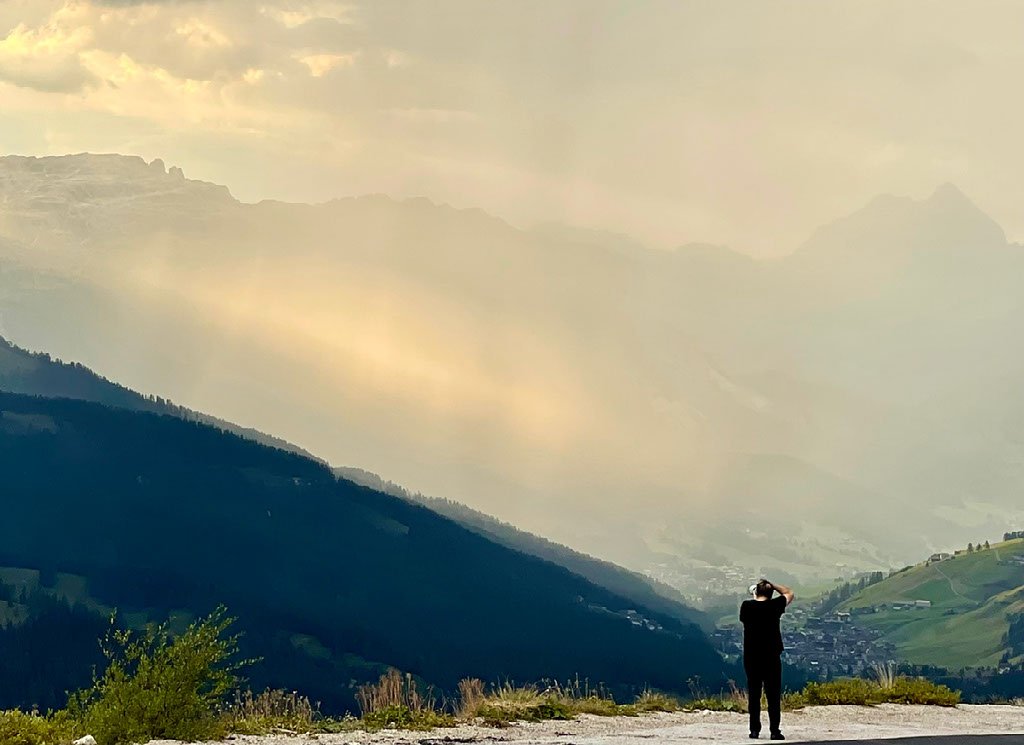
The photo opportunities start around Colle Santa Lucia along the route to Hotel Forestis. The Belvedere Grill Bar is an excellent place to stop along the way to get a drink. They have fantastic views. We continued along SR 203, through the Falzarengo Pass and the Passo Giau, and also stopped in Livinallongo del Col di Lana to take a photo of sun rays at sunset. My wife took this photo of me (see below) as I jumped out of the car and tried to capture the moment.
Getting Around the Dolomites, Italy
Once you have your base, a car is how you move. The roads are narrow, curvy, and slower than they look on a map. Twenty kilometers can easily take forty minutes. Factor that into every sunrise plan you make.
Gondolas are a key part of photography logistics here, not just for access but for altitude. The Ortisei gondola system serves both Seceda and Alpe di Siusi from the same village. The Plose cable car near Bressanone gives access to the area around Forestis. Buy return tickets and check the first-lift times in advance, especially if you are planning a sunrise shoot.
Taxis and transfers are available between towns, but at mountain rates. Uber is not operational in this part of Italy. Book local taxis through your hotel.
Driving restrictions: Alpe di Siusi bans private cars during certain daytime hours (typically 9am to 5pm). If you are not staying at a hotel on the plateau, plan to arrive early or use the gondola from Ortisei. COMO Alpina and the other plateau hotels can arrange special access permits for guests.
Driving in the Dolomites
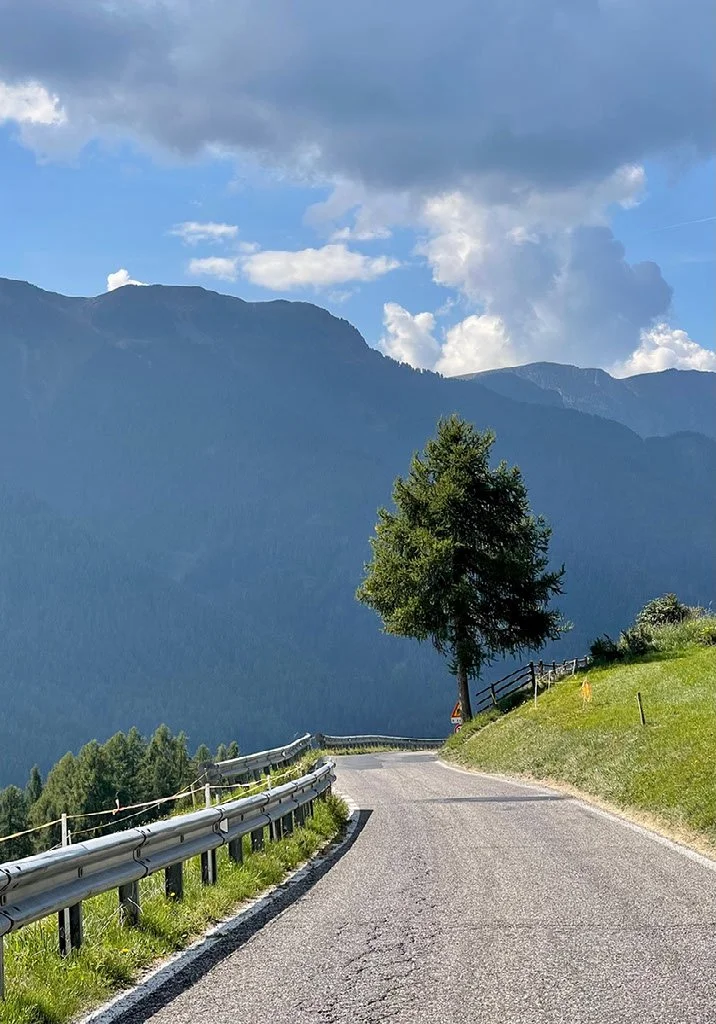
I would make sure to get a car with the power to climb the steep mountains. The other thing to be aware of is that some of the roads are extremely narrow and very curvy. We often had to back up or pass cars with just inches of space!! I would also make sure to get a car with Navigation. Don't rely on Google Maps on your phone since you will lose connection in the mountains.
From Venice to the Forestis Hotel
The other thing to realize is 20 km is not 20 km in the Dolomites. With the roads being so curvy and narrow, it will take you longer than you anticipate to reach your location. You might look up a location, and it looks very close, e.g., 12 km (8 miles). So you think that it will take me 10-15 minutes to arrive, but it could easily take 30 minutes or more.
Names of Locations in the Dolomites
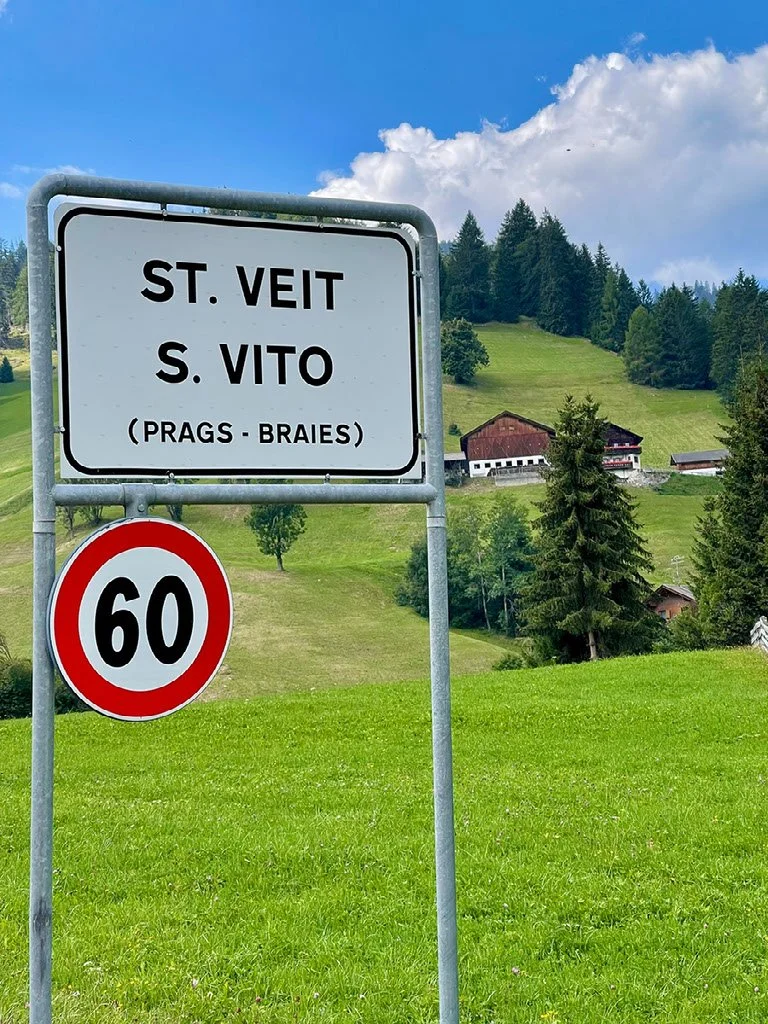
There is a place called St. Ulrich (German), and in Italian, it's called Ortisei, but in the local language, Ladin, it's called Urtijëi. Yes, it can be confusing, especially when you put in a name in Google Maps!!
Staying in Different Parts of the Dolomites
Since the Dolomites are so large, I would recommend staying in different areas. The first time we visited, we only stayed in 1 hotel. The problem is that some of the photography locations are quite far apart, especially for sunrise. On our second trip to the Dolomites, we stayed again at the Forest and also in the Alpe di Suisi, which was much better. However, if we go back, I would add 1 more hotel close to the Tre Cime area.
How Many Days to Stay in the Dolomites, Italy
Minimum: 5 days. Absolute minimum. You will spend the first day in transit and recovering from the altitude adjustment, and you will spend the last morning realizing you have barely started.
Ideal: 7 to 10 days. This gives you enough time to split your stay between two zones, shoot the same locations in different light, and absorb the place at the pace it deserves.
A practical structure for 7 days:
Days 1 to 3: Based near Bressanone or Ortisei. Cover Seceda, the Church of St. John in Ranui, Alpe di Siusi, and the Sassolungo valley drives. Get your sunrise at Seceda sorted early.
Days 4 to 5: Move to Alpe di Siusi if not already there. Shoot the meadows at golden hour. Use the gondola back to Ortisei for restaurants and coffee.
Days 6 to 7: Drive to the eastern Dolomites. Spend time at Tre Cime, Lake Carezza, and Lago di Braies. Stay near Cortina if possible for early morning access.
Where to Stay in the Dolomites, Italy
The Dolomites cover a large geographic area, and where you stay has a direct impact on what you can photograph. My strong recommendation is to split your stay across at least two hotels in different zones. On our earlier trips, we stayed in one place and spent too much time driving before sunrise. Splitting between Forestis near Bressanone and Icaro at Alpe di Siusi made a significant difference.
Luxury Hotels in the Dolomites
Hotel Forestis, Bressanone (Brixen). This is one of my favorite hotels anywhere in the world, and I say that after staying there twice. Forestis sits on the forested slopes of the Plose mountain above Bressanone, accessible via a quiet forest road. The views from the rooms are extraordinary. Each suite has floor-to-ceiling windows and a furnished balcony facing the Dolomite peaks, and the wellness spa uses four distinct natural wood environments: mountain pine, spruce, larch, and Swiss stone pine. The on-site restaurant is exceptional. I have sat at that breakfast table with coffee and watched clouds move through the valleys below and thought, I would be fine if I never left. Book as far in advance as possible. It fills up fast, especially in September.
COMO Alpina Dolomites, Alpe di Siusi This is the architectural statement of the region. Built of wood, quartzite, and glass, COMO Alpina sits right on the Alpe di Siusi plateau with sweeping views of the peaks from every room. It received a Michelin Key designation in both 2024 and 2025, which should tell you something about the food and the overall experience. The hotel is ski-in, ski-out in winter and hiking-adjacent in summer. For photographers, staying here gives you immediate access to the Alpe di Siusi meadows at golden hour without the gondola logistics. The location is as good as the property itself.
Vigilius Mountain Resort, Lana Reachable only by cable car from the town of Lana, Vigilius sits at 1,500 meters and is one of the most genuinely remote luxury hotels in the Dolomites. The architecture is clean and contemporary, the spa is world-class, and the isolation means you wake up to quiet that you genuinely cannot find in the valley towns. If you want to combine the Dolomites with some time in the South Tyrol wine country below, this is the ideal base.
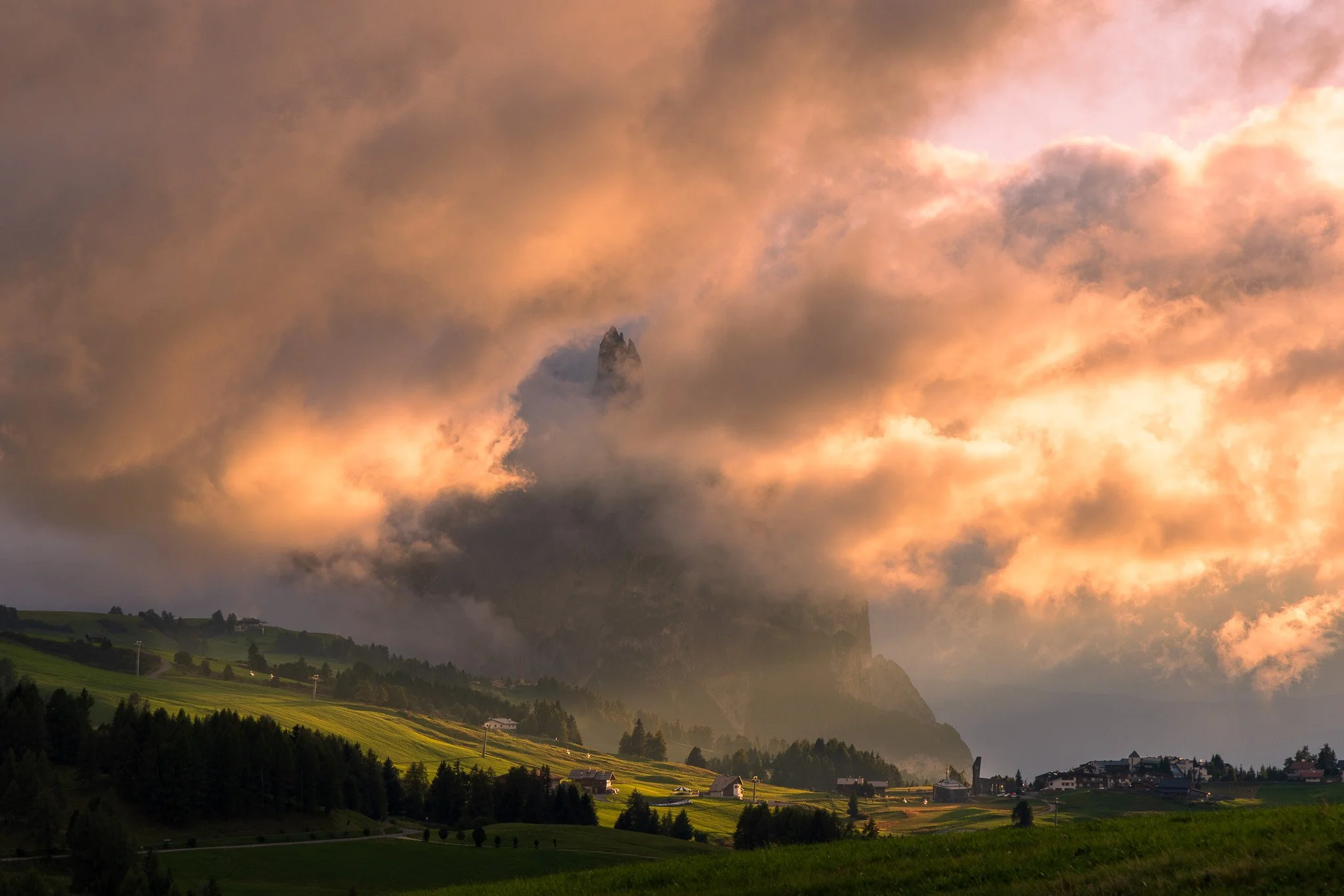
The View from Our Room at the ICARO
Mid-Range and Boutique Hotels
Hotel Icaro, Alpe di Siusi We stayed here on our second visit and it was excellent. The hotel is right in the Alpe di Siusi, which means you can walk out at 5 am with your tripod and be in position for sunrise within minutes. The design is contemporary alpine, the breakfast is generous, and the location is the real selling point. If COMO Alpina is beyond the budget, Icaro delivers the same access to the meadows at a different price point.
Gardena Grödnerhof, Ortisei (Val Gardena) A well-regarded four-star hotel in the pedestrian heart of Ortisei, the main village in Val Gardena. The gondola stations for both Seceda and Alpe di Siusi are a short walk away. Good restaurant, good service, and a location that makes day planning straightforward. A solid choice for photographers who want to cover multiple locations across different days without long drives.
Hotel de Len, Cortina d'Ampezzo For the eastern Dolomites, particularly if you are shooting Tre Cime, Lago di Braies, or Lake Carezza, Cortina is the best base. Hotel de Len is a four-star property in the center of Cortina, with a distinctive timber facade and an excellent ground-floor restaurant. Cortina is also hosting events tied to the 2026 Winter Olympics infrastructure, so it is worth knowing that the town has recently upgraded roads and facilities in the area.
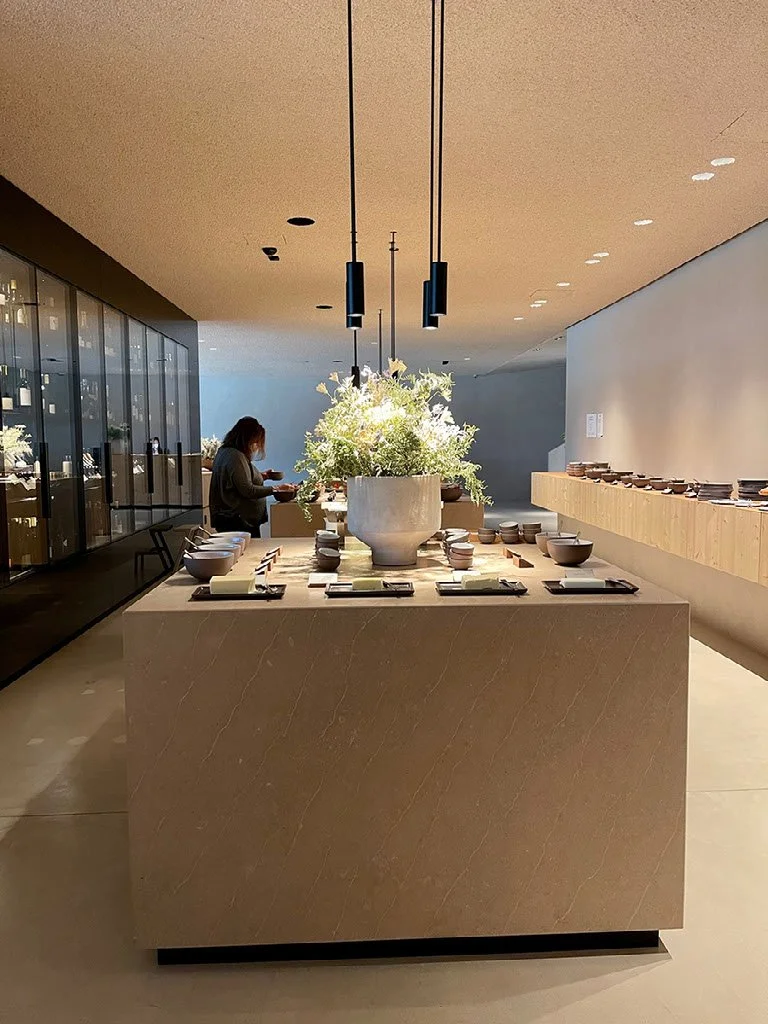
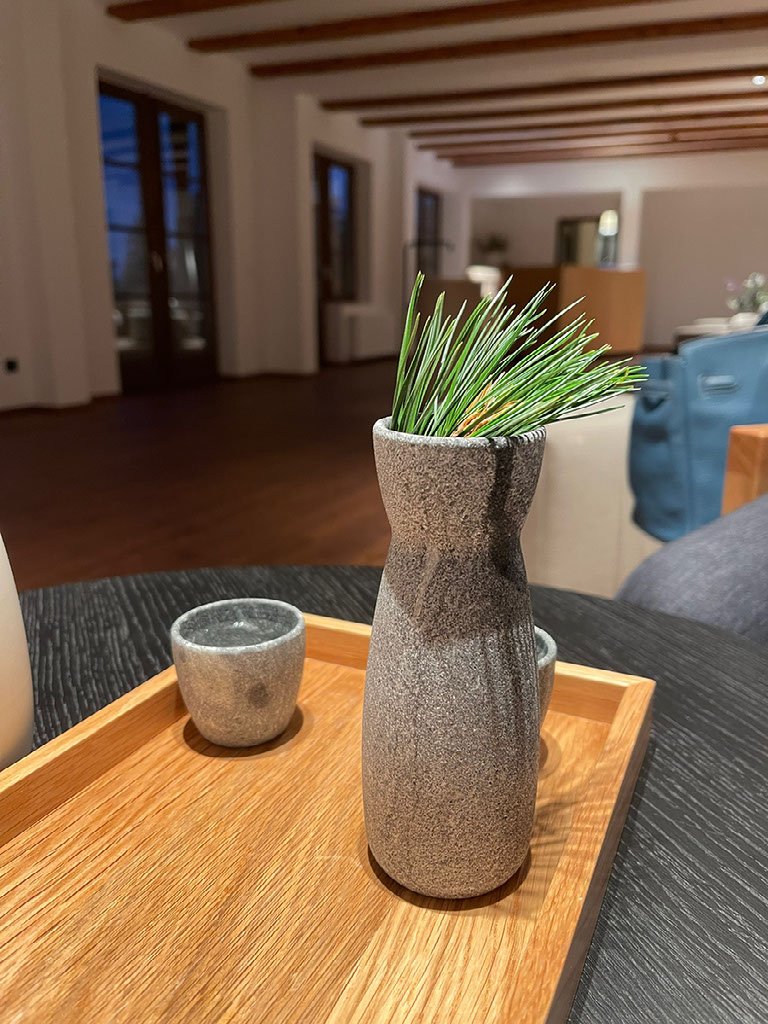
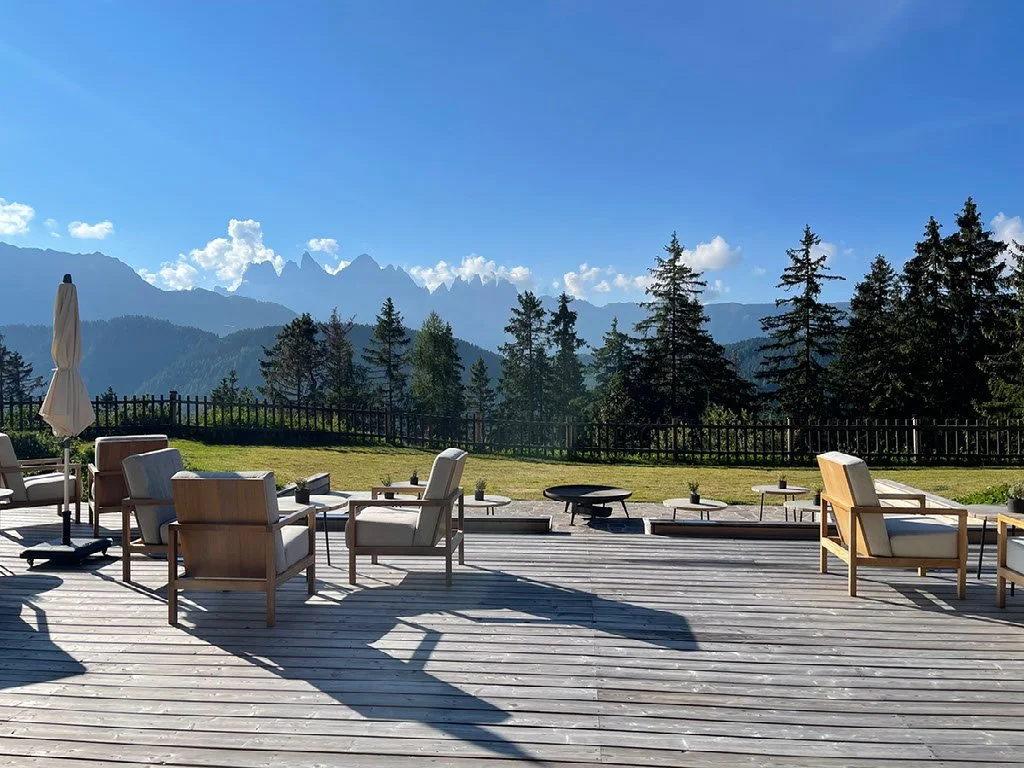
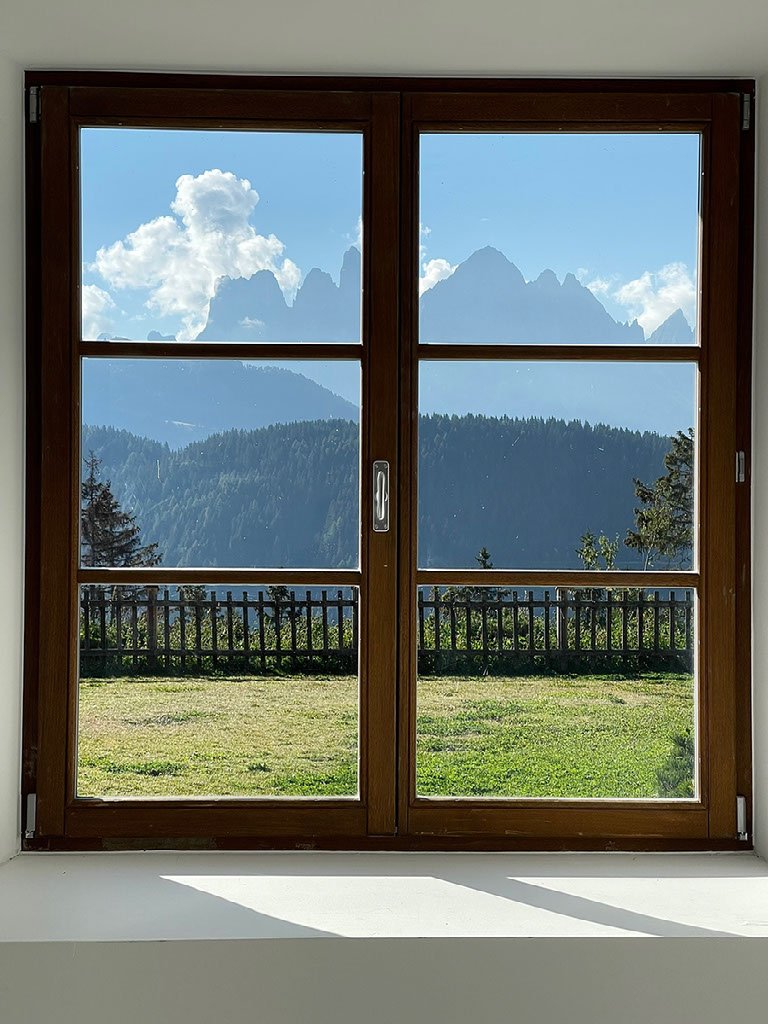
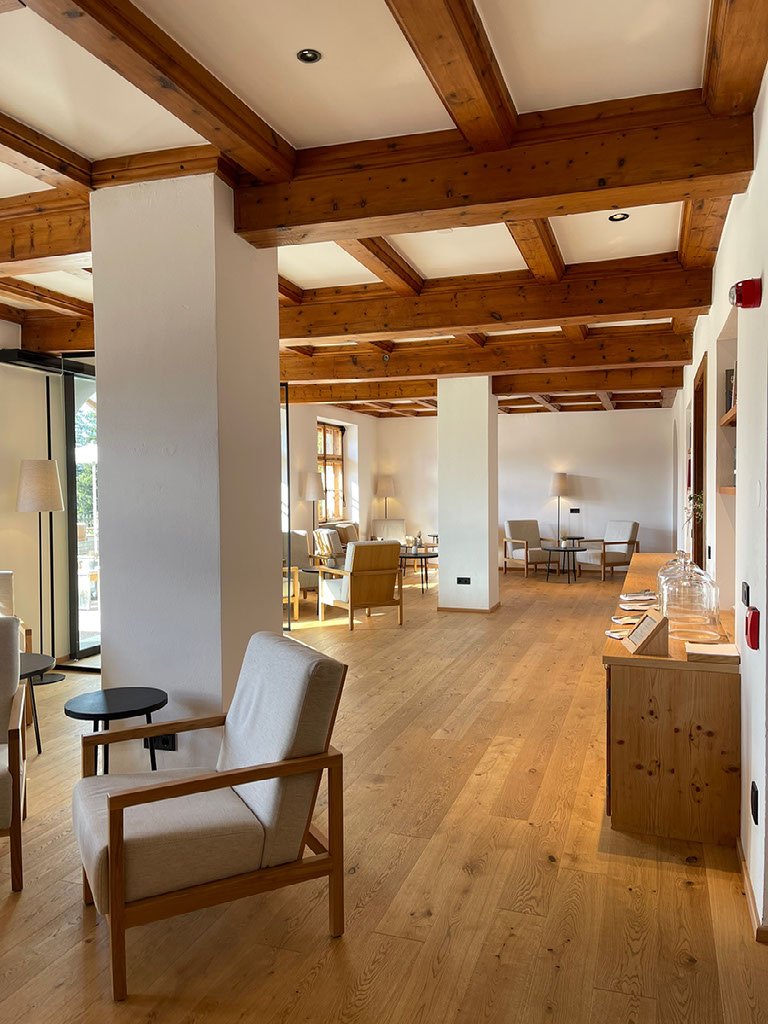
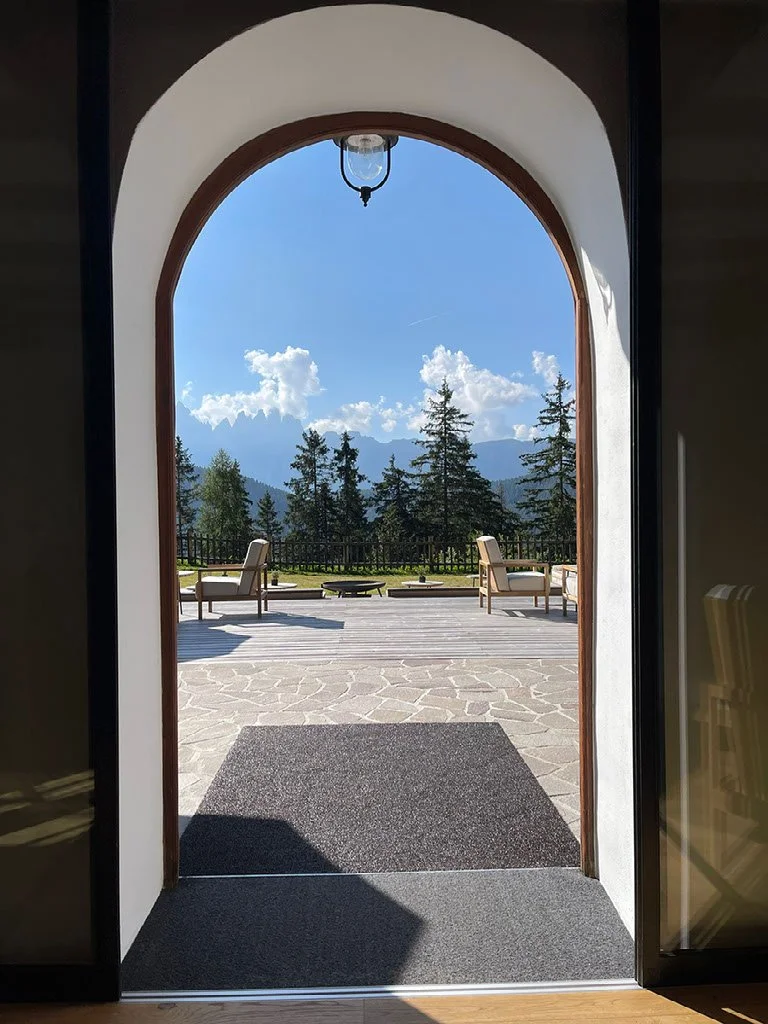
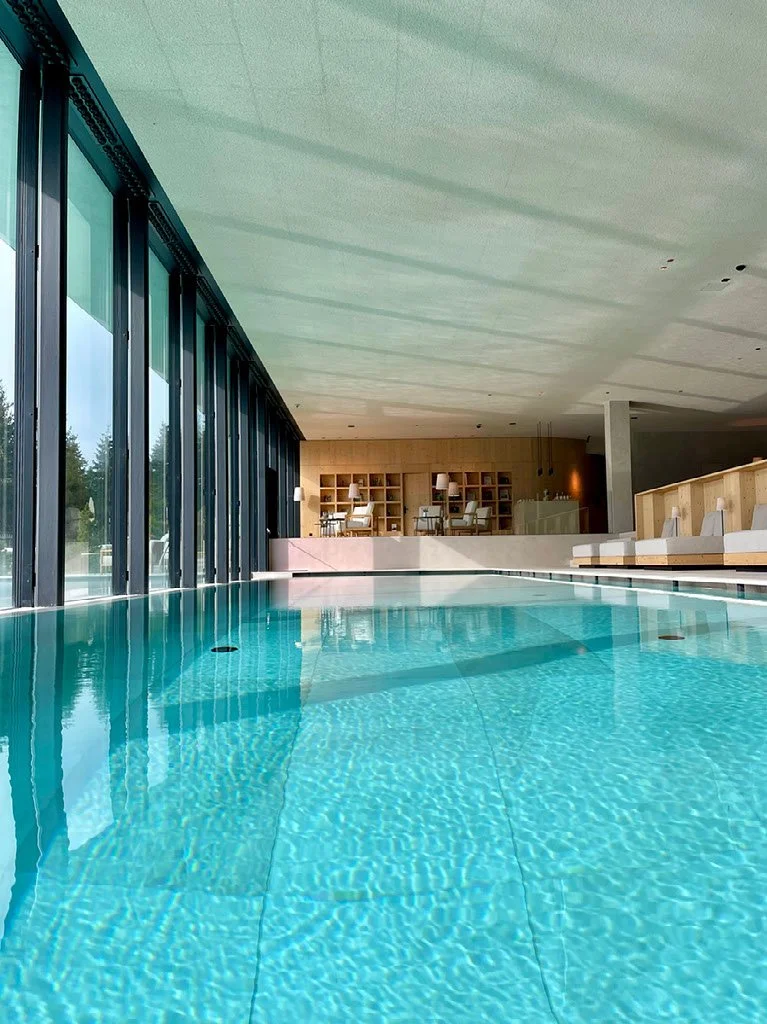
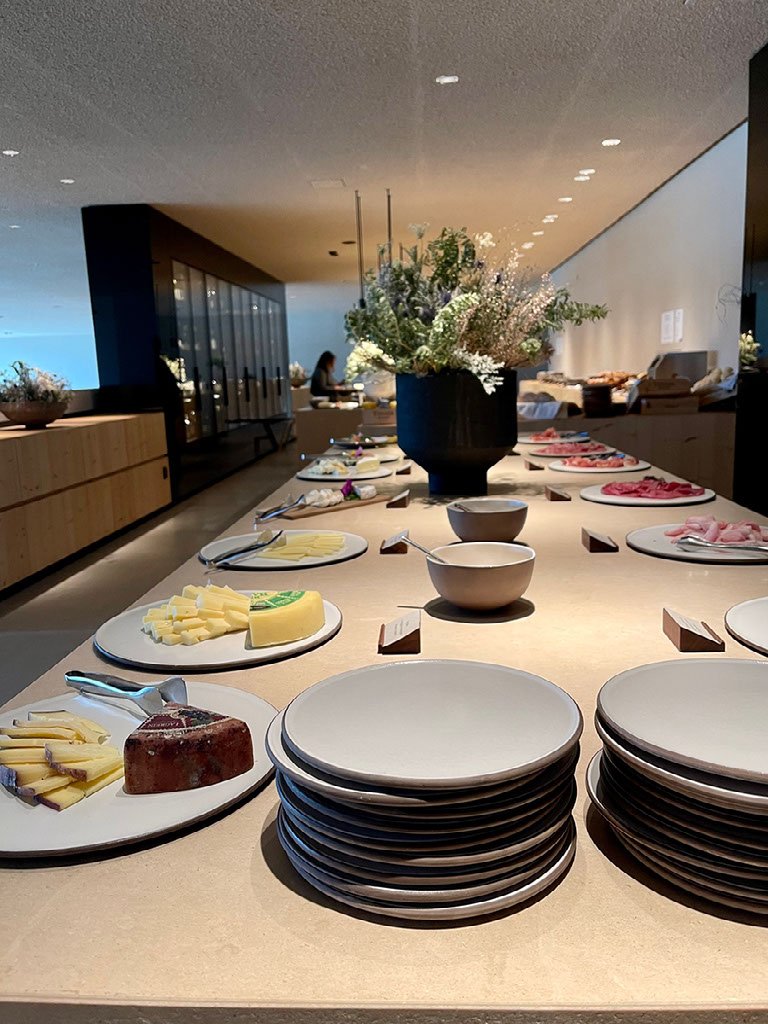
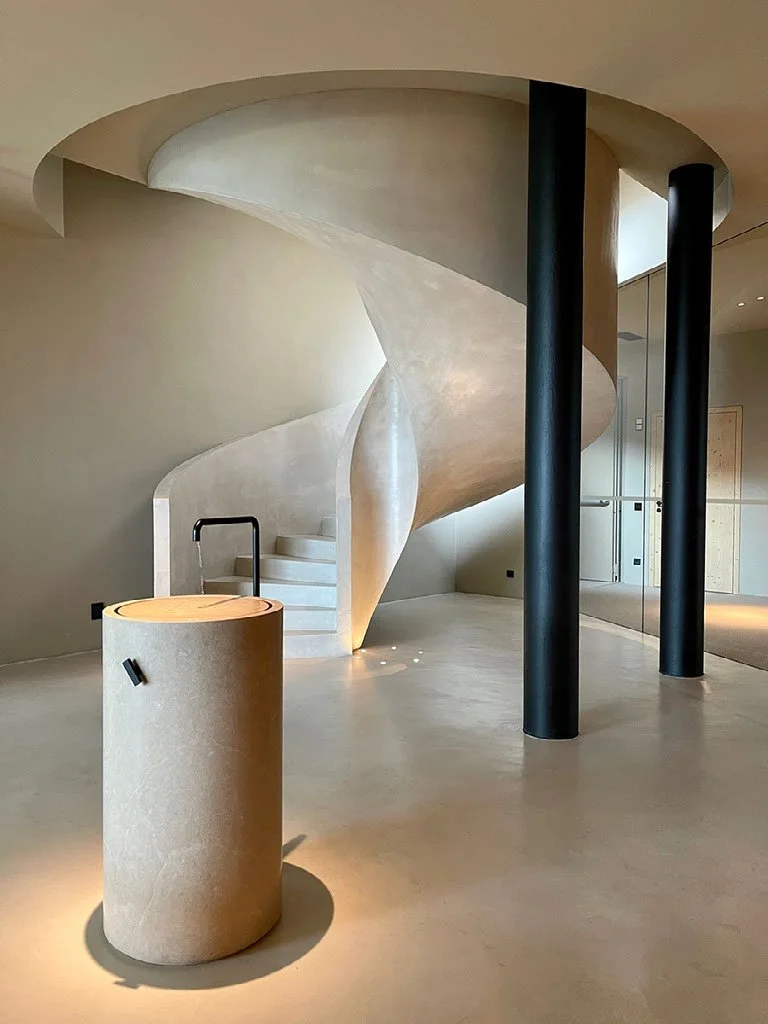
Another view of the mountains from our room. It is simply stunning.
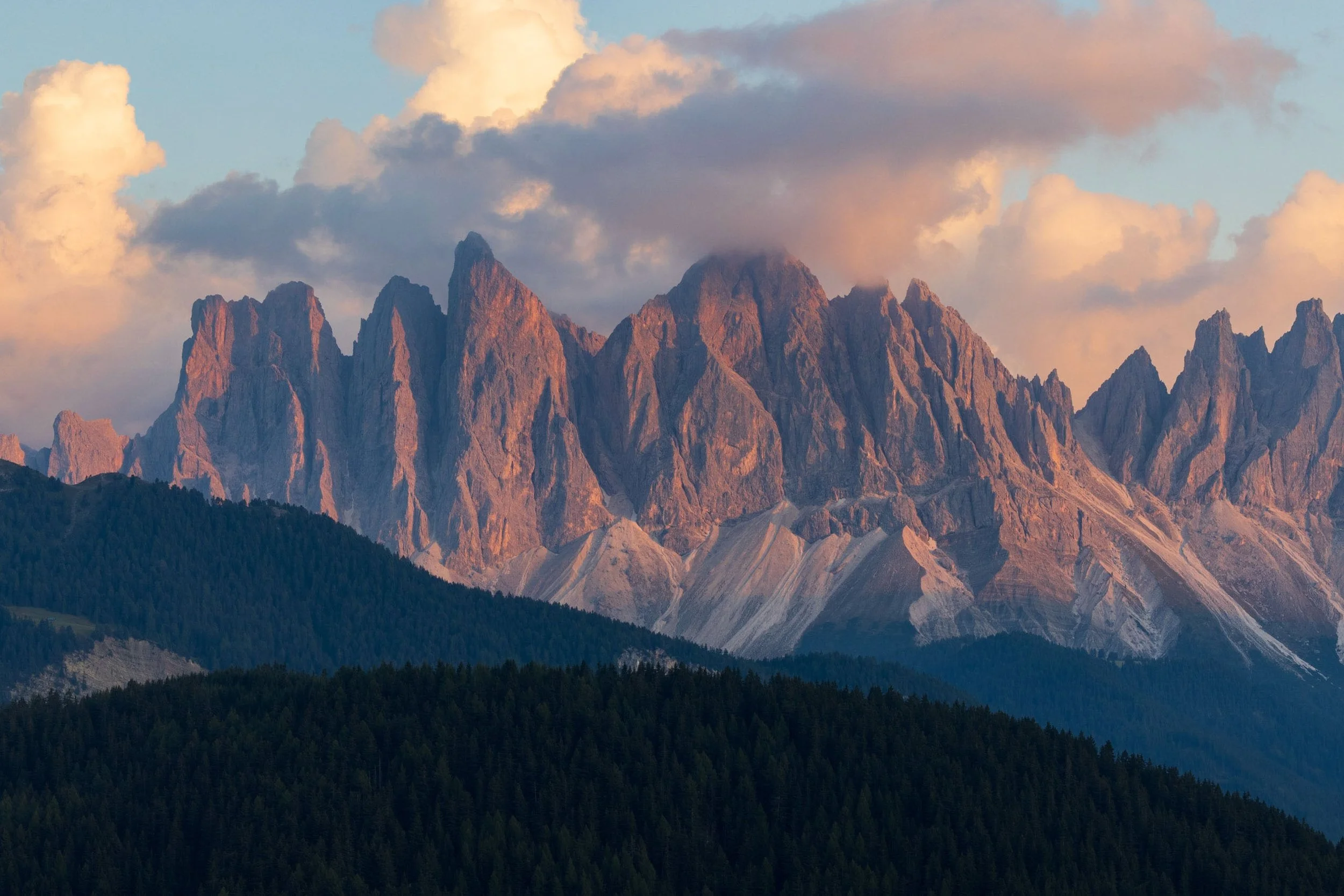
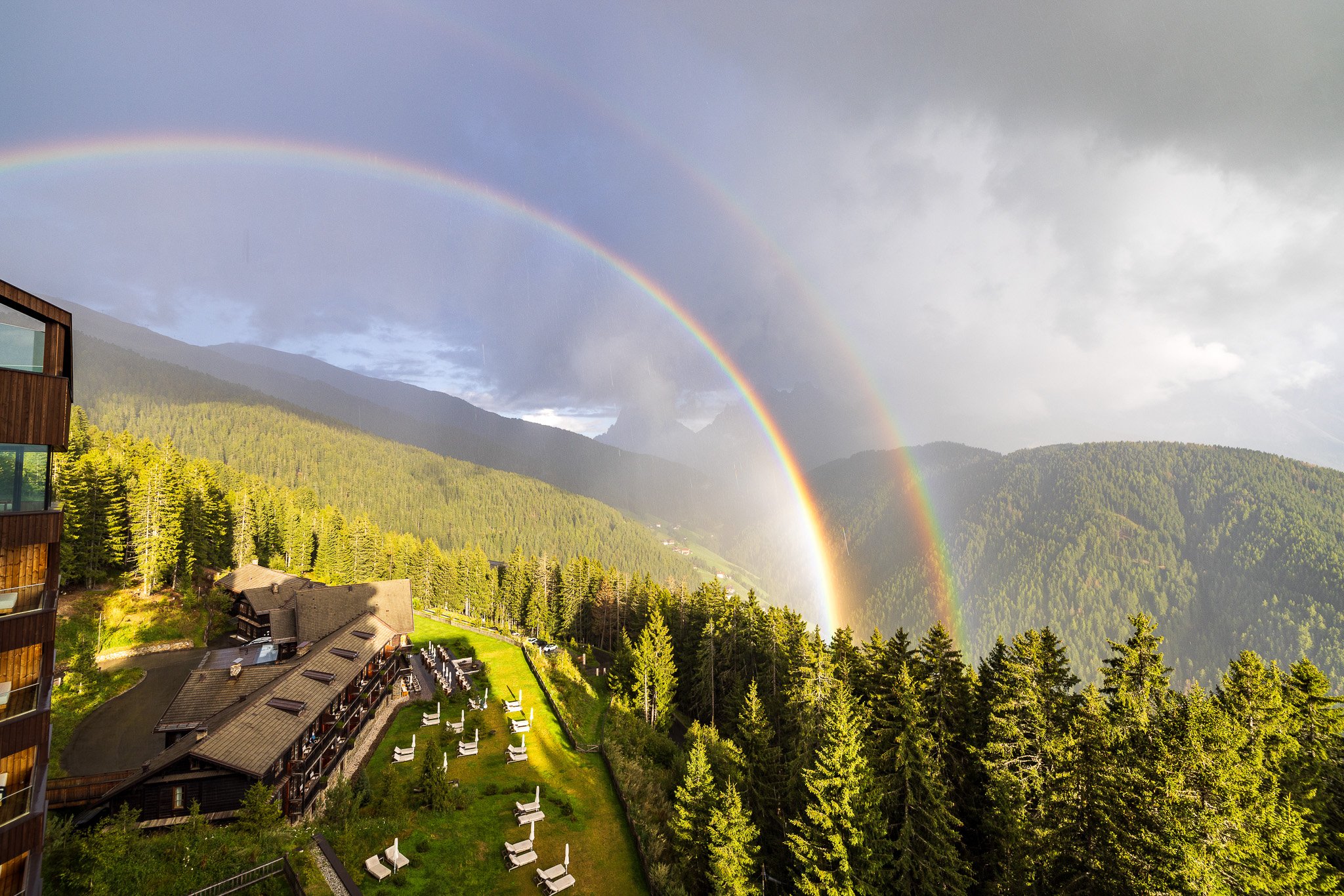
From our Balcony
The weather conditions in the mountains are constantly changing. On one occasion, we even saw a double rainbow.
Where to Eat in the Dolomites
The food in South Tyrol is genuinely one of the great under-appreciated culinary combinations in Europe. It is the best of Italy and the best of Austria merged into a single table. Speck, fresh pasta, farm-raised meats, barley soups, apple strudel, and local wines from the vineyards of the Adige Valley all show up on the same menu. Since both Forestis and Icaro include breakfast and dinner in their rates, most of our best meals were actually in the hotels. But there are excellent options outside.
Lupo Bianco, near Canazei (Pordoi Pass area). We discovered this by accident on a drive through the Sassolungo area. The location alone would be worth stopping for: views of the Sella and Pordoi walls directly above the terrace. The restaurant is lunch-only, serves traditional Trentino cuisine with a focus on local ingredients, and the grill is excellent. Perfect for a midday stop while driving between locations. It gets busy; arrive before noon.
Gourmet Restaurant Lampl Stube, Ortisei. One of the most respected dining rooms in Val Gardena. Tyrolean classics elevated with proper technique and a very serious wine list. Reserve in advance. This is where you go on your last night.
Zicoria Brasserie, Ortisei A more casual option in the center of Ortisei with good cocktails and relaxed service. Good for an evening when you want to decompress after a long day of shooting.
Schönblick, Ortisei. Views of the valley combined with reliable South Tyrolean cooking. A family-friendly spot that also works well for a solo photographer wanting a table by the window and a glass of local Lagrein.
Sassolungo Restaurant, COMO Alpina Dolomites Worth a dinner reservation even if you are not staying at the hotel. The COMO kitchen runs a local-seasonal menu with Ladin, Italian, and South Tyrolean influences. The terrace at sunset is memorable.
Rifugio Antonio Locatelli (Drei Zinnen Hütte), near Tre Cime This is a mountain hut, not a restaurant, but after hiking the Tre Cime loop with a camera bag, a bowl of barley soup and a plate of speck and bread on that terrace with the north faces directly in front of you is one of the better meals you will have in the mountains. No reservation needed. Cash is useful.
Coffee
Café Stufan, Ortisei — the local morning stop. Good espresso, excellent strudel, and a good place to plan your day over a map. Bar Ciasa, Selva Val Gardena — relaxed, locals-focused, pleasant terrace. Good for late afternoon editing over a cappuccino. Café at Hotel Forestis — organic juices and excellent coffee with the Dolomites outside the window. There is no better way to start a shooting day.
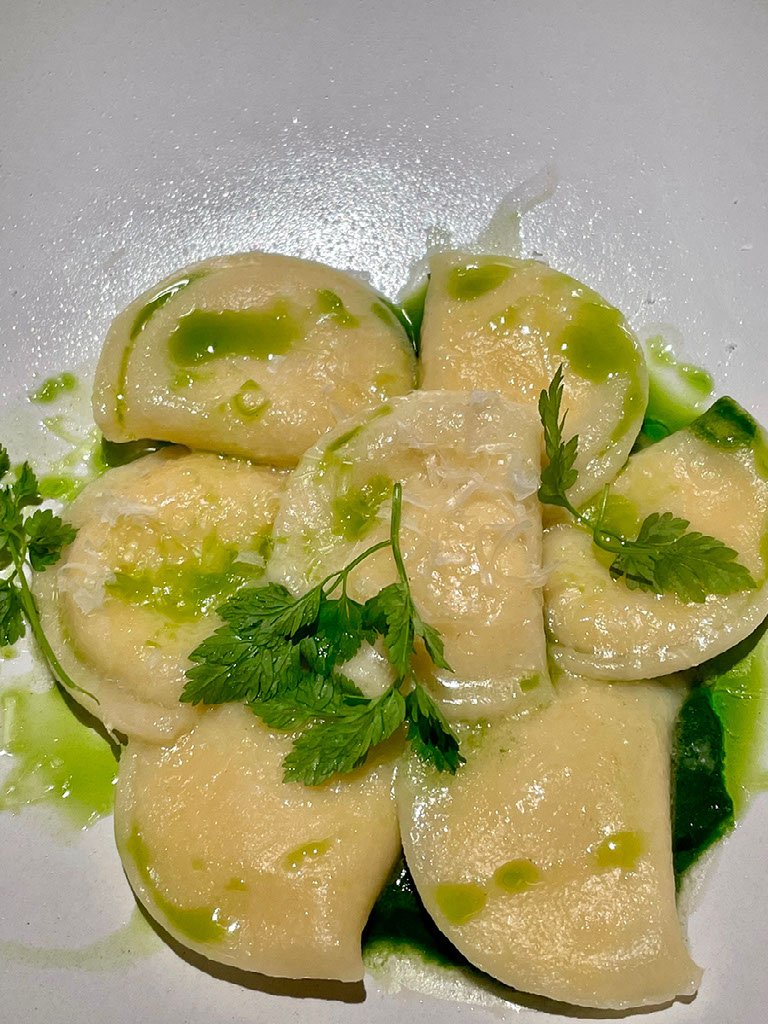
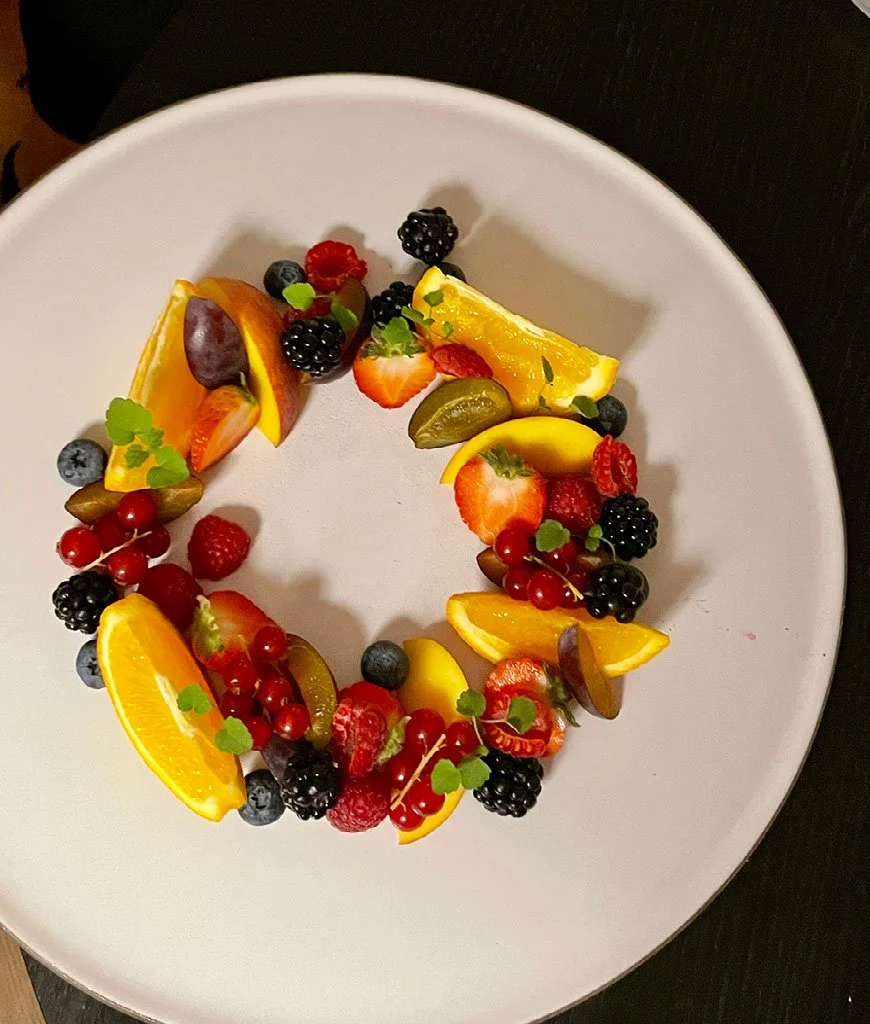
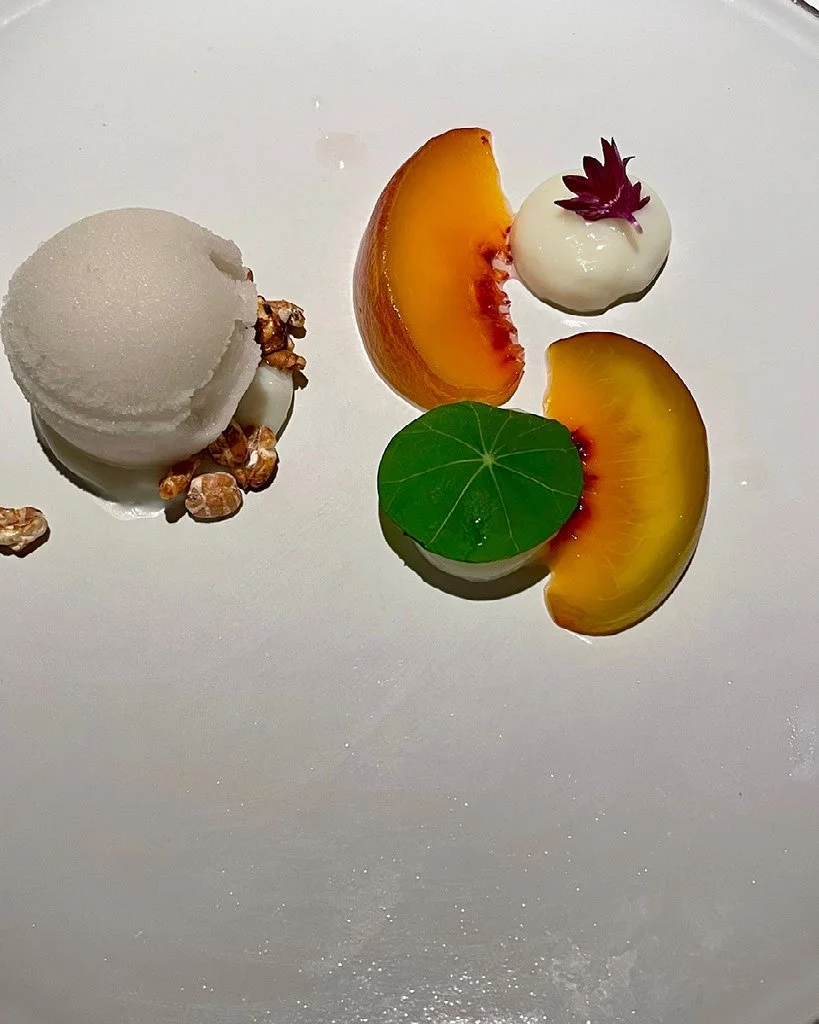
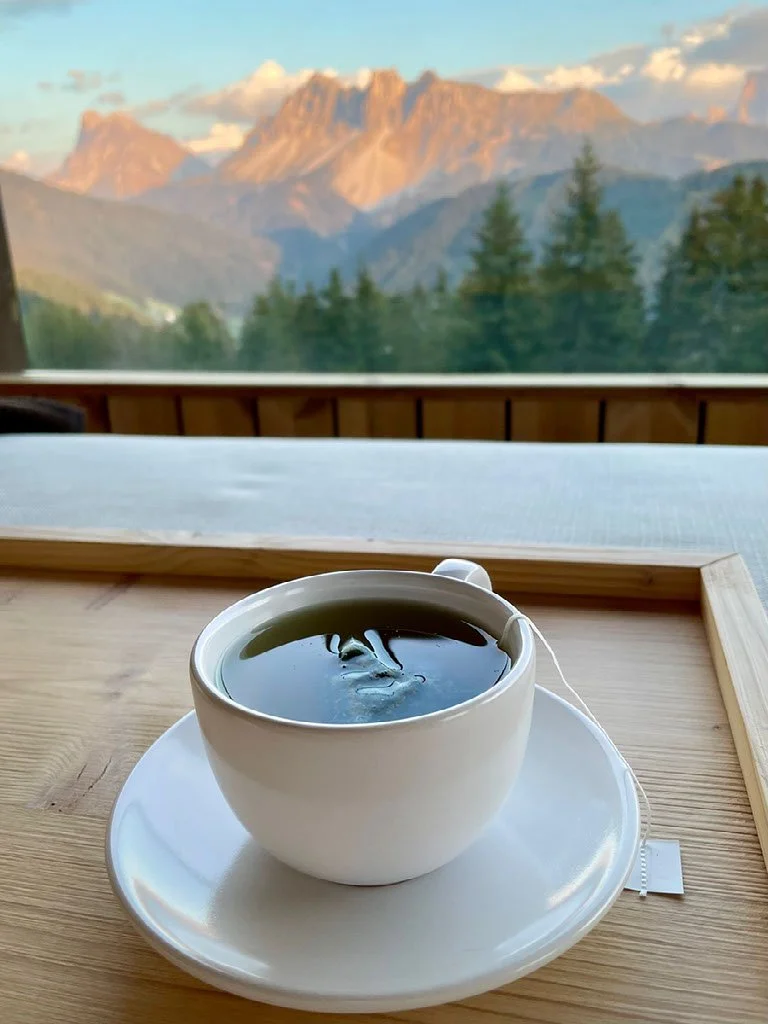
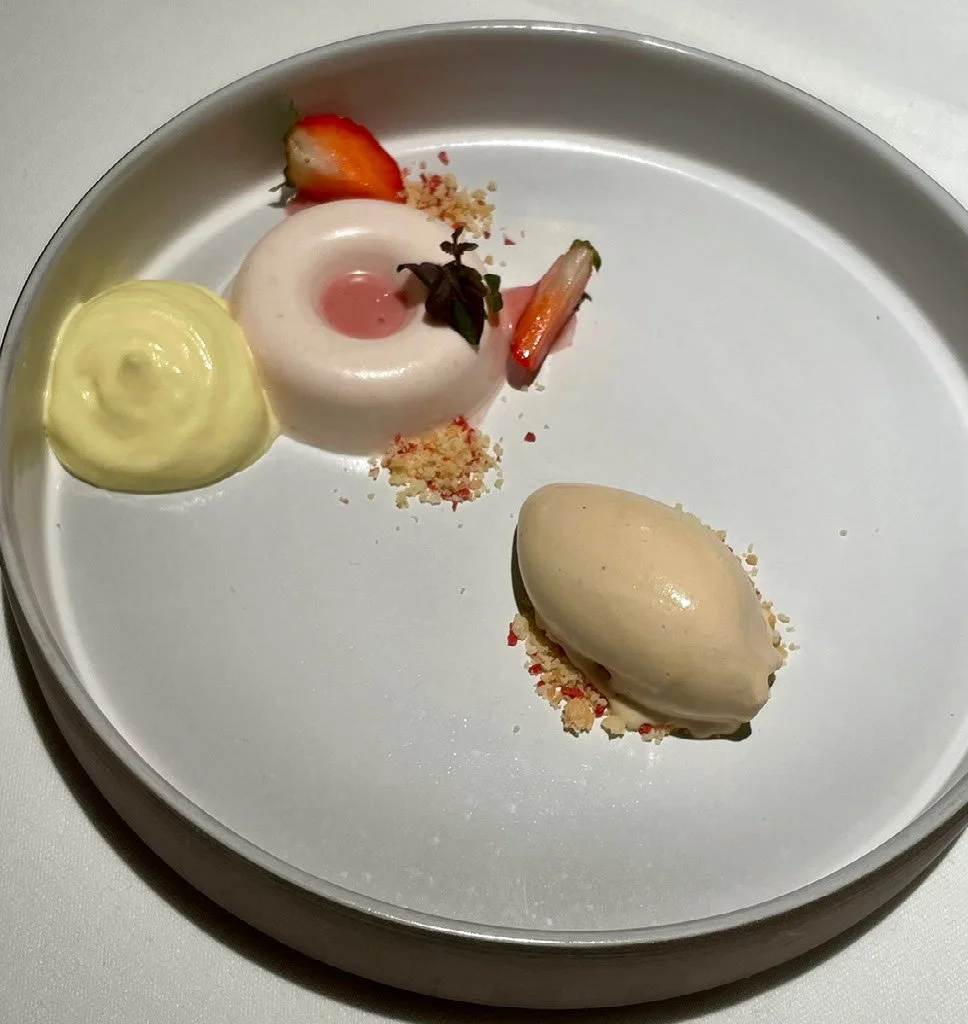
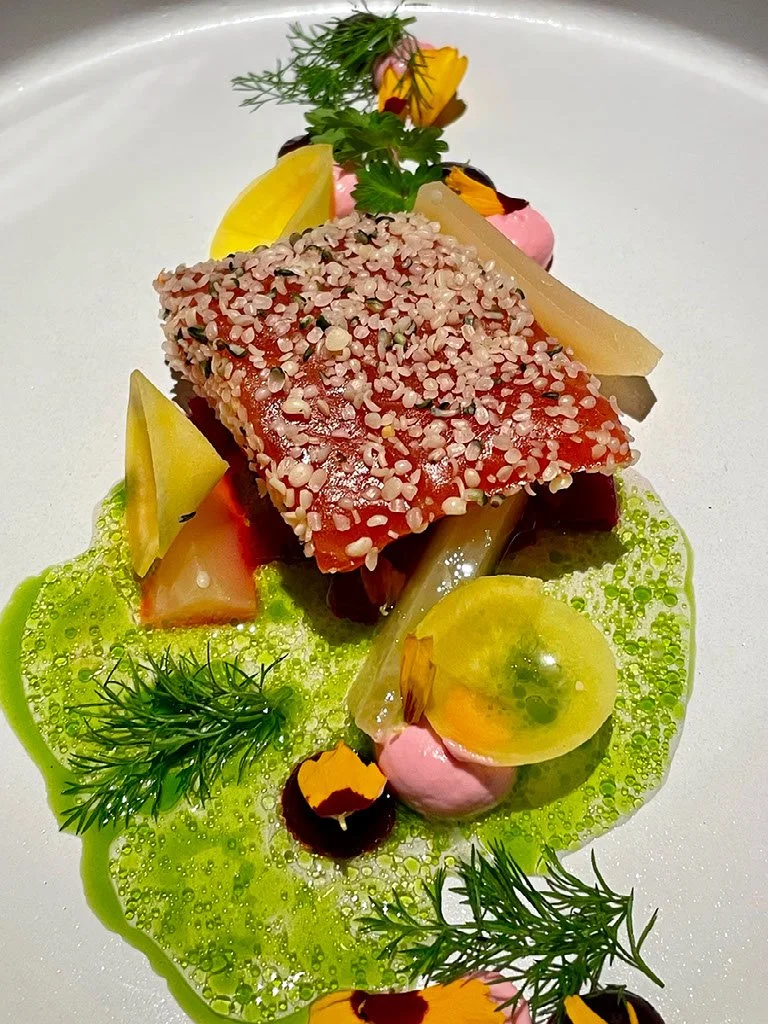
On our drive from Lake Carezza through Sassolungo, we stopped by chance at a fantastic location for lunch. The restaurant is called Lupo Bianco (White Wolf). The location was just incredible, with outstanding views of the Dolomites.
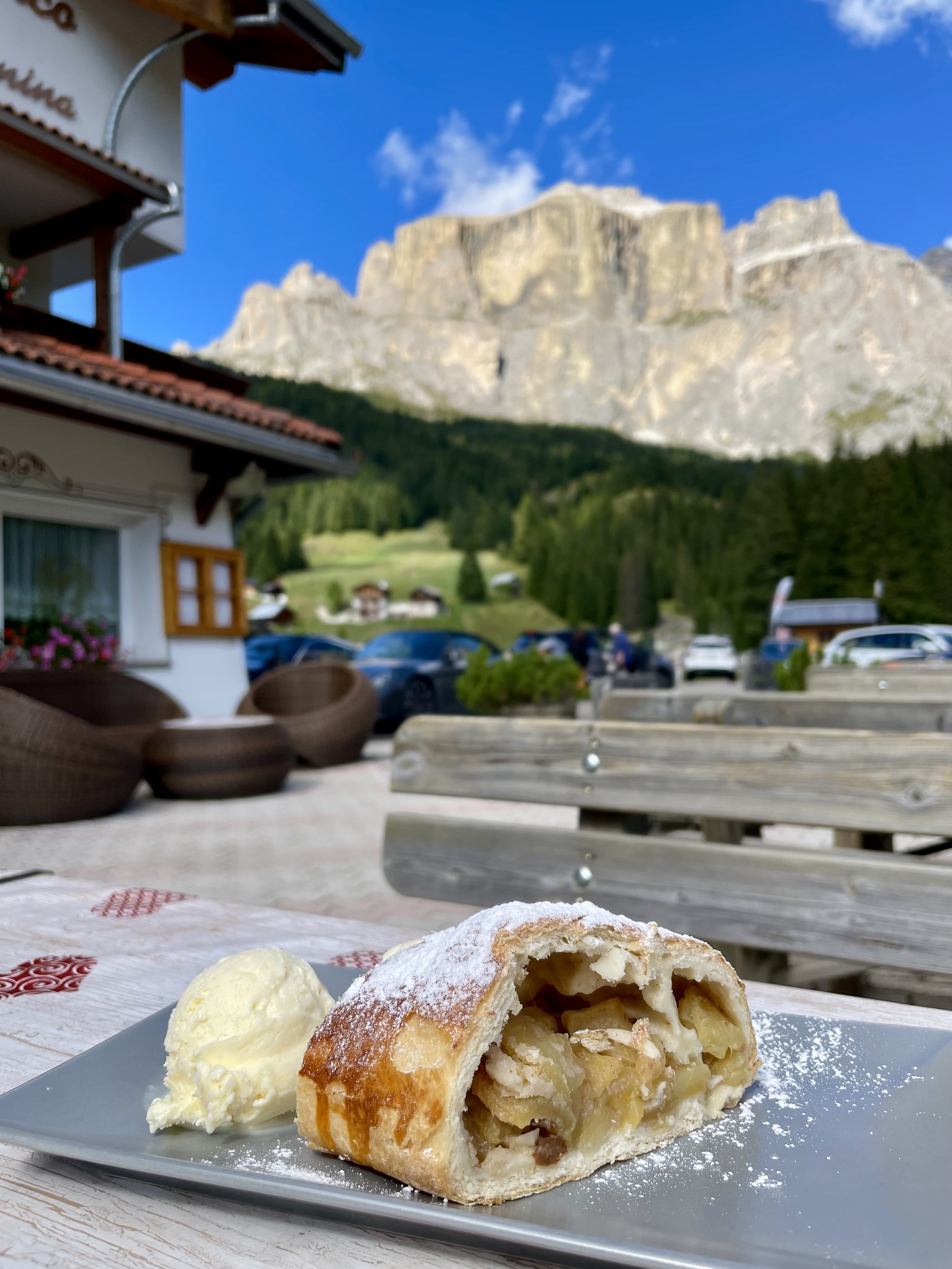
Lupo Bianco
Photography Gear for the Dolomites
DSLR and Mirrorless Kit
The Dolomites are a landscape photographer's environment. You will be hiking with your gear, sometimes for 45 minutes or more to reach a location, so pack with weight in mind.
Camera body: Canon R5 Mark II, Sony A7R V, or Nikon Z8. Any of these will handle the dynamic range of alpenglow scenes and the shadow detail in rocky north faces. If you only bring one body, bring your best.
Lenses:
Wide-angle (15 to 35mm): Essential. You will use this constantly at Alpe di Siusi, Seceda, and Tre Cime. The Canon RF 15-35mm f/2.8 is what I used for the majority of shots.
Standard zoom (24 to 70mm): The workhorse for churches, villages, and anything with a person in the frame.
Telephoto (70 to 200mm): More useful than you might expect for isolating specific rock formations and compressing the layers of peaks in the background. The Sassolungo area especially rewards the 200mm end.
Tripod: Non-negotiable. Alpenglow at dusk and blue-hour exposures require a stable platform. I use a carbon fiber travel tripod to keep weight down on the longer hikes.
ND filters (3, 6, and 10 stops): Useful at the lakes for long-exposure water effects and at Alpe di Siusi when you want silky movement in the meadow grasses.
Circular polarizer: Critical at Lake Carezza. The emerald color in that water deepens significantly with a polarizer. Also helpful for cutting haze in the valley layers.
Drone: Absolutely bring one, and understand the rules before you go. The Dolomites are a UNESCO World Heritage Site. Drone use in national park zones and near certain rifugios is restricted. Research the specific areas you plan to fly. Do not skip this step.
Extra batteries and cards: You will shoot more than you plan. Cold temperatures at elevation drain batteries faster than at sea level.
Samsung T7 SSD or equivalent: Back up every evening. Mountain conditions and long hikes create real accident risk for gear.
Rain cover for camera and bag: The afternoon thunderstorms are genuine. A five-minute shower can turn into a downpour.
iPhone Photography
The Dolomites are extraordinarily good iPhone territory. The scale and contrast of the landscape translate well to the phone camera, and in some situations, the iPhone handles the scene better than you expect.
Use ProRAW at Alpe di Siusi during golden hour. The meadow-to-sky dynamic range at sunrise is challenging, and ProRAW gives you the latitude to recover shadow detail in the foreground without blowing the sky. Edit in Lightroom Mobile rather than the native Photos app for full control.
Switch to the ultrawide (0.5x) at Seceda. The Fermeda Towers are tall and the ridgeline is long. The ultrawide captures the sweep of the panorama in a way that the standard lens crops awkwardly. Get low to the ground for foreground texture in the pasture grass.
Use Night Mode at the Forestis area for astrophotography. The low light pollution at elevation makes the Dolomites excellent for star photography. Point your phone at the peaks with the sky in frame and let Night Mode run its full exposure. The results will surprise you.
Try the telephoto (3x) for the Church of St. John in Ranui. The standard focal length includes too much empty foreground. The 3x lens isolates the church against the rock face in a much more compositionally satisfying way.
Photography Recommendations for the Dolomites
Area Around Forestis Including Furchetta
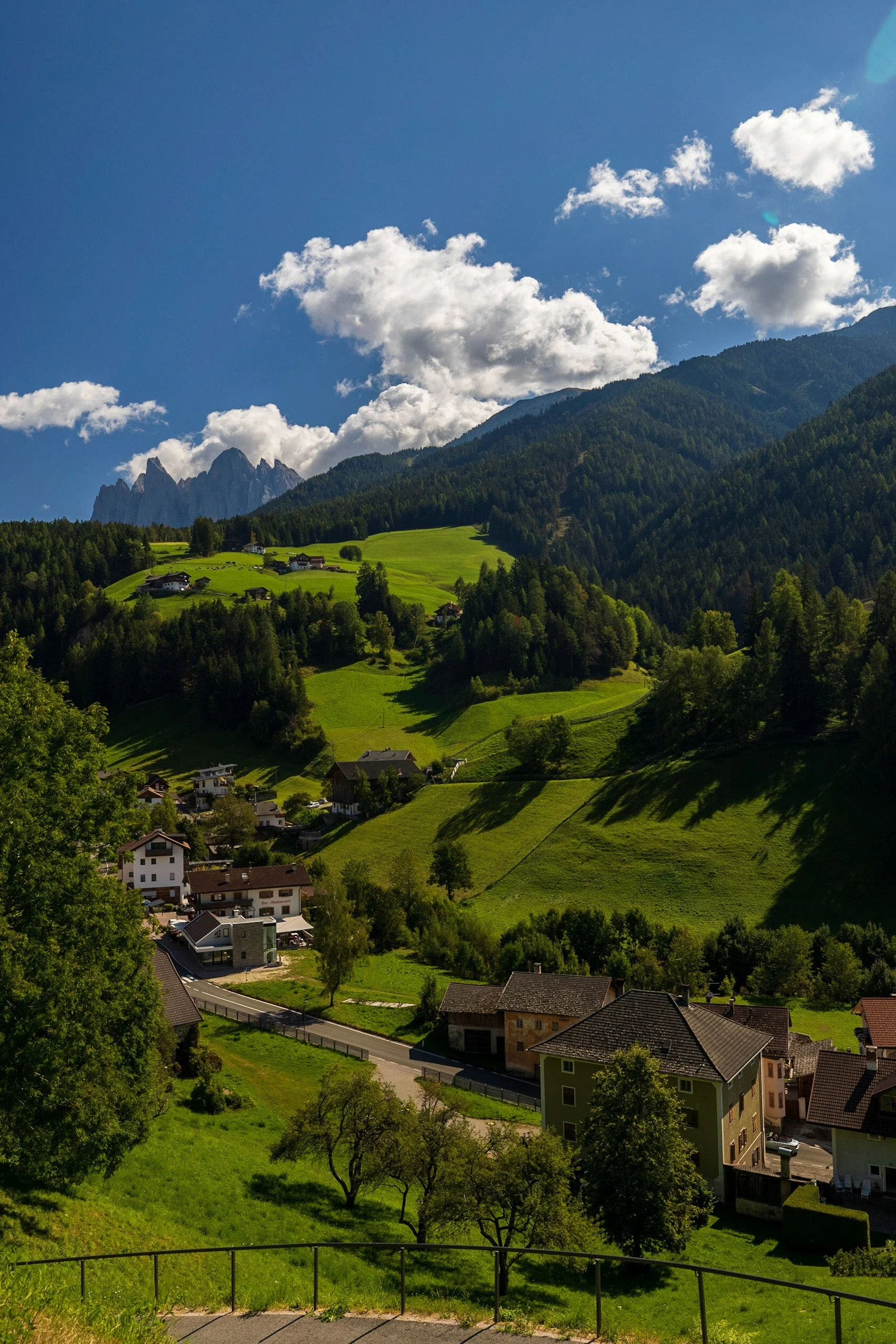
While there are so many places to photograph in the Dolomites, there are terrific photos to be taken everywhere. Our hotel was located in a beautiful area with so many photography opportunities, including Plose.
There are so many places to stop around the hotel
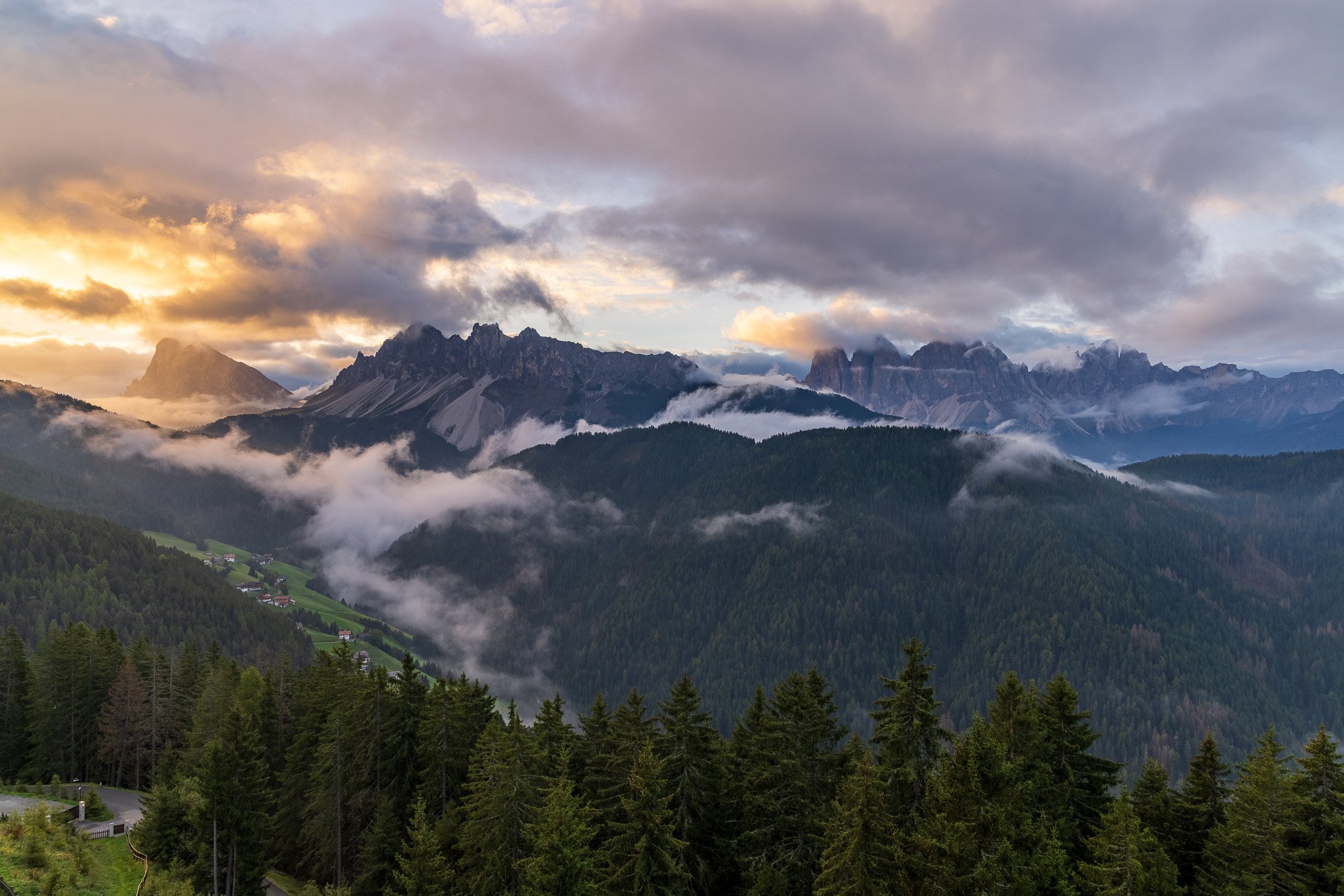
Some more views of the area
Seceda
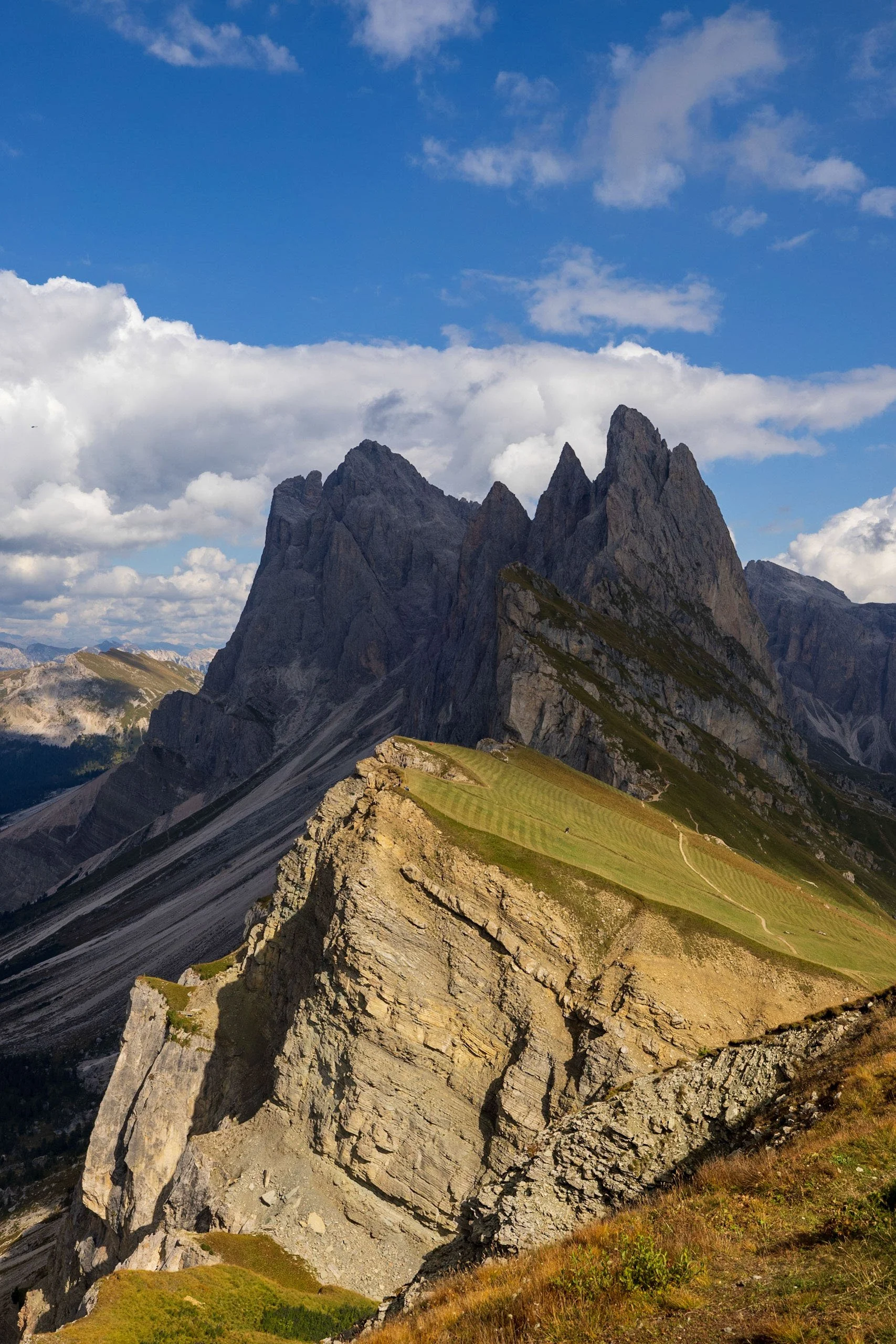
Seceda is where the Dolomites announce themselves. The Fermeda Towers, a jagged line of rock formations rising above a sweeping alpine pasture at 2,500 meters, are among the most photographed mountain subjects in Europe, and for good reason. The combination of the long ridgeline, the open pasture in the foreground, and the light quality at this altitude creates conditions that are difficult to find anywhere else.
Access is via the two-stage gondola system from Ortisei. The first gondola runs to Furnes, where you transfer to the cable car for the final climb to the summit. The whole journey takes about 15 minutes. Park underground at Garage Central in Ortisei, a short walk from the gondola station.
📷 Pro Tip: The best light at Seceda is at golden hour in the evening, roughly 45 minutes before sunset. The Fermeda Towers face west and catch the last direct light of the day, turning the rock from gray to gold to deep orange before the light drops. Position yourself about 50 to 100 meters north of the gondola arrival station on the main path, with the towers to your right and the pasture dropping away in the foreground. Shoot at 16 to 24mm. Use any foreground element available: a patch of wildflowers, a section of fence, a visible trail. The standard tourist shot is straight at the towers with nothing in the foreground, which is fine, but the composition with depth is what separates the keepers. Check first gondola times before planning a sunrise shoot; the lifts do not always run at dawn. In September, the light is warmer and the grasses are turning gold, which adds a second foreground color layer.
Best time: Late afternoon through golden hour. Access: Paid gondola (verify current prices). Ortisei underground parking, five-minute walk to station.
Lago di Braies (aka Pragser Wildsee)
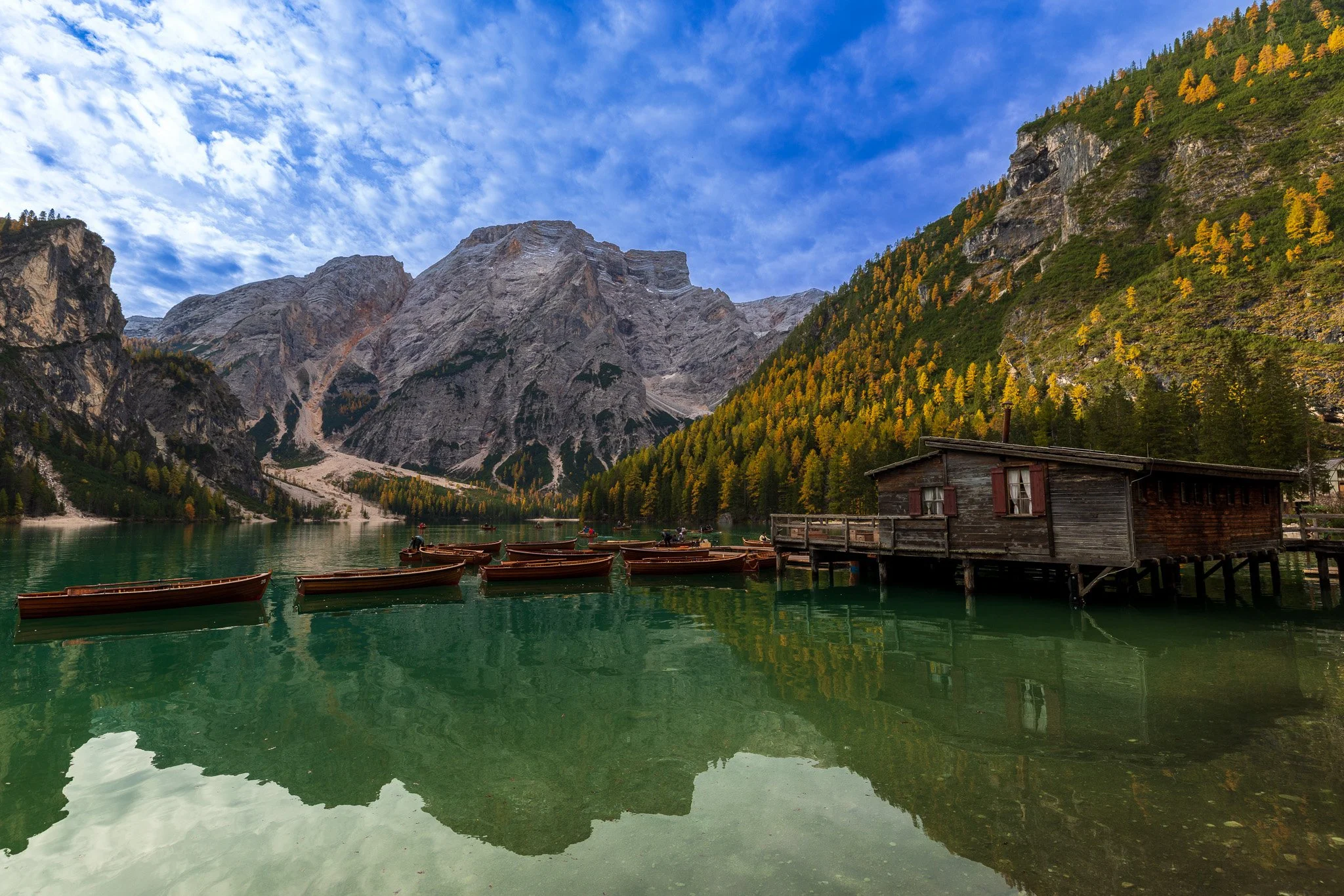
I will be direct with you: Lago di Braies is overrun with tourists. In high season, it looks like a queue for a theme park attraction, not a mountain lake. That said, the location itself is genuinely beautiful, with emerald water, surrounding forest, and dolomite peaks forming the backdrop. The wooden rowboats on the water have been photographed so many times that the image is almost a cliché at this point. Almost.
The way to experience it properly is to arrive very early, before 6am if possible. We arrived mid-morning on our first visit and spent more time managing crowds than shooting. The lake has introduced a mandatory parking reservation system during peak season, so plan ahead.
📷 Pro Tip: The best position is the north end of the lake, with the boathouse in the middle distance and the Seekofel peak rising behind it. Shoot at 24 to 35mm with the reflection of the peaks in the still early-morning water. The water is most mirror-calm in the hour after first light, before the wind picks up. Arrive by 5:30am in summer; you will have the lake nearly to yourself for about an hour. A circular polarizer deepens the emerald color and cuts the glare. In fall, the deciduous trees on the western shore turn gold and add a strong color element that summer visitors miss entirely. October is arguably the best time to photograph this location.
Best time: Sunrise, and early October for fall color. Access: Parking reservation required in peak season. Mandatory walk-in from the paid car park.
Cinque Torri
We did not make it to Cinque Torri. You always need to leave something for next time, right? So, what makes Cinque Tori unique? There are two reasons to come here. First, the most beautiful views. And second, the Great War History and Museum of The Great War (Museo Della Grande Guerra).
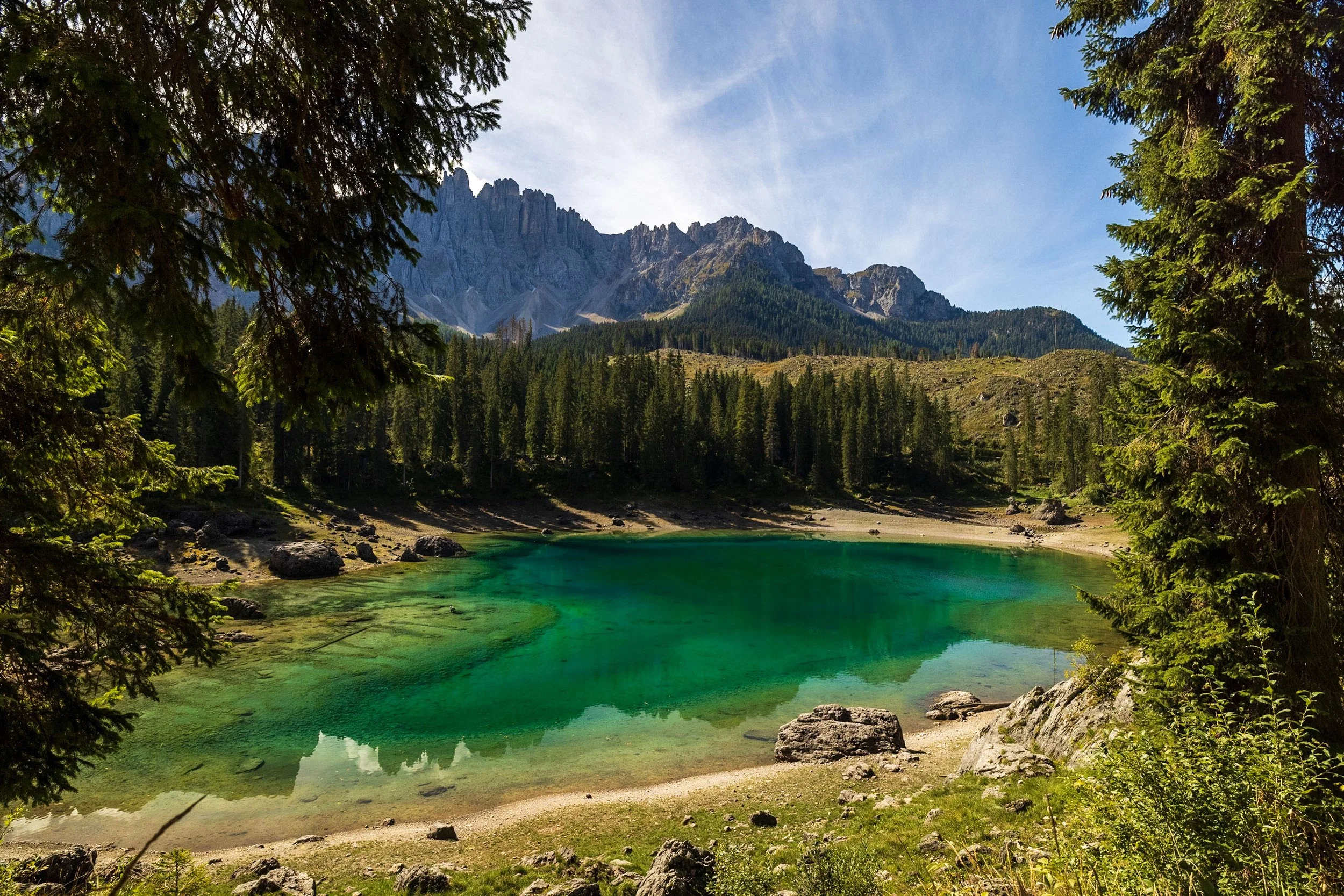
Lake of Carezza (Karesee)
Smaller and less crowded than Lago di Braies, Lake Carezza is one of the most visually compelling bodies of water in the Dolomites. The color of the water is a deep emerald that shifts depending on the angle of light, and the surrounding forest frames the scene tightly. The peaks of the Latemar group are reflected in the surface on calm mornings.
After visiting the lake, we drove the route back toward Ortisei through the Sassolungo area on a whim, not knowing it would become one of our favorite drives in the entire Dolomites. That happy accident is a good reminder: leave room for detours.
📷 Pro Tip: The classic shot is from the wooden boardwalk at the northern end of the lake, with the Latemar peaks reflected in the water. A circular polarizer is essential here, it transforms the water from bright to deep emerald. Shoot in the early morning when the surface is calm and the light is low and angled. Avoid the midday hours: the reflections disappear when the sun is overhead and the light becomes flat. A 24 to 35mm lens frames the composition cleanly. The boardwalk fills up quickly; arrive before 8am in summer. In late September and October, the surrounding larches turn gold and create a frame of warm color around the lake that is significantly more interesting than the summer green. If you can choose, come in fall.
Best time: Early morning, and September through October for the fall colors. Access: Small paid parking lot. Short walk to the lake.
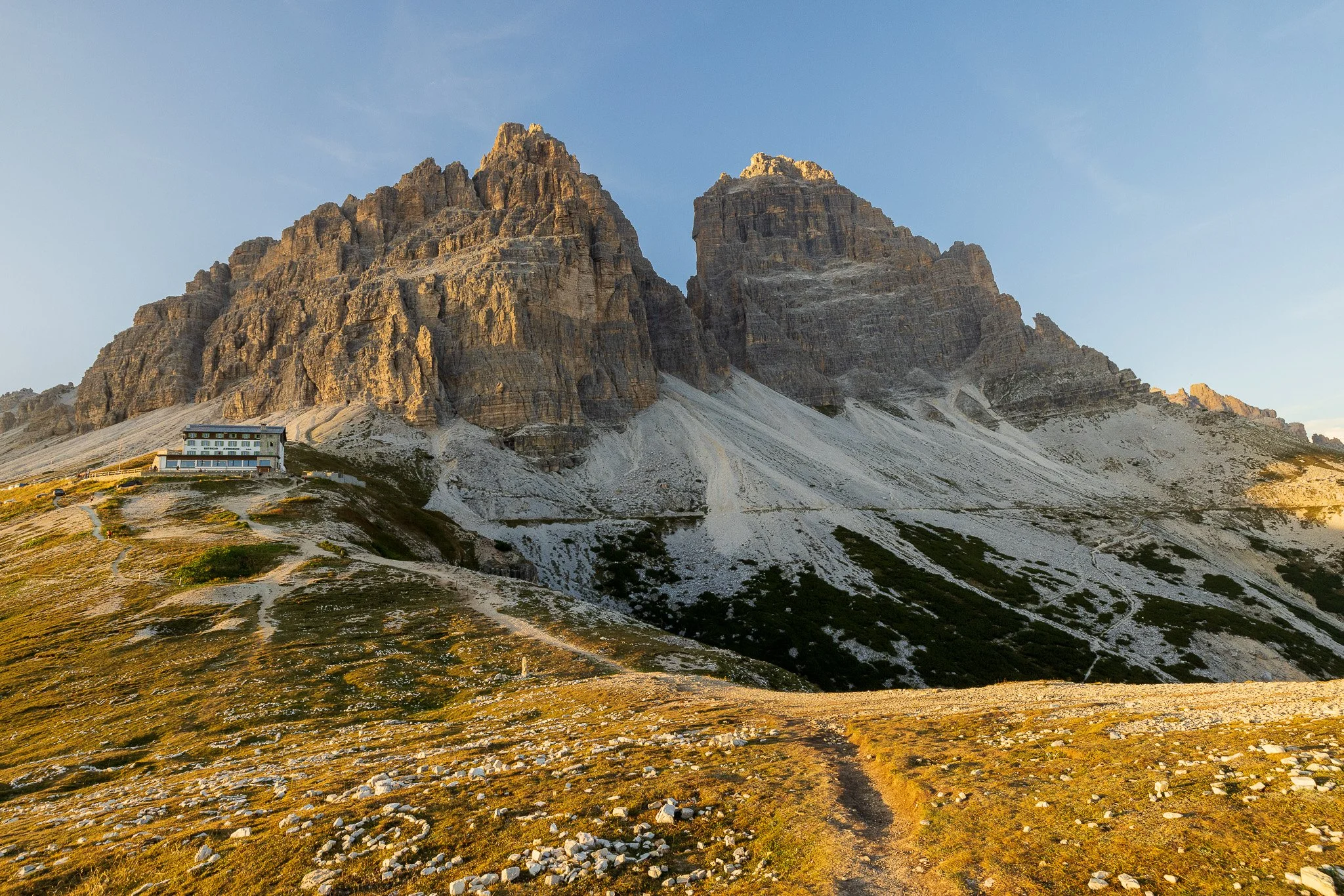
Tre Cime di Lavaredo (Drei Zinnen)
This is the Dolomites' most recognizable image and one of the most photographed mountain subjects in the world. Three enormous dolomite pillars, the tallest reaching nearly 3,000 meters, rise straight from the plateau in the eastern part of the range. Seeing them for the first time in person is a genuinely arresting experience. They are bigger and more vertical than photographs prepare you for.
Access is via the toll road from Lake Misurina to Rifugio Auronzo. As of 2026, a parking reservation is required in advance through the official Auronzo booking portal, and the toll is approximately 40 euros for a standard car. The road typically opens late May and closes in late October, weather dependent. Do not assume cash is accepted; the system has moved to advance online booking. Check the portal before your trip.
The loop hike from Rifugio Auronzo is about 10 kilometers and takes four to five hours at a relaxed photographer's pace. The trail is well-marked and moderate in difficulty. You do not need technical hiking experience, but wear proper footwear.
📷 Pro Tip: For the classic north face view of all three peaks, hike counterclockwise from Rifugio Auronzo to Rifugio Antonio Locatelli (Drei Zinnen Hütte), about 3.5 kilometers in. This is the money shot: all three peaks in a single frame, the hut in the foreground, and the high-alpine terrain giving the scene scale. Arrive at Locatelli before 8am to avoid the midday crowds and shoot in the soft morning light before it turns harsh. A 24 to 70mm lens covers most of the compositions here. Bring the wide-angle for the approach looking east, where you get the peaks against the open sky. For sunset, stay until the last light leaves the peaks. The north faces take on a deep red glow roughly 20 minutes after the sun drops below the western horizon. If you plan a sunrise shoot, book two consecutive parking slots: the standard ticket covers 12 hours.
Best time: Early morning and sunset. Access: Online pre-booking required, approximately 40 euros. Road open late May to late October.
Lago Sorapis
This lake looks spectacular after watching some YouTube Videos (Watch this Video by Kara and Nate), and you will see why we decided NOT to visit this location.
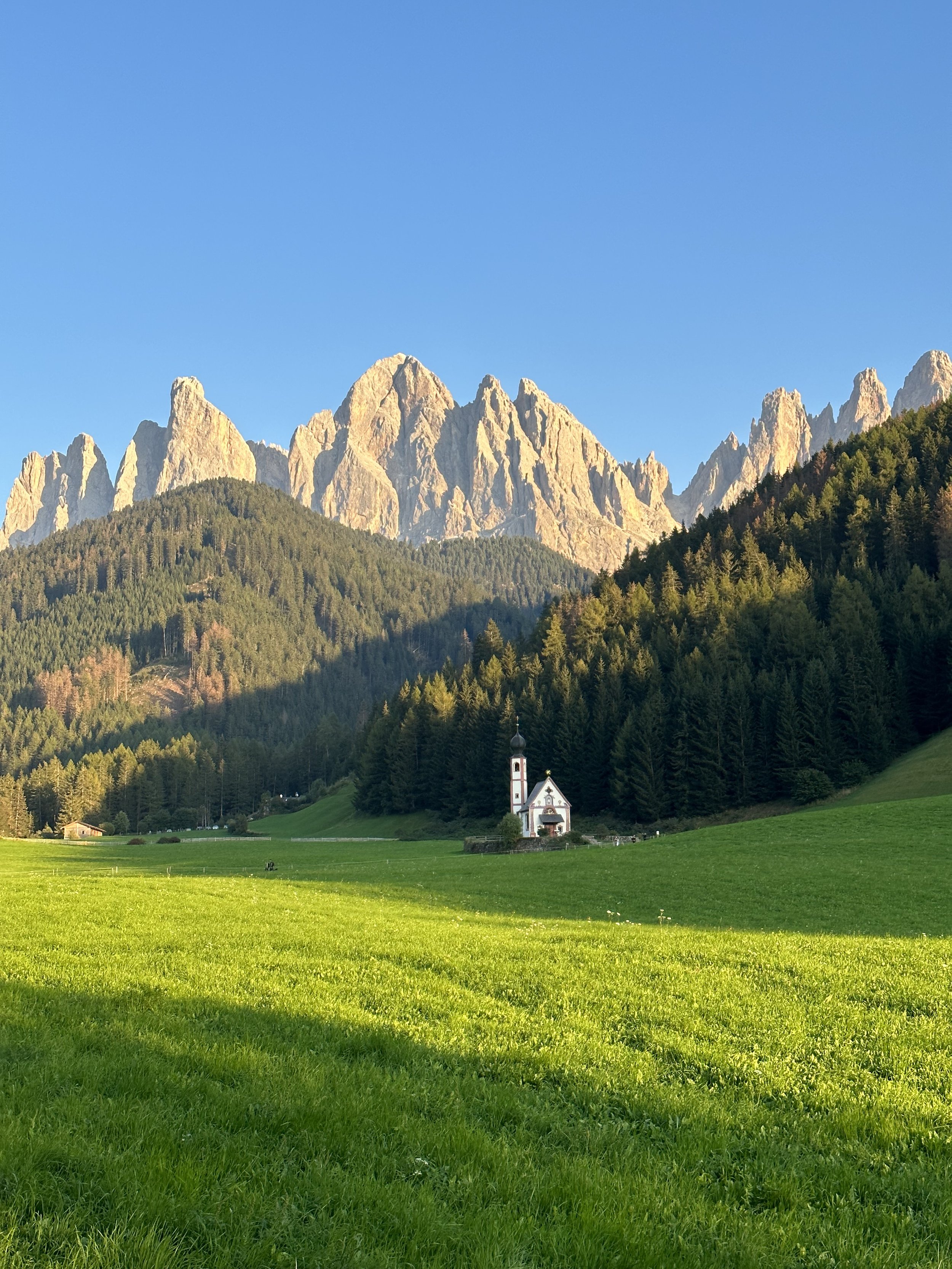
Villnöß (Church of St. John)
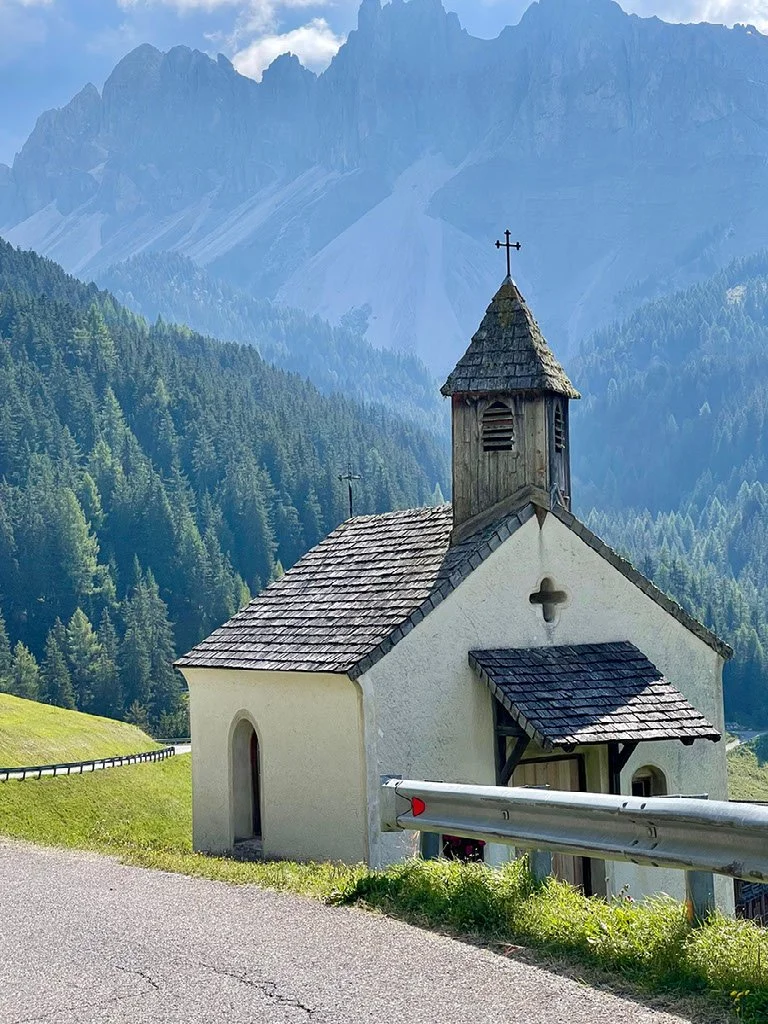
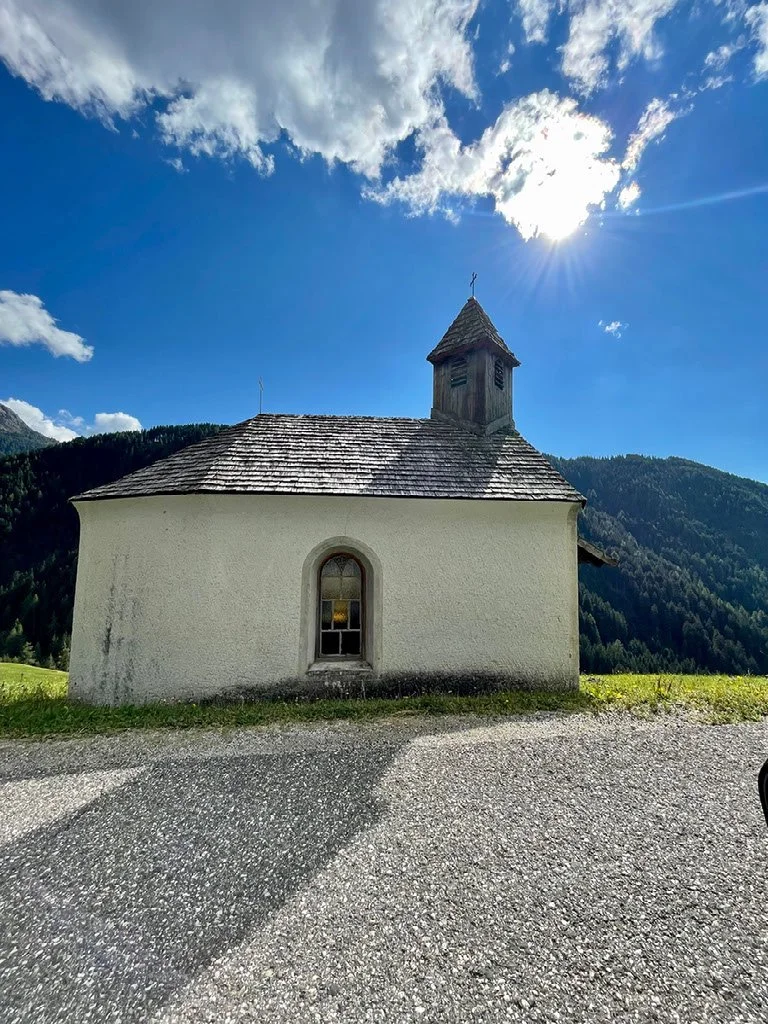
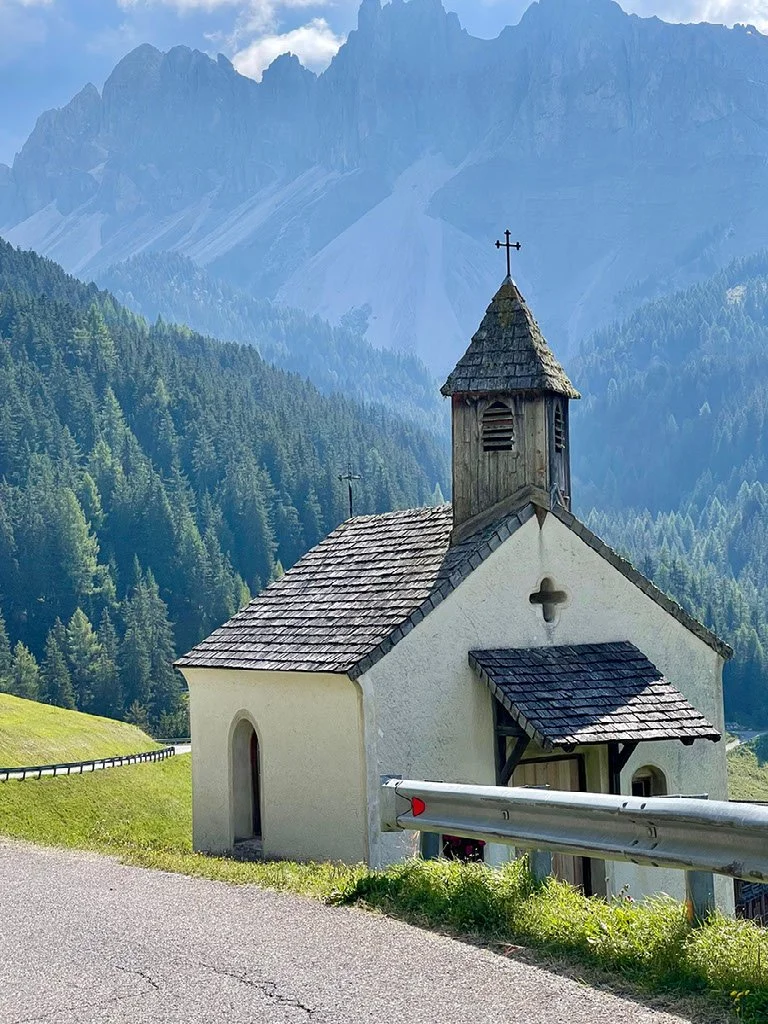
This is one of the most photographed churches in the Alps, and once you see it in person, you understand why. A small white Baroque chapel sits alone in a field in the Villnöß Valley, with the sheer gray rock face of the Geisler Group rising directly behind it. The scale contrast between the tiny church and the wall of dolomite above is extraordinary. I drove past it the first evening and came back at sunset. When we saw a German photography workshop with fifteen students already set up on tripods, I knew we had found the right spot.
The church is located near the village of Santa Maddalena in the Villnöß Valley. It is accessible by car and there is roadside parking nearby.
📷 Pro Tip: Shoot from the field directly east of the church, roughly 80 to 150 meters back, with the church centered and the Geisler peaks filling the upper half of the frame. A 70 to 100mm focal length compresses the distance between the church and the peaks behind it, which makes the rock walls feel even more imposing. Sunset light hits the face of the rock directly and gives the gray dolomite a warm orange wash. Golden hour here is usually around 7pm in September. Stay for blue hour too: the church lights up internally after dark and the soft internal glow against the deep blue sky and dark peaks is one of the better compositions of the trip. Arrive at least 45 minutes before sunset to scout and set up.
Best time: Golden hour through blue hour. Access: Free. Roadside parking near the church.
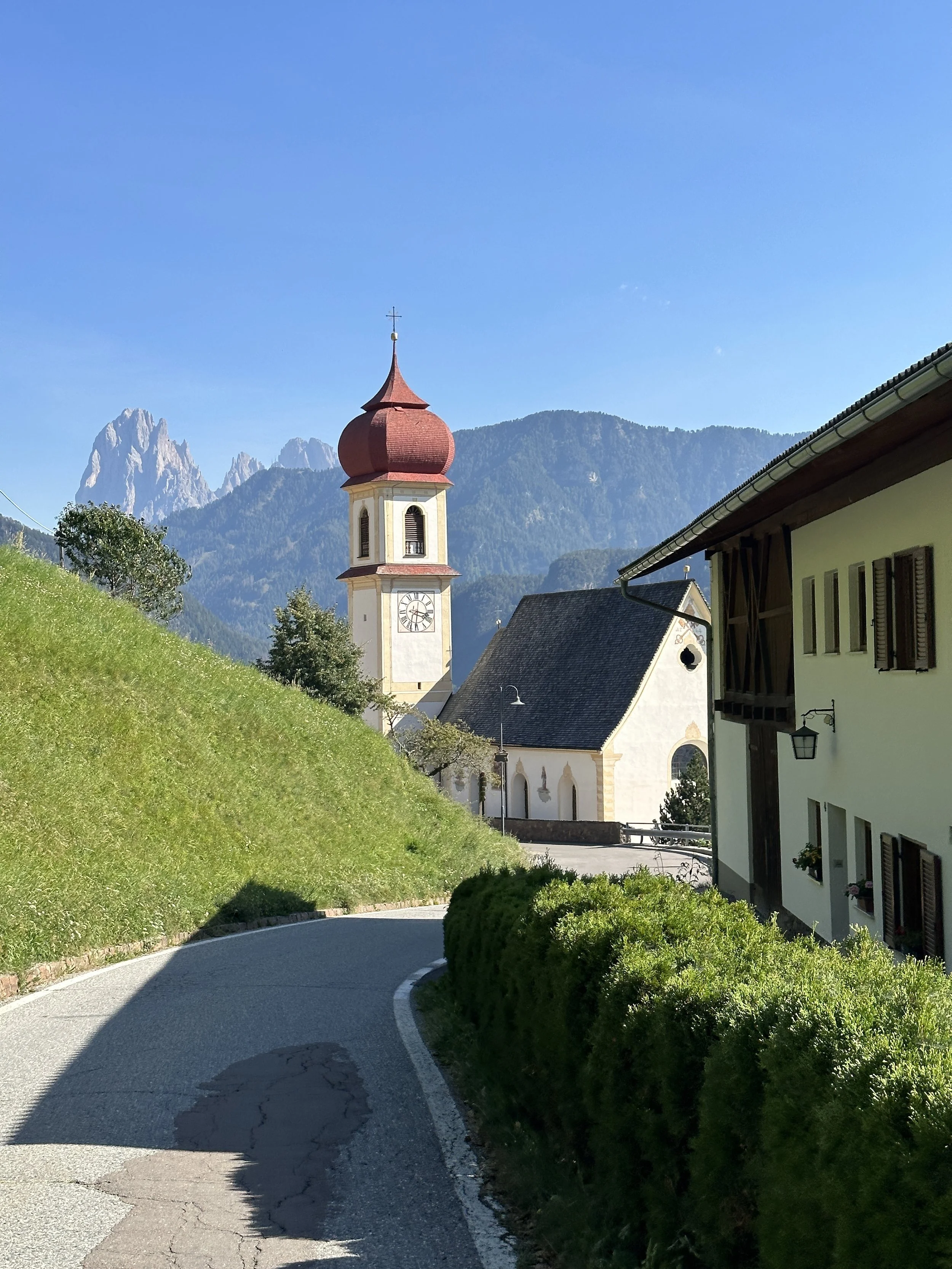
St. Valentin Church
There are a lot of beautiful churches in the area. One of my favorites is near Alpe di Suisi and it’s called the Saint Valentin Church.
Sassolungo
The Sassolungo massif is not a single location but a drive, and one of the best drives I have done anywhere. The road through the Sella Pass connects Val Gardena to the south and passes directly beneath the towering walls of both the Sassolungo group and the Sella plateau. Every turn produces a different framing of the same massive rock formations. We stopped at least a dozen times on this route alone.
This is also where Lupo Bianco is located, near the Pordoi Pass area, which makes combining a midday stop with a shooting session along the road very practical.
📷 Pro Tip: The best light on the Sassolungo faces hits in the afternoon. Drive the route from Val Gardena toward Canazei in the mid to late afternoon, stopping at any of the roadside pullouts that frame the rock walls against the sky. A telephoto (100 to 200mm) is ideal here: the peaks are close enough that a wide-angle loses the impact, and compressing the road with the mountains behind it produces stronger images. The pass itself, at around 2,200 meters, offers a 360-degree panorama that rewards a short walk from the road. Keep your eye on the weather; afternoon clouds build quickly and can either ruin the light or, if you are lucky, add dramatic mood to the peaks.
Best time: Mid to late afternoon. Access: Open road, no fee. Some roadside pullouts have limited space; arrive early or be patient.
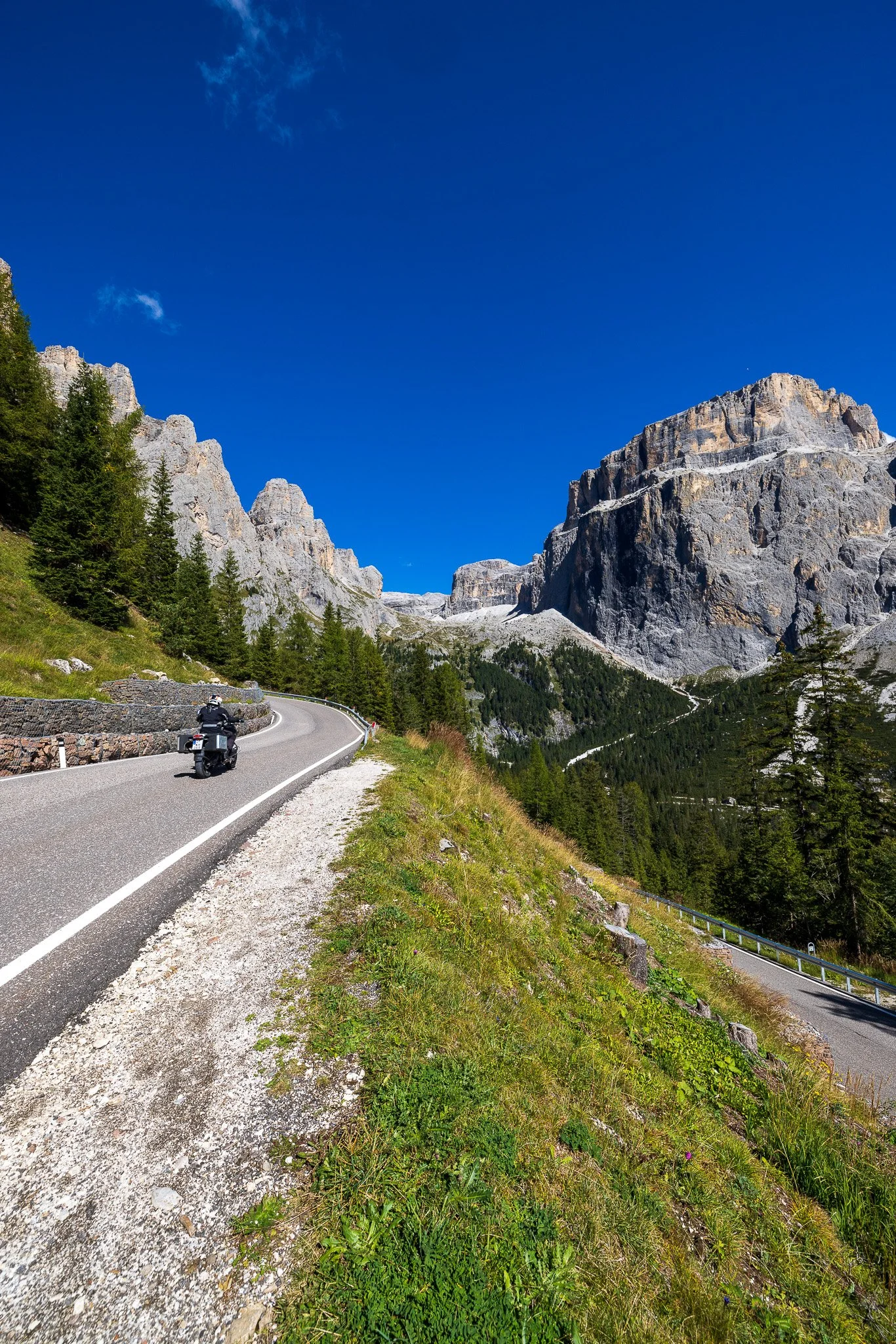
Alpe de Suisi "aka Seiser Alm"
Alpe di Siusi is the largest high-altitude alpine meadow in Europe, and for landscape photographers, it is one of the most generous locations I have ever worked. The plateau sits at roughly 1,800 to 2,000 meters, surrounded on three sides by the Dolomite peaks. The visual scale is unlike anything you encounter elsewhere in the range: open meadow, working farms, scattered wooden barns, and the rock walls of Sassolungo and Sciliar rising straight up in the background.
We stayed at Hotel Icaro on our second visit, specifically for the sunrise access. You walk out before first light, find your position in the meadow, and wait. The peaks catch the pre-sunrise glow first, and then the meadow comes alive as the light descends. It is one of the best morning photography experiences I have had anywhere.
The plateau is largely car-free during the day. If you are not staying there, take the gondola from Ortisei early, before the 9 am access restrictions kick in.
📷 Pro Tip: For sunrise, position yourself in the meadow northeast of the Icaro Hotel with Sassolungo and Langkofel in frame. Shoot low to the ground to include a path, a farm track, or the texture of the meadow grass as a leading line. A 16 to 24mm lens at f/8 with a tripod gives you maximum depth of field as the light comes up. The strongest images here are horizontal compositions with a strong foreground element pulling the viewer into the frame. There are also excellent reflection shots from the small ponds near the meadow edge after rain, when the peaks appear in the water. Bring ND filters for the ponds. September is the prime window: the grass is still green with early golden patches, and the morning fog sits in the valleys below while the plateau stays clear.
Best time: Sunrise and golden hour. Access: Gondola from Ortisei, or staying on the plateau. Car access restricted 9am to 5pm.
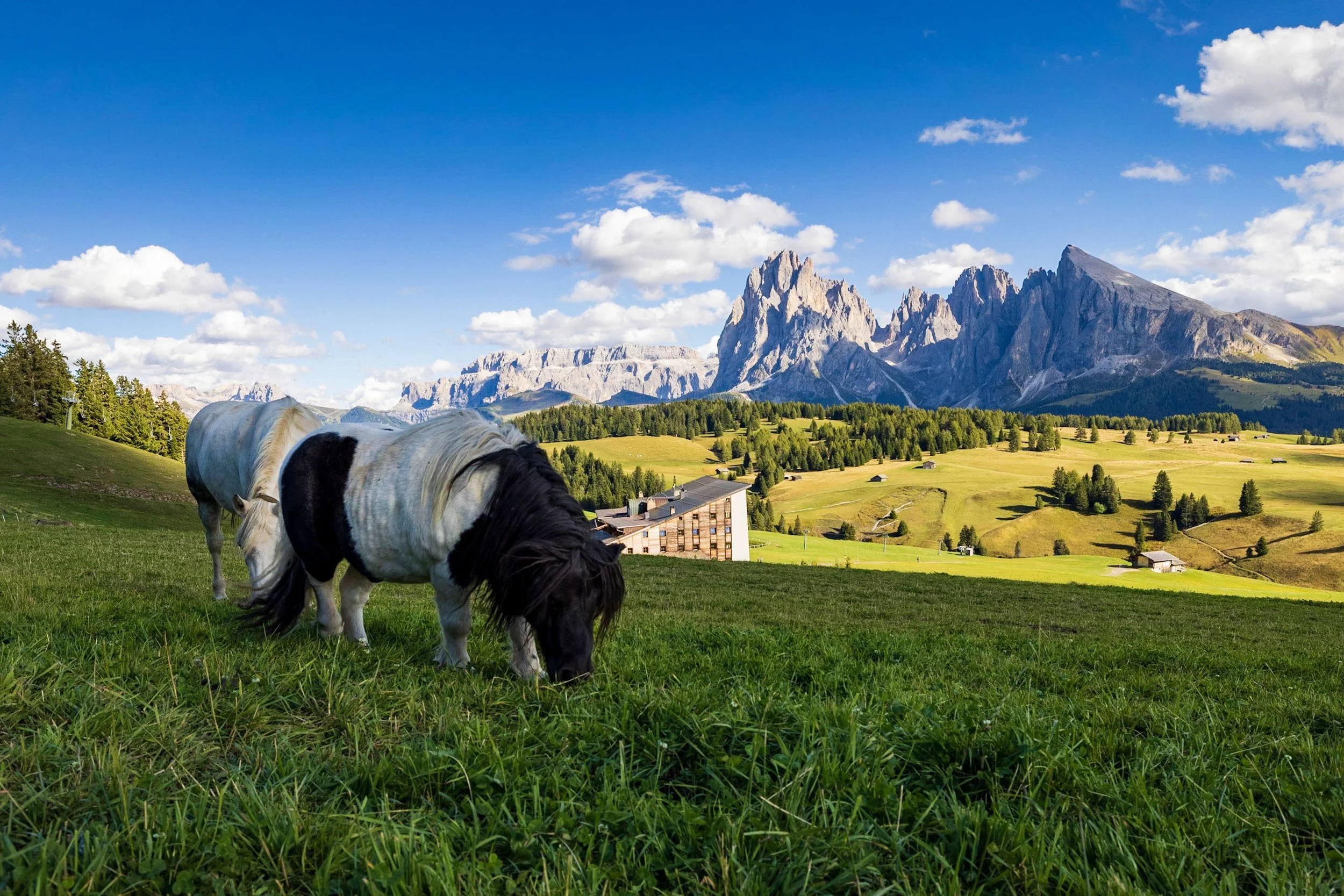
There are some amazing reflection shots you can get in this location
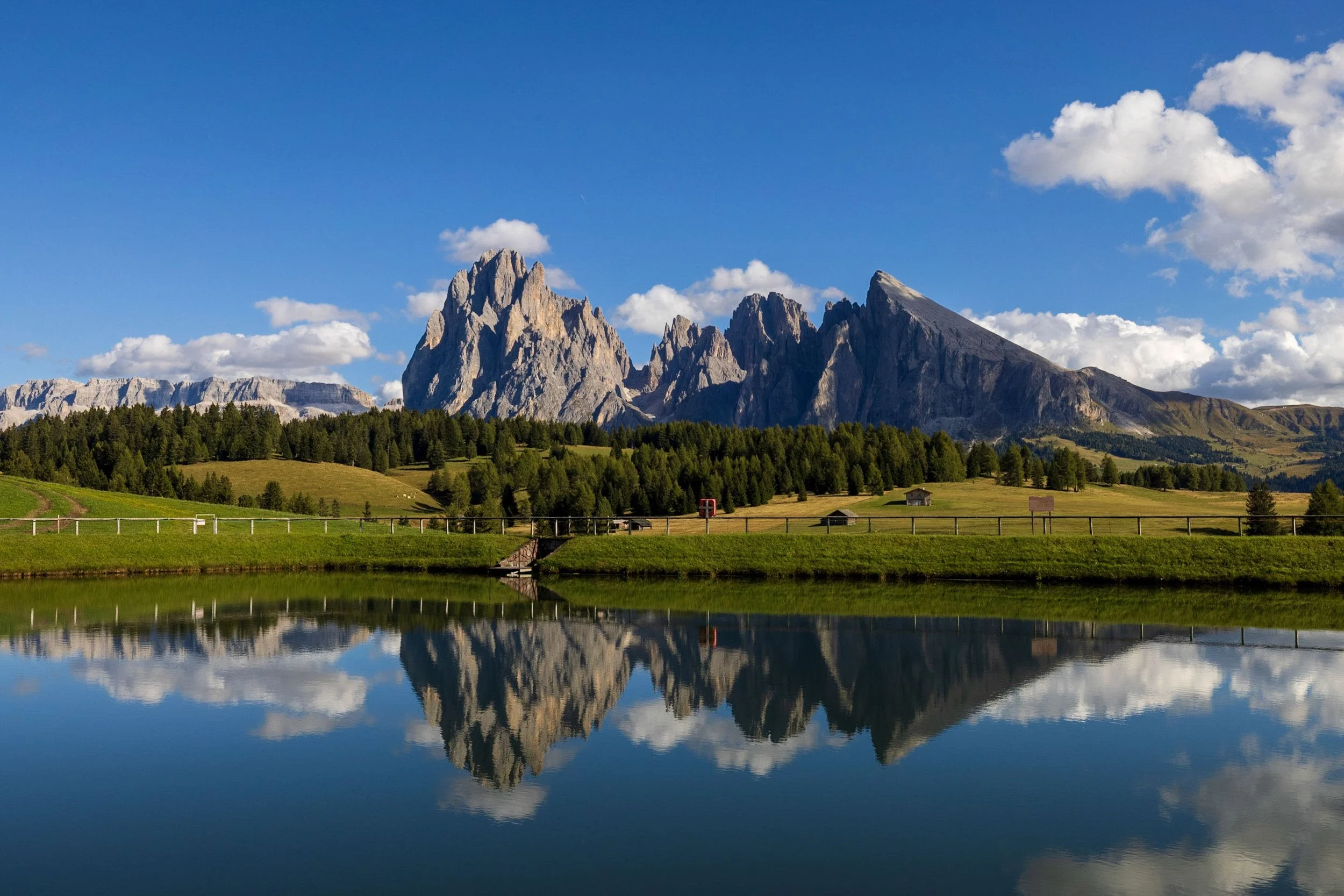
The advantage of staying in the Alpe di Suisi is that you can go out very early in the morning to take photos or at sunset.
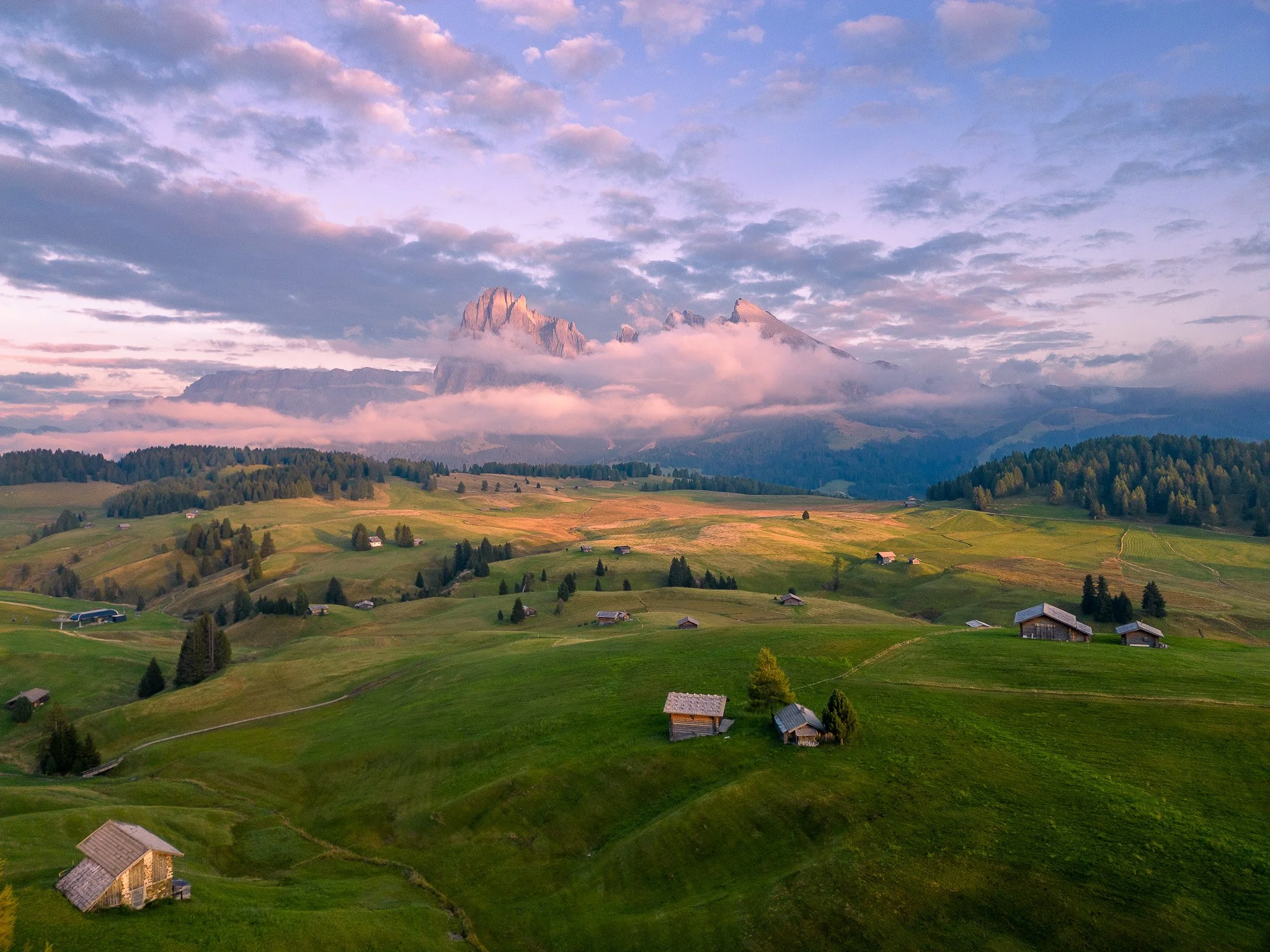
Sunrise
From the Icaro Hotel you will get views like this at sunset.
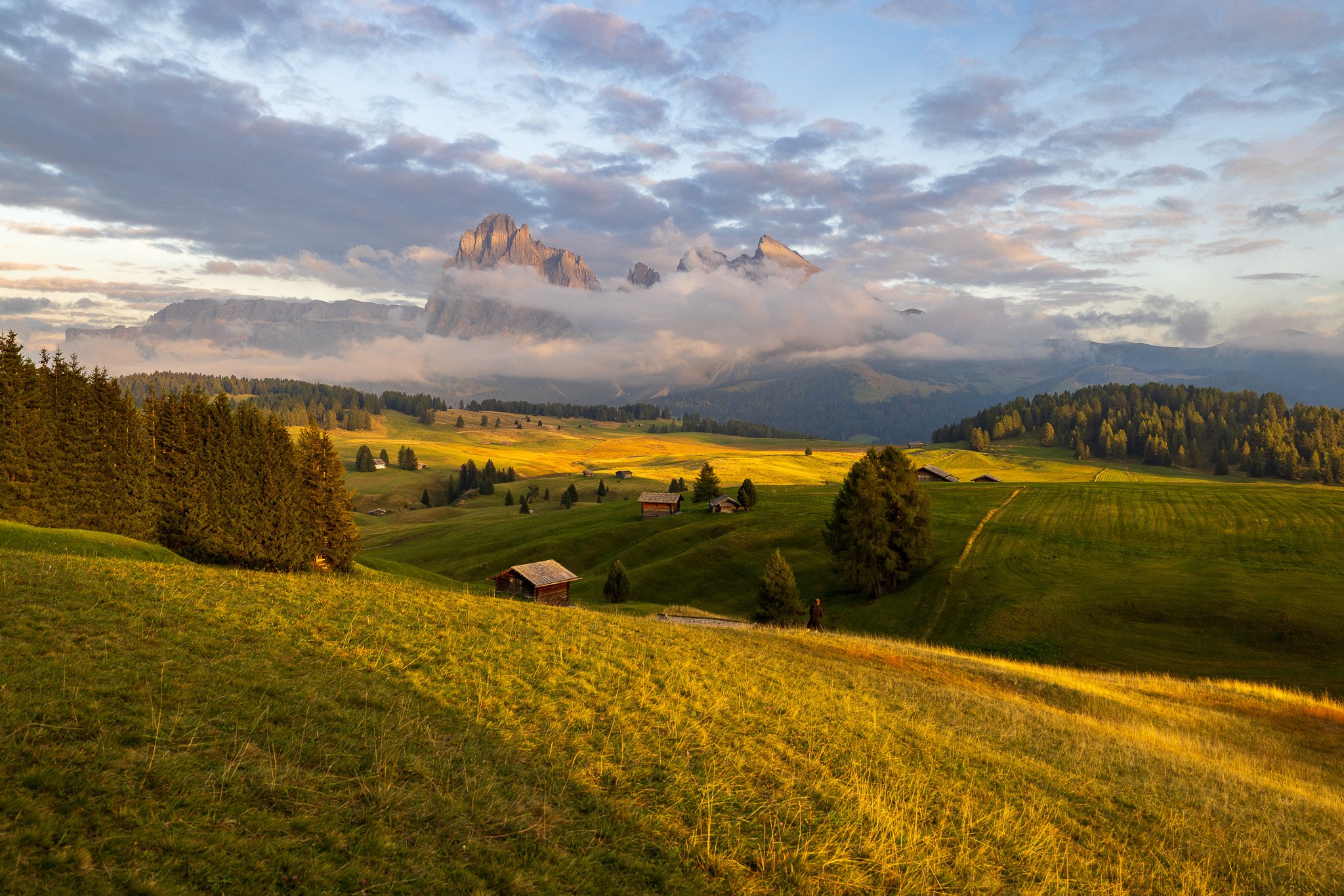
From Forestis to Antermoia on SP29
The drive from our hotel to Antermoia was one of our favorite drives. Every turn has something to photograph.
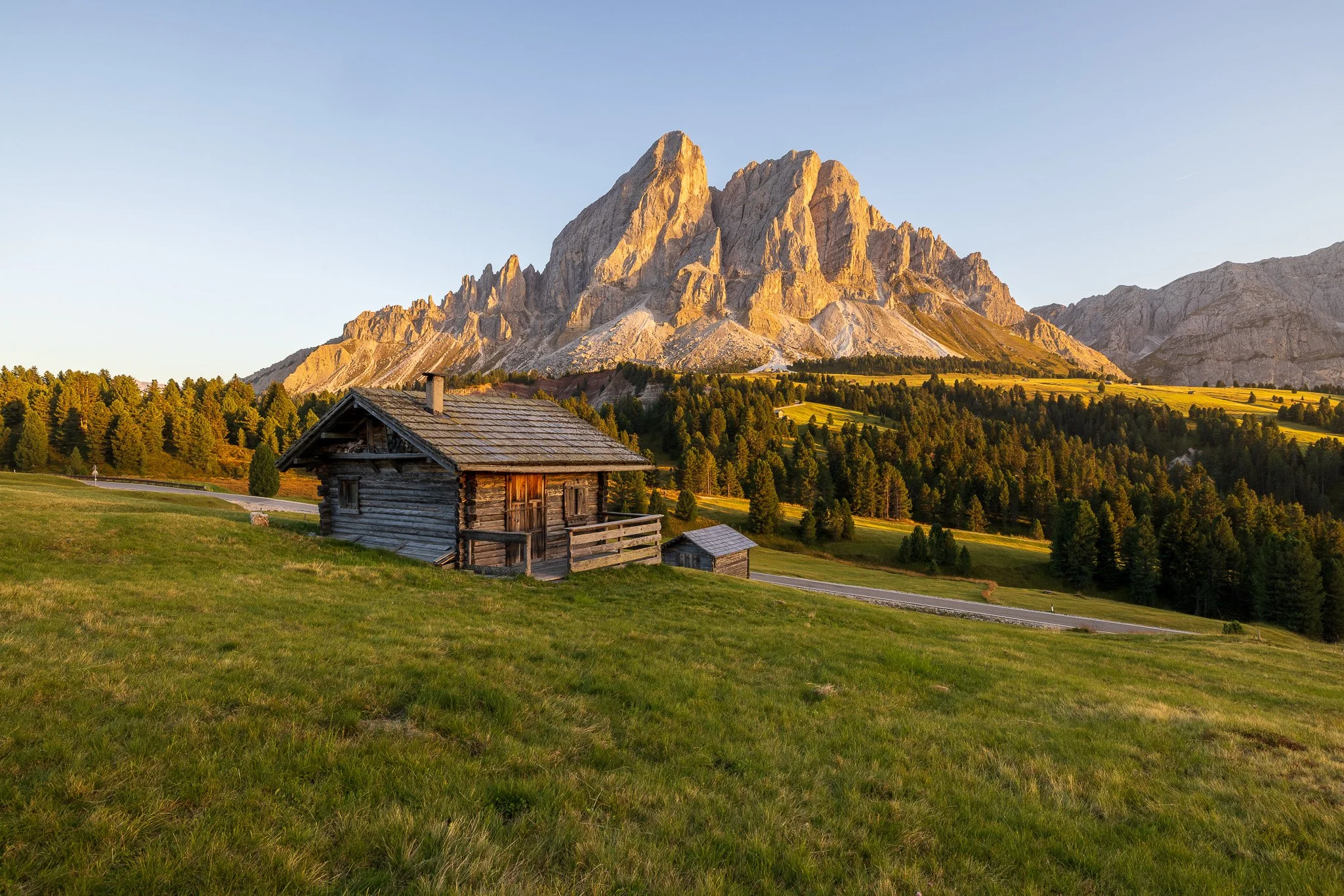
Route from Lake Carezza to Ortisei "Seceda"
After visiting Lake Carezza, which only takes about 30 minutes to visit, we could not decide which route to take back. On a whim, we decided to take another route, not knowing that this might be our favorite route in the Dolomites. It is simply amazing. This is the route where we stopped at the Lupo Bianco Restaurant.
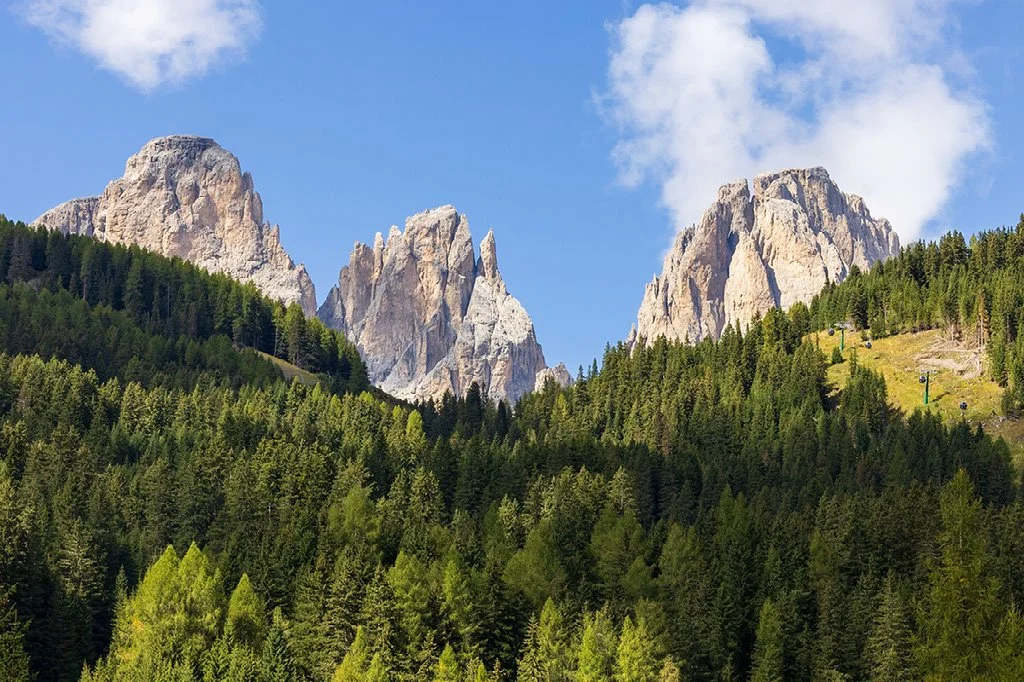
Forestis Hotel to San Pietro
As we were driving from the Church of St John to our hotel, I told my wife I thought this could be a great location at sunset. So we went back to Sunset, and when we saw a German Photography Workshop with 15 students using Tripods, I knew we had picked a perfect location for our last evening.
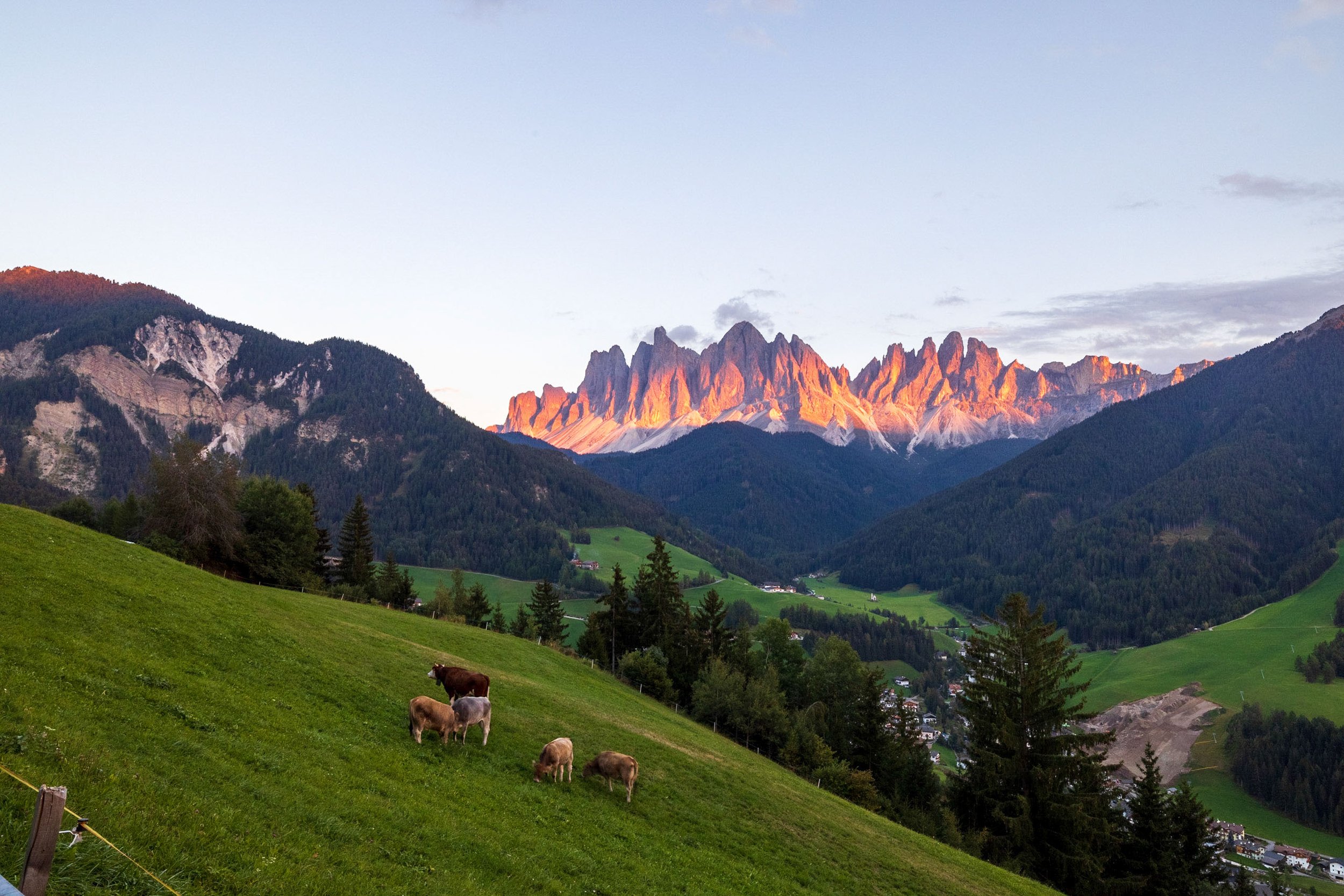
Forestis Dolomites to Peitlerkofel
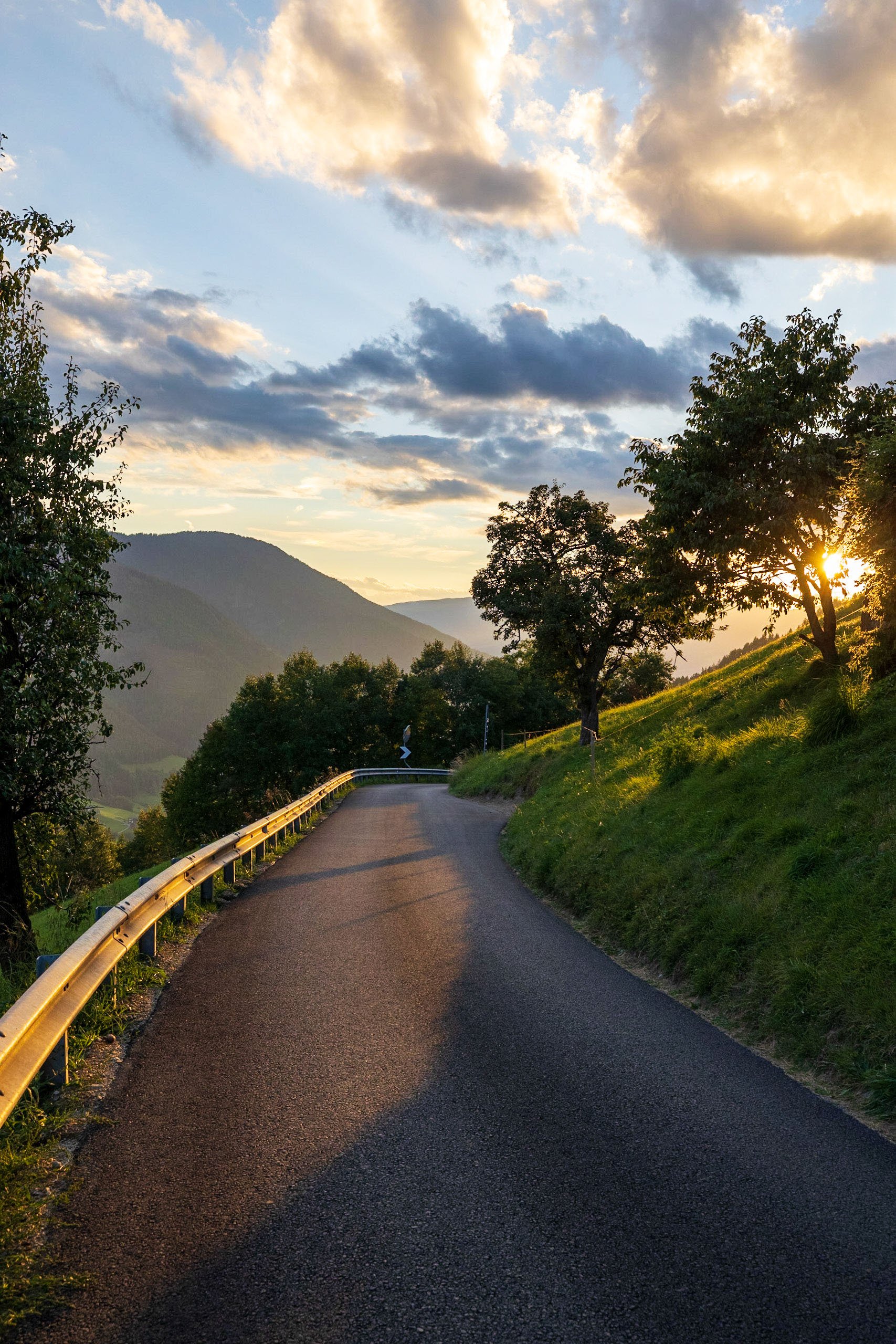
The final route that we drove a few times was from Peitlerkofel to our hotel. There are a million beautiful spots to stop on this route.
Festivals and Special Events
Törggelen Season (October and November) The South Tyrolean autumn tradition of visiting farmhouses and local taverns to taste the new wine alongside roasted chestnuts and speck. The Eisacktal (Isarco Valley) and the vineyards below Bressanone are particularly active during this season. Not a formal festival but a cultural practice that fills the region with a warm, harvest-season energy. Excellent for portraits and documentary-style photography of local life.
Reinhold Messner Mountain Museum Events The Messner Mountain Museum network has locations across the Dolomites, including at Sigmundskron Castle near Bolzano and at several mountain locations. The museums host seasonal events and exhibitions focused on mountain culture and exploration. Worth checking the schedule for any events during your visit.
Val Gardena FIS Ski World Cup (December) If you are in the Dolomites for a winter visit, the annual World Cup races on the Gran Risa course in Alta Badia and the Saslong in Val Gardena draw serious crowds and international competitors. The photography access at the race venues is excellent for action and crowd photography. The festive atmosphere in Ortisei and Santa Cristina during race week is also worth documenting.
Almabtrieb (September to October) The cattle drives bring the cows, horses, and goats down from the high alpine meadows at the end of the grazing season. The animals are decorated with flowers and bells for the descent. In the Alpe di Siusi area and throughout the Val Gardena villages, this is one of the most genuinely photogenic cultural events of the year. It happens organically on different dates depending on weather and the individual farm, so ask your hotel or check local village notices.
Christmas Markets in Val Gardena (December) Ortisei and Selva both hold traditional Christmas markets with wood-carved decorations, local food, and a visual atmosphere that rewards a camera. Val Gardena is internationally known for its woodcarving tradition, and the market is one of the best places to photograph the craft alongside the artisans.
Frequently Asked Questions About Visiting the Dolomites
Do you need a car in the Dolomites?
Yes, absolutely. The Dolomites don't work without one. The flexibility to stop spontaneously for a shot along the SP29 or the Sassolungo road is part of the experience, and public transport can't get you to most of the photography locations in this guide.
Is the Dolomites expensive?
It can be, especially the standout hotels like Forestis and COMO Alpina, but there's real range. Mountain huts like Rifugio Antonio Locatelli serve excellent, affordable meals, and many of the best locations, Seceda, Sassolungo, the scenic drives, cost nothing beyond gas and gondola tickets.
What are the best photo spots in the Dolomites?
Seceda at golden hour, Alpe di Siusi at sunrise, and Lake Carezza's emerald reflections in early morning are three I return to constantly. The full list with Pro Tips is above.
Can you fly a drone in the Dolomites?
Yes, but research restrictions carefully first. The Dolomites are a UNESCO World Heritage Site, and drone use is restricted in national park zones and near certain rifugios. Check the specific areas you plan to fly before you go.
What surprised you most about photographing the Dolomites?
Just how majestic these mountains are, and how the light hits them at sunrise and sunset. Alpenglow turning the peaks deep red at dusk is something photographs genuinely undersell until you've stood there and watched it happen.
How many days do you need in the Dolomites?
Five days is the absolute minimum. Seven to ten is ideal, enough time to split your stay across two zones and shoot the same locations in different light.
Why do locations have three different names on Google Maps?
Because the region has three languages in play: German (South Tyrol), Italian, and the local Ladin language. The same town or landmark can appear under all three, which is confusing but normal here. Plan for it rather than being thrown by it.
Should you book Tre Cime access in advance?
Yes, essential. As of 2026, a parking reservation is required through the official Auronzo booking portal, and the system has moved entirely online, don't assume you can pay cash at the gate.
Final Thoughts
The Dolomites are the kind of place that changes how you think about landscape photography. Not because the light is always perfect or the compositions are easy. They are not. It is because the scale forces you to slow down, reconsider your position, and think carefully about what you actually want to say with a frame. The mountains are patient. They have been there for millions of years. They will wait while you figure out your shot.
All five of our visits have been in September, and I will keep going back in September. The light, the emptiness, the fall colors coming in at the edges, the alpenglow that turns the gray peaks red and then dark again. It is the best version of this place, and once you have seen it, every other version will feel like a practice run.
Take the time to split your stay. Spend time in the meadows in the morning and drive the mountain passes in the afternoon. Talk to the people in the farmhouses and the rifugios. Eat the speck and drink the local wine. The Dolomites reward the photographers who treat them as a place to inhabit rather than a location to check off.
In this Photography Guide to the Dolomites, I share the places and experiences that continue to draw me back. I hope it helps you find your own version of this extraordinary place.
Want to improve your photography while exploring some incredible destinations? Join me on one of my photography workshops! You can find all the details, including upcoming destinations and dates, through the links below.
Let's Stay Connected!
My Photography & Travel Guide to Florence, Italy The cultural counterpart to the Dolomites. After a week in the mountains, Florence is the perfect landing. Spend three days photographing the Duomo, the Arno at golden hour, and the back streets of the Oltrarno. The contrast between mountain landscape and Renaissance city is one of the best one-two punches in Italian travel.
My Photography & Travel Guide to Venice, Italy A three to four hour drive from the eastern Dolomites, Venice is the logical extension of any Dolomites trip. The canals and architecture reward the same patience and light-chasing instincts that the mountains build in you. And unlike the Dolomites, Venice is best in winter, when the fog rolls in and the tourists thin out.
My Photography & Travel Guide to Milan, Italy Most people fly into Milan as their gateway to the Dolomites, and most people rush straight through. Do not. Milan rewards the photographer who slows down: the Duomo at blue hour, the Navigli canal district in the evening, the geometry of the Galleria Vittorio Emanuele II at midday. Spend two or three days before or after the mountains and you will leave with a completely different set of images.
Finally—a beginner-friendly photography guide that makes sense.
If you've ever picked up a camera and thought, "Now what?" this is the book for you.
Photography Made Simple is written for adults who are just starting out and want a clear, encouraging, real-world approach to learning photography. Whether you're using a DSLR, mirrorless, or just your smartphone, this guide walks you through the basics—without the jargon or tech overwhelm.
Inside, you'll learn:
The only camera settings you really need to know to get started
How to shoot sharper, more intentional photos using light and composition
Simple tips for portraits, landscapes, travel, and everyday life
What gear you do (and don’t) need
How to create better photos without upgrading your camera
You’ll also get practical exercises, cheat sheets, and tips for organizing and editing your images—plus the confidence to shoot off Auto Mode for good.
This is not a textbook. It’s a friendly guide to seeing the world with fresh eyes—and finally capturing what you see the way you imagine it.
📸 Format: PDF download
Pages: 100+
Perfect for: Beginners, hobbyists, and anyone ready to take better photos without the stress