Burano, Italy Travel & Photography Guide: Best Photo Spots, Things to Do & Hidden Gems
Homes have been painted in bright, government-approved colors on Burano since the 6th century, when fishermen needed to find their way back through the thick morning fog of the Venetian Lagoon. That practical tradition turned into something extraordinary: a small island, nine kilometers from Venice, that looks like someone dropped an entire painter's palette into the water.
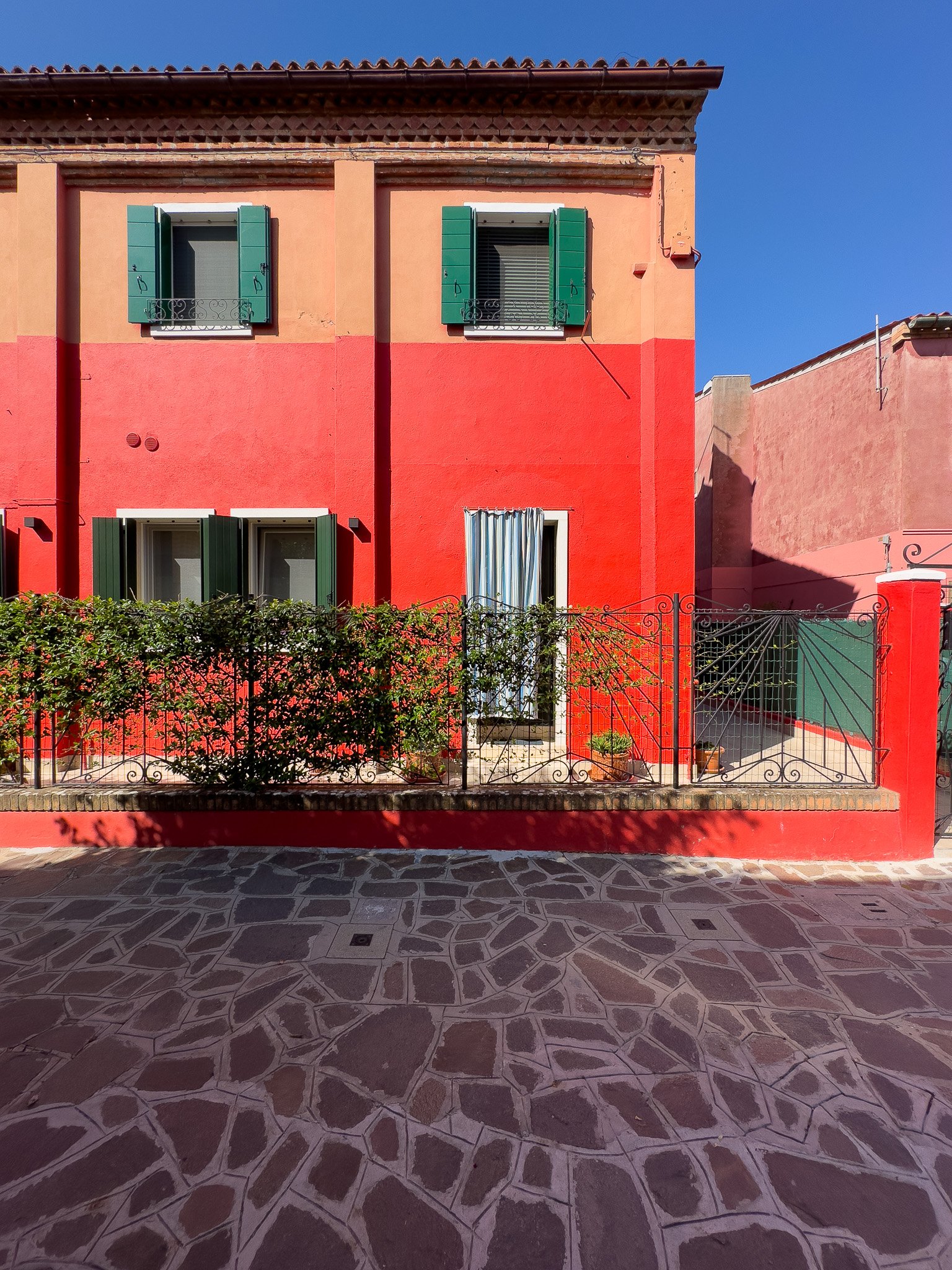
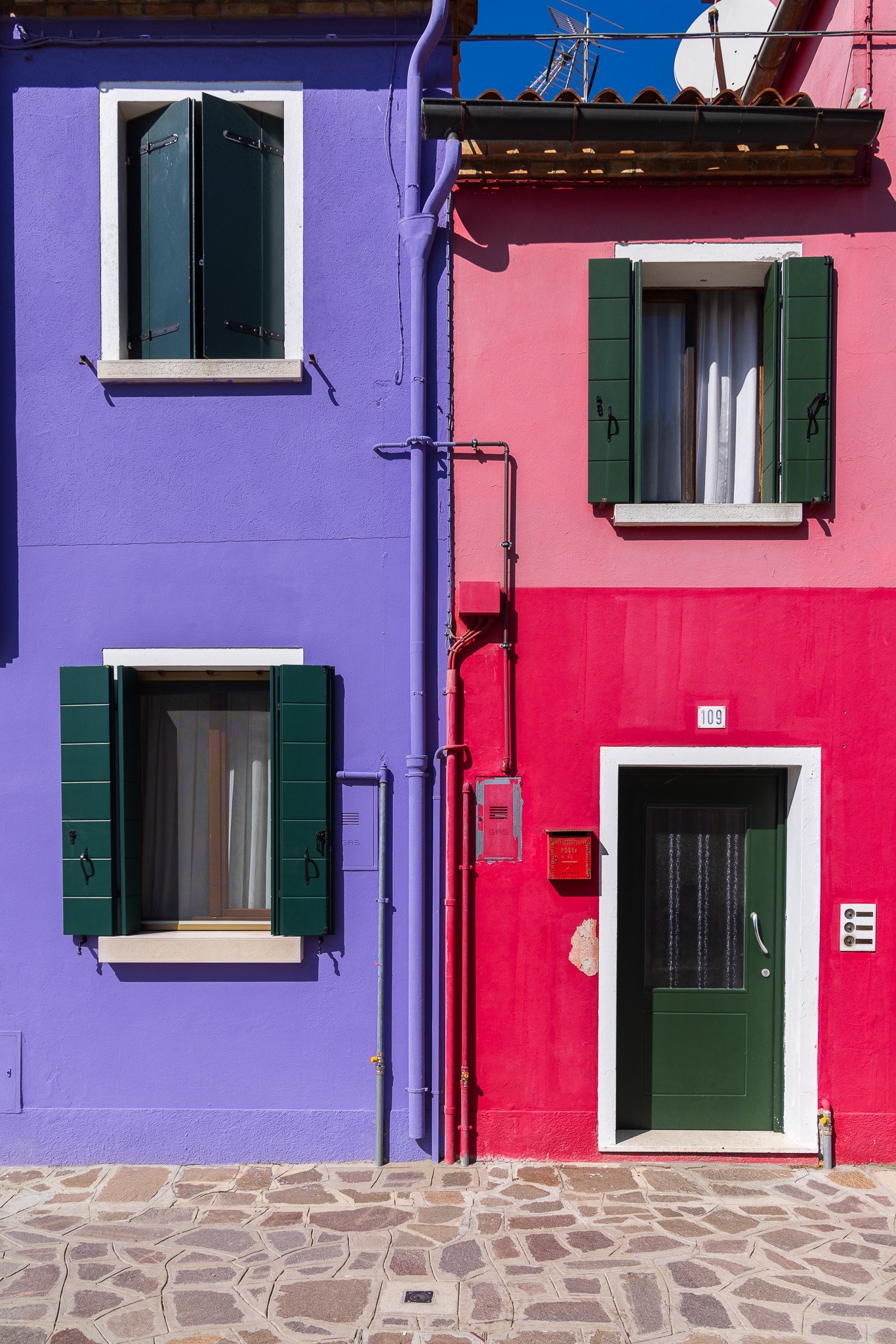
I have visited Burano five times, and it still surprises me. The colors are not subtle. Coral pink next to cobalt blue next to deep yellow. A green shutter beside a terracotta wall. And all of it reflected in the stillness of the canals running between. For photographers, the challenge is not finding a shot. The challenge is choosing which one to take first.
What makes Burano so rewarding to photograph is its scale and its pace. The island is small enough to walk in a couple of hours, and the light changes constantly. Morning fog softens everything and makes the colors glow rather than shout. Midday sun creates strong shadows you can use deliberately. Late afternoon turns the canals gold. Each hour here is a different photograph.
Burano also rewards patience. The locals are used to cameras, but they are not performing for you. A woman pinning lace in a doorway, a fisherman checking a net, children running across a small bridge: these moments happen naturally if you move slowly and stay quiet.
In this Photography Guide to Burano, I share the places and experiences that continue to draw me back. You will find my favorite photography locations, guidance on when and where to shoot, practical travel tips, and gear recommendations, along with cultural insights to help you explore and photograph Burano with confidence, respect, and ease.
Photographer's Notes
Before you go, here are my own takeaways.
Favorite Season: Spring or fall
Favorite Location: The colored houses throughout the island
Favorite Hotel: Casa Burano
Favorite Restaurant: Trattoria al Gatto Nero
Favorite Café: Panificio Pasticceria Palmisano Carmelina
Favorite Lens: 24-70mm f/2.8
Would I Return? Yes, I've visited five times, and it still surprises me.
Getting There & Getting Around Burano, Italy
Burano and Murano are car-free islands. You arrive and leave by vaporetto, Venice's public water ferry.
Take ACTV Line 12 from Fondamente Nove in Venice. The ride takes approximately 45 minutes and the views across the northern lagoon are part of the experience. Ferries run frequently throughout the day. You can also stop at Murano on the same line. I recommend going to Burano first, then stopping at Murano on the return to Venice.
Check the current timetable directly on the ACTV website before you go. Schedules change seasonally.
The alternative is a private water taxi, which will cost significantly more but gives you flexibility on timing and makes a grand arrival.
Once on Burano, everything is on foot. The entire island takes about an hour to walk at a leisurely pace. Cobblestones are charming but uneven, so wear proper shoes. Travel light: a compact backpack for your camera kit, a crossbody bag for your phone, and a compact tripod if you plan to shoot reflections or blue-hour frames.
A note on Murano: the island is a fifteen-minute vaporetto ride from Venice, far closer than Burano. It is famous for glassmaking and has its own Museo del Vetro. Plan both in a single day if your schedule allows. Burano first, Murano on the way back.
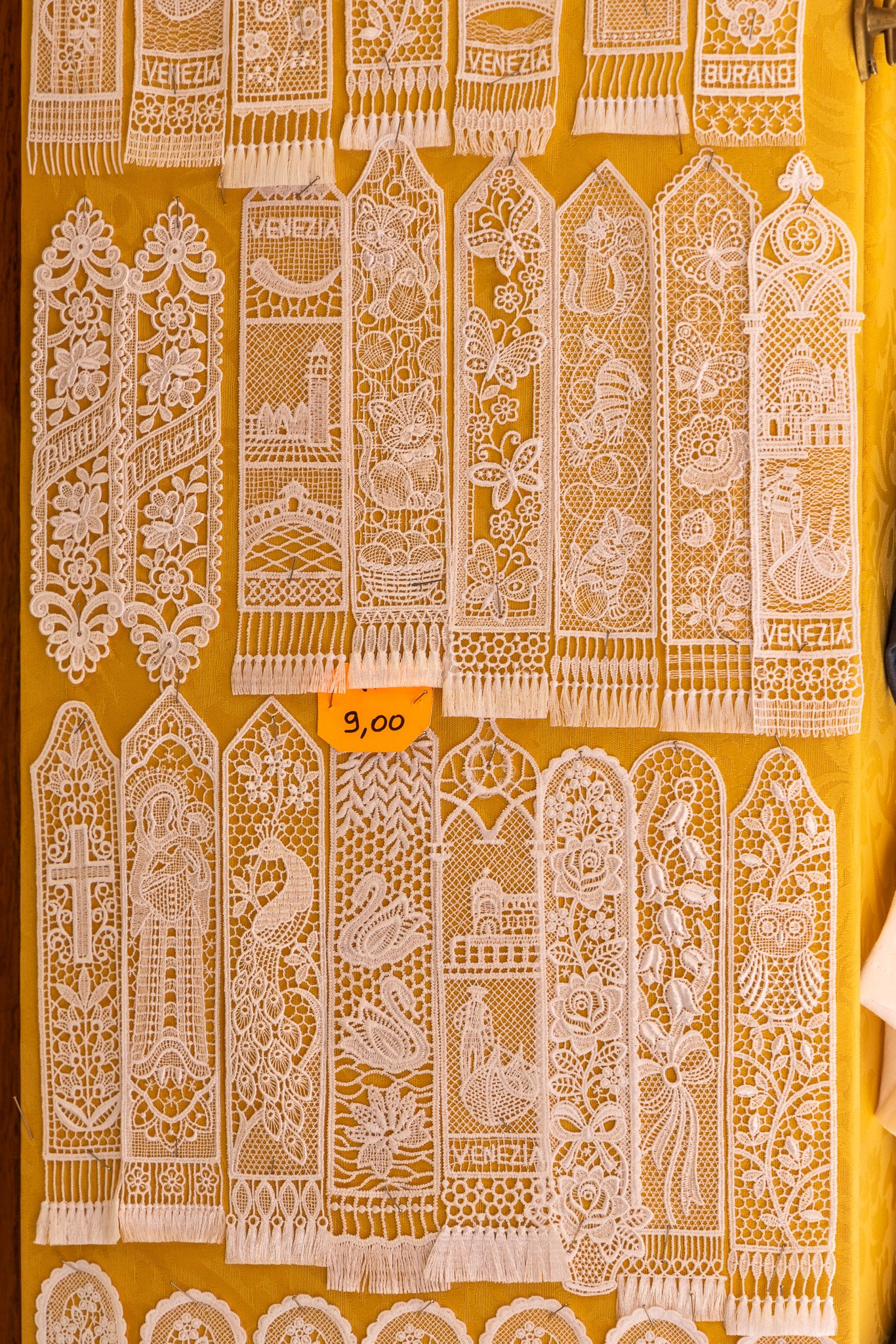
How Many Days to Visit
Burano is a half-day to full-day trip from Venice. The island itself is small, and you can cover it well in three to four hours of active shooting.
That said, I strongly recommend building in at least two visits if photography is your priority: one early morning session to catch the empty streets and soft light, and a second late afternoon session for golden-hour canal reflections. You can do both in a single long day, with a lunch break in the middle, or across two separate trips from a Venice base.
If you are combining Burano with the rest of Venice, I recommend four to five days total in the area. That gives you time to photograph Venice at dawn, do a full Burano morning, take a separate trip to Murano, and still leave room for unexpected discoveries.
If you are staying overnight on the island at Casa Burano, two nights is ideal. One full day of shooting, one sunrise session before the boats arrive.
Where to Stay in Burano, Italy
Most visitors stay in Venice and take the vaporetto to Burano for the day. That works fine. But if you can manage even one night on the island itself, you will see a completely different place: early morning mist, empty canals, and light that no day-tripper ever gets.
On the Island
Casa Burano: The only real accommodation option on Burano, and a good one. Rooms are spread across several restored, colorful island homes in what is called the hotel diffuso concept: no single building, just beautifully redesigned local houses connected by the island's lanes. The aesthetic is modern but respectful of the setting. Waking up here and walking out to empty canals before 7 am is worth the logistics alone.
Luxury (Venice, Fondamente Nove area or lagoon proximity)
Belmond Hotel Cipriani is on the island of Giudecca, a short water taxi ride from both Venice's center and the lagoon ferry terminals. Private gardens, a pool terrace overlooking the lagoon toward San Giorgio Maggiore, and Michelin-starred dining. This is one of the finest hotels in Italy. Book the complimentary launch to Piazzetta San Marco, then walk to Fondamente Nove for your morning vaporetto to Burano.
San Clemente Palace, Venice, is located on its own private island in the lagoon, ten minutes from San Marco by complimentary hotel boat. Forbes 5-Star and Travel + Leisure's top-ranked Venice hotel for 2026. Spacious grounds, a pool, and genuine quiet that Venice proper cannot offer. The lagoon location puts you in the right mental frame for a morning trip to Burano.
Hotel Danieli, Venice (A Four Seasons Hotel). One of the most storied addresses in Venice, on the Riva degli Schiavoni with direct views across the lagoon. Gothic architecture, rooftop dining, and a location that lets you photograph the lagoon at dawn before catching Line 12 to Burano from nearby Fondamente Nove.
Mid-Range & Boutique (Venice)
Hotel Palazzo Abadessa A 16th-century palazzo in the Cannaregio district, tucked away on a quiet canal with antique-filled rooms and a walled garden. Cannaregio is the most practical base for Burano visits: Fondamente Nove, the vaporetto stop for Line 12, is a ten-minute walk. The neighborhood is real Venice, not tourist Venice.
Ai Mori d'Oriente, a 15th-century former palace in Cannaregio, with 21 rooms and a genuinely residential feel. Honest value, good breakfasts, and a five-minute walk to the boat stop for Burano. It books up quickly in spring and fall.
Arcadia Boutique Hotel is a charming three-pearl property in Cannaregio, close to the train station and a quick walk to the vaporetto stops for the lagoon islands. Rooms are done in modern Venetian style. The breakfast is excellent. A solid mid-range base for a Burano-focused trip.
How About Murano?
I recommend visiting Murano as well. It is another beautiful island and is located much closer to Venice than Burano.
The island of Murano is famous for its long tradition of glass-making. There is even a Museum of Glass (Museo del Vetro). So, I recommend visiting both islands. I would first go to Burano and then stop in Murano on the way back.

Ferries leave every 20 – 30 minutes throughout the day, and it takes about 45 minutes to reach Burano. You can get the timetable for the ferry service from Venice to Burano here. The cost of a round-trip ticket is about 15 Euros and you can buy the tickets at the Ferry Terminal.
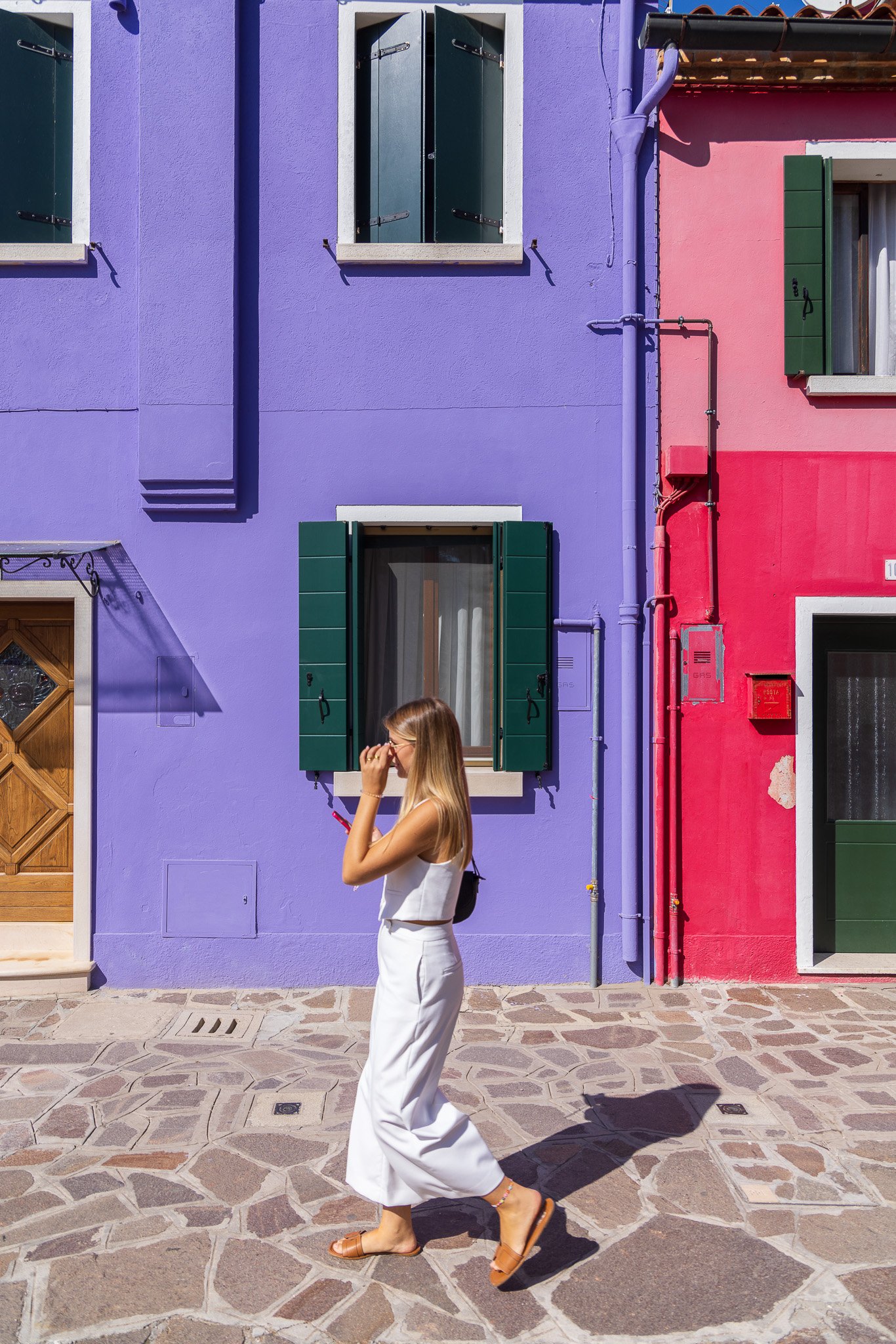
When the Outfit Matches the Houses
Another option is to go from Venice to Burano by private water taxi, but it will cost at least 130 to 140 euros each way.

Dining in Burano, Italy
Burano's food scene is built around two things: fresh seafood and slow lunches. The island's signature dishes come from the lagoon: risotto alla buranella, bigoli in salsa, fritto misto. There is no pretension here. The best meals are the simple ones, eaten canal-side while the light moves.
Trattoria al Gatto Nero: The institution. Family-run since 1946, with an azure blue facade that has become as recognizable as the houses around it. The risotto alla buranella, made with lagoon fish and best ordered for two, is the dish to get. The tiramisu is also legitimately excellent. Book well in advance. Walk-ins are not accepted. This is a reservation-only restaurant, and it earns the advance planning.
Riva Rosa is more upscale than Gatto Nero, with a rooftop al fresco terrace that overlooks the canals. The wine list runs to more than 180 Italian labels. Order the risotto or the seafood pasta and sit outside if the weather holds. The interior is part wine house, part museum, and genuinely worth exploring. Book ahead.
Panificio Pasticceria Palmisano Carmelina For a quick stop rather than a sit-down meal. Grab a bussolà, Burano's traditional butter cookie, and photograph the pastel storefront in the morning light before the crowds arrive. A tiny, honest corner of local life.
B Restaurant alla Vecchia Pescheria (Murano) Set inside a converted fish market on Murano, with stylish interiors and good natural light through the old market windows. A good lunch stop on your return from Burano.
Coffee
Burano has limited coffee options compared to Venice proper. The bars along Via Galuppi serve espresso and cornetti in the morning. Go early, stand at the counter the way locals do, and drink your coffee quickly. It costs less that way and tastes better.
For serious coffee editing sessions or a longer break, save that for Venice. The Cannaregio district has several good cafes near Fondamente Nove where you can review your Burano shots over a proper cappuccino before heading back out.
Photography Gear to Bring
Burano is a color and composition destination first. Your gear needs to handle bright, saturated color in changing light, close street scenes, and canal reflections.
Camera bodies: Canon EOS R5 Mark II, Sony A7R V, or Nikon Z8. Any of these handles the color fidelity and dynamic range Burano demands. The high resolution of all three helps when you want to crop tight on a doorway or window detail.
Lenses:
24-70mm f/2.8: your primary lens for 90% of what you shoot here. Covers canal scenes, street moments, and building facades.
35mm or 50mm prime: ideal for tighter street photography and low-light early morning shots without bulk.
70-200mm: useful for compressing the houses into a wall of color, or isolating a detail, a door, a shutter, a laundry line, from across a canal.
Accessories:
Circular polarizer: essential for managing reflections on the canals and saturating the colors in direct sun.
ND filters (3-stop and 6-stop): if you want to shoot long exposures on the canals at midday or capture boat movement.
Compact travel tripod or Platypod: for canal reflection shots at golden hour and any blue-hour work.
Lens cloth and rain cover: morning fog and lagoon humidity get onto glass faster than you expect.
Extra batteries and memory cards: a full Burano shooting day will drain one battery entirely.
Samsung T7 SSD: back up your cards on the ferry back to Venice.
A note on drones: Drones are effectively banned throughout the Venice lagoon, including Burano. The entire area is a restricted zone under Italian aviation law, and enforcement is active. Do not bring a drone expecting to fly it here. The fine if caught is severe, and the drone will likely be confiscated. Leave it at home for this trip.
iPhone Tips for Burano
Burano may be the single best iPhone destination in Italy. The colors are bold, the geometry is strong, and the subjects are everywhere. Here is how to make the most of it.
Use the ultrawide for canal scenes. Standing at the end of a narrow calle facing the canal with colorful houses on both sides, the ultrawide lens captures the full width of the scene in a way a standard lens cannot. Keep the phone level to avoid converging verticals.
Switch to the standard lens for doors and windows. The ultrawide distorts edges on close subjects. When you move in on a single door, a painted shutter, or a flower box, switch to the 1x lens and shoot straight on. The colors and geometry reward a clean, flat composition.
Shoot in ProRAW if your iPhone supports it. Burano's colors are extreme, and the JPEG processing often clips the reds and yellows. ProRAW preserves the full tonal range and gives you much more latitude in Lightroom Mobile when you edit on the ferry home.
Tap to expose on the sky or a bright wall, then adjust exposure down slightly. The island's colors saturate fast and blow out faster. Slightly underexposing by half a stop keeps the detail in the brights and makes the colors feel rich rather than washed out.
Use Portrait Mode for people shots. If a local fisherman lets you photograph him, or you catch a vendor arranging lace at a shop entrance, Portrait Mode separates the subject from the colorful background in a way that looks polished without requiring any post-processing.
Best Photography Locations in Burano, Italy
Wander the streets
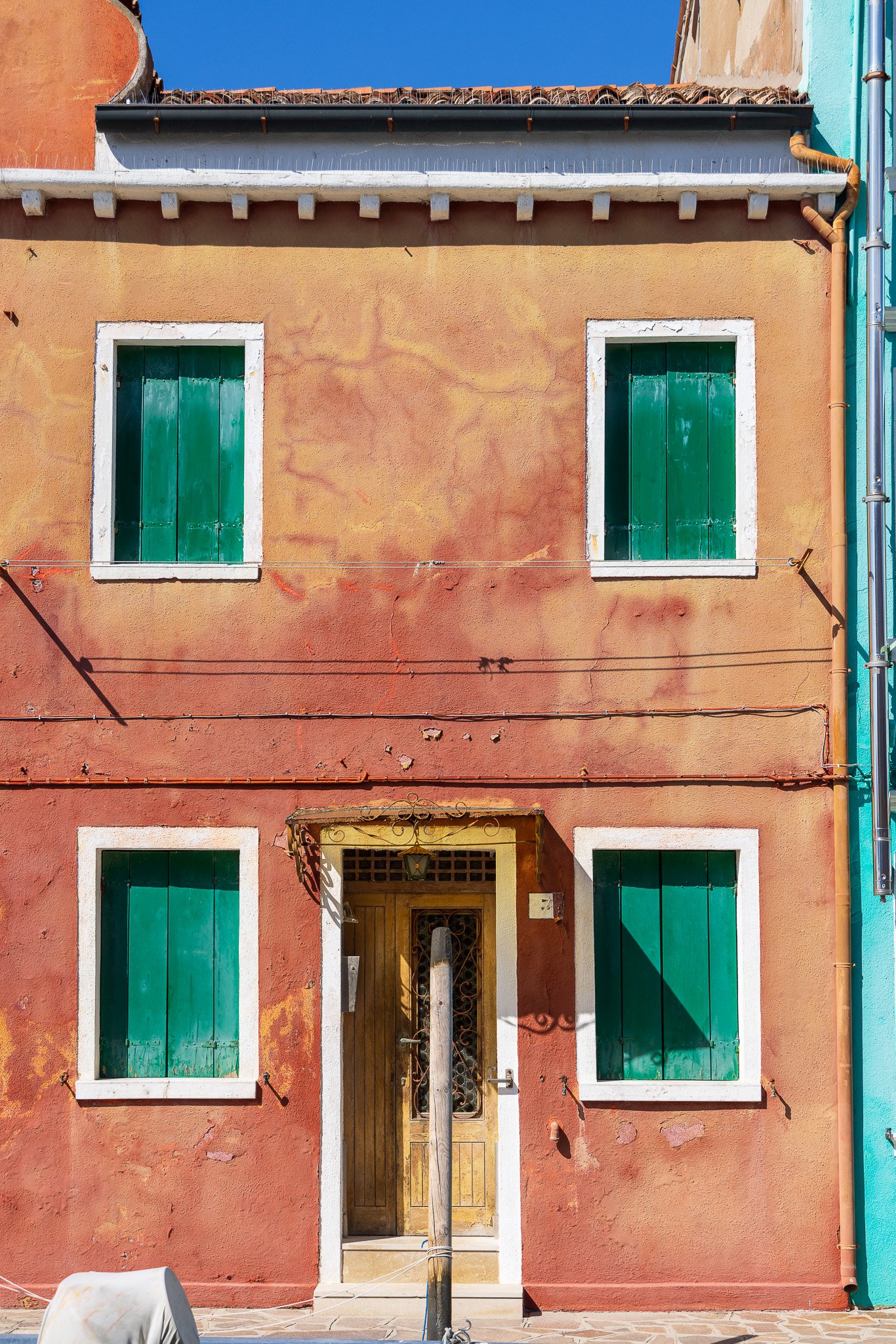
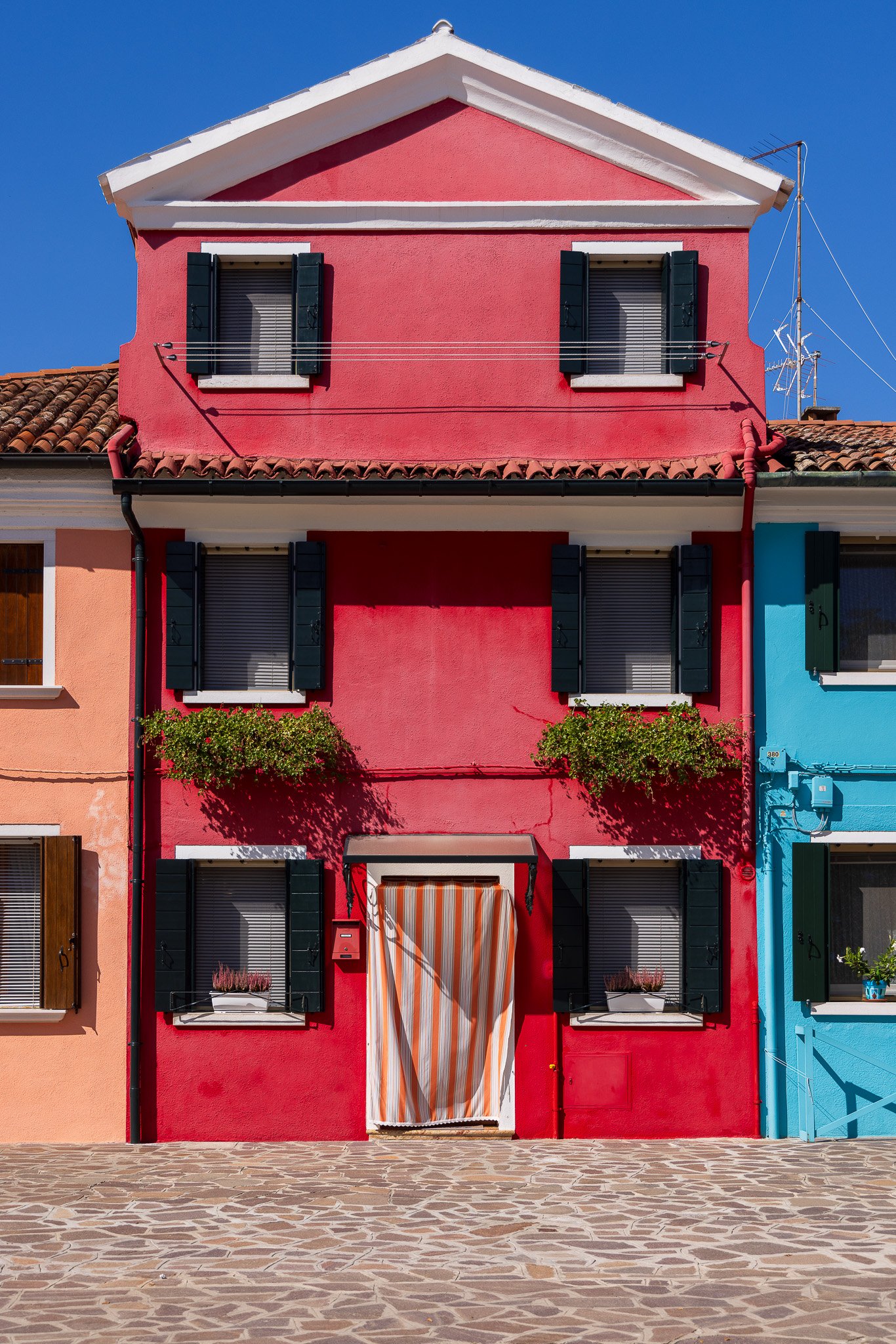
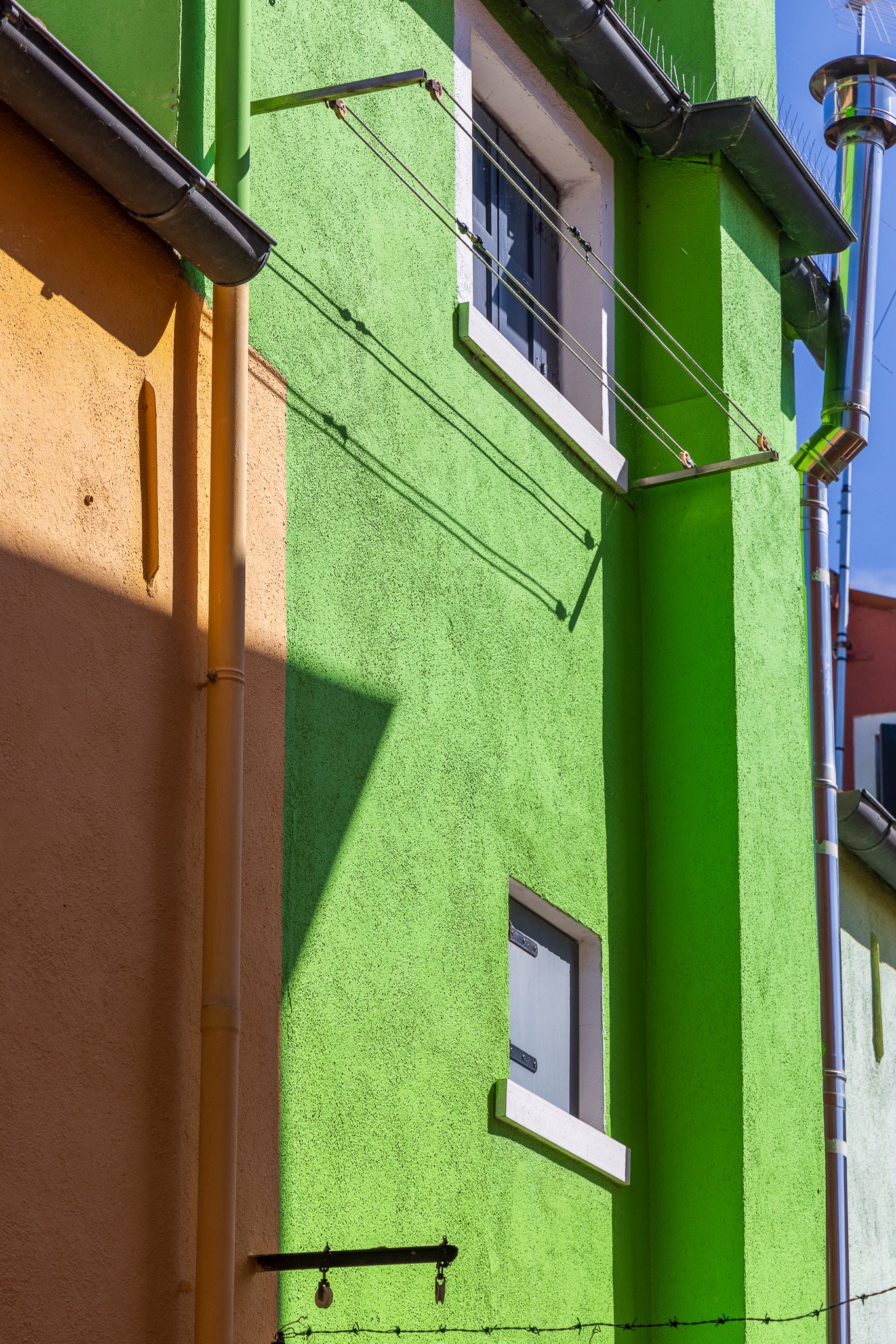
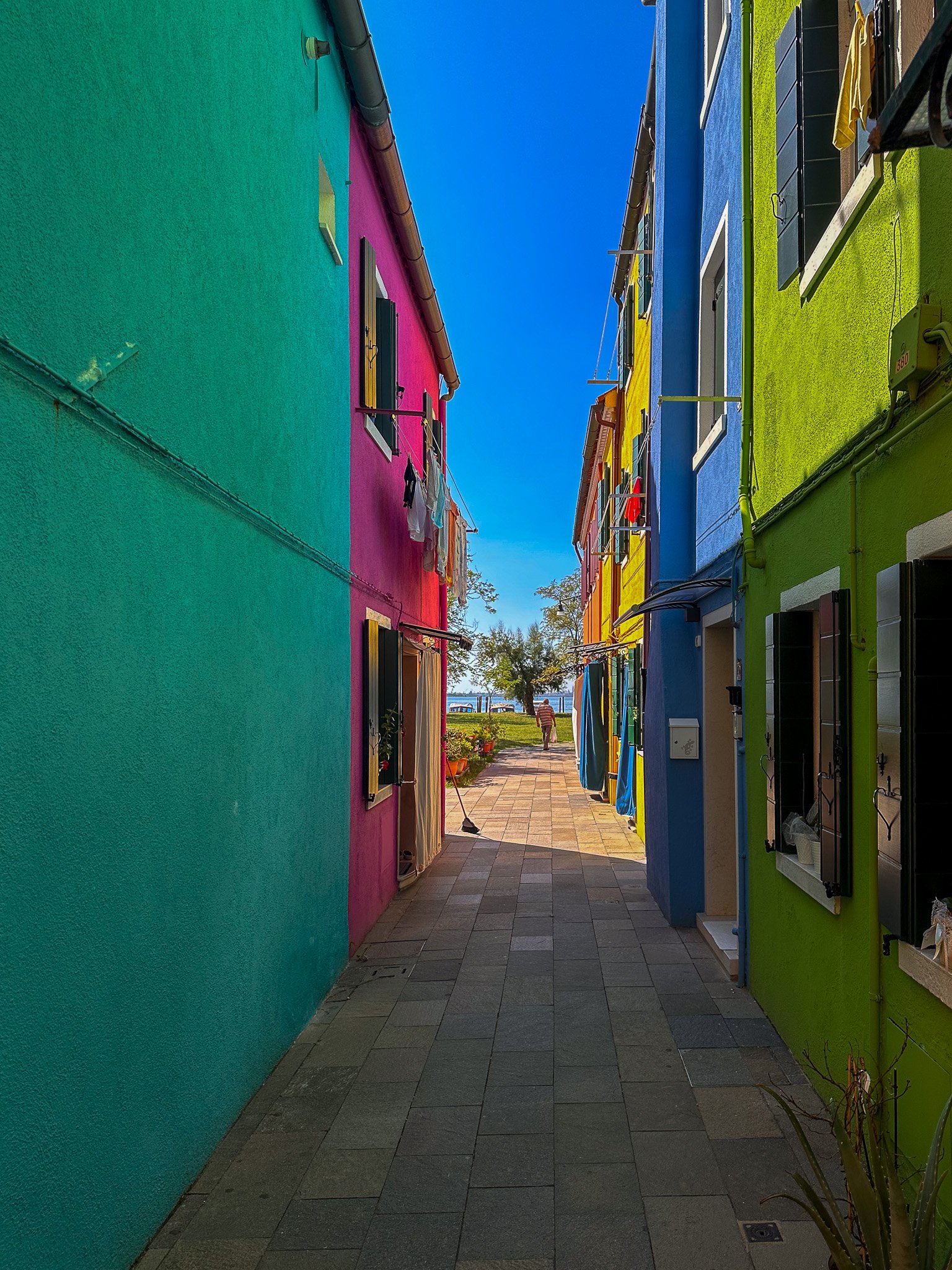
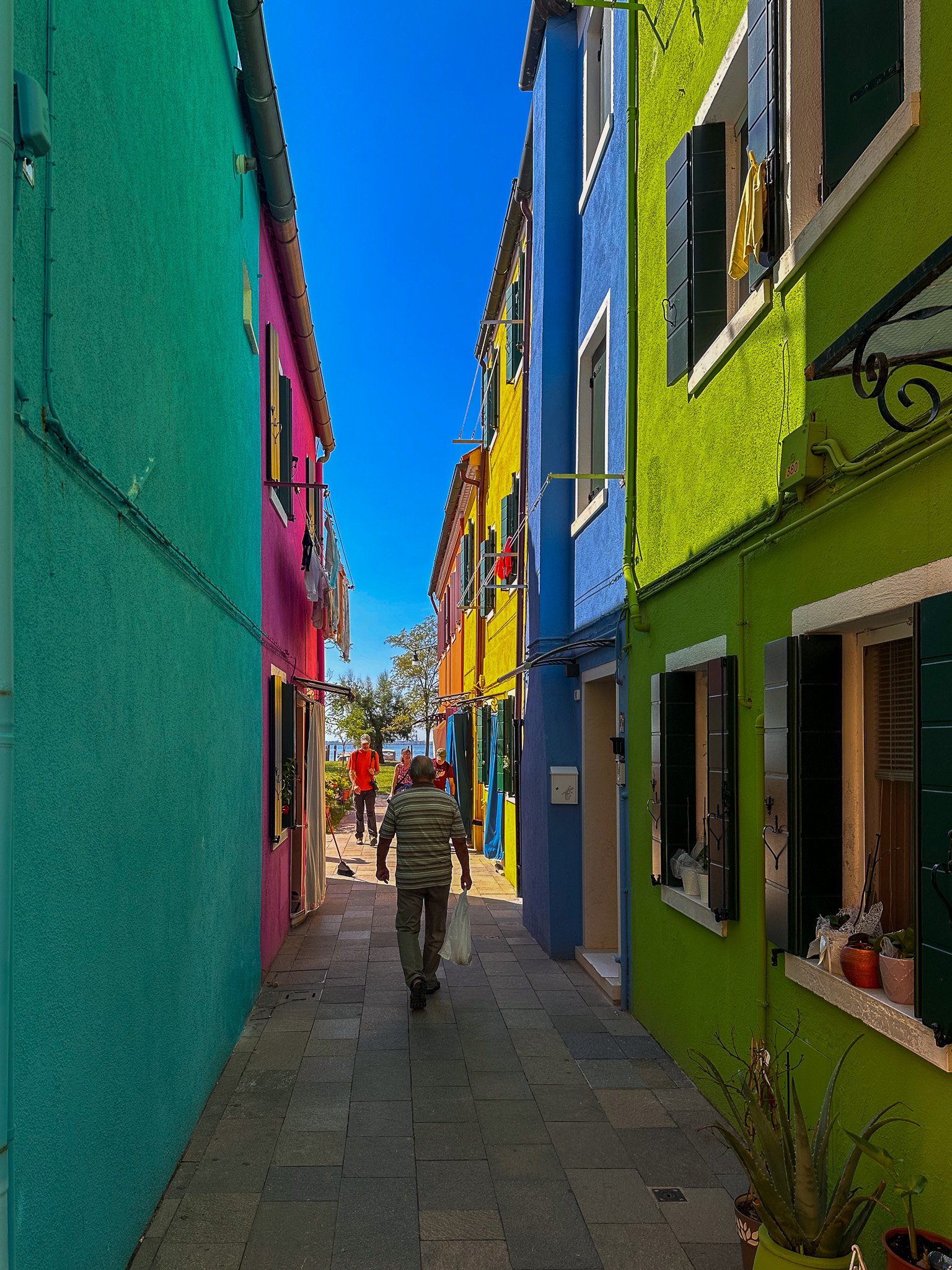
People come to Burano mainly to see the beautiful, bright houses. Because the island is so small and flat, you can easily walk around the entire island on foot. There are no cars here!

Alleyways
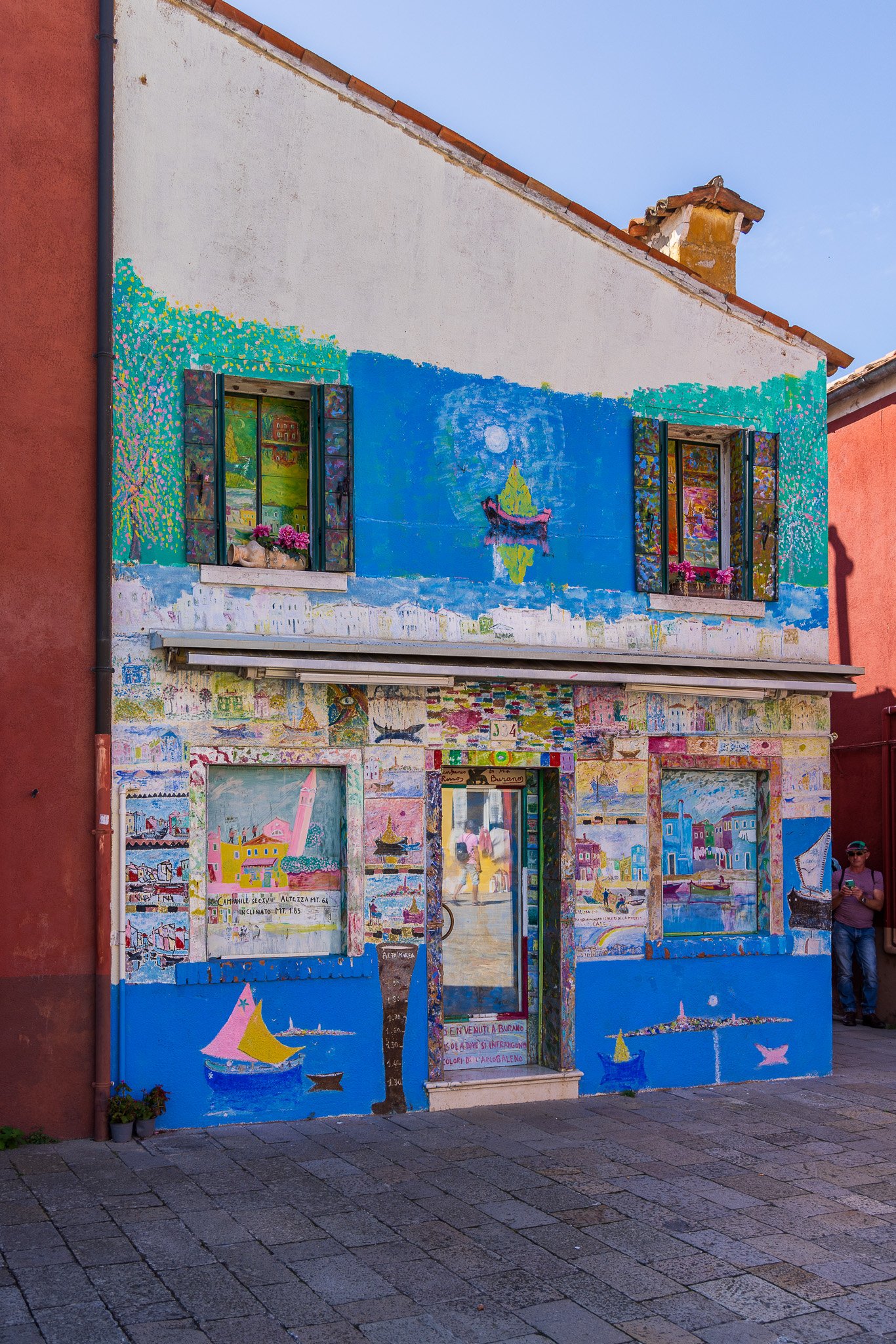
See the Terranova and Tre Ponti bridges. And don’t miss out on Casa di Bepi Suà, the most famous and colourful house on the island.
Casa di Bepi Suà
This is the most photographed house on Burano, and it earns the attention. The owner, Bepi Suà, painted his home in a geometric pattern of overlapping diamond shapes, triangles, and bold colors that covers every surface of the exterior. There is nothing else like it on the island.
It sits on a small campo near the church. The surrounding houses provide colorful contrast but do not compete visually. The best frames isolate the facade directly, letting the geometric pattern fill the frame.
📷 Pro Tip: A 50mm or 70mm focal length compresses the pattern slightly and flattens the perspective in a way that makes the geometry read clearly. Shoot in the morning when the light comes from the east and falls directly on the facade, avoiding harsh shadows that break up the diamond pattern. Midday sun creates flat, even light on the facade, which is actually useful here since the pattern itself provides all the visual interest. Avoid shooting too wide: including too much of the surrounding campo dilutes the impact of the house. Come in tight.
Best time: Morning light or flat midday. Access: Free. Near Piazza Baldassarre Galuppi, short walk from the vaporetto landing.
Tre Ponti (Three Bridges)
The Tre Ponti viewpoint is where three of Burano's bridges converge in a single frame, looking down a canal with colorful houses on both sides. It is one of the few places on the island where you can get elevation and layering in the same composition. The geometry here is the point: three bridges staggered in perspective, canal below, colored walls above, all pulling the eye toward a vanishing point.
📷 Pro Tip: This is a telephoto shot. A 70-200mm lens at the longer end compresses the three bridges into a tighter, more graphic composition. Shoot from the far fondamente looking toward the bridges rather than from the bridge itself. Early morning gives you side-lit facades and still water below. If you have a 24-70mm, you can shoot a wider version from one of the bridge railings, but the compression version at 135-200mm is the stronger frame. Look for a small boat or a figure crossing one of the bridges to add scale and life.
Best time: Early morning. Access: Free. Look for the intersection of Rio di Mezzo and the perpendicular canals near the center of the island.
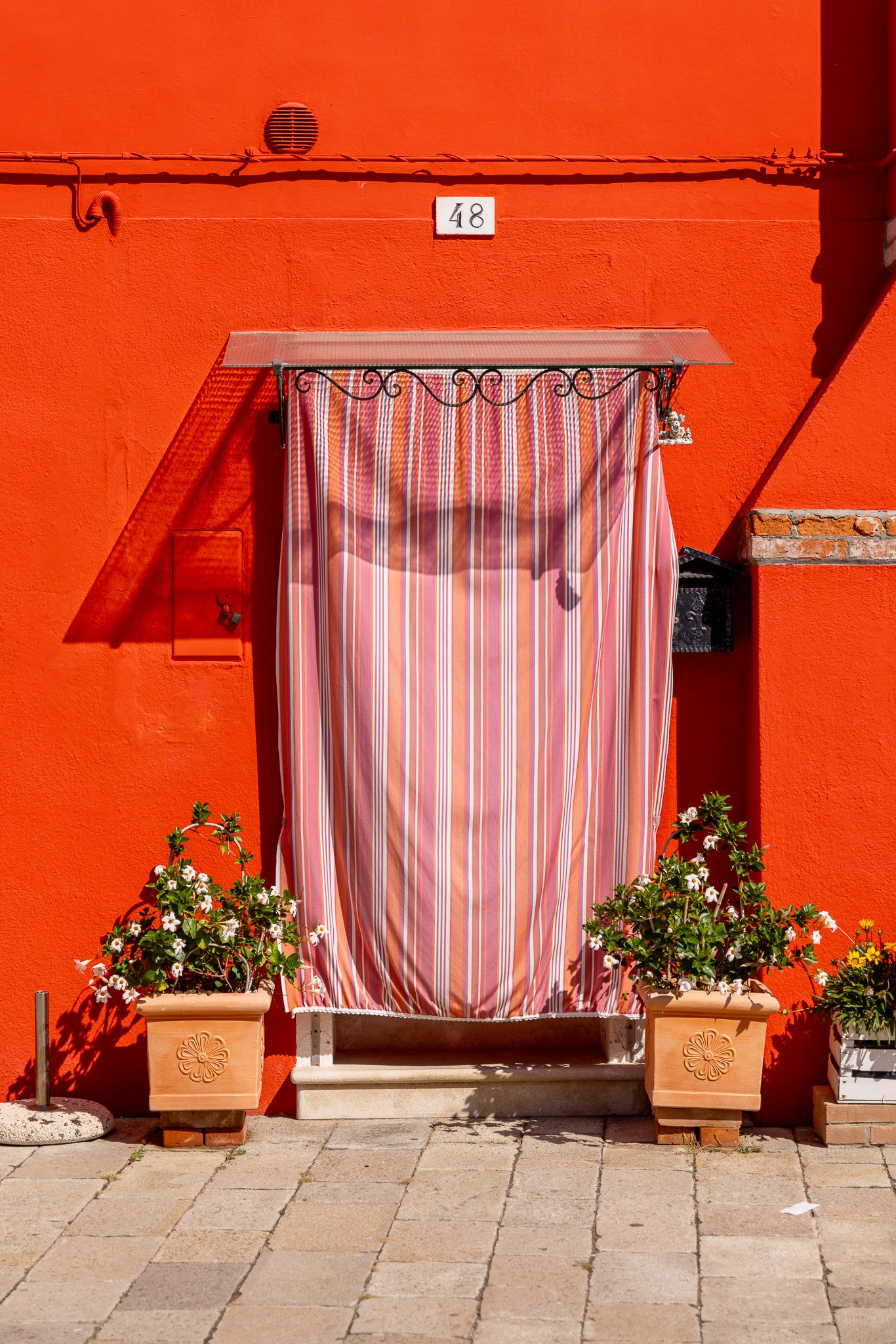
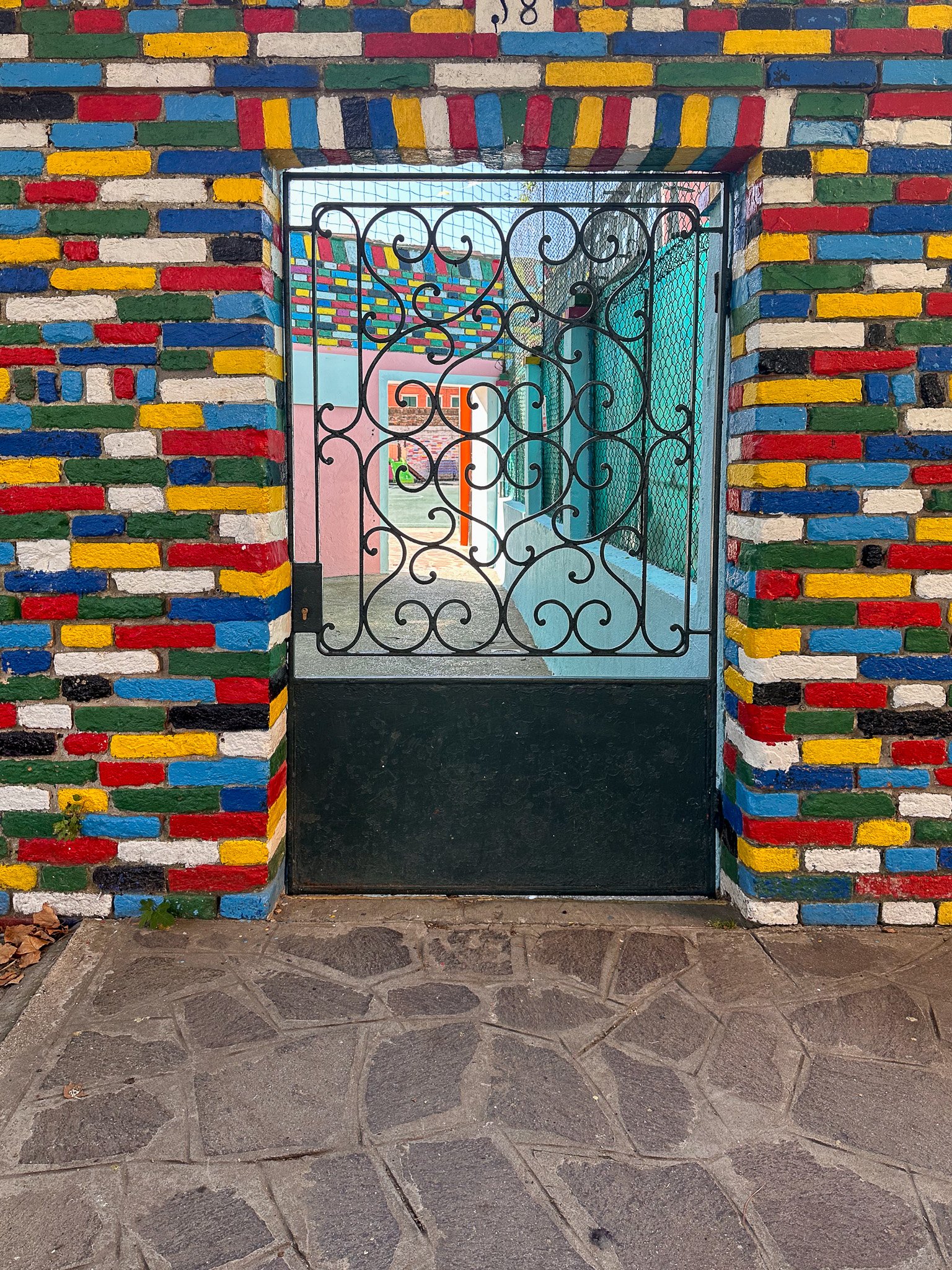
Doors
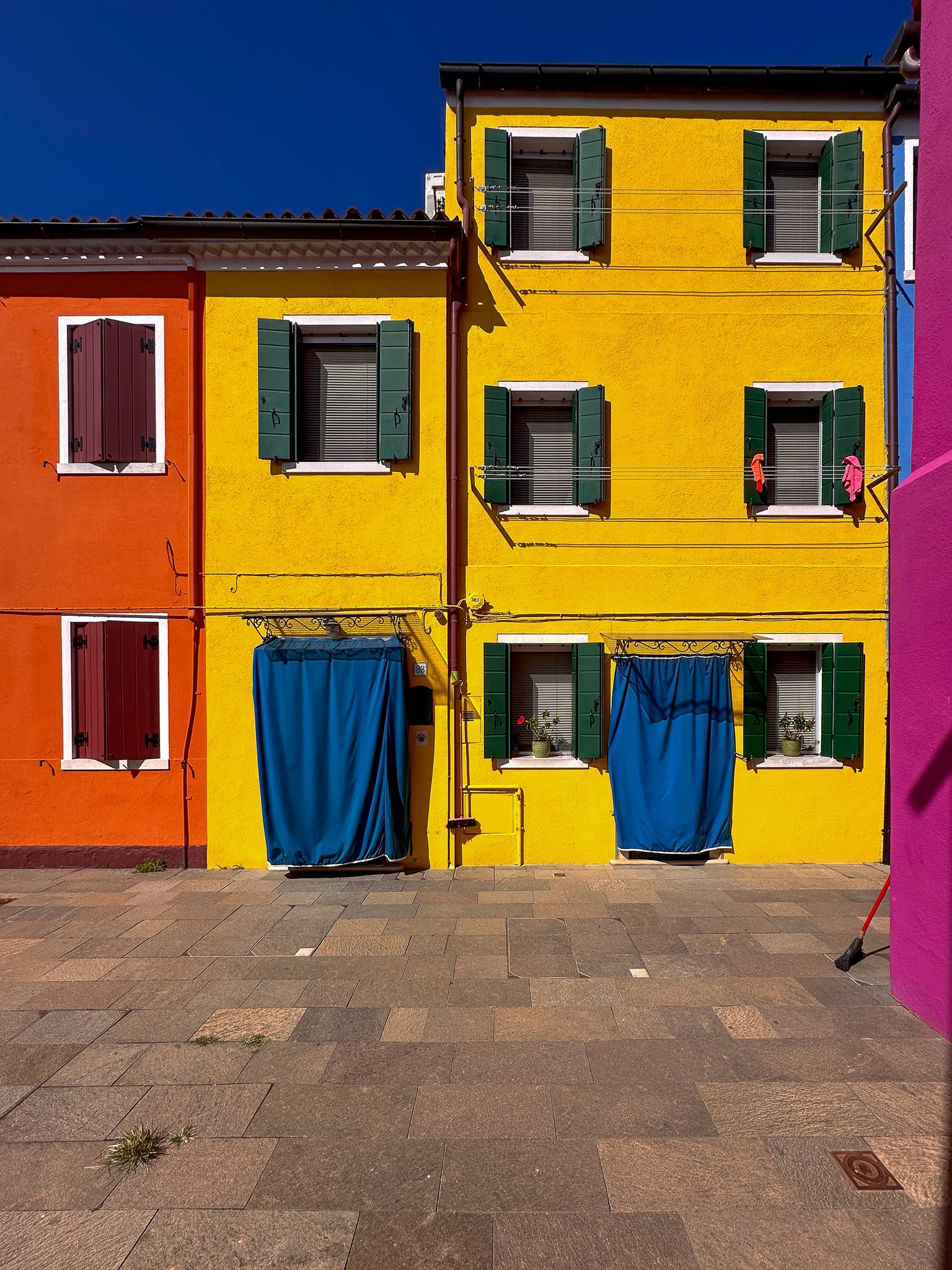
I would appreciate your taking the time to look at the details. I love to photograph doors.

The Canals and Reflections
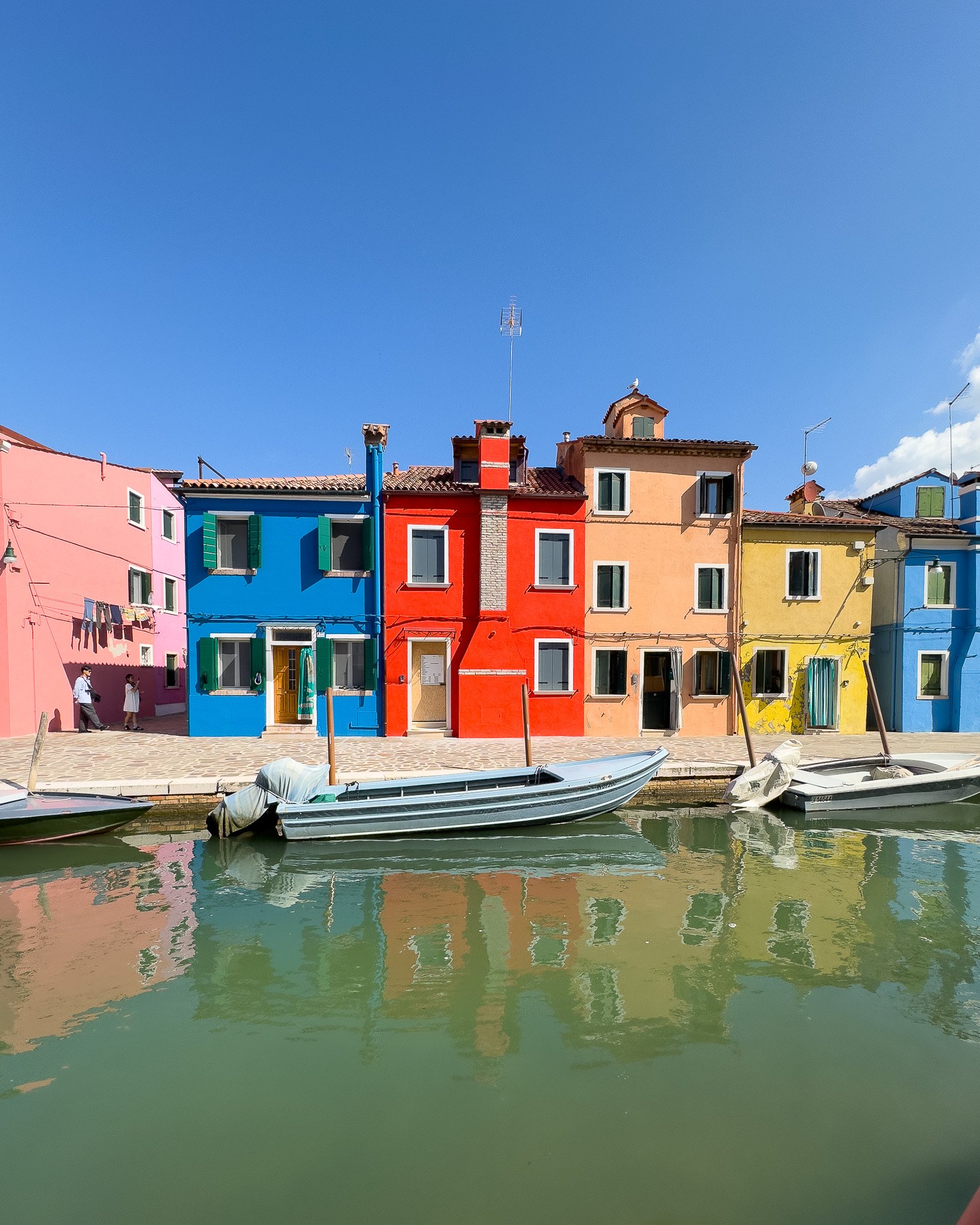
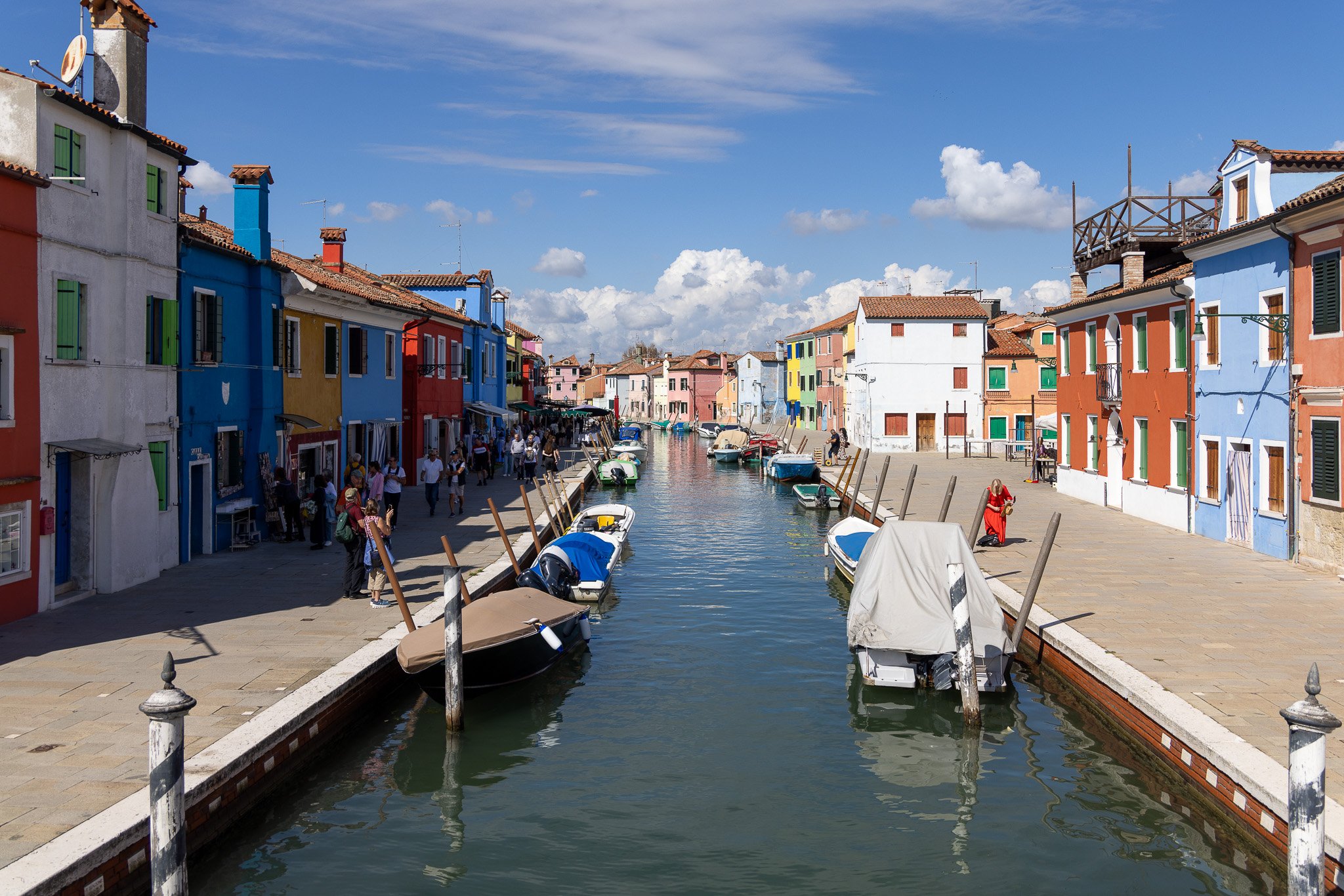
Burano has four main canals running roughly parallel across the island: Rio di Mezzo, Rio della Giudecca, Rio della Pescheria, and Rio Terà. Each one offers a different combination of house colors on its banks, and each one reflects the sky and buildings in the water below.
The reflection photographs that make Burano famous are shot from the pedestrian fondamente (walkways) that run alongside the canals. The key variable is wind. Even a light breeze breaks the mirror surface. The best reflections happen early in the morning and in the late afternoon when the air is still.
📷 Pro Tip: Position yourself low and close to the water's edge. A wide-angle lens (16-24mm) shot at near-water level exaggerates the reflection and compresses the colorful houses into a tight, layered composition. If you have a tripod, use it. A polarizer will deepen the reflection when the sun is at a 90-degree angle to your shooting direction. The Rio di Mezzo canal, which runs through the center of the island, consistently offers the strongest color palette on its banks. Shoot from the small bridges as well as the fondamente: bridge level gives you a symmetrical frame with canal, reflection, and houses all in one shot.
Best time: 7 am to 9 am and 5 pm to 7 pm (seasonally adjusted). Access: Free; all canals are publicly accessible.

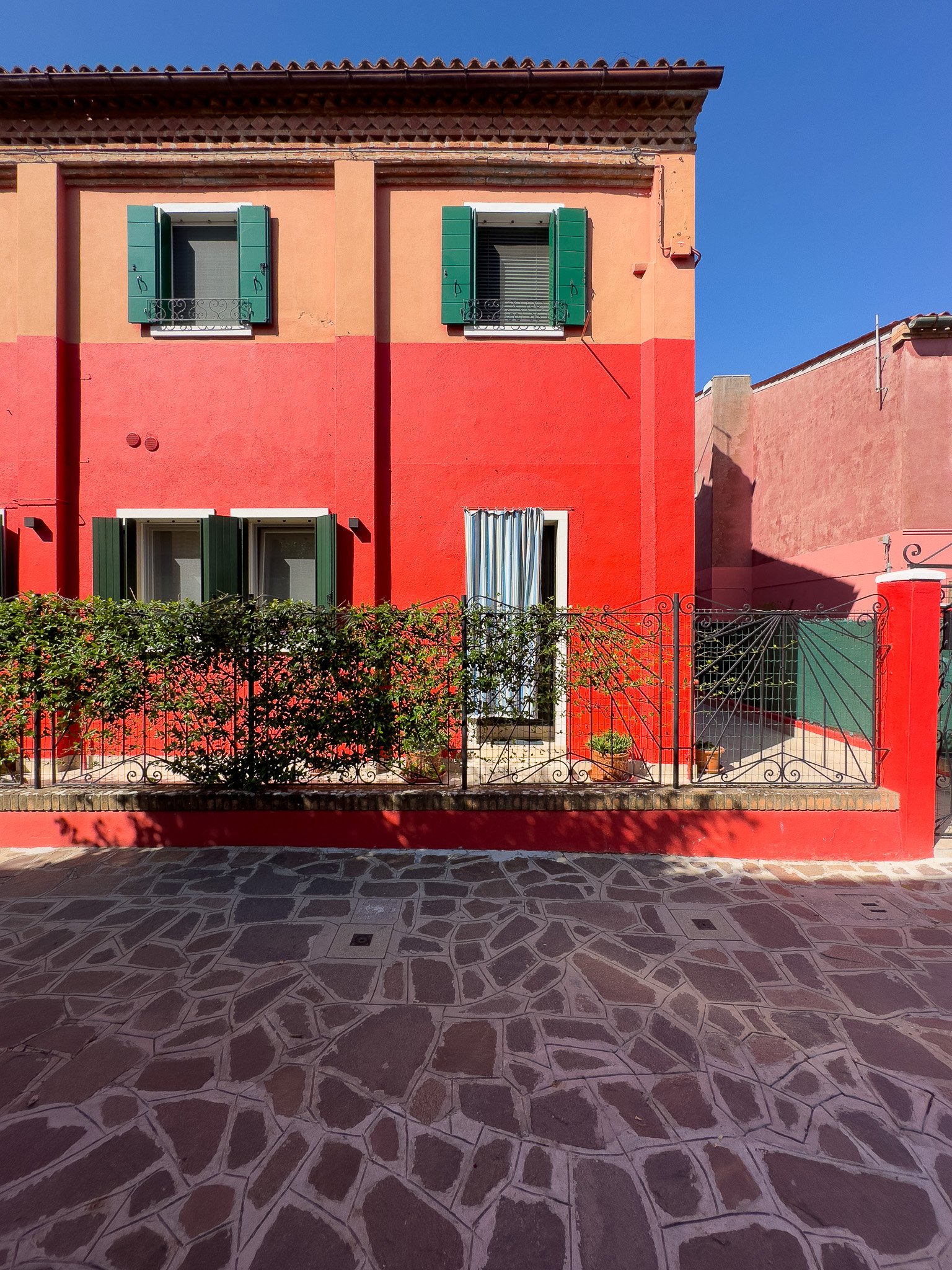
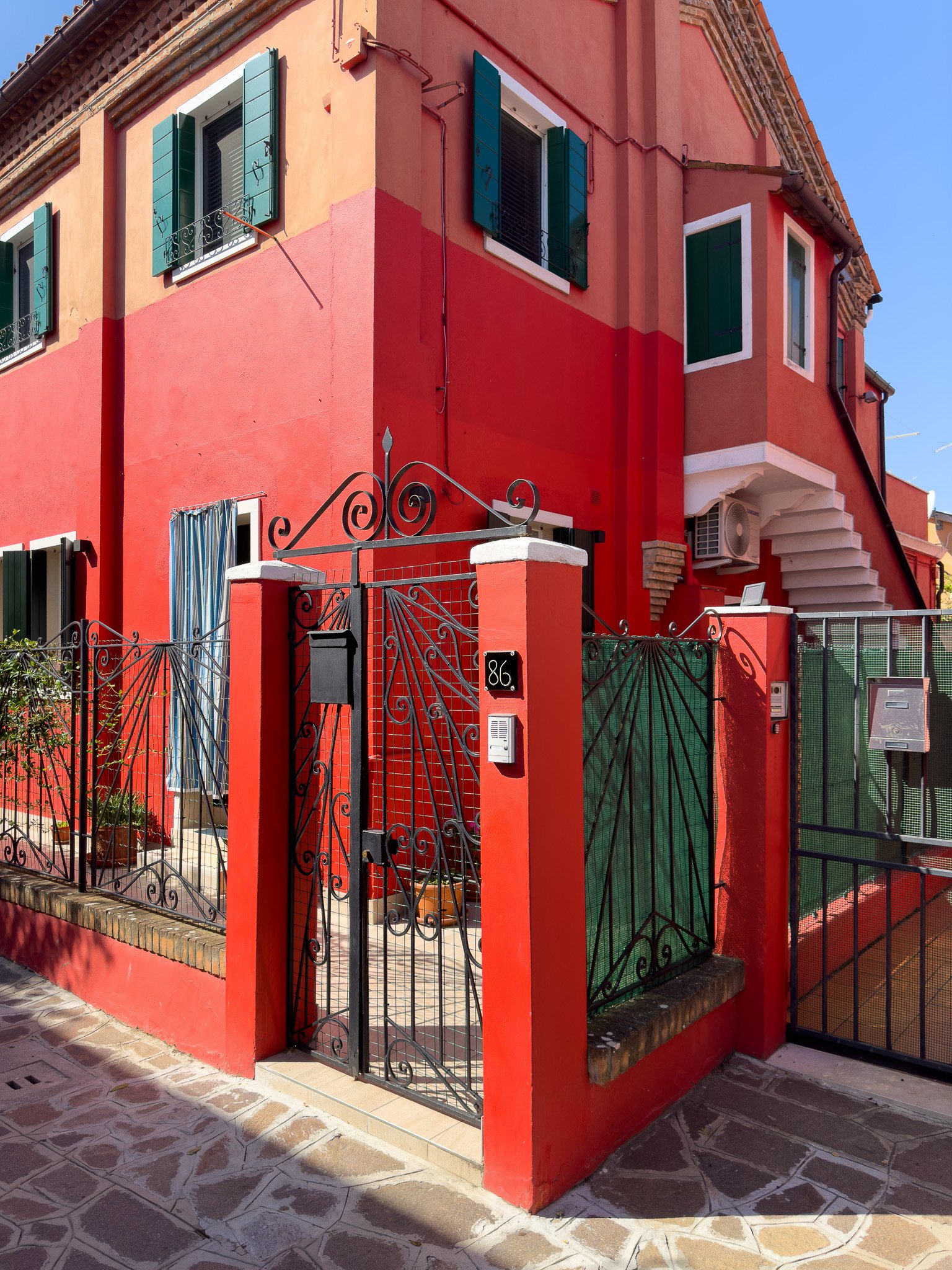
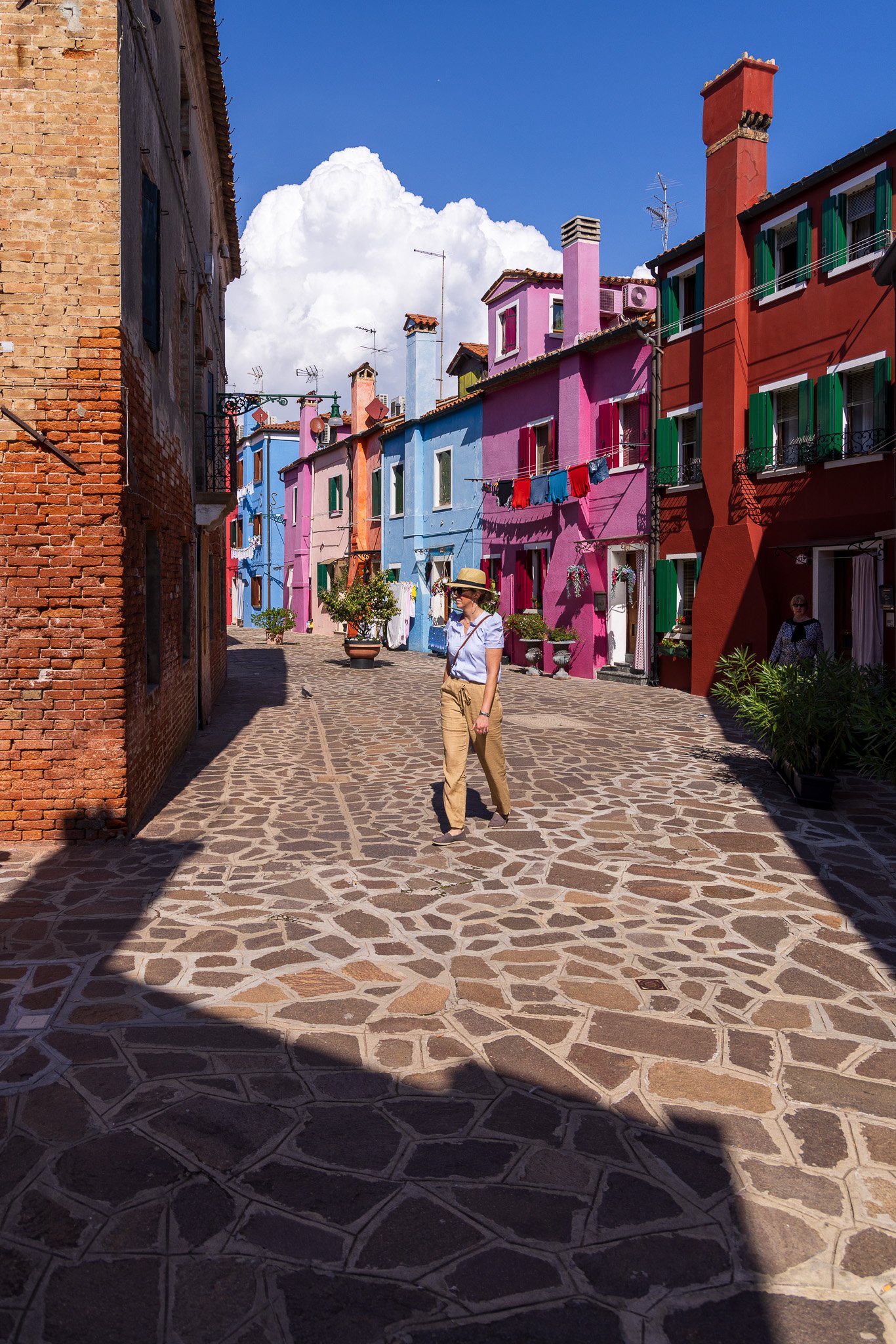
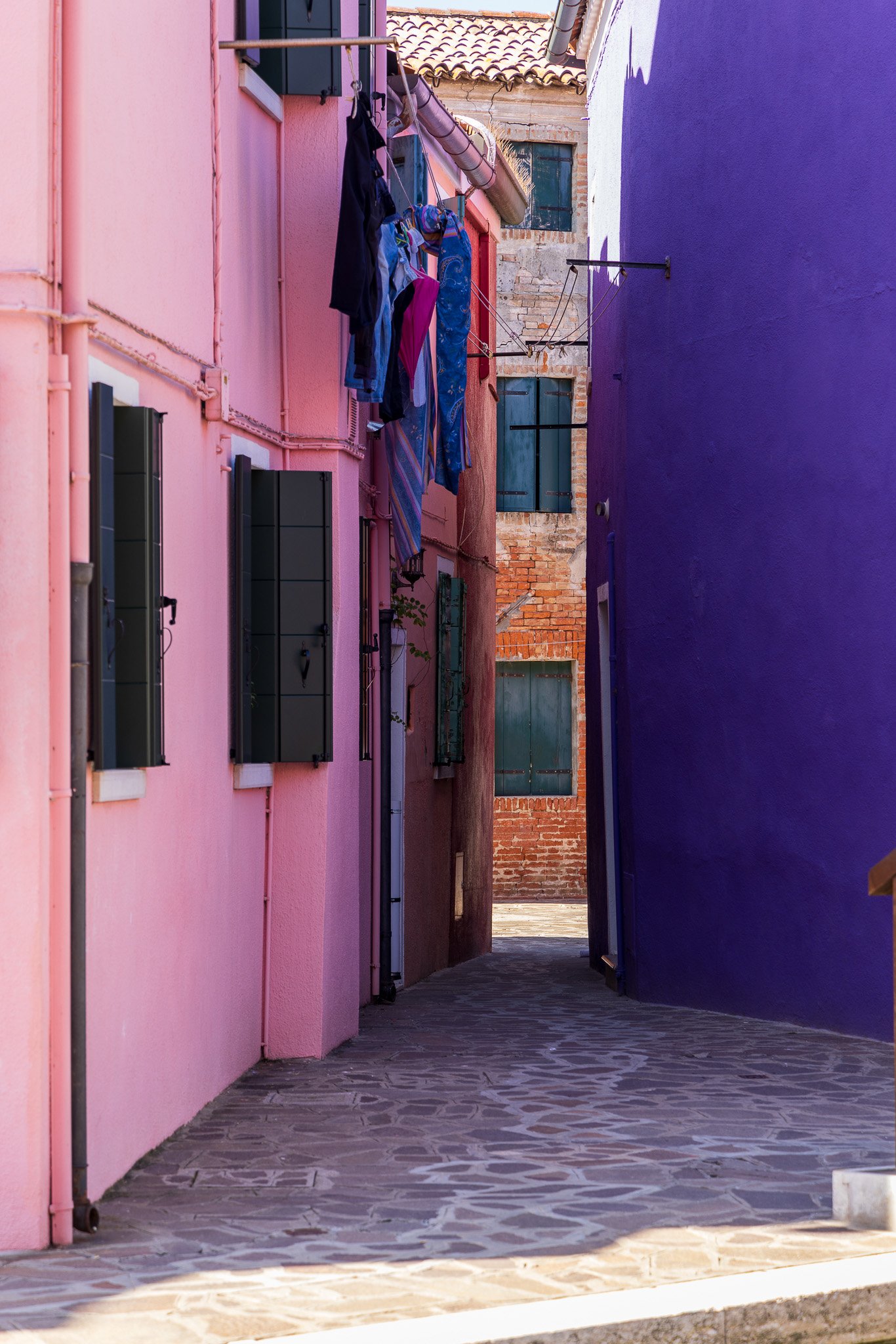
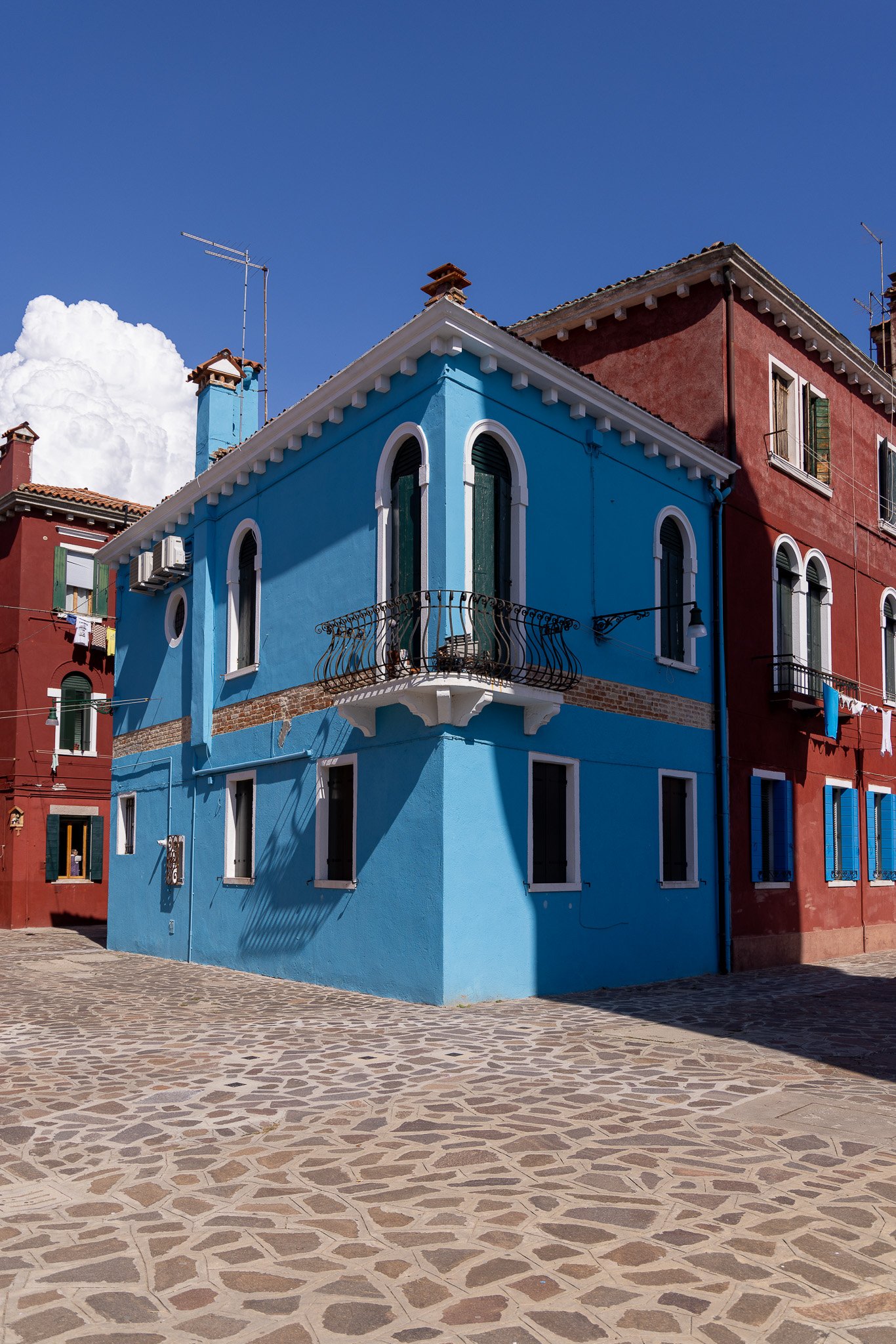
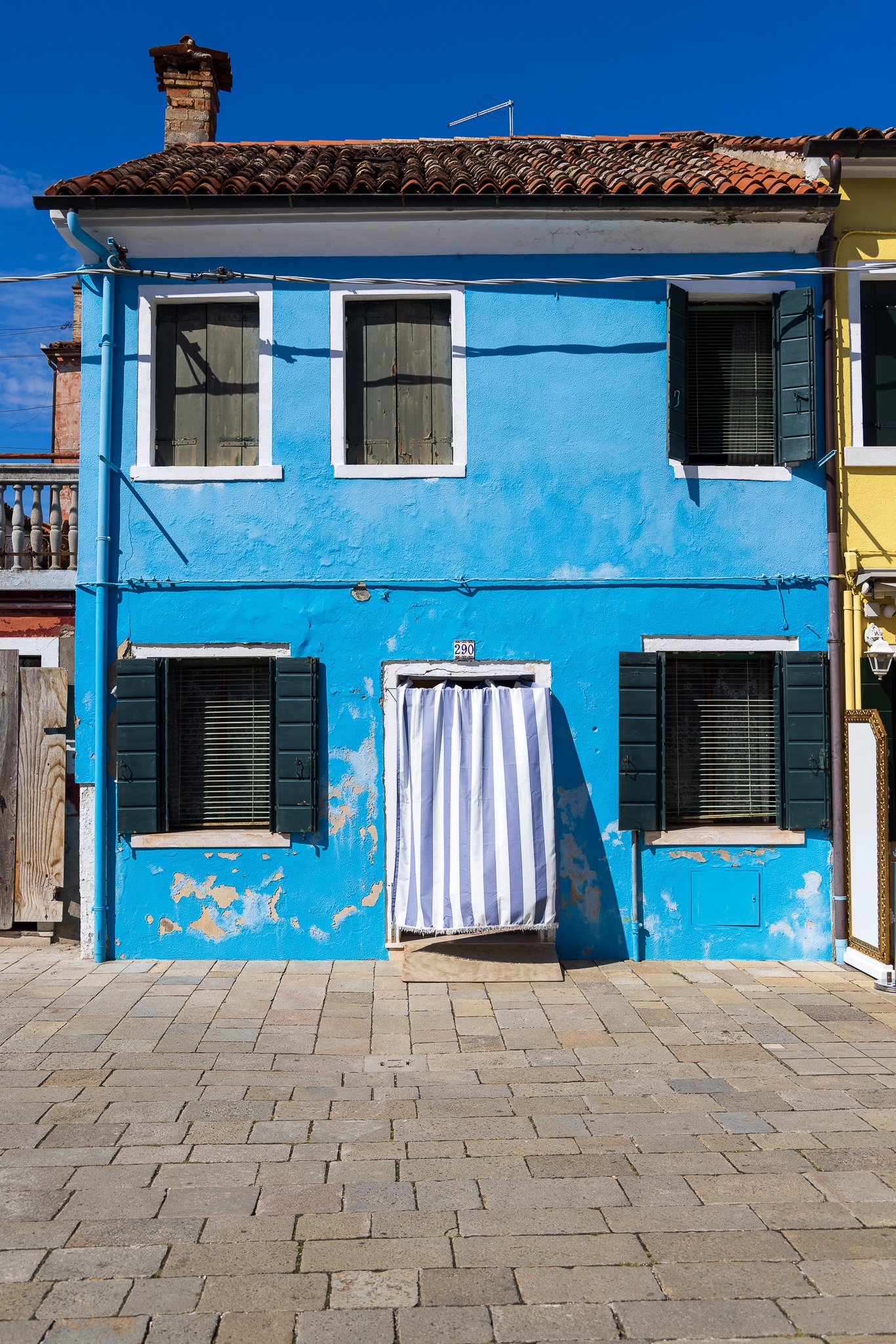
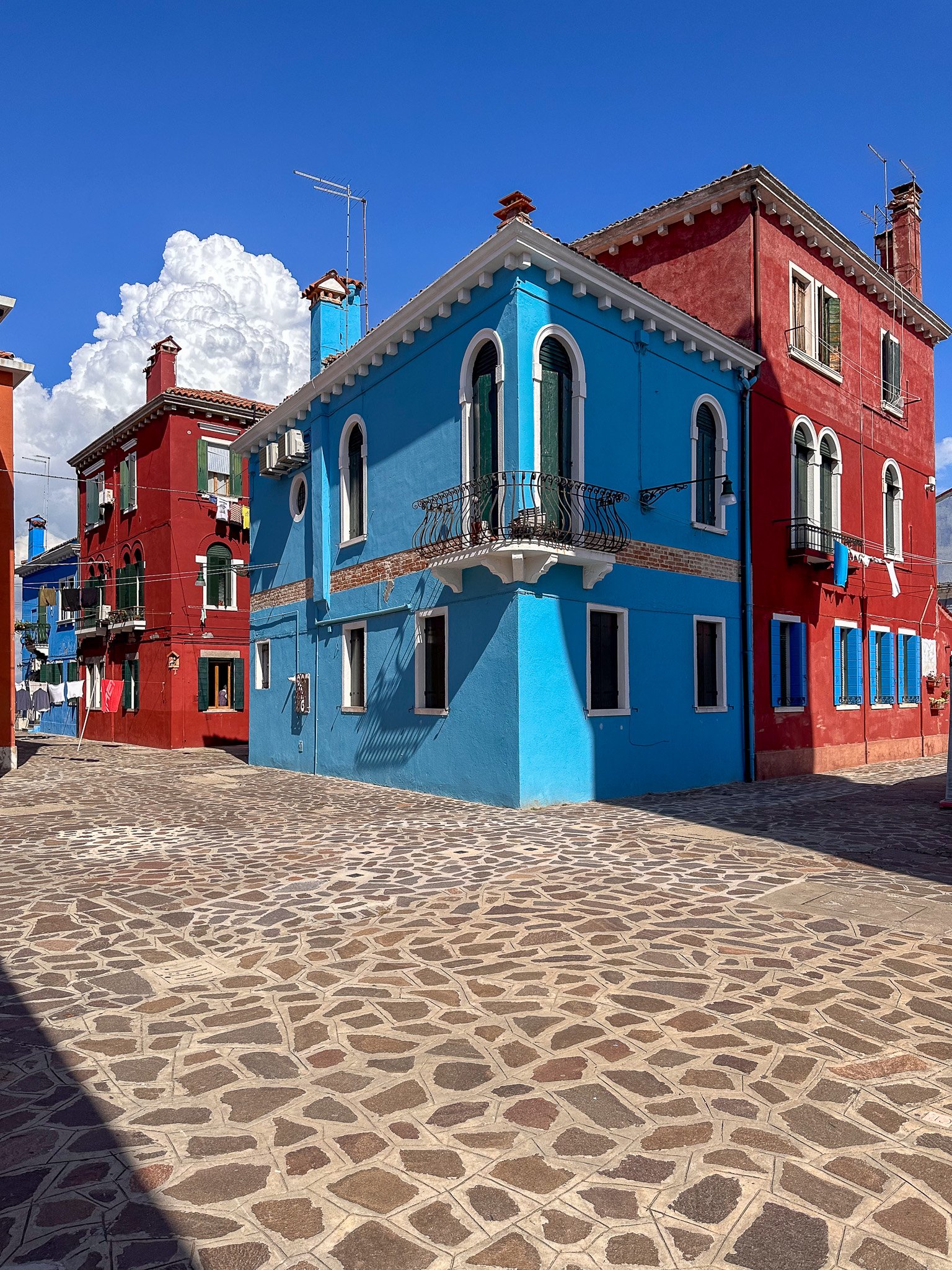
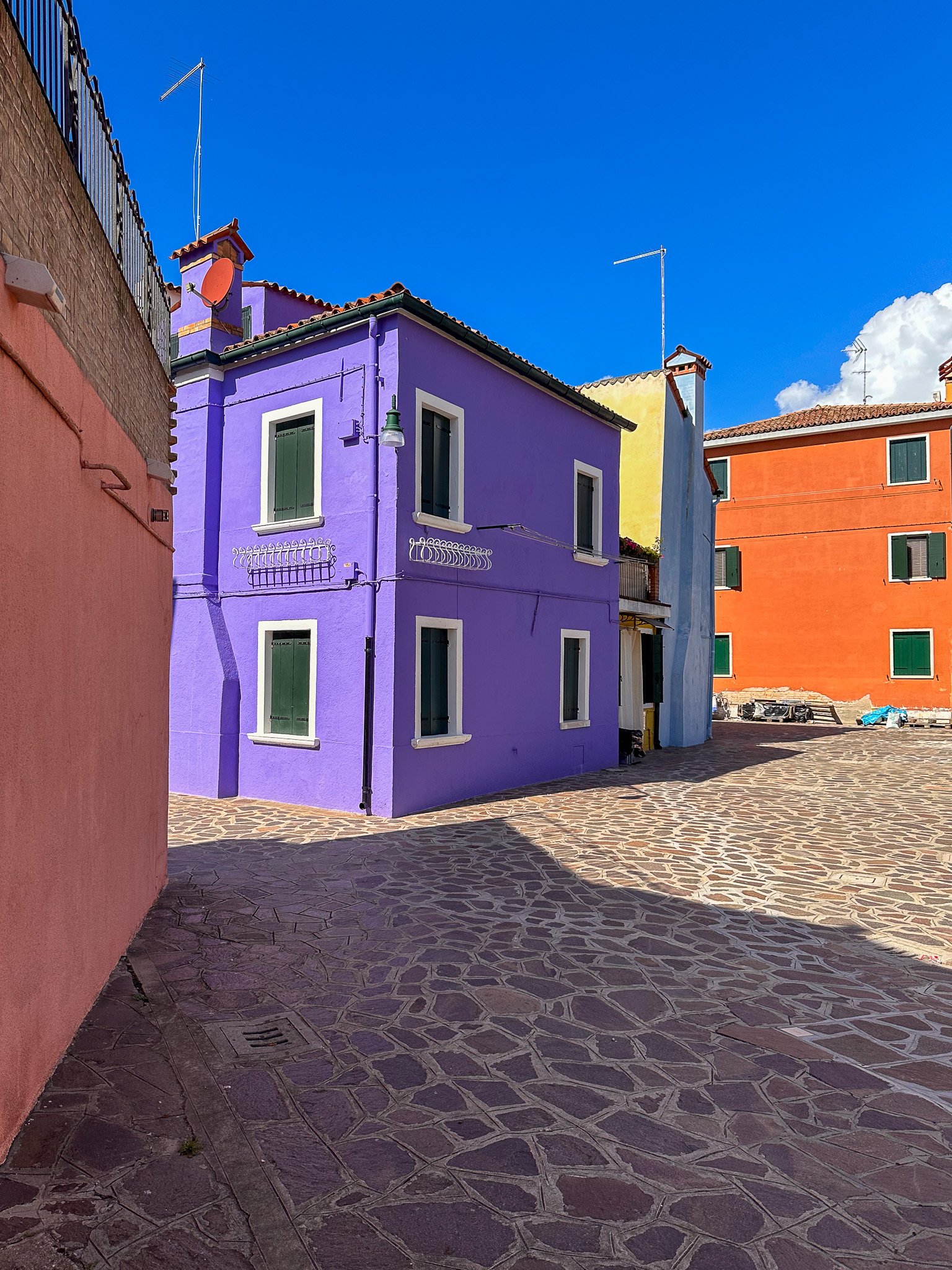
Colorful Houses
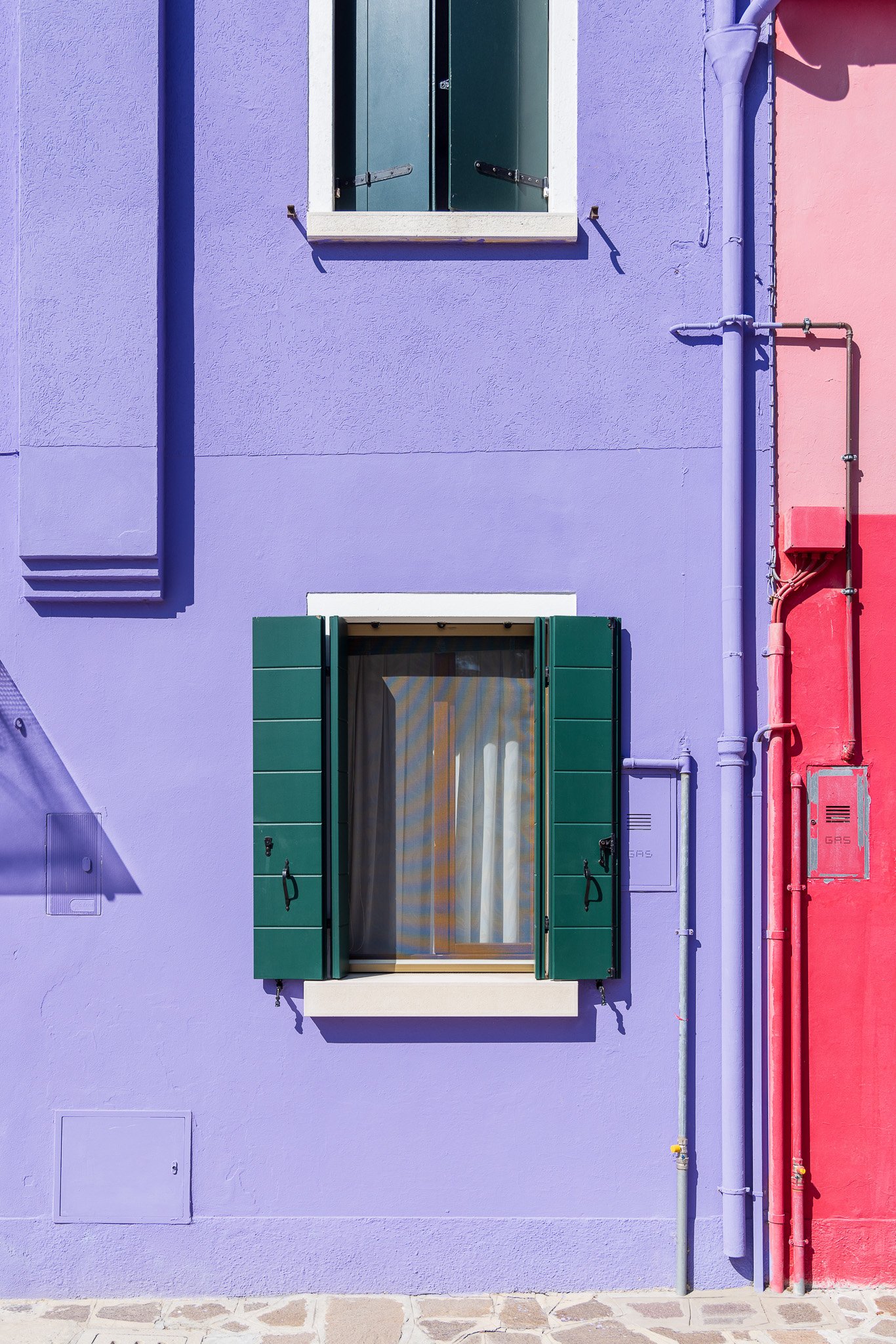
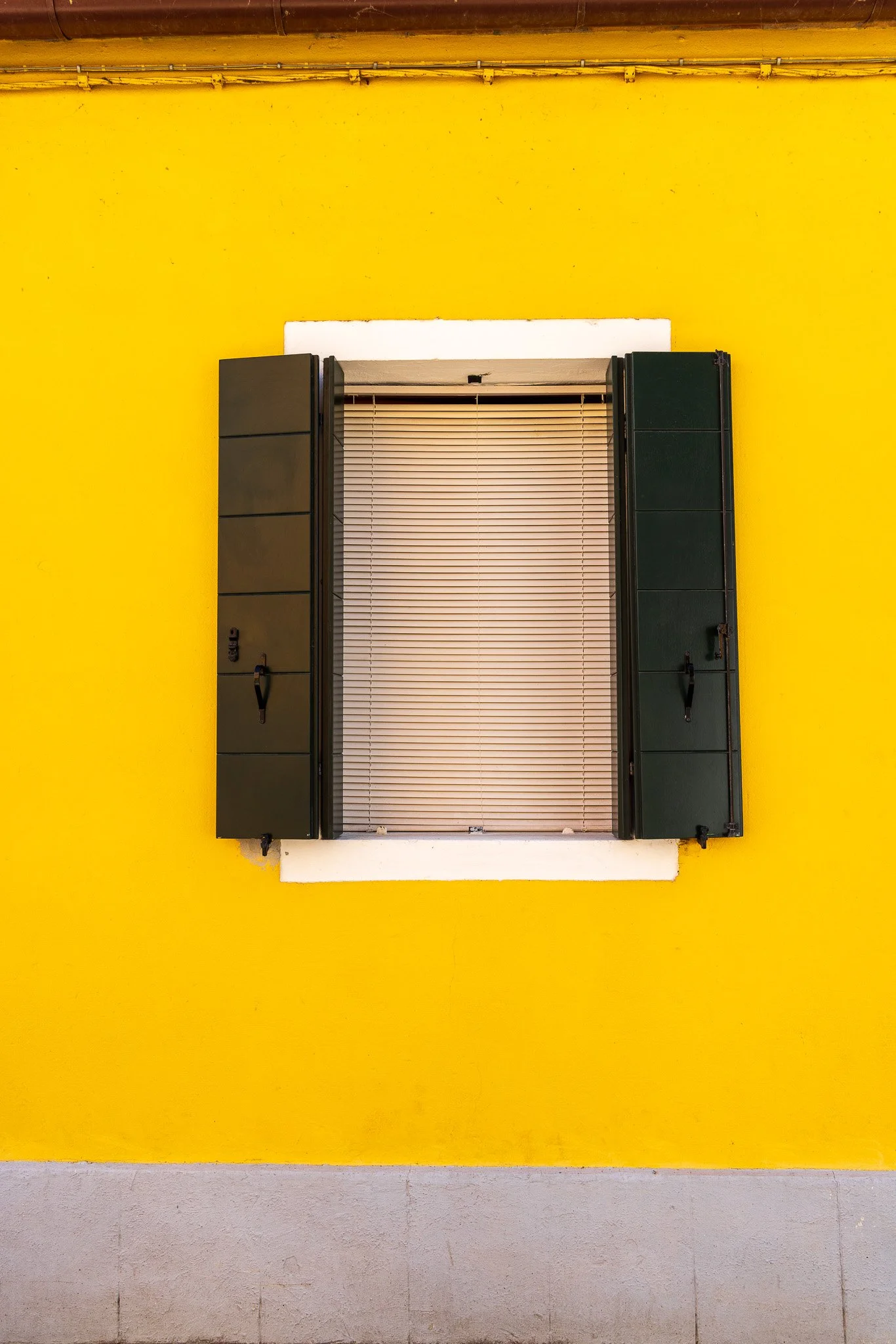
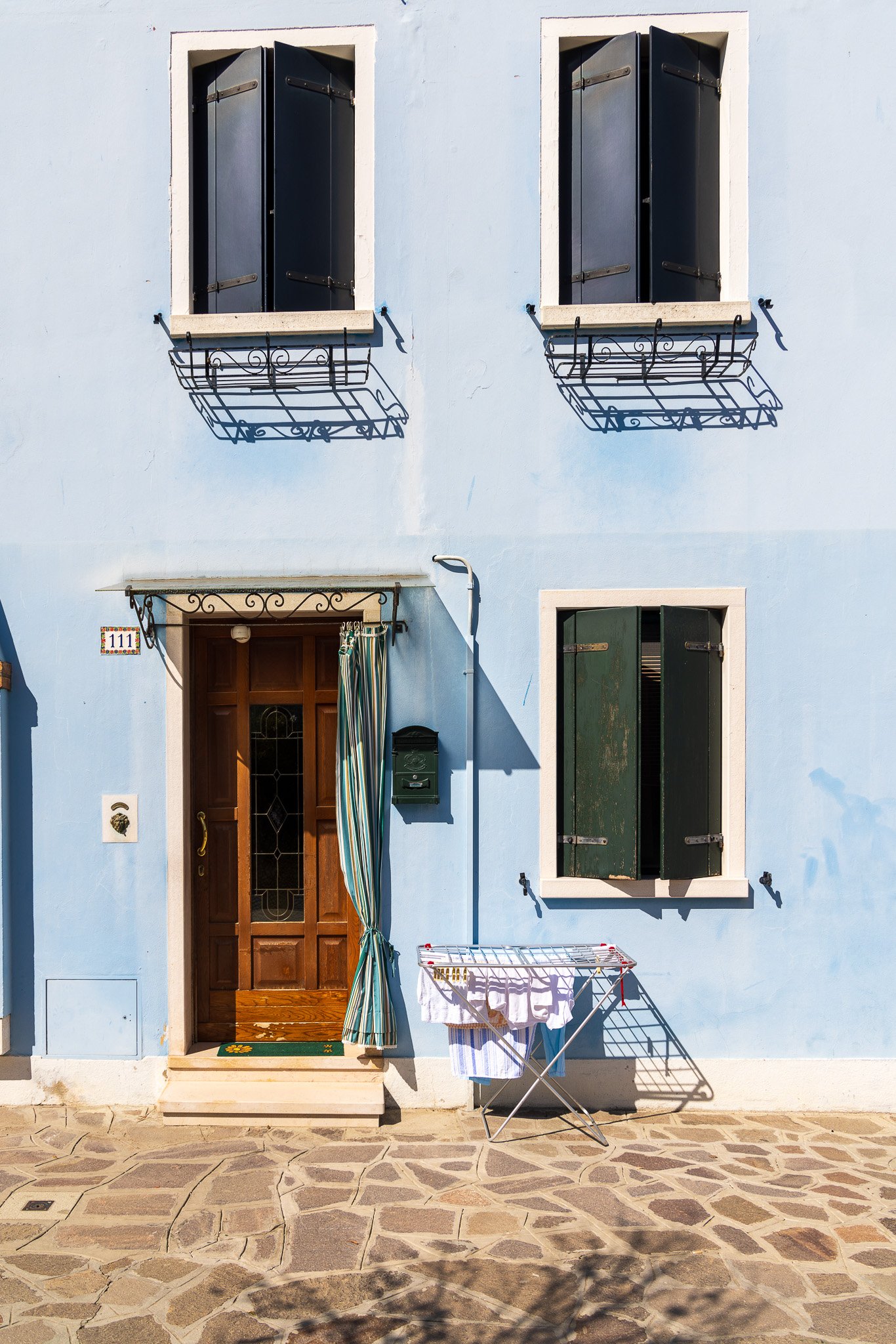
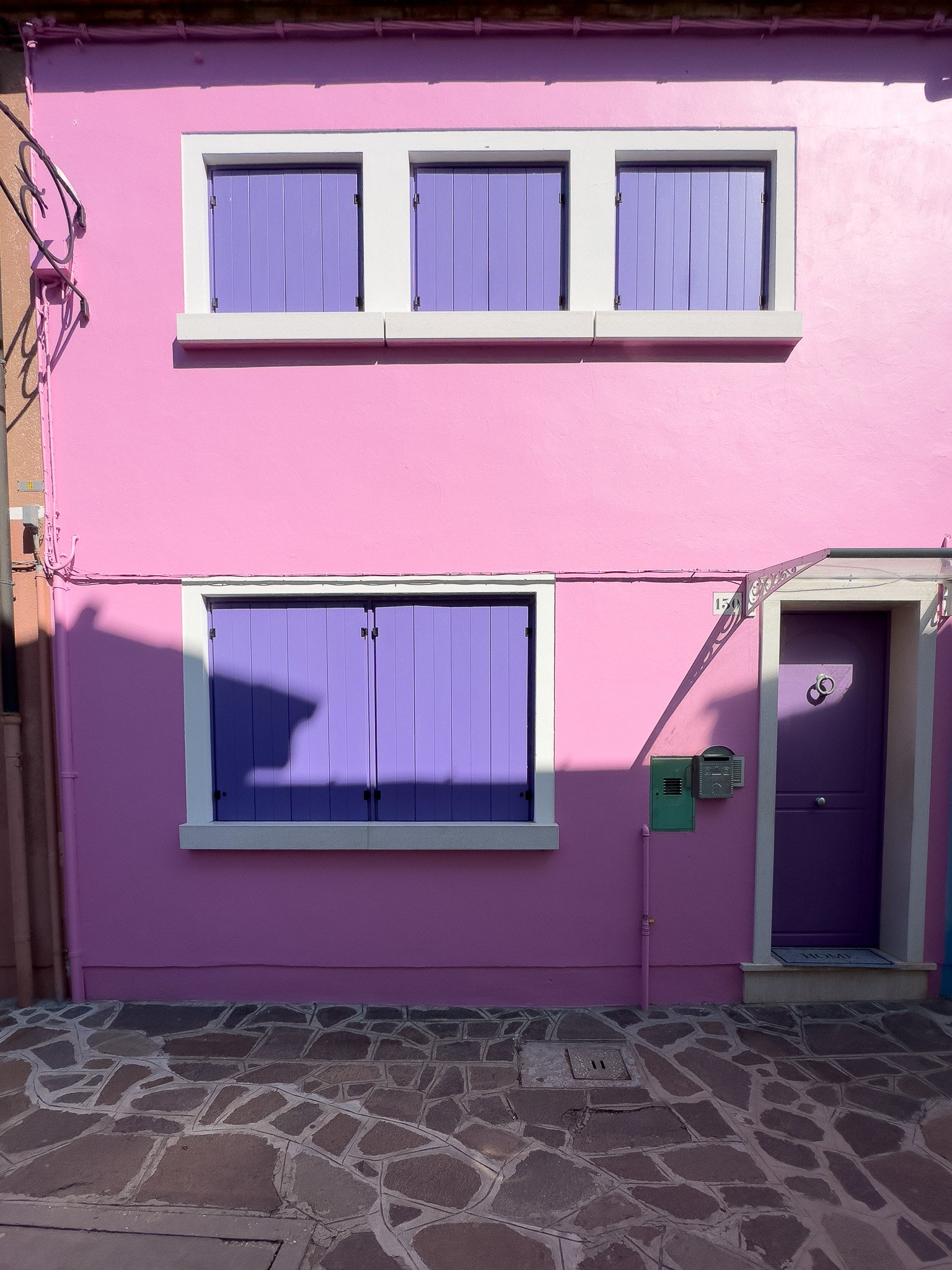
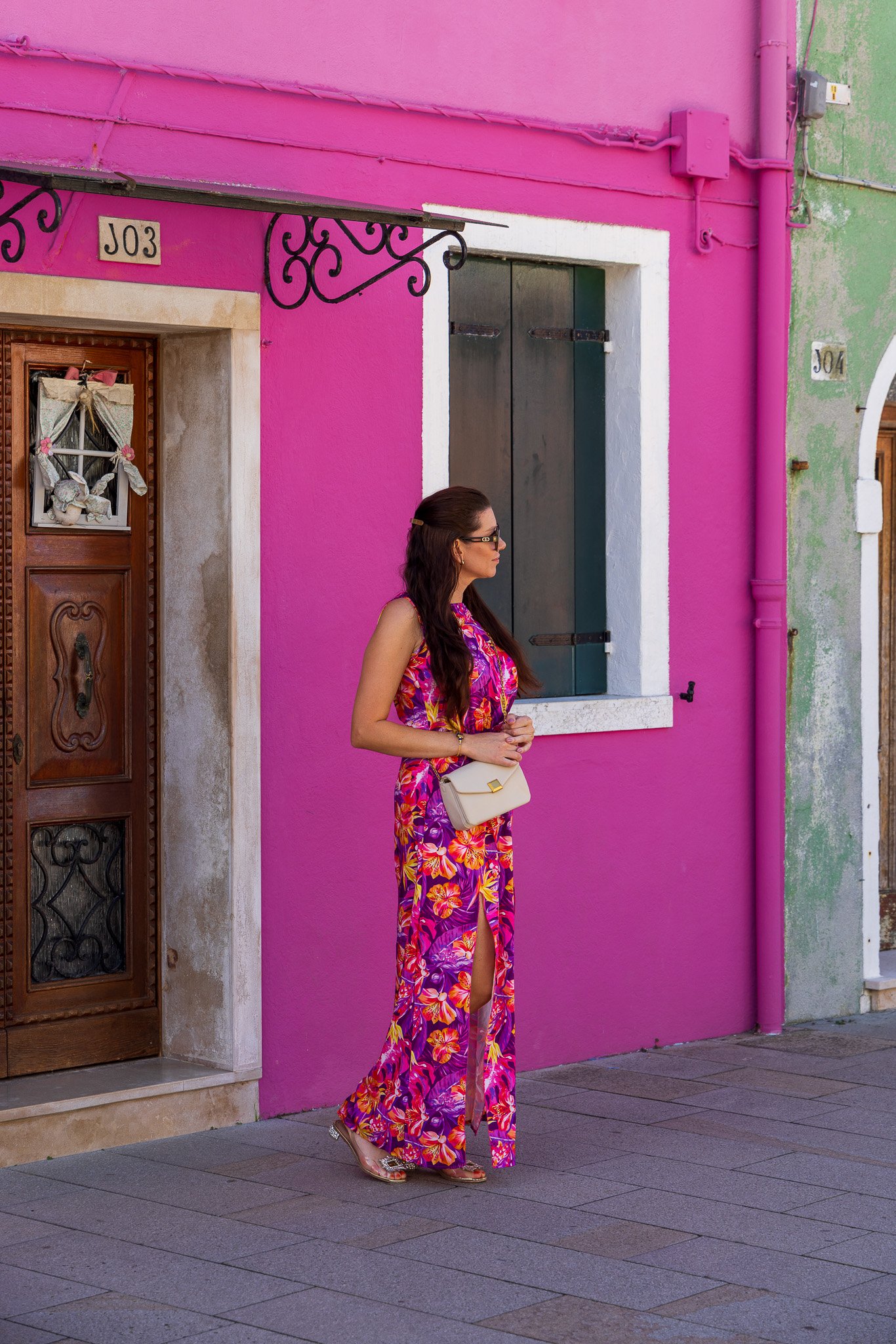
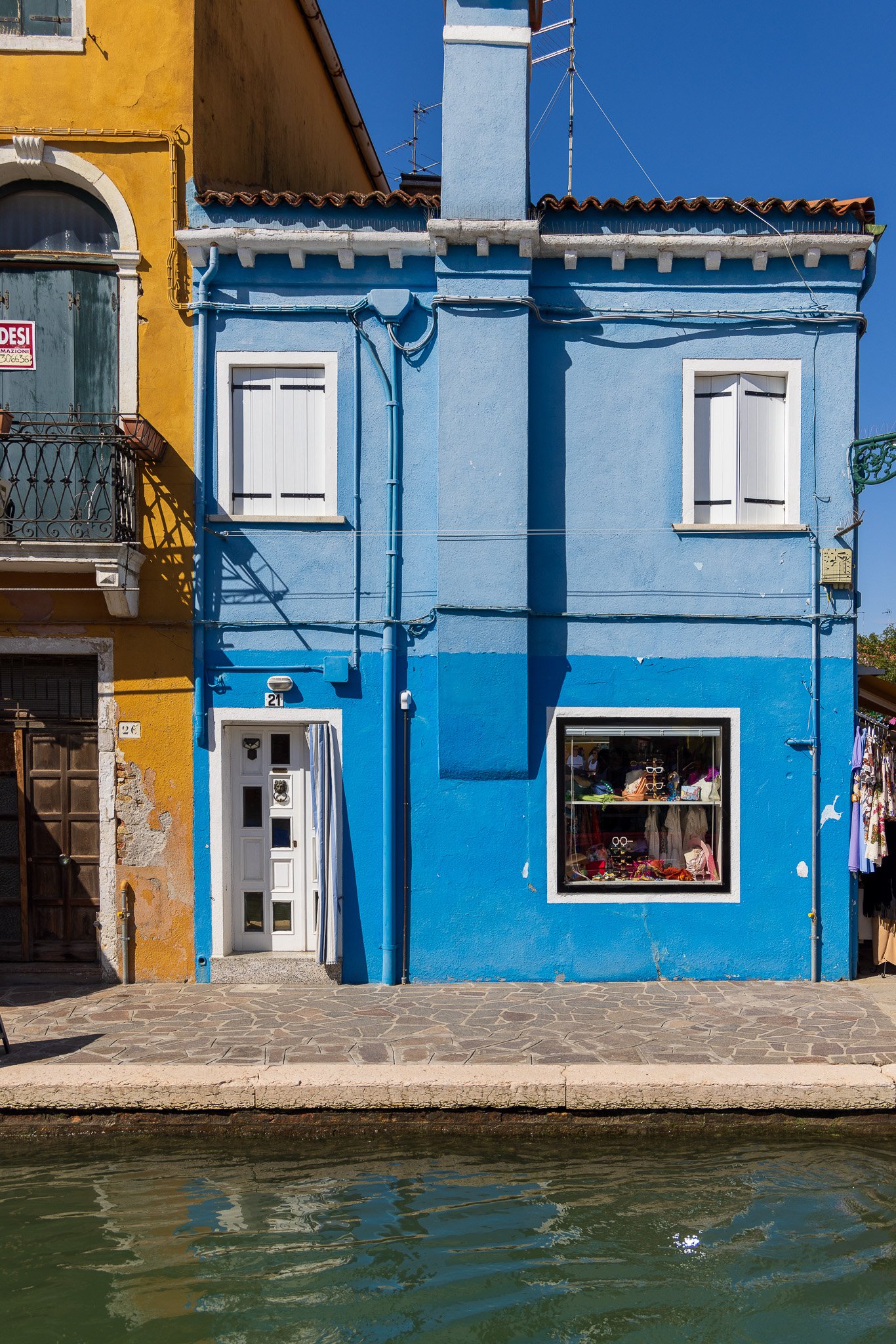
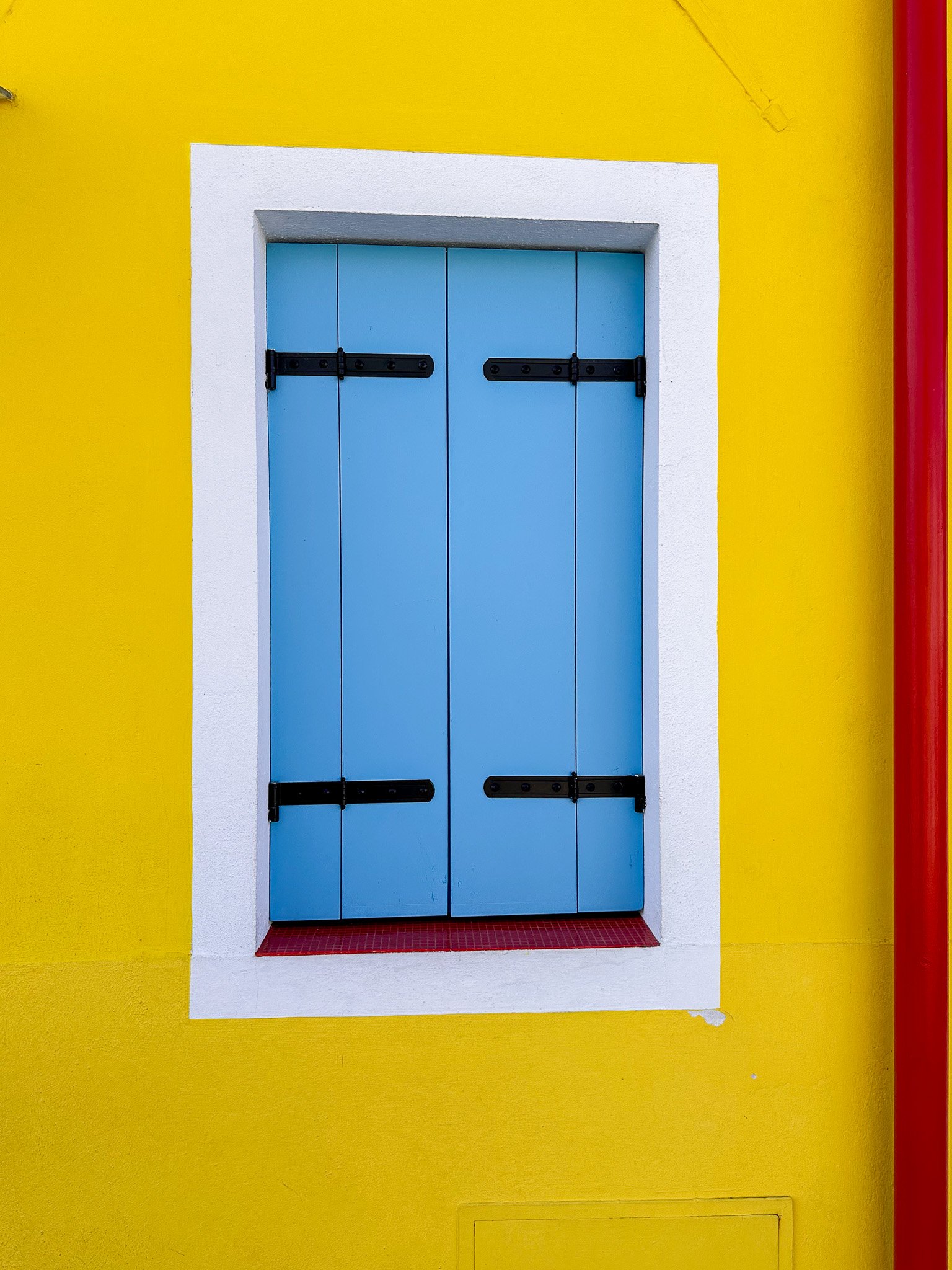
The houses are so vibrant in color. I also loved how many different colors are used to pain the houses.
Via Galuppi (The Main Street)
Via Galuppi is Burano's main pedestrian artery, running from the vaporetto landing toward Piazza Baldassarre Galuppi at the center of the island. It is lined with restaurants, lace shops, and some of the most tightly composed color combinations on the island. In the early morning, before the shops open and the day-trippers arrive, it is nearly empty.
The street itself is less interesting than what branches off it. Look for the side alleys and small calli leading toward the canals. These are where the most photogenic compositions appear: a narrow lane of contrasting walls, a lone bicycle leaning against a yellow door, laundry hanging between an orange house and a blue one.
📷 Pro Tip: Come before 8 am. The light enters Via Galuppi from the east, hitting the facades directly in early morning and creating warm, directional light on the painted walls. Use a 35mm or 50mm lens for the street-level perspective. If you shoot when the coffee bars open, you can catch locals standing at the counter in front of walls of saturated color, which makes for strong portrait frames. Be respectful and ask before pointing a lens directly at someone.
Best time: Early morning, 7 am to 9 am. Access: Free. Walk straight from the vaporetto landing.
Special Events & Festivals
Venice Carnival (February) Carnival extends from Venice to Burano, where the island holds its own smaller celebration. Locals and visitors come in costume, and the combination of elaborate masks and painted house facades is one of the most photographically dense situations you can find in Italy. The crowds are smaller than Venice proper, and the backdrop is better. Come mid-morning when the costumes are out and the light is still soft.
Burano Regatta (Third Sunday of September) Considered the rematch of Venice's famous Historical Regatta. Traditional Venetian rowing boats race through the canals while the island celebrates with music, outdoor dining, and fried fish stands in Piazza Baldassarre Galuppi. The event is deeply local and entirely genuine. The combination of racing boats, colorful crowds, and the island backdrop makes this one of the best single-day photography events in the Venice lagoon. Arrive early to claim a spot along the canal banks with a clear sightline. A 70-200mm lens is useful for isolating rowers against the colored facades.
Venice Biennale (May to November, alternating years) The art and architecture editions of the Biennale bring a different kind of energy to the entire Venice lagoon. While the main venues are in Venice proper, the city fills with artists, collectors, and curious visitors during Biennale months. Burano is a natural day-trip destination during this period, and the island feels more international than usual. If you are planning a Venice trip for photography and the Biennale overlaps, time it accordingly: more interesting people to photograph, more creative energy in the air.
Feast of San Martino (November) The patron saint of Burano's church is San Martino, and the feast day in early November is a local celebration worth catching if you are in the area. Children parade through the streets banging pots and pans while adults hand out traditional sweets. It is small, genuine, and entirely unperformed for tourists. Shoot street-level with a 35mm and stay out of the way.
Frequently Asked Questions About Visiting Burano
Do you need to book a hotel to visit Burano?
No, most visitors stay in Venice and take the vaporetto over for the day, which works perfectly well. Staying overnight at Casa Burano, the only accommodation on the island, gets you empty canals and soft morning light no day-tripper ever sees.
How do you get to Burano?
By vaporetto only, the island is car-free. Take ACTV Line 12 from Fondamente Nove in Venice, about a 45-minute ride. Check the current timetable on the ACTV website before you go, schedules shift seasonally.
Is Burano worth combining with Murano?
Yes, and it's an easy pairing since they're on the same ferry line. Go to Burano first, then stop at Murano, famous for glassmaking, on your way back to Venice.
What are the best photo spots in Burano?
The canals and reflections along Rio di Mezzo in early morning, Casa di Bepi Suà for the geometric painted facade, and Tre Ponti for the layered bridge composition are three that consistently deliver. The full list with Pro Tips is above.
Can you fly a drone in Burano?
No. Drones are effectively banned throughout the Venice lagoon, including Burano, under Italian aviation law, with active enforcement and severe fines. Leave it at home.
What surprised you most about Burano?
The colors of the houses. You've seen the photos before you arrive, but stepping off the vaporetto and realizing it genuinely looks exactly like that, on an ordinary Tuesday morning, with nobody else around, still catches you off guard.
How many days do you need for Burano?
A half day to full day is enough to shoot it well, but I'd recommend two sessions if photography is a priority, one early morning for empty streets, one late afternoon for golden-hour canal reflections.
Is Burano worth combining with Venice and Florence?
Yes, both work well for a broader Italy trip. Venice covers the Grand Canal and Dorsoduro's back canals in depth; Florence is a natural next stop if you're continuing south.
Final Thoughts
Burano is one of those places that sounds almost too good to be true before you visit. You have seen the photos. You know what it looks like. And then you step off the vaporetto and realize that it actually looks like that. In person. On a random Tuesday morning in October. With nobody else around.
What keeps drawing me back is not just the color. It is the pace. Burano moves slowly, and it rewards people who do the same. The best photographs I have made here came not from rushing to the postcard spots but from sitting on a canal fondamenta with a coffee, watching the light change, and waiting for a frame to arrive. That is the lesson Burano teaches, and it is a good one to carry into every destination after it.
Want to improve your photography while exploring some incredible destinations? Join me on one of my photography workshops! You can find all the details, including upcoming destinations and dates, through the links below.
Let's Stay Connected!
If you found this guide useful,
My Photography & Travel Guide to Venice covers the main island in depth, including the Grand Canal at golden hour, San Giorgio Maggiore from the Zattere, and the back canals of Dorsoduro that most visitors never find.
My Photography & Travel Guide to Florence, Italy is worth reading if you are continuing south, with sections on the Arno at blue hour and the best elevated viewpoints over the city.
My Photography & Travel Guide to Puglia, Italy, where I spent childhood summers, covers the whitewashed trulli of Alberobello and the coastal towns of the Salento that feel as colorful, in their own way, as Burano.
Check Out My Books
Are you carrying too much camera equipment, but still coming home disappointed with your travel photographs?
You are not alone. Many photographers fall into the packing trap. They bring too much, plan too little, and spend their trip scrambling to capture photographs instead of enjoying the experience.
Capture the World offers a better approach.
In this practical guide, travel photographer Vito L. Tanzi shares the five step system he uses to plan photography trips, pack with purpose, work with the best light, and return home with stronger images.
Inside, you will learn how to:
• Travel lighter without sacrificing image quality
• Choose destinations that match your photography goals
• Visit at the right time for weather, light, wildlife, festivals, or seasonal conditions
• Build a photography itinerary around sunrise, sunset, blue hour, and changing weather
• Select the equipment you will actually use
• Find promising locations before you arrive
• Avoid the stress and exhaustion that can ruin a photography trip
• Stay flexible when weather, crowds, or travel plans change
This guide includes practical planning advice, useful photography tools, real travel examples, and a complete system you can use again and again.
Whether you are preparing for your first international photography trip or planning a weekend closer to home, Capture the World will help you travel with greater purpose, photograph with more intention, and spend less time worrying about what is inside your camera bag.
Because the best photography trip is not the one where you carry everything.
It is the one where you are ready when the right moment appears.
📸 Format: PDF download
Instant Download