Venice, Italy Travel & Photography Guide: Best Photo Spots, Map, Sunrise Tips & Hidden Gems
The thrill of getting on a speedboat and seeing Venice appear before you is truly one of the best travel experiences. There is something surreal about watching church domes and palazzos rise from the water, silhouetted by centuries of history. It is even more magical if you arrive in the evening, gliding quietly through the softly lit canals as the city reflects in gold. That first approach feels like entering a dream, and the city only gets more photogenic from there.
The first thing that hits you in Venice is the shimmer. Gondolas glide through alleyway canals like shadows on glass. The air smells faintly of salt and espresso. Light bounces off the water, walls, and windows with a kind of drama that photographers dream about.
Long before it became a dream destination for travelers and photographers, Venice was a defiant feat of engineering. Built on 118 small islands in a lagoon of the Adriatic Sea, the city rose from marshes on wooden pilings driven into mud and clay. There are no roads, only canals. No cars, only boats and footsteps. Venice has always belonged to the imagination, and it still feels that way.
I keep coming back to Venice because it doesn't care if it's crowded or quiet, sunny or foggy. It always photographs beautifully. You don't need a plan here. You follow the light, chase reflections, get lost (which you should), and stumble upon magic. Whether you're shooting with a Canon R5 Mark II or an iPhone, Venice makes every frame feel intentional.
In this Photography Guide to Venice, I share my favorite photography locations, guidance on when and where to shoot, practical travel tips, and gear recommendations, along with cultural insights to help you explore and photograph Venice with confidence, respect, and ease.
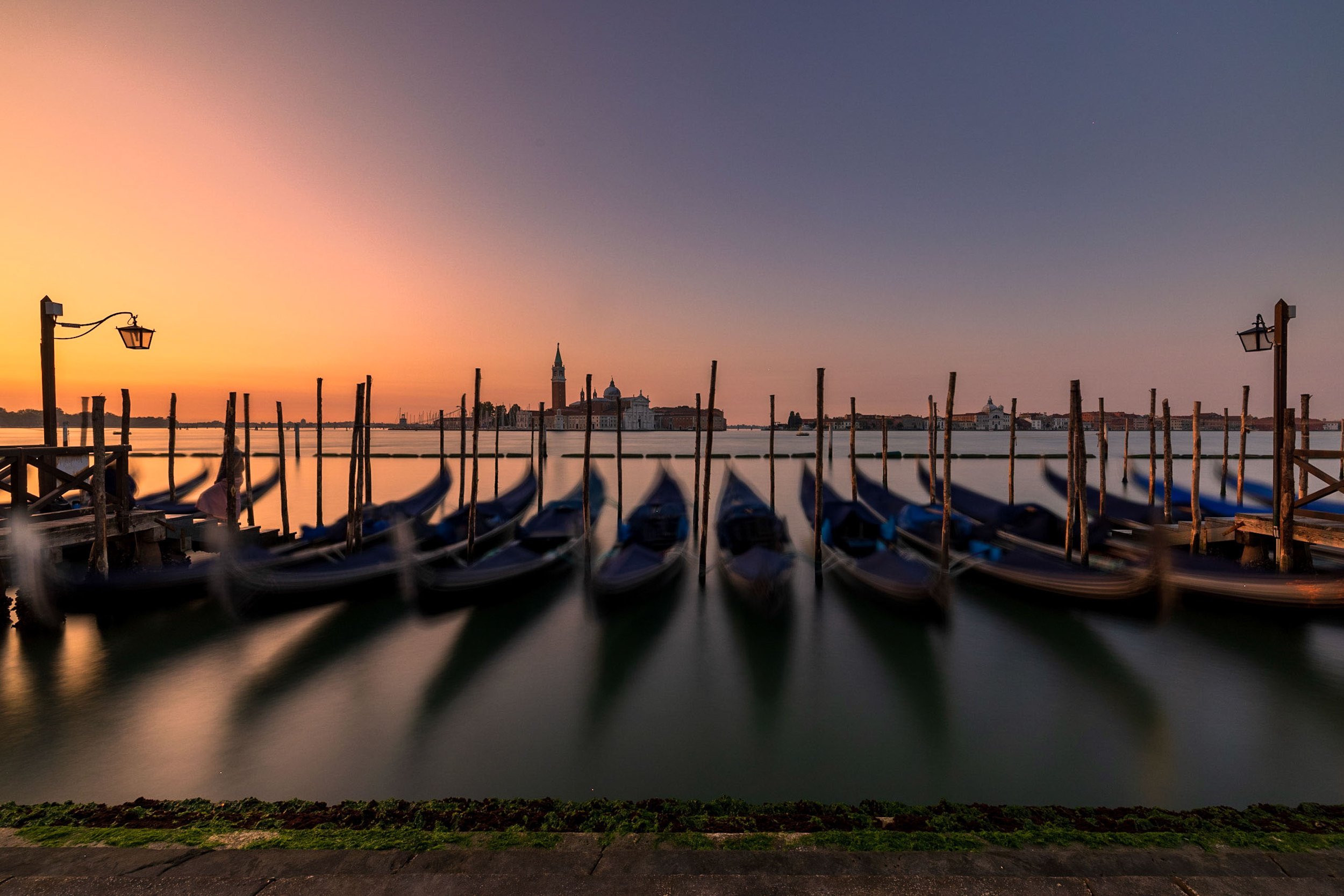
View of San Giorgio Island at Sunrise
Photographer's Notes
Before you go, here are my own takeaways.
Favorite Season: Fall
Favorite Sunrise Location: Gondolas by San Marco Square
Favorite Sunset Location: San Giorgio Maggiore
Favorite Neighborhood: San Marco
Favorite Hotel: The Gritti Palace
Favorite Café: Caffè del Doge
Favorite Lens: 15-35mm f/2.8
Would I Return? In a heartbeat, every chance I get.
Best Time to Visit Venice for Photography
Spring (April to May): Crisp morning light, mild temperatures, and noticeably fewer crowds than summer. The soft colors and clean skies make this one of the best windows for architecture and canal shots. Golden hour arrives around 6:30 am, giving you a long, usable window before the day trippers arrive by ferry.
Fall (September to October): My personal favorite season. The light turns warm and directional, fog starts rolling in by late October, and the summer crush of tourists has thinned out considerably. Fog in Venice is not a problem; it is a gift. It softens backgrounds, wraps the buildings in atmosphere, and turns ordinary canals into something cinematic.
Winter (December to January): Quiet, cold, and genuinely romantic. Crowds are minimal, and the flat winter light works beautifully for black-and-white conversions. Carnevale, which runs in February, is one of the most photographically extraordinary events in Europe.
Summer (June to August): The light is beautiful, but the crowds are brutal. If you visit in summer, your only option is to be out before 6:30 am. By 8 am, San Marco is already filling up.
My recommendation: late October. The fog, the warm light, the quiet streets. It is the best version of Venice.
Getting into Venice
The easiest way to get into Venice from Marco Polo Airport is by private water taxi. Book directly through Consorzio Motoscafi rather than through your hotel, which often marks up the price. It is door-to-door, efficient, and the arrival by water is an experience in itself. Pricing changes seasonally, so check current rates on their website before your trip.
You can also take a public water bus, which is significantly cheaper but takes at least 90 minutes and involves walking with luggage from the drop-off point to your hotel. Save yourself the headache, especially if you are carrying camera gear.

The Private Taxi
Where to Stay in Venice, Italy
Venice rewards early risers and slow wanderers, and where you stay shapes your entire photography experience. Unlike other cities, you are not just booking a hotel. You are choosing your light, your morning walks, and your frame of reference.
Best Neighborhoods for Photographers:
Dorsoduro. Quieter, artsy, and home to golden hour light along the Zattere promenade.
Cannaregio. Underrated, local-feeling, and perfect for moody morning canal shots.
San Marco. Touristy, yes, but a must if you want early access to iconic landmarks like the Basilica and Doge's Palace. This is my personal favorite area to stay.
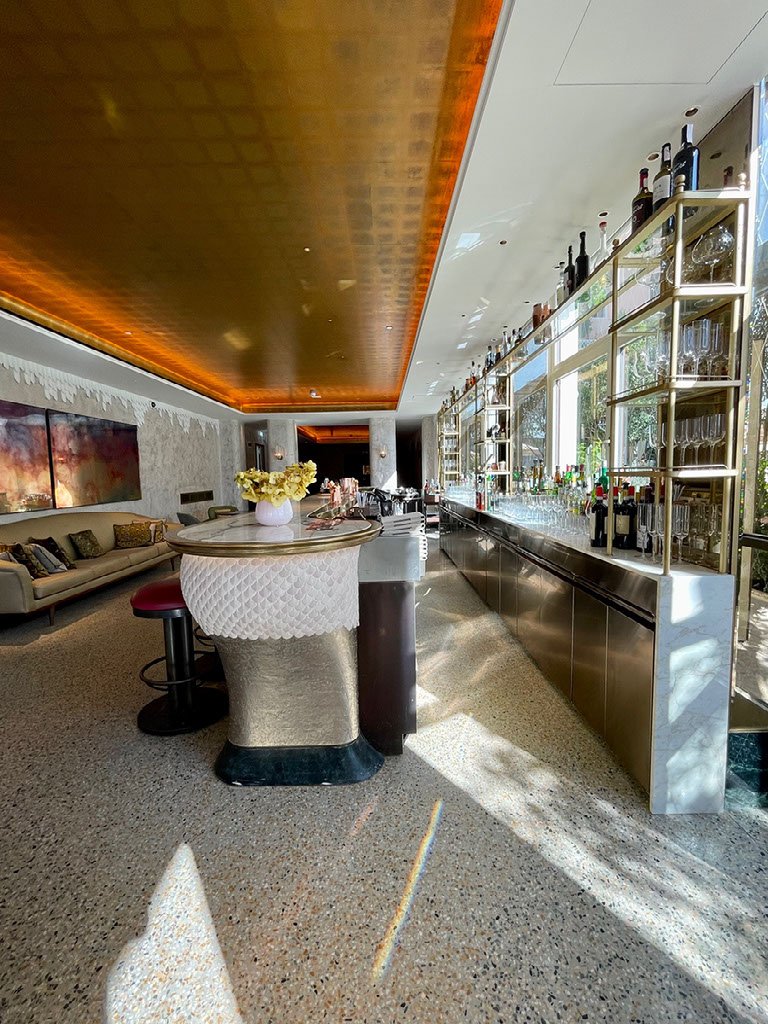
Luxury Hotels in Venice, Italy
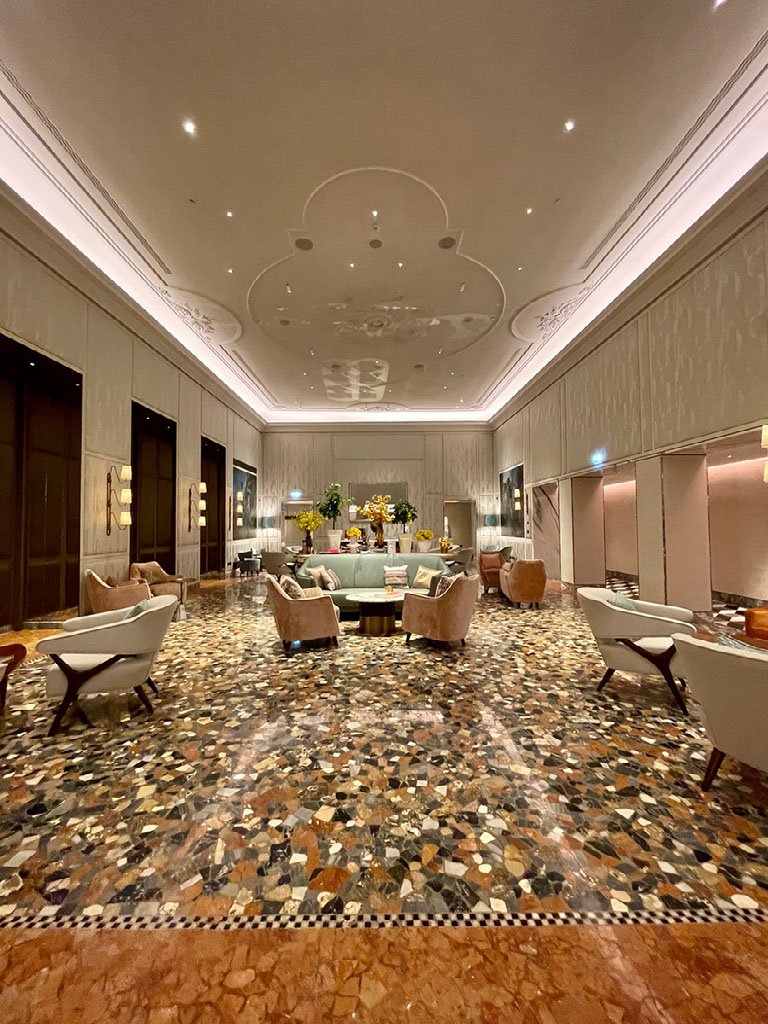
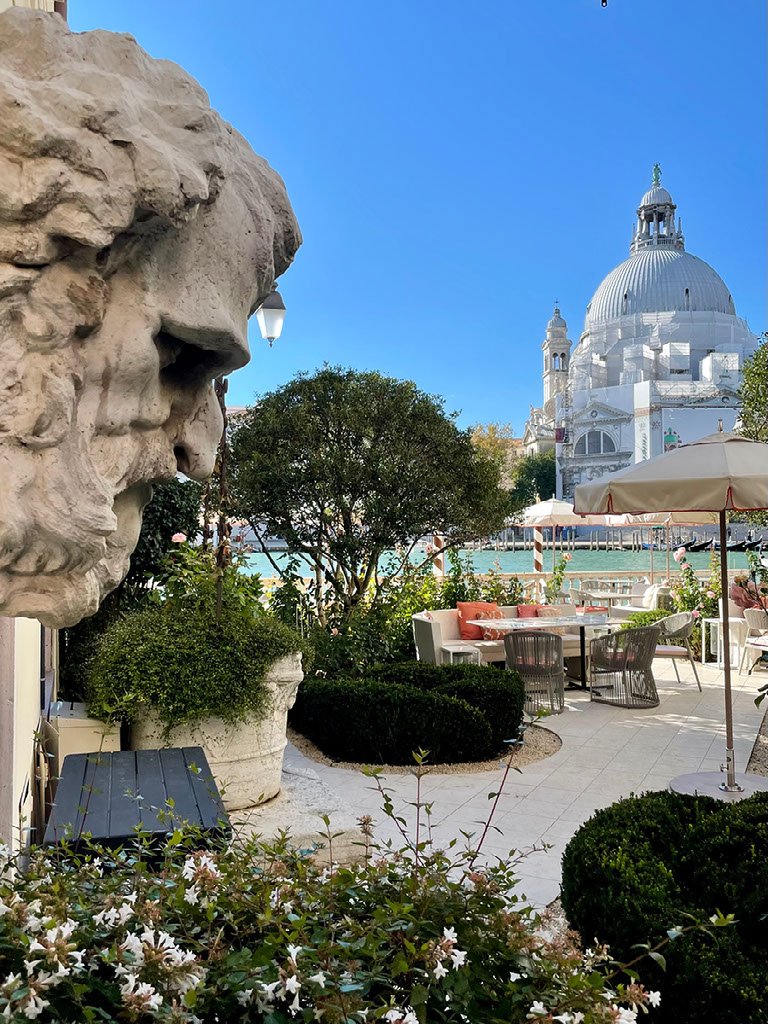
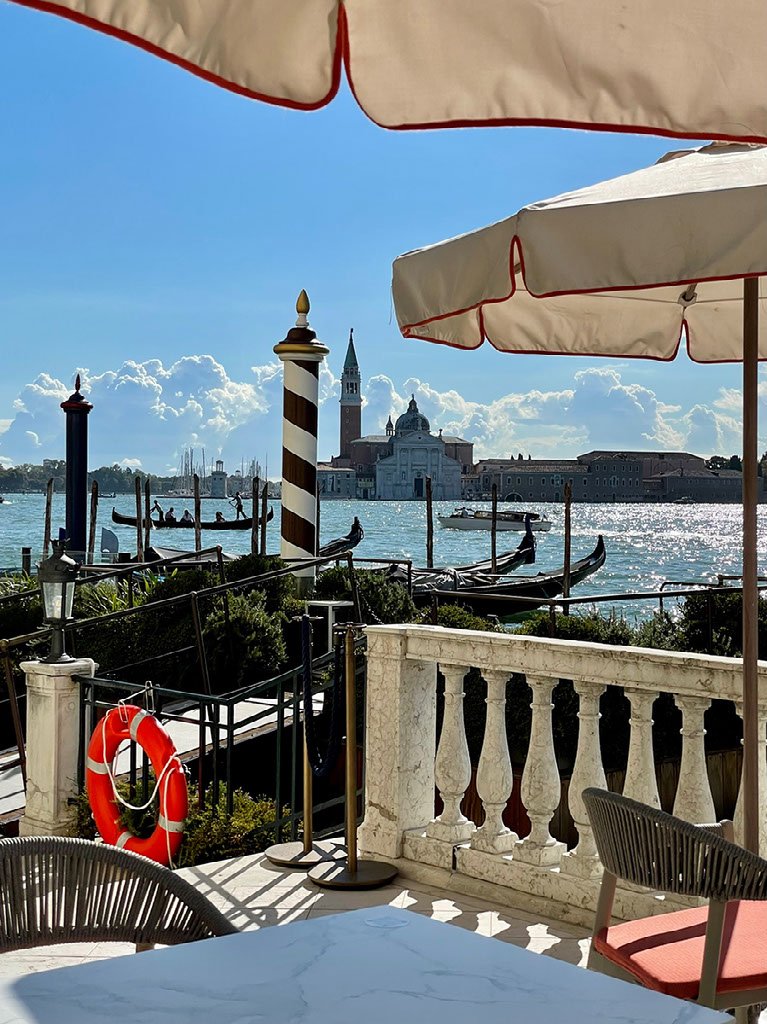
The Gritti Palace sits directly on the Grand Canal in San Marco, occupying a 15th-century palazzo that has hosted artists, writers, and heads of state for centuries. Ernest Hemingway drank here. Somerset Maugham wrote here. The terrace facing Santa Maria della Salute is one of the finest places in Venice to watch the light change over the water, and for photographers, waking up steps from the Grand Canal at sunrise is worth every euro. The rooms are dressed in antiques and hand-blown Murano glass, and the canal-facing suites give you a frame-worthy view before you even pick up your camera.
Ca' Sagredo Hotel occupies a 15th-century palazzo on the Grand Canal directly opposite the Rialto Market, and the building has been declared a national monument. The frescoed ballroom, marble staircase, and ornately painted ceilings make the interior as photogenic as anything outside. The rooftop terrace is ranked among the best in Italy and offers a sweeping view across the canal rooftops that you will want to shoot at both blue hour and golden hour. The hotel's private water taxi dock puts you on the water in minutes, and the location between the Rialto and the train station gives you fast access to every corner of the city.
Palazzo Venart Luxury Hotel is a 16th-century palazzo in Santa Croce with only 18 rooms, a private garden that feels impossible in a city with no land, and a Michelin-starred restaurant on the premises. It sits quietly off the main tourist routes but is only a short walk from the Rialto. If you want the scale and history of Venice's great palaces without the crowds that come with the most central addresses, this is the hotel.
Mid-Range and Boutique Hotels in Venice, Italy
Hotel Antiche Figure occupies a 15th-century Grand Canal palazzo in Santa Croce, just across the water from the train station, and it consistently ranks among the top hotels in Venice for value, location, and warmth of service. The rooms are dressed in traditional Venetian style without feeling stiff or museum-like, and the higher-category canal-view rooms look directly onto the gondola station below. Arriving by water taxi and stepping straight into a historic building on the Grand Canal for a fraction of the price of a five-star property is one of the better moves you can make in this city.
Locanda Fiorita is tucked into a small, flower-covered campo in San Marco that most visitors never stumble across. It is the kind of place that feels like a local secret even though it has been quietly welcoming photographers and travelers for years. The campo outside the front door photographs beautifully in morning light, and the intimate scale of the hotel means the owners actually know who you are by the second morning. For photographers who want to stay in the heart of the city without the noise and scale of a larger property, this is a genuinely good choice.
Ca' Maria Adele is a boutique hotel in Dorsoduro with nine individually decorated rooms, each one more theatrical than the last. Two of the suites are inspired by the Orient, with canopied beds and rich fabrics that feel entirely out of time. The location, a short walk from the Salute church and the Punta della Dogana, puts you in one of the quietest and most photogenic corners of Venice, and the building's position on a small canal means you wake up to the sound of water rather than tourists.

The Elegance of Italian Fashion
How Many Days in Venice for Photography?
Four to six days gives you time to explore with intention and patience. Three days is workable if you are disciplined about early mornings, but you will feel rushed.
Sample Itinerary (5 Days):
Day 1: Arrive by water taxi. Walk from Dorsoduro to San Marco at golden hour. Shoot gondolas at sunset from the waterfront.
Day 2: Wake before sunrise for St. Mark's Basilica without crowds. Visit the Doge's Palace. Spend the afternoon wandering Castello. Blue hour by the lagoon.
Day 3: Island hop to Burano for color and Torcello for quiet nature shots. Take the early vaporetto and beat the day-trip crowds.
Day 4: Cannaregio morning strolls. Visit the Jewish Ghetto. Night photography at the Rialto Bridge.
Day 5: Coffee at Campo Santa Margherita, the Peggy Guggenheim Collection, and a final sunrise on the Accademia Bridge before you leave.
Getting Around Venice
One of the most remarkable things about Venice is that there are no cars. No honking, no crosswalks, no traffic jams. You get everywhere on foot or by boat, which means the city's rhythms are naturally slower and far better for photography.
Walk: Venice is a maze built for wandering. It is the best way to find light, texture, and the shots no one else is getting.
Vaporetto: Take Line 1 for Grand Canal photography. Sit outside at the back of the boat for moving shots and wide views.
Gondola: Expensive, but it gives you canal-level angles that are impossible to get any other way. Worth doing once.
Practical note: Be mindful of bridges and stairs if you are carrying heavy gear. A rolling bag is a liability in Venice. A backpack is not.
Pick up a Venezia Unica Card for easier vaporetto access across the city.
Where to Eat and, more importantly, have Gelato in Venice, Italy
Venice has an unfair reputation when it comes to food, mostly because too many visitors get trapped near the major sights. But step just a few alleys away, and you’ll find trattorias serving up silky bigoli pasta, seafood pulled from the lagoon that morning, and spritzes poured generously into short tumblers. The Venetian food scene is best enjoyed slowly, with plenty of camera breaks.
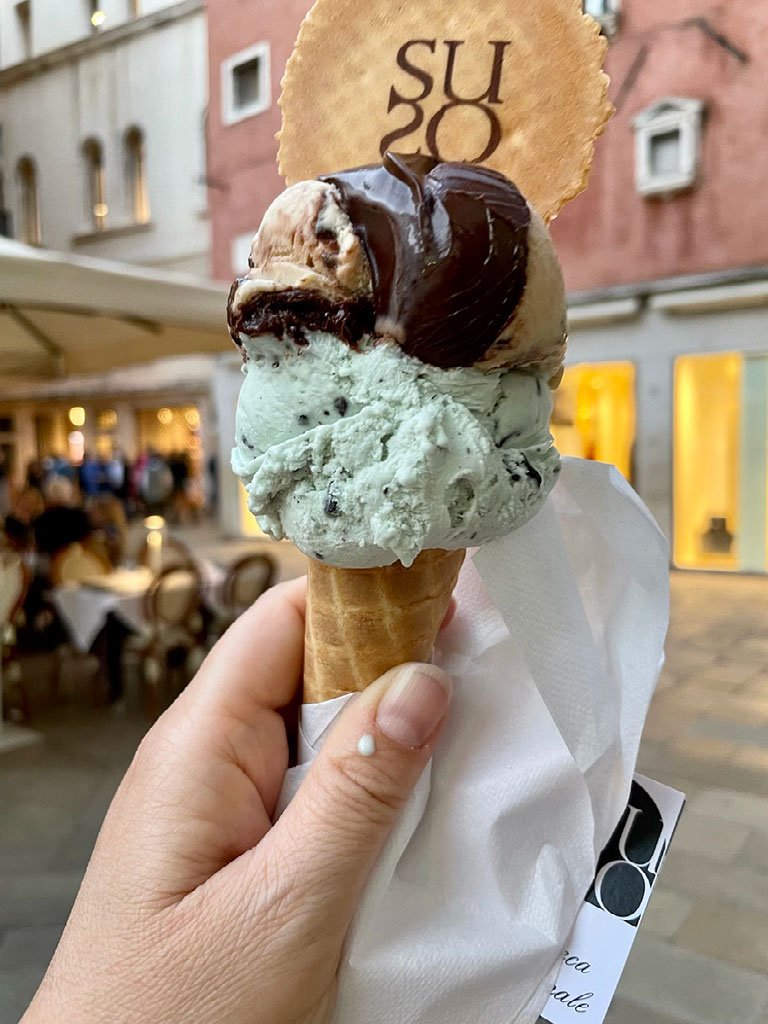
Start with cicchetti, small plates meant for sharing—perfect for mid-day wandering. Order local specialties like sarde in saor (sweet and sour sardines) or baccalà mantecato (creamed cod). Photograph your plate in natural light near a window or on a sunny campo bench.
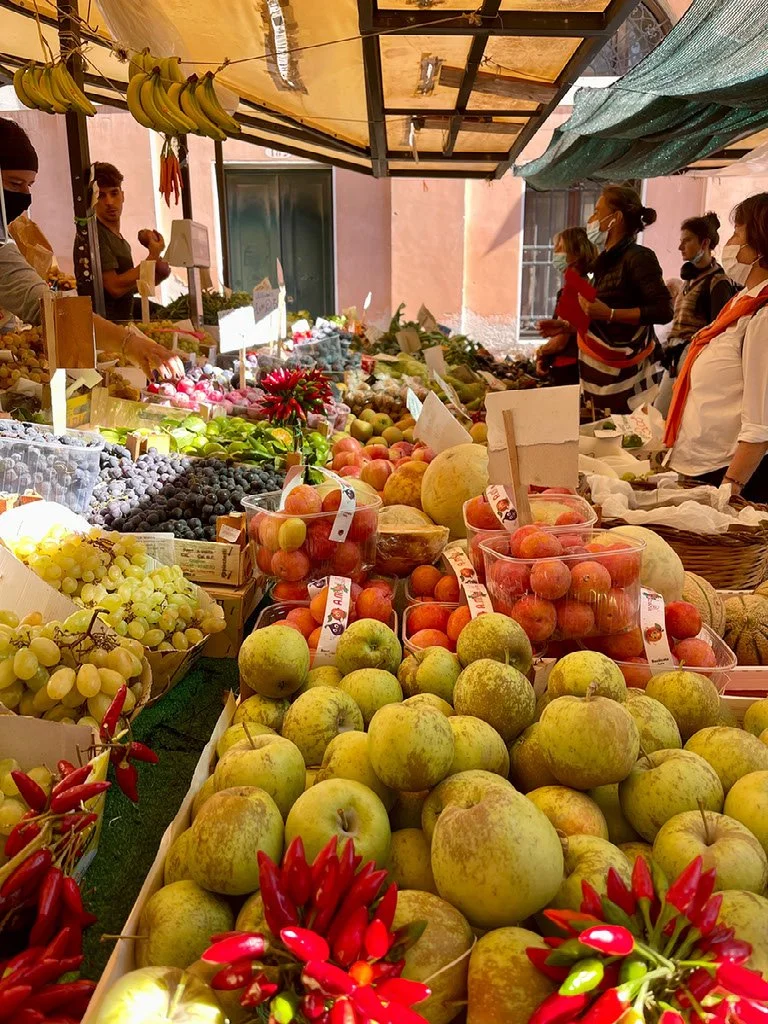
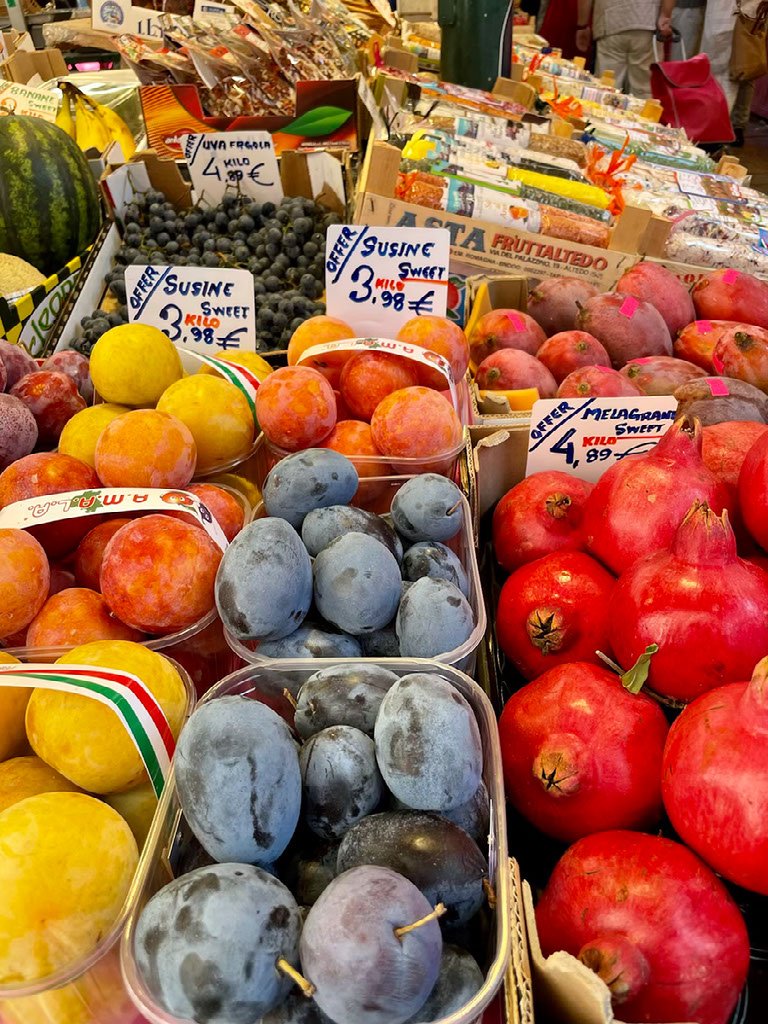
Venice has an unfair reputation for food, mostly because too many visitors get trapped near the major sights. Step just a few alleys away and you will find trattorias serving silky bigoli pasta, seafood pulled from the lagoon that morning, and spritzes poured generously. The Venetian food scene is best enjoyed slowly, with plenty of camera breaks.
Start with cicchetti, small plates meant for sharing, perfect for mid-day wandering. Order local specialties like sarde in saor (sweet-and-sour sardines) or baccalà mantecato (creamed cod).
Restaurants in Venice, Italy:
Osteria Enoteca San Marco (Calle Frezzaria, 1610) is my favorite restaurant in Venice, and I have been back enough times to say that with conviction. The kitchen takes classic Venetian cooking seriously without turning it into a performance. The staff treats you like a regular, even on your first visit, the wine list is thoughtful, and the room itself is warm enough that you will want to linger well past dessert. Book ahead.
Osteria alle Testiere (Calle del Mondo Novo, Castello 5801) seats roughly 20 people in a room tucked into a quiet alleyway near Campo Santa Maria Formosa, and it has earned a Michelin listing without losing any of the intimacy that made it worth finding in the first place. Chef Bruno Gavagnin changes the menu daily based on what arrives at the Rialto market that morning, and vegetables come from the restaurant's own garden on Sant'Erasmo island. The seafood pasta here is some of the finest I have eaten anywhere in Italy. Book weeks in advance. This is not a walk-in restaurant.
Ristorante Wistèria (San Polo 2908) hides a beautiful courtyard behind an unassuming entrance, and on a warm evening it is one of the most pleasant places to eat in the city. The food is confident and rooted in Venetian tradition, the service is unhurried, and the courtyard light in the early evening is soft enough to photograph without any effort at all. A reliable choice for a special dinner that does not feel like a tourist trap.
Algiubagiò sits on the Fondamenta Nuove with views directly across the northern lagoon, and on a clear evening the islands in the distance turn gold as the sun drops. The kitchen leans toward creative modern dishes with lagoon-fresh seafood, and the plating is worth photographing before you eat it. Go for the view and stay for the food.
Trattoria Anzolo Raffaele is the kind of place you find by wandering rather than searching, tucked into the quieter streets of Dorsoduro away from the gallery crowds. The interior is warm and slightly worn in the way that good neighborhood restaurants always are, the menu is handwritten and changes with the market, and the people eating around you are mostly local. Come here when you want a real meal in a real Venice neighborhood rather than a performance of one.
Bar All'Arco (Calle Arco, 436, San Polo) is a standing-room bacaro near the Rialto market where the cicchetti are made fresh each morning and the crostini disappear fast. Order a small glass of Prosecco and work your way along the bar. It is exactly what a Venetian lunch should be and costs almost nothing.
Chat Qui Rit (C. Tron, 1131) was a discovery by chance on one of our later trips, and it turned out to be one of the best meals we had. The room is small, the menu is focused, and the kitchen clearly cares about what it sends out. The kind of place you feel pleased with yourself for finding.
Farini (Castello, 5602) is a takeaway pizza counter that does one thing well and does it fast. When you have been on your feet since before sunrise and need something good before the next shoot, this is where you go.
Coffee and Gelato:
Caffè del Doge (Rialto, Calle dei Cinque, 609) is where we started most mornings in Venice, and by the third day the staff knew our order. The espresso is serious, the atmosphere is local, and the location near the Rialto puts you in position for the morning market before the crowds arrive. Our single most-visited spot in the city across multiple trips.
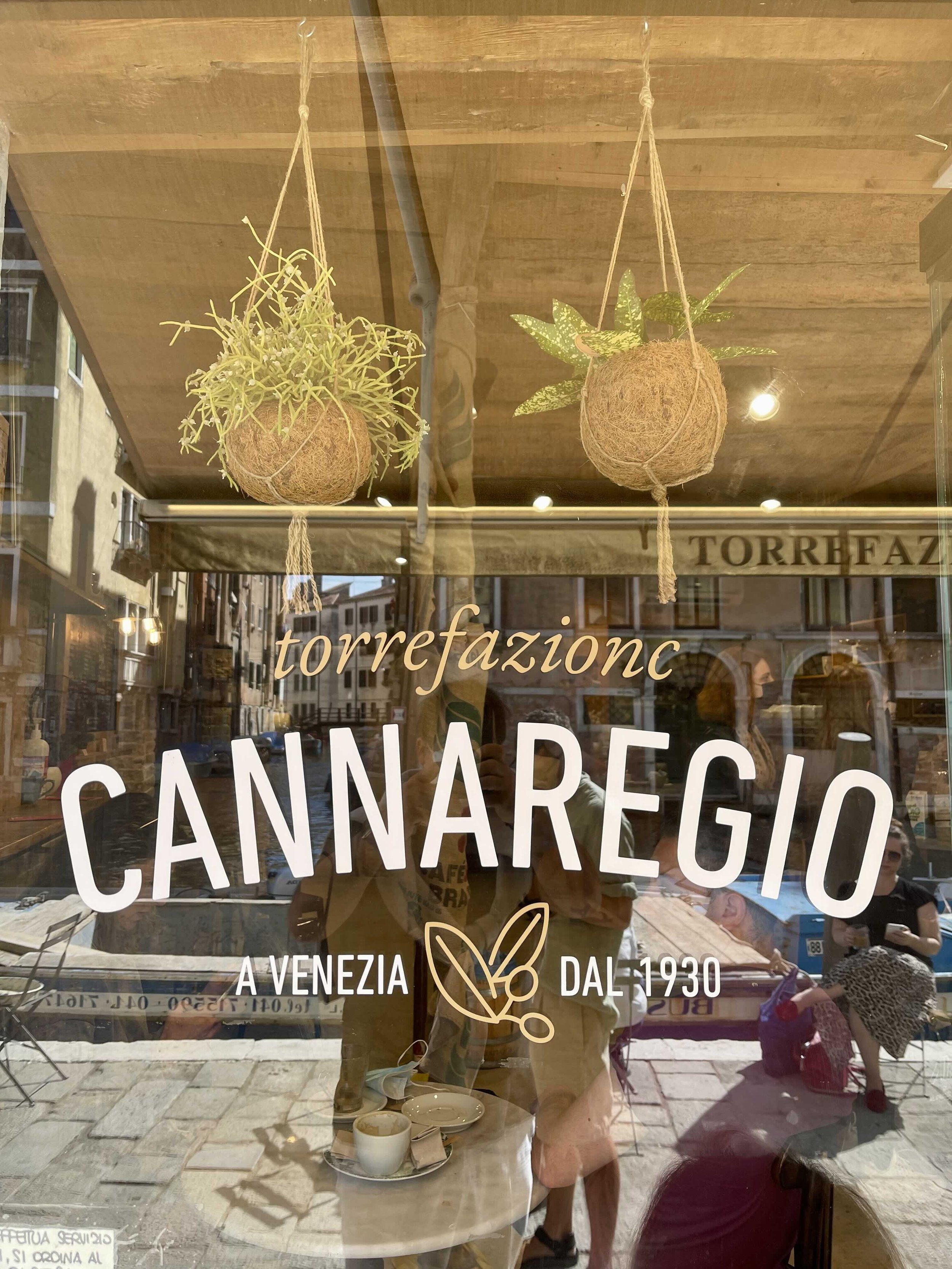
Torrefazione Cannaregio roasts its own coffee in a neighborhood that still feels lived-in rather than curated for visitors. Arrive early, stand at the bar, order a macchiato, and watch the sestiere wake up around you. It is the most useful kind of coffee shop: one that earns your loyalty by being genuinely good rather than visually interesting.
Al 133 (Salizada San Pantalon, 133) has a quiet garden in the back that is one of the better-kept secrets in Dorsoduro. The lattes are generous, the staff are relaxed and friendly, and on a warm afternoon the garden is an excellent place to review your morning's shots before heading out again.
Rosa Salva has multiple locations across the city, and the one beside the Basilica dei Santi Giovanni e Paolo is positioned perfectly for a mid-morning break after shooting the church and its canal reflections. Classic Venetian pastries, reliable espresso, and a terrace that gets good light until around noon.
Caffè Quadri (Piazza San Marco, 121) has been pouring coffee in San Marco since 1638, and while the prices reflect the address, sitting on the terrace with an Aperol Spritz as the evening light fades across the Basilica is one of those Venice experiences you do not skip. Go once. You will not regret it.
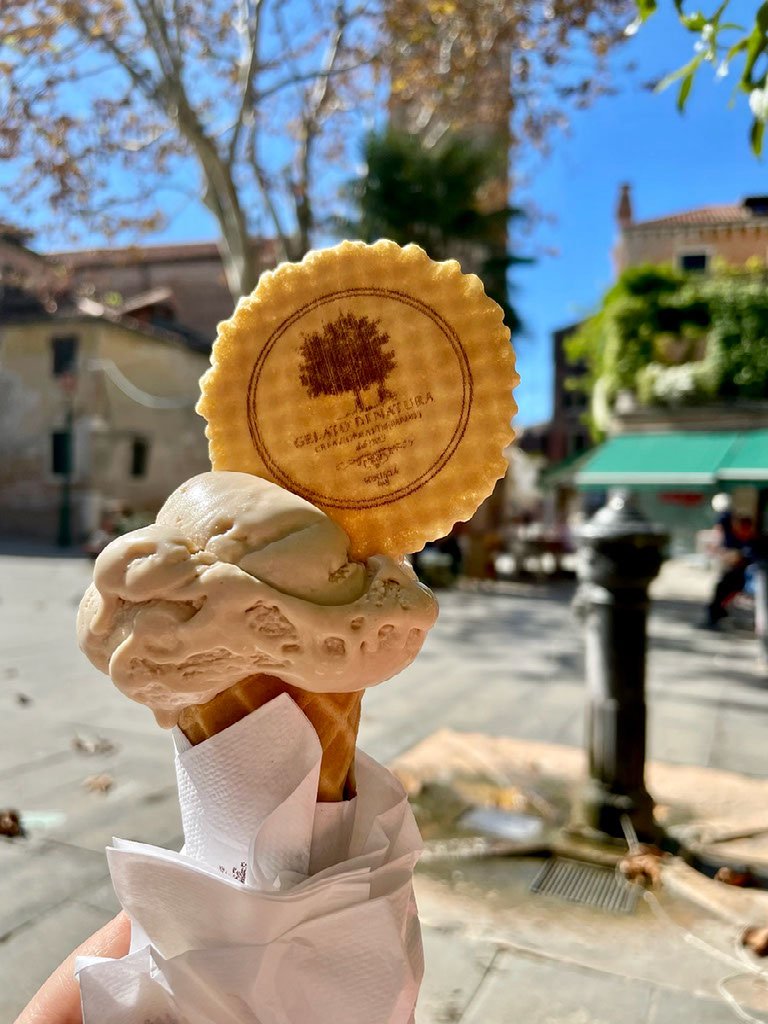
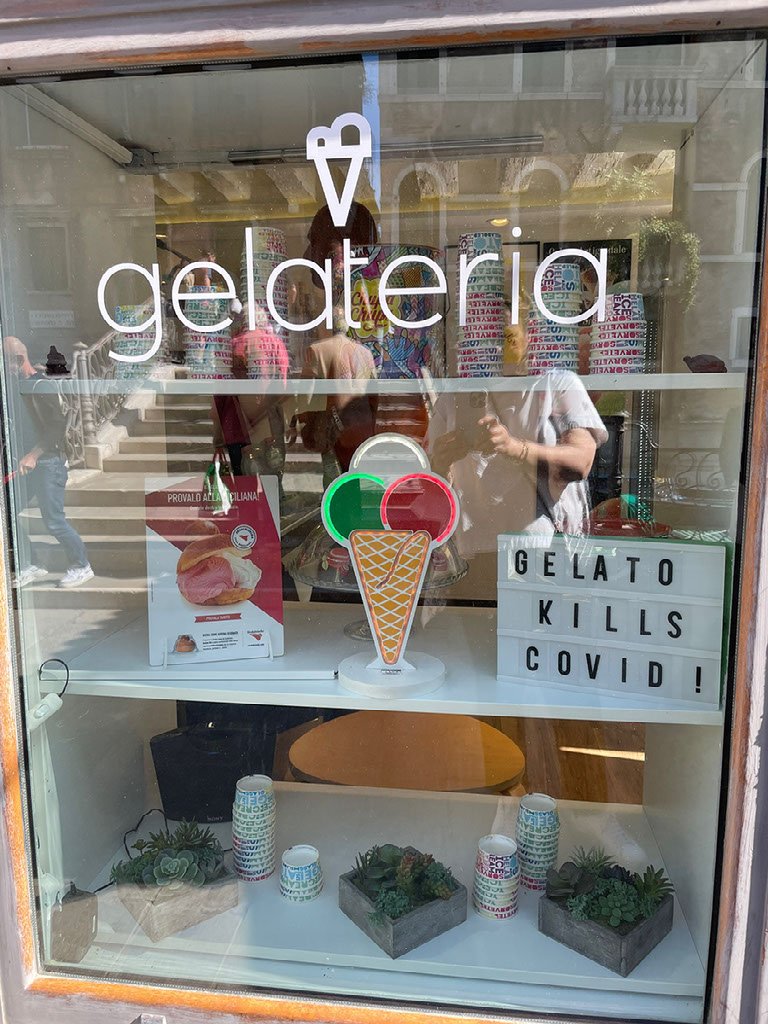
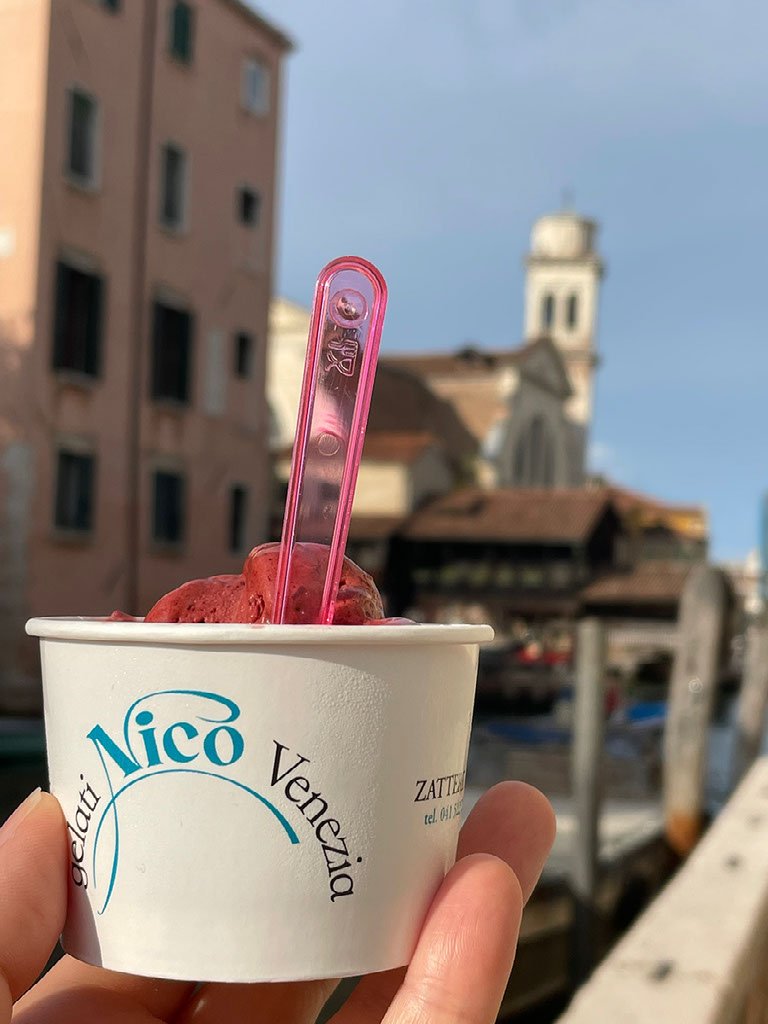
Gelato di Natura (Cannaregio, 4454) is, after considerable research across multiple visits, the best gelato in Venice. The ingredients are clean and the flavors are honest. The Campo San Giacomo da l'Orio location is our go-to, and we factor it into our afternoon walking routes without apology.

The Elegant Wait Staff @Caffe Al Quadri
Photography Gear to Bring
Venice is a city of nuance and soft contrasts. Alleyways can be dark, bridges vibrate underfoot, and reflections shift constantly. A lightweight but adaptable kit is what you need.
Mirrorless Setup:
Canon EOS R5 Mark II, Sony A7R V, or Nikon Z8 are all excellent choices here.
16-35mm for alleyways, interiors, and wide canal compositions
24-70mm for walk-around versatility and street work
70-200mm for compressed canal scenes, candid portraits, and shooting across the Grand Canal
Compact travel tripod for early morning and blue hour shooting
ND filters (3, 6, and 10 stop) for slow-shutter water blur and long exposures
Extra batteries and memory cards. Venice is a full-day shooting city.
Samsung T7 SSD for nightly backups
Drone Note:
Venice is a no-fly zone. Drones are prohibited throughout the historic city center and the lagoon. Do not bring a drone expecting to use it here. The fines are significant, and enforcement is active.

iPhone Tips for Venice:
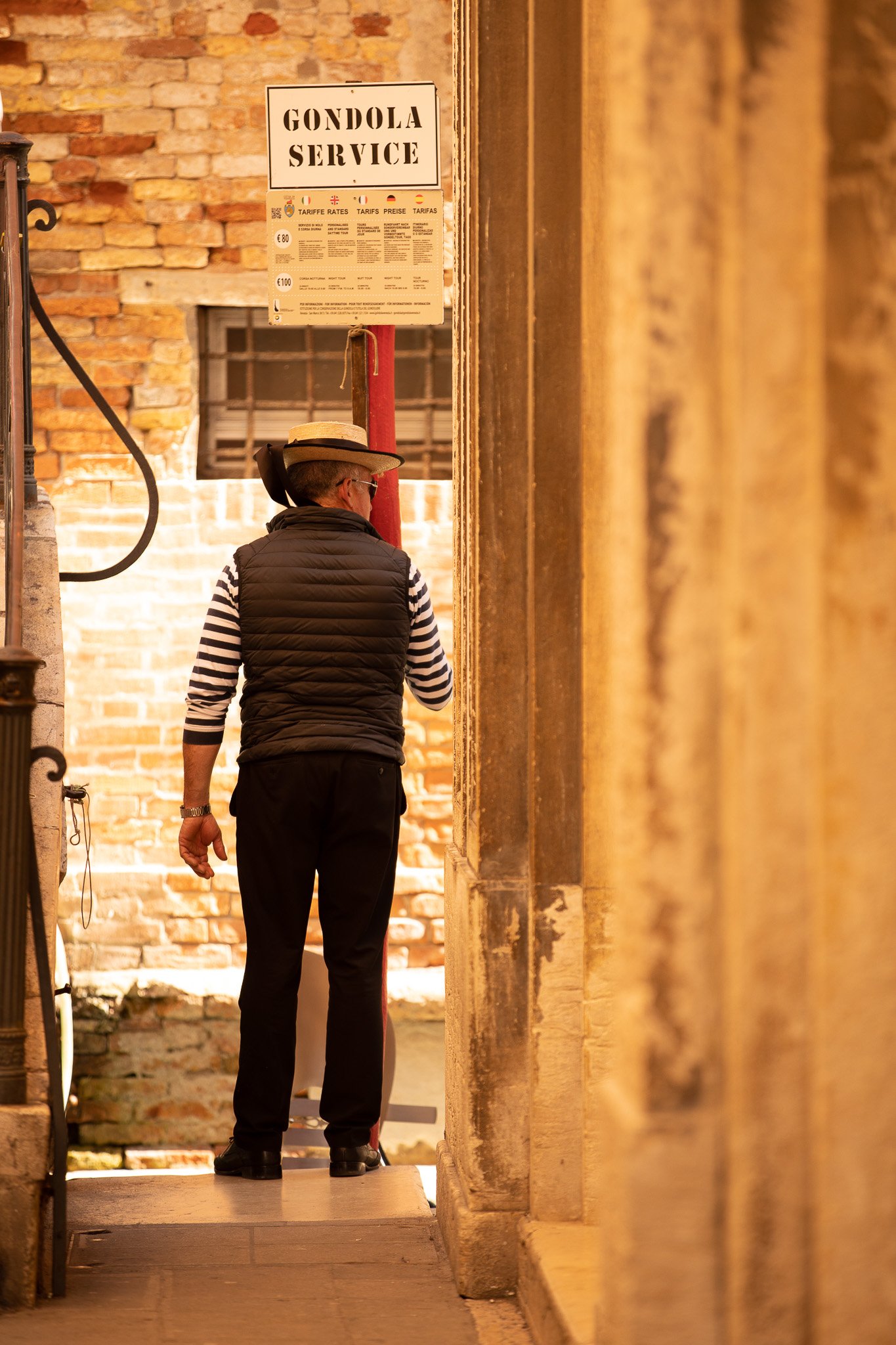
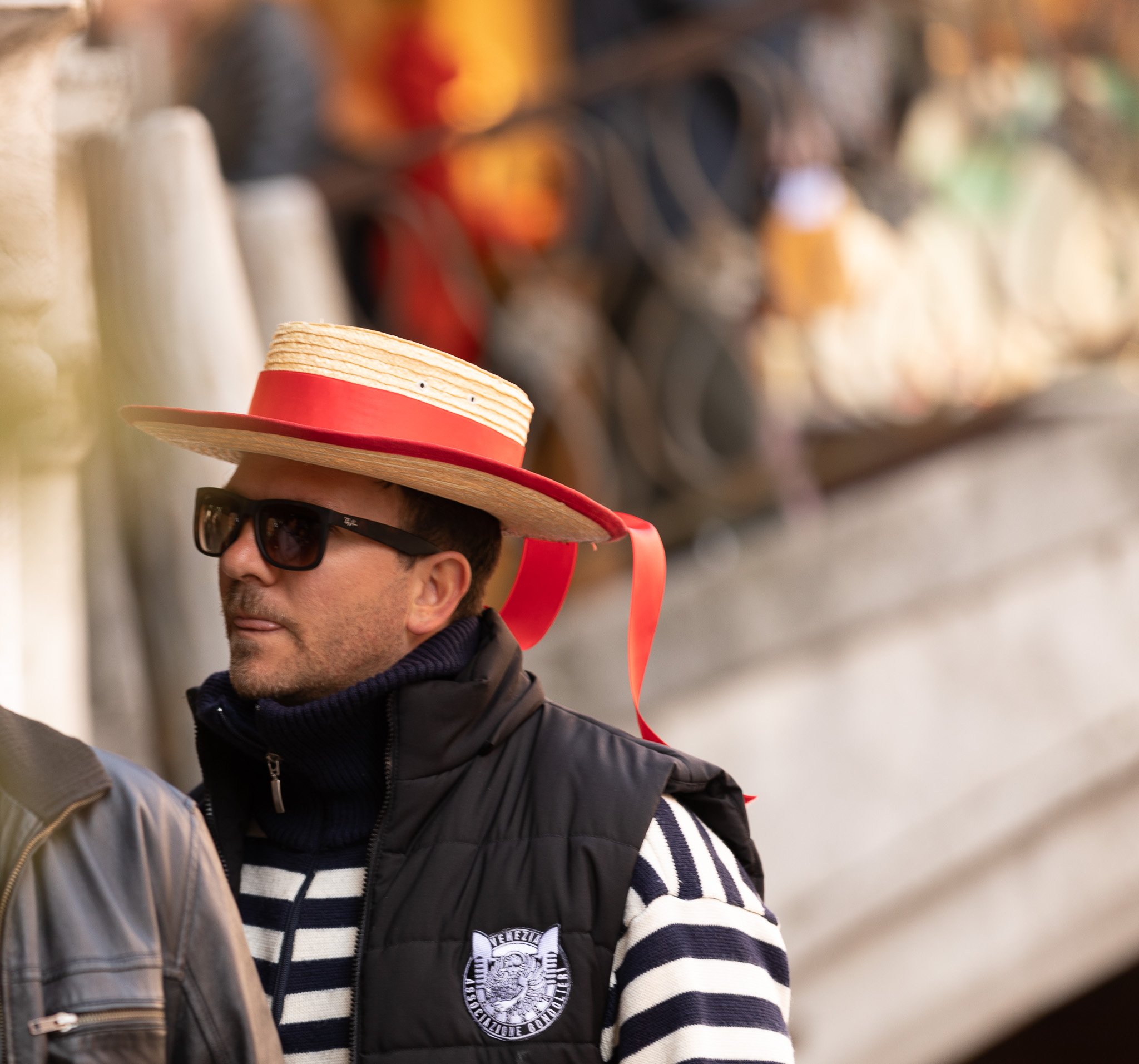
Use Portrait Mode on a gondolier working in a narrow rio, with the canal wall as your background. The compression isolates the subject, and the background blur does the rest.
For Piazza San Marco reflections at sunrise, invert your iPhone so the lens is as close to the ground as possible. A thin puddle gives you a near-perfect mirror reflection of the Basilica.
In dark alleyways and covered passages, switch to Night Mode and brace against a wall instead of using a tripod. Venice's narrow calli are too tight for most tripod setups.
Use the ultrawide lens on the Rialto Bridge to capture the full arc of the Grand Canal in a single frame. The standard lens cuts too much off at that distance.
Edit with Lightroom Mobile or Snapseed. Venice's warm tones and water reflections respond beautifully to subtle orange and teal adjustments.

The Gondolieri
Best Photo Spots in Venice
While it is important to photograph the classic locations, it is equally important to just get lost. Some of the best shots you will ever take in Venice come from walking aimlessly. Leave the San Marco and Rialto area and explore the real Venice, where locals actually live.
Gondolas by San Marco Square
This is one of the classic shots in Venice. Arrive before sunrise when the mooring lights are still on. Focus on San Giorgio Island in the background and slow your shutter speed to capture the gentle movement of the gondolas. The water is mirror-flat before the first vaporetti start running, and the color of the sky changes fast. Do not be late.
📷 Pro Tip: Set up on the waterfront promenade directly in front of the San Marco basin. A 16-35mm captures the full sweep of gondolas with San Giorgio in the background. For a tighter, more graphic composition, switch to 70-200mm and isolate two or three gondolas against the island. Bring a tripod and ND filter for long exposures that blur any residual water movement. The window between 30 minutes before and 30 minutes after sunrise is your best light.
Best time: Sunrise. Access: Free. Walk from any San Marco area hotel.
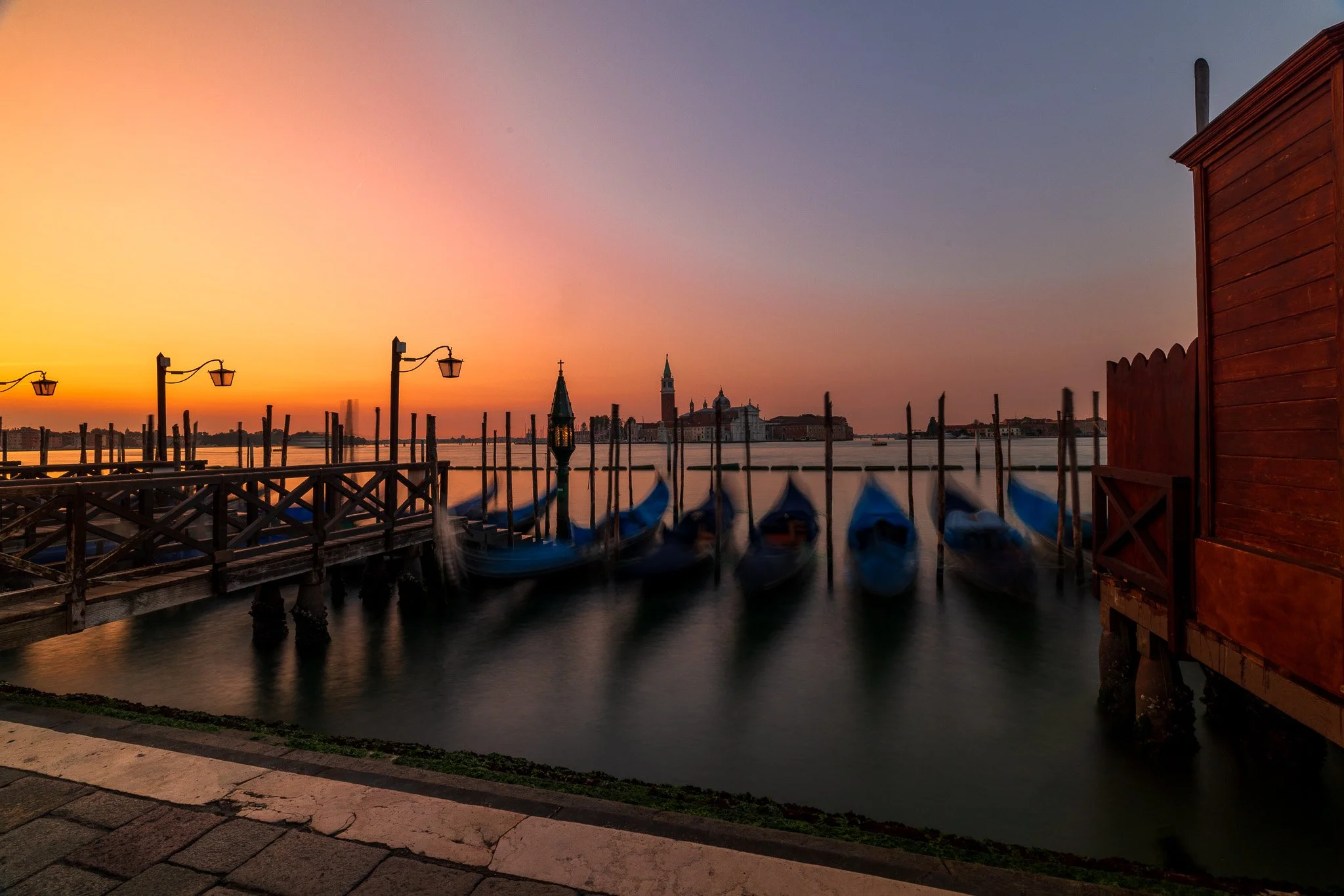
You can also take the shot with a wider lens

Piazza San Marco
The most famous square in Venice and one of the most photographed spaces in the world. The piazza gets busy by 8 am, so sunrise is your only option for a clean frame. If you find a small puddle of water on the stone, get your camera or iPhone as close to the ground as possible and shoot the reflection of the Basilica. You can also pour a small amount of water from a bottle for an instant reflection if the pavement is dry.
📷 Pro Tip: Position yourself at the far end of the piazza, opposite the Basilica, and shoot with a 16-35mm to capture the full symmetry of the arcade. Come back at blue hour for a completely different mood. The lampposts glow warm against the deep blue sky, and if there is any standing water from acqua alta, the reflections are extraordinary. Tripod and ND filter are essential for the long exposure shots.
Best time: Sunrise and blue hour. Access: Free. Central to all neighborhoods.
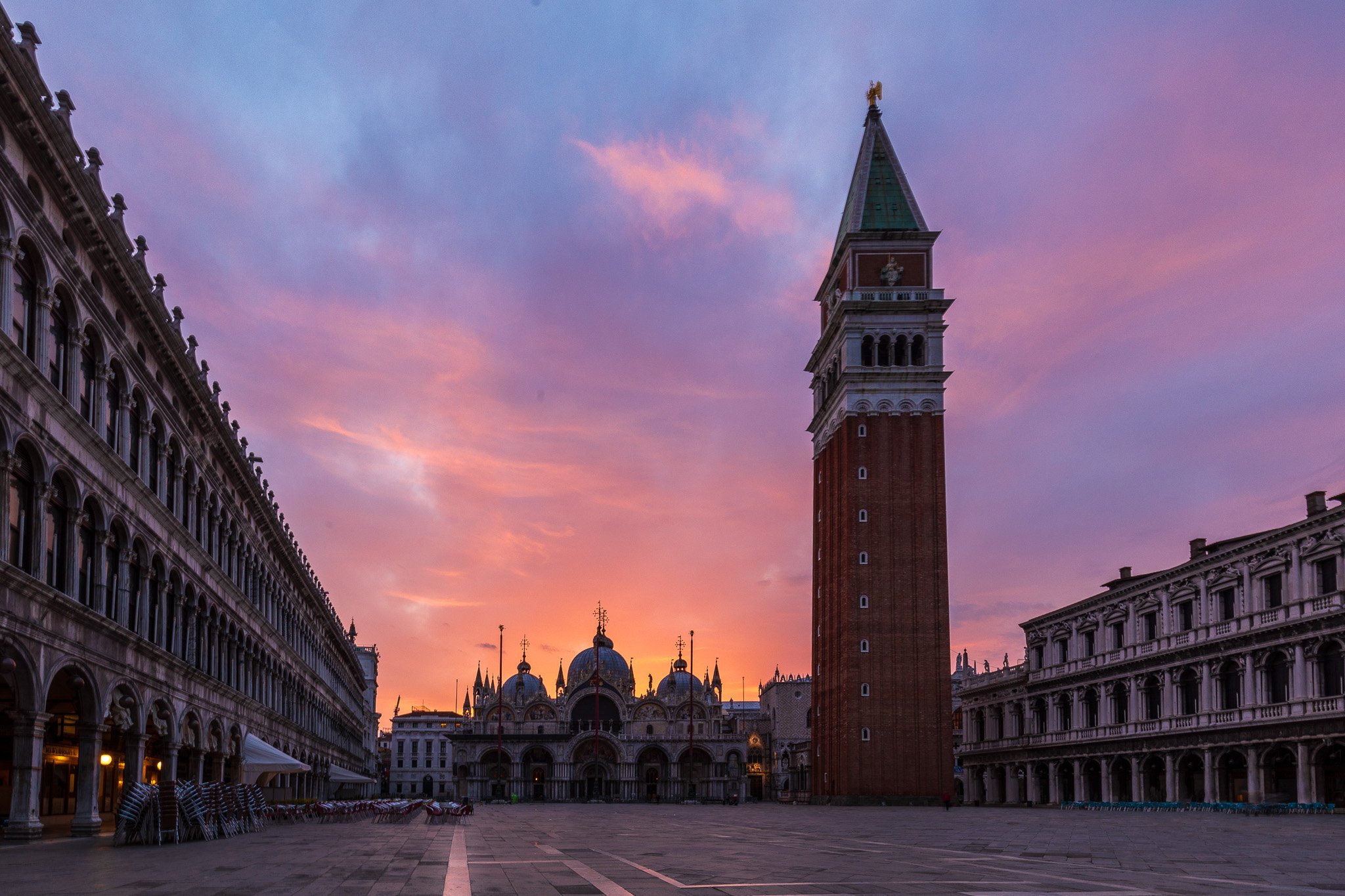
Sunrise
This is also a great place to take reflections especially early in the morning.

Love Reflections
The Bridge of Sighs
The Bridge of Sighs connects the Doge's Palace to the old prison. Prisoners crossed it on their way to sentencing, catching their last glimpse of Venice through its small stone windows. That history gives the bridge a weight that most visitors walking past it on a gondola tour never feel. Photographically, it is best framed from the Ponte della Paglia, just a few steps away along the waterfront.
📷 Pro Tip: Position yourself on the Ponte della Paglia and shoot with a 70-200mm to compress the bridge against the palace wall behind it. Early morning before 7 am clears the gondola traffic and gives you a clean frame. The bridge faces east, so morning light hits the facade directly. Avoid midday when the alley is packed and the light is flat.
Best time: Early morning. Access: Free to photograph from outside. Vaporetto to San Zaccaria.
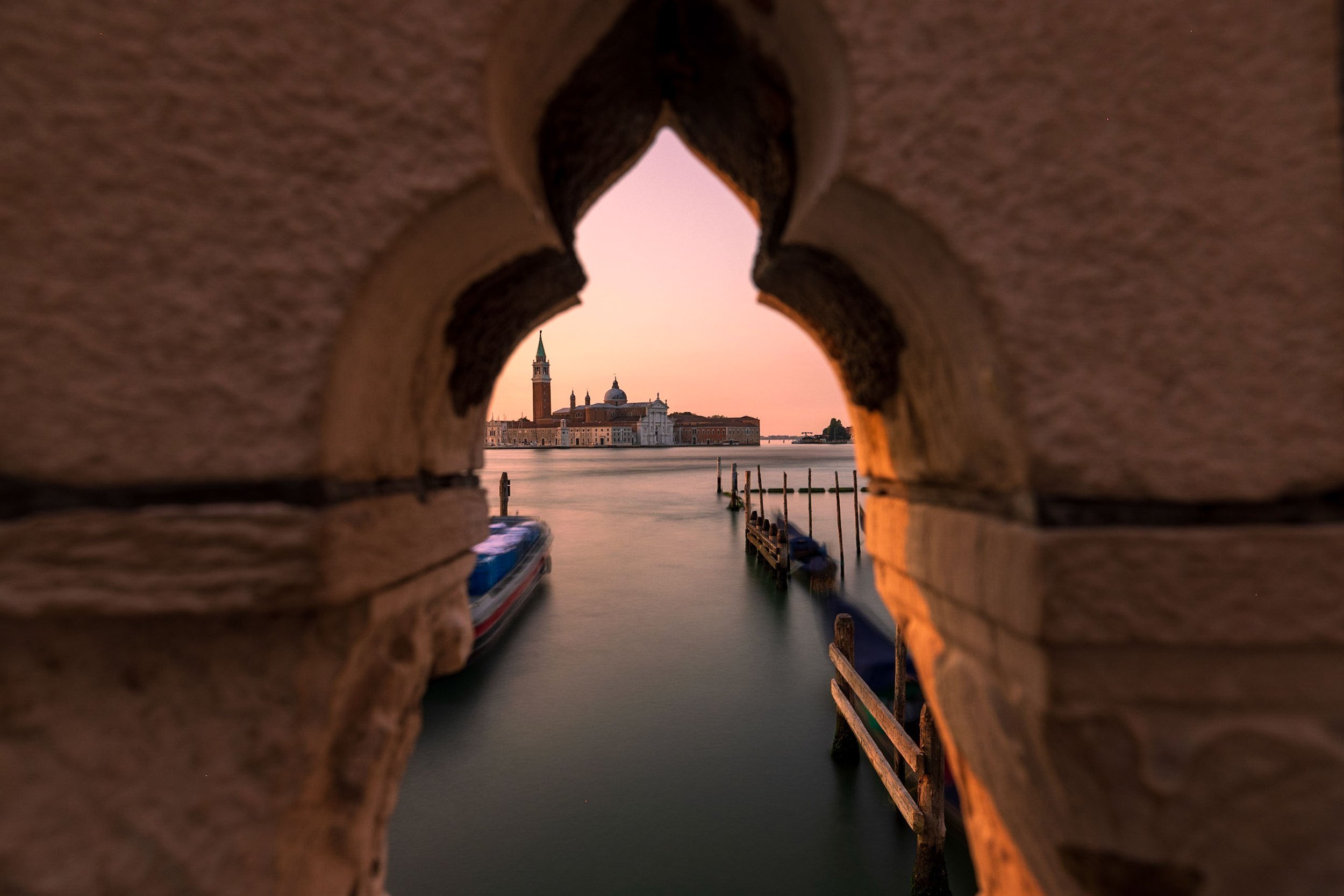
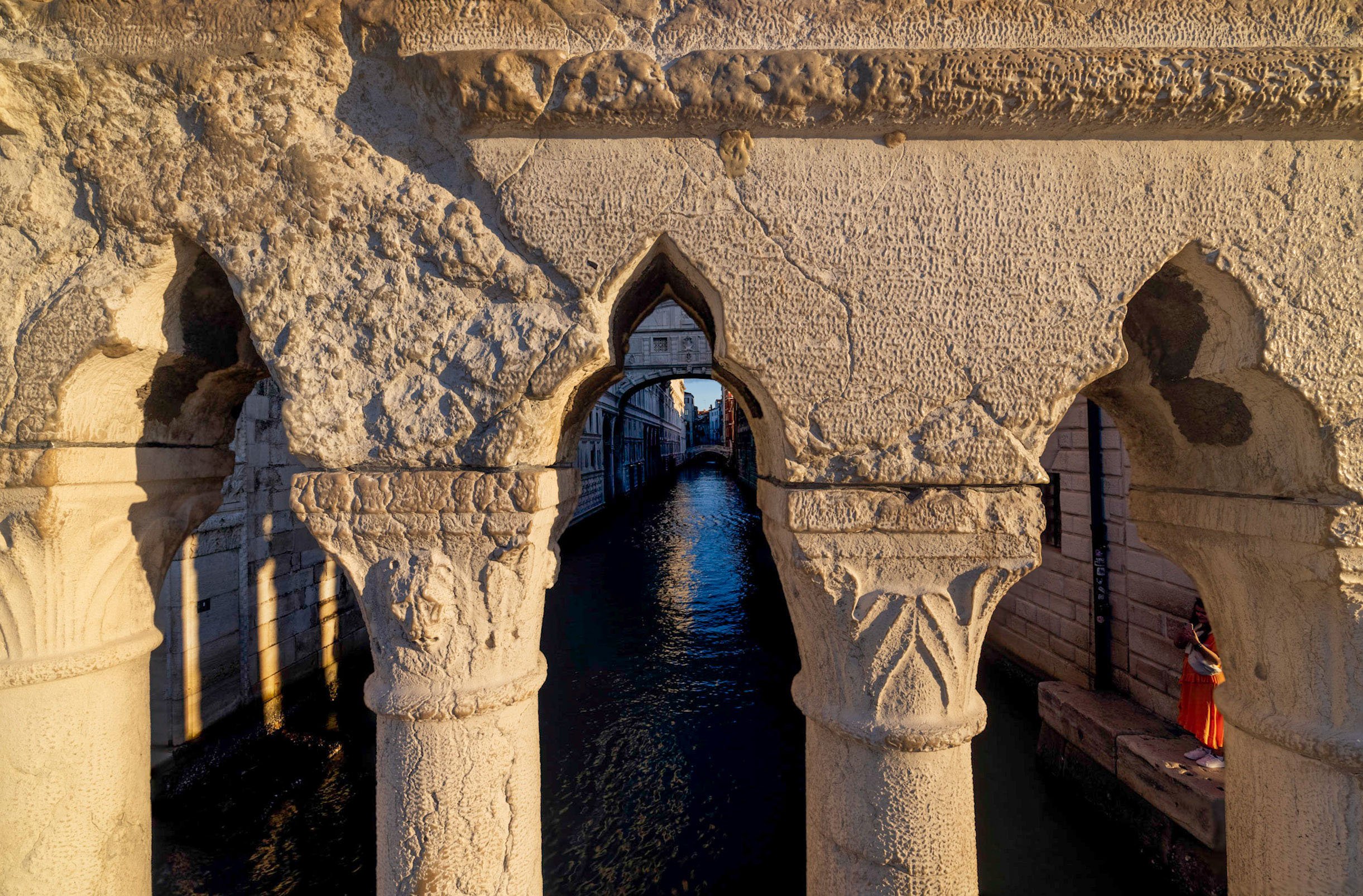
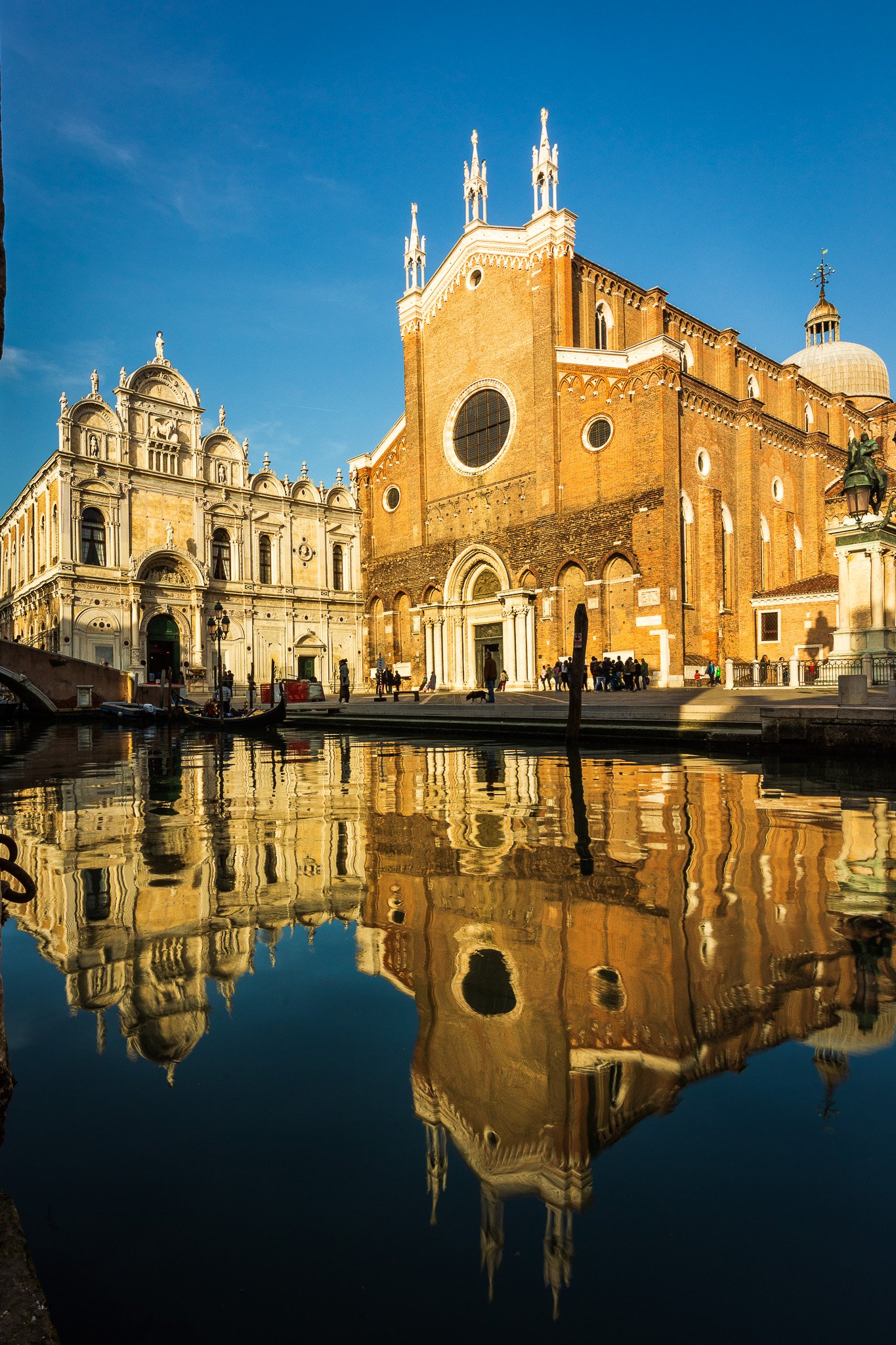
Basilica dei Santi Giovanni e Paolo
One of the most beautiful churches in Venice, and far fewer tourists make it here than to San Marco. The best shot is from the alleyway across the canal, where the afternoon light creates a near-perfect reflection of the facade in the water below. Rosa Salva coffee shop is right beside the church if you need a break.
📷 Pro Tip: Cross the small bridge opposite the church and shoot from the far side of the canal with a 16-35mm and ND filter. The reflection is sharpest in the hour before sunset when the light hits the facade directly. A tripod is essential here. If there is any wind, wait. Even small ripples will break the reflection.
Best time: Late afternoon and sunset. Access: Free to photograph from outside. Vaporetto to Fondamente Nove.

This is also a great place for a reflection
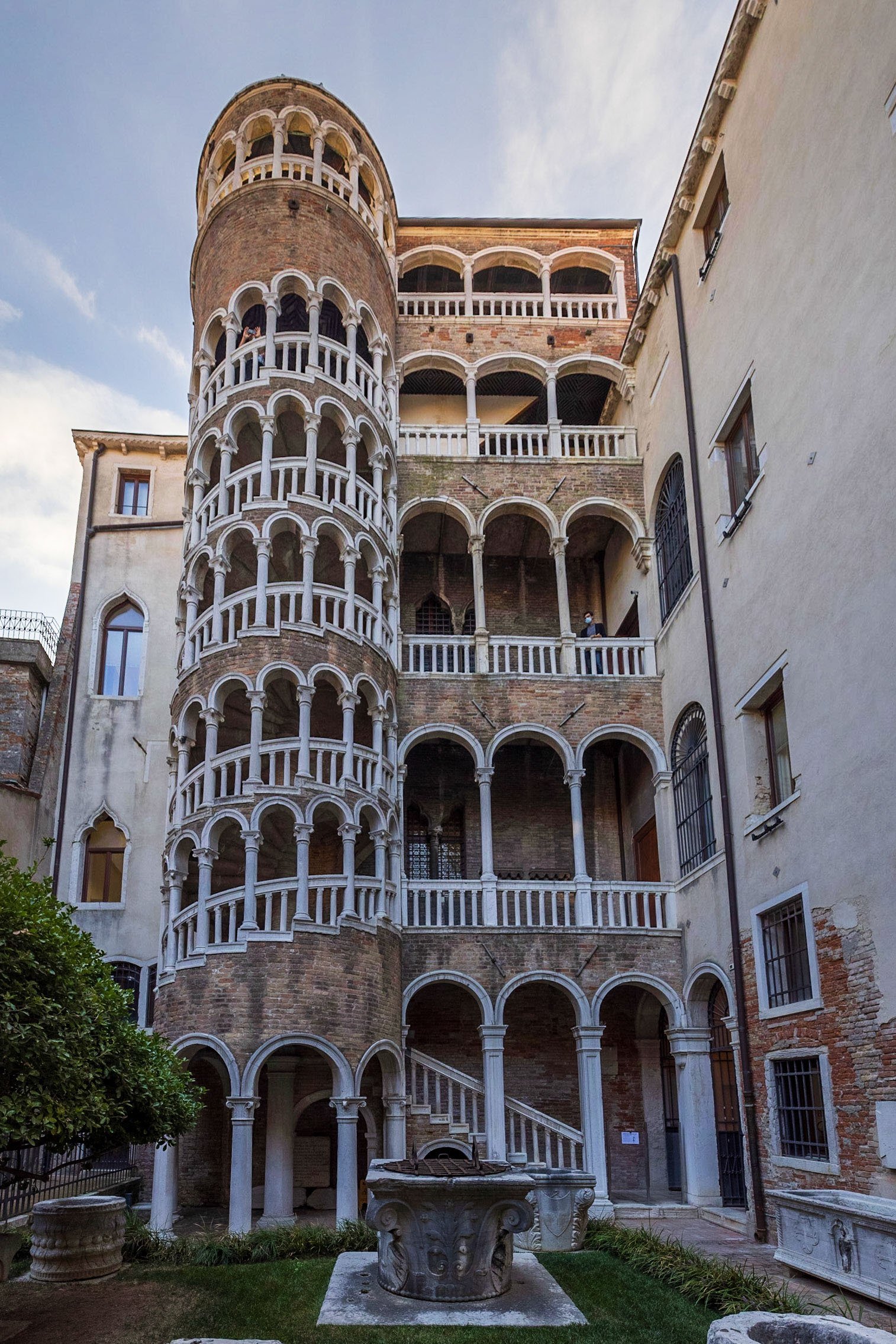
Palazzo Contarini del Bovolo
This palazzo is known for its extraordinary external spiral staircase, the Scala Contarini del Bovolo, a multi-arch Gothic and Renaissance structure that winds upward in a way that seems impossible from the outside. It sits on a small, less-traveled calle near Campo Manin and is genuinely difficult to find. I did not discover it until my fourth trip to Venice. Worth every minute of searching.
📷 Pro Tip: Shoot wide at 16-35mm or wider and position yourself directly below the staircase looking up. The geometry is the shot. A tilt-shift lens or vertical panorama works well here if you want to eliminate distortion. Visit during daylight when the interior courtyard is open for the best light on the stone.
Best time: Daytime. Access: Small entry fee to enter the courtyard. Near Campo Manin in San Marco sestiere.
Ponte Chiodo
One of the only bridges in Venice without side rails or balustrades. That absence makes it visually striking and gives you unobstructed low-angle shots of the canal below. It is well known among photographers and tends to appear on Instagram regularly, but in person it is quieter than you would expect.
📷 Pro Tip: Shoot from the bridge itself at canal level, using the clean edge of the bridge as a leading line toward the buildings beyond. A 24-70mm works well here. Come in the morning when the light is angled and the canal is still.
Best time: Morning. Access: Free. Located in Cannaregio.

Ghetto Ebraico "The Jewish Ghetto"
One of my favorite areas of Venice. Europe's first ghetto, established in 1516, is now a lively neighborhood full of shops, restaurants, and active institutions of the Jewish community. The architecture is distinctive, with unusually tall buildings built upward when the community could not expand outward. The streets are quieter and the light is softer here than in the tourist-heavy areas.
📷 Pro Tip: Shoot with a 24-70mm and focus on the street life and architectural details rather than wide establishing shots. The narrow campo at the center of the ghetto works well for people photography in the late morning. Respect the community and ask before photographing individuals.
Best time: Morning and midday. Access: Free. Vaporetto to Guglie, then a short walk.

There is an excellent coffee shop in the area
Ca' Rezzonico
An 18th-century palazzo turned museum directly on the Grand Canal, filled with period furniture, paintings, and sculptures. The exterior at sunrise or sunset is one of the most elegant Grand Canal shots you can get. The interior is equally photogenic for anyone who enjoys architectural and interior photography.
📷 Pro Tip: Shoot the exterior from the opposite bank of the Grand Canal at golden hour with a 24-105mm. The facade faces west, so afternoon and sunset light is your best window. For interior shots, check the museum's photography policy on arrival.
Best time: Sunset for exterior. Daytime for interior. Access: Entry fee for the museum. Vaporetto to Ca' Rezzonico.

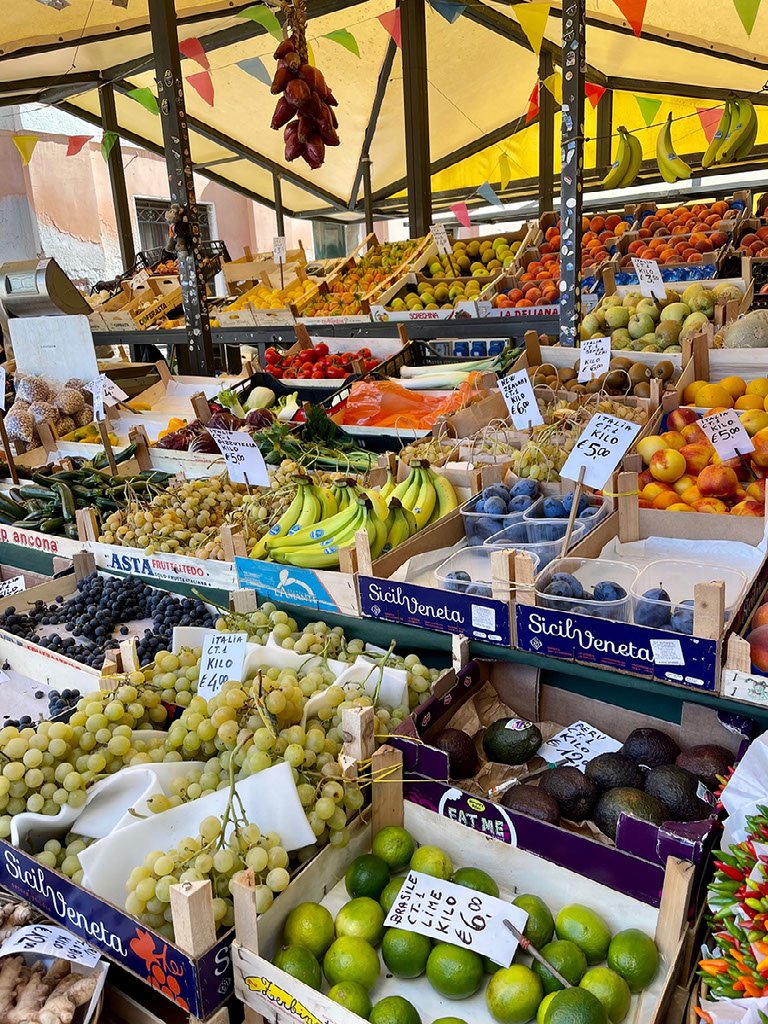
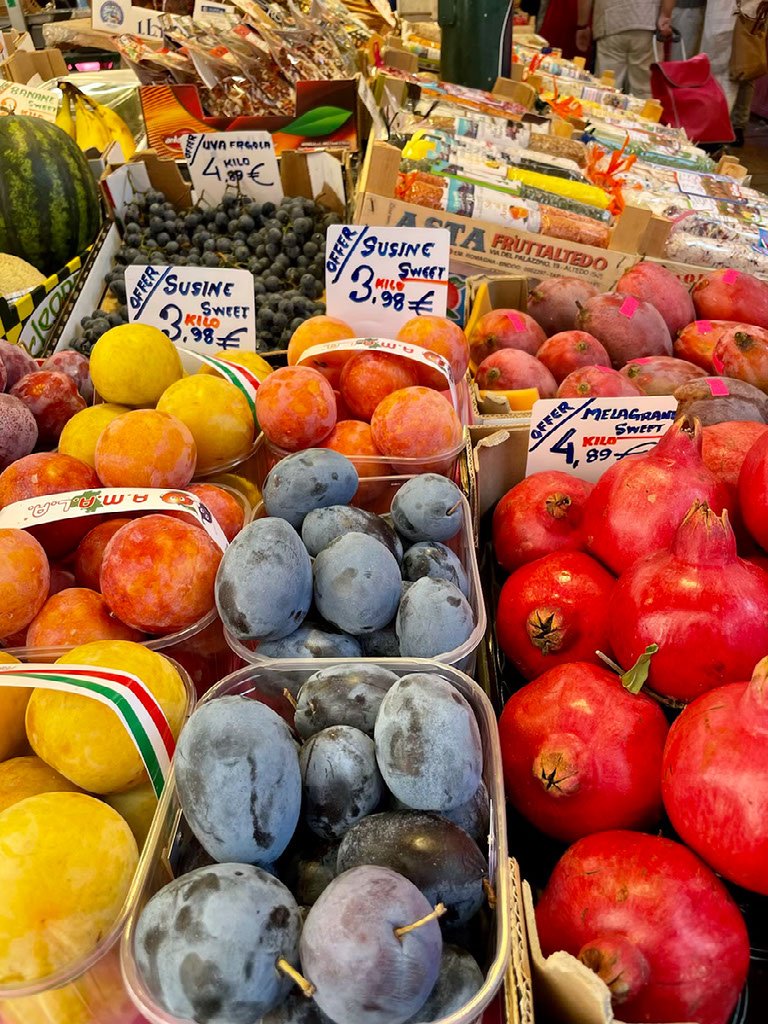
Rialto Mercato
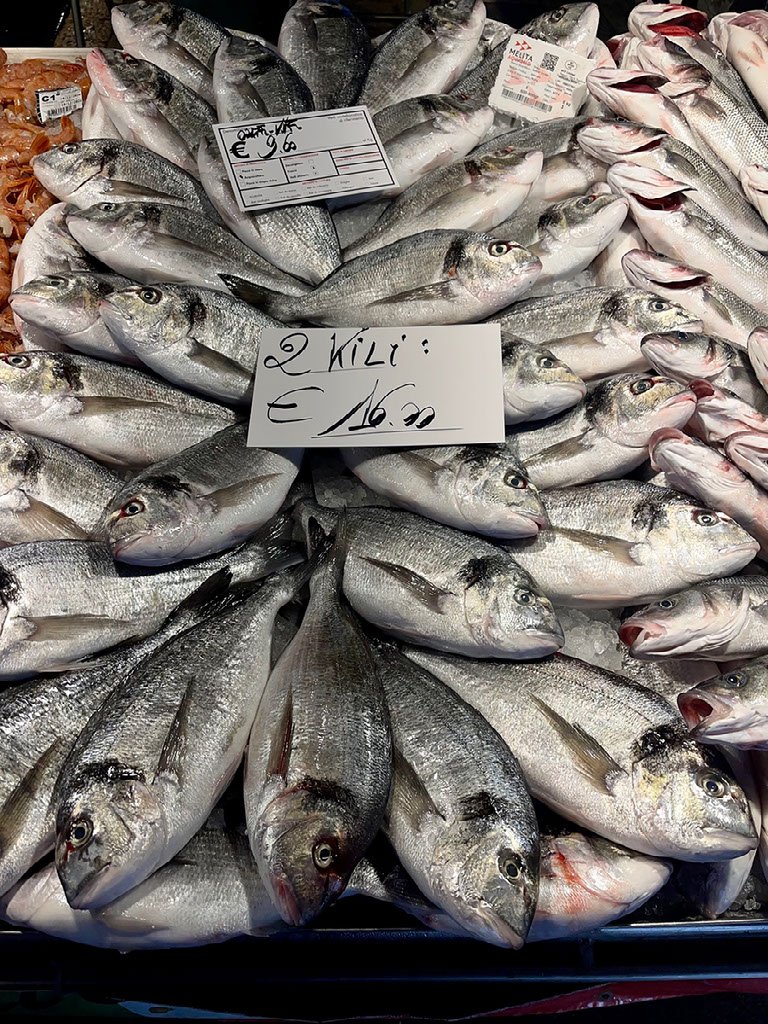
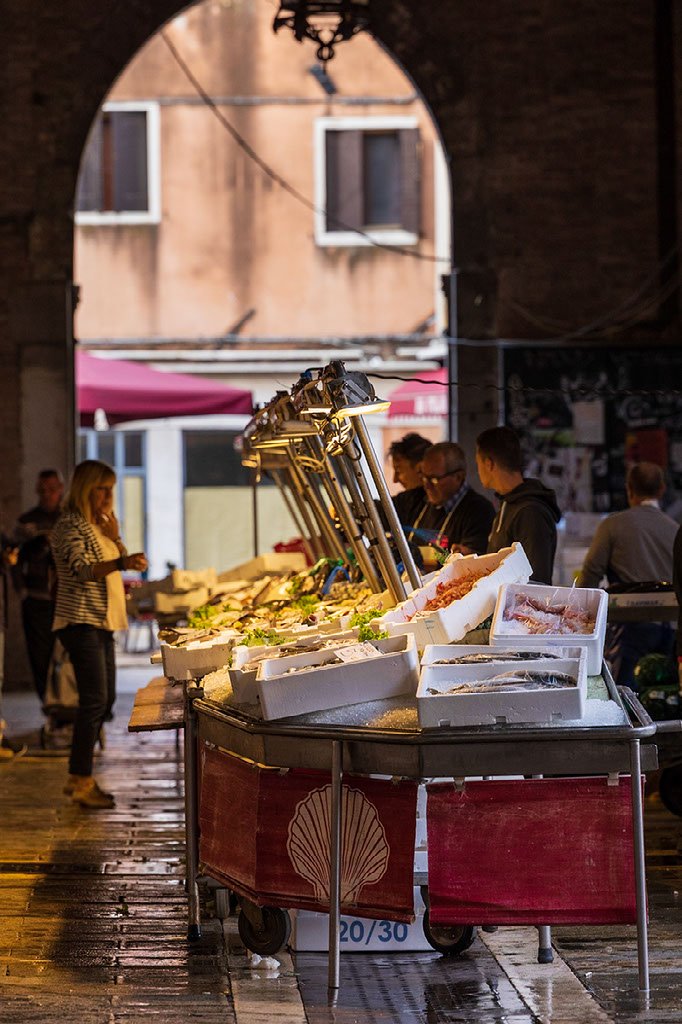
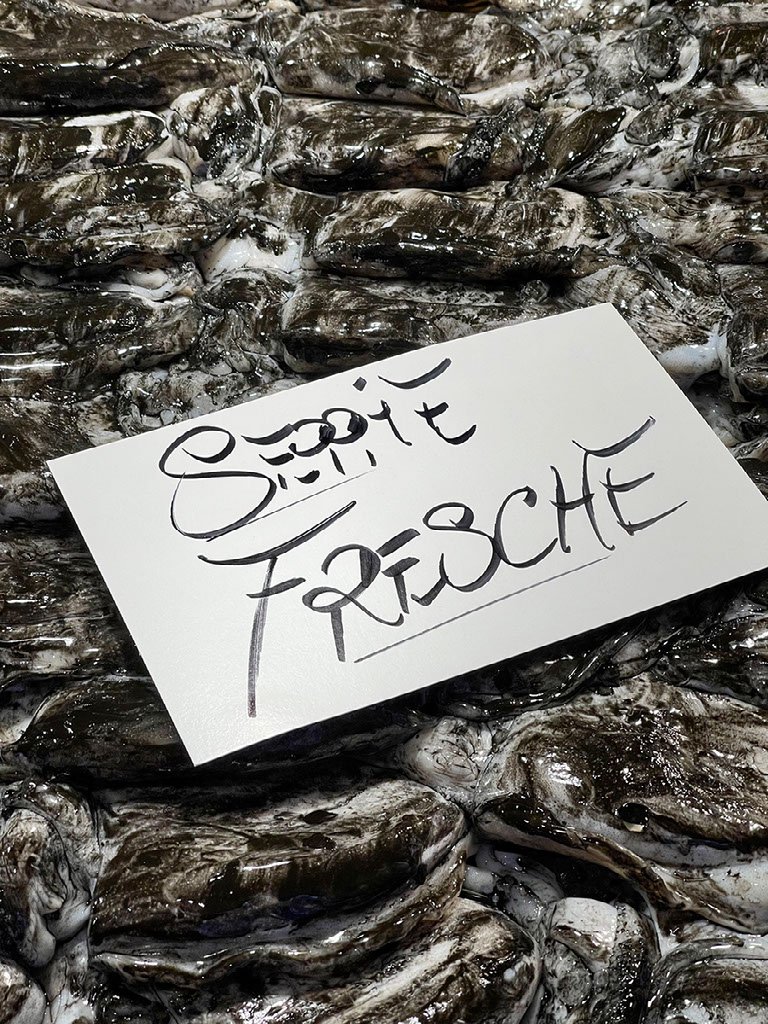
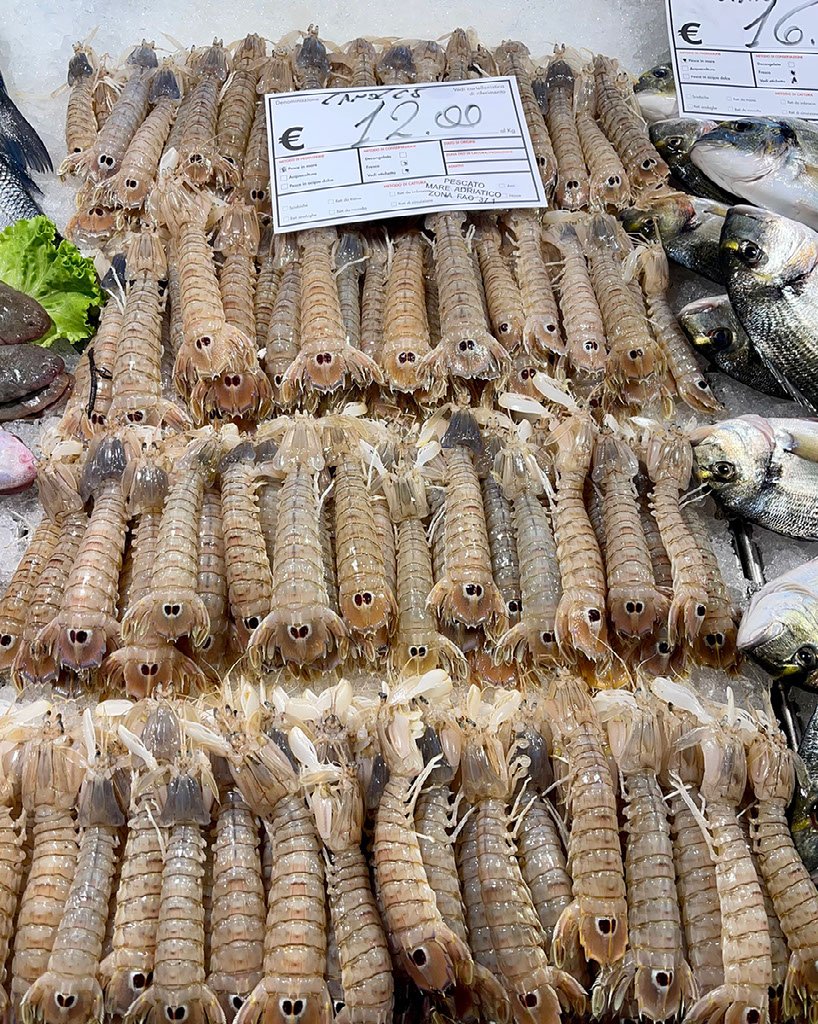
The best time to visit the Rialto market is early morning when the fruit and fish markets come alive. Walking through the fish market is one of the great sensory experiences in Venice. You will not find fresher fish anywhere in the city, and the color and texture of the displays make for exceptional close-up photography.
📷 Pro Tip: Arrive by 7:30 am before the market gets crowded. Use a 24-70mm for environmental shots that put the vendors in context, and a 70-200mm for tight detail shots of the fish and produce without crowding the vendors. Ask before photographing anyone directly. Most vendors are used to it but appreciate the courtesy.
Best time: Early morning. Access: Free. Vaporetto to Rialto Mercato.
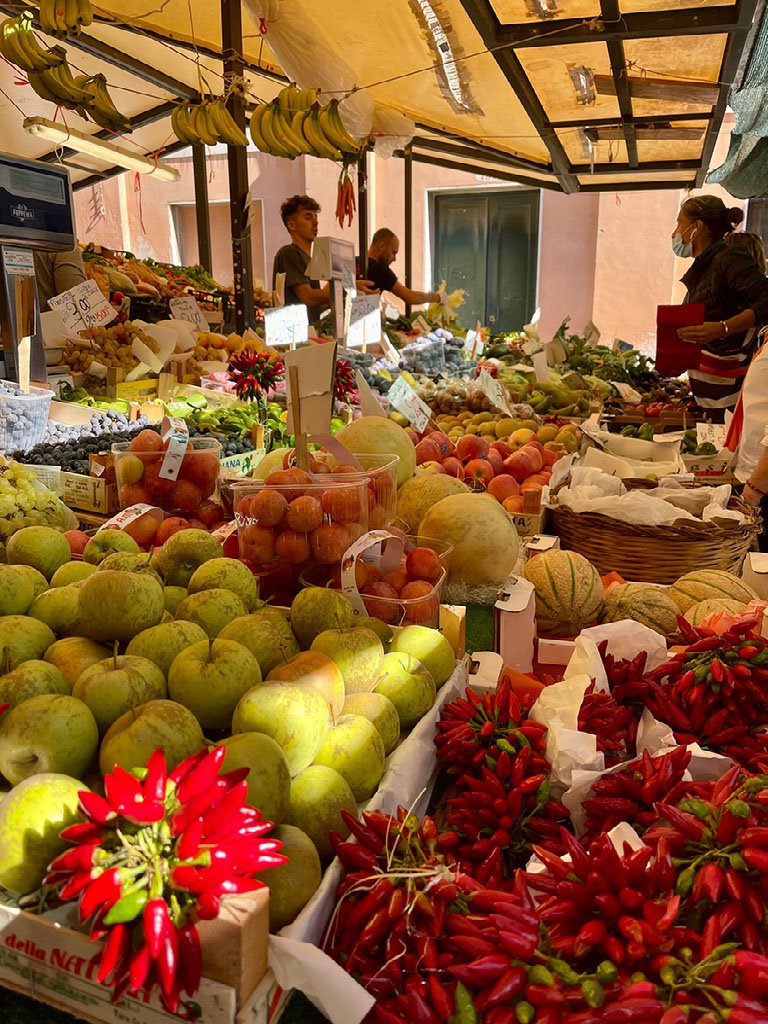
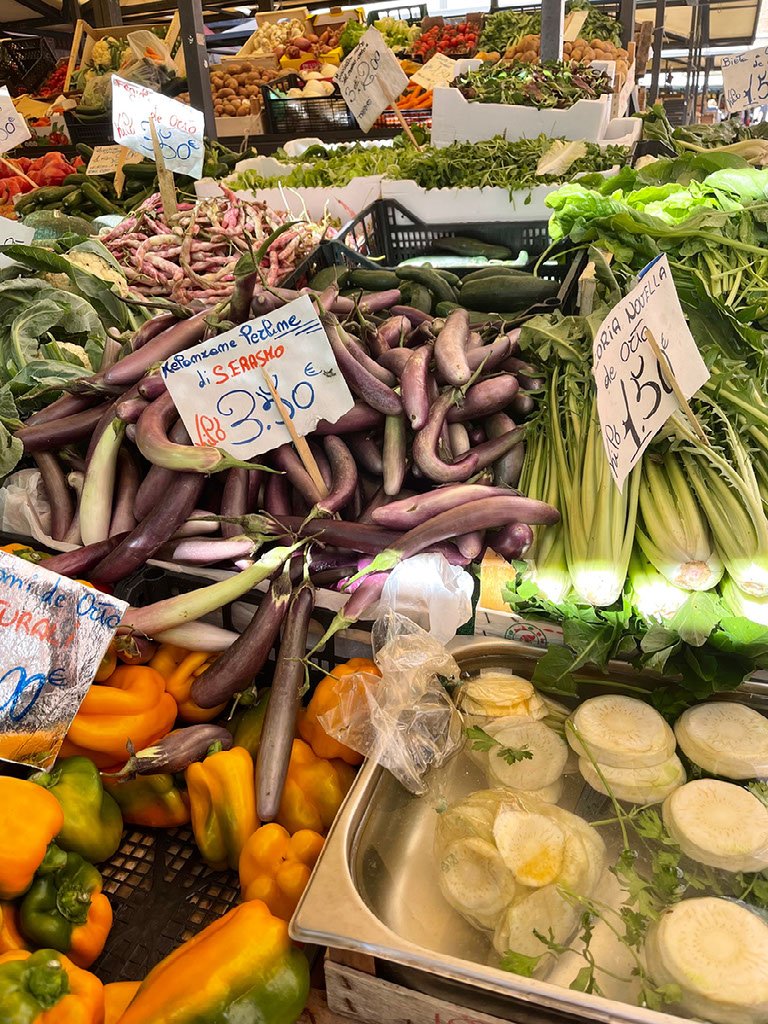
Right next to it is the fish market
Rialto Bridge
The oldest of the four bridges spanning the Grand Canal was designed and built by Antonio da Ponte (whose name literally means "of the bridge"). The best time to photograph it is at sunset from the water level, either from a gondola or from the banks on either side.
📷 Pro Tip: Shoot from the Riva del Vin on the San Polo side for a slightly less crowded angle than the standard tourist view. A 16-35mm captures the full bridge with the canal below. An ND filter and tripod at blue hour will give you silky water and warm lamplight on the stone. The bridge itself is also a shooting platform for wide canal views in both directions.
Best time: Sunset and blue hour. Access: Free. Central location, walkable from most neighborhoods.

San Giorgio Maggiore
San Giorgio Maggiore is a small island just a five-minute water taxi ride from San Marco. Monet painted a series of works featuring it, and it is easy to see why. The white Palladian church rises directly from the water and catches the late afternoon light in a way that is almost impossible to photograph badly.
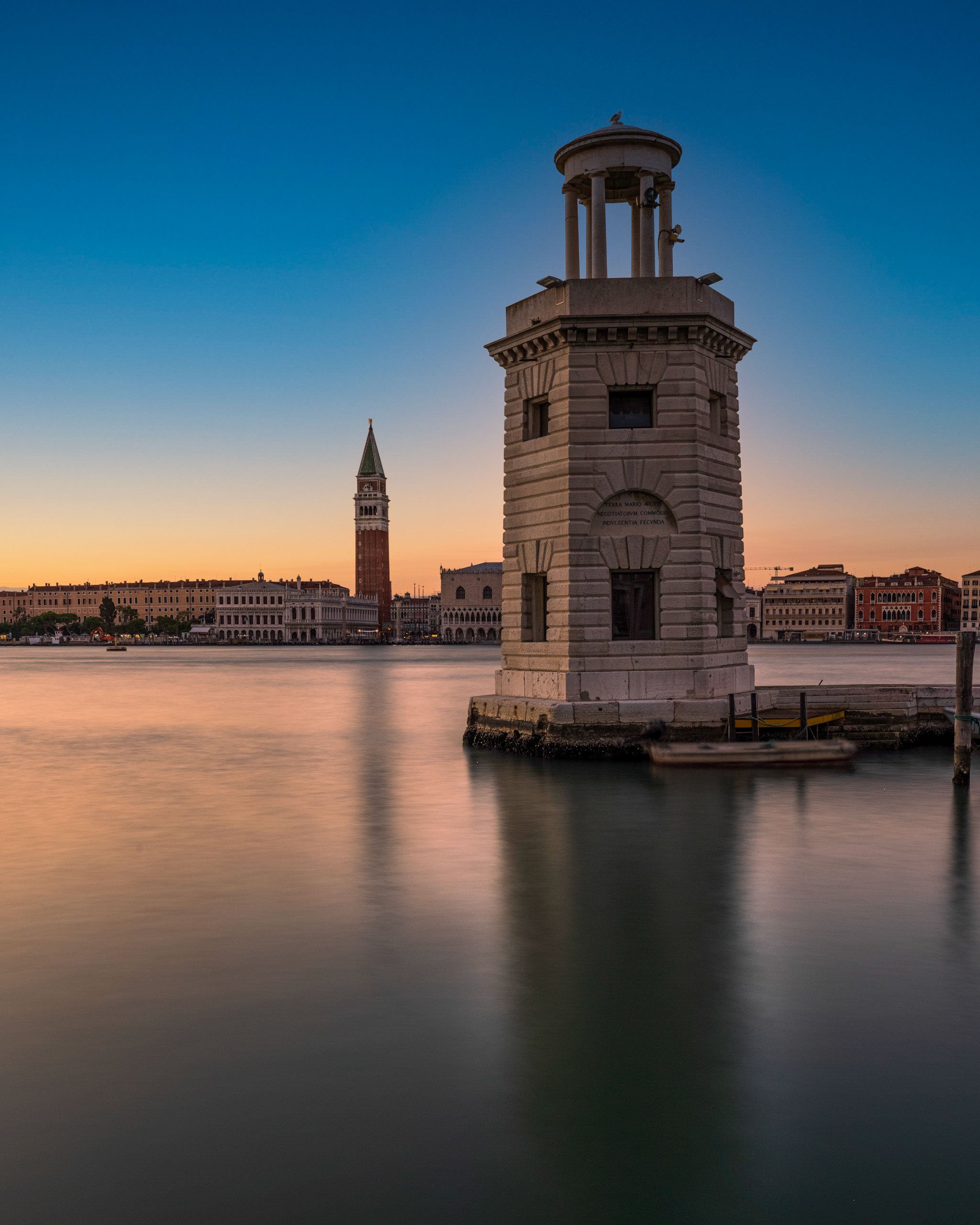
Sunset
📷 Pro Tip: Visit at sunset. Take the bell tower elevator inside the church for a high vantage point looking back over Venice and the lagoon. Then come back down and shoot Santa Maria della Salute across the water with a 70-200mm as the sky fades. The reflections off the lagoon at blue hour are some of the best in the city. Bring a tripod and ND filter.
Best time: Sunset and blue hour. Access: Small entry fee for the bell tower. Water taxi from San Marco basin.
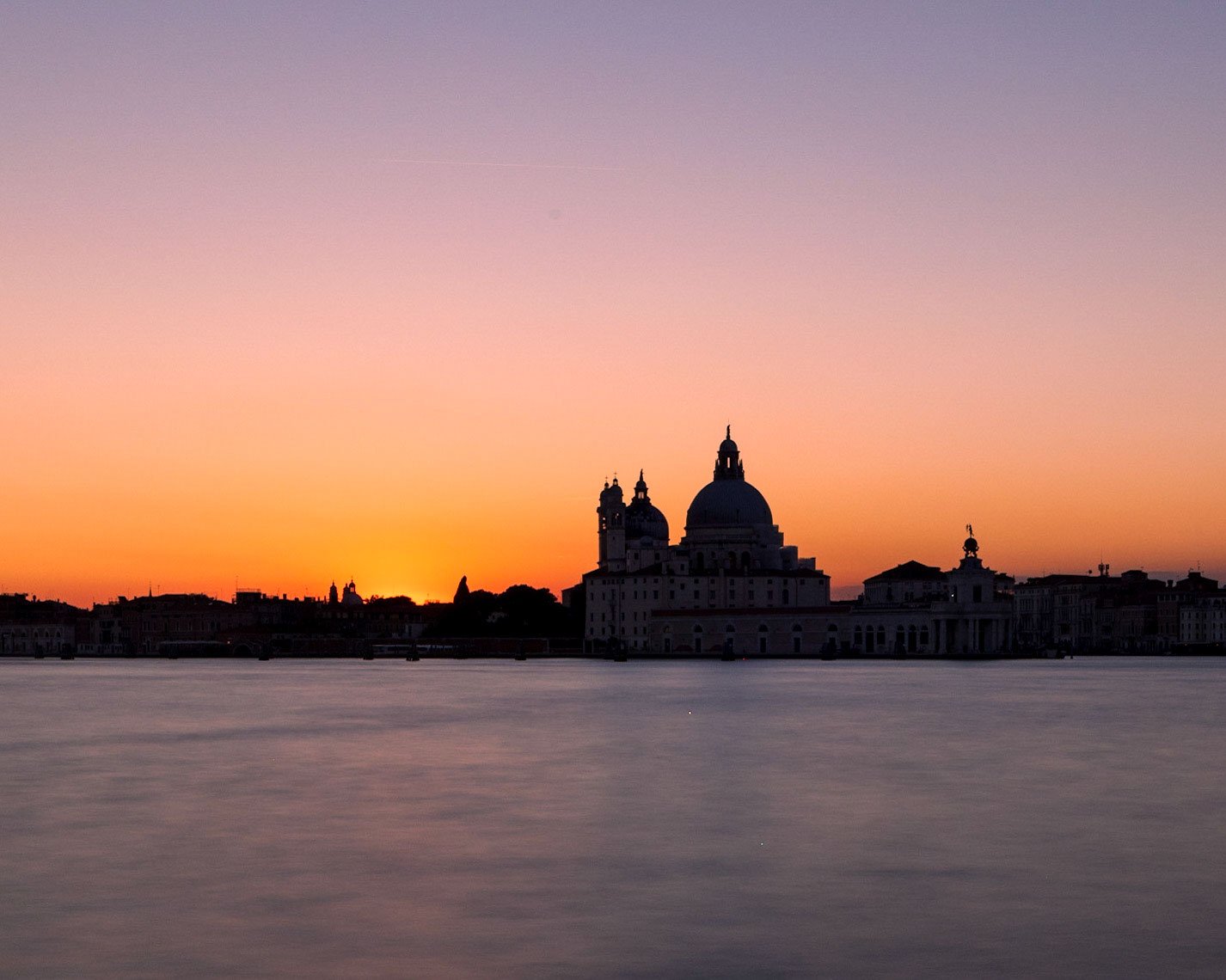
The View of Santa Maria della Salute
St Mark's Campanile
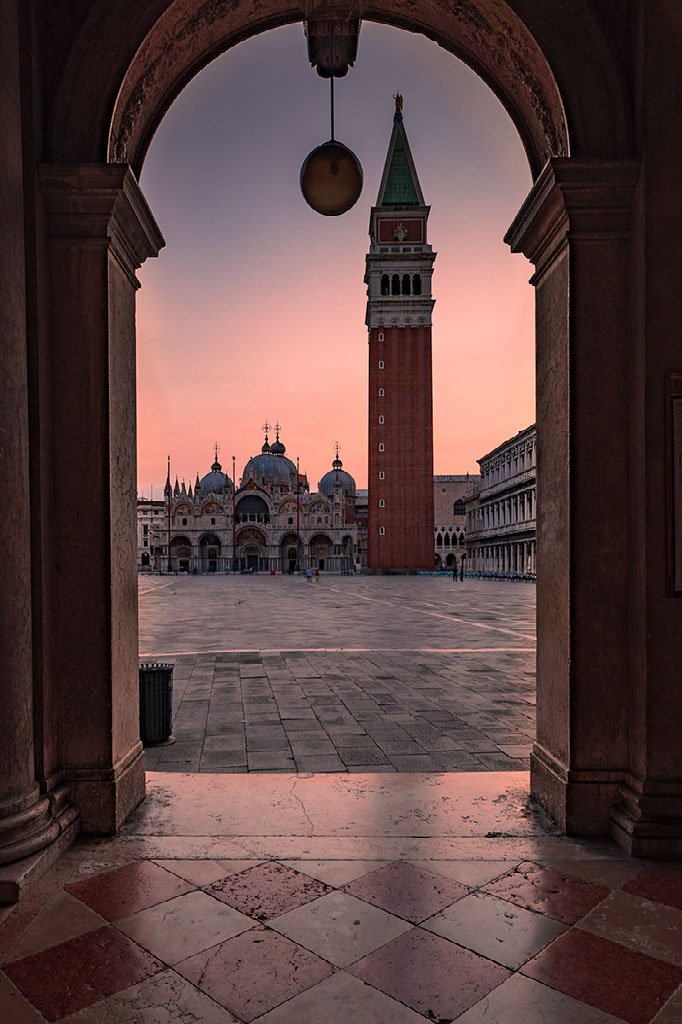
The bell tower rises from the edge of Piazza San Marco. At sunrise, before the crowds arrive, it is one of the most photogenic structures in the city. The stone turns warm gold in the early light, and the empty piazza below gives you clean compositions that are impossible to get even an hour later.
📷 Pro Tip: Arrive 20 minutes before sunrise and shoot from the far end of the piazza with a 16-35mm. As the sky brightens, switch to a 24-70mm and work the details. If there is any mist off the water, the atmosphere around the tower becomes extraordinary. A tripod is useful for the pre-dawn shots.
Best time: Sunrise. Access: Fee to ascend the tower. Free to photograph from the piazza.
Sunrise
Ponte dell'Accademia
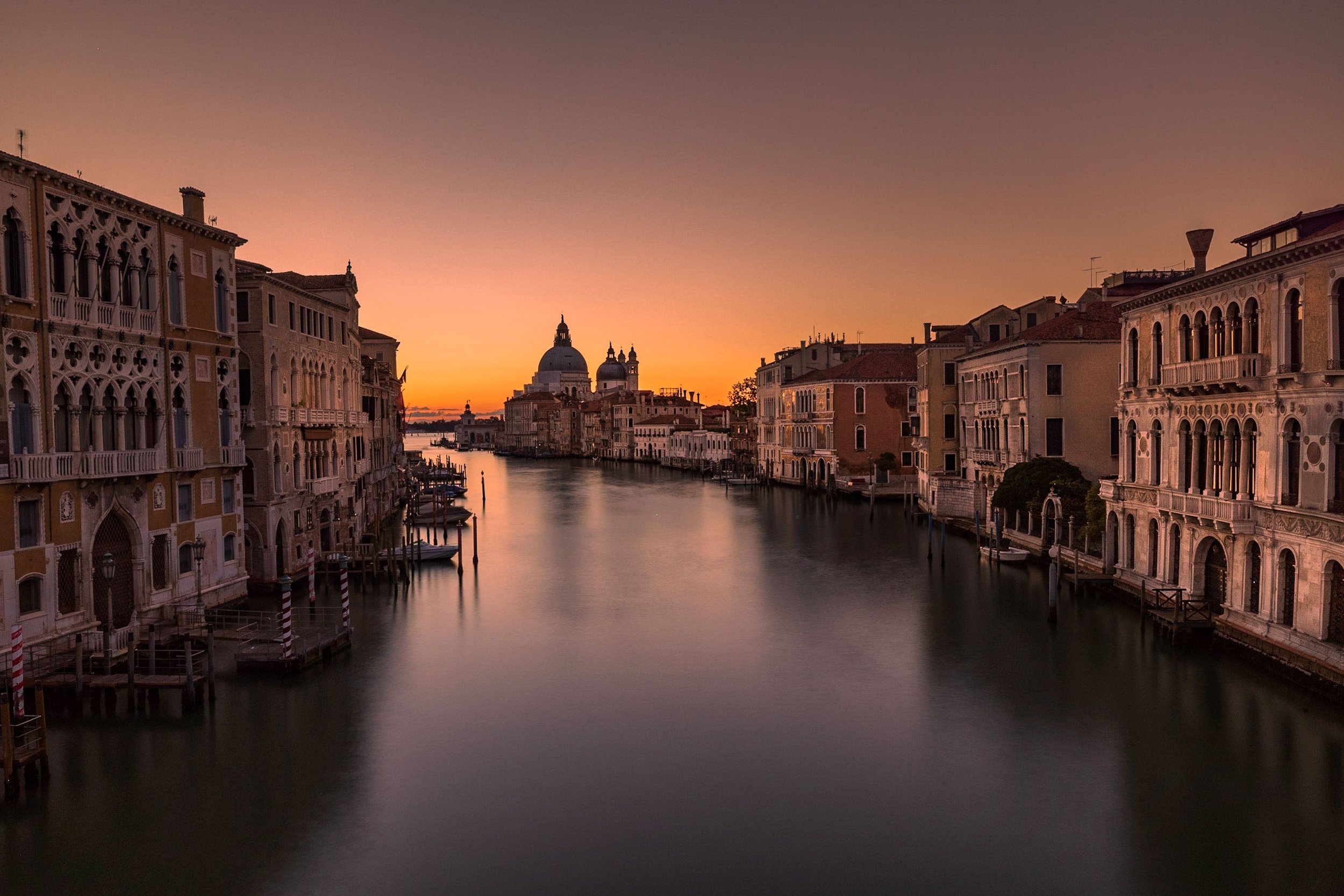
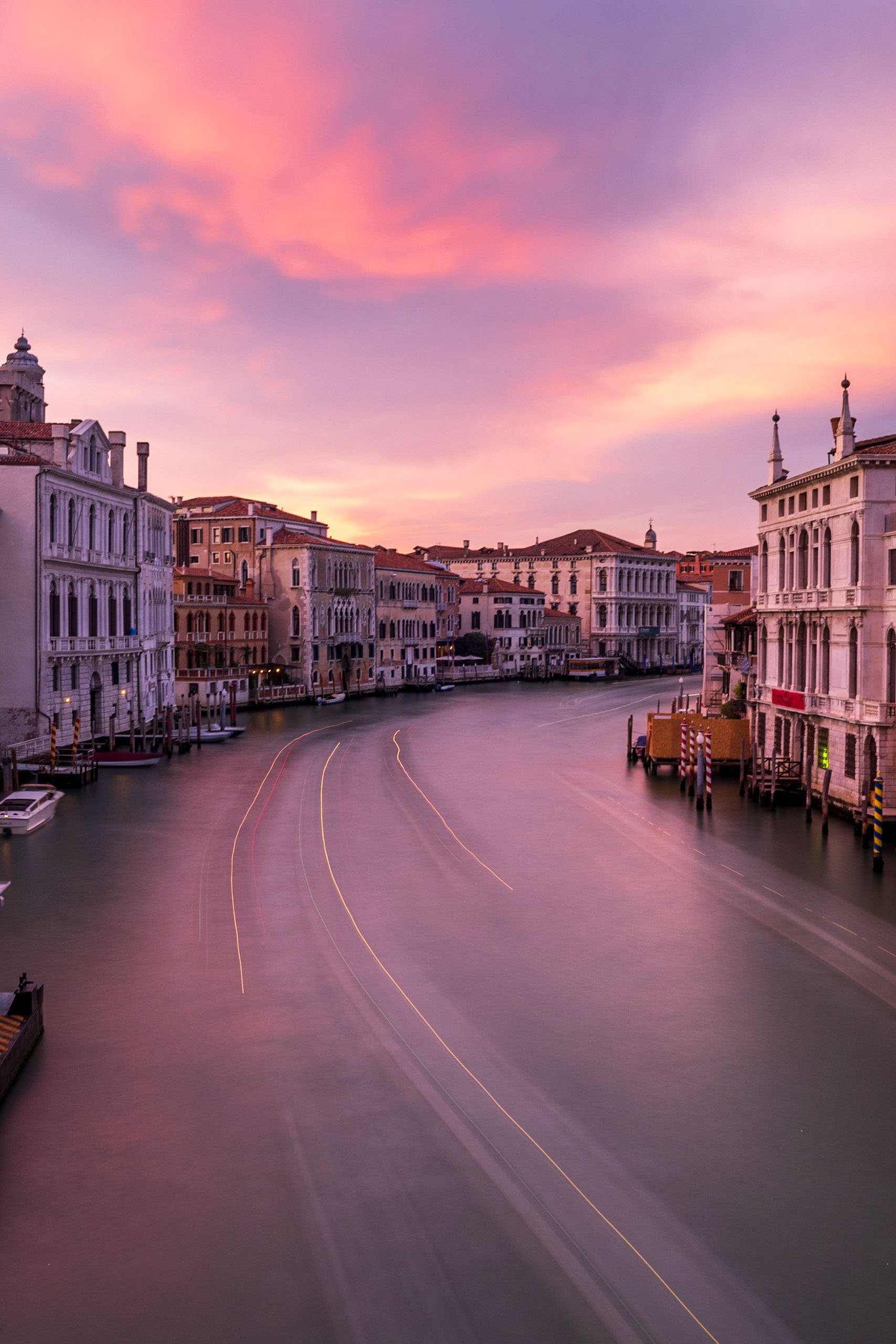
The Accademia Bridge is one of the best sunrise and sunset locations in the city. Get here early. When I arrived at 6:30 am on my last visit, there were already 25 photographers set up with tripods. That tells you everything you need to know about how good the light is here. Both sides reward you: the Grand Canal stretching toward the Rialto to the north, and the open lagoon view toward Santa Maria della Salute to the south.
📷 Pro Tip: Arrive before first light and claim your spot on the south-facing side for the Salute dome in the frame. Shoot wide at 16-35mm with a tripod and ND filter to slow the water. The reflections are strongest when canal traffic is still quiet, so the window between 6 and 7:30 am is your best chance. Come back at sunset for the opposite light direction.
Best time: Sunrise and sunset. Access: Free. Walk from San Marco or Dorsoduro, approximately 10 minutes from either.
There are equally beautiful views from the other side of the Accademia Bridge at Sunset.
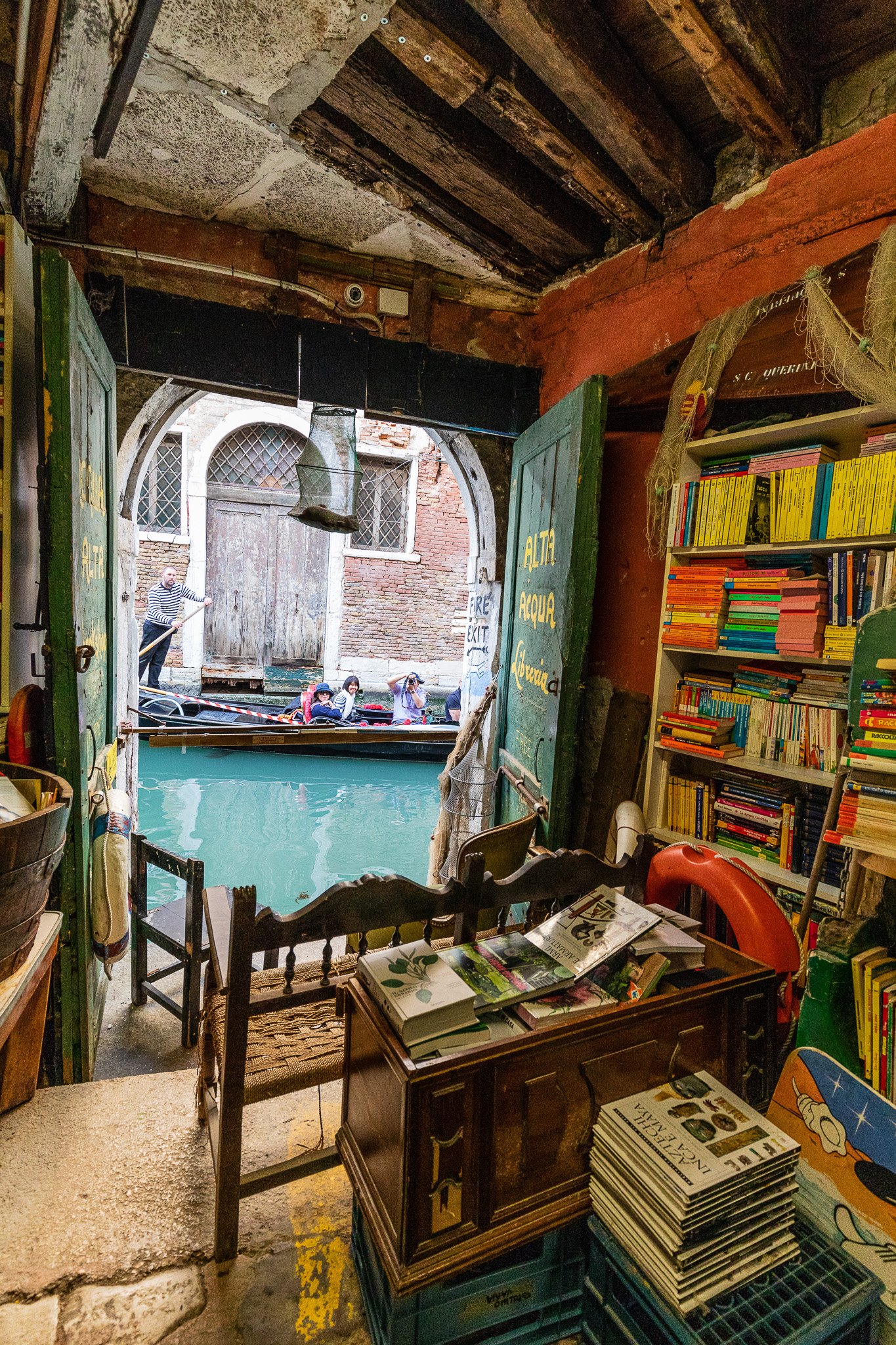
Libreria Acqua Alta
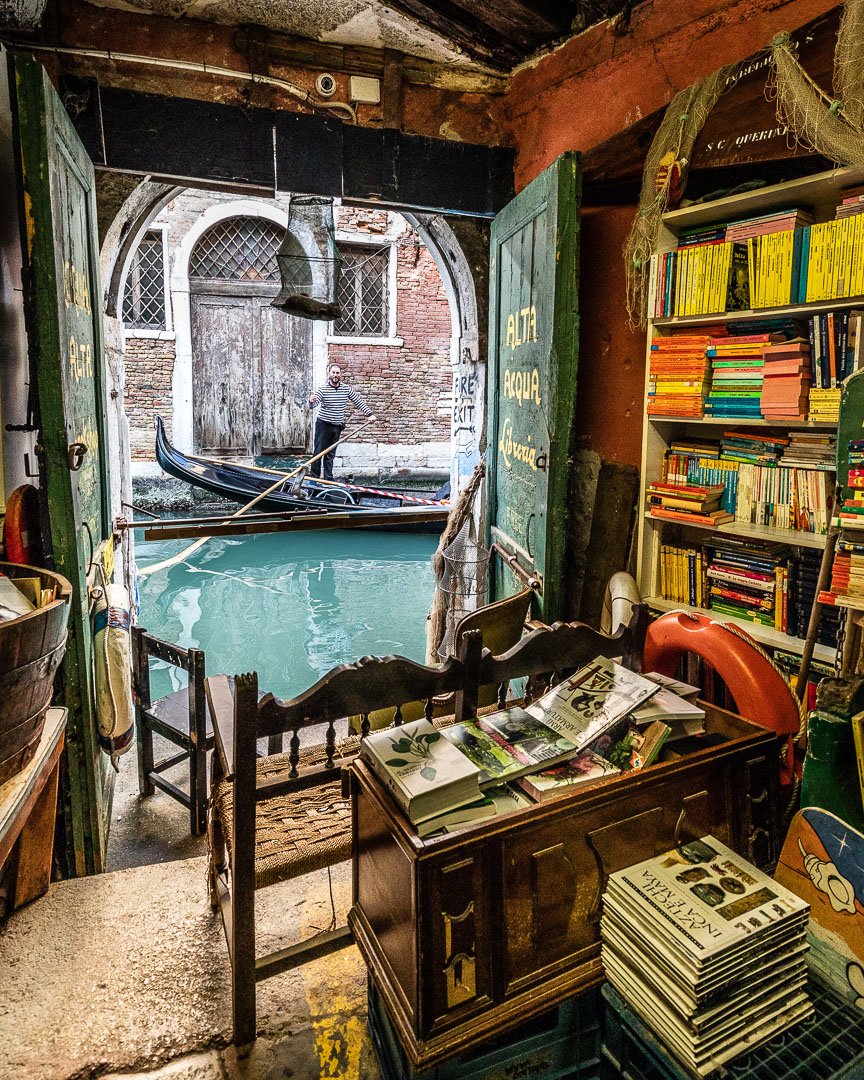
The bookstore, where all the books are stored in bathtubs to protect them from Venice's seasonal flooding. It is genuinely charming and worth visiting, but it gets overrun with visitors by mid-morning. Get there early.
📷 Pro Tip: Arrive right at opening for the best chance of a relatively uncrowded frame. Shoot with a 24-70mm and focus on the staircase made of stacked books at the back of the shop. It is the most photographed element in the store. Natural light from the canal entrance is your best source.
Best time: Right at opening. Access: Free entry. Near Campo Santa Maria Formosa in Castello.
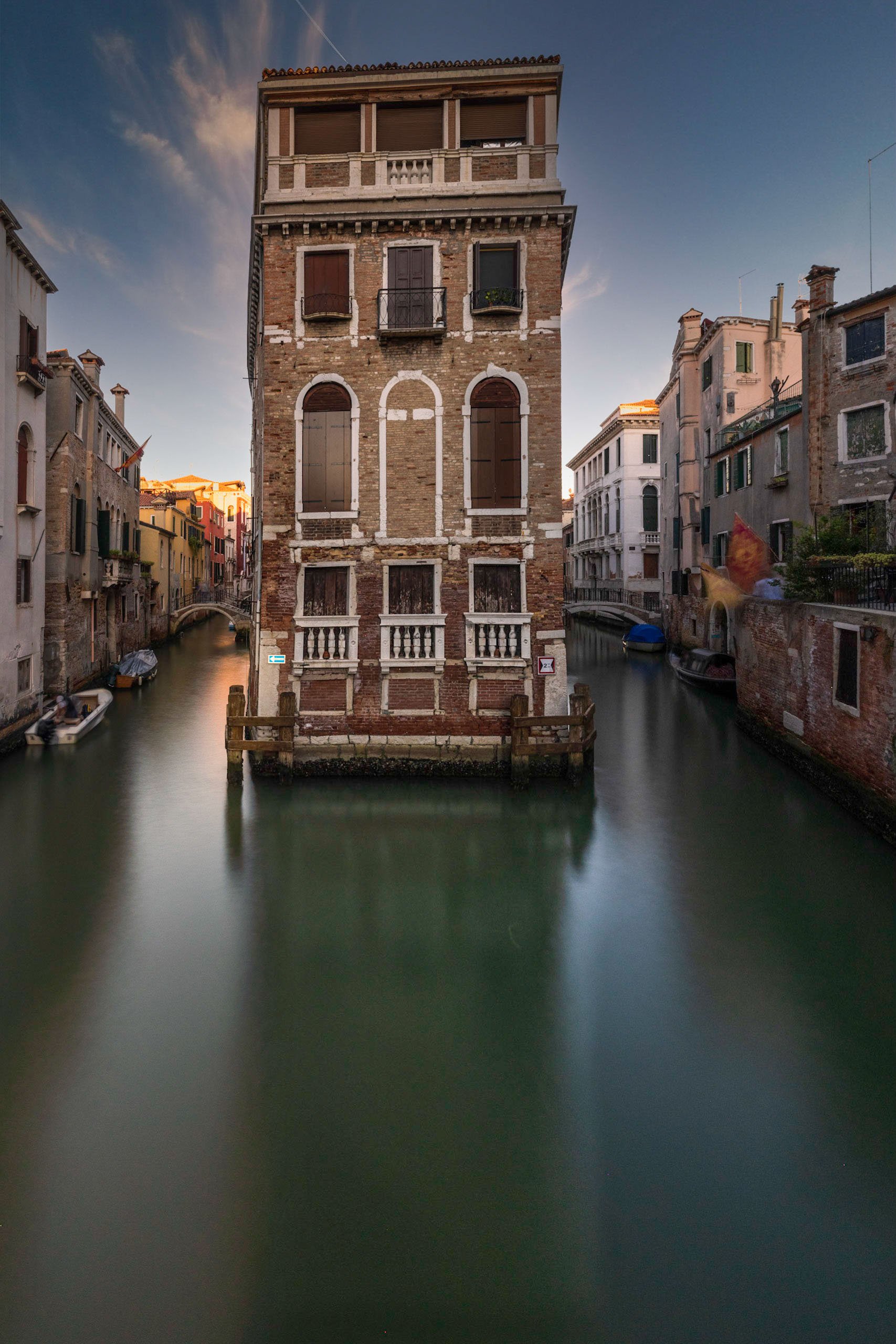
Rio di San Giovanni Laterano
Located just around the corner from the Acqua Alta bookstore, this small canal features a house accessible only by boat. It is the kind of detail that rewards the photographers who wander off the main routes.
📷 Pro Tip: Shoot at sunset with a 16-35mm and a tripod for long exposure reflections. The narrow canal frames the subject tightly, and the late light gives the building a warm glow that reads beautifully in a slow shutter shot.
Best time: Sunset. Access: Free. Short walk from Libreria Acqua Alta.
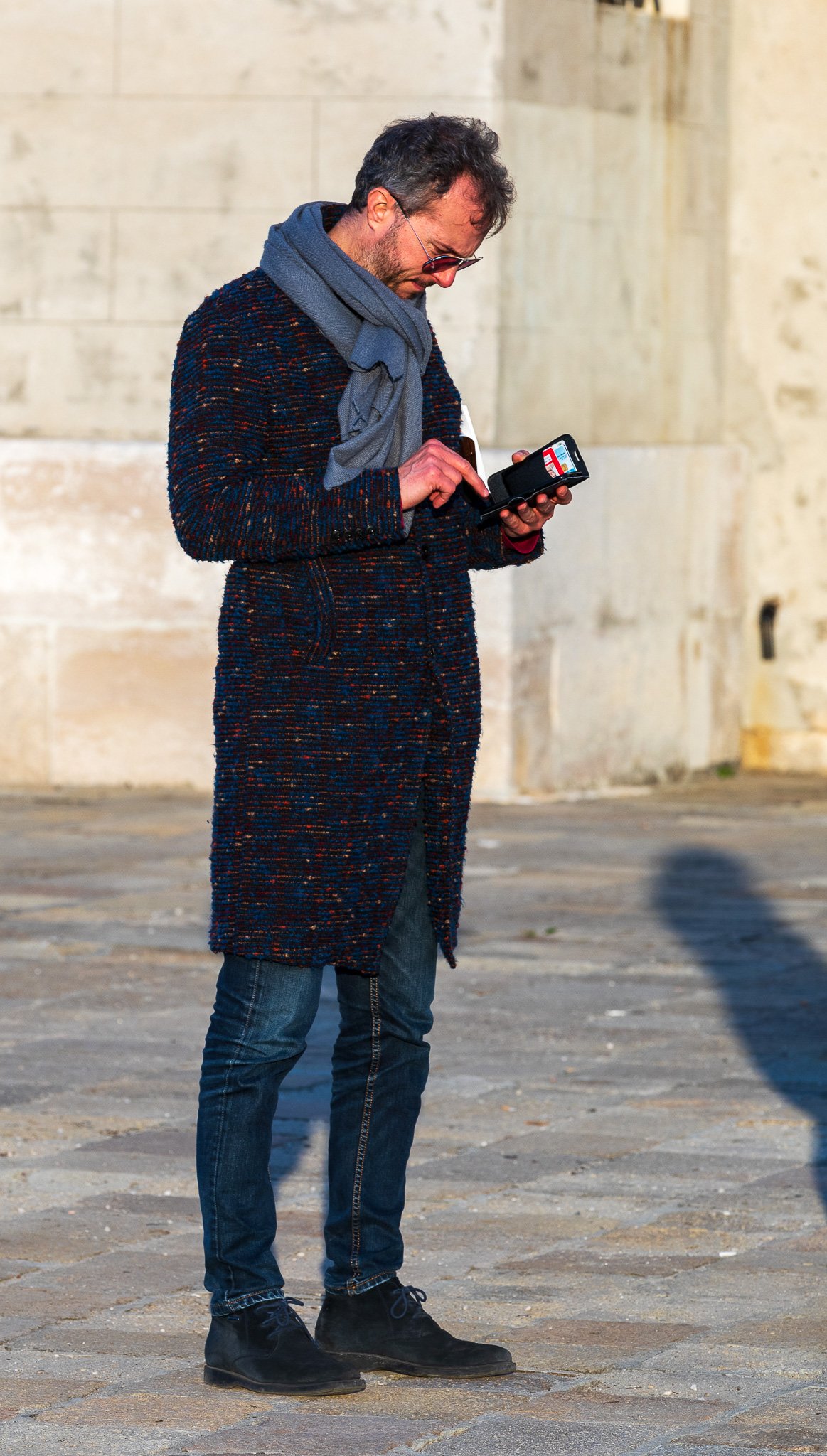
Street Photography
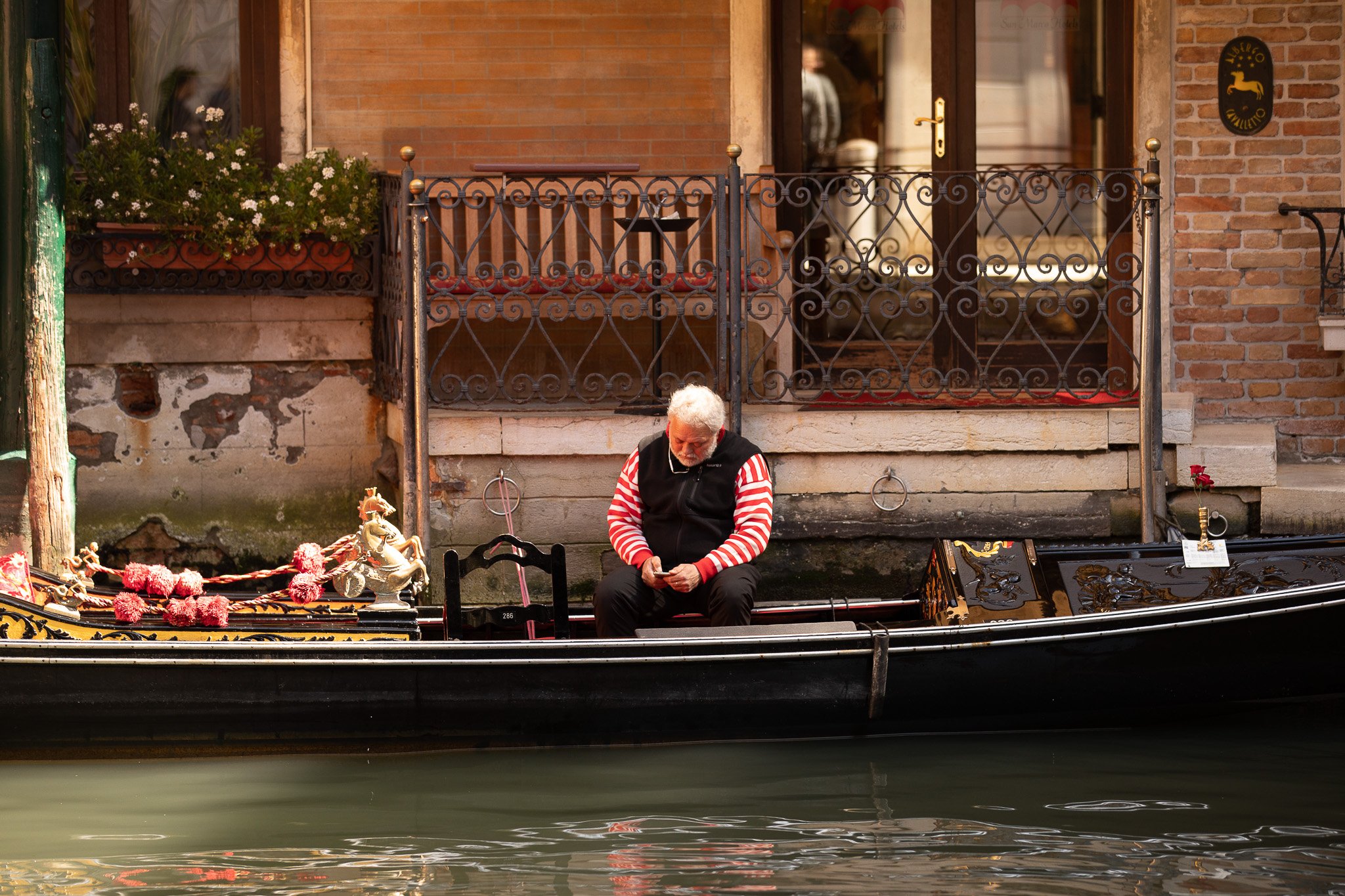
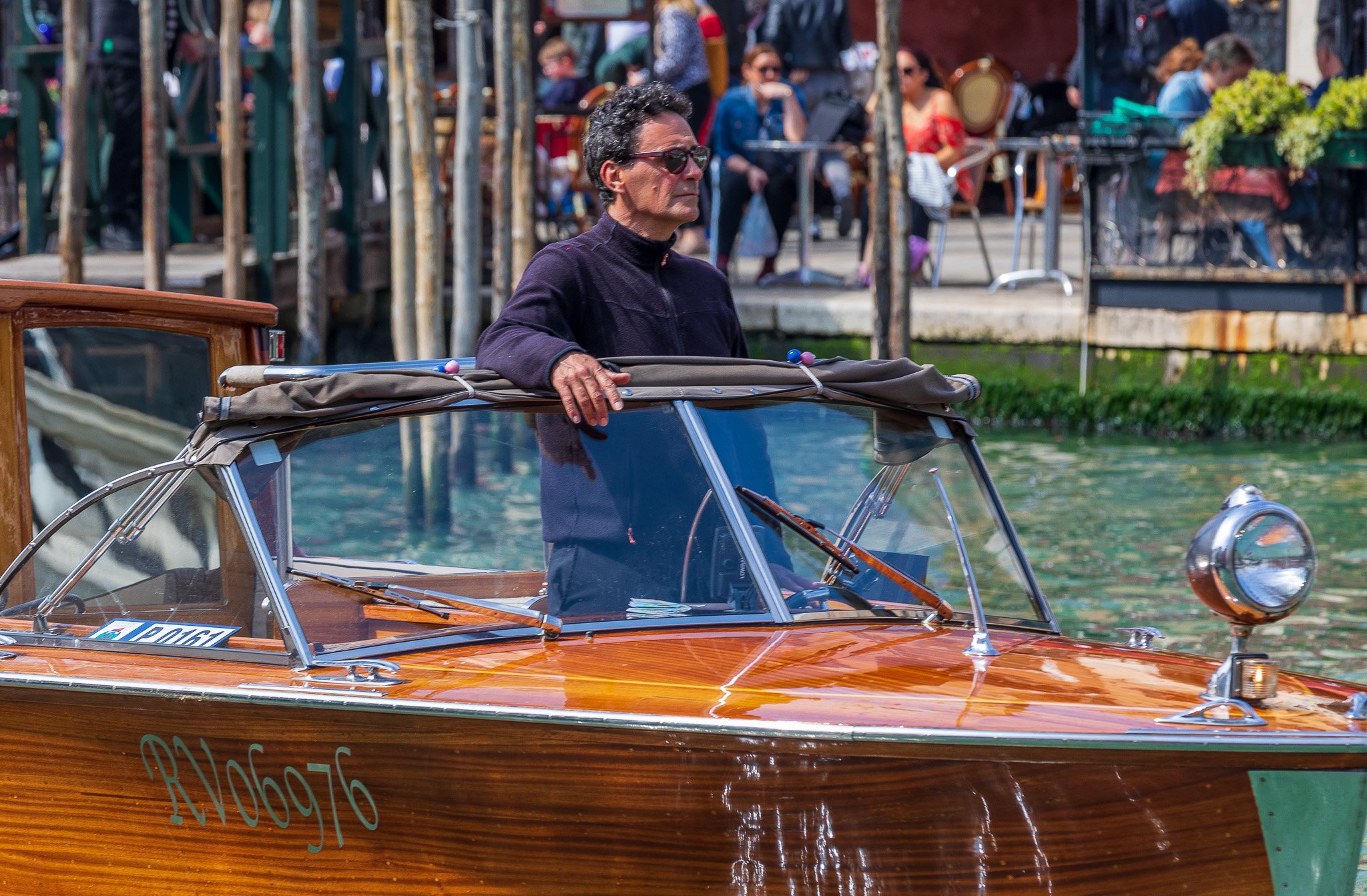
Do not leave Venice without spending time on street photography. The city is full of texture, character, and moments that have nothing to do with canals or churches. Gondoliers in conversation, children chasing pigeons, elderly residents doing their morning shopping. Venice has a daily life that most visitors never slow down long enough to see.
📷 Pro Tip: Use a 35mm or 50mm prime for street work. It forces you closer to your subjects and produces more intimate frames than a zoom. Walk the areas around Campo Santa Margherita, the Cannaregio market, and the streets behind the Rialto for the most authentic street photography in the city.
Best time: Morning and late afternoon. Access: Free. Go wherever the walking takes you.

I love walking around and taking candid shots of people.
Venice Festivals for Photographers
Carnevale di Venezia (February)
One of the most photographically extraordinary events in Europe. The costumes, masks, and elaborate headdresses that appear during Carnevale are unlike anything else on the calendar. Piazza San Marco becomes a stage, and the performers are willing subjects. Use a 70-200mm to isolate masked figures against the architecture, or get close with a 35mm for environmental portraits. Do not use flash during indoor or evening events. It kills the atmosphere and irritates the subjects.
Festa del Redentore (July)
A fireworks celebration over the lagoon that dates back to 1576. Set up on the Zattere promenade or rent a boat for the best viewing angle. Tripod and long exposure are essential. Arrive at least two hours early to claim a position.
Biennale di Venezia (Even-numbered years)
The world's oldest and most prestigious art biennale. Architecture and art installations fill venues across the city, from the Giardini pavilions to converted warehouses in Arsenale. Shoot textures, installations, and reflections. The architectural biennale is equally worth attending for anyone interested in design and space.
Regata Storica (September)
A historic gondola regatta on the Grand Canal featuring elaborate period costumes and decorated boats. The color and pageantry make it one of the best photographic events of the year. Position yourself along the Grand Canal banks early for a clear sightline.
Frequently Asked Questions About Visiting Venice
Is Venice expensive?
It can be, especially near San Marco and Rialto, but there's a real range. Cicchetti at a standing bacaro like Bar All'Arco costs almost nothing, and many of the best experiences, getting lost in the alleys, watching sunrise from a bridge, cost nothing at all.
Is Venice safe?
Yes, it's one of the safer major cities in Europe to walk, day or night, since there's no traffic to worry about. Normal awareness in crowded tourist spots like Piazza San Marco covers most of what you need to know.
Do you need a car in Venice?
No, and you can't use one anyway. There are no roads in Venice, only canals and footpaths. You'll arrive by train, plane, or water taxi and get around entirely on foot and by vaporetto from there.
What are the best photo spots in Venice?
Gondolas by San Marco Square at sunrise, San Giorgio Maggiore at sunset, and the Accademia Bridge at blue hour are three I return to constantly. The full list with Pro Tips is below.
Can you fly a drone in Venice?
No. Venice is a no-fly zone across the entire historic center and lagoon, and enforcement is active with significant fines. Leave it at home.
What surprised you most about photographing Venice?
The beauty of walking along the canals at night. Daytime Venice gets all the attention, but the quiet, the reflections, and the lamplight on the water after dark are something most visitors never experience.
How many days do you need in Venice?
Four to six days lets you explore with real patience. Three days’ work if you're disciplined about early mornings, but you'll feel rushed.
Is Carnevale worth planning a trip around?
Yes, if elaborate costumes and masks are your kind of photography. It's one of the most visually extraordinary events in Europe, held in February, and the atmosphere in Piazza San Marco during it is unlike anything else on the calendar.
Final Thoughts
Nearly ten visits in, and Venice still does something to me that no other city does. I still set my alarm before sunrise to stand on the Accademia Bridge as the light begins to touch the rooftops and the water turns gold below me. I still walk through San Marco at dawn with my camera, watching the gondolas shift quietly in the current while the city is almost entirely mine. These are not things I do because I have to. They are things I do because I cannot imagine not doing them.
Some of my favorite hours in Venice have nothing to do with photography at all. Walking through the quieter sestieri with my wife, gelato in hand, no map, no agenda, just following a canal to see where it leads. That is the version of Venice that keeps pulling me back. Go there. Get lost on purpose. Shoot early, linger late, and let the city show you what it wants you to see.
Want to improve your photography while exploring some incredible destinations? Join me on one of my photography workshops! You can find all the details, including upcoming destinations and dates, through the links below.
Let's Stay Connected!
More Photography Guides You Might Enjoy
My Photography & Travel Guide to Florence, Italy. A natural companion to Venice. Take the train south and spend three or four days in one of the most photogenic cities in the world. The Uffizi, the Duomo, the Arno at golden hour. Florence and Venice together tell the full story of the Italian Renaissance.
My Photography & Travel Guide to Burano, Italy. A 40-minute vaporetto ride from Venice and one of the most colorful places in Europe. The painted houses, the fishing boats, and the quiet canals make Burano a completely different photographic experience from Venice. Do not skip it.
My Photography & Travel Guide to Rome, Italy. If you are extending your Italy trip, Rome is the logical next chapter. Ancient ruins, baroque piazzas, and a street photography scene that runs from early morning until well past midnight.

Unlock the power of long exposure and take your photography to the next level.
Mastering ND Filters is your complete guide to understanding and using Neutral Density (ND) filters with confidence. Whether you’re a beginner or a hobbyist looking to expand your creative toolkit, this practical, easy-to-follow book walks you through everything you need to know—from gear choices and exposure calculations to creative shooting techniques and real-world examples.
Inside you’ll learn:
What ND filters are and how they work
How to choose the right strength and type of filter
Step-by-step workflows for photographing waterfalls, clouds, seascapes, and city scenes
How to calculate long exposures using apps and charts
Pro tips for reducing noise, focusing with dark filters, and getting tack-sharp results
Packed with clear explanations, inspiring images, and field-tested advice, this guide will help you shoot with intention, slow down your process, and create stunning photographs that capture not just motion—but mood.
Whether you're shooting with a DSLR, mirrorless camera, or even a smartphone, Mastering ND Filters will help you bring your creative vision to life.
Are you carrying too much camera equipment, but still coming home disappointed with your travel photographs?
You are not alone. Many photographers fall into the packing trap. They bring too much, plan too little, and spend their trip scrambling to capture photographs instead of enjoying the experience.
Capture the World offers a better approach.
In this practical guide, travel photographer Vito L. Tanzi shares the five step system he uses to plan photography trips, pack with purpose, work with the best light, and return home with stronger images.
Inside, you will learn how to:
• Travel lighter without sacrificing image quality
• Choose destinations that match your photography goals
• Visit at the right time for weather, light, wildlife, festivals, or seasonal conditions
• Build a photography itinerary around sunrise, sunset, blue hour, and changing weather
• Select the equipment you will actually use
• Find promising locations before you arrive
• Avoid the stress and exhaustion that can ruin a photography trip
• Stay flexible when weather, crowds, or travel plans change
This guide includes practical planning advice, useful photography tools, real travel examples, and a complete system you can use again and again.
Whether you are preparing for your first international photography trip or planning a weekend closer to home, Capture the World will help you travel with greater purpose, photograph with more intention, and spend less time worrying about what is inside your camera bag.
Because the best photography trip is not the one where you carry everything.
It is the one where you are ready when the right moment appears.
📸 Format: PDF download
Instant Download