Cannon Beach, Oregon Travel & Photography Guide: Best Photo Spots, Things to Do & Hidden Gems
We checked into The Ocean Lodge around 5 p.m., and by 6:30, I was already outside with my camera. The sky over Haystack Rock was turning gold, and I wanted to make sure I caught it. That first walk set the tone for our time in Cannon Beach. Almost every time we stepped outside, the light gave us a reason to stay out longer.
Cannon Beach was the last stop on our Oregon Coast road trip. We flew into Portland, drove south to Bandon and Gold Beach, then worked our way back north through Florence to Cannon Beach before finishing in Seattle. After about two weeks on the coast, it was a fitting place to end.
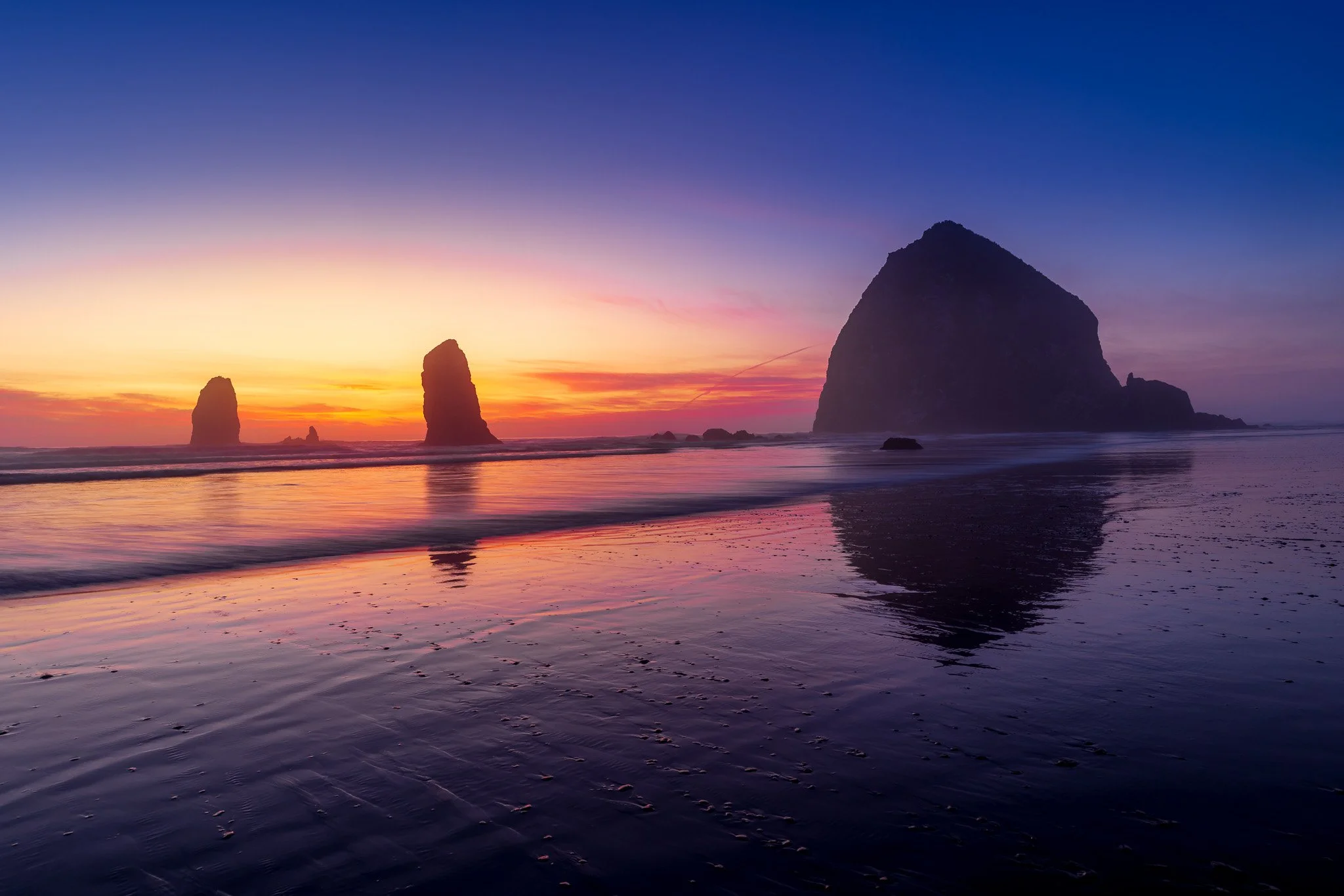
Cannon Beach is Oregon's most accessible great beach, only about 90 minutes from Portland. The town sits on a long, flat beach that turns into a sheet of reflected sky at low tide. Offshore, Haystack Rock rises 235 feet out of the Pacific, with a line of smaller sea stacks called the Needles beside it. That mix of wet sand, basalt, and moving water gives you reflections, silhouettes, and long exposures without having to search for them.
The biggest surprise was how much variety sits within a few minutes of town. The drive into Ecola State Park takes you through moss, ferns, and Sitka spruce so thick the road feels like a tunnel. Then the forest opens onto cliffs and sea stacks glowing gold at sunset. Indian Beach feels like a smaller version of Bandon, with surfers in the cove. Back in town, shingled cottages, galleries, and cafés line the streets, and no neon sign is in sight.
In this Photography Guide to Cannon Beach, I share the places and experiences that made it such a memorable end to our trip. You will find my favorite photography locations, guidance on when and where to shoot, practical travel tips, and gear recommendations, along with cultural insights to help you explore and photograph Cannon Beach with confidence, respect, and ease.
Where to Stay in Cannon Beach
Cannon Beach has three areas worth knowing. Downtown, at the north end near Ecola Creek, puts you close to galleries, coffee, and the road into Ecola State Park. Midtown sits right at Haystack Rock. Tolovana Park, at the south end, is quieter and gives you a longer view north toward Haystack Rock with less foot traffic.
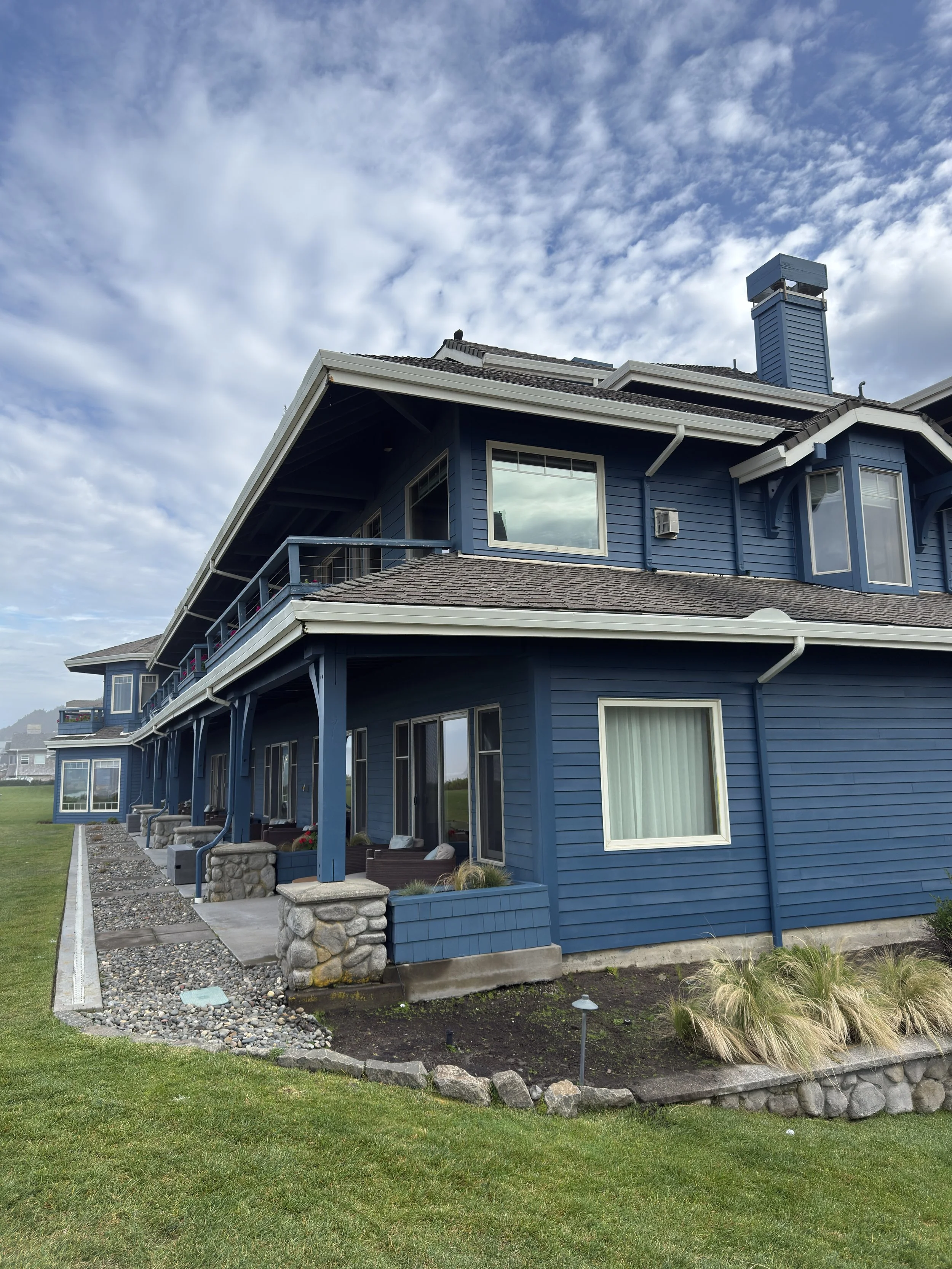
My advice: book as close to Haystack Rock as you can, and ask specifically for a room that faces it. We learned this firsthand. Our first room at The Ocean Lodge was fine, but the room we moved into on the second day looked straight at Haystack Rock, and that view changed the whole stay. Be clear about it when you book.
Luxury Hotels
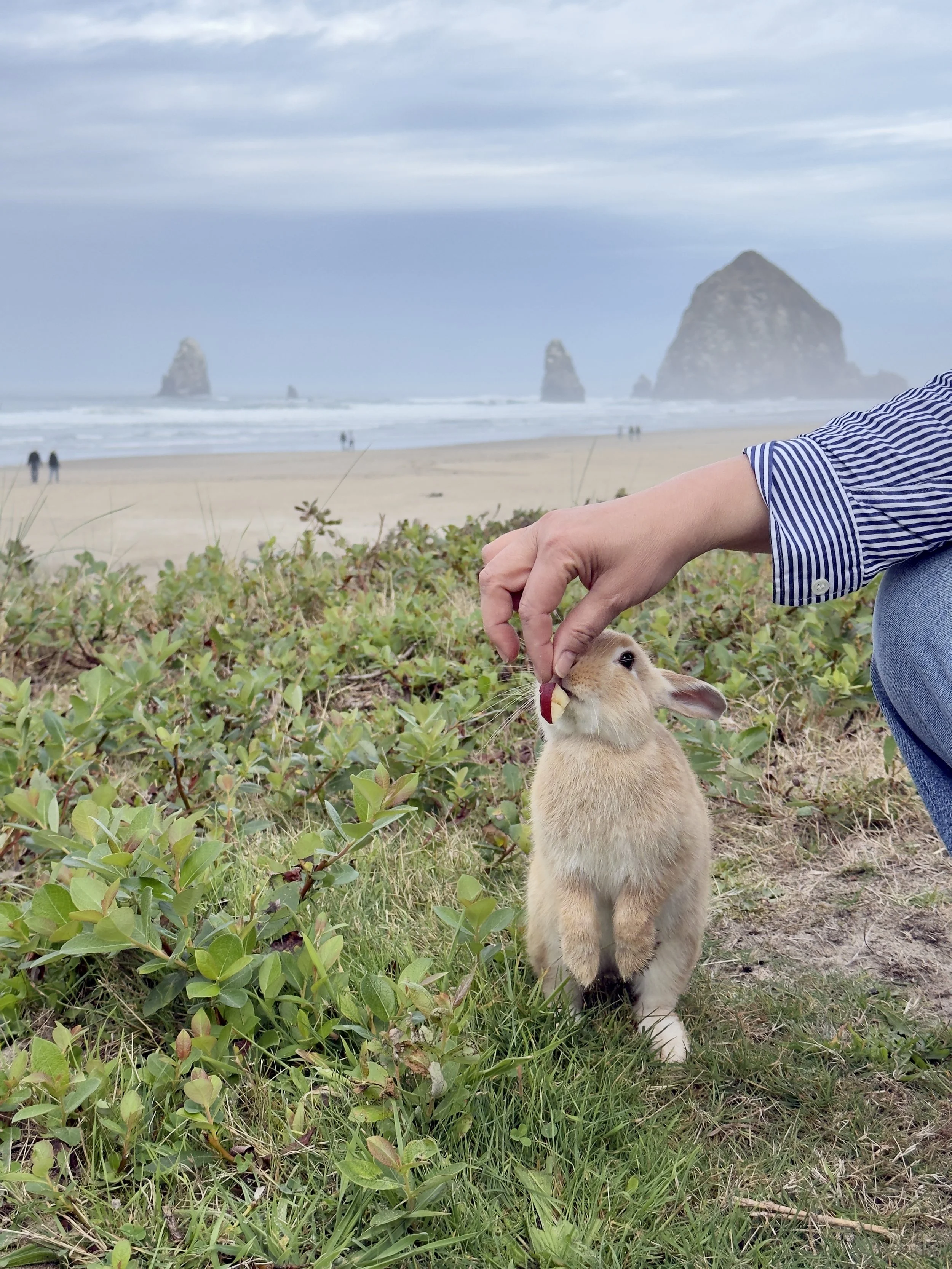
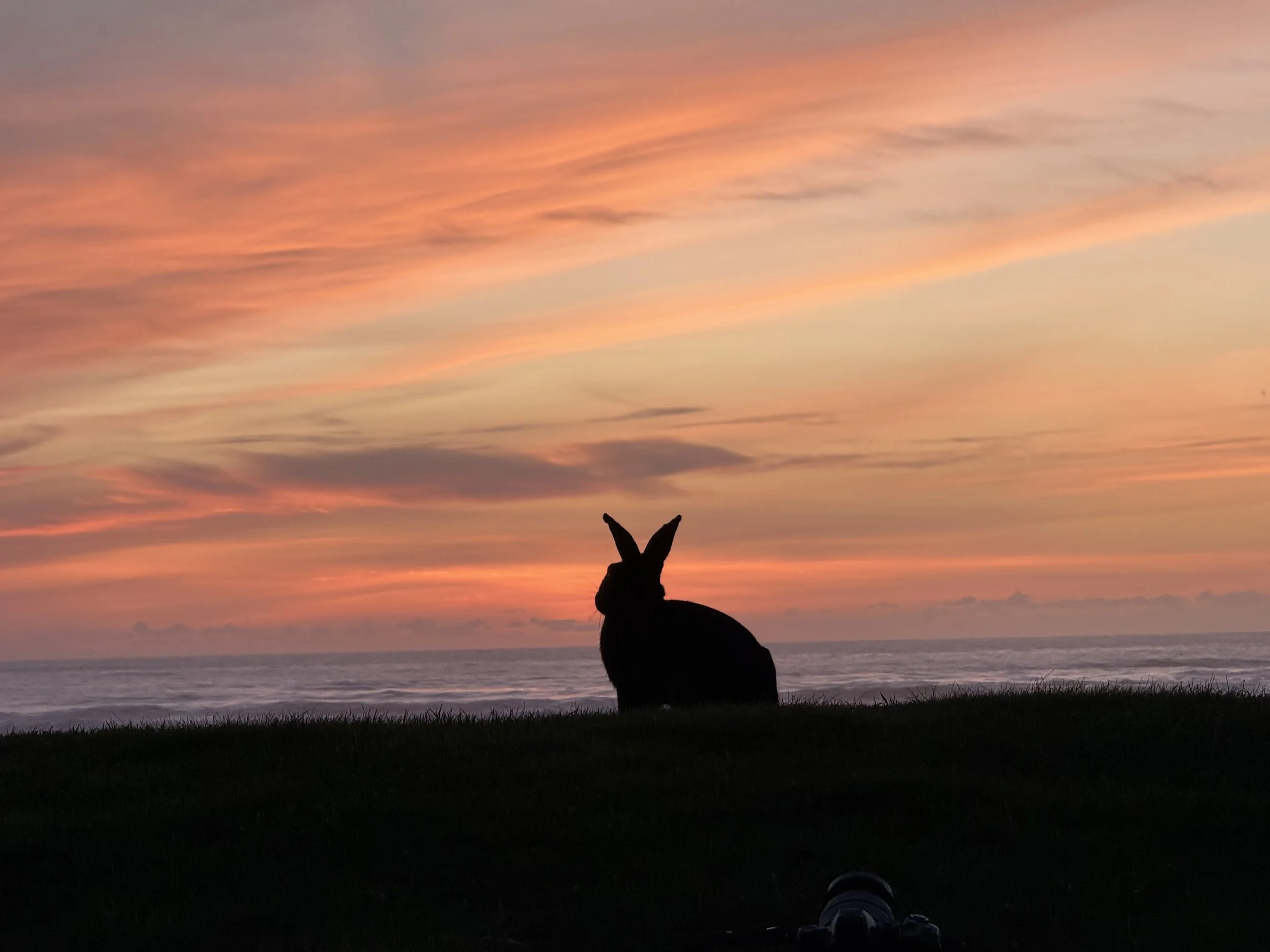
The Ocean Lodge. This is where we stayed. The lodge sits directly on the beach, and you can walk from your room to Haystack Rock on the sand. Many rooms have private decks or balconies, but not all of them face the rock, so ask. Rabbits live all over the grounds, and you'll see them nibbling the grass around the paths in the morning and evening, so keep a telephoto handy on your way to the beach. A simple breakfast is set out on the second floor each morning. It's nothing fancy, but it's fine for coffee and something quick before you head out. The real value here is location. I walked out to photograph Haystack Rock both evenings without ever touching the car.
Stephanie Inn. Oceanfront, just south of Haystack Rock. Rooms have gas fireplaces and deep soaking tubs, and many face the sea stacks directly. The inn keeps a quiet, grown-up atmosphere. The Dining Room serves a nightly four-course dinner built around local seafood and meats, and it welcomes children over 12.
Surfsand Resort. A short walk from Haystack Rock, and a great fit for families and anyone who wants to be in the middle of the action. From June through Labor Day, the resort hosts nightly group bonfires on the beach, weather permitting, and you can book a private one in advance. A bonfire with Haystack Rock behind it at blue hour makes a great photograph.
Midrange and Boutique Hotels
Inn at Cannon Beach. A boutique property in Tolovana Park, with cottage-style buildings around a garden courtyard, a short walk from the beach. It feels more like a small village than a hotel. It's good value, and close to Sea Level Bakery and the Warren House Pub.
Tolovana Inn. Beachfront at the south end of town, with many units that include kitchens. It's a practical choice if you want to cook, stay longer, or keep early and late hours around the tides.
Hallmark Resort Cannon Beach. On the bluff near Haystack Rock, with many ocean-view rooms and easy beach access. It's one of the larger properties in town, so you're more likely to find availability in summer.
Ideal Duration of Stay
We had two nights and one full day, and we used every hour of light. That's enough to photograph Haystack Rock, Ecola State Park, and Indian Beach well. If you want to add Hug Point, Short Sand Beach, or a day trip north, give yourself three days.
Two days, which is what we did. Arrive in the afternoon and shoot Haystack Rock that evening. The next morning, drive north to the Peter Iredale shipwreck, stop at Ecola on the way back, and spend midday in the galleries downtown. In the late afternoon, return to Ecola State Park, photograph the surfers at Indian Beach, and move to the Ecola Point viewpoint for golden light. Finish with blue hour at Haystack Rock. Ecola charges a day-use parking fee, and its road has closed for repairs in some past seasons, so check the park's status before you go.
Three days. Add Hug Point, Arcadia Beach, and the forest walk to Short Sand Beach at Oswald West State Park. Time Hug Point for a falling tide. The waterfall and the cave are only safe to reach around low tide, and the incoming water can cut you off.
Four or five days. Use Cannon Beach as a base for day trips to Astoria and Manzanita. You get a river town, fishing boats, and quiet beaches without changing hotels. If you do the Astoria trip, save the Peter Iredale for that day, since it's on the way.
Best Time to Visit Cannon Beach
September and October are my top picks. We visited in late September and had good skies both evenings, with golden light hitting the sea stacks around 6:30. The summer crowds are gone, the fog often backs off, and golden hour arrives before dinner instead of after it. Late summer and early fall can bring wildfire smoke to the coast, so check air quality before you go.
April through June is puffin season. Tufted puffins nest on the grassy slopes of Haystack Rock, and they stay into midsummer. Mornings give you your best chance to see them. Bring a long lens, since the birds nest high on the rock. The trade-off is fog, especially in June, when a marine layer can sit on the beach all morning. Haystack Rock is protected as part of a national wildlife refuge, so stay off the rock itself, and leave the tide pool creatures where you find them.
July and August bring the warmest, driest days and the biggest crowds. Sunsets come late, around 9 p.m. in early summer, and parking near Haystack Rock fills early on weekends.
November through February is storm season. Expect rain, wind, and big surf. When a winter king tide, one of the year's highest, lines up with a storm, the waves break high against the headlands, and the drama is worth the wet boots. Those are also the conditions that produce sneaker waves. Watch the forecast, stay well back from the waterline, and never turn your back on the ocean.
Tides matter more than the calendar. The best tide pools and reflections come with low tides, and minus tides are best of all. In late spring and summer, the lowest tides tend to fall early in the morning. In winter, they shift to the afternoon and evening. Check a tide chart before you plan any shoot.
Getting Around
You need a car. We drove everywhere, and I wouldn't do it any other way. Cannon Beach is about 90 minutes from Portland on Highway 26. If you're doing a coastal road trip like ours, you'll come in on Highway 101. We drove north from Florence, and when we left, we continued north to Astoria, crossed the Astoria-Megler Bridge into Washington, and made a short detour to Cape Disappointment before heading on to Seattle. Ecola, Hug Point, Oswald West, and the Peter Iredale all sit along or just off Highway 101, with no practical alternative to driving. Distances can run longer than they look on the map. The Peter Iredale took us about 45 minutes each way, more than I expected.
Once you park, walk. The town is small, and the beach connects everything. At low tide, you can walk from Tolovana to Haystack Rock on the sand, which is one of the best photo walks on the coast. Check the tide before you set out, and leave yourself time to get back before the water comes in.
Don't rely on Uber or Lyft. The staff at our hotel told us drivers are few and unreliable here, especially early in the morning and after dark. If you plan to shoot at the edges of the day, you need your own wheels.
Parking tip: arrive early at Haystack Rock in summer, and carry your gear in a backpack. Beach sand and wheeled camera bags do not get along.
Dining and Coffee
Cannon Beach punches above its size for food. You get serious fine dining, boat-to-table seafood, and breweries that pour their own beer steps from the beach. Reserve ahead for dinner in summer and on festival weekends.
My personal favorites: Pelican Brewing, where we ate twice in two days, Lazy Susan Cafe and Oros Fire Restaurant for breakfast, and Insomnia Coffee, the best coffee we found in town.

Where to Eat
Dining and Coffee
For a small beach town, Cannon Beach eats remarkably well. You'll find serious fine dining, boat-to-table seafood, and breweries pouring their own beer steps from the sand. Reserve ahead for dinner in summer and on festival weekends.
Where We Ate
Pelican Brewing Cannon Beach. We liked it so much we went back the next day. The first night we had tacos and beer, exactly what we wanted after a long drive and an evening on the beach. For lunch the next day, I ordered the salmon with ancient grains. It was good, but I preferred the tacos. Save room for the chocolate brownie. I only meant to have a spoonful or two. The original Pelican is in Pacific City, so compare the two if you're driving the coast.
Lazy Susan Cafe. Our breakfast pick. It's small, popular, and busy, with omelets and waffles that bring people back. Go early. We waited 25 minutes for a table, and the food was worth every minute. Plan it for after a sunrise shoot, and you'll beat most of the line. One important note: Lazy Susan is cash only, so stop at an ATM first.
Oros Fire Restaurant. Our other breakfast favorite. The eggs Benedict was excellent, the portions were large, and the service was friendly. The room was full of locals who clearly come back again and again, which is always the best sign in a beach town. Come hungry.
On My List for Next Time
Stephanie Inn Dining Room. The special-occasion dinner in town, with a nightly four-course menu built on Pacific Northwest seafood and local meats. Book well in advance, even if you're not staying at the inn.
Wayfarer Restaurant. Right on the beach in midtown, facing Haystack Rock, with seafood, steaks, and a lounge that's a good choice for a sunset drink. Ask for a window table and keep your camera close.
Castaways. A small, lively spot near the Ecola Creek bridge, serving Cajun and Creole cooking with Caribbean and French touches. Seats go fast.
Ecola Seafoods Restaurant and Market. Casual and boat-to-table, with fish and chips and chowder that make a good lunch after a morning on the beach.
Public Coast Brewing Co. At the north end of downtown, brewing on site and sourcing from its own farm and nearby growers. It's known for burgers, fish tacos, and onion rings.

Coffee
Cannon Beach has more good coffee than you'd expect from a town this size, and most of it sits within a short walk of the beach. If you only have time for one stop, make it Insomnia. It was our favorite, and we went straight back to it whenever we had a break between shoots.
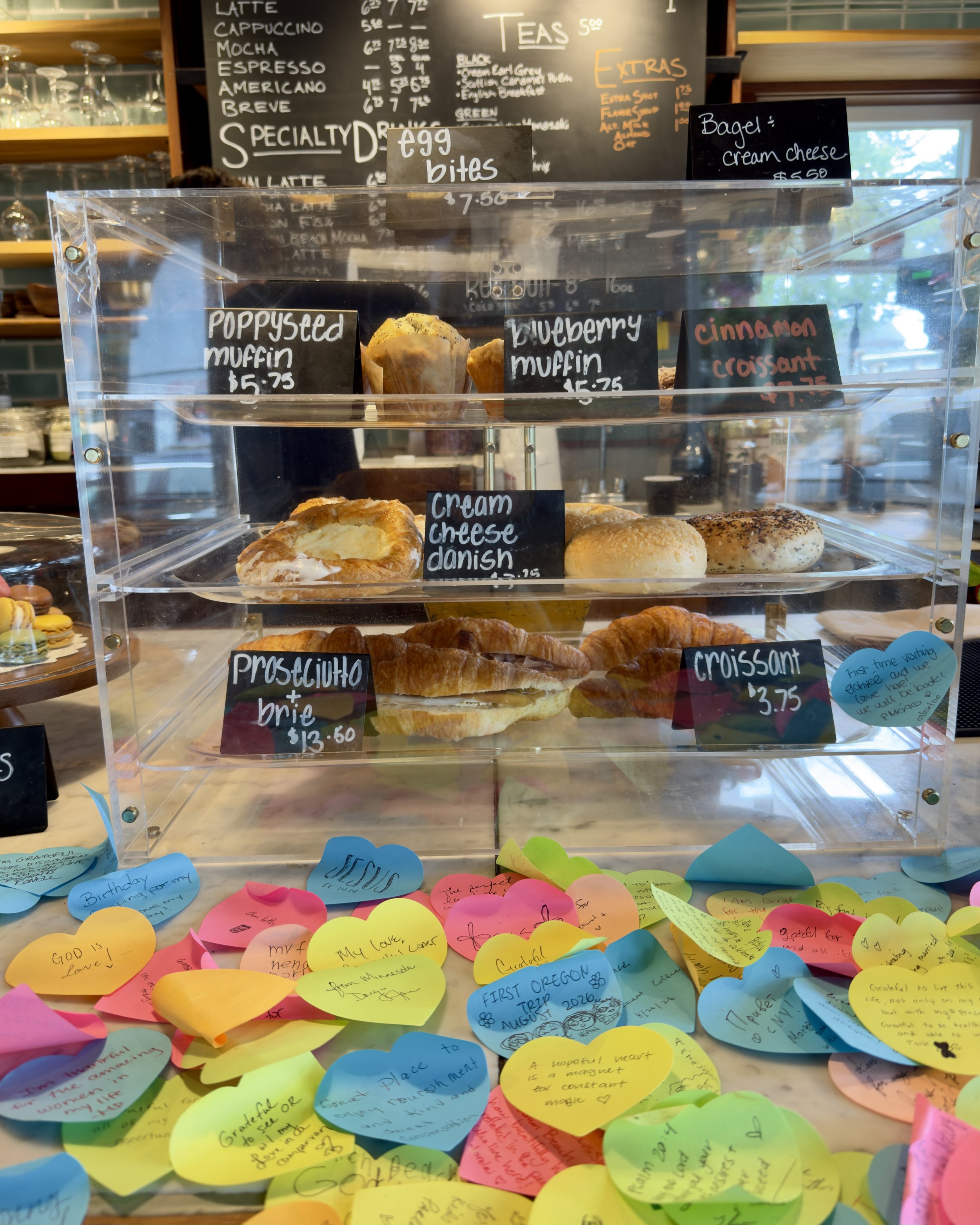
Insomnia Coffee Co. Our favorite, and I think the best coffee in Cannon Beach. We had two flat whites, and both were very good. The staff is friendly, there are baked goods, and the room has a relaxed feel that makes it easy to sit and edit.
Elohveē Coffee Shop and Wine Bar. A newer, modern café that pours coffee by day and wine in the afternoon. We stopped in for a mocha. It was good, but Insomnia remained our pick. It's worth a visit if you want a glass of wine after a day of shooting.

Photography Gear to Bring
Cannon Beach is hard on gear. Salt spray, blowing sand, fog, and rain can all hit you in the same afternoon. Pack for weather, and clean everything at the end of each day.
Cameras
Any modern mirrorless body works well. I shoot with the Canon EOS R5 Mark II, and the Sony A7R V and Nikon Z8 are excellent choices too. High resolution helps when you crop sea stacks or wildlife. I always have my Leica Q3 with me, and in Cannon Beach, it was the camera I reached for walking through town and along the beach.
Lenses
Wide, 16–35mm. Your most-used lens here. Get low over wet sand to catch Haystack Rock's reflection, and go wide on the Peter Iredale's rusted hull.
All-around, 24–70mm. Perfect for the Needles, beach scenes with people, and the galleries in town.
Telephoto, 70–200mm or longer. Essential. I used mine to compress the sea stacks from the Ecola viewpoint. If you have room in your bag, bring a longer zoom. I carried my 100–500mm, and it was fantastic for the surfers at Indian Beach. From the sand, I could fill the frame with a rider on a wave. A 100–400mm does the same job, and either one doubles as your puffin lens in spring and summer.
Accessories
Tripod. Required for blue hour and long exposures. Push the legs firmly into the sand, and rinse them with fresh water afterward to keep salt out of the locks. Never turn your back on the ocean while you're set up. Sneaker waves arrive without warning, and a photographer focused on the viewfinder is exactly who they catch.
ND filters. A 6-stop and a 10-stop turn the surf into mist around Haystack Rock and the Needles. A 3-stop smooths the Hug Point waterfall without losing all the texture.
Circular polarizer. It cuts glare on wet sand and deepens the greens in the Ecola forest. Rotate it slowly, because too much will kill the sand reflections you came for.
Rain protection. Bring a rain cover, several microfiber cloths, and a lens hood. Sea mist coats your front element in minutes.
Waterproof boots. You will stand in water at low tide. Guaranteed.
A tide app. Check it every day. It decides your whole schedule.
A backup drive. I carry a Samsung T7 SSD and back up every night.
Drones
Leave the drone at home for Cannon Beach. As of May 2026, Oregon State Parks prohibits drone takeoff and landing on all state park property and on the public ocean shore, except in designated operation areas. Cannon Beach and Haystack Rock are specifically closed. Haystack Rock is also part of a protected wildlife refuge, and nesting seabirds are exactly what a drone disturbs.

iPhone Photography Tips
Silhouette Haystack Rock at sunset. Tap on the bright sky next to the rock, then drag the exposure slider down until the rock turns black. That keeps the color in the sky and gives you a clean, graphic shape.
Use Live Photo for silky surf. Shoot the waves around the Needles as a Live Photo, then open it in Photos and choose the Long Exposure effect. Brace your phone on a rock or use a small tripod so the sea stacks stay sharp.
Go low for reflections. At low tide, hold your phone an inch or two above the wet sand and use the 0.5x ultrawide lens. Haystack Rock doubles in the reflection.
Use Portrait mode on the shipwreck. At the Peter Iredale, get close to a rusted rib of the hull and use Portrait mode to blur the beach behind it. The texture of the rust carries the whole photo.
Use Night mode at blue hour. Put your phone on a small tripod and let Night mode run its full time on Haystack Rock after sunset. The rock holds detail while the sky turns deep blue.
Best Photography Spots in Cannon Beach
Haystack Rock and the Needles
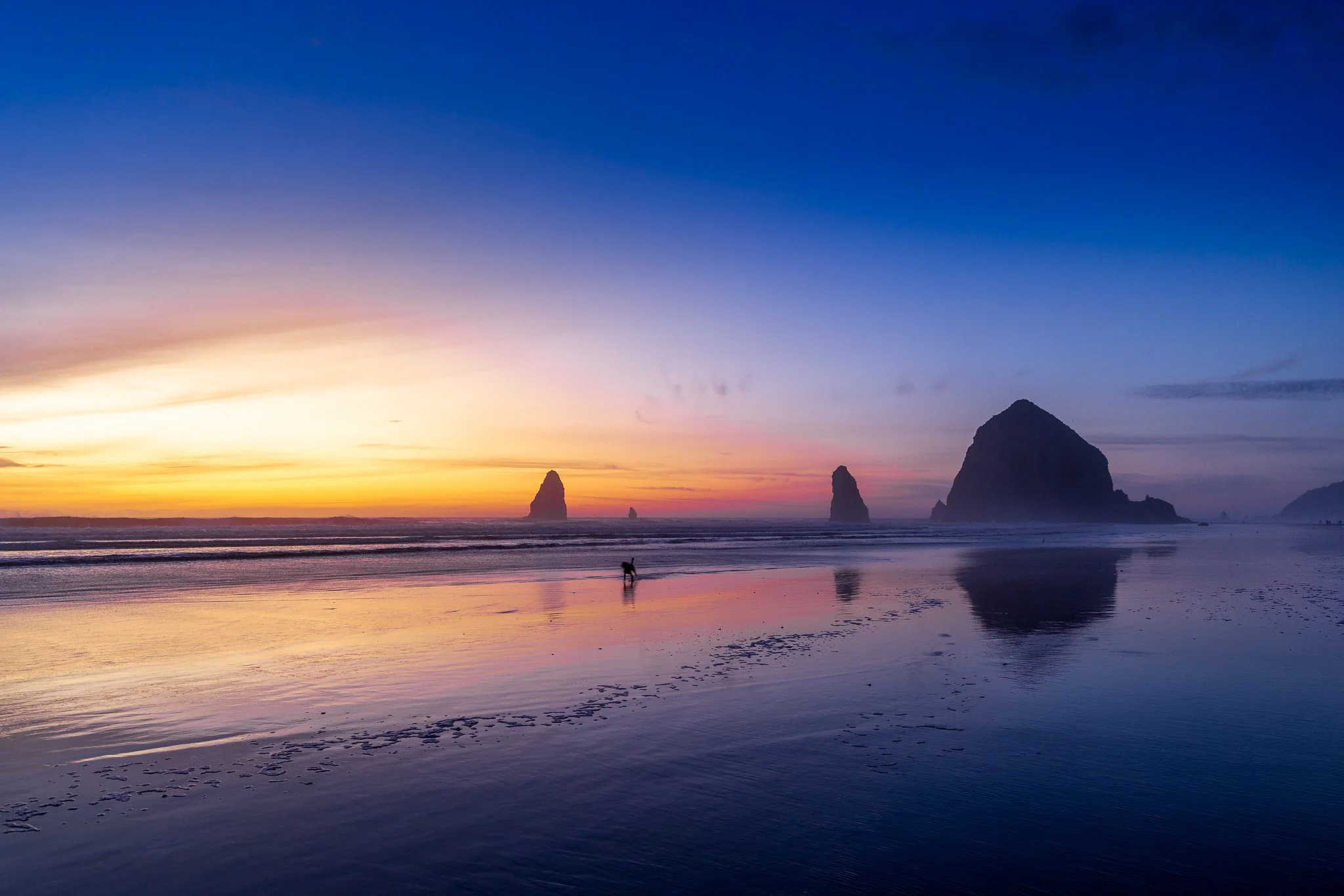
I photographed Haystack Rock on both of our evenings, walking out from The Ocean Lodge on the sand. The rock rises 235 feet from the beach, and the Needles stand just to the south like a row of broken teeth. At low tide, the pools around the base fill with sea stars, anemones, and crabs, and the flat beach becomes one long mirror.
This is the most photographed spot on the Oregon Coast for a reason. Every hour gives you something different: soft fog in the morning, reflections at low tide, silhouettes at sunset, and a glowing sky at blue hour. On both nights, the conditions after sunset gave me some of my favorite frames of the trip.
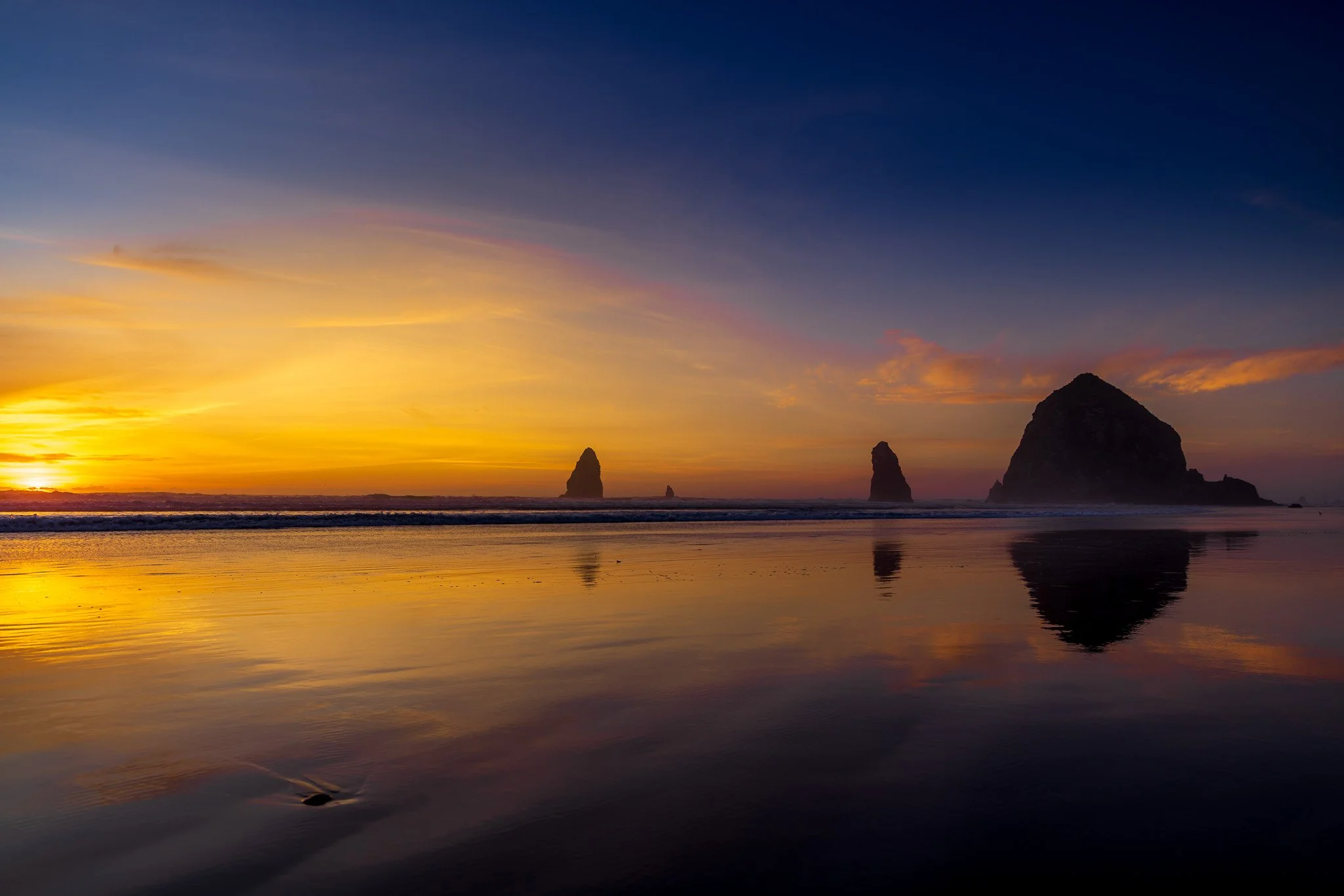
Beautiful reflections at Haystack Rock
📷 Pro Tip: Come for sunset on a low or falling tide, when the wet sand reflects the rock. Stand south of the rock and shoot north with a 16 to 35mm, getting low to catch the reflection. Once the sun drops, add a 6 or 10 stop ND for a 30 second exposure that turns the surf into mist. Stay out of the marked tide pool areas. Climbing the rock is not allowed, and the Haystack Rock Awareness Program volunteers will set you straight if you forget. In puffin season, come in the morning with a 100 to 400mm and look for the birds on the grassy north slope.
Best time: Sunset and blue hour on a low tide; mornings from April through July for puffins. Access: Free public beach. Getting there: Walk from anywhere in midtown or along the sand from Tolovana.
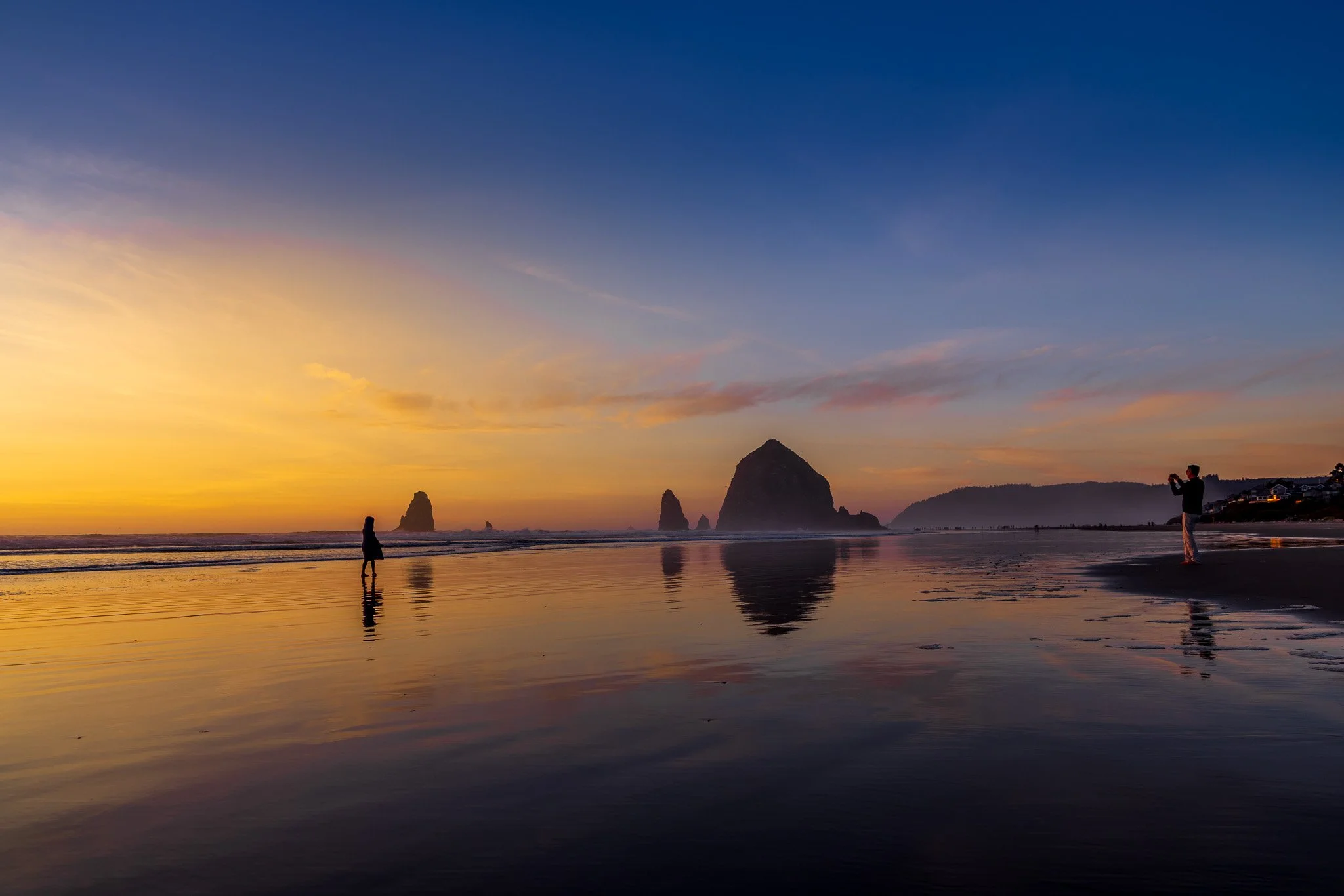
Haystack Rock at Sunset with people walking through
Ecola Point, Ecola State Park
We stopped here twice, once on the way back from the shipwreck and again for sunset, and I would go back a third time. The drive in is part of the experience. The road winds through moss, ferns, and Sitka spruce before you reach the viewpoint. From Ecola Point, you look south across Crescent Beach toward Cannon Beach, with Haystack Rock in the distance and sea stacks right below you.
Around 6:30 in late September, the golden light started hitting the sea stacks, and the whole scene warmed up in minutes. Fog adds layers on gray days, and clear evenings bring warm side light across the headlands.
📷 Pro Tip: Arrive about an hour before sunset, scout from the viewpoint, and be set up by the time the light turns gold. Use a 70 to 200mm to compress the sea stacks, headlands, and Haystack Rock into layers, then switch to a 24 to 70mm for the full sweep. A polarizer cuts haze on clear days. Stop on the drive in for the forest; overcast light is ideal for the moss and ferns. Ecola reopened in April 2026 after landslide repairs, so check Oregon State Parks before you go. A day use parking permit is required.
Best time: Late afternoon through sunset; the forest drive is best in soft, overcast light. Access: State park, day use parking permit required. Getting there: Follow Ecola Park Road from the north end of downtown, about 10 minutes by car.
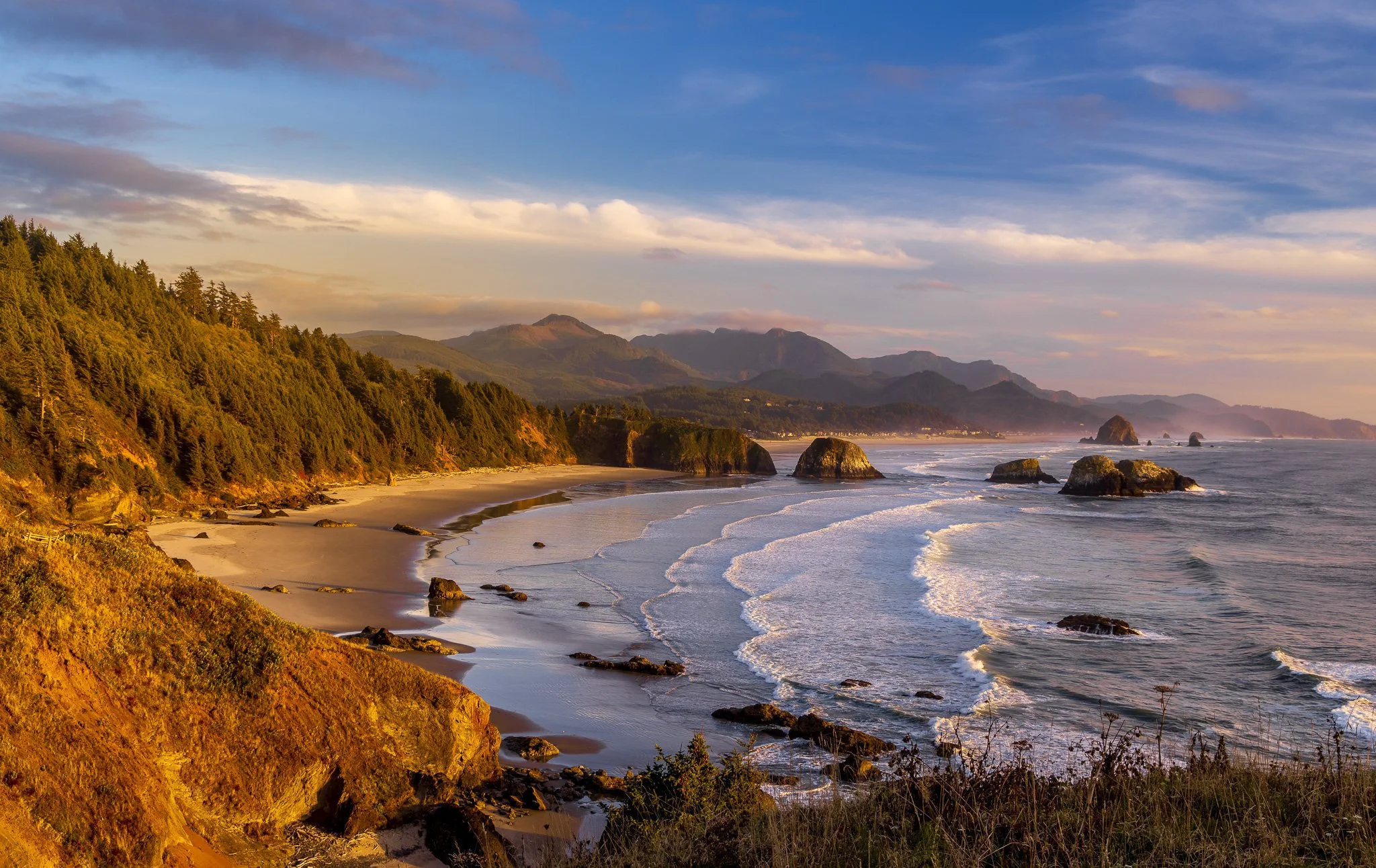
Sunset at Ecola one of my favorite locations
Indian Beach, Ecola State Park
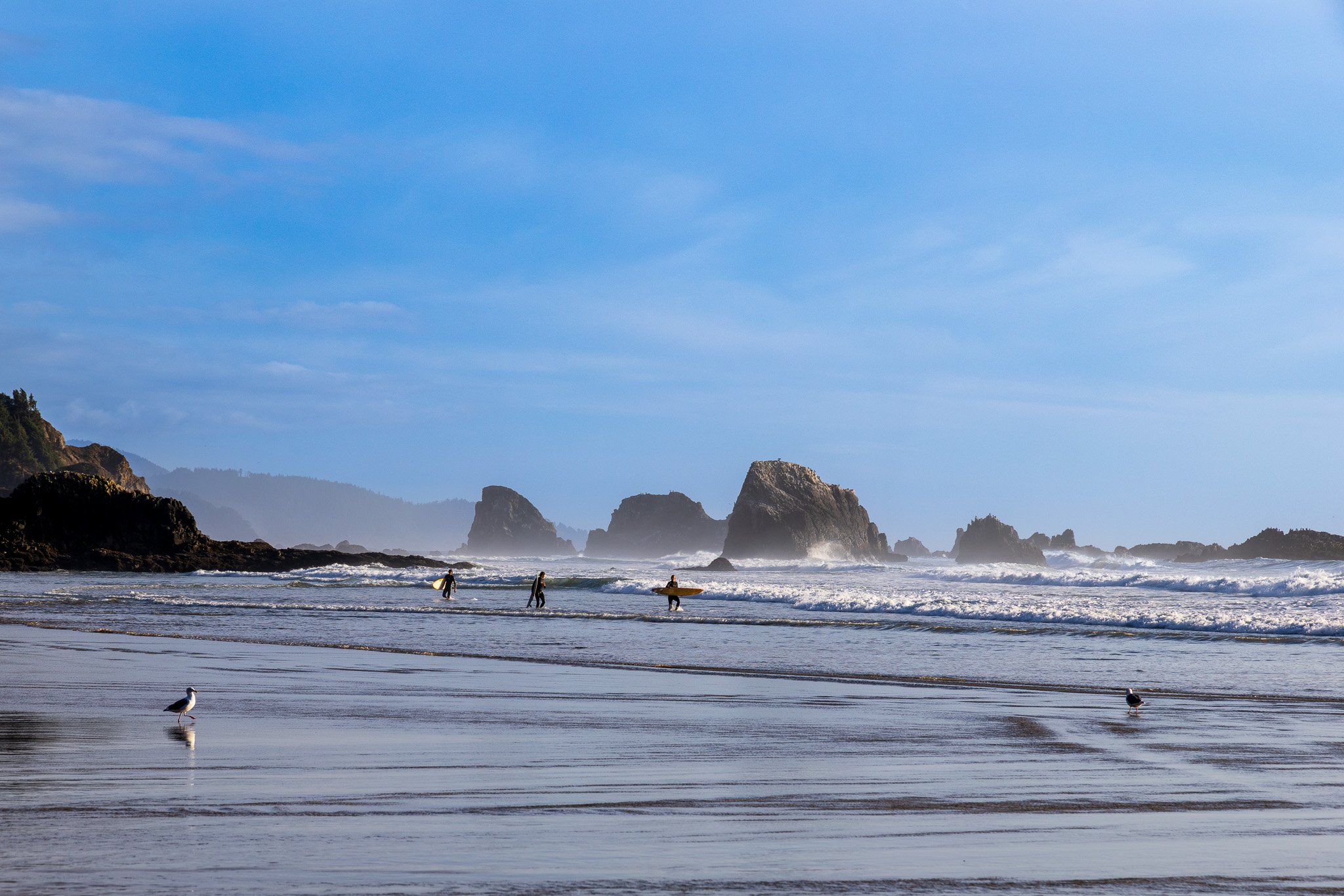
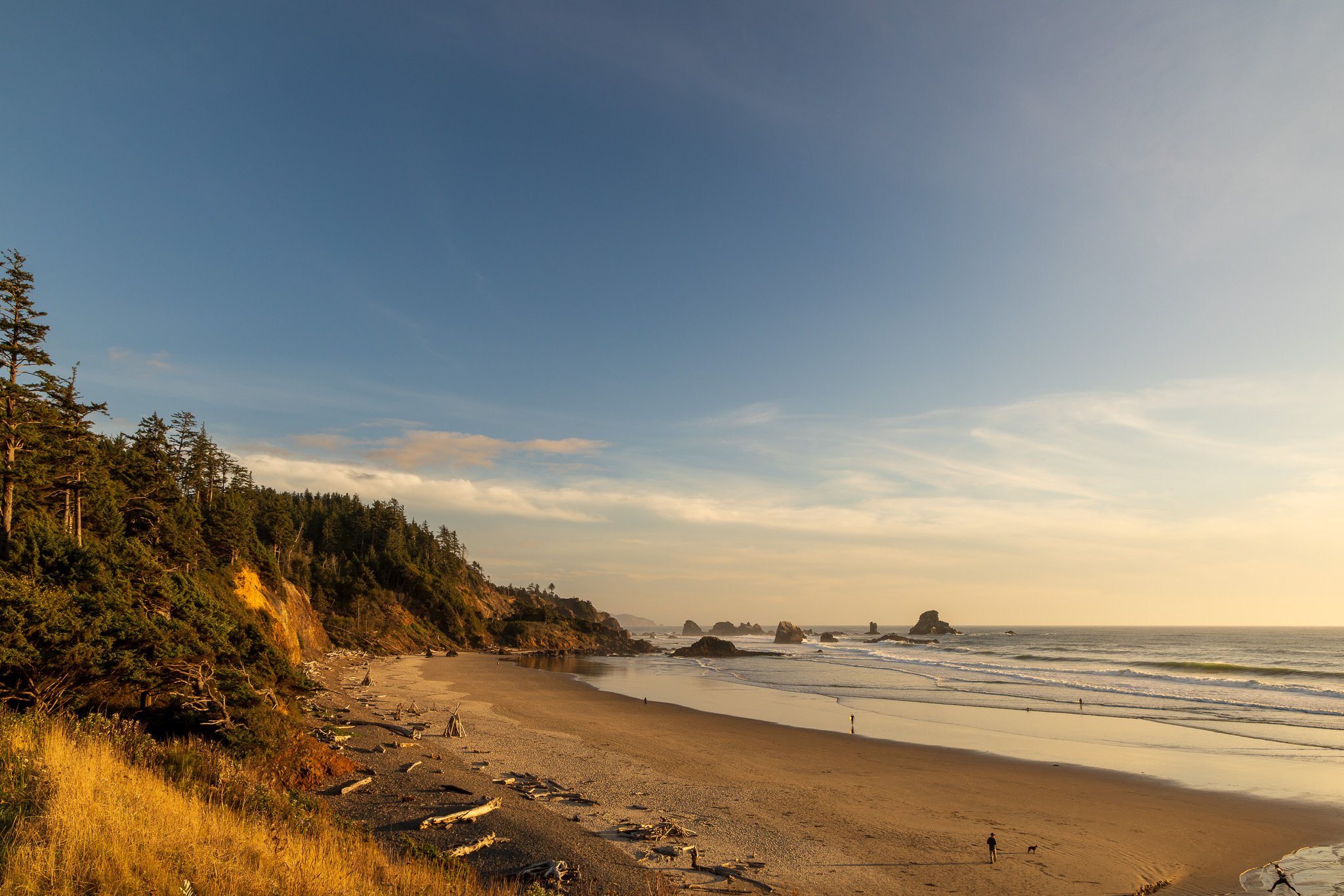
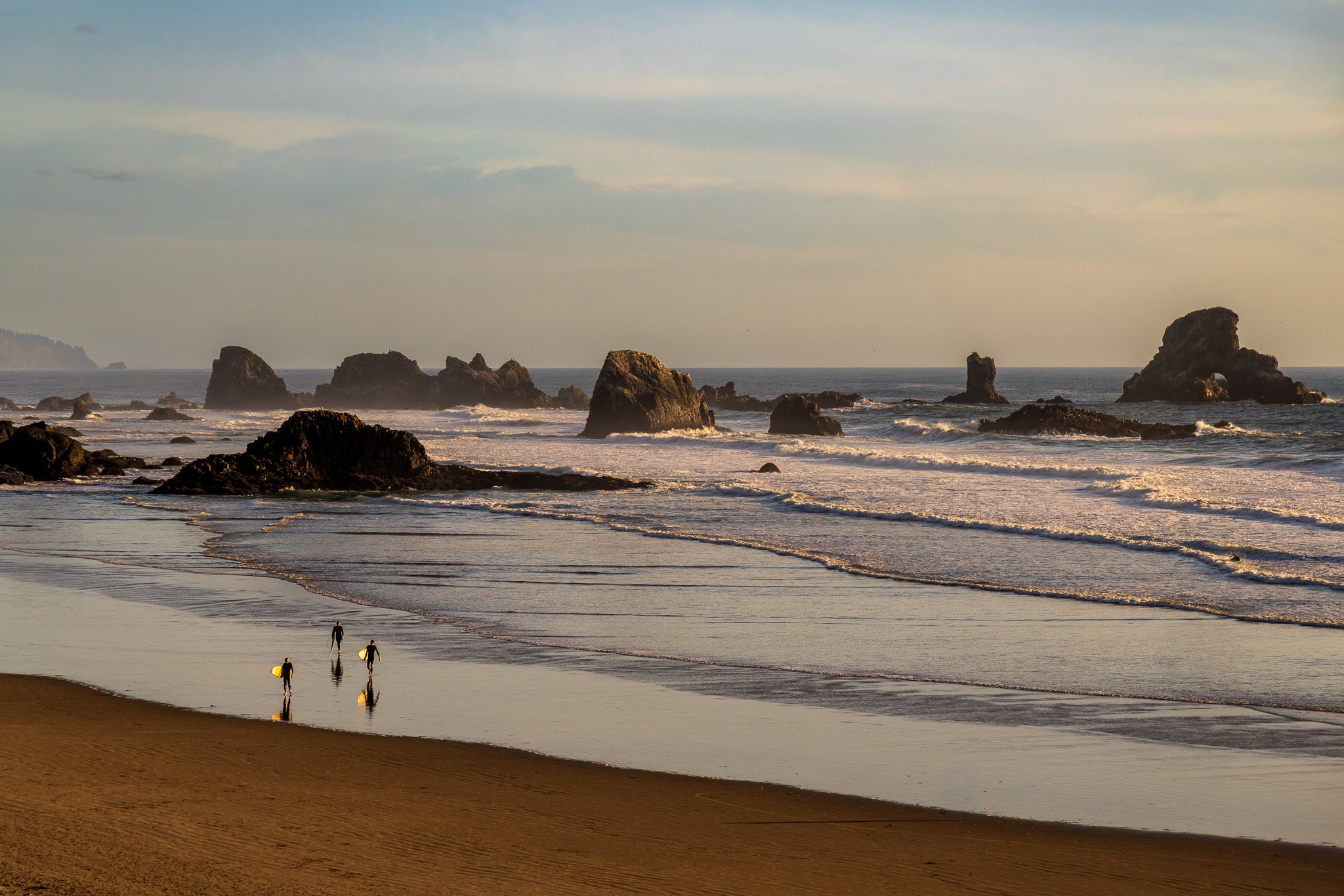
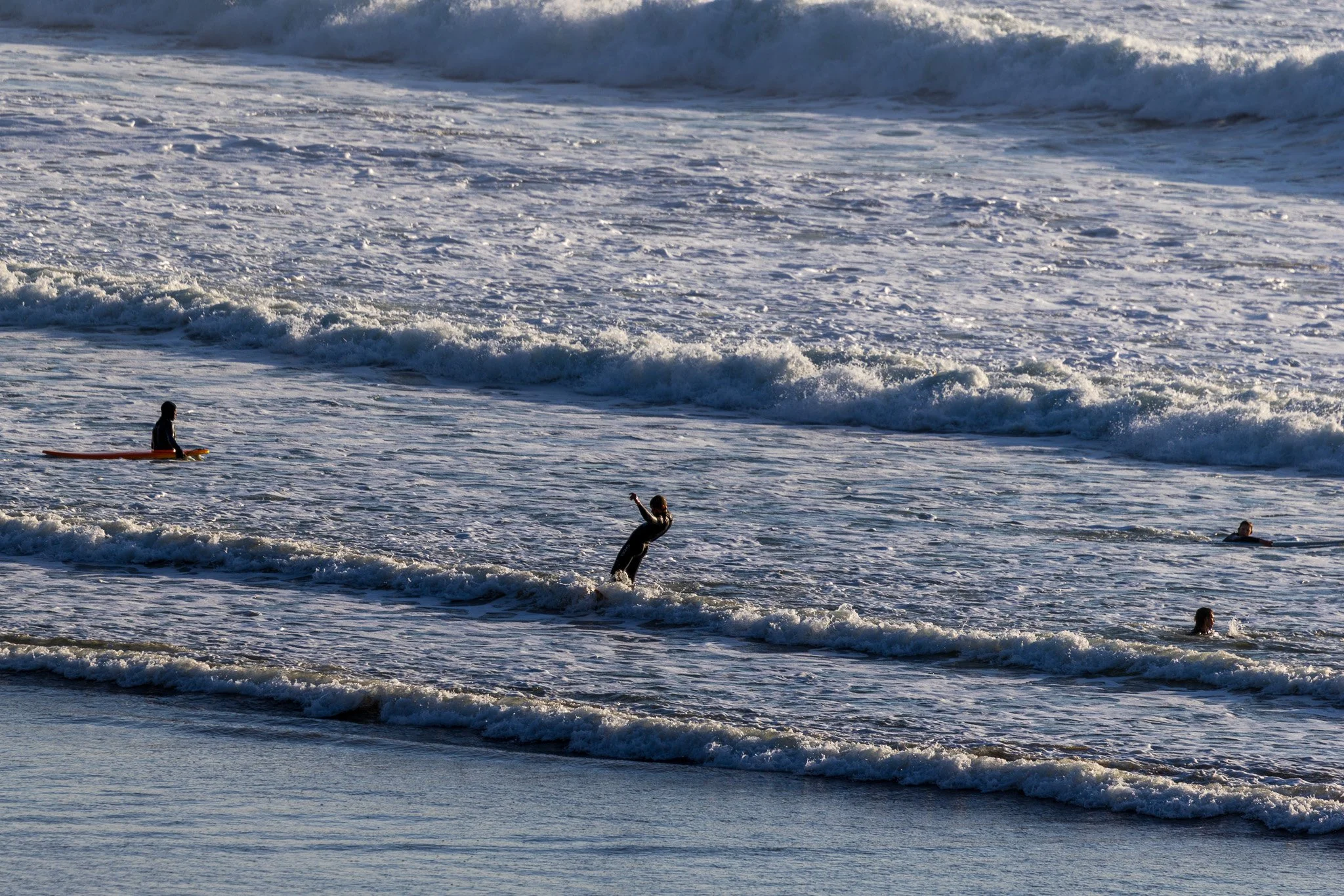
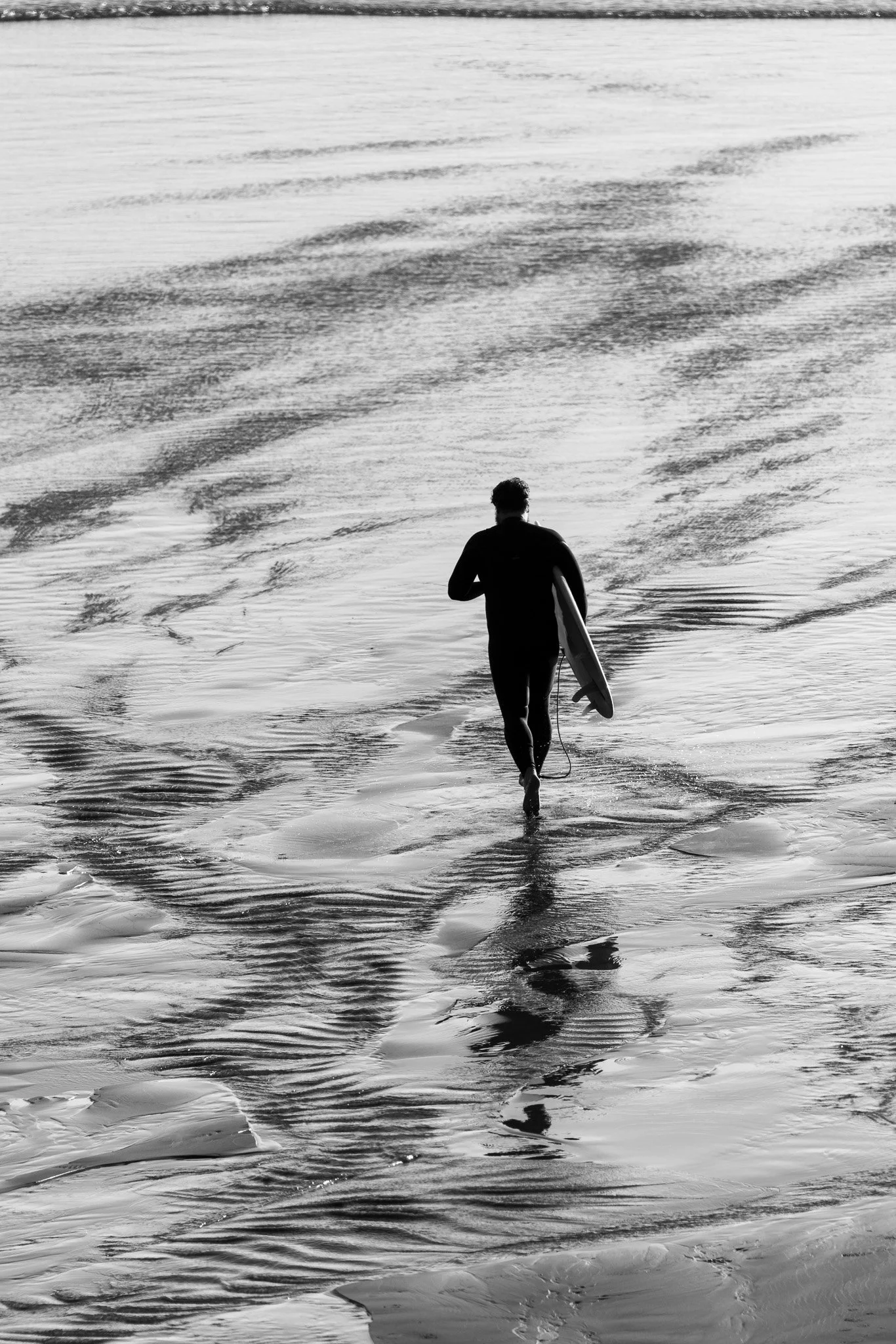
Indian Beach was our favorite surprise, and it may be one of our favorite places we photographed on the entire Oregon Coast trip. It feels like a smaller version of Bandon Beach, a cove framed by sea stacks and dark forest. We walked down to the sand and watched surfers paddle out, and I spent a long time photographing them against the rocks. We stayed until the golden light started hitting the sea stacks, then drove back to Ecola Point for sunset.
The cove gives you rocks, water, and people in one frame. The surfers add scale and story that an empty beach cannot. On clear days, the park's viewpoints also show the Tillamook Rock Lighthouse, known locally as Terrible Tilly, about a mile offshore.
📷 Pro Tip: Come in the late afternoon and photograph the surfers with a 100 to 400mm or 100 to 500mm; a 70 to 200mm works, but you will crop a lot. Use a fast shutter speed (1/1000 or faster) to freeze the spray. Then switch to a 16 to 35mm for the cove and creek as the light warms. If you want both Indian Beach and sunset at Ecola Point, leave the cove by about 6:15 in the fall; the two are only a few minutes apart by car. For the lighthouse, you need at least 200mm, and 400mm is better.
Best time: Late afternoon for surfers and warm light on the rocks. Access: State park, day use parking permit required. Getting there: Continue past Ecola Point on Indian Beach Road.

Peter Iredale Shipwreck, Fort Stevens State Park
The Peter Iredale ran aground in 1906, and what remains of the hull still sits on the open beach. Up close, the rusted steel ribs rise out of the sand like the skeleton of a whale. The drive from Cannon Beach took us longer than I expected, but it was worth it.
While I was shooting, I met a former Navy SEAL who was walking the beach. He was friendly and full of stories, and he told me he doubted the wreck would last another two years, as the salt water keeps eating through what is left. I cannot vouch for his timeline, but the rust tells you this is not a place to postpone.
📷 Pro Tip: Go at low tide, when you can walk around the whole wreck and frame the ribs against the sky. Use a 16 to 35mm up close and shoot through the ribs toward the ocean. At sunset, the sun drops behind the wreck, which gives you strong silhouettes. Do not climb on the hull; the metal is sharp and unstable. Fort Stevens requires a day use parking permit.
Best time: Low tide; sunset for silhouettes. Access: State park, day use parking permit required. Getting there: About 30 to 40 minutes north of Cannon Beach on Highway 101, near Hammond.
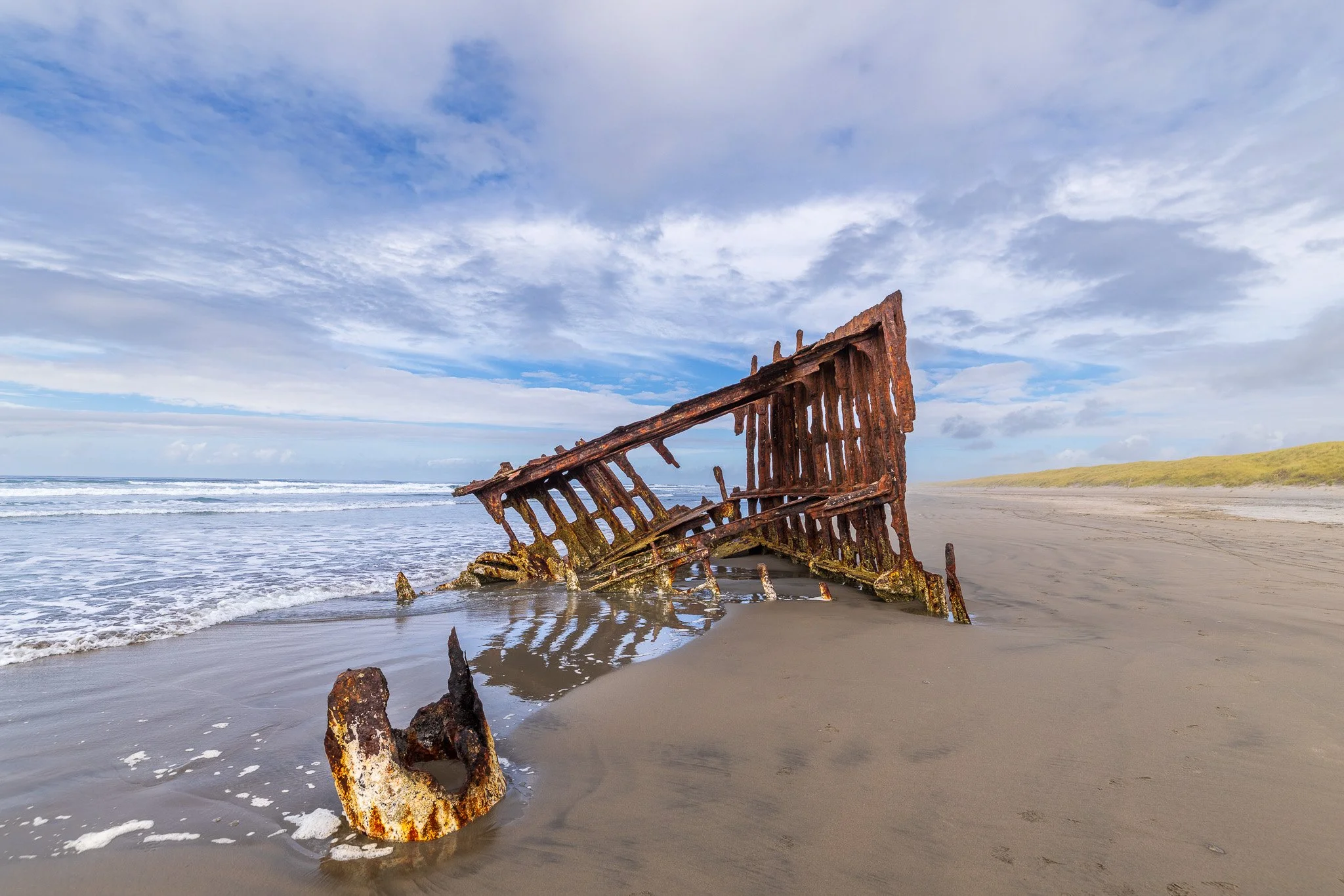
The shipwreck of Peter Iredale
Hug Point
Hug Point is one of the few places on the Oregon Coast where a waterfall pours straight onto the beach. Next to it, sandstone caves open into the headland, and you can still see the old stagecoach road cut into the rock from the days when wagons had to "hug" the point at low tide.
The waterfall, the caves, and the textured sandstone give you far more variety than a typical beach stop. On a gray day, the colors in the rock get richer.
📷 Pro Tip: Only go on a falling tide, and plan to leave well before the water turns. The tide cuts off the point quickly. Use a 16 to 35mm for the falls and caves, and a 3 stop ND with a tripod for a smooth but textured waterfall. The park reopened in September 2026 after a long closure, but the beach stairway is a temporary fix, so check Oregon State Parks before you go.
Best time: Morning on a falling tide; winter and spring when the waterfall runs strongest. Access: Free. Getting there: About 5 miles south of downtown on Highway 101.
Short Sand Beach, Oswald West State Park
The walk to Short Sand Beach follows a trail through old growth Sitka spruce and cedar before opening onto a protected cove where surfers catch waves between two headlands.
You get two completely different subjects in one stop: a dark green forest and a bright surf cove. It is a strong option on a foggy day, since the forest looks better in soft light.
📷 Pro Tip: Shoot the forest trail in fog or overcast light with a 24 to 70mm, and keep your ISO flexible because it gets dark under the trees. At the cove, use a 100 to 400mm or 100 to 500mm for surfers, with a shutter speed of 1/1000 or faster. Parking fills fast on summer weekends, so come early.
Best time: Foggy mornings for the forest; late afternoon for the cove. Access: Free. Getting there: About 10 miles south of Cannon Beach on Highway 101.
Bonus: Downtown Galleries
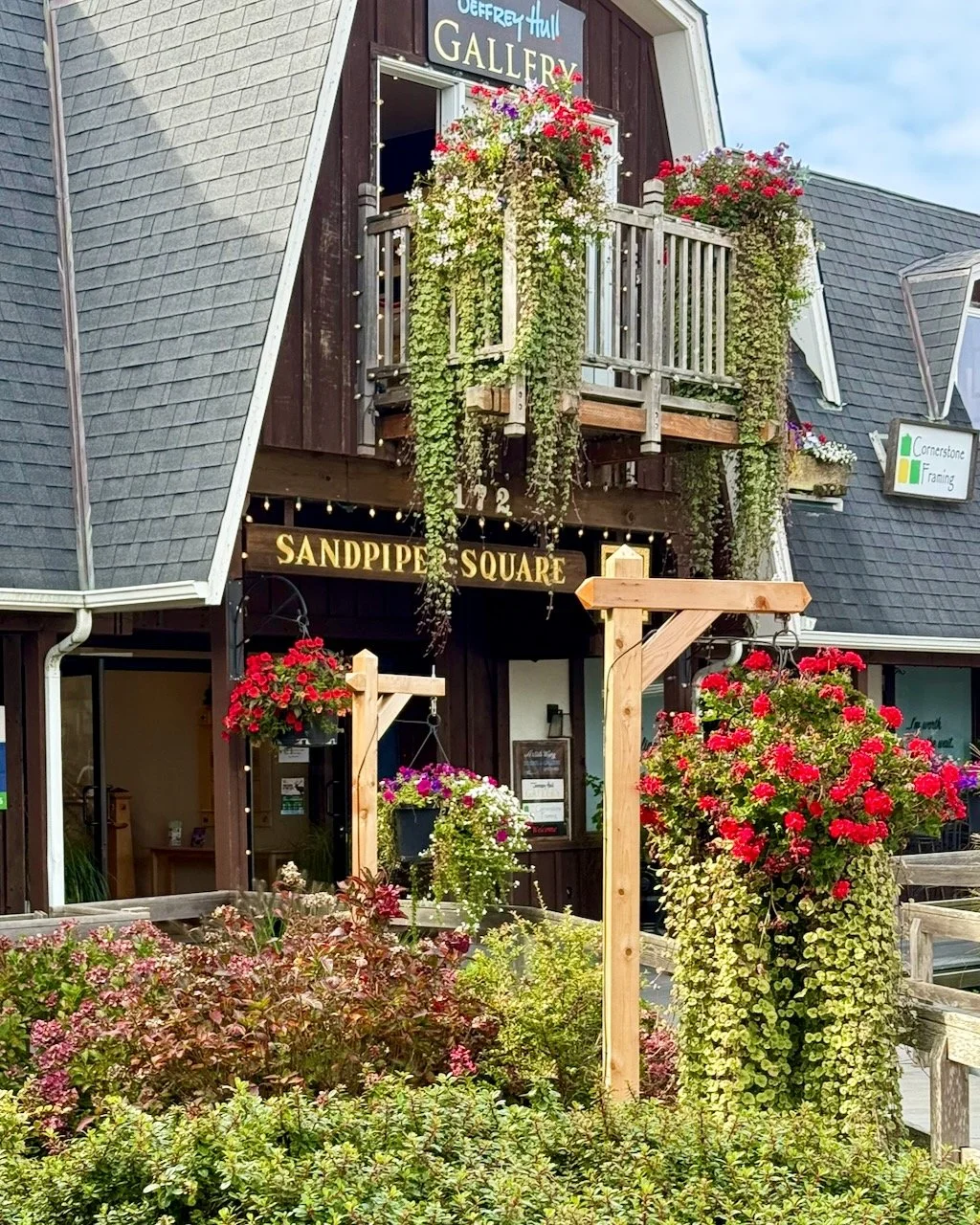
Midday light on the beach is flat, so we spent it in the middle of town, walking in and out of galleries, gift shops, and cafés. It is small, walkable, and full of color and texture: cedar shingles, hand painted signs, flower boxes, and glass art in the windows. Bring a 35mm and look for details. Always ask before photographing inside a gallery or photographing an artist at work.

Bonus: Elk in Town
One of the best surprises of our trip had nothing to do with the beach. A group of Roosevelt elk walked right through town, past houses and parked cars, as if they owned the place. In Cannon Beach, they kind of do. The herd moves between the wetlands near Ecola Creek, open lawns, and the edges of town, and you can spot them almost anywhere.
📷 Pro Tip: Use a 70 to 200mm or 100 to 400mm and let the elk come to you. Frame them against cedar shingled houses or street signs; the contrast between wild animal and small town is the whole story. Early morning and evening are your best chances. Stay well back and never get between elk, or between a cow and her calf. In fall, the bulls are in mating season and can charge without warning. On iPhone, use your longest zoom and stay put; do not walk closer for the shot.
Festivals and Events
Get Lit at the Beach (April): A literary weekend with visiting authors, readings, and book signings. A good reason to visit in the shoulder season.
Spring Unveiling Arts Festival (May): Galleries across town reveal new work, host artist receptions, and run live demonstrations. Great for street photography and portraits of artists at work. Always ask before photographing someone inside a gallery.
Puffin Season (April through July): Tufted puffins nest on Haystack Rock, and volunteers set up scopes on the beach on many mornings. Bring your longest lens, keep your distance, and never enter the marked protected areas.
Sandcastle Contest (June): The oldest sandcastle competition in the Pacific Northwest and the biggest weekend of the year in town. Teams race the incoming tide to build huge sculptures near Haystack Rock. Shoot early, stay outside the build areas, and never step on a sculpture. Book your room months ahead.
Fourth of July (July): A small town parade with no fireworks, which makes it a relaxed, family friendly day to photograph.
Cottage Tour (September): Hosted by the Cannon Beach History Center and Museum, this tour opens the town's historic beach cottages and homes. Follow each homeowner's rules on photography.
Stormy Weather Arts Festival (November): More than 50 events, including gallery receptions, artist demonstrations, workshops, and a concert, timed for the start of storm season. Pair it with a surf shoot at Ecola Point.
King Tides (December and January): Not a festival, but a photographer's event. The highest tides of the year hit the headlands with huge surf. Shoot from high, safe viewpoints, never turn your back on the ocean, and stay off logs on the beach, since waves can roll them.
Frequently Asked Questions
Is Cannon Beach worth visiting?
Yes. In a small area, you get Haystack Rock, a wide beach that reflects the sky at low tide, the forest and sea stacks of Ecola State Park, and a walkable town with good food and coffee. It is one of the easiest places on the Oregon Coast to photograph well in a short trip.
How far is Cannon Beach from Portland?
About 90 minutes by car via Highway 26. That makes it an easy add to a Portland trip, and even a long day trip if you are short on time.
Is Cannon Beach or Bandon better for photography?
For most travelers, Cannon Beach. It is much closer to Portland, has better restaurants, shops, and coffee, and puts Ecola State Park and Indian Beach minutes away. Bandon has more sea stacks right off the beach and fewer people. If you can, see both.
When is the best time to photograph Haystack Rock?
Sunset on a low or falling tide. The wet sand reflects the rock and the sky, and blue hour after sunset is just as good. For puffins, come in the morning between April and July.
Can you walk to or climb Haystack Rock?
You can walk to the base at low tide and explore the edges of the tide pools. Climbing the rock is not allowed, and parts of the area around it are protected for nesting seabirds and marine life.
Can I fly a drone in Cannon Beach?
No. Oregon State Parks prohibits drone takeoff and landing on state park property and the public ocean shore outside designated areas, and Cannon Beach and Haystack Rock are specifically closed. Leave the drone at home.
Do I need a car in Cannon Beach?
Yes. The town is walkable, but Ecola State Park, Hug Point, Oswald West, and the Peter Iredale shipwreck all require a drive. Hotel staff told us Uber and Lyft are very unreliable here, especially early and late, which is exactly when photographers need them.
Will I see wildlife in Cannon Beach?
Very likely. We saw rabbits all over the grounds of our hotel and a group of Roosevelt elk walking through town. Puffins nest on Haystack Rock from April through July. Keep a telephoto lens handy and give the elk plenty of space, especially in the fall.
Final Thoughts
On our last night, after sunset at Ecola Point, we drove back to the hotel, and I walked out to Haystack Rock one more time. The conditions were good, the beach was quiet, and I came back with frames I was happy with. The next morning we packed up and headed north to Seattle.
Cannon Beach proves you do not need a long trip to come home with strong work. Two or three days, a tide chart, and a willingness to stand in wet sand will give you reflections, sea stacks, forest, surf, and even a shipwreck in one small corner of Oregon. Go in the fog. Go in the storms. Go when the tide is low and the sky is doing something interesting. This coast rewards patience, and you will leave already planning your next visit.
Cannon Beach or Bandon?
It is the most common question I get about the Oregon Coast, and after photographing both on the same trip, I was honestly torn. So I asked my wife, Zena. She did not hesitate: Cannon Beach, 100 percent.
Her reasons are hard to argue with. Cannon Beach is only 90 minutes from Portland, while Bandon is more than four hours. The beach here is wide and open, and walking it toward Haystack Rock never gets old. The town has better restaurants, better shops, and better coffee. And then there is Ecola State Park, with the viewpoint over the sea stacks and Indian Beach just down the road. Indian Beach may be one of our favorite places we photographed on the entire trip.
Bandon still wins on a few things. It has a denser cluster of sea stacks right off the beach, a wilder feel, and far fewer people. If you want solitude and raw coastline, go to Bandon. If you have limited time, want good food and coffee between shoots, or are traveling with someone who is not a photographer, choose Cannon Beach. If you can, do what we did and see both.
Continue exploring the Pacific Northwest:
My Photography & Travel Guide to Portland, Oregon Fly into Portland, spend a few days with the Japanese Garden and the International Rose Test Garden, then drive 90 minutes west to Cannon Beach. City and coast in one trip.
My Photography & Travel Guide to the Oregon Coast Cannon Beach is only the beginning. Drive south on Highway 101 to Heceta Head, Bandon, and Gold Beach for sea stacks, lighthouses, and wild beaches with far fewer people.
My Photography & Travel Guide to Seattle About four hours north of Cannon Beach. It is where we went next, and Pike Place Market, the waterfront, and Mount Rainier on a clear day make it the natural next stop on a Pacific Northwest road trip.
Want to improve your photography while exploring some incredible destinations? Join me on one of my photography workshops! You can find all the details, including upcoming destinations and dates, through the links below.
Let's Stay Connected!

Discovering the World Through My Lens
Some photographers chase destinations. Others chase light. This book is about both.
Discovering the World Through My Lens is a visual journey across five continents and dozens of countries, shot over a lifetime of travel by Washington DC-based photographer and author Vito L. Tanzi. From the red dunes of Namibia to the canals of Venice, the Dolomites to the deserts of the UAE, the streets of Lisbon to the rainforests of Costa Rica, each image was made by someone who was actually there, on foot, early in the morning, waiting for the light.
This is not a catalog of famous landmarks. It is a record of what happens when a photographer slows down, pays attention, and stays long enough for the extraordinary to appear.
50 photographs. 30 destinations. Five continents. Every image presented full page with nothing between you and the photograph.
Paris. Iceland. Tanzania. Singapore. The Lofoten Islands. Tuscany. Antelope Canyon. Monument Valley. And much more.
If you have ever wanted to see the world differently, this is where to start.

🎓 Adobe Lightroom One-to-One Training
Master Post-Processing. Elevate Your Photography.
Post-processing is the final — and arguably most transformative — step in your photography workflow. Adobe Lightroom is an essential tool for today’s digital photographers, combining powerful editing tools with an intuitive system for organizing and showcasing your images professionally.
Whether you're just getting started or looking to refine your editing skills, I offer customized one-to-one Lightroom training designed to help you create images you’ll be proud to share.
---
💻 Why One-to-One Online Lightroom Training?
Over the years, I’ve found that personalized training is the most effective way to learn Lightroom. Unlike group sessions, a one-to-one format allows us to move at your pace, focus on your specific goals, and eliminate the frustration of mismatched experience levels.
Plus, with online sessions via Zoom, you can learn from the comfort of your home — no travel or accommodation needed. It's the most convenient, cost-effective, and time-efficient way to upgrade your editing game.
---
🧠 Tailored Topics to Match Your Goals
Our training is completely customizable, but here’s an outline of the modules we can cover — either in full or à la carte.
---
🔧 Lightroom Setup – Part 1: Getting Started
Set up Lightroom properly for long-term success. We’ll tackle the fundamentals to create an efficient, organized workflow:
- What Lightroom is (and isn’t)
- How the interface and modules work
- Setting preferences for your needs
- Understanding the Catalog and folder system
- Importing images efficiently
- Adding keywords during import
---
🗂 Lightroom Setup – Part 2: Organize Like a Pro
Build a storage system that grows with you:
- Folder structure tips and best practices
- Moving and renaming files within Lightroom
- Reviewing, rating, and filtering images
- Creating Smart Collections and Collection Sets
- Keywording strategies and metadata organization
---
🎨 Lightroom Editing – Part 1: Core Editing Skills
Master the Develop module and create consistent, polished images:
- Global adjustments in the Basic panel
- White balance, contrast, vibrance, and saturation
- Cropping and converting to black & white
- HSL panel tuning
- Sharpening and noise reduction
- Creating and saving presets
- Exporting for print, web, or social media
---
✨ Lightroom Editing – Part 2: Advanced Techniques
Take your editing to the next level with creative, selective tools:
- Radial and Gradient filters
- The Adjustment Brush
- Advanced masking and luminosity adjustments
- Enhancing portraits (skin, eyes, teeth)
- Spot removal and basic cloning
- Merging for HDR and panoramas
---
💼 Session Details & Pricing (USD)
Tailored One-to-One Lightroom Tuition:
- Single Session (2 hours): $199
Before our session, we’ll have a brief consultation to customize your training plan and ensure it meets your exact needs.
---
Ready to take control of your editing workflow and bring out the best in your images?
Let’s work together to turn your vision into vivid, powerful photos.
📩 Get in touch to schedule your personalized Lightroom session.