Bandon Beach, Oregon Travel & Photography Guide: Best Photo Spots, Things to Do & Hidden Gems
Bandon Beach had been on my list for years before I finally got there. I had seen photo after photo from this stretch of coast and knew I had to see it for myself. Now that I have stood on that sand, I can tell you the pictures do not oversell it. If there were only one place in Oregon I could point a camera, it would be Bandon Beach.
Bandon was our first stop on the coast during a Pacific Northwest road trip. We flew into Portland, drove south to Bandon and Gold Beach, and on the way back north, we liked Bandon enough to return for two more nights before continuing through Florence and Cannon Beach to Seattle. We saw a lot of beautiful coastline on that trip, and Bandon still stands out.
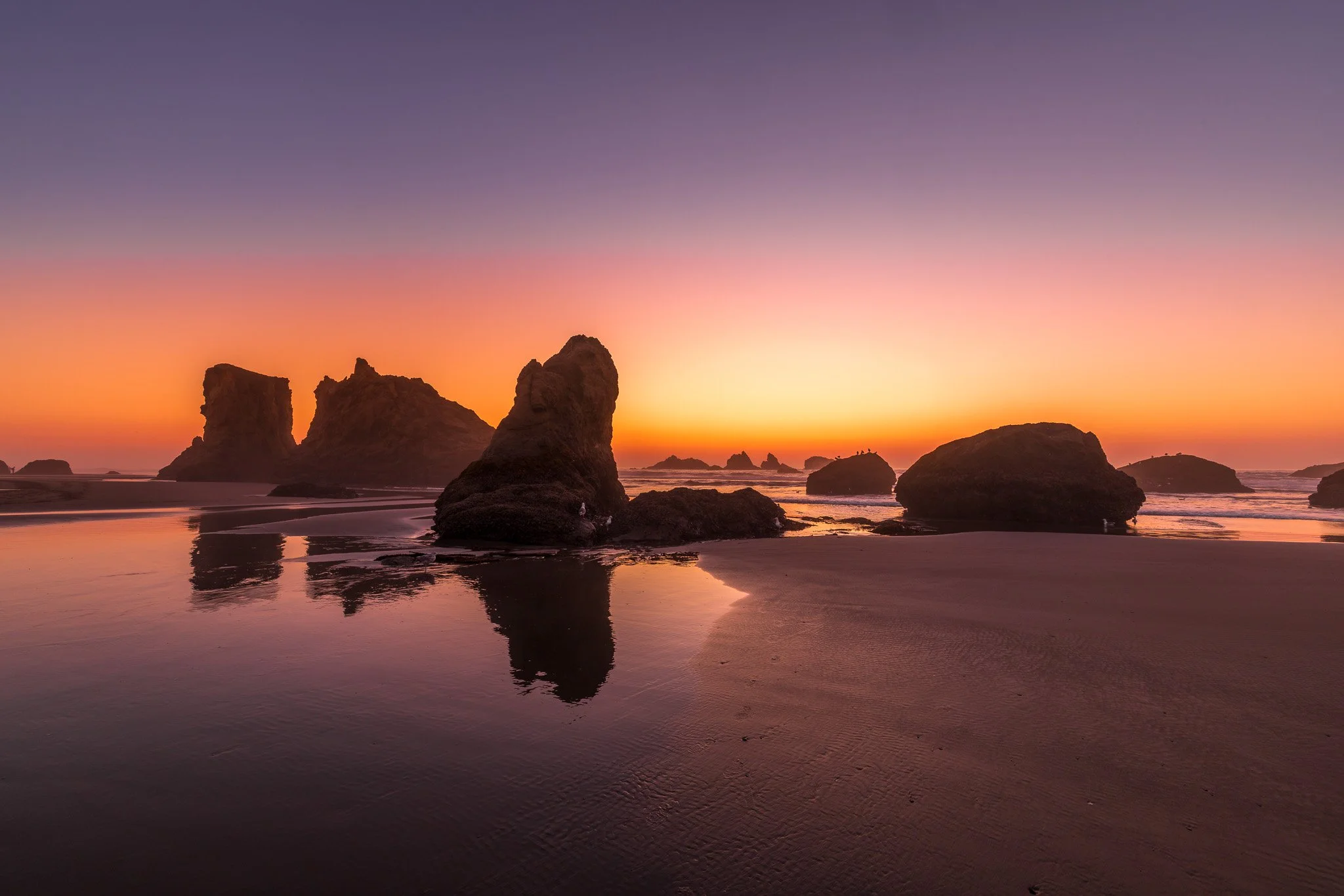
Bandon Beach at Sunset
I loved every hour I spent here, and I recommend it without hesitation to any photographer heading to this coast.
Part of what makes it work so well is how easy it is. You park, you walk down, and you're on the beach. From there, you actually get two different beaches to work with. Walk one direction and you're shooting Face Rock and its cluster of sea stacks. Walk the other and the beach opens up, wide and completely different in feel. Between the two, you could spend hours at sunrise or sunset and never run out of compositions: reflections in the wet sand, starfish tucked into the tide pools, the silhouettes of people walking the beach, and riders on horseback moving along the shoreline, as we saw on our first morning.
In this Photography Guide to Bandon Beach, I share the places and experiences that made Bandon my favorite stop on the Oregon Coast. You will find my favorite photography locations, guidance on when and where to shoot, practical travel tips, and gear recommendations, along with cultural insights to help you explore and photograph Bandon with confidence, respect, and ease.
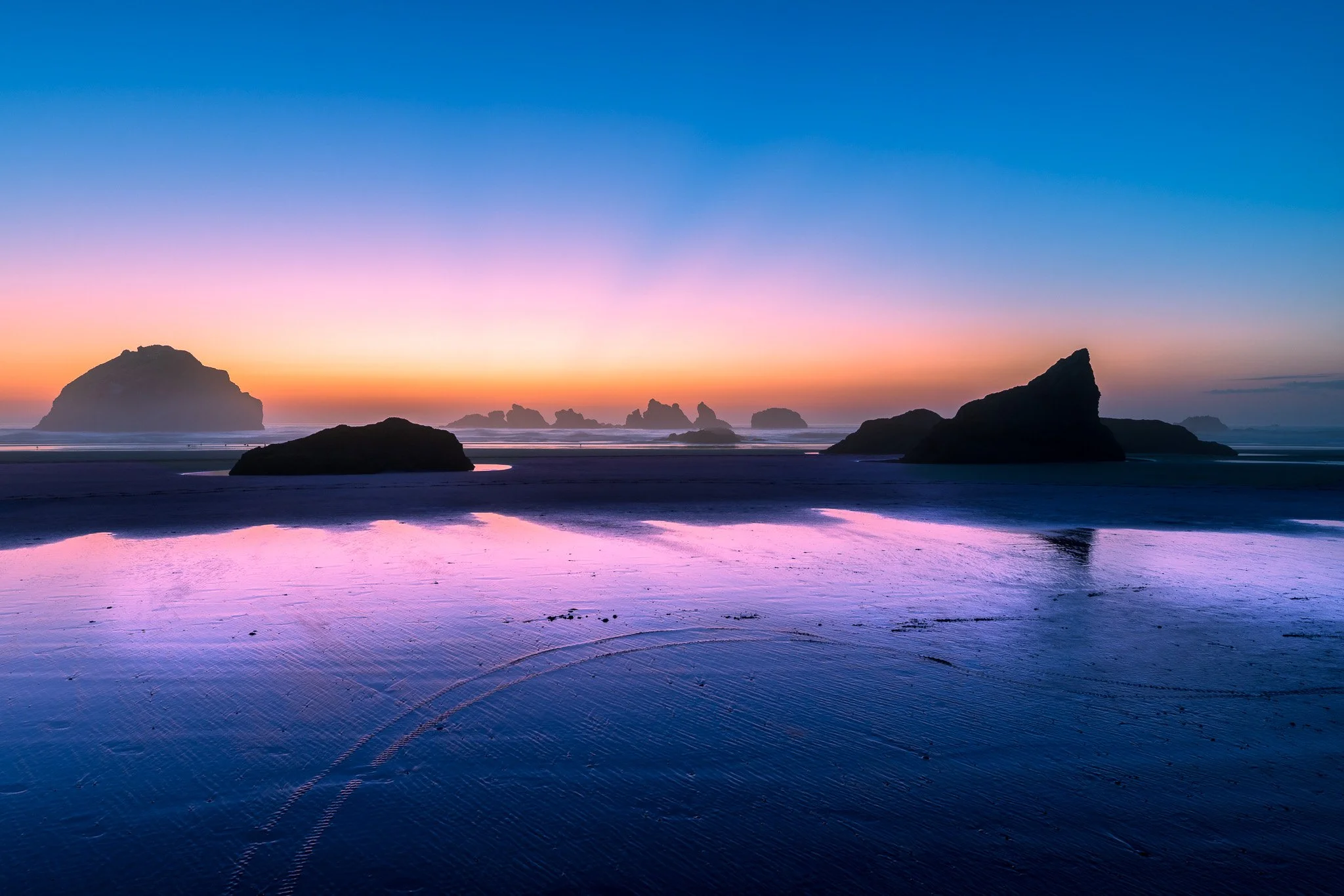
Sunset on Bandon Beach
Where to Stay
Bandon is small, so your options come down to two places. Old Town sits right above the harbor, within walking distance of dinner and the boardwalk. Beach Loop Drive, to the south, puts you closer to Face Rock and the sea stacks, and it's a short drive to everything else. If you want sunrise light without getting in the car first, Beach Loop wins. If you want to walk to dinner after a full day of shooting, stay in Old Town.
My recommendation: book a rental on Beach Loop Drive. Ours was right on the beach, about three minutes by car from Face Rock, and it was fantastic. We watched sunrises and sunsets from the property itself. For photographers, that proximity is worth more than any hotel amenity, and it's the first thing I'd tell you to look for. If you'd rather have a hotel, here's what's on the ground in Bandon.
Luxury
Bandon Dunes Golf Resort. I drove onto the property just to see it, and it's beautiful. If golf is part of your trip, this is where you stay. For a photography trip, though, I still chose a rental closer to Face Rock. The resort sits north of town, so you'll drive in for every sunrise and sunset shoot. That distance is the trade-off for its courses, ocean-side grounds, and on-site restaurants.
Bandon Marina Inn. A small, adults-only boutique inn on the harbor, with views across to Bullards Beach State Park. The rooms are individually styled, the setting is quiet, and you get a good sunrise view from the property if you don't want to drive anywhere before coffee.
Bandon doesn't have a third property that belongs in this tier. It's a small town, and padding the list with a place I wouldn't recommend isn't worth it.
Mid-Range and Boutique
Windermere on the Beach. Right on Bandon Beach, close enough to walk to Face Rock without getting in the car. If I were booking a hotel instead of a rental, this would be one of my first two calls. Choose it if beachfront access matters more to you than polish.
Sunset Oceanfront Lodging. Also right on the beach, near Face Rock, and just as convenient for early morning or blue hour shoots. This would be my other first call.
Bandon Inn. On the bluff above Old Town, with views over the harbor, the Coquille River, and the ocean beyond. It's the right choice if you'd rather walk to dinner than wake up on the beach.
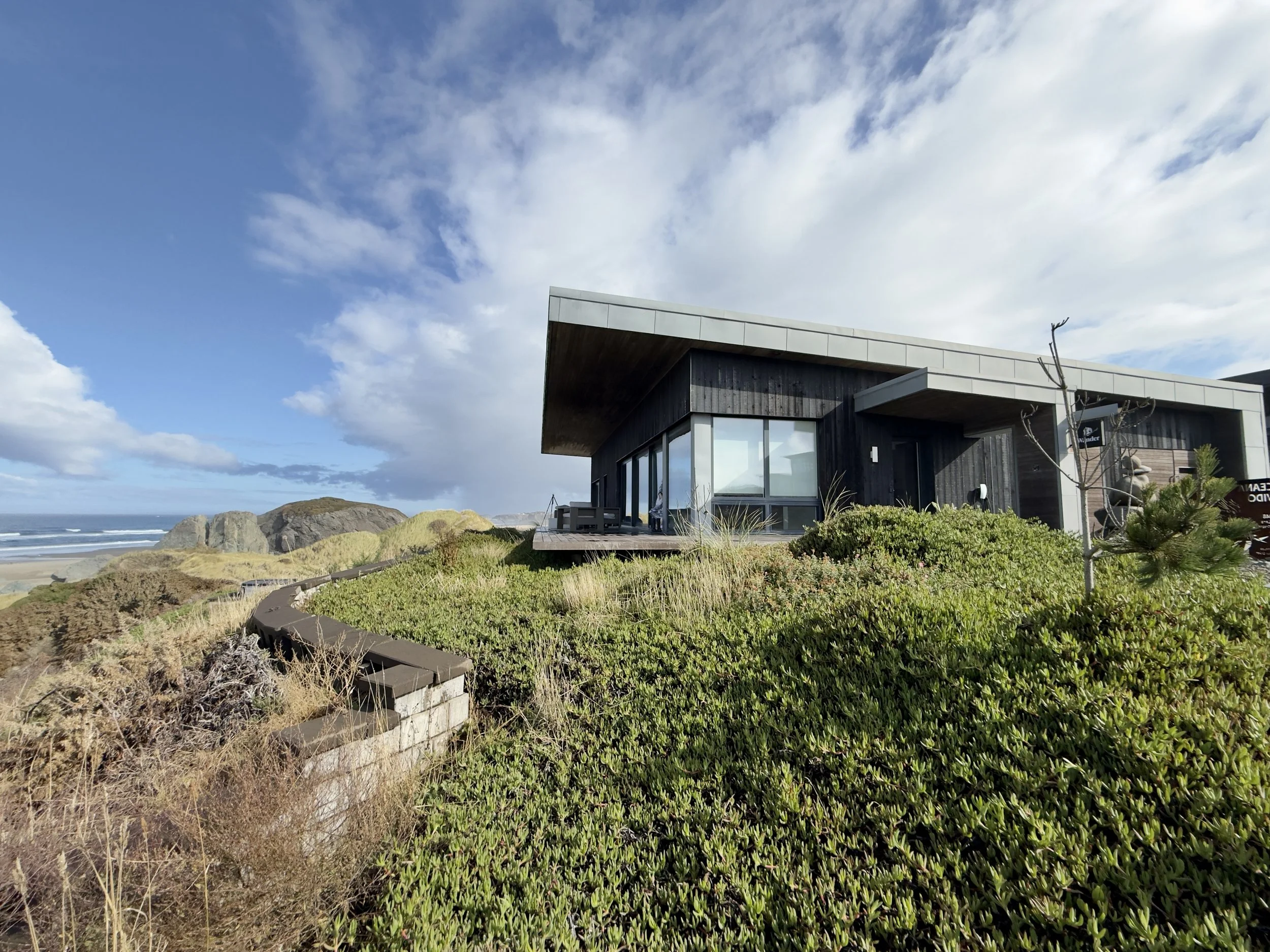
Our Wander Rental
Ideal Duration of Stay
Plan on at least three days. We stayed four nights over two visits, two at the start of our trip and two more on the way back north, and I'd happily have stayed longer. Bandon Beach and Face Rock are among the best photography locations on the whole Oregon Coast, and walking the beach is one of the best parts of the stay, not just a way to get to a shot. Two days covers the core locations at a relaxed pace. Three gives you a real chance at both sunrise and sunset instead of choosing one.
If you can only shoot one session at Face Rock, make it sunset. It's the stronger of the two. With three days, aim for two sunsets and one sunrise. For sunrise, don't arrive too early. The sun has to clear the ridgeline behind you before it reaches the beach, and until it does, the sea stacks stay dark.
Bandon rewards flexibility more than a packed schedule. Fog here can change the scene completely from one morning to the next, and a rigid plan with two shoots a day will fight the weather. A loose plan that lets you chase whatever light shows up will not.
Two days covers the essentials. Arrive in the afternoon and walk Old Town and the harbor boardwalk, then shoot sunset at Face Rock. The next morning, try sunrise at Face Rock or Coquille Point, then spend midday at the Coquille River Lighthouse and Bullards Beach State Park. Finish with a second sunset at Face Rock.
Three days is what I recommend. Add a slower morning on the Coquille Point wildlife refuge trail, a second visit to the lighthouse if the fog looks different, and a final sunset at Face Rock or blue hour on the boardwalk.
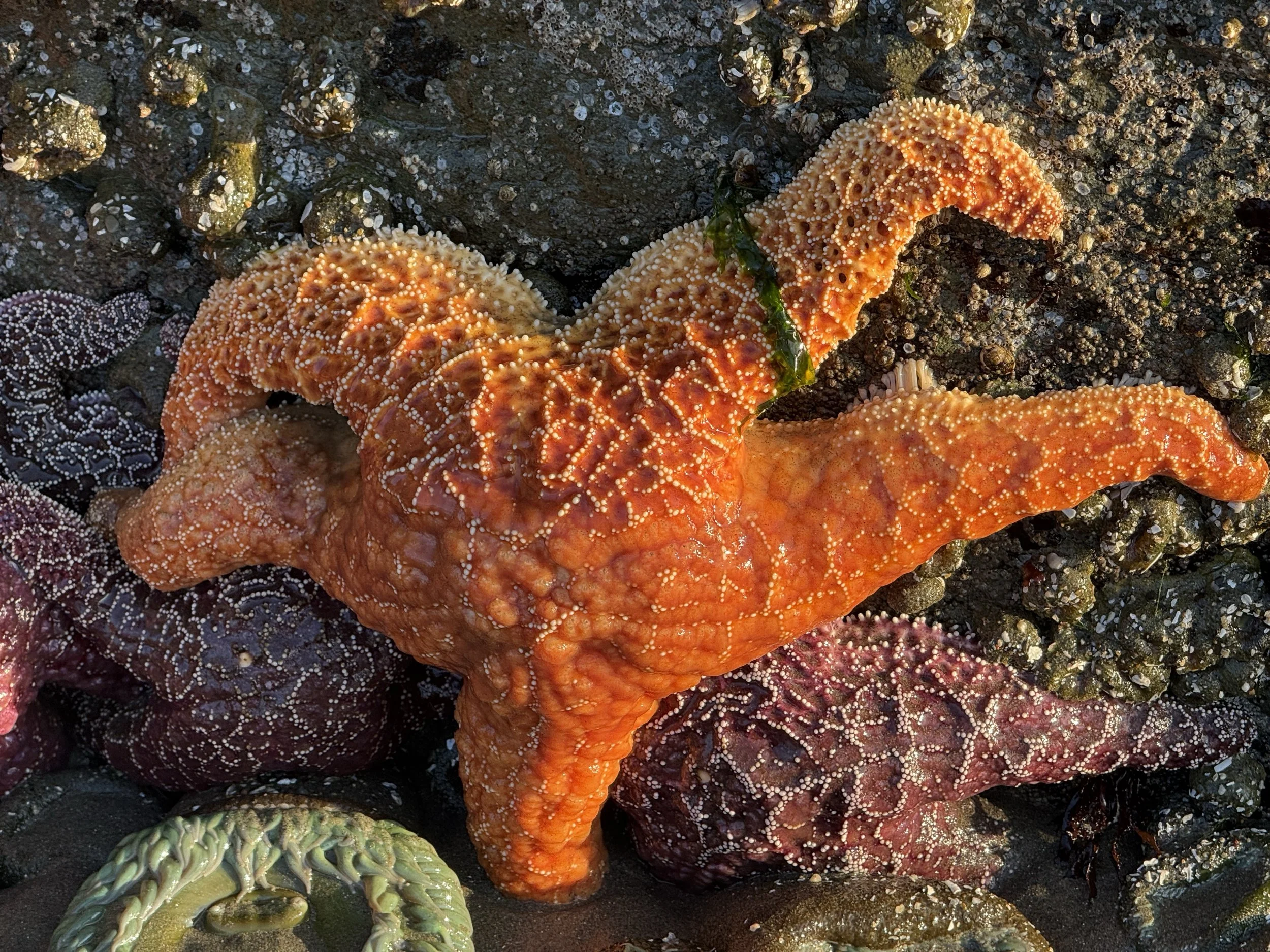
Starfish on in Bandon
Best Time to Visit
Bandon photographs well nearly year-round, but the seasons change what you're shooting.
Summer, from June through August, brings the driest, most reliable weather and the longest days, with usable light well past 8 p.m. in June and July. Mornings often start in fog that burns off by mid-morning. Don't treat it as a problem to work around. Fog drifting through the sea stacks is often the best light of the day. Summer is also the busiest season, with crowds peaking in July and August, especially around the Fourth of July.
Fall, from September through November, is the photographer's window, and it's when we went. The timing was perfect: good weather, beautiful skies, and comfortable temperatures the whole time. The summer crowds thin out after Labor Day, and the Cranberry Festival brings a burst of color and local life in September. Toward the end of the season, storms start building, which means dramatic skies without full winter conditions. If you can only pick one season, this is the one I'd point you toward. Late summer and early fall can also bring wildfire smoke to southern Oregon. We had clear skies, but check air quality before you go.
Winter, from December through February, is storm-watching season. Waves crashing against the sea stacks in a winter storm are spectacular, but conditions are unpredictable and often unsafe for getting close. If you come for the storms, respect the sneaker-wave warnings posted at the beach accesses. They are not decorative.
Spring, from March through May, is a mix of rain and clearing skies, with fewer visitors and fresh green on the bluffs.
Whatever the season, plan around the tide. We went out at low tide to look for starfish in the tide pools and to catch reflections of the sea stacks in the wet sand, and I'd build your shoots around it the same way. Low tide opens up the beach around the stacks and leaves sand that mirrors the sky. If you can line up a low tide with sunset, that's the best evening Bandon has to offer. Check a tide table before every shoot, and keep an eye on the water as it turns. If you find starfish, photograph them where they are. Don't touch them or pull them off the rocks. For empty frames at Face Rock, weekday mornings work in any season.
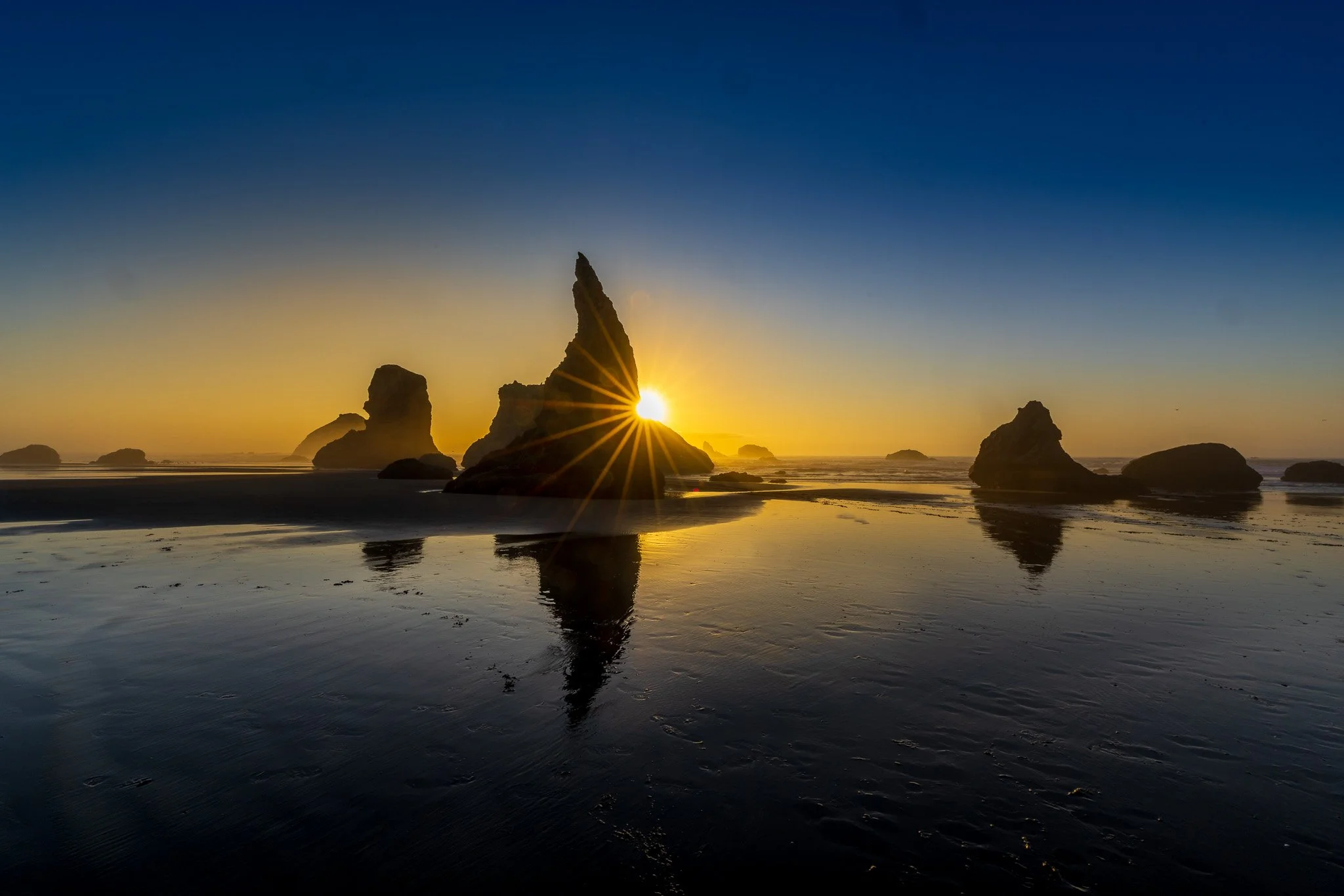
Sunset on Bandon Beach with Wizard Rock
Getting Around
How to Reach Bandon
Bandon sits about four and a half to five hours south of Portland by car, so most people arrive as part of a longer coastal road trip rather than a standalone visit. We spent a few days in Portland first, then took I-5 south and cut west to the coast, with Bandon as our first stop on the ocean. Starting in Portland makes the drive feel like part of the trip rather than a slog to get through. If you have extra time, you can follow Highway 101 down the coast instead, but plan on a much longer drive.
If you're flying in for a road trip, Portland is the practical gateway. If you're coming only for Bandon, look at Southwest Oregon Regional Airport in North Bend, about thirty minutes north, which has limited commercial service.
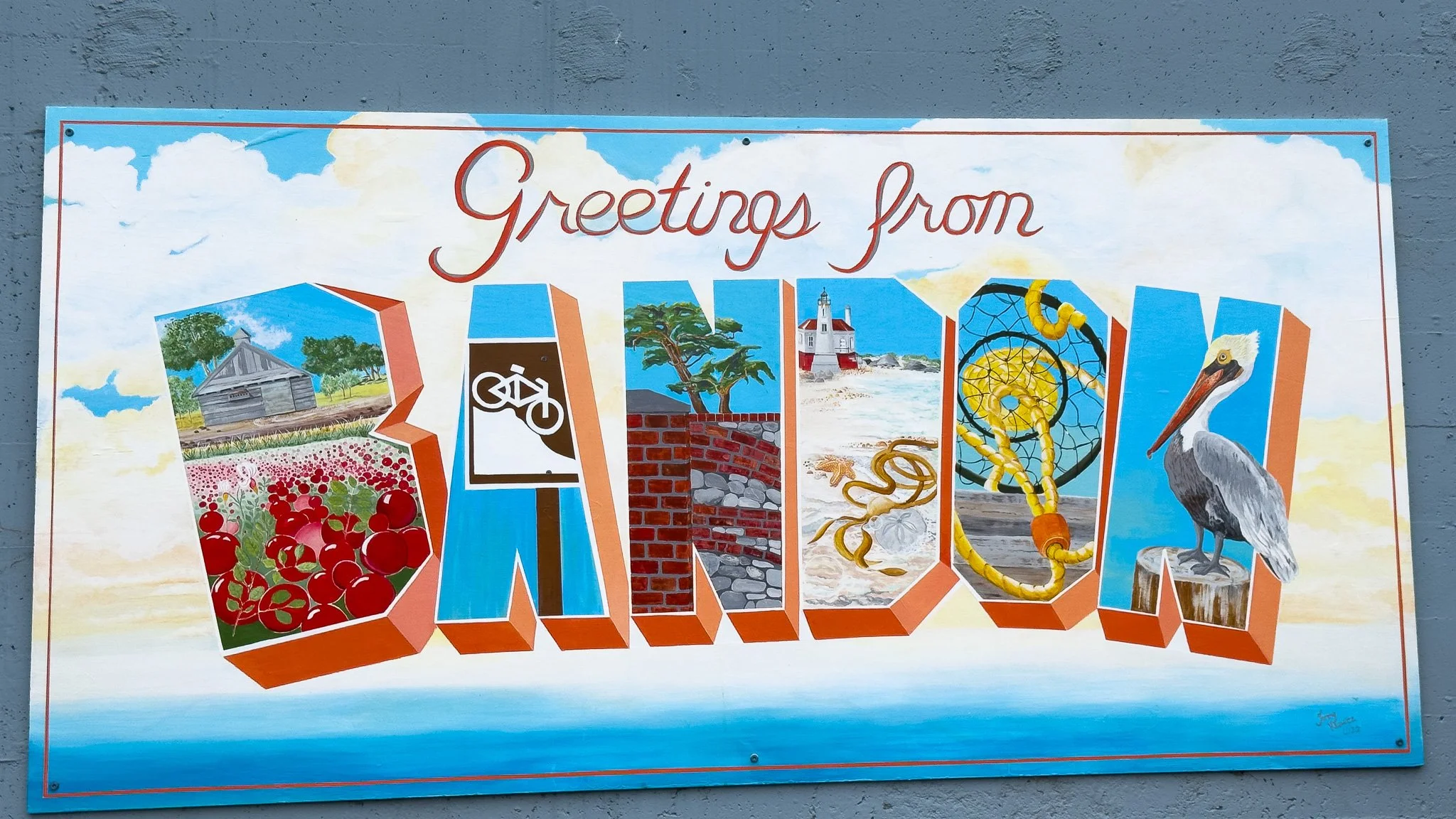
Bandon Beach Coffee Shop
Getting Around Bandon
We rented a car, and I'd do the same again. Rideshare coverage on this stretch of the coast is thin to nonexistent, so don't count on Uber or Lyft, especially outside Old Town.
Old Town is walkable. You can cover the harbor, the boardwalk, and most of the shops and restaurants on foot in an afternoon. But Face Rock, the sea stacks, Bullards Beach State Park, and the Coquille River Lighthouse are a short drive apart, connected by Beach Loop Drive and Highway 101. Budget ten to fifteen minutes between any two of the main photography stops. Parking at the beach viewpoints was free when we visited, but the lots fill up on summer weekends.
A car also means you're never locked into one lens for the day. Bring the full bag and swap as the light changes.
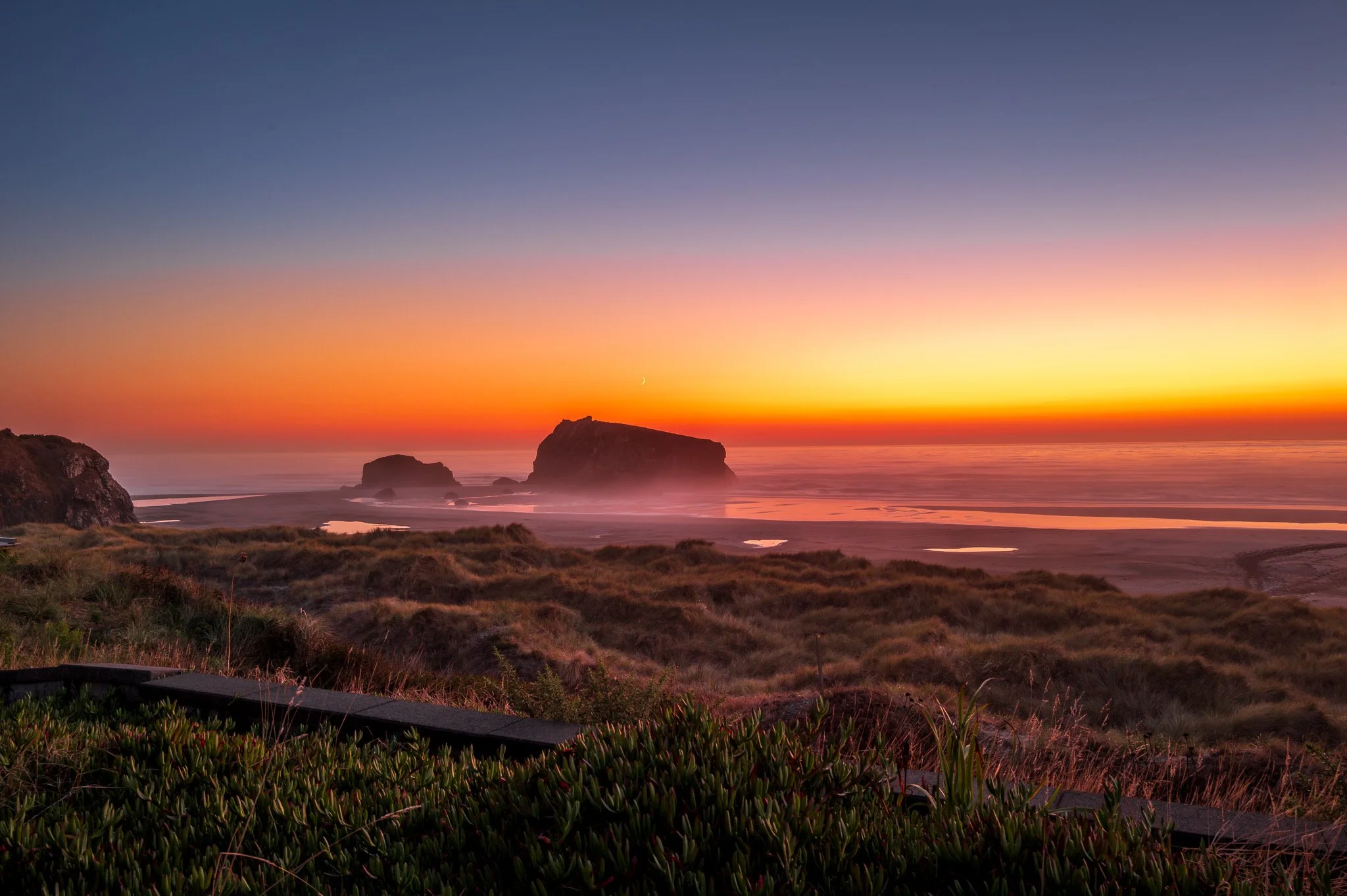
By the Devils Kitchen just south of Face Rock
Dining & Coffee
Bandon punches above its size on seafood, which makes sense, since the harbor sits at the center of town. Expect fresh catch, counter service more often than white tablecloths, and food that follows what the boats bring in rather than the latest trend.
Where We Ate
Tony's Crab Shack & Seafood Grill. Our favorite in Bandon. We liked it enough to come back a second time. It sits on the Bandon Boardwalk along the Coquille River, next to the working harbor. Tony's started in 1989 as a bait and tackle shop, which still operates next door, and it has never used a deep fryer. They cook and clean crab to order. On our first visit, we ordered the fish tacos, a grilled salmon sandwich, a grilled halibut sandwich, and a crab cake sandwich. Everything was grilled to order and excellent, and the fish was as fresh as it gets. Seating is outdoors at the counter, and it's open for lunch and early dinner only, so plan around the hours.
Bandon Fish Market. Right on the water, with fish and chips, halibut burgers, grilled salmon, sandwiches, seafood cocktails, fried oysters, and fish tacos. It's casual counter service, and exactly what you want after a cold morning shooting the sea stacks.
Bandon Sushi. Our dinner pick one night, and it earned it. The staff were friendly, the selection was large, and the quality was very good. It's a nice change if you want something other than fish and chips for an evening.
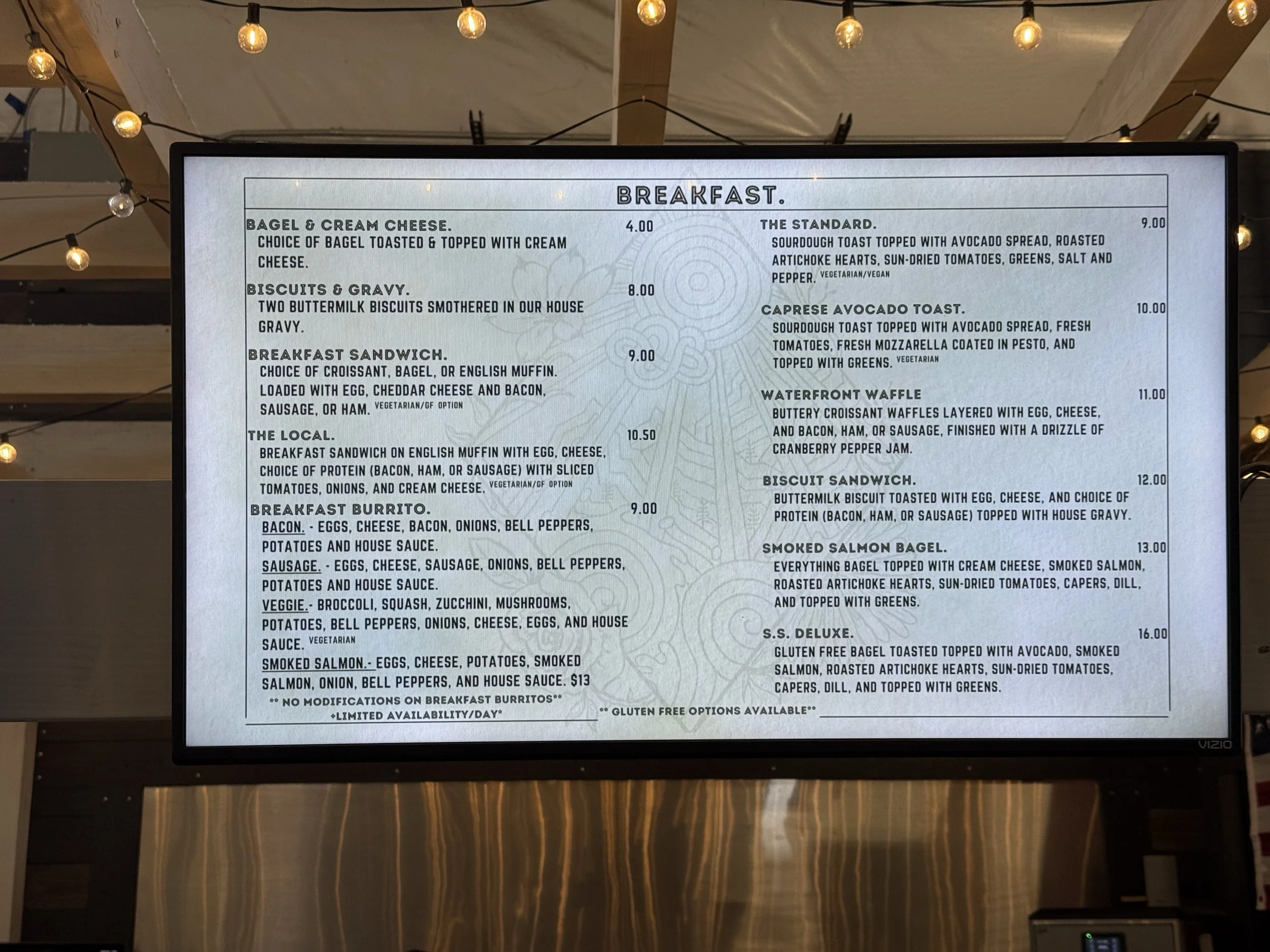
The Warehouse Coffee Cafe
On My List for Next Time
Alloro Wine Bar & Restaurant. Widely considered the most sophisticated dinner in town, with housemade pastas, local seafood, and an Italian and Oregon wine list. It's the one I'd book for a proper sit-down evening after a long shoot.
The Wheelhouse & Crowsnest. A long-running Old Town seafood and steak restaurant with views over the river.
Bandon Brewing Company. Wood-fired pizza and local beer, relaxed and family-friendly.
Coffee
Warehouse Coffee Cafe. Our spot, a cozy place in Old Town with breakfast sandwiches, rolls, wraps, burritos, and good coffee. It's the perfect stop for breakfast or lunch before heading out to shoot, and slow mornings here are part of the appeal of staying in Bandon.
Bandon Coffee Cafe. We stopped in here too. It's a nice place for coffee and breakfast, with plenty of breakfast sandwiches and bagels. It's a block from the boardwalk, with indoor and sidewalk seating for a longer stop.
Bandon Baking Co & Deli. In Old Town and family-run, it's known for bottomless coffee, which is exactly what you want after a pre-dawn shoot. We tried the desserts, and they were fine, but come here for the coffee and the bakery rather than for anything sweet.
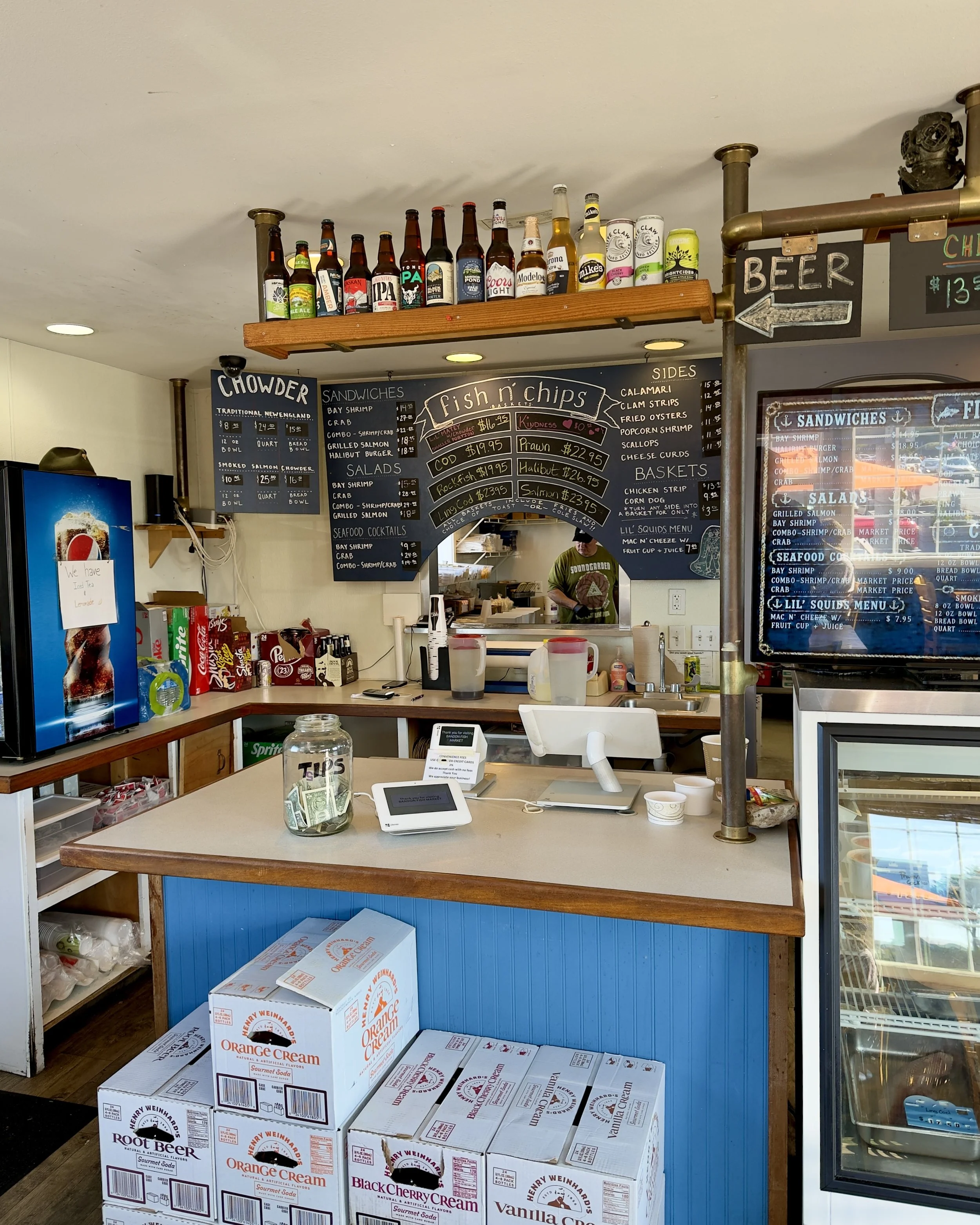
Bandon Fish Market
Photography Gear to Bring
Cameras
Bandon rewards a kit built around wide landscapes and long exposures more than portrait or street work. I shot with my Canon EOS R5 Mark II, and any modern full-frame mirrorless body, like a Sony A7R V or a Nikon Z8, handles the dynamic range of foggy mornings and backlit sunsets well. I also carried my Leica Q3, and it earned its place on the beach. Its 28mm lens is wide enough for the sea stacks, and the small, weather-sealed body is easy to carry on long walks along the sand. It's perfect for the moments you don't plan for: people silhouetted against the surf, a starfish in a tide pool, or the light changing faster than you can swap lenses.
Lenses
A 16–35mm is essential for Face Rock and the sea stacks, where you want the rocks anchored against a wide sky with tide pools in the foreground. A 24–70mm is your workhorse for Old Town, the boardwalk, and the lighthouse. A 70–200mm isolates individual sea stacks, compresses the lighthouse against the far shore, and lets you photograph shorebirds and harbor seals at Coquille Point without disturbing them.
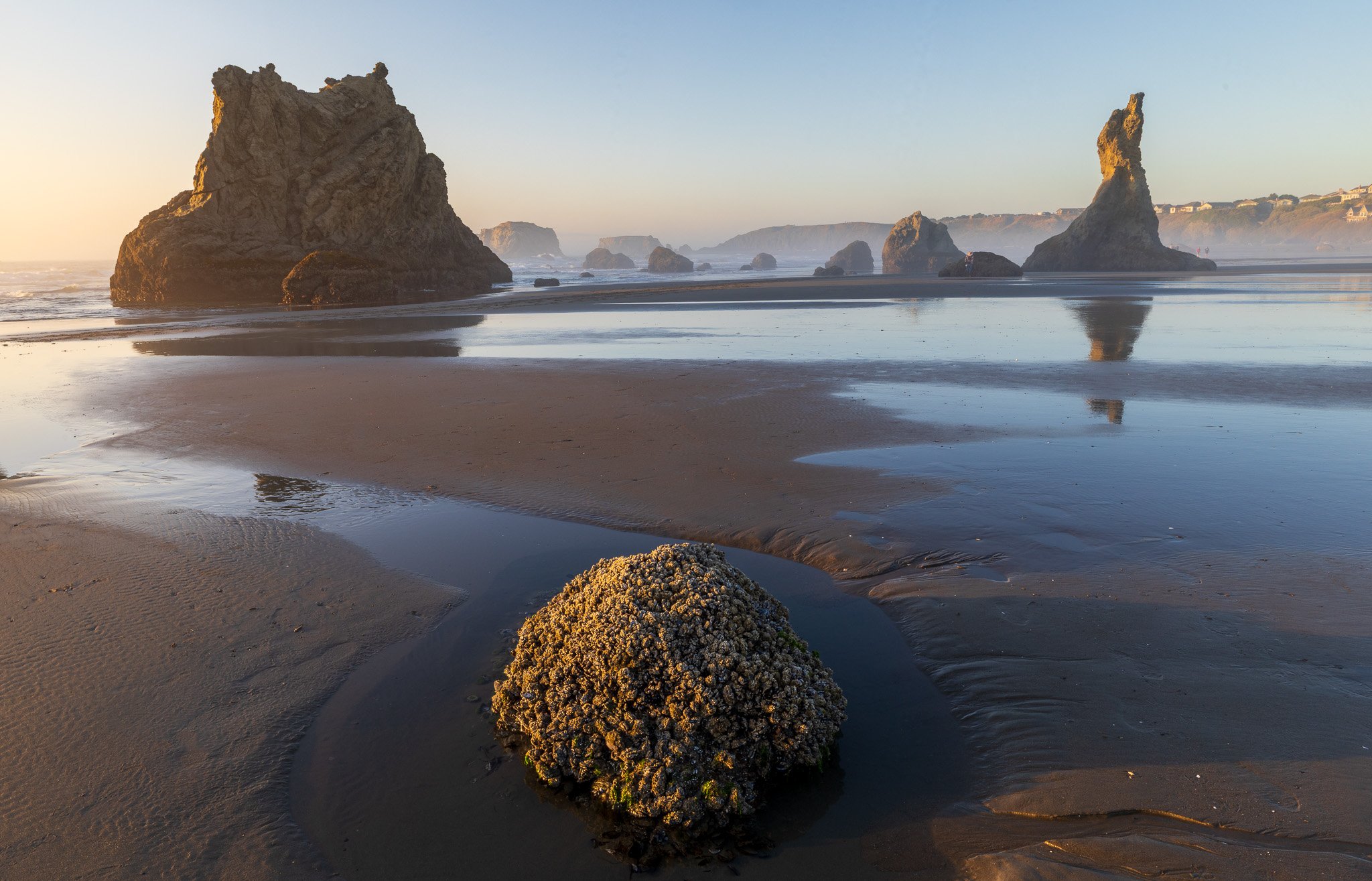
Early Morning on Bandon Beach
Accessories
Tripod. You'll need one for blue hour and any long exposure on the sea stacks, where a slow shutter turns the surf into mist around the rocks. Never turn your back on the ocean while you're set up. Sneaker waves arrive without warning, and a photographer focused on the viewfinder is exactly who they catch.
ND filters. Bring a 6-stop and a 10-stop. The 10-stop smooths moving water in bright light. The 6-stop is more forgiving at sunrise and sunset, when the light is already low.
Circular polarizer. Essential for the tide pools at Face Rock and Coquille Point. It cuts the glare off the water so you can see straight down to the color and texture below, and it takes the sheen off wet rock and deepens a hazy sky. But take it off, or turn it back, when you're chasing wet sand reflections at sunset. A polarizer kills reflections, which is exactly what you don't want in that shot. It also costs you a stop to a stop and a half of light, so plan for that at blue hour.
Rain cover, lens cloths, and a plan for sand. We had good weather, but this coast can turn damp quickly, and salt spray coats your front element near the stacks at high tide. Sand is the bigger threat. Change lenses in the car, not on the beach.
Drones
Leave the drone at home. Oregon State Parks prohibits drone takeoff and landing on state park property and on the public ocean shore, except in designated drone areas, and in Oregon the beach itself counts as the ocean shore. Coquille Point and the offshore rocks are part of a national wildlife refuge where seabirds nest, so they're off-limits too. If aerial shots matter to you, check for a designated drone area before your trip.
iPhone Tips
At Face Rock, use the standard 1x lens once the sun starts dropping. The ultrawide makes the sea stacks look small and distant instead of dramatic.
For smooth surf, shoot a Live Photo, then switch the effect to Long Exposure in your Photos app. It gives you silky water around the rocks without a tripod. At blue hour, brace your phone and let Night mode brighten the scene.
At Coquille Point, switch to the ultrawide to fit the headland and the wide sky into one frame, then crop later if you want something tighter.
On foggy mornings, shoot in ProRAW if you have a Pro iPhone. The files take up more space but give you far more room to pull detail out of the sky and rocks when you edit.
For drizzle, a simple rain sleeve or a zip-top bag over your phone works fine.
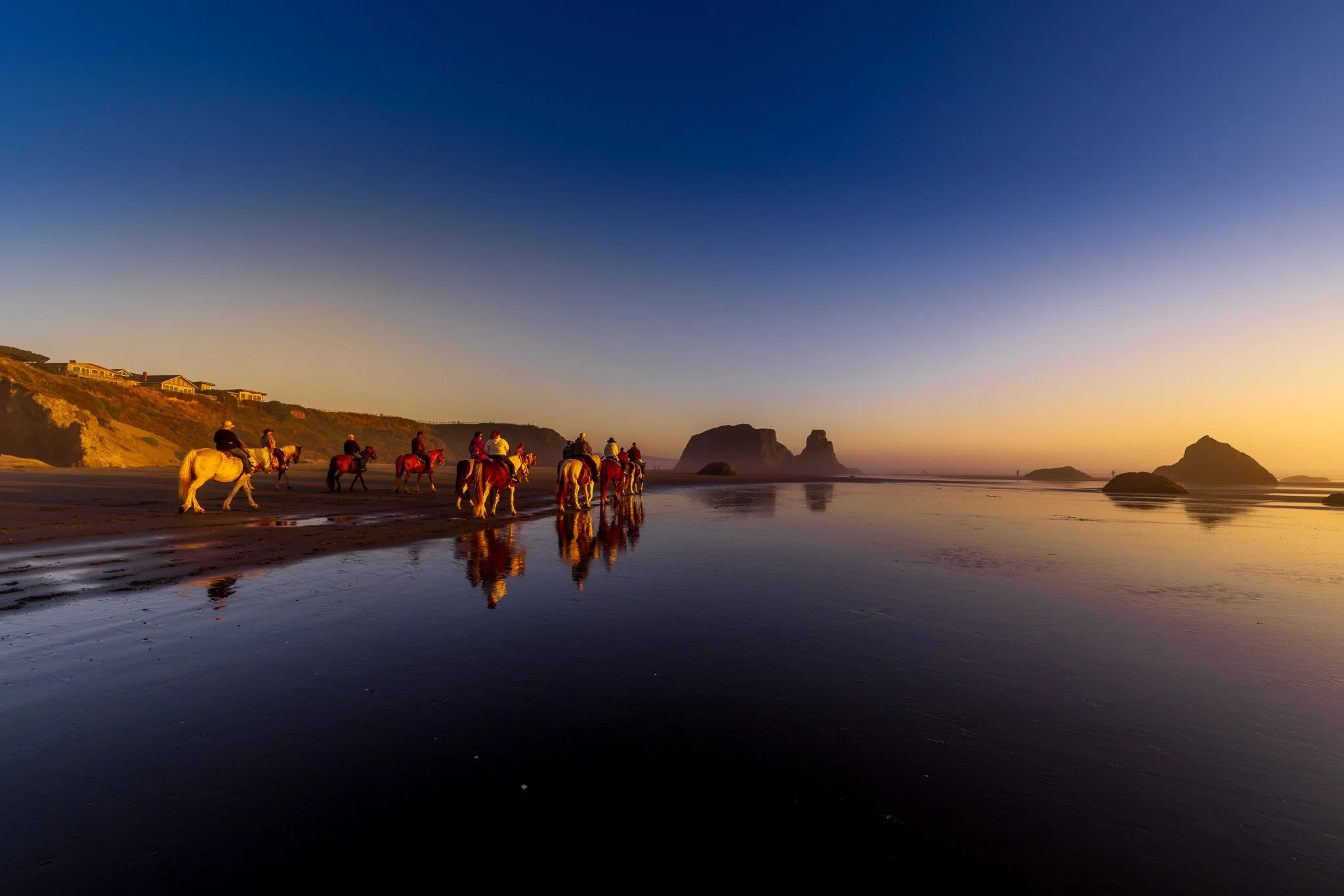
Horses on Bandon Beach
Best Photography Locations
Face Rock State Scenic Viewpoint
Face Rock is the single image most people associate with Bandon, and it earns the reputation. Unlike Cannon Beach, where Haystack Rock dominates the whole scene, this stretch of coastline scatters dozens of rock formations across the beach. The main formation gets its name from a profile that seems to look up toward the sky, but don't fixate on it. Walk the beach and look for separation between the different rocks instead of chasing one obvious postcard shot.
Beach access is on the left side, where a stairwell drops you right down among the rock formations. We find this the easier of the two spots to start from before working over to the Bandon Beach viewpoint nearby, which gives you the bigger, wider view instead. The two are only two to three minutes apart by car, so you can bounce between them without losing much time.
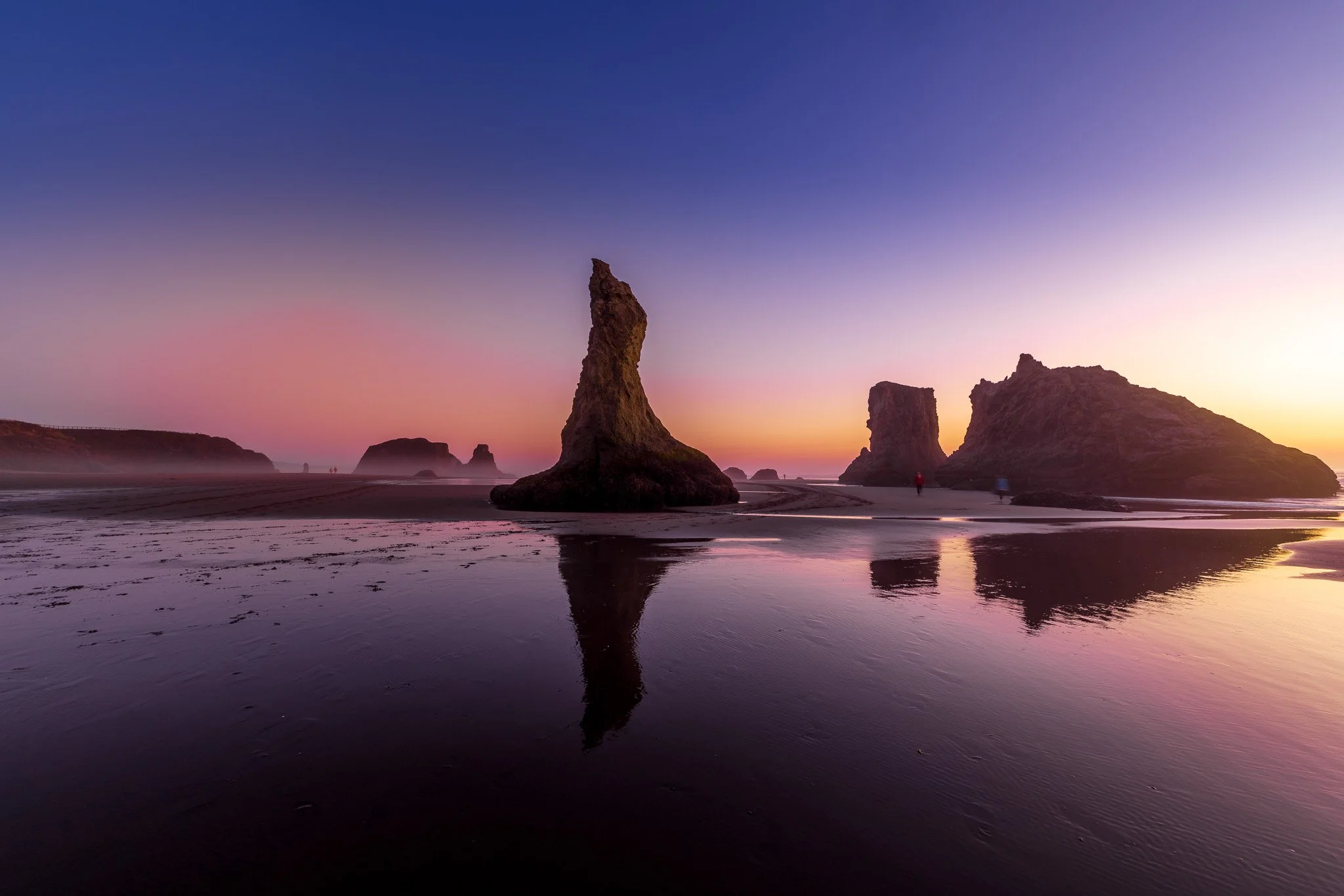
Sunset on Bandon Beach
The light here is best low and angle-dependent: sunrise backlights the rocks in silhouette, while sunset lights the faces of the stacks directly if the sky is clear. Fog changes the whole mood, softening the formations into shapes rather than sharp rock. If you can only shoot one session here, make it sunset; it's the stronger of the two. For sunrise, don't arrive too early. It takes time for the sun to clear the ridgeline, and until it does, the beach stays dark.
📷 Pro Tip: Go down to the beach rather than shooting from the top of the bluff; the low angle makes the sea stacks feel monumental instead of distant. A 16 to 35mm lens works well for foreground-to-sky compositions at low tide, when you can walk out among the smaller rocks. For a tighter, more graphic shot of Face Rock alone, switch to 70 to 200mm and compress it against the horizon. Stay past sunset. Some of the best color here happens after the sun disappears, and blue hour gives the sea stacks a completely different mood than the warm light before it. Check the tide before you go: a low or receding tide exposes more beach and creates the wet sand reflections that make this location work, and the beach narrows fast at high tide.
Best time: One hour before sunset through blue hour, or sunrise. Access: Free, small parking lot. Off Beach Loop Drive south of Old Town.
Coquille Point
North of Face Rock, Coquille Point is the mainland unit of the Oregon Islands National Wildlife Refuge, with a paved, accessible trail across the headland and interpretive panels on the wildlife and Coquille history. This is less about one dramatic composition and more about texture: sea stacks close offshore, wind-bent grass, and reliable seabird and harbor seal activity.
📷 Pro Tip: Bring the 70 to 200mm here specifically for the wildlife; seabirds nest on the closer rocks and harbor seals haul out at low tide. Keep your distance and don't approach nesting areas, both for the animals and because it's the more respectful way to shoot here. Morning fog rolling through the headland grass makes for some of the softest, most atmospheric frames in this entire guide if you're patient enough to wait it out.
Best time: Morning, especially when fog is present. Access: Free, paved trail. Just north of Face Rock off Beach Loop Drive.
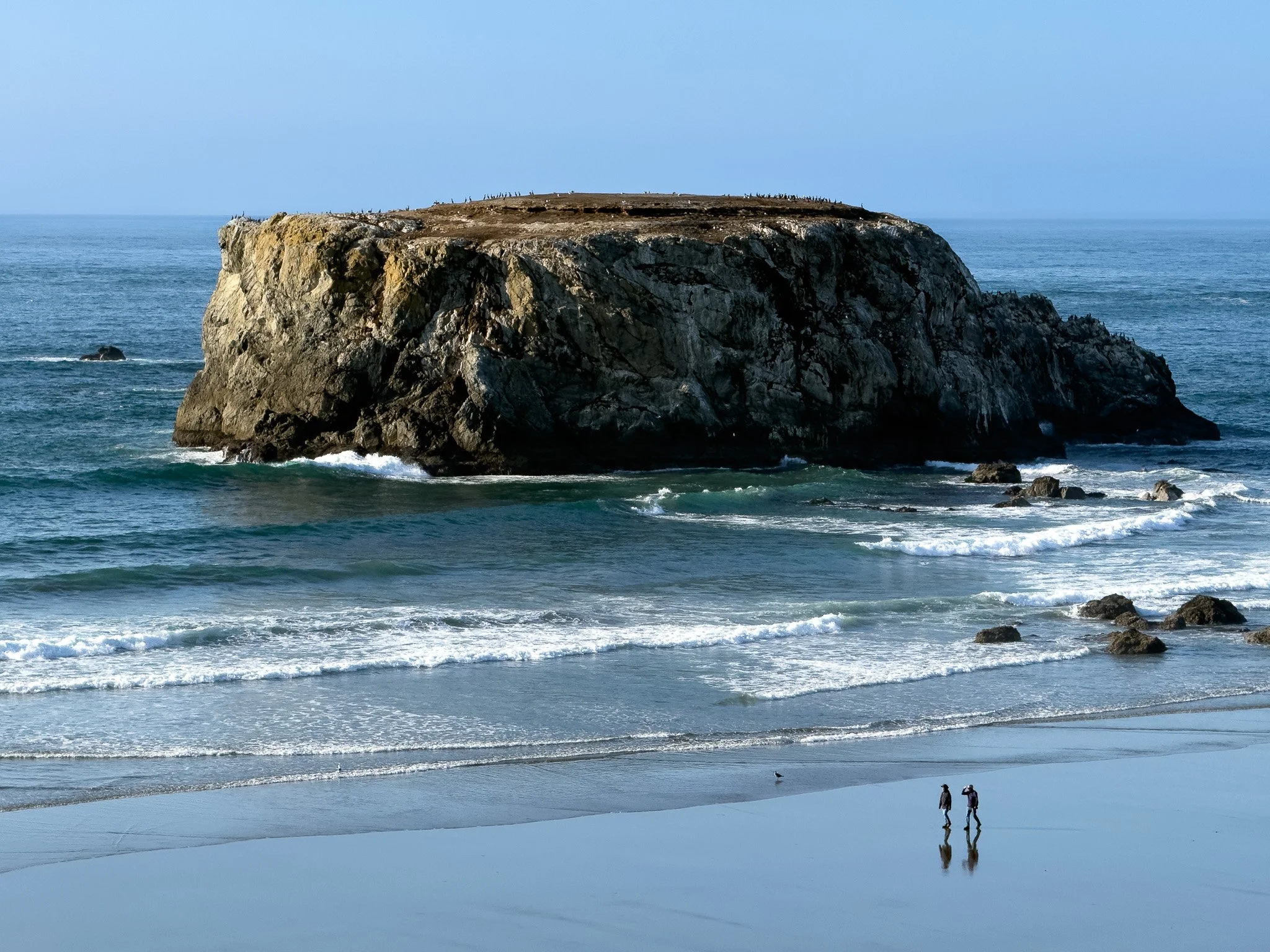
The Table Rock in Coquille Point
Bandon Marsh National Wildlife Refuge
Just north of town at the mouth of the Coquille River, this refuge protects the largest tidal salt marsh in the estuary, and it's a different kind of stop than anything else on this list. No sea stacks, no crashing waves, just mudflats, salt grass, and birds. Fall puts you in the middle of shorebird migration, when sandpipers, plovers, and dunlin move through in numbers, alongside resident bald eagles and California brown pelicans working the estuary.
The main overlook off Riverside Drive gets you views of the marsh and sky without much walking, and the Myrtlewood Trail on the Ni-les'tun Unit gives you a quieter side trip through a different habitat if you want a break from the open marsh.
📷 Pro Tip: Bring the longest lens you own. This is not a wide-angle location, and birds at a distance across a mudflat need real reach, 400mm and up if you have it. Early morning and late afternoon are best, both for softer light and for bird activity, since the marsh goes quiet in the middle of the day. Patience matters more than gear here. Find a spot near the overlook, stay still, and let the birds come back into frame instead of chasing them.
Best time: Early morning or late afternoon, especially during fall migration. Access: Free, two units with an overlook and boardwalk trails. Riverside Drive, just north of Bandon.
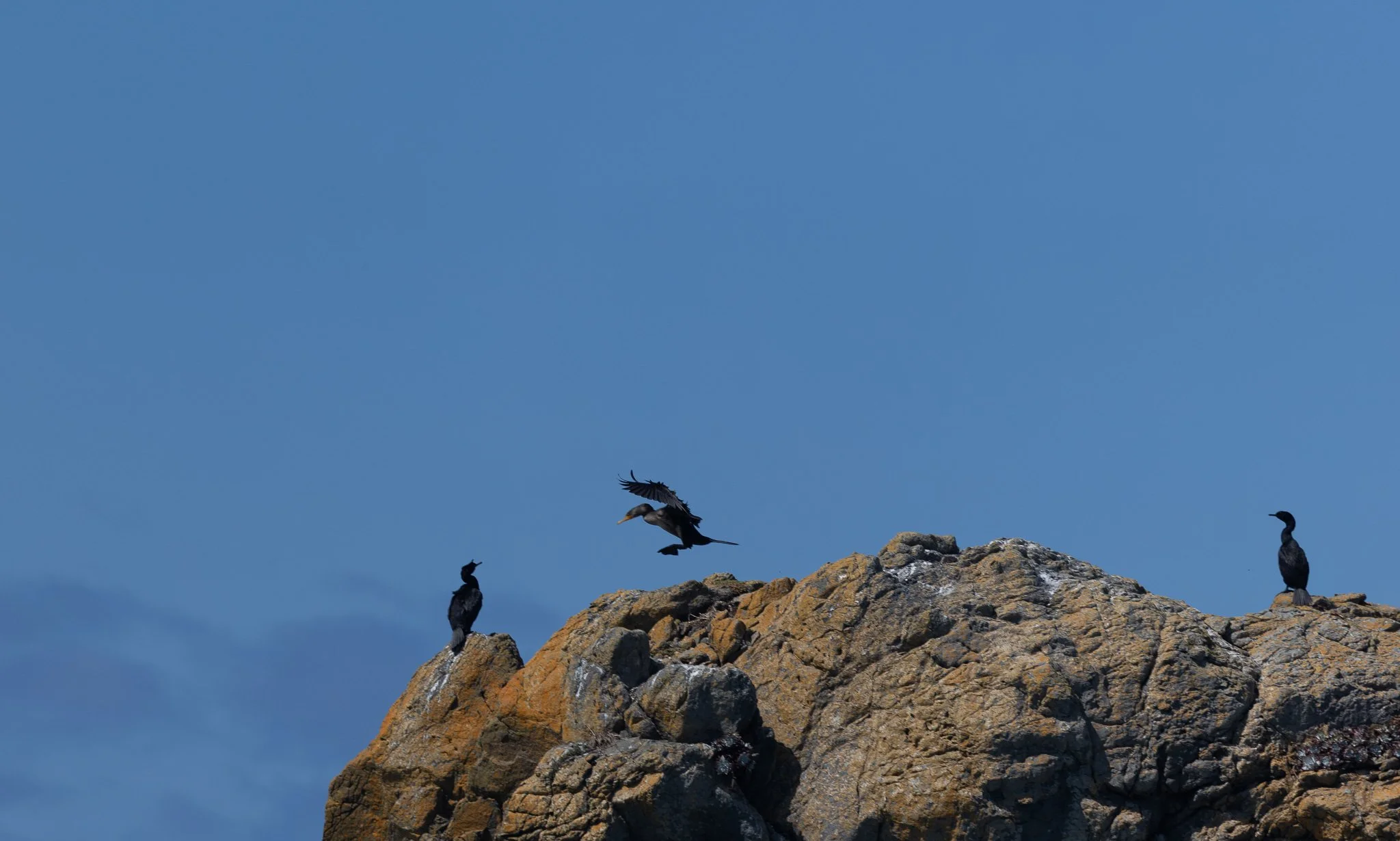
So many sea birds
Coquille River Lighthouse, Bullards Beach State Park
Originally named the Bandon Light, this lighthouse has stood at the mouth of the Coquille River since 1896, decommissioned in 1939 and restored starting in 1976. It now sits inside Bullards Beach State Park, reachable by turning off Highway 101 onto Bullards Beach Road and following it to the end.
The classic shot is from directly below the lighthouse, but the view across the river from Bandon's South Jetty Park, on the opposite bank, gives you the lighthouse with the town and boat traffic in the frame, which tells more of the story of the place.
📷 Pro Tip: Shoot from South Jetty Park for a wide environmental shot with a 24 to 70mm, including boats on the river for scale. Shoot from the Bullards Beach side with a longer lens for a tighter, more graphic composition of the tower itself against the sky. Sunset lights the lighthouse warmly from the west; a light fog morning gives you a softer, moodier version of the same shot. I shot this one entirely from the outside and did not take the interior tour, so I cannot speak to that experience firsthand.
Best time: Sunset for warm light on the tower, or foggy morning for mood. Access: Free to view from the outside. Bullards Beach Road off Highway 101, north of Bandon.
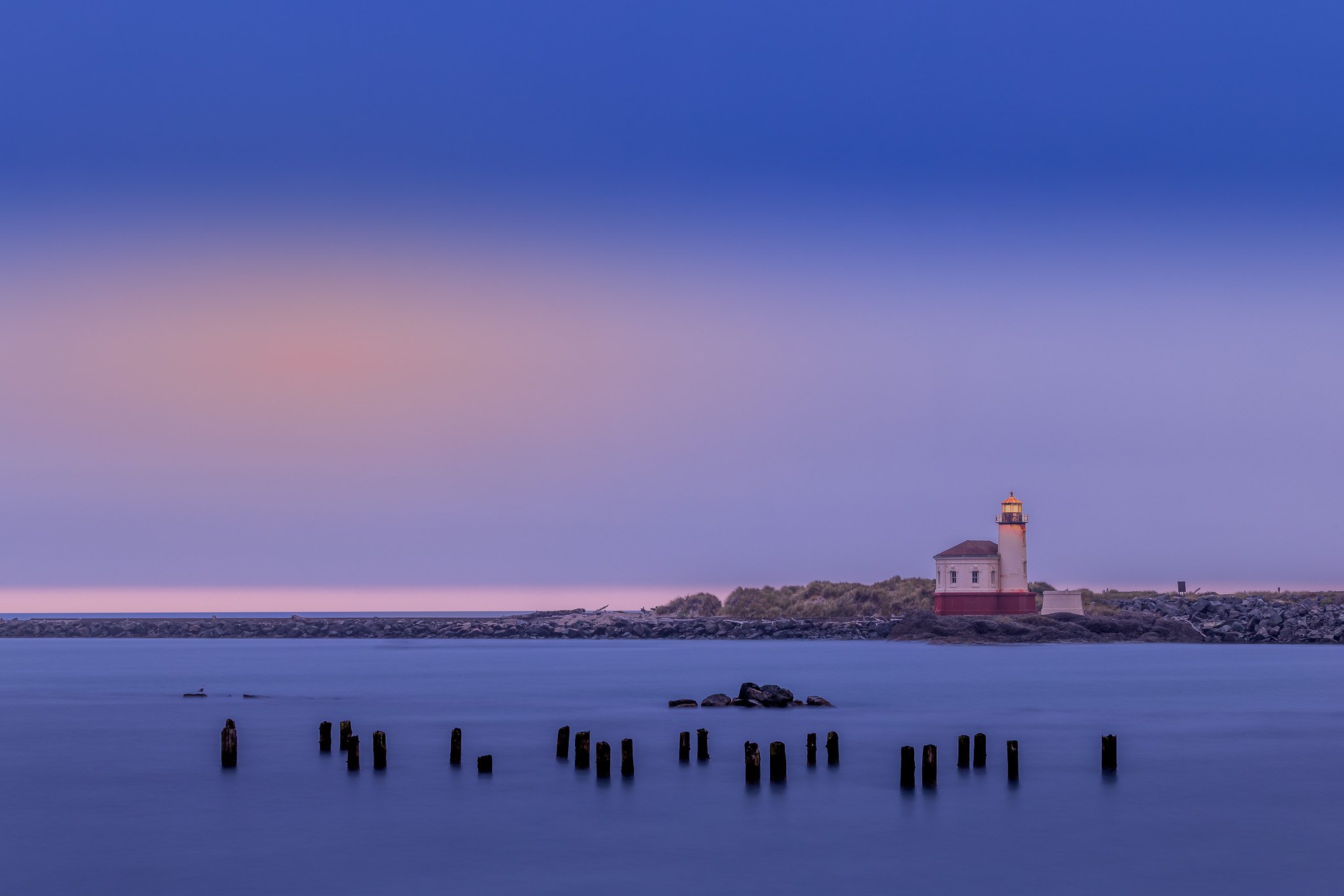
The Coquille River Lighthouse at Sunset
Old Town Bandon and the Harbor Boardwalk
Old Town is ten blocks of shops, galleries, and restaurants built around a working harbor, and the boardwalk along the Coquille River is the town's most photogenic working space. Fishing boats, weathered pilings, and reflections on the water give you texture that the beach locations don't have.
📷 Pro Tip: Walk the boardwalk in late afternoon when boats are coming in and the light is warm and low across the water. A 24 to 70mm handles most of this well, but bring a longer lens if you want tighter compositions of boat details or reflections. Blue hour here, shot from the Bandon Inn's bluff or the boardwalk itself, turns the harbor lights into long streaks on the water with a tripod and a slow shutter.
Best time: Late afternoon into blue hour. Access: Free, public boardwalk. Central Old Town, walkable from most in-town lodging.
Bullards Beach State Park
Beyond the lighthouse, Bullards Beach itself is a wide, largely empty stretch of sand backed by forested dunes, offering a different feel from the sea-stack drama further south. It's also one of the better spots for horseback riding photos if you happen to catch riders on the beach, a genuine local activity here rather than a staged tourist shot.
📷 Pro Tip: Come for the scale and emptiness rather than a single iconic subject. A wide lens and a human figure or a piece of driftwood for scale turns this into one of the more contemplative images in the set. This is also state park property, so the same drone restrictions noted in the gear section apply here.
Best time: Morning or late afternoon, low tide for the widest sand exposure. Access: Free. Bullards Beach Road off Highway 101.
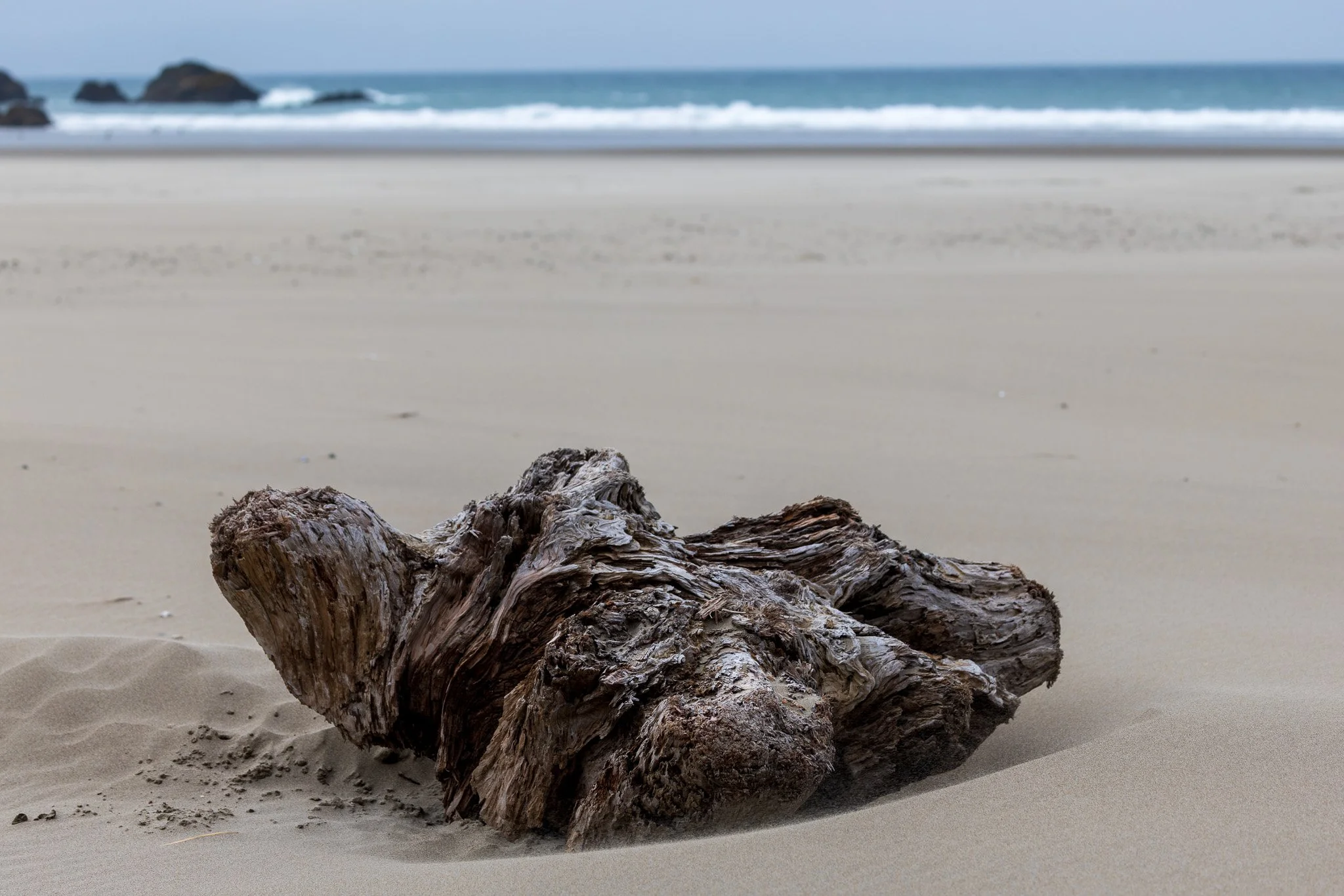
Driftwood on the shore
Shore Acres State Park (worth the drive)
About 45 minutes north of Bandon near Coos Bay, Shore Acres sits on sandstone cliffs roughly 80 feet above the Pacific, and it gives you a version of this coast you don't get in Bandon itself: dramatic ocean scenery paired with formal cultivated gardens in the same frame. The park was once the site of a timber baron's estate. The mansion is long gone, but the gardens survive, tended by volunteers, with something blooming nearly year-round.
Walk the garden paths first, then head out to the cliff overlooks, where waves work against sculpted sandstone ledges below you. An enclosed observation building sits on the site of the old mansion, useful if the wind picks up and you want a break without losing your vantage point.
📷 Pro Tip: Shore Acres is best known for winter storm watching, when swells can throw spray over 100 feet into the air, so temper your expectations outside of that season. Bring a wide lens for the garden beds and a mid telephoto for the cliff faces and sandstone texture. Late afternoon light rakes across the rock nicely.
Best time: Late afternoon; winter for storm watching. Access: Day-use fee required, paid at the entrance station or covered by the Oregon State Park Pass. About 45 minutes north of Bandon via Highway 101 and Cape Arago Highway.
Special Events & Festivals
Cranberry Festival, September — Bandon's longest-running festival, celebrating the region's cranberry farming with a parade through Old Town, a street dance, a classic car show, craft and food markets, and the well-known cranberry-eating contest. I was lucky enough to be in town during this one, and there was a lot happening all at once, more events packed into those few days than I expected from a town this size. This is Bandon at its most crowded and its most alive, with genuine small-town color that photographs well if you lean into the parade and the crowd rather than fighting it. Arrive early to claim a spot along the parade route on Highway 101 and through Old Town.
Bandon Crab Fest, summer — A celebration of the local crab industry with food, live music, and a genuinely local crowd rather than a tourist production. Good for food and portrait-style photography of vendors and cooks at work.
Fourth of July — A parade through Old Town by day and fireworks over the Coquille River by night, visible from the Bandon Inn's balconies and much of the harbor. Tripod and a longer exposure for the fireworks over the water is the move here.
Night of 10,000 Lights, Thanksgiving weekend — A tree-lighting ceremony that kicks off the town's holiday season, with Old Town lit up through December. A quieter, more intimate event, good for slower blue-hour work around the harbor.
Etiquette note: Bandon's festivals are genuinely local events, not staged for visitors. Photograph the parade and the crowds respectfully, ask before making a tight portrait of a vendor or a participant, and keep in mind this is a small community celebrating its own history.
FAQ
Do I need a car in Bandon? Yes. Old Town is walkable on its own, but Face Rock, the lighthouse, Bullards Beach, and Coquille Point are all a short drive apart. Rideshare coverage here is thin, so plan on renting a car rather than relying on it.
Can I fly a drone at Face Rock or the other locations in this guide? No, not at Face Rock, Coquille Point, or Bullards Beach State Park. Drones are not allowed in national or state parks, and that covers most of the prime shooting locations in this guide. Save the drone for spots outside park boundaries.
How many days should I spend in Bandon for photography? Two to three days. Two covers the core locations at a relaxed pace. Three gets you both a sunrise and multiple sunsets at Face Rock instead of just one.
What's the best time of day to shoot Face Rock? Sunset, if you can only pick one session. Stay through blue hour too, since some of the best color shows up after the sun is down. Sunrise works as well, but the beach stays dark until the sun clears the ridgeline, so don't arrive too early expecting light.
Is Bandon good for iPhone photography, or do I need a full camera kit? Both work well here. Night Mode handles blue hour at Face Rock, and ProRAW is worth the file size on foggy mornings. A full kit gives you more reach for wildlife at Coquille Point and Bandon Marsh, but you will come home with real images either way.
When is the best season to visit for photography? Fall, from September through November. Good weather, comfortable temperatures, thinner crowds after Labor Day, and the Cranberry Festival adds some local color in September.
Final Thoughts
I have photographed a lot of this coast, including plenty of time down in the Gold Beach and Brookings area, and if you told me I could only choose one beach in Oregon to shoot for the rest of my career, I would pick Bandon Beach without thinking twice.
It comes down to how easy it is. You park, walk down a short set of stairs, and you are standing on the sand. No scramble down a bluff, no long hike to earn the shot. And once you are down there, the beach just keeps giving you new pictures. The sea stacks alone would be worth the trip, but then you have starfish and tide pool life at your feet, people walking the beach for scale and story, and at sunrise and sunset the low light throwing shadows across the sand that become their own subject. You could shoot this beach every morning and evening for a week and never repeat yourself.
That is the real case for Bandon. It is not one perfect shot you check off and leave. It is a beach that rewards you for coming back.
My Photography & Travel Guide to Portland, Oregon. A natural bookend to this trip. Most drives down the Oregon coast start in Portland, and a couple of days there first gives you a completely different kind of shooting, city streets, bridges, and food, before you head west to the coast.
My Photography & Travel Guide to Cannon Beach: The other iconic sea stack beach on this coast, anchored by Haystack Rock. If Bandon is the beach you keep coming back to for variety, Cannon Beach is the one everybody should see at least once for that single, unmistakable formation.
My Photography & Travel Guide to the Oregon Coast: The full picture. This guide covers the whole drive, Bandon included, so if you want the complete route rather than a single stop, start here.
Want to improve your photography while exploring some incredible destinations? Join me on one of my photography workshops! You can find all the details, including upcoming destinations and dates, through the links below.
Let's Stay Connected!

🎓 Adobe Lightroom One-to-One Training
Master Post-Processing. Elevate Your Photography.
Post-processing is the final — and arguably most transformative — step in your photography workflow. Adobe Lightroom is an essential tool for today’s digital photographers, combining powerful editing tools with an intuitive system for organizing and showcasing your images professionally.
Whether you're just getting started or looking to refine your editing skills, I offer customized one-to-one Lightroom training designed to help you create images you’ll be proud to share.
---
💻 Why One-to-One Online Lightroom Training?
Over the years, I’ve found that personalized training is the most effective way to learn Lightroom. Unlike group sessions, a one-to-one format allows us to move at your pace, focus on your specific goals, and eliminate the frustration of mismatched experience levels.
Plus, with online sessions via Zoom, you can learn from the comfort of your home — no travel or accommodation needed. It's the most convenient, cost-effective, and time-efficient way to upgrade your editing game.
---
🧠 Tailored Topics to Match Your Goals
Our training is completely customizable, but here’s an outline of the modules we can cover — either in full or à la carte.
---
🔧 Lightroom Setup – Part 1: Getting Started
Set up Lightroom properly for long-term success. We’ll tackle the fundamentals to create an efficient, organized workflow:
- What Lightroom is (and isn’t)
- How the interface and modules work
- Setting preferences for your needs
- Understanding the Catalog and folder system
- Importing images efficiently
- Adding keywords during import
---
🗂 Lightroom Setup – Part 2: Organize Like a Pro
Build a storage system that grows with you:
- Folder structure tips and best practices
- Moving and renaming files within Lightroom
- Reviewing, rating, and filtering images
- Creating Smart Collections and Collection Sets
- Keywording strategies and metadata organization
---
🎨 Lightroom Editing – Part 1: Core Editing Skills
Master the Develop module and create consistent, polished images:
- Global adjustments in the Basic panel
- White balance, contrast, vibrance, and saturation
- Cropping and converting to black & white
- HSL panel tuning
- Sharpening and noise reduction
- Creating and saving presets
- Exporting for print, web, or social media
---
✨ Lightroom Editing – Part 2: Advanced Techniques
Take your editing to the next level with creative, selective tools:
- Radial and Gradient filters
- The Adjustment Brush
- Advanced masking and luminosity adjustments
- Enhancing portraits (skin, eyes, teeth)
- Spot removal and basic cloning
- Merging for HDR and panoramas
---
💼 Session Details & Pricing (USD)
Tailored One-to-One Lightroom Tuition:
- Single Session (2 hours): $199
Before our session, we’ll have a brief consultation to customize your training plan and ensure it meets your exact needs.
---
Ready to take control of your editing workflow and bring out the best in your images?
Let’s work together to turn your vision into vivid, powerful photos.
📩 Get in touch to schedule your personalized Lightroom session.

Join Me for a DC Evening Monuments Photography Workshop!
📸 Washington, DC Evening Monuments Photography Workshop
$99 per person | Max 6 participants or $199 Private
Love photography and iconic views? Then grab your camera and join me for a golden hour photo walk through Washington, DC’s most breathtaking monuments—right as the city lights up!
Throughout the year, I host small group workshops and offer private walking photo tours (1–6 people) tailored to your style and pace. But this group workshop is a crowd favorite: a two-hour guided adventure as we chase reflections, long exposures, and those postcard-perfect twilight shots.
Who This Workshop Is For
Beginners who want to learn how to use their camera
Travelers visiting DC
Photographers who want iconic shots without crowds
What You’ll Learn:
Getting to Know Your Camera and Settings
Creative composition tricks to elevate your shots
How to work with changing light, reflections, and motion
Long exposure tips for amazing nighttime images
We’ll Photograph DC Icons Like:
The Jefferson Memorial
Lincoln Memorial
Washington Monument
The US Capitol
The White House
and a few other locations
Where We Meet:
We’ll start near the Tidal Basin. Parking is available at the lot near Floral Park (by the paddle boats on Maine Ave—click here for the map).
Recommended Gear:
Bring a DSLR or mirrorless camera with interchangeable lenses (think 24-70mm or 24-105mm), a sturdy tripod, and, if you have them, an ND filter and remote shutter release. I’ve got one tripod to lend—just email me ahead of time to reserve it.
All Skill Levels Welcome!
Whether you're just getting comfortable with your camera or looking to take your skills to the next level, this workshop is designed for you. I’ll guide you step-by-step—from finding the right settings to composing striking shots—so you can feel more confident behind the lens and come away with photos you'll be excited to share.
Fitness Level: Easy Breezy
No hills, no hustle—just a relaxed stroll on paved paths with plenty of photo stops.
What’s Included:
• Personalized instruction in the field
Weather Policy
What happens if it rains? DC weather in spring and fall can be unpredictable. We can reschedule.
Cancellation Policy:
• Full refund if canceled 48+ hours in advance
• No refund for late cancellations unless your spot is filled
Have Questions or Want to Book a Private Tour?
Email me directly at vito@chasinghippoz.com
*Contact me to schedule your session