Oregon Coast Travel & Photography Guide: Best Photo Spots, Things to Do & Hidden Gems
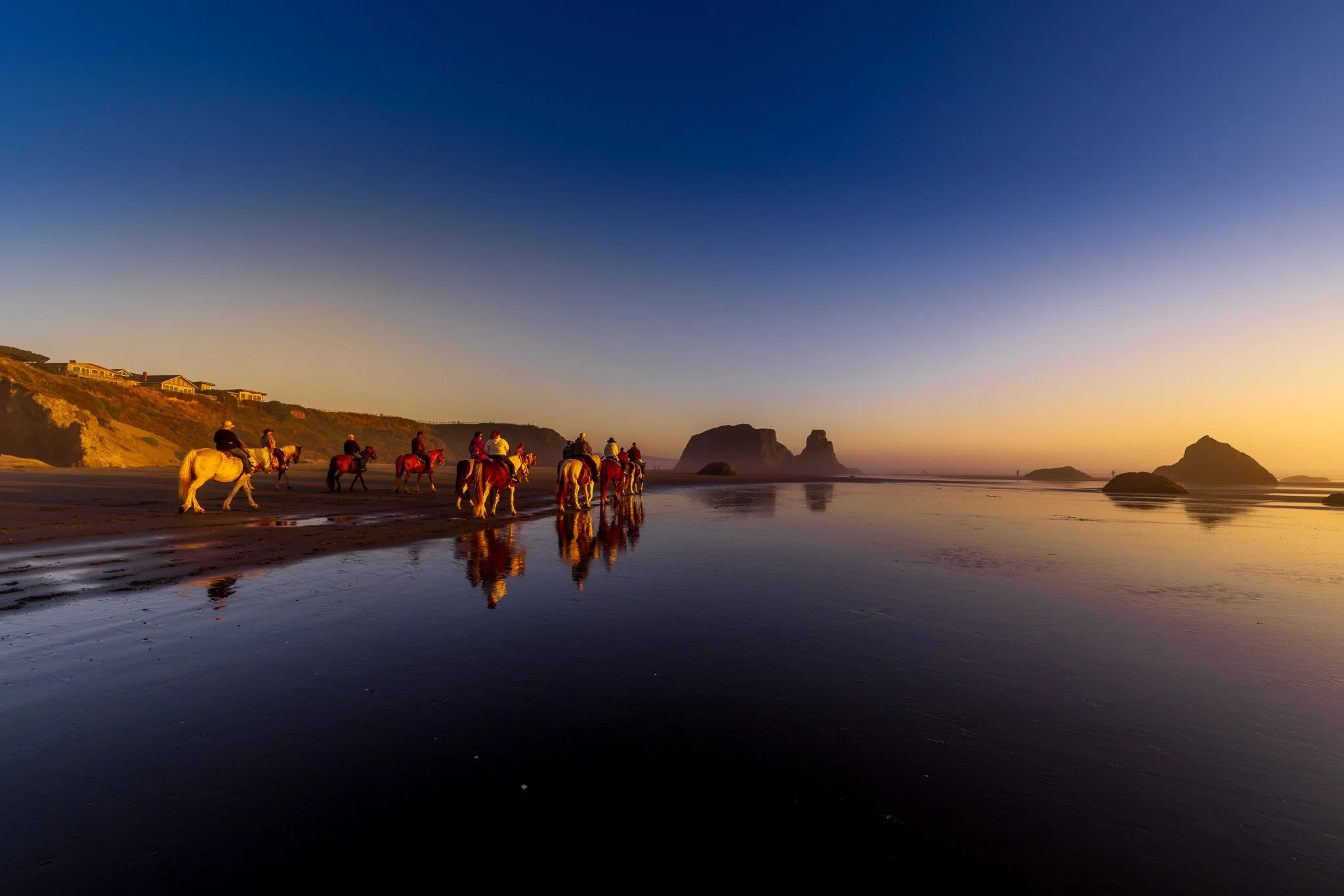
I remember our first morning on the coast clearly. Our rental in Bandon sat right on the beach, close enough that Face Rock stood out in the distance the moment we stepped outside. A line of riders moved down the sand on horseback, unhurried, while the morning light stayed soft and gray. That was my welcome to the Oregon Coast, and it set the tone for everything that followed.
We spent almost three weeks in the Pacific Northwest. After four nights in Portland, we drove to Bandon for two nights, then continued south to Gold Beach. We'd planned seven nights there, which turned out to be too many, so we left after five, and the extra time gave us a chance to drive into California to see the redwoods. We then went back to Bandon for two more nights, spent a night in Florence, and finished with two nights in Cannon Beach before driving on to Seattle.
Highway 101 rewards the traveler who pulls over at every unmarked turnout, because there's usually a reason someone parked there. Sea stacks rise straight out of the Pacific. Lighthouses sit above forested cliffs. Small fishing towns appear between long stretches of empty beach, and the light changes so often through the day that the same spot can give you three completely different photographs before lunch.
What makes this coast so photogenic is the contrast. You get soft, foggy mornings that flatten the light into something moody and quiet, then sudden breaks of gold as the sun drops toward the water. You get texture everywhere, in the driftwood, the basalt cliffs, and the moss on the rainforest floor just a few miles inland. And you get scale. Haystack Rock and the sea stacks along the Samuel H. Boardman corridor make people look small in the frame in a way that tells the whole story without a caption.
In this Photography Guide to the Oregon Coast, I share the places and experiences that made this one of my favorite road trips. You will find my favorite photography locations, guidance on when and where to shoot, practical travel tips, and gear recommendations, along with cultural insights to help you explore and photograph the Oregon Coast with confidence, respect, and ease.
Where to Stay
Don't base yourself in one town for this trip. The coast stretches for hours, and the best photography locations are spread out. Think of your stay in stages instead: Cannon Beach in the north, Florence or Newport on the central coast, Bandon in the south, and Gold Beach or Brookings if you're chasing the far southern coast near Samuel H. Boardman. Staying close to the water in each stage means you can react to the light instead of driving to catch it. On this trip, we rented homes in Bandon, Gold Beach, and Florence, and stayed in hotels in Portland, Cannon Beach, and Seattle.
Luxury
Stephanie Inn, Cannon Beach. Oceanfront, a few steps from the beach, and refined and quiet, with gas fireplaces and soaking tubs in the rooms. Friends of ours stayed here, and after seeing their room, I'd call it the stronger hotel of the two in Cannon Beach, with nicer rooms than The Ocean Lodge. It's the closest thing to a true luxury stay in a town without many, and it's close enough to the sand for a sunrise walk before breakfast.
Headlands Coastal Lodge & Spa, Pacific City. If your route takes you through Pacific City, this is the property to know. It sits right on the beach, facing Pacific City's own Haystack Rock, and makes a comfortable base for the north-central coast.
Bandon Dunes Golf Resort, Bandon. I drove onto the property just to see it, and it's beautiful. If golf is part of your trip, this is where you stay. For photography, you'll be driving in to the beach for sunrise and sunset, so weigh that against the setting.
Mid-Range and Boutique
The Ocean Lodge, Cannon Beach. This is where we stayed, and the reason to book it is simple: it puts you close enough to Haystack Rock that you can walk out the door and start shooting the moment the light turns. Service is friendly, breakfast is simple, and the rooms are large and clean but not fancy. Only the north-facing rooms have air conditioning, so ask when you book if that matters to you. And ask for a room with a Haystack Rock view. That's the whole point of staying here.
Windermere on the Beach, Bandon. Right on Bandon Beach, close enough to walk to Face Rock without getting in the car. Choose it if beachfront access matters more to you than polish.
Vacation Rentals
For the southern and central coast, I prefer a simple vacation rental over a hotel. We rented in Bandon, Gold Beach, and Florence, and each one gave us the flexibility to leave for a sunset shoot and come back late without worrying about front desk hours. The southern coast also has fewer boutique hotels than the north. In Bandon, look for a rental on Beach Loop Drive, close to Face Rock.
Ideal Duration and Our Itinerary
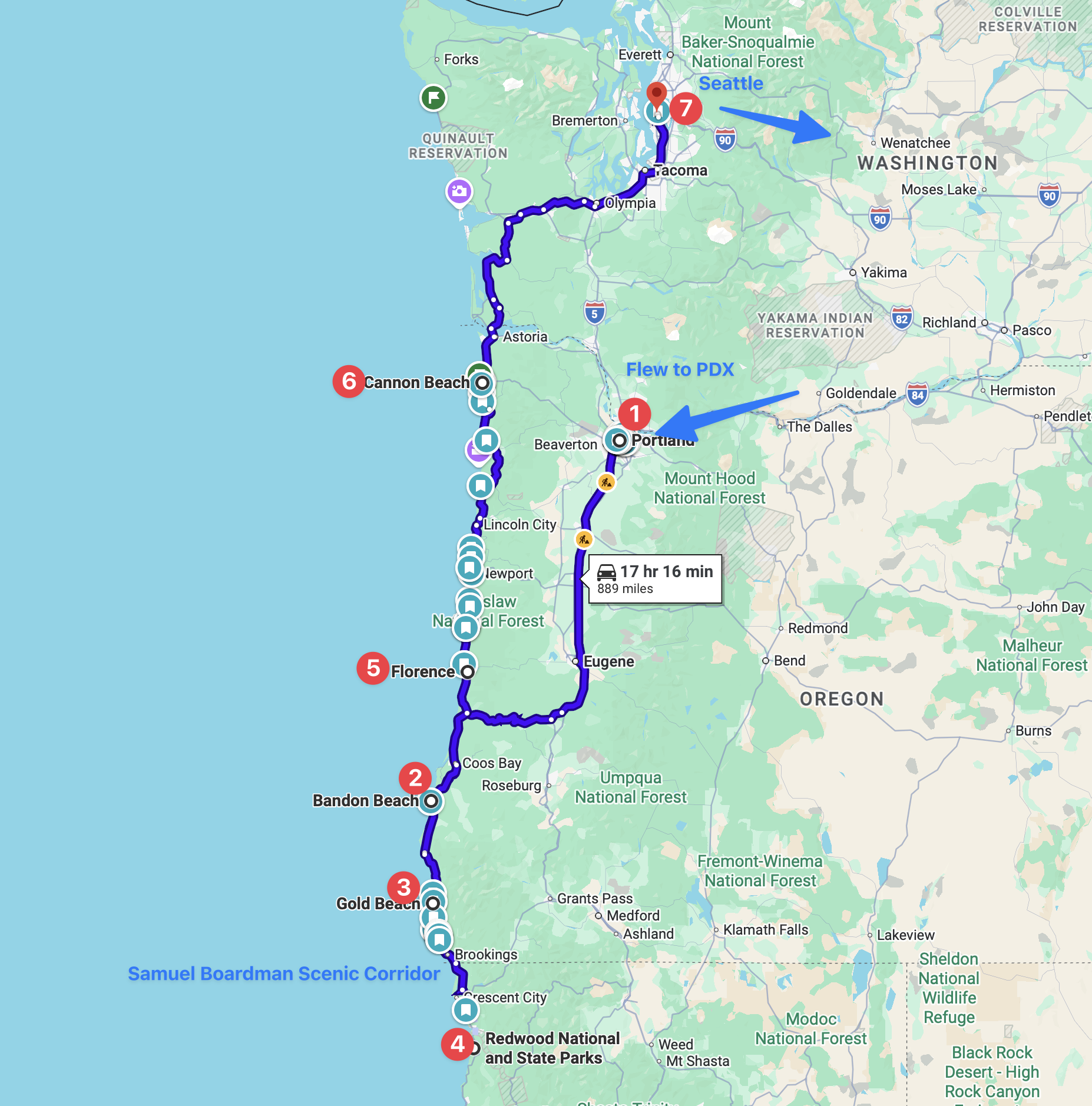
Plan on about two weeks for the Oregon Coast, and more if you can. Oregon has more than 360 miles of coastline, and you won't see it all in one trip. Weather will shape your plans too. More than once, we went back to a spot because the light hadn't cooperated the first time, instead of moving on to somewhere new. Build in slack for that. We spent 12 nights on the coast, plus four in Portland and three in Seattle. Here's how our route unfolded, and what I'd change.
Portland, 3-4 nights. We started in the city, then took I-5 south and cut west to the coast. The drive to Bandon took us almost five hours.
Bandon, 2 nights. Our first stop on the ocean, and still my favorite place on the coast to photograph. Our rental sat right on the beach, with Face Rock in view from the door.
Bandon to Gold Beach. Take your time on this drive. We stopped at Cape Blanco, the westernmost point in Oregon, to photograph the lighthouse, and the wind there was ferocious. Hold on to your tripod. We drove through Port Orford without stopping in town, but the sea stacks at the south end are worth a look. In Gold Beach, we stocked up at Ray's market, since we'd be cooking for the next few days.
Gold Beach, 5 nights. Gold Beach is your base for the Samuel H. Boardman corridor, and we photographed the whole stretch. Myers Creek Beach became our regular stop, and we went back several times for sunset. At Otter Point, you can see the coast without a walk. The Natural Bridges viewpoint is easy to reach, but I skipped the trail out onto the bridges, which felt too sketchy. Go earlier in the day if you can. Late in the afternoon, the coves fall into shadow and you lose the blue-green color of the water. We also stopped at Cape Ferrelo for the views and drove as far as Brookings before turning back. My favorite was Arch Rock. It's an easy stop, and the evening we were there, the light was perfect.
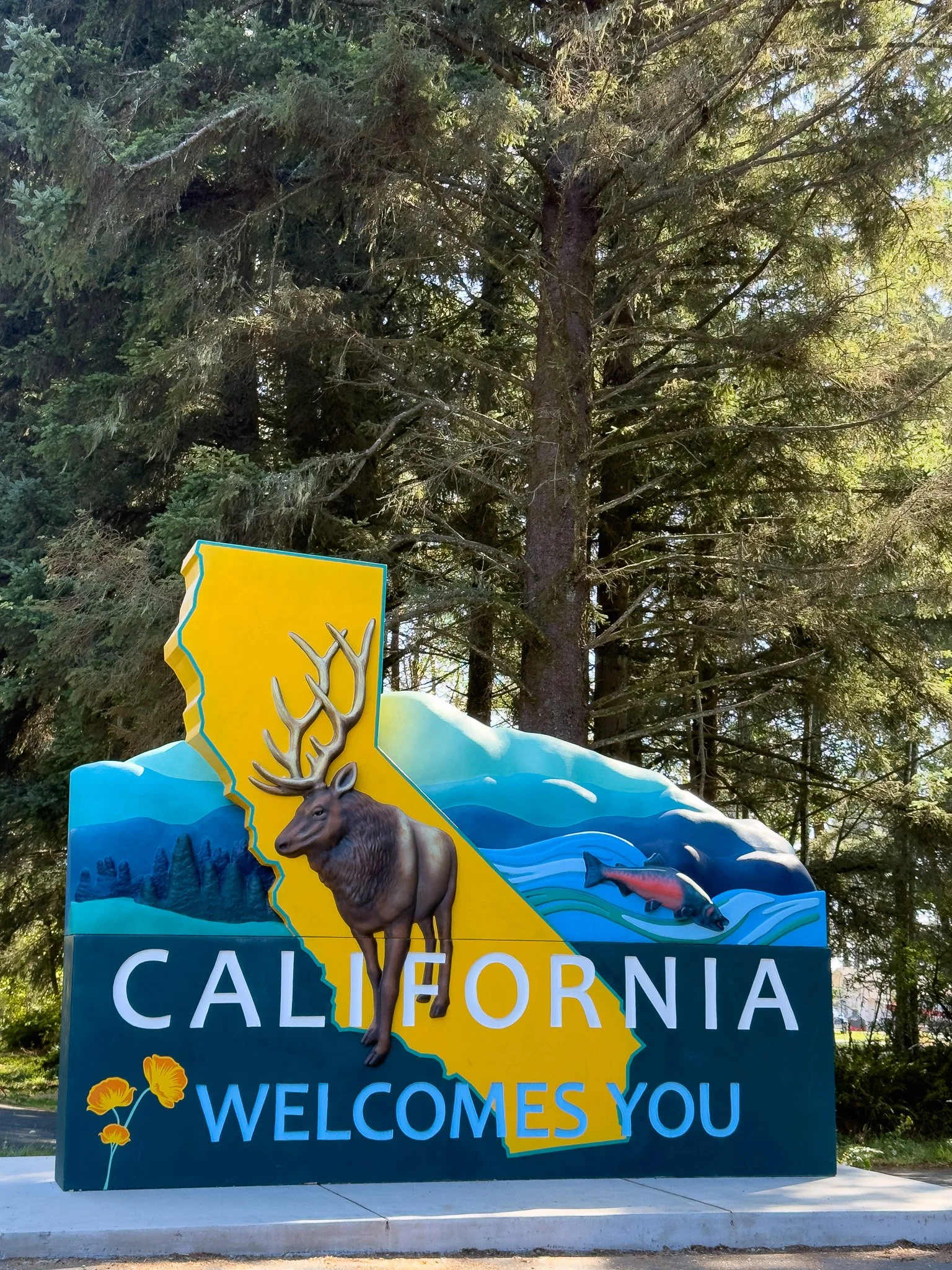
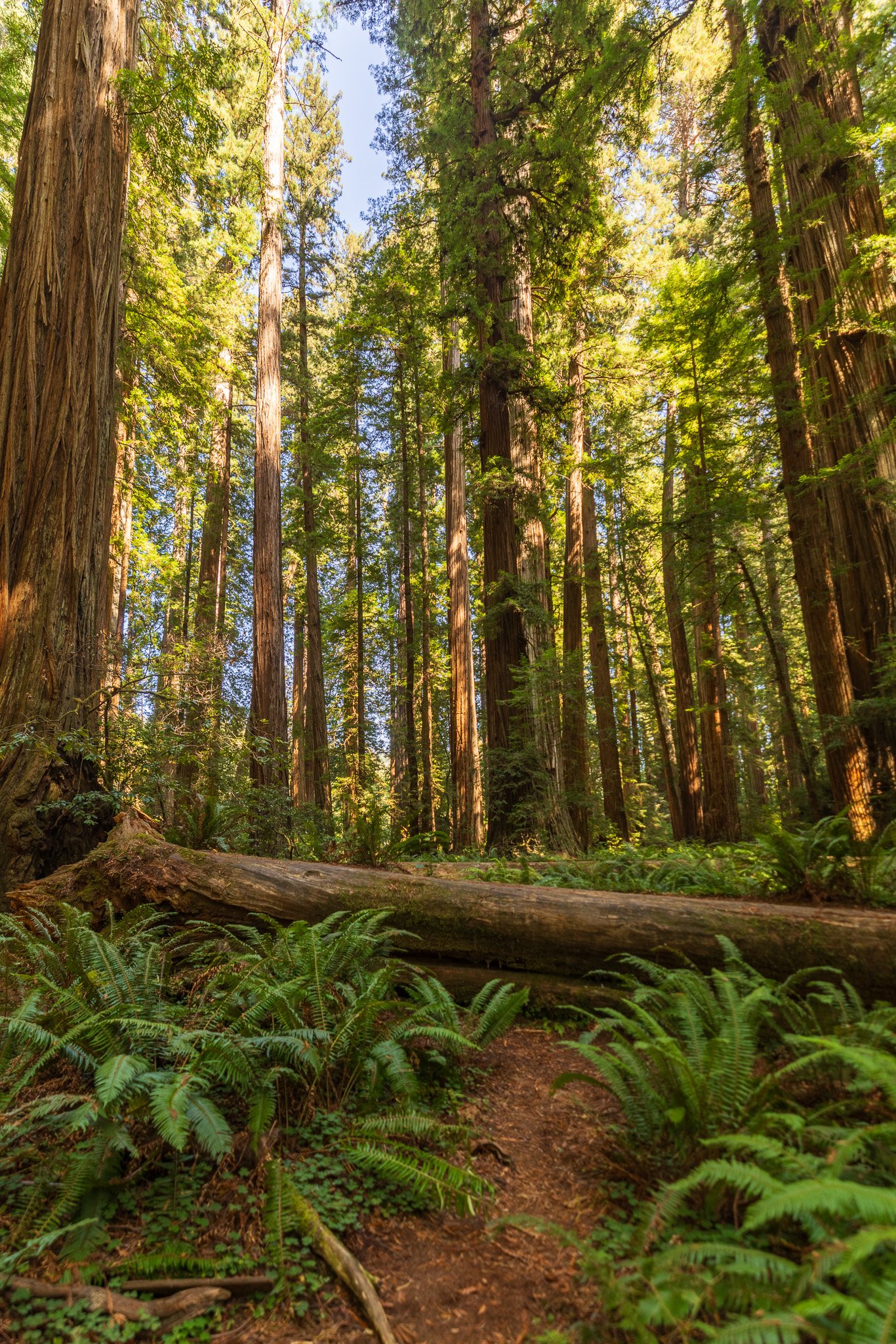
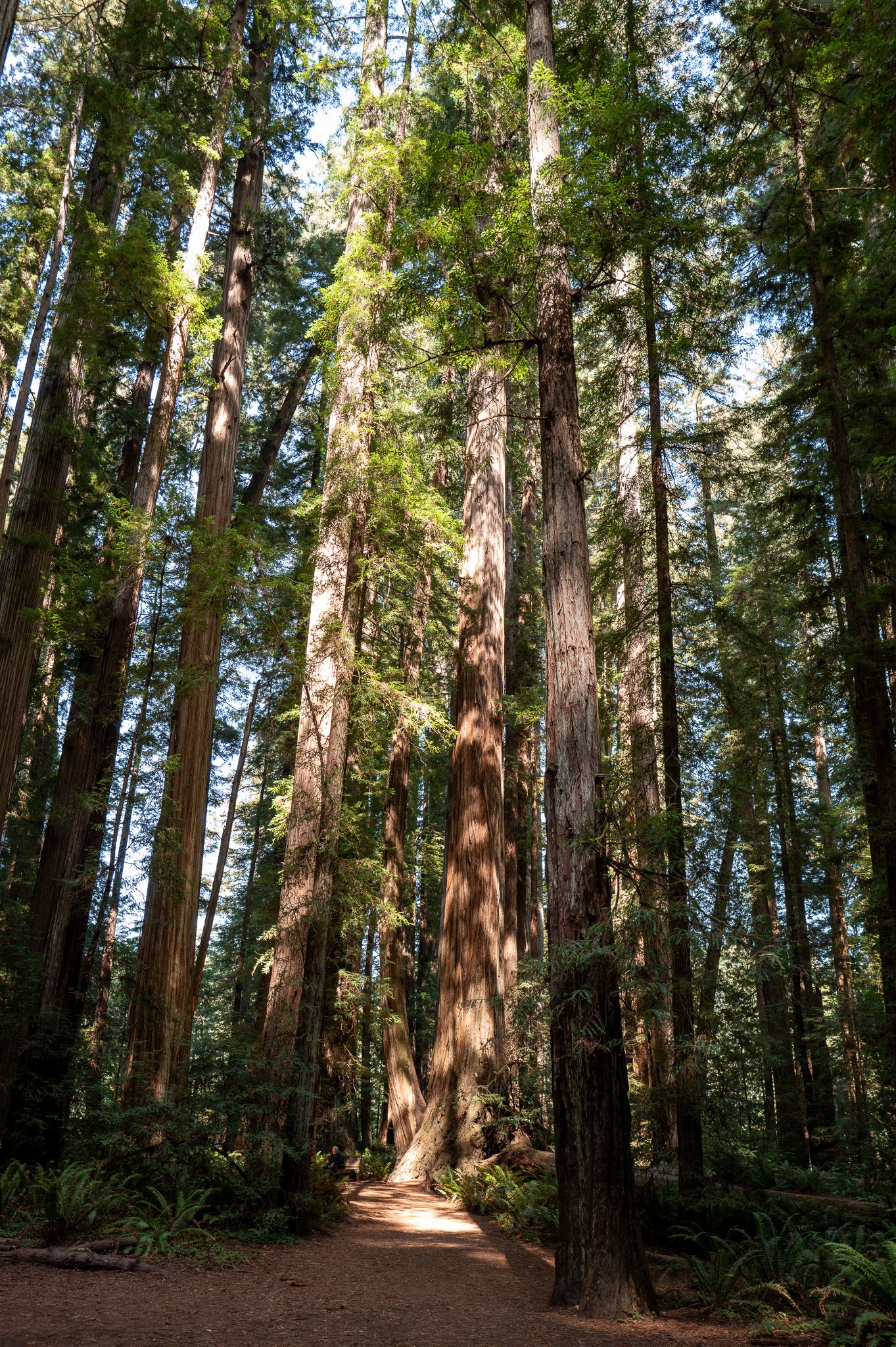
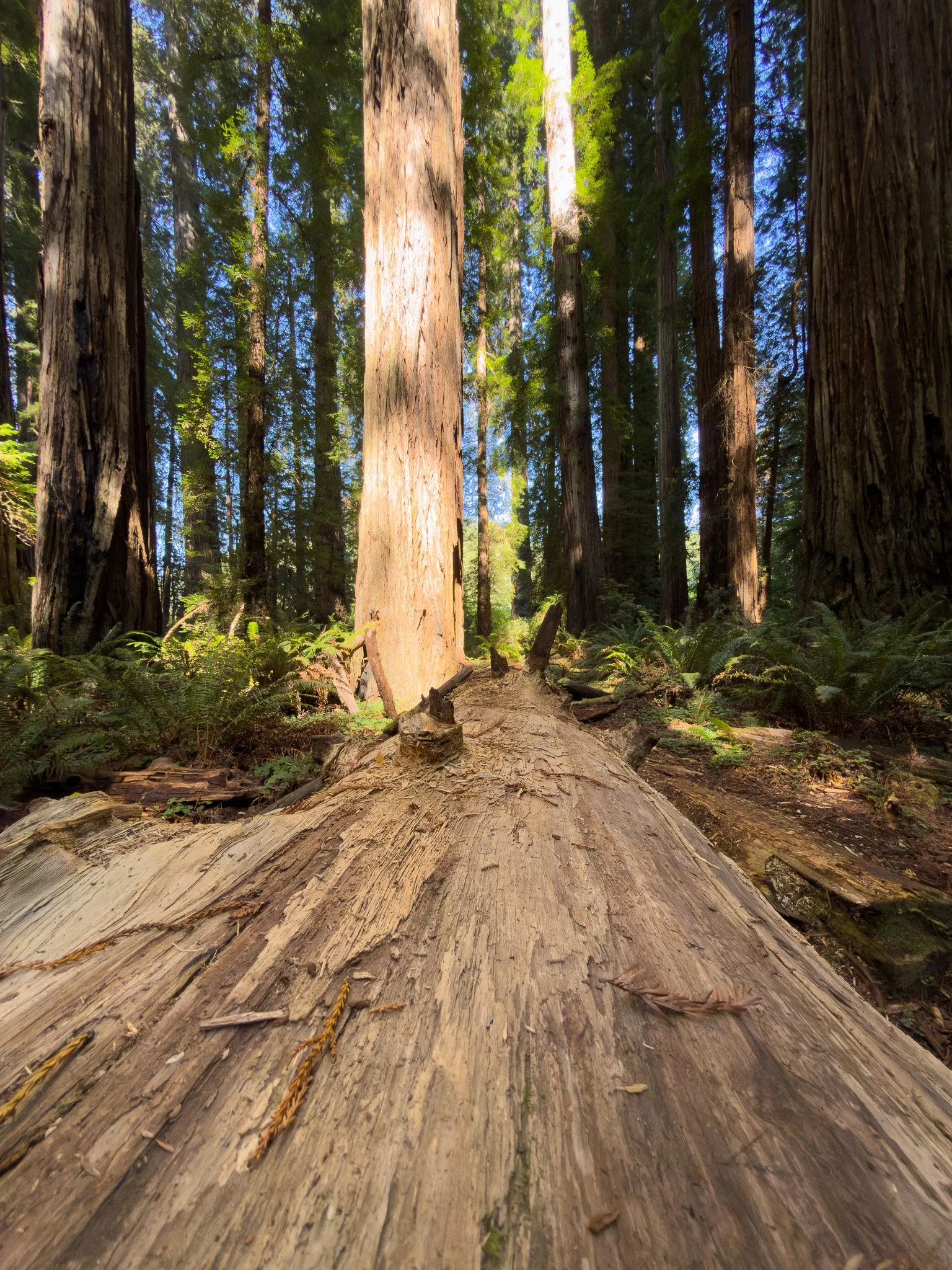
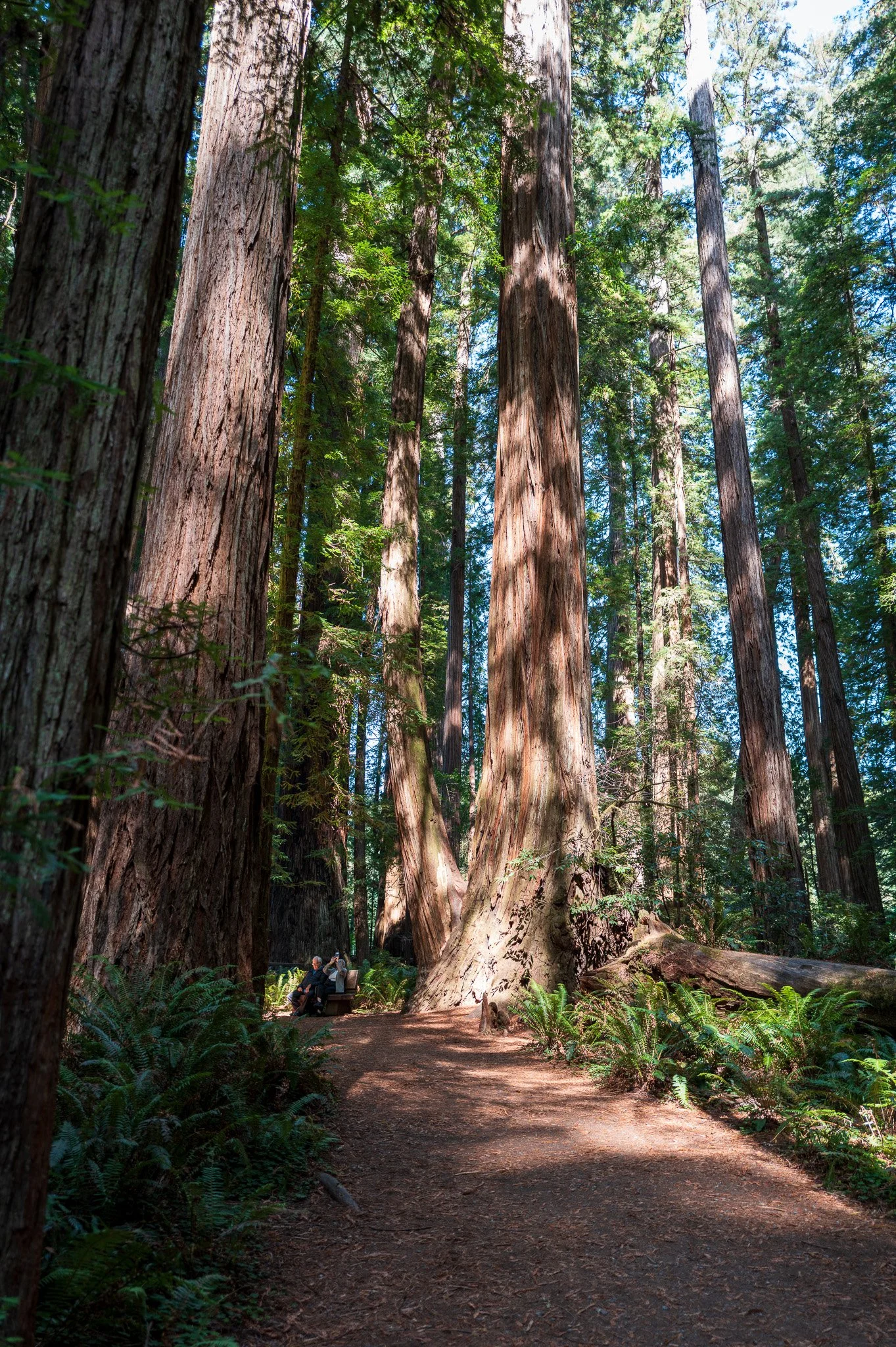
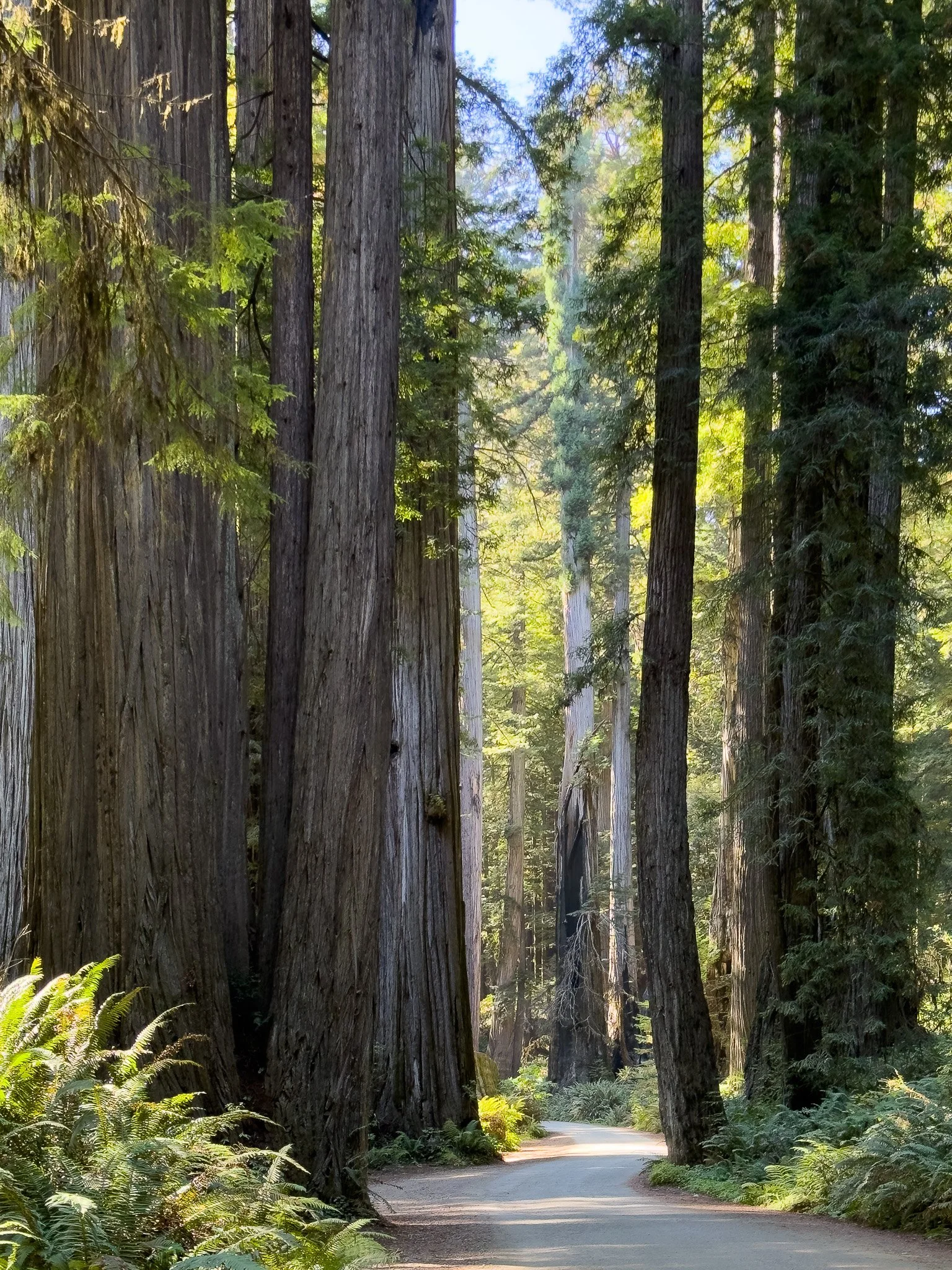
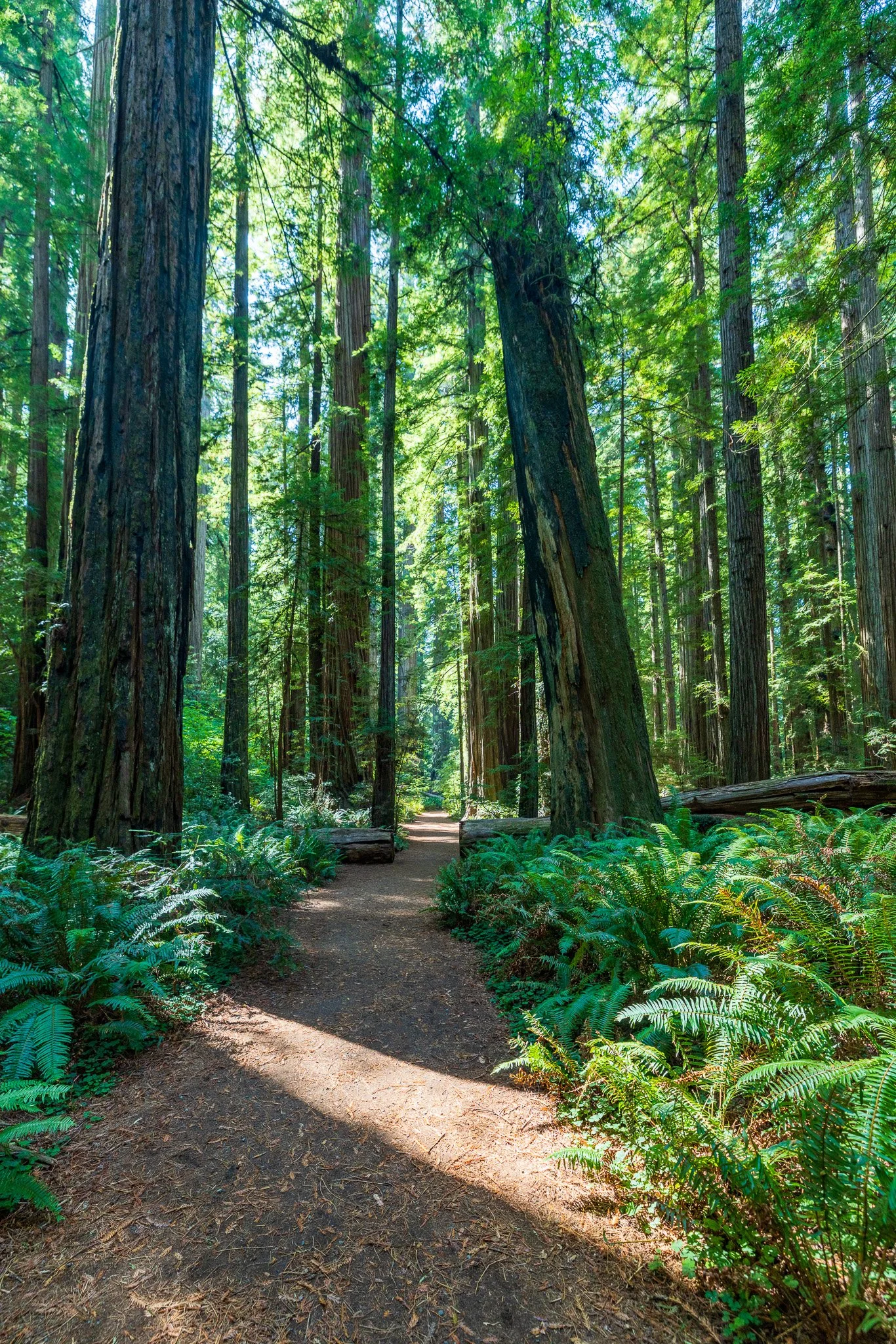
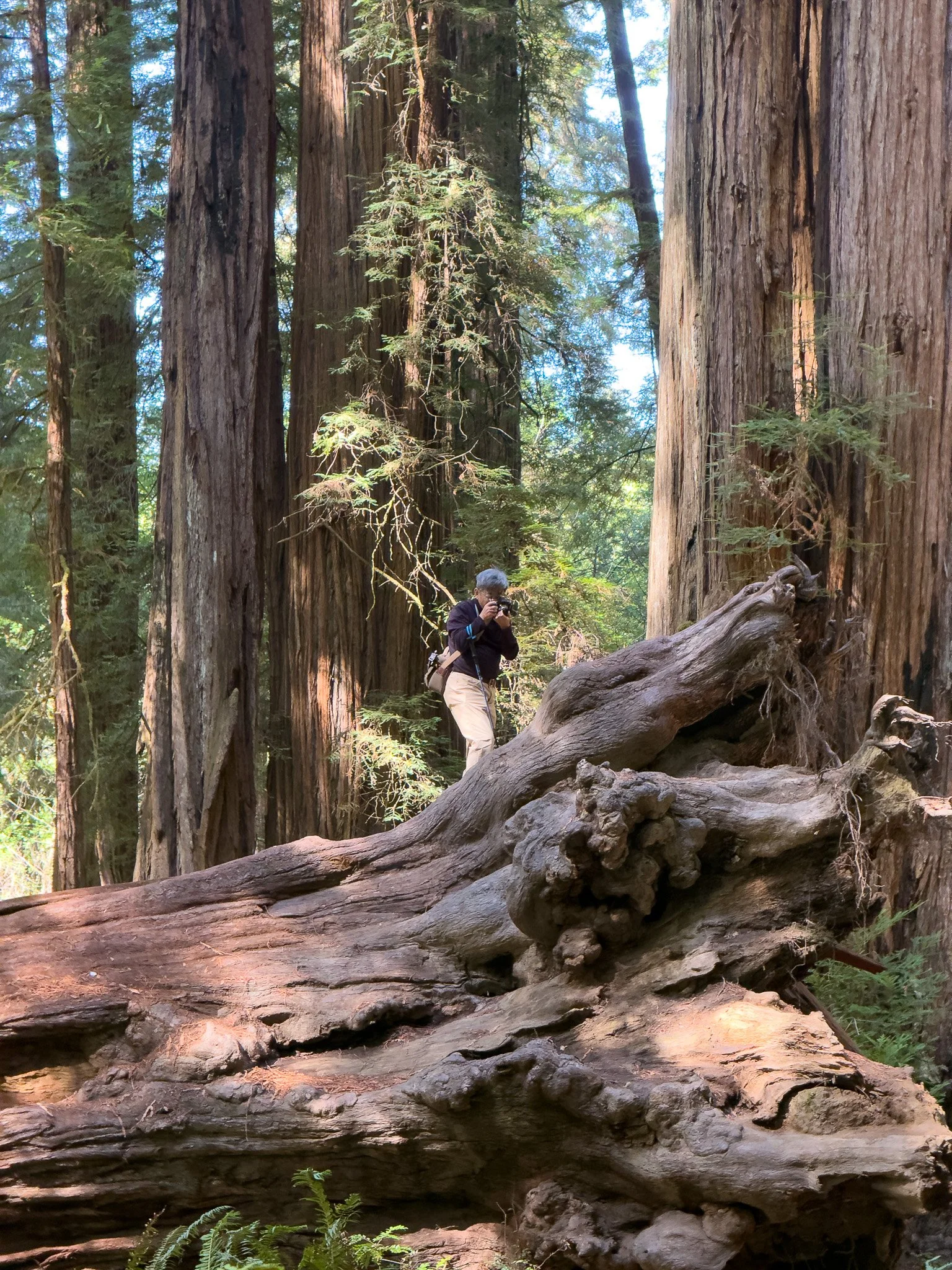
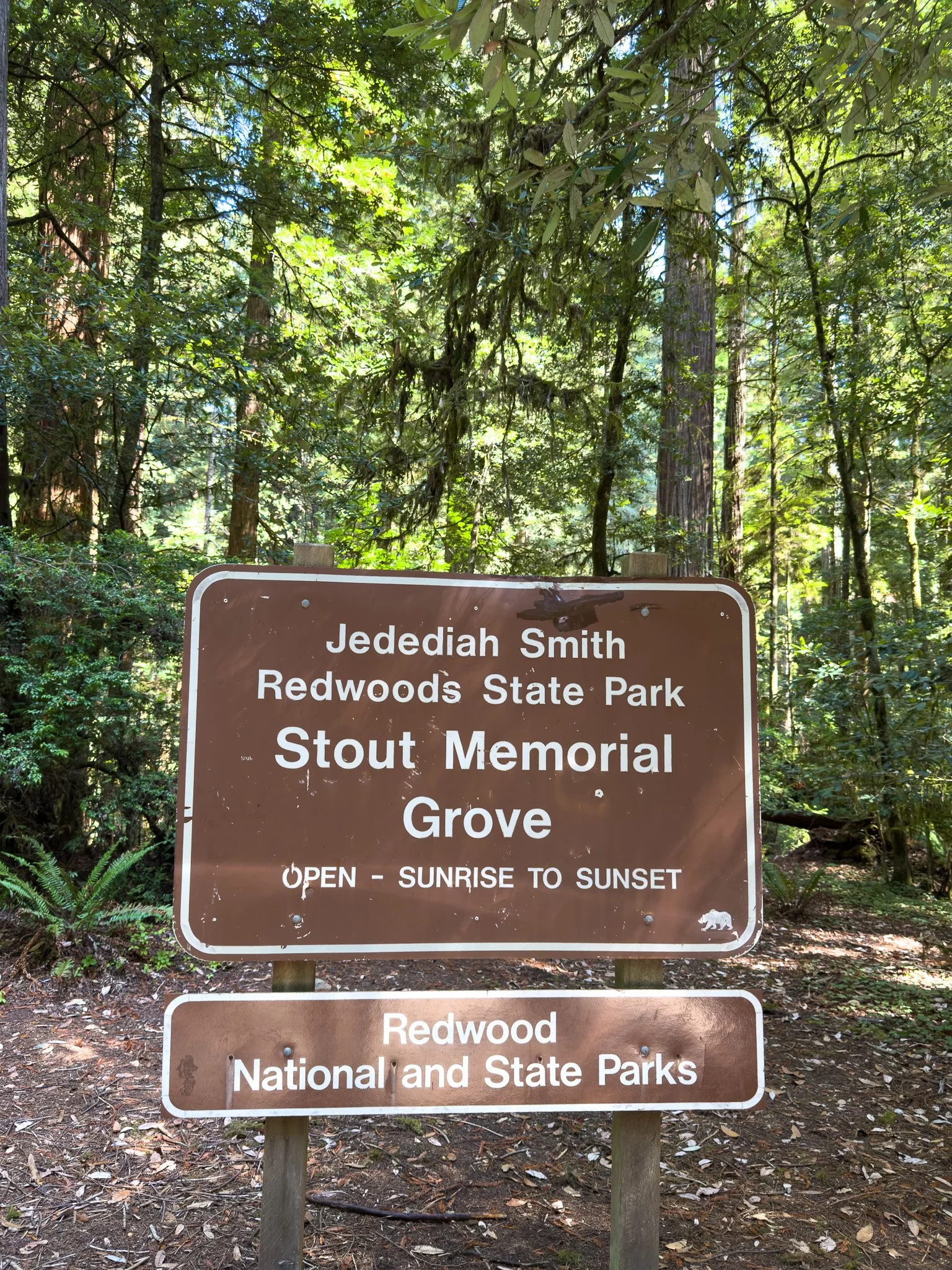
A day in the redwoods. About an hour and a half south of Gold Beach, across the California line, we spent a few hours at Stout Memorial Grove, reached by Howland Hill Road in Jedediah Smith Redwoods State Park. The redwoods went way beyond what I expected. Some trunks are 10 to 20 feet across, and the trees are so tall the grove looks like a scene from Jurassic Park. If you base yourself in Gold Beach, don't skip it.
Back to Bandon, 2 nights. On the drive north, we stopped for fish and chips at the Crazy Norwegian's in Port Orford, then returned to Bandon for two more nights. We liked it enough to go back.
Florence, 1 night. We photographed the beach in front of our rental, Heceta Head Lighthouse, and the coastline around it, including Bob Creek. We also stopped at Sea Lion Caves, but in September, the sea lions weren't in the cave. They gather inside in winter and spring, so plan around that if they're on your list.
Florence to Cannon Beach. This stretch of the central coast is packed. We stopped at the Devil's Churn, Driftwood Beach, Yachats, Seal Rock, and the Devil's Punchbowl, and still felt we were rushing.
Cannon Beach, 2 nights. We finished the coast at The Ocean Lodge, walking out to Haystack Rock both evenings.
What I'd Change
Gold Beach was too long. We'd booked seven nights and cut it to five, and three to four is all you need for the Boardman corridor and the redwoods. I'd move those nights north and add one or two nights in Newport. That puts you in the middle of the Central Coast stops we rushed through, from Devil's Punchbowl to Yachats.
Best Time to Visit
You are going in September, and it happens to be one of the best possible months to catch this coast. Locals call it "second summer": warm days, cool nights, and the least rain and wind of the year. Book around Labor Day if you can. The week before is peak crowds and peak hotel rates in Cannon Beach, and the Tuesday after it empties out fast.
Expect fog most mornings. It usually burns off by mid to late morning, so do not panic if Haystack Rock is socked in at 7am. Plan your sunrise shoots knowing you might be shooting mood and atmosphere instead of a clean skyline, and save the wide, crisp shots for midday and afternoon once the fog lifts. Fog can also vary sharply over just a few miles. We found Heceta Head completely fogged in while Thor's Well, only a short drive south, had sun and clouds. Do not let one foggy stop convince you the whole day is a wash, keep moving and check the next spot.
For light generally, plan around sunset through blue hour at almost every stop on this coast. The Pacific faces west, so your golden hour and afterglow both happen right over the water, which is about as good as coastal light gets.
One thing to reset expectations on: September is not a strong month for whale watching. The big migrations happen in winter and spring. What you will find are resident gray whales that feed close to shore through summer into mid-November, so Depoe Bay and Neahkahnie might give you a sighting, but do not build a shooting plan around it. Treat any whale you see as a bonus, not the goal.
Getting Around
You need a car for this trip. There's no way around it. Highway 101 runs the length of the coast, and the best photography locations are often pullouts, short trails, or small parking areas with no public transit anywhere nearby.
We picked up our rental at Portland International Airport and drove it all the way to Seattle. If you follow our route, book a one-way rental. It usually carries a drop-off fee, so compare it against the time it takes to drive back to Portland. If you're spending your first few days photographing Portland on foot, pick the car up when you're ready to leave the city. An SUV or something with decent clearance is worth the upgrade if you plan to reach the rougher pullouts along Samuel H. Boardman or near Cape Blanco.
The drive from Portland to Bandon is farther than it looks on a map. It took us almost five hours, and you'll want to stop along the way. Treat it as your first day of the trip, not a quick transfer.
Plan around light, not mileage. I'd rather drive 20 extra minutes to catch a location at sunset than take the shortest route and miss the light entirely. Check the tides every day too, since places like Myers Creek and the beach at Bandon change dramatically with the water level. The stretch of highway between Thor's Well and Florence might be the prettiest driving on the whole coast, with the road curving along the water the entire way. We caught it at sunset with surfers in the water. Time your drive so you're on this stretch when the light is good, rather than passing through at midday.
In towns like Cannon Beach, Bandon, and Florence, you can park once and walk to most of what you need. Rideshare apps have limited coverage in these small coastal towns, so don't count on Uber or Lyft as a backup the way you might in a city.
One practical tip before you go: sort out your parking passes ahead of time. Several stops, including Heceta Head, charge a day-use fee, and you'll hit enough of them over a week on the coast that a pass pays for itself quickly. We bought the Oregon Pacific Coast Passport, which covers both state parks and federal sites along the coast. If you already have a national parks pass, as I do, it covers federal sites like Cape Perpetua, home to Thor's Well and the Devil's Churn, so you may only need a state parks permit for the rest. Either way, a pass means you won't be digging for cash at a trailhead when you're racing the light.
Dining and Coffee
The food along this coast leans casual and local: fresh seafood, small bakeries, and family-run spots rather than white-tablecloth dining. A few towns, like Cannon Beach, have more polished options if you want them. Here's where we ate, from south to north.
Bandon
Tony's Crab Shack & Seafood Grill. Our favorite in Bandon, and we liked it enough to go back a second time. It sits on the Bandon Boardwalk along the Coquille River, next to the working harbor. Tony's started in 1989 as a bait and tackle shop, which still operates next door, and it has never used a deep fryer. They cook and clean crab to order. On our first visit, we ordered the fish tacos, a grilled salmon sandwich, a grilled halibut sandwich, and a crab cake sandwich. Everything was grilled to order and excellent, and the fish was as fresh as it gets.
Port Orford
Crazy Norwegian's Fish & Chips. A good lunch stop if you're photographing the sea stacks and harbor here. We had the fish tacos, shrimp tacos, and fish and chips, and all of it was solid.
Gold Beach and Agness
Old Agness Store. One of our favorite finds of the whole trip, up the Rogue River from Gold Beach. It's part gourmet shop and part restaurant. The food is homemade and creative, and it manages to be healthy without giving up any flavor. The owners work the room themselves, cooking, serving, and chatting with guests, and the whole staff is super friendly. The shop sells good cheese, sourdough, scones, croissants, and brownies to go, and local musicians play three nights a week, which makes it as much a gathering spot as a restaurant. I highly recommend it.
Barnacle Bistro. The place to know if you're based in Gold Beach for the Samuel H. Boardman corridor. The staff were friendly, and we had fish and chips, fish tacos, and a veggie burger.
Leavened Bakery. A small bakery that sells bread out of the owners' home, and a local favorite. While we were there, a steady stream of locals came by for their bread, and the staff were very friendly. We got focaccia straight out of the oven, plus a loaf of sourdough. It's open only Wednesdays and Fridays, so plan around it.
Brookings
Pacific Grill & Sushi. A great late lunch on the way back from the redwoods. We had miso soup, tempura, octopus, and a nice mix of sushi, all super fresh and very tasty, and the staff were fantastic. The food was as good as anything you'd get in New York or DC. It's busy even in mid-afternoon, so don't expect to walk in and sit down right away.
Also worth trying: Honeybee Bakery, for coffee, pastries, or breakfast. We wanted to go, but its hours are limited, so check before you plan around it.

Florence
Happy Tacos. Very good tacos, friendly staff, and a huge selection, from fish and shrimp to veggie and chicken. I ordered a mix of fish and veggie tacos, and coming right after a trip to Oaxaca, I appreciated how authentic they tasted.
Fresh Harvest Cafe. A diner-style breakfast spot with very friendly service and nice coffee. We had pancakes, eggs, and toast, and it's a solid start to a shooting day.
Resto Bar. A good option if you want a break from seafood, with pastas, pizza, and burgers. It was solid but not exceptional. Worth knowing about, but not worth going out of your way for.
Waldport
Hilltop Cafe Bistro. When you're driving Highway 101 and need a real lunch, pull in here. We ordered a veggie burger, a grilled cheese, a chicken burger, and a tuna burger with an amazing teriyaki glaze, and all of it was excellent, the grilled cheese especially, on crispy sourdough. That's rare at a roadside stop, where one dish usually carries the menu. You order at the counter and grab a seat among the local art, and the food arrives fast. The service is friendly, the beer list leans local, and they handle vegan and gluten-free diners without fuss. Check the clock on Sundays and Mondays, when the kitchen closes at 2 p.m.
Cannon Beach
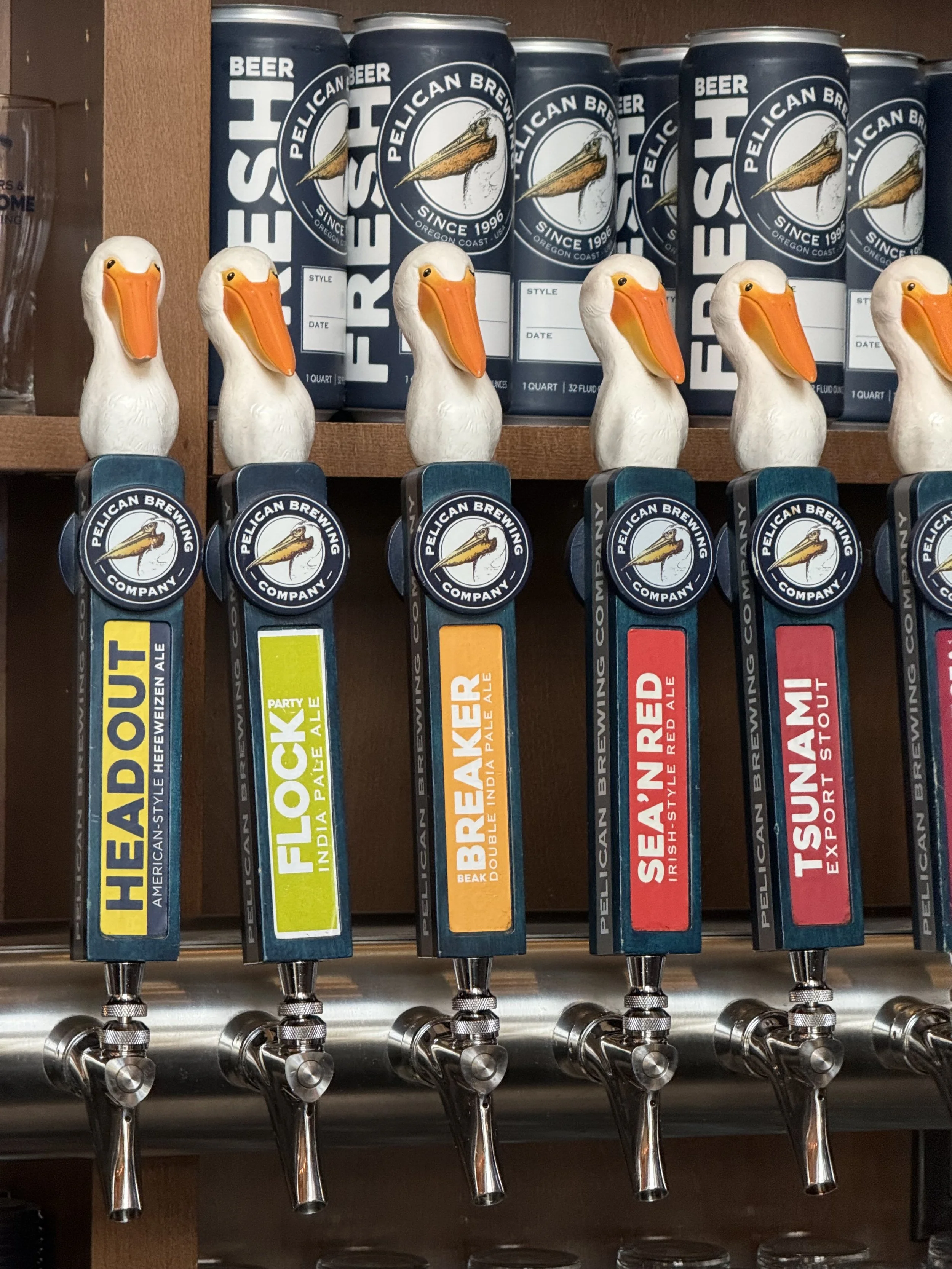
Pelican Brewing. Great service and a good dinner. I had shrimp tacos with a sauce worth going back for, and an ancient grain bowl that was just as good. They pour a huge selection of beers, and the two we tried were both delicious. We liked it enough to go back for lunch, where the salmon with ancient grains was good, though I preferred the first night's dinner. Save room for the chocolate brownie. I only meant to have a spoonful or two.

Coffee
Warehouse Coffee Cafe, Bandon. A cozy spot in Old Town with breakfast sandwiches, rolls, wraps, burritos, and good coffee. It's the perfect stop for breakfast or lunch before heading out to shoot.
Kissing Rock Coffee, Gold Beach. The coffee was good, and the shop's signage notes a Golden Bean award win, but the staff weren't well trained, and food options are limited. Come for the coffee.
Gold Beach Books & Art Gallery, Gold Beach. Part coffee shop, part bookstore, and quirky in the best way. Good coffee, kind staff, and an impressive collection of old and new books to browse while you sit.
Insomnia Coffee Co., Cannon Beach. One block from the beach, with big windows and a fireplace that make it an easy stop to warm up after a sunrise session. It's probably the best coffee in Cannon Beach. We had two flat whites, and the vibe, baked goods, and staff all held up too. We got coffee here every day we were in town, but check the hours before you go, especially early in the week.
Elohveē Coffee Shop and Wine Bar, Cannon Beach. Open daily, so it's a useful backup. It doubles as a wine bar in the evening, which makes it a low-key stop after a sunset shoot. The mocha was solid, though not quite up to Insomnia. There's no public bathroom, so plan accordingly.
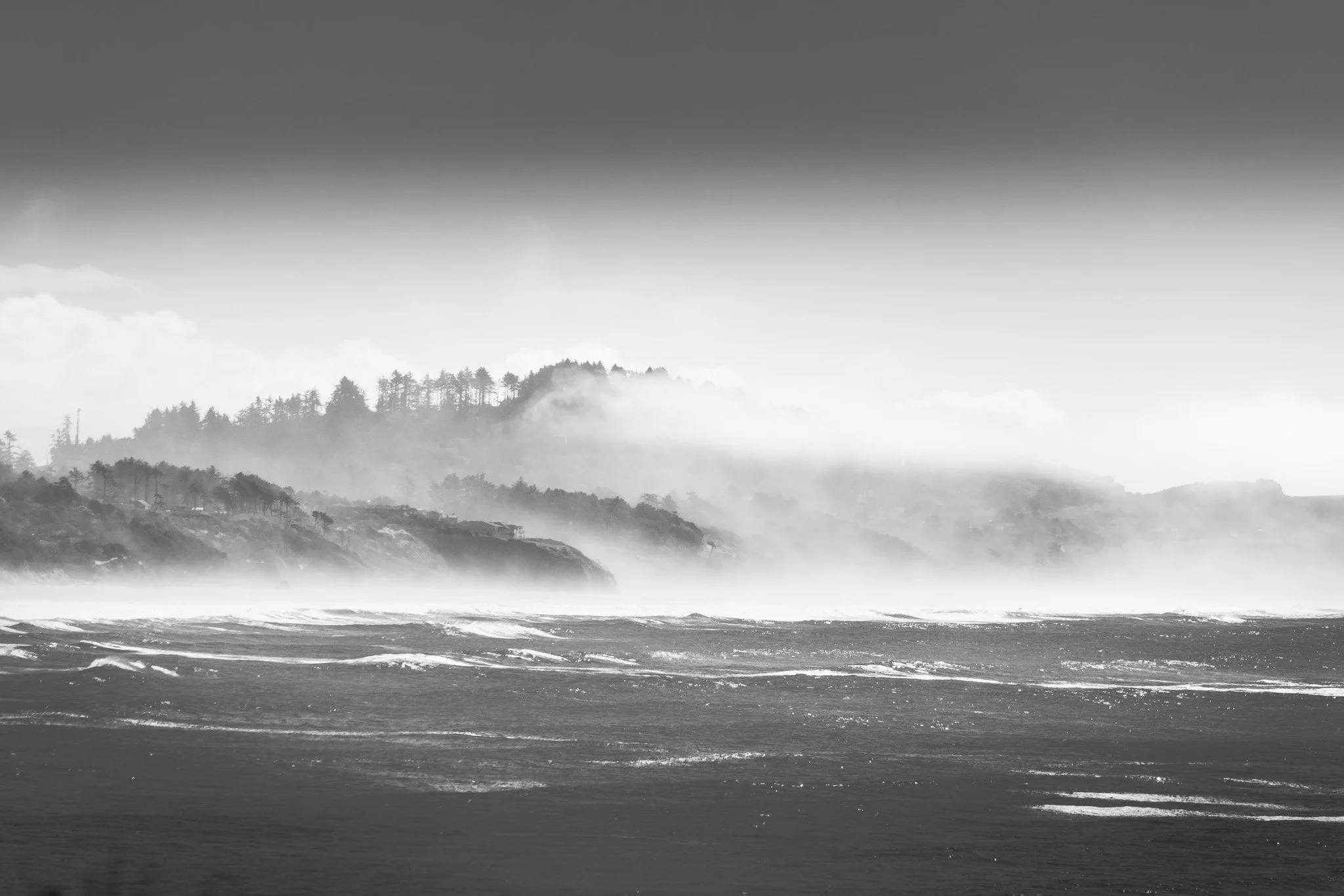
A Black & White Photo with the early morning fog by the Devil’s Punchbowl
Photography Gear to Bring
Cameras
I shoot with the Canon EOS R5 Mark II, and the Sony A7R V and Nikon Z8 are equally strong choices for this coast. I always have my Leica Q3 with me too, and it was the camera I reached for on long beach walks and in small towns, where something small and quiet makes all the difference.
Lenses
Wide, 15–35mm or 16–35mm. For the sea stacks and dramatic coastline shots where you want the whole scene in frame.
All-around, 24–70mm or 24–105mm. It covers most of your general shooting.
Telephoto, 70–200mm. It's not optional on this trip. Lighthouses like Heceta Head and Cape Blanco photograph better compressed against the landscape from a distance than up close with a wide lens.
Long telephoto, 100–500mm. If you have one, bring it. I used mine for the surfers at Indian Beach in Cannon Beach, and it's the lens you'll want for gray whales from shore at Depoe Bay.
Accessories
Tripod. Bring a sturdy one for blue hour and long exposures at the sea stacks. Never turn your back on the ocean while you're set up. Sneaker waves arrive without warning, and a photographer focused on the viewfinder is exactly who they catch.
ND filters. Use them to smooth moving water at the sea stacks and along the shore. If you want to manage the gap between a bright sky and a dark sea at sunset, add a graduated ND, or bracket and blend later.
A word on Thor's Well and the Devil's Churn. These are two of the most photographed spots on the coast, and two of the most dangerous. Waves surge over the rocks without warning, and people have been swept in. I photographed both, and before I went, I read the stories of people who didn't come back. At Thor's Well, I got within about 10 feet, positioned with the sun at my back, and that felt like the limit. Never go closer, and give the water more room as the tide rises or the swell builds. Keep your eyes on the ocean, not just your viewfinder, and save the long exposures for a spot where you can still step back.
Circular polarizer. It cuts glare on wet rocks and tide pools.
Rain cover and lens cloths. This coast doesn't care about your camera's weather-sealing rating, so bring the cover anyway. Lens cloths are essential, because Pacific spray finds your front element constantly.
Extra batteries and memory cards. Bring more cards than you think you need.
Binoculars. Whale watching at Depoe Bay and along the bluffs at Cape Perpetua is much better with a decent pair, and they help you scout compositions before you commit to a hike or a long-lens setup.
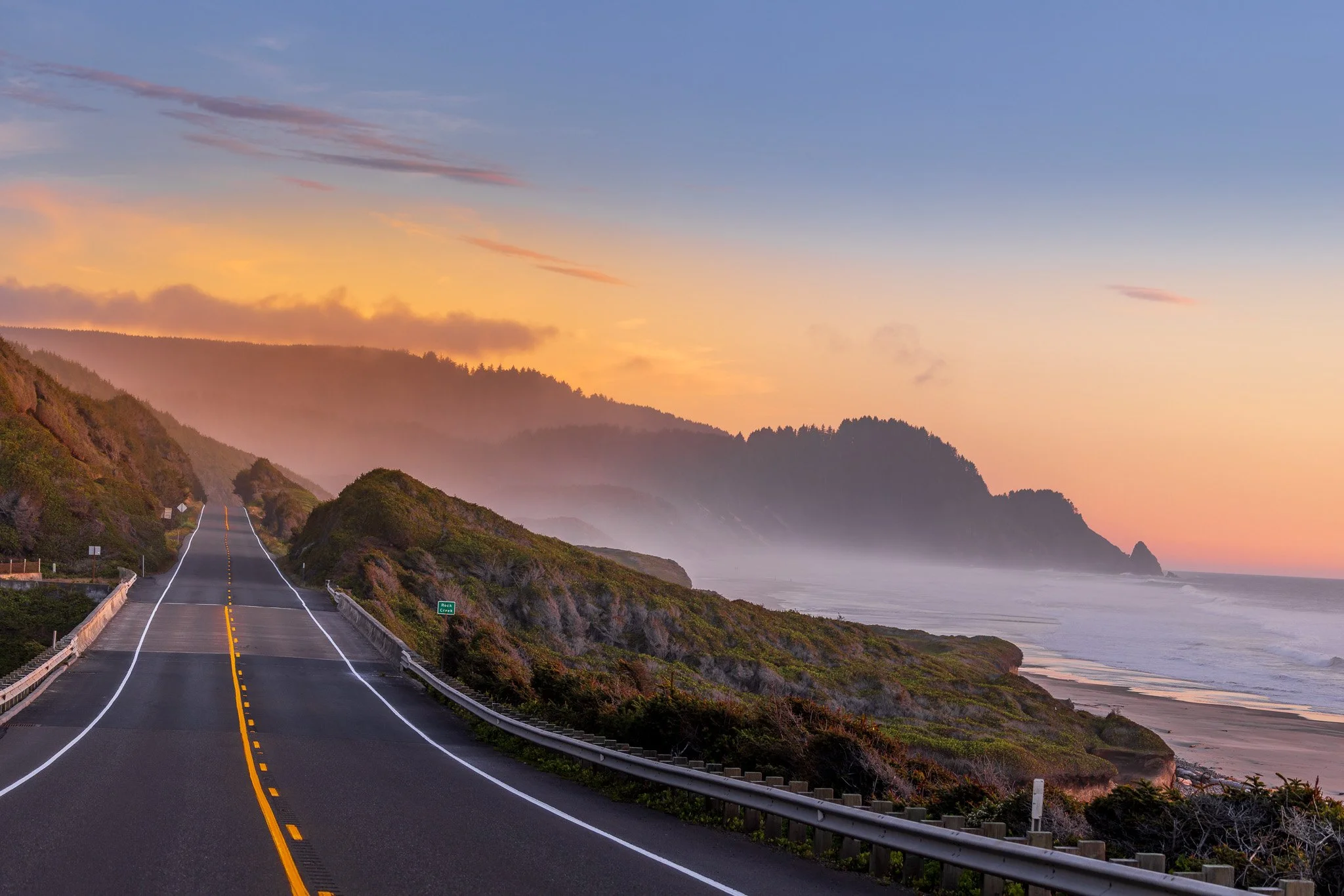
Sunset near Thor’s Well
Drones
As of May 2026, Oregon State Parks prohibits drone takeoff and landing on all state park property and on the entire public ocean shore, except in designated drone operation areas. That covers nearly every location in this guide, including Cannon Beach and Haystack Rock by name. If you bring a drone, check the current list of designated areas on the Oregon State Parks website before you fly, and don't assume a beach that allowed drones a year or two ago still does.
iPhone Tips
Get low at Haystack Rock. At Cannon Beach, use the ultrawide lens and hold your phone low to the wet sand so the reflection fills your foreground.
Use the standard lens at Face Rock. In Bandon, switch to 1x once the sun starts dropping. The ultrawide can make the sea stacks look small and distant instead of dramatic.
Use Live Photo for moving water. At the Devil's Churn and around the sea stacks, shoot a Live Photo, then choose the Long Exposure effect in your Photos app for silky water without a tripod. Shoot from a safe spot, well back from the edge.
Give Night mode its full time. At blue hour, brace your phone and let Night mode run the full exposure, rather than tapping the shutter and walking away.
Shoot ProRAW along Samuel H. Boardman. If you have a Pro iPhone, use ProRAW at the coastal overlooks, where the gap between bright sky and dark cliff is more than a standard photo can hold.
Best Photography Locations
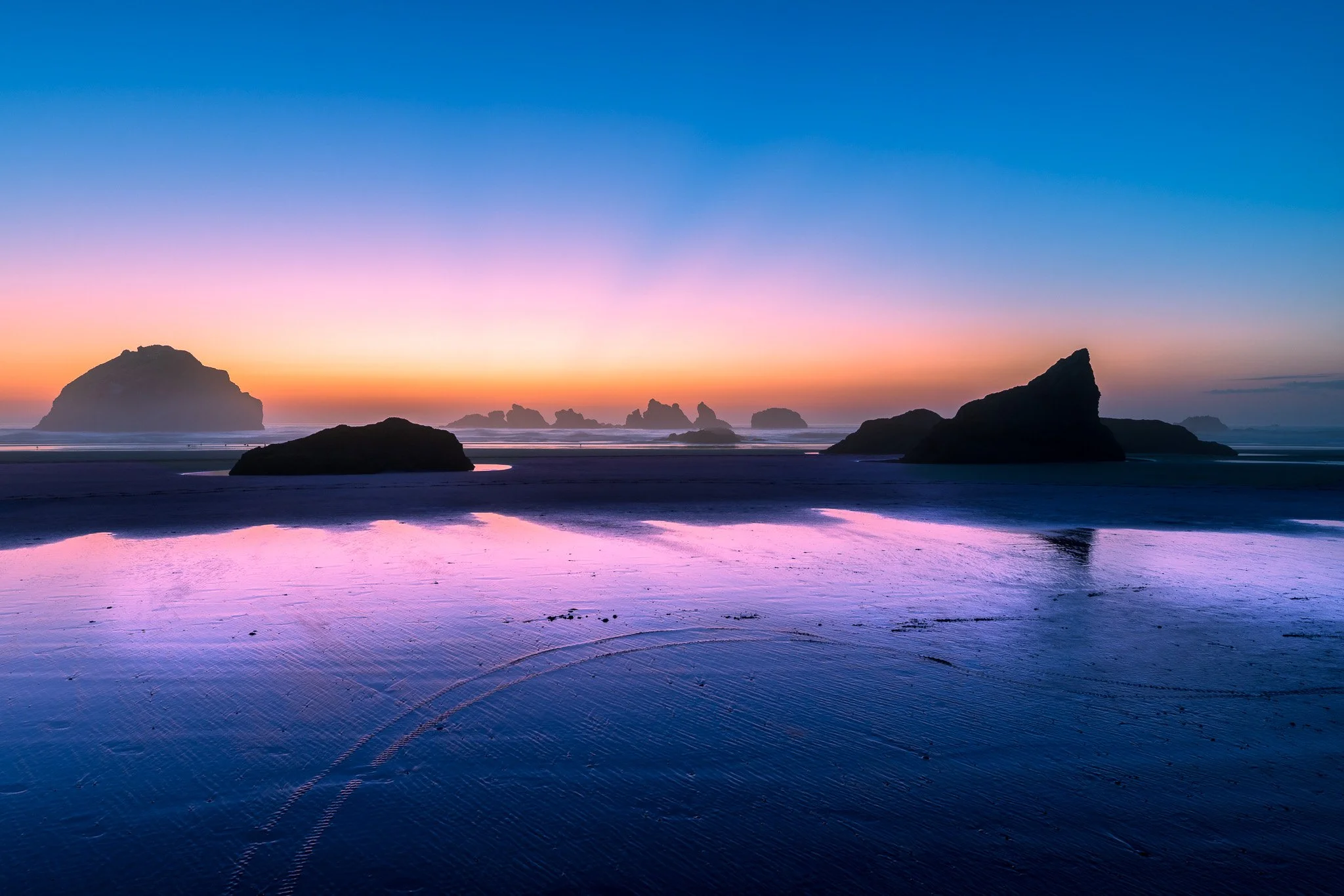
Bandon Beach and Face Rock
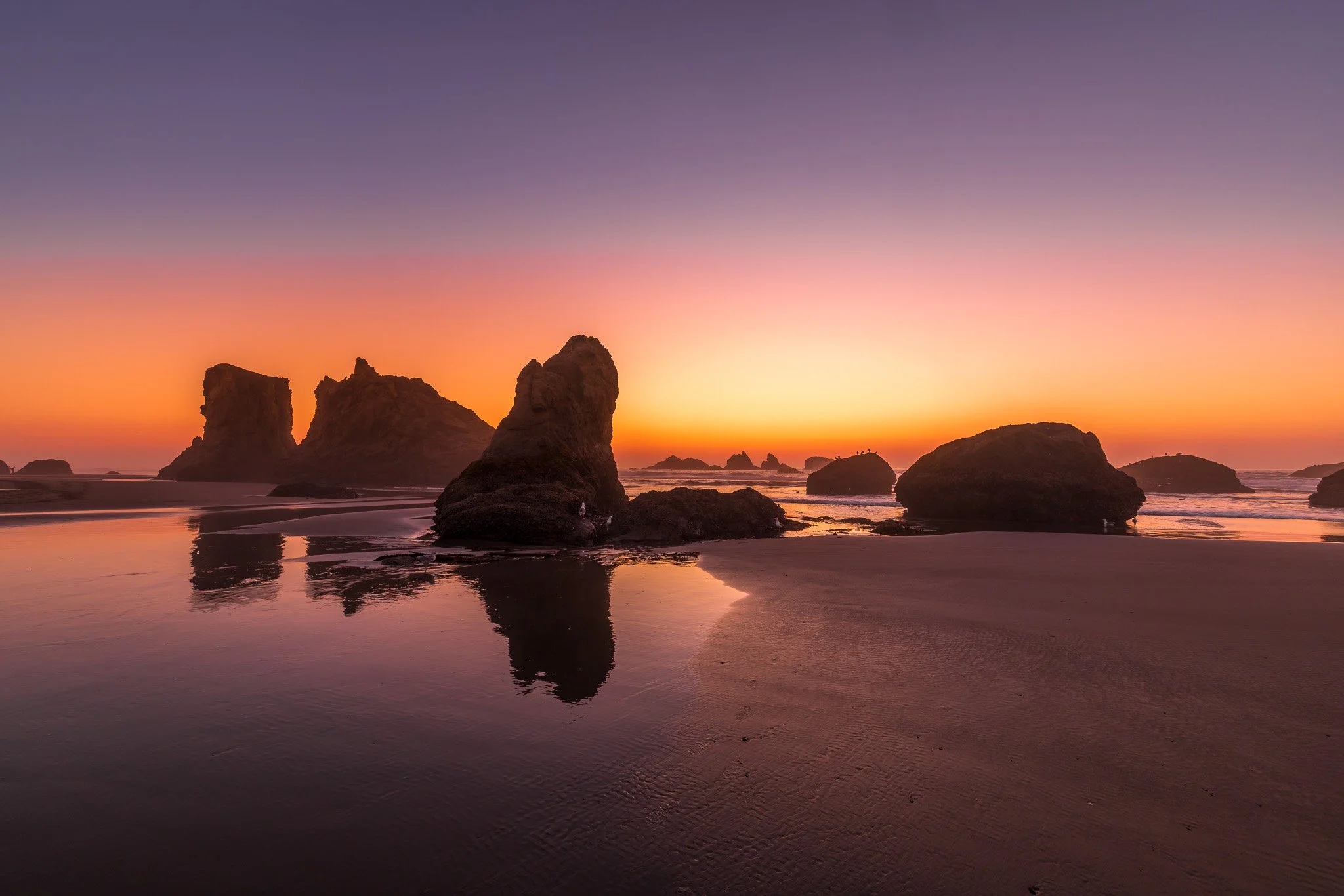
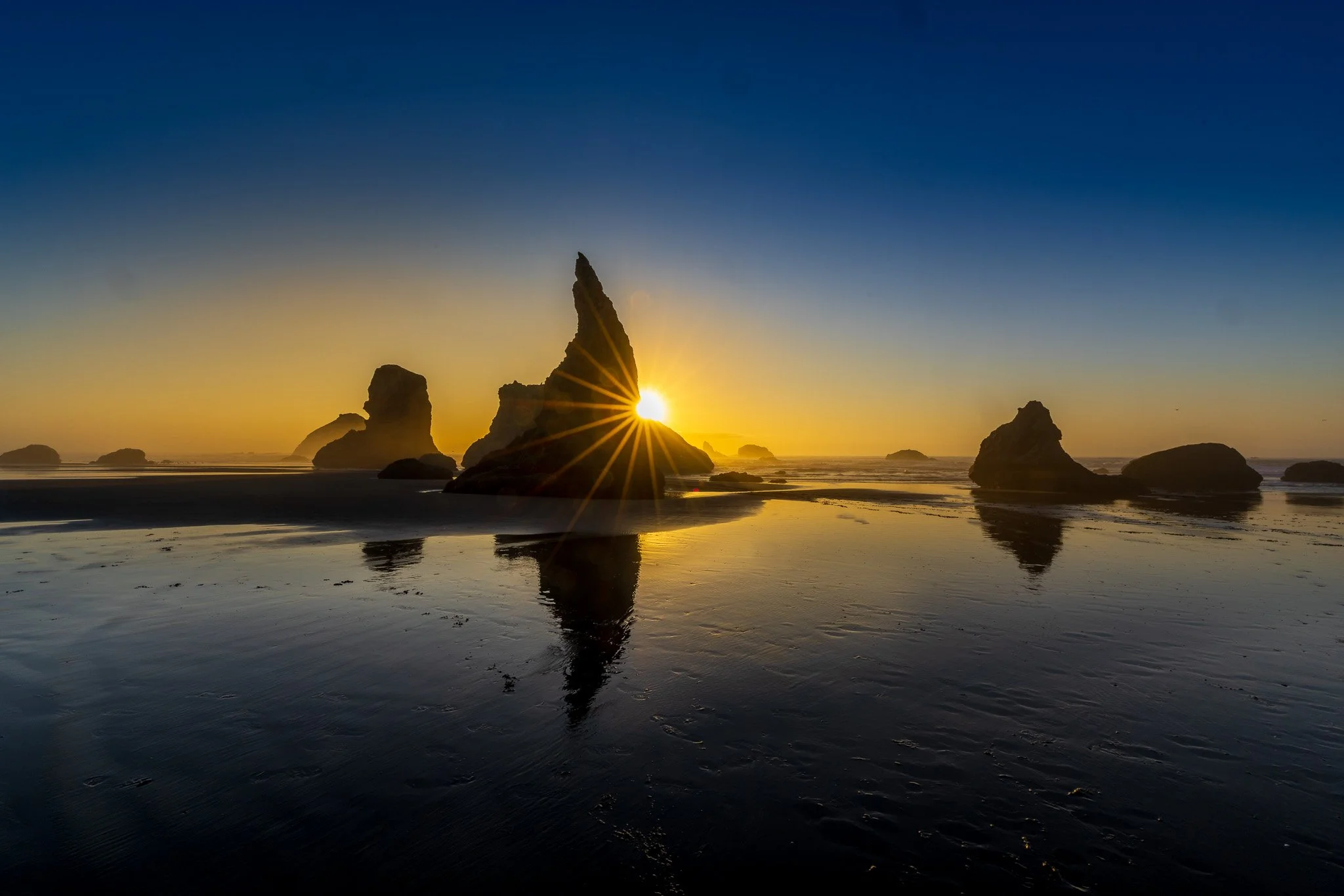
Bandon was our first stop on the coast, and it's still my favorite place in Oregon to photograph. On our first morning, a line of riders moved down the sand on horseback, with Face Rock in the distance. Unlike Cannon Beach, where Haystack Rock dominates the scene, Bandon gives you dozens of rock formations scattered across the beach. The main formation is named for a profile that seems to look up at the sky, but don't fixate on it. Walk the beach and look for separation between the rocks instead of one obvious postcard shot.
There are two easy ways in. The stairs at Face Rock State Scenic Viewpoint drop you right among the rock formations, and the Bandon Beach viewpoint, two to three minutes away by car, gives you the bigger, wider view. Start at Face Rock, then work your way over.
📷 Pro Tip: If you can only shoot one session, make it sunset, and stay past it. Some of the best color happens after the sun disappears, and blue hour gives the sea stacks a completely different mood. With more time, aim for two sunsets and one sunrise. For sunrise, don't arrive too early. The sun has to clear the ridgeline behind you before it reaches the beach. Plan around a low or falling tide, which exposes more beach and leaves the wet sand that mirrors the sky. A 16–35mm handles the wide scenes, and a 70–200mm lets you isolate individual stacks.
📱 iPhone Tip: Use the 1x lens once the sun starts dropping. The ultrawide makes the sea stacks look small and distant. For the surf around the rocks, shoot a Live Photo and switch the effect to Long Exposure.
Best time: One hour before sunset through blue hour, at low or falling tide.
Access: Free public viewpoints and beach, a short walk from the Face Rock State Scenic Viewpoint parking area. For much more, see my Photography Guide to Bandon Beach.
Cape Blanco
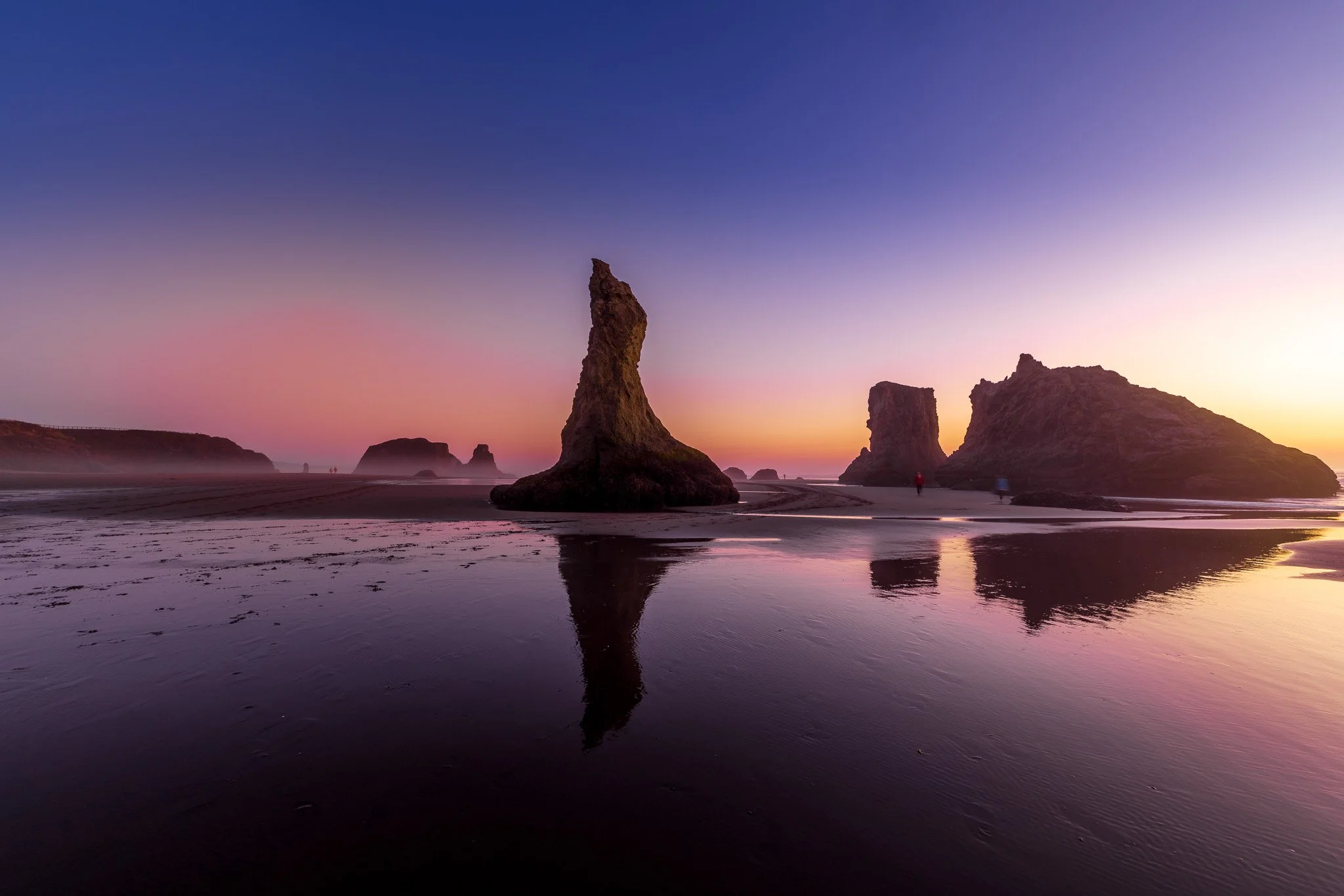
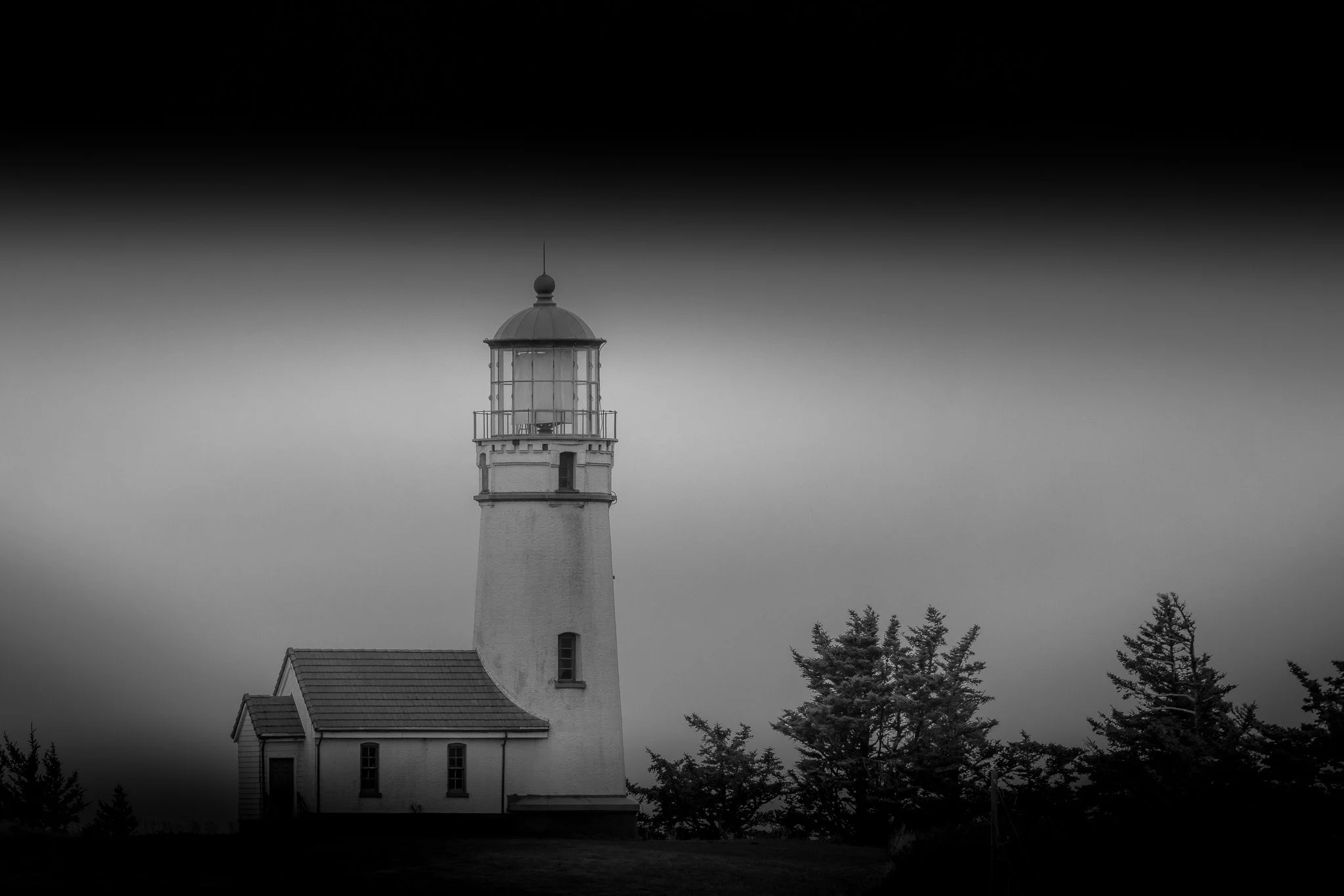
Cape Blanco feels like the edge of Oregon, and it earns that feeling. It's the westernmost point in the state, and the wind here doesn't let up for a second. The lighthouse sits on a huge headland surrounded by open Pacific, with rock formations and sea stacks scattered along the coastline below. The landscape is worth the stop even if lighthouses aren't usually your thing.
📷 Pro Tip: Back away from the lighthouse and use a 70–200mm to place it within the headland instead of isolating it. In this wind, weigh down your tripod or hang your bag from the center column, and keep a hand on it. Bring a jacket, even in September.
📱 iPhone Tip: Use the 2x or 3x lens from a distance to keep the lighthouse in its landscape, and brace yourself against the wind for a sharp shot.
Best time: Late afternoon.
Access: Cape Blanco State Park, on the drive between Bandon and Port Orford. Check the lighthouse's tour hours before you go, since they vary by season.
Cape Blanco in Black & White
Myers Creek Beach
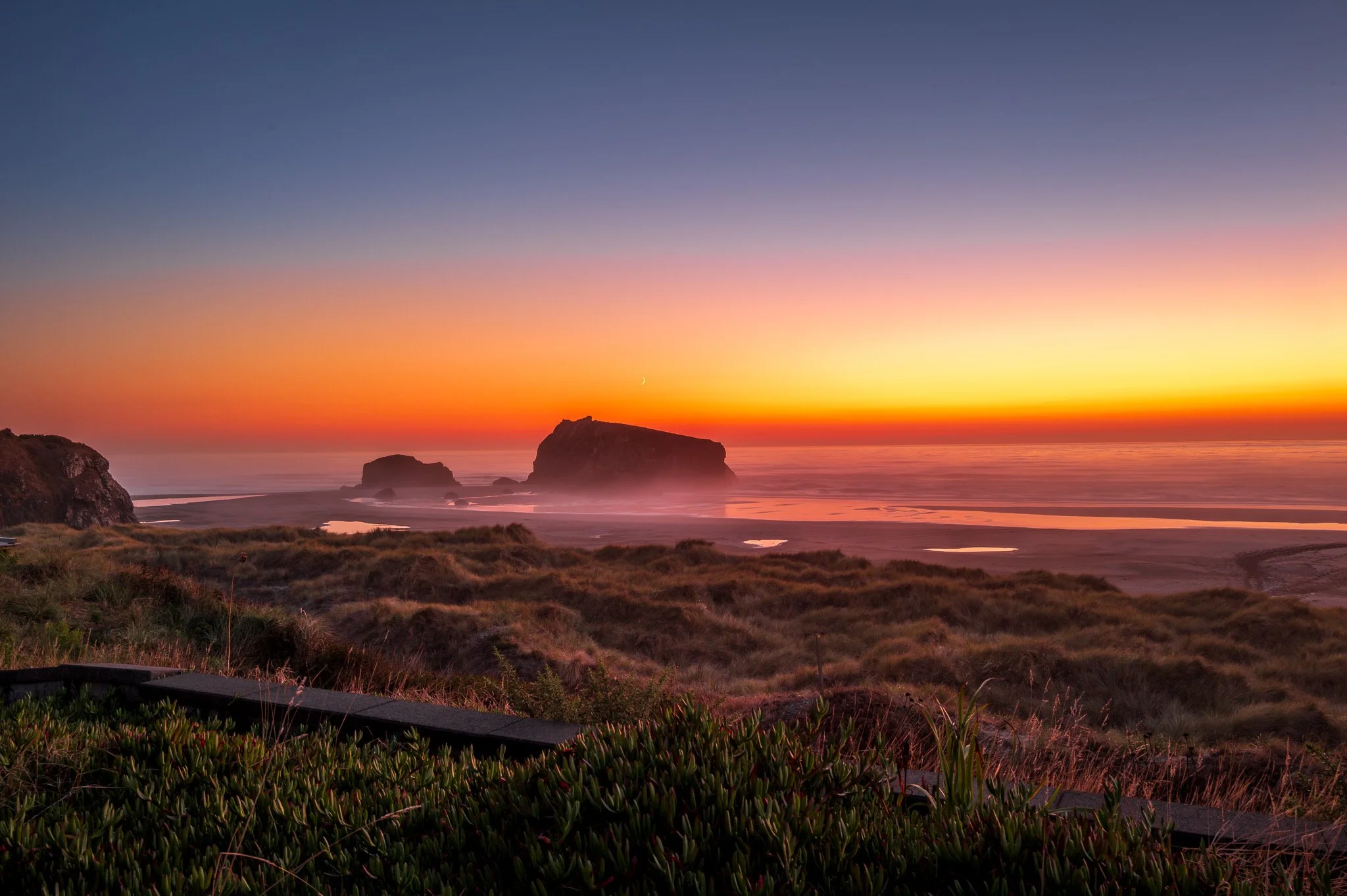
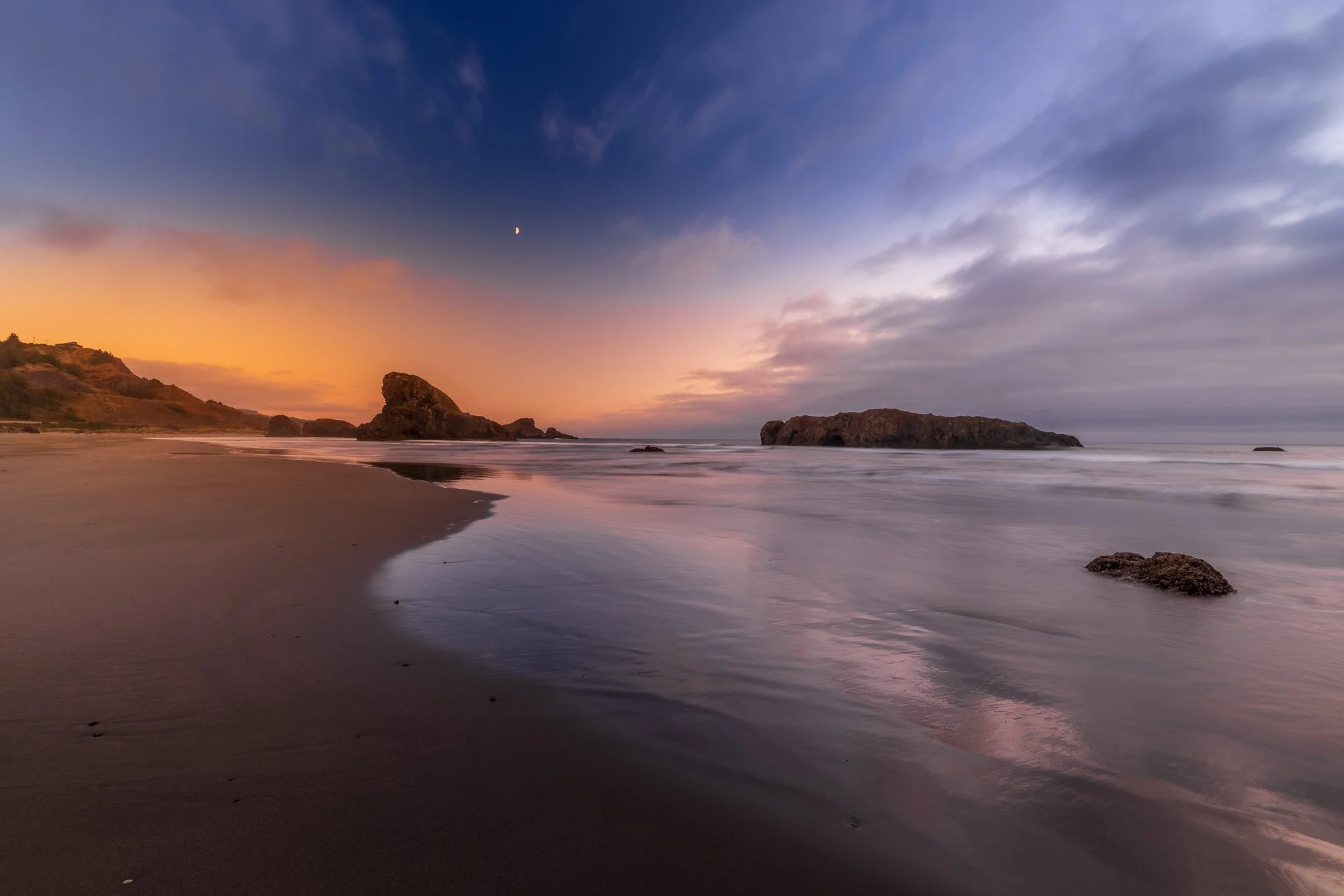
Just north of the Samuel H. Boardman corridor, Myers Creek Beach is part of Pistol River State Scenic Viewpoint, and it became our regular stop while we were based in Gold Beach. We went back several times for sunset, and it never looked the same twice. Sea stacks rise just offshore and along the sand, and when the light is right, the whole beach turns gold. There are three pullouts along the beach, each giving you a different angle on the stacks. My favorites were the northernmost and the middle ones.
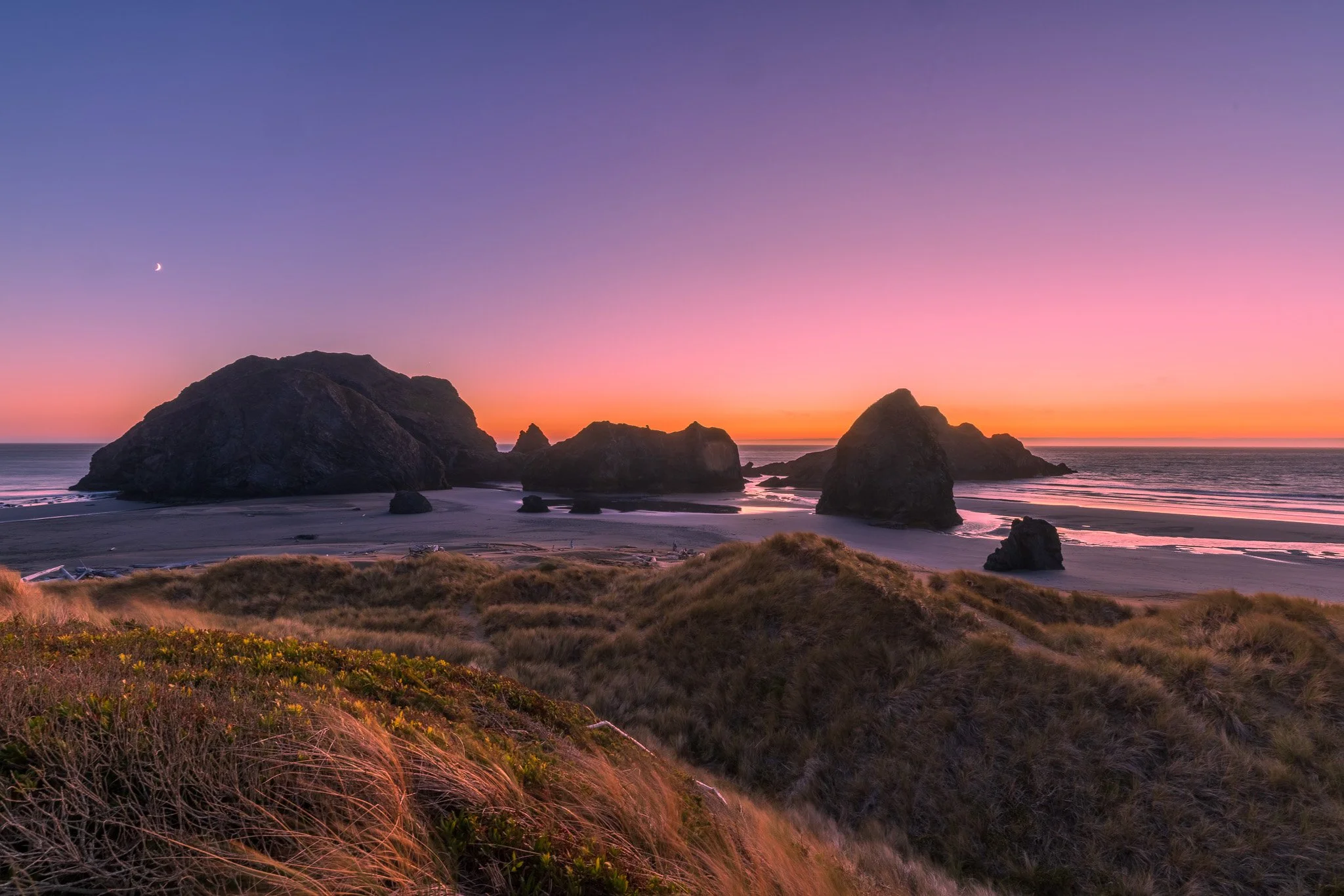
📷 Pro Tip: Start shooting about 45 minutes before sunset, rather than waiting for the sun to touch the horizon. Once it does, the shadows go dark fast, and you lose the golden light on the trees and rocks that makes this spot work. Head for the northern or middle pullout first. If you have time, scout both in daylight, then choose the composition you like best for sunset. A 16–35mm takes in the stacks with the beach in front of them, and a 70–200mm isolates individual rocks against the glowing water. Come back more than once if you can. Each visit gives you different light, tide, and sky.
📱 iPhone Tip: Shoot a Live Photo of the surf around the sea stacks, then switch the effect to Long Exposure. In the last light, tap on the brightest part of the sky and drag the exposure slider down to keep the color.
Best time: Starting about 45 minutes before sunset.
Access: Free, with easy parking at three pullouts along Highway 101, a short drive south of Gold Beach. The northern and middle pullouts are the strongest.
Samuel H. Boardman State Scenic Corridor
This may be the most dramatic 12 miles on the entire Oregon Coast, running along Highway 101 between Gold Beach and Brookings. It isn't a single stop. It's a string of cliffs, natural arches, beaches, and viewpoints, and we photographed the whole stretch from our base in Gold Beach.
Arch Rock was my favorite. It's an easy viewpoint, and the evening we were there, the light was perfect. From the Arch Rock area, you can also look down on Secret Beach. The trail to the beach itself was longer than I wanted to hike back up in the dark, so we enjoyed it from above. Myers Creek Beach became our regular stop, and we went back several times for sunset. Cape Ferrelo adds sweeping views farther south.
Natural Bridges is the best-known feature, with rock arches that create one of the classic compositions of the southern coast. I shot it twice, once in daylight and once in the evening, and each has an advantage. Daytime gives you real blue-green water color, which you lose once the light drops. Evening gives you golden light on the trees and sea stacks, but the water goes flat. If you can manage both, do it. I photographed it from the viewpoint at the top. I started down the unofficial route to the bridges, then saw the danger signs and turned back. It's very steep, with nothing to hold on to, and no photograph is worth that risk.
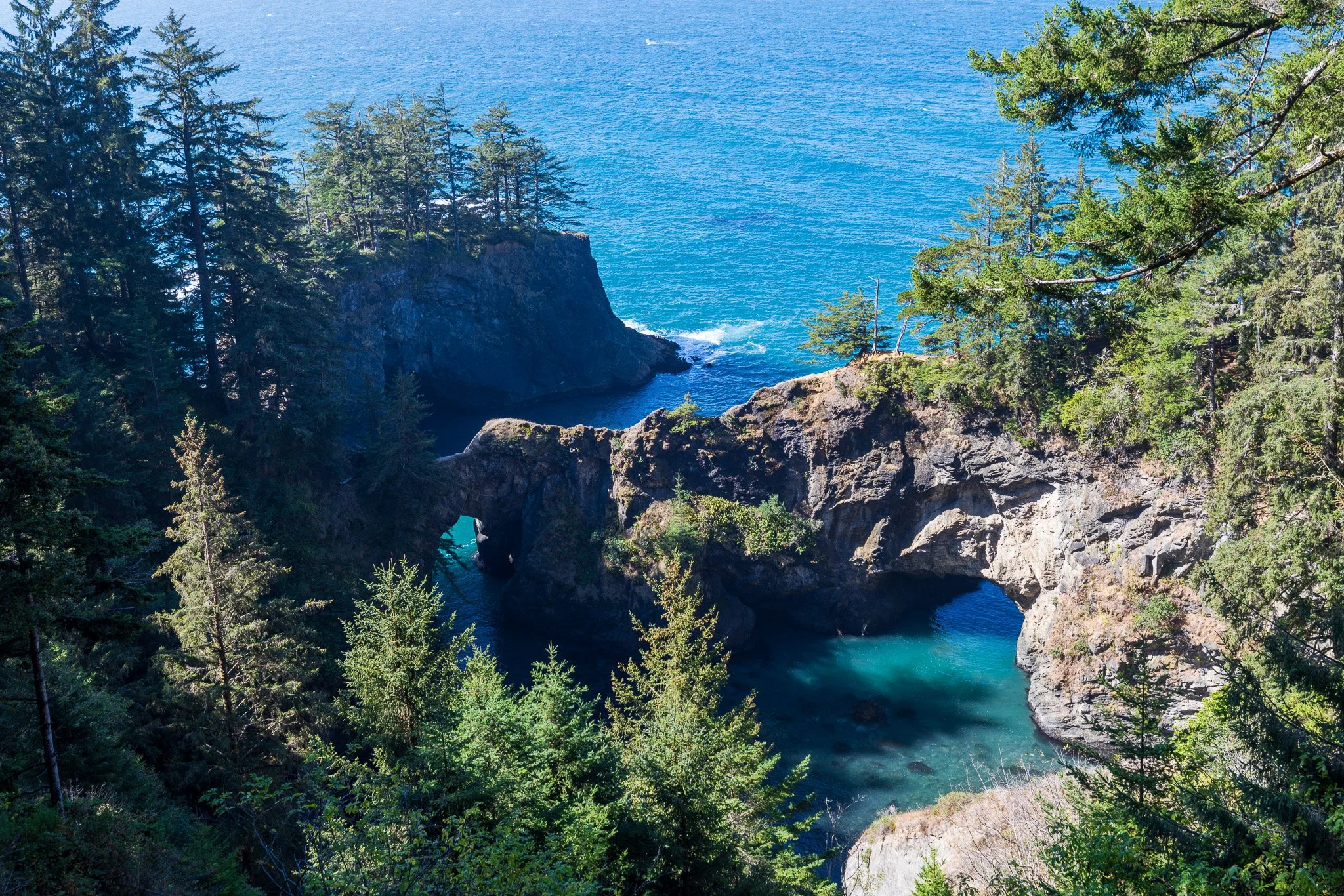
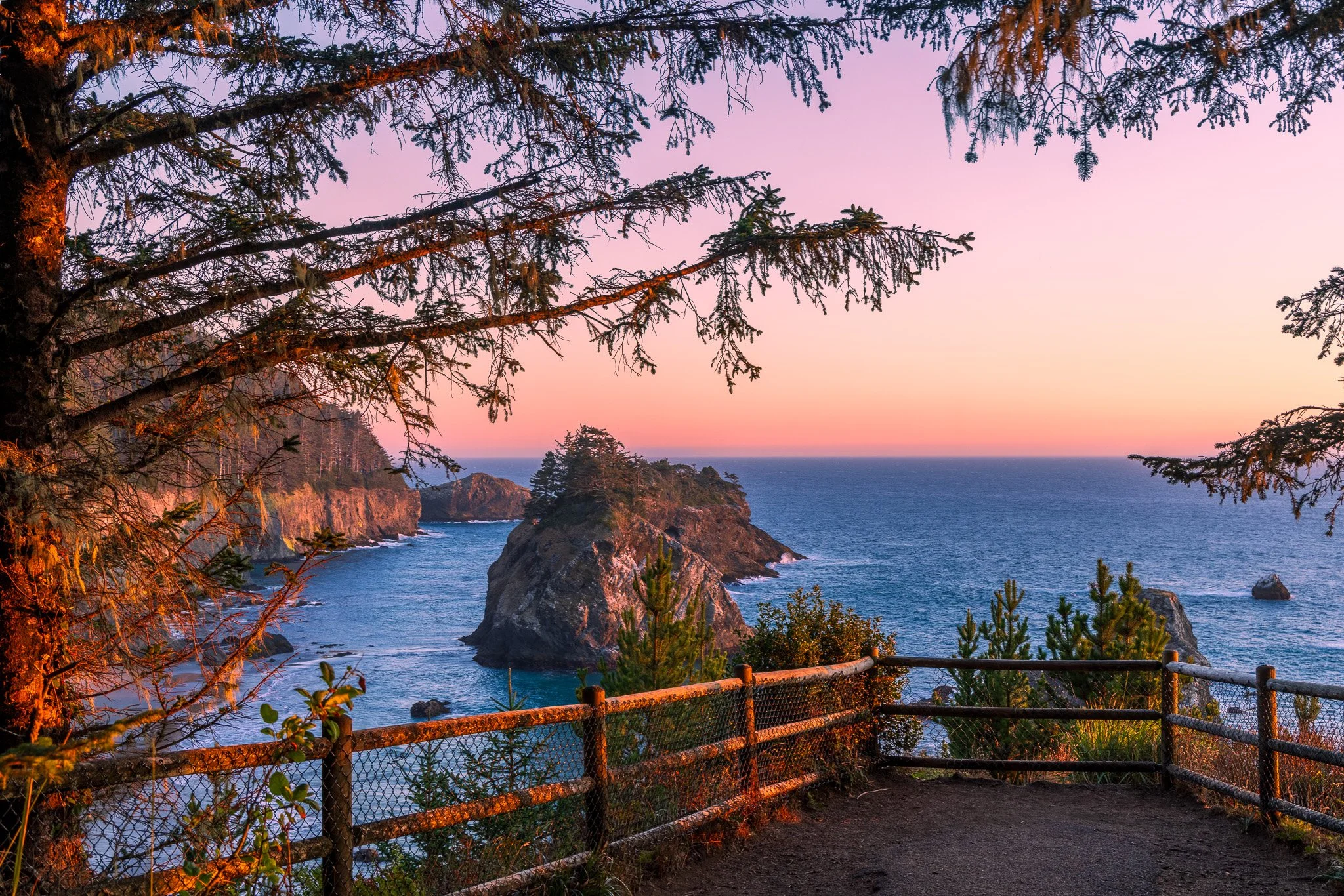
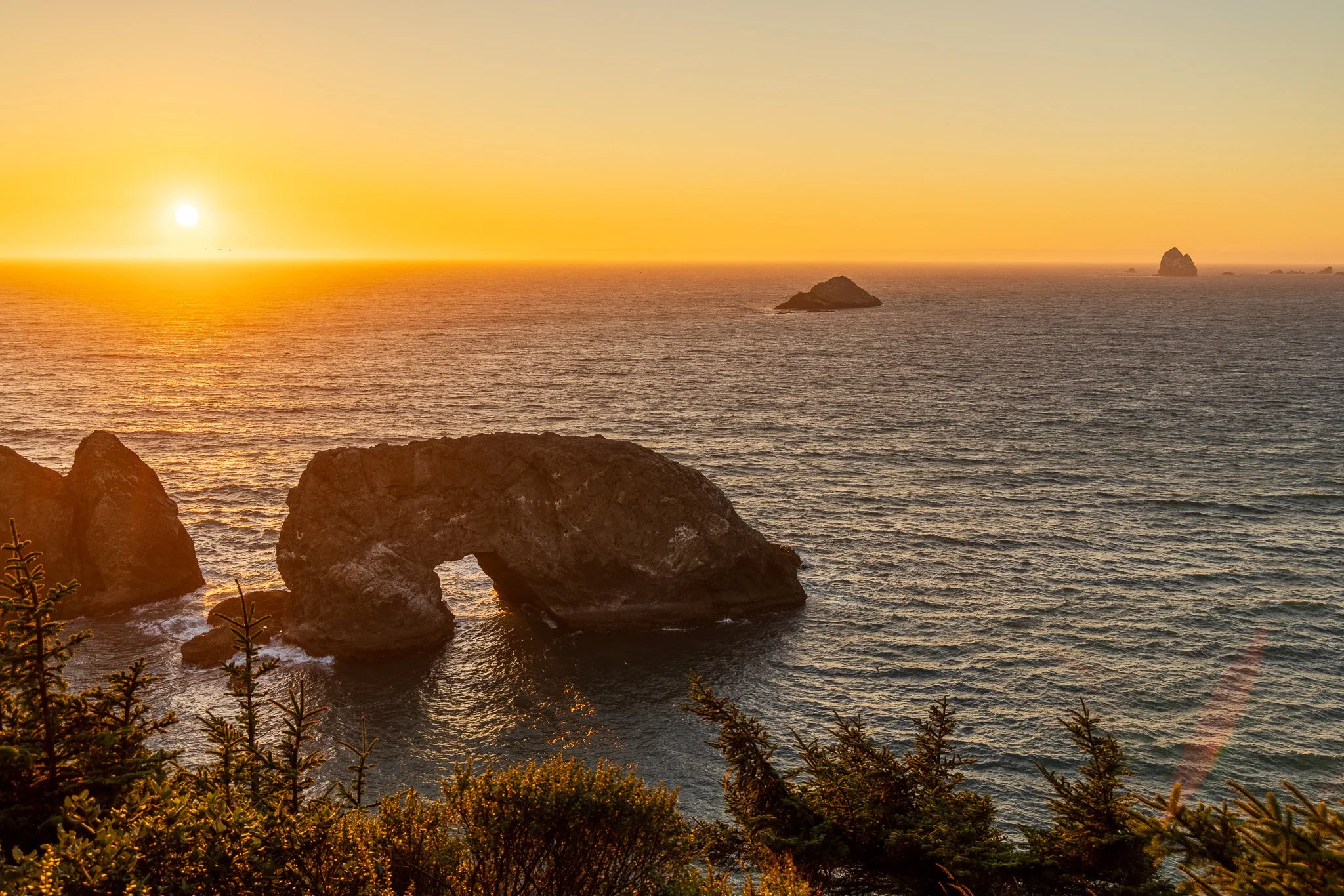
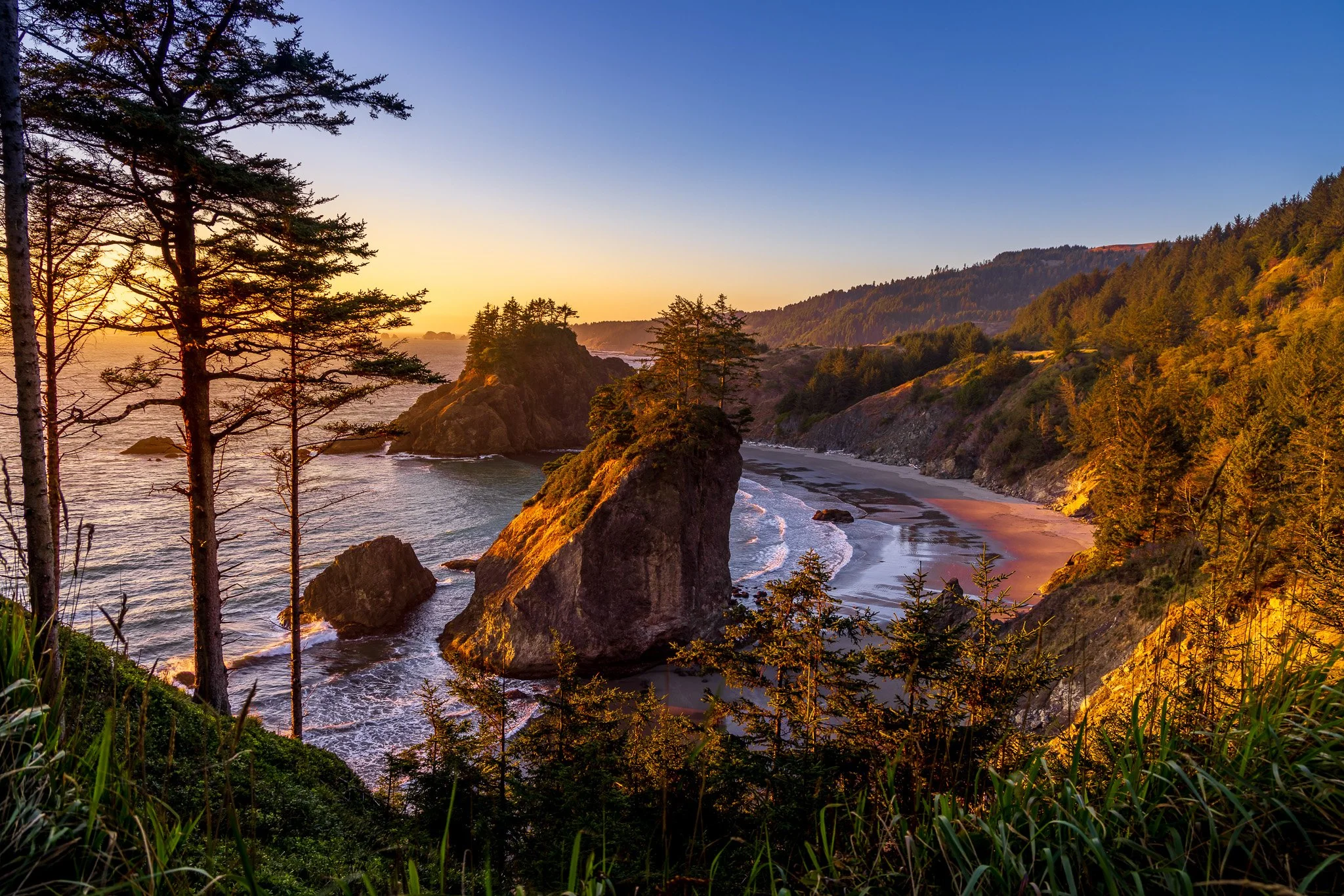
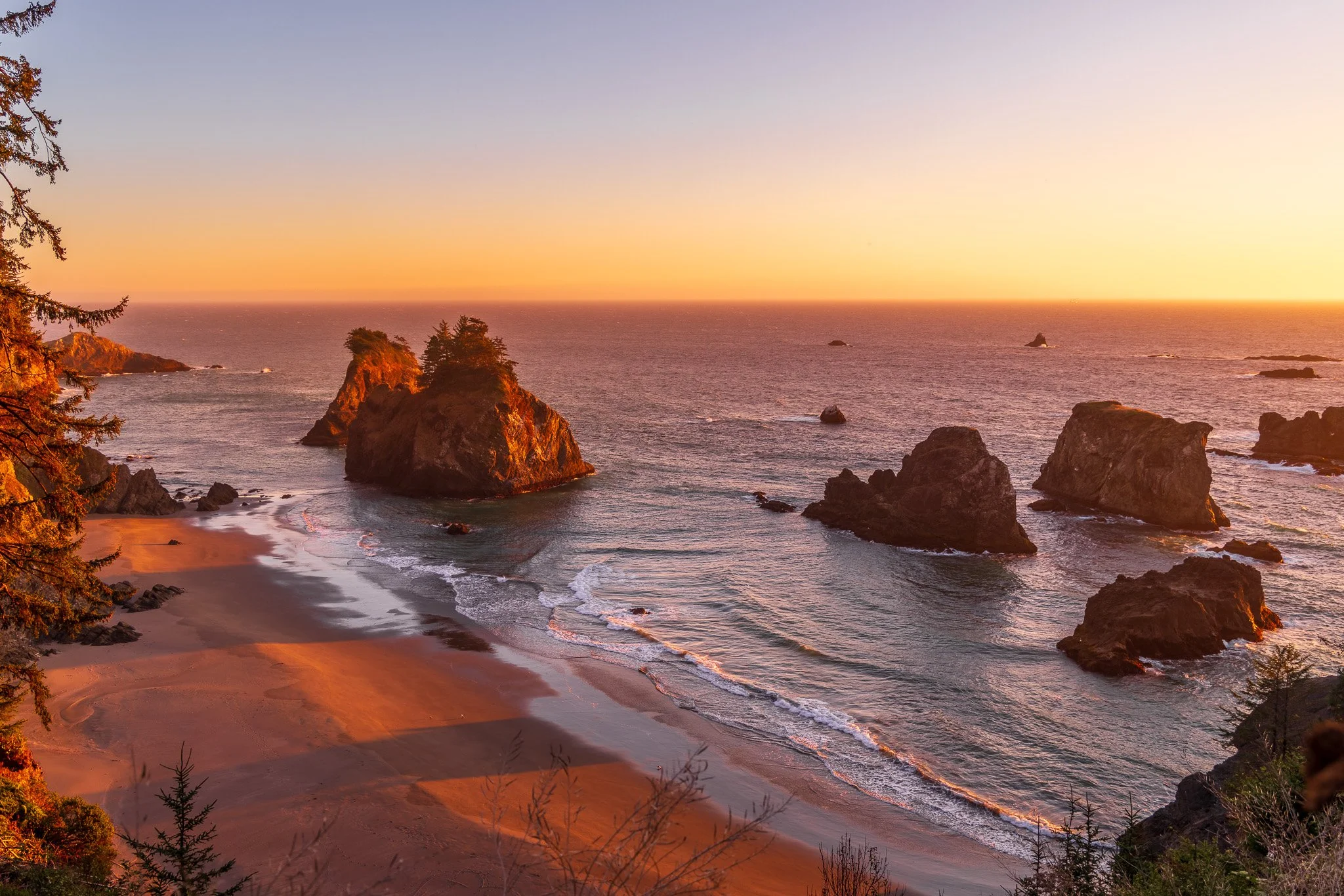
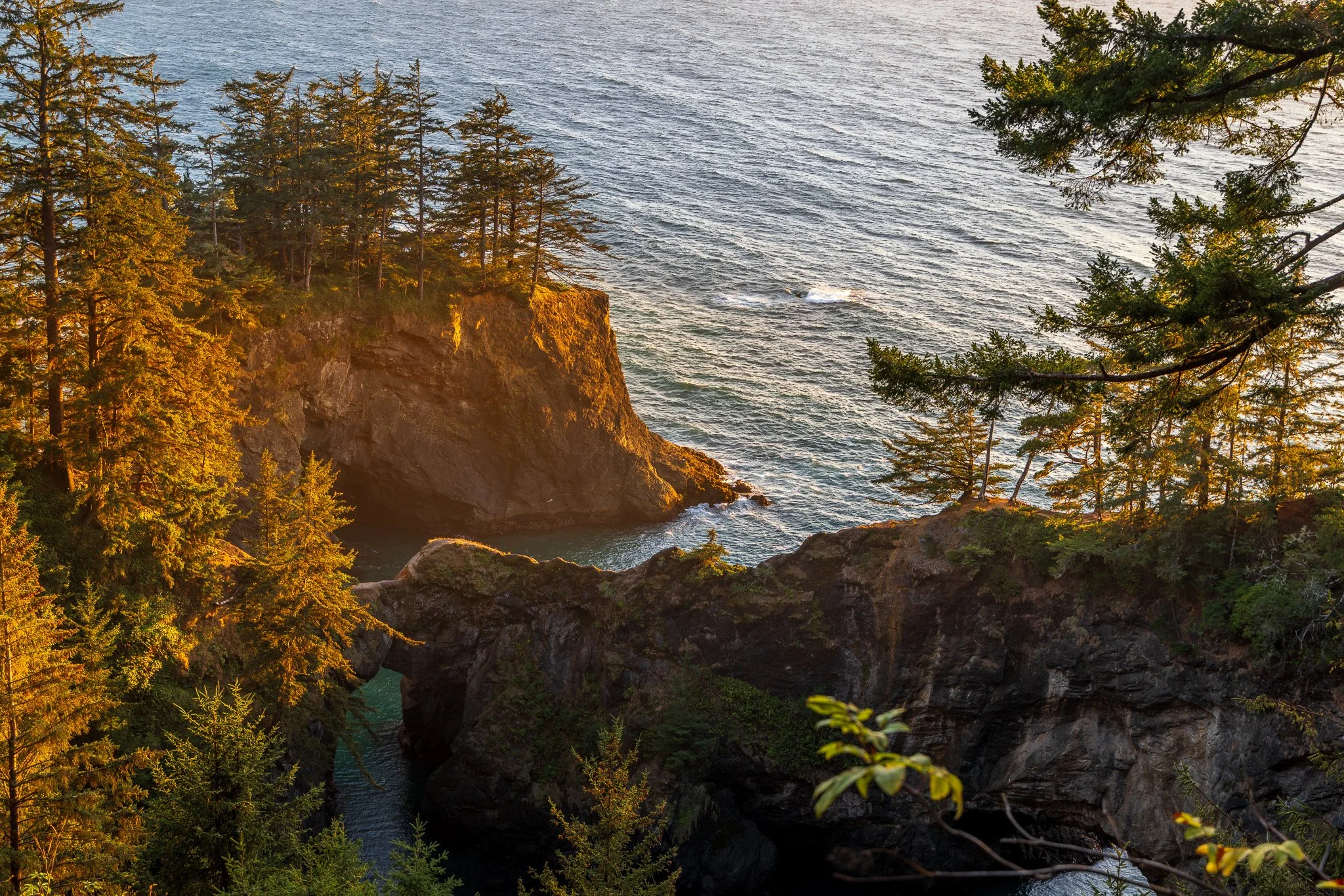
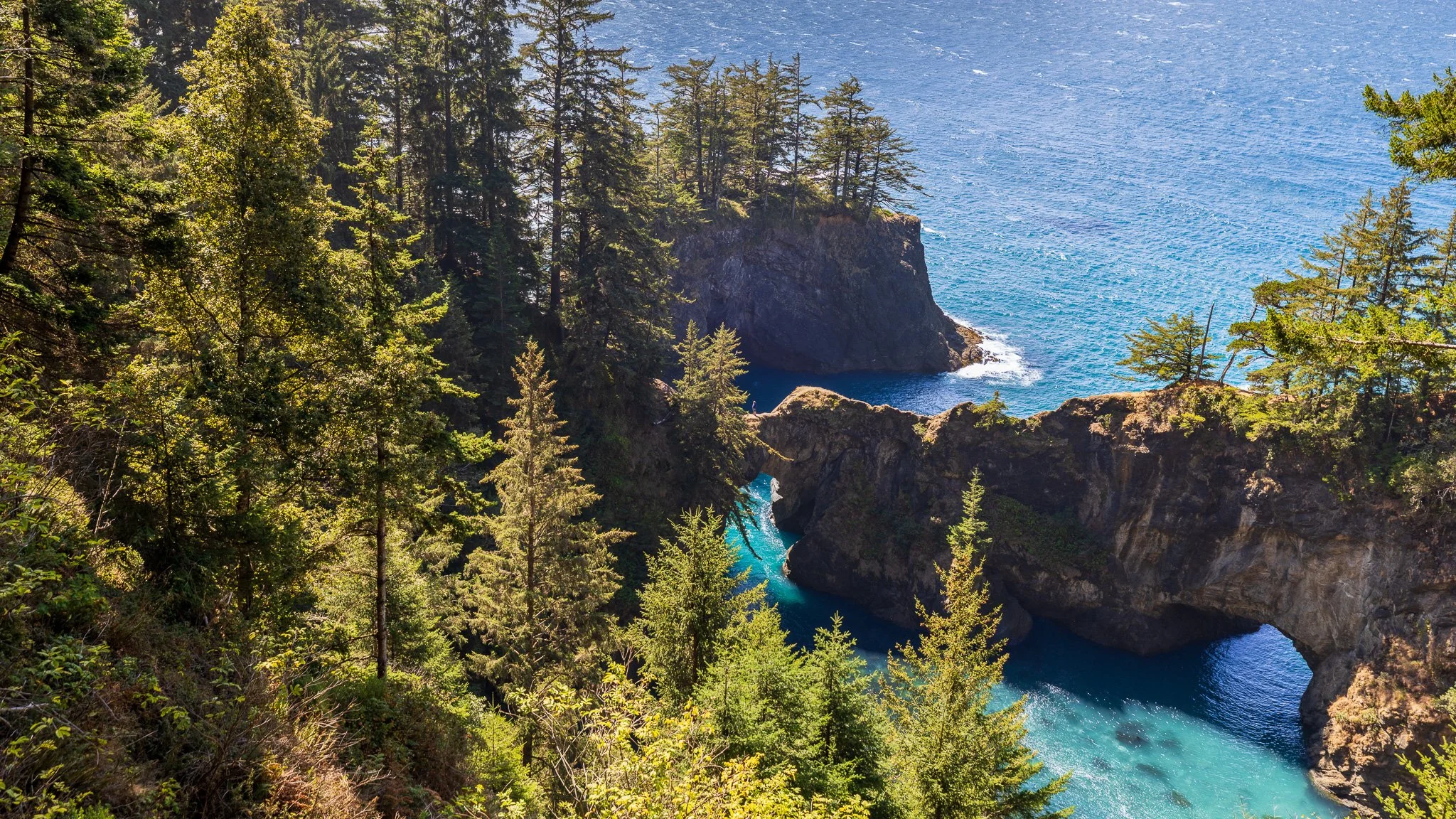
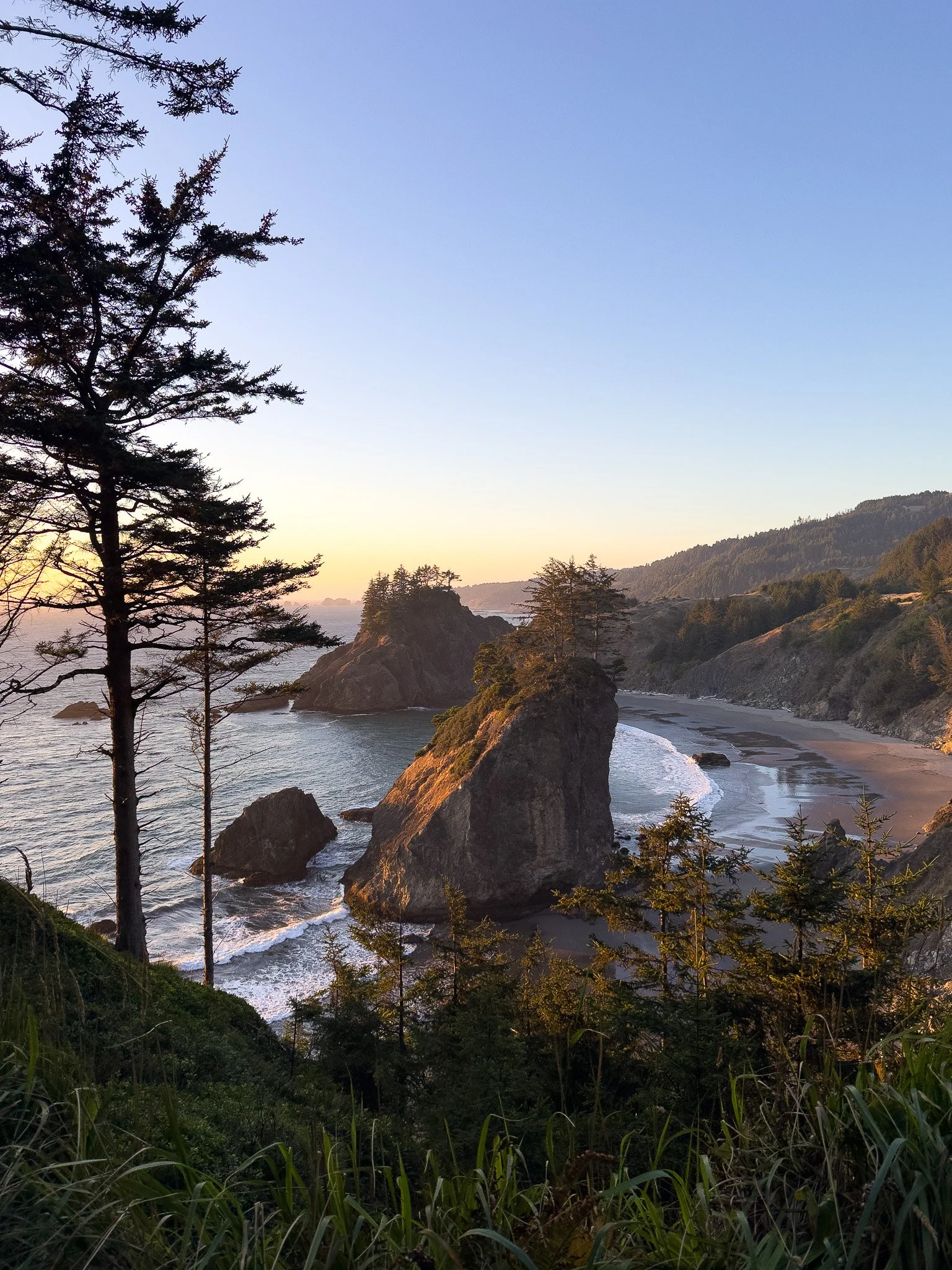
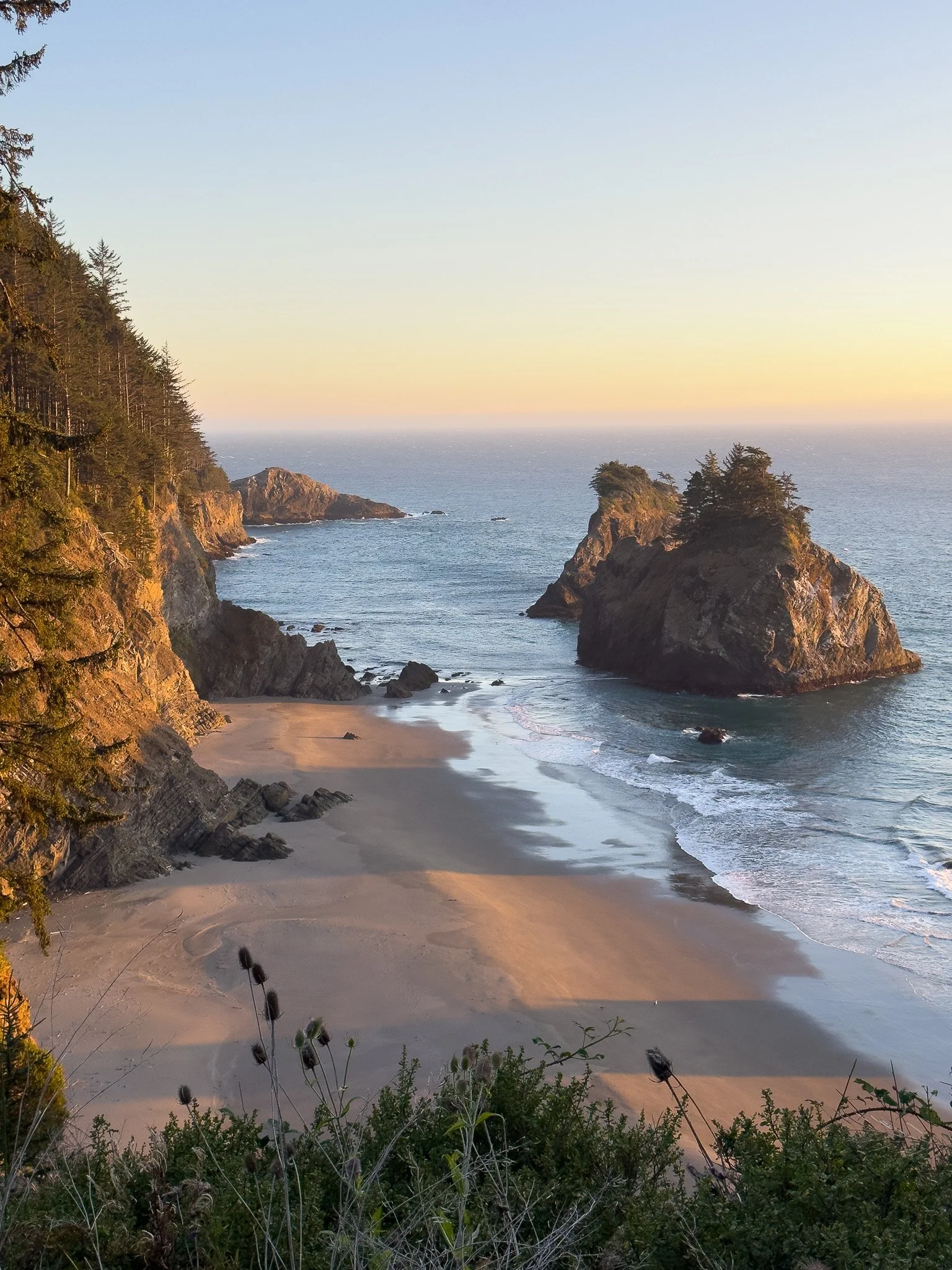
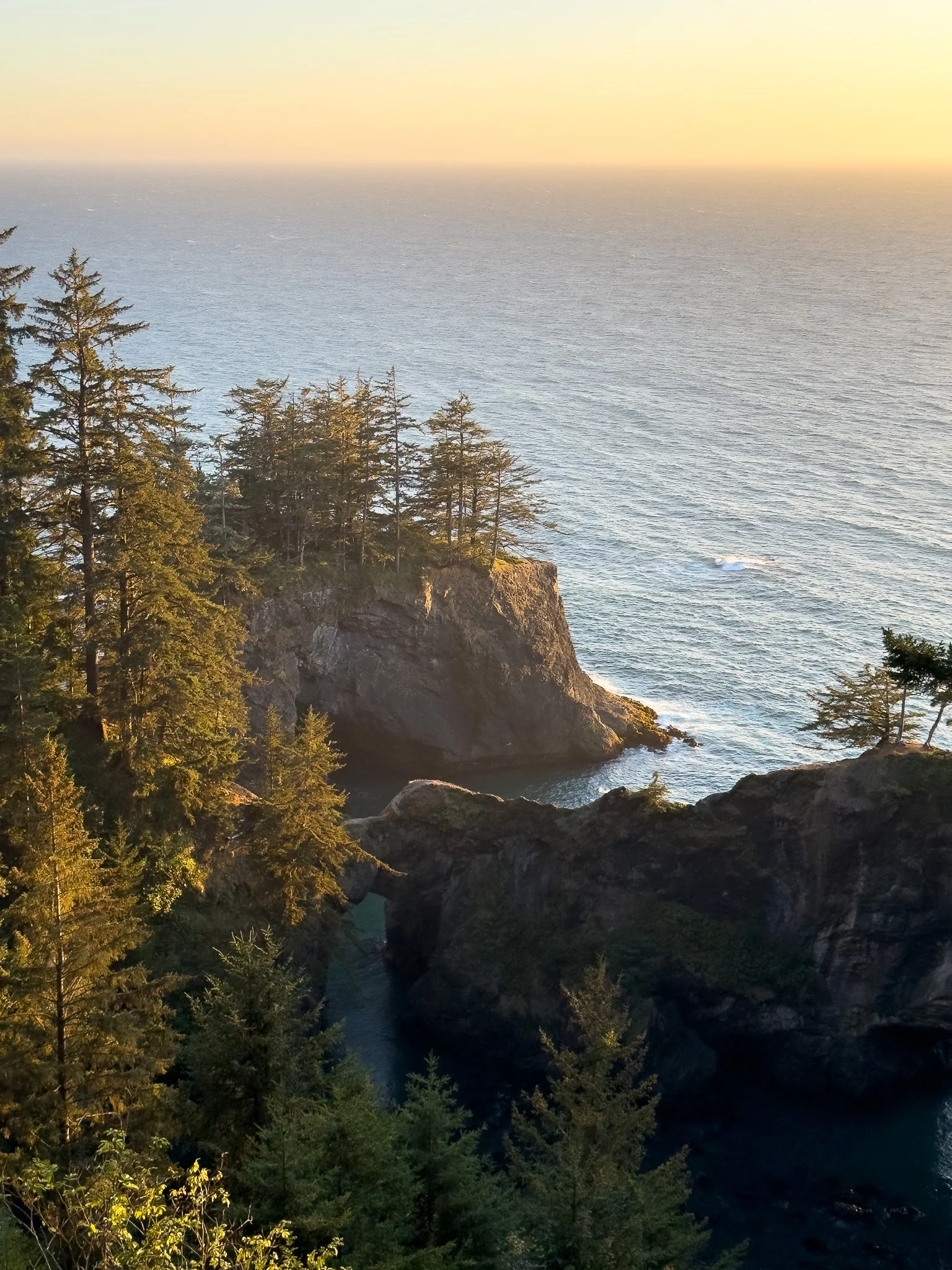
📷 Pro Tip: Start shooting Myers Creek and Arch Rock about 45 minutes before sunset, rather than waiting for the sun to touch the horizon. Once it does, the shadows go dark fast, and you lose the golden light on the trees that makes these two spots work. Don't try to cover the whole corridor in one evening. Pick two or three viewpoints and work them properly. A 16–35mm covers the arches from the overlooks, and a 70–200mm isolates sea stacks and pulls in Secret Beach from above.
📱 iPhone Tip: At Natural Bridges, use the 2x lens from the top viewpoint to frame the arches without the clutter of the surrounding cliffs. In daylight, tap on the water so it keeps its blue-green color.
Best time: About 45 minutes before sunset at Arch Rock and Myers Creek. Daylight at Natural Bridges for water color, or evening for golden light.
Access: Free, with marked pullouts along Highway 101. Stay on the established trails and viewpoints.
Stout Memorial Grove, Redwood National and State Parks
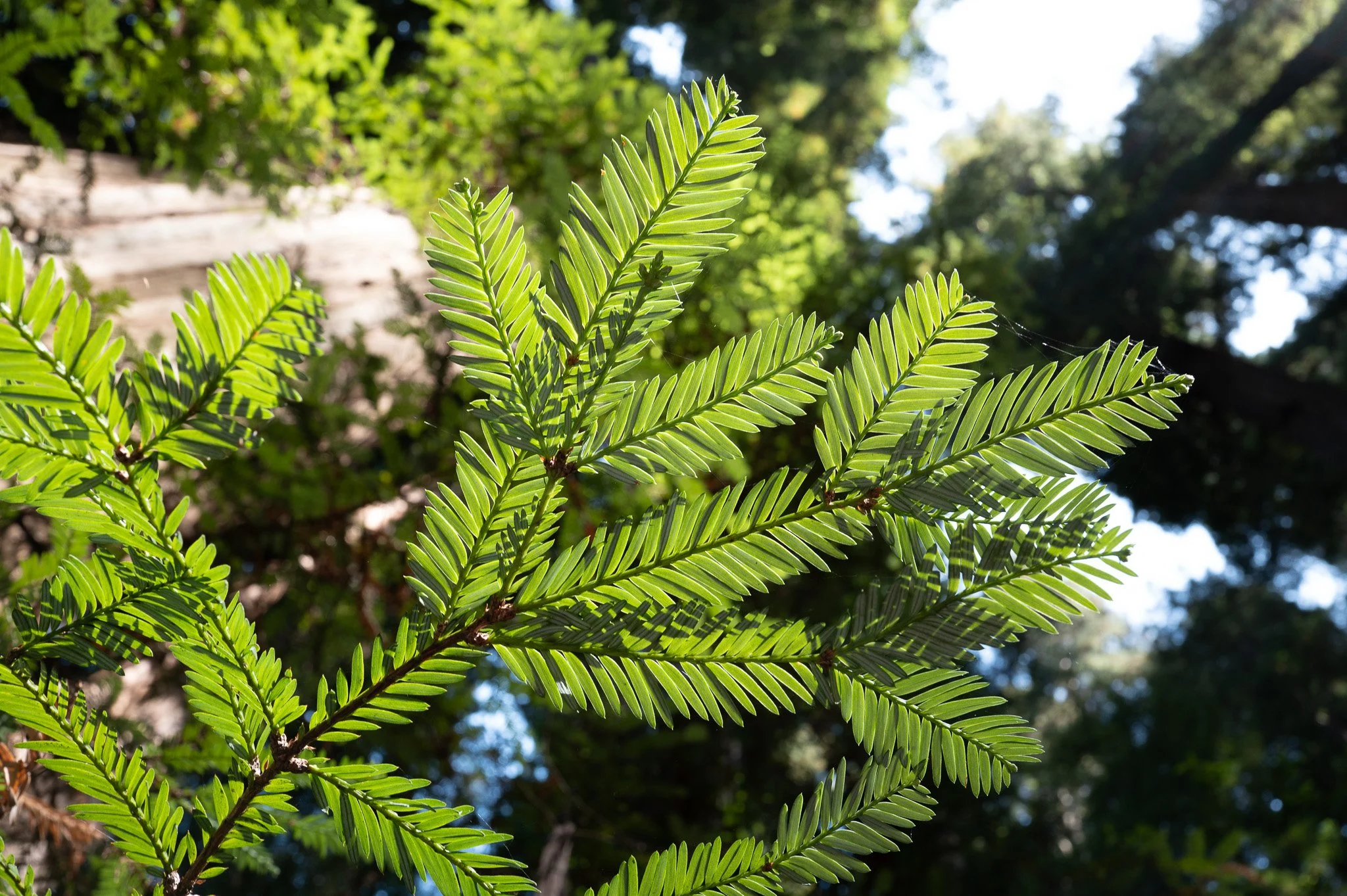
About an hour and a half south of Gold Beach, across the California line, Stout Memorial Grove is the easiest day trip from the southern Oregon Coast, and it was one of the highlights of our whole trip. We drove in on Howland Hill Road and spent a few hours walking through the forest. The redwoods went way beyond what I expected. Some trunks are 10 to 20 feet across, and the trees rise so high the grove looks like a scene from Jurassic Park.
📷 Pro Tip: Overcast days are a gift here. Direct sun breaks the forest into harsh patches of light and shadow, while soft, even light keeps the greens rich and the bark detailed. A 15–35mm lets you shoot up the trunks, and turning the camera vertical helps you fit in more of each tree. To show the scale, place a person at the base of a trunk. Bring a tripod for the darker parts of the grove, and keep your ISO low for clean shadows.
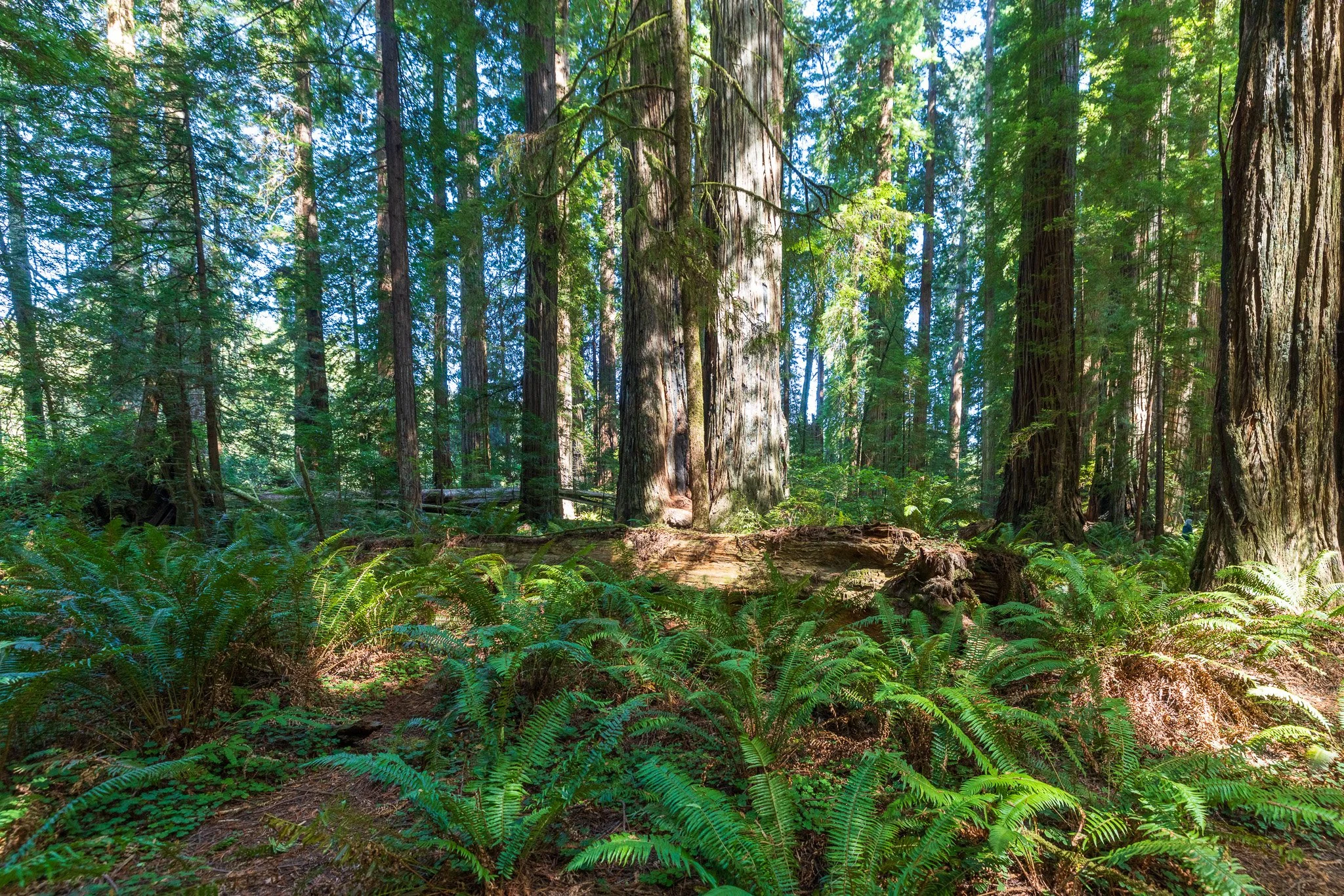
📱 iPhone Tip: Use the 0.5x ultrawide and tilt up from the base of a trunk. Turn on the grid to keep the trees from leaning, and use Night mode in the darker parts of the grove.
Best time: Overcast days, or early morning and late afternoon when the sun is low.
Access: In Jedediah Smith Redwoods State Park, reached by Howland Hill Road. Part of the road is unpaved and narrow, so take it slowly, and skip it with an RV or trailer. Drones aren't allowed in the park.
Wildlife
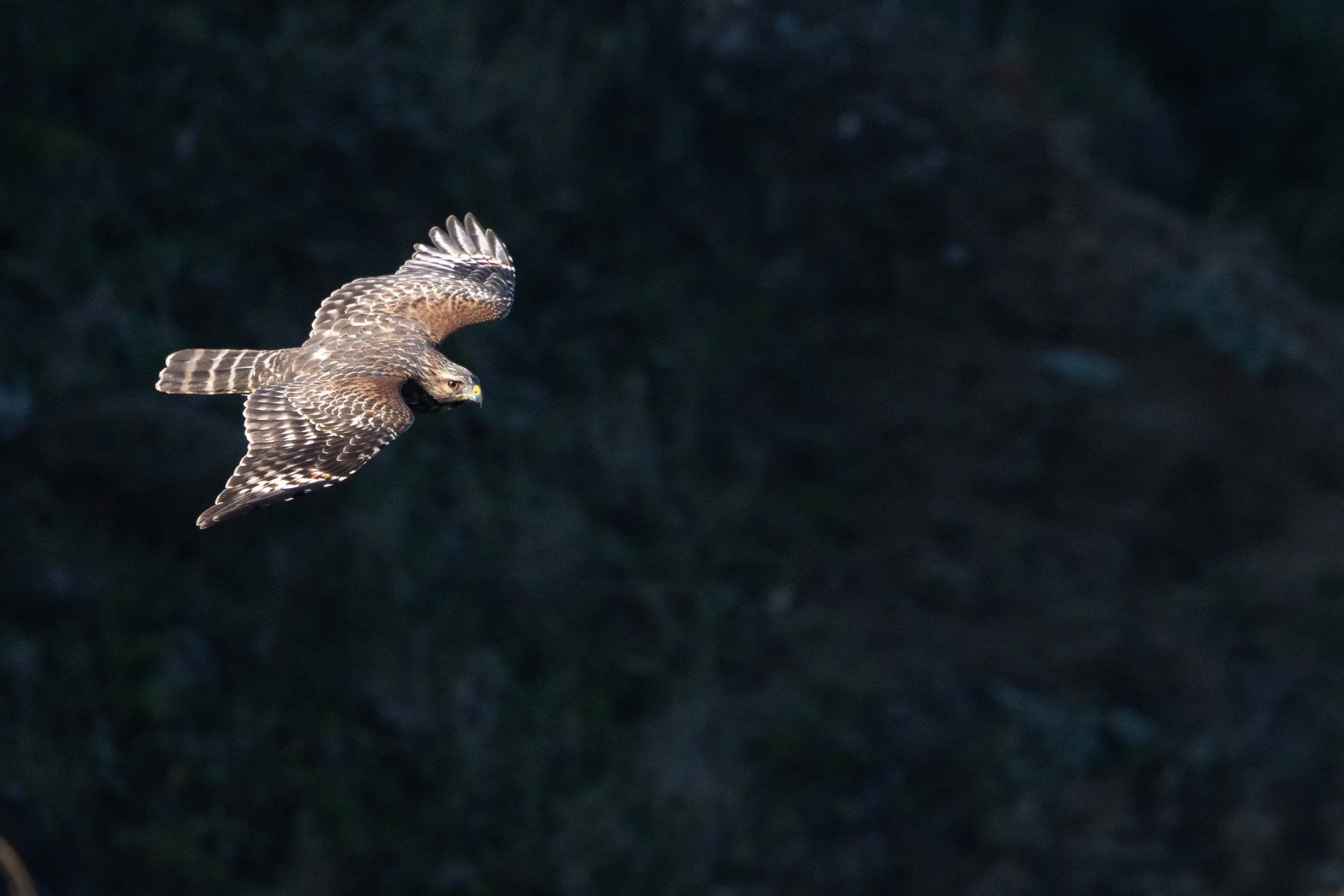
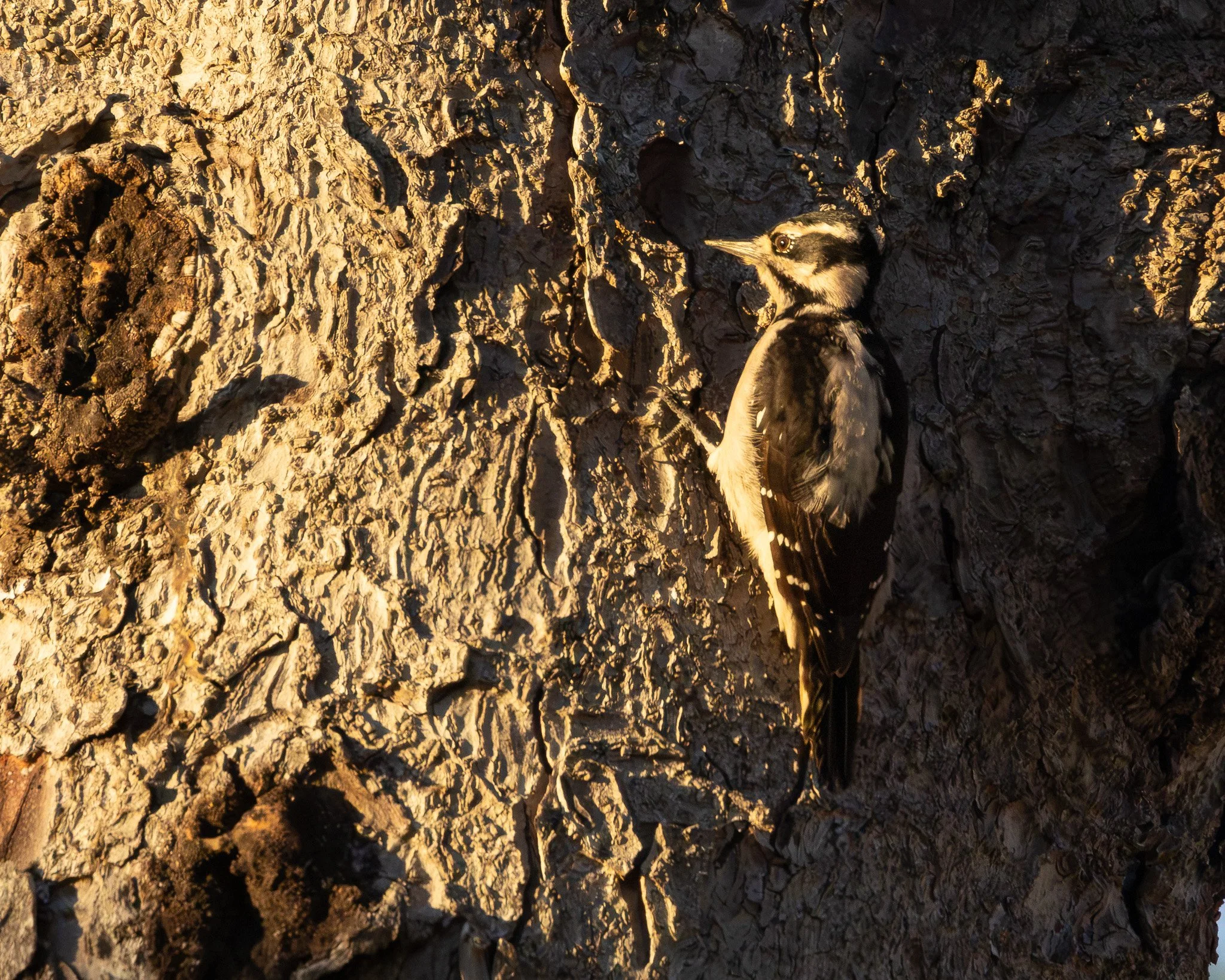
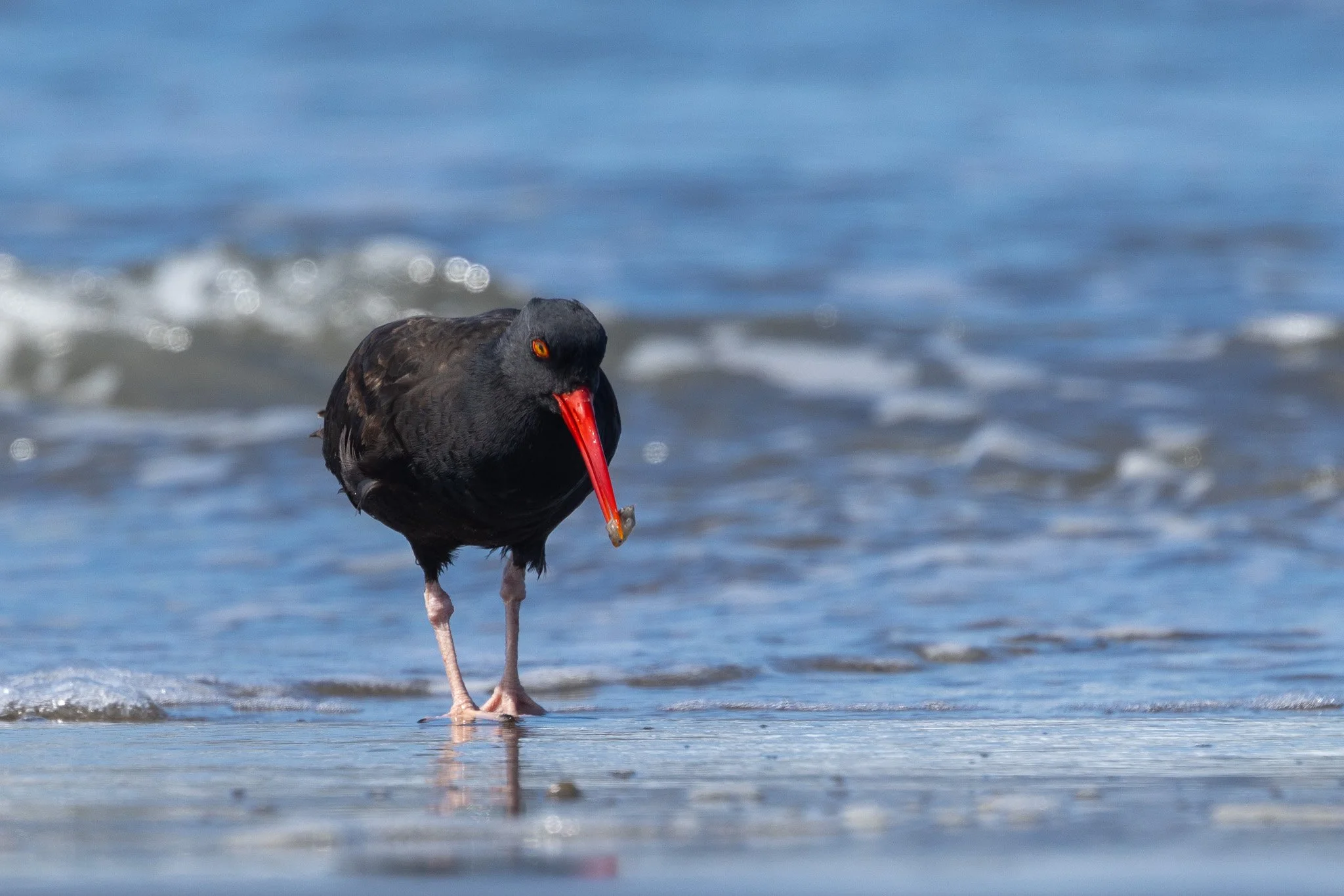
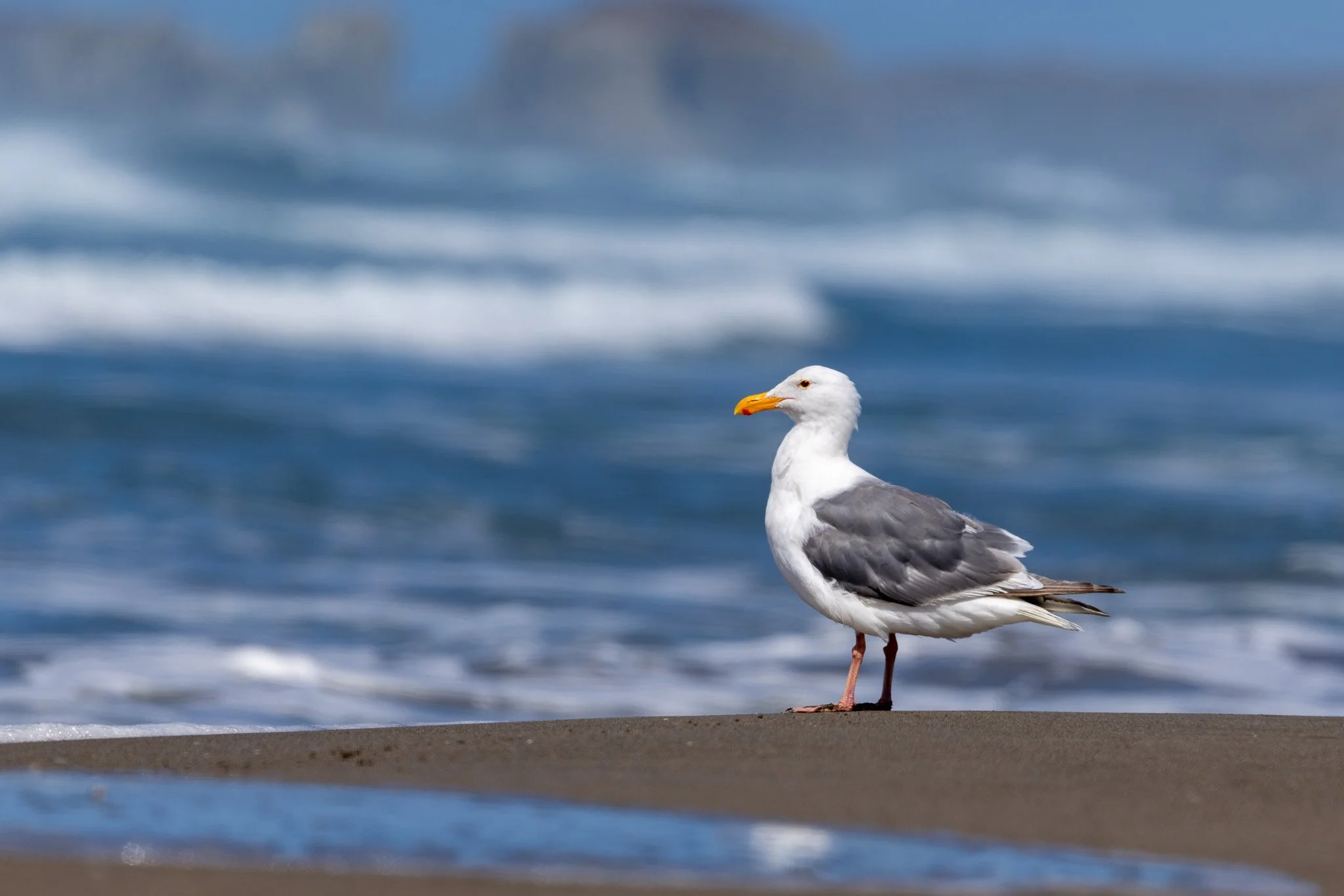
Between the sea stacks, keep a long lens within reach. The offshore rocks along this coast are part of a national wildlife refuge, and seabirds are everywhere, wheeling over the water and nesting on the stacks. We photographed mainly seabirds and hawks, [where you saw them most].
📷 Pro Tip: Bring a 100–500mm or similar. Seabirds move fast, so use a shutter speed of 1/2000 second or faster and continuous autofocus. Hawks often hunt from fence posts and treetops along the highway, so drive slowly and keep your camera on the passenger seat. Never approach nesting birds or climb onto the offshore rocks. They're protected, and disturbing them can cause birds to abandon their nests.
📱 iPhone Tip: Use your longest lens and Burst mode, by holding the shutter and sliding left, to catch a bird in flight. Don't digitally zoom past your longest lens, since the image falls apart quickly.
Best time: Early morning and late afternoon, when birds are most active.
Access: Along the coast, from beaches and viewpoints. Stay off the offshore rocks.


Heceta Head Lighthouse
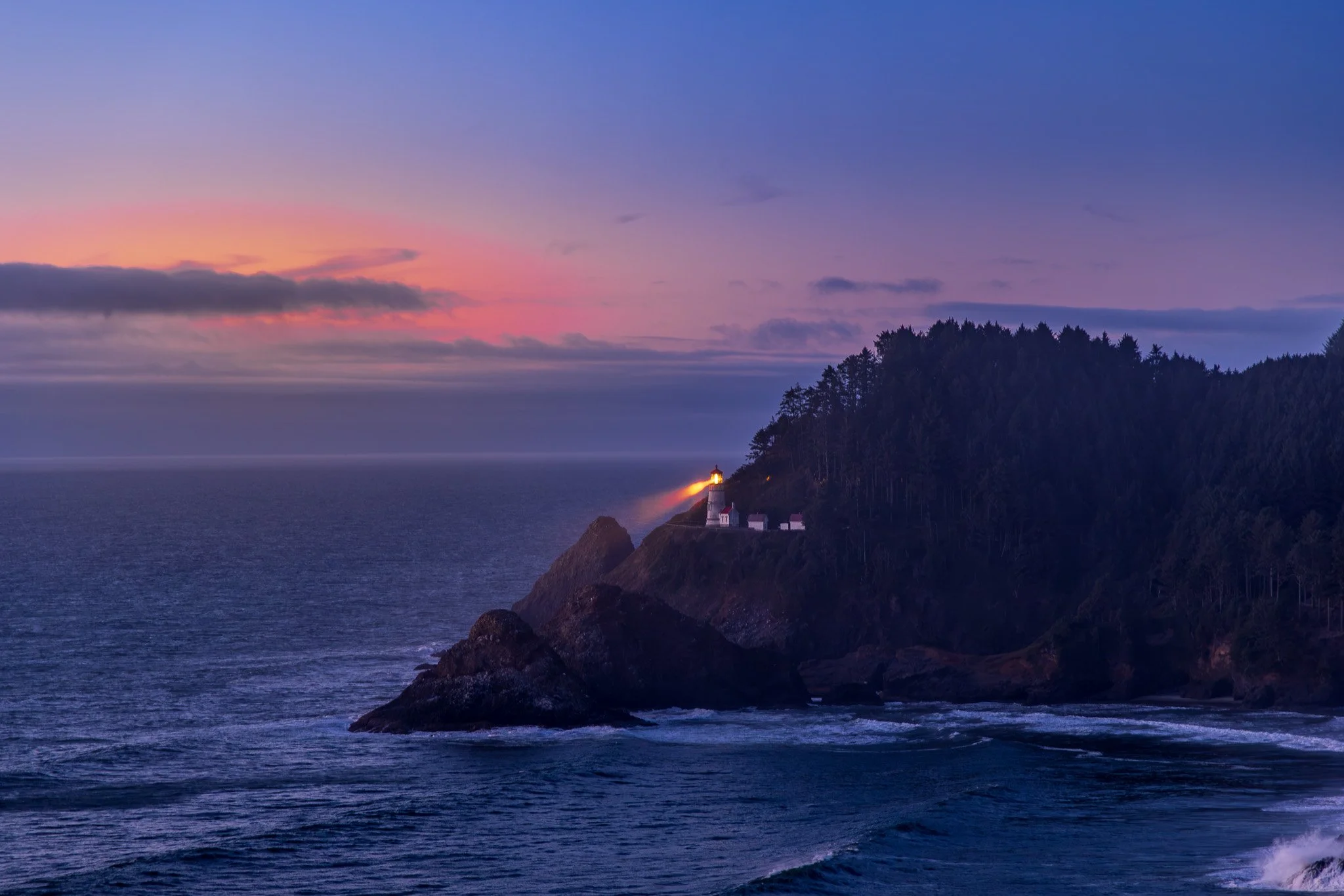
Heceta Head is, in my opinion, the most beautiful lighthouse on this coast. It sits above the Pacific on a forested headland, which gives you several ways to photograph it: from below, from the path up to the lighthouse itself, or from a viewpoint across the cove. For me, the strongest images come from farther away, where the landscape becomes part of the photograph. We caught it at sunset, and the lighthouse beam against the darkening sky was worth the wait on its own.
📷 Pro Tip: Bring the 70–200mm. Compressing the lighthouse against the cliff and the ocean from across the cove produces a stronger image than standing beside it with an ultrawide. Shoot late afternoon through sunset, when the light rakes across the headland. Then stay for the beam. On a tripod, a few seconds' exposure turns it into a clean streak across the dusk.
📱 iPhone Tip: From the viewpoint, use 3x or 5x to bring the lighthouse closer. After sunset, brace your phone on the railing and let Night mode run to capture the beam.
Best time: Late afternoon through sunset and the first part of blue hour.
Access: Free viewpoint from the highway pullout. A day-use fee applies at the lighthouse trailhead parking area. Fog can settle here when the coast just north is clear, so check conditions before you commit.
Oregon Dunes Overlook
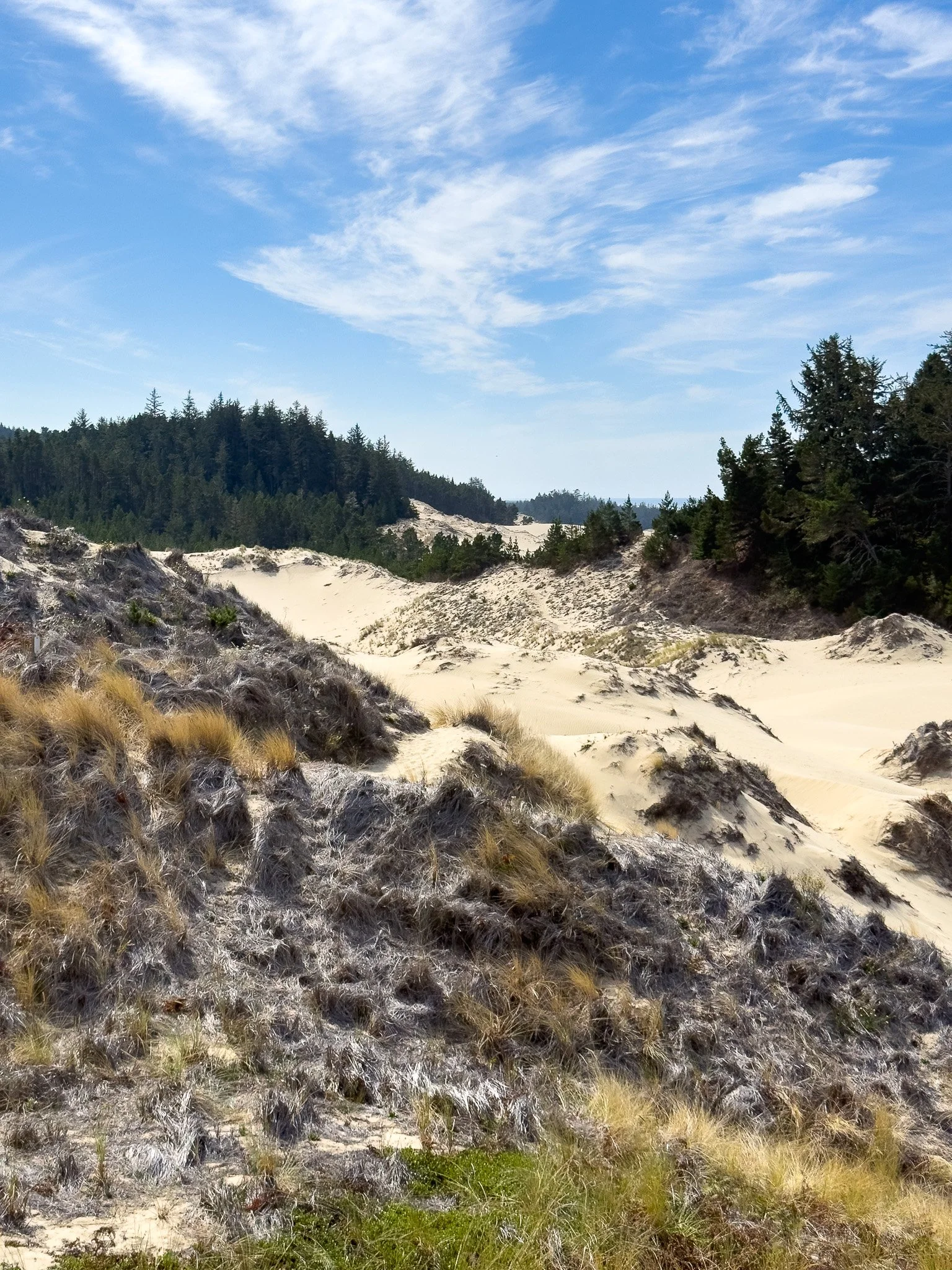
South of Florence, the coast changes completely. The Oregon Dunes stretch for miles between the forest and the ocean, and from the Oregon Dunes Overlook, you look out over a sea of sand rolling toward the Pacific. After days of sea stacks, it feels like a different country.
📷 Pro Tip: Low side light is everything on sand. In late afternoon, it brings out the ripples and ridges that flatten completely at midday. Use a 70–200mm to isolate patterns and curves, and look for a person on a distant ridge to show the scale. Keep your gear sealed when the wind picks up, and change lenses in the car.
📱 iPhone Tip: Use the 2x or 3x lens to isolate ripples and ridgelines, and lower the exposure slightly so the sand keeps its texture instead of turning white.
Best time: Late afternoon, for side light on the ripples.
Access: The overlook is off Highway 101 between Florence and Reedsport. It's federal land with a day-use fee, which a national parks pass covers.
Cape Perpetua: Thor's Well, the Devil's Churn, and the Coastline
Cape Perpetua packs an enormous amount of coastline into a small area. Forested cliffs meet the Pacific, waves crash against volcanic rock, and several of the coast's most photographed features sit within an easy walk of each other. Thor's Well is the star. It's smaller in person than photos suggest, but watching the ocean surge through it and seem to vanish into the rock is worth seeing for yourself. The Devil's Churn nearby gives you another angle on the same raw energy, as waves squeeze into a narrow rocky inlet. And the drive south from here toward Florence may be the prettiest stretch of highway on the whole coast.
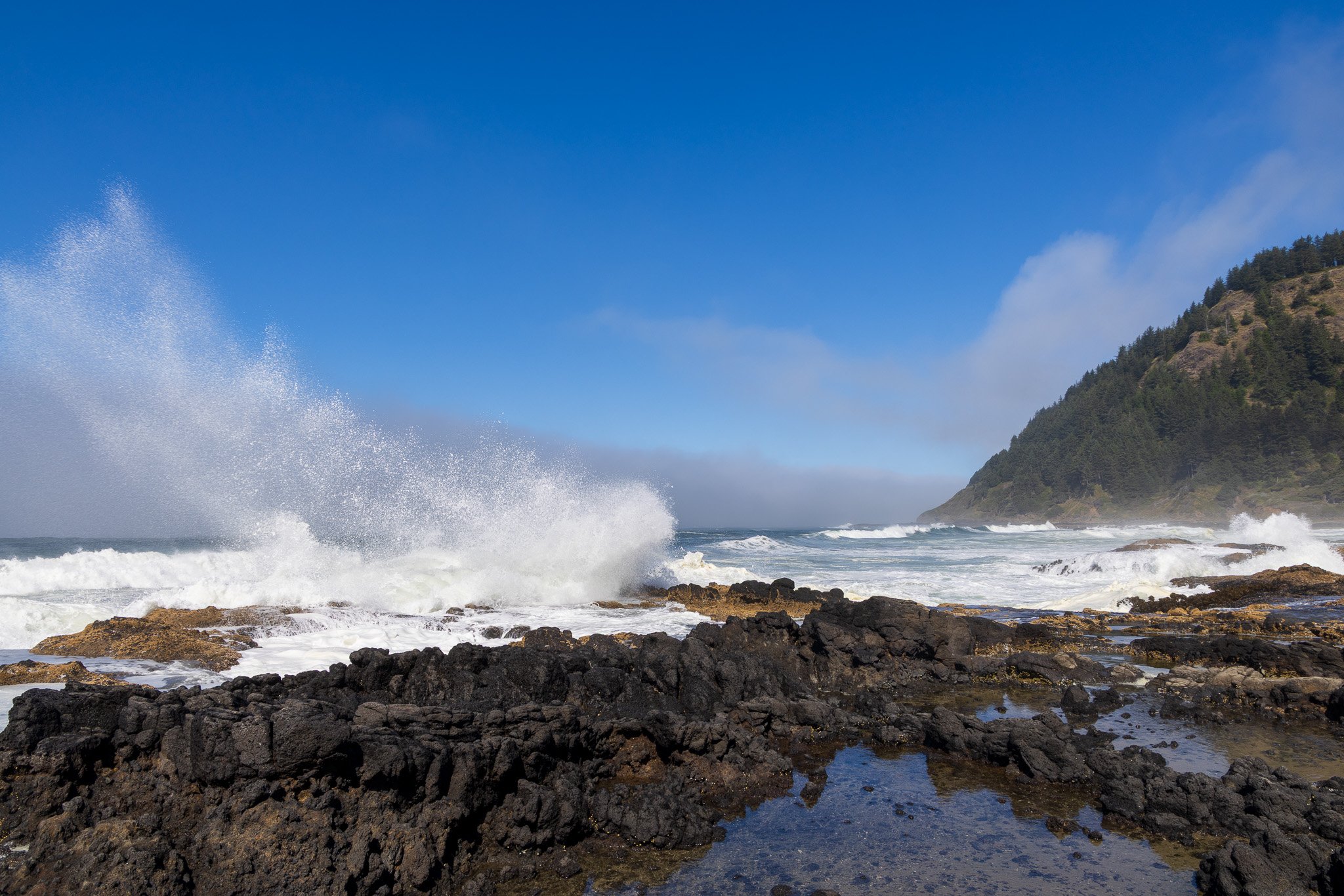
Cape Perpetua
📷 Pro Tip: Experiment with shutter speeds between half a second and two seconds. You'll keep more texture and energy in the water than a longer exposure gives you. Watch the ocean the entire time. At Thor's Well, I got within about 10 feet, with the sun at my back, and that felt like the limit. Give the water more room as the tide rises or the swell builds, and never stand with your back to the waves while you check your settings.
📱 iPhone Tip: Shoot a Live Photo of the water surging through Thor's Well, then switch the effect to Long Exposure. Stay well back from the edge.
Best time: Late afternoon through sunset.
Access: Short walks from the Cape Perpetua parking areas to both Thor's Well and the Devil's Churn. Cape Perpetua is federal land with a day-use fee, which a national parks pass or the Oregon Pacific Coast Passport covers.
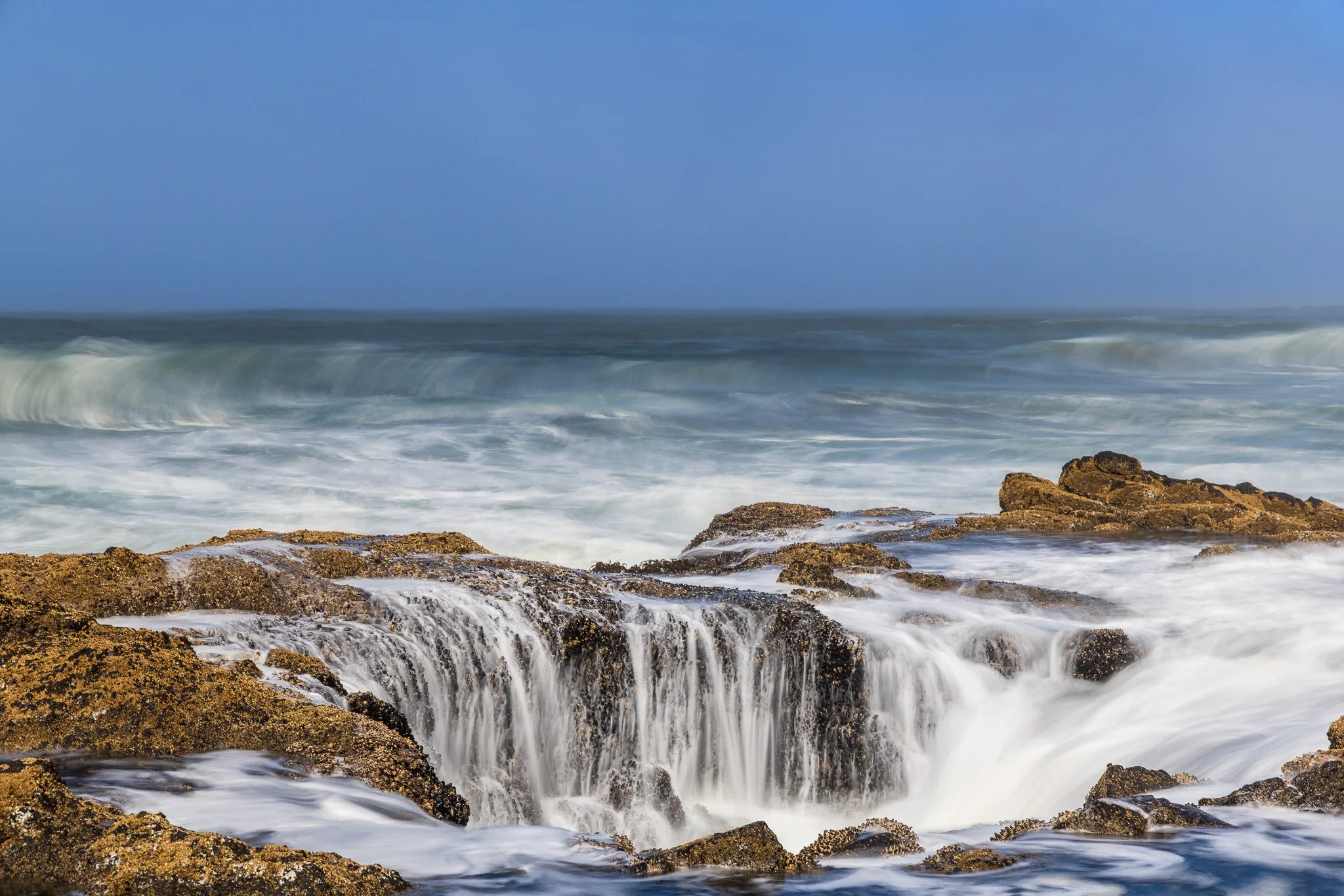
Thor’s Well at High Tide
Devil's Punchbowl
At Otter Rock, just north of Newport, the ocean has carved a huge bowl into the headland. It's what remains of a sea cave whose roof collapsed. We arrived at high tide, and the waves were surging in through openings in the rock and churning inside the bowl. It's an easy stop, with simple parking and a short walk to the viewpoints, and it fits neatly into the drive between Cape Perpetua and Cannon Beach.
📷 Pro Tip: Come near high tide, as we did, when the waves pour into the bowl and the water is at its most dramatic. From the overlook, a 16–35mm takes in the whole bowl, and a shutter speed of around half a second to one second turns the churning water into texture without losing its energy. Brace your camera on the railing or use a tripod. At low tide, the bowl calms down, and the tide pools at Otter Rock below become the better subject.
📱 iPhone Tip: From the overlook, shoot a Live Photo of the water swirling in the bowl, then switch the effect to Long Exposure.
Best time: Near high tide for dramatic water. Low tide for the tide pools.
Access: Free parking at the Devil's Punchbowl State Natural Area, off Highway 101 at Otter Rock, with an easy walk to the viewpoints.
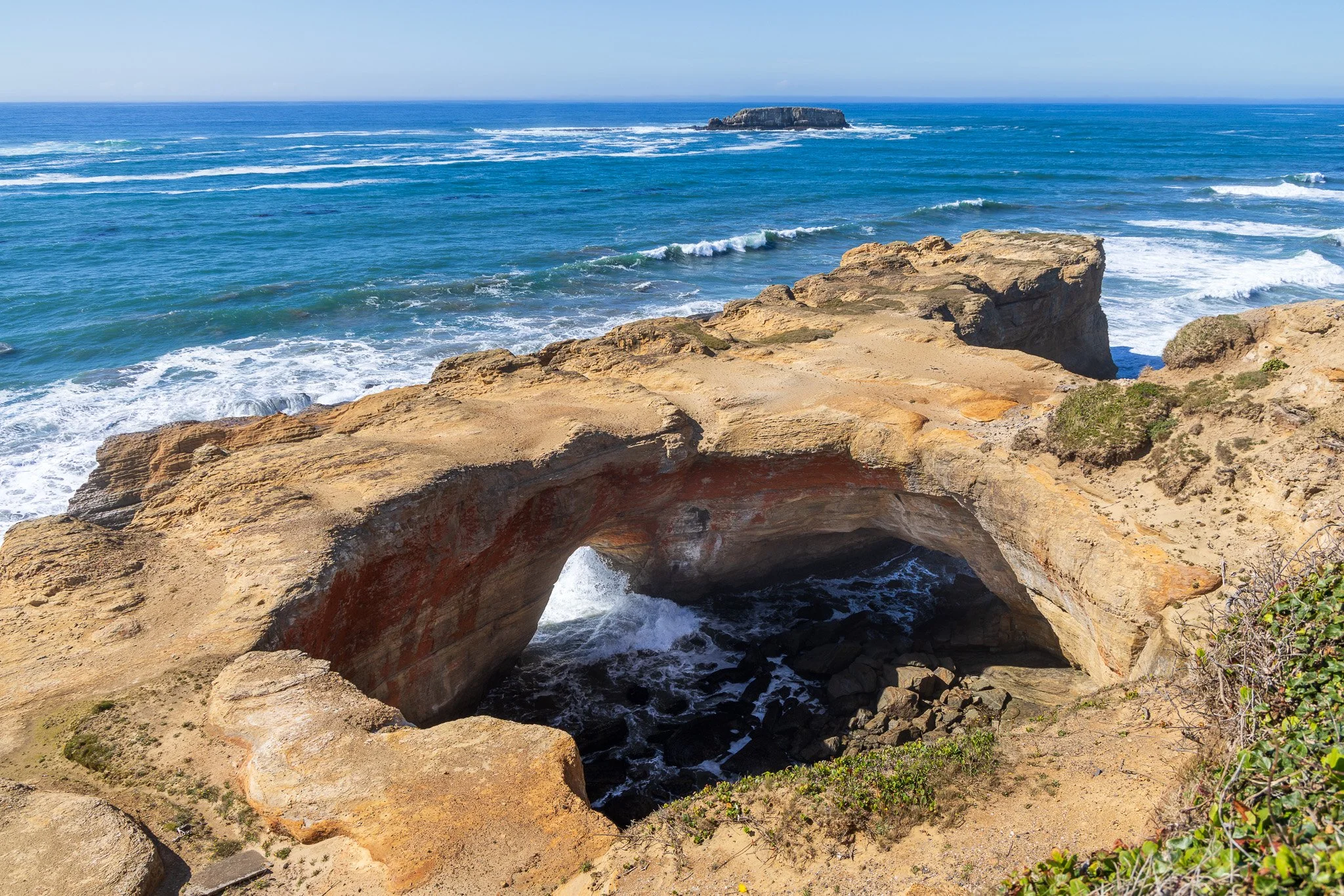
Cannon Beach and Haystack Rock
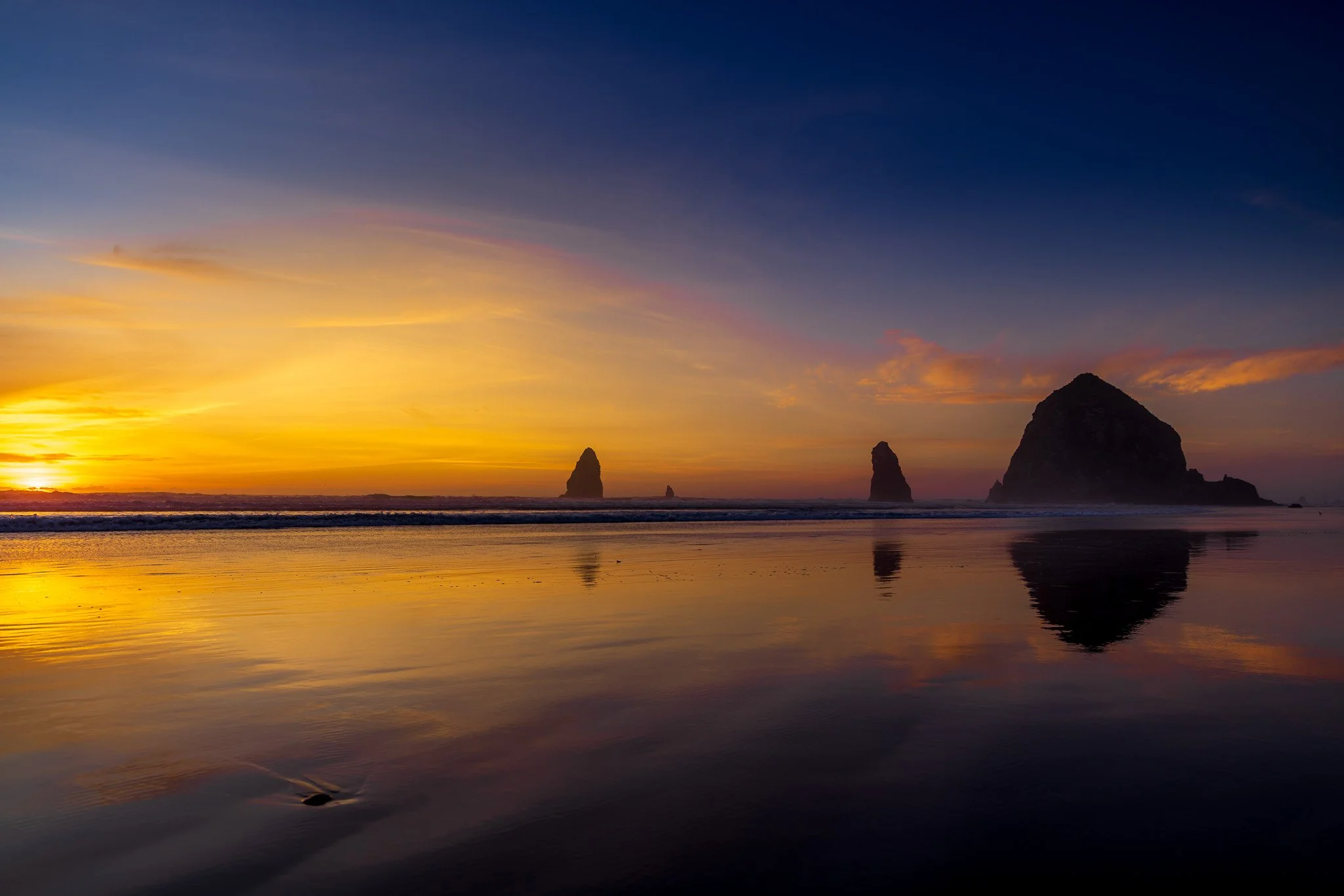
Haystack Rock rises straight out of the beach, and it photographs differently depending on where you stand, how far you walk, and what focal length you bring. We stayed at The Ocean Lodge and walked out to it both evenings.
📷 Pro Tip: Shoot both wide and telephoto. A 16–24mm gets you the classic reflection shot low over the wet sand. Then switch to a 70–200mm and walk farther down the beach to compress Haystack Rock against the smaller stacks for a completely different image. Arrive at least an hour before sunset, since this beach draws a crowd, and stay through blue hour.
📱 iPhone Tip: At low tide, hold your phone an inch or two above the wet sand with the ultrawide lens, and Haystack Rock doubles in the reflection.
Best time: Sunset through blue hour, or early morning for fewer people. Plan around low tide.
Access: Free public beach. Haystack Rock is part of a protected wildlife refuge, so stay off the rock. For much more, see my Photography Guide to Cannon Beach.
Ecola State Park and Indian Beach
A few minutes north of Cannon Beach, Ecola gives you Haystack Rock and the coastline from above rather than at sea level. The road in winds through old-growth Sitka spruce so thick it feels like a tunnel, then opens onto the bluff at Ecola Point. Indian Beach, farther into the park, is a quieter cove favored by surfers, like a smaller version of Bandon. My favorite sequence: work Indian Beach in the late afternoon, then drive back to Ecola Point around 6:30 to catch the golden light on the sea stacks from above.
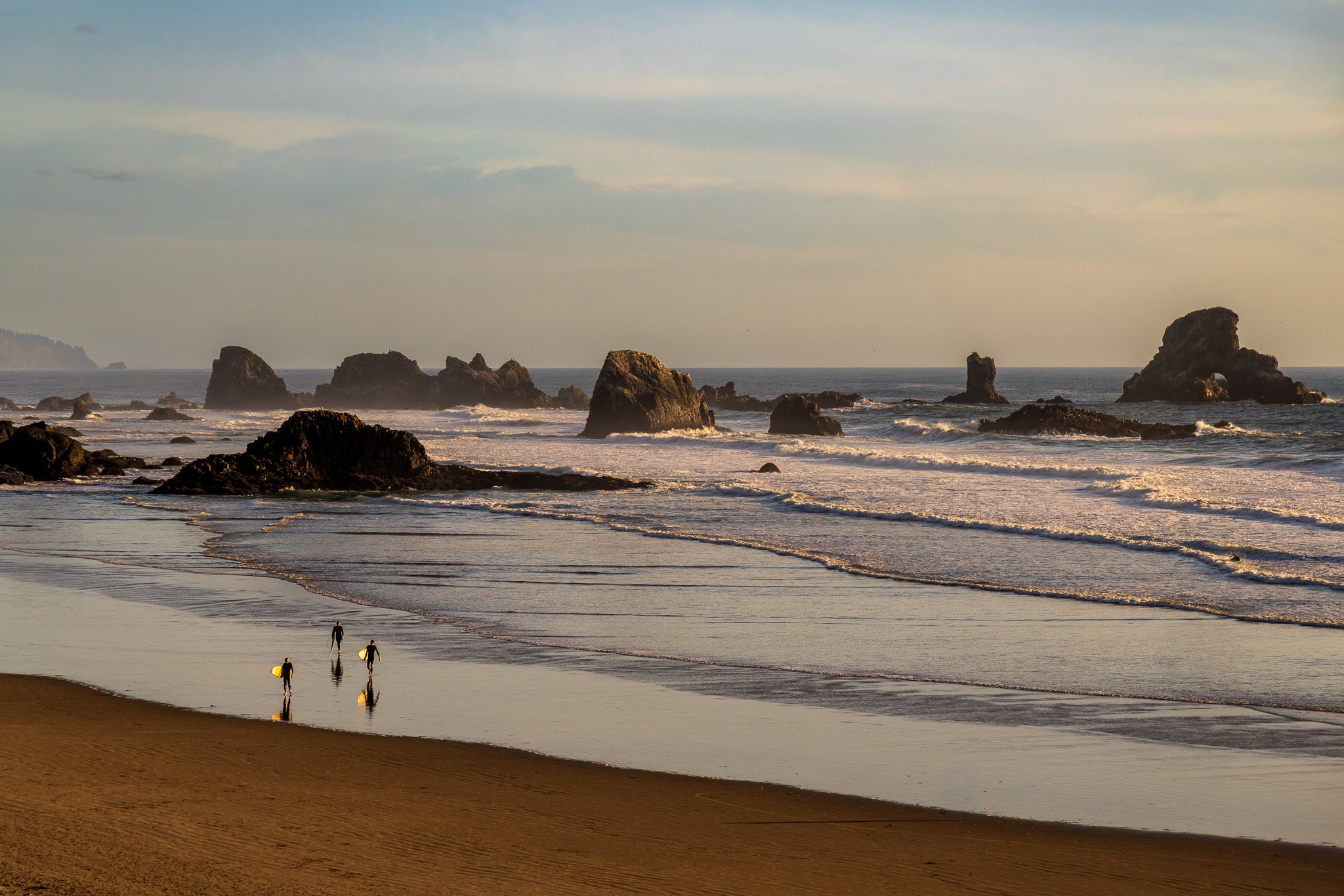
📷 Pro Tip: At Indian Beach, bring your longest lens for the surfers. I used my 100–500mm and could fill the frame with a rider on a wave from the sand. At Ecola Point, switch to a 70–200mm to compress the sea stacks, or go wide for the full sweep of the coastline. A long lens also picks out Tillamook Rock Lighthouse offshore.
📱 iPhone Tip: At Ecola Point, use 3x or 5x to stack the sea stacks against each other. For the surfers, use your longest lens and Burst mode.
Best time: Late afternoon at Indian Beach, then golden hour at Ecola Point.
Access: Day-use fee, covered by the Oregon Pacific Coast Passport. The road is narrow, with no room for RVs or trailers. Check the park's road status before you go, since it has closed for repairs in some past seasons.
Peter Iredale Shipwreck
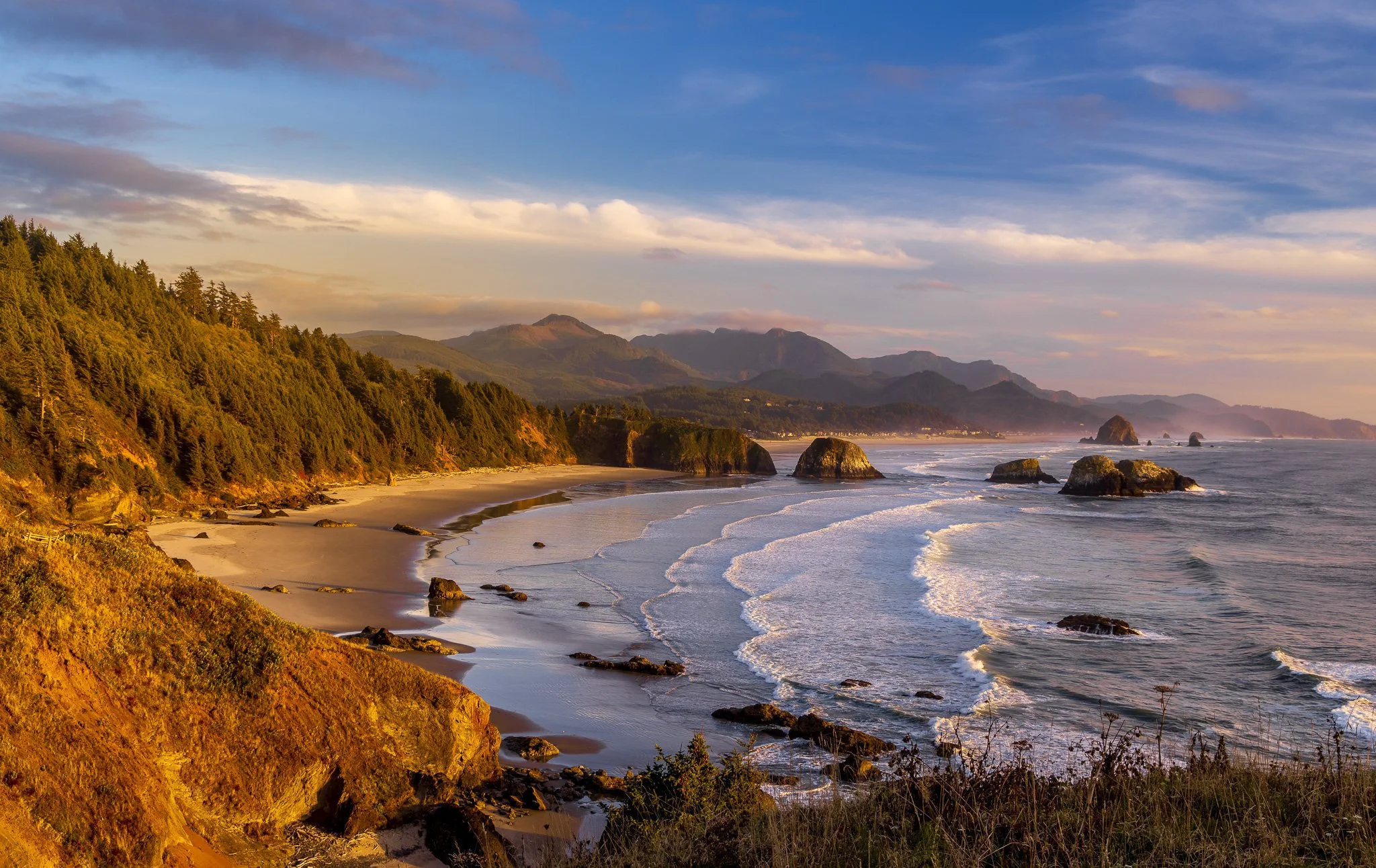
At Fort Stevens State Park, about 45 minutes north of Cannon Beach, the rusted skeleton of the Peter Iredale has sat in the sand since the ship ran aground in October 1906. It's farther north than most people expect, so build in the drive time, but it's worth it, and it's a completely different subject from the sea stacks.
📷 Pro Tip: I used a 15–35mm to go wide on the hull, getting close so the rusted ribs reach toward the sky. My Leica Q3 was perfect for walking around the wreck and finding details. Come at low tide, when you can walk all the way around the hull.
📱 iPhone Tip: Get close to a rusted rib and use Portrait mode to blur the beach behind it. The texture of the rust carries the whole photo.
Best time: Low tide, morning or late afternoon.
Access: Fort Stevens State Park charges a day-use fee, covered by the Oregon Pacific Coast Passport.
Astoria-Megler Bridge
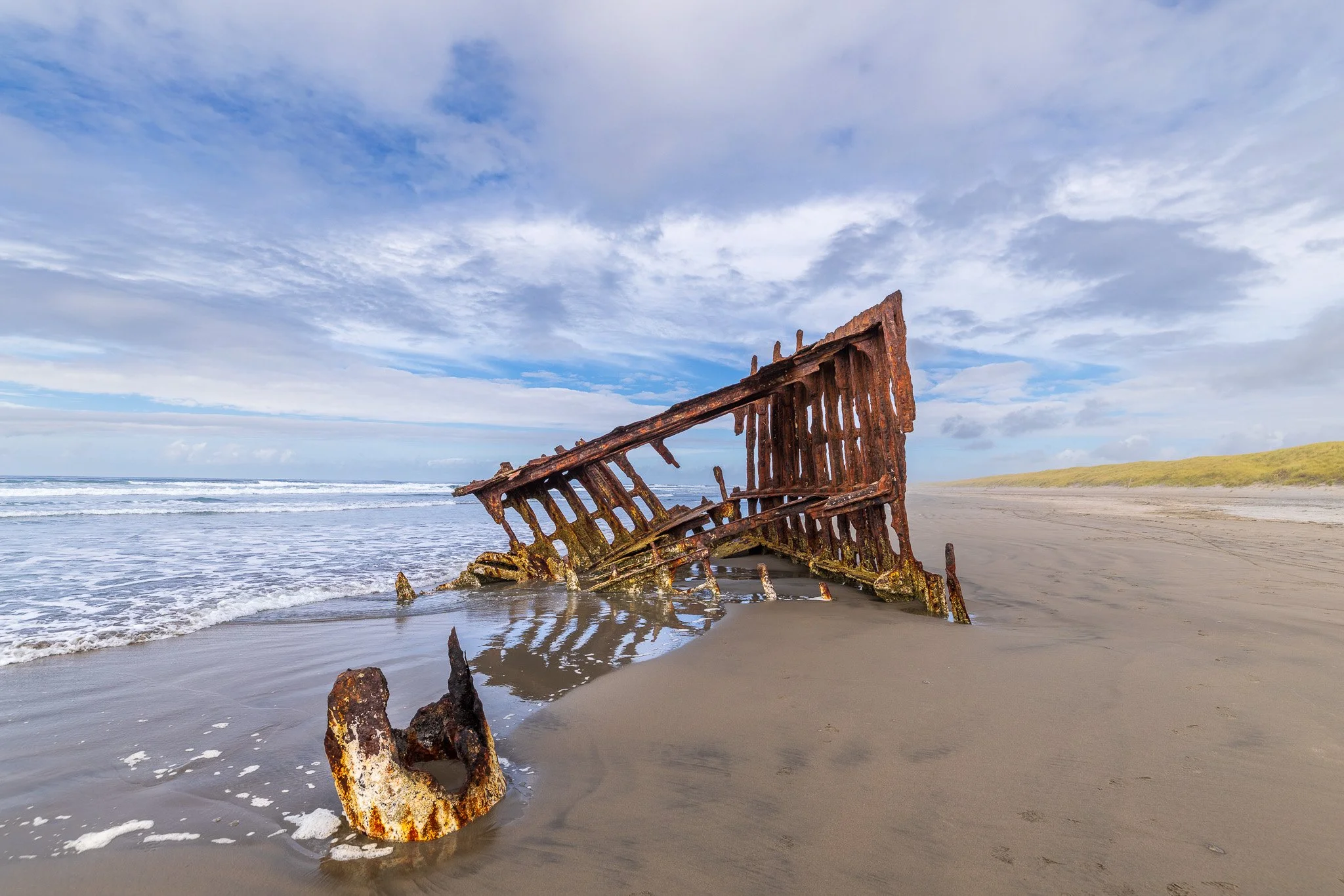
Leaving Oregon, we crossed the Columbia River on the Astoria-Megler Bridge, a long steel truss bridge that stretches from Astoria to the Washington shore. Before you cross it, photograph it from the Astoria waterfront, where the bridge sweeps across the river behind the old piers and working boats.
📷 Pro Tip: Walk the Astoria Riverwalk and use a 70–200mm to compress the span against the river and the hills on the Washington side. Watch for cargo ships passing under the bridge, which give the scene scale. Include the old pilings in the foreground for depth.
📱 iPhone Tip: Use 2x or 3x to compress the bridge, and wait for a ship to pass underneath.
Best time: Late afternoon, or whenever a ship is coming through.
Access: Free, from the Astoria waterfront and Riverwalk.
Cape Disappointment and North Head Lighthouse
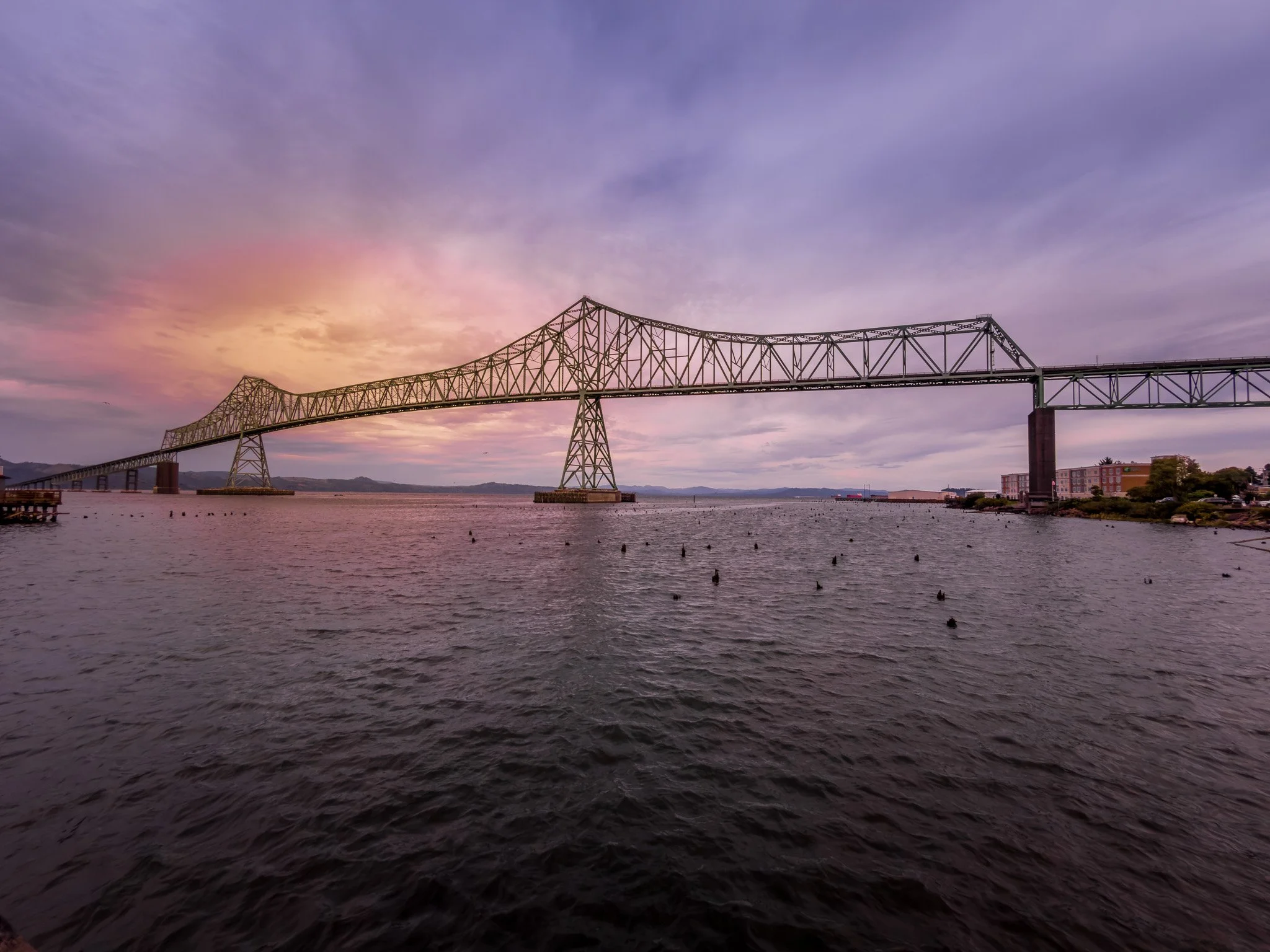
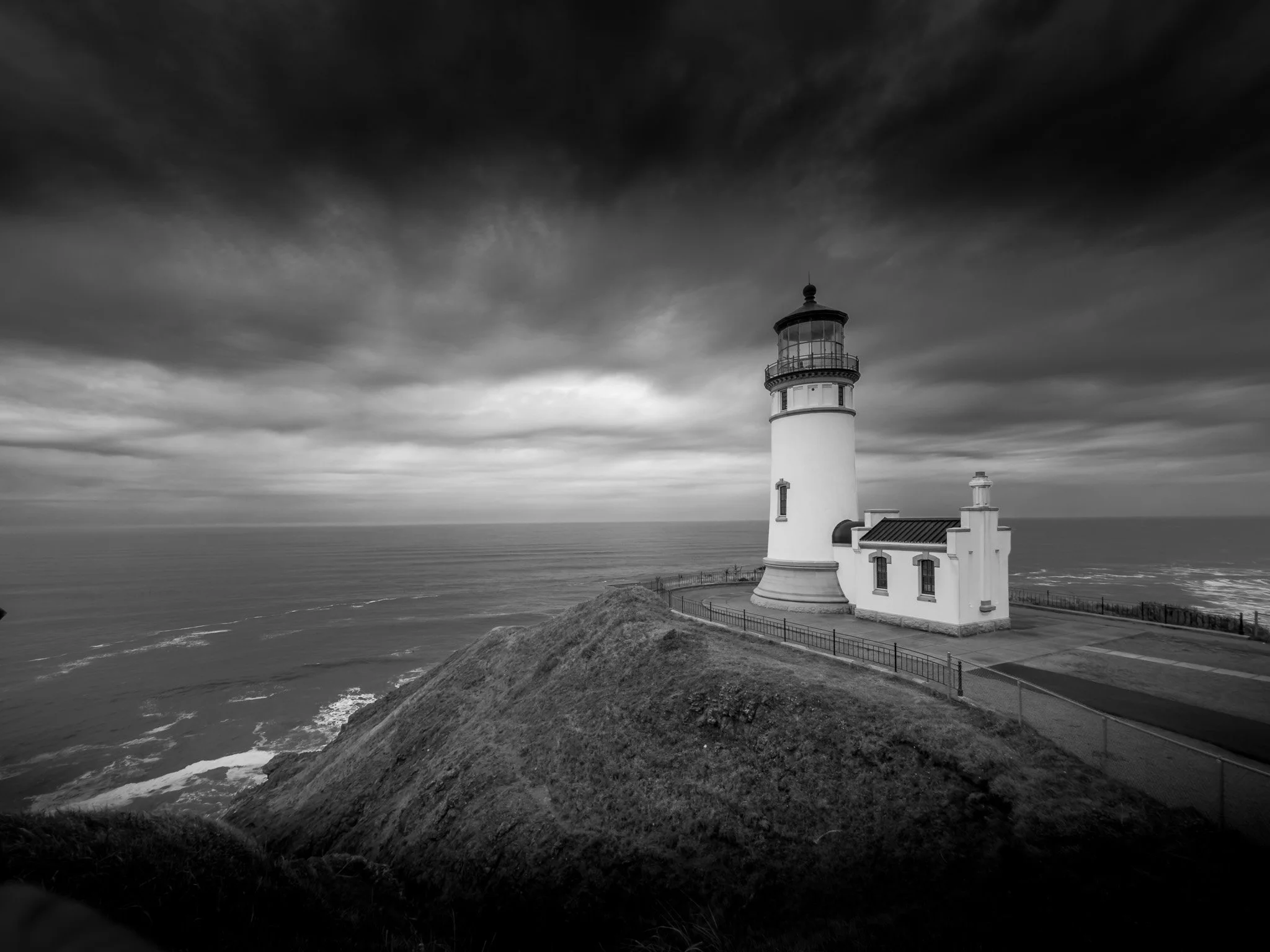
Across the Columbia River in Washington, Cape Disappointment State Park sits where the river meets the Pacific. We photographed North Head Lighthouse, perched on a headland above the ocean, and it was a fitting final stop before we drove on to Seattle.
📷 Pro Tip: Walk the trail toward the lighthouse with a 24–105mm, which covers both the lighthouse in its setting and the coastline around it. Back off and use a longer lens if you want the headland and the ocean in the frame. Expect wind.
📱 iPhone Tip: Use 1x for the lighthouse with the ocean behind it, and keep the horizon level with the grid turned on.
Best time: Late afternoon.
Access: Cape Disappointment is a Washington state park, so you'll likely need a Washington Discover Pass rather than your Oregon passport. Confirm before you go.
Still open before you publish: where you photographed the seabirds and hawks, your time of day and lens at the dunes, the tide and timing at the Peter Iredale, your time of day at the Astoria-Megler Bridge and North Head, and the fees and passes at the Oregon Dunes Overlook, Cape Perpetua, and Cape Disappointment.
More Stops Along the Way
Not every stop needs a full entry. These are the places we photographed on our drive that are worth a few minutes if you're passing through.
Port Orford. We drove through town without stopping, but the sea stacks at the south end are worth a look.
Sisters Rocks. Between Port Orford and Gold Beach. The mountains run right down to the shoreline here, and it reminded me of the coast near Cape Town.
Otter Point. Just north of Gold Beach, with coastal views you can reach without a walk.
Sea Lion Caves. North of Florence. We stopped in September, and the cave was empty. The sea lions gather inside in winter and spring, so plan around that if they're the reason you're going.
Bob Creek. South of Yachats. It was fogged in when we stopped, so check conditions before you commit.
Yachats, Driftwood Beach, and Seal Rock. Three quick stops on the central coast between Cape Perpetua and Newport, and good reasons to slow down on that stretch of Highway 101.
On My List for Next Time
No single trip covers this whole coast, and a few well-known locations will have to wait for my next visit. Yaquina Head Lighthouse in Newport, Oregon's tallest lighthouse, with tide pools and seabird colonies below, is the first one I'd add, and it's a big reason I'd spend a night or two in Newport next time. Shore Acres State Park, about 30 minutes north of Bandon, is famous for winter waves exploding against its sandstone cliffs. Cape Kiwanda in Pacific City has a giant dune and its own Haystack Rock. And Hug Point, just south of Cannon Beach, has a waterfall and a sea cave you can reach at low tide.
Festivals and Events
Cannon Beach Sandcastle Contest, June. One of the coast's biggest annual events, with elaborate sand sculptures built right on the beach around Haystack Rock. Arrive early if you want clean shots of the sculptures before crowds build through the day.
Whale Watch Week, spring. Trained volunteers staff viewpoints up and down the coast to help visitors spot gray whales during the spring migration. Cape Perpetua and Depoe Bay are both strong locations for this, and it pairs naturally with a longer lens. Not relevant to a September trip, since this happens in spring.
Circles in the Sand, spring through summer. A rotating labyrinth and land art installation built directly on Bandon Beach. The scale and geometry photograph beautifully from an elevated vantage point, and the tide eventually erases the whole thing, which is part of the point.
Bandon Cranberry Festival, September. A small-town harvest festival with a parade and local traditions, and this one lands right during your trip window. Not primarily a photography event, but a good excuse to spend an extra evening in Bandon during a strong month for coastal light.
A note on etiquette: these are small communities, and crowds at events like the Sandcastle Contest can get dense fast. Be mindful of where you set up a tripod, and never block beach access for other visitors chasing the same shot.
Frequently Asked Questions
What is the best time to photograph the Oregon Coast?
September is one of the best months, and it's when we went. Locals call it "second summer," with warm days, cool nights, and some of the least rain and wind of the year. Arrive after Labor Day to avoid the summer crowds, and expect morning fog that usually burns off by mid to late morning.
How many days do you need for the Oregon Coast?
Plan on about two weeks if you want to photograph it properly. We spent 12 nights on the coast, plus four in Portland and three in Seattle, and still had to choose. Weather will cost you some days, so build in time to go back to places when the light doesn't cooperate.
Do you need a car to explore the Oregon Coast?
Yes. Highway 101 runs the length of the coast, and the best photography spots are pullouts, short trails, and small parking areas with no public transit nearby. Rideshare coverage is limited in the small coastal towns, so don't count on Uber or Lyft.
How long is the drive from Portland to the Oregon Coast?
Cannon Beach is about 90 minutes from Portland. Bandon is much farther. It took us almost five hours, taking I-5 south and cutting west to the coast. Treat that drive as a full travel day.
Where should you stay on the Oregon Coast?
Stay in stages rather than in one town. Cannon Beach covers the north coast, Florence or Newport the central coast, Bandon the south, and Gold Beach or Brookings the far south near Samuel H. Boardman. We rented homes in Bandon, Gold Beach, and Florence, and stayed at The Ocean Lodge in Cannon Beach.
What is the most photogenic place on the Oregon Coast?
For me, it's Bandon Beach. Face Rock and its sea stacks, the wet-sand reflections at low tide, and the easy beach access make it the one place in Oregon I'd point a camera if I could only choose one. Haystack Rock in Cannon Beach and the Samuel H. Boardman corridor are close behind.
Can you fly a drone on the Oregon Coast?
Mostly no. As of May 2026, Oregon State Parks prohibits drone takeoff and landing on all state park property and on the entire public ocean shore, except in designated drone operation areas. Check the current list on the Oregon State Parks website before you fly.
Is Thor's Well safe to photograph?
It can be, but only if you respect it. Waves surge over the rocks without warning, and people have been swept in. I got within about 10 feet with the sun at my back, and that felt like the limit. Give the water more room as the tide rises or the swell builds, and never turn your back on the ocean.
Do you need a parking pass for the Oregon Coast?
Several stops charge day-use fees, so a pass saves time and money. We bought the Oregon Pacific Coast Passport, which covers both state parks and federal sites. A national parks pass also covers federal sites like Cape Perpetua, home to Thor's Well and the Devil's Churn.
Why do tides matter for photography on the Oregon Coast?
Low tide opens up the beaches around the sea stacks, exposes the tide pools, and leaves wet sand that mirrors the sky. The same beach can look completely different a few hours apart. Check a tide table before every shoot.
Final Thoughts
The Oregon Coast had been on my photography bucket list for years, and I am genuinely happy we finally made the trip. It is beautiful, and there are more spots worth photographing than you can fit into one visit. Give yourself real time here. The distances between locations are farther than they look on a map, and the weather can swing hard from one stop to the next.
I highly recommend visiting the Oregon Coast. I came home with photos I am proud of, and I loved every day we spent on this coast.
If you are planning a broader Pacific Northwest trip, a few of my other guides pair naturally with this one:
My Portland, Oregon Travel Guide. Most Oregon Coast road trips begin or end here, and it is worth a day or two before you head for the water.
My Photography and Travel Guide to Seattle, Washington . If your route continues north past Cannon Beach, Seattle makes a natural final stop before flying home.
My Photography and Travel Guide to Cannon Beach, Oregon . If Cannon Beach and Haystack Rock end up being the highlight of your trip, this guide goes deeper on that stretch alone.
Want to improve your photography while exploring some incredible destinations? Join me on one of my photography workshops! You can find all the details, including upcoming destinations and dates, through the links below.
Let's Stay Connected!

In Chasing Wildlife: A Journey into the Beauty of Animals Around the World, travel photographer Vito L. Tanzi brings together some of his favorite wildlife photographs from years of exploring Africa, Asia, and the Americas.
Within these pages, tigers emerge from the forests of India, elephants roam beneath the African sun, puffins gather along windswept coastlines, and hummingbirds hover in the cloud forests of Costa Rica. You will encounter leopards resting in trees, rhinos moving through clouds of dust, young cheetahs discovering their world, and sea lions basking on the volcanic shores of the Galápagos.
Each photograph captures more than an animal. It preserves a brief connection between photographer, wildlife, and place. Some encounters feel powerful. Others feel playful, peaceful, or unexpectedly intimate. Together, they reveal the remarkable variety of life with which we share this planet.
Chasing Wildlife is also a quiet reminder that these animals and their habitats cannot be taken for granted. Through 120 pages of photography, Vito invites you to look closer, care more deeply, and appreciate why protecting the natural world matters.
Created for wildlife lovers, travelers, photographers, and anyone who still feels a sense of wonder when an animal steps into view, this book offers a journey around the world without asking you to pack a single suitcase.

Unlock the power of long exposure photography and take greater creative control of your camera.
Mastering ND Filters is a practical guide to understanding and using neutral density filters with confidence. Whether you are a beginner or a hobbyist ready to expand your creative skills, this easy to follow book explains everything from choosing the right filter to calculating exposures and creating dramatic photographs in the field.
Inside, you will learn:
What ND filters are and how they work
How to choose the right filter type and strength
Step by step techniques for photographing waterfalls, clouds, seascapes, and city scenes
How to calculate long exposures using apps and charts
How to reduce noise, focus with dark filters, and create sharp photographs
How to use motion to add mood, atmosphere, and emotion to your images
Packed with clear explanations, inspiring photographs, and advice tested in real shooting conditions, this guide will help you slow down, photograph with intention, and create images that capture more than motion. They capture a feeling.
Whether you use a DSLR, mirrorless camera, or smartphone, Mastering ND Filters will help you turn your creative ideas into photographs that look the way you imagined.
The Book Comes as a PDF FILE so it can be read on any device.
📸 Format: PDF download