Nova Scotia, Canada Travel & Photography Guide: Best Scenic Drives, Photo Spots, Map & Hidden Gems
I turned a corner on the Cabot Trail one summer afternoon and the Atlantic spread out below me in every direction. Not a postcard version of a coastline. The actual Atlantic, cold and loud, with nothing between you and Europe. The kind of view that makes you pull over, get out of the car, and just stand there for a while.
I came to Nova Scotia on a road trip from the United States, and I was not prepared for how much it had to offer. Over 8,000 miles of rugged coastline, fishing villages where boats are still hauled out by hand, one of the most dramatic drives in North America, and a food scene built entirely around what comes out of the water. For a travel photographer, this is the kind of place that rewards patience. The light here changes with the tide and the fog, and both can show up at any moment.
What makes Nova Scotia work visually is contrast. The red and yellow wooden buildings of Lunenburg against a grey harbor. Puffins on a dark basalt cliff. The fall foliage of Cape Breton is blazing against a cold blue sky. This is not a city destination with a handful of landmarks. It is a province you drive through slowly, stopping when something catches your eye, and something will.

Sunset at Peggy's Cove
In this Photography Guide to Nova Scotia, I share the places and experiences that continue to draw me back. You will find my favorite photography locations, guidance on when and where to shoot, practical travel tips, and gear recommendations, along with cultural insights to help you explore and photograph Nova Scotia with confidence, respect, and ease.

Bird Island in Cape Breton
Photographer's Notes
Before you go, here are my own takeaways.
Favorite Season: Late September through October
Favorite Location: Peggy's Cove
Favorite Hotel: The Sutton Place Hotel
Favorite Restaurant: The Bicycle Thief
Favorite Café: Two If By Sea (TIBS), Dartmouth
Favorite Lens: 15-35mm f/2.8
Would I Return? Yes, definitely, maybe for the fall foliage next time.
Best Time To Visit Nova Scotia
May to October is the practical window. The ferry from Bar Harbor runs seasonally, the Cape Breton Highland trails are accessible, and the wildlife tours are operating.
Late September through October is the best time for photographers. The Cabot Trail foliage peaks in early to mid-October, and the crowds thin out significantly after Labor Day weekend. The light in fall has a quality you cannot manufacture — lower angle, longer golden hours, and the fog tends to roll in and lift dramatically.
Summer (July and August) brings warm days and cool nights, which is genuinely ideal for being outdoors. This is also peak season, so Peggy's Cove gets crowded by mid-morning. Plan all lighthouse visits for sunrise.
Shoulder season (May to June) is excellent for photographers who want solitude. Lupines bloom across the province in June and make for strong foreground elements at almost every coastal location. The weather can be unpredictable, but the light is often extraordinary.
One note on weather: Nova Scotia is coastal and it behaves accordingly. Fog, wind, and sudden rain are part of the deal. Bring a rain cover for your gear every time you leave the car.

I really did not appreciate how big Nova Scotia is until we drove from place to place.

Where to Stay in Nova Scotia
Nova Scotia's best photography access comes from spreading your base across the province. Halifax works well as a hub for the South Shore and day trips. Lunenburg is a destination in itself. Cape Breton is a different trip entirely and earns its own nights.
Halifax
Luxury Hotels in Nova Scotia
The Sutton Place Hotel — Downtown Halifax. Floor-to-ceiling windows with views over the city and harbor, a rooftop patio with fire pits and a hot tub, and a location that puts you a short walk from the waterfront boardwalk and Citadel Hill. The rooms are clean and modern. I stayed here and would go back without hesitation.
The Prince George Hotel — A well-positioned downtown property with a long reputation in Halifax. Good restaurant, easy access to the main photography areas, and consistently strong service.
Mid-Range / Boutique in Nova Scotia
The Barrington Hotel — Centrally located and solid value in downtown Halifax. Close to the waterfront and the main photography corridors.
Cambridge Suites Halifax — All-suite format, which is useful if you are traveling with camera gear and want workspace. Good downtown location.
Lunenburg
Lunenburg is a UNESCO World Heritage Site and one of the most photogenic small towns in Canada. If you are serious about photography, spend at least two nights here. The harbor light in the early morning is exceptional.
Boutique
The Brigantine Inn — Nautical character, harbor views, and walking distance to everything worth photographing. The kind of inn that feels right for a place like Lunenburg.
Mid-Range
Smugglers Cove Inn — Clean, comfortable, and positioned in the old town. Good value and easy to reach the harbor on foot.
Cape Breton
Inverary Resort — Lakefront in Baddeck, with direct water access and photo opportunities outside your door. A solid base for the Cabot Trail.
Dunlop Inn — A quieter option suited to early risers and photographers who want dark skies for stargazing.

Shoreline Along Peggy's Cove
Getting Around Nova Scotia
You need a car. This is non-negotiable. Nova Scotia is large, the distances between photo locations are real, and the best opportunities are often down unmarked side roads or along coastal routes not served by any transit.
Rent a compact SUV if you can. The extra ground clearance is useful on gravel roads, and you will want the cargo space for camera gear, a tripod, and whatever seafood you buy at a roadside shack.
Halifax is walkable for the waterfront, downtown, and Citadel Hill. You do not need a car within the city itself.
Peggy's Cove is a 45-minute drive from Halifax along the coast. There is ample parking, but arrive before 7am if you want the lighthouse to yourself.
Lunenburg and Mahone Bay are a 90-minute drive from Halifax. The coastal road between them is worth taking slowly.
Cape Breton and the Cabot Trail is a four-hour drive from Halifax to the northern part of the trail. Plan for this to be its own leg of the trip, not a day excursion.
Uber operates in Halifax. Outside the city, you are on your own.
How Many Days in Nova Scotia for Photography?
Give yourself 6 to 8 days minimum if you want to do this properly. Here is a flexible way to structure it:
Days 1 to 2 — Halifax and Peggy's Cove. Start with Citadel Hill and the waterfront. Head to Peggy's Cove for sunrise on Day 2.
Days 3 to 4 — Lunenburg and Mahone Bay. Slow down here. The harbor in Lunenburg rewards repeat visits at different light. Mahone Bay at sunset is one of the great easy wins in Nova Scotia photography.
Day 5 — Annapolis Valley. Drive through the valley toward Grand Pré. Vineyards and orchard land in soft morning light.
Days 6 to 8 — Cape Breton. The Cabot Trail alone could take three full days if you are shooting seriously. Skyline Trail at sunset is non-negotiable. Budget time for a puffin tour at Bird Island.
If you only have five days, skip the Annapolis Valley and go straight to Cape Breton from Lunenburg. If you have more time, add the Bay of Fundy and Hopewell Rocks in New Brunswick on the drive up or back.

Where to Eat in Nova Scotia
Let’s be honest. After sunrise on the coast, hiking cliffs, or chasing fog along Peggy’s Cove, you are going to be hungry.
The food in Nova Scotia is simple, fresh, and deeply tied to the sea. This is not complicated cuisine. It is honest food done extremely well.
I was very happy and impressed with the food in Halifax. Halifax is a very cosmopolitan city. Walking around the city, you will see restaurants offering food from Korea, Japan, West Africa, and Turkey, among many others. They also have excellent bakeries and breweries.
Seafood Is King
You cannot talk about Nova Scotia without talking about lobster. It is everywhere. Lobster rolls, whole steamed lobster, lobster pasta. The meat is sweet and tender, especially during peak season.
Digby scallops are another standout. They are large, buttery, and often just lightly seared so the natural flavor shines. If you see them on the menu, order them.
Oysters from the cold Atlantic waters are clean and briny. Pair them with a local craft beer, and you are set.

Nova Scotia's food scene is rooted in the sea, and it delivers. Lobster, Digby scallops, oysters from cold Atlantic waters, snow crab, and smoked salmon that bears no resemblance to the stuff in plastic packaging. Halifax is more international than most people expect, with excellent Korean, Japanese, West African, and Turkish restaurants alongside the seafood institutions.
The honest advice: do not skip the scallops. Digby scallops from the Bay of Fundy are some of the best in the world, large and sweet, often just lightly seared. If you see them on a menu, order them.
Halifax Restaurants
The Bicycle Thief — Waterfront, Bishop's Landing. North American food with an Italian sensibility, right on the harbor boardwalk. One of the best-regarded restaurants in Halifax and consistently strong. The patio is excellent in summer. Make a reservation.
The Wooden Monkey — Organic and locally sourced, downtown Halifax. A good choice for a relaxed lunch between shoots.
The French Fix — A small French bakery and café that punches well above its size. Strong espresso and some of the best pastries in the city.
Dave's Lobster — No frills, very good lobster rolls. Multiple Halifax locations. The kind of place you eat standing up and do not regret.
Sushi Nami Royale — Downtown Halifax. The seafood maki here uses local Nova Scotia products and it shows. A good dinner option when you want something different from the usual maritime classics.
Lunenburg
The South Shore Fish Shack — Exactly what it sounds like, and exactly right. Fresh local seafood on the harbor in Lunenburg. Come here for lunch after a morning shoot.
Coffee
Two If By Sea Café (TIBS) — Dartmouth. Light-filled space, excellent croissants, strong coffee. The kind of place you spend a morning editing photos and lose track of time. Their Dartmouth location is the original and the best.
Just Us! Coffee Roasters — Wolfville. Ethical sourcing, cozy atmosphere, and good for a long sit in the Annapolis Valley.
No. 9 Coffee Bar — Lunenburg. Simple, sunny, and a five-minute walk from the harbor. Useful before a morning shoot.
Weird Harbour Espresso Bar — Halifax. A small, well-regarded spot for serious coffee drinkers in the city.
Getting Around Nova Scotia with Camera Gear
You’ll need a car to get the most out of this province. Some quick tips:
Rent a compact SUV for rougher roads and gear space.
Navigating towns: Most coastal towns are walkable. Look for pedestrian wharves and harbor paths.
Pack smart: Many older inns don’t have elevators. Bring a compact roller bag or backpack.
Safety tip: Be aware of ocean spray and tide schedules, especially in the Bay of Fundy.
Photography Gear & Tips
For photographers, Nova Scotia is a goldmine. The light here changes constantly, filtered through sea fog or bouncing off colorful houses in Lunenburg. You’ll find textures in peeling paint and weathered boats, deep shadows in narrow alleys, and reflections in still harbors. The rhythm is slow, perfect for wandering with a camera or a phone in hand. Whether you're chasing fall foliage in the Cape Breton Highlands or shooting the world’s highest tides in the Bay of Fundy, this place rewards curiosity.

Photography Gear to Bring to Nova Scotia
Nova Scotia demands range. You will shoot wide-angle coastal landscapes in the morning, telephoto wildlife from a boat at midday, and low-light harbor scenes at blue hour. Pack accordingly.
Camera Bodies: Canon EOS R5 Mark II, Sony A7R V, or Nikon Z8. Any modern full-frame mirrorless body handles the variable light conditions well. Bring a backup body if you have one.
Lenses:
15 to 35mm f/2.8 — Your primary lens for coastal landscapes, Lunenburg harbor, and lighthouse compositions. This gets the most use.
70 to 200mm f/2.8 — Essential for the Cabot Trail overlooks, harbor boats, and compressing fog layers on the coastline.
500mm or longer — Non-negotiable if you are doing the Bird Island puffin tour. Puffins fly at 55 mph and are roughly eight inches tall. You need reach. I used around 500mm and still cropped significantly.
35mm or 50mm prime — Useful for cafés, markets, and street scenes in Halifax and Lunenburg.
Tripod: Bring one. Blue hour at the Lunenburg harbor, long exposures at Peggy's Cove, and golden hour on the Cabot Trail all benefit from it. A travel tripod works fine.
ND Filters: A 3-stop, 6-stop, and 10-stop set gives you everything you need for lighthouse long exposures, moving water at Hopewell Rocks, and busy harbor scenes.
Rain Cover: Sea spray along the coast is real. A basic rain sleeve for your camera body costs almost nothing and matters. Use it at Peggy's Cove especially.
Extra Batteries and Cards: The drives between locations are long. You will not always find a café to charge in.
Samsung T7 SSD: Back up your cards in the car between locations. The drives give you time to review and cull.
iPhone Tips
Peggy's Cove: Use the ultrawide lens for the full sweep of the rocks and lighthouse together. If you are shooting in low light before sunrise, switch to Night Mode. The rocks and pools hold detail well in flat light.
Lunenburg harbor reflections: On a calm morning, the still water reflects the colored buildings almost perfectly. Use Portrait Mode on individual boats or building details to separate subject from background. Keep the phone low to the water for maximum reflection.
Cabot Trail: The wide lens on any current iPhone handles the overlooks well. For the dramatic drop-off views, shoot in ProRAW if your model supports it, so you have latitude to recover the sky without blowing the foreground.
Puffin tour: iPhone telephoto (3x or 5x on Pro models) is not sufficient for puffins in flight. Use it for seals hauled out on rocks, which are slower and closer.

Best Locations in Nova Scotia/New Brunswick
There are tons of great locations to photograph in Nova Scotia, but you need time because the distances are huge. Do not expect to be able to photograph a lot of different places if you are only going for a few days. I was definitely not able to visit all the places I had planned on seeing. The distances are just too much, and when you are with friends, photography cannot be your main priority.

Hopewell Rocks, Bay of Fundy (New Brunswick)
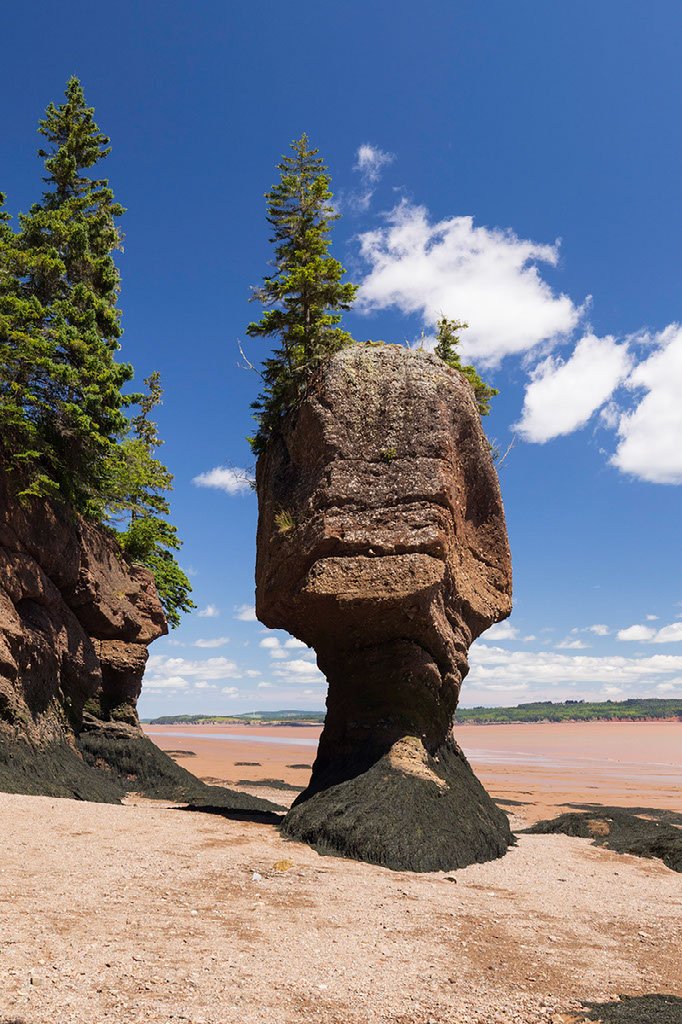
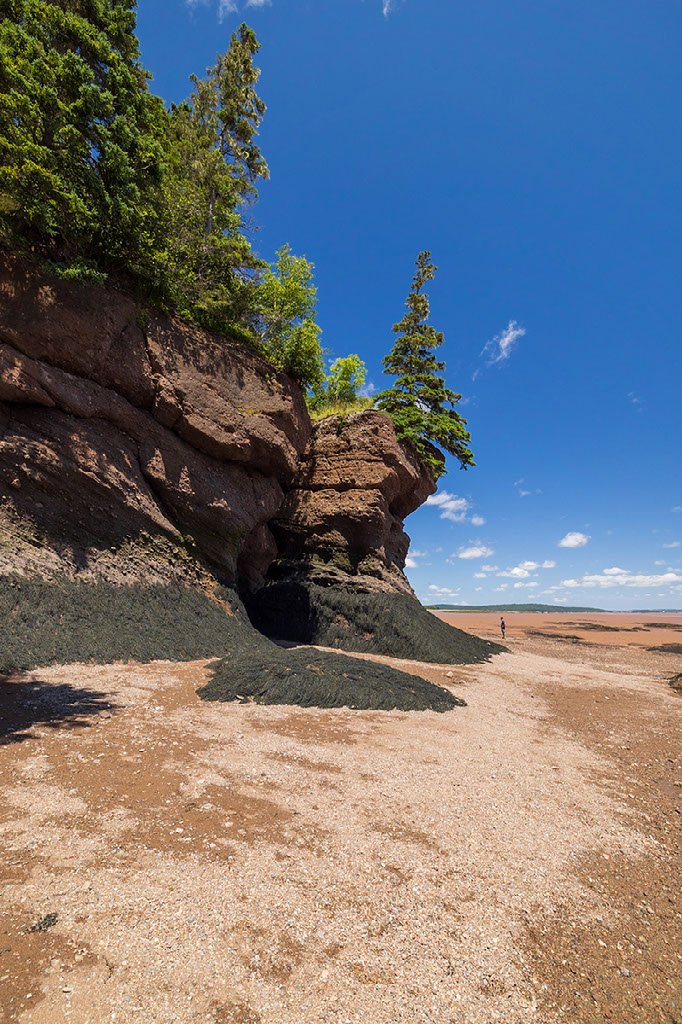
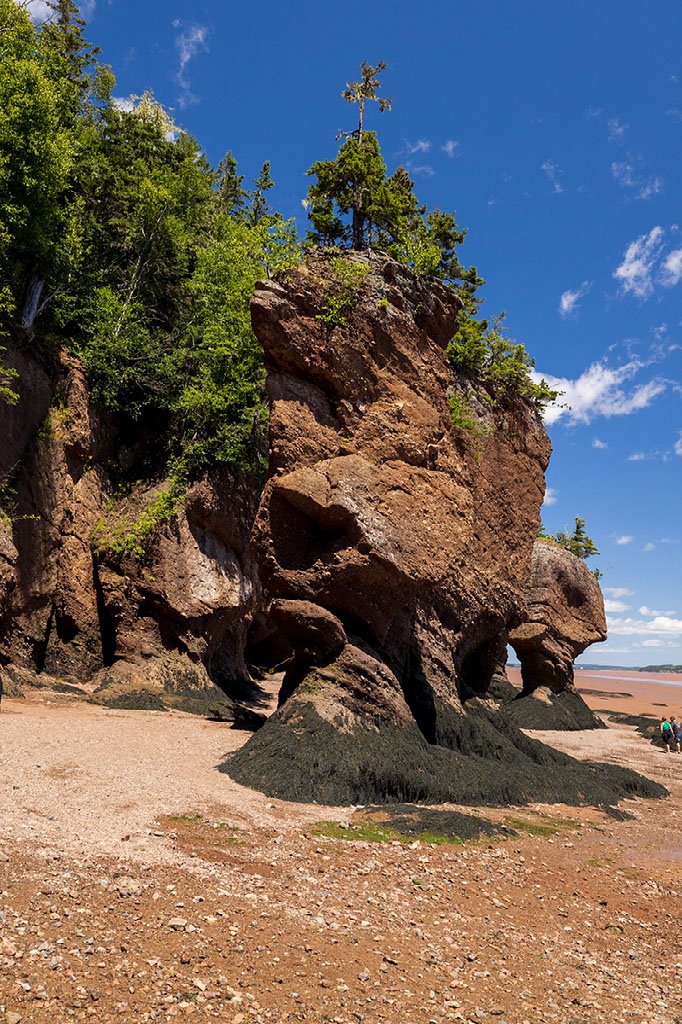
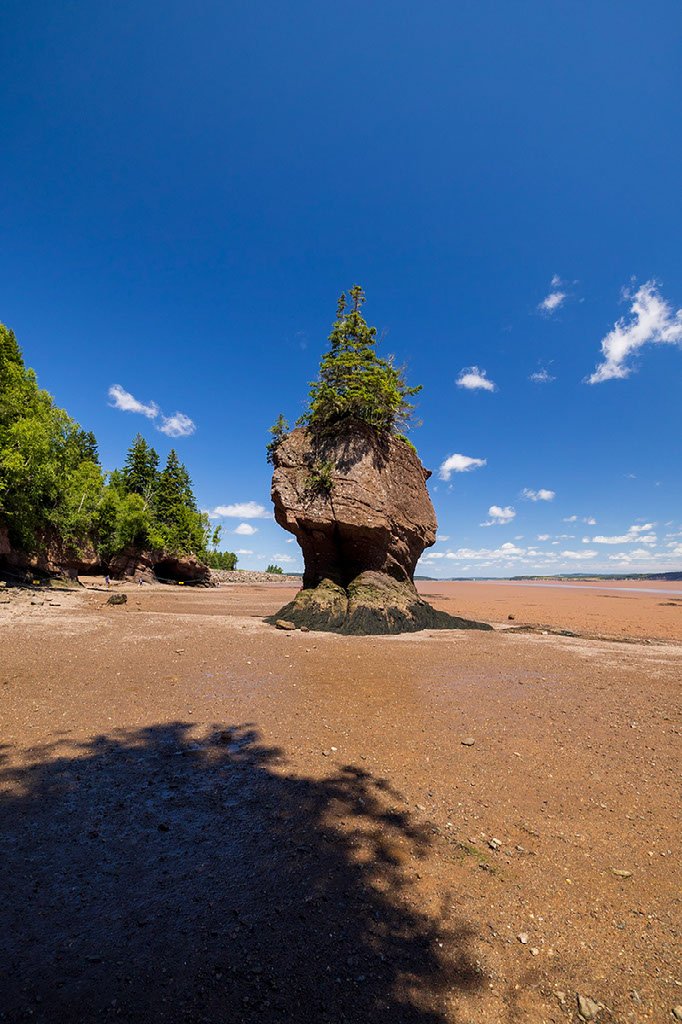
Hopewell Rocks is technically in New Brunswick, but it sits on the drive route between the United States and Nova Scotia and is worth stopping for without hesitation. The Bay of Fundy has the highest tidal range on Earth, and at Hopewell Rocks, you can walk on the ocean floor at low tide and kayak past the same rock formations at high tide. The rocks themselves are tall sandstone formations capped with trees, sculpted by centuries of tidal erosion into shapes that look genuinely improbable.
Timing your visit around the tide is essential. Low tide is when you can walk among the formations at the base. The difference between high and low can exceed 50 feet.
📷 Pro Tip: Check the tide schedule before you go and plan to arrive 90 minutes before low tide. This gives you time to walk down to the ocean floor while the water is still receding and the formations are backlit by the morning or afternoon sun. The best compositions use the flowerpot rock shapes as foreground elements with the open bay and sky behind. A wide-angle lens captures the scale best. Midday light is flat; early morning or late afternoon is significantly better. The site gets crowded in summer by 10am. Patience is a virtue here, as I noted in my journal from the day I visited.
Best time: Low tide, morning light. Access: Paid admission. Check Parks Canada website for current hours and tide schedules.
Peggy's Cove Lighthouse
Peggy's Cove is the most photographed lighthouse in Canada, and the cliché is completely earned. The lighthouse sits on a massive granite outcropping swept clean by Atlantic storms, surrounded by tidal pools, cracked rock faces, and the open ocean. The forms are graphic and simple. On overcast mornings, the light is diffuse and even. At sunrise, the sky behind the lighthouse can turn pink and orange over the water.
The parking lot fills by 9 am in summer. The light is best in the hour after sunrise, before the tour buses arrive, and before the midday sun flattens everything.
📷 Pro Tip: Position yourself on the rocks to the east of the lighthouse so the structure sits against the water and sky, not the parking area. A 24-70mm lens works for the full scene; a 70-200mm lens lets you compress the lighthouse against the horizon. Use a polarizing filter to manage reflections in the tidal pools. Arrive at first light, not at sunrise time on an app but genuinely at dawn when the sky is just beginning to turn. The 45-minute drive from Halifax along the coast is worth making before coffee. Watch the rocks carefully — they are slicker than they look when wet. I learned this firsthand.
Best time: Sunrise to 8am, or blue hour after sunset. Access: Free. Ample parking. 45 minutes from Halifax by car.
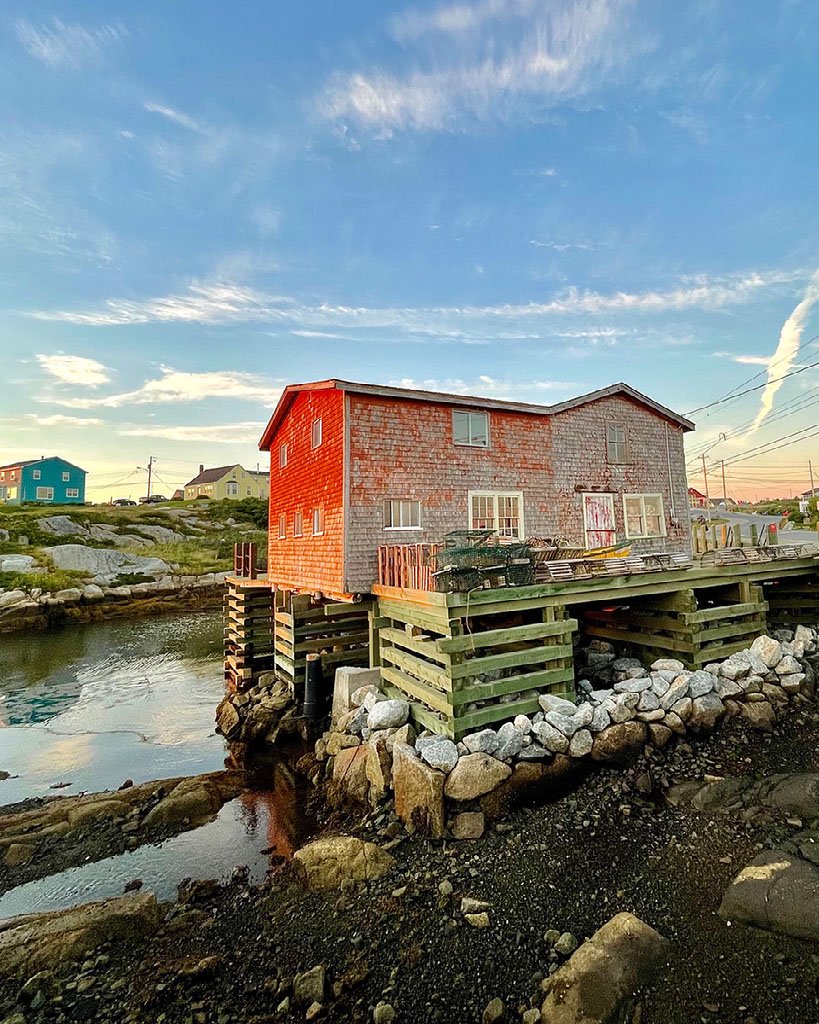
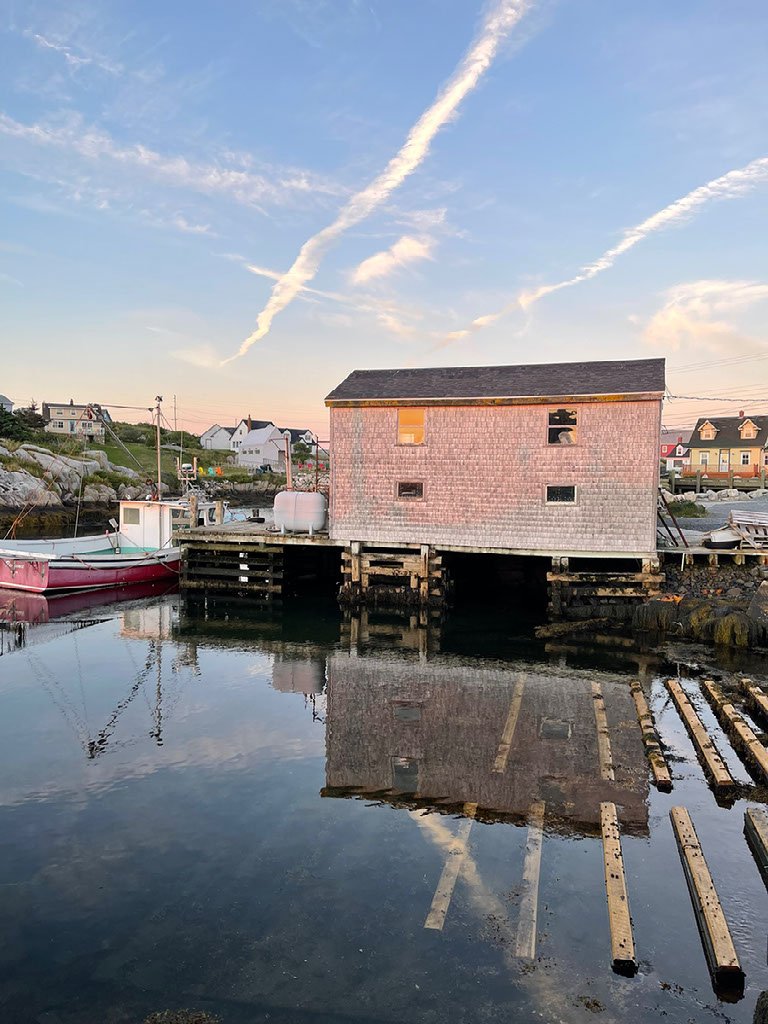
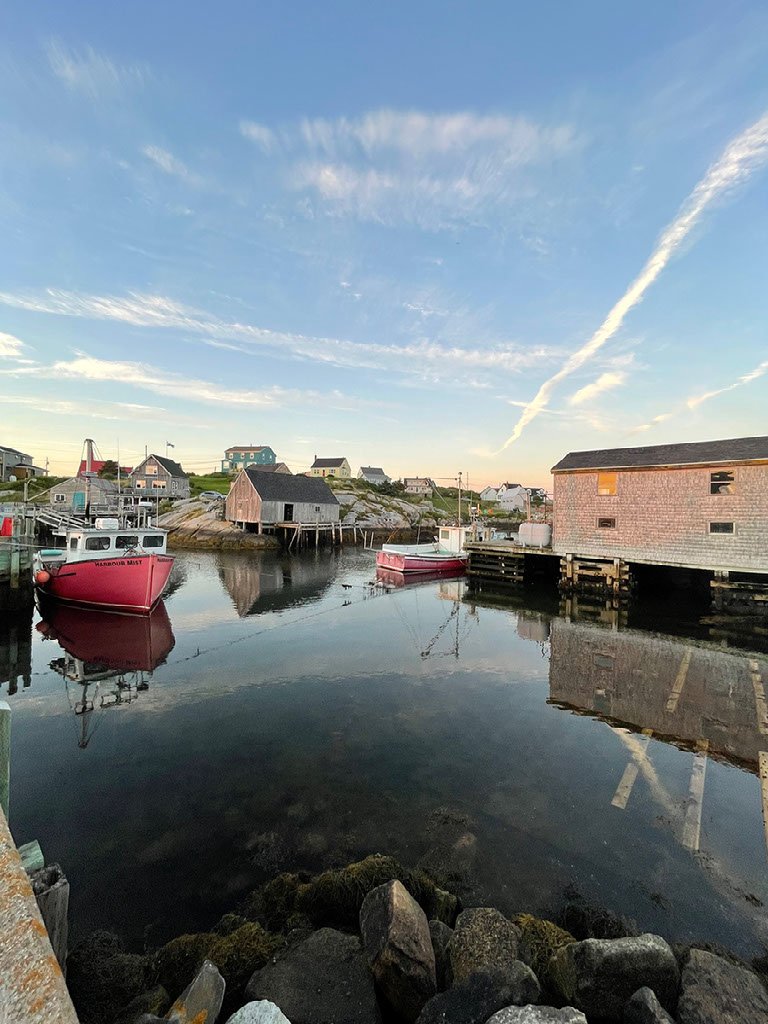
The drive from Halifax to Peggy's Cove takes about 45 minutes. You will drive along the coastline, and there are some beautiful spots to stop and take photos in small fishing villages.
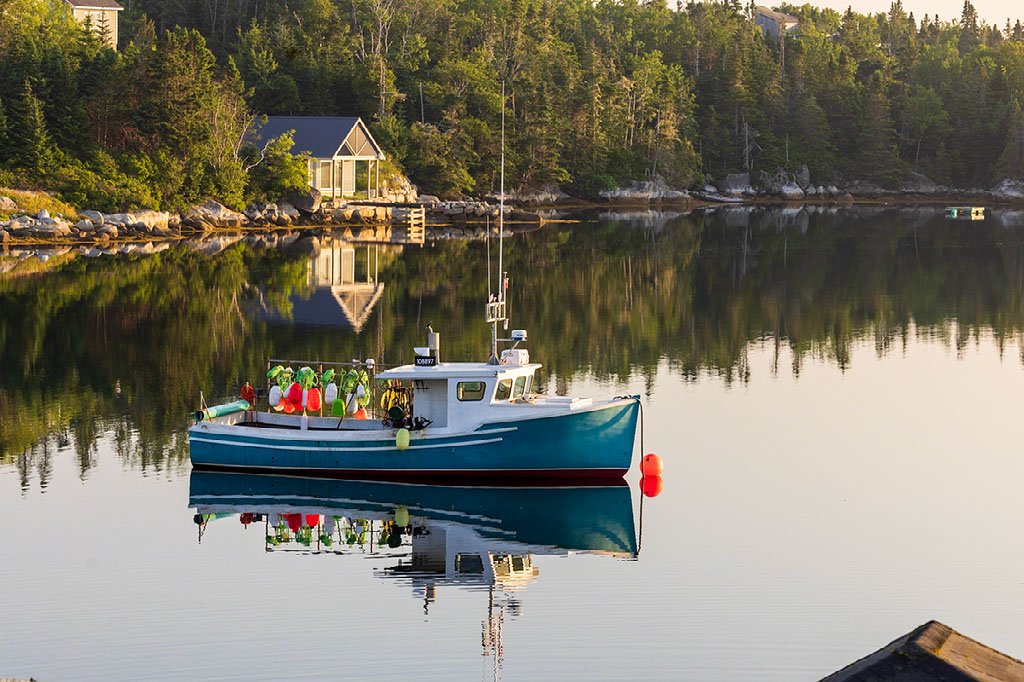
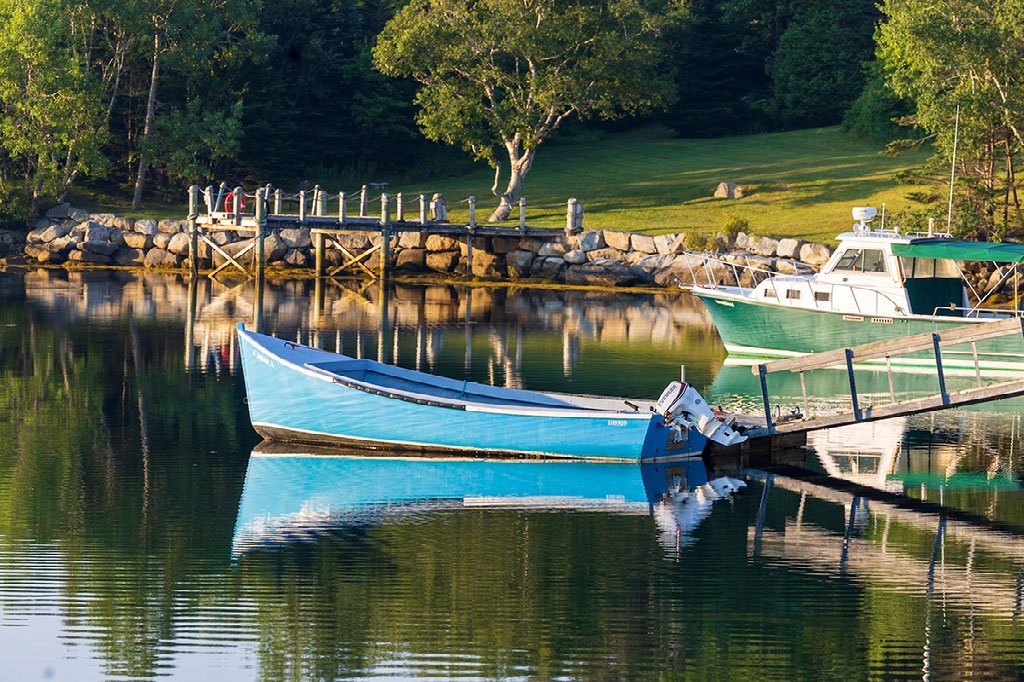
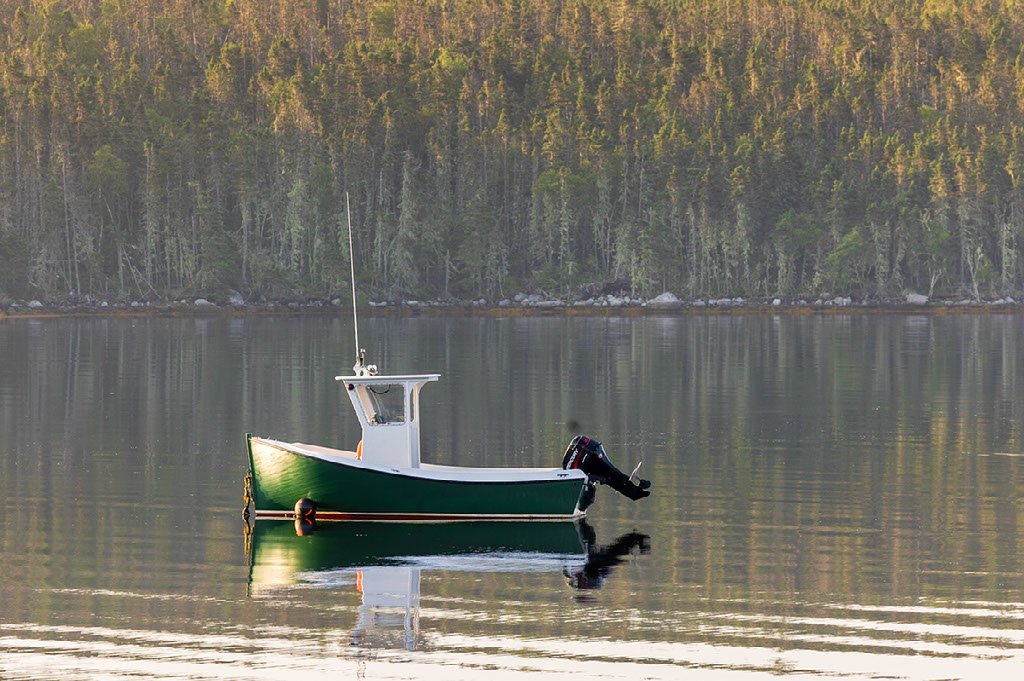
As I was leaving Peggy's Cove, I slipped and took a really hard fall.
Life Lesson #148: "Always listen to my wife."
On our way to Peggy's Cove, my wife suggested that I wear better shoes for walking over rocks. Of course, being male, I told her that my shoes, which have no traction, are fine. I walked all over the area, and just as I was walking to the car--BOOM!! My shoes slipped on the wet rocks, and I landed on my 70-200 lens, which was in my backpack. It was a really hard fall, and most likely, I fractured a few ribs. So, I was not able to take many photos for the rest of the trip.
Lunenburg Historic District
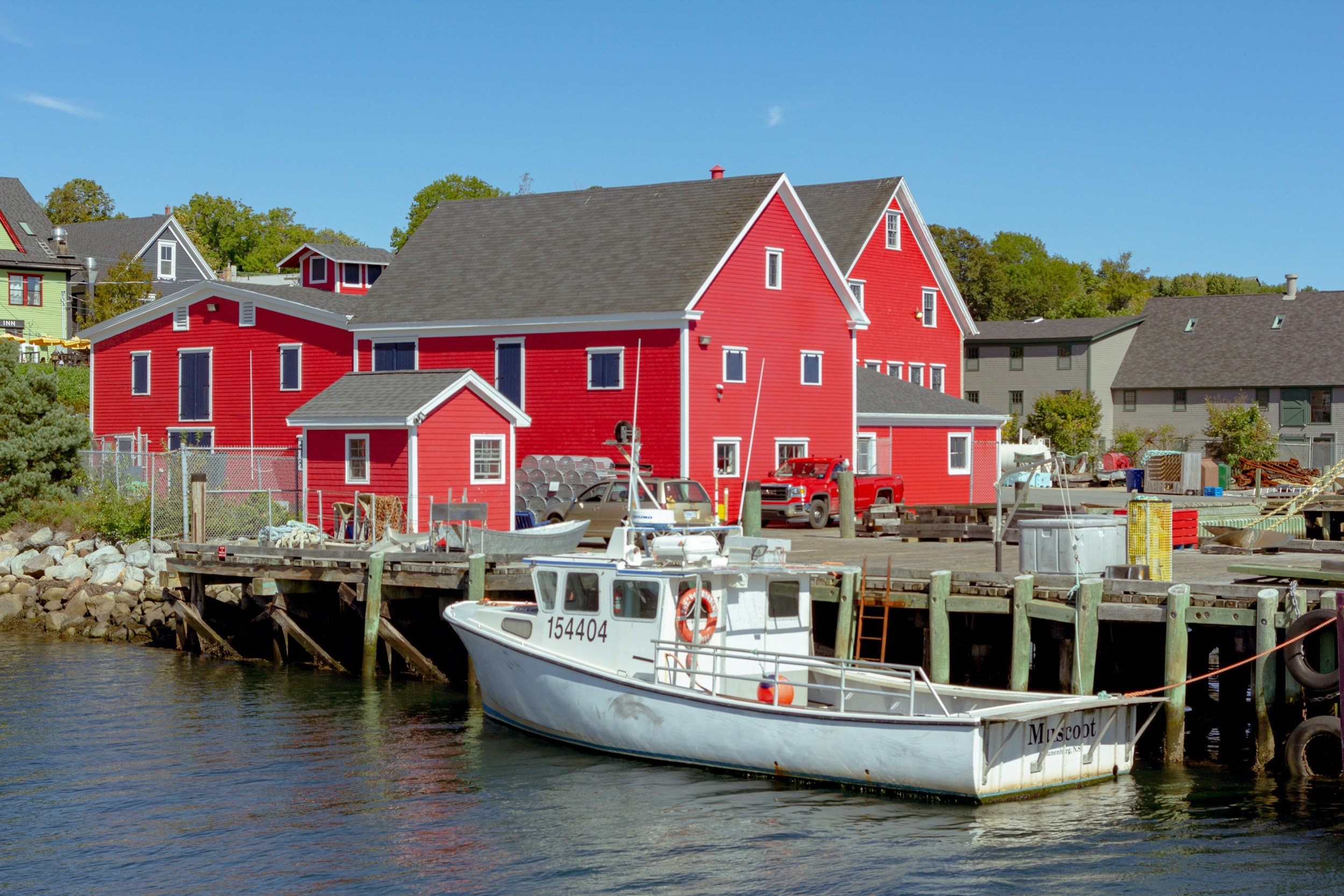
Lunenburg is a UNESCO World Heritage Site and one of the most satisfying places I have found to photograph in North America. The town is small, the streets are steep, and the harbor is lined with wooden buildings in red, yellow, blue, and green that have been maintained in near-original condition. The Bluenose II schooner is often docked here.
The light in the afternoon hits the waterfront facades directly and brings out every color. Early mornings, the harbor is quiet and the reflections in the water are clean. The back streets of the old town have a texture and decay that rewards slow walking with a 35mm lens.
📷 Pro Tip: The best harbor reflection shots come from the dock area just east of the main quay, shooting back toward the buildings in soft morning light. Use a polarizer to cut glare on the water. For the full town-on-a-hillside view, drive to the south side of the harbor and shoot back across the water with a 70-200mm to compress the layers of houses. The streets above the waterfront are narrow and quiet before 8am. That is when you get the town to yourself. Give yourself a full day here, not a half-day stopover.
Best time: Early morning for harbor reflections; late afternoon for building facades. Access: Free. Park near the wharf.
The Beaches of Nova Scotia
Yes, there are some really nice-looking beaches in Nova Scotia. Some of the beaches, like Crystal Crescent Beach, have blue water that looks like the Caribbean. On my downloadable travel map, I have included the best beaches within 1.5 hours of Halifax.

But it is a cold…
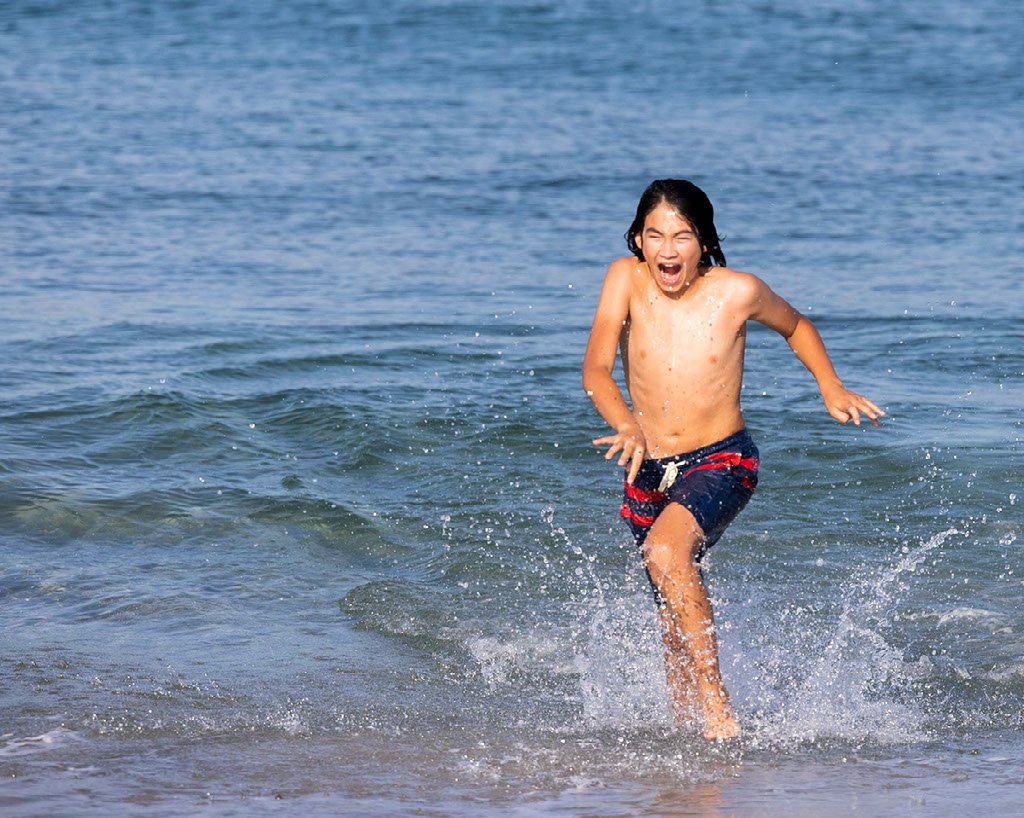
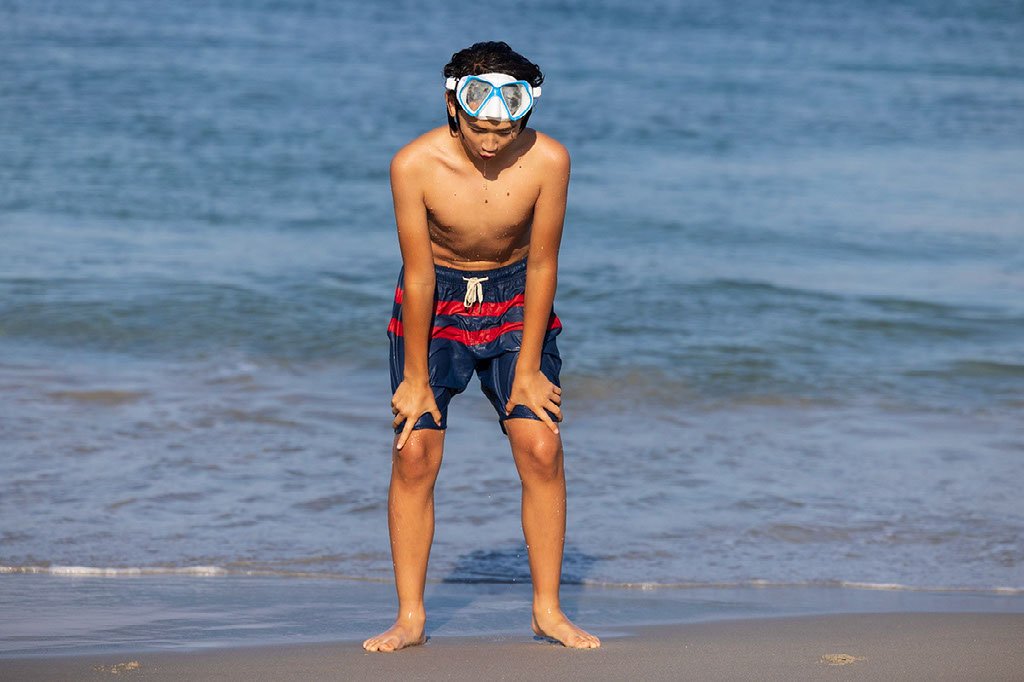
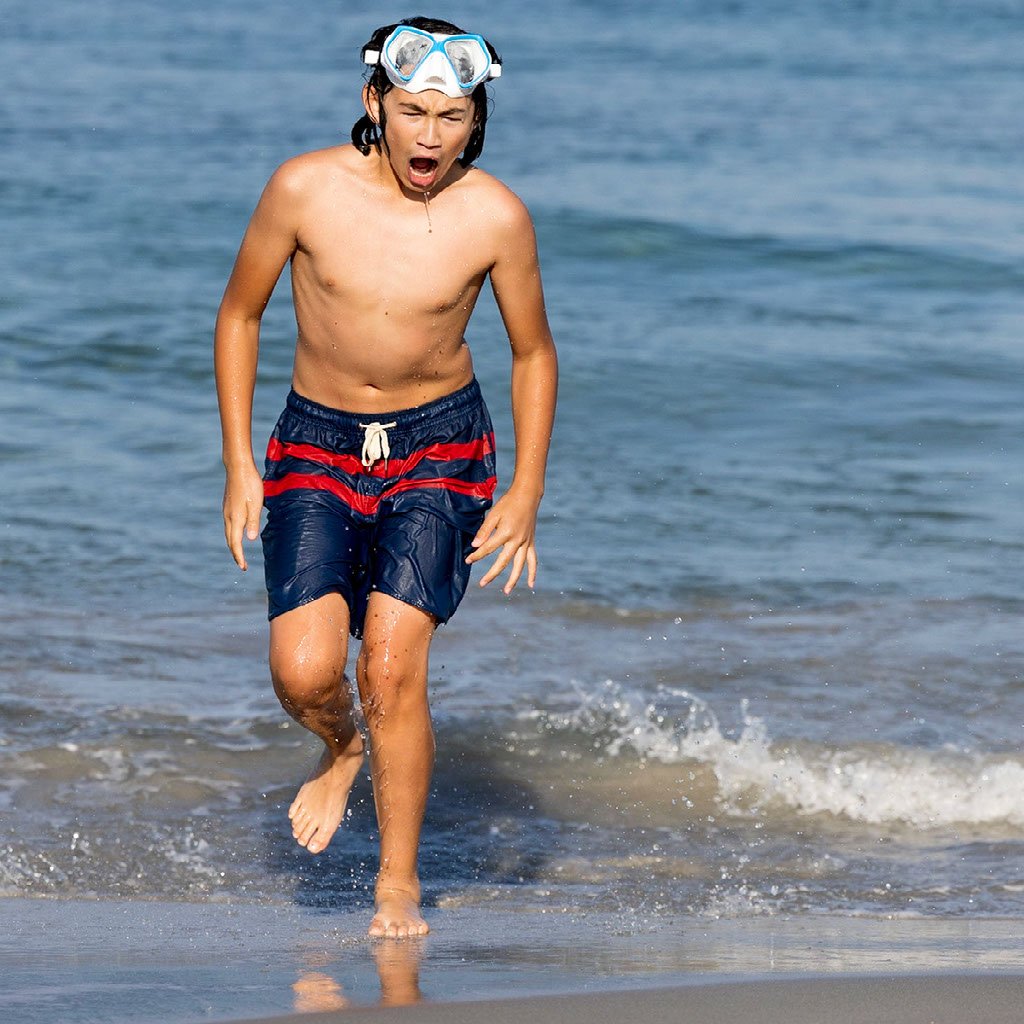
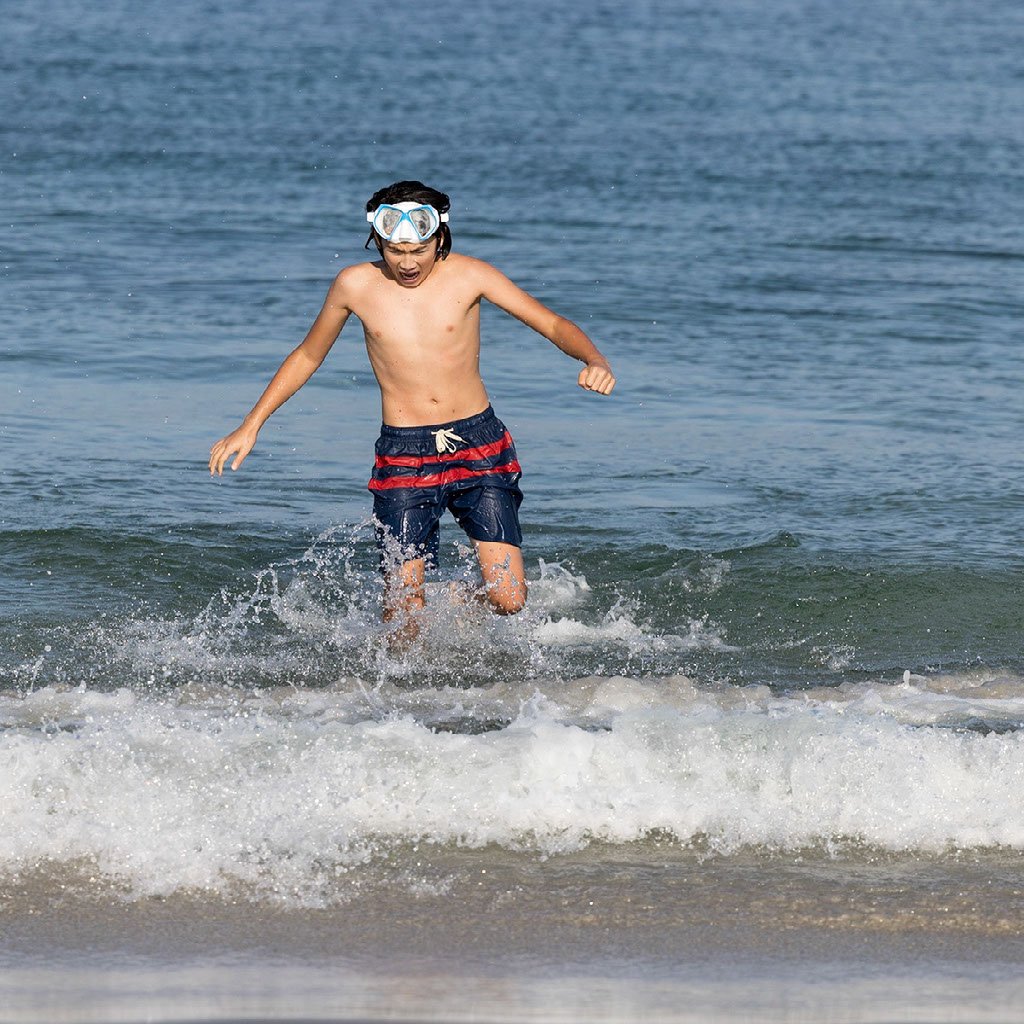
The water is really, really cold!! If you do not believe me, take a look at Xander's reaction after plunging into the water. I think his face says it all. I must admit he was much braver than me. The water temperature in July is 57 degrees F (14 degrees Celsius).
The Shoreline From Peggy's Cove to Shelburne
We drove all the way down to Shelburne, which is located about 2.5 hours south of Halifax. A friend of ours purchased a summer home in the area. Shelburne is a fishing village with an interesting history. Shelburne Harbor also has the third-best natural harbor in the world.
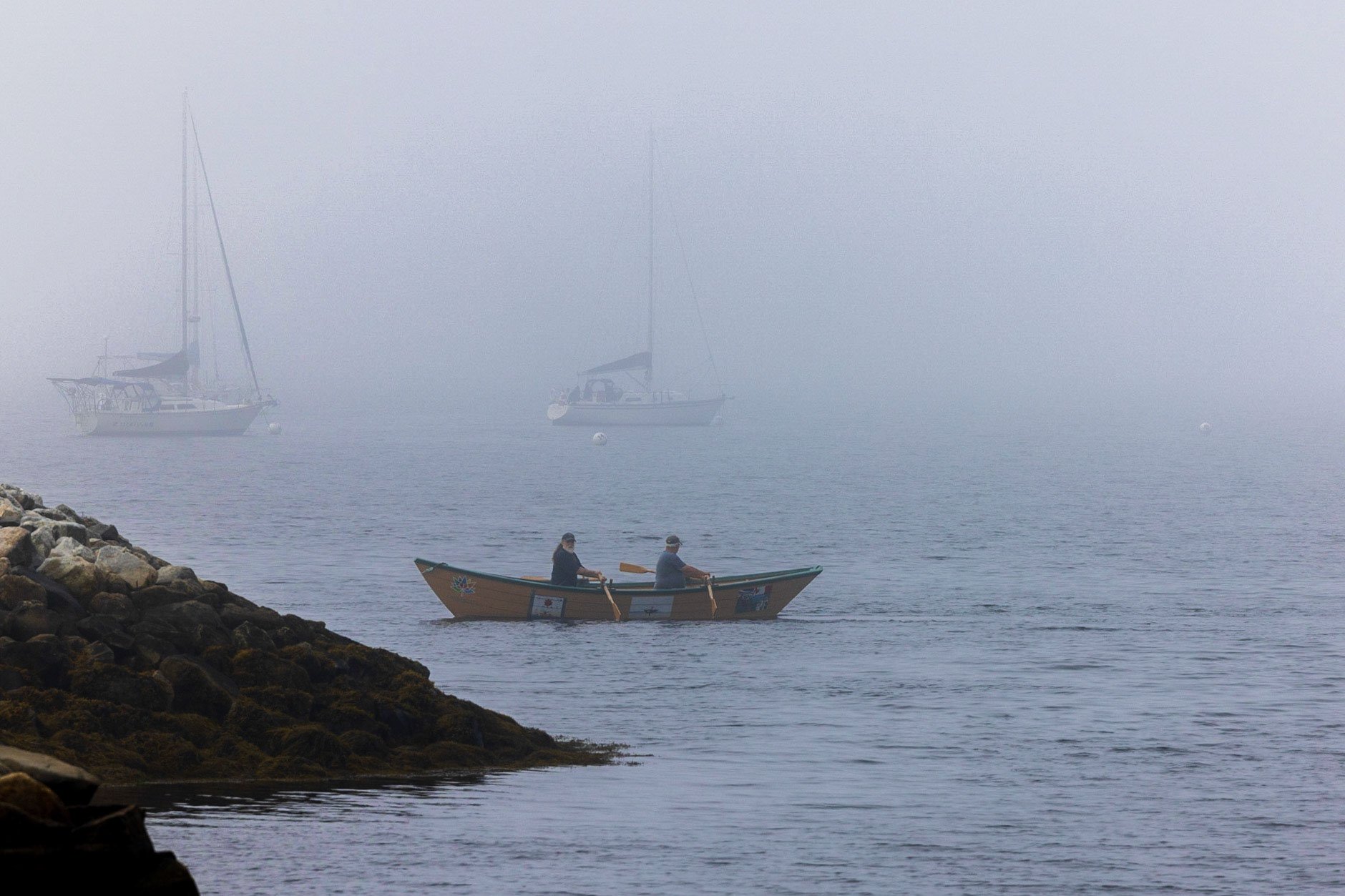
Bird Island, Cape Breton — Puffin and Wildlife Tour
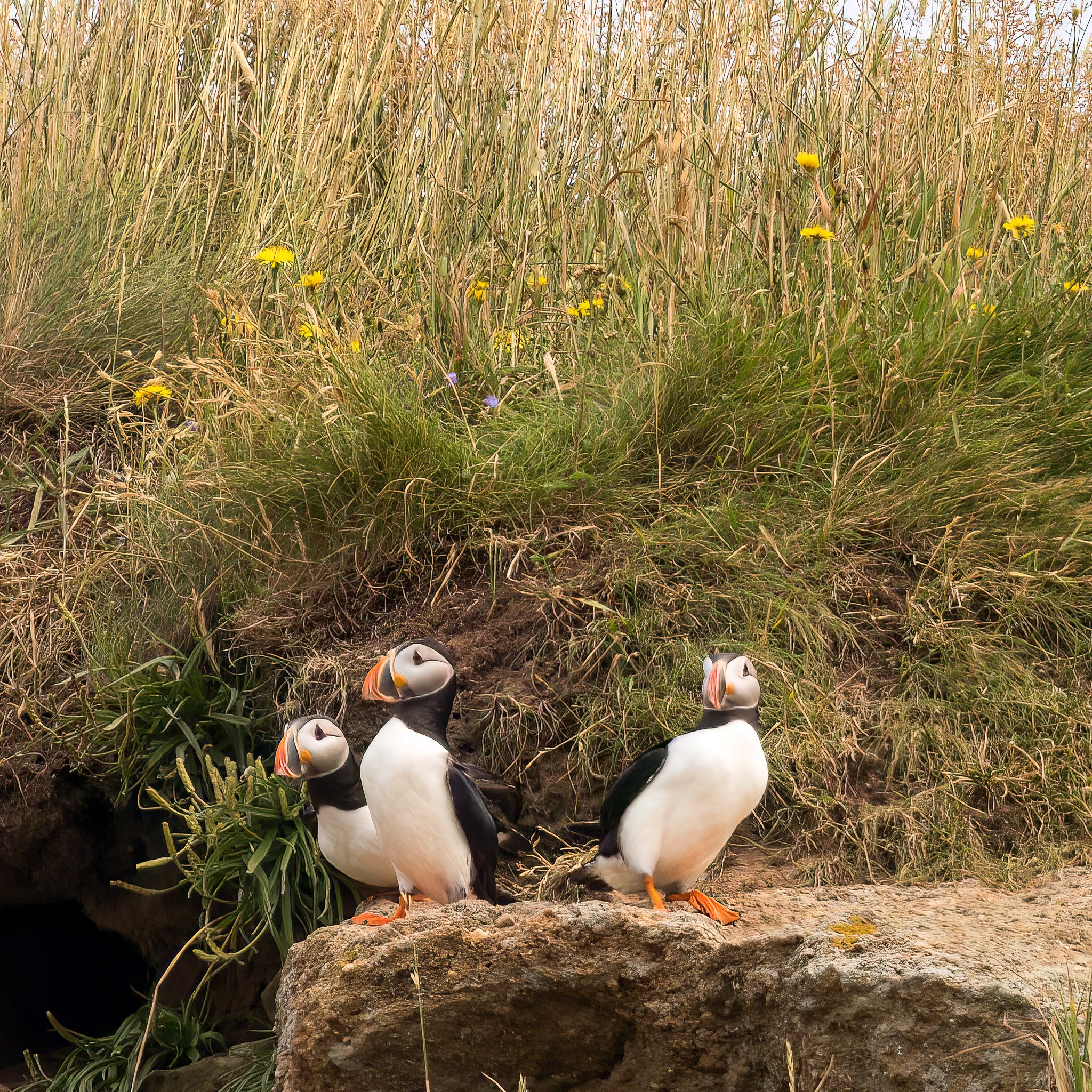
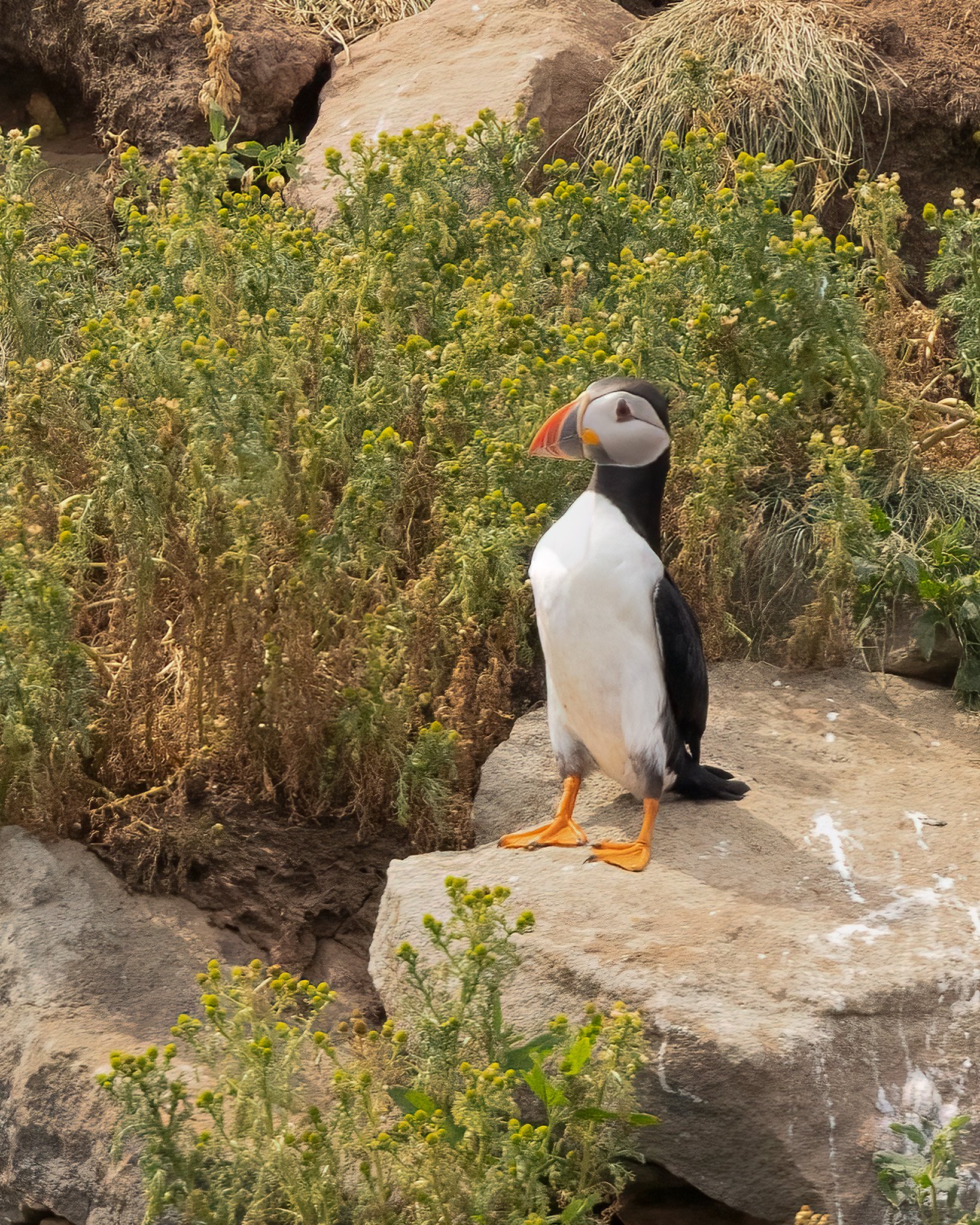
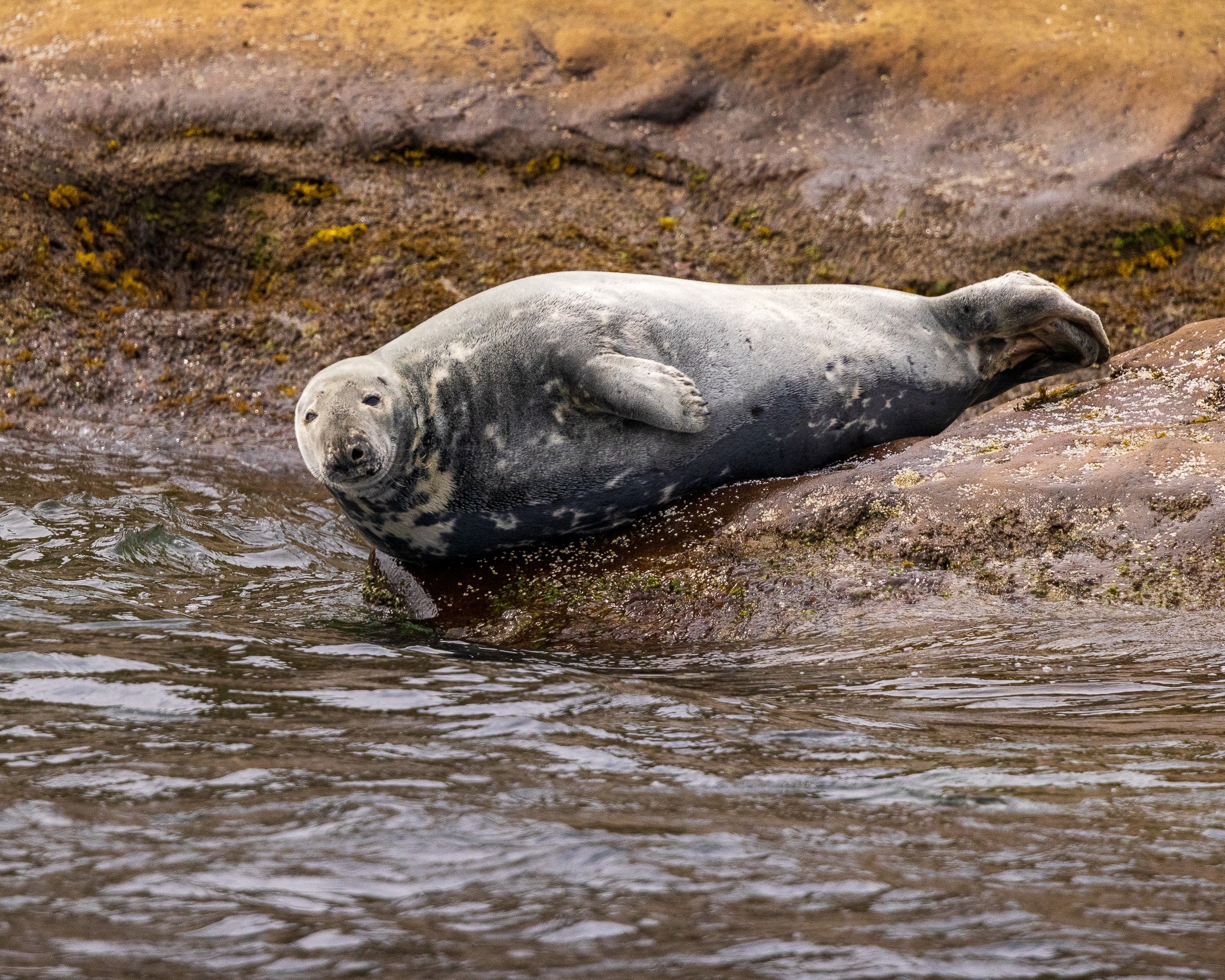
Bird Island is accessible only by boat from Big Bras d'Or, about a 45-minute ride from the dock. The island hosts one of the largest Atlantic Puffin colonies in Nova Scotia, along with Bald Eagles, Arctic Terns, Common Loons, Great Blue Herons, and a healthy population of seals hauled out on the rocks. Donalda Puffin Tours runs a 2.5-hour tour and guarantees puffins.
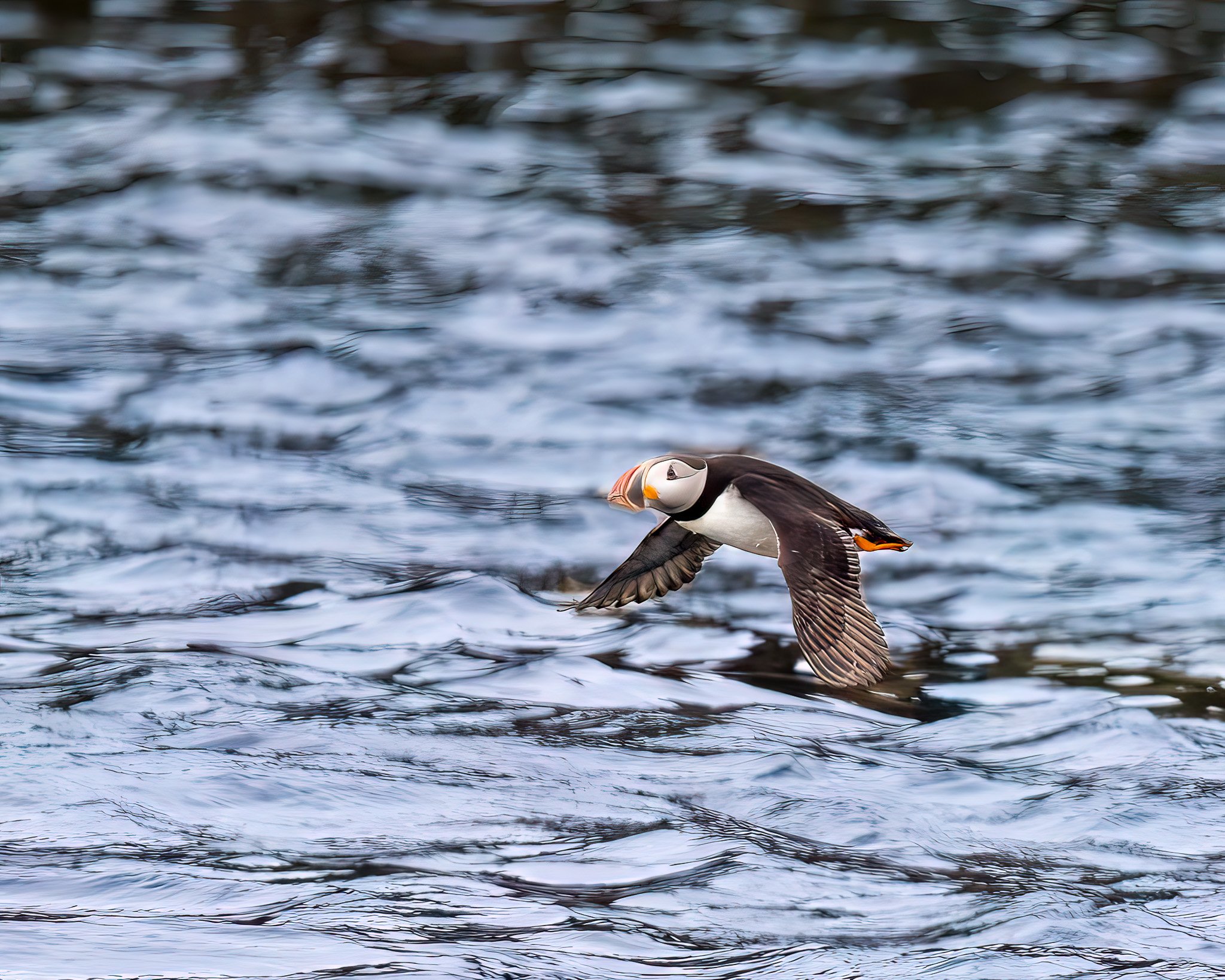
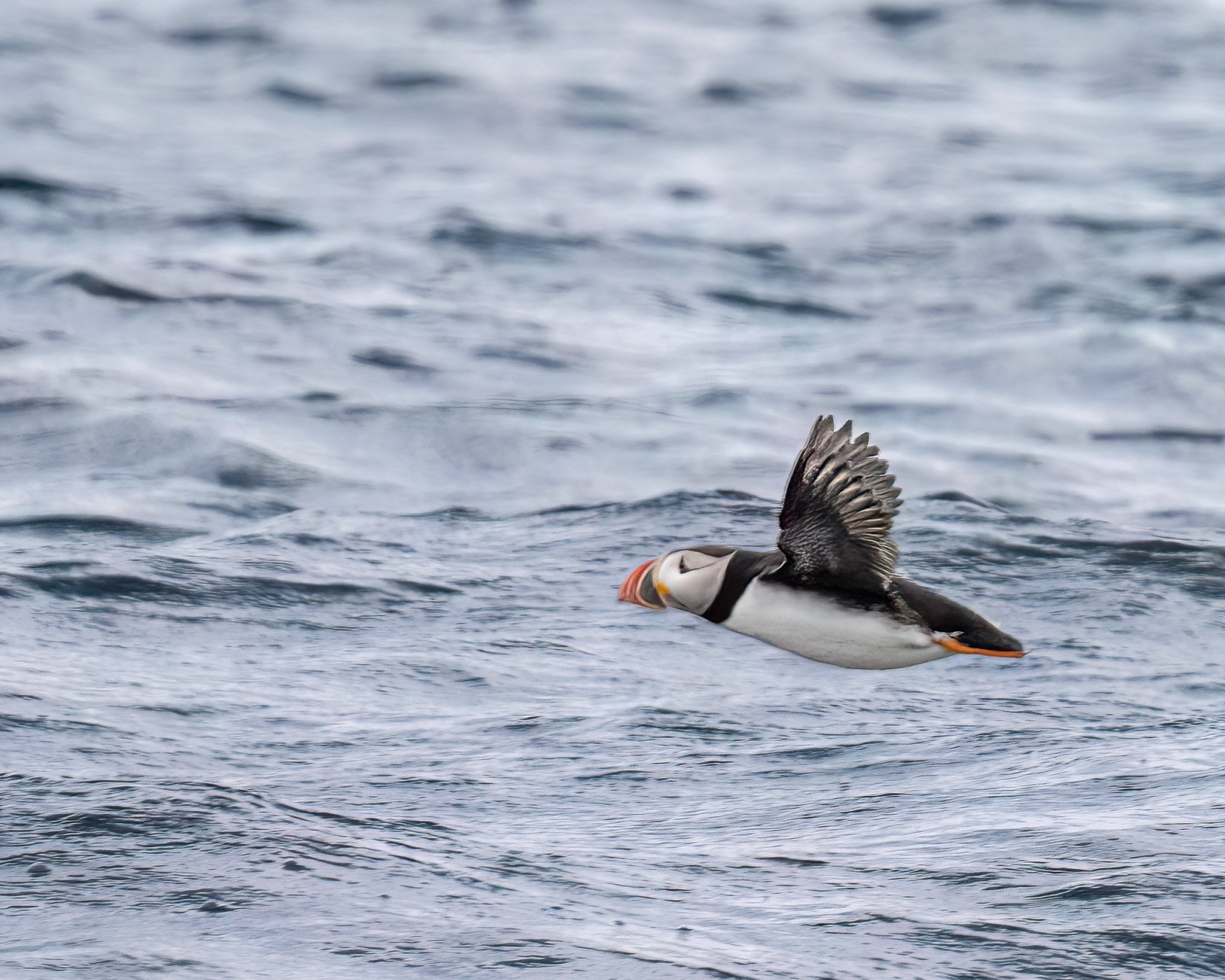
This is not casual wildlife photography. Puffins fly at 55 mph, are roughly eight inches tall, and spend a lot of time in the air. On a moving boat. It is one of the more technically demanding shoots I have done, and I took around 2,500 frames and was happy with about 100.
📷 Pro Tip: You need a minimum 500mm lens for puffins in flight. Set your camera to continuous autofocus, use bird or animal eye detection if your body supports it, push your shutter speed to 1/3200s or faster, drop your aperture to the widest your telephoto allows (f/4 to f/5.6), and raise ISO to whatever keeps the shutter speed. Shoot in bursts. The seals on the rocks are far easier targets and reward a 200-400mm range. Book the tour well in advance in summer; the previous tour company I booked canceled on us, so we ended up driving to Cape Breton as Plan B. That drive was four hours each way and completely worth it.
Best time: June through August, when puffins are nesting. Access: Paid boat tour. Book directly through Donalda Puffin Tours. Departs from Big Bras d'Or.
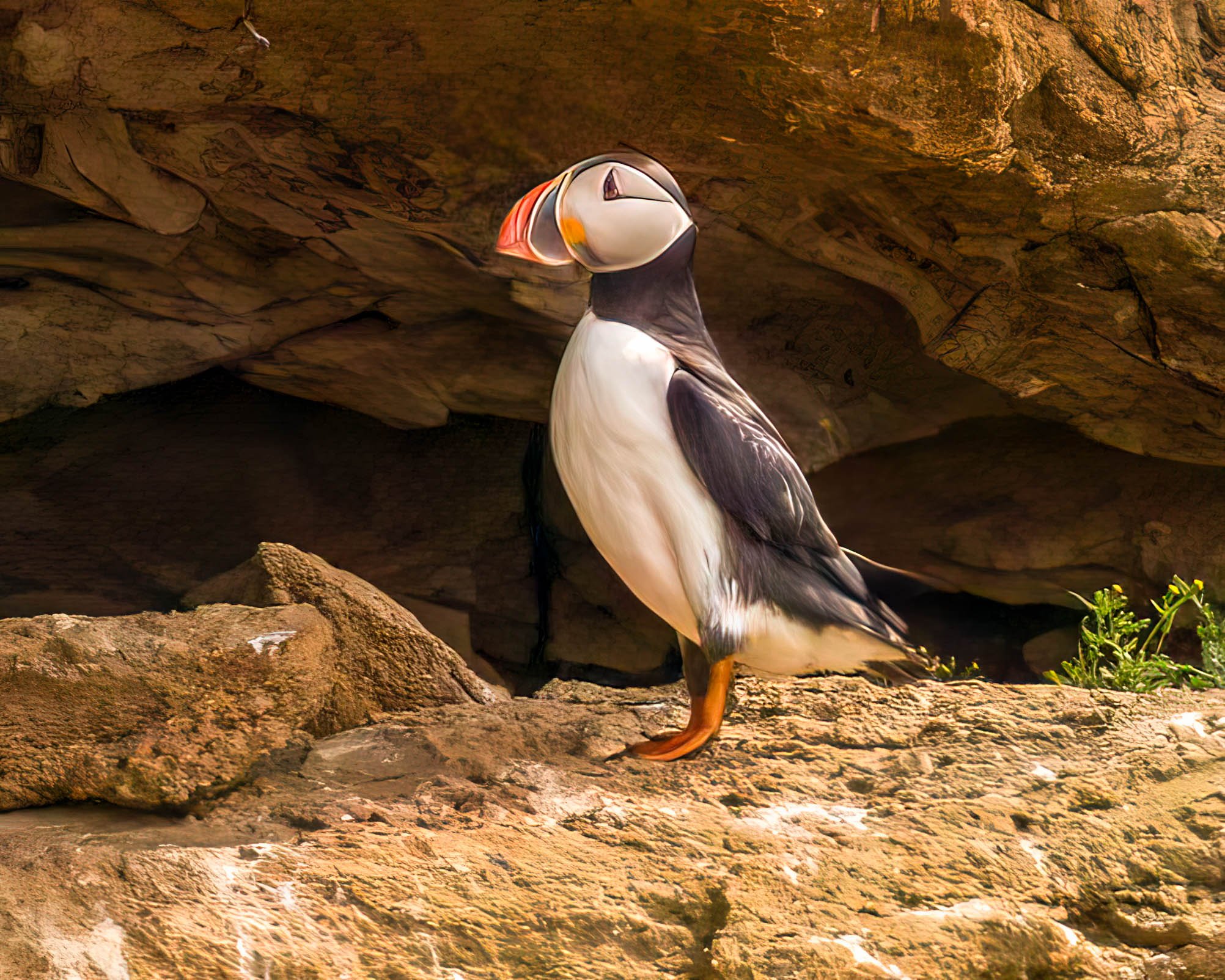
But nothing good comes easily in life. We booked a Puffin tour from Peggy's Cove. We were super excited and looking forward to it. Then Peggy's Cove Puffin Tours canceled our trip for no reason. So we booked it, again and again, but it was canceled. I called the company and they told me that their boat has mechanical problems. I am really glad we did not go with them.
Time for Plan B?
So, we had to come up with a Plan B. Plan B required us to drive up to Cape Breton, which is a 4-hour drive each way. Sometimes, in life, you have to go the extra mile. It was a very long drive, but in the end, we saw Puffins:))

We booked a tour on Donalda Puffin Tours. They offer a 2.5-hour tour to Bird Island and guarantee that you will see Puffins!! Where do I sign up? During the 45-minute boat ride to Bird Island, you are given a history of the island and a discussion on the birds that you will hopefully see. The tour was excellent, and we saw Puffins, Bald Eagles, Arctic Terns, Common Loons, Common Eiders, White-winged and Surf Scoters, Red-breasted Mergansers, Belted Kingfishers, Great Blue Heron, and tons of Seals.
Puffins are very hard to photograph, especially on a moving diesel ship. They fly 55 mph, and they are about 8 inches high. You will need at least a 500 mm lens, the lowest f-stop (f4 to f7.1) you have, ISO 1600, and 1/3200th of a second. I took about 2,500 photos in 2.5 hours, and I am happy with about 100 of them.

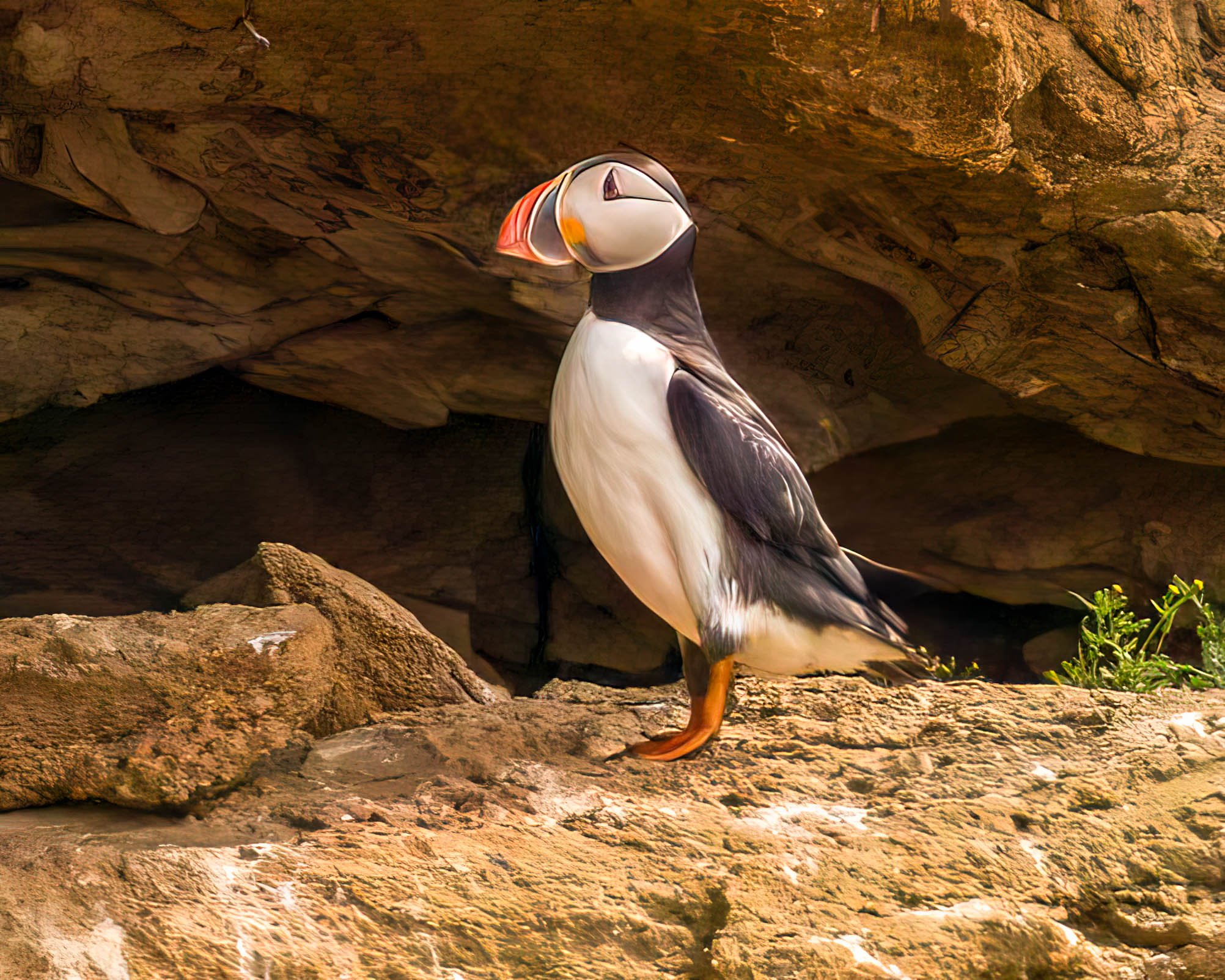
I will leave you with a few wildlife photos from Cape Breton.
Nova Scotia Festivals & Events Worth Photographing
Celtic Colours International Festival (October, Cape Breton) — Nine days of Celtic music, dance, and community events across Cape Breton. The backdrop of peak fall foliage makes every outdoor venue a photograph. Use fast primes indoors (f/1.8 or f/2.8) and keep ISO elevated. The ambient light in small Cape Breton halls is usually dim and warm.
Lunenburg Folk Harbour Festival (August, Lunenburg) — Four days of acoustic music in a UNESCO World Heritage town. The main stage faces the harbor. Arrive early for the front angles; use a 70-200mm from a distance to isolate performers against the crowd.
Halifax Busker Festival (Summer, Halifax) — Street performers take over the waterfront boardwalk for an extended run. Bold colors, movement, and concentrated energy in a tight space. Shoot wide with a 24-70mm, work close, and keep your shutter speed up. Burst mode is your friend.
Nocturne Halifax (October, Halifax) — A single long night of outdoor and gallery art installations across the city. Strong for long-exposure and low-light photography. Bring your tripod and a wide-angle lens. The ambient installations are designed to be photographed.

Frequently Asked Questions About Visiting Nova Scotia
Do you need a car in Nova Scotia?
Yes, non-negotiable. The province is large, distances between locations are real, and the best photography opportunities are often down unmarked side roads with no transit access. Rent a compact SUV if you can, for the ground clearance and gear space.
Is Nova Scotia expensive?
Not particularly. Lobster rolls, oysters, and fresh seafood are accessible at nearly every price point, and much of the best photography, Peggy's Cove, the Cabot Trail overlooks, Lunenburg's streets, costs nothing beyond gas.
What are the best photo spots in Nova Scotia?
Peggy's Cove at sunrise, Lunenburg's harbor in early morning light, and the Bird Island puffin tour out of Cape Breton are three that consistently deliver. The full list with Pro Tips is above.
Can you fly a drone in Nova Scotia?
Regulations vary by location, particularly near lighthouses, national parks, and wildlife areas like Bird Island. Check current Transport Canada rules and local restrictions before flying anywhere in the province.
What surprised you most about Nova Scotia?
Not something I captured on camera at all. It was watching my wife, both hands over her mouth, as a puffin landed five meters away after years of wanting to see one. Some moments are better experienced without the lens in the way.
How many days do you need in Nova Scotia?
Six to eight days minimum to do it properly, longer if Cape Breton and the Cabot Trail are a priority, since that alone could take three full days of serious shooting.
Is the Bird Island puffin tour worth the effort?
Yes, absolutely, even if logistics go sideways. Ours got canceled and turned into a four-hour drive each way to Cape Breton as Plan B. It was completely worth it.
What should you wear at Peggy's Cove?
Shoes with real grip, not an optional suggestion. The rocks are wet and far more slippery than they look, wet enough to cause a serious fall if you're not careful.
Final Thoughts
Nova Scotia will recalibrate you.
That is not something I expected when I arrived. I came for the lighthouses and the coastline and the puffins, and I found all of them. But I also found something I did not know I was looking for: a place that still operates at a human pace. Where the fish is pulled from the water an hour before you eat it. Where a stranger on a dock in Shelburne will spend twenty minutes telling you the history of the harbor because he loves the history of the harbor, not because anyone is paying him to. Where the air at Peggy's Cove at dawn is so clean and so cold, it makes every other city feel slightly approximate by comparison.
The photographs I came home with are some of my favorites. But the moment I keep returning to is not one I captured on camera. It is my wife, both hands over her mouth, watching a puffin land five meters away after years of wanting to see one. Some things you experience better without the lens in the way.
Wear shoes with grip at Peggy's Cove. Listen when your wife tells you to wear shoes with grip at Peggy's Cove. The rocks are wet, the fall is hard, and the fractured ribs will follow you for the rest of the trip.
Go for a week if you can. Drive the Cabot Trail. Eat the lobster. Talk to people. Take the long way along the coast. Stop when something looks interesting, because something will, and it will be worth it.
Want to improve your photography while exploring some incredible destinations? Join me on one of my photography workshops! You can find all the details, including upcoming destinations and dates, through the links below.
Let's Stay Connected!
More Guides Worth Reading
My Photography & Travel Guide to Iceland — The Atlantic connects these two. If Nova Scotia's coastline, wildlife, and raw light speak to you, Iceland is the logical next step. Puffins, dramatic cliffs, waterfalls, and some of the best photographic light on earth. I have been six times and I am not done.
My Photography & Travel Guide to Washington DC — If you are driving from the United States, DC is a natural starting point or endpoint. One of the best photography cities in America, and I say that as someone who was born there.
My Photography & Travel Guide to Charleston, South Carolina — Another Atlantic coastal destination with strong photography bones. Different in character from Nova Scotia but equally rewarding, especially for architecture, history, and food.

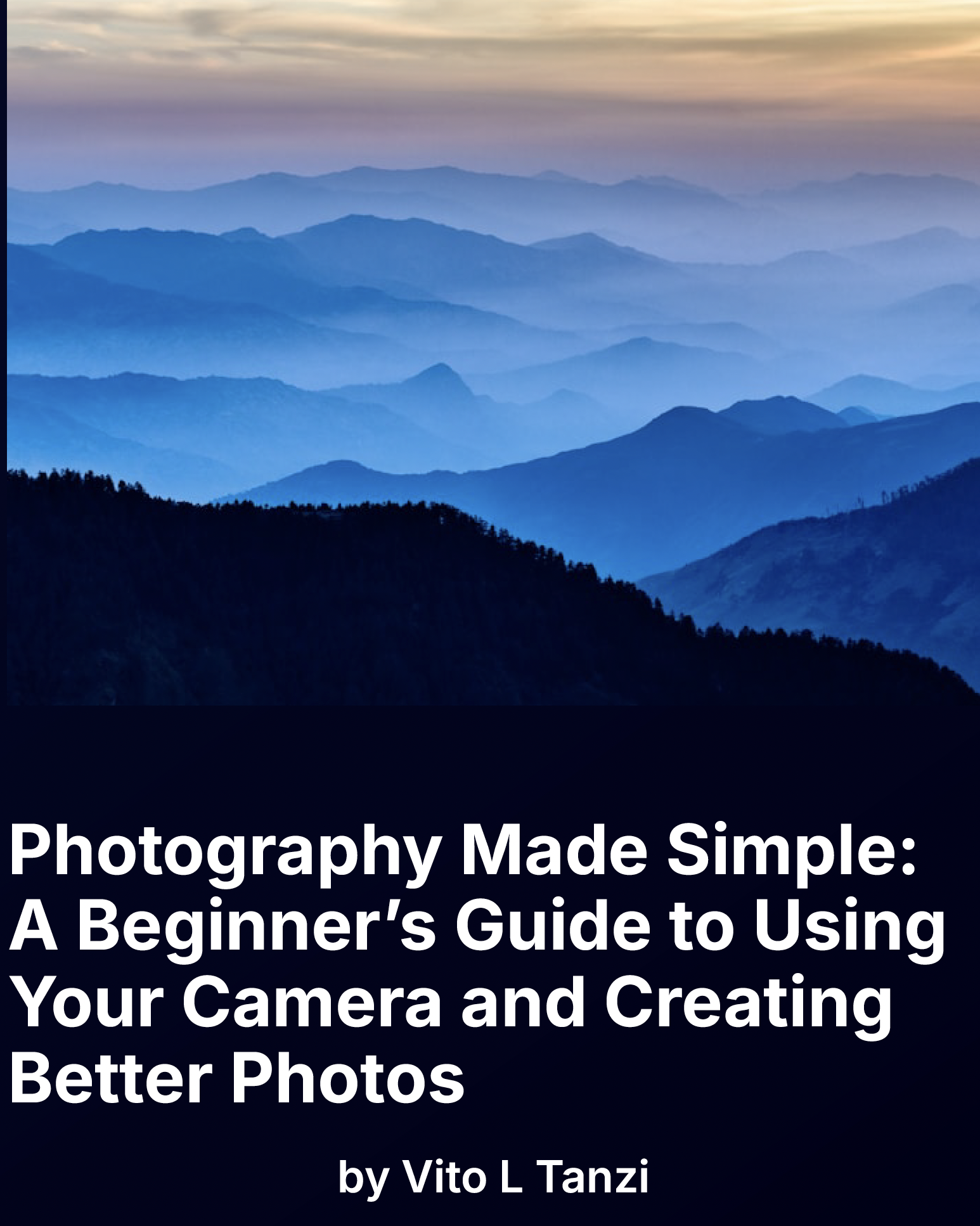
Finally—a beginner-friendly photography guide that makes sense.
If you've ever picked up a camera and thought, "Now what?" this is the book for you.
Photography Made Simple is written for adults who are just starting out and want a clear, encouraging, real-world approach to learning photography. Whether you're using a DSLR, mirrorless, or just your smartphone, this guide walks you through the basics—without the jargon or tech overwhelm.
Inside, you'll learn:
The only camera settings you really need to know to get started
How to shoot sharper, more intentional photos using light and composition
Simple tips for portraits, landscapes, travel, and everyday life
What gear you do (and don’t) need
How to create better photos without upgrading your camera
You’ll also get practical exercises, cheat sheets, and tips for organizing and editing your images—plus the confidence to shoot off Auto Mode for good.
This is not a textbook. It’s a friendly guide to seeing the world with fresh eyes—and finally capturing what you see the way you imagine it.
📸 Format: PDF download
Pages: 100+
Perfect for: Beginners, hobbyists, and anyone ready to take better photos without the stress

Are you carrying too much camera equipment, but still coming home disappointed with your travel photographs?
You are not alone. Many photographers fall into the packing trap. They bring too much, plan too little, and spend their trip scrambling to capture photographs instead of enjoying the experience.
Capture the World offers a better approach.
In this practical guide, travel photographer Vito L. Tanzi shares the five step system he uses to plan photography trips, pack with purpose, work with the best light, and return home with stronger images.
Inside, you will learn how to:
• Travel lighter without sacrificing image quality
• Choose destinations that match your photography goals
• Visit at the right time for weather, light, wildlife, festivals, or seasonal conditions
• Build a photography itinerary around sunrise, sunset, blue hour, and changing weather
• Select the equipment you will actually use
• Find promising locations before you arrive
• Avoid the stress and exhaustion that can ruin a photography trip
• Stay flexible when weather, crowds, or travel plans change
This guide includes practical planning advice, useful photography tools, real travel examples, and a complete system you can use again and again.
Whether you are preparing for your first international photography trip or planning a weekend closer to home, Capture the World will help you travel with greater purpose, photograph with more intention, and spend less time worrying about what is inside your camera bag.
Because the best photography trip is not the one where you carry everything.
It is the one where you are ready when the right moment appears.
📸 Format: PDF download
Instant Download