Munich, Germany Travel & Photography Guide: Best Photo Spots, Things to Do & Hidden Gems
I remember standing in Marienplatz just before sunrise on a cool May morning, a light mist sitting low over the square, the Neues Rathaus still dark except for a few windows glowing amber. A street sweeper moved slowly across the cobblestones. Nobody else had a camera out. That is Munich at its best. The city gives you these moments if you show up early enough.
Munich is the capital of Bavaria and the largest city in southern Germany, and it has been one of my favorite places to photograph in Europe for years. What makes it exceptional for photographers is the range. In a single day you can shoot Gothic cathedral spires at dawn, surfers riding an urban river wave at midday, and the warm glow of a beer garden lantern at dusk. Not many cities hand you that kind of variety. The architecture shifts from ornate Baroque to clean modernist without ever feeling disconnected, and the light in this part of Germany, especially in May and September, has a quality that makes even an average composition look deliberate.
Munich also rewards patience. The city does not show off at first. You have to walk it, sit in it, and wait for it. The tourists concentrate around a handful of landmarks, which means you only need to move two streets over to find something real. The historic neighborhoods around Maximilianstrasse and the Glockenspiel quarter are full of quiet courtyards and small streets that most visitors walk right past. And then there are the Alps, visible on clear days from the right rooftop or hilltop, sitting on the horizon like a postcard you forgot you were inside.

In this Photography Guide to Munich, I share the places and experiences that continue to draw me back. You will find my favorite photography locations, guidance on when and where to shoot, practical travel tips, and gear recommendations, along with cultural insights to help you explore and photograph Munich with confidence, respect, and ease.
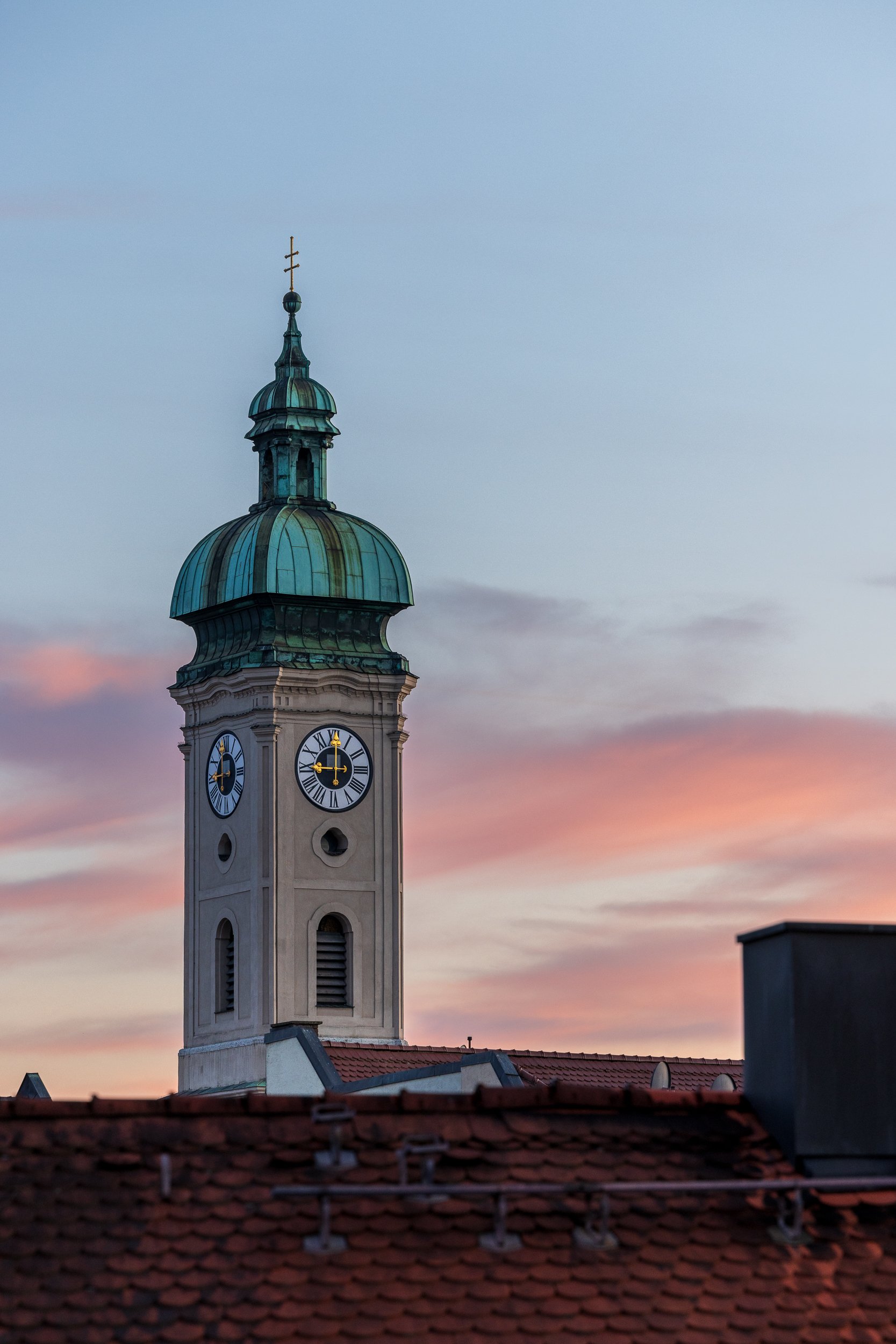
Photographer's Notes
Before you go, here are my own takeaways.
Favorite Season: May
Favorite Sunrise/Sunset Location: Marienplatz
Favorite Neighborhood: Altstadt-Lehel
Favorite Hotel: Mandarin Oriental, Munich
Favorite Restaurant: Dallmayr
Favorite Café: Bar Centrale
Favorite Lens: 15-35mm f/2.8
Would I Return? Yes, definitely, though I've been so many times it might not be for a while.
When to Visit Munich
May and early June are my recommendation for photographers. The light in Bavaria at this time of year is remarkable. Golden hour starts around 8 pm and the sky stays active well past 9. Temperatures are comfortable, the beer gardens have opened, and the crowds have not yet reached summer levels. The English Garden is at its greenest, and cherry blossoms can still be found in parks into early May.
September is the other sweet spot, especially the weeks just before Oktoberfest begins. The summer heat has broken, the light is lower and more directional earlier in the evening, and the city has a focused, lived-in energy. If you want to photograph Oktoberfest itself, the first weekend draws the most genuine crowd, including locals in traditional dress who are there because they actually love it rather than because their tour group scheduled it.
Winter deserves more credit than it gets. The Christmas markets at Marienplatz and the Residenz courtyard run through December and are extraordinary for atmospheric photography. Fog settles over the English Garden in the early mornings, the Frauenkirche towers disappear into low cloud, and the beer halls feel like the warm, amber-lit world they were always meant to be. Pack weather sealing on your camera body and bring a spare battery — cold kills battery life fast.

Avoid the peak summer weeks of July and August if you can. The light is still good but Marienplatz fills quickly, the city is expensive, and heat shimmer can soften architecture shots in the midday hours.

Where to Stay in Munich?
Stay in Altstadt-Lehel. Full stop. Marienplatz, Viktualienmarkt, the Glockenspiel, Frauenkirche, Hofbräuhaus, and Asamkirche are all within walking distance. You save time, save money on transport, and you can be out shooting at sunrise without a commute. For day trips into Bavaria, the S-Bahn connections from Marienplatz make it the logical base.
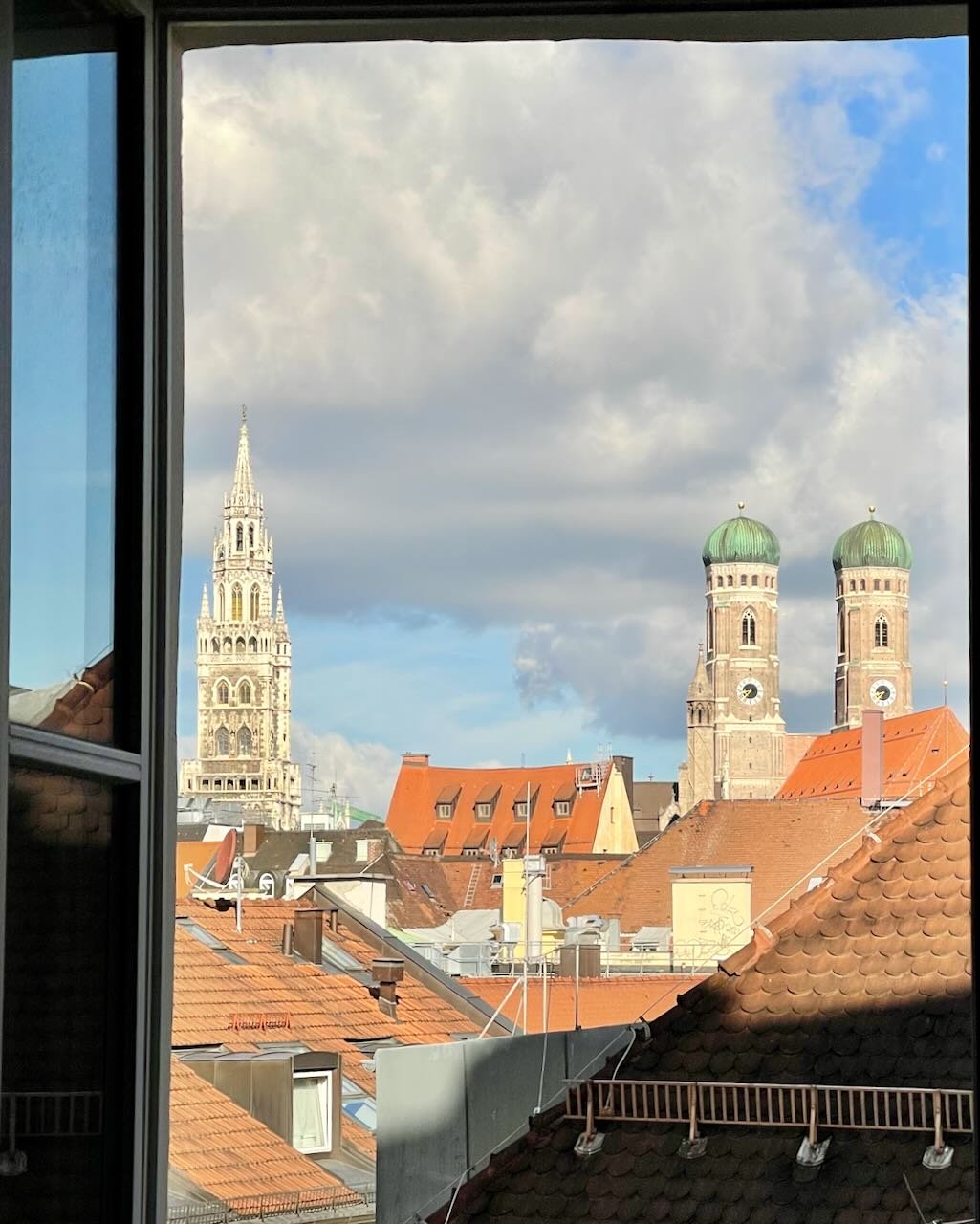
View from the Mandarin Room
Luxury Hotels in Munich
Hotel Vier Jahreszeiten Kempinski — Located on Maximilianstrasse, one of Munich's grandest boulevards, this is the classic Munich luxury address. The building itself is photogenic, the service is exceptional, and the Schwarzreiter restaurant is right downstairs. The lobby and staircase alone are worth photographing.
Mandarin Oriental, Munich — My personal favorite. It sits in a quiet side street just steps from the Hofbräuhaus and a short walk to Marienplatz. The rooms are some of the largest in the city, the rooftop pool has a view of the Frauenkirche and the Alps on clear days, and the service is the best I have encountered in Munich. Book the Mandarin Room if you can. The view from that room is one of the best in the city.
Bayerischer Hof — A Munich institution since 1841, superbly located in the Altstadt. The rooftop terrace with its champagne breakfast has a panoramic view that is genuinely worth getting up early for. The Michelin-starred Atelier restaurant is one of the finest dining experiences in the city.
Mid-Range & Boutique in Munich
Cortiina Hotel — One of the best mid-range options in Munich, and I would put it up against hotels costing twice as much for location and character. It sits between Isartor and Marienplatz, a five-minute walk from either. The design is minimal and warm, materials are local stone and oak, and the wine bar in the lobby is genuinely excellent. The Michelin Guide has recognized it as a notable stay. Breakfast uses produce sourced directly from the Viktualienmarkt next door.
Hotel Platzl — A traditional Bavarian hotel right across from the Hofbräuhaus, with a cellar restaurant serving excellent regional cuisine. Warm service, strong location, and a character that feels authentically Munich rather than international hotel chain. A solid choice for first-time visitors.
Hotel Torbrau — The oldest hotel in Munich, right at the Isartor S-Bahn stop and five minutes' walk to Marienplatz. Quiet, well-run, and genuinely German in its hospitality. It does not try to be hip. It tries to be excellent, and it succeeds.

The Charles Hotel: Located near Munich's Old Botanical Garden. It's located about 10 minutes from Marienplatz. I really loved the hotel. The rooms, views, and restaurant are wonderful.
Getting Around Munich
Munich has one of the best public transit systems in Europe. The U-Bahn (subway) and S-Bahn (commuter rail) cover the entire city efficiently and connect to the surrounding region, including day trip destinations like Berchtesgaden and the Zugspitze. For photography purposes, this is ideal. You can get from Marienplatz to Nymphenburg Palace, the English Garden, or the train station for Neuschwanstein without needing a car.
The entire system runs under the MVV umbrella, meaning one ticket covers U-Bahn, S-Bahn, trams, and buses. Buy tickets at machines in any underground station or through the MVGO app. The weekend night service now runs until around 2:30 am on Fridays and Saturdays, which is useful if you are shooting blue hour and want to stay out late.
On foot is the best way to work the Altstadt. The historic center is compact, and you will miss the best details if you do not walk. Plan for a lot of time on foot, especially if you carry gear. Cobblestones and uneven pavements are common; comfortable shoes matter.
Taxis and rideshares are available. Uber operates in Munich, and local taxis are easy to hail. For a late-night return after a long shoot, this is often the most practical option.
Cycling is extremely popular and well-supported, with extensive dedicated lanes. If you are traveling light, it is a great way to cover ground in the English Garden and the neighborhoods north of the center.
Day trip note: For Neuschwanstein, Salzburg, or Berchtesgaden, take the train from Munich Hauptbahnhof. The journey times are all under two hours, and the rail connections are reliable.
How Many Days to Stay in Munich
Three days minimum. Five days if you want to shoot at your own pace and include a day trip.
Here is how I would structure it:
Day 1: Altstadt on foot. Marienplatz at sunrise before anyone is up, then work your way through the surrounding streets toward Frauenkirche, Asamkirche, Theatinekirche, and Odeonsplatz. Afternoon at Viktualienmarkt. Blue hour back at Marienplatz for the Neues Rathaus light show.
Day 2: English Garden in the morning, Eisbach surfers around midday, then Nymphenburg Palace in the afternoon. The palace grounds have enough material for a full afternoon if the light is good.
Day 3: Deutsches Museum in the morning, then a wander through Maxvorstadt for the museum quarter and Glyptothek. Evening in a beer garden.
Day 4 (optional): Day trip to Neuschwanstein, with a stop in Oberammergau on the drive or Füssen on the train. Full day out of the city.
Day 5 (optional): Salzburg day trip by train. Just under two hours each way. A completely different city and worth it on its own terms.
Where to Eat in Munich?
Munich takes food seriously in a way that still surprises people who expected only pretzels and sausages. The city has a strong fine dining scene, an excellent Michelin presence, and a local produce culture centered on Viktualienmarkt that keeps even casual restaurants honest. The beer halls are not a tourist trap; they are what Bavarians actually do on a Friday evening.

Dallmayr — A Munich institution and one of the finest delicatessens and food halls in Europe. I stop here every time, often more than once. The ground floor is ideal for picking up provisions before a shoot. The upstairs restaurant is exceptional for a long, unhurried lunch.
Augustiner am Platzl — One of Munich's oldest beer halls, serving Bavarian classics done correctly. The Augustiner beer comes straight from the barrel. Schnitzel, sausages, pretzels. This is the real thing, not a tourist simulacrum of it.
Hofbräuhaus — Yes, it is famous. Yes, it is full of tourists. Go anyway, at least once, and go early in the evening before the tour groups arrive. The building dates to 1607 and the atmosphere inside is something photography alone cannot capture. Order the pork knuckle and a stein and stay for the band.
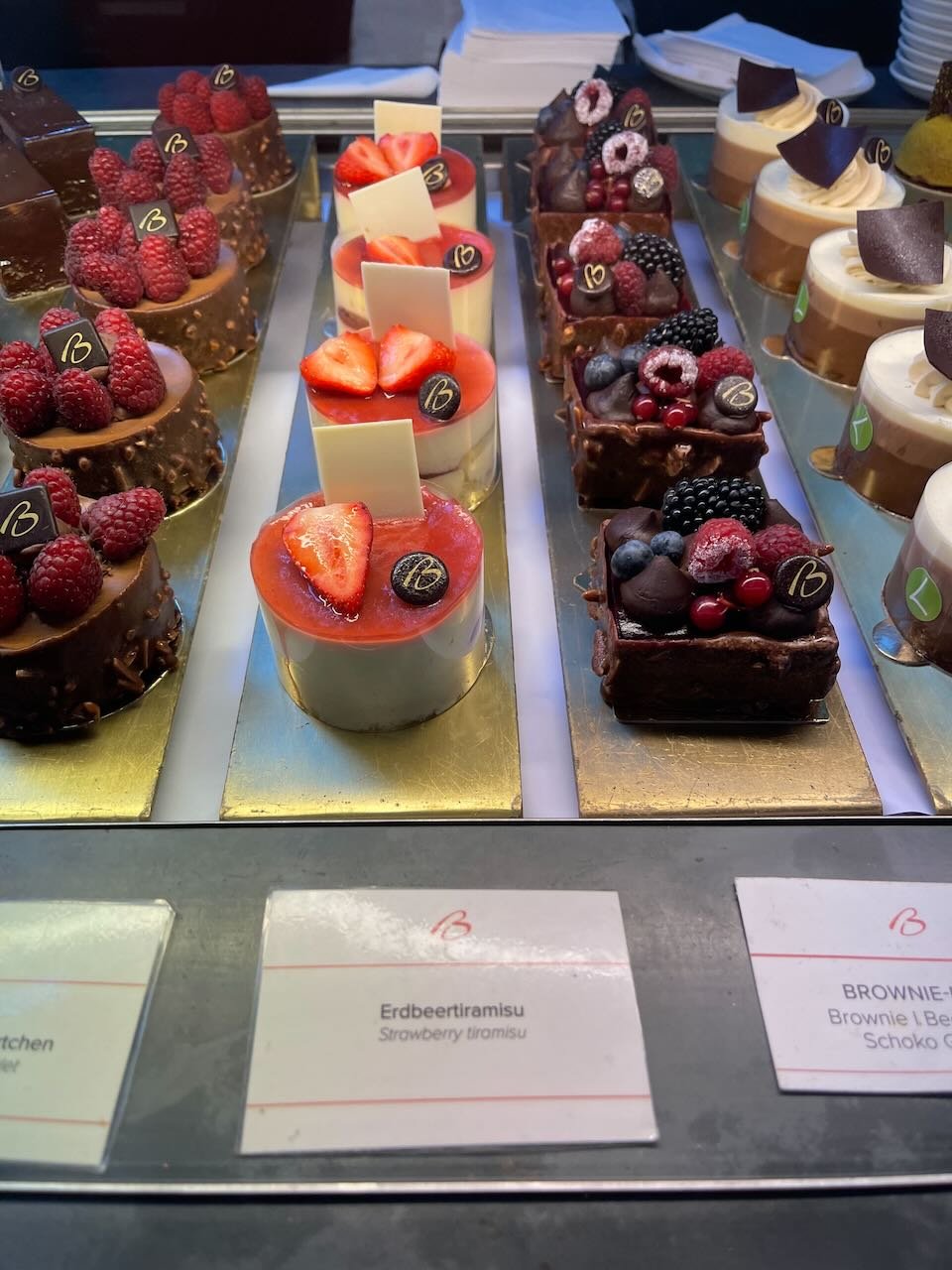
Brenner Opengrill — My go-to for lunch or a relaxed dinner when I want something slightly lighter than Bavarian classics. Great people-watching from the terrace, solid cooking, and a good wine list. It handles both a quick stop and a longer meal equally well.
Schwarzreiter at Hotel Vier Jahreszeiten Kempinski — The Schwarzreiter Restaurant and Tagesbar offer cooking at the highest level, led by chef Franz-Josef Unterlechner, whose approach combines Bavarian tradition with real precision. The Tagesbar is more relaxed; the restaurant is full gourmet. Either way, the cooking reflects quality and care.
Viktualienmarkt — This is not a restaurant, but it belongs in any honest eating guide to Munich. The city's main food market has dozens of small stands and stalls serving fresh produce, Bavarian snacks, cheeses, breads, and local specialties. It is also one of the best spots in the city for food photography and general street shooting. Go on a weekday morning.

Coffee in Munich
Schmalznudel (Cafe Frischhut) — A Munich legend. The fried pastries here are extraordinary. Get there in the morning.
Bar Centrale — Italian-run coffee bar in the Altstadt with excellent espresso and the kind of slow, unhurried morning atmosphere that makes it hard to leave. Good for editing or just watching the street.
Eiscafé Eismeer — More café than ice cream parlor in character, good coffee, and a people-watching terrace when the weather is right.

Viktualienmarkt: This is the city's largest food market. Lots of variety of wonderful food, fresh produce, aromatic spices, and a great spot for street photography. You can try local specialties and take photos of traditional Bavarian snacks like pretzels and Weisswurst.

In the food hall, you can enjoy simple plates of cheese, bread, and all sorts of local specialties.
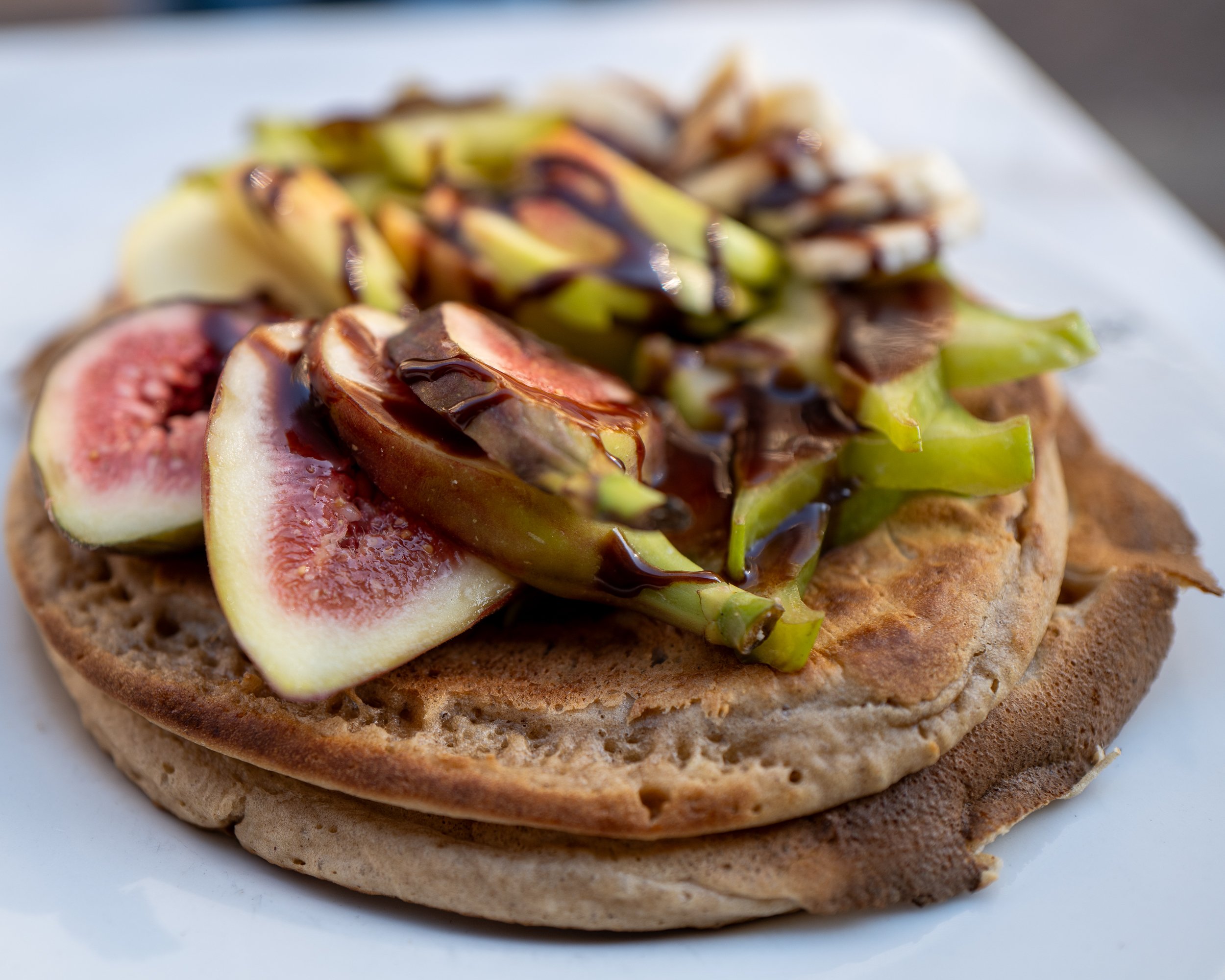
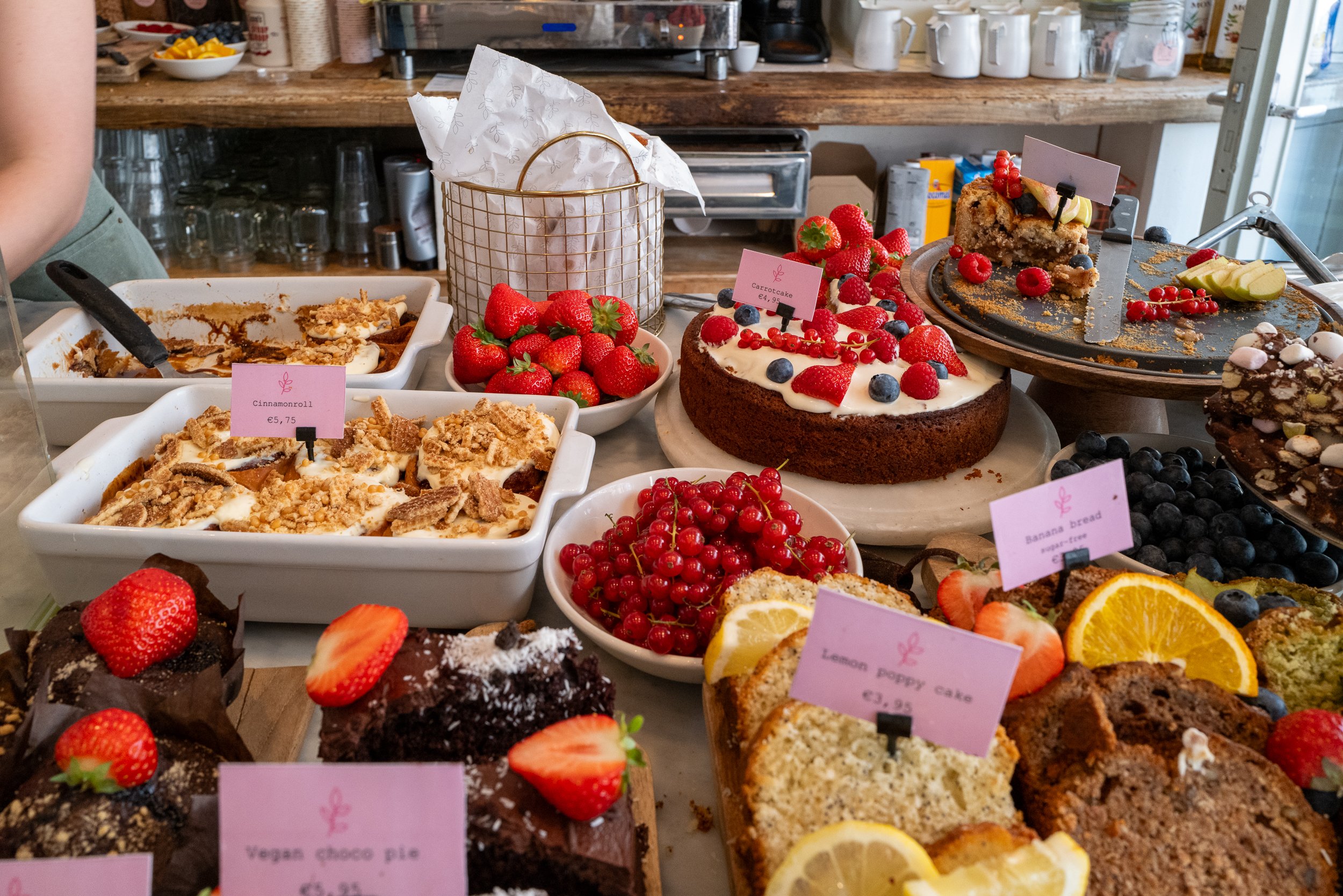
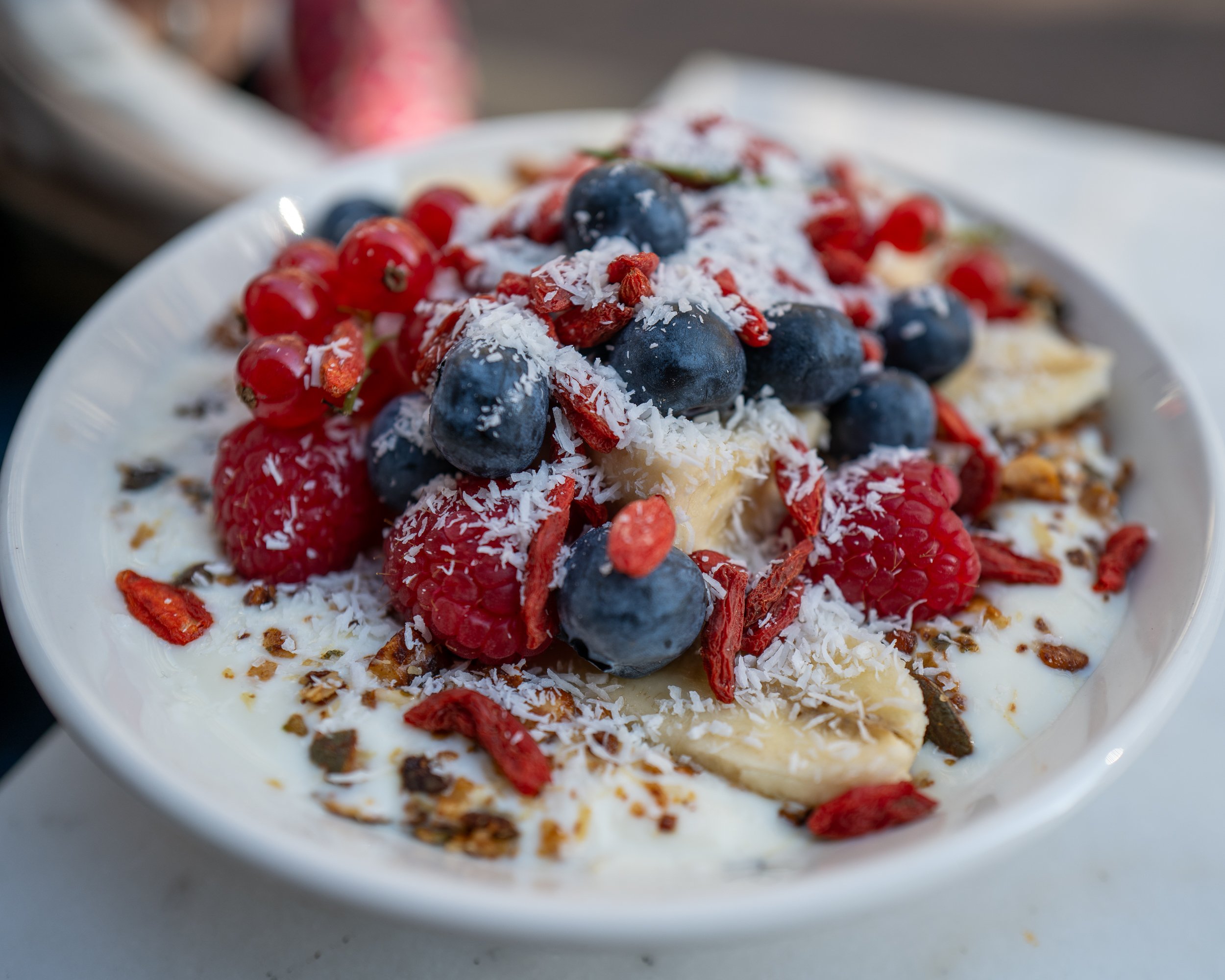
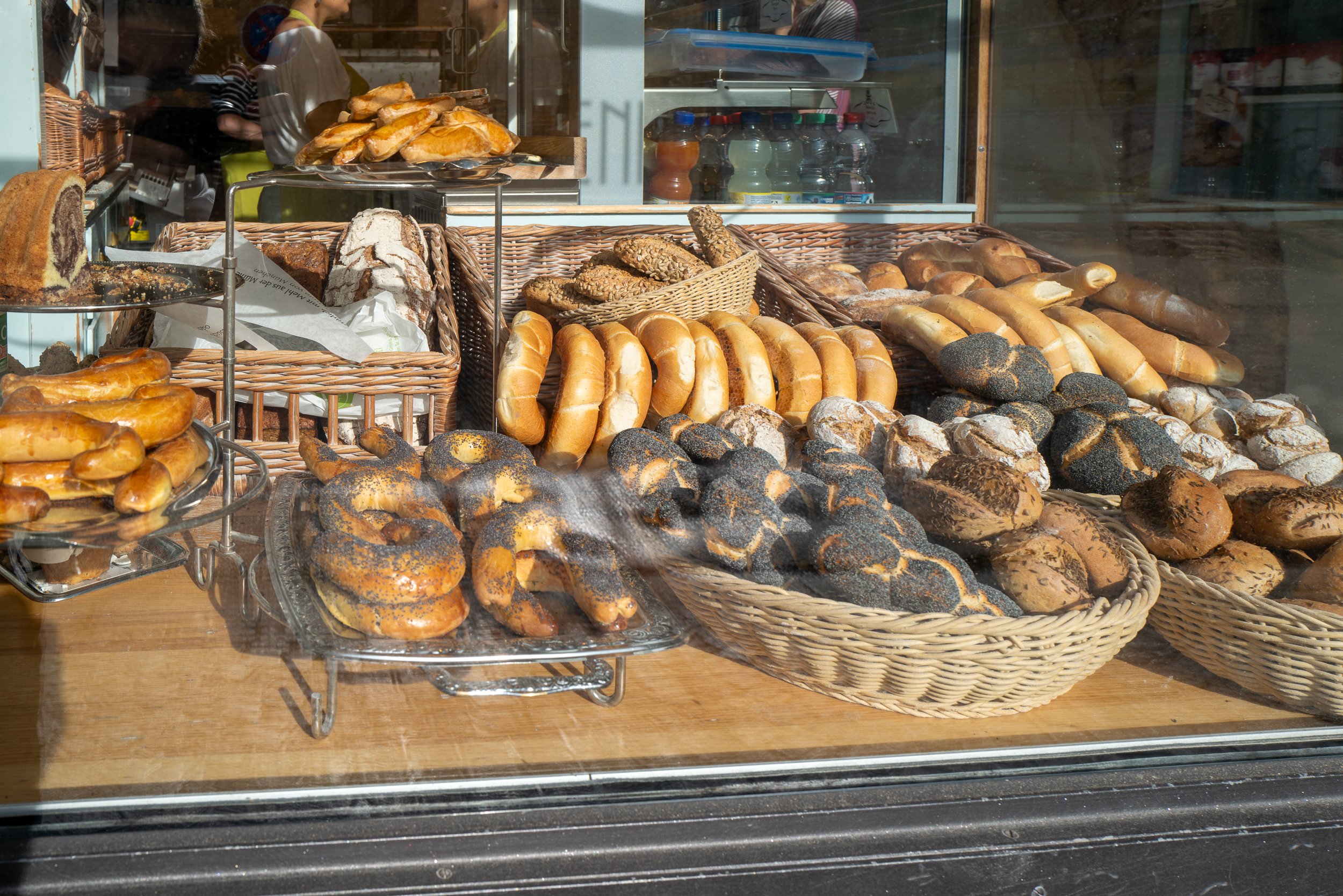
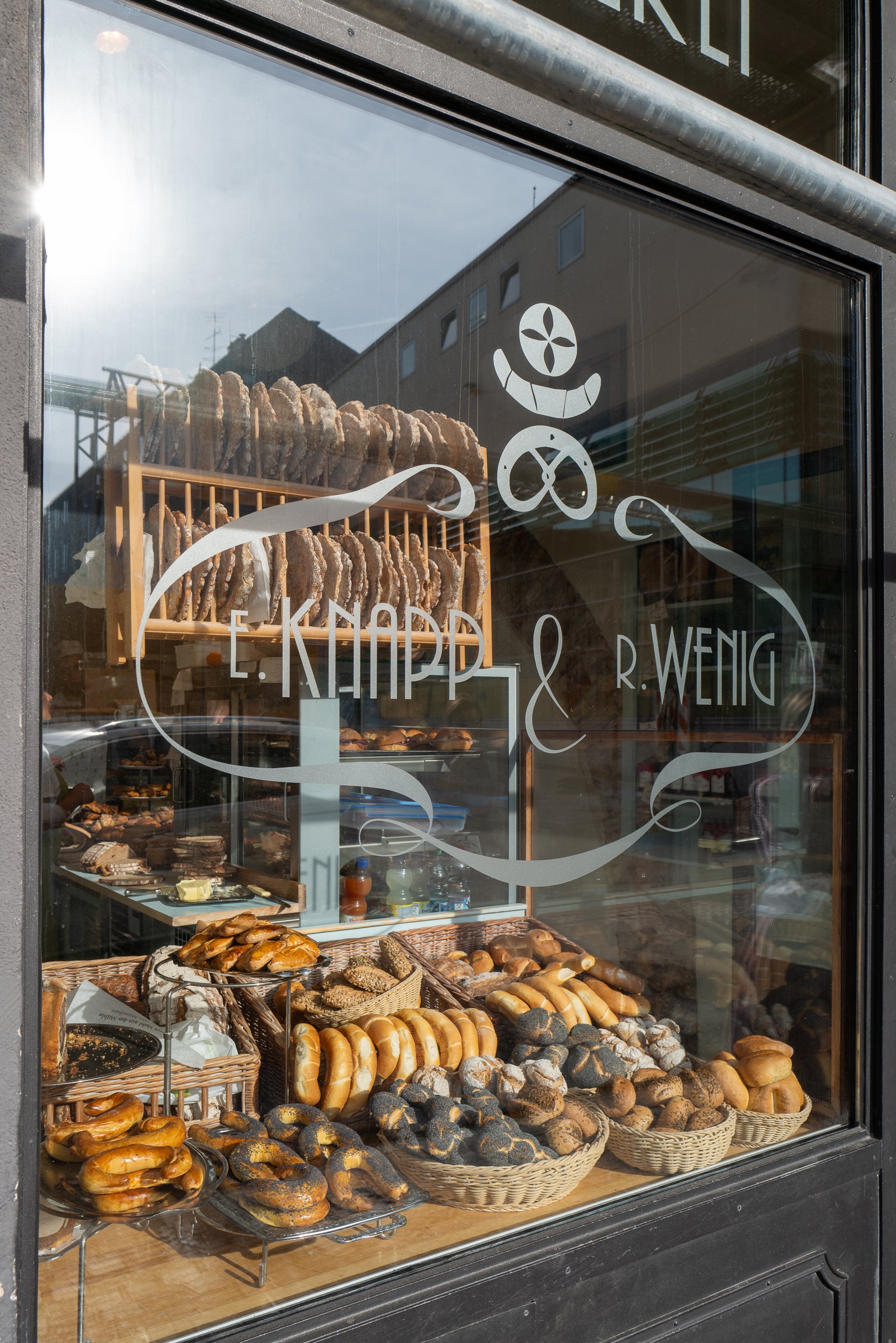
Finally, don’t miss the fantastic bakeries in Germany!
Photography Gear for Munich
Munich rewards versatility over specialization. You will switch between tight architectural work, wide environmental shots, and street photography in the same morning.
Camera bodies: Any modern full-frame mirrorless handles Munich well. I shoot with the Canon R5 Mark II. The Sony A7R V and Nikon Z8 are equally suited, especially for the detail work in the cathedral interiors and palace architecture.
Lenses: Bring a wide zoom in the 16-35mm range for Marienplatz, the Frauenkirche facade, and interior church shots. A standard 24-70mm or 24-105mm is your workhorse for street work and beer hall interiors. A 70-200mm is worth having for pulling detail out of the Glockenspiel figures and compressing the English Garden from a distance.
Tripod: Bring one. Blue hour at Marienplatz and night photography inside the Hofbräuhaus both need it. The Platypod Ultra works well for low-angle cobblestone shots where a full tripod is impractical.
ND filters: A 6-stop or 10-stop ND is worth having for long exposures at the Eisbach river wave in bright midday light, or for silky-water shots in the English Garden. Not essential, but useful.
Extra batteries and cards: Cold mornings drain batteries faster than you expect. Carry two spares. Bring more cards than you think you need.
Samsung T7 SSD: Back up every evening, not at the end of the trip.
Rain cover: Munich weather changes fast, especially in spring and fall. Keep a rain sleeve in your bag and do not leave it at the hotel.
Drone note: Germany enforces strict drone regulations under EU rules. Flying in or above Munich's city center, residential areas, and near airports requires authorization and registration. Drone flights over Neuschwanstein Castle and other Bavarian palace properties are heavily restricted or prohibited. Use the DJI Fly app and the German DFS aviation portal to check zones before you fly. Non-compliance carries significant fines.
iPhone Photography Tips
Munich is an excellent iPhone city, and the architecture responds particularly well to the computational photography that Apple's cameras do well.
Marienplatz at blue hour: Switch to the native Camera app, enable ProRAW if you have an iPhone 15 Pro or later, and shoot the Neues Rathaus as the sky transitions from deep blue to dark. The dynamic range in the RAW file will hold the building detail and the sky simultaneously in a way JPEGs cannot. Use a mini tripod or lean against a lamp post; hand-holding in this light causes blur.
Frauenkirche towers: Use the 0.5x ultrawide for a full twin-tower shot from street level on Frauenplatz. The distortion is minimal if you keep the phone level. For details on the Gothic ornament, switch to the 3x telephoto.
English Garden and Eisbach: Portrait mode with the surfers in the foreground and the trees in background creates clean subject separation that looks genuinely strong. Shoot from the bridge rather than the bank for a higher angle on the wave.
Beer hall interiors: Night mode handles the amber-lit warmth of the Hofbräuhaus better than you would expect, but keep ISO low by using it on a stable surface. The challenge is motion; slow shutter in Night mode blurs people who are moving. Either time your shot for a brief stillness or accept the blur as atmosphere.
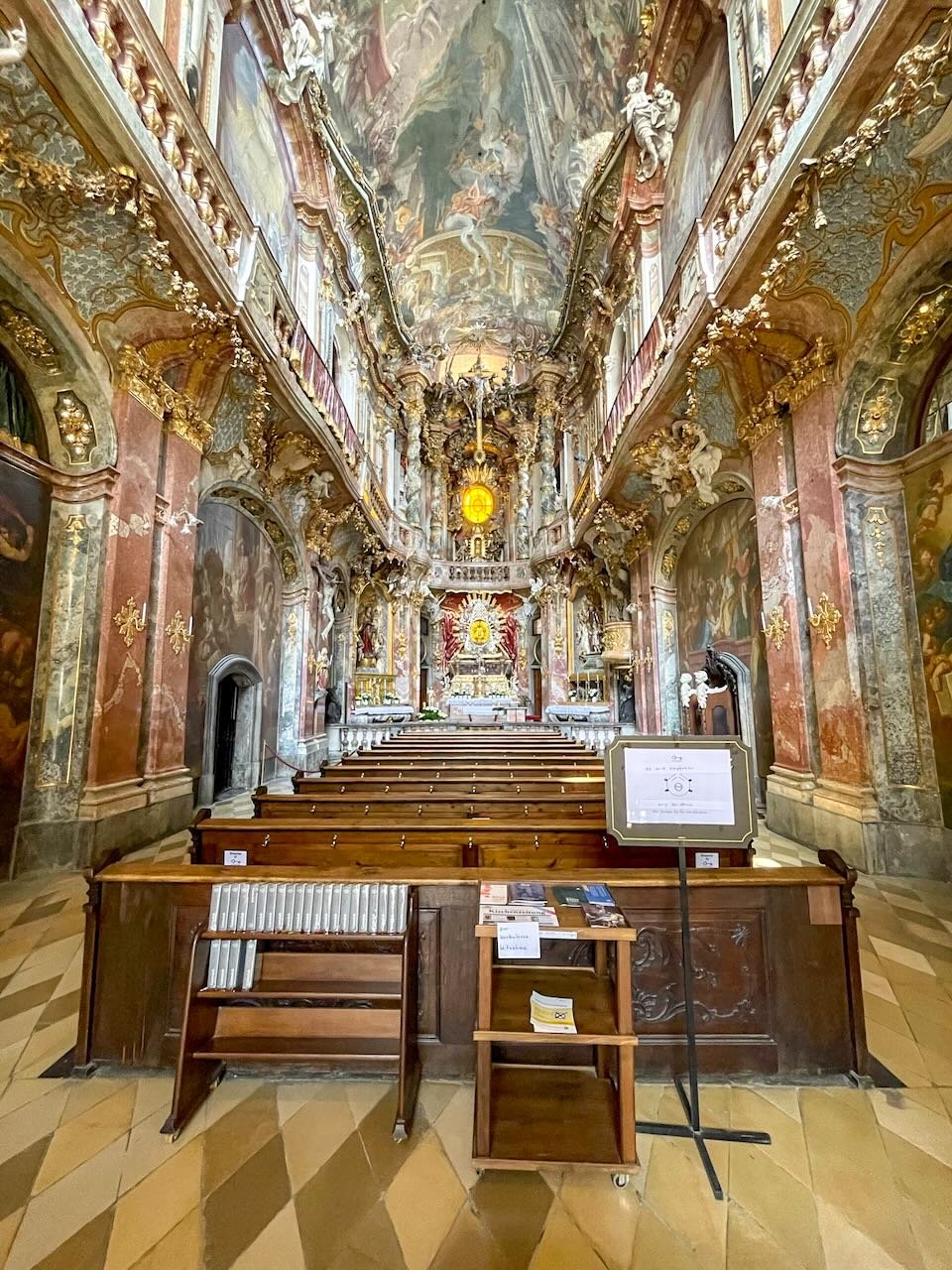
Asamkirche interior: The church is narrow and extremely dark at the back. Use Night mode, brace against a pew, and aim toward the golden altar. The result is consistently one of the most dramatic iPhone shots in Munich.

Photography Locations in Munich
Marienplatz & RATHAUS
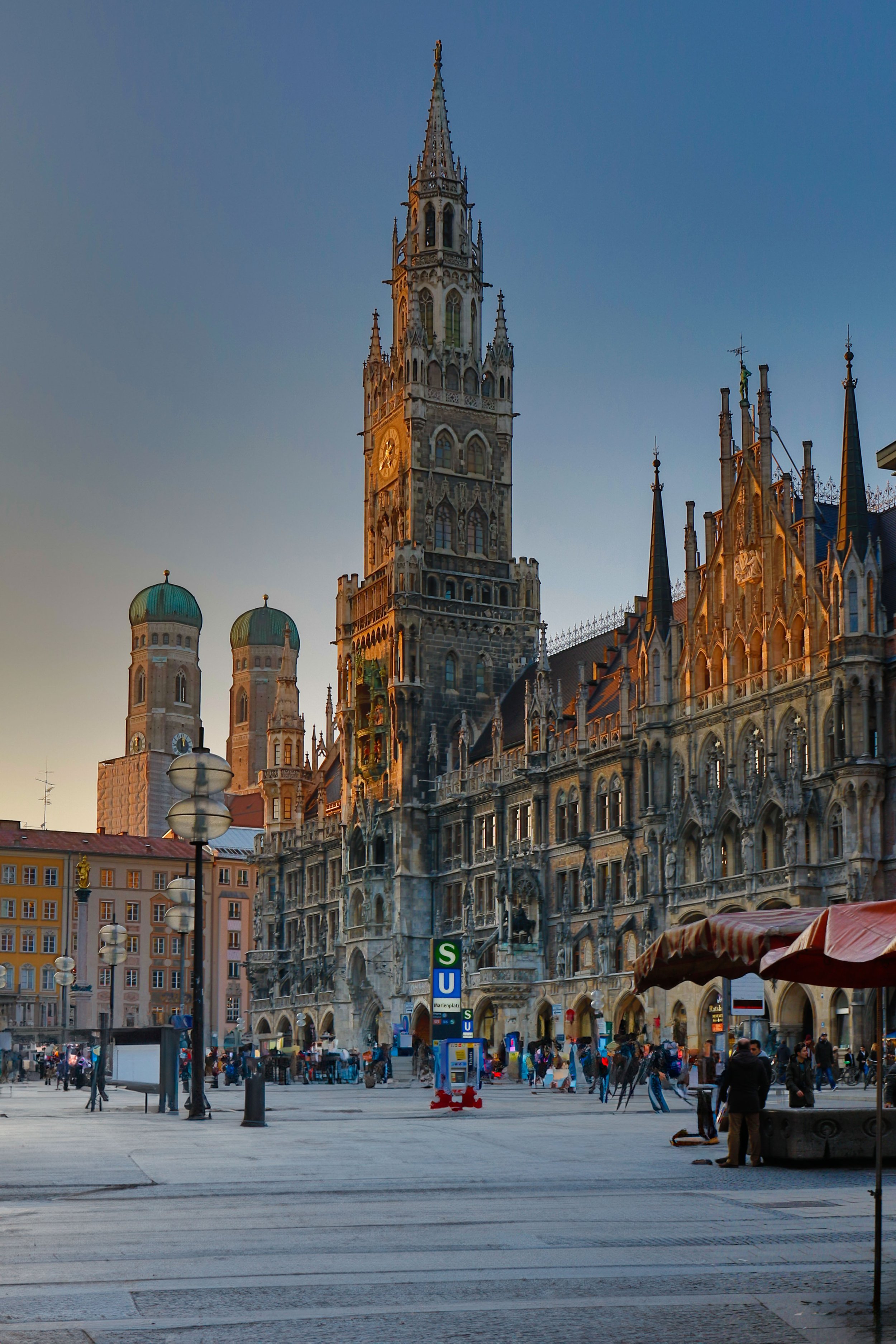
Marienplatz is the heart of Munich, and the Neues Rathaus (New Town Hall) that frames the north side of the square is one of the most photographed facades in Germany. The Gothic Revival architecture is dense with detail, from the carved stone figures to the Glockenspiel tower, and it rewards close examination as much as wide environmental shots. The square itself is surrounded on all sides by historic buildings, making it one of the most composed natural frames in any European city.
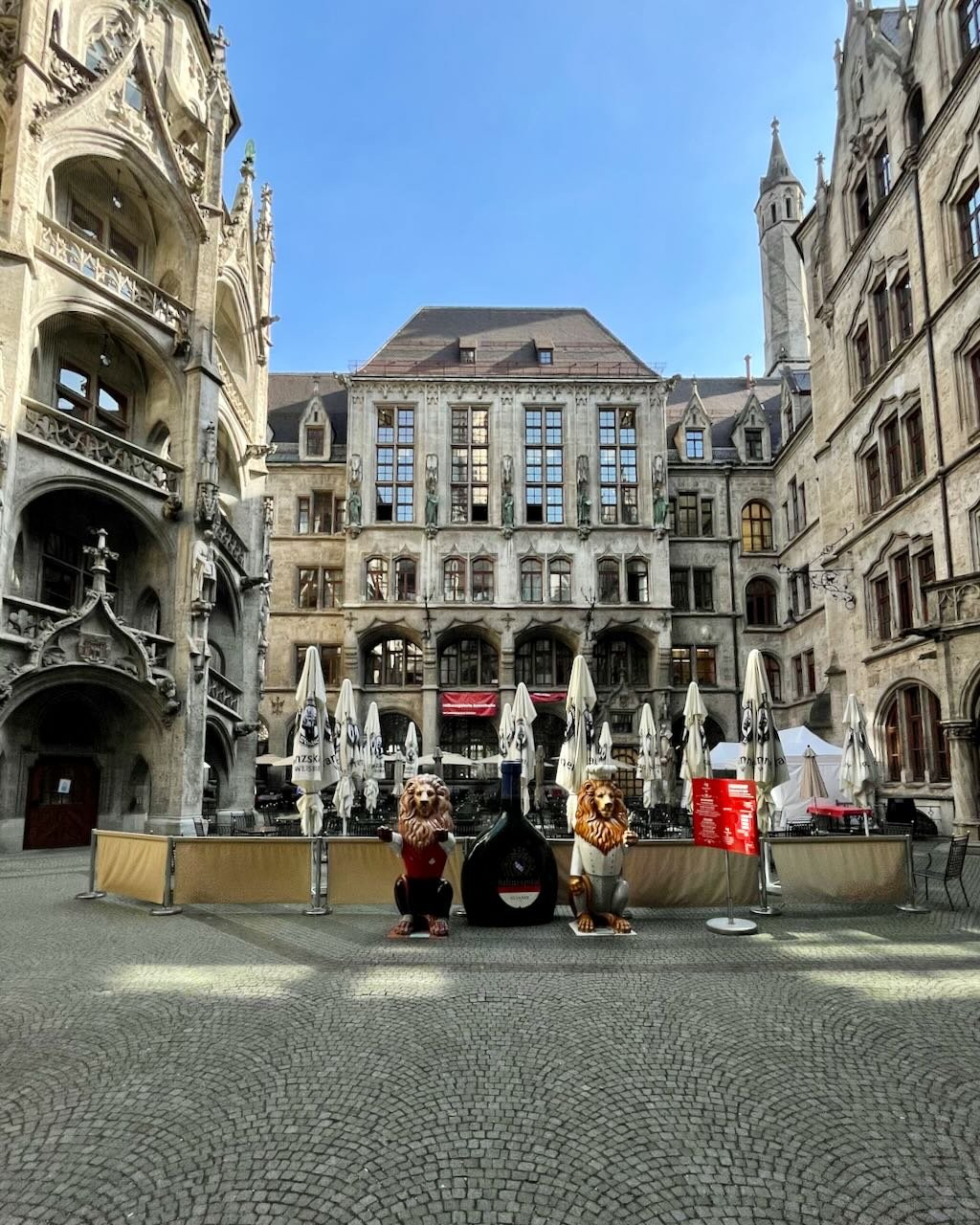
The light here behaves beautifully at both ends of the day. The east-facing Rathaus facade catches soft morning light in summer. At blue hour, the building's interior lights glow against a deepening sky, and the cobblestones reflect the warm tones if there has been rain. Walk into the courtyard behind the Glockenspiel for an almost entirely different composition with almost no other photographers around.
📷 Pro Tip: For the classic Rathaus facade shot, set up on the south side of the square and use a 24-35mm focal length to include the Marian Column in the foreground. The best light is 30 to 45 minutes before sunset in summer, when the upper floors catch gold while the square below is still active. For the blue hour, come back 20 minutes after sunset. The building's internal lights come on, and the sky goes a deep cobalt that makes the grey stone glow. Bring a tripod or use the portable Platypod against one of the bollards at the square's edge. If you want the Glockenspiel in action, it runs at 11 am and noon daily, and at 5 pm between March and October. Arrive 15 minutes early to get your position.
Best time: Dawn or blue hour. Access: Free. U-Bahn or S-Bahn to Marienplatz.
If you walk into the courtyard behind the Glockenspiel, you will find a beautiful spot with almost no people.
Glockenspiel
The Rathaus-Glockenspiel is a large mechanical clock located in Marienplatz Square. It is famous for its life-size characters. Don’t miss the daily movement of the characters which happens at 11 am and midday (and 5 pm between March and October.

The characters reenact a royal wedding, a jousting tournament, and a dance.

Nymphenburg Palace
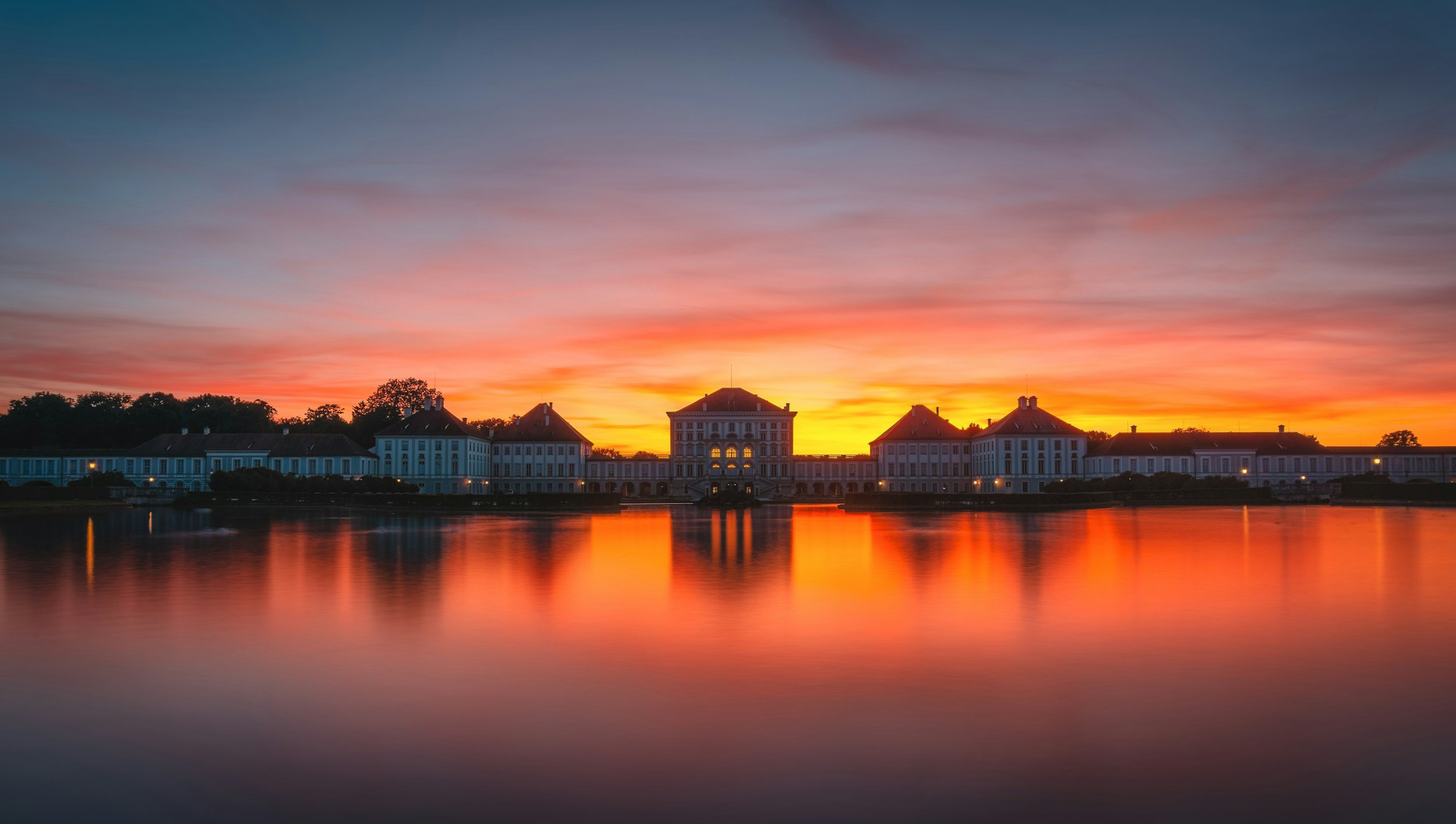
Nymphenburg Palace sits about 8 km northwest of the city center and is one of the largest palace complexes in Europe. The main building stretches over 600 meters across its facade, and the grounds extend behind it into formal gardens, canals, and wooded park. It was the summer residence of Bavarian royalty and the birthplace of Ludwig II, who went on to build Neuschwanstein.
For photographers, the scale is the subject. The symmetry of the facade, the long canal reflecting the building, and the formal garden geometry are all strong compositional materials. The grounds also offer quieter, more intimate corners in the wooded sections that contrast well with the formal grandeur of the main palace.
📷 Pro Tip: Arrive at or just after sunrise for the main canal shot. The water is calm, the light is soft, and you will likely have the scene largely to yourself. Use a 24-35mm lens for the full facade reflection in the canal. In fog, which happens in autumn and early spring, the palace appears to float above the mist and the image becomes something completely different and extraordinary. A 6-stop ND filter allows long exposures that smooth the canal surface for the reflection shot even in bright morning light. The interior rooms are worth photographing as well; the Great Hall and the Gallery of Beauties have exceptional painted ceilings. Tripods are not permitted inside.
Best time: Sunrise. Access: Palace entry has a fee; grounds are free and open year-round. Tram to Schloss Nymphenburg.
Odeonsplatz and Theatinekirche
Odeonsplatz is one of Munich's grandest civic spaces, flanked by the Theatinerkirche (Theatine Church) to the west, the Feldherrnhalle loggia to the south, and the entrance to the Hofgarten to the east. The Theatinerkirche facade is a confident Italian Baroque statement in a city that is predominantly Gothic, painted in a warm golden yellow that photographs beautifully in late afternoon light.
The square has architectural symmetry, open sky, and a quality of light that makes it one of the most reliable spots in Munich for golden hour photography. The arched gallery of the Feldherrnhalle frames views down Residenzstrasse toward Marienplatz.
📷 Pro Tip: Shoot the Theatinerkirche facade from the center of Odeonsplatz with a 35-50mm lens in the hour before sunset. The warm yellow stucco becomes genuinely luminous at this time of day. Turn around and use the Feldherrnhalle arches as a frame for the street view south; a 70-200mm compresses the receding architecture nicely. Early Sunday mornings are quiet enough for clean compositions without crowds or traffic. The Hofgarten arcade behind the square also offers covered, columned walkways with strong geometric potential.
Best time: Golden hour, or early Sunday morning. Access: Free. U-Bahn to Odeonsplatz.

St. Michael's Church (Michaelskirche)
St. Michael's is the largest Renaissance church north of the Alps, built between 1583 and 1597 as a Jesuit statement of Counter-Reformation ambition. It sits on Neuhauser Strasse, Munich's main pedestrian shopping thoroughfare, which means most people walk past it without stopping. That is a mistake. The interior is one of the most resolved Renaissance spaces I have stood in: a single barrel-vaulted nave stretching 20 meters overhead, clean white plasterwork, and a long central axis that draws your eye straight to the high altar. The facade is bold, carved with tiers of figures including the bronze statue of Archangel Michael defeating Satan above the main entrance.
The nave's length and symmetry make it a natural subject for architectural photography. The barrel vault creates a tunnel effect that rewards a wide lens positioned on the central axis. The white interior is brighter than most Munich churches, which makes exposure management more forgiving.
📷 Pro Tip: Position yourself at the rear of the nave on the central axis and use a 16-24mm lens aimed toward the altar. The barrel vault will arch symmetrically above you and the altar becomes the vanishing point. Arrive in the morning when light enters from the upper windows on the south side and softens the plasterwork without creating harsh contrasts. A tripod is useful here; the interior is bright enough that ISO 800 works well but a longer exposure sharpens the architectural detail. The crypt beneath the church contains the tomb of Ludwig II and is worth a separate visit. Photography is permitted in the nave; be aware of services running on weekday mornings.
Best time: Mid-morning, weekdays. Access: Free entry to the nave; crypt has a small fee. Walk from Marienplatz (5 minutes west along Neuhauser Strasse).

Eisbach Wave, English Garden
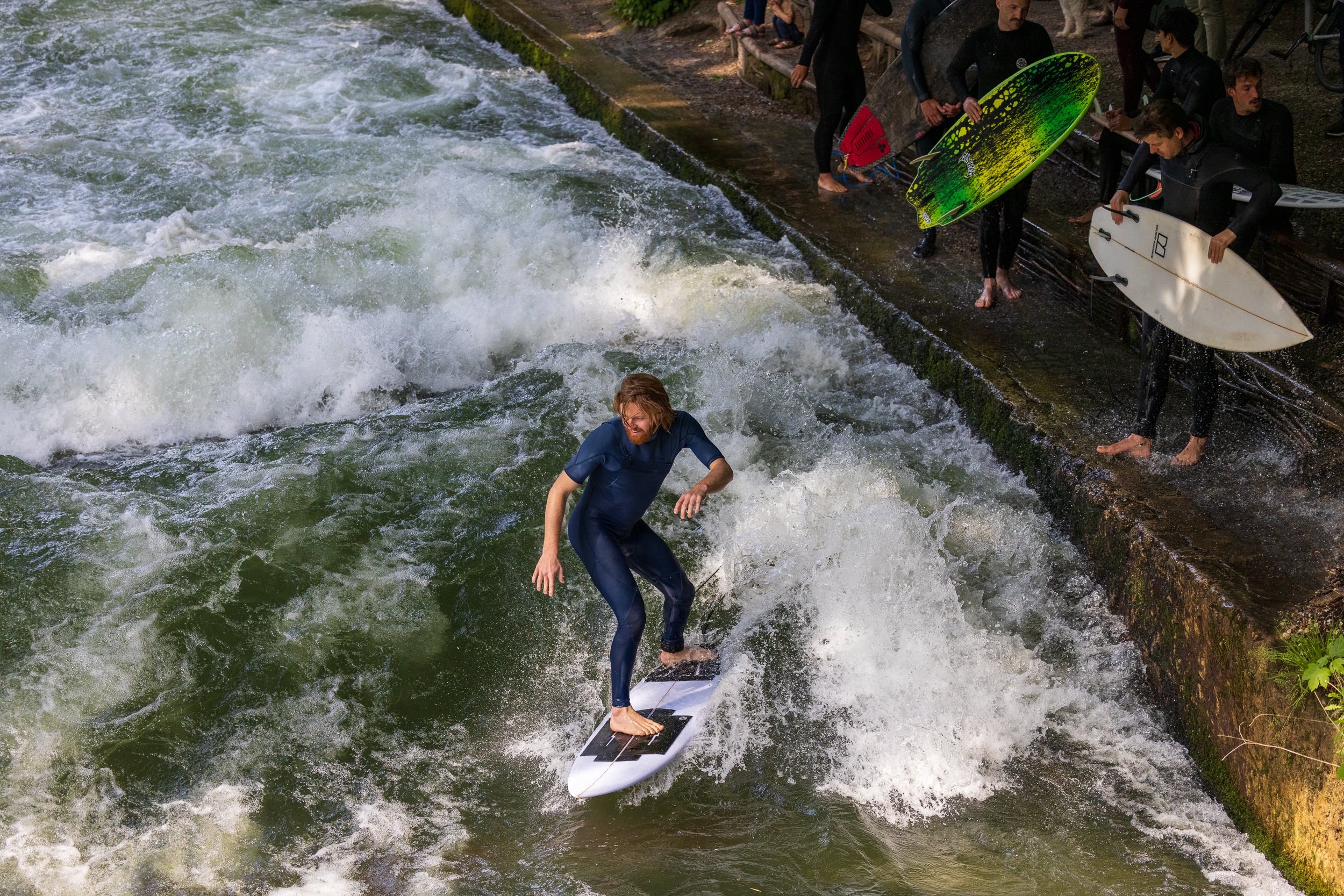
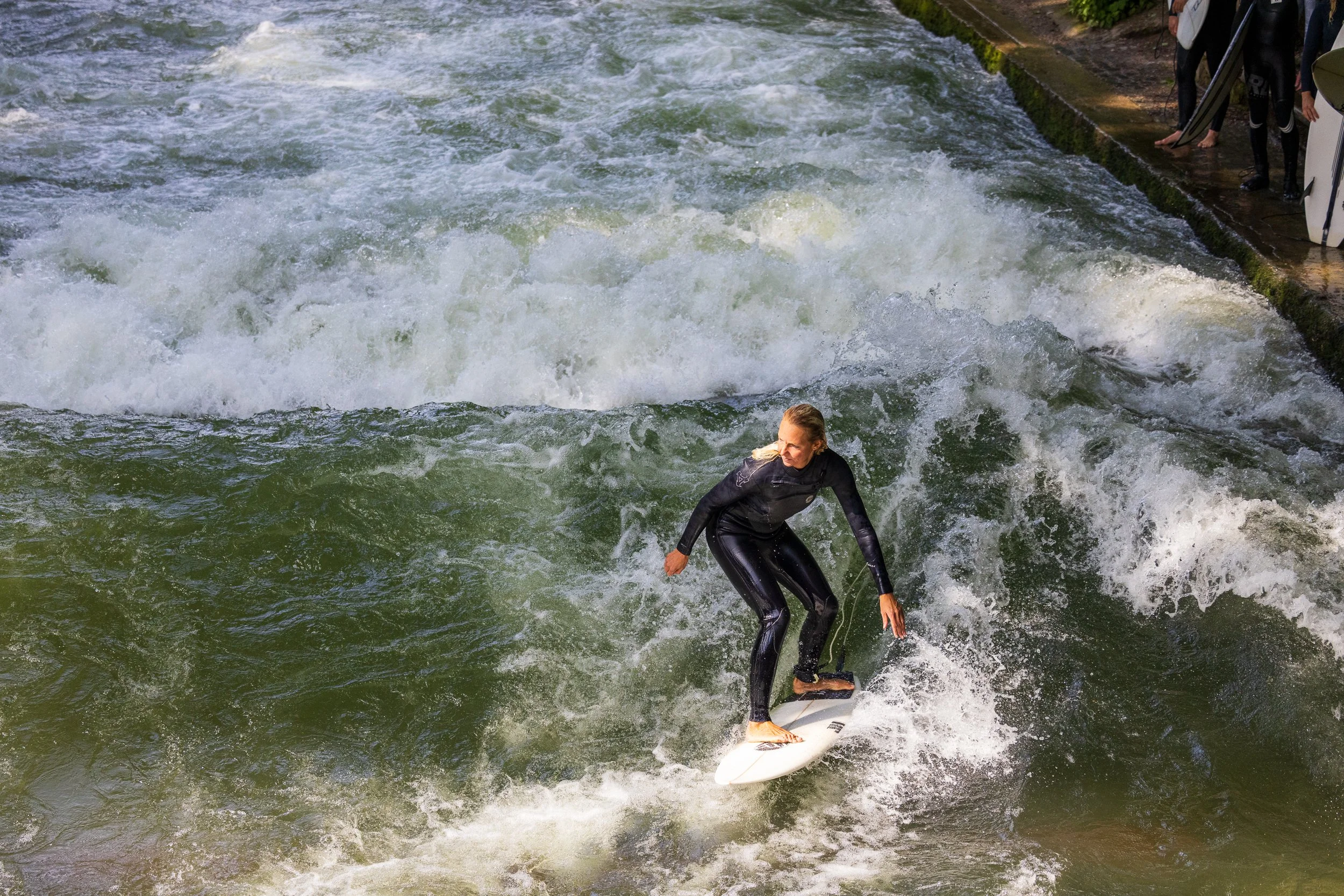
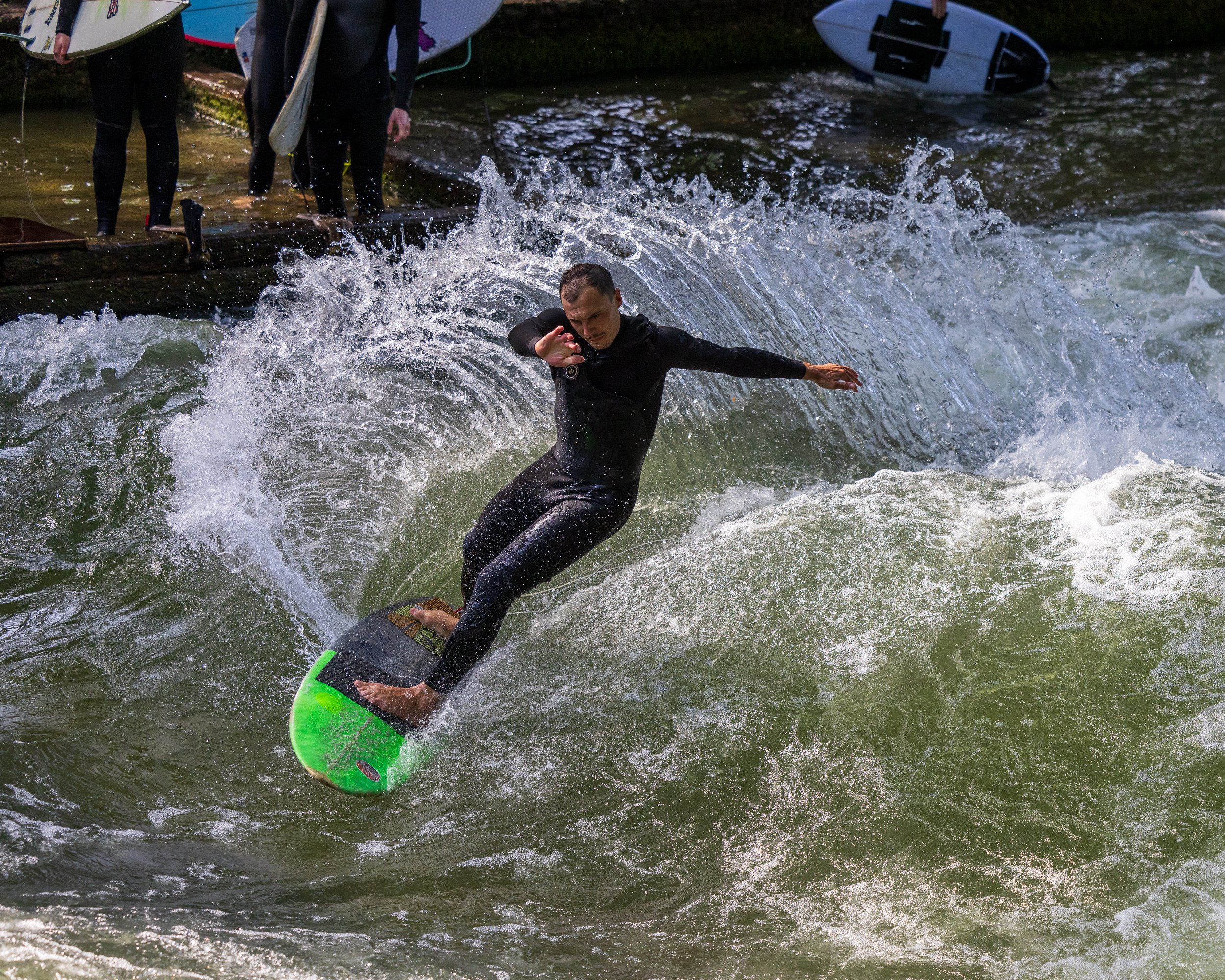
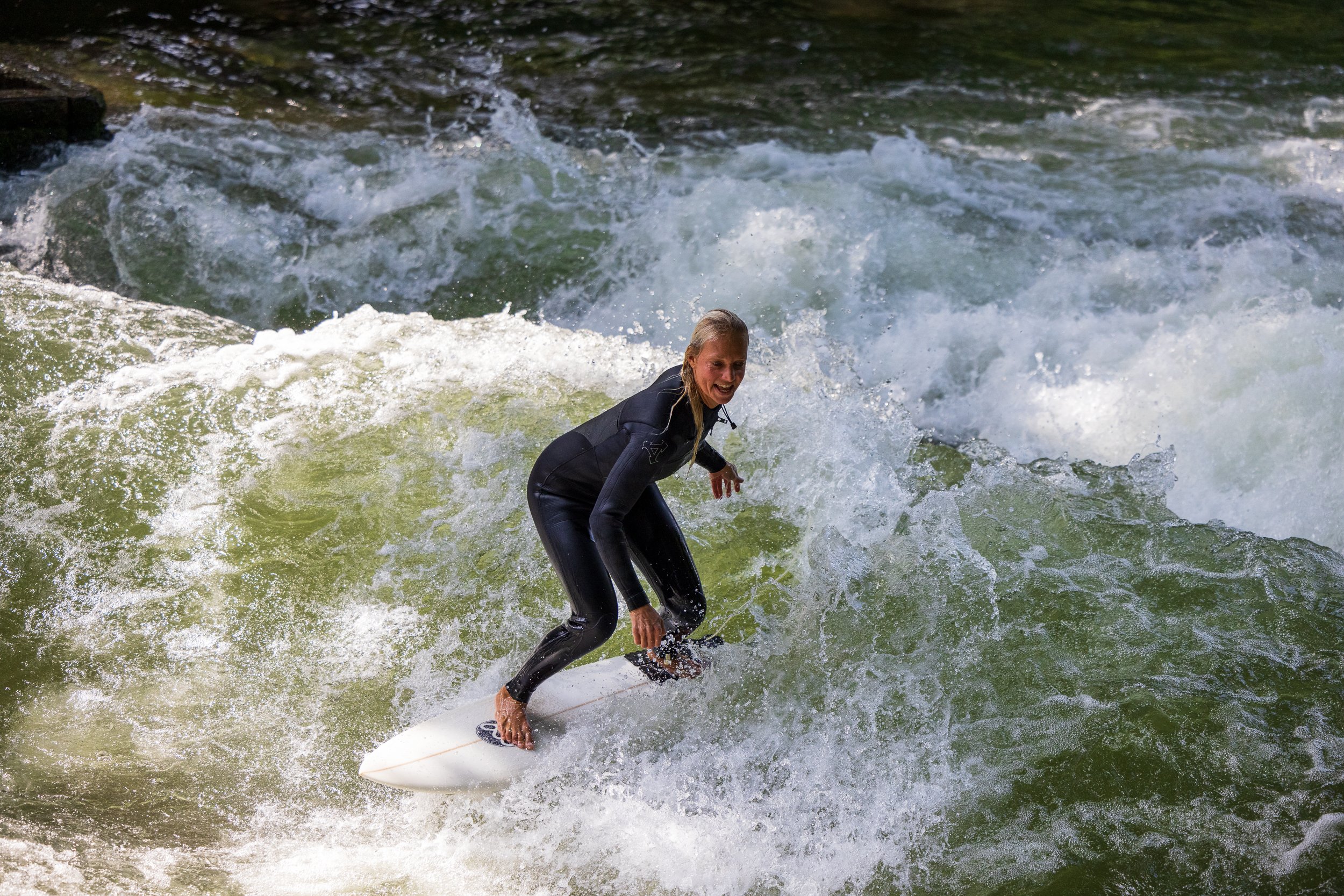
The Eisbachwelle is a standing river wave at the southern edge of the English Garden, and it has been a surfing spot since the 1970s. You will find surfers here year-round, including in January. The wave is strong and consistent, the surfers are skilled, and the visual of someone carving a turn on a river in the middle of Munich remains genuinely surreal no matter how many times you see it.
This is one of the best action photography locations in any city in the world. The light is best in late afternoon when the sun drops below the tree line and the surfers are backlit. The bridge above the wave gives you an elevated angle with a clean water background. The bank gives you a tighter, face-on perspective.
📷 Pro Tip: Use a 70-200mm at 200mm from the bridge for tight action shots. A shutter speed of at least 1/1000s freezes the water droplets. Shoot in burst mode and expect to delete 90% of what you capture; the decisive moment on a wave is brief. The light is best from 4 to 7 pm in spring and summer. In winter, the low afternoon sun creates dramatic backlit silhouettes of the surfers. Come on a weekday if possible; weekends draw a crowd on the bridge that limits your angles. The English Garden beyond the wave is excellent for slow morning walks with a 35mm or 50mm prime for candid shots of joggers, cyclists, and the Chinese Tower beer garden.
Best time: Late afternoon. Access: Free. Walk from Marienplatz (15 minutes) or U-Bahn to Universität.
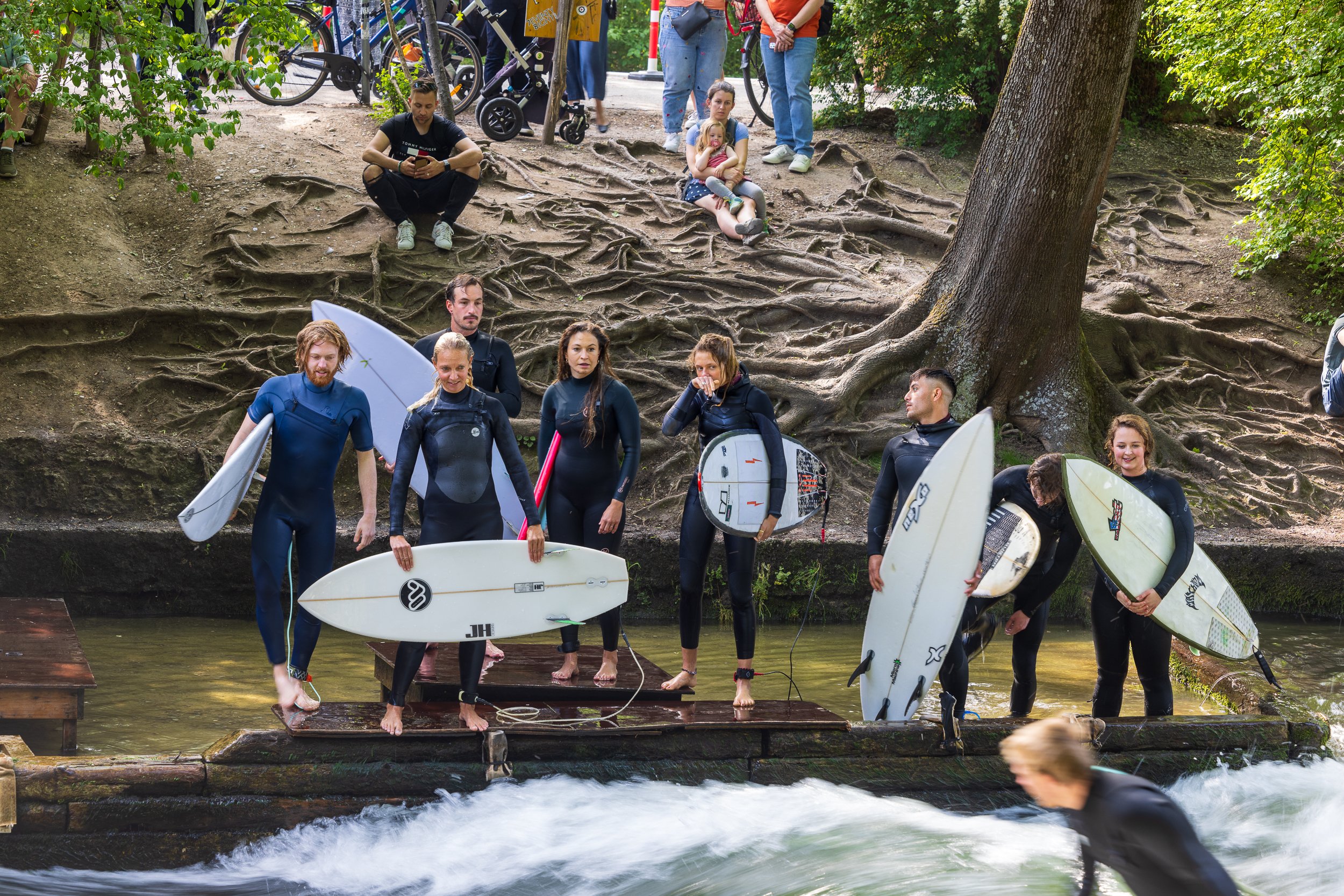
Waiting their Turn
There’s also a great beer garden in the center too with a Chinese tower (a wooden building resembling a pagoda).
Frauenkirche
The Cathedral of Our Lady is Munich's most recognizable landmark and the defining feature of the city's skyline. The twin onion-domed towers rise 99 meters and are visible from across the city. Up close, the scale is striking in a way that photographs struggle to convey, which makes the challenge interesting: how do you communicate height and mass in a frame?
The facade faces west, catching warm afternoon and evening light. The contrast between the red brick and the green copper of the domes is visually strong in almost any light. The narrow streets approaching from the east funnel you toward the towers in a way that creates natural leading lines.
📷 Pro Tip: For the classic twin-tower shot, stand on Frauenplatz directly in front of the main entrance and use a 16-24mm lens to get both towers in frame. Go wide and include the foreground cobblestones for a sense of scale. The afternoon light between 3 and 6 pm in summer hits the facade at a favorable angle. For a less obvious shot, walk around to the back of the cathedral on Augustinerstrasse and shoot the apse against the sky with a 70-200mm compressed. On clear winter days, the Alps appear on the horizon beyond the towers from the Marienplatz area. Arrive early on a weekday morning for the interior. The nave is dim and long; use a tripod or brace against a pillar for a sharp interior shot.
Best time: Afternoon. Access: Free entry to the cathedral; tower climb has a fee. Walk from Marienplatz.

Ludwig Kirche München
The Catholic Parish and University Church St. Louis, also referred to as Ludwigskirche, is located along Ludwigstrasse in Munich. This is a large Neo-Romanesque style church built by German architect Friedrich von Gärtner between 1829 44.

Hofbräuhaus
The Hofbräuhaus has been serving beer since 1607. I list it as a photography location as well as a restaurant because the interior is genuinely extraordinary to photograph: long wooden tables, vaulted painted ceilings, brass light fittings, and hundreds of people in varying states of conversation and celebration. The energy in the main hall on a Friday evening is unlike anywhere else in Munich.
This is street photography inside a building. The challenge is light, which is warm and low, and motion, which is constant. The reward is a set of images that are immediately identifiable as Munich and impossible to fake anywhere else.
📷 Pro Tip: Shoot with a fast prime, 35mm or 50mm at f/1.8 or f/2, to handle the low ambient light. ISO 1600 is your starting point; go higher if needed and manage noise in post. Arrive at opening time (10 am) for a quieter room with more composed shots of the architecture. Return at 8 pm for the full energy of a packed hall. Ask before pointing a camera directly at someone; Bavarians at the Hofbräuhaus are generally relaxed about being photographed but a quick gesture and a smile go a long way. The courtyard garden at the back is good in daylight.
Best time: Opening time for architecture; evenings for atmosphere. Access: Free to enter. Walk from Marienplatz (5 minutes).

Deutsches Museum Verkehrszentrum
I love this museum and highly recommend visiting. The Deutsches Museum includes a huge exhibit science and technology objects. It is one of the most important museums of science and technology anywhere in the world. Among the highlights, are the first motorized aircraft built by the Wright brothers, the U1 submarine, the first program-controlled computer (Conrad Zuse’s Z3), and Diesel’s original engine on the island; the first motorcar by Karl Benz in the transport museum; the Douglas DC3 at Schleißheim; and the first Fischer wall plug in Bonn.
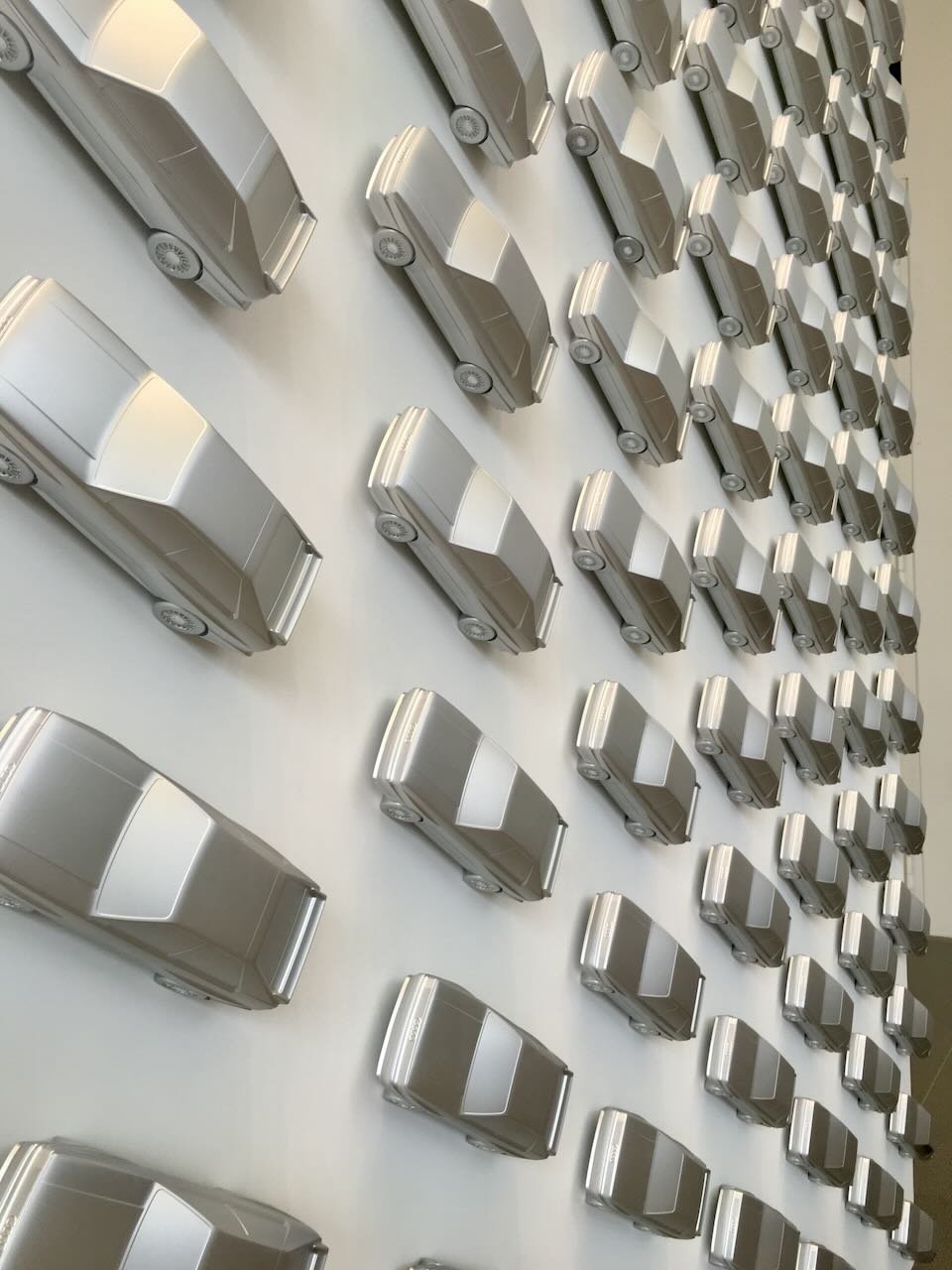
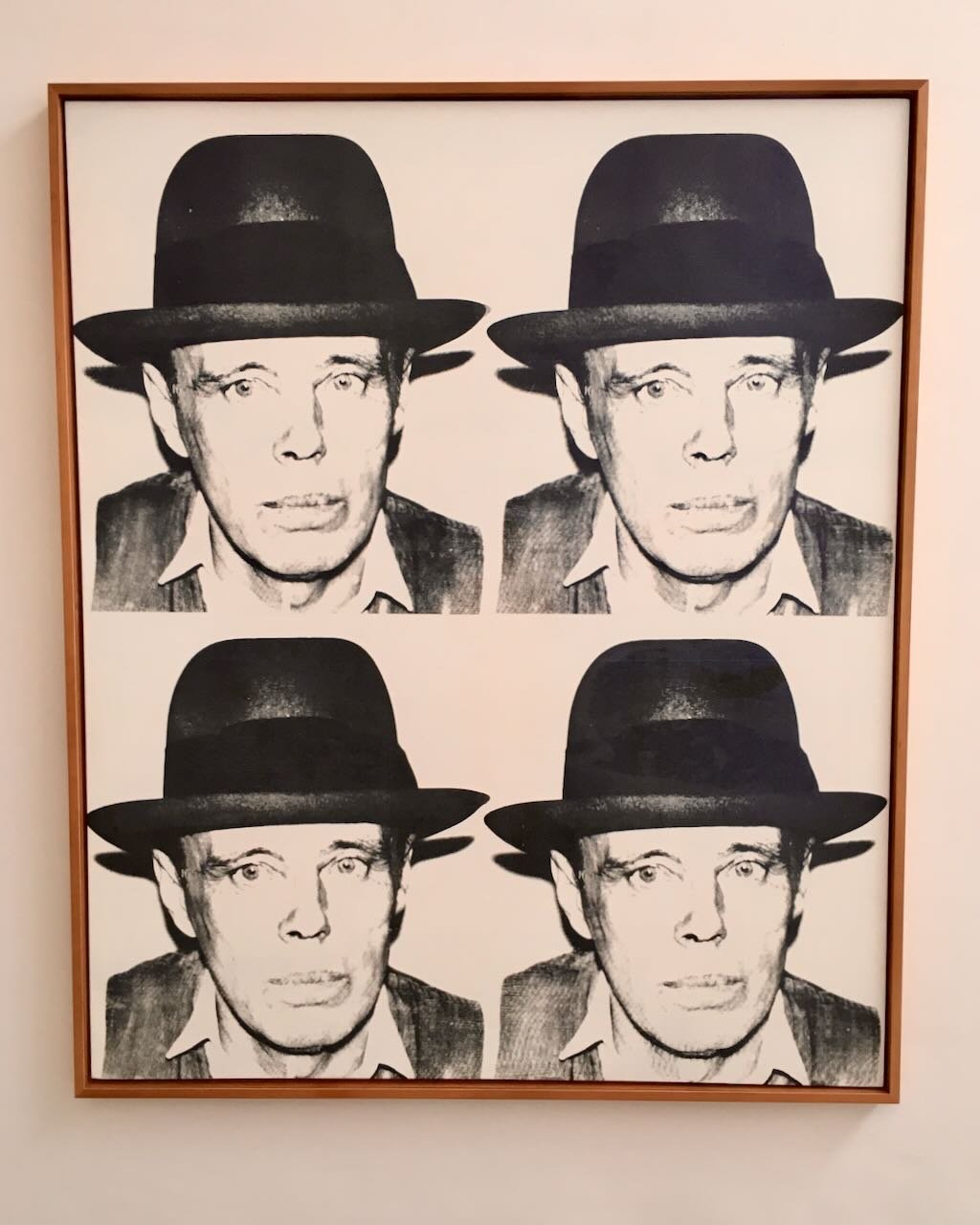
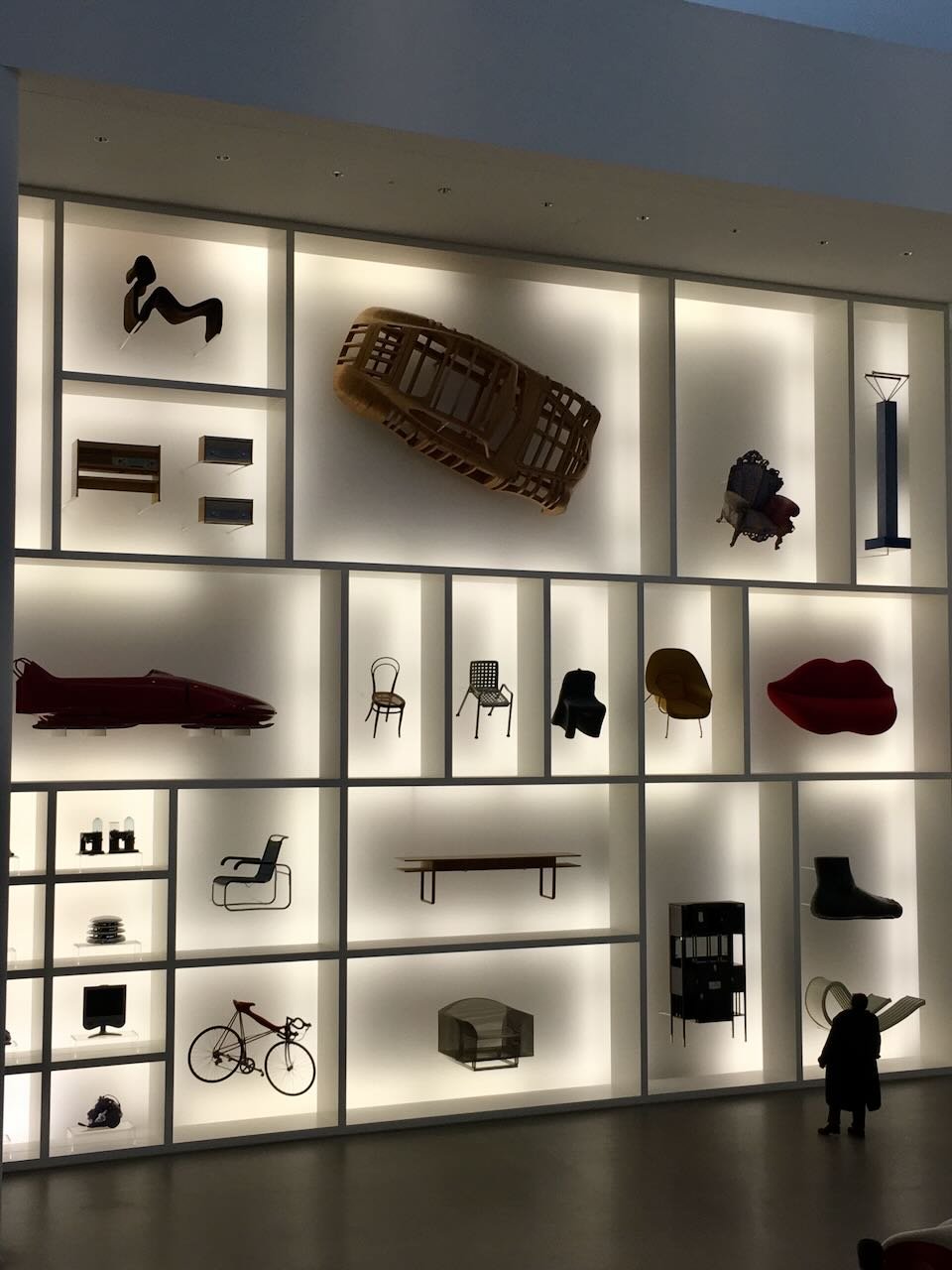
The Glyptothek
The Glyptothek (German: [ɡlʏptoˈteːk]) is a museum in Munich, Germany, which was commissioned by the Bavarian King Ludwig I to house his collection of Greek and Roman sculptures
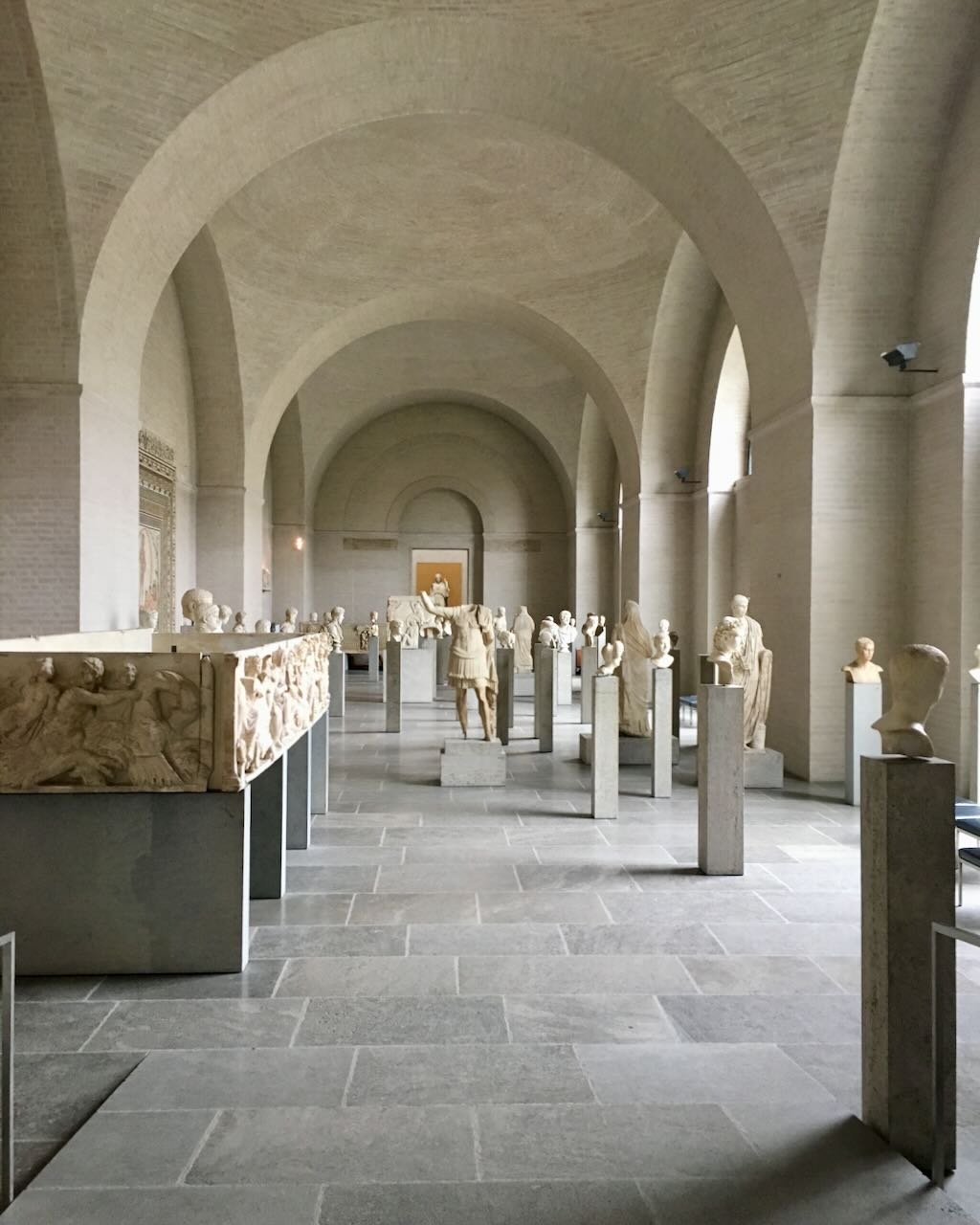
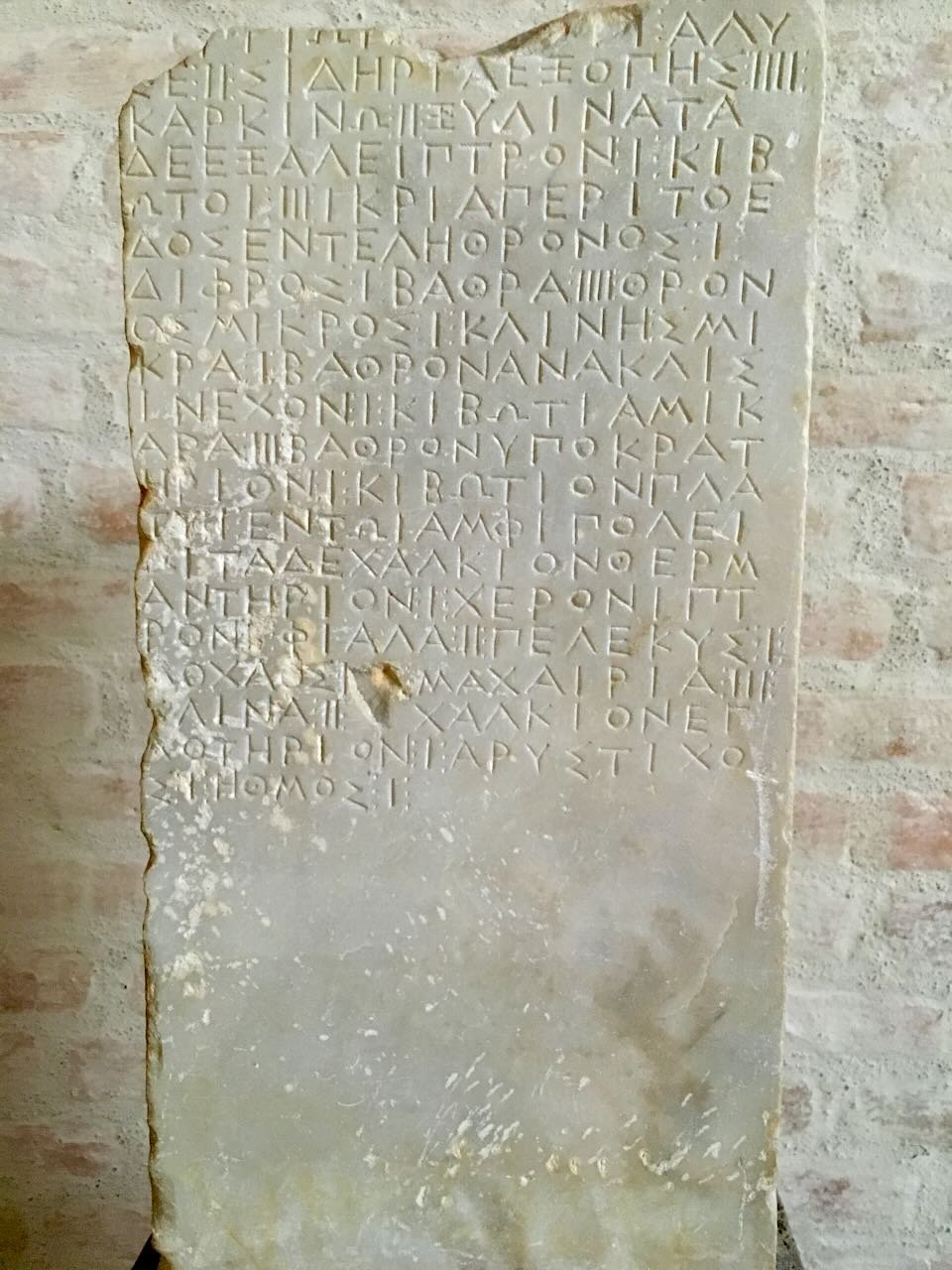
Asamkirche (St. Johann Nepomuk)
The Asam Church is one of the most extraordinary Baroque interiors in Europe, and it is tiny. The church was built between 1733 and 1746 by brothers Egid Quirin Asam and Cosmas Damian Asam as their private chapel, and they packed an entire world of gold, fresco, stucco, and sculpture into a nave roughly the size of a large living room. The effect when you step inside is immediate and overwhelming.
Because it is small and dark, the Asamkirche presents a genuine technical challenge. That is exactly what makes it interesting to photograph. The altar glows with gold leaf. The frescoed ceiling curves above you. Every surface is decorated.
📷 Pro Tip: Position yourself at the back of the nave and shoot toward the high altar with a wide zoom at 24mm or shorter. The key is exposure: the altar is brighter than the nave walls, so meter for the altar and let the surrounding darkness fall off naturally. On iPhone, Night Mode works extremely well here; brace the phone against a pew and let the shutter do its work. On a mirrorless body, shoot at ISO 1600 to 3200 and use image stabilization rather than a tripod, since tripods are not permitted. Visit on a weekday morning when the church opens; it fills quickly with tourists. The entrance is free but donations are expected.
Best time: Weekday morning, just after opening. Access: Free (donations). Walk from Marienplatz (5 minutes).
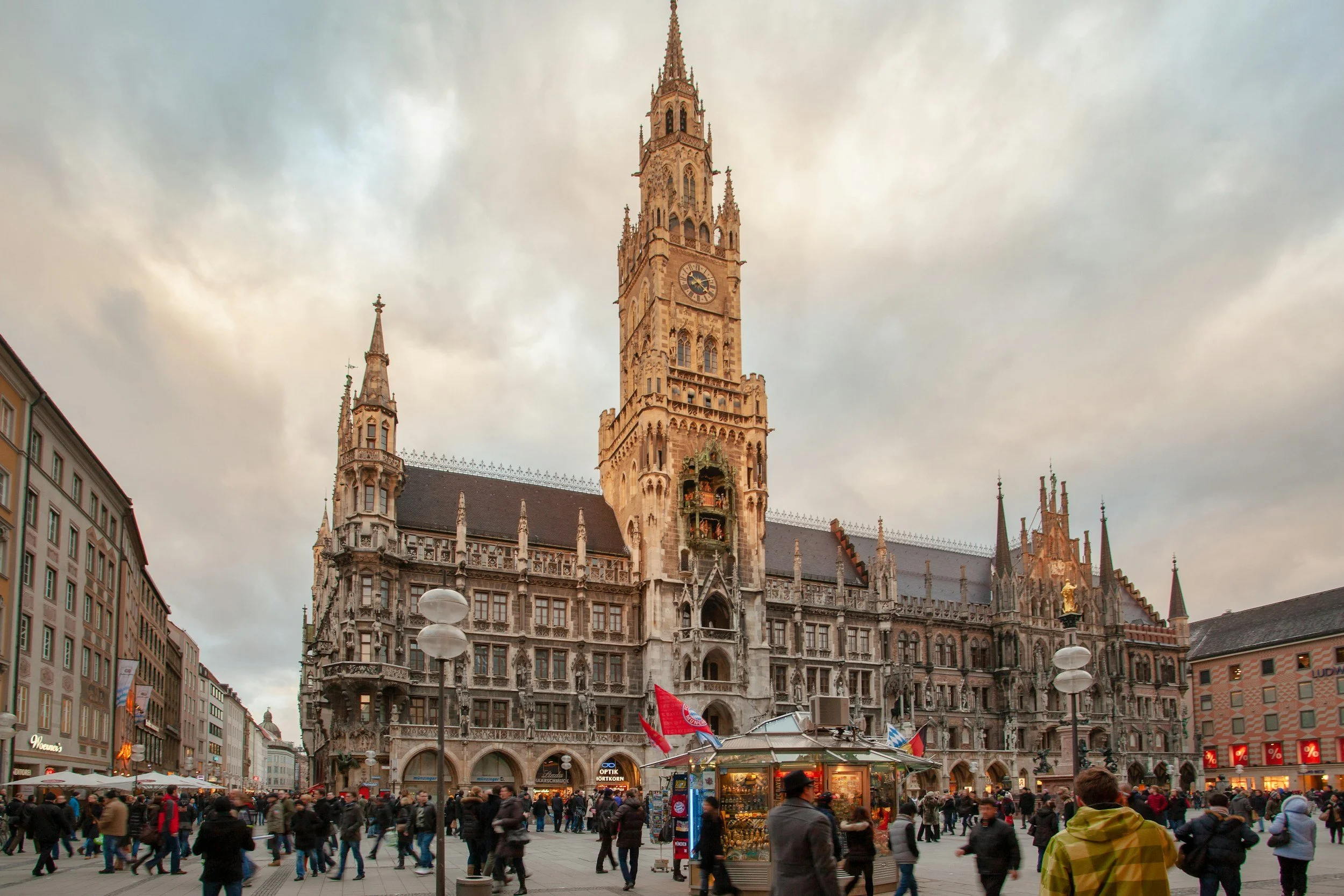
St. Paul's Church (Paulskirche)
St. Paul's Church stands at the northern edge of Theresienwiese, the grounds where Oktoberfest is held each year. It was built between 1892 and 1906 by Georg von Hauberrisser, the same architect who designed the Neues Rathaus on Marienplatz, and the connection is visible: both buildings share the same confidence in Gothic Revival ornament, the same sharp vertical ambition. The main tower reaches 97 meters, making it one of the tallest religious buildings in Munich, and the west facade features a large rose window above the main entrance flanked by two further towers at 76 meters each.
What makes St. Paul's interesting for photographers beyond its scale is the tower. During Oktoberfest, the church opens its observation platform to visitors, giving you an elevated view over the festival grounds, the surrounding neighborhood, and on clear days, the Alps. Outside of Oktoberfest, the tower access varies; confirm before you go. The exterior is strong from across the Theresienwiese, where the full scale of the facade reads well against open sky.
📷 Pro Tip: The best exterior shot comes from the southwest corner of Theresienwiese, where you have a clean sightline to the full tower and west facade. Shoot in the morning when the light hits the limestone from the east and the white stone takes on warmth. A 24-70mm covers the full facade from this distance. For the tower view during Oktoberfest, arrive at opening time before the crowds build on the staircase. The spiral staircase up is narrow and the walls are covered in graffiti left by visitors over the decades, which makes a strong detail shot on the way up. The interior is quieter than the Frauenkirche and often has almost no visitors; the stained glass and vaulted nave are worth a few minutes.
Best time: Morning (exterior); Oktoberfest opening time (tower view). Access: Free entry. U-Bahn to Theresienwiese (U4, U5).
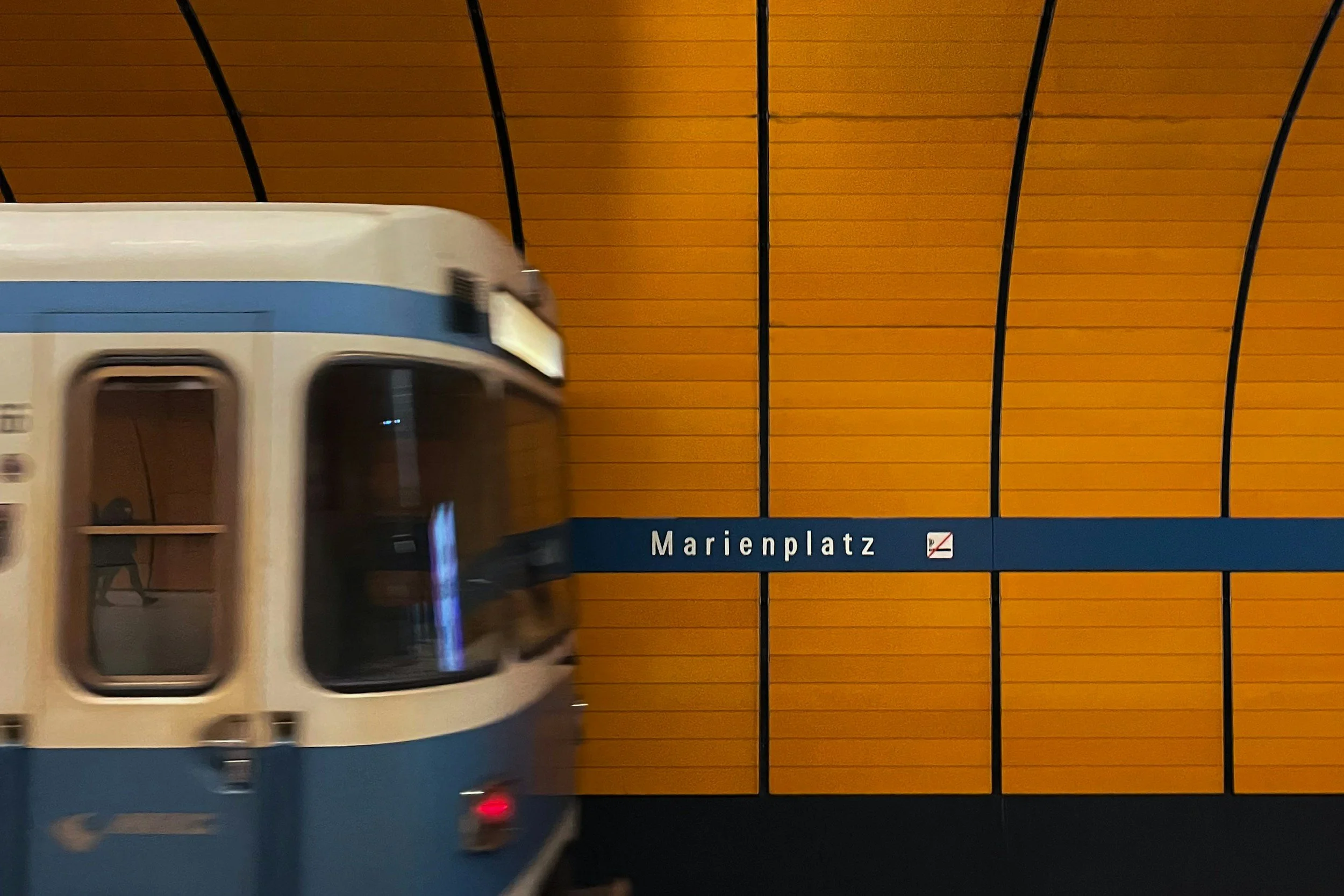
Marienplatz Subway Station and Westfriedhof
Munich's U-Bahn stations are worth photographing on their own terms. Marienplatz station has dramatic vaulted ceilings and deep red tile work that makes a strong color study. Westfriedhof, further out on the U1, is one of the most visually striking transit stations in Germany; the ceiling structure is a grid of colored panels that throws light in unexpected directions.
These are not obvious photography stops, but they are the kind of images that stand out in a Munich portfolio precisely because they are not from the postcard route.
📷 Pro Tip: For Marienplatz station, shoot during off-peak hours (before 8 am or after 9 pm) when the platforms are quiet. A 16-24mm wide angle exaggerates the tunnel perspective. Look for the interplay of the ceiling arches and the platform lighting. At Westfriedhof, position yourself near the center of the platform and shoot upward at the ceiling with a 16mm lens. The light varies significantly depending on the time of day and the angle of natural light entering from above. Both stations allow photography for personal, non-commercial use without a permit.
Best time: Off-peak hours. Access: Standard MVV ticket. U-Bahn to Marienplatz or Westfriedhof (U1).
Street Photography
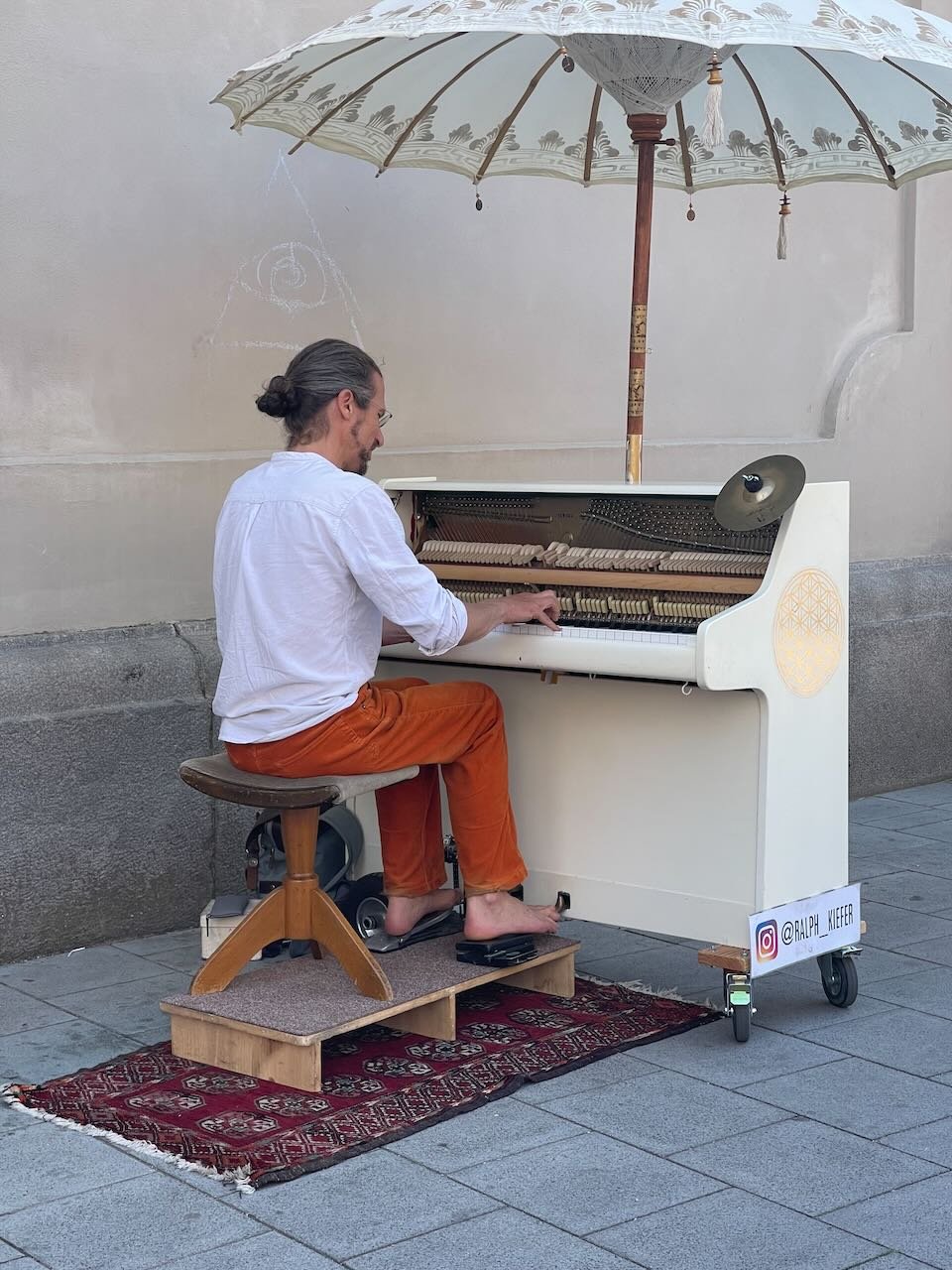
I always love taking photos of everyday life in a city. The cobbled streets and historic buildings offer a picturesque backdrop for candid shots of locals. I would highly recommend walking down the Neuhauser Straße & Kaufingerstraße.
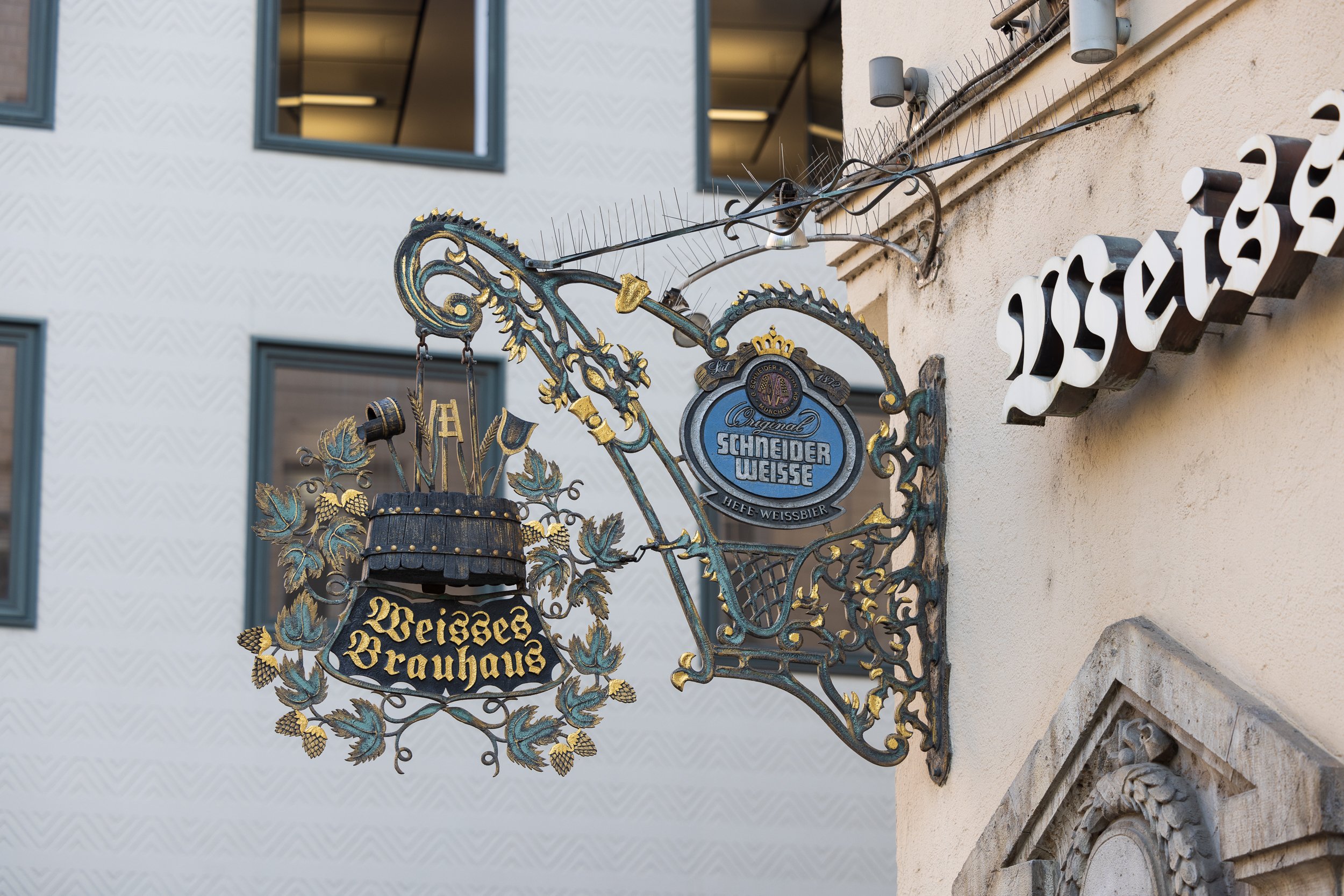
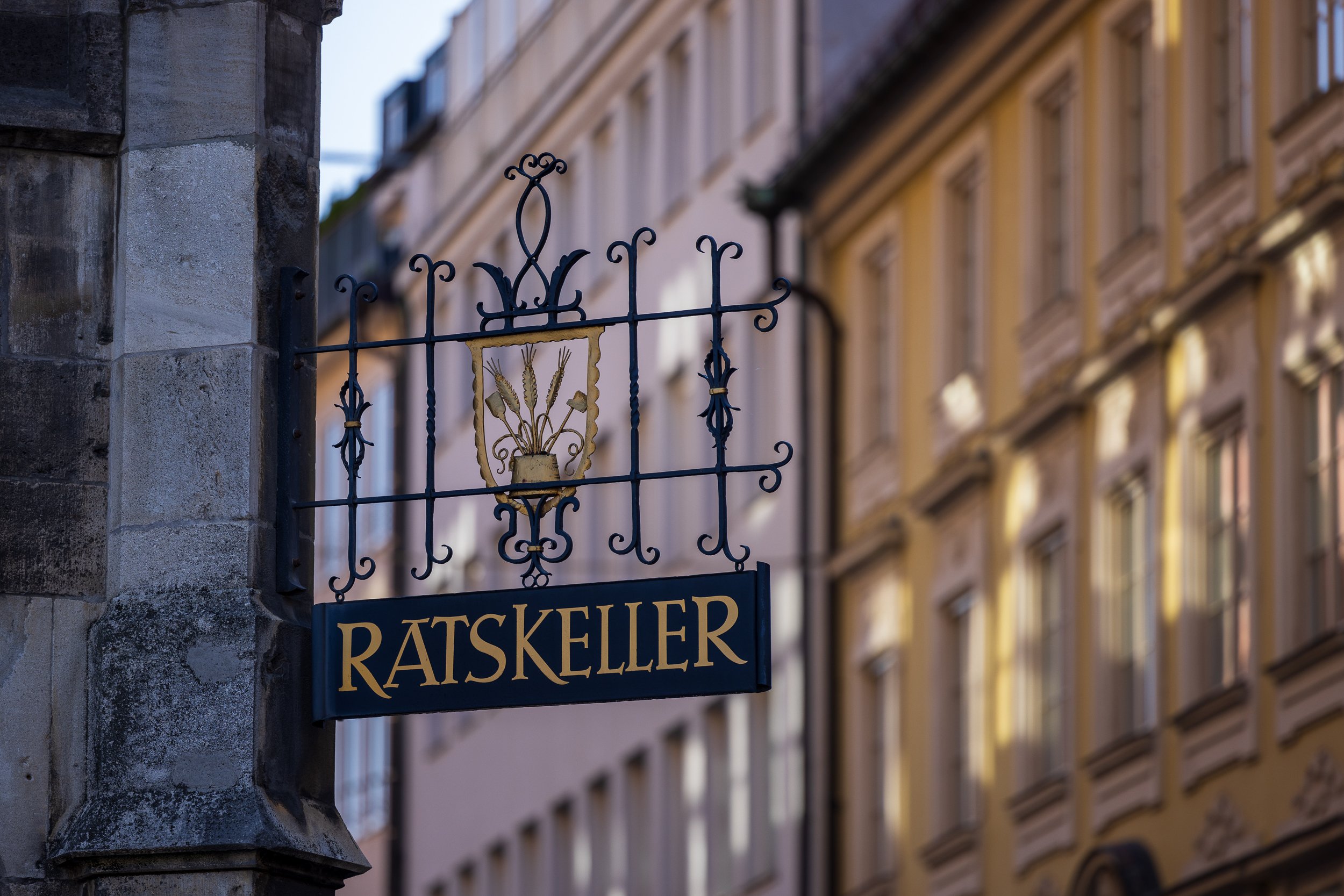
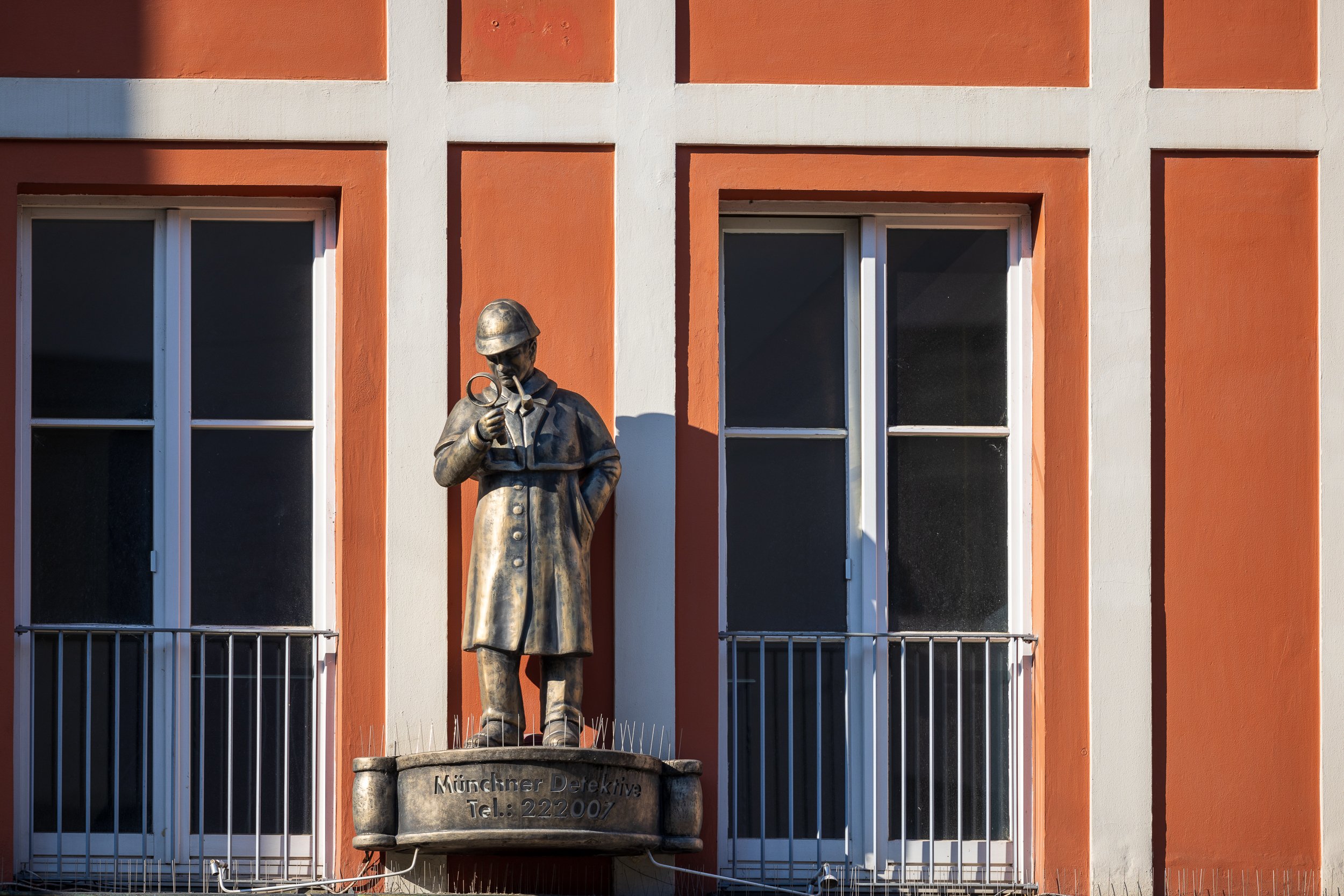
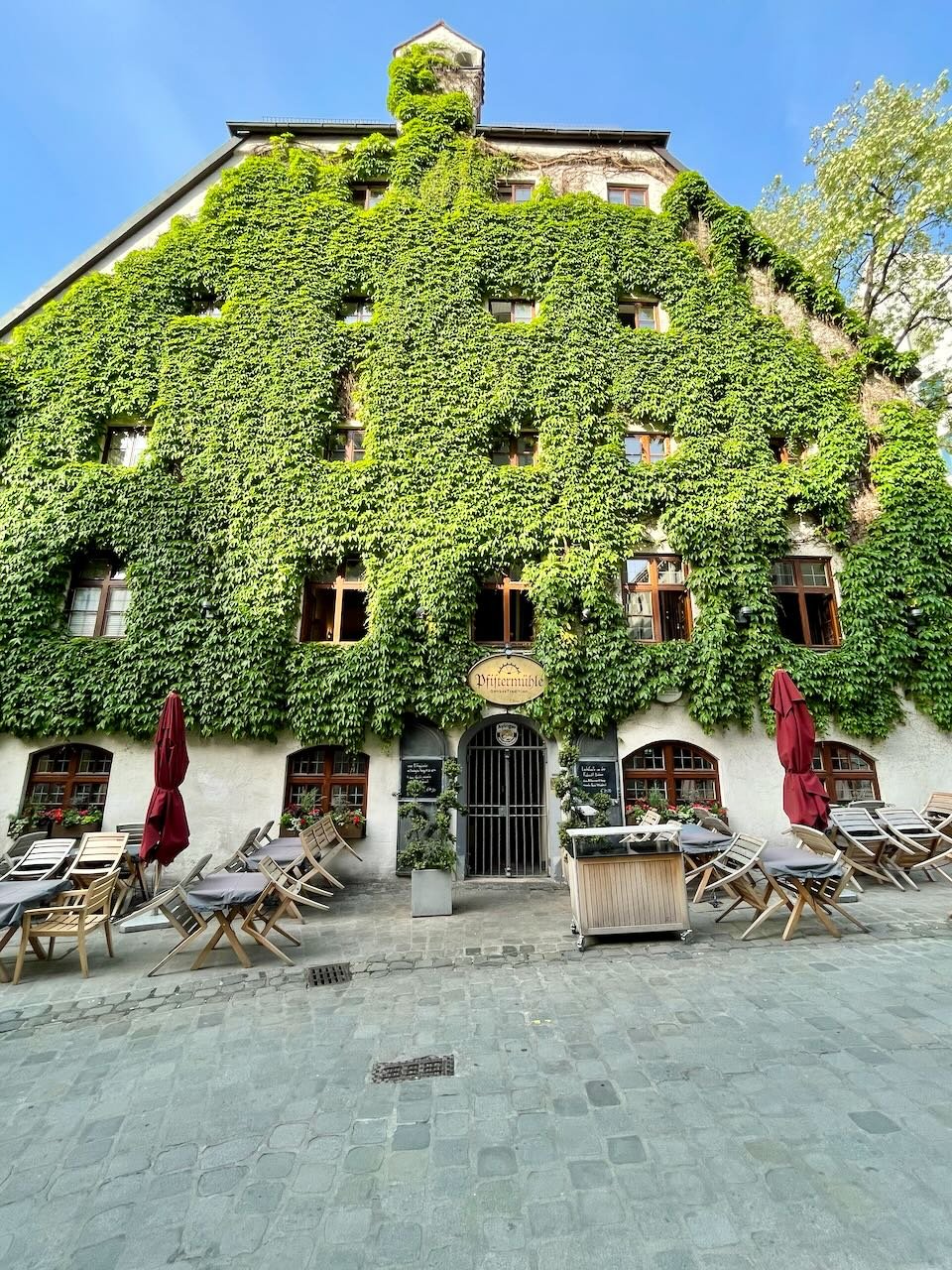
How fun is it to see someone playing his piano on the street.
Juristische Bibliothek
The Legal Library, founded in 1843, is by far one of the most beautiful (& insta-worthy) spots in München. Cost is free, but access to the reading room is not available during opening hours. The reading room can be viewed as part of a town hall tour.
Umschreibung
If you are a fan of architecture and art, then you should definitely consider visiting the so-called Umschreibung. It’s an endless staircase sculpture in an office complex in the west of Munich. “Umschreibung” is best translated as circumlocution and it’s quite apparent what the artist Olafur Eliasson tried to achieve with it.
The Best Day Trips from Munich?
Munich is an excellent base for exploring the surrounding Bavarian countryside, charming towns, and historical landmarks. These day trips from Munich offer diverse experiences, from fairytale castles and breathtaking scenery to poignant historical sites and charming towns, making them perfect for exploring Bavaria and beyond. Here are some of the best day trips from Munich:
Neuschwanstein Castle
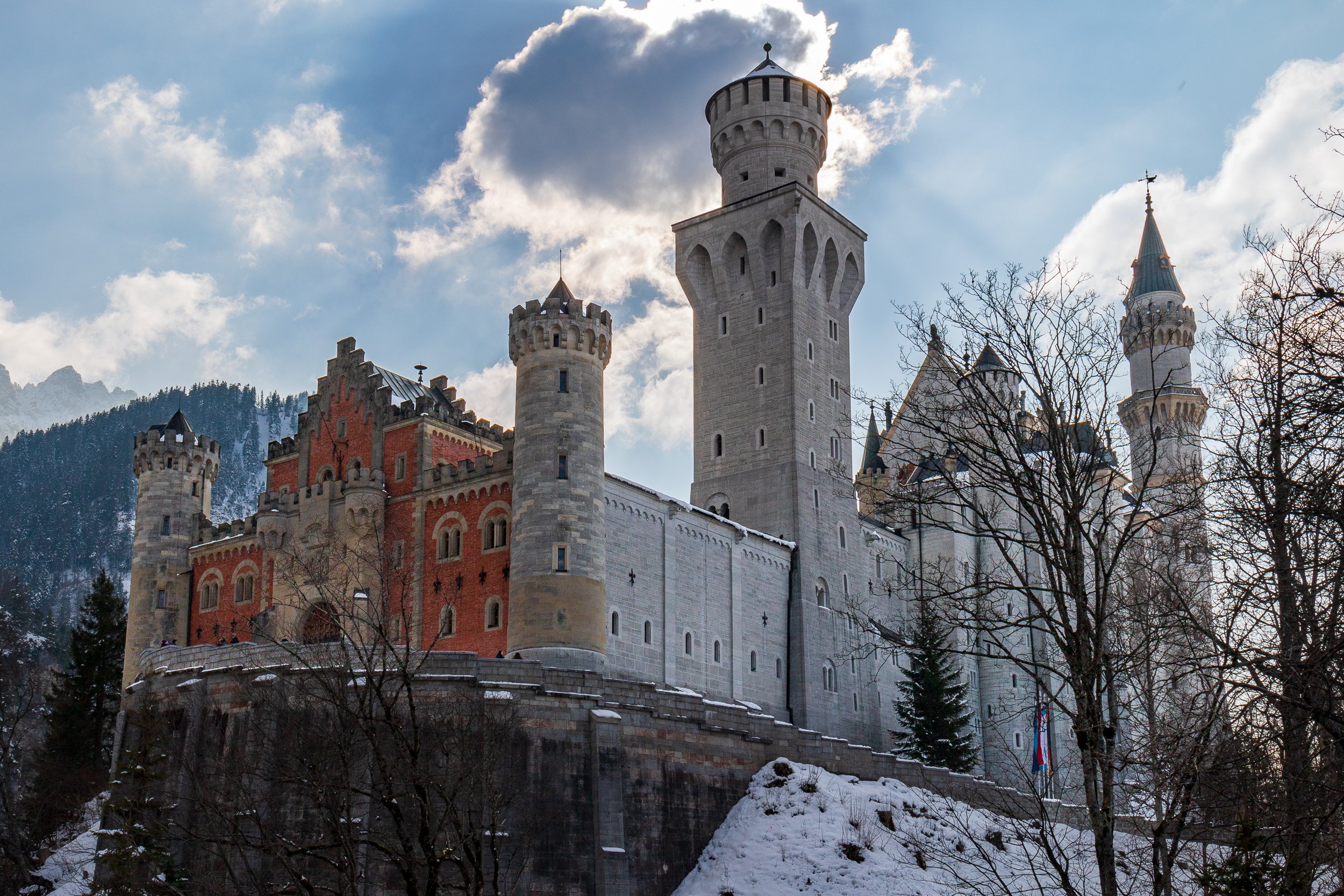
Located only 2 hours from Munich, the fairy-tale Neuschwanstein Castle is one of the most iconic castles in the world. This stunningly gorgeous castle is straight out of a fairytale. This stunning palace inspired Disney's Sleeping Beauty Castle. Idyllically set atop a dramatic mountainside, the castle shines with its white stone walls and turrets towering toward the sky.
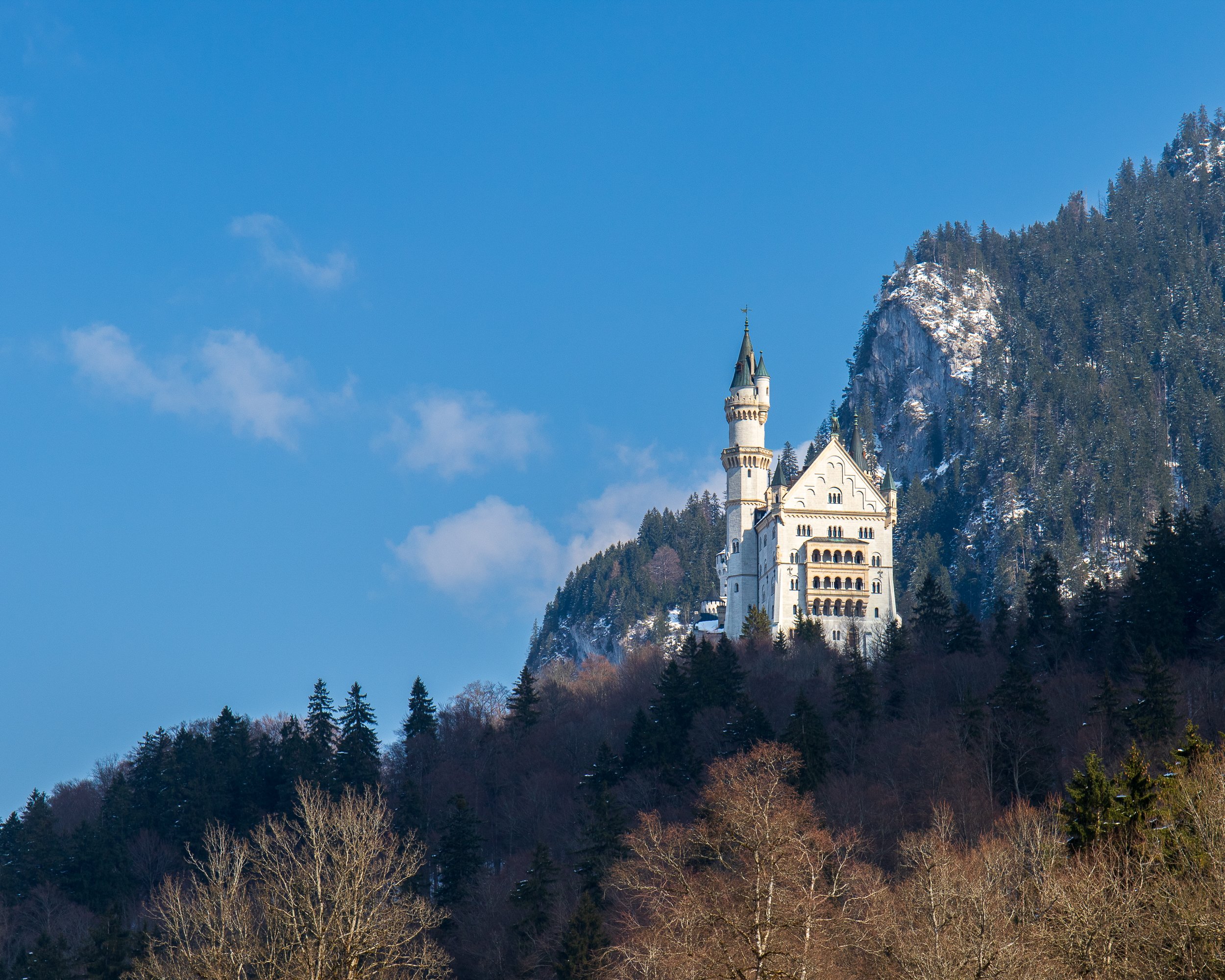
Neuschwanstein Castle
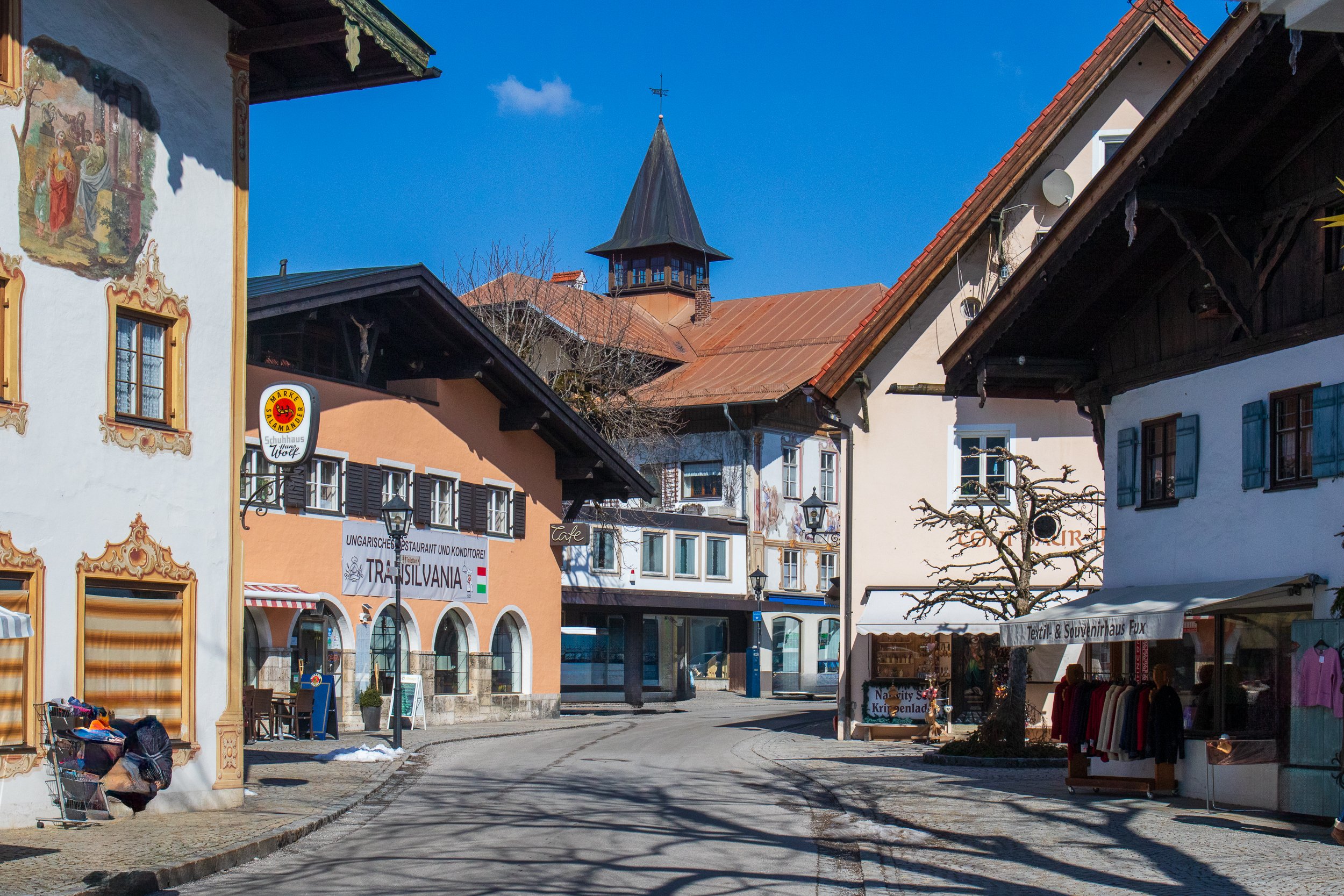
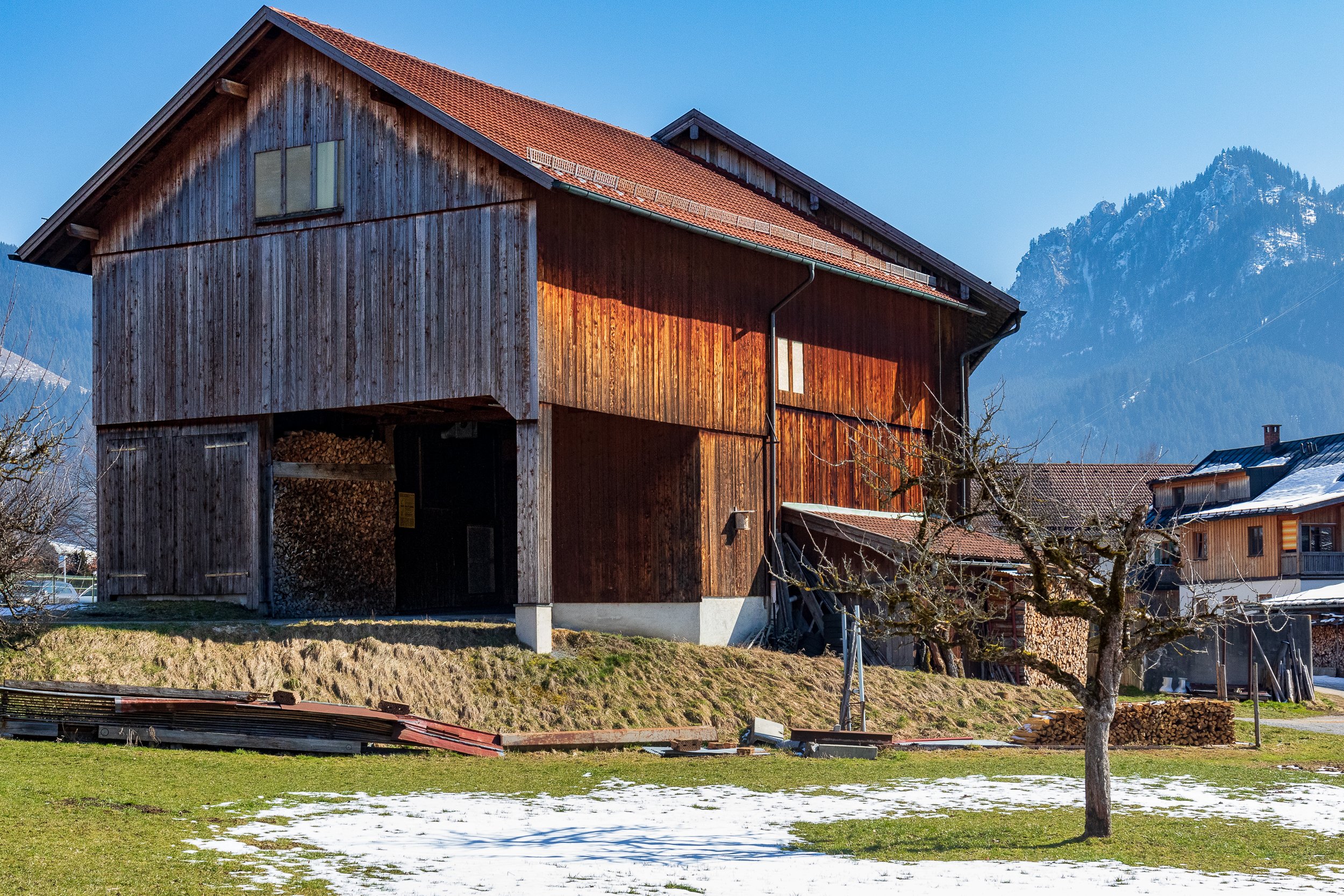
On the drive to the castle I would stop in Oberammergau. This is such a beautiful small town in the district of Garmisch-Partenkirchen.
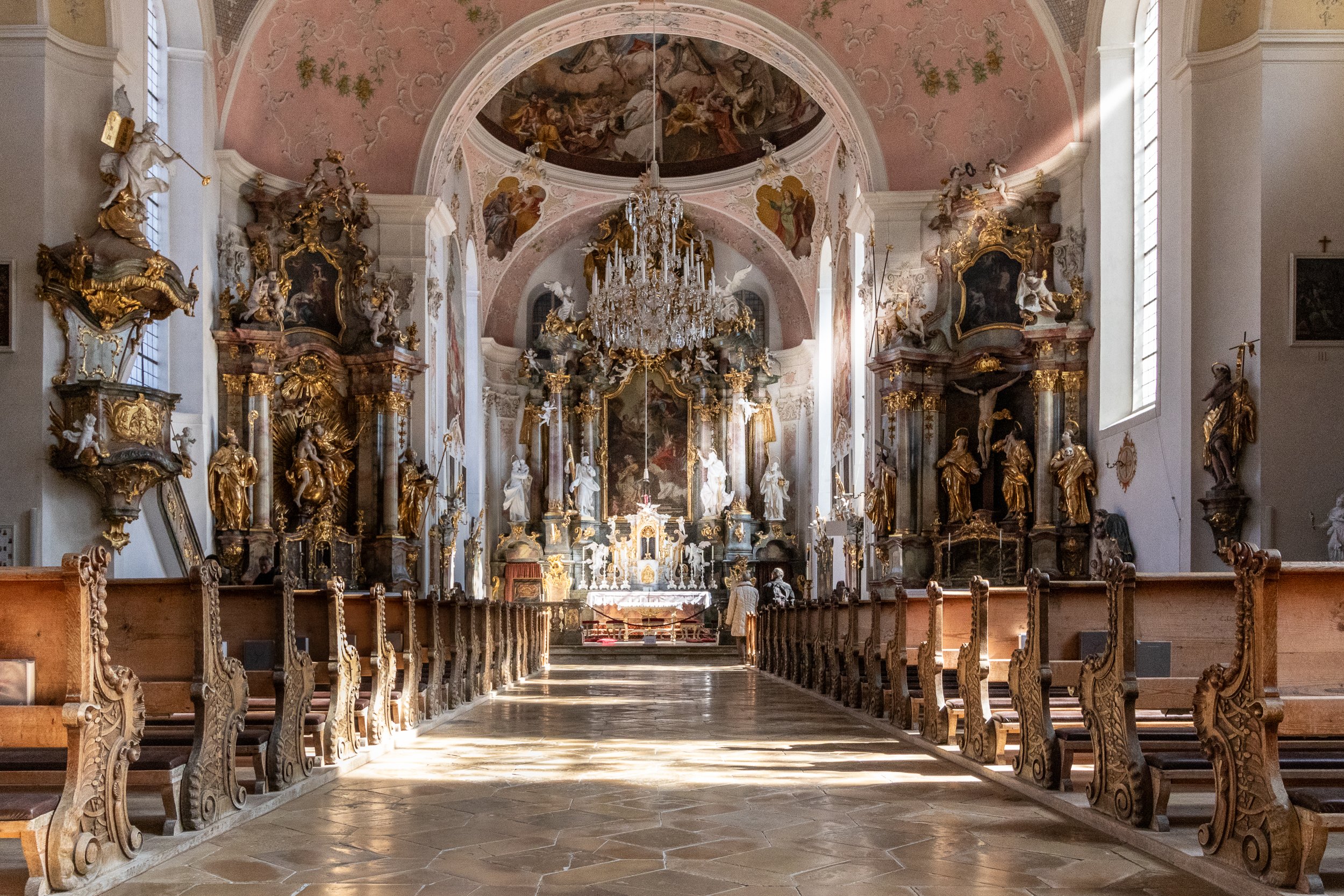
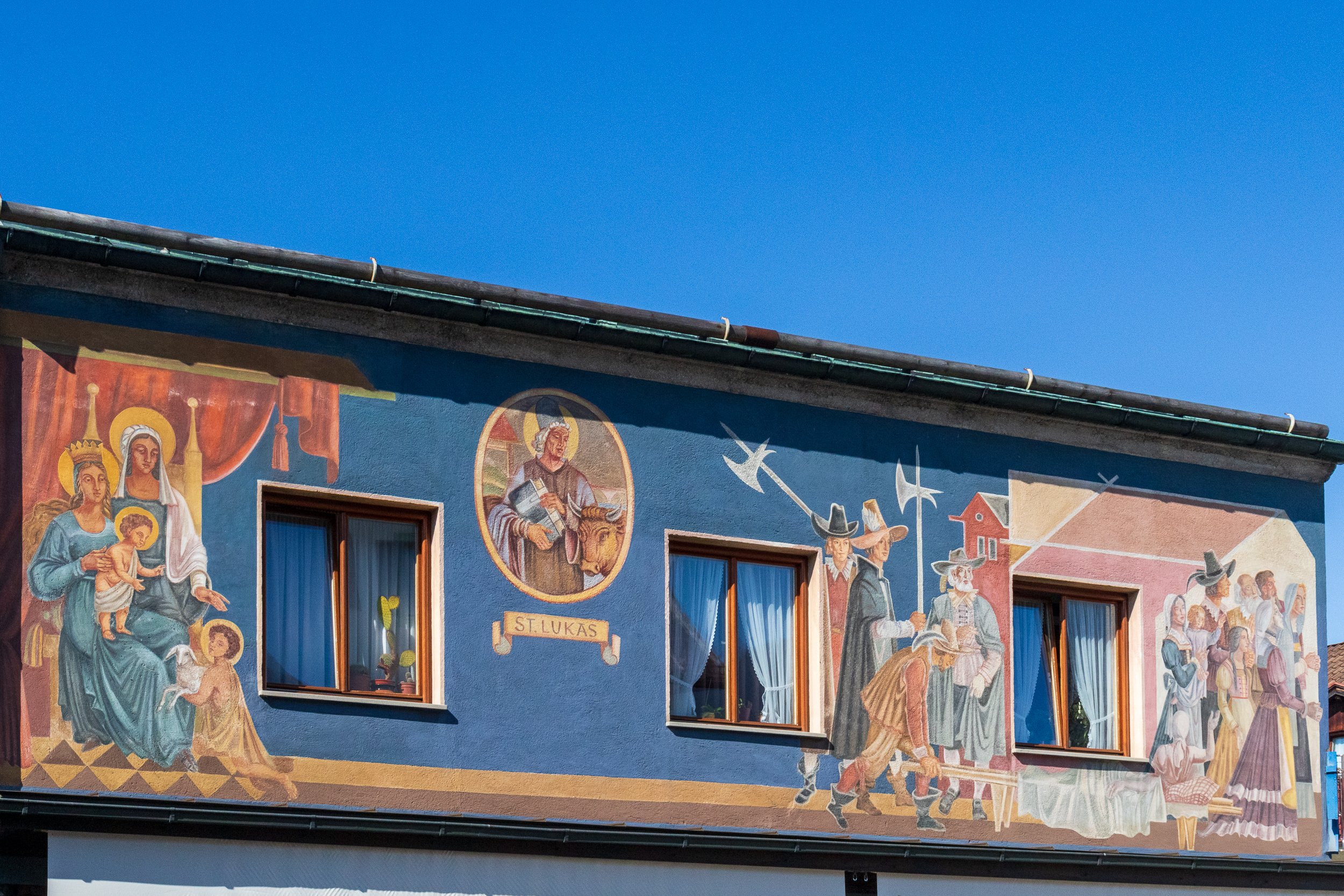
King Ludwig II built Neuschwanstein Castle as a retreat from public life. His goal was to create a show-stopping scene that would provide an opportunity to romanticize the Middle Ages. And King Ludwig certainly met his goal!
Salzburg, Austria:
My Photography & Travel Guide to Salzburg - A short train ride from Munich transports you to the picturesque city of Salzburg, a place steeped in history and culture. This is the birthplace of Mozart and the setting for the beloved musical, 'The Sound of Music.' Immerse yourself in the historic Old Town, visit Mozart's birthplace, marvel at the imposing Hohensalzburg Fortress, and savor the delights of Austrian cuisine and pastries.

Berchtesgaden and Eagle's Nest:
Journey to the scenic Bavarian Alps and visit Berchtesgaden, a picturesque town in the mountains. From there, take a bus or special shuttle to Eagle's Nest (Kehlsteinhaus), Hitler's former mountain retreat, which offers stunning views of the surrounding Alps.
Regensburg:
Discover the medieval charm of Regensburg, a UNESCO World Heritage Site located along the Danube River. Explore the well-preserved Old Town, admire the historic architecture, visit the imposing Regensburg Cathedral, and enjoy a leisurely stroll along the riverbanks.
Garmisch-Partenkirchen und Zugspitze:
Escape to the Bavarian Alps and visit Garmisch-Partenkirchen, a charming mountain resort town. Ride the cogwheel train to the summit of Zugspitze, Germany's highest mountain, for panoramic views of the Alps and unforgettable outdoor adventures.

Festivals and Special Events
Oktoberfest — The world's most famous beer festival runs for roughly two weeks from mid-September, ending on the first Sunday in October. It takes place on the Theresienwiese, a large open field in the city center. For photographers, Oktoberfest is a remarkable study in Bavarian culture, human expression, and a kind of specific collective joy that is hard to find anywhere else. The costume traditions, the brass band performances inside the tents, and the carousel rides at dusk are all strong material. Photography inside the tents is acceptable in public areas, but be respectful; the people around you are there for the event, not to be photographed. The parade on the first Sunday of the festival, when the tent proprietors and staff arrive in horse-drawn carriages in traditional dress, is exceptional for street photography. Arrive early.
Christkindlmarkt — Munich's Christmas market at Marienplatz runs through December and is one of the best in Germany. The Neues Rathaus is decorated and lit, wooden stalls fill the square, and the smell of mulled wine and roasted chestnuts is everywhere. For photographers, the market is strongest in the early evening, around 5 to 7 pm, when the market lights are on but there is still enough sky tone to balance the exposure. The adjacent Residenz courtyard market is quieter and has a different character worth photographing. The Tollwood Winter Festival on the Theresienwiese runs concurrently and has a more alternative, arts-focused atmosphere.
Starkbierfest (Strong Beer Festival) — Held in March on the Nockherberg hill at the Paulaner brewery, this pre-Easter festival is deeply local. The strong dark beer called Salvator is tapped ceremonially, politicians are satirized in a traditional speech, and Bavarians in costumes fill the hall. It is less known internationally than Oktoberfest, which makes it more interesting to photograph. The light inside is warm and the atmosphere is genuine.
Frühlingsfest (Spring Festival) — A smaller, more local version of Oktoberfest held at Theresienwiese in late April and early May. Beer tents, rides, and traditional music, with a fraction of the Oktoberfest crowds. The fairground rides at dusk create good long-exposure material.
Fasching (Munich Carnival) — In February and early March before Lent, Munich's carnival season brings costume parades, masked balls, and street celebrations, particularly on Fasching Tuesday. The color and costumes in the streets around Marienplatz make it a strong documentary photography day.
Frequently Asked Questions About Visiting Munich
Is Munich expensive?
It can be, especially the luxury hotels and Oktoberfest season, but there's real range. Beer halls like Augustiner serve proper Bavarian food at reasonable prices, and Viktualienmarkt lets you eat exceptionally well without a restaurant tab.
Is Munich safe?
Yes, it's one of the safer major European cities to walk, including the Altstadt at night. Normal city awareness covers most of what you need to know.
Do you need a car in Munich?
No. The U-Bahn and S-Bahn system is one of the best in Europe and covers the entire city plus day trips like Neuschwanstein and Berchtesgaden without needing to drive. The Altstadt itself is best explored entirely on foot.
What are the best photo spots in Munich?
Marienplatz at sunrise or blue hour, the Eisbach surfers in the English Garden, and Nymphenburg Palace's canal reflection at sunrise are three I return to constantly. The full list with Pro Tips is above.
Can you fly a drone in Munich?
Only with authorization. Germany enforces strict EU drone regulations, and flying over the city center, residential areas, or near airports requires registration and permission. Drone flights over Neuschwanstein and other Bavarian palace properties are heavily restricted. Check the DFS aviation portal before flying.
What surprised you most about photographing Munich?
Being able to see the Alps from the city, and how close they actually are to drive to. On a clear day, the mountains sit on the horizon like a postcard, and within two hours you can be standing in front of Neuschwanstein or riding a cogwheel train up the Zugspitze.
How many days do you need in Munich?
Three days minimum, five if you want to shoot at your own pace and include a day trip to Salzburg or Neuschwanstein.
Is Oktoberfest worth planning a trip around for photography?
Yes, if Bavarian culture and human expression are what you're after. The first weekend draws the most genuine crowd, including locals in traditional dress who are there because they love it, not because a tour scheduled it. The parade on the first Sunday, with tent proprietors arriving in horse-drawn carriages, is exceptional for street photography.
Final Thoughts
I have been to Munich half a dozen times, and every single trip I find myself doing the same thing: slowing down in the Old City and remembering why I came back. It is not because I have photographs left to take. It is because walking the Altstadt never gets old. The scale is right, the streets are human, and the city holds its quality whether you are here for the first time or the sixth.
The food is as good as anywhere in Germany, and the hotels here punch well above their weight. The Mandarin Oriental remains one of my favorite places to stay in all of Europe, and I have never had a bad meal at Dallmayr. That combination of a great table and a great bed makes Munich the kind of city that stops feeling like a destination and starts feeling like a habit. A good one.
For photographers, the city rewards the early morning and the patient afternoon. The light in May and September is as good as it gets in Central Europe, and there is always something worth photographing within five minutes of wherever you are standing in the Altstadt. Marienplatz before the tourists arrive, the glow of the Theatinerkirche in the last hour of sun, and the surfers on the Eisbach in any weather.
Go. And when you are done, go back.
Want to improve your photography while exploring some incredible destinations? Join me on one of my photography workshops! You can find all the details, including upcoming destinations and dates, through the links below.
Let's Stay Connected!
Photography Locations Nearby
My Photography & Travel Guide to Salzburg, Austria — A 90-minute train ride from Munich Hauptbahnhof and one of the most photogenic cities in the Alps. Baroque architecture, the Hohensalzburg Fortress above the rooftops, and the Salzach River at golden hour make it a natural companion to a Munich trip. Two days here round out a Bavaria itinerary beautifully.
My Photography & Travel Guide to Hallstatt, Austria — One of the most photographed villages in the world, and worth every cliché aimed at it. The lakeside setting, the salt mine history, and the early morning light reflecting off the Hallstätter See are unlike anything else in the region. About three hours from Munich by train and bus. Go on a weekday and stay the night if you can.
My Photography & Travel Guide to Rothenburg ob der Tauber, Germany — Two hours northeast of Munich on the Romantic Road, Rothenburg is a medieval walled town that has changed almost nothing in five centuries. The half-timbered facades, cobblestone lanes, and town wall walkway are extraordinary to photograph, especially in winter when Christmas market stalls fill the market square. A strong day trip or an overnight.

Finally—a beginner-friendly photography guide that makes sense.
If you've ever picked up a camera and thought, "Now what?" this is the book for you.
Photography Made Simple is written for adults who are just starting out and want a clear, encouraging, real-world approach to learning photography. Whether you're using a DSLR, mirrorless, or just your smartphone, this guide walks you through the basics—without the jargon or tech overwhelm.
Inside, you'll learn:
The only camera settings you really need to know to get started
How to shoot sharper, more intentional photos using light and composition
Simple tips for portraits, landscapes, travel, and everyday life
What gear you do (and don’t) need
How to create better photos without upgrading your camera
You’ll also get practical exercises, cheat sheets, and tips for organizing and editing your images—plus the confidence to shoot off Auto Mode for good.
This is not a textbook. It’s a friendly guide to seeing the world with fresh eyes—and finally capturing what you see the way you imagine it.
📸 Format: PDF download
Pages: 100+
Perfect for: Beginners, hobbyists, and anyone ready to take better photos without the stress

Are you carrying too much camera equipment, but still coming home disappointed with your travel photographs?
You are not alone. Many photographers fall into the packing trap. They bring too much, plan too little, and spend their trip scrambling to capture photographs instead of enjoying the experience.
Capture the World offers a better approach.
In this practical guide, travel photographer Vito L. Tanzi shares the five step system he uses to plan photography trips, pack with purpose, work with the best light, and return home with stronger images.
Inside, you will learn how to:
• Travel lighter without sacrificing image quality
• Choose destinations that match your photography goals
• Visit at the right time for weather, light, wildlife, festivals, or seasonal conditions
• Build a photography itinerary around sunrise, sunset, blue hour, and changing weather
• Select the equipment you will actually use
• Find promising locations before you arrive
• Avoid the stress and exhaustion that can ruin a photography trip
• Stay flexible when weather, crowds, or travel plans change
This guide includes practical planning advice, useful photography tools, real travel examples, and a complete system you can use again and again.
Whether you are preparing for your first international photography trip or planning a weekend closer to home, Capture the World will help you travel with greater purpose, photograph with more intention, and spend less time worrying about what is inside your camera bag.
Because the best photography trip is not the one where you carry everything.
It is the one where you are ready when the right moment appears.
📸 Format: PDF download
Instant Download