Istanbul, Turkey Travel & Photography Guide: Best Photo Spots, Things to Do & Hidden Gems
Istanbul rewrites your sense of scale.
Not through a single building or a single view, but through the accumulated weight of what the city carries. Stand on the Galata Bridge at dawn and look east across the Golden Horn. The minarets of the Süleymaniye rise against a sky that is still deciding whether to stay dark or go gold. Ferries are already moving. Fishermen have been here for hours. The call to prayer has just finished, and its echo is still working its way through the stone streets of the Old City. You raise the camera and immediately realize that no single frame contains what you are looking at.
I have been to Istanbul more than ten times. It still does this to me.
That is the measure of this city. It does not give you everything at once. Every visit reveals something the last one missed: a neighborhood you walked past, a mosque you saved for next time, a ferry crossing at a different hour. Istanbul rewards the traveler who returns, and I have returned often enough to know I have not finished with it yet.
This city has been the capital of three empires, the meeting point of two continents, and the crossroads of more civilizations than most countries have produced in total. The Byzantine mosaics are in the same neighborhood as the Ottoman domes, which are a short ferry ride from the Bosphorus mansions, which are a tram stop from the graffiti-covered walls of Karaköy. The visual density here is extraordinary. Every neighborhood tells a different story. Every hour of light transforms the same subject into something new.
For photographers, Istanbul is among the most rewarding cities in the world. The Hagia Sophia at blue hour. The Grand Bazaar's ceiling of colored lanterns and filtered light. Balat's layered pastel facades. The Ortaköy Mosque framed against the Bosphorus Bridge at golden hour. Cats, famously and everywhere, as if the city decided centuries ago to include them in the composition. There is no off-season here for photography. There is only the question of which light you want to work in.
In this Photography Guide to Istanbul, I share the places and experiences that continue to draw me back. You will find my favorite photography locations, guidance on when and where to shoot, practical travel tips, gear recommendations, and cultural insights to help you explore and photograph Istanbul with confidence, respect, and ease.
Photographer's Notes
Before you go, here are my own takeaways.
Favorite Season: Early spring and late fall
Favorite Location: Hagia Sophia
Favorite Hotel: Four Seasons Hotel Istanbul at Sultanahmet
Favorite Restaurant: Mikla
Favorite Café: Mandabatmaz
Favorite Lens: 24-105mm
Would I Return? Yes, I would, and I already know I haven't finished with this city.
Where to Stay in Istanbul, Turkey
Istanbul divides naturally into neighborhoods that each have a distinct character, and your choice of base changes how you experience the city. After more than ten visits, my consistent recommendation for first-time visitors is to stay in or near Sultanahmet or the Grand Bazaar area. This puts you at the geographic and historic center of everything, within walking distance of the Hagia Sophia, Blue Mosque, Basilica Cistern, Spice Bazaar, and the waterfront. The neighborhood is compact, navigable on foot, and gives you the best chance of being in position for morning light before the tour groups arrive.
For those who want a more contemporary base with easy access to both old and new, Beyoğlu and Karaköy on the European side are excellent alternatives, particularly on second or third visits when you already know the Old City well. Both sit north of the Golden Horn with views back across to the historic skyline and proximity to Galata Tower, İstiklal Avenue, and the Bosphorus waterfront.
One note on what not to book: I once stayed at the Pera Palace Hotel. The property is marketed heavily on its Agatha Christie associations and its grand 1892 history. I would not recommend it. The heritage framing carries the experience, and the actual stay does not justify the price. Go elsewhere.
Luxury Hotels in Istanbul, Turkey
The Peninsula Istanbul — The finest hotel address in Istanbul and one of the most celebrated recent openings in Europe. The Peninsula sits in Karaköy with 270-degree Bosphorus views and delivers the full Peninsula service philosophy applied to one of the world's great hotel sites. The location is exceptional: walking distance from the Old City, directly on the waterfront, and the rooftop views of the Bosphorus are as good as this city offers. The spa, the pool, and the dining venues are all exceptional. For photographers, the rooftop access alone makes this worth serious consideration.
Four Seasons Hotel Istanbul at Sultanahmet — The most distinctive luxury hotel address in the historic core. The Four Seasons Sultanahmet occupies a beautifully restored 19th-century Ottoman prison, and the building itself is a photography subject. The location, steps from the Hagia Sophia and the Blue Mosque, is unbeatable for anyone focused on Sultanahmet photography. The rooftop terrace looks directly at the Hagia Sophia. Book well in advance; it has limited rooms and fills up months ahead of time during spring and autumn.
Çırağan Palace Kempinski Istanbul — The most dramatic address in Istanbul. The Çırağan Palace is a 19th-century Ottoman imperial palace on the European shore of the Bosphorus, now operating as a Kempinski property. The outdoor Bosphorus pool is one of the most photographed hotel settings in the world. The location in Beşiktaş puts you along the Bosphorus waterfront with easy access to both the Old City and the newer neighborhoods to the north.
Mid-Range and Boutique Hotels
Sanasaryan Han, a Luxury Collection Hotel — A meticulously restored 1895 neoclassical building near the Grand Bazaar, the Blue Mosque, and the Spice Bazaar. Sanasaryan Han is the finest boutique option in the historic peninsula. The 63 rooms draw on traditional Turkish décor with handcrafted details and Turkish tea sets. The Library Bar is one of the most atmospheric spaces in the Old City. For photographers who want to be walking distance from every major Sultanahmet subject, this is the right base.
Ibrahim Pasha Hotel — A beautifully designed boutique hotel on a quiet street directly opposite the Hippodrome in Sultanahmet. Small, intimate, and thoughtfully decorated with Ottoman antiques and Turkish textiles. The rooftop terrace has Blue Mosque views. Consistently praised for its warm service and its position at the center of the historic city. An excellent mid-range choice for photographers who want to be in the Old City without the full luxury price.
Witt Istanbul Suites — A stylish, all-suite boutique property in Cihangir, one of Istanbul's most interesting and creative neighborhoods on the Beyoğlu side. Witt attracts artists, designers, and photographers who want to be in a living neighborhood rather than a tourist district. The rooftop views of the Bosphorus and the Old City skyline are excellent. Walking distance from Galata Tower, Karaköy, and İstiklal Avenue.
How Many Days Should I Visit Istanbul, Turkey
Istanbul rewards time. Plan for at least five days on a first visit. The city is large, traffic between neighborhoods can be significant, and the sheer density of photography subjects means that moving too quickly leaves you with strong images from obvious spots and no time for the side streets, ferry crossings, and early morning light that define the city's real character.
A seven-day visit is more comfortable and allows for day trips to the Asian side, the Princes' Islands, and the Bosphorus villages to the north.
Five days in Istanbul might look like this:
Day one: Sultanahmet. Hagia Sophia at opening, Blue Mosque, Basilica Cistern, Hippodrome. Blue hour photography from the Sultanahmet waterfront.
Day two: Grand Bazaar in the morning for market photography. Süleymaniye Mosque and its cemetery for a quieter alternative to Sultanahmet. Afternoon in the Spice Bazaar and Eminönü waterfront.
Day three: Galata Tower and Beyoğlu. İstiklal Avenue at midday. Karaköy for street photography and the waterfront. Balat in the afternoon for the colored houses and quiet streets.
Day four: Bosphorus ferry or private boat tour. Ortaköy Mosque. Bebek for coffee and waterfront photography. Afternoon on the Asian side for views back across the strait.
Day five: Topkapı Palace and the palace gardens. Gülhane Park. Final evening in Sultanahmet for sunset over the domes.
Best Time to Visit Istanbul, Turkey
Spring, April to May, is the finest time to photograph Istanbul. The Tulip Festival transforms Emirgan Park and the city's public gardens with hundreds of thousands of blooms, a tradition dating from the Ottoman era. Temperatures are mild, the light is warm and clear, and the crowds have not yet reached summer levels. Late April through early May is the peak of both the tulips and the photography season.
Autumn, September to October, is the other excellent window. Temperatures drop back from the heat of summer, the crowds thin considerably, and the low-angle autumn light on the domes and minarets produces some of the most painterly conditions of the year. The Istanbul Biennial, held in odd years, brings exceptional contemporary art to the city in September and October.
Summer, June to August, is hot, humid, and crowded. Photography conditions are still strong in the early mornings and evenings, but midday is uncomfortable and the major sites are genuinely packed. Avoid if you have flexibility.
Winter, November to March, is Istanbul's quiet season. Fog rolls across the Bosphorus. Occasional snow settles on the domes and minarets and creates extraordinary photography conditions. Crowds are minimal. If you are comfortable with cold and variable weather, Istanbul in winter is one of the most atmospherically photogenic experiences in Europe.
Getting Around Istanbul, Turkey
Istanbul has an excellent and extensive public transport network that connects most major photography locations efficiently.
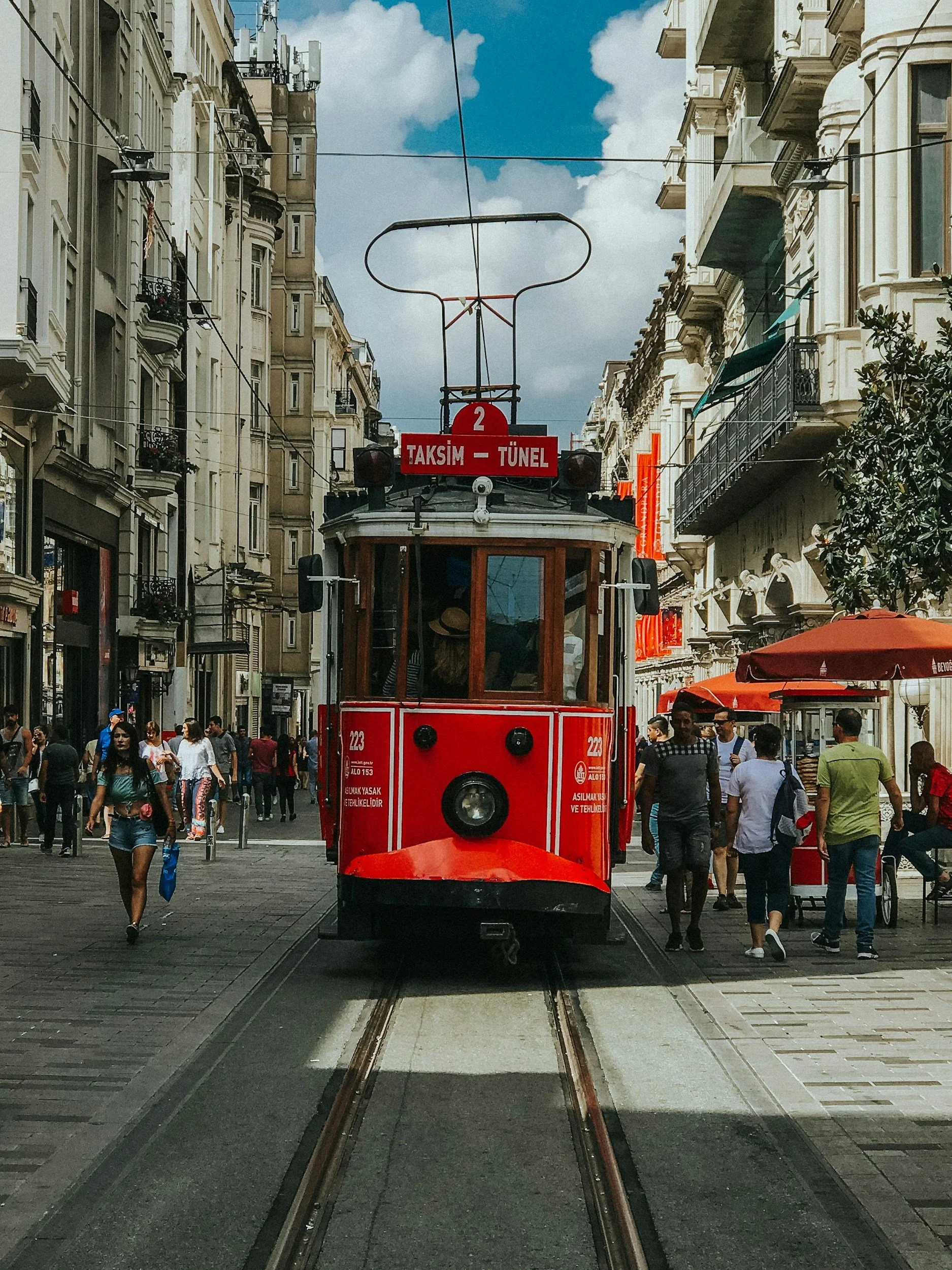
The T1 tram line is the most useful single route for photographers, running from Sultanahmet through Karaköy, across the Galata Bridge, and out to Kabataş on the Bosphorus waterfront. Buy an Istanbulkart at any major station or convenience store, load it with credit, and use it across trams, metro lines, buses, and ferries. Single journeys are far cheaper with an Istanbulkart than with individual tickets.
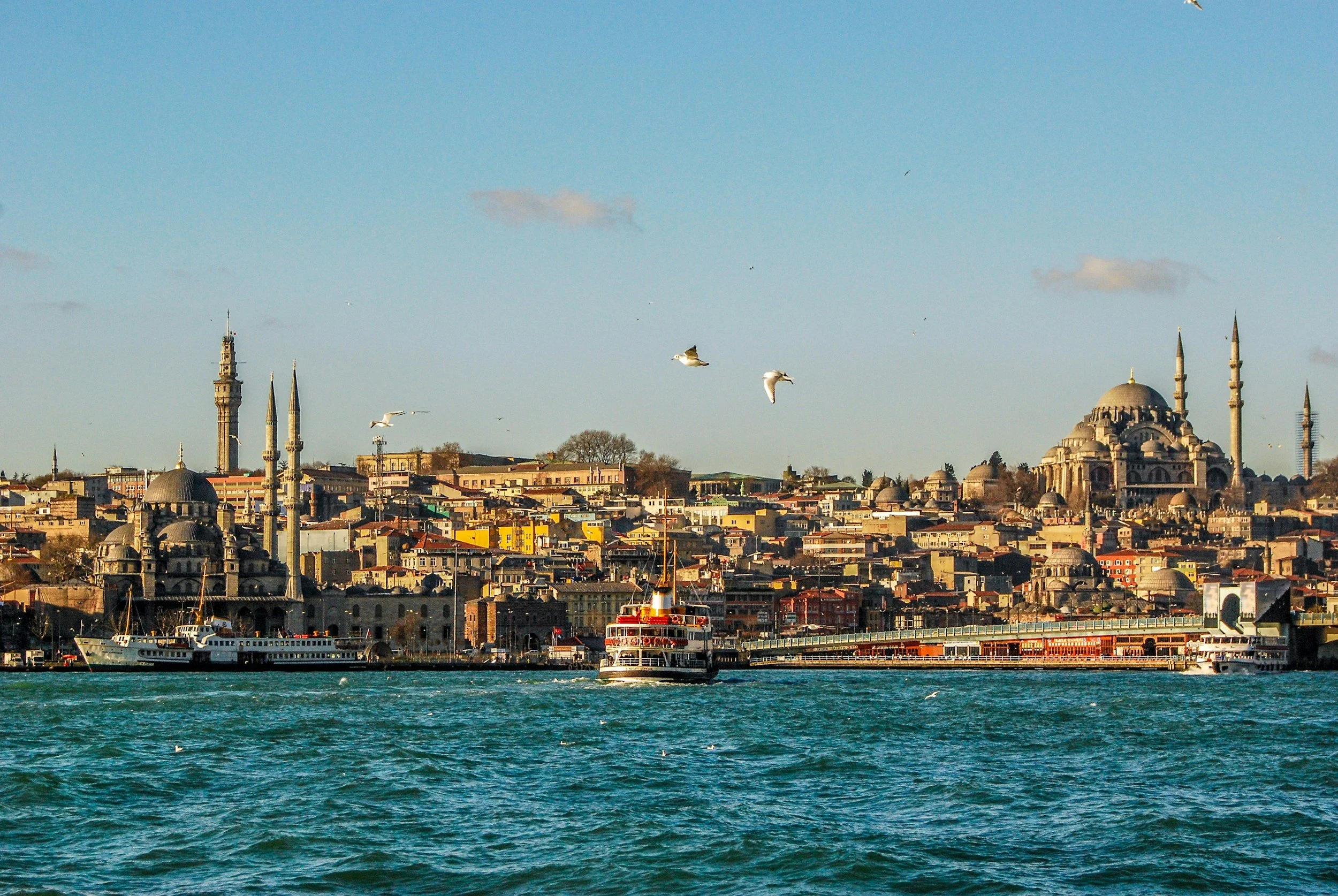
Ferries are both the most practical and the most photogenic way to cross between the European and Asian sides. The Üsküdar, Kadıköy, and Beşiktaş crossings are inexpensive and give you twenty minutes on the water with views of the Old City skyline and the minarets rising from both shores. A ferry ride at golden hour is a photography session in itself.
Taxis: use the app, not the street. Avoid flagging yellow taxis off the street. They are notorious for overcharging tourists, and almost every visitor I know has been taken advantage of at least once. Download BiTaksi or use Uberbefore you arrive. Both show the fare upfront, and both eliminate the most common scam you will encounter in Istanbul. This is not a warning to ignore. Use the app every time.
Hire a local photographer or guide for your first day. This is one of the most valuable things you can do in Istanbul. English is not widely spoken beyond the major tourist sites, and I say this as someone who lived in Beirut and spoke Arabic. In Istanbul, we had better luck communicating in German and Arabic than in English. Away from Sultanahmet, even in areas like Taksim and the modern neighborhoods, there is no guarantee your taxi driver speaks a word of English, and vendors know immediately when you are a foreign visitor. A local guide changes the experience completely. They know which alley leads to which courtyard, which mosque is unlocked before opening hours, which market vendor will let you photograph freely, and how to navigate the city in a way that takes years of independent visits to learn.
Even learning a few words of Turkish makes a difference. Start with "merhaba" (hello) and "iyi iyi" (good, good). When vendors realize you have made any effort with the language, the energy shifts immediately.
Walking is essential in Sultanahmet, Beyoğlu, Karaköy, and Balat. The Old City is compact and the alleys between major monuments reward exploration on foot. Many of the best photography subjects in Istanbul are not on the main tourist routes.
A word on vendors. Istanbul has a persistent street vendor culture, particularly around the Grand Bazaar, the Spice Bazaar, and Sultanahmet. You will be approached. The most effective response is a polite but firm "no thank you" while continuing to walk. Do not stop and do not engage with pricing. Moving while declining sends a clear signal. Standing still while declining invites a negotiation.
One specific scam worth knowing before you arrive: the shoe shine scam. Someone ahead of you will appear to accidentally drop their brush. When you point it out or hand it back, they will insist on shining your shoes as a thank you and then demand a large sum. Do not pick up the brush. Keep walking.
Always check your restaurant bill before paying. Unauthorized service charges and hidden fees appear regularly in tourist-facing establishments. In the bazaars, feel free to negotiate. Prices are often marked up for visitors and haggling is expected.
Mosques are active places of worship. Women must cover their heads, shoulders, and knees. All visitors must remove their shoes. Carry a scarf and you will always be prepared. Arrive at major attractions like the Hagia Sophia right at opening to beat the queues.
Spending time on the Asian side, particularly Kadıköy, is worth the ferry crossing. It is a less touristy, neighborhood-focused part of the city with excellent cafés and a local dining scene that feels a world away from Sultanahmet.
Turkish Food: What to Try First
If you have never eaten Turkish food, Istanbul is the right place to start and the depth of what you are about to discover will surprise you. Turkish cuisine is one of the great food cultures of the world, built on centuries of Ottoman imperial cooking, regional Anatolian traditions, and the specific bounty of a country that borders the Mediterranean, the Black Sea, and the Middle East simultaneously. Here is where to begin.
Turkish Breakfast (Kahvaltı)
Start here. The Turkish breakfast is not a meal. It is a declaration. A proper kahvaltı spreads across the table in small dishes: sheep's milk cheeses, olives, sliced tomatoes and cucumbers, soft-boiled eggs, clotted cream (kaymak) with honey, fruit preserves, pastries, and a basket of fresh bread. You graze through it over an hour with endless glasses of çay. Every hotel serves some version of it, but seek out a dedicated breakfast restaurant in the Beyoğlu or Karaköy neighborhoods on a weekend morning and eat the full version. It sets the tone for everything that follows.
Simit
The sesame-covered bread ring sold from red carts by vendors on every corner in Istanbul. It costs almost nothing, it is warm in the morning, and it is the breakfast of the city. Buy one your first morning and eat it walking. Essential and irreplaceable.
Turkish Çay (Tea)
Not coffee. Not water. Tea. The tulip-shaped glass of black tea that accompanies every meal, every negotiation, every moment of sitting down in Turkey. It is offered everywhere, constantly, as an act of hospitality. Accept it. It is always good and always the right response to any situation.
Meze
Every proper Turkish meal begins with meze: a collection of small cold and warm dishes placed on the table before the main course arrives. Hummus, smoky eggplant purée (patlıcan ezmesi), spiced tomato paste (ezme), fried cheese pastries (sigara böreği), stuffed grape leaves, marinated vegetables. The meze table is the soul of Turkish hospitality and the best introduction to the cuisine's range and generosity. Order several and share them. Do not rush past the meze to get to the main course.
Döner Kebab
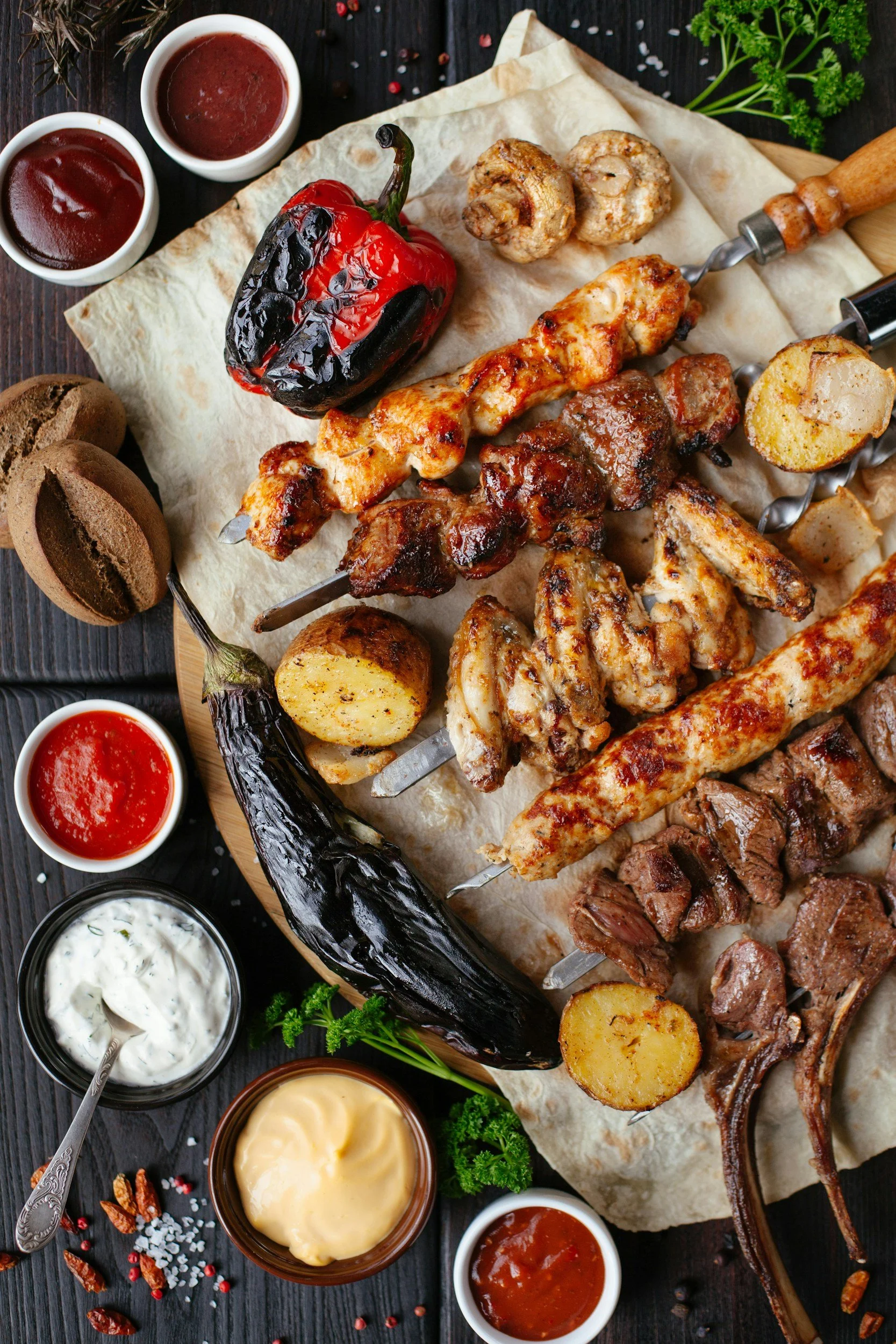
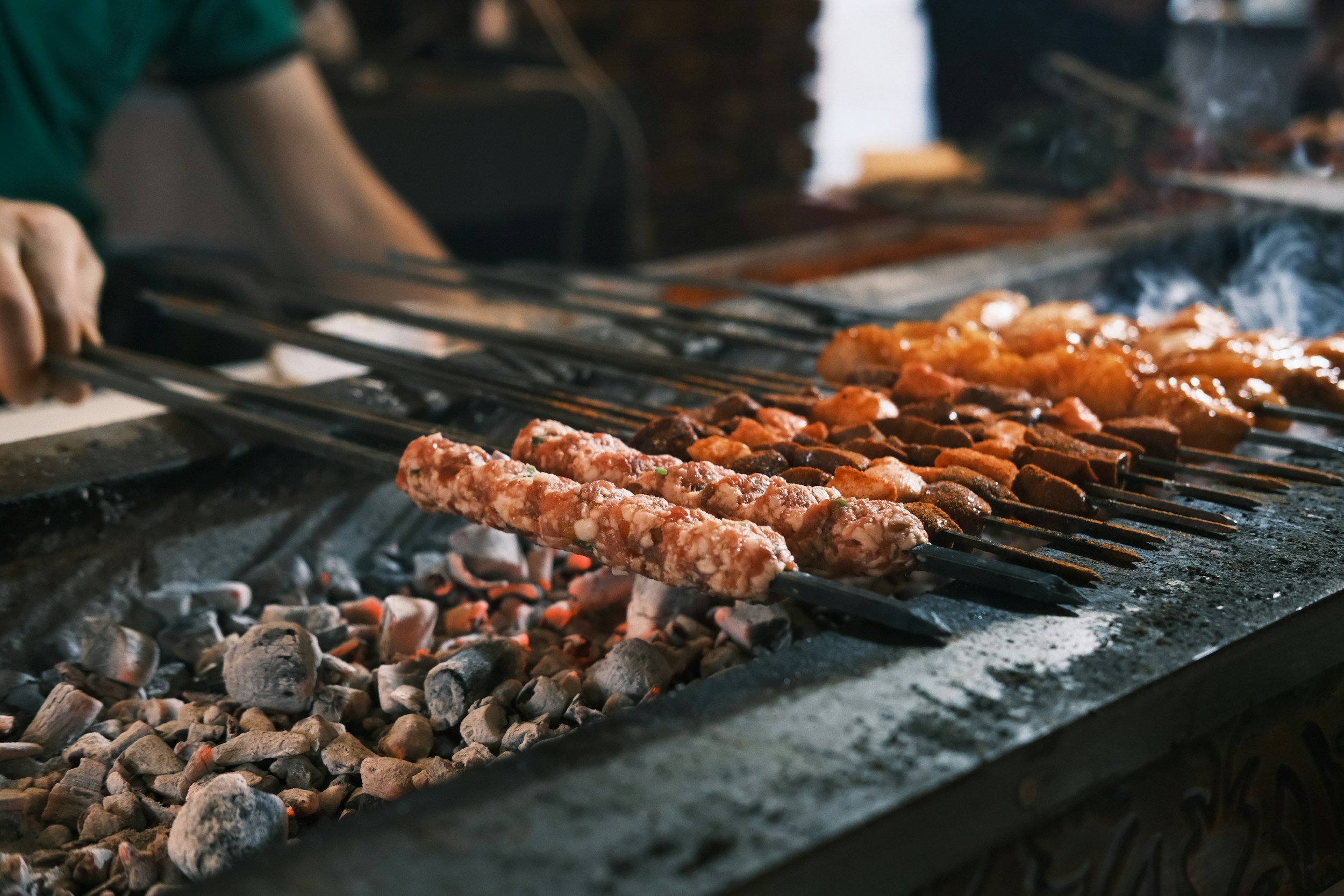
The original, from which all subsequent global versions are a diminished copy. Proper Turkish döner is shaved from a vertical rotisserie of lamb or chicken, served in fresh bread or over rice with yogurt and tomato sauce. The version you want is the one served at a busy lokanta at lunch, not a tourist-facing fast food operation. Ask your guide where the locals eat döner.
Balık Ekmek (Fish Bread)
One of Istanbul's most iconic street foods is sold from small boats moored at the Eminönü waterfront below the Galata Bridge. Fresh mackerel grilled on the boat, laid into a half-loaf of bread with onions, lettuce, and lemon. Eat it standing at the waterfront. The combination of the grilled fish, the bread, and the smell of the Bosphorus behind you is one of those irreducible Istanbul experiences.
Midye Dolma (Stuffed Mussels)
Street vendors throughout Istanbul sell mussels stuffed with a mixture of spiced rice, pine nuts, and currants, served in the shell with a squeeze of lemon. They are sold by the shell; you pay for how many you eat. A completely specific Istanbul street food experience that has no real equivalent anywhere else. Try them immediately. Order more.
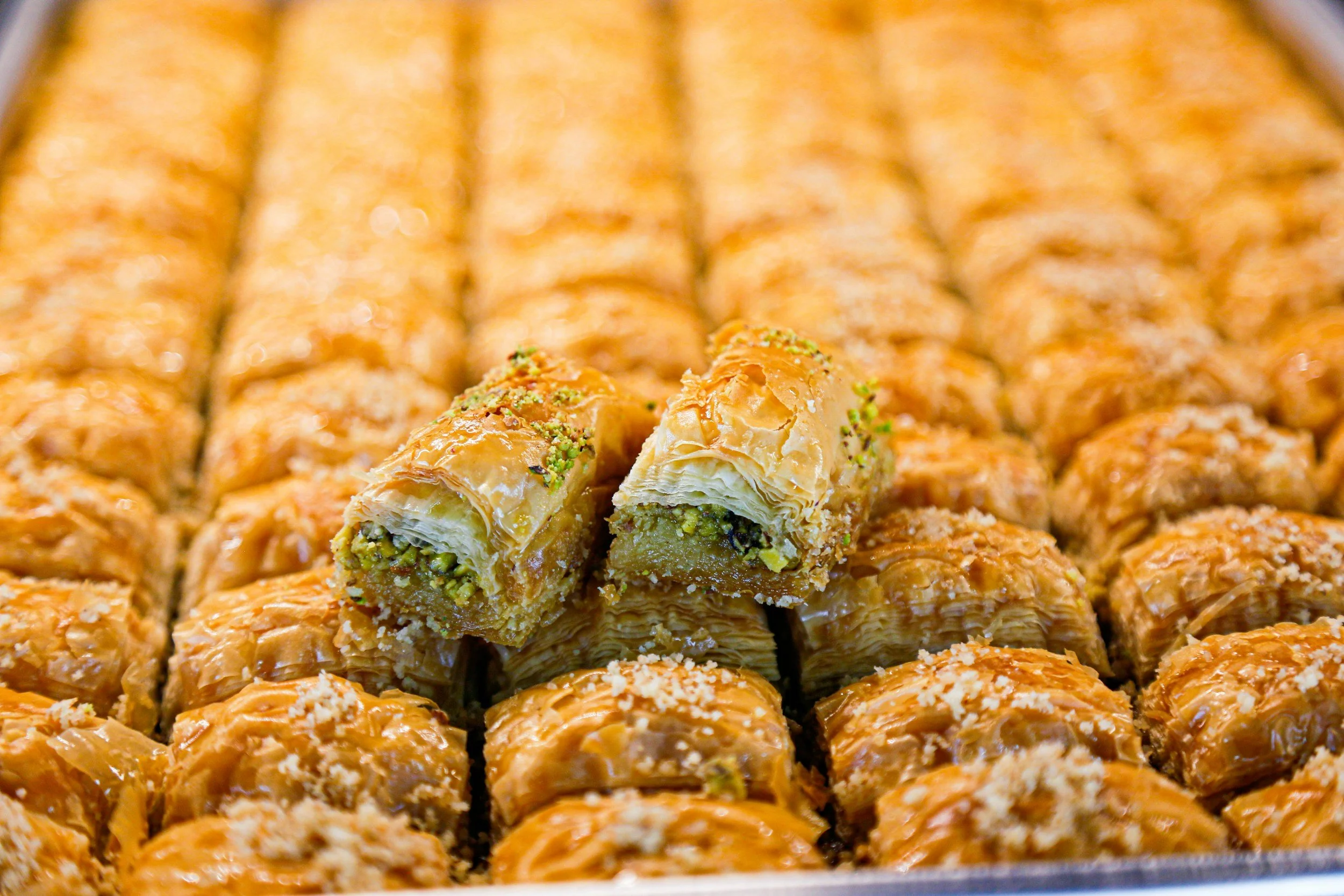
Baklava
The version you want is made with pistachios from Gaziantep, filo pastry layered with clarified butter, soaked in a light syrup that does not overwhelm the nut. The tourist versions sold in airport shops and hotel lobbies do not represent what baklava can be. Go to Hafız Mustafa or Güllüoğlu, both with multiple Istanbul locations, and eat the pistachio baklava fresh. It will change your understanding of what this dessert is.
Lahmacun
A thin, crisp flatbread topped with minced meat, onion, peppers, and herbs, baked until the edges curl, served with a wedge of lemon and fresh parsley. Squeeze the lemon, roll it up, and eat it in three bites. One of the greatest street foods in the world is consistently underestimated by first-time visitors.
Künefe
The warm dessert that surprises almost everyone who tries it for the first time. Shredded wheat pastry filled with melted mild cheese, soaked in sugar syrup, finished with crushed pistachios, and served hot. It sounds unlikely. It is extraordinary. Order it at the end of any evening meal and do not skip it because the combination sounds strange.
Turkish Coffee (Türk Kahvesi)
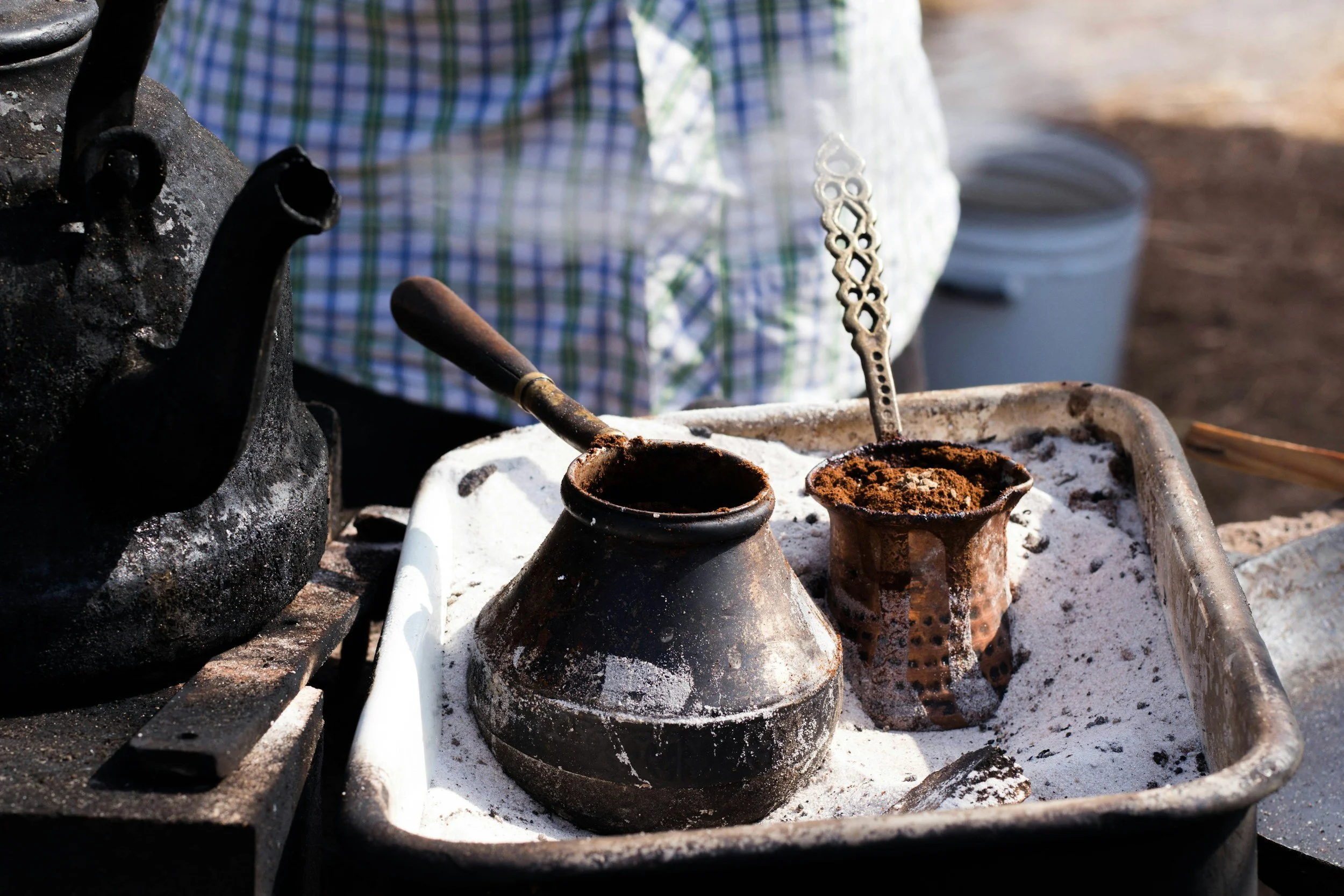
Thick, unfiltered, brewed in a small copper cezve over heat, served with the grounds settled at the bottom of the cup. The taste is intense, and the experience is specific: you drink slowly, leaving the last centimeter in the cup. Find Mandabatmaz off İstiklal Avenue and drink the definitive version standing on the street.
Raki
Turkey's national spirit, anise-flavored, is mixed with cold water that turns it milky white. Drunk slowly over a long meal of meze and fresh fish, not as a shot. The combination of raki, meze, and a waterside table in Istanbul on a warm evening is one of the essential dining experiences in the region. Order a bottle for the table at Karaköy Lokantası and let the evening develop at its own pace.
Istanbul has one of the great urban food cultures in the world, built on centuries of Ottoman culinary tradition and a modern restaurant scene that has accelerated significantly in the past decade.
Restaurants in Istanbul, Turkey
Mikla — The most celebrated restaurant in Istanbul and consistently regarded as one of the finest in Turkey. Chef Mehmet Gürs works at the intersection of modern Turkish cuisine and his Scandinavian heritage, producing a tasting menu that draws on Anatolian ingredients and traditions in ways that feel genuinely inventive. Located on the 18th floor of The Marmara Pera in Beyoğlu, the views across the Golden Horn to the Old City are as extraordinary as the food. The rooftop terrace at blue hour is one of the finest dining views in Europe. Book months in advance.
Neolokal — Modern Anatolian cuisine in the Salt Galata building in Karaköy, one of Istanbul's most beautifully restored Ottoman bank buildings. Chef Maksut Aşkar's kitchen draws on the deep culinary traditions of Anatolia, reinterpreting regional dishes with modern technique and exceptional produce. One of the most intelligent and personal dining experiences in the city.
Karaköy Lokantası — A traditional Turkish meyhane (tavern) in Karaköy that serves exactly what a meyhane should: mezes, fresh fish, raki, and the specific warmth of a room full of people who are genuinely happy to be there. Less formal than Mikla, less modern than Neolokal, and completely essential. Go for dinner and stay late.
Asitane — One of the most remarkable dining experiences in Istanbul, located near the Chora Church in the western Old City. Asitane specializes in historically reconstructed Ottoman palace cuisine, drawing on archival recipes from the 15th through 19th centuries. The setting in an Ottoman house with a garden courtyard is beautiful, and the dishes are genuinely unlike anything else in the city.
Hamdi Restaurant — Near the Spice Bazaar with sweeping views of the Golden Horn and the Galata Bridge from the upper terrace. Classic Turkish kebabs and mezes in a setting that is hard to match for location and view. Excellent for a long lunch after a morning at the Grand Bazaar or the Spice Bazaar.
Lüfer İstanbul — On the Bosphorus waterfront in Tarabya, specializing in the fresh-caught fish that Istanbul does as well as any city in the Mediterranean. The bluefish (lüfer) after which the restaurant is named is the Bosphorus catch at its finest. Go at sunset for the light on the water.
Coffee in Istanbul, Turkey
Mandabatmaz — The most legendary Turkish coffee address in the city. A tiny counter on a side street off İstiklal Avenue that has been serving Turkish coffee the same way for decades. No seating, no menu beyond coffee, no concession to modern café culture. Just exceptional coffee prepared with complete seriousness. Find it, order it, stand on the street, and drink it. A mandatory Istanbul experience.
Kronotrop Coffee Bar — Istanbul's most respected specialty coffee roaster with multiple locations across the city. The Cihangir and Bebek locations are both excellent for post-photography editing sessions or mid-afternoon breaks. Consistently strong espresso and filter coffee in well-designed spaces.
Walter's Coffee Roastery — An industrial-style specialty coffee space in Karaköy that doubles as one of the most photogenic café interiors in the city. Dark walls, exposed pipes, and excellent natural light in the morning. Strong coffee and a space that invites staying for a while.
Café Ara — Named for the legendary Turkish photographer Ara Güler, whose studio was nearby, Café Ara is a Beyoğlu institution with warm interiors, black and white photography covering every wall, and the specific atmosphere of a place that has been part of the neighborhood's creative life for decades. Order a Turkish breakfast and stay for two hours.
Photography Gear to Bring to Istanbul, Turkey
Istanbul covers a vast range of photography subjects: monumental architecture, intimate street scenes, low-light interiors, wide-open Bosphorus landscapes, and everything between. Bring gear that handles all of it.
Camera: The Canon EOS R5 Mark II is my primary body for Istanbul. The Sony A7R V and Nikon Z8 are both excellent alternatives. All three handle the high dynamic range of Istanbul's architectural photography and the low-light conditions of the Basilica Cistern, mosque interiors, and blue hour shooting with excellent results. For a walk-around option, the Leica Q3 is ideal in Balat and the Grand Bazaar, where a smaller footprint gets you closer to natural moments.
Lenses: A 16-35mm wide-angle is essential for the Grand Bazaar ceiling, the interior of the Hagia Sophia, and the compressed compositions of Sultanahmet. A 24-70mm standard zoom handles street photography, portraits, and general travel work throughout the city. A 70-200mm telephoto is indispensable for Bosphorus photography, pulling the minarets of the Old City skyline together from across the water, and compressing the layers of domes against a sunset sky.
A 35mm or 50mm prime is ideal for Balat street photography and the market scenes of the Grand Bazaar, where a smaller, less conspicuous lens produces more natural and intimate results.
Accessories: A lightweight carbon fiber tripod is essential for blue hour and long exposure work at the Hagia Sophia, Galata Bridge, and Bosphorus waterfront. A circular polarizer manages glare on the water during Bosphorus ferry photography. A set of ND filters (3, 6, and 10 stop) extends the options for long-exposure waterfront work at golden hour. A rain cover protects your gear during Istanbul's spring and winter weather. Back up everything to a Samsung T7 SSD at the end of each day.
iPhone Photography in Istanbul
The iPhone performs exceptionally well in Istanbul, and some of the city's most distinctive subjects are well-suited to shooting with a phone.
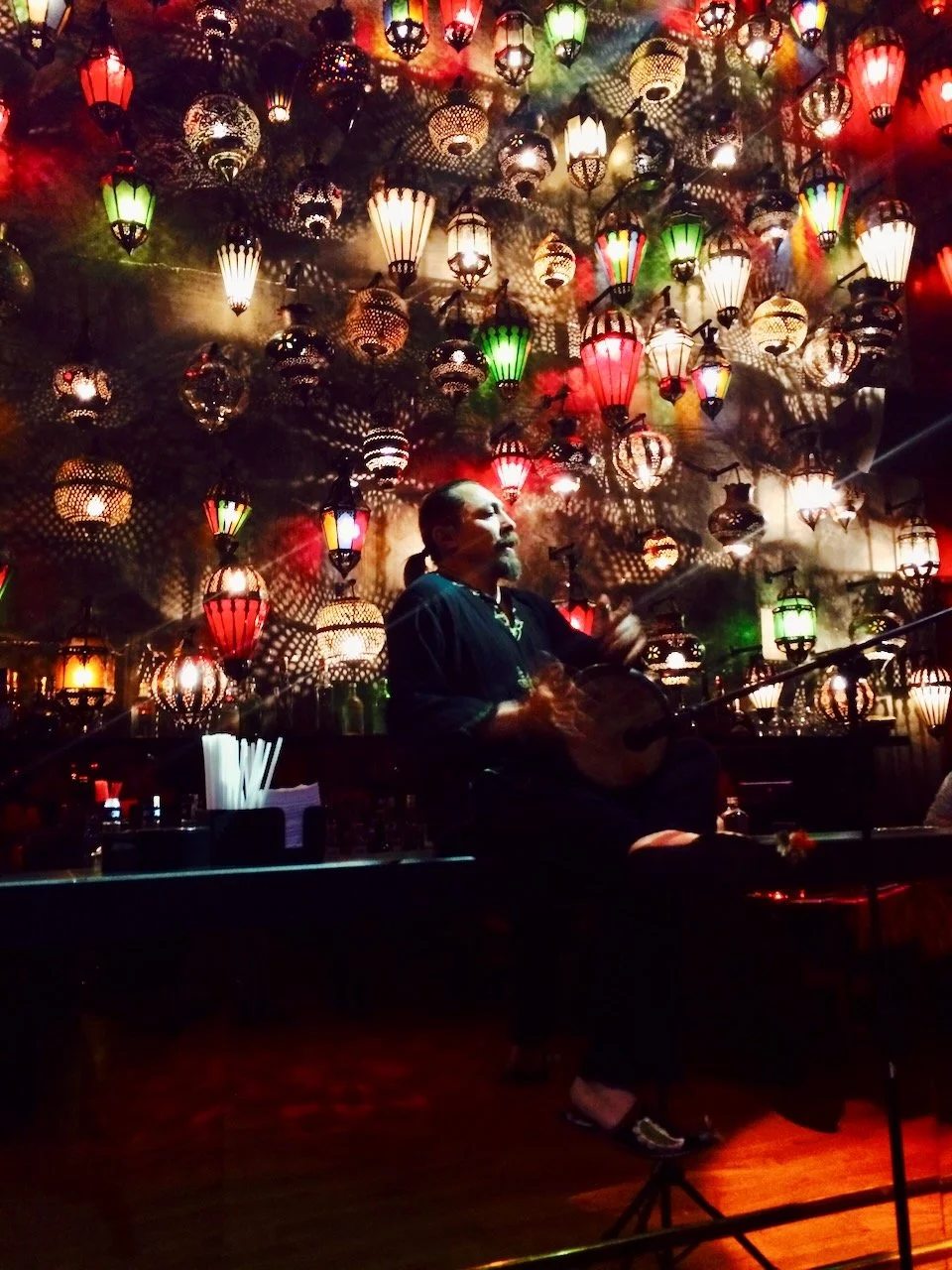
In the Grand Bazaar, use the Ultra Wide lens to capture the full sweep of the vaulted ceiling and the lantern-lit passages. The tight, compressed corridors work beautifully at this focal length, and a smaller form factor means vendors and visitors pay you less attention, which produces more natural moments.
For Balat street photography, switch to Portrait Mode for the cats and street subjects. The neighborhood is full of strong graphic elements: peeling paint, layered facades, wrought iron. The iPhone's computational depth on a still subject in good morning light produces results that easily hold up at social media sizes.
At blue hour, use Night Mode on the Bosphorus waterfront and from the Galata Bridge looking toward the minarets. Hold the camera steady against a railing or rest it on a surface rather than handholding. The multi-frame stacking in Night Mode handles this kind of scene better than most people expect.
Inside mosque interiors, turn off the flash entirely and use Night Mode. The filtered light through the high windows is genuinely beautiful and the iPhone captures it without the harsh overhead flash that ruins the atmosphere and draws attention.
Use ProRAW if your device supports it. The dynamic range between the bright exterior tiles and darker interior shadows in the Hagia Sophia and Blue Mosque is significant, and RAW capture gives you considerably more latitude in post.
Drone Regulations
Turkey requires drone registration with the Civil Aviation Authority (SHGM) before flying. The historic areas of Sultanahmet, including the airspace above the Hagia Sophia, Blue Mosque, and Topkapı Palace, are restricted zones. The Bosphorus has its own airspace management requirements. Do not attempt to fly in restricted areas, and confirm all permits before bringing a drone to Istanbul.
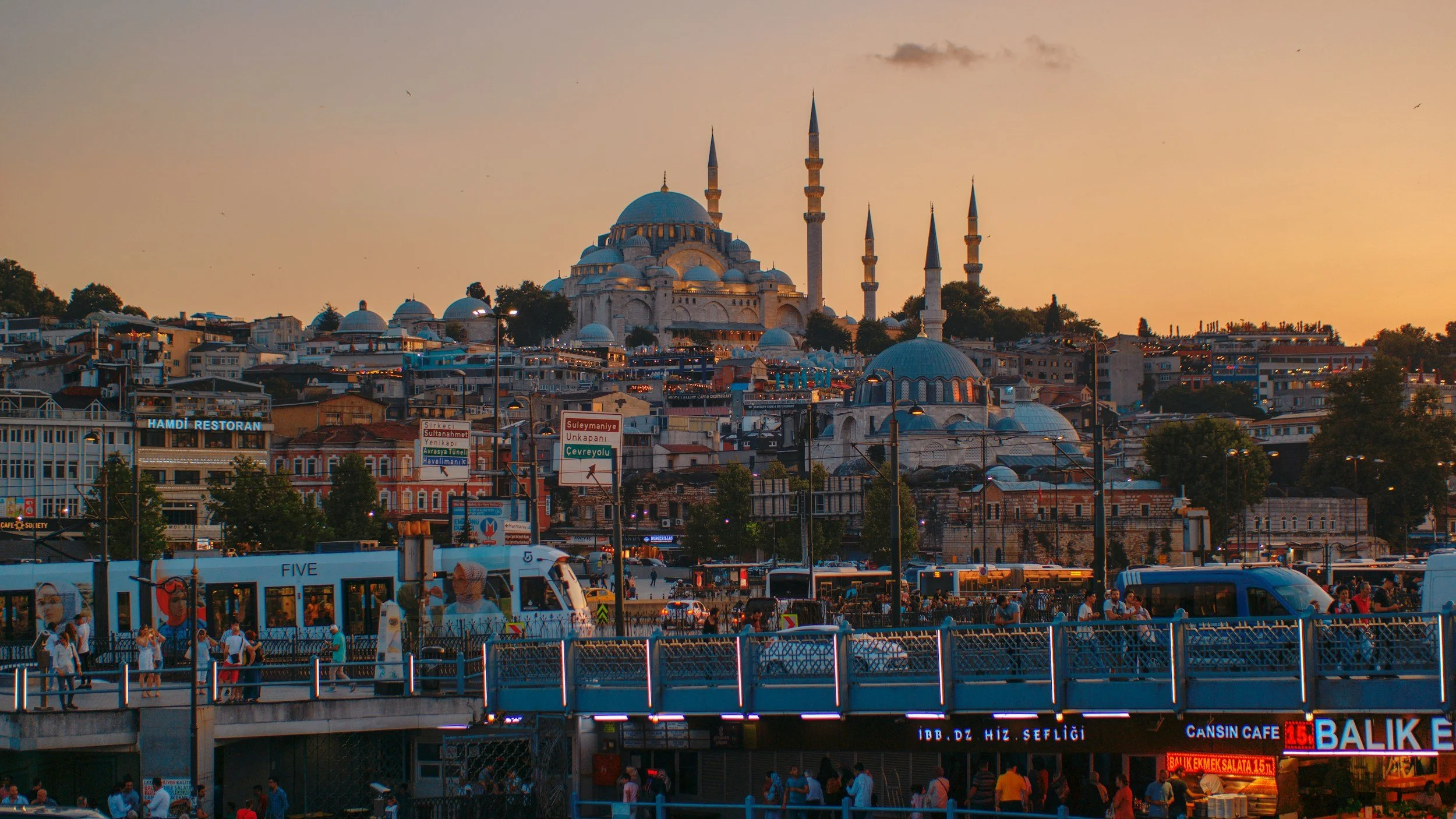
Photography Locations in Istanbul, Turkey
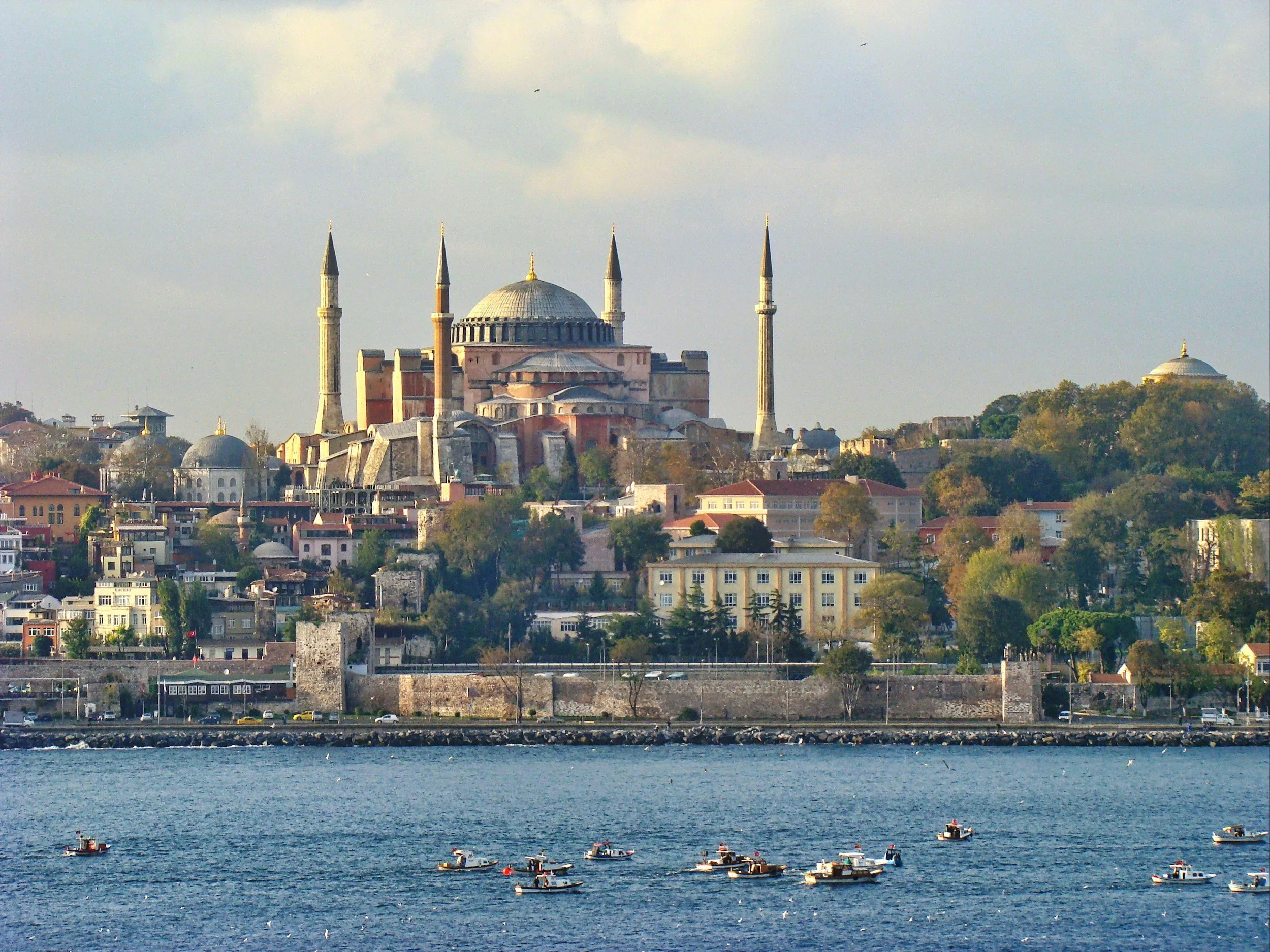
Hagia Sophia
Built in 537 AD and converted to a mosque in 2020, the Hagia Sophia is the architectural centerpiece of Istanbul and one of the most photographed buildings in the world. The exterior, particularly from the courtyard in the early morning before crowds arrive, is extraordinary at any time of day. The interior presents one of the great photography challenges in the city: the vast central dome, the Byzantine mosaics, the Ottoman calligraphy roundels, and the extraordinary filtered light from the high windows.
The transition between the Byzantine and Ottoman elements, gold mosaic alongside Arabic calligraphy, is visible in a single frame from the main floor. This is the composition that no other building in the world offers.
📷 Pro Tip: Arrive at opening time and shoot the interior before the tour groups arrive. The light through the upper windows rakes across the golden mosaics best in the first two hours of the morning. A wide-angle lens captures the full sweep of the dome; a telephoto pulls in the mosaic details from the gallery level. As a functioning mosque, silence and respect are required. Tripods may be restricted during prayer times. Check the daily prayer schedule and plan your visit accordingly.
Best time: Sunrise through mid-morning. Access: Paid entry. Transit: T1 tram to Sultanahmet, 5-minute walk.
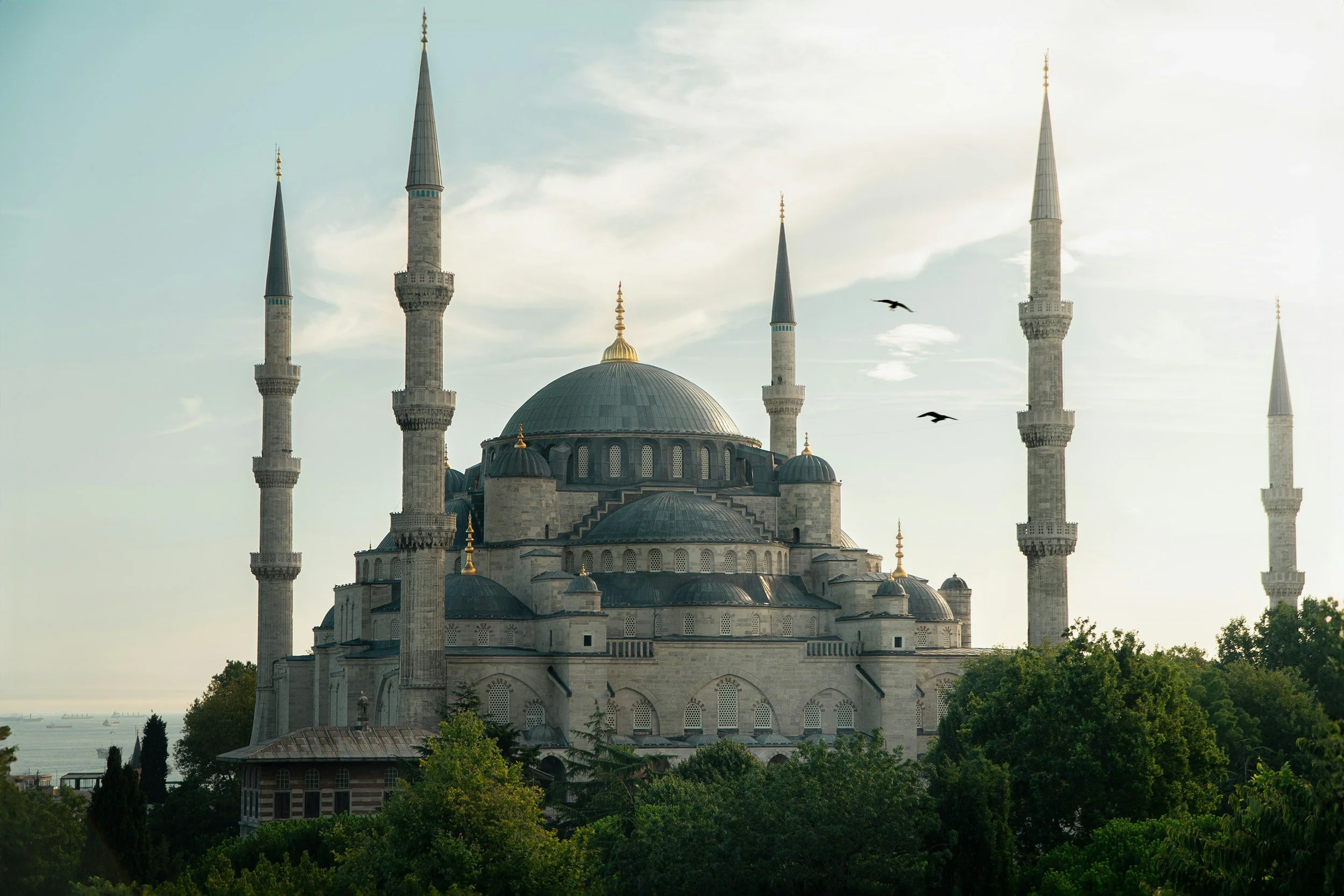
The Blue Mosque (Sultan Ahmed Mosque)
Directly across the Hippodrome from the Hagia Sophia, the Blue Mosque's six minarets create one of the most iconic silhouettes in Istanbul. The exterior at golden hour from the Sultanahmet gardens is the classic composition. The interior, lined with over 20,000 hand-painted İznik tiles, gives the mosque its name and makes it one of the most beautiful architectural interiors in the city.
📷 Pro Tip: The best exterior compositions are from the northeastern side of the Sultanahmet park, where the full minaret arrangement is visible against a clear sky. Sunrise light on the minarets from this position is extraordinary. The interior is open to non-worshippers outside prayer times. Remove your shoes, cover your shoulders and head (women), and shoot quietly. The 16-35mm wide-angle captures the full tile ceiling; the 70-200mm isolates specific tile patterns from a distance. Early morning arrivals before the queues form are strongly recommended.
Best time: Sunrise exterior, mid-morning interior. Access: Free. Transit: T1 tram to Sultanahmet.
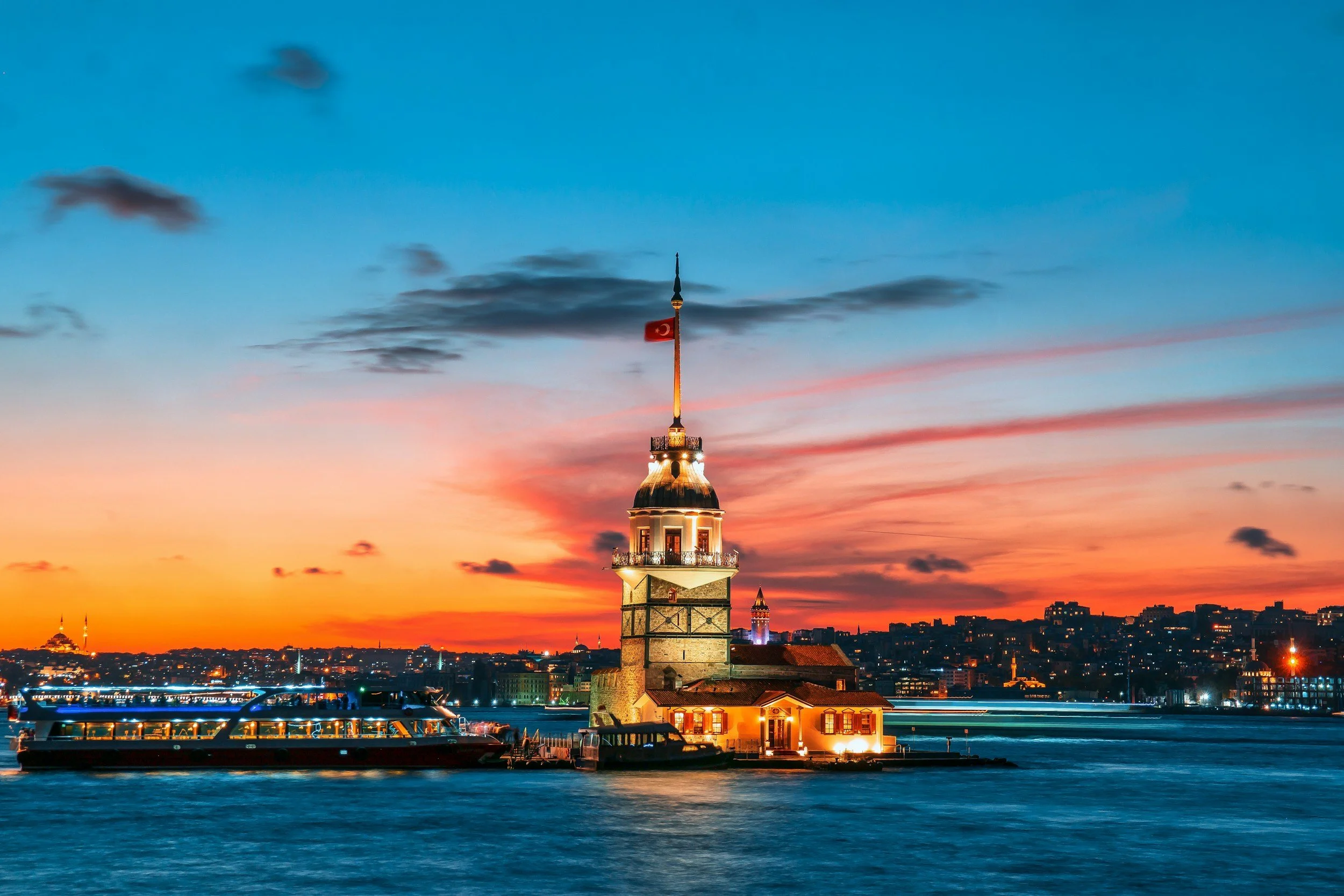
Galata Tower
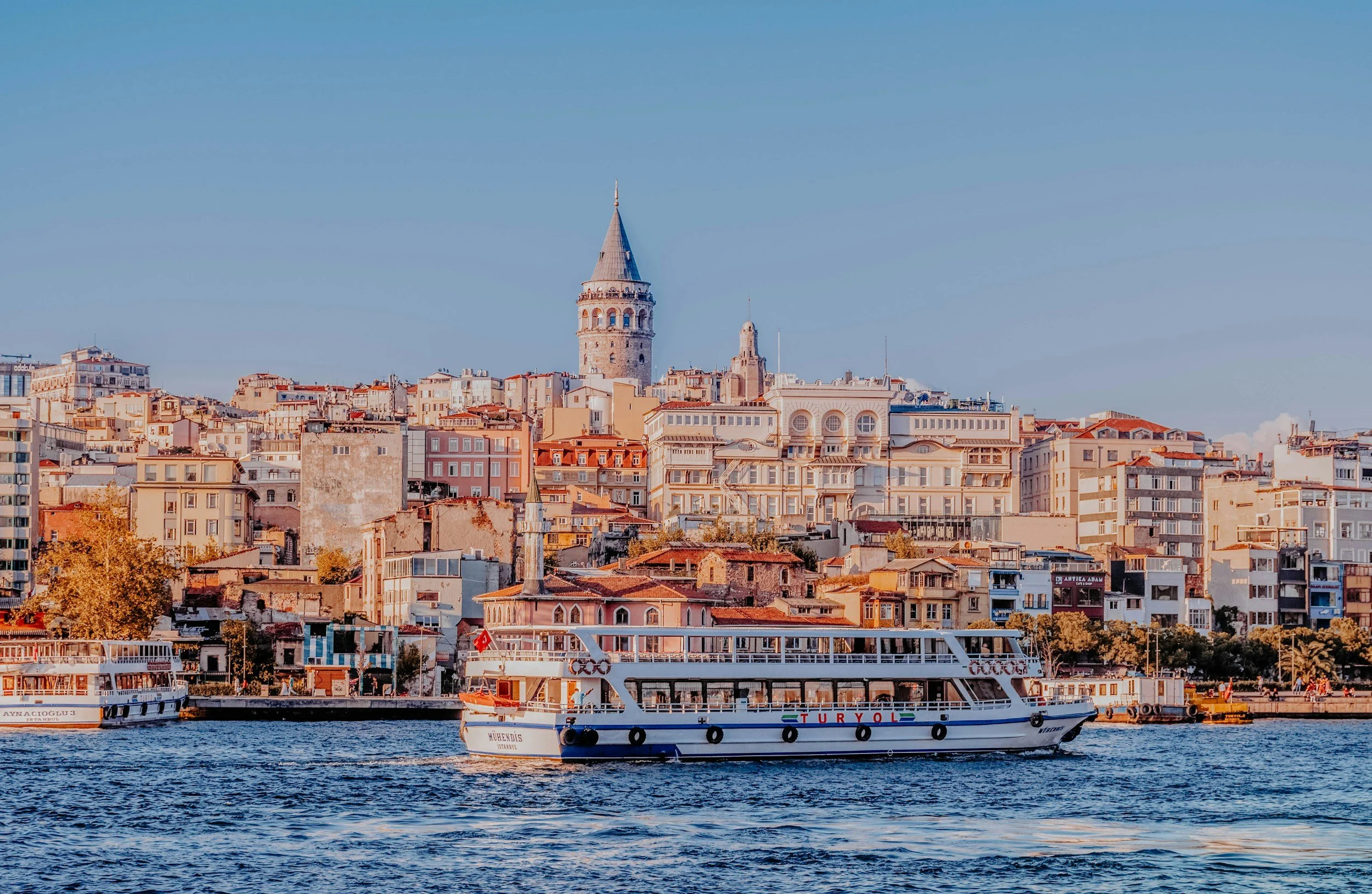
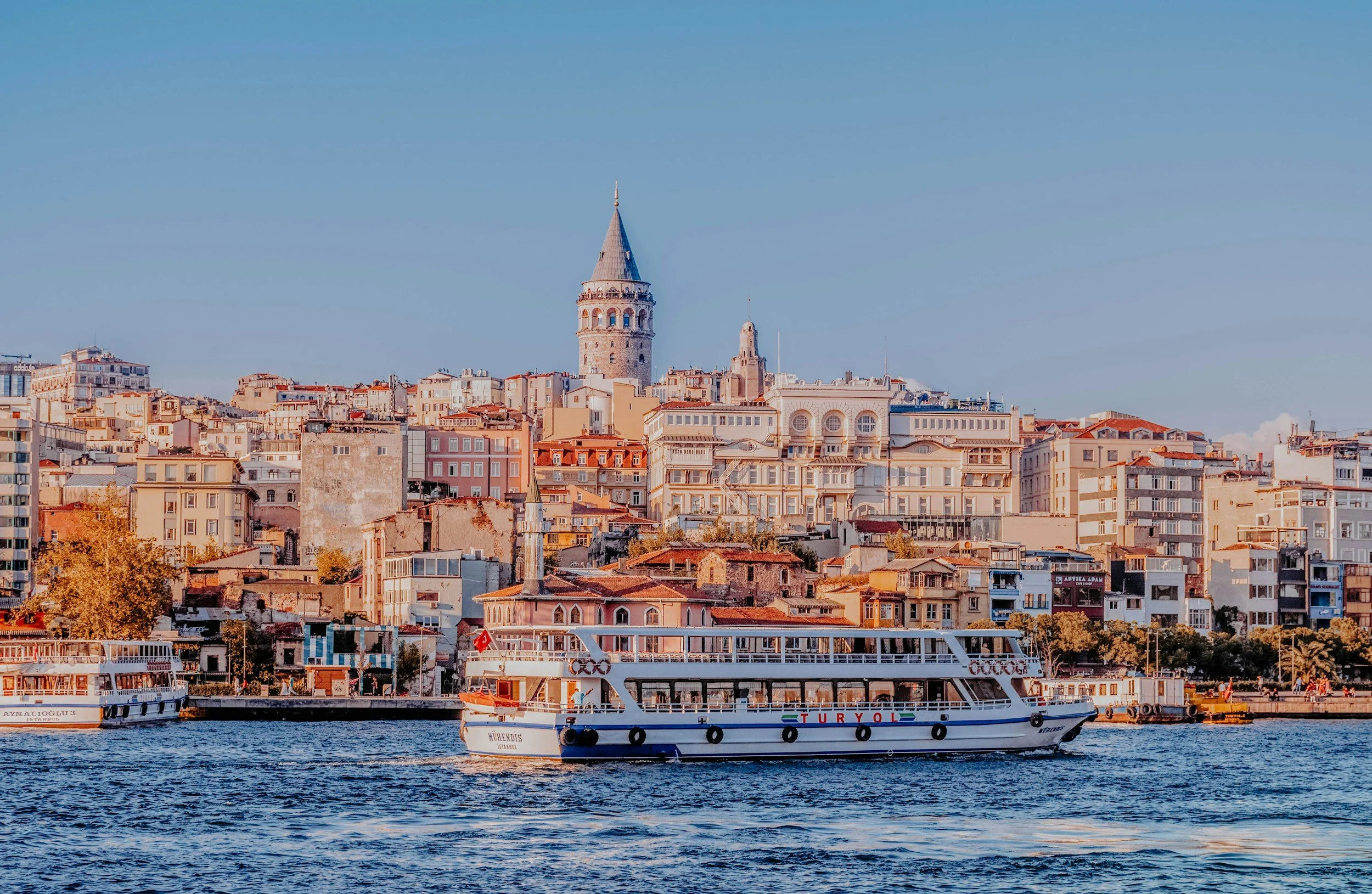
The 14th-century Genoese tower in the Beyoğlu district offers the best elevated panoramic view of the Golden Horn and the Old City skyline from the European side. The 360-degree view from the observation deck encompasses the Hagia Sophia, the Blue Mosque, the Süleymaniye, the Bosphorus, and the Asian shore. The tower is also a strong photography subject from street level, particularly from the surrounding Galata neighborhood, where narrow streets create leading lines toward the tower.
📷 Pro Tip: Buy tickets online in advance to avoid the queue. Arrive at opening or one hour before sunset. The blue hour view from the observation deck, looking south across the Golden Horn to the minarets of the Old City, is the finest panoramic photography opportunity in Istanbul. Bring a 24-70mm for the wide view and a 70-200mm for compressed skyline compositions. If you want the tower itself in frame, shoot from the cobbled streets of the Galata neighborhood at street level, looking north.
Best time: One hour before sunset through blue hour. Access: Paid entry, book online. Transit: T1 tram to Karaköy, 10-minute uphill walk.
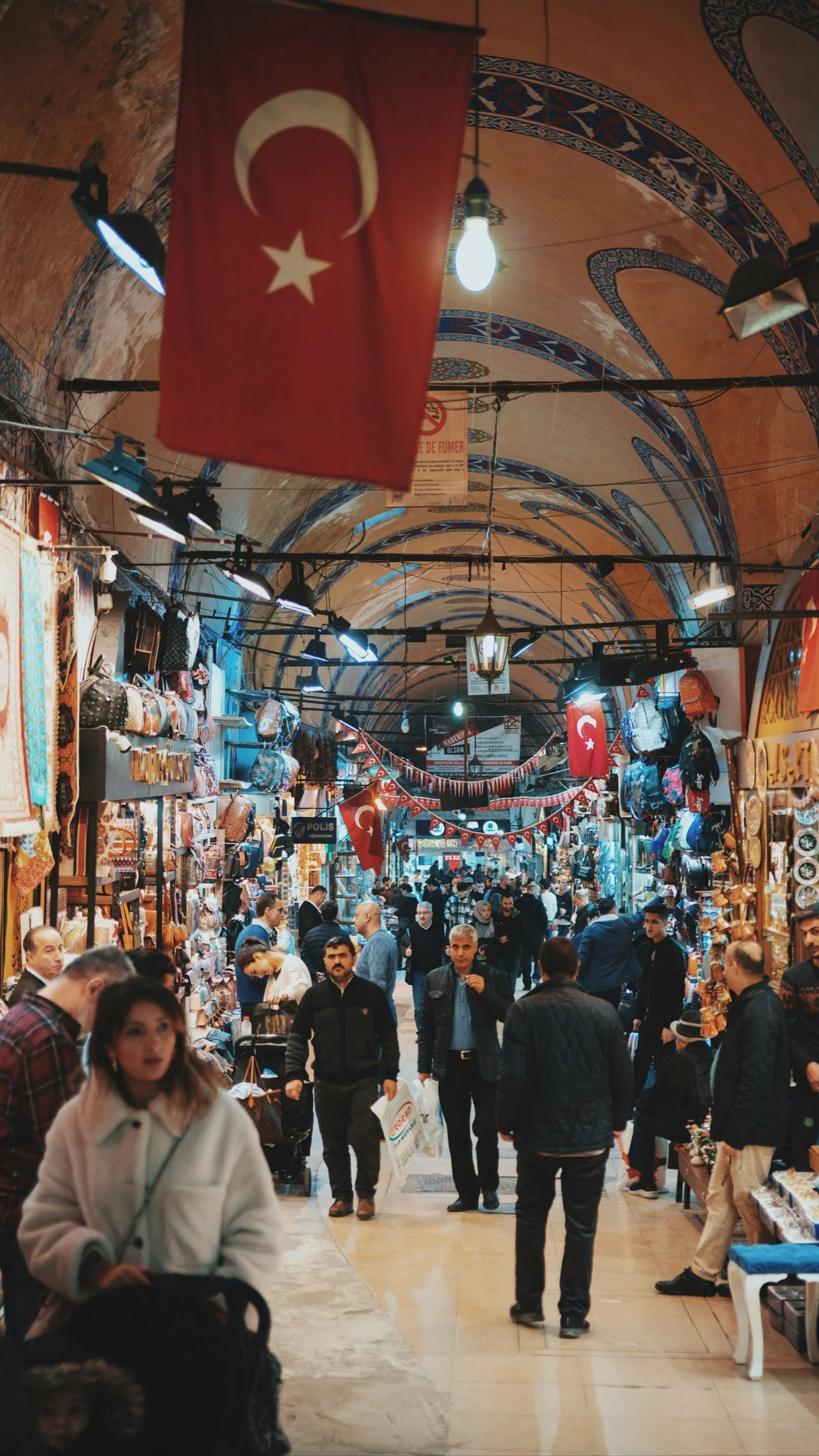
The Grand Bazaar
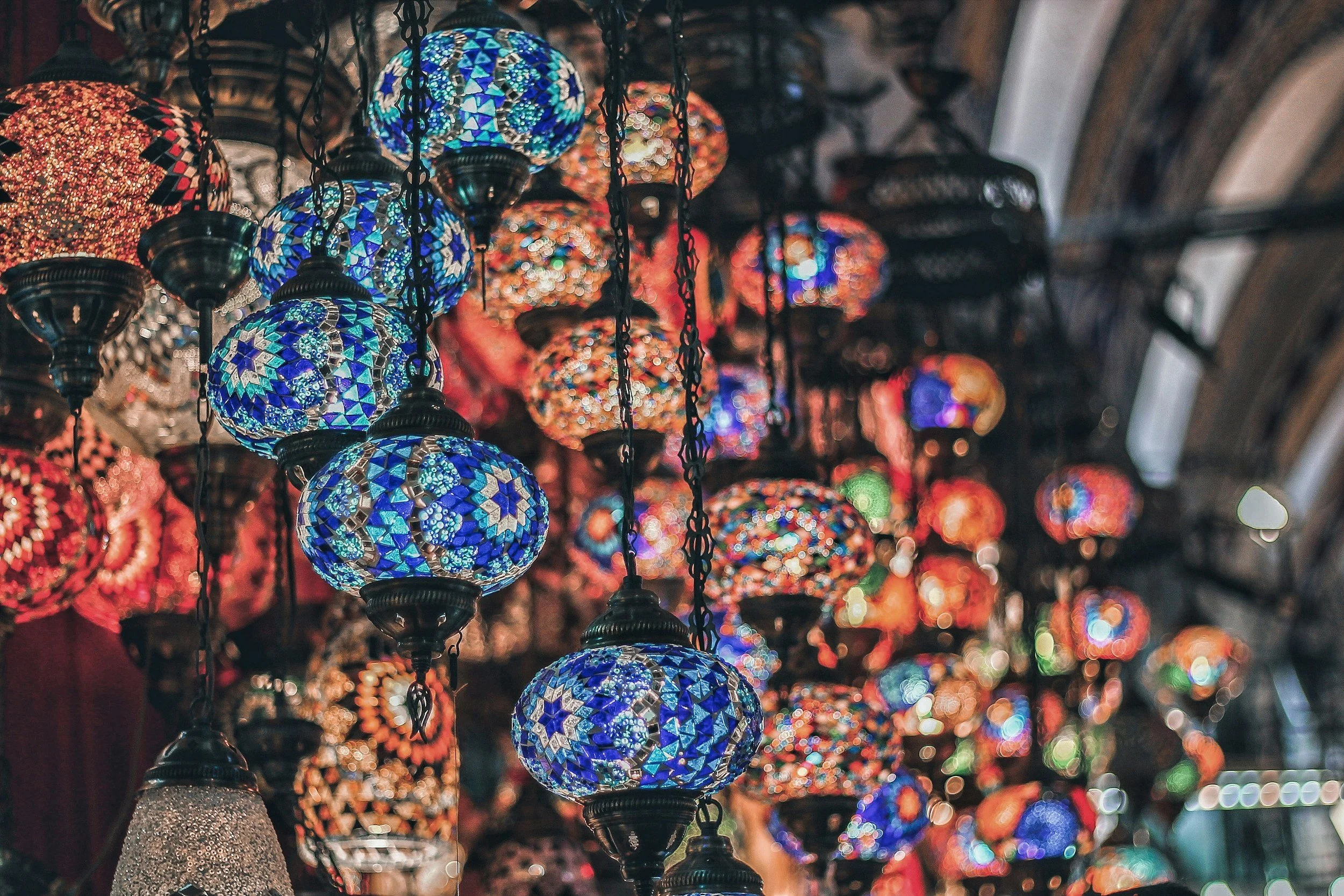
The oldest covered market in the world, the Grand Bazaar, has been operating continuously since 1461. More than 4,000 shops are spread across 60 covered streets beneath a vaulted ceiling decorated with lanterns that create extraordinary filtered light. The layers of color, the compression of the passages, and the interaction between vendors and visitors make this one of the finest street photography environments in the city.
Before you think about photographs, understand what you are walking into. The Grand Bazaar hits you through multiple senses simultaneously. The smell arrives first: layers of spices piled in open sacks, leather worked somewhere deeper in the market, rose water and Turkish perfume from the attar stalls, the warm sweetness of baklava from a tray being carried past. Then the sound: the calls of vendors, the rattle of copper work being hammered in a back stall, the murmur of dozens of languages happening at once. Then the color: hand-painted ceramics stacked floor to ceiling in blues and reds, silk scarves in every shade, the gold of jewelry under display lights, the deep red of Turkish carpets rolled against the walls. It is overwhelming in the most generous possible sense of that word.
People will offer you things to eat as you walk. Dried apricots, Turkish delight, a small piece of halva. Accept with a smile. This is hospitality, and the offerings are genuine regardless of whether a sale follows.
The tea invitation is a different matter. At some point, someone will invite you into their shop for a glass of tea. They will be genuinely warm, the tea will be good, and the hospitality will be real. Go in if you wish. But understand clearly that you have entered a sales situation and a carpet, ceramics, or jewelry will be presented before you leave. This is not deceptive: it is simply how the bazaar has worked for six hundred years. If you have no intention of buying, it is kinder to decline politely at the door rather than accepting the hospitality and then refusing to engage with what follows.
The vendor culture here is persistent and skilled and it will not stop. A pleasant but firm "no thank you" while continuing to walk sends the correct signal. Moving while declining is the right approach. Standing still while declining invites negotiation. Your guide handles much of this on your behalf, which is another reason the first-day guide is worth the cost.
📷 Pro Tip: Visit on a weekday morning when the market opens, before the tour groups arrive. A 35mm or 50mm prime keeps you compact and unobtrusive in the tight passages. Look up: the ceiling lanterns against the vaulted stonework are extraordinary with a wide-angle shot. The side streets beyond the main thoroughfares carry some of the most authentic market activity and the best light. Shoot the vendors as much as the goods. The faces and hands in the Grand Bazaar tell a story that the architecture alone does not.
Best time: Weekday opening hours, 8:30 to 10 a.m. Access: Free. Transit: T1 tram to Beyazıt-Kapalıçarşı.
Balat
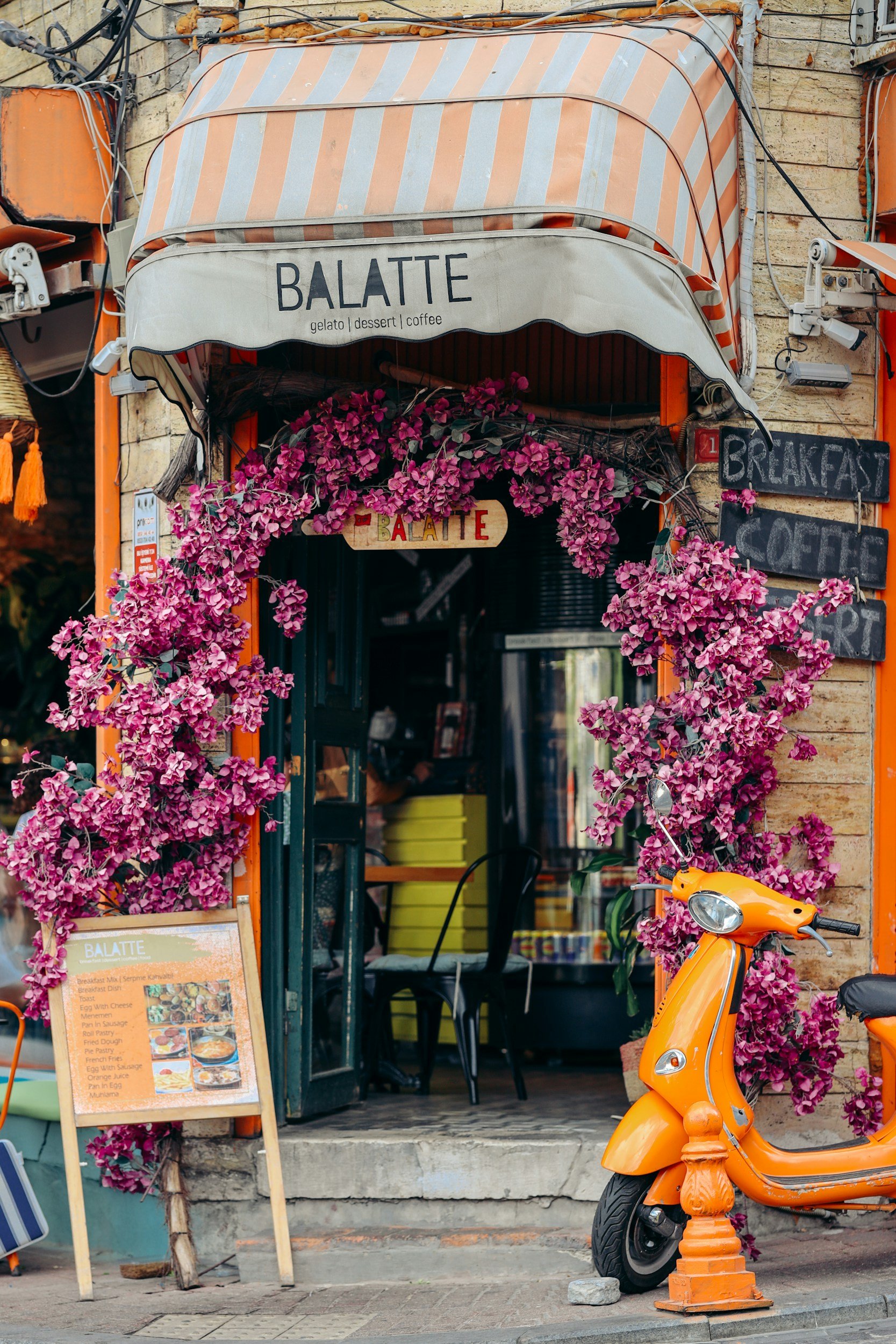
The historic Jewish and Greek quarter along the southern shore of the Golden Horn is Istanbul's most photogenic residential neighborhood. Layers of pastel-colored houses in varying states of beautiful decay climb the hillside above the water. Cats, laundry on lines, children playing in the alleys, and the specific quality of a neighborhood that has been poor and proud and unchanged for a long time. Balat does not pose for photographs. It simply continues being itself.
📷 Pro Tip: Come in the morning when the light hits the hillside from the east. A 35mm prime and no camera bag, just the camera on a strap, keeps you unobtrusive and mobile. Walk without a plan. The best Balat images are the ones you did not expect to take. The main street of Vodina Caddesi and the alleys above it are the heart of the neighborhood. If you want portraits, the vendors and residents are generally warm to photographers who ask first and take their time rather than shooting and moving on.
Best time: Morning light, 7 to 10 a.m. Access: Free. Transit: Taxi or bus from the Old City, approximately 15 minutes.
Ortaköy Mosque and Bosphorus Bridge
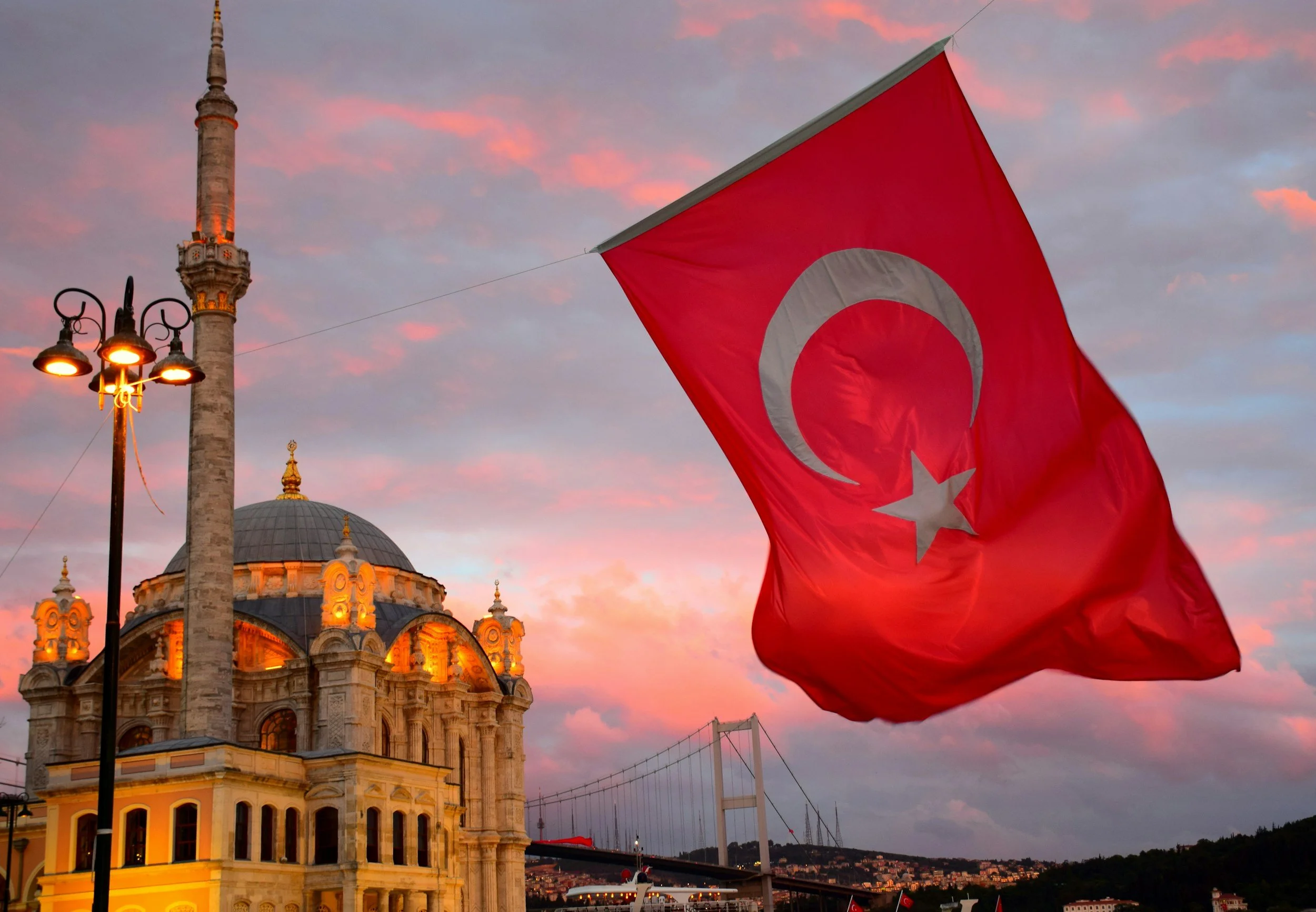
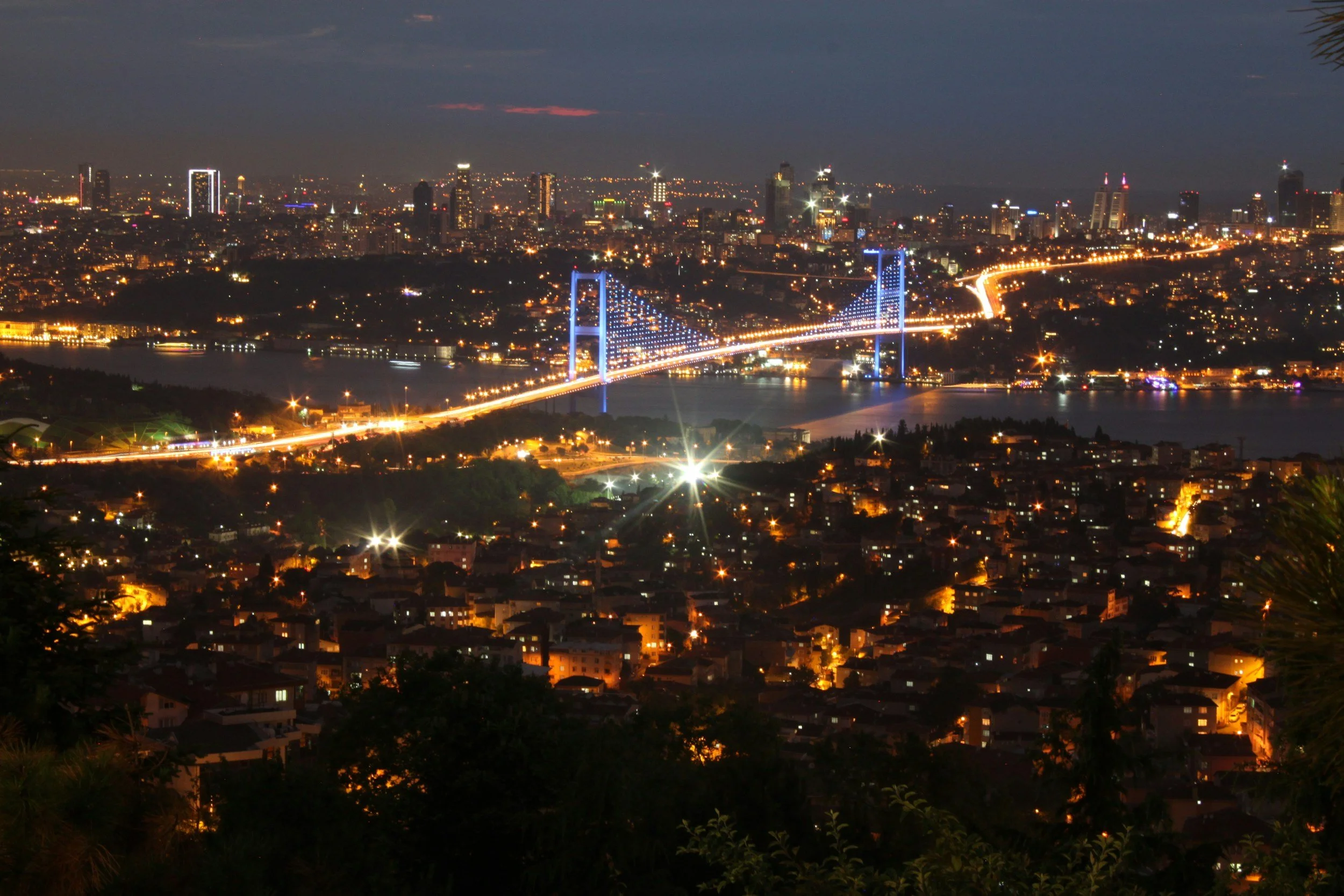
The small, ornate Ortaköy Mosque sits directly on the Bosphorus waterfront with the 15 July Martyrs Bridge as the backdrop. The composition of the mosque's baroque Ottoman architecture against the steel span of the bridge is one of Istanbul's most classic and most reproduced images. In person, it is even more striking than it appears in photographs.
📷 Pro Tip: Shoot from the waterfront plaza to the east of the mosque in the late afternoon when the sun is behind you and the mosque is fully illuminated. At golden hour, the bridge lights begin to appear behind the still-lit mosque, giving you a natural HDR composition. A 70-200mm lens compresses the bridge and mosque into a single frame. The area around the mosque has a lively weekend market with food vendors and street activity that adds foreground interest and documentary texture to wider compositions.
Best time: Late afternoon through golden hour. Access: Free. Transit: Bus or taxi from Beşiktaş, approximately 10 minutes.
The Basilica Cistern
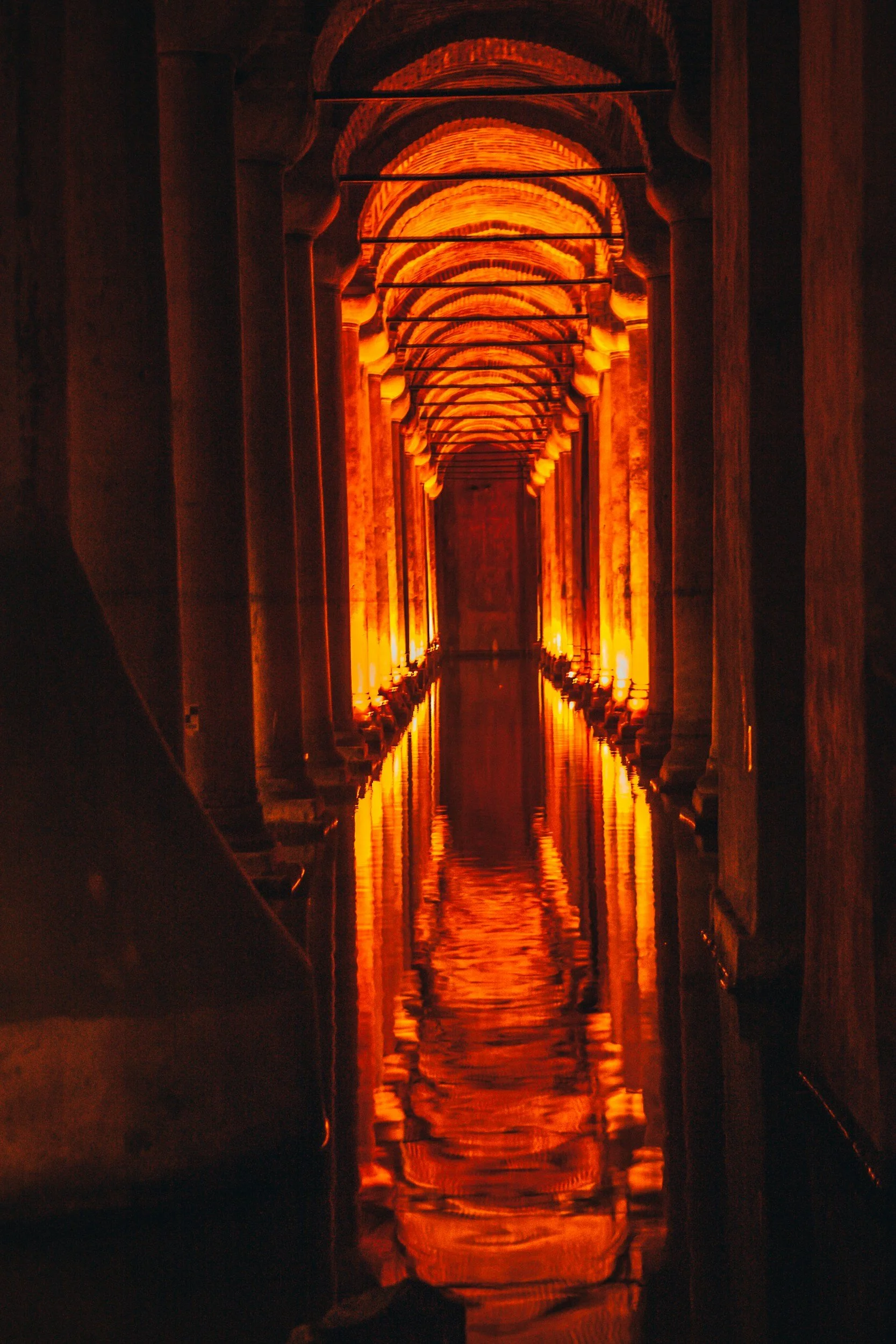
The 6th-century Byzantine cistern beneath central Sultanahmet holds 336 marble columns rising from shallow water in a space that is half cathedral and half dreamscape. The dim, atmospheric lighting, the reflections on the water, and the two carved Medusa heads used as column bases create one of the most distinctive photography environments in Istanbul.
📷 Pro Tip: A tripod or strong image stabilization is essential in low light. The 16-35mm wide-angle captures the full forest of columns. A longer focal length isolates individual columns from the water reflections. The Medusa heads are at the northwest corner, and they are worth the walk to the far end of the cistern. Arrive early: the space fills up quickly during peak hours and the narrow walkways make it difficult to shoot freely once tour groups are in. The cistern underwent a significant renovation and reopened in 2022 with some new artistic installations added to the space.
Best time: Opening time. Access: Paid entry. Transit: T1 tram to Sultanahmet, 5-minute walk.
Festivals and Events
Istanbul Tulip Festival (April) — One of the most photographically spectacular events in Turkey. Millions of tulips bloom across the city's parks, with Emirgan Park on the Bosphorus offering the finest concentrations of color. The tulip's connection to Istanbul is deep: the Ottoman Empire created elaborate tulip gardens across the city in the 17th and 18th centuries, and the festival is a direct continuation of that tradition. Peak bloom typically falls in the first two weeks of April.
Istanbul Film Festival (April) — One of the most respected film festivals in the region, held at cinemas across Beyoğlu. The red carpets and arrivals provide street photography opportunities alongside the screenings.
Istanbul Music Festival (June) — Classical and contemporary music in extraordinary venues, including Hagia Eirene, one of the oldest Byzantine churches in the city, still in remarkable condition and not generally open to visitors. The photography of musicians and audiences in these settings is exceptional.
Istanbul Jazz Festival (July) — Live jazz across the city, including outdoor venues with Bosphorus views. The combination of night photography and live performance in Istanbul's summer light produces some of the city's most atmospheric images.
Istanbul Biennial (September to November, odd years) — One of the most significant contemporary art biennials in the world, held across multiple venues throughout the city. The biennial transforms unexpected spaces across Istanbul into gallery settings and is a major event for photographers interested in the intersection of art and urban environment.
Republic Day (October 29) — Turkish national holiday marked by parades, fireworks, and public celebrations across the city. The flags and crowds along İstiklal Avenue and the Bosphorus bridges create strong photographic material.
Frequently Asked Questions About Visiting Istanbul
Is Istanbul safe?
Yes, for the areas most visitors go, Sultanahmet, Beyoğlu, and Karaköy are all well-trafficked. Persistent vendors around the Grand Bazaar and tourist sites are the real friction point, not danger, a polite, firm "no thank you" while continuing to walk handles it.
Is it worth hiring a local guide?
Yes, strongly recommended, at least for your first day. English isn't widely spoken beyond major tourist sites, and a knowledgeable local guide gets you into courtyards, unlocked mosques, and market relationships that take years of independent visits to learn.
Do you need a visa for Turkey?
Most visitors need an e-Visa, applied for online before departure and typically approved within minutes. Check current requirements for your passport before you travel.
What are the best photo spots in Istanbul?
The Hagia Sophia at opening before the crowds, the Grand Bazaar's lantern-lit ceiling, and Balat's pastel houses in morning light are three that consistently deliver. The full list with Pro Tips is above.
Can you fly a drone in Istanbul?
Turkey requires drone registration with the Civil Aviation Authority (SHGM) before flying, and the historic areas of Sultanahmet, including the airspace above the Hagia Sophia and Topkapı Palace, are restricted zones. Confirm all permits before bringing a drone.
What surprised you most about Istanbul?
How large the Grand Bazaar actually is, and how genuinely interesting it is beyond the shopping. More than 4,000 shops across 60 covered streets, and every passage reveals something you didn't expect, a smell, a sound, a face worth photographing.
How many days do you need in Istanbul?
Five days minimum on a first visit, seven is more comfortable and allows day trips to the Asian side or the Princes' Islands.
Is spring or fall better for photography?
Both are excellent. Spring brings the Tulip Festival and warm, clear light; fall brings thinner crowds and low-angle autumn light on the domes and minarets. Either window beats the heat and crowds of summer.
Final Thoughts
I stood on the Galata Bridge, my first morning back on my most recent visit, watching the same fishermen who had been there on every single trip. The city had changed around them. New restaurants in Karaköy. A construction crane near the Asian shore. The same light on the same minarets.
Istanbul does not resolve into a single image. Every great city has a defining composition: the Eiffel Tower from the Trocadéro, the Empire State Building from the Hudson. Istanbul has those images too, the Hagia Sophia dome above the Golden Horn, the Blue Mosque at blue hour, the Bosphorus from Galata Tower. But what stays with photographers long after the obvious shots are sorted is something different: the accumulated weight of everything the city contains and refuses to simplify.
Two continents. Three empires. Sixteen centuries of continuous human habitation in the same city. The call to prayer echoes off Byzantine walls that predate the Ottoman minarets around them. A cat sitting on a Roman column watching you photograph a Genoese tower in a neighborhood that used to be Greek. Istanbul does not curate itself for your convenience. It simply continues being what it has always been.
Stay in Sultanahmet or near the Grand Bazaar, where you are inside everything from the first morning. Hire a local guide for at least the first day. Use BiTaksi or Uber instead of street taxis. Learn the word merhaba. Find Mandabatmaz. Walk Balat slowly. Cross to the Asian side. Take the ferry at sunset.
Istanbul is a city with a layered history in the truest sense, not as a slogan but as something you can walk through, photograph, and return to again and again, and still find something new.
If you enjoyed this Photography and Travel Guide to Istanbul, here are three guides that pair naturally with it.
My Photography & Travel Guide to Athens, Greece — Istanbul and Athens sit at opposite ends of the same ancient story. The Byzantine and Ottoman layers you photograph in Istanbul find their roots in the classical Greece you photograph from the Acropolis. Two cities, one long arc of history, and together they tell it far better than either one does alone.
My Photography & Travel Guide to Dubai — For anyone traveling through the Middle East or the broader region, Dubai is the natural companion piece to Istanbul. Both cities have rebuilt themselves at extraordinary speed while holding onto distinct identities. The contrast between them, old and new, Ottoman and Gulf, is one of the most interesting visual conversations you can have across a single trip.
My Photography & Travel Guide to Lebanon — I lived in Beirut for 22 years, and the cultural connections between Lebanon and Turkey run deep through food, language, architecture, and the Ottoman period that shaped them both. Beirut is one of the most complex and photogenic cities in the Middle East. If Istanbul has drawn you in, Beirut will complete something.
If you would like to join a future photography workshop, visit my Workshops page for current offerings and upcoming dates. You can also connect with me on Instagram (@chasinghippoz) and Facebook, or subscribe to the newsletter for travel photography tips, destination guides, and behind-the-scenes stories from more than 75 countries. I look forward to sharing the journey with you.
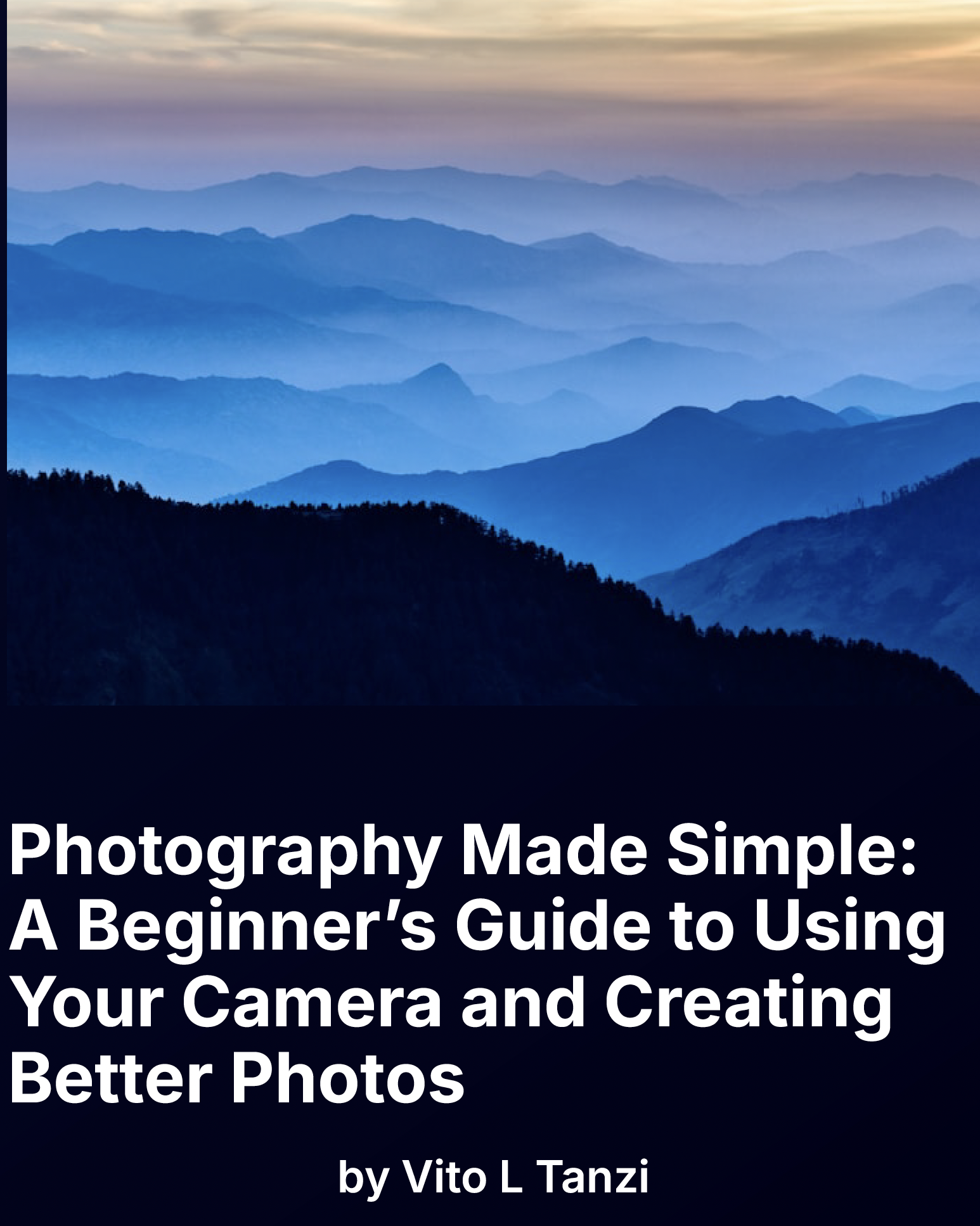
Finally—a beginner-friendly photography guide that makes sense.
If you've ever picked up a camera and thought, "Now what?" this is the book for you.
Photography Made Simple is written for adults who are just starting out and want a clear, encouraging, real-world approach to learning photography. Whether you're using a DSLR, mirrorless, or just your smartphone, this guide walks you through the basics—without the jargon or tech overwhelm.
Inside, you'll learn:
The only camera settings you really need to know to get started
How to shoot sharper, more intentional photos using light and composition
Simple tips for portraits, landscapes, travel, and everyday life
What gear you do (and don’t) need
How to create better photos without upgrading your camera
You’ll also get practical exercises, cheat sheets, and tips for organizing and editing your images—plus the confidence to shoot off Auto Mode for good.
This is not a textbook. It’s a friendly guide to seeing the world with fresh eyes—and finally capturing what you see the way you imagine it.
📸 Format: PDF download
Pages: 100+
Perfect for: Beginners, hobbyists, and anyone ready to take better photos without the stress