Lebanon Travel & Photography Guide: Best Photo Spots, Things to Do & Hidden Gems
The first thing that hits you when you land in Beirut is not the city. It is the arrivals hall. Hundreds of families are waiting, pressed against the barriers, holding handwritten signs and flowers, craning their necks for the first glimpse of someone they love. I have walked through that hall more times than I can count, and it still stops me cold every single time. No other airport in the world has ever made me feel that way. It tells you something essential about Lebanon before you have even stepped outside.
I lived here for 22 years. I know this country the way you know a place that shaped you, its rhythms, its contradictions, its extraordinary ability to be chaotic and beautiful at the same time. Lebanon is loud and layered. The streets of Beirut pulse with an energy that is hard to explain and impossible to forget. The food is among the best in the world, full stop. The people are warm in a way that feels immediate and genuine. And the geography is unlike anywhere else in the Middle East: mountains close enough to ski in the morning, the Mediterranean at your feet by afternoon, and Roman ruins, Crusader castles, and cedar forests in between.
There is a reason Lebanon was once called the Switzerland of the Middle East. The comparison goes beyond the mountains. It speaks to a country that has always punched above its weight, a crossroads of civilizations, languages, and cultures compressed into a space smaller than most US states. For photographers, that density is a gift. Every neighborhood tells a different story. Every face carries history. The light on the water at Byblos in the late afternoon will make you forget everything else.

Saida Castle
Walk its streets, and you’ll see French colonial architecture next to contemporary galleries, or grab a cocktail at a rooftop bar steps from a family-run falafel shop. The nightlife is famously electric, but so is the art, fashion, and intellectual scene. Beirut feels like Paris, Cairo, and Berlin had a wildly creative child.

Batroun
Lebanon is a dream for history lovers and photographers. The Roman ruins of Baalbek are some of the most spectacular in the world—towering columns and intricate carvings that rival anything in Italy or Greece. Byblos is one of the oldest continuously inhabited cities on Earth, where you can wander through layers of Phoenician, Roman, and Crusader history. And in Tyre and Sidon, you can explore ancient harbors and sunken ruins just off the coast.

Tyre
What makes Lebanon truly unforgettable, though, is the people. There’s a culture of generosity and warmth here that feels both deeply rooted and instinctive. Travelers are often surprised by how welcome they feel—whether it’s being invited to share a meal, offered directions with a smile, or drawn into a late-night conversation over coffee and arak.
In this Photography Guide to Lebanon, I share the places and experiences that continue to draw me back. You will find my favorite photography locations, guidance on when and where to shoot, practical travel tips, and gear recommendations, along with cultural insights to help you explore and photograph Lebanon with confidence, respect, and ease.

Pigeon’s Rock Beirut
Photographer's Notes
Before you go, here are my own takeaways.
Favorite Season: Autumn
Favorite Location: Batroun
Favorite Hotel: Four Seasons Hotel Beirut
Favorite Restaurant: Em Sherif
Favorite Café: Sip Beirut
Favorite Lens: 24-70mm f/2.8
Would I Return? Of course.
Lebanon’s Incredible History
Lebanon is not just photogenic. It is ancient. This small stretch of Mediterranean coast has been continuously inhabited for over 7,000 years. Every city, ruin, and stone tells a layered story, making it a paradise for photographers who appreciate both beauty and context.
This is the land of the Phoenicians, master seafarers who gave us the alphabet. Byblos, one of the world's oldest continuously inhabited cities, is where the word "Bible" comes from. You will find Roman temples in Baalbek that rival anything in Italy, Crusader castles looming over harbors, and Ottoman-era souks that still operate with spice merchants and cobblers.

Baalbek
Despite the scars left by decades of conflict, Lebanon continues to reinvent itself. For photographers, history here is more than a backdrop. It is a living, textured canvas. You are not just capturing ruins; you are telling the story of civilizations that built, rebuilt, and still endure.

The American University of Beirut
For photographers, Lebanon’s history is more than just a backdrop. It's a living, textured canvas. You’re not just capturing ruins—you’re telling the story of civilizations that built, rebuilt, and still endure.
Must-Visit Historical Highlights:
🏛️ Temple of Jupiter, Baalbek – One of the largest Roman temples ever built.
🏰 Byblos Citadel – Overlooks the ancient port with layers from Crusader, Roman, and Phoenician eras.
🕌 Al-Omari Grand Mosque, Beirut – Once a Crusader cathedral, now a mosque—a perfect symbol of Lebanon’s layered identity.
🧱 Tyre's Roman Hippodrome – One of the best-preserved in the world.
🛕 Moussa Castle – A one-man passion project that turned into a fairy-tale fortress, full of photo ops and oddities.

Downtown -Saifi
Ski in the Morning, Swim by Sunset
One of the most remarkable things about Lebanon is how much natural beauty is packed into such a compact country. In a single day, you can ski down snow-covered mountains in the morning and swim in the Mediterranean by late afternoon.

Jezzine at Sunset
Lebanon's geography is shaped by its rugged Mount Lebanon range, which runs parallel to the coast and rises dramatically from the sea. These peaks, often blanketed in snow from December through early April, are home to ski resorts like Mzaar Kfardebian—the largest in the Middle East—and The Cedars, known for its ancient groves of biblical cedar trees.

Fisherman in Saida
An hour’s drive west takes you to the sun-drenched coast, where cities like Batroun, Byblos, and Tyre offer sandy beaches, seaside ruins, and golden light for photography. It's a rare destination where you can shoot icy peaks in the morning and glowing sea horizons in the evening.

Beirut - Mohammad Al-Amin Mosque
For landscape photographers, the variety is endless:
Qadisha Valley for dramatic cliffs and monasteries.
Tannourine and Baatara Gorge for waterfalls and sinkholes.
Chouf Mountains for terraced villages and cedar forests.
This natural contrast not only makes for stunning photos—it makes travel here feel like a multi-country adventure rolled into one.

South Lebanon
Where to Stay in Lebanon
If it is your first visit, base yourself in Beirut, specifically in the Beirut Central District. Downtown Beirut places you in the heart of everything. You can walk to the waterfront at Zaitunay Bay, explore historic churches and mosques within blocks of each other, and reach some of the country's best restaurants and cafés without needing a car.
For photographers, this location is both practical and inspiring. You are minutes from the Corniche at sunrise, the colorful streets of Gemmayze and Mar Mikhael, modern skyline views at sunset, and mountain villages less than an hour away.
Lebanon is compact. From Beirut, you can reach the mountains, vineyards, ancient Roman ruins, and Mediterranean beaches all within one to two hours. That flexibility matters when you are planning early morning shoots and want to return easily in the evening.
Luxury Hotels in Lebanon (Beirut):
Four Seasons Hotel Beirut — Mediterranean views, a rooftop pool, and a location on the Corniche that puts you close to the water for sunrise photography.
Le Gray Beirut — Sleek design, modern amenities, and walking distance to Martyrs' Square. The rooftop is one of the best spots in the city for elevated views of Downtown.
Kempinski Summerland Hotel & Resort — A beachfront resort experience with a generous outdoor space and easy access to the coast for early morning light.

Beirut - Martyrs' Square
Mid-Level Hotels in Lebanon:
The Smallville Hotel — Modern, artsy, and well-located near the National Museum. A solid base with good transport links across the city.
Hotel Albergo — A boutique option with a rooftop bar and traditional Lebanese architecture. The building itself is worth photographing.
Saifi Suites — Comfortable, central, and ideal for easy access to both art districts and photography locations across Beirut.

Jezzine
How Many Days to Spend in Lebanon
Plan for 7 to 10 days. Lebanon is small geographically, but visually and historically it is extraordinarily rich. You can cover a lot without feeling rushed if you move thoughtfully.
Days 1 to 3: Beirut. Base yourself in the city. Photograph the Corniche at sunrise, wander through Gemmayze and Mar Mikhael for street scenes, and explore downtown's layered architecture. Use these first days to adjust, observe, and let the city unfold.
Day 4: Byblos. Head north to one of the oldest continuously inhabited cities in the world. The harbor at golden hour is magic. Tight alleyways and stone textures are perfect for detail shots.
Day 5: Tripoli. Continue north for authentic street photography. The souks feel raw and real. Go with respect, move slowly, and engage with people.
Day 6: Baalbek. Drive east to the Bekaa Valley. The Roman temples are monumental. Bring a wide lens for scale and a mid-range zoom to isolate columns and carvings.
Day 7: Sidon and Tyre. Head south. Sea castles, fishermen, Roman ruins along the Mediterranean. Sunrise light here is soft and beautiful.
Add Nature. If you have extra days, spend one in the Chouf Mountains or hike in the Qadisha Valley. Cedars, monasteries carved into cliffs, and mountain air add real balance to the coastal and urban scenes.
Lebanon rewards curiosity. Give it a full week if you can. Ten days if you want to breathe it in.

Chouf Mountains
Best Time to Visit Lebanon for Photography
The best time to visit Lebanon for photography is spring, April to June, and autumn, September to November.
Spring (April to June). Wildflowers bloom across the mountains. The hills turn green. Snow still caps some of the higher peaks, creating a beautiful contrast in wide landscape shots. The air tends to be clearer after winter rains, which improves visibility for long-range mountain photography. An excellent time to shoot the Chouf Mountains in fresh green tones, monasteries in the Qadisha Valley with soft morning mist, and coastal cities like Byblos under crisp blue skies.
Autumn (September to November). The heat of summer fades, humidity drops, and sunsets over the Mediterranean become richer in color. This is one of my favorite times to photograph in Beirut and along the coast. In the mountains, vineyards and cedar forests begin to shift in tone. The light feels warmer and more directional, which adds depth to your images.
When to be careful. Summer, July and August, can be hot and humid along the coast. Haze reduces clarity for landscape work, especially midday. If you visit then, plan for very early mornings and late evenings. Winter can be beautiful in the mountains, especially after snowfall, but the weather is less predictable and some high-altitude areas may be harder to access.


When to Be Careful
Summer, July, and August can be hot and humid along the coast. Haze can reduce clarity for landscape work, especially midday. If you visit then, plan for very early mornings and late evenings.
Winter can be beautiful in the mountains, especially after snowfall, but the weather is less predictable, and some high-altitude areas may be harder to access.
If your goal is strong landscapes, vibrant culture, and consistent shooting conditions, aim for spring or autumn.

The Chouf
Getting Around Lebanon
Lebanon is compact. Distances are short. But driving here is an experience.
Public transportation is limited. There are buses, but schedules are not always clear and routes are not designed for visitors moving between photography locations.
In Beirut, shared taxis known as "service" cars are common. They operate along fixed routes and are inexpensive. Uber and Bolt both work in the capital and are convenient for short trips.
Do not drive yourself. Traffic patterns are fluid. Lanes are suggestions. Parking can be stressful. Road signs are not always clear, especially outside the city.
Hire a driver instead. It is safer, easier, and surprisingly affordable. A private driver gives you flexibility. You can stop whenever the light looks good. You can pull over for a mountain view. You can wait out a sunset without worrying about navigating back in the dark.
For photographers, this makes a significant difference. You stay focused on composition and timing, not on traffic. You return from Baalbek, Tyre, or the Chouf Mountains relaxed instead of exhausted. Lebanon rewards spontaneity. Let someone else handle the chaos. You handle the camera.

Saida Crusader Castle
Where to Eat in Lebanon
Lebanese food alone is reason enough to visit.
It is bright, fresh, and full of flavor. You wake up to warm, fluffy manakish topped with za’atar. At lunch, you sit down to a table covered in mezze. Creamy hummus. Vibrant tabbouleh. Smoky baba ghanoush. Grilled halloumi that arrives still sizzling. Then comes perfectly seasoned lamb or fresh-caught fish from the Mediterranean.
Meals here are not rushed. They are shared.

Manoushe is a must in Lebanon
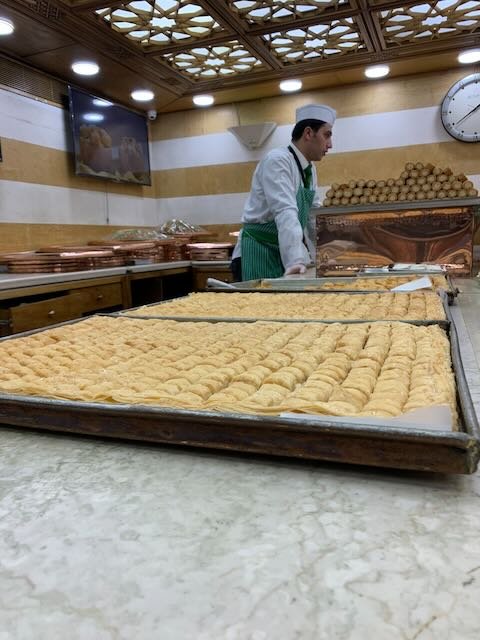
Don’t skip the wine—Lebanon’s Bekaa Valley produces award-winning bottles, and many vineyards welcome visitors for tastings and tours. And dessert? Just try saying no to warm knafeh or flaky baklava with orange blossom syrup.

Beirut
The Legendary Food of Lebanon
If you travel for food—and let’s be honest, who doesn’t?—Then Lebanon belongs on your bucket list. Lebanese cuisine is built on freshness, balance, and big flavor. It's the kind of food that tastes like it was made by someone’s grandmother, even in a busy restaurant.

And for photographers, it’s a dream: rich textures, colorful plates, and beautiful natural light from Beirut's many open-air cafés and garden courtyards.

The Legendary Sweets of Tripoli
You will not leave Lebanon hungry.

Mezze in Beirut
Try these:
Mezze: A spread of small plates like hummus, baba ghanoush, tabbouleh, labneh, and stuffed grape leaves. They're as delicious as they are photogenic.
Manakish: Lebanon’s answer to pizza—flatbread topped with za’atar, cheese, or minced meat. Best shot (and eaten) fresh out of the oven.
Kibbeh: Often called the national dish, it’s a savory mix of bulgur, minced meat, onions, and spices—served raw, fried, or baked.
Fattoush & Tabbouleh: Salads packed with herbs, crispy bread, and citrusy zing.
Grilled meats: Think juicy lamb skewers, shish taouk (marinated chicken), and kafta, served with garlic sauce and fluffy rice.
Baklava & Maamoul: Sweet, flaky pastries filled with nuts or dates—ideal for a coffee break photo set-up.
Arak: A strong anise-flavored spirit typically sipped slowly with meze. Clear until you add water, when it turns milky-white. A visual (and cultural) experience.
You’ll find incredible food at every level—from high-end restaurants in Beirut to roadside shawarma joints in Tripoli. Even a simple breakfast of labneh, olives, cucumbers, and warm bread feels special here.

Beirut by AUB
Recommended Restaurants:
Tawlet Beirut — A rotating cast of home cooks from across Lebanon take turns running the kitchen here, each bringing dishes from their own region and family tradition. The setting is rustic and unpretentious, long communal tables, an open kitchen, farm-to-table ingredients sourced through the same network that trains rural cooks. This is where you go to taste Lebanon regionally rather than just generically.
Barbar — A Beirut late-night institution, the kind of place locals default to after a long night without needing to think twice. The shawarma is fast, generous, and exactly what it should be; the fatteh is worth ordering even if you think you're too full. No pretense, no wait for a table that matters, just consistently good food at any hour.
Em Sherif — My favorite restaurant in Beirut. The Lebanese cuisine here is elevated without losing what makes it Lebanese, generous mezze spreads, meat cooked with real precision, and a room designed to make you feel like you're at the most important table in the city. Reserve ahead; this is a destination meal, not a casual stop.
Al Falamanki — A garden setting that slows you down the moment you sit, mezze and tea meant to be lingered over rather than rushed through. This is where Beirutis go for a long, unhurried afternoon or evening, the kind of meal that starts as lunch and quietly becomes dinner.
Liza Beirut — Chic without being cold, and the food matches the interior in ambition. This is a strong pick if you want a meal that photographs as well as it tastes, soft natural light, considered plating, and a menu that treats Lebanese classics with real technique.
Mayrig — Armenian-Lebanese cuisine that reflects Beirut's layered immigrant history as much as its flavor profile. The dishes carry deep, slow-cooked character, and the presentation is thoughtful without feeling fussy. A strong choice for understanding a part of Lebanon's food culture that visitors often miss entirely.

Mezze
Best Coffee Shops in Beirut
Kalei Coffee Co. — A favorite spot among Beirut's creative crowd, with an industrial-meets-warm interior that photographs almost as well as the coffee tastes. The espresso is consistently strong, and the pace is unhurried enough that you can sit with a laptop for an hour of editing without feeling rushed..
Sip Beirut — My favorite coffee stop in the city. The interior is clean and minimalist, all soft light and quiet lines, and the flat whites are genuinely some of the best I've had anywhere. It's a small space, so mornings are the right time to catch it before it fills.
Café Younes — A Beirut institution, roasting and serving coffee since 1935. The space feels lived-in rather than curated, with worn wood, the smell of beans roasting nearby, and a rotating selection of single-origin coffee that changes with what's freshly in. This is where you go to taste Beirut's coffee history, not just a good cup.



Photography Gear to Bring to Lebanon
Lebanon gives you everything: coastline, Roman ruins, mountain villages, street life, and modern architecture. Your gear should be versatile, not excessive.
DSLR and Mirrorless Kit
Camera body. Bring a high-resolution mirrorless body that handles dynamic range well. The Canon EOS R5 Mark II, Sony A7R V, and Nikon Z8 all offer the flexibility you need for landscapes, city scenes, and detailed architectural work at ancient sites like Baalbek. If you are traveling light, one body is enough. If you bring a second body, the Leica Q3 is an outstanding walk-around camera for Beirut's streets. Its 28mm focal length is ideal for the city.
16 to 35mm. Your most important lens in Lebanon. Perfect for architecture in Beirut, sweeping landscapes in the Qadisha Valley, and dramatic foreground compositions at Roman temples. Use it at Baalbek to capture the full scale of the columns.
24 to 70mm. Your everyday lens. Great for street photography, environmental portraits, and travel storytelling. If you want to bring only one lens, this is the safest choice.
70 to 200mm. Excellent for compressing mountain layers, isolating architectural details, and capturing candid moments from a respectful distance in markets and villages. Also useful at Baalbek for isolating individual carvings and column details.
Accessories:
Travel tripod for sunrise and sunset along the Mediterranean and long exposures in mountain valleys
ND filters (3, 6, and 10 stop) for smoothing coastal water and controlling bright midday light
Polarizing filter to deepen blue skies and cut glare on the Mediterranean
Extra batteries, especially for early starts or remote mountain locations where power can be inconsistent
Samsung T7 SSD for daily backup
NYA-EVO bag or equivalent carry-on-compatible bag for moving between locations
Drone. Lebanon has drone regulations and enforcement can vary, especially in and around Beirut, near historical sites, and in areas with a security presence. Always check current rules before your trip, fly with discretion, and never launch near military installations, checkpoints, or sensitive infrastructure.

The Corniche of Beirut
iPhone Photography Tips for Lebanon
Lebanon is one of the most rewarding destinations for iPhone photography, and here is why: the country is dense with visual contrast at every scale. You are never more than a few steps from a strong frame.
Gemmayze and Mar Mikhael street scenes. Use the standard lens (26mm equivalent) and shoot in the golden hour. The painted facades, tiled balconies, and worn doorways are incredibly photogenic at low angles with long shadows. Turn on ProRAW if you have an iPhone 14 Pro or later. You will recover far more detail in the shadows of narrow alleyways.
Baalbek columns. Switch to the ultrawide lens and get in close to a single column base. Shoot upward at a slight angle. The geometry of the stone courses creates natural leading lines toward the sky. This is one of those locations where the ultrawide actually outperforms a wide zoom for pure drama.
Byblos harbor at blue hour. The reflections in the harbor water during blue hour are ideal for the iPhone's Night Mode. Put the phone on a wall or ledge, activate Night Mode, and let it work for 3 to 5 seconds. The boat colors and harbor lights reflect cleanly onto still water. You will not need a tripod if the surface is stable.
Tripoli souks. Cinematic Mode at 1x works well in the covered market passages where shafts of light break through. For stills, use Portrait Mode on vendors or craftspeople from a natural distance of about 5 to 6 feet. The depth separation against the textured stone background is excellent.
Corniche at sunrise. Use the standard lens and shoot into the light with the Pigeon Rocks on the horizon. Expose for the sky and let the foreground go dark. The silhouette of the rocks against early morning color is one of the strongest iPhone images you can make in Beirut.
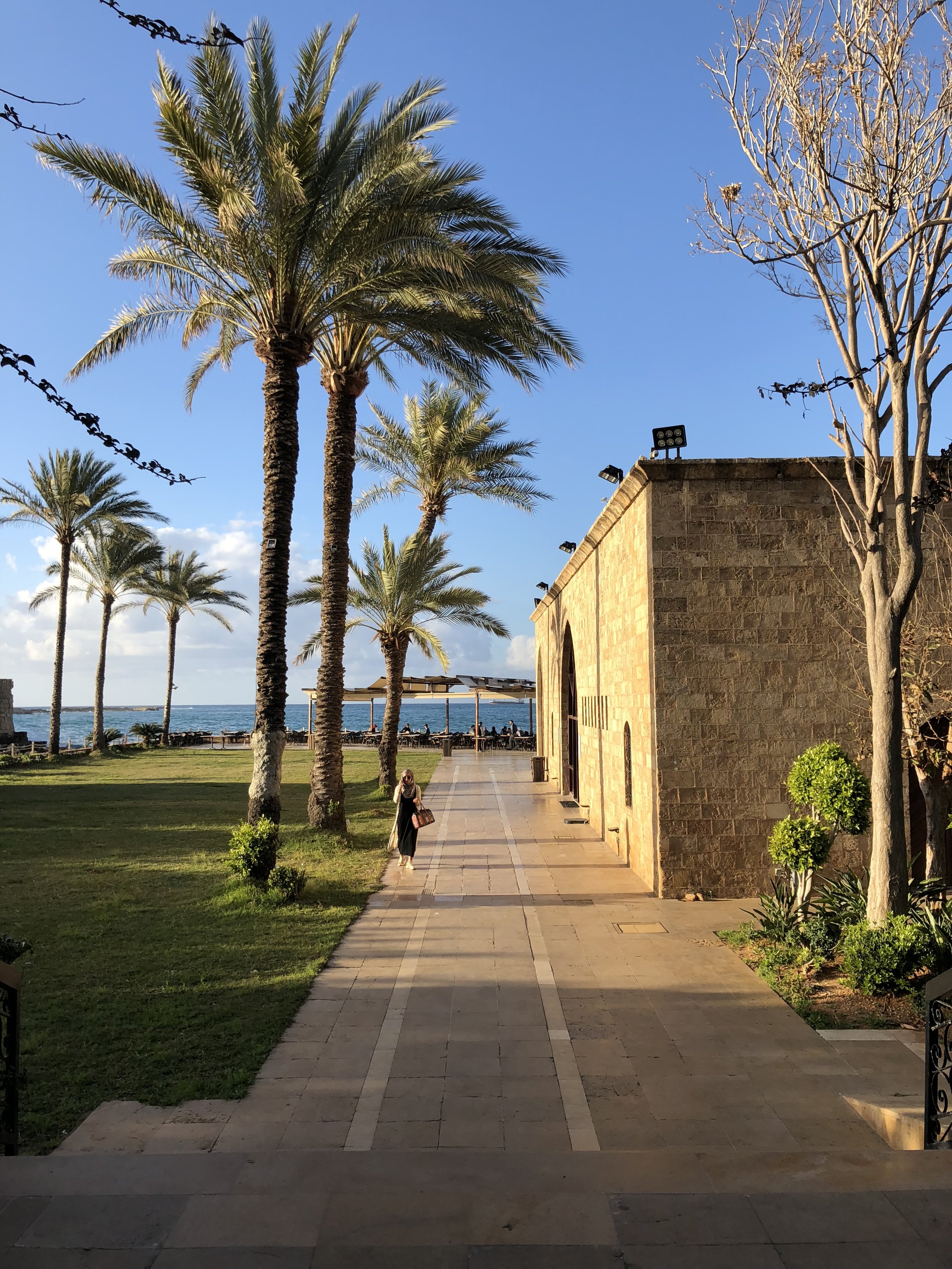
The Rest House in Sidon
Best Photography Spots in Lebanon

Jiyeh
Baalbek Roman Ruins
The Roman ruins of Baalbek are among the most impressive in the world. When you first stand beneath the columns of the Temple of Jupiter, you feel small in the best possible way. The scale is genuinely hard to describe. Massive stone blocks. Towering columns. Carvings that have survived nearly two thousand years. The Temple of Bacchus, standing almost intact next to it, gives you a sense of what the full complex looked like at its peak.
The light here transforms through the day. Midday is flat and harsh. Golden hour turns the limestone warm and deep, and shadows begin to define every carved surface.
📷 Pro Tip: Arrive at least 90 minutes before sunset. Position yourself at the southern end of the Temple of Jupiter platform and shoot north along the row of standing columns. At 16mm, you can capture the full sequence of columns with the surrounding mountains in the background. Switch to 70 to 200mm to isolate individual column capitals and the carved friezes. Stay past sunset. The columns hold warm color well into blue hour, and the complex is often quiet once tour groups leave. Check current entry requirements and access times before your visit, as these have varied.
Best time: Late afternoon through blue hour. Access: Paid admission. Baalbek is approximately 85 km east of Beirut; hire a driver for the day.
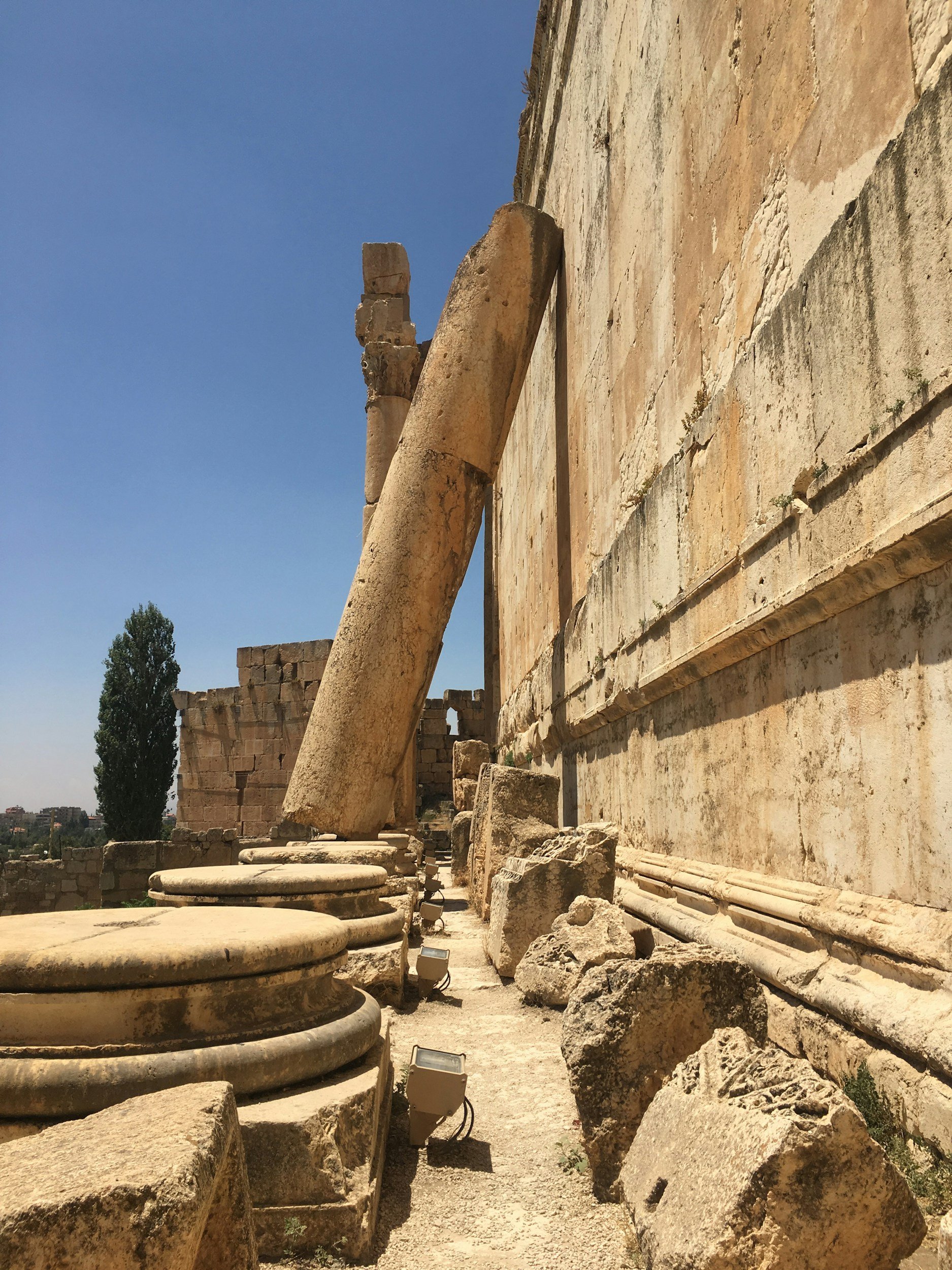
Temple of Jupiter in Baalbek, Lebanon
Byblos Old Port
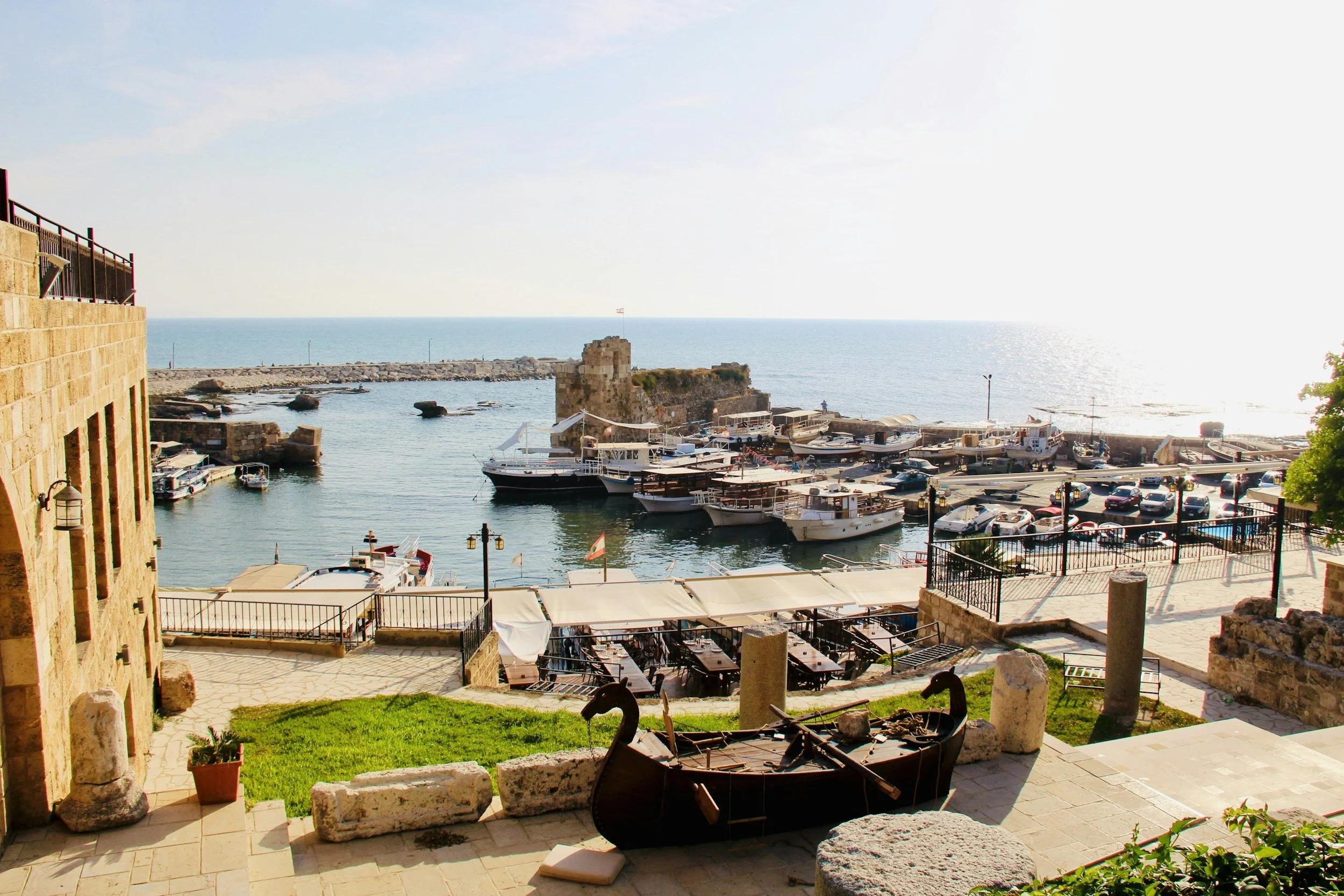
The old port of Byblos is one of the most photogenic corners of the Mediterranean. Colorful wooden fishing boats float quietly in the harbor. Behind them, medieval stone buildings glow as the light fades. It feels timeless. You can almost imagine Phoenician traders docking here thousands of years ago, and the Crusader castle looming above the port adds a vertical element that anchors the whole scene.
📷 Pro Tip: Arrive at least 45 minutes before sunset. Position yourself on the stone quay at the southern edge of the harbor, shooting north toward the castle. A 24 to 70mm covers the full harbor width, while a 70 to 200mm lets you compress the boats with the castle behind them. After the sun drops, stay through blue hour. Harbor lights come on, reflections begin to shimmer on the water, and the scene changes completely. A small tripod or a steady surface is worth having for the longer exposures. Access is free along the waterfront; the Crusader castle and archaeological site require a paid entrance ticket.
Best time: Sunset into blue hour. Access: Waterfront free; archaeological site paid. Byblos is about 37 km north of Beirut, roughly 45 minutes by car.
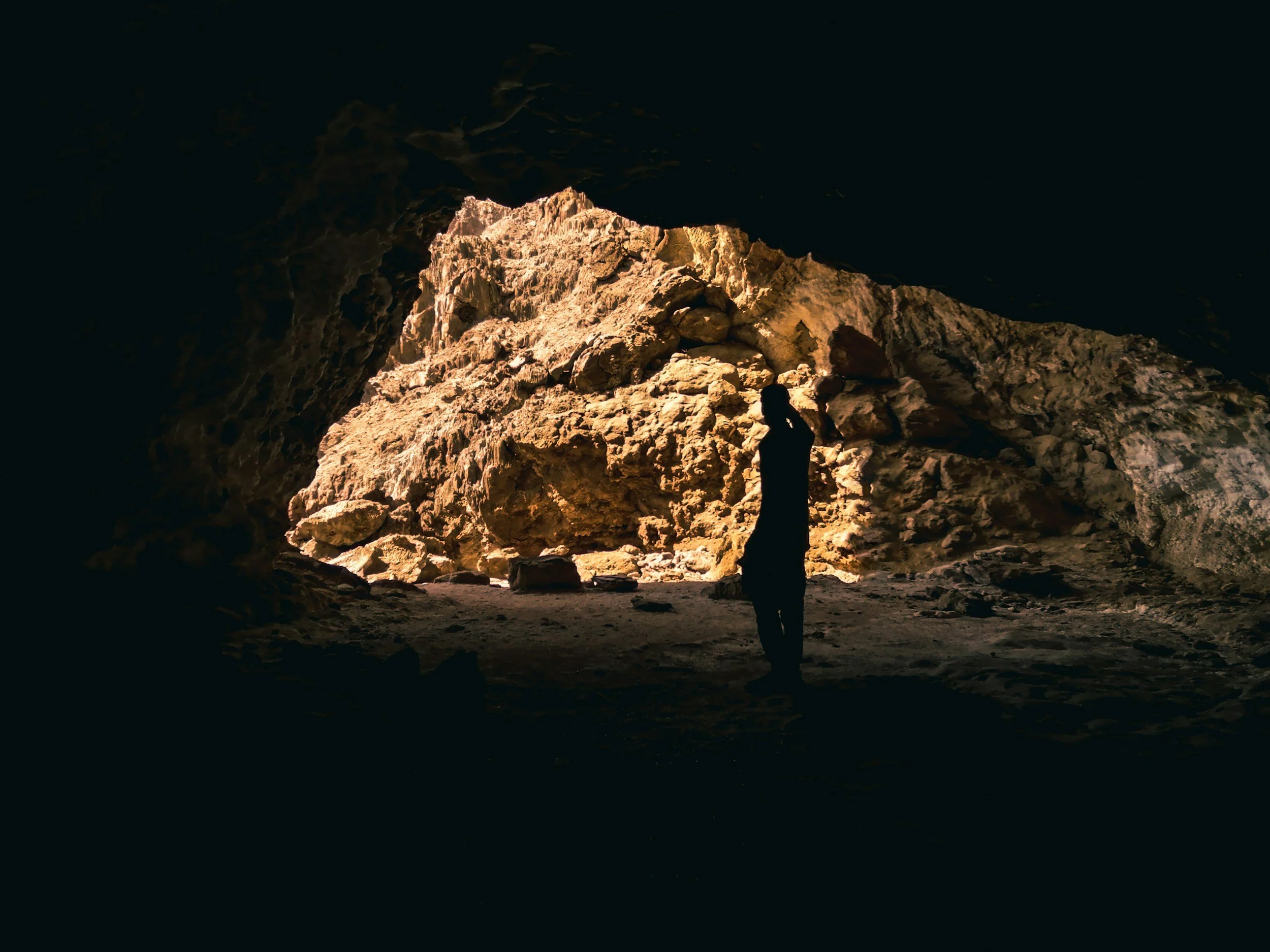
Jeita Grotto
Just north of Beirut lies one of Lebanon's most extraordinary natural wonders. Jeita Grotto is not just a cave. It feels like stepping inside a cathedral carved by water and time. Towering stalactites hang from the ceiling. Massive stalagmites rise from the floor. An underground river glides silently through the lower gallery. The scale and texture are unlike anything I have seen underground anywhere else in the world.
📷 Pro Tip: Photography rules at Jeita are strictly enforced and change periodically. As of recent visits, cameras and phones are prohibited in certain sections, particularly the lower boat gallery. Always check the current policy on the official Jeita Grotto website before your visit and accept the restrictions gracefully. Where photography is permitted, set your camera to a high ISO (3200 to 6400) and open the aperture as wide as it will go. The grotto is lit artificially, and the color temperature is warm, so shoot in RAW and correct the white balance in post. Wider angles (16 to 24mm) work best to convey the scale of the formations. Go early in the morning before tour groups arrive.
Best time: Early morning on weekdays. Access: Paid admission. Located about 18 km north of Beirut, easily reachable by hire car or private driver.
Qadisha Valley
The Qadisha Valley is one of the most dramatic landscapes in Lebanon. Deep gorges. Ancient monasteries carved directly into the cliff face. Layers of mountains folding into each other in every direction. It feels ancient and spiritual at the same time, and the scale surprises you even if you have seen the photographs.
📷 Pro Tip: Arrive at sunrise. Position yourself on the eastern rim of the valley, which overlooks the full depth of the gorge and gives you the monastery of Qannoubin in the midground with the valley floor far below. In spring, mist sits in the valley bottom for an hour or so after first light, and it is extraordinary. A 70 to 200mm lets you compress the monastery against the cliff face behind it; a 16 to 35mm works for the full valley panorama. By mid-morning, the light gets harsh, and the mist burns off. Come back at sunset for a second shooting window when the light warms the eastern cliffs. Access to the valley floor and monasteries involves some hiking; wear appropriate footwear.
Best time: Sunrise in spring or autumn. Access: Free. Located in northern Lebanon near Bcharre, approximately 2 hours from Beirut by car.

The Qadisha Valley
Pigeon Rocks, Raouché
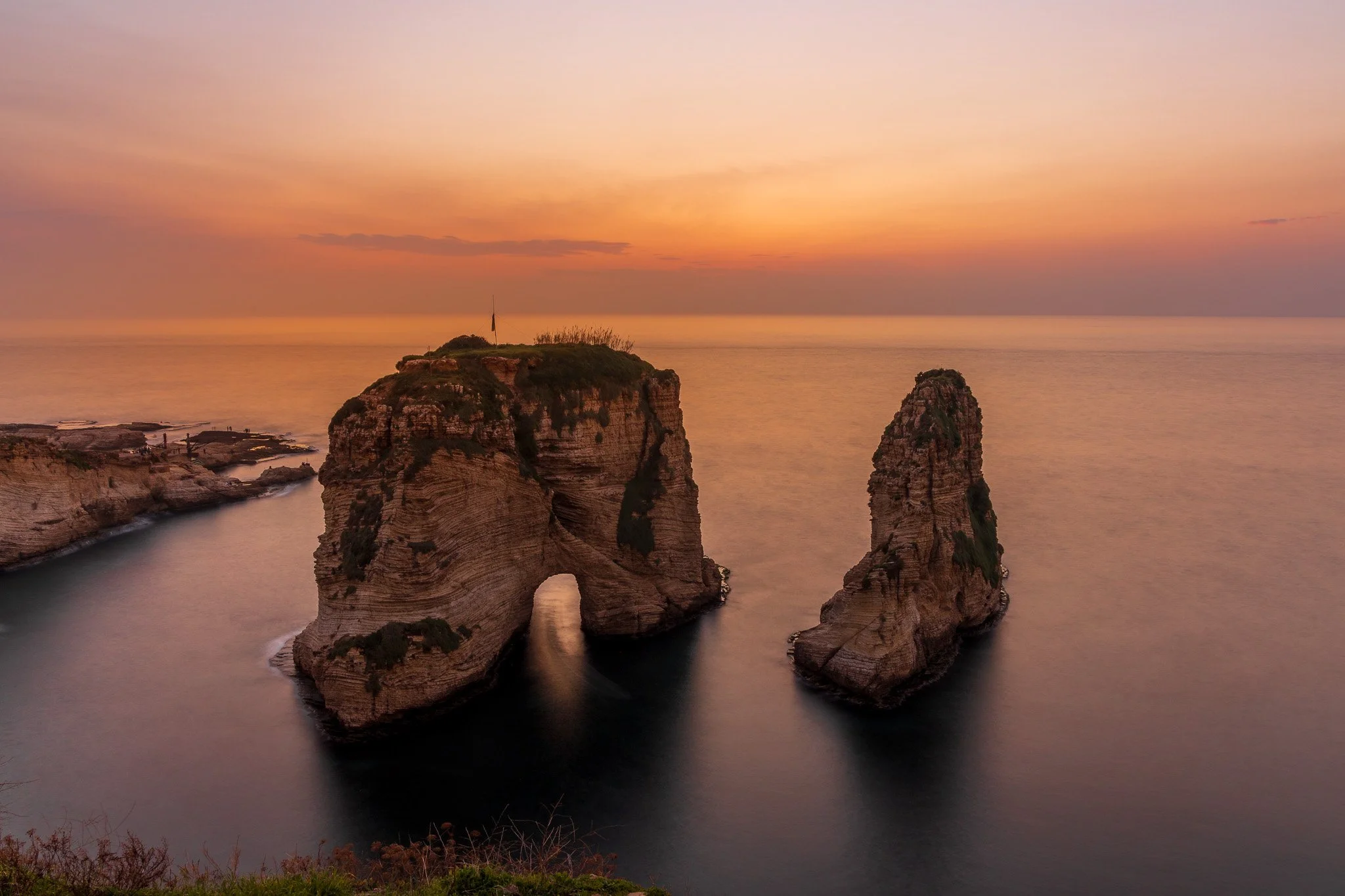
The Pigeon Rocks rise dramatically from the Mediterranean just off the coast of Beirut in the Raouché district. These massive limestone formations are one of Lebanon's most recognizable landmarks. Simple. Powerful. Timeless. What makes them genuinely compelling for photography is the way the light changes around them through the day, and particularly how the sea color shifts from afternoon gold to deep blue as the sun drops.
📷 Pro Tip: Head to the Corniche in Raouché at least 45 minutes before sunset and walk the promenade to find your position. The standard shooting position is directly across from the rocks, but try walking south to stack the two formations differently. A 70 to 200mm compresses the sea between you and the rocks beautifully. Stay well into blue hour; the sky after the sun disappears often turns richer and more saturated than during the actual sunset. For iPhone shooters, this is an ideal location to shoot in Portrait Landscape mode with the rocks as subjects. The Corniche is public and always accessible.
Best time: Sunset into blue hour. Access: Free. Located in the Raouché district of western Beirut, walkable from most central hotels.
Tripoli's Old Souks
The old souks of Tripoli feel untouched by time. Narrow alleyways. Stone arches. Hanging lanterns. The scent of spices and soap in the air. This is one of the most authentic street photography experiences in Lebanon, and one of the most under-visited by international photographers. Tripoli rewards patience.
📷 Pro Tip: Arrive early morning, before 9 AM, when shopkeepers are lifting metal shutters and sweeping stone floors. Light slips in at sharp angles through gaps in the roof structure, creating dramatic contrast and long shadow lines. Position yourself in the covered passages of the Souq al-Haraj or the Souq al-Ghazel and shoot toward the light source; silhouettes of vendors against the lit background work well at this hour. A 24 to 70mm covers most situations. Bring your 35mm or 50mm prime if you want cleaner low-light performance in the darker passages. Always ask permission before photographing individuals. A smile and a few words of Arabic goes a long way.
Best time: Early morning. Access: Free. Tripoli is approximately 85 km north of Beirut, about 90 minutes by car or hired driver.

Mansouri Great Mosque
Here are a few photos from Byblos, Ehden and Batroun.


Sidon Sea Castle and Old City
Sidon feels authentic and unhurried. Start at the Sea Castle, built by the Crusaders directly over the water on a small island connected to the shore by a narrow bridge. It offers strong leading lines and dramatic coastal compositions, and the reflection in the water on a calm morning is clean and quiet. Then walk into the old city. Narrow streets, spice shops, traditional bakeries. It is less polished than Beirut, which makes it powerful for documentary-style photography.
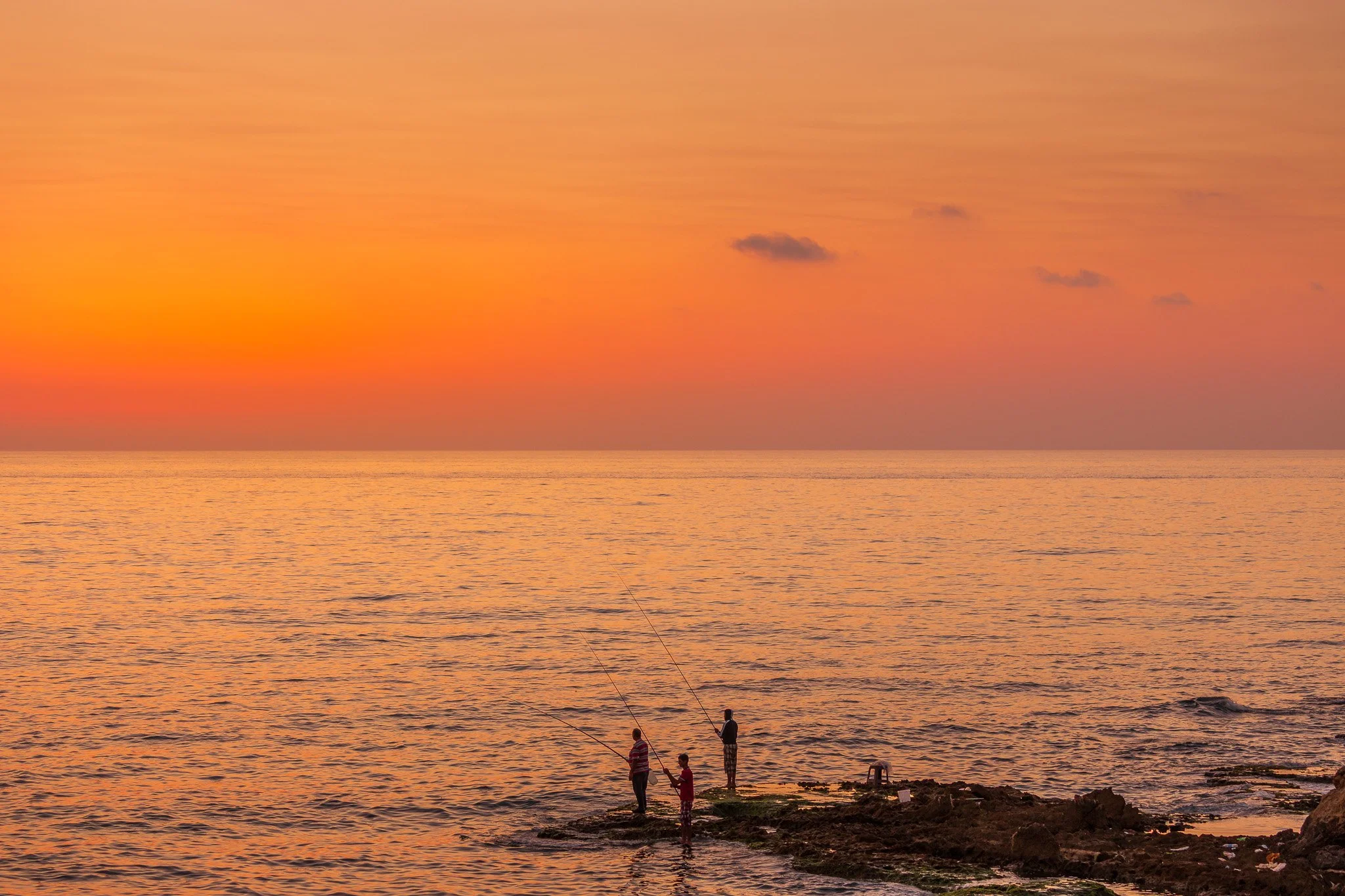
📷 Pro Tip: Arrive at the Sea Castle around 30 minutes after sunrise. Position yourself on the bridge approach and shoot toward the castle with the morning light coming from your left (east). A 24 to 70mm at the wider end works well for the full structure with the sea on both sides. Move to 70 to 200mm to isolate the tower against the open water behind it. In the old souk, shoot at eye level and slow down. The best images here come from observation, not rushing. Fishermen bring in catches in the early morning at the harbor; this is worth arriving early for.
Best time: Early morning. Access: Sea Castle has a paid entrance fee. Sidon is about 40 km south of Beirut, approximately 45 minutes to an hour by car.
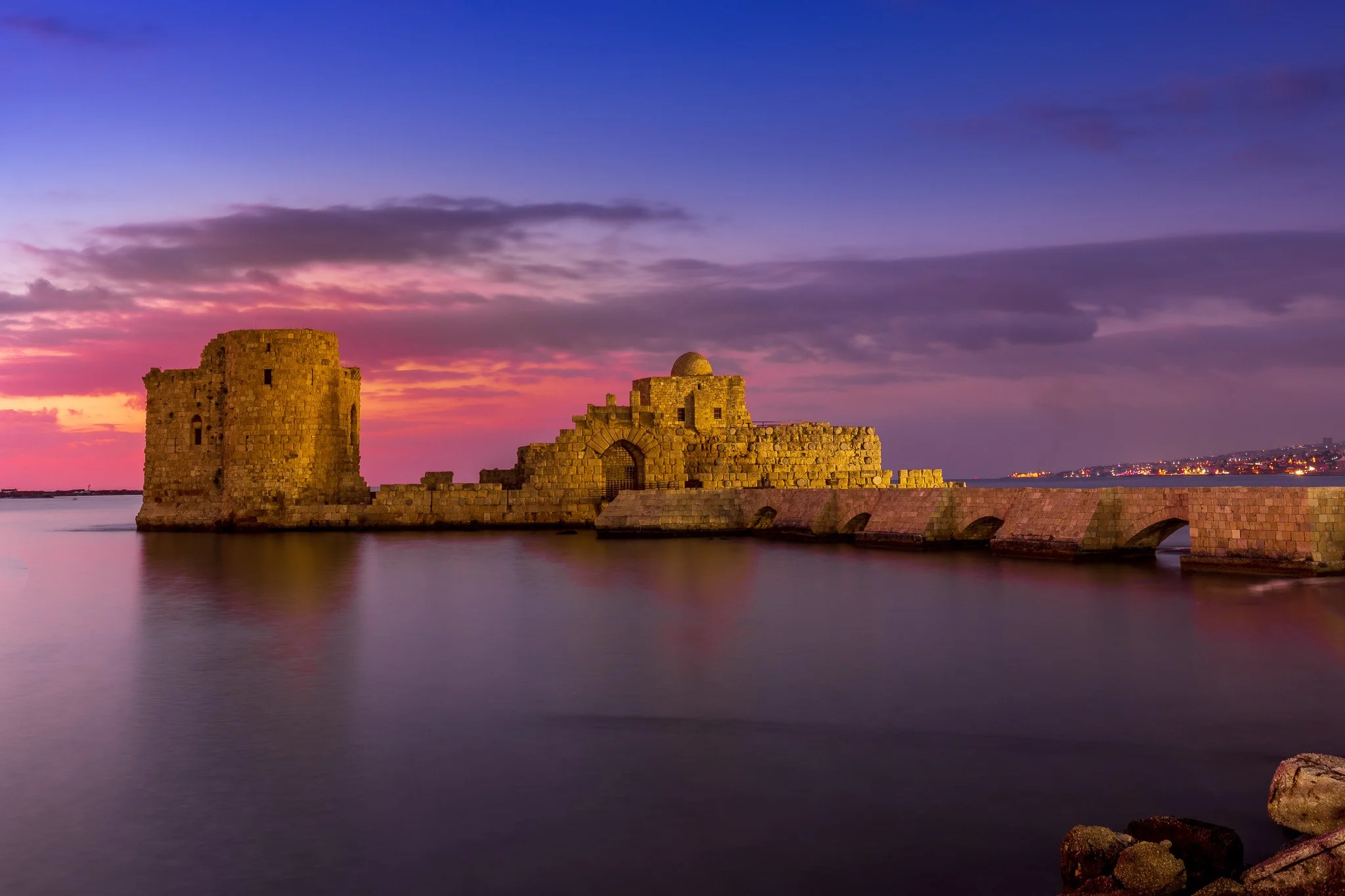
Sidon feels authentic and grounded.
Start at the Sea Castle, rising directly from the water. Built by the Crusaders, it offers strong leading lines and dramatic coastal compositions. Go early for softer light and fewer visitors.
Tyre
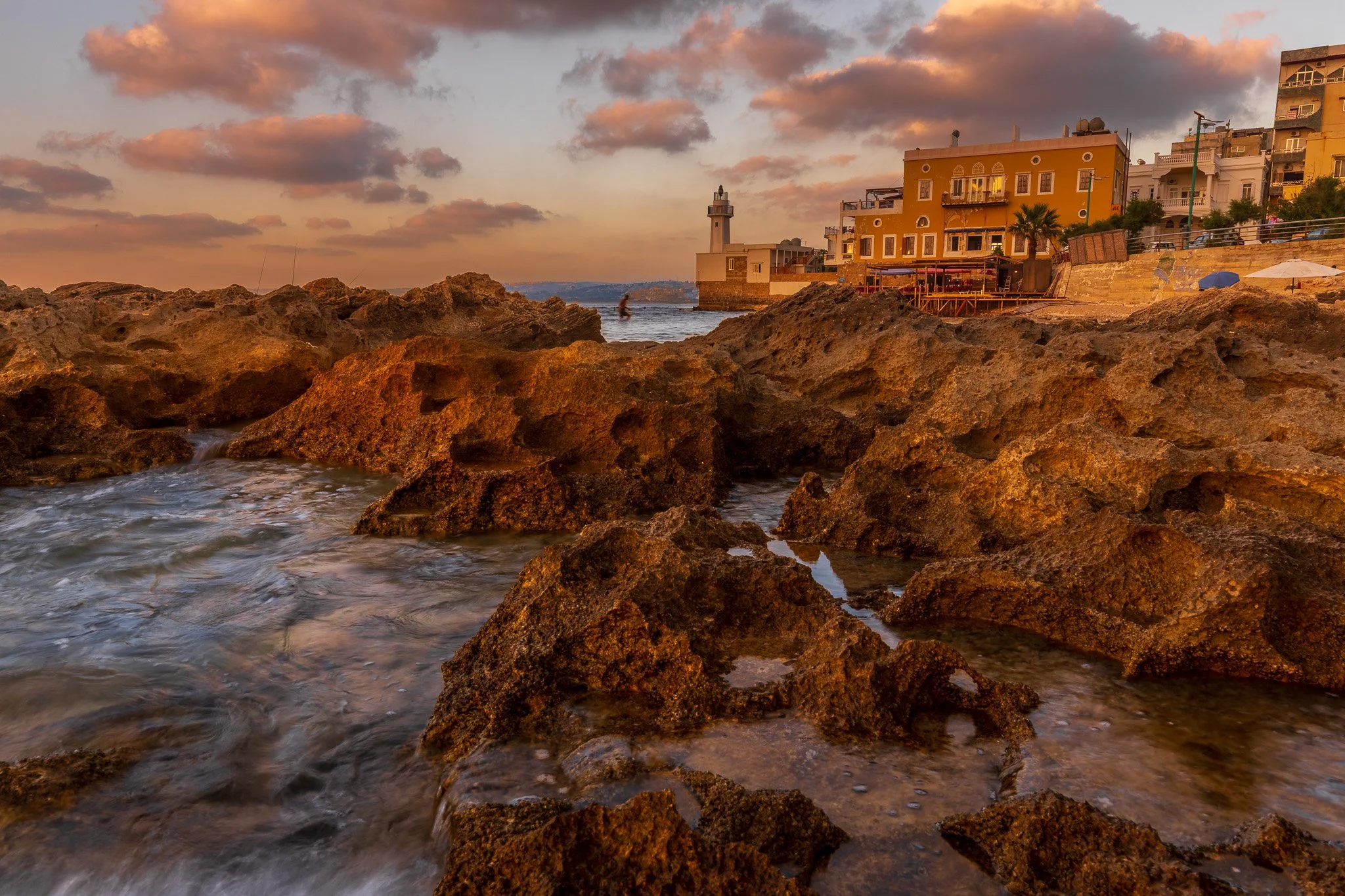
Continue south to Tyre, one of the oldest Phoenician cities in the world.
The Roman ruins here are extraordinary. The hippodrome is massive and often quiet, which allows you to compose without distraction. Bring a wide lens for scale and a telephoto for isolating columns and textures.
Tyre also has beautiful sandy beaches. Late afternoon light over the Mediterranean is soft and golden. It is a perfect way to end the day.
Hire a Driver
Hire a driver if you can. It makes the day smoother and allows you to stop whenever the light catches your eye along the coast.
Visiting Sidon and Tyre adds depth to your Lebanon experience. Less hurried. Less commercial. Deeply historic.
This is where the sea, the stones, and the stories come together.
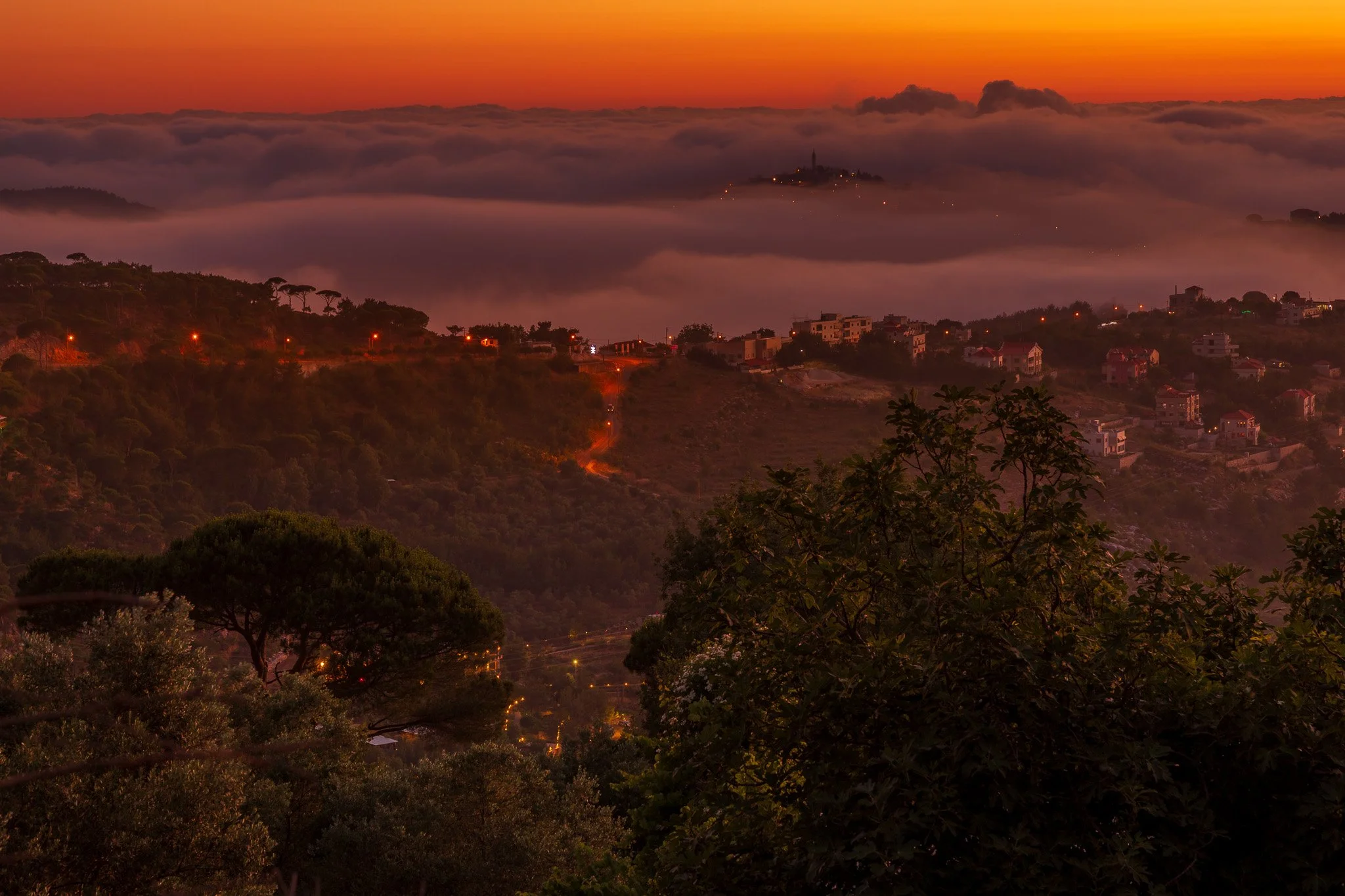
A Cloud Inversion from Jezzine
Festivals & Cultural Events in Lebanon
Byblos International Festival (July). One of the region's oldest and most respected outdoor music festivals, held against the ancient walls of the Byblos citadel. Performances range from regional Arabic artists to international acts. The setting is extraordinary for photography, though access during performances requires a ticket. Arrive early on non-performance days to photograph the stage against the ruins in good light.
Beirut Art Week (September). A week-long series of gallery openings, public installations, and street art events across the city. Mar Mikhael and Gemmayzeh are the focal points. Good for documentary-style photography and portrait work if you engage with artists and attendees.
Al Bustan Festival (February to March). A classical music and performing arts festival held in the Beit Mery area in the mountains above Beirut. The venue settings and surrounding landscape are worth photographing even if you do not attend a performance. This is also one of the better times to photograph the mountain villages before spring fully arrives.
Souk el Tayeb Saturday Market (weekly, year-round). Not a festival, but worth treating like one. Every Saturday morning in Mar Mikhael, Lebanese farmers and producers set up in the street outside Tawlet. Colors, textures, food, faces, conversation. It is an hour of street photography that feels completely natural because everyone there is focused on the food, not on you.

Byblos - St. Jean-Marc Cathedral
Frequently Asked Questions About Visiting Lebanon
Is Lebanon safe to visit?
Check current travel advisories from your government before planning a trip, conditions can shift. Within Beirut and the areas most visitors go, day-to-day life continues normally, but staying informed is essential.
Do you need a driver in Lebanon?
Strongly recommended, don't drive yourself. Traffic patterns are fluid, road signs are inconsistent outside the city, and a private driver lets you chase light and stop for a view without worrying about navigating back after dark.
What are the best photo spots in Lebanon?
Baalbek's Roman temples at golden hour, Byblos's old port through blue hour, and Batroun's coastline are three that consistently deliver. The full list with Pro Tips is above.
Can you fly a drone in Lebanon?
Check local regulations and use discretion, especially in cities and near historical or sensitive sites. Rules can be inconsistently enforced, so caution is warranted.
What would you want first-time visitors to understand about Lebanon?
The food is legendary, and the people are so incredible. Both of those things are true in a way that's hard to convey until you're actually there, sitting at a table that's somehow always fuller than you expected, with people who make you feel like you've known them for years.
How many days do you need in Lebanon?
Seven to ten days. It's a small country geographically, but visually and historically rich enough that you can cover a lot without ever feeling rushed.
Is it worth combining Lebanon with other Middle East destinations?
Yes, Abu Dhabi and Doha are both a short flight away and offer a completely different photographic experience, contemporary architecture and Gulf culture rather than Lebanon's layered ancient history.
When is the best time to visit for photography?
Spring (April-June) or autumn (September-November). Both give balanced light and comfortable temperatures; summer brings heat and haze, and winter mountain access can be unpredictable.
Final Thoughts on Lebanon
Lebanon is a country of contrasts. Ancient and modern. Calm and electric. Mountains that drop into the Mediterranean. Roman temples that still command silence.
But for me, it is more than a destination.
I love Lebanon. I love its people. I spent 22 years of my life there. I built friendships there. I grew there. I learned there. Part of me will always belong to that land.
I watched the sun rise over Beirut countless times. I stood in awe beneath the columns of Baalbek. I walked the harbor in Byblos as fishing boats drifted in at dusk.
Lebanon shaped me. It taught me resilience. It taught me generosity. It showed me beauty in the middle of complexity.
When you visit, you will photograph extraordinary landscapes and ancient history. But if you allow yourself to slow down, you will feel something deeper. Lebanon stays with you. When you visit, you will photograph stunning landscapes and ancient history. But if you allow yourself to slow down, you will also feel something deeper.
Lebanon stays with you.
And for me, it always will.
Want to improve your photography while exploring some incredible destinations? Join me on one of my photography workshops! You can find all the details, including upcoming destinations and dates, through the links below.
Let's Stay Connected!
If you are in the Middle East, these guides belong in your planning:
My Photography & Travel Guide to Dubai, UAE — Twenty-five years of visits have given me a deep love for this city. The architecture is bold, the desert light is extraordinary, and the range of subjects, from the old Creek neighborhoods to the towers of Downtown, makes it one of the most versatile photography destinations in the region.
My Photography & Travel Guide to Abu Dhabi, UAE — An hour and a half down the highway and a completely different experience. The Sheikh Zayed Grand Mosque alone justifies the trip, and the Saadiyat Island cultural district is one of the most photographically interesting areas in the Gulf.
My Photography & Travel Guide to Doha, Qatar — A short flight from Beirut and a city in its own visual league. The Museum of Islamic Art at sunrise, the Souq Waqif at dusk, and a skyline that moves fast. Worth the detour.
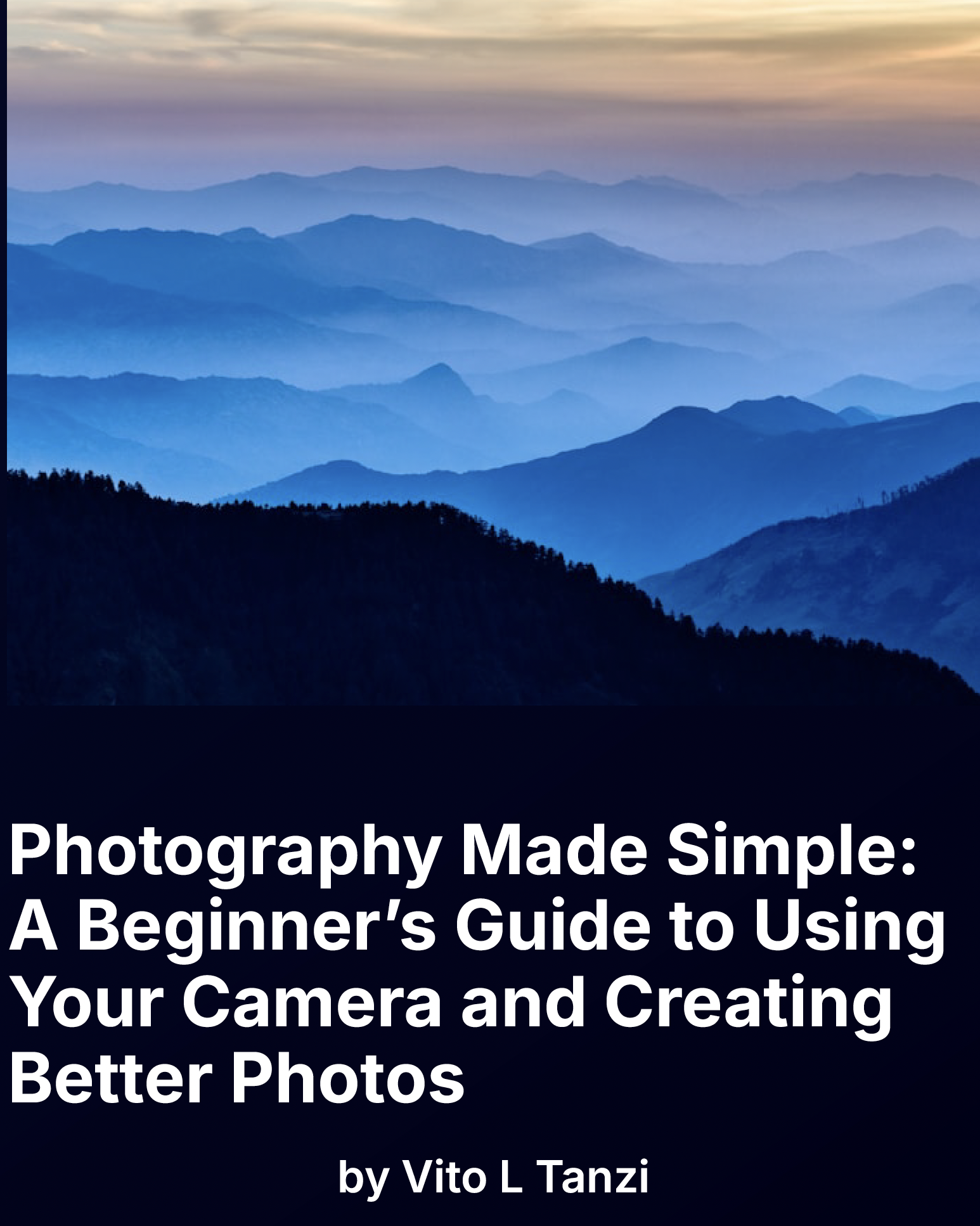
Finally—a beginner-friendly photography guide that makes sense.
If you've ever picked up a camera and thought, "Now what?" this is the book for you.
Photography Made Simple is written for adults who are just starting out and want a clear, encouraging, real-world approach to learning photography. Whether you're using a DSLR, mirrorless, or just your smartphone, this guide walks you through the basics—without the jargon or tech overwhelm.
Inside, you'll learn:
The only camera settings you really need to know to get started
How to shoot sharper, more intentional photos using light and composition
Simple tips for portraits, landscapes, travel, and everyday life
What gear you do (and don’t) need
How to create better photos without upgrading your camera
You’ll also get practical exercises, cheat sheets, and tips for organizing and editing your images—plus the confidence to shoot off Auto Mode for good.
This is not a textbook. It’s a friendly guide to seeing the world with fresh eyes—and finally capturing what you see the way you imagine it.
📸 Format: PDF download
Pages: 100+
Perfect for: Beginners, hobbyists, and anyone ready to take better photos without the stress