Amsterdam, NL Travel & Photography Guide: Best Photo Spots, Things to Do & Hidden Gems
I have been to Amsterdam more than a dozen times, and I still get lost on purpose.
Not because I do not know where I am going, but because the city rewards wandering more than almost anywhere I have photographed. Turn down an unmarked canal street in the Jordaan at seven in the morning, before the coffee shops have opened and before the delivery bikes start their runs, and you will find a version of Amsterdam that feels yours entirely. The light comes in low and horizontal across the water. The gable houses lean forward above their reflections. A houseboat cat sits on a bow line watching you. You raise the camera and think: I need to come back here.
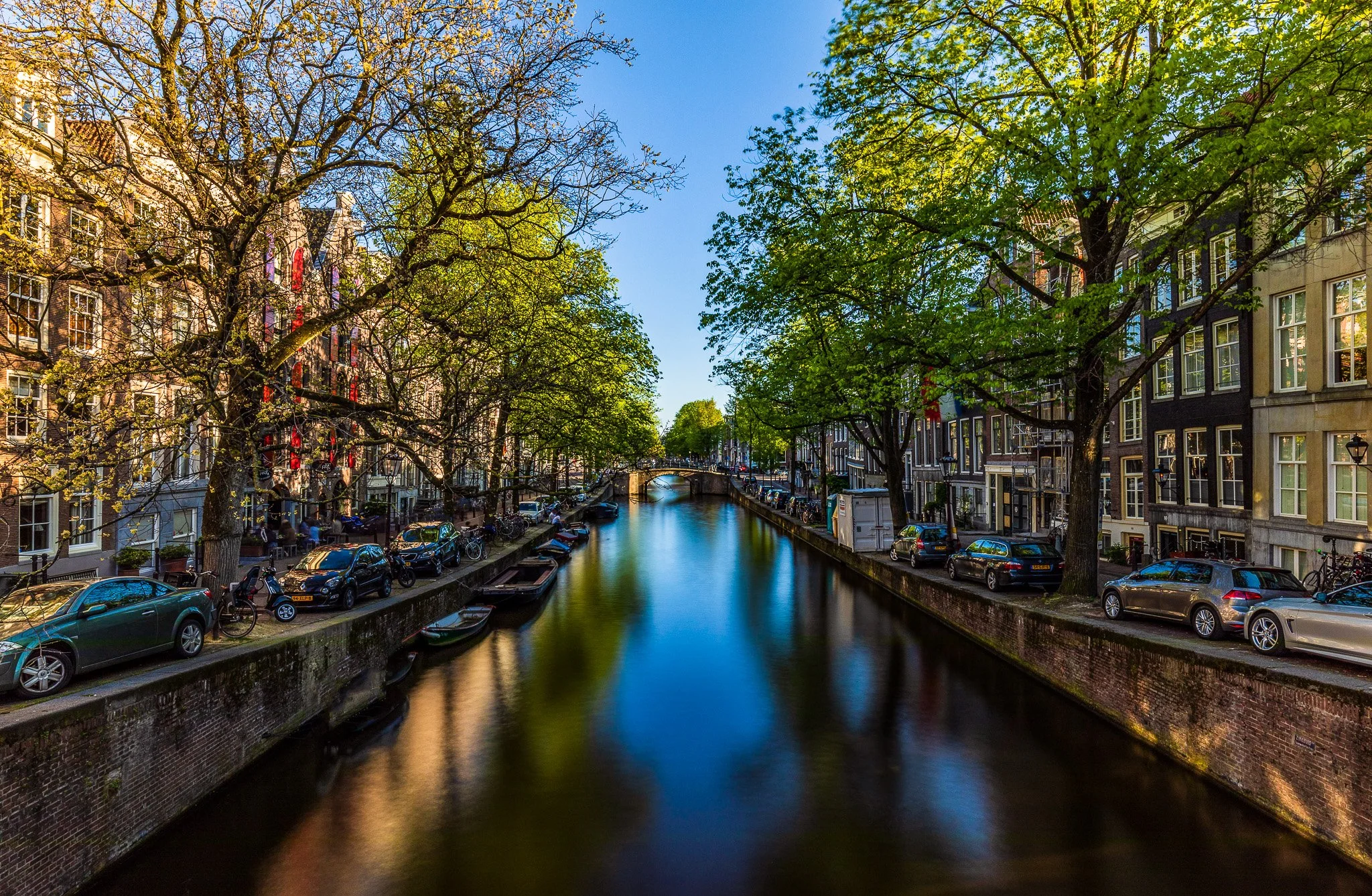
That is Amsterdam's hold on you. It is intimate in a way that larger European capitals are not. The canal belt fits inside a two-kilometer semicircle. You can walk the entire Jordaan in an afternoon. The Rijksmuseum, the Nine Streets, the Bloemenmarkt, and the Magere Brug are all within thirty minutes of each other on foot. Yet within that compact geography, the photographic variety is extraordinary: canals, houseboats, gable facades, bicycles, flower markets, street life, museum courtyards, graffiti halls, and the kind of soft northern light that makes everything it touches look like a 17th-century Dutch painting.
There is a reason those painters were here.
In this Photography Guide to Amsterdam, I share the places and experiences that continue to draw me back. You will find my favorite photography locations, guidance on when and where to shoot, practical travel tips, and gear recommendations, along with cultural insights to help you explore and photograph Amsterdam with confidence, respect, and ease.
Photographer's Notes
Before you go, here are my own takeaways.
Favorite Season: Spring, for the tulips
Favorite Sunrise Location: The Amstel
Favorite Sunset Location: Reguliersgracht and Keizersgracht (the Seven Bridges)
Favorite Neighborhood: Jordaan
Favorite Hotel: Rosewood Amsterdam
Favorite Café: NU koffie & delicatessen
Favorite Lens: 15-35mm f/2.8
Would I Return? 100 percent. I'm always ready to go back.
How Many Days Should I Visit Amsterdam
Three to four days is the right amount of time for a first visit. That gives you enough mornings to shoot the canals at golden hour without rushing, time to cover the key locations at a photographer's pace, and an afternoon or two for museum visits and wandering the Jordaan without an agenda.
If you plan to day-trip to Keukenhof in April or May, add one more day minimum. The tulip fields and Zaanse Schans windmill village are each worth a dedicated half-day outside the city.
For a second visit, five to six days lets you go deeper: De Pijp, Amsterdam Noord, a canal cruise for scouting, and a full day in Haarlem, which is thirty minutes by train and genuinely lovely.
A rough framework for three to four days:
Day 1: Arrive, walk the Nine Streets and Jordaan, blue hour at the Seven Bridges intersection. Dinner in the Jordaan.
Day 2: Pre-dawn at Centraal Station and the Dancing Houses on Damrak. Rijksmuseum exterior by 8 a.m. Interior visit mid-morning. Afternoon at the Bloemenmarkt and a walk along Herengracht. Sunset at the Magere Brug.
Day 3: Jordaan deep dive in the morning. STRAAT Museum in Amsterdam Noord in the afternoon via the NDSM ferry. Canal photography at blue hour from the Leidsegracht/Keizersgracht intersection.
Day 4 (optional): Day trip to Keukenhof in April/May, or Zaanse Schans for windmill photography. Return for a final evening along the Amstel.
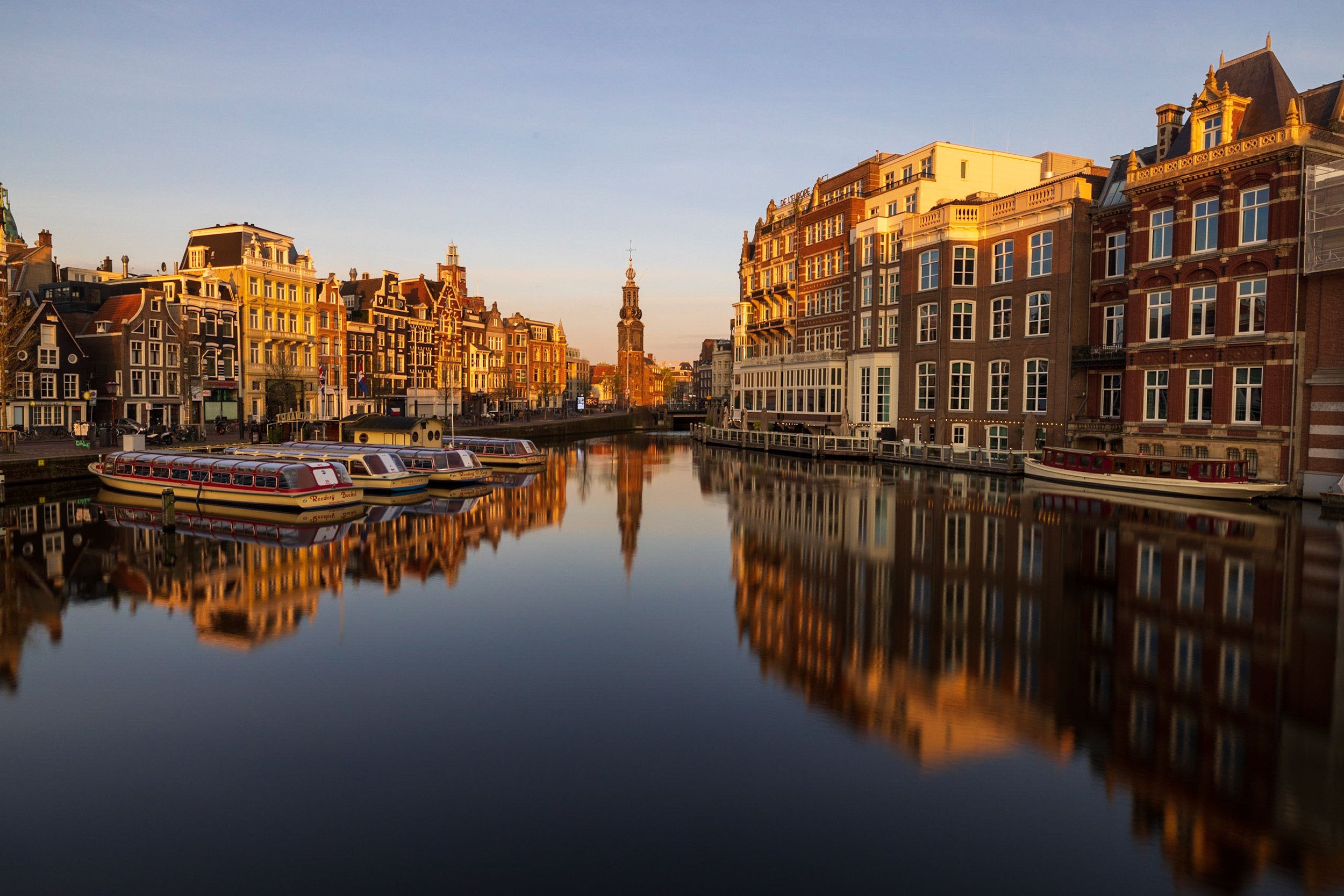
Amstel River
Best Time of Year to Visit Amsterdam
Amsterdam rewards photographers in almost every season, but each one asks something different of you.
April and May are the peak months for photographers, full stop. The tulips are blooming, the city is wrapped in color, the light stays until nearly nine in the evening, and you can extend the trip to Keukenhof and the Bollenstreek tulip fields about an hour south of the city. The crowds are real, but the early mornings are still quiet enough to have the canals to yourself.
September and October are my second choice. Golden leaves blanket the canal belt, the light turns warm and raking in the afternoons, and the summer crowds have thinned. September is also when the Open Monumentendag opens historic buildings that are closed the rest of the year, which is a genuine photography opportunity.
June through August brings the longest days, with golden hour stretching past 10 p.m. Street life is everywhere. Vondelpark fills up. The trade-off is that the canal intersections and popular spots are busy even at dawn, so you need to be earlier than you think.
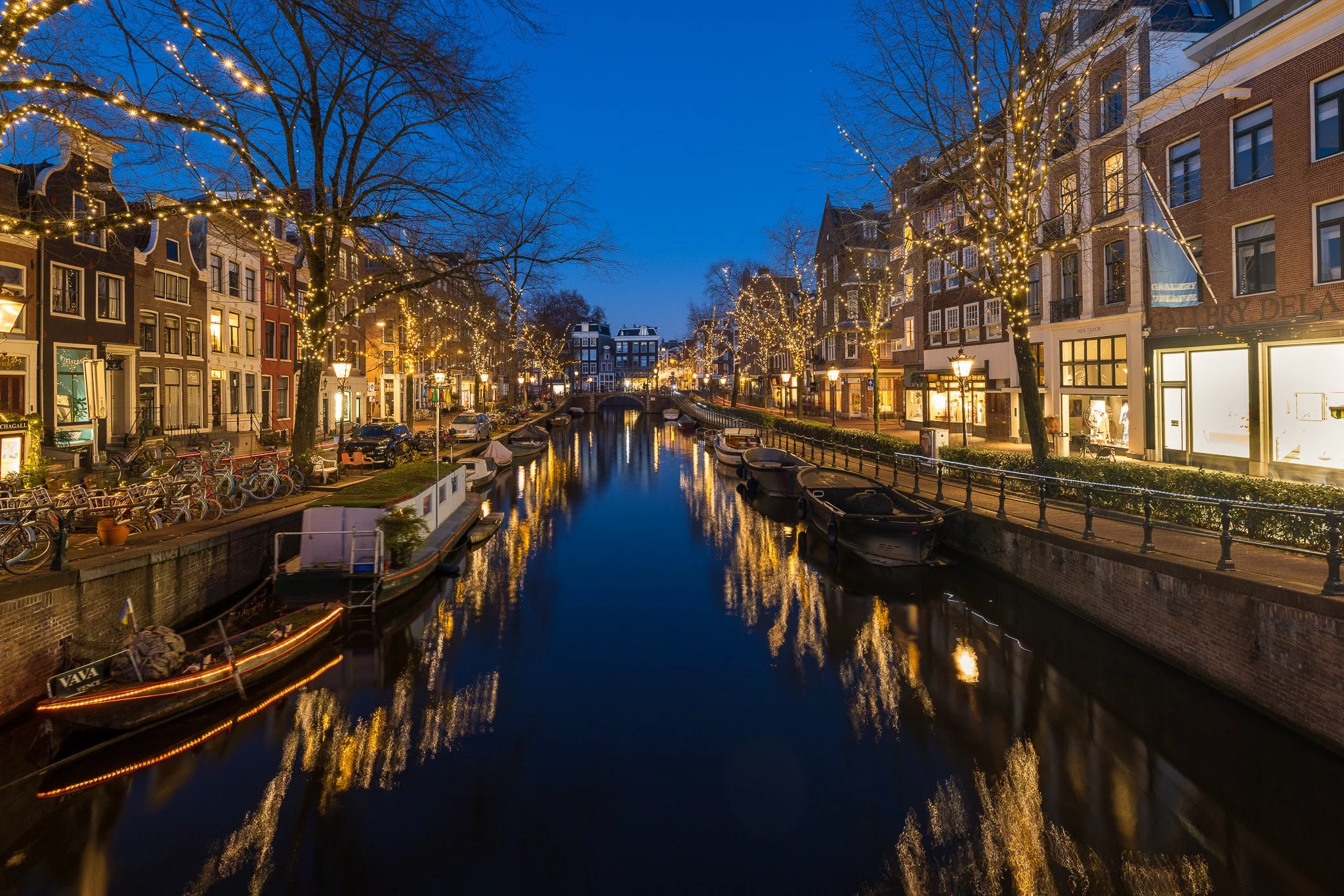
December is underrated for photography. The Amsterdam Light Festival fills the canals with art installations that photograph beautifully at blue hour. The crowds are a fraction of the summer peak, and the winter light is low, dramatic, and directional all day.
Avoid mid-July through mid-August if crowd control matters to you. You can still shoot, but the canals are packed by 8 a.m., and the Nine Streets feel like a weekend market at noon.
Where Should You Stay in Amsterdam
For photographers, the best base is the Canal Belt, specifically the area around the Nine Streets (De 9 Straatjes) and the Jordaan. These neighborhoods put you within walking distance of almost every major photography location in the city, and they immerse you in the Amsterdam that makes the city worth photographing in the first place.
Centrum is the city center and the most practical district for first-time visitors. Dam Square, the Anne Frank House, the Nine Streets, and the main canal intersections are all walkable.
Jordaan sits just west of the canal ring, full of narrow streets, quiet canals, boutique shops, and the kind of local Amsterdam life that has largely been priced out of the more central neighborhoods. It is also one of the best street photography districts in the city.
De Pijp, south of the canal belt, is younger, more local, and home to the Albert Cuyp Market. A good choice for a second or third visit when you want to go deeper.

For a first-time traveler, I would recommend staying in the Centrum or Jordaan. To be more specific, I would try to stay as close as you can to the 9 Streets (De 9 Straatjes). The Nine Streets include the 4 main canals (Herengracht, Keizersgracht, Prinsengracht, Singel) and 3 streets of the Canal Belt.
Luxury Hotels in Amsterdam
Waldorf Astoria Amsterdam — This is one of my favorite hotels. I have stayed here five or six times, and it never disappoints. Built from six interconnected 17th and 18th-century canal houses along the Herengracht, the Gentleman's Canal, the facade alone is one of the most beautiful in the city. The rooms blend Dutch heritage detail with full Waldorf service standards. The Peacock Alley bar is a perfect evening base, and the spa in the vaulted basement is extraordinary. If you stay at one hotel in Amsterdam in your lifetime, make it this one.
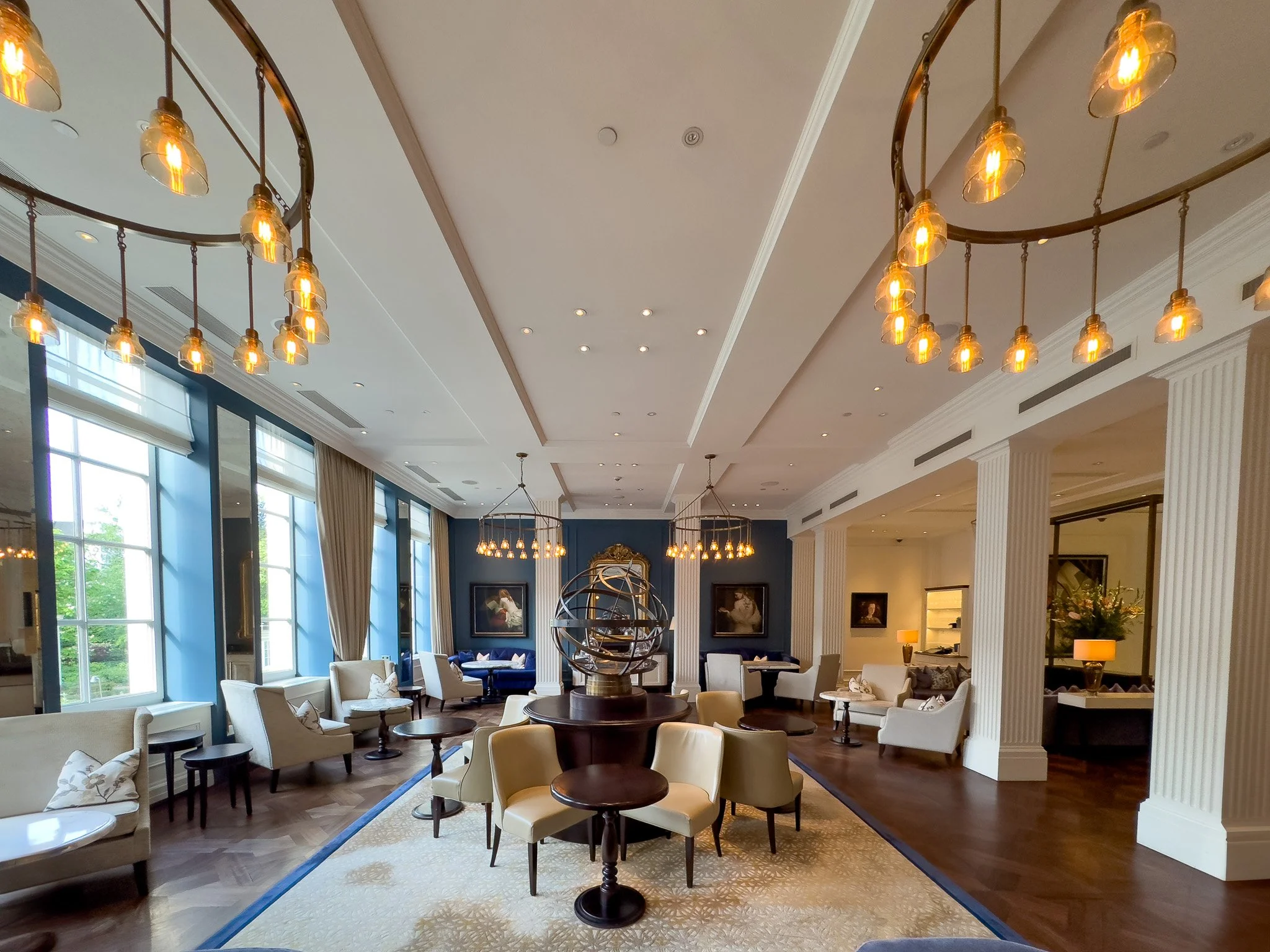
The Lobby of the Waldorf Astoria
The Dylan Amsterdam — Located directly on the Keizersgracht in the Nine Streets, The Dylan is the most intimate luxury option in the city: 40 rooms across two historic canal buildings, each individually designed, with a Michelin-starred restaurant, Vinkeles, set in an 18th-century bakery on the ground floor. The scale of the hotel, small enough to feel like a private house on the canal, makes it genuinely different from the grand hotel options. If you want to be inside the Nine Streets rather than near them, this is your address.
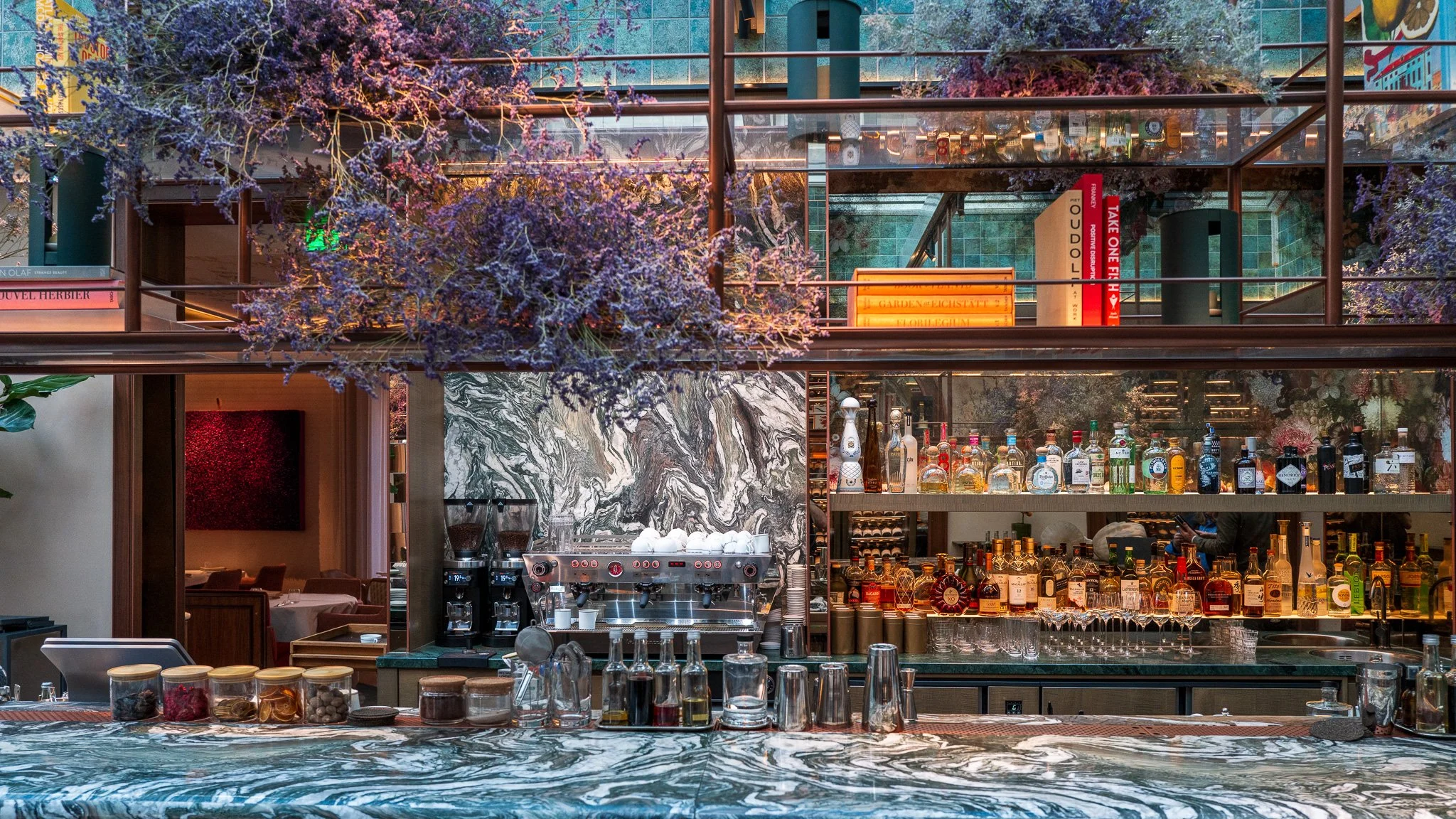
Rosewood Amsterdam — The hotel is stunning and ideally located, and is now my favorite hotel in Amsterdam. The city's 2024 ban on new hotel construction means this may be the final major luxury opening for the foreseeable future. The Rosewood opened in May 2025 in the former Palace of Justice on Prinsengracht 432, after ten years of meticulous restoration of the original 1665 building. Interiors were designed by Studio Piet Boon, and the inner courtyard garden by Piet Oudolf, whose landscape work appears at the High Line in New York. The 134 rooms and suites sit on the Prinsengracht canal, ten minutes on foot from the Rijksmuseum. For photographers, the canal-facing rooms and the Oudolf courtyard garden are two of the finest visual experiences any Amsterdam hotel offers. I absolutely loved our stay.
Mid-Level Hotels
Ambassade Hotel — Ten interconnected canal houses on the Herengracht, operated as one of the most thoughtfully run mid-range hotels in the city. The rooms are canal-house in scale, compact and full of character rather than corporate and generic, and the library, lined with signed first editions from Dutch literary festivals, is worth a visit on its own. Well located, consistently praised for service, and genuinely good value for a Herengracht address.
The Hoxton, Amsterdam — Housed in four 17th-century canal houses on the Herengracht, the Hoxton does what it does well: relaxed, design-conscious, social. The Lotti's restaurant and bar at the front of the building is a good evening spot even if you are not staying there. Rooms are honest about their canal-house proportions, which means cozy rather than spacious, but the location and the atmosphere are excellent.
Hotel V Nesplein — A stylish, well-designed hotel on the Nes, a quiet pedestrian street between Rokin and the Amstel, ten minutes on foot from Dam Square and fifteen from the Nine Streets. Comfortable, well-run, and a sensible choice for photographers who want a central base without canal-house prices. and a sensible choice for photographers who want a central base without canal house prices.
Food Recommendations in Amsterdam
There are tons of great food options in Amsterdam. The dining scene in Amsterdam has changed dramatically in the last decade that I have been visiting. The food is very creative with lots of fish and vegetable-forward cooking. Do not miss trying Indonesian food in Amsterdam.

Like most large cities, you will find wonderful cuisines from all over the world. However, I always think you should try the local options, and here are a few recommendations:
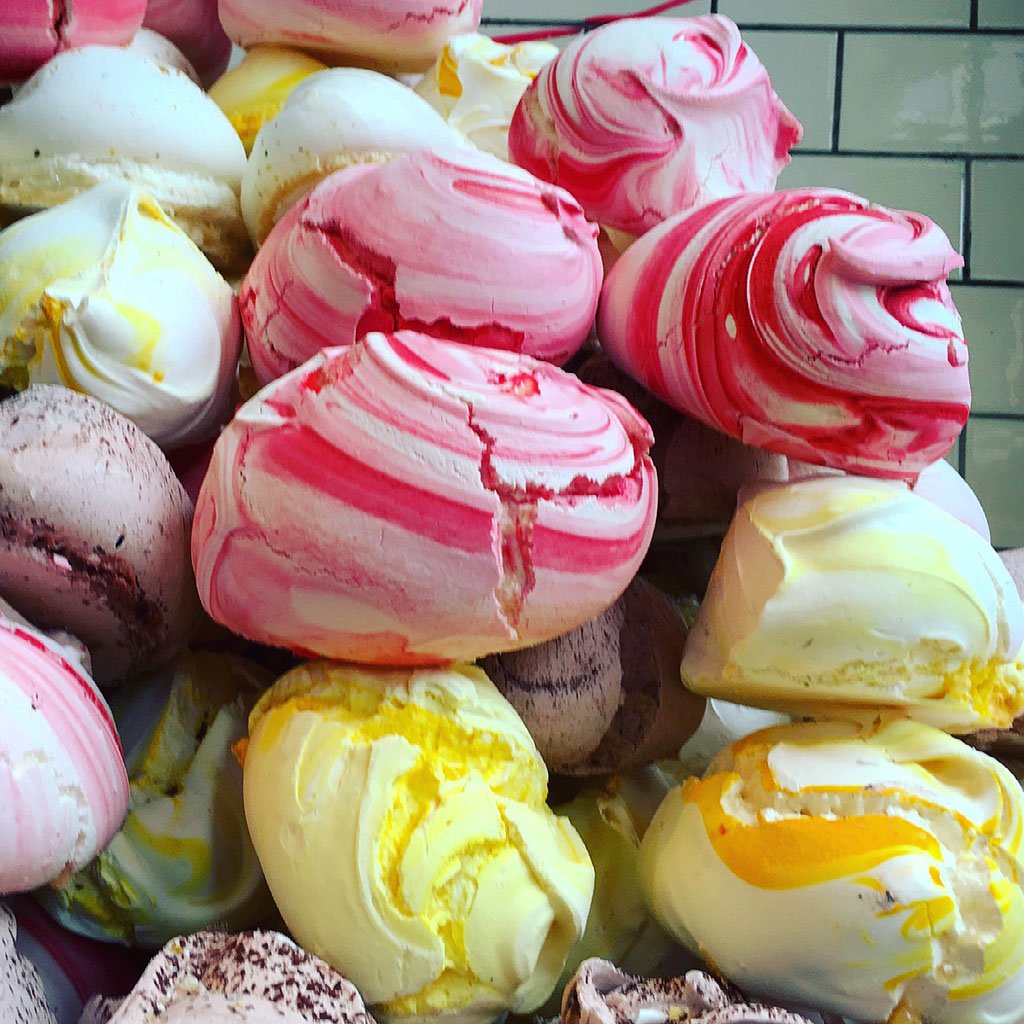
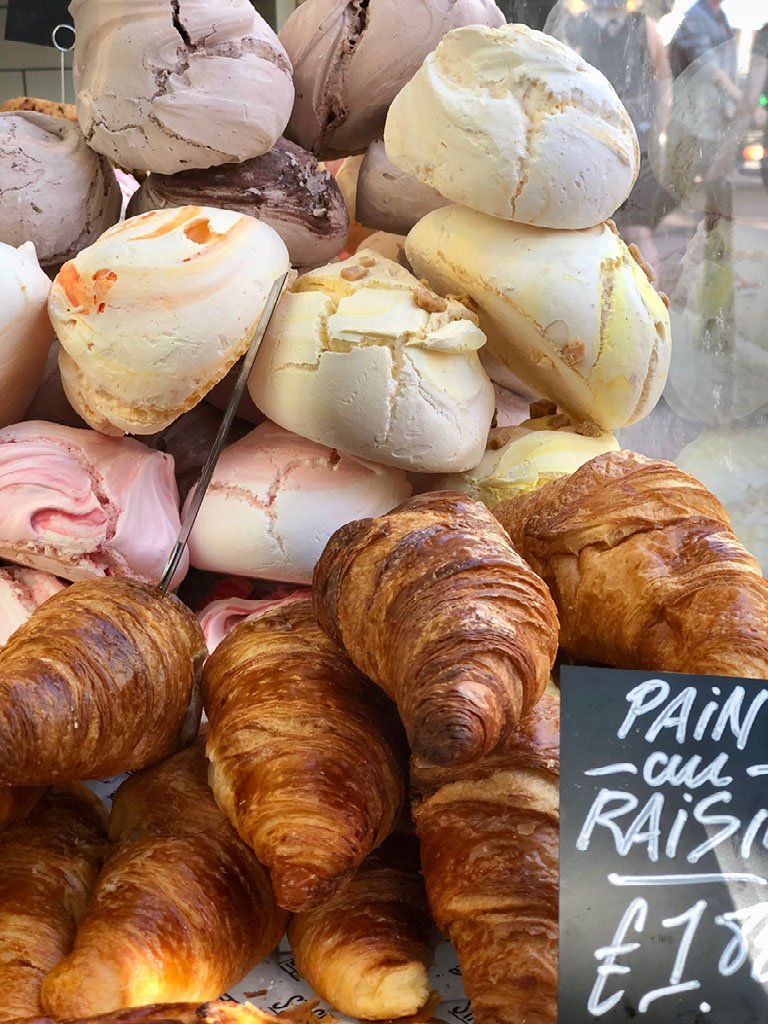
Local Food You Should Try:
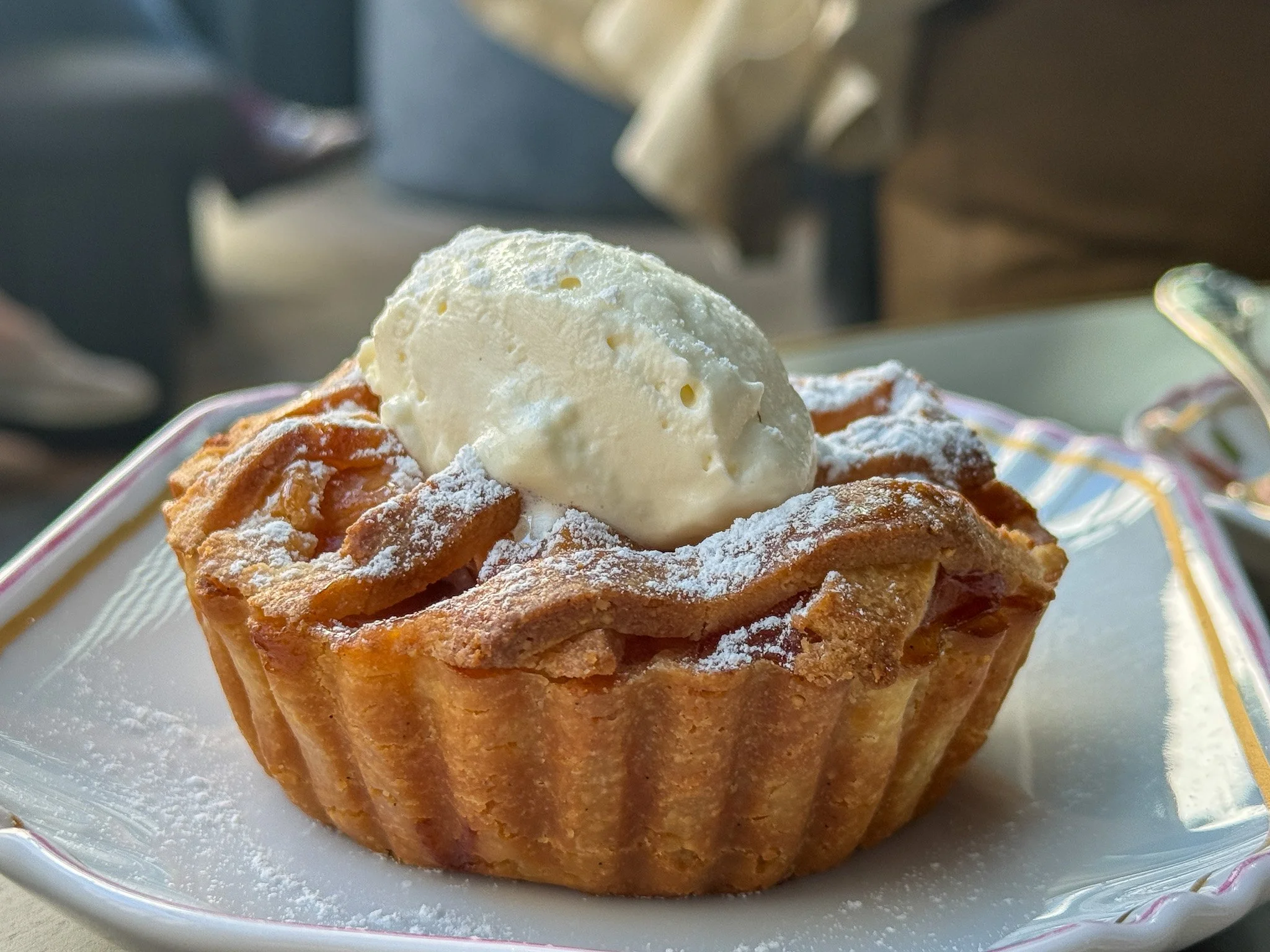
Bitterballen - is a type of Dutch meatball, generally eaten with beer :). Try De Ballenbar in de Foodhallen
Pannenkoeken (Pancakes) -Dutch pancakes called Pannekoeken are either sweet or savory. Locals eat Pannekoeken at all times of the day, often topping the pancakes with cured meats or smoked salmon. However, some Amsterdammers prefer to add fruit or chocolate to create a sweet dessert pancake. try Upstairs Pannekoekenhuis
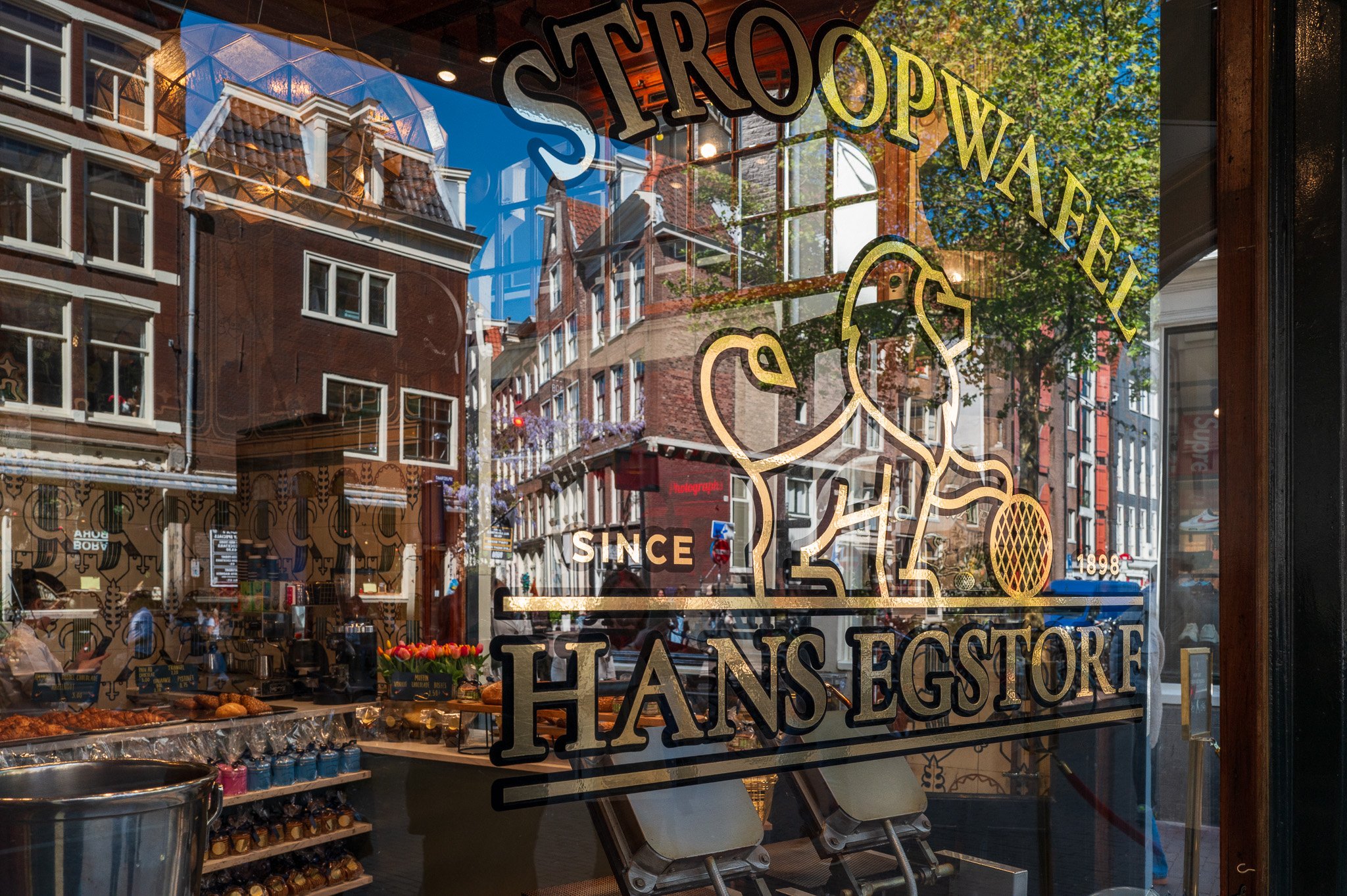
Stroopwafels -Stroopwafels are a delicious cookie. They are made by filling two thin wafers with sweet Stroop, the same caramel-like syrup that goes well with Pannekoeken. Usually, you eat these sweets with Coffee or Tea.
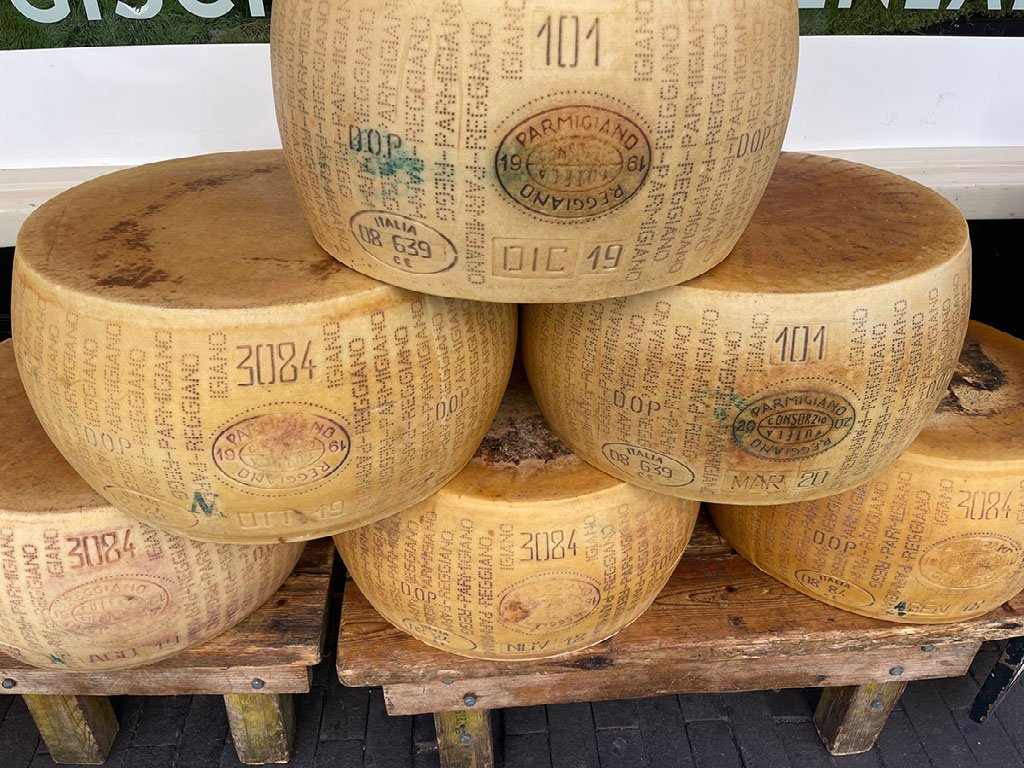
Cheese - no trip to Amsterdam is complete without trying or visiting the local cheese shops – Gouda and Edam -try Fromagerie Abraham Kef
French Fries (Patat Friet) -I do not know how they make the French Fries in Holland taste so good, but they are unlike anything you have ever tasted. Most locals eat cones of patat friet topped with mayonnaise and other saucy toppings made with ingredients like ketchup, curry, and peanuts. Try Vlaams Friteshuis Vleminckx
Indonesian Food -- There are tons of great Indonesian restaurants in Amsterdam, and one of the best is Restaurant Blauw. Indonesia was a Dutch colony, which is why there are a lot of Indonesian restaurants.
Vegan/Vegetarian-- Amsterdam is very vegetarian-friendly--among our favorites are Meatless District, Vegan Junk Food Bar, Mr. & Mrs. Watson
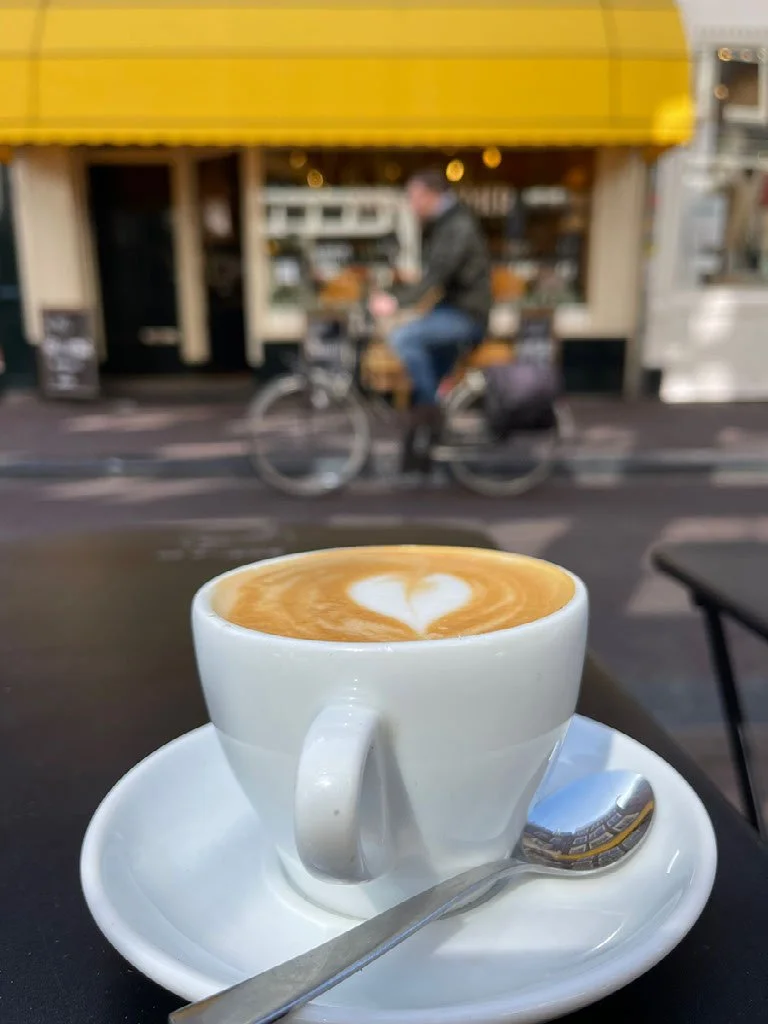
Coffee Shops
Coffee & Coconuts — Housed in a former cinema in De Pijp, with high ceilings, natural light, and a genuinely relaxed atmosphere. Good for photo editing between shoots.
Scandinavian Embassy — Minimal, precise, and quietly excellent. One of the best espresso programs in the city. The Jordaan location is the right one.
Bocca Coffee Roasters — A serious roaster with retail and café, good for anyone who wants to explore Dutch specialty coffee culture beyond the tourist route.
Nu Coffee — Located in the Jordaan, serves excellent coffee and is a good first stop on a morning canal walk before the city wakes up.
Getting Around Amsterdam
Walk. Seriously, just walk. Amsterdam is one of the most walkable cities in Europe. The canal belt is compact, it is flat, and almost every major photography location is within twenty minutes on foot from a central hotel. Good walking shoes are your most important piece of gear here.
One warning: watch the bike lanes. Amsterdam cyclists move fast, they have the right of way, and they will not slow down for you. The lanes are marked, but tourists step into them constantly. Pay attention.
I would not recommend renting a bike unless you already know Dutch cycling rules. The traffic flows are counterintuitive, and the canal bridges require a specific rhythm with other cyclists. It looks effortless when locals do it because they have been doing it since childhood.
For longer distances or outer neighborhoods like Amsterdam Noord (which includes the STRAAT graffiti museum), the free NDSM ferry from behind Centraal Station is quick, free, and a short trip in itself.
Trams cover the main corridors efficiently. Metro lines connect to Amsterdam Noord and the outer neighborhoods. Uber operates in the city, and taxis are easy to flag near Centraal Station and Leidseplein.
Do not drive in Amsterdam. I have driven in cities all over the world, and Amsterdam is genuinely one of the most difficult. The combination of cyclists, narrow streets, one-way canal roads, and trams running down the center of the road makes it a deeply unpleasant experience. Leave the car at the airport or outside the city.
The Canals Decorated for Christmas
Photography Gear Recommendations for Amsterdam
The subjects shift constantly from wide canal geometry to compressed telephoto bridge shots to intimate street portraits, so bringing range matters.
Camera bodies: The Canon EOS R5 Mark II, Sony A7R V, and Nikon Z8 are all well-matched to Amsterdam's range of subjects and light conditions. The soft, diffuse northern light means your camera's dynamic range matters less than it would in harsher conditions, but a high-resolution sensor rewards the architectural detail work.
Lenses: A 16-35mm is your primary lens for canal shots, wide interior work at the Rijksmuseum, and the Dancing Houses on Damrak. A 24-70mm lens handles street photography and gives you flexibility on the move. A 70-200mm is essential for the Seven Bridges compression shot at the Reguliersgracht/Keizersgracht intersection, and for pulling in architectural detail from across the canals. A 35mm or 50mm prime is my personal recommendation for a full morning in the Jordaan.
Tripod: Bring one. Blue hour on the canals is the best light this city offers, and a tripod is non-negotiable for long exposures on the water. The Seven Bridges intersection, the Leidsegracht/Keizersgracht corner, and the Dancing Houses on Damrak all reward 10-to-30-second exposures.
ND Filters: A 6-stop ND smooths out canal water beautifully in daylight and extends your blue hour window at dusk. Bring a 3-stop and a 10-stop as well if you plan to shoot in bright conditions.
Extra batteries and cards: Cold mornings and long blue hour sessions drain batteries faster than you expect. Bring two spares minimum.
Drone: Leave it at home. Drones are prohibited throughout central Amsterdam without specific authorization from the Dutch aviation authority. The entire city center falls within Schiphol Airport's 14-kilometer control zone, and the ban is actively enforced. Police and the Royal Marechaussee can confiscate your drone on the spot. If you want aerial photography in the Netherlands, Zaanse Schans and rural areas outside major CTR zones are possible with proper registration and authorization. Do not risk it in the city.
iPhone Tips for Amsterdam
Amsterdam is an exceptional city for iPhone photography, and not just because the light is so forgiving. The intimacy of the canals, the texture of the gable facades, and the bicycles everywhere give you layered, graphic subjects that work beautifully on a phone.
For canal reflections, use the iPhone's standard wide lens at dawn when the water is still. Tap to focus on the mid-ground reflection and let the foreground water go slightly soft. The result looks deliberate rather than accidental.
For cycling street photography, switch to 2x optical zoom and pre-focus on a spot on a bridge or canal lane. Wait for a cyclist to enter the frame and shoot in burst mode. The compression at 2x tightens the background architecture and gives you the layered depth that makes Amsterdam bicycle shots distinctive rather than generic.
For the Rijksmuseum library interior, use Night Mode even in daylight. The tall bookshelves absorb a lot of light and the room is darker than it looks. Night Mode at 2 to 3 seconds on a propped phone or tiny tripod gives you detail in the bookshelves without blowing out the windows at the far end.
For blue hour on the canals, switch to ProRAW if your iPhone supports it, and expose for the channel water rather than the sky. The warm window lights will be slightly overexposed but the reflection in the water will be clean. Editing latitude in ProRAW is far better than HEIC for recovering the highlights on the canal house windows.
One rule: do not photograph in or near the Red Light District at night. Photography is illegal in that area out of respect for the workers, and the restriction is enforced. This applies to iPhones and mirrorless cameras equally.
Photography Tips
Take a tripod for long exposure shots of the waterways- One of the main features of Amsterdam is its canals. Long exposure shots of canals and waterways create some beautiful end results.
Don’t take photos in the red light district at night! It is illegal!
Take photos at night - Amsterdam looks completely different at night. Photos of the canals are fantastic early in the morning before the crowds. But they are even better when the lights come on.
Be careful of bicycles and pedestrians - Amsterdam is full of bicycles. There is almost no city in the world where there is as much cycling as in Amsterdam.
What to Photograph in Amsterdam
There are plenty of photography options in Amsterdam. I will provide some classic locations that should not be missed, but I will try to concentrate on certain subjects such as Museums, Waterways & Canals, Bicycles, Tulips, Flower Markets, Street Photography, and Parks. Here are a few suggestions:
The Rijksmuseum
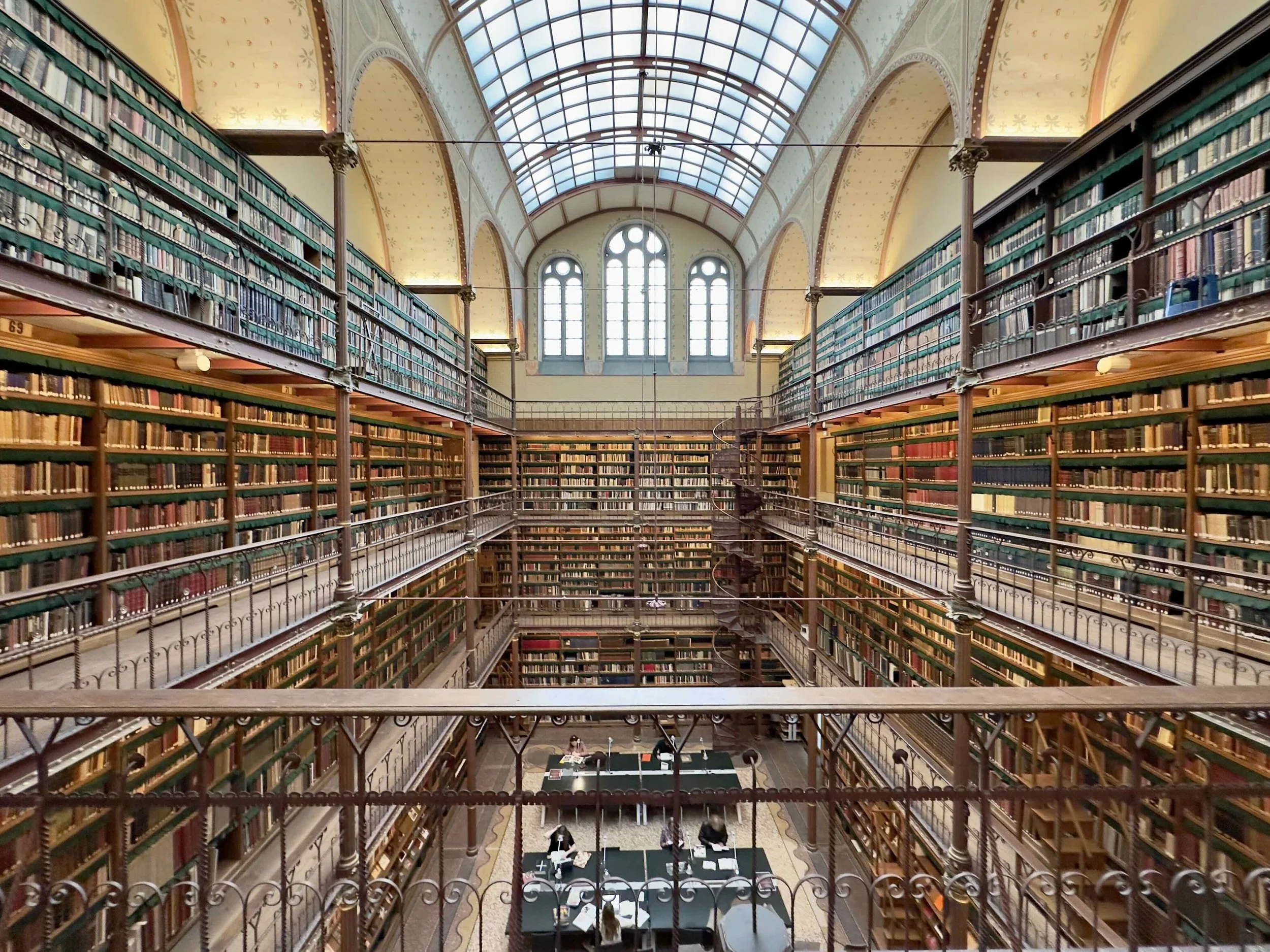
The Rijksmuseum is one of the great European museums and also one of the finest architectural subjects in the city. The exterior is a Gothic-Renaissance masterpiece that photographs best from the Museumplein in the early morning before the crowds arrive and the bicycle parking fills in. The interior, including the extraordinary library, is equally photogenic, and photography is fully permitted throughout.
The famous bicycle underpass that cuts through the center of the building is a defining Amsterdam shot: the museum facade framed perfectly at the end of a long tunnel of tile, cyclists blurring through the foreground.
📷 Pro Tip: The best exterior composition is from the center of the Museumplein, shooting north through the bicycle underpass toward the museum facade. Arrive before 8 a.m. for empty frames. A 24-70mm handles both the compressed underpass view and the wider facade from the lawn. For the interior library, use a 24-35mm and position yourself at the far end of the room looking toward the windows. The light through those windows is the anchor of the composition. For the underpass shot, use a slow shutter speed in the morning light to blur the cyclists into streaks. Photography is permitted throughout the museum without flash or tripod. No tripod inside.
Best time: Pre-8 a.m. for exterior; mid-morning for interior. Access: Museum admission required for interior; exterior and underpass are public.
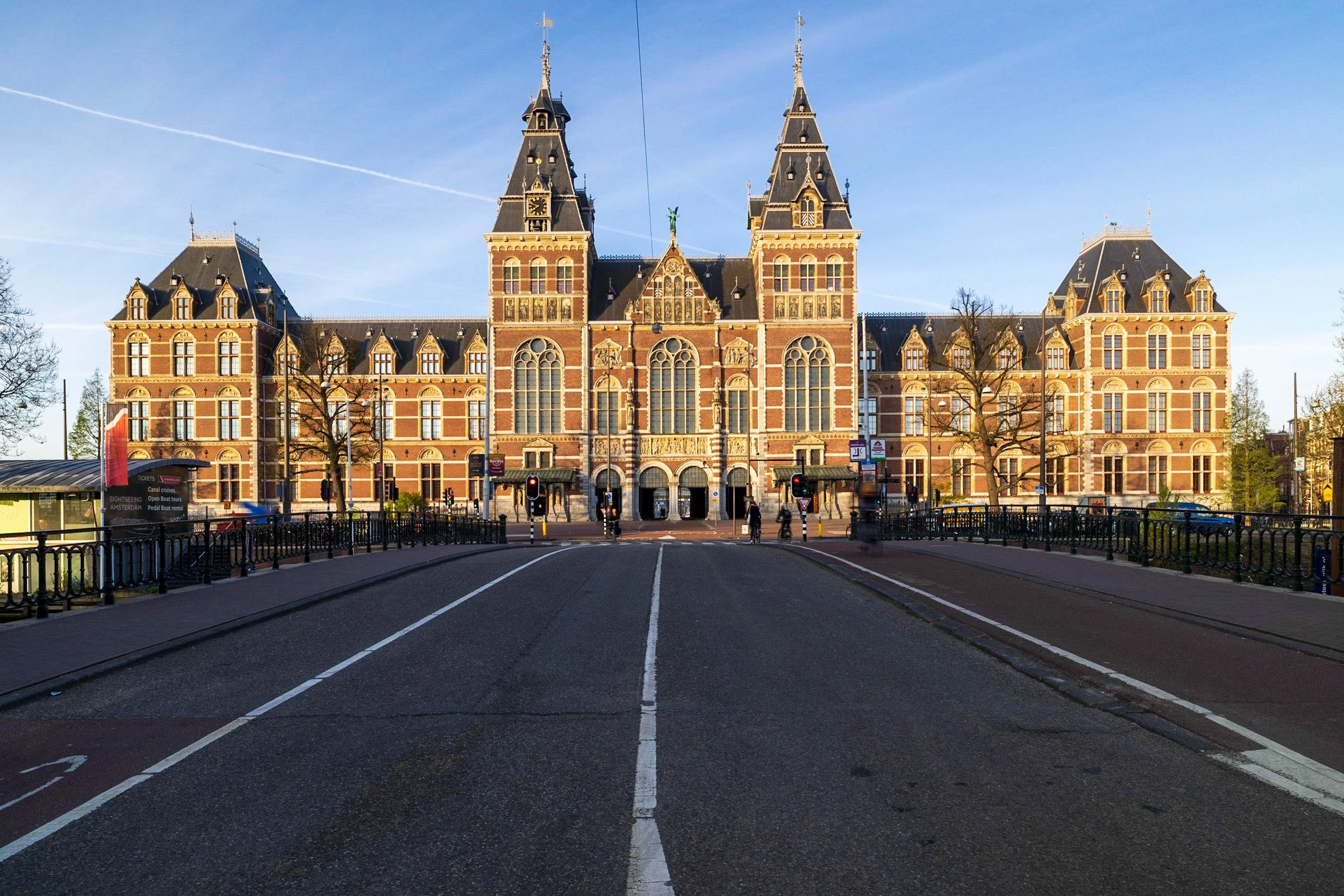
The Front of the Museum Rijksmuseum
There is a fantastic library inside that I loved capturing.
The Begijnhof
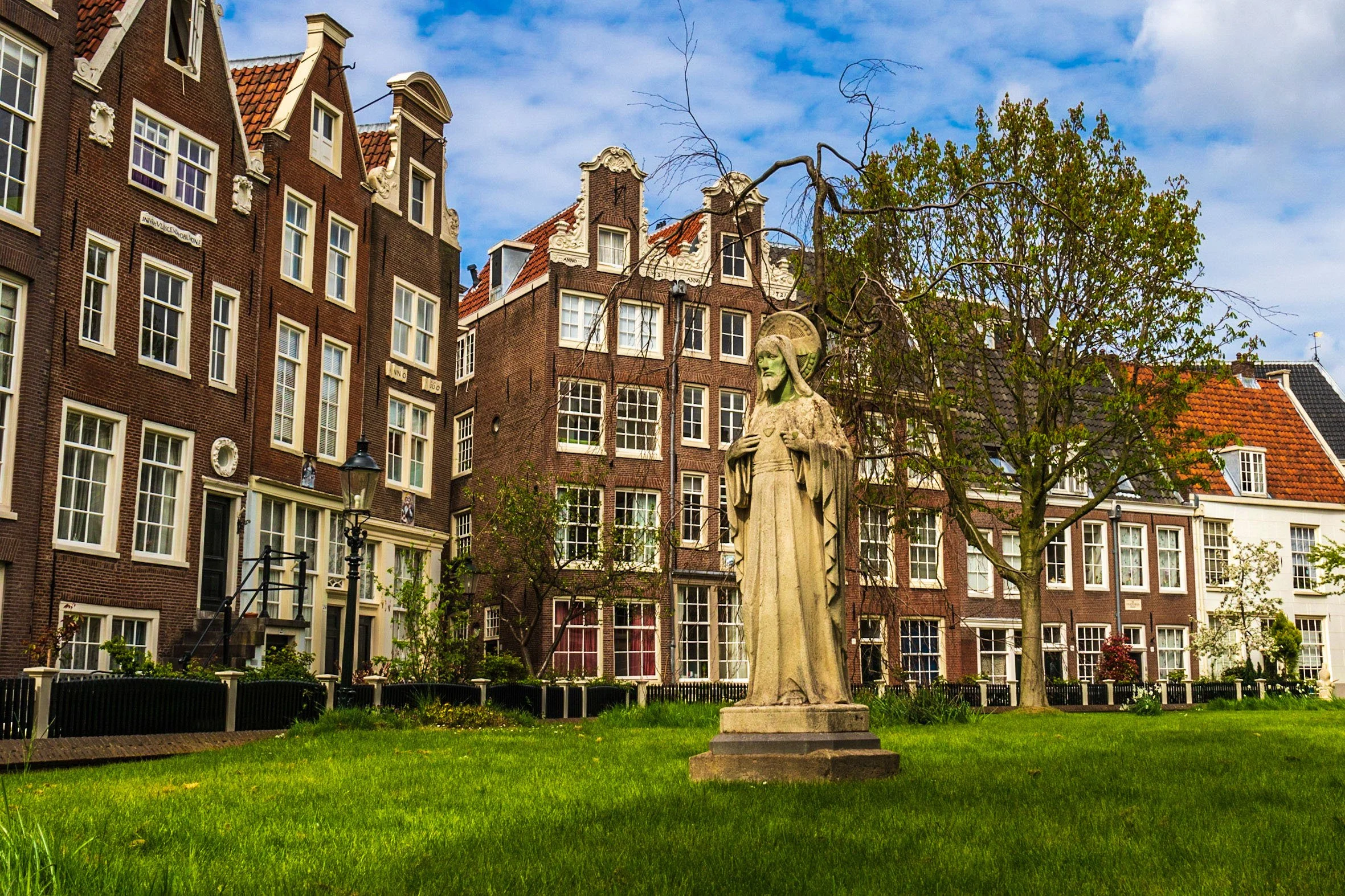
The Begijnhof is one of the oldest courtyards in Amsterdam, a group of historic houses arranged around a quiet inner garden that feels entirely removed from the city outside. It was originally built to house Beguines, a community of unmarried religious women who lived together under vows of chastity. Today it is one of the few genuinely tranquil spaces left in the Centrum, and the contrast between the busy streets of Kalverstraat outside and the stillness inside the gate is immediate and striking.
The wooden house at Begijnhof 34, Houten Huys, is the oldest surviving house in Amsterdam, dating to around 1420. The garden, the chapel, and the row of gable houses surrounding it make this one of the most compositionally complete courtyards in the city.
📷 Pro Tip: Enter through the low wooden gate on the Spui side, not the tourist entrance from the Gedempte Begijnensloot. The Spui gate is easy to miss and keeps the approach quiet. The best light in the courtyard comes in the morning from the east, falling across the front facades of the houses and the garden. A 24-35mm for the full courtyard looking toward the chapel. A 50mm for the garden beds and the gable detail of Houten Huys. Photography etiquette matters here: this is a residential community. Be quiet, do not use a tripod inside the residential areas, and avoid photographing into windows. Early weekday mornings are the right time. Tourists arrive by mid-morning.
Best time: Early weekday morning. Access: Free. Entrance from the Spui or Gedempte Begijnensloot.
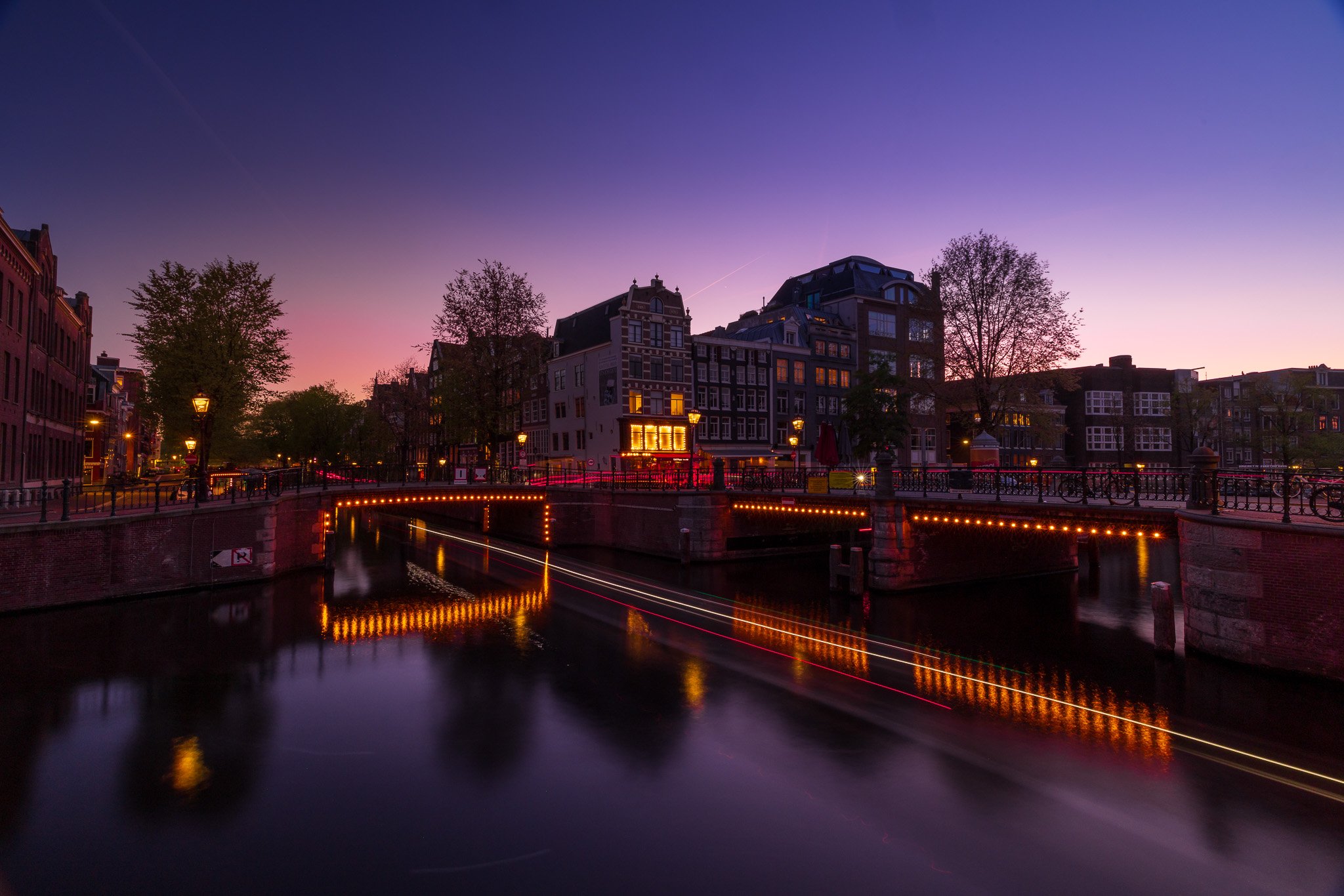
Reguliersgracht / Keizersgracht: The Seven Bridges
This is one of my single favorite spots in Amsterdam. Stand on the Reguliersgracht bridge at Keizersgracht and look south. You will see seven bridges receding into the distance, each one slightly smaller than the last, framed by canal houses and their reflections. It is one of the most compositionally satisfying views in any European city, and the blue hour light turns it into something extraordinary.
The reflection in the still canal water doubles the composition below the waterline. On a windless evening, the symmetry is near-perfect. I have photographed this intersection more times than I can count, and I still find myself lingering.
📷 Pro Tip: Position yourself on the Reguliersgracht bridge at the Keizersgracht intersection and look south. A 70-200mm lens compresses the perspective and stacks all seven bridges beautifully. A 35-50mm captures more of the surrounding canal environment but loses some of the compression that makes the shot distinctive. Blue hour is the moment: the bridge lights turn on at dusk and stay lit through the night. Arrive 30 minutes before blue hour with your tripod already set. This is a long exposure location. Shoot between 15 and 30 seconds at f/8 to f/11 for maximum depth. The spot is free and public. Walk south along the Reguliersgracht from Keizersgracht.
Best time: Blue hour. Access: Free, public.
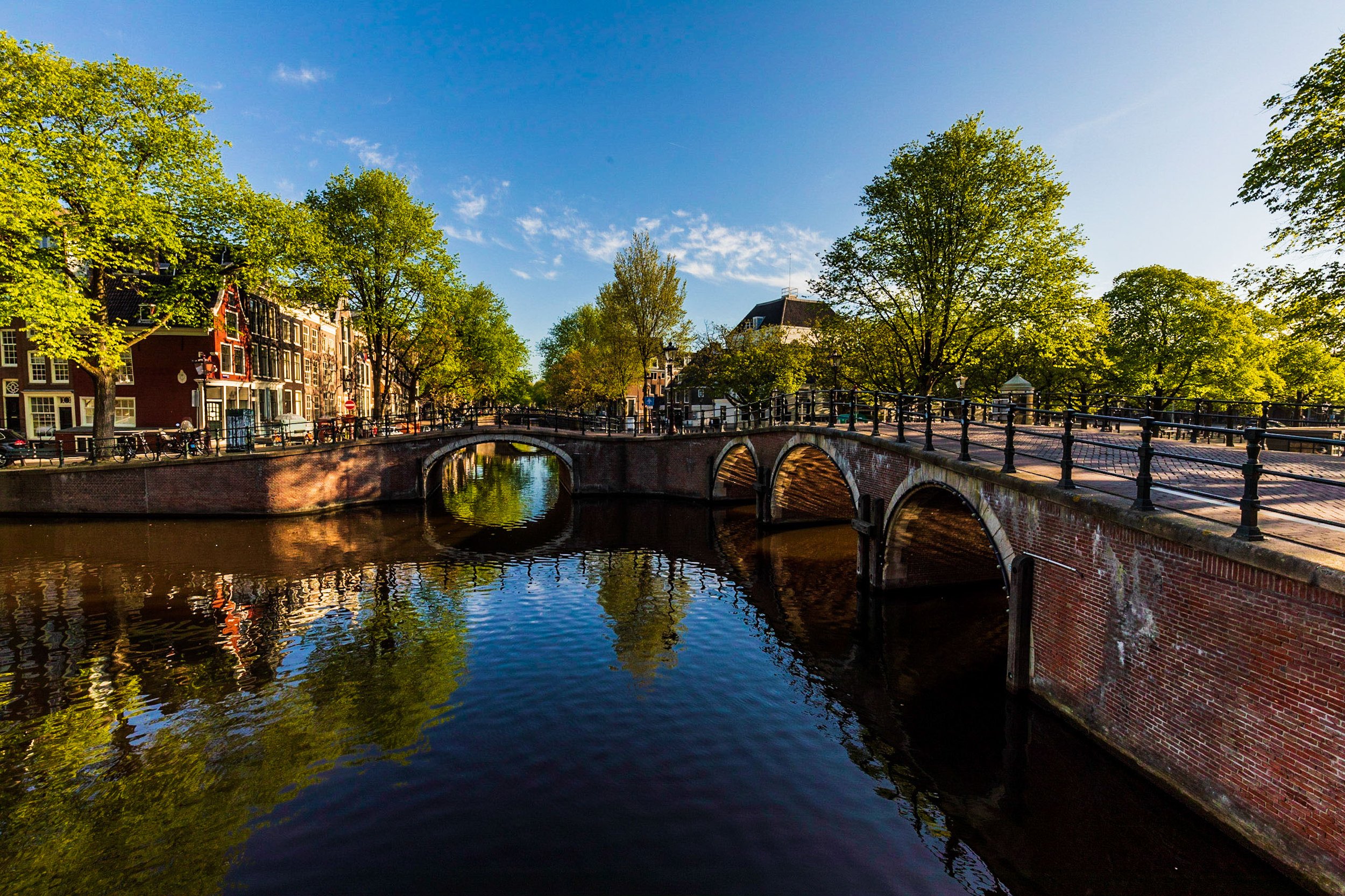
The 7 Bridges
The canals were added to the UNESCO World Heritage List in 2013. The following are some of the more interesting canals: Singel, Herengracht, Prinsengracht and Brouwersgracht.
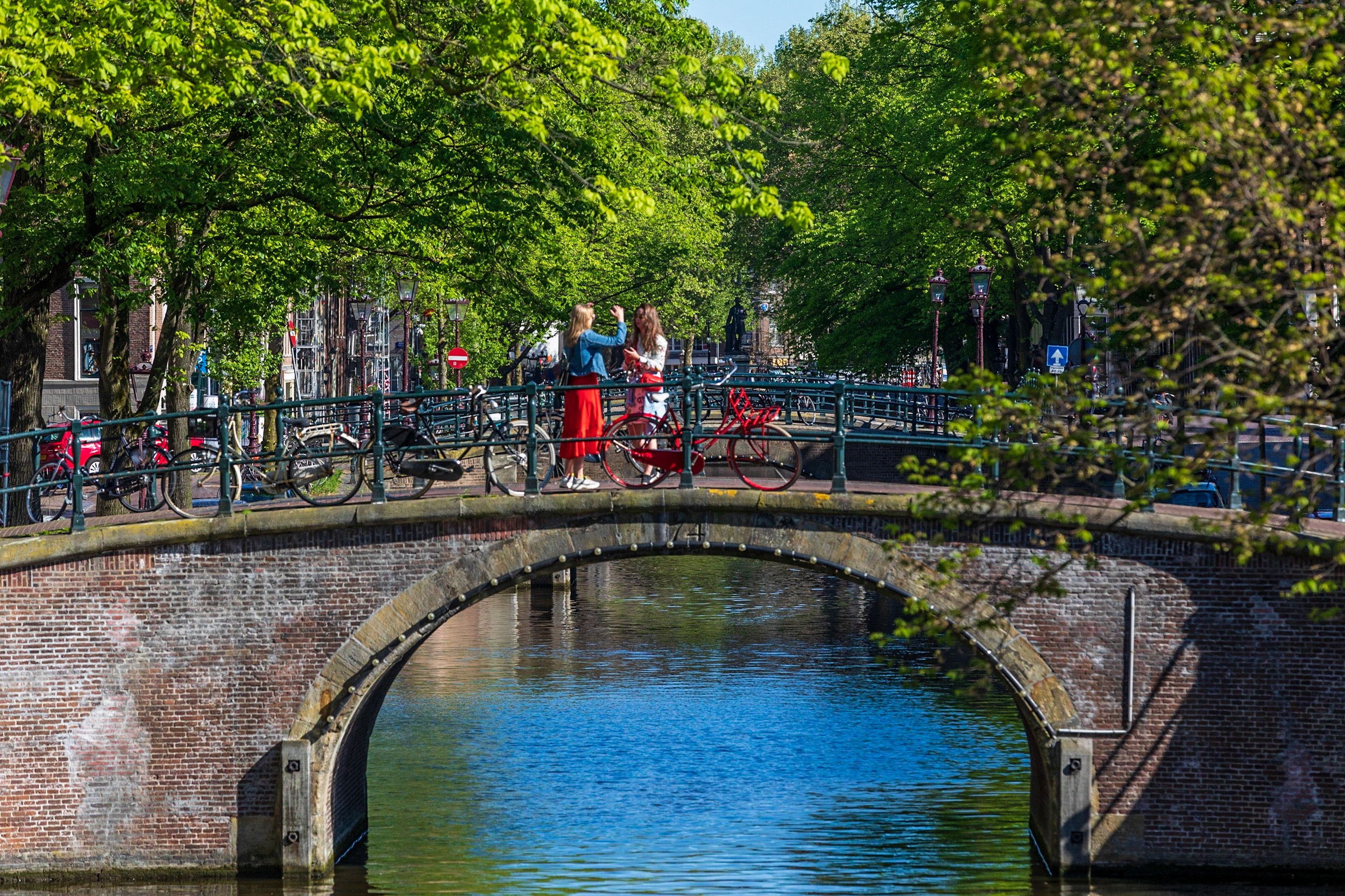
The Intersection of Leidsegracht and Keizersgracht
This is the most popular tripod location in Amsterdam for good reason, and the competition for the best spot reflects it. The two bridges at the intersection and the canal houses behind them compose perfectly from the southwest corner. When I shot here last, there were at least twenty photographers with tripods lined up along the bank. Arrive early or accept the company.
The warm window light from the canal houses contrasts beautifully against the cooling blue of the sky. In the foreground, the flat water doubles everything. It is a location where patience and precise timing matter more than any technical setting.
📷 Pro Tip: Set up on the southwest corner of the Leidsegracht/Keizersgracht intersection. A 24-35mm captures the full depth of both bridges and the canal houses behind them. In peak season, arrive 30 to 40 minutes before blue hour to claim your position. If you arrive late, step back further south along the Leidsegracht for a slightly longer composition that avoids crowding. Shoot between 8 and 20 seconds at f/8 during blue hour. The best frames come in the 15-minute window when the sky is still deep blue and the window lights are fully illuminated. Free and public.
Best time: Blue hour. Access: Free, public.
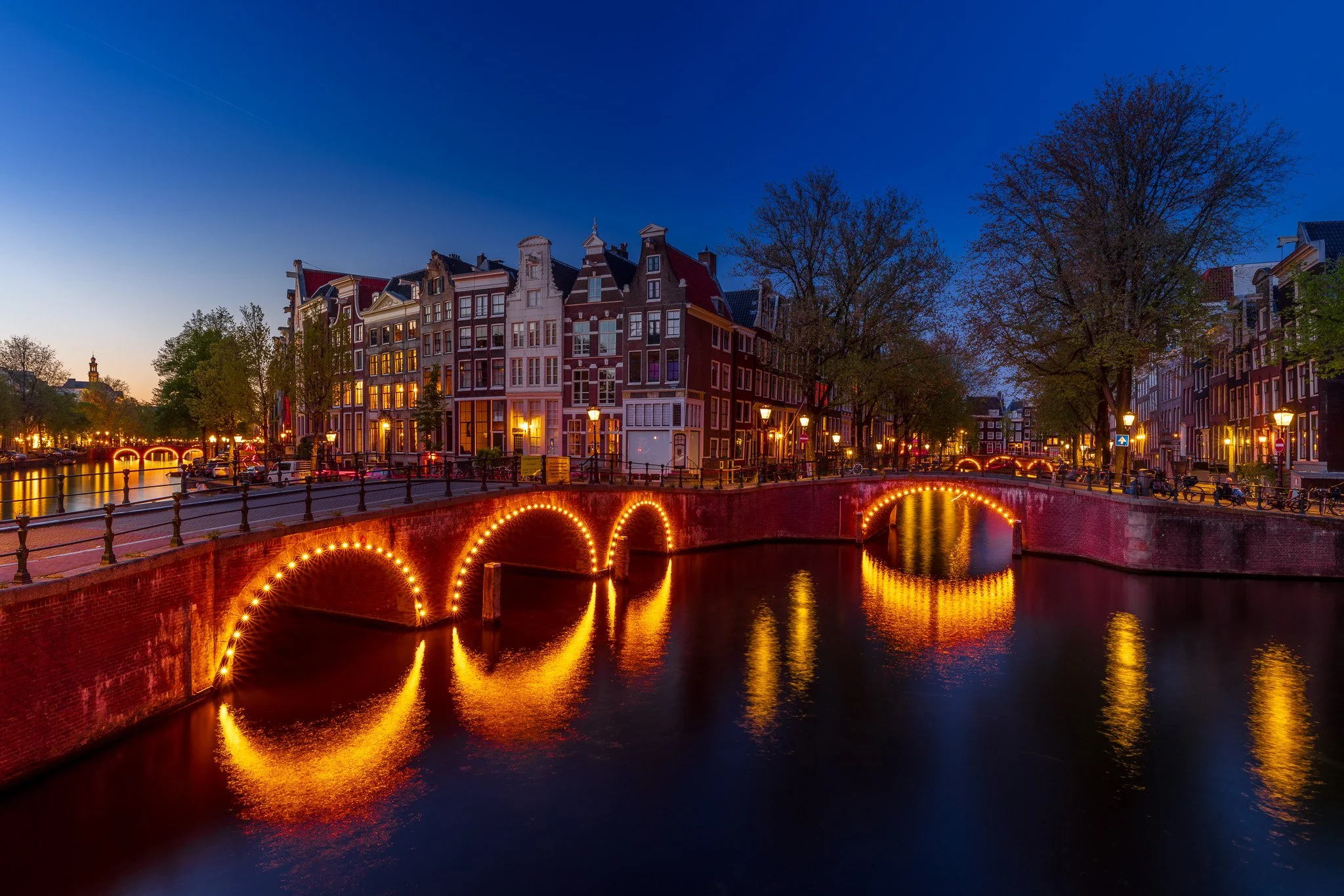
A very popular spot for sunset/blue hour photography
Street Photography
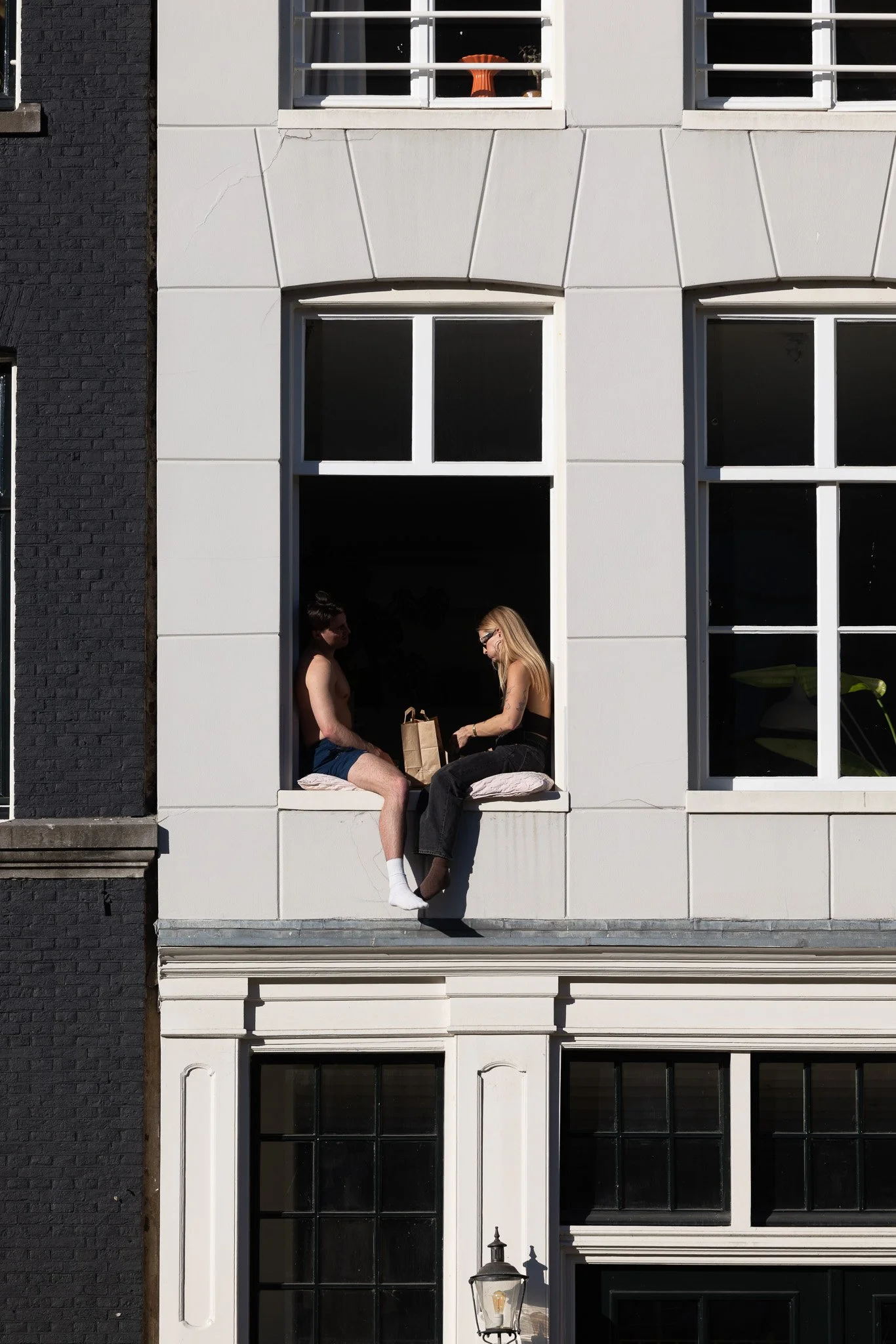
Amsterdam is one of the great street photography cities in Europe, and not in an obvious way. It is not Paris, where the boulevards and café terraces hand you compositions. It is more layered than that. The bicycles, the canal bridges, the market stalls, the houseboat culture, and the sheer density of daily life compressed into a compact geography give you a city where something worth photographing is always within thirty seconds of wherever you are standing.
The best street photography here comes from staying in one place rather than chasing locations. Pick a busy canal bridge in the Jordaan at 9 a.m. and wait. Cyclists cross in clusters. A delivery boat idles below. A woman walks out of a canal house with a dog and a coffee. The light is horizontal and soft. You do not need to move.
The Albert Cuyp Market in De Pijp is the most photogenic market scene in the city: a long outdoor street market with vendors selling everything from stroopwafels to fabric to fresh fish, and the kind of genuinely local crowd that gives you faces and interactions rather than tourist performances. Leidseplein and Rembrandtplein are the right places for evening street photography when the café terraces fill up and the light from the bars and restaurants spills onto the pavement.
One firm rule: do not photograph in the Red Light District, day or night. Photography is illegal in that area, full stop. It applies to every camera, every phone, every lens. The rule exists for good reason and is actively enforced.
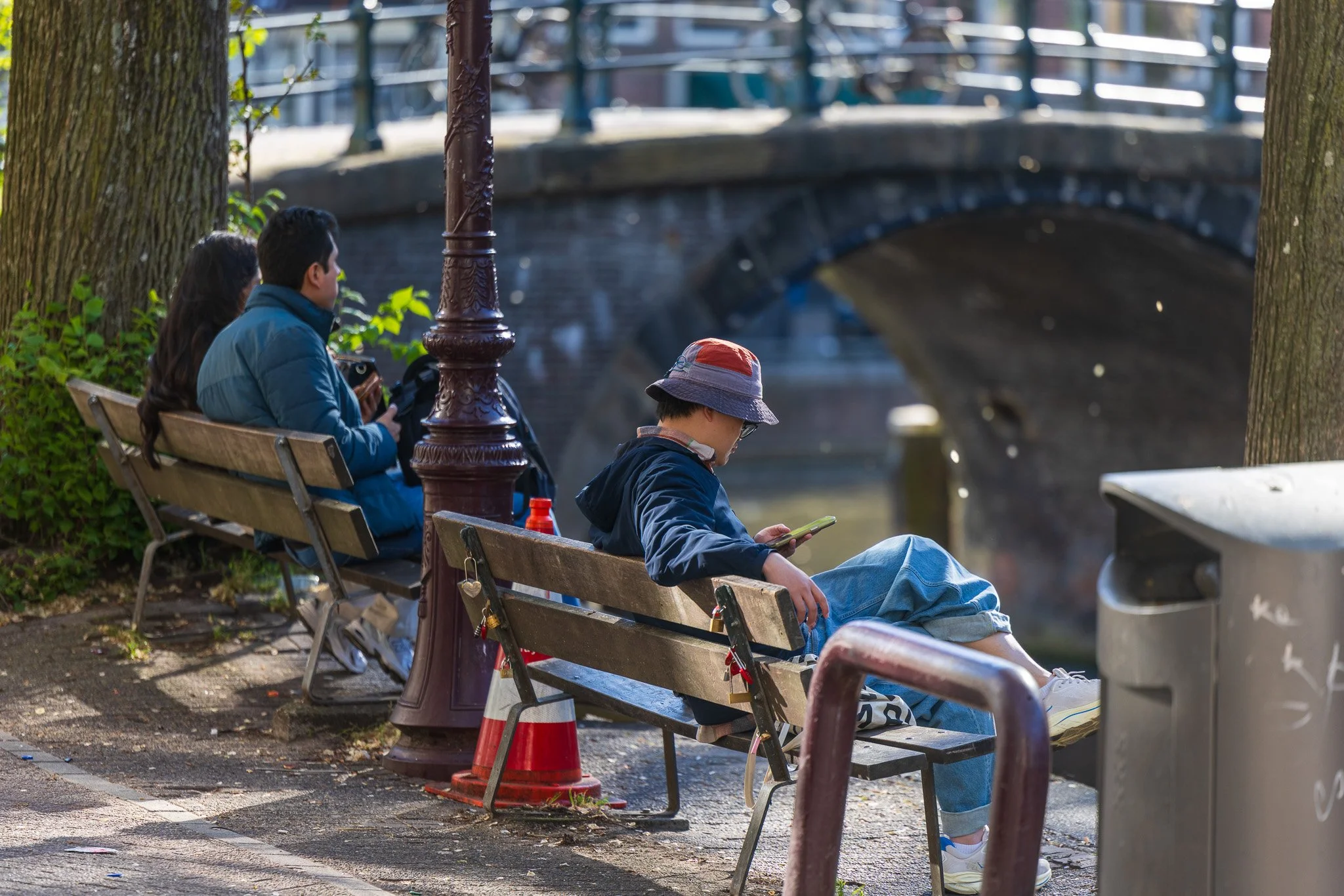
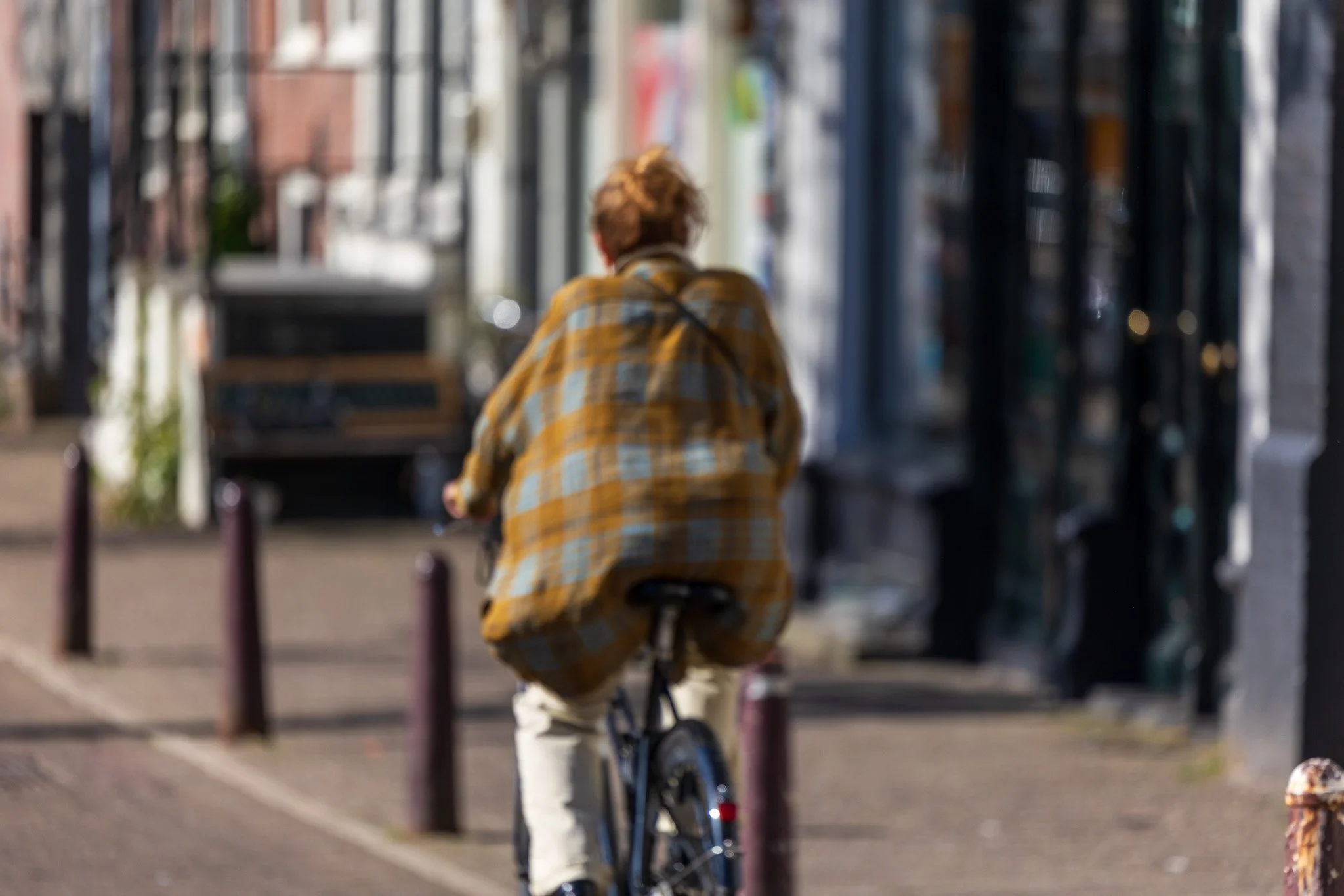
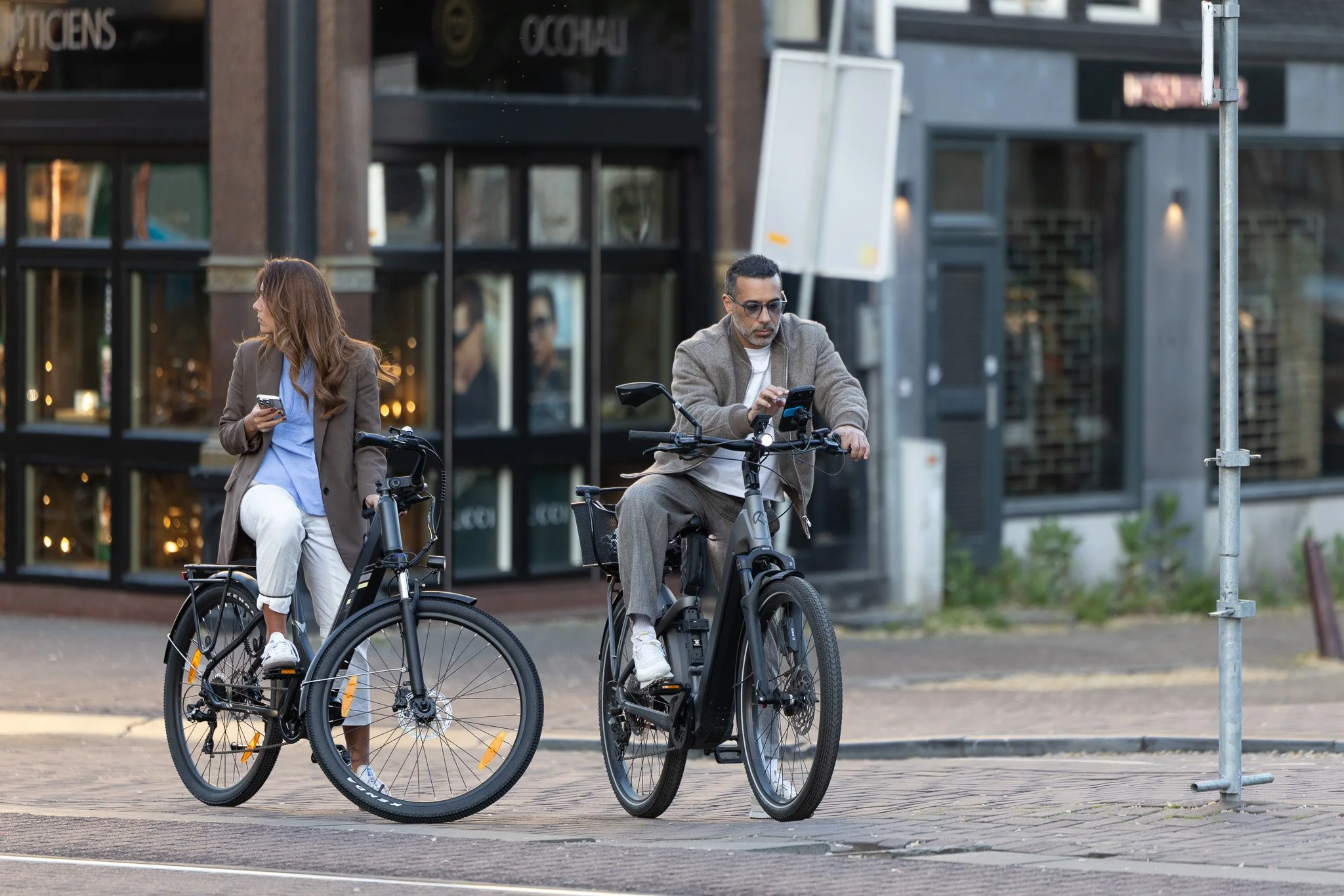
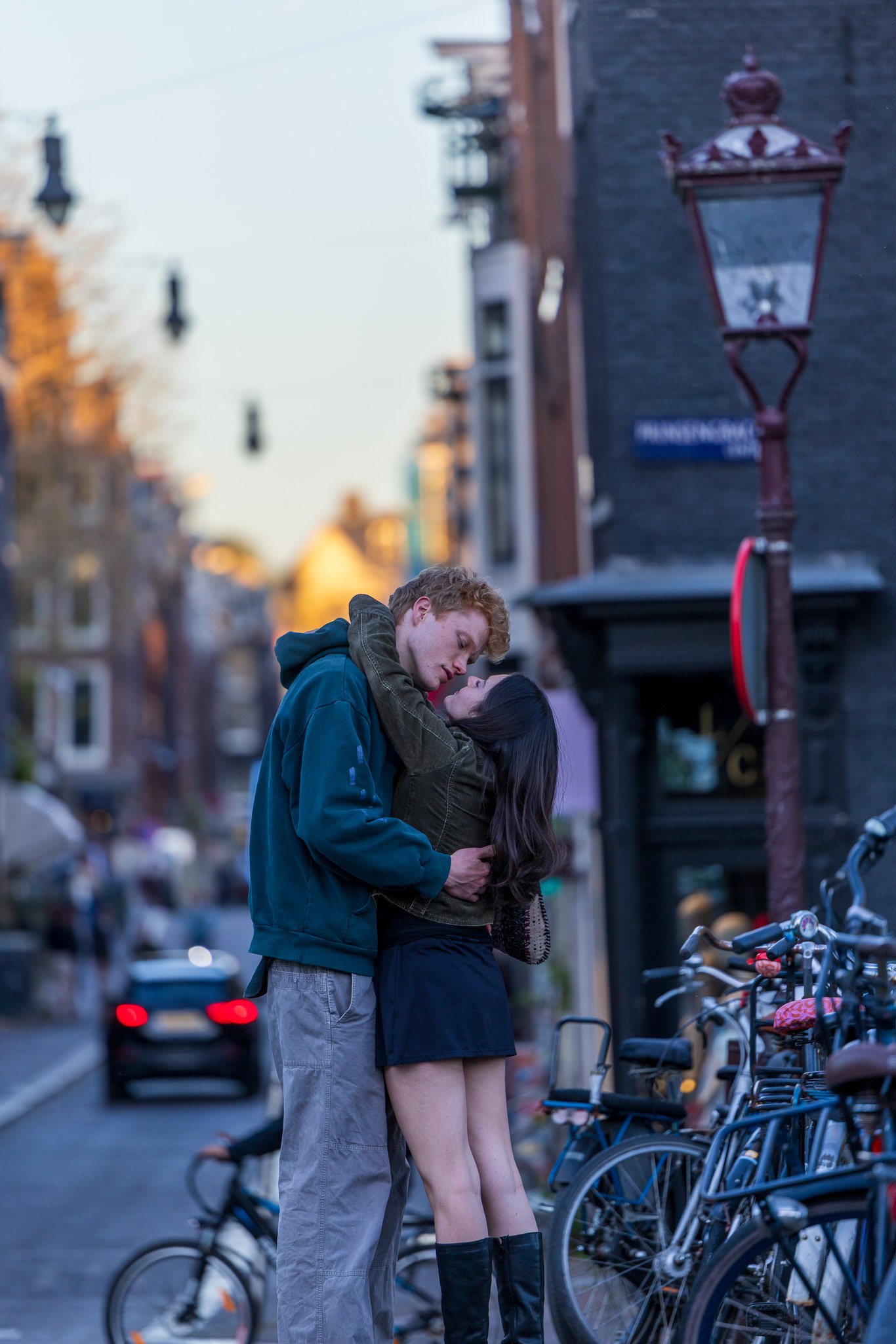
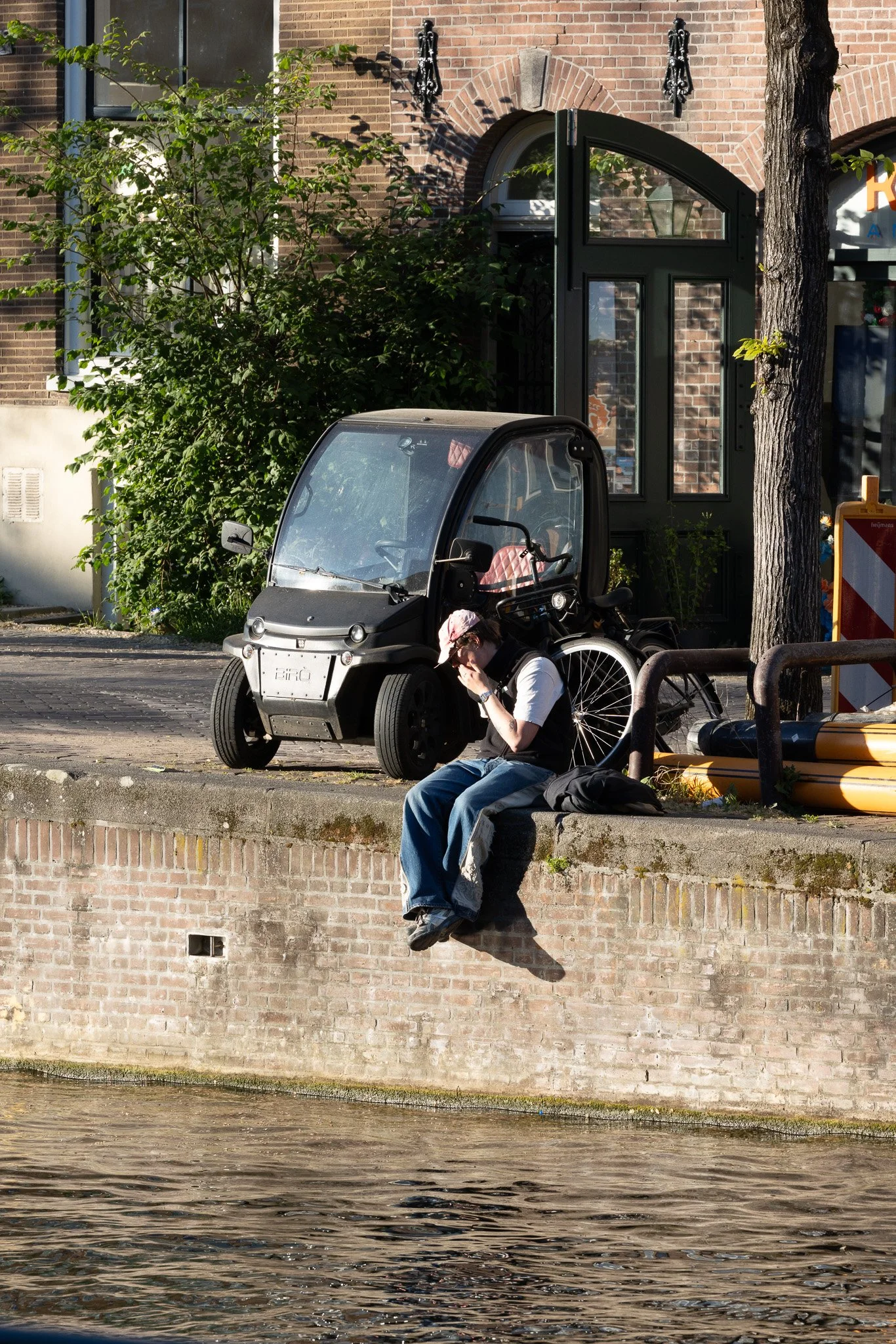
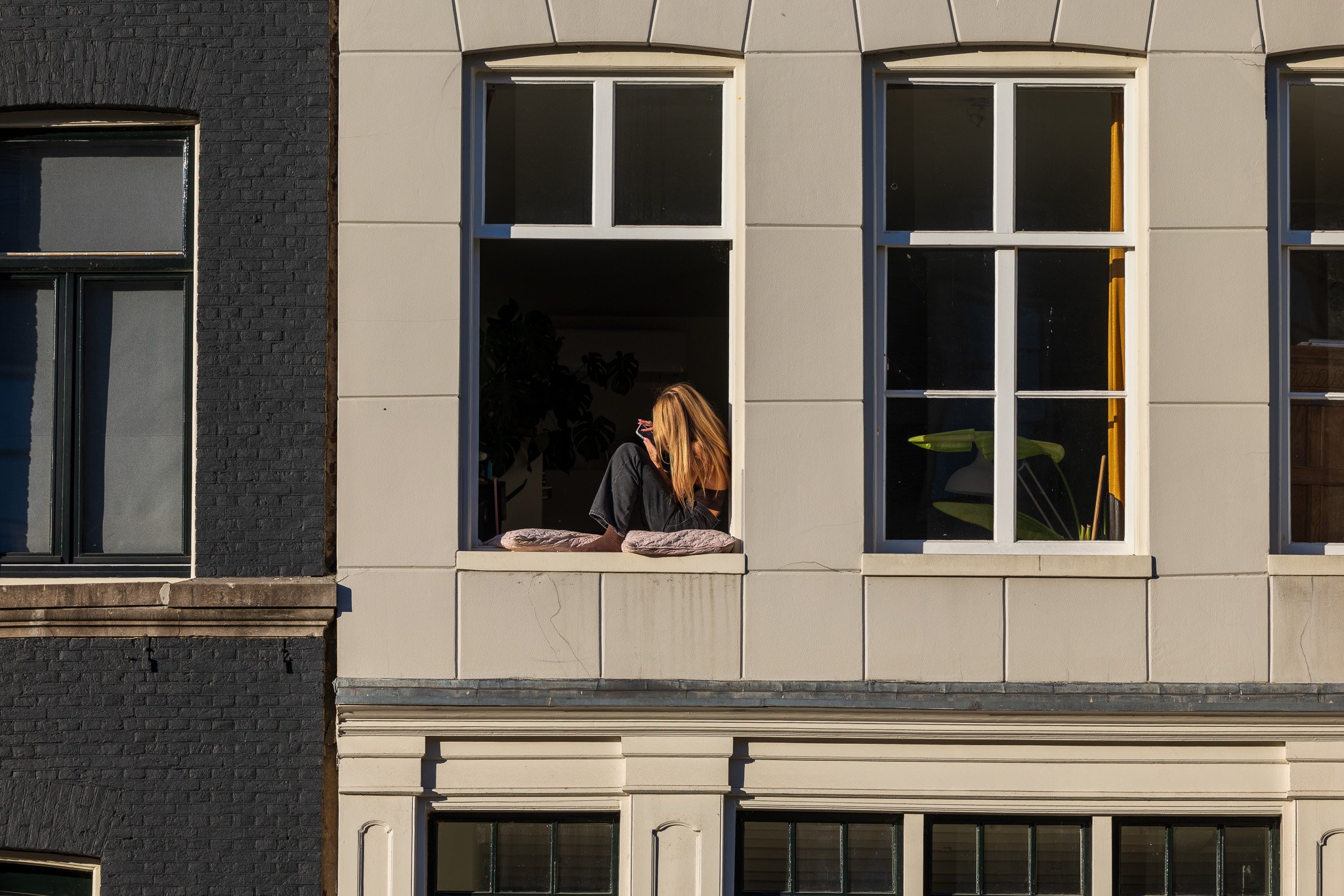
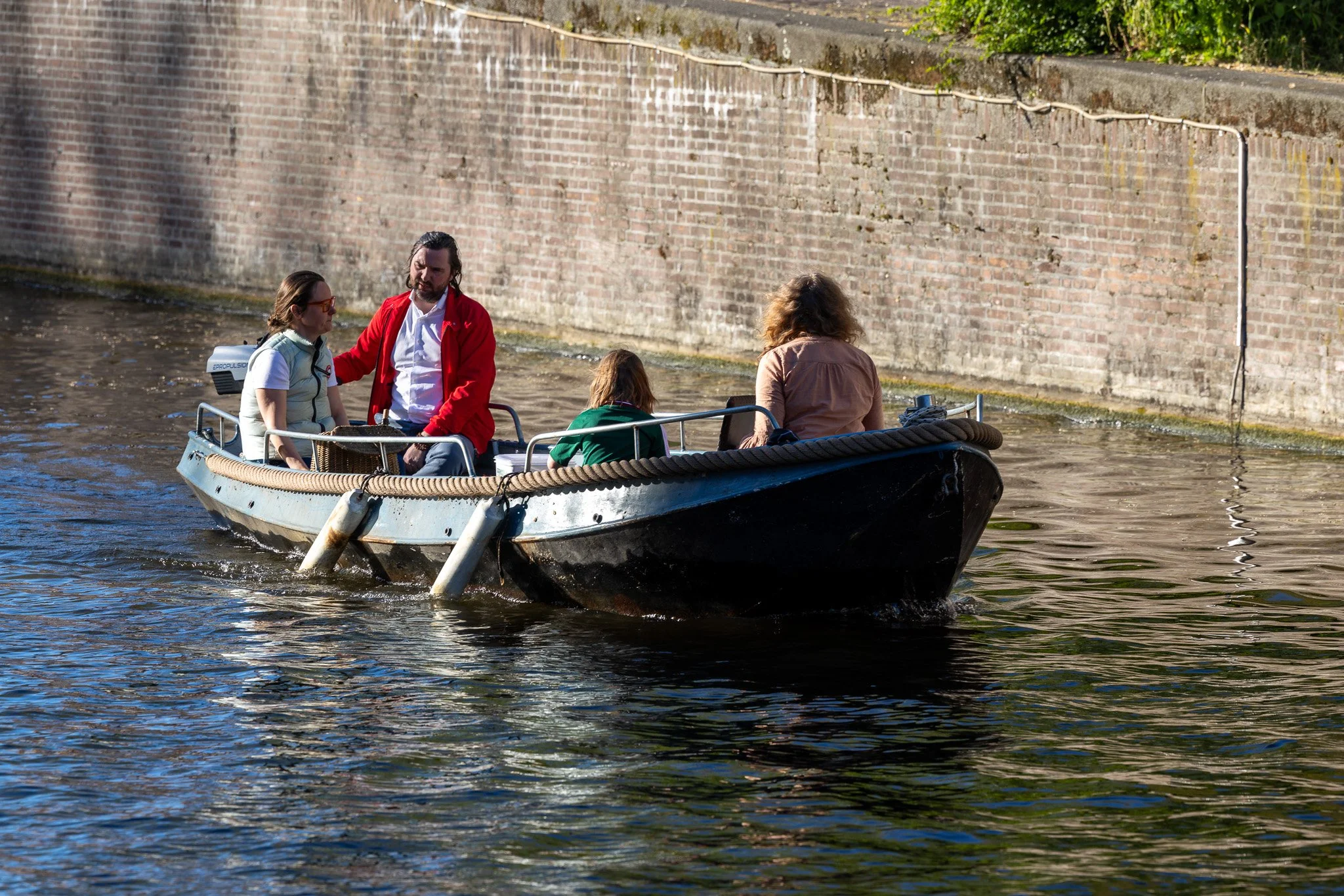
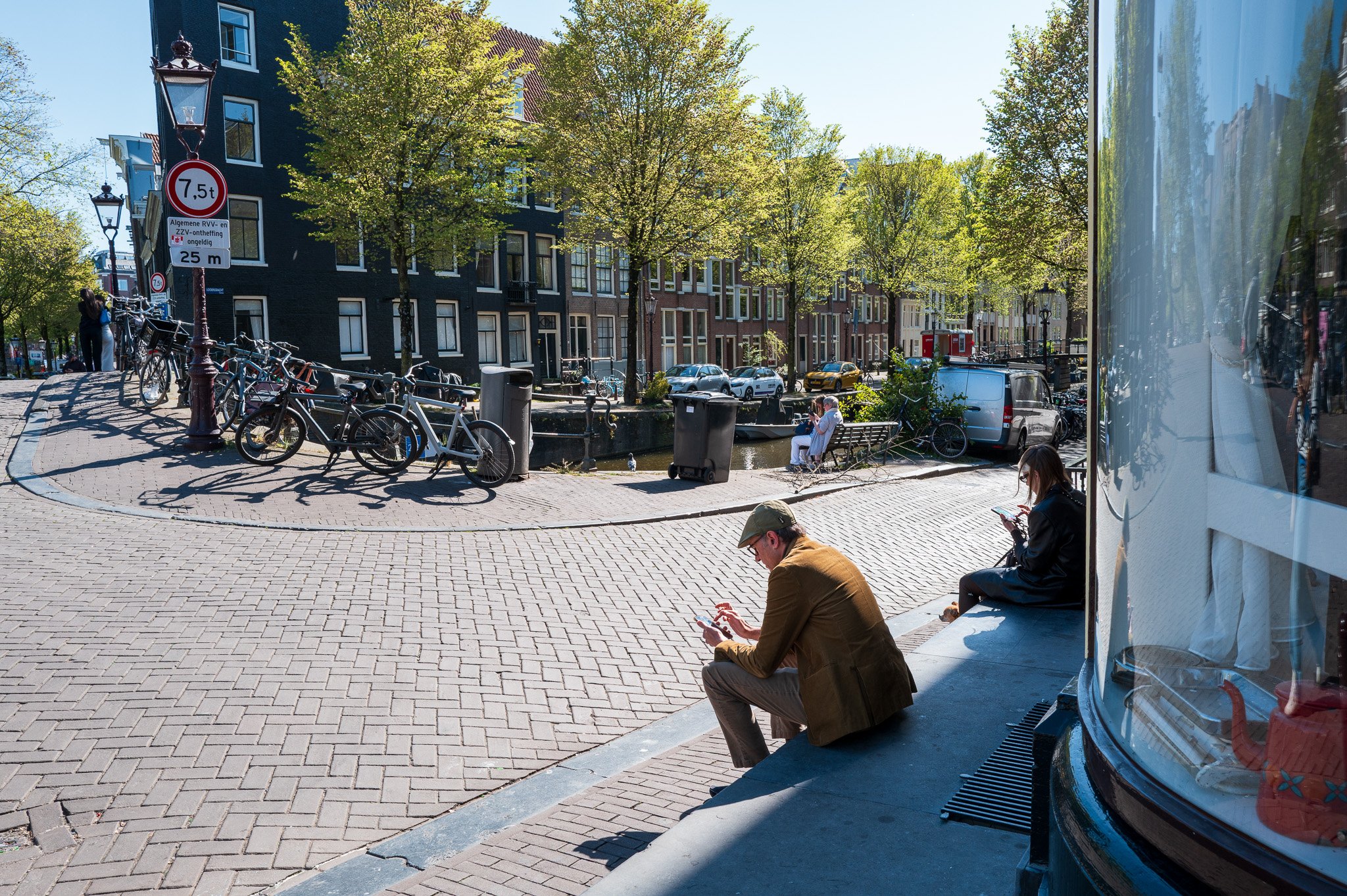
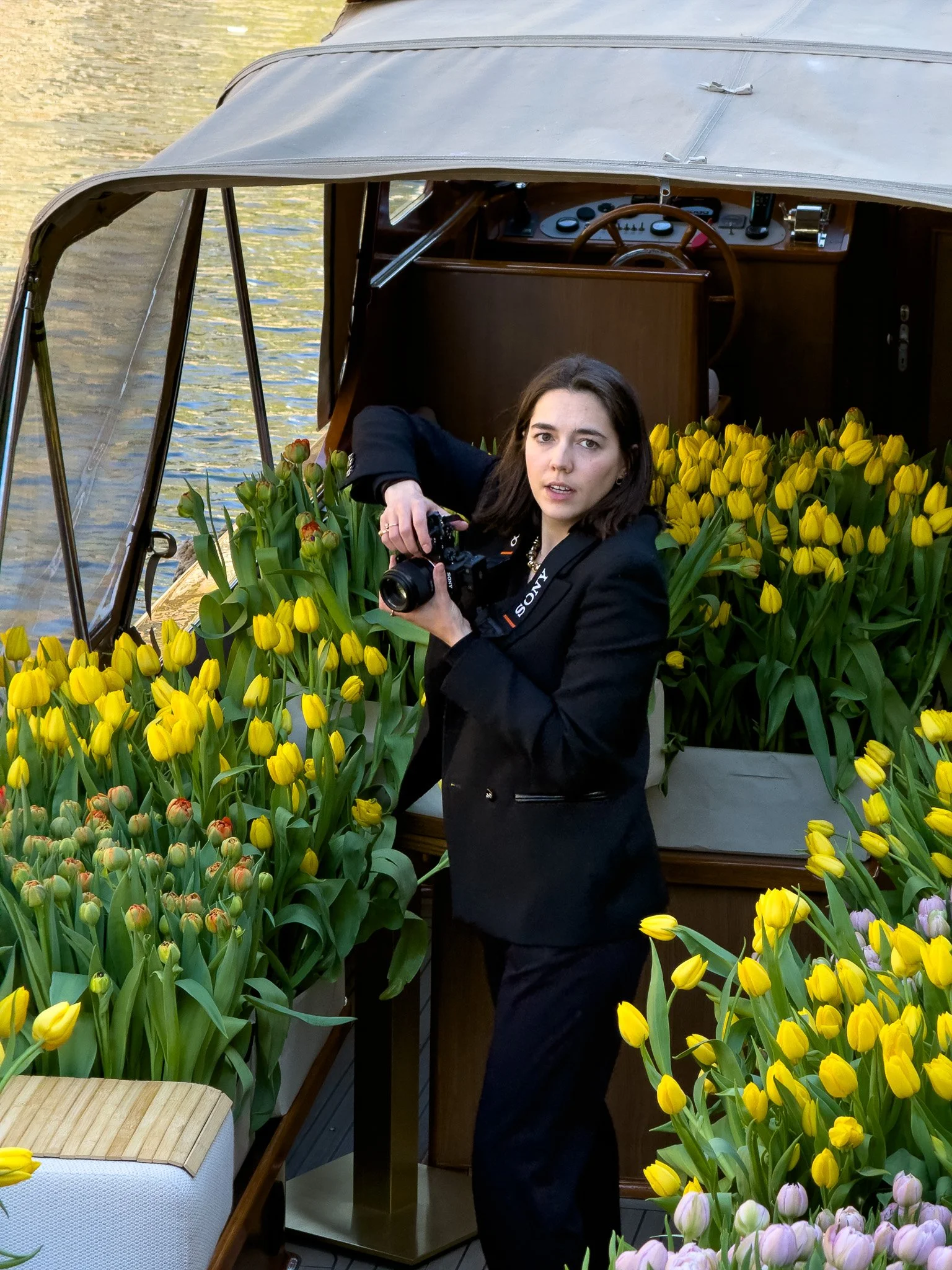
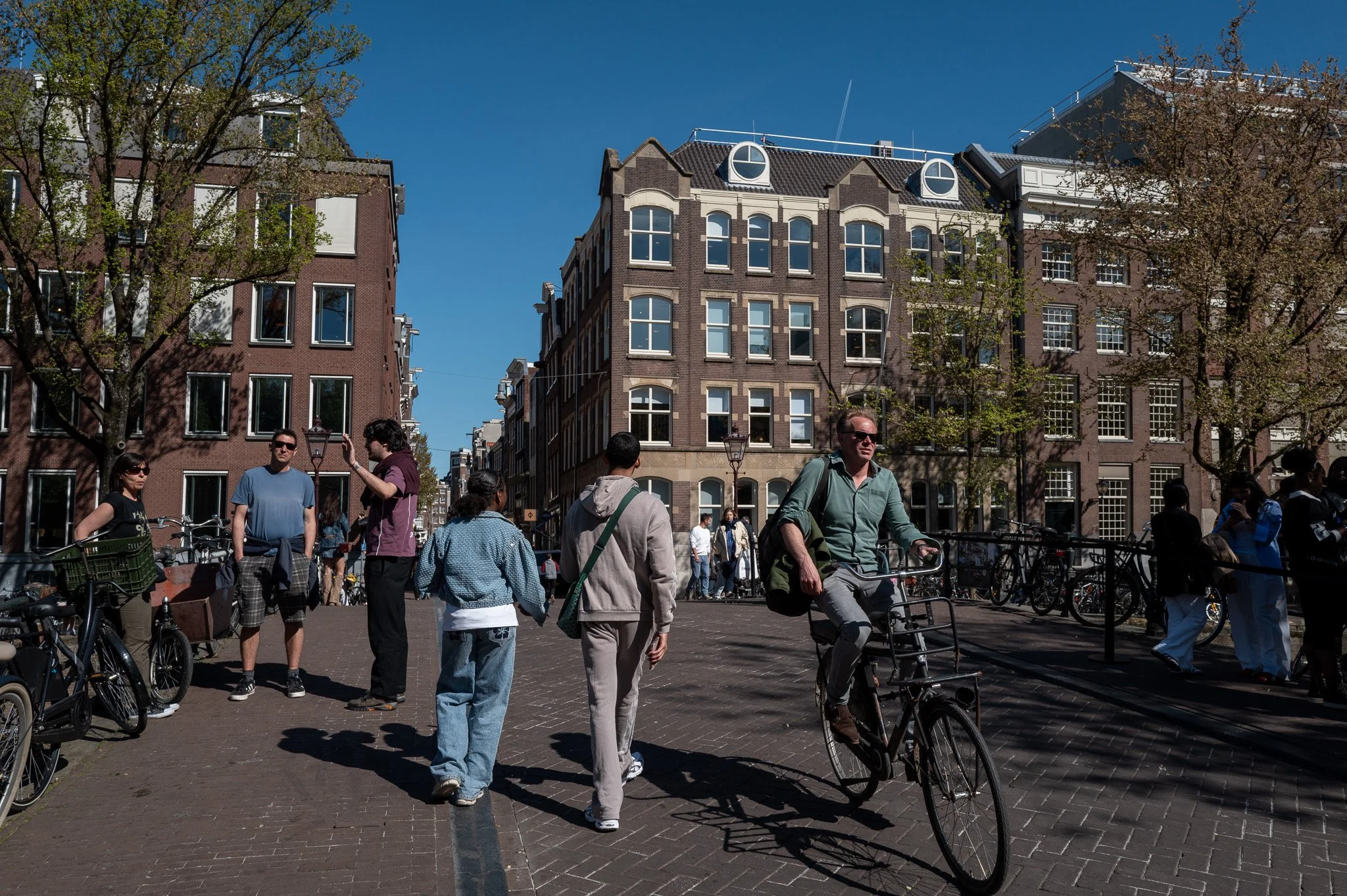
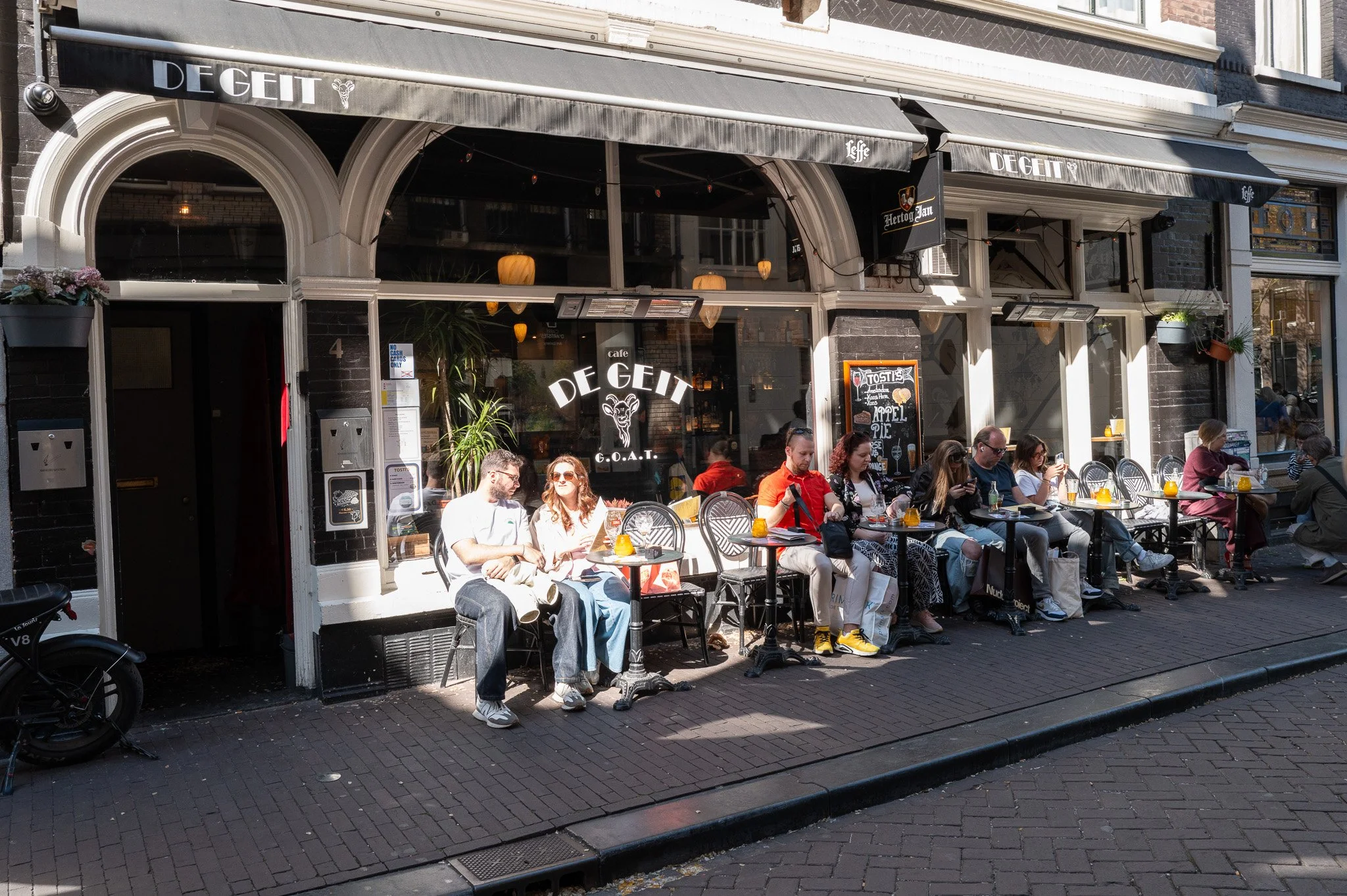
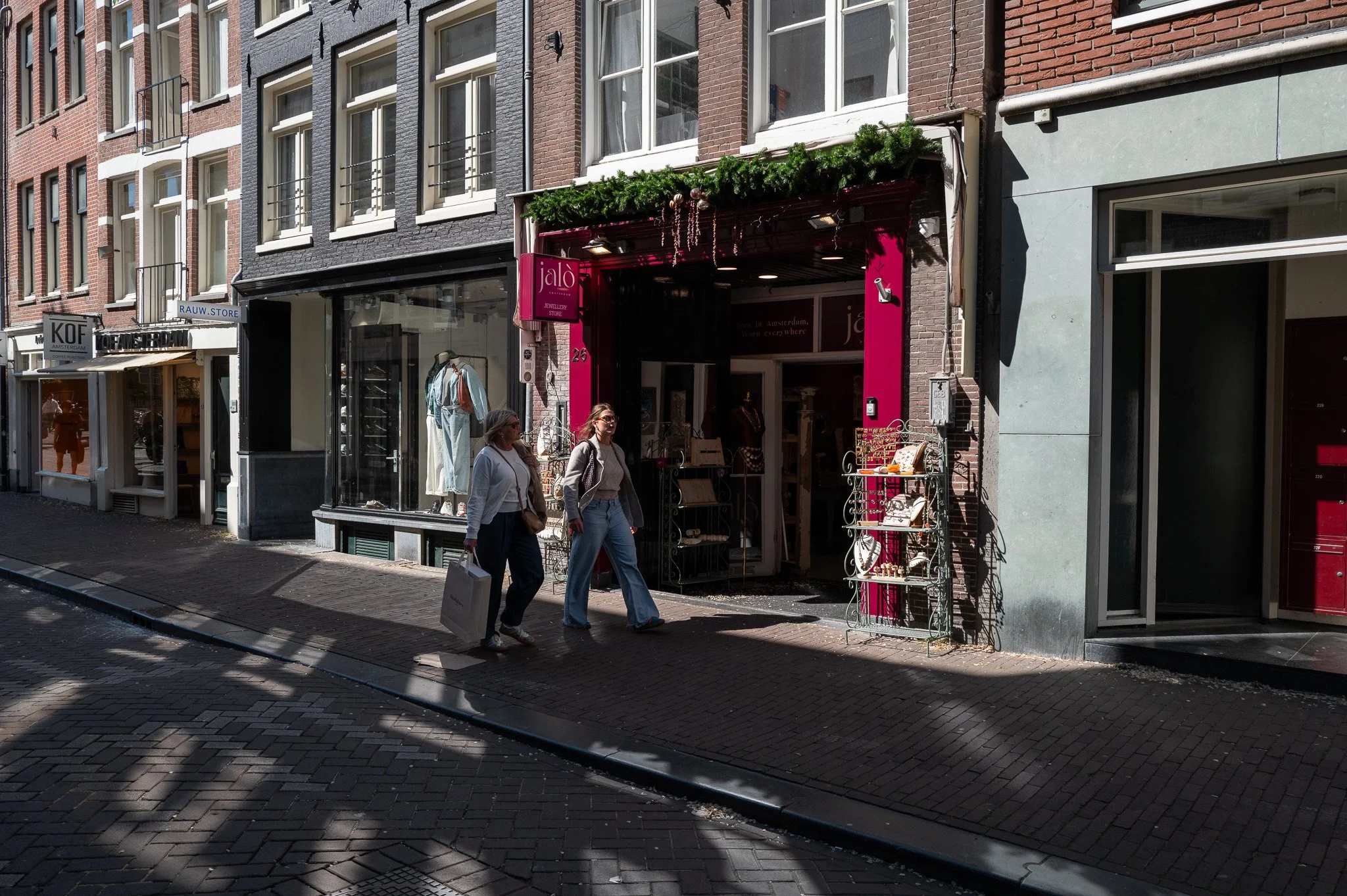
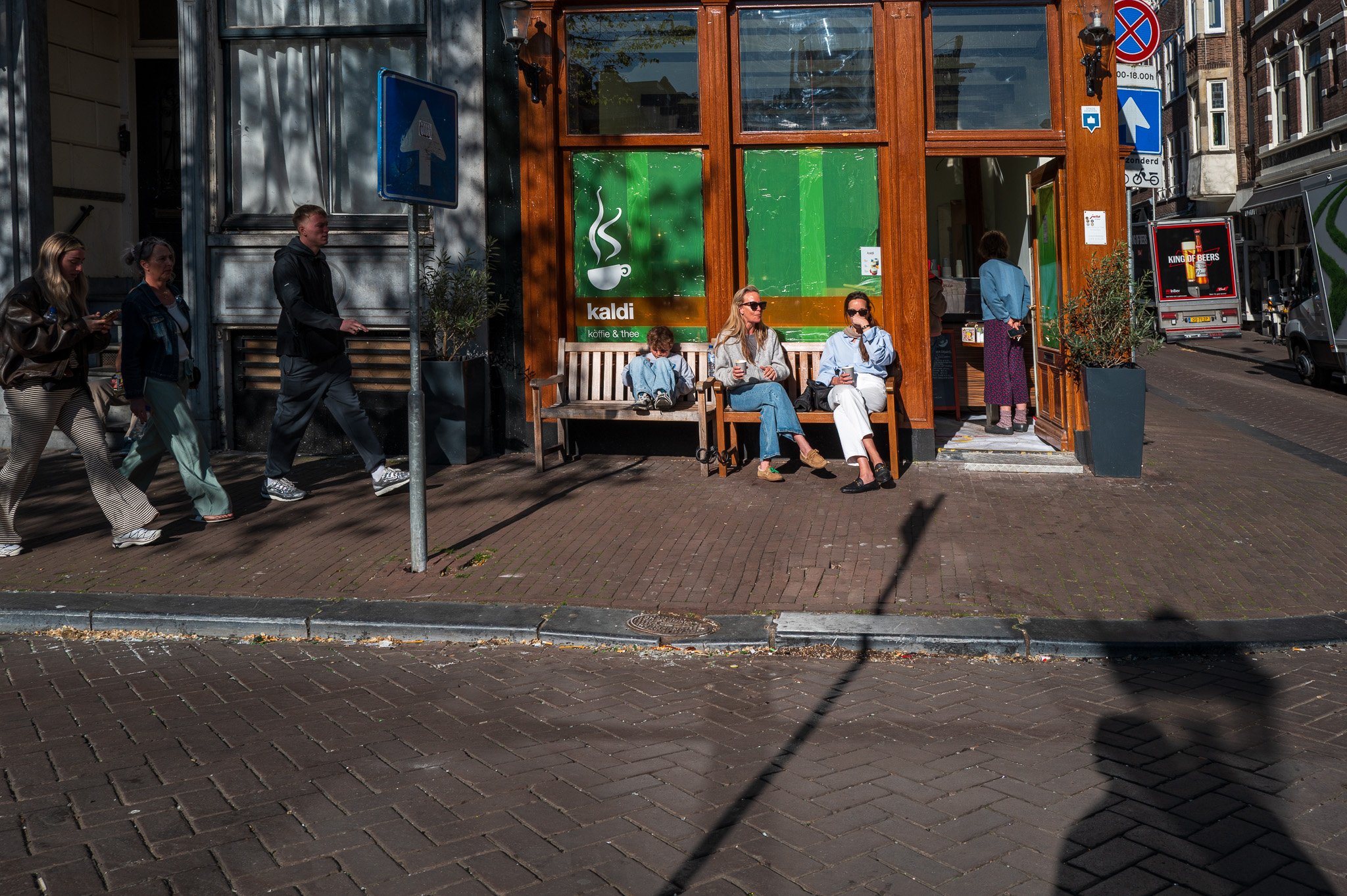
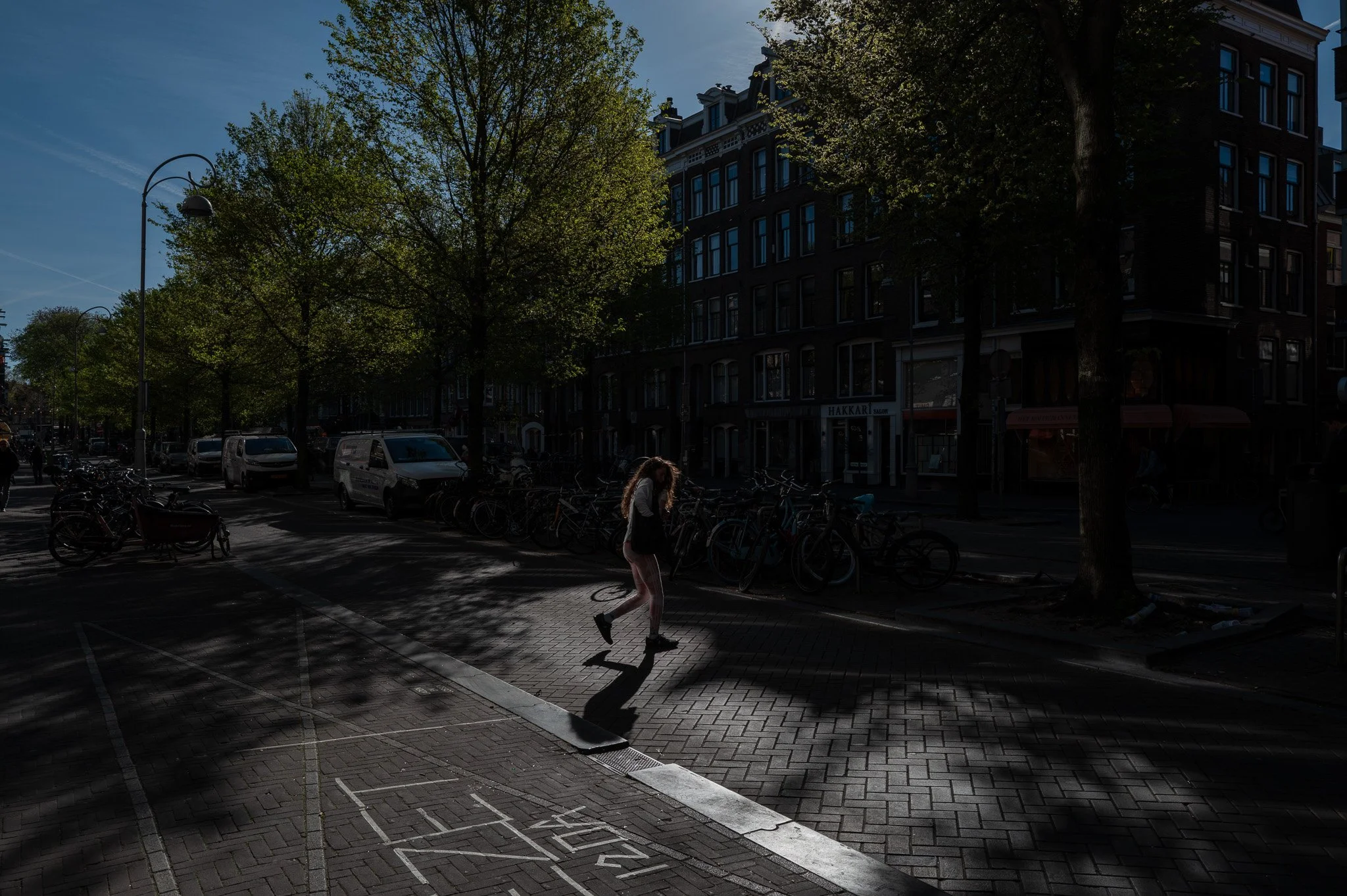
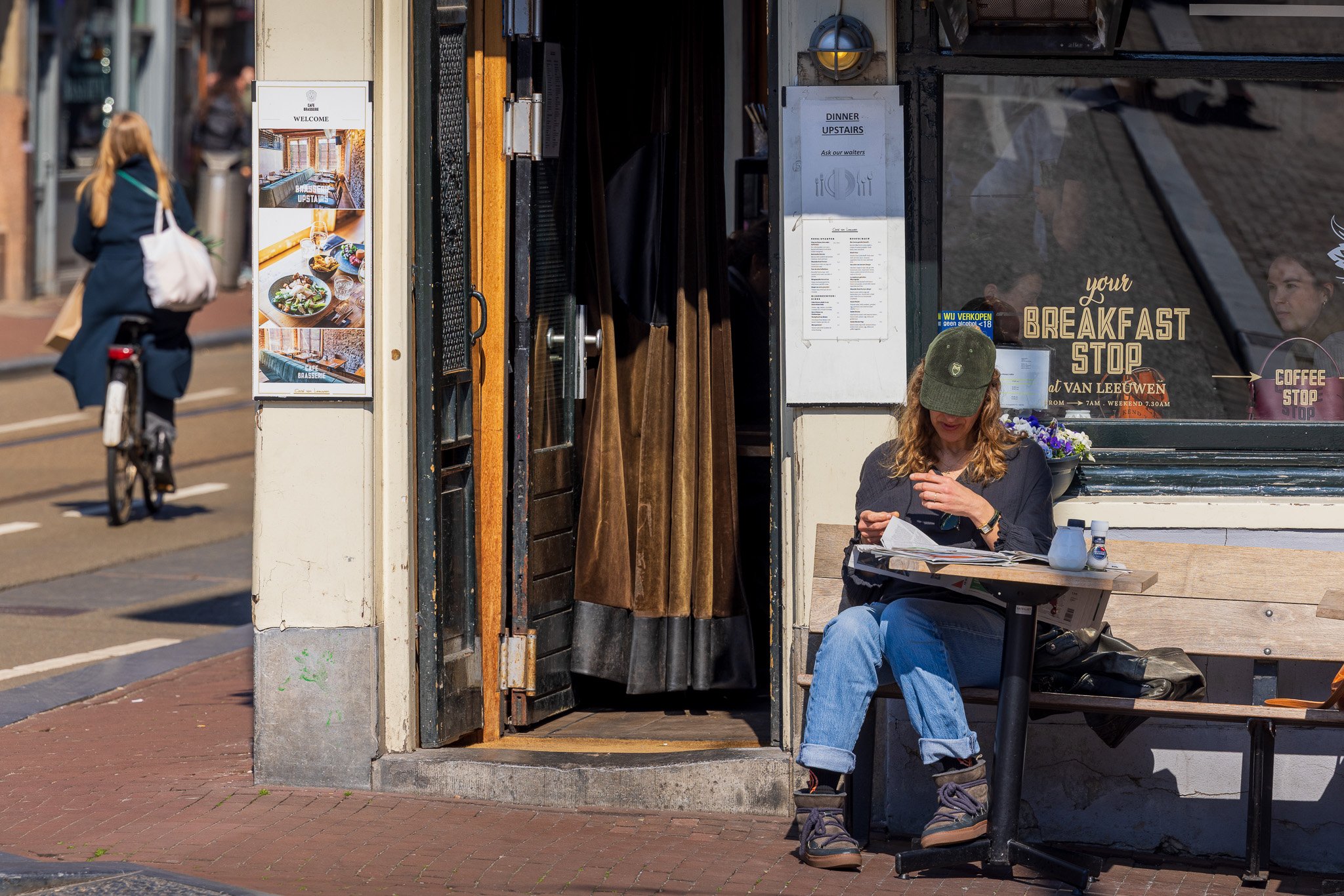
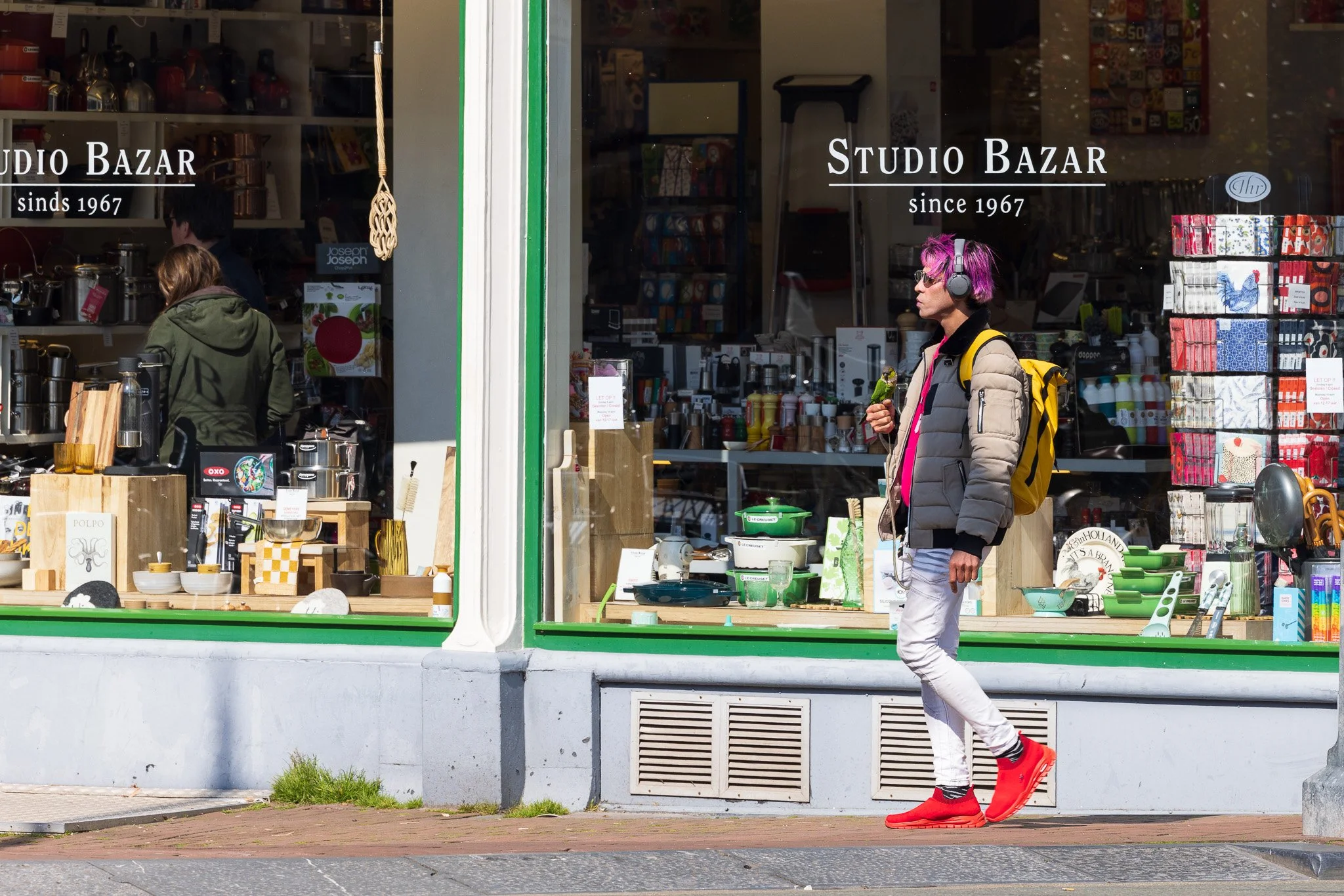
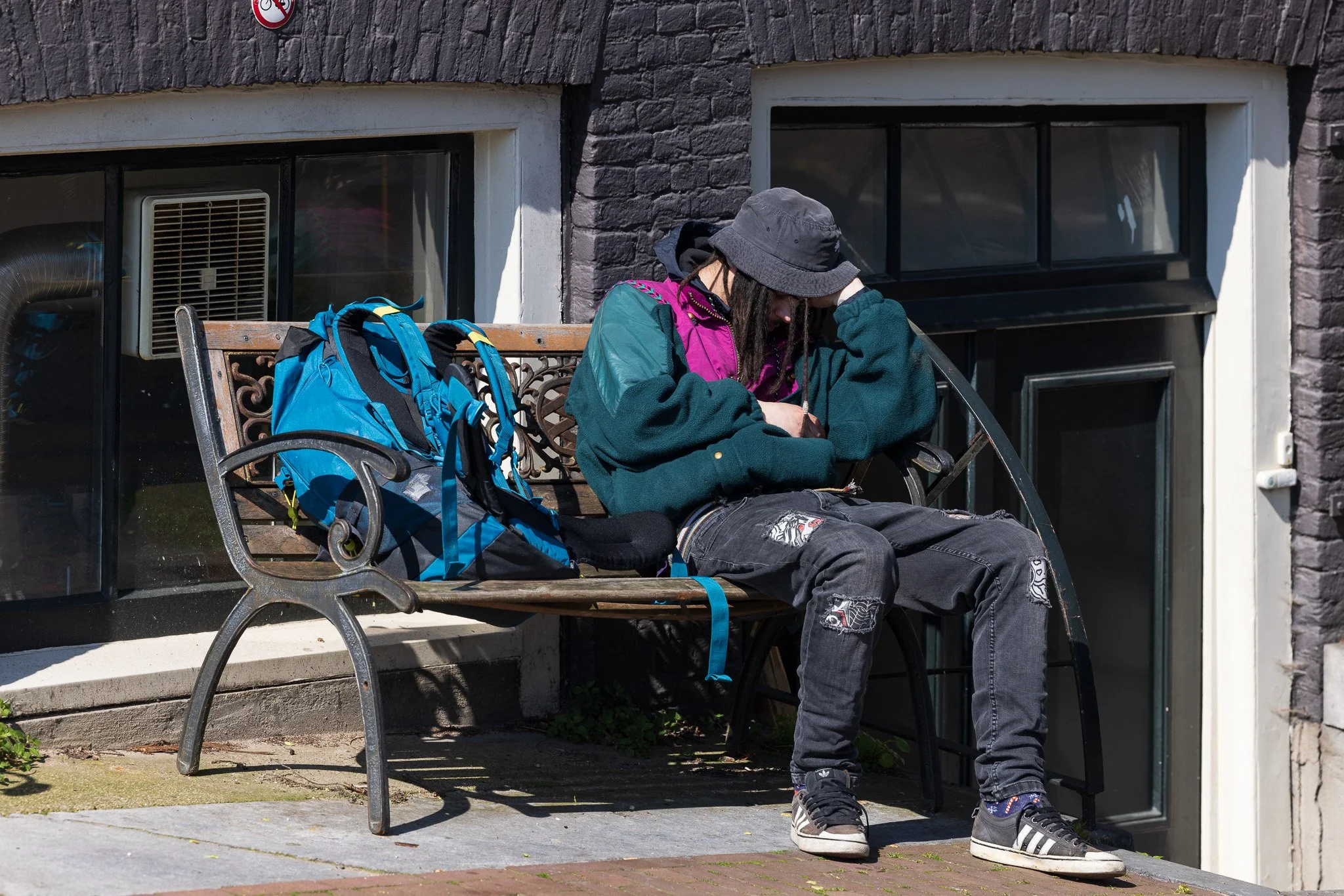
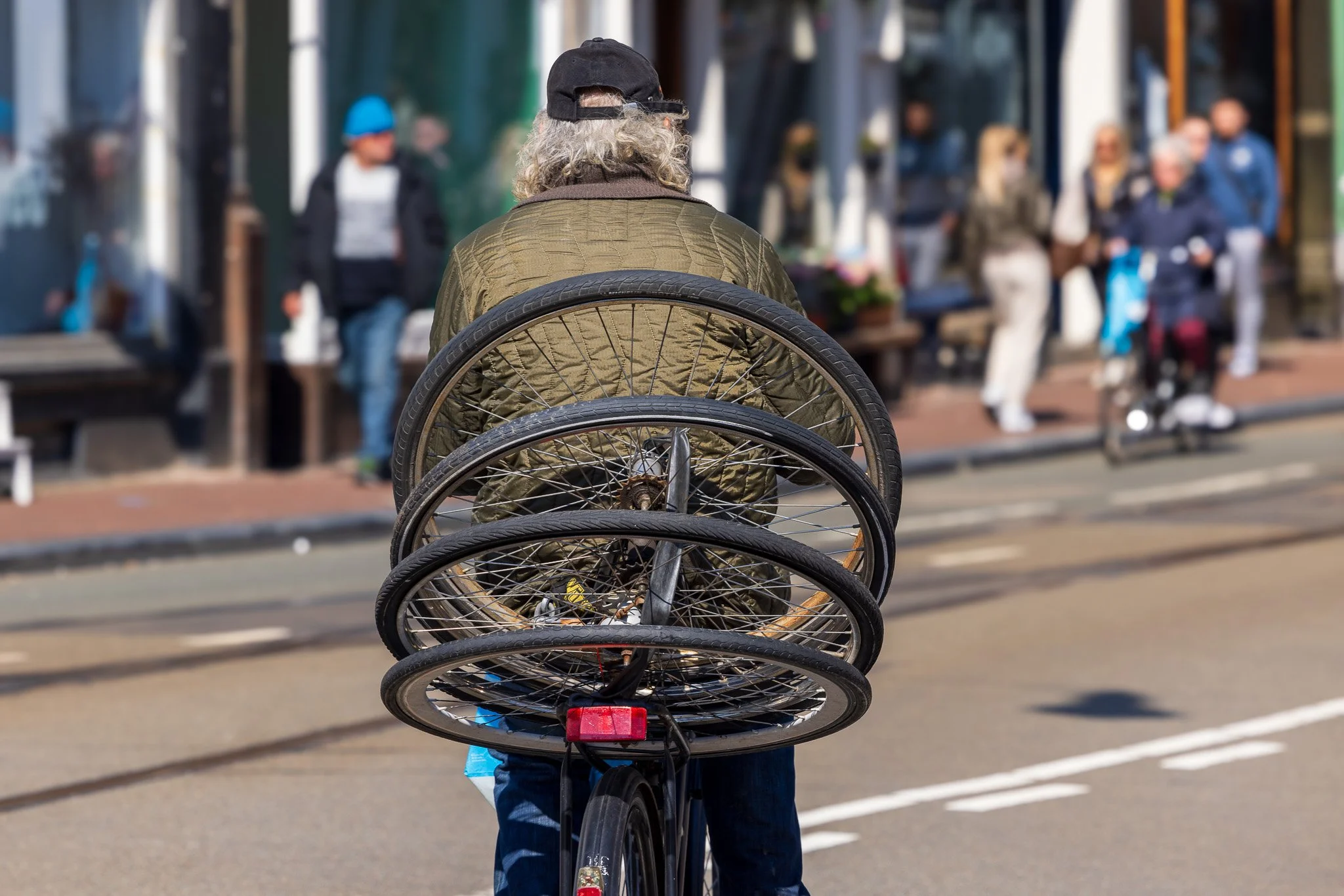
📷 Pro Tip: For cyclists, the canal bridges are your stage. Pick a bridge with a straight approach from both directions, set up at 2x to 3x on a mirrorless or 85-135mm on a prime kit, and pre-focus on a fixed point in the center of the bridge. Shoot in continuous focus with burst mode. The compression at that focal length separates your subject from the background canal houses and gives you the layered depth that makes Amsterdam cycling shots work. For market photography at Albert Cuyp, use a 35mm at f/4 and move through the stalls at the pace of the crowd rather than stopping to set up. The best frames come from being inside the flow, not standing aside watching it. Early morning on Saturdays is the optimal time: the light is low, the crowd is local, and the vendors are still setting up, which gives you the behind-the-scenes texture that afternoon shots miss.
Best time: Morning for cyclists and markets; early evening for café and street life. Access: Free, public throughout the city.

Magere Brug and the Amstel River
The Magere Brug, the Skinny Bridge, is the most photographed bridge in Amsterdam for good reason. A classic white wooden drawbridge over the Amstel River, it is beautiful in every light, and the evening frame with the bridge illuminated against the fading sky is one of the defining images of the city.
Walking along the Amstel at sunrise adds another layer: reflections of the houseboats and tall canal houses in the wide river, often with morning mist still sitting on the water in autumn.
📷 Pro Tip: For the classic shot, position yourself on the east bank of the Amstel looking west at sunset, when the bridge lights up against the fading sky. A 35-50mm works well here. Go wider, and you pick up too much of the surrounding riverbank. Go longer, and you lose the width of the bridge and its relationship to the water. For the reflection shot, step back to where the full span of the bridge and its illuminated reflection in the Amstel below are both in frame. A tripod and a 15-to-25-second exposure at blue hour. A few steps north toward the National Opera, the Amstel opens into a wider, cleaner reflection shot that is less visited than the bridge itself.
Best time: Sunset and blue hour. Access: Free, public. Ten-minute walk south from the Nine Streets.
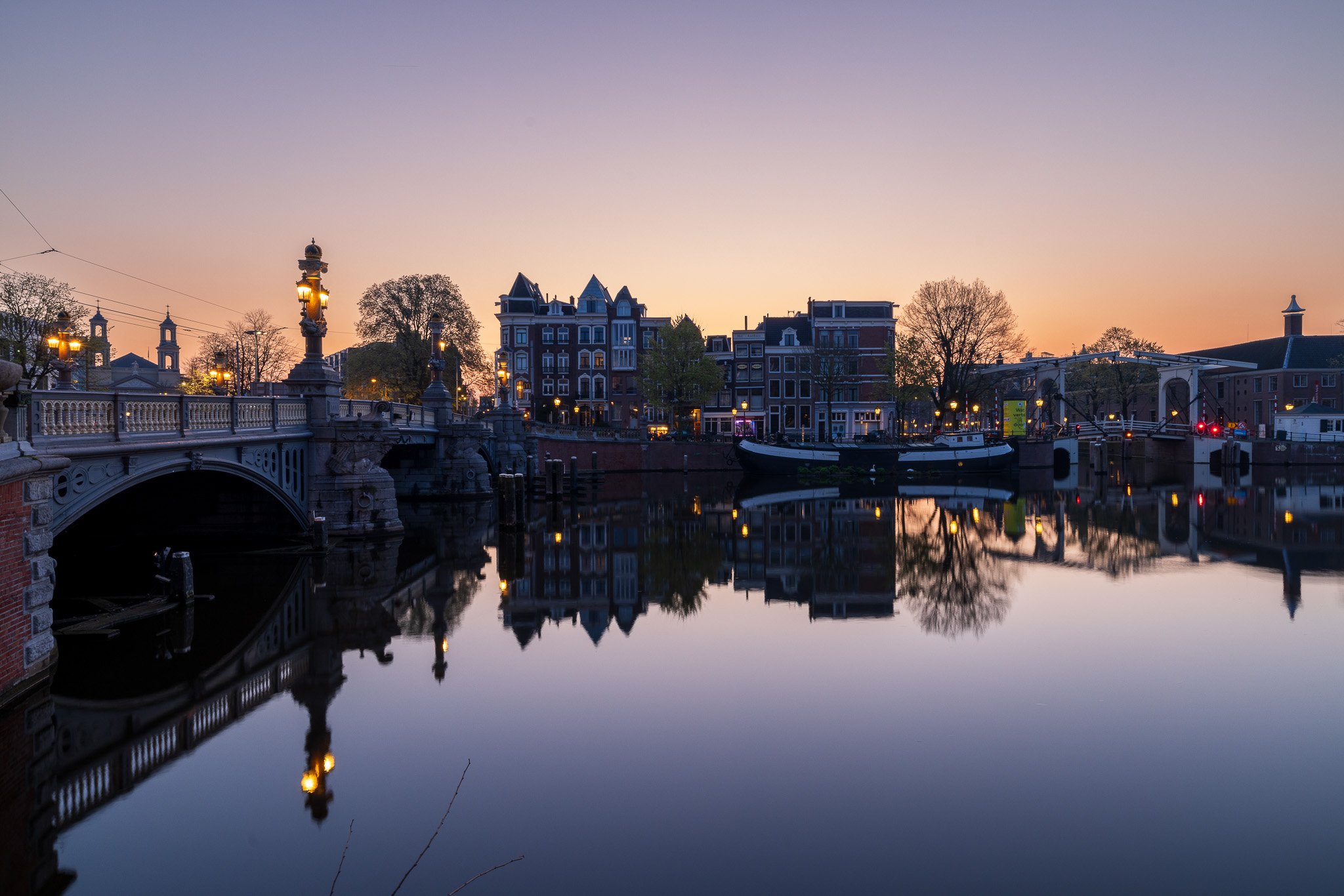
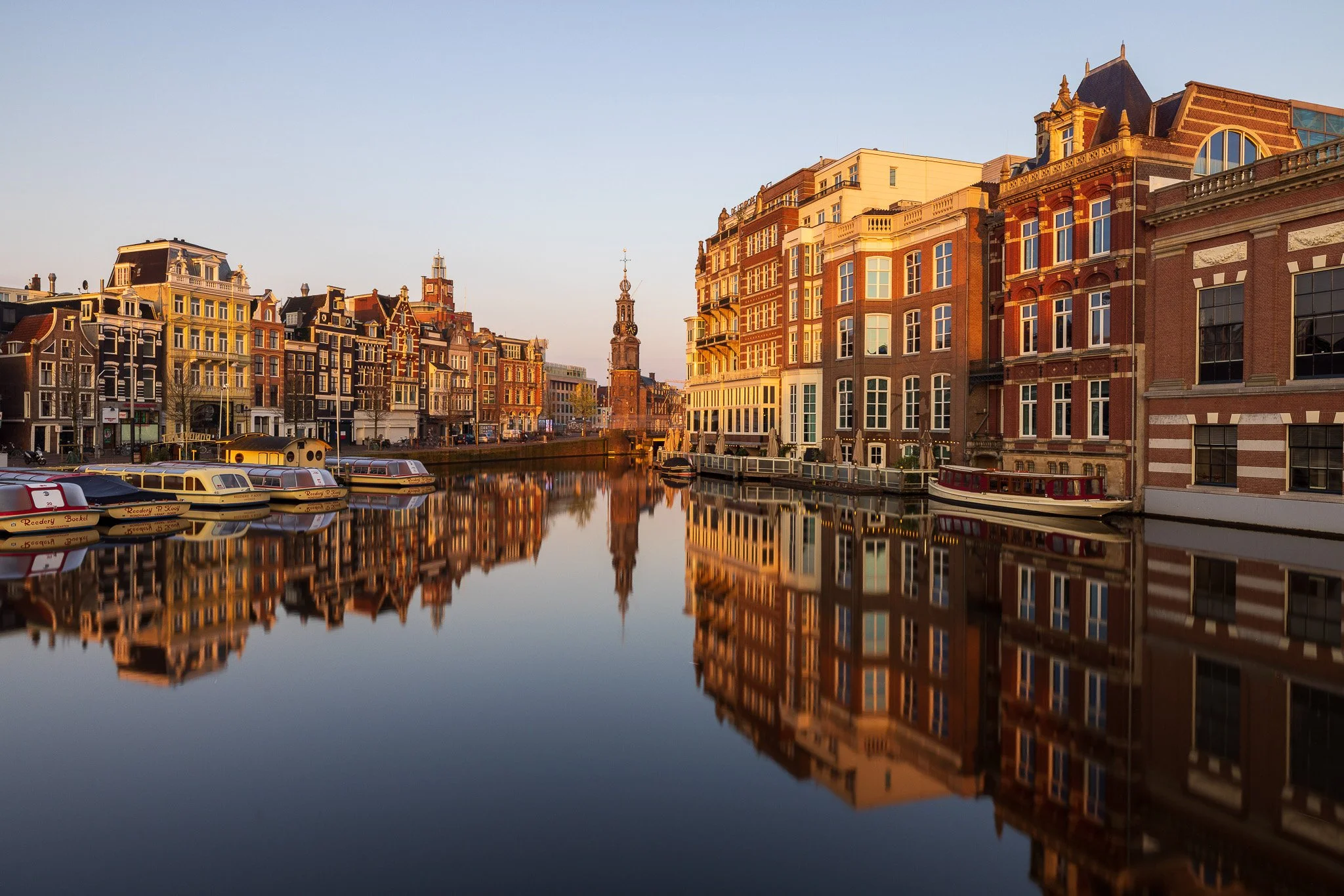
AMSTEL RIVER (National Opera)
At Sunset, the Magere Brug is a fantastic spot to photograph

If you walk towards the Opera, it is also beautiful at sunset

Just a few steps from the Magere Brug (Bridge), you will find this spot with beautiful reflections at Sunrise.
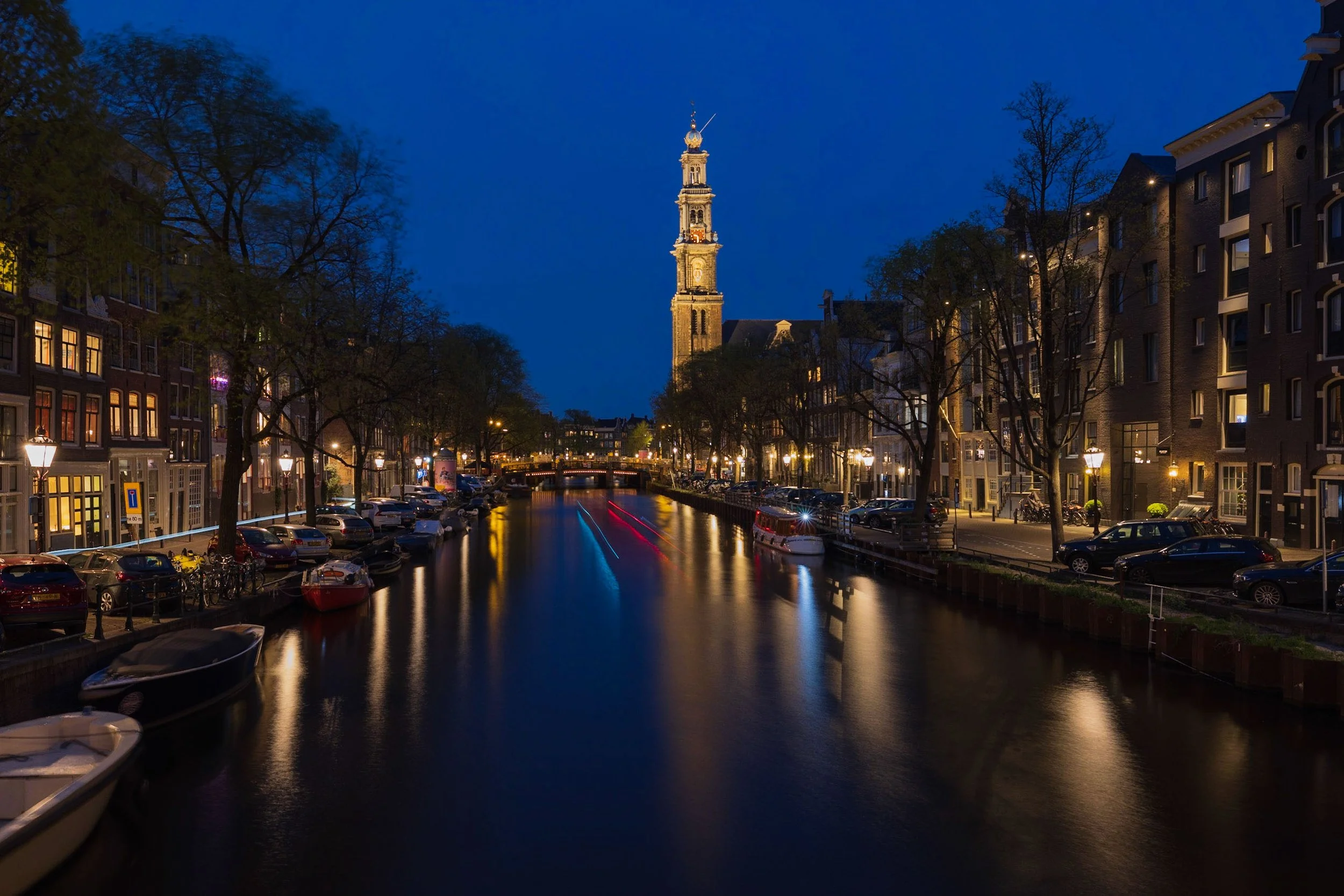
Westerkerk Church from Leliegracht
The Westerkerk tower is the dominant vertical in the Jordaan skyline and the most photographed church in Amsterdam. The intersection of Leliegracht and Prinsengracht frames it beautifully, with the canal, the drawbridge, and the church tower composing in a single frame.
📷 Pro Tip: Position yourself on the Leliegracht bridge looking north toward the Prinsengracht intersection with the Westerkerk tower beyond. Morning light hits the tower's face directly and brings out the detail in the stone. A 24-50mm covers the full composition from the bridge. In April and May, tulip vendors on the nearby Bloemenmarkt add color that works well in wider environmental shots taken in this area. Stay on the bridge and shoot both horizontally for the canal geometry and vertically for the tower as the dominant subject.
Best time: Morning. Access: Free, public.
Centraal Station
Amsterdam's grand railway station is one of the great European civic buildings: a Gothic-Renaissance structure sitting at the edge of the IJ waterfront, built between 1881 and 1889. It photographs best from the north side, from the IJ waterfront looking south, with the bicycle parking infrastructure of the world's largest bike parking garage in the foreground and the station facade beyond.
At sunrise, the sky above the station turns warm while the building itself is still in partial shadow. The light is brief and extraordinary. By 8 a.m., the crowds arrive, and the composition fills with movement.
📷 Pro Tip: Position yourself on the IJ waterfront directly north of the station, shooting south with the facade centered. At sunrise, the warm sky contrasts against the cooler tones of the station facade. A 24-70mm handle both the tighter facade detail and the wider environmental frame, including the waterfront. Arrive at least 20 minutes before sunrise for the best light. The station is also worth shooting from within the entrance arches, using the architectural framing of the gates to compress the street life outside into the view.
Best time: Sunrise. Access: Free, public.
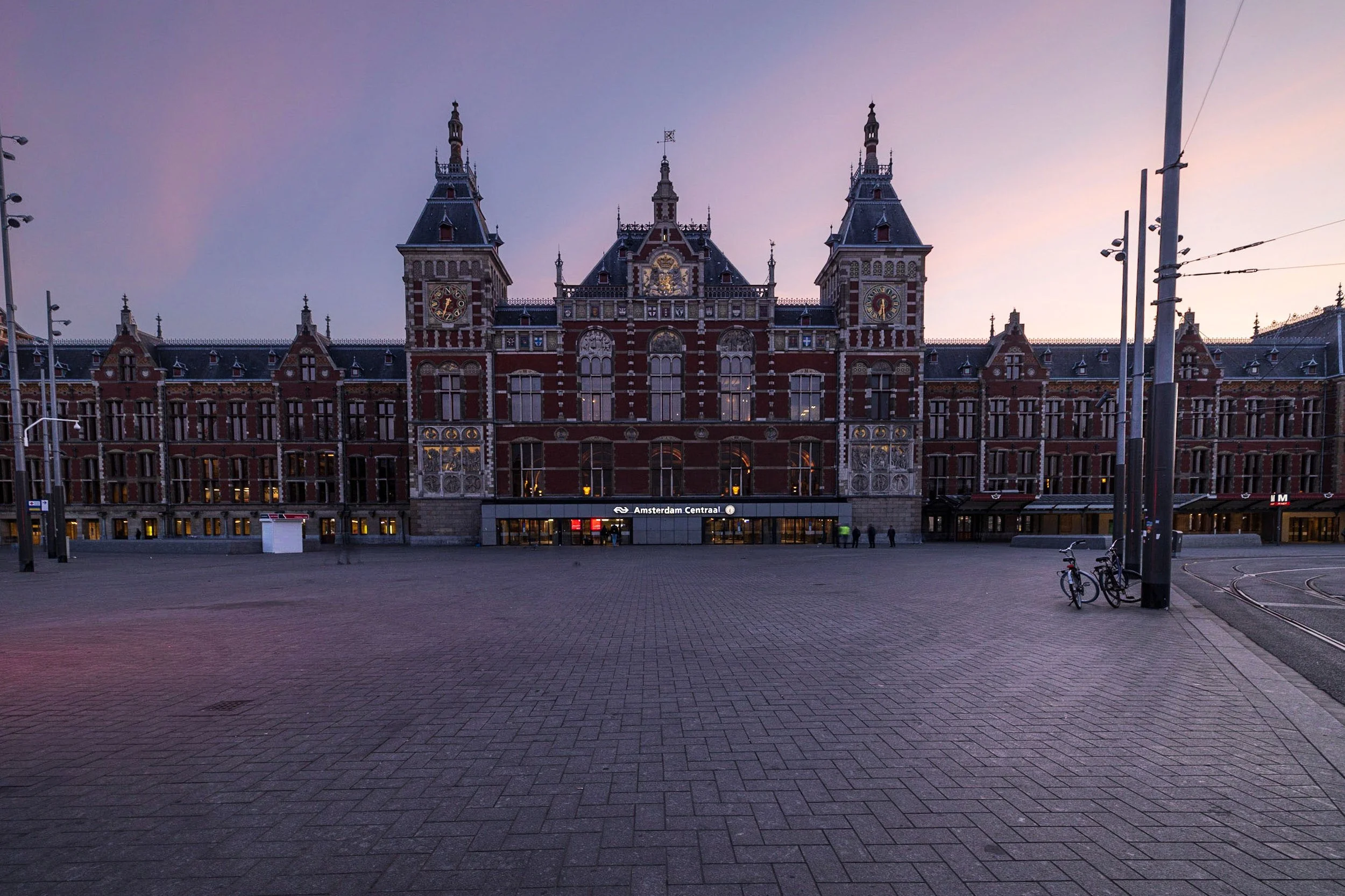
Sunrise
Damrak Canal Houses
The famous leaning canal houses on Damrak, directly in front of Centraal Station, are one of the most photographed views in Amsterdam. The blue hour frame is the one you are here for: warm window light in the gable windows, cool blue sky above, and the perfectly still water of the Damrak reflecting the entire composition below.
The name comes from the way the houses lean forward at slightly different angles, the result of the building code that allowed leaning to facilitate hoisting goods to upper floors. From across the water at dawn, the effect is surreal and beautiful.
📷 Pro Tip: Position yourself on the IJ side of the Damrak, shooting south with the canal in the foreground and the leaning facades in perspective. Blue hour is the peak moment, when the warm window lights contrast against the cool sky and the reflection in the Damrak doubles the composition. A 24-35mm lens and a tripod. Arrive 20 minutes before blue hour to find your exact position before the light starts. By 7:30 a.m. in summer, the area fills with commuters. Sint Olofssteeg, a narrow medieval alley just around the corner from the Dancing Houses, is worth shooting immediately after at the same morning light. Free and public.
Best time: Blue hour at dawn. Access: Free, public. Five-minute walk from Centraal Station.

Sint Olofssteeg
Sint Olofssteeg is a narrow medieval alley that runs one short block from the Zeedijk to the Warmoesstraat, just around the corner from the Dancing Houses on Damrak. It is one of the few lanes in Amsterdam that still feels genuinely old rather than restored. The stone, the brick, the compressed perspective, and the way the morning light enters from the east all make it a completely different photograph from the canal belt fifty meters away.
Most people walk right past it. That is exactly the point.
📷 Pro Tip: Shoot this alley in the morning when direct east light enters from the Zeedijk end and rakes across the stone. A 35mm prime at f/2.8 gives you enough depth to hold the full lane in focus while the background goes soft. Stand at the Zeedijk entrance and shoot toward the Warmoesstraat for the compressed perspective. Stand at the Warmoesstraat end and shoot back toward the light for silhouettes and rim-lit texture. Both are strong frames. This pairs naturally with a pre-dawn Dancing Houses shoot on Damrak; the alley is a two-minute walk, and the light window overlaps.
Best time: Early morning. Access: Free, public. Two-minute walk from the Dancing Houses on Damrak.

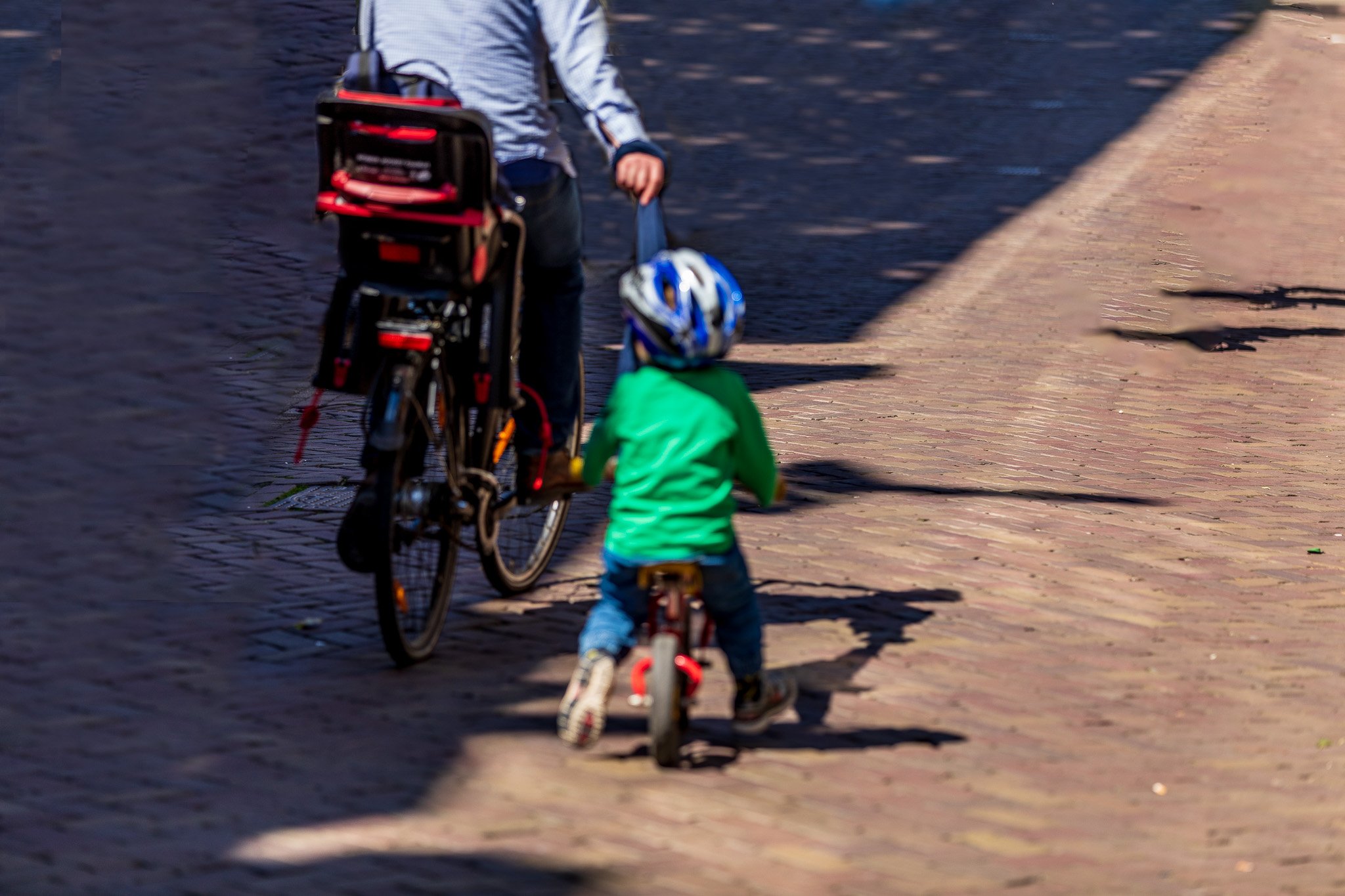
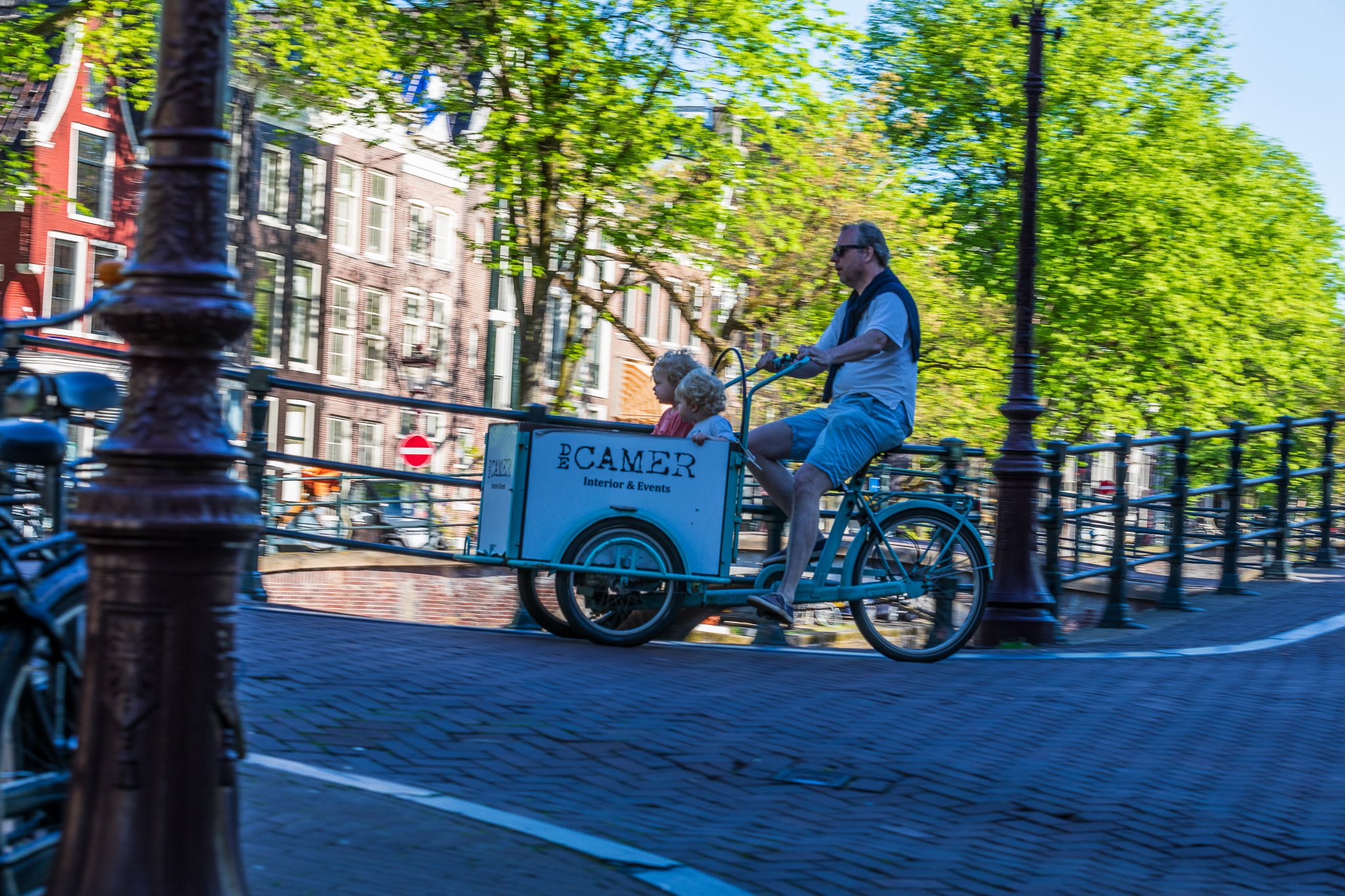
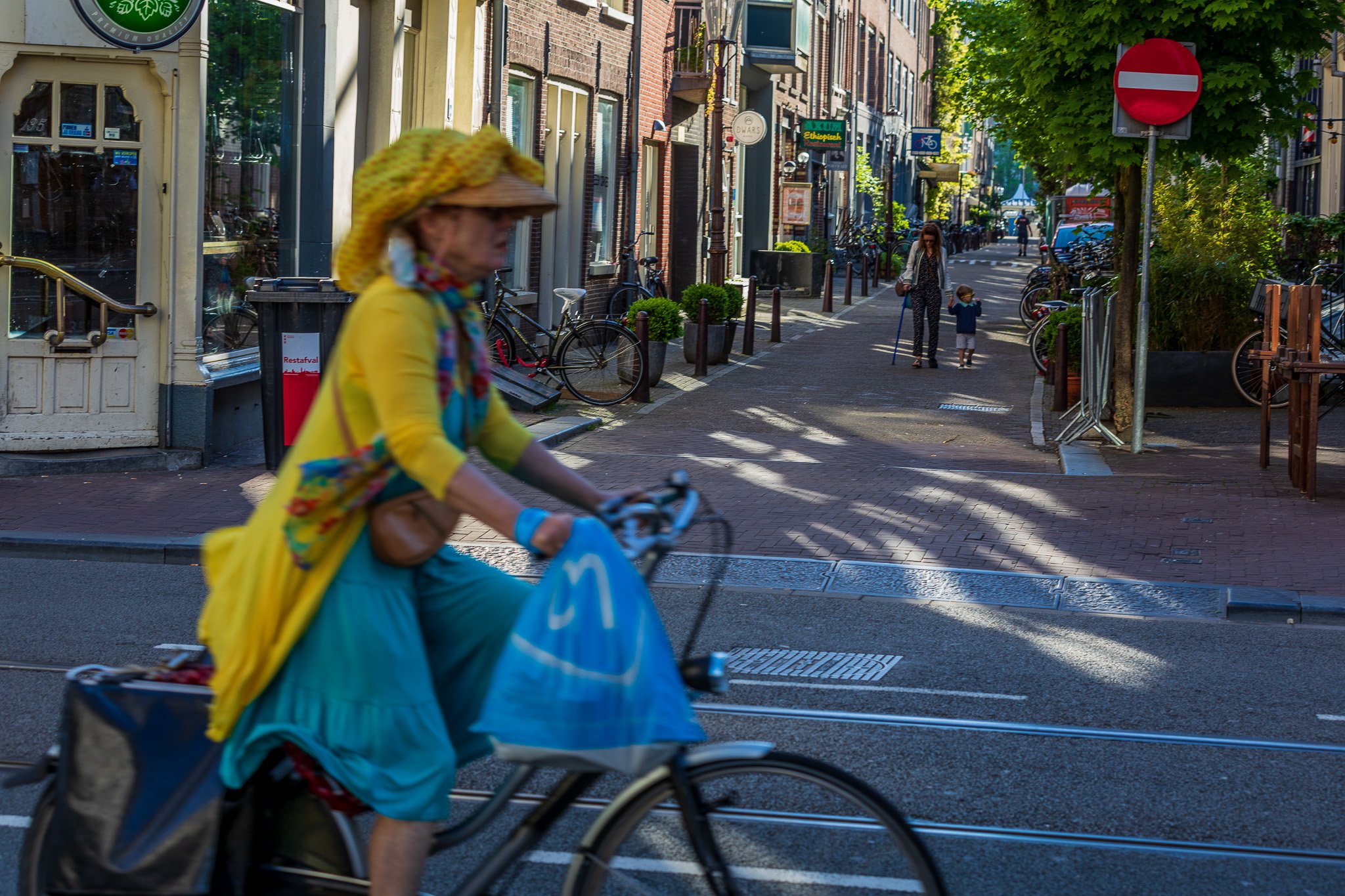
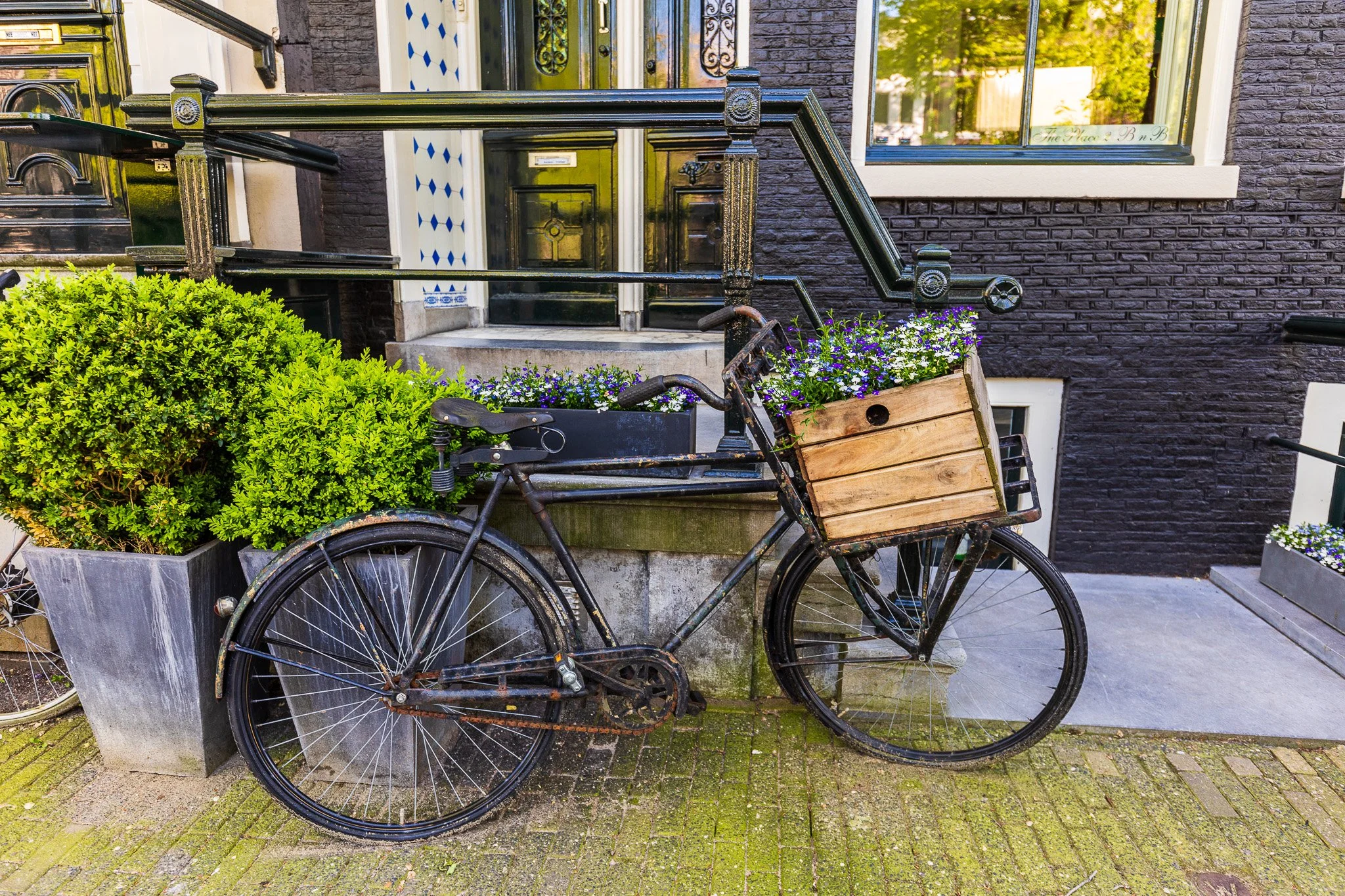
Bicycles
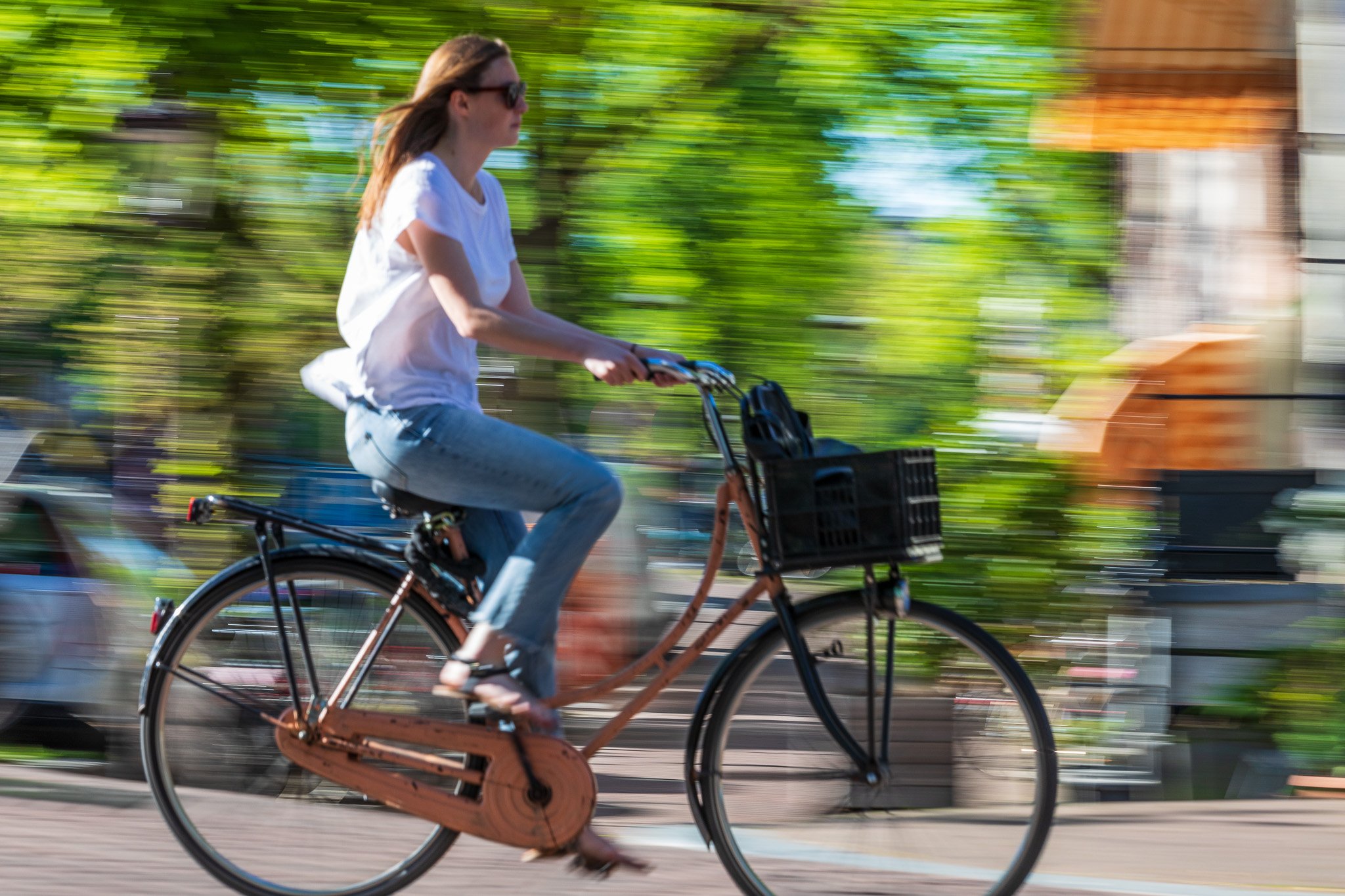
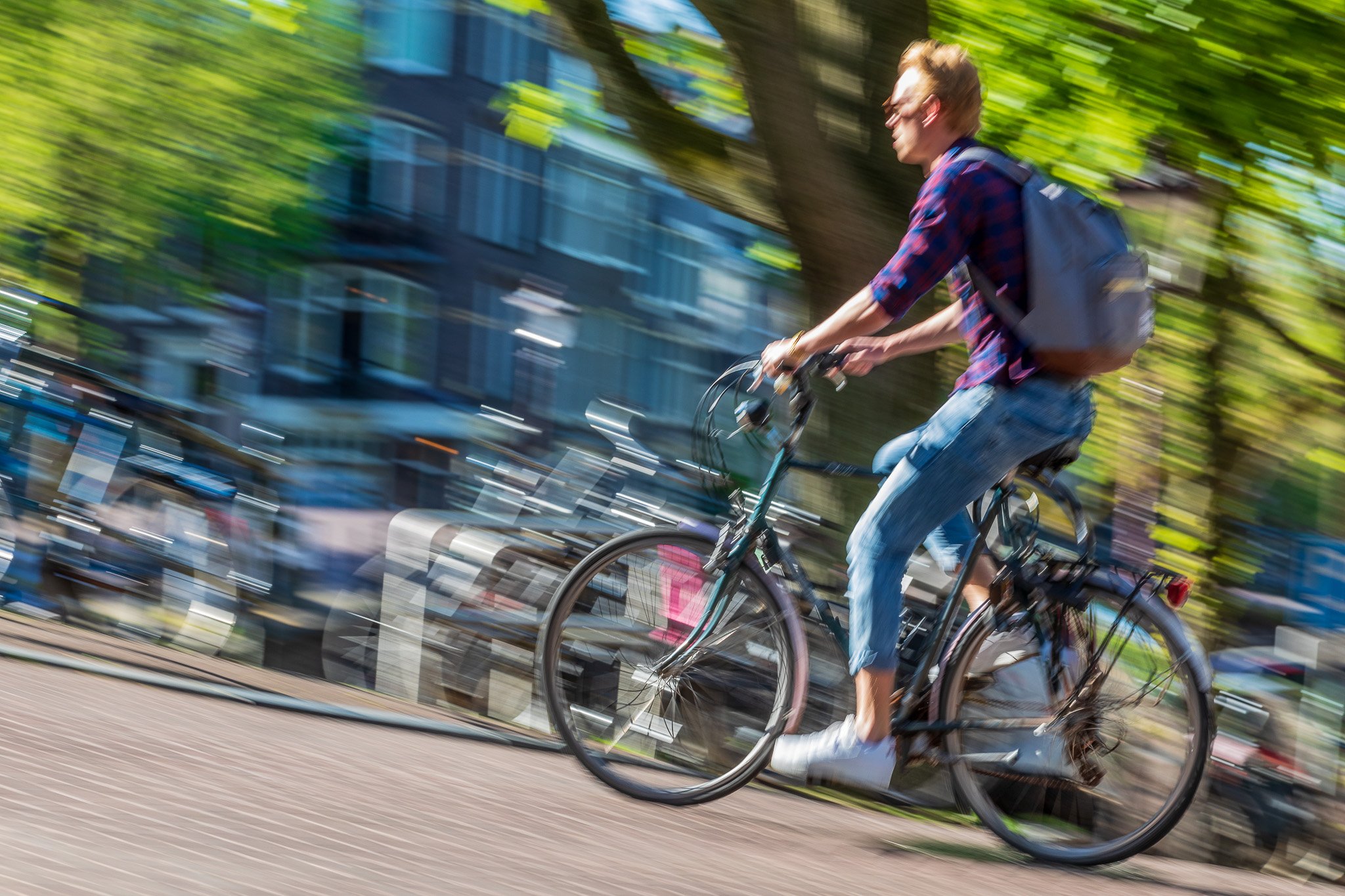
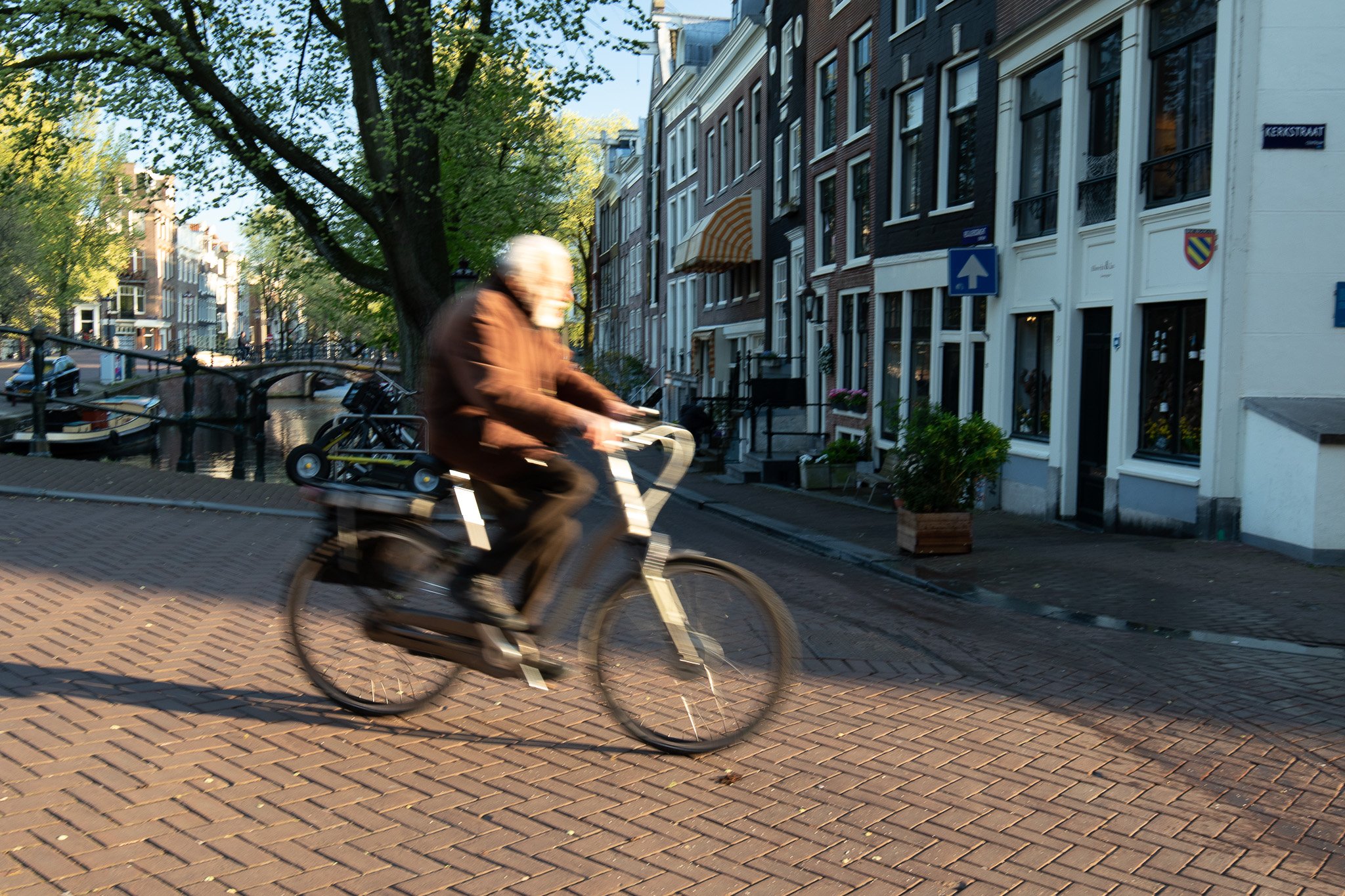
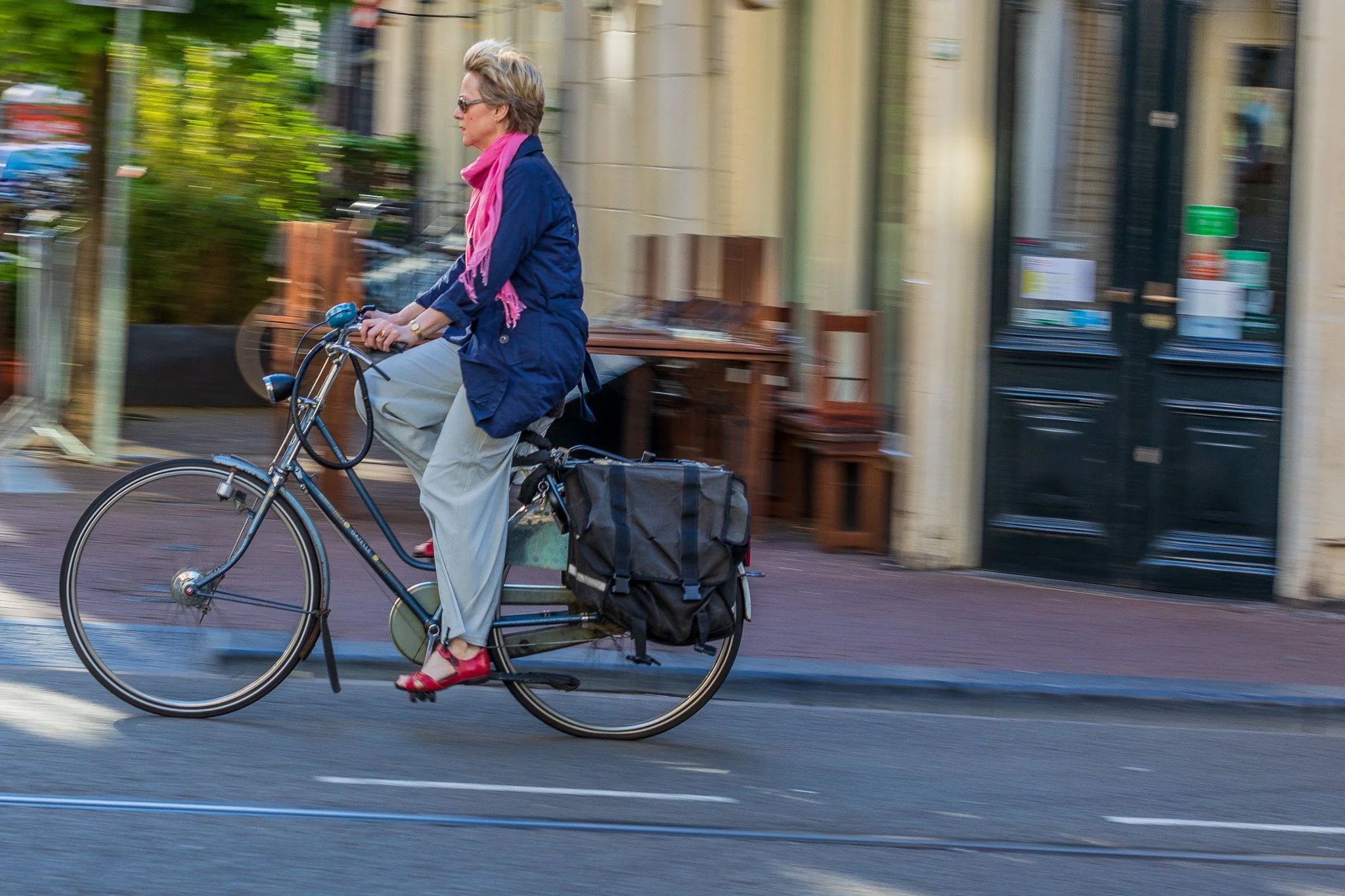
You could literally spend a whole day photographing bikes and bicyclists. I love capturing people on bikes with different shutter speeds. Another great option is to take a pano of people riding their bikes, or riding them over bridges. There are tons of options and no shortage of bikers.
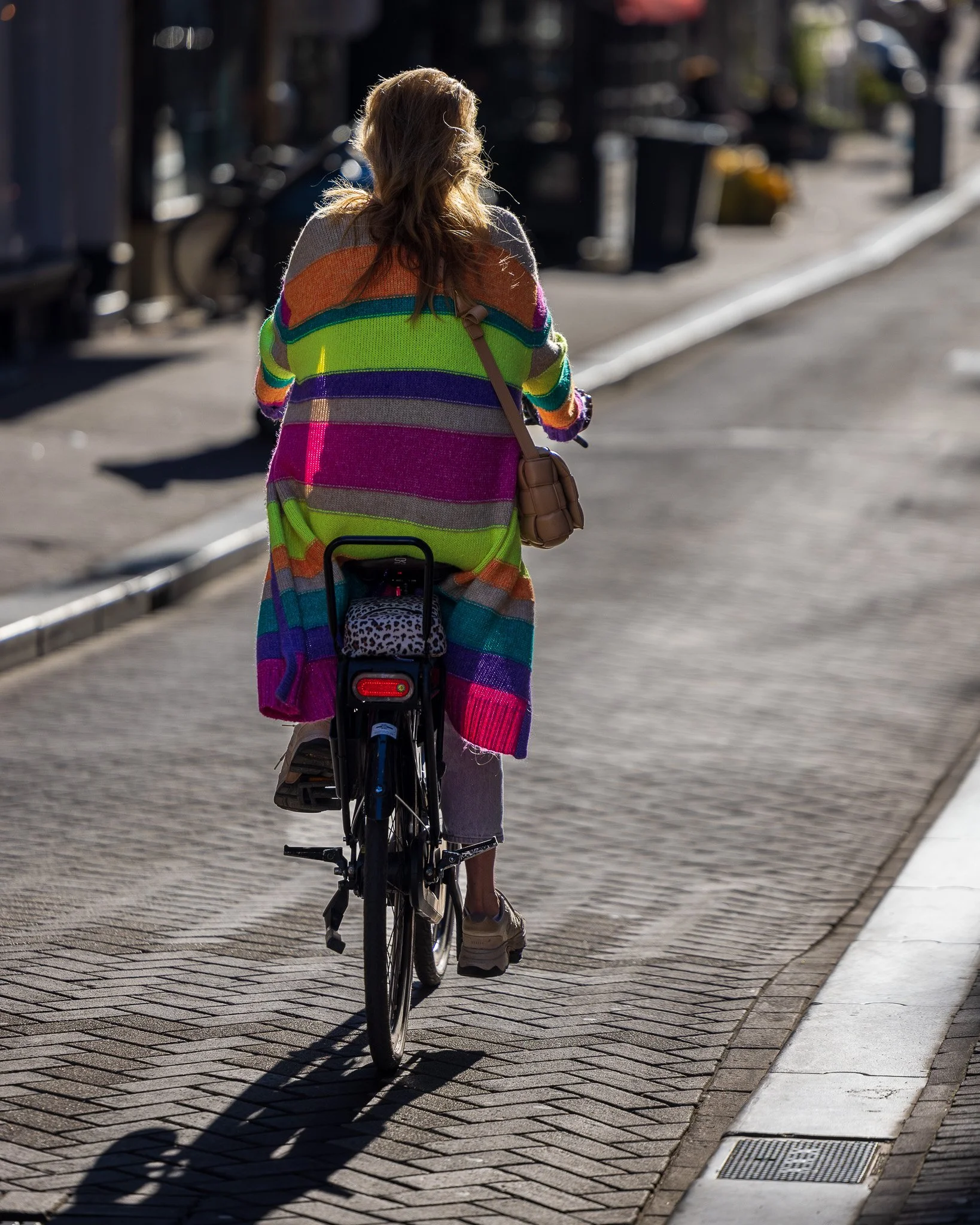
There are so many shots you can get with people on bikes. Everyone rides them everywhere.
Tulips
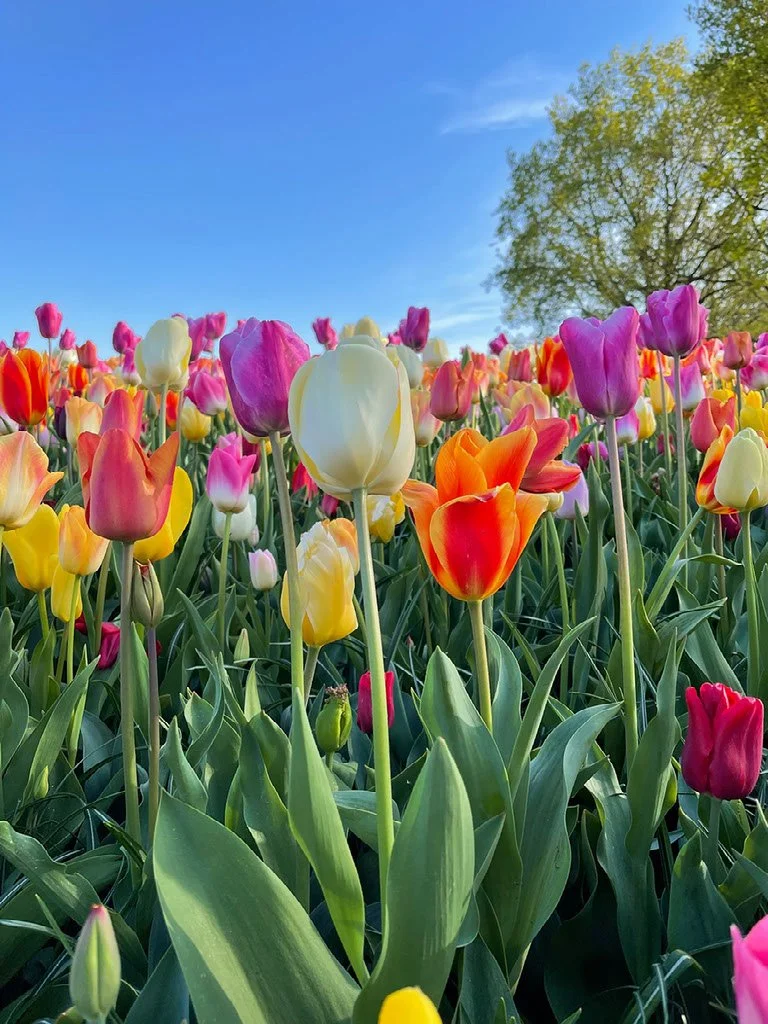
You can see tulips from April through May throughout Amsterdam and the Netherlands. The flower markets are so full of beautiful, fresh flowers that smell wonderful and are beautiful to photograph. During April, the city even holds its national Tulip Festival.
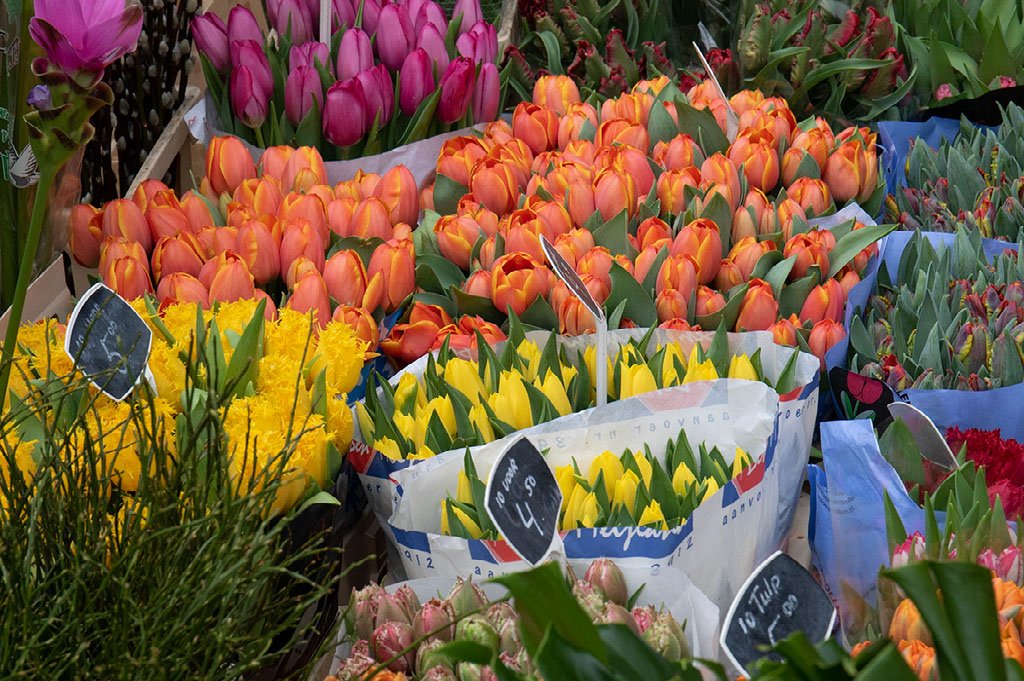
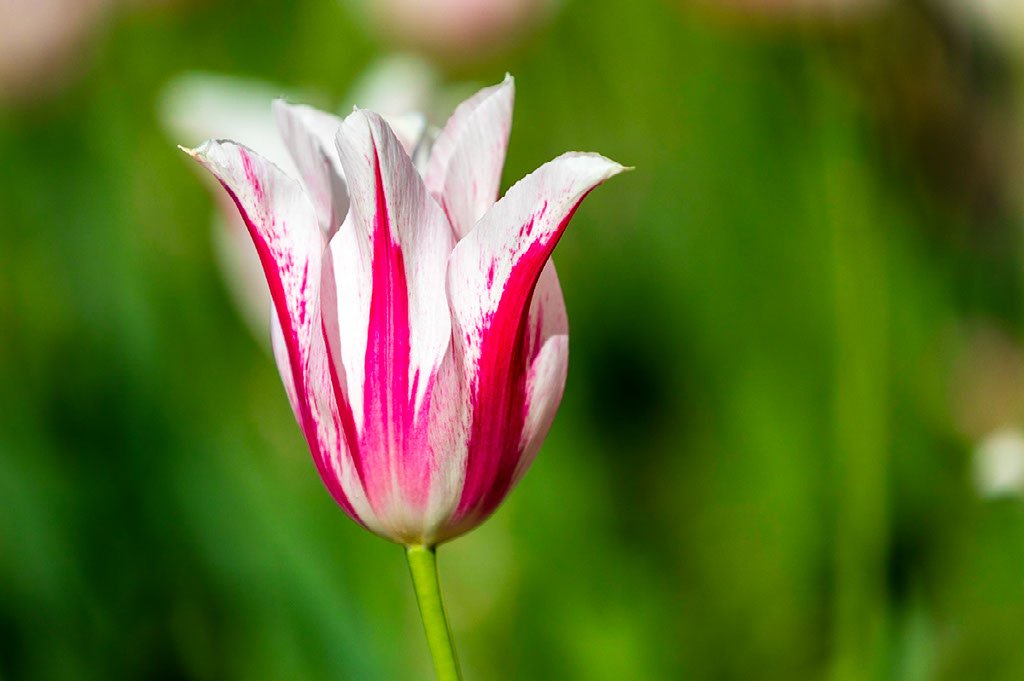
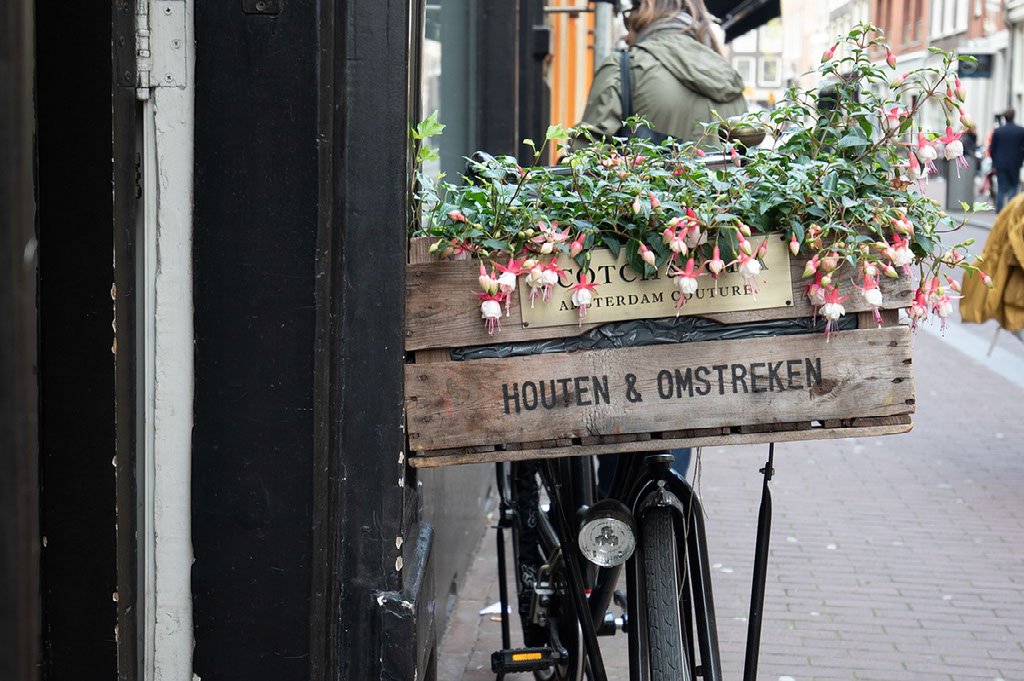
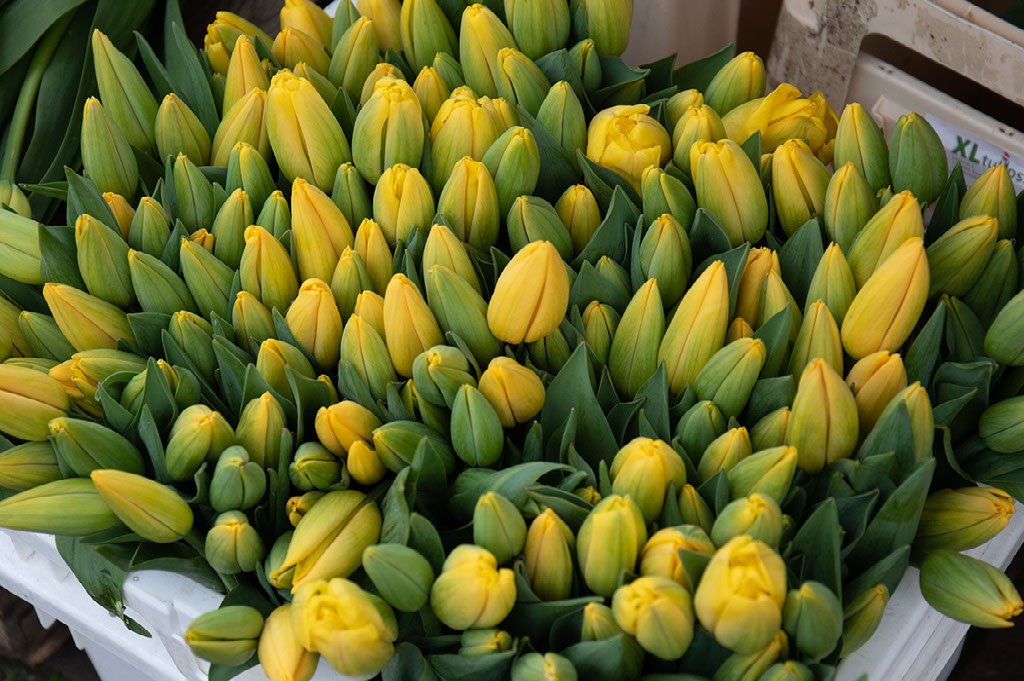
The Dutch also grow many other plants and flowers in addition to tulips. The flower markets are wonderful places to see the diversity of flowers grown in the Netherlands.
Canal Houses and Architecture
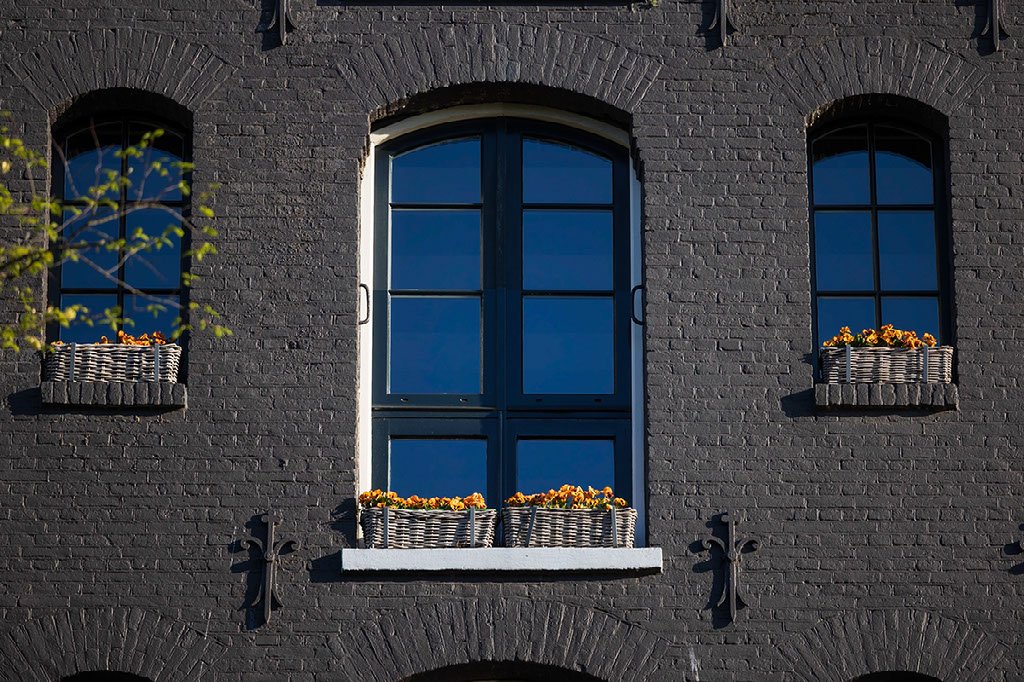
The architecture in Amsterdam is stunning! The canals are lined with narrow four and five-story houses. Most of these houses are very old and are topped with beautiful gables. Hence, the name Gable Houses. You will also notice that the houses lean forward. The reason for allowing the house to lean forward is to allow heavy items to be raised up to the top floors without hitting the house.

I love the Stork
There are really nice canal houses along the 7 Bridges and also in the Jordaan area.
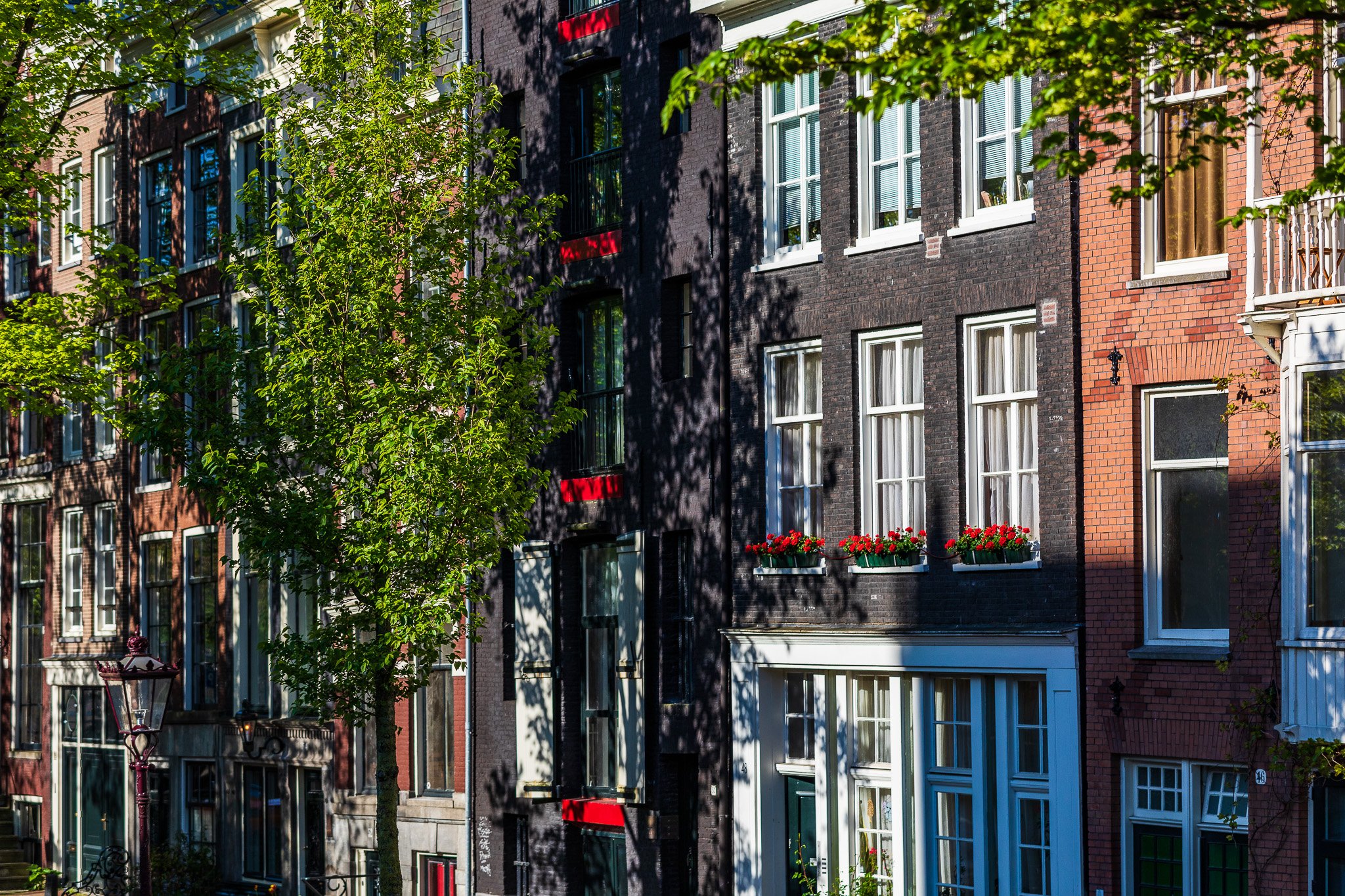
You will find these details above the houses. This house was built in 1689.

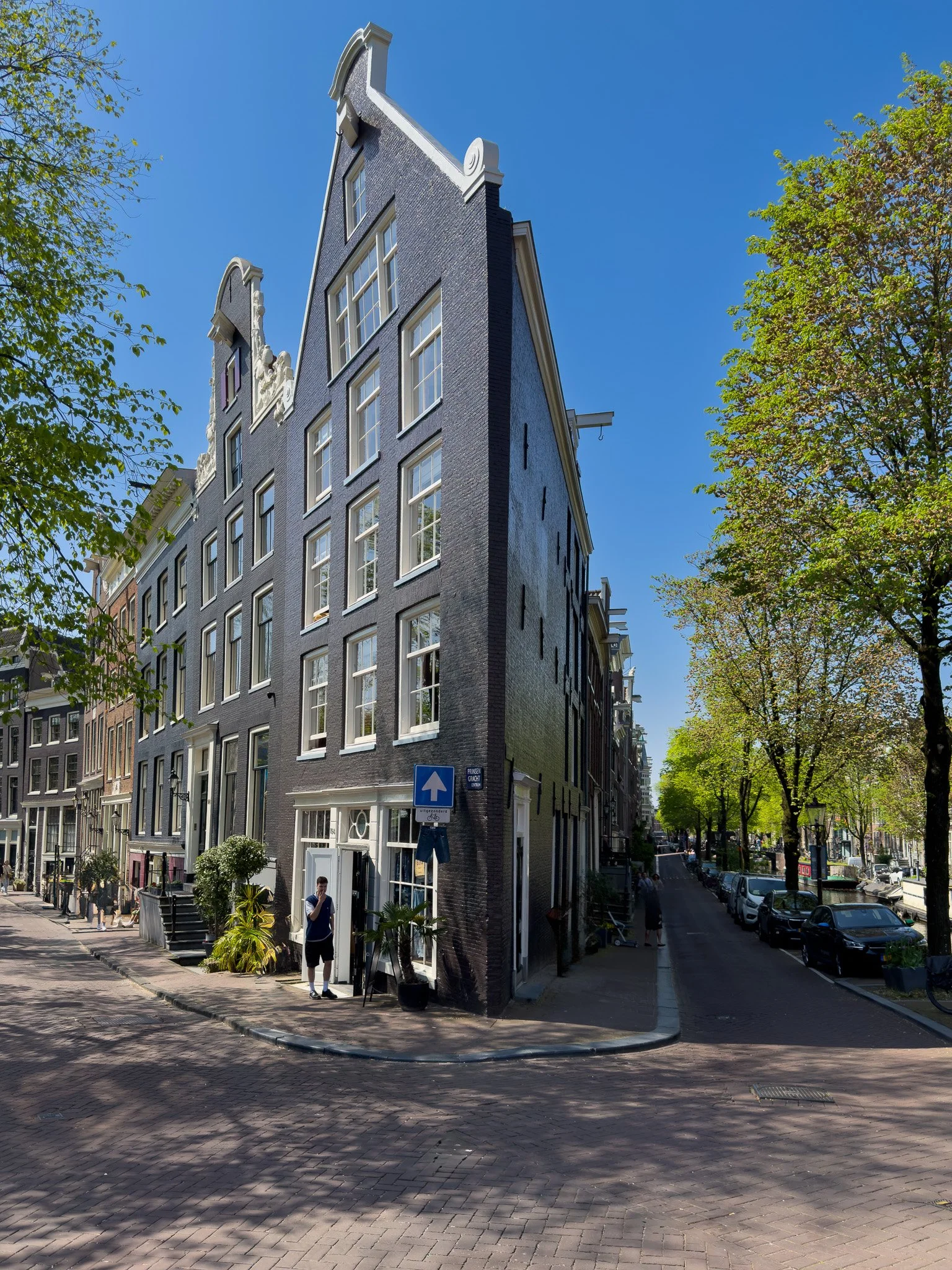
I love this skinny house on a corner by the Joordan.
Houseboats
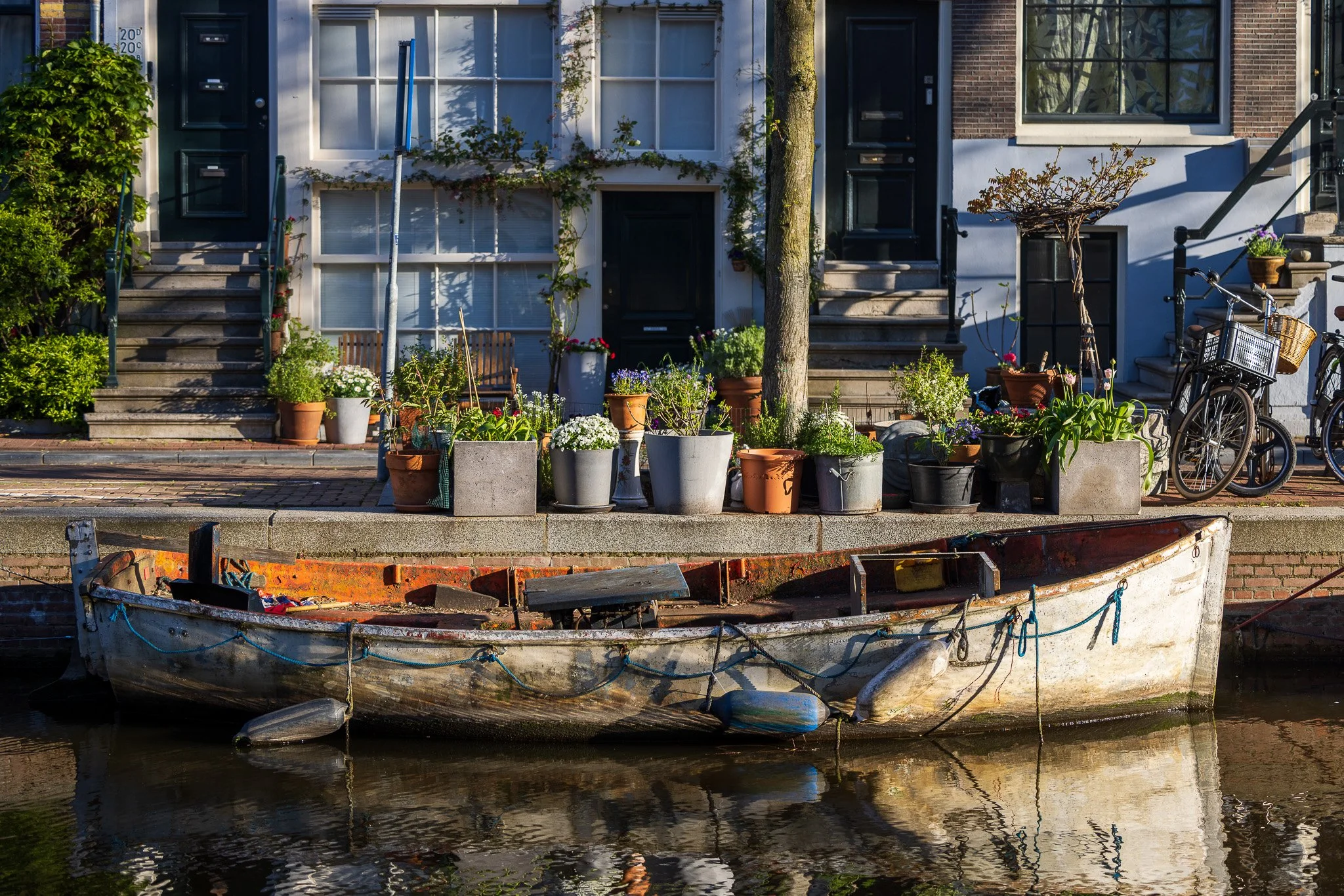
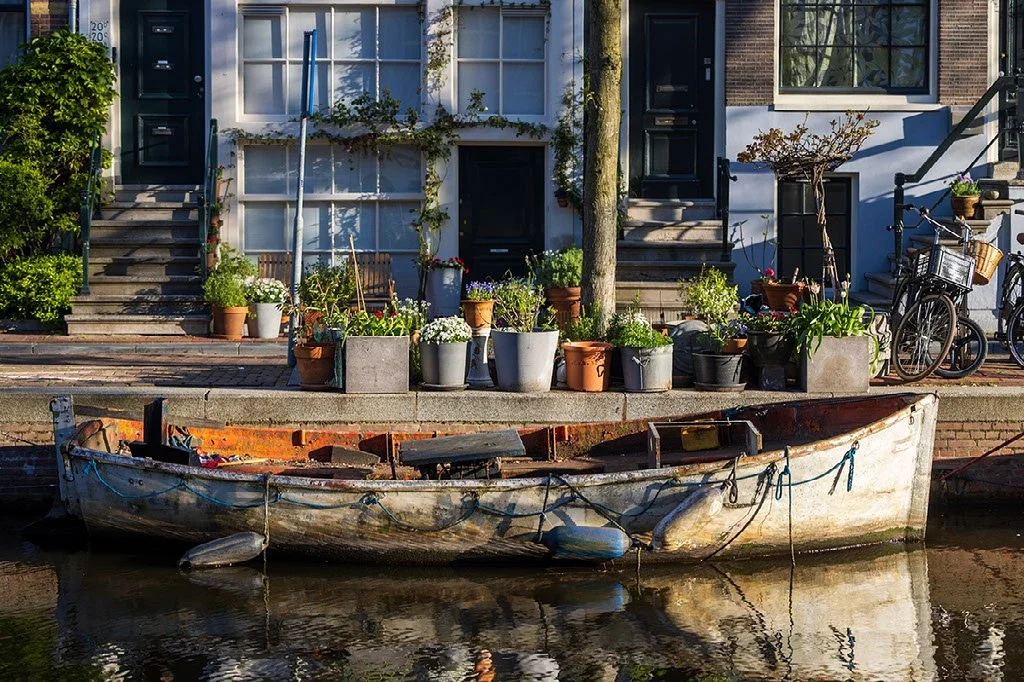
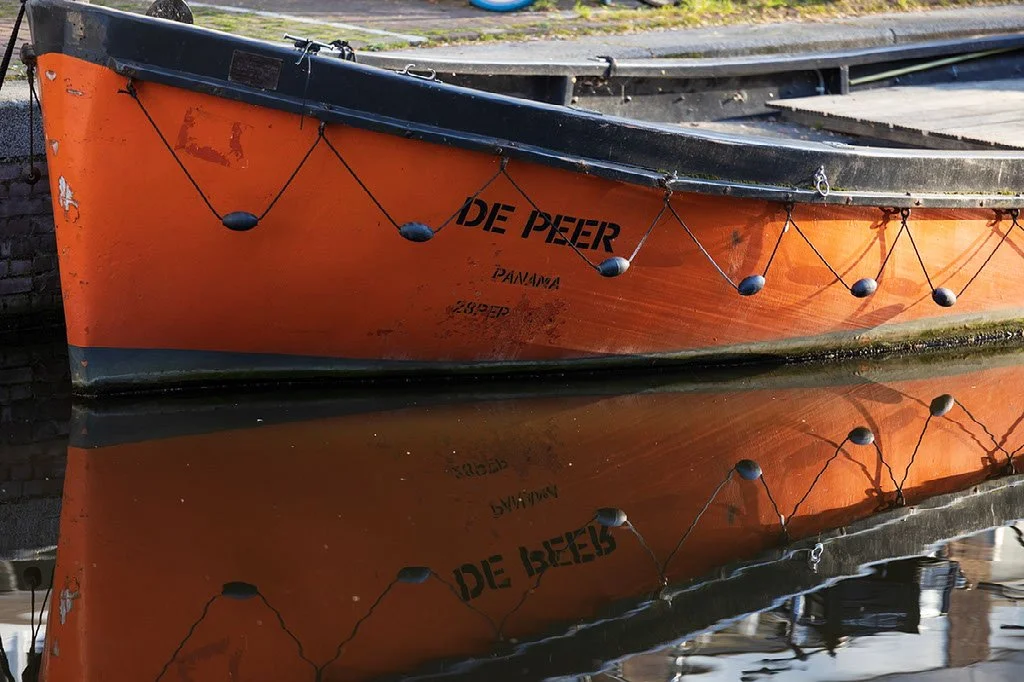
You will see tons of houseboats along the canals where many locals live full-time. Butdid you know that you can also rent houseboats? They are even found on Airbnb.
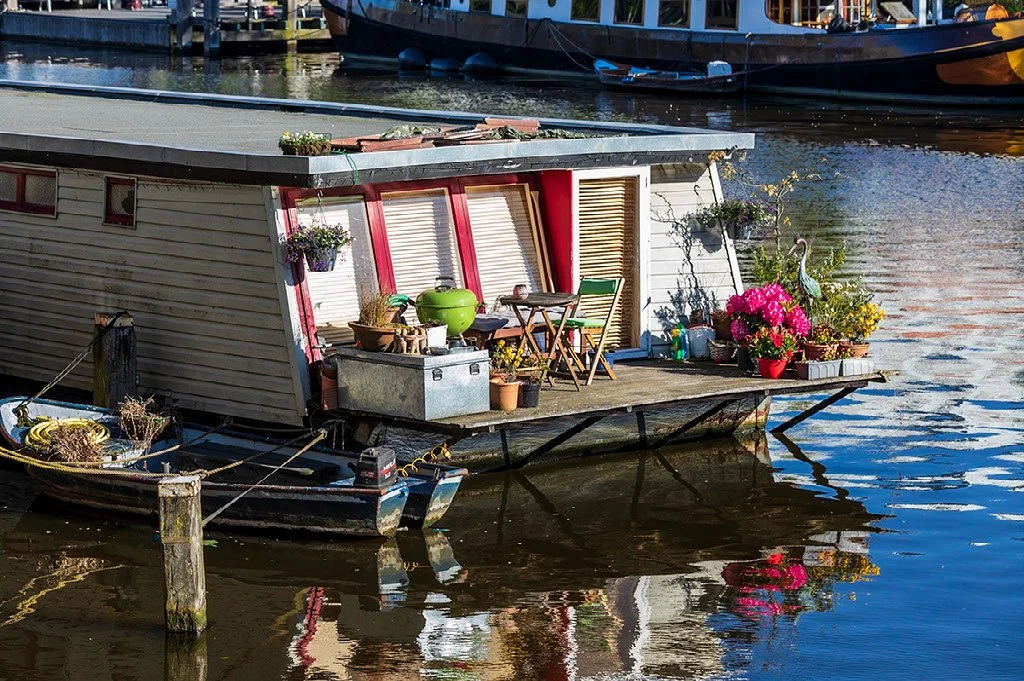
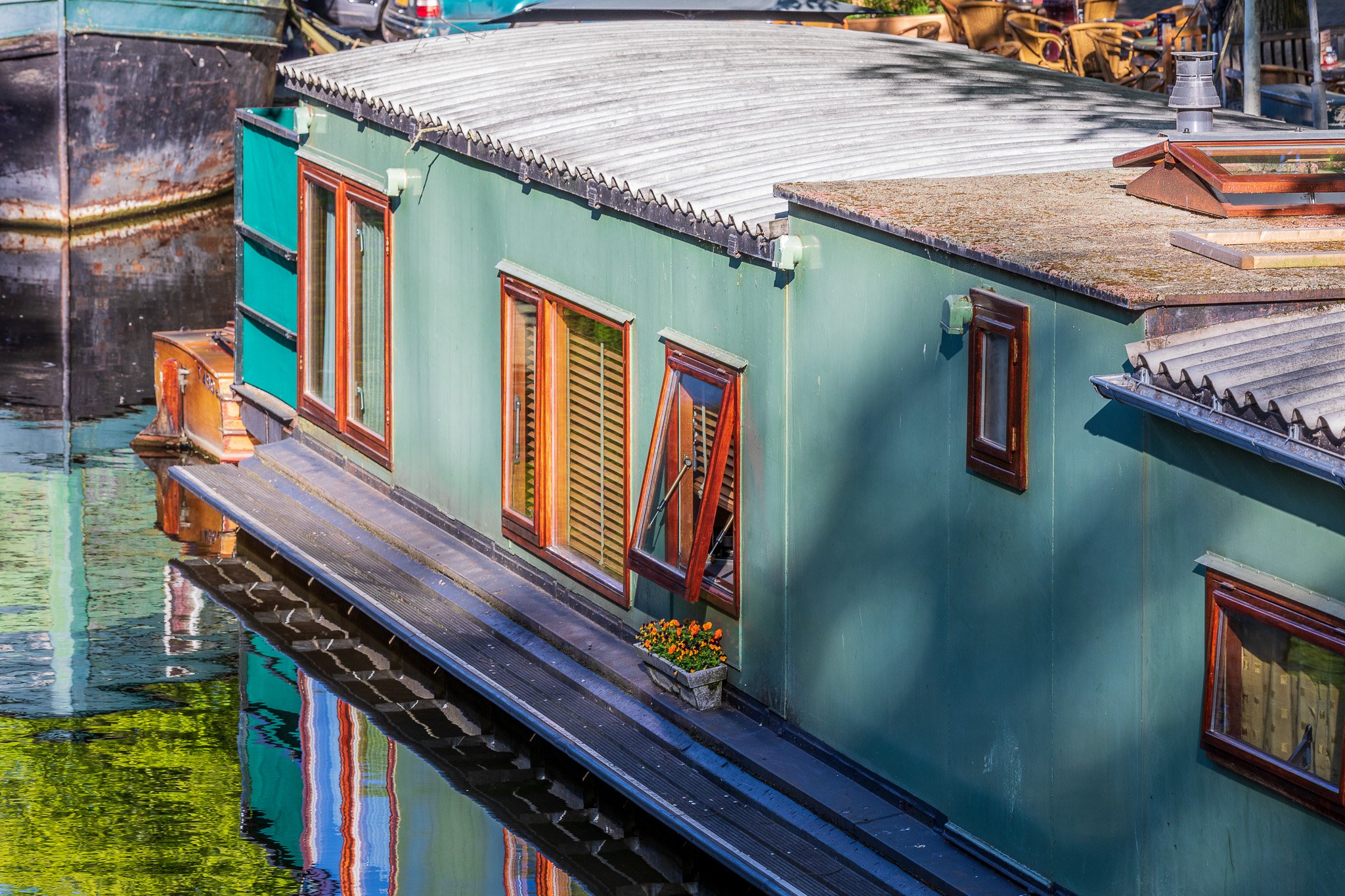
There are so many types and colors of houseboats
Vondelpark
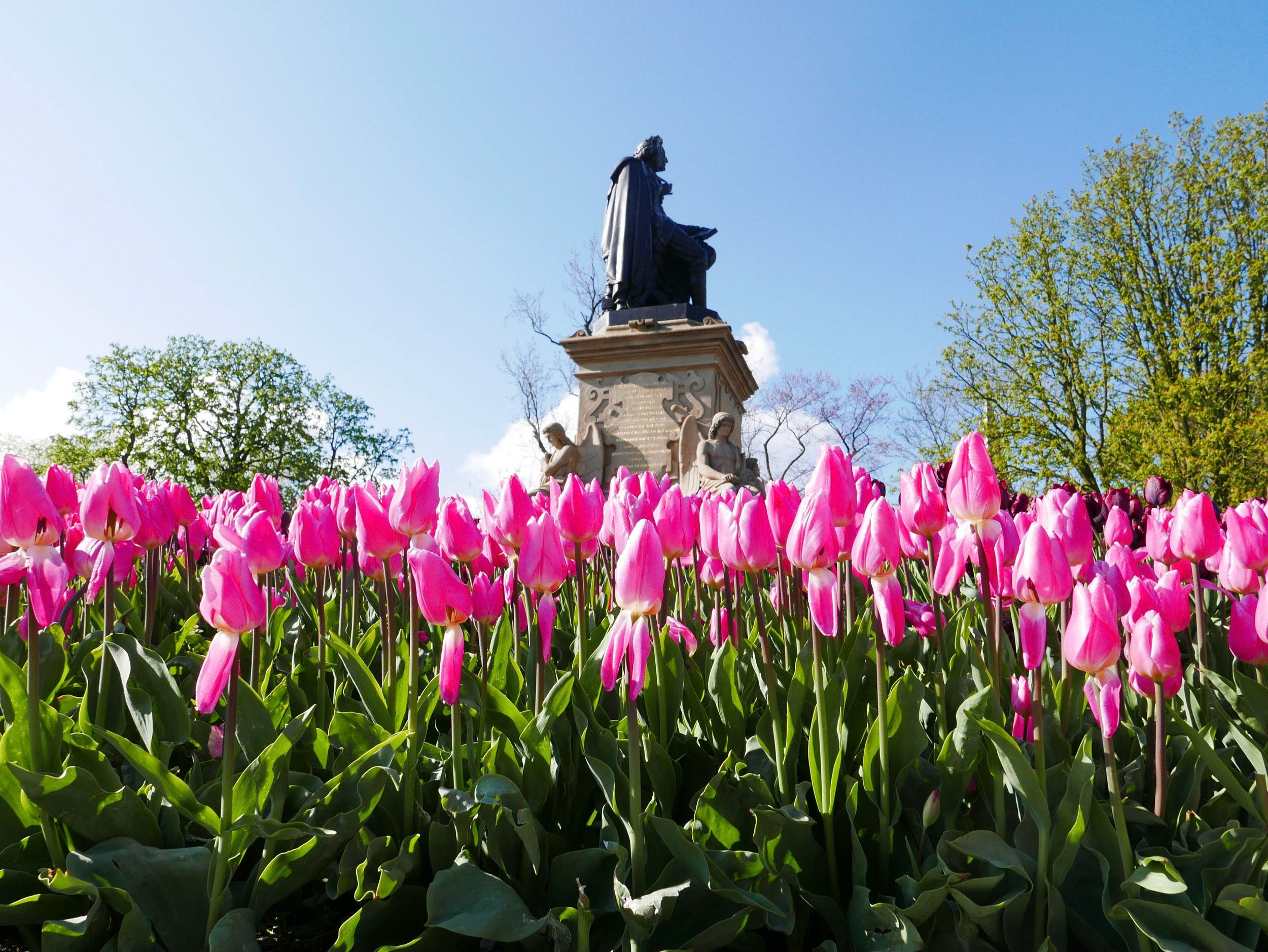
Vondelpark is Amsterdam's most visited park and the best place in the city for street photography and portraits on a warm day. On a sunny afternoon, it fills with locals picnicking, musicians, cyclists, and families. The park has a rhythm that rewards patience: find a bench near the main pond or the rose garden, wait, and the scenes come to you.
For photographers who want something more specific, the main pond with its weeping willows and waterfowl is excellent in the early morning before the park fills up, and the Vondelpark Openluchttheater, the outdoor theater in the center of the park, is a good event location in summer.
📷 Pro Tip: For the classic Vondelpark reflection shot, position yourself at the north end of the main pond in the morning when the willows trail into the still water and the light is low. A 70-200mm compresses the far bank and the tree line into a dense, layered frame. For street and people photography, arrive on a weekend afternoon in summer and use a 35mm or 50mm prime. Slow shutter speeds at 1/60 to 1/125 give you motion blur on cyclists passing through the frame. The park is free and open continuously; the best photography light is in the first two hours after sunrise and the last hour before sunset.
Best time: Early morning for reflections; sunny weekend afternoons for street photography. Access: Free, public. Tram 1, 2, or 5 to Leidseplein, then a ten-minute walk.
Docks and Port
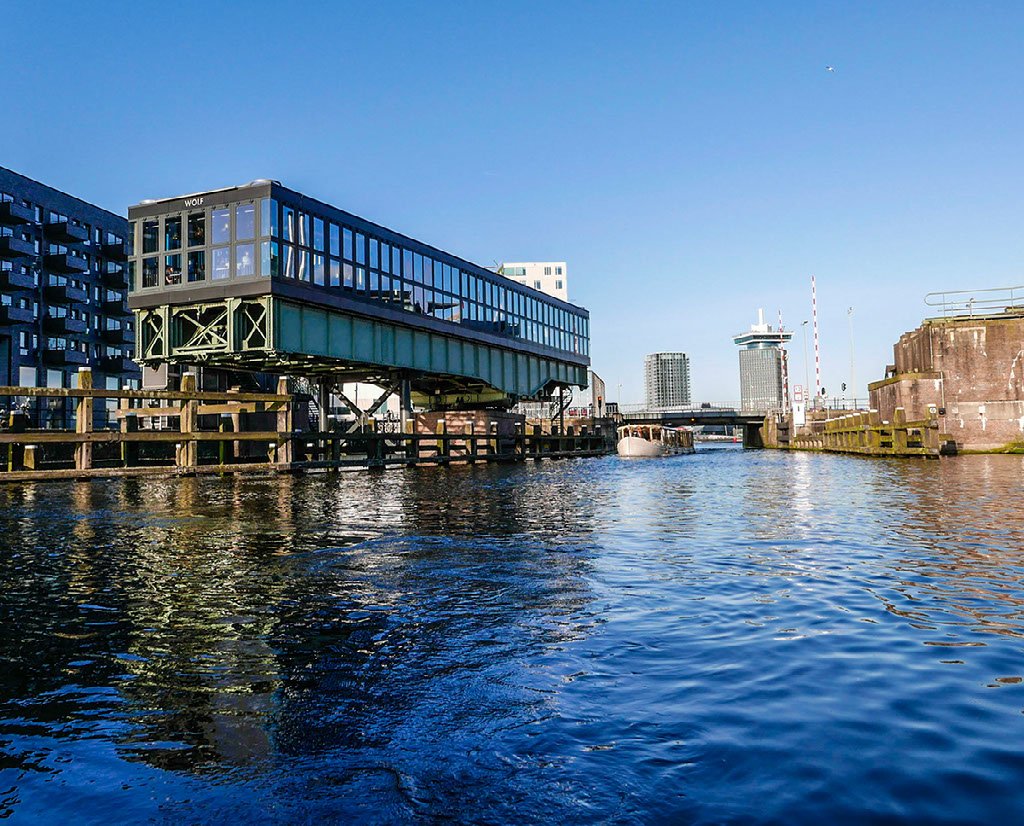
Amsterdam also has a huge port. The waterfront is packed with interesting buildings and ships. – providing some excellent photographic compositions. One of the coolest structures on the waterfront is a restaurant called Wolf Atelier.
Bloemenmarkt
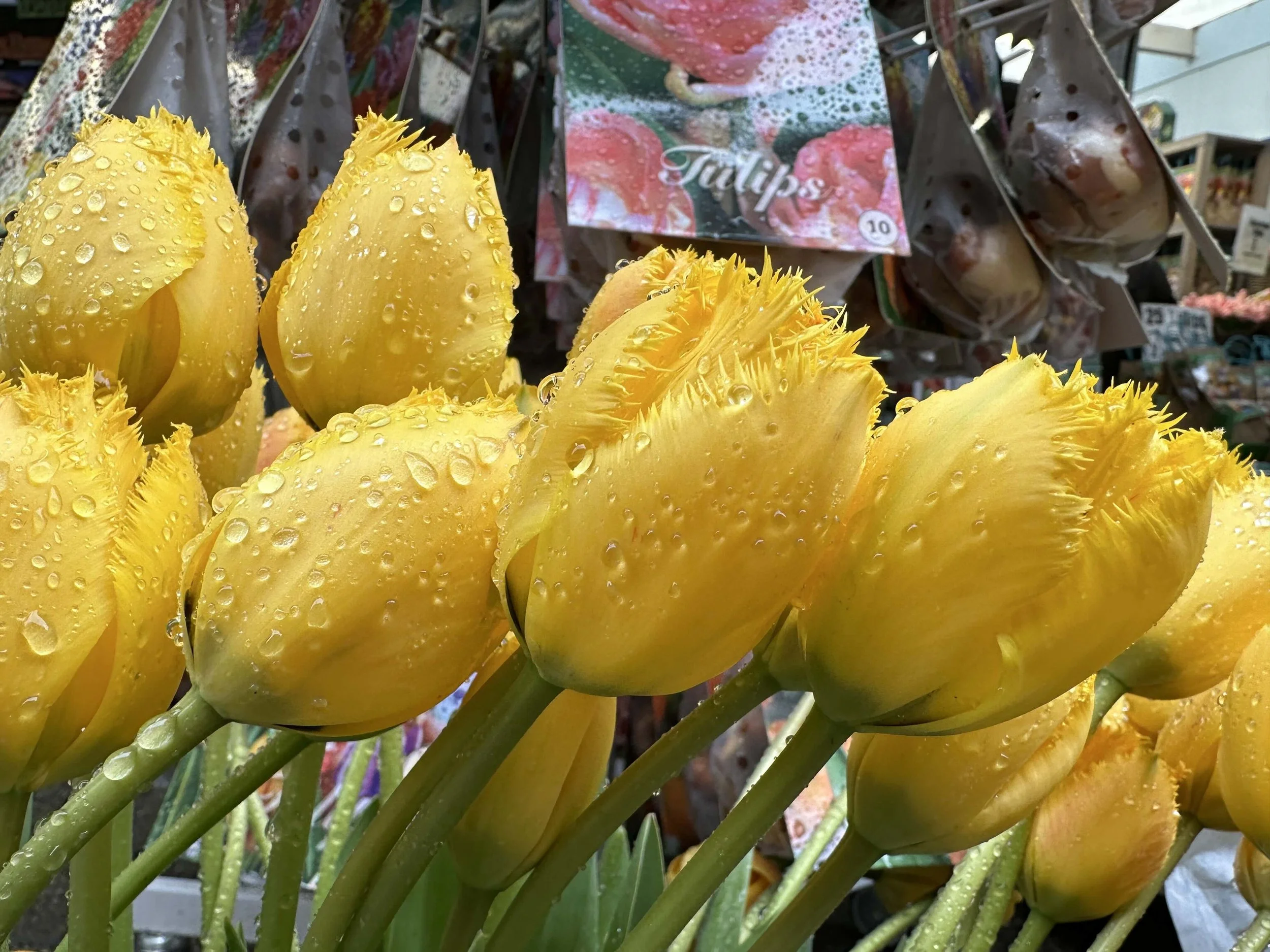
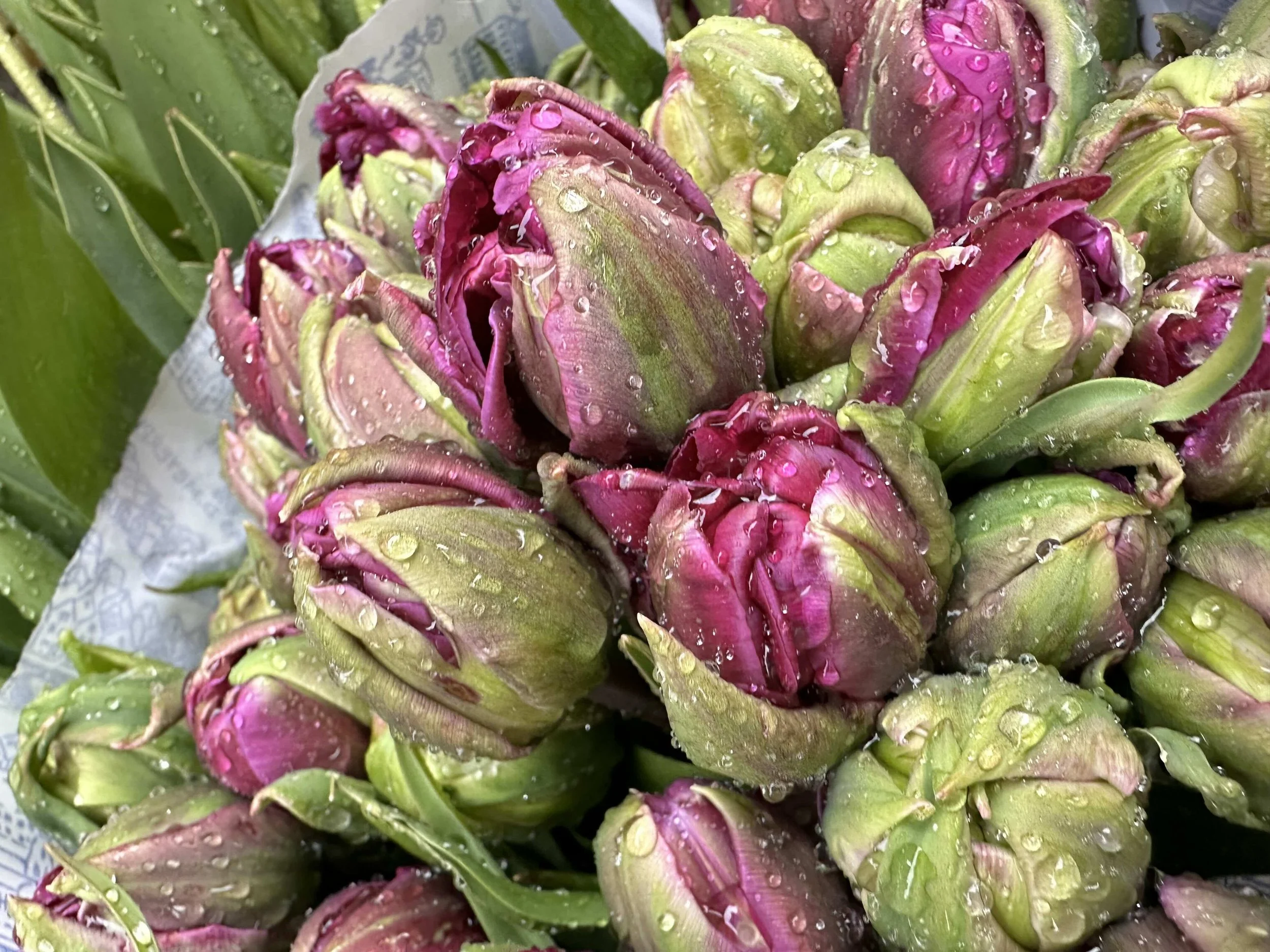
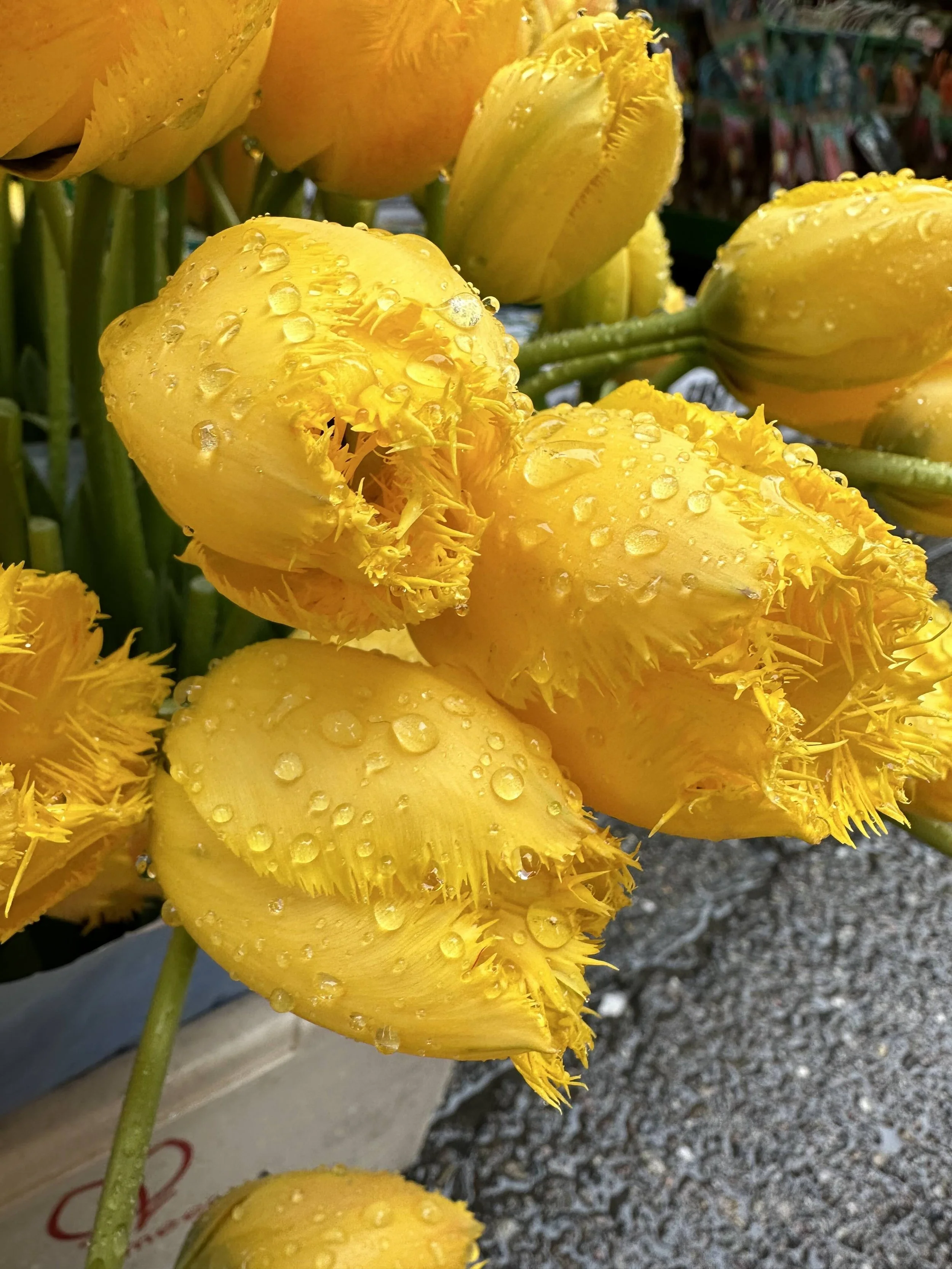
Amsterdam's floating flower market on the Singel Canal is one of those locations that looks better in person than in photographs if you approach it wrong, and extraordinary if you get there at the right time. Go early on a weekday morning before the tourist groups arrive, and the cut flowers, potted tulips, and the mix of color along the canal are genuinely striking.
📷 Pro Tip: Arrive at opening on a weekday morning. The market runs along about 150 meters of the Singel Canal between Muntplein and Koningsplein. Walk the full length before choosing your positions. A macro lens for close shots of individual blooms with water droplets and a 50mm for wider market stall and canal context shots. In April and May, the tulip selection is spectacular. Experiment with shallow depth of field at f/2.8 to f/4 for bouquet shots that isolate color against a blurred canal background.
Best time: Weekday morning at opening. Access: Free, public. Five-minute walk from the Nine Streets.

Capturing flowers with water droplets is one of my favorite ways to photograph them.
Jordaan District
The Jordaan is where I spend most of my time in Amsterdam, and it is the neighborhood that has drawn me back more than any specific photography location. It is a working neighborhood of narrow cross streets, quiet canals, houseboats, boutique shops, and the kind of unhurried Amsterdam life that has largely been priced out of the more central districts.
The Egelantiersgracht canal, lined with houseboats and crossed by small wooden footbridges, is one of the most intimate canal photography spots in the city and significantly less visited than the main canals of the canal belt.
📷 Pro Tip: Enter via the Westerstraat from Prinsengracht and walk south through the smaller cross streets: Tuinstraat, Anjeliersstraat, and Egelantiersgracht. Do not follow a map. Let the streets take you. The best Jordaan photography is aimless by design. A 35mm or 50mm prime and a full morning. The Egelantiersgracht is the shot: position yourself on one of the small footbridges looking east in the morning when the light comes in low from behind you. The houseboats, the reflections, and the old gable houses beyond compose without effort. You will not see many tourists here before 10 a.m.
Best time: Early morning. Access: Free, public.
STRAAT Museum (Amsterdam Noord)
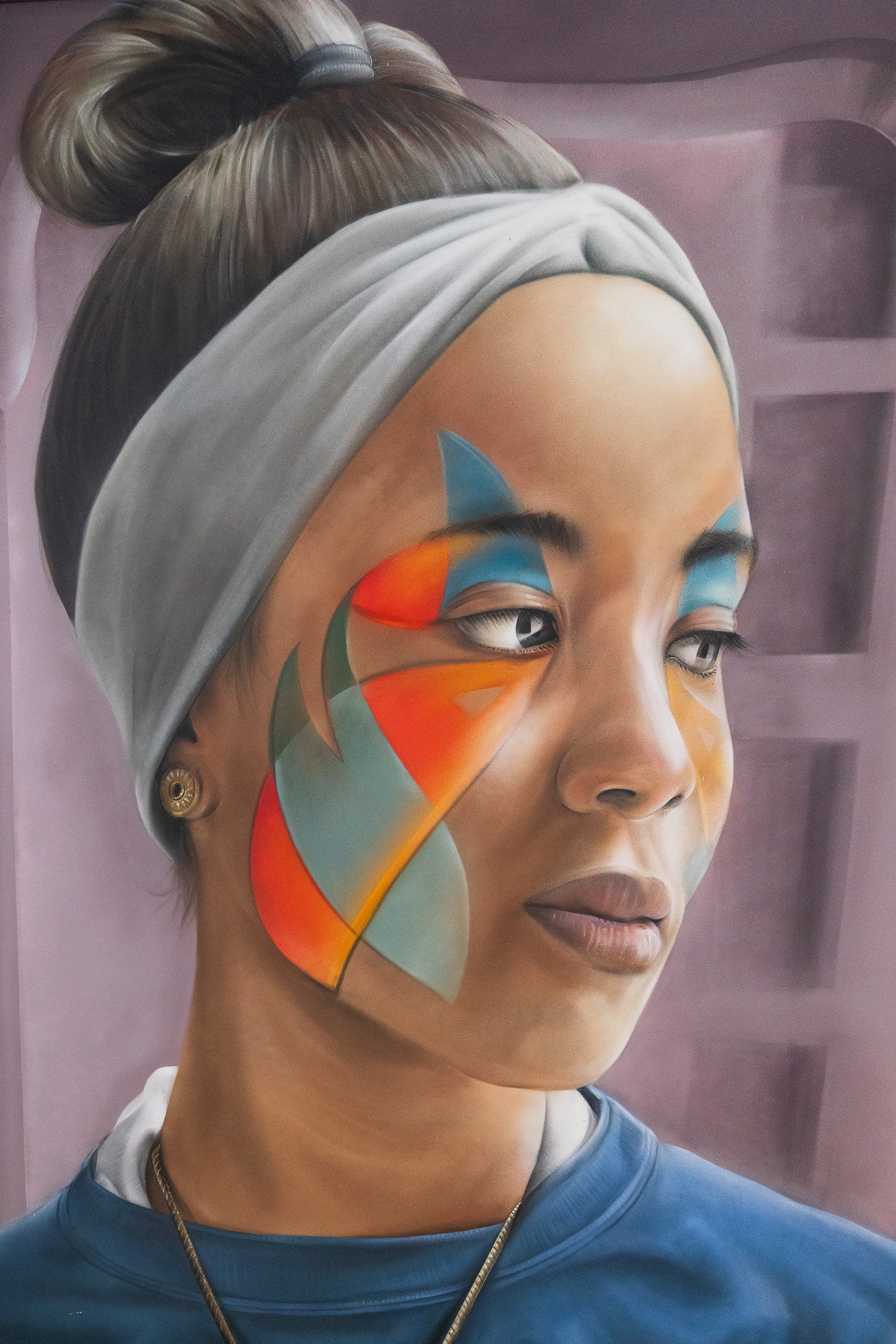
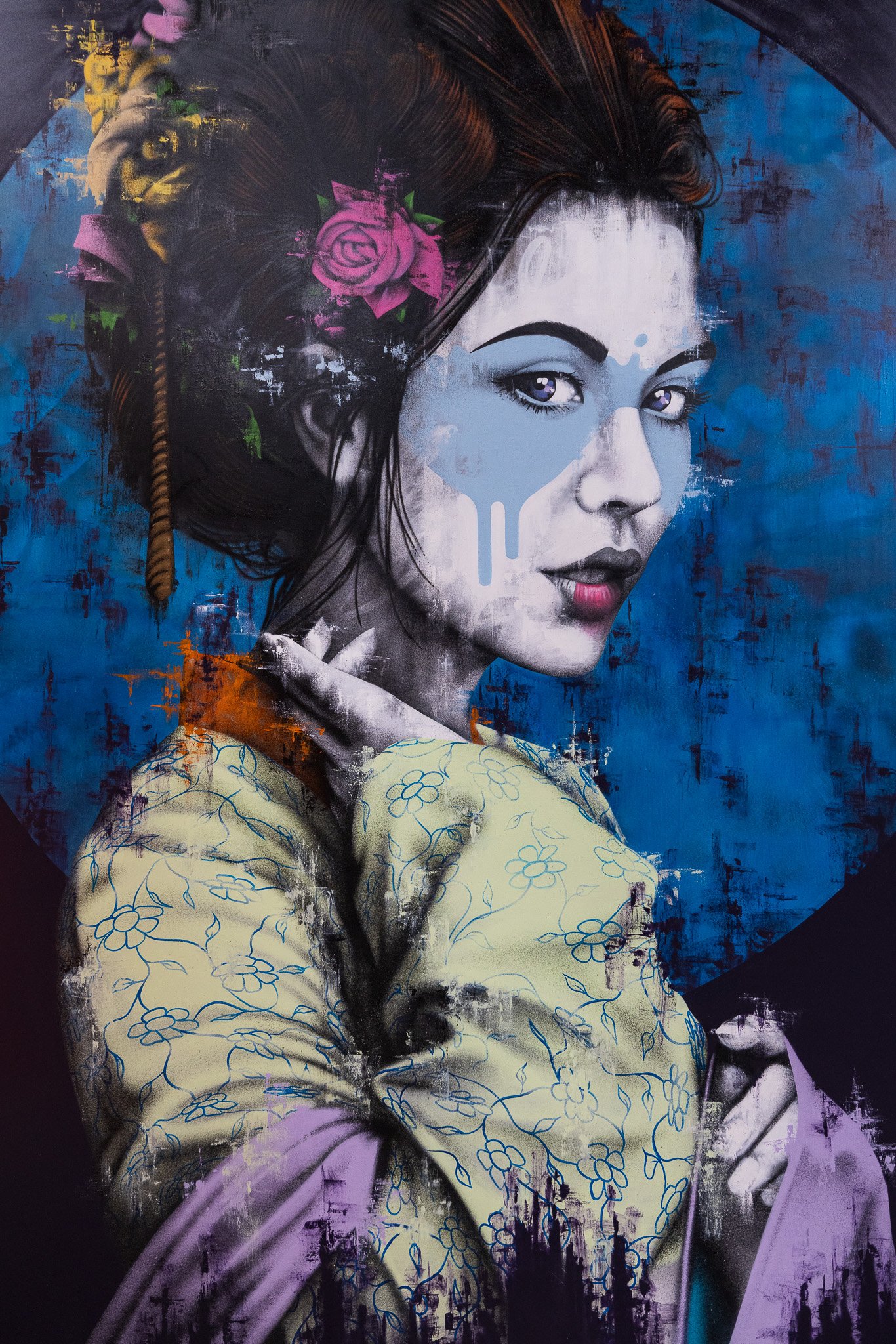
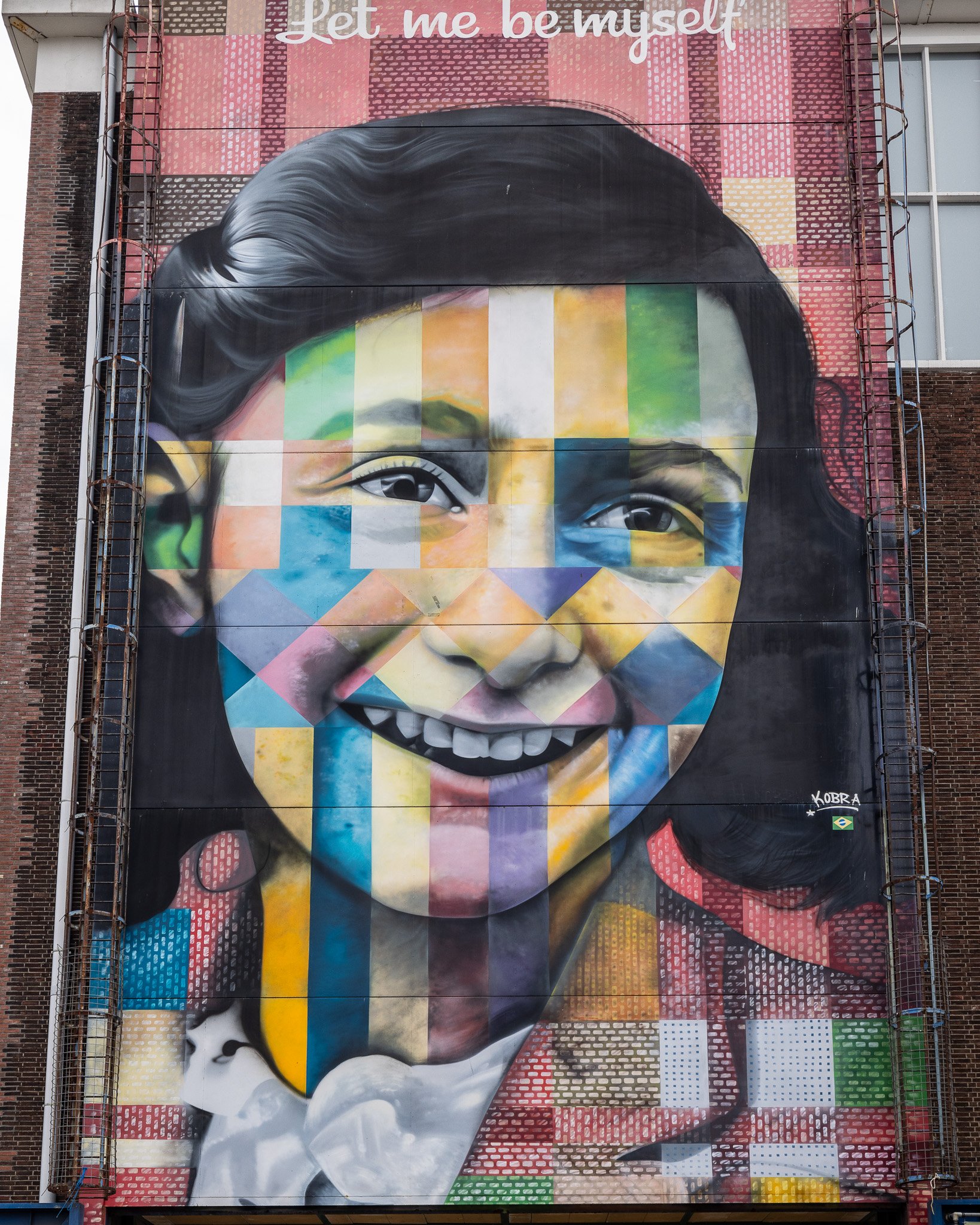
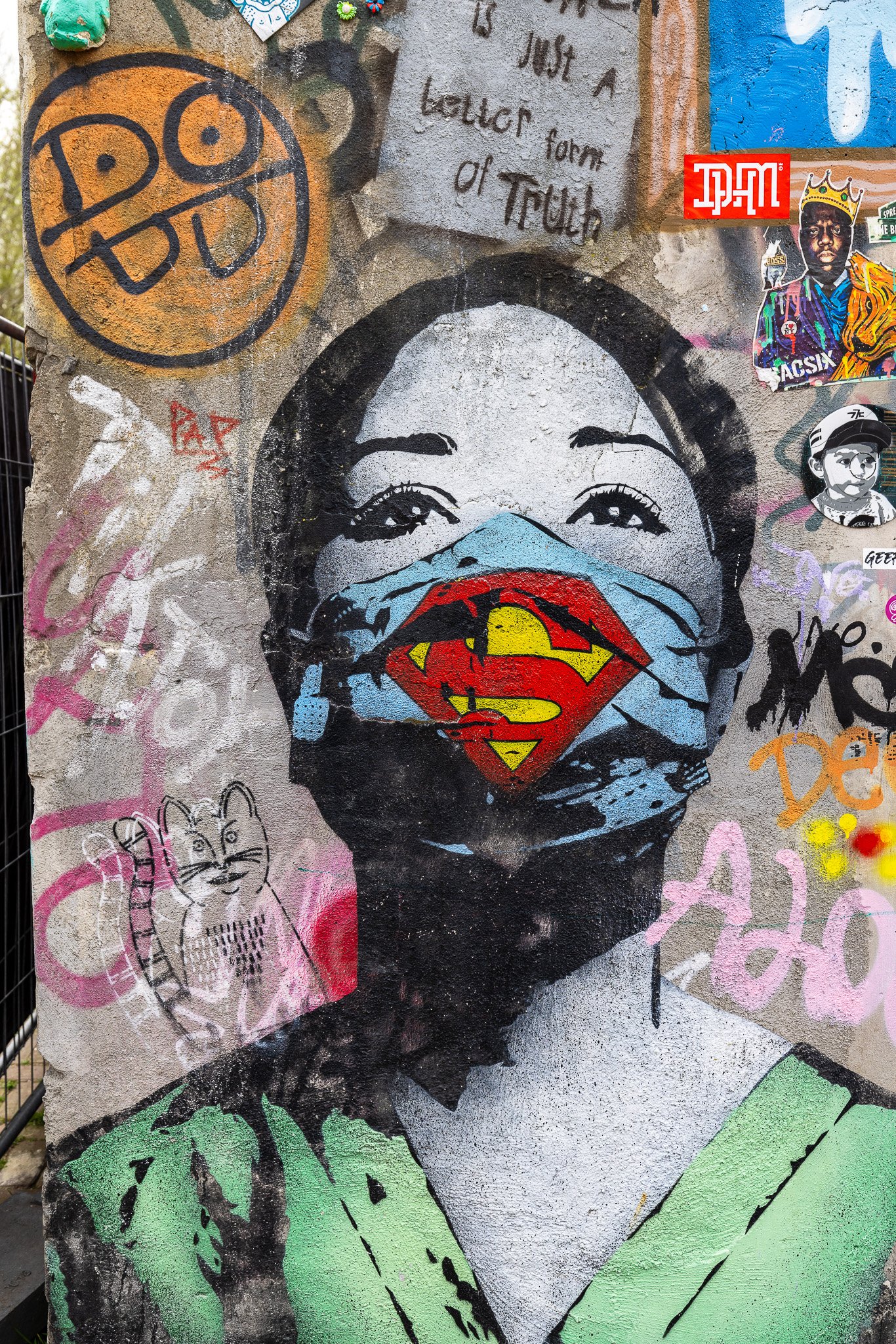
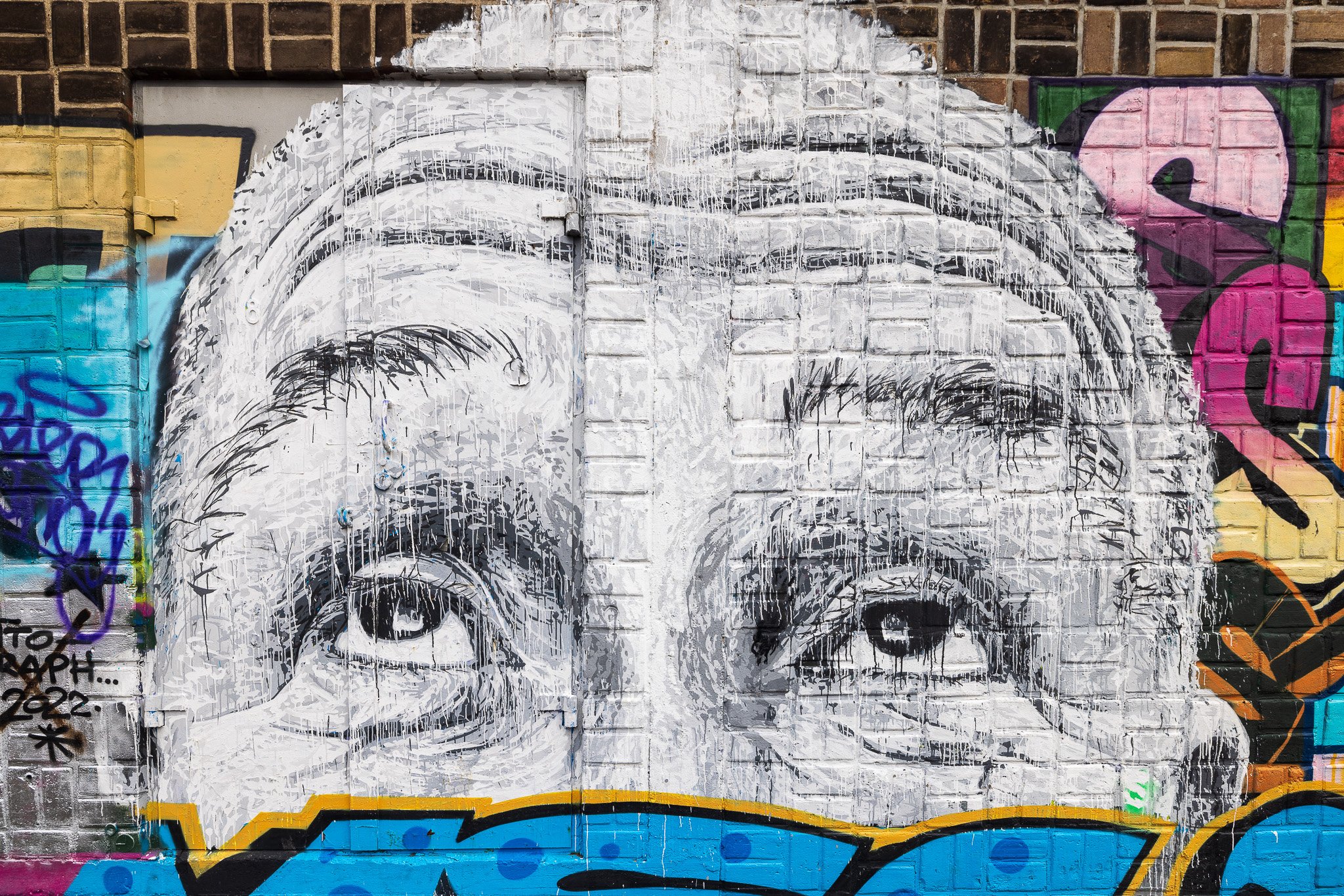
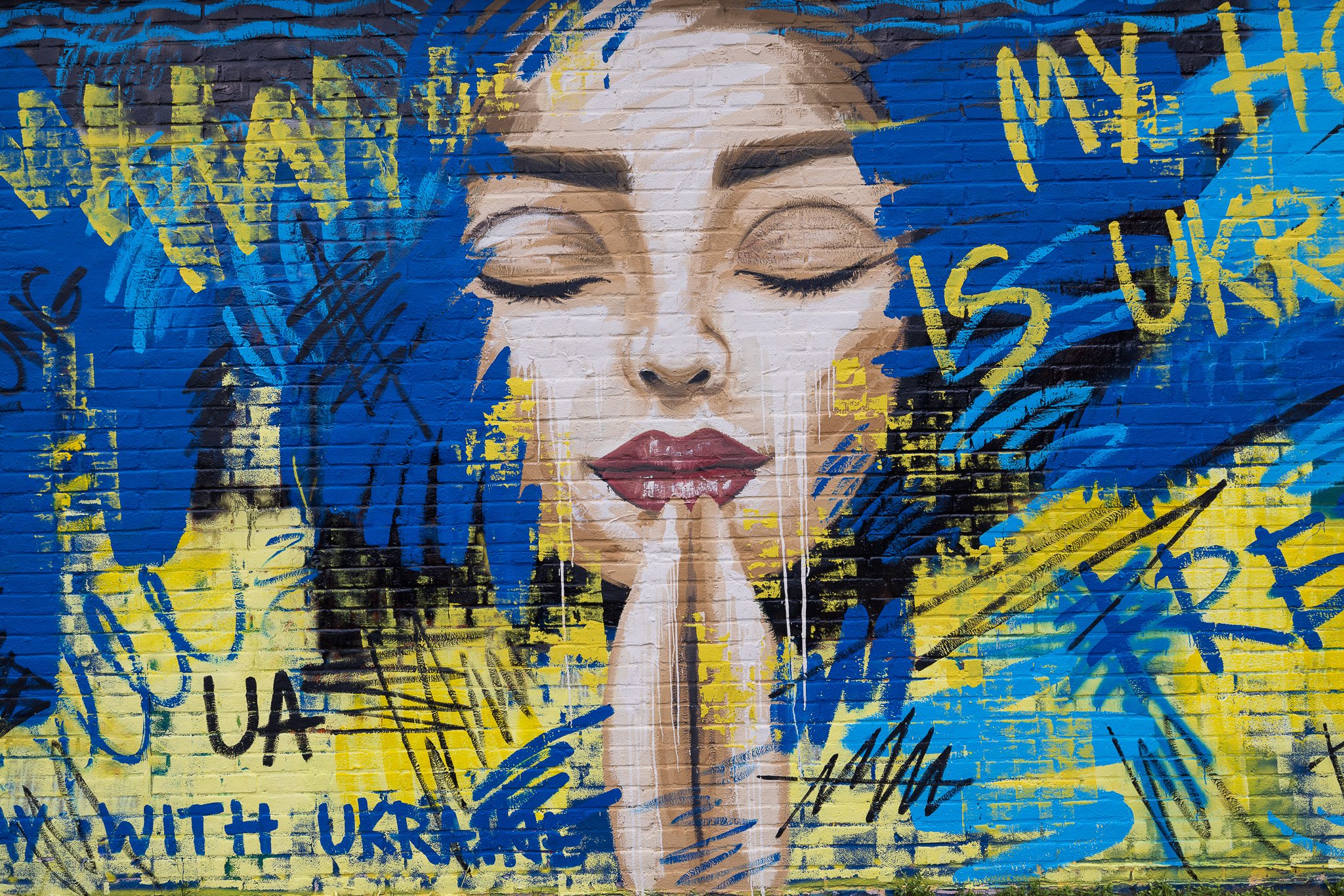
When I found out Amsterdam had an entire museum dedicated to graffiti and street art, I went immediately. STRAAT is housed in a former NDSM shipyard in Amsterdam Noord, and it is one of the finest photography destinations in the city for anyone who loves the genre. Over 150 large-scale works from international artists fill a warehouse space that is itself visually extraordinary.
The scale of the murals means you will want a wide lens, but the detail and texture reward getting close to. Photography is fully permitted throughout, with no restrictions.
📷 Pro Tip: Take the free NDSM ferry from behind Centraal Station. It runs every 30 to 60 minutes, and the crossing takes about 15 minutes. The ferry dock at NDSM is worth photographing on its own: the industrial shipyard structures, the cranes, and the waterfront offer a completely different Amsterdam from the canal belt. Inside the museum, bring a 16-24mm lens for the full mural scale and a 50mm lens for detail and texture. Allow three to four hours. STRAAT admission is paid; check the current schedule before you go.
Best time: Any time during opening hours; avoid weekends if you want the space to yourself. Access: Paid admission. Free ferry from behind Centraal Station.
Zaandam and Zaanse Schans
Zaandam sits fifteen minutes north of Amsterdam by train and is one of the most architecturally distinctive day trips in the Netherlands. The Inntel Hotels Amsterdam Zaandam is the visual anchor: a building that stacks traditional Zaan-style wooden houses of different colors and sizes into an eleven-story tower, an effect that is playful, surreal, and highly photogenic. It sits directly in the town center and is visible from across the shopping square.
From Zaandam, it is a short bus or bike ride to Zaanse Schans, the open-air windmill village on the Zaan River where working windmills, wooden houses, and traditional Dutch crafts give you a completely different photographic register from the canal belt.
📷 Pro Tip: For the Inntel Hotel, position yourself across the Gedempte Gracht shopping square to the south of the building and shoot with a 35-50mm to capture the full stacked-house composition against the sky. Early morning gives you clean light and an empty square. At Zaanse Schans, the windmills photograph best in the late afternoon when the low light catches the sails from the west. A 70-200mm from the far bank of the Zaan River compresses the windmill row and the green wooden houses behind them. Allow a full half-day for Zaanse Schans if you want to work through the different windmill angles and the surrounding craft buildings. Both Zaandam and Zaanse Schans are included in the Amsterdam public transit zone.
Best time: Early morning for the Inntel Hotel; late afternoon for Zaanse Schans windmills. Access: Free at Zaandam. Zaanse Schans is free to enter; individual windmills charge a small admission. Fifteen minutes by train from Amsterdam Centraal to Zaandam.

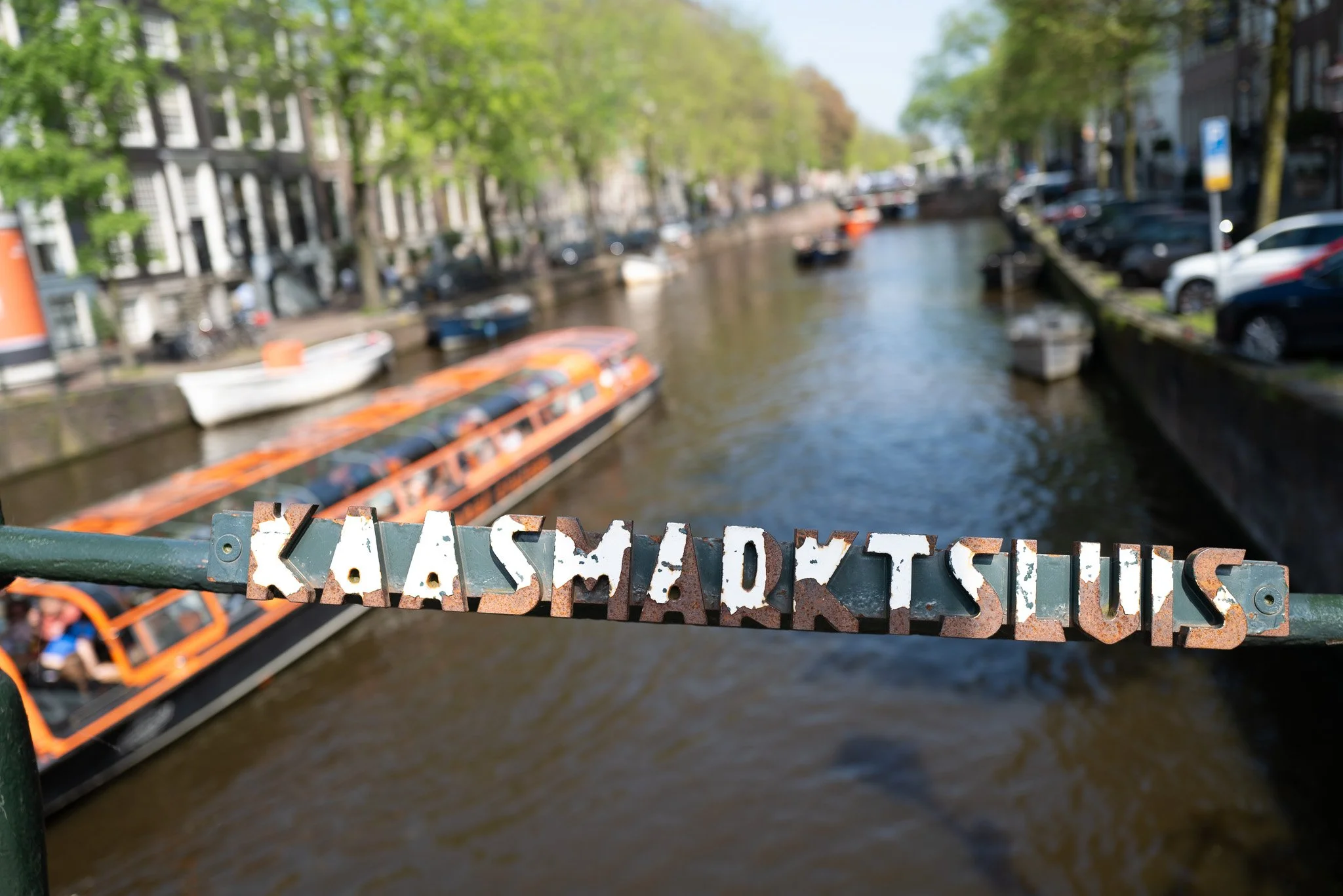
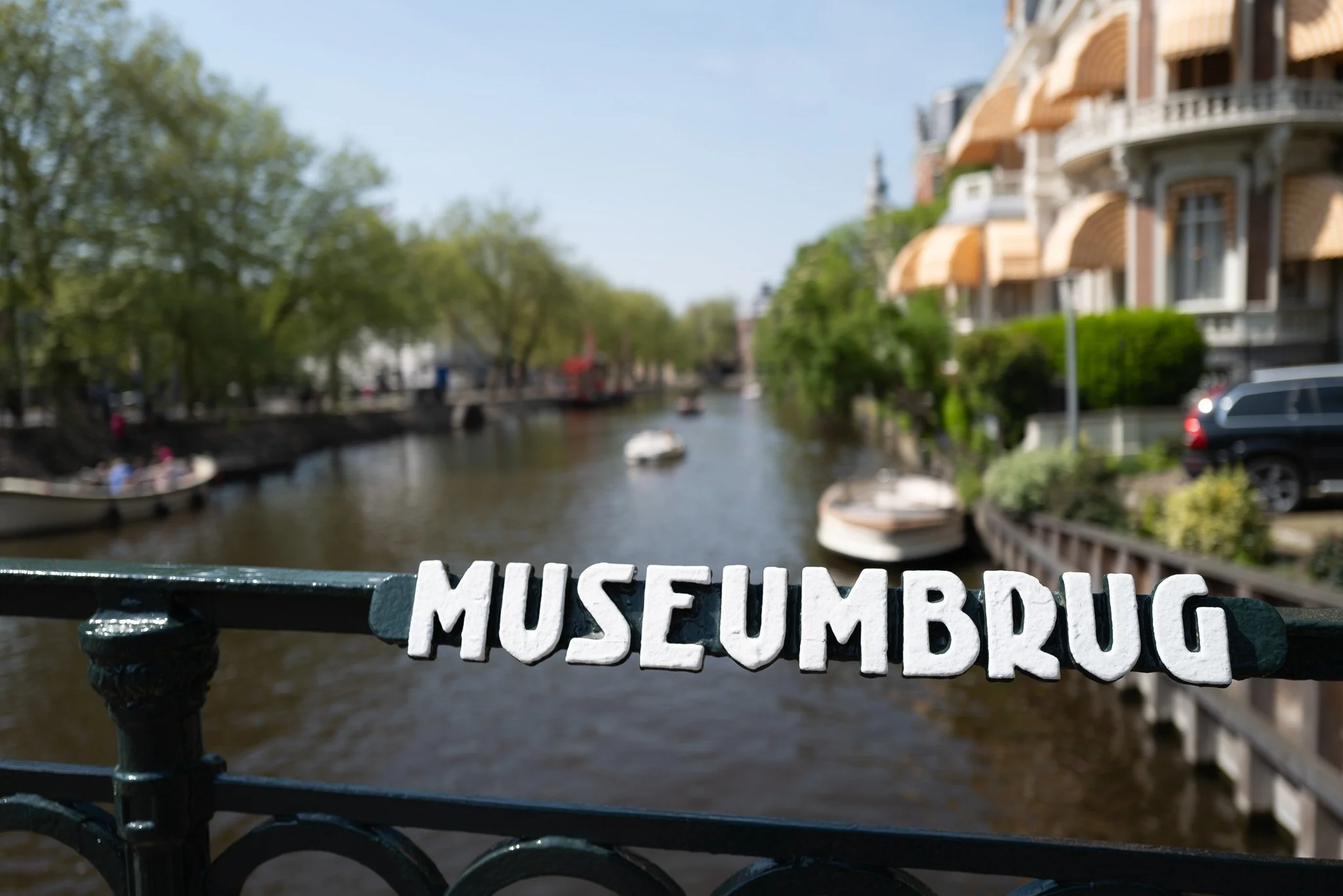
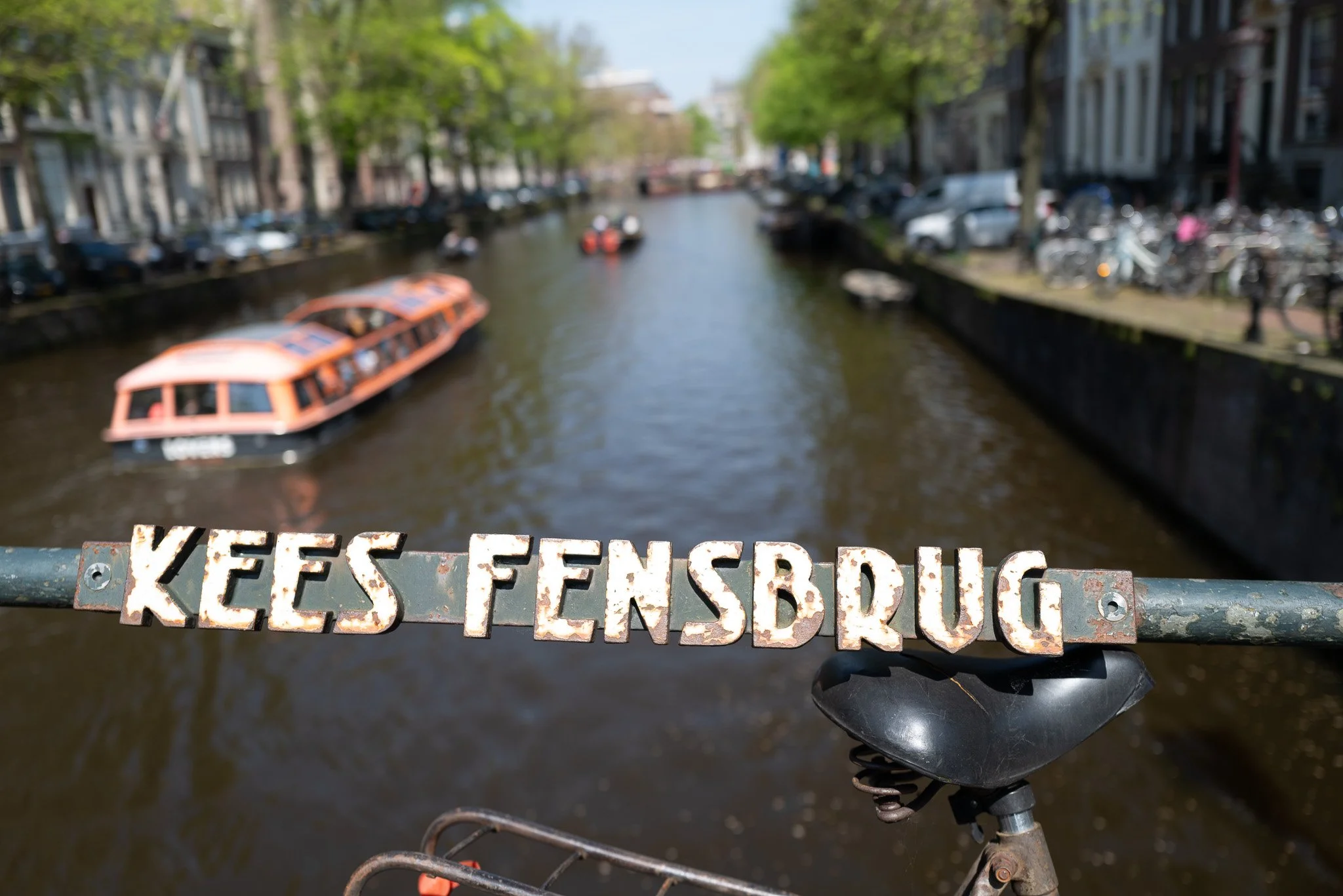
Bridges
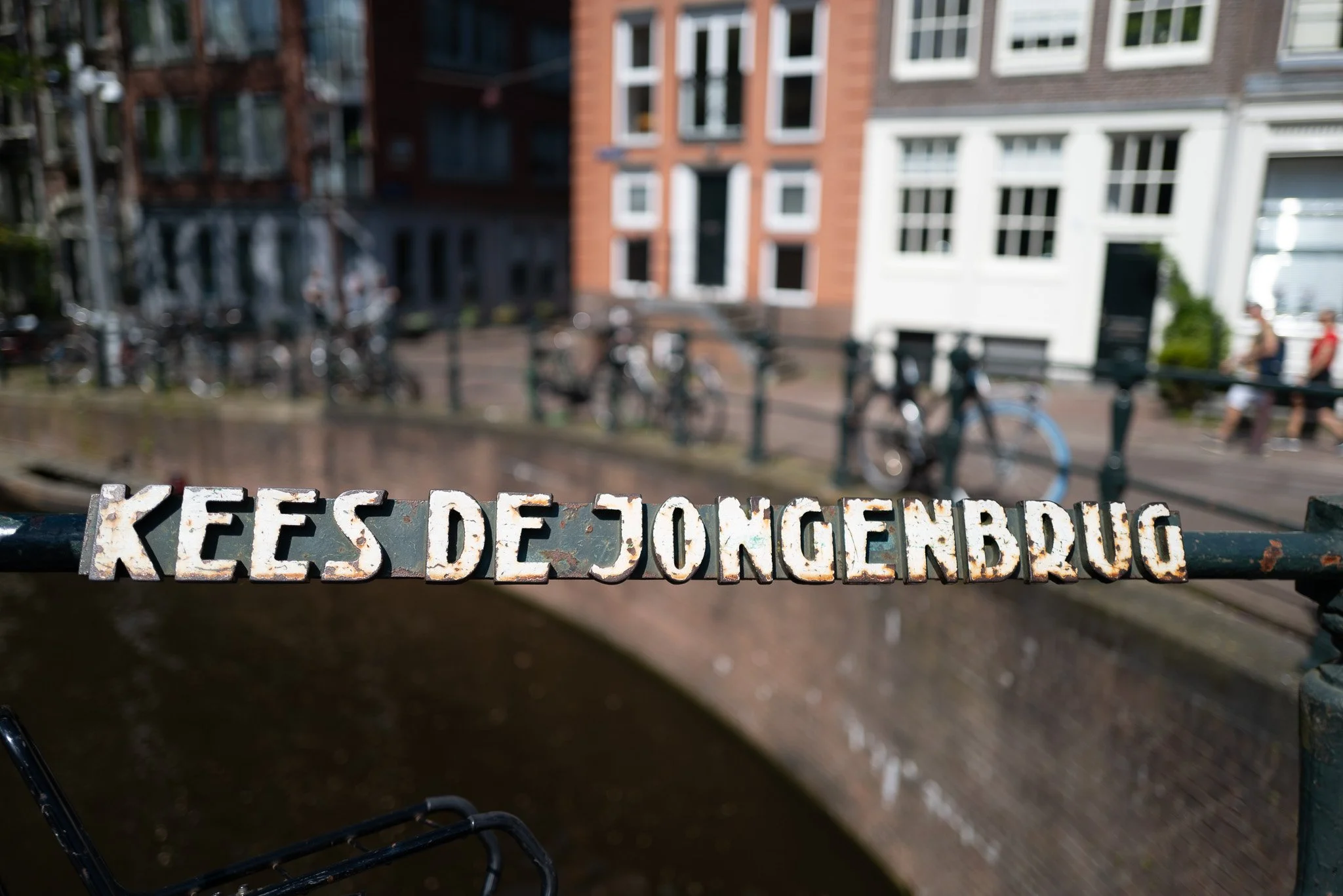
I love photographing the bridges.


Festivals & Events in Amsterdam
King's Day, late April — Amsterdam turns orange. The canals fill with decorated boats, the streets become open-air flea markets, and street parties run from dawn to past midnight. The boat parade on the canals is the best photography subject: hundreds of vessels moving slowly through the canal belt, packed with people in orange, with the gable houses as your backdrop. Bring a telephoto for crowd portraits from the canal bridges. Arrive early to claim a bridge position on the main canals.
Amsterdam Tulip Festival, April — The city's parks, squares, and public spaces fill with more than 500,000 tulips displayed in themed beds. Combine this with a day trip to Keukenhof and the Bollenstreek fields for the full picture. The Tulip Festival is distributed across the city rather than concentrated in one location, which means you can build a photography walk that takes you through several neighborhoods in a single morning.
Amsterdam Light Festival, December and January — Art installations along the canal belt, visible from the water and the canal banks through the early winter. The best photography is from the canal itself, so book a boat tour at blue hour. The installations are designed to photograph well from the water. A wide lens and a tripod on a steady boat deck. The crowds are manageable compared to summer, and the winter atmosphere adds a quality to the canal reflections you simply cannot replicate in warmer months.
Pride Amsterdam, late July through early August — The canal parade is one of the most visually dynamic events in the European photography calendar: hundreds of decorated boats moving slowly through the Prinsengracht, surrounded by spectators ten deep on every bridge and canal bank. A telephoto lens for portraits from the crowd and a wide lens for the full parade context. Arrive several hours early to position yourself on a bridge for the parade route.
Open Monumentendag, September — Free access to hundreds of historic buildings and private canal houses that are closed the rest of the year. For architectural photographers, this is the day to get inside the interiors that are normally inaccessible. The event runs for a full weekend. Check the year's program in advance and prioritize the locations that interest you most, as queues form at the most popular buildings.
Frequently Asked Questions About Visiting Amsterdam
Is Amsterdam the same as Holland?
Not exactly. Amsterdam is the capital of the Netherlands. Holland refers to just two of the country's twelve provinces, North and South Holland, though the names get used interchangeably in casual conversation, including sometimes by locals.
Is the Red Light District safe to visit?
Yes, generally, but stay alert, especially at night. It's a popular, well-trafficked area, but pickpocketing is a real risk in crowds. Photographing the workers in the windows is strictly prohibited and taken seriously.
Are cannabis and coffeeshops legal?
Yes, but only within specific rules. Cannabis can only be purchased and consumed at licensed coffeeshops, not on the street, and not in most public spaces outside those shops. Buying from street dealers is illegal and genuinely risky.
Is Amsterdam expensive?
It can be, especially hotels in the city center. Budget-friendly stays are easier to find in Jordaan, De Pijp, or Amsterdam Noord, and the food scene has real range, from cheap patat friet stands to Michelin-level dining.
What are the best photo spots in Amsterdam?
The Seven Bridges at Reguliersgracht and Keizersgracht, the Amstel at sunrise near Magere Brug, and the Jordaan's quiet canal streets are three I return to constantly. The full list with Pro Tips is below.
Can you fly a drone in Amsterdam?
No, not in the city center. Drone use is heavily restricted across central Amsterdam. Check current rules before you pack one, or leave it home.
What surprised you most about photographing Amsterdam?
How much I loved walking along the canals at sunrise. It's one of those things you expect to enjoy, but the reality of having the water and the gable houses almost entirely to yourself is better than I anticipated, even after a dozen-plus visits.
Is cycling safe for visitors who aren't used to it?
It takes some adjustment. The bike lanes are serious infrastructure, and cyclists move fast and expect the right of way. If you're not confident on two wheels, walking covers most of the city just as well, and it's genuinely one of the best ways to photograph it anyway.
Final Thoughts
The first time I left Amsterdam, I was already planning to come back. More than a dozen trips later, that feeling has not changed.
What stays with me from every visit is not the landmark shots, though those are genuinely worth making. It is the canal at seven in the morning with no one else around, the light coming in horizontally across the water, a houseboat cat watching from the bow. It is the moment in the Jordaan when you turn a corner and realize you have no idea which canal you are on, and you do not care. Amsterdam does that. It earns the return trip.
Get up early. Bring your tripod. Get lost in the Jordaan on purpose.
If your Amsterdam visit is part of a broader Netherlands or European trip, my Photography and Travel Guide to Keukenhof covers the tulip fields in full: where to stay, when to go, and how to shoot the Bollenstreek for a full day outside the city.
If you would like to join a future photography workshop, visit my Workshops page for current offerings and upcoming dates. You can also connect with me on Instagram (@chasinghippoz) and Facebook, or subscribe to the newsletter for travel photography tips, destination guides, and behind-the-scenes stories from more than 75 countries. I look forward to sharing the journey with you.
My Photography & Travel Guide to Paris — Paris and Amsterdam share the same northern European light quality and canal-city DNA. Paris is a logical companion to any Amsterdam trip, offering a week or more of photographic range from street photography in Le Marais to golden hour at the Seine. The two cities together make one of the great European photography itineraries.
My Photography & Travel Guide to Bruges, Belgium — Two hours by train from Amsterdam, Bruges is the most intact medieval city in Northern Europe and one of the most photogenic cities I have ever visited. The canal network, the belfry, and the quiet morning light in the market square make it a natural extension of any Amsterdam trip.
My Photography & Travel Guide to Copenhagen, Denmark — A short flight from Amsterdam and a city with a similar sensibility: water, bicycles, northern light, and architecture that rewards slow exploration. Copenhagen is one of the great underrated photography cities in Europe, and Nyhavn at sunrise is one of the finest canal shots on the continent.
Finally—a beginner-friendly photography guide that makes sense.
If you've ever picked up a camera and thought, "Now what?" this is the book for you.
Photography Made Simple is written for adults who are just starting out and want a clear, encouraging, real-world approach to learning photography. Whether you're using a DSLR, mirrorless, or just your smartphone, this guide walks you through the basics—without the jargon or tech overwhelm.
Inside, you'll learn:
The only camera settings you really need to know to get started
How to shoot sharper, more intentional photos using light and composition
Simple tips for portraits, landscapes, travel, and everyday life
What gear you do (and don’t) need
How to create better photos without upgrading your camera
You’ll also get practical exercises, cheat sheets, and tips for organizing and editing your images—plus the confidence to shoot off Auto Mode for good.
This is not a textbook. It’s a friendly guide to seeing the world with fresh eyes—and finally capturing what you see the way you imagine it.
📸 Format: PDF download
Pages: 100+
Perfect for: Beginners, hobbyists, and anyone ready to take better photos without the stress