Safari Travel & Photography Packing List for Africa
Packing for a safari is different from packing for a regular vacation. You need to think about weather conditions, the activities you will be doing, and the limited availability of certain products once you are in the bush. Each time I head to Africa, I spend real time thinking through what to bring. It can become overwhelming quickly, especially when you are also planning logistics and thinking about photography gear.
Most people end up bringing a lot of stuff they never use. After multiple safaris across Kenya, Namibia, Tanzania, and South Africa, I have figured out what actually earns its weight and what just takes up space. This guide covers everything: travel documents, clothing, personal care, electronics, and photography gear. Use the checklist at the bottom before every trip.
The Constraint That Changes Everything
Before you start packing, you need to understand one rule that shapes every decision in this guide. Most safaris involve charter flights between camps on small aircraft, and the standard luggage limit is 15kg (33 lbs) per person total, including your carry-on. Hard-sided suitcases are not allowed on most of these flights. If you show up with a rolling hard case, it is not getting on the plane.
Pack light. Pack in a soft-sided duffel. Everything else follows from there.
Before You Go: Travel Documents
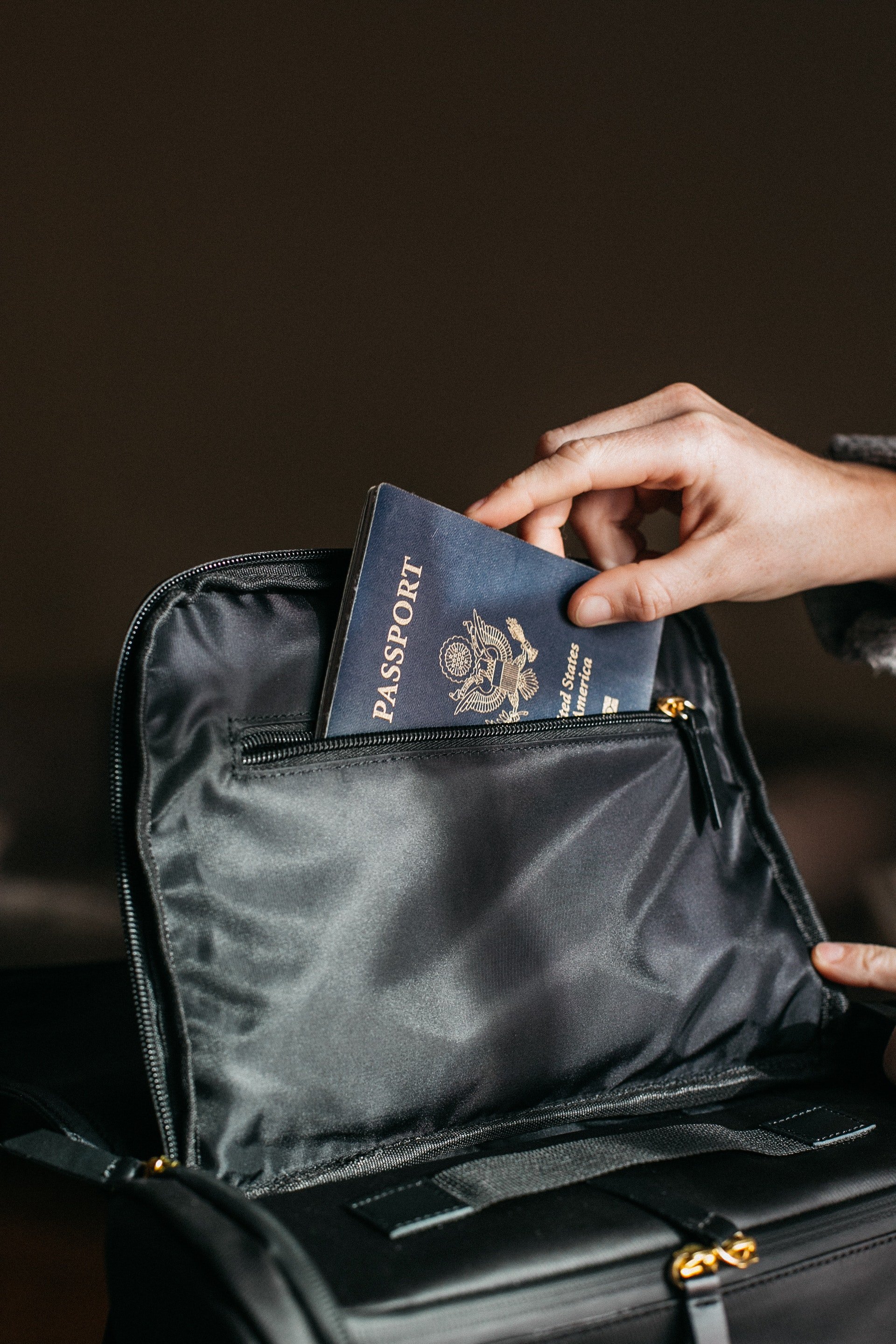
This might seem obvious, but the number one rule is to make sure your travel documents are completely in order before you think about anything else. Every time I travel abroad, I start by gathering, organizing, and packing my documents first.
Make sure your passport is valid for at least 6 months beyond your return date, since many African countries require this. Also check that you have enough empty pages for any visas you may need.
On visas: many African countries offer a visa on arrival, though this depends on your nationality. In Namibia and South Africa, we received a visa on arrival for free. For Kenya and Tanzania, we applied for an E-Visa online. It takes about 3 to 4 days to process and costs approximately $100. Always check requirements well in advance.
Here is what to have organized before you leave:
Valid passport (6+ months until expiry, with empty pages)
Copy of passport, both digital and paper
Visa documentation (check requirements for each country)
Health and travel insurance, such as World Nomads
Yellow fever vaccination card (required for several African countries)
An international driving license if you plan to drive
Flight tickets, printout or e-ticket
Cash in USD, Euros, and local currency
Check the CDC Travel Health List for your specific destinations
Luggage
A wheeled duffel bag is the right choice for a safari. I personally prefer one with wheels because it is much easier to move through airports and lodges. I check a duffel bag and carry my camera bag on the plane as my personal item.
The Osprey Transporter Wheeled Duffel 120 is a solid option. It is durable, compresses well, and fits into small charter plane overhead compartments when needed.
Your carry-on should always contain your medications and any critical personal items in case your checked bag is lost or delayed.
Pro Tip: If you are traveling in a very dusty country like Namibia, bring a large trash bag to cover your duffel. We regularly found our bags caked in thick red dust after vehicle transfers. The trash bag takes up no space and saves you a lot of cleaning time.

Clothing
It took me a few trips to get this right. I used to bring way too much. My core recommendation is to pack minimal, lightweight, earth-toned clothing. Most lodges offer fast, inexpensive same-day laundry service. If you hand your clothes in during the morning, they are back by mid-afternoon. This means you need far less than you think.
The recommendations below are sized for a 7 to 10-day trip.
On colors: Stick to earth tones: khaki, beige, olive, brown, and tan. These blend into the environment, keep you cooler, and attract fewer insects than bright colors. Avoid white, which makes you visible at long distances. Also, avoid dark blue and black, which attract tsetse flies in East and Central Africa, particularly in Tanzania and Zambia.
On camouflage: do not bring anything camouflaged. This is not a style choice. In several African countries, camouflage clothing is illegal; even a camo cap can get you stopped and questioned by police. Leave it all at home.
Footwear
Three pairs of shoes are the right number:
Lightweight flip-flops for walking around your room and lodge
On-Running Cloud 5 sneakers for non-safari walks and travel days
Palladium Boots for game drives and walking safaris; extremely comfortable and perfect for warmer climates
Socks: bring 5 to 6 pairs. I rely on Icebreaker merino hiking socks. They are lightweight, quick-drying, and naturally odor-resistant. Make sure the socks are long enough to cover your lower legs on game drives as protection against mosquito bites. I also bring 3 to 4 pairs of no-show socks to wear with sneakers.
Pants and Bottoms
Safari pants (2 pairs) — I wore long pants the majority of the time. My favorites are Prana Stretch Zion and Arc'teryx Gamma LT. Skip jeans entirely.
Cotton pants (1 to 2 pairs) for travel days and restaurant dinners
Shorts (2 pairs) for lodge downtime and warm afternoons
Bathing suit — most lodges have a pool
Underwear (8 pairs minimum) — lodges generally will not launder underwear, so bring enough to cover yourself. Uniqlo makes good, inexpensive options.
Shirts and Tops
T-shirts (6) — Buck Mason Pima Curved Hem Tees are nice enough for dinner but comfortable enough for a full day on a game drive
Safari shirts (1 to 2) — I wear the Arc'teryx Skyline Shirt over my T-shirt on early morning drives when it is cold
Polo shirts (2) for travel days and restaurants
Layers and Outerwear
Pajamas
Patagonia Torrentshell 3L Rain Jacket — you never know when a late afternoon storm rolls in
Arc'teryx Delta LT Fleece — early morning game drives can be surprisingly cold, especially in the dry season.
If you are traveling during the Southern Africa winter, May through August in Botswana, Zambia, or Zimbabwe, add a lightweight beanie and thin gloves to your kit. Predawn game drives at that time of year are genuinely cold, not just cool.
Uniqlo Light Puffer Coat — packable, light, and genuinely warm when temperatures drop before sunrise
Filson Summer Packer Hat — wide brim, sun protection, and durable
Baseball caps for casual use
Dealing with Mosquitoes and Bugs
You are going to Africa. You are going to see bugs. This is not something to obsess over, but you do need to take it seriously. Use repellents, use bed nets when your lodge provides them, and treat your clothing with permethrin before you leave home.
I apply bug spray every morning before going out and keep my arms and legs covered during dawn and dusk game drives, which are peak mosquito hours.
My preferred products:
Ben's 30 Tick and Insect Repellent Wipes — much easier to apply than the spray version. The main active ingredient is DEET, which is what actually works. Available on Amazon and at REI.
Ben's 30 Spray version if you prefer spray
Permethrin clothing spray — spray your clothing about one week before you travel for a second layer of protection. It bonds to fabric and survives multiple washes.
InsectGuard Permethrin Treated Bandanna — we wore these to keep bugs away from our faces during game drives
And when your lodge provides mosquito nets over the bed, use them. They are there for a reason.
Personal Care and Hygiene
Some of these items can be purchased in Africa, but I prefer to bring everything from home and not leave it to chance.
Toothbrush and toothpaste
Dental floss
Deodorant
Sunscreen for face and body, at least SPF 30
Hairbrush or comb
Shaver with blades and shaving cream
Face moisturizer
Lip moisturizer with UV protection
Laundry soap for hand-washing delicates
Laundry detergent strips — lightweight and take up almost no space
Personal medications — never pack these in your checked bag
Advil or Tylenol
Anti-nausea medication if needed
Malaria tablets such as Malarone — consult your doctor before departure
Antihistamine tablets
Z-pack for the flu, just in case
Personal Items
A few extras that make the trip more comfortable:
Daypack — for days when you do not need your full camera bag
Sunglasses
Binoculars — this is not optional. Your guide will have them, and you will want your own. I carry a compact 8x42 pair on every safari. Use them to scan for movement, read animal behavior before you raise your camera, and spot birds at a distance that your 400mm alone won't resolve in time. Vortex Diamondback HD 8x42 is a solid mid-range choice. If budget allows, Swarovski EL 8.5x42 is the standard by which everything else gets judged.
Reading glasses, if needed
Kindle with charger
Extra zip-lock bags — useful for dust protection and organizing small items
Mini trash bags
Kleenex
Mints
Electronics
Make sure every charger and adapter is accounted for before you leave home. This is the list I travel with:
Travel plug adapters — South Africa and Namibia use Type M and Type D. East Africa often uses Type G (UK standard). Check your specific destination.
Power bank with USB-C and USB-A for charging during long game drives
Mobile phone with charger — note that T-Mobile does not work in Namibia
Headphones (AirPods work well)
Headlamp with red light — the red light setting is essential for astrophotography without destroying your night vision
Laptop with charger — I travel with a MacBook Pro
Kindle with charger
Wall charger for charging phones, iPads, and Kindles simultaneously
Travel power strip — lodge rooms often have very few outlets, and this solves the problem overnight
Portable SSDs — I bring two for photo backup
So, Where Should You Go?
I am excited to introduce Voyagefox, a fellow travel creator known for inspiring photography, beautiful destinations, and practical travel ideas from around the world. She had a terrific guide on THE KRUGER SHALATI, TRAIN ON THE BRIDGE HOTEL IN SOUTH AFRICA. This has been a bucket-list destination for me, and her review has me wanting to go even more.
Photography Gear
Camera Bodies
Bring two bodies. If your primary camera fails in the Serengeti, there is no camera store nearby. A second body is your insurance policy, and it lets you keep two lenses mounted so you are not swapping glass in a dusty vehicle.
My current safari kit is built around two Canon EOS R5 Mark IIs as my primary bodies. It shoots at 30 FPS in electronic shutter mode, has exceptional Animal Eye Detection autofocus, and handles high ISOs remarkably well for dawn-and-dusk drives when the light is barely there. It is a significant upgrade from earlier R5 bodies in both autofocus speed and image stabilization.
I also bring my Leica Q3 as a third body. The Q3 is not a wildlife camera; it is a 28mm fixed-lens compact. But it earns its spot in the bag for camp life, environmental portraits, landscape shots, and the kind of candid moments that happen between game drives. The image quality is extraordinary, and it is light enough that it never feels like a burden. Think of it as your always-on camera for everything the telephoto cannot do.
For safari, whatever bodies you choose, prioritize:
High continuous shooting speed (12+ FPS minimum)
Animal Eye Detection autofocus
Strong high ISO performance for low-light game drives
On renting gear: if you do not own a long telephoto, consider renting before the trip. Companies like Lens Rentals and Lens Pro to Go let you rent a body or lens at a fraction of the purchase price, with the option to buy afterward if you love it.
Lenses
Four lenses are the right number for this kit. The 400mm f/2.8 is a large investment in weight and bag space, but nothing else comes close for wildlife at distance.
Canon RF 400mm f/2.8L IS USM (your most important lens). This is the lens that will define your safari photography. At f/2.8, you can shoot in low light that would stop a zoom lens cold, and the subject separation and background rendering at that aperture is in a different category entirely. It is heavy, and it takes up significant space, but every frame you bring home from it will remind you why you made the decision to carry it.
I bring both the 1.4x and 2x teleconverters for the 400mm. The 1.4x gives you 560mm at f/4, which is my most-used combination for birds in flight and distant animals. The 2x gives you 800mm at f/5.6, which is useful for very distant subjects or tightly cropped wildlife portraits. Autofocus slows slightly with the 2x, but the R5 Mark II handles it well.
Canon RF 70-200mm f/2.8L IS USM. This lens covers the moments when animals are closer than your 400mm minimum focusing distance, and it doubles as your people and environmental lens around camp. At f/2.8, it also performs well in low light. With the 1.4x teleconverter, it becomes a 280mm f/4, giving you a useful middle range between the two primes.
Wide Angle ( 15-35mm) For sweeping savanna landscapes, dramatic sunrise silhouettes, and tight interior shots inside a hide or vehicle. This lens also earns its place after dark. Africa's remote camps, especially in Namibia and the Okavango, sit under some of the darkest skies on earth. Set up your wide-angle on a tripod if you are doing Astro Photography or a flat surface at camp, use your remote shutter release to avoid camera shake, and you will come home with Milky Way images you didn't expect. Your headlamp's red light setting is essential here. It lets you move around and adjust your gear without killing your night vision.
Tripods and Support
Leave your full-size tripod at home. There is no room in a safari vehicle to set one up.
What you need instead:
Bean Bag — the single most important support tool for safari photography. Rest it on the vehicle window frame, and it absorbs vibration cleanly. Travel with it empty and fill it with rice or beans on arrival. Empty it before your bush plane flight to save weight.
Gimbal Head — if you are shooting with a 400mm or longer lens, a gimbal head mounted on your bean bag gives you smooth tracking on moving animals. Really Right Stuff and Wimberley both make excellent options.
Batteries
You will be shooting all day, and charging opportunities vary by lodge. The R5 Mark II is efficient, but a full day of continuous game drive shooting will drain a battery. My rule is to bring more fully charged batteries than I think I need, then add a couple more on top of that. Three per body is the minimum; four is better. The Leica Q3 runs on its own battery system, so pack at least two spares for that as well.
A dual battery charger lets you charge two at once overnight.
Camera Bag
For game drives, use a medium shoulder bag that gives you fast access to a second body and extra lenses. A backpack takes too long to dig into when a lion walks past your vehicle.
For airport travel and charter flights, a Think Tank Airport-style backpack holds two bodies, three to four lenses, and all your accessories. On small charter planes without overhead bins, pull out the padded insert and hold it on your lap.
Never check your camera gear. Ever.
Memory Cards and Backup Storage
On my last safari in Namibia, I took more than 15,000 photos. Plan for serious volume. I travel with four 128GB CFexpress cards and six 64GB to 128GB SD cards. Do not erase your cards in the field. Every evening, copy them to your SSDs and leave the originals untouched until you are home.
I carry two Samsung T7 SSDs and use Carbon Copy Cloner to mirror one onto the other each night. If one drive fails, the other has everything. Pack your Thunderbolt 3 cables — they make the transfer significantly faster.
Cleaning and Dust Protection
Dust is relentless, especially in Namibia and during the dry season in East Africa. Build dust management into your daily routine.
Rocket blower — use it before every lens swap and at the end of each drive
Sensor cleaning kit — bring one if you are comfortable cleaning your own sensor. Sensor swaps in dusty environments carry risk, but a dirty sensor will ruin thousands of images.
Rain and dust covers for your camera bodies and long lenses. I keep a shower cap from the hotel over my long lens when it is not in use. It sounds ridiculous. It works.
4 microfiber cloths — they get dirty fast, bring more than you think you need
Multi-tool or screwdriver kit — the constant vibration of a safari vehicle loosens screws on your gear faster than you'd expect. Your gimbal head, L-bracket, and plate mounts will all need tightening at some point during a 10-day trip. A small Leatherman or a dedicated camera screw kit takes up almost no space and has saved more than one shot for me.
Flash
Leave it. Flash disturbs and disorients wildlife and is prohibited on most safaris. Focus on high ISO performance, and you will not need it.
iPhone Photography on Safari
You can come home with remarkable images shot on an iPhone. Here is how to get the most out of it.
Use Telephoto Mode aggressively. The 5x optical zoom on iPhone 15 Pro Max and later is genuinely useful for animals at medium distance. For closer subjects, switch to your main lens for better low-light performance.
Lock exposure and focus manually. Bright African light will fool your iPhone into exposing for the sky and underexposing the animal. Long-press on the subject to lock focus and exposure, then drag the exposure slider down slightly.
Shoot in ProRAW. Available on iPhone 12 Pro and later, enable it in Settings under Camera. You will have far more latitude in post, especially for high-contrast sunrise and sunset shots.
Action Mode for movement. For running animals or any situation where stabilization matters, turn on Action Mode in the native camera app. You lose some resolution, but the stabilization is impressive.
Golden hour is your best friend. The soft, warm light between 6 and 7 am on the African savanna is flattering on almost any subject. Build your morning game drives around sunrise.
What to Leave Behind
Full-size tripod (bring a bean bag instead)
More than three or four lenses
Hard-sided camera cases
A drone — most national parks in Africa prohibit drones outright, and some countries require a permit even for private land. Unless you have confirmed in writing that every location on your itinerary permits drone flight, leave it at home. Getting it wrong means confiscation at the border or a fine in the field. If you have conducted the research and have written permission for each location, bring the documentation with you.
External flash
Jeans
Anything camouflage
White shoes
Expensive jewelry
The Complete Safari Packing Checklist
Documents
[ ] Passport (valid 6+ months, with empty pages)
[ ] Visa documentation
[ ] Yellow fever vaccination card
[ ] Travel insurance (World Nomads or equivalent)
[ ] International driving license if needed
[ ] Flight tickets
[ ] Cash in USD, Euros, and local currency
[ ] CDC travel health check completed
Luggage
[ ] Wheeled soft duffel bag (Osprey Transporter recommended)
[ ] Large trash bag for dust protection in Namibia
[ ] Combination locks for zipper pulls
Clothing
[ ] 6 T-shirts (earth tones)
[ ] 1 to 2 safari shirts
[ ] 2 polo shirts
[ ] 2 pairs safari pants (Prana or Arc'teryx)
[ ] 1 to 2 pairs of cotton pants
[ ] 2 pairs of shorts
[ ] Bathing suit
[ ] 8 pairs of underwear
[ ] 5 to 6 pairs hiking socks (Icebreaker merino)
[ ] 3 to 4 pairs of no-show socks
[ ] Flip-flops
[ ] Sneakers (On-Running Cloud 5)
[ ] Palladium boots
[ ] Pajamas
[ ] Rain jacket (Patagonia Torrentshell)
[ ] Fleece (Arc'teryx Delta LT)
[ ] Light puffer coat (Uniqlo packable)
[ ] Lightweight beanie (May to August Southern Africa)
[ ] Thin gloves (May to August Southern Africa)
[ ] Wide-brim hat (Filson Summer Packer)
[ ] Baseball caps
[ ] Sunglasses
Bug Protection
[ ] Ben's 30 Tick and Insect Repellent Wipes
[ ] Ben's 30 Spray
[ ] Permethrin clothing spray (applied 1 week before departure)
[ ] InsectGuard Permethrin Bandanna
Personal Care
[ ] Sunscreen SPF 30+
[ ] Face moisturizer
[ ] Lip balm with UV protection
[ ] Deodorant
[ ] Toothbrush and toothpaste
[ ] Dental floss
[ ] Shaver and shaving cream
[ ] Nail clippers
[ ] Hairbrush or comb
[ ] Face and body wipes
[ ] Flushable wipes
[ ] Hand sanitizer
[ ] Face masks
[ ] Laundry soap and detergent strips
[ ]First aid kit (REI Adventure Medical Kit)
[ ] Personal medications (carry-on only)
[ ] Malaria tablets (Malarone — start before departure)
[ ] Advil or Tylenol
[ ] Antidiarrheal medication
[ ] Anti-nausea medication
[ ] Antihistamines
[ ] Z-pack
Personal Items
[ ] Daypack (Osprey Ultralight Collapsible)
[ ] Reading glasses
[ ] Binoculars (8x42 recommended, compact)
[ ] Kindle
[ ] Reusable water bottle
[ ] Snacks (Kind Bars, nuts)
[ ] Zip-lock bags
[ ] Mini trash bags
[ ] Kleenex
[ ] Mints
Electronics
[ ] Travel plug adapters (Type M/D for southern Africa; Type G for East Africa)
[ ] Power bank (USB-C and USB-A)
[ ] USB-C and USB-A cables
[ ] Mobile phone with charger
[ ] Headphones
[ ] USB rechargeable flashlight
[ ] Headlamp with red light setting
[ ] Laptop with charger (MacBook Pro)
[ ] Kindle with charger
[ ] Wall charger (Anker)
[ ] Travel power strip
[ ] 2x portable SSDs (Samsung T7)
[ ] Thunderbolt 3 cables
Camera Gear
[ ] Canon EOS R5 Mark II (primary body, settings dialed in before departure)
[ ] Leica Q3 (second body)
[ ] Canon RF 400mm f/2.8L IS USM
[ ] Canon RF 70-200mm f/2.8L IS USM
[ ] Wide angle (16-35mm or 15-35mm)
[ ] 1.4x teleconverter
[ ] 2x teleconverter
[ ] Bean bag (empty for travel, fill on arrival)
[ ] Gimbal head
[ ] Camera shoulder bag for game drives
[ ] Airport backpack for travel
[ ] 4+ CFexpress cards (128GB)
[ ] 6+ SD cards (64GB to 128GB)
[ ] 3 to 4 LP-E6NH batteries (R5 Mark II)
[ ] 2 Leica Q3 batteries
[ ] Dual battery charger
[ ] Rocket blower
[ ] Sensor cleaning kit
[ ] Rain and dust covers for bodies and lenses
[ ] 4 microfiber cloths
[ ] Multi-tool or camera screw kit
[ ] Remote shutter release (for astrophotography at camp)
Related Guides
Final Thoughts
A safari will push your photography and your patience in ways no other environment can. The light changes in seconds. Animals move without warning. You will sometimes have one chance at a shot with no second opportunity. What you pack before you leave will either free you to focus entirely on those moments or slow you down when they matter most.
Pack smart, know your camera before you board the plane, and bring more storage than you think you will need. And when that leopard drops out of the tree thirty feet from your vehicle, you will be very glad you did your homework.
If you would like to join a future photography workshop, visit my Workshops page for current offerings and upcoming dates. You can also connect with me on Instagram (@chasinghippoz) and Facebook, or subscribe to the newsletter for travel photography tips, destination guides, and behind-the-scenes stories from more than 75 countries. I look forward to sharing the journey with you.
Finally—a beginner-friendly photography guide that makes sense.
If you've ever picked up a camera and thought, "Now what?" this is the book for you.
Photography Made Simple is written for adults who are just starting out and want a clear, encouraging, real-world approach to learning photography. Whether you're using a DSLR, mirrorless, or just your smartphone, this guide walks you through the basics—without the jargon or tech overwhelm.
Inside, you'll learn:
The only camera settings you really need to know to get started
How to shoot sharper, more intentional photos using light and composition
Simple tips for portraits, landscapes, travel, and everyday life
What gear you do (and don’t) need
How to create better photos without upgrading your camera
You’ll also get practical exercises, cheat sheets, and tips for organizing and editing your images—plus the confidence to shoot off Auto Mode for good.
This is not a textbook. It’s a friendly guide to seeing the world with fresh eyes—and finally capturing what you see the way you imagine it.
📸 Format: PDF download
Pages: 100+
Perfect for: Beginners, hobbyists, and anyone ready to take better photos without the stress