Keukenhof (Lisse), Holland Travel & Photography Guide: Best Photo Spots, Things to Do & Hidden Gems
I have been coming back to this place almost every year for nearly a decade, and it still gets me.
Keukenhof, which translates from Dutch as "kitchen garden," sits in Lisse, in the South Holland province, about 45 minutes south of Amsterdam and 30 kilometers from the North Sea coast. It was first created in 1949 by a group of Dutch bulb growers who wanted a showcase for the industry, and it has grown since into the single most visited flower garden on the planet, drawing well over a million visitors each spring. The numbers are staggering: 800 varieties of tulips alone, plus hyacinths, daffodils, narcissi, and orchids filling the indoor pavilions. The park redesigns its displays completely each year, so even if you have been before, you have not seen this year's version.
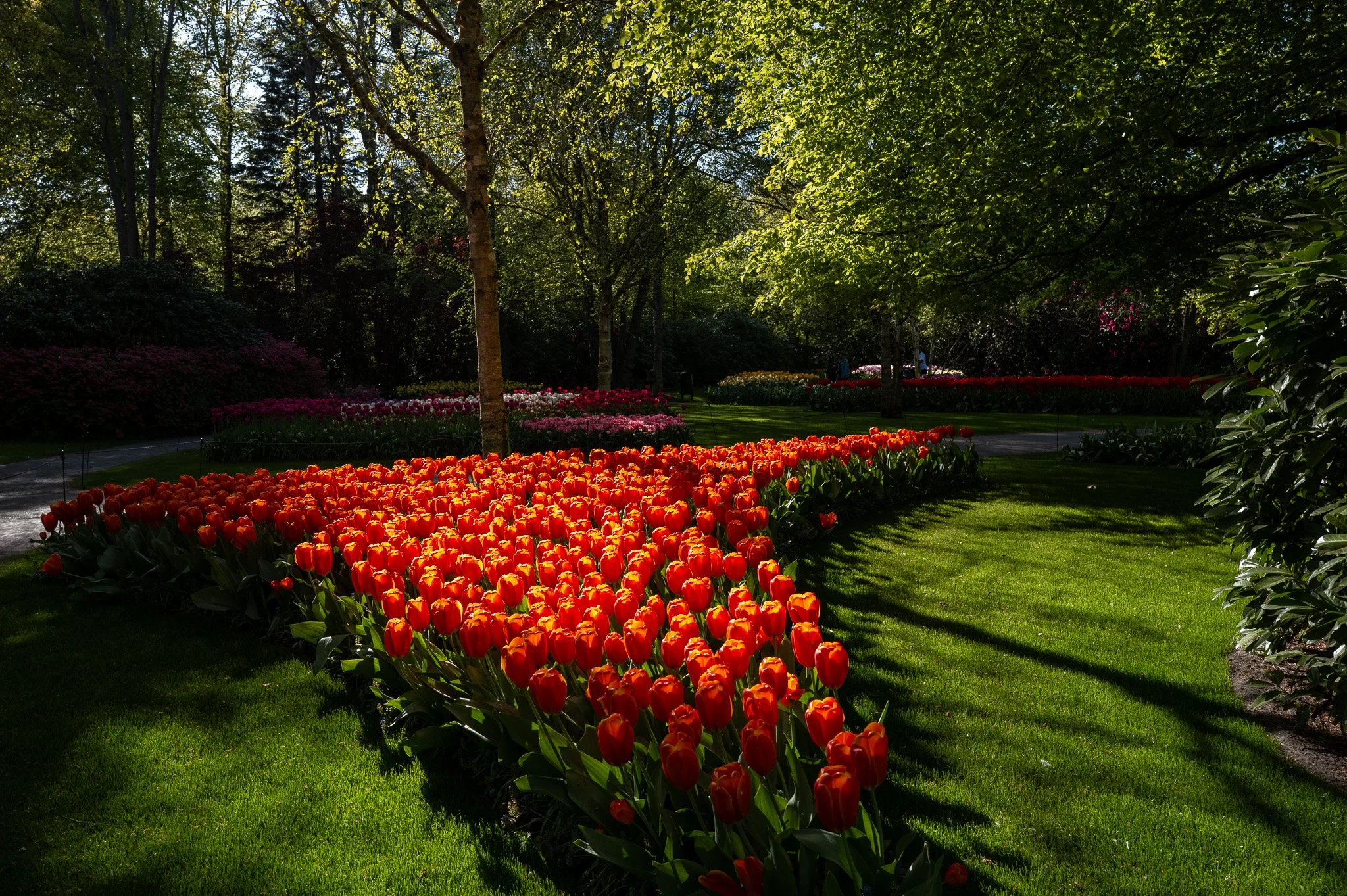
You can know intellectually that Keukenhof contains seven million flowering bulbs spread across 80 acres of manicured garden. You can have seen the photographs. You can have visited before. None of it fully prepares you for the moment you walk through the gate on a clear April morning and the color hits you. Not one color. All of them. Rows of red, yellow, white, purple, and orange running from the path to the tree line without interruption, the petals still holding the moisture from the night before, a windmill from 1892 rising above the tree canopy at the far end of the park. It is the most extravagant display of flowers in the world, and it exists for barely eight weeks a year. If you have not been, go. If you have been, you already understand why I keep going back.
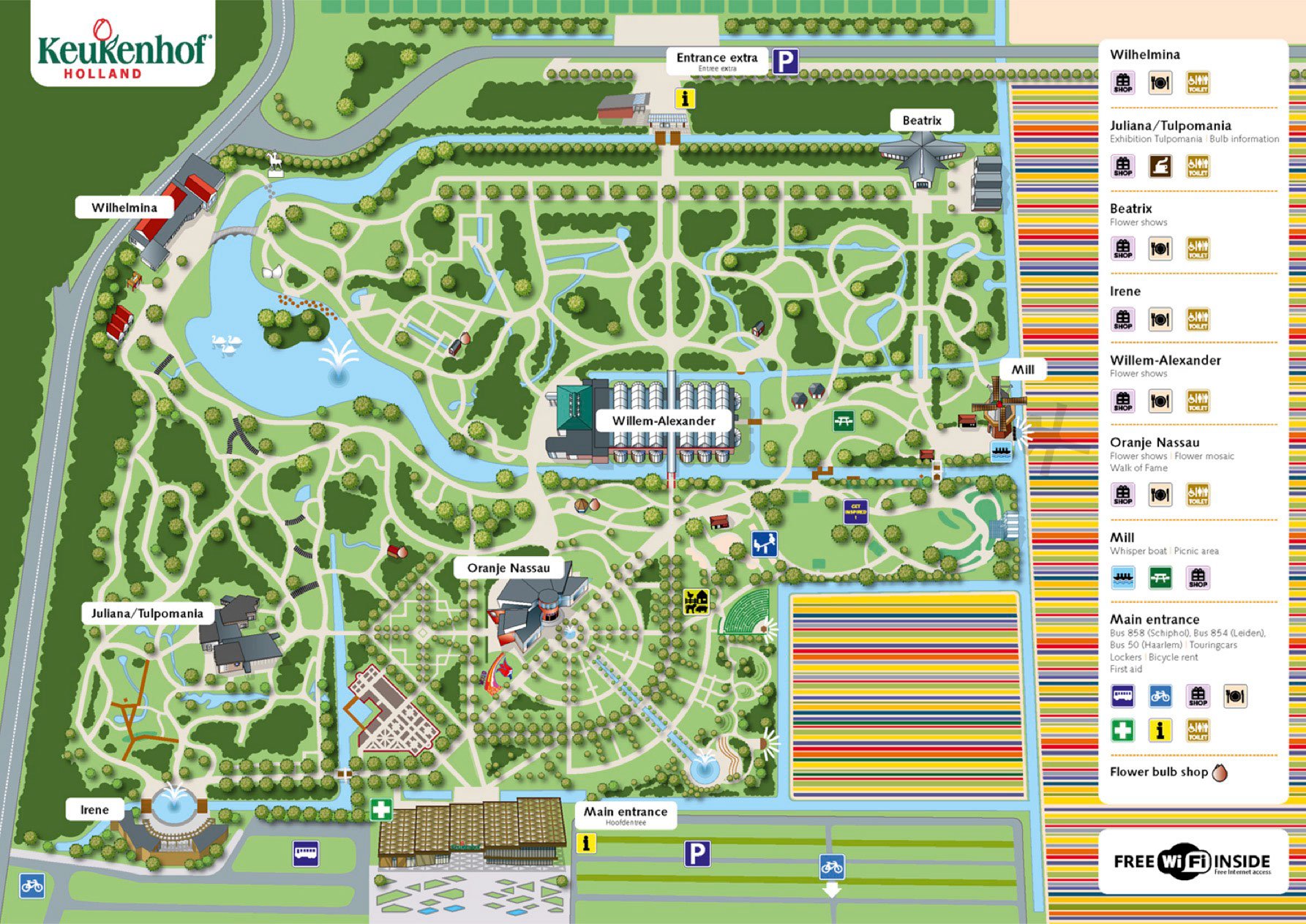
Map of Keukenhof
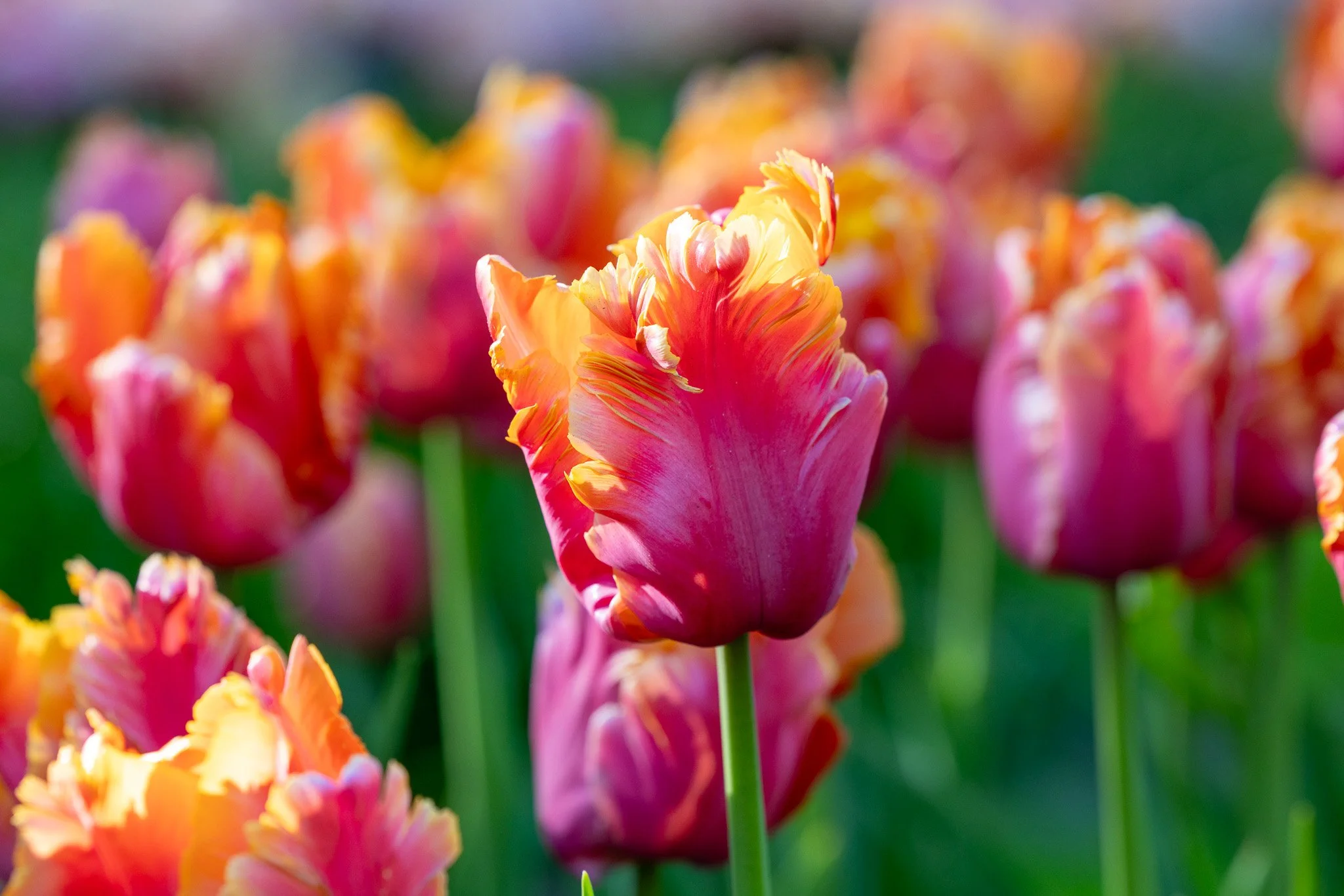
For photographers, the challenge at Keukenhof is not finding a beautiful subject. It is finding a way to photograph the extraordinary as if you are seeing it for the first time, because in a sense, you are. The light here rewards patience. An overcast Dutch sky, which locals call a "photographer's sky," wraps the flowers in soft, shadow-free light that a clear sunny day cannot match. The reds and oranges of a tulip bed under grey skies glow with a depth that, under direct sun, simply looks blown out. The serious photographers here are the ones you see standing at the edge of a flower bed at opening time, before the crowds arrive, waiting for the mist to clear.

And the garden is only the beginning. The tulip fields that surround Lisse and spread across the province are, in some ways, even more dramatic than the park itself. Row upon row of color stretching to the flat Dutch horizon, broken only by a farmhouse or a windmill. These are the images that defined the Dutch national identity for centuries, and they are still out there, free, accessible, and extraordinary.
In this Photography Guide to Keukenhof, I share the places and experiences that continue to draw me back. You will find my favorite photography locations, guidance on when and where to shoot, practical travel tips, and gear recommendations, along with cultural insights to help you explore and photograph Holland's tulip season with confidence, respect, and ease.

Route From Amsterdam to Keukenhof
Getting Around Keukenhof, Holland
From Amsterdam: Keukenhof is 40 kilometers southwest of Amsterdam city center. By car, the drive takes 40 to 50 minutes via the A4 motorway (exit Nieuw-Vennep) or the A44 (exit 3 Lisse). By bus, the Keukenhof Express operates from Amsterdam RAI and Leiden Central Station, with combo tickets available from the Keukenhof website. If you are staying in Noordwijk, you are already ten minutes from the park.
From Noordwijk: Drive directly east along the N444 toward Lisse. Ten minutes, straightforward, and the tulip fields begin appearing on both sides of the road almost immediately.
Parking: Parking at Keukenhof must be booked online in advance, particularly for weekend visits in peak season. Follow signs from the main road; the car parks are well organized and connect directly to the park entrance.
Tickets: Buy online before you visit. The park operates timed entry slots; choose an early slot for the best light and the thinnest crowds. The park is completely cashless, so bring a card.
Cycling: Renting a bicycle is the ideal way to explore the tulip fields around Lisse and Noordwijkerhout once you have finished in the park. Bikes are available for hire in Lisse town center and from several hotels. The flat Dutch landscape makes cycling genuinely pleasant rather than just theoretically appealing, and you will reach field locations that are inaccessible by car. A 15 to 20-kilometer loop through the Bollenstreek takes two to three hours and passes through some of the best field photography locations in the region.
Uber operates in the Netherlands and works well for point-to-point trips, though having your own vehicle remains the best option for reaching the more remote tulip field locations and Goeree-Overflakkee.
Driving is the single best way to visit. After Keukenhof, you can pull over at every tulip field you pass on the drive back. You cannot do that on a bus.
Where to Stay in Keukenhof, Holland
The single best decision you can make when visiting Keukenhof is to base yourself near Lisse or on the Noordwijk coast rather than commuting from Amsterdam each day. The drive from Amsterdam is 45 minutes on a clear run, but in peak tulip season with coach buses, rental cars, and day-trippers all heading the same direction, it can stretch considerably. Staying close means you can be at the park gates for opening, shoot the flowers in that precious first hour, and return to your hotel for breakfast before most Amsterdam visitors have left the city.
Noordwijk, a seaside resort town ten minutes from Keukenhof, is the best base. It offers excellent hotels across every price range, easy access to the tulip fields in every direction, and the North Sea coast for evening walks after a full day of shooting.
Best Neighborhoods
Noordwijk aan Zee is the coastal resort strip, three kilometers from the Keukenhof gates. Direct beach access, excellent hotels, and the tulip fields begin almost immediately as you drive inland. This is where I stay.
Lisse and Noordwijkerhout put you literally within walking or cycling distance of Keukenhof. Quieter than Noordwijk, more local in character, and surrounded by tulip fields on all sides. The best choice if your priority is pure Keukenhof access.
Luxury Hotels in Keukenhof, Holland
Grand Hotel Huis ter Duin — The finest address on this stretch of the Dutch coast, and one of the great historic hotels of the Netherlands. Opened in 1885 on the dune crest above Noordwijk beach, Huis ter Duin has hosted Dutch royalty, international celebrities, and heads of state across 140 years of continuous operation. The five-star property sits directly on the North Sea, and the rooms facing west have some of the most dramatic sea views in Holland. Restaurant Latour on the first floor has a champagne bar and a kitchen that takes the local catch seriously.
Van der Valk Palace Hotel Noordwijk — A full-service four-star resort in the center of Noordwijk with the YUMI Spa and Wellness center, multiple restaurants, and consistently strong service. The Palace Hotel balances the practical requirements of a photography base: free parking, accessible location, early breakfast service, and the comfort of a proper resort.
Alexander Hotel — This is where I stayed on my last visit, and I cannot recommend it highly enough for photographers. A four-star hotel at Oude Zeeweg 63 in Noordwijk, 200 meters from the beach, with 62 rooms all featuring private balconies and free on-site parking. The location is ideal: ten minutes from Keukenhof, surrounded by tulip fields as soon as you drive inland. The hotel's restaurant DYLANS serves French cuisine with international influences to a standard well above what you typically find in a beach resort. The Azzurro Wellness Centre next door, included for hotel guests, provides an indoor pool, Turkish steam bath, and whirlpools for recovery after full days on your feet in the fields.
Mid-Range and Boutique Hotels
Boutique Suites Lisse — Located in the center of Lisse, 800 meters from the Keukenhof gates, this is the closest quality hotel to the park itself. Stylishly designed rooms, a French cuisine restaurant on site, bike rental available, and the kind of thoughtful small-hotel service that makes a real difference. If maximum proximity to Keukenhof is your priority, this is your address.
Hotel Lowietje Lisse — A well-reviewed, comfortable mid-range hotel in Lisse town center. Reliably pleasant and a solid choice for those who want straightforward accommodation close to the park without coastal hotel rates.
Fletcher Wellness Hotel De Witte Raaf — A wellness-focused hotel in the dunes between Noordwijk and the coast, with a genuine spa, good food, and a tranquil setting among the dune landscape. Excellent for a more restorative stay that still keeps you close to the tulip fields.
How Many Days to Stay in Keukenhof, Holland
Give the Keukenhof region three to four days. One day for Keukenhof itself, one day for the Aalsmeer Flower Auction and the tulip fields around Lisse, one day for Goeree-Overflakkee, and a fourth day to revisit your best locations in different light or explore the area by bike.
Day 1: Arrive in the afternoon. Walk the Noordwijk beach promenade. Explore nearby tulip fields in the late afternoon golden hour.
Day 2: Keukenhof at opening time. Spend the full morning inside the park. Afternoon at Como & Co for lunch on the lake. Evening golden hour at the tulip fields around Lisse.
Day 3: Early morning drive to Aalsmeer, arriving by 7 a.m. Morning at the flower auction. Return south for the afternoon at the Goeree-Overflakkee tulip fields. Dinner at DYLANS.
Day 4: Revisit your best field locations. Afternoon free for cycling or a canal boat cruise. Final evening shoot at the Keukenhof windmill area or the surrounding bulb fields.
If you only have two days, spend the first morning at Keukenhof at opening time and the second morning at the Bollenstreek fields by bike. That combination gives you the organized beauty of the park and the raw scale of the working fields, and it is a complete trip.
Best Time to Visit Keukenhof, Holland
Keukenhof opens in mid to late March and closes in mid-May. The exact dates shift each year slightly, depending on when the tulips are ready. Always check the official Keukenhof website for the current season's dates before booking.
Peak bloom falls in mid-April to early May, when the tulips reach their peak across the entire region. This is the busiest period for visitors and also the most spectacular for photography. The park is calibrated to have something blooming throughout the season: earlier visits feature hyacinths, daffodils, and crocuses, while late-season visits catch the last of the tulips.
Best days of the week: Monday, Tuesday, and Wednesday are consistently less crowded than weekends. The weekends of the Flower Parade and the Easter weekend are the busiest of the entire season.
Best time of day: The first hour after opening and the final two hours before closing are your two windows for manageable crowds and the best light. The park stays open until 7 p.m., which means real golden-hour access. Midday on weekends in peak season is essentially unworkable for any composition requiring a clean foreground.
A word about the weather: An overcast sky is a photographer's best friend in the tulip fields. The flat Dutch light under cloud cover saturates the colors and eliminates harsh shadows between the rows. Direct midday sun creates blown-out highlights on white and yellow tulips and kills the depth in red and orange ones. If the forecast shows cloud, clear your schedule and get out early.
Where to Eat in Keukenhof, Holland
The food scene around Lisse and Noordwijk is better than you expect from a seasonal tourism region. Stay near the coast, and you have genuine quality. My personal favorites are below.
DYLANS at Alexander Hotel — The best dinner base in Noordwijk. French cuisine with international influences served in a warm, well-designed setting with genuine hospitality. The menu changes seasonally, and the kitchen takes local ingredients seriously. After a full day in the fields, this is exactly where you want to end up.
Como & Co — Right on the lake in Noordwijkerhout, between Noordwijk and Keukenhof, this is the best meal you will have in the tulip region. The lake terrace is exceptional on a warm spring afternoon. The food ranges from steak tartare and tenderloin to Japanese-style chicken satay, and the whole operation has a relaxed confidence that makes it feel effortless. Book ahead in season. Free parking nearby.
Brasserie at Boutique Suites Lisse — A solid French-influenced kitchen in the center of Lisse, convenient after a morning at the park and reliably good for both lunch and dinner.
Restaurant Latour at Grand Hotel Huis ter Duin — For a special dinner with sea views and serious cooking. The champagne bar alone is worth the visit.
Het Tussenstation, Lisse — A converted train station in Lisse that is now one of the more characterful restaurants in the region. Go for the setting as much as the meal.
De Ouden Heere, Lisse — A reliable, popular Dutch restaurant in the center of Lisse with good local cooking, a warm atmosphere, and no pretensions. The kind of place that fills up every evening of tulip season because it consistently delivers.
Coffee
Velo Café, Noordwijk — Good specialty coffee, healthy food, and a relaxed atmosphere for editing sessions between shoots. A favorite for a mid-morning reset.
The cafe inside Keukenhof — Convenient for a mid-park break. Manage your expectations on the food; the coffee is fine and the surroundings are, obviously, spectacular.
Alexander Beach Club — For late afternoon drinks on a terrace above the North Sea after a long shooting day. The view does the work.
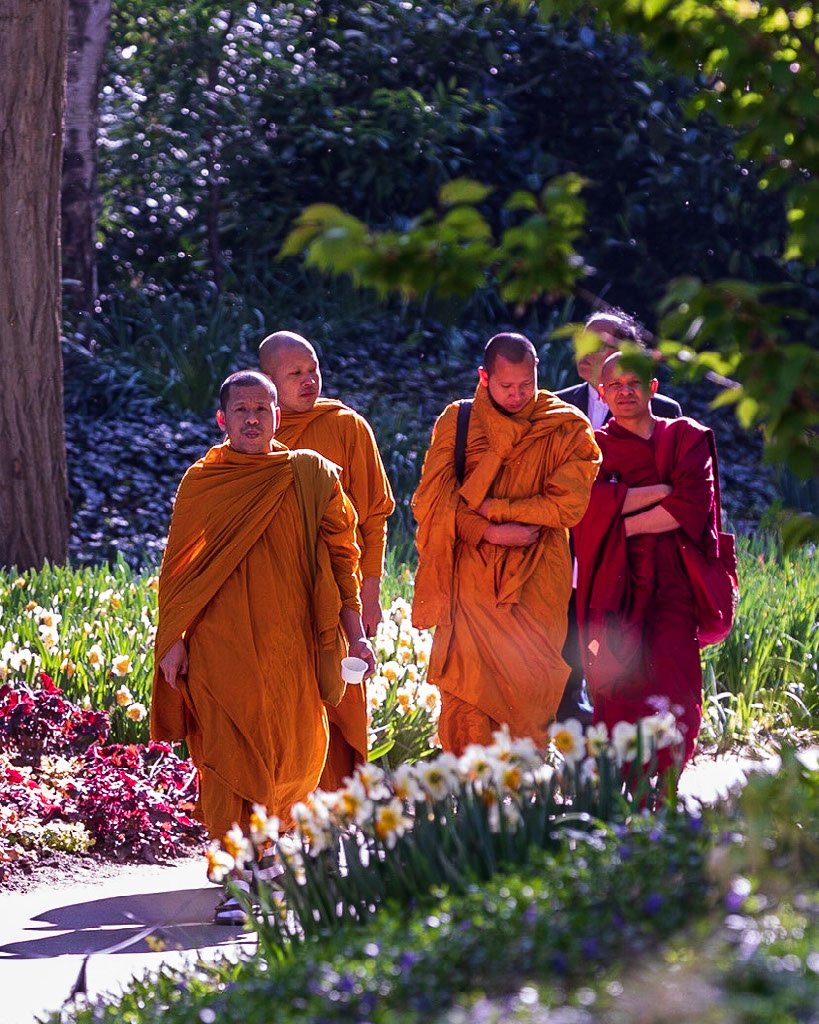
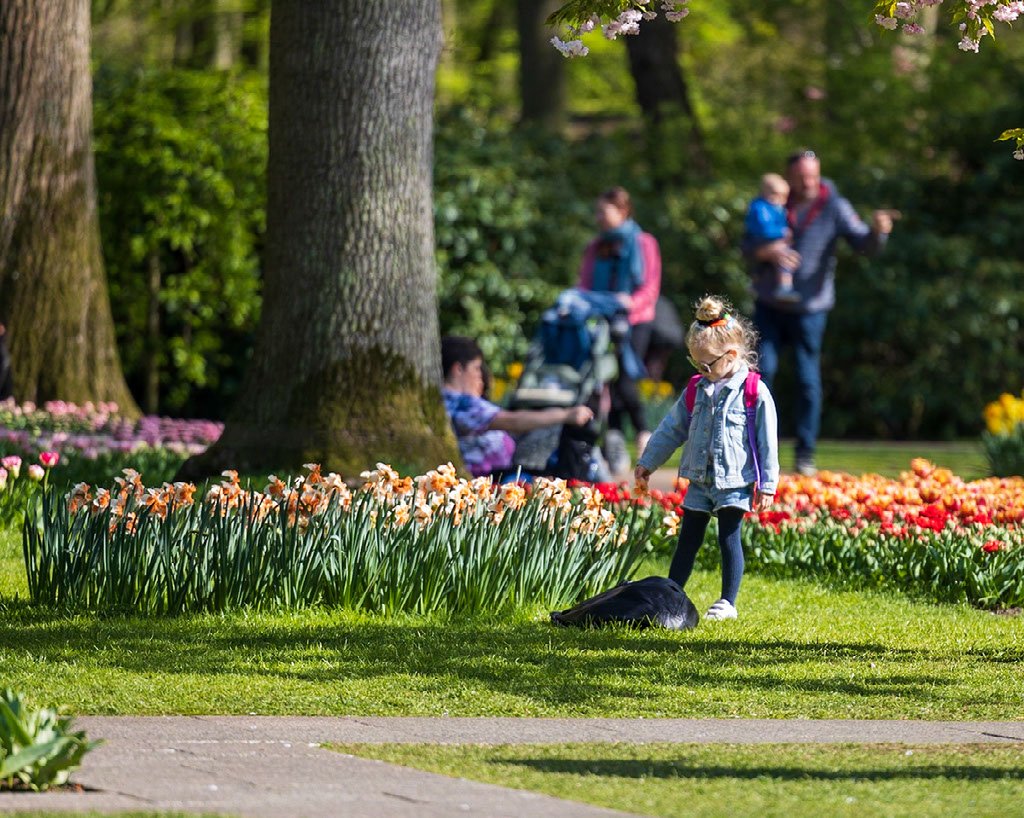
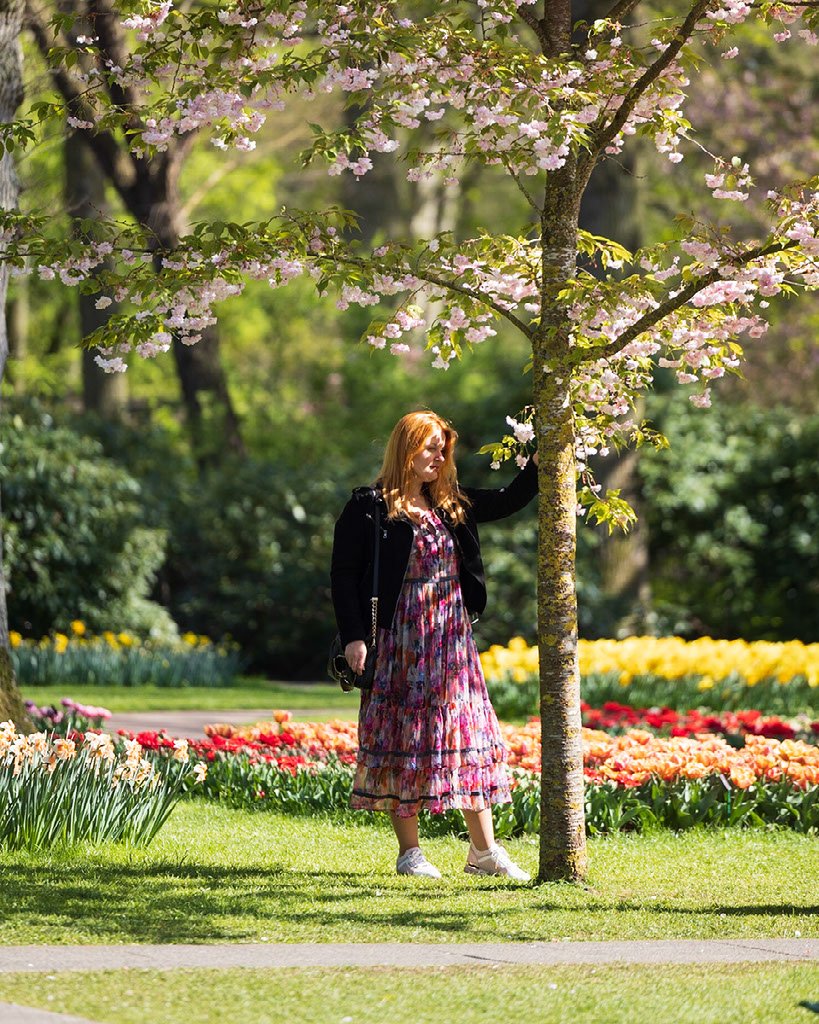
Photography Gear to Bring to Keukenhof, Holland
The tulip fields and Keukenhof require a different kit than most European destinations. You are shooting close-up detail, wide-field rows, and everything in between, often in overcast flat light that rewards proper exposure discipline.
Camera body: Any modern full-frame mirrorless performs well here. The Canon EOS R5 Mark II, Sony A7R V, and Nikon Z8 all handle the color depth of flower photography beautifully. High-resolution sensors reveal petal texture that lower-resolution bodies lose. Weather sealing matters; Dutch spring rain arrives with no warning.
Lenses:
Wide angle (16 to 24mm): For full-scale field panoramas, for the view from the Keukenhof windmill platform, and for landscape shots on Goeree-Overflakkee with sky and field in proportion.
Standard zoom (24 to 70mm): Your all-day lens inside the park, for shooting along the field rows, and for the Aalsmeer Flower Auction elevated walkways.
Telephoto (70 to 200mm or 100 to 400mm): For compressing the rows of tulips and making them appear to stack into infinity, for pulling distant windmill details, and for isolating individual blooms from a standing position. This is the lens that produces the images most people associate with the Dutch tulip fields.
Macro (100mm f/2.8): This is the lens that earns its weight here. Individual tulip petals, water droplets on a hyacinth, the intricate center of a single bloom. If you own a macro lens and leave it home, you will regret it at the first flower bed.
Prime (50mm or 85mm): For candid shots of visitors in the park, portrait-style environmental shots among the flowers, and low-light shooting in the indoor pavilions.
Accessories:
Tripod: Necessary for early morning low-light field shots, for carefully composed close-up work with a macro lens, and for any long exposure work.
Polarizing filter: Reduces glare on wet petals in overcast conditions and deepens color saturation in the fields. More useful here than you might expect.
Kneeling pad or ground cloth: To get down to tulip level without destroying your knees or your clothes on wet Dutch soil. Not photography gear exactly, but experienced tulip photographers bring one.
Rain cover: For your bag and your body. Non-negotiable in Holland in April.
Extra memory cards: You will shoot more frames here than almost anywhere. The combination of variety, color, and beauty makes editing decisions easy but storage decisions demanding.
Drone: Flying a drone at Keukenhof itself is not permitted. For the open tulip fields and Goeree-Overflakkee, Dutch drone regulations apply: registration with the Dutch Civil Aviation Authority (RDW), compliance with EU Open Category rules, and no flying over people or populated areas. A drone over a flat tulip field on a calm morning, with nothing but the field and a windmill on the horizon, produces some of the most distinctive Dutch spring images you can make. If you are equipped and qualified, the Goeree-Overflakkee fields are your opportunity. No drones at Aalsmeer under any circumstances.
iPhone Tips
Use the telephoto lens for the fields. On any iPhone with a 3x or 5x optical zoom, the compressed-row effect that makes tulip field photography so arresting is completely achievable. Lock in your exposure, find a row that stretches straight to the horizon, and let the compression do the work.
Shoot macro detail in Portrait Mode. Get within 30 centimeters of a single tulip and use Portrait Mode to separate the bloom from the background. The bokeh on an iPhone in this range is genuinely beautiful with a subject this colorful.
Use ProRAW at Aalsmeer. The auction hall has a mix of artificial lighting and natural skylights that can fool automatic white balance. Shoot ProRAW and correct in post; the color accuracy on the flower carts is worth the file size.
Overcast light is your friend on iPhone too. Resist the temptation to shoot only on sunny days. The flat Dutch cloud cover is the closest thing to a natural softbox you will ever find outdoors. The reds and oranges of a tulip bed on a grey morning look better on iPhone than they do in direct sun.
For the windmill compositions, use the wide lens, not ultrawide. The ultrawide distorts the clean geometry of the windmill and the rows. The standard wide (equivalent to 26mm) gives you a natural, proportional view.

Visiting the Tulip Fields Around Lisse
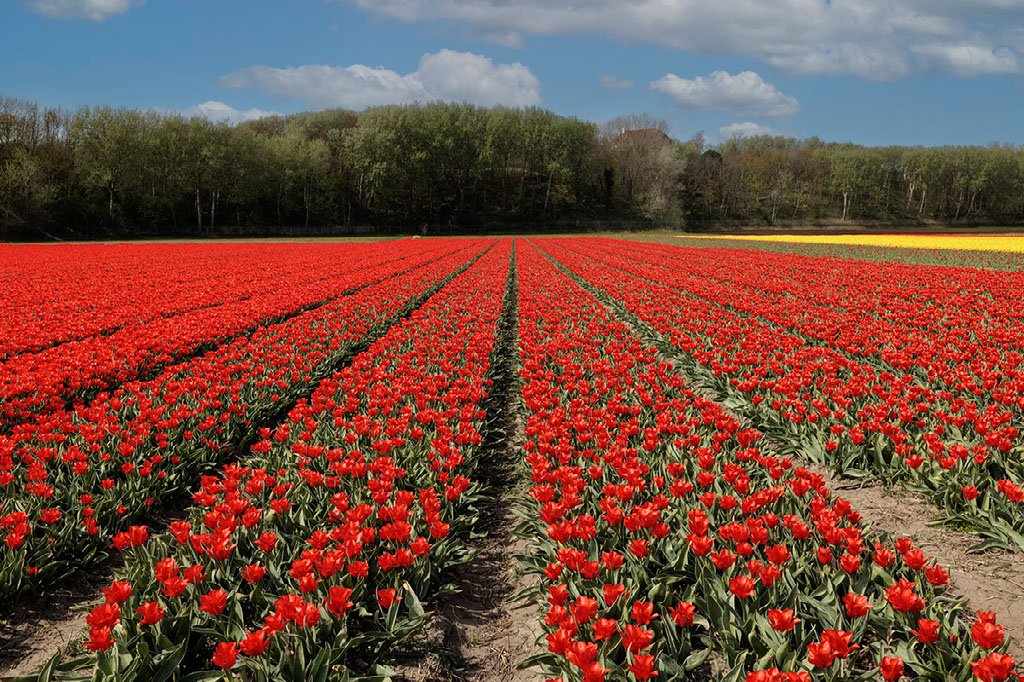
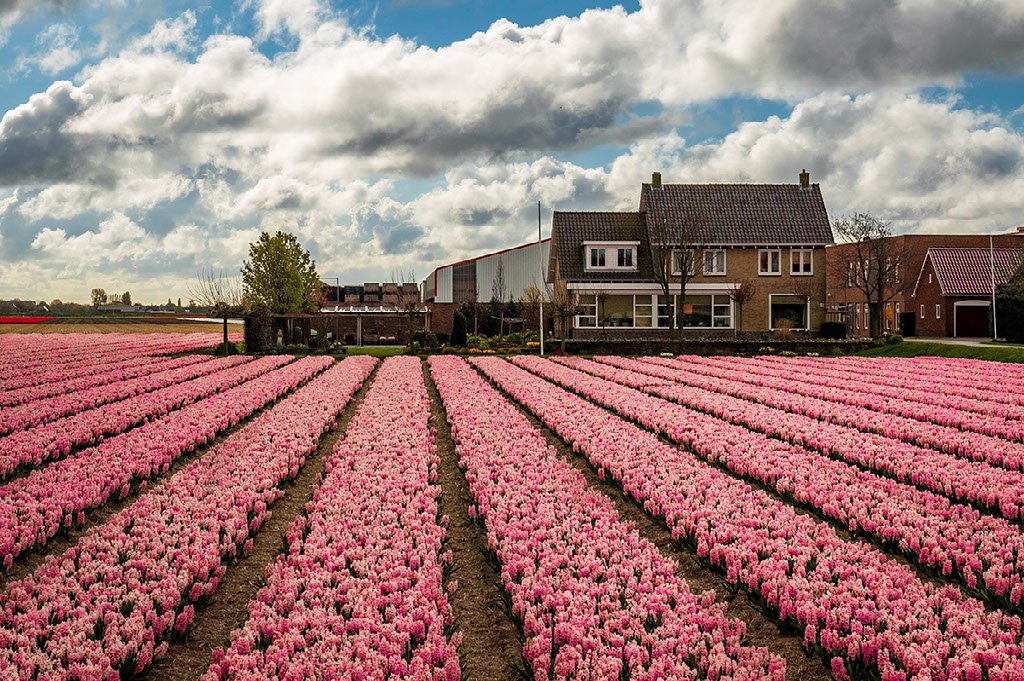
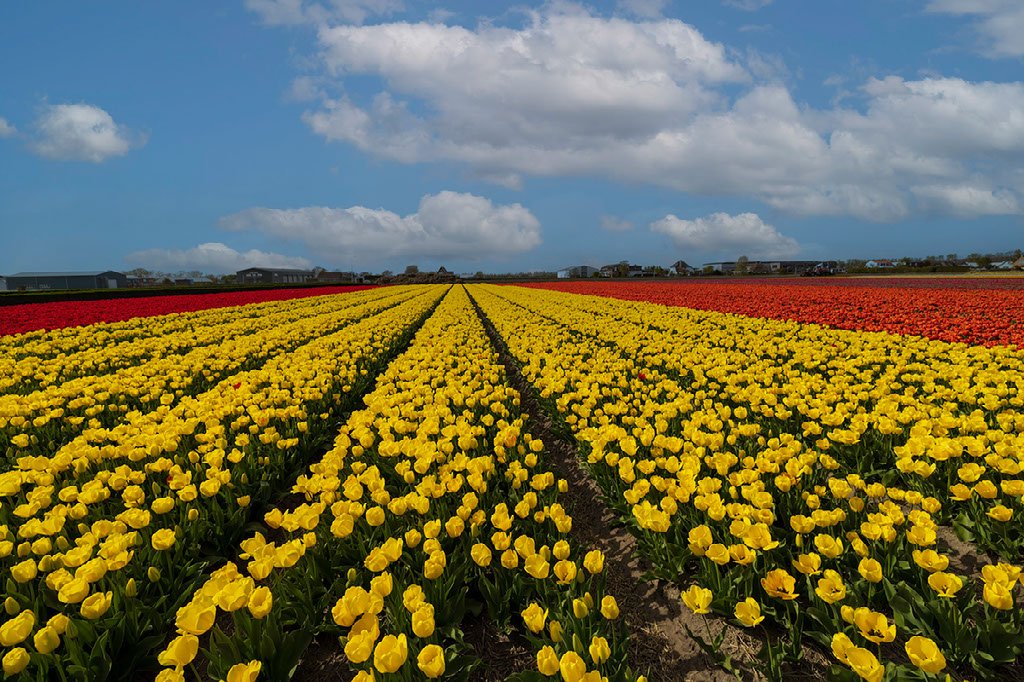
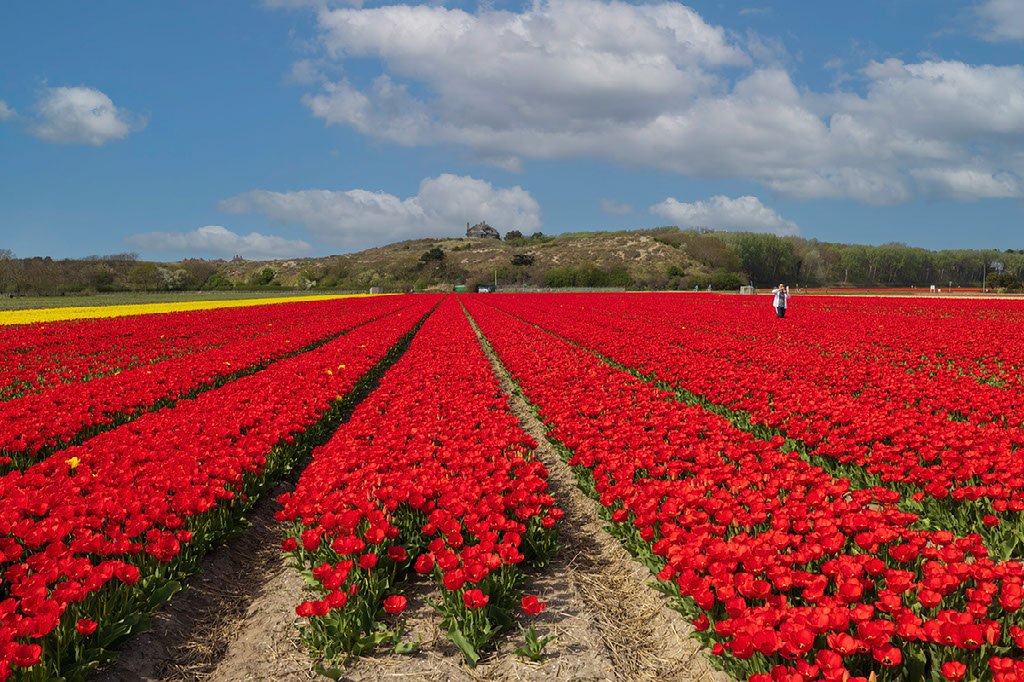
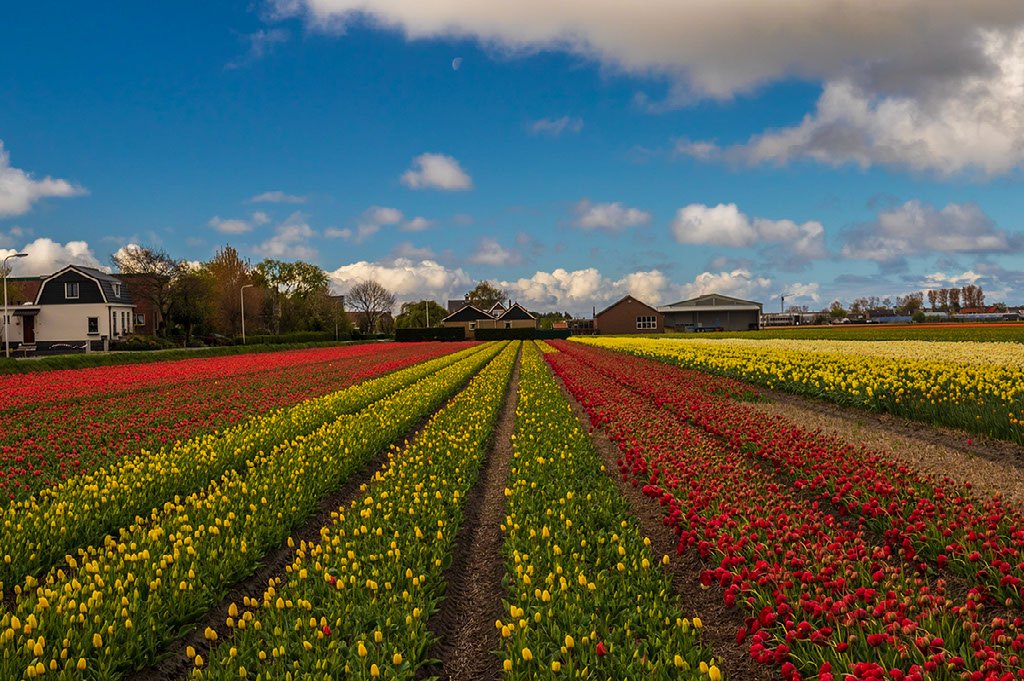
After visiting Keukenhof, I would highly recommend visiting the Tulip Fields around Lisse.

If you drive around Lisse, look for small villages called (Het Laantje Road and Gerleeweg Road), VoorhoutDuinweg and Johan Speelmanweg Roads), Noordwijk (check the (Corner of New Bennebroek, and Heemstede). You will literally find tulip fields everywhere. We would see Tulip fields from the highway and take the next Exit to explore them.
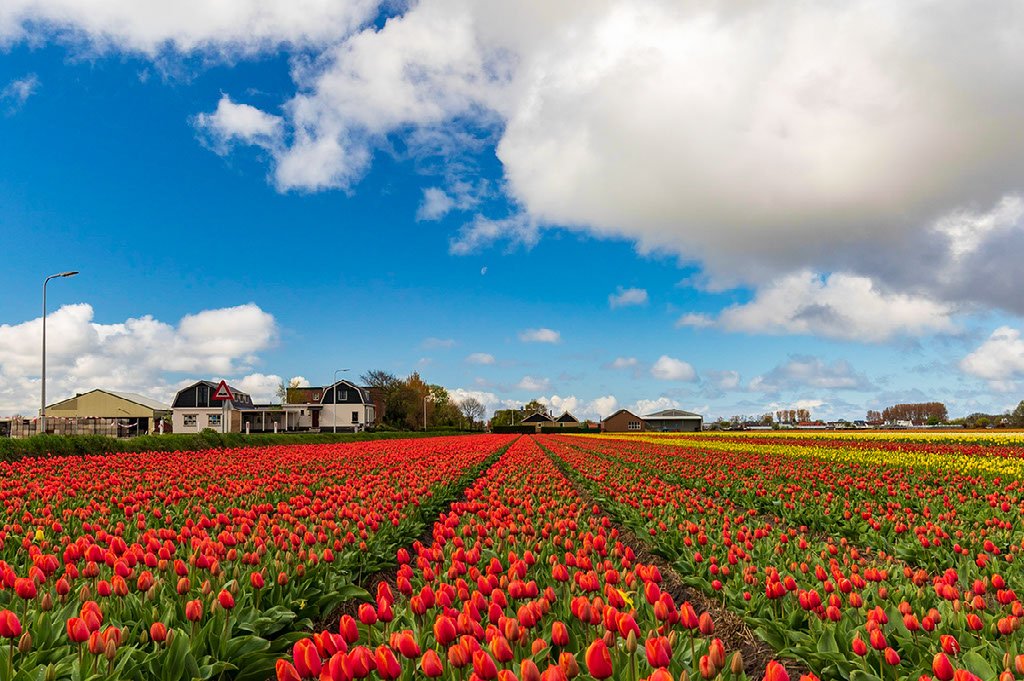
A Great Place for a Drone
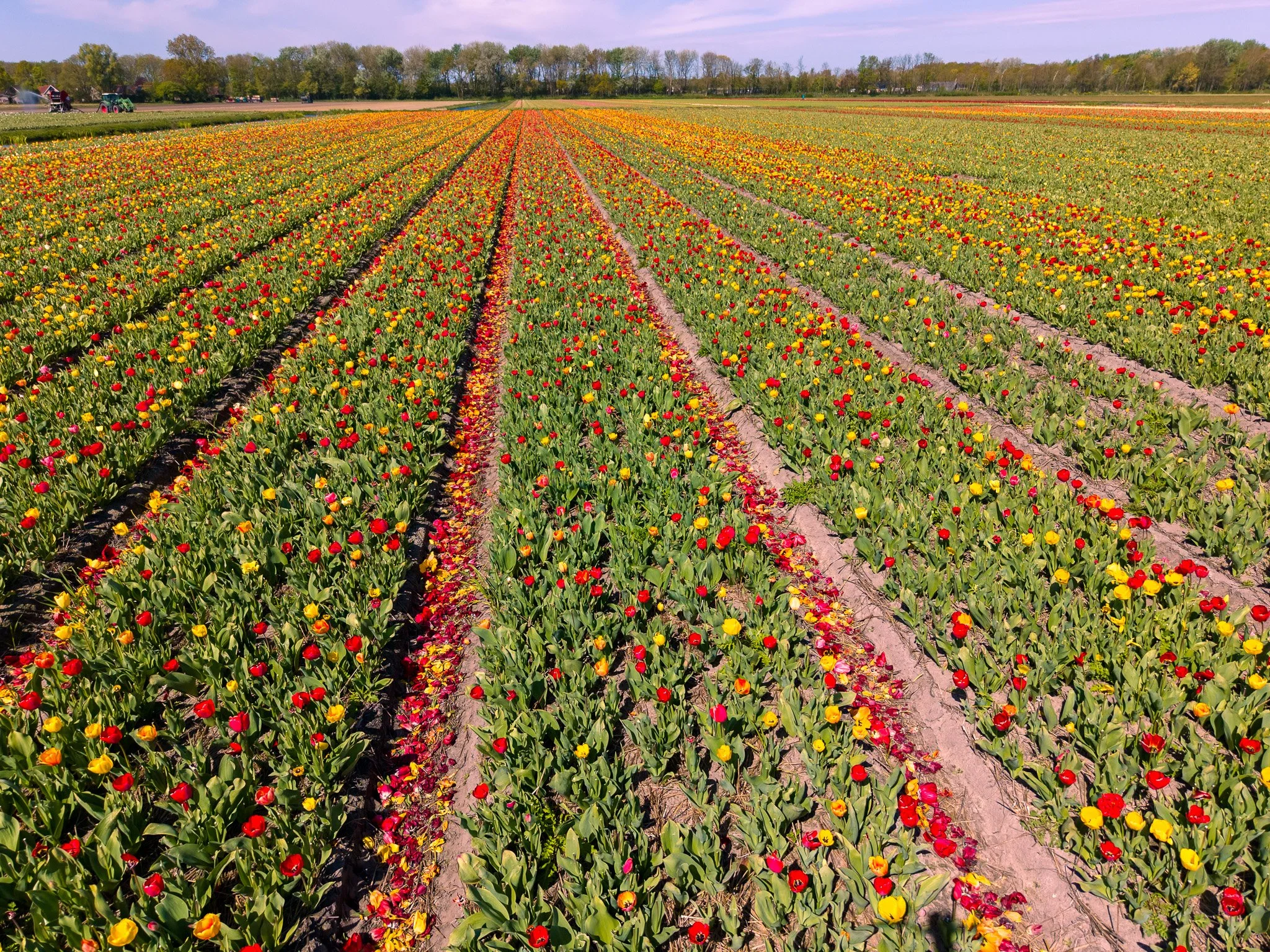
One of the few times I really wanted a drone was while visiting the Tulip Fields. Photographing with a drone gives you a completely different perspective. Photographing the vast fields would be amazing. Just make sure you're allowed to fly a drone in the area where you are stopped.
There is even a Tulip Route in Holland (from the Photographer Albert Dros).
Best Photography Spots in Keukenhof, Holland
Keukenhof Gardens — Inside the Park
The park itself is your primary subject, and it rewards photographers who know where to go before the crowds arrive.
The Windmill at the northern edge of the park is the original 1892 windmill, relocated to Keukenhof in 1957. Climb to the platform for the best panoramic view over the surrounding tulip fields and the park canopy below. From ground level, position yourself with the color rows in the foreground and the windmill rising above the treeline. This is the most classically Dutch composition in the entire park.
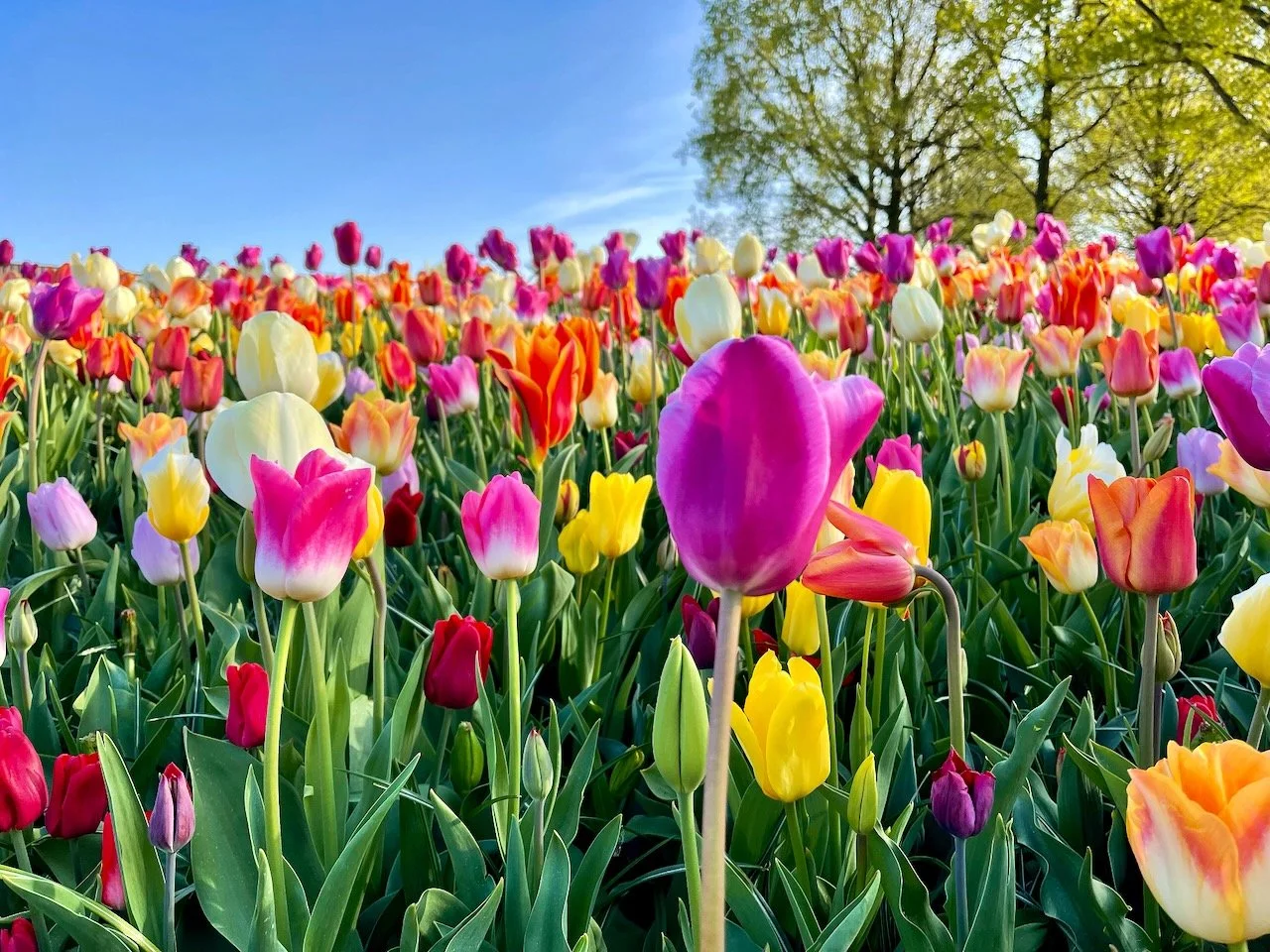
The Oranje Nassau Pavilion Pond is the best water-based composition inside the park. On a still morning, the tulip beds along the bank reflect in the water and the colors double. A polarizing filter controls the surface glare.
The Stone Bridge near Wilhelmina Pavilion is one of the park's quieter spots. The bridge over the lake offers clean compositions with flowers framing the water on both sides. Less crowded than the main paths and consistently beautiful.

A carpet of flowers
The Indoor Pavilions host the year's themed indoor flower shows. Orchids, tulips in forced bloom, and creative installations fill these spaces with color and form that is genuinely different from the outdoor beds. Avoid flash; the natural light from the pavilion skylights is warmer and more flattering.
The Labyrinth Gazebo gives you one of the only bird's-eye views available inside Keukenhof without climbing the windmill. The view looks out over the maze hedges and the surrounding flower displays.
📷 Pro Tip: Buy the earliest timed entry slot available. The park opens at 8 a.m. and the first 45 minutes, before the tour groups arrive from Amsterdam, is the best photography window of the entire day. Walk directly to the windmill area first, while the rest of the early visitors head for the pavilions. Then work back through the park as it fills up. A 24 to 70mm covers most of what you need inside the park. The late afternoon slot, arriving around 4 p.m., is also excellent: the tour buses have left, the golden light hits the western-facing beds, and the park stays open until 7 p.m.
Best time: First hour after 8 a.m. opening, or 4 to 7 p.m. Access: Paid entry, book online. Park gates off Stationsweg, Lisse.
The Tulip Fields of the Bollenstreek
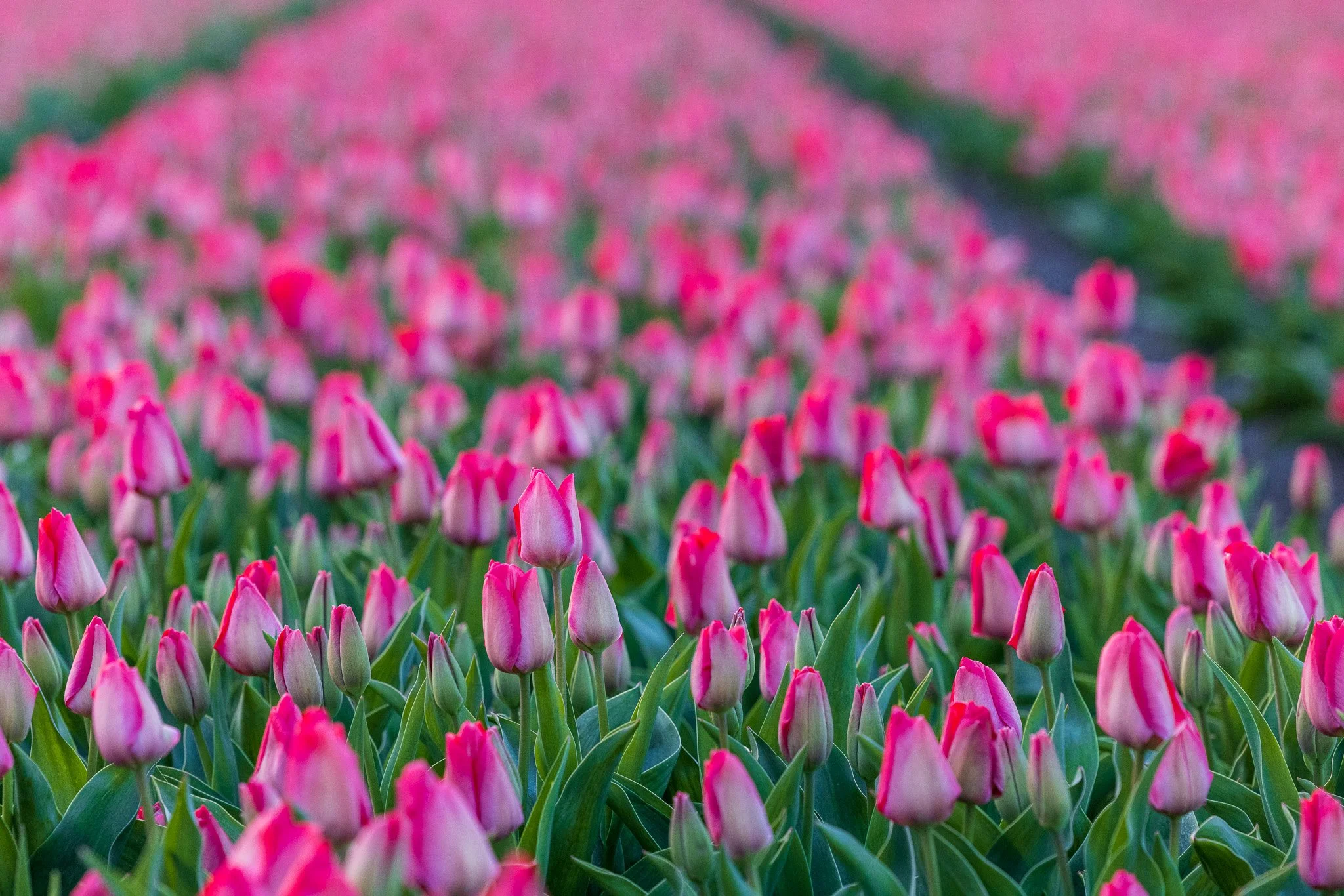
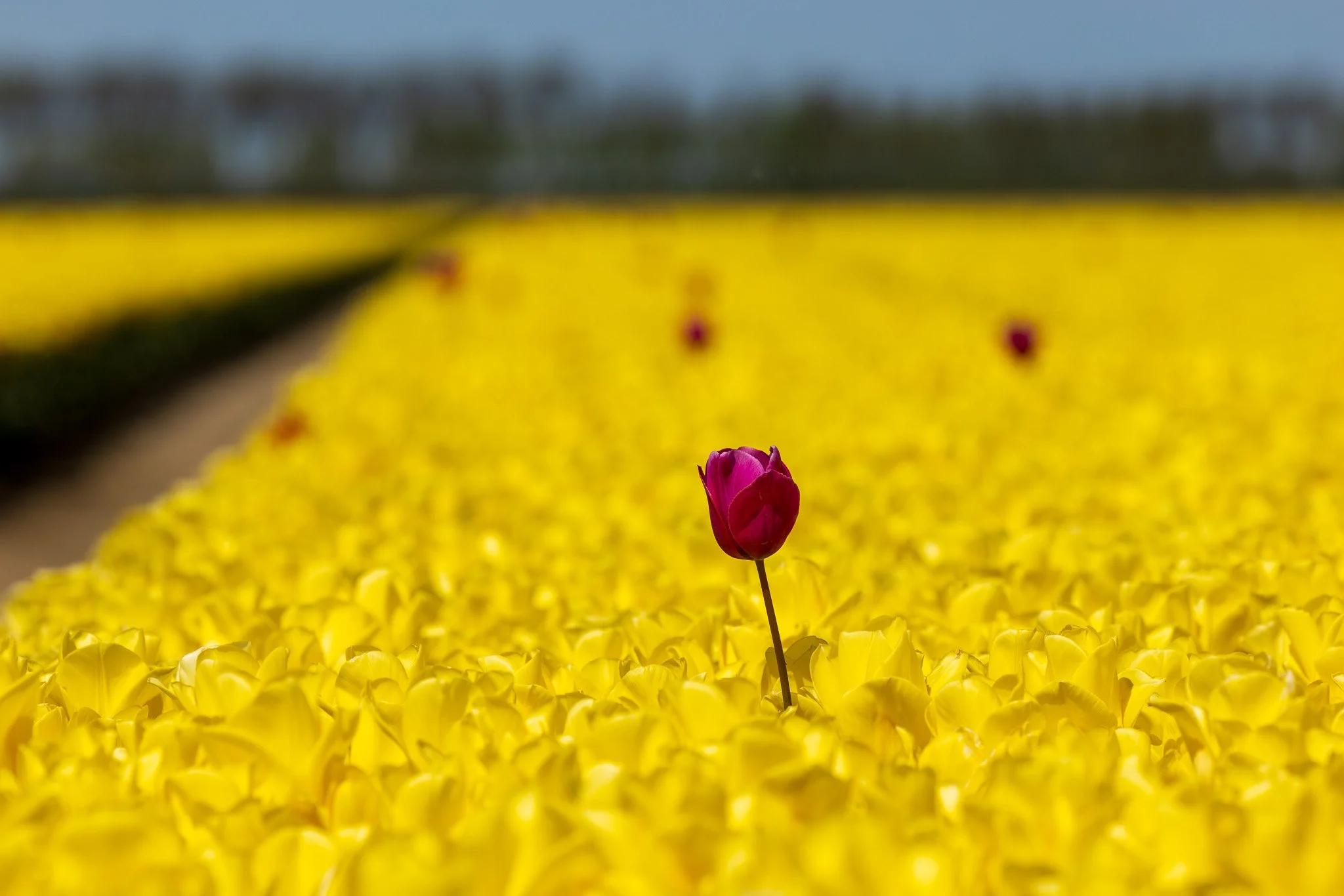
The fields surrounding Keukenhof across the Bollenstreek, the "Bulb Region" running from Haarlem south to Leiden, are in some ways the more powerful photography subject. These are working farms: row after row of single-color tulips stretching to the horizon, with the flat Dutch sky above and the occasional windmill punctuating the distance. No entrance fees. No crowds. No ropes between you and the flowers.
The best areas near Noordwijk and Lisse include Het Laantje Road, Gerleeweg Road, the fields around Voorhout, and the corner of Nieuwe Bennebroekseweg near Heemstede. Drive inland from Noordwijk in any direction during peak season, and the fields find you. When you see one that stops you, pull over.
📷 Pro Tip: The best light on the tulip fields is in the hour after sunrise and the hour before sunset, when the low Dutch sun rakes across the rows at a shallow angle, and the shadows between the plants give the field depth and dimension. Overcast days are second best, for their even, saturated color. Avoid midday direct sun. A telephoto in the 100 to 400mm range is your primary tool for compressing the rows into the stacked-color infinity effect that defines the best tulip field photographs. Also worth trying: get down to field level with a wide-angle lens, point up through the flowers toward the sky on a partly cloudy day, and shoot a completely different image.
Best time: Sunrise to 9 a.m., or 4 p.m. to sunset. Access: Free, roadside. Cycle or drive from Noordwijk or Lisse.

Aalsmeer Royal FloraHolland Flower Auction
This is the least known and most extraordinary photography experience associated with Keukenhof, and almost nobody covers it in their guides.
The Royal FloraHolland Auction in Aalsmeer is the largest flower auction in the world. Every weekday morning, approximately 20 million flowers from countries across the globe arrive here, get sorted, auctioned, and dispatched within hours to florists and distributors in over 100 countries. The trading floor is the size of 200 football fields. It operates at a speed and scale that is genuinely difficult to comprehend until you are standing on the elevated walkway above it, watching hundreds of motorized carts weaving across the floor below in what looks like an impossibly choreographed industrial ballet.
Visitors access the auction via an elevated walkway running the length of the trading and logistics halls. Photography is permitted from the walkway. Tripods are not allowed; drones are strictly prohibited. Bring a fast lens: the trading floor is bright but the carts move fast.
📷 Pro Tip: Go on a Monday or Tuesday morning for maximum activity. Thursday is the lightest trading day and closes earliest. Arrive by 6:30 a.m. for peak activity. The best compositions are the wide shots from the walkway that show the scale of the operation, and the closer shots of the auction clock displays showing the descending price bids. A 24mm for the wide hall and an 85mm for the clock detail give you the full range. The color of fresh flowers under the auction hall lighting, mixed with the industrial greys of the logistics infrastructure, makes for a uniquely Dutch image that has nothing to do with pretty gardens.
Best time: 6:30 to 10 a.m., Monday to Thursday. Access: Paid entry, book online at royalfloraholland.com. Aalsmeer is 25 minutes north of Lisse, 30 minutes from Amsterdam Schiphol Airport.
The Tulip Fields of Goeree-Overflakkee
About an hour's drive south of Lisse, the island of Goeree-Overflakkee grows roughly ten percent of all the tulips in the Netherlands and remains almost entirely unknown to international visitors. While Keukenhof draws over a million people per season, you can drive through these fields on a weekday morning and have entire kilometers of color entirely to yourself.
The island is flat, open, and agricultural. The tulip fields here are considerably larger than the Bollenstreek fields near Lisse; some run for hundreds of meters without interruption, with windmill parks rising from the flat landscape at intervals and the water of the Haringvliet visible at the edges. The best areas are around Middelharnis, Nieuwe-Tonge, Oude-Tonge, and Dirksland. You do not need a specific address: drive toward any of those towns and the fields reveal themselves.
📷 Pro Tip: This is the best drone location in the tulip region, assuming you are qualified and registered under EU Open Category rules. The open farmland, absence of crowds, and scale of the fields create aerial compositions that are simply not available near Keukenhof. From the ground, a wide-angle lens captures the full field-to-sky ratio that the flat Dutch landscape makes possible, and a telephoto compresses rows for the stacked-color effect. These are working farms, not photography sets. Stay on the roadside and do not enter the fields without permission.
Best time: Sunrise to 9 a.m. Access: Free, roadside. One hour drive south from Lisse via the A29.

Festivals and Events
Bloemencorso Bollenstreek (Flower Parade) — April
The annual Flower Parade is one of the great spectacle photography events in Europe. On a Saturday in mid to late April, a procession of floats constructed entirely from fresh flowers departs from Noordwijk and travels through the tulip-growing region to Haarlem, covering approximately 40 kilometers through Lisse, Hillegom, Bennebroek, Heemstede, and Bloemendaal.
The floats are engineering wonders. Teams of volunteers spend months constructing them, covering every surface with individually placed flowers in precise color patterns. Many floats incorporate moving elements, fountains, and performers. The result is a procession that is simultaneously folk tradition and elaborate art installation.
Book a spot along the Lisse section of the route for the best combination of floral backdrop and crowd density. A 70 to 200mm telephoto lets you pull float details cleanly from across the road. The static display set up in Haarlem the following day allows close-range photography that is impossible during the parade itself.
Photography tip: Secure an elevated position if you can. A step ladder, a café terrace, or simply a set of stone steps above street level gives you compositions that show both the float detail and the crowd context. The combination of fresh flower colors and late-morning Dutch light is exceptional. Arrive at your chosen spot at least 90 minutes before the parade passes. Check the official Bloemencorso website for the current year's route and timing.
Keukenhof Opening Weekend — Late March
The opening weekend of the Keukenhof season is photographically strong for a reason most people overlook: the earlier spring flowers, particularly hyacinths and daffodils, are at their absolute peak while the tulips are still building, and the combination of scents and colors at this point in the season is different from anything you will find in April. Crowds on opening weekend are significant, but the light in late March has a quality that the full-sun April days cannot match.
Queen's Day (Koningsdag) — Late April
Celebrated on the birthday of King Willem-Alexander in late April, Koningsdag turns the streets of every Dutch city and town orange. In Amsterdam, the canals fill with decorated boats; in smaller towns like Lisse and Noordwijk, street markets, music, and orange-clad crowds appear on every corner. For street photographers, it is an extraordinarily productive day. For tulip field photographers, it is worth noting as a potential logistical complication: transport and parking across the region will be busier than usual.
Final Thoughts
I have photographed tulips in Japan, lavender in Provence, and cherry blossoms at the Tidal Basin in Washington, DC. The tulip fields of Holland, in the right light, in the right week, are as beautiful as any of them. What stays with me is not the park, though Keukenhof is extraordinary. On a Tuesday morning, I drove south to Goeree-Overflakkee alone, with no other cars on the field roads and the sun just clearing the flat horizon, and stood at the edge of a tulip field that stretched to the waterline with no one else in sight.
Keukenhof gives you a guaranteed, accessible, supremely organized version of that beauty, with seven million flowers in an 80-acre garden designed for maximum visual impact. The surrounding Bollenstreek gives you the raw version: fields that exist because they have to, for the economy of a region that has grown flowers for export since the 17th century, not for your photograph, but perfectly suited to it regardless.
The key is to stay close. If you drive from Amsterdam every morning, you will spend your best light stuck in traffic. Base yourself in Noordwijk or Lisse, wake up early, and walk or drive to the fields before the world catches up with you. The first hour of a Dutch spring morning, with mist burning off the flat landscape and the rows of tulips still wet from the night, is one of the most beautiful things I have encountered behind a camera.
Go in mid-April. Stay near Lisse. Book everything in advance. And drive to Goeree-Overflakkee on a Tuesday morning when the island is quiet, and the fields stretch to the horizon, and you have all of it to yourself.
If you would like to join a future photography workshop, visit my Workshops page for current offerings and upcoming dates. You can also connect with me on Instagram (@chasinghippoz) and Facebook, or subscribe to the newsletter for travel photography tips, destination guides, and behind-the-scenes stories from more than 75 countries. I look forward to sharing the journey with you.
Companion Guides
My Photography and Travel Guide to Amsterdam — The natural companion to a Keukenhof trip. Base yourself in Amsterdam for the canal reflections, the Rijksmuseum, and the extraordinary architecture, then make the 45-minute drive south to Lisse for the tulip season. The two destinations together make for one of the most photographically complete trips in Northern Europe.
My Photography and Travel Guide to Copenhagen — Three hours from Amsterdam by plane, and a city that shares the same clean northern light, the same cycling culture, and the same unhurried pace that makes both destinations so rewarding to photograph. A Keukenhof trip pairs naturally with a few days in Denmark.
My Photography and Travel Guide to Bruges — A four-hour drive south, and one of the most photographically dense small cities in Europe. Medieval canals, Gothic architecture, and a pace of life that gives you time to actually look. After the open fields of Holland, the intimate scale of Bruges feels like a completely different register of beauty.
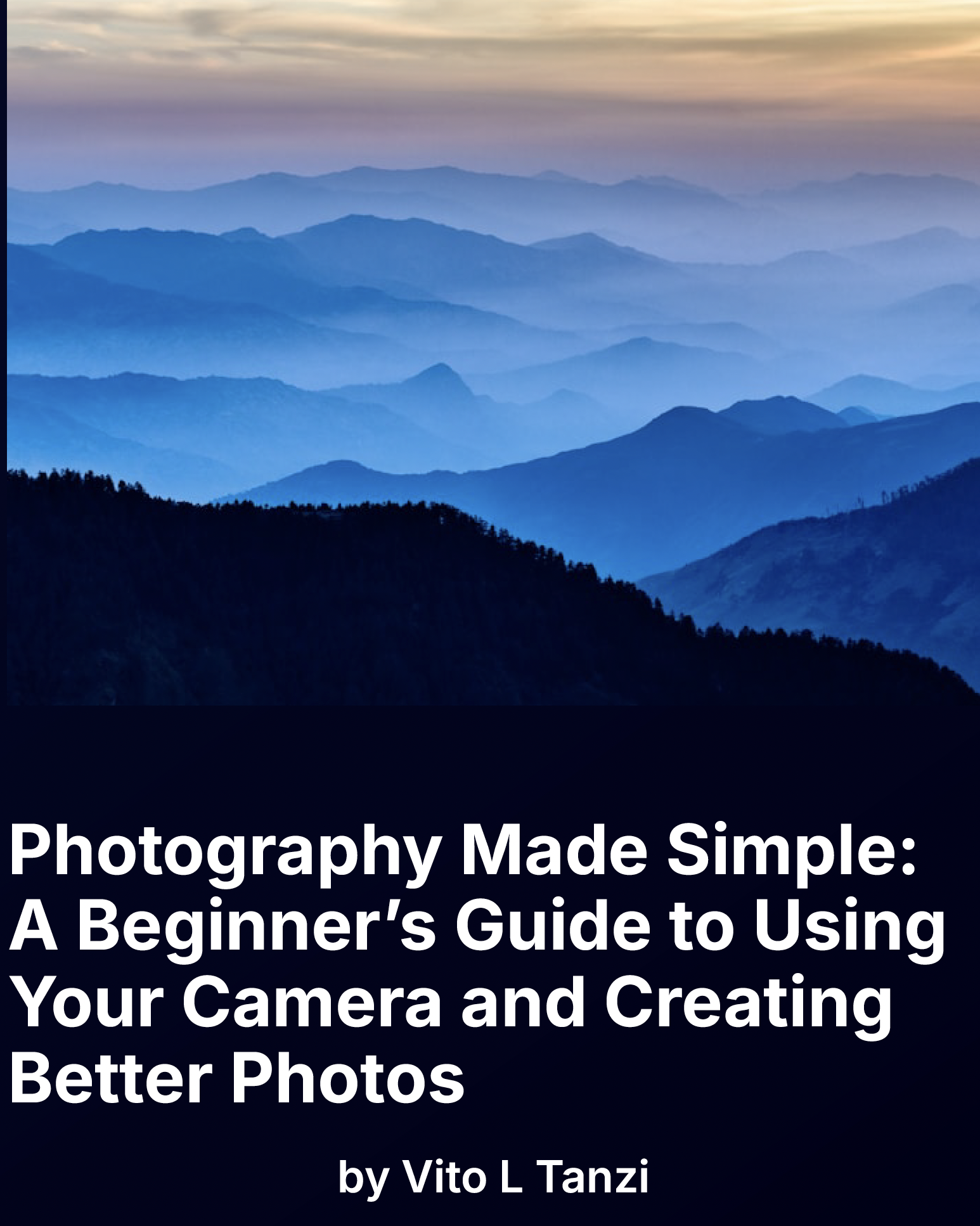
Finally—a beginner-friendly photography guide that makes sense.
If you've ever picked up a camera and thought, "Now what?" this is the book for you.
Photography Made Simple is written for adults who are just starting out and want a clear, encouraging, real-world approach to learning photography. Whether you're using a DSLR, mirrorless, or just your smartphone, this guide walks you through the basics—without the jargon or tech overwhelm.
Inside, you'll learn:
The only camera settings you really need to know to get started
How to shoot sharper, more intentional photos using light and composition
Simple tips for portraits, landscapes, travel, and everyday life
What gear you do (and don’t) need
How to create better photos without upgrading your camera
You’ll also get practical exercises, cheat sheets, and tips for organizing and editing your images—plus the confidence to shoot off Auto Mode for good.
This is not a textbook. It’s a friendly guide to seeing the world with fresh eyes—and finally capturing what you see the way you imagine it.
📸 Format: PDF download
Pages: 100+
Perfect for: Beginners, hobbyists, and anyone ready to take better photos without the stress