Zermatt, Switzerland Travel & Photography Guide: Best Photo Spots, Things to Do & Hidden Gems
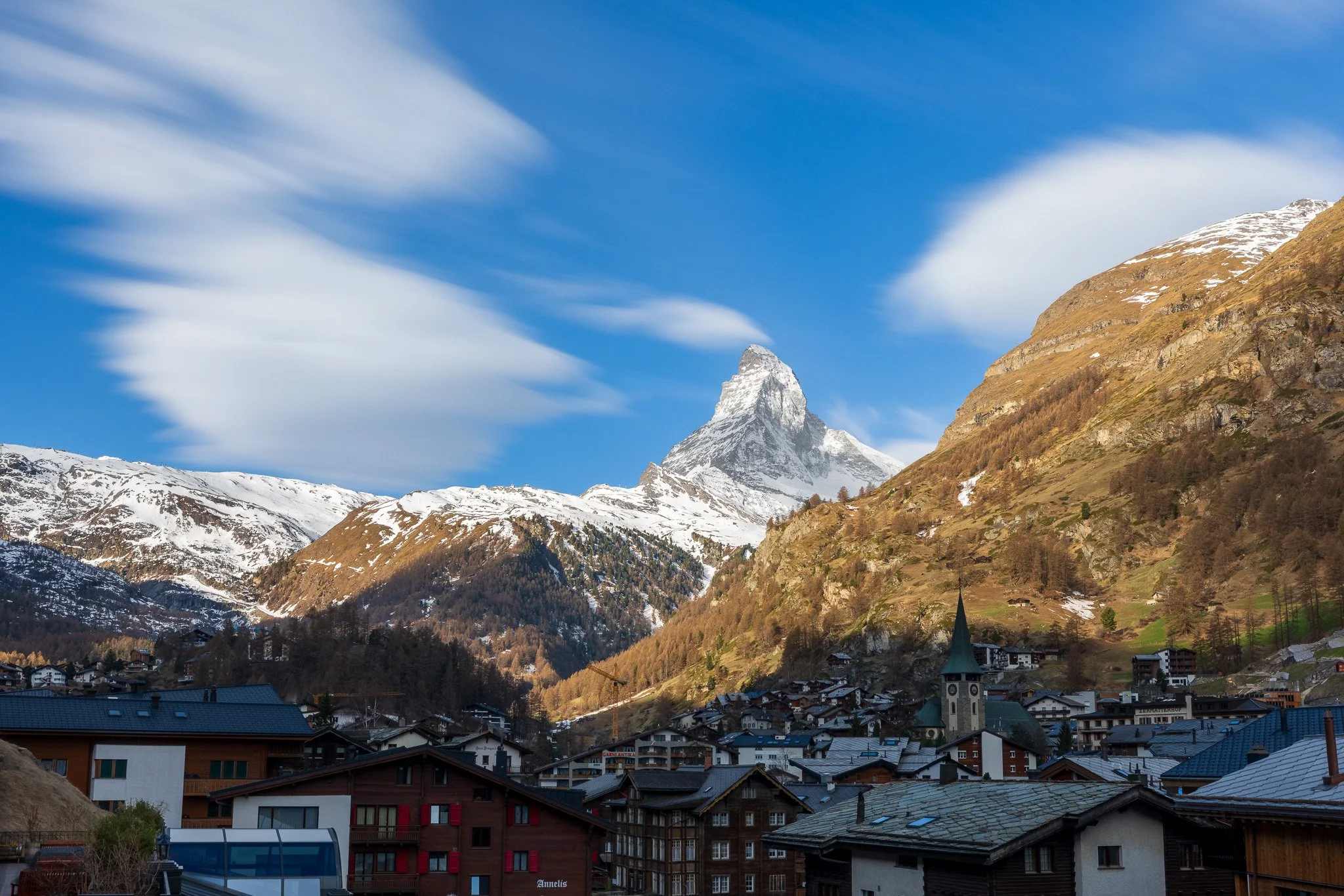
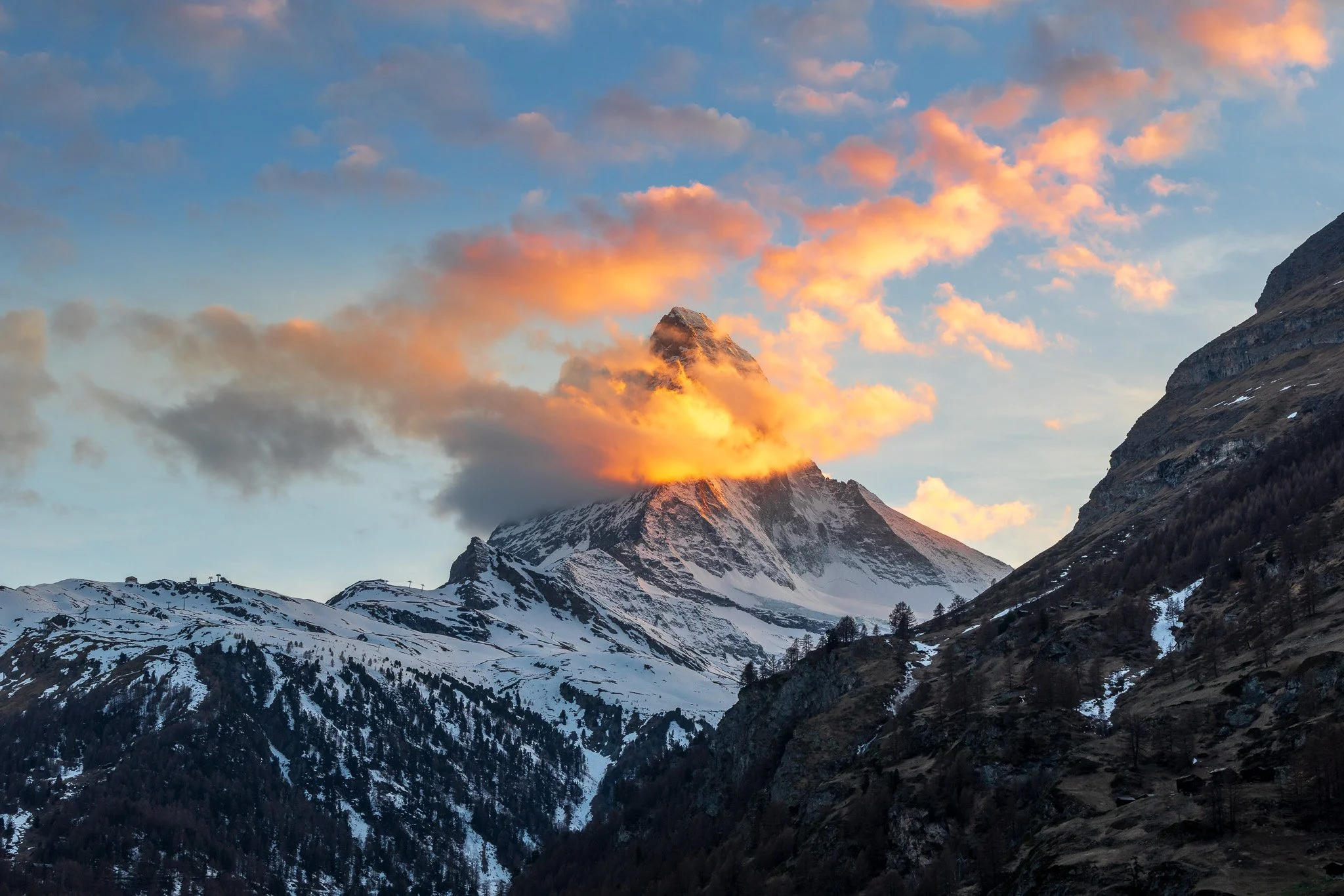
I want to tell you about the moment I stood on the small wooden balcony of Room 24 at the BEAUSiTE hotel, coffee in hand, and the Matterhorn was just there. Not in the distance. Not framed by something. Just there, filling the sky above the rooftops of Zermatt as if someone had placed it specifically for this window, at this hour, in this light. The peak was lit from the east, turning pale gold at the top, while the valley below was still in blue shadow. I had my camera set up on a tripod before I even finished the coffee.
That is the thing about Zermatt that no photograph fully prepares you for. You have seen the Matterhorn a thousand times in pictures. You think you know what to expect. And then you arrive, and the scale of it, the sheer physical presence of that pyramid of rock and ice rising 4,478 meters above a car-free Alpine village, hits you in a way that is almost embarrassing in its emotional directness. It is simply one of the most beautiful things on earth. And the great luck of it is that Zermatt has built itself around the idea of letting you look at it from every possible angle, at every possible altitude.
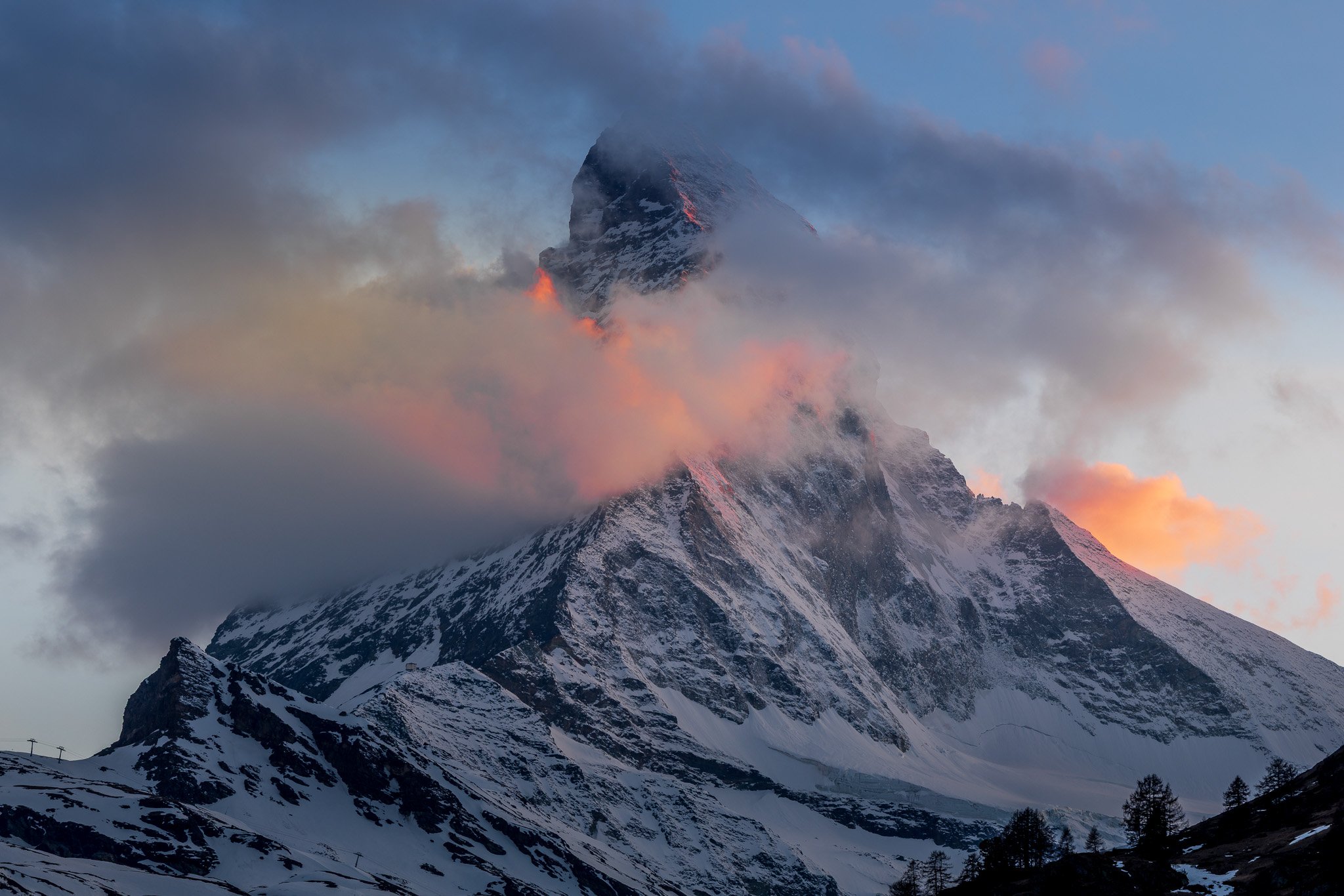
For photographers, this is not just a beautiful destination. It is a complete education. The Matterhorn changes hour by hour, season by season. At sunrise, it glows red and orange in what the locals call the Alpenglühen, the alpine glow. At midday, the rock faces are sharp and detailed in strong directional light. At sunset, the western face catches the last of the day and turns golden while the rest of the village goes dark. And in winter, when the rooftops of the traditional wooden chalets carry a foot of snow, and the village lights flicker on in the early dusk, Zermatt looks like something you invented rather than somewhere that actually exists.
I will also be honest with you about the one thing no guide can guarantee: the Matterhorn itself. We were incredibly lucky on our visit. The mountain was clear every single sunrise and sunset across all three days. Not once did it disappear into the cloud. I have friends who have made the trip to Zermatt and never saw it. Not once. Cloud, rain, and mist can settle into the valley for days without warning, and the mountain simply disappears. If you get a clear forecast window, build your entire schedule around it. Nothing else on the itinerary matters as much.
The city is car-free, which means clean air, no exhaust fumes, and a quiet that you will not find in most mountain resorts. Electric taxis and horse-drawn carriages are the only vehicles on the main street. The sounds are wind, cowbells from the alpine pastures above the village, and the distant hum of the cogwheel railway climbing toward Gornergrat. For photographers, that silence is a gift. You can hear yourself think. You can wait for the light.
In this Photography Guide to Zermatt, I share the places and experiences that continue to draw me back. You will find my favorite photography locations, guidance on when and where to shoot, practical travel tips, and gear recommendations, along with cultural insights to help you explore and photograph Zermatt with confidence, respect, and ease.
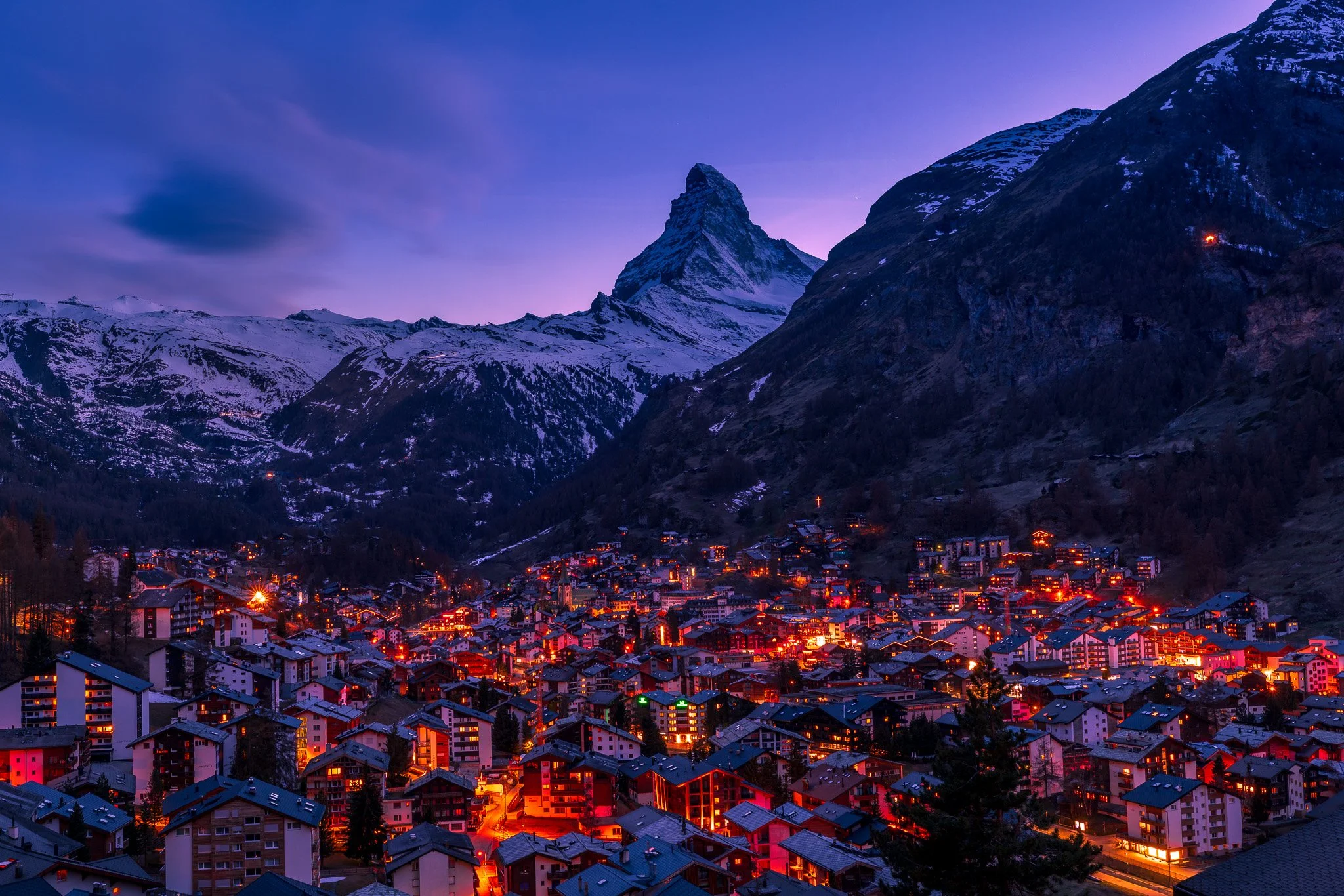
The View from Murini
Photographer's Notes
Before you go, here are my own takeaways.
Favorite Season: Autumn
Favorite Sunrise Location: From our room at the BEAUSiTE
Favorite Sunset Location: Mürini
Favorite Hotel: BEAUSiTE Zermatt
Favorite Restaurant: Marlò Ristorante Pizzeria
Favorite Café: Café Fuchs
Favorite Lens: 70-200mm
Would I Return? Absolutely, but in summer, so I can see the Matterhorn reflected in the alpine lakes.
Getting to Zermatt from Lucerne
Zermatt is roughly 165 kilometers south of Lucerne, and the drive is among the most scenic in Switzerland. Allow approximately three to three and a half hours in good conditions, and plan to stop. This is not a route to rush.
The Drive: Lucerne to Zermatt via Spiez
Leave Lucerne heading southwest toward Interlaken. The road passes through the Brünig Pass (which I wrote about in my Lucerne guide, and which is worth taking slowly on this stretch) before descending into the Bernese Oberland. As you come down from the pass and the valley opens toward Interlaken, follow the signs south toward Spiez.
Stop in Spiez. This is not optional. Spiez sits on the southern shore of Lake Thun, and it is one of the most beautifully composed small towns in Switzerland. A medieval castle sits on a promontory above a sheltered bay, surrounded by vineyards, with the Bernese Alps as a backdrop and the deep blue of Lake Thun stretching in both directions. Switzerland Tourism officially calls Spiez Bay one of the most beautiful bays in Europe, and they are not exaggerating.
Park by the lakefront and walk down to the water. The view back toward the castle from the lakeside, with the Niesen mountain rising behind it, is extraordinary and deserves at least thirty minutes of your time and a full memory card. The castle itself is open to visitors and the grounds are free to walk. The lakeside promenade is lined with cafes for coffee and a rest before the road south.
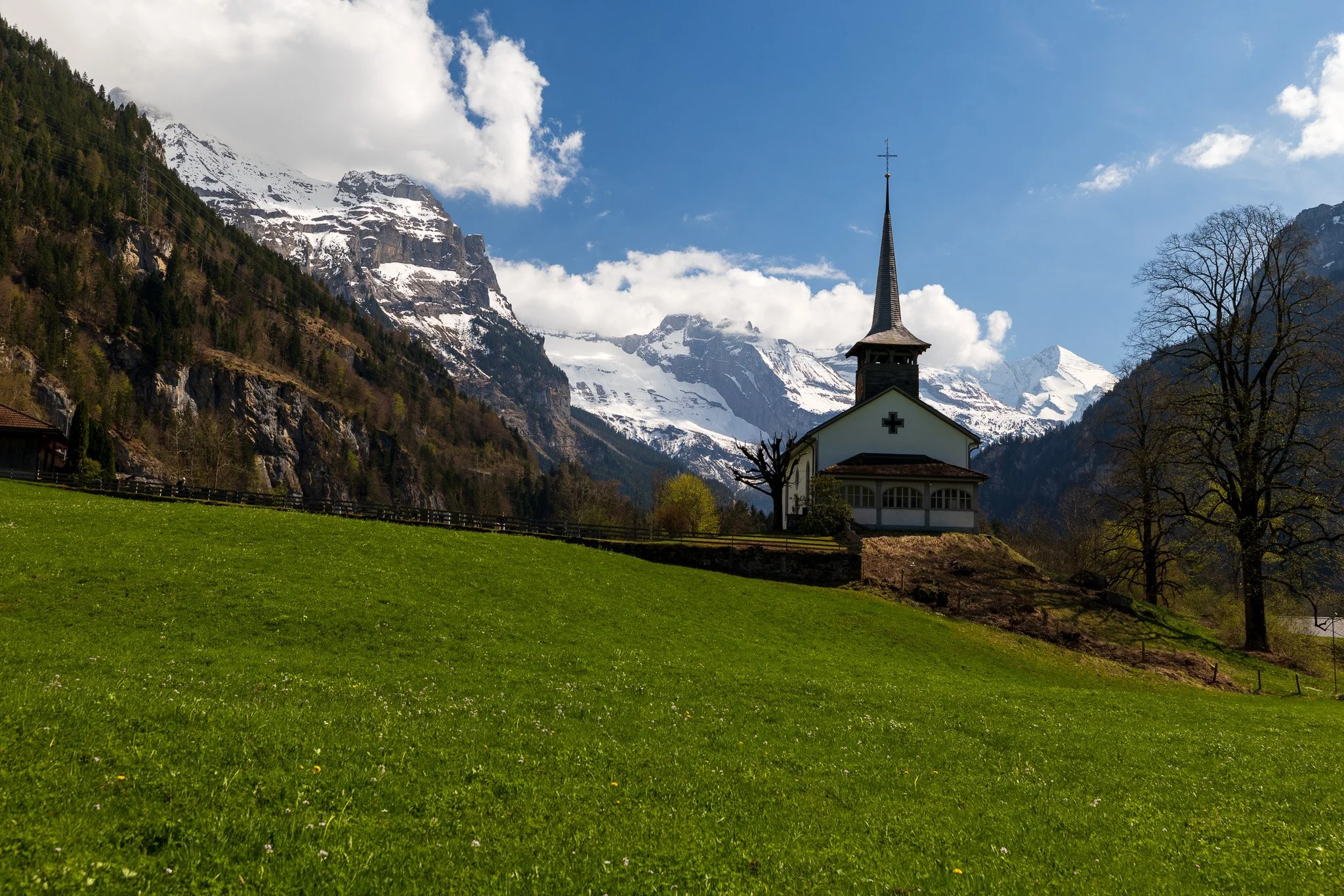
From Spiez, continue south through Kandersteg or take the more direct route to Visp via the Lötschberg base tunnel. From Visp, the road and rail line follow the Matter Valley south, climbing steadily through the villages of Stalden and St. Niklaus before arriving at Täsch, 5 kilometers below Zermatt.
Pro Tip for photographers at Spiez: The view from the harbor looking back toward the castle is best in the late afternoon when the sun is behind you. A 24-70mm covers everything you need here. For the wide panorama with the lake and the Alps, position yourself at the far end of the harbor jetty and shoot back northwest.
Parking at Täsch and the Shuttle to Zermatt
Zermatt is completely car-free. No private combustion vehicles are permitted in the village, and the road from Täsch to Zermatt is closed to the public. This is not an inconvenience; it is one of the best things about Zermatt. The village is peaceful, clean, and quiet because of it.
At Täsch, park at the Matterhorn Terminal, a large covered garage directly connected to the train station. The terminal has 2,100 covered spaces and is well organized: secure, well lit, and stocked with luggage trolleys throughout, which you can load up and roll directly onto the shuttle train. It is a genuinely smooth operation.
From the terminal, luggage trolleys are available and can be taken directly onto the shuttle train. The shuttle runs every 20 minutes from approximately 6 a.m. to 10 p.m., with hourly service overnight on weekends. The journey to Zermatt takes 12 minutes. A round-trip shuttle ticket costs approximately CHF 17. If you hold a Swiss Travel Pass, shuttle travel is included.
One practical note: buy your Täsch-Zermatt ticket as a one-way, not a round-trip, if you plan to stay multiple days. Round-trip tickets are only valid on the same calendar day.
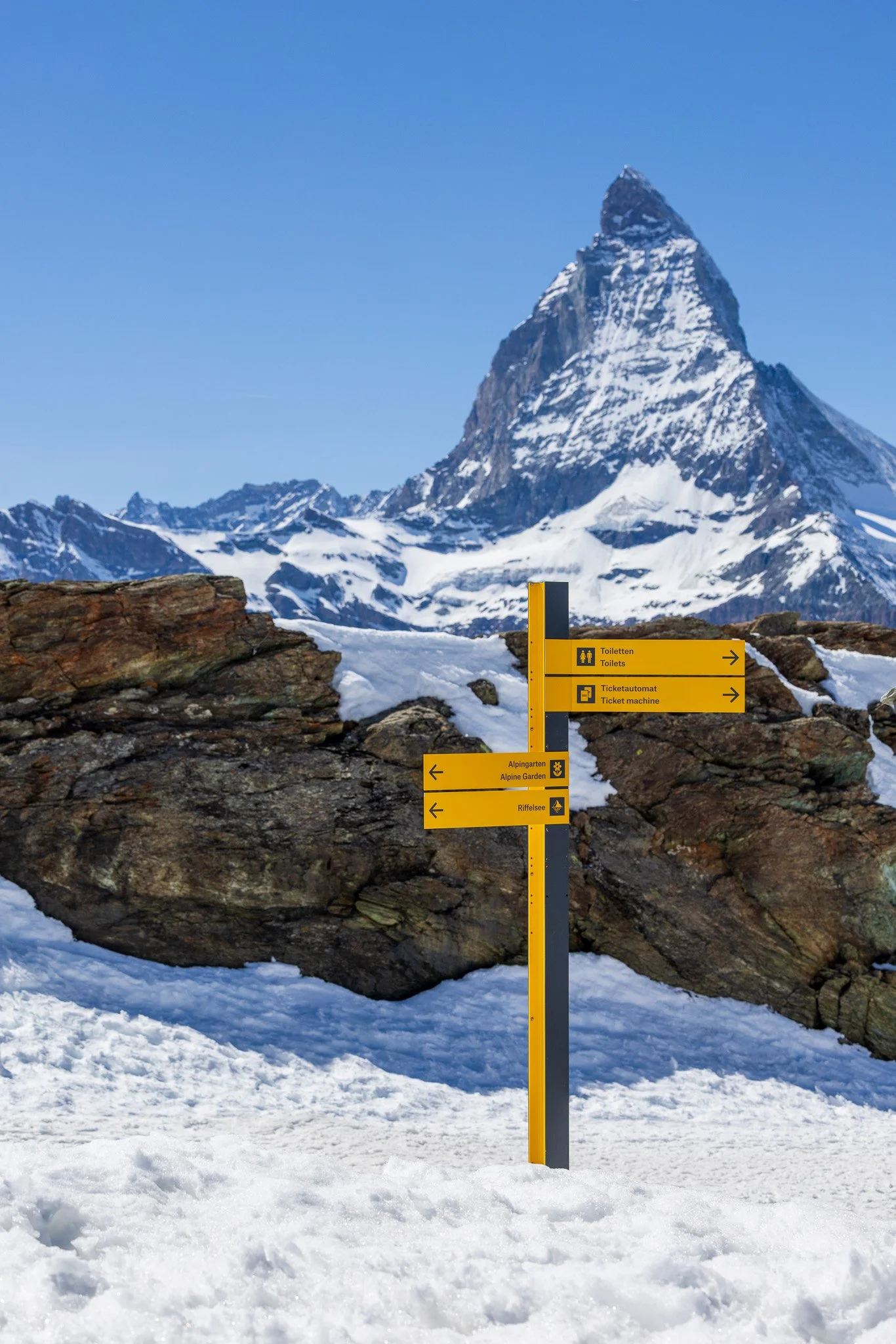
Where to Stay in Zermatt
Zermatt's hotels range from grand Belle Époque landmarks to intimate mountain lodges, and the best ones share one thing: a Matterhorn view. For photographers especially, waking up to that mountain outside your window changes everything about how you approach the day.
Best Neighborhoods
Village Center: Steps from the Bahnhofstrasse (main street), the Gornergrat railway station, and the cable car bases. Maximum convenience and walkability. Most hotels and restaurants are here.
Winkelmatten: The quieter southern end of the village, closer to the Matterhorn Glacier Paradise cable car base and the Mürini viewpoint. Slightly less busy, with more traditional chalet architecture.
Above the village (Riedweg / Mürini area): A short walk or electric taxi ride above the center. Some of the best direct Matterhorn views and access to the classic photography viewpoints. The CERVO Mountain Resort is in this zone.
Luxury Hotels in Zermatt, Switzerland
BEAUSiTE Zermatt — This is where we stayed, and Room 24 earns everything I said about it in the introduction. Built in 1907 and thoroughly renovated and relaunched with a new design concept in 2021, the BEAUSiTE sits on a rise above the village center with unobstructed views of the Matterhorn from most of its 70 rooms and suites. The concept is inspired by the British pioneers of alpinism's Golden Age, which sounds like marketing until you walk inside and realize the interiors genuinely feel adventurous: warm honey and ochre tones, bespoke fabrics, rooms that feel both cozy and carefully designed. The outdoor infinity pool with the Matterhorn behind it is one of the great views in Swiss hospitality.
The Omnia — Perched dramatically above the village on a rocky cliff, the Omnia is accessed by a private elevator cut through the rock face. The rooms are spare and architectural, the views are commanding, and the hotel has a quality of remove from the bustle below that makes it feel like its own world. Excellent spa. The rooftop terrace is one of the best photography platforms above the village.
Grand Hotel Zermatterhof — The grande dame of Zermatt, a proper 19th-century grand hotel on the main street with the full complement of white-glove service, a pool, spa, multiple restaurants, and rooms that have been receiving guests since 1879. The Zermatterhof feels like staying in the golden age of Alpine tourism, and it earns its five stars consistently. The afternoon light on the south-facing rooms in winter is magnificent.
CERVO Mountain Resort — Positioned above the village next to the Sunnegga cable car, CERVO is one of the most distinctive luxury properties in Zermatt. The lodges are built in traditional Valais style with a thoroughly modern interior, the Ātman Mountain Spa is outstanding, and the whole property carries an energy that feels genuinely adventurous rather than merely opulent. Three restaurants on site, including the Michelin Bib Gourmand-recognized Bazaar (more on that in the dining section). Access is via a private elevator from the Sunnegga valley station, which is a slightly surreal pleasure in itself. This is a place for people who want luxury with personality.
Boutique and Mid-Range Hotels
Hotel Daniela — A family-run, charming Zermatt classic in the heart of the village. Friendly, well-located, honest value, and warm without being fussy. The kind of place that makes you want to come back each year.
Hotel Walliserhof — A comfortable, well-positioned four-star option on the main street with good Matterhorn views from upper floors, a welcoming restaurant, and easy access to every photography location in the village. Clean, well-run, and close to everything.
Romantik Hotel Julen — A family-owned Zermatt institution with traditional Valais charm, a wood-paneled interior that feels genuinely Alpine, and a warm atmosphere that the larger hotels cannot replicate. Well located and consistently praised for its hospitality.
Ideal Duration of Stay in Zermatt
Three days in Zermatt is genuinely satisfying if the weather cooperates. It is what we had, and it felt right: enough time to hit the key photography locations without rushing, explore the village at your own pace, and eat well. Five days gives you a deeper experience and more chances to catch the Matterhorn in different conditions, especially if clouds roll in on one or two of your days. Think of three days as the minimum for a focused photography trip, and five as the ideal.
Day 1: Arrive via Täsch in the afternoon. Walk the village, orient yourself, shoot the Matterhorn from the main street and Kirchbrücke bridge at golden hour and blue hour.
Day 2: Up before dawn for the Mürini viewpoint. Back for breakfast at Café Fuchs. Morning in the village, photographing the old Hinterdorf quarter. Afternoon Gornergrat railway ride. Dinner at The Grill at BEAUSiTE.
Day 3: Full-day Matterhorn Glacier Paradise cable car. Bring warm gear and plan for altitude. Lunch at the summit. Afternoon recovery and editing. Dinner at Marlò.
Day 4: Early morning hike to the Riffelsee or Stellisee for lake reflection shots of the Matterhorn. Afternoon visit to the Matterhorn Museum. Dinner at Bazaar by CERVO.
Day 5: Revisit your favorite locations in different light. Slow morning, final shots, depart via Täsch.
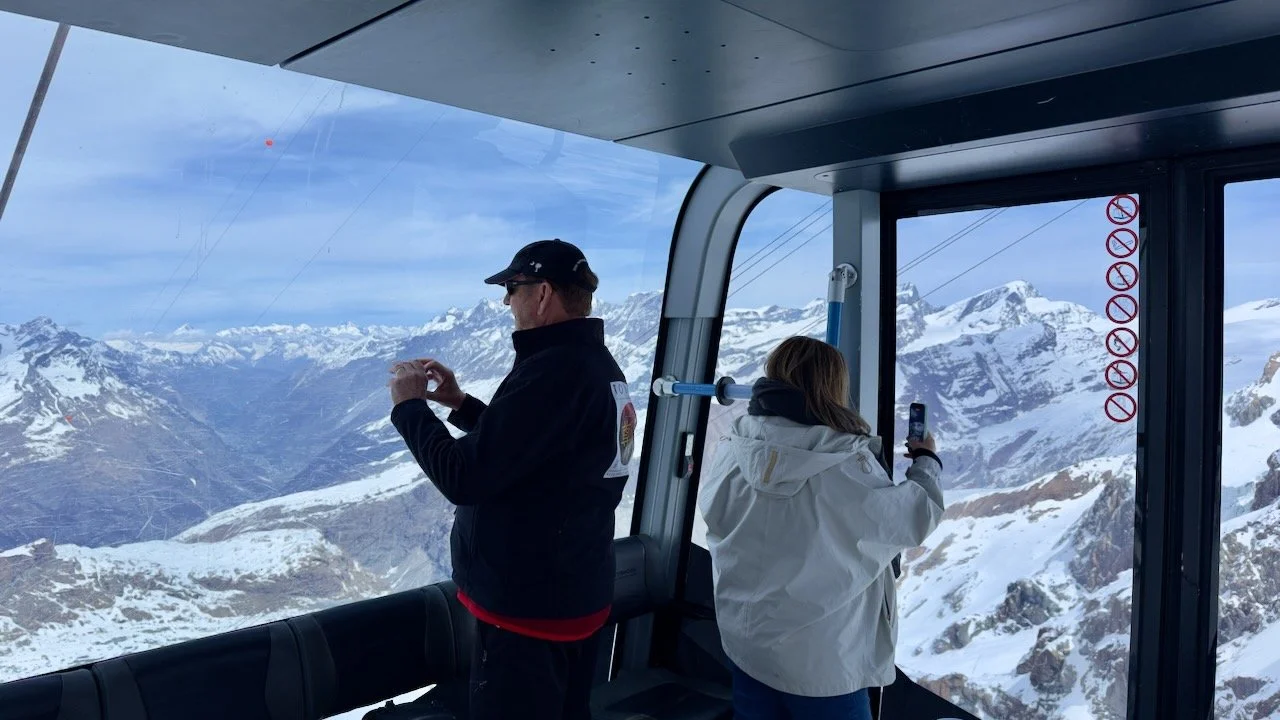
The great Miles Smith Photography was so fun to travel with.
Best Time to Visit Zermatt for Photography
Winter (December to March): Magical and dramatic. Snow on the chalet rooftops, the Matterhorn capped in white, early sunsets that make golden hour and blue hour achievable without a 4 a.m. wake-up call. Crowds are present (it is ski season), but focused on the slopes rather than the photography spots. The village lights at dusk are extraordinary.
Spring (April to May): Fewer crowds, fresh snow still on the peaks, and the first hints of green appearing in the lower pastures. The light is clean, and the mountain reflections in the lakes are excellent once the ice thaws. Some higher trails and cable cars may be limited in early spring.
Summer (June to August): Longer days, wildflowers in the alpine meadows, green pastures with the white peak above. The Riffelsee and Stellisee reflections are at their best on calm mornings. One important note: the lake reflections only work when the water is liquid. In winter and early spring, both lakes can be fully frozen, which means no Matterhorn mirror reflection. If the reflection shot is your priority, plan for late spring through early autumn.
Autumn (September to October): My personal favorite, as with most Alpine destinations. The larch forests turn gold and orange in late September and October, providing an extraordinary foreground for Matterhorn images. The light softens, the crowds thin significantly after mid-September, and the first snows often dust the peaks by October, giving you that perfect combination of autumn color below and winter white above.
One universal rule: Check the weather obsessively before any mountain excursion. The Matterhorn can be completely hidden in cloud for days at a stretch. If you have a clear forecast, move everything around to use it. A perfectly clear day at the summit is worth more than three mediocre ones.
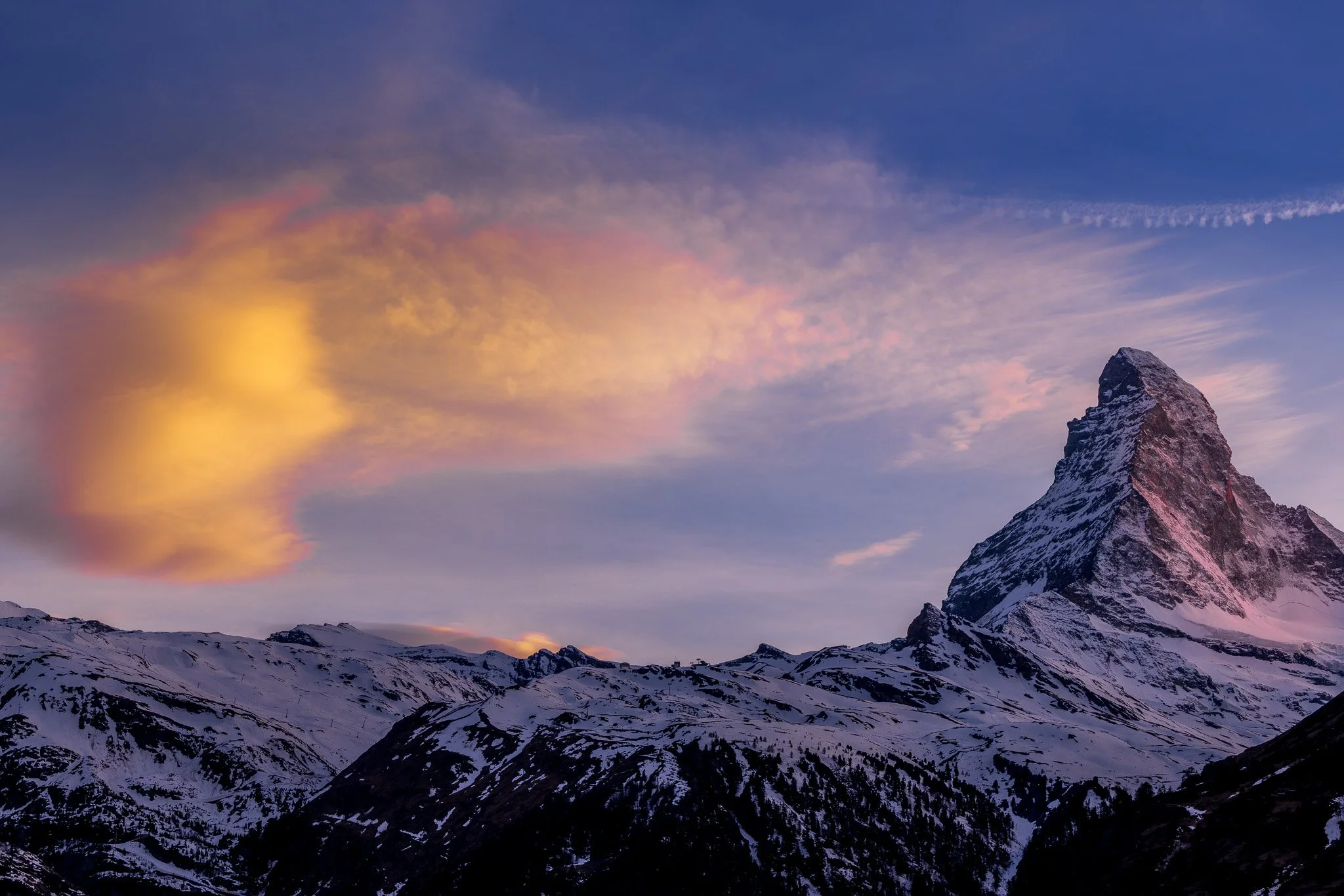
Sunset from our Hotel
Getting Around Zermatt
Walking: Zermatt is compact and almost entirely walkable. The main Bahnhofstrasse runs through the center, and most hotels, restaurants, and photography spots are within fifteen minutes on foot. The cobblestones and uneven paths require good shoes; in winter, microspikes are worth packing.
Electric taxis: The only motor vehicles in Zermatt are small electric cabs and the official electric vehicles of hotels and service providers. Taxis congregate at the train station and are easily hailed. Typical cost for a short ride within the village is CHF 15 to 25. For the Mürini viewpoint or upper village areas, a taxi is a reasonable option if you are short on time or energy.
The Green Line bus: Zermatt operates a small network of electric shuttle buses connecting the train station with the cable car bases and various neighborhoods. These are free for hotel guests with a Zermatt Guest Card, which most hotels provide automatically.
Mountain transport: The three main mountain systems (Sunnegga Funicular, Matterhorn Glacier Paradise cable cars, and the Gornergrat cogwheel railway) each depart from their own stations in the village, all within easy walking distance. These are your key tools as a photographer and worth multi-day passes if you plan to use them extensively.
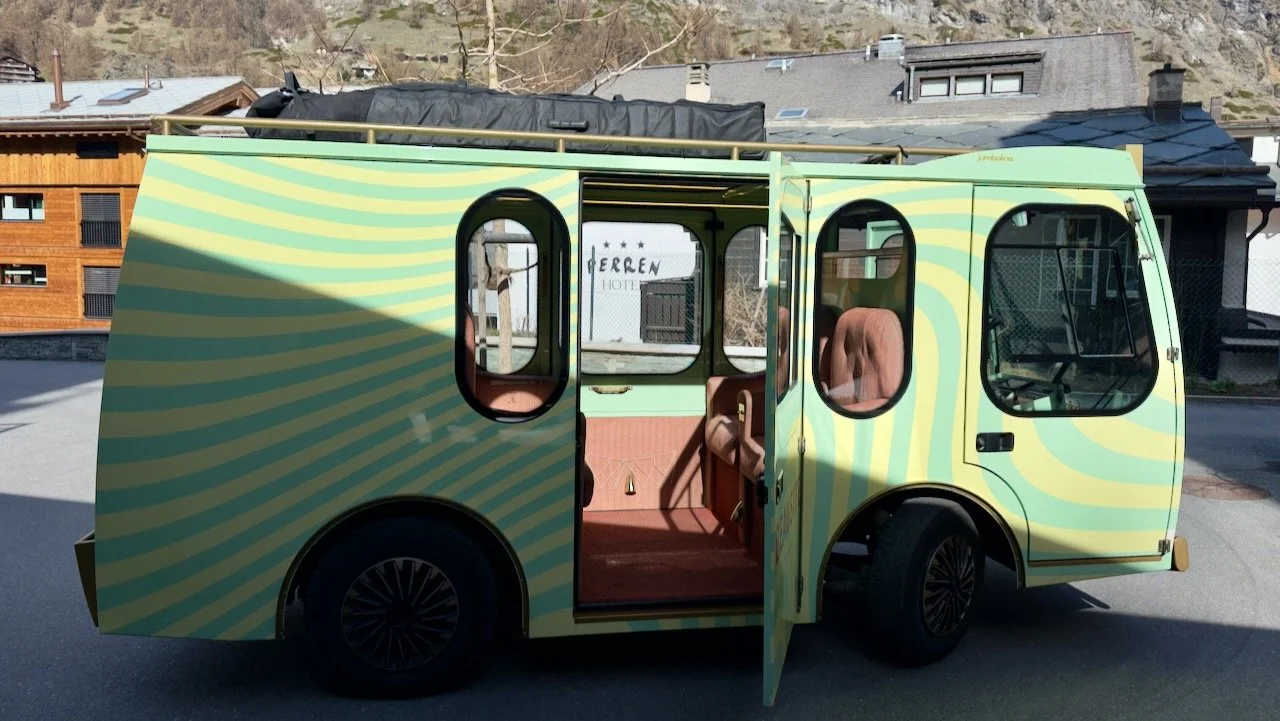
The Taxis of Zermatt
Dining and Coffee in Zermatt
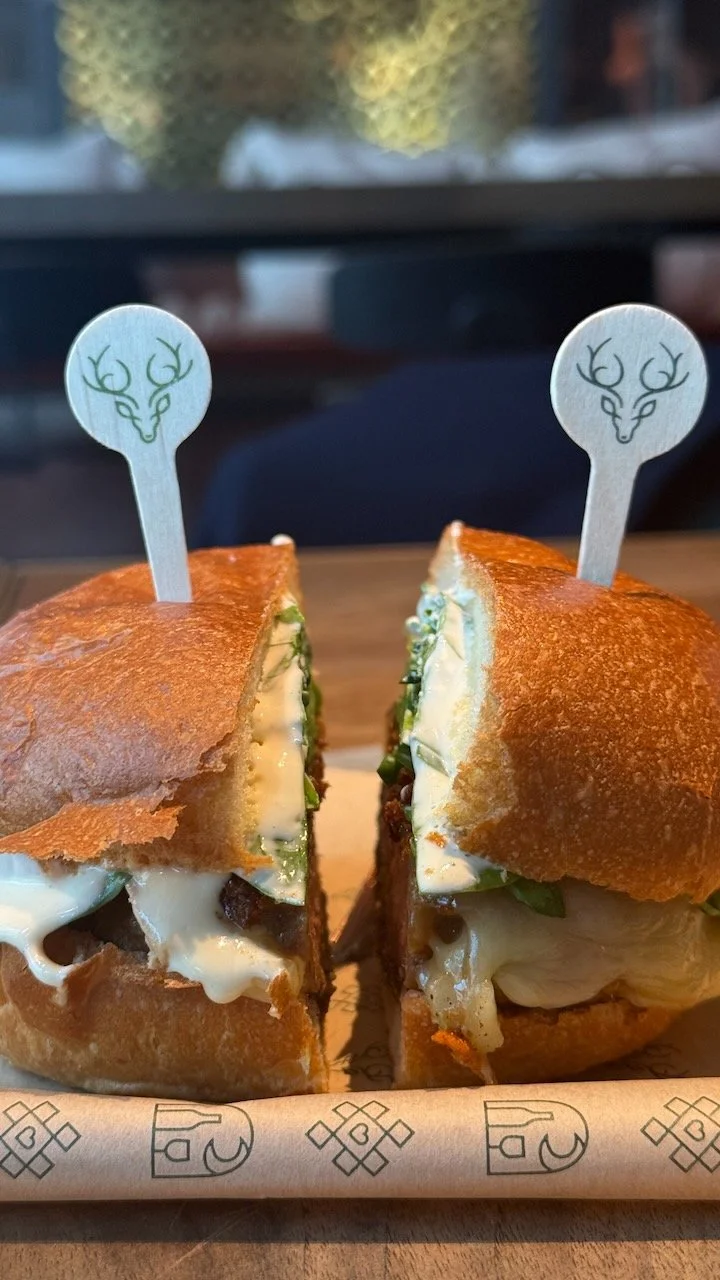
Zermatt punches well above its size for dining. It is, after all, one of Switzerland's premier resort towns, and the restaurants have to compete for an international clientele with standards. You will find excellent Swiss Alpine cooking alongside Lebanese-inspired mezze, Italian pasta made from scratch, and mountain cafes serving the best apple strudel of your life.
The Grill at BEAUSiTE — The hotel's wood-fire grill restaurant is one of the best tables in Zermatt. The menu is rooted in quality meat and seasonal Alpine ingredients, the terrace looks directly at the Matterhorn, and the atmosphere has just enough energy to feel like an occasion without being stiff about it. Order the grill selection and a bottle of Valais wine, and stay as long as you can.
Marlò Ristorante Pizzeria — We loved this place. Marlò opened in 2025 on Hofmattstrasse 16 and immediately became one of the most talked-about new restaurants in the village. The concept is simple: genuine Italian cooking, made with care and served with warmth, in an Alpine setting. The fresh pasta is excellent (the carbonara and the ragu both drew serious praise), the wood-fired pizza is crispy and properly charred, and the portions are generous. Make a reservation; they fill up fast and earn it.
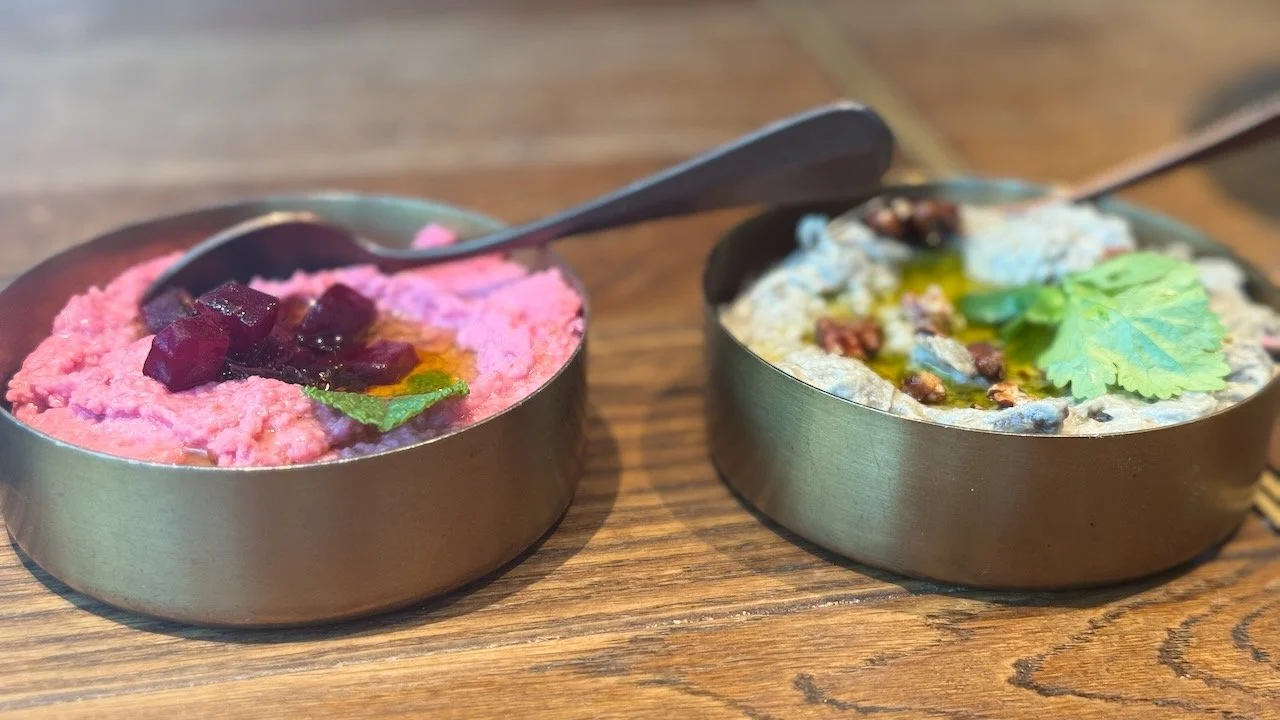
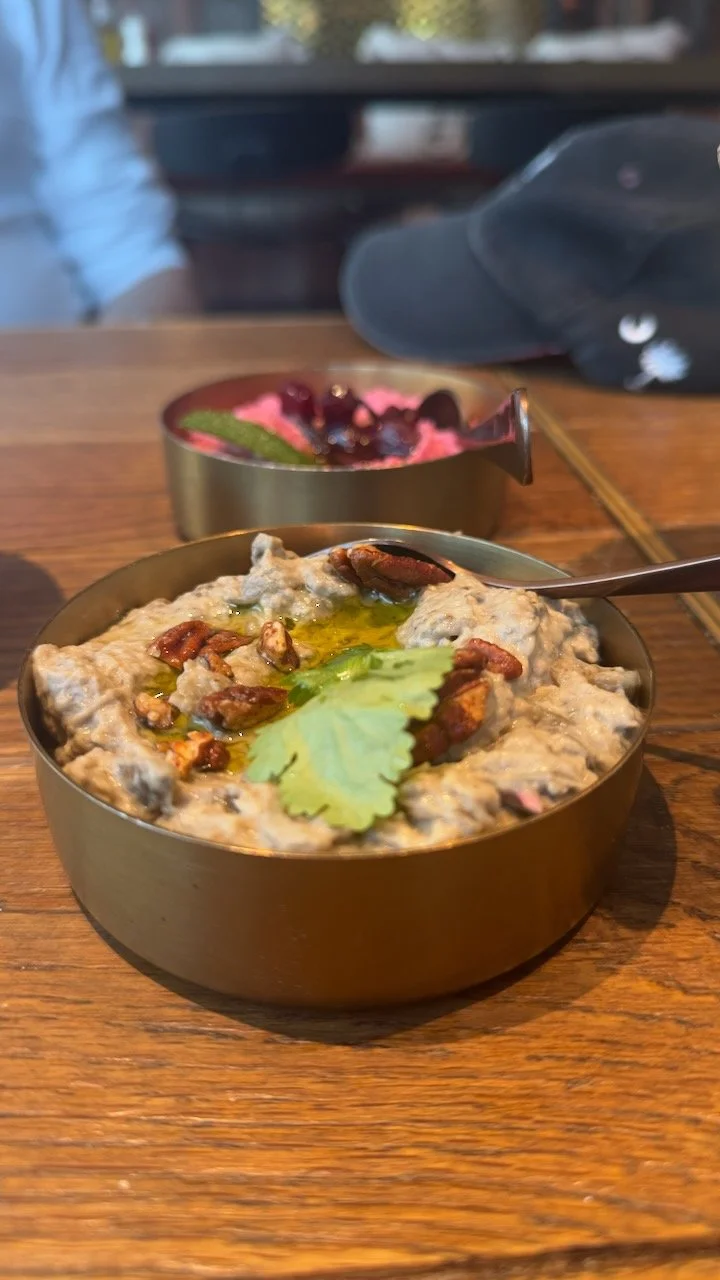
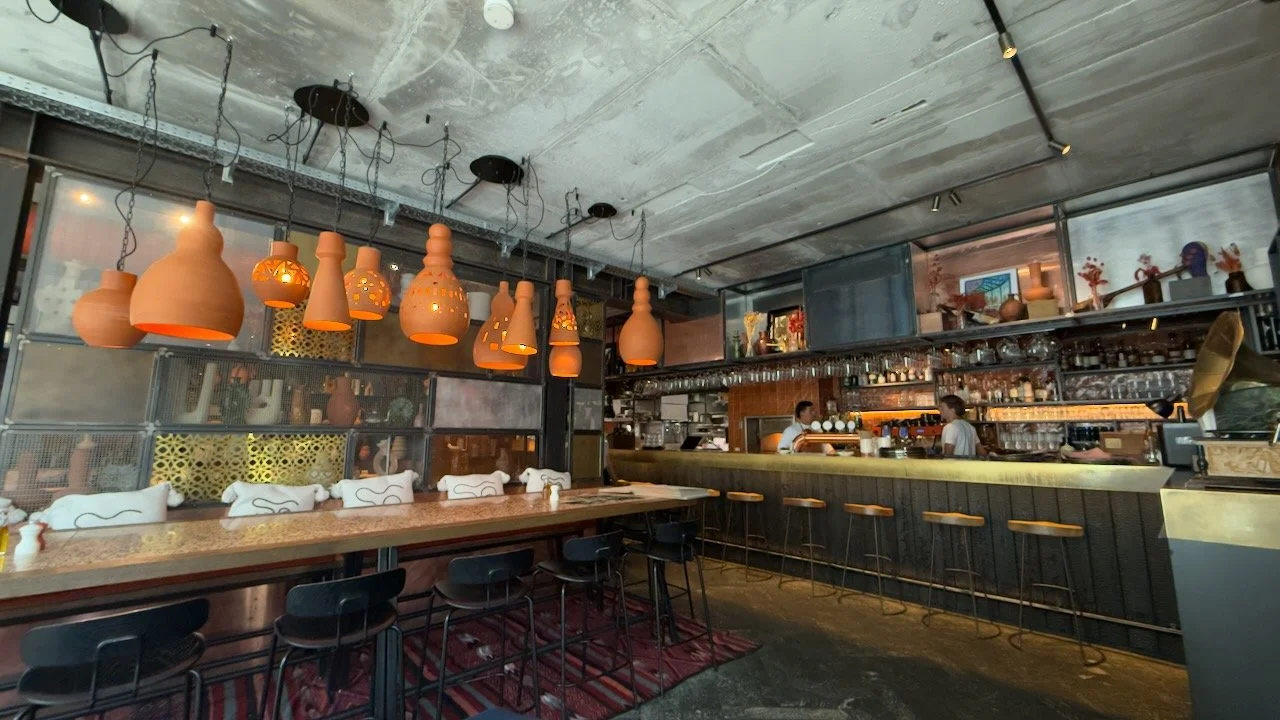
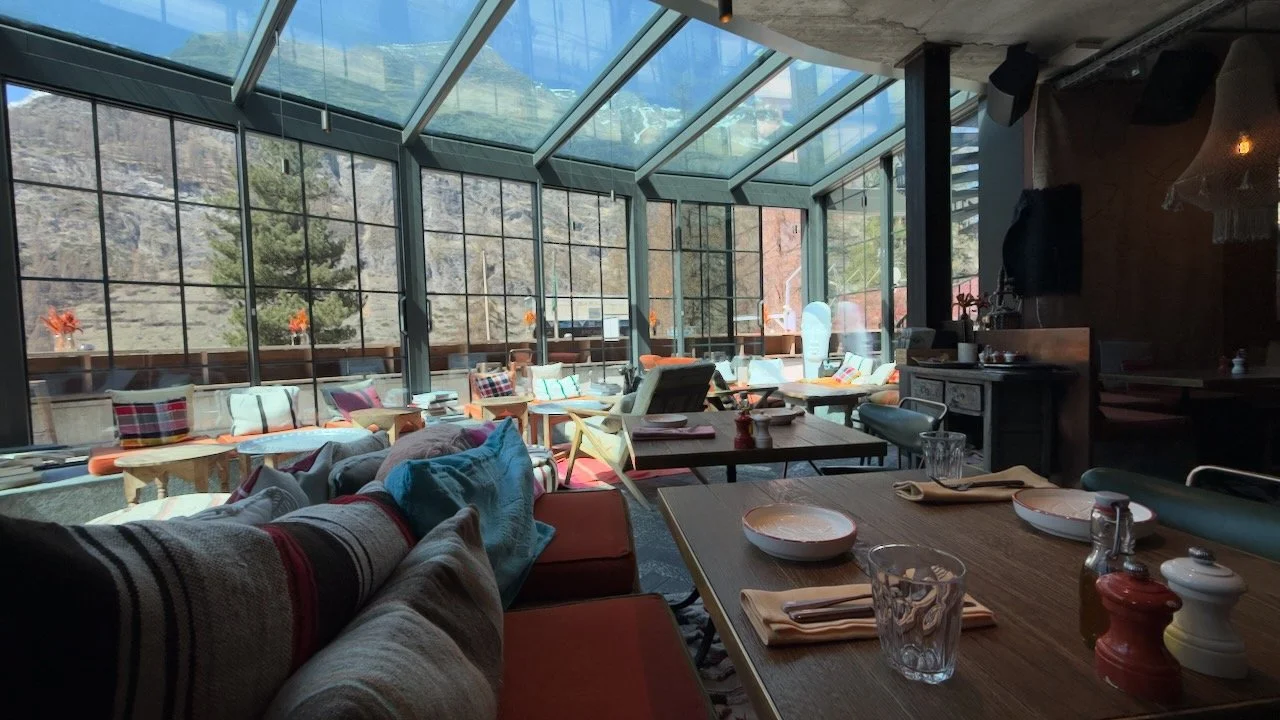
Bazaar by CERVO — Housed in the CERVO Mountain Resort above the village, Bazaar is one of the most distinctive restaurant experiences in Zermatt. We had a wonderful lunch here. The concept is inspired by the vibrant markets of the East, with influences ranging from Lebanese mezze (hummus, baba ganoush, flatbreads) to Middle Eastern and Asian flavors. Everything is mostly vegetarian and thoughtfully composed. The restaurant holds a Michelin Bib Gourmand and the interior is as much an experience as the food: colorful, layered, and full of objects and textiles that genuinely make you feel transported. The views of the Matterhorn from the conservatory are an added bonus.
Chez Vrony — A beloved institution in the Findeln hamlet above Zermatt, accessible by a 45-minute hike up from the village or via the Sunnegga funicular. Chez Vrony serves traditional Valais cooking on a sun-drenched terrace with a full-face Matterhorn view. The rösti is the best in the valley and the cheese fondue is genuinely excellent. Go for lunch on a clear day; the Matterhorn views from the terrace are outstanding.
Restaurant Schäferstube — Inside the Grand Hotel Zermatterhof, this traditional restaurant serves refined Swiss Alpine cuisine with an emphasis on locally sourced lamb and Valais specialties. The dining room is elegant without being intimidating, and the food is consistently good.
Old Zermatt — A warm, rustic Walliser restaurant in the old part of the village, in a building that dates back generations. Traditional dishes, local wine, and an atmosphere that feels like you have stepped into the older Zermatt that existed before the ski boom. A reliable and satisfying choice for a straightforward Alpine dinner.
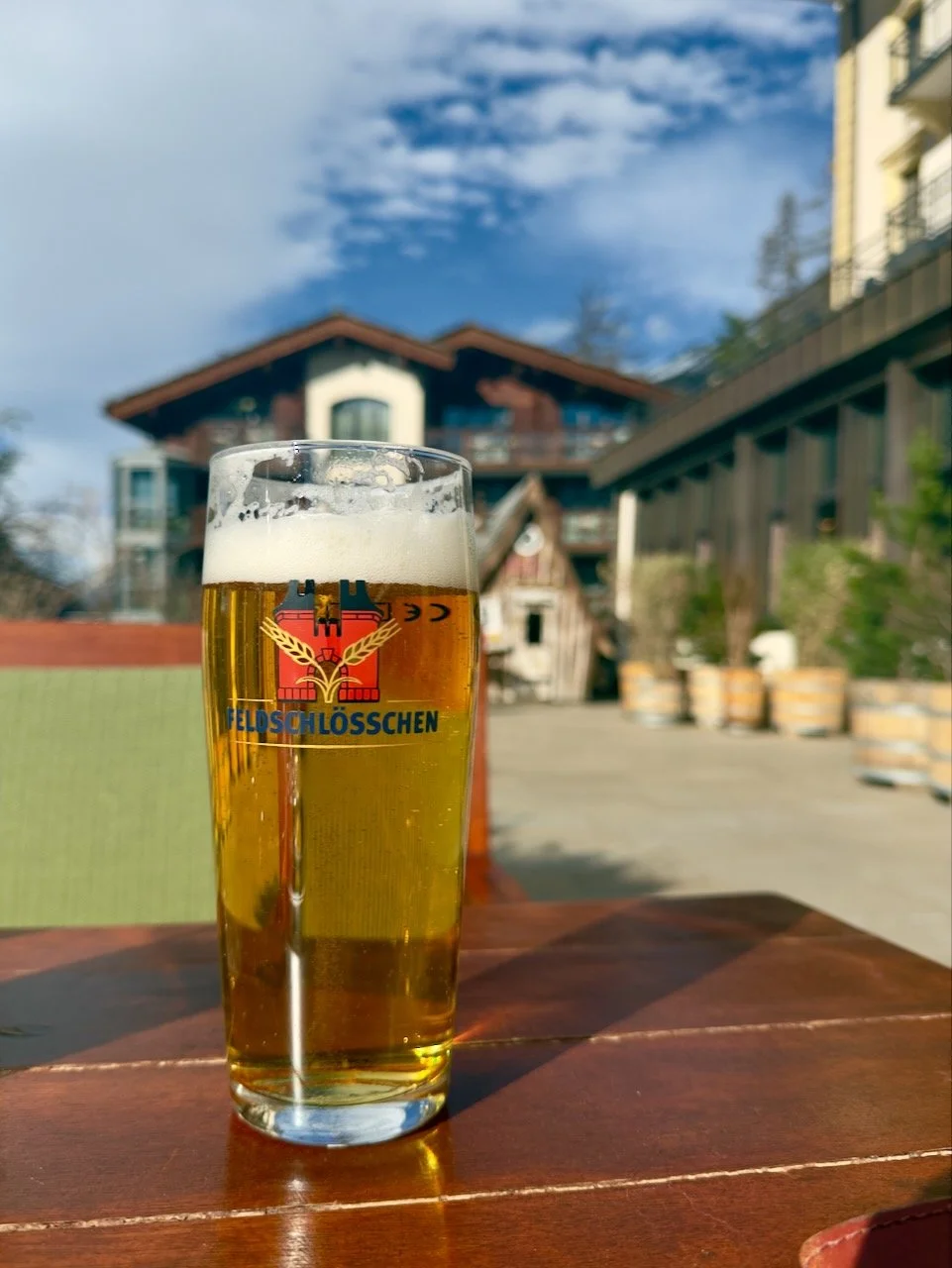
Coffee Shops and Cafes
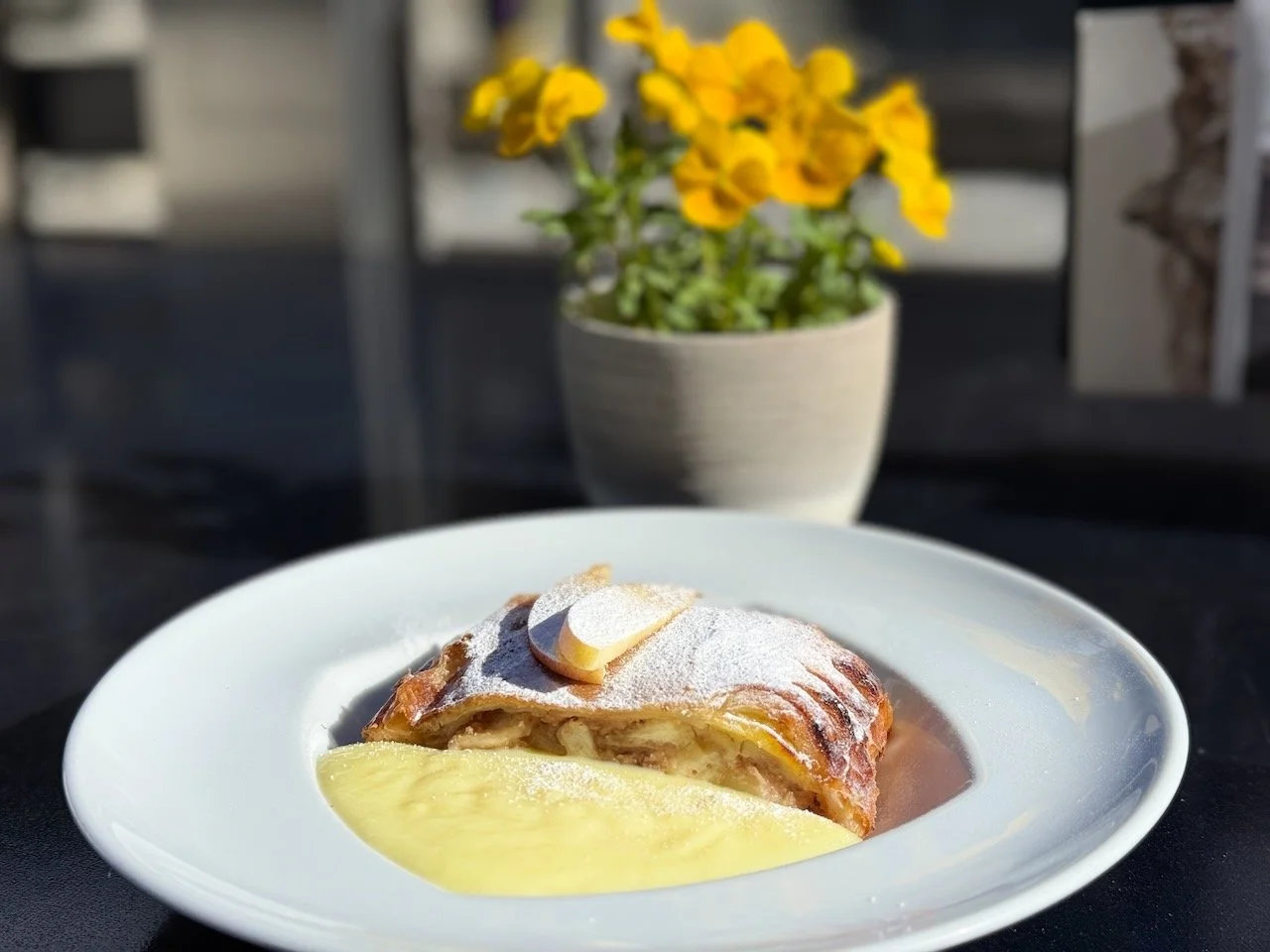
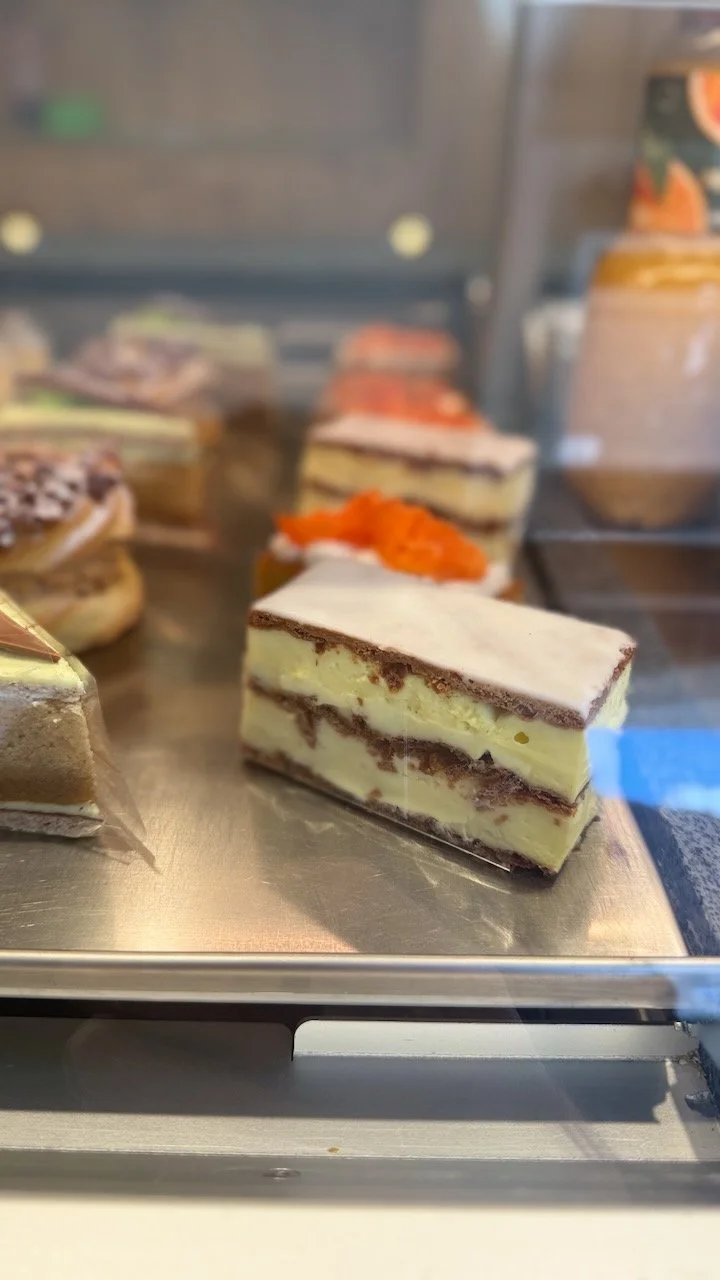
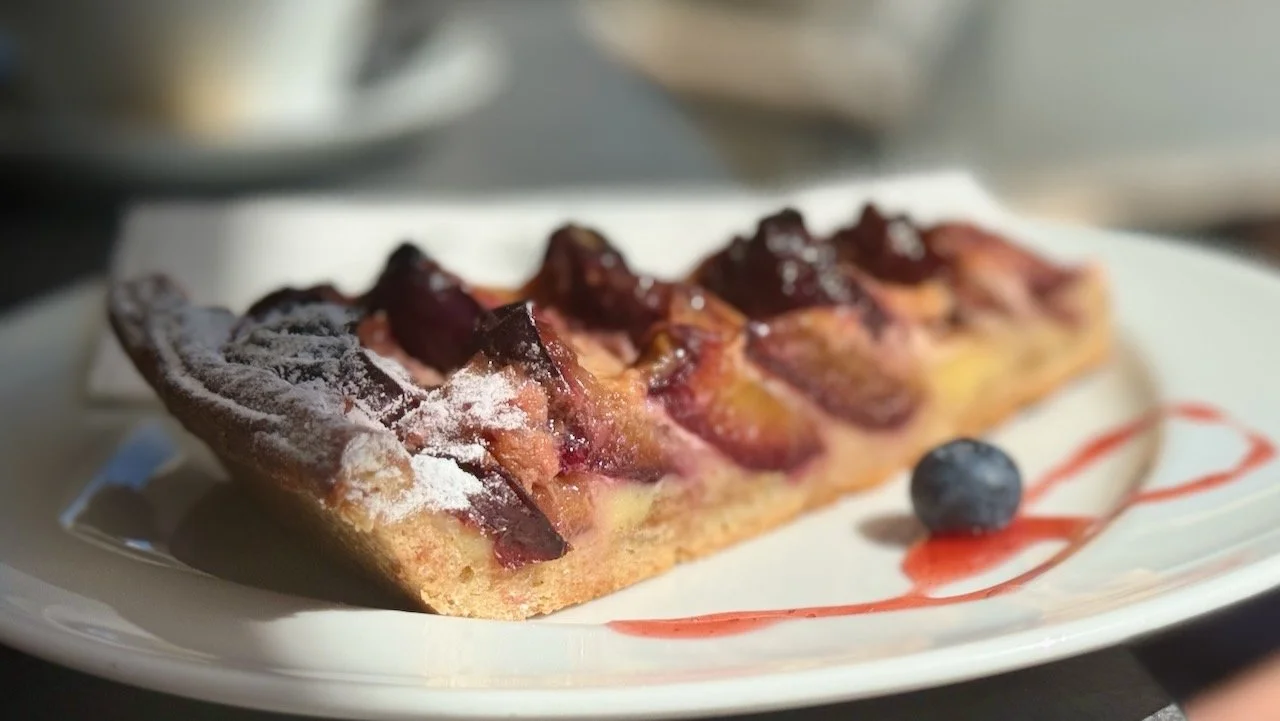
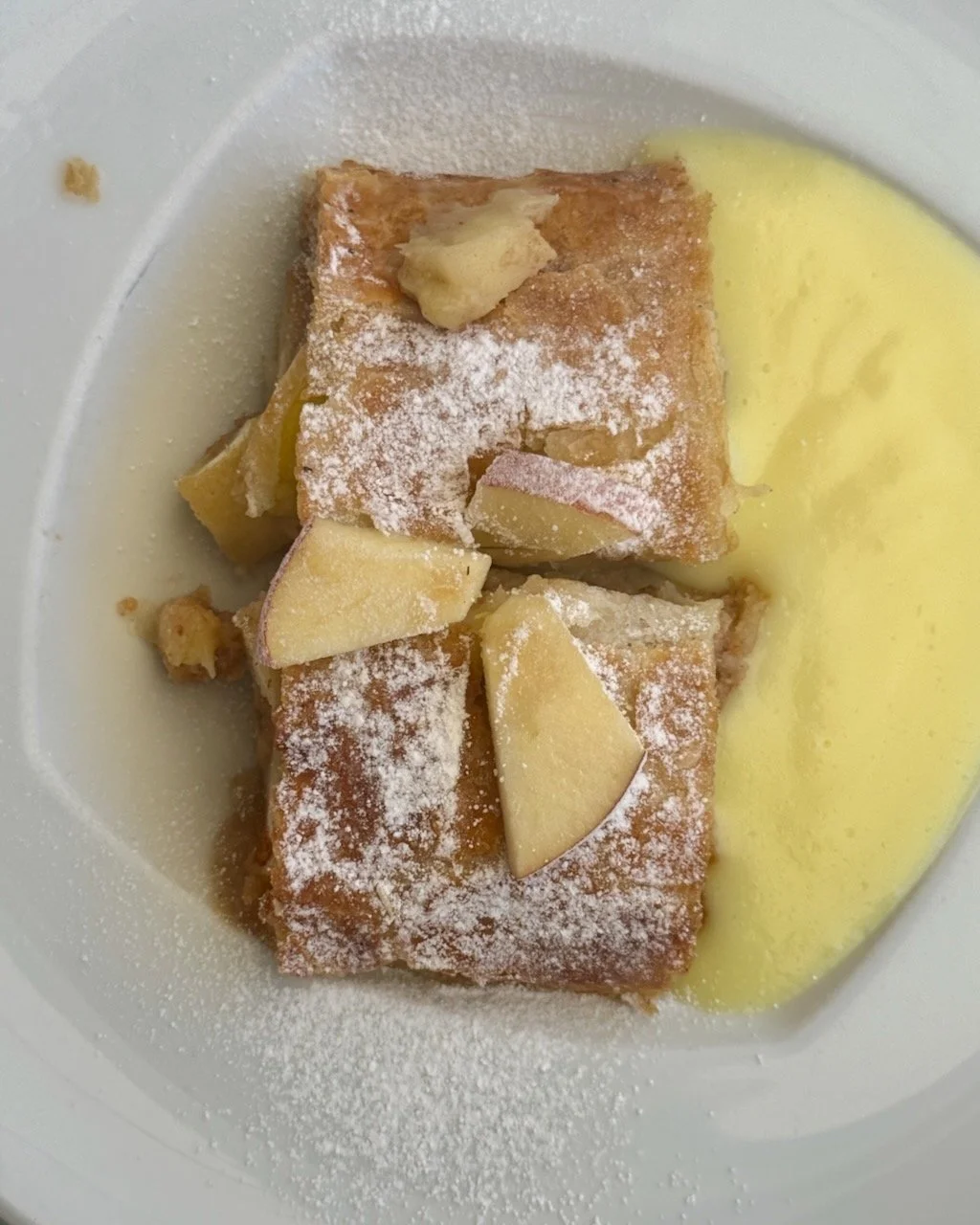
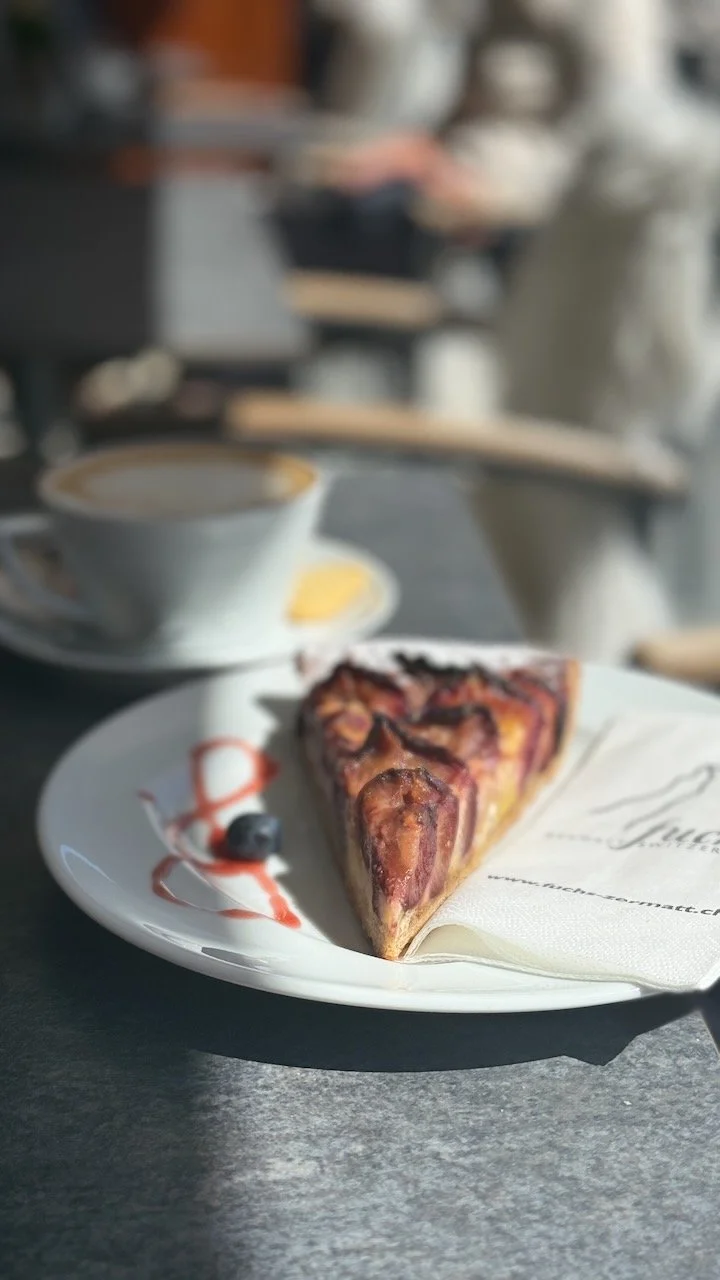
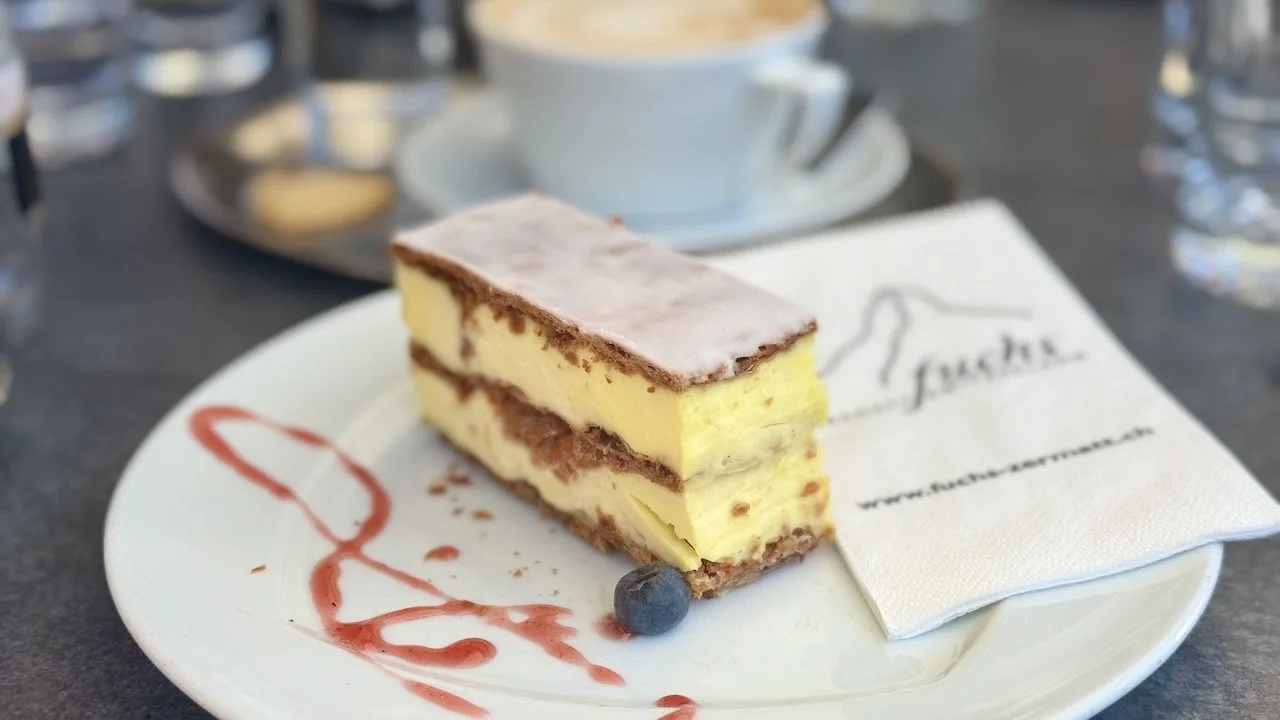
Café Fuchs — This family bakery, with locations at Bahnhofstrasse 28 and Getwingstrasse 24, makes everything by hand from scratch using local ingredients wherever possible. The apple strudel is world-class: properly flaky, generously filled, not too sweet, served warm. The coffee is excellent Oberwalliser roast. Go in the morning after an early shoot and spend a full hour. Also try the chocolate Matterhörnli (little Matterhorn-shaped chocolates) as a souvenir.
Heida Wine Bar and Cafe — For afternoons when you want to taste the local wines alongside coffee or a light plate, the Heida bars in the village are excellent. Heida is the local white wine of the Valais (also called Savagnin or Paien), one of Switzerland's most distinctive grapes. It belongs with a view.
Cervo Bar — The bar at CERVO above the village is worth knowing about for late-afternoon aperitivo on the terrace, when the Matterhorn light is at its warmest and the crowds in the village below are not yet in your shot.
Photography Gear to Bring to Zermatt
Zermatt requires a more complete kit than most European cities. You are shooting at altitude, in rapidly changing weather, across distances that range from intimate village detail to sweeping alpine panorama.
Camera Body: A full-frame mirrorless is your best tool here. The Canon EOS R5 Mark II, Sony A7R V, or Nikon Z8 all deliver the dynamic range you need for high-contrast alpine scenes. Autofocus performance matters for mountain shooting, where depth of field decisions come fast.
Lenses:
Wide angle (16-24mm): For the village with the Matterhorn as backdrop, for the Mürini viewpoint, and for interior shots of mountain huts and the Glacier Palace. This lens gets used constantly.
Standard zoom (24-70mm): Your all-around workhorse for street photography in the village, restaurant interiors, market shots, and general mountain scenery.
Telephoto (70-200mm or 100-400mm): Critical for isolating the Matterhorn pyramid from Gornergrat and the lakeside reflection spots, for compressing the relationship between the peak and the village rooftops, and for summit detail shots. A 100-400mm is worth its weight here if you plan to spend time at altitude.
Prime (50mm or 85mm): For portrait work in the village, street photography on the Bahnhofstrasse, and low-light interior shooting at restaurants and cafes.
Accessories:
Tripod: Non-negotiable. The lake reflections at Riffelsee and Stellisee require absolute stability at dawn. Blue hour shots of the village with the Matterhorn above need long exposures. Bring a solid but packable travel tripod.
ND filters (6-stop and 10-stop): For long exposures of the alpine lakes in daylight and for softening the glacier and snow textures at altitude.
Polarizing filter: Dramatically improves the deep blue of alpine lakes and sky. Use it at Riffelsee and Stellisee for maximum lake color saturation.
Warm layers and a weather-sealed body bag: Weather in the Alps changes without warning. Both the Gornergrat and the Glacier Paradise have exposed platforms where wind and cold are genuine factors.
Extra batteries: Cold temperatures drain batteries faster than you expect, especially at 3,000+ meters. Carry at least two spares in an inside pocket.
Rain cover: Pack one. Always.
Drone note: Drone flying in Switzerland requires registration with the Federal Office of Civil Aviation (FOCA), an online pilot exam for drones with cameras, and compliance with a 120-meter altitude ceiling and strict no-fly rules over crowds. In a resort like Zermatt, with cable car wires, helicopters, and the constant presence of people, drone flying is extremely limited in practice and requires careful pre-flight map checks. Check the FOCA Drone Map before bringing one.
Best Photography Spots in Zermatt
Mürini Viewpoint (Le Petit Village)
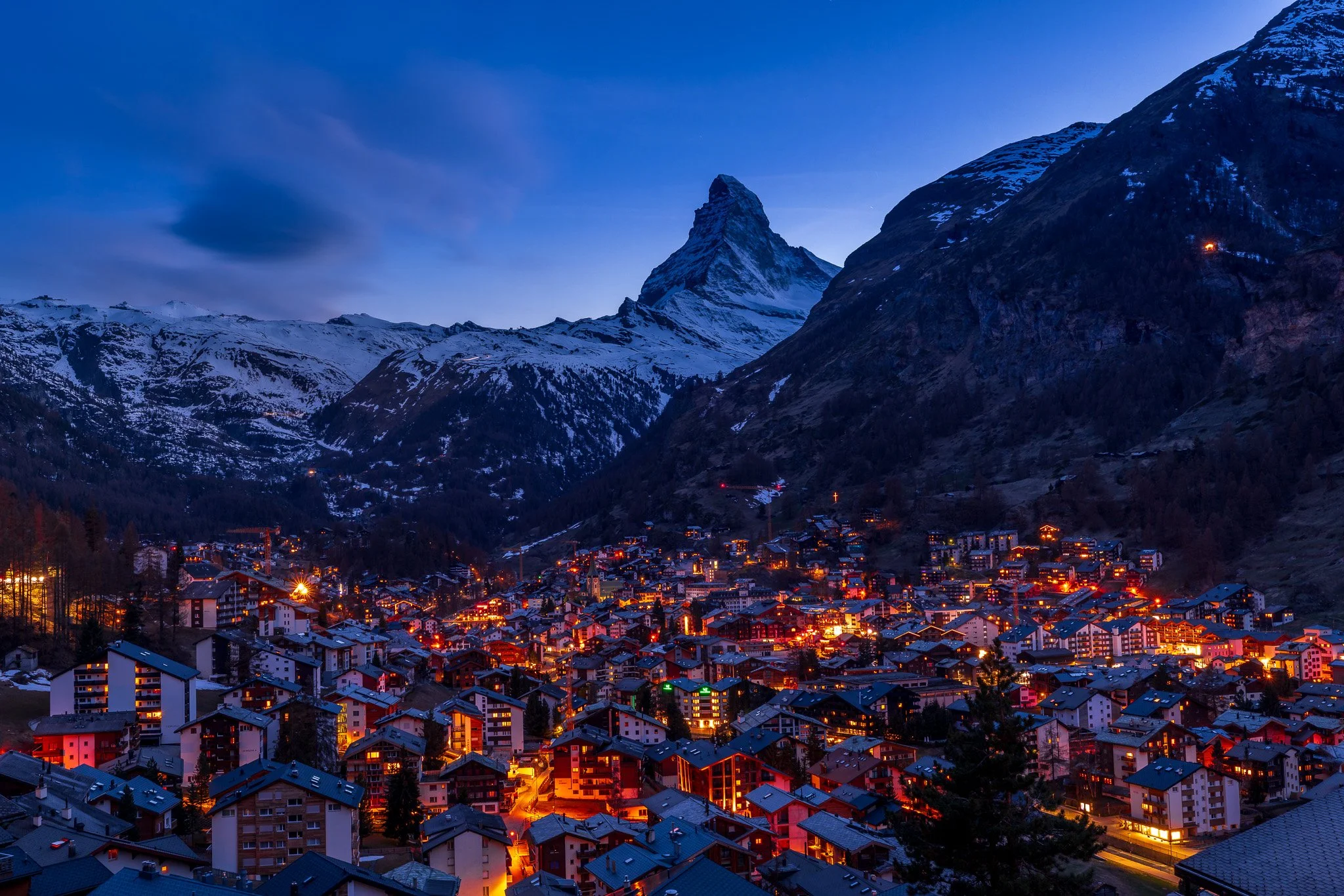
This is the postcard. Every iconic photograph you have seen of Zermatt, with the traditional wooden chalets of the village spread across the valley floor and the Matterhorn rising perfectly above them, was almost certainly taken from Mürini (sometimes written Murini or referred to as the Petit Village viewpoint). It is the complete composition: village, mountains, sky.
Getting there requires a 15-minute walk from the main village, heading south past the Sunnegga funicular station, then uphill through the residential lanes of the Winkelmatten quarter. Follow the lane named Mürini uphill to around number 24, where a small footpath leads to the viewpoint on the edge of the forest. You gain about 50 meters of elevation. The walk is direct and manageable; in winter wear good boots.
The viewpoint is free, open 24 hours, and requires no cable car or lift ticket. Electric taxis from the train station will take you up for roughly CHF 20 to 25 if you prefer not to walk.
Pro Tip: Sunrise is the premier light. The Matterhorn catches the first rays of the day while the valley below is still in pre-dawn blue, and the contrast between the glowing peak and the quiet, snow-lit rooftops below is extraordinary. In winter, the chalet garlands of lights switch on at dusk and the whole valley below glimmers; come back for blue hour too. Use a 24-35mm lens for the full composition and a 50-85mm for tighter crops of the peak above the rooftops.
At Sunset
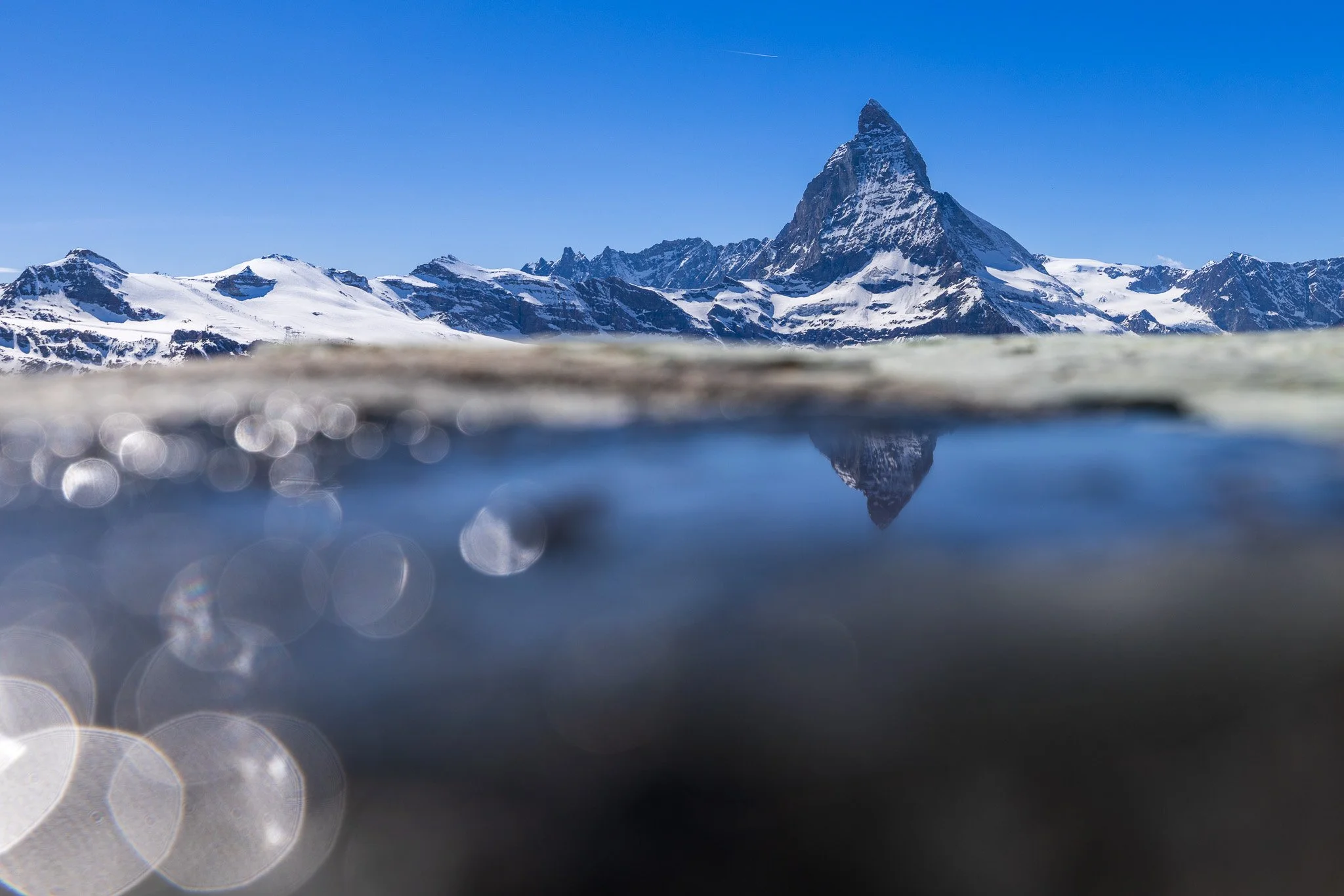
Riffelsee Reflection
The Riffelsee at 2,757 meters is a small alpine lake with the most reliably perfect mirror reflection of the Matterhorn available in Zermatt. The lake sits just a 10-minute walk below the Rotenboden station on the Gornergrat railway, making it easily accessible without a long hike. When the air is calm and the lake surface is still, the inverted Matterhorn in the water is sharper and more saturated than the mountain itself. It looks impossible.
Sunrise is the critical moment. The Matterhorn catches the morning light while the reflection in the lake doubles the drama. Get off at Rotenboden and follow the well-marked path down to the lake. You will not be alone on a clear morning in peak season, so arrive early.
Pro Tip: A polarizing filter reduces glare on the water surface and deepens the reflection. Use a 24-70mm to include both the mountain and the full lake in the frame, and find rocks or tufts of grass at the water's edge as foreground elements. The smaller secondary lake about 5 minutes further down from Riffelsee has large rocks partially submerged at its edge and is less crowded.
Gornergrat Railway and Summit
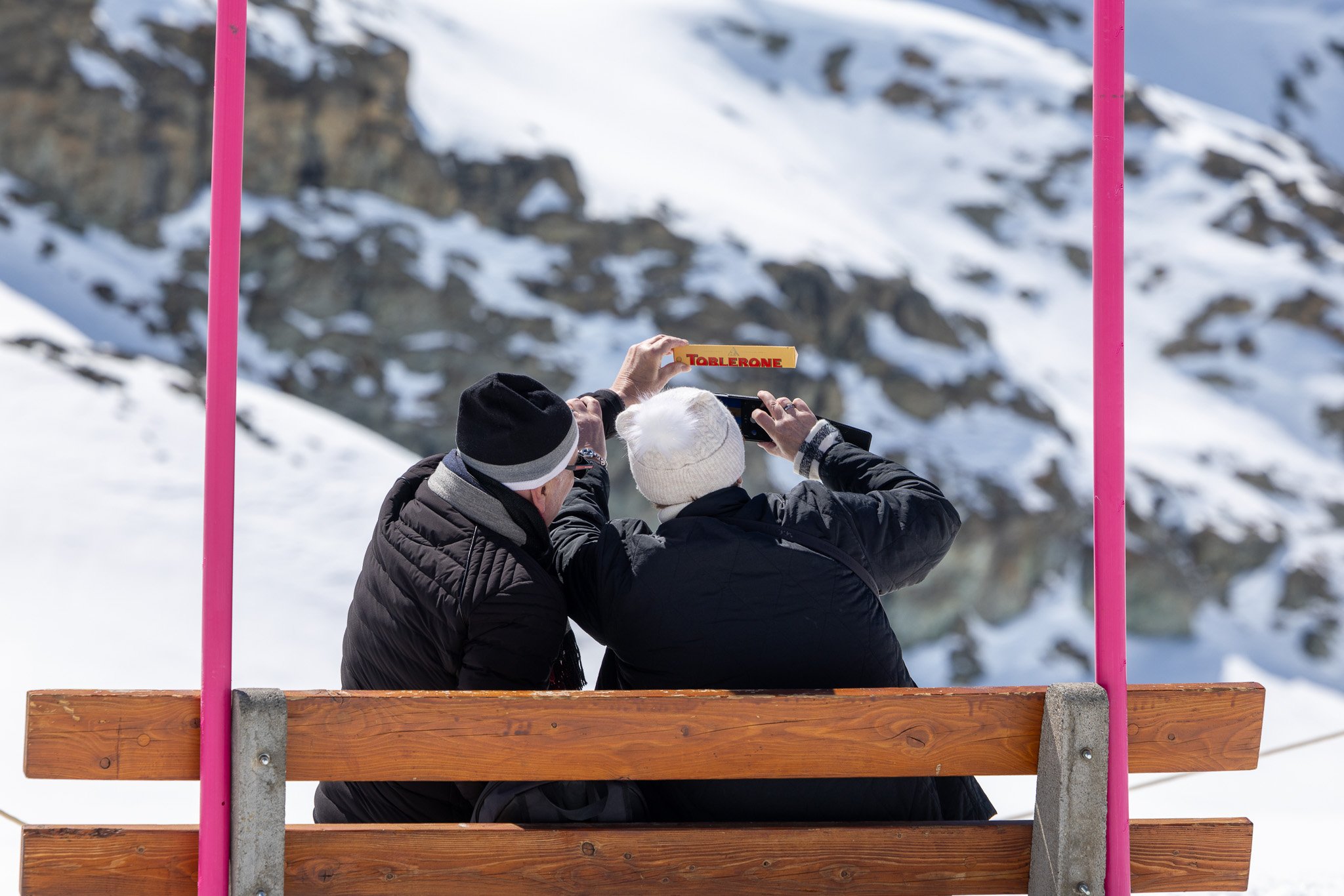
Europe's highest open-air cogwheel railway has been running since 1898, and it remains one of the great mountain journeys on the continent. The 33-minute ride from Zermatt climbs 1,469 meters to the summit at 3,089 meters, with the Matterhorn appearing and growing larger through the window at every turn. At the top, you stand on a viewing platform with 29 four-thousanders visible around you, including the Matterhorn from the east (a different and dramatic angle from the village view), the Monte Rosa massif, the Gorner Glacier below, and on clear days, Mont Blanc on the distant horizon.
The ride itself is as important as the destination. The train passes through larch forest, then open alpine meadows, then bare rock and snow. Sit on the right side of the train going up for the best Matterhorn views, and if your window opens, so much the better.
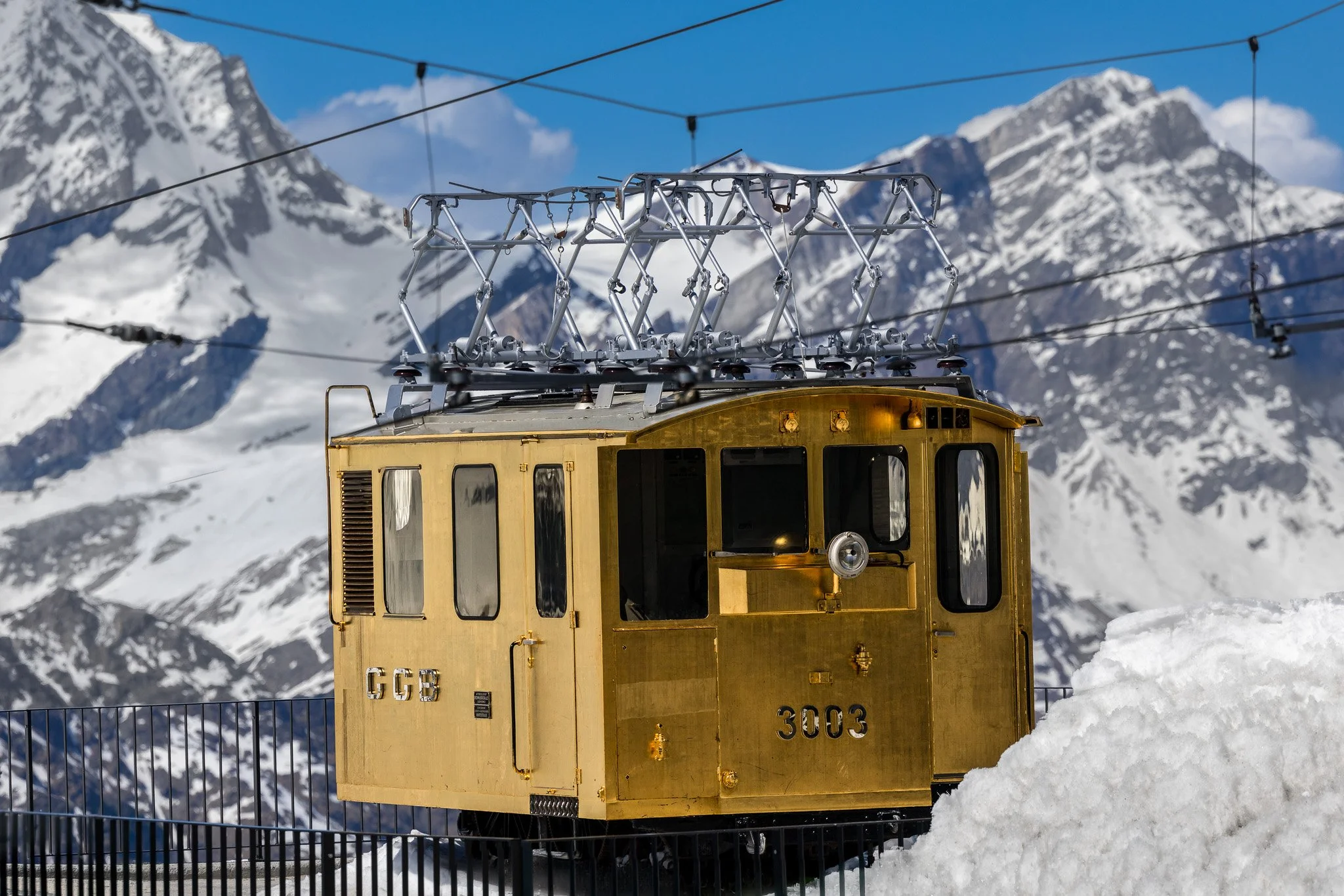
Pro Tip: Book the first train of the day to beat the crowds and catch the morning light on the peaks. At the summit, spend time below the viewing platform on the eastern side for the best angle on the Matterhorn with the glacier basin below. The "Golden Spot" at the summit, where a gilded historic locomotive sits against the Matterhorn backdrop, is a genuinely fun and photogenic piece of visual theater.
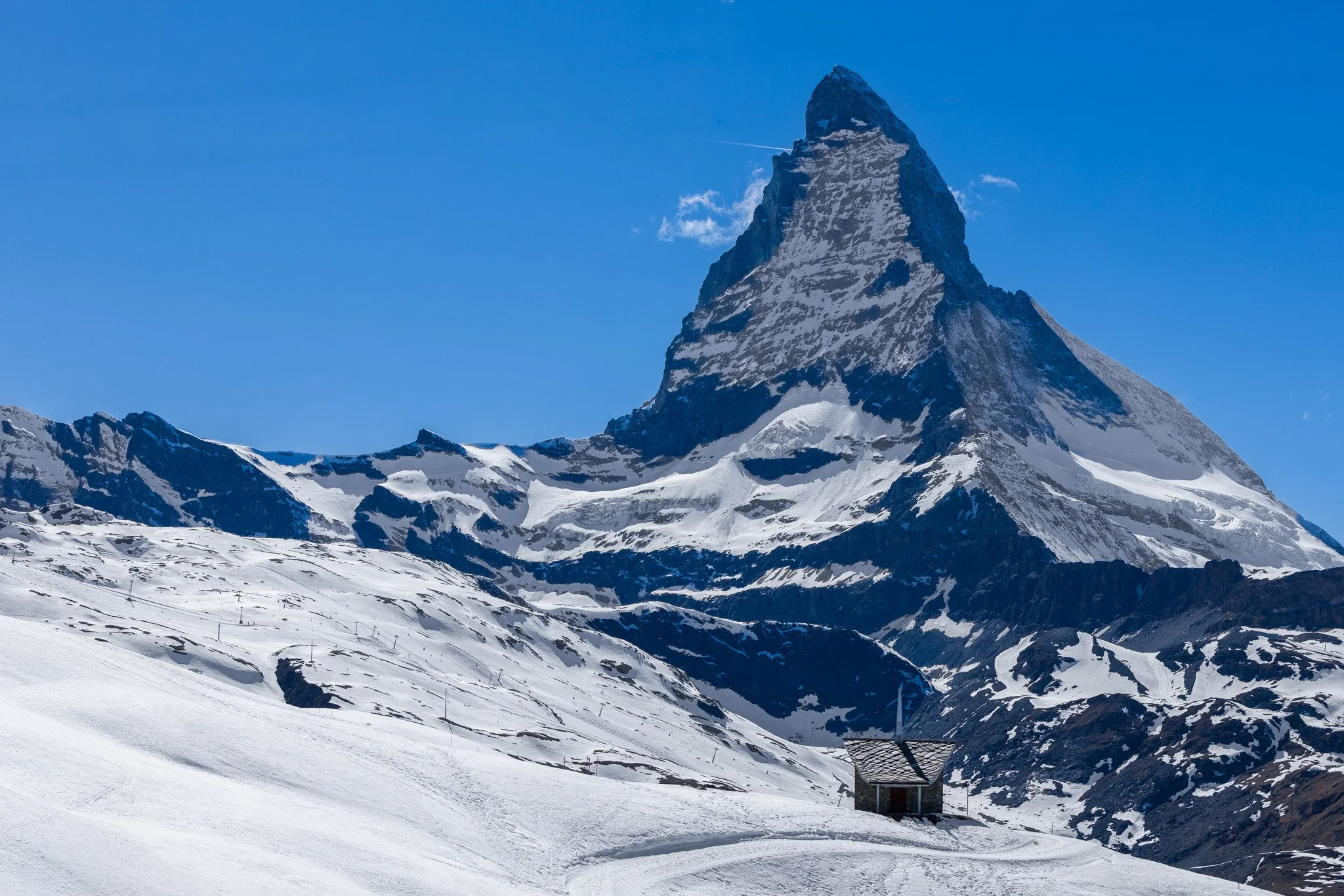
Matterhorn Glacier Paradise (Klein Matterhorn)
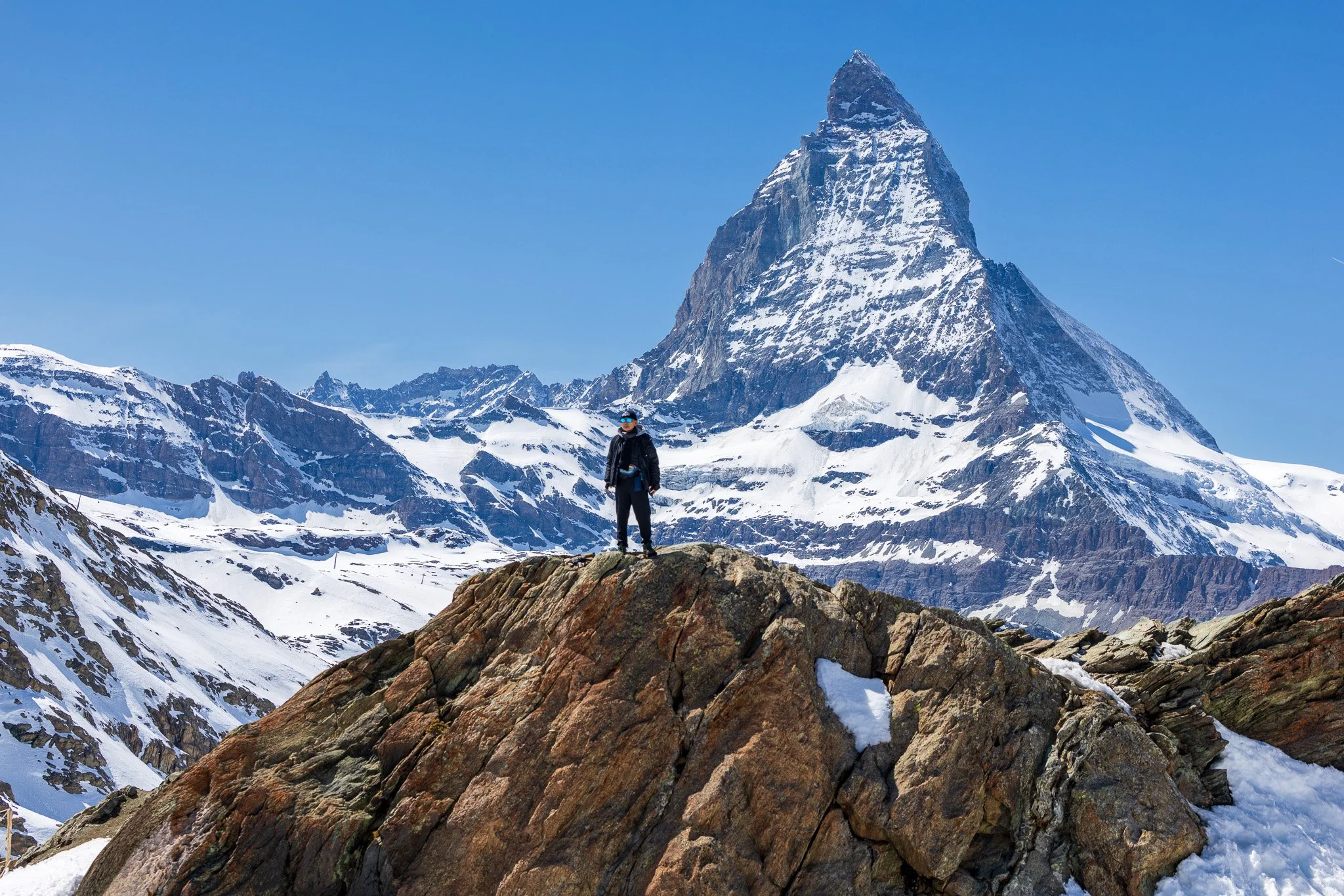
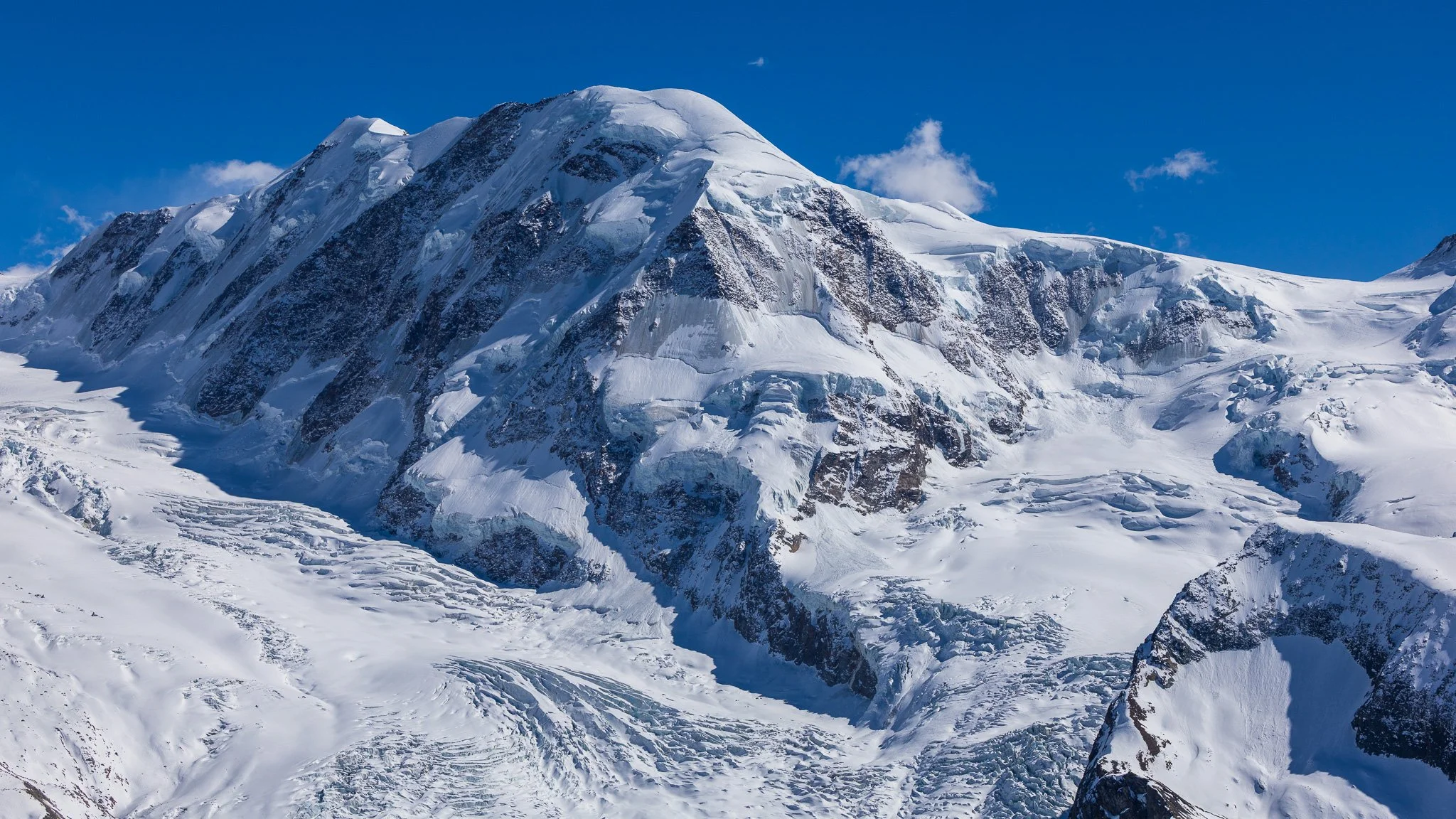
At 3,883 meters, the Matterhorn Glacier Paradise is the highest cable car station in Europe, and the view from its summit platform is in a completely different register from anything available at village level. You are standing on the snow above most of the surrounding peaks. The Matterhorn rises immediately to the north. The glaciers of the Monte Rosa massif fill the eastern horizon. Italy is visible to the south. Thirty-eight four-thousanders are in the frame at once.
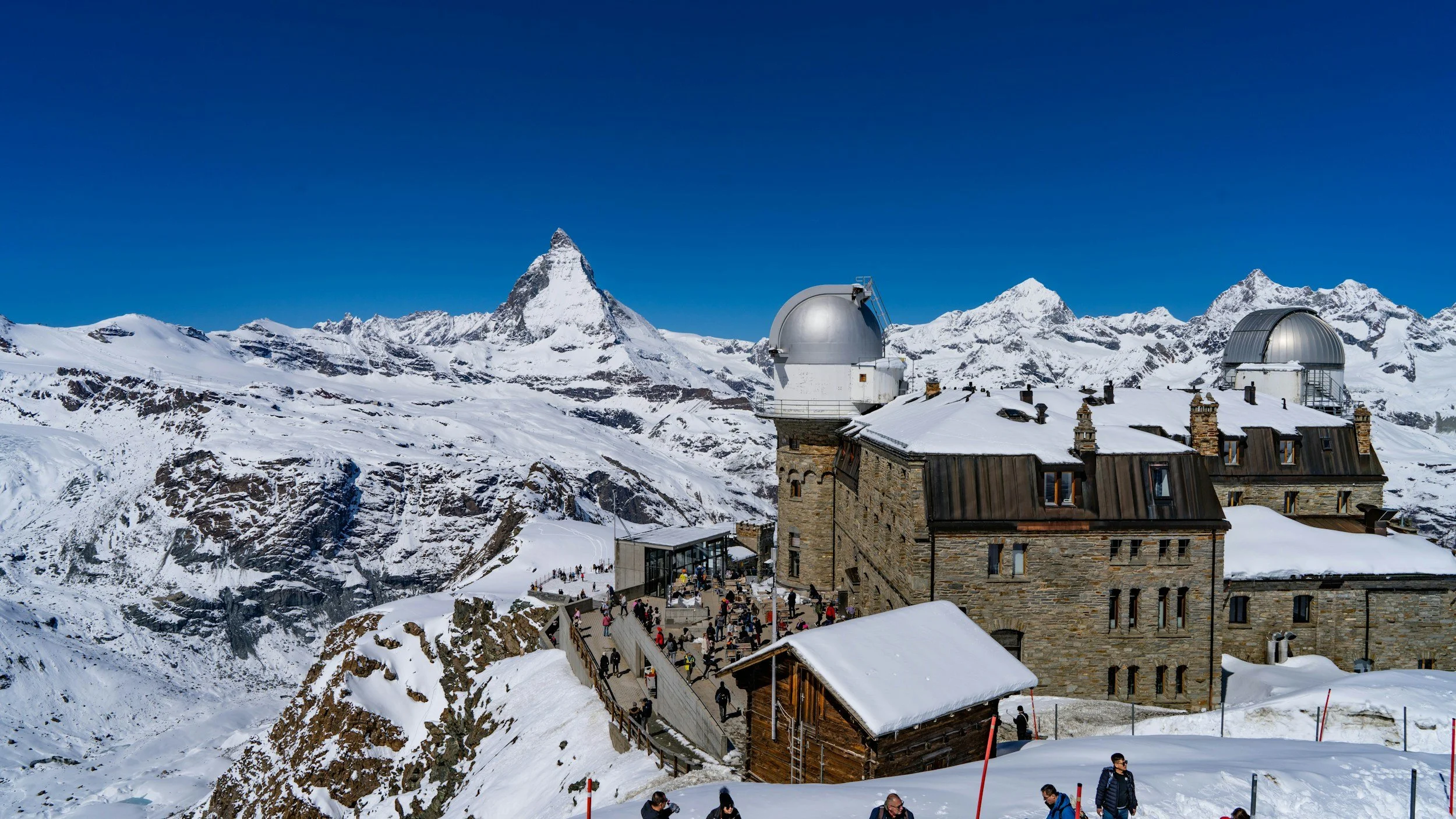
Getting there involves a series of three cable car segments from the village, a 40 to 45-minute journey in total. Inside the complex you will find the Glacier Palace (an ice cave carved directly into the glacier with ice sculptures), a cinema lounge, and a restaurant with panoramic windows. The famous glass floor skywalk lets you look down into the void below.
The summit is accessible year-round, but the weather closes it regularly. Check conditions before you go, and bring significantly warmer clothes than you think you need.
Pro Tip: The Matterhorn from the Glacier Paradise is viewed from the east and south rather than the north (village) side, so this is a fundamentally different image than every other vantage point in Zermatt. Use a 70-200mm to pull the peak close and isolate its southern faces in detail. Allow at least three hours at the top to explore the complex, eat, and shoot in multiple directions.
Stellisee Lake Reflection
If Riffelsee is the accessible classic, Stellisee is the slightly harder earned reward. At 2,537 meters, Stellisee is reached via the Sunnegga funicular to Sunnegga, then a gondola to Blauherd, followed by a 20-minute walk. The lake is calm, clear, and slightly larger than Riffelsee, with the Matterhorn perfectly aligned at its far end when you approach from the north shore.
The reflection here is perhaps the most famous single image in Zermatt photography, with the Matterhorn and a strip of blue sky reflected in perfect stillness. Two partially submerged rocks near the near shore make excellent foreground anchor points. It requires the most effort of the lake reflection spots, but the composition rewards it.
Pro Tip: Go in the first hour of daylight. By mid-morning in summer and peak season, this spot has photographers and hikers in every shot. Blue hour before sunrise is also excellent if you are willing to use a headlamp for the approach.
Zermatt Village and Hinterdorf Quarter
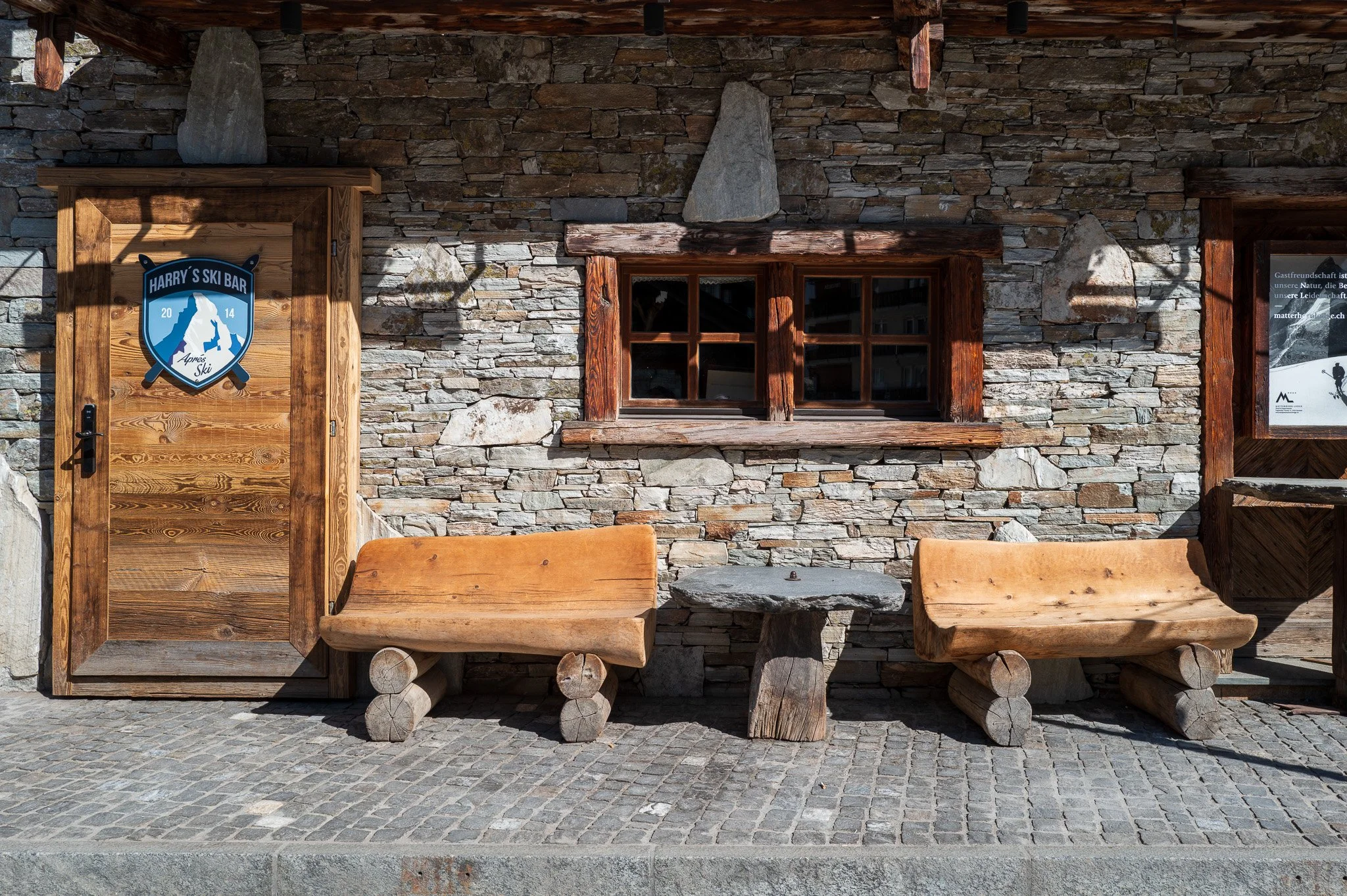
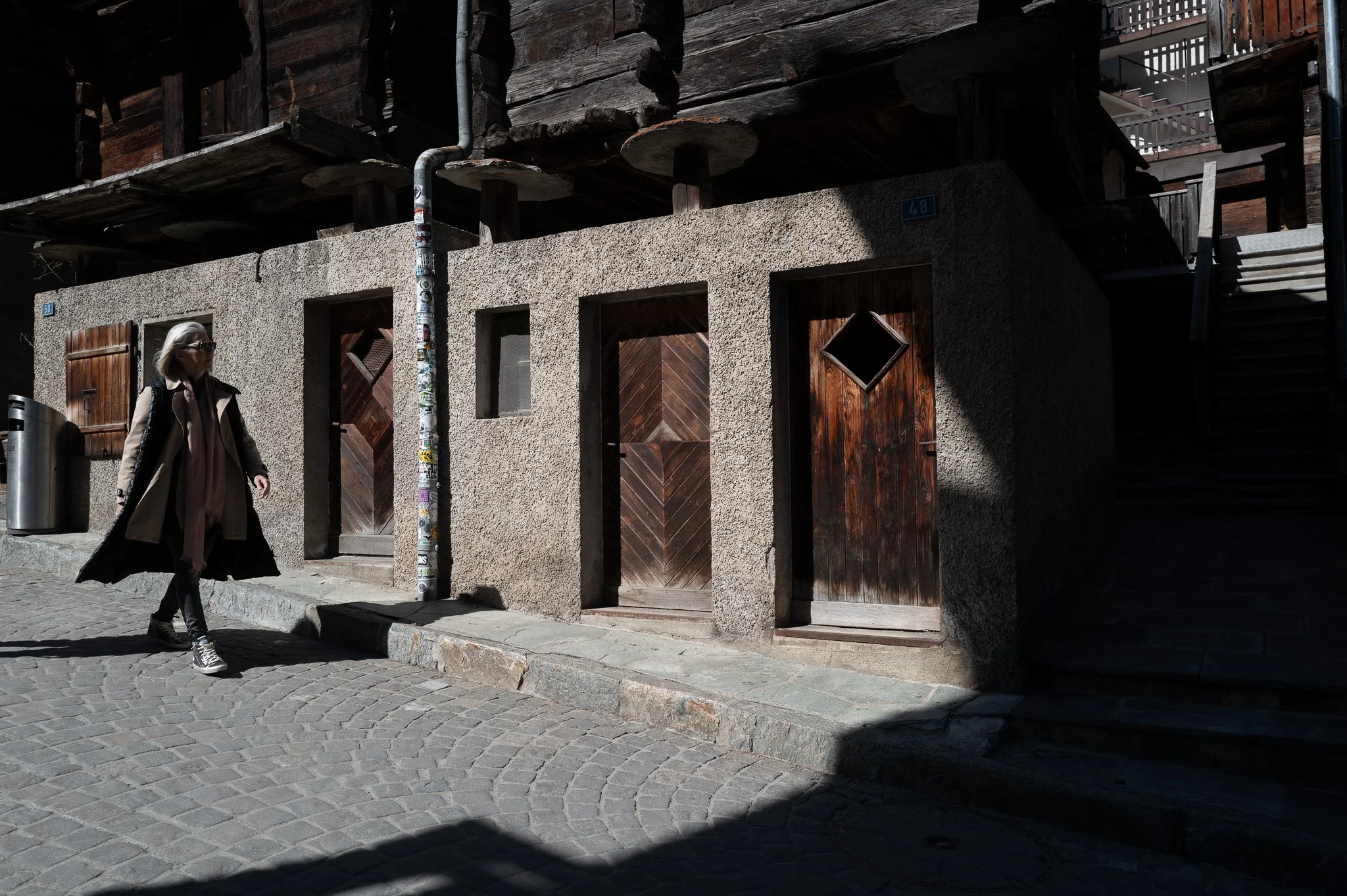
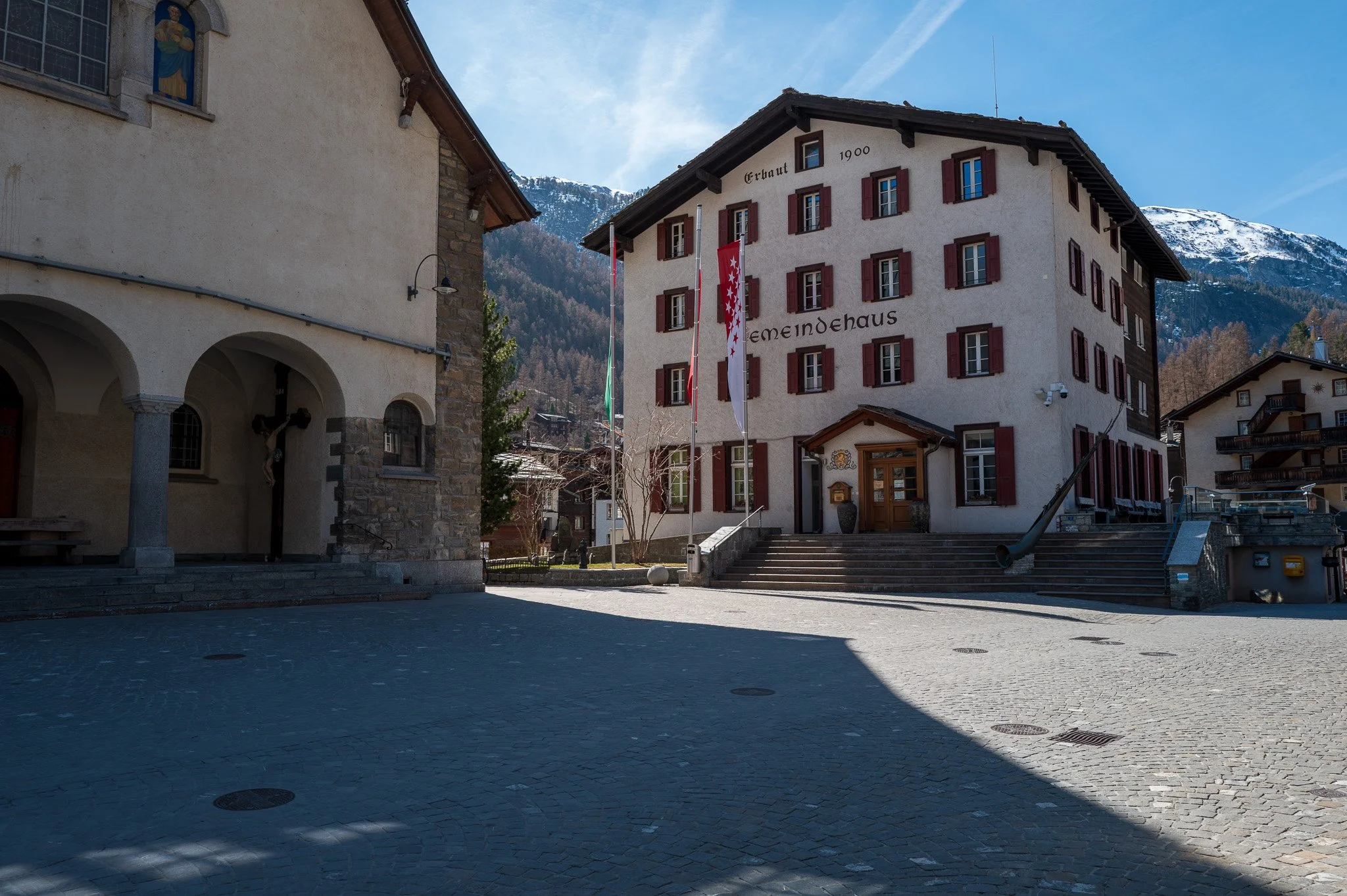
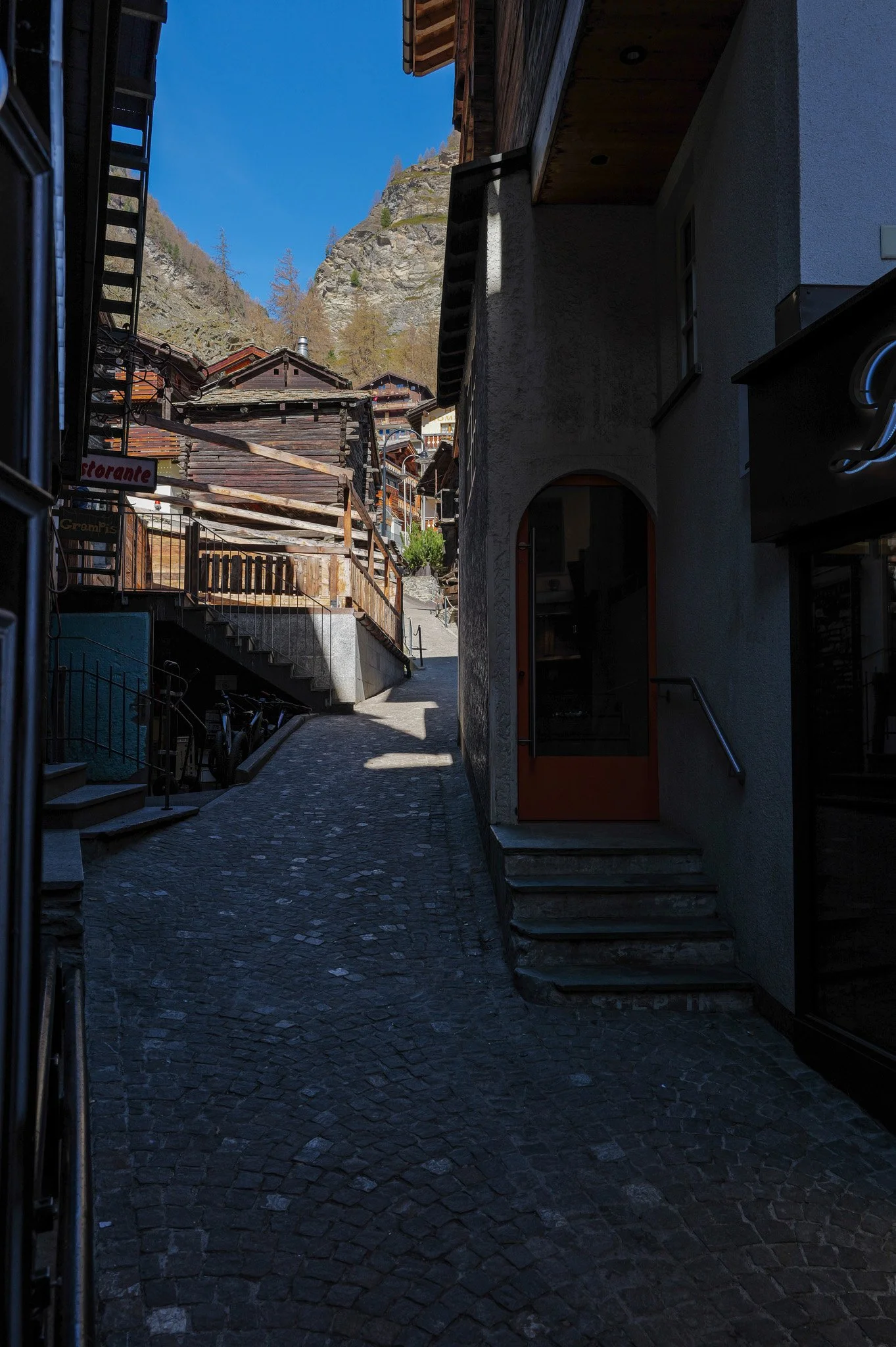
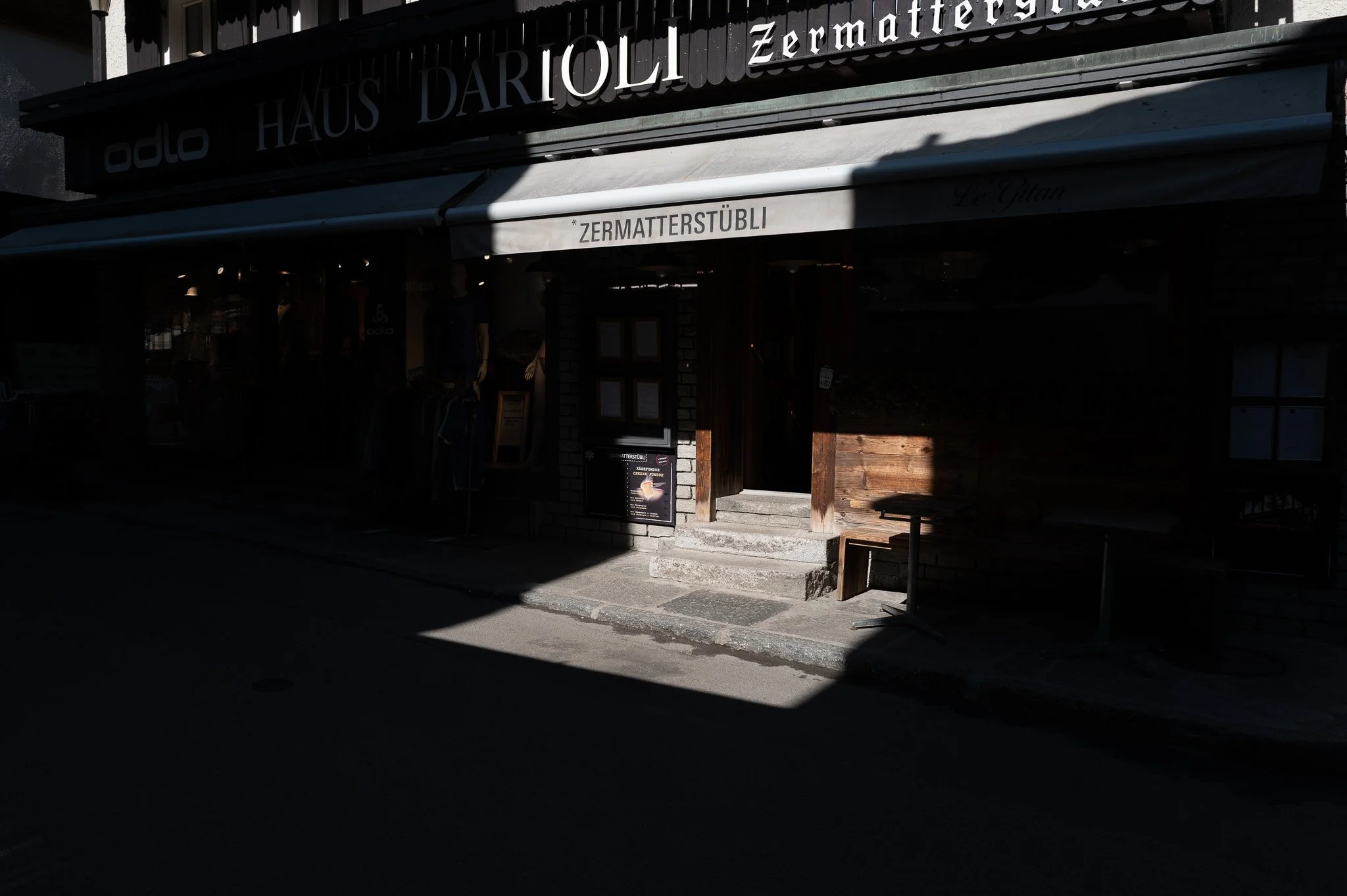
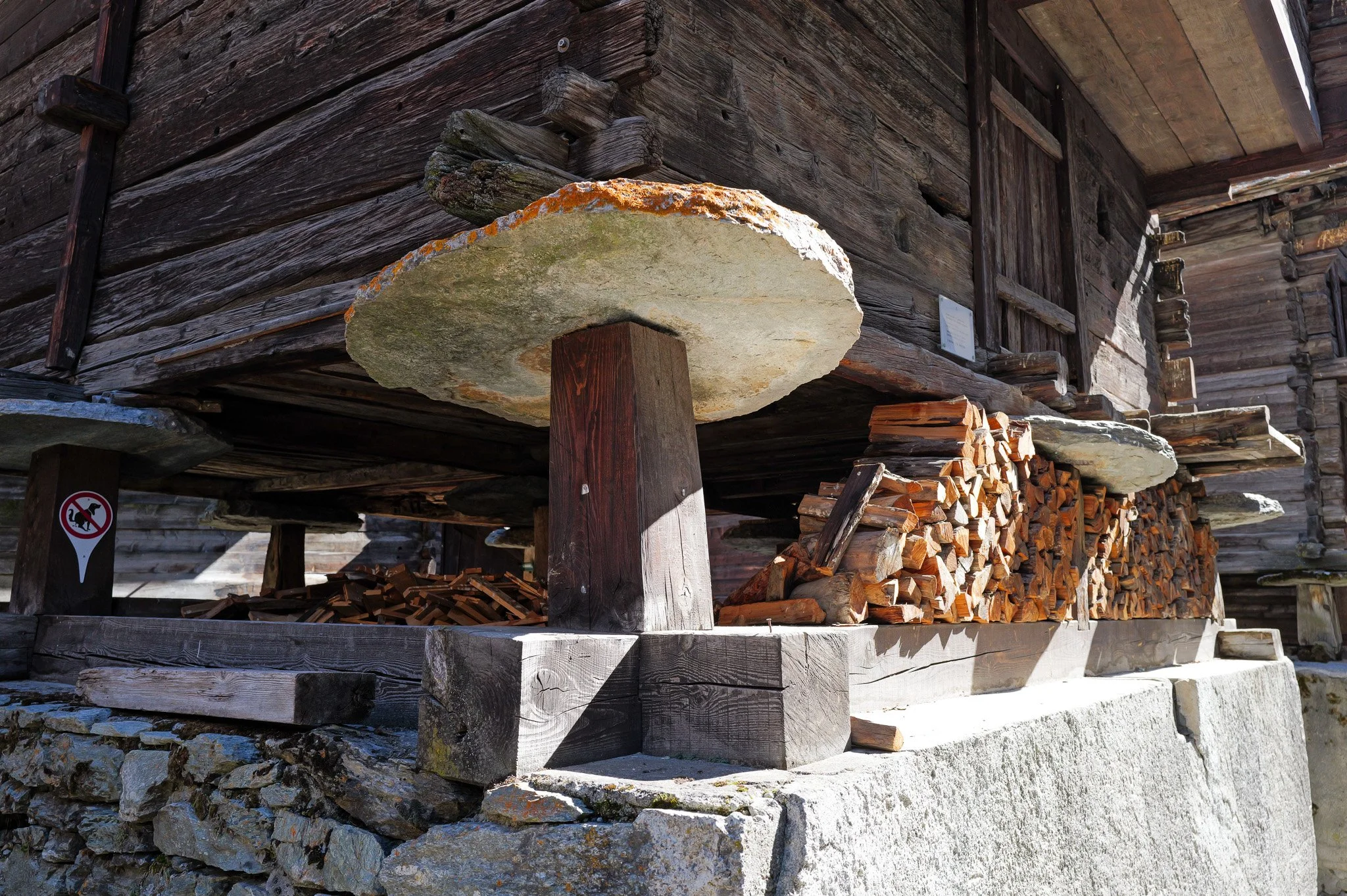
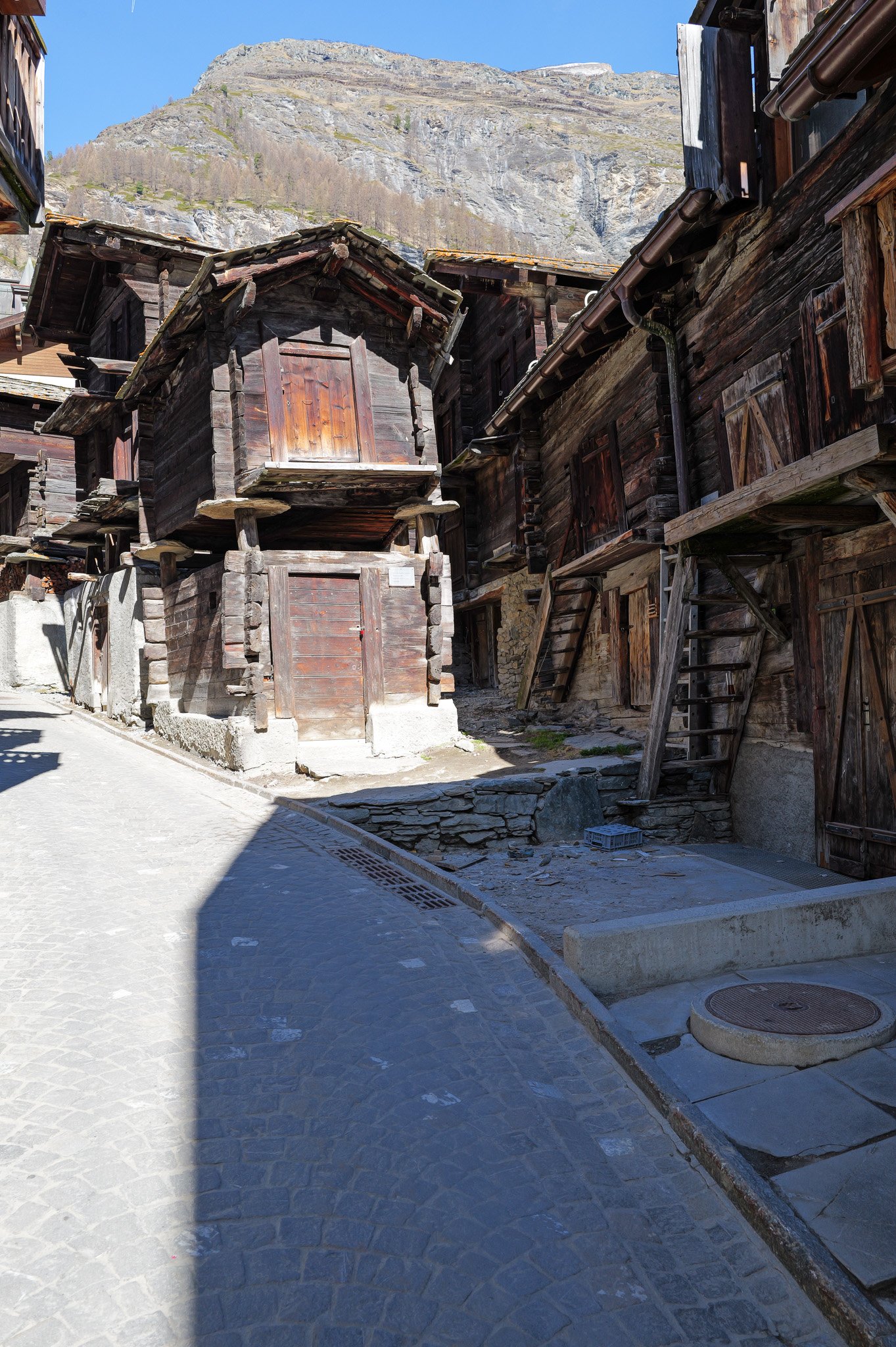
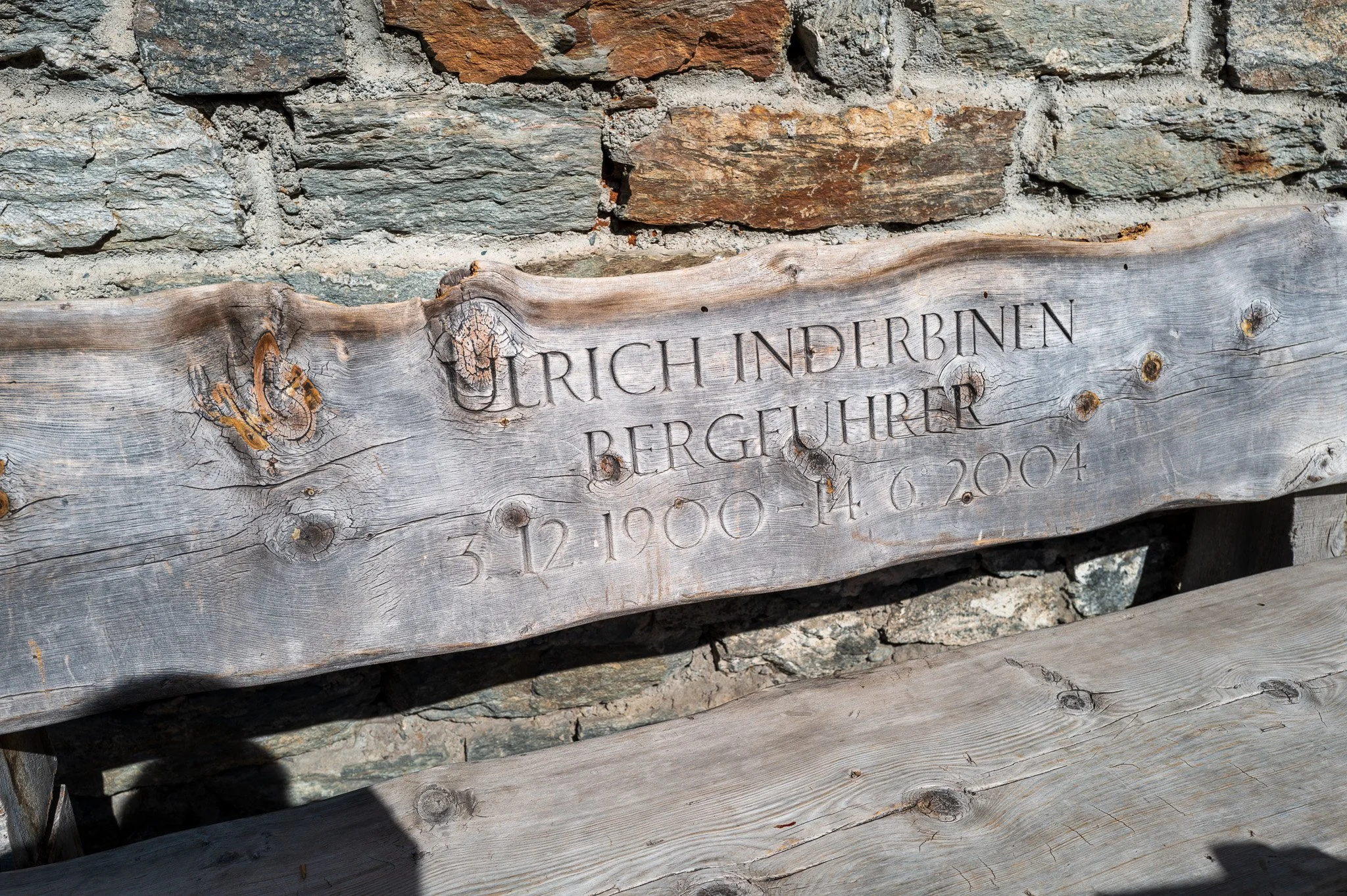
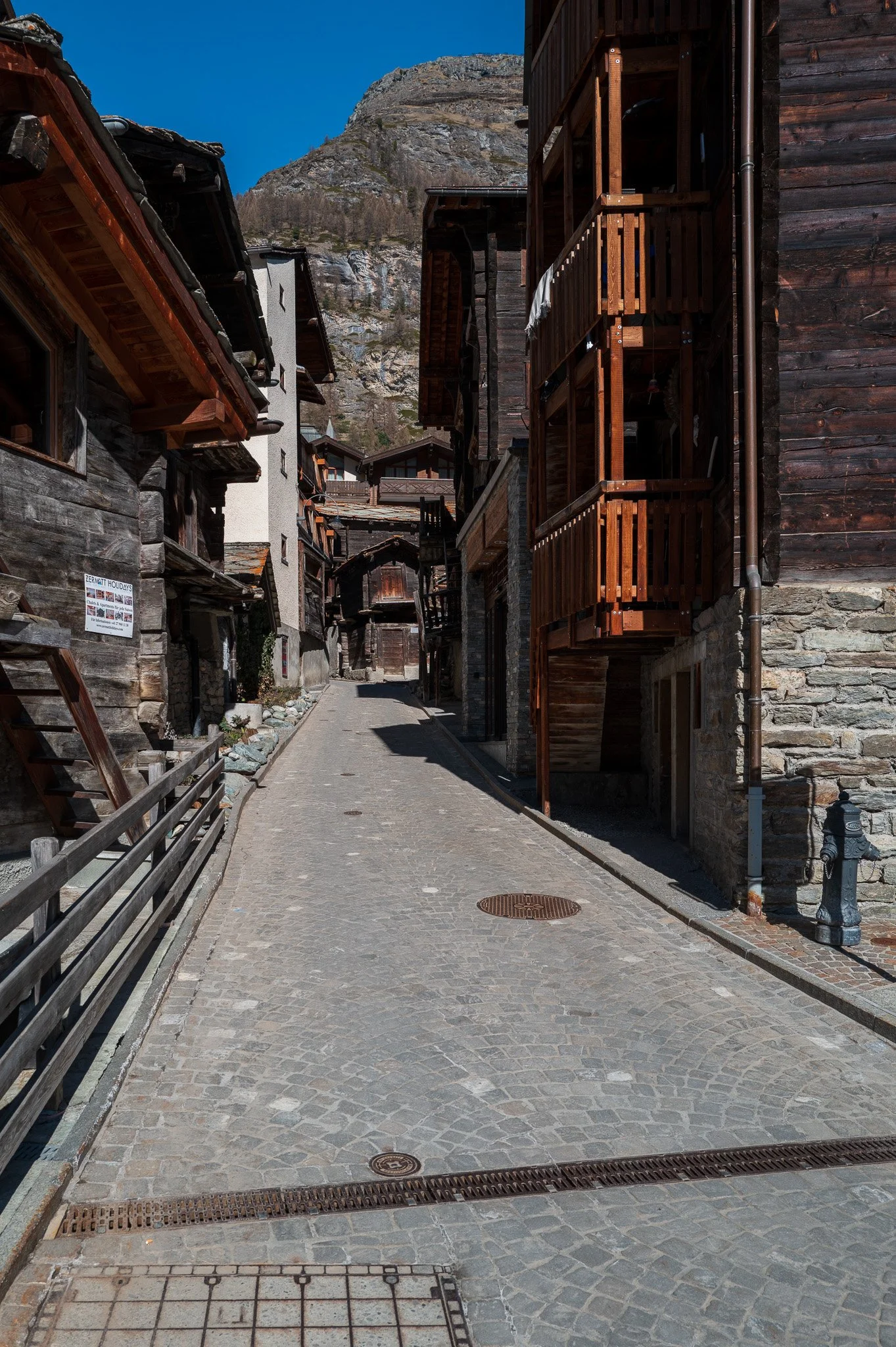
Before Zermatt became one of the world's great resort destinations, it was a small Valais farming village. The Hinterdorf quarter, in the northern part of the village, still shows that older character: narrow lanes lined with traditional wooden mazots (raised storehouses on mushroom-shaped stone supports to keep rodents out), ancient barns blackened by centuries of Alpine weather, and fieldstone walls running between plots. It is genuinely photogenic in a way that requires no mountain backdrop at all.
Wander the lanes with a 35mm or 50mm prime. Look for the interplay of old wood and stone, the cowbells and rope hanging from barn doors, the contrast between the ancient structures and the glimpses of mountain above. Early morning in winter, when fresh snow covers the rooftops and nobody else is walking yet, this area is extraordinary.
Findeln and the Alpine Meadows
The hamlet of Findeln sits at 2,050 meters above Zermatt, reached either by a 45-minute hike from the village or via the Sunnegga funicular. In summer, the meadows here are covered in wildflowers, the traditional wooden buildings of the hamlet glow in the afternoon light, and the Matterhorn rises above the whole scene with perfect Alpine meadow foreground material. This is the image for readers who want something softer and more pastoral than the dramatic summit views.
Chez Vrony restaurant is here, which makes this an excellent choice for combining a photography session with one of the best lunches in Zermatt.
Festivals and Events in Zermatt
Zermatt Unplugged — April -Each spring, Zermatt hosts one of Switzerland's most atmospheric music festivals. Unplugged by name and nature, the performances are acoustic and intimate, held across multiple village venues including outdoor stages, mountain huts, and the main festival tent near the train station. The juxtaposition of serious live music with the Matterhorn as a backdrop is genuinely unlike any other festival environment in the world.
Photo Tip: The evening outdoor stages at blue hour, with the Matterhorn fading into darkness above the lit stage, produce beautiful concert photography. A 50mm or 85mm f/1.8 prime handles the low-light conditions well.
Zermatt Marathon — July - The Zermatt Marathon draws serious runners from around the world for a race that climbs from the valley floor to high alpine terrain. The race passes through some of the most photogenic corridors in the region and the combination of athletes, mountain scenery, and the sheer human effort of the course is excellent documentary material.
Photo Tip: Position yourself above the Zermatt village section in the early morning stages for the best combination of runner and Matterhorn in the same frame.
New Year — December 31 / January 1
Zermatt's New Year celebration in the shadow of the Matterhorn is among the most memorable in the Alps. The fireworks above the village, with the peak lit from below and the snow on the chalets catching the color, produce images that look fabricated. They are not. Plan well ahead; accommodation over New Year is booked up months in advance.
Frequently Asked Questions About Visiting Zermatt
Is the Matterhorn always visible?
No, and this is the single most important thing to know before you go. Cloud, rain, and mist can settle into the valley for days without warning. Check the forecast obsessively, and if you get a clear window, rearrange your entire schedule around it.
Do you need a car in Zermatt?
No, and you can't bring one anyway. The village is completely car-free. Park at Täsch and take the 12-minute shuttle train in; electric taxis and the free Green Line bus cover everything once you're there.
Is Zermatt expensive?
Yes, it's one of Switzerland's premier resort towns, and pricing reflects that. Hotels, dining, and mountain transport all run high. Multi-day passes for the cable cars and railway are worth it if you plan to use them more than once.
What are the best photo spots in Zermatt?
Mürini for the classic village-and-Matterhorn composition, Riffelsee for the mirror reflection, and the Gornergrat railway summit for a completely different angle on the peak are three I return to constantly. The full list with Pro Tips is above.
Can you fly a drone in Zermatt?
Only with registration and an online pilot exam through Switzerland's FOCA, plus a 120-meter altitude ceiling and no-fly rules over crowds. In practice, cable car wires, helicopters, and constant foot traffic make drone flying extremely limited here. Check the FOCA Drone Map before bringing one.
What surprised you most about photographing Zermatt?
How lucky we were to see the Matterhorn clear for three sunrises and sunsets in a row. I have friends who've made this exact trip and never saw the peak once. Don't take a clear morning for granted here, it's the exception, not the rule.
How many days do you need in Zermatt?
Three days minimum if the weather cooperates, five is ideal. Five gives you more chances to catch the Matterhorn in different conditions if clouds roll in on one or two days.
When do the lake reflections at Riffelsee and Stellisee work?
Only when the water is liquid, roughly late spring through early autumn. Both lakes can be fully frozen in winter and early spring, which means no mirror reflection at all. Plan around this if that shot is a priority.
Final Thoughts
Zermatt rewards patience more than almost anywhere I have photographed. The mountain will not always show itself. It can hide for days behind clouds, and if you only have 48 hours, the timing lottery can sting. But when the sky clears, when the Alpenglühen turns the peak red at dawn, when the lake at Riffelsee sits mirror-still in the first light and the Matterhorn reflects itself perfectly, it is as close to a complete photographic experience as I have encountered.
Come for at least three days. And give yourself permission to do nothing photographic for a few hours in the middle of each day. Walk the village without a camera. Sit in a cafe on the main street and watch people pass. We spent a few afternoons just wandering and eating, and those hours were as much a part of the experience as any sunrise shoot. Zermatt rewards that pace.
The Matterhorn is not guaranteed. If you arrive and the sky is clear, stop everything and go shoot. Reschedule dinner, skip the museum, get up early. We had three days of clear skies, and I know how rare that is. When the mountain shows itself, that is the whole point of the trip.
The Matterhorn is not patient with photographers who rush. Give it time, and it will give you everything.
If you enjoyed this Photography and Travel Guide to Zermatt, you can explore my other Photography and Travel Guides here.
My Photography & Travel Guide to Lucerne, Switzerland — About two hours north by train, and the natural first stop on any Swiss photography trip. The Chapel Bridge over the Reuss, the lion sculpture carved into the rock face, and the blue-green waters of Lake Lucerne on a clear morning make Lucerne one of the most photogenic cities in the country. We drove through on our way to Zermatt, and it deserves more than a day.
My Photography & Travel Guide to the Dolomites, Italy — About four hours by car through the Brenner Pass. The Tre Cime di Lavaredo at sunrise, the wildflower meadows of Alpe di Siusi, and mountain light so dramatic it feels almost unfair. If you loved Zermatt, the Dolomites are the natural next chapter for any Alpine photography trip.
My Photography & Travel Guide to Hallstatt, Austria — About four hours east. A lakeside village so perfectly composed it looks like a painting, with a church spire, mirror-still water, and mountains rising on every side. The photography here is quiet and rewarding, and the crowds thin considerably once the day-trippers leave in the afternoon.
If you would like to join a future photography workshop, visit my Workshops page for current offerings and upcoming dates. You can also connect with me on Instagram (@chasinghippoz) and Facebook, or subscribe to the newsletter for travel photography tips, destination guides, and behind-the-scenes stories from more than 75 countries. I look forward to sharing the journey with you.
Finally—a beginner-friendly photography guide that makes sense.
If you've ever picked up a camera and thought, "Now what?" this is the book for you.
Photography Made Simple is written for adults who are just starting out and want a clear, encouraging, real-world approach to learning photography. Whether you're using a DSLR, mirrorless, or just your smartphone, this guide walks you through the basics—without the jargon or tech overwhelm.
Inside, you'll learn:
The only camera settings you really need to know to get started
How to shoot sharper, more intentional photos using light and composition
Simple tips for portraits, landscapes, travel, and everyday life
What gear you do (and don’t) need
How to create better photos without upgrading your camera
You’ll also get practical exercises, cheat sheets, and tips for organizing and editing your images—plus the confidence to shoot off Auto Mode for good.
This is not a textbook. It’s a friendly guide to seeing the world with fresh eyes—and finally capturing what you see the way you imagine it.
📸 Format: PDF download
Pages: 100+
Perfect for: Beginners, hobbyists, and anyone ready to take better photos without the stress