Sylt, Germany Travel & Photography Guide: Best Photo Spots, Things to Do & Hidden Gems
Some places earn a second visit. Sylt earns it before you even leave.
I have been to Sylt twice now, and both times the island did the same thing to me. It slowed me down. Not in a frustrating way, but in the way that only happens when a place is genuinely worth paying attention to. The North Sea breeze, the long empty beaches stretching further than you can see, the wild roses growing thick along every dune path, filling the air with a scent so strong it stops you mid-step. Sylt does not announce itself. It just gets into you quietly and stays there.
What keeps drawing me back is nature. This is not a city break or a cultural destination in the traditional sense. It is an island that rewards walking, breathing, and looking. The beaches here are among the longest and least crowded I have found anywhere in northern Europe. You can walk for an hour and feel genuinely alone, just dune grass, open sky, and the sound of the North Sea. For a photographer, that kind of solitude and space is worth more than any famous landmark.

The windswept dunes and wide North Sea coastline of Sylt, Germany.
Sylt is a long, narrow island in Germany's far north, just below the Danish border, part of the Frisian Islands chain that stretches along the coast.

Wild dune grass and open skies capture the quiet beauty of Sylt on Germany’s North Sea coast.
In this Photography & Travel Guide to Sylt, I share the places and experiences that continue to draw me back. You will find my favorite photography locations, guidance on when and where to shoot, practical travel tips, and gear recommendations, along with cultural insights to help you explore and photograph Sylt with confidence, respect, and ease.
Photographer's Notes
Before you go, here are my own takeaways.
Favorite Season: Late May
Favorite Location: Rotes Kliff, Kampen
Favorite Hotel: Söl'ring Hof
Favorite Restaurant: Söl'ring Hof Restaurant
Favorite Café: Kleine Teestube
Favorite Lens: 16-35mm f/2.8
Would I Return? I would absolutely love to go back. It's the kind of place you dream of returning to.
Where Is Sylt?
Sylt is a long, narrow island in Germany’s far north, just below the Danish border. It’s part of the Frisian Islands and stretches nearly 40 kilometers, from grassy dunes in the south to windswept cliffs in the north.
This long, narrow island off Germany’s north coast—often called “Germany’s Hamptons”—has all the luxury touches, but none of the noise. Picture Martha’s Vineyard if it were stitched together with moorland, lighthouses, and windswept grasses. Sylt doesn’t just photograph beautifully—it rewards patience. The light shifts by the minute, and so does the mood.

Getting there is easy, but once you're on the island, everything slows down.
Train: From Hamburg, take a direct Deutsche Bahn train to Westerland (Sylt). You’ll cross the Hindenburgdamm causeway—flat water on both sides, reeds, and the light already starting to shift.
bahn.comCar: Drive to Niebüll and take your car on the Sylt Shuttle train.
syltshuttle.deFlight: Seasonal flights connect Sylt to Hamburg, Düsseldorf, Munich, and Zurich.
flughafen-sylt.deFerry -If you prefer an alternative to the car train, the FRS Syltfähre runs a ferry service between Havneby on the Danish island of Rømø and List on Sylt. You can drive your car onto the ferry, and it is a particularly convenient option if you are coming from Denmark or northern Germany. Check schedules and book at frs-syltfaehre.de.
Once you're on the island, everything slows down. I think the need for a car will depend on where you stay. You can also rent a bike, take the local train, or walk. The island rewards a slower pace.
Where to Stay in Sylt
You want a location that puts you close to the light. Here is how the island breaks down for photographers.
Kampen is the most photogenic village on Sylt. The Rotes Kliff is a short walk from the center, the streets are worth shooting in any light, and it has the best concentration of restaurants on the island. If you only have a few days, base yourself here.
Rantum sits closer to the dunes and the tidal basin, quieter and more open than Kampen. It is where I stayed, at Söl'ring Hof, and the morning light over the dunes from that side of the island is something I think about often.
Keitum is the most charming village on Sylt, with thatched rooftops and garden lanes that reward slow morning walks. It is a quieter base but well positioned for the eastern side of the island and the Wadden Sea views.
Westerland is the main town and the transport hub. It is convenient if you are arriving by train, but it is the least interesting part of the island to photograph. Use it as a practical stop, not a base.
My Favorite Stay:
Söl’ring Hof
Perched above the dunes in Rantum, this refined retreat is elegant without being fussy. The natural light in the rooms, the view over the sea, and the on-site Michelin-starred restaurant make it the ideal base for photographers and food lovers alike.
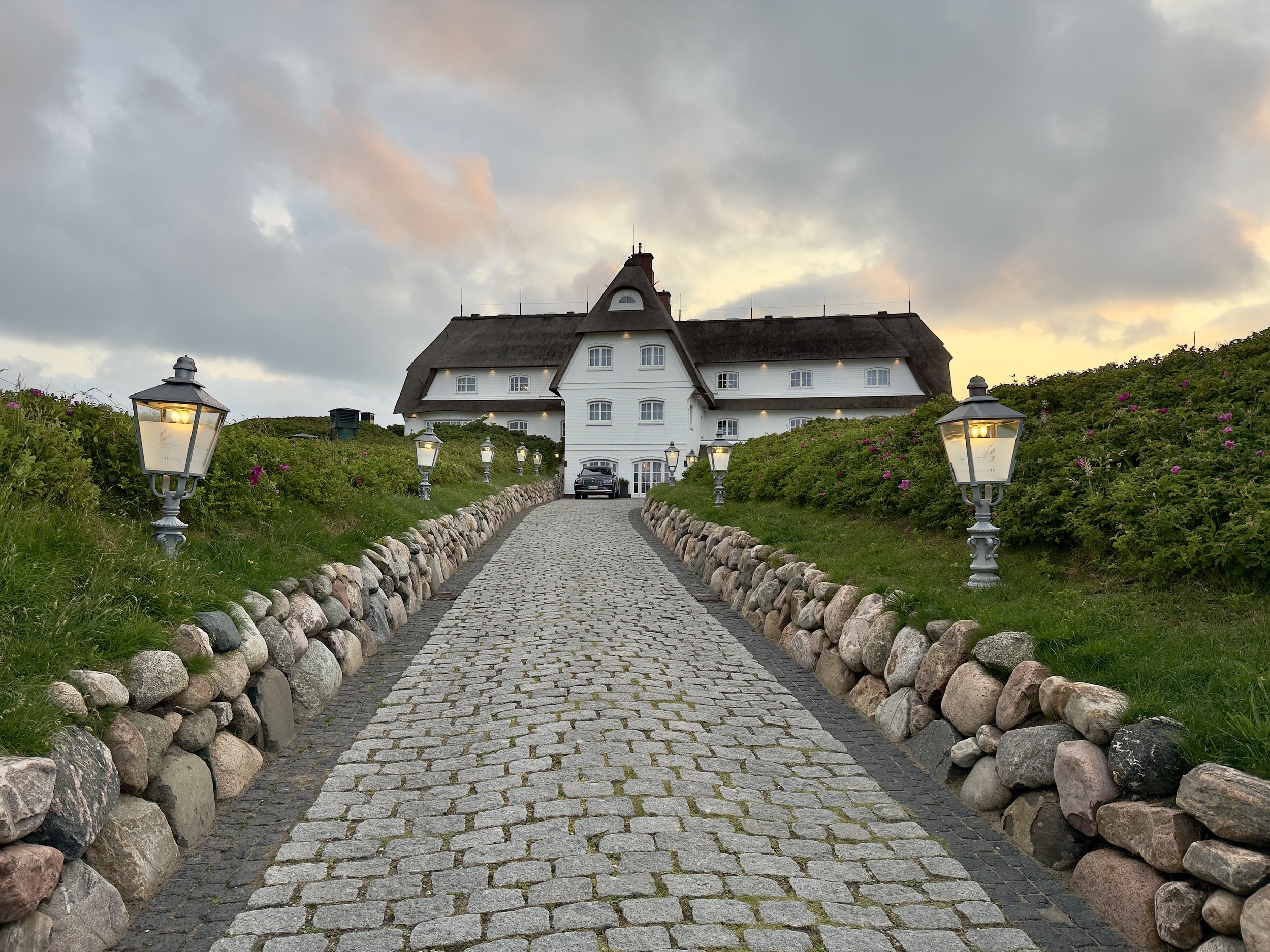
Söl’ring Hof overlooking the dunes in Rantum, one of my favorite places to stay on Sylt.
Other Excellent Options:
Luxury Picks:
Severin’s Resort & Spa – Kampen luxury with reed-roof charm and access to marshlands.
BUDERSAND Hotel – Golf & Spa – Sleek architecture in Hörnum, with stunning seascapes and design details worth photographing.
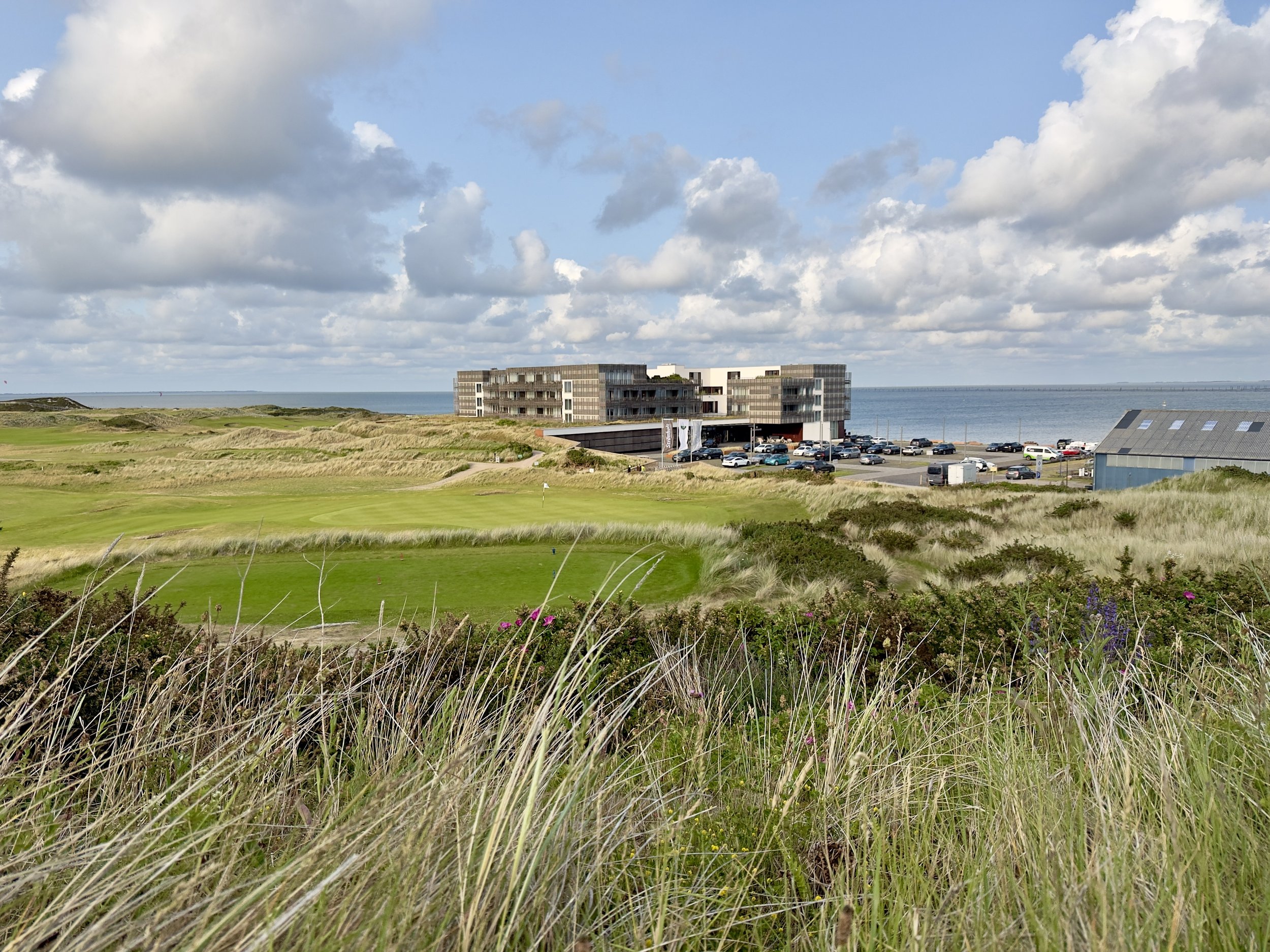
BUDERSAND Hotel in Hörnum, surrounded by the open landscapes of southern Sylt.
Mid-Range / Boutique:
Hotel Stadt Hamburg – Cozy interiors and a great location in Westerland.
Hotel Rungholt – Laid-back sophistication in Kampen, near great golden hour spots.
Dorint Strandresort & Spa – Right on the beach promenade, ideal for street and sunset photography.
Duration of Stay in Sylt
Plan for at least five days. Seven is better. The island rewards a slow pace, and the North Sea weather will occasionally rearrange your plans whether you want it to or not. Build in a buffer day and treat it as a gift rather than a problem.
Here is a loose photographer's pace for a seven-day visit.
Days 1 to 2: The South. Base yourself in Rantum or Hörnum and get oriented. Walk the dunes, shoot the Rantum Basin at sunrise, and head to the southern tip for the Hörnum Lighthouse at golden hour. Let yourself slow down. The island has a rhythm, and it takes a day to find it.
Days 3 to 4: The Central Villages. Move your focus to Kampen and Keitum. Spend a morning walking the lanes in Keitum before 8 am. Dedicate one full golden hour to Rotes Kliff in Kampen. This is your priority shoot on the entire island. Do not let anything bump it.
Days 5 to 7: The North Head to List and the Ellenbogen Peninsula. The two lighthouses at Germany's northernmost point deserve a full morning. Use any remaining days to revisit locations in different light or weather conditions. Rotes Kliff in stormy weather is a completely different photograph from Rotes Kliff at golden hour. Both are worth having.
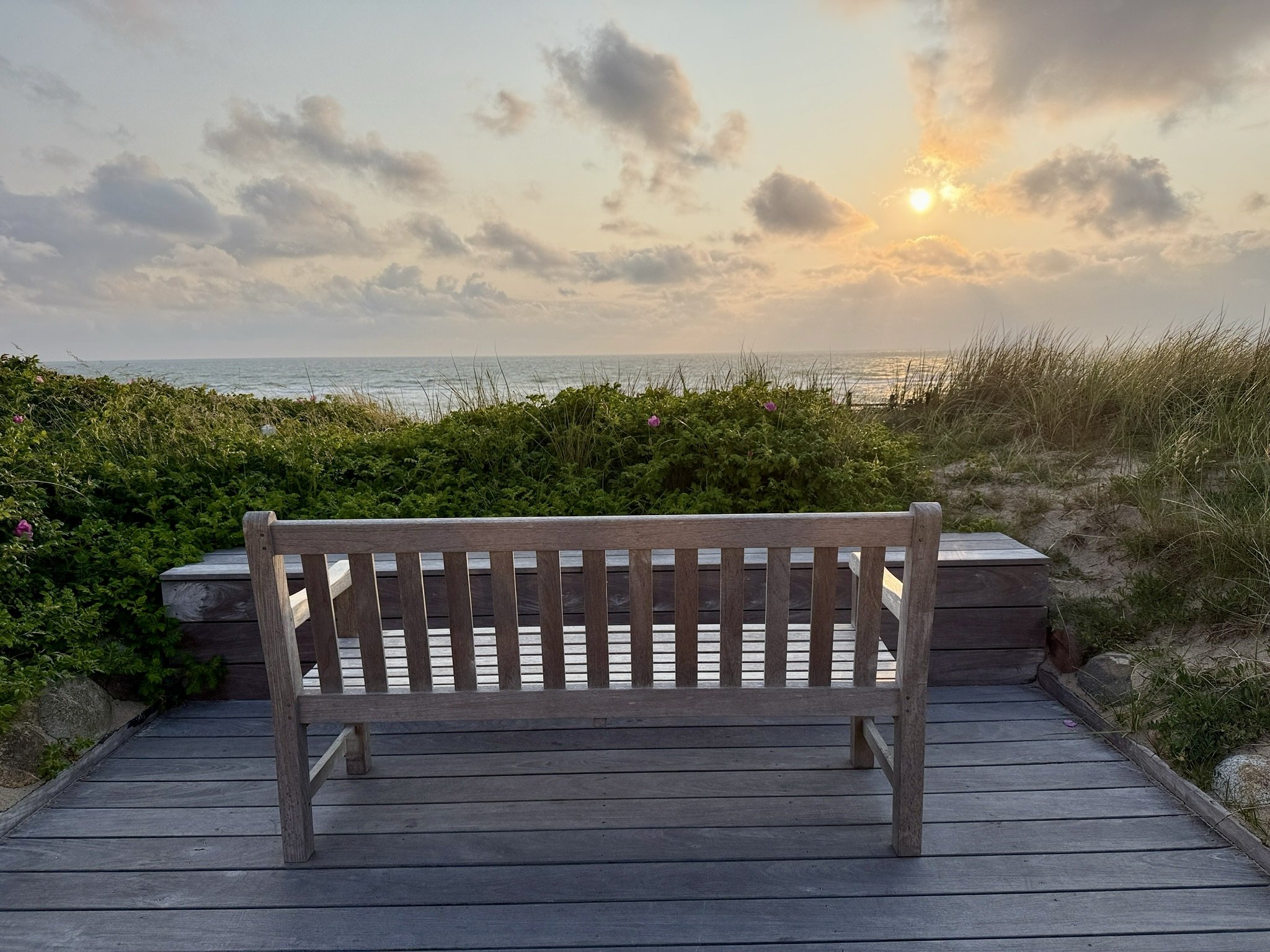
The long, narrow island of Sylt stretches along Germany’s North Sea coast just south of the Danish border.
Best Time to Visit Sylt
I visited Sylt in late May, and I would go back in that same window without hesitation. The wild roses were in bloom along every dune path, the crowds had not arrived yet, and golden hour ran past 9:30 pm. You can eat a full dinner, take your time over a glass of wine, and still make it to the cliffs before the light goes. That combination is hard to beat.
Here is how the seasons break down for photographers.
Spring (May to June): The best window on the island. The roses bloom along the dune paths, the light is clean and fresh, and the long evenings give you extraordinary shooting time. Golden hour in late May starts around 9 pm, and the sky stays interesting well past 10 pm. Crowds are manageable. Book accommodation early, spring fills up fast.
Summer (July to August): Long days and warm light, but the beaches fill up quickly. The beach chairs and parasols appear by mid-morning and change the character of the dune scenes completely. Your best strategy in summer is early mornings; most visitors sleep in, and you will have the beaches to yourself in the first hour after sunrise.
Autumn (September to October): The light gets lower, harder, and more dramatic. The wind picks up, and the dune grasses start to move constantly, which makes for better images than the still summer scenes. The Windsurf World Cup in September brings genuine action photography opportunities if that is your interest. Crowds thin out quickly after the school holidays end.
Winter (November to February): The island empties almost completely. If you want to stand alone on a wide beach in flat silver North Sea light with nothing between you and the horizon, this is your season. Pack for a serious cold and wind. The light is low all day, which suits long exposures and moody seascapes beautifully.

Kite surfers taking advantage of the strong North Sea winds off the coast of Sylt.
Getting Around Sylt
Sylt is surprisingly easy to navigate:
By bike: The island is flat, bike-friendly, and scenic. Rentals are available in all major towns.
By bus: Local buses connect Westerland to other villages.
By foot: Many villages are walkable and full of character.
Taxis are available but pricey. Uber and Bolt are not active here.


Where to Eat in Sylt
I have eaten my way through Germany for years. The best meal I had in the entire country was on Sylt. That is not a small claim, and I stand by it.
The food here punches well above what you would expect from an island this size. Sylt has more Michelin-starred restaurants per square kilometer than almost anywhere in Germany, and the seafood alone, pulled straight from the North Sea, is reason enough to make the trip. Some meals felt like art. Others felt like coming home. A few felt like both at the same time.
My Top Dining Experience
Söl’ring Hof Restaurant – This is fine dining with soul. The dishes are beautifully plated, but nothing feels forced. Every bite was a surprise, and the setting is as photogenic as the food.

A beautifully presented course at Söl’ring Hof, one of Sylt’s standout dining experiences.
Other Standouts:
Sansibar — Sansibar is the place to be seen on Sylt, and it earns that reputation. Beachside, loud, and packed with locals and visitors at sunset, drinks in hand and music playing. It is less about the food and more about the experience, and the experience is genuinely fun. Go for sundowners, stay for the wine list, and bring your camera before the crowd fills in.
Gosch am Kliff — The seafood here is the reason to go, and the views make the drive worth it on their own. The staff are knowledgeable and genuinely warm, the kind of people who want you to eat well and leave happy. Order whatever came off the boat that morning and sit somewhere with a window.
Landhaus Stricker — One of the most elegant dining experiences on the island. The decor is refined without being cold, the food is outstanding, and the pace is slow in the best possible way. This is a long lunch destination. Clear your afternoon, put the camera down for a few hours, and just eat.
Titus Sylt — Seasonal dishes, beautiful interior light, and a room that photographs as well as the food does. Perfect for a relaxed lunch between morning and evening shoots.


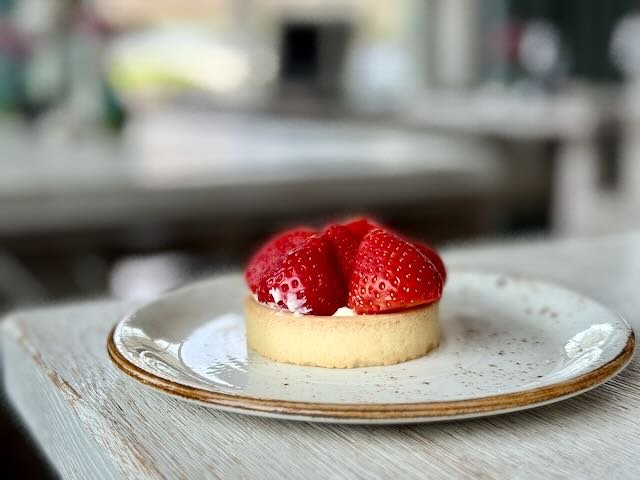


Coffee + Cake Stops:
Cafe Wien — Classic German desserts done properly, with coffee to match. The kind of café that reminds you why Germany takes cake seriously. Sit by the tall windows, order something with cream, and take your time.
Kleine Teestube — This is my favorite coffee stop on the island. A beautiful garden to sit in, outstanding cakes, and a room so charming it photographs itself. It sits right next to the shops in the village, which makes it a natural pause point on a morning walk. Go early before the garden fills up.
Kupferkanne — Built into a hillside with a room full of texture and character, this is the kind of café you stumble into once and then find yourself thinking about for weeks. Classic German pastries executed with real care. You will want to come back, and you probably will.
Kaffeerösterei Sylt — Rustic, unpretentious, and serious about its coffee. The cakes and pastries here are the real thing, made the old-fashioned way and presented without fuss. A perfect stop between morning and afternoon shoots.
Photography Gear to Bring to Sylt
Photography Gear for Sylt
Sylt is an outdoor destination with unpredictable North Sea weather. Pack for wind, occasional rain, and long walks between locations. Your gear needs to be weather-sealed and your bag needs to be light enough to carry on a bike.
Camera Bodies
Any weather-sealed mirrorless body handles Sylt well. I shoot with the Canon EOS R5 Mark II, and the Sony A7R V and Nikon Z8 are equally capable here. The high resolution pays off on the wide dune landscapes where you will want to crop and still have detail. Whatever body you bring, make sure it is weather-sealed. The wind carries salt spray closer to the cliffs than you expect.
Lenses
The 16-35mm f/2.8 is your primary lens on Sylt. The open dune landscapes, wide beach scenes, and dramatic skies all call for width. You will use this more than anything else in your bag.
The 24-70mm f/2.8 is your village lens. Keitum, Kampen, and the restaurant and coffee scenes all live in this focal range. It is also the right lens for food photography at Söl'ring Hof and Sansibar.
The 70-200mm f/2.8 earns its weight at three locations specifically: Rantum Basin for birds and compressed tidal layers, Rotes Kliff for isolating the cliff face against the horizon, and the Ellenbogen Peninsula for the two lighthouses together. Do not leave it behind.
A 35mm or 50mm prime is worth packing if you have one. Keitum village at slow morning pace with a prime is one of the best shooting experiences on the island.
Accessories
A wind-resistant tripod is essential. The North Sea wind is not polite, and a lightweight travel tripod will move on you at Hörnum and Ellenbogen. Bring something with some weight to it, or use a Platypod on the ground in the dunes.
A circular polarizer cuts the glare off the white lighthouse sections and deepens the blue of the North Sea on sunny days. A 6-stop and 10-stop ND filter give you long exposure options on the water and the tidal basin.
Bring a rain cover for your camera bag. The weather changes fast and there is often no shelter on the beach paths between locations.
Extra batteries. The cold and wind drain them faster than you expect. Carry at least two spares.
A Samsung T7 SSD for end-of-day backup. Shoot, edit, back up. Do not leave a week's worth of Sylt images on cards alone.
iPhone Photography on Sylt
Sylt is one of the best destinations I have photographed with an iPhone. The light is clean, the compositions are open, and the island's best subjects, wide dune landscapes, thatched rooftops, and long empty beaches, all play to the iPhone's strengths.
Use the ultrawide lens for the open dune landscapes at Rantum and along the beach paths toward Hörnum. The scale of these scenes needs width, and the ultrawide handles the foreground-to-horizon depth better than the main lens in this kind of flat, open terrain.
In Keitum village, switch to the main lens and use Portrait Mode on the thatched rooftops and garden gates in late afternoon. The subject separation against the soft sky works beautifully here, and the detail in the thatch renders surprisingly well.
For blue hour on the beach, turn on Night Mode and brace your phone against your camera bag or press it gently against a dune post. You will get long-exposure-style smoothness on the water without carrying a tripod to the beach.
At Rotes Kliff, shoot the cliff face in the standard photo mode rather than Portrait. The cliff is too large and too close for Portrait to read correctly. Let the color and the scale do the work.
Shoot in ProRAW if your iPhone supports it. The flat dune light and the subtle color shifts at golden hour reward editing room in post, and ProRAW gives you significantly more latitude than the standard HEIF format.
A Note on Drones
Sylt sits adjacent to the Schleswig-Holstein Wadden Sea National Park, a UNESCO World Heritage Site that covers much of the eastern tidal flats and coastline. Drone flights are restricted across significant portions of the island, particularly near the Wadden Sea, nature reserves, nesting areas, and the Rantum Basin.
Before you pack your drone, check current regulations with the Nationalpark Schleswig-Holsteinisches Wattenmeer authority and review the rules on the German drone registration portal at lba.de. Do not assume that an open beach means open airspace. Fines for unauthorized flights in protected areas are significant, and the nesting bird populations at Rantum Basin are genuinely sensitive to disturbance.
If you do fly, the dune landscapes between Rantum and Hörnum and the open beach at Ellenbogen offer the most visual reward from the air, subject to current permissions at the time of your visit.


Best Photography Locations in Sylt, Germany
Ellenbogen Lighthouse
The Ellenbogen Peninsula is Germany's northernmost point, a narrow spit of land that juts into the sea where the North Sea meets the Danish coast. There are actually two lighthouses here, one red and one white, standing apart from each other on open dune land with nothing but sky and water in every direction. It feels genuinely remote, even though you drove to get there.
The light here is wide and unobstructed. No trees, no buildings, nothing to compete with the sky. On clear days the horizon stretches forever. On overcast days the clouds come in low and fast and the mood shifts by the minute.
📷 Pro Tip: Come early morning or at golden hour. The two lighthouses together give you a natural composition with depth, one in the foreground and one behind. A 24-70mm handles the pair well; switch to a 70-200mm to isolate one lighthouse against the sky and compress the dune grasses in the foreground. The peninsula is privately owned and charges a small access fee per car. Go in late May or June for the longest light and the wildflowers blooming along the path.
Best time: Early morning or golden hour. Access: Small car access fee applies. Drive north through List to the end of the road.
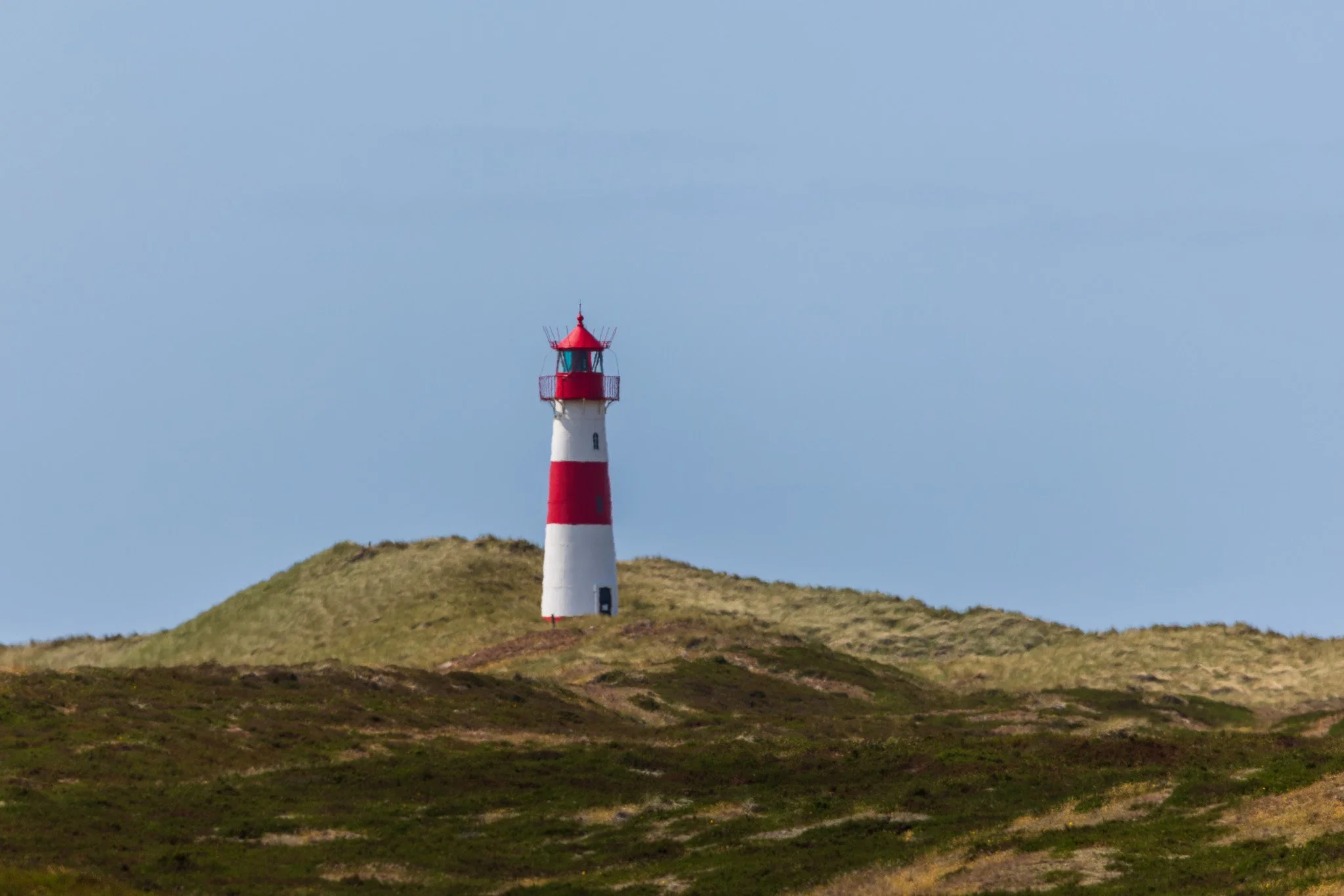
A lighthouse rises above the windswept dunes of the Ellenbogen Peninsula at the northern tip of Sylt, Germany.
Rotes Kliff, Kampen
The red sandstone cliffs on the west coast of Kampen are unlike anything else in Germany. They rise about 30 meters above the beach, carved by centuries of wind and tide, and at golden hour, the whole face turns the color of warm iron. This is the single most photographed spot on Sylt, and it earns that reputation every evening.
The cliff edge is exposed, and the wind is real. Plan for it. The light hits best when the sun is low and coming in from the northwest, painting the sandstone in shades that shift from amber to deep red as the sun drops.
📷 Pro Tip: Position yourself on the beach below rather than standing on top of the cliff. Looking up gives you the scale and the color together. A 24-70mm lens handles the full cliff face well; switch to a 70-200mm lens to compress the cliff against the horizon for a more graphic, minimal frame. Shoot 30 to 60 minutes before sunset. In late May and June, golden hour runs past 9:30 pm, so you have time to finish dinner in Kampen and still walk down to the beach before the light goes. Watch the tide before you go down; the beach narrows significantly at high water.
Best time: 30 to 60 minutes before sunset. Access: Free. Walk west from Kampen village, the cliff path leads directly to the beach below.
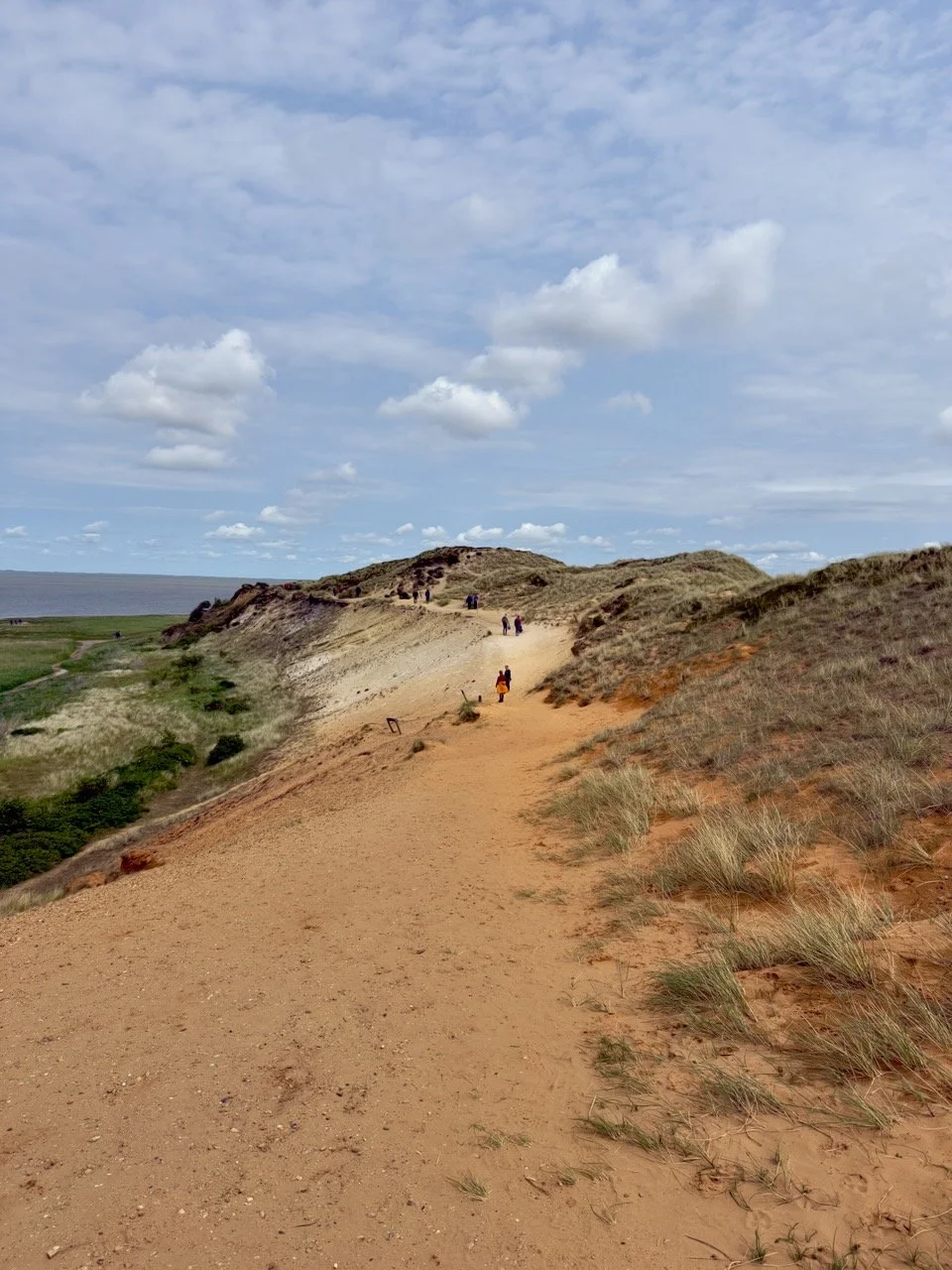
The red sandstone cliffs of Rotes Kliff glowing in the evening light near Kampen, Sylt.
Keitum Village
Keitum is the most charming village on Sylt, and the one most photographers overlook in favor of the cliffs and beaches. That is a mistake. The lanes here are lined with thatched-roof Frisian houses, old rose gardens spilling over low walls, and weathered wooden gates that look like they have not changed in a hundred years. Walking through Keitum with a camera is like stepping into a quieter, slower version of the island.
The light in the lanes is soft and directional in the morning, filtering through the hedgerows and catching the texture of the thatch. By midday, it flattens out. Come back in late afternoon when the sun drops and the warm light rakes across the facades.
📷 Pro Tip: Leave the tripod at the hotel and walk slowly. This village rewards patience and a 35mm prime. Get close to the details, the door hinges, the rose petals against whitewashed walls, the weathervanes. A 24-70mm works for wider street scenes but the 35mm keeps you engaged and moving at the right pace. If you visit in late May or June, the roses along the garden paths are in full bloom, and the scent alone is worth the detour. Early morning, before 8 am, gives you the lanes entirely to yourself.
Best time: Early morning or late afternoon. Access: Free. Keitum is a short drive or bike ride east of Westerland.
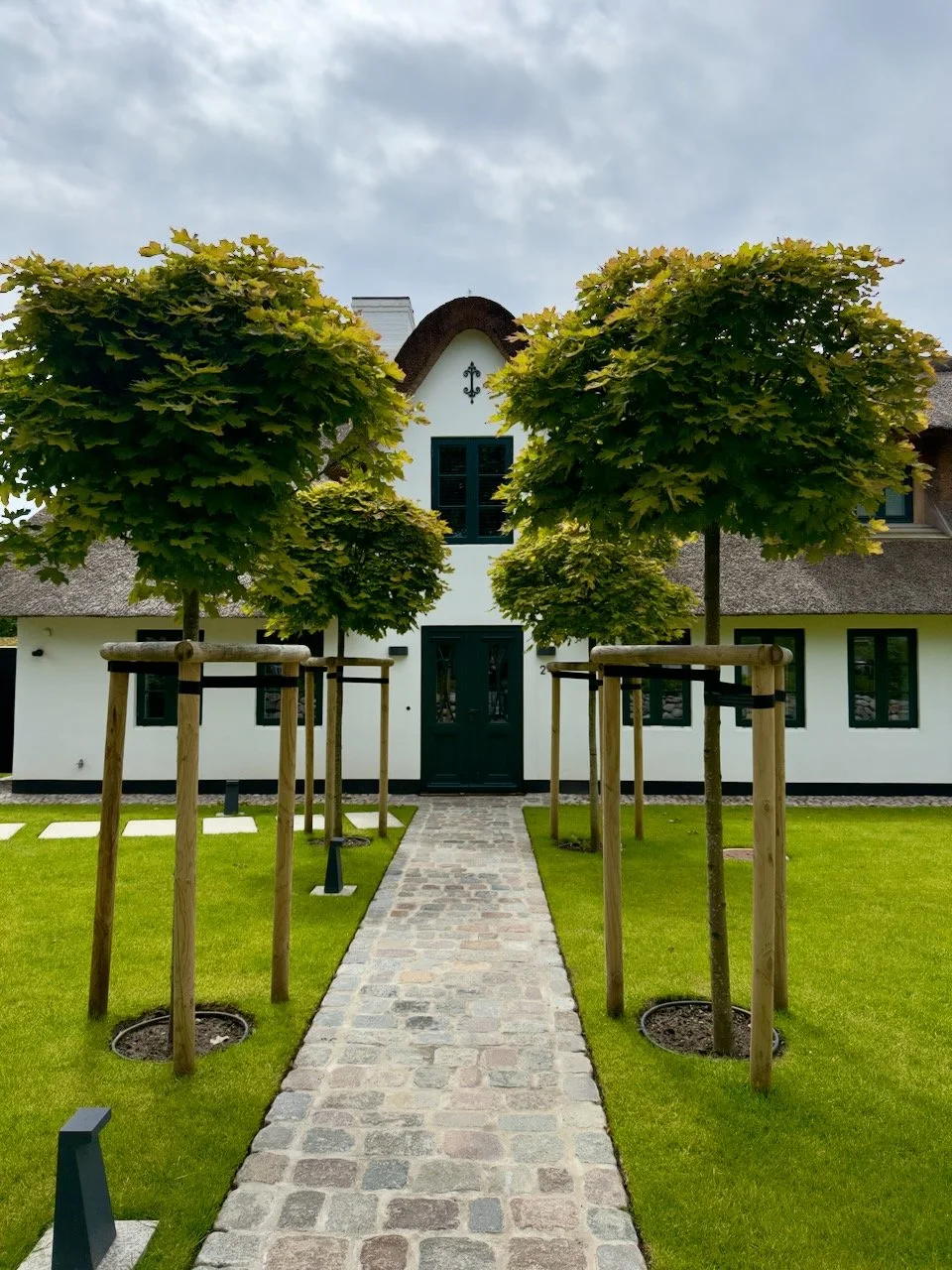
Traditional thatched roof Frisian homes and garden lanes in the village of Keitum on Sylt.
Rantum Basin
The Rantum Basin is a sheltered tidal lagoon on the eastern side of the island, sitting between the dunes and the Wadden Sea. It is a nature reserve, home to thousands of migratory birds, and one of the quietest, most meditative places on Sylt. There are no crowds here. Most visitors drive past it without stopping. That is your advantage.
The visual language here is completely different from the beaches and cliffs. Everything is horizontal. Flat water, flat sky, reed beds stretching to the horizon, and birds moving through the light in slow arcs. On still mornings, the basin mirrors the sky perfectly. On windy days, the reeds bend, and the surface breaks into texture.
📷 Pro Tip: This is a tripod location. Come at sunrise or in the first hour of morning light when the water is calm, and the reflections are cleanest. A 70-200mm lets you reach the birds without disturbing them and compress the layers of water, reeds, and sky into a single graphic frame. A wide 16-35mm works beautifully for the full panoramic stillness of the scene on mirror-flat mornings. Bring rubber boots if you want to get close to the water's edge; the path gets soft. Check tide times before you go; the basin looks completely different at low tide when the mudflats are exposed.
Best time: Sunrise or early morning. Access: Free. Pull off the road between Rantum and Hörnum on the eastern side of the island, and the basin is visible from the road.
Still water and open skies at the Rantum Basin, a protected nature reserve on the eastern side of Sylt.
Hörnum Lighthouse
Hörnum sits at the southern tip of Sylt, and the lighthouse here has a completely different character from the one at Ellenbogen in the north. It is a classic red and white striped tower rising above low dunes, surrounded by open heathland that stretches to the beach on both sides. The southern tip feels like the end of something, quieter and more exposed than the rest of the island.
The dunes around the lighthouse are low and rolling, which means the sky dominates every frame. When the clouds are moving fast off the North Sea, this becomes one of the most dramatic locations on the island. On clear evenings, the lighthouse catches the last warm light of the day long after the beach has gone into shadow.
📷 Pro Tip: Shoot from the dunes rather than from the path directly in front of the lighthouse. Getting low and using the dune grasses as foreground gives you depth and texture that the straight-on angle completely misses. A 16-35mm is your lens here, wide enough to include the sky and the grasses together. Come at golden hour when the red and white stripes glow against a warm sky. In stormy or dramatic weather, this location transforms entirely; the lighthouse against fast-moving clouds is one of the best frames on the island. A circular polarizer helps cut the glare off the white sections of the tower in bright conditions.
Best time: Golden hour or stormy conditions. Access: Free. Drive or bike to the southern end of the island; the lighthouse is a short walk from the Hörnum parking area.
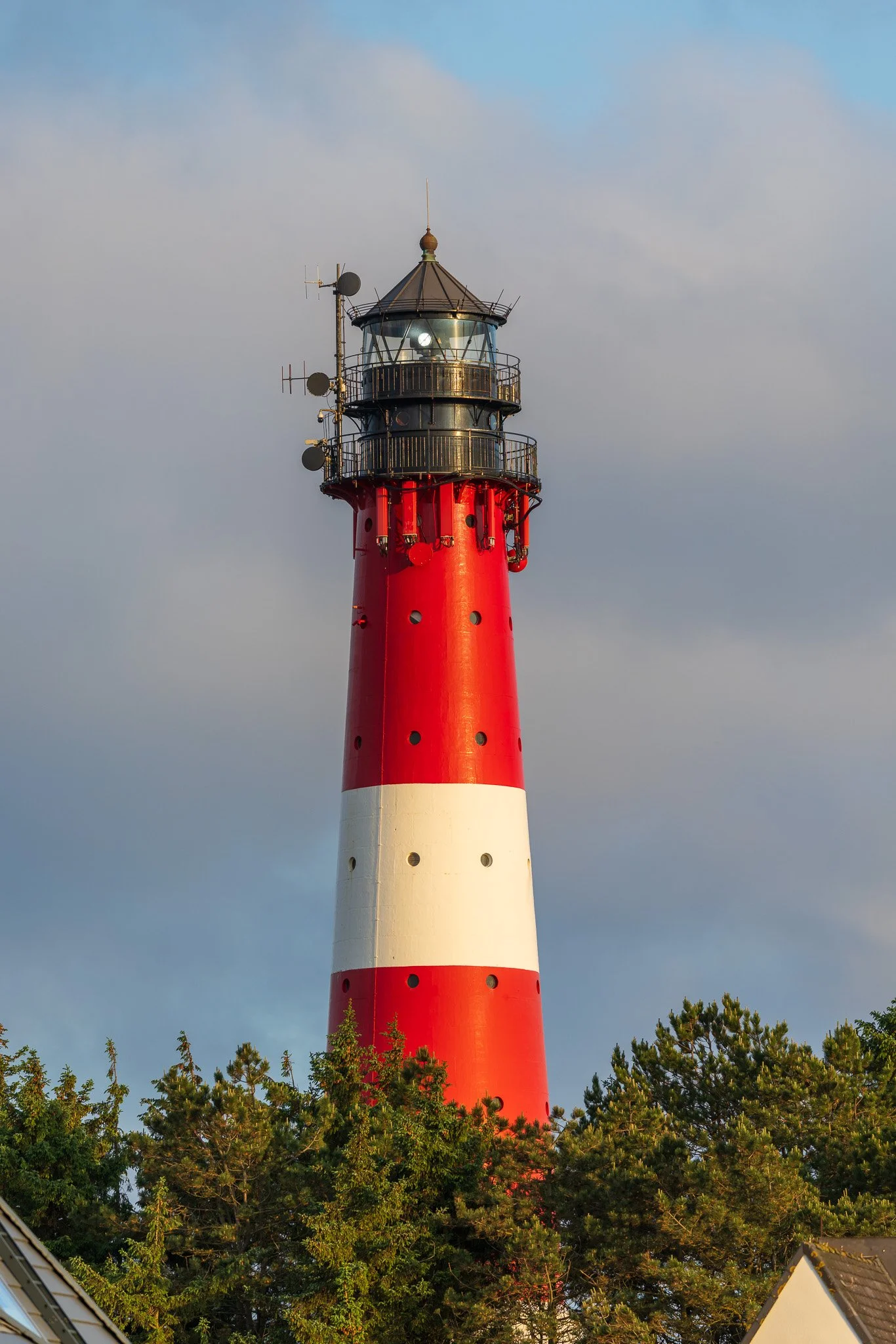
The red and white Hörnum Lighthouse rising above the dunes at the southern tip of Sylt.
Sansibar Dunes
Sansibar is Sylt's most famous restaurant, but the dunes surrounding it are a photography location in their own right. The beach access here puts you on a wide, open stretch of North Sea coastline with rolling dune ridges behind you and nothing but water ahead. The sand is pale and fine, the dune grasses move constantly in the wind, and the scale of the scene is quietly overwhelming.
This is a minimalist photographer's dream. Clean lines, open space, and light that shifts fast. The dunes create natural leading lines that draw the eye toward the water, and the ridgelines catch the low sun beautifully in the early morning and late evening.
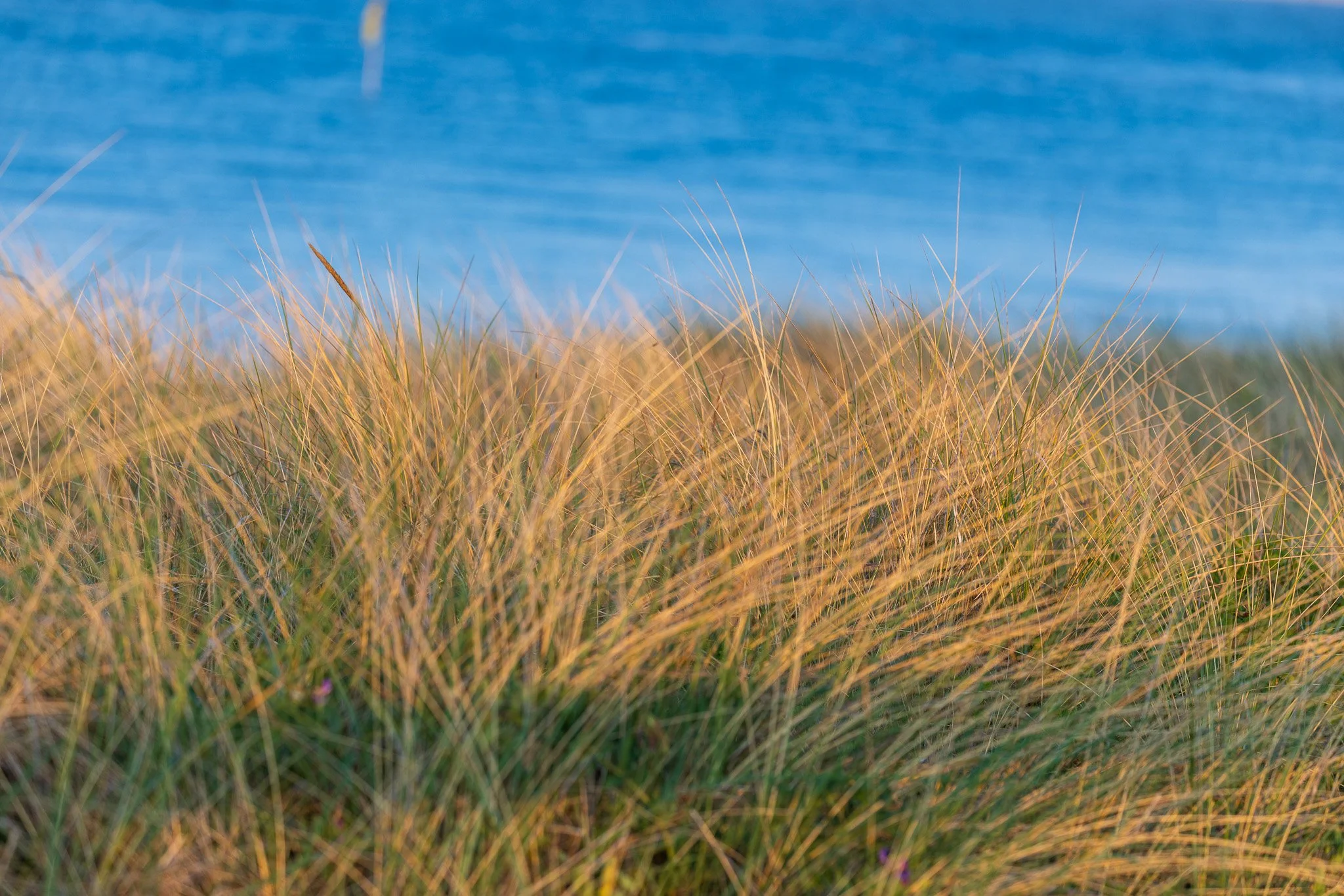
Windswept dune grass and open North Sea coastline near Sansibar on Sylt.
📷 Pro Tip: Come at sunrise before the beach fills up. The footprints in the sand disappear overnight and you will have clean, untracked dunes to work with in the first hour of light. A 16-35mm is ideal for the wide dune landscapes, get low and use the ridgeline as your leading line toward the horizon. A 70-200mm lets you compress the layers of dune grass, sand, and sea into a graphic, abstract frame. If you are shooting in summer, the beach chairs and parasols appear by mid-morning and change the character of the scene completely. The dunes themselves are protected, so stay on the marked paths and shoot from the edges rather than walking into the grass.
Best time: Sunrise or golden hour. Access: Free. Park at Sansibar and walk directly to the beach. The restaurant is a natural stop for lunch or a glass of wine after your shoot.


Festivals & Events
Windsurf World Cup (September): The world’s best on Sylt’s windy waves—perfect for action shots.
Sylt Gourmet Festival (January): A food lover’s dream, especially for lifestyle and editorial-style photography.
Easter Bonfires on the beach (April): Atmospheric and intensely local.


Frequently Asked Questions About Visiting Sylt
Do you need a car on Sylt?
It depends on where you stay. The island rewards a slower pace, and you can rent a bike, take the local train, or walk between many locations. A car helps most if you're covering the full length of the island, from the Ellenbogen Peninsula in the north to Hörnum in the south.
Is Sylt expensive?
Yes, it's often called "Germany's Hamptons," and the comparison holds for pricing too. Söl'ring Hof and other standout properties sit at the premium end, but the island rewards the investment with genuinely exceptional food and a level of quiet luxury rare in Germany.
What are the best photo spots on Sylt?
Rotes Kliff at golden hour, Keitum village in early morning light, and the Ellenbogen Peninsula's twin lighthouses are three that consistently deliver. The full list with Pro Tips is above.
Can you fly a drone on Sylt?
Restricted across significant portions of the island, particularly near the Wadden Sea National Park, nature reserves, and the Rantum Basin's nesting bird populations. Check current regulations with the Nationalpark Schleswig-Holsteinisches Wattenmeer authority before flying.
What surprised you most about Sylt?
The wild rose scent along the dune paths. It's strong enough to stop you mid-step, and it became one of those sensory details that defines the whole island in memory, alongside the light and the sound of the North Sea.
How many days do you need on Sylt?
Five days minimum, seven is better. The island rewards a slow pace, and North Sea weather will occasionally rearrange your plans regardless of what you had scheduled.
Is Sylt worth combining with Copenhagen?
Yes, it's a natural pairing. Sylt sits just below the Danish border, and Copenhagen is a three to four-hour drive north, together covering beaches, Scandinavian architecture, and some of the best food in Europe.
Final Thoughts
Sylt is not a place that tries to impress you. It doesn’t have to.
Its power is in its stillness. In the smell of roses and salt air. In the feeling of walking alone on a wide, quiet beach. In the way the wind changes your plans, and your frame, and your breath.
If this guide helps you experience even one of those moments—whether you're shooting with a full-frame camera or just your phone—I’d love to see what you capture.
Want to improve your photography while exploring some incredible destinations? Join me on one of my photography workshops! You can find all the details, including upcoming destinations and dates, through the links below.
Let's Stay Connected!
And if the scent of wild roses stays with you after you leave, well—that’s just Sylt, staying with you.
More Guides You Might Enjoy
My Photography & Travel Guide to Hamburg, Germany, pairs naturally with a trip to Sylt. Hamburg gives you grand architecture, canals, warehouses, bridges, and a much more urban photography experience before you head north to the quieter landscapes of the North Sea. Spend a few days photographing Speicherstadt, the Elbphilharmonie, and the city’s waterfront, then continue to Sylt for dunes, lighthouses, beaches, and small Frisian villages. The contrast makes the two destinations a great combination for a photography trip through northern Germany.
My Photography & Travel Guide to Copenhagen, Denmark, Sylt sits just below the Danish border, and Copenhagen is a three to four-hour drive north. It is one of the most photogenic cities in Europe, with canals, copper rooftops, and a design sensibility that makes every street worth shooting. Pair the two for a natural North Sea and Scandinavian trip that covers beaches, architecture, and some of the best food in the world.
My Photography & Travel Guide to Stockholm, Sweden. If Copenhagen has you wanting more Scandinavia, Stockholm is the next logical stop. A short flight or an overnight train from Copenhagen puts you in one of the most visually beautiful capital cities on the continent. Water, islands, old town architecture, and light that barely disappears in summer. A natural extension of any northern European photography trip.
Finally—a beginner-friendly photography guide that makes sense.
If you've ever picked up a camera and thought, "Now what?" this is the book for you.
Photography Made Simple is written for adults who are just starting out and want a clear, encouraging, real-world approach to learning photography. Whether you're using a DSLR, mirrorless, or just your smartphone, this guide walks you through the basics—without the jargon or tech overwhelm.
Inside, you'll learn:
The only camera settings you really need to know to get started
How to shoot sharper, more intentional photos using light and composition
Simple tips for portraits, landscapes, travel, and everyday life
What gear you do (and don’t) need
How to create better photos without upgrading your camera
You’ll also get practical exercises, cheat sheets, and tips for organizing and editing your images—plus the confidence to shoot off Auto Mode for good.
This is not a textbook. It’s a friendly guide to seeing the world with fresh eyes—and finally capturing what you see the way you imagine it.
📸 Format: PDF download
Pages: 100+
Perfect for: Beginners, hobbyists, and anyone ready to take better photos without the stress
✈️ Travel Photography Planning Sessions
One-on-One Trip Planning with a Professional Travel Photographer
Don’t miss the shot. Let me help you plan for it.
Overview
Planning a photography-focused trip can be overwhelming. From figuring out the best places to shoot, to when the light is just right, to knowing which lens to pack — there are a lot of decisions to make.
This one-on-one Zoom session is your chance to get personalized travel photography advice from someone who’s spent the past 25 years exploring cities, coastlines, and wild places around the world — camera in hand.
Whether you're headed to Paris, Patagonia, Tokyo, or Tuscany, I’ll help you make sure your photography trip is well-planned and creatively inspired, so you come home with the images you dreamed of (and then some).
What’s Included
✅ Photography Location Planning
I’ll help you create a customized itinerary of the best photo spots, including off-the-beaten-path gems and iconic views.
✅ Best Times to Shoot
Get expert advice on lighting, golden hour, blue hour, and seasonal conditions for each location.
✅ Gear Recommendations
Not sure whether to bring the telephoto or the prime? We’ll walk through your gear and make sure you’re bringing the right tools for your destination and style.
✅ Hotel and Base Recommendations
Stay where it’s convenient for sunrise shoots and late-night strolls with your camera. I’ll recommend hotels that are photographer-friendly and well-located.
✅ Custom Travel Tips
From sunrise entry times to tripod rules at major landmarks, you’ll get insider tips to save time, avoid tourist traps, and make the most of your trip.
Who It’s For
This service is for anyone who:
Is planning a trip and wants to prioritize photography
Wants expert insight on the best places to shoot and how to get there
Is tired of missing the shot because of poor planning or bad timing
Is a beginner, enthusiast, or professional photographer looking for guidance before a trip
How It Works
Book a Session
Choose a time that works for you and tell me where you're headed.Share Your Plans
You’ll fill out a quick questionnaire so I know your travel dates, interests, and photography style.One-on-One Zoom Call (60 minutes)
We’ll meet via Zoom and walk through your trip together — from location ideas to gear and timing. You'll leave with a custom PDF full of notes and suggestions.Follow-Up Support
Get one round of email Q&A after your session to clarify anything as your plans evolve.
Why Work With Me?
I’ve spent the last 25 years photographing the world — from major cities to remote islands. I know what it’s like to travel and shoot under pressure, and I love helping people get the most out of their trips. This is not just about hitting “popular spots” — it’s about crafting a creative and efficient plan tailored to your trip, your gear, and your goals.
Pricing
$125 / Session
Includes:
60-minute Zoom call
Custom PDF summary with photography spots, gear tips, and travel recommendations
One follow-up email with additional Q&A
Introductory rate available through September 2025
Ready to Plan Your Trip?
Let’s make sure you’re ready — so when the light is perfect, you’re in the right place with the right gear.
Questions?
Please email me at vito@chasinghippoz.com if you're not sure whether this is right for you. I'm happy to chat.