Cologne, Germany Travel & Photography Guide: Best Photo Spots, Things to Do & Hidden Gems
Every time we drive down from Düsseldorf, the moment I know we have arrived in Cologne is when the Cathedral appears above the rooftops. It is hard to miss. Two Gothic spires rising 157 meters above the city, and somehow they still catch you off guard, even when you know they are coming.
Cologne is one of Europe's oldest cities, founded by the Romans and rebuilt after World War II with a determination to layer new stories onto old stones rather than simply restore what was lost. That collision of eras is what makes it so compelling for photographers. Gothic architecture stands next to modernist buildings. Medieval lanes open onto wide riverfront promenades. The result is a city that constantly rewards you for looking up, looking down, and looking around the corner.
It is also a city with a scent. Just off a side street in the Old Town, you will find Glockengasse, home to the legendary 4711 Eau de Cologne. Wilhelm Mülhens began selling his citrus-and-lavender fragrance here in 1792, after receiving a secret formula from a Carthusian monk. When the French occupied the city two years later and assigned street numbers, his workshop became No. 4711, and a global brand was born. The original building still stands, with a fragrance fountain, beautiful old signage, and a boutique worth stepping into even if perfume is not your thing. Sit at one of the nearby cafes afterward and watch the Old Town go about its day. It is one of those simple Cologne moments that stays with you.

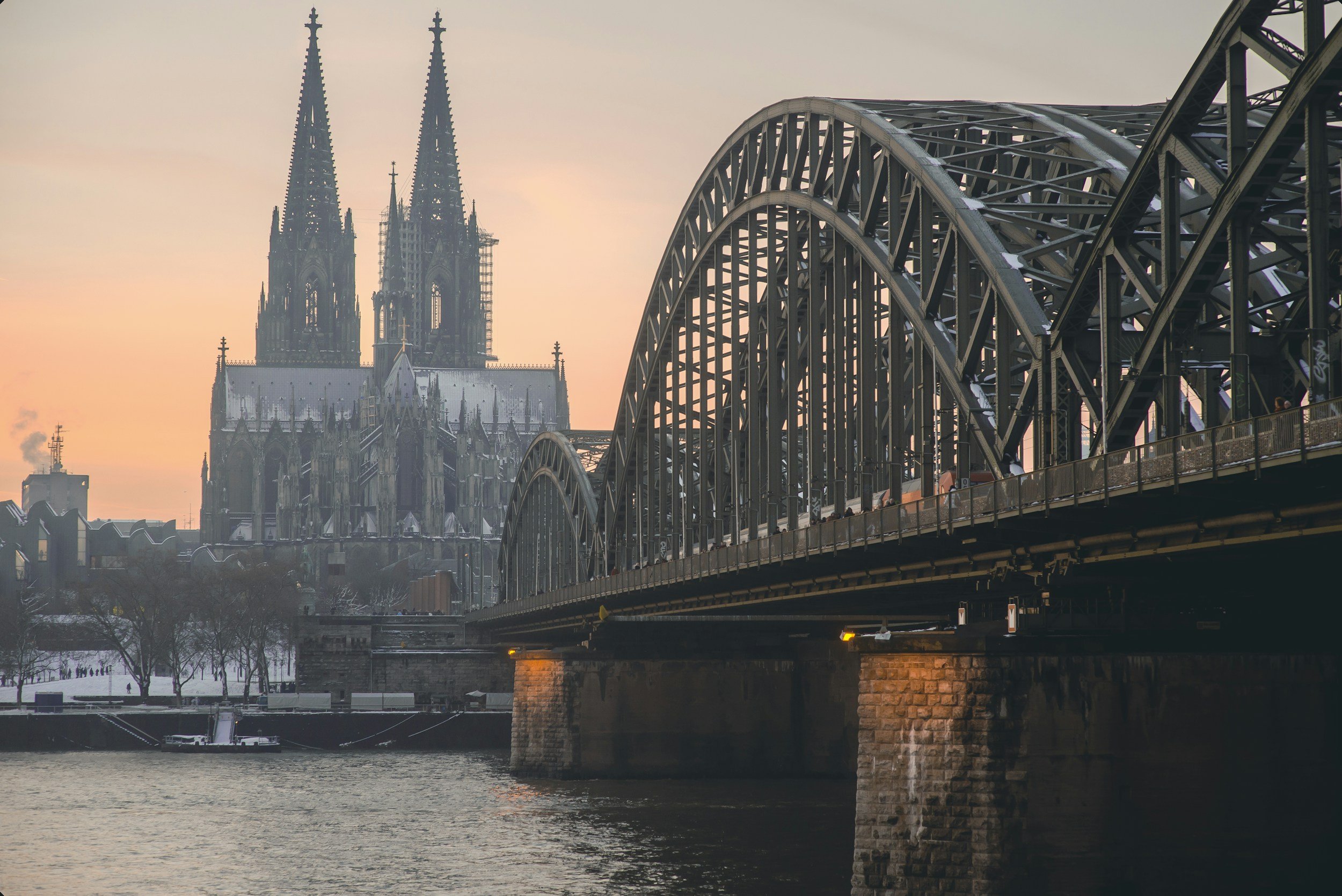
Hohenzollern Bridge
Photographically, the city delivers on every front. The Cathedral is an obvious anchor, but the Rhine riverfront at blue hour, the love locks covering the Hohenzollern Bridge, the street murals of the Belgian Quarter, and the sweeping city views from the KölnTriangle observation deck each offer something distinct. The light here in late spring and early fall is particularly good: soft, directional, and flattering to stone and water alike.
In this Photography Guide to Cologne, I share the places and experiences that continue to draw me back. You will find my favorite photography locations, guidance on when and where to shoot, practical travel tips, and gear recommendations, along with cultural insights to help you explore and photograph Cologne with confidence, respect, and ease.
Photographer's Notes
Before you go, here are my own takeaways.
Favorite Season: Spring
Favorite Location: The Hohenzollern Bridge
Favorite Hotel: Excelsior Hotel Ernst
Favorite Restaurant: Sion Brauhaus
Favorite Café: Heilandt Kaffeemanufaktur
Favorite Lens: 15-35mm
Would I Return? It's a great day trip from Düsseldorf.
Where to Stay in Cologne, Germany
The best area to stay in Cologne is the Altstadt (Old Town). It is walkable, atmospheric, and puts you within minutes of the Cathedral, the Rhine, and the Hohenzollern Bridge. Photographers will appreciate how easy it is to step outside at sunrise or blue hour without needing a taxi.
Luxury Hotels in Cologne
Excelsior Hotel Ernst, one of the most storied hotels in Germany, sits directly across from the Cathedral. I stayed here during the Christmas season once, and the view of the Cathedral spires through a frost-dusted window at night felt like something out of a film. The lobby alone is worth walking through.
25hours Hotel The Circle I stayed here during a summer workshop and found myself photographing the rooftop more than the city. The playful design energizes you in a way that more traditional hotels do not. A strong choice if you want character alongside comfort.
Hyatt Regency Cologne Situated on the east bank of the Rhine, this hotel gives you a direct view across the river toward the Cathedral and the Hohenzollern Bridge. I booked it once specifically to shoot sunrise from the balcony. The bridge lights fading as the first light hit the Dom spires is an image I still have on my wall.
Mid-Range Hotels
Stern am Rathaus A boutique option with genuine charm, steps from the Cathedral and the riverfront. Small, well-located, and priced fairly for what you get.
Lyskirchen Hotel Cologne Comfortable rooms with easy walking access to the Chocolate Museum and the Rheinauhafen crane houses. A good base if you want to spend time in the southern part of the city.
NH Collection Köln Mediapark Sleek and quiet, a short walk from the Altstadt. A reliable choice if you prefer modern interiors and easy navigation from the city center.

How Many Days Should I Visit Cologne
For a photography-focused trip, three days is the minimum. That gives you enough time to shoot the Cathedral and riverfront at different times of day, explore the Belgian Quarter at leisure, and get to the KölnTriangle for a sunset or blue-hour session without feeling rushed.
If you have five days, you can add a day trip to Düsseldorf (30 minutes by train), explore the Rheinauhafen crane houses properly, and spend an evening at one of the Kölsch beer halls without guilt.
A rough breakdown for a three-day photographer's visit:
Day 1: Cathedral at sunrise, 4711 boutique and Old Town cafes mid-morning, Hohenzollern Bridge at blue hour.
Day 2: Belgian Quarter murals in the afternoon light, Ehrenfeld street art, KölnTriangle at sunset.
Day 3: Rheinboulevard at first light, Botanical Garden Flora mid-morning, Rheinauhafen crane houses before heading home.

Along the Rhine
Best Time to Visit Cologne
The best time to visit Cologne for photography is late spring (May to June) and early fall (September to October). In late spring, golden hour stretches well past 9 pm, giving you long windows for riverfront and Cathedral shots without rushing. The skies in early fall tend to be more dramatic, with cloud movement that adds depth to wide-angle frames.
Summer brings street life and outdoor cafe culture that is excellent for candid photography, but the city gets busy, particularly around the Cathedral. Arrive early, before 7 am, if you want the square to yourself.
Winter, especially December, transforms Cologne into one of Europe's most photographed Christmas market destinations. The Cathedral Square at dusk, surrounded by market stalls with warm amber light, is genuinely special. Bring a fast lens and expect cold hands. The light quality during the short winter days is soft and directional in a way that flatters stone architecture beautifully.
Avoid mid-July and August if crowds are a concern. The riverfront and Cathedral Square are at their busiest, and the light in peak summer can be harsh midday.
Carnival in February is the wildest and most colorful window of the year. If you shoot street photography or portraiture, it is worth planning a trip around.
Getting Around Cologne
Cologne is a genuinely walkable city. Most major photography locations are within a 20 to 30-minute walk of the Altstadt. For longer journeys, the trams and U-Bahn are easy to navigate, reliable, and comfortable even when you are carrying camera gear.
If you drive into the city as we do from Düsseldorf, parking directly beneath the Cathedral is straightforward and surprisingly convenient. It puts you right where you want to be for an early morning shoot.
Uber operates in Cologne, as does the local KVB transit network. Download the KVB app before you arrive for easy ticketing and route planning.
One specific tip: when visiting the Hohenzollern Bridge, walk across it rather than taking a train. The view of the Cathedral from mid-bridge is one of the best angles in the city, and you will miss it entirely if you cross underground.
For street photography in the Belgian Quarter, the best approach is on foot. The neighborhood rewards slow, purposeful walking. Leave the car and explore at your own pace.

Dining & Coffee Cologne
Cologne has a proper food culture that goes well beyond the tourist trail. The city is known for Kölsch, its local beer, served in small glasses at traditional brewery halls called Brauhäuser. Order one, and the waiter will keep replacing it until you cover the glass with your coaster to signal you are done. That ritual alone is worth experiencing. Beyond the Brauhäuser, the city has a strong independent restaurant and cafe scene, particularly in the Belgian Quarter and the Old Town.
Sion Brauhaus is one of Cologne's oldest and most authentic Kölsch halls, in the heart of the Old Town. Long communal tables, low light, and locals who have been coming here for decades. The light through the front windows at golden hour is warm and beautiful. Shoot subtly and respectfully.
Lommerzheim A local institution in the Deutz neighborhood on the east bank of the Rhine. Rustic, no-frills, and beloved. The afternoon light through the front windows is flattering for food photography and people shots alike.
Café Rotkehlchen A light-filled cafe in the Belgian Quarter with excellent brunch and coffee. Morning shadows fall across the wooden tables in a way that makes even a simple plate look worth photographing. Arrive before the weekend rush.
Bastian's A bakery cafe perfect for a mid-morning stop between shooting sessions. Sit by the window for backlit pastry shots and watch the Old Town foot traffic go by.
Beef Brothers A bold, urban burger spot with strong interior design. Good for a quick lunch and fun handheld food photography with natural light from the street-facing windows.
Glockengasse near 4711. Not a single restaurant, but an experience: grab a coffee from one of the small cafes near the 4711 boutique and sit with it outside. Watch the Old Town move. This is Cologne at its most unhurried.
Cologne Coffee Shops:
Heilandt Kaffeemanufaktur is a serious small-batch roaster with multiple locations in the city. Clean interiors, excellent espresso, and a calm atmosphere that is ideal for editing between shoots.
Café Rico Near Rudolfplatz, with good espresso and an easy, neighborhood energy. A reliable stop in the western part of the Altstadt.
Kaffeesapiens Minimalist cafe with excellent pour-over and cake. Works well as a mid-afternoon base when you need to sit down, look at your cards, and plan the next session.

Photography Gear to Bring to Cologne
DSLR and Mirrorless Kit
Cologne rewards a versatile kit. The Cathedral interior and the Belgian Quarter street murals both benefit from wide glass, while the riverfront and KölnTriangle views call for a longer lens to compress the skyline.
Camera body: Canon EOS R5 Mark II, Sony A7R V, or Nikon Z8. Any high-resolution mirrorless body will perform well here. The city demands dynamic range at blue hour and in the Cathedral interior.
Wide-angle (16 to 24mm): Your most used lens at the Cathedral, inside and out. Also essential for the Rheinboulevard with the Bridge and Cathedral in the same frame.
Standard zoom (24 to 70mm): The workhorse for street scenes, cafe photography, and the Belgian Quarter.
Telephoto (70 to 200mm): Useful from the KölnTriangle to compress the Cathedral spires against the city roofline, and from the Rheinboulevard for isolating details across the river.
Prime (35mm or 50mm): Excellent for the Old Town, the 4711 boutique, and any situation where you want to travel light with one lens.
Tripod: Essential for the Hohenzollern Bridge long exposures, blue-hour riverfront shots, and the KölnTriangle if you visit at dusk. A compact travel tripod handles all of these comfortably.
ND filters (6-stop and 10-stop): The 6-stop filter is the one I reach for most on the bridge. A 10-stop gives you the option for extreme long exposures on bright days by the river.
Rain cover: Cologne gets meaningful rainfall year-round. A simple rain sleeve for your camera body is worth the space in your bag.
Extra batteries and cards: Cold winter mornings drain batteries faster than you expect. Bring two spares.
Samsung T7 SSD: Back up your cards each evening. Non-negotiable on a multi-day trip.
iPhone Photography
Cologne is one of the most iPhone-friendly cities in Europe. The architecture is bold, the compositions are clear, and several of the best shots in the city require nothing more than patience and good timing.
At the Cathedral: Switch to your ultrawide lens and shoot from directly below the main entrance, pointing straight up. The perspective distortion works in your favor here. The two spires converging overhead is a strong vertical composition that reads well on any screen. Use ProRAW if you have an iPhone 15 Pro or later to preserve shadow detail in the dark stonework.
On the Hohenzollern Bridge at night: Use Night Mode and brace your phone firmly against the bridge railing. Set the exposure time to the maximum available (usually around 9 to 10 seconds in low light). The river smooths out and the city lights bloom in a way that is genuinely impressive from a phone. A small clip-on tripod mount makes this repeatable.
In the Belgian Quarter: Switch to your standard lens (1x) rather than ultrawide for mural photography. The ultrawide distorts the walls and introduces perspective issues. Step back, frame the mural with a small figure or a cafe table in the foreground for scale, and shoot in good afternoon light when the sun hits the west-facing walls.
At the KölnTriangle: Clean your lens before you go up. The observation deck has glass panels and your phone lens picks up any smudge immediately. Tap to lock focus on the Cathedral across the river, then adjust exposure manually by sliding down slightly to preserve sky detail.
Drone note: The entire Cologne city center, including the Cathedral area, is a restricted no-fly zone in 2026. Do not fly without specific permits. Use the KölnTriangle observation deck for elevated perspectives instead.

My Favorite Photo Spots in Cologne
These are the spots I keep coming back to. Each one has earned its place through multiple visits and dozens of frames.
Cologne Cathedral & Roncalliplatz (Google Maps)
The Kölner Dom is the most visited landmark in Germany, and for good reason. Construction began in 1248 and took more than 600 years to complete. Standing beneath the two main spires and looking straight up, you understand immediately why. The scale is almost disorienting, and that disorientation is exactly what makes it so interesting to photograph.
From Roncalliplatz, the square on the Cathedral's south side, you get the full facade in a single frame on a wide-angle lens. At sunrise, before the tour groups arrive, the square is nearly empty and the light rakes across the stonework at a low angle that reveals every carved detail. The cobblestones pick up the warm color of the early sky beautifully.
📷 Pro Tip: Arrive at the Cathedral square at least 30 minutes before sunrise and position yourself at the far end of Roncalliplatz, facing north toward the main facade. Use a 16 to 24mm lens and shoot vertically to emphasize the height of the spires. The low morning light creates strong shadows in the carved Gothic stonework that disappear by mid-morning once the sun rises. If you want the view from inside the spires, the south tower climb involves 533 steps with no elevator and rewards you with a 97-meter panoramic platform overlooking the Rhine and the entire city. Tickets are sold at the south tower entrance and must be paid for in cash. Arrive early to avoid queues, particularly in summer. Photography inside the Cathedral is permitted without flash; be mindful of services in progress.
Best time: Sunrise for exterior; mid-morning for interior light through the stained glass. Access: Cathedral entry free; south tower climb paid, cash only. Two-minute walk from Cologne Central Station.


Hohenzollern Bridge (Google Maps)
The Hohenzollern Bridge is one of those locations that rewards patience. The first time I crossed it, I was just walking from the Deutz side to get a look back at the Cathedral skyline. It took several more visits before I finally got the shot I had been chasing: a 30-second long exposure at blue hour, with the city lights reflecting off the Rhine, a train blurring across the frame, and the thousands of love locks lining the railings catching the last warm light of the evening.
What makes this bridge special for photographers is the combination of movement and stillness. The river flows below, trains cross regularly, and on warm evenings, people sit along the riverbanks as if they have nowhere else to be. That energy reads beautifully in a long exposure.
📷 Pro Tip: Set up your tripod on the bridge itself and point toward the Cologne skyline with the Cathedral as your anchor. I use a 6-stop ND filter and dial in a 30-second exposure, which is long enough to smooth the river, blur any passing trains, and pull in the warm glow of the city lights without blowing out the highlights. Shoot during blue hour, roughly 20 to 30 minutes after sunset, when the sky still holds color and the artificial lights come alive. A wide-angle lens in the 16 to 24mm range gives you the Cathedral, the bridge railings, and the river in a single frame. If you are shooting with an iPhone, brace firmly against the railing and use Night Mode with the longest available exposure time. Use a Bluetooth remote or self-timer on any setup to avoid camera shake at long exposures.
Best time: Blue hour, year-round. Access: Free. Walk from either the Altstadt side or the Deutz side.

KölnTriangle Observation Deck
The KölnTriangle is a modern high-rise on the east bank of the Rhine in Deutz, directly opposite the Cathedral. The observation deck sits at 103 meters, giving you a clean panoramic view of the entire city without any glass between you and the skyline. This is the legal alternative to drone photography in Cologne's restricted airspace, and it earns its place.
The shot most photographers come for is the Cathedral and Hohenzollern Bridge framed together from above, with the Rhine cutting through the center of the frame. At sunset, the light catches the spires from the west and the river reflects the color of the sky below. At blue hour, the city lights come on and the scene transforms again.
📷 Pro Tip: Visit at sunset and plan to stay through blue hour, roughly 40 to 60 minutes after the sun drops. The transition from golden hour to blue hour produces two completely different images from the same position. Bring a 35mm or 50mm prime for a natural field of view that matches what your eye sees, or a 70 to 200mm telephoto to isolate the Cathedral spires and compress them against the city roofline behind. Wipe your lens before shooting: the deck is exposed and dust is a constant. The observation deck may close during strong winds, so check conditions before making a dedicated trip. Admission is around €5, cash only. Hours vary seasonally, with extended evening hours in summer.
Best time: Sunset through blue hour. Access: Paid, approximately €5, cash only. Located at Ottoplatz 1 in Deutz, a short walk from the Hohenzollern Bridge east end.
Rheinboulevard
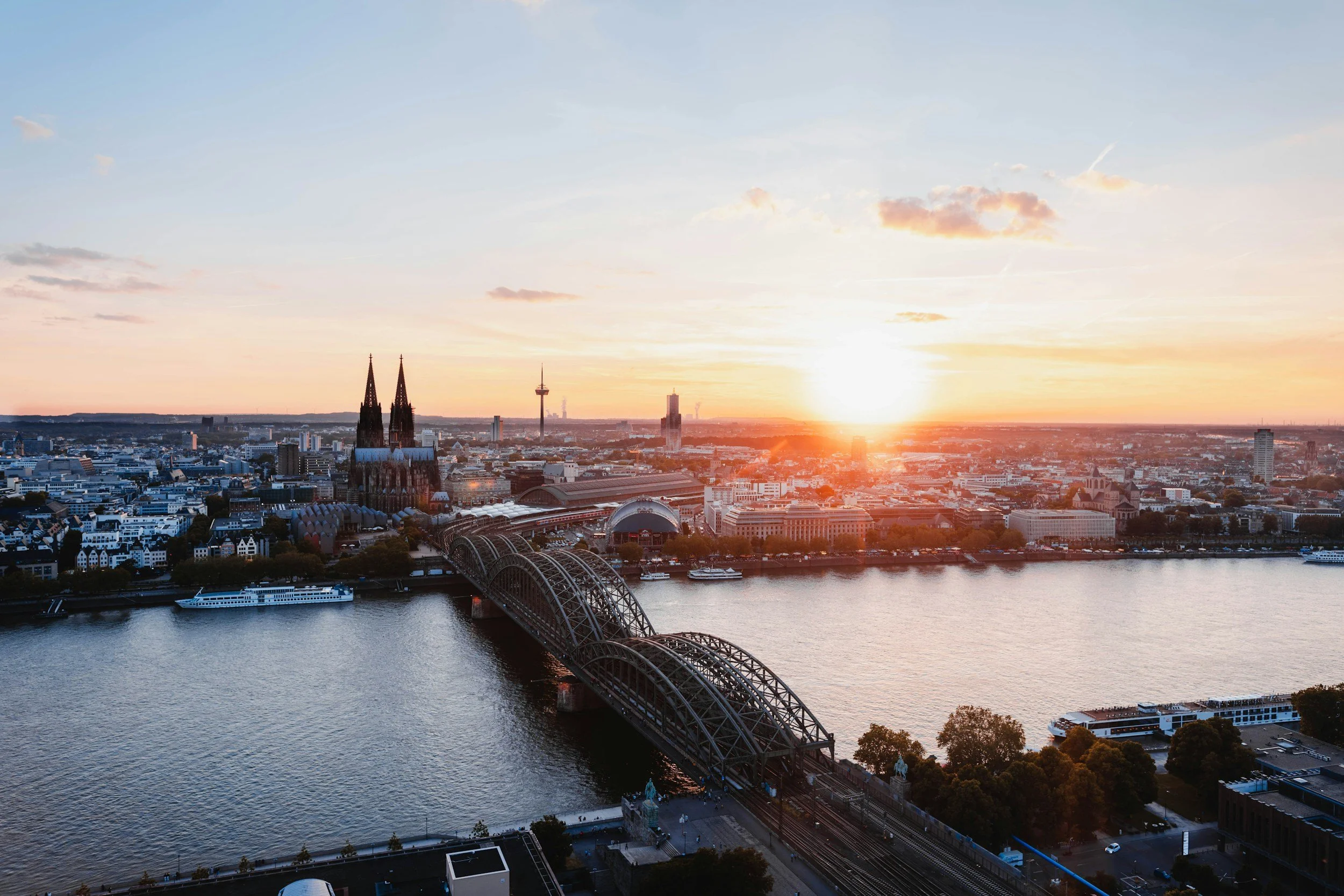
The Rheinboulevard is a wide, terraced promenade on the east bank of the Rhine in Deutz, built in stepped concrete tiers down to the water's edge. It sounds utilitarian. The views it offers are not. From the upper terrace, you have the Cathedral and Hohenzollern Bridge framed together across the river, with the Rhine in the foreground. It is the classic Cologne composition and it is as good as advertised.
What the standard description misses is how this location changes through the day. In the early morning before 7am, the promenade is nearly empty and the water is calm enough to reflect the bridge and the Cathedral spires. At golden hour, the light catches the western face of the Cathedral and the whole composition warms significantly. At blue hour, the city lights across the river create a skyline that stands up to anything in Europe.
📷 Pro Tip: For the iconic Cathedral and bridge shot, position yourself on the upper terrace of the Rheinboulevard and use a wide-angle lens at 16 to 24mm to get the full span of the bridge and both Cathedral spires in frame. At blue hour, set your tripod low on the concrete steps and include the terracing in the foreground as a leading line toward the bridge. This adds depth and context that a flat telephoto shot from the same spot lacks. If you arrive early morning before sunrise, the east bank is often misty in spring and fall, which adds atmosphere and softens the city lights still burning across the water. Shoot in both landscape and portrait orientations from this position. The vertical frame with the Cathedral reflected in the Rhine is one of the strongest compositions Cologne offers.
Best time: Early morning or blue hour. Access: Free. Walk from the Hohenzollern Bridge east end or take the tram to Deutsches Sportmuseum.
Botanical Garden Flora (Google Maps)
Textures, light, and calm — great spot for macro shots or quiet compositions.
Belgian Quarter (Google Maps)
Street murals, funky shopfronts, and perfect afternoon light. Best for candid portraits and color contrast.
Festivals & Events
Cologne Carnival (Karneval) — February Cologne's Carnival is one of the largest street festivals in Europe and the single most chaotic and colorful event the city produces. The streets fill with people in elaborate costumes, confetti falls in drifts, and the energy is unlike anything else in Germany. For street photography and portraiture, it is exceptional. Shoot in burst mode to capture movement and expression. Use a 35mm or 50mm prime at wide aperture to isolate faces and costumes against the color blur of the crowd. Ask before you photograph people at close range; the mood is celebratory and most people are happy to engage.
Christmas Markets — Late November through December Cologne runs several Christmas markets simultaneously, with the Cathedral market being the most famous and the most photographed. The best window is dusk, when the market lights glow warm against the dark stone of the Cathedral and the last blue of the evening sky. A 50mm f/1.8 handles this light well without a tripod. Arrive early in the week rather than on weekends if you want breathing room.
Cologne Lights (Kölner Lichter) — July A summer fireworks festival over the Rhine that draws large crowds to both riverbanks. For photographers, the Rheinboulevard and the Hohenzollern Bridge are the two best positions. Arrive at least 90 minutes early to secure a tripod spot. Use manual focus, locked to the distance of the fireworks burst zone, and shoot with a cable release or self-timer. Smartphone users: the Spectre app or your phone's built-in long-exposure mode will give you light trail results without a dedicated camera.

Frequently Asked Questions About Visiting Cologne
Is Cologne worth visiting compared to Düsseldorf?
They're different, not competing. Cologne is ancient and weighted with history; Düsseldorf is sleek and architecturally ambitious. They sit only 45 minutes apart, making one a natural day trip from the other rather than an either-or choice.
Do you need a car in Cologne?
No, the city is genuinely walkable, and most photography locations sit within a 20 to 30-minute walk of the Altstadt. Trams and the U-Bahn cover longer distances easily.
Is Cologne expensive?
Not particularly. Kölsch beer halls like Sion Brauhaus offer real value, and even the city's better restaurants stay reasonable compared to other major European destinations.
What are the best photo spots in Cologne?
The Cathedral from Roncalliplatz at sunrise, the Hohenzollern Bridge at blue hour, and the Rheinboulevard's terraced steps facing the skyline are three that consistently deliver. The full list with Pro Tips is above.
Can you fly a drone in Cologne?
No, the entire city center, including the Cathedral area, is a restricted no-fly zone as of 2026. Use the KölnTriangle observation deck for elevated views instead.
What surprised you most about Cologne?
The story behind 4711 Eau de Cologne. Wilhelm Mülhens began selling his citrus-and-lavender fragrance here in 1792 after receiving a secret formula from a Carthusian monk, and when the French occupied the city and assigned street numbers, his workshop became No. 4711, giving the world's most famous fragrance category its name. The original building still stands with a fragrance fountain worth stepping into even if perfume isn't your thing.
How many days do you need in Cologne?
Three days minimum for a photography-focused visit; five lets you add a day trip to Düsseldorf and properly explore the Rheinauhafen crane houses.
Is Cologne worth combining with Bruges or Ghent?
Yes, both work well for a broader trip. Bruges is about two hours west, one of the most beautifully preserved medieval cities in Europe. Ghent, an hour beyond Bruges, offers similar canal charm with more energy and fewer crowds.
Final Thoughts
Cologne keeps pulling me back. Part of it is the Cathedral, which genuinely never gets old no matter how many times you stand in front of it. Part of it is the ease of the city: the walkable riverfront, the direct access from Düsseldorf, the Kölsch halls where nobody rushes you. And part of it is the 4711 boutique and a cup of coffee in the Old Town on a quiet morning, which is one of the most pleasant ways to start a photography day that I know.
This is a city that rewards photographers who are willing to slow down, return to the same spots at different times of day, and look past the obvious frame. Do that, and Cologne will give you images that are genuinely yours.
Want to improve your photography while exploring some incredible destinations? Join me on one of my photography workshops! You can find all the details, including upcoming destinations and dates, through the links below.
Let's Stay Connected!
More Guides in the Region
My Photography and Travel Guide to Düsseldorf, Germany Cologne and Düsseldorf sit 45 minutes apart on the Rhine and could not feel more different. Where Cologne is ancient and weighted with history, Düsseldorf is sleek, fashion-forward, and architecturally ambitious. The Medienhafen harbor district and the Ko-Bogen building alone are worth the drive. If you are based in either city, the other one is a natural day trip.
My Photography and Travel Guide to Bruges, Belgium A two-hour drive west of Cologne, Bruges is one of the most beautifully preserved medieval cities in Europe. The canals, the Belfry at blue hour, and the quiet streets before the day-trippers arrive make it one of the strongest single-city photography destinations on the continent. Pair it with Cologne for a week that covers two very different but equally rewarding cities.
My Photography and Travel Guide to Ghent, Belgium An hour beyond Bruges and a city that more photographers should know about. Ghent has the canal reflections and Gothic architecture of Bruges, but with more energy, more edge, and far fewer crowds. Gravensteen Castle, the Graslei waterfront at sunrise, and the street art scattered through the university quarter make it one of the most underrated photography destinations in northern Europe.
Photography should feel exciting, not confusing.
If you have ever picked up a camera and thought, “Now what?” this book was written for you.
Photography Made Simple is a clear, encouraging guide for adults who want to understand photography without getting buried in complicated terminology, technical formulas, or endless equipment advice.
Whether you use a DSLR, mirrorless camera, or smartphone, Vito L. Tanzi walks you through the essential skills you need to take more intentional, creative, and consistently better photographs.
Inside, you will learn:
• The camera settings that matter most when you are getting started
• How aperture, shutter speed, and ISO work together
• How to create sharper photographs and choose the right focus settings
• How to use light and composition to make your images more interesting
• Practical techniques for portraits, landscapes, travel, and everyday photography
• What equipment you actually need, and what you can safely ignore
• How to improve your photographs without buying a new camera
You will also find practical exercises, simple cheat sheets, and helpful advice for organizing and editing your photographs.
This is not a textbook. It is a friendly, practical guide designed to help you move beyond full Auto, understand what your camera is doing, and feel more confident every time you press the shutter.
Photography is not only about learning settings. It is about learning to notice light, color, emotion, and the small details most people walk past.
Photography Made Simple will help you see the world differently, and capture it the way you imagined.
📸 Format: PDF download
Pages: 100+
Perfect for: Beginners, hobbyists, and anyone ready to take better photos without the stress
✈️ Travel Photography Planning Sessions
One-on-One Trip Planning with a Professional Travel Photographer
Don’t miss the shot. Let me help you plan for it.
Overview
Planning a photography-focused trip can be overwhelming. From figuring out the best places to shoot, to when the light is just right, to knowing which lens to pack — there are a lot of decisions to make.
This one-on-one Zoom session is your chance to get personalized travel photography advice from someone who’s spent the past 25 years exploring cities, coastlines, and wild places around the world — camera in hand.
Whether you're headed to Paris, Patagonia, Tokyo, or Tuscany, I’ll help you make sure your photography trip is well-planned and creatively inspired, so you come home with the images you dreamed of (and then some).
What’s Included
✅ Photography Location Planning
I’ll help you create a customized itinerary of the best photo spots, including off-the-beaten-path gems and iconic views.
✅ Best Times to Shoot
Get expert advice on lighting, golden hour, blue hour, and seasonal conditions for each location.
✅ Gear Recommendations
Not sure whether to bring the telephoto or the prime? We’ll walk through your gear and make sure you’re bringing the right tools for your destination and style.
✅ Hotel and Base Recommendations
Stay where it’s convenient for sunrise shoots and late-night strolls with your camera. I’ll recommend hotels that are photographer-friendly and well-located.
✅ Custom Travel Tips
From sunrise entry times to tripod rules at major landmarks, you’ll get insider tips to save time, avoid tourist traps, and make the most of your trip.
Who It’s For
This service is for anyone who:
Is planning a trip and wants to prioritize photography
Wants expert insight on the best places to shoot and how to get there
Is tired of missing the shot because of poor planning or bad timing
Is a beginner, enthusiast, or professional photographer looking for guidance before a trip
How It Works
Book a Session
Choose a time that works for you and tell me where you're headed.Share Your Plans
You’ll fill out a quick questionnaire so I know your travel dates, interests, and photography style.One-on-One Zoom Call (60 minutes)
We’ll meet via Zoom and walk through your trip together — from location ideas to gear and timing. You'll leave with a custom PDF full of notes and suggestions.Follow-Up Support
Get one round of email Q&A after your session to clarify anything as your plans evolve.
Why Work With Me?
I’ve spent the last 25 years photographing the world — from major cities to remote islands. I know what it’s like to travel and shoot under pressure, and I love helping people get the most out of their trips. This is not just about hitting “popular spots” — it’s about crafting a creative and efficient plan tailored to your trip, your gear, and your goals.
Pricing
$125 / Session
Includes:
60-minute Zoom call
Custom PDF summary with photography spots, gear tips, and travel recommendations
One follow-up email with additional Q&A
Introductory rate available through September 2025
Ready to Plan Your Trip?
Let’s make sure you’re ready — so when the light is perfect, you’re in the right place with the right gear.
Questions?
Please email me at vito@chasinghippoz.com if you're not sure whether this is right for you. I'm happy to chat.