Provence, France Travel & Photography Guide: Best Photo Spots, Things to Do & Hidden Gems
We spent a week in Gordes, and I have been dreaming of going back ever since.
Every morning, we drove in a different direction through the Luberon and found something extraordinary before ten o'clock. A lavender field we had not planned for, emerging over a hillside between two stone villages. A fruit market in a village square where the tomatoes were stacked in colors that looked arranged rather than grown. A road with nothing on it but cypress trees and dry stone walls and the particular light of Provence in July that Van Gogh came here to paint and Cézanne spent his life trying to describe, and that you understand completely within twenty minutes of arriving.
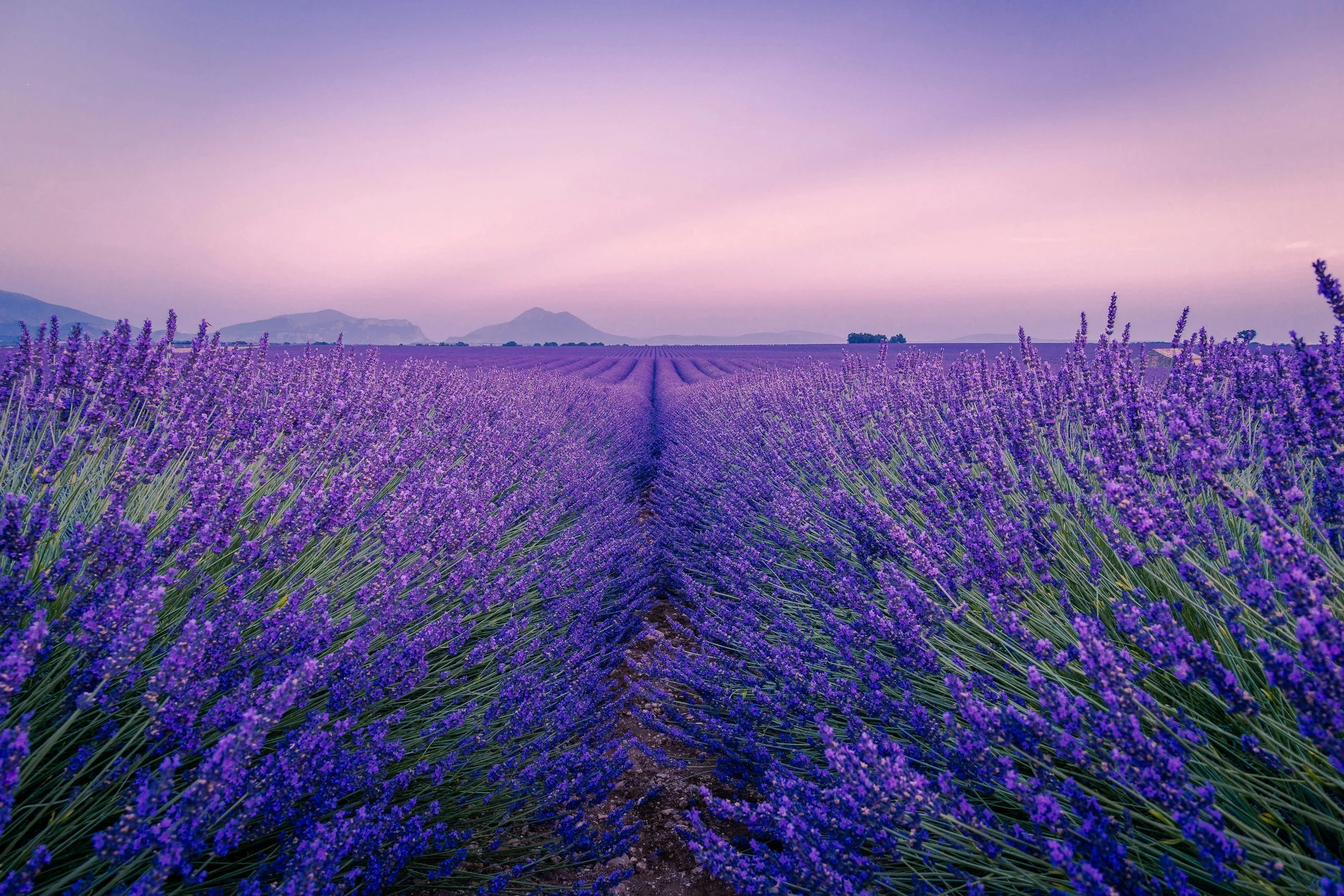
The lavender fields are the reason most photographers visit, and they deliver exactly what the photographs promise, which is rare. The sun hits the rows at an angle that saturates the purple and throws the furrows into shadow, and creates a depth and texture that a wide-angle lens handles differently from a telephoto and differently again from a phone. You stop the car. You get out. You stop the car again two kilometers later.
The open-air markets are the reason you plan meals around the shopping rather than the other way around. We bought fresh cheese and wine and the best stone fruit we had tasted anywhere, and every meal we ate, whether in the hotel or at a restaurant terrace in a village square, was simply delicious.

Lavender Fields of Provence
La Bastide de Gordes is right in the middle of Gordes. Gordes is already one of the most beautiful villages in Provence, and staying in the heart of it means walking through the stone streets before breakfast, being at the lookout point for sunrise without driving, and returning for a glass of wine on the terrace while the valley below turns gold in the last light of the day. The room had a view of the valley that I photographed every morning and never captured completely. That is Provence.
In this Photography Guide to Provence, I share what a week in the Luberon revealed: the lavender fields and when to photograph them, the villages worth finding, the hotel that made the whole trip extraordinary, the food, the light, and the practical knowledge to help you plan a visit that will make you dream of going back.

Sunrise in Gordes
Photographer's Notes
Before you go, here are my own takeaways.
Favorite Season: July
Favorite Location: Gordes
Favorite Hotel: La Bastide de Gordes
Favorite Restaurant: La Coquillade
Favorite Café: Café de France
Favorite Lens: 15-35mm f/2.8
Would I Return? I'd love to go back just to see the lavender fields again.
Where to Stay in Provence
The Luberon Valley is an ideal home base. It's central, stunning, and filled with some of the region’s most picturesque villages like Gordes, Roussillon, and Bonnieux. You’ll be perfectly positioned for scenic drives and early-morning shoots without the crowds. My personal preference is the beautiful village of Gordes perched on a hilltop.

Bastide de Gordes
Luxury Hotels in Provence
Airelles Gordes, La Bastide. This is where we stayed, and I call it my favorite hotel in the Luberon without hesitation. Airelles Gordes, La Bastide is a 16th-century Provençal house at the very center of Gordes, which means that the village is not something you drive to from the hotel. It is something you walk out into. The stone streets, the lookout point, the Abbey of Sénanque, fifteen minutes below: all of it accessible on foot from the front door.
Our room had a view of the valley that looked different at every hour. The morning light came in low and warm across the hills. At sunset, the valley went orange, and the lavender fields visible in the distance held their color longer than anything else. I photographed from the terrace every morning and never got the same image twice.
The hotel is magnificent in the specific way that a very old building in a very beautiful landscape earns magnificence: not through grandeur but through the quality of its surroundings. The service matches. The pool. The restaurant. The silence at six in the morning when the village is still asleep. We stayed for a week, and it was not enough.
Villa La Coste A contemporary luxury estate set among a 200-hectare organic vineyard, halfway between Aix-en-Provence and the Luberon. The property was shaped by some of the most significant architects and artists of the past thirty years: Frank Gehry, Tadao Ando, Renzo Piano. The art installations are woven into the landscape, and the wine is excellent. This is a very different experience from La Bastide, and a genuinely rewarding one.
Coquillade Provence Resort and Spa is set among the vineyards of the Luberon with elegant suites, a spa, and bike trails across the estate. The restaurant has a serious wine list and views over the valley that earn a long dinner. A strong choice if you want a countryside base with more space and activity around you.
Mid-Range Hotels in Provence
Le Jas de Gordes is a Provençal stay just outside Gordes, with rustic-modern touches and a relaxed pace. A good choice if La Bastide is outside your budget, but you still want Gordes as your base.
Domaine de Capelongue Country-house style near Bonnieux, with a farm-to-table restaurant and views across the Luberon. Well-positioned for the photography locations around Roussillon and the Luberon plateau.
Hôtel Les Bories and Spa: Quiet, well-run, and just minutes from Gordes, with a spa and olive groves on the property. One of the better mid-range options in the region for a full week's stay.
How Many Days Should I Stay in Provence
Four to five days is the minimum to see the villages, the lavender fields, and the major photography locations without feeling rushed. A full week is better, and if you are serious about photography, a week lets you shoot each location at two different times of day without cutting anything short.
A rough framework for how a week might unfold: spend the first two days based in Gordes, shooting the lookout at golden hour and the Abbey of Sénanque at dawn. On day three, drive to the Valensole Plateau before sunrise and spend the morning in the lavender fields. In the afternoon, go to Roussillon and the Sentier des Ocres. On day four, take a longer drive to Saint-Rémy-de-Provence and Glanum. Use the remaining days to revisit your best locations in different light, explore the markets, and leave time for the unplanned detour down an unmarked road that turns out to be the best thing you photographed all week.

Best Time to Visit Provence
Mid-June to late July is when most photographers come, and for good reason. The lavender is at full bloom across the Valensole Plateau from late June, with peak color typically in the first two weeks of July, depending on the year and the elevation. Golden hour in July in Provence lasts until nearly nine-thirty in the evening. You have a long shooting day, and the light is extraordinary.
September to early October is the photographer's quiet window. The harvest is underway, the grapevines are turning, and the crowds that fill Gordes and Roussillon in July have mostly gone. The light is softer and lower. If lavender is not your primary reason for coming, September may be a better month.
April and May bring wildflowers, green hills, and genuinely cool mornings. The lavender fields are not yet in bloom, but the landscape is lush, and the villages are quiet. A good option for photographers who want Provence without the summer crowds.
Avoid the last two weeks of July and all of August if you dislike crowds. The Luberon fills with French families on summer holiday, and popular viewpoints like the Gordes lookout can be busy even at sunrise.

Getting Around Provence
You need a car. There is no way to photograph Provence well that does not involve driving. The lavender fields are scattered across private farmland and plateau roads. The hilltop villages are connected by winding routes through the hills. The best shots are reached by turning down unmarked roads and seeing what is there.
Rent a small car with good handling. The roads around Gordes, Roussillon, and the access route to the Abbey of Sénanque are narrow enough that anything wider than a compact becomes a problem.
Uber and Bolt are not available in the rural Luberon. Local taxis exist in towns like Aix-en-Provence and Avignon, but for a photography trip across the region, your own wheels are the only practical option.
The nearest major airports are Marseille Provence (about 1 hour from Gordes) and Avignon TGV (about 45 minutes). If you are arriving from Paris, the TGV to Avignon is fast and direct, and the drive from there into the Luberon is genuinely beautiful.
The Best Villages to Visit or Stay In Provence
Here's a guide to the best towns and villages in Provence—a perfect mix of charm, beauty, and photography gold:
Gordes
Perched dramatically on a hilltop in the Luberon, Gordes is one of the most photographed villages in Provence. Stone buildings, cobbled alleys, and sweeping views make it magical, especially at sunset. Don’t miss the Abbaye de Sénanque surrounded by lavender in summer.
Photographer tip: Shoot Gordes from the lookout just outside town at golden hour.
Roussillon
This village glows in red, orange, and gold—thanks to the nearby ochre cliffs. It’s like walking through a pastel-colored dream. There’s a short hike through the Sentier des Ocres that's both easy and insanely photogenic.

Aix-en-Provence
The region’s cultural capital. Elegant boulevards, 17th-century mansions, markets every day of the week, and fountains everywhere. It’s walkable, lively, and packed with Cezanne’s legacy.
Market days: Tuesdays, Thursdays, and Saturdays are best for the full Provençal market experience.


Saint-Rémy-de-Provence
Van Gogh painted Starry Night here during his stay at the asylum. Today, it's a laid-back town filled with art galleries, olive groves, and Roman ruins (the nearby Glanum site is worth a stop). It’s also a great base for exploring the Alpilles region.
Stay: There are charming boutique hotels in nearby converted farmhouses.
Where & What to Eat Provence
Here are the must-try Provençal dishes and specialties when you're traveling (or eating) in the South of France:
Ratatouille
This classic Provençal vegetable stew isn’t just a Pixar movie. It’s summer in a dish—zucchini, eggplant, peppers, onions, tomatoes, garlic, herbs. Served warm or cold, often with crusty bread or alongside grilled meat or fish.
Bouillabaisse
A rich fish stew from nearby Marseille, traditionally made with at least three kinds of fish, shellfish, saffron broth, and served with rouille (a garlicky aioli) and toasted bread. It’s a full experience—often served as a multi-course meal.
Tapenade
A savory olive spread made with black or green olives, capers, garlic, and anchovies. Served as an appetizer with bread or crudités. Every restaurant and grandmother has their own version.
Salade Niçoise
Done properly, it’s a thing of beauty: tomatoes, anchovies or tuna, hard-boiled eggs, olives, green beans, and no cooked potatoes (despite what people outside France may tell you). A perfect lunch dish.
Rosé Wine
More a lifestyle than a drink in Provence. Light, dry, and perfect with basically anything you eat in the region. Try a bottle from Château d’Esclans or a local vineyard in the Luberon or Côtes de Provence.


Here are a few of our favorite restaurants:
Provence does not require you to search for good food. It requires you to slow down long enough to let it find you. The markets set the agenda here. What the vendors are selling in the morning is what the restaurants are cooking at noon. Once you accept that logic, every meal becomes easy.
A few restaurants I keep coming back to:
Le Mas (formerly Le Mas Tourteron), Gordes. The address is on the chemin de Sainte-Blaise, just outside Gordes, and the setting alone earns the drive: a 19th-century Provençal mas with a garden terrace, stone walls, and the kind of quiet that makes you want to linger over every course.
We ate here during our week in Gordes, and the meal stayed with us long after. Before the first course arrived, the kitchen sent out a glisteningly dark black olive tapenade with thin slices of crisp baguette. Perfectly proportioned. Enough to wake the appetite without killing it.
The restaurant has since changed chef and now operates under Alexis Osmont, with Michelin recognition in the 2026 Guide. The spirit of the place remains. Book ahead.
Auberge La Fenière, Cadenet Nadia Sammut runs one of the most distinctive restaurants in the Luberon: a Michelin-starred kitchen that operates entirely gluten and dairy free, built around the estate's own kitchen garden. This is not dietary restriction cooking. It is cooking that happens to have removed the crutches. The produce drives everything. The wine list is intelligent and very Provençal. Book well ahead, particularly in July.
La Coquillade, Gargas. The restaurant at the Coquillade estate sits above the vineyards with the kind of view that makes a long lunch feel like a reasonable life decision. The cooking is Provençal and serious. Go for dinner when the light is still good, and the valley is turning gold behind your table.
L'Oustalet, Gigondas. A short drive north of the Luberon into Gigondas wine country. The village is small, the restaurant is excellent, and the wine list is the reason you came. Order the local reds and take your time.
Chez Serge, Carpentras. Carpentras is truffle country, and Chez Serge is where you go to understand that. The kitchen treats the truffle as an ingredient rather than a performance. Unpretentious, generous, and worth the detour from the Luberon.
Coffee in Provence
In Gordes, any café on the main square works for a morning espresso. Sit outside. Watch the village wake up. That is the point.
In L'Isle-sur-la-Sorgue, the cafés along the canal are worth lingering over. The town has antique markets on weekends and a relaxed pace that makes it a natural editing stop between morning shoots.
In Aix-en-Provence, the terraces along the Cours Mirabeau are the classic choice. Find a table, order a café crème, and do not rush. Provence does not require you to search for good food. It requires you to slow down long enough to let it find you. The markets set the agenda here. What the vendors are selling in the morning is what the restaurants are cooking at noon. Once you accept that logic, every meal becomes easy.
A few restaurants I keep coming back to:
Le Mas (formerly Le Mas Tourteron), Gordes. The address is on the chemin de Sainte-Blaise, just outside Gordes, and the setting alone earns the drive: a 19th-century Provençal mas with a garden terrace, stone walls, and the kind of quiet that makes you want to linger over every course.
We ate here during our week in Gordes, and the meal stayed with us long after. Before the first course arrived, the kitchen sent out a glisteningly dark black olive tapenade with thin slices of crisp baguette. Perfectly proportioned. Enough to wake the appetite without killing it.
The menu offers four choices per course alongside a Menu du Jour. I started with a tataki of beef, served with sesame seeds and finely sliced pickled vegetables. Fresh, precise, and exactly the kind of starter that makes you curious about what follows. My friends had the house-cured salmon with a slow-cooked egg, and a marinière of clams and cockles with chorizo. I kept my eyes on my own plate, but both looked excellent.
For the main, I ordered the curry of duck breast with prawns. The duck was pink and tender, and the sauce was restrained enough not to overwhelm the meat. The prawns were good, though I was less convinced they added to the dish. Around the table, a generous carré de cochon fermier with a foie gras royale in red wine, and roasted scallops with aubergine confit and a meat jus. The pork drew admiration. The scallops were visually the best plate on the table.
The restaurant has since changed chef and now operates under Alexis Osmont, with Michelin recognition in the 2026 Guide. The spirit of the place remains. Book ahead.
Auberge La Fenière, Cadenet Nadia Sammut runs one of the most distinctive restaurants in the Luberon: a Michelin-starred kitchen that operates entirely gluten and dairy free, built around the estate's own kitchen garden. This is not dietary restriction cooking. It is cooking that happens to have removed the crutches. The produce drives everything. The wine list is intelligent and very Provençal. Book well ahead, particularly in July.
La Coquillade, Gargas The restaurant at the Coquillade estate sits above the vineyards with the kind of view that makes a long lunch feel like a reasonable life decision. The cooking is Provençal and serious. Go for dinner when the light is still good and the valley is turning gold behind your table.
L'Oustalet, Gigondas A short drive north of the Luberon into Gigondas wine country. The village is small, the restaurant is excellent, and the wine list is the reason you came. Order the local reds and take your time.
Chez Serge, Carpentras Carpentras is truffle country, and Chez Serge is where you go to understand that. The kitchen treats the truffle as an ingredient rather than a performance. Unpretentious, generous, and worth the detour from the Luberon.
Photography Gear to Bring for Provence
DSLR and Mirrorless Kit
Provence rewards high-resolution bodies. The fine texture of lavender rows, the layered stone of Gordes from the lookout, the detail in the ochre cliffs at Roussillon: all of it resolves beautifully on the Canon EOS R5 Mark II, the Sony A7R V, or the Nikon Z8. Any of the three will handle the full range of conditions here, from the flat open light of the Valensole Plateau at midday to the warm, low-angled golden hour over the Luberon.
Lenses to bring:
The wide-angle (15 to 35mm) is your lavender field lens. You want to get low, fill the foreground with rows, and push the abbey or the farmhouse deep into the frame. The 24 to 70mm handles everything in the villages: doorways, market stalls, fountains, and portrait shots of the vendors who will not mind if you ask. The 70 to 200mm lens is for Gordes from the lookout. It compresses the stone terraces against the valley and pulls the light out of the walls in a way the wider focal lengths cannot match.
A tripod is worth carrying for the Abbey of Sénanque at dawn and for any blue-hour work from the Gordes lookout. I use a Platypod for low-to-the-ground lavender field compositions when a full tripod is too slow to set up.
Bring a polarizing filter for the lavender fields. The saturated purple absorbs a lot of light, and the polarizer deepens the color without pushing the processing too far in post. I use Kase ND filters for long-exposure work, and a 3-stop ND is useful when the midday Valensole light is too harsh for the shutter speeds you want.
Pack extra batteries. In July, you will be out before sunrise and back after blue hour. Three batteries minimum. A Samsung T7 SSD for daily backups is non-negotiable on a week-long trip with this much shooting.
Drone Restrictions
France has strict drone regulations, and Provence has specific restrictions worth knowing before you pack one.
The Luberon Regional Natural Park has posted drone regulations. Check the Geoportail map at geoportail.gouv.fr before flying anywhere in the Luberon. The Abbey of Sénanque does not permit drone photography. Valensole Plateau is private farmland, and field-level drone flight requires landowner permission. Flying over historic monuments is prohibited under French law.
France requires drone registration via the AlphaTango portal for any drone with a camera, regardless of weight. As of January 2026, only drones with EU class markings (C0 through C5) are authorized. If your drone does not carry EU class markings, it cannot legally fly in France under the open category. Check current regulations on the DGAC website at ecologie.gouv.fr before you travel.
iPhone Photography in Provence
I shot a significant amount of this trip on my iPhone, and I would do it again without hesitation. The lavender fields, the village streets, the food, the morning light from the hotel terrace: the phone handled all of it. There are moments where the speed and discretion of a phone simply get you the shot that a full camera rig would have interrupted.
A few specific tips for Provence:
Lavender fields: Switch to the main lens (1x) rather than ultrawide for rows. The ultrawide distorts the furrows and makes them look uneven at the edges. Get low. Lock focus on a single row in the foreground and let the phone's computational depth processing carry the background. Shoot in ProRAW if your iPhone supports it. Lavender purple is one of the most difficult colors for phone processing to render accurately, and ProRAW gives you the latitude to correct the hue in Lightroom Mobile without destroying the saturation.
Village streets: Portrait Mode is excellent on the stone doorways and window boxes of Gordes and Roussillon. Use it to separate a painted door or a flower arrangement from the wall behind it. The depth separation works particularly well when the background is textured stone.
Markets: Shoot from table height on the food stalls. The vendors pile produce in layers, and shooting slightly upward into a stack of tomatoes or peaches with morning light coming in from the side gives you a frame that works as both a record and a photograph. Cinematic mode at 24fps is worth trying if you shoot video: the shallow depth-of-field effect on market movement is genuinely compelling.
The Gordes lookout at golden hour: Night Mode is not needed at golden hour, but turn off Smart HDR and shoot in ProRAW to retain the warmth of the light. The phone's default HDR processing tends to flatten the golden tones that make this shot worth taking.
Abbey of Sénanque: The access road from Gordes is narrow and winding. You will likely be on foot by the time you reach the viewpoint. The phone is easier to work with here than a full kit. Use the 2x optical zoom to compress the lavender field against the abbey facade without losing the foreground texture.

Photography Locations in Provence
The lavender fields of Provence are pure magic—rolling waves of purple under the summer sun, buzzing with bees and humming with the scent of heaven. They usually bloom from late June to early August, peaking in early to mid-July, depending on the region and weather. Here are the best places to see (and photograph) lavender fields in Provence:
Valensole Plateau:
The Valensole Plateau is where most photographers begin. Endless rows of lavender stretch across the plateau, often with a stone farmhouse or solitary tree anchoring the frame. The scale is larger than photographs suggest, and the scent is something no camera captures.
The light hits the rows at an angle that saturates the purple and throws the furrows into shadow, creating depth and texture that behaves differently at different focal lengths. A wide-angle at ground level turns the rows into graphic lines. A telephoto from slightly elevated ground compresses the field and pushes the farmhouse into the purple. Both work. Both are worth trying in the same session.
📷 Pro Tip: Arrive before sunrise and position yourself facing east along the rows so the first light rakes across the furrows rather than flattening them. A 15 to 35mm wide-angle at f/8 with the camera low to the ground is the standard approach. For compression, pull back with the 70 to 200mm and find a tree or farmhouse to anchor the background. Bees work the rows from mid-morning: they add life to close shots and sound to the experience, but they move fast. The best base towns are Valensole and Riez. Peak bloom is typically the first two weeks of July.
Best time: Sunrise to 9 am, and the last two hours before sunset. Access: Public roads through the plateau, free. Private farmland surrounds the rows. Stay on the road edges and do not enter the fields.


Gordes Lookout
The classic view of Gordes is from the lookout point just west of the village, where the stone buildings cascade down the hillside and the valley spreads below. At golden hour, the limestone walls catch the last light and the shadows lengthen between the terraces. It is the shot that tells you where you are in the most direct possible way.
The village is also worth photographing from inside. The narrow streets, the stone arches, the doorways with painted shutters: all of it is at its best in the early morning before the village fills with visitors.
📷 Pro Tip: Park at the lookout point west of the village, on the D15 toward Cavaillon. Arrive one hour before sunset. A 70 to 200mm at the longer end compresses the village layers against the valley; a 24 to 70mm captures the full hillside panorama. At blue hour, the lit village against the darkening sky is a different image entirely. For the interior streets, go before eight in the morning. The light is low, the streets are empty, and the textures of the stone are at their best.
Best time: One hour before sunset through blue hour for the lookout. Before 8am for the village streets. Access: Free. Parking at the lookout on the D15. Walking access to the village streets from the central square.

Gordes from the Lookout Point
Sault and Mont Ventoux Views
Sault sits at a higher elevation than Valensole, which means the lavender blooms later here, typically mid to late July. The fields are more scattered than the plateau, but the backdrop is Mont Ventoux and the sense of open space is different from anywhere else in Provence.
The Lavender Festival in Sault in mid-August brings local food, music, and the kind of community activity that makes for good reportage photography alongside the landscape work.
📷 Pro Tip: Position yourself on the road north of the village with Mont Ventoux behind the fields. A 70 to 200mm at the longer end brings the mountain into relationship with the lavender in a frame that is not available on the Valensole Plateau. Late afternoon light is better here than sunrise because the mountain faces south and southwest. The festival brings crowds but also color and human interest that the otherwise quiet plateau cannot offer.
Best time: Late afternoon for the mountain-field frame. Mid to late July for bloom. Access: Free. Public roads throughout the area.

Abbey of Sénanque (near Gordes):
The Abbey of Sénanque is the single most reproduced image in Provence, and it earns its reputation. A 12th-century Cistercian abbey set into a narrow valley below Gordes, surrounded by lavender fields on three sides. The stone is ancient and warm, and at dawn the light catches the facade before it reaches the fields. It is small, and it is exactly as beautiful as the photographs suggest.
The monks do not allow visitors to enter the lavender fields. This is worth knowing before you arrive with a wide-angle lens and expectations of walking between the rows.
📷 Pro Tip: The viewpoint is on the road above the abbey, on the approach from Gordes. Arrive at or before sunrise and position yourself above the abbey looking south, with the rows filling the foreground and the stone facade behind them. A 70 to 200mm compresses the field and abbey into a single frame. A 24 to 70mm captures the full valley setting but requires more careful composition to avoid the parking area to the left. Return at blue hour: the abbey windows glow warm against the cooling sky, and the lavender holds its color longer than you expect.
Best time: Sunrise and blue hour. Access: Free viewpoint on the public road. No entry into the lavender fields. Drive from Gordes takes approximately fifteen minutes on a narrow road.

Luberon Region (Bonnieux, Lacoste, Roussillon)
You’ll find scattered fields around this region, especially near Bonnieux and Apt. Not as dense or dramatic as Valensole, but paired with ochre cliffs, vineyards, and stone villages, it’s still an incredibly scenic area.
Bonus: You can photograph lavender fields with hilltop villages in the background for something different.


Gordes
The most photogenic hilltop village in Provence and the finest single photography subject in the Luberon. The classic view is from the lookout point just outside town, where the stone buildings cascade down the hillside, and the valley spreads below. Best at golden hour when the limestone walls catch the last light, and the shadows lengthen between the terraces.
Photography tip: Park at the lookout point west of the village for the classic view. Arrive one hour before sunset. A 70-200mm compresses the village layers against the valley; a 24-70mm captures the full hillside panorama. Return at blue hour for the lit village against the darkening sky.

Gordes
Saint-Rémy-de-Provence
Van Gogh painted Starry Night during his stay at the asylum of Saint-Paul-de-Mausole here. The Roman ruins at Glanum sit just outside town and are worth a morning on their own. The town center is elegant and walkable, with a good daily market and easy access to lavender fields on the roads toward Les Baux and Eygalières.
Saint-Rémy has a different quality from the Luberon villages. It is flatter, more open, and the light behaves differently across the wider streets and the plain of the Alpilles beyond. Worth a full half-day at minimum.
📷 Pro Tip: Glanum is best in the morning before the heat arrives. A 24 to 70mm handle handles the ruins well, and the Roman arch at the entrance to the site frames cleanly. The Saint-Paul-de-Mausole asylum, where Van Gogh stayed, is open to visitors, and the garden he painted is still there. For the town market, a 35mm prime and patience. The vendors and the produce are set up in the best light of the day.
Best time: Early morning for Glanum and the asylum garden. Market days vary; check locally before planning your visit. Access: Paid entry to Glanum. The town and the asylum garden are accessible on foot.

Special Festivals and Holidays
Lavender Festivals, late June through early August The towns of Valensole and Sault both hold lavender festivals during the bloom season, with local food, music, traditional dress, and photography access to events that the fields themselves do not provide. Sault's festival in mid-August is the best known. The combination of costumed participants, market activity, and the surrounding fields makes it one of the more rewarding single days in Provence for a photographer.
Fête de la Transhumance, May, Saint-Rémy-de-Provence In late spring, shepherds parade their flocks through the center of Saint-Rémy on the traditional route to summer pastures. The streets fill with sheep, shepherds, dogs, and spectators. It is genuinely photogenic and genuinely unusual. A 70 to 200mm handles the flock movement well. Position yourself at street level rather than elevated: the eye contact from the dogs and shepherds is the shot.
Wine Harvest Festivals, September The vendange season brings grape-stomping celebrations, estate open days, and the particular energy of a region doing the thing it has done for centuries. The vineyards around Gigondas, the Luberon, and Côtes de Provence are all worth visiting in September. Less photogenic in the traditional Provence sense, more interesting as reportage.

The Endless Lavender Fields
Frequently Asked Questions About Visiting Provence
Do you need a car in Provence?
Yes, essential. The best photography spots, lavender fields, and hilltop villages, are tucked away in the countryside and up winding roads. Rideshare isn't available in rural areas, so rent a car with good handling for hill drives.
Is Provence expensive?
It can be, especially the Michelin-starred restaurants and luxury properties like La Bastide de Gordes, but there's a real range. The open-air markets let you eat exceptionally well on your own terms, fresh cheese, wine, and stone fruit for a fraction of a restaurant meal.
When exactly do the lavender fields bloom?
Late June through early August, peaking in early to mid-July depending on the region and weather. Higher-elevation areas like Sault bloom slightly later than Valensole.
What are the best photo spots in Provence?
Gordes at golden hour from the lookout point, the Valensole Plateau's endless lavender rows at sunrise, and the Abbey of Sénanque surrounded by lavender in summer are three that consistently deliver. The full list is above.
Can you fly a drone in Provence?
Check current French drone regulations before flying, particularly over the Abbey of Sénanque and other protected or crowded sites, which likely carry restrictions.
What surprised you most about Provence?
The endless lavender fields you discover just driving around. The famous plateaus deliver exactly what the photos promise, but some of the best fields were ones we stumbled onto between two stone villages, completely unplanned.
How many days do you need in Provence?
Four to five days minimum to enjoy the villages, markets, and landscapes properly. A full week lets you chase the light without rushing, which is genuinely worth the extra time if you can manage it.
Is Provence worth combining with Colmar or Paris?
Yes, though it's a substantial drive or train ride from either, several hours south of Paris and even further from Colmar in Alsace. If you're doing a broader France circuit, Provence is a natural, if geographically separate, addition.
Final Thoughts
I have been thinking about going back since the day we left.
That is the honest summary of a week in Provence. The lavender fields in the early morning, before the heat arrives and the tour buses find the plateau. The fruit market in a village square at eight o'clock, when the vendors are still arranging things and the light is still low. The valley from the terrace at La Bastide de Gordes as it turns gold in the last hour of the afternoon, and the feeling of being exactly where you should be at exactly the right time of year.
Provence delivers what it promises, which is not guaranteed for a region this famous. The light is extraordinary. The food earns its reputation at every meal. The villages are as beautiful as the photographs suggest, and the ones you find by turning down an unmarked road in the Luberon are sometimes more rewarding than the famous ones. Go in early to mid-July for the lavender at full bloom. Wake up before six. Drive without a rigid plan. Stop whenever something looks interesting. Buy everything at the open-air markets.
And stay in Gordes if you can. Being inside the village rather than driving to it changes the whole experience.
Want to improve your photography while exploring some incredible destinations? Join me on one of my photography workshops! You can find all the details, including upcoming destinations and dates, through the links below.
Let's Stay Connected!
If you enjoyed this Photography and Travel Guide to Provence, here are three more guides worth adding to your France itinerary:
My Photography & Travel Guide to Paris— Provence and Paris make a natural pairing. Fly into Paris, spend three or four days shooting the Marais, the Seine at blue hour, and the markets of Montmartre, then head south by TGV into the light of the Luberon. The contrast between the two is half the experience.
My Photography & Travel Guide to Colmar, France — The Alsace region sits at the opposite end of France from Provence, but the visual rhythm is similar: narrow medieval streets, flower boxes on stone facades, and a food culture built around the best local produce. Colmar is one of the most photogenic small cities in Europe.
My Photography & Travel Guide to Mont Saint-Michel— A four-hour drive or TGV connection from Paris, and one of the most dramatic single photographs in all of France. The tidal abbey rising out of the bay at dawn or in incoming fog is the kind of image that makes a long drive feel reasonable. Plan it as a standalone day or a night's stay.
Finally—a beginner-friendly photography guide that makes sense.
If you've ever picked up a camera and thought, "Now what?" this is the book for you.
Photography Made Simple is written for adults who are just starting out and want a clear, encouraging, real-world approach to learning photography. Whether you're using a DSLR, mirrorless, or just your smartphone, this guide walks you through the basics—without the jargon or tech overwhelm.
Inside, you'll learn:
The only camera settings you really need to know to get started
How to shoot sharper, more intentional photos using light and composition
Simple tips for portraits, landscapes, travel, and everyday life
What gear you do (and don’t) need
How to create better photos without upgrading your camera
You’ll also get practical exercises, cheat sheets, and tips for organizing and editing your images—plus the confidence to shoot off Auto Mode for good.
This is not a textbook. It’s a friendly guide to seeing the world with fresh eyes—and finally capturing what you see the way you imagine it.
📸 Format: PDF download
Pages: 100+
Perfect for: Beginners, hobbyists, and anyone ready to take better photos without the stress