Düsseldorf, Germany Travel & Photography Guide: Best Photo Spots, Things to Do & Hidden Gems
Dusseldorf has a unique charm, and I find myself drawn to it more and more with each visit. I've spent considerable time exploring its various areas, and what sets it apart are its history, cultural sites, shops, and restaurants. The city exudes the elegance reminiscent of Zurich, yet it is much more approachable.
It also offers a perfect blend of modernity and tradition. This vibrant city includes stunning architecture, world-class museums, and a bustling art scene. Modern architecture, like the Gehry buildings, offers a striking contrast to the old town located just a few miles away. Visitors can indulge in delicious local cuisine, explore and drink a beer in the historical Old Town (Altstadt), and shop in the luxurious Königsallee district.

The Ko
Over the years, I’ve come to know Düsseldorf well. My wife grew up just outside the city, so I’ve spent many days exploring Düsseldorf with camera in hand. This guide highlights the best photo spots, local eats, seasonal tips, and gear suggestions—whether you're shooting with a DSLR or just your phone.
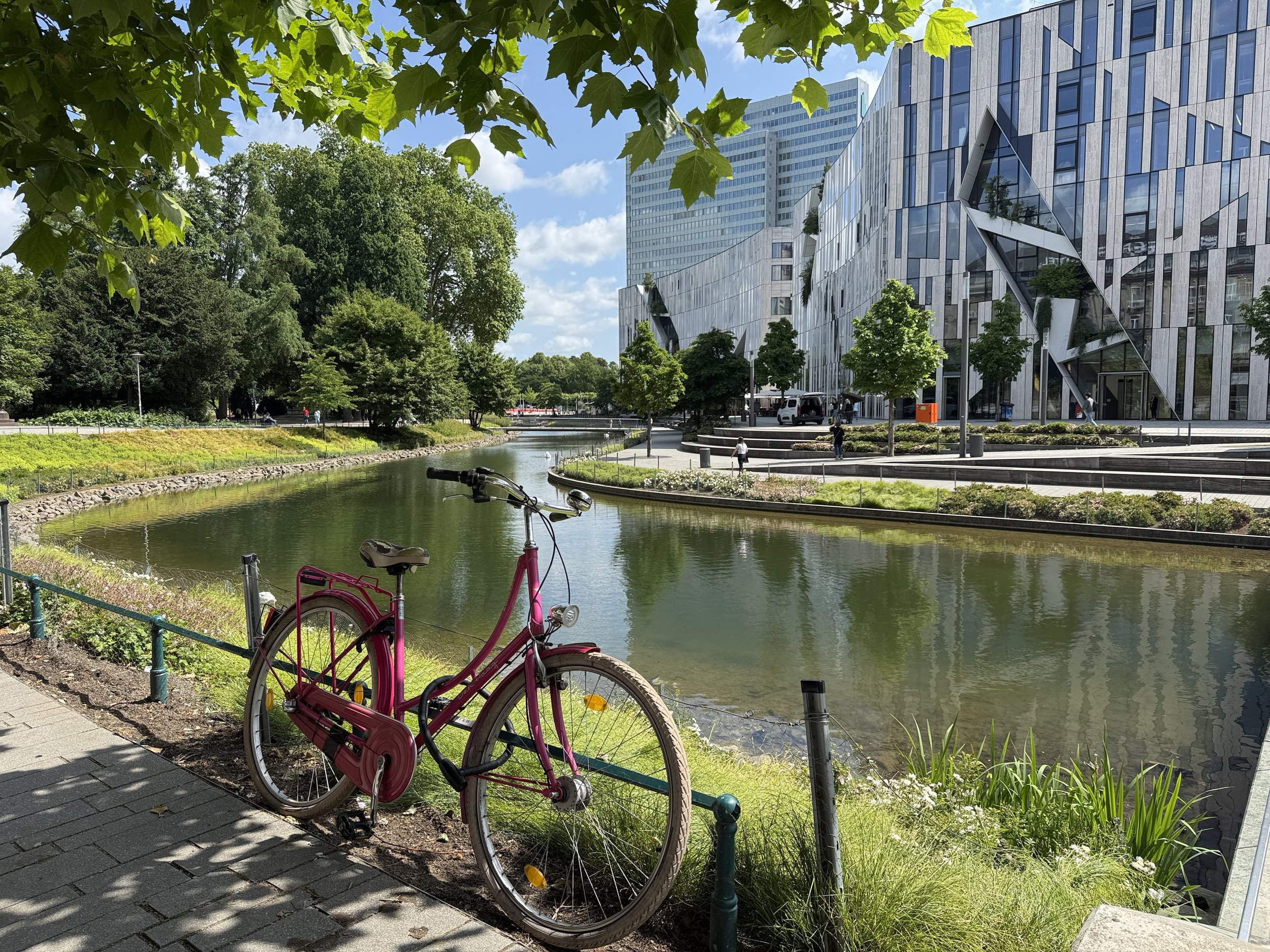
The Park on the Ko
Düsseldorf, the vibrant capital of North Rhine-Westphalia, often stands in the shadow of its more renowned neighbors like Berlin and Munich. However, this city is a hidden gem with cultural richness and a diverse culinary scene that you will undoubtedly enjoy.

Along the Ko
This Photography Guide to Düsseldorf highlights the best photo spots, travel tips, gear recommendations, and local flavor to help you capture the spirit of the city, whether you're chasing reflections at sunrise or people-watching on the Königsallee.

In the Altstadt
Photographer's Notes
Before you go, here are my own takeaways.
Favorite Season: Spring and fall
Favorite Location: The Königsallee's northern canal, near the Breidenbacher Hof
Favorite Hotel: Breidenbacher Hof
Favorite Restaurant: Nagaya
Favorite Café: Bazzar Caffè
Favorite Lens: 15-35mm f/2.8
Would I Return? Yes, even though we've been twenty times, my wife grew up here, so we'll be back.
Where to Stay in Düsseldorf?
When choosing where to stay in Düsseldorf, the area next to the Altstadt (Old Town) area along the Kö is unbeatable. Known for its cobblestone streets, historic buildings, and vibrant nightlife, it's the heart of the city and offers easy access to numerous photographic hotspots. This area also has many restaurants, cafes, and shops.

The Breidenbacher Hof
Luxury Hotels in Düsseldorf
Breidenbacher Hof. Some hotels you check into. The Breidenbacher Hof is a place you come back to. We have stayed here more times than I can count, probably close to twenty visits over the years, and the experience has never slipped. The staff knows us by name. The restaurant is one of our go-to dinners in the city. The location, right at the northern end of the Königsallee with the Hofgarten a few minutes' walk away, puts you exactly where you want to be for photography. It is not just the best luxury option in Düsseldorf. For us, it has become the only option.
Hyatt Regency Düsseldorf: Situated in the Media Harbor district, this hotel offers stunning views of the Rhine River and the city's skyline. Its modern architecture is a sight to behold, and its proximity to the Altstadt makes it an excellent choice for luxury travelers.
Mid-Level Options in Düsseldorf
Hotel Orangerie: A charming boutique hotel located in the Altstadt, Hotel Orangerie offers cozy rooms and a welcoming atmosphere, making it a great mid-range option.
Ruby Coco Hotel & Bar: This trendy hotel is perfect for those who appreciate stylish interiors and a relaxed vibe. Located near the Königsallee shopping street, it's a short walk to many of Düsseldorf's main attractions.

Near Kettwig-Essen
Best Time to Visit Düsseldorf
The best time to visit Düsseldorf is during the spring (April to June) and fall (September to October) months. During these periods, the weather is mild, and the city is alive with festivals and outdoor events. The light is also ideal for photography, with soft, natural hues enhancing your shots.
However, visiting during the Christmas Market season in early December is also an excellent time to visit. It is a very festive time to be in Germany.
Getting Around Düsseldorf
Walking and biking are great for central areas like Altstadt and MedienHafen.
Düsseldorf’s public transportation system is efficient and easy to navigate, with trams, buses, and trains covering the entire city. For convenience, consider purchasing a DüsseldorfCard, which offers unlimited travel on public transport and discounts at various attractions.
Ride-sharing services like Uber and Bolt are available, making it easy to get around if you prefer private transportation. Biking is also a popular option, with numerous bike rental stations throughout the city.

How Long to Stay in Düsseldorf
Three nights is the minimum to see Düsseldorf properly. Five nights is what I recommend if you want to shoot at your own pace, revisit locations in different light, and actually enjoy the city rather than rush through it.
Here is how I think about the time:
3 nights gives you enough time to cover the core photography locations. MedienHafen and the Rhine promenade on your first evening, the Altstadt and Königsallee across your full second day, and the Ko-Bogen and Hofgarten on your third morning before you leave. You will get the shots but you will not have much room to slow down or go back to anything.
4 to 5 nights is where Düsseldorf opens up. You have time for the rapeseed fields on a morning drive, an evening in Japan Town for dinner at Nagaya, a proper wander through Bilk looking for street art, and at least one sunrise along the Rhine promenade when the city is quiet and the light is soft. You also stop rushing between locations and start actually seeing things.
Day trips worth building in:
Cologne is 30 minutes by train and genuinely worth a full day. The Cathedral alone justifies the trip from a photography standpoint, and the old town along the Rhine has a completely different character from Düsseldorf.
Aachen is about an hour away and one of the most historically rich cities in Germany. The Cathedral is a UNESCO World Heritage site and is extraordinary to photograph both inside and out.
Maastricht is just across the Dutch border and easily reachable by car or train. It is one of the most beautiful small cities in the Benelux region, with a completely different architectural character from anything you will find in Germany. If you have not been, go.
Where to Eat in Düsseldorf
Düsseldorf punches well above its weight as a food city. What surprises most first-time visitors is the Japanese food scene. The city has one of the largest Japanese communities in Germany, concentrated in the Little Tokyo district around Immermannstraße, and it shows in the quality of the restaurants. Beyond that, you have everything from old-school German brewery restaurants to serious French cuisine. Here are my favorites.

At Grande Etoile
Restaurants in Düsseldorf
Nagaya This is my top recommendation in Düsseldorf, full stop. I have been back at least five times and it never disappoints. Chef Yoshizumi Nagaya holds a Michelin star and runs one of the best Japanese restaurants in Germany, fusing traditional Japanese technique with European precision. The decor is elegant and understated, the service is some of the best I have encountered anywhere in Europe, and the omakase menu is simply extraordinary. Book well in advance. Walk-ins are not a realistic option.
Uerige For traditional German food and the famous Düsseldorf Altbier, Uerige is a must. It is a genuine local institution, the kind of place that has been feeding the neighborhood for generations. The atmosphere is rustic and unpretentious, the food is hearty, and the beer comes straight from the barrel. Go for lunch on a weekday if you want to avoid the biggest crowds.
Konditorei Heinemann Do not leave Düsseldorf without stopping here. Heinemann is a legendary confectionery with several locations across the city, and the cakes, chocolates, and pastries are among the best I have had anywhere in Germany. It is also genuinely photogenic, making it worth a visit with a camera even if you are not hungry.
Grande Etoile A personal favorite for French cuisine. The service is excellent, the room is warm and well-designed, and it is the kind of place that makes a long dinner feel effortless. Worth a reservation for your first or last evening in the city.



Ko-59 (Kö59 by Björn Freitag) Located on the Königsallee, this is Düsseldorf's version of a high-design dining room. German chef Björn Freitag brings a modern sensibility to the menu, and the interior by London architecture firm Virgile + Partners is worth seeing on its own. Good for a special occasion dinner.
Zum Schiffchen One of the oldest restaurants in Düsseldorf, located in the Altstadt. Traditional German fare in a cozy, historic setting. A reliable option when you want something local, filling, and unpretentious after a long day of shooting.
Yoshi by Nagaya is the chef's second location, just a short walk from the original and also Michelin-starred. The format is a classical kaiseki omakase, slightly more focused and a touch more accessible than Nagaya. We have eaten there as well and it is outstanding. If you cannot get a table at Nagaya, Yoshi is not a consolation prize. It stands completely on its own.
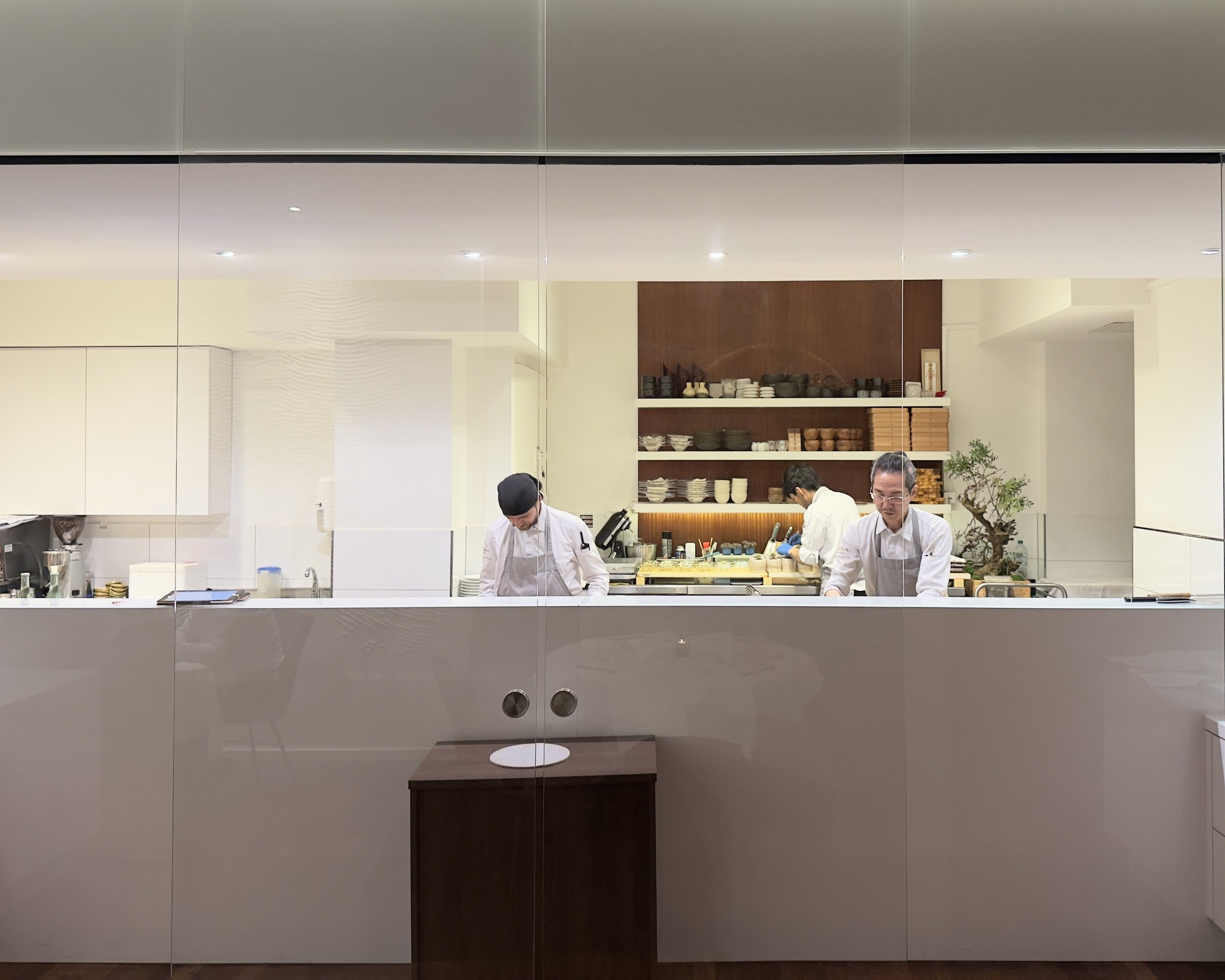
Nagaya
Coffee Shops & Cafes:
There is no shortage of excellent cafes and coffee shops in Düsseldorf. Here are a few of the favorites that we have returned to for years.

Cøffe
Coffee Shops & Cafes
Bazzar Caffè — A consistent go-to for us in Düsseldorf. Good coffee, good energy, popular with locals.
Cøffe — A newer discovery in Altstadt. Makes excellent coffee and has the kind of quiet atmosphere that works well for editing between shoots.
Pure Coffee — Located inside Carlsplatz Market. Great espresso and pastries. Pair it with a walk through the stalls.
Rösterei Vier — Third-wave roastery with locations in Altstadt and Flingern. Worth seeking out if you care about where your beans come from.
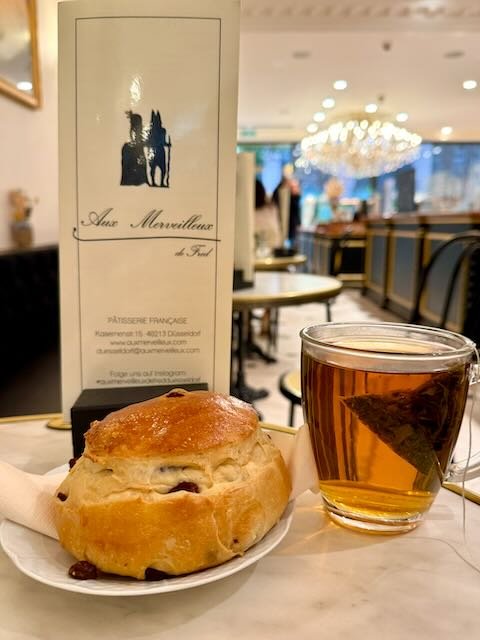
Aux Merveilleux de Fred — A Parisian pastry shop that recently opened in Düsseldorf. The merveilleux (meringue and cream confections) are exceptional and highly photogenic. Highly recommended.
Buni — Located in the Japan Town area near Immermannstraße. Good coffee and a nice change of scene if you are spending time in Little Tokyo.

Aux Merveilleux de Fred
Carlsplatz Market
Carlsplatz is worth a visit both for the food and for the photography. It is a covered market in the heart of the city with over 60 vendors selling fresh produce, artisan breads, cheeses, meats, and international specialties. Arrive on a weekday morning for the best light and the most activity. The market is busiest on Saturday, which makes for great people shots but tighter spaces to move through. Pure Coffee inside the market is a solid stop for espresso before or after you shoot.


Practical Information
Location: Carlsplatz 22-23, 40213 Düsseldorf, Germany.
Opening Hours:
Monday to Friday: 8:00 AM – 6:00 PM
Saturday: 8:00 AM – 4:00 PM
Sunday: Closed
Accessibility:
Easily reachable via public transport, the Benrather Straße U-Bahn station is nearby.
Parking is available at adjacent garages like Q-Park Carlsplatz .
Payment: While many vendors accept cards, it's advisable to carry cash, as some stalls are cash-only.
Photography Gear to Bring for Düsseldorf
Düsseldorf rewards a compact, purposeful kit. You are moving between very different visual environments: tight Altstadt lanes, wide Rhine promenades, bold modernist architecture in MedienHafen, and the fashion-forward street life of the Königsallee.
I travel here with my Canon R5 Mark II, a 15-35mm f/2.8, and a 70-200mm f/2.8, plus my Leica Q3 as my walk-around camera. That combination covers everything the city throws at you.
The 15-35mm is the workhorse. The Gehry buildings in MedienHafen demand a wide lens to capture their full curvature and scale. The same focal range works beautifully along the Rhine promenade at blue hour, where you want foreground, water, and sky in a single frame. Use it in the Altstadt too, where the narrow streets and close-together architecture reward going wide and getting low.
The 70-200mm earns its weight on the Königsallee. Use it to compress the canal, the architecture, and the people into a single layered frame. It is also the right lens for Japan Town, where candid street portraits from a respectful distance are far more natural than anything shot close with a wide.
The Leica Q3 is what I carry when I am not actively working a shot. The 28mm fixed lens is ideal for the Altstadt at night, for café scenes, and for Carlsplatz Market in the morning. It is fast, quiet, and draws no attention. Some of my best Düsseldorf images have come from the Leica on days I thought I was just walking around.
A sturdy tripod is worth bringing if blue hour and long exposures along the Rhine are on your list. The promenade near Burgplatz is flat and accessible, and the light reflecting off the water at dusk is one of the best compositions the city offers.
Bring extra batteries for the R5 Mark II. Cold evenings in spring or fall will drain them faster than you expect. A Samsung T7 SSD for on-the-go backup is a standard kit for any serious shooting day here.
iPhone Tips for Düsseldorf
You do not need a full camera kit to shoot Düsseldorf well. The city is clean, well-lit, and architecturally graphic in ways that translate beautifully to a phone camera.
At the Gehry buildings in MedienHafen, use your ultrawide lens and shoot from ground level looking up. The curved stainless facades create abstract reflections that work exceptionally well as square crops for Instagram. Shoot in ProRAW if your phone supports it, as the highlight recovery in post makes a significant difference on those reflective surfaces.
Along the Rhine promenade at blue hour, switch to Night Mode and brace your phone against a railing or low wall. The city lights reflecting across the water are long-exposure territory, and Night Mode handles it well without a tripod.
In the Altstadt at night, Portrait Mode on the older lantern-lit doorways and pub facades gives you subject separation that turns an ordinary street snap into something with real atmosphere. Get close, let the background go soft, and expose for the warm light rather than the shadows.
At Carlsplatz Market, the food stalls are bright and colorful and work well with the standard lens in natural light. Avoid the ultrawide here; the distortion flatters architecture but not produce and people at close range.
Best Photography Locations in Düsseldorf
MedienHafen – Frank Gehry’s architecture, glass reflections, and dramatic sunset angles.
Rheinturm (Rhine Tower) – Bird’s-eye view of the city and river.
Königsallee (Kö) – Perfect for fashion and street photography.
Altstadt (Old Town) – Lantern-lit lanes, historic façades, and pub culture in motion.
Carlsplatz Market – Colorful, bustling scenes of local life.
Hofgarten – Lush greenery and morning mist.
Kunstsammlung NRW (K20/K21) – Interior architecture and art shots.
Altstadt (Old Town):
The Altstadt is the oldest part of Düsseldorf and one of the most rewarding areas in the city to photograph, not because it has one iconic shot, but because it rewards the photographers who slow down and wander. Narrow cobblestone lanes run between centuries-old facades, churches appear at unexpected corners, and the pub culture that makes this neighborhood famous fills the streets with genuine, unposed life at almost any hour. This is not a place to work from a shot list. It is a place to get lost in.
The architecture spans several centuries, and the details are everywhere: carved doorways, ironwork, weathered stone, and hand-painted signage above old shops. The churches, particularly St. Lambertus with its distinctive twisted spire near the Rhine, are worth stopping at more than once as the light changes through the day.
📷 Pro Tip: Do not plan this one too rigidly. Give yourself two to three hours with no fixed agenda and just walk. The Altstadt is compact enough that you will naturally loop back through areas you have already covered, and you will notice different things the second time. Bring the Leica Q3 or your 35mm equivalent for street work. The 28mm field of view on the Leica is close to ideal here, wide enough to include context but not so wide that it distorts faces and facades at close range. For church interiors and tight architectural details, switch to the 15-35mm. The light works at any time of day: morning gives you clean empty lanes with raking light across the cobblestones, midday is best for church interiors when the windows are lit from outside, and evening brings the lanterns on and transforms the whole neighborhood into something warmer and more atmospheric. Night shooting here with the Leica on a high ISO is genuinely rewarding. The pub facades glow, the streets stay active, and the mix of old architecture and modern street life gives you real contrast in a single frame.
Best time: Any time of day; each has a different character. Evening and night are particularly atmospheric. Access: Free, fully walkable. The Altstadt is the heart of the city and easy to reach from any hotel in the center.

In the Altstadt
There is so much to photograph in the Altstadt

Altstadt
Every corner has a different view point that is so photogenic

Altstadt
With Churches and interesting architecture on each corner.

Altstadt
I could spend hours walking around this area taking photos.

Altstadt
Rheinufer Düsseldorf near Burgplatz
The Rhine promenade is one of those locations you can return to every day of a trip and find something different each time. It stretches for miles along the riverbank, running from the Altstadt north and south, and the light changes the scene completely depending on the time of day and the season. This is not just an architectural shot. It is a street photography location, a landscape location, and a long-exposure location all in one.
Start at Burgplatz, where the old round tower anchors the northern end of the Altstadt waterfront, and walk in either direction. Looking south toward MedienHafen at sunset, you get the Gehry buildings silhouetted against a changing sky with the Rhine in the foreground. Looking north, the promenade opens up into wider, quieter compositions with big sky and calm water. Along the boardwalk itself, the evening foot traffic brings genuine street photography opportunities: locals walking dogs, cyclists, couples along the railing, the kind of unhurried scenes that are hard to stage and easy to find here.
📷 Pro Tip: This location works at both sunrise and sunset, and each has a different character. Sunset gives you warmer light, more people on the promenade, and the MedienHafen skyline glowing to the south. Arrive 30 minutes before sunset and walk south along the boardwalk, shooting the Gehry buildings across the water with your 70-200mm to compress the distance and stack the architecture against the sky. Sunrise gives you softer light, an almost empty promenade, and long reflections across the river surface. Bring your tripod for blue hour in either direction. The water is calm enough for long exposures that turn the Rhine into a mirror. For street photography, the evening hours between 6pm and 9pm in spring and summer are the most productive. Walk slowly, shoot with the Leica or your 70-200mm from a distance, and let the scenes come to you.
Best time: Sunrise for quiet and reflections; sunset for color and street life. Access: Free, fully public. Burgplatz is a 5-minute walk from the center of the Altstadt.

There is a very long boardwalk that stretches for miles, making it a wonderful spot for an evening photography walk.

Rheinturm:
For panoramic views of the city, head to the top of the Rheinturm. It's perfect for sunset and night photography.

Königsallee (The Kö)
The Königsallee is one of the most photographically layered streets in Germany. On the surface, it is a luxury shopping boulevard, about a mile long and lined with flagship stores and elegant facades. But what makes it genuinely interesting to photograph is the canal running down its center, the tree-lined promenades on either side, and the mix of people it attracts at any hour. Fashion-conscious locals, business crowds, tourists, cyclists, and dog walkers all share the same stretch of pavement, and the contrast between the high-end setting and everyday human behavior is exactly what street photography feeds on.
The northern end, closer to the Breidenbacher Hof and the Hofgarten park, is the section I come back to most. The canal here is at its most photogenic, with the trees overhanging the water and the architecture framing the shot on both sides. In spring, the trees are in full leaf, and the reflections in the canal are exceptional.
📷 Pro Tip: The canal is your anchor composition. Shoot along it rather than across it, using the water as a leading line that draws the eye down the boulevard. A polarizing filter helps cut the glare on the water surface and deepens the reflections on sunny days. For street photography, position yourself near one of the bridges over the canal and shoot with your 70-200mm. The compression pulls the architecture, the trees, and the people together into layered frames that feel cinematic rather than snapshot. The Leica Q3 works beautifully here for candid work as you walk. The northern end near the Breidenbacher Hof gives you access to the park as well, so you can move between the formal boulevard shooting and the looser, more relaxed scenes inside the Hofgarten without covering much ground. This location works at any time of day. Morning gives you clean light and a quieter canal. Midday brings the fashion crowd and more street energy. Evening, when the shop windows are lit and the canal picks up the warm glow, is worth staying for.
Best time: Any time of day; spring and early summer are ideal when the trees are full. Access: Free, fully public. The Breidenbacher Hof end is walkable from the Altstadt in about 10 minutes.

The Ko, Dusseldorf's shopping area, is about one mile long, so there are plenty of opportunities for photography as you stroll down.

Ko-Bogen
The Ko-Bogen is one of the most striking pieces of contemporary architecture in Düsseldorf, designed by Daniel Libeskind and completed in two phases. The name translates loosely as "King's Arch," and the building earns it. The curved glass and stone facade sweeps along the edge of the city center in a way that feels deliberately cinematic, and the relationship between the modern structure and the older cityscape around it gives you natural compositional contrast in almost every direction you point a camera.
What makes this area more than just an architecture stop is everything happening around it. The tram lines run directly alongside the Ko-Bogen, the parks border it on one side, and the flow of people between the Königsallee, the Hofgarten, and the city center means the street photography opportunities are constant. This is a location where the building is the backdrop as much as the subject.
📷 Pro Tip: Walk the full perimeter before you commit to any single angle. The Ko-Bogen reveals different compositions depending on where you stand, and the best shots often come from positions you would not have predicted from a map. The curved facade reflects the sky and surrounding buildings in ways that shift completely as you move, so take your time. For pure architecture, use your 15-35mm from close range and shoot upward to emphasize the sweep of the building against the sky. For street photography, pull back with your 70-200mm and use the Ko-Bogen as a graphic backdrop for the people and trams moving in front of it. The tram lines add movement and an urban layer that pure architecture shots lack. The parks nearby give you a natural transition if you want softer, greener compositions after working the harder architectural lines. This location works at any time of day, but the curved glass facade catches the light particularly well in the morning and again in the late afternoon when the sun is lower and the reflections become more dramatic.
Best time: Any time of day; morning and late afternoon light hits the curved facade best. Access: Free, fully public. Located at the northern end of the Königsallee, a short walk from the Hofgarten.

Ko-Bogen
I love the new buildings that have been built in this area.

Ko-Bogen
Media Harbor (Mediahoffen):
The MedienHafen is Düsseldorf's most architecturally ambitious neighborhood, built along a stretch of the old Rhine harbor that was completely reimagined in the 1990s. The centerpiece is a cluster of three buildings designed by Frank Gehry, each one a different study in curved stainless steel and glass. They are unlike anything else in Germany and genuinely worth making a dedicated trip to photograph.
Walk toward the water and shoot the Gehry buildings from the harbor-facing side. That is the angle that shows the full sweep of the facades and, on a sunny day, the reflections across the steel surfaces become almost abstract. The light shifts constantly as the sun moves, so give yourself at least an hour to work the scene rather than firing a few frames and moving on.
📷 Pro Tip: Arrive about 45 minutes before sunset and stay through blue hour. The warm light in the final hour before the sun drops catches the curved steel facades beautifully, and the harbor water starts to pick up color from the sky. As the light fades and the building lights come on, you move into blue hour territory and the whole scene shifts into something more dramatic. Shoot from ground level near the water's edge with your 15-35mm to capture the full scale of the buildings against the sky. If you want the shot with no people in it, come early on a weekday morning instead. The harbor is quiet before 8 am and you can work the angles without navigating around other visitors. On a sunny day, look for the reflections on the curved glass and steel panels. Move slowly along the waterfront and watch how the reflections change with every few steps.
Best time: 45 minutes before sunset through blue hour, or early weekday morning. Access: Free, public waterfront. A short ride or 15-minute walk from the Altstadt.

The Gehry Building
There are lots of very interesting architectural buildings in this area.

Hofgarten:
The Hofgarten is Düsseldorf's oldest public park and one of those places that rewards a slow, unplanned visit more than a structured shoot. It sits right at the northern end of the Königsallee, which makes it a natural extension of a morning or afternoon spent on the Kö. Once you step inside, the city noise drops away and the pace changes completely. Wide tree-lined paths, open lawns, a pond with ducks, skateboarders carving through the quieter sections, cyclists, and locals sitting on benches with coffee. It is a genuine slice of everyday Düsseldorf life and one of the best people photography locations in the city.
The park works as a landscape subject and as a street photography location simultaneously. You can spend an hour shooting nothing but the tree canopy and the light filtering through the leaves, then turn around and find a perfect candid scene playing out on a bench ten meters away.
📷 Pro Tip: Walk to the back end of the park behind the Apple Store. This section is less trafficked than the main paths and has some of the most interesting light and framing in the entire park, particularly in the morning when the sun comes through the trees at a low angle. It is the kind of spot that most visitors never find. Spring and autumn are the best seasons here by a significant margin. In spring the trees are flowering and the park has a softness and color that photographs beautifully in natural light. In autumn the canopy turns and the fallen leaves on the paths give you texture and warmth in every frame. Bring the Leica Q3 for people work. The pond is worth spending time at, the ducks and the reflections on the water make for simple but satisfying compositions, and the light on the water surface in the early morning is particularly clean. For the tree canopy and wider landscape shots, switch to the 15-35mm and shoot upward into the light. The skateboarders and cyclists add movement and energy if you want something more dynamic. Use a faster shutter speed and give yourself room to anticipate where they are heading.
Best time: Spring and autumn for color and light; early morning for the quietest conditions and best light through the trees. Access: Free, fully public. Directly adjacent to the northern end of the Königsallee.

Graffiti & Street Art in Bilk
Düsseldorf is not the first German city that comes to mind for street art, but the Bilk neighborhood on the way toward MedienHafen has a genuine concentration of large-scale murals and wall paintings that are worth hunting down. This is not a designated street art district with a walking tour and a map. It is more of a treasure hunt, which is exactly what makes it interesting.
The murals here range from large figurative works covering entire building facades to smaller, more detailed pieces tucked into unexpected corners. The scale of the best ones is significant enough that you need to step back and work with a wider lens to capture them properly. The neighborhood itself is unpretentious and off the main tourist path, which means the scenes around the murals, parked bikes, ordinary street life, the contrast between the painted walls and the mundane architecture around them, add as much to the photographs as the art itself.
📷 Pro Tip: Do this one by car. Drive slowly through Bilk before you commit to parking, and scout the walls first. Some of the best pieces are on side streets and building backs that you would miss entirely on foot without knowing exactly where to go. Before you visit, spend fifteen minutes searching online for current Düsseldorf street art locations and Bilk murals. The art changes, new pieces appear and old ones get painted over, so what was there on my last visit may not be there on yours. Treat it as a living location rather than a fixed destination. Once you find a wall worth shooting, park nearby and work it properly. Use your 15-35mm for the full wall and environmental context, then switch to the 70-200mm to isolate details and compress the mural against the street in front of it. Early morning or overcast days give you the most even light on large flat walls. Direct midday sun creates harsh shadows and blows out colors on bright murals. If you find a piece with a strong figure or face, look for a way to include a person or passing cyclist in the foreground to add scale and life to the frame.
Best time: Overcast days or early morning for even light on the walls. Access: Free. Drive through Bilk on the way to or from MedienHafen and scout before parking.

Wall painting in Bilk
I loved this massive mural of an Asian woman on the side of a building.

Rapeseed Fields near Düsseldorf Airport
Every spring, the farmland stretching north of Düsseldorf toward Essen transforms into one of the most visually striking landscapes in the region. The rapeseed fields turn an almost impossibly saturated yellow, covering vast stretches of flat agricultural land in every direction. It is not a manicured photographic destination. It is working farmland, and finding the best fields requires a car, some patience, and a willingness to explore back roads without a fixed plan.
My wife grew up in this area, so we have spent many mornings driving the farm roads between Düsseldorf and Essen searching for the best fields. It is a treasure hunt every time, and that is part of what makes it rewarding. The fields shift from year to year depending on crop rotation, so a field that was full of rapeseed on your last visit may be planted with something else entirely. Come with loose expectations and a full tank of petrol.
📷 Pro Tip: Head out early. The best light on the rapeseed fields is in the first hour after sunrise, when the yellow catches the warm low sun and the sky has depth and color rather than the flat white of midday. Late afternoon works equally well, particularly if there are clouds building on the horizon that add drama above the flat landscape. Avoid midday if you can. The yellow is so saturated that harsh overhead light blows it out completely and flattens the scene. Shoot wide with your 15-35mm on a clear blue sky day and look for a strong foreground element, a farm track cutting through the field, a lone tree at the edge, a fence line, anything that gives the composition depth and a sense of scale. On a day with clouds, position yourself low and tilt upward slightly to include as much sky as possible. The contrast between the yellow field and a dramatic sky is where these shots come alive. Drive the back roads between the airport and Essen and keep your eyes open. Pull over whenever something looks promising. The best fields are rarely the ones visible from the main road.
Best time: Early morning or late afternoon in spring, April through May. Access: Free, public farmland roads. Drive north from Düsseldorf toward Essen and explore the agricultural areas around the airport.

You will see dozens and dozens of fields

It is a fun challenge to look for the fields.

Festivals & Events in Düsseldorf
Carnival (Karneval) – Late February: Colorful parades and street portraits galore.
Japan Day (May) – Fireworks, traditional costumes, and cultural performances.
Rheinkirmes (July) – Rhine Fair with neon-lit rides and food stalls.
Christmas Markets (Nov–Dec) – Altstadt transforms into a winter wonderland.
Night of Museums (April) – Night photography and museum access with one ticket.
Frequently Asked Questions About Visiting Düsseldorf
Is Düsseldorf worth visiting compared to Berlin or Munich?
Yes, it's genuinely underrated. Düsseldorf often stands in their shadow, but it offers its own blend of modern architecture, cultural richness, and an exceptional food scene that surprises most first-time visitors.
Do you need a car in Düsseldorf?
No, not for the city itself. Walking and biking cover the Altstadt and MedienHafen well, and the public transport system, trams, buses, and trains, is efficient. A car becomes useful only for the rapeseed fields or day trips.
Is Düsseldorf expensive?
It can be, especially Michelin-starred dining like Nagaya, but there's real range. Traditional spots like Uerige serve hearty German food and Altbier at honest prices.
What are the best photo spots in Düsseldorf?
MedienHafen's Gehry buildings at sunset, the Altstadt at night when the lanterns come on, and the Königsallee's northern canal in spring are three that consistently deliver. The full list with Pro Tips is above.
Can you fly a drone in Düsseldorf?
Check current German and EU drone regulations before flying, particularly around MedienHafen and the Altstadt, which likely carry restrictions given airport proximity and population density.
What surprised you most about Düsseldorf?
The large, excellent Japanese food scene. Düsseldorf has one of the biggest Japanese communities in Germany, concentrated in Little Tokyo around Immermannstraße, and the quality of the restaurants there genuinely rivals what you'd find in Tokyo itself.
How many days do you need in Düsseldorf?
Three nights minimum to see the core locations; five nights is what I recommend if you want to shoot at your own pace and add a day trip to Cologne or Aachen.
Is Düsseldorf worth combining with Cologne?
Yes, absolutely, it's only 30 minutes away by train and makes an easy full day trip. The Cathedral alone justifies the visit, and the old town along the Rhine has a completely different character from Düsseldorf.
Final Thoughts
Düsseldorf may not shout for attention the way some European capitals do, but that is exactly its strength. It is stylish without trying too hard. Creative without being chaotic. Polished, yet approachable.
What makes Düsseldorf compelling is the contrast. You have the modern architecture of the MedienHafen, bold lines, reflections, and dramatic curves. Then, just a short walk away, the Altstadt feels intimate and historic, with narrow streets and lively squares. Along the Rhine, the city opens up completely. Wide promenades. Big skies. Clean horizons.
For photographers, Düsseldorf is about geometry and reflection. The harbor is your playground. Play with angles, shoot low, and look for mirrored facades in glass and water. Sunrise along the Rhine offers calm compositions and softer light. Blue hour is strong here, especially when city lights begin to reflect across the river. Do not ignore the details: street art, café scenes, and bicycles lined neatly along the promenade.
For travelers, Düsseldorf feels easy. Walkable. Manageable. You can explore deeply without feeling rushed. Sit along the Rhine with a coffee. Wander the Königsallee and watch the blend of fashion and everyday life. And when you are ready for a change of scene, Cologne, Bruges, and Hamburg are all within easy reach, and each one adds a completely different chapter to the same trip.
Want to improve your photography while exploring some incredible destinations? Join me on one of my photography workshops! You can find all the details, including upcoming destinations and dates, through the links below.
Let's Stay Connected!
My Photography & Travel Guide to Cologne, Germany. Cologne is 30 minutes from Düsseldorf by train and makes a full day trip on its own. The Cathedral is one of the great Gothic structures in Europe and a photography subject that changes completely depending on the light and your position. The old town along the Rhine has a completely different character from Düsseldorf, and the two cities together tell a much richer story of the Rhine region than either one does alone.
My Photography & Travel Guide to Hamburg, Germany Hamburg is three hours north and worth every minute of the journey. The Speicherstadt warehouse district at blue hour is one of the finest architectural photography locations in Germany, and the harbor gives you a scale and industrial drama that Düsseldorf simply does not have. If you are making a Germany trip, Hamburg and Düsseldorf complement each other perfectly.
My Photography & Travel Guide to Bruges, Belgium Bruges is about two hours from Düsseldorf by car and one of the most photogenic small cities in Europe. Medieval canals, Gothic architecture, and cobblestone lanes that look the same as they did five centuries ago. If Düsseldorf represents modern Germany at its most confident, Bruges is the counterpoint: a city that time largely left alone, and one of the most rewarding photography destinations in the entire region.
Finally—a beginner-friendly photography guide that makes sense.
If you've ever picked up a camera and thought, "Now what?" this is the book for you.
Photography Made Simple is written for adults who are just starting out and want a clear, encouraging, real-world approach to learning photography. Whether you're using a DSLR, mirrorless, or just your smartphone, this guide walks you through the basics—without the jargon or tech overwhelm.
Inside, you'll learn:
The only camera settings you really need to know to get started
How to shoot sharper, more intentional photos using light and composition
Simple tips for portraits, landscapes, travel, and everyday life
What gear you do (and don’t) need
How to create better photos without upgrading your camera
You’ll also get practical exercises, cheat sheets, and tips for organizing and editing your images—plus the confidence to shoot off Auto Mode for good.
This is not a textbook. It’s a friendly guide to seeing the world with fresh eyes—and finally capturing what you see the way you imagine it.
📸 Format: PDF download
Pages: 100+
Perfect for: Beginners, hobbyists, and anyone ready to take better photos without the stress