United Arab Emirates Desert Travel & Photography Guide: Best Desert Experiences, Photo Spots, Map & Hidden Gems
The desert in the UAE strips photography down to its essentials. There are no buildings, no crowds, no visual noise competing for your attention. Just sand, sky, wind, and light. That simplicity is exactly what makes photographing this landscape so deeply rewarding.
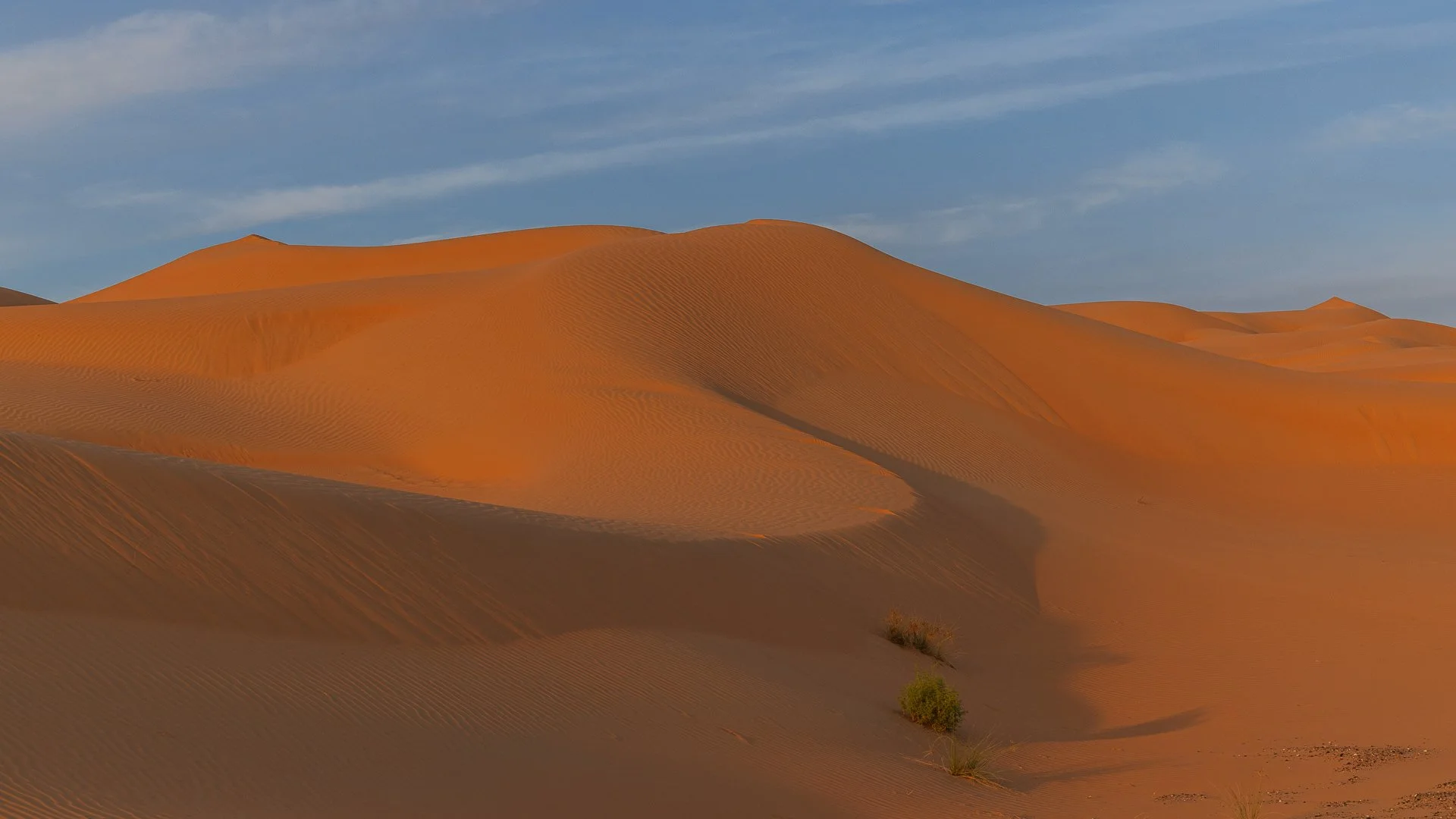
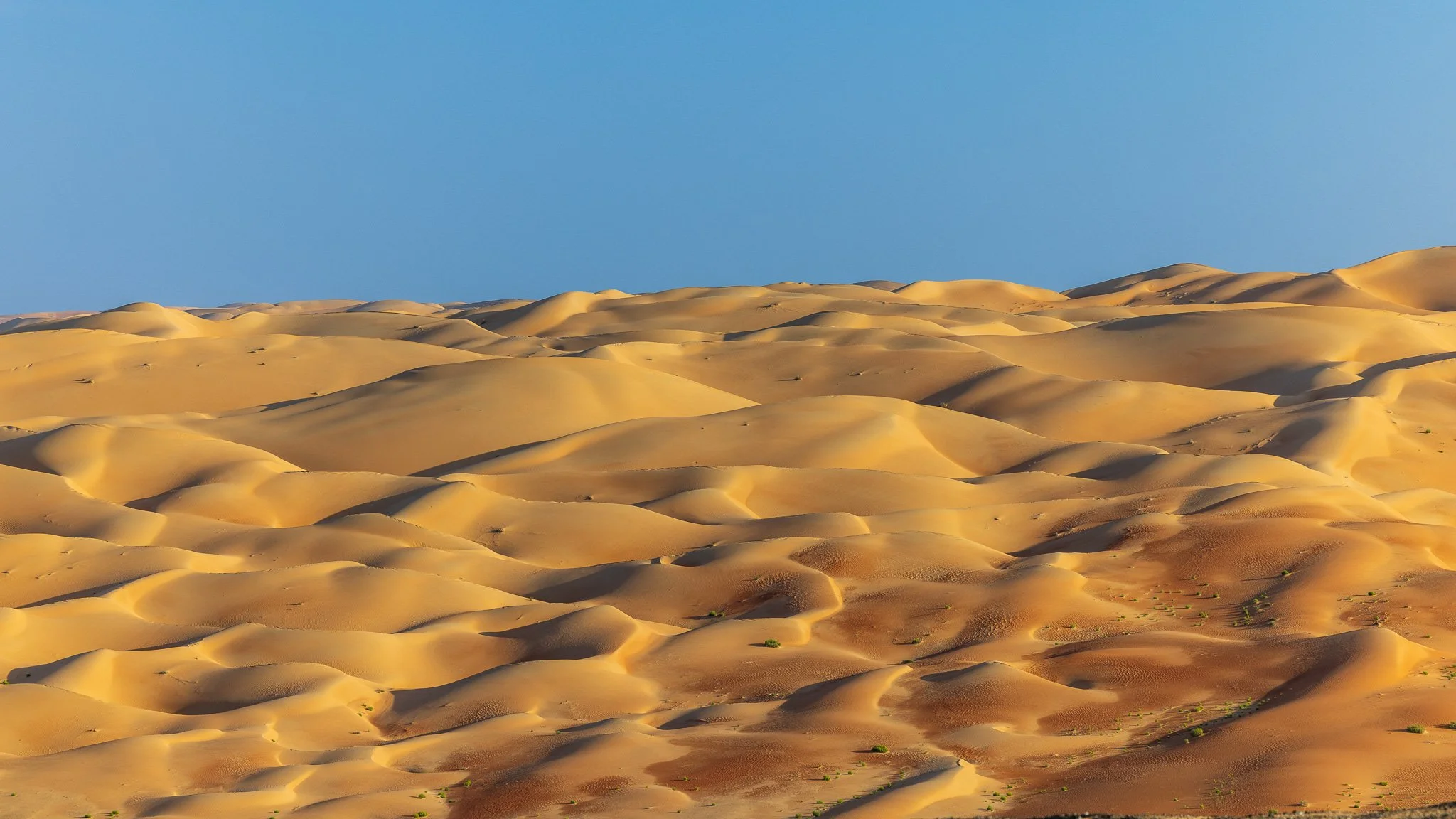
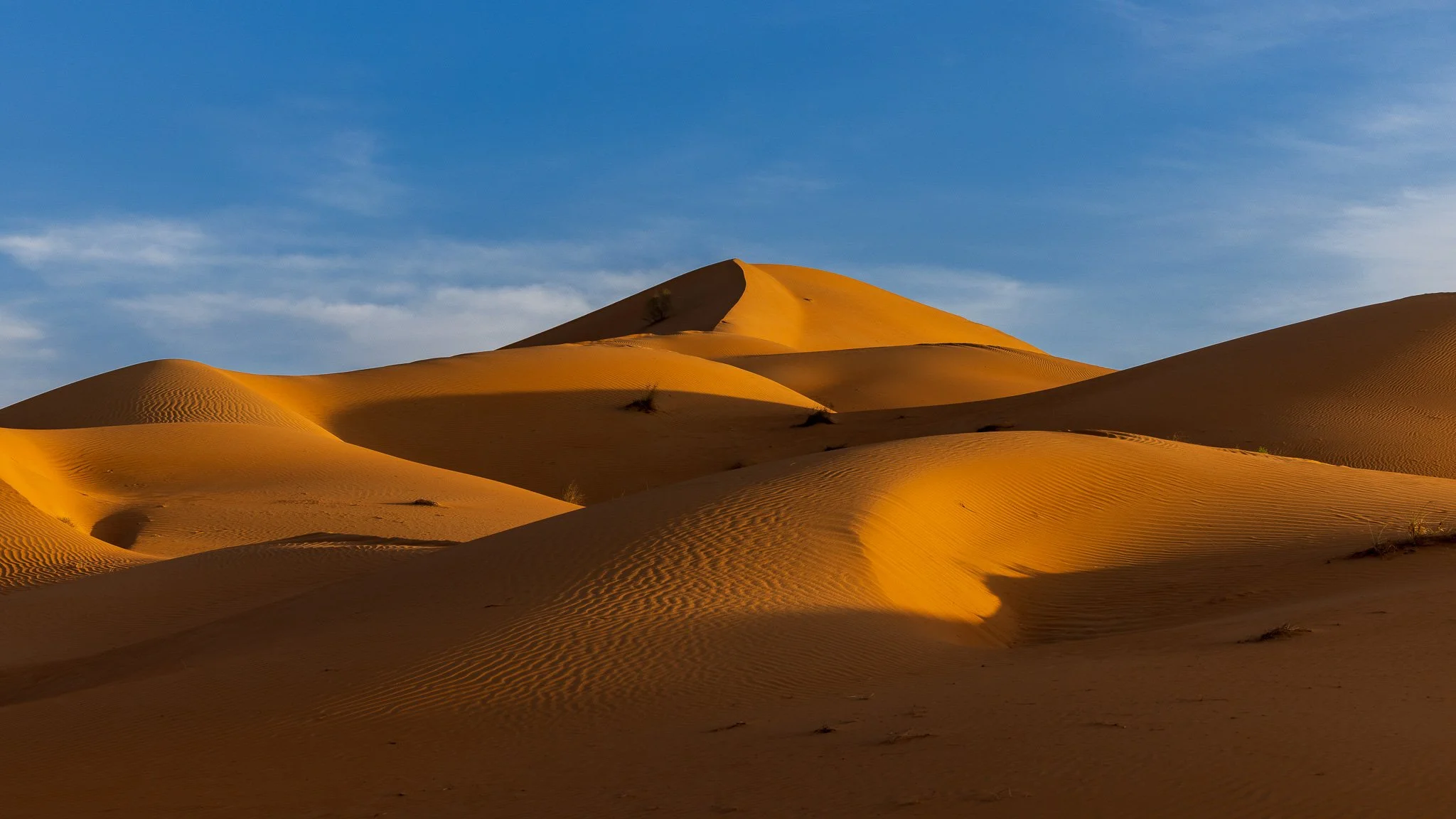
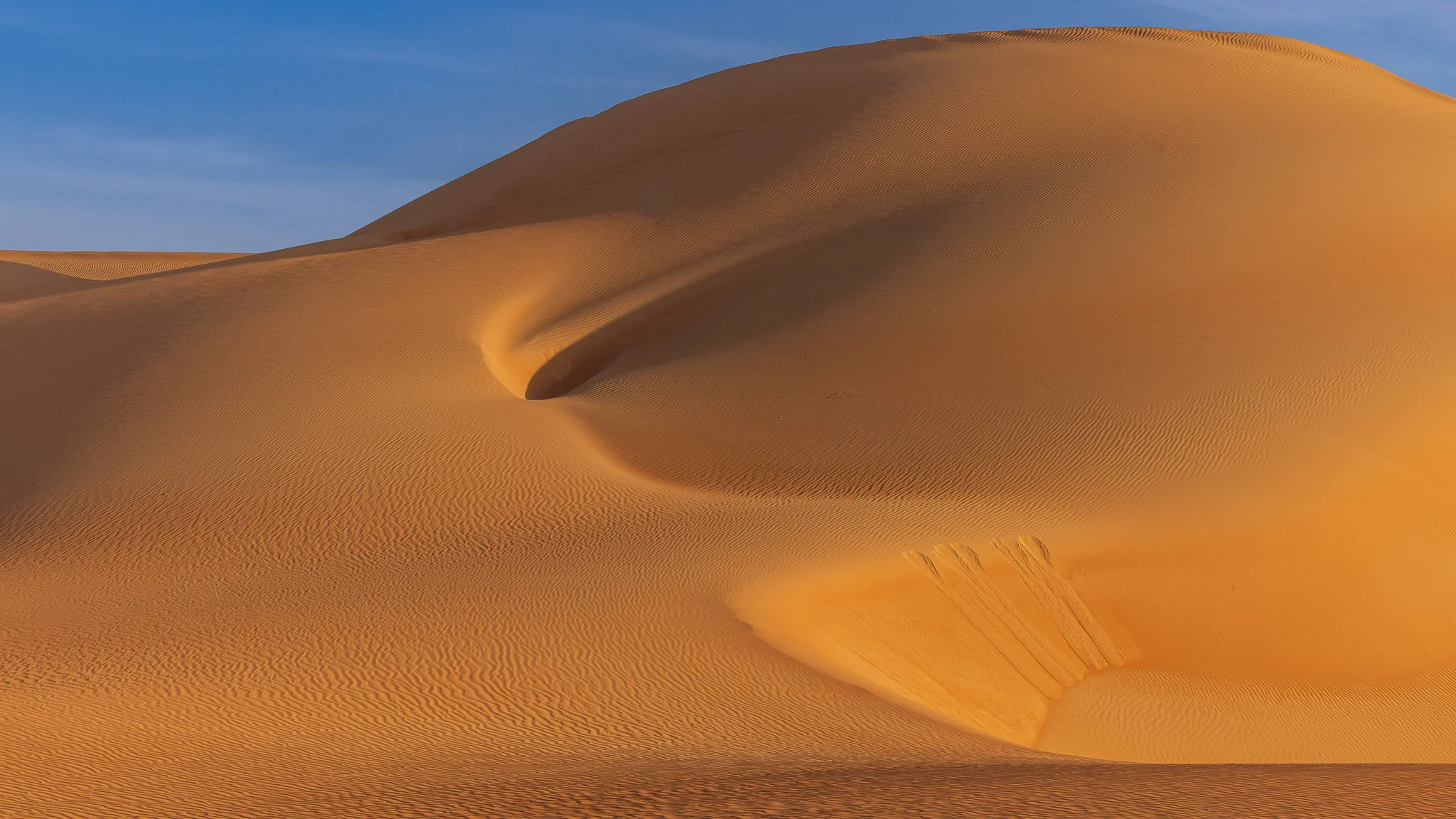
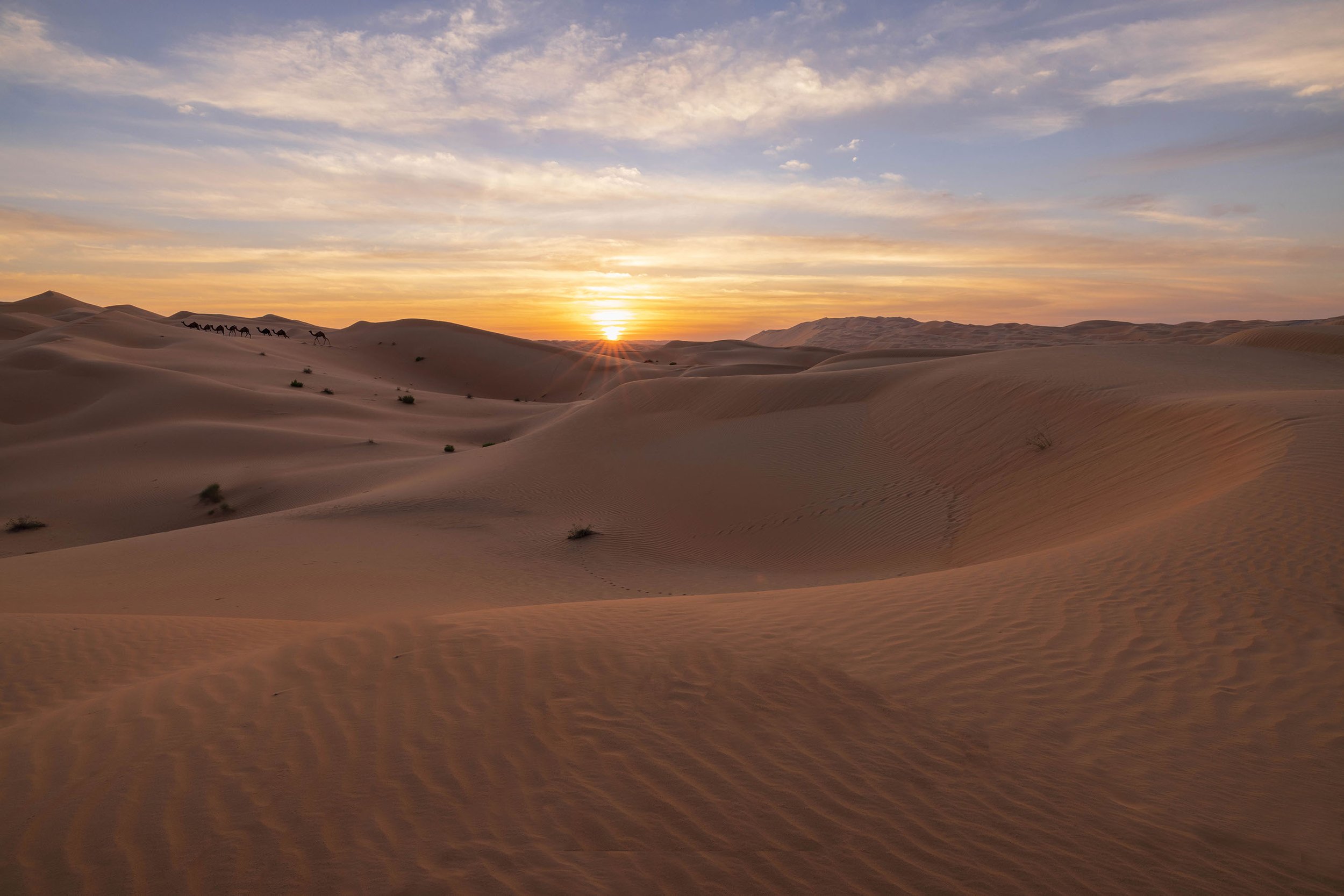
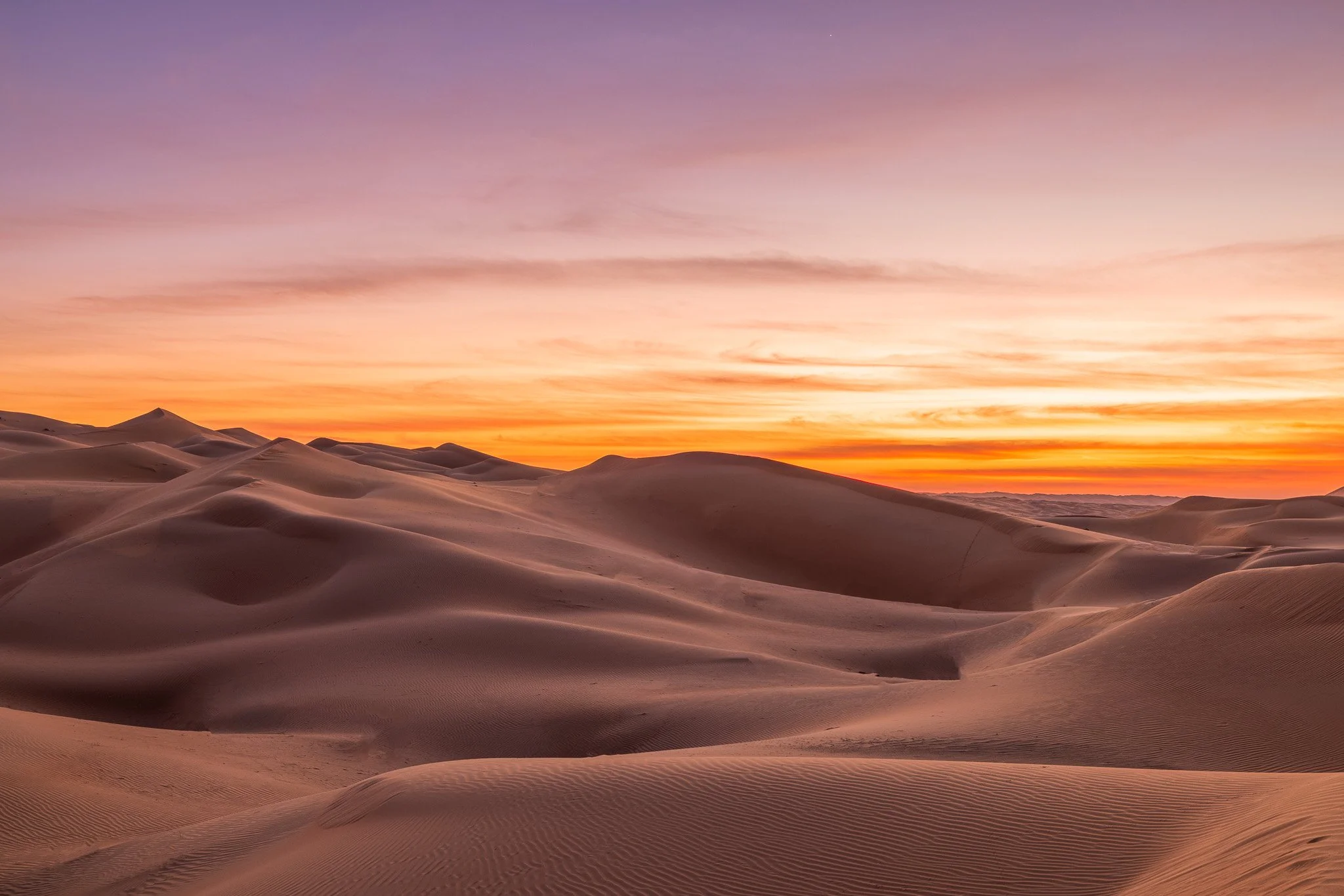
What often surprises first-time visitors is how alive the desert feels. The dunes are constantly reshaped by wind, sometimes overnight. A ridge that looks smooth at sunrise may cast deep, graphic shadows by mid-morning. As the day fades, the sand shifts from pale gold to warm copper and red, especially in places like Liwa and the Empty Quarter. If you stay still long enough, the scene changes without you moving an inch.
The UAE desert teaches patience and intention. Early morning light reveals fine ripples and delicate textures. Late afternoon stretches shadows into bold, sculptural lines. With fewer elements in the frame, composition becomes clearer. You start to notice curves, repetition, negative space, and scale. A single footprint or distant vehicle suddenly gives meaning to the vastness.
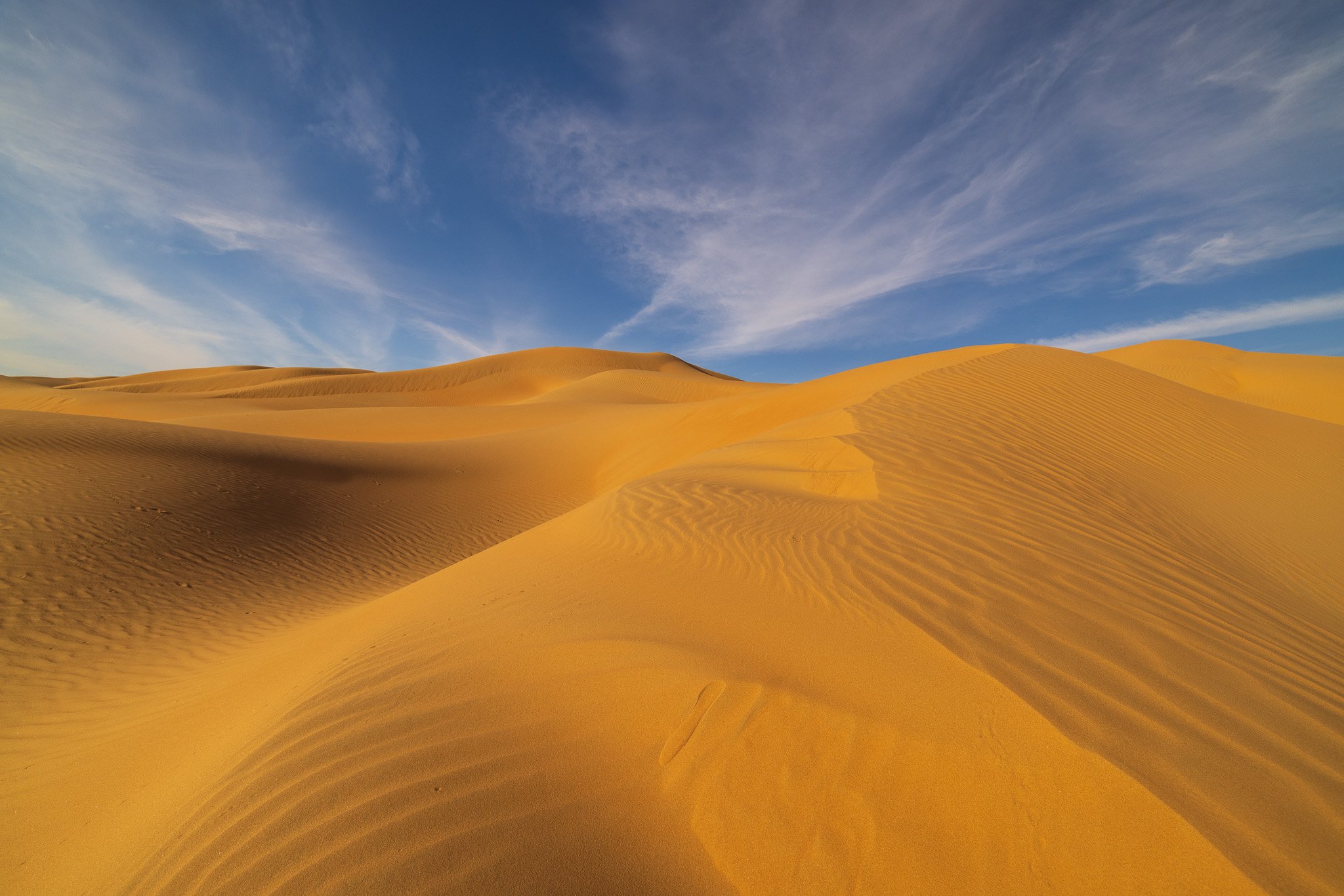
There is also the silence. Away from the cities, the desert slows you down and sharpens your focus. When night falls, the experience deepens under star-filled skies that feel endless and humbling. Photographing the UAE desert is not about chasing moments. It is about observing, waiting, and letting light and time do the work.
What makes the desert here special is scale and variety. From the vast dunes of the Rub' al Khali, also known as the Empty Quarter, to protected desert reserves near Dubai, this is one of the best places in the world to photograph light, shape, and space. You do not need to be an expert photographer. If you slow down and watch how the light moves, the desert does the hard work for you.
In this guide, I share my best advice and practical tips for visiting and photographing the desert in the UAE, from when to go and where to stay to how to work with light, wind, and scale. Whether you shoot with a phone or a full camera kit, this landscape rewards those who slow down and let the desert lead.
Where to Stay in the Desert
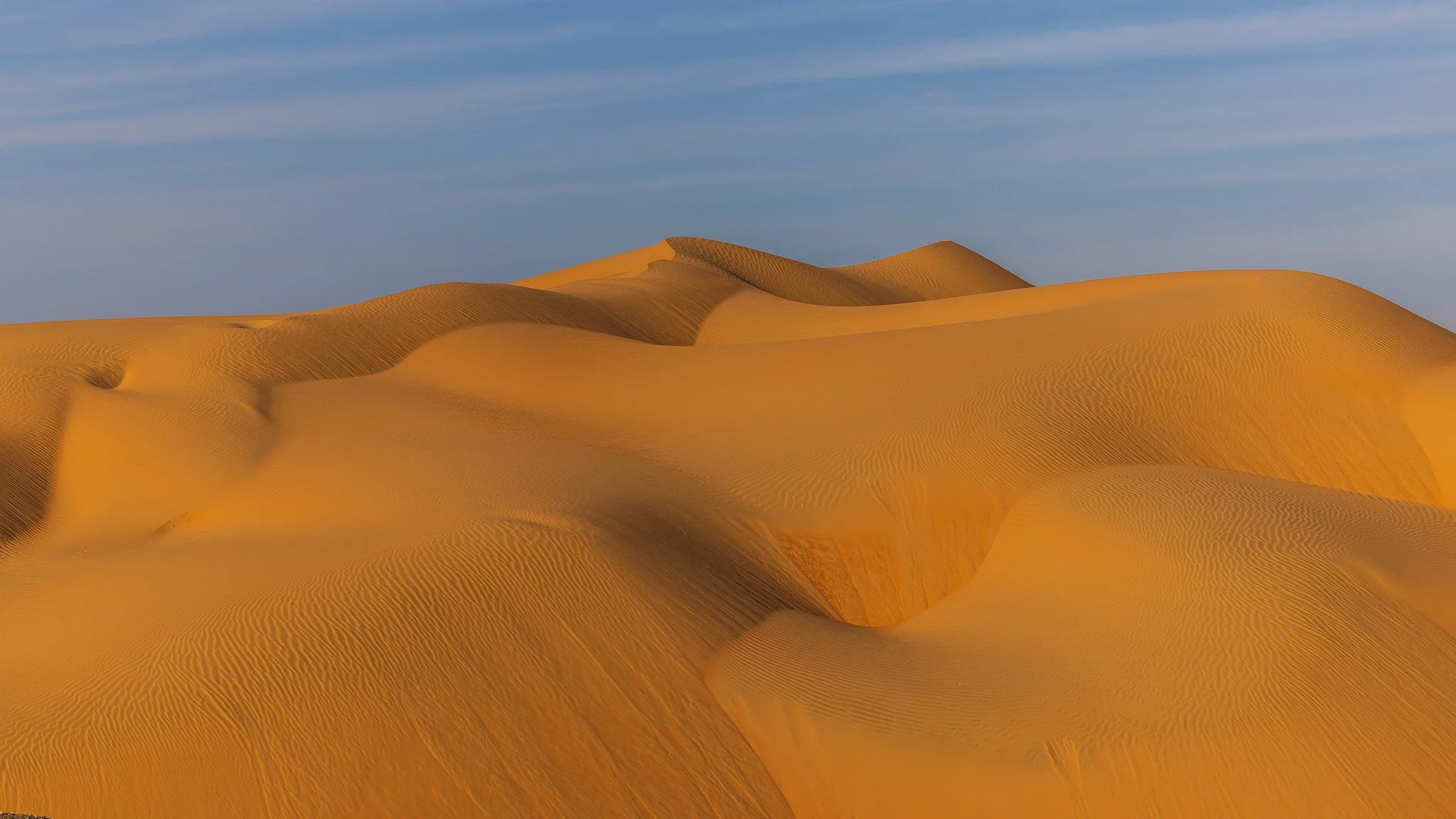
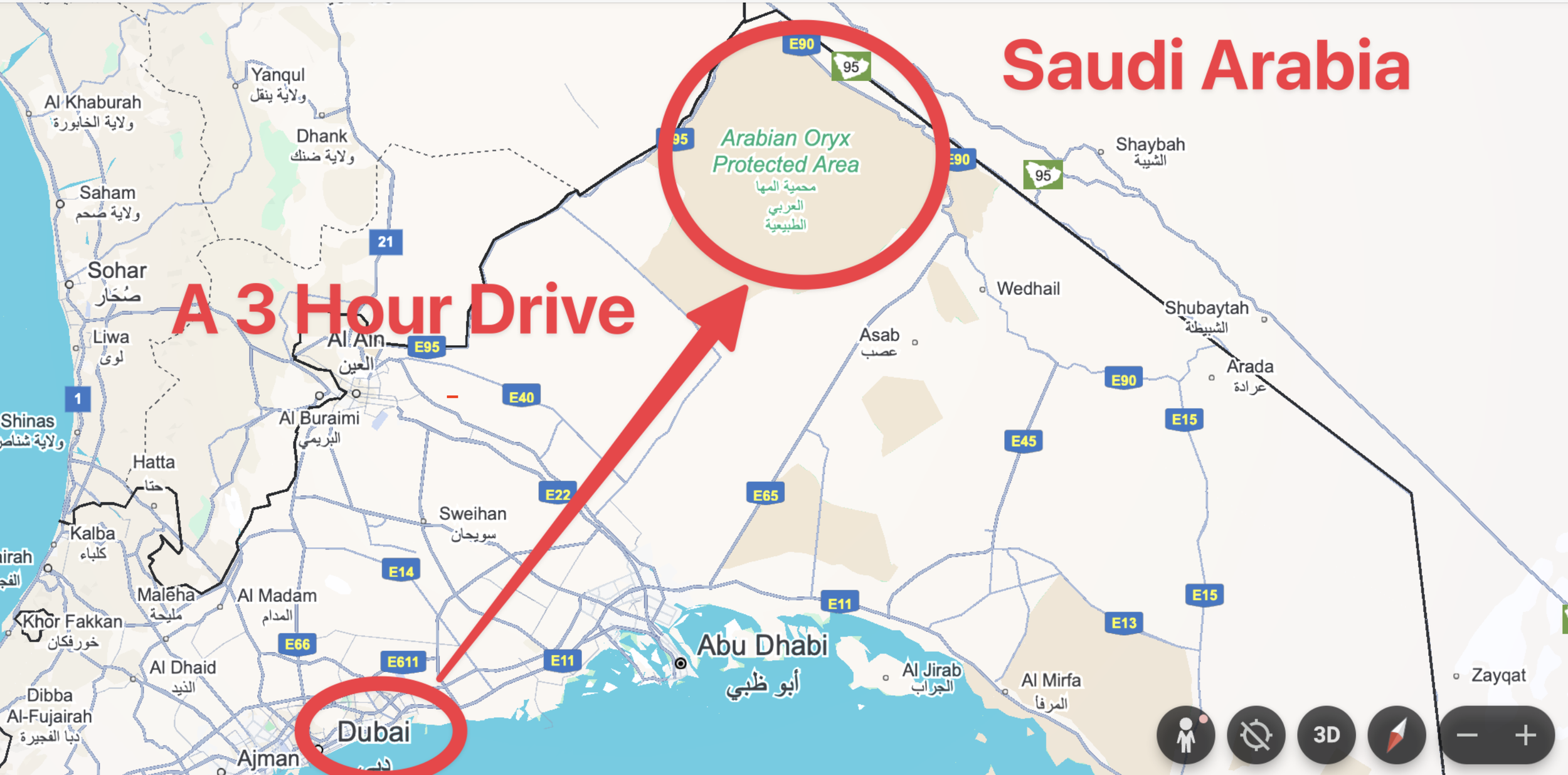
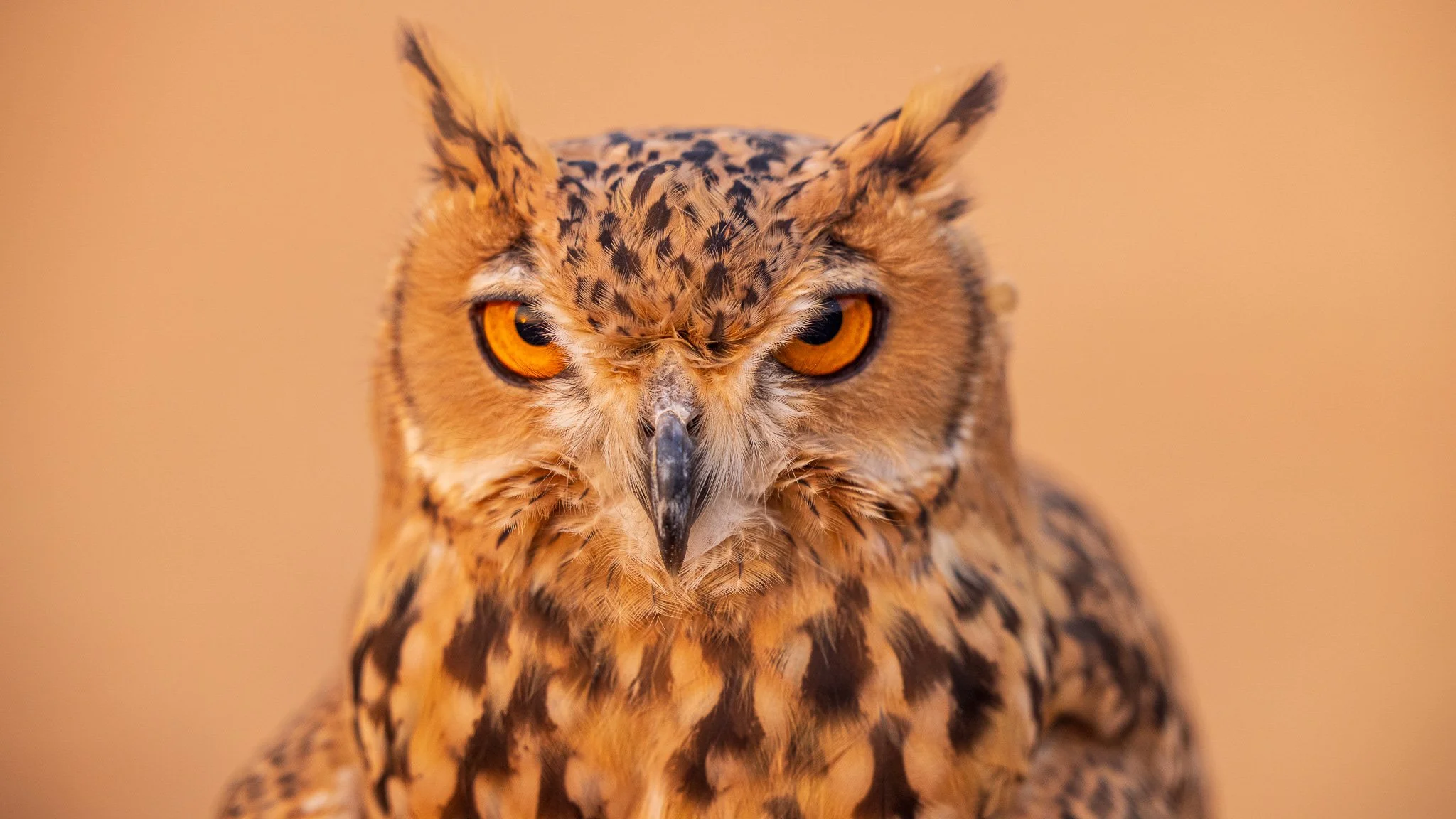
My two favorite desert areas in the UAE are very different, yet equally rewarding. The first is the Rub' al Khali, about three hours from Dubai by car. It is vast, remote, and humbling, with endless dunes that feel untouched and timeless. The second is the desert surrounding Al Maha, a Luxury Collection Desert Resort & Spa, just about an hour from Dubai. It offers easy access, protected landscapes, and beautiful light, making it ideal for photographers who want a powerful desert experience without traveling far.
Luxury Desert Stays
Al Maha, a Luxury Collection Desert Resort & Spa
A classic choice for photographers. Private villas, wildlife roaming freely, and sunrise views straight from your deck. We have stayed at Al Maha 3 times, and I have enjoyed each visit. Yes, it is expensive, but all your meals and activities are included in the standard rate. I have always been lucky to find the Bonvoy Award available at this property. It is definitely worth the trip to the Maha Resort, located within a massive desert conservation area. It is about 1 hour and 15 minutes from the center of Dubai. Once you arrive at the hotel, you will feel as if you have been transported to another world.Qasr Al Sarab Desert Resort by Anantara
Deep in the Empty Quarter near Liwa. Endless dunes, dramatic light, and total immersion. The Qasr-al-Sarab is another property that we visited. It is a special place because it is surrounded by one of the world's largest deserts. It is located about 2 hours from Abu Dhabi or 3.5 hours from Dubai.
https://www.anantara.comBab Al Shams Desert Resort
Traditional architecture with easy access from Dubai. Great for short desert escapes.
https://www.babalshams.com
Mid Range Desert Options
Tilal Liwa Desert Retreat
Comfortable, well-located, and surrounded by towering dunes.
https://www.tilalliwa.aeDesert Islands Resort & Spa by Anantara
A mix of desert and wildlife photography, ideal if you want variety.
https://www.anantara.comAl Badayer Retreat
Affordable, photogenic, and close to Sharjah’s dune fields.
https://www.myskhotels.com
How Many Days Should You Stay in the UAE Desert
For most travelers, two to three nights is ideal. This gives you time for sunrise and sunset shoots, rest during harsh midday light, and one full day to explore dunes or nearby oases. If you are heading deep into the Empty Quarter, plan three nights to avoid rushing and to catch changing light conditions.
Best Time to Visit the UAE Desert for Photography
The best time to visit is from November through March. Days are cooler, skies are clear, and light is softer for longer. December and January offer the most comfortable temperatures.
For photography, early morning and late afternoon are everything. Summer months can work for experienced travelers, but heat limits shooting windows and comfort.
Getting Around the Desert
You will need a car. A 4x4 is essential for dune driving and remote areas. There is no public transportation in the desert, and ride services like Uber operate only in cities, not inside desert reserves. Many resorts include guided drives, which is often the safest option if you are not experienced.
One thing you have to be very careful of is not to get stuck in the sand. It's much easier than you might think. So I would definitely recommend driving a 4x4 SUV if possible, and being very careful where you park and if you take any internal roads.
On a recent trip, we stopped right off the main road with 2 tires still on the roadside and 2 tires in the sand. While I thought I had parked in a safe way, we got completely stuck. So we had to call our hotel and they thankfully helped us pull the car out of the sand.
But that's where our problems started. The first person from the hotel that came out to help us managed to pull our rear bumper completely off the car. He tied a rope to the back bumper and hit the accelerator so hard that our car was damaged. So he called a second person that was more knowledgeable, and eventually, we were able to get back on the road (with our bumper in the back of the car :)

Photography Gear & Tips
When it comes to photography gear in the desert, simplicity matters. I recommend traveling with one camera body, such as a Canon EOS R5, R6, or R7, or a Nikon Z7, Z8, or Z9. Pair it with a versatile zoom like a 24–105mm or 24–240mm, which covers most situations without the need to change lenses in sandy conditions.
Personally, I often travel with two lenses, a very wide option like a 15–35mm for sweeping dune scenes, and a medium telephoto such as a 70–200mm to compress patterns and isolate details. That said, bringing multiple lenses is not essential. Many of my favorite desert images were made with a single zoom lens.
A tripod is extremely useful in the desert, especially for early-morning, late-evening, and night photography. Light levels drop quickly, and a tripod gives you flexibility without rushing. I also always carry a rocket blower or lens pen. Fine sand gets everywhere, and using a microfiber cloth on a dusty lens can cause scratches.
Be cautious when changing lenses. If I need to switch lenses, I do it in my car to reduce the risk of sand reaching the sensor or entering the camera body. Avoid changing lenses in open wind whenever possible.
Once the sun sets, do not pack your camera away. The desert offers strong opportunities for silhouettes, fading color in the sky, and night photography. I often get my camera very low to the ground to emphasize sand textures and patterns. Astrophotography in the desert can be exceptional, thanks to low light pollution. Tools like PhotoPills are invaluable for planning star positions and alignments before you head out.
Bringing a UV Filter
In the desert, a UV filter can be useful, but not for image quality. Modern cameras already handle UV light well, so you will not see a visual difference in your photos. The real value of a UV filter in the desert is protection.
Blowing sand, wind, and fine dust are constant in places like the UAE desert. A good quality UV filter acts as a sacrificial layer, protecting the front element of your lens from scratches, sand impact, and accidental cleaning marks. I would much rather replace a filter than risk damaging an expensive lens.
That said, quality matters. If you use a UV filter, make sure it is a high quality, multi coated optical glass filter. Cheap filters can introduce flare, reduce contrast, and soften images, especially when shooting into the sun, which you will often do in the desert.
My approach is simple. I use a UV filter during windy conditions or when sand is actively blowing. In calm conditions, especially during sunrise or sunset when shooting directly into the light, I sometimes remove it to avoid any chance of flare or ghosting.
Other Gear To Consider
A safe and fun trip to the desert starts with careful preparation. The first thing is to choose the right time to visit based on your temperature tolerance.
Depending on the time of your visit, consider several items for safety and comfort:
A hat to shield you from the sun
Several bottles of water to stay hydrated
Sunglasses and sunscreen
A GPS (phones don’t work in many remote locations)
A scarf to cover your neck and your face
A long-sleeve shirt to block out the sun
Good quality hiking boots
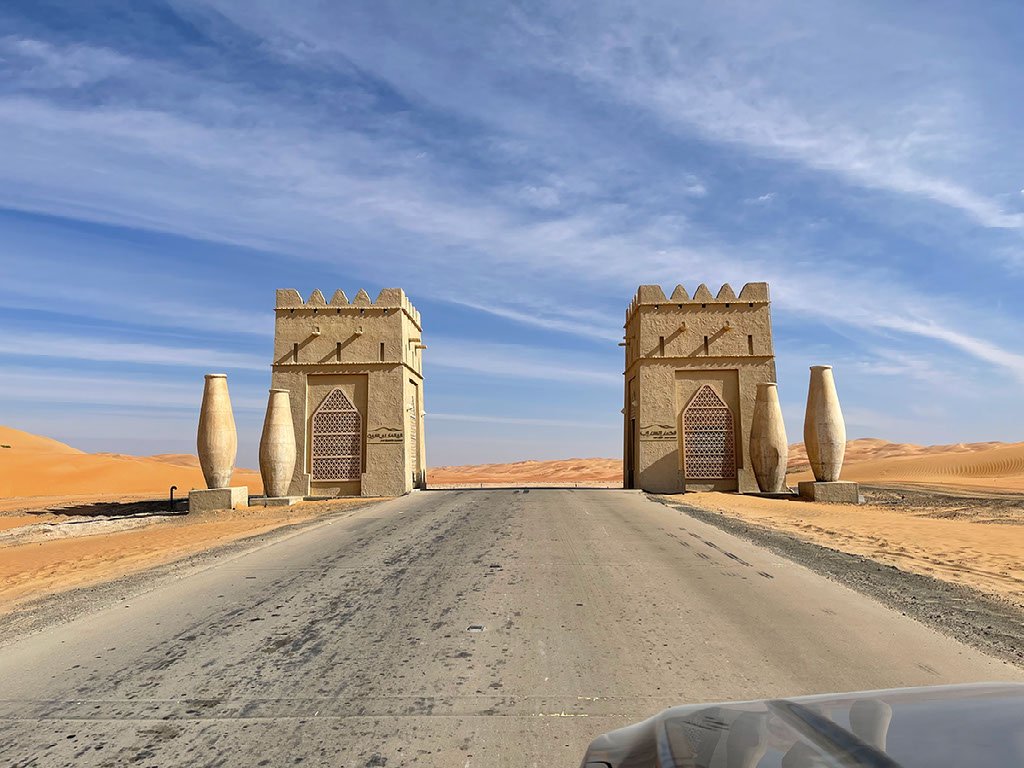
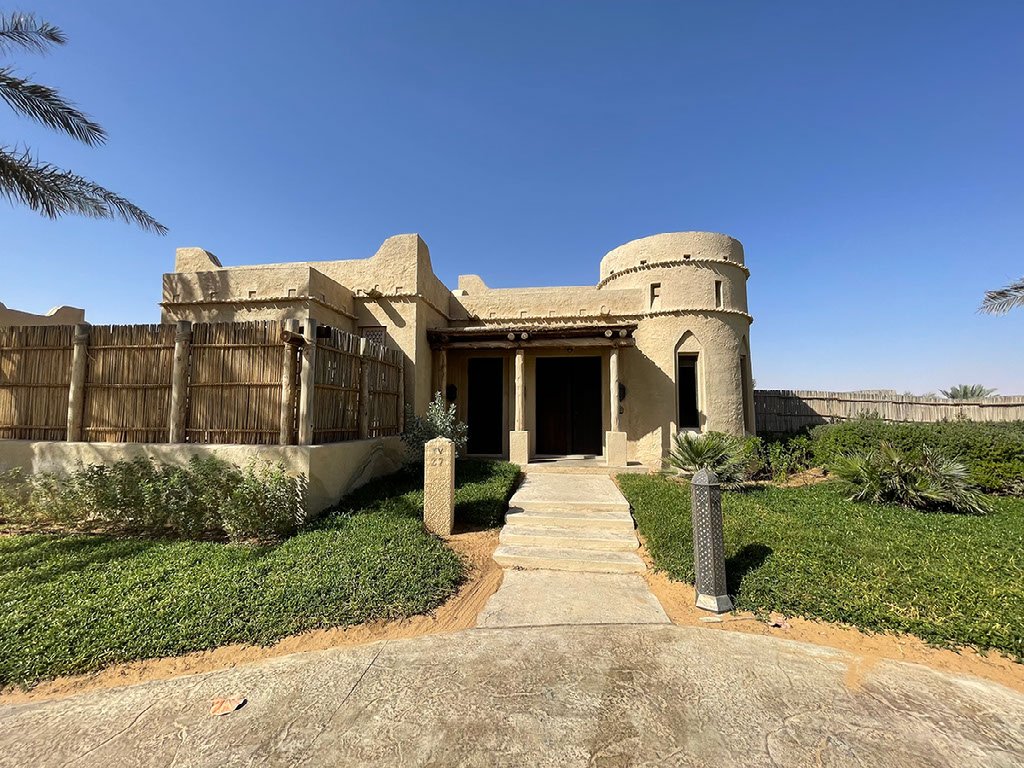
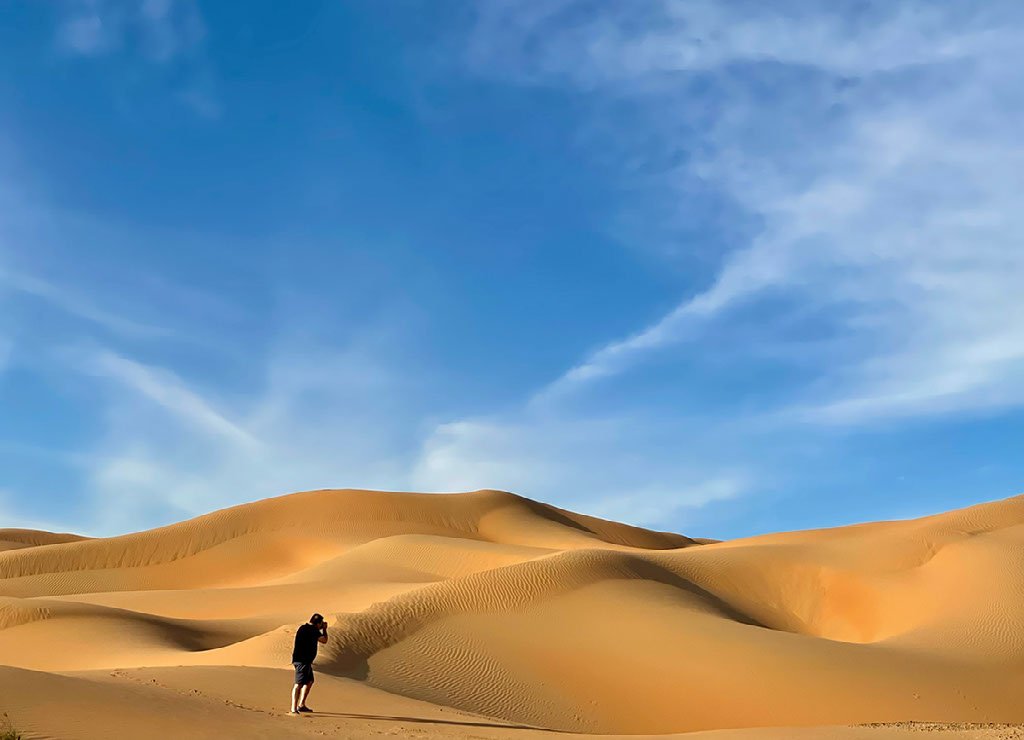
Each of the rooms in this property has stunning views of the desert. Also, the roads leading up to the property are breathtaking. There are plenty of great photography locations in this area.
Unlike the Al-Maha, your meals and activities are NOT included in the room rate so you should keep this in mind when comparing the 2 properties.
Final Thoughts
For pure desert scale and dramatic landscapes, Qasr Al Sarab Desert Resort by Anantara in the Rub' al Khali is hard to beat. The dunes are larger, more remote, and feel truly endless, which makes it exceptional for wide landscape photography. The tradeoff is distance. It takes longer to reach, and the experience requires more planning.
Al Maha, a Luxury Collection Desert Resort & Spa, on the other hand, is much easier to access, just about an hour from Dubai, and offers a smoother overall experience. While the dunes are smaller than those in the Empty Quarter, they are beautifully preserved and consistently photogenic. Every stay includes meals and guided activities, removing friction so you can focus entirely on photographing the desert. The staff are warm, attentive, and knowledgeable, and the property itself feels more intimate and refined.
The desert is one of the most breathtaking natural landscapes on the planet. If you have the chance to photograph the desert, especially the ones in the UAE, do not miss out on it!!
If you are interested in joining one of my photography workshops, you can find the details through the link. You can also follow along on Instagram, Facebook, or subscribe to my newsletter for more travel photography tips and behind-the-scenes insight.
Photography Locations Nearby
My Photography & Travel Guide to Dubai, UAE. Abu Dhabi and Dubai sit about ninety minutes apart, and together they tell the full story of the UAE. Dubai brings vertical scale, neon, and energy. Abu Dhabi brings space, culture, and quiet. Shoot both, and you have a complete picture of what the Emirates have become.
My Photography & Travel Guide to Abu Dhabi, UAE — An hour and a half down the highway and a completely different experience. The Sheikh Zayed Grand Mosque alone justifies the trip, and the Saadiyat Island cultural district is one of the most photographically interesting areas in the Gulf.
My Photography & Travel Guide to Doha, Qatar. A short flight from Abu Dhabi and one of the most underrated photography destinations in the Gulf. The Museum of Islamic Art, the Corniche at dawn, and the Souq Waqif offer a quieter, more intimate version of Gulf culture worth exploring.
Are you carrying too much camera equipment, but still coming home disappointed with your travel photographs?
You are not alone. Many photographers fall into the packing trap. They bring too much, plan too little, and spend their trip scrambling to capture photographs instead of enjoying the experience.
Capture the World offers a better approach.
In this practical guide, travel photographer Vito L. Tanzi shares the five step system he uses to plan photography trips, pack with purpose, work with the best light, and return home with stronger images.
Inside, you will learn how to:
• Travel lighter without sacrificing image quality
• Choose destinations that match your photography goals
• Visit at the right time for weather, light, wildlife, festivals, or seasonal conditions
• Build a photography itinerary around sunrise, sunset, blue hour, and changing weather
• Select the equipment you will actually use
• Find promising locations before you arrive
• Avoid the stress and exhaustion that can ruin a photography trip
• Stay flexible when weather, crowds, or travel plans change
This guide includes practical planning advice, useful photography tools, real travel examples, and a complete system you can use again and again.
Whether you are preparing for your first international photography trip or planning a weekend closer to home, Capture the World will help you travel with greater purpose, photograph with more intention, and spend less time worrying about what is inside your camera bag.
Because the best photography trip is not the one where you carry everything.
It is the one where you are ready when the right moment appears.
📸 Format: PDF download
Instant Download