My Travel & Photography Guide to Sharjeh, UAE
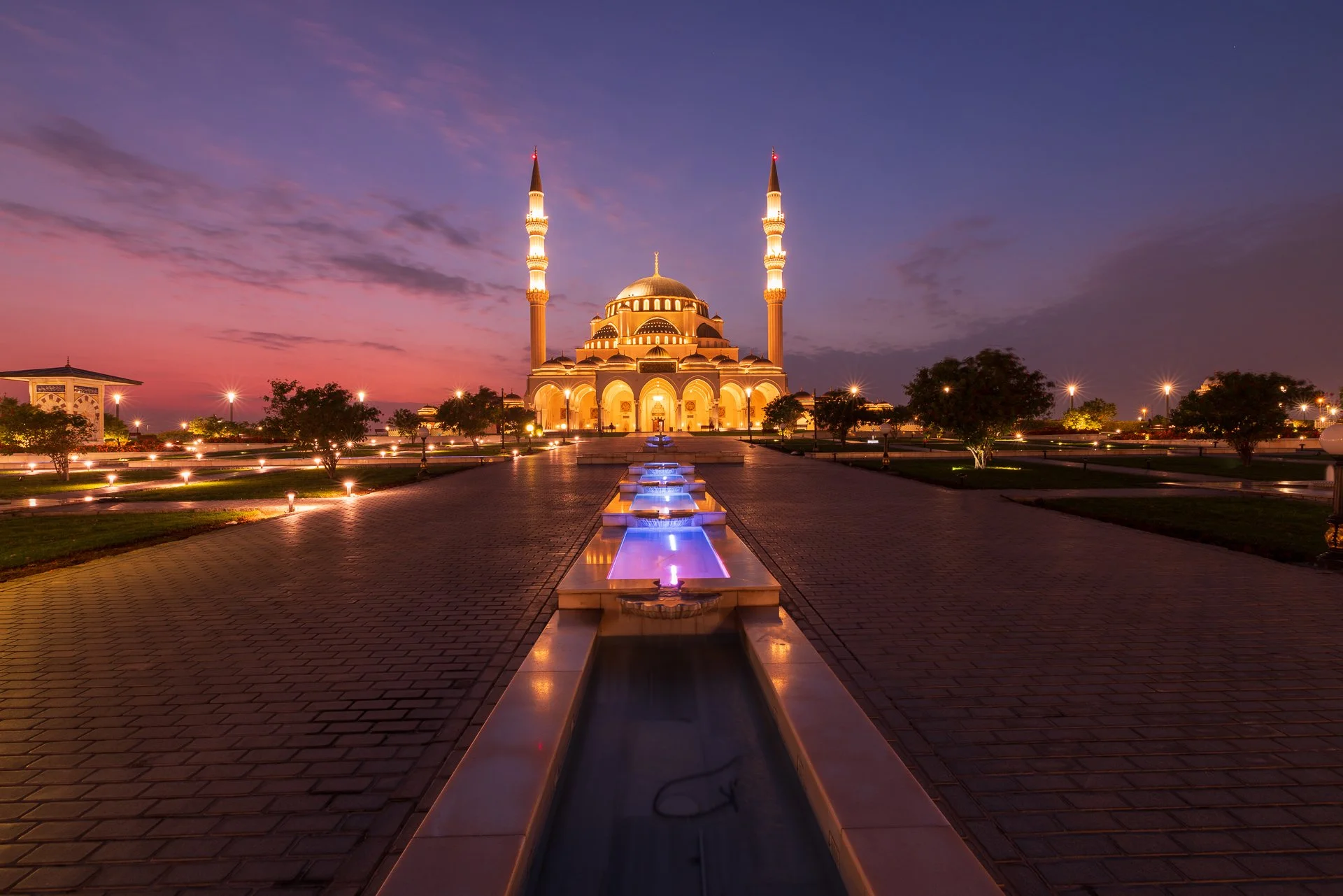
I went to Sharjah for one reason: to photograph the Sharjah Grand Mosque. And it was definitely worth the trip.
The mosque sits slightly outside the city center, surrounded by open space that allows the architecture to breathe. Unlike many urban mosques, there is room here to step back, study the structure, and work with clean compositions free of visual clutter. The scale is impressive, but it is the balance and symmetry that make it especially rewarding to photograph.
If your goal is to photograph one of the most elegant mosques in the region, this site alone justifies the visit.
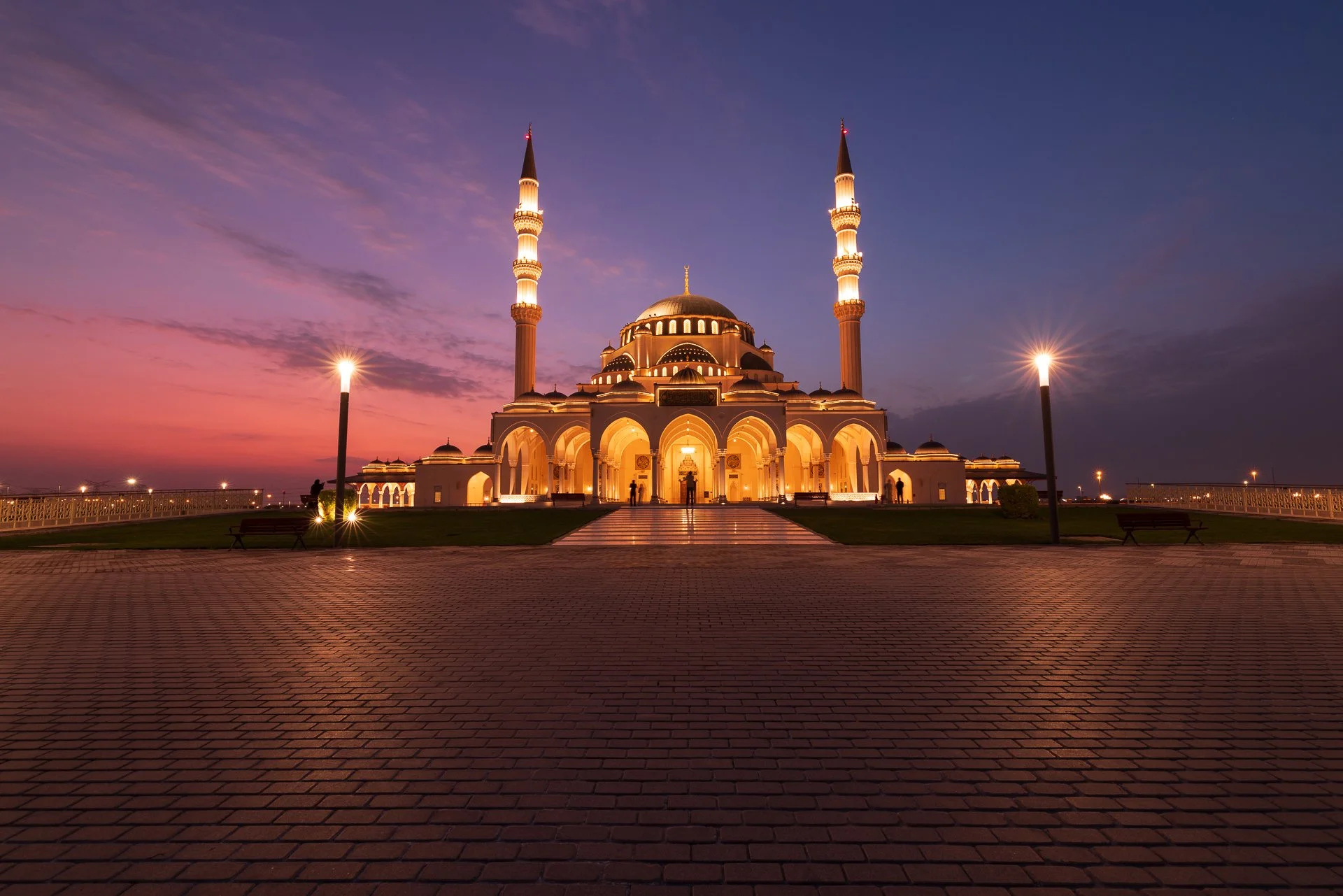
Photographing the Sharjah Grand Mosque, An Afternoon Shoot
If you only have time for one location in Sharjah, the Sharjah Grand Mosque is the clear choice. It is one of the most visually rewarding mosques in the UAE and photographs beautifully in the afternoon and early evening.
The architecture feels monumental without being overwhelming. Soft stone tones, repeating arches, and strong symmetry offer endless compositional possibilities. The atmosphere is calm and unhurried, which allows you to work slowly and deliberately, a real advantage for photographers who value intention over speed.
Ideal Timing
Plan to arrive around 3:30 or 4:00 pm, depending on the season.
• Afternoon light brings out texture and detail in the stone
• Golden hour adds warmth and depth to arches and courtyards
• Blue hour is ideal for finishing with balanced skies and calm exterior scenes
You can comfortably finish shooting by early evening without feeling rushed.
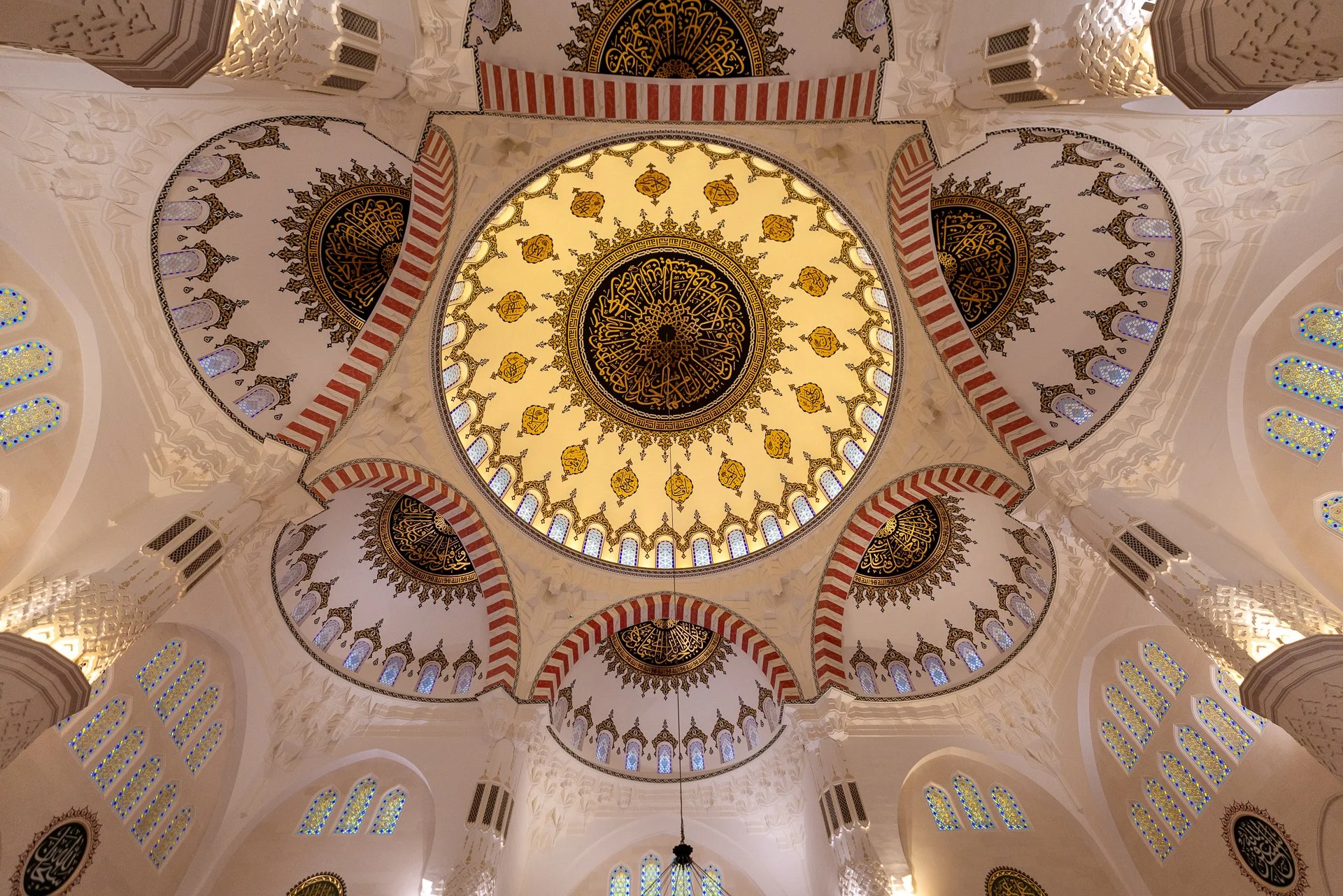
Looking up from Inside the Mosque
Why the Sharjah Grand Mosque Is Worth the Trip
The Sharjah Grand Mosque stands out because it gives photographers space, calm, and clarity, qualities that are increasingly rare. The design is restrained and thoughtful, which makes it easier to compose clean, intentional images without distraction.
Symmetry and repetition define the architecture. Arches, columns, and courtyards work beautifully with wide lenses, while doors, calligraphy, and lighting reward a slower, more focused approach. As the light softens in the late afternoon, the stone begins to glow, and the transition into blue hour feels natural and seamless.
Equally important, the atmosphere remains respectful and quiet. You are not competing with crowds or tour groups, which gives you the time to wait for the right light and refine your compositions. If you enjoy photographing architecture with patience and purpose, the Sharjah Grand Mosque more than justifies the drive.
Visitor Etiquette
The Sharjah Grand Mosque is an active place of worship. Dress modestly, with arms and legs covered, and women should carry a scarf for a head covering if needed. Keep voices low, move slowly, and avoid photographing people in prayer without permission. Tripods may be restricted, so be prepared to work handheld. Respecting the space not only matters culturally, but it also helps maintain the calm atmosphere that makes this mosque such a pleasure to photograph.
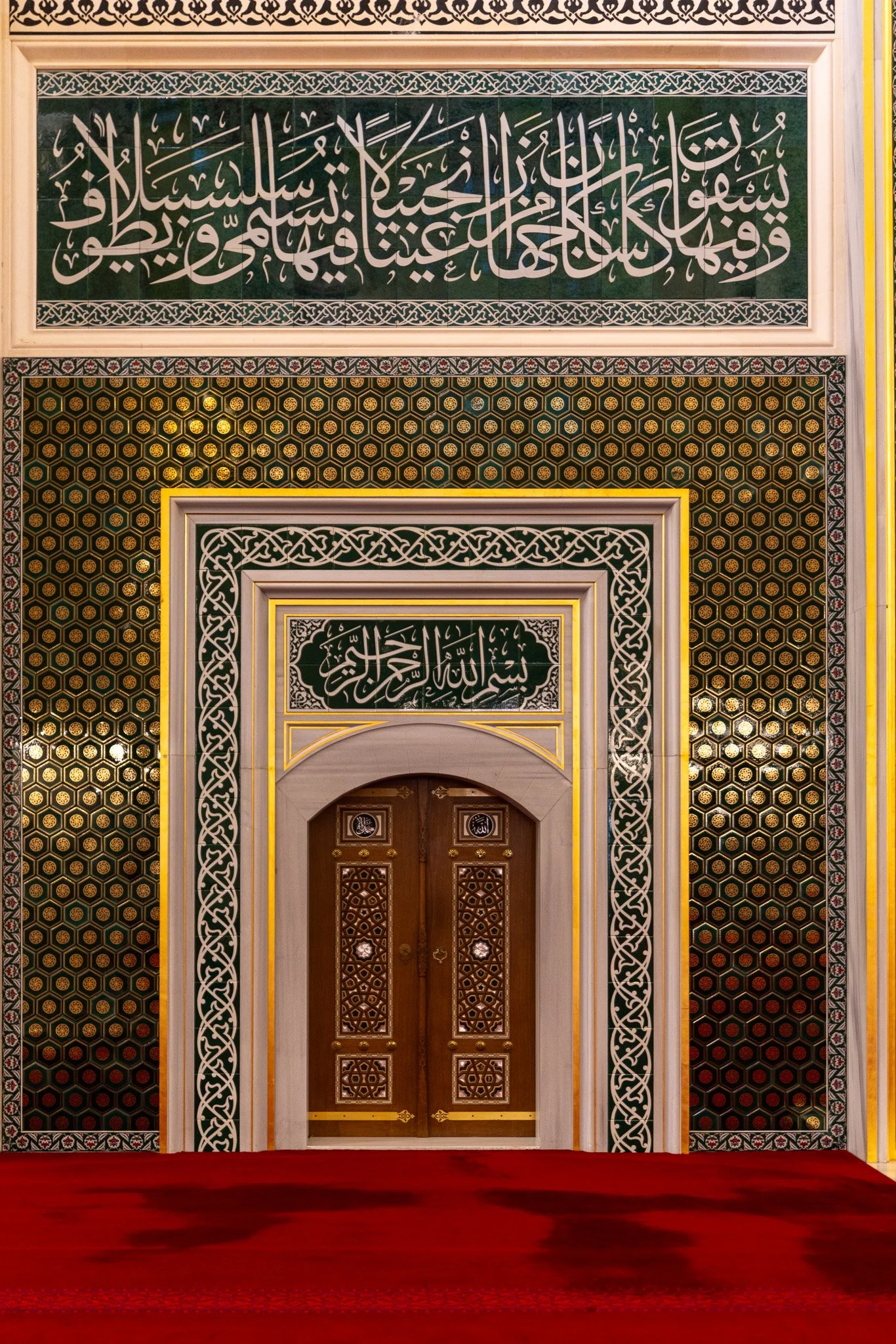
Lens and Gear Tips
A wide lens in the 16–35mm or 24–70mm range works beautifully for capturing symmetry, scale, and full courtyard views. A short telephoto, around 70–100mm, is ideal for isolating arches, patterns, and architectural details. Bring a polarizer if shooting in late afternoon to control glare on stone surfaces. Tripods are useful outdoors during blue hour, but plan to keep your kit light and flexible.

Getting to the Sharjah Grand Mosque from Dubai
Reaching the Sharjah Grand Mosque from Dubai is straightforward and works well for an afternoon shoot. The drive typically takes 45 to 60 minutes, depending on traffic, so plan to leave Dubai by early afternoon.
A taxi or Uber is the simplest option. It removes parking concerns and lets you focus entirely on timing the light. If you prefer to drive, a rental car works just as well, and parking near the mosque is usually easy and convenient.
Aim to arrive about 90 minutes before sunset. This gives you time to walk the grounds, scout compositions, and settle into a shooting rhythm as the light transitions from afternoon warmth to golden hour and then into blue hour.
Leaving Dubai earlier than you think you need is a smart move, especially on weekends, when traffic toward Sharjah can build quickly later in the day.
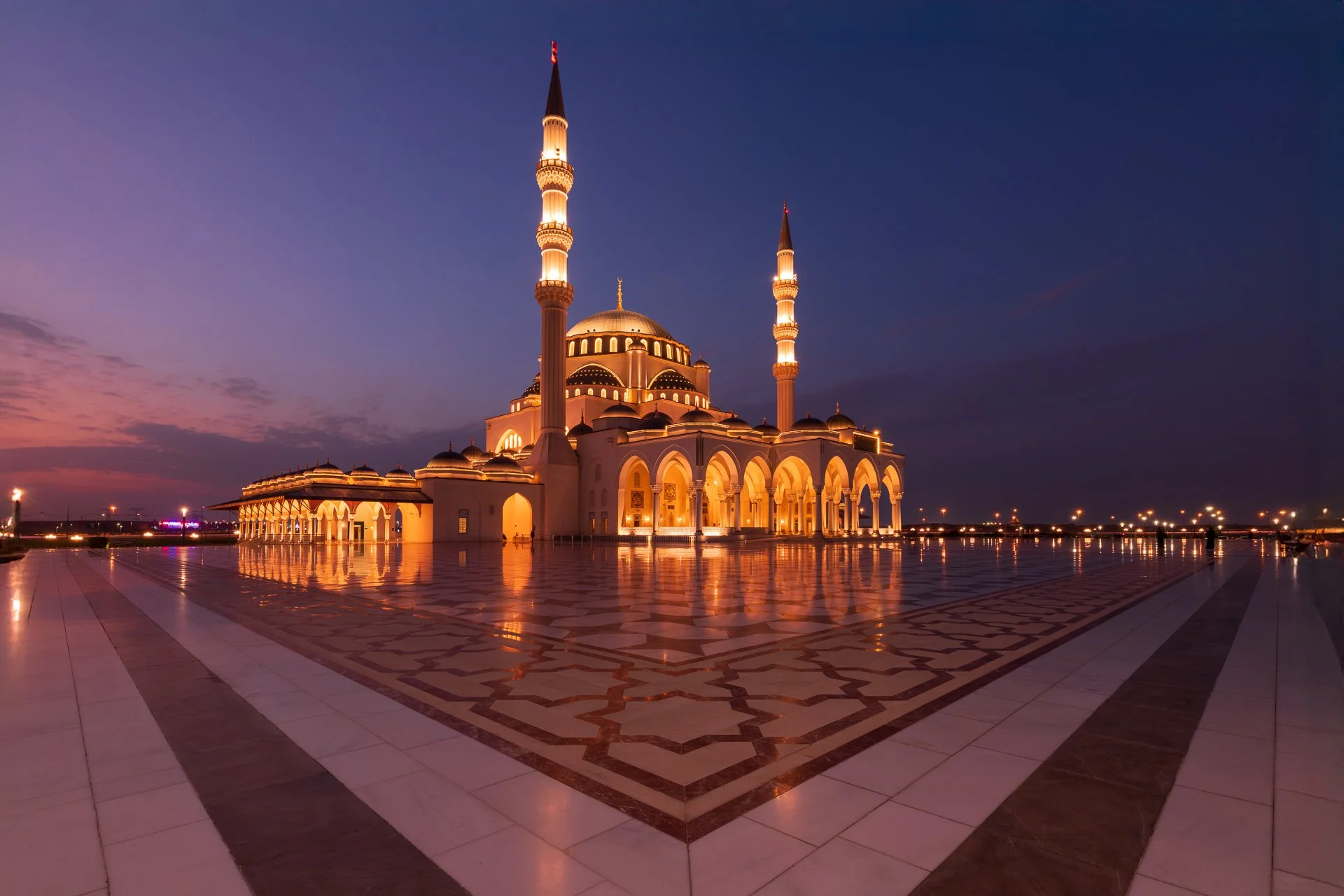
What to Photograph
Wide exterior views to capture scale and symmetry
Arches and colonnades for repeating patterns and rhythm
Details like doors, calligraphy, and lamps, using a short telephoto
Reflections after sunset if conditions allow
A wide lens works well for the big scenes, while a 70–200mm is perfect for isolating details and compressing patterns.
Final Thoughts
Sharjah is ideal when you want a focused, rewarding afternoon shoot without overplanning. The Sharjah Grand Mosque offers space, calm, and light that evolves beautifully as the day comes to a close. If you slow down and let the afternoon unfold, you will come away with images that feel intentional, balanced, and quietly powerful.
If you are interested in joining one of my photography workshops, you can find the details through the link. You can also follow along on Instagram, Facebook, or subscribe to my newsletter for more travel photography tips and behind-the-scenes insight.
Finally—a beginner-friendly photography guide that makes sense.
If you've ever picked up a camera and thought, "Now what?" this is the book for you.
Photography Made Simple is written for adults who are just starting out and want a clear, encouraging, real-world approach to learning photography. Whether you're using a DSLR, mirrorless, or just your smartphone, this guide walks you through the basics—without the jargon or tech overwhelm.
Inside, you'll learn:
The only camera settings you really need to know to get started
How to shoot sharper, more intentional photos using light and composition
Simple tips for portraits, landscapes, travel, and everyday life
What gear you do (and don’t) need
How to create better photos without upgrading your camera
You’ll also get practical exercises, cheat sheets, and tips for organizing and editing your images—plus the confidence to shoot off Auto Mode for good.
This is not a textbook. It’s a friendly guide to seeing the world with fresh eyes—and finally capturing what you see the way you imagine it.
📸 Format: PDF download
Pages: 100+
Perfect for: Beginners, hobbyists, and anyone ready to take better photos without the stress

Unlock the power of long exposure and take your photography to the next level.
Mastering ND Filters is your complete guide to understanding and using Neutral Density (ND) filters with confidence. Whether you’re a beginner or a hobbyist looking to expand your creative toolkit, this practical, easy-to-follow book walks you through everything you need to know—from gear choices and exposure calculations to creative shooting techniques and real-world examples.
Inside you’ll learn:
What ND filters are and how they work
How to choose the right strength and type of filter
Step-by-step workflows for photographing waterfalls, clouds, seascapes, and city scenes
How to calculate long exposures using apps and charts
Pro tips for reducing noise, focusing with dark filters, and getting tack-sharp results
Packed with clear explanations, inspiring images, and field-tested advice, this guide will help you shoot with intention, slow down your process, and create stunning photographs that capture not just motion—but mood.
Whether you're shooting with a DSLR, mirrorless camera, or even a smartphone, Mastering ND Filters will help you bring your creative vision to life.