Osaka, Japan Travel & Photography Guide: Best Photo Spots, Things to Do & Hidden Gems
We arrived in Osaka on our third week in Japan, after the quiet temples of Kyoto and the structured energy of Tokyo. I stepped out of the hotel that first evening and walked toward Dotonbori, and within two blocks, I understood that this city operates by entirely different rules.
The streets were chaotic. Not chaotic in a stressful way, but chaotic in the way that great jazz is chaotic: loud, layered, alive, and somehow making complete sense once you stop trying to control it. Neon signs stacked five stories high. Smoke rising from kushikatsu grills. A vendor is shouting over the music from the shop next door. Crowds moving in every direction at once, nobody in a hurry, everybody eating something. A giant mechanical crab rotating above a restaurant entrance. The Glico Running Man is glowing orange above the canal.
I raised the camera and did not lower it for three hours.
Osaka is Japan's kitchen, its comedy club, and its most honest portrait. Where Tokyo is curated, and Kyoto is contemplative, Osaka is immediate. It makes no apologies for being exactly what it is: a city built around pleasure, food, and human connection. The locals, known throughout Japan for being the friendliest and most direct people in the country, will talk to you, feed you, laugh with you, and give you directions with theatrical enthusiasm.
For photographers, Osaka is a masterclass in contrast. The blue hour reflections on the Dotonbori canal are as cinematic as any city in Asia. The morning light on Osaka Castle is classical and clean. The street markets are saturated with color and steam and motion. The retro neon of Shinsekai tells a story about a city that has always moved at its own pace. And the Umeda Sky Building at sunset gives you the whole sprawling grid of it from above.
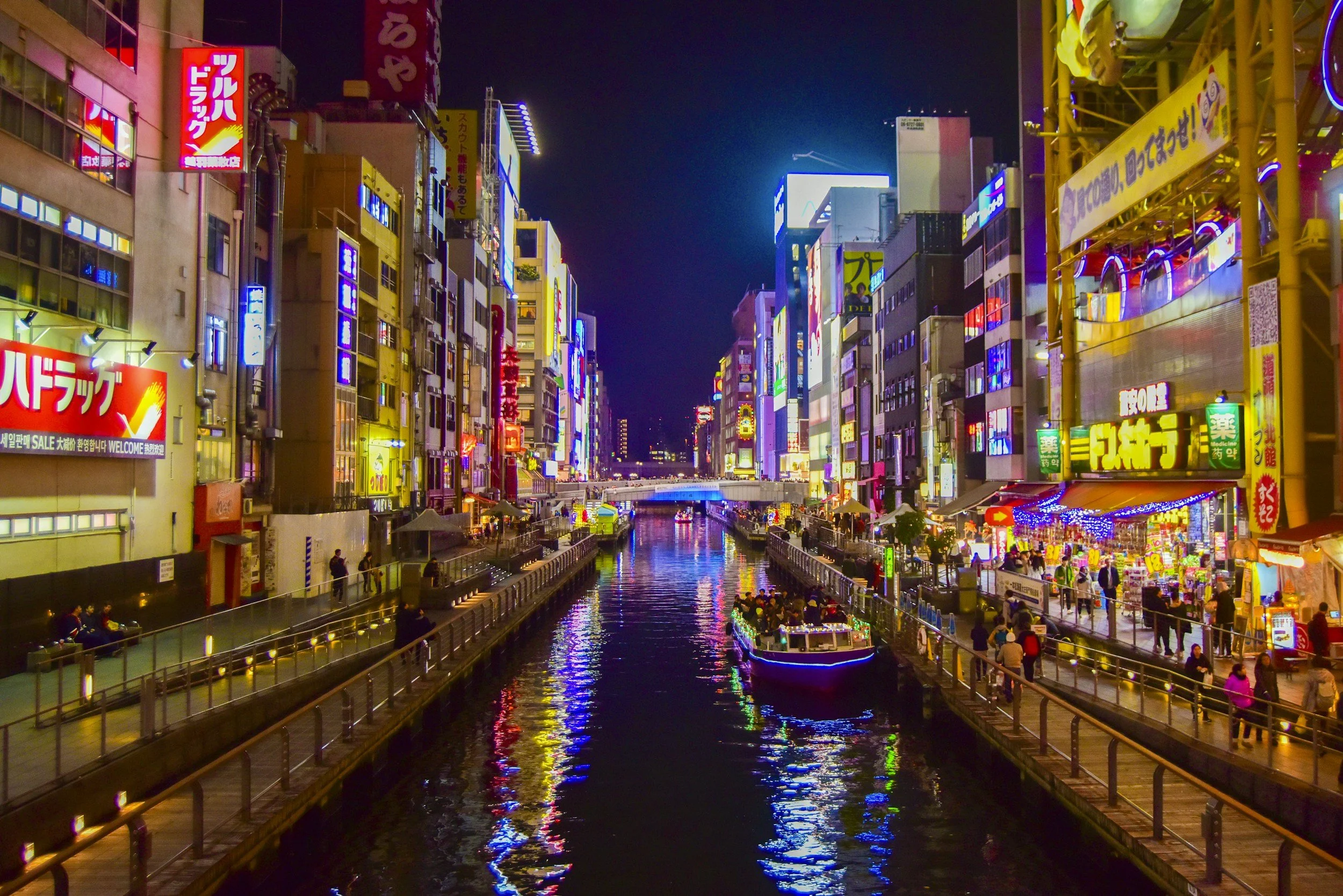
Dotonbori glowing after dark, with neon signs reflecting across the canal in the heart of Osaka.
The images here feel alive because the city is alive. That is the difference.
In this Photography Guide to Osaka, I share the places and experiences from our visit to Japan's most energetic city. You will find my favorite photography locations, guidance on when and where to shoot, practical travel tips, and gear recommendations, along with cultural insights to help you explore and photograph Osaka with confidence, creativity, and an empty stomach.
Photographer's Notes
Before you go, here are my own takeaways.
Favorite Season: Spring
Favorite Location: Dotonbori
Favorite Hotel: The Ritz-Carlton, Osaka
Favorite Restaurant: Endo Sushi
Favorite Café: LiLo Coffee Roasters
Favorite Lens: 15-35mm f/2.8
Would I Return? Yes, but I'd go back to Tokyo and Kyoto first.
Where to Stay in Osaka
Best Hotels in Osaka for Photographers and Travelers
For most travelers, Namba and Shinsaibashi are ideal. You are steps from the neon glow of Dotonbori and the electric rhythm of the city’s food culture. If you prefer something calmer and more refined, the Umeda and Osaka Station area works beautifully, with skyline views and easy train access.
Here are the best hotels in Osaka for photographers and travelers, whether you want cinematic city views or quiet comfort after a long day shooting.
If your focus is neon, street life, and food photography, stay in Namba or Shinsaibashi. You can shoot late and walk back to your hotel in minutes.
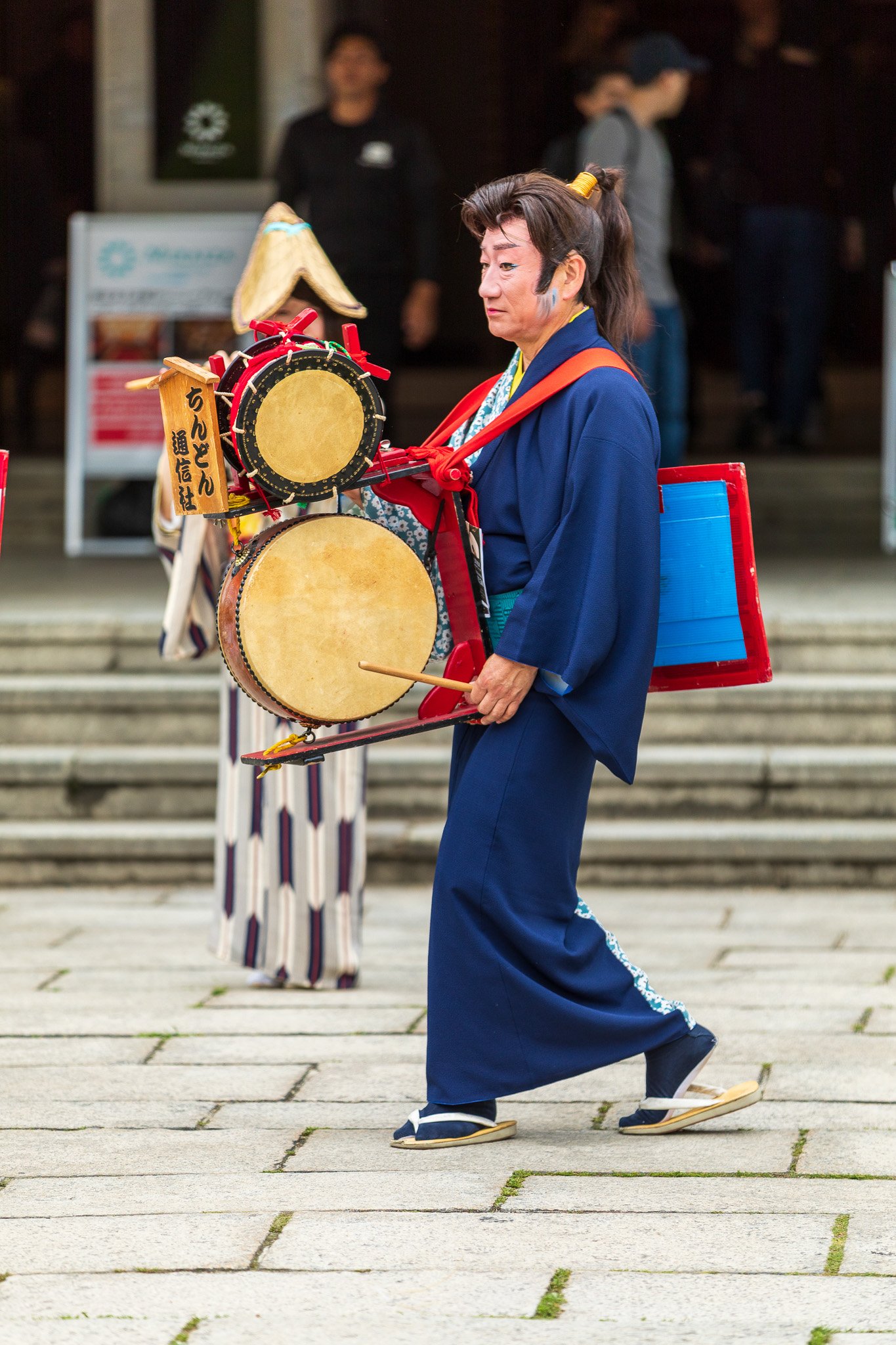
Osaka Castle framed by its stone walls and moat in the soft morning light and a man playing the drum
Luxury Hotels in Osaka
The Ritz-Carlton, Osaka. Located in Nishi-Umeda, the Ritz-Carlton is the only Forbes Five-Star hotel in Osaka, a distinction it has held for four consecutive years as of 2026. A 2024 renovation preserved its classic European character while adding contemporary comfort. The French restaurant La Baie holds a Michelin star. For photographers, it provides a calm, elegant base after long evenings shooting the city. Request a higher floor for skyline views, especially at dusk.
Conrad Osaka Modern, dramatic, and elevated above the city on Nakanoshima island between the Dojima and Tosabori rivers. The Conrad's lobby sits on the 40th floor, and the floor-to-ceiling glass makes the views from every room spectacular. Morning light from the upper floors is exceptional. Bring your wide lens when you check in. The sky bar alone is worth the stay.
The St. Regis Osaka is located between Namba and Umeda. The St. Regis offers understated luxury and exceptional service. It feels polished without feeling stiff, and its central position makes it easy to reach both the historic south and the commercial north of the city.
Mid-Level Hotels in Osaka
Cross Hotel Osaka, right in the heart of Shinsaibashi, this is location, location, location. You walk out the door and you are in the middle of the action, minutes from Dotonbori and ideal for late-night photography.
Hotel Monterey Grasmere Osaka A strong value choice with excellent views from higher floors. Located near Namba Station, early morning departures are easy. Some rooms offer lovely city perspectives for casual shooting.
Citadines Namba Osaka Modern, efficient, and well located in the Namba area. Ideal if you want easy access to both the southern entertainment districts and quick train connections for day trips to Kyoto, Nara, or Kobe.
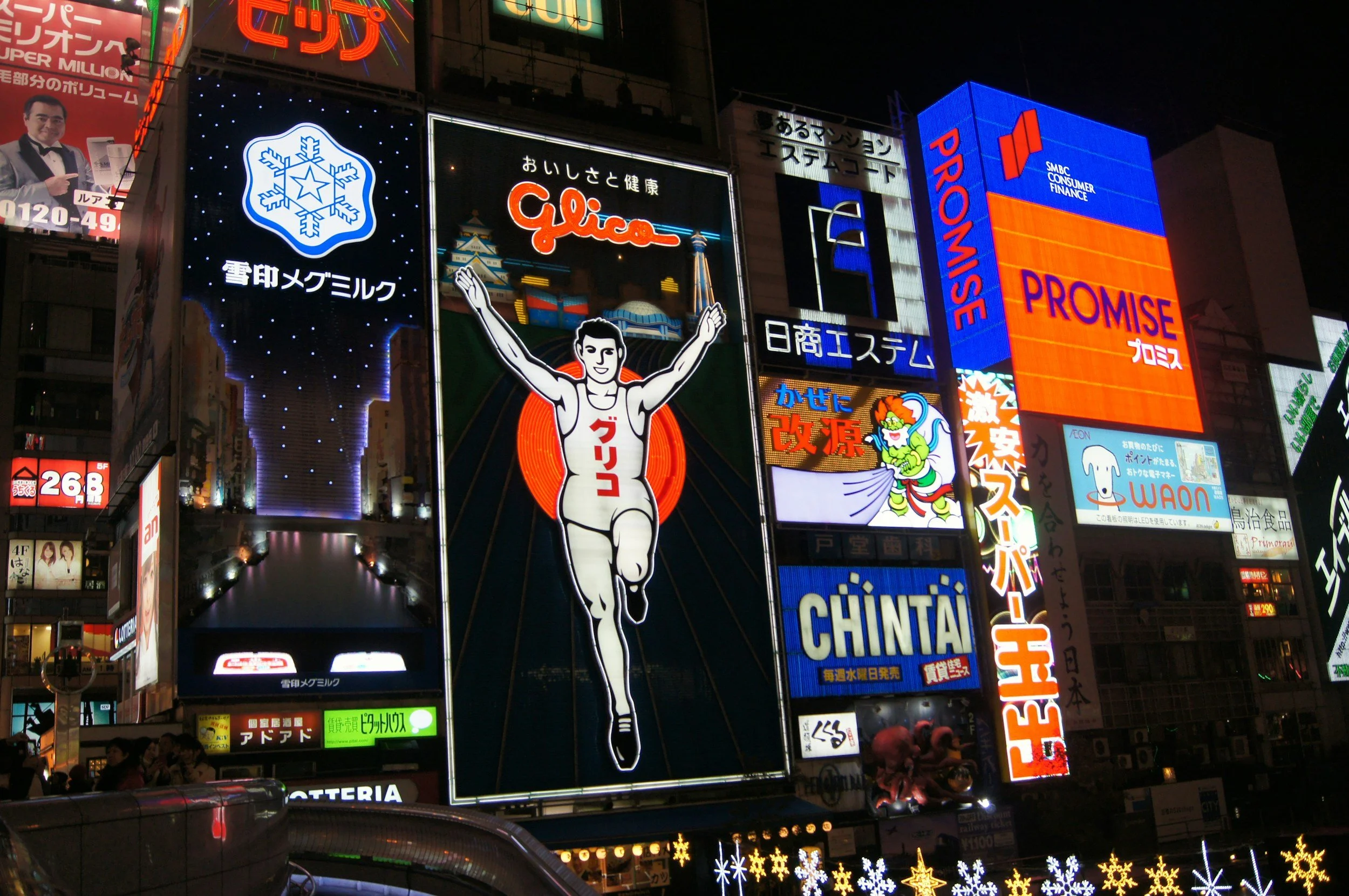
The famous Glico Running Man sign glowing above the Dotonbori Canal in Osaka.
How Many Days Should I Stay in Osaka?
Three days is the minimum to photograph the top locations at a real pace. If you want to return to spots at different times of day — and you should — plan for four or five. Osaka rewards coming back. The same street looks completely different at sunrise versus midnight.
Here is what a three-day photographer's itinerary looks like.
Day One, Dotonbori and Namba at Night
Start with pure energy. Head straight to Dotonbori and the surrounding streets of Namba.
Shoot at blue hour when the sky still holds color. Then stay as the neon reflections intensify along the canal. Look for layers, foreground silhouettes, and reflections in puddles or glass.
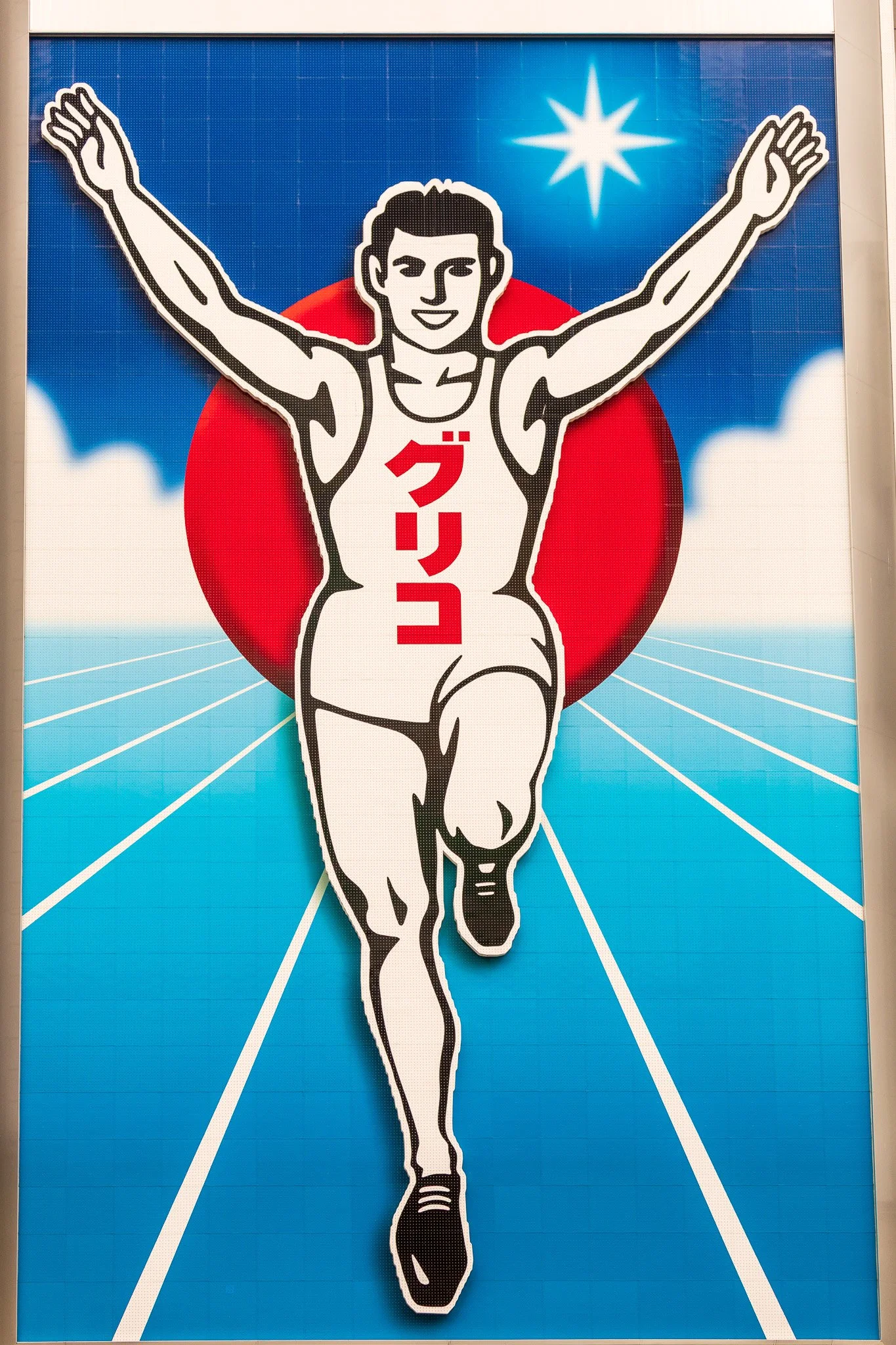
The famous Glico Running Man sign glowing above the Dotonbori Canal in Osaka.
Day Two, Osaka Castle and Kuromon Market
Begin early at Osaka Castle. Arrive before tour buses. Morning light gives you soft contrast and fewer crowds. Walk the outer moat for clean compositions and reflections.
Later, head to Kuromon Ichiba Market. This is texture and color. Seafood displays, steam rising, vendors calling out. Focus on details and candid moments.
If you are comfortable, ask for a portrait. A smile and simple respect go a long way.
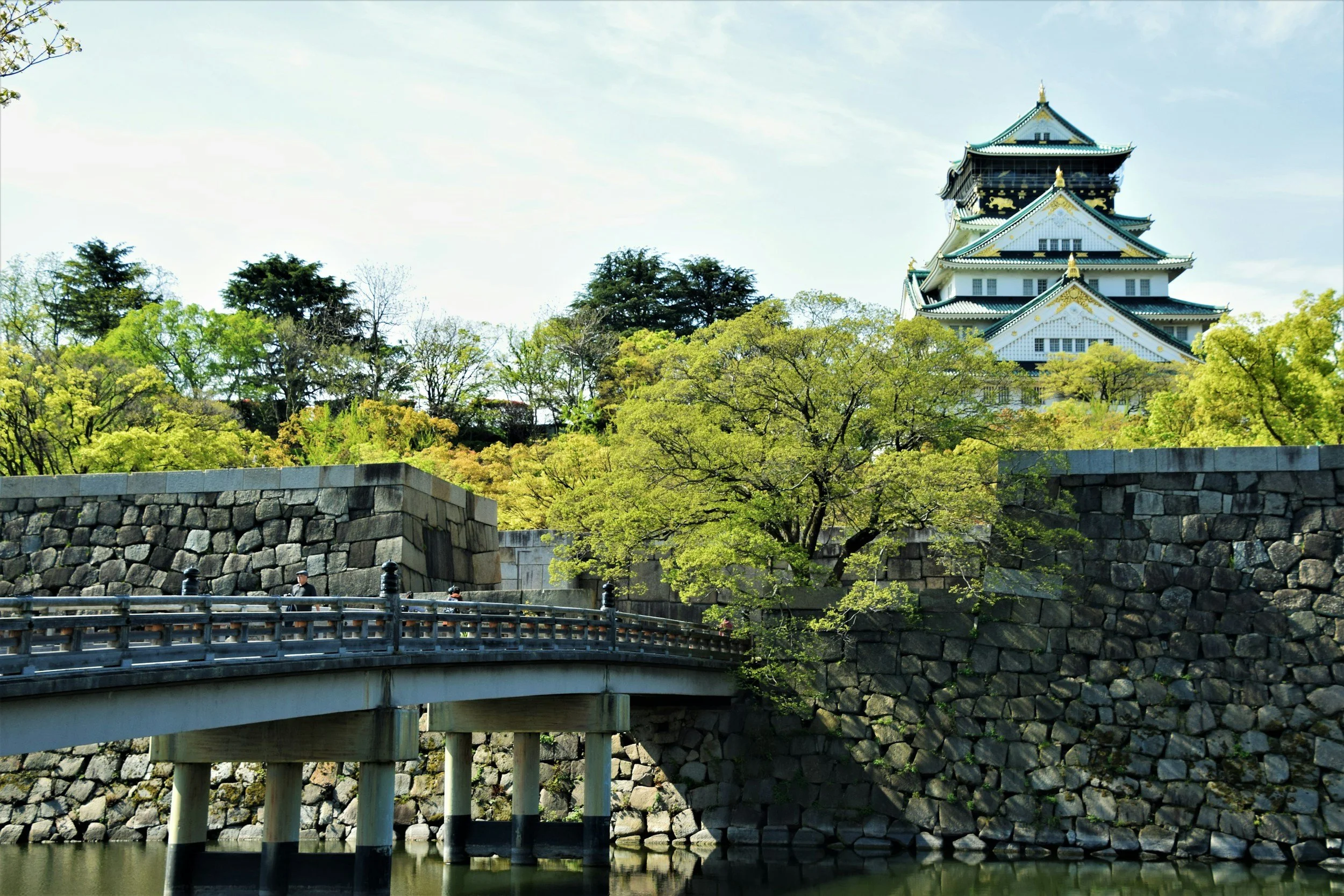
Osaka Castle reflected in the surrounding moat before the daytime crowds arrive.
Day Three, Shinsekai and Umeda
Explore Shinsekai in the late afternoon. It has a nostalgic feel, with old signs and gritty charm. The iconic Tsutenkaku Tower anchors your frame.
In the evening, move north to the Umeda Sky Building. The Floating Garden Observatory offers sweeping city views. Sunset here is powerful. Stay for blue hour. The city grid begins to glow beneath you.
Bring a small tripod if allowed, or stabilize your camera against a railing.
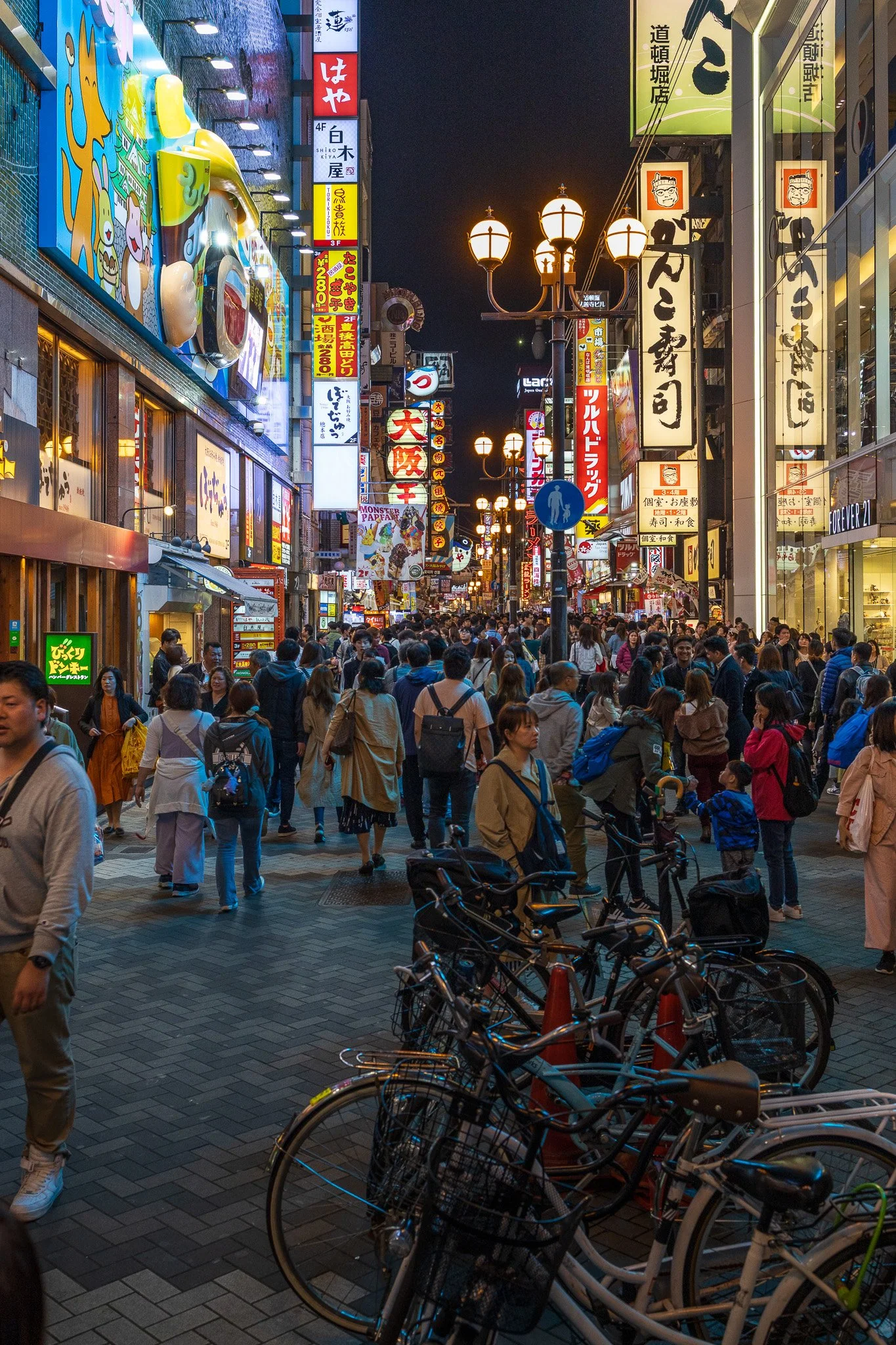
Neon signs, crowds, and canal reflections make Dotonbori one of Osaka’s most energetic photography locations.
Best Time to Visit Osaka for Photography
Timing matters in Osaka. The light shifts, the colors change, and the mood of the city transforms with the seasons.
Late March to early April is special. Cherry blossoms frame Osaka Castle and create classic foreground layers. Arrive early in the morning for softer light and fewer crowds. Use the blossoms to add depth to your compositions.
November brings rich autumn color. Parks glow with reds and golds, and the lower sun angle gives you softer contrast throughout the day. It is an underrated season for photography.
Summer is humid but vibrant. Festivals, street energy, and saturated neon scenes make night photography especially rewarding. Embrace the heat and shoot after sunset when the city cools slightly and reflections intensify.
Winter is crisp and clear. The air often feels cleaner, which is excellent for skyline shots and night photography. You get strong contrast and sharp detail, especially around Umeda.
If your focus is street photography, Osaka delivers year round. The city’s personality does not take a season off.
No matter when you visit, plan your shoots around light. Early morning and blue hour will always give you the strongest images.
Street food, giant signs, and evening crowds along Dotonbori in central Osaka.
How to Get Around Osaka
Getting around Osaka is refreshingly simple. The city is compact, well organized, and built for movement.
Metro and Trains
The metro is efficient, clean, and easy to use, even if you do not speak Japanese. Signs are clear and most major stations have English translations.
Purchase an ICOCA card and move freely between neighborhoods. Tap in. Tap out. No need to buy individual tickets each time. It works across much of the Kansai region, which is perfect if you plan day trips.
Public transport is usually faster than driving, especially during busy hours.
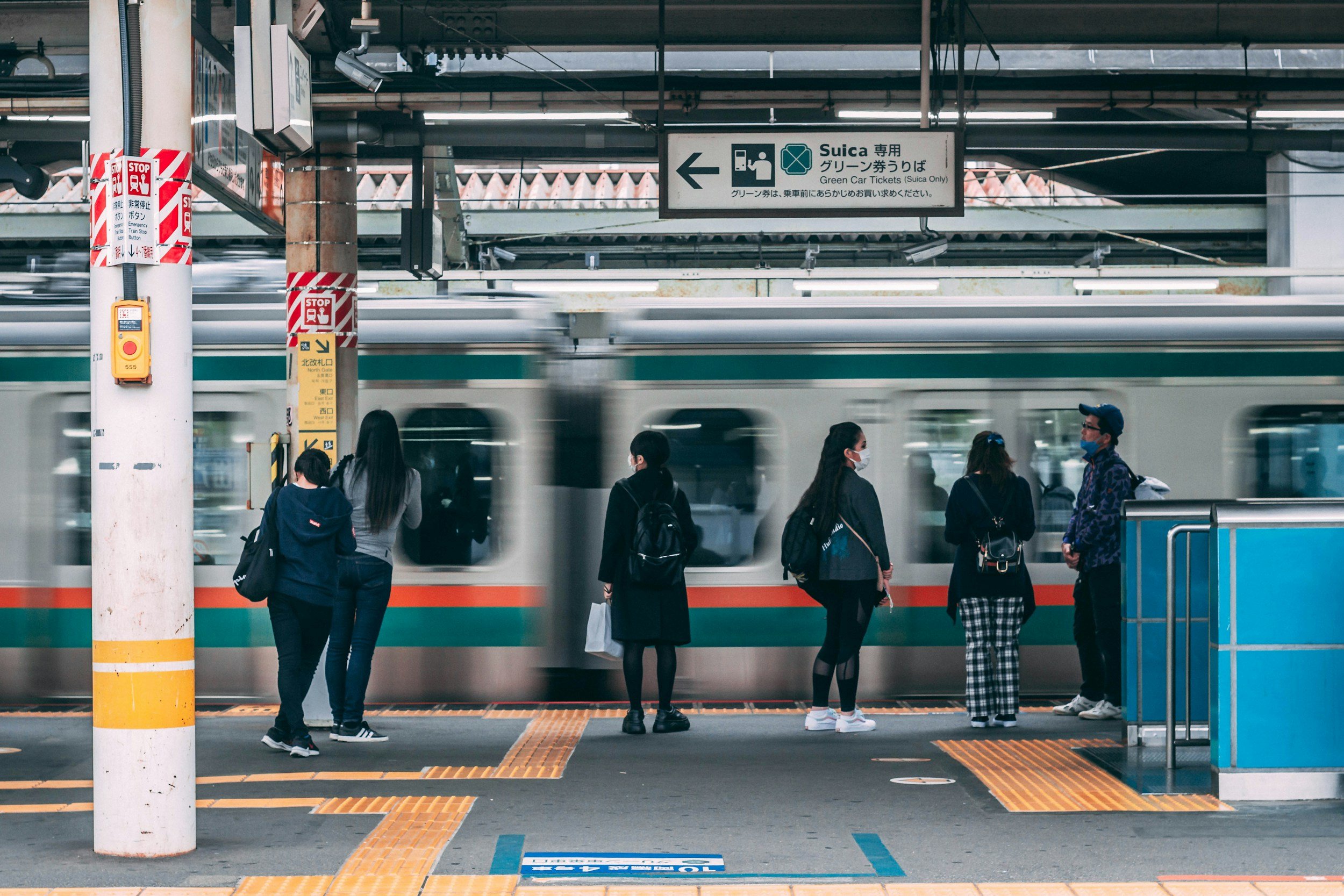
The metro in Osaka a nice location for street photography
Arriving by Train
We took the Shinkansen from Tokyo to Kyoto and then continued on to Osaka. The transition is seamless. High-speed trains are comfortable, punctual, and efficient. If you are planning a multi city trip in Japan, this is the smartest way to move.
Walking
You will walk a lot. That is a good thing.
The strongest images are often one street away from the main road. Step off the neon strip in Dotonbori and you will find quiet alleys, textured walls, and everyday life unfolding.
Wear comfortable shoes. Explore without a strict plan. Osaka rewards curiosity.
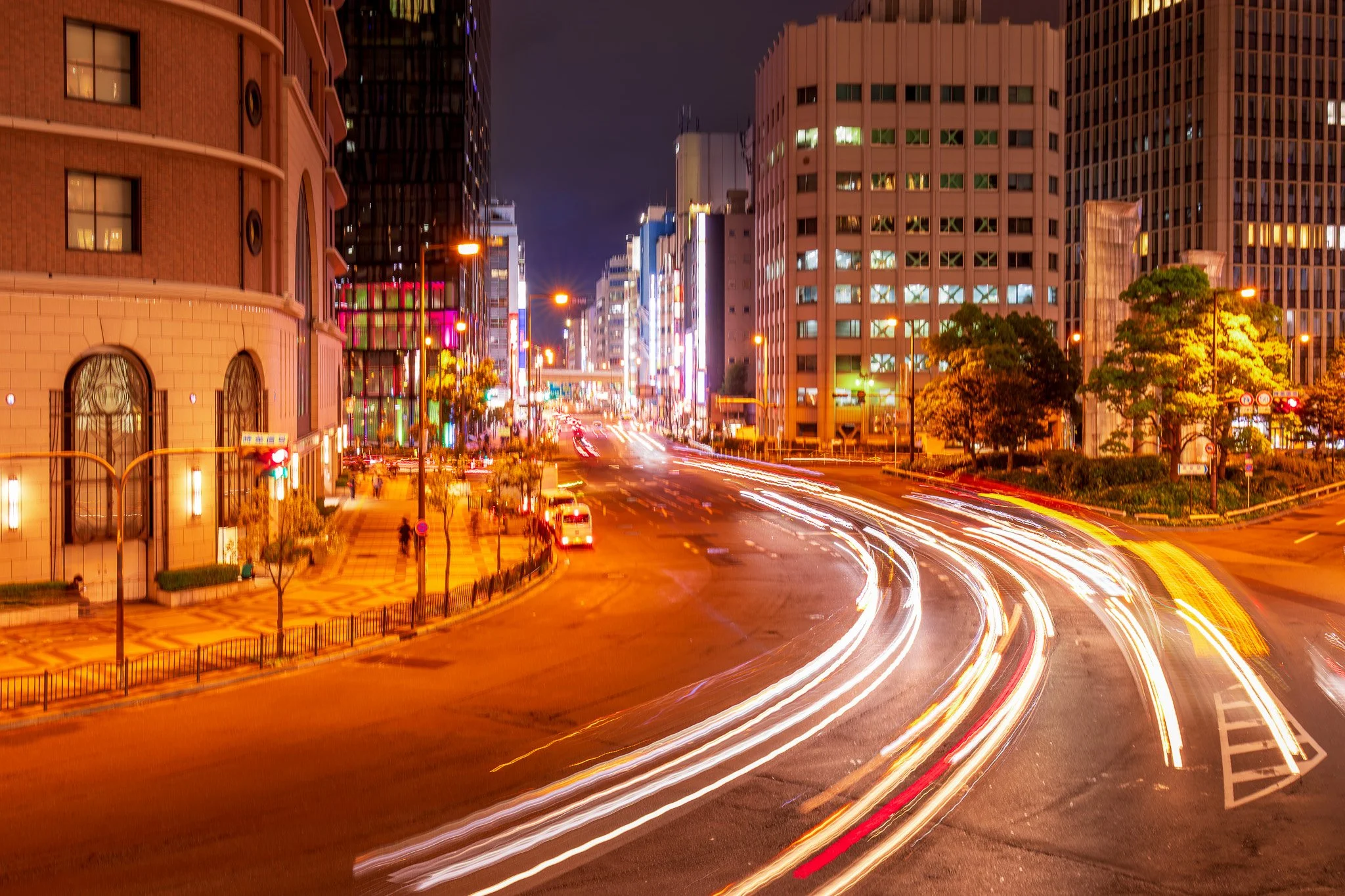
Long Exposure of red lights from cars passing by from a bridge over the road
Taxis and Uber
Uber exists, but taxis are reliable, clean, and professional. Drivers are courteous and the cars are immaculate. That said, public transport is usually faster and more practical for photographers carrying gear.
Osaka is easy. Move by train. Wander on foot. Follow the light.
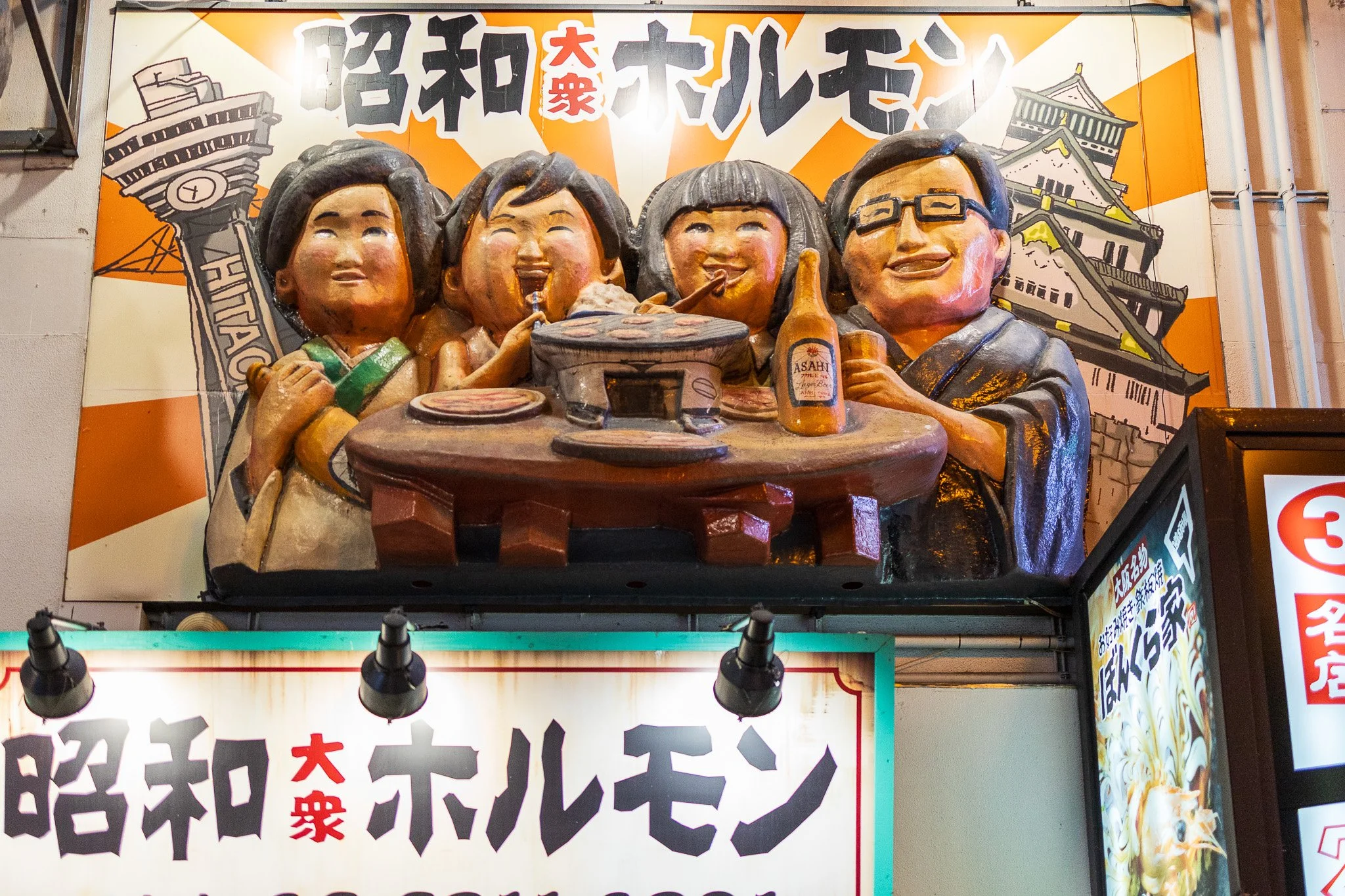
Dotonbori at night, when the neon and reflections completely transform the neighborhood.
Where to Eat in Osaka
Osaka is Japan's kitchen. Come hungry. Come curious. Do not rush.
The city's food identity is built around a few essential dishes: okonomiyaki (the savory cabbage pancake), takoyaki (octopus balls), kushikatsu (deep-fried skewers), and sushi so fresh it reframes your expectations. You can eat extraordinarily well at every price point. Do not judge a place by its size or storefront.
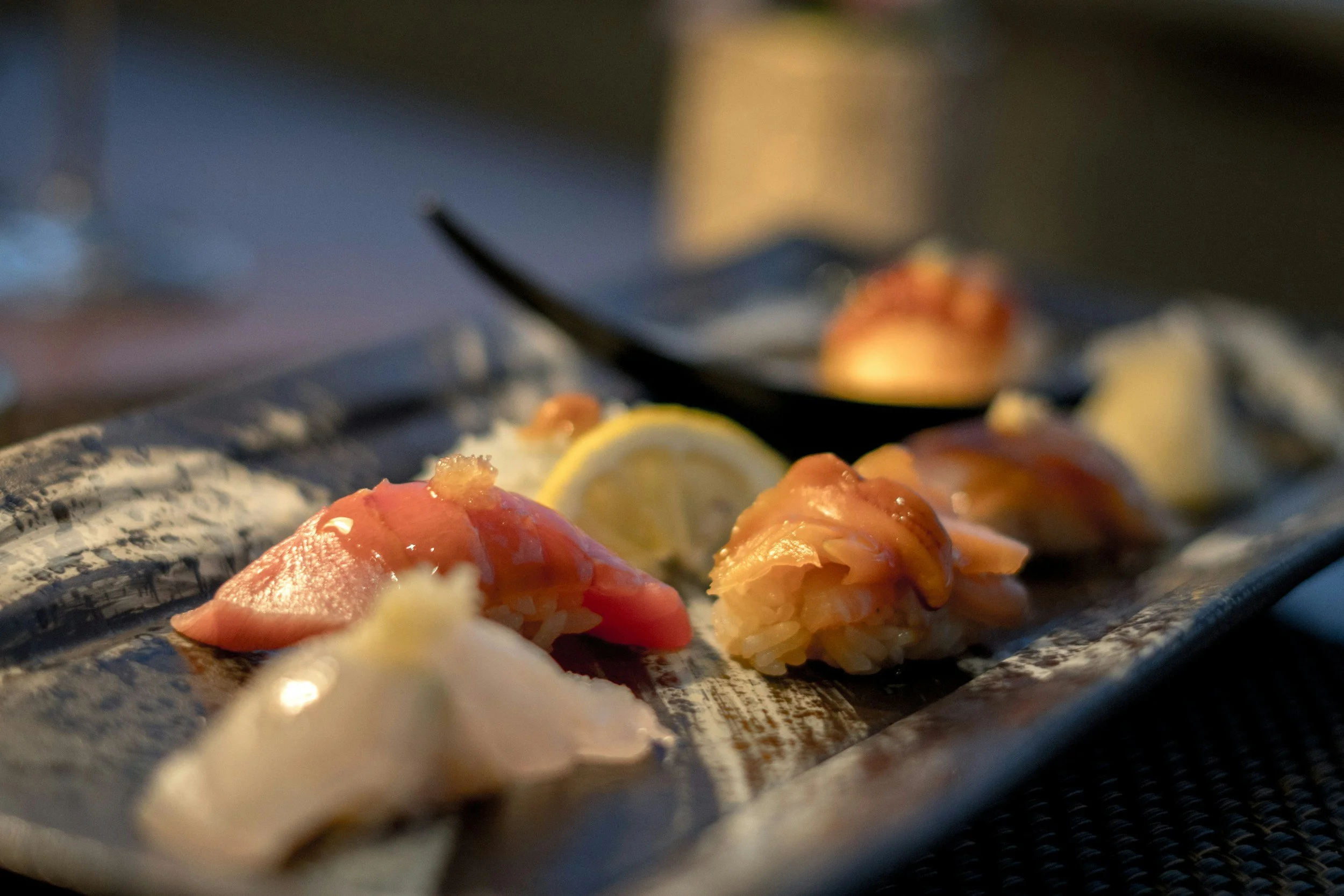
Fresh seafood and colorful food displays inside Kuromon Ichiba Market in Osaka.
Mizuno Legendary okonomiyaki in the heart of Dotonbori, in business since 1945 and holding a Michelin Bib Gourmand. You sit at the counter and watch it cook in front of you. Cabbage, pork, seafood, batter, sauce. It is comfort food with texture and history. Expect a line. Arriving right at opening or around 3 p.m. on a weekday shortens the wait considerably.
Kushikatsu Daruma Deep-fried skewers in Shinsekai. Fun and unapologetically local. Remember the rule: no double dipping in the communal sauce. It is part of the experience and enforced with good humor.
Harukoma Exceptional value sushi near the Tenjinbashi-suji shopping arcade in Kita Ward. Fresh cuts, generous portions, and a lively atmosphere. The chefs are friendly and happy to guide you. Come early or be prepared to wait. It is worth it.
Endo Sushi (Osaka Central Wholesale Market) This is a pilgrimage. A family-owned sushi counter founded in 1907, located inside the Osaka Central Wholesale Market in Fukushima Ward. The fish comes from the market floor. Opens around 5:30–6 a.m. and closes by noon. Closed Sundays. The menu is small and focused: sets of five seasonal pieces, ordered from a limited selection. Do not go expecting to customize freely. Let the counter guide you. This is not walking distance from Namba — plan it as a dedicated early morning trip.
Endo Sushi (Kyobashi Branch) If you are connecting to or from Kyoto via the Keihan Line, the Kyobashi branch is in the mall at the station. It opens at 11 a.m. and runs through the evening, which makes it the far more practical option for most travelers.
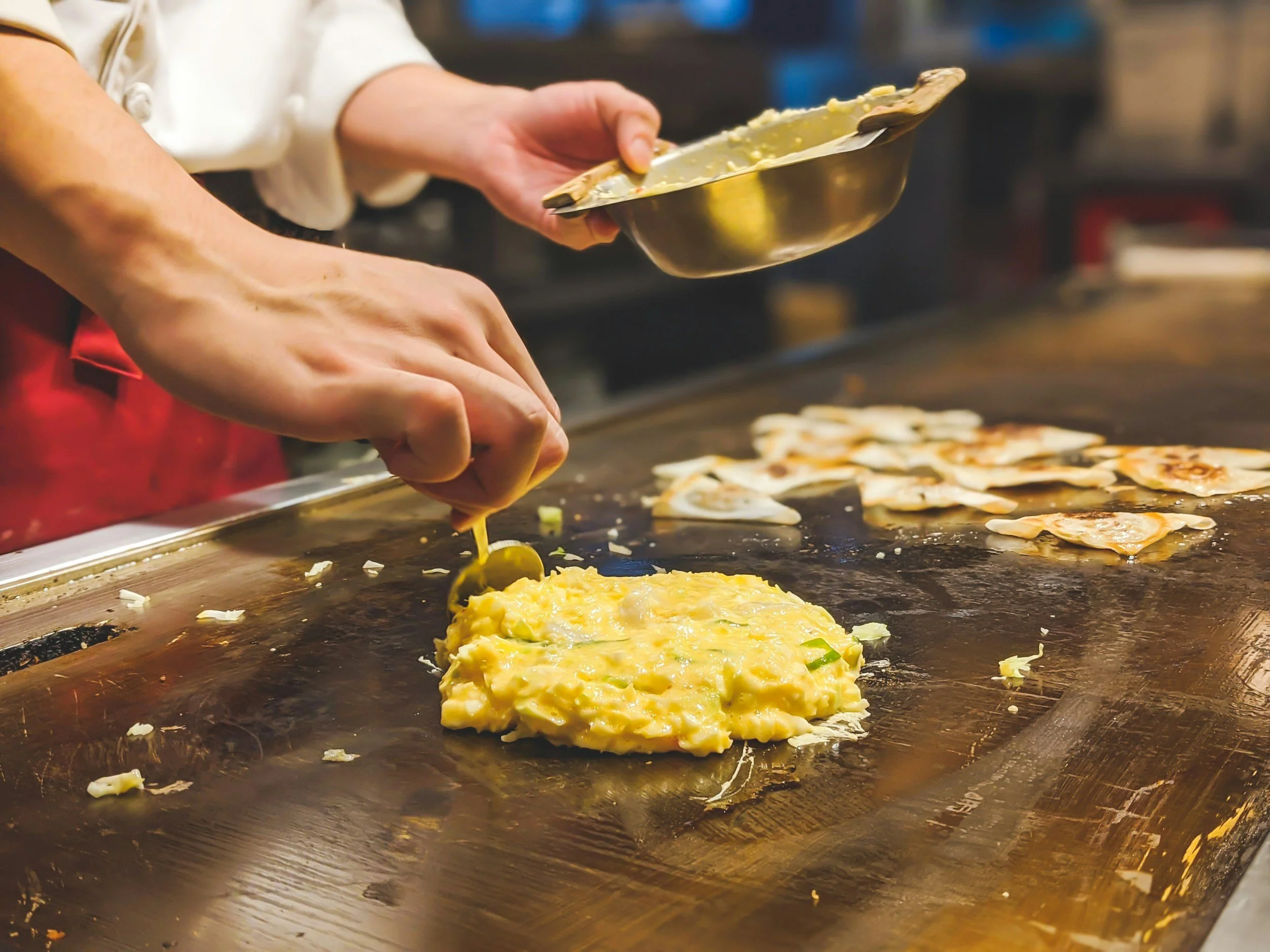
Fresh takoyaki cooking on the streets of Osaka, one of the city’s essential foods
Osaka Coffee Shops
LiLo Coffee Roasters In the Amerikamura district, open daily from 11 a.m. to 11 p.m. One of Osaka's specialty coffee pioneers, with more than 20 rotating single-origin beans. Great light inside. Perfect for detail shots or a quiet moment between shoots.
Brooklyn Roasting Company Kitahama Riverside location on Nakanoshima with an industrial interior. The light off the Tosabori River in late afternoon is beautiful. Consistently strong coffee with a New York-meets-Osaka vibe.
Streamer Coffee Company Shinsaibashi In the Ame-Mura district between Shinsaibashi and Yotsubashi stations. Strong espresso, a laid-back skate-culture atmosphere, and a crowd that reflects the neighborhood's creative energy. Open 9 a.m. to 7 p.m. daily. A solid reset before heading back out into the city.
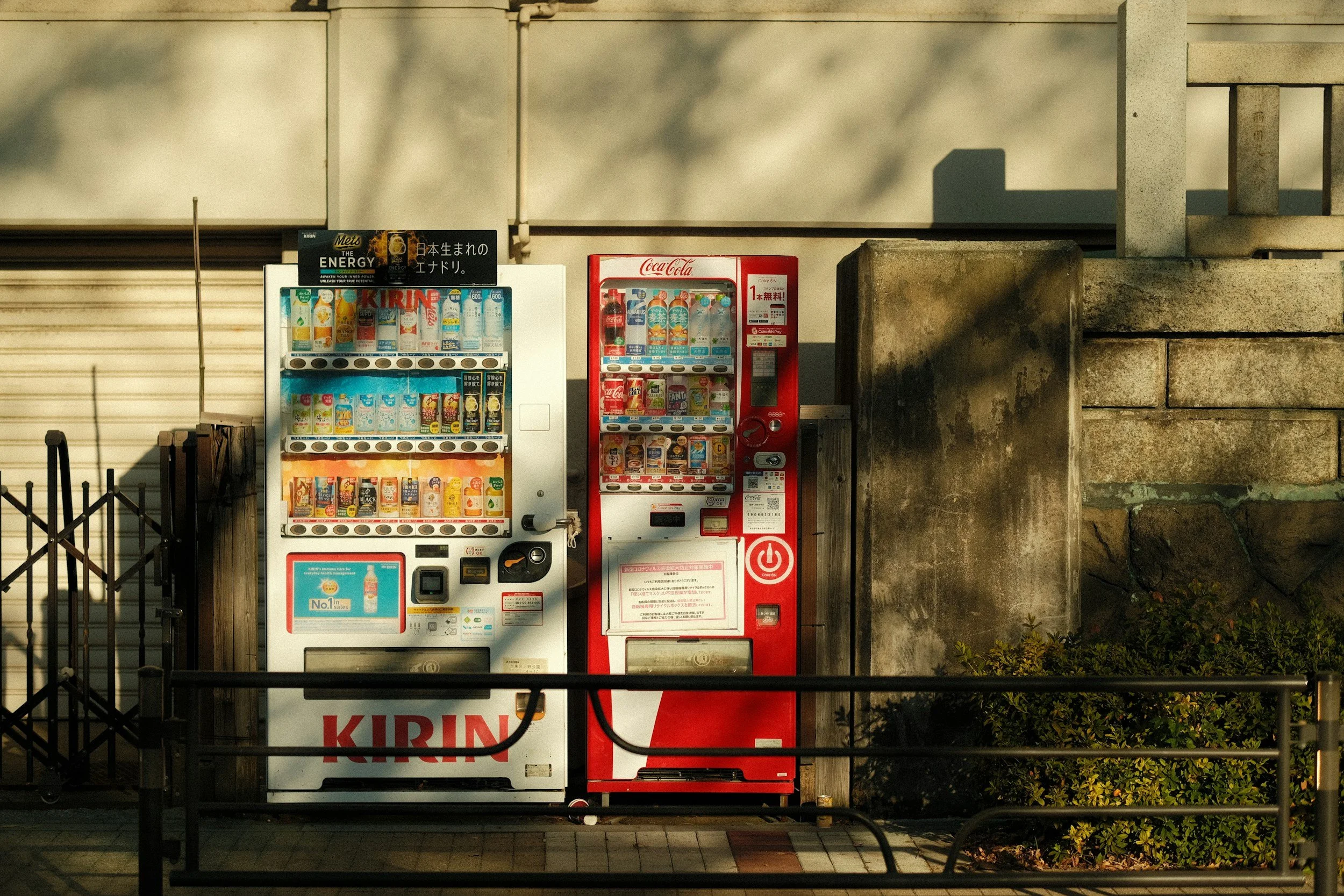
Old signs, restaurants, and evening crowds create the distinctive atmosphere of Shinsekai.
Best Photography Gear for Osaka
Osaka mixes tight alleys with sweeping skyline views. You will move from neon-soaked streets to elevated observatories in the same day. The city rewards flexibility more than specialization.
DSLR / Mirrorless Kit
Camera Bodies Any modern full-frame mirrorless body will perform beautifully here, especially at night. Strong choices include the Canon EOS R5 Mark II, Sony A7R V, and Nikon Z8. Solid autofocus and good dynamic range are the priorities. You will be shooting in low light often.
Lenses
15–35mm f/2.8: Your primary lens for architecture, shrines, and dramatic foreground work around Osaka Castle and Dotonbori.
24–70mm f/2.8: The workhorse for street photography in Shinsekai and the market. If you are traveling light and only want one lens, a 24–105mm covers most of what you need.
70–200mm f/2.8: For skyline compression from Umeda and isolating details across the city.
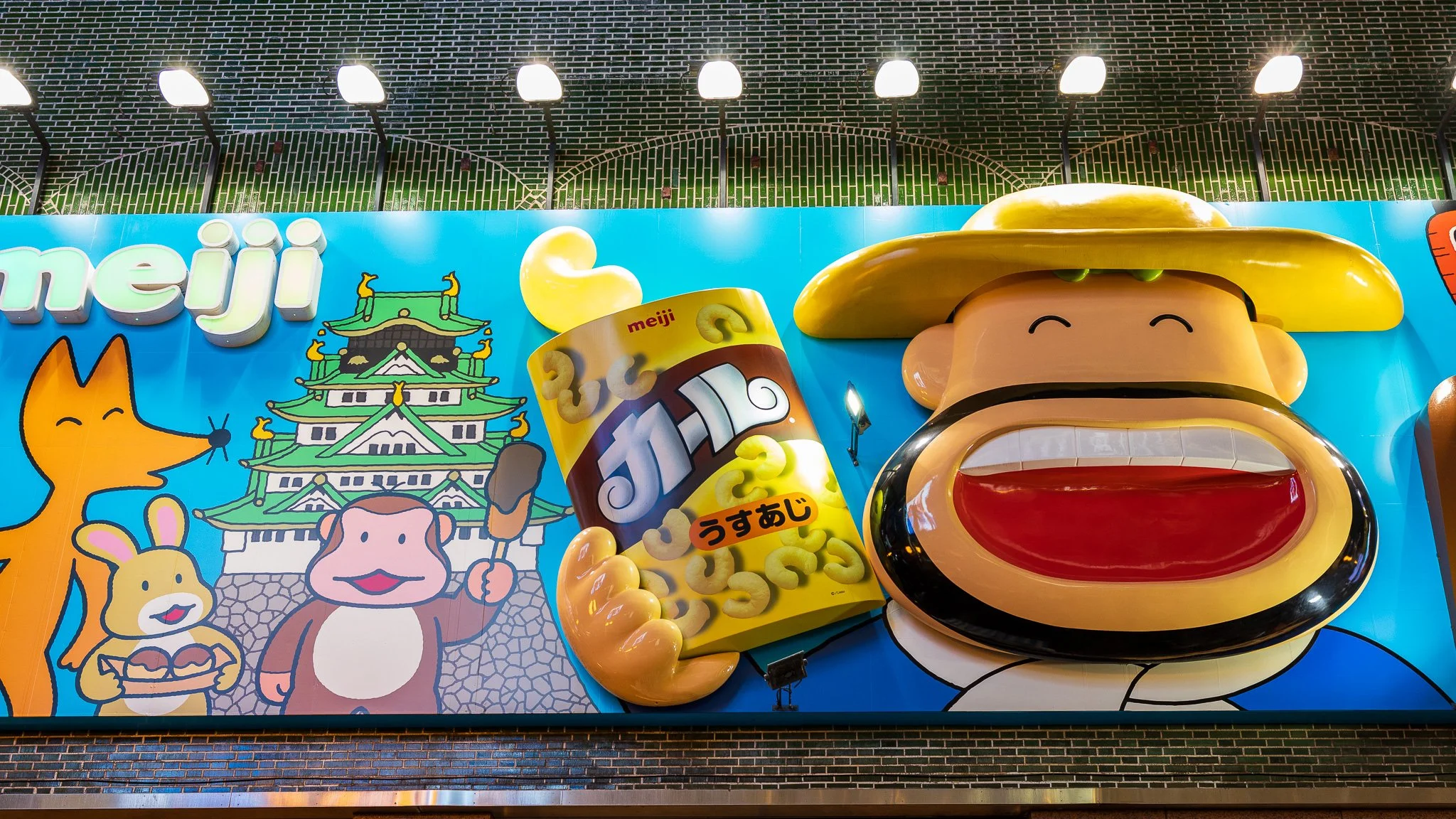
Looking beyond the landmarks for smaller moments on the streets of Osaka.
Accessories
Compact travel tripod for night scenes and long exposures along the canal
Polarizing filter for canal reflections and reducing glare on glass buildings
ND filters (6 and 10 stop) for long exposures and smoothing water
Extra batteries — long nights and cool evenings drain power faster than expected
Samsung T7 SSD or equivalent for daily backups
Drone Note: Osaka is classified as a Densely Inhabited District (DID) under Japanese aviation law. Drone flight over DIDs is prohibited without explicit permission from Japan's Ministry of Land, Infrastructure, Transport and Tourism (MLIT). Recreational approval is almost never granted for urban areas. Do not bring a drone expecting to fly it in central Osaka. The penalties for unauthorized flights are serious and enforced.
iPhone Tips for Osaka
Osaka is one of the best cities in the world for iPhone photography. The contrast between neon and darkness is exactly where the iPhone thrives. Here is how to get the most out of it.
Night Mode at Dotonbori: Switch Night Mode on and brace your phone against the bridge railing for a 2–3 second exposure. The canal reflections will bloom beautifully in Night Mode, and the colors come through with more saturation than you expect. Do not use a handheld freehand shot here. The stillness is what makes it work.
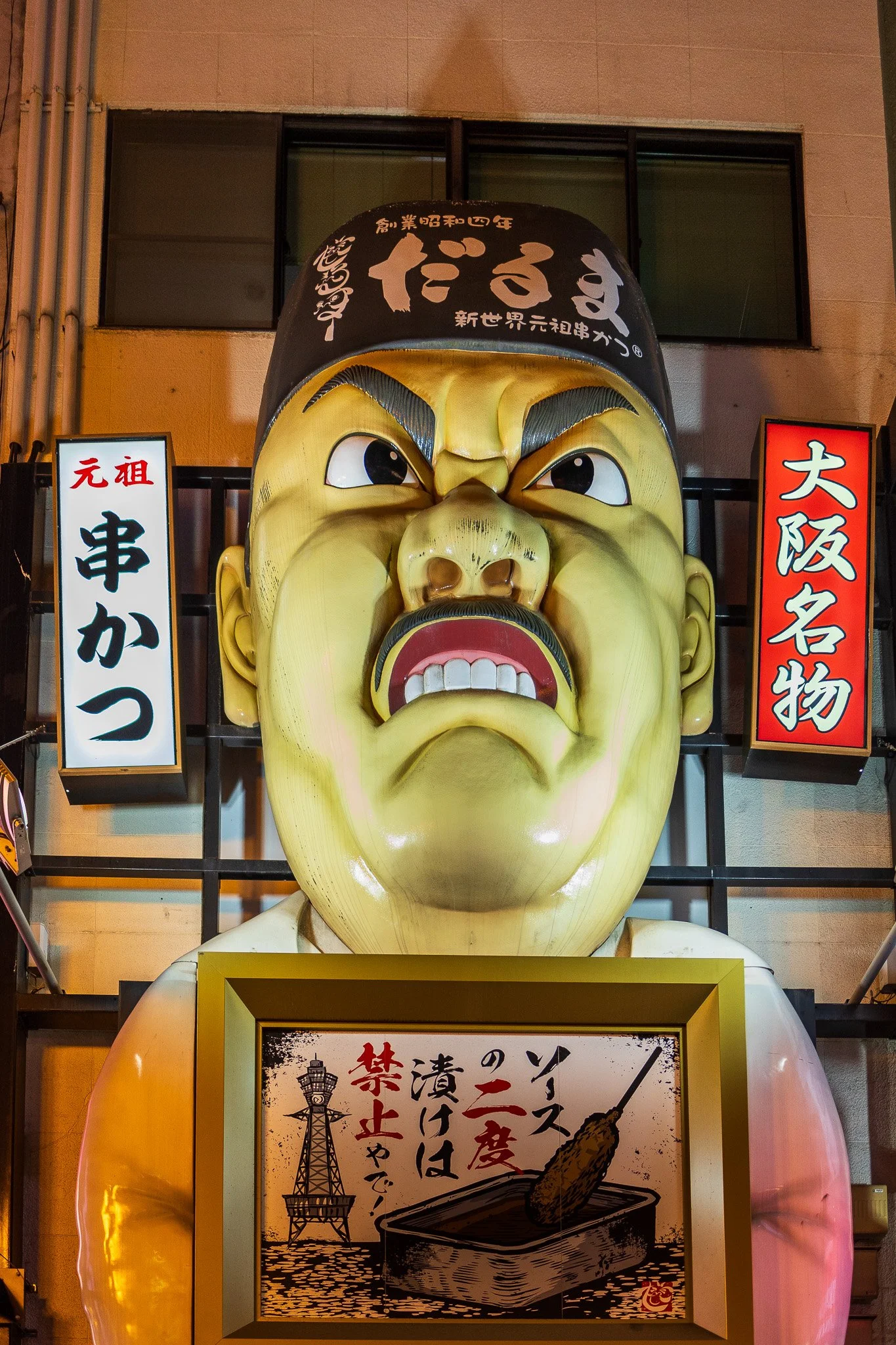
Strong light, bold signs, and expressive faces make Osaka a rewarding city for street photography.
Best Photography Spots in Osaka
Osaka is built for photographers. Neon, history, texture, symmetry. You can shoot all day and still feel like you missed something. Here are the locations that consistently deliver.
Dotonbori
Dotonbori is the visual and emotional center of Osaka. The 600-meter canal strip in Namba is where the city's character shows up undiluted: signs the size of buildings, takoyaki smoke over packed streets, and a carnival energy that peaks after dark. The Glico running man has stood in some form since 1935. The Tombori River Walk along the canal gives you the best shooting angle once the neon starts bouncing off the water.
The bridge over the canal gives you strong leading lines with reflections below. Do not just shoot the signs. Turn around. Capture the people watching the spectacle. Candid expressions often tell a better story than the neon itself.
📷 Pro Tip: Arrive at dusk, about 30 minutes before full darkness, when the sky is still a deep blue and the neon starts to come alive. Position yourself on the Ebisubashi bridge or the Tombori River Walk at water level for the best reflection angles. Use your 15–35mm wide for the full canal sweep, and your 70–200mm to isolate individual signs and crowd details from the far bank. If it has rained, the wet pavement becomes a second canvas. Long exposures (1–4 seconds on a tripod) smooth the water and intensify reflections. After rain is the best time to be here.
Best time: Dusk through late evening. Access: Free. Walk north from Namba Station (Midosuji Line), Exit 14.
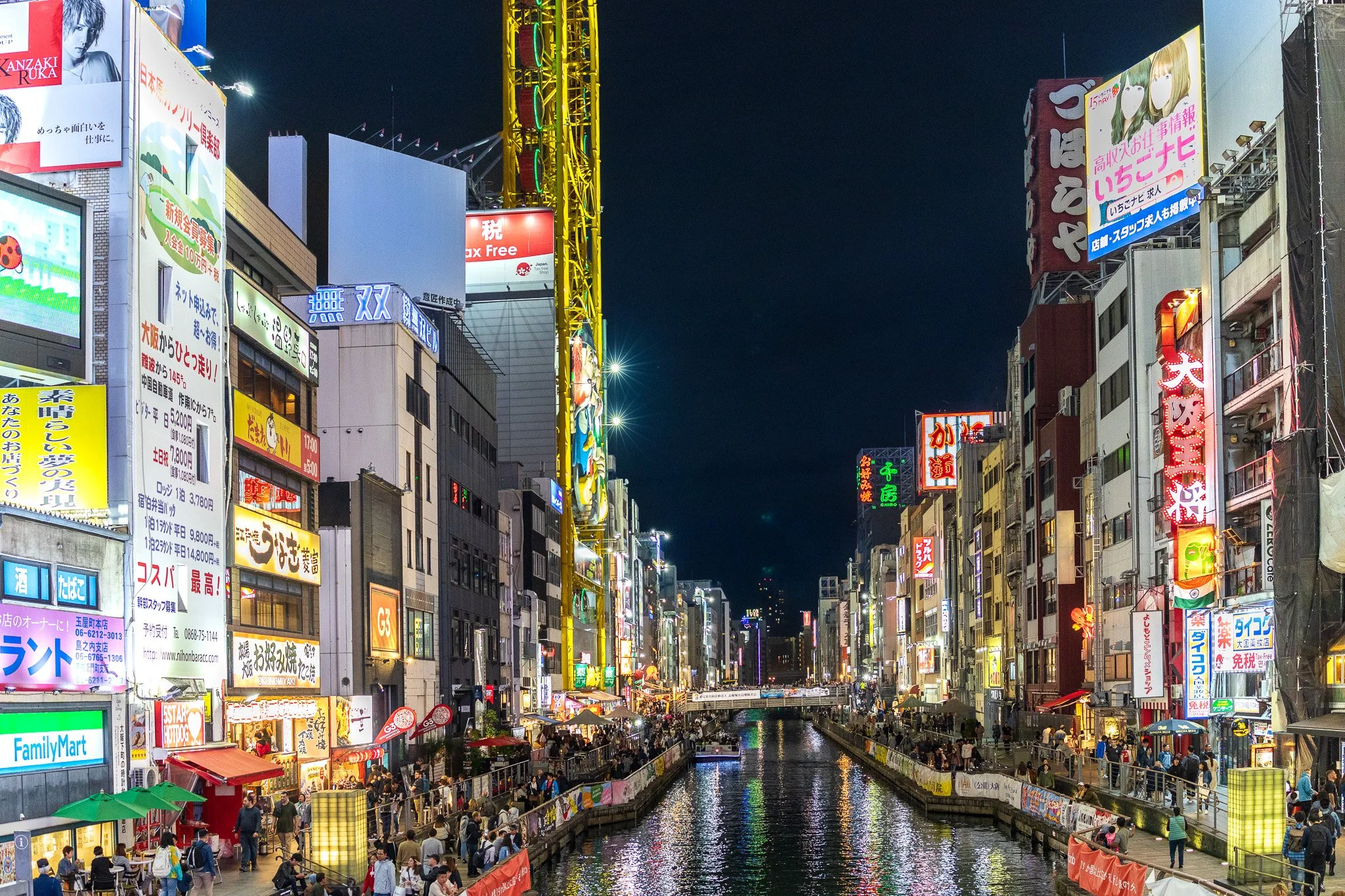
Osaka after dark, when neon signs and reflections turn the city into a completely different photographic experience.
Osaka Castle
One of Japan's most photographed landmarks, and deservedly so. Built in the 16th century and reconstructed in its current form in 1931, the castle rises from a broad moat surrounded by one of the city's best parks. In spring, cherry blossoms turn the grounds into a natural studio. In summer and fall, the surrounding trees provide rich framing material. The castle glows at night when lit from below.
Morning light gives you the softest contrast and the fewest crowds. The outer moat reflects the castle walls and provides clean compositions without fighting tour groups for position.
📷 Pro Tip: Arrive before 8 a.m. on weekdays for genuinely empty shots. The best reflection angle is from the outer moat on the north side. Use a 70–200mm to isolate the castle against a clean sky, compressing the tiers and removing foreground clutter. In cherry blossom season, position blossoms in the immediate foreground at f/2.8 for natural framing with soft depth. A wide angle at the inner gate captures the stone walls and castle together in one frame. Night photography is excellent here — the castle is lit until 10 p.m. in most seasons, and a long exposure from the far moat wall isolates the structure beautifully against the dark sky.
Best time: Sunrise for clean shots; spring for blossoms; evening for illuminated castle. Access: Osaka Castle Park grounds are free; castle interior has an admission fee. Take the Chuo Line or Tanimachi Line to Tanimachi 4-chome Station, then a 10-minute walk.
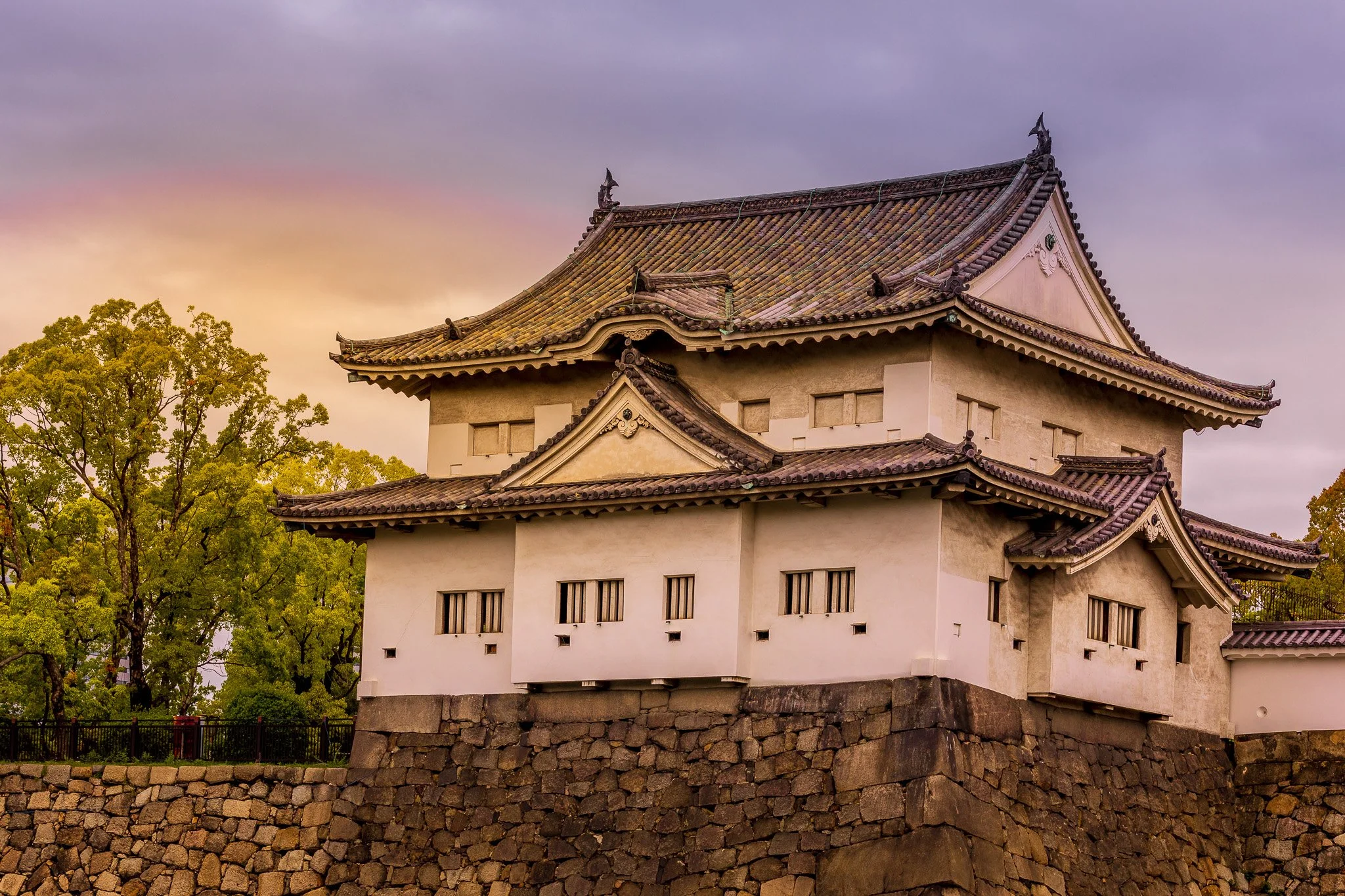
Osaka Castle framed by its stone walls and moat in the soft morning light.
Shinsekai
Shinsekai is Osaka's most nostalgic neighborhood, built in the early 20th century as an entertainment district modeled after Paris and New York. It did not age into elegance, and that is exactly what makes it worth photographing. Retro signs, layered visuals, faded facades, and the Tsutenkaku Tower rising above it all. The atmosphere is gritty, warm, and completely its own.
Late afternoon into evening works best. As the lights come on, the mood shifts from nostalgic to cinematic. The Tsutenkaku Tower gives you a strong vertical anchor for almost any composition in the neighborhood.
📷 Pro Tip: Walk in from the south end of Shinsekai and shoot looking north toward the tower with the street signs layered in the foreground. A 24–70mm at the longer end compresses the signage beautifully. Use a wider aperture (f/2.8–f/4) to separate the tower from the background clutter. In the early evening, when the street neon is warm against a still-blue sky, the window is narrow but the light is extraordinary. Bring a 35mm prime if you have one for environmental portrait work among the kushikatsu restaurants.
Best time: Late afternoon through early evening. Access: Free. Take the Midosuji Line to Dobutsuen-mae Station.
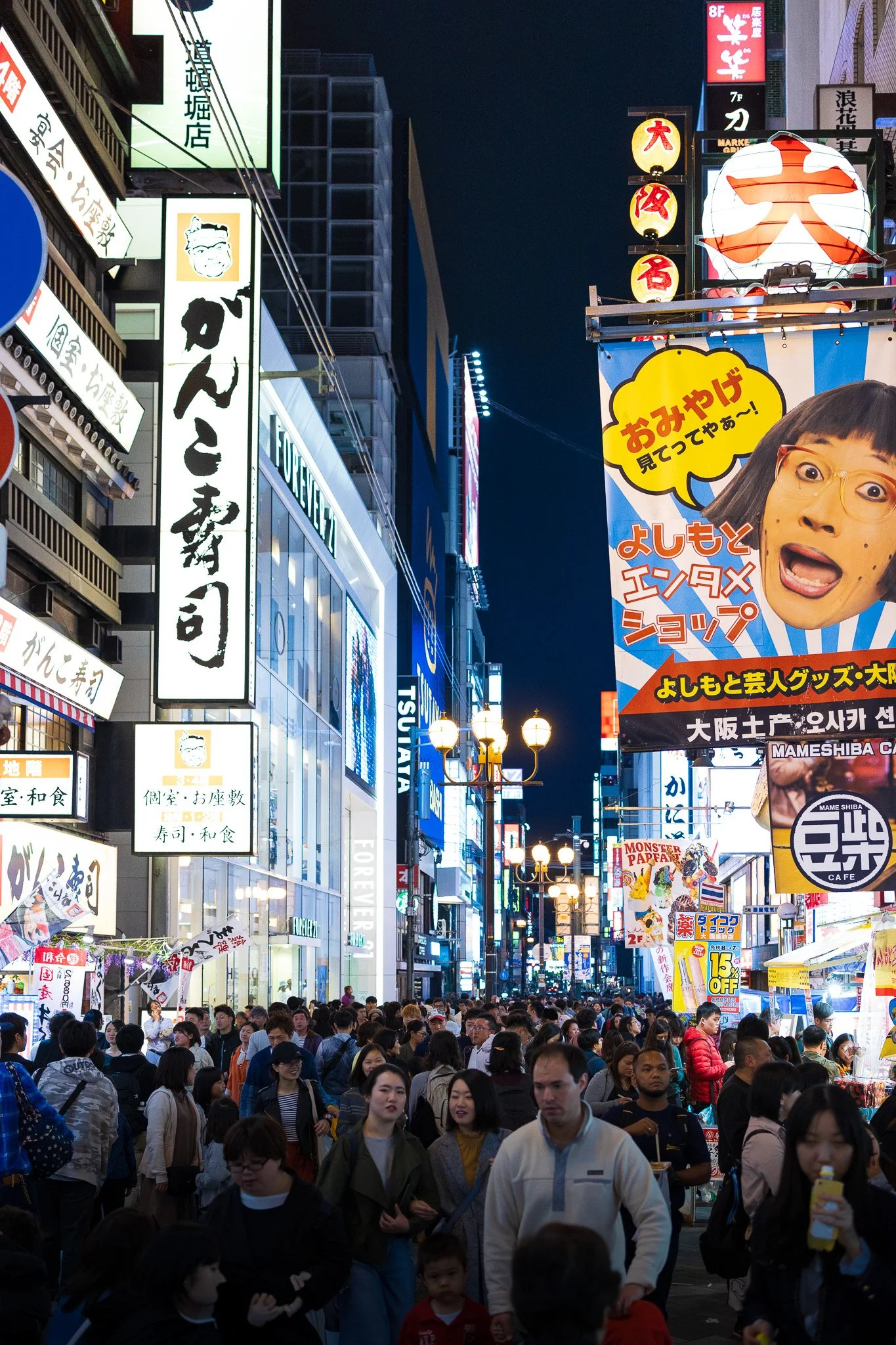
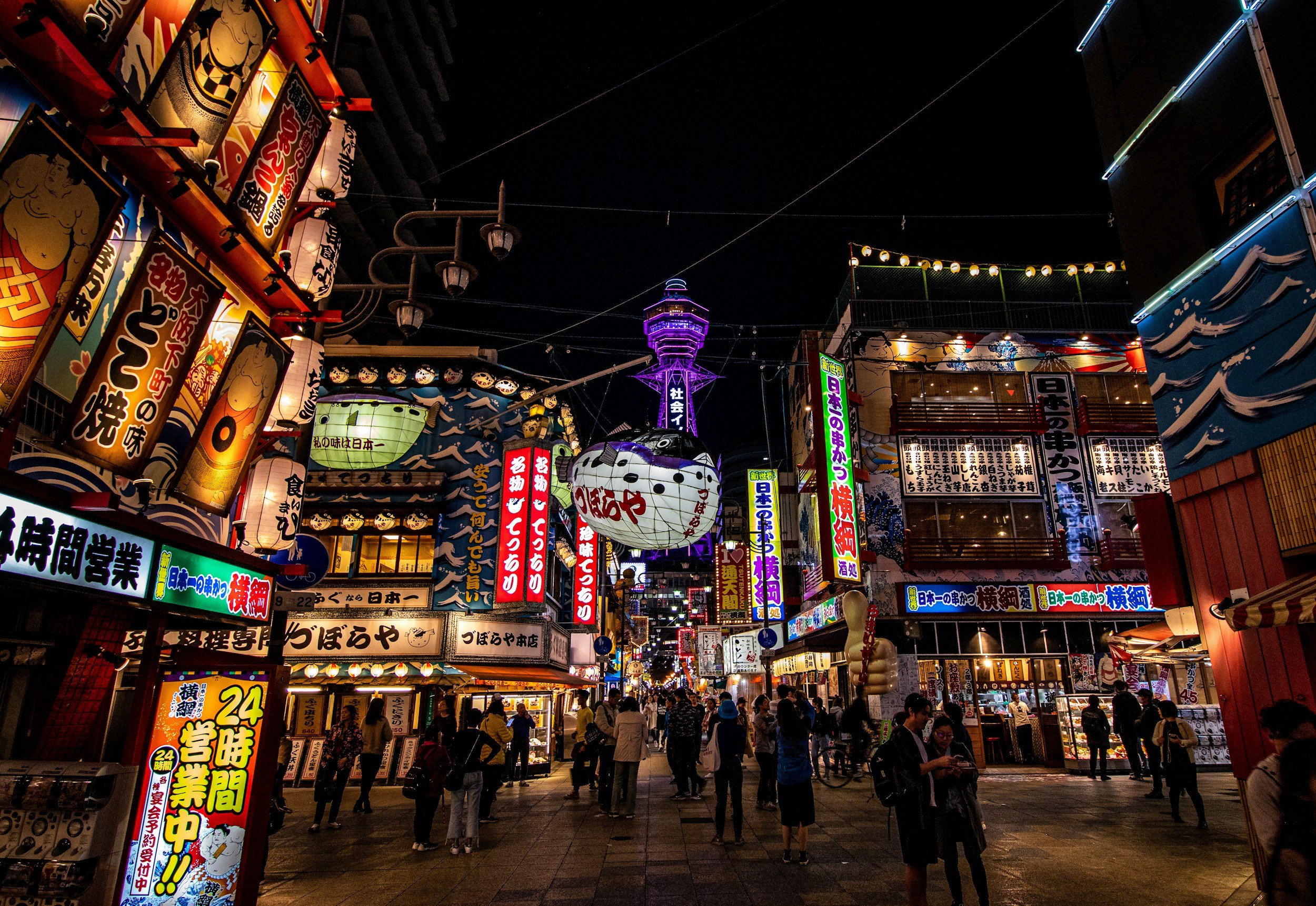
The retro streets of Shinsekai with Tsutenkaku Tower rising above the neighborhood.
Umeda Sky Building
The Umeda Sky Building is one of Osaka's most architecturally striking structures, two towers connected at the top by the Floating Garden Observatory. From the 173-meter outdoor deck, you have a 360-degree view of the city grid stretching to the bay. The structure itself is worth photographing from the ground before you go up.
Sunset from the observatory is powerful, and the city grid begins to glow beneath you as full darkness arrives. This is one of the few viewpoints in Osaka where you can shoot the entire skyline from above.
📷 Pro Tip: Arrive 45 minutes before sunset to secure a spot on the west-facing side. Use a 70–200mm to compress the city grid and isolate architectural patterns in the distance. At full darkness, switch to a wide angle and use the observatory railing as a foreground element. A small tripod or Platypod is highly useful here for longer exposures — check at the entrance whether tripods are permitted on the observation deck on your visit date, as policies can vary. The escalator tunnel inside the building offers a striking symmetrical shot on the way up: shoot upward with a wide lens for a geometric composition that photographs well on any camera.
Best time: 45 minutes before sunset through full darkness. Access: Paid entry to the observatory. Take the JR Osaka Loop Line or Midosuji Line to Umeda/Osaka Station, then a 10-minute walk northwest.
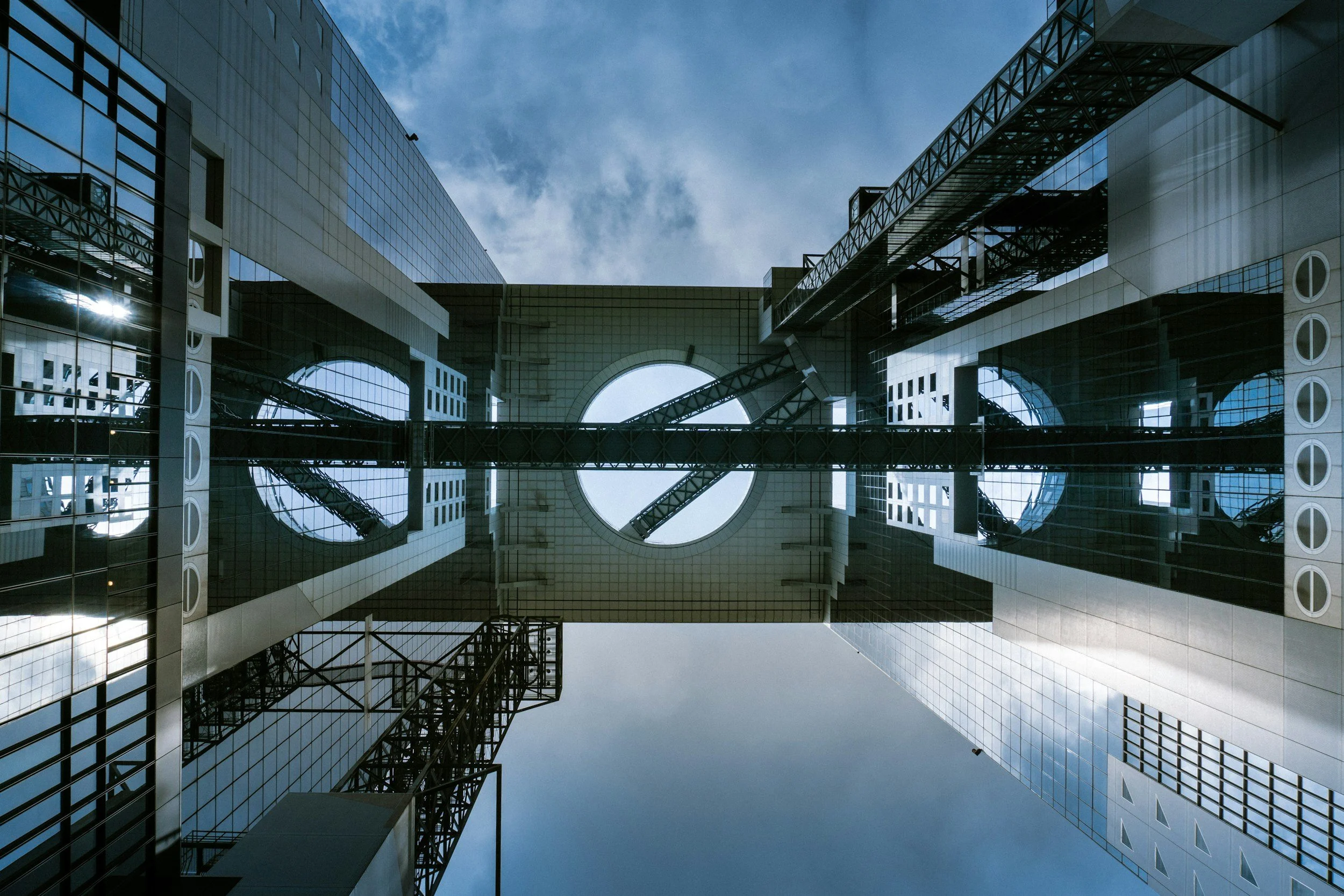
The futuristic architecture of the Umeda Sky Building rising above northern Osaka.
Kuromon Ichiba Market
Kuromon Ichiba is Osaka's most celebrated covered market, a 600-stall stretch of seafood vendors, produce sellers, and prepared food stalls that has been operating since the early 19th century. It is a photographer's natural habitat. Steam, color, texture, motion, and faces everywhere you look. Tuna being sliced, oysters on ice, vendors in rubber aprons calling out to passersby. This is storytelling photography, not landmark photography.
Work close. Focus on hands, food preparation, and vendor expressions. Look for steam, texture, and movement within the tight corridors.
📷 Pro Tip: Visit mid-morning when the market is active but before the midday crowds arrive. Use a 35mm or 50mm prime to work at close range without feeling intrusive. Get low for fish display shots — angle up slightly to get the ice and the overhead signs in the same frame. Before photographing any individual vendor or worker, make eye contact, smile, and gesture at your camera. Most vendors are accustomed to photographers and respond warmly. A 70–200mm lets you capture candid expressions from a respectful distance when you want to work without interrupting the flow of work.
Best time: 9–11 a.m. Access: Free to enter. Take the Sennichimae Line to Nipponbashi Station, then a 3-minute walk.
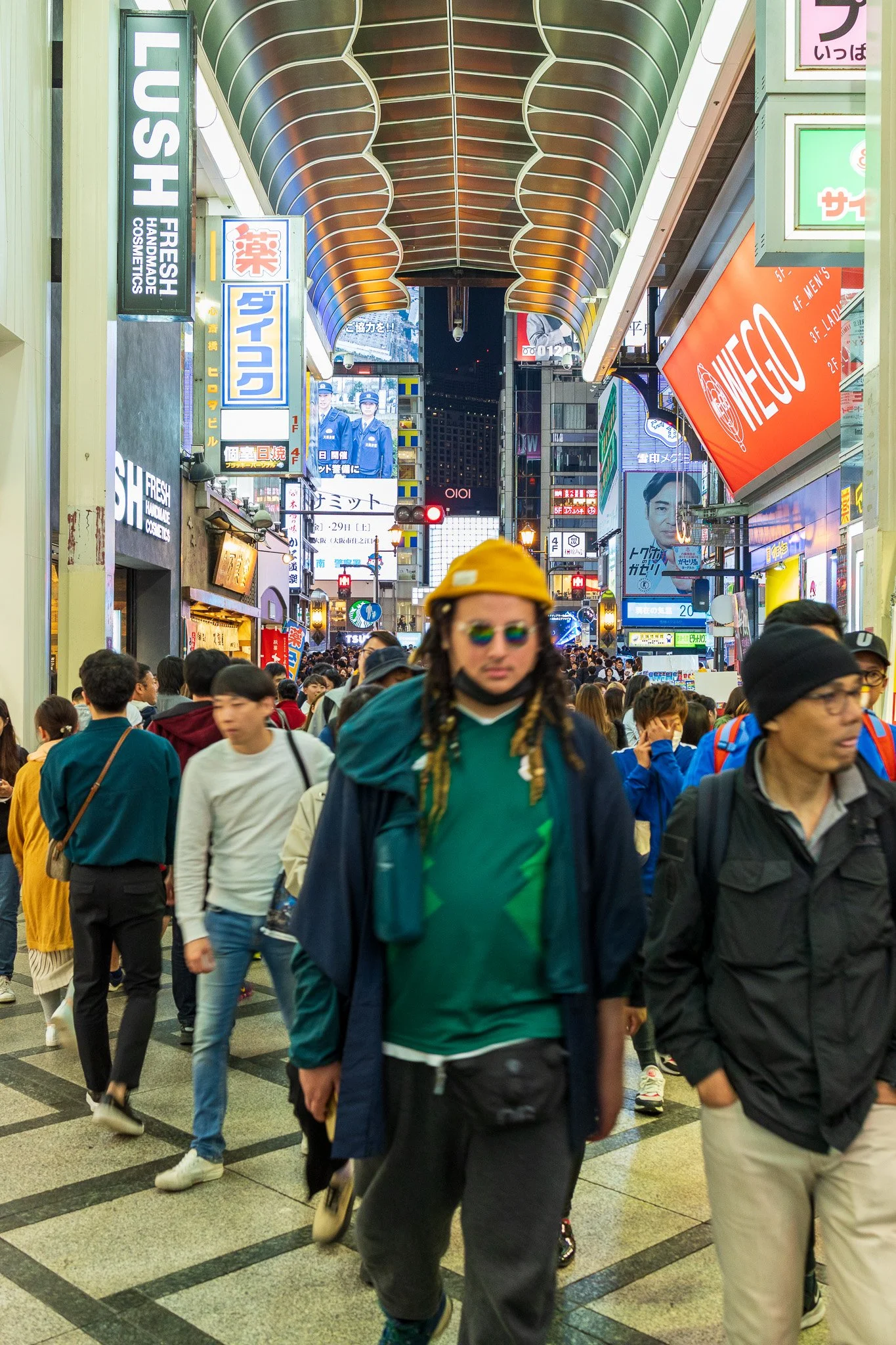
Steam, seafood, and everyday market life make Kuromon Ichiba a great place for street photography.
Sumiyoshi Taisha
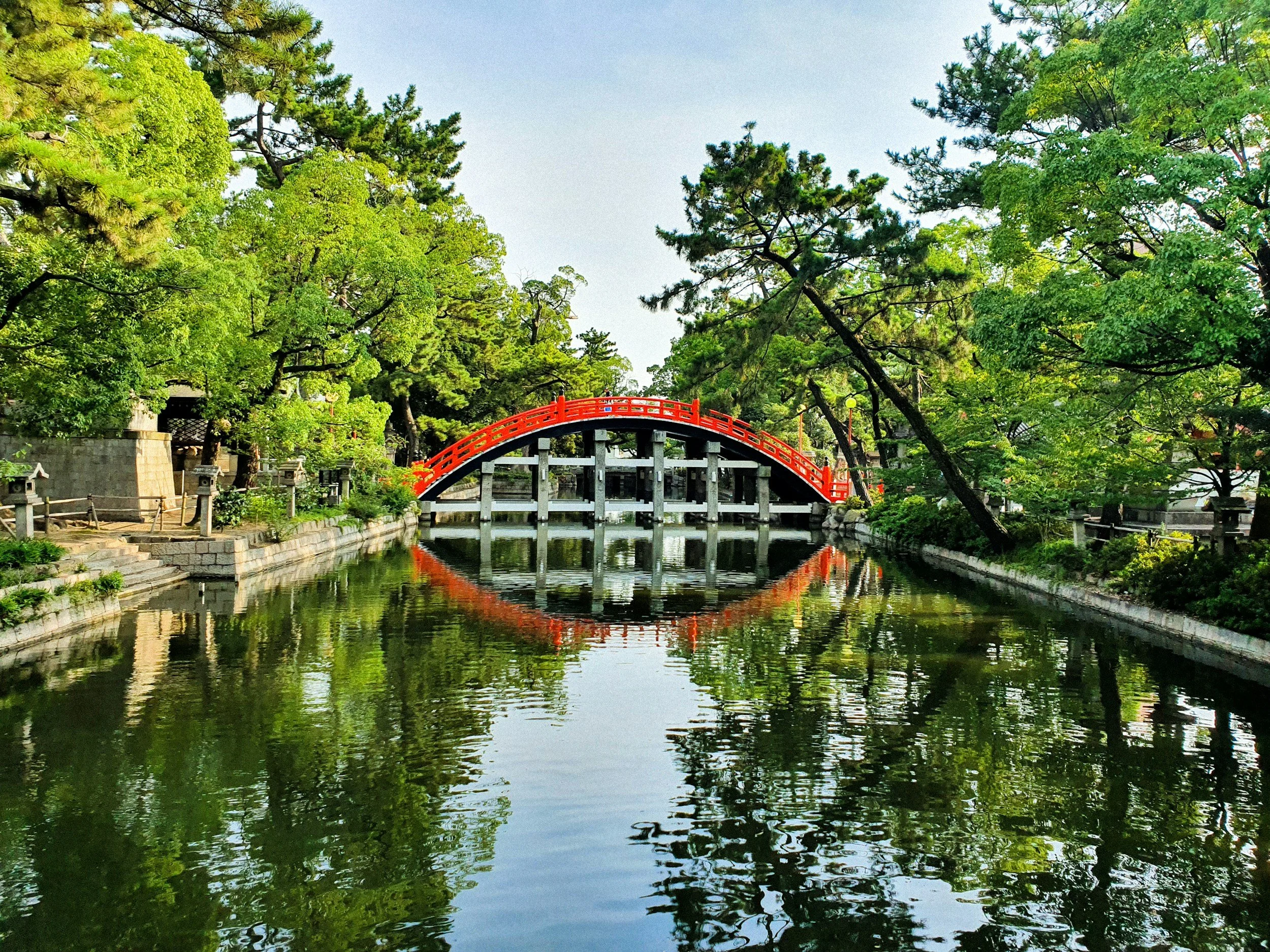
One of Japan's oldest Shinto shrines, Sumiyoshi Taisha predates the introduction of Buddhism to Japan. The complex covers a substantial area with four main halls and the iconic arched Sorihashi bridge crossing a central pond. It is quieter than Osaka Castle and less photographed by international visitors, which makes the experience feel more genuine.
Morning light is softer and the grounds are calm. The arched bridge creates beautiful symmetry and serves as a strong compositional anchor.
📷 Pro Tip: Arrive shortly after the shrine opens (around 6 a.m.) for the cleanest shots without visitors on the bridge. The Sorihashi bridge photographs best from straight on at ground level — shoot at 24–50mm and compose the bridge arch with the reflection in the pond below. For a different angle, move to the side and use the bridge curve as a leading line toward the main hall. Sunrise light from the east catches the vermilion paint on the structures beautifully. The grounds are large enough to wander for an hour and find compositions beyond the obvious. Respect the space: this is an active place of worship, not a photo location. Be mindful of worshippers.
Best time: Sunrise through mid-morning. Access: Free to enter shrine grounds; small fee for some interior areas. Take the Nankai Main Line to Sumiyoshi Taisha Station.
Looking beyond the landmarks for smaller moments on the streets of Osaka.
Osaka Festivals and Events
Osaka knows how to celebrate. If you time your visit around a festival, the city shifts. The colors intensify. The streets fill with rhythm. And your photography options multiply.
Tenjin Matsuri (July) One of Japan's three great festivals, held annually in late July. Expect river processions, traditional boats, lantern light, and a dramatic fireworks finale along the Okawa River. For photographers, this is layered storytelling. Foreground silhouettes, glowing lanterns, reflections in the water. Arrive early to secure a strong position on the riverbank. A telephoto helps you isolate performers and compress the fireworks bursts above the water. This is one of the best festival photography opportunities in the entire country.
Cherry Blossom Season (Late March to Early April) The city softens. Parks and castle grounds turn pink. Osaka Castle is the centerpiece. Blossoms create natural frames and foreground interest for almost every composition in the park. Early mornings are best for clean shots before crowds build. The Mint Bureau, famous for its sakura promenade, opens briefly during blossom season and is worth planning around if you are visiting at the right time.
Sumiyoshi Matsuri (Late July) Held at Sumiyoshi Taisha, this festival offers traditional energy with fewer international crowds than Tenjin Matsuri. You will see ceremonial processions, vibrant clothing, and authentic local participation. It feels intimate and real. Respectful, observant photography is welcome. This is a good alternative for photographers who want festival imagery without the shoulder-to-shoulder crowds of the larger event.
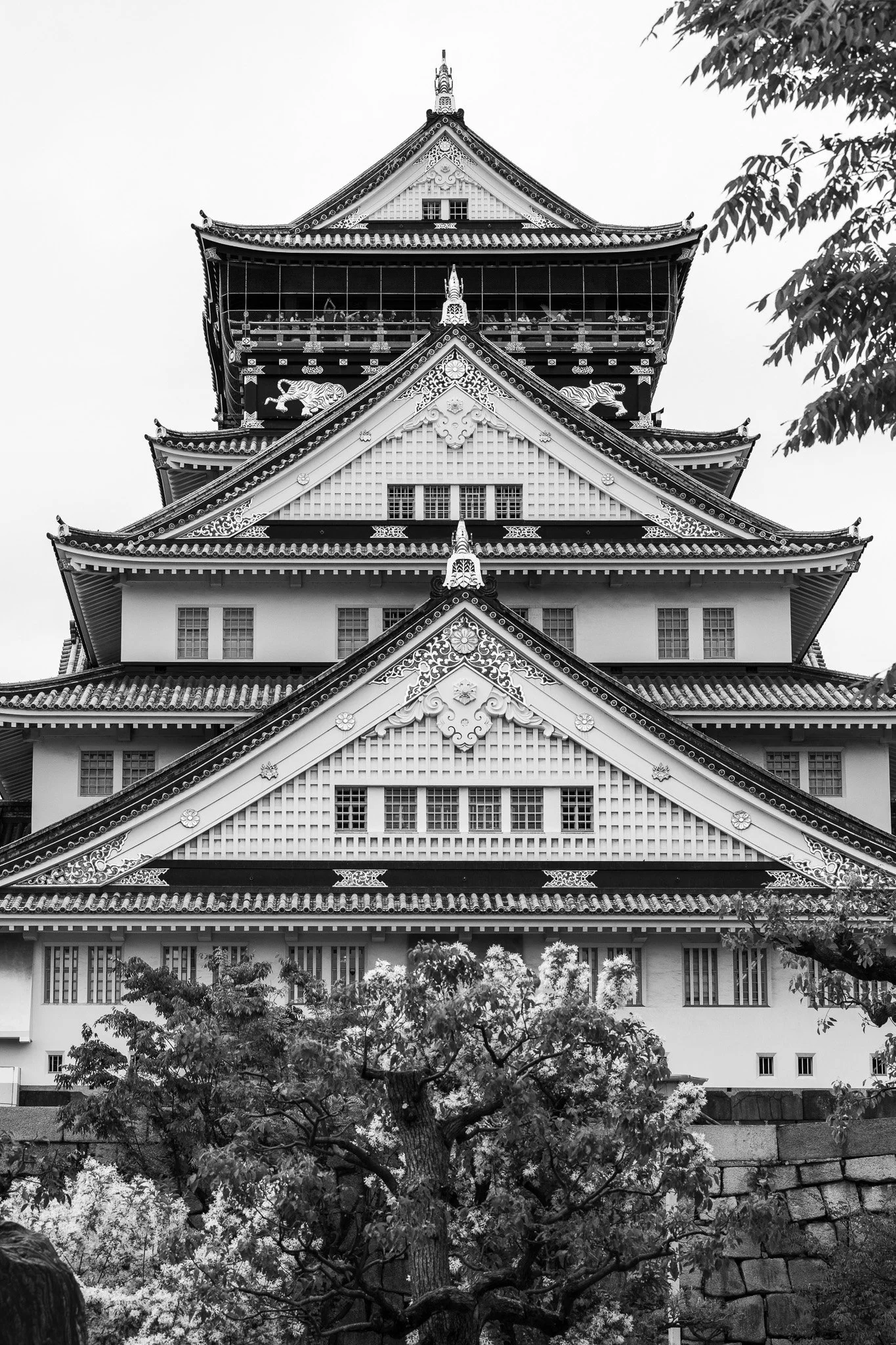
Osaka Castle framed by its stone walls and moat in the soft morning light in Black & White
Frequently Asked Questions About Visiting Osaka
Is Osaka expensive?
Not particularly. Street food and market eating are affordable, and Osaka's food culture spans every price point without sacrificing quality. Hotels run comparably to other major Japanese cities.
Do you need a car in Osaka?
No, and it's not recommended. The metro is efficient, clean, and easy to use even without Japanese, and an ICOCA card gets you across the entire Kansai region without buying individual tickets.
What are the best photo spots in Osaka?
Dotonbori at blue hour, Osaka Castle at sunrise, and Shinsekai in the early evening as the neon comes alive against a still-blue sky are three that consistently deliver. The full list with Pro Tips is above.
Can you fly a drone in Osaka?
No, not without explicit permission. Osaka is classified as a Densely Inhabited District under Japanese aviation law, and recreational approval is almost never granted for urban areas. Leave it at home.
What surprised you most about photographing Osaka?
Honestly, how much of the trip ended up planned around food rather than photography. I'm a raging food lover, and Dotonbori is exactly built for that, one long street in central Osaka lined with restaurant after restaurant. I'm not sure it's physically possible to eat everything worth trying there, but I gave it a real effort.
How many days do you need in Osaka?
Three days minimum, four to five if you want to return to locations at different times of day, since the same street looks completely different at sunrise versus midnight.
Is Osaka worth visiting if you're already doing Tokyo and Kyoto?
Yes, don't treat it as an afterthought. Most itineraries squeeze in a day or two at the end, but Osaka has its own character entirely, more immediate and less curated than either city, and it rewards real time rather than a quick loop through Dotonbori.
Final Thoughts
Osaka is not a stop between Tokyo and Kyoto.
I know that is how most itineraries treat it. Two days squeezed in at the end, a few hours in Dotonbori, a quick loop around the castle, and then the Shinkansen back north. I understand the logic. The other cities demand time, and Osaka is easy to underestimate from a distance.
Do not underestimate it.
The streets here do something to you that the other cities do not. They pull you in with no particular agenda and keep you moving for hours without realizing it. One block of neon becomes five. A kushikatsu stall turns into a full meal you did not plan for. A canal reflection stops you mid-stride, and you stand there for ten minutes working out the composition. The city has a current, and you move with it.
For photographers, Osaka rewards the hours between the obvious shots. Dotonbori at blue hour is extraordinary, and you already know that before you arrive. What you do not know until you are there is the alley one street back, where the same neon reflects off a rain-wet surface at a sharper angle. Or the moment you turn around from the Glico Man and find the crowd facing you, everyone lit from below, every face doing something different.
Go for two days minimum. Three is better. Eat everything. Walk without a strict plan. Shoot late. Come back to Dotonbori after midnight when the crowds thin and the reflections are perfectly still, and the city finally exhales.
Want to improve your photography while exploring some incredible destinations? Join me on one of my photography workshops! You can find all the details, including upcoming destinations and dates, through the links below.
Let's Stay Connected!
More Photography & Travel Guides from Chasing Hippoz
My Photography & Travel Guide to Tokyo, Japan Tokyo and Osaka are a natural pair. Fly into Tokyo, spend four or five days shooting Shibuya, Shinjuku, and the temples of Asakusa, then take the Shinkansen to Osaka. The two cities tell completely different sides of Japan, and together they make one of the great photography trips in the world.
My Photography & Travel Guide to Kyoto, Japan An hour from Osaka by train and an entirely different mood. Kyoto is ancient, quiet, and photogenic in a way that rewards patience. Bamboo groves, moss gardens, and shrine gates at dawn. The two cities are best experienced together, and Osaka is the natural base for day trips into Kyoto.
My Photography & Travel Guide to Hong Kong If Japan has opened your eyes to what Asian cities can offer a photographer, Hong Kong is the next chapter. Vertical density, harbor reflections, street markets, and rooftop views that compete with any city on earth. A short flight from Osaka and a completely different visual world.
Finally—a beginner-friendly photography guide that makes sense.
If you've ever picked up a camera and thought, "Now what?" this is the book for you.
Photography Made Simple is written for adults who are just starting out and want a clear, encouraging, real-world approach to learning photography. Whether you're using a DSLR, mirrorless, or just your smartphone, this guide walks you through the basics—without the jargon or tech overwhelm.
Inside, you'll learn:
The only camera settings you really need to know to get started
How to shoot sharper, more intentional photos using light and composition
Simple tips for portraits, landscapes, travel, and everyday life
What gear you do (and don’t) need
How to create better photos without upgrading your camera
You’ll also get practical exercises, cheat sheets, and tips for organizing and editing your images—plus the confidence to shoot off Auto Mode for good.
This is not a textbook. It’s a friendly guide to seeing the world with fresh eyes—and finally capturing what you see the way you imagine it.
📸 Format: PDF download
Pages: 100+
Perfect for: Beginners, hobbyists, and anyone ready to take better photos without the stress