Delhi, India Travel & Photography Guide: Best Photo Spots, Things to Do & Hidden Gems
I did not know what to expect from Delhi. Honestly, I had heard the stories. The crowds, the chaos, the sensory overload. I was prepared to be overwhelmed in the wrong way.
Instead, Delhi blew me away.
Within an hour of arriving, I was standing in the middle of Old Delhi watching the city move around me at full speed: rickshaws threading through impossible gaps, vendors stacking towers of marigolds, the smell of cardamom and frying dough drifting from a stall I could not even see. I was already reaching for my camera. That feeling did not stop for the entire trip.
Delhi is one of those cities that rewards you for showing up with an open mind. The colors here are relentless. Saffron sarees, hand-painted storefronts, flower markets that seem to exist just to make photographers cry. The food stopped me cold more than once, from a bowl of dal makhani eaten on a plastic stool in a narrow alley to a meal at Masterji Kee Haveli that I still think about. The people in Old Delhi are warm, proud of their city, and genuinely happy to share it with you. I took two walking tours through those lanes and came back from each one with completely different images and stories.

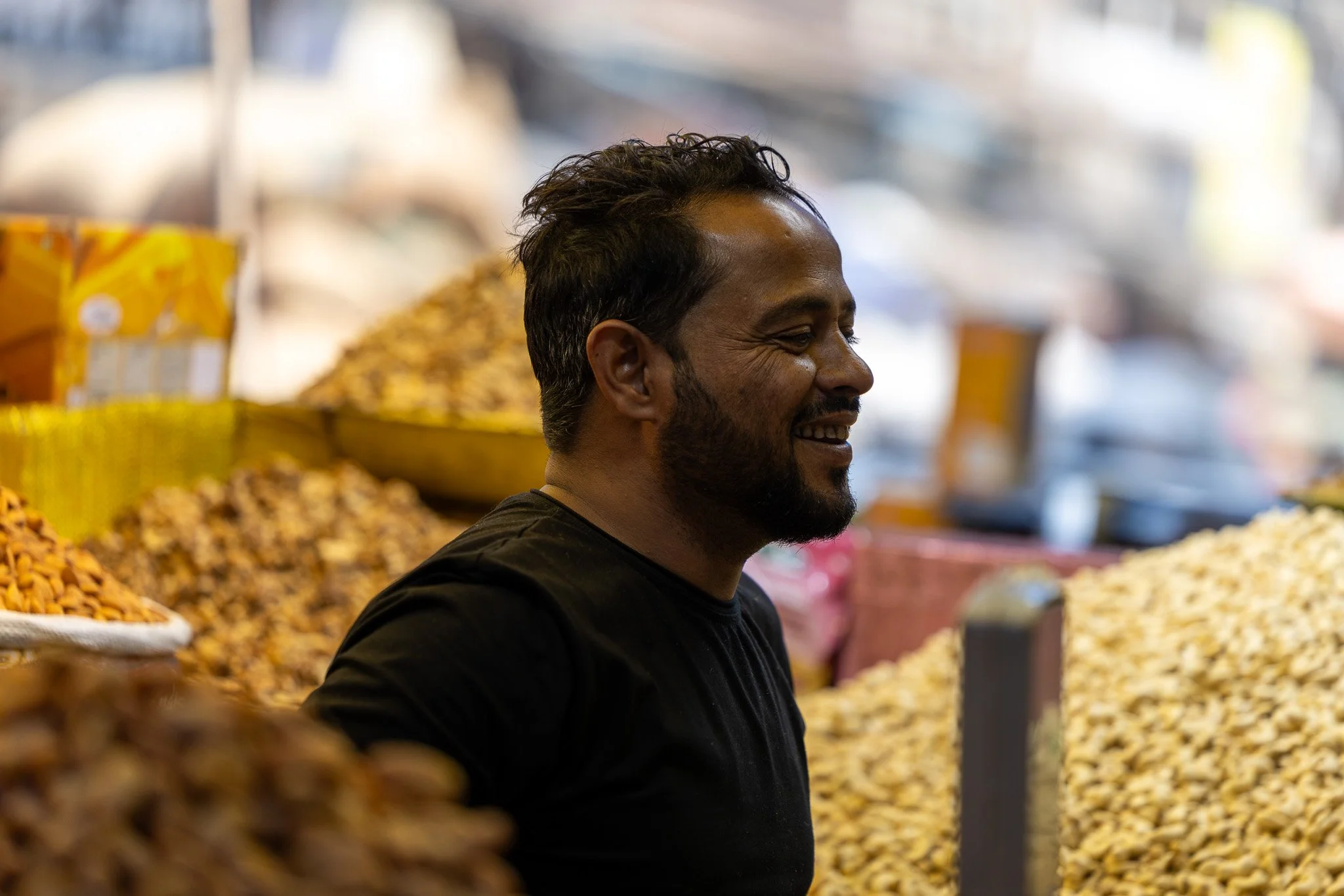
A Vendor in Delhi
For photographers, Delhi is not just photogenic. It is relentless. Every alley, every market, every monument offers a different kind of frame. Humayun's Tomb at golden hour, the organized chaos of Chandni Chowk at dawn, the quiet geometry of Lodhi Garden in the morning mist. You will not run out of subjects here.

India Gate
In this Photography Guide to Delhi, I share the places and experiences that continue to draw me back. You will find my favorite photography locations, guidance on when and where to shoot, practical travel tips, and gear recommendations, along with cultural insights to help you explore and photograph Delhi with confidence, respect, and ease.

In Old Delhi
Photographer's Notes
Before you go, here are my own takeaways.
Favorite Season: November and December
Favorite Location: Old Delhi
Favorite Hotel: The Oberoi, New Delhi
Favorite Tour: Masterji Kee Haveli walking and food tour
Favorite Café: Blue Tokai Coffee Roasters
Favorite Lens: 24-105mm
Would I Return? Yes, definitely, but Delhi isn't for everyone.
How to Get a Visa to India (Tourist Visa)
Step 1: Check if you can get an e-Visa
India offers an e-Visa (Electronic Visa) system for citizens of over 150 countries, including the U.S., Canada, the UK, EU countries, Australia, and more. Check the official Indian e-Visa Eligibility List to confirm your nationality qualifies.
Step 2: Choose the Right Visa Type
For photography, tourism, and general travel, you want the e-Tourist Visa, available in three durations: 30 days (double entry), 1 year (multiple entries), and 5 years (multiple entries). If you are planning to return to India for other projects or extended travel, the 1-year or 5-year option is the smarter choice.
Step 3: Apply Online
Go to the official government portal at indianvisaonline.gov.in. Make sure you are on the official site; there are many third-party sites that charge unnecessary fees.
Documents you will need: a valid passport (at least 6 months’ validity with 2 blank pages), a recent passport-style photo with a white background in JPEG format, a scan of your passport bio page in PDF format, and a credit or debit card for payment.
Step 4: Pay the Visa Fee
Fees vary by duration and nationality. Check the official portal for current pricing, as these change periodically.
Step 5: Wait for Approval
Processing typically takes 3 to 5 business days, though it can be faster. Your e-Visa arrives by email. Print it out and carry it with your passport.
Upon Arrival in India
At immigration, be ready to show your printed e-Visa, your passport, and your return or onward ticket and hotel booking. Once cleared, you will receive an entry stamp, and you are on your way.
Arriving in Delhi
I highly recommend arranging a car service through your hotel for airport pickup. It is a simple way to avoid the hassle of taxi scams, and it ensures your arrival starts on a positive note. When I stepped out of baggage claim, a driver was waiting with a sign bearing my name. Smooth, safe, and stress-free.

Gandhi on the Rupee
Grab some local currency at the airport. There is an ATM just after you exit baggage claim. Note that most machines have a per-transaction withdrawal limit, so get enough cash for at least the first day: taxis, tips, and small purchases where cards are not accepted.
If you need a local SIM card, get one at the airport. When I arrived, there was a line at the counter, so I skipped it and assumed I could pick one up in the city. Big mistake. It turned out to be far more difficult than expected. If you plan to use apps like Uber or Google Maps with local data, the airport wait is worth it every time.

In Old Delhi
Tour Recommendation - Old Delhi
If you’re looking for an unforgettable experience in Delhi, Masterji Kee Haveli’s walking and food tours are an absolute must.
If you do one thing in Delhi, make it a walking and food tour with Masterji Kee Haveli. I took the tour twice, and each one was completely different because five different guides led them. These tours are deeply personal, full of stories, and genuinely immersive in the best sense. You wind through lanes most visitors never find, taste food you would not discover on your own, and end with a home-cooked meal at the Haveli itself. It was the best meal I had in India.
For photographers, this tour delivers some of the most authentic and compelling images you will take in Delhi: food preparation, heritage architecture, neighborhood life, and faces full of character and warmth.
They offer hotel pickup and drop-off, which makes the whole thing easy to organize. Do not miss this.


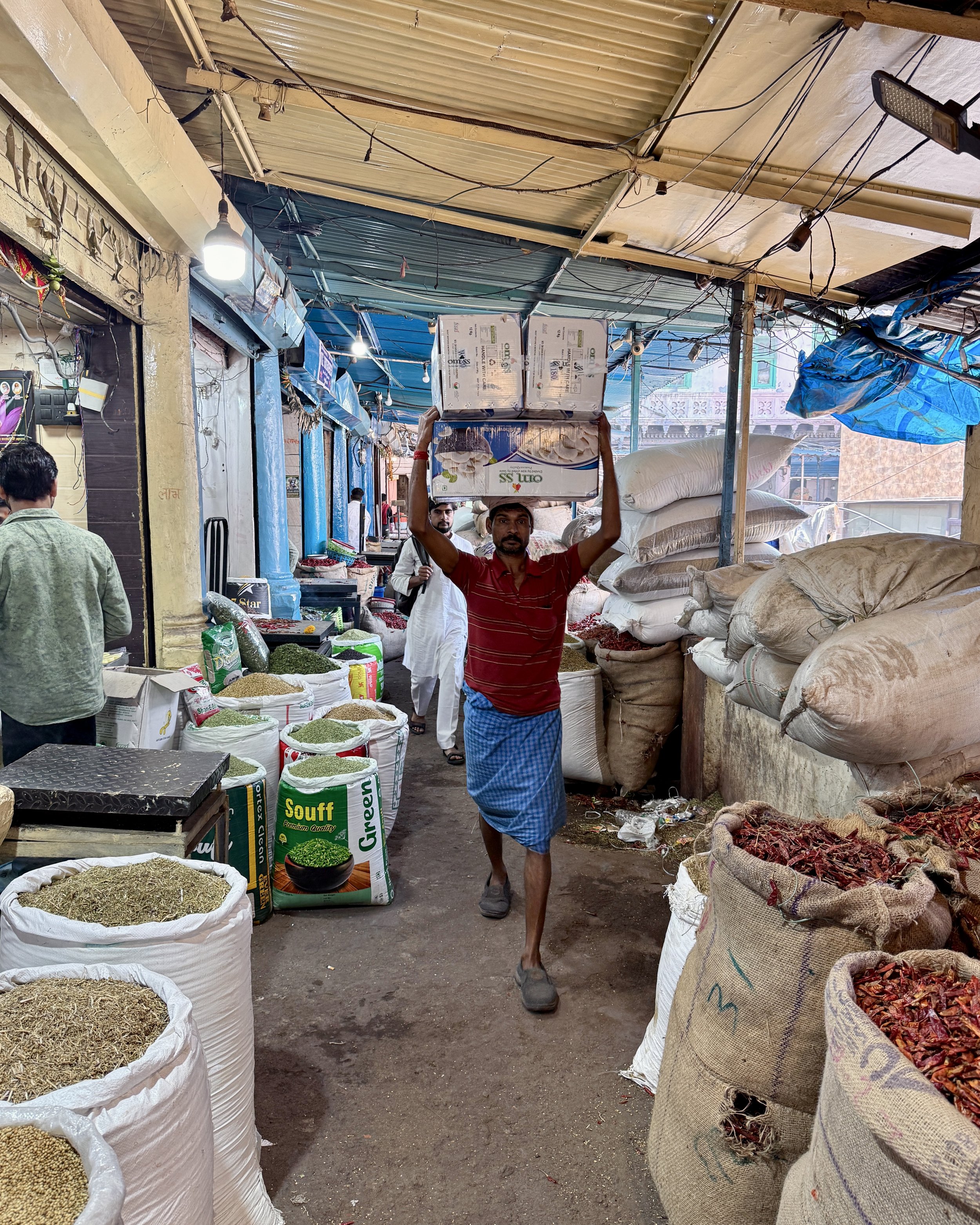




You will visit the Spice Markets while the guide tells you stories about Old Delhi. The tour ends with a home-cooked meal that was our best meal in India.

Lunch in the Masterji Kee Haveli
Time Zone
India operates on India Standard Time (IST), which is UTC +5:30. Yes, the half-hour offset is unusual and genuinely worth knowing when you are scheduling sunrise shoots or coordinating with anyone back home.
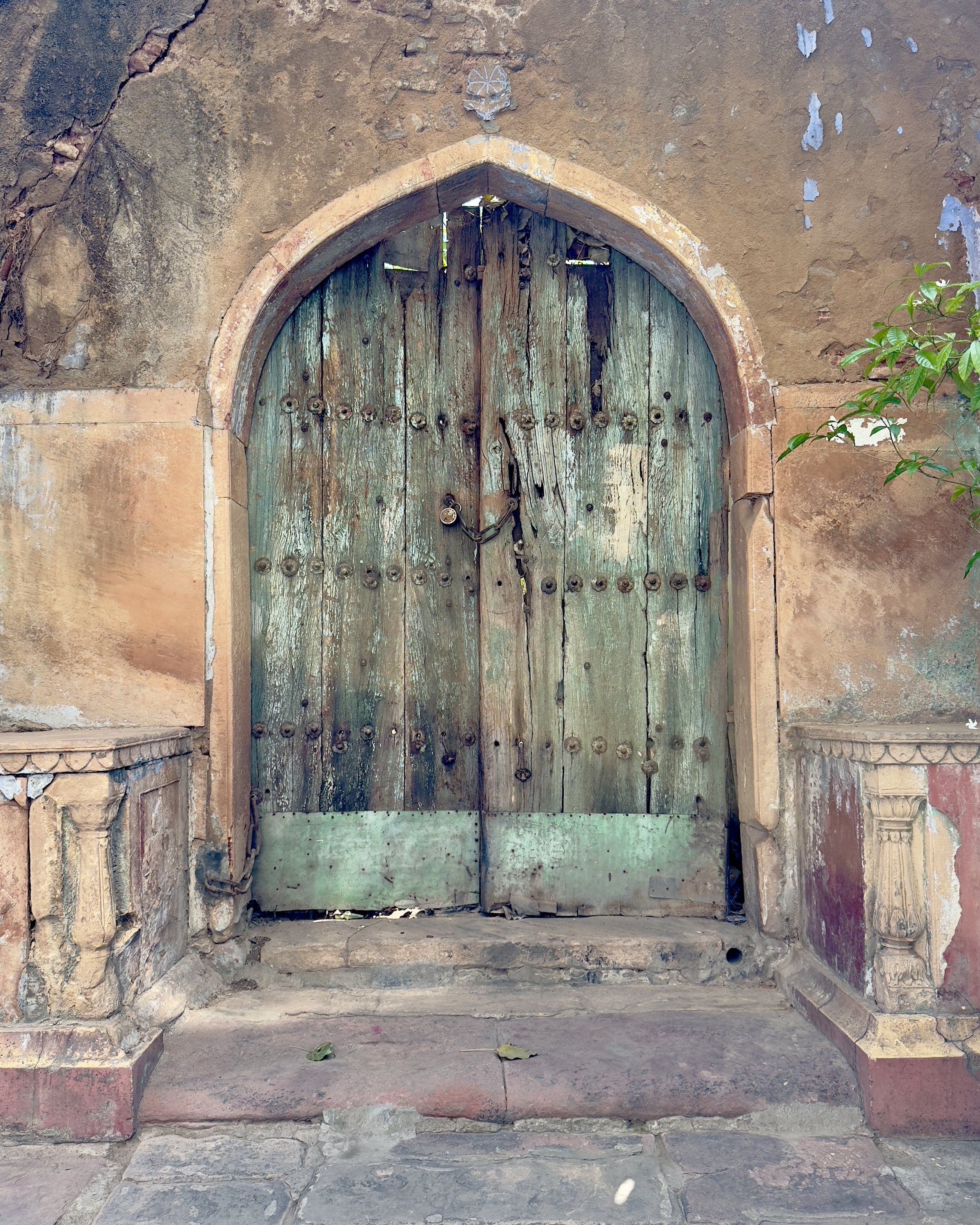
Old Delhi
Travel Adapters
In India, you will need a Type D plug adapter. You will not need a voltage converter; most modern electronics handle different electrical currents automatically. Just make sure you pack the right adapter before you leave home.

Impressions of Old Delhi
Delhi is bold, brash, poetic, ancient, and modern—all at once. It might throw you off balance at first. But by the end of your stay, you'll realize: Delhi doesn’t just grow on you—it stays with you.
The first thing you'll notice? The layers of history. Walk through Old Delhi, and you’re stepping into the 17th century: rickshaws dodging spice carts, mosques echoing with prayer calls, and narrow alleys where time stands still. Then jump over to New Delhi, and its wide boulevards, leafy embassies, and British colonial grandeur.

Cows – The Sacred Kings of the Road
You’ll see them lounging like royalty in the middle of traffic, completely unfazed by honking cars and scooters whizzing by. In Hinduism, cows are sacred, so they roam freely and are rarely disturbed. Sometimes they’ll block entire lanes, and trust me—everyone just drives around them.

The people of Old Delhi—they are the heartbeat of the city. Especially areas like Chandni Chowk, Daryaganj, and Ballimaran, is home to a rich mix of Hindus, Muslims, Sikhs, and Jains—all living and working side by side, often in multi-generational homes where courtyards echo with laughter, gossip, and the clang of morning chai cups.
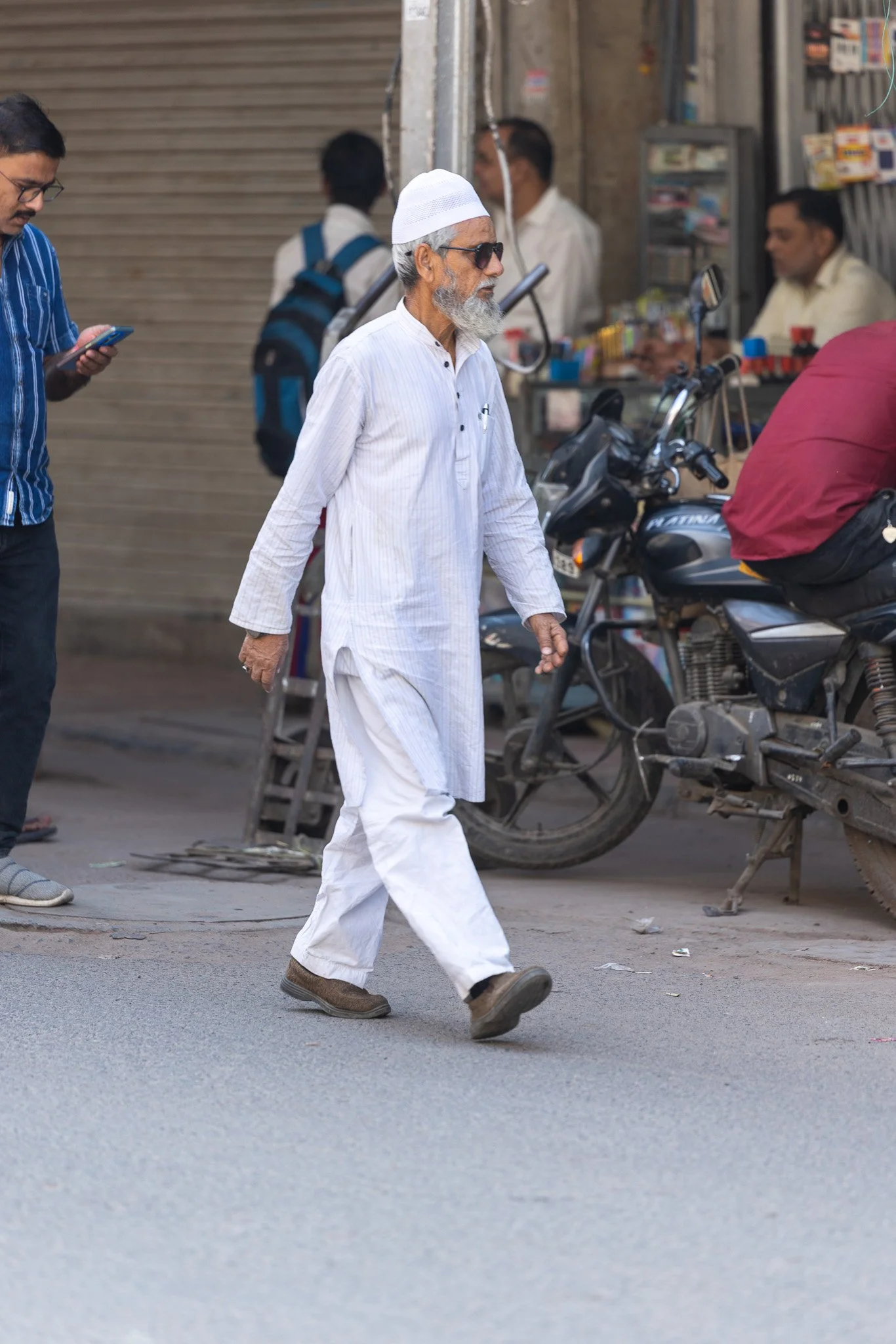
You’ll see men in crisp white kurta-pajamas walking to the mosque, women in bright sarees haggling over spices, and entire families running the same business that their great-grandparents started.

In Old Delhi
People in Old Delhi are known for their hospitality. They’re proud of their city—and if you show genuine interest, many will go out of their way to help or guide you.
Things to Know
India’s national language is Hindi, and a warm greeting goes a long way. A common way to say hello is “Namaste”—spoken with your hands pressed together at your heart and a slight bow. You may also hear “Namaskaar,” which is another respectful greeting used across the country.

A Temple in Old Delhi
When it comes to water, play it safe. Avoid drinking tap water entirely—even many seasoned travelers prefer to use bottled water for brushing their teeth. Always check that the seal on your bottle is intact before buying, as refilled bottles can occasionally be passed off as new.

Humayun’s Tomb
Where to Stay: Central Delhi is Your Best Bet
The best base for a Delhi photography trip is Central Delhi, specifically the area around Lodhi Colony, Connaught Place, and India Gate. From here you are within easy reach of the major monuments, Old Delhi, the markets, and excellent restaurants. You can move between New Delhi's wide boulevards and Old Delhi's narrow lanes without wasting half your day in traffic.
Luxury Hotels in Delhi
The Oberoi, New Delhi (Zakir Hussain Marg, Dr. Zakir Hussain Road) — Elegant and serene, with sweeping views of Humayun's Tomb and the Delhi Golf Course from many rooms. The rooftop bar, Cirrus 9, offers one of the best skyline perspectives in the city and doubles as a sunset photography perch. We stayed here on our return to Delhi.
The Imperial New Delhi (Janpath) — A British-era landmark that feels like stepping onto a Raj-era film set. The interiors are gorgeous, the courtyards are photogenic on their own, and the location on Janpath puts you within walking distance of Connaught Place. The Spice Route restaurant inside is worth a visit on its own.
The Lodhi (Lodhi Road) — Understated modern luxury with private plunge pools, exceptional service, and one of Delhi's most celebrated restaurants, Indian Accent, on the premises. Located directly next to Lodhi Garden, which means you can be shooting at the monuments before most guests have finished breakfast.
Mid-Range Hotels in Delhi
Haveli Dharampura (Old Delhi) — Staying inside a restored 200-year-old haveli in the heart of Old Delhi is one of the most atmospheric accommodation choices in the city. The architecture is extraordinary, the rooftop has great light in the mornings, and you are steps from Jama Masjid and Chandni Chowk. A photographer's dream of a hotel.
Bloomrooms @ Janpath (Janpath, Connaught Place) — Minimalist, bright, and super central. Smart value for solo travelers or couples who want a clean, well-located base without the full luxury price tag.
Pullman New Delhi Aerocity (Hospitality District, IGI Airport) — If you have an early morning flight or a late arrival and want five-star comfort with zero airport stress, this is the pick. Beautiful interiors, excellent food, and genuinely convenient for bookending a trip. We stayed here for our arrival to Delhi.
How Long to Stay in Delhi
Give yourself a minimum of four to five days in Delhi. Three days is survivable, but it means rushing, and Delhi does not reward rushing.
A five-day framework at a photographer's pace:
Day 1: Arrive, recover, get oriented. Evening walk in Lodhi Garden. Sunset from the Oberoi rooftop or near India Gate.
Day 2: Old Delhi. Up early for Chandni Chowk and the Spice Market before the crowds arrive. Afternoon at Jama Masjid. Masterji Kee Haveli walking tour in the late afternoon.
Day 3: Humayun's Tomb at golden hour in the morning. Lodhi Garden mid-morning. Qutb Minar in the afternoon. The light at Qutb Minar in the late afternoon is exceptional.
Day 4: India Gate and Kartavya Path early morning. New Delhi's colonial avenues and Connaught Place. Rest and edit in the afternoon.
Day 5: Second pass at any location that called you back. Souvenirs in Hauz Khas or Khan Market. Final dinner at Bukhara or Indian Accent.
If you are continuing north to Agra and Jaipur, Delhi is the natural starting and ending point, and the extra day on either end is always worth it.




Best Time to Visit Delhi
October to March is the sweet spot. The weather is cool and dry, daytime temperatures run from the low 60s to the low 80s Fahrenheit, and the light during winter mornings is beautiful, with a soft haze that wraps the monuments in atmosphere rather than heat shimmer.
November and December are my personal favorites for photography. The golden hour light is long and warm, the crowds at most monuments are thinner on weekday mornings, and you can walk for hours without overheating.
January brings Republic Day on the 26th, which is a significant photography event but also means tighter security around India Gate and Kartavya Path. Book accommodation well in advance if you plan to be here then.
February and early March are excellent shoulder season months. Holi falls in late February or early March, and shooting the festival of colors in Delhi is a bucket-list experience.
Avoid April through June. Temperatures regularly hit 105°F or higher. Shooting in that heat is exhausting and the midday light is brutal.
July through September is monsoon season. The city turns green and the light can be dramatic after a downpour, but the humidity is punishing and flooding is common. Experienced photographers sometimes plan a trip around the monsoon for exactly that moody, rain-soaked look. Most travelers should avoid it.
Getting Around Delhi
Delhi Metro — Clean, efficient, and covers most areas you want to reach as a photographer. The Yellow Line connects Connaught Place to Old Delhi and Chandni Chowk. The Violet Line connects to Jama Masjid and Old Delhi via Lal Quila. For longer gear kits, rush hour (roughly 8 to 10am and 5 to 8pm) is uncomfortable. Shoot early and move before peak times.
Uber and Ola — Both apps work well in Delhi and are far safer and more predictable than hailing random taxis. You need a local SIM card with data to use them reliably, which is why getting the airport SIM matters so much. Keep the apps loaded with a backup payment method.
Auto Rickshaws — Great for short hops inside Old Delhi where larger vehicles cannot go. Always agree on the fare before you get in; meters are rarely used. For photographers, rickshaws are useful for navigating the lanes around Chandni Chowk, and riding one through those streets is an experience worth doing at least once.
Private Driver — Worth hiring for a full-day photography excursion, especially for sunrise and sunset shoots that require moving between multiple locations quickly. Your hotel can arrange a reliable driver. This is the best option if you are carrying significant gear.
Walking — Old Delhi is best explored on foot. Many of the best photography moments happen in the lanes between the main roads, and you will miss them entirely from a car window.
Where to Eat in New Delhi
Delhi's food scene is extraordinary, ranging from street food in narrow alleys to some of the finest Indian restaurants in the world. The city takes its food seriously, and so should you.
Drink Safety in New Delhi
Avoid tap water - Always drink bottled or filtered water. Make sure the seal is intact before opening. Most higher-end hotels provide complimentary filtered water that is safe to drink.
Skip ice - Unless you're in a trusted, upscale restaurant or hotel, avoid ice in your drinks. It’s often made from tap water.
Carry purification tablets or a filtered water bottle— Brands like LifeStraw or GRAYL can be a game-changer for peace of mind on the go.
Street Food Tour of Old Delhi
For a truly local (and delicious) adventure, join a guided Old Delhi street food tour like the Masterji Kee Haveli I recommended above. Hop between stalls in a rickshaw and sample beloved snacks like golgappa, jalebi, paratha, and chaat. *Be very careful with what you eat, especially Street food in India.
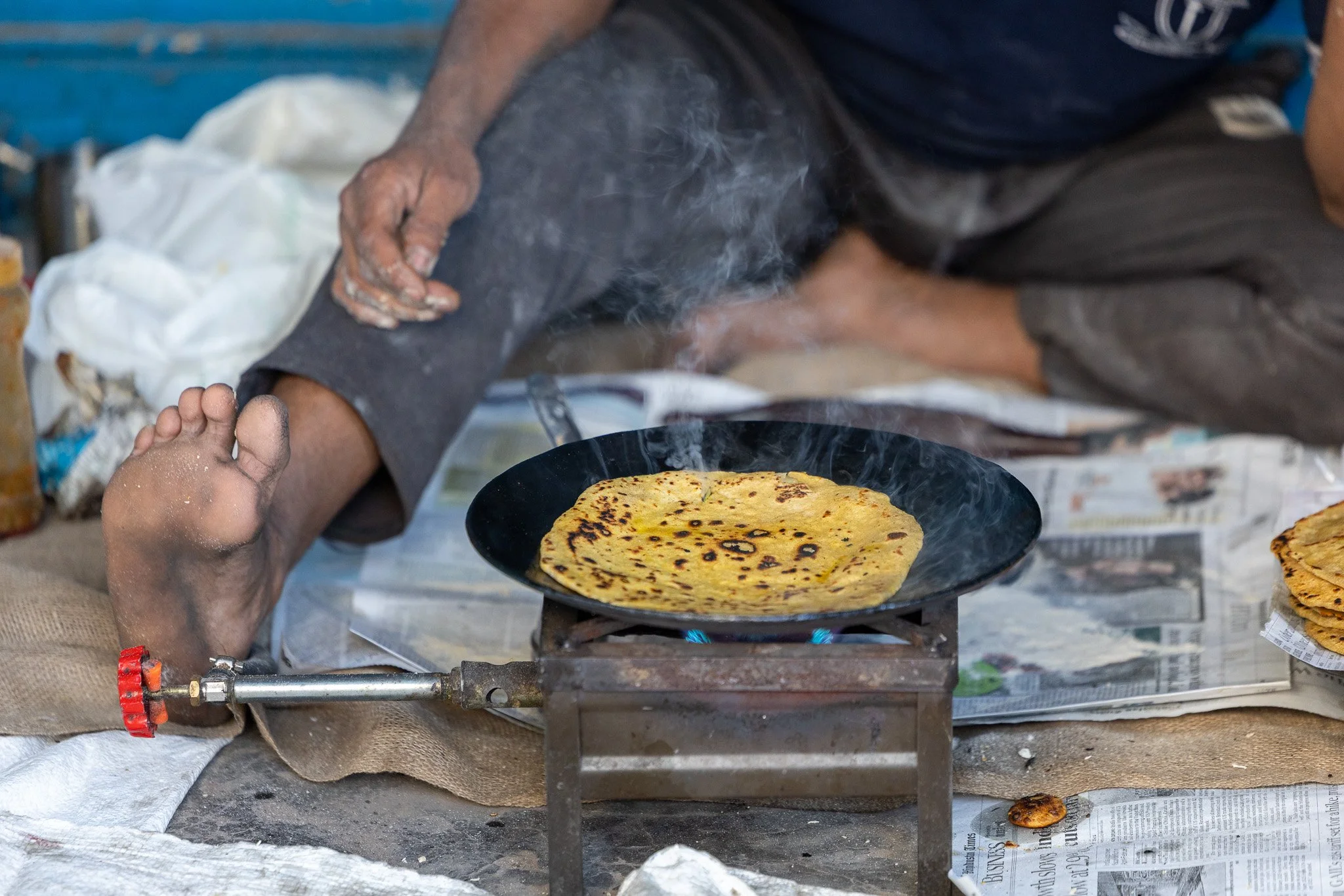


The vibrant chaos of the markets combined with the burst of flavors is pure magic for your taste buds—and your camera. It’s one of the best ways to dive into Delhi’s culinary scene while experiencing the city like a true local.

Top Places to Eat in New Delhi
Indian Accent (The Lodhi, Lodhi Road) — Consistently ranked among Asia's best restaurants, Indian Accent reimagines Indian cuisine with contemporary technique and genuine creativity. The tasting menu is the way to go. Reservations are essential and book out weeks in advance during peak season; call or email directly as online booking is limited. Dinner only for first visits.
Bukhara (ITC Maurya, Sardar Patel Marg) — One of Delhi's most iconic dining institutions, open since the late 1970s. The tandoor-cooked dal Bukhara and the slow-cooked meats are the stuff of legend. The open kitchen lets you watch the chefs work. Book ahead; this is a bucket-list dinner for anyone visiting Delhi.
Gulati Restaurant (Pandara Road Market) — This is where Delhi goes for butter chicken and dal makhani. No frills, legendary food, and always packed with locals. Pandara Road is a strip of old-school restaurants that fills up late in the evening. Come hungry.
Khan Chacha (Connaught Place) — The most famous kebab roll shop in Delhi. The seekh kebab rolls wrapped in a paratha are genuinely outstanding, fast, and affordable. Perfect fuel between morning shoots. There are now multiple locations; the Connaught Place original is the one to visit.
Karim's (Gali Kababian, Old Delhi, near Jama Masjid) — Old Delhi institution since 1913, and one of the most photographed dining rooms in the city. The mutton curry and nihari are exceptional. Go for lunch after a Jama Masjid shoot. The lanes leading to it are as photogenic as the meal inside.
The Spice Route (The Imperial, Janpath) — If you are staying at or visiting The Imperial, dinner here is a full experience. The room is extraordinary, the Southeast Asian menu is excellent, and the service is impeccable. Good for a special occasion dinner.
Coffee Shops in Delhi
Blue Tokai Coffee Roasters (multiple locations, including Connaught Place and Lodhi Colony) — India's best specialty coffee brand, sourcing and roasting single-estate beans from Indian farms. The Connaught Place location is ideal for editing between shoots: good Wi-Fi, reliable power outlets, and consistently excellent pour-overs. The cold brew is exceptional.
Ama Café (Majnu-ka-Tilla, Little Tibet) — Tucked inside Delhi's Tibetan enclave, this is one of the most atmospheric cafes in the city. Wooden interiors, prayer flags, a rooftop terrace, and a genuine sense of quiet. Good Wi-Fi, comfortable seating, and the thukpa (noodle soup) is the perfect late-morning recovery meal. Worth the detour.
United Coffee House (Connaught Place) — A Delhi institution, open since 1942. The Art Deco interiors are gorgeous, the coffee is solid, and the people-watching from the front tables is excellent. Come here for the atmosphere as much as the coffee.

Photography Gear Checklist for Delhi
DSLR and Mirrorless Kit
The city has every kind of light: deep shadow in the narrow lanes of Old Delhi, brilliant midday sun on monument facades, and long golden hour warmth in the parks and gardens.
Camera bodies: The Canon EOS R5 Mark II, Sony A7R V, or Nikon Z8 are all excellent choices. The high resolution matters here; the detail in the architectural carvings at Humayun's Tomb and Qutb Minar is extraordinary, and you want to be able to crop. The Leica Q3 is a superb walk-around body for street work in Old Delhi, where discretion matters more than interchangeable glass.
Lenses:
Wide (15 to 35mm f/2.8): Essential for the interior courtyards of Jama Masjid, the symmetry of Humayun's Tomb, and the scale of India Gate. The 15mm end earns its weight in Delhi.
Standard zoom (24 to 70mm f/2.8): Your most-used lens for street photography in Old Delhi and markets. Versatile enough to cover 80% of your day.
Telephoto (70 to 200mm f/2.8): Reach into crowded street scenes and compress the layers of architecture at Qutb Minar. Also excellent for candid portraits from a respectful distance in the markets.
Prime (85mm f/1.4 or 35mm f/1.4): Low-light work inside the Haveli lanes and early morning shoots where you want to manage noise. The 85mm in particular is ideal for portraits.
Accessories:
Tripod: Essential for blue hour at Humayun's Tomb and India Gate. A compact travel tripod (Peak Design or Joby GorillaPod) is more practical in crowded spaces than a full-size tripod.
Platypod: Excellent for low-angle work on the marble floors of the monuments.
ND filters (3, 6, and 10 stop): Useful for long exposures on the reflecting pools at Humayun's Tomb and for managing harsh midday light in the open plaza at India Gate.
Extra batteries and cards: Heat drains batteries faster than expected. Bring at least two spares per body.
Samsung T7 SSD: Back up every night. No exceptions in a dusty environment.
Lens cloths: Dust and haze are real here, especially in the cooler months when Delhi air quality drops. Clean your glass frequently.
Camera bag with good padding: You will be in rickshaws, on the metro, and pushing through market crowds. Protect your gear.
Drone Note
Do not bring a drone to Delhi. The city sits within one of the most heavily restricted airspace zones in India. Delhi has so many overlapping no-fly areas (airports, military installations, government buildings, diplomatic areas) that finding a legal green zone within the city is nearly impossible for a visiting photographer. Penalties for unauthorized drone operation in India include equipment confiscation, heavy fines, and criminal charges. Leave the drone at home for this trip. Agra has similarly strict restrictions around the Taj Mahal complex.
iPhone Photography Tips
Delhi is outstanding for iPhone photographers, and the street photography here is among the best you will find anywhere in the world.
Use Portrait Mode at Jama Masjid for images of devotees and worshippers against the sandstone arches. The subject separation in that light is beautiful, and Portrait Mode handles the contrast between the bright courtyard and shaded archways well.
Switch to your ultrawide lens in the narrow lanes of Chandni Chowk. The standard lens is too tight for the layered, compressed visual chaos of Old Delhi's alleys. Get close and let the ultrawide do the work.
Use Night Mode at Humayun's Tomb during blue hour. Prop your phone against your bag or use a small phone tripod. Night Mode on recent iPhones handles the low-light symmetry shots better than you expect.
Shoot in ProRAW if your iPhone supports it. Delhi's light has significant contrast between shadow and highlight, especially at midday. The extra dynamic range data in ProRAW gives you far more flexibility in Lightroom Mobile during editing.
The flower market at dawn is made for color photography. The marigold, rose, and jasmine vendors arrive early, and the colors against the early morning haze are extraordinary even on an iPhone. Go before 7 am.
Best Photography Locations in Delhi
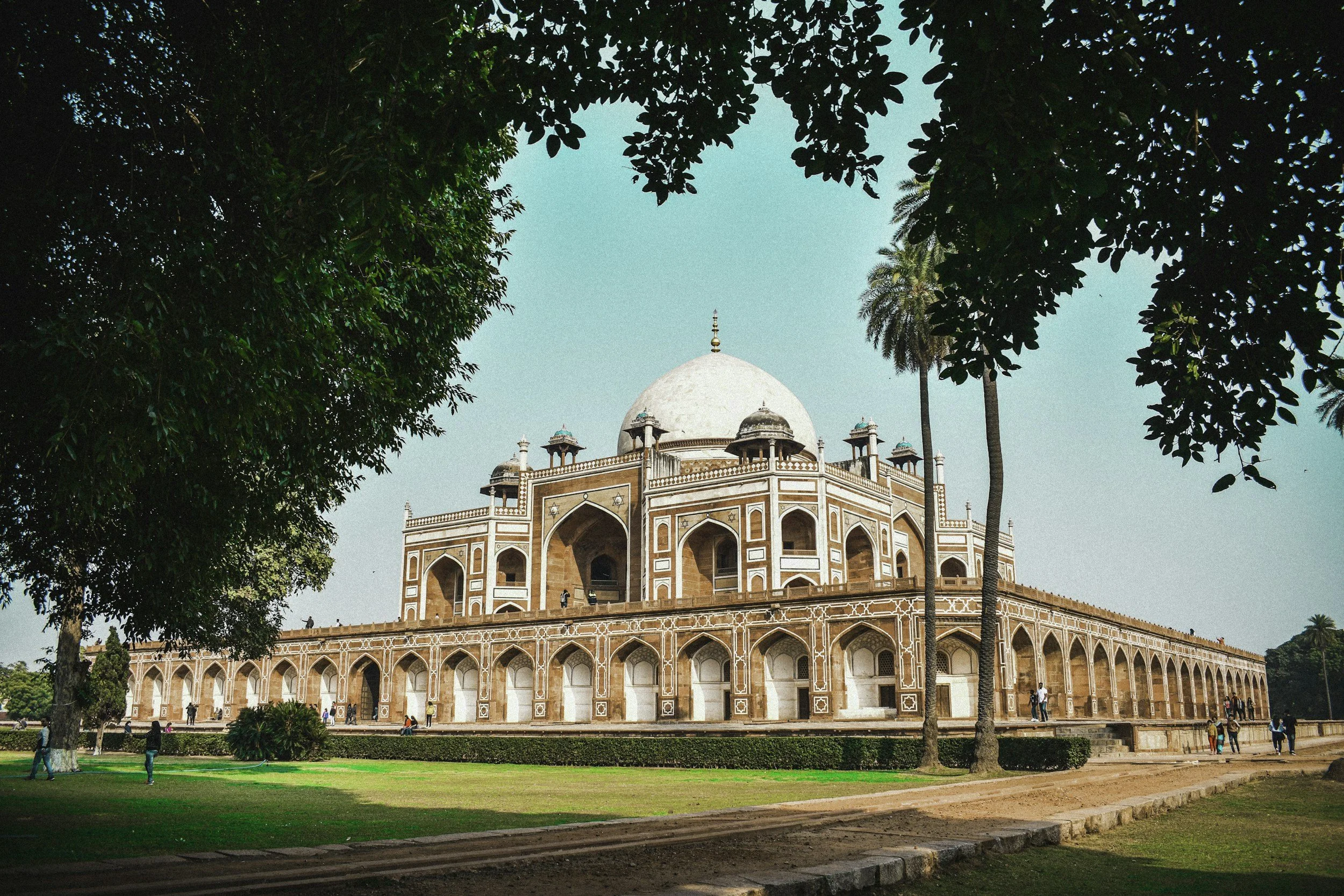
Humayun's Tomb
Built in 1570 as the first garden tomb on the Indian subcontinent, Humayun's Tomb was the direct architectural precursor to the Taj Mahal, and standing in front of it for the first time, you understand exactly why. The proportions are perfect. The red sandstone and white marble catch light differently at every hour of the day, and the formal Mughal garden in front creates a central reflecting axis that gives you strong compositional geometry no matter where you position yourself.
The crowd situation is manageable compared to Agra. On a weekday morning in the off-peak season, you can have extended stretches of the garden nearly to yourself, which makes the difference between a document and a photograph.
📷 Pro Tip: Position yourself at the far end of the central pathway as soon as you enter the garden, approximately 150 meters from the tomb entrance. From here, the full symmetry of the structure is visible with the water channel running toward you in the foreground. Shoot wide at 16 to 24mm to include the garden and the tomb together. Golden hour light (roughly 45 minutes before sunset) hits the red sandstone from the west and turns the facade a deep, warm amber. Arrive at least 90 minutes before sunset to work the changing light. For blue hour, stay after the official closing bell; security is generally lenient for photographers staying near the entrance gate. A tripod is worth setting up for the blue hour long exposures on the reflecting pool.
Best time: Golden hour, 90 minutes before sunset. Access: Paid entry, approximately 35 INR for Indian nationals and 600 INR for foreign visitors.
Chandni Chowk and the Old Delhi Spice Market
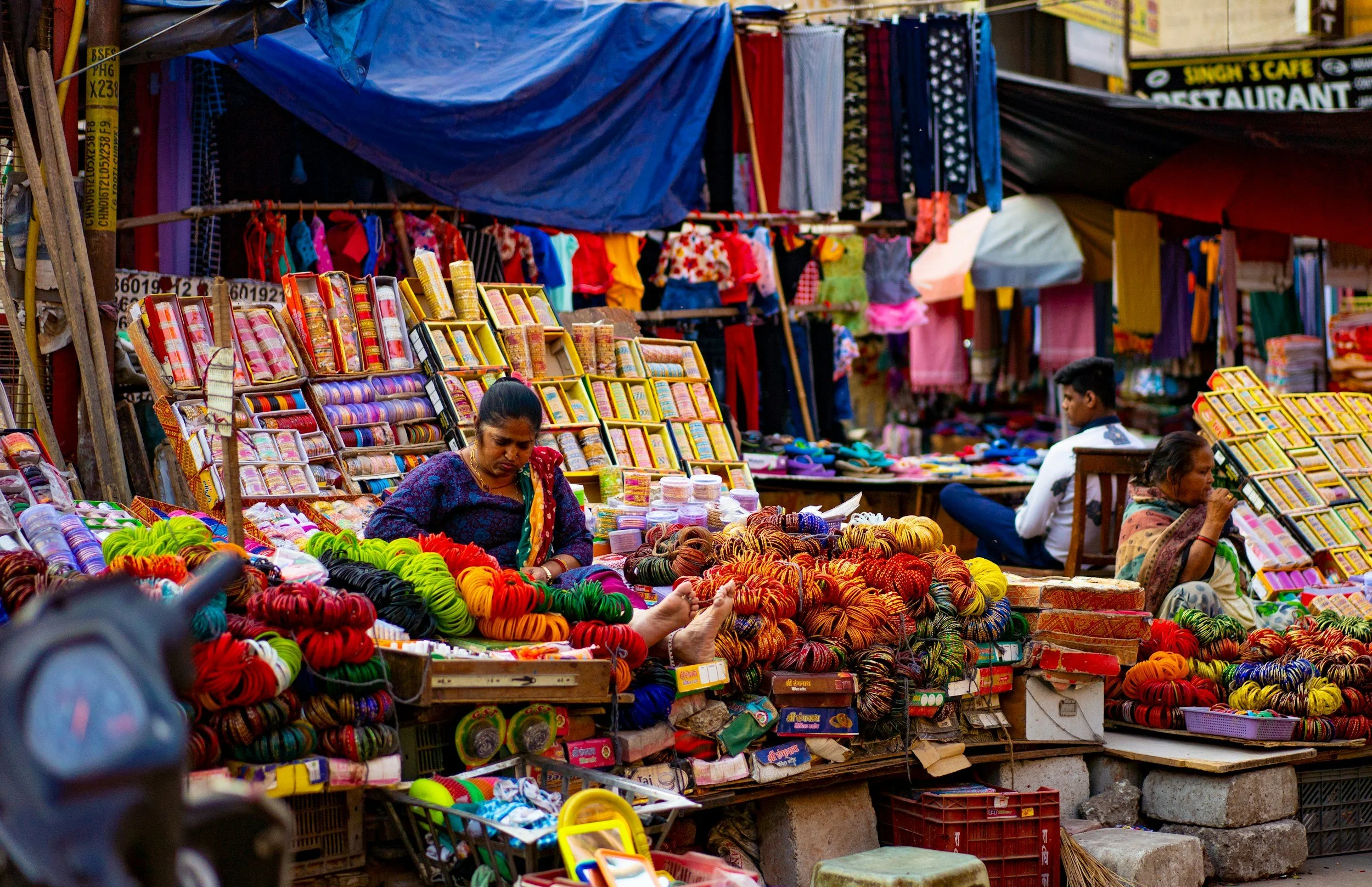
Chandni Chowk is one of the oldest and busiest markets in India, built in the 17th century under Mughal Emperor Shah Jahan. The main boulevard has been pedestrianized and cleaned up in recent years, which has made it more accessible, but the real photographic gold is in the lanes off the main road: the spice market (Khari Baoli), the silver market, the flower market, and the dozens of food alleys that branch off in every direction.
For a photographer, this is a full sensory assault in the best possible way. The colors, the layering of goods, the faces, the movement, the light filtering down through canvas awnings into narrow lanes packed with motion. I came here multiple mornings and never ran out of frames.
📷 Pro Tip: Arrive before 7:30 am, before the tourist groups and before the peak market rush. The flower market vendors are setting up around 6am, and the early light combined with the marigolds and rose petals on the ground creates images you will not find at any other time. Use your 24 to 70mm for working the lanes and switch to the 70 to 200mm to compress the depth and pull distant subjects into the frame. Street photography etiquette matters here. Make eye contact, smile, and ask permission from vendors and workers before pointing a camera directly at someone. Most people are happy to oblige, and a few will wave you away. Respect both responses. The spice market itself (Khari Baoli, accessed off the main Chandni Chowk road) is best photographed from the elevated walkways inside the market building, where you can look down into the color and movement below. Wide lens, high angle, and patience.
Best time: 6 to 8 am for the flower market, 8 to 10am for market activity. Access: Free. Nearest metro: Chandni Chowk on the Yellow Line.
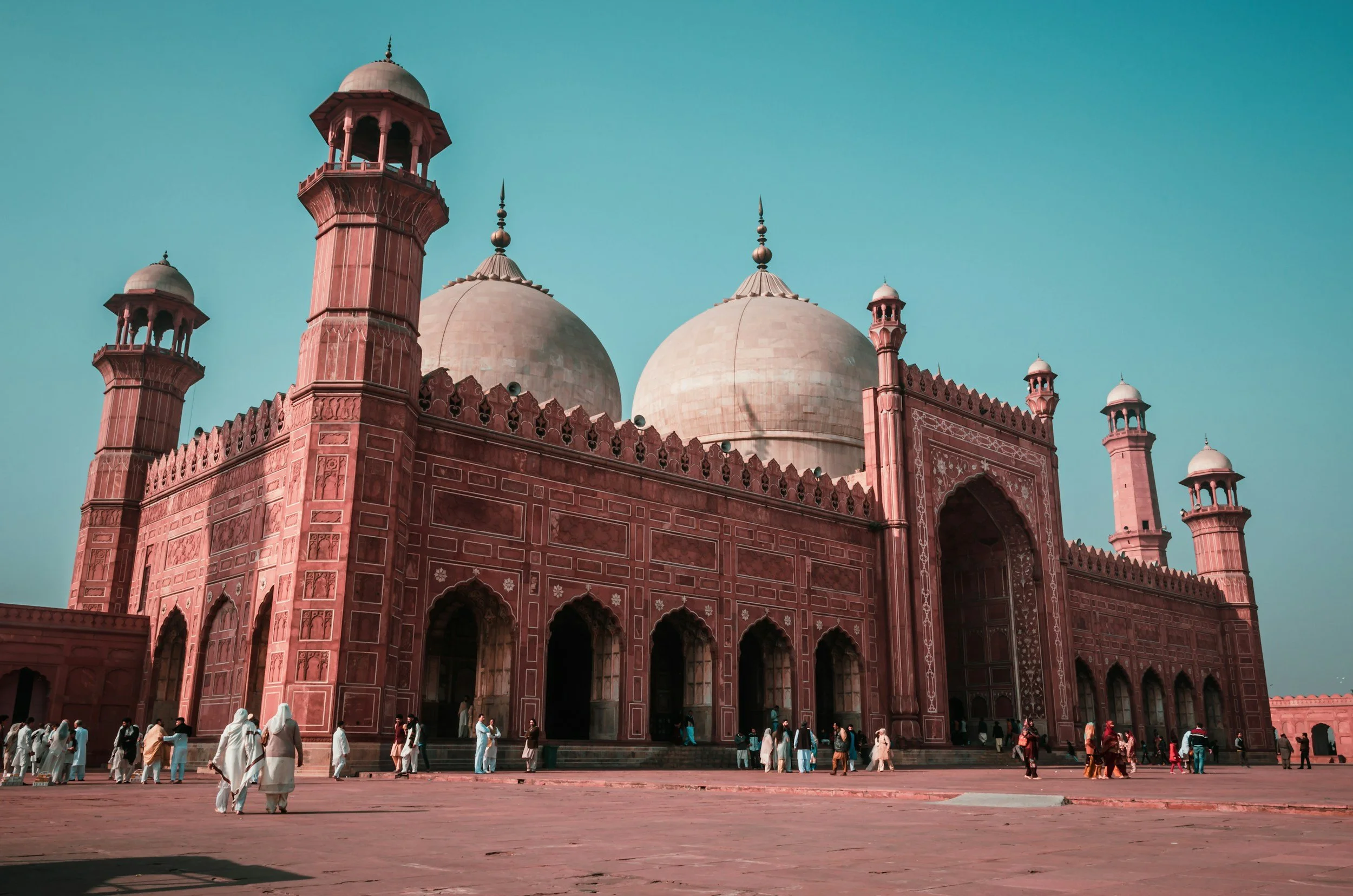
Jama Masjid
Built between 1644 and 1656, Jama Masjid is the largest mosque in India and one of the most photographically powerful spaces in the subcontinent. The courtyard alone holds 25,000 worshippers, and the scale of the space, flanked by two minarets and the enormous red sandstone gateway, is genuinely breathtaking. The north and south minarets are climbable for a small fee, and the view from the top looking down into the courtyard and out across Old Delhi is one of the best elevated perspectives in the city.
This is a place of active worship. Dress appropriately (covered shoulders and legs; women are provided with coverings at the entrance), remove your shoes, and be respectful of prayers in progress. Photography is generally permitted in the courtyard area, but always read the room.
📷 Pro Tip: The best light in the Jama Masjid courtyard is in the late afternoon, roughly two hours before sunset, when the sun comes in from the west and lights the marble and sandstone from the side, creating strong texture and long shadows across the courtyard floor. Position yourself at the back of the courtyard facing the main prayer hall and shoot at 16 to 24mm to capture the full width of the space. For architecture detail and the carved stonework, the 70 to 200mm allows you to isolate specific elements from a distance without getting in the way of worshippers. Climb the south minaret for the elevated overview shot of the courtyard. The steps are steep and narrow, but the view is worth it.
Best time: Late afternoon, two hours before sunset. Access: Free entry to the mosque; minaret access has a small fee. Located in Old Delhi; nearest metro is Lal Qila or Jama Masjid.
Lodhi Garden
Lodhi Garden is 90 acres of manicured park in the heart of New Delhi, containing a remarkable collection of 15th and 16th-century Lodi dynasty tombs set among mature trees, manicured lawns, and morning mist. For photographers, it is one of the quietest and most rewarding early morning locations in the city. Joggers, yoga practitioners, and birdwatchers are your only company before 8am.
The garden contains several photogenic tombs, including the Bara Gumbad and Shish Gumbad, which are set in close proximity and can be photographed together. The mature tree canopy creates dappled light in the mornings, and the combination of moss-covered stone, ancient domes, and greenery is unlike anything else in Delhi.
📷 Pro Tip: Arrive at or just after sunrise. The mist that sits in the garden on cool mornings (October through February) is the defining visual quality of Lodhi Garden photography, and it burns off quickly by 8:30 or 9am. Position yourself at the Bara Gumbad with the morning light coming from the east; the warm light on the stone combined with the mist behind the trees is the shot. A 35mm prime or the 24 to 70mm at the wide end works best here. If you are shooting in the deeper months of winter (December to January), bring a monopod or lightweight tripod for the low light under the tree canopy. Birdwatchers come here for the same reason photographers do: the garden is full of kingfishers, parakeets, and raptors that perch on the domes and walls. Bring the 70 to 200mm if wildlife is on your list.
Best time: Sunrise to 9am, especially October through February. Access: Free, open during daylight hours. Located on Lodhi Road; walkable from The Lodhi hotel or take a short auto from Connaught Place.
India Gate and Kartavya Path
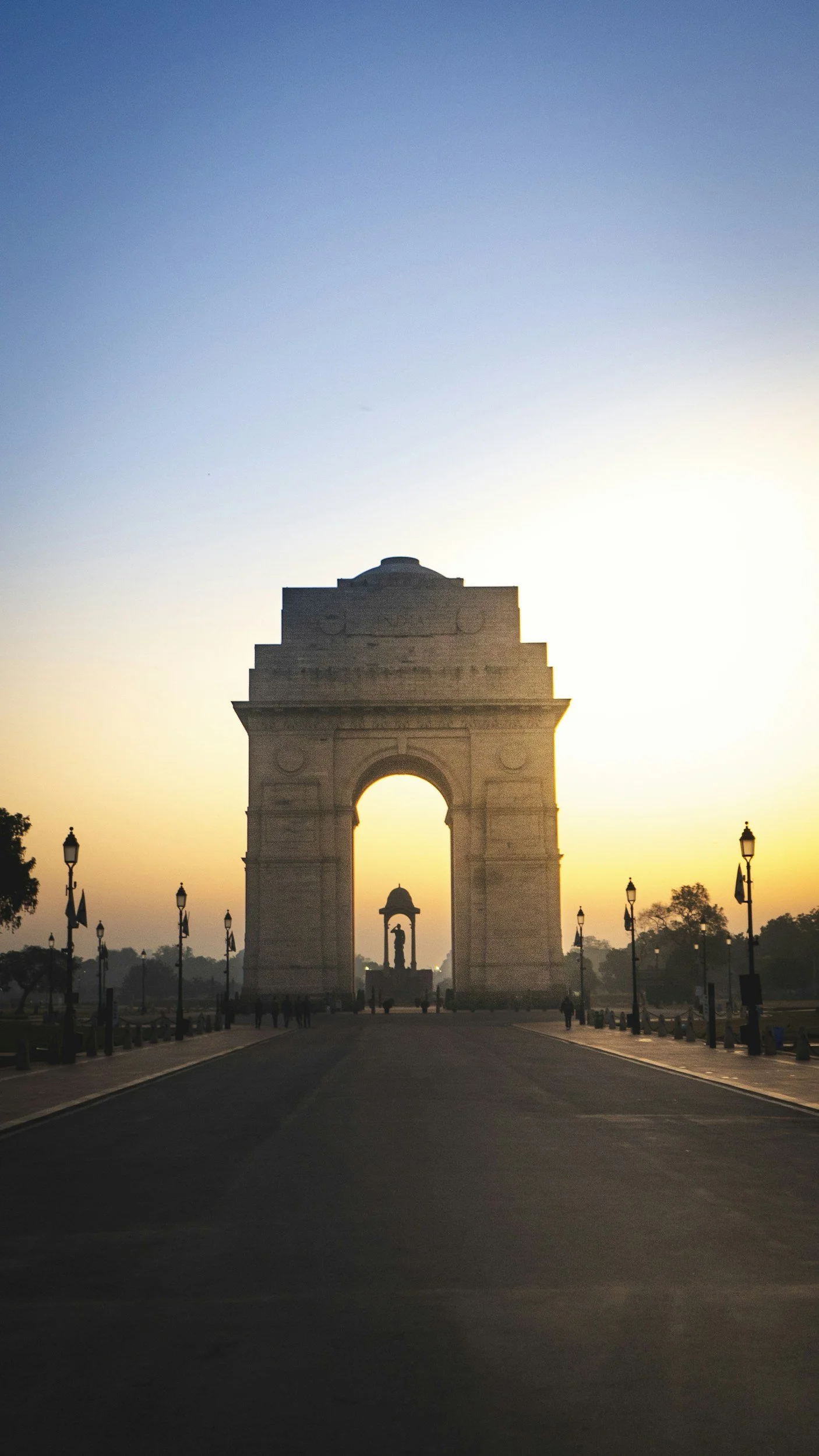
India Gate is Delhi's most recognized landmark, a 42-meter war memorial built in 1931 at the eastern end of the grand ceremonial boulevard now called Kartavya Path (formerly Rajpath). The scale of the space is what hits you first. The boulevard stretches over three kilometers with India Gate at one end and Rashtrapati Bhavan (the President's official residence) at the other, flanked by symmetrical lawns and the formal geometry of British imperial planning.
At dawn, before the crowds arrive and before the heat builds, the boulevard is almost cinematic. The mist, the scale, the symmetry, and the warm pre-sunrise light on the sandstone make it one of the most satisfying compositions in the city.
📷 Pro Tip: The best India Gate shot is from the monument side looking back toward Rashtrapati Bhavan along the boulevard. Shoot wide at 16 to 24mm for the full compression of the grand axis, or switch to the 70 to 200mm to compress the boulevard and stack the elements. Golden hour here is exceptional in both morning and evening. In the mornings (November through February), there is often a layer of haze that creates atmospheric depth along the boulevard. At night, the monument is illuminated and the long exposure possibilities are strong; bring the tripod and shoot after 9pm when foot traffic drops. Republic Day (January 26) is the ultimate time to photograph this stretch, with the full military parade rolling past, but plan months in advance for ticketed viewing positions.
Best time: Dawn and blue hour. Access: Free. Located at the end of Kartavya Path; short auto or Uber from Connaught Place.
Qutb Minar
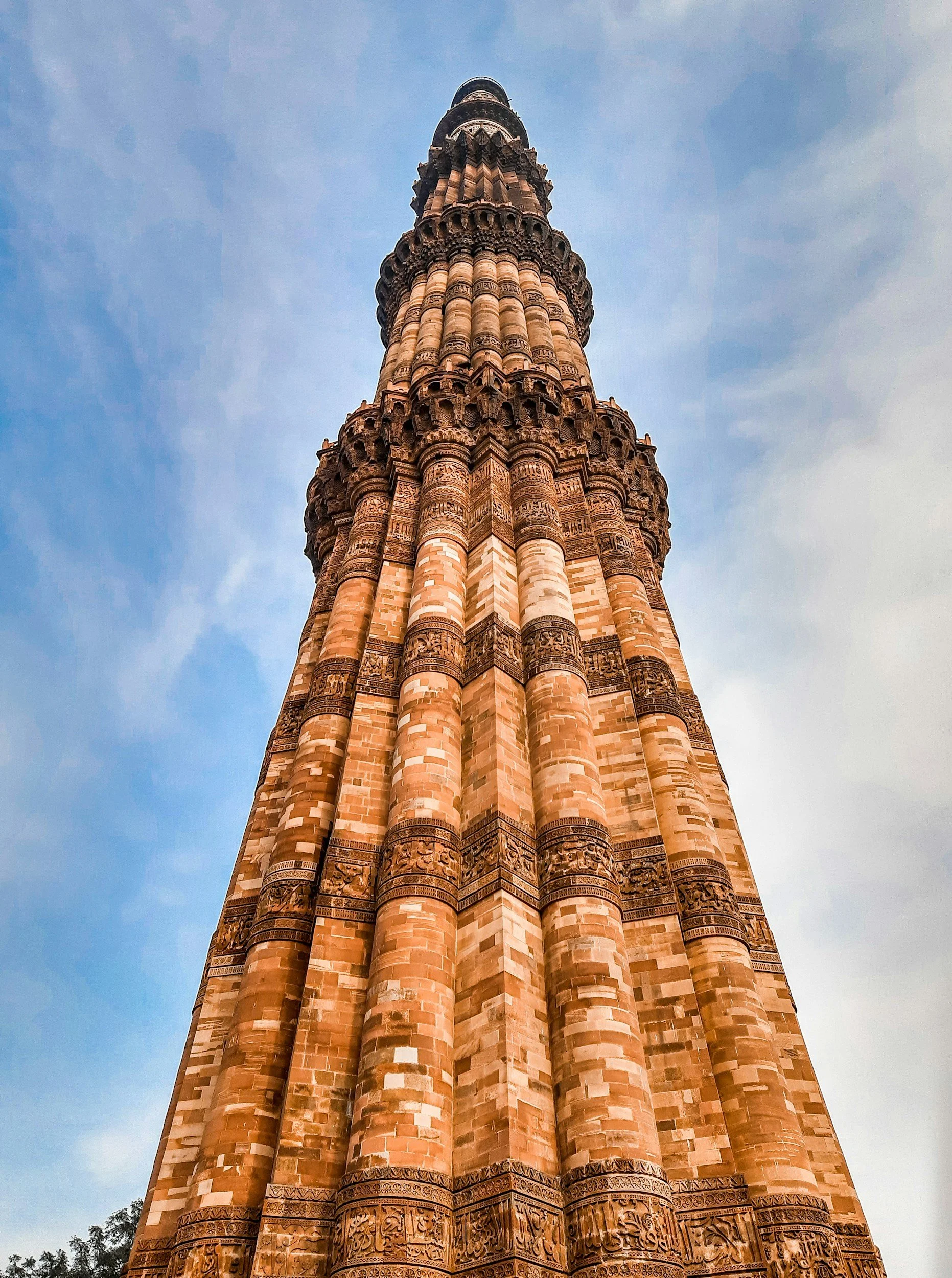
At 73 meters tall, the Qutb Minar is the tallest brick minaret in the world and the centerpiece of a UNESCO-listed complex that contains five centuries of Delhi's architectural history. The tower itself, built beginning in 1193, is covered in intricate Quranic inscriptions and bands of decorative stonework that reward close inspection and a telephoto lens. The surrounding complex includes the Quwwat-ul-Islam mosque, the Iron Pillar of Delhi (a metallurgical marvel that has not rusted in 1,600 years), and several additional tombs and structures.
The afternoon light on the Qutb Minar is exceptional. The red and buff sandstone catches the late sun and glows. This is a larger complex than most visitors expect, and it takes 90 minutes to properly work through.
📷 Pro Tip: Photograph the Qutb Minar from the northeast corner of the complex, positioned so that the tower rises against the sky with the colonnade ruins in the foreground. Use the 70 to 200mm to isolate sections of the inscribed bands of calligraphy on the tower's surface; they are extraordinarily detailed and make compelling abstract images when cropped tightly. The Iron Pillar is best photographed in isolation from a low angle with a wide lens; the inscription ring and the weathered surface are the subjects. Golden hour late in the afternoon is the best window for the entire complex. The site closes at sunset, so time your entry accordingly to have 90 minutes of good light inside.
Best time: Two hours before sunset. Access: Paid entry; foreign visitors approximately 600 INR, Indian nationals approximately 40 INR. Located in Mehrauli; take the metro to Qutb Minar station.
Festivals and Events Worth Photographing
Holi (February or March) — The festival of colors is one of the most photographically extraordinary events in the world, and Delhi does it spectacularly. The city transforms into a canvas of red, green, yellow, and purple powder. The best place to photograph Holi in Delhi is in the residential neighborhoods of Old Delhi or in the areas around Connaught Place, where locals celebrate in the streets. For photographers, wear clothes you are willing to sacrifice, protect your gear (sealed plastic bags over your camera or a rain cover), and shoot with a fast prime lens. The action is fast, the light is chaotic, and the expressions are everything. Ask before you photograph individuals closely. The exact date shifts annually with the lunar calendar, falling in late February or early March.
Diwali (October or November) — The Festival of Lights transforms Delhi over five days, with oil lamps, candles, fireworks, and intricate rangoli patterns filling the streets. The best photography happens in the residential neighborhoods and around Old Delhi's markets, where storefronts are decorated and families gather in the streets. Lodhi Garden and India Gate take on a different quality at night during Diwali, with lights and crowds that create strong opportunities for long exposure work. Air quality in Delhi drops significantly during Diwali due to fireworks. Bring a mask if you are sensitive to air pollution.
Republic Day Parade (January 26) — The largest military and cultural parade in India, stretching down Kartavya Path past India Gate. Military hardware, cultural tableaux, and the national pageantry of a billion people represented on a single boulevard. Tickets for parade viewing positions are available in advance through the official portal. Security is extremely tight in the days before and on the day itself; drone flight is banned city-wide. Book your accommodation months in advance if you plan to photograph this.
Basant Panchami (January or February) — The festival welcoming spring, celebrated with yellow flowers, yellow clothing, and kite flying across the city. The kite flying near India Gate and in the open areas of Old Delhi creates strong aerial photography opportunities if you position yourself at elevation (the south minaret at Jama Masjid, for example) and shoot the kites against the sky.
Eid-ul-Fitr (timing varies with the Islamic calendar) — The end of Ramadan brings one of the most photogenic gatherings in Delhi to the courtyard and streets around Jama Masjid. The morning prayer congregation, the festive clothing, and the street food vendors who set up outside the mosque create extraordinary conditions for documentary-style photography. Be respectful, be quiet, and ask before photographing anyone at prayer.
Frequently Asked Questions About Visiting Delhi
Is Delhi safe?
Yes, for the areas most travelers stay and shoot, particularly Central Delhi and the major monuments. Normal city awareness applies in crowded markets, and arranging airport pickup through your hotel avoids the most common tourist scam entirely.
Do you need a visa to visit Delhi?
Yes, most nationalities need an e-Tourist Visa, applied for online through India's official government portal before you travel. Processing typically takes three to five business days.
Is the tap water safe to drink?
No. Stick to bottled or filtered water, avoid ice unless you're in an upscale restaurant or hotel, and check that bottle seals are intact before opening.
What are the best photo spots in Delhi?
The spice and flower markets of Old Delhi before 7:30 am, Humayun's Tomb at golden hour, and Lodhi Garden's morning mist are three that consistently deliver. The full list with Pro Tips is above.
Can you fly a drone in Delhi?
No. Delhi sits within some of the most heavily restricted airspace in India, with overlapping no-fly zones around airports, military sites, and government buildings. Leave it at home for this trip.
What surprised you most about photographing Delhi?
The gap between the "chaos" reputation and the warmth I actually found. I'd braced for being overwhelmed in the wrong way, and instead found a city that's relentless in the best sense, generous, proud, and genuinely happy to share itself with you.
How many days do you need in Delhi?
Four to five days at a photographer's pace. Three is survivable but rushed, and Delhi rewards slowing down, especially in Old Delhi.
Is Delhi worth combining with Agra and Jaipur?
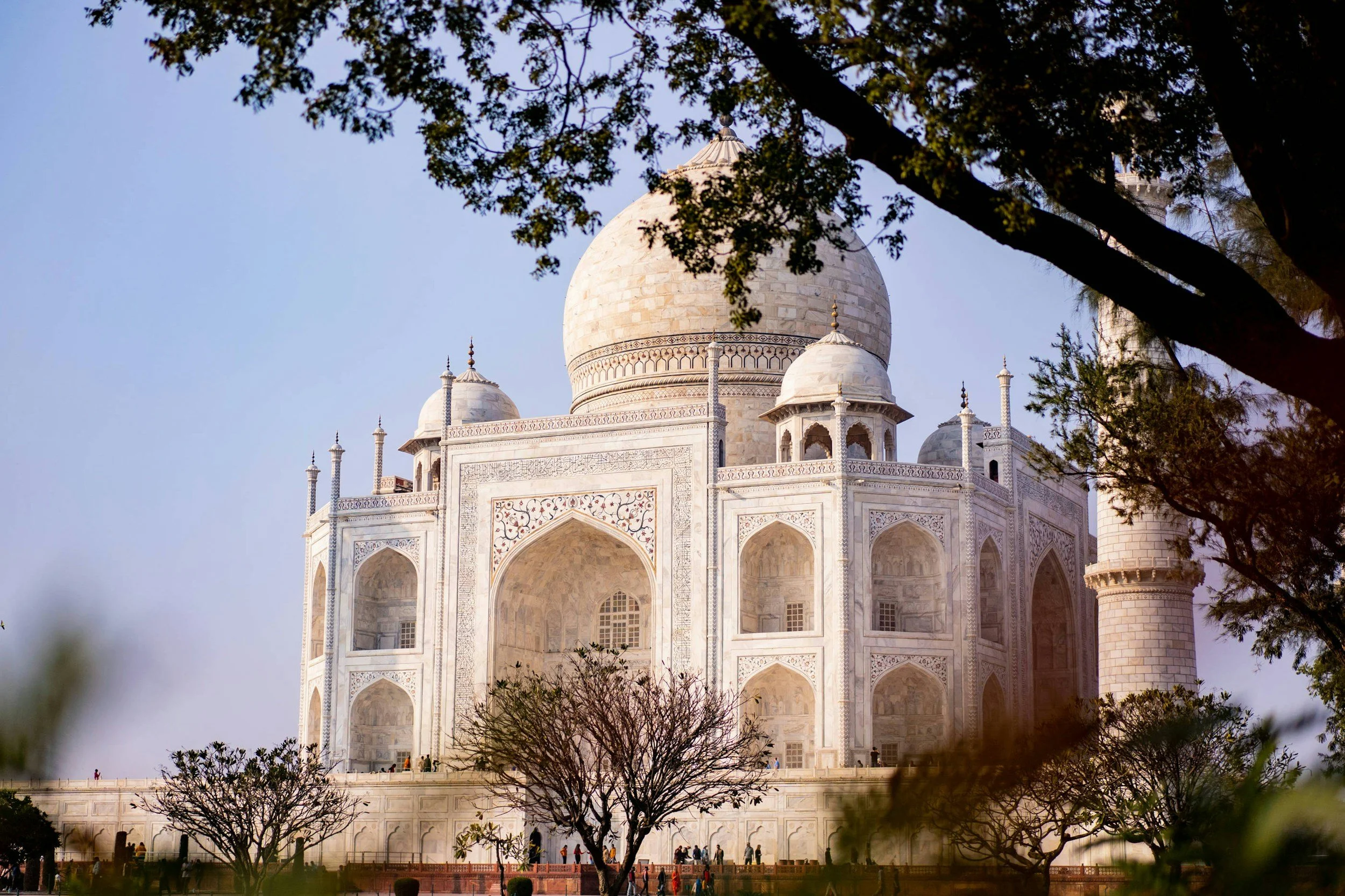
Yes, absolutely, this is the classic Golden Triangle route. Agra (home to the Taj Mahal) is two and a half hours away by train, and Jaipur is four to five hours, together forming one of the best photography itineraries in the world.
Final Thoughts
Delhi will surprise you. It surprised me. I arrived prepared for the chaos and had not accounted for the beauty, the warmth, or the food. By the end of the first day in Old Delhi, I had already decided I needed to come back. By the end of the trip, I was certain of it.
This city requires patience and presence. It does not reveal itself through a car window or from behind a hotel gate. You have to step into it, let it be loud and bright and overwhelming, and then find the moments inside all of that movement. When you do, the photographs you come home with are some of the most alive you will ever make.
Go. Take the tour through Old Delhi. Stay an extra day at Humayun's Tomb. Order the dal makhani. It will stay with you long after you leave.
Want to improve your photography while exploring some incredible destinations? Join me on one of my photography workshops! You can find all the details, including upcoming destinations and dates, through the links below.
Let's Stay Connected!
If you are planning a broader India trip, Delhi pairs naturally with the following destinations:
My Photography & Travel Guide to Agra — Two and a half hours from Delhi by train and home to the Taj Mahal, the Agra Fort, and Fatehpur Sikri. Agra is the logical first extension of a Delhi trip, and the sunrise photography at the Taj Mahal is one of the defining photography experiences of a lifetime.
My Photography & Travel Guide to Jaipur — The Pink City is four to five hours from Delhi by train and an entirely different visual experience. The palaces, the blue pottery, the camel-lined roads, and the chaos of the old city all reward photographers of every level. Delhi, Agra, and Jaipur form the Golden Triangle, and it is one of the best photography itineraries in the world.
My Photography & Travel Guide to Hong Kong — If you are traveling across Asia and Delhi is part of a longer journey, Hong Kong is a five-hour flight away and an extraordinary contrast. Where Delhi is ancient, layered, and chaotic, Hong Kong is vertical, polished, and electric. The two together tell a remarkable visual story about Asia's range.
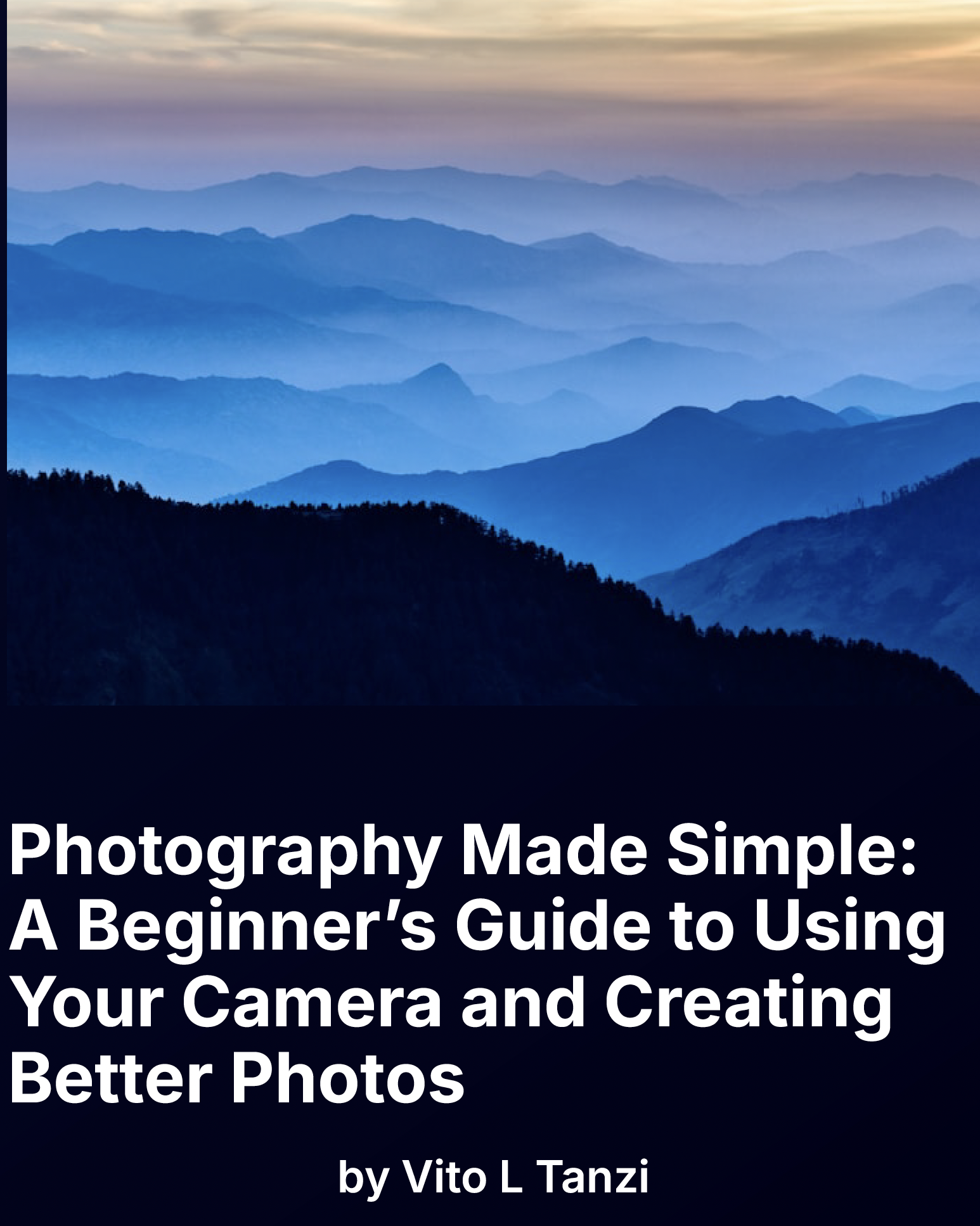
Finally—a beginner-friendly photography guide that makes sense.
If you've ever picked up a camera and thought, "Now what?" this is the book for you.
Photography Made Simple is written for adults who are just starting out and want a clear, encouraging, real-world approach to learning photography. Whether you're using a DSLR, mirrorless, or just your smartphone, this guide walks you through the basics—without the jargon or tech overwhelm.
Inside, you'll learn:
The only camera settings you really need to know to get started
How to shoot sharper, more intentional photos using light and composition
Simple tips for portraits, landscapes, travel, and everyday life
What gear you do (and don’t) need
How to create better photos without upgrading your camera
You’ll also get practical exercises, cheat sheets, and tips for organizing and editing your images—plus the confidence to shoot off Auto Mode for good.
This is not a textbook. It’s a friendly guide to seeing the world with fresh eyes—and finally capturing what you see the way you imagine it.
📸 Format: PDF download
Pages: 100+
Perfect for: Beginners, hobbyists, and anyone ready to take better photos without the stress