Cairo, Egypt Travel & Photography Guide: Pyramids, Best Photo Spots, Map & Hidden Gems
No photograph prepares you for the Pyramids.
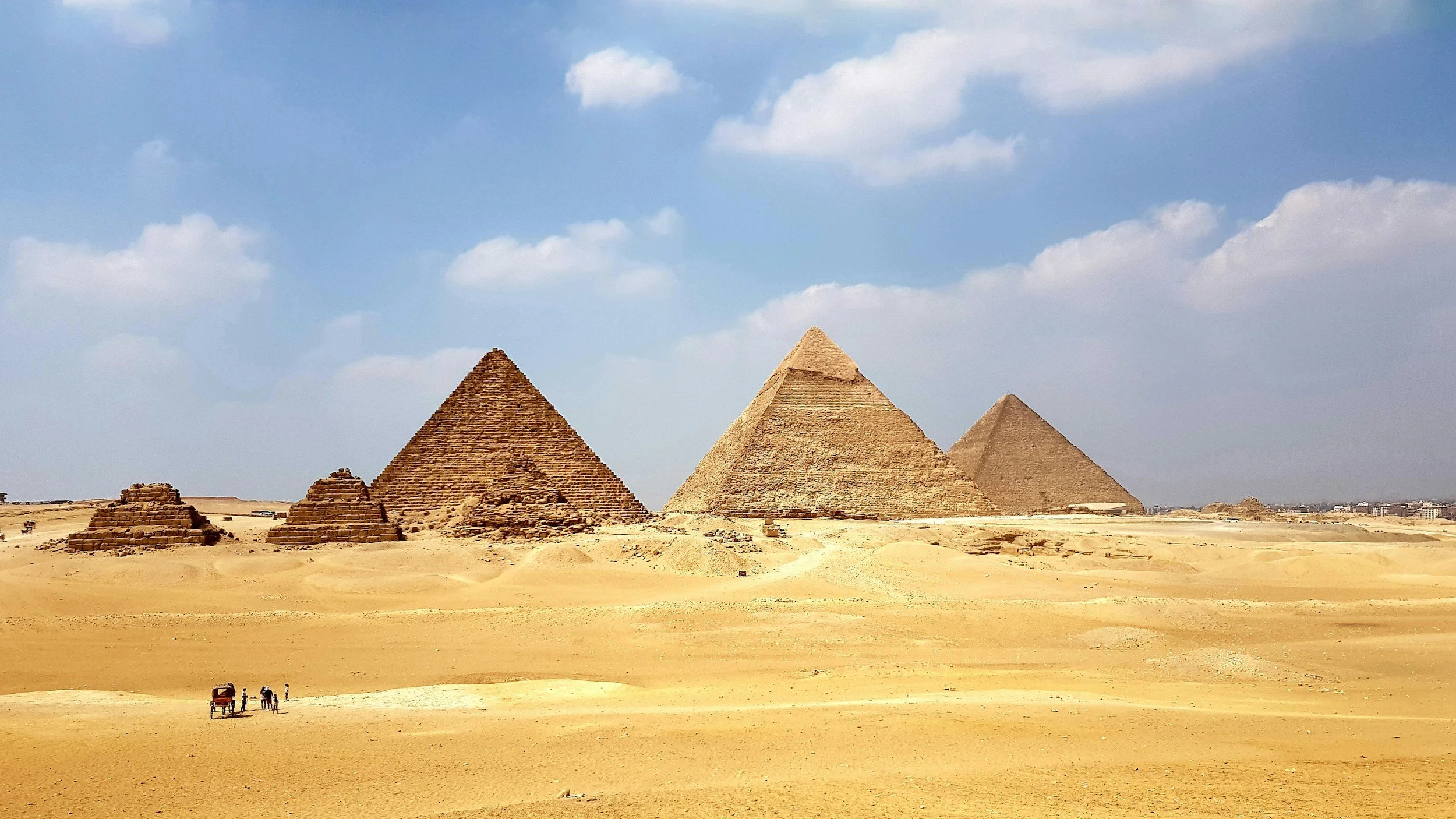
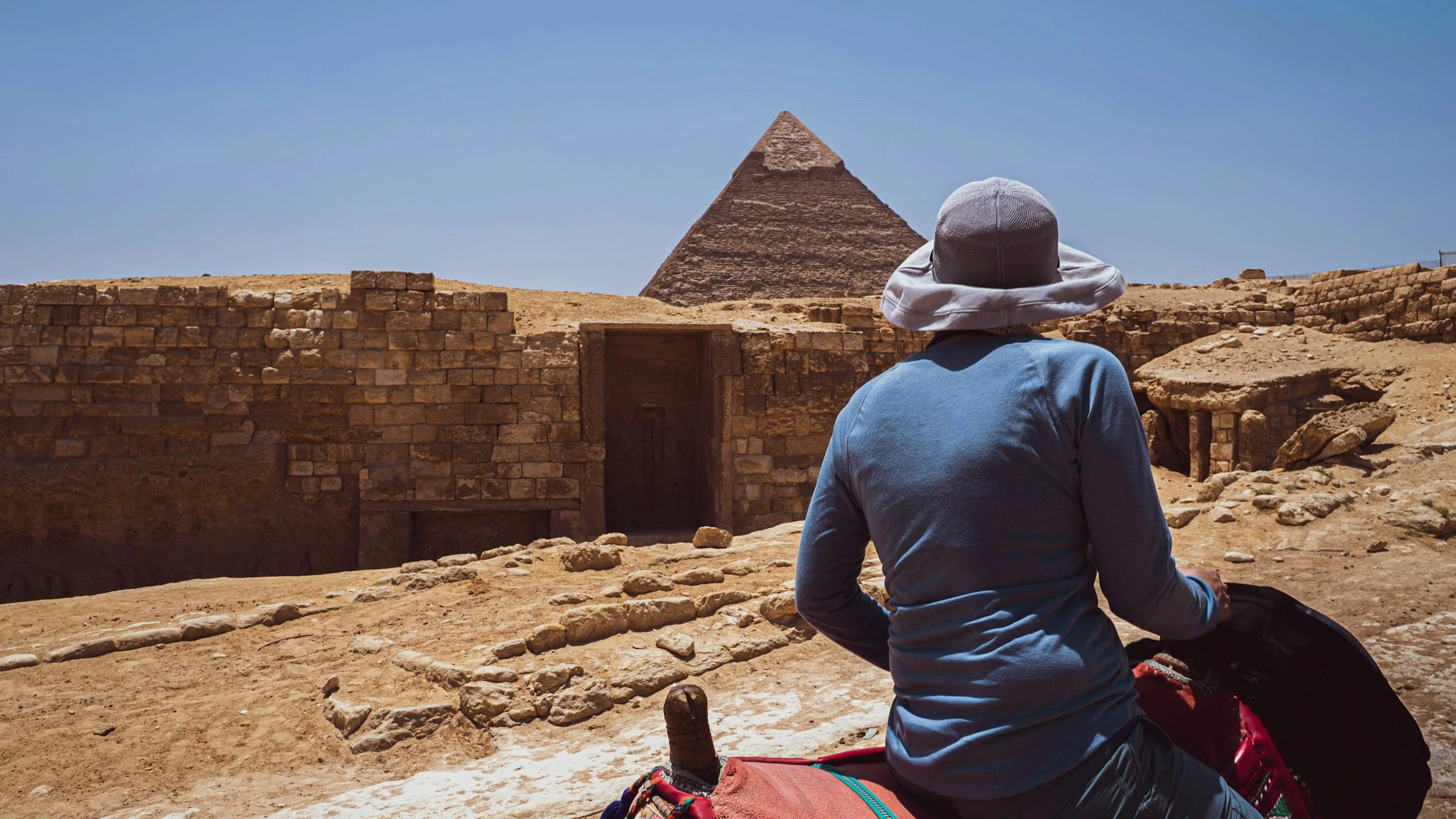
I know that sounds like something everyone says, and it is. But the reason everyone says it is that it is completely and stubbornly true. You have seen the Pyramids thousands of times, in films, in textbooks, on the walls of every travel agency that has ever existed. The image is so familiar that it has almost lost its power. And then you stand in front of them, in the early morning when the desert air is still cool, and the light is coming in low from the east, and the scale of what you are looking at lands on you all at once. These were built four and a half thousand years ago by human hands, by people who understood geometry and engineering and patience at a level that still produces genuine astonishment. No camera and no lens make sense of it immediately. You just stand there for a moment and let it register.
We flew from Beirut to Cairo so many times that the flight eventually felt routine. One hour. The distance between two of the oldest and most layered cities in the Middle East is covered in the time it takes to drink a coffee and read a chapter of a book. Living in Beirut gave us the extraordinary luck of having Egypt as a short trip rather than a major expedition, and we went often enough to see it in different seasons, in different moods, and with different questions.
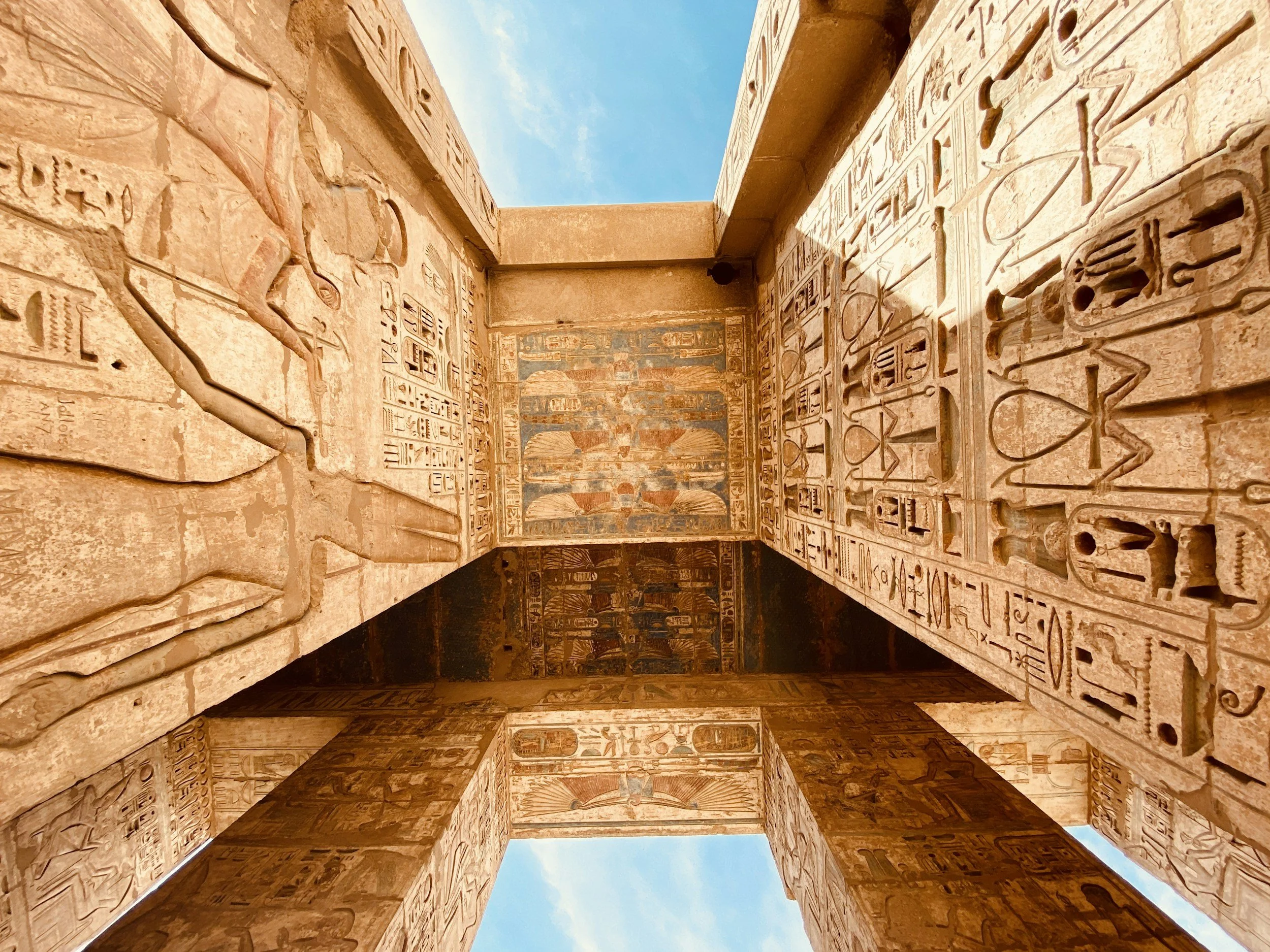
I am fluent in Arabic. My wife is fluent in Arabic. We still hired a local guide on every visit, and I recommend you do the same. This is not about language. It is about the intensity of the vendor culture at the major sites, particularly around the Pyramids, the Sphinx, and the Khan el-Khalili bazaar. Persistent, inventive, occasionally overwhelming, and only manageable with a local who knows how to navigate it on your behalf. With a guide, you walk through these places freely. Without one, you spend enormous energy deflecting. The guide is the difference between a photography trip and an endurance event.
Cairo is the largest city in Africa and the Arab world, home to more than twenty million people in the greater metropolitan area. It is chaotic and magnificent and exhausting and deeply beautiful. The Egyptian Museum, the Citadel, Coptic Cairo, the Khan el-Khalili, the mosques, the Nile, the desert that begins literally at the edge of the city. And then, twenty-five kilometers to the southwest, the Pyramids of Giza and the Sphinx, sitting on the edge of the plateau as if they own the horizon, which they do.
Egyptian history is among the most extraordinary on earth and Cairo is its living museum. The pharaohs, the Romans, the Byzantines, the Arab conquest, the Ottoman era, the French expedition, the British colonial period, the modern republic: all of it is visible in a single day of walking if you know where to look. Beyond Cairo, the history deepens further. Luxor and the Valley of the Kings. Aswan and Abu Simbel. Alexandria on the Mediterranean. The country is not a destination with one chapter. It is a full library.
In this Photography Guide to Cairo, I share what we know from years of visiting this city: the best photography locations, practical travel advice, where to stay, where to eat, and the specific guidance that makes the difference between a frustrating trip and an extraordinary one.
Photographer's Notes
Before you go, here are my own takeaways.
Favorite Season: October and November
Favorite Location: The Pyramids of Giza
Favorite Hotel: Four Seasons Hotel Cairo at Nile Plaza
Favorite Food: Koshary at Abou Tarek
Favorite Café: El Fishawy
Favorite Lens: 70-200mm f/2.8
Would I Return? I'd love to see the Pyramids and the Grand Egyptian Museum again, but I'm on the fence, the constant harassment is genuinely exhausting.
Where to Stay in Cairo, Egypt
Cairo divides into several distinct areas for travelers, and your choice of base changes how you experience the city. My recommendation is to split your stay rather than commit to a single hotel for the entire trip.
Start with two nights at the Marriott Mena House in Giza. This puts you at the base of the Pyramids for your first two mornings, which is exactly where you want to be. Sunrise at the Pyramids before the tour groups arrive is the single best photography window in Egypt, and no other hotel gives you that access without a 45-minute drive through Cairo traffic. Use those two mornings fully.
After the Mena House, move into central Cairo for the remainder of your stay. The Four Seasons Nile Plaza in Garden City or the St. Regis on the Corniche are the right choices at the luxury level. Both put you within easy reach of the Egyptian Museum, the Citadel, Coptic Cairo, and the Khan el-Khalili, with Nile views and the kind of service that makes a long day of shooting easier to recover from.
For both properties, have the hotel arrange your driver and guide before you arrive. Do not sort this out on the street or through a third party once you land. The concierge at the Mena House and the Four Seasons both have established relationships with reputable local guides and private drivers. Book through them. The quality difference between a hotel-arranged guide and someone who approaches you at the Pyramids gate is not small.
Luxury Hotels in Cairo, Egypt
Marriott Mena House — The most historic and most strategically positioned hotel in Egypt. The Mena House sits at the base of the Pyramids of Giza, which means that the Great Pyramid is visible from the gardens, the pool, and many of the rooms. The property has hosted everyone from Winston Churchill and Franklin Roosevelt to Elizabeth Taylor and Frank Sinatra. The main building is a 1869 hunting lodge that was expanded into a hotel for visiting royalty; the gardens, the pool with Pyramid reflections, and the sheer improbability of the location make it one of the great hotel experiences in the world. For photographers who want to be in position for sunrise at the Pyramids before the tour groups arrive, no hotel in Egypt offers a comparable advantage. Book a Pyramid-view room.
The St. Regis Cairo — The highest-rated luxury hotel in central Cairo, currently rated 9.6 out of 10 and named the number one most Instagrammable hotel in the city. The St. Regis sits on the Nile Corniche with views of the river and proximity to the Egyptian Museum and Tahrir Square. The signature St. Regis Butler Service, the Iridium Spa, and the quality of the rooms consistently earn exceptional reviews. For photographers staying in the city center rather than near the Pyramids, this is the premier address.
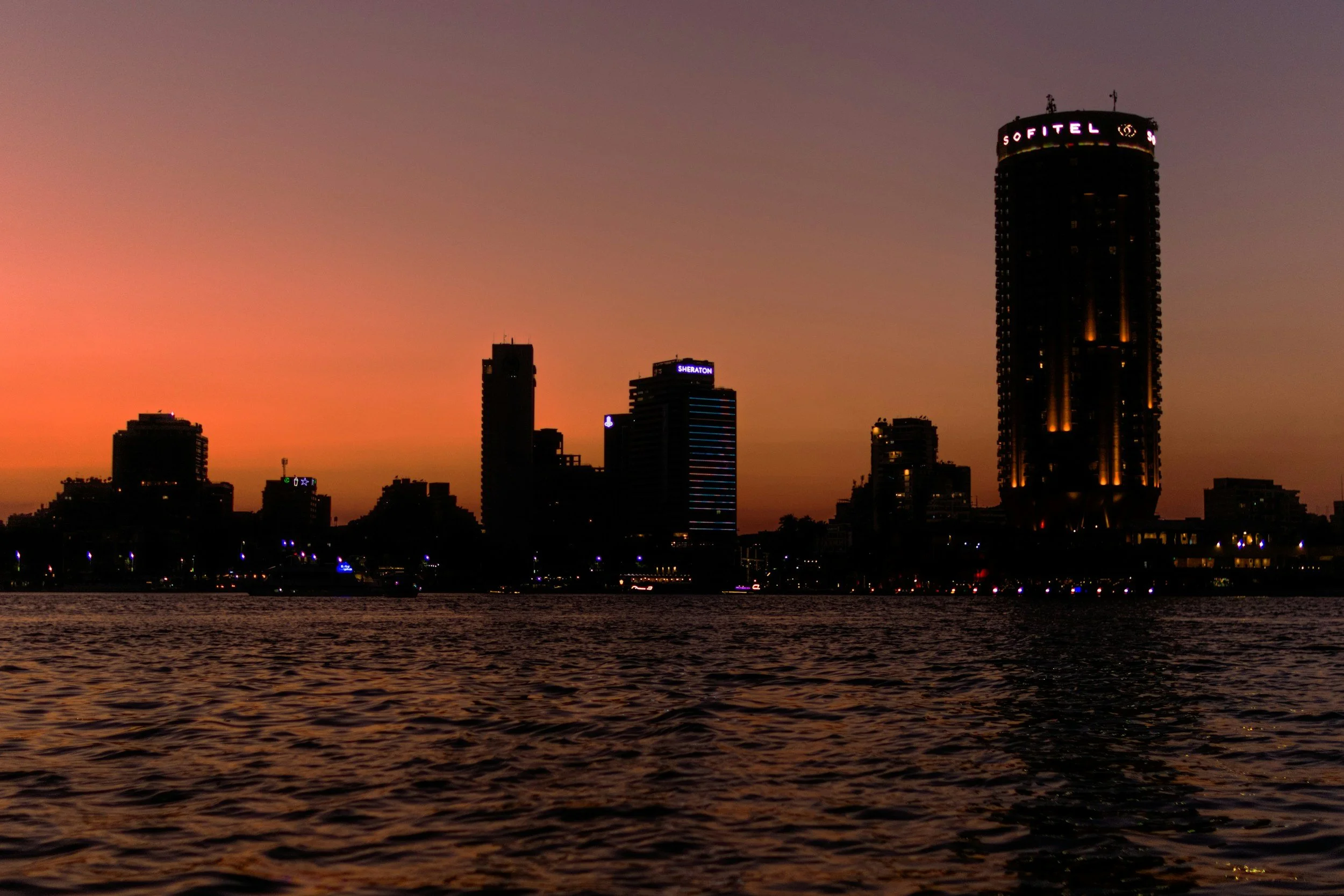
Four Seasons Hotel Cairo at Nile Plaza — The number one scenic hotel in Cairo per Trip.com's 2025 rankings, the Four Seasons Nile Plaza sits in Garden City on the Corniche with sweeping Nile views and the full Four Seasons service standard. Zitouni, the hotel's Egyptian restaurant, is widely regarded as one of the finest Egyptian dining experiences in Cairo. The hotel's variety of dining options, pool, and spa make it a self-contained world when the energy of Cairo needs to be held at a comfortable distance.
Mid-Range and Boutique Hotels
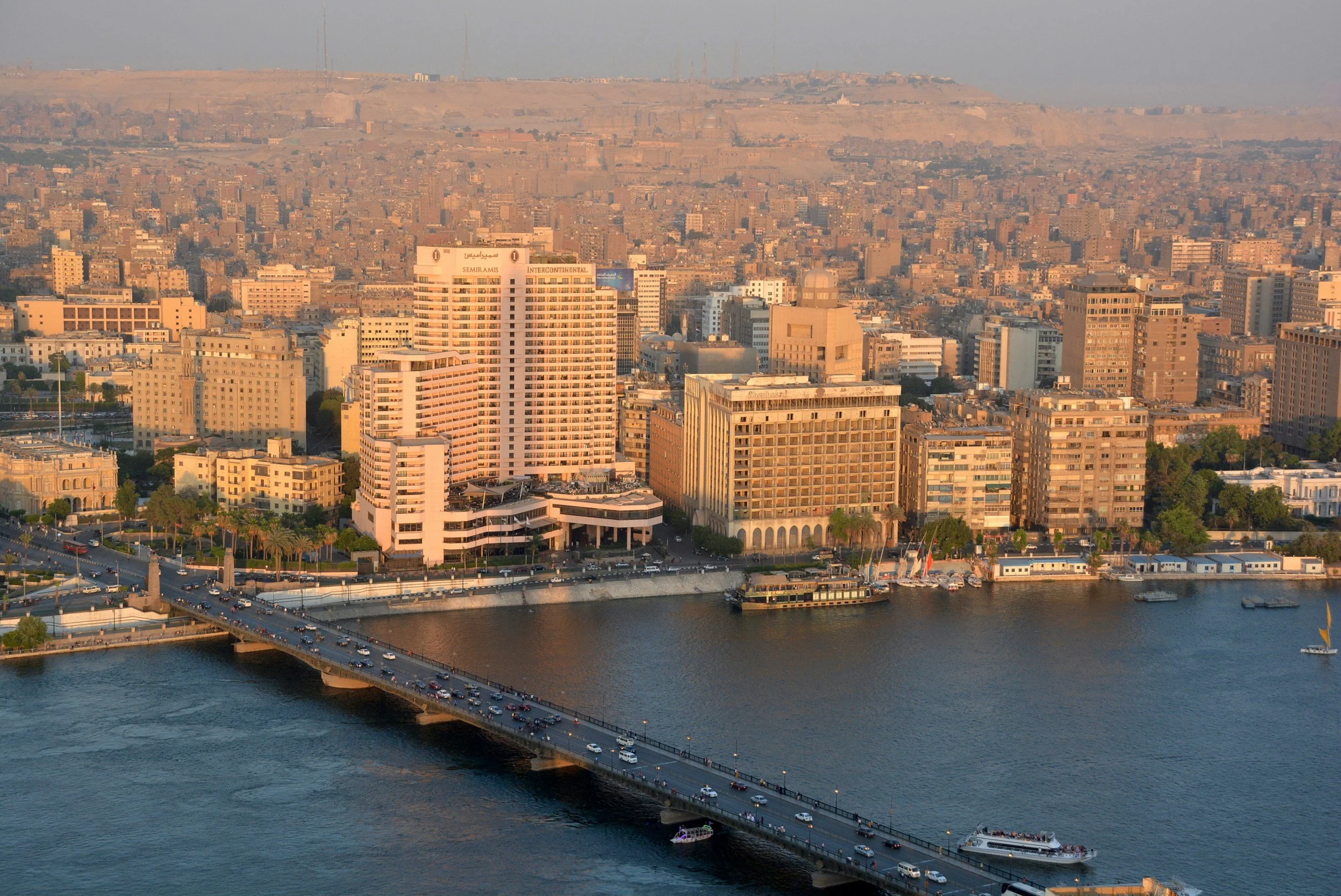
Kempinski Nile Hotel Garden City — A boutique luxury property in the quieter Garden City district with Nile views and a reputation for exceptional service. Smaller than the flagship luxury properties, more personal, and positioned in one of Cairo's most pleasant residential neighborhoods. Walking distance from the Corniche and easy taxi or Uber access to all major sites.
Cairo Marriott Hotel and Omar Khayyam Casino — An extraordinary building on Gezira Island in the heart of Zamalek, originally constructed as a palace for Empress Eugénie's visit to the opening of the Suez Canal in 1869. The property is a history lesson embedded in the walls. Zamalek is one of the most pleasant neighborhoods in Cairo: tree-lined streets, good restaurants, galleries, and a quieter pace than the mainland city. For travelers who want a base that is genuinely interesting at the architectural level, this is it.
Steigenberger El Tahrir — A solid, well-positioned centrally located property a short walk from the Egyptian Museum and Tahrir Square. Good value, clean, reliable, and practically placed for exploring downtown Cairo on foot.
Ideal Duration of Stay in Cairo, Egypt
Plan for at least five days in Cairo on a first visit. The city and its surrounding sites cover an enormous amount of ground, and Cairo's traffic means that distances take longer than maps suggest. Moving too quickly leaves you with surface-level impressions and no time for the specific light windows, the early mornings, and the quieter sites that define the best photography here.
A seven to ten-day visit allows for day trips to Alexandria, Luxor by overnight train, and the full depth of what the greater Cairo area contains.
Five days in Cairo might look like this:
Day one: Arrive and orient yourself. Khan el-Khalili bazaar in the afternoon. Dinner on the Nile. Rest. Cairo will be there in the morning.
Day two: Pyramids of Giza at sunrise. The Sphinx. The Grand Egyptian Museum in the afternoon, which requires a full half-day on its own.
Day three: Citadel of Saladin and the Mohamed Ali Mosque in the morning. Coptic Cairo and the Hanging Church in the afternoon. Blue hour photography from the Citadel over the city.
Day four: Egyptian Museum in the morning if not yet visited. Islamic Cairo and Al-Azhar Mosque. Afternoon photography in the old city streets.
Day five: Day trip to Saqqara and the Step Pyramid, the oldest stone structure in the world, or a Nile felucca ride. Final evening at Sequoia on the Nile at sunset.
One logistical note on the split-stay approach: when you check out of the Mena House on day three, your driver takes you directly into central Cairo. There is no need to arrange a separate transfer. If you book both hotels in advance and inform each concierge of your itinerary, the handoff is seamless. Have your guide meet you at the Mena House on day two, so you arrive in central Cairo already oriented, already with someone who knows the city, and ready to shoot.
Best Time to Visit Cairo, Egypt
October to April is the ideal window for Cairo, when temperatures are moderate, and the light is at its most favorable for photography. The winter months of December through February are mild during the day with cool evenings, and the desert air is clear and dry. Crowds at the Pyramids are smaller and more manageable than in summer.
October and November are the finest months photographically. The autumn light is warm, directional, and long at both ends of the day. The temperature is comfortable for walking, and the Pyramids at sunrise in October carry a specific quality of light that the summer months do not produce.
Spring, from March to May, is pleasant and increasingly crowded as the European and American tourism season builds. Khamsin dust storms can occur in March and April, blowing in from the Western Desert and occasionally reducing visibility. Monitor forecasts if you are timing a Pyramids shoot.
Summer, June to August, is hot and should be avoided if you have flexibility. Temperatures regularly reach 38 to 42 degrees Celsius and midday photography at outdoor sites is genuinely uncomfortable.
Ramadan requires specific consideration. During the holy month, which shifts annually through the Islamic calendar, many restaurants are closed during daylight hours and the atmosphere of the city changes significantly. Iftar, the breaking of the fast at sunset, is one of the most atmospheric and photographically rich experiences in the Arab world, but the daytime logistics require adjustment.
Getting Around Cairo, Egypt
Cairo's traffic is legendary. The city of twenty million people, one of the most densely populated urban areas in the world, has a road network that was not designed for its current population. The density of central Cairo is something you feel physically: the streets are full at every hour, the noise is constant, and the energy of the city operates at a volume that takes a day or two to calibrate to.
Uber and Careem are essential. Careem is the regional rideshare platform widely used across the Middle East and is the more reliable option in Cairo. Both apps work throughout the city and take the negotiation and overcharging variables out of taxi use. Do not use unregistered taxis at major tourist sites.
The Cairo Metro is efficient but has limited coverage for tourists, primarily useful for the Heliopolis and Maadi connections rather than the historic center.
For the Pyramids, plan 45 minutes to one hour from central Cairo in normal traffic, and considerably longer during peak hours. The Pyramids are approximately 25 kilometers from the city center, and the distance feels longer than it looks on a map. Leave earlier than feels necessary.
Hire a local guide or photographer for the entire trip
I say this as someone who speaks Arabic fluently. The issue is not language. It is the baksheesh culture, the system of tips and requests for money woven into every interaction at every tourist site, in every corridor, at every entrance, and in circumstances you will not anticipate.
I need to tell you about the bathroom.
I was in a public bathroom near a major tourist site. In the middle of using the facilities, someone tapped me on the shoulder. I froze. I turned around. A man was looking at me expectantly, hand extended, waiting. I had never experienced this in any country in the world, and I genuinely did not know what to do. After a moment, I said, in Arabic, that I would appreciate being allowed to finish first. He waited. I finished. I paid.
This is not an exaggeration or an isolated incident. It is the most concentrated illustration of how Cairo's baksheesh culture operates. It is everywhere, it is creative, and it respects almost no boundary. It is not hostile. It is simply relentless. A guide provides an enormous amount of cover from this pressure and allows you to focus on the city rather than on the constant management of requests.
The baksheesh system is deeply embedded in Egyptian culture and has its own logic and etiquette that a local guide understands. Small amounts are the norm. Refusing is acceptable but requires a specific manner. Your guide handles all of this on your behalf, and the peace of mind is worth every pound of their fee.
Walking is good in specific neighborhoods, particularly around the Khan el-Khalili, Coptic Cairo, and the older streets of Islamic Cairo. The Pyramids complex requires a vehicle.
What to Wear in Cairo, Egypt
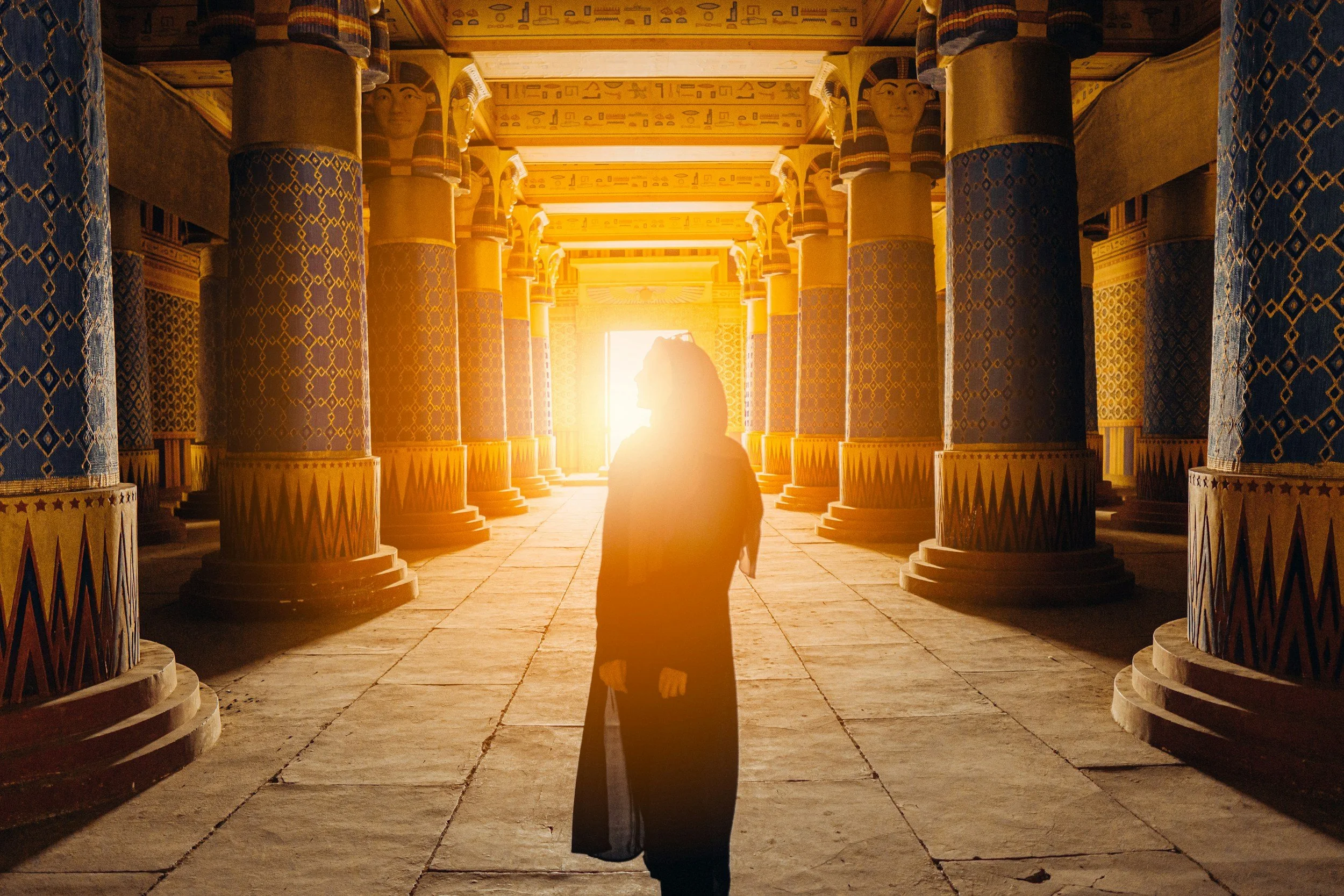
Men should wear long trousers and a collared shirt, either a polo or a button-down. Cairo is a conservative Muslim city, and dressing respectfully is both courteous and practical. Outside of resort areas and international hotels, shorts and sleeveless shirts attract more unwanted attention than others.
Women should cover their legs and arms throughout the city. Loose trousers or a long skirt and a top with sleeves are the right choice. Carry a light scarf that can be placed over the hair when entering a mosque, as a head covering is required for women in all active mosques, including the Mohamed Ali Mosque and Al-Azhar.
For mosque visits specifically, both men and women must remove their shoes at the entrance. Shoulders must be covered for both men and women. The overall attitude inside a functioning mosque should be quiet and respectful, regardless of whether photography is your purpose.
Outside of mosque visits, dress practically for the heat and for considerable walking, but dress as you would for a conservative professional setting rather than a beach holiday. The effort is noticed and appreciated.
Egyptian Food: What to Try First
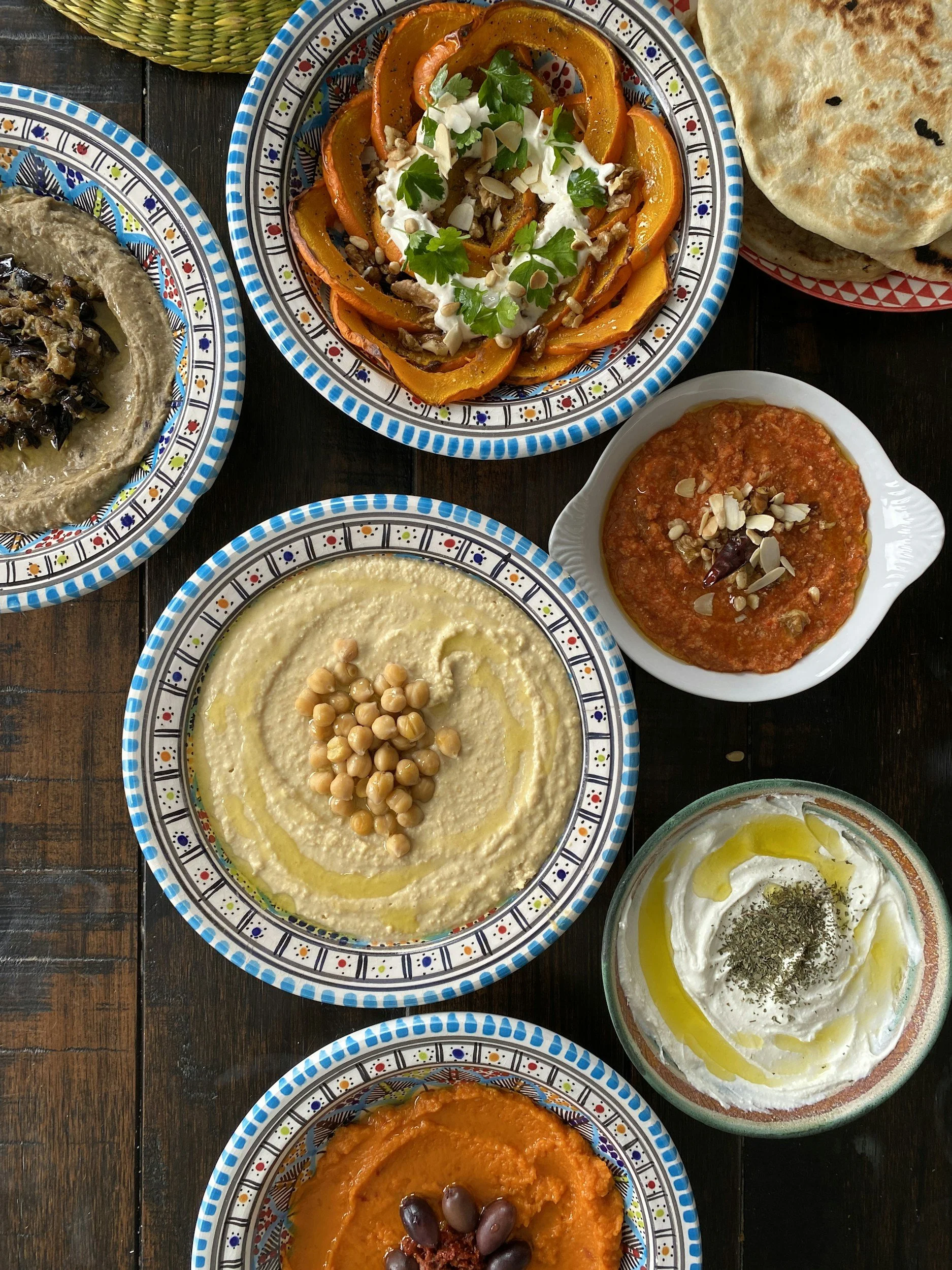
Egyptian cuisine is one of the oldest food cultures in the world, rooted in the agricultural abundance of the Nile Valley and thousands of years of cooking tradition. If you have never eaten Egyptian food, here is where to start.
Koshary — The national dish and the first thing you should eat in Cairo. A bowl of rice, brown lentils, pasta, chickpeas, and crispy caramelized onions topped with a spiced tomato sauce and a vinegar-garlic dressing. Sounds like a strange combination. Tastes like something that has been refined over a very long time because it has been. Order it at Abou Tarek in downtown Cairo. It costs almost nothing, and it is one of the finest street food experiences in the Arab world.
Ful Medames — Stewed fava beans cooked with garlic, lemon, cumin, and olive oil, served with fresh aish baladi flatbread. The Egyptian breakfast staple is one of the oldest recorded foods in human history. Order it at any food cart or small local café in the morning.
Ta'ameya (Egyptian Falafel) — Different from the Lebanese or Israeli version. Made from fava beans rather than chickpeas, which makes it lighter and more intensely green inside. Crisp on the outside, herb-scented throughout.
Aish Baladi — The bread. Slightly thicker than pita, with a slight sour note from the starter culture, puffed from a very hot oven. Warm from the oven, it is one of the finest simple things you will eat in Egypt. It accompanies everything.
Mahshi — Stuffed vegetables: grape leaves, cabbage rolls, hollowed zucchini and eggplant, all filled with rice, herbs, tomato, and spices, and slow-cooked until the flavors merge. One of the defining home-cooking traditions of Egyptian cuisine.
Molokhia — A vivid green soup made from jute leaves cooked down with garlic and coriander, served over rice or with bread. It looks unusual to unfamiliar eyes and tastes deeply Egyptian in a way that is difficult to describe before you try it. An ancient dish, documented in Egyptian cooking for over three thousand years.
Grilled Kofta and Kebab — Ground spiced lamb or beef formed onto skewers and grilled over charcoal, served with fresh bread, grilled tomatoes and peppers, and tahini. The smell from the charcoal grills around the Khan el-Khalili in the evening is one of Cairo's most insistent invitations.
Om Ali — Egypt's bread pudding and one of the great desserts of the Arab world. Torn pieces of pastry soaked in warm milk and cream with sugar, vanilla, raisins, coconut, and nuts, baked until golden on top. Rich, warm, and entirely forgiving of any difficulty the day may have presented.
Egyptian Mint Tea — Strong black tea served with a generous handful of fresh mint. Everywhere, at every hour, offered as a matter of hospitality at shops, cafes, and private homes. Accept it whenever it is offered. It is always good and always the right response to sitting down anywhere in Egypt.
Fresh Juice and Mango — Egypt's street juice bars squeeze whatever is in season directly into a glass in front of you. Sugarcane, mango, guava, pomegranate, and carrot juices are all common and all extraordinary when made from Egyptian produce. If you visit between June and September, the Egyptian mango season produces some of the finest mangoes in the world.
Dining in Cairo, Egypt
Cairo's food culture is rooted in thousands of years of agricultural abundance and a culinary tradition that invented recipes the rest of the world is still learning from.
Zitouni at the Four Seasons Nile Plaza — Widely regarded as one of the finest Egyptian restaurant experiences in the city. The menu draws on traditional Egyptian cuisine with precision and quality of produce that street-level versions cannot match. Grilled meats, slow-cooked stews, mezze, and fresh Nile fish. The Nile views from the dining room complete an experience that earns its reputation.
Sequoia — A sprawling garden restaurant on the tip of Abu el-Ela bridge in Zamalek, directly on the Nile, open late, and one of the most pleasant outdoor dining environments in the city. The Nile view at sunset, with boats passing and the city lighting up behind them, makes Sequoia one of the great evening settings in Cairo. Go for the full evening.
Koshary Abou Tarek — The definitive koshary experience. Three floors of constant, joyful noise. No menu. Just tell them the size. This is not optional.
Le Pacha 1901 — A floating restaurant and entertainment complex moored on the Nile in Zamalek, operational since 1901. Multiple restaurants across several connected boats with views in every direction. The setting is photographically extraordinary at night when the city reflects on the water.
Fasahet Somaya —The most beloved local Egyptian restaurant in the city for authentic home-style cooking, and one that requires planning. It opens Sunday through Friday, 5 to 7 PM only, closed Saturdays. Cash only. No fixed menu; Somaya cooks whatever she finds at the market that morning. The number of tables is small, the queue forms before the door opens, and when the food runs out, service ends. Arrive at 4:45 PM, join the queue, and do not show up on a Saturday expecting to eat. The slow-cooked beans, stuffed vegetables, and molokhia here are the kind of food that family kitchens produce, and restaurants almost never replicate. Full of Cairenes, not tourists.
Khan el-Khalili stalls — Not a single restaurant, but the experience of eating in and around the bazaar. Grilled meats, fresh bread, and tea since 1382. Eat where your guide takes you, order what they order.
Coffee
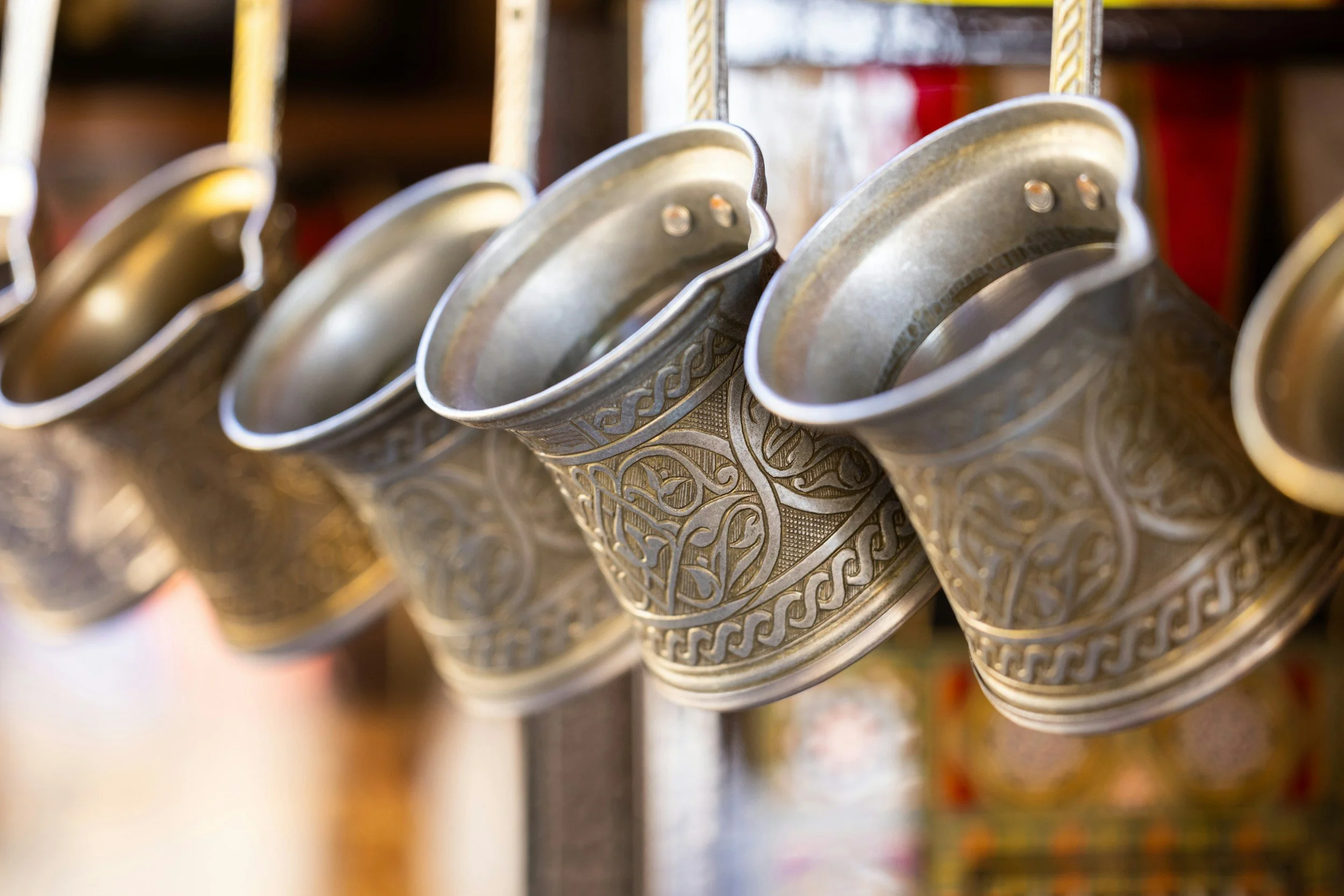
El Fishawy — The most famous coffee house in Cairo and one of the most legendary in the Arab world. Open continuously for over two hundred years in the heart of the Khan el-Khalili. Dark wood and mirrors and brass and smoke and the specific sound of a room that has never been quiet. Order a mint tea and stay until you feel it. Mandatory.
Café Riche — A Cairo institution since 1908, near Tahrir Square, with Art Deco interiors and a history that includes most of Egypt's twentieth-century literary and intellectual figures. Naguib Mahfouz drank here.
Cilantro — Egypt's own specialty coffee chain, consistently good, and the most reliable option for a proper espresso in the city. Multiple locations across Cairo. Good for editing sessions between shoots.
Photography Gear to Bring to Cairo, Egypt
Cairo and the Giza Plateau demand gear that handles extreme contrast, moving subjects, and low-light interior conditions.
Camera: Canon EOS R5 Mark II, Sony A7R V, or Nikon Z8.
Lenses: A 16-35mm wide-angle is essential inside the Khan el-Khalili, the mosques, and the Coptic churches. A 24-70mm handles general street photography and the medium-distance Pyramid compositions. A 70-200mm telephoto is indispensable for compressing the Pyramid plateau from a distance, pulling camel trains against the desert horizon, and isolating architectural details on the Citadel. A 35mm or 50mm prime works well for the bazaar and the market streets of Old Cairo.
Accessories: A sturdy tripod for the Pyramids at blue hour and mosque interiors. A circular polarizer for glare off pale limestone in midday desert light. Extra lens cloths: the desert dust finds everything. Extra batteries: the cold mornings drain them faster than expected.
A note on dust: The Western Desert begins at the edge of Cairo. Fine desert sand will find its way into every unsealed gap in your camera bag. A dust-resistant camera body is strongly preferred. Pack your gear in sealed bags when not in active use.
Drone regulations: Egypt requires a permit from the Civil Aviation Authority of Egypt (ECAA). The regulations around the Pyramids complex and historic sites are strict. Do not fly without confirmed authorization. Begin the permit process weeks before departure.
Photography Locations in Cairo, Egypt
The Pyramids of Giza
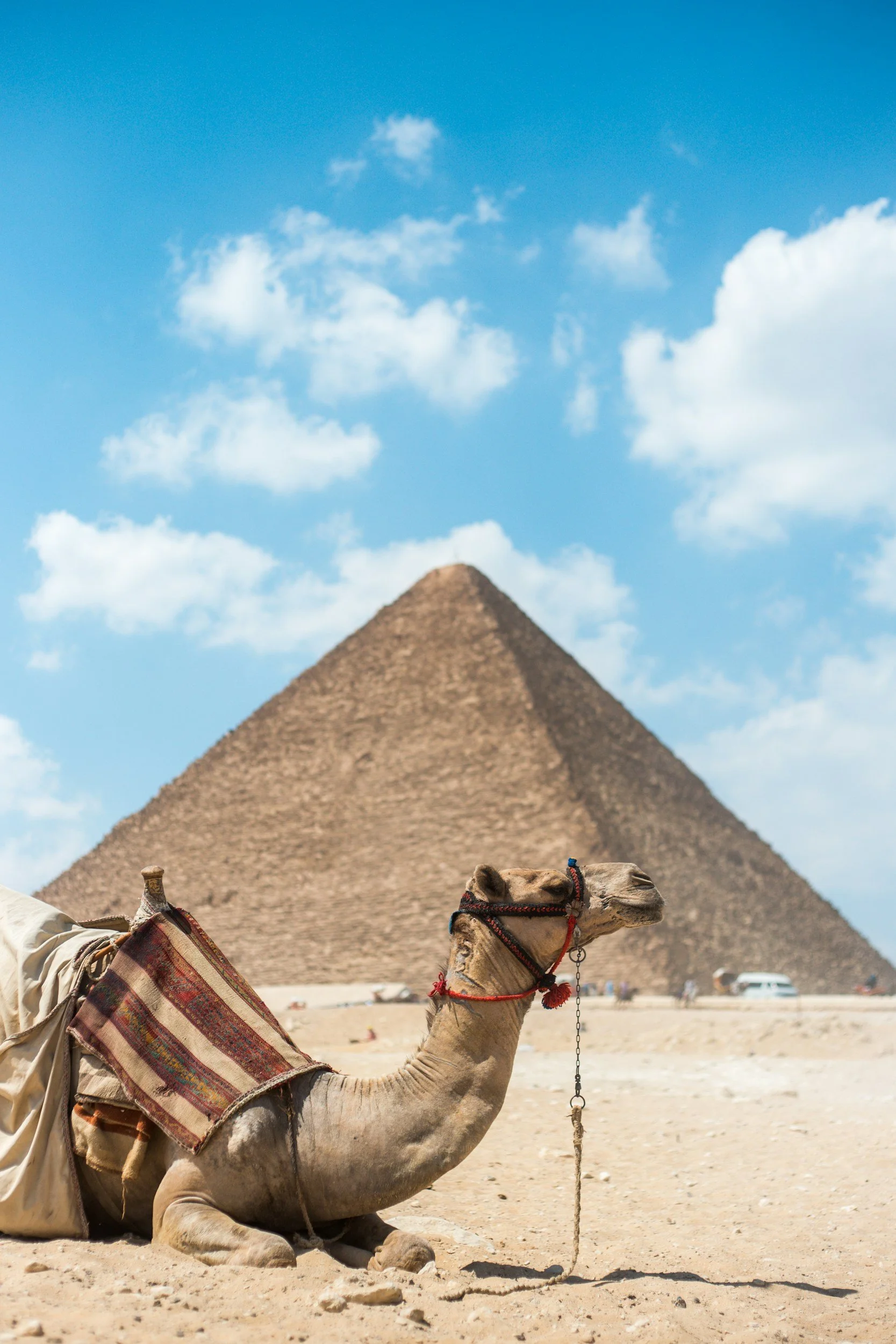
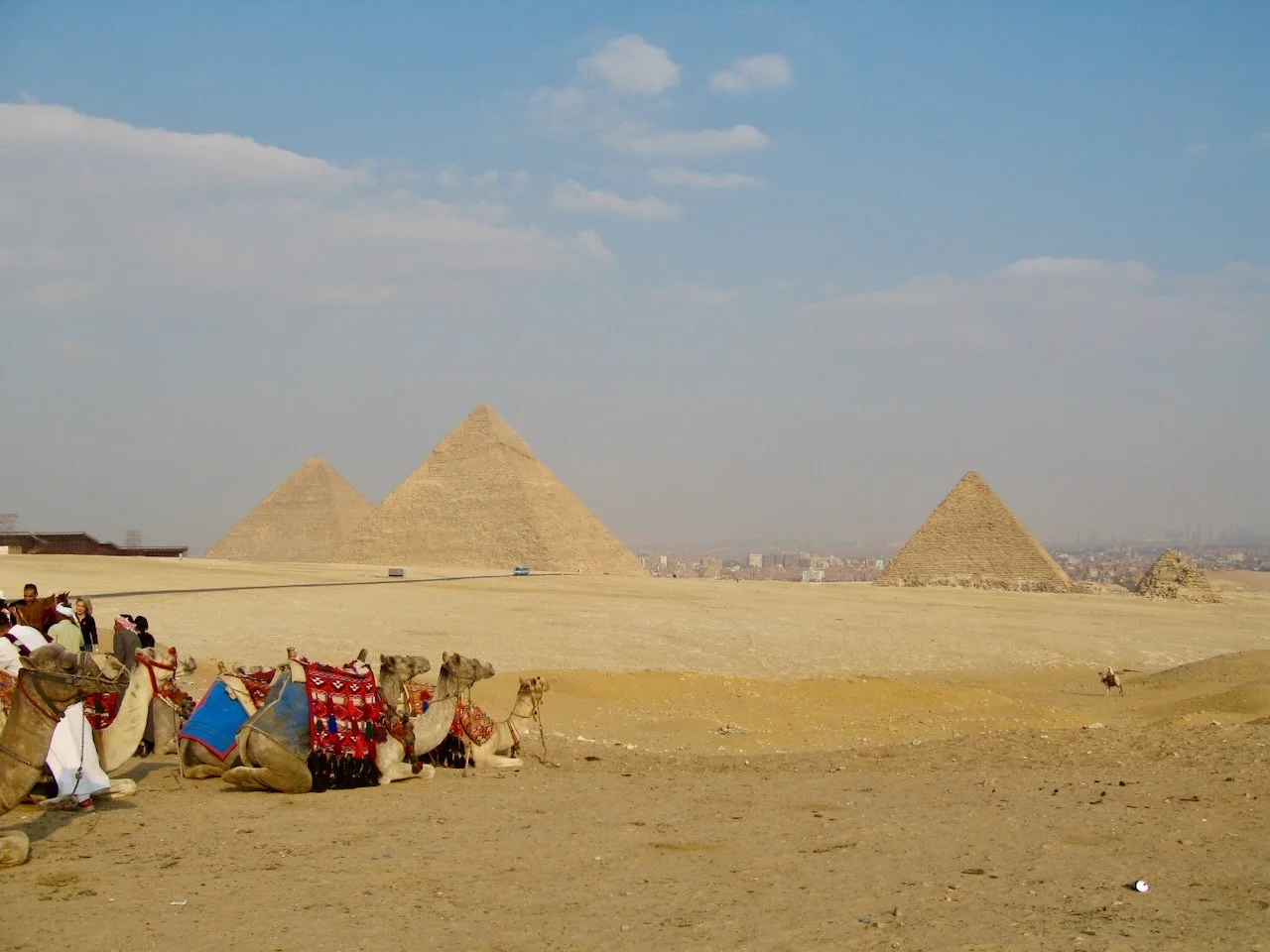
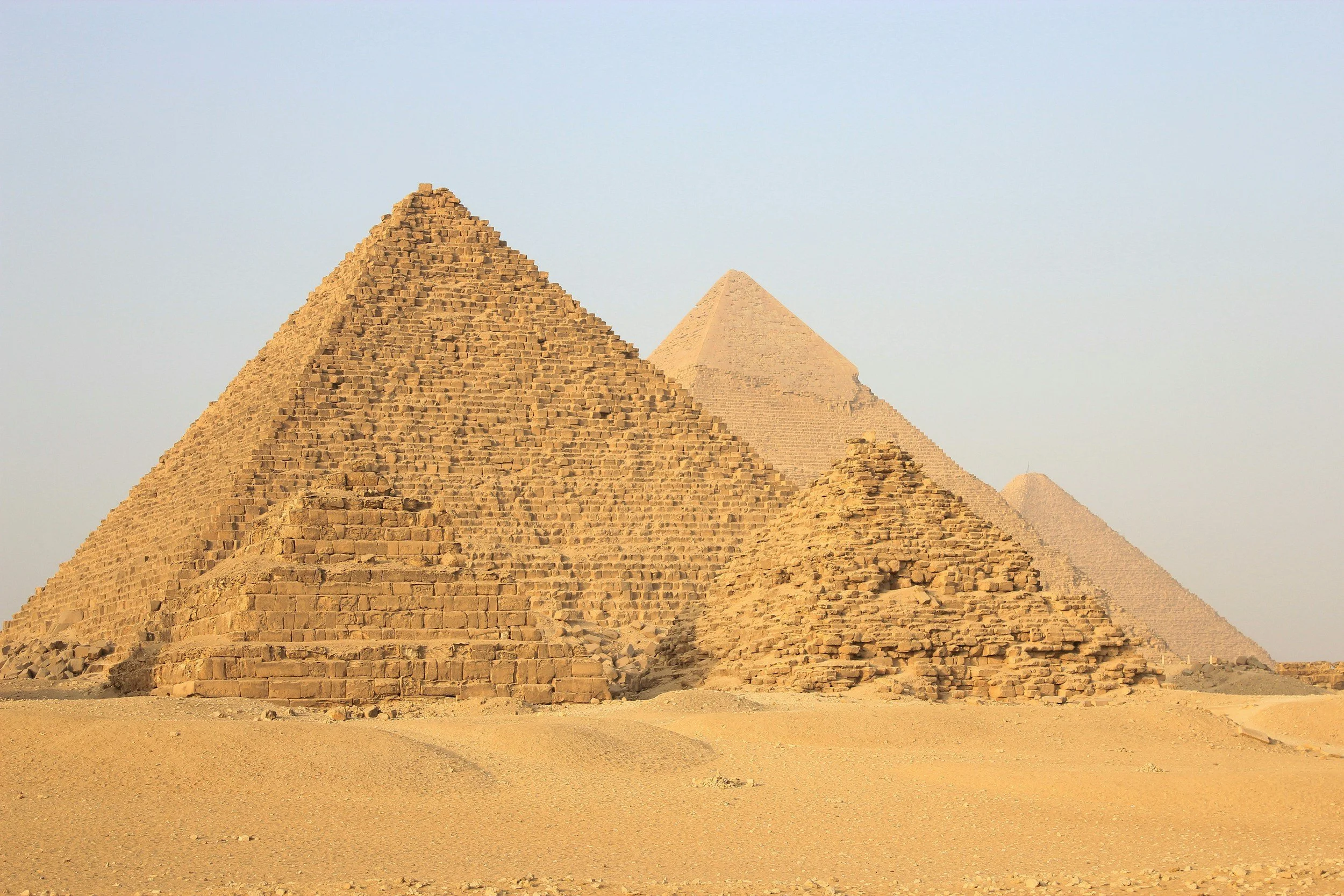
The Pyramids of Giza are approximately 25 kilometers southwest of central Cairo. They sit on the edge of the Giza Plateau at the boundary between the city and the desert, which means that on the western side, you photograph against the open desert, and on the eastern city-facing side, you photograph against the Cairo sprawl. Both sides have merit. The western view is the classic desert isolation composition. The eastern view captures the surreal truth of the Pyramids sitting at the edge of a twenty-million-person city.
Pro Tip: Arrive at the complex gates before opening and be in position at the Panorama viewpoint on the southern edge of the plateau for sunrise. This gives you the three Pyramids aligned in a single frame against the pre-dawn sky, before any other visitors arrive. The light for the first thirty minutes after sunrise on the limestone faces is extraordinary and does not repeat at any other hour. Bring the 70-200mm for the compressed panoramic composition; the 16-35mm for the interior chambers. A guide with early access connections is invaluable here.
The Great Sphinx
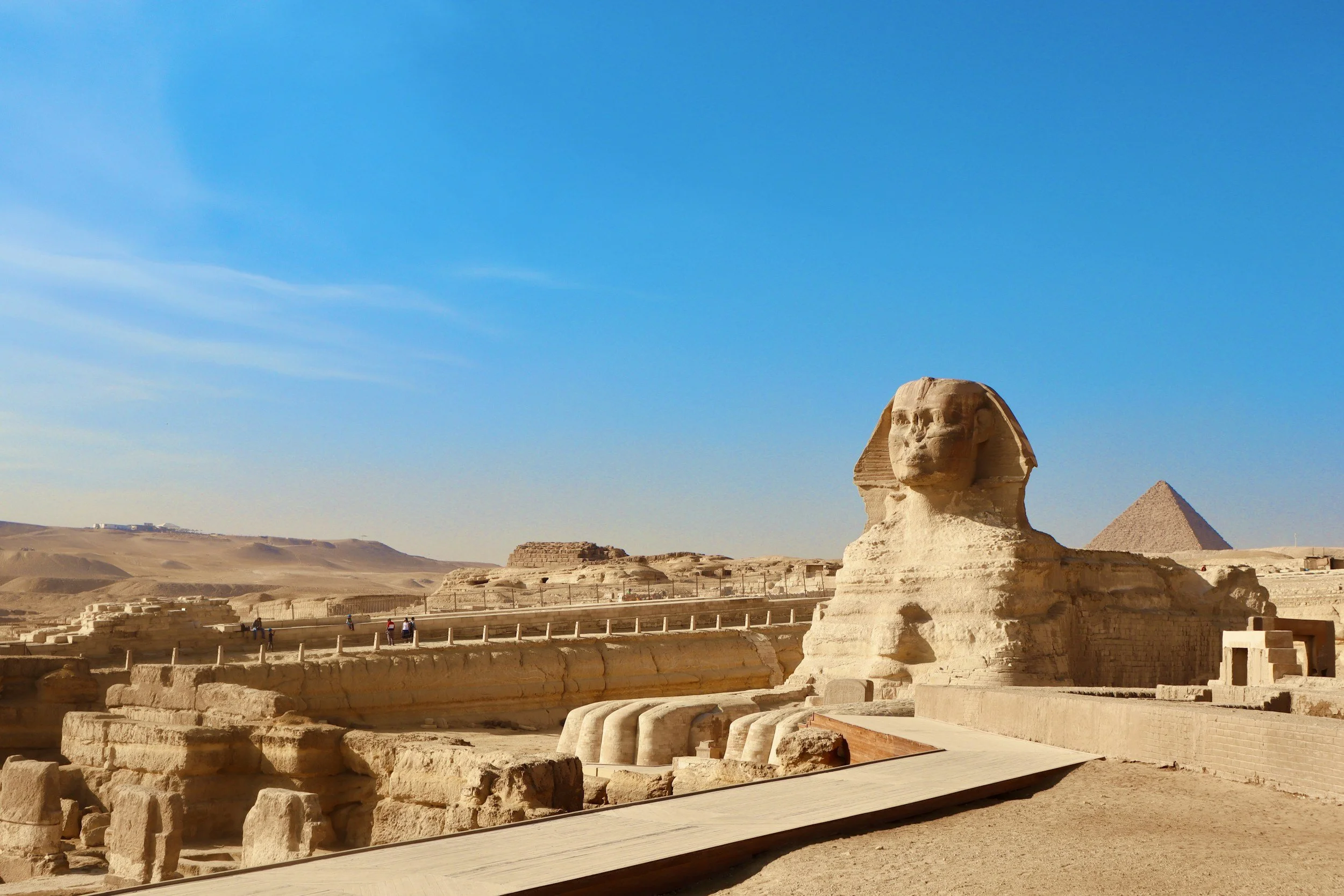
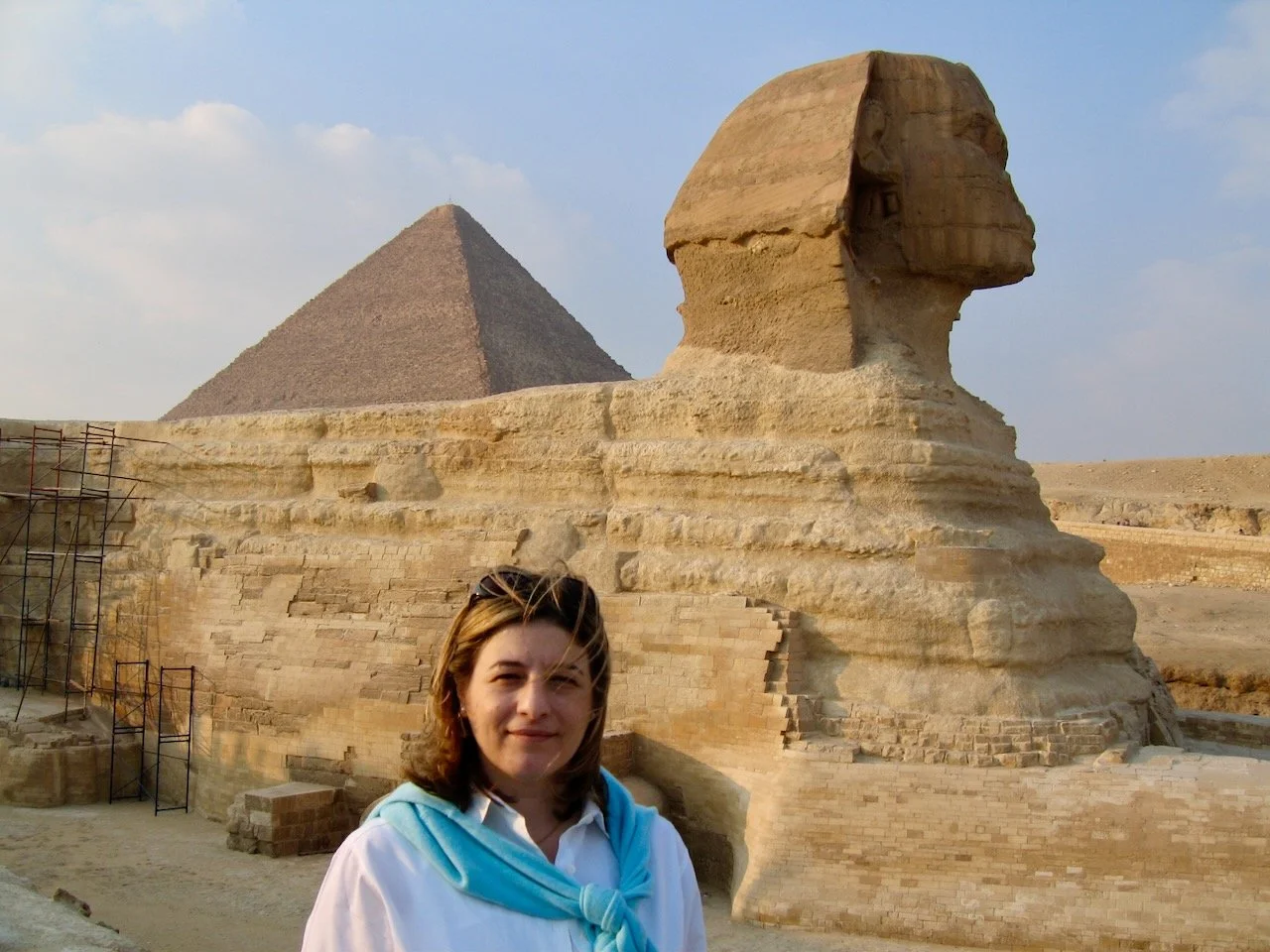
The Sphinx sits in the valley below the Pyramid plateau, carved from a single limestone outcrop approximately 4,500 years ago. At 73 meters long and 20 meters high, it is the largest monolithic statue in the world.
Pro Tip: The Sphinx enclosure can be entered separately from the Pyramid ticket. The base of the enclosure walls to the south and north give you close-up angles on the chest and paws that the standard approach does not. The 70-200mm from the upper western approach looking back east captures the Sphinx with the Cairo skyline faintly visible in the background at dawn, placing the ancient and the modern in the same frame.
The Grand Egyptian Museum
The largest archaeological museum in the world, officially inaugurated on November 1, 2025, is adjacent to the Giza Plateau. The Grand Egyptian Museum houses over 100,000 artifacts, including the complete and intact Tutankhamun collection, displayed together for the first time since 1922. The building itself is extraordinary: a sloped translucent facade facing the Pyramids, a grand staircase lined with colossal royal statues.
Pro Tip: Allow a full day. The Tutankhamun galleries alone require three to four hours. Photography is generally permitted without flash throughout the museum. The grand staircase with the royal statues offers one of the most dramatic architectural photography opportunities in any museum I have entered. Come early and move through the Tutankhamun section first before the groups arrive.
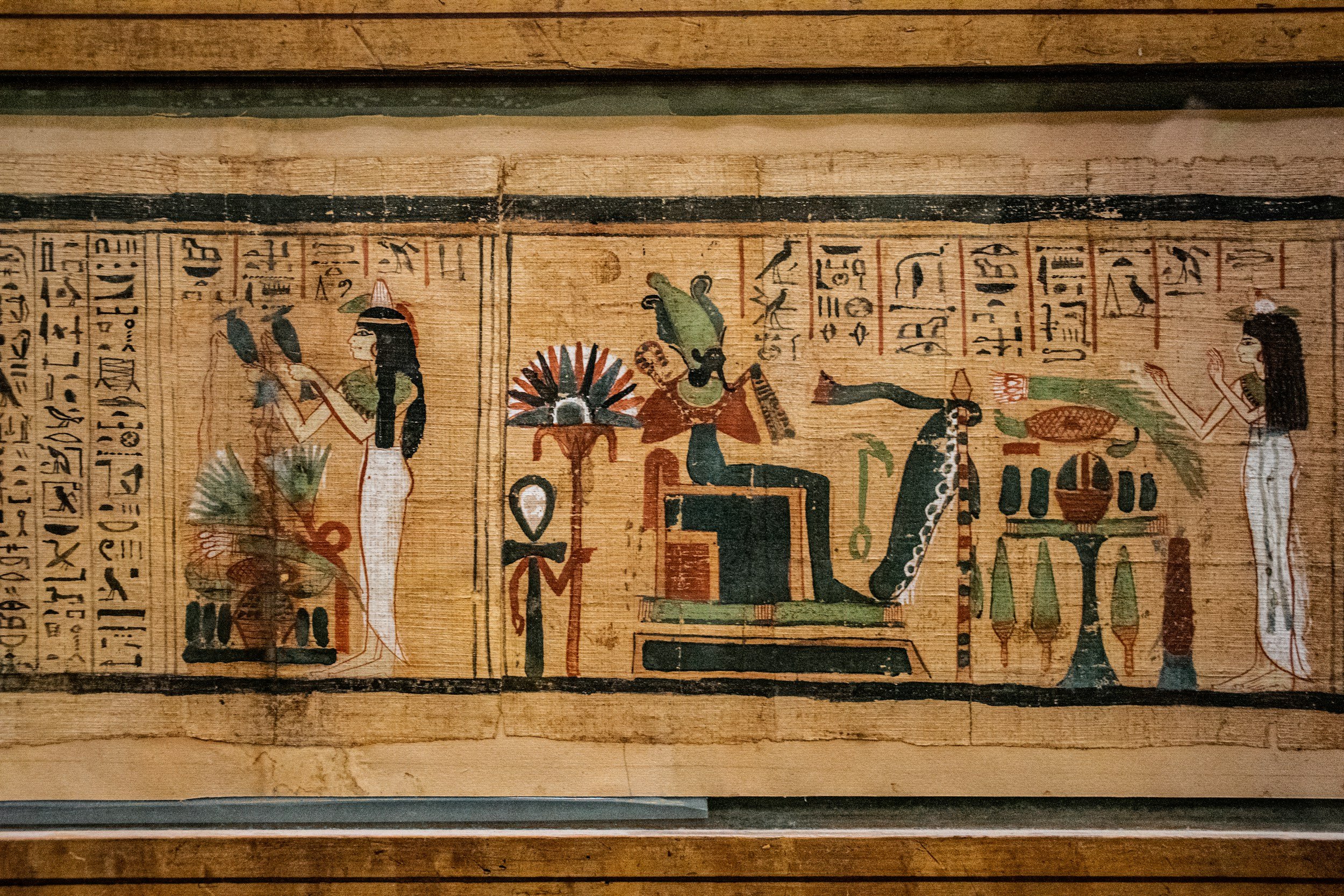
Khan el-Khalili Bazaar
Cairo's ancient bazaar has been operating continuously since 1382 and is one of the finest street photography environments in the Middle East. The covered passageways, the spice stalls, the lantern-makers, the perfume sellers, the metalworkers, and the tea houses create a layered, sensory environment unlike any other in the city.
Pro Tip: Visit in the late afternoon when the light filters through the covered sections in shafts. A 35mm or 50mm prime and a willingness to move slowly produce the most intimate images. Bring your guide. The side streets beyond the main bazaar thoroughfare hold older, quieter craft workshops that are more authentic and more photogenic than the tourist-facing stalls.
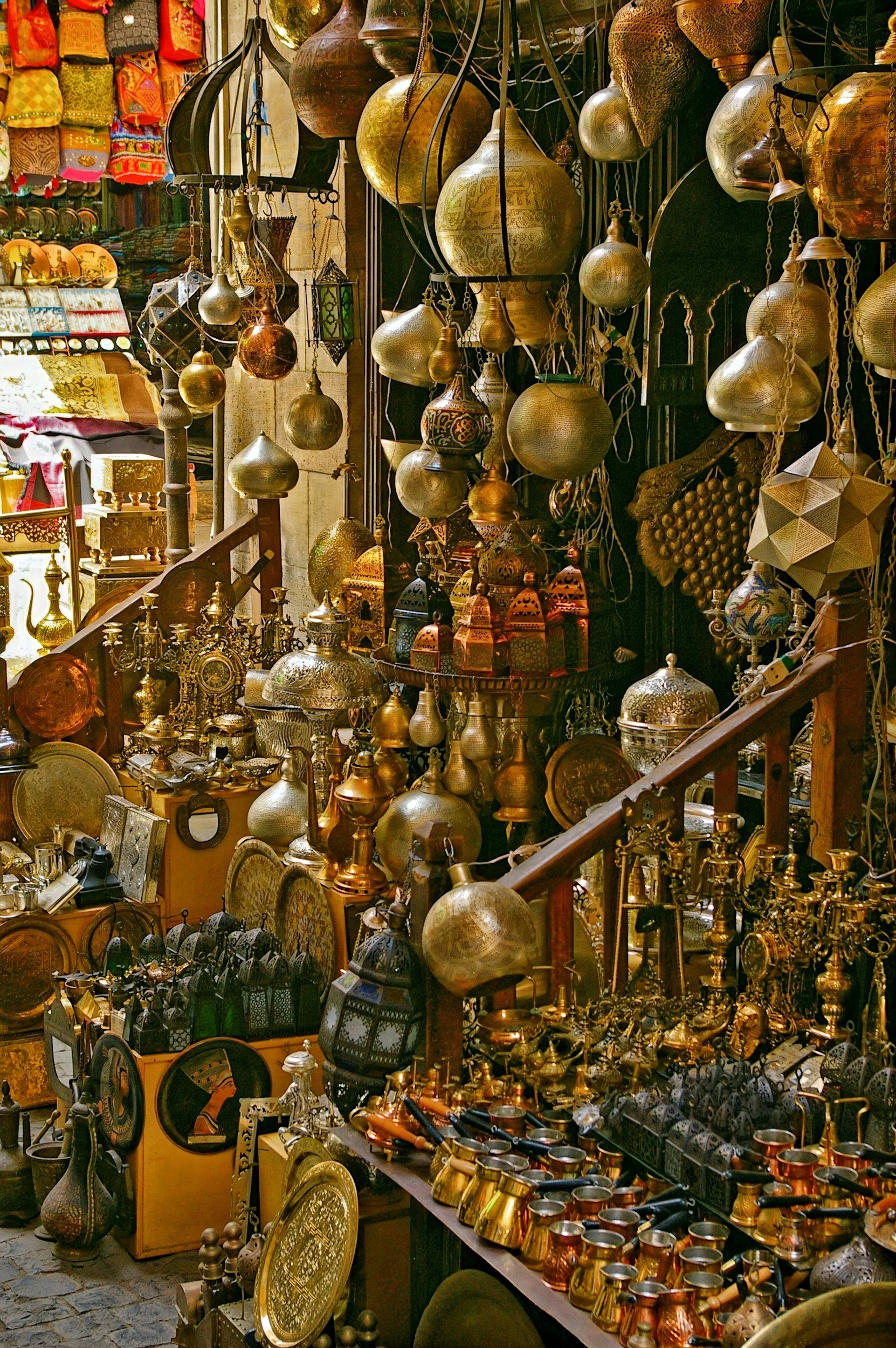
The Citadel and the Mohamed Ali Mosque
Saladin's medieval citadel on the Muqattam hills overlooks the entirety of Cairo from the east with a panoramic view that encompasses the Pyramids on the horizon, the Nile, and the city spread below.
Pro Tip: The citadel at blue hour, looking west over the city toward the Pyramids on the horizon, is one of the finest panoramic photography opportunities in Cairo. The 70-200mm compresses the city layers and Nile into a single frame with the Pyramids faintly visible at the edge of the desert. The interior of the Mohamed Ali Mosque has exceptional filtered light through the high alabaster windows in the morning.
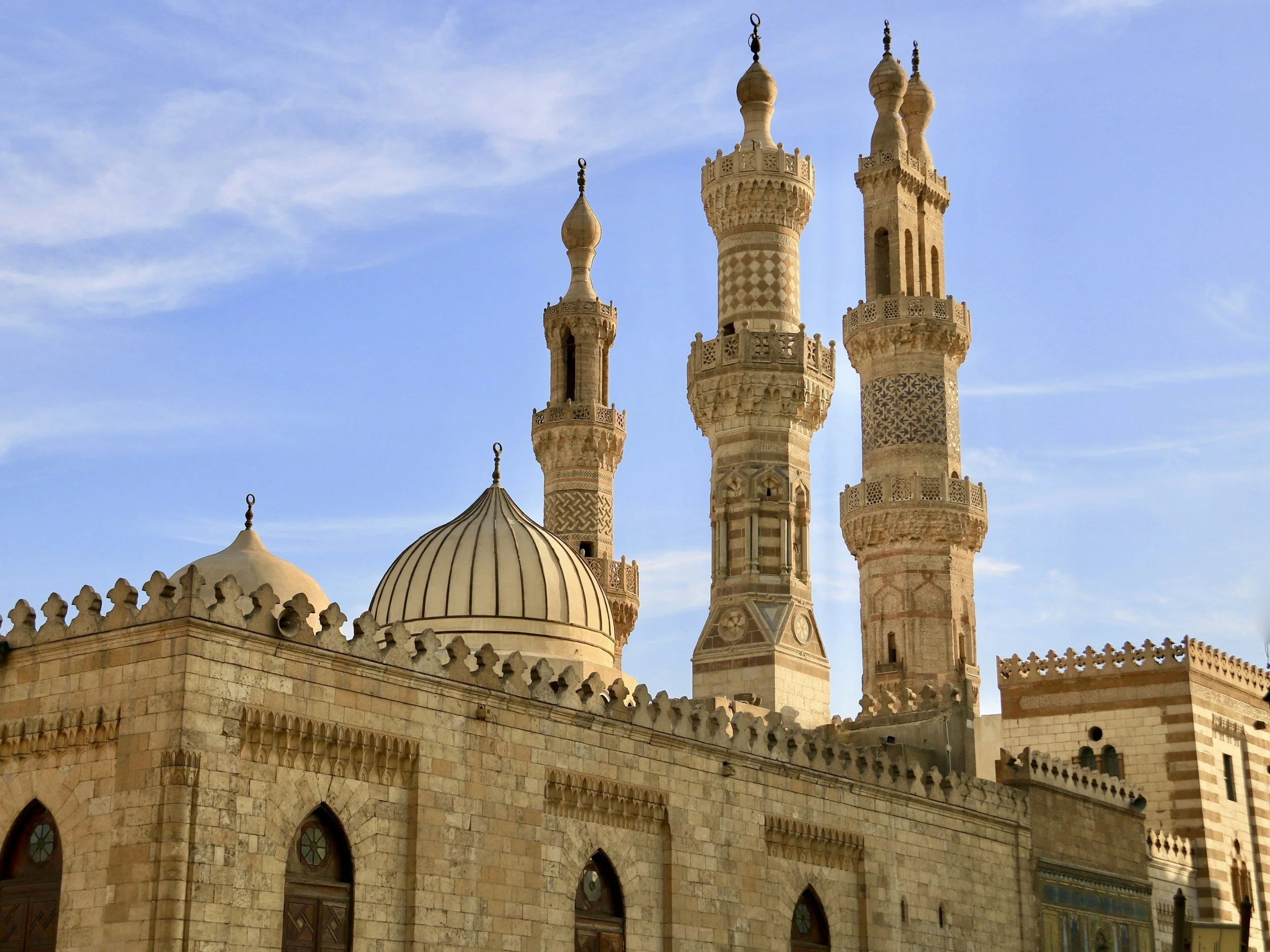
Coptic Cairo
The oldest continuously inhabited area of Cairo, with Christian churches, synagogues, and Roman ruins that predate the Arab conquest by six centuries. The Hanging Church, built over a Roman gatehouse in the 4th century, and the Ben Ezra Synagogue sit in a quiet walled compound that feels entirely removed from the surrounding city.
Pro Tip: Arrive in the morning when the light comes through the wooden screens inside the Hanging Church at an angle that illuminates the painted icons and ancient beams. A wide-angle lens handles the interior architecture; a prime lens captures the human detail in the lanes outside. Move slowly here. The place asks for it.
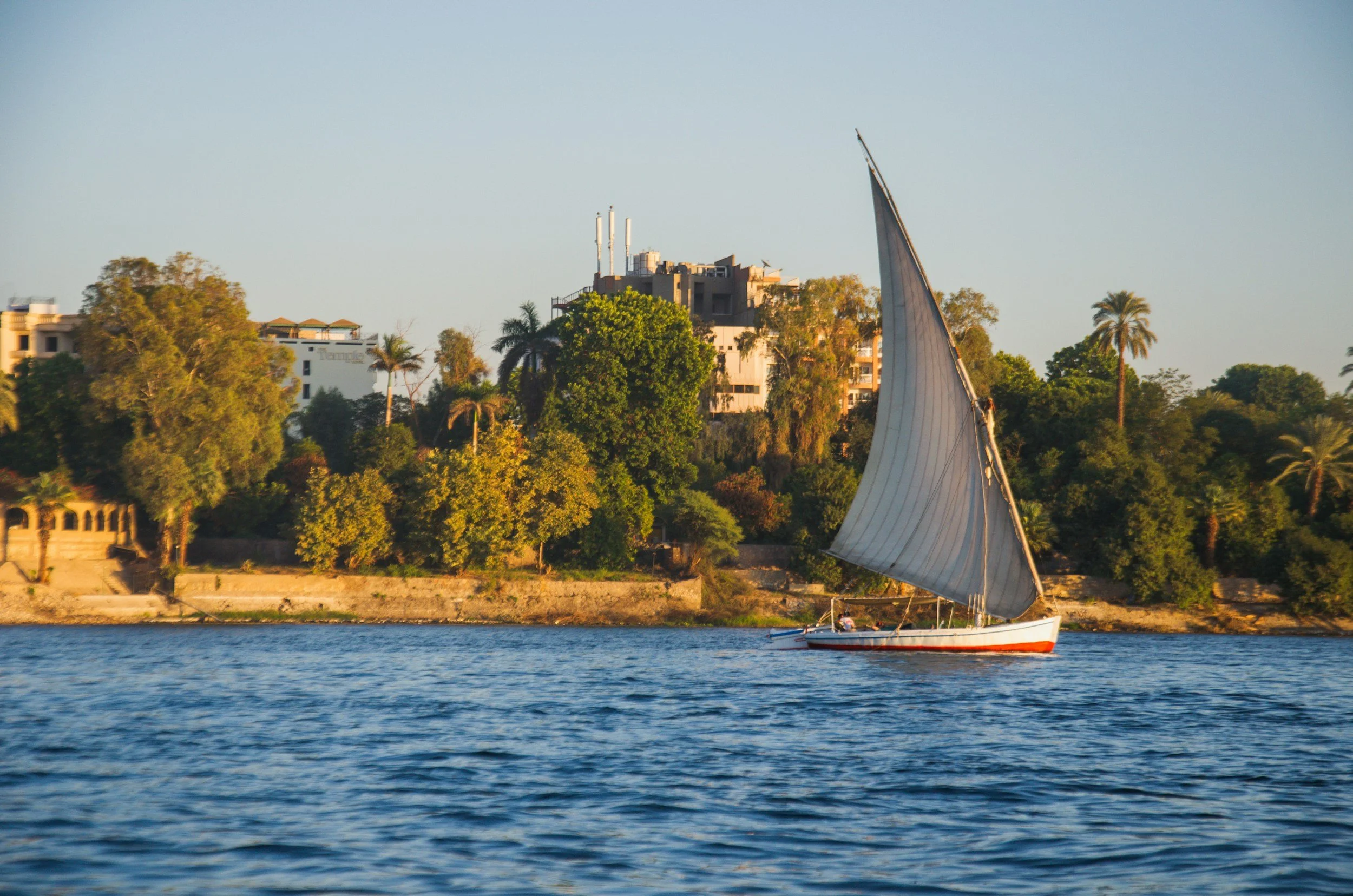
Nile Felucca at Sunset
The traditional Nile sailboat offers the finest water-level view of Cairo's skyline at golden hour. From mid-river, the city rises on both banks, the minarets and modern towers visible against an Egyptian sky that produces colors at sunset that deserve specific attention.
Pro Tip: Arrange a felucca through your hotel or guide rather than accepting an offer from the corniche. A one to two-hour sunset sail is sufficient for photography. The 24-70mm handles most Nile compositions; the 70-200mm pulls in specific architectural details on both banks. Stabilization is important on the moving boat.
Beyond Cairo
Egypt's history does not begin and end at Cairo. The city is the starting point for some of the most extraordinary photography destinations in the world.
Luxor, Upper Egypt — Three hours by overnight train from Cairo, Luxor sits on the site of ancient Thebes and contains the Valley of the Kings, the Karnak Temple complex, the Luxor Temple, the Temple of Hatshepsut, and more concentrated pharaonic history than anywhere else on earth. The Valley of the Kings at dawn, before the tour groups, is one of the great photography opportunities in Africa.
Aswan and Abu Simbel — Four hours south of Luxor by train, Aswan is where the Nile narrows between granite boulders and Nubian villages line the banks. The temples of Abu Simbel, two hours south of Aswan by road, were cut from the cliff face by Ramesses II and relocated to higher ground when the Aswan Dam created Lake Nasser in the 1960s. The scale and the engineering of both the temples and their relocation is extraordinary.
Alexandria — Three hours west of Cairo by train along the Mediterranean coast, Egypt's second city holds the Catacombs of Kom el-Shoqafa, the Bibliotheca Alexandrina, the Qaitbay Citadel, and the specific character of a Mediterranean port city that has been absorbing cultures for 2,300 years.
Festivals and Events
Coptic Christmas (January) — Egypt's large Coptic Christian community celebrates Christmas on January 7, with midnight masses and processions in churches across Cairo. The Hanging Church in Coptic Cairo, lit for the overnight service, is one of the most atmospheric photography environments of the year.
Sham el-Nessim (Spring, day after Orthodox Easter) — Egypt's ancient spring festival, one of the oldest national celebrations in the world, dating back to pharaonic times. Families gather in parks and gardens across Cairo and the banks of the Nile. The street photography of families celebrating an unbroken 4,500-year tradition is remarkable.
Ramadan (Dates vary annually) — The holy month transforms Cairo's atmosphere in ways that produce extraordinary photography, particularly at iftar and during the night hours when the city stays awake celebrating. The lanterns, the communal tables, the decorated streets of Old Cairo, and the specific energy of a city breaking its fast together are all visually exceptional.
Eid al-Fitr and Eid al-Adha (Dates vary annually) — The two major Islamic festivals bring celebrations across Cairo with family gatherings, new clothing, and the specific energy of major religious holidays in a predominantly Muslim city.
Cairo International Film Festival (November) — One of the oldest film festivals in the Arab world, held annually in late November at cinemas and venues across the city.
Frequently Asked Questions About Visiting Cairo
Is Cairo safe?
Yes, for the areas most visitors go, but the persistent vendor and baksheesh culture at major tourist sites is real and can feel overwhelming. Hiring a local guide for the entire trip, not just the first day, is the single best thing you can do to manage it.
Do you need a visa for Egypt?
Most visitors need a visa, available as an e-visa online before travel or on arrival at the airport for many nationalities. Check current requirements for your passport well before you go.
Is Cairo expensive?
Not particularly. Street food like koshary costs almost nothing, and even the luxury hotels are more affordable than comparable properties in Europe or the Gulf. The main costs are guided tours and the entrance fees at major sites.
What are the best photo spots in Cairo?
The Pyramids at sunrise from the Panorama viewpoint, the Khan el-Khalili in late afternoon light, and the Citadel at blue hour looking west toward the Pyramids on the horizon are three worth prioritizing. The full list with Pro Tips is above.
Can you fly a drone at the Pyramids?
Only with a permit from the Civil Aviation Authority of Egypt (ECAA), and regulations around the Pyramids and other historic sites are strict. Begin the permit process weeks before departure, don't assume you can fly without it.
What surprised you most about photographing Cairo?
Being tapped on the shoulder mid-use in a public bathroom near a major site, by a man with his hand out, waiting for a tip. I'd never experienced anything like it in any country. It's the single most concentrated illustration of how relentless the baksheesh culture can be, not hostile, just constant, and it's exactly why a guide is worth every pound you pay them.
How many days do you need in Cairo?
Five days minimum for a first visit. Seven to ten lets you add Alexandria or an overnight train to Luxor.
Do I need to dress conservatively in Cairo?
Yes. Men should wear long trousers and a collared shirt; women should cover arms and legs, and carry a scarf for mosque visits, where a head covering is required. Both men and women remove shoes at mosque entrances.
Final Thoughts
Egypt will reset your sense of what old means.
Before you visit, you use words like ancient with a certain confidence. After a morning at the Pyramids, you realize that most things you considered ancient are in fact relatively recent, and that the Pyramids were already fifteen hundred years old when Cleopatra was born. The specific weight of four and a half thousand years of continuous human history in a single landscape is not something a photograph transmits. It is something you feel in person, standing where tens of millions of people have stood before you across an incomprehensible span of time.
We flew from Beirut to Cairo more times than I can count. Each trip revealed something new, not because Cairo changed significantly between visits, but because we did. With each return, the Pyramids looked different. The Khan el-Khalili revealed another layer. The Nile at sunset held a different quality of light. Cairo gives back in proportion to what you bring to it, which is the truest thing I can say about any destination.
Practical truths for the first-time visitor: hire a guide for every day, not just the first. Get to the Pyramids at sunrise. Give the Grand Egyptian Museum a full day. Eat the koshary at Abou Tarek. Sit in El Fishawy for at least an hour. Take the overnight train to Luxor if your schedule allows. The Nile Valley is not a side trip. It is a destination in its own right.
Do not let the vendor pressure discourage you. It is intense, particularly at the Pyramids and in the Khan. With a guide beside you, it becomes background noise rather than the main event. Without one, it exhausts you. The guide is the best money you will spend in Egypt.
Cairo is chaotic and beautiful and deeply, permanently worth the effort.
If you enjoyed this Photography and Travel Guide to Cairo, you can explore my other Photography and Travel Guides here.
If you would like to join a future photography workshop, visit my Workshops page for current offerings and upcoming dates. You can also connect with me on Instagram (@chasinghippoz) and Facebook, or subscribe to the newsletter for travel photography tips, destination guides, and behind-the-scenes stories from more than 75 countries. I look forward to sharing the journey with you.
If Cairo has opened the door to this part of the world, these guides are the natural next chapters.
My Photography & Travel Guide to Lebanon — Beirut is one hour from Cairo by air and one of the most layered, contradictory, and visually extraordinary cities in the Middle East. The food, the architecture, the light on the Mediterranean, and the mountains forty minutes from the city make it a destination that rewards photographers at every level. I lived there for twenty-two years. It is as personal a guide as I have written.
My Photography & Travel Guide to Dubai— Two and a half hours from Cairo and a world apart in visual character. Where Cairo is ancient and dense and human in scale, Dubai is futuristic, open, and built for the camera. The two cities together tell a story about the Arab world that neither tells alone. I have been visiting Dubai for more than twenty-five years and the photography opportunities there are unlike anywhere else on earth.
My Photography & Travel Guide to Marrakech, Morocco — The medina, the souks, the light in the narrow streets of the old city, and the Atlas Mountains an hour outside town. Marrakech shares Cairo's intensity and its sensory overload, but the color palette is entirely its own. If the Khan el-Khalili got under your skin, Marrakech will finish the job.
Finally—a beginner-friendly photography guide that makes sense.
If you've ever picked up a camera and thought, "Now what?" this is the book for you.
Photography Made Simple is written for adults who are just starting out and want a clear, encouraging, real-world approach to learning photography. Whether you're using a DSLR, mirrorless, or just your smartphone, this guide walks you through the basics—without the jargon or tech overwhelm.
Inside, you'll learn:
The only camera settings you really need to know to get started
How to shoot sharper, more intentional photos using light and composition
Simple tips for portraits, landscapes, travel, and everyday life
What gear you do (and don’t) need
How to create better photos without upgrading your camera
You’ll also get practical exercises, cheat sheets, and tips for organizing and editing your images—plus the confidence to shoot off Auto Mode for good.
This is not a textbook. It’s a friendly guide to seeing the world with fresh eyes—and finally capturing what you see the way you imagine it.
📸 Format: PDF download
Pages: 100+
Perfect for: Beginners, hobbyists, and anyone ready to take better photos without the stress