My Photography & Travel Guide to Westernfjords & Snaefellsnes Peninsula of Iceland
I have been to Iceland half a dozen times, and it is still not enough. Every single trip, the moment I land, that same rush comes back. The air hits you first. Clean, cold, and completely different from anywhere else. Then the landscape opens up and you remember why you keep coming back.
Most visitors to Iceland do the Golden Circle and the South Coast. Both are worth it. But the Westfjords and the Snæfellsnes Peninsula are where Iceland stops performing for tourists and starts being itself. The Westfjords are so remote that when you are driving those narrow roads carved into the cliffs above the fjords, you genuinely feel like you are at the end of the world. That is not a cliché. It is the actual sensation of being somewhere that very few people bother to reach, and it is one of the best feelings travel can give you.
Photographically, these two regions are extraordinary and completely different from each other. The Westfjords are raw and elemental. Steep cliffs packed with puffins. Fan-shaped waterfalls cascading down mountains with no other human being in sight. Red-gold sand beaches at the edge of nowhere. Snæfellsnes, often called Iceland in miniature, delivers a glacier, lava fields, black churches, sea arches, and the most photographed mountain in the country, all within a single day's drive. Together, they tell a story about Iceland that the Golden Circle simply cannot.
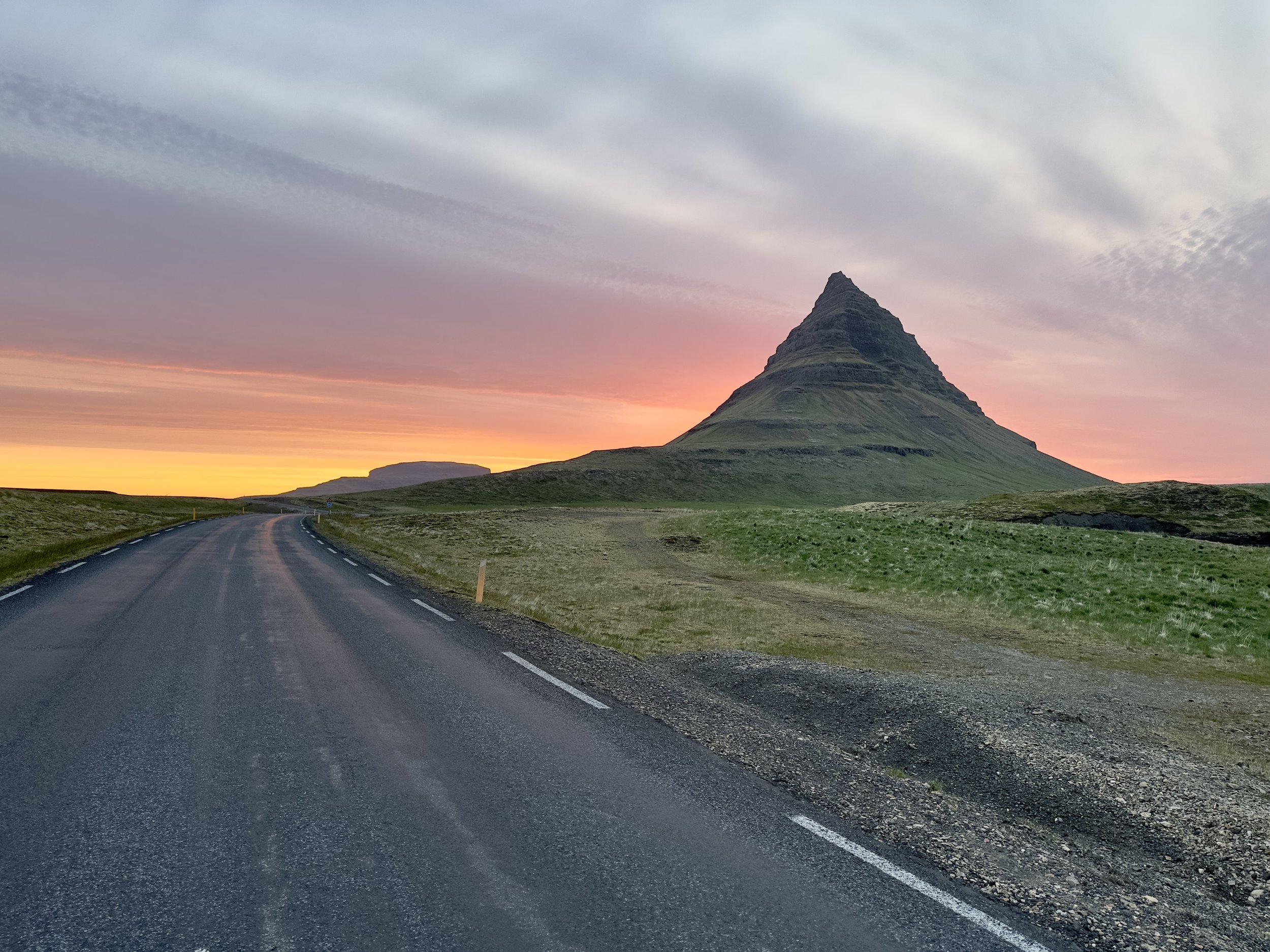
The Road to Kirkjufell
I have photographed both regions at sunrise at 1 am under a pink Arctic sky, in pouring rain that turned a black church into a black-and-white study in contrast, and in the calm golden light of a Snæfellsnes evening that I genuinely did not want to end. I have met restaurant workers from Poland and the Azores who ended up out here at the edge of Europe and seem perfectly happy about it. Iceland does that to people.
In this Photography Guide to Iceland's Westfjords and Snæfellsnes, I share the places and experiences that continue to draw me back. You will find my favorite photography locations, guidance on when and where to shoot, practical travel tips, and gear recommendations, along with cultural insights to help you explore and photograph these regions of Iceland with confidence, respect, and ease.
Best time to Visit
Summer (June to August) is the prime window for these regions, and for good reason. The midnight sun means golden hour lasts for hours, and sunrise can happen at 1 am. I stood at Kirkjufell under a perfect pink sky at that hour. Nothing about it felt real. Puffins are nesting at Látrabjarg from June through August, which is the main reason most photographers make the trek to the Westfjords. Lupins are in bloom across the landscape in June and July, adding purple fields to compositions you would not get at any other time of year.
Late May and September are the smart shoulder season choices. Fewer visitors, softer directional light, and roads that are still passable. September brings the first real aurora possibilities as the nights start to darken again.
Winter brings dramatic skies and aurora potential on Snæfellsnes, but most roads into the Westfjords close due to snow and ice. If you want the aurora, plan a winter visit to Snæfellsnes only and leave the Westfjords for summer.
For photographers specifically, the long summer days are both a gift and a challenge. The light never fully disappears, which means you can shoot at any hour. But you also need to plan your golden hour and blue hour compositions in advance, because the window when the sun dips low and the light goes warm is brief and moves fast.

How Many Days to Visit
Plan for 6 to 8 days total to do both regions at a photographer's pace.
Days 1 to 3: Snæfellsnes. Pick up your car in Reykjavík and drive west. Spend your first evening at Arnarstapi. Day two for Kirkjufell, Búðakirkja, and the western tip of the peninsula. Day three for Djúpalónssandur and Stykkishólmur before catching the afternoon ferry.
Days 4 to 7: Westfjords. Arrive at Brjánslækur and head south toward Látrabjarg and Rauðisandur. Then work your way north through Dynjandi and up to Ísafjörður. Give yourself at least two nights near Látrabjarg if puffins are a priority. The drive times are long and the roads slow you down, which is the point.
Day 8: Return via ferry or drive back toward Reykjavík.
If you only have 3 to 4 days, do Snæfellsnes. It is more compact and delivers enormous photographic variety in a shorter time. But if you have the schedule for both, do both. The Westfjords are the reason people say Iceland changed them.

Where to Stay
Both regions are remote, and your base matters. In the Westfjords, you want to be in or near Ísafjörður. For Snæfellsnes, Stykkishólmur, or Arnarstapi puts you close to the key locations.
Westfjords: Base in Ísafjörður
Luxury
Hotel Ísafjörður — The best upscale option in the Westfjords. Comfortable rooms, fjord views, and a central location that makes it easy to get out early for morning light. This is your home base for the region.
Hótel Edda Ísafjörður — A reliable Edda property in a town that does not have many high-end options. Clean, well-run, and better than you might expect for this part of the world.
Heydalur Country Hotel — Remote even by Westfjords standards, tucked into a valley with a geothermal pool and complete silence at night. If you want to wake up surrounded by nothing but mountains and horses, this is it.
Mid-Range & Boutique
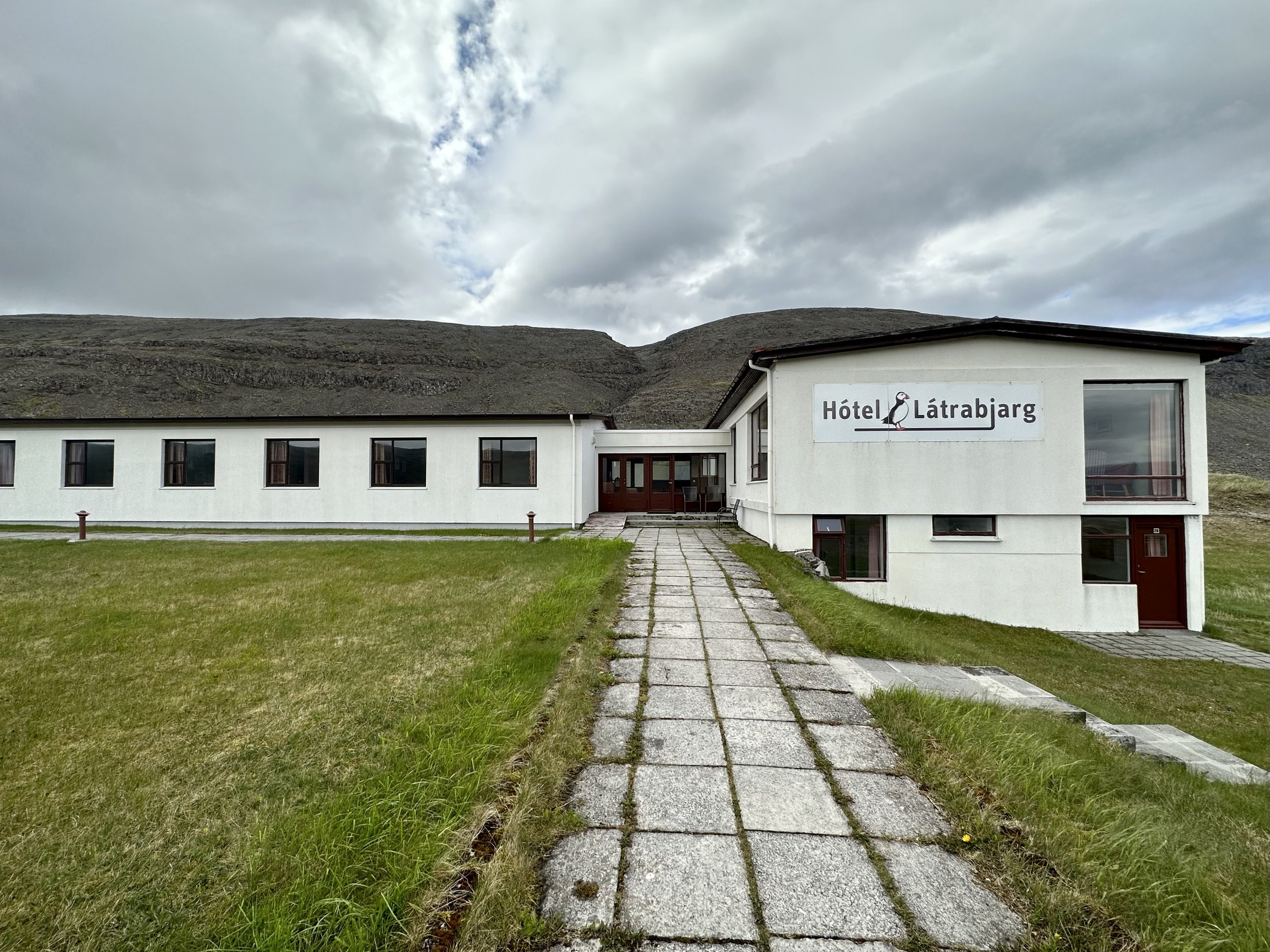
Hotel Latrabjarg — If you are making the trek to Látrabjarg for puffins, staying here removes the logistics problem entirely. The owner is quirky, the location is wild, and you will have the cliffs almost to yourself at golden hour. About 40 minutes from the cliffs.
Ísafjörður Guesthouse — Simple and central, with friendly hosts who know the region well. Good for photographers on a budget who want to spend their money on experiences, not rooms.
Litli-Bær Guesthouse — A small farm guesthouse near Dynjandi that puts you within striking distance of the waterfall at dawn. Rustic but memorable.
Snæfellsnes: Base in Stykkishólmur or Arnarstapi
Luxury
Hotel Budir — One of the most atmospheric hotels in Iceland. Remote, elegant, and sitting right next to the black church. The cuisine is exceptional. If you can justify one splurge on this trip, make it here.
Fosshotel Hellnar — Right on the Snæfellsnes coast with glacier views from the windows. Modern, comfortable, and perfectly positioned for dawn shoots at Arnarstapi.
Hotel Framnes (Stykkishólmur) — The best option in Stykkishólmur, with harbor views and easy access to the ferry for anyone combining this leg with the Westfjords.
Mid-Range & Boutique
Arnarstapi Hotel — We were genuinely surprised by this one. Modern, clean, and a five-minute walk from the coastal formations at Arnarstapi. Good value and a great base for the western end of the peninsula.
Guesthouse Langaholt — A working farm guesthouse on the south side of Snæfellsnes. Icelandic horses on the property. Quiet evenings, big skies.
Hótel Stykkishólmur — Comfortable mid-range option in the harbor town. Good for the first or last night of your peninsula loop.
Getting Around
A 4x4 rental car is non-negotiable for both regions. The Westfjords roads are narrow, sometimes unpaved, and cut into hillsides above fjords with no guardrails. A compact car will get you anxious. A 4x4 will get you confident.
No Uber or Bolt operates in either region. You are driving yourself everywhere, which is actually part of the experience. Route 60 runs through the Westfjords and Route 54 loops the Snæfellsnes Peninsula. Both are easy to navigate.
The Baldur Ferry is the most logical way to connect the two regions. Drive to Stykkishólmur on the Snæfellsnes Peninsula, load your car onto the ferry, and cross Breiðafjörður to Brjánslækur in the Westfjords. The crossing takes about two and a half hours and passes the island of Flatey, which is worth a stop in its own right. The ferry runs year-round but check the schedule before you commit to dates, as seasonal timetables vary.
Domestic flights from Reykjavík to Ísafjörður are available if you want to reach the Westfjords quickly without the long drive. Good option if your time is limited.
Budget for fuel. Iceland is not cheap, and the Westfjords in particular mean long distances between towns.
Dining & Coffee
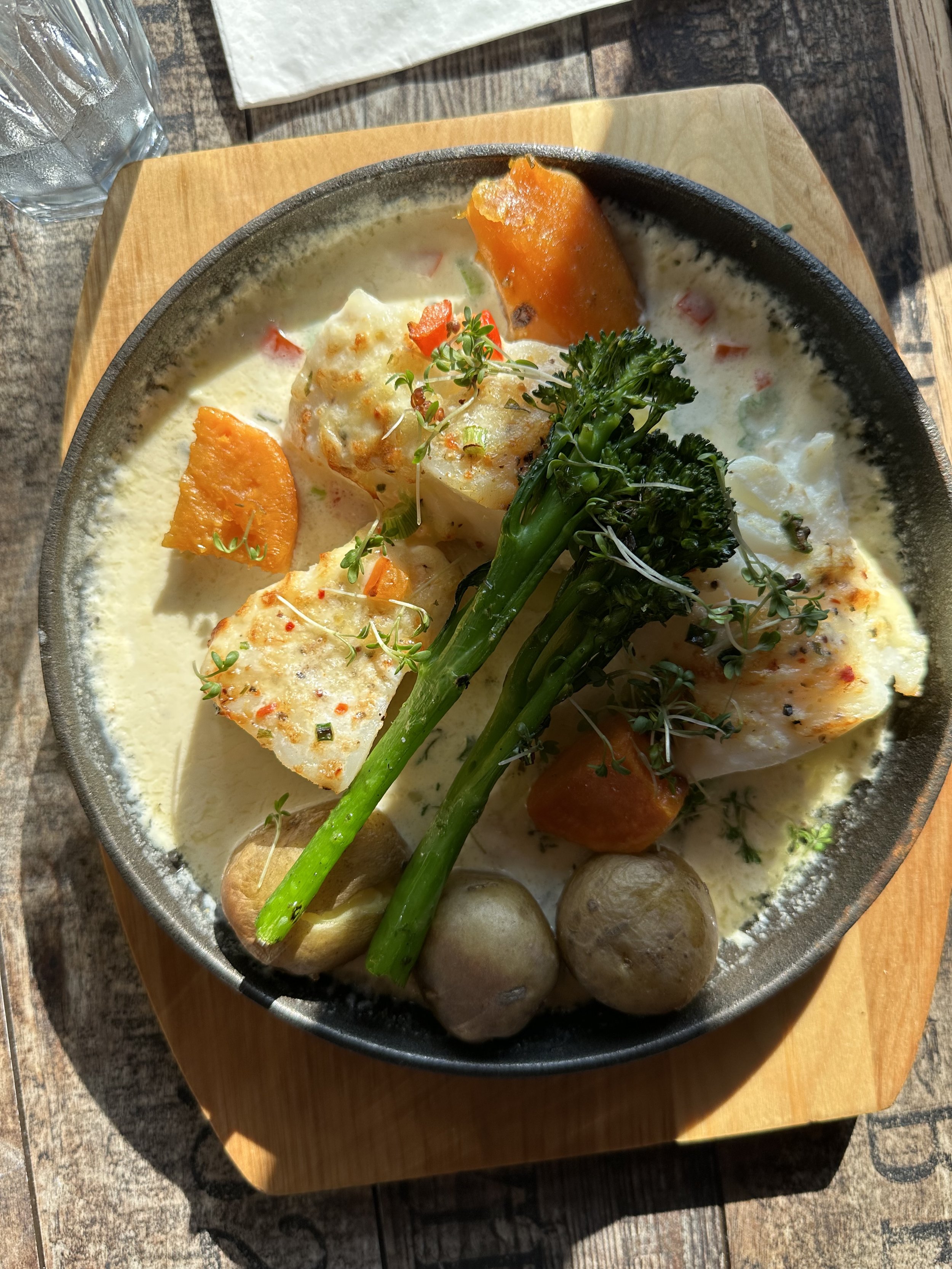
Iceland is expensive. That is the honest answer. Accept it before you go and you will enjoy the food much more. The quality is excellent, particularly the fish. Fresh Icelandic cod is one of those things you should eat every chance you get.
In both regions, you are often eating in small towns with limited options. The restaurants that exist tend to be good precisely because they serve a local clientele, not just tourists.
Restaurants
Tjöruhúsið (Ísafjörður) — A legendary fish buffet served in a historic wooden building right on the harbor. Locals and visitors both come here. The format is simple: fresh fish, prepared well, eat as much as you want. Do not skip this.
Narfeyrarstofa (Stykkishólmur) — We had an excellent dinner here on our last trip. Fresh Icelandic ingredients, well-executed, with a warm room and harbor views. Worth a reservation.
Fjöruhúsið (Arnarstapi) — Seafood right by the cliffs. The location alone makes it worth stopping, but the food holds up. Good for lunch after a morning shoot at Arnarstapi.
Sjávarpakkhúsið (Ísafjörður) — The more formal option in Ísafjörður, right on the harbor. Elegant for a town this size and the food matches the setting.
Viðvík (near Djúpavík) — A seasonal gem. This one is very remote and very worth it if you are making the drive through the northern Westfjords. Verify it is open before you make it your dinner plan.
Hotel Budir Restaurant — Even if you are not staying here, the restaurant at Hotel Budir is one of the best meals you will have in western Iceland. Reserve ahead.
Coffee
Húsið (Ísafjörður) — The go-to café-bar in town. Good espresso, relaxed atmosphere, and a place to sit and edit while the weather changes outside.
Skúrinn (Stykkishólmur) — Cozy, good espresso, homemade pastries. Exactly what you want before an early morning shoot.
Kaffi Emil — Bookstore café with homemade cakes. A good place to slow down between locations.
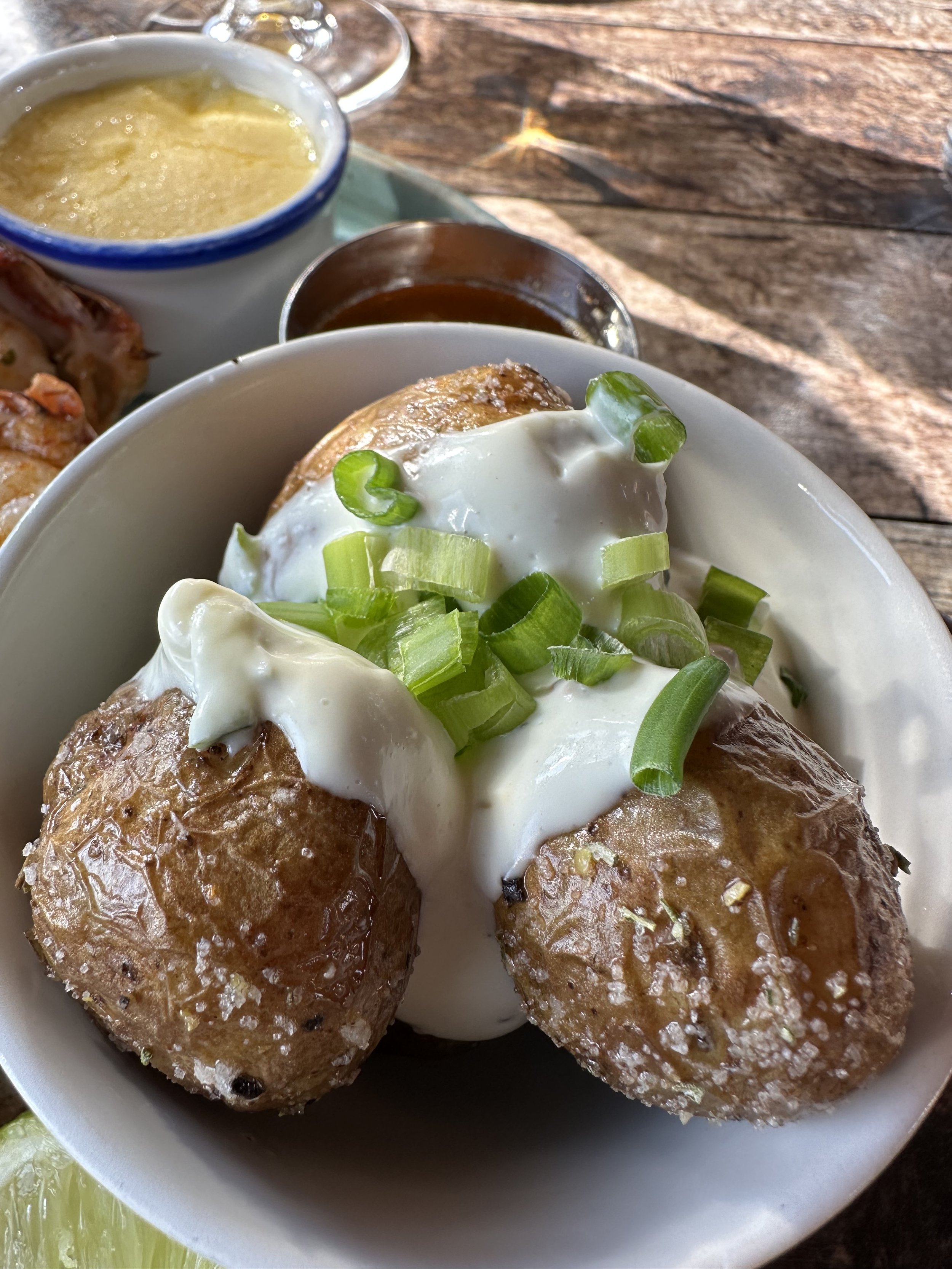
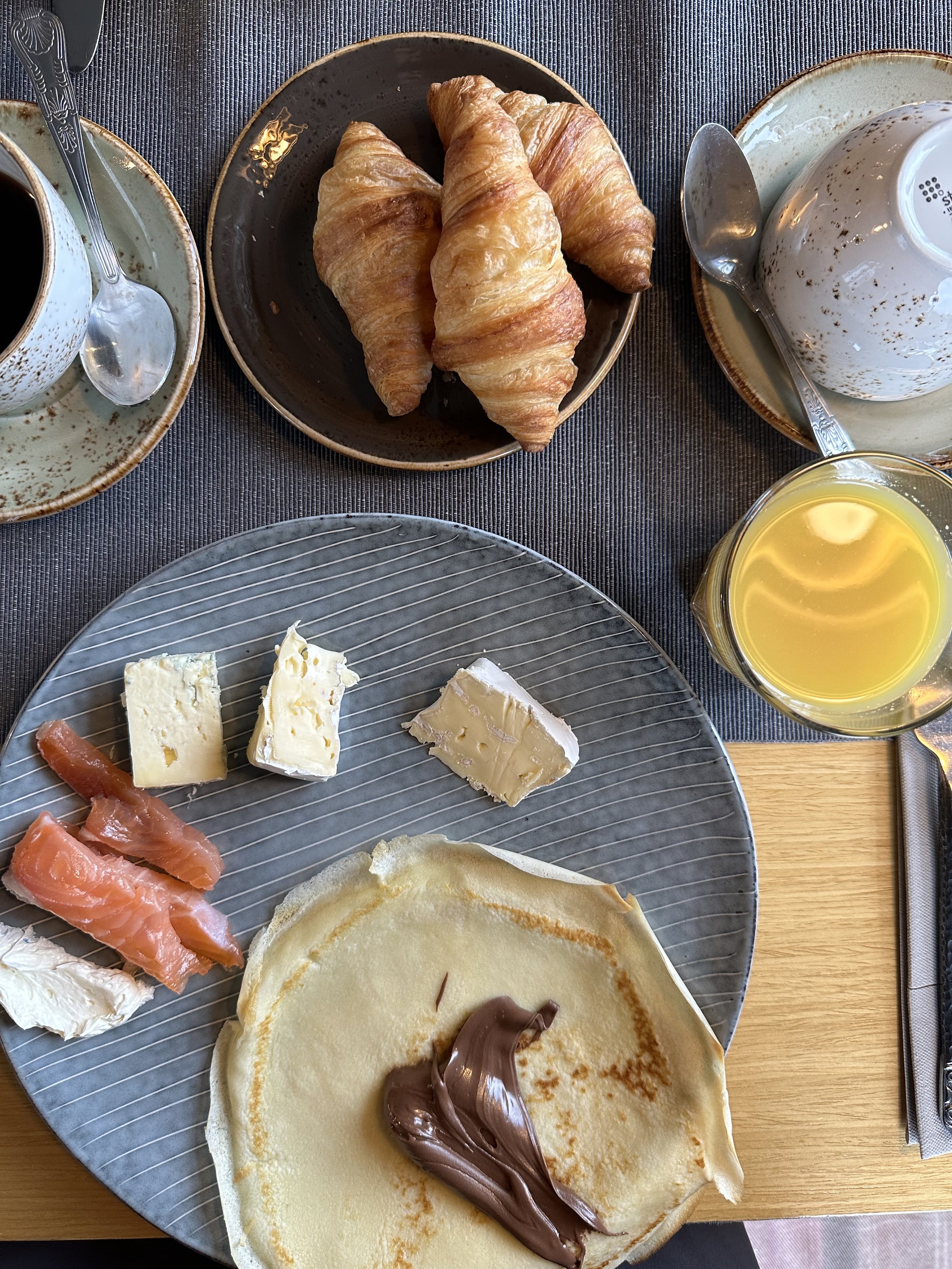
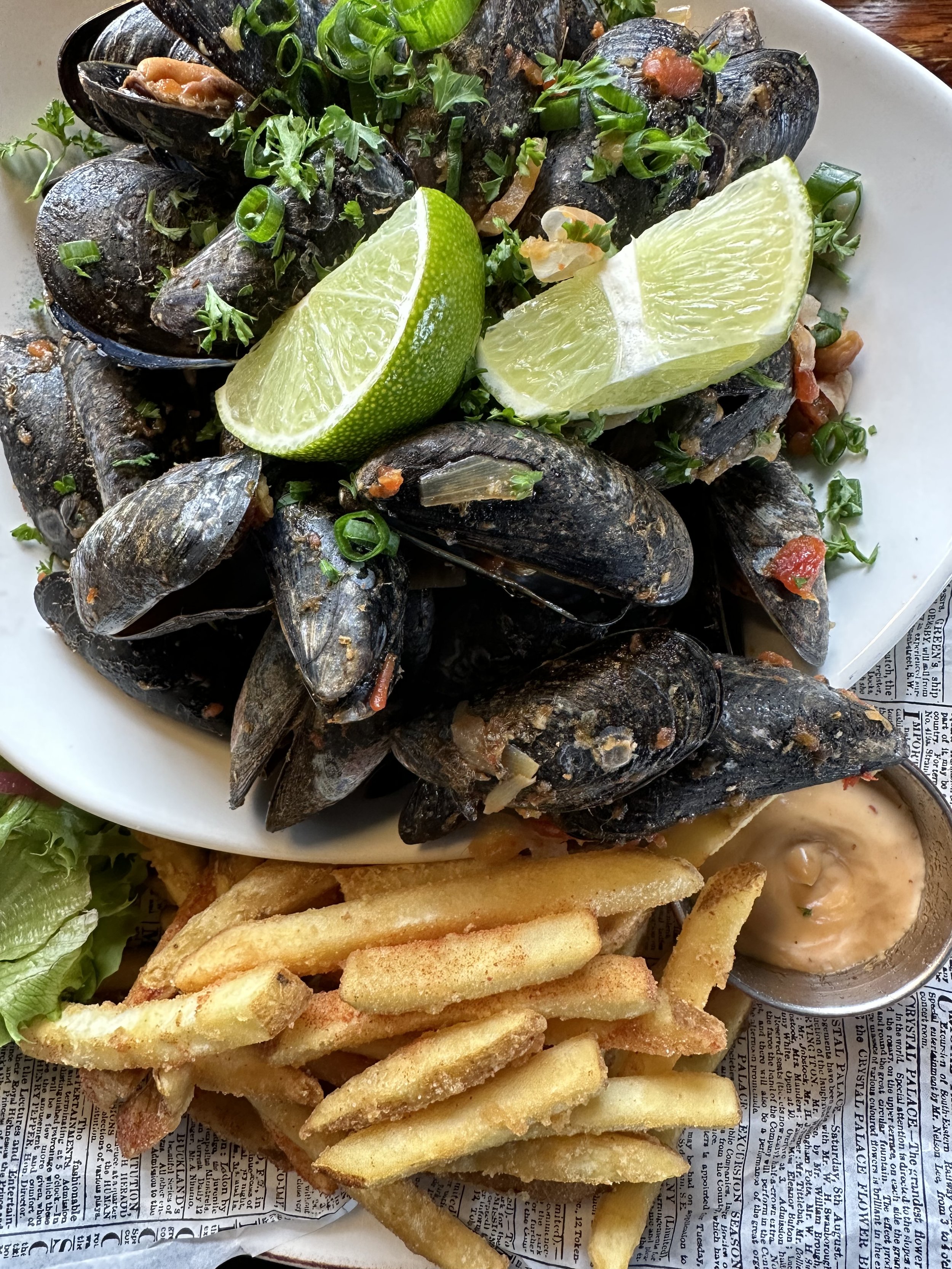
Photography Gear to Bring
Iceland is wet, windy, and unpredictable. Gear that cannot handle those conditions will let you down.
DSLR & Mirrorless Kit
Camera Body: Weather-sealing is not optional here. The Canon EOS R5 Mark II, Sony A7R V, and Nikon Z8 are all excellent choices. Whatever you bring, confirm it is weather-sealed before you leave home.
Lenses:
16 to 35mm — Your primary lens for waterfalls, cliffs, glaciers, and the wide landscape shots that define Iceland. You will use this constantly.
24 to 70mm — The all-around workhorse. Good for horses along the road, coastal details, and village scenes.
70 to 200mm — For compressing distant mountains, isolating the glacier, and shooting puffins from a respectful distance at Látrabjarg.
100 to 500mm — If wildlife is a priority, bring this. Puffins at Látrabjarg are approachable, but a longer reach gives you more options without disturbing the birds.
Tripod: Essential. I used my RRS Travel Tripod with a BH-40 Ballhead, which handled the wind well. For waterfall long exposures and any blue hour work, you need something stable. The lightweight travel tripods struggle in Icelandic wind. Go heavier than you think you need.
Filters:
Polarizing filter for cutting glare on water and deepening the sky
ND filters: 3-stop, 6-stop, and 10-stop. I brought all three and used all three. For silky waterfall exposures and managing the bright midnight sun, ND filters are essential.
Drone: Bring one. The DJI Mini 4 Pro is ideal for Iceland. The Westfjords from the air are extraordinary. Note that drones are restricted during bird nesting season (May through August) at Látrabjarg and near wildlife. Always check the Icelandic Transport Authority's current drone map before flying, and stay below 120 meters. Outside protected areas and away from nesting birds, the Westfjords offer some of the most open drone-flying airspace in Iceland.
Camera Bag: Waterproof or water-resistant with a rain cover. I use the Shimoda Explore V2 30-liter, which handled everything Iceland threw at it. A bag that cannot handle rain will be a problem within the first day.
Microfiber Towels: Bring at least three. Near waterfalls like Dynjandi, your camera and lenses will get wet constantly. I was wiping down gear all day. This is not optional gear for Iceland.
Extra Batteries and Cards: Cold drains batteries fast. Bring double what you think you need.
Samsung T7 SSD: Back up your cards every evening. In remote locations, you do not want to find out you have a corrupted card with no backup.

iPhone Tips for Iceland
Iceland is one of the best places in the world to shoot with your iPhone, and these specific situations are where it excels:
Icelandic Horses: When horses come to the fence to greet you, pull out your iPhone. Get low and use Portrait Mode to separate their faces against the sky or the landscape behind them. The horses are genuinely curious and will often stand still long enough for you to nail the shot. This is one of Iceland's most intimate wildlife moments and the iPhone handles it beautifully.
Waterfalls on overcast days: Iceland's frequent cloud cover creates soft, diffused light that the iPhone's computational processing handles extremely well. At smaller waterfalls along the road, use Cinematic Mode for video or shoot stills with the 1x lens. The wide angle picks up the surrounding landscape and gives context that a telephoto cannot.
Lupins: In June and July, fields of purple lupins stretch across the landscape. Get low with the iPhone's ultrawide lens and shoot upward with the lupins in the foreground and the mountains or sky behind. The ultrawide lens at ground level creates a sense of scale that is genuinely hard to replicate on a larger camera.
Midnight Sun landscapes: In summer, open your iPhone's camera before bed and shoot the light from your hotel window or the car window. The iPhone's Night Mode activates in low light, but the midnight sun produces golden tones that the standard mode captures without any processing tricks. Just point and shoot.

The Best Photography Locations
Westfjords
Dynjandi Waterfall – A fan-shaped beauty that looks like it belongs on another planet.
Látrabjarg Cliffs – Iceland’s westernmost point; puffin paradise.
Rauðisandur Beach – Red-gold sands at sunset.
Ísafjörður Harbor – Classic fishing town scenes.
Djúpavík – Abandoned herring factory and surreal mountain backdrop.
Snæfellsnes
Kirkjufell & Kirkjufellsfoss – Iceland’s most photographed mountain. Best at sunset or under aurora.
Arnarstapi Cliffs – Columnar basalt and dramatic coastal rock arches.
Snæfellsjökull Glacier – If skies are clear, shoot it from multiple angles.
Búðir Black Church – Hauntingly simple and photogenic in any light.
Djúpalónssandur Beach – Black pebbles and shipwreck remains.
PUFFINS
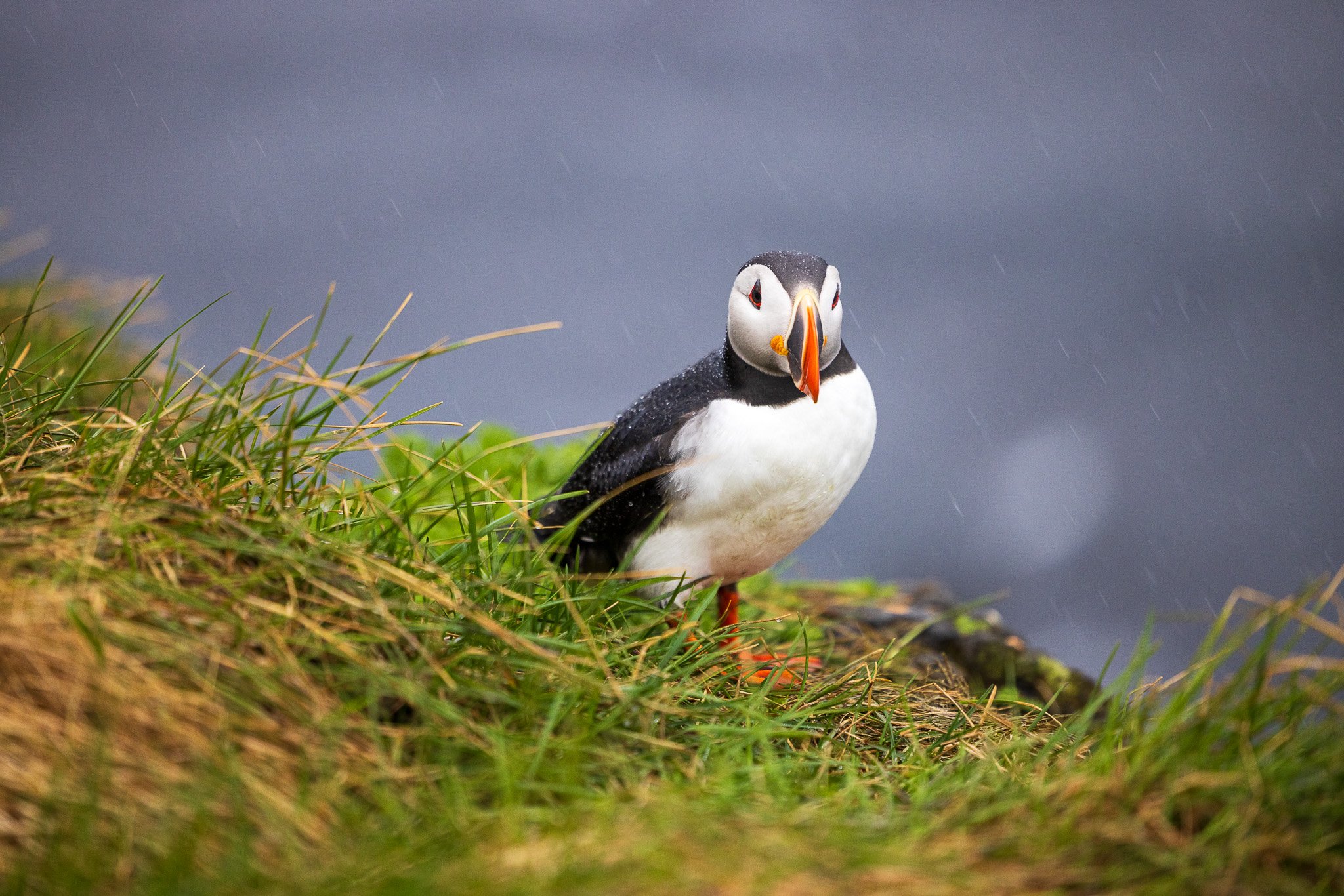
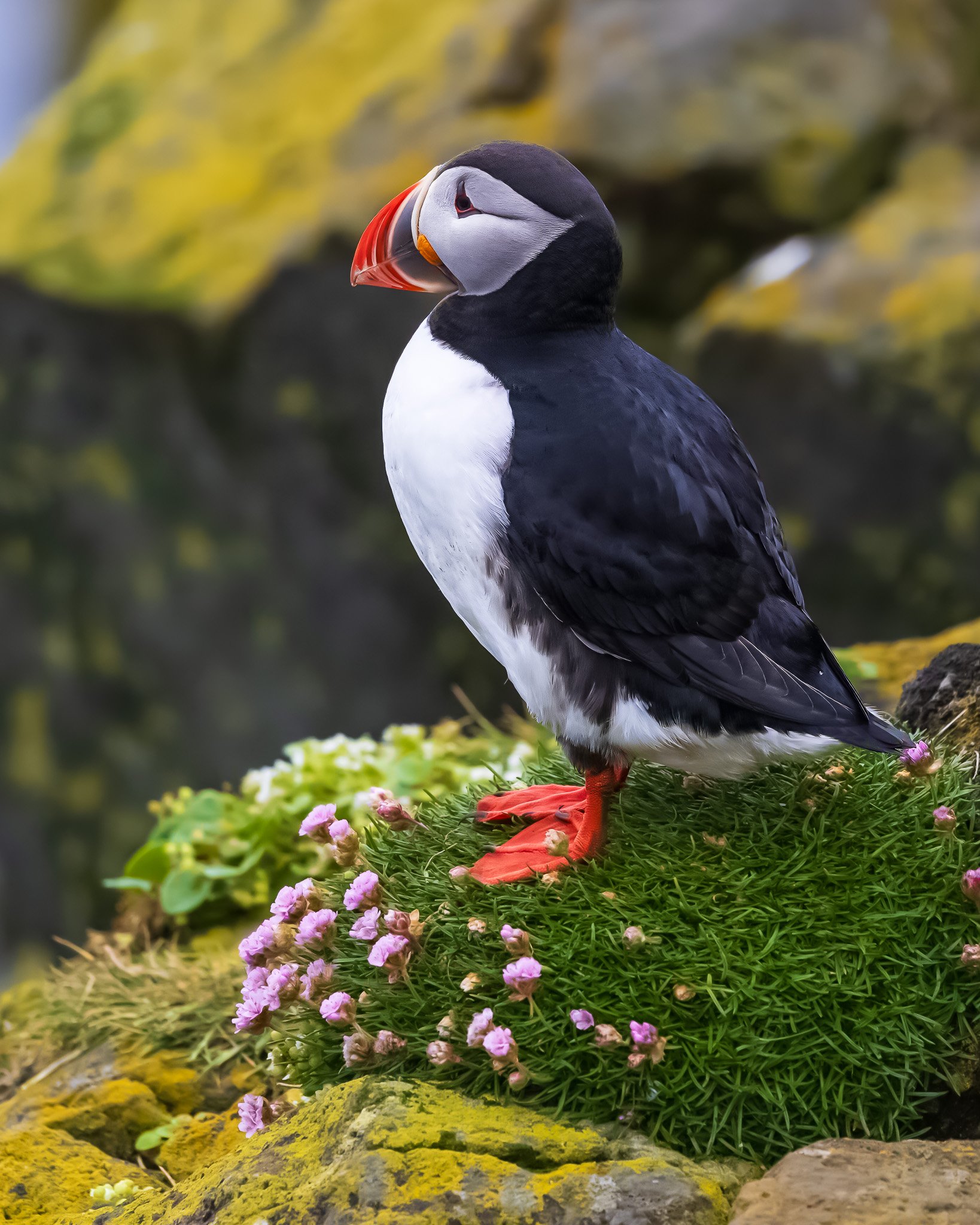
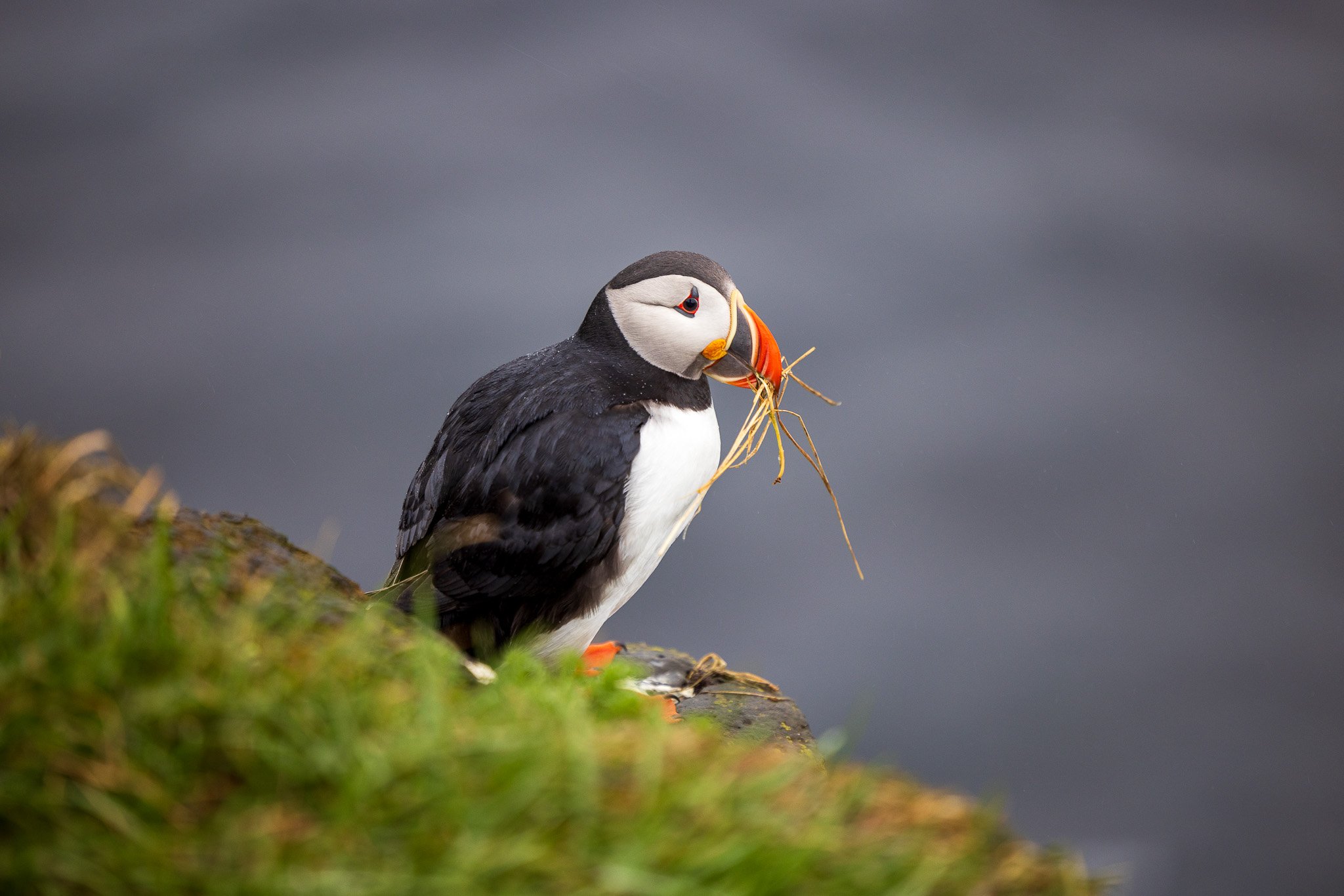
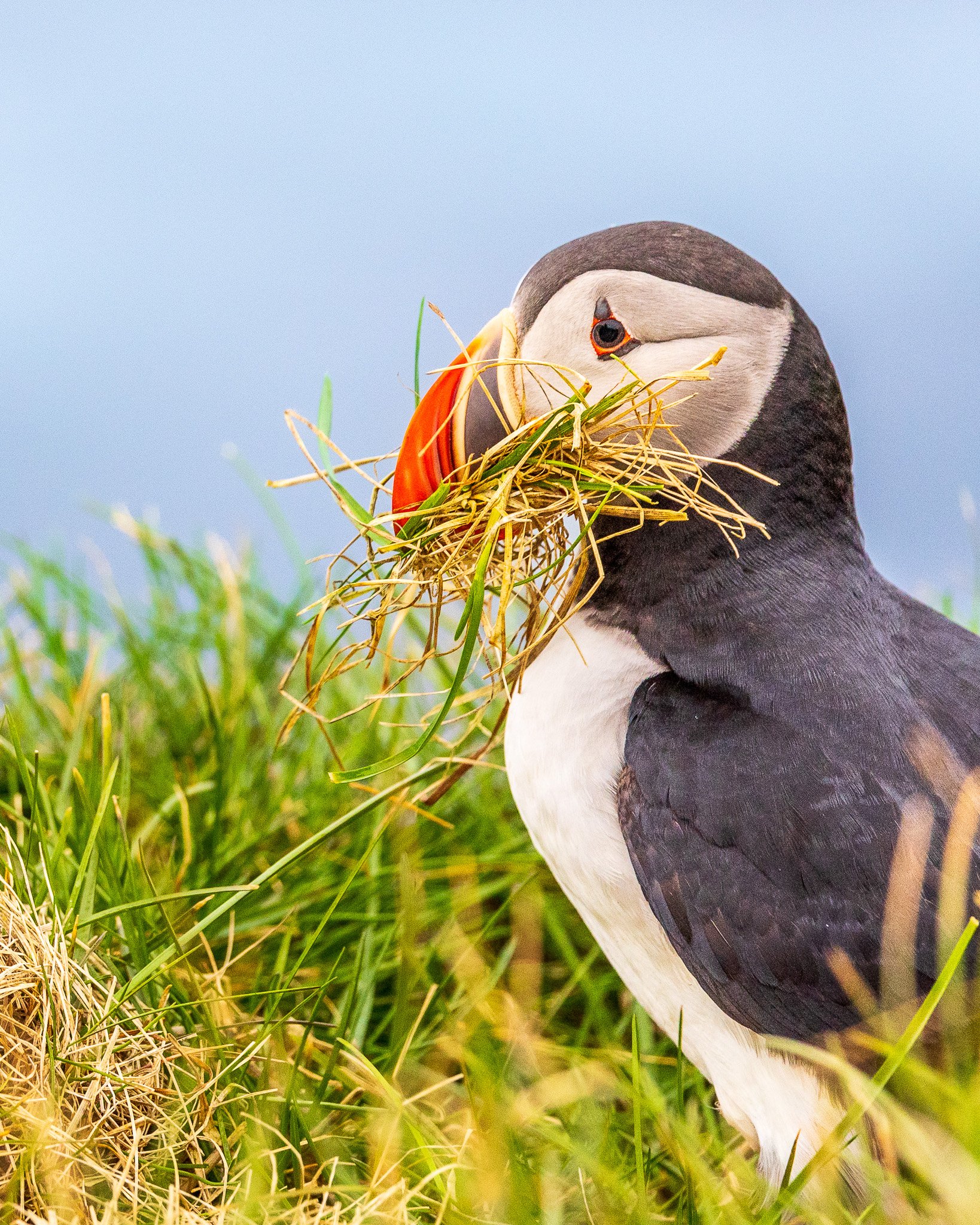
Puffins are visible from June through August. The main locations in these regions are Látrabjarg Cliffs in the Westfjords (the best), plus Arnarstapi and the islands near Stykkishólmur. They are challenging to photograph in flight but remarkably approachable when nesting. Get low, move slowly, and use a 70 to 200mm lens.

Puffins in Ingólfshöfði,
Icelandic Horses
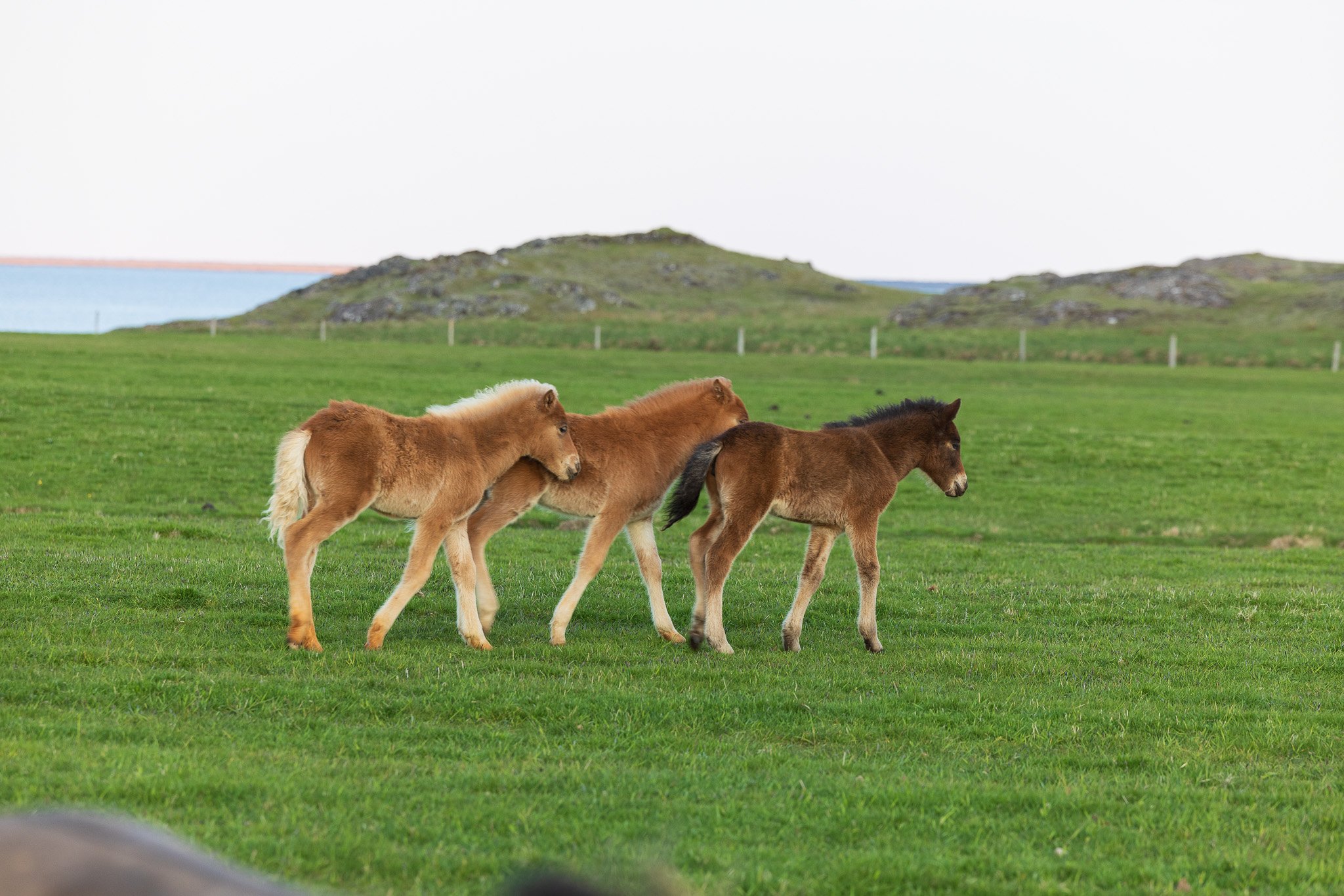
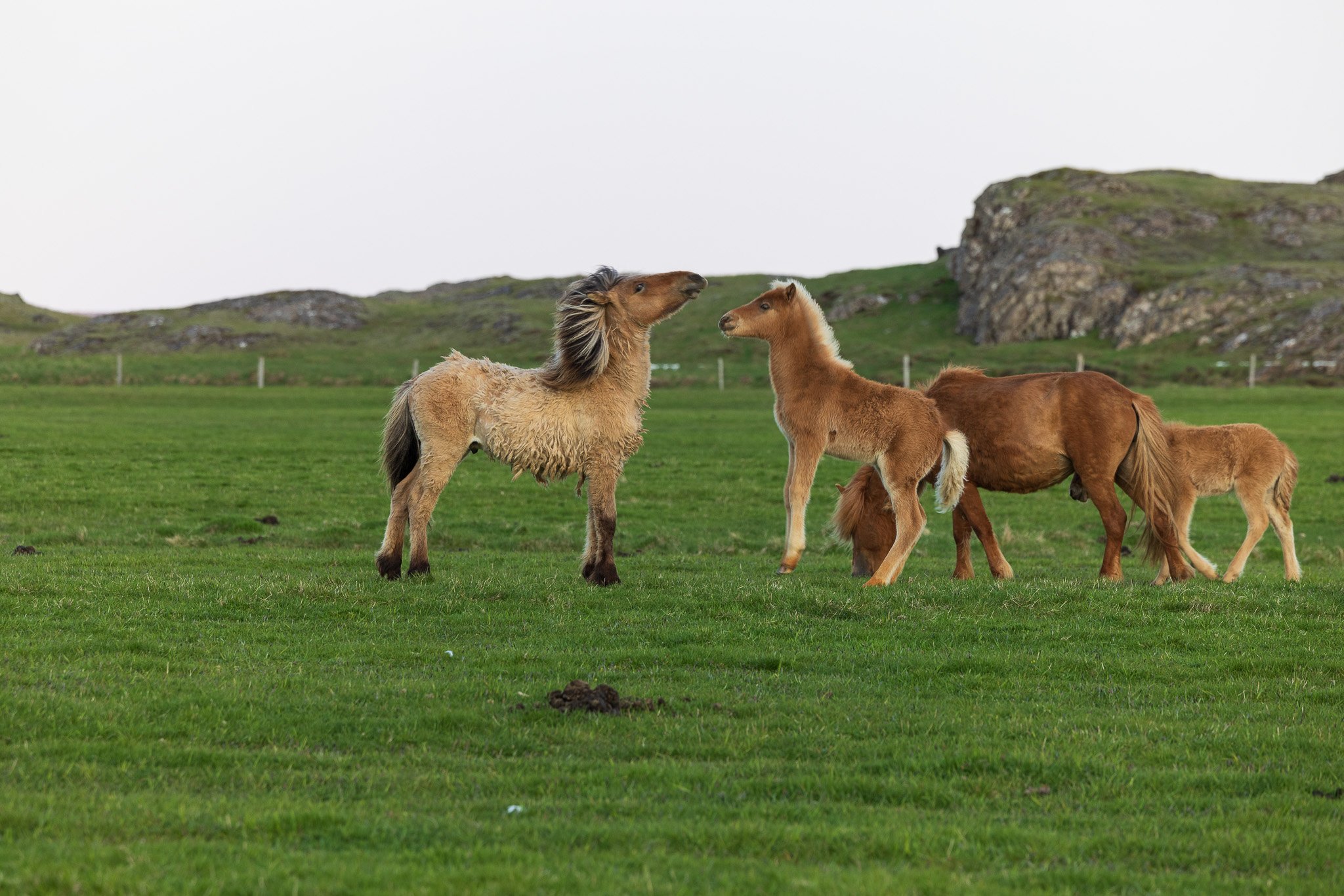
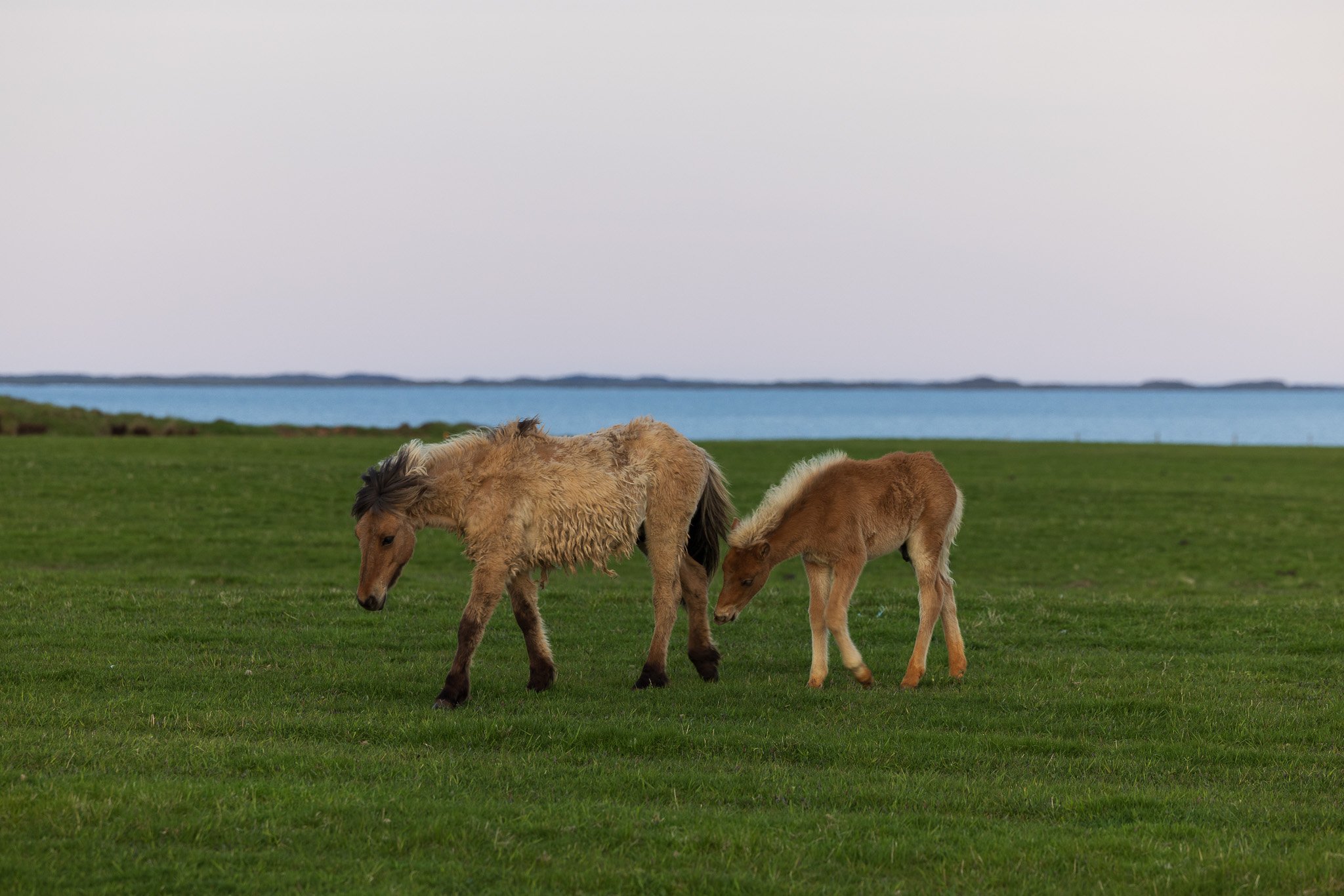
Icelandic Horses will appear along roadsides throughout both regions. They are small, sturdy, and genuinely curious. They will often walk up to the fence to greet you. Slow down and stop. Use a 70 to 200mm lens for portraits or your iPhone at close range. Shoot in the soft light of morning or evening for the warmest tones in their coats. Do not feed them.
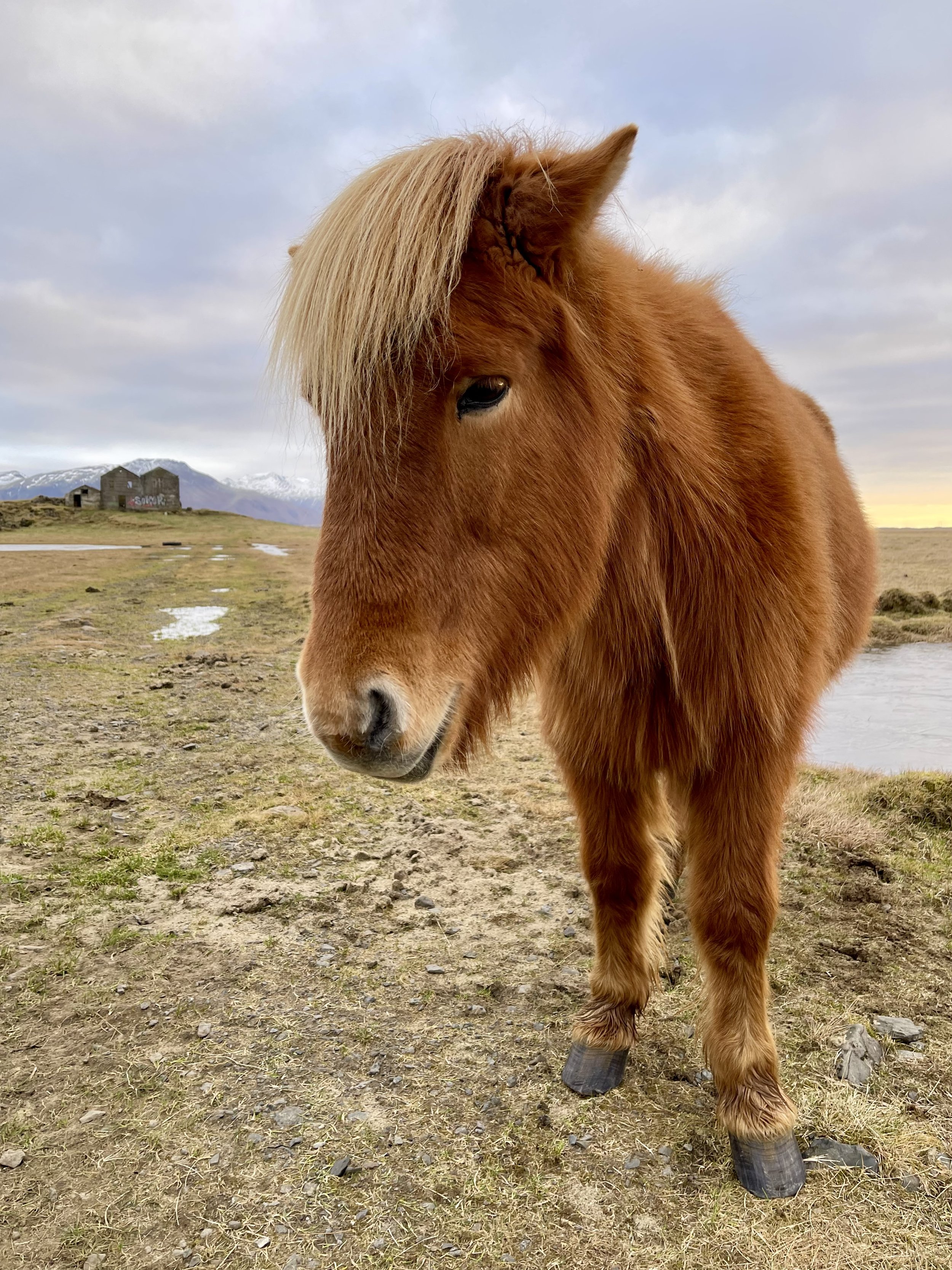
When you see them by the roads, they will often come right up to you to say hello.
Lupins
Lupins bloom across Iceland in June and July. Fields of deep purple against a green and volcanic landscape are a composition that practically makes itself. Get low with a wide angle lens and use the flowers as foreground interest with mountains or sky behind.

Endless Fields of Lupins
Westernfjords Látrabjarg CLIFFS
The westernmost point of Iceland and Europe, and one of the great wildlife photography experiences on the planet. Látrabjarg runs 14 kilometers along the coast and rises 441 meters at its highest point. The cliffs are home to millions of seabirds, and from June through August, Atlantic Puffins nest here in numbers that are genuinely hard to believe until you are standing among them.
We visited at multiple times during the day and the light behaves differently at each one. Morning light from the east catches the cliff face and illuminates the birds against the sea. Evening light from the west creates a warm backlight that outlines the puffins against a bright sky. Both are worth experiencing. The birds are remarkably unbothered by people. We stood six feet away from puffins who appeared entirely uninterested in our presence.
📷 Pro Tip: Walk east along the cliff path from the main parking area to find less-crowded sections where the puffins are nesting at close range. Get low to the ground, which puts you at eye level with the birds and creates a more intimate composition. Use a 70 to 200mm lens at the longer end to fill the frame with a single bird against the sea below. Avoid using a flash, which disturbs nesting birds. Bring your iPhone for close encounters. In the evening, position yourself so the low western sun is slightly behind and to the side for rim-lit puffin portraits. The cliffs themselves, shot from a distance with a 70 to 200mm lens, show the scale of the bird colonies in a way that wide angle cannot.
Best time: June through August for puffins. Morning (8 to 10 am) for front-lit birds, evening (7 to 9 pm) for warm backlight. Access: Free. Hotel Latrabjarg is the closest accommodation, approximately 40 minutes from the cliffs.

Please take a look at this video we took on our iPhone. We were only about 6 feet away.
Látrabjarg is home to a wide variety of birds, in large parts thanks to the shelter and seclusion the cliffs provide as nesting grounds.
The main species are Puffins, Skuas, Arctic Terns, Guillemots, Eider Ducks and Razorbills. Of course, however, the stars of the show are the Atlantic Puffins.
Garðar BA 64 (The Shipwreck)
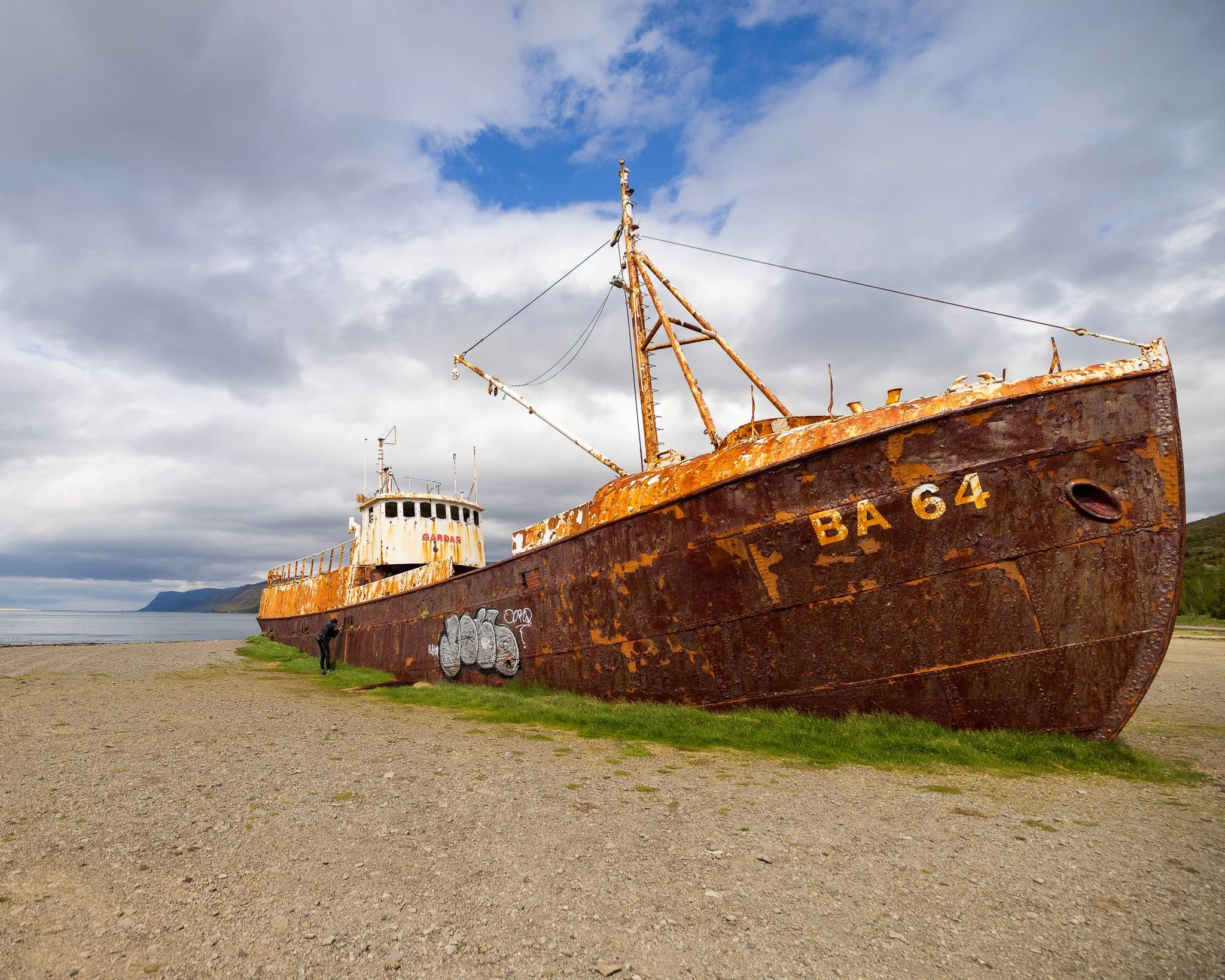
Iceland's oldest steel ship, beached on the shore at Patreksfjörður and now a rusting skeleton that the sea is slowly reclaiming. It is not a traditional landscape location. It is strange, slightly melancholy, and completely unlike anything else on this trip, which is exactly why it belongs on the photography list.
📷 Pro Tip: Shoot in the morning before direct light creates heavy shadows inside the wreck. Use a 16 to 24mm wide-angle lens and get close to the hull to exaggerate its size against the sky. Shoot through the rusting ribs of the hull to frame the fjord beyond. Overcast light works well here because it keeps the metal tones even and preserves detail in both the highlights of the rust and the shadows inside the structure. Your iPhone works exceptionally well at this location because the scale of the wreck relative to a person is part of the story, and having someone stand near it gives the viewer instant context.
Best time: Overcast morning light. Access: Free, visible from the road near Patreksfjörður. Verify current access conditions before visiting, as the structure continues to deteriorate.
Such a Unique Thing to See
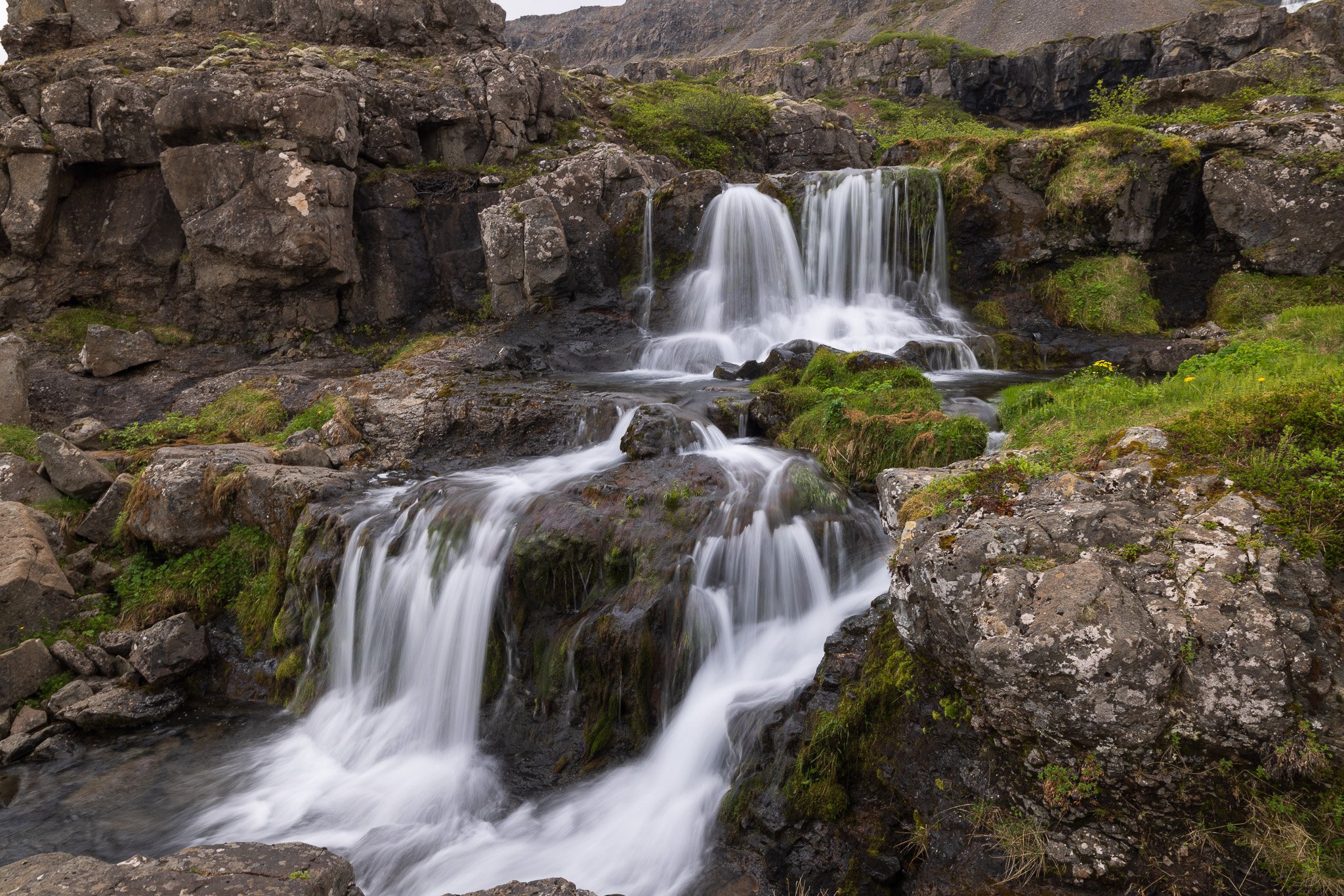
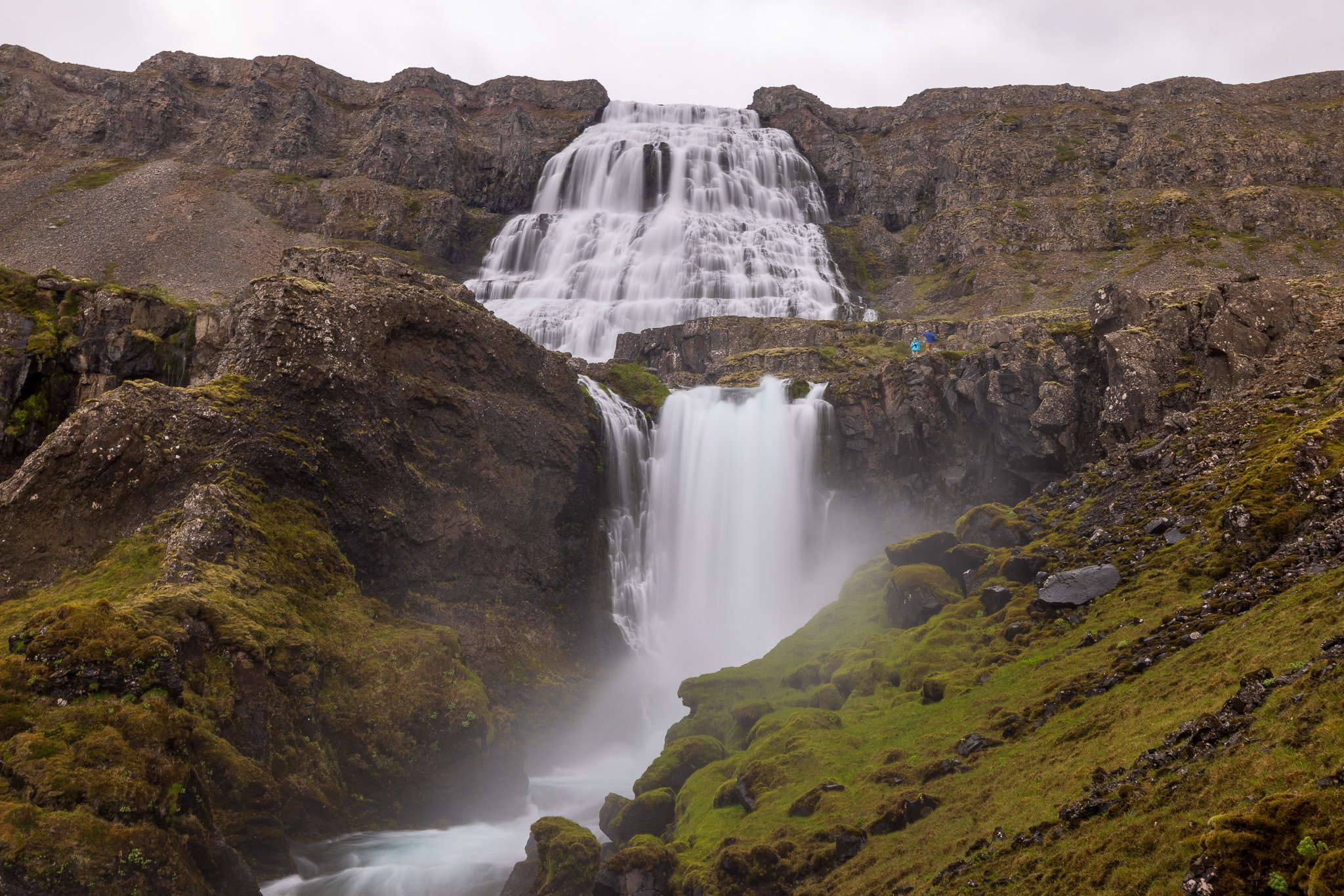
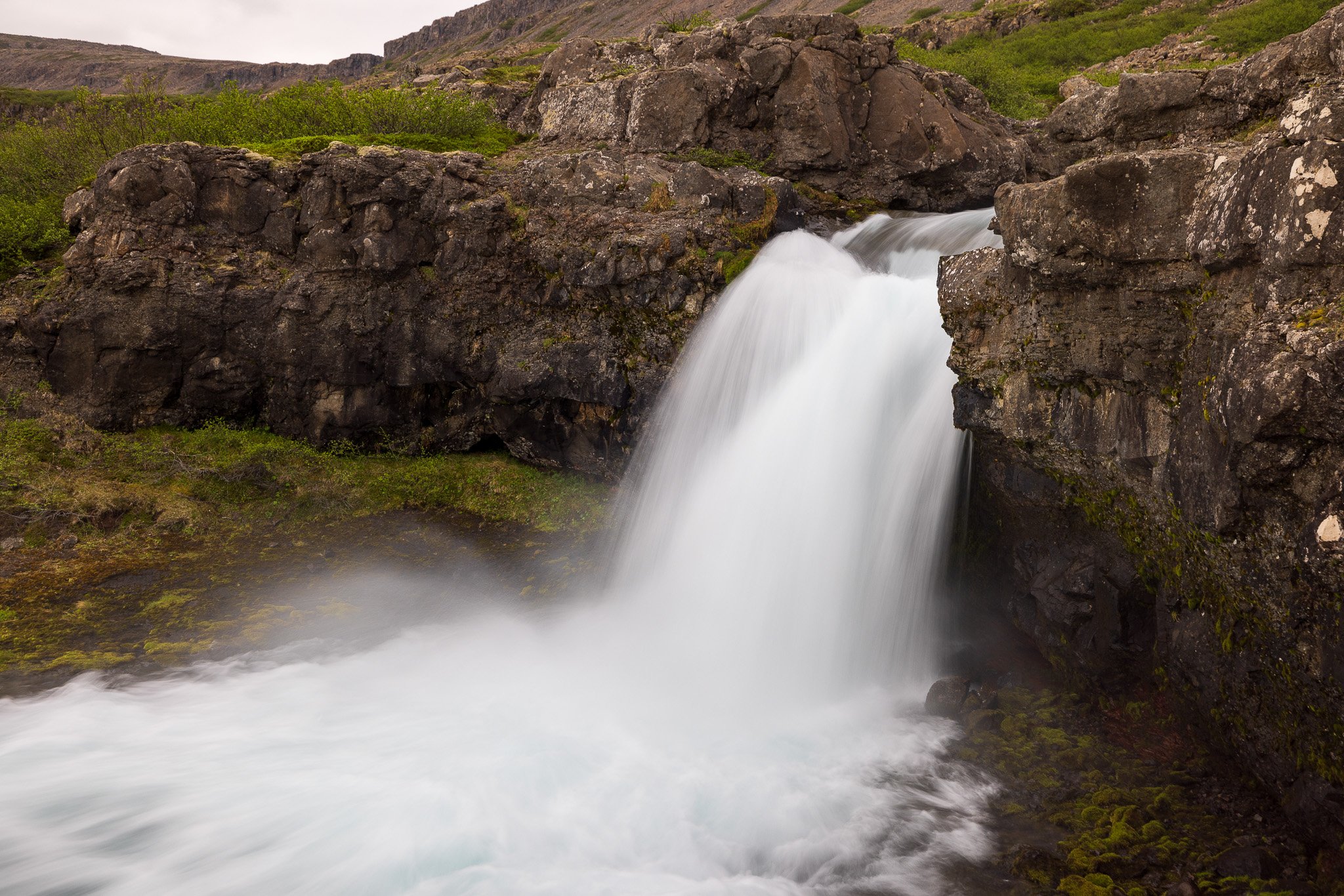
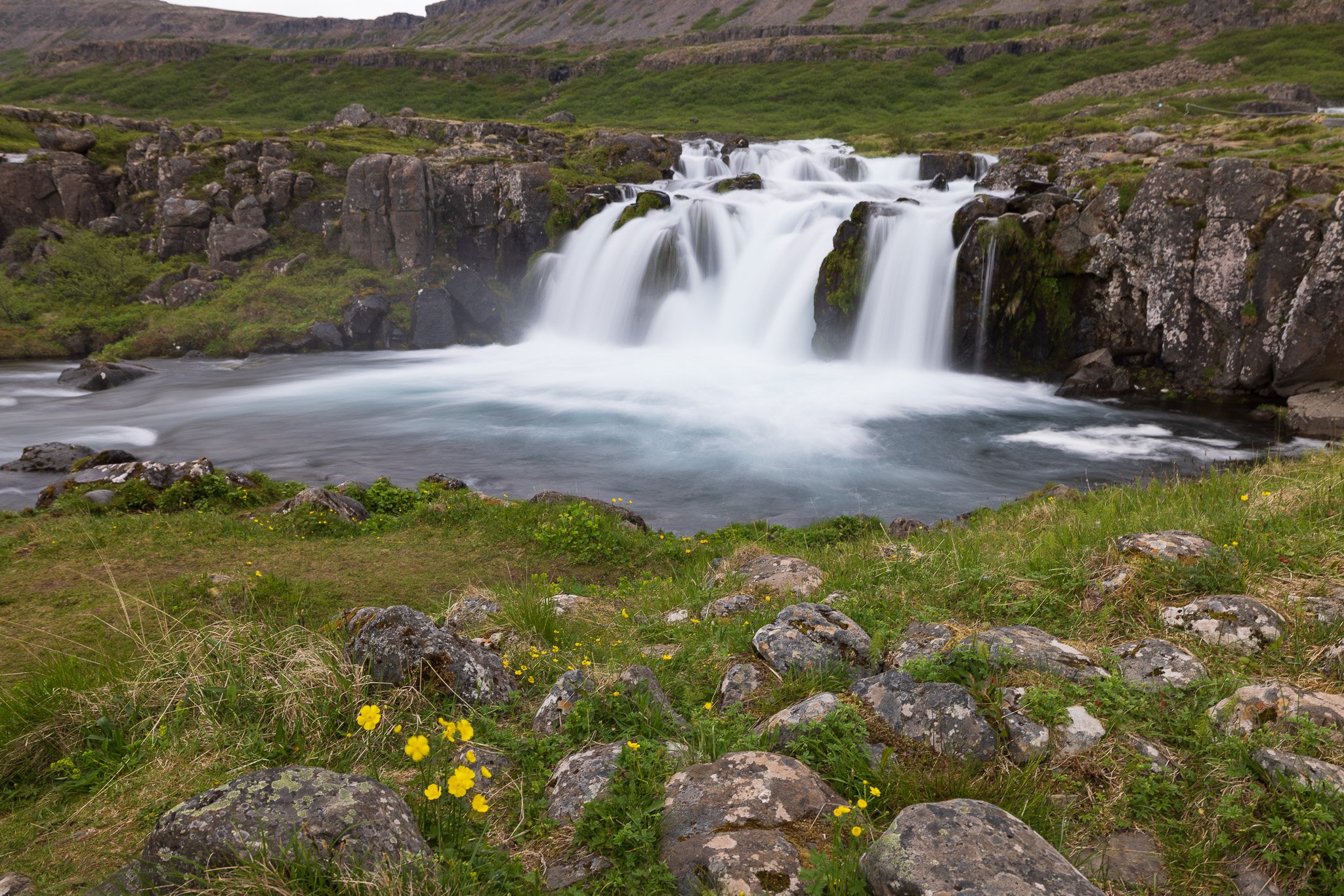
Dynjandi Waterfall
The crown of the Westfjords. Dynjandi is a fan-shaped cascade 100 meters high, and below it a series of five smaller waterfalls descend to the fjord. The scale of it does not register in photographs taken from a distance. You have to walk up toward it, getting progressively more soaked by the spray, to understand what you are looking at. The sound alone is extraordinary.
I flew my drone over Dynjandi and it was one of the best decisions I made in the Westfjords. From the air, the full fan shape of the waterfall and the cascade below it reads as a single composition, and the fjord behind it gives the scale that ground-level shots struggle to convey.
📷 Pro Tip: From the ground, the best wide shots come from the path at the base of the fan, approximately 50 to 80 meters from the falls, using a 16 to 24mm lens. The spray is significant; a microfiber cloth on your lens every few minutes is essential. Include one of the smaller lower waterfalls in the foreground to create depth and show the full system. A 10-stop ND filter turns the water silky smooth in the midday light. For the drone shot, fly upstream and above the fan to get the top-down perspective that reveals the shape. Note that drones are restricted here during bird nesting season (May to August). Always check the Icelandic Transport Authority's drone map before flying. Plan 1 to 1.5 hours at this location to walk the full trail and shoot from multiple positions.
Best time: Overcast days reduce harsh shadows in the waterfall spray. Morning light from the east catches the falls well. Avoid midday harsh summer sun if possible. Access: Free, paved parking area at the base. Off Route 60 in Arnarfjörður. Camping is no longer permitted on-site; nearest campsites are signposted from the parking area.
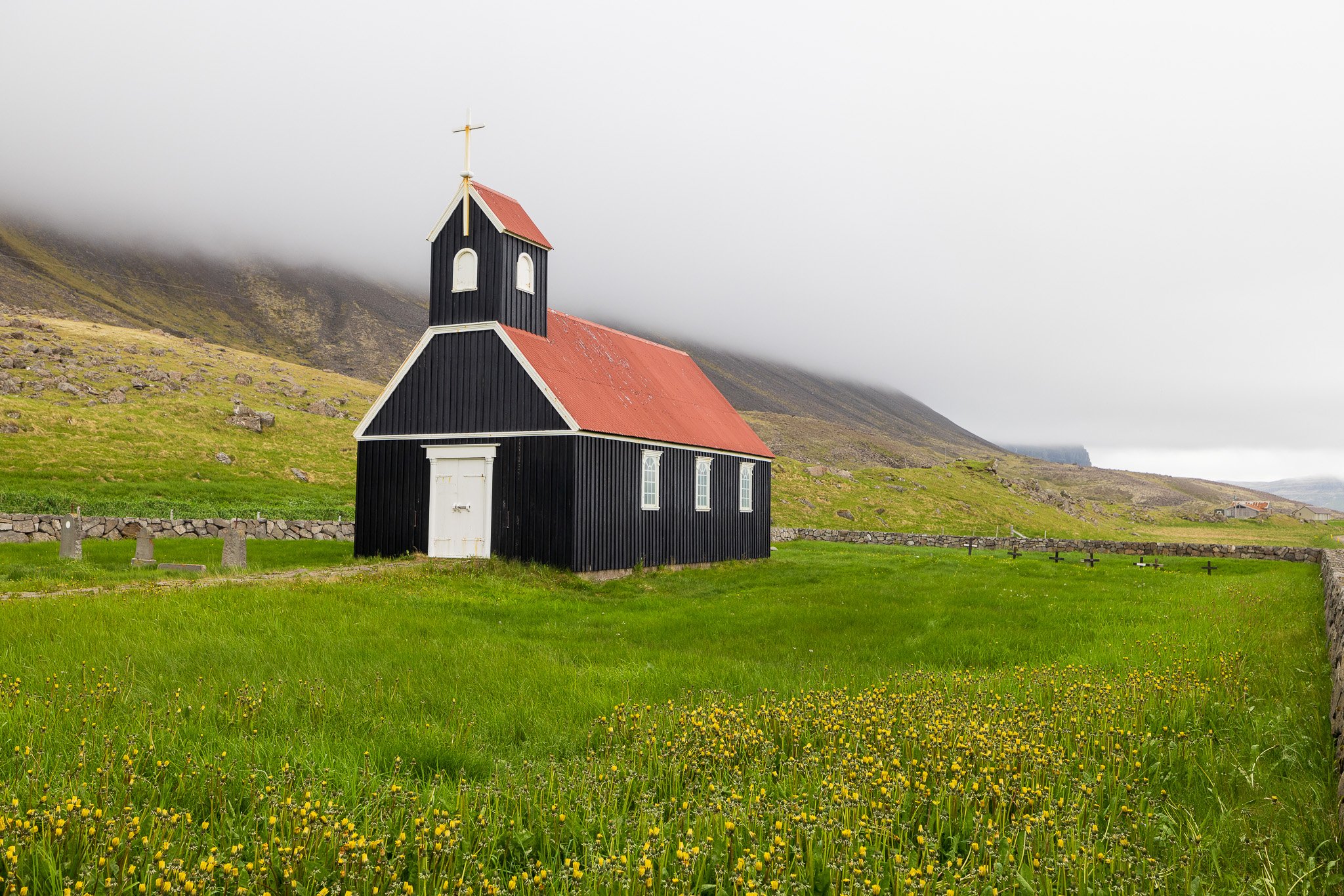
Black church in Raudisandur
One of the most visually surprising places in Iceland. While the rest of the country's beaches are black volcanic sand, Rauðisandur is red-gold, almost orange, and it sits at the base of dramatic cliffs at the end of a rough road in the southern Westfjords. At sunset, the sand goes an almost unreal warm tone that makes every wide angle composition look like you have applied a filter when you have not.
📷 Pro Tip: Drive the rough road down to the beach (a 4x4 is necessary) and position yourself at the western end where the cliffs frame the beach and the ocean opens to the right. Use a 16 to 24mm lens for the full sweep of sand and cliff. Arrive 30 to 45 minutes before sunset and stay through golden hour as the sand color intensifies. Shoot toward the cliffs to use them as a frame, then turn and shoot toward the open water for contrast. If the tide is low, wet sand near the water's edge creates reflections that double the warm colors. There are often Arctic Terns nesting near the beach in summer; give them space and use a 70 to 200mm lens to photograph them without disturbing nesting activity.
Best time: Sunset in summer for the warmest sand tones. Access: Free. The access road is rough and a 4x4 is required. From Patreksfjörður, follow signs south toward Rauðasandur.
Snaefellsnes Peninsula
There is so much to see in the Snaefellsnes Peninsula. If you only have a few days, I might just come to this part of Iceland. Here are my recommendations for the best photography locations in the Snaefellsnes Peninsula. Here is a good guide.
Ingjaldshólskirkja
Located near the village of Hellissandur on the western tip of the Snaefellsnes peninsula. This church is so photogenic. This is a location that we did not have on our photography list, but we noticed the church on our drive. So we had to stop and take photos.

At Sunset
Svörtuloft Lighthouse
This lighthouse is located at the westernmost tip of the volcanic Snæfellsnes Peninsula and offers spectacular views of the western coastline.

My Wife Catching a Photo of Me
Búðakirkja (Black CHURCH)
A small wooden church painted black, standing alone on the lava fields of Snæfellsnes with the glacier visible on clear days in the distance. It is one of the most photographed subjects in Iceland, and deservedly so. On the rainy day we visited, the glacier was hidden and the sky was grey. I converted the shot to black and white and it became one of my favorite images from the entire trip.
📷 Pro Tip: The standard composition is the church against the glacier with wide open space around it, shot from 30 to 50 meters back with a 24 to 35mm lens. On overcast or rainy days, go black and white in processing. The church's stark geometry and the flat lava field around it read beautifully without color. For a different angle, get low and shoot the church against the sky to isolate it from the horizon. In winter, snow on the lava field and on the church roof creates a completely different image. Early morning gives you the church without other visitors. The Hotel Budir is adjacent, so staying there means you can be at the church at dawn without driving.
Best time: Overcast days for black and white conversions; clear days for glacier background. Early morning to avoid other visitors. Access: Free. Located off Route 54, signposted from the main road.

Since the church is Black, I thought it would look good in Black & White.

Arnarstapi
Arnarstapi was the surprise of the Snæfellsnes Peninsula. We had not planned to make much of it, and then we arrived at sunset to conditions that turned out to be extraordinary. The basalt sea arches and columnar rock formations along the coast catch low light in a way that makes every composition look considered. The Gatklettur stone arch, in particular, frames the ocean perfectly.
📷 Pro Tip: Walk the coastal path west from the parking area toward Hellnar for the best concentration of arches and formations. The Gatklettur arch is the hero shot: position yourself close to the arch opening and use it as a natural frame for the sea and sky beyond, 16 to 24mm at f/8 to keep the arch and background sharp. At sunset, the warm light hits the basalt columns from behind and creates a rim-lit texture that is difficult to achieve at any other time of day. The path between Arnarstapi and Hellnar takes about 45 minutes to walk; allow time to explore both ends. This is also a strong drone location when conditions permit.
Best time: Sunset for warm directional light on the basalt. Access: Free parking area in Arnarstapi village. The coastal path to Hellnar is clearly marked.

At Sunset
Kirkjufell & Kirkjufellsfoss
Iceland's most photographed mountain, and once you stand in front of it at the right moment, you understand exactly why. The classic composition places the three streams of Kirkjufellsfoss in the foreground with the conical peak of Kirkjufell centered behind. Every photographer who comes to Snæfellsnes makes this shot. What most guides do not tell you is that the composition rewards patience more than position. The frame is established. What changes it is the light.
We were there at sunrise, which in the Icelandic summer means approximately 1 am. The sky went pink. Not soft pastel pink. A deep, saturated, impossible pink that reflected in the water of the falls and turned the whole scene into something that looked like a digital composite but was entirely real. I have seen this mountain at other times of day and in other conditions. None of them compare to that morning.
📷 Pro Tip: The shooting position is from the small gravel area directly opposite the waterfall, roughly 20 to 30 meters back. Use a 24mm to 35mm focal length to fit the falls in the foreground and the mountain in the frame without distortion. Set up your tripod level with the water for a reflection shot in calm conditions. Arrive at least 30 minutes before your target light. In summer, this means showing up in the middle of the night, which will feel strange until the sky turns colors you did not think Iceland was allowed to produce. In aurora season (September to March), Kirkjufell is one of the premier northern lights foreground subjects in the country. A circular polarizer helps manage reflections in the stream during daylight.
Best time: Midnight sun in summer (around 1 to 3 am for peak pink sky), or aurora season in winter and early spring. Access: Free, large parking area directly adjacent to the shooting location. From Stykkishólmur, drive Route 54 west, approximately 45 minutes.

At Sunset
Festivals & Events
Við Djúpið Festival (June, Ísafjörður) — A chamber music festival held in one of Iceland's most remote towns. The contrast of delicate classical music in a raw, elemental landscape is something worth experiencing. Photograph the audience, the venues (often historic buildings), and the musicians in the outdoor spaces. The long summer light makes evening concerts genuinely beautiful to shoot.
Ræst Festival (August, Westfjords) — An arts and experimental music event that draws creative people to the Westfjords every summer. The energy is unusual and photogenic: artists and performers in a landscape that feels like the end of the world.
Aurora Season (September to April, Snæfellsnes) — Not a festival but an annual event that deserves its own mention. Snæfellsnes is one of the best aurora locations in western Iceland. Kirkjufell, the Búðakirkja church, and the glacier all make exceptional foreground subjects for Northern Lights photography. Use a wide angle lens, set your ISO to 1600 to 3200, and shoot at f/2.8 or wider with exposures of 10 to 20 seconds. A sturdy tripod is essential.
Puffin Season (June to August) — If seeing and photographing puffins is a goal, plan your trip for this window. Látrabjarg in June and July is the peak of the season.
Final Thoughts
The Westfjords and Snæfellsnes are not the easiest parts of Iceland to reach. The roads are long, the weather is unpredictable, and the infrastructure is minimal by any modern standard. That is precisely what makes them worth going to.
What you get in return is Iceland without the crowd management. You get the sensation of standing somewhere genuinely remote. You get landscapes that have not been photographed a thousand times from the same angle by tour groups following a guide with a flag. You get waterfalls you have to hike to alone, puffins who look you in the eye, and a 1 am sky over a mountain that does not seem like it belongs on Earth.
I have been six times, and I am already thinking about the seventh. If you make the trip out here, take your time. Stop when something catches your eye. Drive slowly. Let the light surprise you. It will.
Follow along on Instagram at @chasinghippoz and subscribe to the newsletter for more travel photography guides, behind-the-scenes stories, and tips from more than 75 countries. If you are interested in joining one of my photography workshops, you can find the details through the link.
More Photography Guides You Will Love
My Photography & Travel Guide to Reykjavík, Iceland — The logical starting point for any Iceland trip. Spend two or three days in the capital before heading west. Reykjavík has more to photograph than most people expect, and it serves as the perfect base for day trips while you get your Iceland bearings.
My Photography & Travel Guide to the Southern Route of Iceland — Diamond Beach, Jökulsárlón Glacier Lagoon, Vestrahorn, and the black sand beaches of Vik. The South Coast is Iceland's most dramatic road trip and the perfect complement to the Westfjords and Snæfellsnes.
Finally—a beginner-friendly photography guide that makes sense.
If you've ever picked up a camera and thought, "Now what?" this is the book for you.
Photography Made Simple is written for adults who are just starting out and want a clear, encouraging, real-world approach to learning photography. Whether you're using a DSLR, mirrorless, or just your smartphone, this guide walks you through the basics—without the jargon or tech overwhelm.
Inside, you'll learn:
The only camera settings you really need to know to get started
How to shoot sharper, more intentional photos using light and composition
Simple tips for portraits, landscapes, travel, and everyday life
What gear you do (and don’t) need
How to create better photos without upgrading your camera
You’ll also get practical exercises, cheat sheets, and tips for organizing and editing your images—plus the confidence to shoot off Auto Mode for good.
This is not a textbook. It’s a friendly guide to seeing the world with fresh eyes—and finally capturing what you see the way you imagine it.
📸 Format: PDF download
Pages: 100+
Perfect for: Beginners, hobbyists, and anyone ready to take better photos without the stress

🎓 Adobe Lightroom One-to-One Training
Master Post-Processing. Elevate Your Photography.
Post-processing is the final — and arguably most transformative — step in your photography workflow. Adobe Lightroom is an essential tool for today’s digital photographers, combining powerful editing tools with an intuitive system for organizing and showcasing your images professionally.
Whether you're just getting started or looking to refine your editing skills, I offer customized one-to-one Lightroom training designed to help you create images you’ll be proud to share.
---
💻 Why One-to-One Online Lightroom Training?
Over the years, I’ve found that personalized training is the most effective way to learn Lightroom. Unlike group sessions, a one-to-one format allows us to move at your pace, focus on your specific goals, and eliminate the frustration of mismatched experience levels.
Plus, with online sessions via Zoom, you can learn from the comfort of your home — no travel or accommodation needed. It's the most convenient, cost-effective, and time-efficient way to upgrade your editing game.
---
🧠 Tailored Topics to Match Your Goals
Our training is completely customizable, but here’s an outline of the modules we can cover — either in full or à la carte.
---
🔧 Lightroom Setup – Part 1: Getting Started
Set up Lightroom properly for long-term success. We’ll tackle the fundamentals to create an efficient, organized workflow:
- What Lightroom is (and isn’t)
- How the interface and modules work
- Setting preferences for your needs
- Understanding the Catalog and folder system
- Importing images efficiently
- Adding keywords during import
---
🗂 Lightroom Setup – Part 2: Organize Like a Pro
Build a storage system that grows with you:
- Folder structure tips and best practices
- Moving and renaming files within Lightroom
- Reviewing, rating, and filtering images
- Creating Smart Collections and Collection Sets
- Keywording strategies and metadata organization
---
🎨 Lightroom Editing – Part 1: Core Editing Skills
Master the Develop module and create consistent, polished images:
- Global adjustments in the Basic panel
- White balance, contrast, vibrance, and saturation
- Cropping and converting to black & white
- HSL panel tuning
- Sharpening and noise reduction
- Creating and saving presets
- Exporting for print, web, or social media
---
✨ Lightroom Editing – Part 2: Advanced Techniques
Take your editing to the next level with creative, selective tools:
- Radial and Gradient filters
- The Adjustment Brush
- Advanced masking and luminosity adjustments
- Enhancing portraits (skin, eyes, teeth)
- Spot removal and basic cloning
- Merging for HDR and panoramas
---
💼 Session Details & Pricing (USD)
Tailored One-to-One Lightroom Tuition:
- Single Session (2 hours): $199
Before our session, we’ll have a brief consultation to customize your training plan and ensure it meets your exact needs.
---
Ready to take control of your editing workflow and bring out the best in your images?
Let’s work together to turn your vision into vivid, powerful photos.
📩 Get in touch to schedule your personalized Lightroom session.