Santa Fe, New Mexico Travel & Photography Guide: Best Photo Spots, Things to Do & Hidden Gems
I first visited Santa Fe in the fall, and the light alone made me want to come back.
There is something about the quality of light at 7,000 feet that you simply cannot replicate. The air is thinner, the sky is deeper, and the hours after sunrise and before sunset cast a warmth across adobe walls that makes every frame feel deliberate. I have photographed cities on six continents, and the desert light of northern New Mexico belongs in a conversation with the best of them.
Santa Fe earns its reputation as the third-largest art market in the United States, and you feel that creative weight at every turn. More than 100 galleries line Canyon Road alone. The Georgia O'Keeffe Museum draws visitors who want to understand why so many serious artists have made this landscape their permanent subject. Around the corner at Meow Wolf, the city's art scene pushes into something entirely different, bold and immersive and hard to categorize. What strikes me most is that the city does not just display art. It generates it.
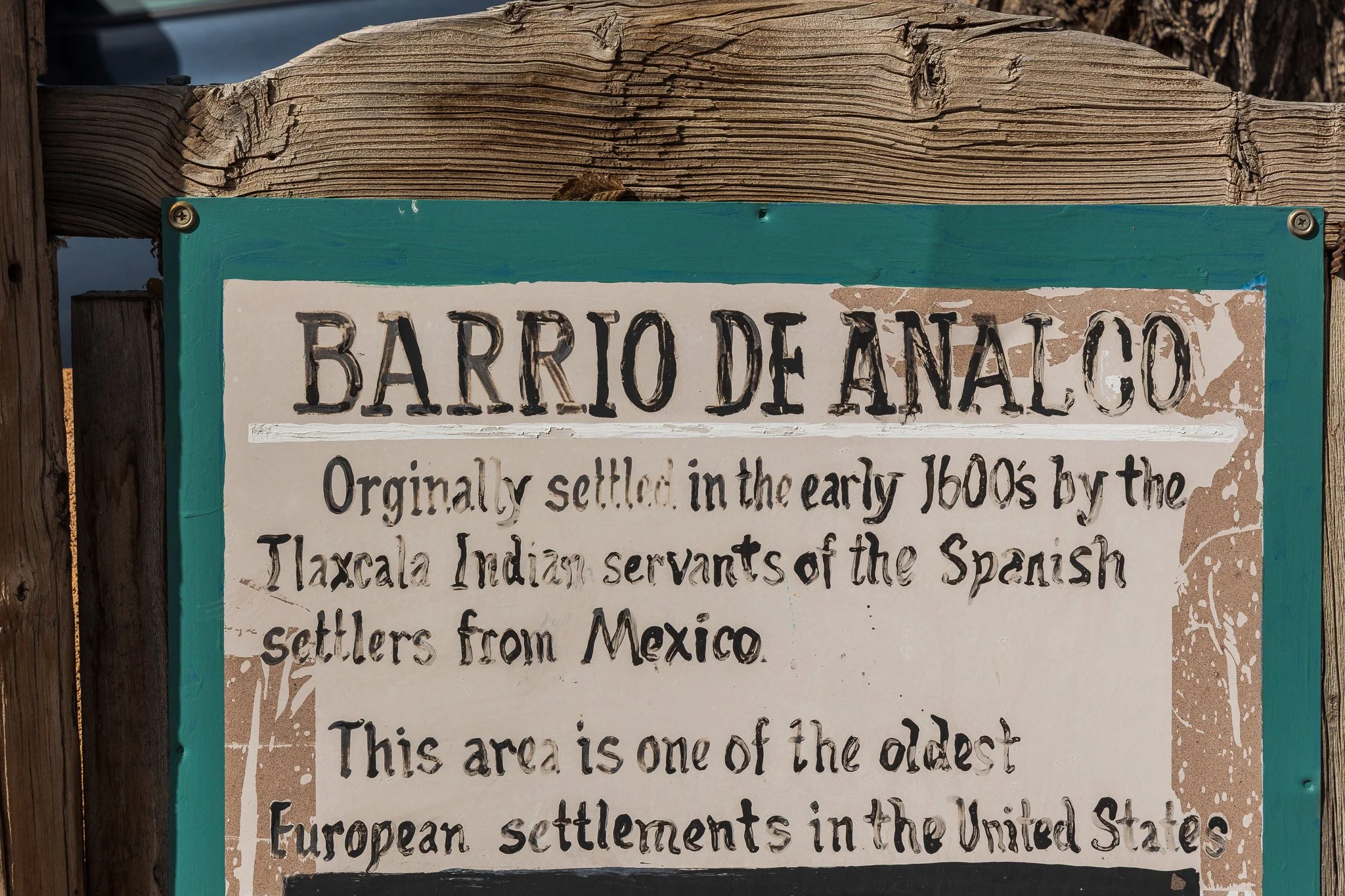
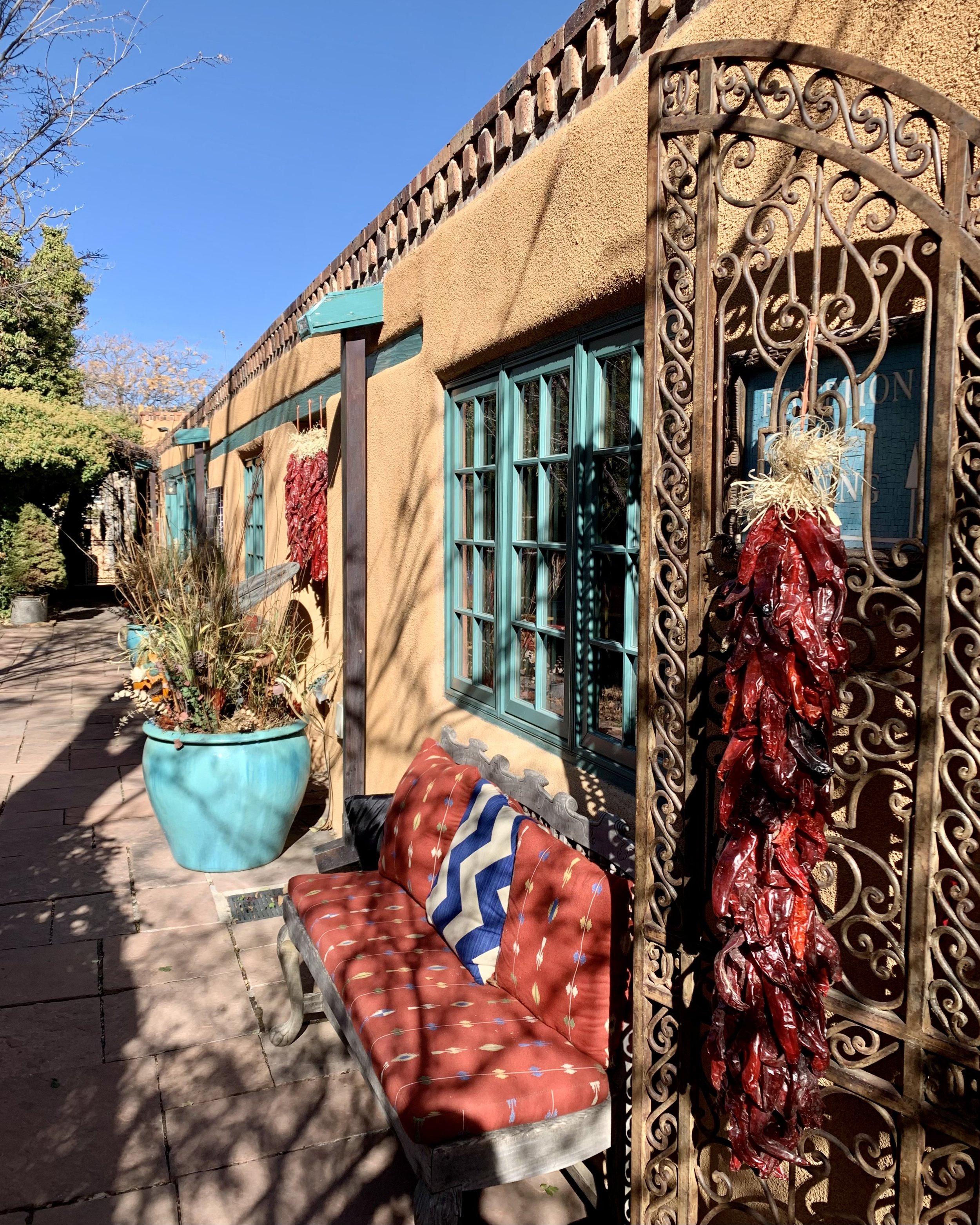
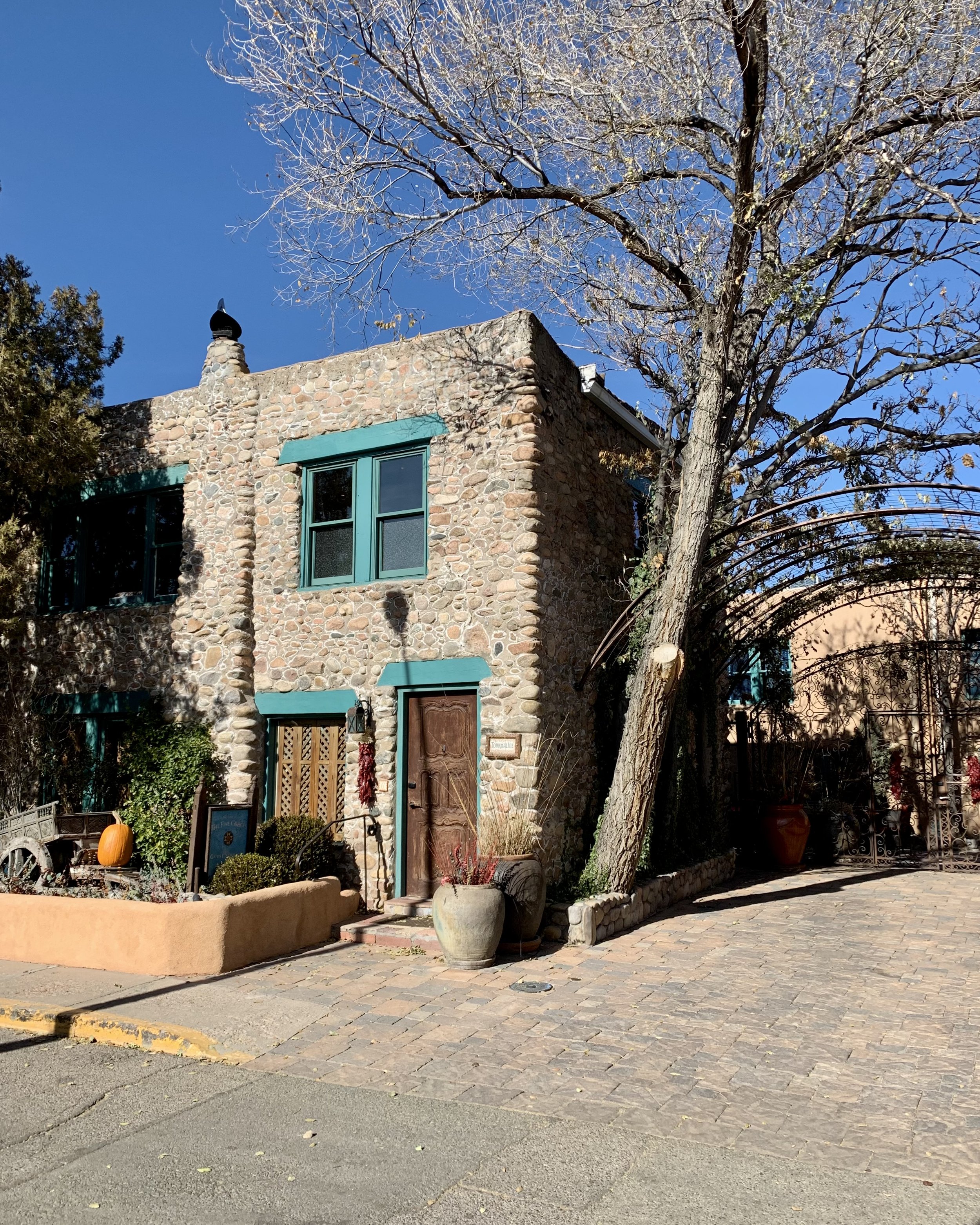
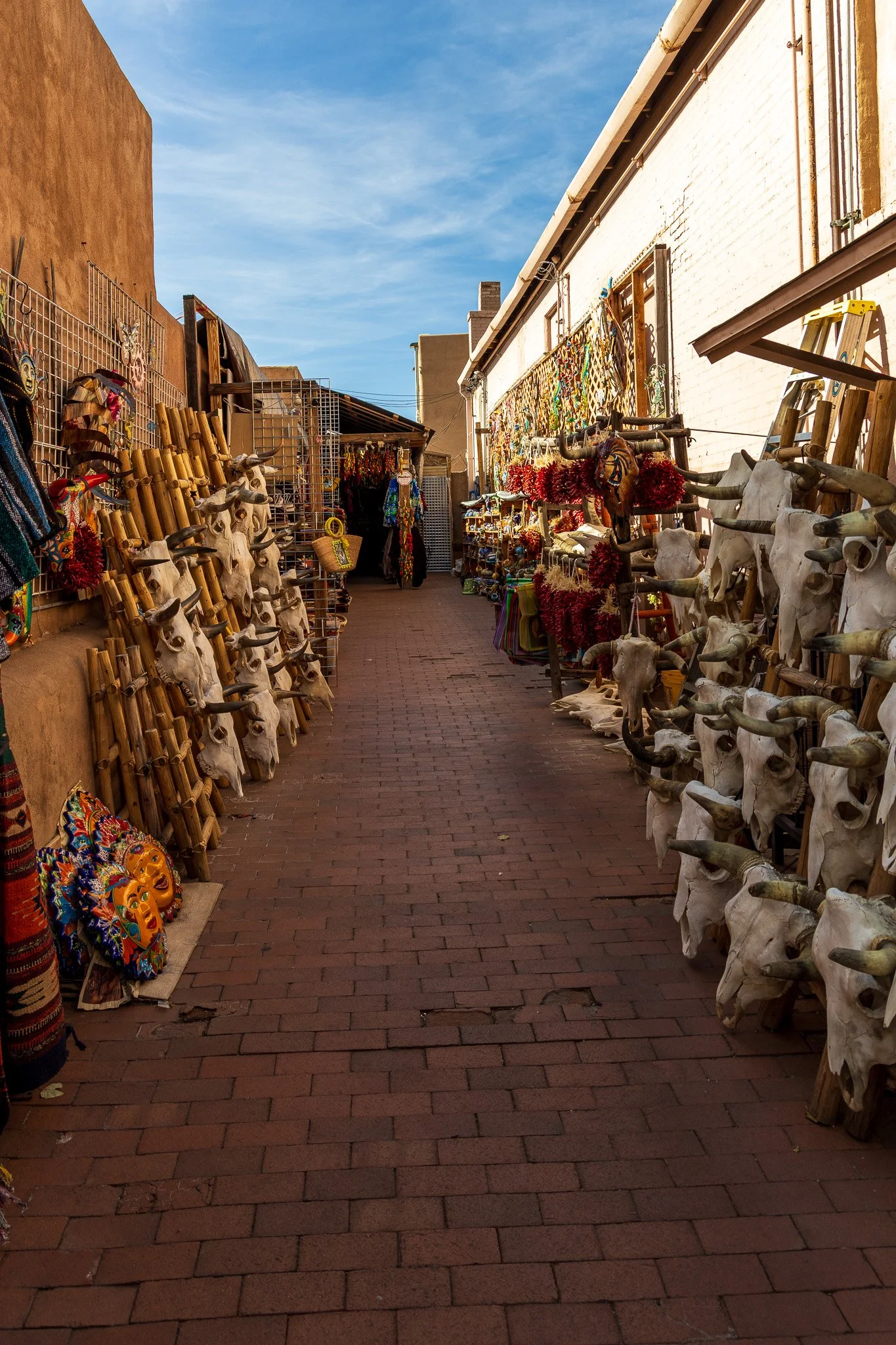
Visually, Santa Fe rewards anyone willing to slow down. Curved adobe walls catch shadow at angles that shift every hour. Turquoise window frames pop against earth-toned stucco. Hand-carved wooden doors hide in plain sight. Chile ristras hang from vigas like something between decoration and still life. And when the Sangre de Cristo Mountains glow pink at sunrise, the entire city feels briefly suspended.
In this Photography Guide to Santa Fe, I share the places and experiences that continue to draw me back. You will find my favorite photography locations, guidance on when and where to shoot, practical travel tips, and gear recommendations, along with cultural insights to help you explore and photograph Santa Fe with confidence, respect, and ease.
Photographer's Notes
Before you go, here are my own takeaways.
Favorite Season: Fall
Favorite Location: Santa Fe Plaza, early morning before the shops open
Favorite Hotel: Inn of the Five Graces
Favorite Restaurant: Café Pasqual's
Favorite Café: Iconik Coffee Roasters
Favorite Lens: 24-70mm f/2.8
Would I Return? 100 percent. I loved the adobe architecture everywhere I looked.
Where to Stay in Santa Fe
Choosing the right place to stay in Santa Fe shapes your entire experience. The best properties are within walking distance of the Plaza and Canyon Road, allowing you to step outside and immediately immerse yourself in adobe architecture, galleries, and golden light.

Inn at Five Graces
Luxury Hotels in Santa Fe
Inn of the Five Graces - This is where we stayed, and it is unlike any hotel I have encountered. The Inn is a series of intimate casitas near the Plaza, each decorated with textiles, ceramics, and objects from around the world in a style that feels deeply personal rather than designed. The rooms are small by luxury hotel standards and perfect for exactly that reason. You feel like you are staying in the home of someone who has spent a lifetime traveling and collecting. Quiet courtyard, immediate proximity to the Plaza and Canyon Road, and a quality of atmosphere that does not exist at larger properties. Our first choice in Santa Fe.
Rosewood Inn of the Anasazi - Intimate and refined. Located just steps from the Plaza, this property blends Southwestern design with understated elegance. The rooms feature handcrafted woodwork and rich textures that echo the region’s artistic heritage.
Four Seasons Resort Rancho Encantado Santa Fe - Set in the foothills of the Sangre de Cristo Mountains, this resort offers stunning views and a serene atmosphere.

Loretto Chapel
Mid-Level Hotels in Santa Fe
Hotel Santa Fe - The city’s only Native American-owned hotel, offering comfortable accommodations and a rich cultural experience.
Old Santa Fe Inn - Located near the Plaza, this charming inn combines modern amenities with traditional Southwestern decor.
Inn on the Alameda - A cozy hotel offering a complimentary breakfast and a great location near Canyon Road’s art galleries.
How Long Should I Stay in Santa Fe?
To truly appreciate Santa Fe, plan to stay at least four to five days.
This city rewards slow exploration. You will want time to wander the historic Plaza in soft morning light, linger along Canyon Road without rushing, and return to locations at different times of day as the light shifts.
Santa Fe is not a place to check off quickly. It is a place to revisit.
One morning, you might photograph long shadows stretching across adobe walls. Another evening, you may drive out toward the foothills of the Sangre de Cristo Mountains to capture a dramatic desert sunset. Midday hours can be spent inside galleries, museums, or simply enjoying the culinary scene.
Four to five days gives you rhythm. It gives you flexibility in case of changing weather. It gives you space to shoot, review, adjust, and go back out again.
Santa Fe unfolds slowly. The more time you give it, the more visually rewarding it becomes.

Best Time of Year to Visit Santa Fe
The best time to visit Santa Fe is during the spring (March to May) and fall (September to November). During these months, the weather is pleasant, and the city hosts numerous festivals and events. Summer is also popular but can be crowded, while winter offers a quieter experience with opportunities for skiing in nearby mountains.
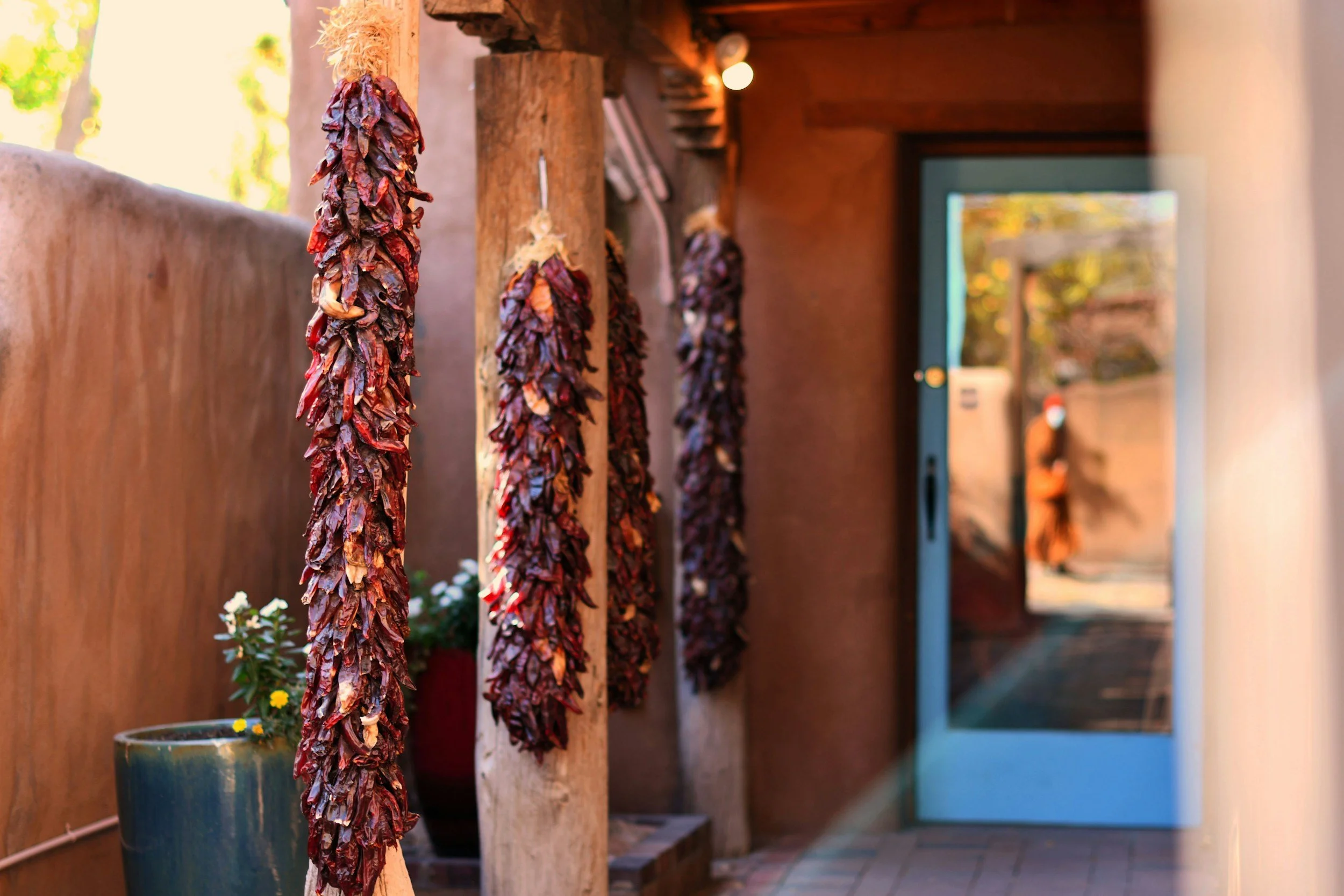
Red Chillies
Getting Around Santa Fe
Santa Fe is a small city, and the best way to get around is on foot or by bike. Uber and Lyft are available for longer trips, and there is also a reliable public transportation system. Renting a car can be useful if you plan to explore the surrounding areas and natural attractions.
Where to Eat Santa Fe
Santa Fe is renowned for its culinary scene, blending traditional Southwestern flavors with contemporary twists. Here are some must-visit dining spots:
The Shed - Famous for its traditional New Mexican cuisine and award-winning red chile.
Cafe Pasqual’s - A local favorite known for its organic, farm-to-table dishes.
Geronimo - Offers an exquisite fine dining experience with a Southwestern flair.
La Plazuela - Located in the historic La Fonda on the Plaza, serving delicious Southwestern and Mexican cuisine.
Santa Fe Bite - Known for its legendary green chile cheeseburger.
Coffee Shops in Santa Fe
Iconik Coffee Roasters - A popular spot for artisanal coffee and a relaxed atmosphere.
Java Joe’s - A cozy café offering great coffee and a welcoming vibe.

Photography Gear to Bring for Santa Fe
Santa Fe rewards versatility. You will move from tight architectural details to sweeping mountain views within minutes. Pack gear that allows you to adapt quickly to changing light and scenes.
Camera Bodies
High-resolution bodies such as the Canon EOS R5 Mark II, Sony A7R V, or Nikon Z8 perform beautifully here. Santa Fe sits at 7,000 feet above sea level, the highest capital city in the United States. Factor the altitude into your physical exertion planning, especially on early morning shoots outside the city.
That said, any modern mirrorless or DSLR will do well. The key is how you use the light.
Lenses
Wide Angle, 16 to 35mm
Perfect for Adobe architecture, dramatic skies, and environmental portraits of the Plaza. This lens shines at sunrise and sunset when you want to include sky color and foreground texture.
Standard Zoom, 24 to 70mm
Your workhorse. Ideal for street scenes, galleries, doorways, and layered compositions along Canyon Road.
Telephoto, 70 to 200mm
Excellent for compressing mountain backdrops, isolating architectural details, and capturing candid moments from a distance. This focal range works beautifully with the Sangre de Cristo Mountains glowing at sunset.
Tripod
Highly recommended. Santa Fe’s best light happens early and late. A tripod lets you keep ISO low, preserve detail, and experiment with longer exposures during the blue hour.
Filters
A circular polarizer helps deepen blue skies and reduce glare on adobe walls.
Neutral density filters are useful if you want longer exposures in bright desert light, especially for creative motion in clouds.

Best Photography Locations in Santa Fe
Santa Fe Plaza
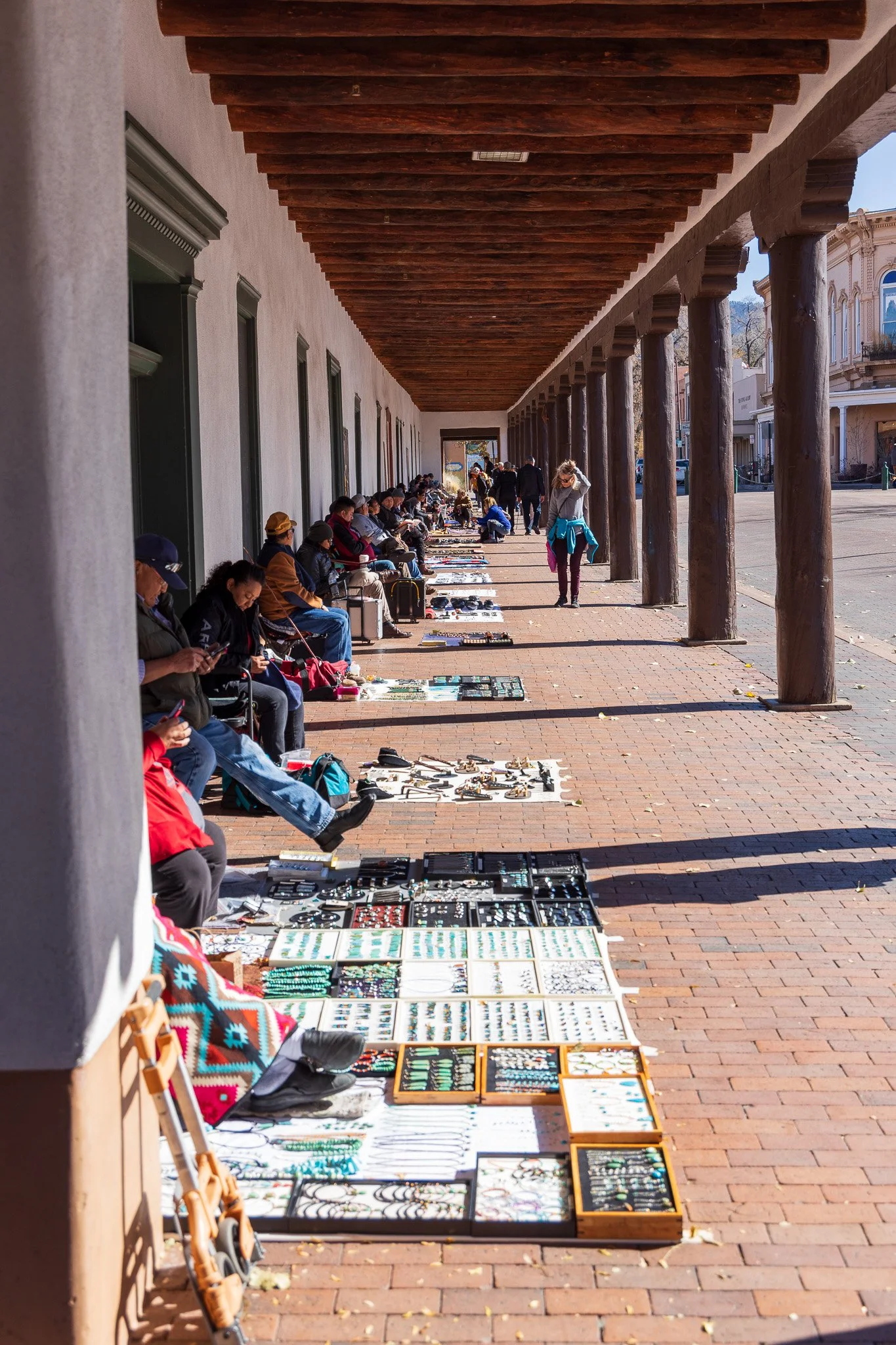
The historic heart of the city and its most photographed public space, framed by adobe architecture, the Palace of the Governors, and a steady rhythm of local life throughout the day.
📷 Pro Tip: Come early, before the shops open and the tour groups arrive. The long shadows that stretch across the portal columns in that first hour are the Plaza at its best, quiet, warm-lit, and genuinely still. A 24-70mm covers the architecture and street life comfortably; switch to a 16-35mm if you want to include more sky and building scale in one frame.
Best time: Early morning. Access: Free, public plaza.
Loretto Chapel
Famous for its "miraculous" spiral staircase, built without a center support or nails, and often attributed to divine or unexplained craftsmanship. The Gothic Revival interior is a striking contrast to the adobe architecture found throughout the rest of the city.
📷 Pro Tip: Photograph the staircase with a wide-angle from the base looking up, this exaggerates the spiral and makes for the strongest single composition. Interior light is soft but manageable without flash; a fast lens helps if you want to shoot handheld. Weekday mornings tend to be quieter than weekend afternoons.
Best time: Weekday mornings. Access: Small entry fee.

Loretto Church
Canyon Road
A half-mile stretch lined with more than 100 art galleries and sculpture gardens, one of the highest concentrations of art commerce in the country and a genuinely rich street-photography environment in its own right.
📷 Pro Tip: Walk it slowly, this isn't a street to rush. A 24-70mm handles both the gallery storefronts and the sculpture gardens tucked behind them; a 35mm prime suits the more candid, street-level work if people and doorways interest you as much as the art. Late afternoon light warms the adobe walls nicely for wider shots of the street itself.
Best time: Late afternoon. Access: Free, public street.
Cathedral Basilica of St. Francis of Assisi
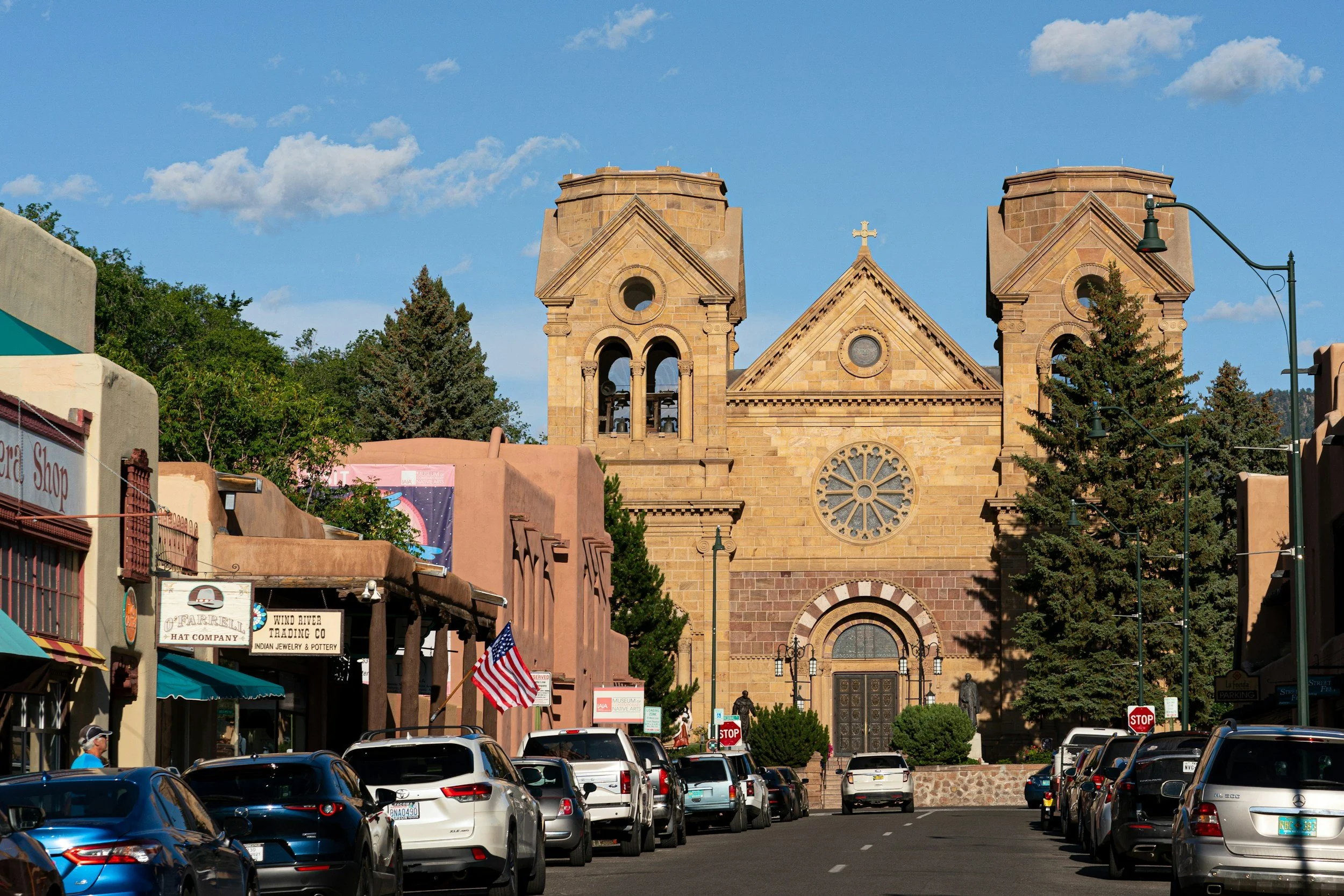
A Romanesque Revival cathedral that stands out sharply against Santa Fe's adobe-dominated skyline, its stone facade and twin towers a deliberate departure from the Pueblo Revival style found almost everywhere else in the city.
📷 Pro Tip: Shoot the facade in late afternoon, when the light angles onto the stone and picks up texture the flatter midday sun misses. A 24-70mm handles the full facade from across the plaza in front; step inside for the stained glass and vaulted interior if photography is permitted during your visit.
Best time: Late afternoon. Access: Free exterior; respectful entry to the interior.
Meow Wolf
An immersive, boundary-pushing art installation unlike anything else in Santa Fe's otherwise historic art scene, bold, maximalist, and built for exploration rather than passive viewing.
📷 Pro Tip: Bring a fast, wide lens, interior lighting is dramatic and often colored, which makes for striking images but requires flexibility with white balance and exposure. Shoot handheld and move through the space slowly, the installation rewards genuine exploration over a rushed pass.
Best time: Any time; fewer crowds on weekday mornings. Access: Paid entry.
Museum Hill
Home to several of Santa Fe's best museums, set on landscaped grounds with sweeping views back toward the city and the surrounding mountains.
📷 Pro Tip: Treat this as a half-day outing rather than a quick stop, the grounds themselves are worth walking beyond the museum interiors. A 24-70mm covers both the architecture and the mountain views; golden hour adds real warmth to the adobe-toned buildings.
Best time: Late afternoon. Access: Free grounds; paid museum entry.

New Mexico Museum of Art
Randall Davey Audubon Center
A quieter nature-focused stop at the edge of the city, good for bird and wildlife photography in a setting that feels far removed from the Plaza's density.
📷 Pro Tip: Bring a telephoto, 100-400mm or similar, for bird photography along the trails. Morning is best for both light and wildlife activity. This is a genuine change of pace from the rest of the guide, worth building into a slower day.
Best time: Morning. Access: Small entry fee.
Santa Fe Railyard
An eclectic district mixing art, food, and culture, including a working farmers market and a genuinely different visual texture than the historic Plaza area.
📷 Pro Tip: Visit on a Saturday morning if the farmers market timing works for your trip, it adds real life and color to what would otherwise be a quieter industrial-turned-cultural district. A 24-70mm covers the market and architecture equally well.
Best time: Saturday morning, for the farmers market. Access: Free, public district.
Bandelier National Monument
Just outside the city, Bandelier offers ancient Ancestral Puebloan cliff dwellings and dramatic canyon landscapes, a completely different subject than anything found within Santa Fe itself.
📷 Pro Tip: Give this a half day minimum, it's roughly an hour's drive from the Plaza and deserves unhurried time once you're there. A 16-35mm captures the scale of the canyon and cliff dwellings together; a 24-70mm works for closer architectural detail on the dwellings themselves. Morning light works best for the canyon walls.
Best time: Morning. Access: Paid entry; shuttle required during peak season.

Bandolier National Park
Santa Fe Opera House
An open-air venue set on a hilltop nine miles north of the Plaza, with sweeping views of the Jemez Mountains and the Rio Grande Valley. At sunset, the stage lights up against a sky that shifts from gold to crimson to deep blue. Even when no performance is running, the building and the setting are extraordinary to photograph, one of the most underrated photography locations near Santa Fe.
📷 Pro Tip: Arrive well before sunset to secure a good vantage point and watch the full color transition across the sky. A 16-35mm captures the building against the mountain backdrop; a 70-200mm compresses the Jemez range for a more dramatic, layered composition.
Best time: Sunset. Access: Check current tour and event schedules.
Special Festivals and Holidays
Santa Fe hosts numerous festivals throughout the year, including the Santa Fe Indian Market in August, which celebrates Native American arts and culture, and the Santa Fe International Folk Art Market in July. The Santa Fe Fiesta in September is the city’s oldest celebration, featuring parades, music, and traditional dances.
Frequently Asked Questions About Visiting Santa Fe
Is Santa Fe expensive?
It can be, especially the standout restaurants and the Inn of the Five Graces, but there's real range. Casual spots and the farmers market at the Railyard let you experience the city well without a high-end price tag.
Is Santa Fe walkable?
Yes, largely. The Plaza and Canyon Road are both easily walkable from most downtown hotels. A car becomes useful mainly for day trips like Bandelier National Monument or the Santa Fe Opera House.
Does the altitude affect visitors?
Yes, Santa Fe sits at 7,000 feet, the highest state capital in the US. Factor this into your physical exertion planning, especially on early morning shoots, and give yourself a day to acclimate if you're arriving from sea level.
What are the best photo spots in Santa Fe?
The Plaza at first light, Canyon Road's galleries in late afternoon, and the Santa Fe Opera House at sunset are three that consistently deliver. The full list with Pro Tips is above.
Can you fly a drone in Santa Fe?
Check current FAA and local regulations before flying, particularly around the historic Plaza district and any museum or government properties, which often carry additional restrictions.
What surprised you most about Santa Fe?
Standing on the Plaza early one morning, before the shops opened and the tour groups arrived, watching long shadows stretch across the portal columns with nothing but wind for sound. I stood there longer than I needed to. That's the version of Santa Fe I keep coming back for.
How many days do you need in Santa Fe?
Four to five days. This is a city that rewards slow exploration and returning to locations at different times of day, not one to check off quickly.
Is Santa Fe worth combining with Bosque del Apache?
Yes, it's about a two-hour drive south and one of the most extraordinary wildlife photography destinations in North America, especially during the November crane migration. A natural pairing for a New Mexico photography trip.
Final Thoughts
Santa Fe stayed with me long after I left. That is not something I say about every destination.
What lingers is not just the light, though the light genuinely is extraordinary. It is the feeling that a city this small has made a deliberate choice to take art, culture, and craft seriously. You see it in the architecture, the food, the galleries, and the way people talk about where they live. Santa Fe is proud of itself, and for good reason.
If I had to name one moment, it would be early morning on the Plaza, before the shops opened and before the tour groups arrived, when long shadows stretched across the portal columns and the only sound was wind. I stood there longer than I needed to, just watching the light move. That is the version of Santa Fe I keep coming back for.
Want to improve your photography while exploring some incredible destinations? Join me on one of my photography workshops! You can find all the details, including upcoming destinations and dates, through the links below.
Let's Stay Connected!
More Photography Guides You Might Like
My Photography & Travel Guide to Bosque Del Apache, New Mexico A two-hour drive south of Santa Fe and one of the most extraordinary wildlife photography destinations in North America. Every November, tens of thousands of sandhill cranes and snow geese descend on the refuge, and the sunrises over the water are unlike anything else in the American Southwest. If you are making the trip to Santa Fe, this is worth building into your itinerary.
My Photography & Travel Guide to Washington, DC A city that surprises most photographers who assume they already know it. Monuments, yes. But also historic neighborhoods, murals, world-class museums, and some of the best street photography conditions of any American city. If you are traveling from the East Coast to Santa Fe, this is the guide to read first.
My Photography & Travel Guide to Charleston, South Carolina A different kind of American beauty. Pastel row houses, cobblestone streets, Spanish moss, and a culinary scene that punches far above its size. Charleston and Santa Fe share that quality of making you feel like you arrived somewhere with a genuine identity. Both are worth more time than most people give them.
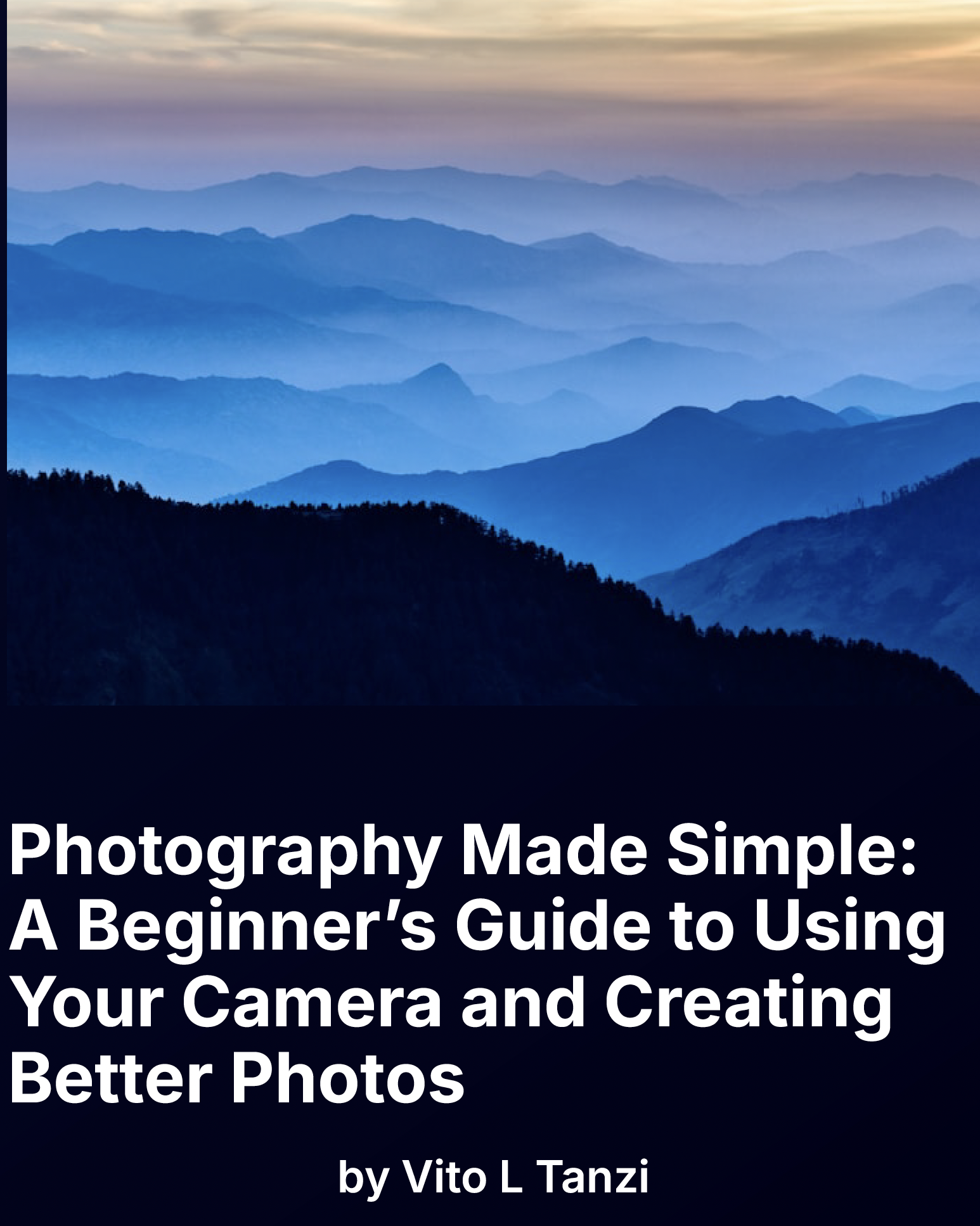
Finally—a beginner-friendly photography guide that makes sense.
If you've ever picked up a camera and thought, "Now what?" this is the book for you.
Photography Made Simple is written for adults who are just starting out and want a clear, encouraging, real-world approach to learning photography. Whether you're using a DSLR, mirrorless, or just your smartphone, this guide walks you through the basics—without the jargon or tech overwhelm.
Inside, you'll learn:
The only camera settings you really need to know to get started
How to shoot sharper, more intentional photos using light and composition
Simple tips for portraits, landscapes, travel, and everyday life
What gear you do (and don’t) need
How to create better photos without upgrading your camera
You’ll also get practical exercises, cheat sheets, and tips for organizing and editing your images—plus the confidence to shoot off Auto Mode for good.
This is not a textbook. It’s a friendly guide to seeing the world with fresh eyes—and finally capturing what you see the way you imagine it.
📸 Format: PDF download
Pages: 100+
Perfect for: Beginners, hobbyists, and anyone ready to take better photos without the stress