St. Louis, Missouri Travel & Photography Guide: Best Photo Spots, Things to Do & Hidden Gems
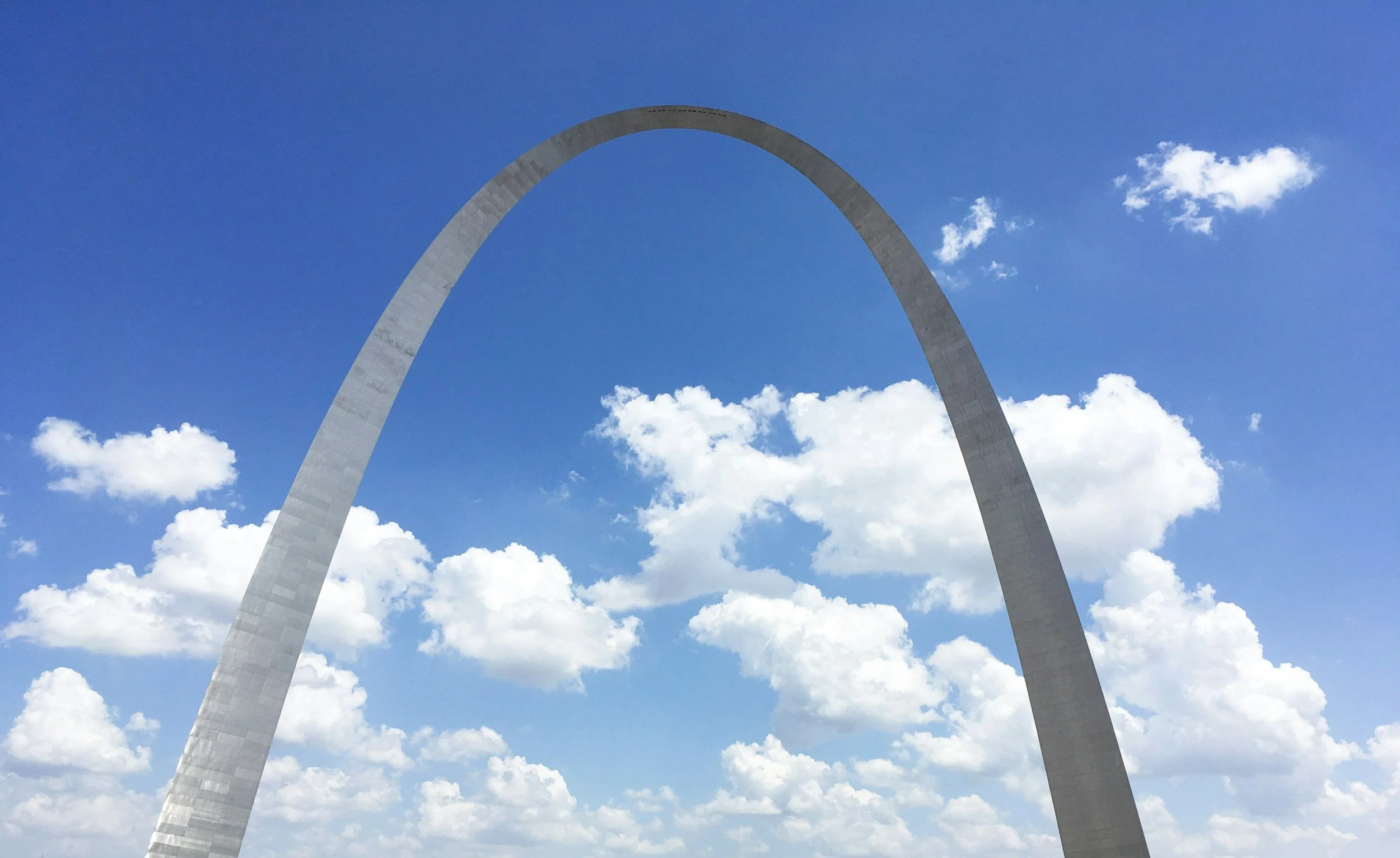
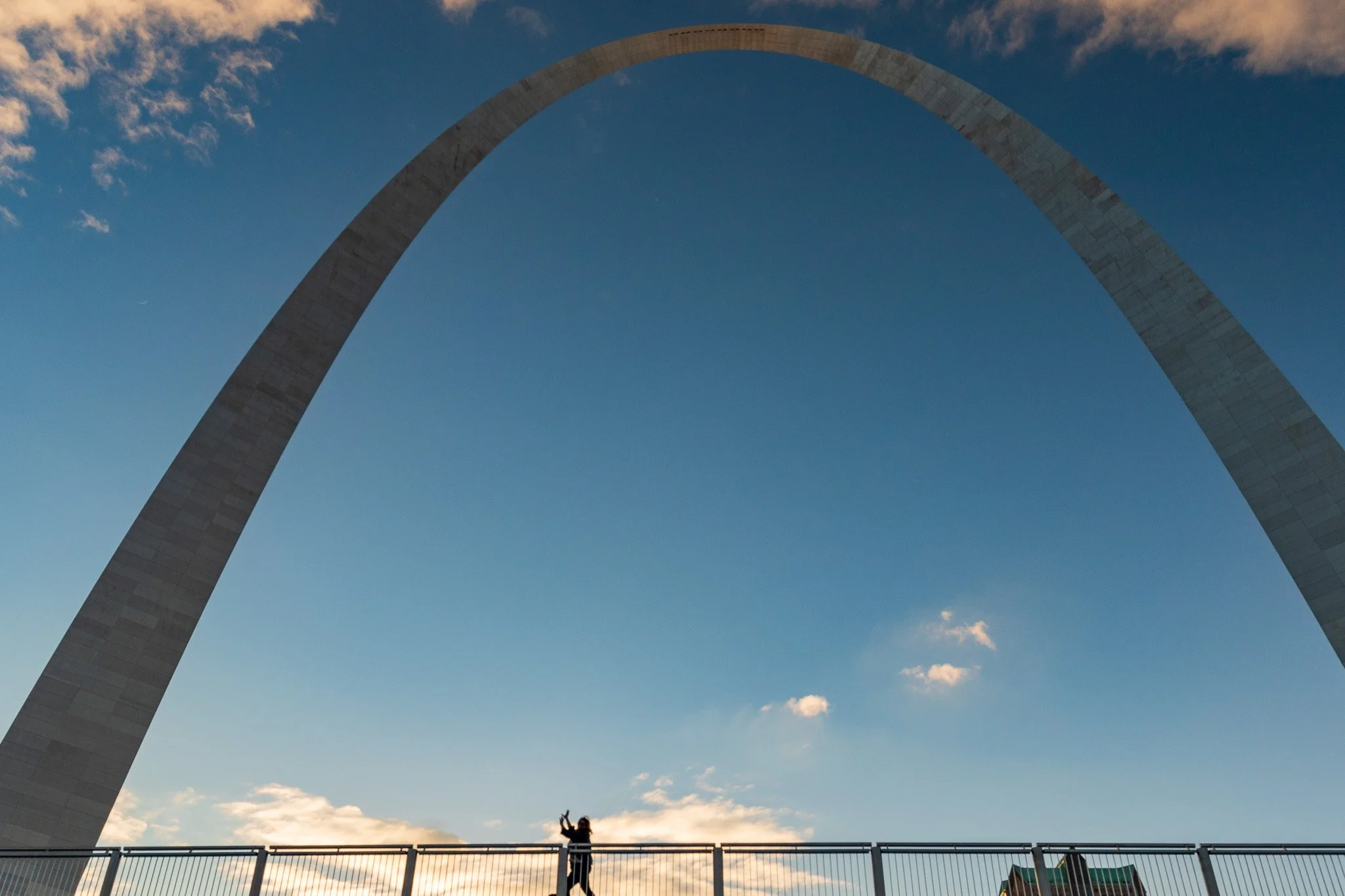
Nothing in St. Louis prepares you for standing under the Gateway Arch.
St. Louis does not beg for your attention. It does not need to. The city earns it the old-fashioned way, through layers of history, genuine Midwestern hospitality, and a photographic range that most travelers completely underestimate.
I have been visiting St. Louis for years, and every trip reminds me why I keep coming back. Yes, the Gateway Arch is everything the photographs suggest, and then some. That clean stainless steel curve rising 630 feet above the Mississippi River is one of the most architecturally audacious statements in American history. But the Arch is really just the opening frame. Downtown gives you strong geometry, reflections in glass towers, and old brick warehouses set against contemporary design. Walk a few blocks in any direction, and the city opens up into something more textured and unexpected. Forest Park, one of the largest urban parks in the United States, offers open meadows, lagoons, and Beaux-Arts museum buildings that reward anyone who shows up before the crowds. The Soulard neighborhood delivers cobblestone streets, iron-railed balconies, and a farmers market that feels more like a weekly neighborhood ritual than a tourist attraction.
Music runs deep here, too. St. Louis is the hometown of Miles Davis and Chuck Berry, and that heritage still pulses through the city's jazz clubs and live music venues. Add in some of the best barbecue in the country, a walkable riverfront, and a local pride that never tips into pretension, and you have a city that feels genuinely worth discovering.
In this Photography Guide to Saint Louis, I share the places and experiences that continue to draw me back. You will find my favorite photography locations, guidance on when and where to shoot, practical travel tips, and gear recommendations, along with cultural insights to help you explore and photograph Saint Louis with confidence, respect, and ease.
Photographer's Notes
Before you go, here are my own takeaways.
Favorite Season: Fall
Favorite Location: The Gateway Arch
Favorite Hotel: The Ritz-Carlton, St. Louis
Favorite Restaurant: Pappy's Smokehouse
Favorite Café: Kaldi's Coffee Roasting Co.
Favorite Lens: 24-70mm f/2.8
Would I Return? Probably not, nothing wrong with it, but I've already been.
Where to Stay in St. Louis
Downtown is the strongest base for first-time visitors. You will be within walking distance of the Gateway Arch, Busch Stadium, the City Museum, and the riverfront. Light on the Arch and the Mississippi is best early in the morning, so being close matters. The Central West End is an excellent alternative if you prefer a neighborhood feel: tree-lined streets, independent restaurants, and easy access to Forest Park. The Loop area near Washington University also works well if you want a lively, walkable scene with good coffee and local character.
Luxury Hotels in St. Louis
Four Seasons Hotel St. Louis sits near the Mississippi River with direct views toward the Gateway Arch. It is the strongest luxury option downtown for photographers who want to step outside at sunrise and be standing at the riverfront within minutes. The rooms facing the river are worth requesting.
The Ritz-Carlton, St. Louis is located in Clayton, just outside the city center. It is polished and quiet, better suited to travelers who prefer a residential neighborhood to downtown energy. The service is consistently excellent.
The Chase Park Plaza Royal Sonesta St. Louis anchors the Central West End with a grand 1920s presence that photographers will appreciate. The architecture of the building itself is worth documenting, and the location puts you steps from Forest Park and some of the city's best dining.
Mid-Level Hotels in St. Louis
The Moonrise Hotel in The Loop is the most photographically interesting mid-range option in the city. The design is deliberately eccentric, the rooftop bar has good views, and the surrounding neighborhood is full of murals, vintage storefronts, and street-level detail that rewards a camera.
Drury Plaza Hotel St. Louis at the Arch places you exactly where you want to be for sunrise sessions. It is comfortable, well-priced, and the location is impossible to beat for photographers making early morning Arch shoots their priority.
Hampton Inn & Suites St. Louis at Forest Park is a solid, reliable option near Forest Park, well-positioned if you plan to spend significant time shooting the park, the Art Museum, or the Delmar Loop. Good value for what it offers.
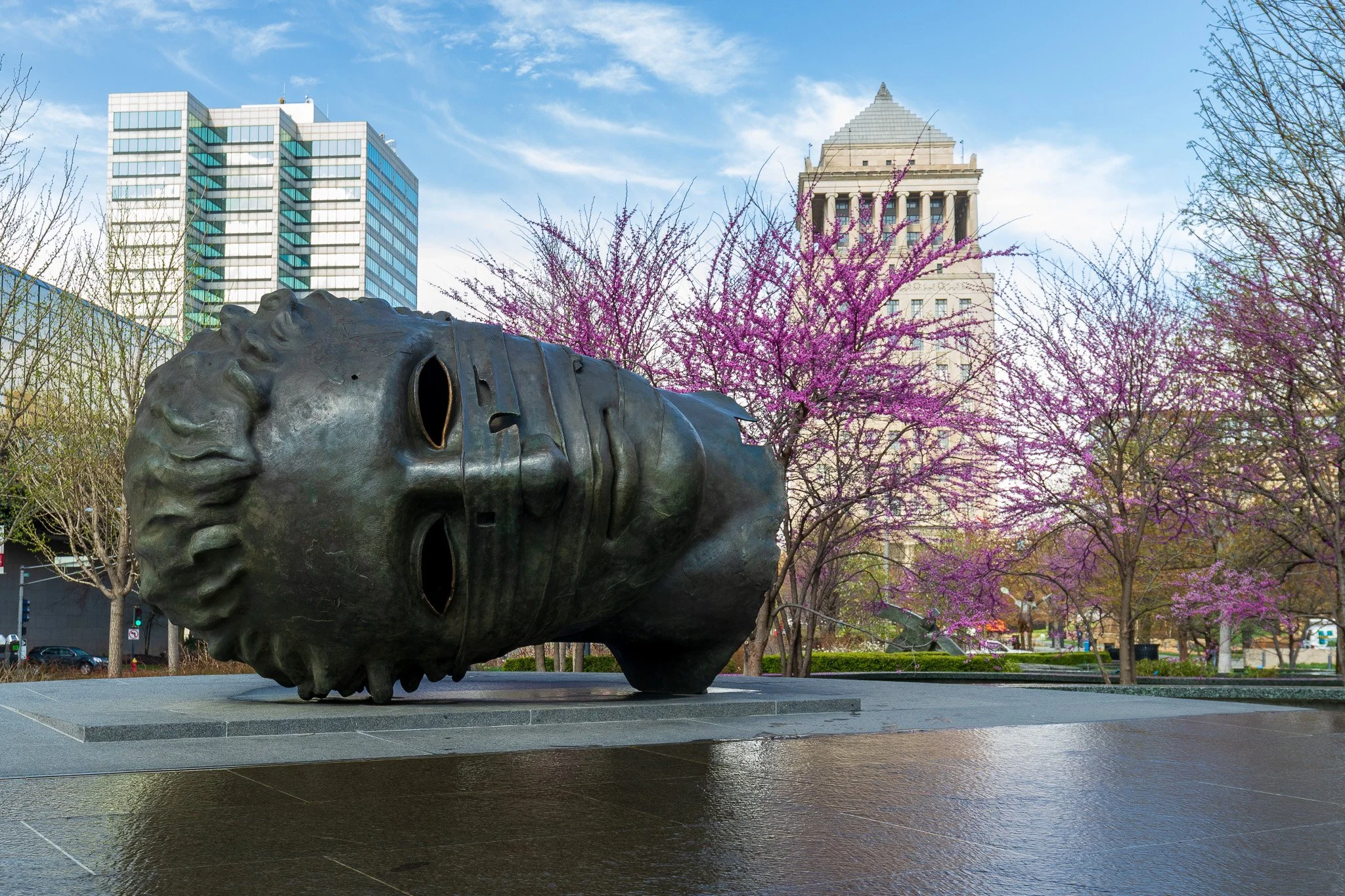
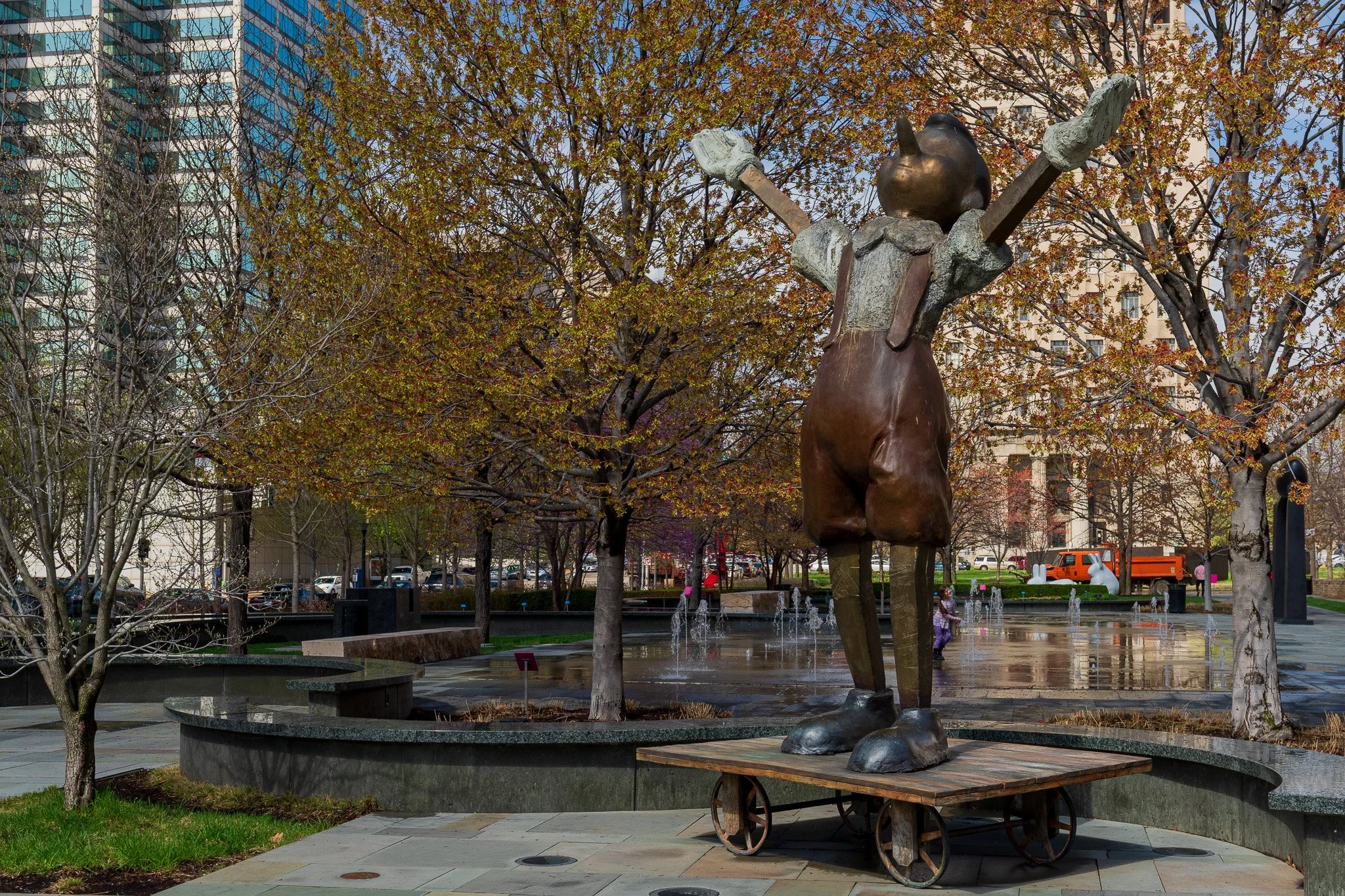
The Downtown has tons of sculptures
How Long Should I Stay in St. Louis
Three days is the sweet spot. That gives you time to shoot the Arch at sunrise and at blue hour, explore Forest Park and the Missouri Botanical Garden at a relaxed pace, wander Soulard and Citygarden, and still leave room for a proper barbecue lunch and live music in the evening.
With a fourth or fifth day, you can venture further: Laumeier Sculpture Park, Lafayette Square, the Tower Grove neighborhood, or a long afternoon in the Central West End. St. Louis is compact enough that you never feel rushed, but layered enough that more time keeps revealing new angles.
A two-day visit is doable if your schedule is tight, but you will feel the constraints at the edges. Prioritize the Arch grounds, Forest Park, and one neighborhood walk.
Best Time of Year to Visit St. Louis
Spring, from April through June, and fall, from September through November, are the best times for photography in St. Louis.
In spring, Forest Park lights up with blooming trees and the Botanical Garden reaches its first colorful peak. The light is soft, the temperatures are comfortable, and the city feels energized after winter. Fall brings warm golden tones that complement the brick architecture throughout Soulard and Lafayette Square, and the late afternoon light on the Arch has a quality that summer rarely matches.
Summer is fully operational, but hot and humid. The crowds are larger, the midday light is harsh, and you will want to shoot early and late. The Arch grounds stay active, and the city's festivals are in full swing, so there is plenty happening; just plan your shooting windows carefully.
Winter is quiet and atmospheric. A fresh snow around the Gateway Arch is one of the more dramatic photography scenarios the city offers, and the reduced crowds make the riverfront feel genuinely serene. Come prepared for cold and be flexible with your schedule
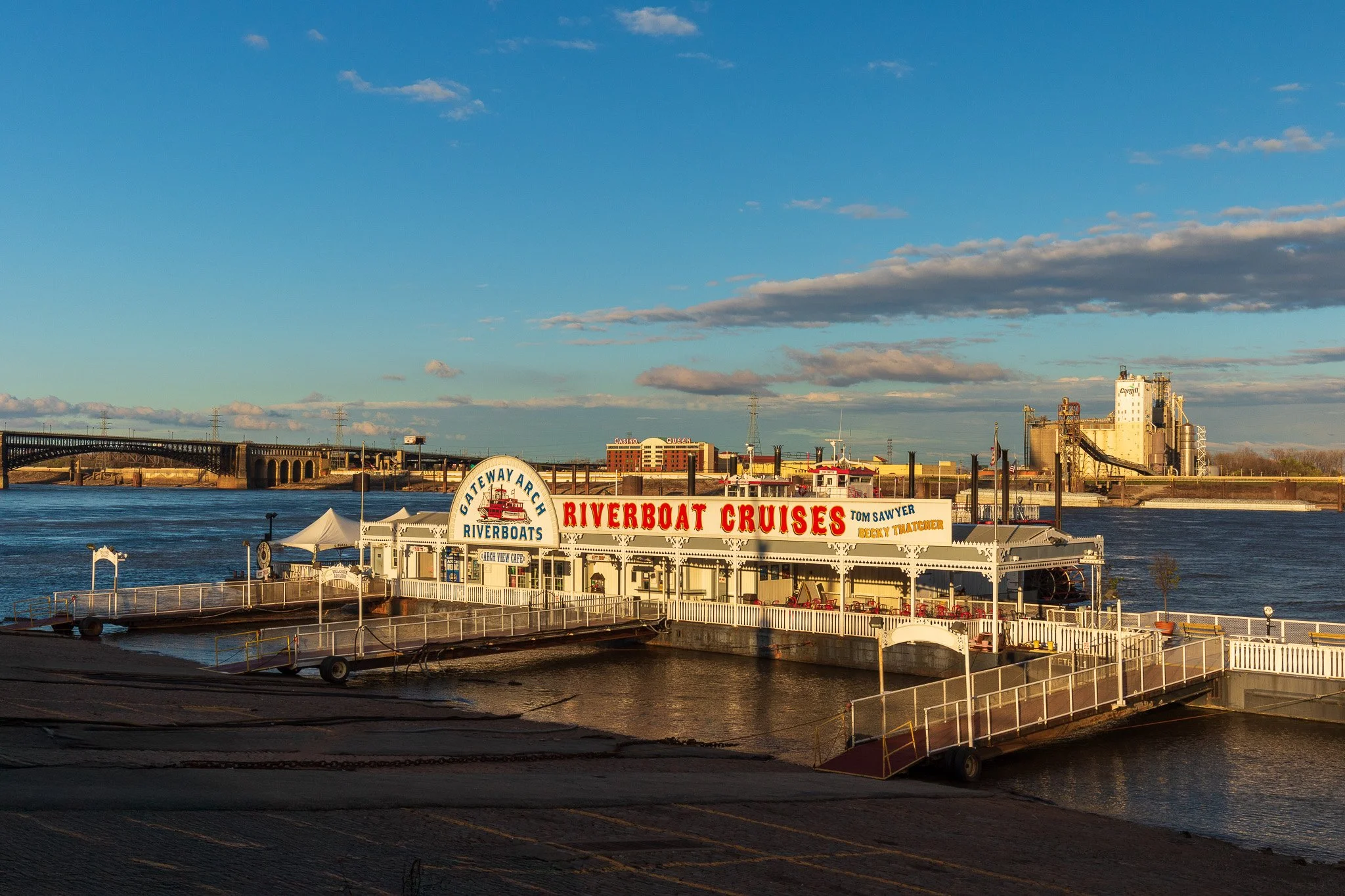
Getting Around St. Louis
St. Louis is easy to navigate if you plan ahead. The MetroLink light rail is reliable and covers the key corridors, including downtown, the Central West End, Forest Park, and the Clayton area. It is clean, affordable, and genuinely useful for getting from your hotel to shooting locations without fighting traffic.
Uber and Lyft are widely available throughout the city and are the simplest option for shorter hops, evening outings, or any time you are carrying gear and do not want to walk. Rideshare response times are fast downtown.
A rental car becomes worth it if you plan to visit Laumeier Sculpture Park, Tower Grove Park, or neighborhoods beyond the MetroLink's reach. Parking is far more manageable here than in larger cities, and many neighborhoods offer street parking without the anxiety you would face in Chicago or New York.
For photographers, the key practical note: the Arch grounds, Soulard, Citygarden, Forest Park, and the Central West End are all walkable from downtown or easily reached by MetroLink. You can cover the city's best photography locations without a car for most of the trip.
Where to Eat in St. Louis
St. Louis punches well above its weight as a food city. The barbecue tradition is real and deeply local, but the broader dining scene has evolved considerably, with serious restaurant cooking across multiple neighborhoods. The Central West End and Cherokee Street are particularly strong for independent restaurants.
Here are a few standout spots.
Pappy's Smokehouse is mandatory if you are visiting for the first time. The ribs have a devoted following for good reason. Go early because they sell out, and the line moves. This is not a gimmick. It is the real thing.
Sidney Street Café in Benton Park is one of the city's more accomplished fine dining destinations. The kitchen works with local ingredients and the menu changes seasonally. It is the kind of place that surprises visitors who arrive expecting only barbecue and baseball.
Tony's has anchored St. Louis fine dining for decades. Classic Italian, exceptional service, and an old-school elegance that still holds up. A good choice for a proper dinner after an evening shoot.
Brasserie by Niche in the Central West End brings a French bistro sensibility to the neighborhood. Comfortable, well-executed, and the kind of spot where you can settle in for a long lunch between shoots.
City Foundry STL is the most useful option if you are exploring with a group or simply want variety. The food hall pulls together some of the city's better independent vendors under one roof, and the industrial space itself is photographically interesting.
Sugarfire Smoke House is worth knowing as a second barbecue option, with a slightly different regional style and equally serious execution.
Coffee in St. Louis
Kaldi's Coffee Roasting Co. is the local standard-bearer, with multiple locations across the city. Excellent beans, knowledgeable staff, and a comfortable space for editing between shoots.
Blueprint Coffee in the Tower Grove neighborhood is the specialty coffee option. The approach is precise and focused, and the space has a calm energy that works well for a morning edit session.
Comet Coffee near the Central West End is a solid neighborhood option. Good espresso, unhurried atmosphere, and the kind of local character that national chains cannot replicate.
Photography Gear to Bring for St. Louis
When packing for Saint Louis, consider bringing the following photography gear:
DSLR and Mirrorless Kit
St. Louis is an architectural and urban photography destination at its core, with strong secondary opportunities in nature and street photography. Pack accordingly.
A wide-angle lens in the 16-35mm range is essential. The Gateway Arch demands it, and the open spaces of Forest Park and Citygarden reward it as well. If you have a 14-24mm or 15mm prime, bring it specifically for interior shots inside the Arch and for the Cathedral Basilica mosaics.
A standard zoom in the 24-70mm range covers the majority of your shooting: street scenes in Soulard, architectural detail downtown, restaurant and food photography, and general exploration. This lens stays on the camera more than any other.
A telephoto in the 70-200mm range is useful for compressing the Arch against the skyline from the Eads Bridge or the Illinois side of the river, and for pulling detail out of the Cathedral Basilica façade. It also works well at Forest Park for isolating subjects against soft backgrounds.
A tripod or Platypod is important here. Blue hour at the Arch grounds, long exposures along the riverfront, and interior cathedral shots all benefit from a stable base. The Arch grounds have restrictions on tripods in certain zones, so check current access rules before you visit.
ND filters (3-stop and 6-stop) are useful for smoothing water on the Mississippi during long exposures and for managing the harsh midday light in summer.
Bring extra batteries. Cold winter mornings will drain them faster than you expect, and summer heat has its own effect on battery performance.
Your camera bodies: the Canon EOS R5 Mark II, Sony A7R V, and Nikon Z8 all perform exceptionally here. The high-resolution sensors on the R5 Mark II and A7R V are particularly valuable for the Cathedral Basilica mosaic work, where you will want to crop in significantly.
iPhone Tips for Saint Louis
The iPhone performs surprisingly well in St. Louis if you use it intentionally.
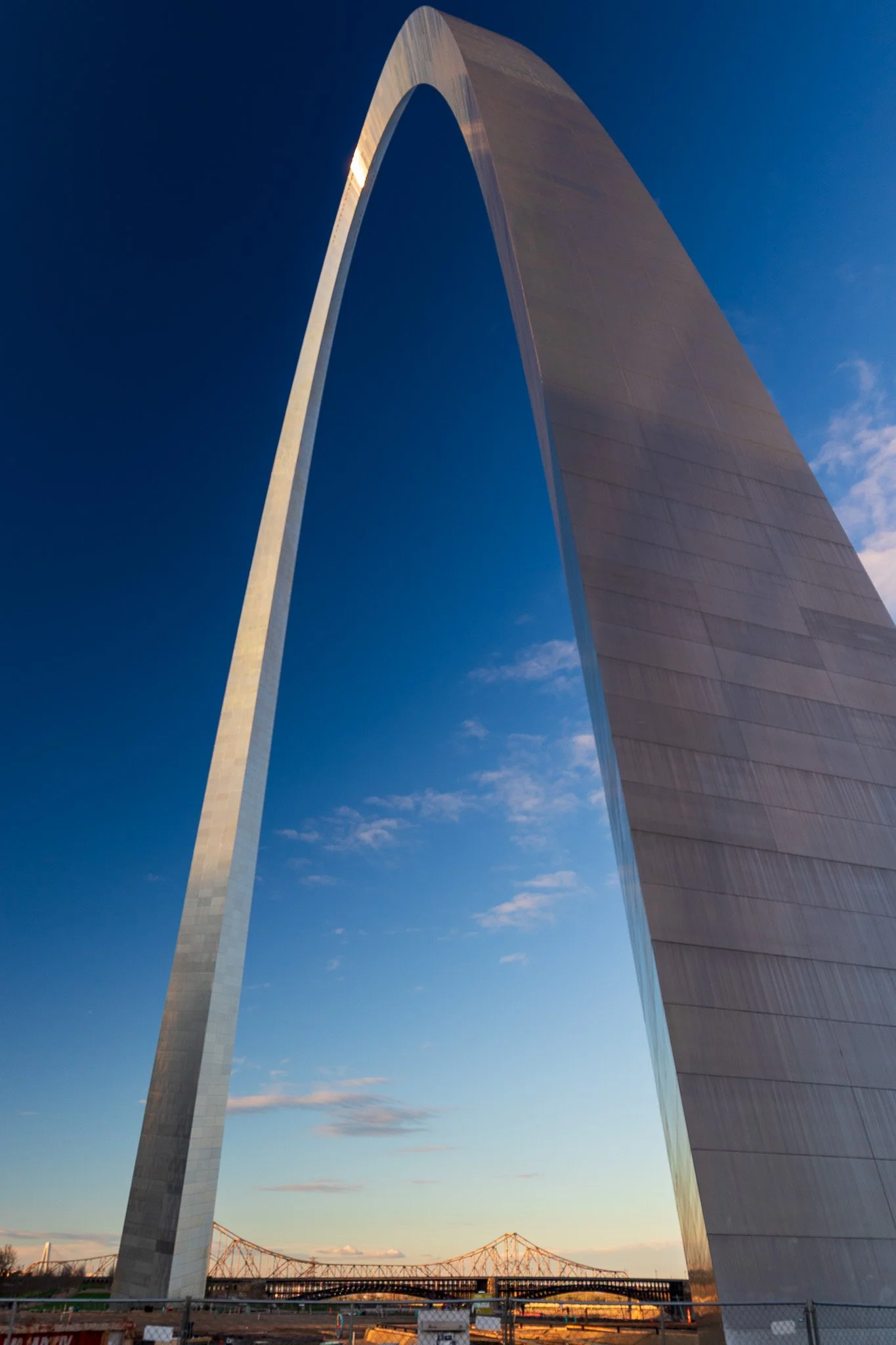
At the Gateway Arch, switch to your ultrawide lens and position yourself close and low. The distortion that would ruin a mirrorless shot actually enhances the Arch's curve when you frame it deliberately from below. Shoot in ProRAW to preserve detail in the bright stainless steel against a blue sky.
At Citygarden, use Portrait Mode on individual sculptures to separate them from the busy urban background. The garden's variety of forms and textures makes it one of the better iPhone portrait subjects in any American city.
In Soulard at the farmers market, standard lens mode with Photographic Styles set to "Warm" captures the light through the historic iron market building beautifully. Shoot candidly and quickly. The market is active and lively and rewards a documentary approach.
For blue hour at the riverfront, use Night Mode with a stable surface. A small travel tripod or even resting the phone on a railing will produce significantly sharper long exposures than handheld.
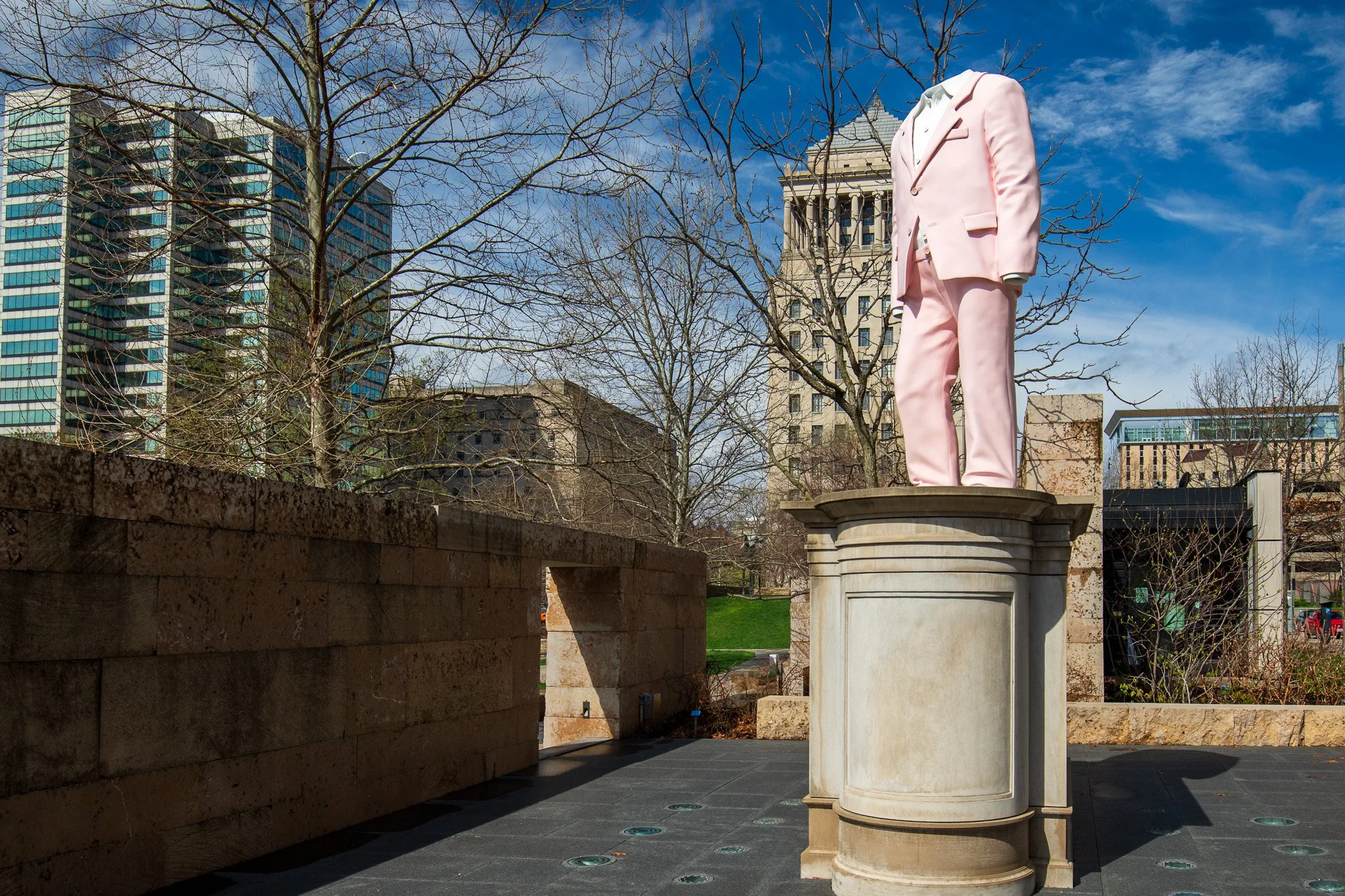
I loved the sculptures
Best Photography Locations in Saint Louis
Gateway Arch - The iconic symbol of Saint Louis, perfect for stunning skyline shots.
Forest Park - One of the largest urban parks in the U.S., offering diverse landscapes and historic buildings.
Saint Louis Art Museum - Beautiful architecture and a great spot for cultural shots.
Cathedral Basilica of Saint Louis - Known for its stunning mosaics and grand interiors.
Citygarden - An urban sculpture park that’s perfect for creative photography.
Missouri Botanical Garden - A beautiful place to capture the beauty of nature.
Union Station - Historic architecture combined with modern attractions.
Soulard Farmers Market - A vibrant spot for capturing local life and colorful scenes.
Laumeier Sculpture Park - Outdoor sculptures set in a natural landscape.
Old Courthouse - A historic building offering beautiful architecture and panoramic views from the top.
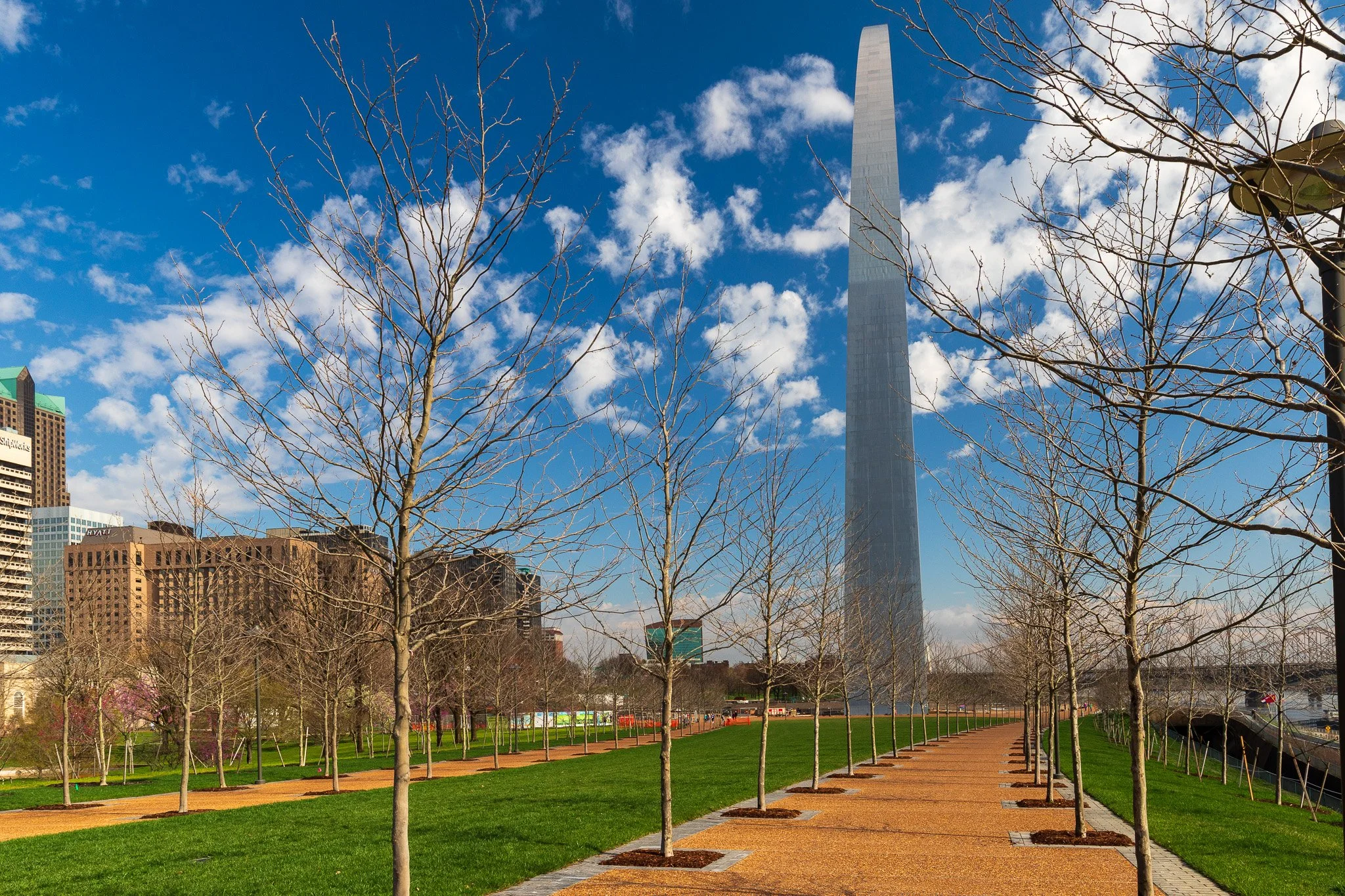
In the End, the Gateway Arch is what you will definitely want to photograph
Festivals and Events
Soulard Mardi Gras takes place in late winter, typically February, and draws one of the largest Mardi Gras celebrations outside of New Orleans. The parade, the costumes, and the neighborhood energy are genuinely worth photographing. Go early in the day to work the parade route before the crowds become overwhelming.
Saint Louis Art Fair in Clayton happens in early fall and transforms the streets of the Clayton neighborhood into an outdoor gallery of juried fine art and craft. It is one of the best-regarded art fairs in the country and pairs beautifully with a walk through the area's restaurants and galleries.
Festival of Nations in late summer celebrates the city's cultural communities through food, music, dance, and traditional clothing. Tower Grove Park hosts it, and the combination of open park space and diverse cultural expression makes it a strong documentary photography opportunity.
Cardinals Baseball at Busch Stadium runs from April through September. A night game at Busch Stadium, with the Gateway Arch visible beyond the outfield, is one of the quintessential St. Louis experiences. The compressed telephoto shot of the Arch rising above the stadium lights is a classic. Bring a 70-200mm and a monopod.
St. Louis Symphony events at Powell Hall in the Grand Center arts district are worth noting for architectural photography. The 1925 theater is beautifully restored, and the arts district neighborhood has murals and galleries that reward an afternoon of street shooting.
Frequently Asked Questions About Visiting St. Louis
Is St. Louis safe?
Yes, for the areas most visitors go, downtown, the Central West End, and Forest Park are all well-trafficked and safe to walk. Normal city awareness applies elsewhere.
Do you need a car in St. Louis?
Not for most of the trip. The Arch grounds, Soulard, Citygarden, Forest Park, and the Central West End are all walkable from downtown or reachable by MetroLink. A car becomes useful only for Laumeier Sculpture Park or Tower Grove Park.
Is St. Louis expensive?
No, it's genuinely affordable. Barbecue at Pappy's costs very little for what you get, and even the standout fine dining, Sidney Street Café, Tony's, is reasonable compared to equivalent cities.
What are the best photo spots in St. Louis?
The Gateway Arch at sunrise, the Cathedral Basilica's mosaic interior, and Soulard Farmers Market in the morning are three that consistently deliver. The full list is above.
Can you fly a drone near the Gateway Arch?
No. The Arch grounds fall under restricted airspace, and drone flying is prohibited there. Check current FAA rules for other parts of the city before flying elsewhere.
What surprised you most about St. Louis?
The size of the Arch. It's enormous, much larger than I expected, and no photograph fully prepares you for standing directly beneath it.
How many days do you need in St. Louis?
Three days is the sweet spot, enough for the Arch at sunrise and blue hour, Forest Park, Soulard, and a proper barbecue lunch without feeling rushed.
Is St. Louis worth combining with a Midwest road trip?
Yes, it works well as a stop between the East Coast and the Southwest. Santa Fe makes a natural westward extension if you're continuing the trip.
Final Thoughts
St. Louis gave me more than I expected every time I visited. There is something refreshing about a city that does not oversell itself. You walk around a corner and find a cathedral covered in mosaics, unlike anything in the country. You show up at a farmers’ market that has been operating for nearly 250 years. You stand beneath an arch that makes every engineering achievement you have ever seen feel ordinary.
The photography here is honest work: strong geometry, real light, a city that has earned its character over time. It does not chase trends. It does not need to.
Want to improve your photography while exploring some incredible destinations? Join me on one of my photography workshops! You can find all the details, including upcoming destinations and dates, through the links below.
Let's Stay Connected!
If you are building a broader American road trip, St. Louis pairs naturally with the guides below.
My Photography & Travel Guide to Washington DC. The two cities share a civic seriousness, a love of monuments, and a photographic depth that rewards multiple visits. From St. Louis, it is a direct flight or a long but scenic drive east.
My Photography & Travel Guide to Charleston, South Carolina. Charleston trades St. Louis's Midwestern directness for Southern grace, but both cities share a passion for architecture, history, and food that makes them natural travel companions.
My Photography & Travel Guide to Santa Fe, New Mexico. If you are heading west from St. Louis, Santa Fe is the logical extension: extraordinary light, a completely different architectural language, and some of the richest photography in the American Southwest.
Finally—a beginner-friendly photography guide that makes sense.
If you've ever picked up a camera and thought, "Now what?" this is the book for you.
Photography Made Simple is written for adults who are just starting out and want a clear, encouraging, real-world approach to learning photography. Whether you're using a DSLR, mirrorless, or just your smartphone, this guide walks you through the basics—without the jargon or tech overwhelm.
Inside, you'll learn:
The only camera settings you really need to know to get started
How to shoot sharper, more intentional photos using light and composition
Simple tips for portraits, landscapes, travel, and everyday life
What gear you do (and don’t) need
How to create better photos without upgrading your camera
You’ll also get practical exercises, cheat sheets, and tips for organizing and editing your images—plus the confidence to shoot off Auto Mode for good.
This is not a textbook. It’s a friendly guide to seeing the world with fresh eyes—and finally capturing what you see the way you imagine it.
📸 Format: PDF download
Pages: 100+
Perfect for: Beginners, hobbyists, and anyone ready to take better photos without the stress