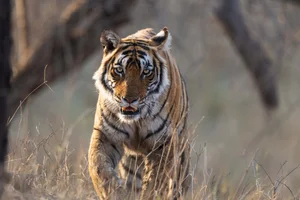
My Winter Wildlife Photography Guide to Ottawa, Canada
Great Grey Owls and Snowy Owls in February
Why February in Ottawa Is Pure Magic
Photographing a Snowy Owl has been on my bucket list for years. Not casually. Obsessively.
There is something about them that feels almost mythical. They look less like birds and more like winter itself, carved from snow and wind. White feathers dusted with shadow. They belong to the Arctic, to silence, to vast open landscapes that most of us only imagine.
Then my phone rang.
It was my friend, Colby Brown.
“Want to come to Canada for a few days and photograph Snowy Owls?”
There are moments in life when you do not check your calendar. You do not pretend to be practical.
You just say yes. Sign me up. Within an hour, I had purchased my ticket to Canada.
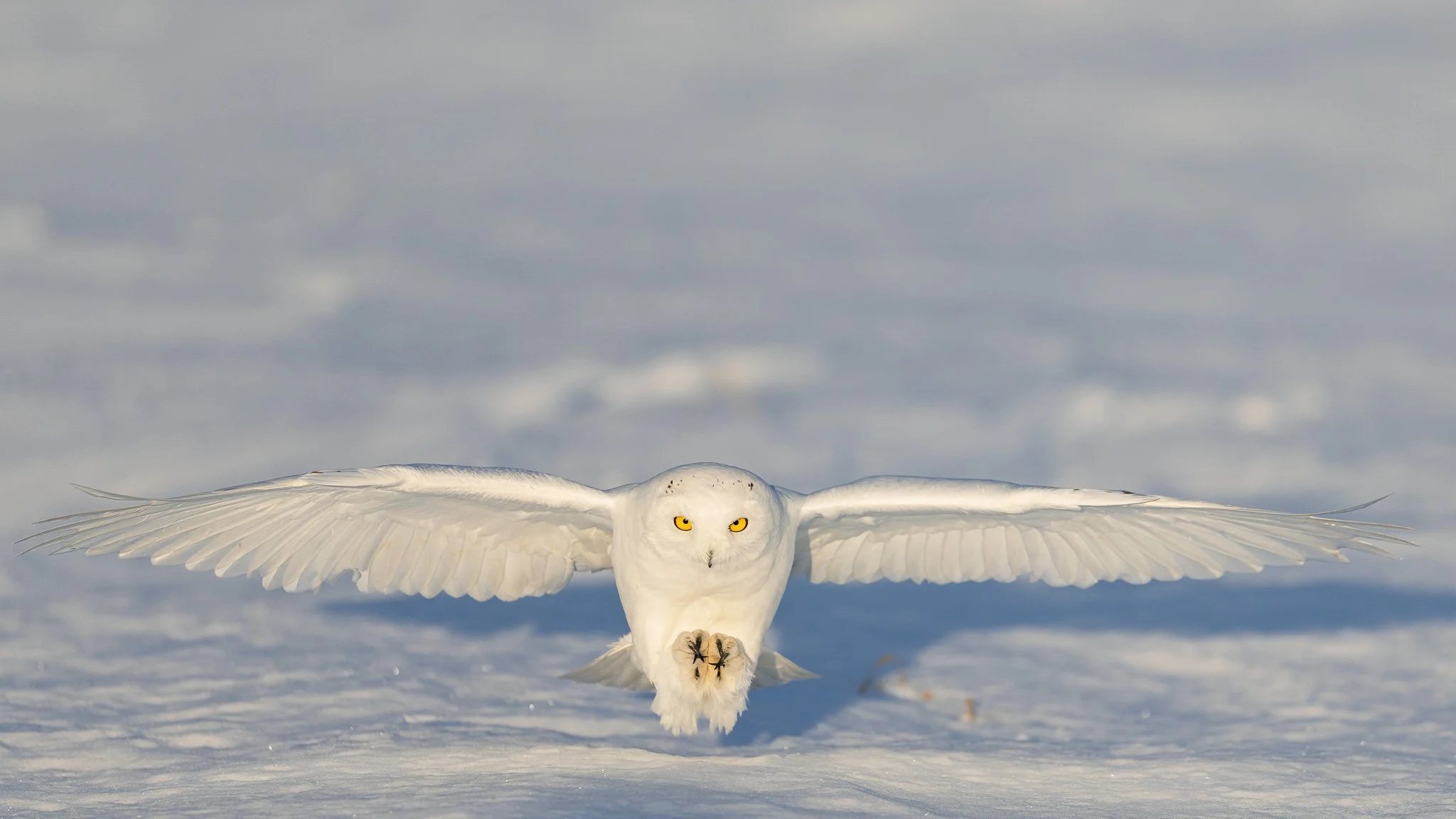
Snowy White Owl at Sunrise
I was beyond excited. This was not just another photography trip. This was a chance to stand in the cold, heart racing, waiting for a white ghost to lift off against a frozen horizon. The kind of experience that reminds you why you fell in love with photography in the first place.
In this guide, I will share where to look, when to go, what gear to bring, what to wear, where to stay, and how to photograph these birds ethically and responsibly. Winter in Ottawa is cold. But for wildlife photographers, it is extraordinary.
Why Ottawa in Winter Works for Owl Photography
Winter in Ottawa gives you something rare as a wildlife photographer, the chance to photograph both the majestic Snowy Owl and the elusive Great Grey Owl in one trip. Snowy Owls feel bold and luminous against open white fields, their yellow eyes piercing through the cold air as they glide low over the snow. Great Grey Owls bring a completely different energy, silent, ancient, almost ghostlike as they hunt beneath the surface of frozen landscapes. Photographing them is not just about checking a species off a list. It is about standing in the cold, earning the moment, and capturing light, behavior, and emotion in its purest form.
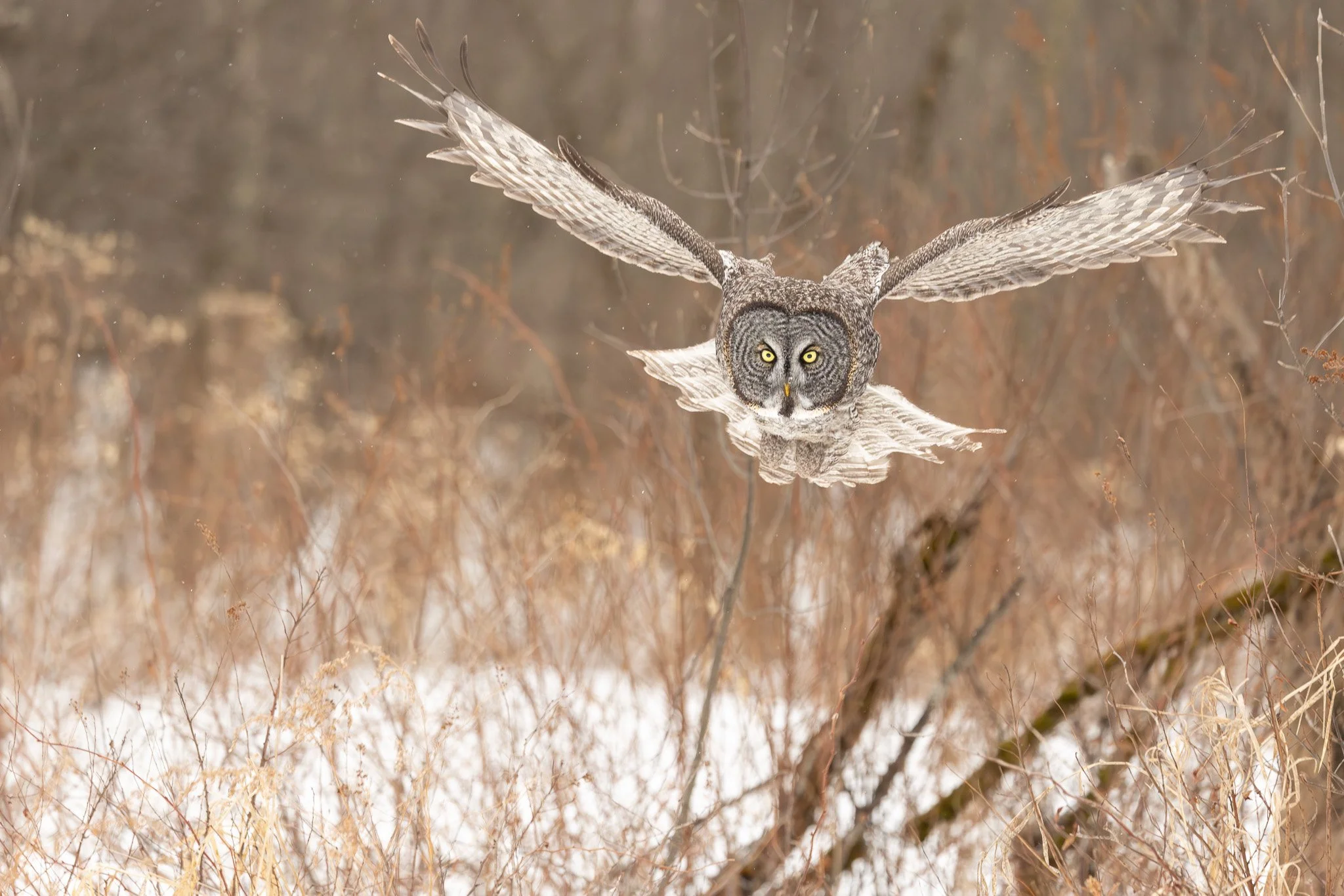
Snow absorbs sound. Your boots crunch softly across frozen ground. Your breath hangs in the air. Then, without warning, a Great Grey Owl glides across an open field, wings stretched wide, silent and deliberate, scanning the snow for movement beneath the surface.
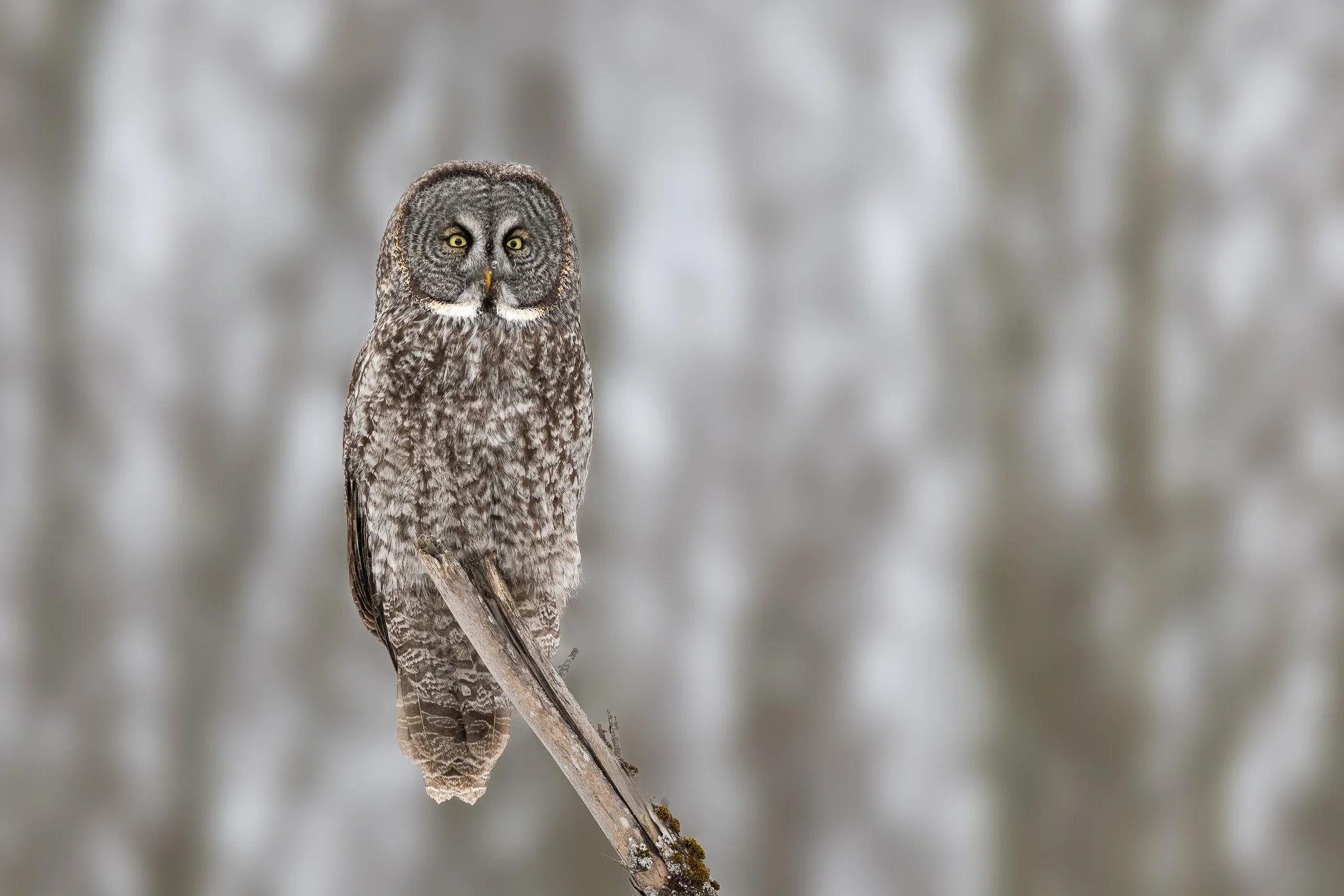
My First View of the Great Grey Owl
Eastern Ontario and Western Quebec offer the perfect mix of open farmland and forest-edge habitat.
Snowy Owls favor wide agricultural fields where they perch on fence posts and scan for prey. Great Grey Owls patrol quieter forest clearings and the edges of mixed woodland. In February, the light stays low all day, giving you extended soft tones in the morning and late afternoon. Even overcast conditions are ideal. Soft light preserves feather detail and prevents harsh contrast on white plumage.
For wildlife photographers, this environment is a gift.
Where to Stay
If your focus is Snowy Owls, convenience matters more than sightseeing. You are not there for museums or trendy restaurants. You are there for sunrise.
That means you want quick access to rural roads and open farmland. Owls often perch on fence posts, utility poles, and low rises just outside small towns. The less time you spend driving out of a city in the dark, the better your chances when first light hits the fields.
I recommend staying on the edge of town rather than in the center. Choose a simple, comfortable hotel with easy parking and quick access to highways leading into farmland. You will be waking up early, layering up in the cold, and heading out before most people pour their first cup of coffee.
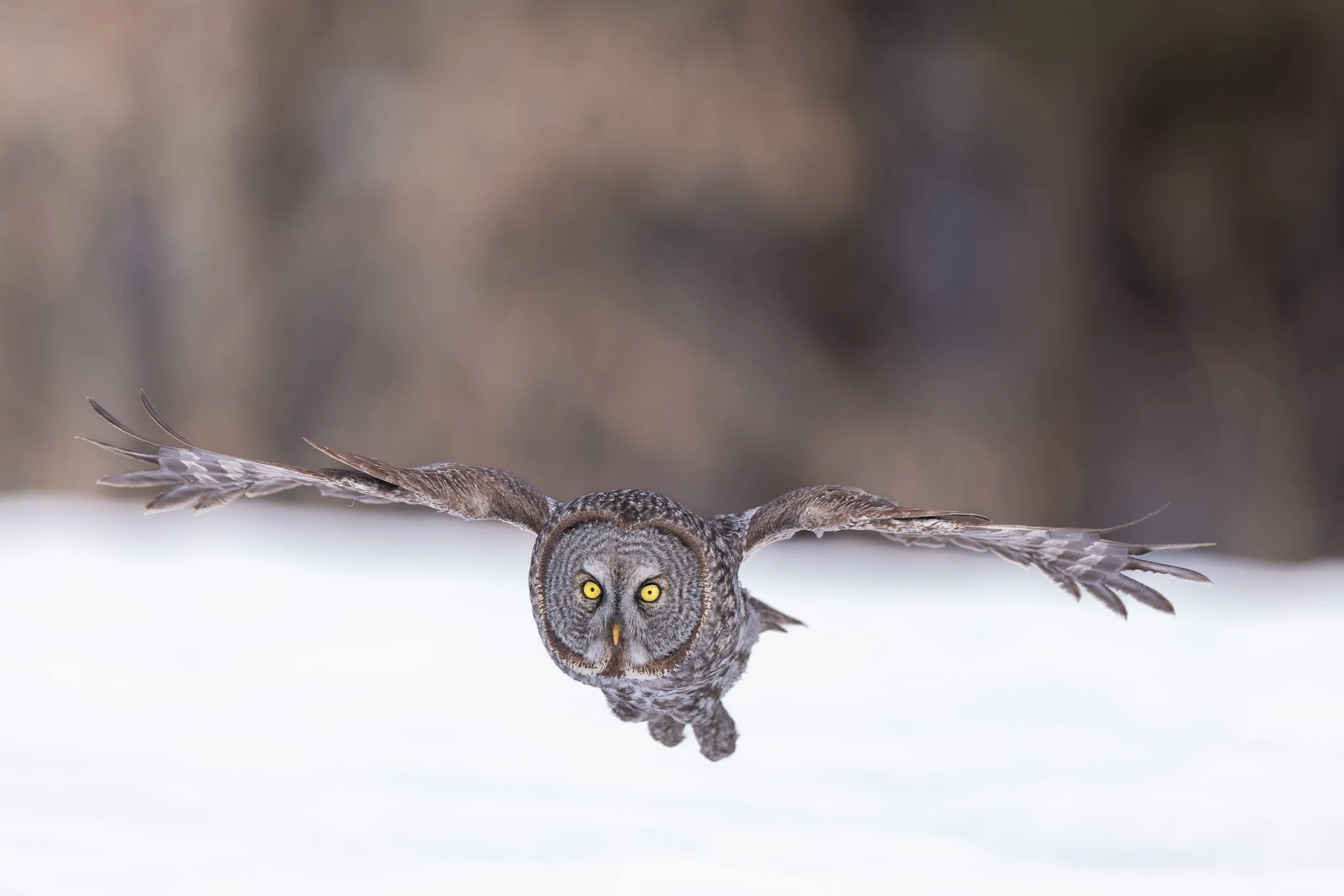
The GGO in flight
Hotels
Fairmont Château Laurier
https://www.fairmont.com/laurier-ottawa/Le Germain Hotel Ottawa
https://www.germainhotels.com/en/le-germain-hotel/ottawaBrookstreet Hotel
https://www.brookstreethotel.com/
Airbnb Option
For this trip, we stayed in a local Airbnb in Wellington Village, and it worked beautifully.
Having space to spread out gear, dry boots, charge batteries, and organize long lenses made winter shooting much easier. If you can find something near farmland or green space on the outskirts of Ottawa, it saves time and reduces early morning stress.
For wildlife photographers spending several days in the field, an Airbnb is often the smartest choice.
You will need a rental car regardless of where you stay.
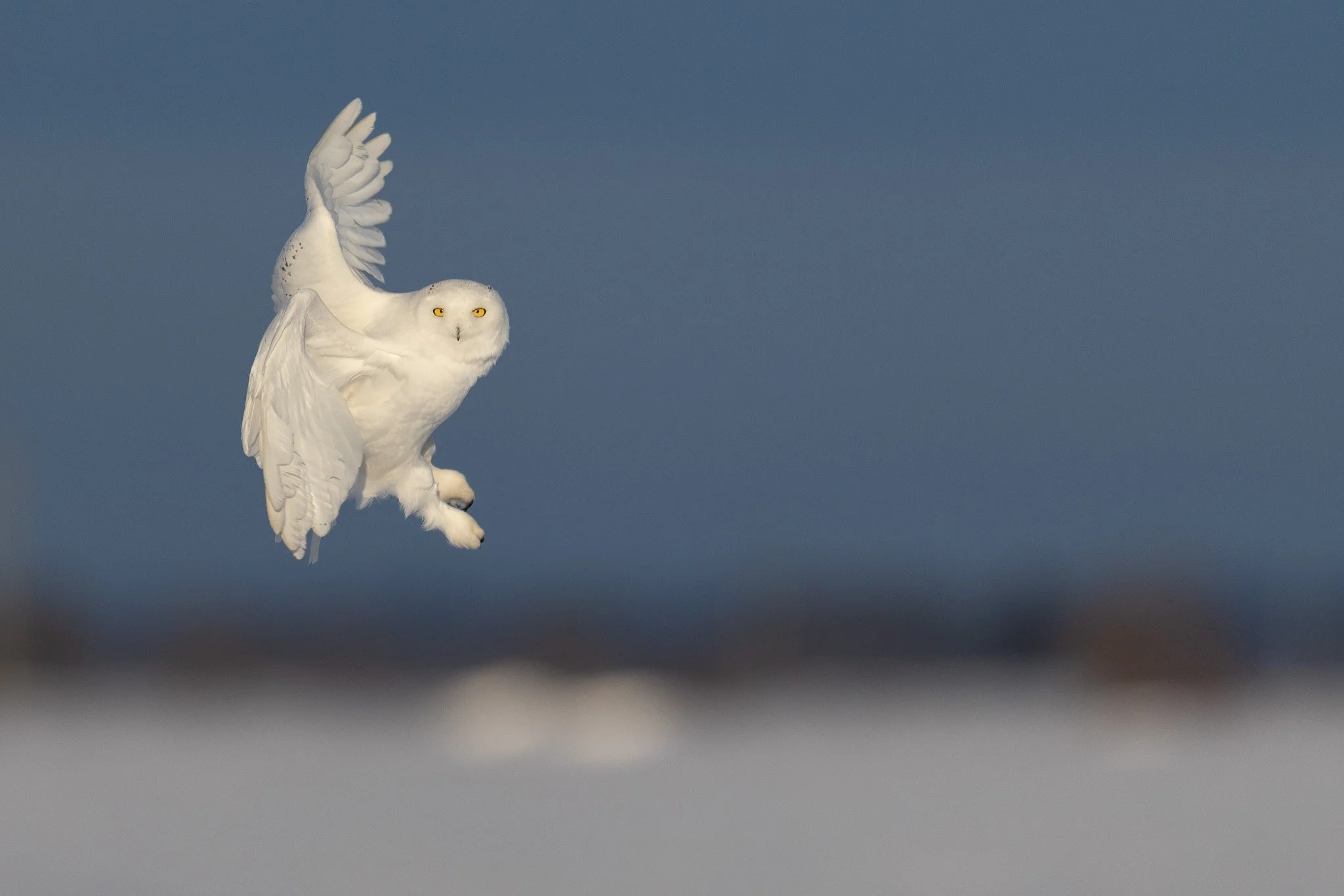
My First Snowy White Owl Encounter
Consider Hiring a Local Expert
If you are serious about photographing Snowy Owls, hire Rob Dobson. Rob is an expert on where to find the Snowy Owls. These birds move constantly. Without local knowledge, you can drive for hours without success.
He is also a genuinely kind person and a wonderful photographer. Calm, patient, and deeply respectful of wildlife.
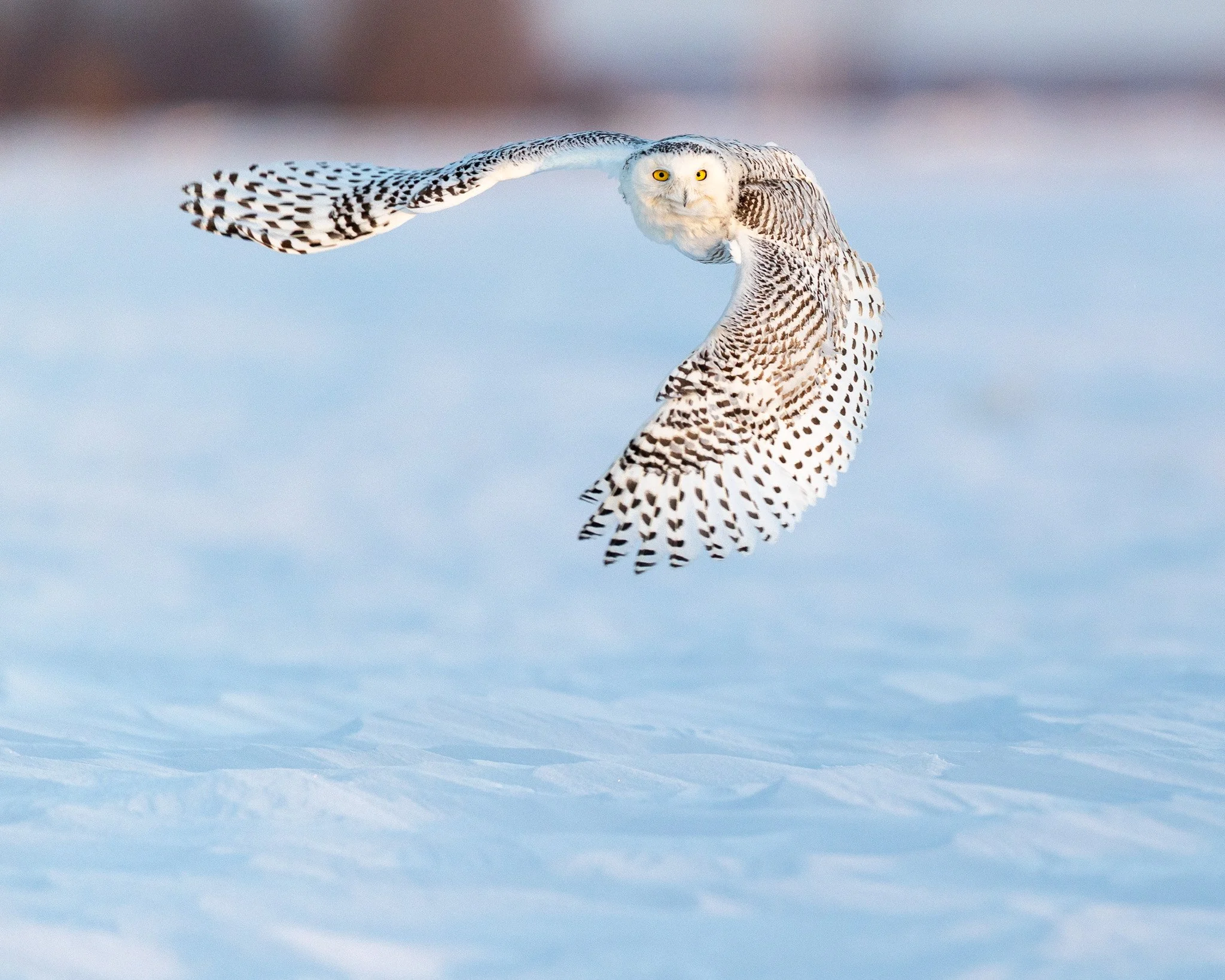
A Male Snowy Owl
I truly enjoyed my time with Rob. We positioned ourselves thoughtfully and ethically, and we were rewarded with epic shots. Beautiful flight sequences. Clean perches in fresh snow. Soft winter light wrapping around white feathers.
If you are traveling for a short February window, working with Rob dramatically increases your chances while protecting the birds.
Making Wonderful Friends
On our very first day in Canada, we met two terrific guys, Brian and Wally. From the start, they could not have been kinder. What began as a simple introduction turned into four full days together, side by side in the field. Early mornings, long walks through the snow, shared excitement when something appeared on the horizon. It is rare to meet people who feel like old friends almost instantly, but that is exactly what happened. Spending time with them was one of the true highlights of the trip.
Through them, we met their friend Rob, another genuinely great guy. One afternoon, he had walked a long distance out into one of the fields, only to realize he had forgotten his SD card. Every photographer’s nightmare. Luckily, I had an extra and handed it to him. He was incredibly appreciative and later invited us back to his home so he could return it.
What was meant to be a quick stop turned into something much better. He welcomed us in, handed us a cold beer, and we talked about photography for more than an hour. Stories about gear, favorite lenses, missed shots, and the ones that got away. It was one of those unexpected moments that remind you why you travel in the first place. Yes, we came for the owls. But we left with something just as meaningful, new friendships.
Owl Photography Locations
I will not list specific rural road names. Protecting these birds matters. Instead, focus on habitat types and public green spaces.
Open Farmland South and West of Ottawa
Large agricultural fields attract Snowy Owls. Pro Tip: Arrive at sunrise. Stay in your vehicle for minimal disturbance. Watch fence posts carefully.
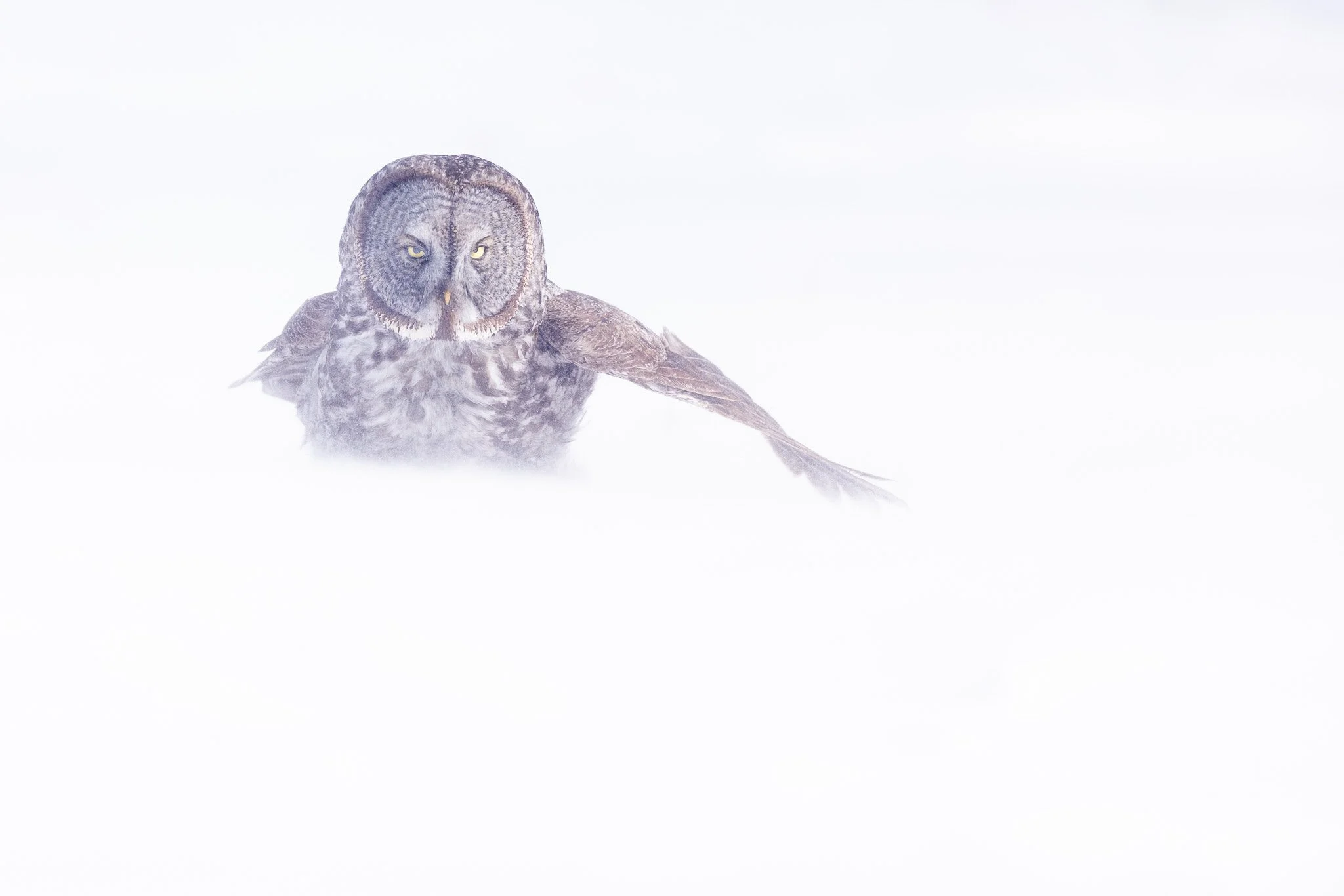
Taken during extreme windy conditions
Bruce Pit
Bruce Pit is a large west-end green space that becomes beautifully minimal in winter. Open fields, snow-covered trails, and wooded edges give you a mix of textures. While owl sightings are never guaranteed, it is a strong location for winter wildlife photography and tracking birds in flight against snow.
Fletcher Wildlife Garden
Fletcher Wildlife Garden is a quieter, more intimate space with woodland detail. In winter, frosted branches and subtle textures provide contrast against larger, open-field compositions. It offers variety. Smaller birds. Tracks in the snow. Tree patterns. It balances the drama of photographing large raptors.
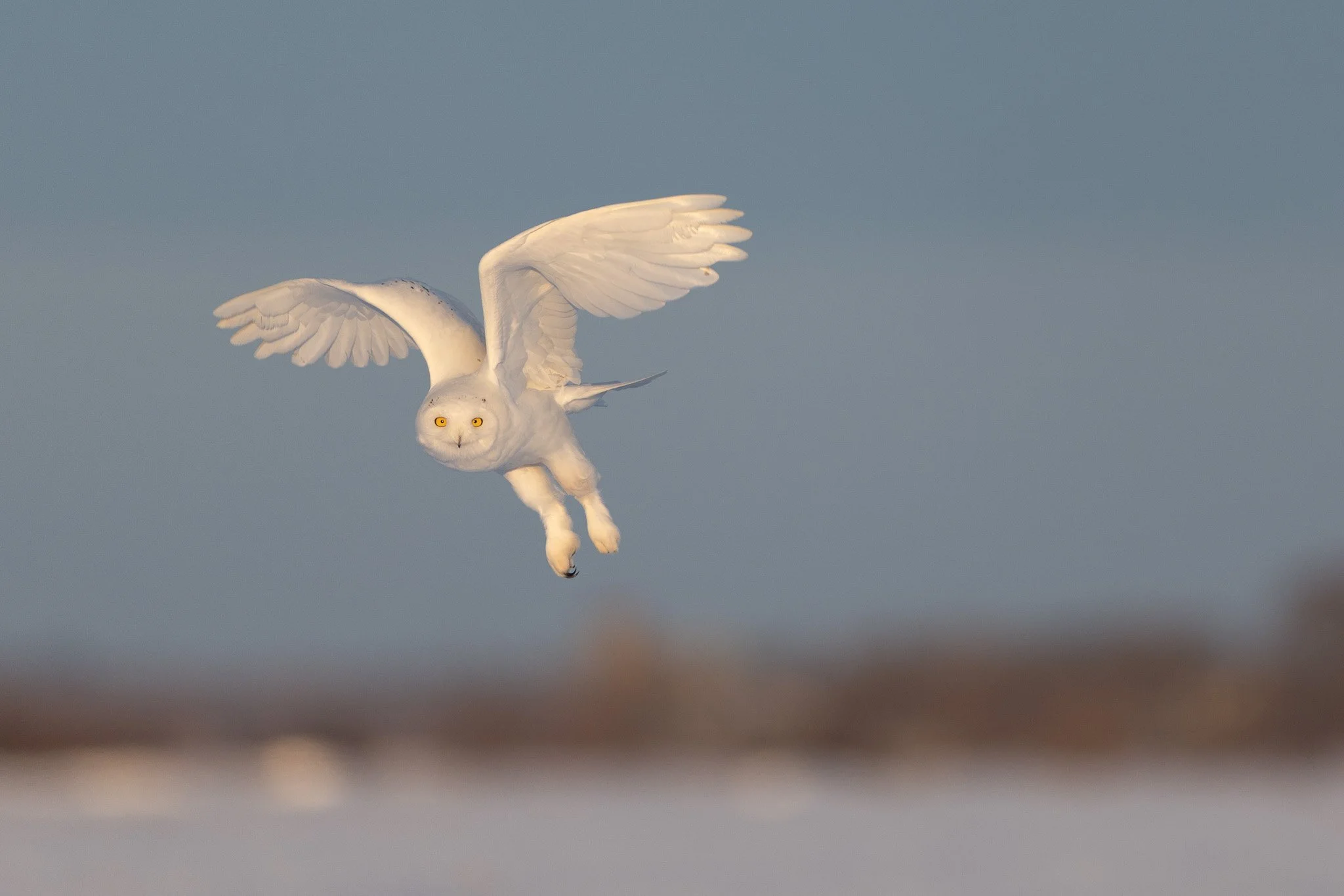
Snowy White Owl
What to Wear in Extreme Cold Weather
If you plan to photograph owls in February, your clothing matters as much as your camera. You are standing still for long periods in open wind, often before sunrise. It is extremely cold in Canada, so you need to be prepared.
Base Layers
Start with merino wool or high-quality synthetic base layers. Avoid cotton. It traps moisture, making you colder.
Mid Layer
Add fleece or insulated layers for warmth and flexibility.
Outer Shell
I wore Arc’teryx outerwear, and it performed beautifully. Windproof, insulated, and built for real winter conditions. When wind cuts across open farmland, quality outerwear lets you focus on the owl, not the cold.
Gloves
Bring very heavy gloves for standing and waiting. Use thinner liner gloves underneath so you can operate your camera controls without exposing bare skin. Hand warmers help enormously.
Boots
Extreme weather boots rated for subzero temperatures are essential. Snow pulls heat from your body quickly. Insulated, waterproof boots with thick socks make long sessions possible. Cold feet end shoots early.
When you are properly dressed, you think about light and behavior, not survival.
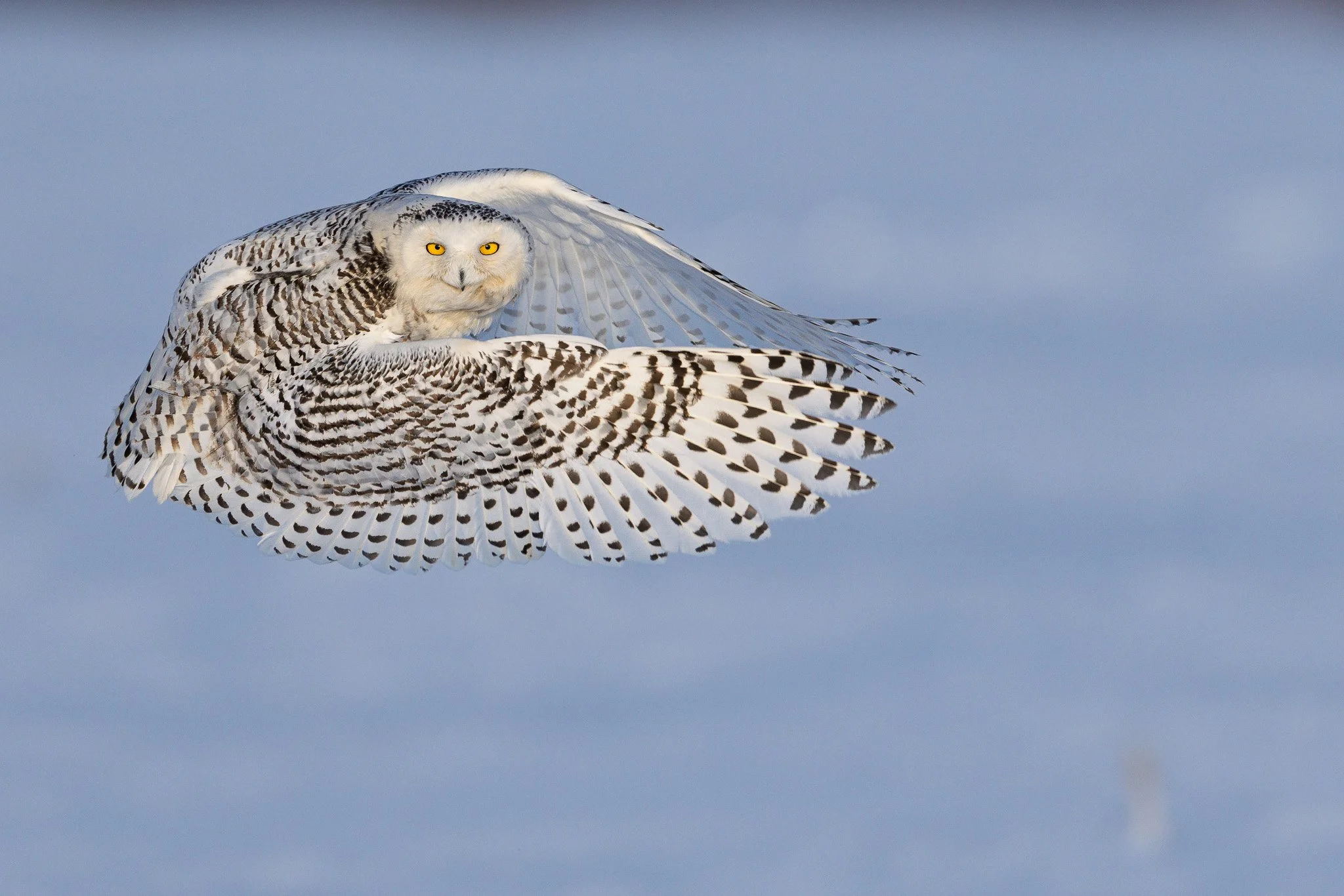
One of my Favorite Shots
Photography Gear to Bring
Snowy Owl photography is not casual birding. You need reach, speed, and reliability.
Camera
Bring a fast autofocus mirrorless body with strong subject tracking and high frame rates. Flight happens fast. Your camera must lock and stay locked. I brought my Canon R5 Mark 2.
Lenses
A 500mm or 600mm prime is ideal for maximum reach while keeping a respectful distance. I brought my 400mm f2.8. It is incredibly sharp and fast, and the background separation at f2.8 is beautiful. On bright snow, you will usually stop down to f4 or f5.6, but having that extra light-gathering power helps on darker mornings and during flight.
If you do not own a super telephoto prime, a 100-500mm or 200-600mm zoom lens works extremely well. The flexibility is helpful when an owl suddenly changes distance mid-flight. If your body allows it, a 1.4x teleconverter paired with a 400mm lens can give you extra reach without sacrificing autofocus performance too much.
Starting Settings
Shutter speed: 1/2000 for flight, faster if possible.
Aperture: f2.8 to f7.1, depending on light.
Exposure: Slight positive exposure compensation in snow. Your meter will try to turn white feathers into gray feathers. Add light, but watch your highlights.
Batteries
Cold drains them quickly. Keep extras warm in an inside pocket.
Support
With a 400mm f2.8, a monopod or tripod helps. It is not a small lens, and you may be waiting for long stretches before action happens.
Drones
Never use drones around wildlife. Snowy Owls deserve space and respect.
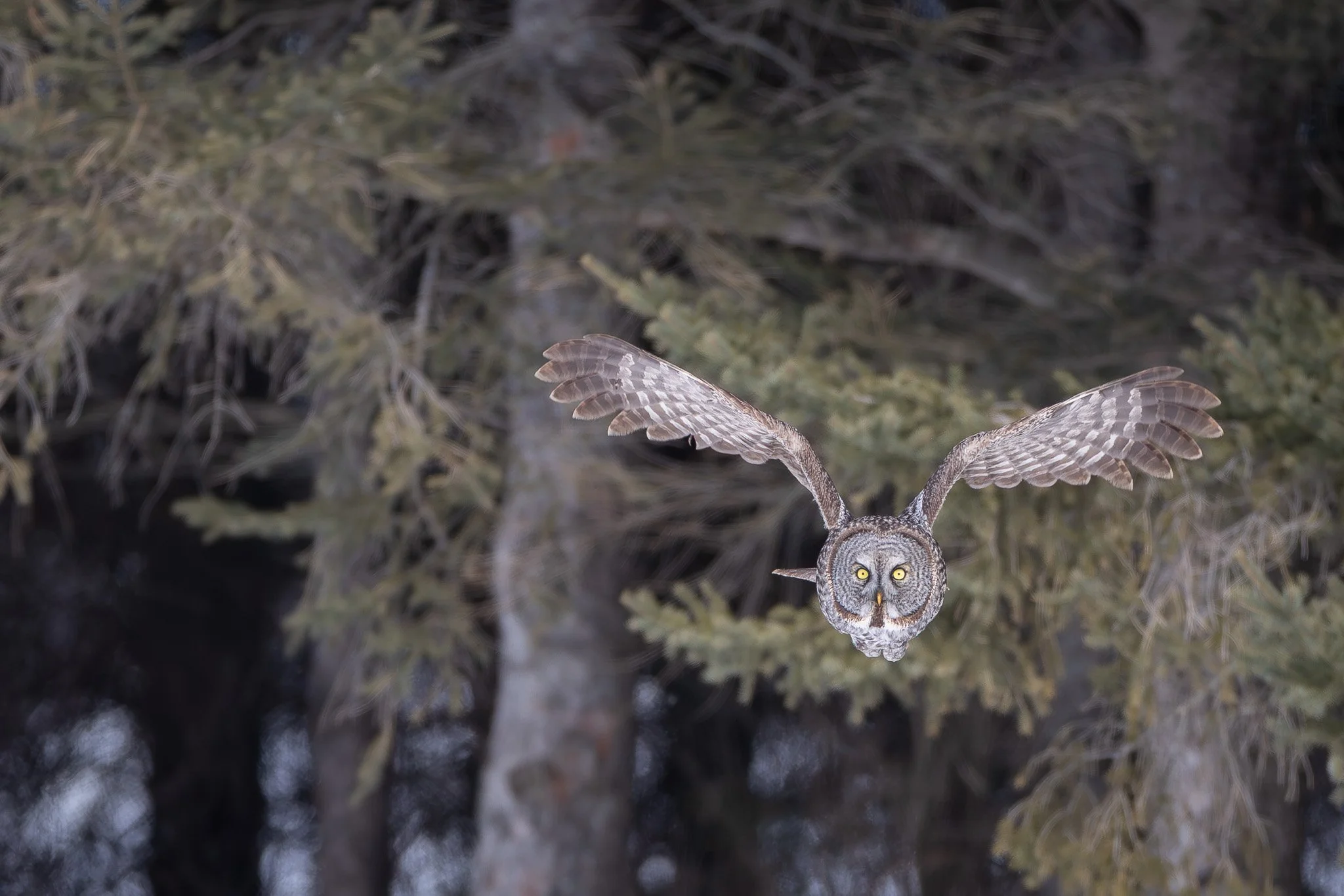
GGO in Flight
Where to Eat After a Long, Cold Day
After hours standing in the snow, food is not optional. It is survival. When you have been gripping a frozen lens and waiting for a white ghost to lift off a fence post, you do not want trendy. You want hot. You want satisfaction. You want something that feels earned. Here are my 2 favorite restaurants by our Airbnb.
Wood-fired pizza that is a 10 out of 10. Perfect crust with that slight char. A room full of energy and warmth. It was exactly what we needed after standing in freezing temperatures. The place felt local and relaxed. No fuss. Just great food and good vibes. That first hot slice after a cold morning in the field? You feel it in your bones. You earned it.
Right next door, Pho Viet was another fantastic find. After photographing owls in subzero temperatures, a steaming bowl of pho feels almost unreal. Warm broth. Fresh herbs. Deep flavor. Your hands slowly thaw as the bowl warms your face. It is comfort in a bowl. Simple as that.
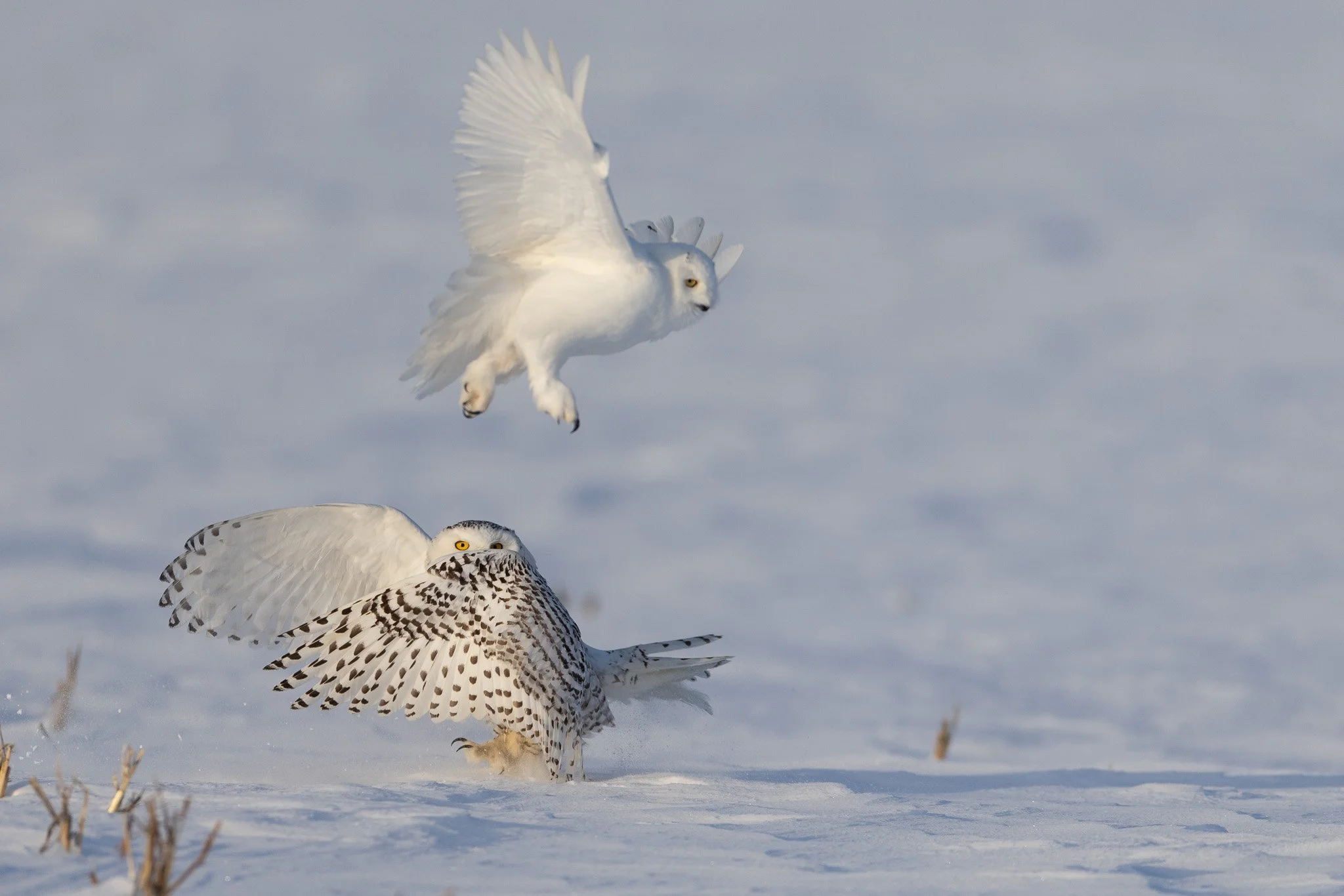
A rare encounter of a Male and Female Snowy Owl
Ethical Wildlife Photography
This is non-negotiable.
Do not crowd.
If the owl repeatedly looks toward you, you are too close.
Stay in your vehicle whenever possible.
Respect private property.
Your image should never come at the expense of the bird.
Final Thoughts
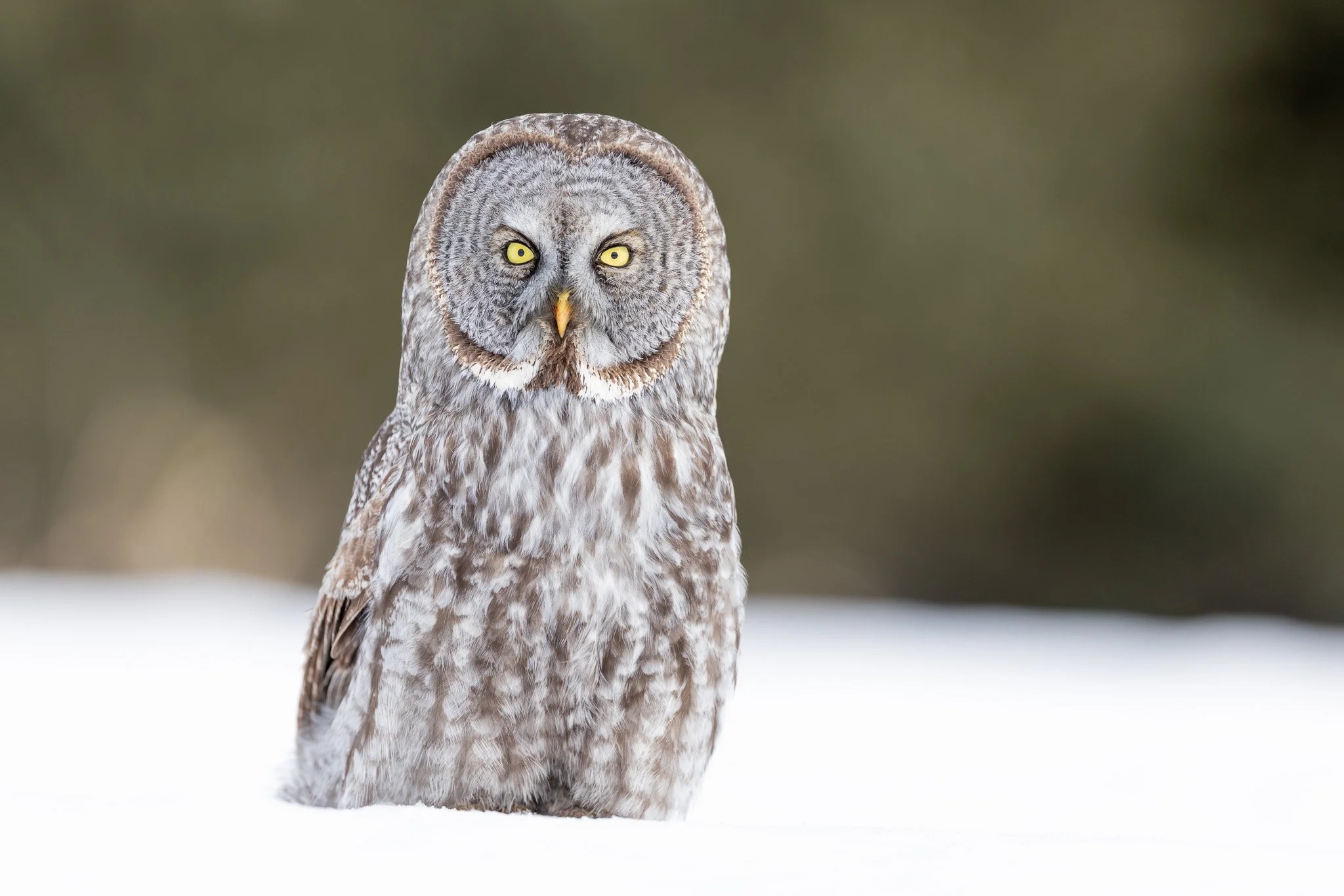
Photographing a Great Grey Owl in falling snow is something you never forget. Snowy Owls perched against a windswept field feel almost Arctic. February in Ottawa strips everything down to light, silence, and feather. It is cold. It is quiet. It is extraordinary.
If this guide helped you plan your Snowy Owl photography trip, I would love it if you could share it or tag me in your images #chasinghippoz. Seeing how others experience and photograph this city is always inspiring.
If you are interested in joining one of my photography workshops, you can find the details through the link. You can also follow along on Instagram, Facebook, or subscribe to my newsletter for more travel photography tips and behind-the-scenes insight.
Sometimes the coldest trips deliver the most unforgettable images.
✈️ Travel Photography Planning Sessions
One-on-One Trip Planning with a Professional Travel Photographer
Don’t miss the shot. Let me help you plan for it.
Overview
Planning a photography-focused trip can be overwhelming. From figuring out the best places to shoot, to when the light is just right, to knowing which lens to pack — there are a lot of decisions to make.
This one-on-one Zoom session is your chance to get personalized travel photography advice from someone who’s spent the past 25 years exploring cities, coastlines, and wild places around the world — camera in hand.
Whether you're headed to Paris, Patagonia, Tokyo, or Tuscany, I’ll help you make sure your photography trip is well-planned and creatively inspired, so you come home with the images you dreamed of (and then some).
What’s Included
✅ Photography Location Planning
I’ll help you create a customized itinerary of the best photo spots, including off-the-beaten-path gems and iconic views.
✅ Best Times to Shoot
Get expert advice on lighting, golden hour, blue hour, and seasonal conditions for each location.
✅ Gear Recommendations
Not sure whether to bring the telephoto or the prime? We’ll walk through your gear and make sure you’re bringing the right tools for your destination and style.
✅ Hotel and Base Recommendations
Stay where it’s convenient for sunrise shoots and late-night strolls with your camera. I’ll recommend hotels that are photographer-friendly and well-located.
✅ Custom Travel Tips
From sunrise entry times to tripod rules at major landmarks, you’ll get insider tips to save time, avoid tourist traps, and make the most of your trip.
Who It’s For
This service is for anyone who:
Is planning a trip and wants to prioritize photography
Wants expert insight on the best places to shoot and how to get there
Is tired of missing the shot because of poor planning or bad timing
Is a beginner, enthusiast, or professional photographer looking for guidance before a trip
How It Works
Book a Session
Choose a time that works for you and tell me where you're headed.Share Your Plans
You’ll fill out a quick questionnaire so I know your travel dates, interests, and photography style.One-on-One Zoom Call (60 minutes)
We’ll meet via Zoom and walk through your trip together — from location ideas to gear and timing. You'll leave with a custom PDF full of notes and suggestions.Follow-Up Support
Get one round of email Q&A after your session to clarify anything as your plans evolve.
Why Work With Me?
I’ve spent the last 25 years photographing the world — from major cities to remote islands. I know what it’s like to travel and shoot under pressure, and I love helping people get the most out of their trips. This is not just about hitting “popular spots” — it’s about crafting a creative and efficient plan tailored to your trip, your gear, and your goals.
Pricing
$125 / Session
Includes:
60-minute Zoom call
Custom PDF summary with photography spots, gear tips, and travel recommendations
One follow-up email with additional Q&A
Introductory rate available through September 2025
Ready to Plan Your Trip?
Let’s make sure you’re ready — so when the light is perfect, you’re in the right place with the right gear.
Questions?
Please email me at vito@chasinghippoz.com if you're not sure whether this is right for you. I'm happy to chat.
Are you carrying too much camera gear… but still coming home with disappointing travel photos?
You’re not alone. Most travel photographers fall into “The Packing Trap” — overpacking, under-planning, and constantly scrambling to capture the shot… while missing the moment.
This powerful, step-by-step eBook is your shortcut to a better way.
The 5-Step Photographer’s Guide to Planning the Perfect Travel Adventure is a field-tested blueprint that helps you:
Travel light without sacrificing image quality
Plan smarter trips that lead to better, more intentional photos
Find breathtaking destinations at the perfect time
Create a shoot-ready itinerary that works with your creative style
Avoid the stress, fatigue, and overwhelm that kills your best work
Written by travel photographer Vito L Tanzi, it’s the system I personally use to craft stress-free photo trips that result in his best images.
Whether you're heading off on your first international shoot or leveling up your local weekend getaways, this guide will help you make the most of every trip.
📸 Format: PDF download