My Photography & Travel Guide to Macau, (China)
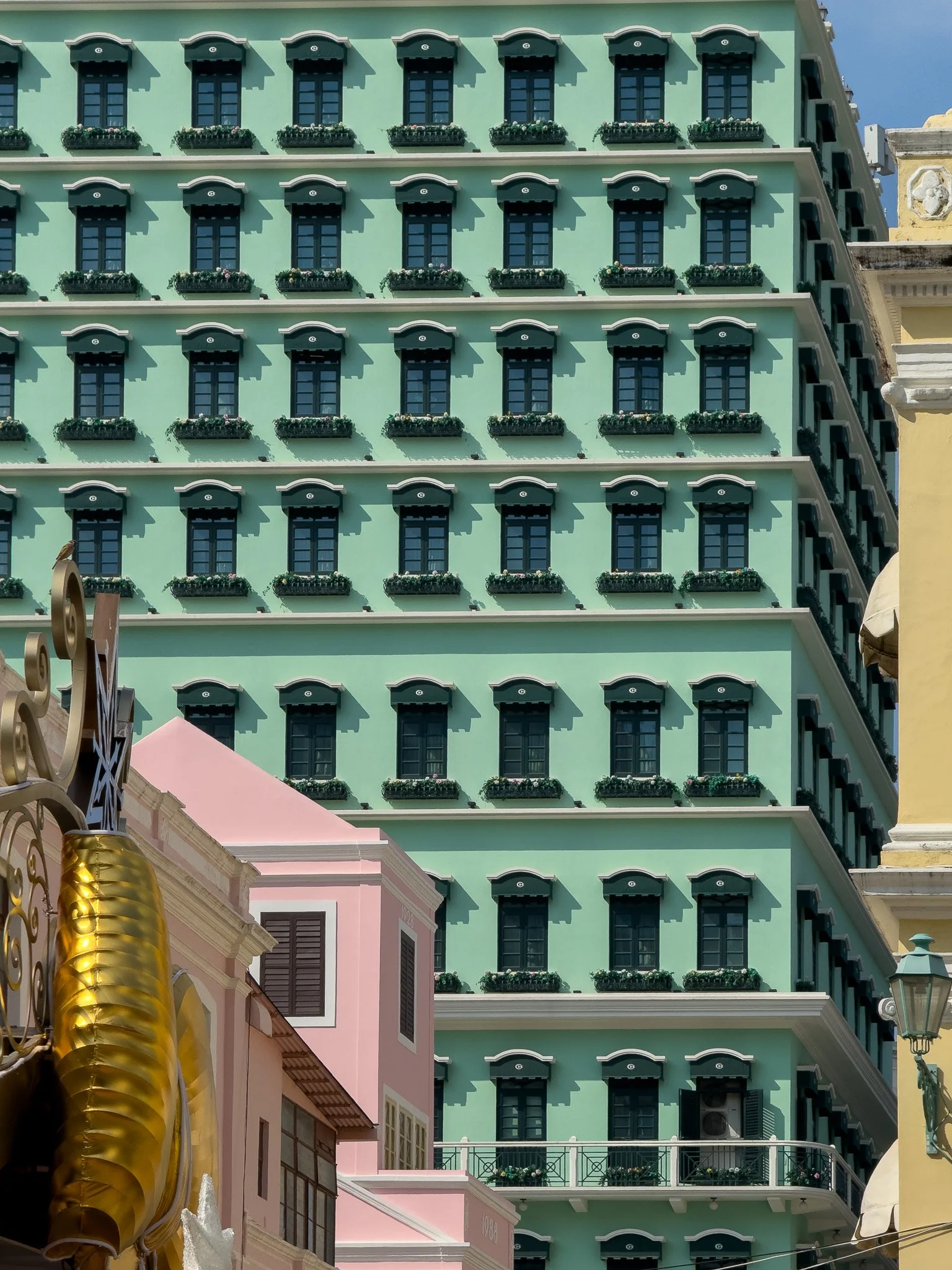
Macau feels like two worlds sharing the same few square miles. One moment, you are standing in a sunlit Portuguese square paved in classic black and white stone. Minutes later, you are looking up at glass towers glowing like a futuristic film set after dark. That constant shift is what makes Macau so compelling to explore, and even more rewarding to photograph.
This compact destination blends European heritage, Chinese traditions, and modern spectacle with surprising ease. Pastel churches, narrow alleys, historic ruins, neon-lit skylines, and dramatic night scenes all sit close together, making Macau easy to navigate and visually rich.
Although Macau is only about an hour from Hong Kong, the two cities feel worlds apart. Macau is shaped by casino tourism and can feel crowded, even as it works to hold on to its Portuguese past, visible in its architecture, street names, and food. That layered history is part of the city’s appeal, and also what feels most fragile.
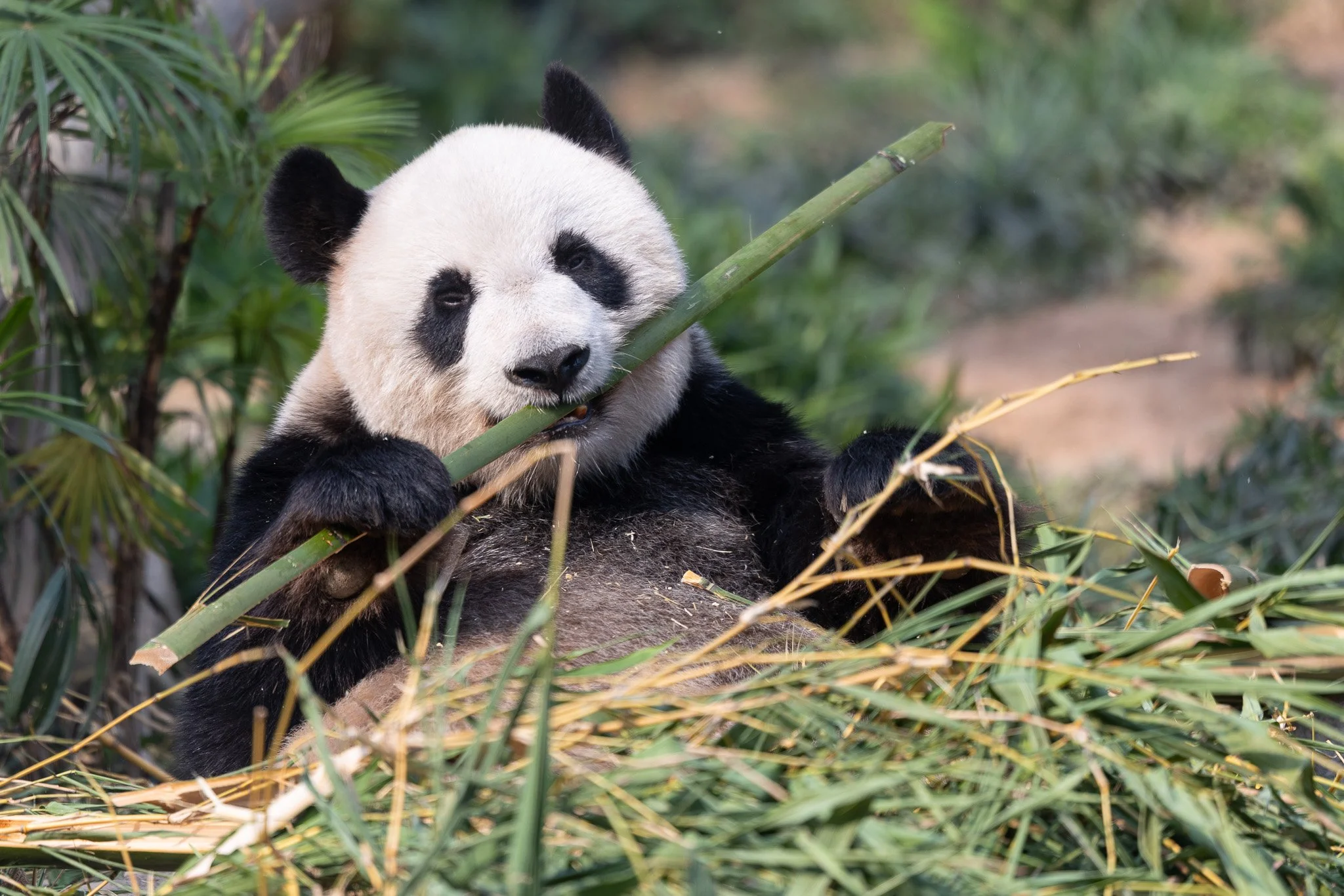
Love Pandas :)
Macau works best as a day trip or a focused photography stop. Early mornings and evenings reveal a quieter, more atmospheric side of the city. It is absolutely worth visiting, but I would not trade time in Hong Kong for an extended stay. It is the contrast of Macau that I found most interesting.
If you are looking for practical travel tips for Macau and the best photography spots in Macau, this guide will help you plan a trip that delivers strong images and a memorable experience.
How to Get There
Traveling from Hong Kong to Macau is part of the experience. The journey is easy, well organized, and surprisingly scenic, a gentle transition into a city that feels both familiar and entirely different.
Be sure to bring your passport. You will pass through immigration when entering and exiting Macau, even on a day trip.
By High Speed Ferry
This is the classic route and still the most atmospheric way to travel between Hong Kong and Macau.
Ferries run throughout the day from Hong Kong Island and Kowloon, including terminals in Sheung Wan and Tsim Sha Tsui. The crossing takes about an hour, skimming across the Pearl River Delta with views of container ships, distant skylines, and open water. Arrivals are at either the Outer Harbour or Taipa Ferry Terminal, both a short taxi ride from the historic center or the Cotai Strip.
The journey is comfortable, frequent, and efficient. If you enjoy travel as part of the story, this is the way to go.
By Bridge and Shuttle Bus
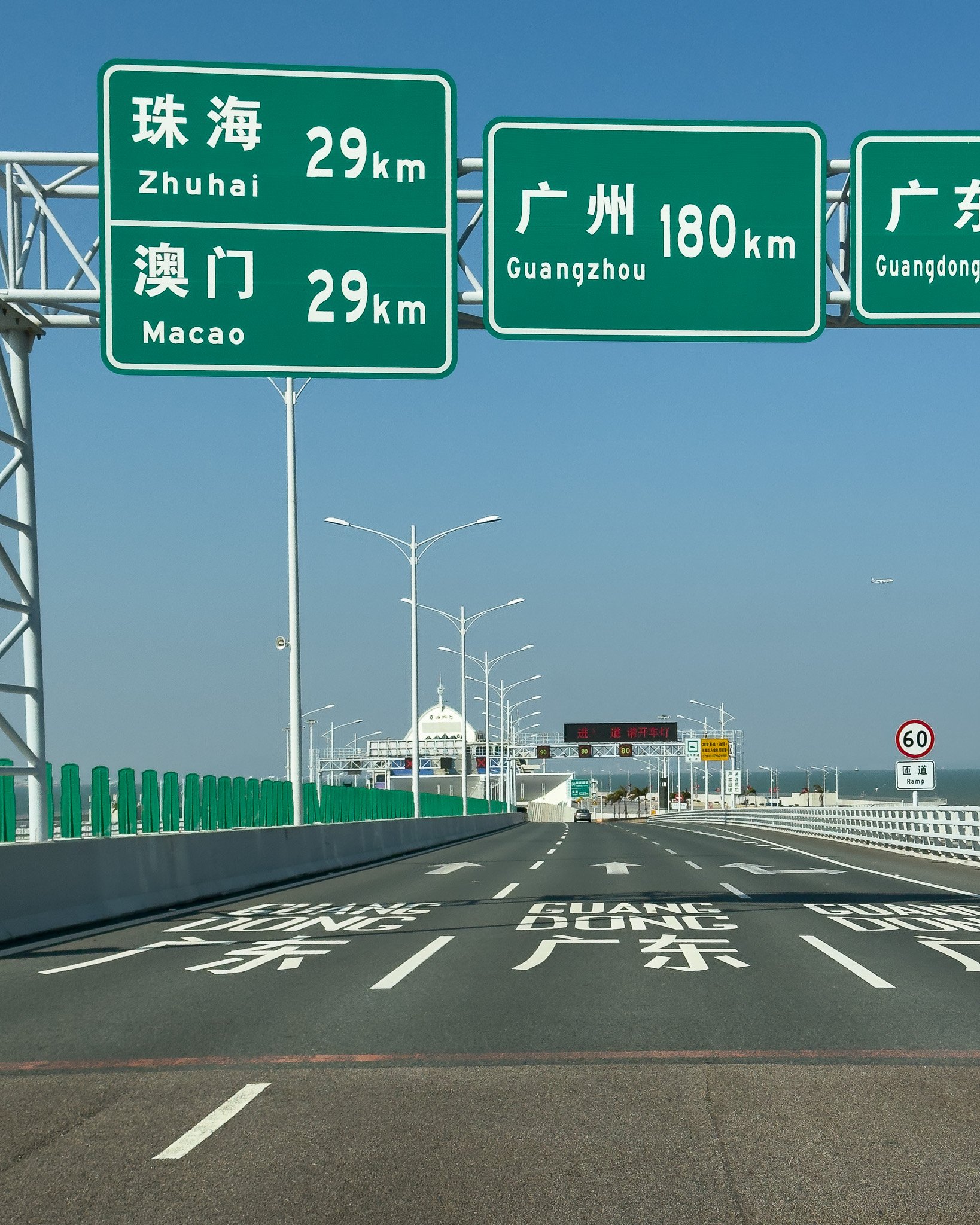
The most modern option is the Hong Kong Zhuhai Macau Bridge, one of the longest sea crossings in the world. We loved taking the bridge route. The Bridge is just an incredible marvel of engineering.
Shuttle buses and private cars operate around the clock from the Hong Kong side and reach Macau in about 45 minutes. The journey is relaxing, with long stretches over open water. It is fast, dependable, and especially useful during busy travel periods when ferries can sell out.
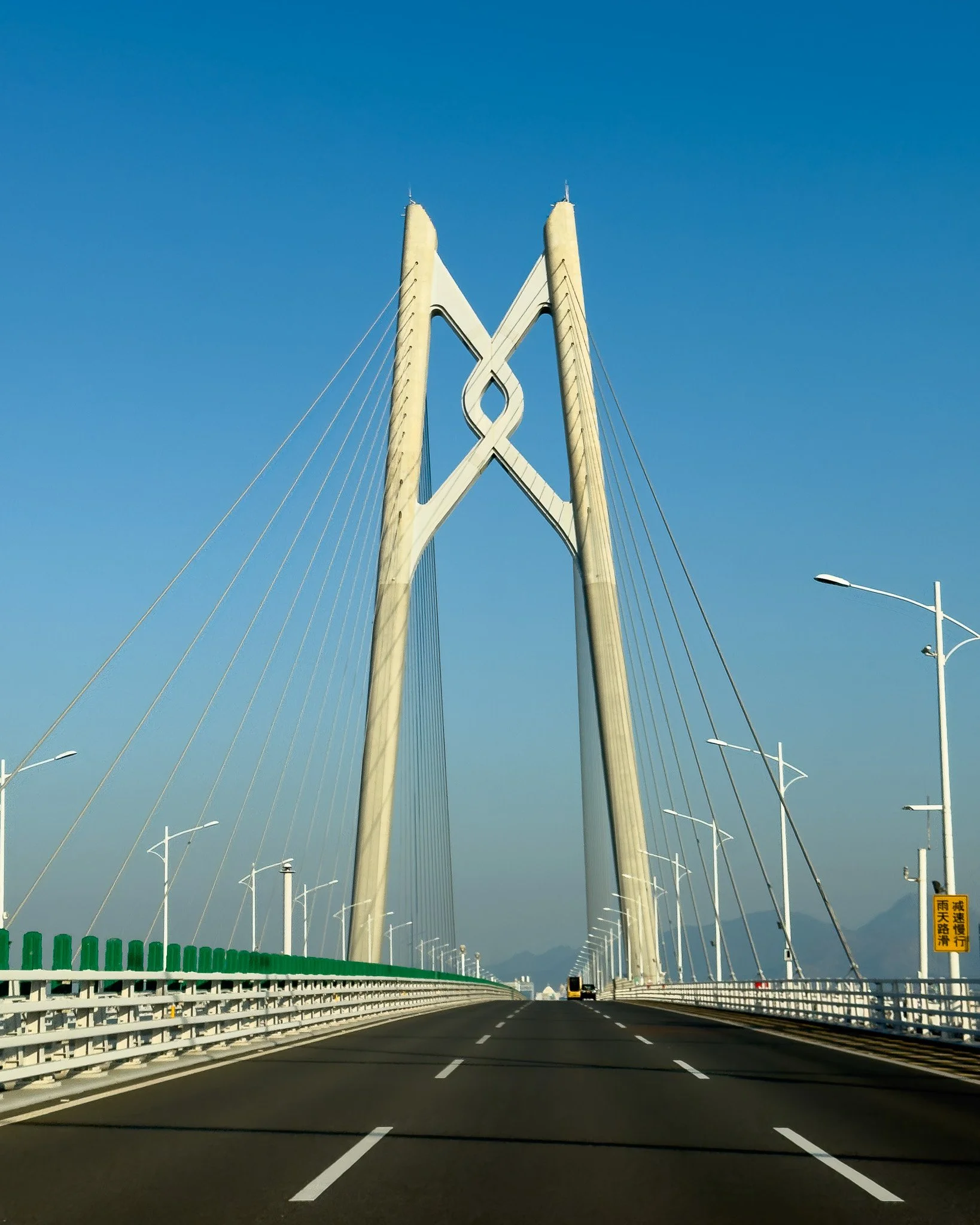
The Bridge is Truly Incredible
From the Airport
If you are flying into Hong Kong International Airport, you do not need to enter the city first. High-speed ferries and buses connect directly from the airport to Macau, making this an efficient option if you are short on time or arriving late.
What to Choose
If this is your first visit, take the ferry at least once. It sets the tone and eases you into Macau’s rhythm. If speed matters, or if you are traveling during peak weekends or holidays, the bridge is hard to beat.
Either way, the transition is seamless. In just over an hour, you move from Hong Kong’s vertical intensity to Macau’s layered blend of Portuguese heritage, Chinese culture, and modern spectacle. It is one of the easiest cross-border journeys in Asia, and one of the most rewarding.
Where to Stay in Macau
Macau may be compact, but where you stay will shape how you experience and photograph the city. If you want culture, history, and easy access to walkable photo spots, base yourself on the Macau Peninsula near Senado Square. This area puts you close to pastel churches, tiled plazas, historic streets, and early-morning scenes that feel timeless.
If bold architecture, modern design, and nightlife photography are your priority, Cotai is the better fit. The large resort hotels deliver dramatic skylines, glowing facades, and some of Macau’s most striking night scenes, all within a short distance of one another.
Both areas work well. The right choice depends on whether you want historic texture at your doorstep or high-impact visuals after dark.
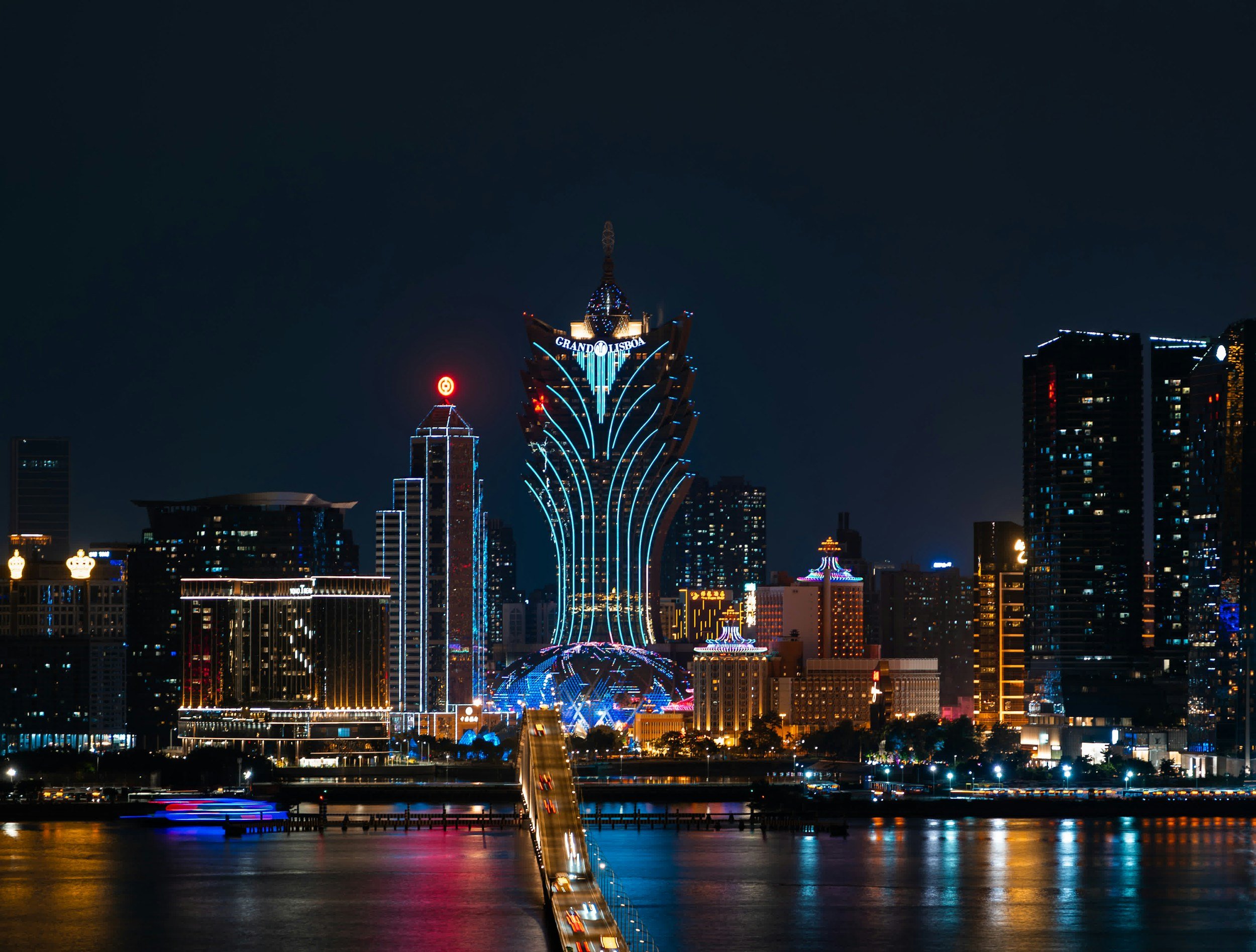
A Long Exposure Towards the Casino in Cotai
Luxury Hotels in Macau
The Venetian Macao
Grand interiors, soaring ceilings, and indoor canals make this one of Macau’s most visually dramatic hotels. It is especially rewarding for architectural photography, with strong symmetry, layered details, and beautiful ambient light throughout the day.
Wynn Palace
Known for its refined design and nightly fountain show, Wynn Palace truly shines after sunset. The combination of choreographed water, warm lighting, and reflective surfaces creates some of the most striking night photography in Cotai.
Mandarin Oriental Macau
Elegant, calm, and thoughtfully designed, this hotel offers a quieter luxury experience. Its location makes it ideal for exploring the historic center, and the understated interiors photograph beautifully in natural light.
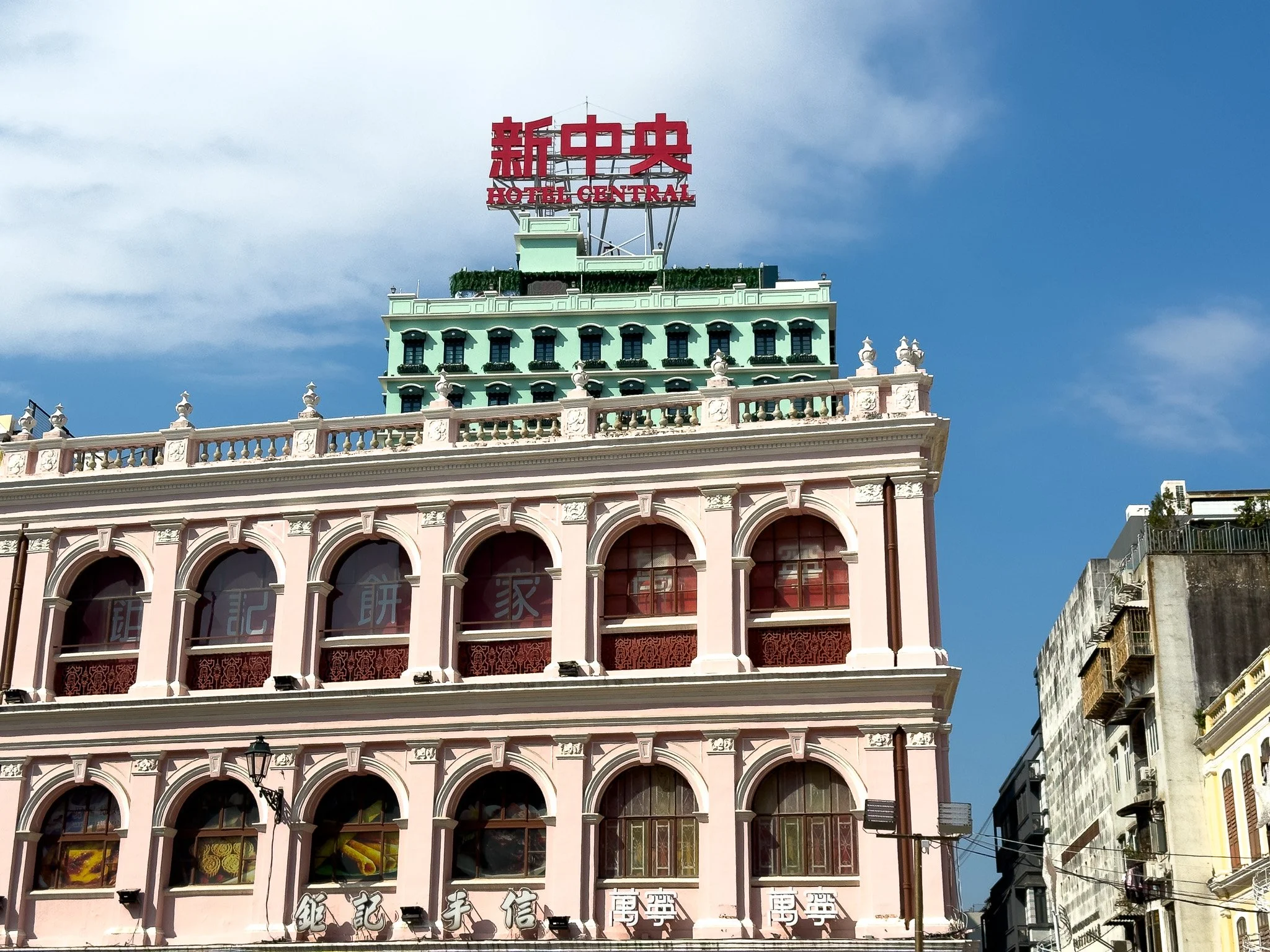
By Senado
Mid-Level Hotels in Macau
Hotel Lisboa
A long-standing Macau classic with plenty of character. Its central location makes it easy to explore the historic core, and many of the old town’s best photography spots are just a short walk away.
Sofitel Macau At Ponte 16
Set along the river, this hotel offers pleasant waterfront views and quick access to Senado Square and the Ruins of St. Paul’s. It is a strong choice if you want comfort and excellent walkability for early-morning and evening shoots.
Artyzen Grand Lapa Macau
Comfortable, stylish, and well-priced for its quality. The hotel strikes a nice balance between location and value, making it a solid base for photographers who want flexibility without sacrificing convenience.
How Many Days Should You Stay in Macau
For most travelers and photographers, two to three full days is ideal. But like I said above, a day trip is also fun. If you decide to stay overnight, you'll have more time to explore the historic center at a relaxed pace, photograph Cotai after dark, and wander Taipa Village without feeling rushed.
If you enjoy slow photography, early mornings, and long meals between shooting sessions, adding an extra day is well worth it. Macau rewards those who move at an unhurried pace, especially when light, atmosphere, and food are part of the experience.
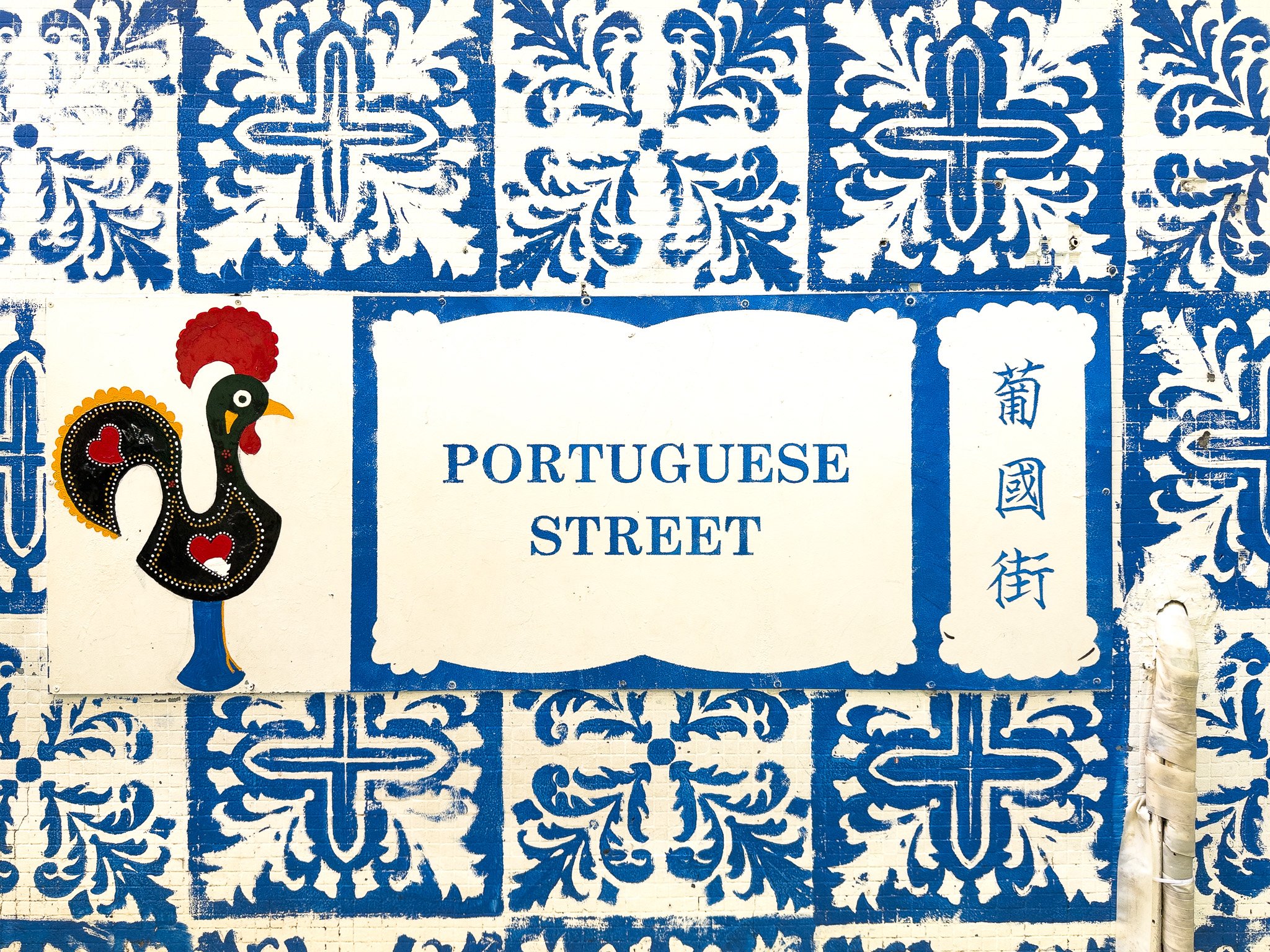
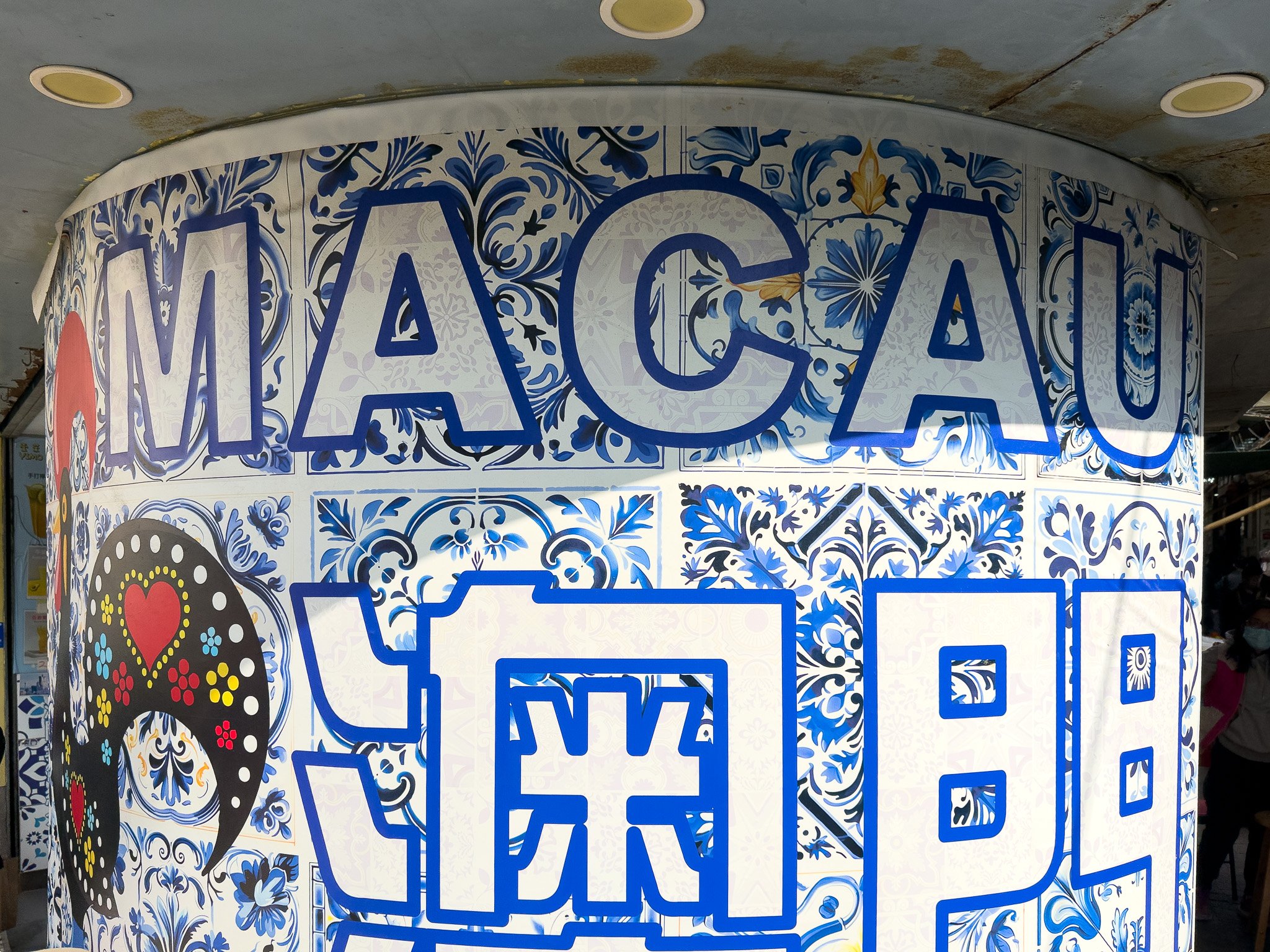
The Tiles Reminded me of Lisbon
Best Time to Visit Macau for Photography
The best time to visit Macau is from October through December. The weather is dry, temperatures are comfortable, and the light is soft and clear, ideal conditions for both walking the city and photographing it. Spring can also be a pleasant option, although humidity begins to rise as the season progresses.
Summer delivers dramatic skies and intense color, especially before and after storms, but it also brings heat and heavy humidity. Typhoon season runs from June through September, so flexibility in your schedule becomes important if you travel during these months.
Golden hour works well year-round, particularly around Senado Square and the Ruins of St. Paul’s, where warm light brings out texture and detail in the stonework. Night photography truly shines in Cotai, with resort lights and reflections staying active well past midnight.
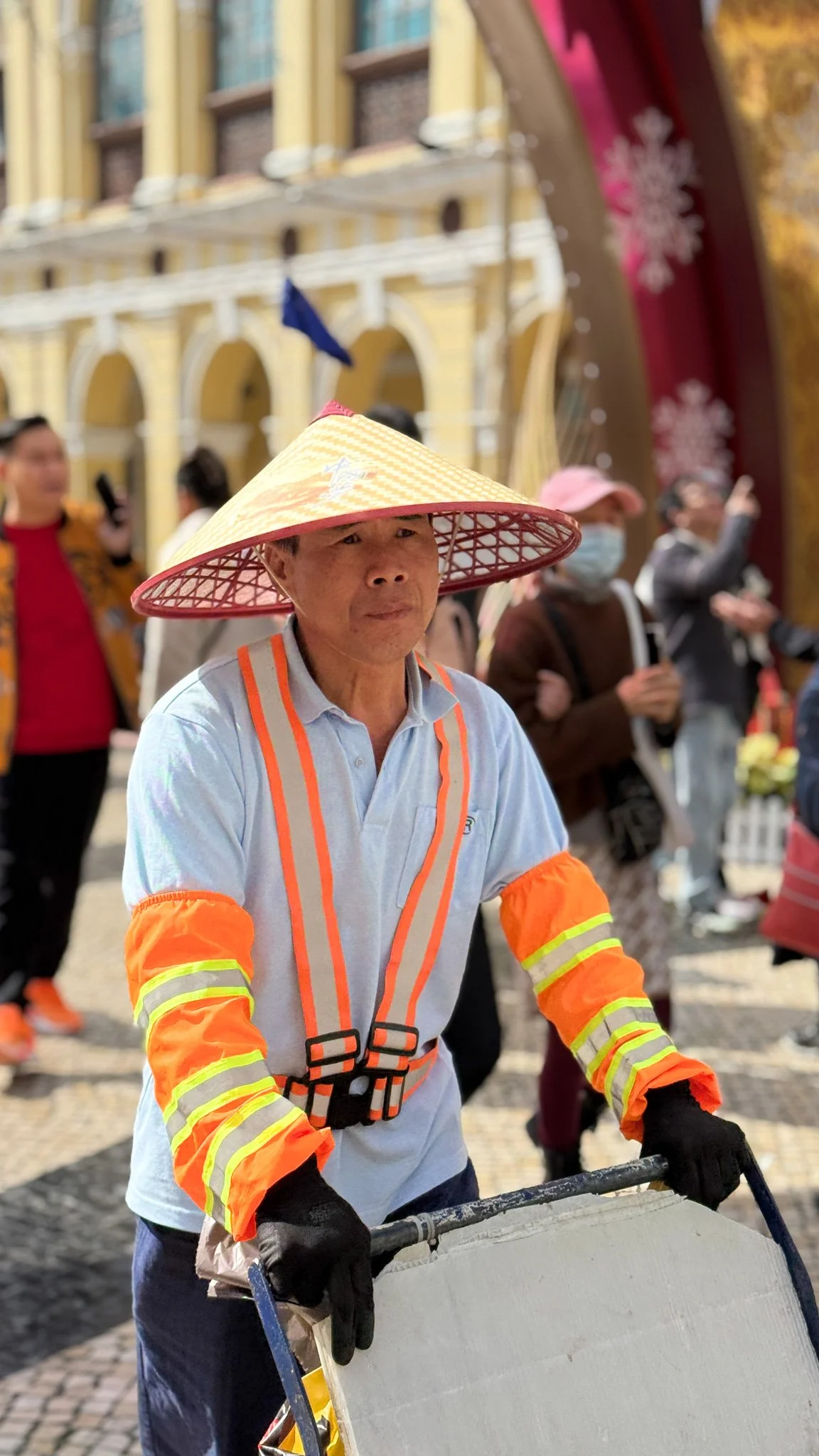
A City Street Cleaner
Getting Around Macau
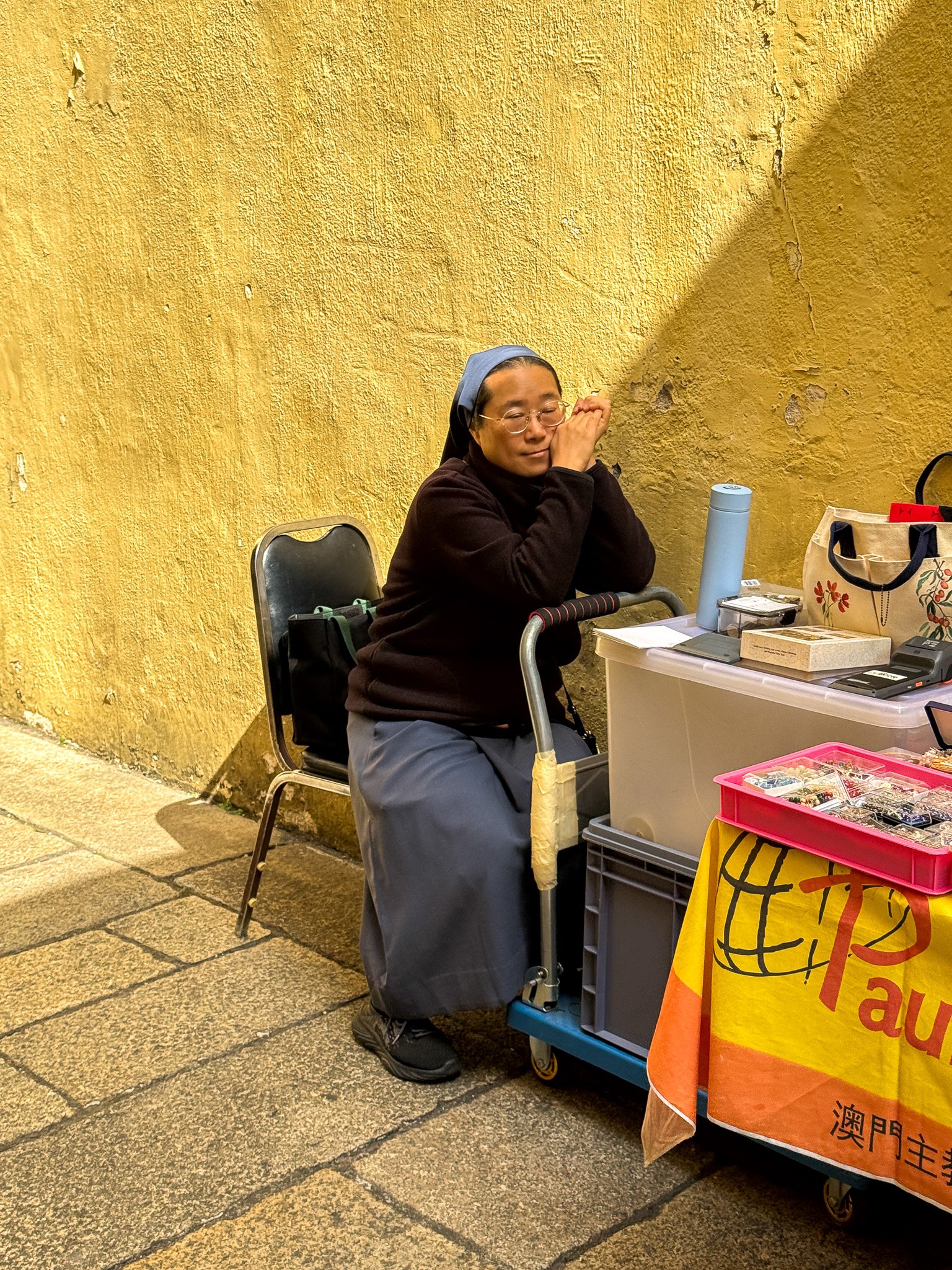
Macau is easy to navigate, and many of the best photography locations are walkable, especially on the peninsula. Exploring on foot works well for historic streets, plazas, and early-morning shoots when the city is quiet. Be ready for huge crowds that can make you feel claustrophobic.
Public buses are affordable, reliable, and cover most areas you are likely to visit. Taxis are plentiful and inexpensive, making them the most convenient option, especially when moving between the peninsula, Taipa, and Cotai. Ride-hailing services like Uber are limited, so taxis remain the simplest choice.
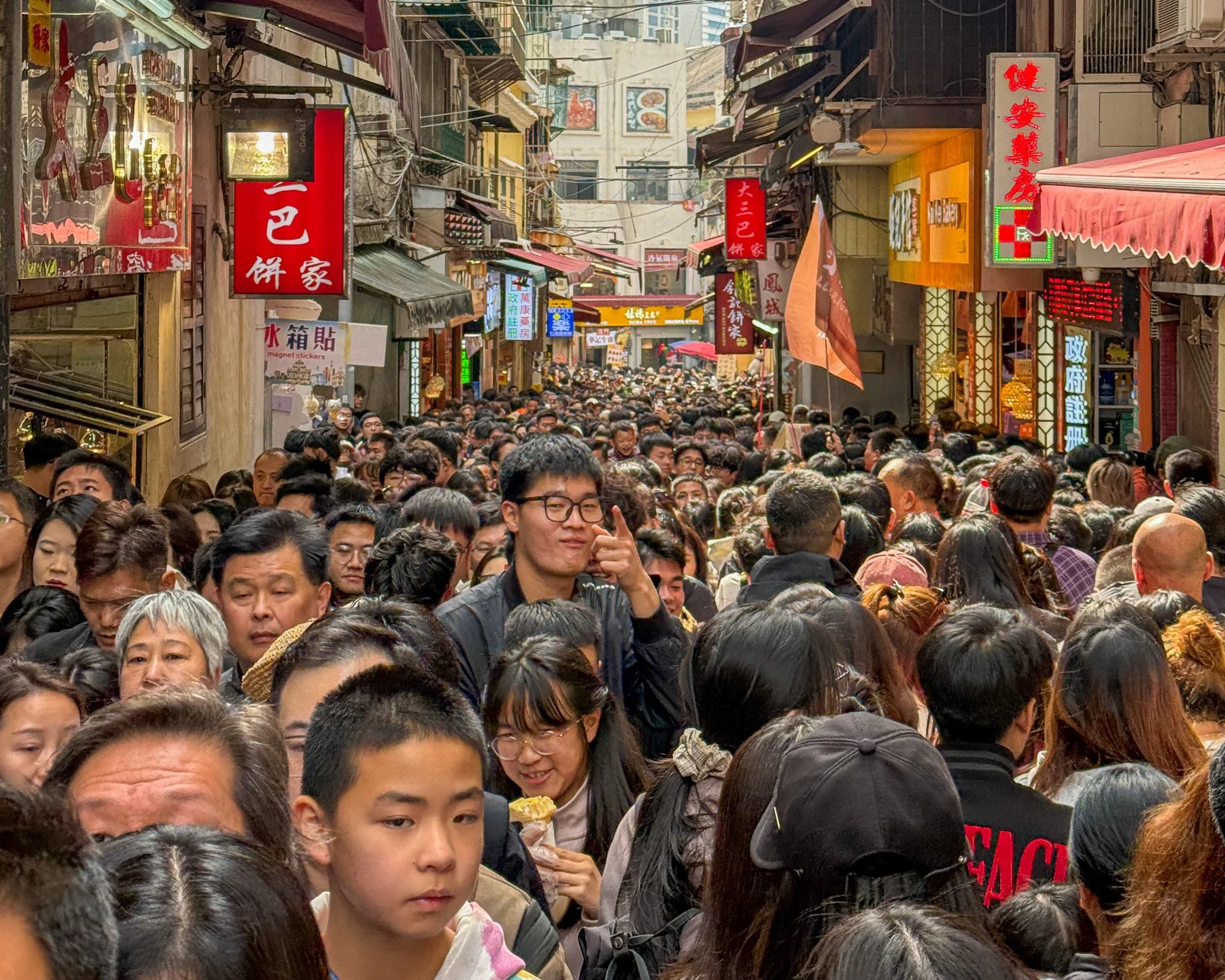
It’s crowded
Dining and Coffee in Macau
Macau’s food scene reflects its unique history, blending Cantonese and Portuguese influences. One of the most interesting things to try in Macau is African Chicken and Egg Tarts.
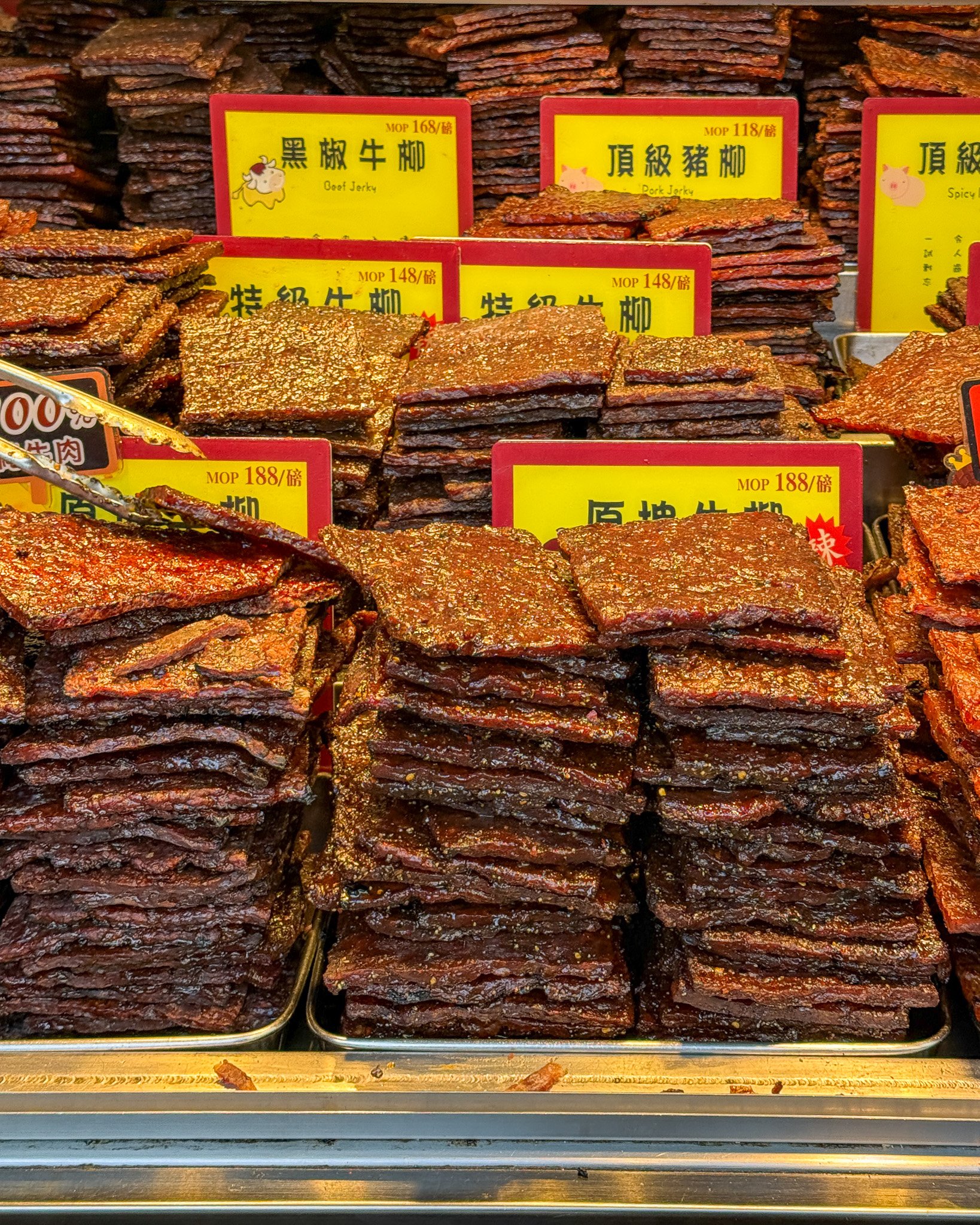
Beef Jerky is very popular in Macau. It is sold everywhere
Robuchon au Dôme
Refined fine dining with panoramic views over the city. The elegant presentation and controlled lighting make it especially appealing for food and interior photography.
A Lorcha
A longtime favorite for classic Macanese cuisine in a relaxed, welcoming setting. It is a great place to experience local flavors without pretense.Lord Stow’s Bakery
Famous for its egg tarts and ideal for casual food photography. Go earlier in the day for the best light and the freshest pastries.The Eight
An elegant Cantonese restaurant known for precision, color, and presentation. It offers plenty of visual interest, from plating to interiors.Riquexó
Traditional Macanese recipes are passed down through generations. This is one of the best places to understand the soul of Macau through its food.Restaurante Litoral serves African chicken the traditional Macanese way, grilled with a deep, smoky sauce that balances chili, coconut, and spices without overpowering the dish. It feels authentic, unfussy, and rooted in family cooking rather than performance. You taste the history in it.
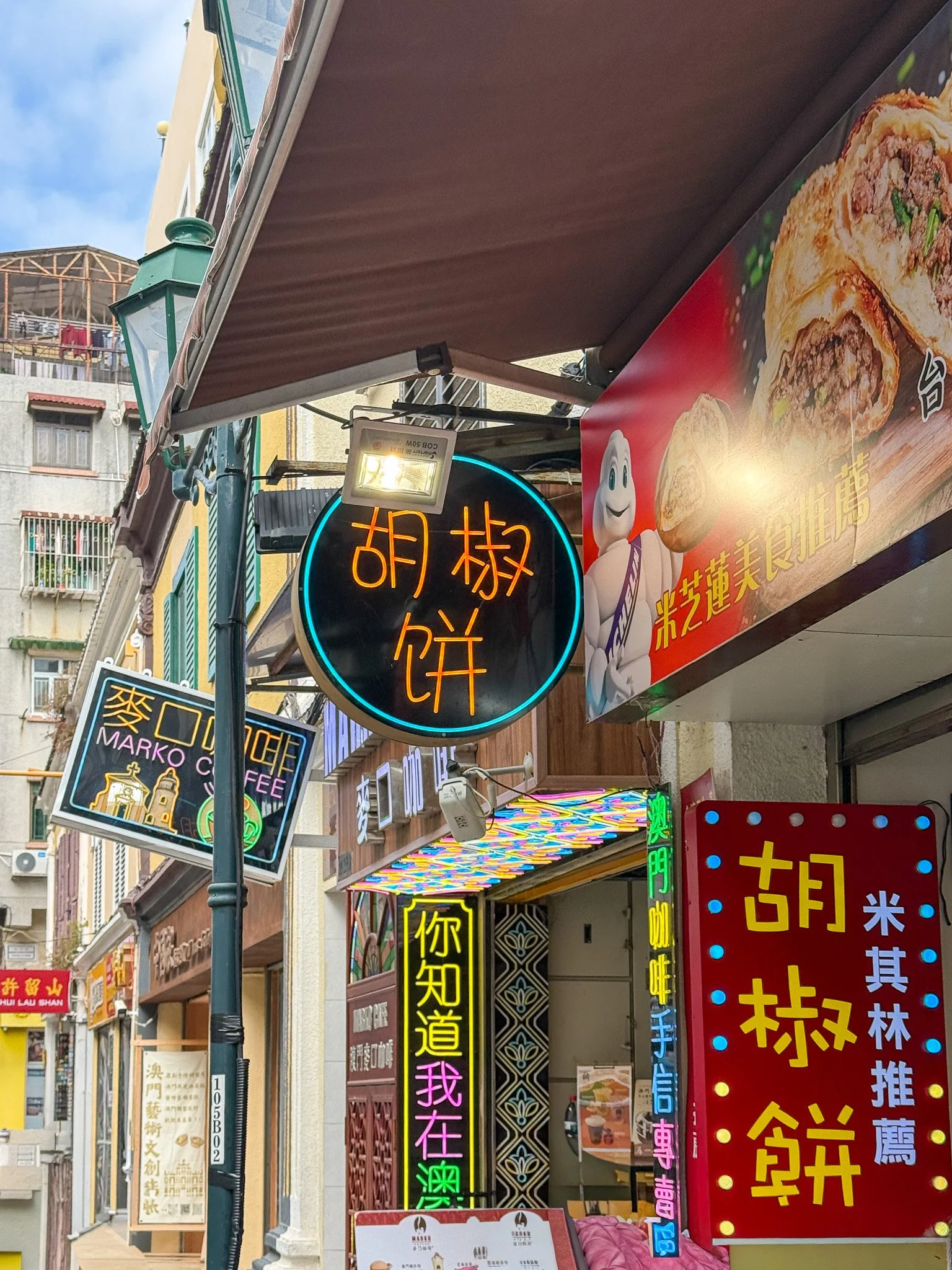
Old Chinese Signs
Coffee Shops in Macau
Café Java
A long-standing favorite with a calm atmosphere. It works well for a relaxed breakfast or a quiet break between shoots.Blooom Coffee House
Minimalist design, clean lines, and excellent natural light. A perfect spot to review images or edit while enjoying good coffee.Single Origin
Consistently good coffee and an easygoing vibe. A reliable stop when you need caffeine and a moment to slow down.
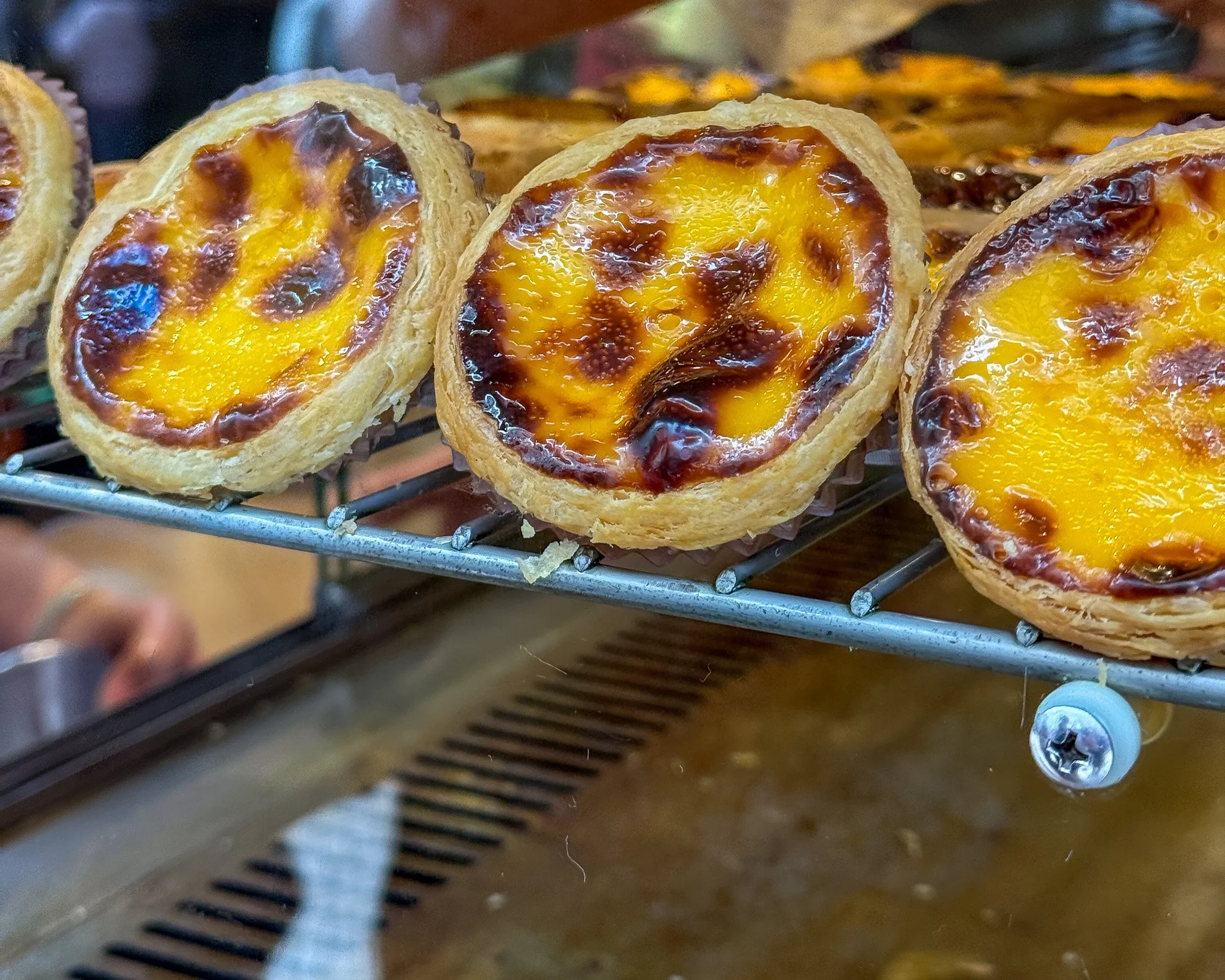
Eggs Tarts that are similar to Pasteis de Nata
Photography Gear to Bring to Macau
Macau rewards versatility. You will move quickly between historic streets, modern architecture, interiors, and night scenes, sometimes all in the same hour.
Cameras
High-resolution mirrorless bodies with strong dynamic range work especially well here. Models like the Canon EOS R5, Nikon Z7 II, or Sony A7R V handle detail, contrast, and mixed lighting beautifully.Lenses
A wide-angle lens in the 16 to 35mm range is ideal for architecture, interiors, and tight historic streets. A standard zoom around 24 to 70mm covers most street scenes and everyday moments. A 70 to 200mm telephoto works well for compressed cityscapes, layered skylines, and architectural details across the water.Accessories
A lightweight tripod is useful for night photography and blue hour scenes, especially in Cotai. ND filters allow creative daytime long exposures around plazas and waterfronts. Drones are heavily restricted and generally not allowed, so it is best to leave them at home.
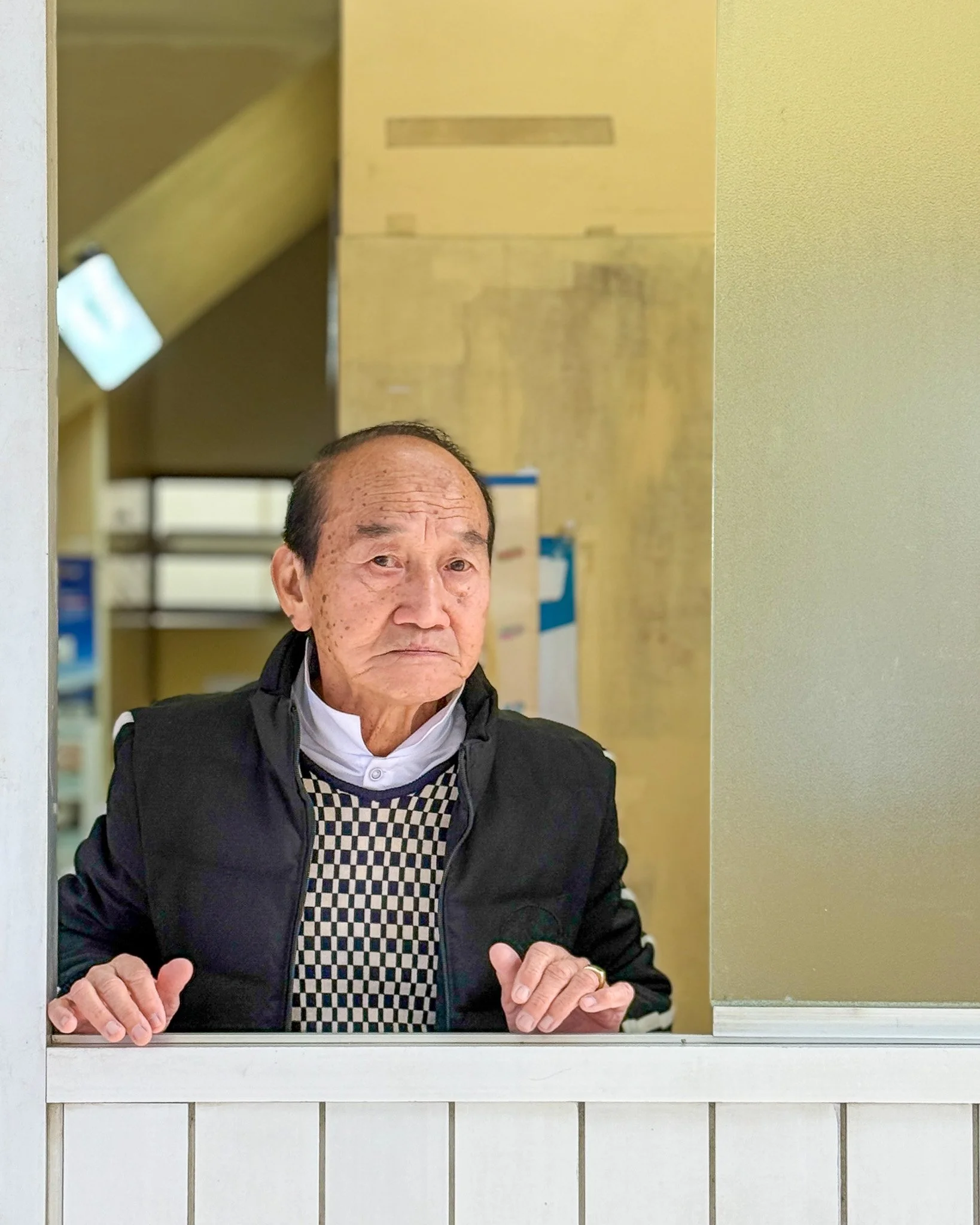
Excellent Street Photography in Macau
Best Photography Spots in Macau
Senado Square
Best photographed early in the morning, when the crowds are gone and the soft light brings out the wave-patterned stone and pastel facades. Look for symmetry and clean compositions. After 8 am, this area will be jam-packed.
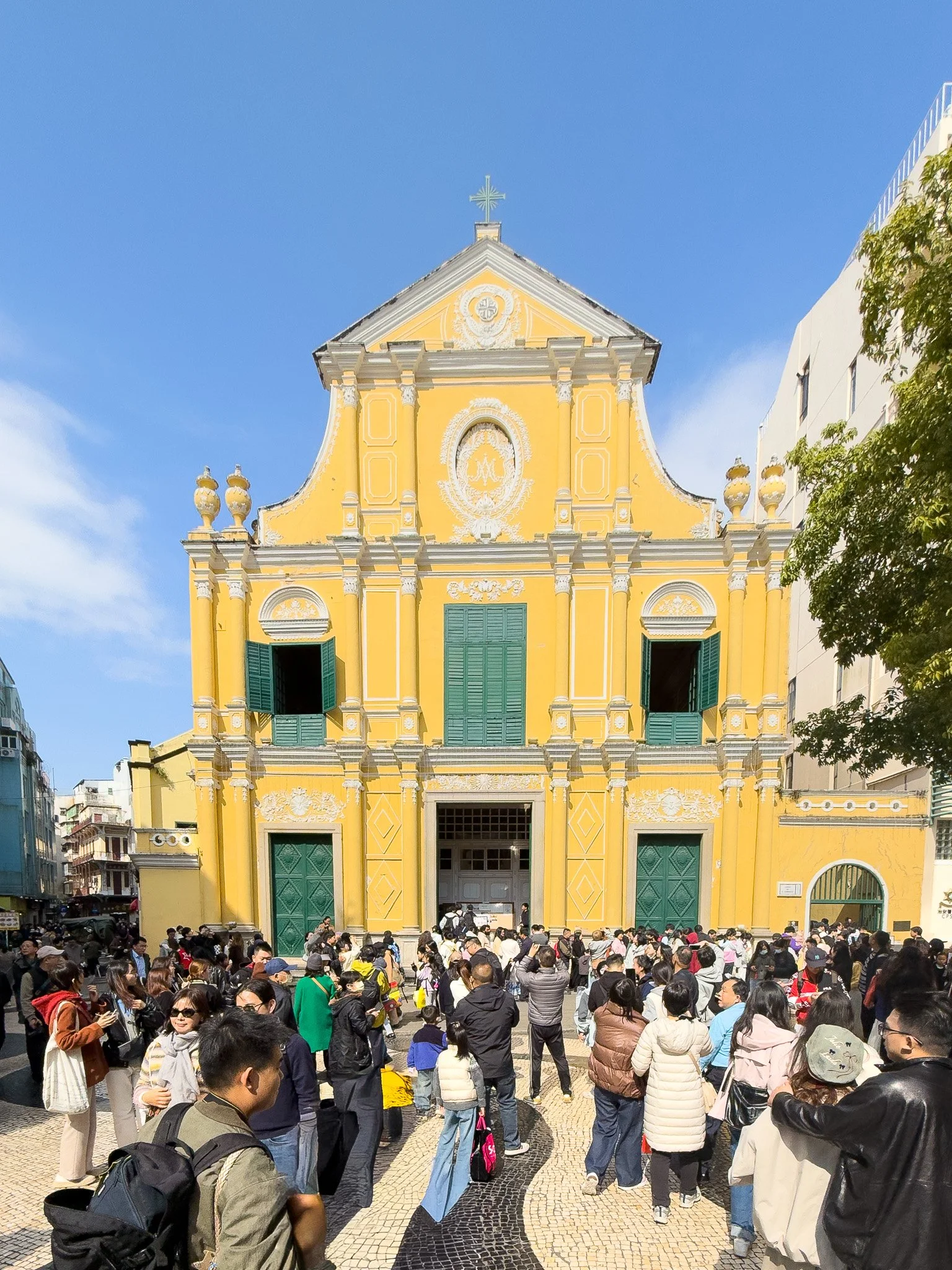
It is very crowded during the day at Saint Dominic’s Church in Senado
The patterned stone floors in Senado Square are one of Macau’s most recognizable visual signatures, and they come directly from Portugal.
The pavement is known as calçada portuguesa, a traditional Portuguese mosaic style made from small pieces of black basalt and white limestone set by hand. The wave pattern you see across Senado Square echoes maritime themes, a nod to Portugal’s seafaring history and to Macau’s past as a major port city.
These stones are not just decorative. The craftsmanship is intentional and labor intensive, with each piece cut and placed individually. Over time, foot traffic and weather soften the surface, giving the square a gentle patina that photographs beautifully, especially in early morning light when the curves read clearly and shadows add depth.
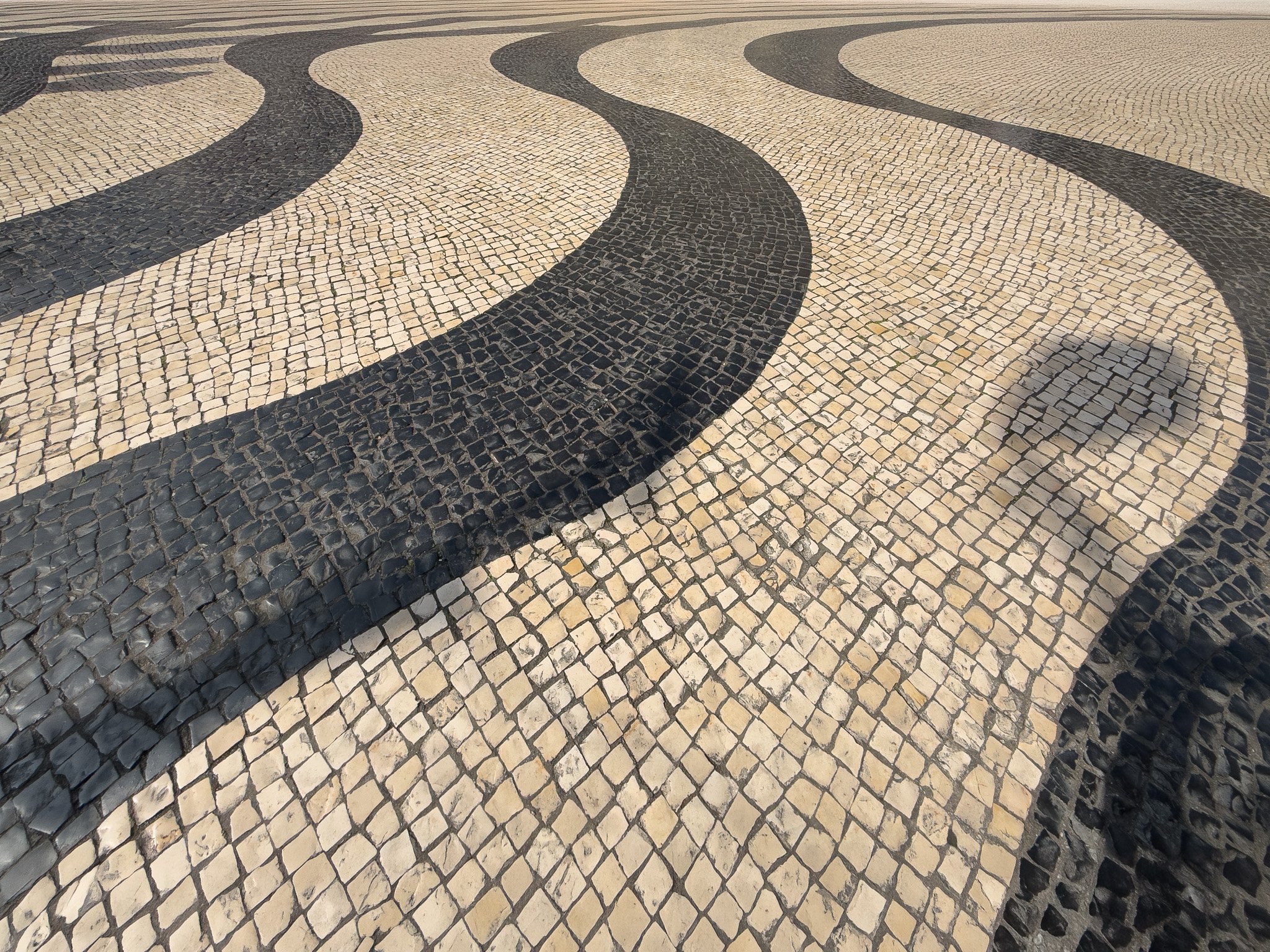
Senado
Ruins of St. Paul’s
Shoot at sunrise for quiet, atmospheric frames or after sunset for dramatic contrast between the illuminated facade and dark sky. Both moments offer very different moods. If you do not go early in the morning, it will be packed with tourists.
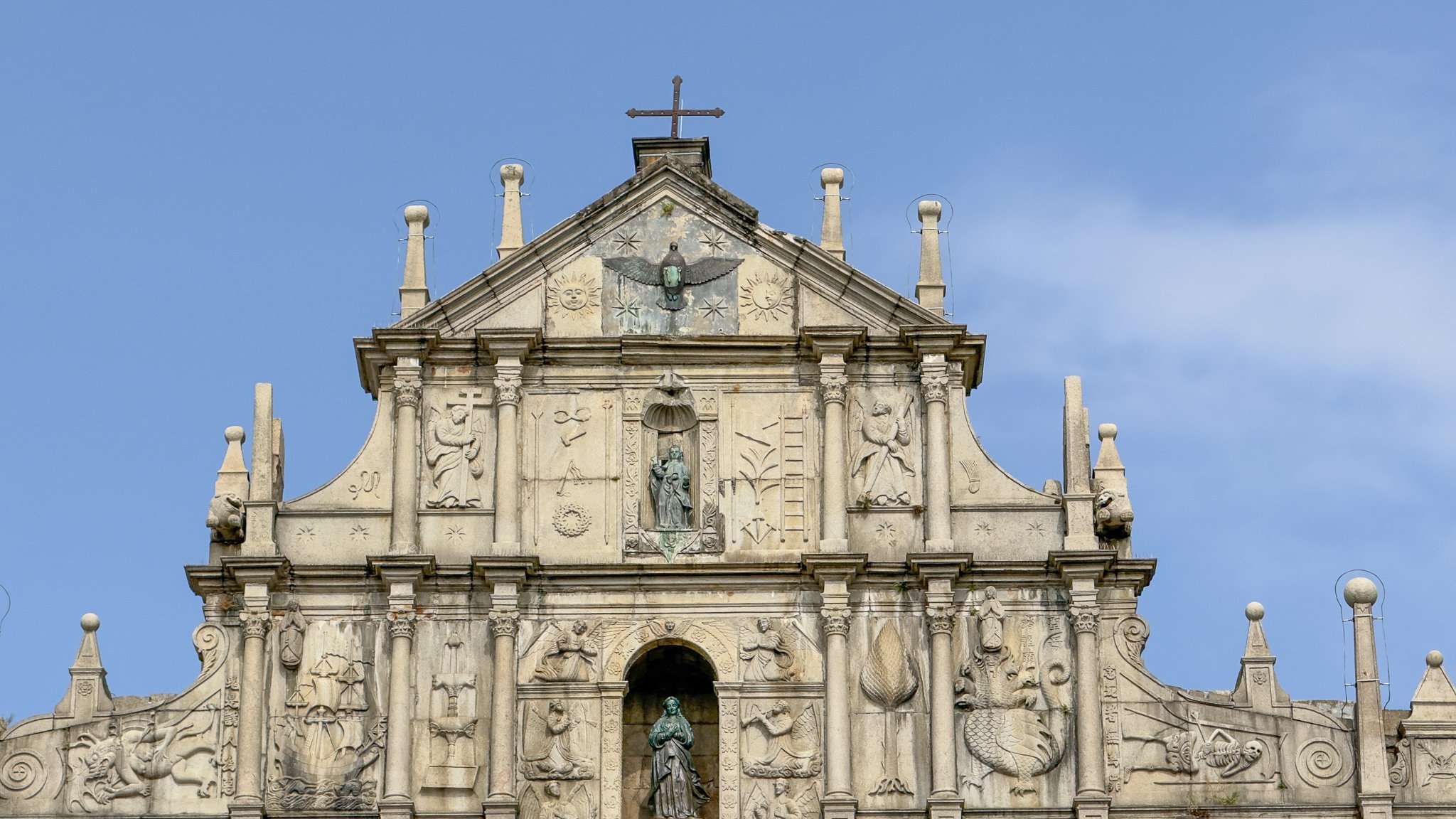
What you see today is the stone facade of the former Church of St. Paul, built by Jesuit missionaries in the early 1600s. At the time, it was one of the largest Catholic churches in Asia and a powerful statement of faith, trade, and cultural exchange. A fire in 1835 destroyed the church, leaving only the intricately carved front wall and the grand staircase that leads up to it.
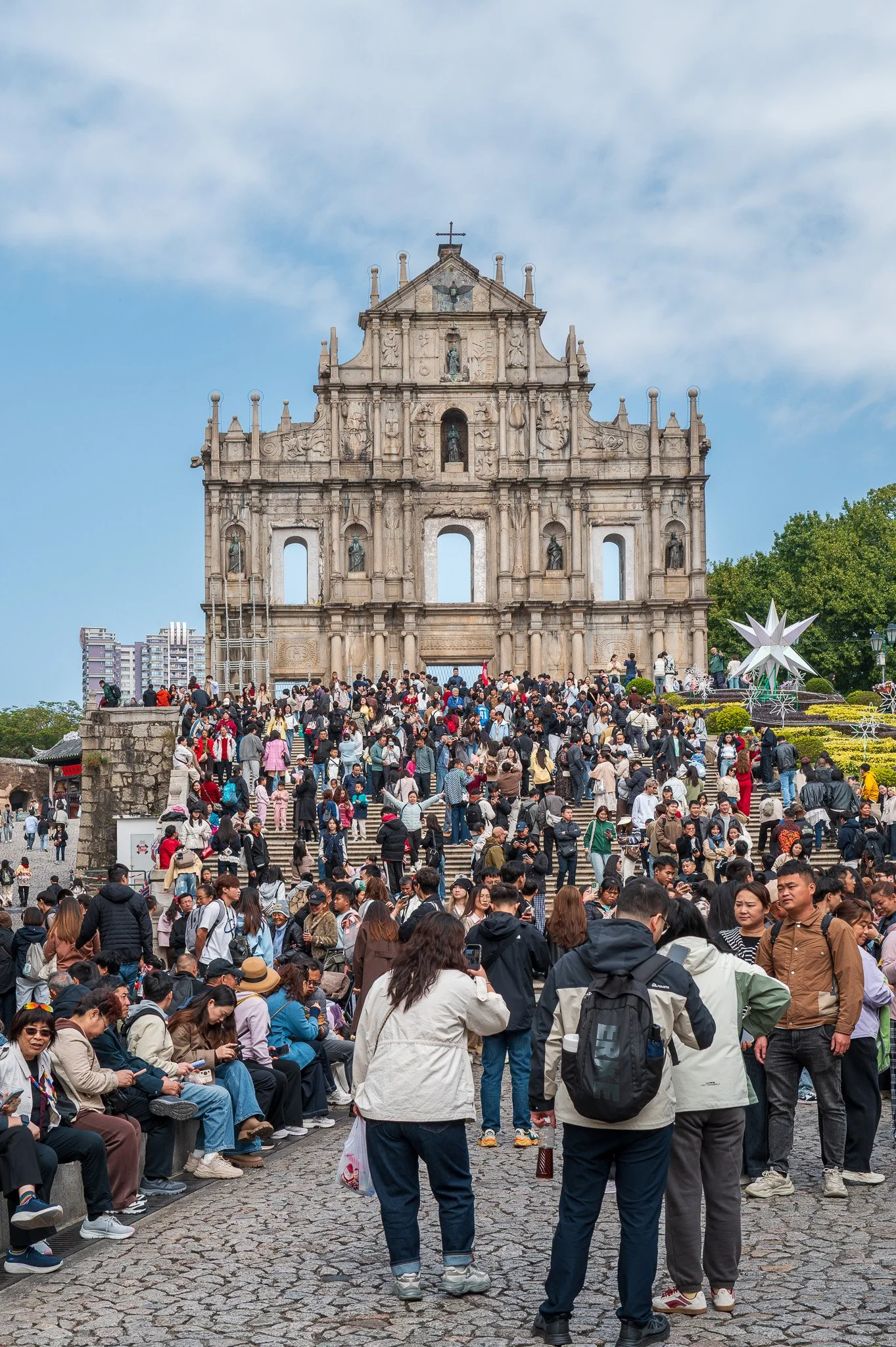
Huge Crowds
The facade itself tells a layered story. European religious figures sit alongside Chinese motifs, including lions and floral patterns, carved by Japanese Christian artisans who had been exiled from their homeland. It is one of the clearest visual examples of East and West merging into something entirely unique.
For photography, timing matters. Early morning is best if you want clean compositions and fewer people. After sunset, the illuminated facade against a dark sky creates a strong contrast and a dramatic mood. Look beyond the obvious wide shot. Details, carvings, stairways, and people moving through the frame often tell a richer story.
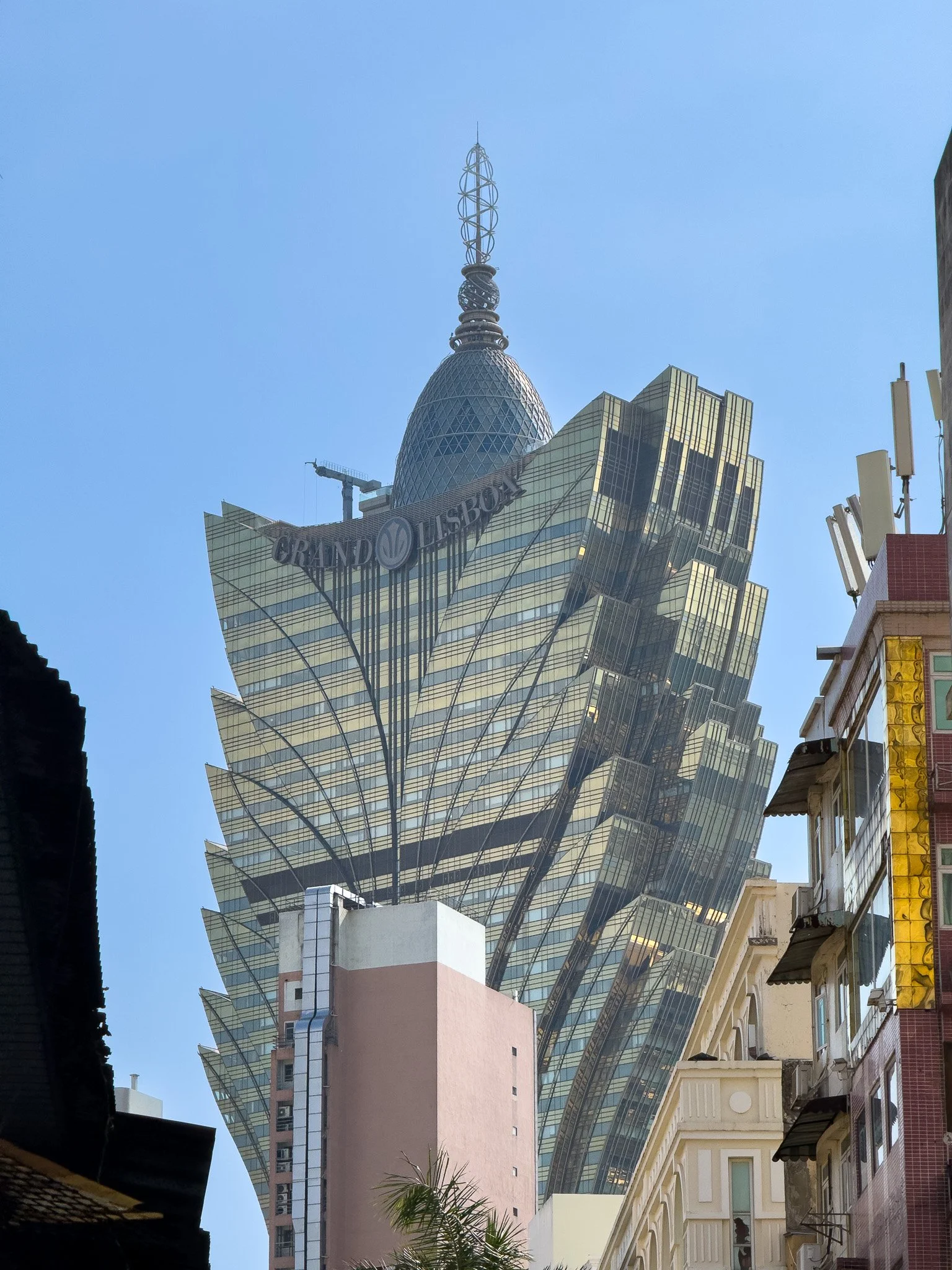
Grand Lisboa
The Grand Lisboa is impossible to ignore, and that is exactly why photographers should spend time around it.
Rising from the Macau Peninsula like something between a lotus flower and a sci-fi prop, the Grand Lisboa is one of the city’s most polarizing landmarks. Its gold, flame-like form feels bold, unapologetic, and distinctly Macau. Love it or hate it, it makes a strong visual statement, especially at night when the building glows against the darker, older streets around it.
The Venetian Macao
A night photography favorite. Bold colors, reflections, and controlled indoor lighting make it ideal for both wide shots and graphic details.
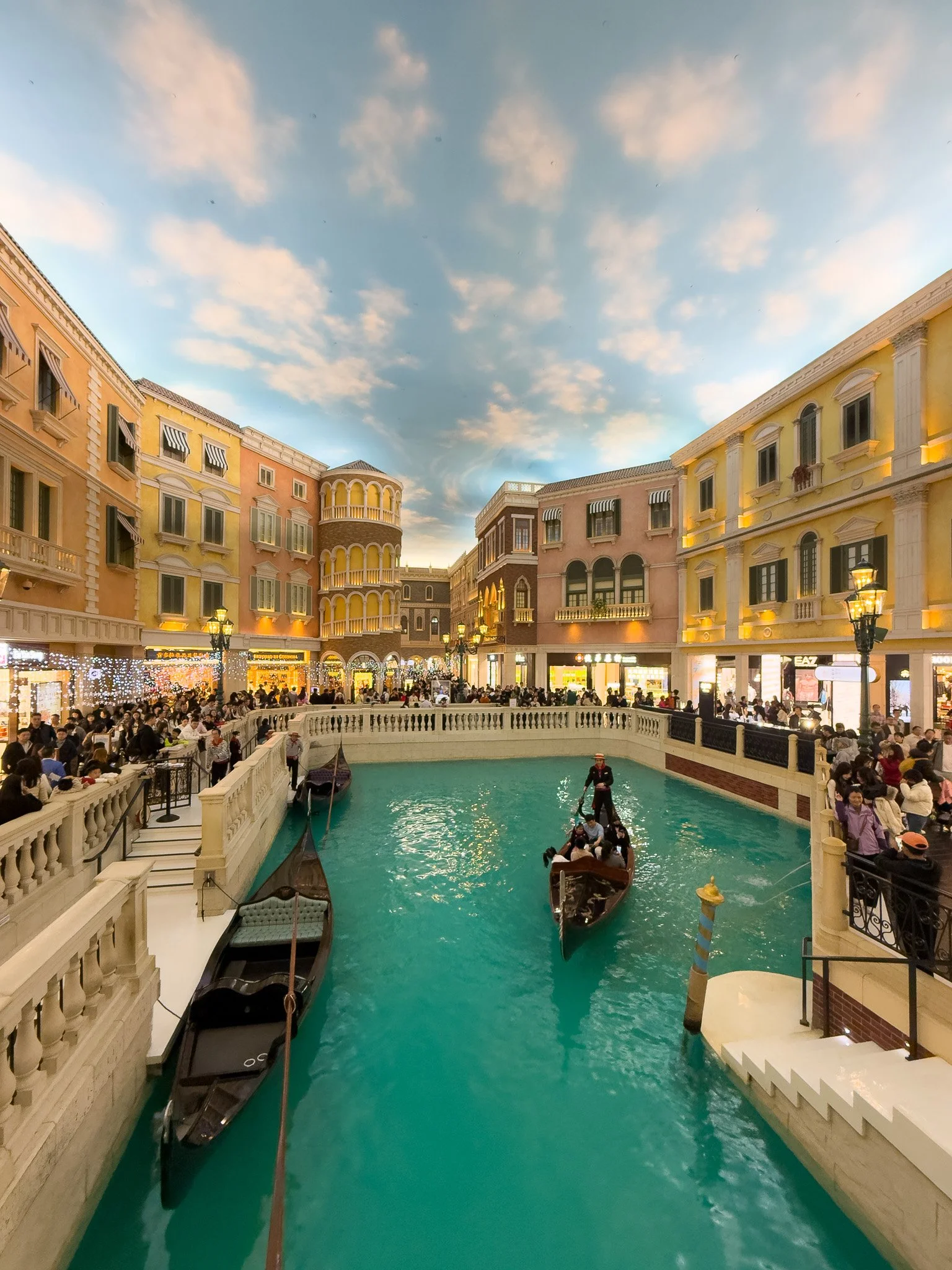
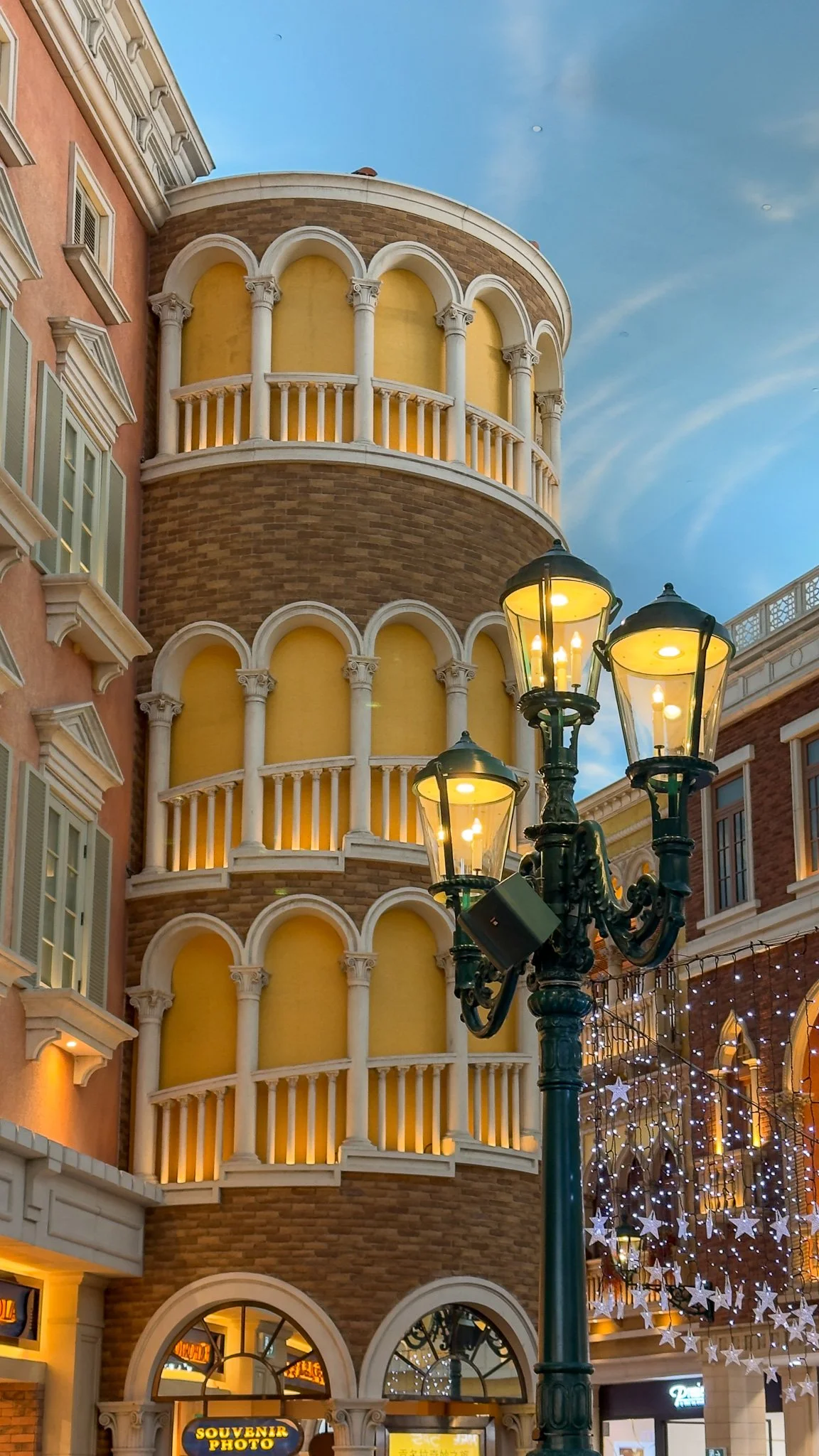
This is Venice reimagined at casino scale. Indoor canals curve beneath painted skies that stay permanently blue. Gondoliers sing as shoppers drift past luxury boutiques. Around the corner, you catch architectural nods to Parisian facades or London-inspired details, all compressed into a single, over-the-top visual playground.
More Crowds
From a photography standpoint, the Venetian is full of creative opportunities. The interiors offer controlled light, bold colors, symmetry, and reflections that work beautifully for both wide compositions and graphic details. The fake sky creates a soft, even glow that feels almost like permanent golden hour, making it surprisingly forgiving to shoot handheld.
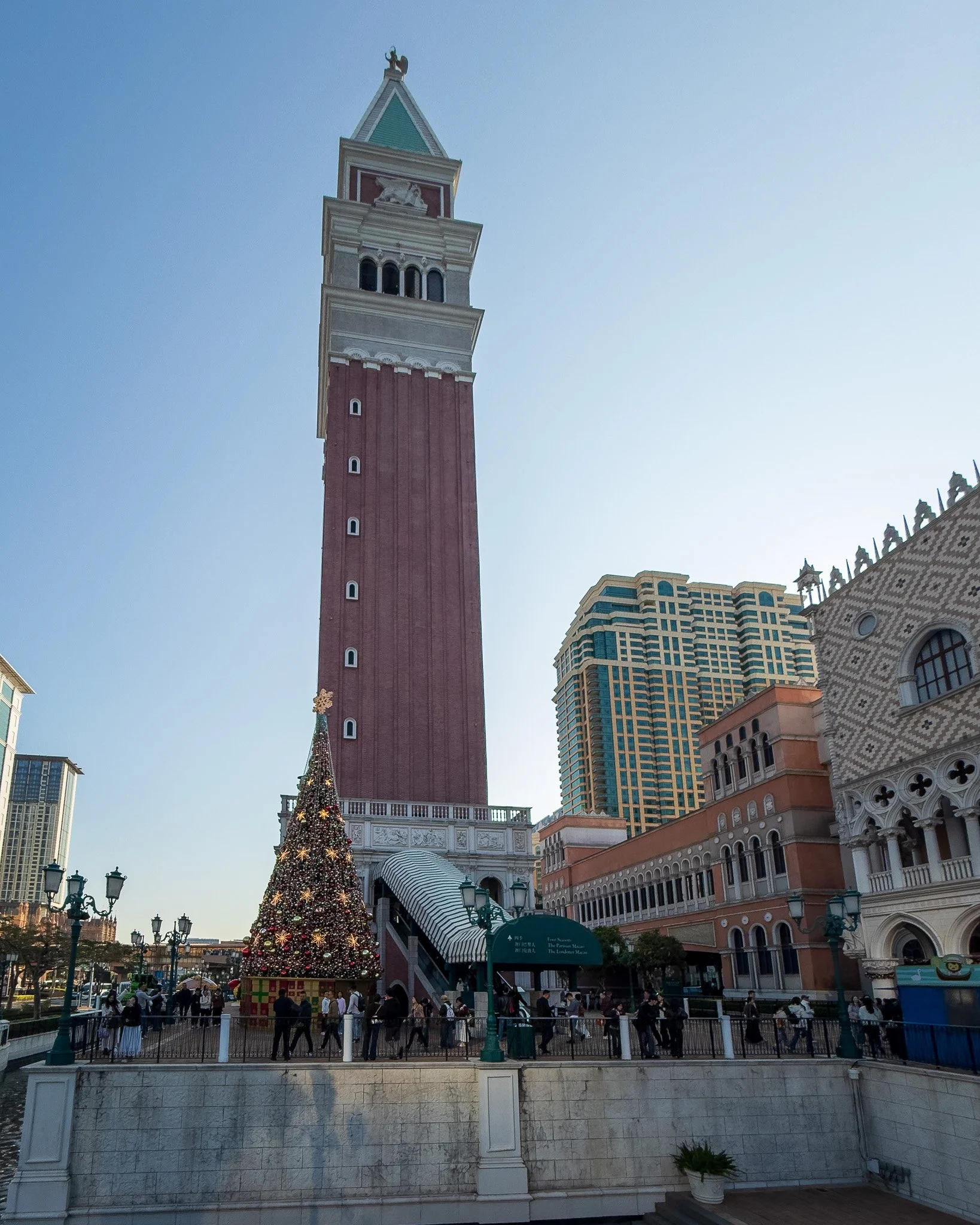
It is about spectacle and quirkiness with replicas of Big Ben, Piazza San Marco, and the Eiffel Tower. For photographers, that makes it fun, playful, and endlessly entertaining, a place where you can experiment, loosen up, and come away with images that feel very different from the rest of Macau.

A-Ma Temple
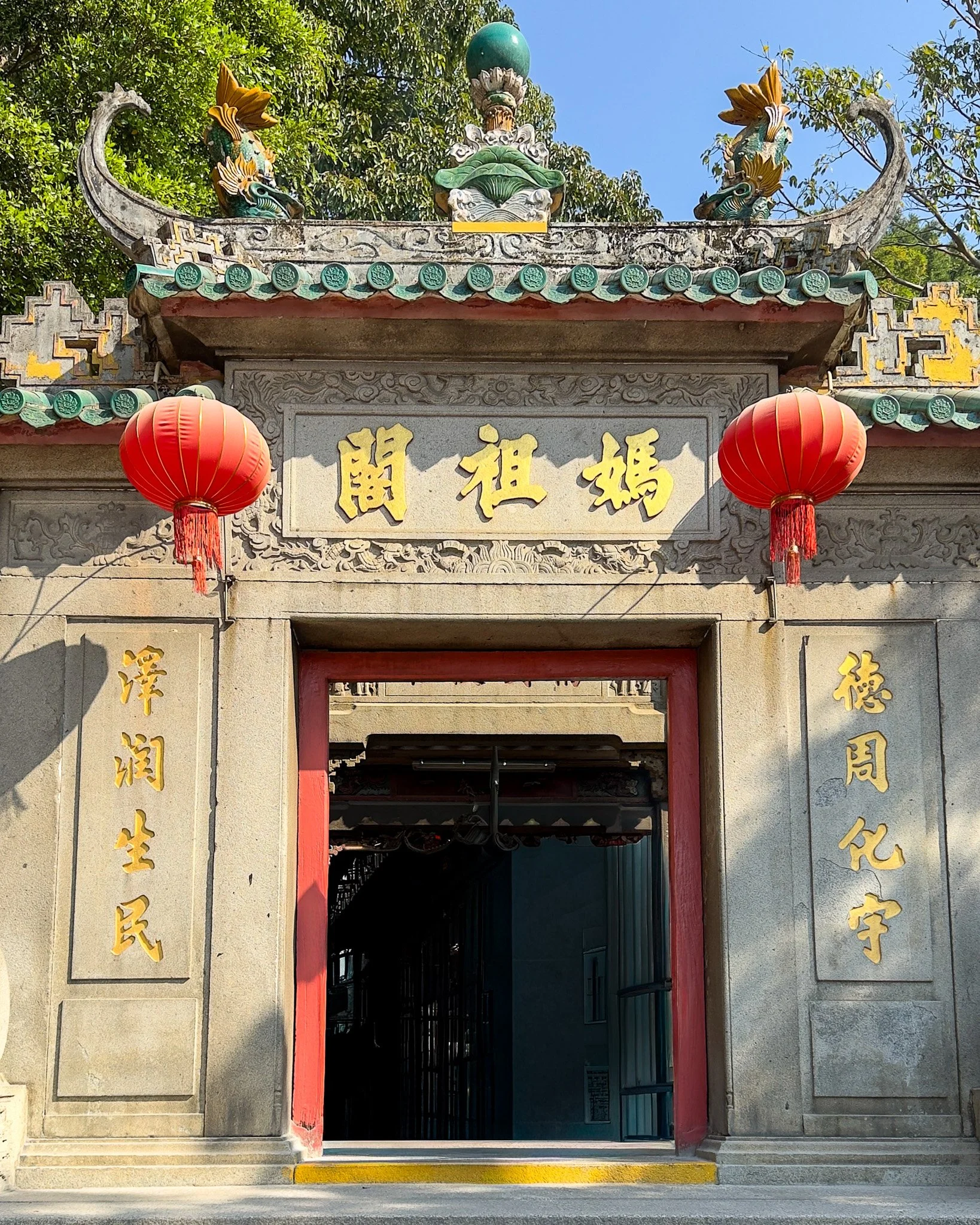
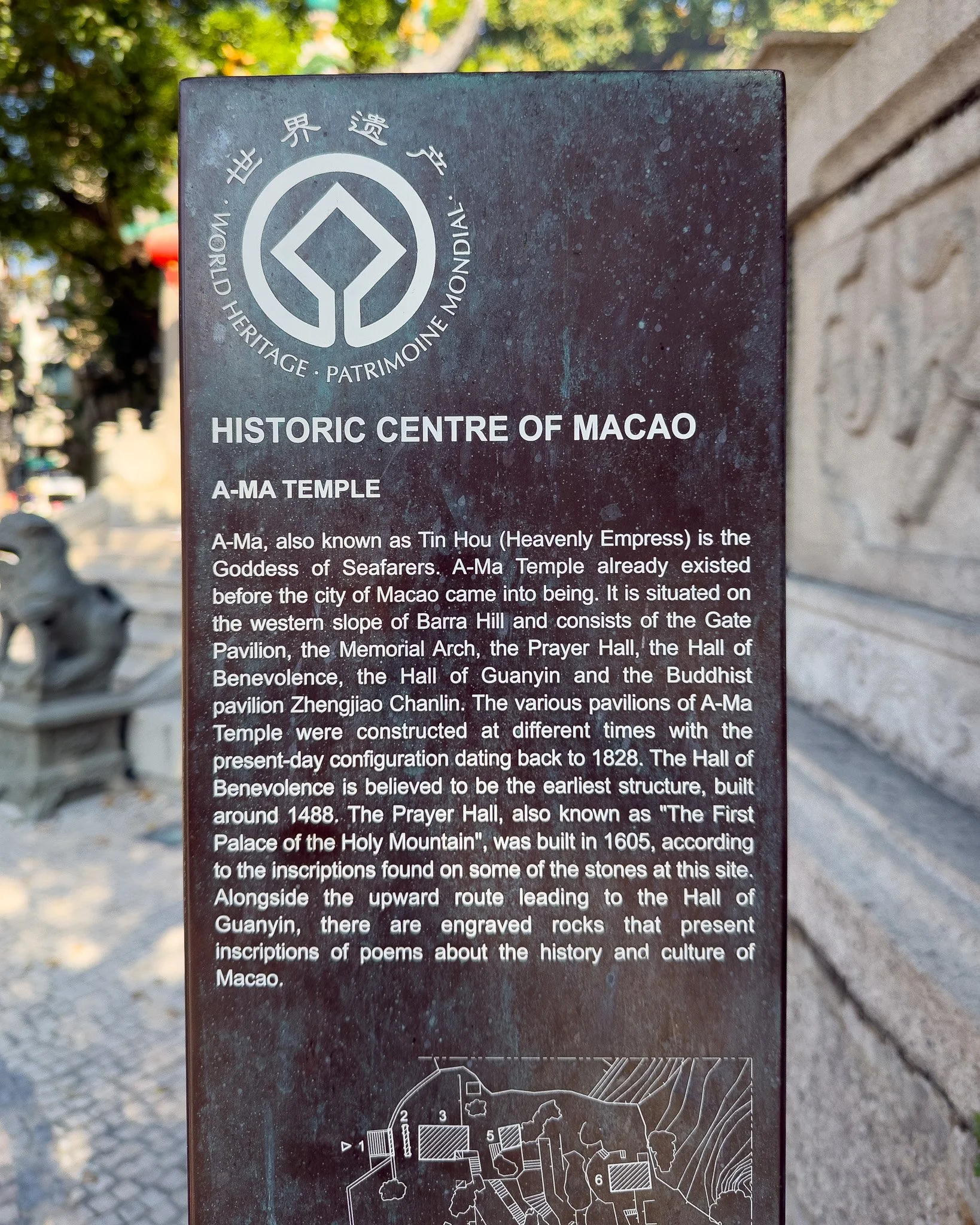
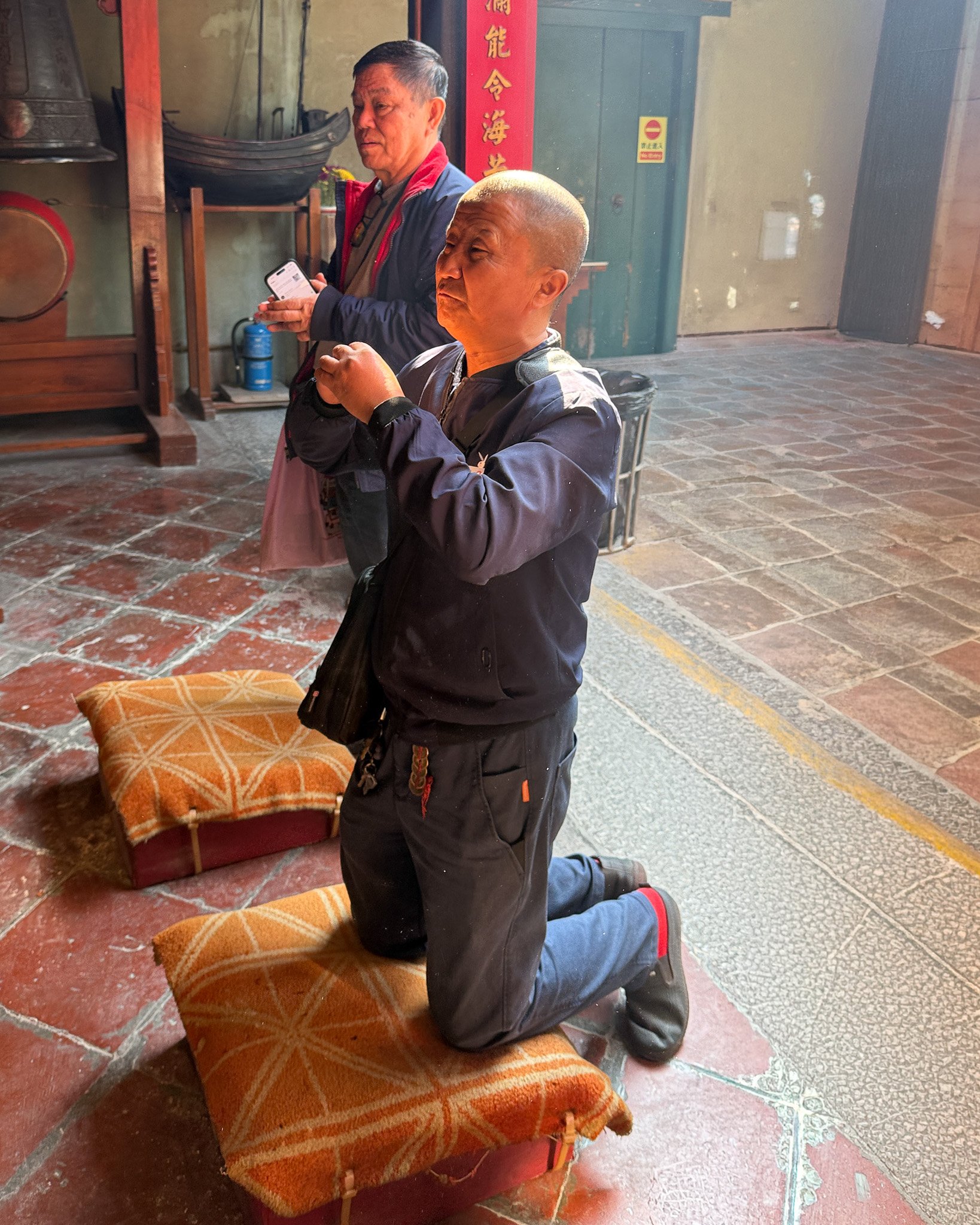
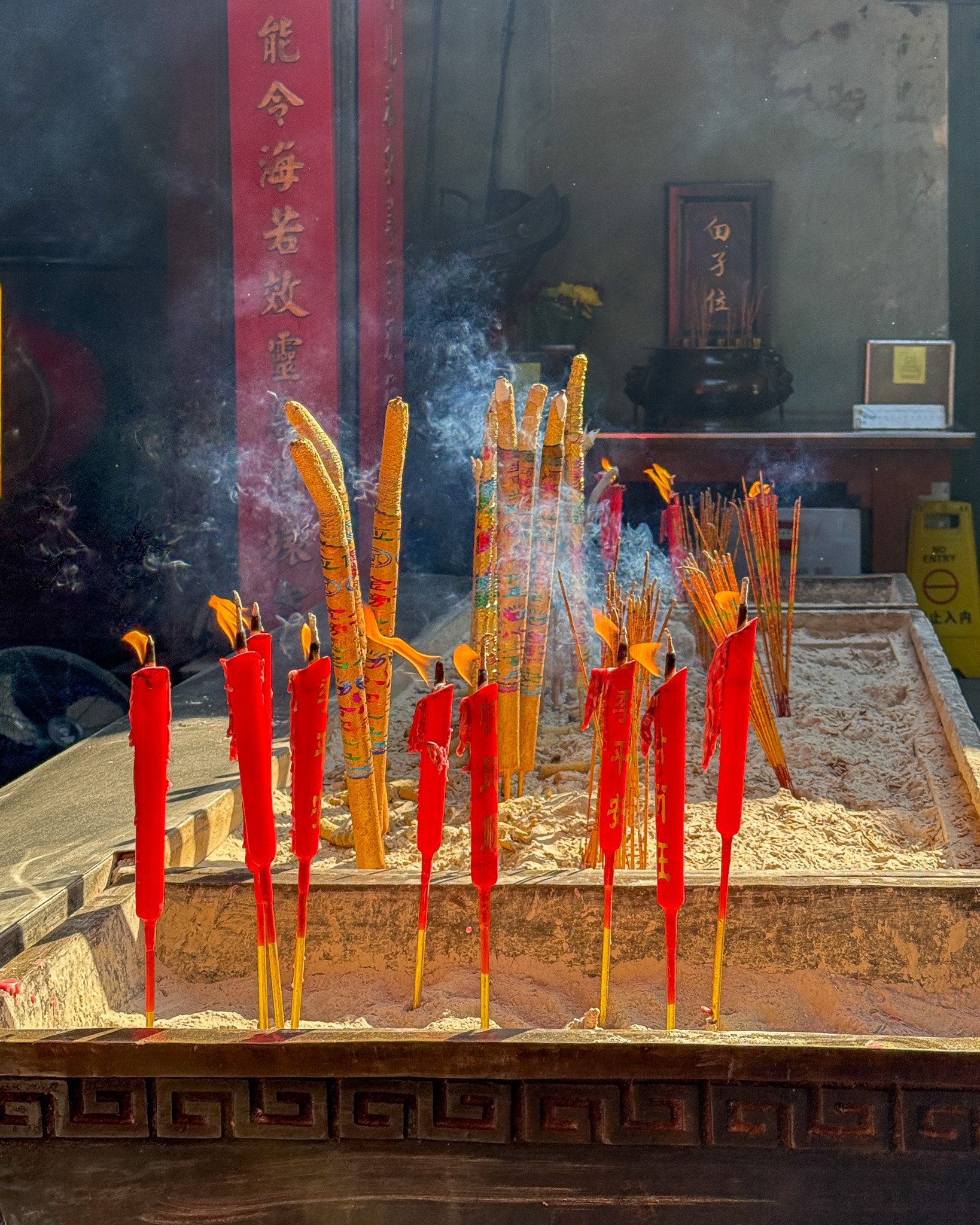
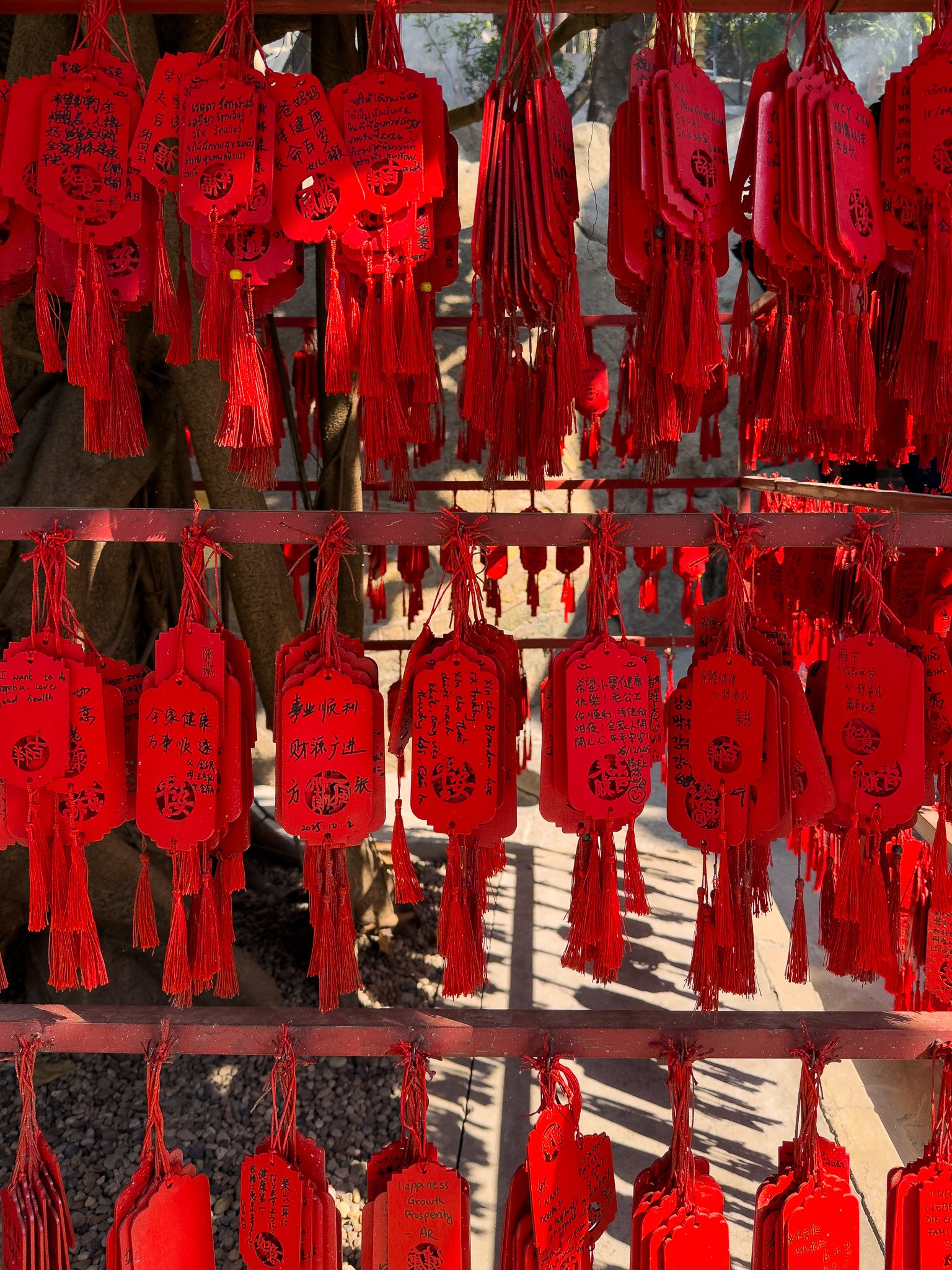
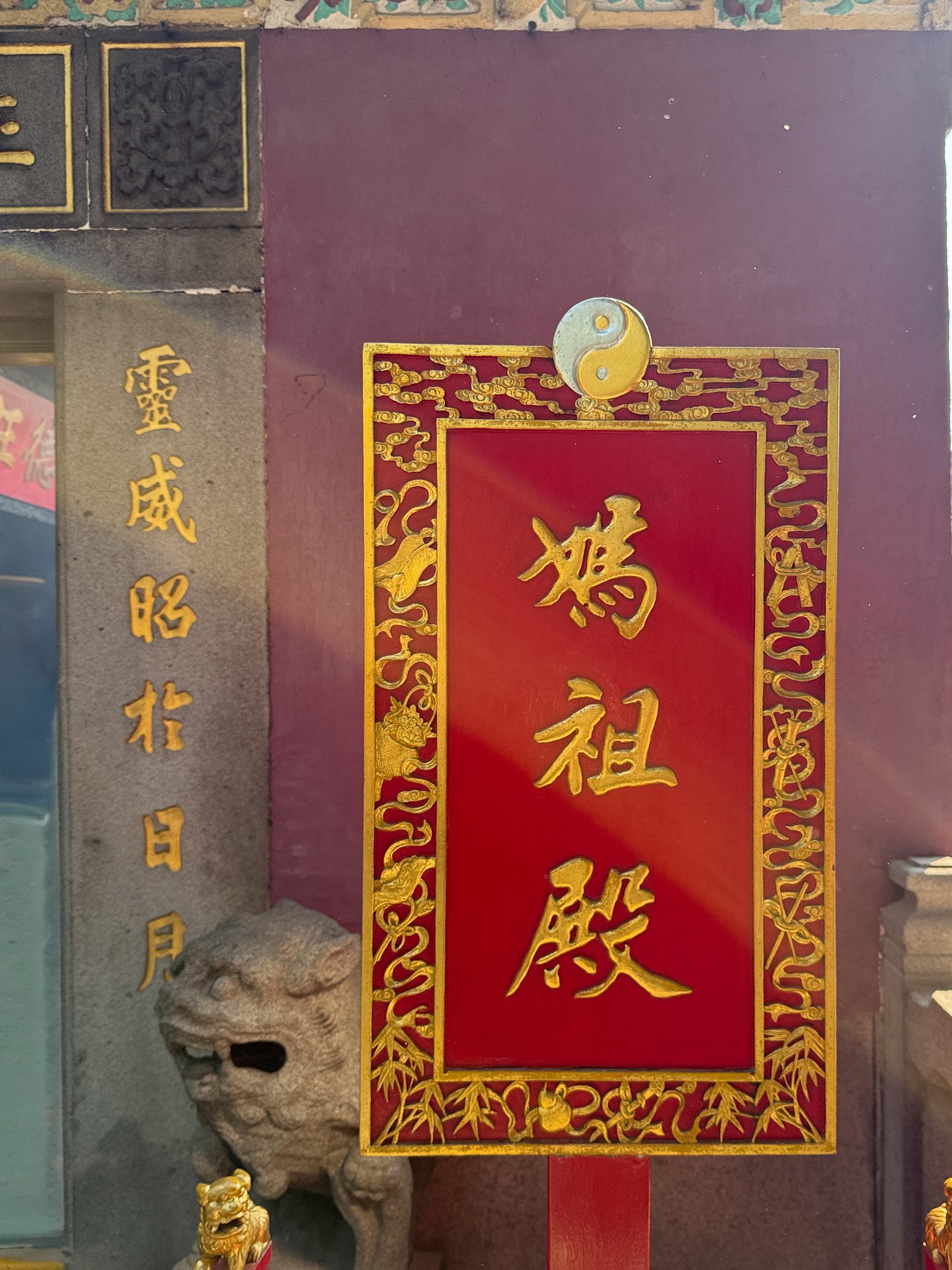
The A-Ma Temple is one of Macau’s most important cultural and historical sites, and it offers a powerful contrast to the city’s casinos and modern skyline.
Built in the late 15th century, the temple is dedicated to A-Ma, the goddess of the sea and protector of sailors. Long before casinos or colonial squares, this was a place where fishermen and traders came to pray for safe passage. In many ways, the temple represents the spiritual origin of Macau itself, and even the city’s name is believed to derive from “A-Ma-Gau,” meaning Bay of A-Ma.
A Beautiful Temple
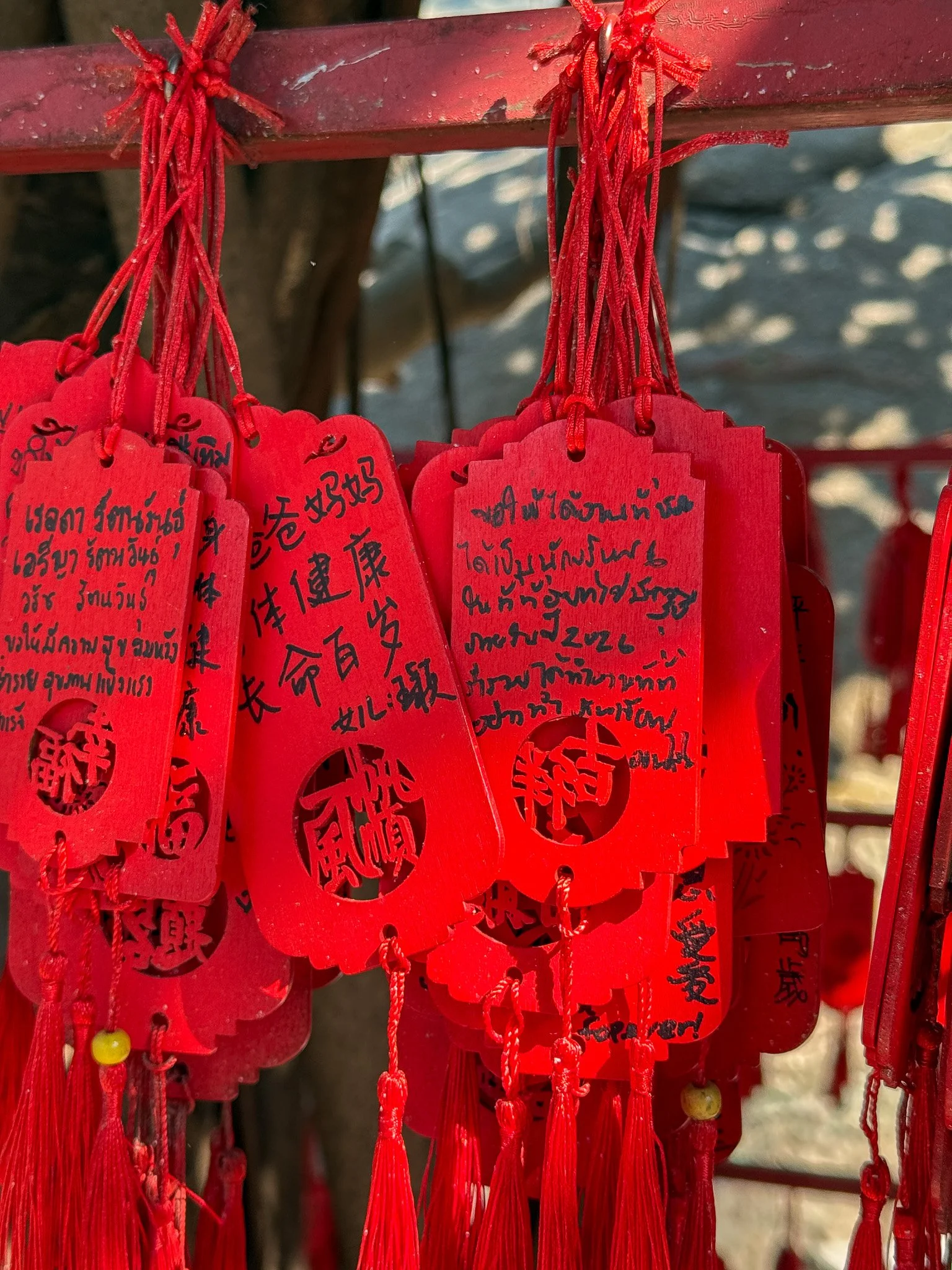
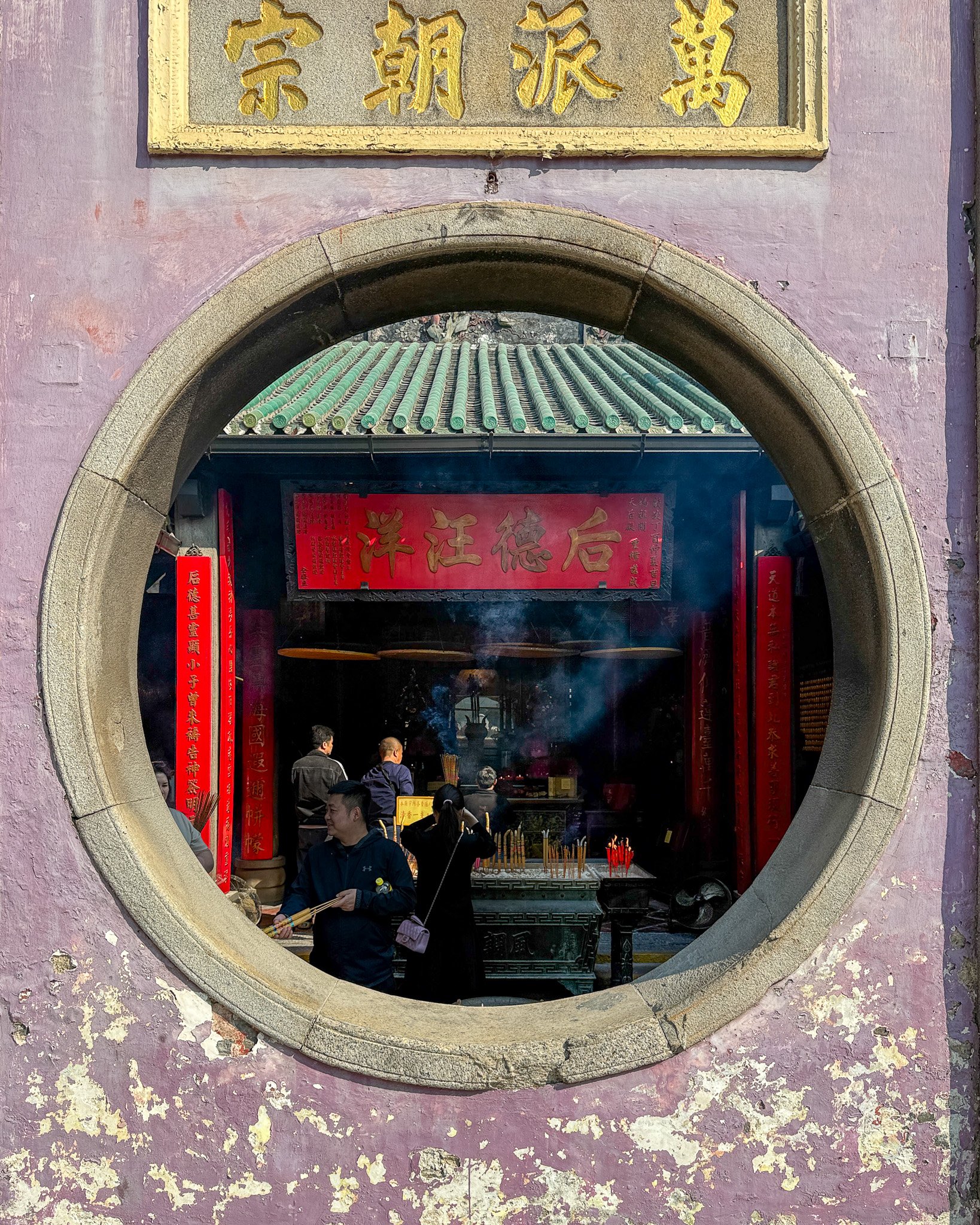
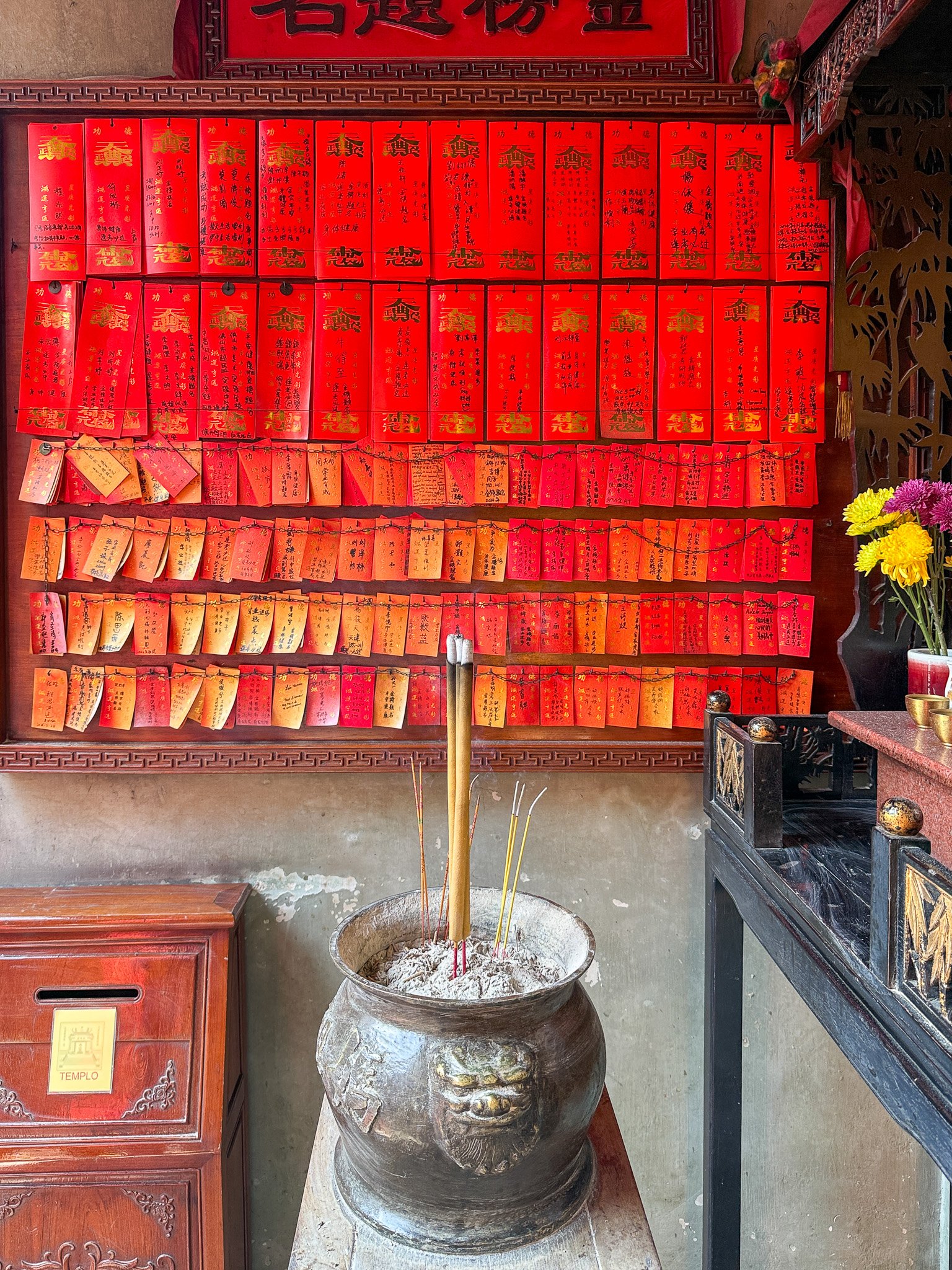
The complex unfolds gradually as you move uphill through a series of courtyards, halls, and pavilions. Stone steps, carved doors, weathered walls, and incense coils create a layered visual experience. It feels organic rather than planned, which makes it especially rewarding to photograph slowly.
Morning is the best time to visit. The light is soft, the air is often filled with drifting incense smoke, and worshippers move quietly through the space. Look for moments rather than monuments. Hands lighting incense, smoke curling against dark wood, red lanterns glowing in shadow, and framed views through doorways often tell a stronger story than wide shots alone.
St. Dominic’s Church
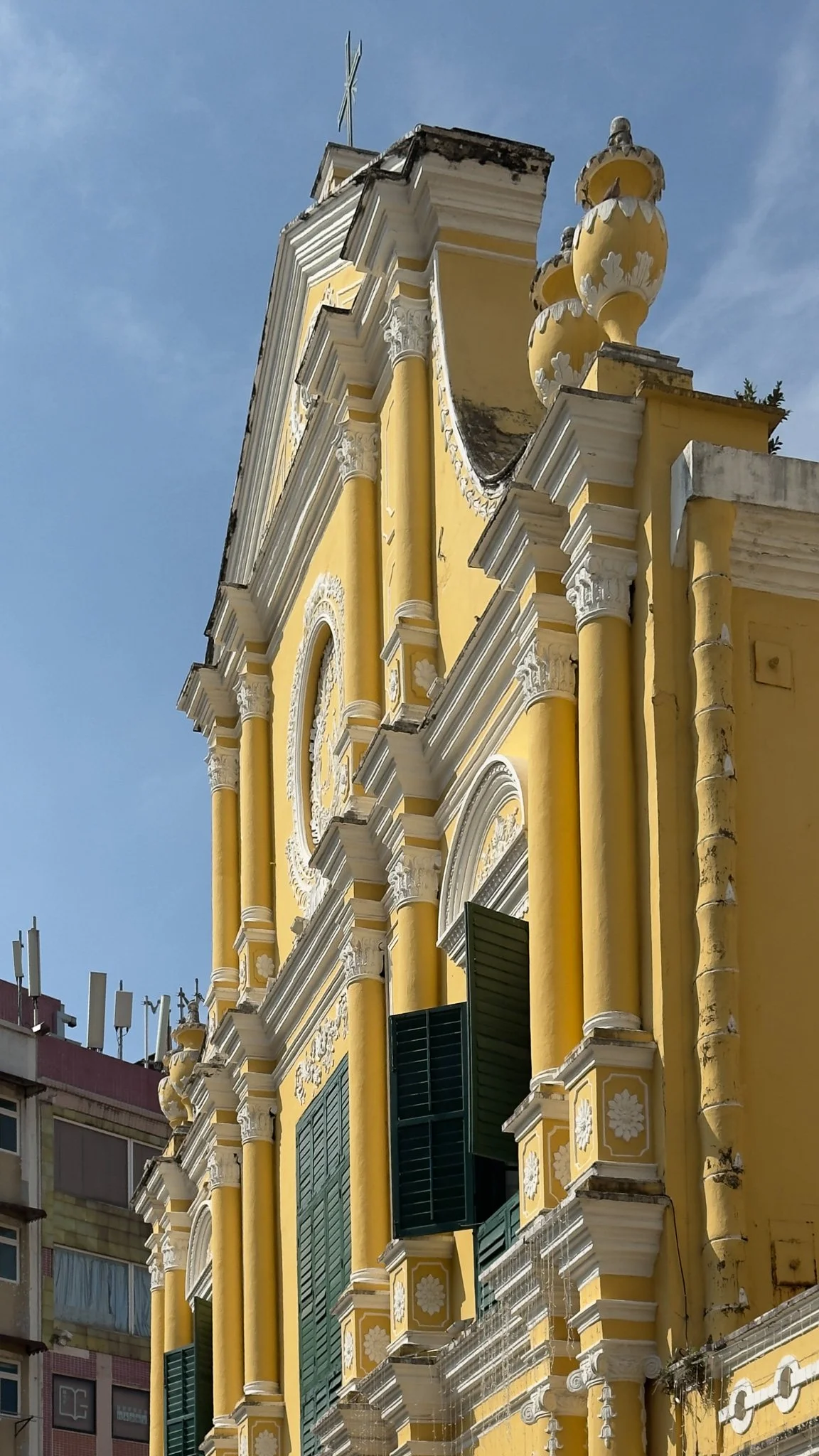
St. Dominic’s Church sits just off Senado Square and is one of the most photogenic reminders of Macau’s Portuguese past.
Built in the late 1500s by Dominican priests, the church has long played a central role in Macau’s Catholic history. Its pale yellow facade, white trim, and green shutters feel unmistakably Iberian, especially when framed against blue skies or the surrounding historic streets. The color alone makes it stand out in photographs, particularly compared to the nearby muted stone tones.
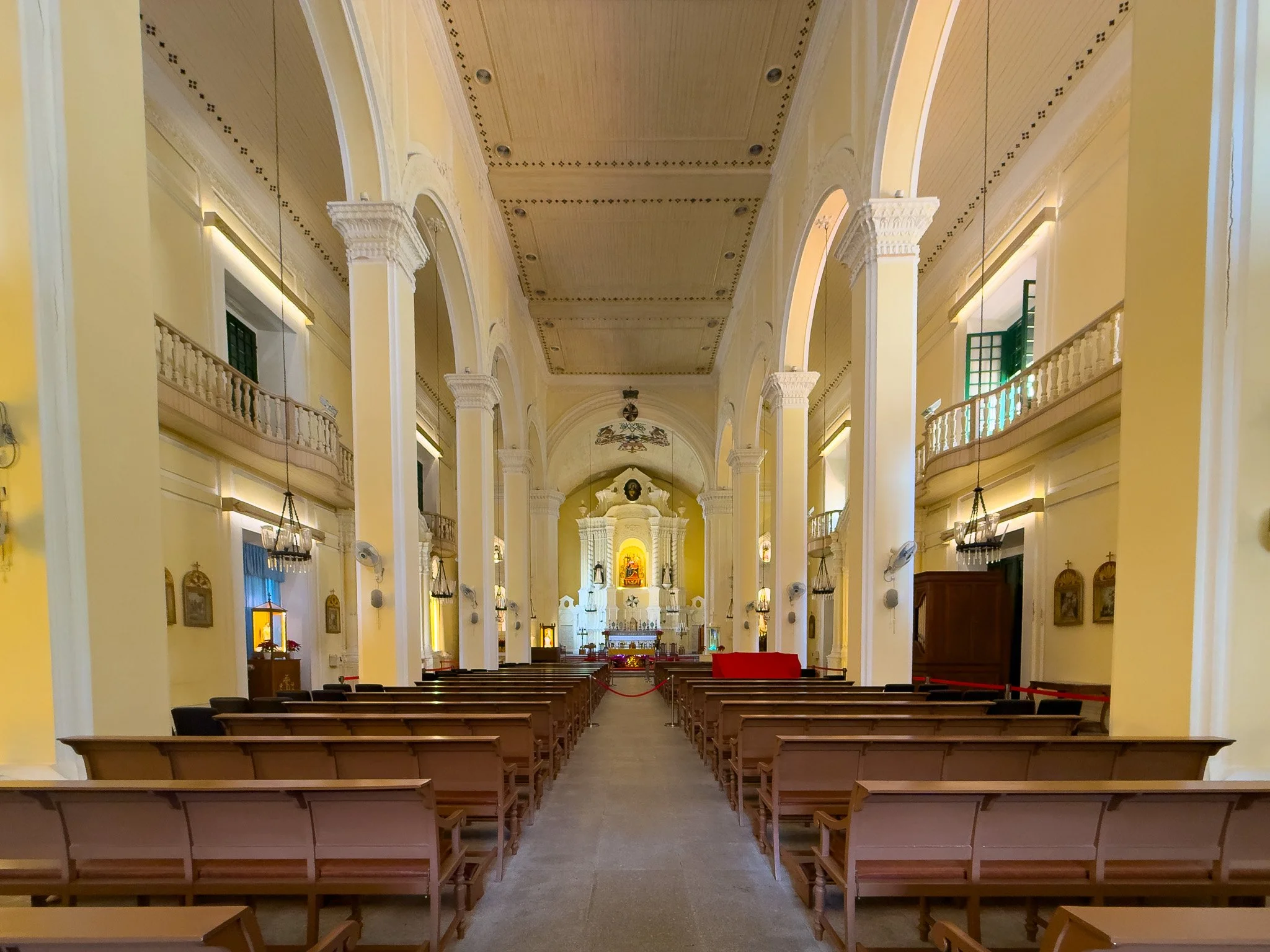
Inside, the church is calmer and more intimate than its exterior suggests. Soft light filters across wooden altars, religious paintings, and gold details, creating a quiet contrast to the busy square outside. It is a good place to slow down, observe, and look for simple compositions that focus on light and texture rather than scale.
For photographers, timing matters. Late afternoon works well, when the sun adds warmth to the facade and shadows help define its shape. Early mornings offer fewer people and cleaner lines if you want a more architectural feel. From the steps, you can also frame the church as part of daily life, with people passing through the square and the tiled pavement leading the eye.
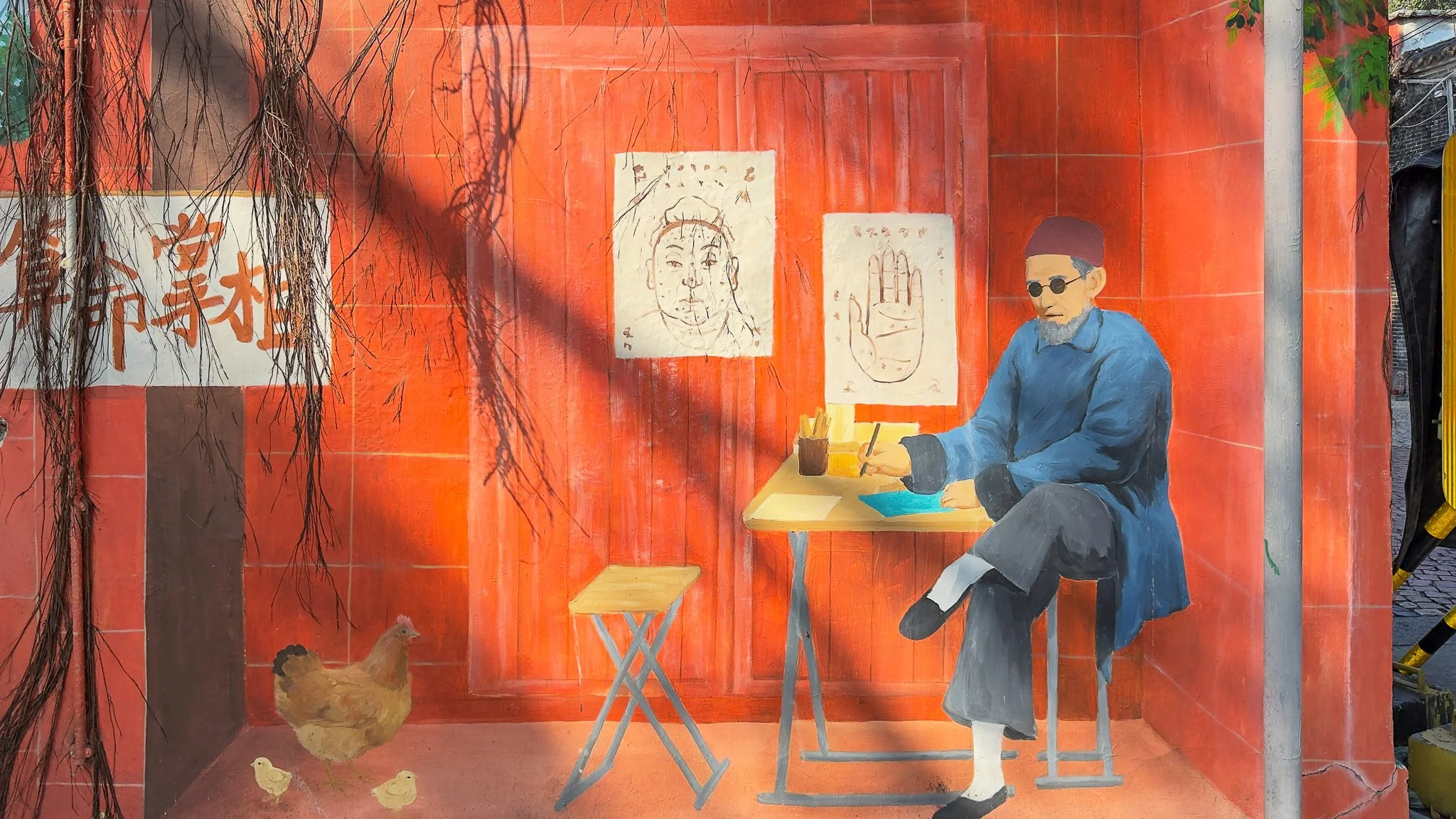
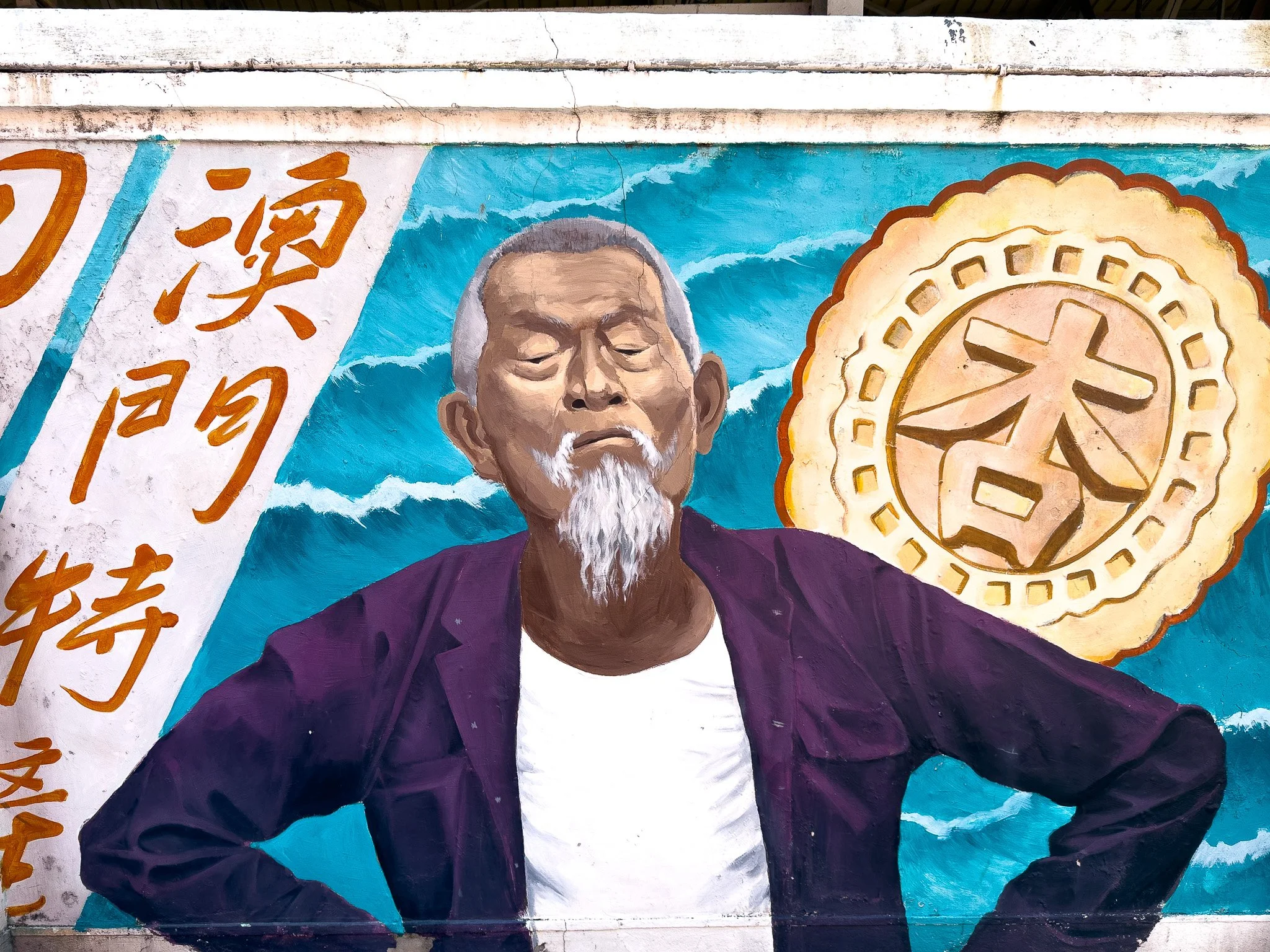
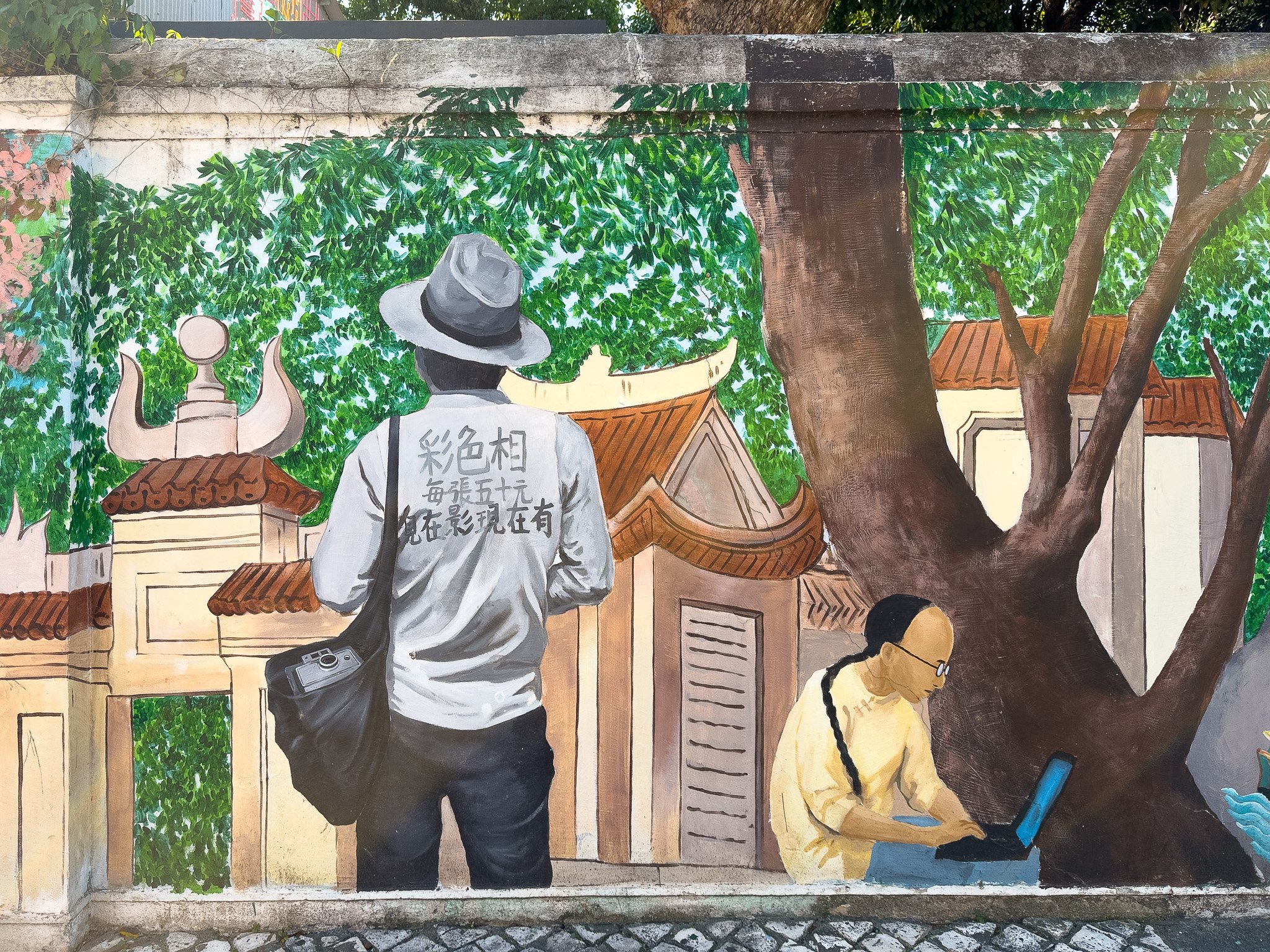
Macau Street Art
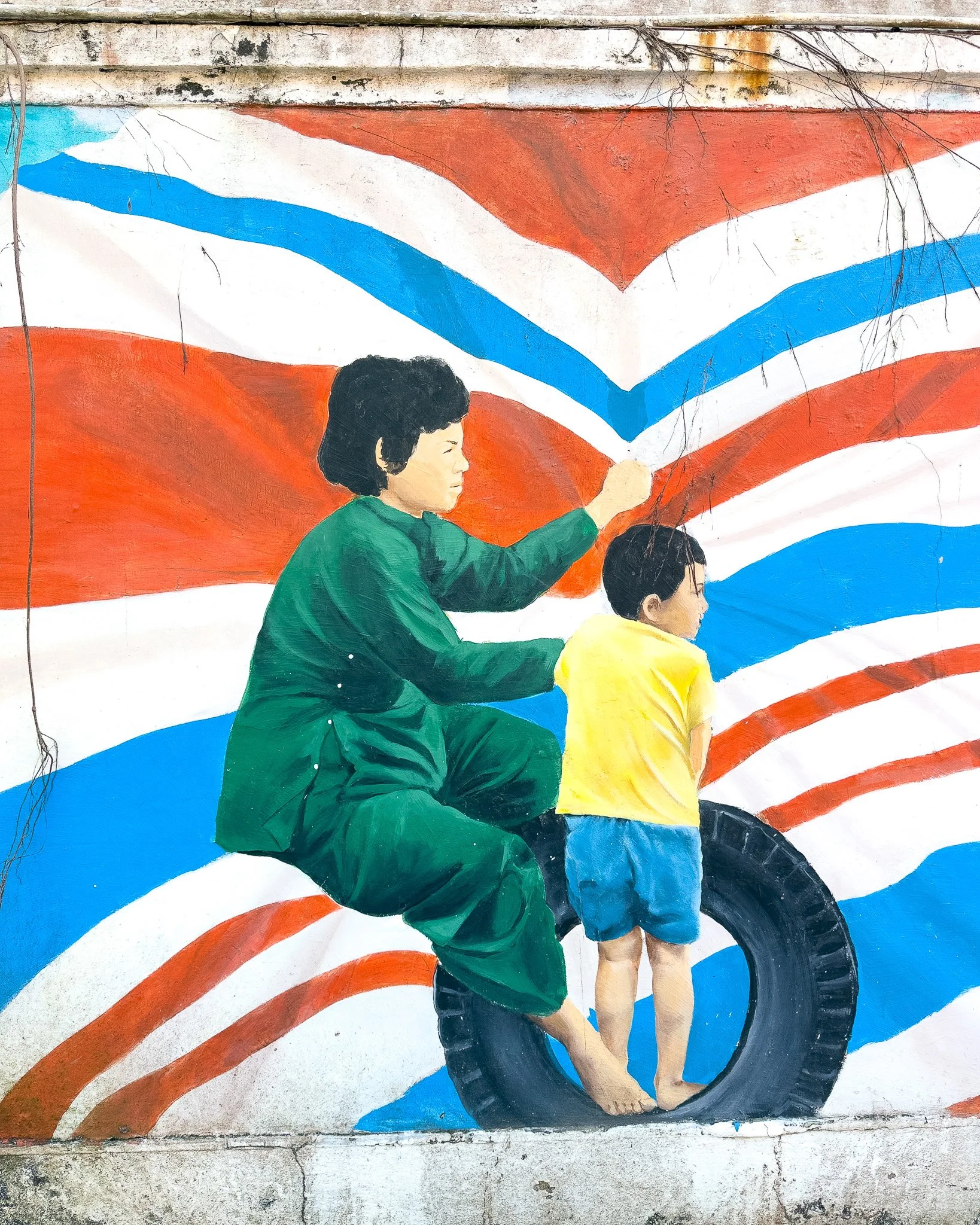
Scattered throughout the peninsula and Taipa, graffiti adds a modern layer to Macau’s visual story. Look down side streets and near older neighborhoods for the best finds. I found these ones by the A-Ma Temple.
Macau Giant Panda Pavilion
A quieter photography stop, ideal for wildlife and family-friendly images. Use longer focal lengths and watch for moments of interaction and expression. I loved my visit.
Set inside Seac Pai Van Park on Coloane, the pavilion feels calm and thoughtfully designed. The enclosures are spacious and landscaped to resemble the pandas’ natural habitat, with bamboo groves, rocks, and shaded areas that photograph beautifully. Compared to the intensity of Macau’s urban core, this place feels almost meditative.
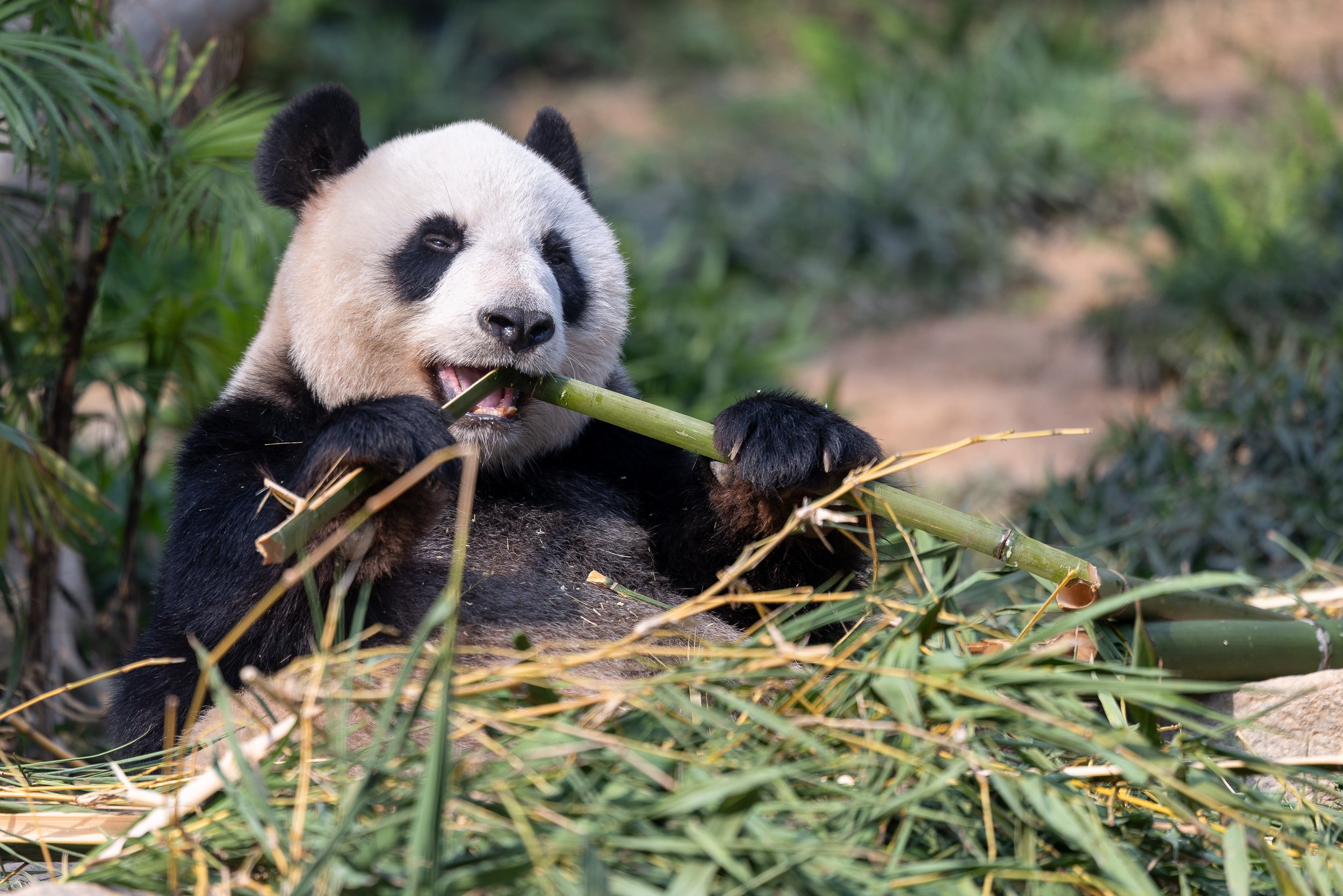
The Panda Pavillon
Festivals and Events in Macau
The Macau Grand Prix in November adds energy and action photography opportunities. Chinese New Year brings lanterns, parades, and fireworks, though crowds increase significantly.
Final Thoughts
Macau proves that you do not need a large destination to tell a big visual story. Its layers of history, culture, and modern ambition make it one of the most rewarding places to photograph in Asia.
If you are interested in joining one of my photography workshops, you can find the details through the link. You can also follow along on Instagram, Facebook, or subscribe to my newsletter for more travel photography tips and behind-the-scenes insight.
Let Macau surprise you.