Best Places to Photograph Fall Foliage on the East Coast: A Photographer's Guide
My Favorite Places to Photograph Autumn in the Eastern United States
Every autumn, photographers across the East Coast start chasing color. Social media fills with glowing red trees, winding country roads, and mountain overlooks covered in fog. But after years of photographing fall from Maine to Tennessee, I have learned something important. Great autumn photography is not only about colorful leaves.
It is about atmosphere.
It is about cold mornings when fog hangs low over the mountains. It is about quiet lakes before sunrise. It is about small towns lit by warm café windows at blue hour. It is about slowing down long enough to notice the way light filters through a forest trail covered in fallen leaves.
The East Coast has some of the most photographable autumn landscapes in the world. The season runs from late September all the way through November, depending on where you are. In this guide, I cover the five destinations I return to again and again with my camera: from Acadia in Maine to the Great Smoky Mountains in Tennessee, with specific shooting locations, peak timing, and photography tips at every stop.
When to Go: Peak Timing by Region
Timing is everything in fall photography. Go too early and the trees are still green. Go too late and you're shooting bare branches. Here is how the season moves down the East Coast:
Acadia National Park, Maine: Late September to mid-October. The earliest peak on this list. Plan your trip for the first two weeks of October if you want full color.
Vermont and New Hampshire: Early to mid-October. Vermont's sugar maples peak slightly earlier than New Hampshire's White Mountains. If you're doing both, start in Vermont during the first week of October and move to New Hampshire by week two.
Shenandoah National Park, Virginia: Mid-October through early November. The Blue Ridge Mountains peak later than New England, giving you a second window if you miss the north.
Great Smoky Mountains, Tennessee and North Carolina: Mid-October through early November. The Smokies have one of the longest color seasons on the East Coast, often running nearly eight weeks due to the range of elevations across the park.
Pro Tip: A cold night followed by a sunny morning is the formula for the best fog conditions at every single one of these destinations. Check the forecast. If temperatures drop below 45°F overnight and the next morning is clear, get up early. That is when the magic happens.
Great Falls Parks (Maryland Side)
From DC, it takes about 30 minutes to reach. But the drive down the Canal Road is very picturesque. It is definitely worth getting a National Park Pass since entry costs $20 per vehicle. Once you arrive, you will find lots of parking spaces. My favorite walk is to Olmsted Island. You will go over a few bridges that make perfect foliage locations.

A Bridge Overlook
Shenandoah National Park
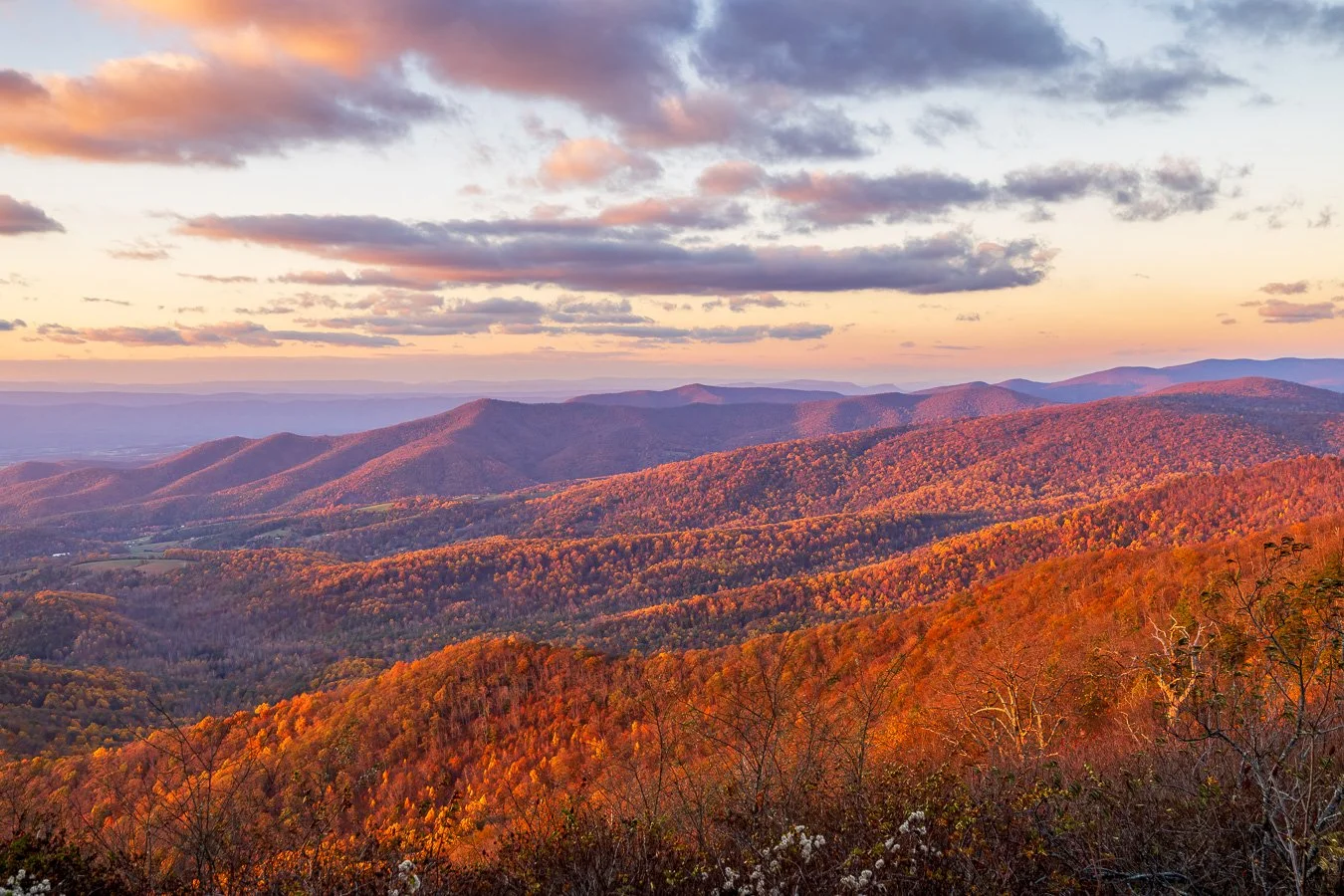
If you want dramatic fall color within driving distance of the Mid-Atlantic, Shenandoah is your answer. Just two hours from Washington, DC, and four hours from New York City, the park transforms every autumn into layers of gold, orange, and deep red stretching across the Blue Ridge Mountains.
The beauty here is not as dramatic as the Rockies. It is softer, more atmospheric, and that is exactly why it photographs so well. Skyline Drive, the 105-mile scenic road through the park, gives you access to dozens of overlooks. On cold autumn mornings, fog settles into the valleys below, creating layers that seem to stretch forever.
Best Photography Locations
Stony Man Summit One of the easiest hikes to a high elevation view in the park. The summit sits at 4,011 feet and delivers panoramic views of the Blue Ridge ridgeline in every direction. In mid-October, the layers of color from this vantage point are extraordinary.
📷 Pro Tip: Arrive before sunrise and shoot looking east. The first light hits the ridgeline while the valleys below are still in deep blue shadow, giving you a natural separation between sky, mountains, and fog. A 70-200mm lens is your best tool here to compress those layers and make the colors feel stacked and dramatic. Bring a tripod. The light is low for at least the first 30 minutes after sunrise.
Best time: Sunrise, mid-October. Access: National Park Pass or $35 vehicle fee. Trailhead at Mile 41.7 on Skyline Drive.
Hawksbill Mountain The highest point in Shenandoah at 4,051 feet. The summit is more open than Stony Man and gives you 360-degree views on a clear day. The trail is short and well-marked.
📷 Pro Tip: The biggest mistake photographers make at Shenandoah is shooting too wide. Instead of trying to capture everything, use a telephoto lens to isolate the ridgelines and compress the color. Some of my favorite Shenandoah images came from a 200mm focal length, not a wide angle. If it is a cloudy morning, go anyway. Overcast light makes the reds and oranges pop more than direct sun.
Best time: Morning or late afternoon. Access: National Park Pass. Trailhead near Fishers Gap Overlook, Mile 49.3.
Dark Hollow Falls The most accessible waterfall in the park and a beautiful foreground subject in peak foliage season. The falls drop about 70 feet through a narrow hollow surrounded by birch and maple trees.
📷 Pro Tip: Photograph the falls on a cloudy day. Direct sun creates harsh contrast in the hollow and blows out the white water. Overcast light gives you even exposure across the water and the surrounding leaves. Use a 6-stop ND filter and a shutter speed of around 1 to 2 seconds to smooth the water. If it has rained recently, the colors on the wet rocks are richer and more saturated. Get low and use the rocks in the foreground as a compositional anchor.
Best time: Overcast mornings, mid-October. Access: National Park Pass. Trailhead at Big Meadows parking area, Mile 51.
Thorofare Mountain Overlook One of the lesser-visited overlooks on Skyline Drive and one of the best for fog photography. The elevation and angle of the overlook position you directly above the valley fog on cold mornings, giving you a sea of white below and color-covered ridges above.
📷 Pro Tip: Do not skip rainy or cloudy days at Shenandoah. The park becomes moodier and more cinematic in bad weather. If the forecast shows rain, go. Wet roads, misty overlooks, and low clouds wrapping around the mountains are conditions that separate your images from every other photographer's autumn shots.
Best time: Early morning after a cold night. Access: Free, roadside pullout at Mile 40.5 on Skyline Drive.
Photography Tips: Shenandoah
Sunrise is almost always better than sunset here
Go after a cold night for the best fog in the valleys
Mid-October through early November is peak color
Bring a tripod for low-light forest and waterfall shots
Use a telephoto lens rather than a wide angle for the most compelling mountain shots
Acadia National Park
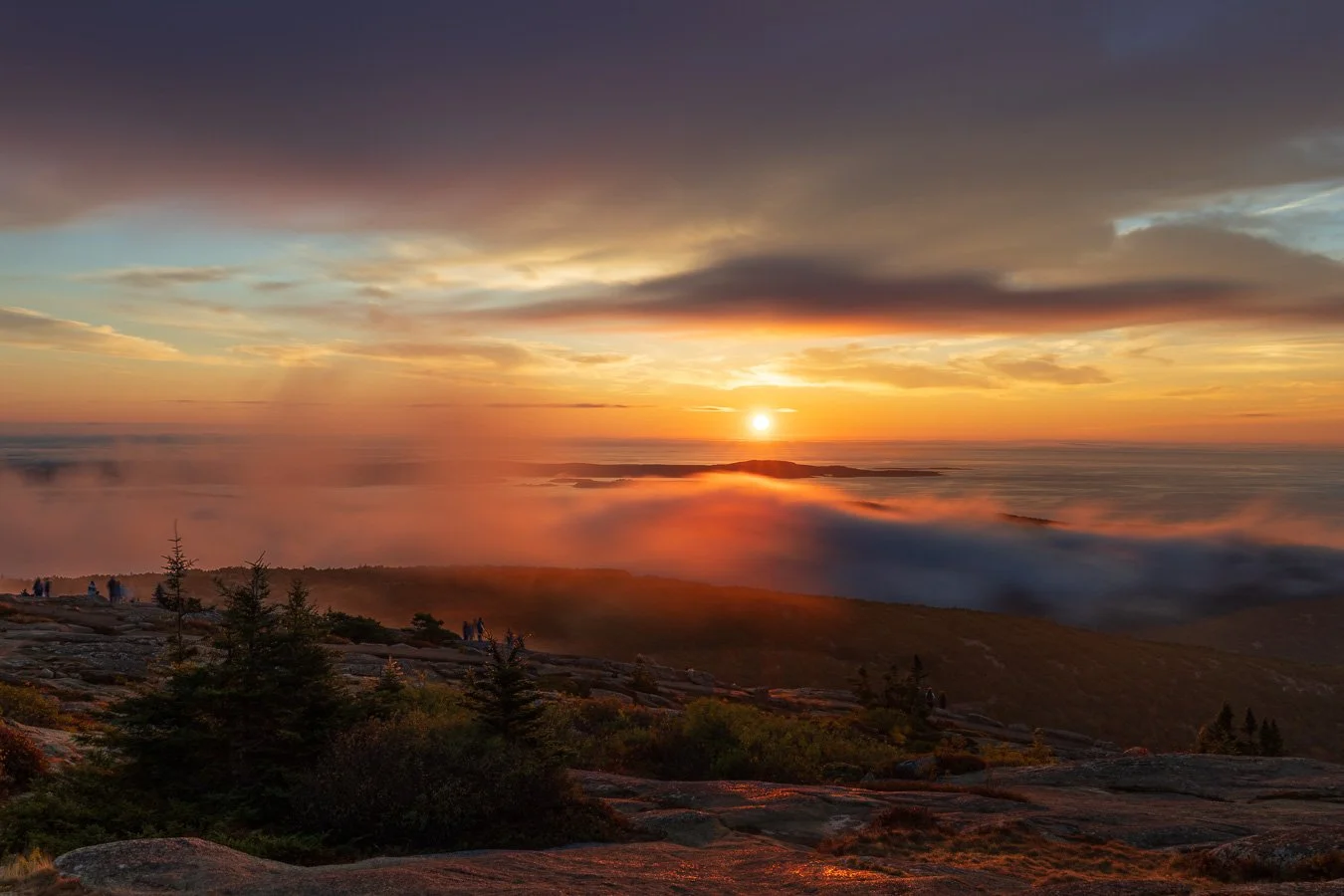
Acadia feels completely different from every other fall destination on this list. Instead of soft mountain ridges, you get rugged coastline, crashing waves, granite cliffs, evergreen forests, and brilliant fall color all at once. For photographers, it is a dream combination.
One morning you can photograph fog drifting through colorful forests at Jordan Pond. A few hours later you can photograph dramatic ocean landscapes at Otter Cliffs. It is one of the only places in the United States where you can photograph autumn foliage beside the Atlantic Ocean. That contrast is what makes the park extraordinary.
Peak timing is late September through mid-October. Book accommodation in Bar Harbor at least two months in advance. During peak color, every good hotel fills up quickly.
Best Photography Locations
Cadillac Mountain At 1,530 feet, Cadillac Mountain is the highest point on the eastern seaboard and one of the first places in the United States to catch the sunrise. In fall, the combination of low-angle morning light, colorful forests below, and the ocean in the distance creates some of the most dramatic landscape conditions in New England.
📷 Pro Tip: Cadillac at sunrise is genuinely spectacular, but it is also genuinely crowded during peak foliage. If you want a clean composition without other photographers in your frame, arrive at least 45 minutes before sunrise. Bring a wide-angle lens for the full summit panorama, then switch to a telephoto to pull in the islands and the distant coastline. If it is foggy below the summit, shoot looking down into the fog layer with the ridgeline emerging above. That is the image most people miss because they are focused on the horizon.
Best time: Sunrise, late September through mid-October. Access: Acadia National Park pass or $35 vehicle fee. Summit Road open seasonally, check NPS website for hours.
Jordan Pond The most reliably beautiful spot in the park for fall color reflection shots. The pond sits in a bowl surrounded by mountains on three sides, and on a calm morning the reflection of the autumn foliage in the water is extraordinary.
📷 Pro Tip: Arrive at first light when the water is at its calmest. Wind picks up as the day warms, and by 9am the reflection is usually broken. Position yourself at the north end of the pond for the classic view with the Bubbles mountains rising above the trees. Use a polarizing filter to control the surface reflection and deepen the color of the surrounding foliage. If there is any fog on the water, stay as long as it lasts. Fog at Jordan Pond is one of the most photographable conditions in Acadia.
Best time: Sunrise on calm mornings. Access: Free. Parking at Jordan Pond House on Park Loop Road.
Bass Harbor Head Light One of the most photographed lighthouses in New England, and for good reason. The lighthouse sits on granite ledges above the ocean on the quieter southwest side of the island, away from the Bar Harbor crowds.
📷 Pro Tip: Most photographers arrive at golden hour and shoot from the viewing platform. Skip the platform. Walk down the rocks to the left of the lighthouse and find a lower angle with the ledges in the foreground. A 16 to 35mm wide-angle lens works beautifully here. If there are waves, use a 1-second exposure to capture motion in the water. The fall color in the surrounding spruce trees peaks in mid-October, adding warm tones to contrast the white lighthouse and grey ocean.
Best time: Sunset and blue hour. Access: Free. Parking lot fills quickly at golden hour; arrive 30 minutes early.
Otter Cliffs Dramatic 110-foot granite cliffs dropping straight into the Atlantic. One of the most powerful coastal compositions in the Northeast, especially in fall when the scrubby vegetation on the cliff tops turns deep red and orange.
📷 Pro Tip: Wind matters more than people realize at Otter Cliffs. On a calm day the ocean is flat and compositionally uninteresting. On a stormy day with waves crashing against the granite, the scene becomes extraordinary. Check the forecast before you go. A northeast wind produces the best wave action. Use a fast shutter speed (1/500 second or faster) to freeze the spray against the cliffs, or use a long exposure to turn the wave motion into mist. Both work. Both are very different images.
Best time: Stormy mornings or blue hour. Access: National Park pass. Parking at Otter Cliff Road off Park Loop Road.
Photography Tips: Acadia
Fog completely transforms the park; plan around cold nights and clear mornings
Wind determines everything at the coastal locations
Sunrise almost always outperforms sunset in this park
A circular polarizer is essential for controlling reflections at Jordan Pond
Some of the best images in Acadia happen between locations; pull over when the light changes
Vermont
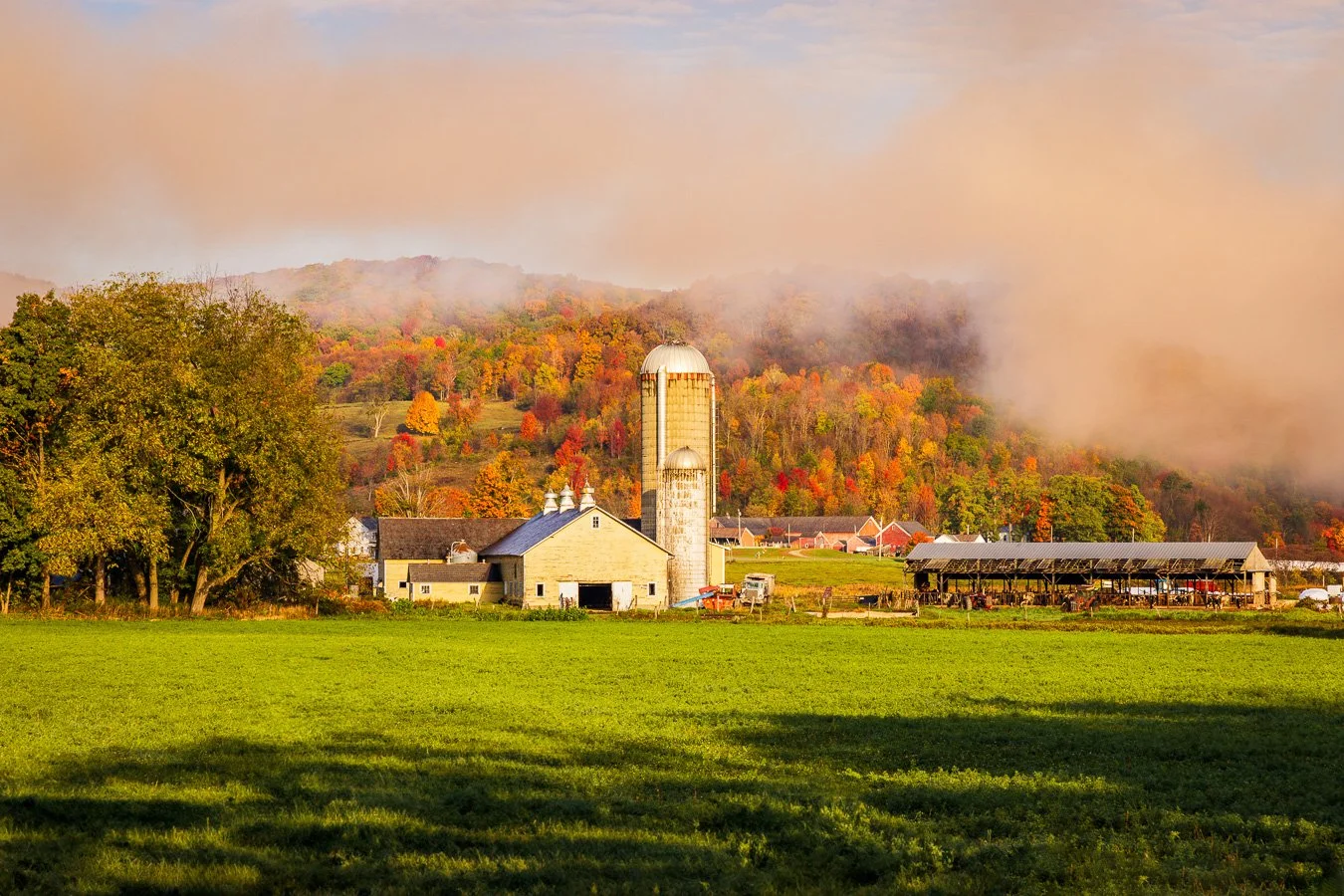
Vermont in autumn almost feels too perfect to be real. Covered bridges. White churches. Red barns. Rolling hills covered in sugar maples. Fog drifting across open farmland at sunrise. It is cinematic in the best possible way.
But Vermont rewards slower travel. Many photographers make the mistake of driving across the entire state chasing peak color reports. The real beauty here comes from slowing down and exploring the back roads. Some of my strongest Vermont images came from random turns onto quiet country lanes where the light suddenly became something special.
Peak timing is early to mid-October, with the northern part of the state, including Stowe and the Northeast Kingdom, peaking slightly earlier than the south.
Best Photography Locations
Peacham, Vermont One of the most photographed fall locations in New England, and still worth every frame if you arrive early. The village sits on a hilltop in the Northeast Kingdom with views across fog-filled valleys to the Green Mountains. The white church, old cemetery, and farmhouses surrounded by maple trees create a composition that feels like it was designed for a camera.
📷 Pro Tip: Peacham at sunrise, after a cold night, is as good as fall photography gets in New England. Park near the church and walk the perimeter of the village green before the light gets too high. The best fog conditions happen when overnight temperatures drop below 40°F and the morning is clear. Use a telephoto lens to compress the church against the misty hillside behind it. Arrive at least 20 minutes before sunrise. By 8am the fog is usually gone and the moment has passed.
Best time: Sunrise, first two weeks of October. Access: Free, roadside village. About 1.5 hours from Burlington.
Stowe Village and Route 100 Stowe is the classic Vermont fall experience: a white-steepled church, covered bridges, a main street lined with maple trees turning gold and red, and the mountains rising behind it all. Route 100 south from Stowe through the Mad River Valley is one of the best fall drives in the state.
📷 Pro Tip: Stowe Village is beautiful but busy during peak foliage weekends. Shoot the village itself early in the morning before the traffic arrives, then spend the rest of the day exploring Route 100 south. Pull over wherever the light looks interesting. Some of the best shots are not at named overlooks but at random sections of road where the trees arch overhead and the light filters through in shafts. For Stowe specifically, the bridge at the Trapp Family Lodge has a view of the valley and mountains that is exceptional at golden hour.
Best time: Early morning and golden hour. Access: Free, public roads. Full Stowe guide here.
Woodstock, Vermont If Stowe is Vermont's best-known fall destination, Woodstock is its most refined. The village green, covered bridge, and Federal-era architecture surrounded by color-covered hills make it one of the most compositionally complete fall photography locations in New England.
📷 Pro Tip: The Middle Covered Bridge on the edge of the village is the classic shot, but do not stop there. Walk up Elm Street in the early morning and shoot back toward the village with the surrounding hills as a backdrop. The light on the church steeple from the east in the first hour after sunrise is exceptional. Bring both a wide and a telephoto lens. Woodstock works beautifully at both ends of the focal length range. Full Woodstock guide here.
Best time: Early morning, first two weeks of October. Access: Free. Parking on the village green.
Photography Tips: Vermont
Early mornings are everything; fog and low light are your best tools
Do not overpack your schedule; leave room to stop when the light is right
Midweek travel significantly reduces crowds at Peacham and Woodstock
Telephoto lenses work beautifully for isolating barns, hillsides, and church steeples against the color
New Hampshire
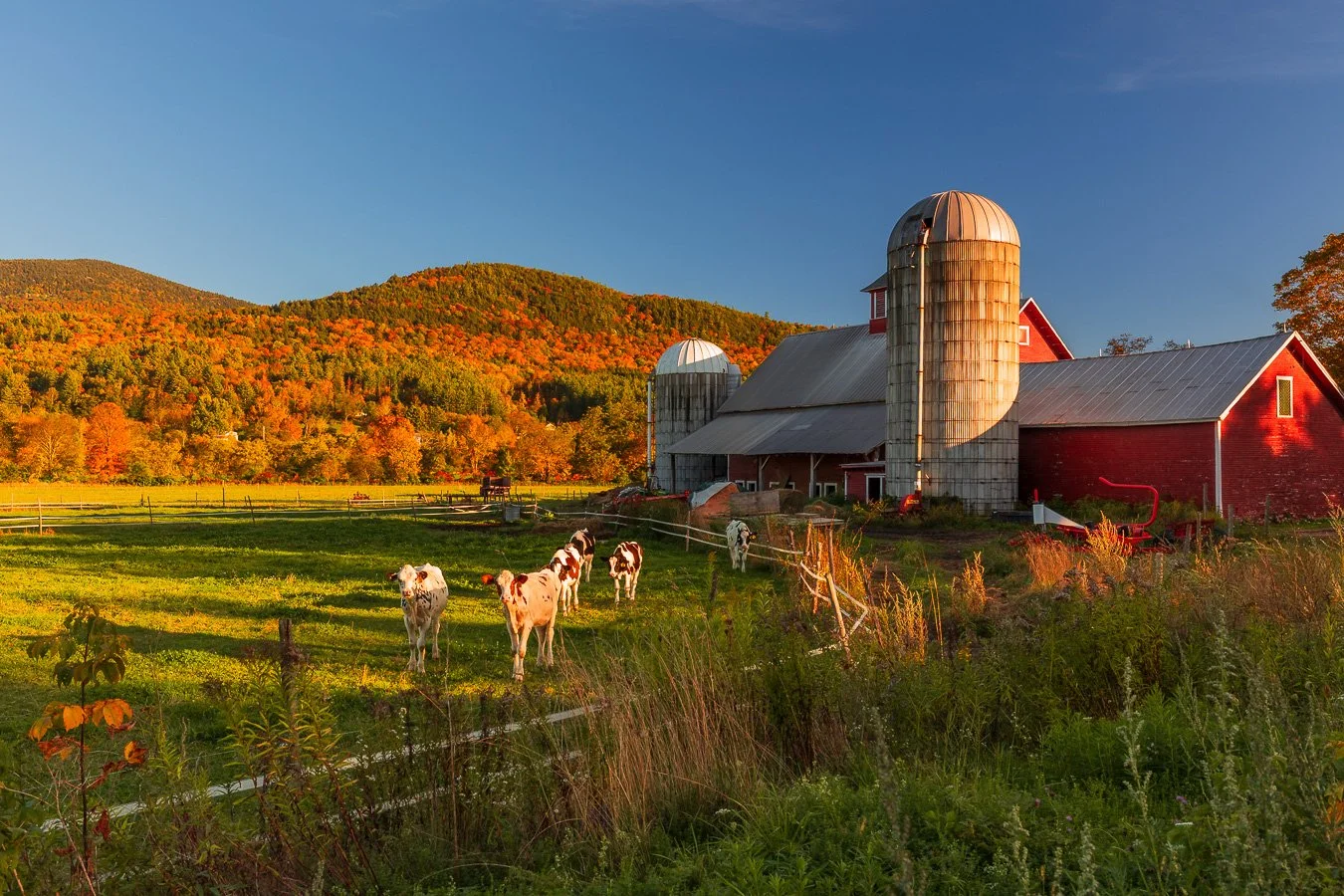
If Vermont feels gentle and pastoral, New Hampshire feels rugged and dramatic. The White Mountains explode with color every fall, and the weather changes quickly. That instability frustrates travelers but excites photographers. Bad weather in New Hampshire often creates the best images.
Peak timing is early to mid-October, roughly one week behind Vermont's northern regions.
Best Photography Locations
Kancamagus Highway The 34.5-mile "Kanc" is the most celebrated fall drive in New England, and the reputation is deserved. The road climbs through the White Mountain National Forest with no commercial development, no traffic lights, and almost continuous access to forest, rivers, and mountain views.
📷 Pro Tip: Drive the Kanc from east to west (Conway to Lincoln) in the morning so the light is behind you and hitting the foliage from the front. Stop at every pullout. The road follows the Swift River for much of its length, and the river reflections combined with the autumn color overhead make for strong compositions. Sabbaday Falls, a short walk from the road, is worth the detour, especially on overcast days when the waterfall light is at its most even.
Best time: Full day, early to mid-October. Access: Free, National Forest road. No commercial services along the route; fill up before you start.
Franconia Notch State Park One of the most dramatic mountain landscapes in the Northeast. Echo Lake, Profile Lake, and the Flume Gorge are all within a few miles of each other, and each offers completely different photographic conditions in fall.
📷 Pro Tip: Echo Lake at sunrise is the most underrated shot in Franconia Notch. The reflection of the mountains in the still water at first light, surrounded by peak color, rivals anything in Vermont. Arrive 20 minutes before sunrise and position yourself at the south end of the lake. The cannon mountain aerial tramway cable car makes for a strong graphic element in wide landscape shots if you time your exposure correctly. If you are shooting the Flume Gorge, do it on a cloudy day. The narrow canyon walls create harsh shadows in direct sunlight.
Best time: Sunrise at Echo Lake, overcast days for the Flume. Access: State park fee applies for the Flume. Echo Lake is roadside.
Crawford Notch A quieter and more rugged alternative to Franconia, Crawford Notch delivers dramatic mountain scenery with fewer crowds. The Willey House Site has one of the best views in the notch, and Silver Cascade waterfall alongside Route 302 is a fast stop that rewards the effort.
📷 Pro Tip: Drive slowly through the notch and look up. The walls of the mountains rise steeply on both sides, and in peak foliage the color seems to hang over you. Pull over at the Willey House Site for the mountain view looking north. On a foggy morning the mountains appear and disappear through the mist in a way that makes for extremely atmospheric images. Use a wide-angle lens to capture the scale of the notch walls on both sides.
Best time: Morning, early to mid-October. Access: Free, roadside. Crawford Notch State Park has a small entrance fee for some areas.
Photography Tips: New Hampshire
Overcast days are excellent for waterfalls and forest shots
Bring rain protection for your gear; weather changes fast here
Do not panic if the forecast looks bad; some of the strongest New Hampshire shots happen in rain and low clouds
Late September to mid-October is usually the best window
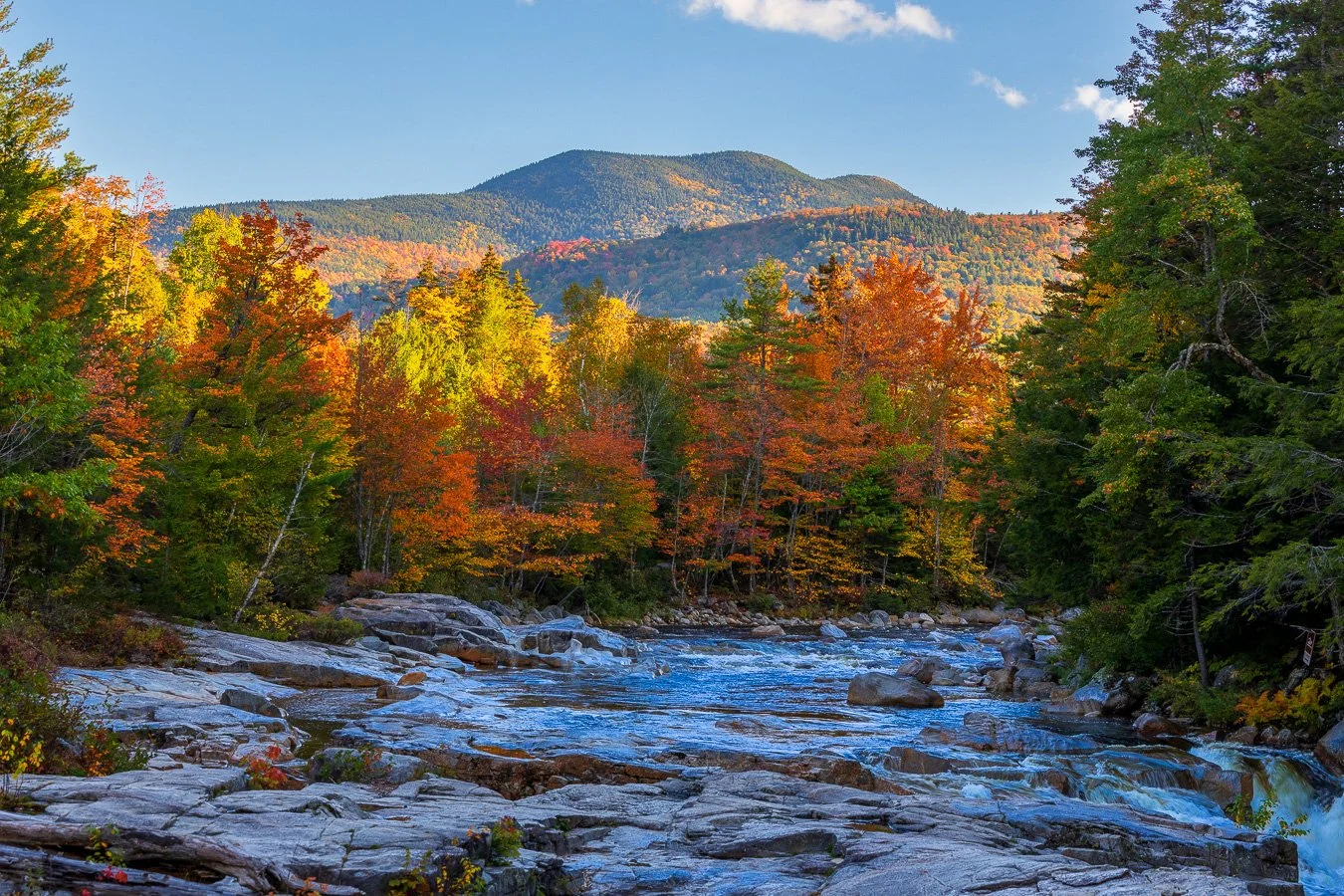
Great Smoky Mountains National Park
The Smokies are the farthest destination on this list from New England, and the most underrated by photographers who assume fall foliage only happens up north. The park earns its name honestly. Layers of fog and mist move constantly through the mountains, especially on autumn mornings. Combined with fall color, the atmosphere becomes almost surreal.
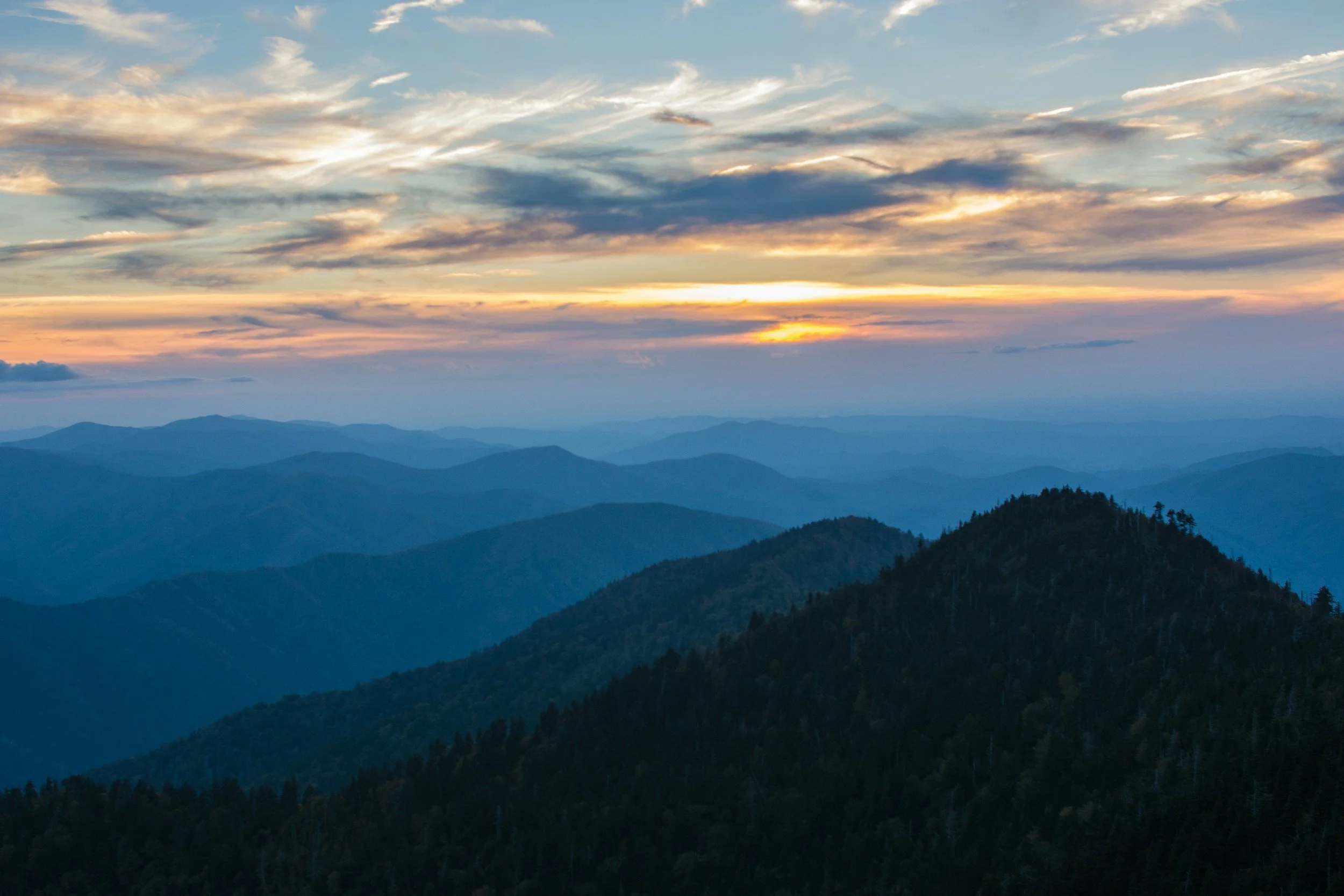
The scale here is enormous. Endless ridges fade into the distance, creating exceptional opportunities for telephoto landscape photography. And the season is long, often running from mid-October through early November at the highest elevations down to late November in the lower valleys.
Best Photography Locations
Clingmans Dome At 6,643 feet, Clingmans Dome is the highest point in the park and the highest point in the Appalachian Mountains. The observation tower at the summit gives you a 360-degree view of ridge after ridge disappearing into the haze, all of them covered in autumn color during peak season.
📷 Pro Tip: Clingmans Dome road closes in winter, so time your visit for October. The morning fog here is unlike anything else on this list. Layer after layer of mountain ridges appear and disappear in the mist, and with a telephoto lens you can compress those layers into images that look almost painted. A 200 to 400mm focal length works beautifully. Arrive before sunrise. The light on the ridges at first light, with the fog still thick in the valleys, is the shot.
Best time: Sunrise, mid to late October. Access: $35 vehicle fee for the park. Clingmans Dome Road is 7 miles from Newfound Gap; check road conditions before going.
Cades Cove A broad, open valley surrounded by mountains and ringed by a one-way 11-mile loop road. Cades Cove is exceptional for both landscape and wildlife photography. Deer, black bears, and wild turkeys are regular sightings in fall.
📷 Pro Tip: The cove opens for vehicles at sunrise, and the first hour is by far the best time to shoot. Wildlife is most active at first light, and the low-angle morning sun hits the open meadow and the surrounding color-covered ridges beautifully. A 70-200mm lens handles both the landscape and the wildlife. If you want a longer focal length for bears or deer, bring a 100 to 400mm or similar. The historic barns and cabins scattered around the loop make excellent foreground subjects for the mountain backdrop.
Best time: Sunrise on weekdays (weekends bring heavy traffic). Access: Park fee. Loop road opens at sunrise; check NPS website for seasonal hours.
Newfound Gap Road The main road through the park crosses the state line between Tennessee and North Carolina at 5,046 feet. The overlooks along this road give you some of the most accessible high-elevation fall color views in the Southeast.
📷 Pro Tip: Stop at every labeled overlook and take five minutes to look around before you reach for the camera. Conditions change dramatically with elevation and time of day along this road. The Morton Overlook near mile 15 from Sugarlands is one of the best viewpoints in the park for ridge and valley fog shots. If there is any wind, the fog moves across the ridges in real time and you can capture a sequence of completely different conditions within 30 minutes.
Best time: Morning, mid to late October. Access: Free once inside the park.
Photography Tips: Great Smoky Mountains
Sunrise is the strongest time to shoot at almost every location in this park
Fog is your best friend; plan for it deliberately
Wildlife activity increases in fall; carry a telephoto lens even if you think you are only shooting landscapes
Longer focal lengths (150 to 400mm) are the tool for mountain layer shots
Patience matters in the Smokies; conditions can change completely within minutes
Photography Gear to Bring
DSLR and Mirrorless Kit
Lenses A 24-70mm lens covers most travel and landscape situations, but fall foliage photography on the East Coast rewards telephoto work. A 70-200mm is your most important lens for mountain layers at Shenandoah, Acadia, and the Smokies. If you have a 100-400mm or similar, bring it for the Smokies and Cades Cove wildlife. For waterfall shots at Dark Hollow Falls, Sabbaday Falls, and the Flume Gorge, a wide-angle lens in the 16-35mm range gives you the immersive foreground compositions that make waterfall shots compelling.
Filters: A circular polarizing filter is essential. It removes glare from wet leaves, deepens the saturation of fall color, and controls reflections at Jordan Pond and Echo Lake. A 6-stop ND filter lets you use slow shutter speeds on waterfalls even in daylight.
Other Essentials: Bring a tripod. Sunrise and blue-hour shots, waterfall long exposures, and foggy forest scenes all benefit from a stable platform. Cold mornings drain batteries fast; carry at least two spares. Bring a rain cover for your bag. Weather in New Hampshire and the Smokies changes without warning. One accessory I never leave home without in autumn is a circular polarizer. It makes a bigger difference to fall color images than any other single piece of gear.For gear recommendations, see my full Gear Recommendations page.
iPhone Tips for Fall Photography
iPhone is genuinely excellent for fall foliage. Here is how to get the most out of it at each location type.For forest trails and canopy shots, switch to the ultrawide lens and shoot upward through the trees. The 0.5x focal length captures the full canopy arch and exaggerates the sense of being surrounded by color. At overlooks and mountain viewpoints, the standard 1x lens handles the scene better than the ultrawide. Use ProRAW if your iPhone supports it. The extra dynamic range in RAW captures the bright sky and the darker valley detail in a single exposure far better than JPEG. For waterfall shots, use the Action Mode on iPhone 14 and later, or try the slow-motion video mode and pull a still frame. The built-in camera is ’t great for long-exposure waterfall shots, but the Halide app lets you control the shutter manually if you want to try it. For foggy morning shots at Peacham or Jordan Pond, engage Night Mode even in low light. The computational processing handles the flat, diffused light of foggy mornings better than standard exposure mode.
Final Thoughts
Fall photography on the East Coast reminds me why I picked up a camera in the first place. There is something about autumn light that does not exist in any other season. It is lower, warmer, and more directional. Everything casts a longer shadow. Colors glow rather than shine.
The five destinations in this guide have all stayed with me long after the leaves came down. A foggy ridge in Shenandoah at 6 am. Jordan Pond at first light with the Bubbles reflected perfectly in the water. Peacham village emerging from the mist. The Kancamagus at peak color with nobody else on the road. Clingmans Dome with the Smoky Mountains fading into haze.
Go. Pick one destination and commit to it fully. Slow down. Get up before sunrise. Stay out past sunset. The East Coast in autumn rewards the photographer who is patient, present, and willing to be a little cold.
Follow along on Instagram @chasinghippoz and subscribe to the newsletter for more guides like this one.
Related Guides
Finally—a beginner-friendly photography guide that makes sense.
If you've ever picked up a camera and thought, "Now what?" this is the book for you.
Photography Made Simple is written for adults who are just starting out and want a clear, encouraging, real-world approach to learning photography. Whether you're using a DSLR, mirrorless, or just your smartphone, this guide walks you through the basics—without the jargon or tech overwhelm.
Inside, you'll learn:
The only camera settings you really need to know to get started
How to shoot sharper, more intentional photos using light and composition
Simple tips for portraits, landscapes, travel, and everyday life
What gear you do (and don’t) need
How to create better photos without upgrading your camera
You’ll also get practical exercises, cheat sheets, and tips for organizing and editing your images—plus the confidence to shoot off Auto Mode for good.
This is not a textbook. It’s a friendly guide to seeing the world with fresh eyes—and finally capturing what you see the way you imagine it.
📸 Format: PDF download
Pages: 100+
Perfect for: Beginners, hobbyists, and anyone ready to take better photos without the stress