Malmö, Sweden Travel & Photography Guide: Best Photo Spots, Things to Do & Hidden Gems
The first time I crossed the Øresund Bridge from Copenhagen to Malmö, I was not expecting much. A quick day trip. A few hours, a coffee, maybe some photos. I would be back in Copenhagen by dinner.
That is not what happened.
I stepped off the train at Malmö Central and walked straight into the Old Town. Within an hour, I had photographed a 16th-century square lined with half-timbered houses, a Gothic church interior lit by narrow windows, and a cobblestone alley so narrow and quiet that the city felt centuries away from the modern skyline I could see over the rooftops. Then I walked to the Western Harbour and the Turning Torso rose above me at 190 meters, spiraling against a pale Nordic sky. I missed the last comfortable train back. I returned the following month.
What keeps drawing me back is a tension that is genuinely rare in European cities. Medieval squares and Gothic brickwork on one side. Santiago Calatrava's twisted tower and a waterfront full of contemporary architecture on the other. In between: canals, long sandy beaches, a Victorian bathhouse extending on a wooden pier into the Øresund Strait, one of Scandinavia's best flea markets, and a multicultural food scene that reflects the most internationally diverse city in Sweden. The light in Malmö has a Nordic clarity that rewards early mornings and rewards them generously. Golden hour in summer lasts well past 9 pm. Blue hour turns the Turning Torso into something that glows.
From Copenhagen, Malmö is 35 minutes by train. Many photographers treat it as a day trip. That is a mistake worth making only once.
In this Photography Guide to Malmö, I share the places and experiences that continue to draw me back. You will find my favorite photography locations, guidance on when and where to shoot, practical travel tips, and gear recommendations, along with cultural insights to help you explore and photograph Malmö with confidence, respect, and ease.

Photographer's Notes
Before you go, here are my own takeaways.
Favorite Season: May through September
Favorite Location: Ribersborgs Kallbadhus
Favorite Hotel: MJ's Hotel
Favorite Restaurant: Vollmers
Favorite Café: Solde Kaffebar
Favorite Lens: 15-35mm f/2.8
Would I Return? Yes, and every time I visit Copenhagen, I pop over to Malmö.
Getting to Malmö from Copenhagen
Getting from Copenhagen to Malmö is fast, easy, and scenic—perfect for travelers and photographers alike. Here are your best options: A delightful way to experience two countries in one day. The cities are connected by the impressive Øresund Bridge, making the journey quick and scenic. Most of my visits to Malmö have been day trips from Copenhagen. In fact, sometimes I have just gone for a morning visit.

By Train (Easiest )
Route: Take the Öresundståg (Oresund Train) from Copenhagen Central Station (København H) to Malmö Central Station (Malmö C).
Travel Time: ~35–40 minutes
Cost: Around €11–€14 (USD $12–$15) one-way
Bonus: The train crosses the iconic Öresund Bridge, offering great views. If you're lucky, grab a window seat on the left side when heading toward Malmö.
Border Crossing Tips
While both Denmark and Sweden are part of the Schengen Zone, it's strongly advisable to carry your passport or ID card, as random checks can occur on the train. The last few visits I have had to show my passport each time I board the train.

Turning Torso
Where to Stay in Malmö
The best bases for photographers are Gamla Staden (Old Town) for access to the historical streets, squares, and St. Peter's Church, or Västra Hamnen (Western Harbor) if the Turning Torso and the seafront are your primary subjects. Both are walkable to each other and well-connected by bus and bike.
Luxury
MJ's HotelMäster Johansgatan 13, Gamla Staden — 50 meters from Lilla Torg
MJ's is the hotel that Malmö locals recommend without hesitation, and it is easy to understand why. The building has been a hotel in various forms since the 19th century, and the current incarnation is a deeply personal boutique experience: a pink courtyard wrapped in flamingo motifs, an atrium breakfast garden under a dramatic skylight, dark hallways that open into rooms full of unexpected design details, and a bar that draws both guests and locals in equal measure.
The 50-meter walk to Lilla Torg, one of the most photogenic squares in Scandinavia, is the defining practical advantage. The entire Old Town is at your door. The service has a warmth that distinguishes it from larger hotels, and the breakfast — served in the glass-roofed garden courtyard — is genuinely exceptional.
For photographers, MJ's is the right base. You can be shooting Lilla Torg before 7am and back for breakfast by 8:30.
Clarion Hotel Malmö LiveDag Hammarskjölds torg 2, City Center — 5 minutes from the train station
The Clarion Live is Malmö's most energetic large hotel, built as part of the Malmö Live concert and congress complex that reshaped the city center. The rooms are modern, well-designed, and the higher floors offer strong views over the Öresund toward Copenhagen. The 25th-floor sky bar is the highlight: panoramic views of Malmö, the bridge, and the water below, with a sunset that in summer extends past 10 pm. It is one of the finest hotel bar positions in southern Sweden.
The location is ideal for photographers who want easy access to the train (Copenhagen day trips), the central city, and the Western Harbour without being planted in the middle of the tourist zone.
Story Hotel Studio MalmöÖstergatan 6, City Center
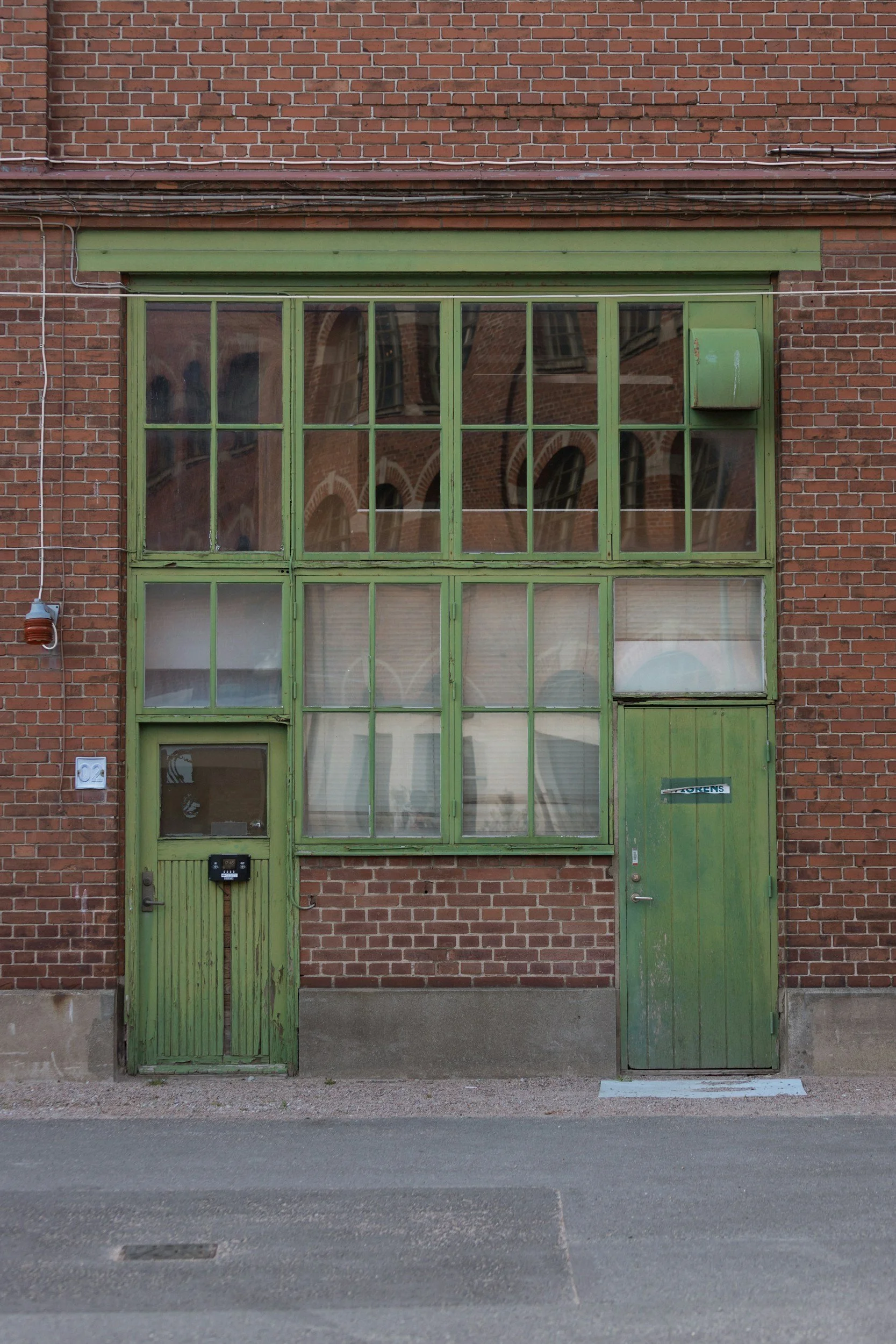
A creative, design-forward boutique hotel that attracts a visual crowd: photographers, designers, and the kind of traveler who notices whether the typeface on the wall menu is well-chosen. The harbor-view rooms are the ones to book. The hotel's position near the train station and the Western Harbor gives it excellent mobility for day-trip photography between Malmö and Copenhagen.
MID-RANGE
Hotel Duxiana MalmöNorra Vallgatan 35, City Center
A well-run boutique hotel known for its quality beds (the hotel is associated with the DUX mattress brand), clean Nordic design, and a genuinely central position. Good value for Malmö, comfortable rooms, and an easy walk to both the Old Town and the Western Harbor.
Best Western Plus Hotel Noble House Gustav Adolfs Torg 47, City Center
Centrally located on one of Malmö's most handsome squares, with easy access to the train station, the Old Town, and the main photography locations. Reliable, comfortable, and fairly priced for what it offers in terms of position.
Scandic Triangeln Triangeln 2, near Central Station
A solid Scandic property with a tram stop at the door, making it one of the most mobile bases in Malmö. Good for families or travelers who plan to move between the city and Copenhagen regularly.

How Many Days Should I Stay in Malmö?
Plan for 2 to 3 days in Malmö to enjoy a relaxed but photo-rich experience. It’s compact enough to explore on foot or by bike but offers enough variety for a rewarding itinerary. If you're also visiting nearby Copenhagen (just 30 minutes by train), Malmö makes an excellent base.

Best Time to Visit Malmö for Photography
The best time to visit Malmö for photography is late spring through early autumn (May–September). You'll get long daylight hours, warm golden hour light, and vibrant city life.
May & June: Blooming parks and fewer tourists.
July & August: Perfect weather, outdoor events, and sunsets after 9 PM.
September: Soft light, colorful foliage, and quieter streets.
Avoid November–March unless you’re chasing Nordic moody vibes—just be ready for overcast skies and limited daylight.

How to Get Around Malmö
Malmö is incredibly walkable and bike-friendly, and the city has an excellent network of bike lanes. You can rent bikes via apps like Donkey Republic or grab an e-scooter.
Public transport includes city buses and trains (using a Skånetrafiken card). Uber operates in Malmö, but taxis can be pricey.

Where to Eat in Malmö
Malmö's food scene reflects the city itself: one part classic Scandinavian, one part boldly multicultural. As Sweden's most internationally diverse city, it has an extraordinary range of cuisines. The Möllevången neighborhood has one of the best Middle Eastern markets in the country. Sitting alongside a fine dining scene that, by any European standard, punches well above its weight. Two Michelin stars. Outstanding natural wine bars. Legendary street food. And the Swedish fika tradition is executed with real care in dozens of cafés throughout the Old Town.

Best Restaurants in Malmö
VollmersTegelgårdsgatan 5, Gamla Staden
Walk slowly along the cobblestone street and look for a small sign above the door — otherwise, you will walk past it entirely. Inside, seven linen-laid tables fill a dining room that feels like a farmhouse living room rather than a fine dining institution. This is intentional. The brothers Mats and Ebbe Vollmers have built Sweden's most intimate two-Michelin-star restaurant, and the food reflects the same principles: deeply personal, rooted in the agricultural landscape of Skåne and southern Denmark, and composed with a precision that makes familiar ingredients feel revelatory.
The surprise tasting menu changes with the seasons. Dishes are inspired partly by the brothers' childhood memories — the pork, cabbage, and lingonberry preparation that most Swedish children grew up eating is transformed here into something that earns its two stars quietly and without theater. The wine pairing is exceptional. The service is warm and conversational, not stiff.
Reserve months ahead. This is one of the most sought-after tables in Scandinavia.
Lyran MatbarSpångatan 38, City Center
The most talked-about mid-range restaurant in Malmö right now, and the one that reflects the city's contemporary food identity most accurately. Lyran is seasonal, sustainable, and genuinely creative — the kind of restaurant that sources from named local farms and changes its menu based on what is exceptional that week rather than what the concept dictates. The natural wine list is excellent and the room has an energy that distinguishes it from the more formal dining options in the city.
Book ahead — this fills up quickly on weekends, and the room is small.
Saltimporten CanteenGrimsbygatan 24, Western Harbour
A Malmö institution tucked into a former salt warehouse near the Western Harbor. The concept is simple: one long communal table, one daily menu, pay what you think it is worth. What arrives is invariably beautiful — market-driven, vegetable-forward, and genuinely delicious. The minimalist industrial space and the communal format make it feel more like a meal with friends than a restaurant transaction.
Come for lunch. It is daytime only and typically sells out.
Falafel No. 1Möllevångstorget 4, Möllevången
Malmö's most famous street food is located on the main square of the Möllevången neighborhood. The falafel is exceptional — crispy, freshly fried, loaded with tahini, pickled vegetables, and whatever else you want. The queue moves fast, and the experience is complete in fifteen minutes. This is what Malmö tastes like when it is not trying to impress anyone.
Möllevångstorget Market
Not a restaurant, but worth naming as a food experience. The daily market on Möllevångstorget is the best in southern Sweden for Middle Eastern and North African produce — fresh spices, dried fruit, olives, flatbreads, and the kind of ingredients that reflect Malmö's remarkable demographic diversity. Come in the morning on a weekday when the market is full, and the light is right. It is also one of the best street photography subjects in the city.
Best Coffee Shops in Malmö
Malmö takes its coffee seriously. Three cafés worth knowing:
Solde Kaffebar — Widely considered the best specialty coffee in Malmö. Clean, focused, and excellent for a pre-shoot espresso.
Uggla Kaffebar — Stylish, with good natural light. Reliable for editing sessions between shoots.
Noir Kaffekultur — Strong coffee and a relaxed atmosphere in the Western Harbour neighborhood.
Photography Gear to Bring to Malmö
To make the most of Malmö’s mix of cityscapes, waterfronts, and street life, pack versatile gear:
Camera: Canon EOS R5, Sony A7R V, or Nikon Z7 II
Lenses:
Wide-angle (16–35mm) for architecture and tight city alleys
Standard zoom (24–70mm) for everyday shooting
Telephoto (70–200mm) for harbor scenes, portraits, or candid street moments
Tripod: Lightweight carbon fiber for low-light and sunrise shots
ND filters: For long exposures of Turning Torso or reflections

Öresund Bridge
Best Photography Spots in Malmö
Here are the top photography locations in Malmö, each with its own charm:

Turning Torso
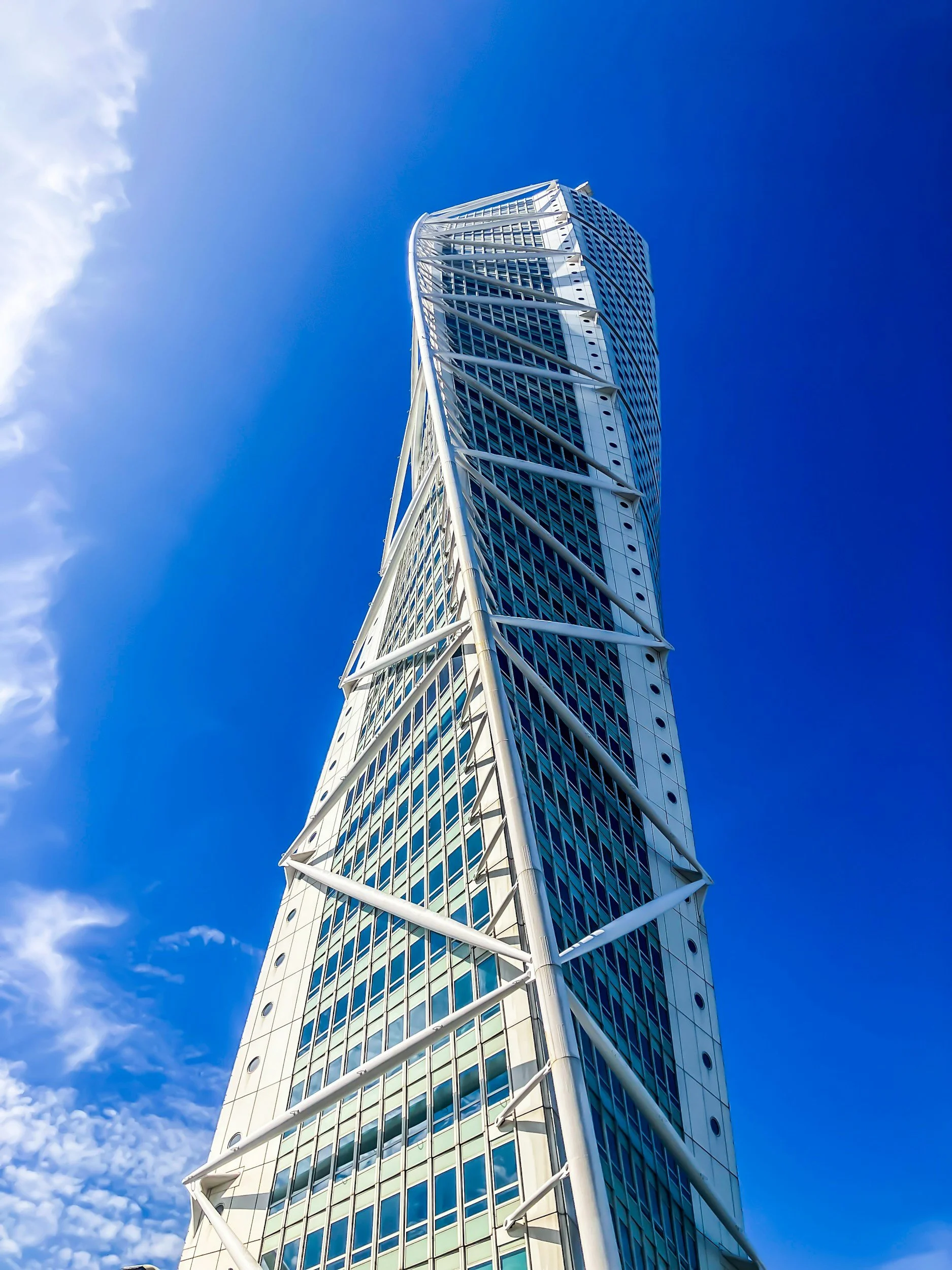
Designed by Santiago Calatrava and completed in 2005, the Turning Torso is a 190-meter residential skyscraper that spirals 90 degrees from base to crown. It was the tallest building in Scandinavia from its inauguration and remains the most architecturally distinctive skyscraper in the Nordic countries. From almost anywhere in the Western Harbour, it dominates the sky.
The building changes character dramatically depending on where you stand and what time of day you arrive. From directly below, it is a study in geometric complexity. From across the canal, it resolves into an elegant sculptural form against the sky. From Ribersborg Beach to the south, it sits above the water with the Öresund Bridge stretching toward Denmark in the same frame.
📷 Pro Tip: The definitive Turning Torso shot is from the canal side in Västra Hamnen, shooting west with the tower reflected in the still water below. Come at blue hour when the building is illuminated, and the Öresund sky turns deep blue behind it — a 24–70mm handles this composition well. For the classic Malmö skyline, walk south to Ribersborg Beach, where you can shoot the Torso and the bridge together with the water as a foreground. A 70–200mm telephoto compresses the relationship between the building and the bridge beautifully at this distance. For the most dramatic upward perspective, stand directly at its base and shoot with a 16–24mm lens, looking straight up — the spiral structure becomes abstract and extraordinary.
Best time: Blue hour for the illuminated tower. Golden hour from Ribersborg Beach for the full skyline.
Ribersborgs Kallbadhus
The Ribersborgs Kallbadhus is one of the most distinctive photographic subjects in all of Malmö — and one of the most overlooked by visiting photographers who focus on the Turning Torso and the Old Town. Built in the late 19th century, this wooden open-air bathhouse sits on a long pier extending into the Øresund Strait, its pale green facade visible from the beach. Locals swim here year-round, alternating between cold ocean water and saunas in a tradition that is deeply embedded in Swedish coastal culture.
For photographers, the pier is the subject: a long wooden walkway pointing straight out to sea, with the green bathhouse at the end and the Turning Torso visible behind you. It is one of the cleanest, most compositionally complete perspectives in Malmö.
📷 Pro Tip: Shoot from the beach looking west along the pier toward the Kallbadhus at golden hour, when the warm light catches the green wooden facade. A 24–70mm at the tighter end compresses the pier into a graphic leading line pointing toward the structure. For the reverse shot, stand on the pier end and shoot back toward the Turning Torso with the beach and city in the background. Early morning before bathers arrive gives you the cleanest compositions. In winter, the stark wooden pier against a grey Nordic sea creates extraordinarily moody images.
Best time: Golden hour, or early morning in any season. Access: Bus 32 or bike from central Malmö. Free access to the beach; small fee for the bathhouse and sauna.
Lilla Torg and Gamla Väster
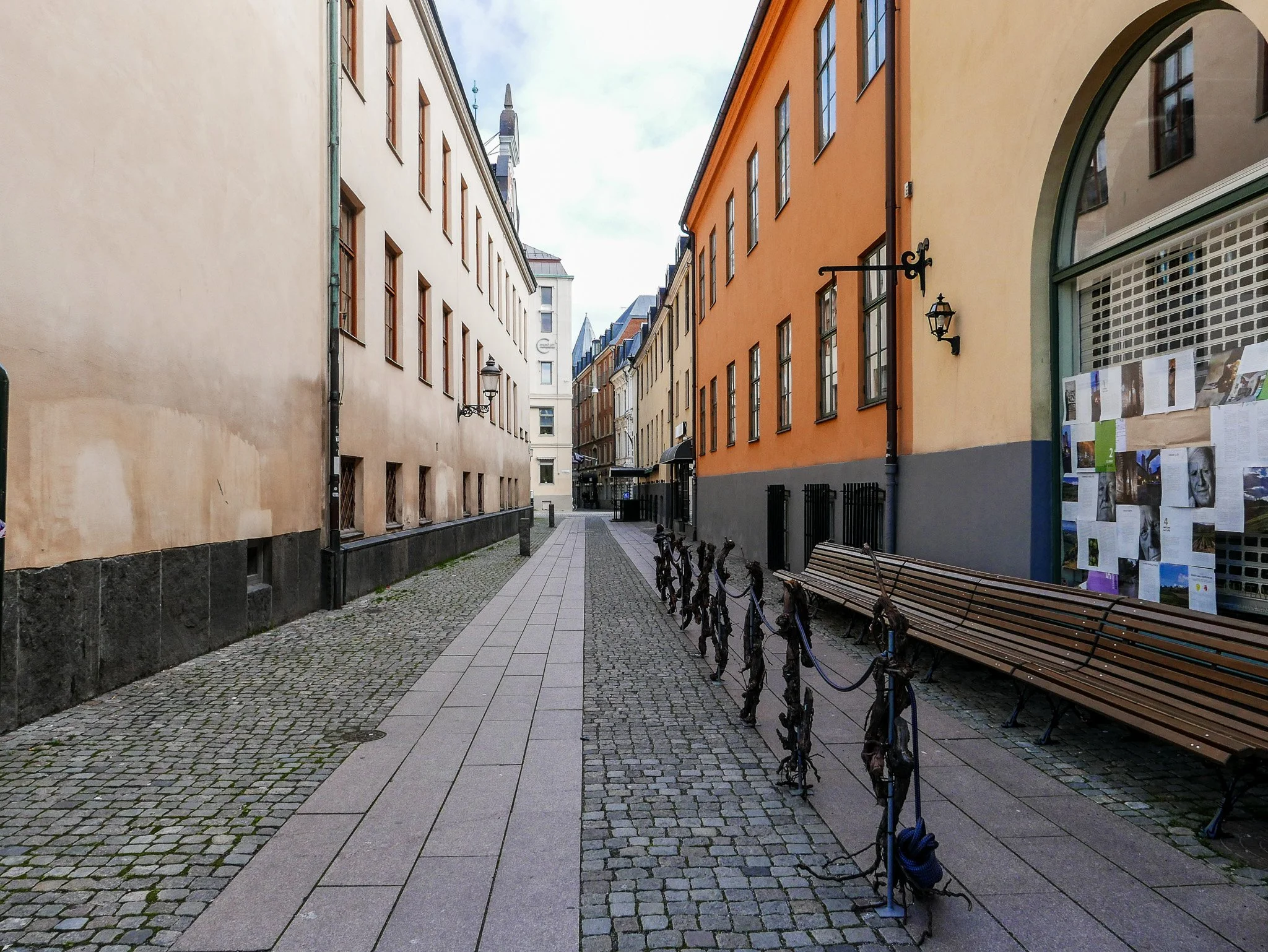
Lilla Torg — "Little Square" — is the most photogenic public space in central Malmö. Surrounded on all sides by half-timbered buildings in faded yellow, red, and terracotta, with cobblestones underfoot and restaurant tables spilling out in summer, it is the kind of place that looks effortlessly composed from every angle. Built in the 16th century, it feels like the medieval city arrested mid-breath.
The streets of Gamla Väster immediately surrounding it — particularly Jakob Nilsgatan, Hjorttackegatan, and Jöns Filsgatan — are the Old Town at its most photogenic: narrow cobblestone alleys, colorful facades, wrought-iron details, and the kind of quiet that exists here only before 9am.
📷 Pro Tip: Come to Lilla Torg on a Sunday morning before 8am. The square is empty, the restaurants are closed, and the early light falls diagonally across the half-timbered facades from the east. A 35mm captures the full sweep of the square with a single building or doorway as an anchor. For Jakob Nilsgatan and the Gamla Väster alleys, a 35–50mm prime keeps you mobile and captures the layering of facades without distorting the architecture. Return in the evening when the square fills for people-watching and candlelit restaurant photography.
Best time: Early morning (before 9am) for empty squares. Evening for atmosphere and street life.
Stortorget
Malmö's main square, built in 1536 and the oldest in the city, is anchored by the equestrian statue of King Charles X Gustav and surrounded by the Rådhus (Town Hall) and the extraordinary Apoteket Lejonet — one of only four pharmacies in Sweden preserved as a cultural heritage site, with a 19th-century interior of ornate carved wood and painted ceilings that is remarkable by any standard. The Rådhus facade, with its Renaissance decoration, is one of the finest public building exteriors in southern Sweden.
📷 Pro Tip: The Apoteket Lejonet interior is the most photographically interesting subject in Stortorget — request permission to photograph inside and use a wide angle to capture the carved wooden ceiling and the original fittings. The equestrian statue in the square photographs best in late afternoon when the light comes from the west and catches the bronze patina. For the full square overview, position yourself at the south end and shoot north with the Rådhus in the background.
Best time: Late afternoon for the square. Weekday mornings for the pharmacy interior.

Västra Hamnen (Western Harbour)
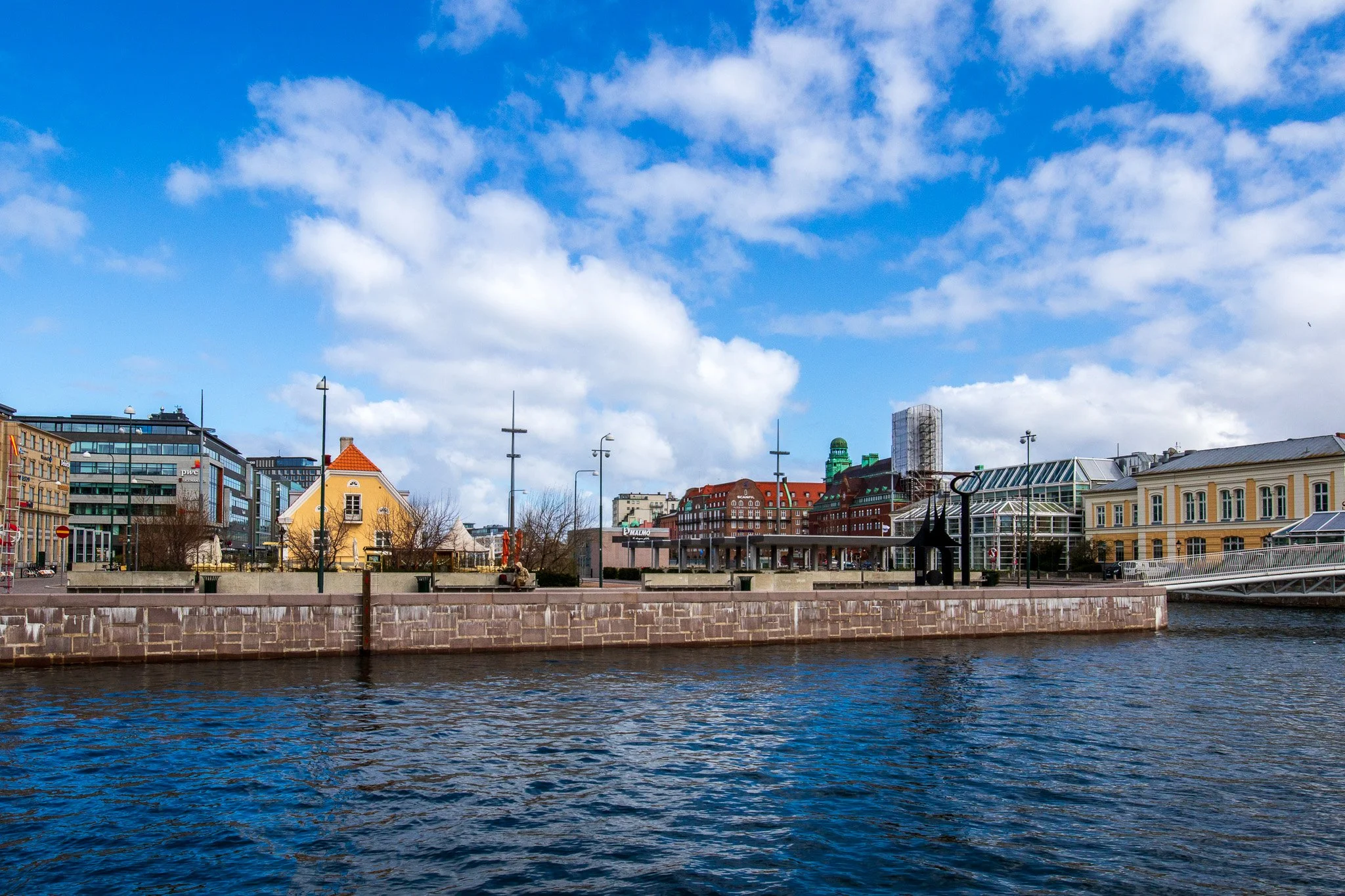
The entire Western Harbor district is a photography subject in itself — a former industrial shipyard transformed into Sweden's most ambitious sustainable urban neighborhood, with contemporary architecture, canals, piers, small parks, and beach access throughout. Beyond the Turning Torso, the area contains the Malmö Live concert hall (a striking glass building that reflects the sky and city in its facade), playgrounds designed as art installations, and a working waterfront with constant maritime activity.
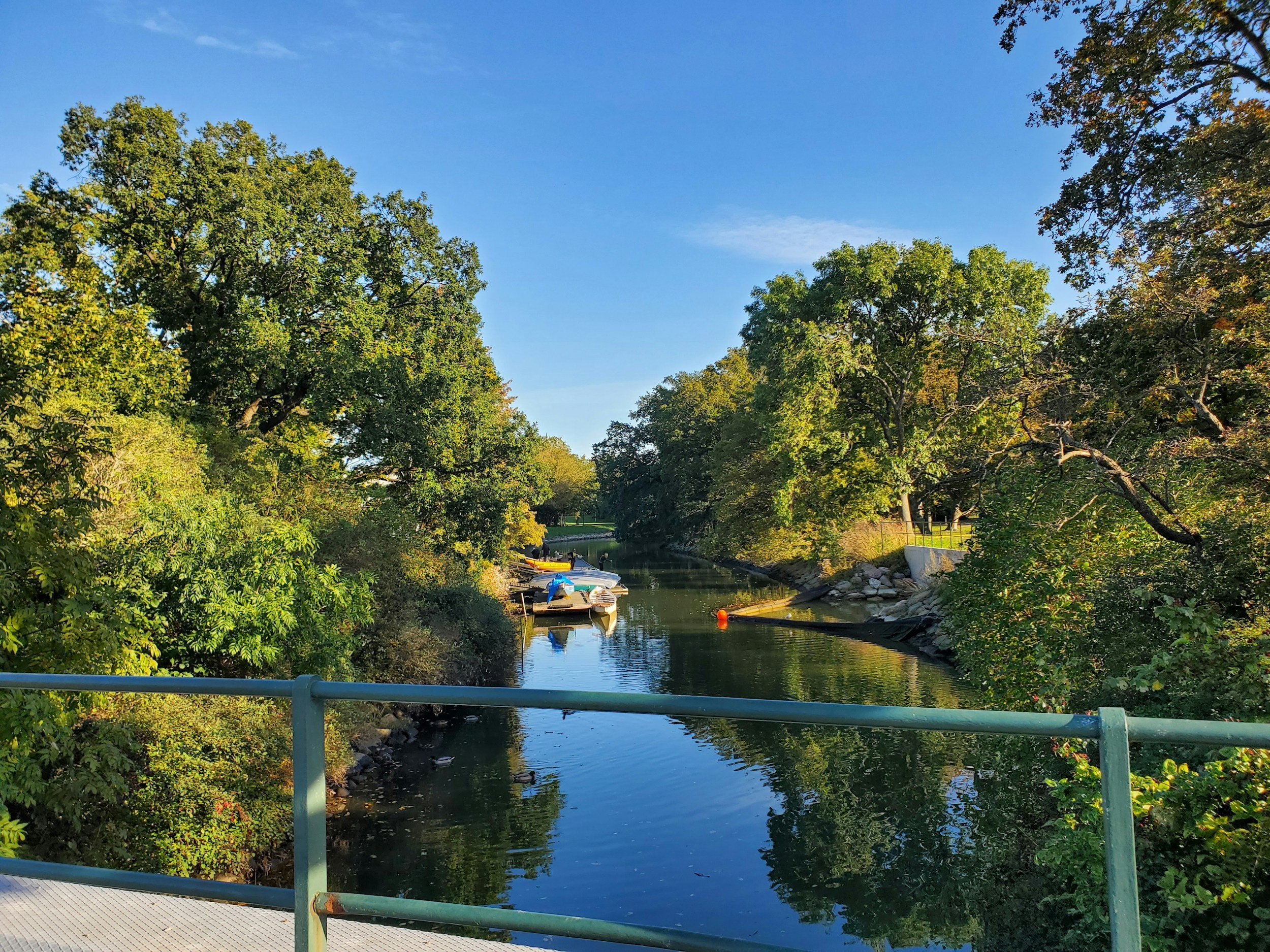
📷 Pro Tip: Walk the entire waterfront from the Turning Torso south toward Ribersborg Beach — the changing perspectives of modern architecture against the water reward a slow pace. The Malmö Live building photographs beautifully in the early morning when the glass facade reflects the low eastern light. For the full Western Harbour panorama, position yourself on the footbridge crossing the main canal for a composition that includes the waterfront, the Torso above, and the Öresund in the background. A 24–70mm handles most of this district.
Best time: Sunrise for the glass facades. Golden hour for the waterfront light.
Malmöhus Castle and Slottsparken
The red-brick fortress of Malmöhus Castle, built in the 1530s when this region still belonged to Denmark, sits at the northern edge of the Old Town, surrounded by a moat and the green expanse of Slottsparken. It is the oldest surviving Renaissance castle in Scandinavia, and the scale of its brick walls and defensive towers, reflected in the moat water, makes for strong architectural photography.
The surrounding Slottsparken is one of the finest urban parks in southern Sweden: 225 acres of formal gardens, wooded paths, and a historic windmill that makes a strong secondary composition against the castle.
📷 Pro Tip: The moat reflection is the best shot at Malmöhus — shoot in early morning when the water is still and the castle facades catch the first light. A 24–50mm lens handles the full reflection composition. The windmill in Kungsparken, just west of the castle, photographs best in late afternoon with side light from the west. In spring, the parklands surrounding both locations bloom with flowers that make strong foreground elements for wide-angle compositions.
Best time: Early morning for the moat reflection. Late afternoon for the windmill.

Ribersborg Beach and the Öresund Bridge
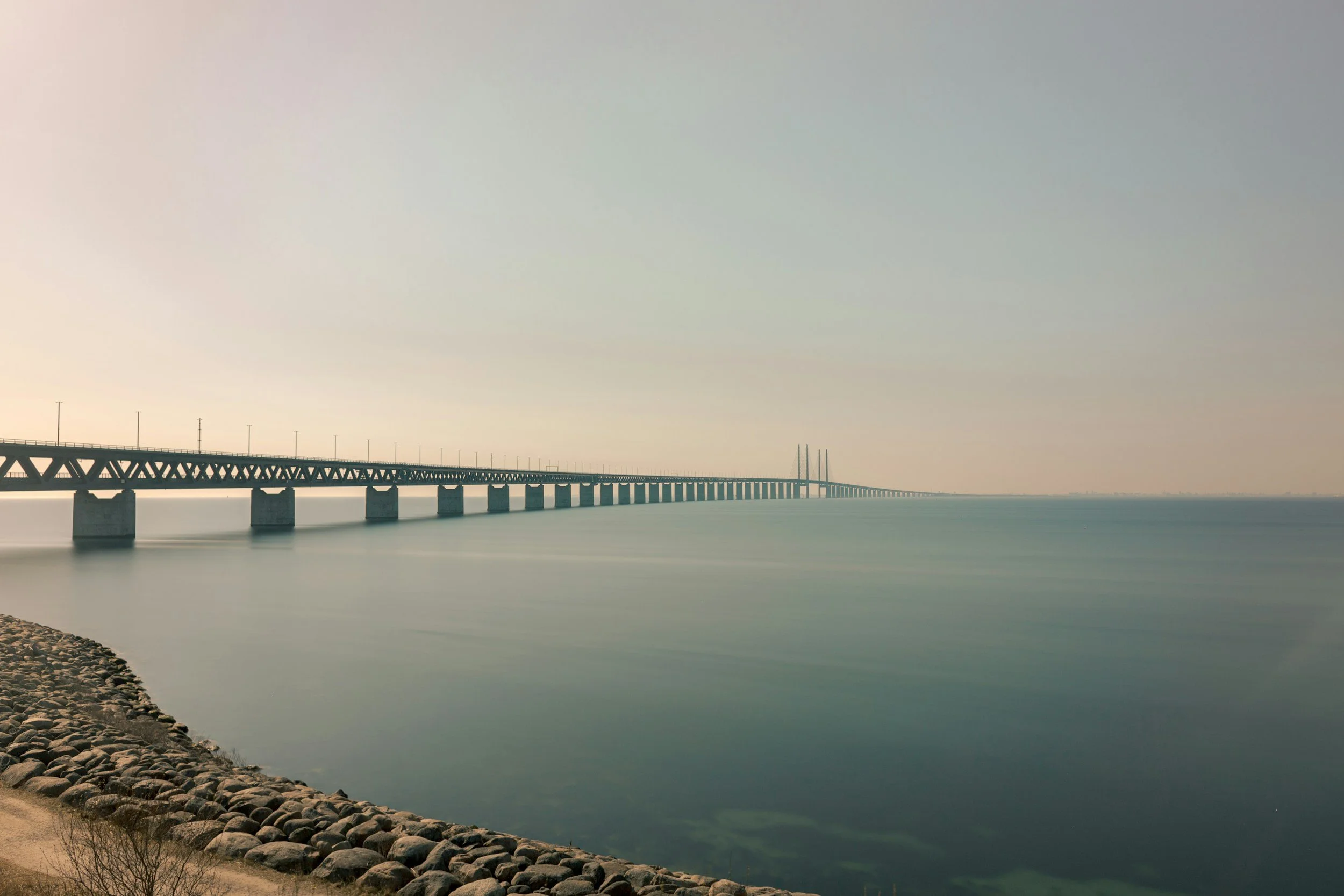
The beach south of the Kallbadhus gives you the widest, most cinematic view of the Malmö coastline: the Turning Torso to the north, the Öresund Bridge arching south toward Copenhagen, the flat water of the Øresund stretching between them. On clear days, the spires of Copenhagen are visible across the water.
This is the long-exposure beach photography location in Malmö. At sunrise or sunset, the combination of the bridge, the tower, and the sea creates one of the most distinctively Scandinavian compositions available in the city.
📷 Pro Tip: Position yourself on the beach looking north at golden hour to catch the warm light on the Turning Torso and the bridge simultaneously. A 16–35mm captures the full scene at once; a 70–200mm compresses the bridge and tower into a single tight architectural frame. For long exposures of the water, use a 10-stop ND filter and a tripod. Autumn and winter give you dramatically lower light quality and emptier beaches.
Best time: Sunrise or sunset. Clearest views in autumn and winter when the air is most transparent.
St. Peter's Church (Sankt Petri Kyrka)
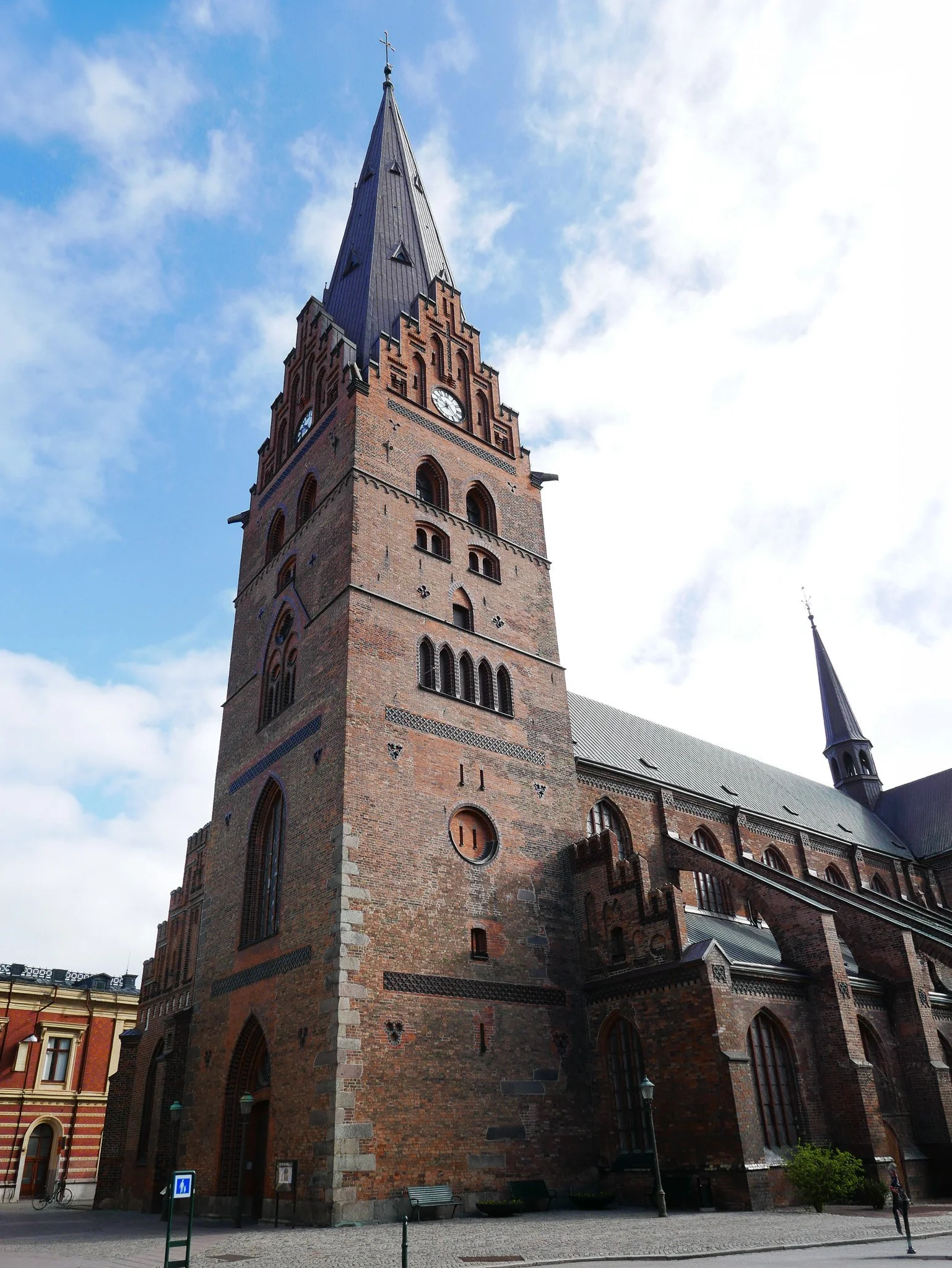
Malmö's oldest church, founded in the 14th century, is a Gothic red-brick structure that anchors the eastern edge of the Old Town. The interior — with its medieval wall paintings, vaulted ceilings, and the low, directional light that falls through the narrow windows — is one of the finest interior photography subjects in the city.
📷 Pro Tip: The interior is best photographed on a clear morning when the light falls through the south-facing windows at an angle across the medieval paintings. A wide angle (16–24mm) captures the vaulted ceiling height; use a high ISO (3200–6400) and stabilize against a pillar for available-light handheld shots without disturbing services. No flash. The exterior, with its Gothic buttresses and red brick against the sky, photographs best in late afternoon.
Best time: Morning for interior natural light. Late afternoon for exterior.
Möllevångstorget (Möllan)
Möllevångstorget — Möllan to locals — is the heart of Malmö's multicultural identity and the city's best street photography neighborhood. The daily market fills the main square with stalls of Middle Eastern spices, fresh produce, olives, and flatbreads. The surrounding streets are dense with restaurants, cafés, vinyl record shops, and the kind of neighborhood energy that characterizes the most interesting city quarters in Scandinavia.
📷 Pro Tip: Come on a weekday morning when the market is at its most active and the light is coming from the east across the square. A 35–50mm prime is the right lens for the market — compact and unobtrusive enough for candid vendor photography. The fountain at the center of the square, a distinctive piece of public art depicting workers, makes a strong compositional anchor. The surrounding streets reward an hour of wandering with a 35mm.
Best time: Weekday mornings for the market. Evening for the restaurant scene.
Folkets Park
One of the oldest public parks in Sweden, founded in 1891, Folkets Park operates as both a city park and a venue for art installations, concerts, and community events throughout the year. The combination of permanent sculptures, rotating art installations, and the colorful outdoor structures makes it one of the most visually varied parks in Malmö.
📷 Pro Tip: The park works best as a street photography subject during events — the Malmöfestival in August fills the park with color, movement, and the kind of human energy that creates strong candid images. On quieter days, the art installations and the park's architectural follies offer clean graphic subjects. A 35–50mm handle handles both.
Best time: Evenings and weekends. August for the Malmöfestival.
Festivals and Events in Malmö
Malmö Festival (Malmöfestivalen) – August. A massive city-wide celebration of food, music, and culture.
Nordic Game Conference – For tech and gaming enthusiasts (May).
Pride Malmö – Vibrant and welcoming celebration held each summer.
Christmas Markets – Especially cozy at Gustav Adolfs Torg in December.

Frequently Asked Questions About Visiting Malmö
How do you get from Copenhagen to Malmö?
The Öresundståg train crosses the Öresund Bridge in about 35 to 40 minutes from Copenhagen Central Station, roughly €11–14 one-way. Carry your passport or ID, random border checks happen on board even within the Schengen Zone.
Is Malmö worth more than a day trip?
Yes, and treating it as one is a mistake worth making only once. Two to three days lets you shoot Old Town alleys, the Western Harbour, and Ribersborg Beach in genuinely different light, something a single afternoon can't give you.
Is Malmö expensive?
Less than Stockholm generally, and there's real range. Falafel No. 1 and the Möllevångstorget market let you eat exceptionally well cheaply, while Vollmers sits at the very top end for a special-occasion meal.
What are the best photo spots in Malmö?
The Turning Torso at blue hour, Ribersborgs Kallbadhus at golden hour, and Lilla Torg before 8am on a Sunday are three that consistently deliver. The full list with Pro Tips is above.
Can you fly a drone in Malmö?
Check current Swedish Transportstyrelsen regulations before flying, particularly around the Western Harbour and Turning Torso, which sit within a dense urban area with likely restrictions.
What surprised you most about Malmö?
How close it actually is to Copenhagen. We often just go for the morning, twenty minutes and you're in a different country with a completely different feel, medieval squares and Gothic brickwork replacing Danish design and canals.
How many days do you need in Malmö?
Two to three days for a relaxed, photo-rich visit. It's compact enough to explore on foot or by bike but has enough variety, Old Town, waterfront, multicultural neighborhoods, to reward a longer stay than most visitors give it.
Is Malmö worth combining with Stockholm as well?
Yes, though it's a bigger commitment, about four hours by train. Malmö and Copenhagen make the natural short pairing; Stockholm is better treated as its own separate leg of a broader Scandinavian trip.
Final Thoughts
Malmö is a city that grows on you, and it does so specifically because it does not demand your attention. It is content. The Turning Torso stands above the Western Harbour without needing your approval. Lilla Torg has been beautiful since the 16th century and will continue to be. The Kallbadhus pier extends into the Öresund in the same direction it always has.
What rewards the photographer here are patience and return visits. Come early, and the Old Town alleys are yours alone. Stay until blue hour, and the Turning Torso becomes something luminous against a Nordic sky. Come back in winter when the beach is empty, and the light is horizontal and dramatic, and the Scandinavian moody aesthetic that everyone talks about is actually available.
Malmö and Copenhagen together are one of the great twin-city photography itineraries in Europe. Two countries, thirty-five minutes apart, completely different in character. If you are planning one, plan both.
Want to improve your photography while exploring some incredible destinations? Join me on one of my photography workshops! You can find all the details, including upcoming destinations and dates, through the links below.
Let's Stay Connected!
Also in Scandinavia — here is where I would go next.
My Photography & Travel Guide to Copenhagen, Denmark Malmö and Copenhagen are a single Öresund Bridge apart, and your Malmö guide already links here naturally. Nyhavn, Rosenborg Castle, Christianshavn canals, and the cycling streets of Frederiksberg. My complete guide covers all of it.
My Photography & Travel Guide to Stockholm, Sweden , four hours north by train. Gamla Stan's medieval alleyways at golden hour, the waterfront of Djurgården, and the archipelago light that Scandinavian photographers dream about.
My Photography & Travel Guide to Oslo, Norway : The Oslo Opera House at blue hour, the Vigeland Sculpture Park at dawn, and a fjord city that rewards photographers who arrive before the morning commute starts.
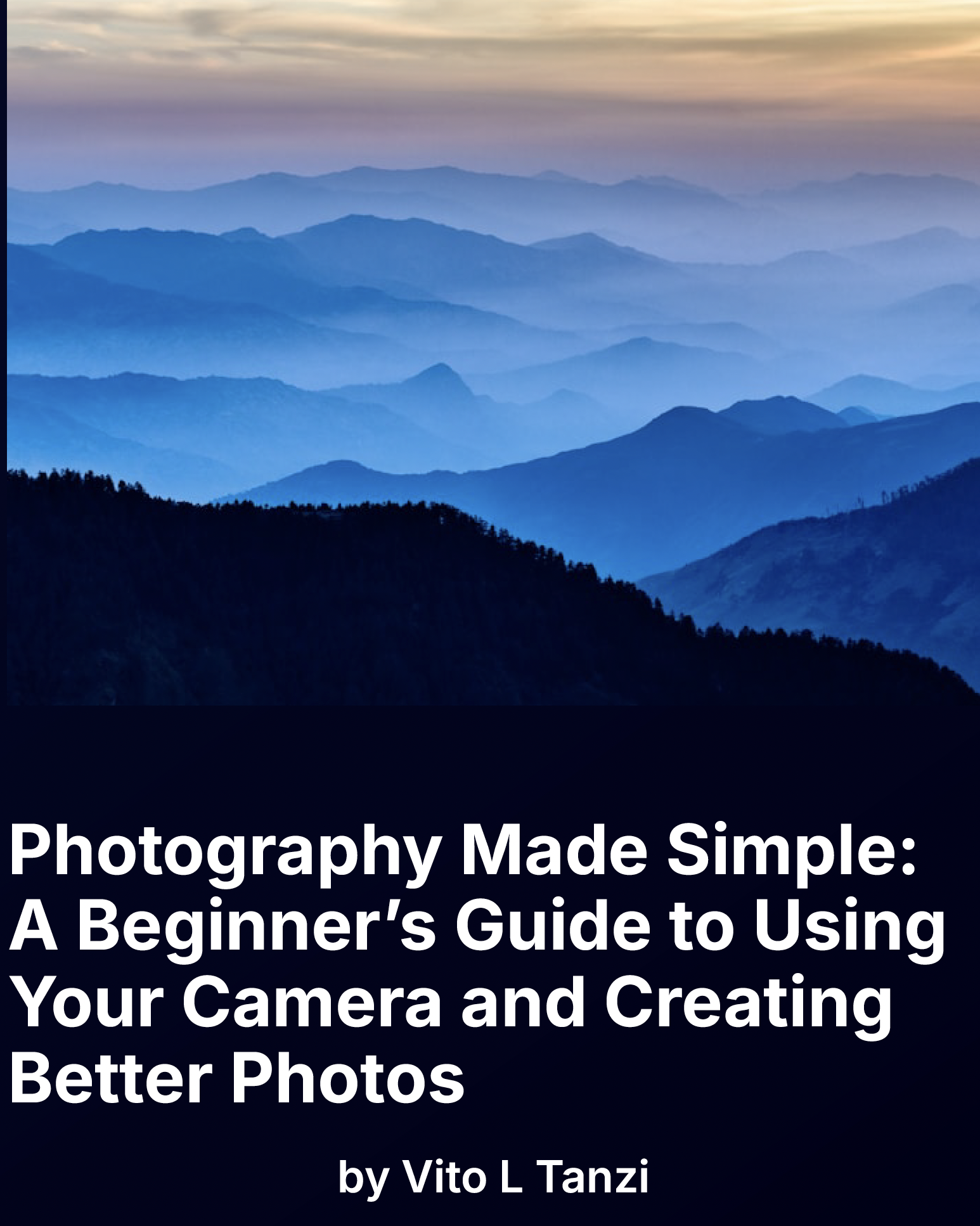
Finally—a beginner-friendly photography guide that makes sense.
If you've ever picked up a camera and thought, "Now what?" this is the book for you.
Photography Made Simple is written for adults who are just starting out and want a clear, encouraging, real-world approach to learning photography. Whether you're using a DSLR, mirrorless, or just your smartphone, this guide walks you through the basics—without the jargon or tech overwhelm.
Inside, you'll learn:
The only camera settings you really need to know to get started
How to shoot sharper, more intentional photos using light and composition
Simple tips for portraits, landscapes, travel, and everyday life
What gear you do (and don’t) need
How to create better photos without upgrading your camera
You’ll also get practical exercises, cheat sheets, and tips for organizing and editing your images—plus the confidence to shoot off Auto Mode for good.
This is not a textbook. It’s a friendly guide to seeing the world with fresh eyes—and finally capturing what you see the way you imagine it.
📸 Format: PDF download
Pages: 100+
Perfect for: Beginners, hobbyists, and anyone ready to take better photos without the stress