Lisbon, Portugal Travel & Photography Guide: Best Photo Spots, Things to Do & Hidden Gems
The pastéis de nata at Manteigaria come out of the oven every twenty minutes. You can watch them through the glass. You take one warm, dust it with cinnamon and sugar, and understand immediately that you are going to eat more than one. We did a lot of research, and these are the best in Lisbon, which is a serious claim in a city where every café sells them and every local has a strong opinion.
This is how Lisbon works. It earns your attention through specific, immediate pleasures before it earns it through the grand ones. The pastéis first, then the cobblestone streets of Alfama tilted at angles that make you grab a railing, then the fresh fish on a terrace somewhere by the river, then the view from a miradouro with the city spread out below you and the Tagus catching the last of the afternoon light.
The people are among the warmest we have encountered in Europe. The food is seriously good, particularly the seafood, which tastes the way fish tastes when it comes off a boat that morning rather than a truck that left three days ago. And for photographers, Lisbon is the closest thing to a continuous gift. The tiled azulejo facades, the old trams on steep streets, the light on the Tagus, the hilltop viewpoints that put the whole city in front of you at once. We also drove along the coast and visited Sintra, which you must do. And we left with an expanding wish list: Porto, the Douro Valley, Madeira, the Azores. Lisbon is the beginning of a country worth exploring far more deeply.
In this Photography Guide to Lisbon, I share the photography locations, the hotels and restaurants from our visit, the specific photography timing, and the Lisbon experiences that made us want to come back to Portugal as often as possible.

Photographer's Notes
Before you go, here are my own takeaways.
Favorite Season: May
Favorite Location: Belém Tower
Favorite Viewpoint: Miradouro da Senhora do Monte
Favorite Neighborhood: Bairro Alto
Favorite Hotel: Four Seasons Hotel Ritz Lisbon
Favorite Restaurant: Belcanto
Favorite Café: Fábrica Coffee Roasters
Favorite Pastel de Nata: Manteigaria
Favorite Lens: 15-35mm f/2.8
Would I Return? Absolutely. Just the pastéis de nata are worth returning for, on top of the amazing food overall.
Where to Stay in Lisbon, Portugal
Stay in Bairro Alto, Chiado, or the area around Parque Eduardo VII for the best combination of photography access, restaurant proximity, and the neighborhood energy that makes Lisbon so enjoyable to explore on foot. The Four Seasons is our personal recommendation and the one we return to.

Our Airbnb View
Luxury Hotels in Lisbon, Portugal
Four Seasons Hotel Ritz Lisbon — This is where we stayed, and the location is extraordinary. The hotel carries a confusing name because it was originally built as the Hotel Ritz when it opened in 1959, one of the first great luxury hotels in Portugal, and the Four Seasons name came later. The property overlooks Parque Eduardo VII, Lisbon's grand central park, with the entire city descending toward the Tagus below it and the river just visible at the far end. Standing at the window of a park-facing room at golden hour and watching the light change over that view is the specific memory I associate most with this hotel. The service is the Four Seasons standard: precise, warm, and attentive without being intrusive. The restaurant and terrace are both excellent. For photographers, the walk down through the park to Baixa at any hour of the day begins at the front door.
Bairro Alto Hotel — The finest boutique address in Lisbon, occupying a beautifully restored 18th-century building in the heart of the city with a rooftop terrace that has one of the finest views across Lisbon's rooftops and the river. The design is contemporary Portuguese with an elegance that reflects the neighborhood's artistic character. The restaurant, Flores, is consistently among the most acclaimed in the city. For photographers and travelers who want to be inside the best neighborhood in Lisbon, this is the right address.
Corpo Santo Lisbon Historical Hotel — A genuinely distinctive hotel in a beautifully preserved 18th-century Pombaline building with views of the Fernandina Wall, built in 1373, from many of the rooms. Because of the historic architecture, every room is different and unique in configuration and character. The building sits in the Chiado district within easy walking distance of the Tagus waterfront, the Alfama, and Bairro Alto. For travelers interested in staying inside a piece of Lisbon's architectural history rather than in a modern building, this is a compelling choice.
Mid-Range Options in Lisbon, Portugal
The Lumiares Hotel & Spa — A stylish boutique hotel in Bairro Alto set inside converted 18th-century palaces, with panoramic rooftop views of the city and the Tagus. The apartments are spacious and well-designed, making this an excellent choice for longer stays or for travelers who want more space than a standard hotel room provides. The rooftop pool and spa are genuine amenities rather than afterthoughts.
Lisboa Pessoa Hotel — Named for Fernando Pessoa, Lisbon's most beloved poet, this charming boutique hotel in the Chiado area brings the city's literary personality into its design and atmosphere. The rooftop terrace has excellent city views. Comfortable and personal, with a prime location near the best of Lisbon's restaurants and the main photography neighborhoods.
LX Boutique Hotel — A well-positioned boutique property between Bairro Alto and Cais do Sodré with uniquely decorated rooms and a welcoming atmosphere. Good value and excellent access to the Pink Street, the Time Out Market, and the waterfront. A smart choice for photographers focused on the Belém district and the Tagus.

Views from The Four Seasons
How Many Days to Visit Lisbon, Portugal
Plan for a minimum of four to five days to cover Lisbon at a photographer's pace. This gives you enough time to be selective about light, revisit locations on different mornings, and take at least one full-day trip to Sintra or the coast.
A rough breakdown:
Day 1: Arrive, walk Bairro Alto and Chiado in the afternoon, shoot Pink Street at dusk, dinner at Belcanto or Taberna da Rua das Flores.
Day 2: Pre-dawn departure for Miradouro da Senhora do Monte for sunrise, walk through Alfama before it fills with tourists, late morning at the Lisbon Cathedral and the azulejo streets above it, and afternoon at the National Tile Museum.
Day 3: Full Belém day. Arrive at the Belém Tower before 8 a.m. for the best light and empty riverfront. Work through the Jerónimos Monastery cloister, the Monument of the Discoveries, and the MAAT Museum exterior. Afternoon at Time Out Market.
Day 4: Day trip to Sintra. Return in time for sunset from Miradouro de Santa Catarina.
Day 5: Loose half-day, revisiting your best locations in better light. Trams, street photography in Mouraria, late lunch at Cervejaria Ramiro.

The Azulejo Tiles
Best Time of Year to Visit Lisbon, Portugal
Lisbon is a year-round destination, but the sweet spot for photographers is March through May and September through October.
Spring brings soft, even light that flatters the city's pastel facades and azulejo tile work. The crowds have not yet arrived from summer. Morning fog occasionally rolls in off the Tagus in March and April, giving the Alfama a cinematic quality that is almost impossible to replicate at other times of year. Golden hour stretches long and lingers.
Fall brings warm light, fewer tourists than peak summer, and the kind of dry, clear skies that make wide-angle cityscapes sing. The azulejos in Mouraria and Alfama glow in the late afternoon sun in a way that is specific to September and October light. It is also the best time to photograph Sintra without battling bus-tour crowds on every path.
Summer (June through August) is peak season. The light is good and the evenings are long, but the major sites at Belém fill up quickly after 9 a.m. If you visit in summer, schedule Belém Tower and the Jerónimos Monastery for early morning. Everything else can follow.
Winter is quiet, affordable, and underrated for moody photography. Rain creates reflections on cobblestones and the city takes on a more authentic, lived-in quality. The trams look spectacular on wet streets in low, grey winter light.

Getting Around Lisbon, Portugal
Lisbon is walkable in its core neighborhoods, but it is also aggressively hilly. If you are carrying a full camera bag, this matters. Your calves will feel it by day two.
For photographers covering multiple neighborhoods in a single day, the combination of walking, Uber, and occasional tram use makes the most sense. Uber and Bolt are both widely available, reliable, and reasonably priced. I use them without hesitation for any trip that involves more than a few blocks of uphill climbing with gear.
The metro is efficient and covers the main areas well. The Baixa-Chiado station puts you in the center of everything. For reaching Belém (which sits about 6 km from the city center), the tram line 15E runs along the waterfront and is both practical and atmospheric, though slower than Uber. Leave extra time.
Tram 28 is worth taking once for the experience, but honestly do not rely on it for photography logistics. It is crowded, slow, and beloved by tourists precisely because it climbs through the most scenic parts of the Alfama. If you want to photograph it rather than ride it, position yourself on the street instead.
Renting a car is not necessary inside the city but becomes useful for day trips to Sintra, Cascais, and Cabo da Roca.

Parque Eduardo VII by the Four Seasons Hotel
If you love to walk, and if you’re ready for some exercise (Lisbon is a hilly city), you can get to many places within central Lisbon on foot.
Where to Eat in Lisbon, Portugal
The food in Lisbon is seriously good, particularly if you love seafood. The fresh fish here tastes the way it should: of the ocean, and recently. Bacalhau, the salted codfish that is the foundation of Portuguese cooking, appears in hundreds of preparations, and the simpler ones are often the best. The pastéis de nata are not optional. Eat them hot. Add cinnamon.
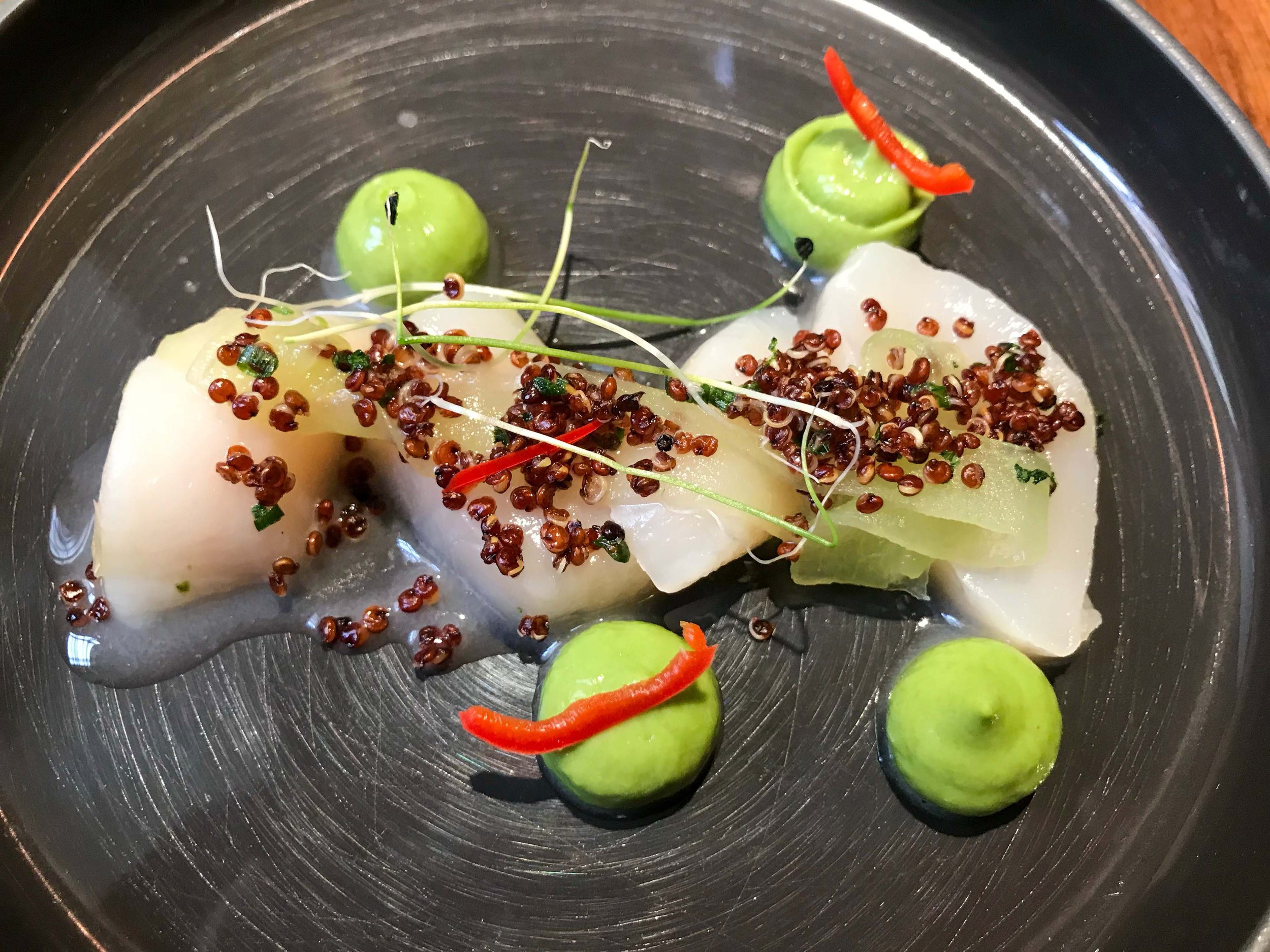


Restaurants in Lisbon, Portugal
The food in Lisbon is seriously good, particularly if you love seafood. The fresh fish here tastes the way it should: of the ocean, and recently. Bacalhau, the salted codfish that is the foundation of Portuguese cooking, appears in hundreds of preparations, and the simpler ones are often the best. The pastéis de nata are not optional. Eat them hot. Add cinnamon.
Belcanto — José Avillez's flagship restaurant in Chiado holds two Michelin stars and currently sits at #42 on the World's 50 Best Restaurants list. The tasting menu draws on Portuguese culinary tradition with a contemporary creative intelligence that makes each course feel both surprising and completely Portuguese. The service is exceptional. We chose the tasting menu, and it was extraordinary. This is the best meal we had in Lisbon and one of the finest we have had anywhere. Reserve well in advance, ideally weeks ahead. It is worth the price.
Cervejaria Ramiro — The most famous seafood restaurant in Lisbon and one of the finest in Portugal. The prawns, the clams, the percebes (barnacles), and the crab arrive in a specific and correct order that the staff has been managing since 1956. The room is loud, energetic, and full of locals who know what they are ordering. It was so good we went twice. A reservation is strongly recommended; the queue without one can be significant.
Alma — Chef Henrique Sá Pessoa's Michelin-starred restaurant in Chiado, delivering innovative Portuguese cuisine with outstanding execution and a warmth that the more formal Belcanto does not quite match. An excellent choice for lunch or dinner at a slightly lower price point while maintaining genuine culinary ambition.
Taberna da Rua das Flores — A cozy and beloved taberna near Chiado serving small plates built around local and seasonal ingredients. The atmosphere is specifically and authentically Portuguese: warm lighting, close tables, and cooking that tastes like someone's grandmother spent the morning on it. A strong choice for lunch.
Time Out Market (Mercado da Ribeira) — The finest food hall in Lisbon, with approximately forty restaurants, cafés, and food stalls under one roof in the beautifully restored 1892 Ribeira market building. We went two or three times. The market solves the difficult-decision problem elegantly: everyone in the group chooses something different and sits together. Excellent for lunch or an early dinner.
Ponto Final — A small, simple fish restaurant on the south bank of the Tagus, right on the water. The location is extraordinary: the Tagus in front of you, Lisbon's skyline behind it, and grilled fish arriving from the kitchen. One of the most atmospheric restaurant settings in the greater Lisbon area. Worth the short taxi ride across the river.
Pastéis de Belém — The original and most historic pastel de nata bakery, operating since 1837 in the Belém district beside the Jerónimos Monastery. The recipe is kept secret and the result has been consistent for nearly two centuries. Visit in the morning before the queue builds.
Manteigaria — Our favorite pastel de nata in Lisbon, with locations in the Time Out Market and at their own shop in Chiado. They come out of the oven every twenty minutes and you can watch through the glass. Eat them immediately, hot, with cinnamon and sugar. We did considerable research on this question and these are the best we tried.

Alma
Coffee in Lisbon, Portugal
Fábrica Coffee Roasters — Set in an industrial-chic space in the Intendente neighborhood, this is as much a photography subject as it is a coffee stop. Strong espresso in a room worth pointing your camera at.
Copenhagen Coffee Lab — Precise, Scandinavian-influenced coffee with a calm atmosphere that makes it the right stop for an editing session between shoots.
Hello, Kristof — The kind of café where an hour becomes two without you noticing. Worth building Slack into your schedule if you stop here.
Gelateria Nannarella — The passionfruit and pistachio are the flavors to order, seriously excellent by any standard. It's always busy for a reason.
Artisani — A strong second gelato option if you're in a different neighborhood. The Alentejo fig, almond, and orange flavors are worth seeking out.

The Famous Pastais de Nata
Photography Gear for Lisbon, Portugal
Lisbon rewards versatility. Bring a body that handles low light well for the dawn miradouro sessions and blue-hour waterfront shots. I shoot here with the Canon EOS R5 Mark II as my primary body. The Sony A7R V and Nikon Z8 are equally strong choices. For the street photography in Alfama and Mouraria, I often switch to the Leica Q3 as my walk-around camera. Lighter, quieter, and easier to handle in tight lanes.
Lenses to pack:
Wide angle (16 to 35mm): Essential for the miradouros, the Jerónimos Monastery cloister, and the Praça do Comércio. The scale of these locations demands wide.
Standard zoom (24 to 70mm): Your workhorse for trams, street scenes, café moments, and the azulejo facades.
Telephoto (70 to 200mm): Critical for compressing São Jorge Castle against the rooftops from Miradouro da Senhora do Monte, and for flattening tile patterns on azulejo facades from across the street. Bring it.
Prime (35mm or 50mm): For Alfama street photography before 8 a.m., a light prime lets you move fast without drawing attention.
Accessories:
Tripod: Essential for blue-hour shots along the Tagus, long exposures on the waterfront, and the Ascensor da Bica at dawn.
ND filters (6-stop and 10-stop): Useful for long-exposure waterfront shots during the day and any scene where trams or pedestrians need to ghost out of a composition.
Extra batteries: Lisbon mornings start early and end late. Two spares minimum.
Samsung T7 SSD for on-location backup.
Rain cover for your bag: Lisbon gets real rain in winter and spring. You will be glad you brought it.
Drone Rules: Portugal operates under the EASA framework with some stricter national rules. Lisbon has significant airspace restrictions near Humberto Delgado Airport and along the Tagus River, which covers most of the waterfront areas you will want to photograph from above. Flying over the historic center or near government buildings is prohibited. You need a photography permit from AAN (Autoridade Aeronáutica Nacional) for any commercial or publication use, and this requires an advance application. Check the Voa na Boa app before every flight. In practical terms, most of the iconic Lisbon shots are not achievable legally by drone without serious advance planning. For the day trip to Cabo da Roca, drone photography of the cliffs is stunning and more accessible, but still requires checking the airspace map.
iPhone Tips
Lisbon is exceptional for iPhone photography if you work with its strengths.
The azulejo tile facades are ideal for the standard iPhone camera in good overcast light. Get close and fill the frame with the pattern. The tiles are graphic, geometric, and full of color. Overcast light removes the harsh reflections that direct sunlight creates on glazed surfaces. Shoot flat-on, not at an angle.
For the miradouros at sunrise, use the ProRAW format if your iPhone supports it. The tonal range at dawn from Miradouro da Senhora do Monte is wide, and ProRAW gives you latitude to recover shadow detail in the valleys below the castle without blowing the sky. The standard HEIC file clips too easily at the extremes.
For Tram 28 and the Ascensor da Bica, use Burst Mode. The trams move faster than you think and timing the composition precisely is easier when you have twenty frames to choose from rather than two.
At the Time Out Market and at café terraces, Portrait Mode on the iPhone creates beautiful subject separation from the warm interior backgrounds. Keep your distance to around one meter for the cleanest result.

Best Photography Locations in Lisbon
Lisbon is a city that is made for Photographers. There are so many great places to photograph.
Miradouro da Senhora do Monte
This was my favorite viewpoint in Lisbon. It sits higher than any other miradouro in the city and faces east toward São Jorge Castle, which rises above a sea of terracotta rooftops with the Alfama spread out beneath it. At sunrise, the light hits the castle first while the lower streets are still in shadow, creating a layered depth that is unique to this particular hour and direction. I visited twice at sunrise, and the second visit was better than the first because I knew exactly where to stand.
📷 Pro Tip: Arrive thirty minutes before first light and position yourself at the eastern railing facing São Jorge Castle. A 70 to 200mm lens compresses the castle against the rooftops below it and is the most compelling focal length for this shot. A 24 to 70mm captures the full layered panorama if you want the wider context. The light in the first twenty minutes after sunrise is the softest and most cinematic of the day. If you visit in spring, look for morning mist settling in the lower streets of Alfama. It appears irregularly but creates an extraordinary atmosphere when it does. Access is free. Take a taxi or Uber to the viewpoint; the walk from Chiado takes twenty-five minutes uphill.
Best time: Sunrise. Access: Free.

Belém Tower
If I could photograph only one location in Lisbon, this would be it. The Belém Tower was built in the 15th century as a defensive fortification at the mouth of the Tagus, and it sits in the river in a way that feels almost surreal at certain times of day. The 16th-century Manueline architecture is intricate and geometric. When the light hits it from the west in the late afternoon, the carved stone turns gold, and the reflection in the river below it becomes a second composition.
📷 Pro Tip: Position yourself on the river path to the west of the tower at sunset with the sun behind you. A 70 to 200mm frame from this position frames the tower with the Tagus behind it and eliminates tourist infrastructure in the foreground. A wide-angle lens directly in front captures the full reflection on the river. Early morning, before 8 a.m., is best for compositions without crowds and for getting the eastern light on the tower facade. If you come at blue hour after sunset, the tower lit against a deep blue sky with the river behind it is one of Lisbon's finest shots. The access path runs along the waterfront from the Jerónimos Monastery and is an easy walk.
Best time: Sunrise or late sunset. Access: Paid entry to the interior; exterior and river path are free.

Belém Tower was a defense tower that was built in the 15th century.

Jerónimos Monastery:
The Jerónimos Monastery is one of the finest examples of Manueline architecture in the world, and a UNESCO World Heritage Site. The exterior is extraordinary, covered in carved stone nautical motifs, ropes, coral, and armillary spheres that tell the story of Portugal's Age of Discoveries. The interior is equally spectacular, and the cloister is the single best architectural photography subject in Lisbon.
📷 Pro Tip: The cloister is the finest interior photography subject in the city. The Manueline columns and vaulted arches produce extraordinary light in the morning hours when the sun comes through the open courtyard. A 16 to 35mm wide angle at cloister level captures the full architectural sweep, and the symmetry of the arched galleries is particularly strong from the corner positions. The external facade rewards a 70 to 200mm from across the square, where you can isolate individual carved panels. Buy tickets online before arriving; the queue without them can be an hour or more, especially in summer and fall. The monastery sits two minutes from the Belém Tower, so photograph both in the same morning session.
Best time: Morning light in the cloister. Access: Paid entry; book tickets in advance.

The Details on the Outside are Spectacular
Try to get tickets before you arrive—it’s so incredibly beautiful. You could easily spend a few hours walking around. Once you are finished, you can get a snack at the Pasteis de Belem next door.

There are two main sections that you can visit at Jerónimos Monastery: the cloisters and the main cathedral.

There are so many details to photograph in this iconic site.

Padrão dos Descobrimentos
Padrão dos Descobrimentos (Monument of the Discoveries) is a 52-meter (170-foot) tall monument on the Tagus River. It is also very close to the Belem Tower. The monument was built in the 1940s to honor the Portuguese Age of Discoveries, which spanned the 15th and 16th centuries.

I liked taking photos from opposite sides of the monument.

Photo Credit my beautiful wife Zena
Alfama District:
Alfama is the oldest district in Lisbon, built by the Moors and largely preserved as the city's medieval quarter. Walking through its narrow, winding streets feels like stepping back in time in the most genuine sense. The lanes are steep, the doors are painted in faded colors, the tiles on the facades are chipped and beautiful, and the sounds of the neighborhood, including Fado music drifting from a taverna and the distant clang of a tram, serve as a reminder that people actually live here.
📷 Pro Tip: Walk Alfama before 8 a.m. when the locals are beginning their day and the tourists have not yet arrived. A 35mm prime and no camera bag keep you mobile in the narrow lanes where a full kit bag catches on doorways. The streets above the Lisbon Cathedral toward the Miradouro das Portas do Sol produce the best early morning light as the sun catches the east-facing facades first. Stop and listen: the sound of Fado from a taverna is as much a part of the photography experience as the image. Move slowly. The details are the story here.
Best time: Early morning, before 8 a.m. Access: Free; open neighborhood.

I loved wandering through narrow streets and capturing old Lisbon. I think it's better to visit this area very early in the morning when it's less crowded. It is hilly but beautiful. Here are some suggested walking tours to follow.

The district is home to historic buildings, including Sé de Lisboa (Lisbon Cathedral), São Vicente de Fora Monastery, and the National Pantheon.

Alfama retains a traditional and authentic Portuguese atmosphere, with locals going about their daily lives, small family-owned shops, and traditional Fado music filling the air from local taverns.

Tiled Blue “AZULEJO” Houses
Azulejos are the most distinctive and photographically rich visual element of Lisbon. The blue and white tiles that cover buildings across the Alfama, Mouraria, and Bairro Alto neighborhoods range from simple geometric patterns to complex narrative scenes depicting saints, historical events, and maritime life. The term comes from the Arabic "al-zellige," meaning polished stone. In Lisbon, they are everywhere and no two facades are the same.
📷 Pro Tip: The best azulejo facades are found in Mouraria, Alfama, and the quieter streets of Bairro Alto. A 70 to 200mm from across the street flattens the tile pattern and eliminates perspective distortion, which gives you the cleanest, most graphic result. Early overcast light is better than direct sun, which creates harsh reflections on the glazed surface. The National Tile Museum (Museu Nacional do Azulejo) is the finest interior azulejo photography environment in the city, with the bonus that the gallery spaces are relatively crowd-free on weekday mornings. Buy a ticket and spend at least an hour there.
Best time: Overcast morning. Access: Free on facades (public streets); Museu Nacional do Azulejo has paid entry.

Azulejos often feature geometric patterns, floral designs, and scenes depicting historical events, religious themes, and everyday life.

Rua Nova do Carvalho or “The Pink Street”
Once the unofficial red-light district for sailors, Pink Street has been transformed into one of Lisbon's most colorful and photographed areas. The entire street is painted a deep rose-pink, the bars and restaurants have extended their presence into the cobblestones, and the neon signs and string lights make it a strong photography location at night.
📷 Pro Tip: Pink Street is most photogenic in the early morning before the bars and restaurants open their doors, when the pink cobblestones are empty and the light comes in from one end of the street at a low angle. A 35mm or 50mm prime works well here for the symmetry of the street. Return at night for a completely different atmosphere: the neon signs and string lights create strong reflected color on the cobblestones, especially after rain. At night, use a 24mm to 35mm focal length, bump your ISO to 1600 or higher, and embrace the noise. The character of the street at night is worth a slightly imperfect technical file.
Best time: Early morning or after dark. Access: Free; public street.

MATT Museum
The modern MAAT is located in the Belém district of Lisbon, along the Tagus River, near the Belém Tower and the Jerónimos Monastery. The museum is known for its striking contemporary architecture. Designed by the British architect Amanda Levete and her firm AL_A.

If you come back at the right time of day like my friend Scott Berger did then you will get a photo like this

Photo Credit Dr. Scott Berger
Praça do Comércio:
Praça do Comércio (Commerce Square), also known as Terreiro do Paço (Palace Yard), is one of Lisbon's most important and iconic public squares. The square was the location of the Ribeira Palace, the royal residence of Portugal, which was destroyed in the devastating earthquake of 1755. The reconstruction of the square symbolized the city's recovery and renewal.

25 de Abril Bridge:
The 25 de Abril Bridge is a suspension bridge that resembles the Golden Gate Bridge in San Francisco. The American Bridge Company designed the bridge and also constructed the San Francisco-Oakland Bay Bridge.

Santa Justa Lift:
The Santa Justa Lift is a fully functioning elevator in downtown Lisbon that dates back to 1902 and was designed by Raul Mesnier de Ponsard, a student of Gustave Eiffel. The elevator was a symbol of class and advancement in Portugal.

São Jorge Castle
An 11th-century castle with great views. One of the top things to do in Lisbon is to explore Castelo de São Jorge. Originally built by the Moors in the 11th century as a citadel on the top of one of Lisbon’s hills, the castle has had a long and eventful history.

Bairro Alto
The district is characterized by its 16th-century architecture, with narrow cobblestone streets, colorful buildings, and historic landmarks that give a glimpse into Lisbon's past.
Bairro Alto is a hub for Lisbon’s artistic community. You’ll find vibrant street art, small galleries, and studios showcasing local and international artists.

Ascensor da Bica
The Ascensor da Bica, also known as the Bica Funicular, has been carrying passengers up and down this steep section of the Bairro Alto neighborhood since 1892. The yellow funicular car climbing the narrow street, with the Tagus just visible at the bottom between the buildings, is one of the most photographed scenes in Lisbon. It is genuinely beautiful and it genuinely earns its reputation.
📷 Pro Tip: Position yourself at the bottom of the hill looking up so the funicular fills the frame with the steep street receding behind it. A 70 to 200mm from the bottom of Rua da Bica de Duarte Belo compresses the street and funicular car into a single composition. Wait for a pedestrian to create scale. Early morning before 9 a.m. gives you the best light and the least foot traffic on the tracks. Return at midday when the funicular is running frequently and the light is overhead; the colors of the buildings glow differently at this hour. At night with the streetlights on, it is a completely different and equally valid composition.
Best time: Early morning or evening. Access: Free to photograph from street; paid to ride.

The funicular runs through the narrow, picturesque streets of the Bica neighborhood, offering scenic views of the city and the Tagus River. As you ascend or descend, you’ll pass by charming old buildings and vibrant street art. The colorful trams against the backdrop of steep streets make for wonderful photos of Lisbon.

Vasco da Gama Bridge
The Vasco da Gama Bridge over the Tagus River in Lisbon is the second-longest bridge in Europe. This is a truly magical location.
Unfortunately, I did not have a chance to photograph it while I was in Lisbon. Luckily, my good friend, Dr. Scott Berger, took an incredible photo of the bridge. Scott kindly allowed me to use his photo.
Scott’s photo stopped me in my tracks. It is a stunning composition with a beautiful leading line, reflections, and a sunburst, and it was taken at the right time of day. It is as good as it gets.
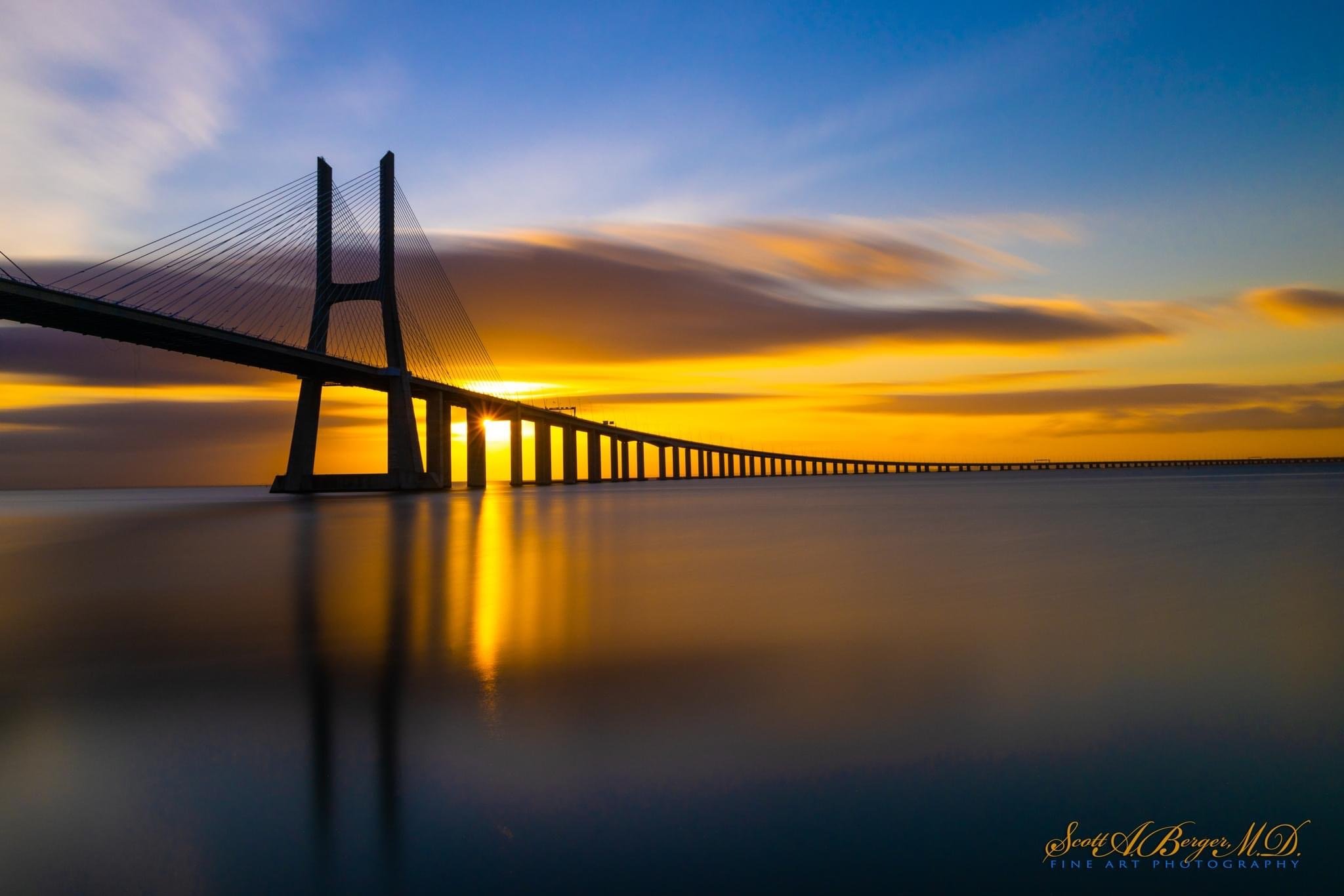
Photo Credit: Dr. Scott Berger
Lisbon Cathedral –
The Lisbon Cathedral is the oldest church in the city, dating back to the 12th century. It was built shortly after the Christian reconquest of Lisbon from the Moors in 1147, making it a vital part of the city's history.

What I really liked is that you’re walking along in Lisbon through the narrow lanes of the city, and all of a sudden, you come to an opening within the streets, and the magnificence of the symmetrical cathedral seems to come out of nowhere.
Trams
Trams are an iconic symbol of Lisbon, often featured in postcards, photographs, and travel literature. They represent the city’s unique character and history.

Many tram routes traverse Lisbon’s most scenic and historic neighborhoods, offering beautiful views of the city's architecture, hills, and the Tagus River. Routes like the famous Tram 28 take passengers through narrow, winding streets and past significant landmarks.

Trams provide easy access to historic districts such as Alfama, Baixa, Chiado, and Bairro Alto. Riding the tram allows visitors to explore these areas comfortably and conveniently.

Here is one last photo from my friend Scott Berger that just looks amazing

Photo Credit Scott Berger, MD
Street Art
Street art in Lisbon is a vibrant and integral part of the city’s cultural landscape. A former industrial complex turned creative hub, LX Factory is home to numerous large-scale murals and street art pieces. It’s a popular spot for both artists and art enthusiasts, offering a constantly evolving display of creativity.

Artists often incorporate themes related to Lisbon’s history and culture, blending the old with the new.


Street Photography
There are so many options for Street Photography in Lisbon. I especially like the streets of Alfama, with their cobblestones and traditional houses, which provide endless photographic opportunities.

Lisbon is just one of those cities with endless beautiful streets to photograph. The area in the Alfama above the Lisbon Cathedral was one of my favorite areas.


Day Trips From Lisbon
There are some wonderful day trips you can take advantage of from Lisbon.
Sintra Day Trip
Sintra is a 40-minute train ride from Lisbon's Rossio Station and is one of the most photographically distinctive places in Portugal. The hilltop palaces, the dense forest, the morning mist that rolls through the valleys below the Pena Palace, and the crumbling walls of the Moorish Castle create a range of subjects that feel completely unlike anything else within an hour of a European capital.
📷 Pro Tip: The Pena Palace is your primary subject, but the view of it across the valley from the Moorish Castle walls above is the better composition. A 70 to 200mm frame from the castle walls frames the Pena Palace against the forested hills, with none of the tourist crowd visible in the foreground. Arrive at Sintra by 8 a.m. if you visit in summer; the palace and gardens fill up quickly, and the light is best in the first two hours of morning. For Quinta da Regaleira and its famous Initiation Well, a 16 to 24mm wide-angle captures the spiral descent of the stone steps. Overcast light in the well is better than direct sun. Buy all tickets online in advance.
Best time: Early morning; shoulder season for fewer crowds. Access: Paid entry to all major sites; book in advance.

The land of castles and fairytales, Sintra is worth a day trip from Lisbon to see the incredible castles that dot the countryside.

Quinta da Regaleira This mystical estate features a gothic-style palace, lush gardens, hidden tunnels, and the famous Initiation Well. It's a place filled with symbolism and intricate designs, perfect for exploration and photography.

Sintra is easily accessible from Lisbon, just a short train ride away (about 40 minutes). This makes it a convenient day trip or a longer stay to fully explore its many attractions.

This medieval castle (Castelo dos Mouros) dates back to the 8th and 9th centuries and offers a fascinating historical perspective. With its ancient walls and panoramic views of the surrounding area, it offers a glimpse into Sintra's history.

After you finish your visit, stop at Casa Piriquita in Sintra. This is a delicious pastry shop in Sintra—if you go there, try the Travesseiro da Casa Piriquita.


Cascais
Cascais is a coastal town near Lisbon. It is a wonderful location to explore and have a leisurely lunch by water. Being a coastal town, Cascais is known for its delicious seafood. Enjoy fresh fish, shellfish, and other maritime dishes at local restaurants and waterfront eateries.
A fun fact: this city was the "capital of espionage" after World War II. Apparently, they would meet in the Estoril Palácio hôtel.

Cabo da Roca
Visiting Cabo da Roca, the westernmost point of mainland Europe, offers a unique and unforgettable experience. Cabo da Roca features stunning cliffs that rise majestically above the Atlantic Ocean. The panoramic views from the cliffs are breathtaking, offering a sense of awe and wonder at the natural beauty.
The sunsets at Cabo da Roca are spectacular. Watching the sun dip below the horizon from this vantage point is a magical experience, perfect for photographers and nature lovers.


Biblioteca Joanina—we did not see it, but I will go next time. It was closed on the day we wanted to go.
Special Festivals and Holidays
Festa de Santo António (June) — Lisbon's largest festival, held in honor of the city's patron saint. The Alfama neighborhood fills with grills cooking sardinhas assadas (grilled sardines), paper streamers in red and yellow, folk music, and dancing in the streets. It is chaotic, warm, and authentic. For photographers, the festival is a genuine street photography opportunity: tight lanes crowded with people, open fires, and the specific light of a June evening in Alfama. Move early in the evening before the crowds become impenetrable. A 35mm or 50mm prime is the right tool here; wide enough to capture context, tight enough to find faces in the crowd.
Lisbon Marathon (October) — One of the most scenic marathon routes in Europe, running past Belém Tower, along the Tagus waterfront, and through the heart of the city. For photographers, the early morning light on race day combined with the energy of thousands of runners along the river makes for strong sports and street photography. Position yourself at Belém for the combination of the tower and the athletes, or near the finish line in Praça do Comércio for the most emotional moments.
Christmas Markets (December) — Lisbon is not a traditional Christmas market city in the way that German or Austrian cities are, but Parque Eduardo VII and Praça do Comércio both host festive decorations and markets in December. The real photography subject in December is the quiet, atmospheric quality of the city in low season. Rain on the cobblestones of Alfama, steam from a coffee cup at an outdoor café, the Cathedral lit at dusk with a near-empty square. December Lisbon is underrated.
Lisbon Film Festival / DocLisboa (October) — Not a street photography event in the traditional sense, but Lisbon's film culture activates in October with outdoor screenings, cultural events, and the specific energy of a city that takes cinema seriously. The Cinemateca Portuguesa on Rua Barata Salgueiro is worth visiting any time of year.
Frequently Asked Questions About Visiting Lisbon
Is Lisbon expensive?
Less than most Western European capitals, though the standout restaurants like Belcanto run high. Pastéis de nata cost next to nothing, and Time Out Market lets you eat exceptionally well without a fine-dining price tag.
Is Lisbon safe?
Yes, it's one of the safer major European cities to walk, including Alfama and Bairro Alto at night. Normal city awareness in crowded tourist spots and on Tram 28 covers most of what you need to know.
Do you need a car in Lisbon?
No, and it's genuinely inconvenient given the hills and narrow streets. Trams, the metro, and walking cover the city well. You'll want a car or a train only for day trips like Sintra or Cascais.
What are the best photo spots in Lisbon?
Belém Tower at sunset, Miradouro da Senhora do Monte at sunrise, and the Alfama's narrow streets before 8am are three I'd send anyone to first. The full list with Pro Tips is above.
Can you fly a drone in Lisbon?
Check current Portuguese drone regulations before flying, especially near the historic center, the Tagus waterfront, and Belém, which sit close to controlled airspace and dense tourist areas.
What surprised you most about photographing Lisbon?
How kind and friendly people are in Portugal, and how out of this world the seafood is. The warmth of the people and the quality of the fish were both better than anything I'd expected going in.
How many days do you need in Lisbon?
Four to five days for the city itself, plus a day for Sintra. Lisbon rewards a slower pace, the hills and viewpoints take real time to work through properly.
Is Sintra worth the day trip?
Yes, absolutely, and it's an easy one. About 40 minutes by train, with Pena Palace, Quinta da Regaleira, and the Moorish Castle all within reach. Buy tickets in advance where you can to avoid long queues.
Final Thoughts
The last morning, I walked down to Praça do Comércio before anyone else was there. The Tagus was flat and silver-grey, and the 18th-century yellow facades of the square were catching the first light. A single fisherman had his line in the water at the far end of the waterfront. I stood there for a while before I even lifted the camera, which is usually the sign that a place has done something right.
Lisbon rewards patience. The light is generous, but it asks you to show up early and stay late. The neighborhoods are layered, and the best versions of them require repeat visits at different hours. You will not photograph Lisbon in a day or even three. Come with more time than you think you need.
Portugal is also bigger than Lisbon. Porto, the Douro Valley, Madeira, and the Azores are each extraordinary photography destinations, and each deserves its own dedicated trip. Lisbon is the beginning of a country worth exploring far more deeply, and it is a very good beginning.
If you are interested in joining one of my photography workshops, you can find the details through the link below. You can also follow along on Instagram @chasinghippoz, Facebook at facebook.com/chasinghippos, or subscribe to my newsletter for more travel photography tips and behind-the-scenes insight from 75+ countries.
Explore more of Europe with these guides:
My Photography & Travel Guide to Madrid, Spain — Three hours by high-speed train from Lisbon, Madrid is the natural next chapter for a Portugal and Spain itinerary. The Prado, the Retiro Park at golden hour, the rooftop terraces of the Gran Vía, and the food market culture make it one of the most rewarding photography cities in Southern Europe.
My Photography & Travel Guide to Paris, France — The benchmark European photography destination for good reason. After Portugal's warm colors and cobblestones, Paris offers a different register entirely: classical geometry, grey zinc rooftops, and the Seine at blue hour. The two cities together tell a strong story of Southern and Western European photography.
My Photography & Travel Guide to Étretat, France— A day's journey from Paris and one of the most dramatic coastal photography locations in Europe. The white chalk cliffs, the natural arches above the sea, and the light on the Normandy coast at golden hour are unlike anything else on the continent. A natural progression for anyone who photographed Cabo da Roca and wants more dramatic coastal work.
Finally—a beginner-friendly photography guide that makes sense.
If you've ever picked up a camera and thought, "Now what?" this is the book for you.
Photography Made Simple is written for adults who are just starting out and want a clear, encouraging, real-world approach to learning photography. Whether you're using a DSLR, mirrorless, or just your smartphone, this guide walks you through the basics—without the jargon or tech overwhelm.
Inside, you'll learn:
The only camera settings you really need to know to get started
How to shoot sharper, more intentional photos using light and composition
Simple tips for portraits, landscapes, travel, and everyday life
What gear you do (and don’t) need
How to create better photos without upgrading your camera
You’ll also get practical exercises, cheat sheets, and tips for organizing and editing your images—plus the confidence to shoot off Auto Mode for good.
This is not a textbook. It’s a friendly guide to seeing the world with fresh eyes—and finally capturing what you see the way you imagine it.
📸 Format: PDF download
Pages: 100+
Perfect for: Beginners, hobbyists, and anyone ready to take better photos without the stress