My Photography & Travel Guide to Charleston, South Carolina
There is a reason Charleston appears at the top of nearly every best-cities list in America, and it is not simply because the houses are pretty. It is because the city delivers fully and consistently across every dimension that makes a place worth traveling to. The history is real and intact. The food is world-class. The light is extraordinary. The people are genuinely kind. And the photography is among the finest available anywhere on the East Coast.
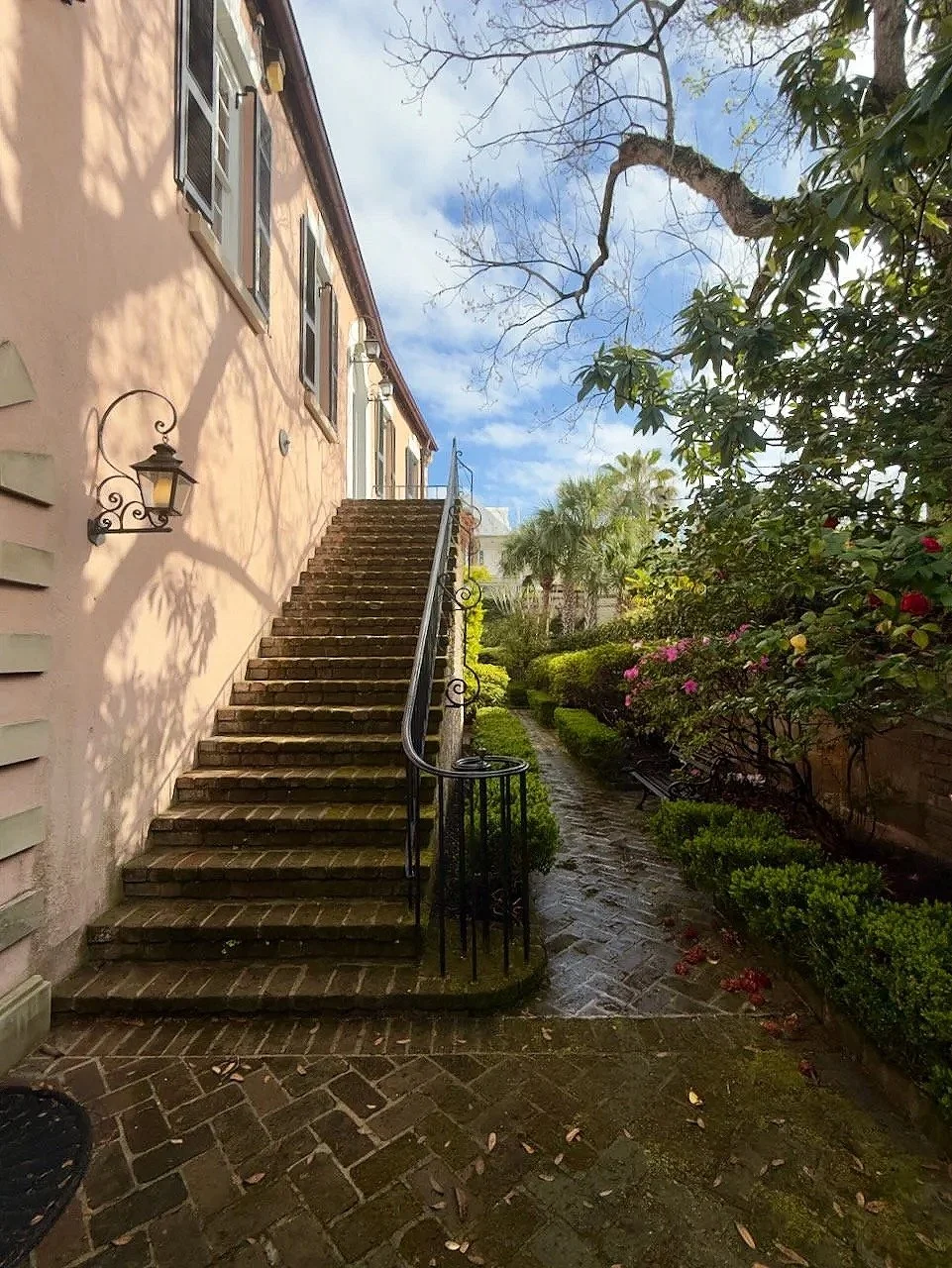
Founded in 1670 and shaped by centuries of plantation wealth, revolution, civil war, and extraordinary resilience, Charleston is one of the best-preserved historic cities on the continent. More than 1,400 historic structures remain standing in the downtown core. Every block reveals something: a hidden garden gate, a gas-lit alley, a church steeple framed between live oaks, a rainbow of pastel facades catching the first morning light.
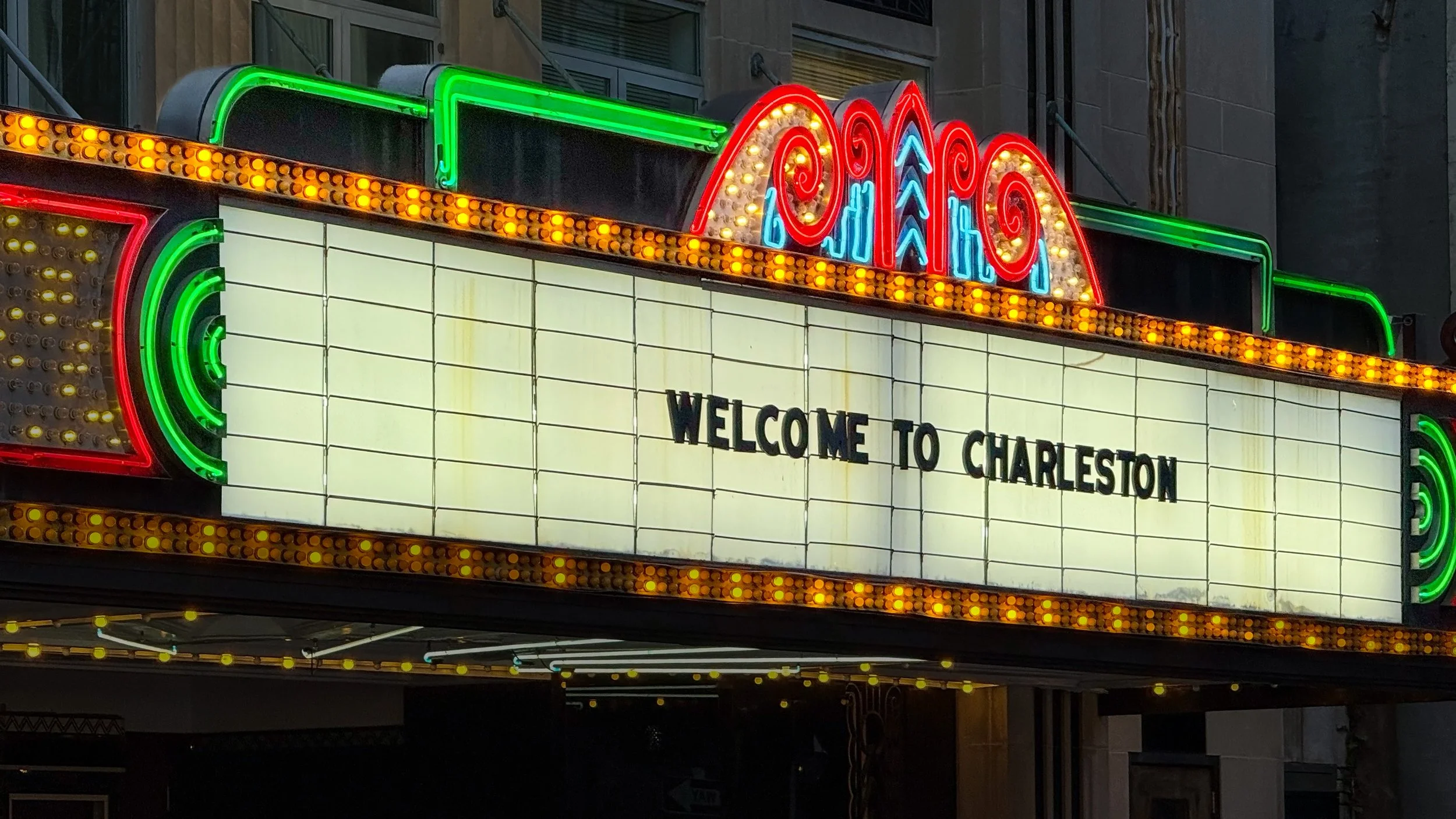
Photo Credit my Wife Zena Hammoud
Charleston is one of those rare places that rewards photographers at every level and in every direction. Point your lens at the architecture, and you get centuries of layered Southern history. Turn toward the waterfront, and you have the harbor, the sailboats, and sunsets that make people cancel their evening plans. Walk the back alleys, and you find hidden gardens, wrought iron gates, and flower boxes overflowing with color. Charleston does not just give you pretty pictures. It gives you stories.
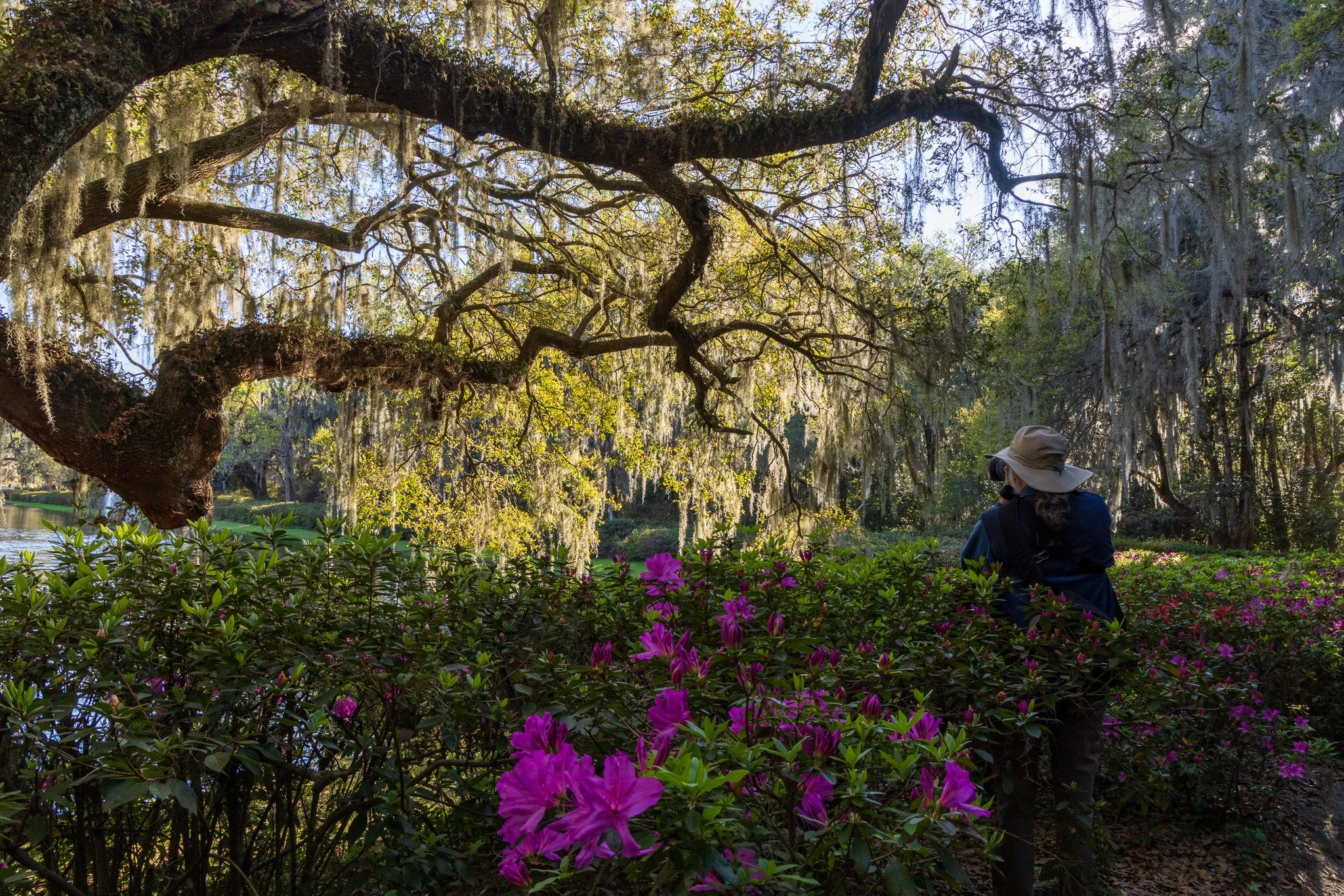
Middleton Place
What makes this city uniquely photogenic is the combination of scale and intimacy. It never feels overwhelming. Streets are narrow and walkable. Neighborhoods unfold block by block. The light here has a quality that landscape photographers travel thousands of miles to find. The low latitude and proximity to the coast mean golden hour starts soft and lasts long. During spring, azaleas turn the plantation gardens into something almost unrealistic. In winter, the morning fog sits on the harbor, and you feel like you stepped onto a film set.
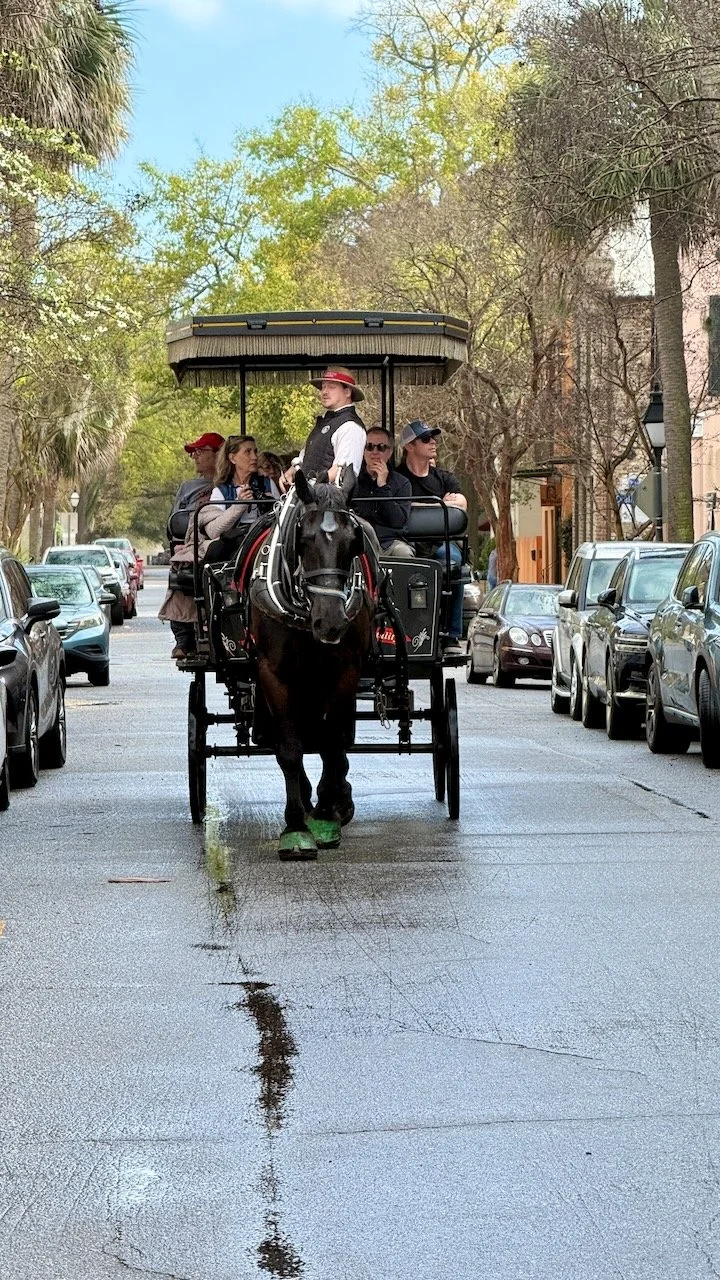
Beyond the architecture and the light, there are the people. Charlestonians have a warmth and a slowness of pace that makes street photography feel natural and generous. A fisherman casting from the Battery wall. A horse-drawn carriage clattering through the French Quarter. An elderly couple rocking on a piazza. These are the moments that fill the gaps between the postcard shots and give your images real soul.
In this Photography Guide to Charleston, I share the places and experiences that continue to draw me back. You will find my favorite photography locations, guidance on when and where to shoot, practical travel tips, and gear recommendations, along with cultural insights to help you explore and photograph Charleston with confidence, respect, and ease.
Where to Stay
The best neighborhoods for photographers are the Historic District, the French Quarter, and South of Broad. These areas put you within walking distance of nearly every major photography location in the city and let you step outside at first light without fighting traffic or long commutes.
Best Neighborhoods:
French Quarter & Historic District: Cobblestone streets, hidden alleys, and antebellum architecture right outside your door. This is the heart of Charleston photography.
South of Broad: Quieter, more residential, and full of gorgeous tree-lined streets and piazzas. Perfect for early morning walks with a camera.
Lower King Street: Central, walkable, and surrounded by excellent cafes and restaurants for fueling between shoots.
Luxury Hotels
The Dewberry Charleston: A beautifully restored mid-century modern building overlooking Marion Square. Sleek interiors, a rooftop terrace with sweeping city views, and a spa using local botanical treatments. The exterior alone is worth photographing. It is a short walk from practically everything.
Hotel Bennett Charleston: Grand, five-star, and French-inspired with a rooftop pool, a patisserie, a champagne bar, and sweeping views of Marion Square and the surrounding historic district. One of those hotels that makes you feel like the trip itself is the destination.
Wentworth Mansion: Dating back to the Gilded Age, this Second Empire mansion in Harleston Village is as close to staying in a museum as you can get. Original Tiffany glass, hand-carved mouldings, marble fireplaces, and a rooftop cupola with a 360-degree view of the Charleston skyline. Photographers will have a field day just inside the building.
Mid-Range & Boutique Hotels
The Spectator Hotel: Just 41 rooms, a lobby bar that pays tribute to the Roaring Twenties, classically trained butlers, and a genuinely intimate atmosphere. This is the kind of place where you actually get to know the staff. Small but very well done.
French Quarter Inn: Perfectly situated in the French Quarter with a daily wine and cheese hour, rooftop breakfast, and that hard-to-find combination of charm and accessibility. Walk out the front door, and you are immediately in one of the most photogenic neighborhoods in America.
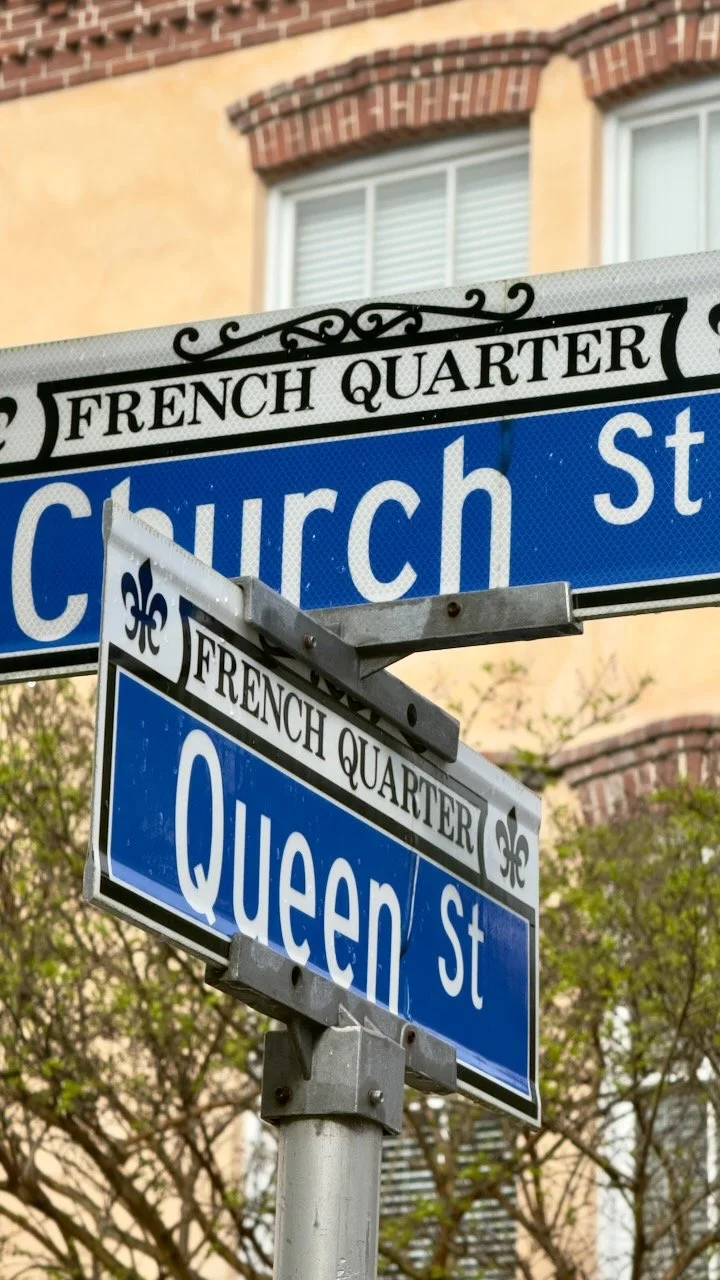
The Mills House: We stayed here and loved it. This iconic pink hotel on the corner of Meeting and Queen Streets has been charming visitors since 1853, and the location could not be more central. Rainbow Row, the City Market, Waterfront Park, and King Street are all within easy walking distance. The staff is genuinely warm, and the rooms are comfortable and full of Charleston character. Some rooms have French doors opening onto balconies overlooking Meeting and Queen Streets, where you can sip morning coffee to the sound of horse-drawn carriages below. On-site, you have the Iron Rose Restaurant for Southern coastal cuisine in a beautiful walled courtyard, and The Black Door Café, an all-day coffee shop and bakery that has become a neighborhood favorite in its own right. The Black Door's original paneled entry on Queen Street has even become one of Charleston's more photographed doorways. A very solid home base at a sensible price.
Ideal Duration of Stay
Recommended Stay: 4 to 5 days. This gives you enough time to photograph the key locations in different light, revisit your favorites at golden hour or blue hour, take a plantation day trip, and still enjoy the food scene without rushing.
Sample Itinerary:
Day 1: Arrive and do a slow afternoon walk through the French Quarter and along the Battery. Let the city reveal itself at its own pace. Sunset from Waterfront Park.
Day 2: Pre-dawn at Rainbow Row, then work your way down East Bay Street to the Battery as the city wakes up. Coffee, editing break, then an afternoon shoot at Chalmers Street and the hidden alleys around the Historic District. Blue hour at the Pineapple Fountain.
Day 3: Day trip to Magnolia Plantation or Middleton Place for azaleas, Spanish moss, and water reflections. These are different from anything else in the city and worth the full day.
Day 4: Sunrise at James Island's Sunrise Park for the harbor and Ravenel Bridge skyline. Afternoon walk through Hampton Park for Spanish moss portraits. Dinner at High Cotton for live jazz and Lowcountry seafood.
Day 5: Morning drive to the Center for Birds of Prey in Awendaw for the 10:30 a.m. flight demonstration. This is a full morning well spent. Afternoon ferry out to Fort Sumter for harbor views looking back toward the city. Easy evening.
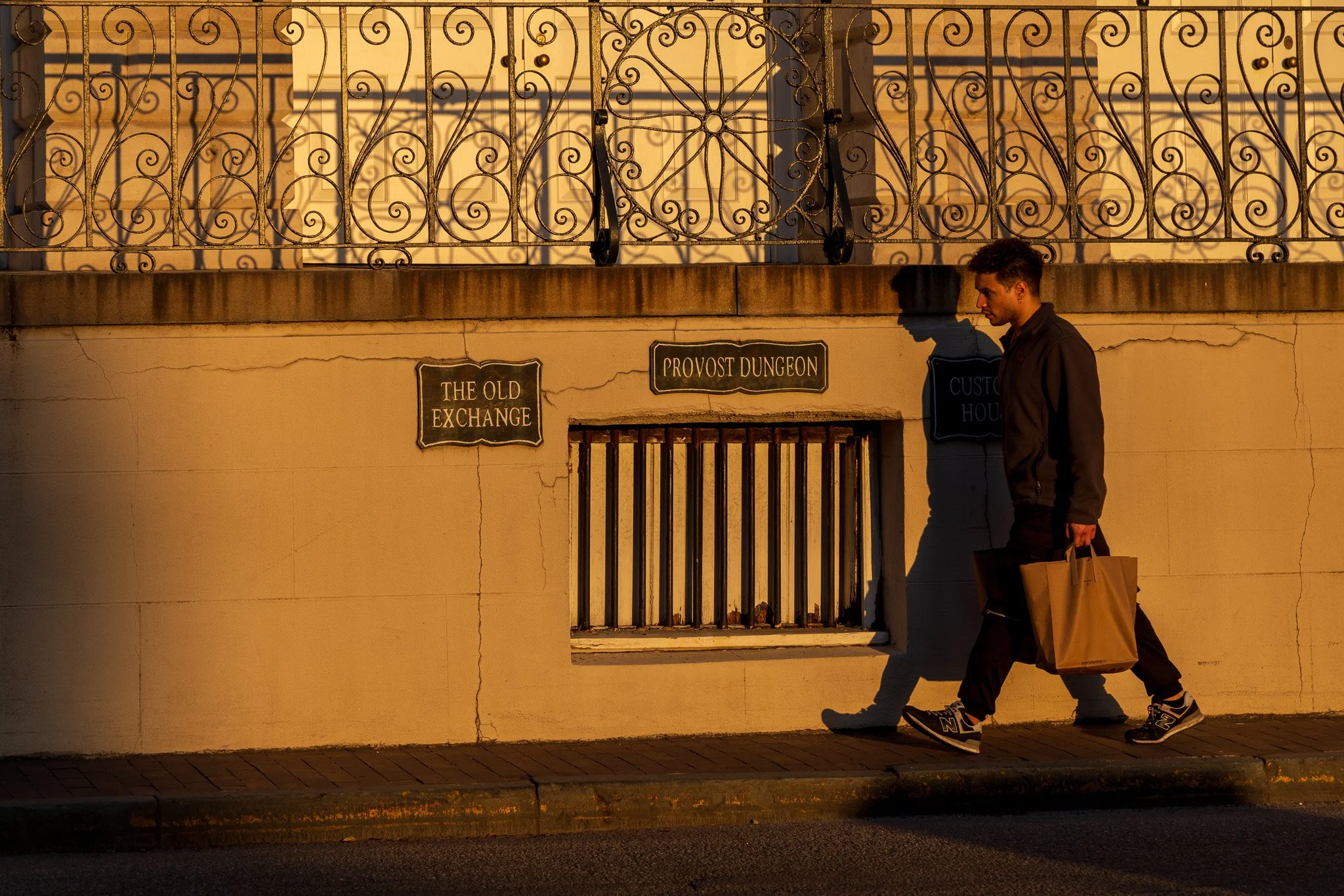
Sunset on Broad Street
Best Time to Visit
Spring (March to May): This is the sweet spot for Charleston photography. Azaleas bloom across the plantation gardens, the air is warm but not oppressive, and the golden hour light is soft and long. March and April are my personal favorites.
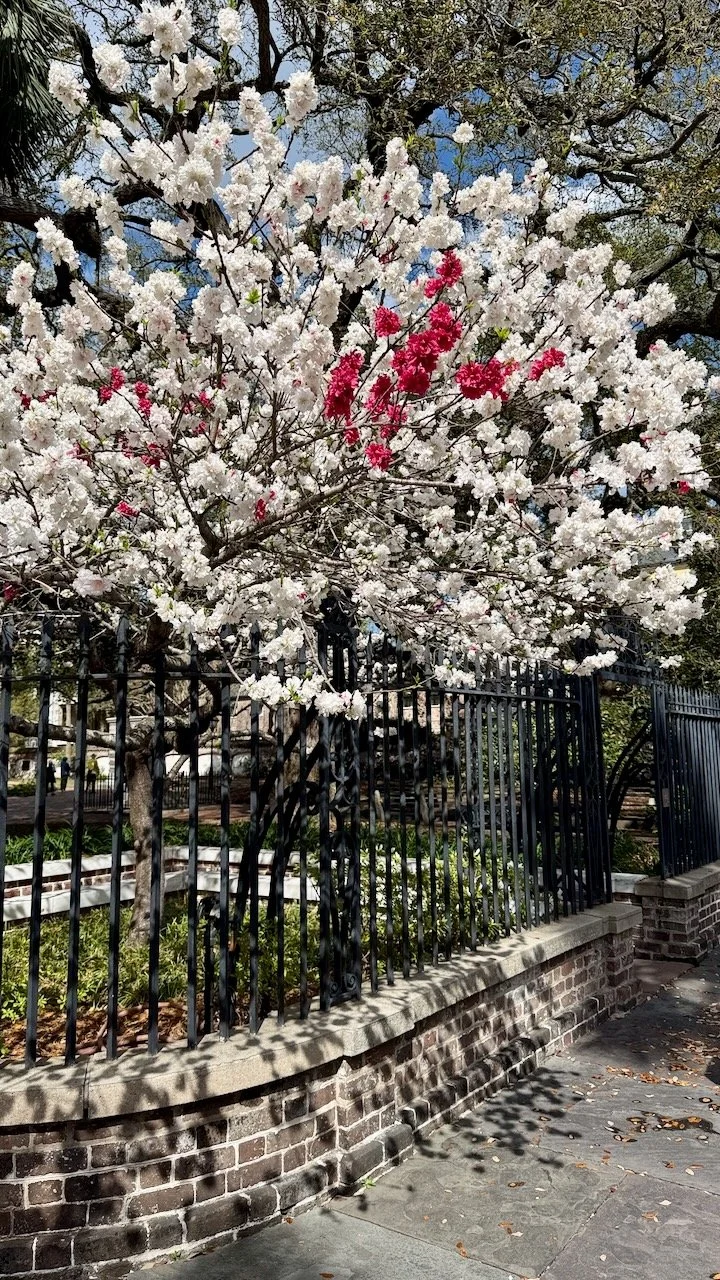
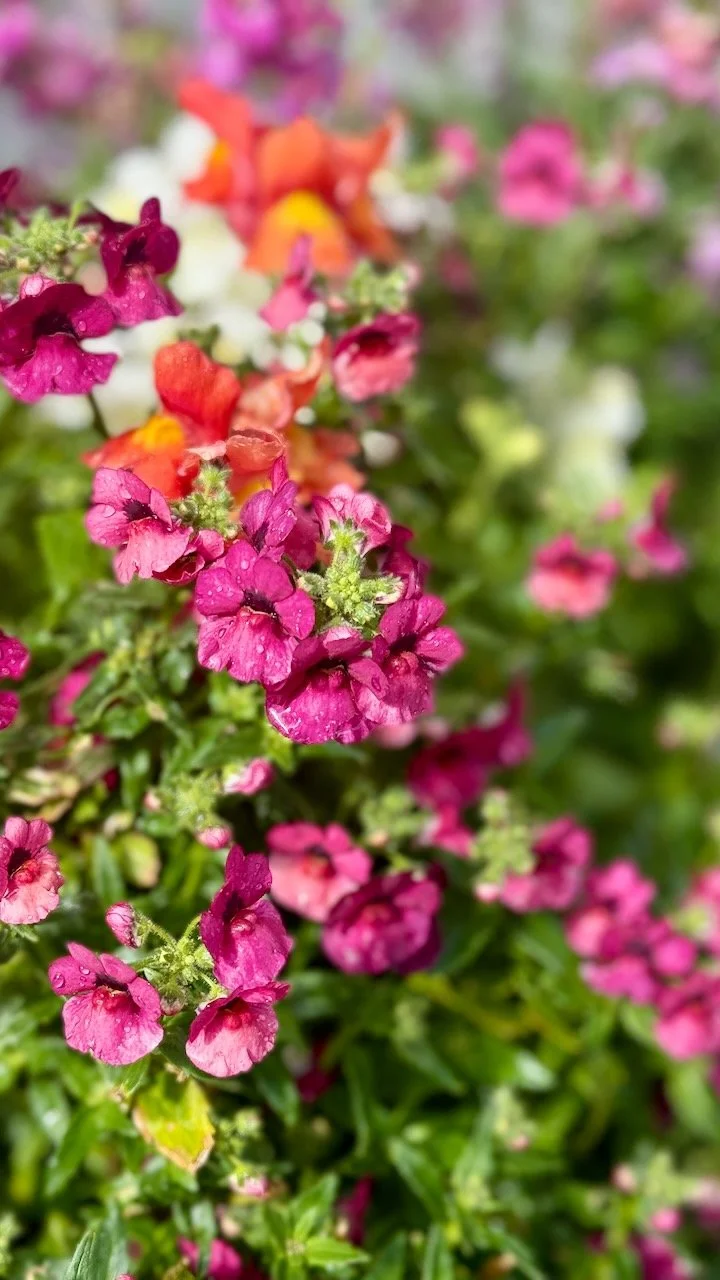
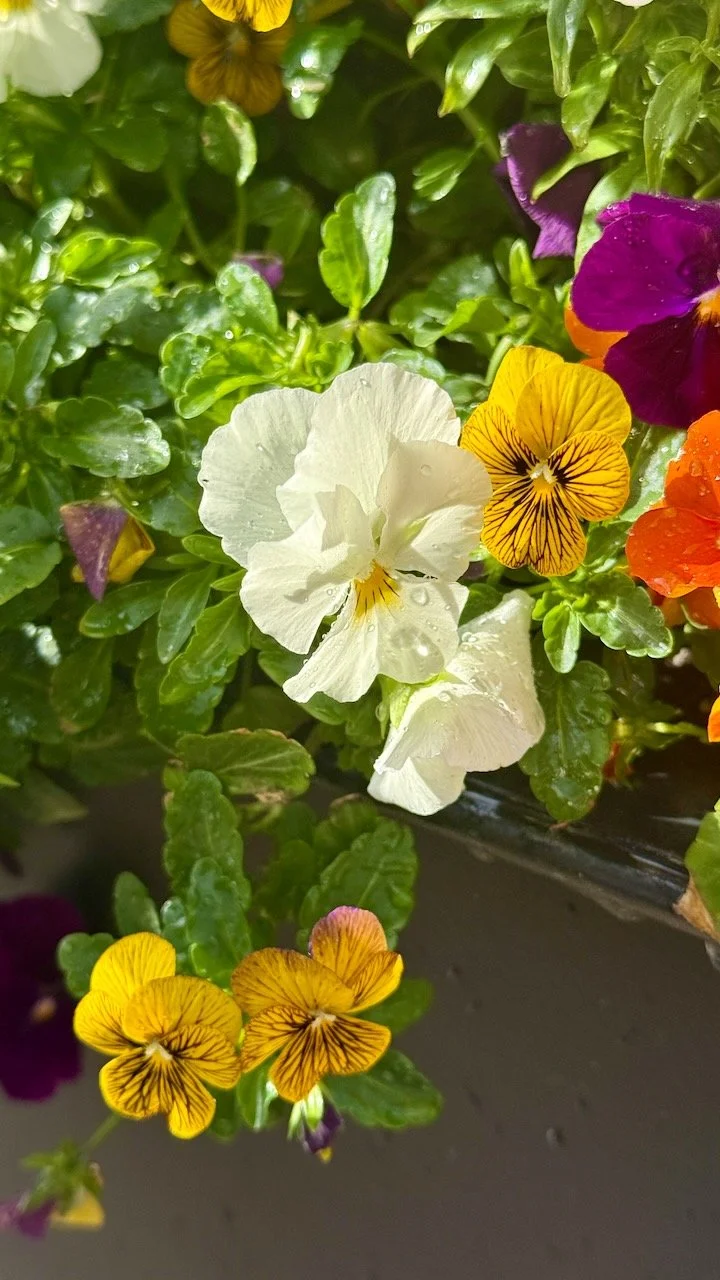
Fall (September to November): Fewer crowds than spring, warm but pleasant temperatures, and the quality of light shifts beautifully. October is especially good.
Winter (December to February): Moody morning fog hangs over the harbor and the streets feel slower and more intimate. Christmas light decorations on Rainbow Row are genuinely stunning. Crowds are minimal.
Summer (June to August): The city gets hot and very humid. Shooting early and late is essential. Midday is not ideal for photography or comfort. That said, summer sunsets over the harbor are extraordinary.
Crowds: Spring weekends can fill up fast, especially during festival season. Weekday mornings throughout the year are your best bet for clean shots without people walking through the frame.
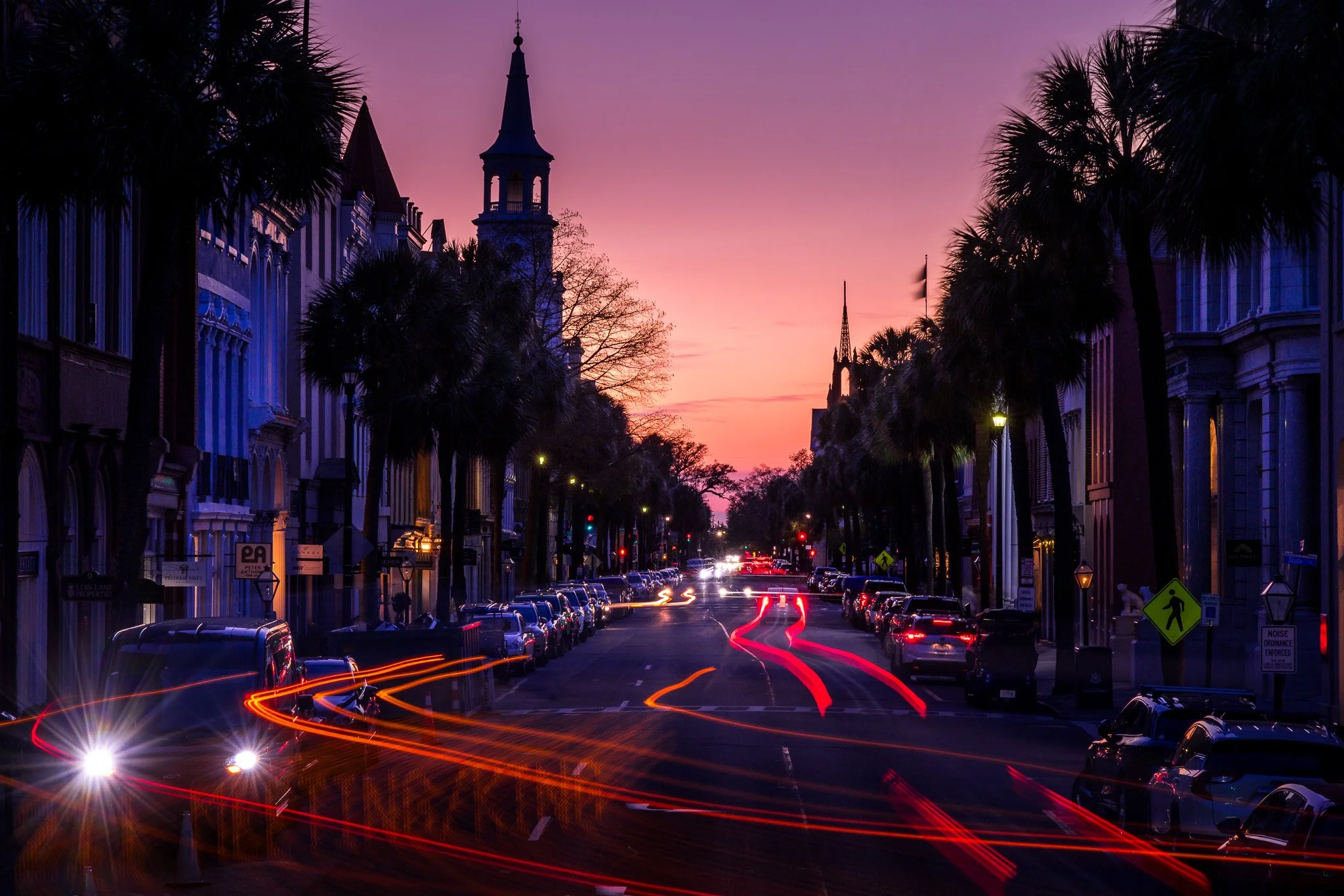
A Long Exposure on East Bay and Broad
Getting Around
Charleston is wonderfully walkable. The entire Historic District, French Quarter, Battery, Rainbow Row, and Waterfront Park are all connected on foot, and I strongly recommend walking as your primary way to move around. You discover far more that way.
Walking: The best option for photographers. Distances are short, and there is something worth photographing around almost every corner.
Uber and Lyft: Both operate in Charleston and are readily available. Useful for getting to Magnolia Plantation, Boone Hall, or the beaches.
Bikes: Locally available for rent and a fun option for exploring slightly farther neighborhoods like Hampton Park or the College of Charleston area.
Driving: Not recommended for the Historic District. Parking is limited, streets are narrow, and you will miss everything worth seeing. Save the rental car for plantation day trips.
Ferry: The Fort Sumter ferry departs from the Liberty Square dock near Waterfront Park. It is a short ride and gives you excellent water-level views of the harbor and skyline.
One important note: Charleston is an active city with horses and carriages sharing the road. It is charming for the camera, but worth knowing before your first evening walk.
Dining & Coffee
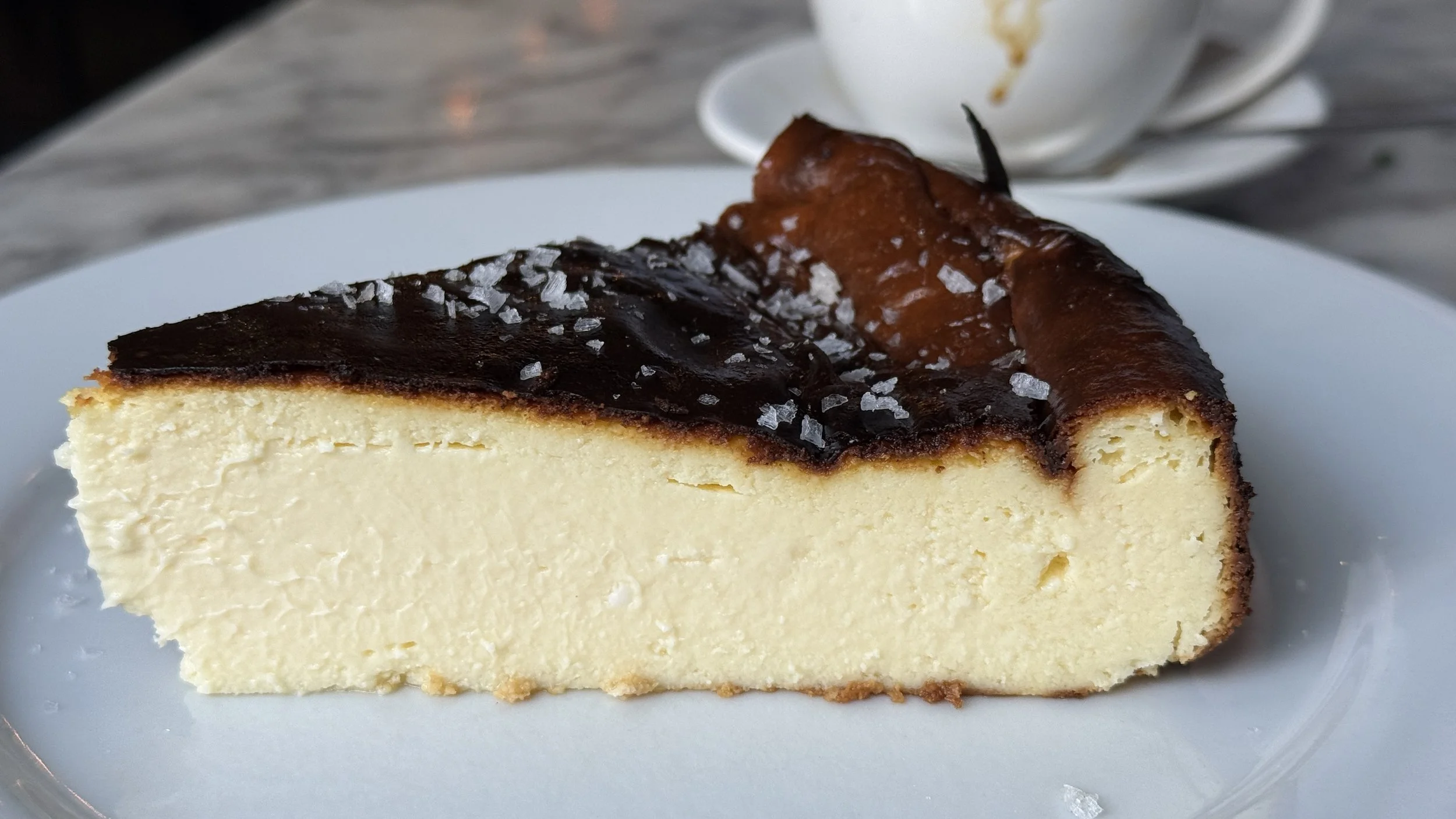
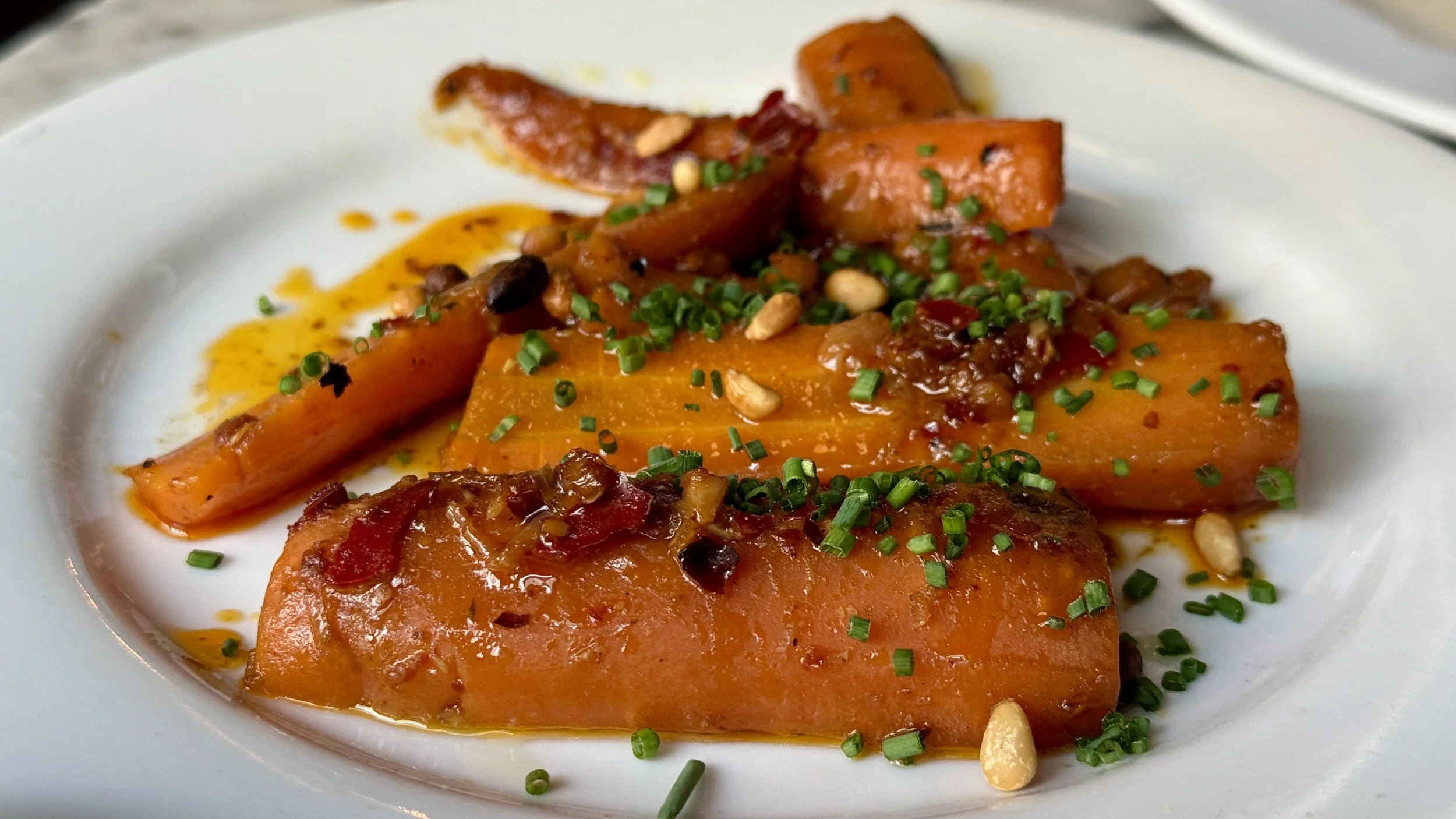
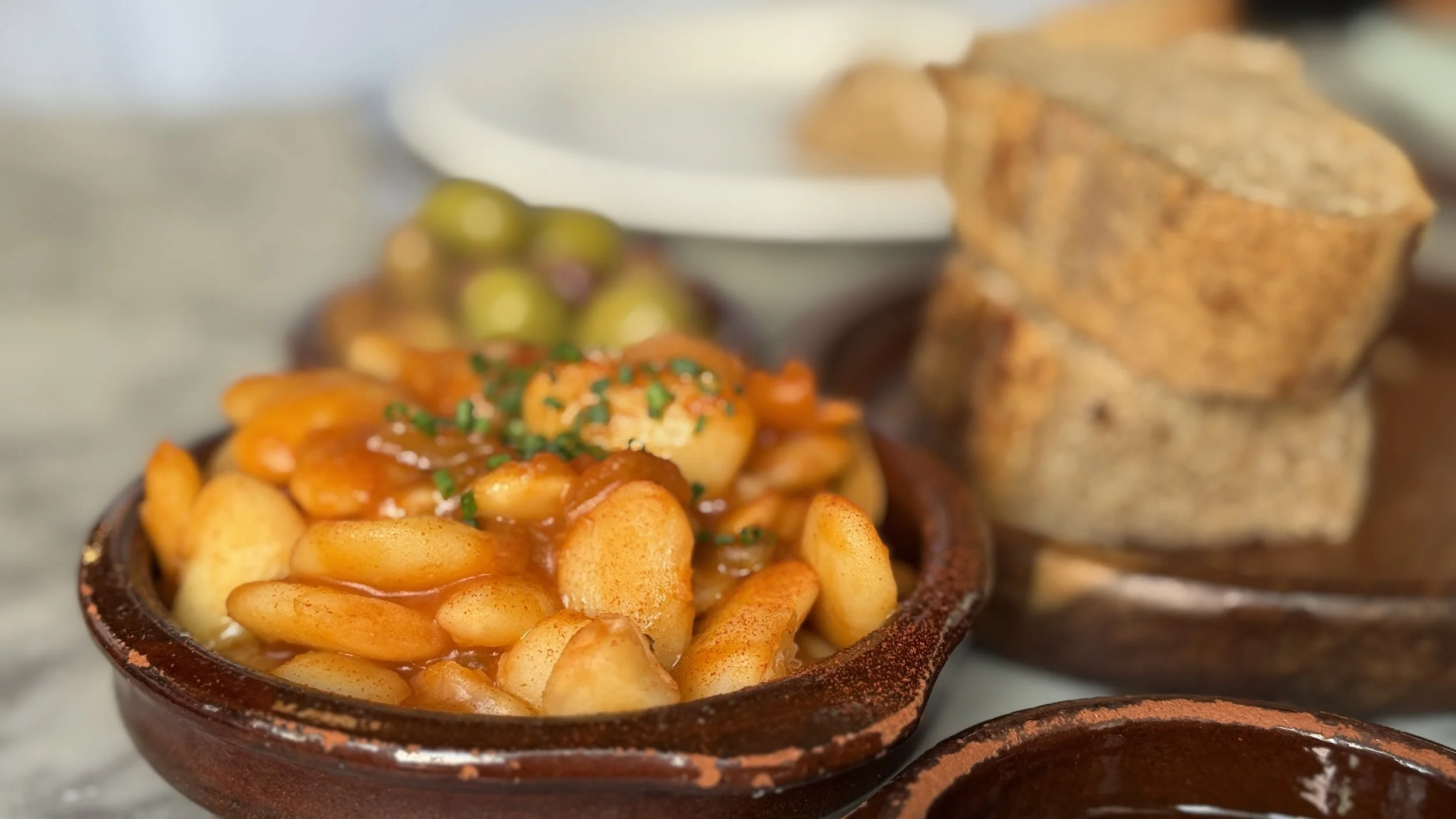
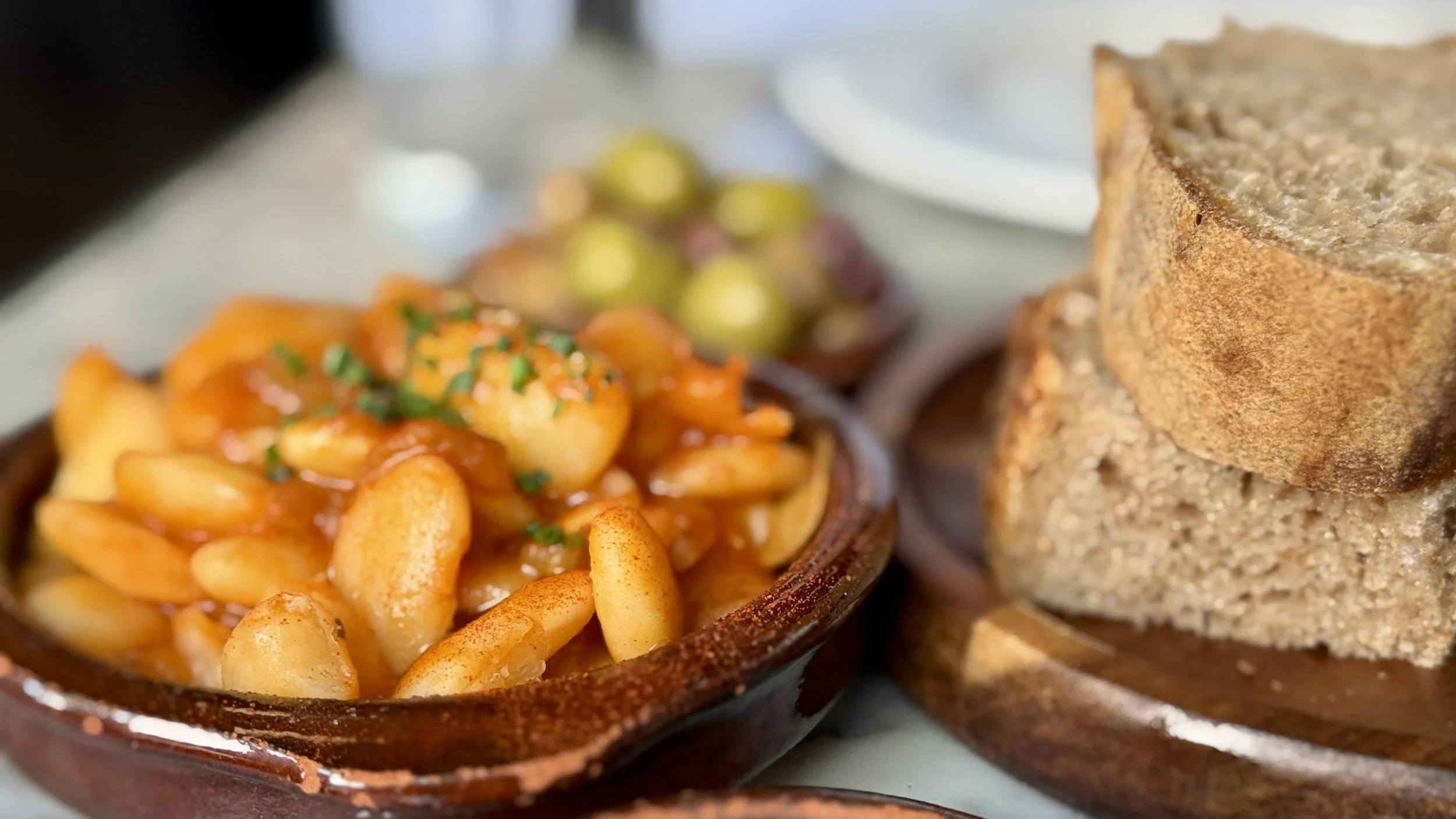
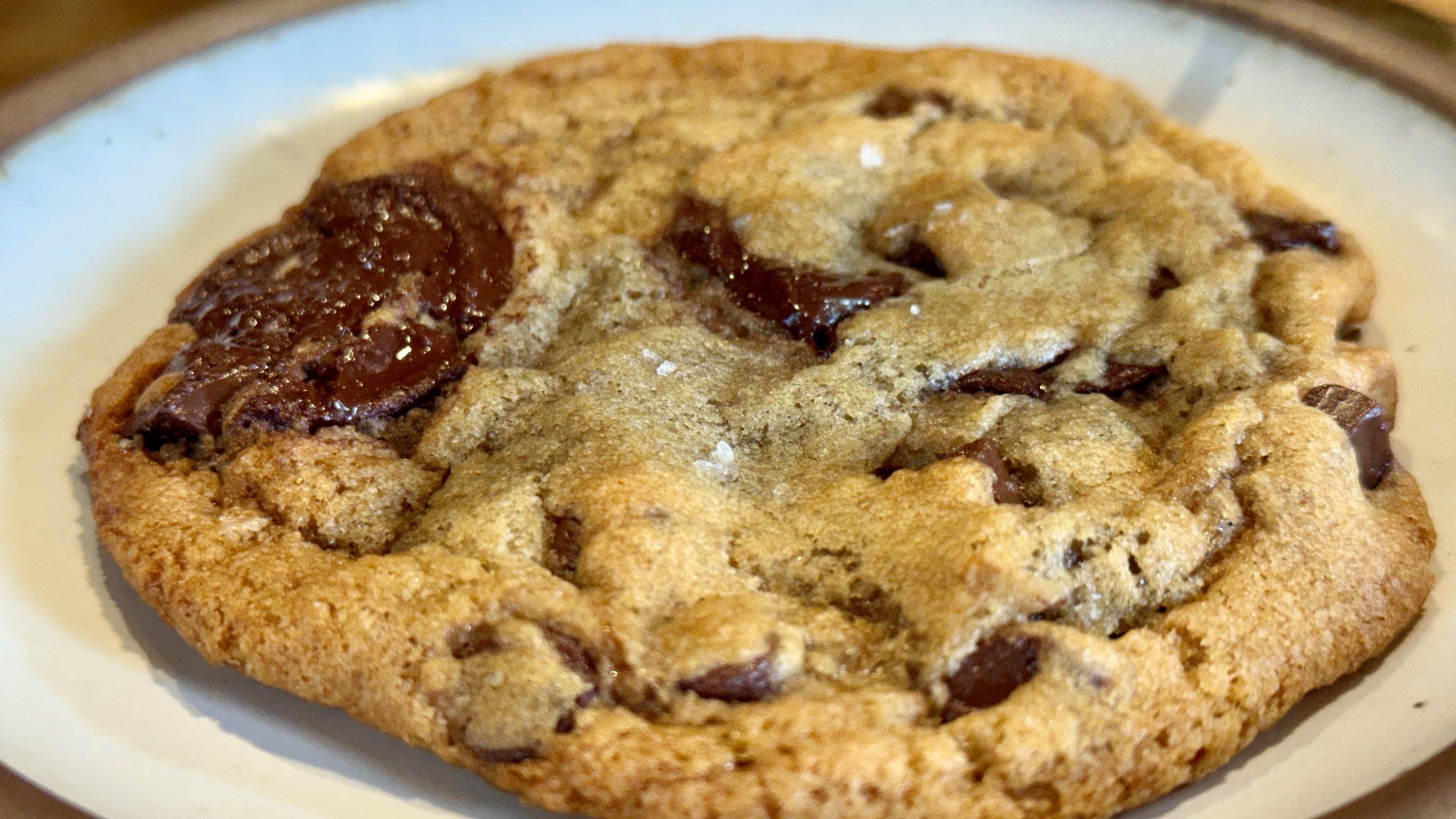
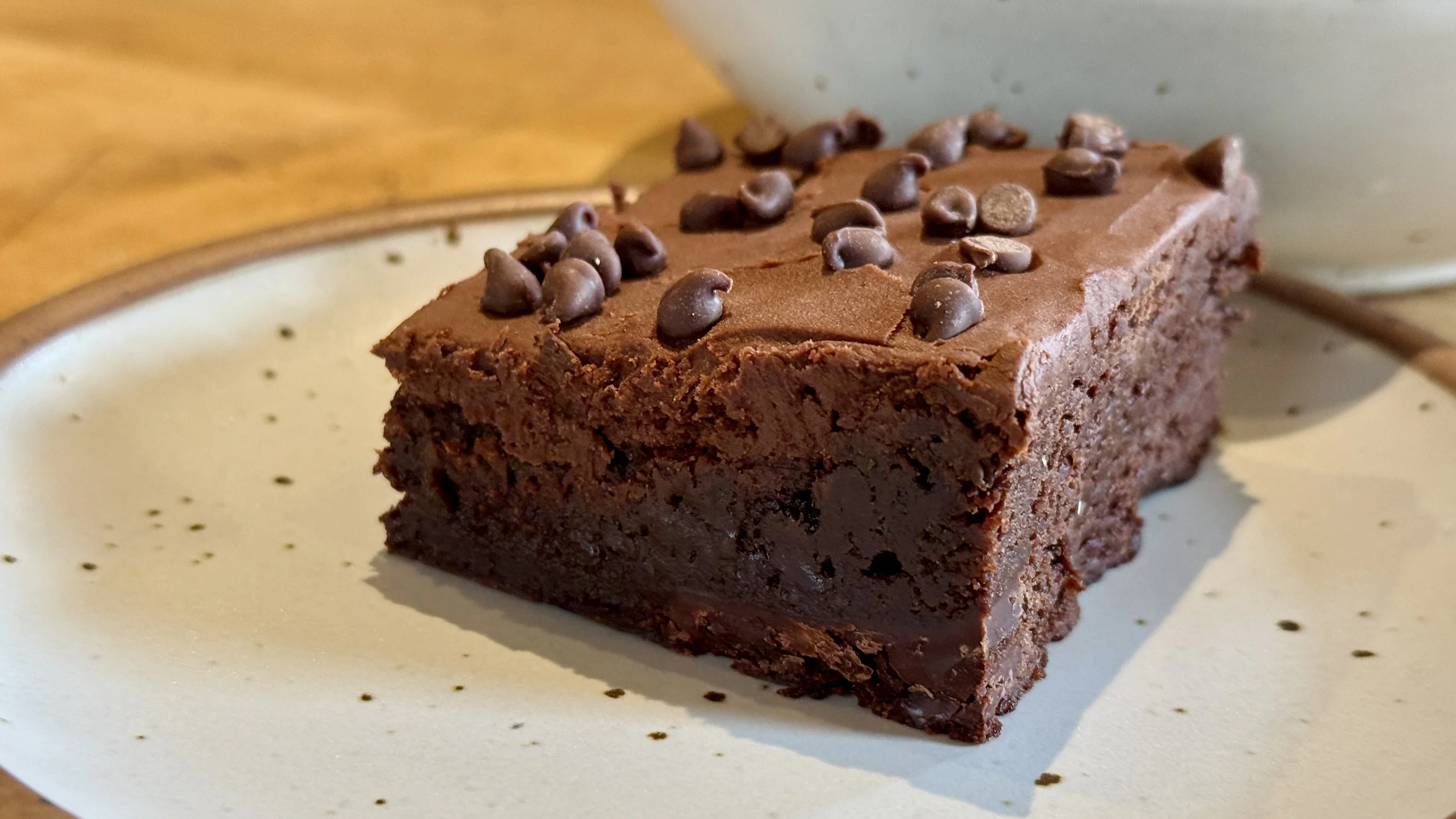
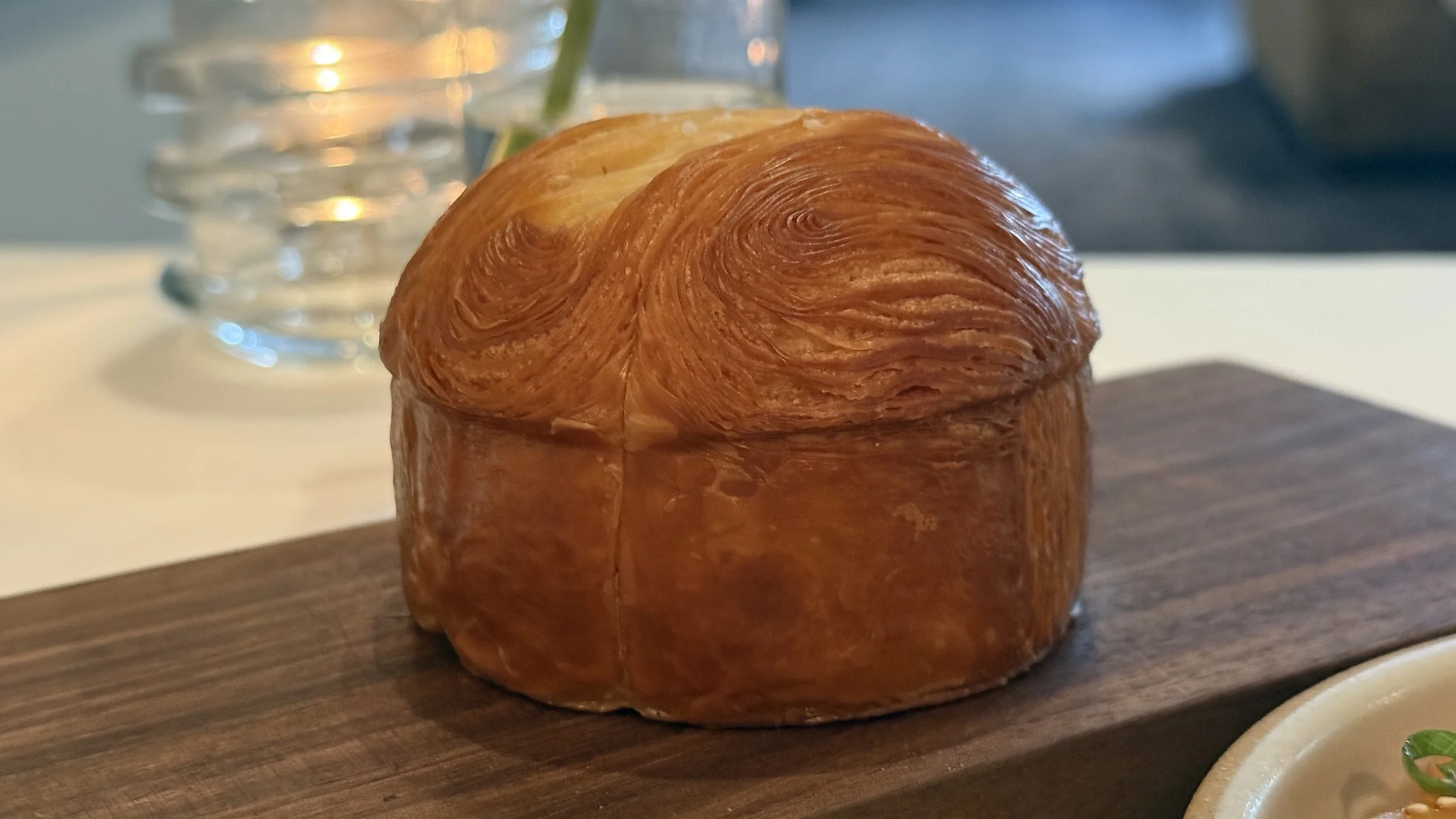
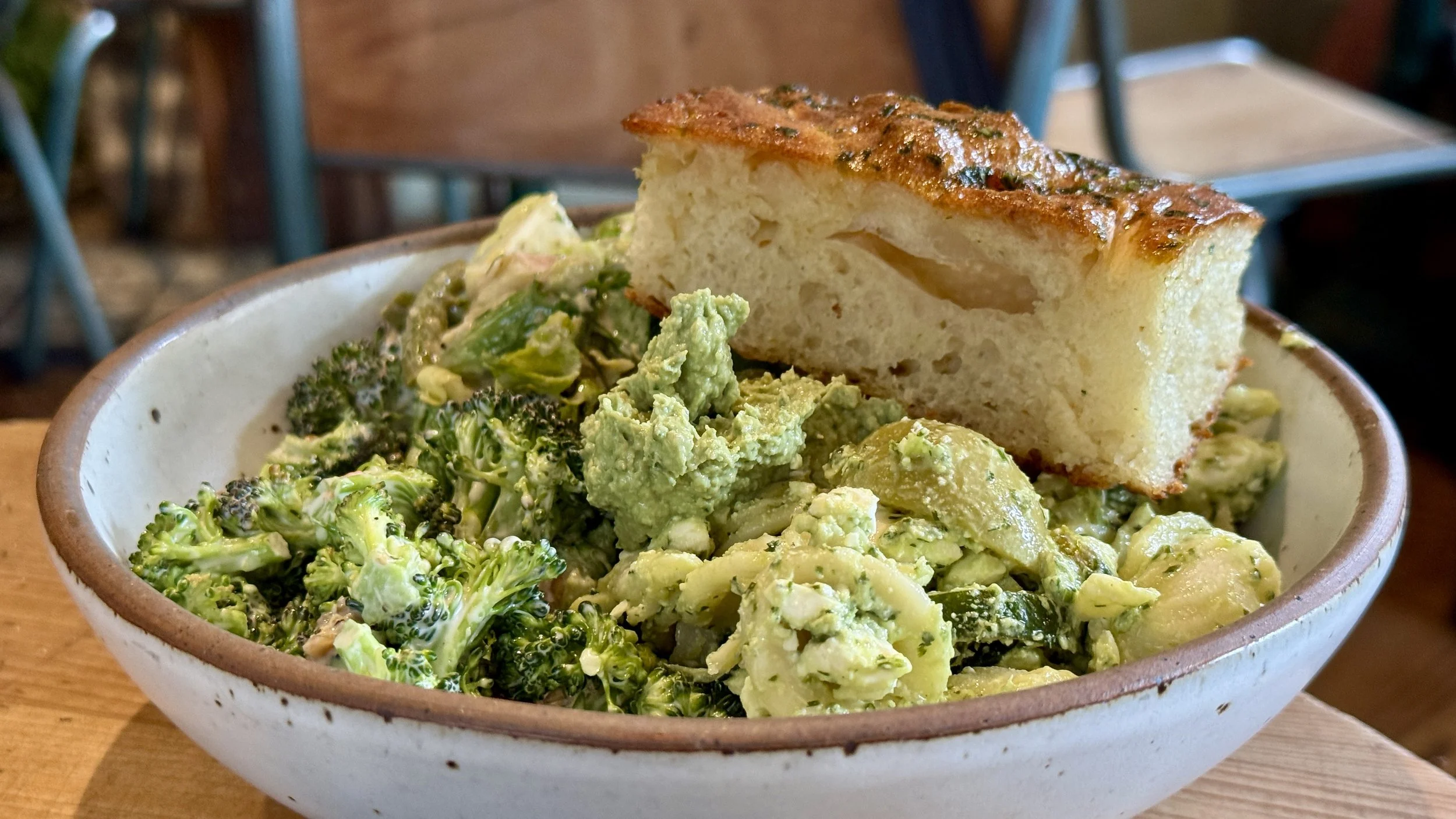
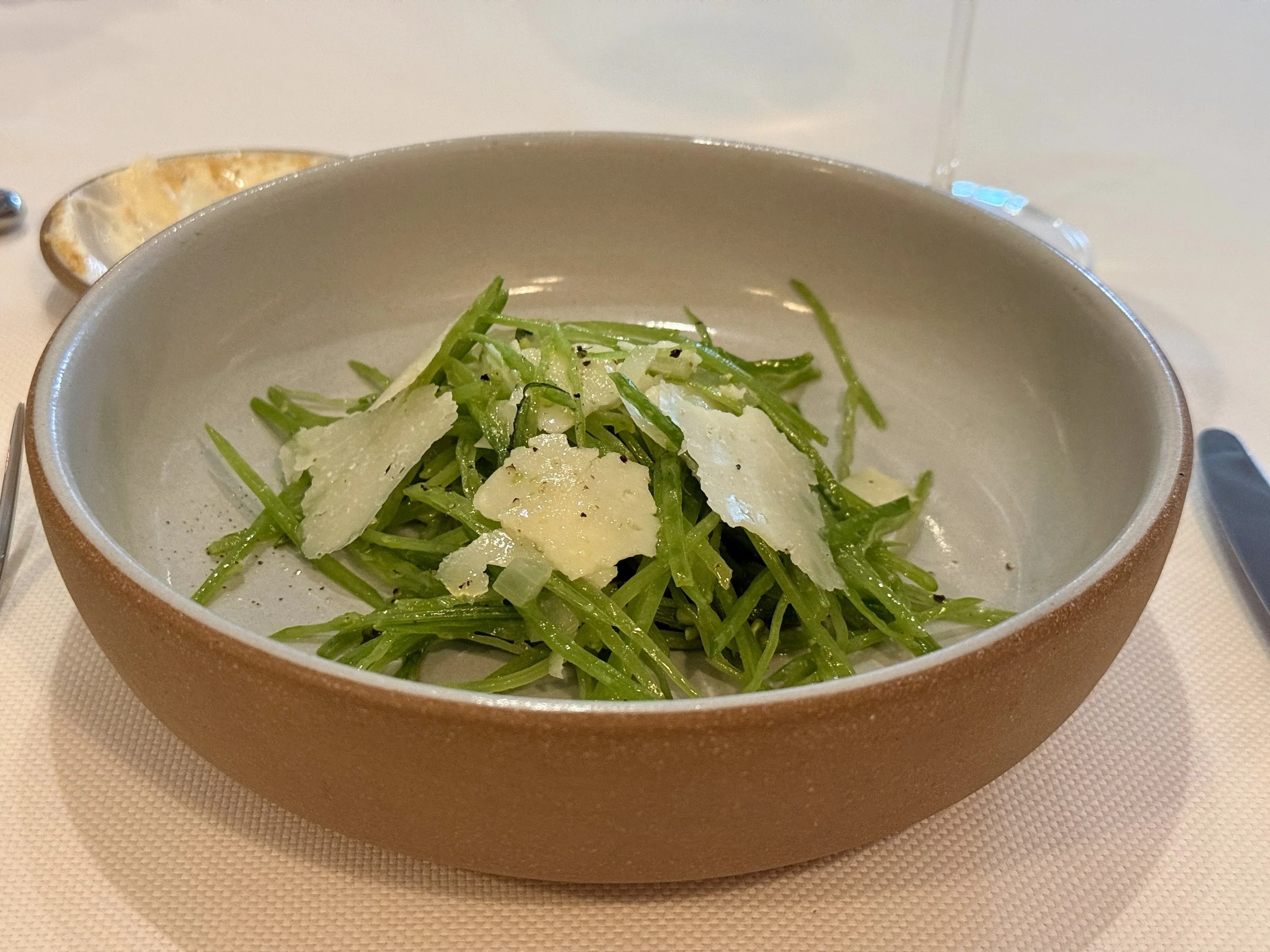
Charleston's food scene has had a genuinely remarkable few years. In 2025, the city received its first Michelin stars, with three restaurants earning recognition in the inaugural American South Guide. The dining scene here ranges from classic Southern soul food to some of the most creative chef-driven cooking in the country. Here are the places I have personally eaten and loved, along with a few additional recommendations worth knowing about.
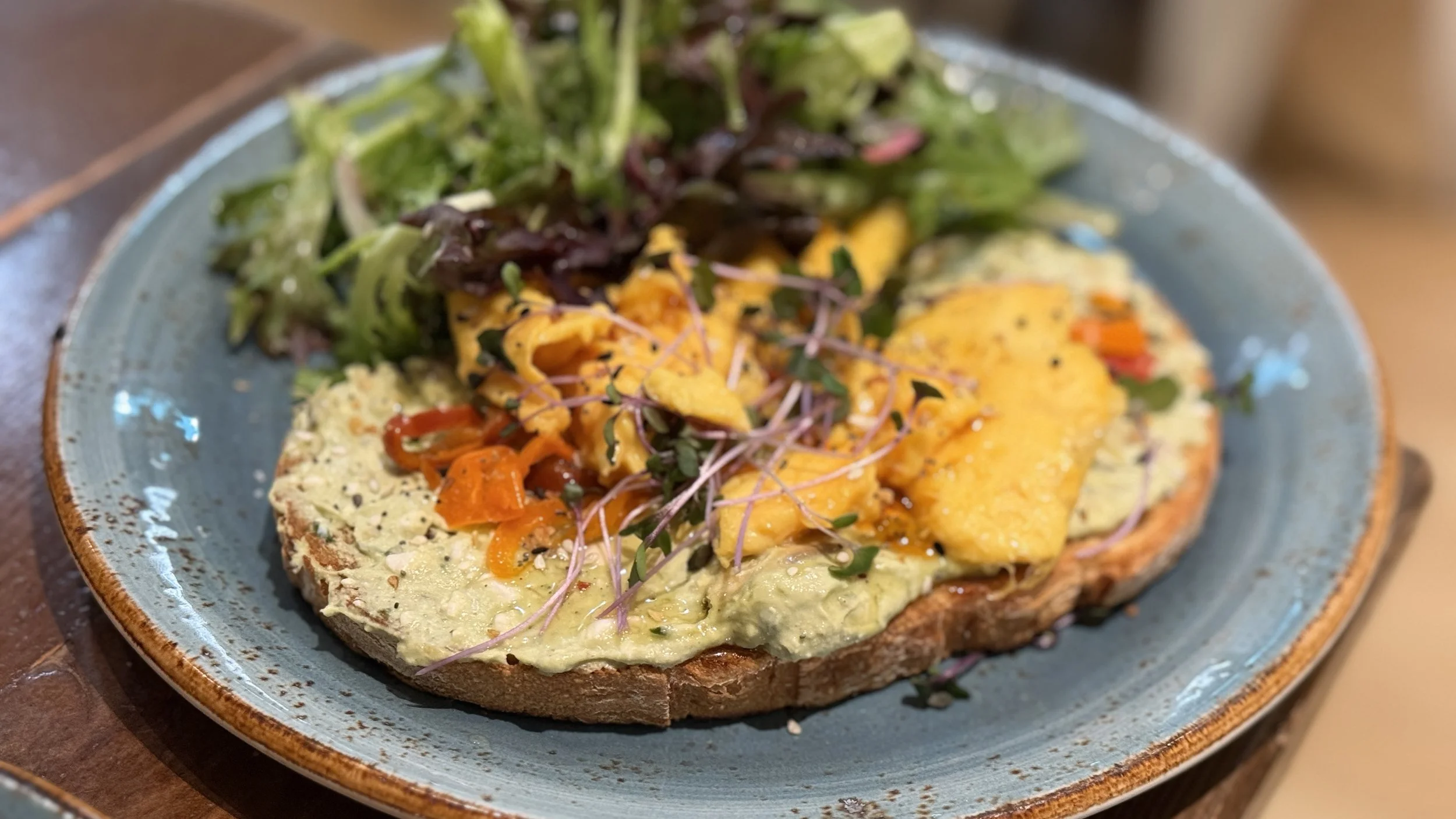
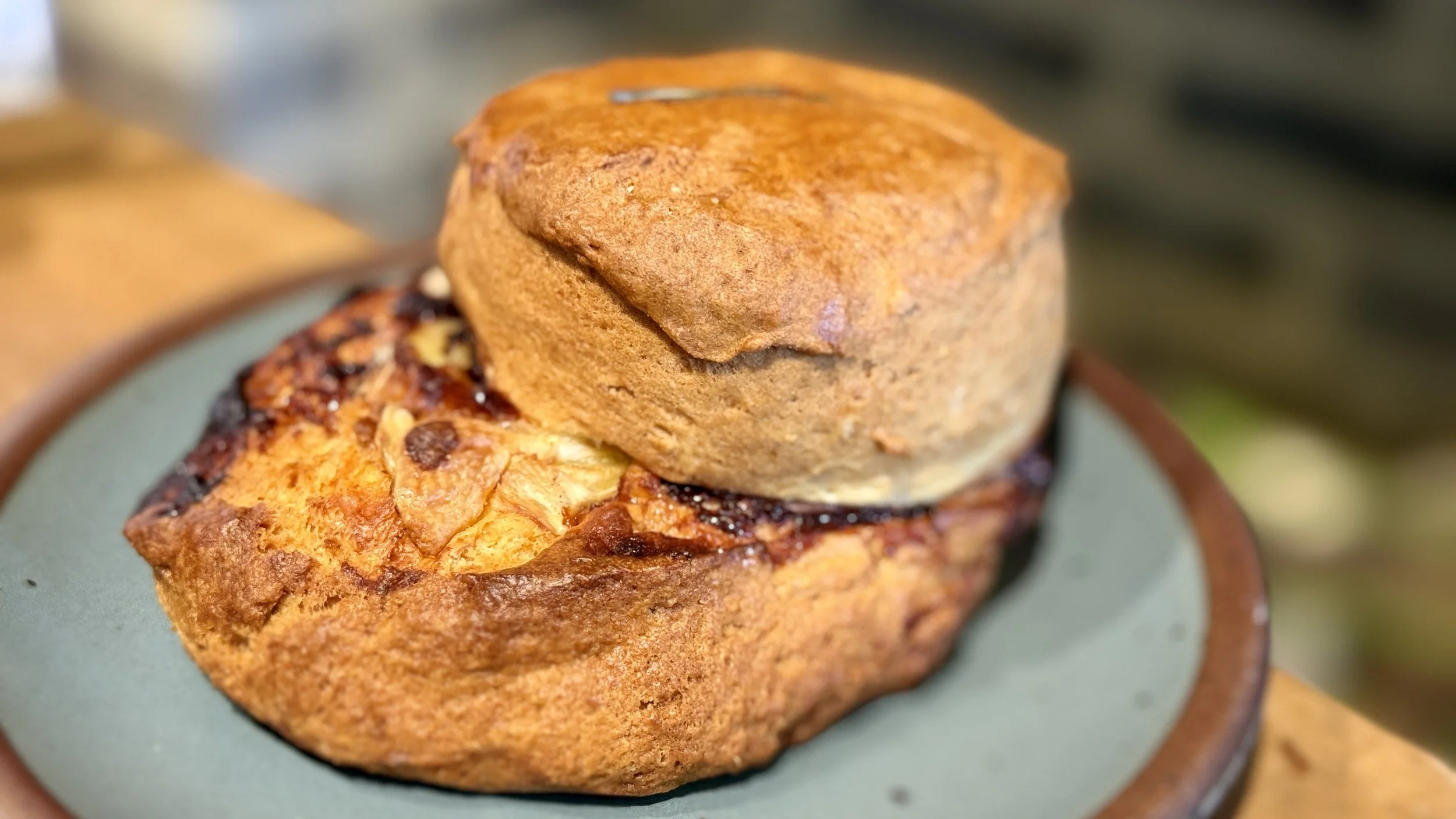
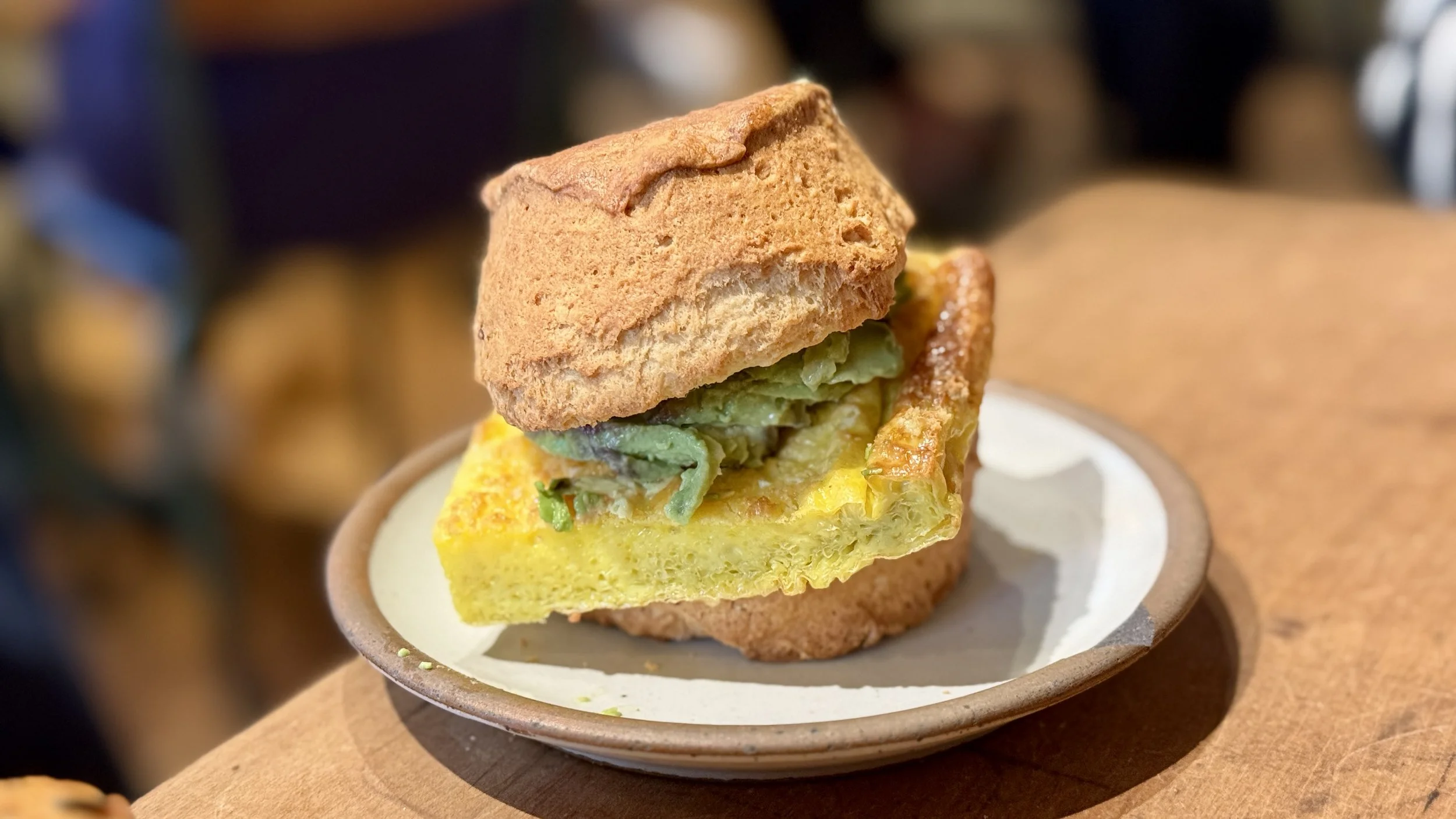
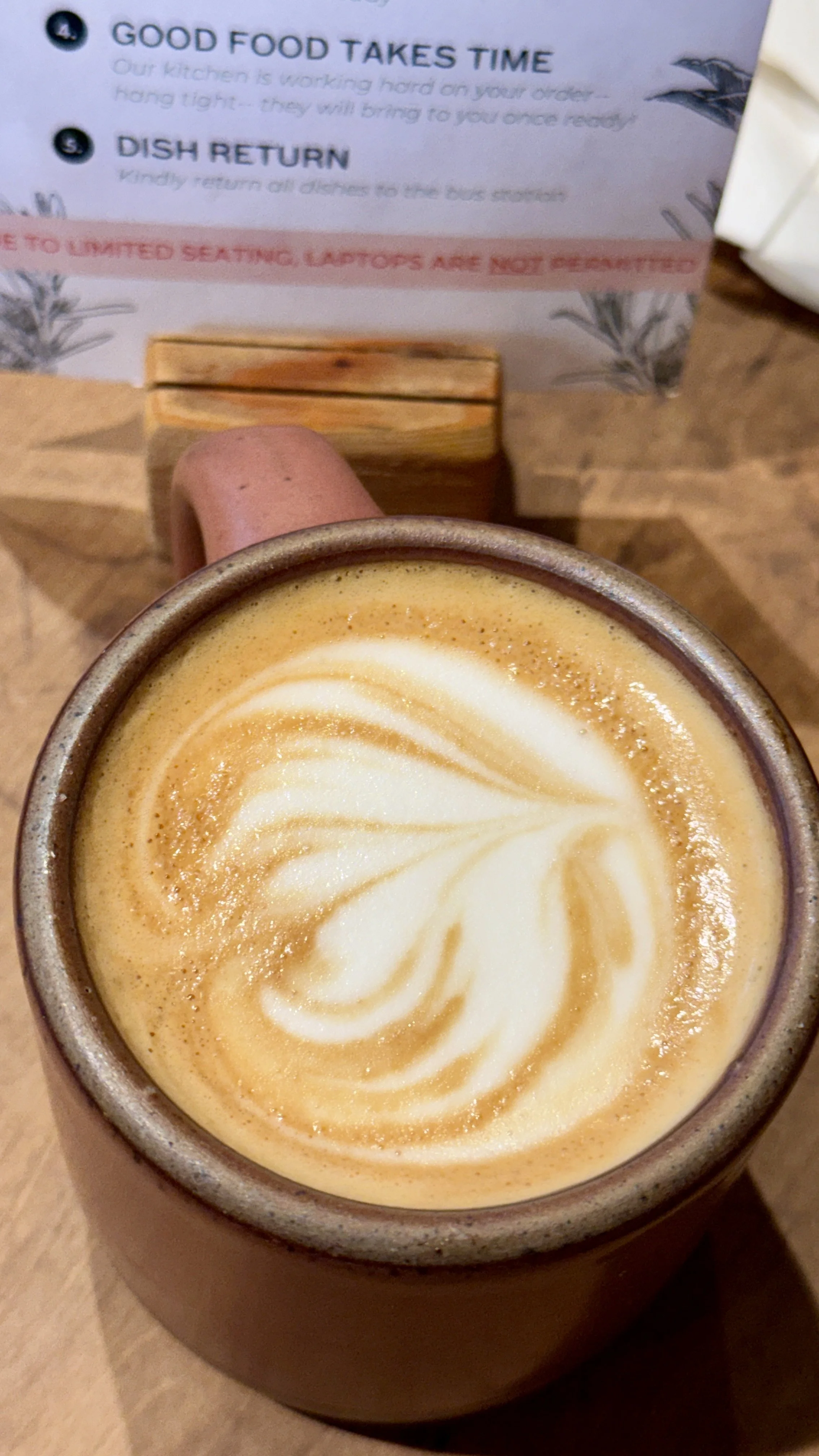
My Personal Favorites
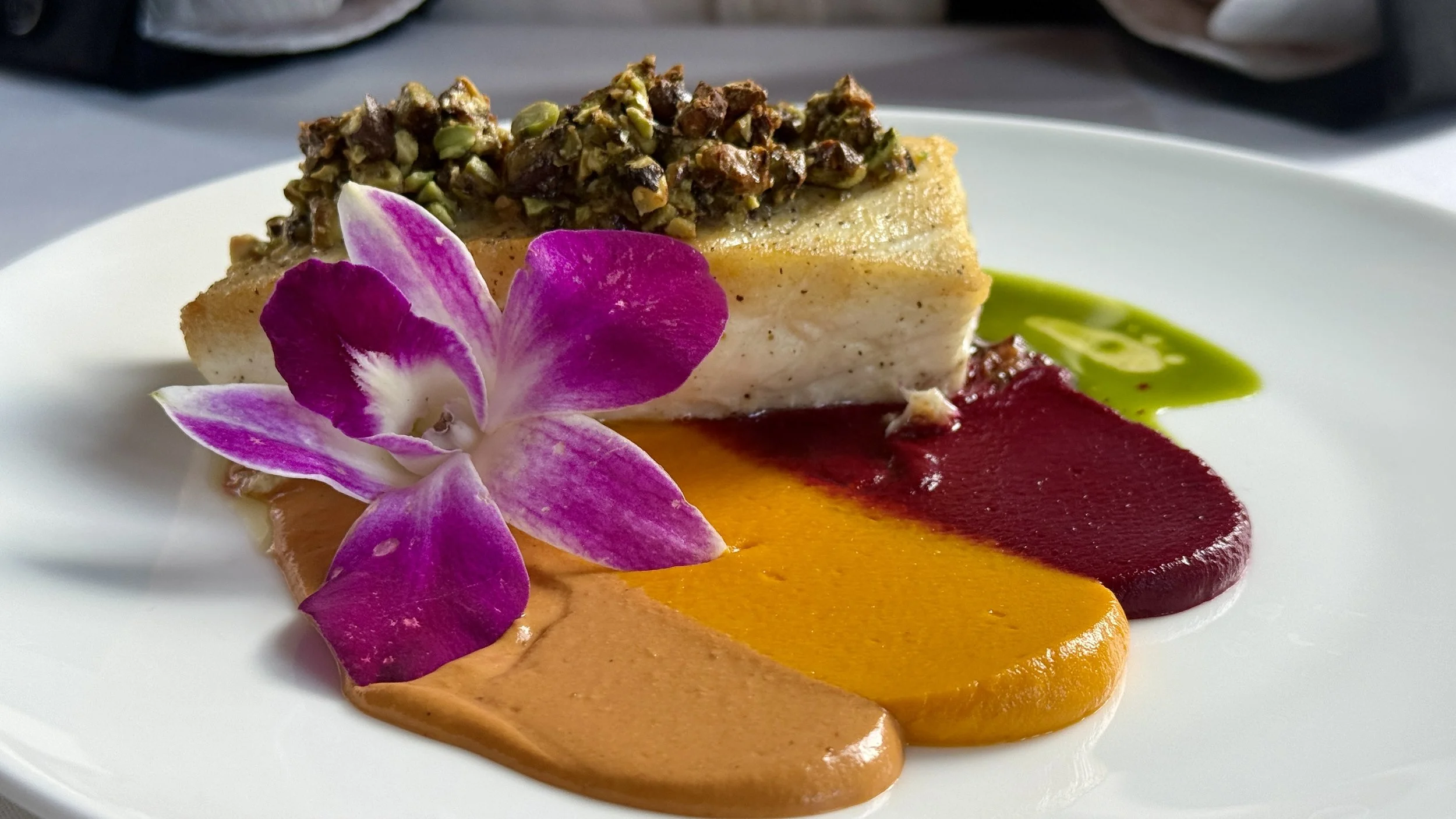
Revival: This one blew me away. Located on the first floor of The Vendue hotel at 162 East Bay Street, right in the French Quarter, Revival is a modern Southern eatery built around reviving heirloom ingredients and recipes from South Carolina's past. Think Jimmy Red grits, Carolina Gold rice, and locally sourced seafood prepared with real care and creativity. In 2025, Tripadvisor named it the number seven best fine dining restaurant in the world, and the only U.S. restaurant on that list. Book ahead, dress well, and order the Lowcountry pirlou.
High Cotton: Set in a renovated 19th-century warehouse at 199 East Bay Street, High Cotton is a Charleston institution that earns its reputation every single night. Heart pine floors, antique brick, and live jazz every evening create an atmosphere that is hard to beat anywhere. The seafood is outstanding, the cocktail program is excellent, and the Saturday and Sunday brunch is one of the best in the city. Go for dinner, linger at the bar, and let the jazz carry you.
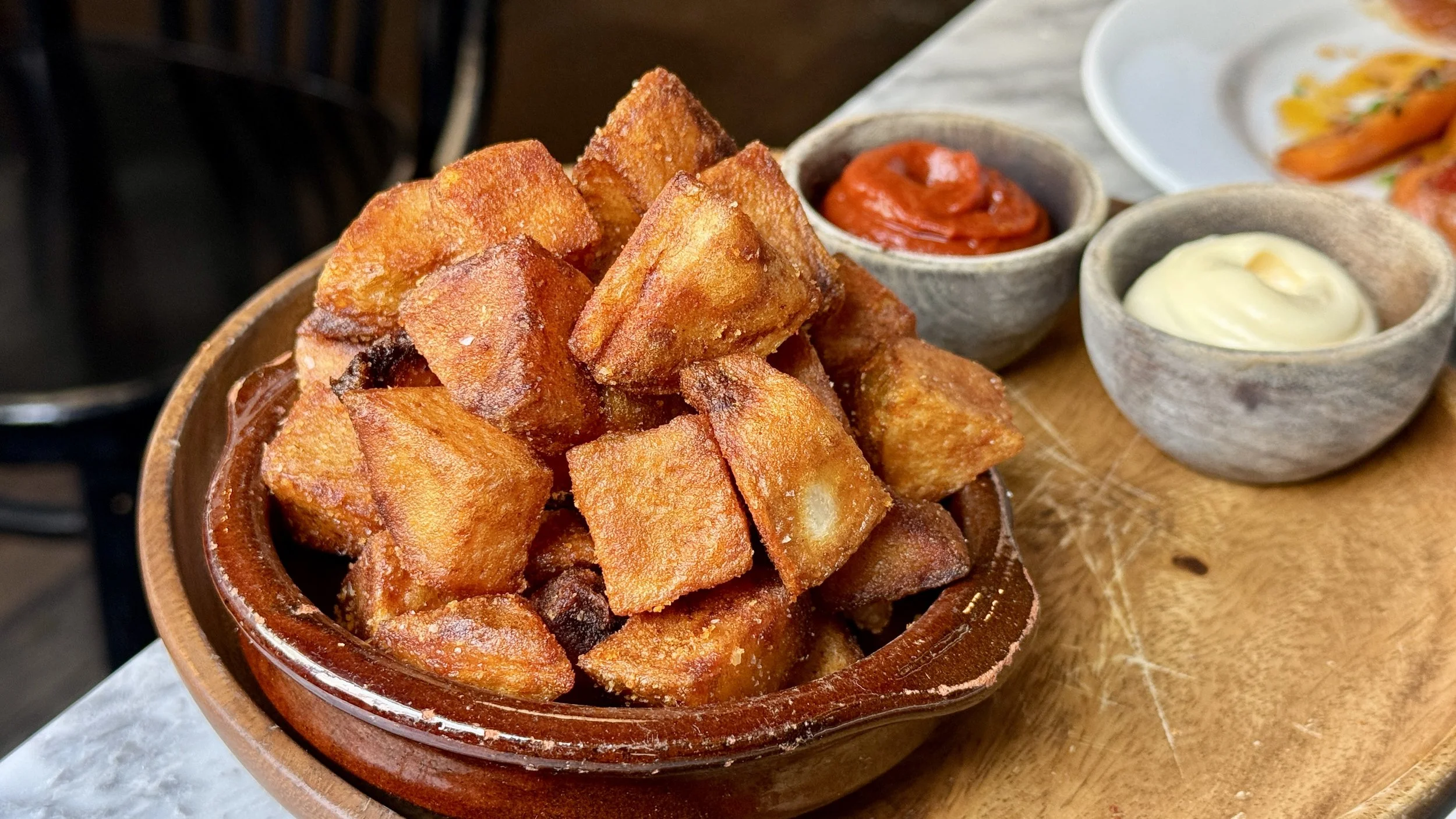
Malagón: A Michelin-starred Spanish tapas bar tucked just off King Street, and one of those places that makes you wonder how something this good can exist in such a small space. The old-world ambience, knowledgeable staff, and natural wine list are all excellent. Order several small plates and let the kitchen guide you. This is the kind of spot you wish existed in your own neighborhood.
Sorelle: Southern Italy meets Southern hospitality on Broad Street, and the result is one of the most beautiful dining rooms in Charleston. Chef Nick Dugan works with Lowcountry ingredients to build a menu of fresh pastas, wood-fired pizzas, and refined seafood dishes. The mercato on the ground floor is perfect for a casual coffee or a quick bite, and the full dining room upstairs is a proper evening out. The pasta alone is worth the trip.
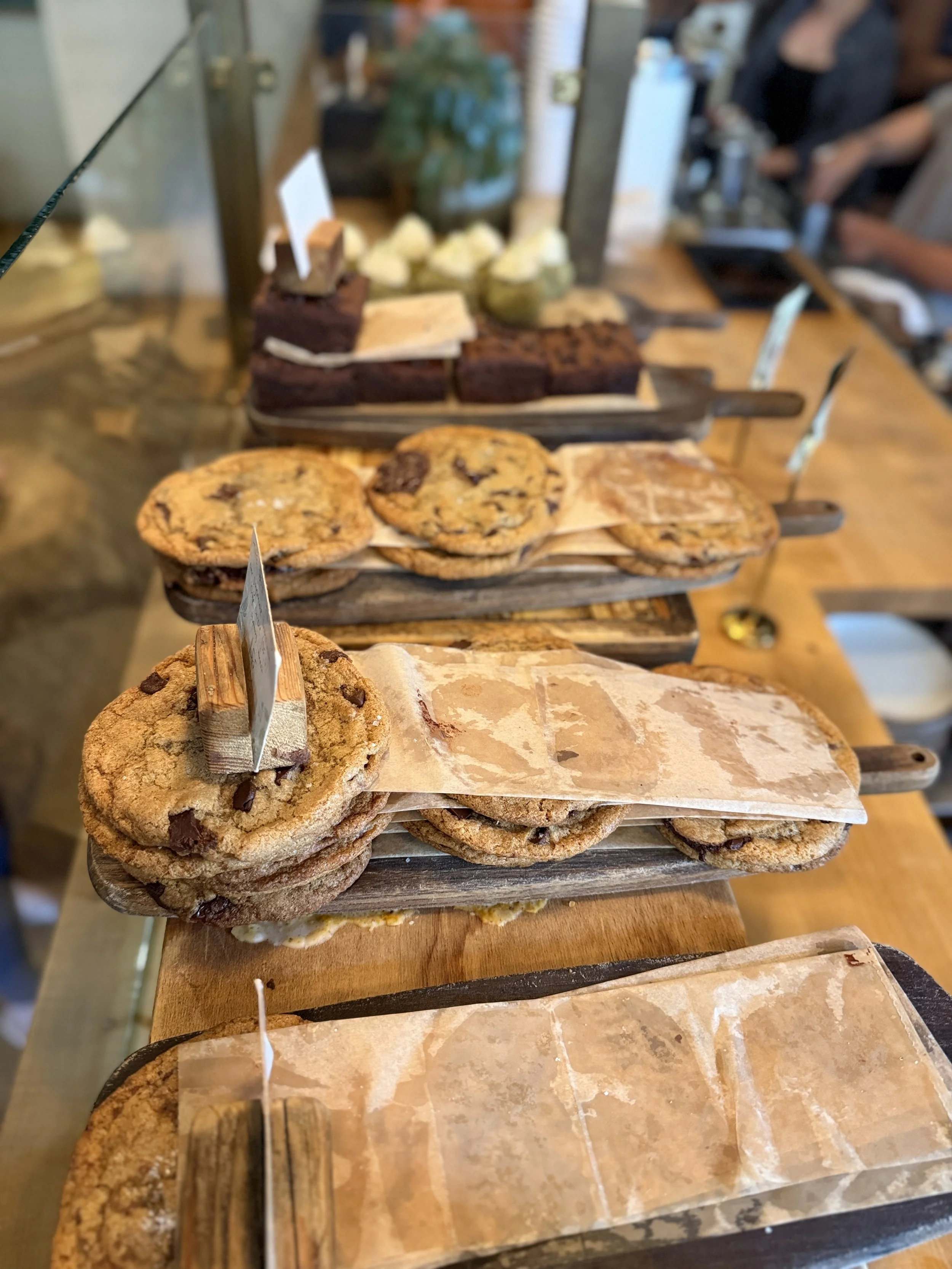
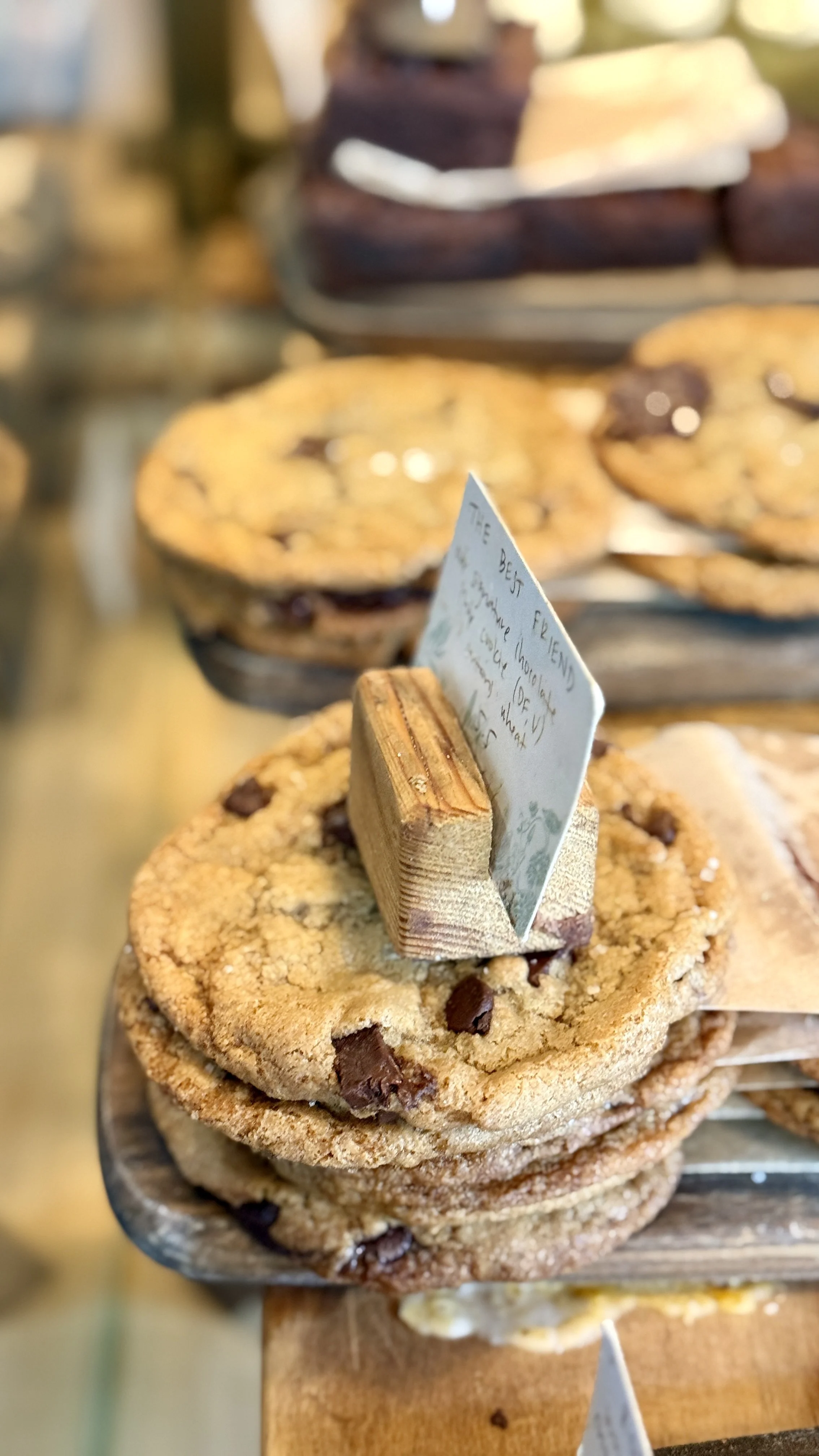
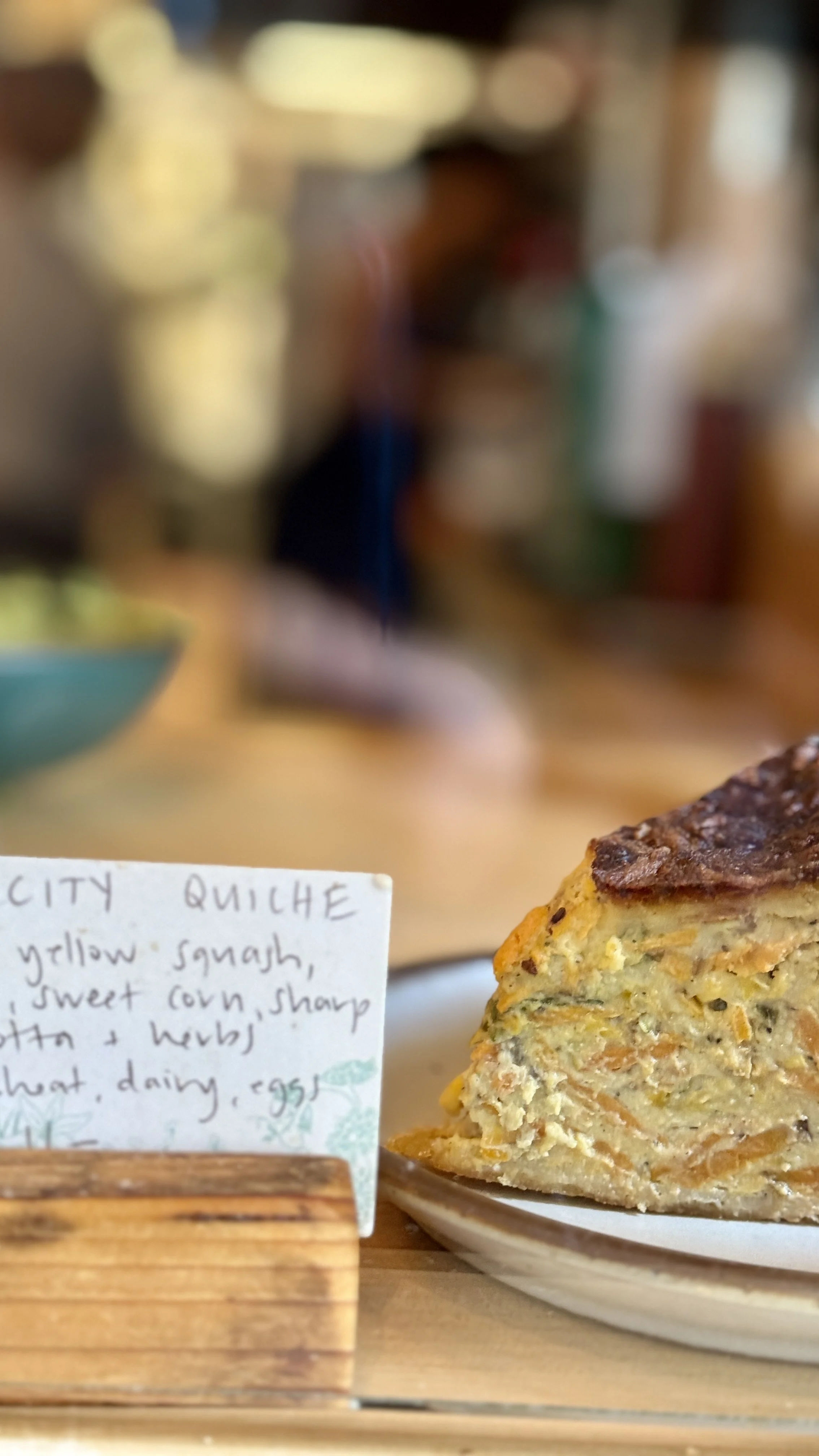
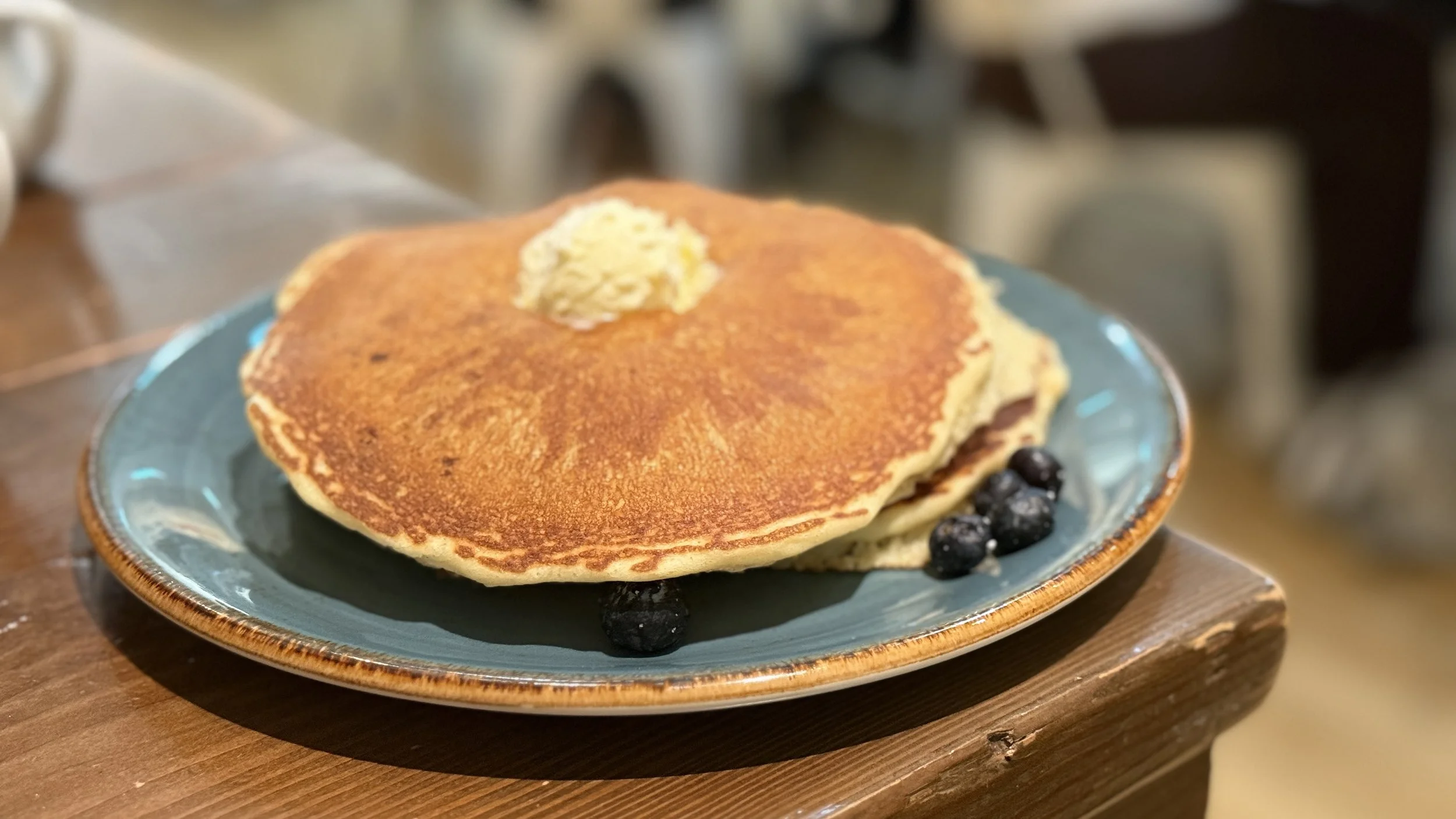
Miller's All Day: On King Street and open for breakfast and lunch, Miller's is one of those rare places that does everything right without pretension. The glass-cased bakery greets you at the door, the "unicorn" grits are legitimately famous, and the whole vibe is easy, warm, and very Charleston. This is my go-to for a relaxed morning before a shoot.
Daniel Humm at The Charleston Place: Swiss-born chef Daniel Humm of New York's Eleven Madison Park launched a year-long residency at The Charleston Place in October 2024, and it has been the most talked-about culinary event in the city since. The four-course prix fixe at $135 leans on his plant-forward, sustainability-driven philosophy while drawing on Lowcountry ingredients. The baked Alaska for dessert is a showstopper. Worth every penny for a special evening.
Also Worth Your Time
Wild Common: Michelin-starred tasting menu from chef Orlando Pagán, blending Lowcountry bounty with Puerto Rican influences. Creative, seasonal, and exceptional value for the level of cooking. Book well in advance.
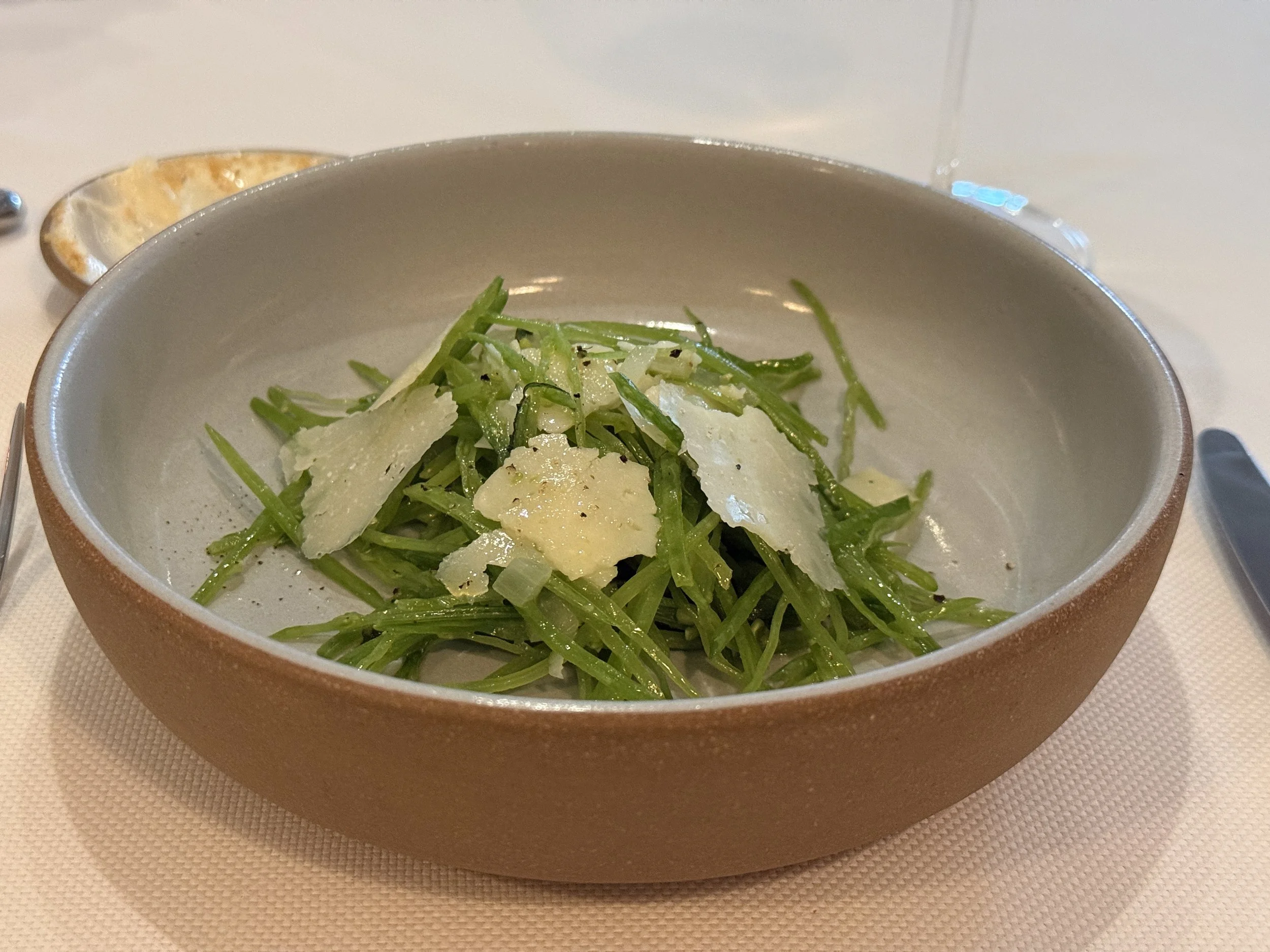
Vern's: The other Michelin-starred spot in town. A husband-and-wife operation with a menu built around minimalist, ingredient-forward cooking. Charred sourdough with allium butter and house-made pasta are standouts.
Husk: A Charleston landmark. Everything on the menu comes from the South, served in a beautiful restored Victorian house on Queen Street.
Rodney Scott's BBQ: Whole-hog barbecue done the right way, slow-cooked and basted in a pepper-laced vinegar sauce. A rite of passage for anyone visiting South Carolina.
Coffee Stops
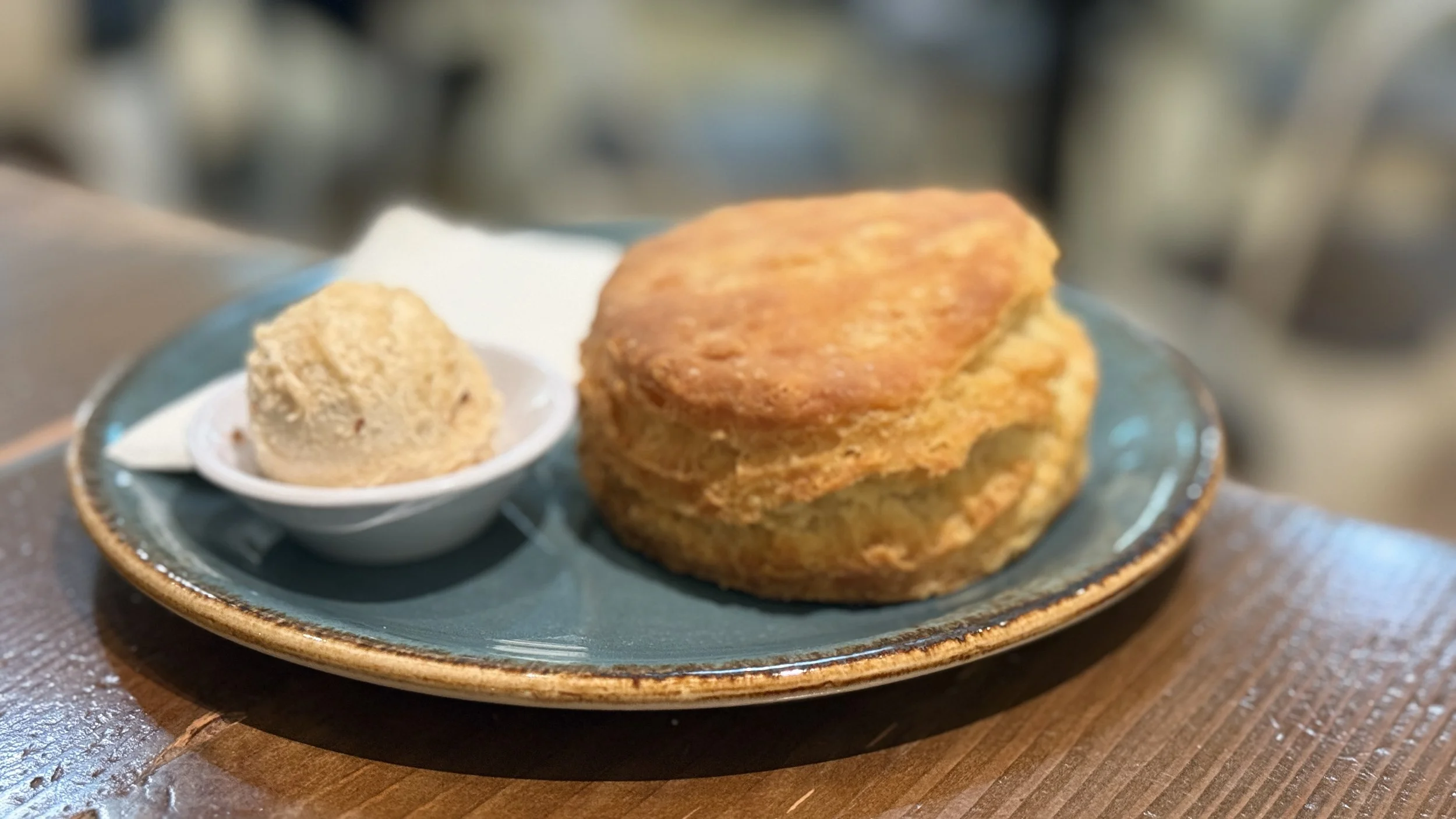
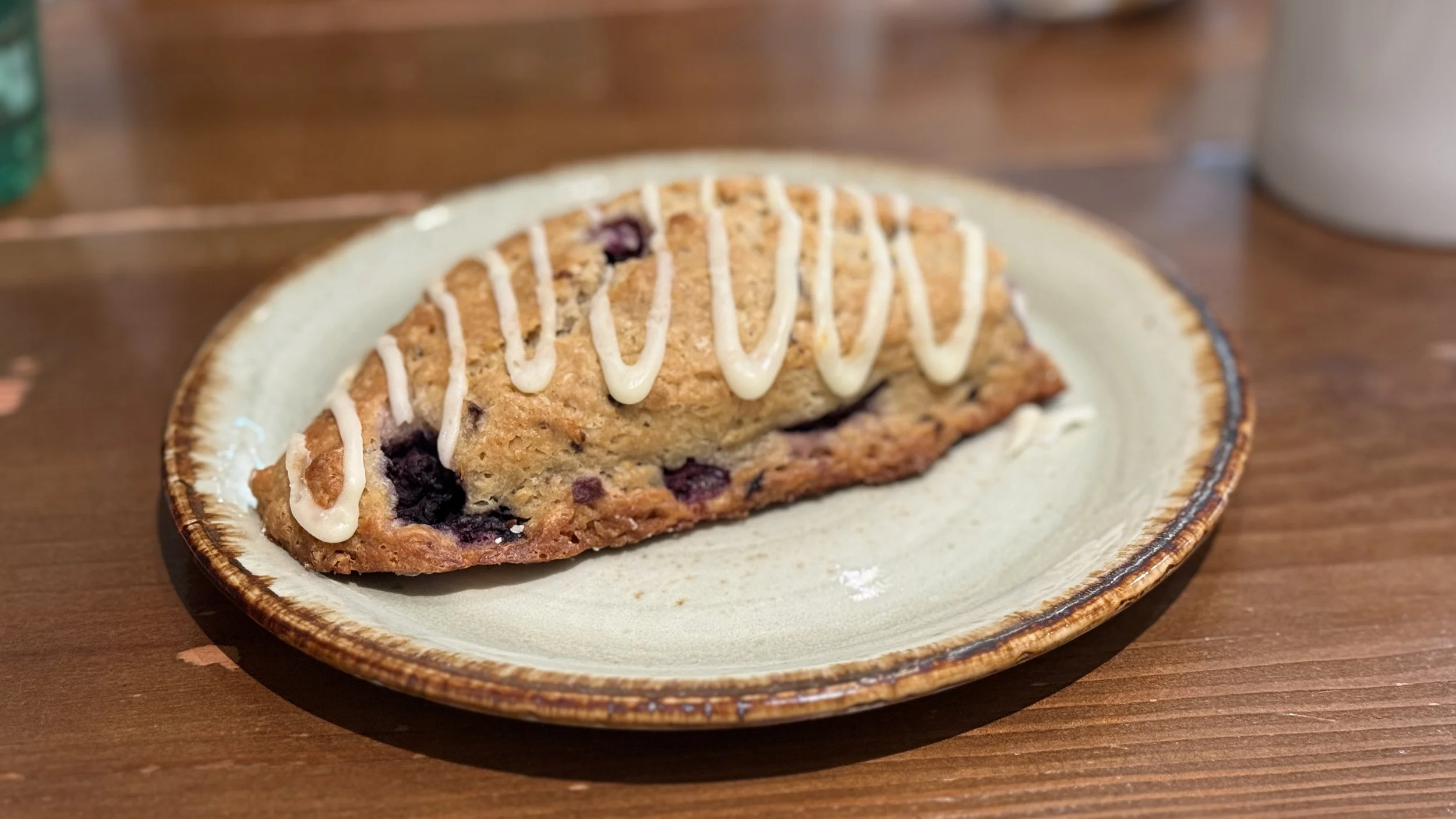
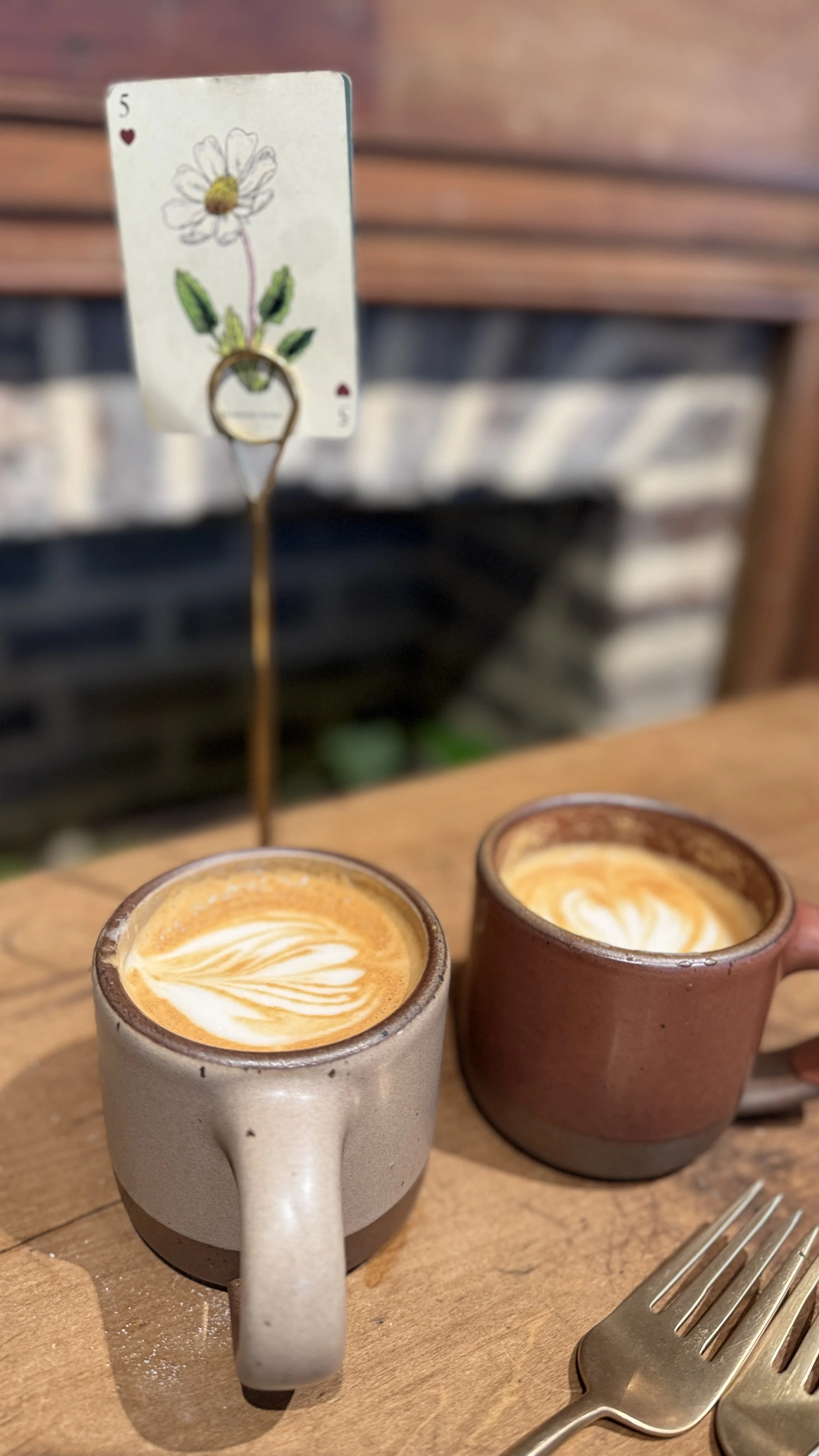
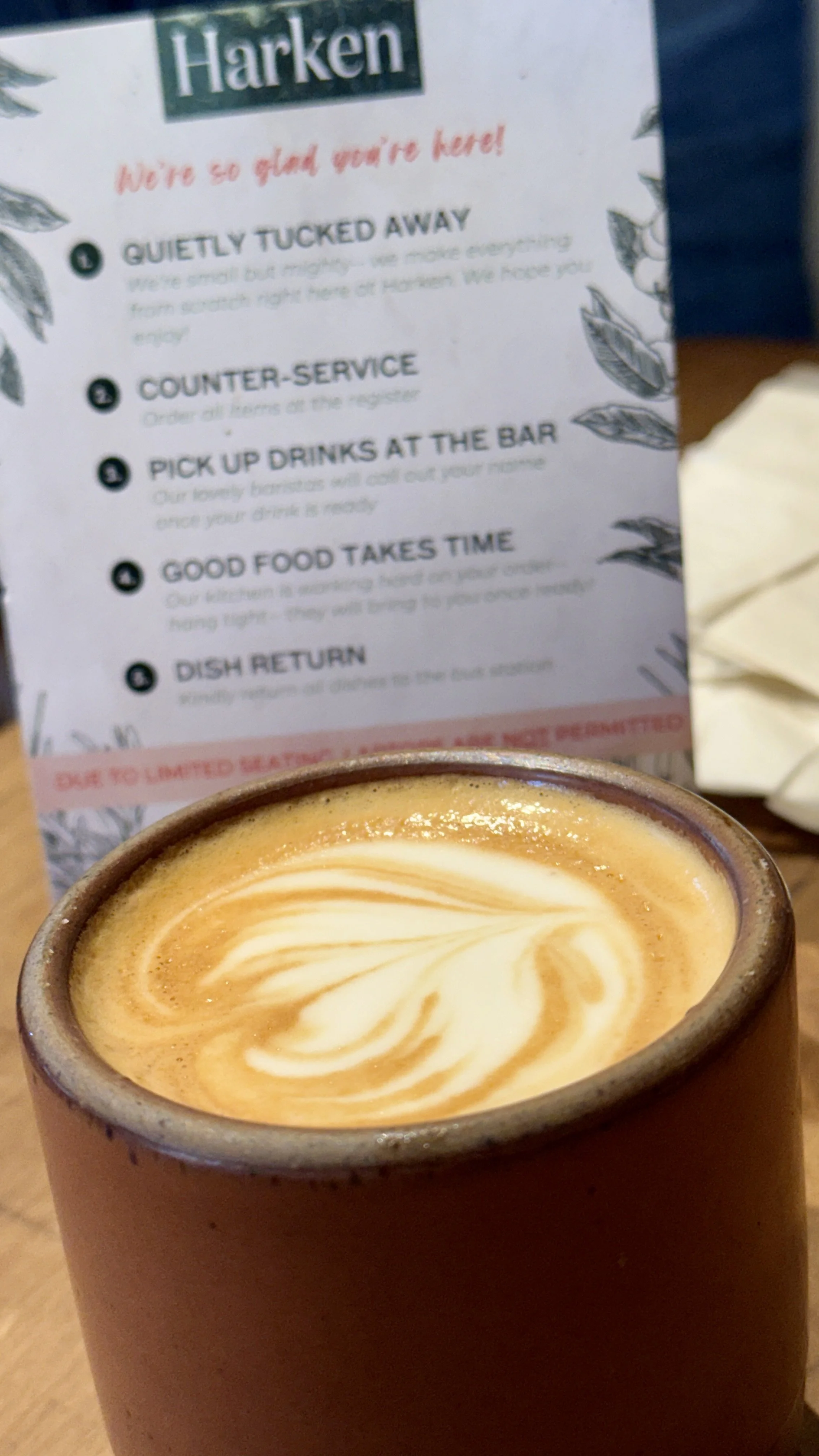
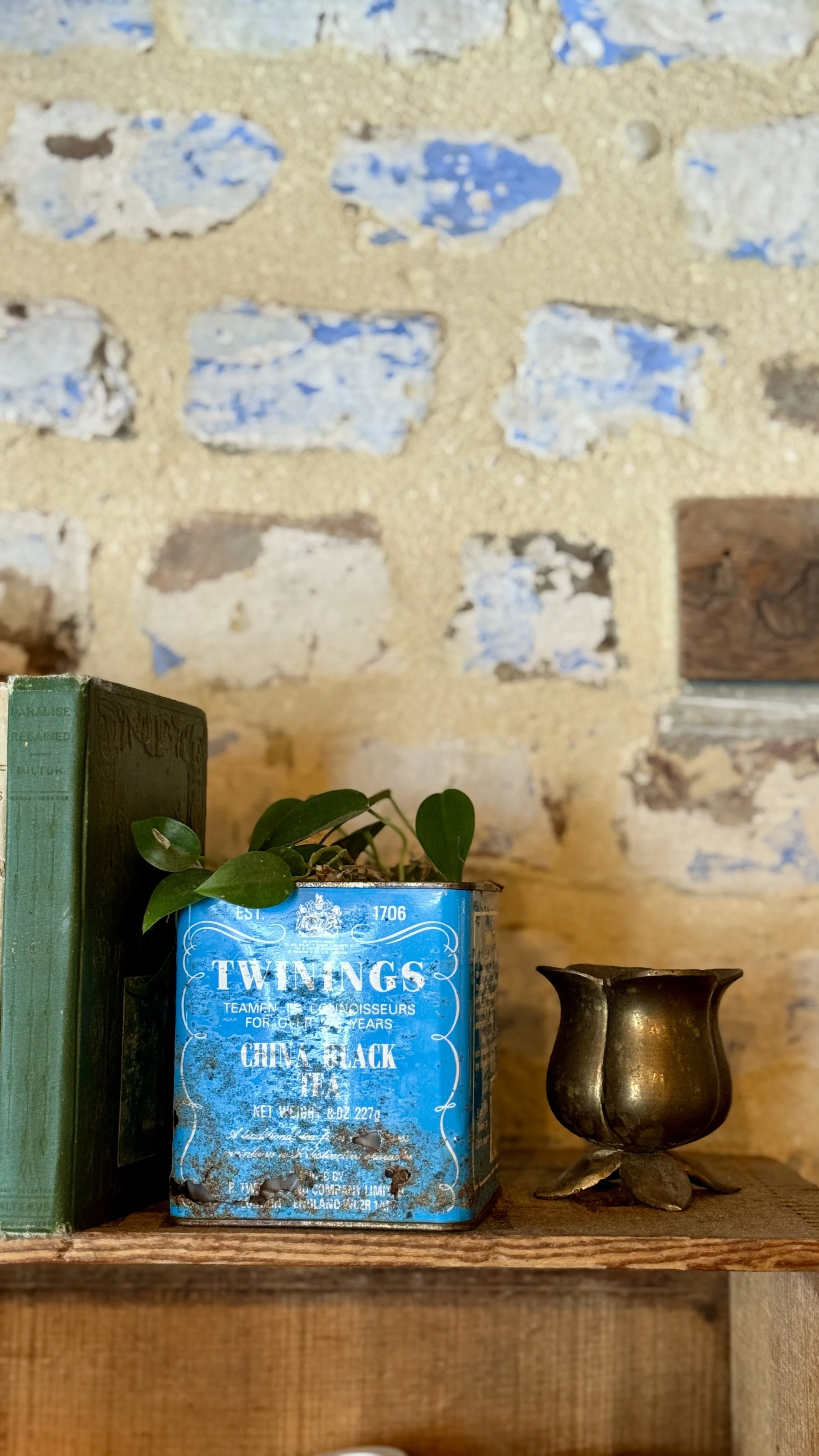
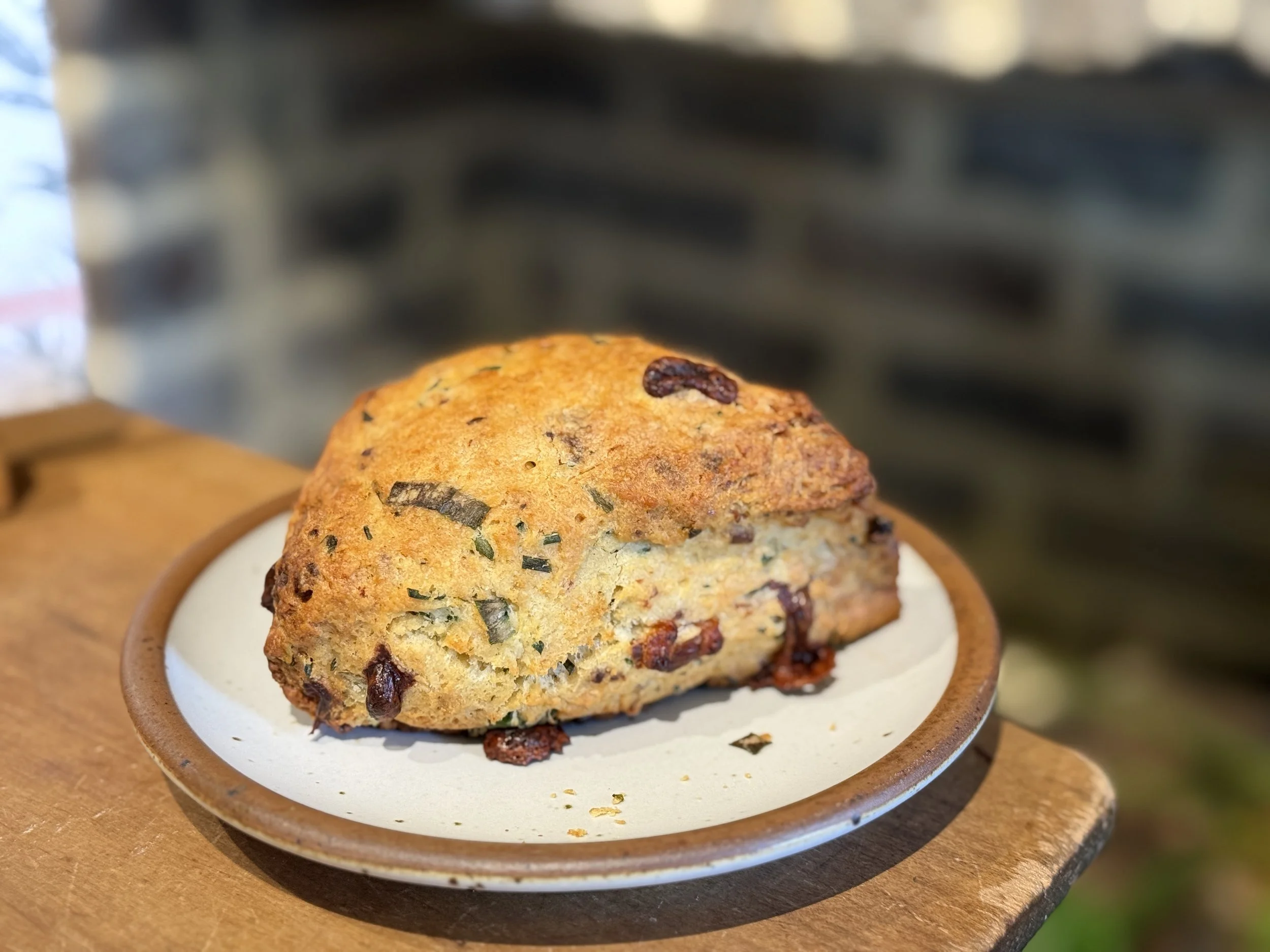
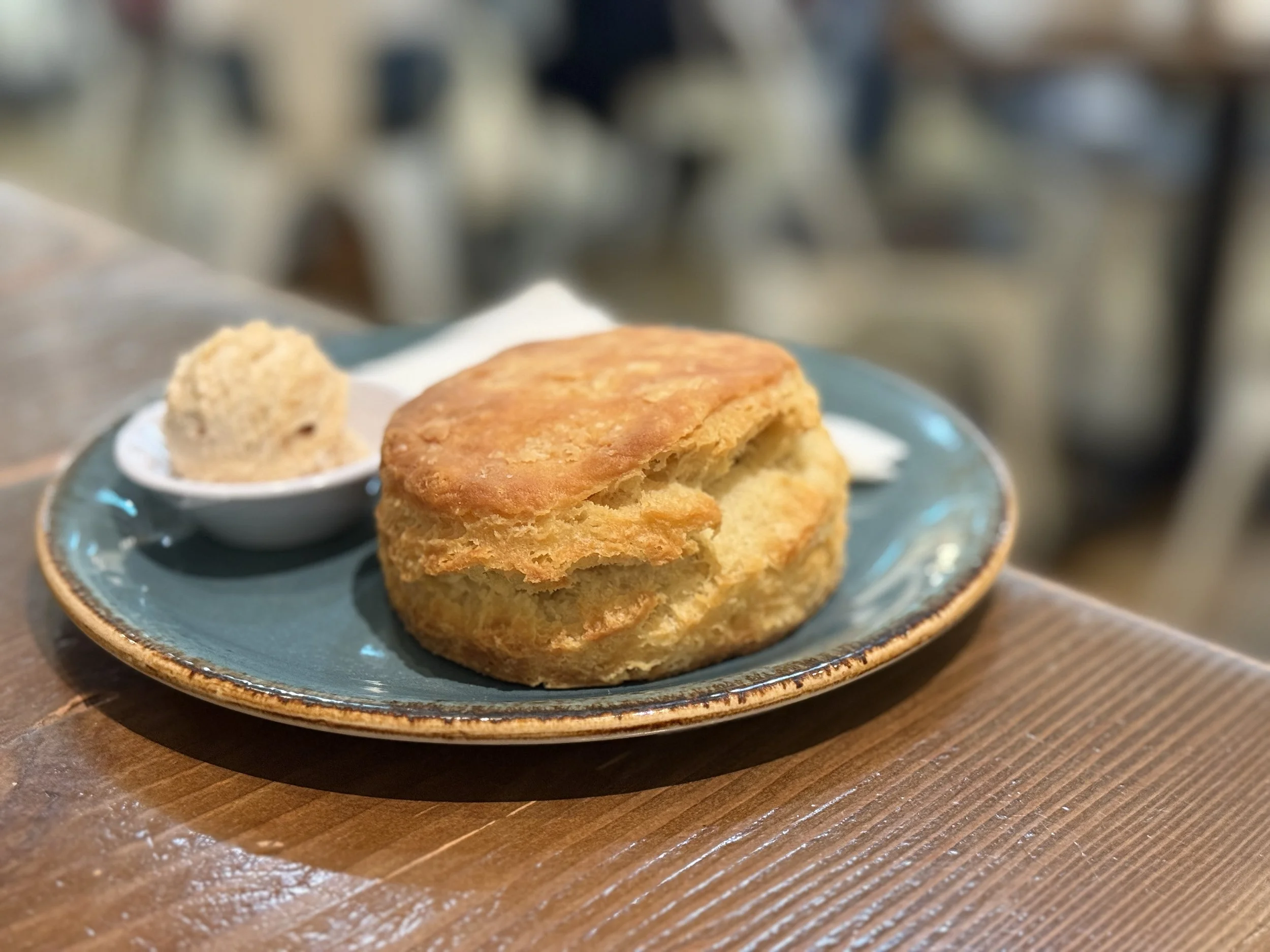
Harken Cafe & Bakery: Tucked away on quiet Queen Street in the French Quarter, this is one of my favorite morning stops in all of Charleston. Everything is baked from scratch in-house. The ricotta biscuit breakfast sandwich is exceptional, the coffee is serious, and the space itself, with warm woods, exposed brick, and a shaded piazza, feels like it was designed for lingering. Perfect for a pre-shoot fuel stop or a long editing session. Do not skip the pastries.
The Black Door Café: Inside the Mills House on Queen Street, this all-day café is one of those rare hotel coffee spots that genuinely earns its place on a local's list. Artisan pastries, life-affirming breakfast sandwiches, solid espresso, fast wifi, and comfortable seating. The original paneled black door on Queen Street is one of Charleston's more photographed doorways, so keep your camera out even on the way in.
Kudu Coffee & Craft Beer: A beloved local institution with a relaxed courtyard and a neighborhood vibe that feels genuinely Charleston. Great espresso and a wonderful place to decompress between shoots.
The Daily: Bright, airy, and consistently good. A reliable stop in the Historic District for coffee, pastries, and people-watching with good natural light.
Mixture Coffee: A newer specialty coffee spot with a clean design and a comfortable setup for editing sessions between morning and afternoon shoots.
Photography Gear to Bring
Charleston rewards a versatile kit. You will shoot architecture in tight alleys, wide harbor landscapes, intimate street portraits, and lush plantation gardens, all in the same trip.
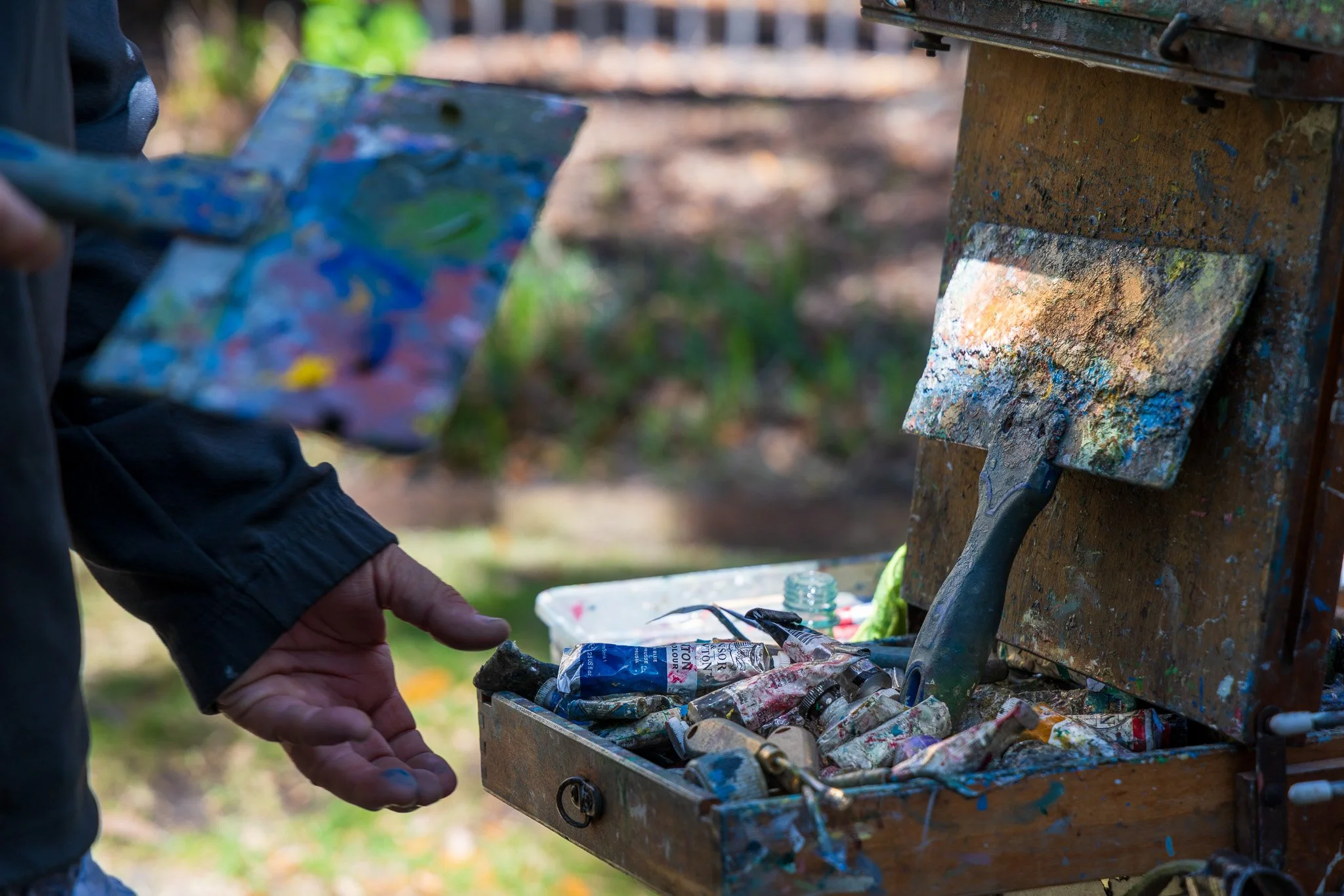
A Street Artist Painting by the College of Charleston
Camera Bodies: A mirrorless full-frame camera like the Sony A7R V, Canon EOS R52, or Nikon Z8 handles the range of conditions beautifully. High resolution is especially useful for architectural detailing.
Lenses:
Wide (16-35mm): Essential for tight alley shots, plantation gardens, and the grand scale of Rainbow Row.
All-Around (24-70mm): Your workhorse for street photography, architecture, and restaurant scenes.
Telephoto (70-200mm): Excellent for compressing the layers of the Battery promenade, isolating details on historic facades, and shooting from the ferry back toward the Charleston skyline.
Prime (35mm or 50mm): Perfect for street portraits and the intimate atmosphere of the French Quarter.
Accessories:
Tripod: Bring one. Blue hour and night shots at the Pineapple Fountain, Waterfront Park, and Rainbow Row are outstanding and require a steady platform.
Polarizing Filter: Helps cut glare off the harbor and deepens the colors of plantation reflections. Invaluable at Magnolia Plantation.
ND Filter: Useful for silky water exposures at Shem Creek and any moving-water shots.
Rain Cover: Charleston is coastal, and the weather can change quickly. Protect your gear.
Extra Batteries: Golden hour starts early, and you will not want to stop.
Drone Notes: Drones are restricted over much of the Historic District and near Fort Sumter. Always check current FAA and local regulations before flying. Sullivan's Island and the areas around the beaches can offer more flexibility, but get the permits sorted in advance.
A Note on Wildlife Photography: If the Center for Birds of Prey is on your list, and it absolutely should be, your 70-200mm is a starting point, but not really enough for serious bird-in-flight work. I brought a 400mm and a 600mm, and those are the lenses that deliver when a bald eagle is banking 30 feet overhead at full speed. A 100-400mm zoom is a great, versatile option if you want one lens that handles both the flight demos and the aviary portraits. Go longer if you have it.
Filters: I brought my Kase ND filters on this trip, and they were invaluable for the long exposures at Waterfront Park and Shem Creek. Kase makes some of the best glass in the filter market right now, and the build quality holds up in the coastal humidity.
Camera Bag: I flew into Charleston on a CRJ regional jet, which has very limited overhead bin space. I packed my NYA-EVO Fjord 60-liter bag, which is one of the few bags that fit a 400mm or 600mm f/2.8 or f/4 lens and still works as carry-on luggage on smaller aircraft. If you are flying a regional connection to Charleston, this is worth knowing before you show up at the gate with a bag that will not fit.
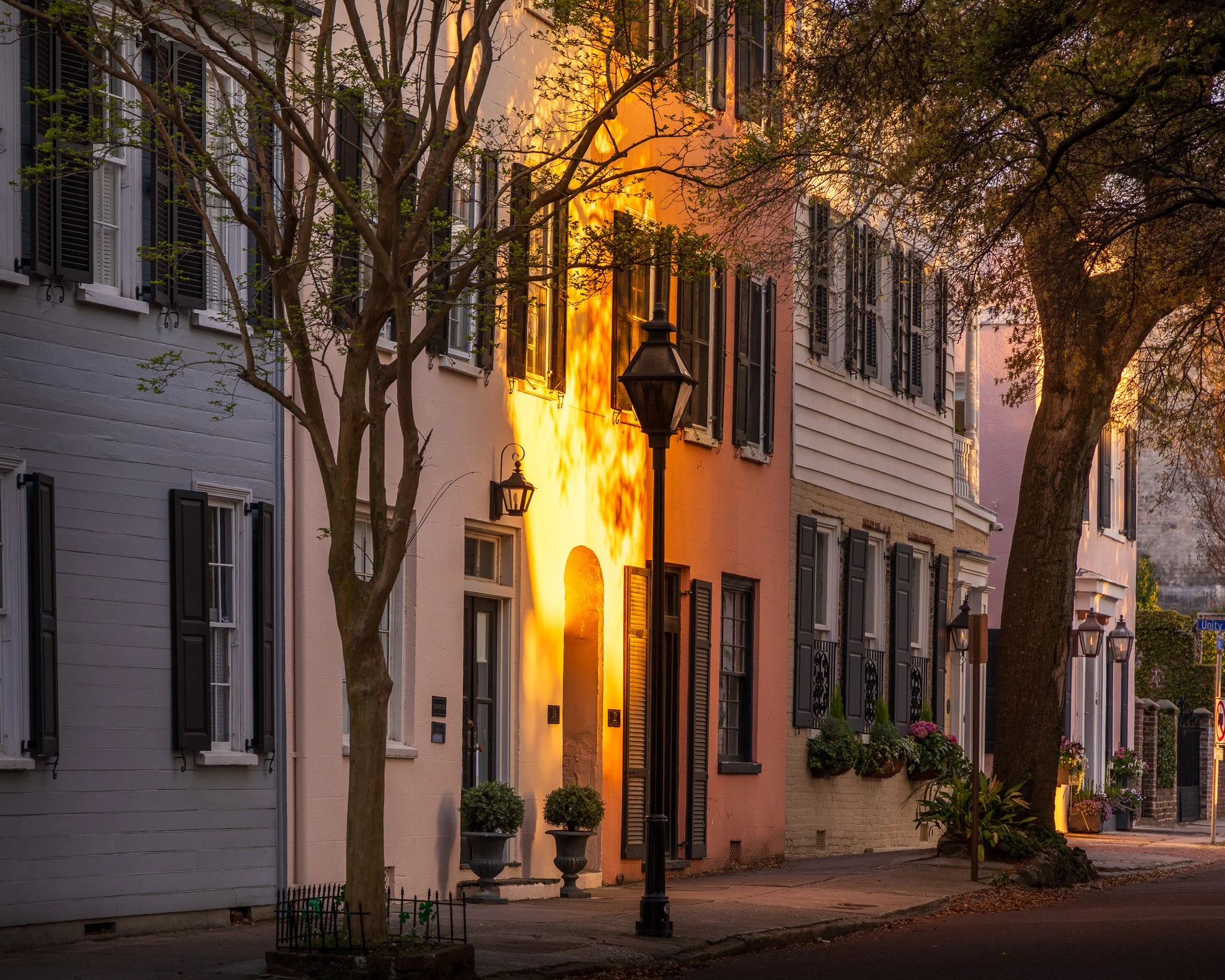
Sunset in the French Quarter
Photography Spots
Rainbow Row
79–107 East Bay Street is home to 13 pastel-painted Georgian row houses that have become the most iconic image of Charleston. The colors range from coral and turquoise to lemon yellow and dusty pink. Each house has a history going back to the 1700s when they served as merchant shops on the waterfront.
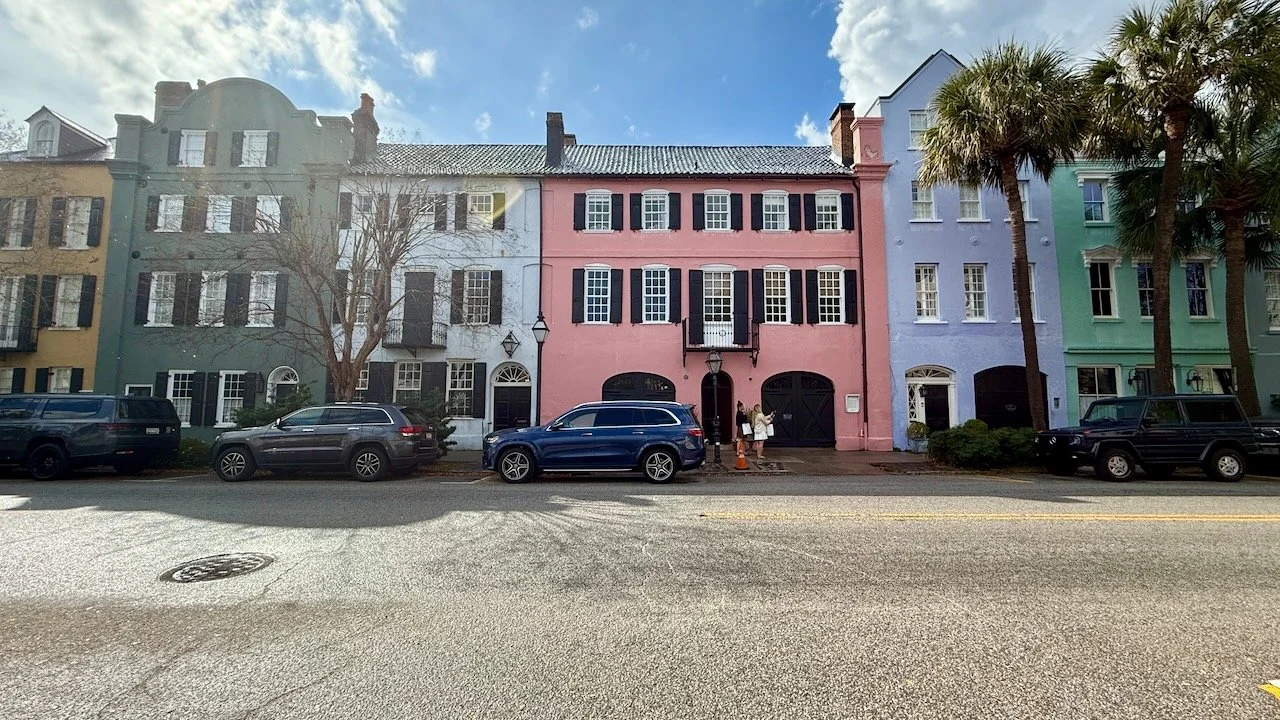
Pro Tip: Arrive before sunrise on a weekday for a completely clean shot. Mid-morning brings direct light that really pops the colors, but also brings the crowds. The corner where Tradd Street meets East Bay Street offers the best angle to show the full sweep of the row. Try shooting from across the street at street level rather than head-on to get depth and perspective. Early morning fog makes the scene feel like a painting.
The Battery & White Point Garden
The Battery is a defensive seawall that stretches along the southern tip of the Charleston Peninsula, where the Ashley and Cooper Rivers meet to form Charleston Harbor. Grand antebellum mansions line the waterfront promenade. Cannons remain from the Civil War era. On clear mornings, you can see Fort Sumter across the water.
Pro Tip: The Battery is elevated above street level, which means you shoot over parked cars and straight toward the water. This is one of the best spots in the city for blue hour photography, with the light trails from passing cars playing against the grand facades of the historic homes. Arrive 30 minutes before sunrise for the softest light. Dolphins are occasionally seen swimming near the seawall, so bring the 70-200mm.
Chalmers Street & the Hidden Alleys
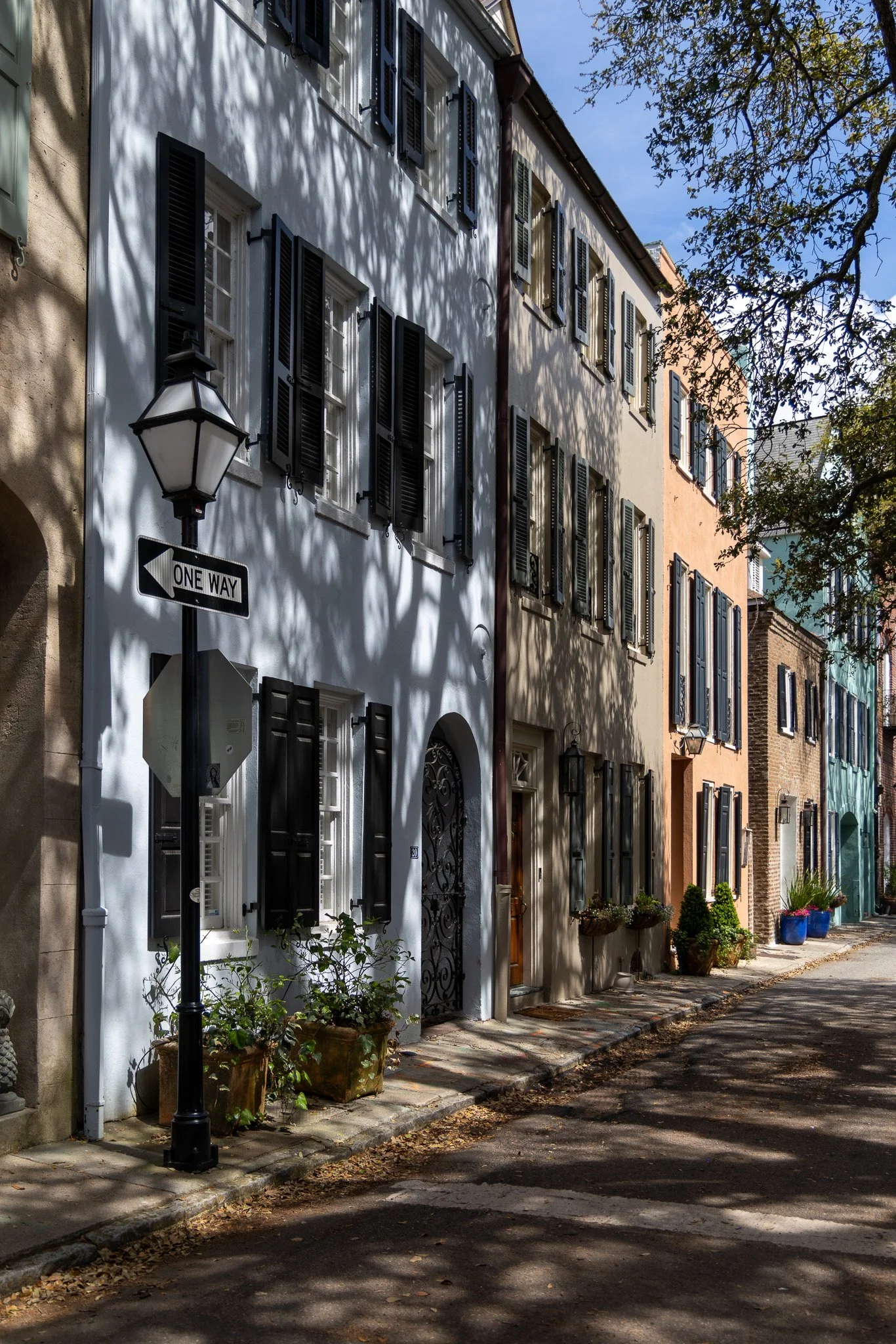
Chalmers Street is the most photographed cobblestone street in Charleston, running through the French Quarter between Meeting and Church Streets. The 18th-century street has a romantic, candlelit-portrait quality that no other street in the city quite matches. Hidden alleys like Longitude Lane, Philadelphia Alley, and Stoll's Alley add a layer of discovery to the French Quarter that can keep you shooting for hours.
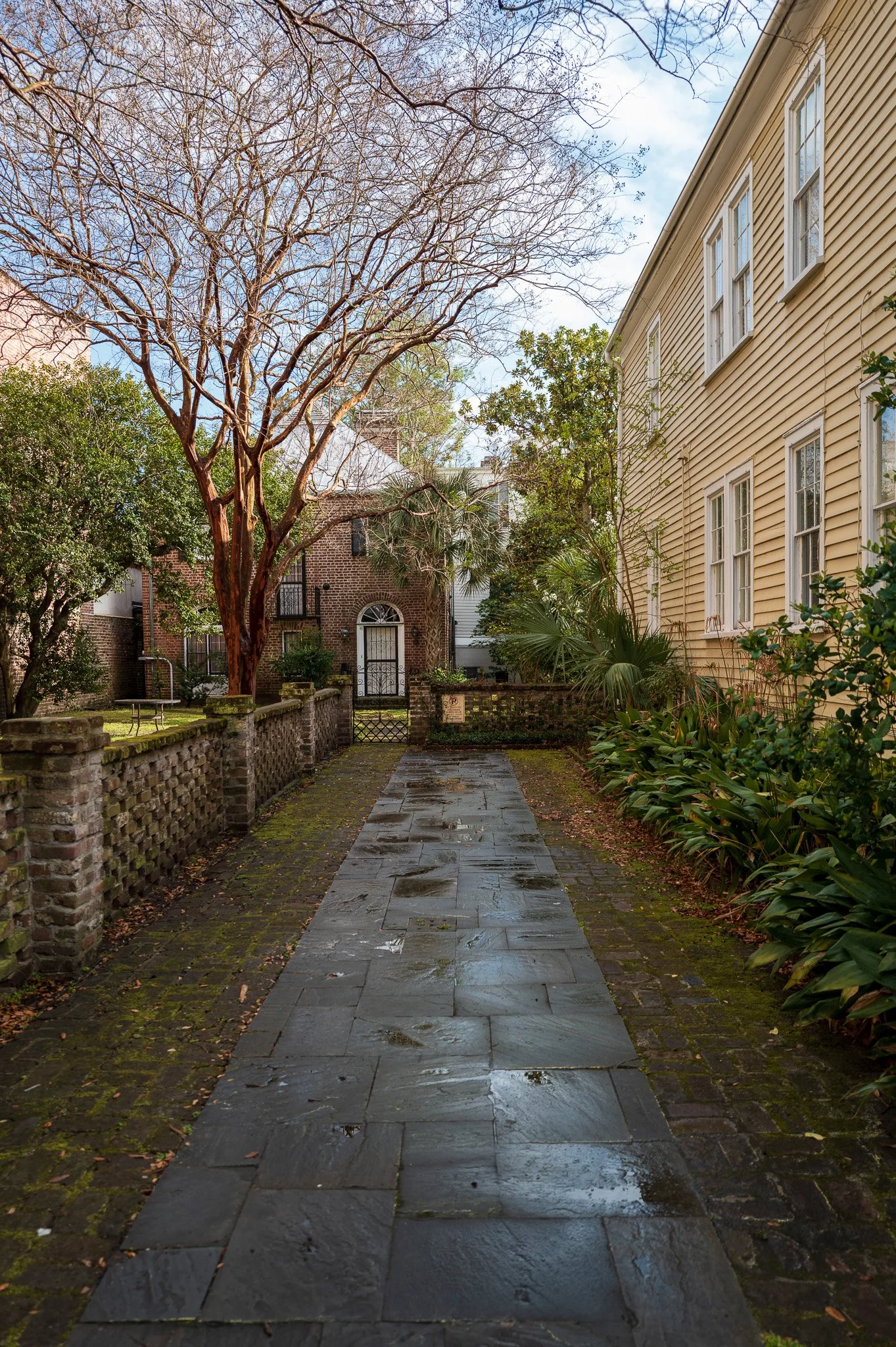
Pro Tip: The best light on Chalmers hits in the late afternoon when the low sun angles into the street from the west, illuminating the cobblestones and building facades simultaneously. For the hidden alleys, bring a 35mm prime and shoot wide open. These narrow spaces are dim, intimate, and full of character.
Waterfront Park & Pineapple Fountain
Waterfront Park sits on the Cooper River with a long covered pier, swinging benches, and the famous Pineapple Fountain at its center. The pineapple is the symbol of Southern hospitality, and the fountain is one of the most recognizable icons in Charleston. Sunsets here are exceptional, with the light over the water turning the whole scene gold.
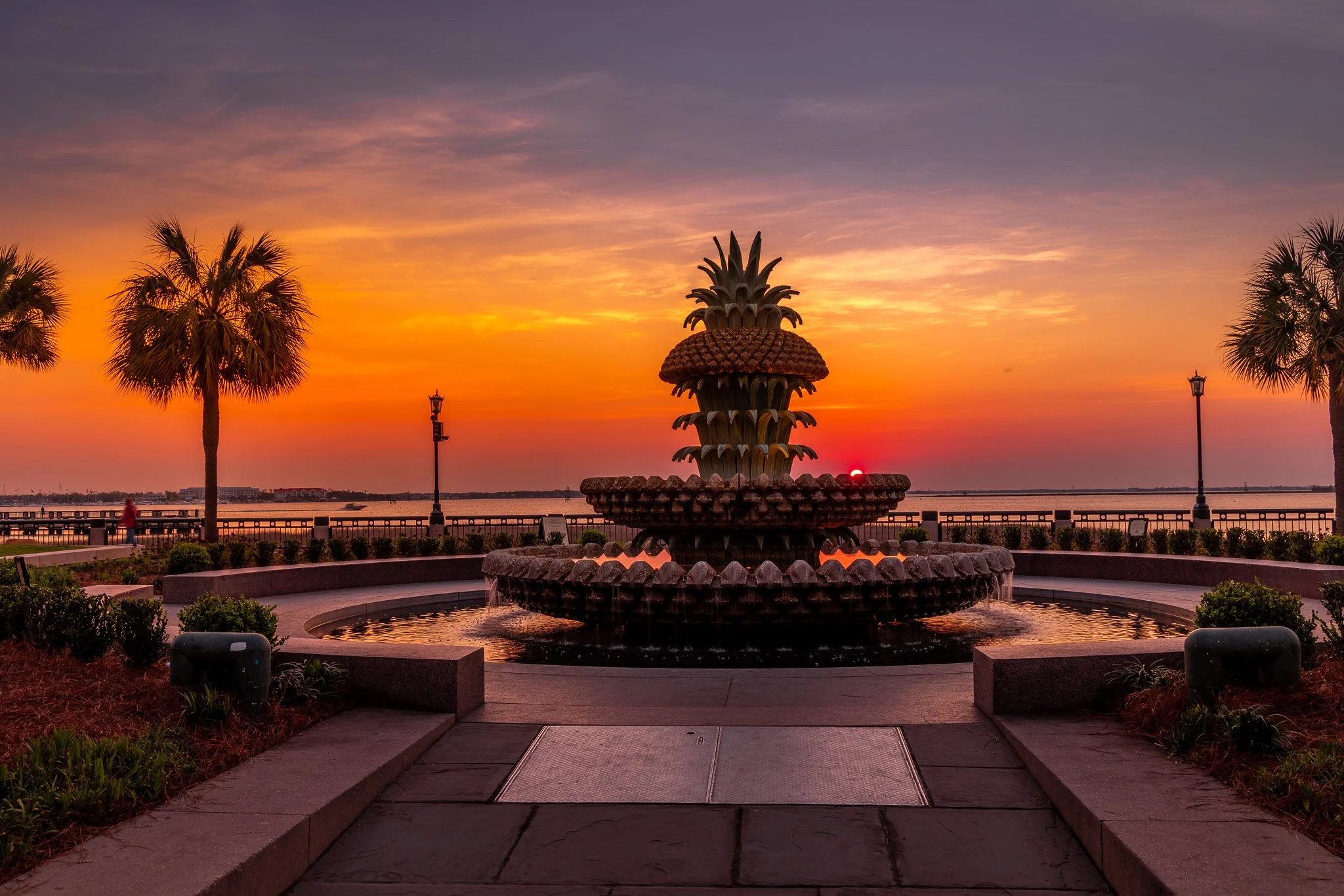
Sunrise
Pro Tip: For the fountain, shoot at blue hour with a tripod for long exposures that smooth the water and deepen the sky colors. If you arrive at sunset, position yourself on the pier for views back toward the city skyline. The swinging benches along the boardwalk make for great environmental portrait opportunities. Children playing in the fountain during the summer adds wonderful life to the scene.
Magnolia Plantation and Gardens
The oldest public garden in America, open since 1870, Magnolia Plantation is a 45-minute drive from downtown and absolutely worth the trip. During spring, the azalea blooms are among the most spectacular natural displays on the East Coast. The grounds include old cypress swamps, mirror-like ponds, wooden bridges, and ancient live oaks draped in Spanish moss.
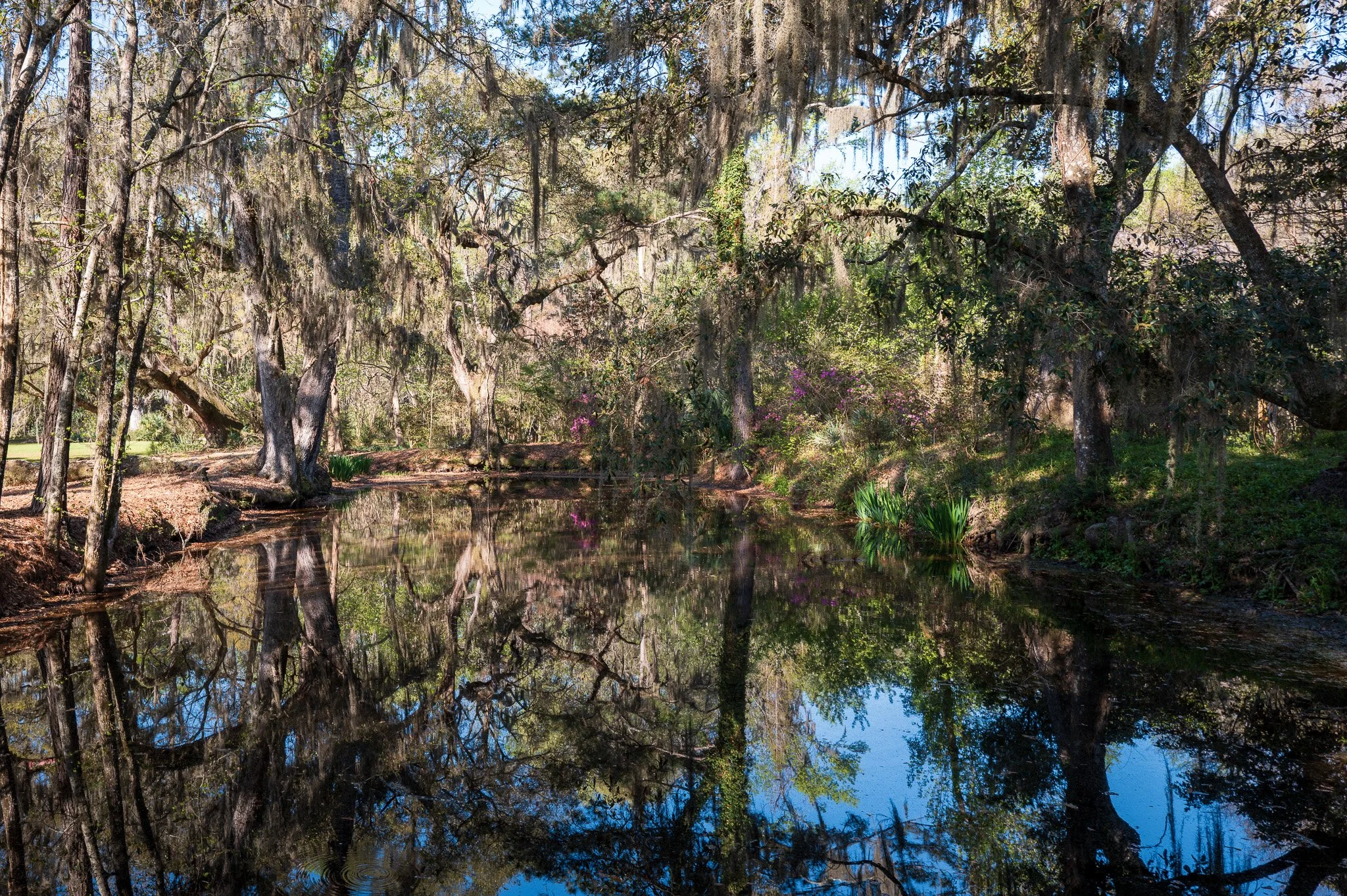
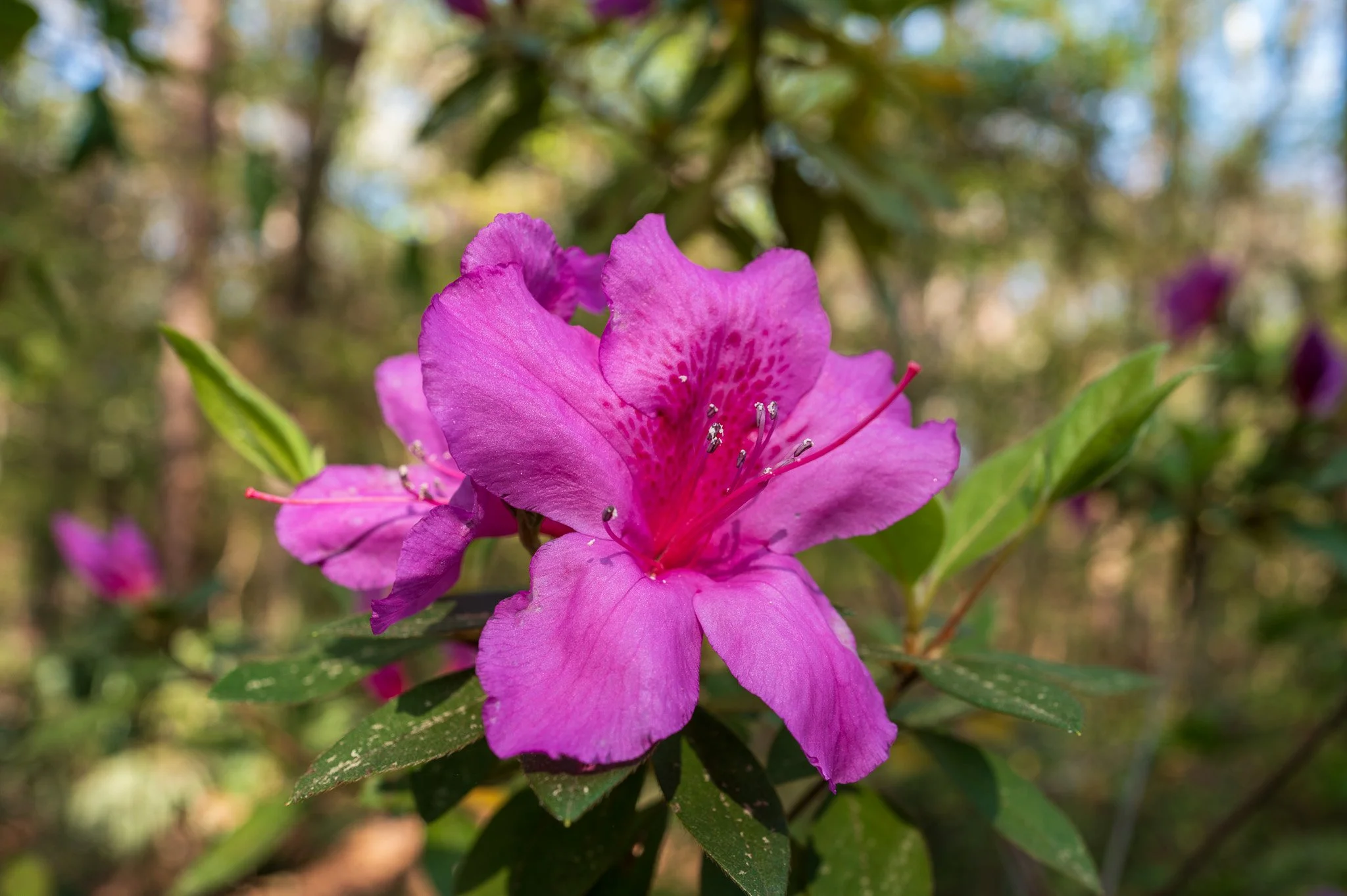
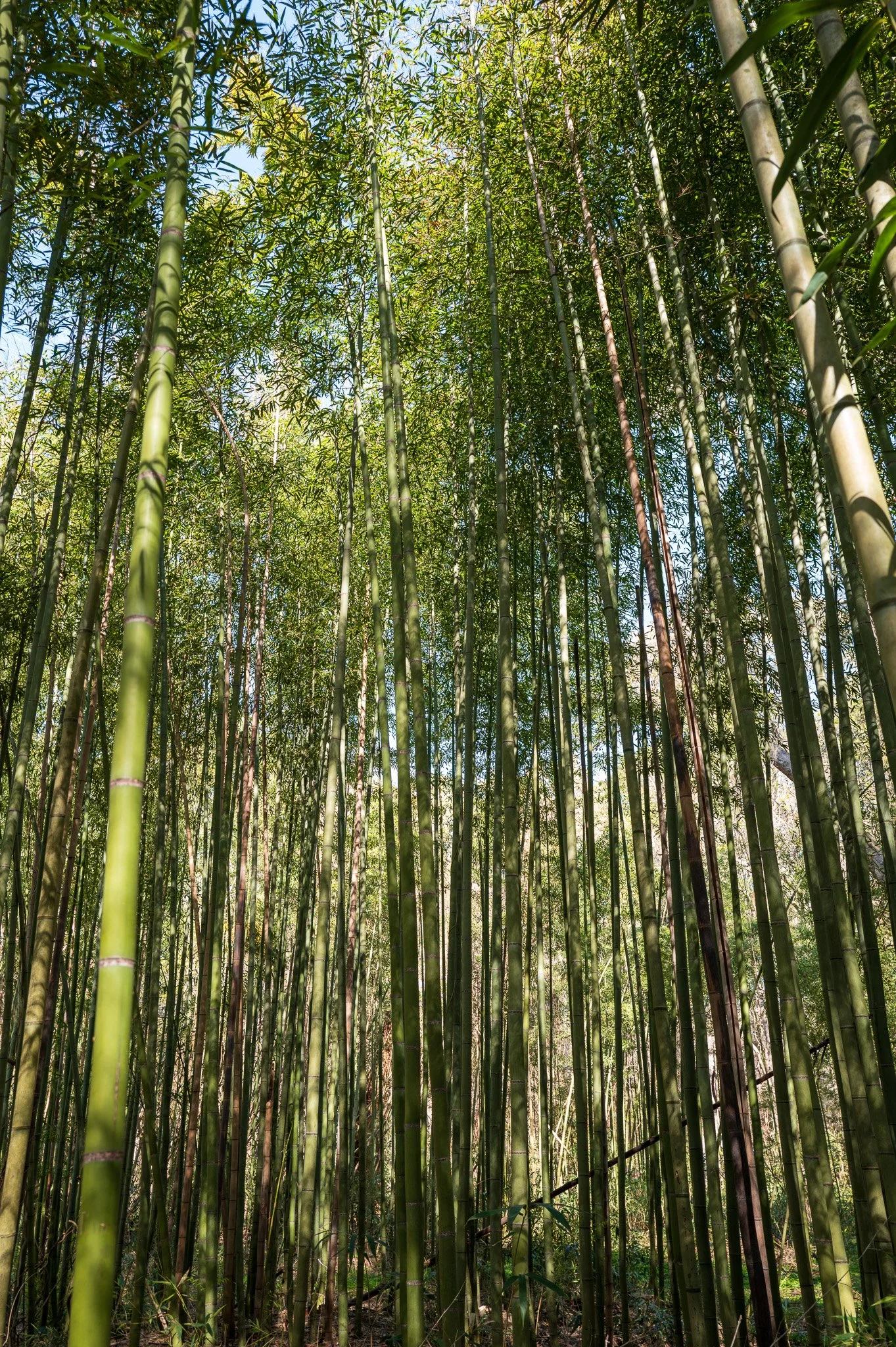
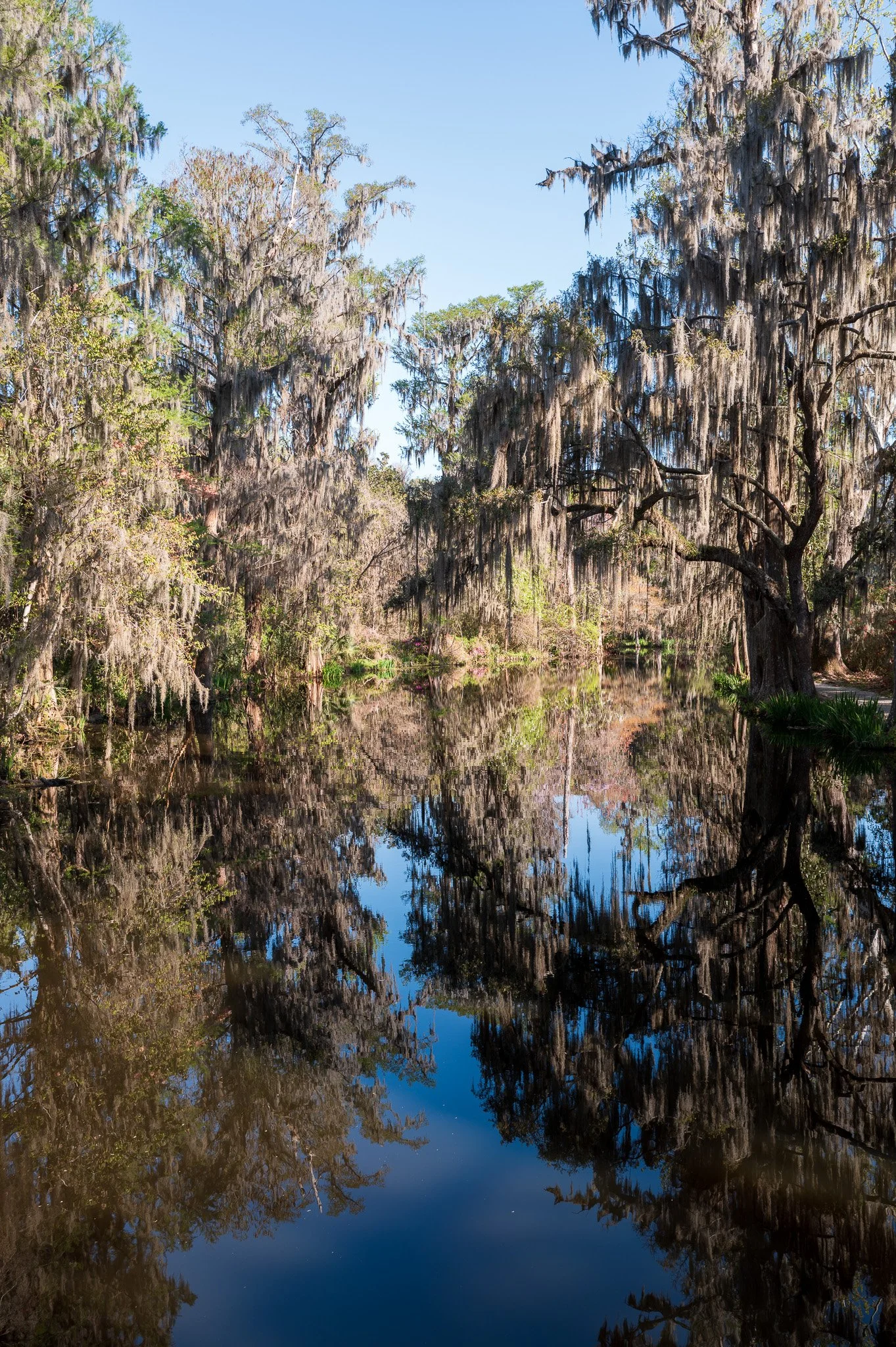
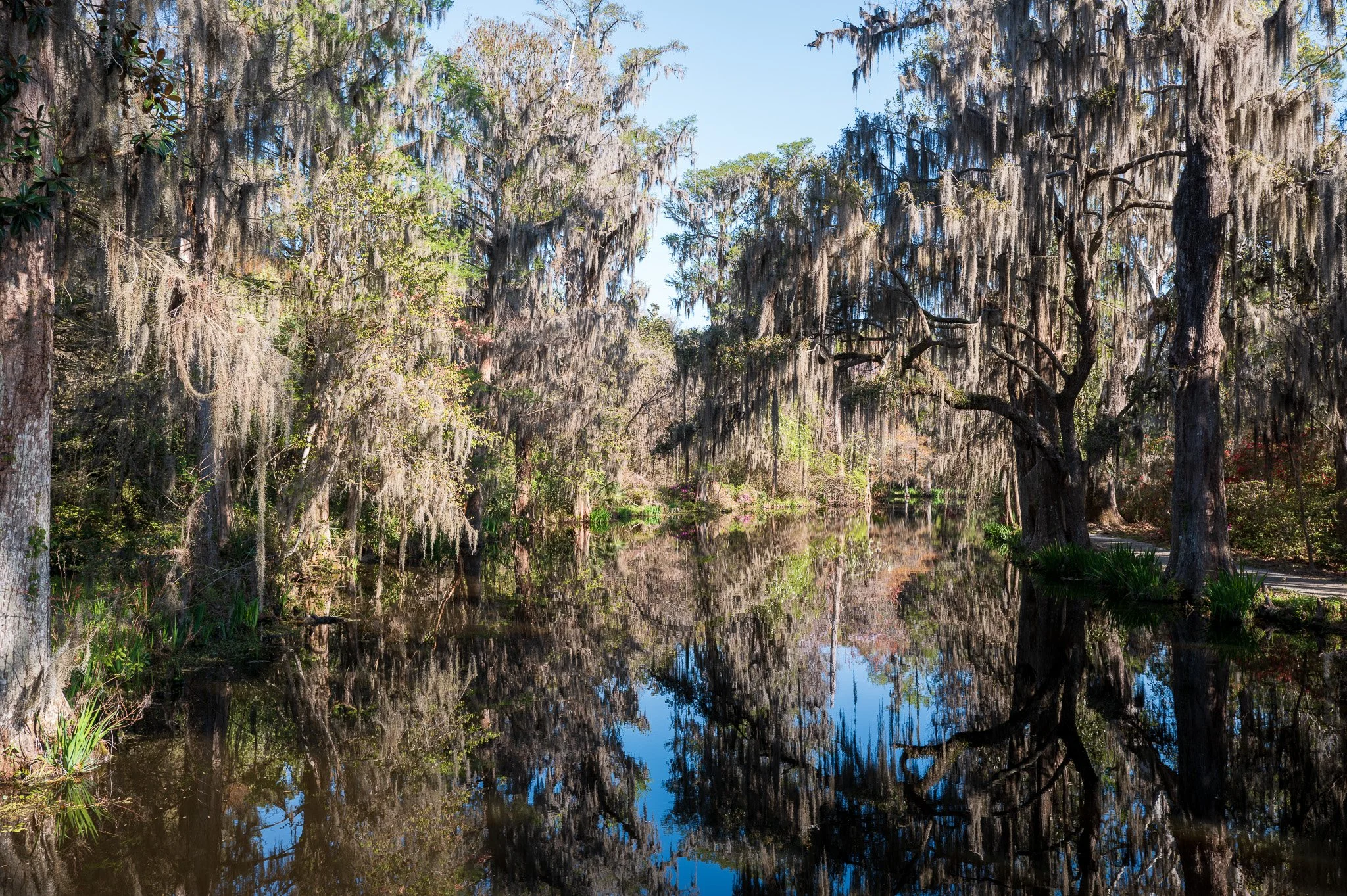
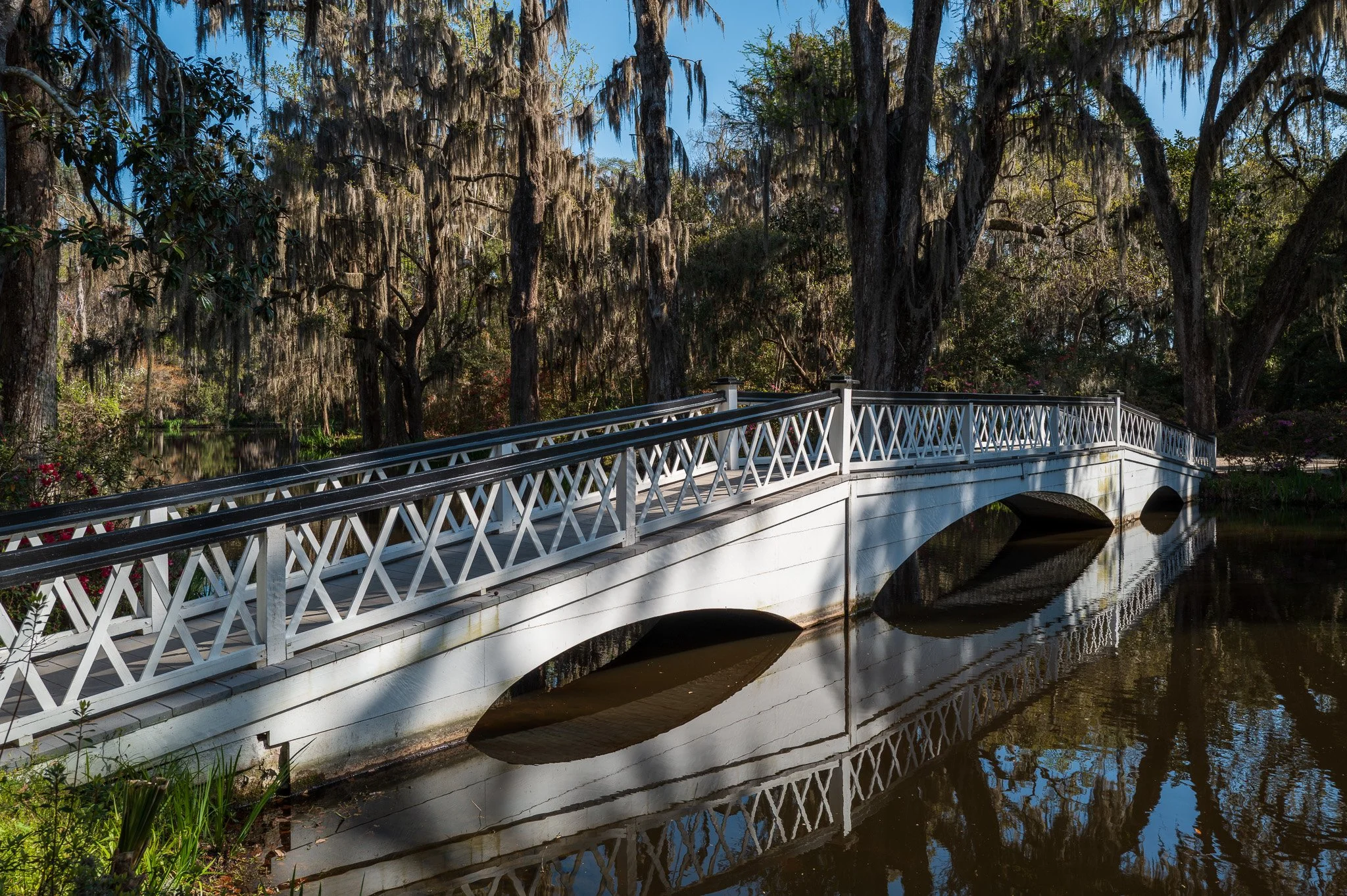
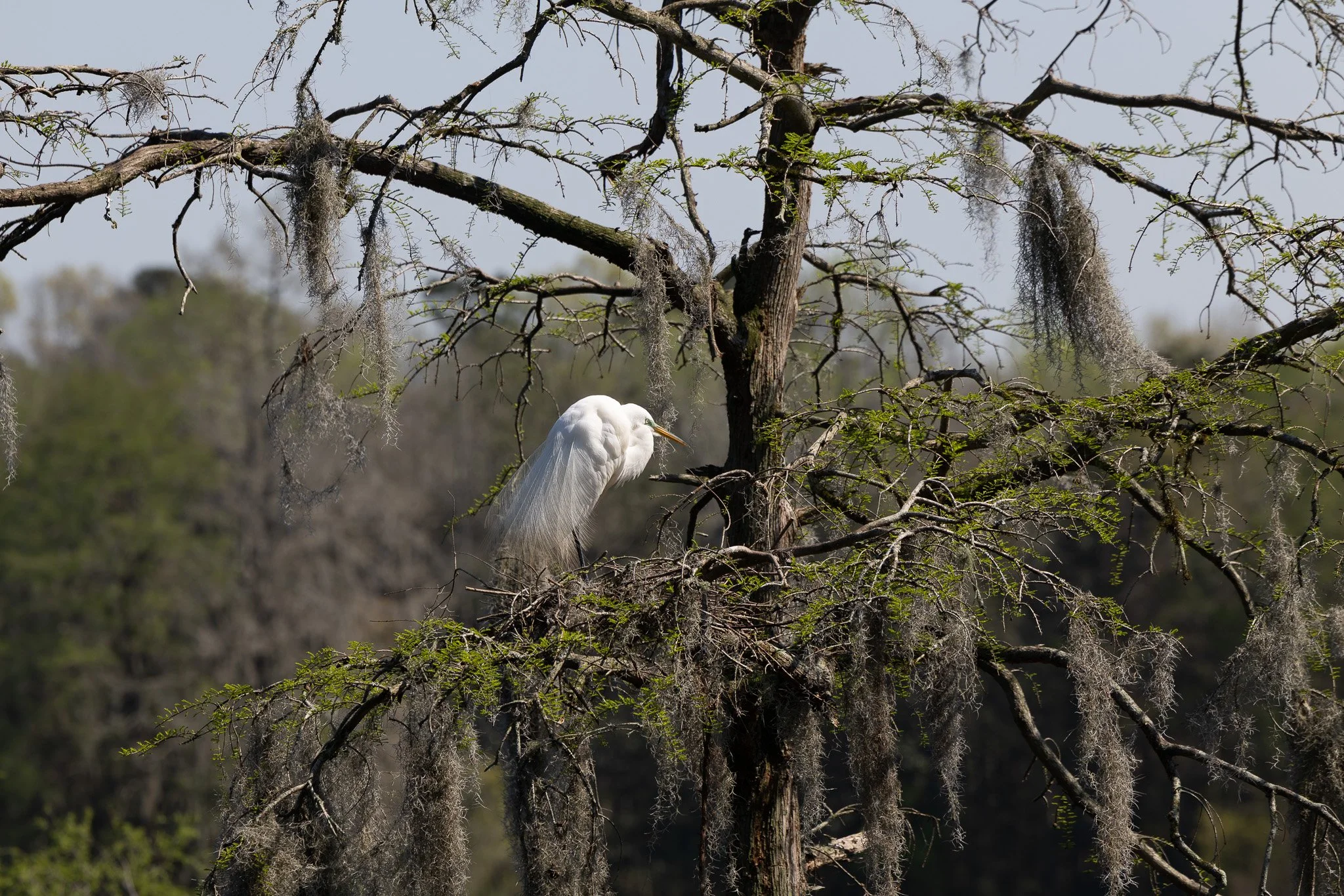
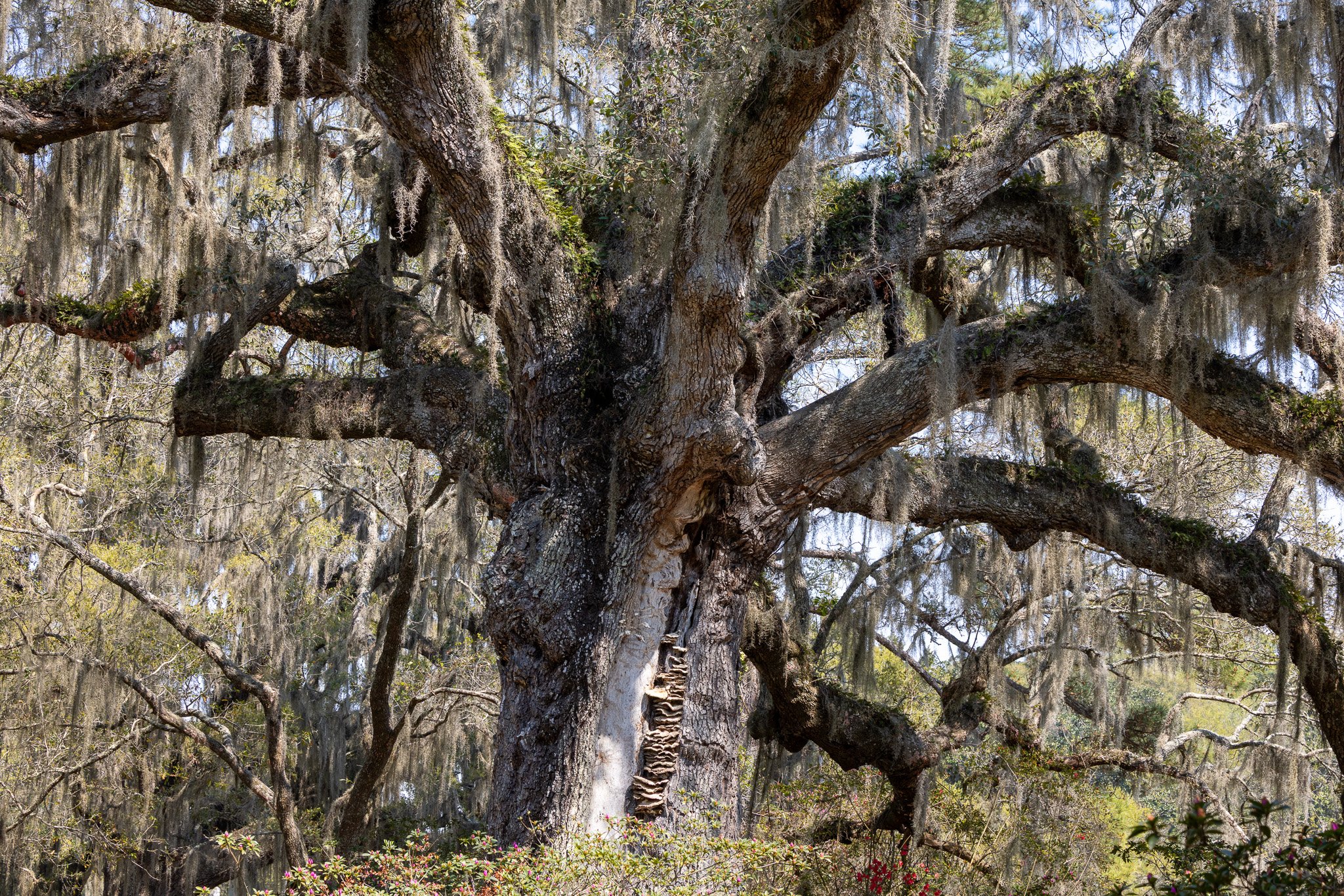
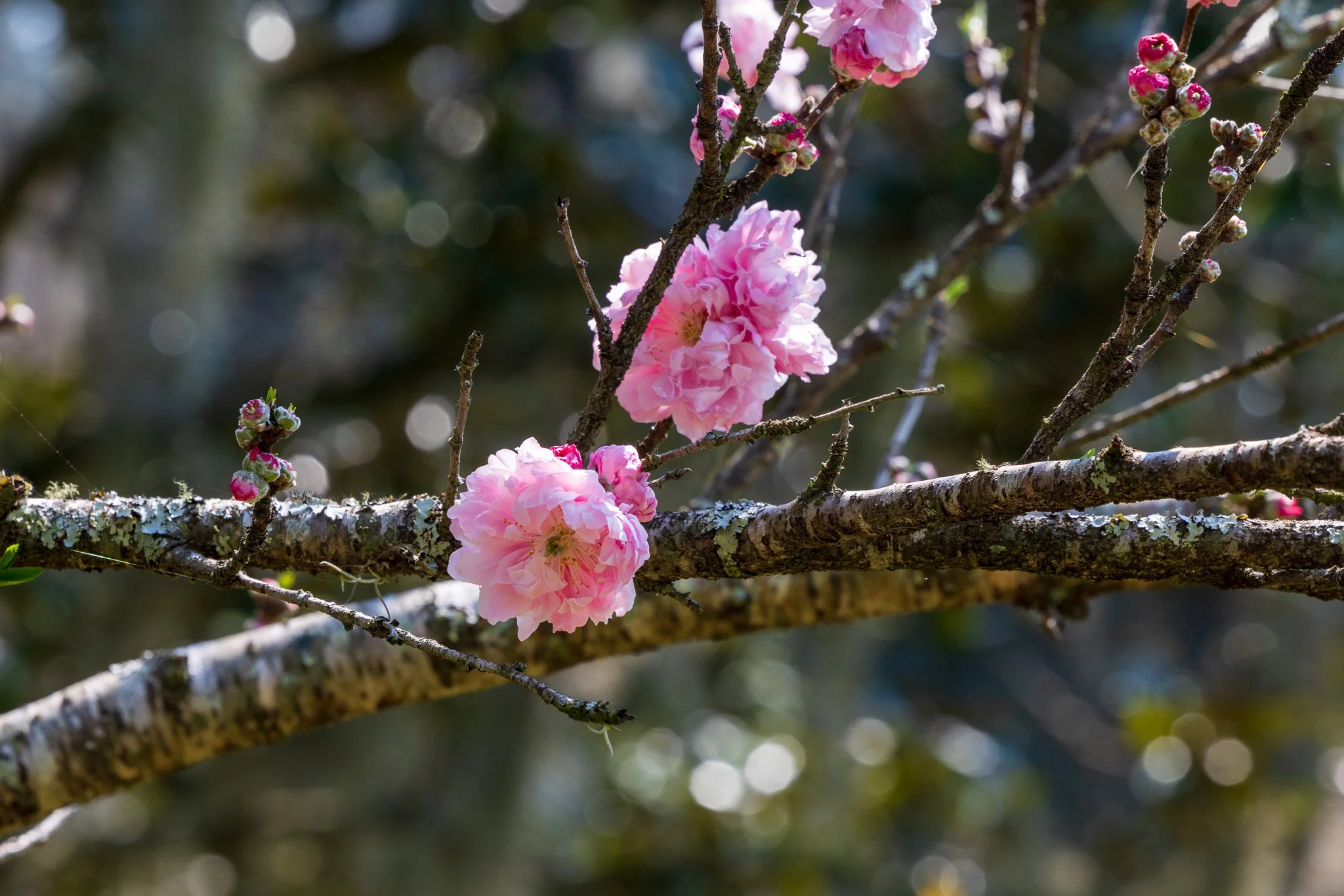
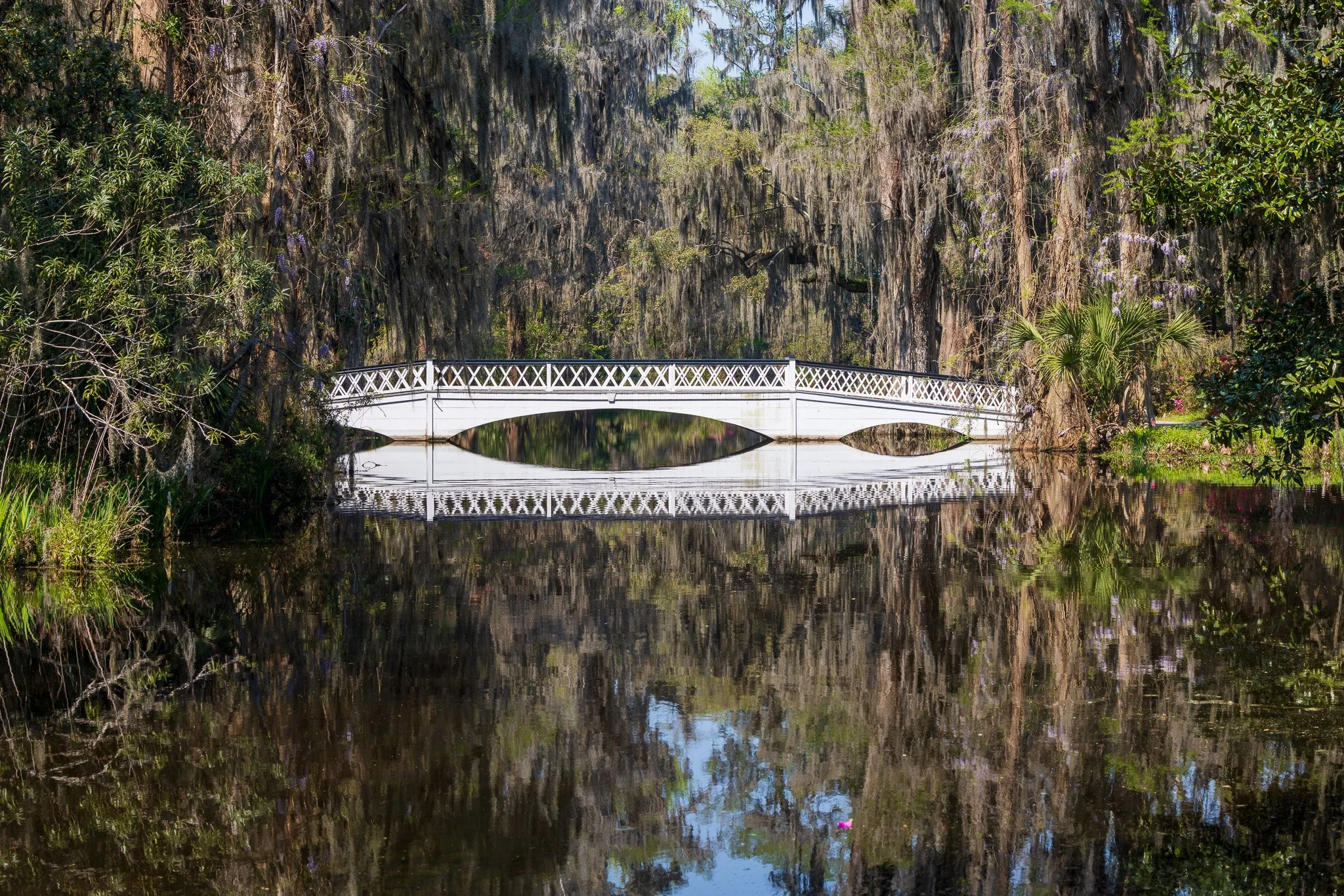
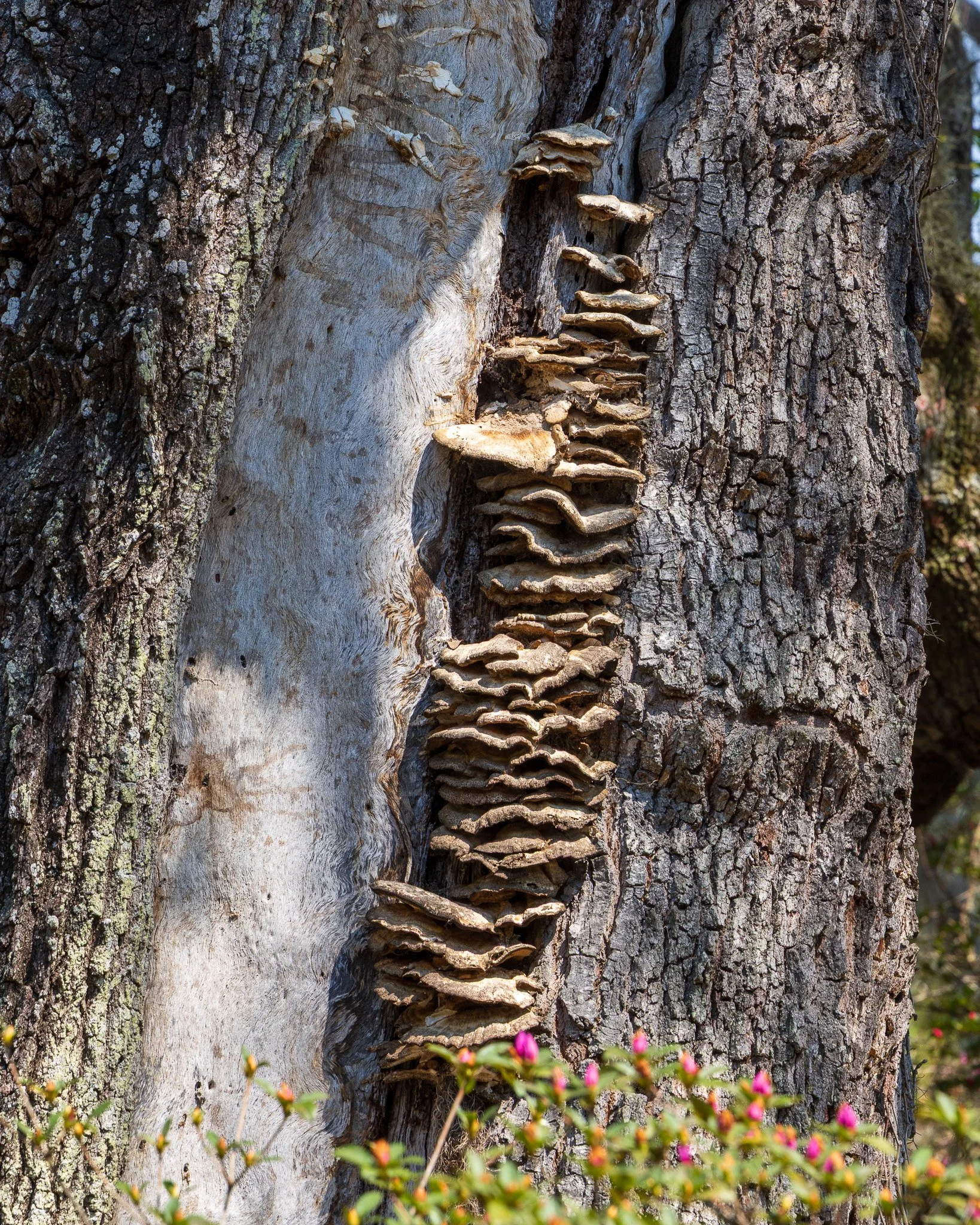
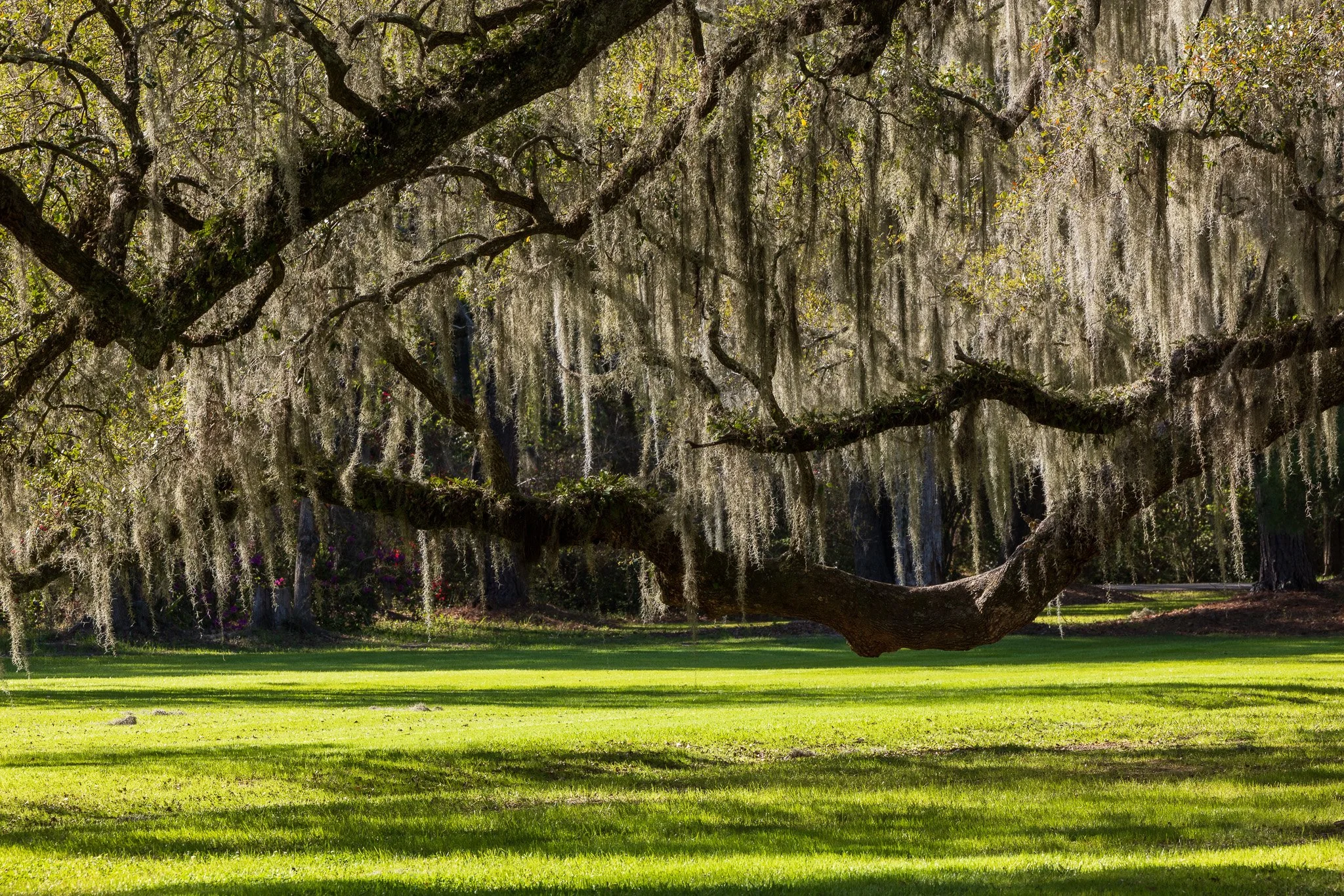
Pro Tip: Come in March or April for the azalea bloom. Early morning visits before other guests arrive give you still water reflections that are extraordinary. A polarizing filter is essential here. The swamp boardwalk offers intimate compositions with the cypress tree roots reflected in the dark water. Wide lenses for the grand garden vistas, a 70-200mm for isolating blooms and birds. And do not leave without walking next door to the Audubon Swamp Garden, which has its own dedicated entry in this guide.
Audubon Swamp Garden at Magnolia Plantation
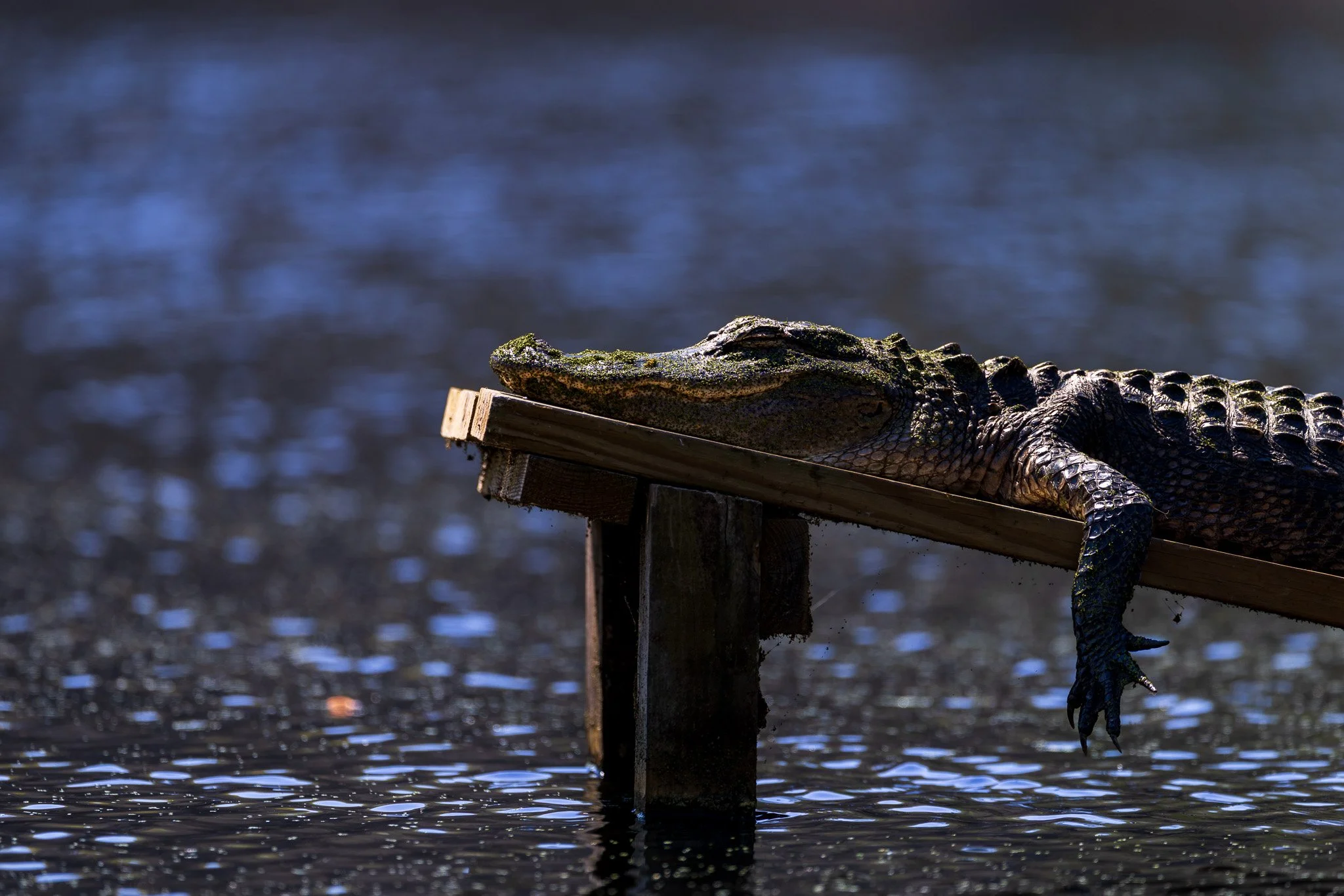
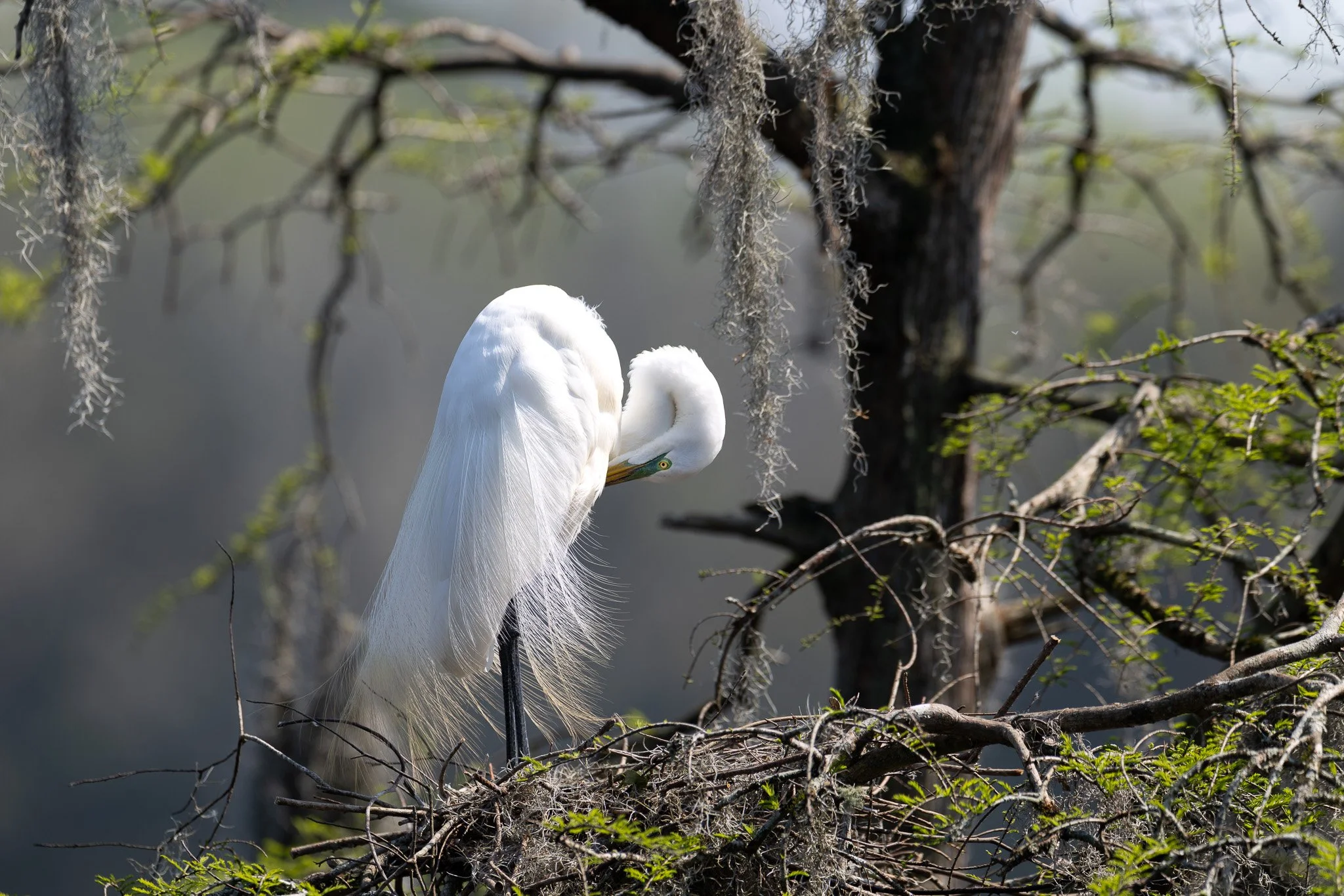
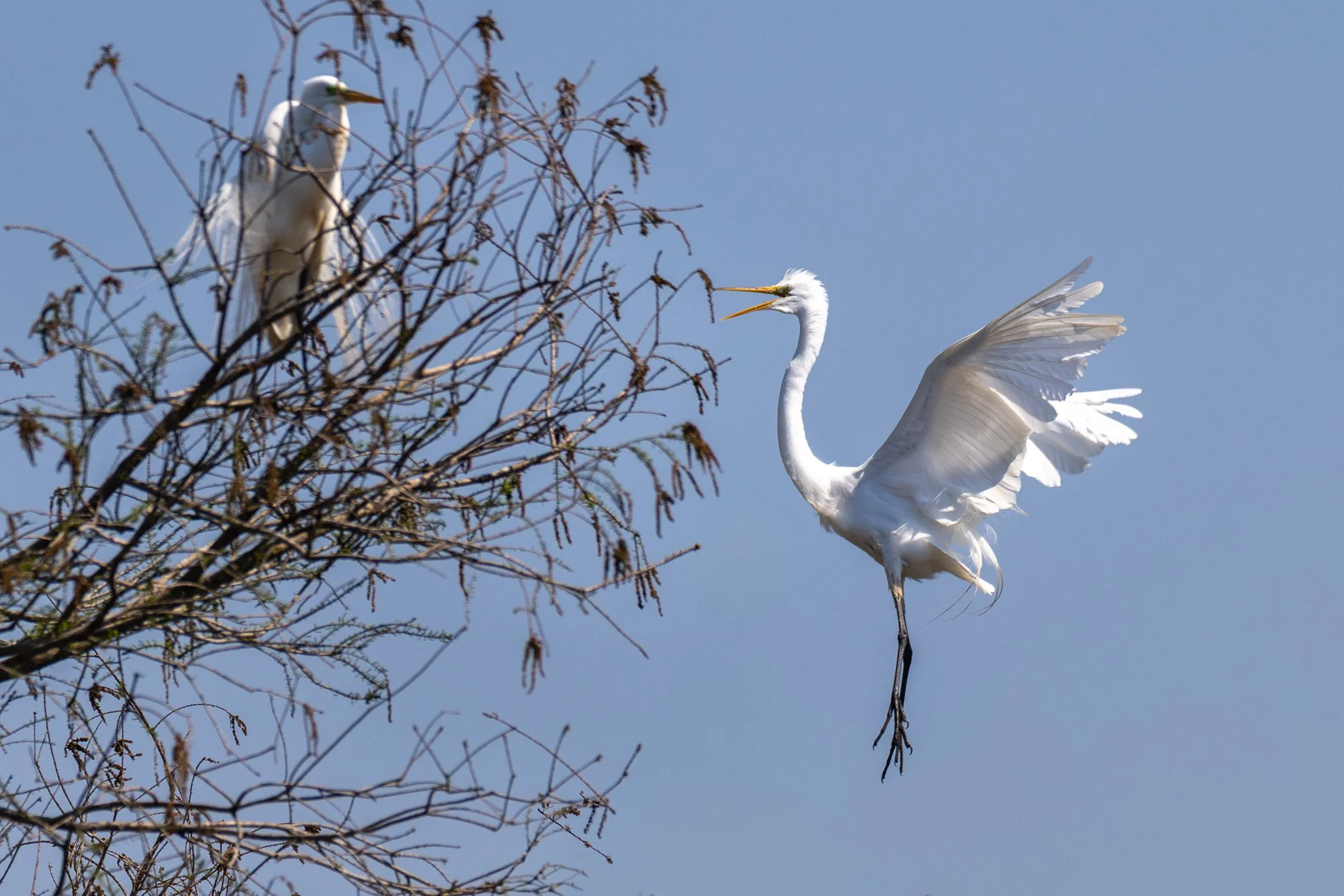
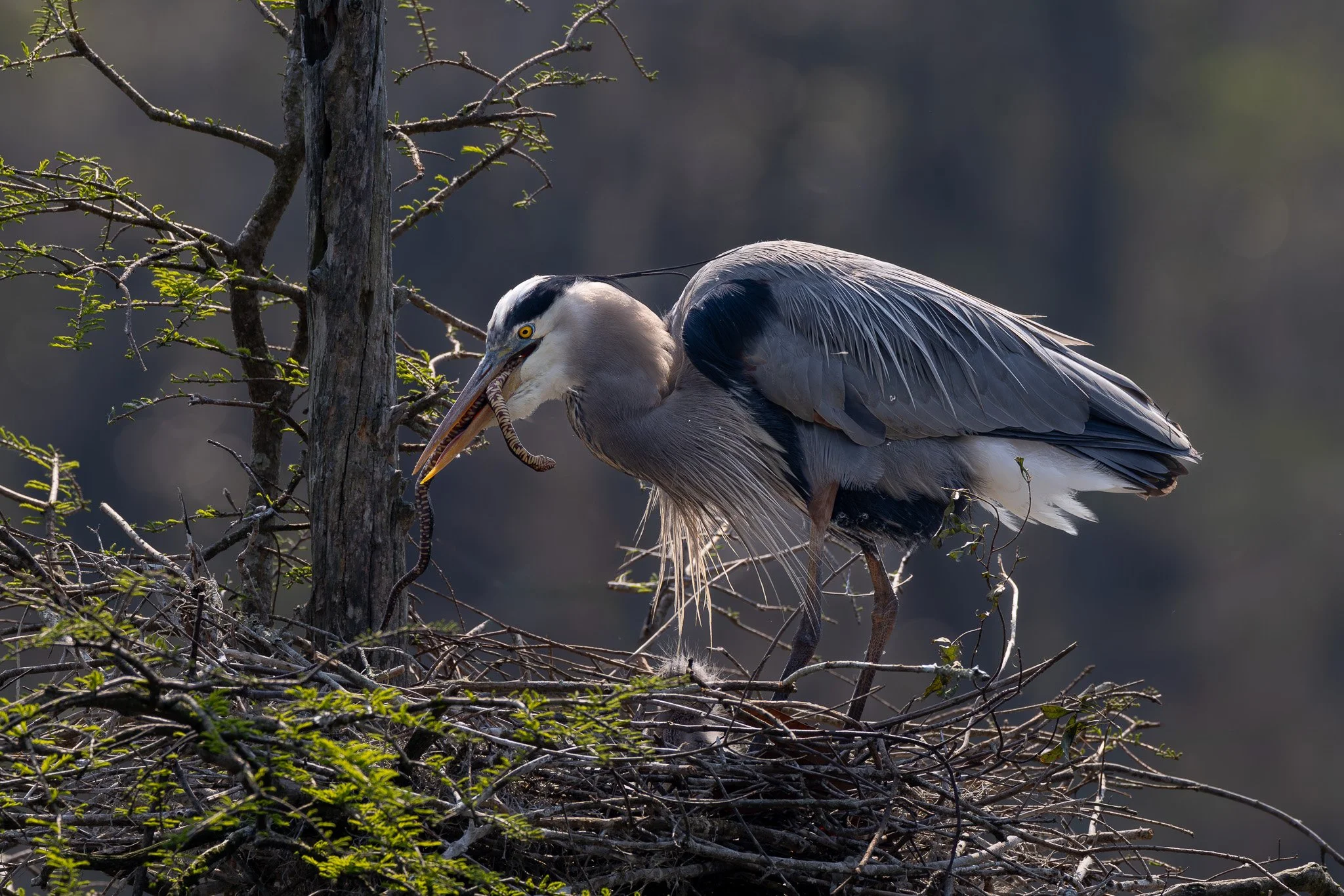
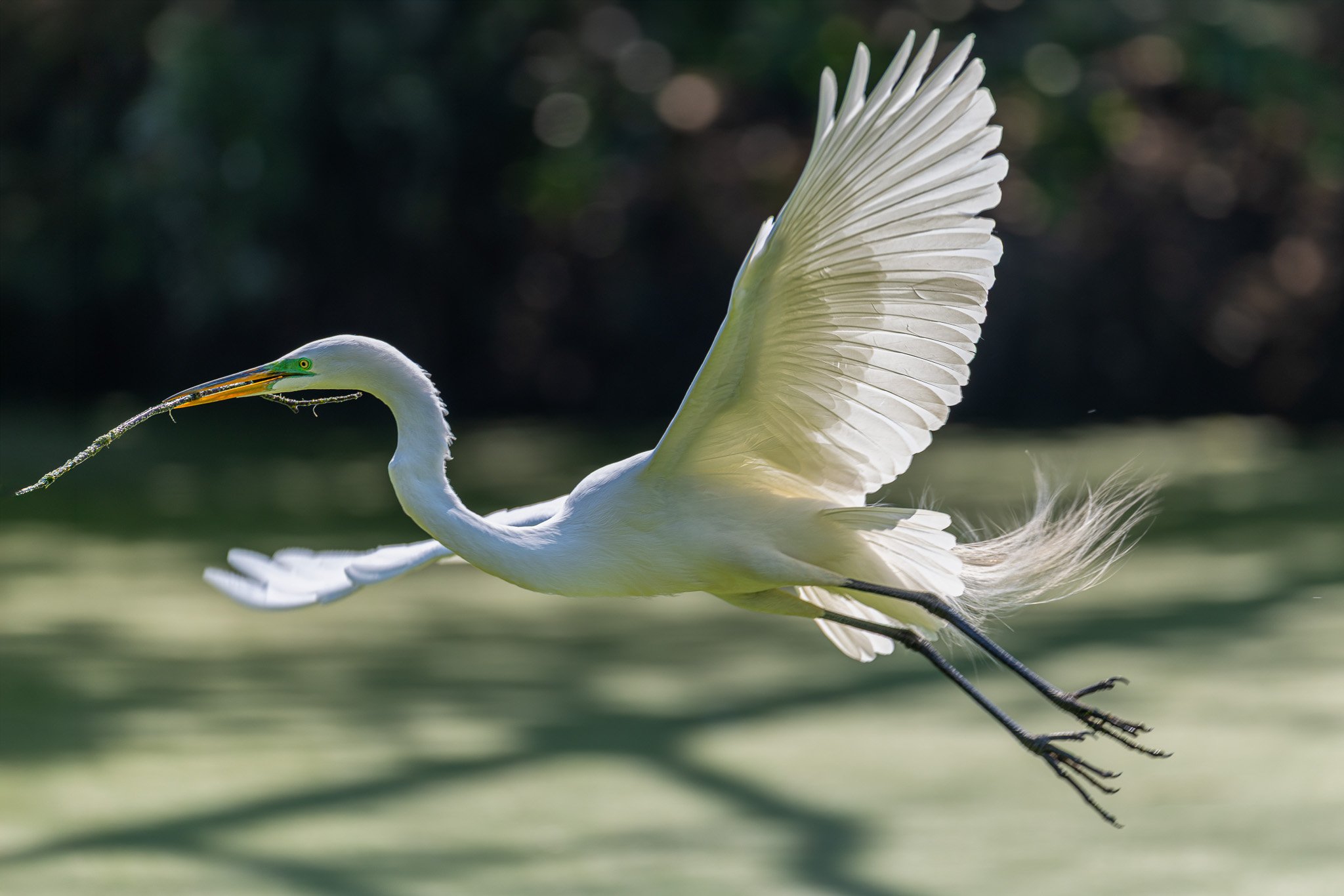
Right alongside Magnolia Plantation sits one of the most atmospheric wildlife photography destinations in the entire region. The Audubon Swamp Garden is a 60-acre blackwater cypress and tupelo swamp, included in your Magnolia Plantation admission, with 13 acres of boardwalk winding through an ecosystem that feels genuinely ancient and untouched. The water is dark, still, and mirror-like. Cypress knees rise from the surface. Spanish moss hangs in curtains from branches overhead. Herons, egrets, ibis, anhingas, wood ducks, otters, turtles, and alligators all share this space, often at remarkably close range.
The garden is named for John James Audubon himself, who visited Magnolia Plantation before the Civil War and collected waterfowl specimens here as models for his paintings. The location also has a more unexpected piece of film history: director Wes Craven used it as the primary filming location for his 1982 horror film, Swamp Thing. Once you walk into it, you will completely understand why he chose it.
The swamp was originally a freshwater reservoir engineered by enslaved rice farmers to irrigate the plantation's rice fields. That history gives the place a weight that you feel even without knowing it. The rookery within the swamp supports great blue herons, white egrets, and anhingas nesting and raising their young, and in spring, the activity around the nesting sites is extraordinary.
Pro Tip: This is one of the best wildlife photography locations in South Carolina, and it requires reach. Bring your 100-400mm or longer. The boardwalks bring you surprisingly close to nesting birds and resting alligators, but the best compositions often involve isolating a single bird against the dark water or catching an anhinga with wings spread wide to dry in the early sun. A 600mm lens gives you the compression to pull subjects out of a complex, layered background. Morning light is the best light here, when mist rises off the water, and the first sun catches the cypress canopy. Be patient and move slowly. The wildlife is accustomed to people on the boardwalk but reacts quickly to sudden movement.
Boone Hall Plantation's Avenue of Oaks
About 15 minutes north of downtown in Mount Pleasant, Boone Hall's entrance avenue is lined with 270-year-old live oaks draped in Spanish moss, stretching for roughly a third of a mile toward the plantation house. It is one of the most dramatic natural corridors in the American South. The famous film "The Notebook" was shot here, and you will understand why the moment you arrive.
Pro Tip: The avenue shoots beautifully in both directions. Face toward the plantation house for the classic approach shot. Face toward the gate for the light coming through the tree canopy in the morning. Arrive as early as the plantation opens. The mid-morning light filtering down through the moss is something you simply cannot plan for. A 24-70mm lens handles this location well.
Shem Creek, Mount Pleasant
Shem Creek is a working waterway in Mount Pleasant lined with shrimp boats, oyster docks, and waterfront seafood restaurants with wide boardwalks. It is a completely different visual from the Historic District and one of the best places in the area to capture authentic Lowcountry working life. At sunset, the creek turns copper and gold as the shrimp boats head out.
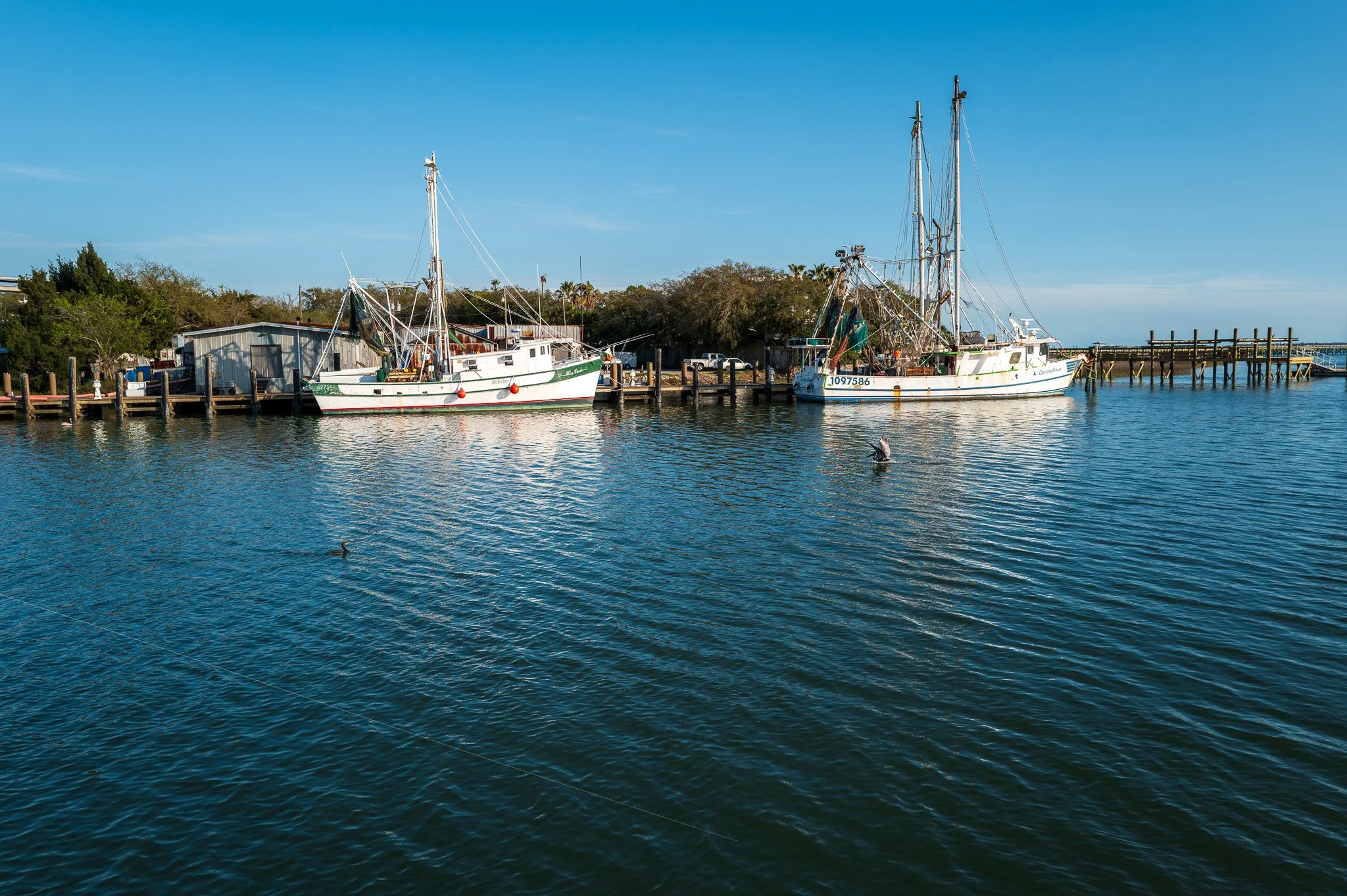
Photo Credit my wife Zena Hammoud
Pro Tip: Visit at low tide in the late afternoon when the marsh grass reflects in the water and the boats are moored close to the docks. A 70-200mm is perfect for isolating shrimp boat details and capturing pelicans perched on dock pilings. The boardwalks make for clean leading lines into the scene. This is one of those locations that rewards patience.
Arthur Ravenel Jr. Bridge
The Ravenel Bridge is one of the most dramatic pieces of infrastructure in the American South. Its twin diamond-shaped cable towers rise 575 feet above the Cooper River, connecting downtown Charleston to Mount Pleasant, and the views from the bridge and from the riverbanks below are extraordinary. Whether you shoot it from across the harbor, from the pedestrian walkway on the bridge itself, or from James Island's Sunrise Park with the city skyline behind it, this is a photograph that says Charleston in one frame.
Pro Tip: The best shots of the bridge are from James Island's Melton Peter Demetre Park, which locals call Sunrise Park, on the western side of the peninsula, where you get the full span of the bridge reflected in the harbor with the downtown skyline alongside it. Arrive 30 minutes before sunrise and bring your tripod. For a different perspective, walk the bridge's pedestrian path at golden hour for shots back toward the city. A wide lens captures the full scale; a 70-200mm compresses the cable towers beautifully against the sky.
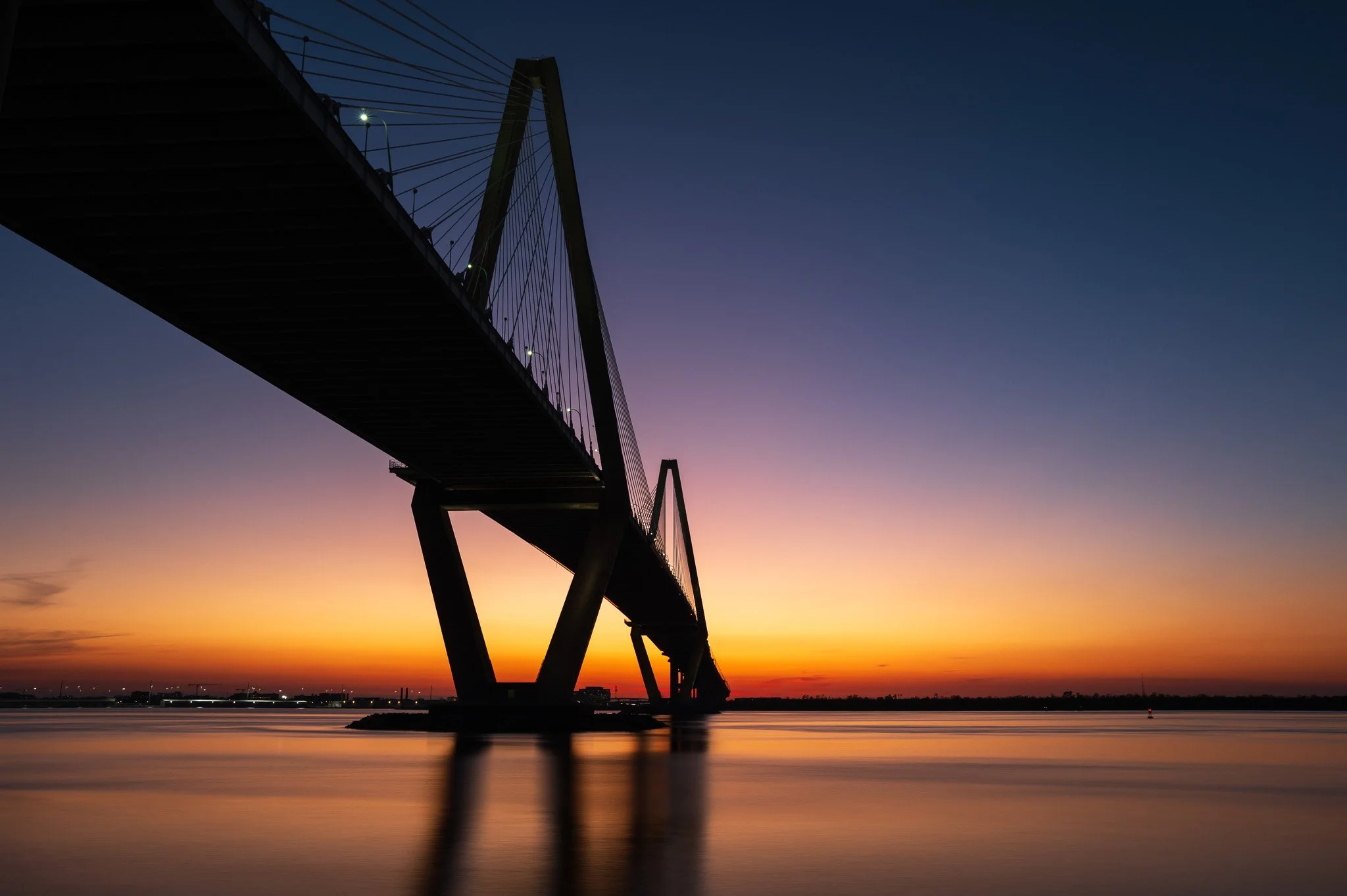
Long Exposure at Sunset
Magnolia Cemetery
A few miles north of the Historic District on the banks of the Cooper River sits one of the most overlooked and genuinely extraordinary photography destinations in Charleston. Magnolia Cemetery occupies 92 acres of a former rice plantation called Magnolia Umbra, established in 1850 and listed on the National Register of Historic Places. The superintendent has been quoted calling it "the best kept secret in Charleston," and after a visit you will completely understand why.
The cemetery was designed by Charleston architect Edward C. Jones in the rural cemetery tradition, with winding paths, small lakes, bridges, marsh views, and the Ravenel Bridge visible in the background against the Lowcountry sky. Spanish moss drapes low over the graves, herons glide across the still water, and the Victorian-era funerary sculpture throughout the grounds is exceptional. Some of the most notable people buried here include Horace Hunley, chief inventor of the Confederate submarine H.L. Hunley, along with the three successive crews who lost their lives aboard it. Politicians, generals, poets, governors, and ordinary Charlestonians across 175 years of history are all here together.
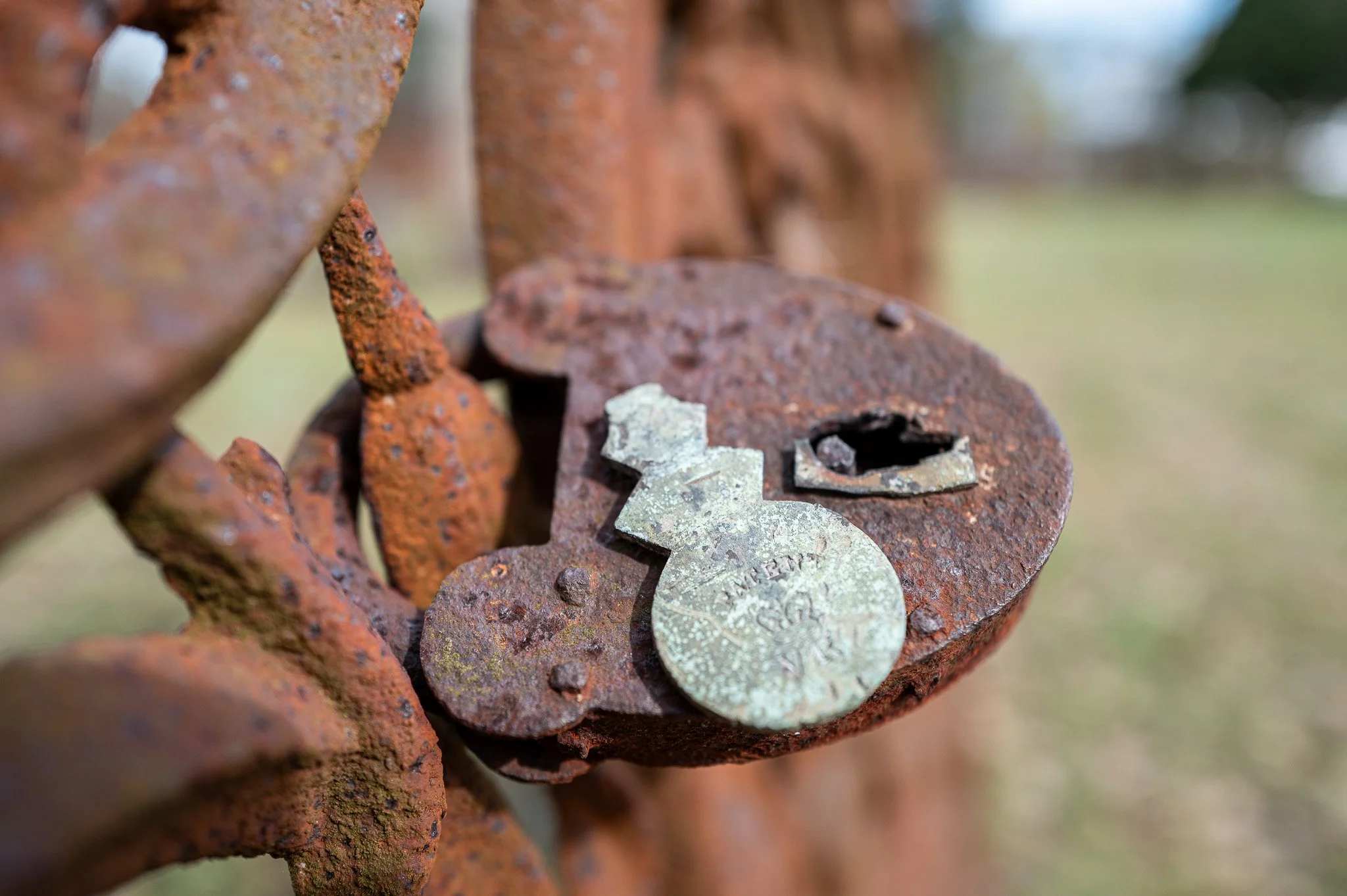
What I found especially fascinating were the old locks. Because the property was originally a rice plantation, the original design included a system of water control locks to manage the tidal flow across the grounds. These old iron and masonry locks remain in place throughout the cemetery, partially hidden by moss and vegetation, and they make for extraordinary close-up detail photography. The textures of aged iron, weathered stone, and encroaching plant life in a single frame are exactly the kind of image that stops people when they scroll.
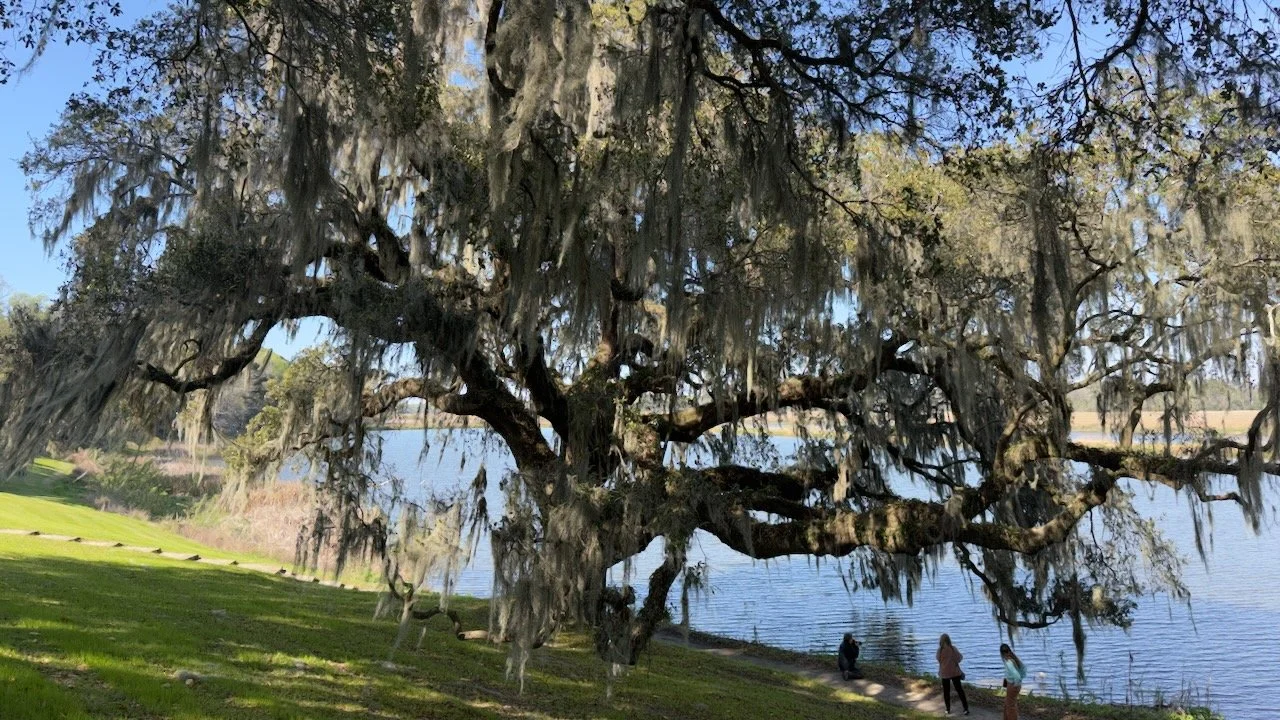
Middleton Place
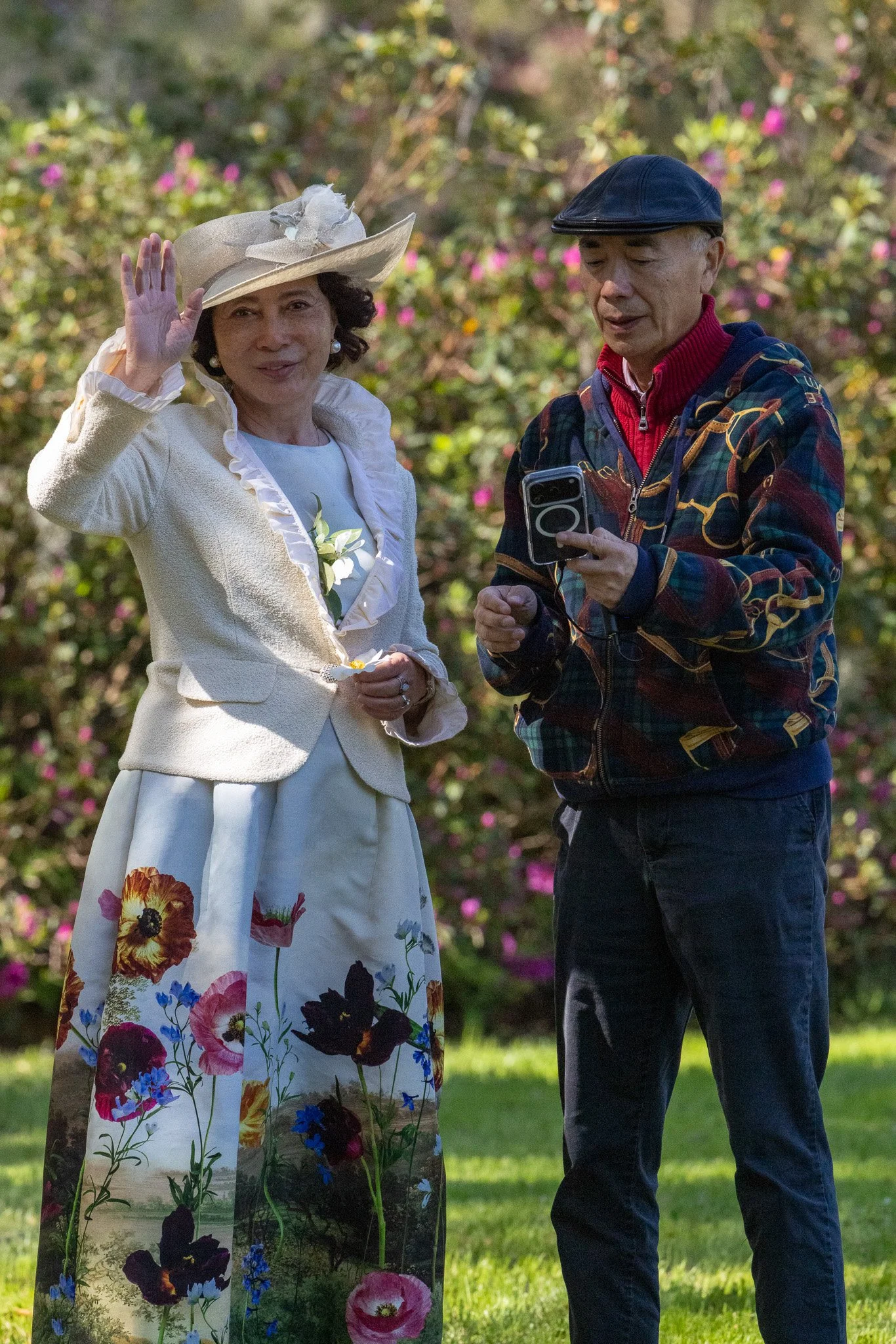
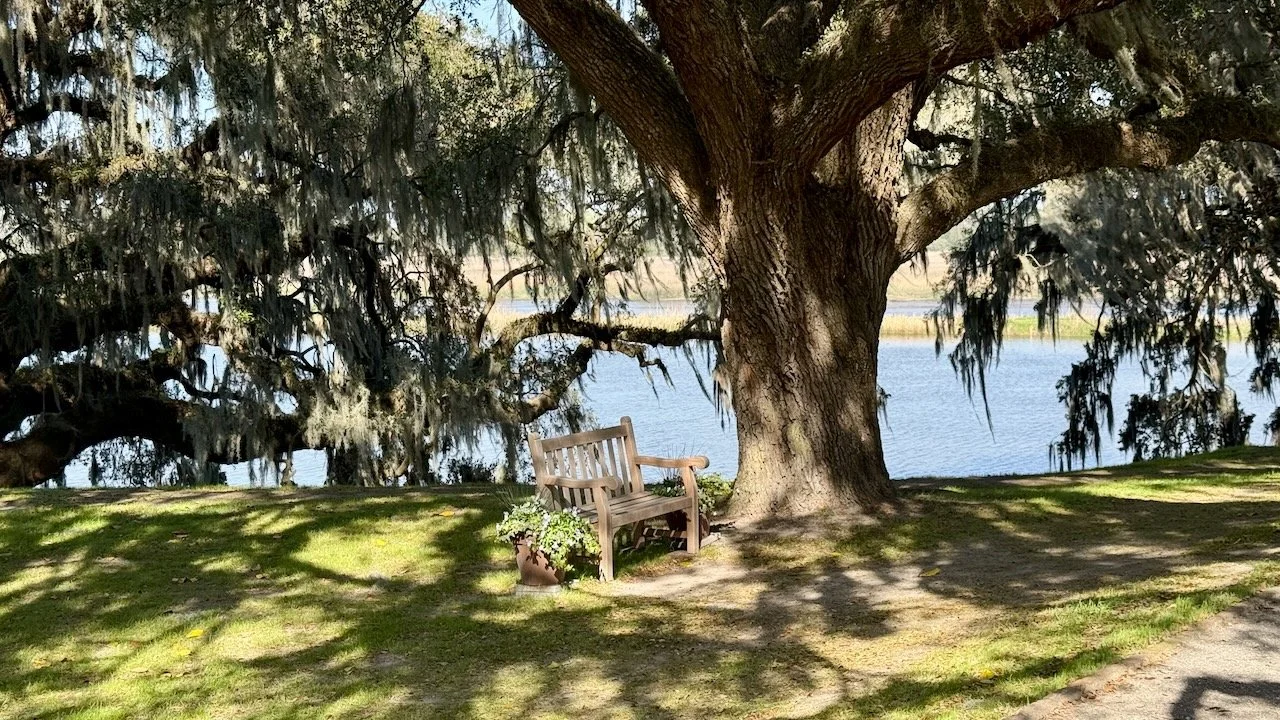
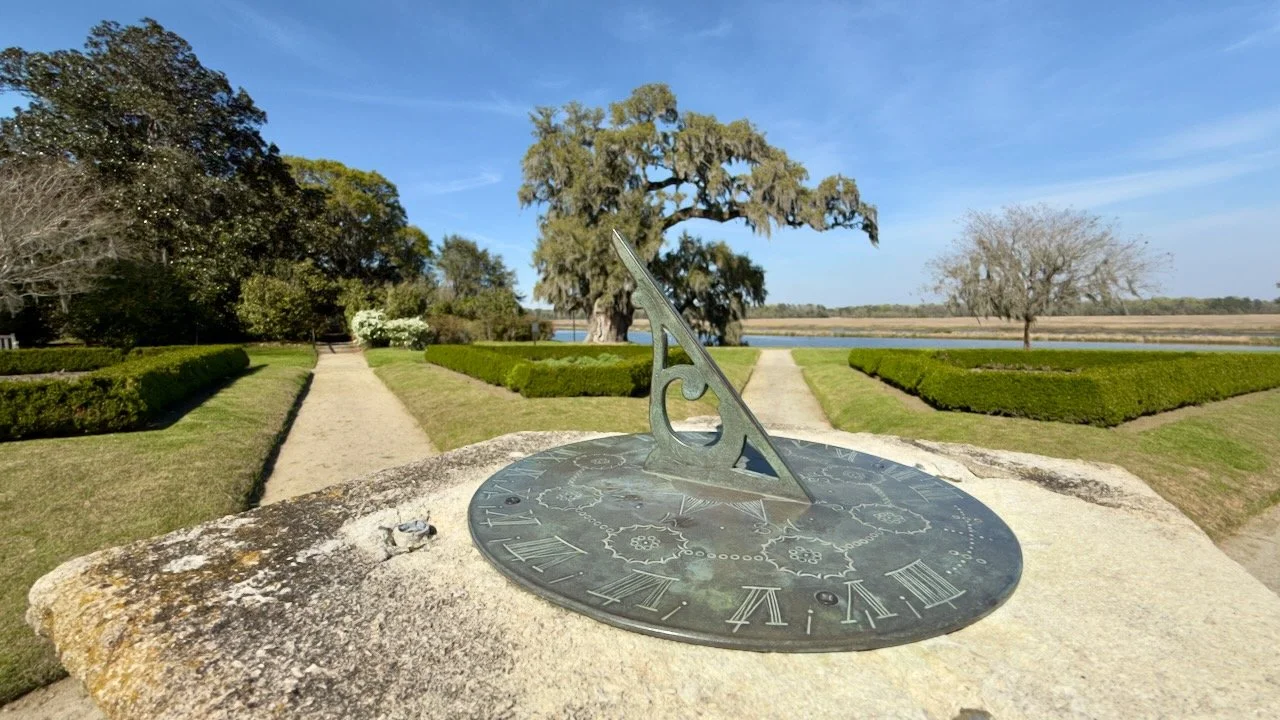
About 14 miles northwest of downtown on Ashley River Road, Middleton Place is America's oldest landscaped gardens, begun in 1741, and is a National Historic Landmark. The 110-acre property sits on the banks of the Ashley River and was home to Henry Middleton, President of the First Continental Congress, and his son Arthur, a signer of the Declaration of Independence. The gardens were designed with a formal European sensibility, with sweeping terraces, manicured parterres, and the iconic Butterfly Lakes, two small reflecting ponds shaped like a butterfly's open wings. Beyond the gardens, the property includes the House Museum, the Stableyards with heritage breed animals, and Eliza's House, which tells the stories of the enslaved people who built and maintained this place. The history here is layered and worth engaging with seriously.
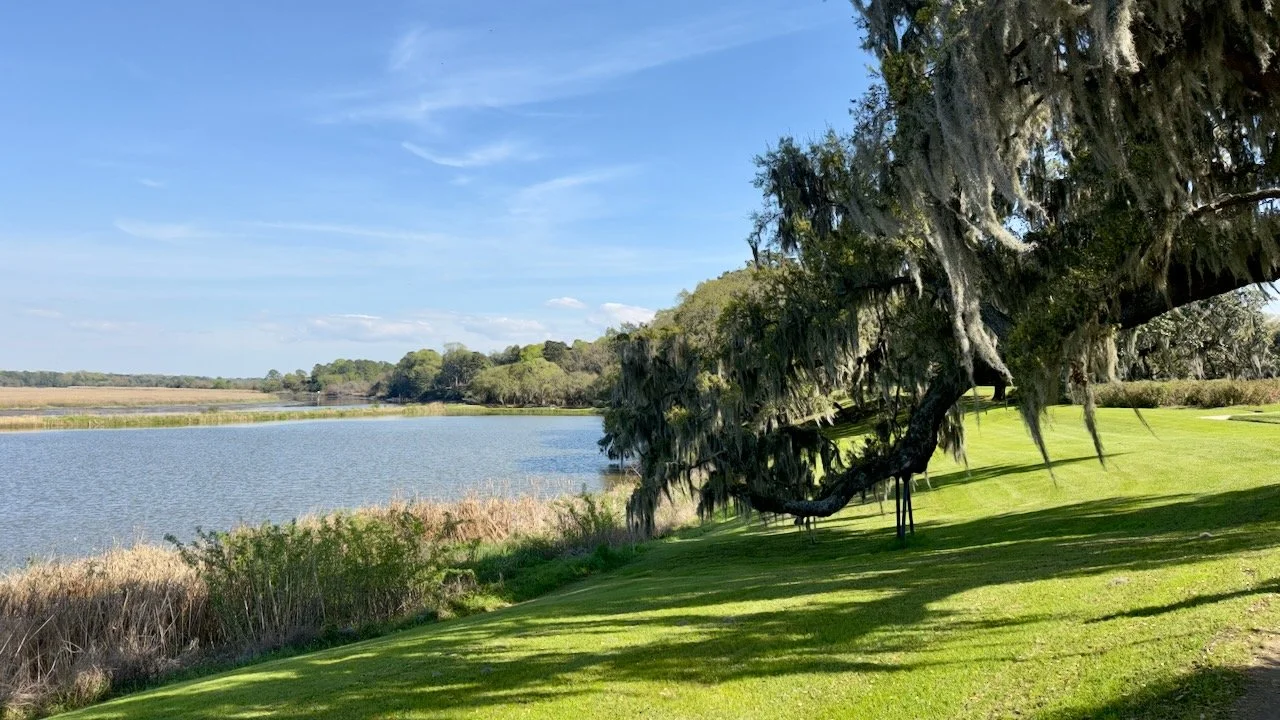
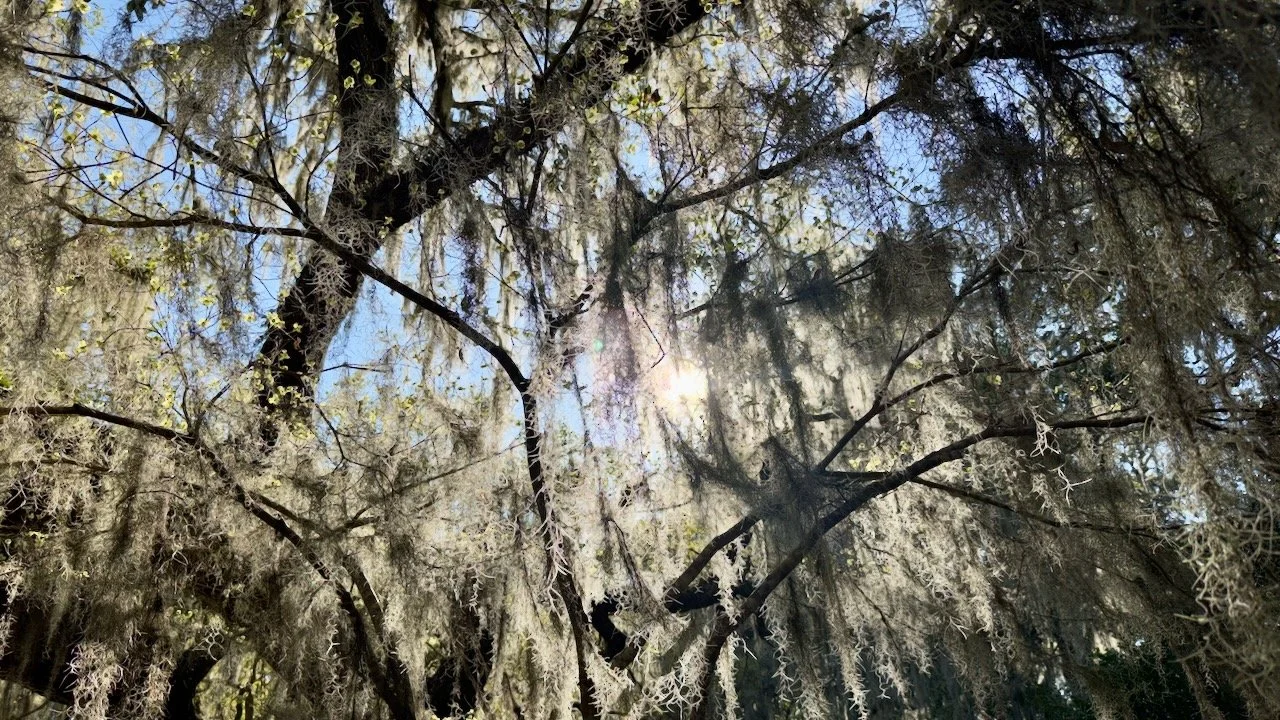
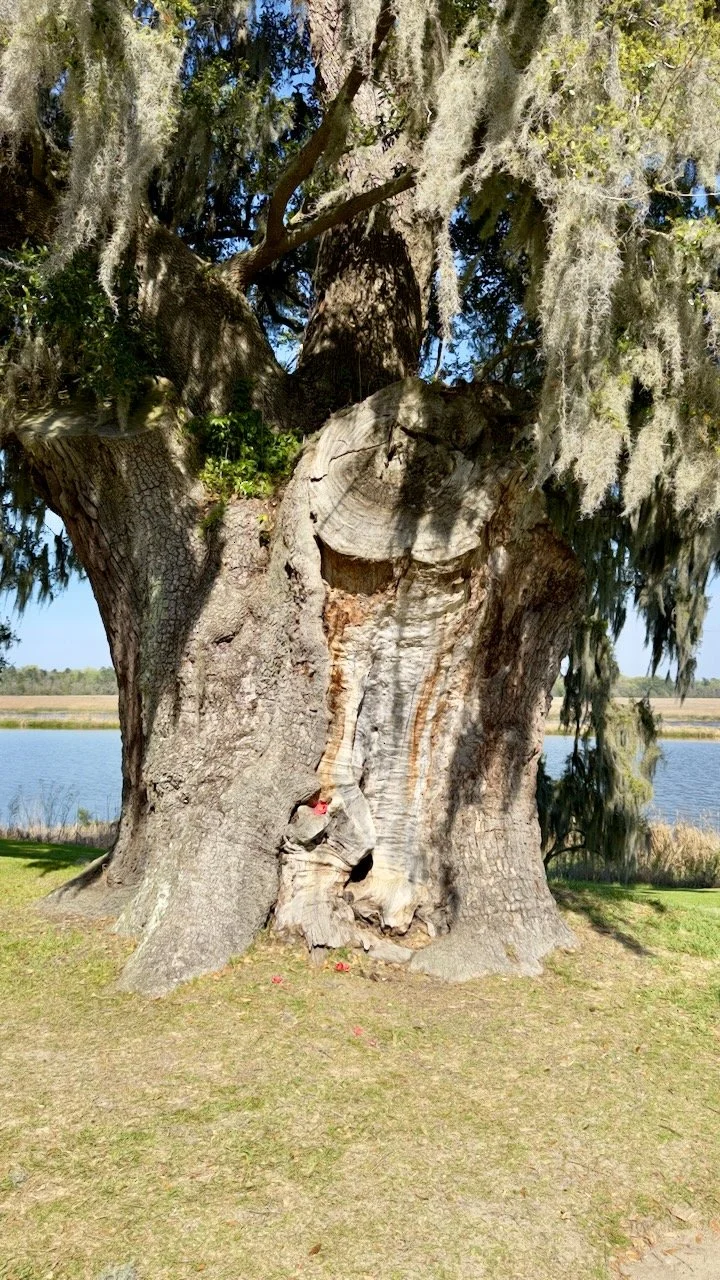
For photographers, Middleton Place delivers across every season. Camellias bloom through winter, azaleas blaze across the hillside above the Rice Mill Pond in spring, and the Middleton Oak, believed to be over 900 years old and draped in Spanish moss on the banks of the Ashley River, is one of the most extraordinary single subjects you will photograph in the entire Charleston region.
The French Huguenot Church
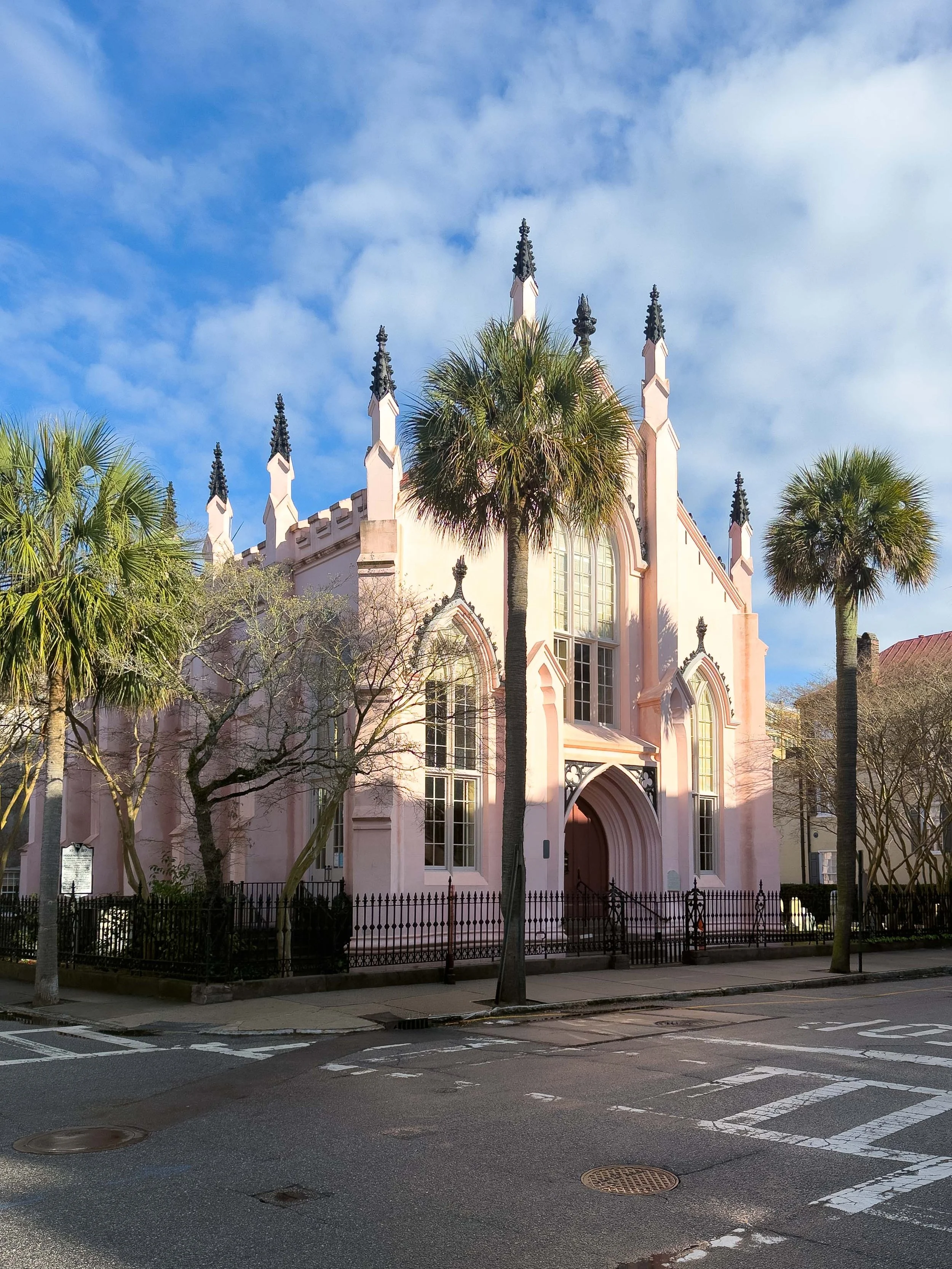
At the corner of Church and Queen Streets in the French Quarter, the French Huguenot Church is one of the most distinctive and photogenic buildings in all of Charleston. Built in 1845 and designed by architect Edward Brickell White, it was the first Gothic Revival building constructed in the city, and it remains a National Historic Landmark. The exterior is a soft, rose-tinted pink stucco over brick, scored to resemble stonework, with pointed arch windows, elaborate cast-iron pinnacles, and decorative crockets along the roofline. There is no other building quite like it in the neighborhood.
The congregation traces its origins to 1680, when 45 French Protestant Huguenots arrived in Charleston fleeing religious persecution after the revocation of the Edict of Nantes. It is the only independent Huguenot church remaining in the United States, and it still holds an annual service in French each April. The graveyard surrounding the church is equally atmospheric and full of remarkable old headstones.
Golden Hour
Philadelphia Alley
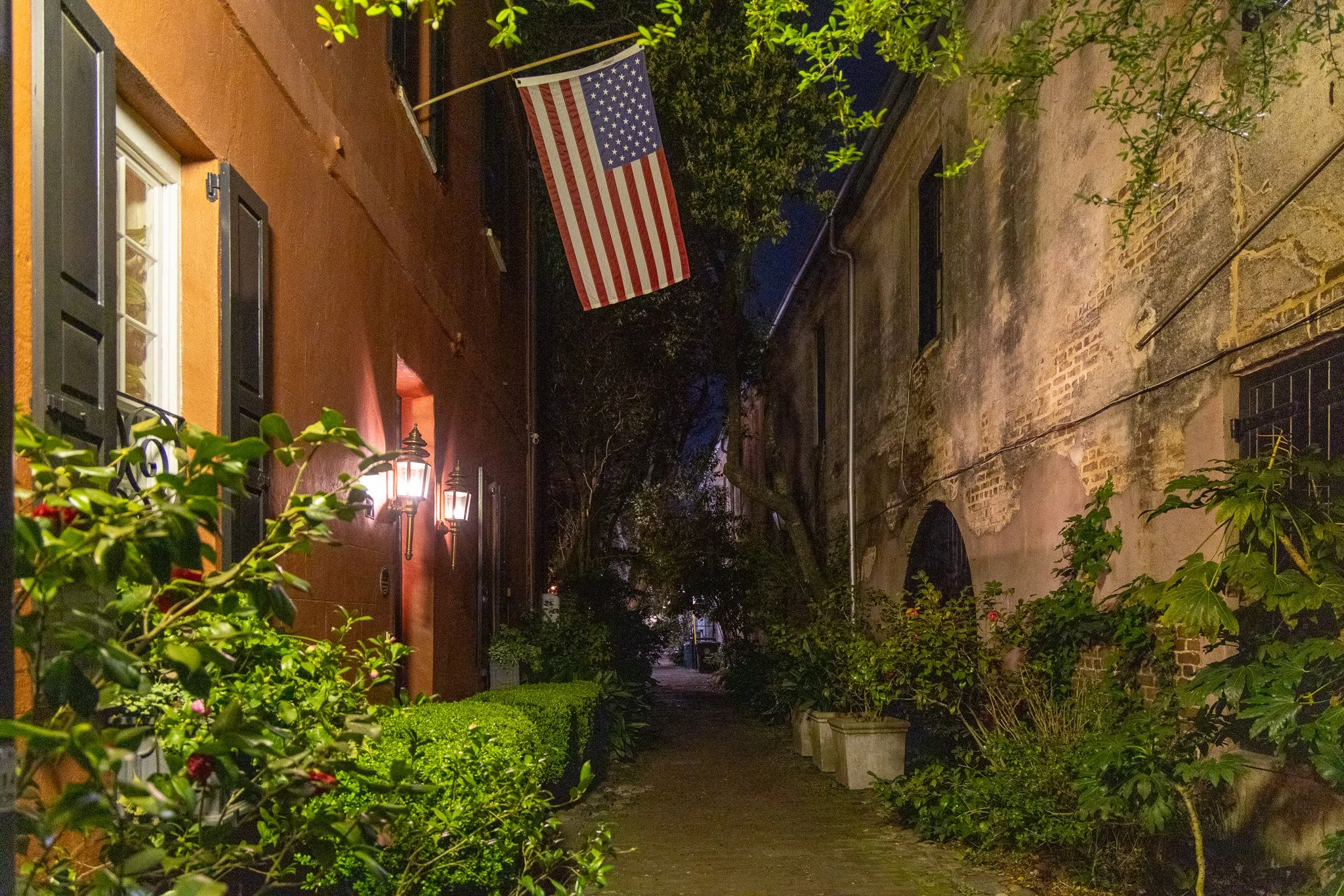
Tucked between Queen Street and Cumberland Street in the French Quarter, Philadelphia Alley is one of the most atmospheric and photogenic passages in all of Charleston. Most visitors walk right past it without noticing it, which is exactly what makes it so special. The alley runs parallel to Church Street and practically in the shadow of St. Philip's Church steeple, just steps from the French Huguenot Church. It is narrow, cobblestoned, ivy-draped, and lined with centuries-old brick walls that seem to absorb light differently depending on the time of day.
The history here is worth knowing. Originally called Kinloch Court, then Cow Alley, the passage earned its current name after two devastating fires swept through the neighborhood. The city of Philadelphia sent $8,000 in aid to help Charleston rebuild after the 1810 fire, and locals renamed the alley in gratitude for that generosity. Locals also know it as Dueler's Alley. More than twenty duels are said to have been fought here, including the most famous involving Dr. Joseph Brown Ladd, a young doctor known around the neighborhood for his constant cheerful whistling, who was fatally shot in 1786 in a pistol duel with a jealous rival. Ghost tour guides will tell you his whistling can still be heard in the alley at night. Whether you believe that or not, the atmosphere alone makes it easy to understand why people keep telling the story.
The Center for Birds of Prey
Located about 16 miles north of downtown Charleston on Highway 17 in Awendaw, the Center for Birds of Prey is one of the most remarkable and under-visited photography destinations in the entire region. This non-profit conservation facility houses nearly 50 species of eagles, falcons, hawks, owls, kites, and vultures from around the world, and they offer live flight demonstrations where birds fly free in the open air.
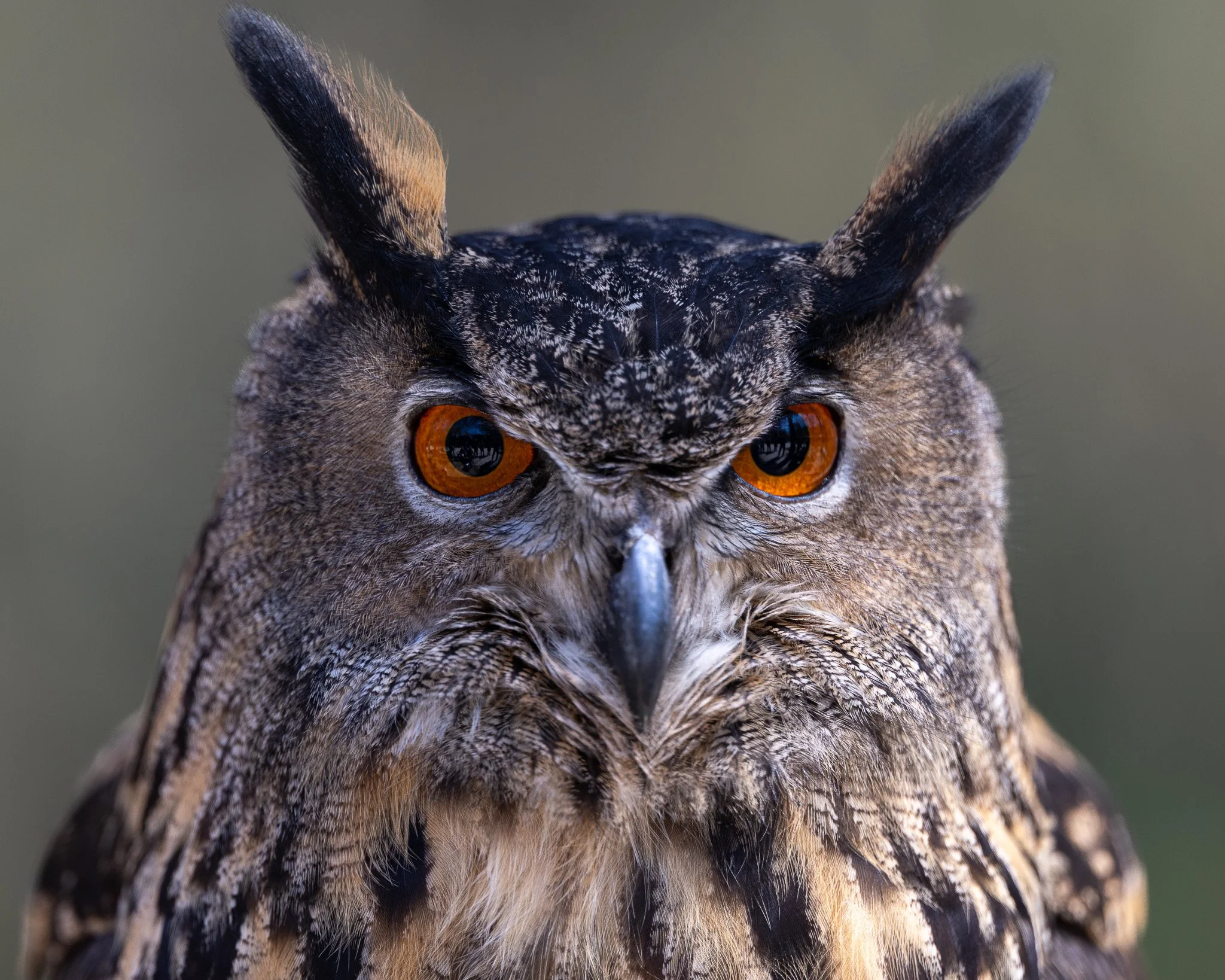
I have to be honest: this place is fantastic. Watching a bald eagle launch from a handler's glove and bank over a South Carolina sky with your camera at your eye is something you do not forget.
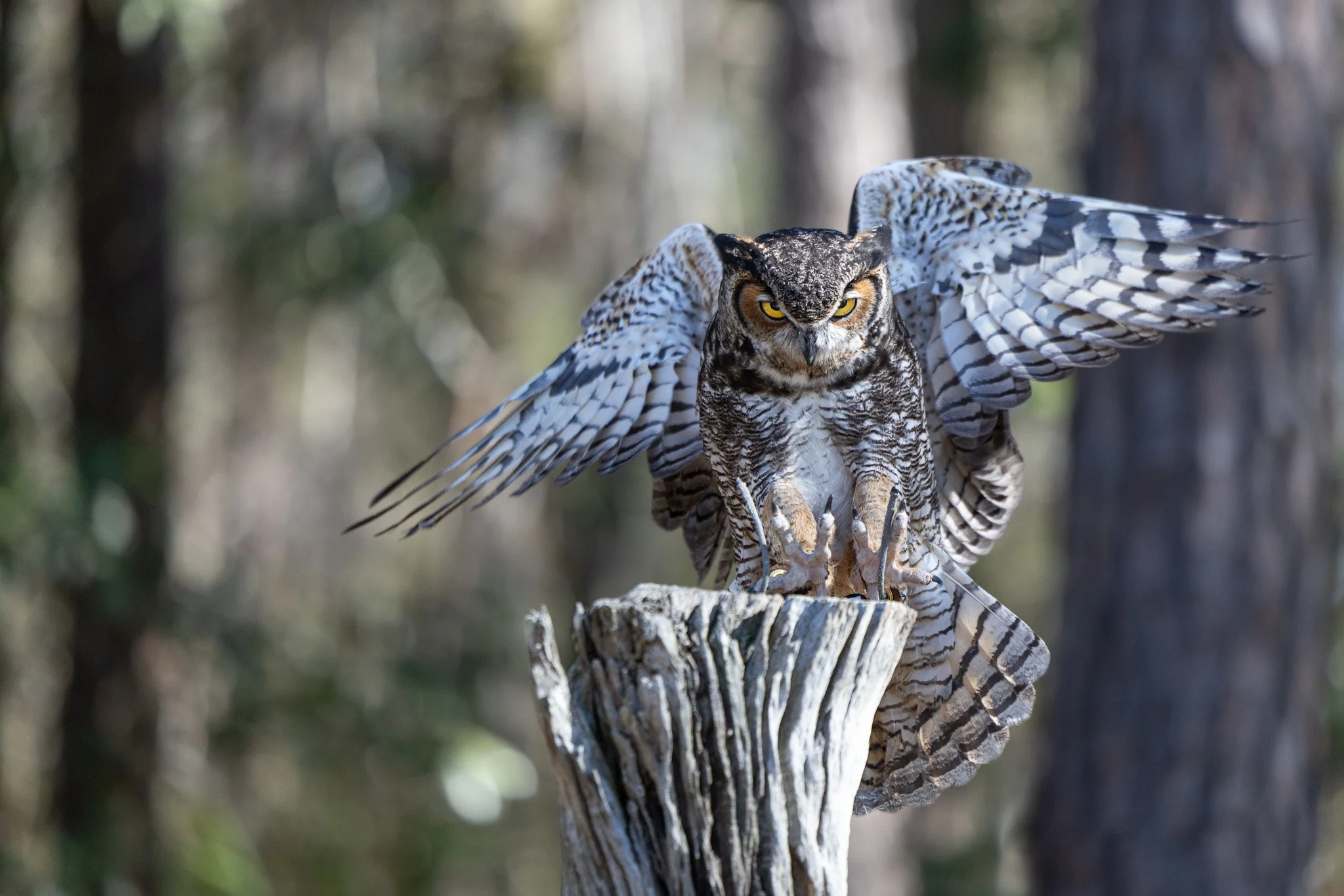
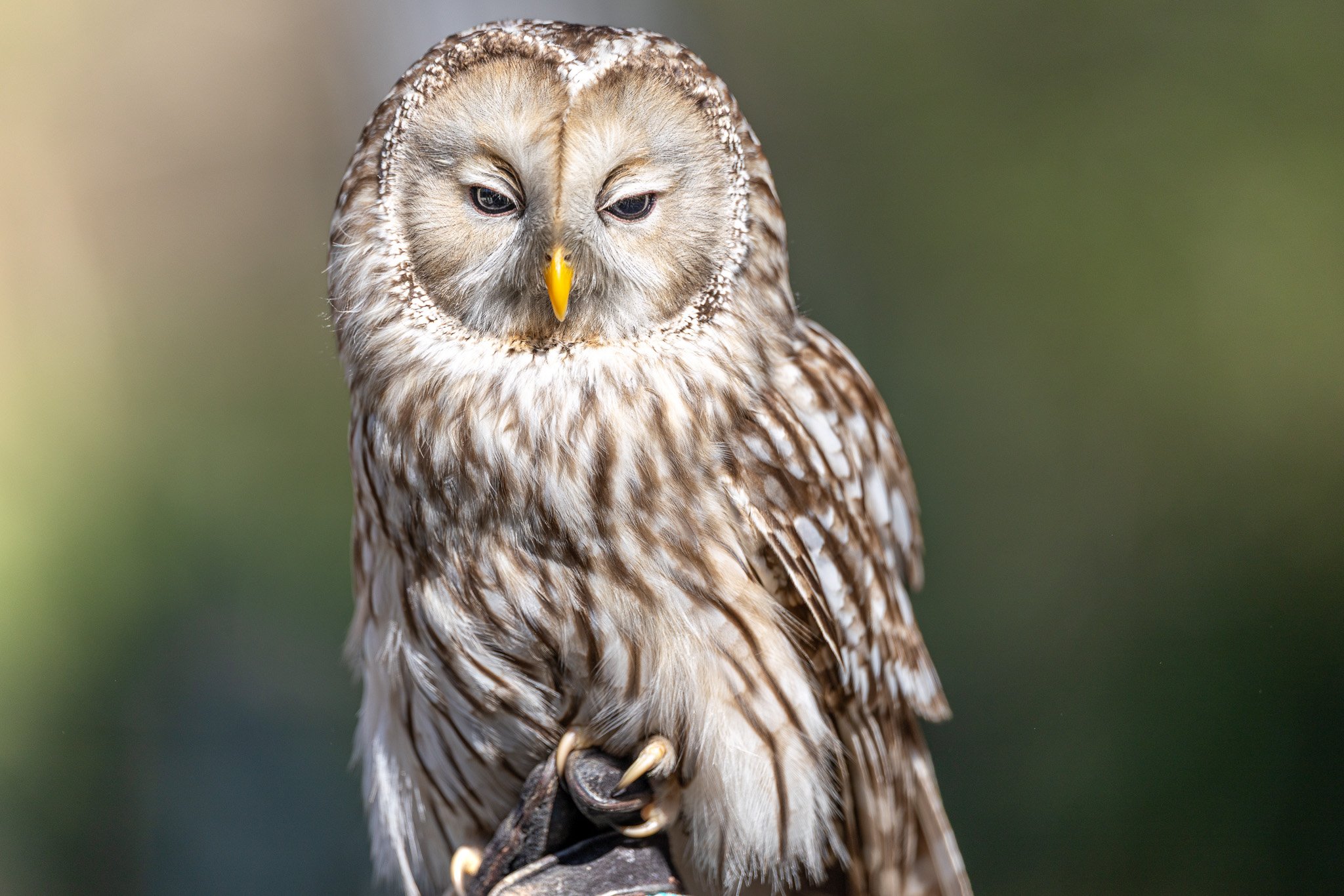
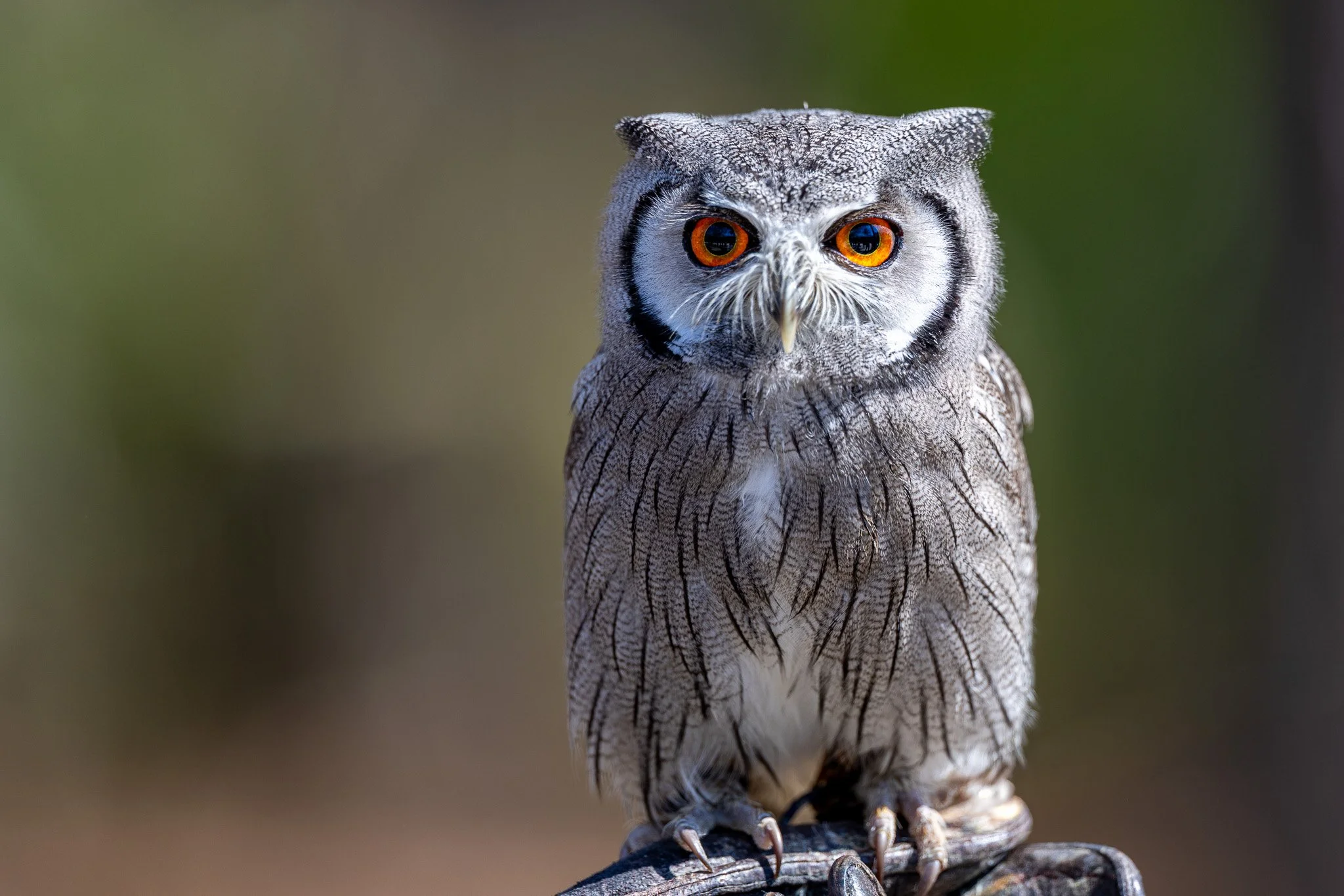
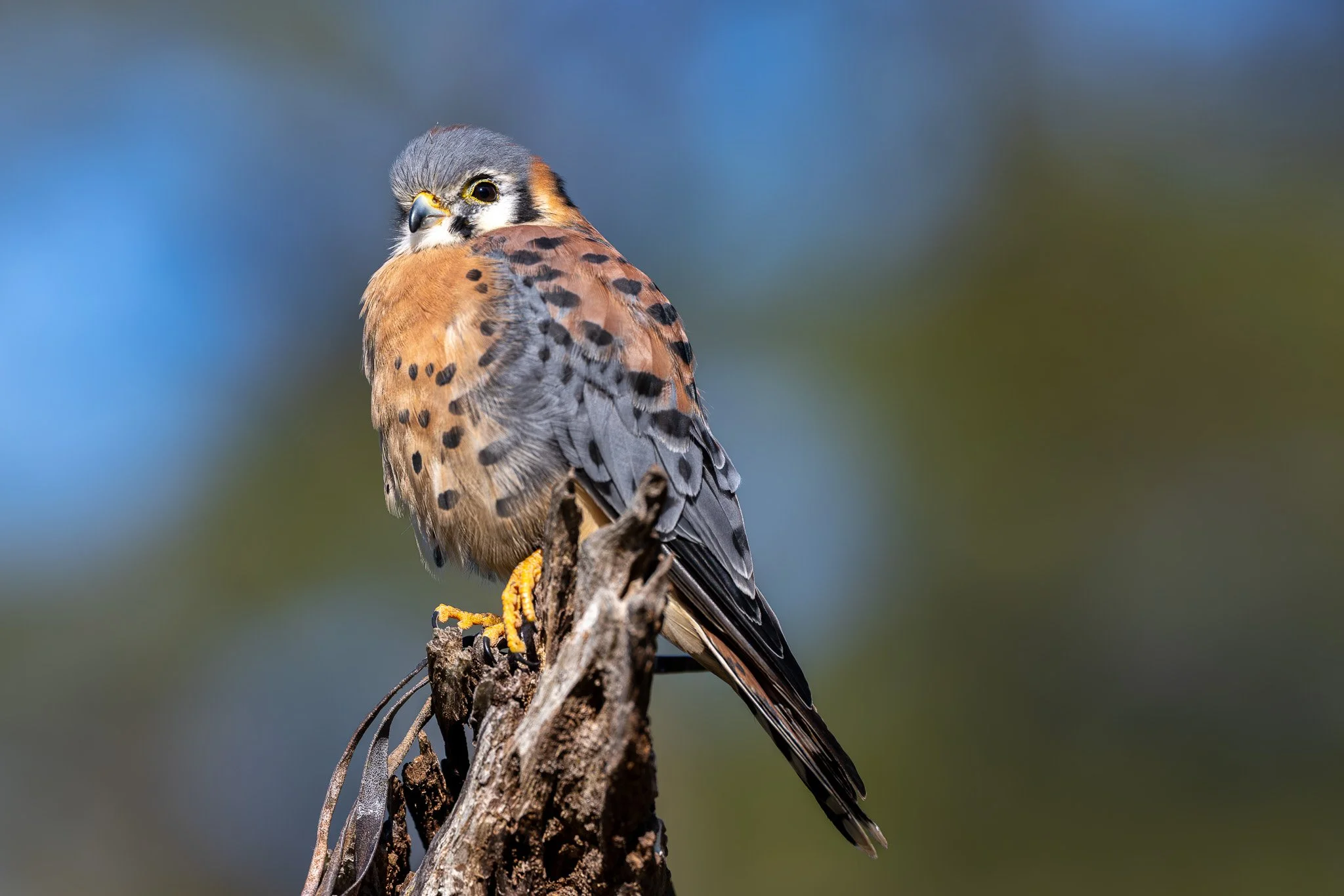
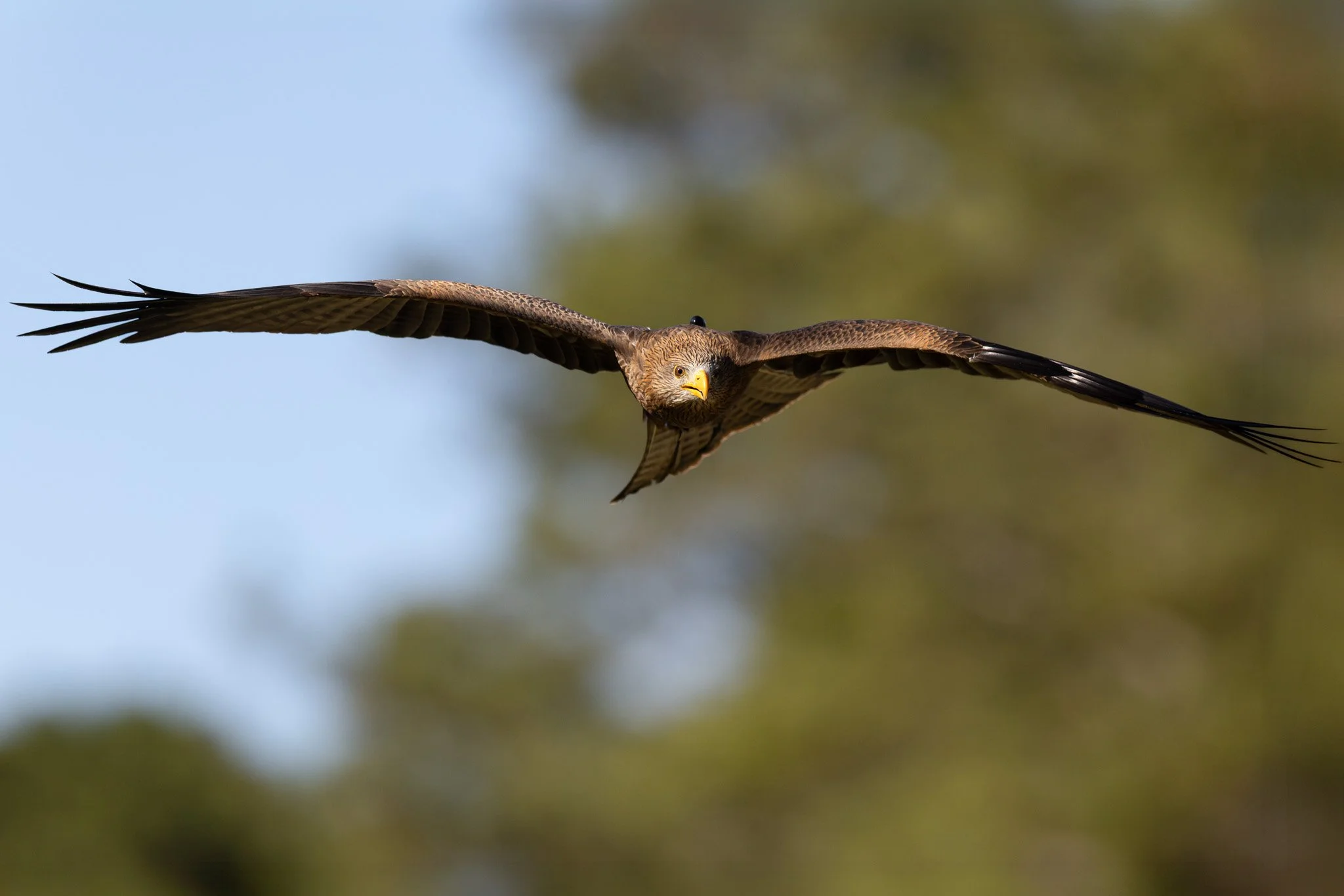
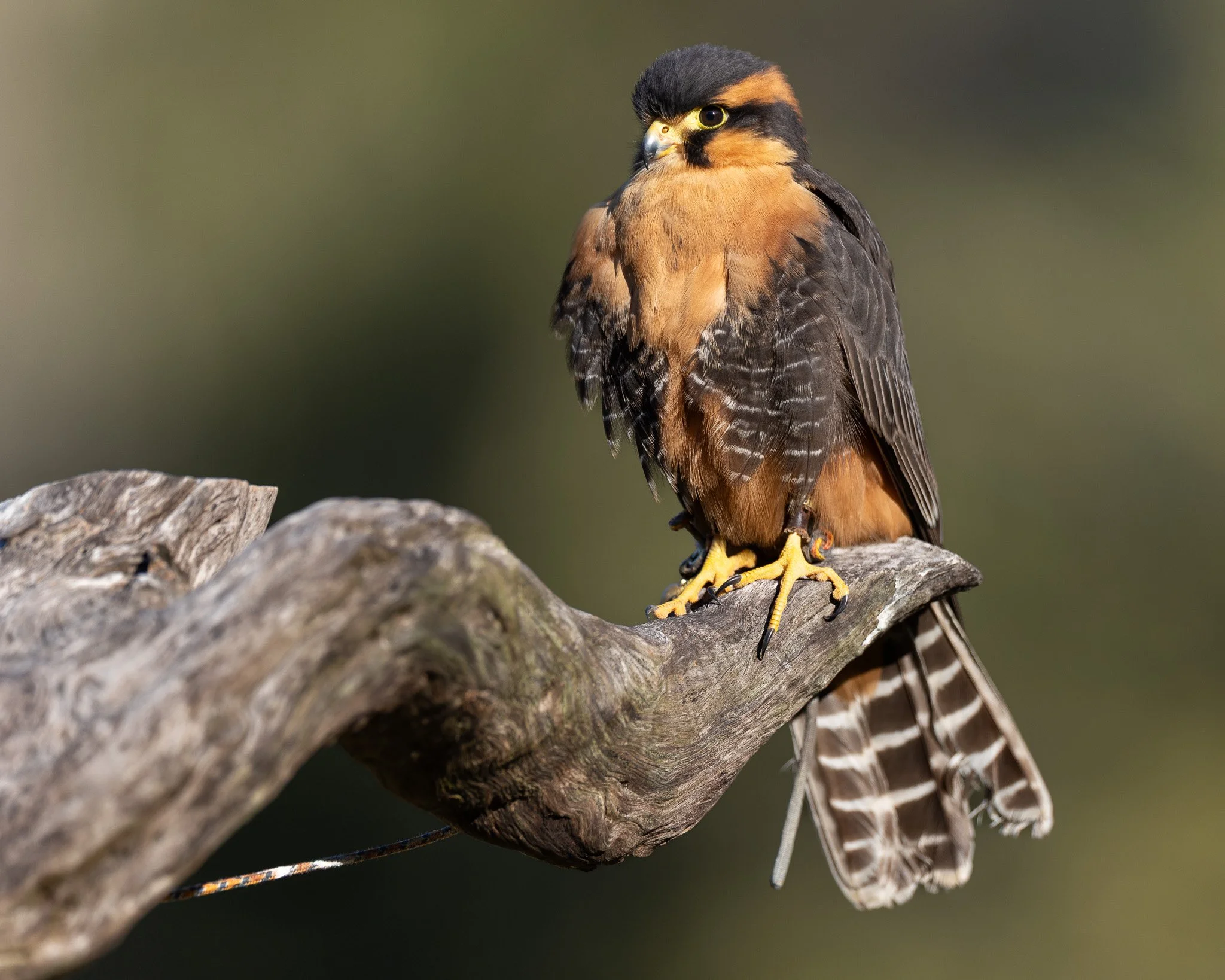
The campus includes beautifully designed outdoor aviaries, the two-acre Owl Wood with international owl species, and a 10:30 a.m. flight demonstration program that runs Thursday through Saturday. They also offer dedicated photography days with extended access and smaller groups, which is the way to go if wildlife photography is your priority.
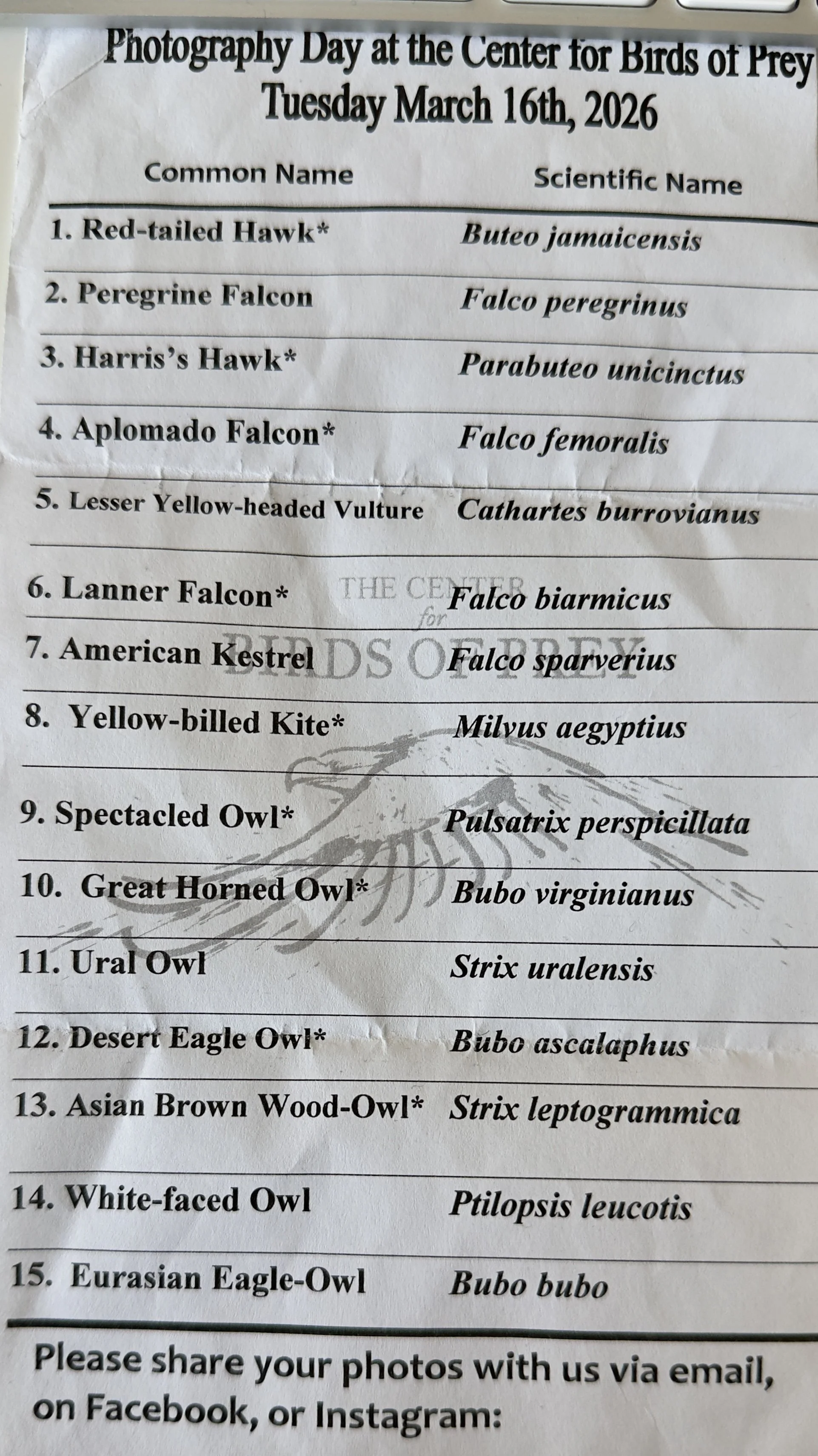
They even gave us a list of the birds we photographed
Pro Tip: The flight demonstrations are the main event for photographers. Birds fly free and unscripted, so you want to reach. A 100-400mm is the minimum I would recommend, and a 400mm or 600mm prime will give you the best results when an eagle is banking hard against an open sky. Set your camera to continuous autofocus with burst mode and dial your shutter speed to at least 1/1000 sec to keep wings sharp. Arrive at opening and attend the full demonstration before the guided tour. The handlers are generous with positioning and patient with photographers. Visit their website in advance to check the schedule and book photography-specific sessions when available.
Festivals & Events
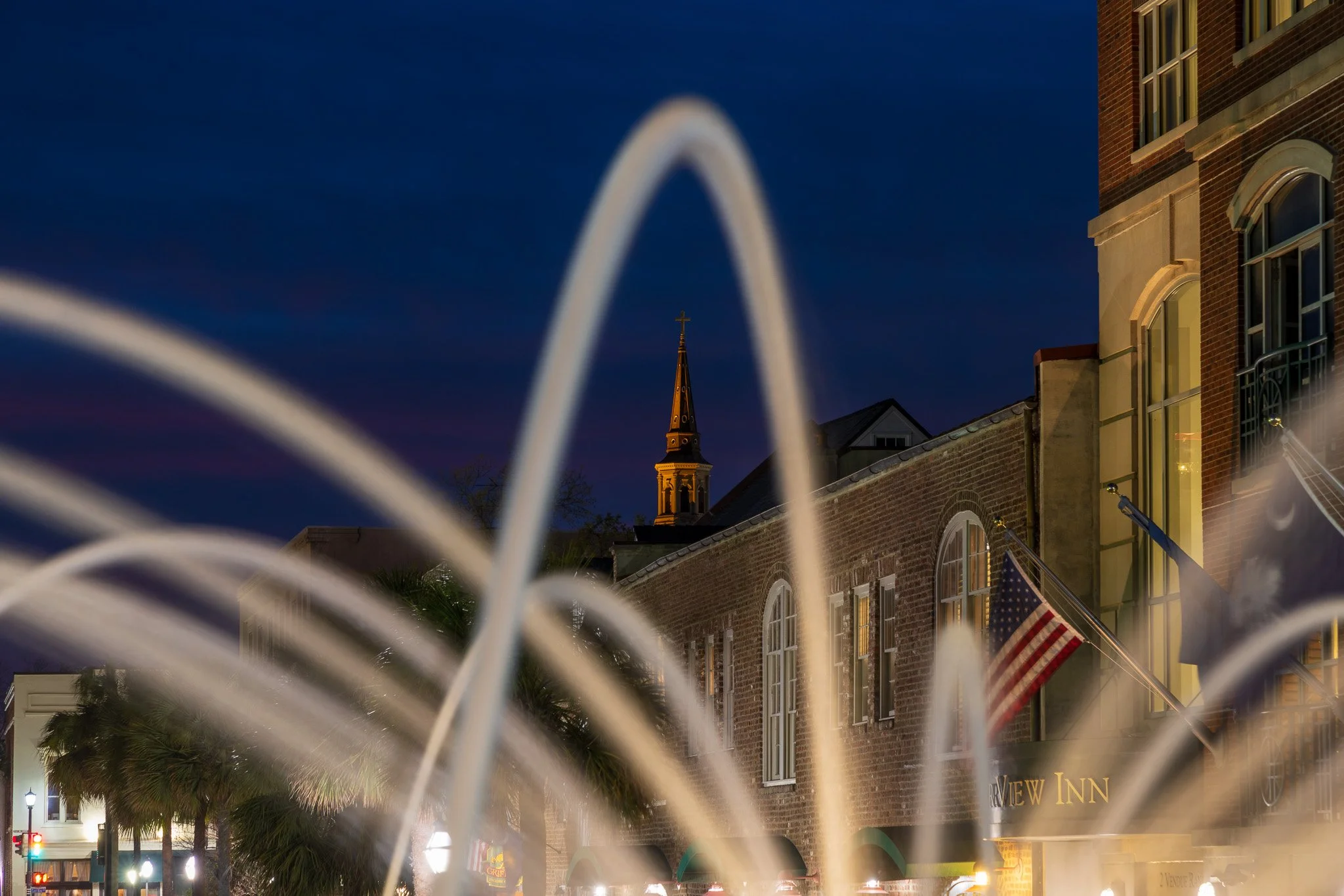
Sunset by the Spider Fountain
MOJA Arts Festival (October): A two-week celebration of African and Caribbean heritage through visual arts, dance, music, and film. The street events and performances are excellent for candid and documentary photography. The energy is infectious. Approach performers and participants with respect and ask before shooting close-up portraits.
Spoleto Festival USA (May to June): One of the most prestigious arts festivals in the country, held over 17 days each spring. Opera, theater, dance, and contemporary music take over venues across the city. The atmosphere on the streets during Spoleto is electric, with outdoor performances and gatherings everywhere. Great for environmental and crowd photography.
Charleston Food & Wine Festival (February to March): A city-wide celebration of Lowcountry cuisine with outdoor markets, pop-up dinners, and tasting events. The visual richness of the food, the vendors, and the market settings makes for excellent editorial-style photography. The morning Grand Tasting events are particularly photogenic.
St. Patrick's Day in Charleston (March): Charleston has a lively St. Patrick's Day celebration centered around King Street and Marion Square. The combination of green-clad crowds, historic architecture, and mid-March light makes for colorful street photography. Arrive early to get clean shots of the decorated city before the crowds fully fill in.
Azalea Season at the Plantations (March to April): This is not technically a festival, but it functions like one. When the azaleas peak at Magnolia Plantation, Middleton Place, and Cypress Gardens, photographers travel from across the country specifically for this bloom. It lasts roughly three to four weeks. Check local bloom reports before booking your trip.
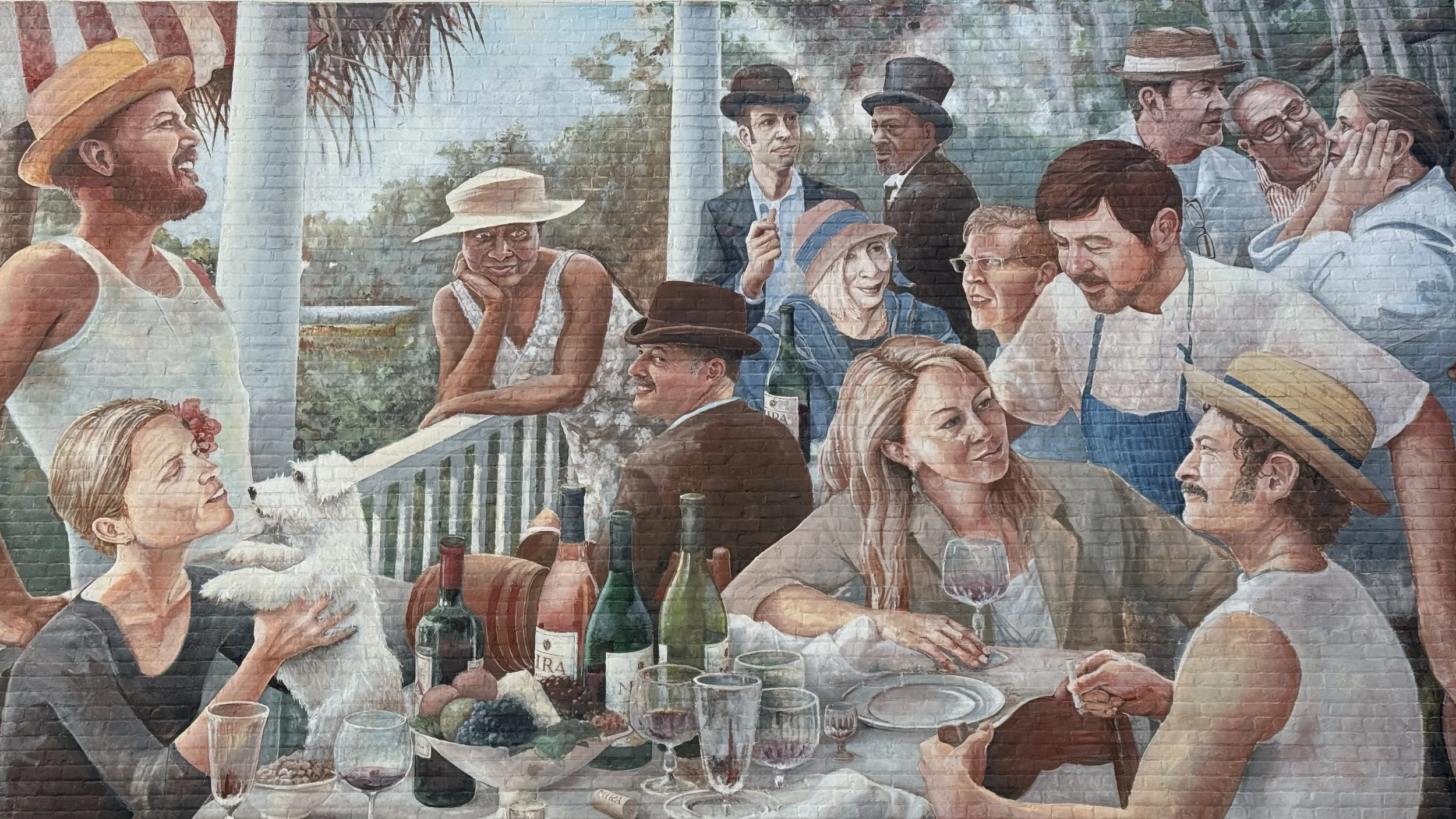
Charleston Mural by the Mills Hotel
Final Thoughts
I will be honest with you. Charleston exceeded every expectation I had going in, and that almost never happens. It is one of those rare cities that is genuinely better than advertised. The food scene is world-class, the history is everywhere you look, the photography opportunities are endless, and the people are some of the kindest you will meet anywhere in the country. That combination is harder to find than you think.
Walking through Charleston reminded me of strolling through Old Town Alexandria, Virginia, or the streets of Georgetown in Washington, DC. That same feeling of a city that has held onto its character without freezing in time. History and energy live side by side. Restaurants and coffee shops are worth lingering in. Streets are worth getting lost on.
If you go expecting a pretty Southern city with some good food, you will come home surprised by how much more it is. There is real depth here, real warmth, and more to photograph than you can cover in a single trip. That is always the sign of a great destination.
Come in the spring. Walk slowly. Eat well. Shoot everything. And when you leave, you will already be thinking about when you can come back.
If you are interested in joining one of my photography workshops, you can find the details through the link. You can also follow along on Instagram, Facebook, or subscribe to my newsletter for more travel photography tips and behind-the-scenes insight.
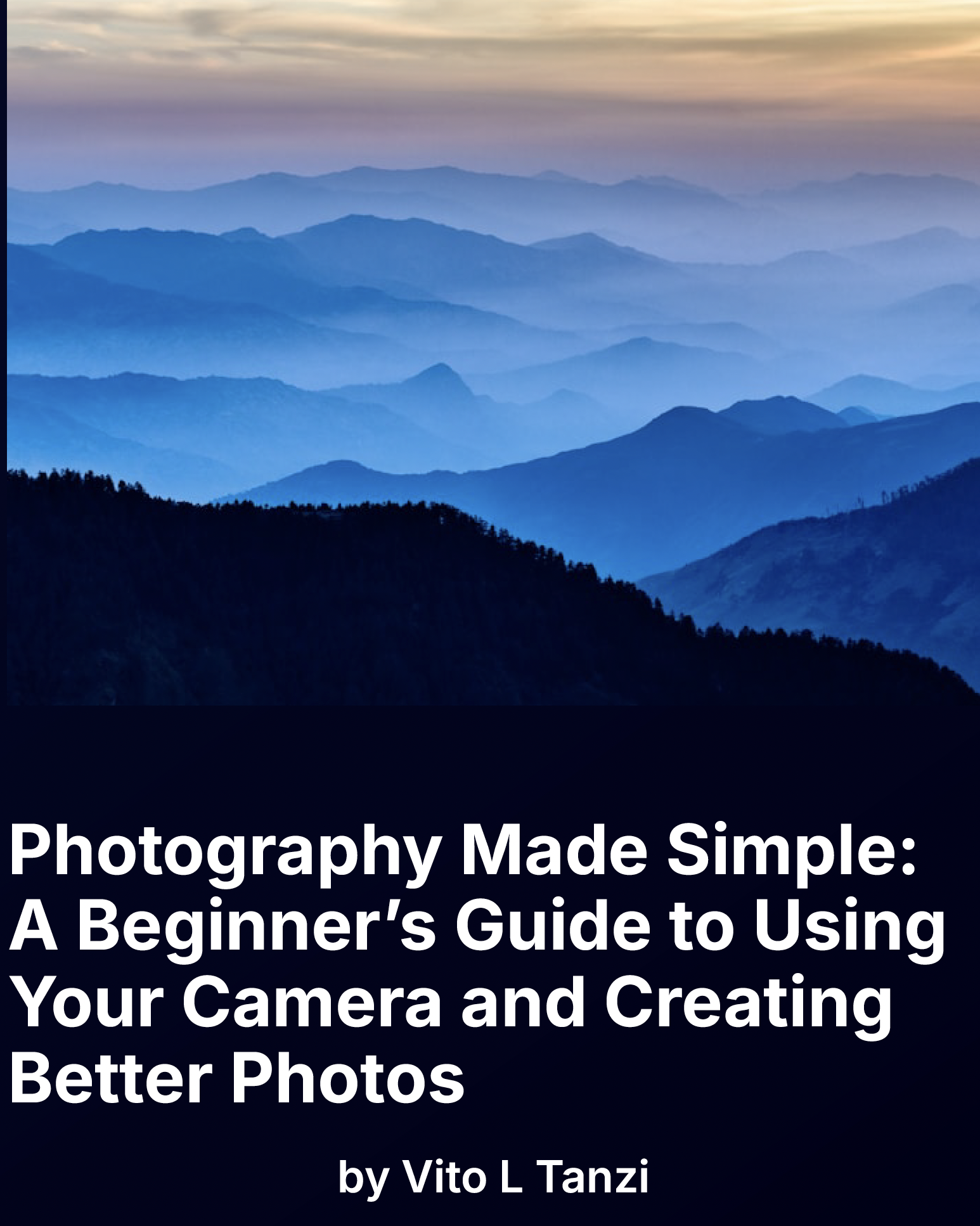
Finally—a beginner-friendly photography guide that makes sense.
If you've ever picked up a camera and thought, "Now what?" this is the book for you.
Photography Made Simple is written for adults who are just starting out and want a clear, encouraging, real-world approach to learning photography. Whether you're using a DSLR, mirrorless, or just your smartphone, this guide walks you through the basics—without the jargon or tech overwhelm.
Inside, you'll learn:
The only camera settings you really need to know to get started
How to shoot sharper, more intentional photos using light and composition
Simple tips for portraits, landscapes, travel, and everyday life
What gear you do (and don’t) need
How to create better photos without upgrading your camera
You’ll also get practical exercises, cheat sheets, and tips for organizing and editing your images—plus the confidence to shoot off Auto Mode for good.
This is not a textbook. It’s a friendly guide to seeing the world with fresh eyes—and finally capturing what you see the way you imagine it.
📸 Format: PDF download
Pages: 100+
Perfect for: Beginners, hobbyists, and anyone ready to take better photos without the stress