My Photography & Travel Guide to Hong Kong
I still remember my first night in Hong Kong, walking the overpasses above Connaught Road with traffic streaming below and crowds of people moving in every direction, heading to dinner, catching the ferry, making their way up to meet friends at Victoria Harbour. The energy was electric. I had my camera in my hand and I did not know where to point it first.
What I love most about this city is that it never slows down long enough for you to get comfortable. The moment you think you have figured out a block, the light changes, a tram passes, a fruit vendor wheels out a cart, and you have a completely different photograph. I have come back here more times than I can count, and I still feel that same charge the moment I walk outside with my camera.
Then the sun goes down and the city transforms entirely. The skyline lights up across Victoria Harbour, neon signs reflect off wet pavement, and the energy on the streets somehow gets louder rather than quieter. Hong Kong at night is one of the great photography experiences in the world. Every corner feels like it was made to be photographed.
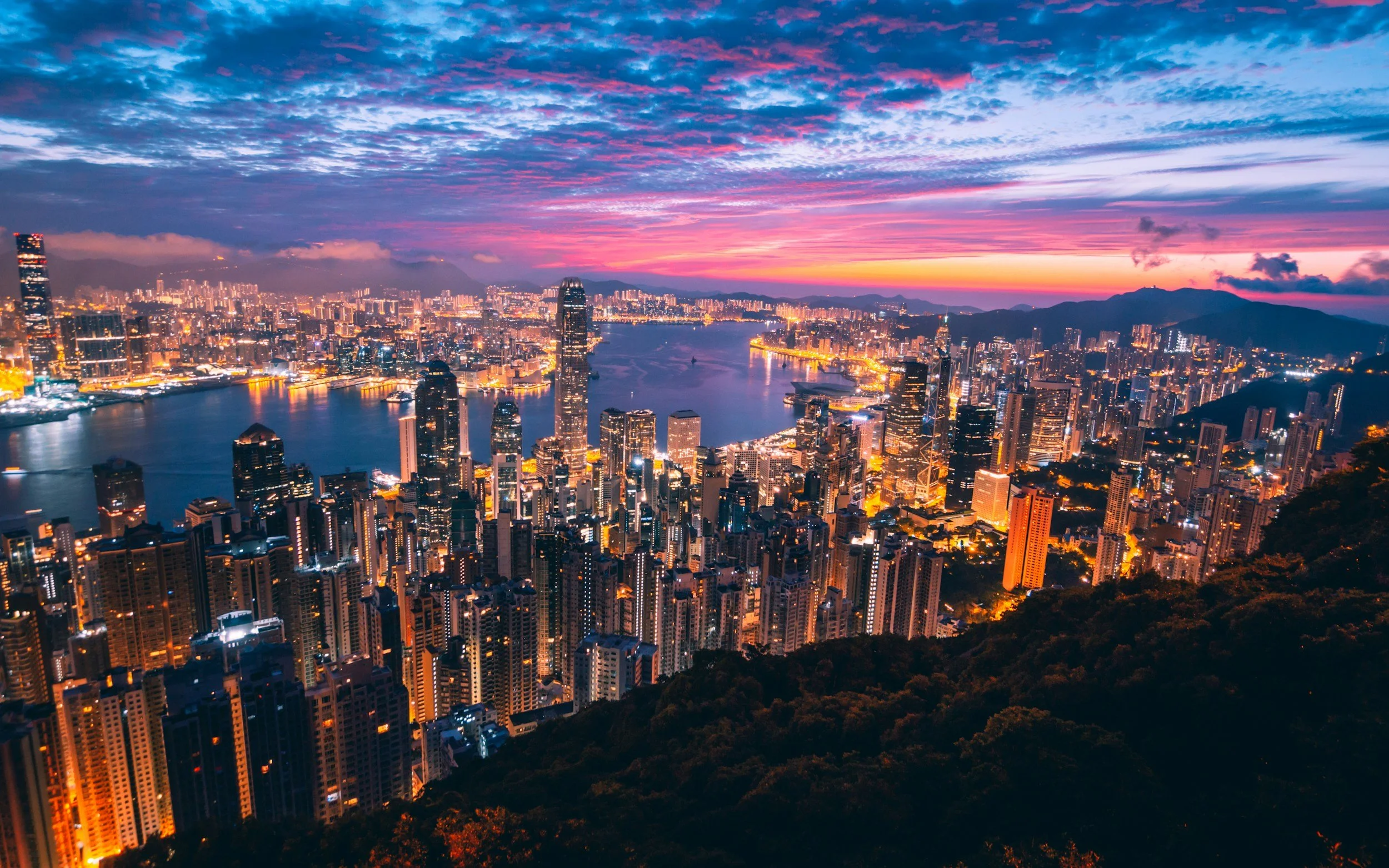
The View from Victoria Harbour
What keeps drawing me back is the variety. In a single afternoon, you can shoot the chaos of a wet market, the quiet smoke of a 170-year-old temple, the impossible geometry of a housing estate painted in pastel rainbow colors, and a harbor view that rivals anything on the planet. Hong Kong rewards curiosity and timing.
In this Photography Guide to Hong Kong, I share the places and experiences that continue to draw me back. You will find my favorite photography locations, guidance on when and where to shoot, practical travel tips, and gear recommendations, along with cultural insights to help you explore and photograph Hong Kong with confidence, respect, and ease.
Where to Stay in Hong Kong
Best Neighborhoods for Photographers
Central is polished, vertical, and fast-moving. Skyscrapers rise straight from the pavement, and reflections shift by the minute. Early mornings are especially rewarding when first light hits the glass towers, and the streets briefly belong to you. From here, you are steps from the Star Ferry, the trams, and the elevated walkways that create strong leading lines.
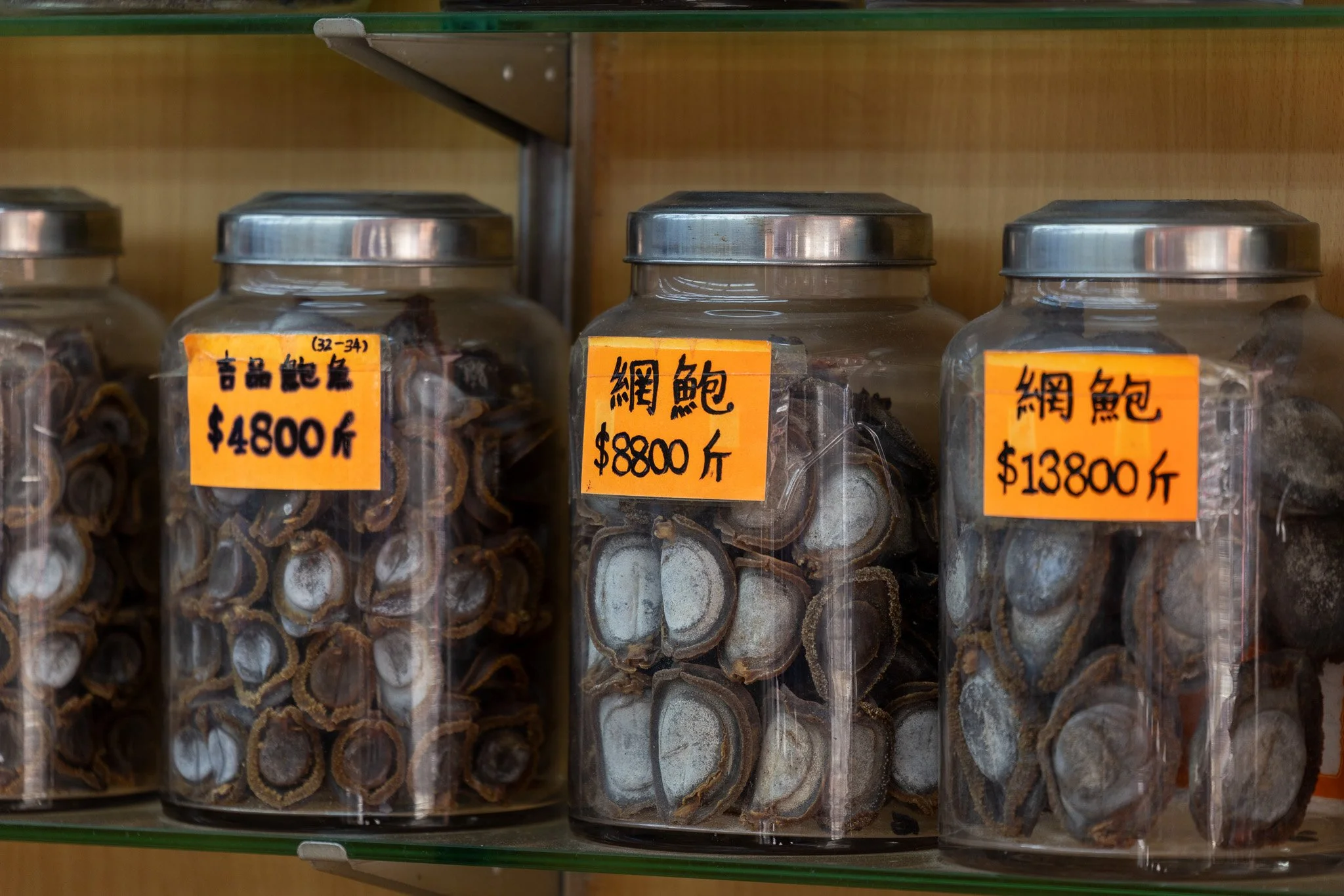
Sheung Wan is where I return most often. It feels layered rather than curated. Traditional medicine shops sit beside minimalist cafés. Man Mo Temple releases incense into the narrow streets. Textures are everywhere: peeling paint, tiled façades, stacked signage. It photographs well all day, especially mid-morning when angled light begins to carve depth into the streets.
Tsim Sha Tsui is chosen for one reason above all else: proximity to Victoria Harbour. The skyline views toward Hong Kong Island remain timeless at dawn and blue hour. Kowloon feels more kinetic and grounded than the Island. Street life is constant. Neon and reflections dominate after dark.
Hong Kong Island feels vertical and refined. Kowloon feels energetic and textured. Both reward you differently.
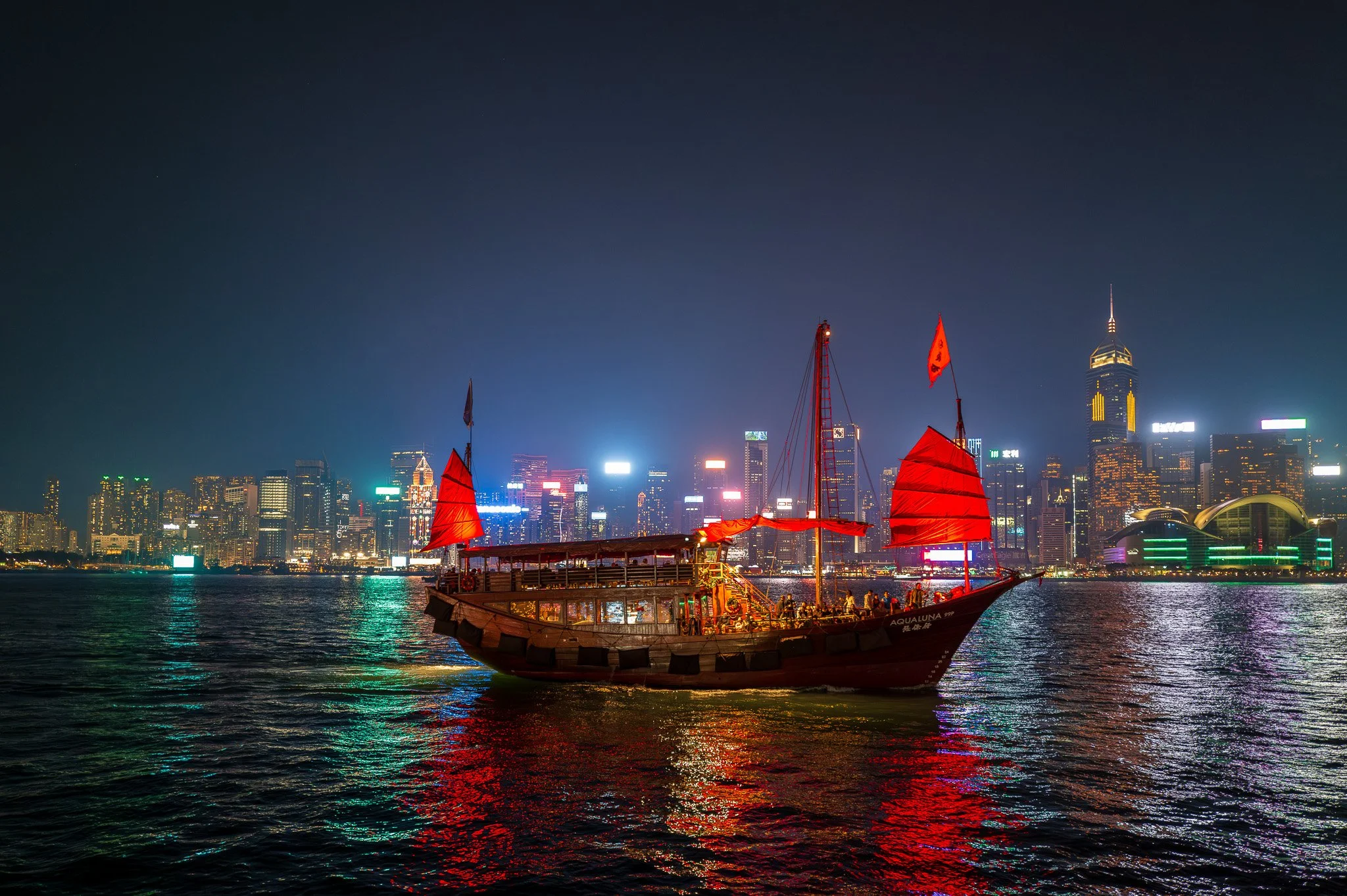
Blue Hour on the Harbor
Hotels I Would Choose Again
Four Seasons Hotel Hong Kong (8 Finance Street, Central) — Sitting directly on Victoria Harbour in the heart of Central, the Four Seasons is as much a photography destination as it is a hotel. Floor-to-ceiling windows frame panoramic views of the harbor, Kowloon, and the Peak from almost every room. The sunrise along the waterfront here is consistently strong, especially on humid mornings when haze softens the contrast. It also holds more Michelin stars under one roof than any other hotel in the city, including the world's first three-Michelin-star Chinese restaurant, Lung King Heen. The location is unbeatable: steps from the Star Ferry, the IFC, and immediate access to Central's streets the moment you walk out the door.
Rosewood Hong Kong (Victoria Dockside, 18 Salisbury Road, Tsim Sha Tsui) — The Rosewood is the Kowloon waterfront's most impressive modern statement. Soaring 270 meters above Victoria Harbour, this 413-room flagship has some of the largest windows in Hong Kong, with views that take in the harbor, the skyline, and Kowloon Peak simultaneously. The art collection inside rivals a small gallery, with works by Damien Hirst and Henry Moore throughout the public spaces. Blue hour from the Asaya infinity pool is as good a photography moment as you will find anywhere in the city without a tripod. The bar DarkSide is a regular on Asia's 50 Best Bars list and earns every mention.
Mandarin Oriental, Hong Kong (5 Connaught Road, Central) — Opened in 1963, this is the original power address in Central. Politicians, financiers, and visiting heads of state have all passed through here. The design leans traditional, and that is part of the appeal. It feels grounded in the city's history rather than chasing trends. You step outside, and you are immediately in the density of Central. Trams, elevated walkways, reflections off mirrored towers, everything is within minutes. For early morning street photography, this is one of the easiest bases in the city.
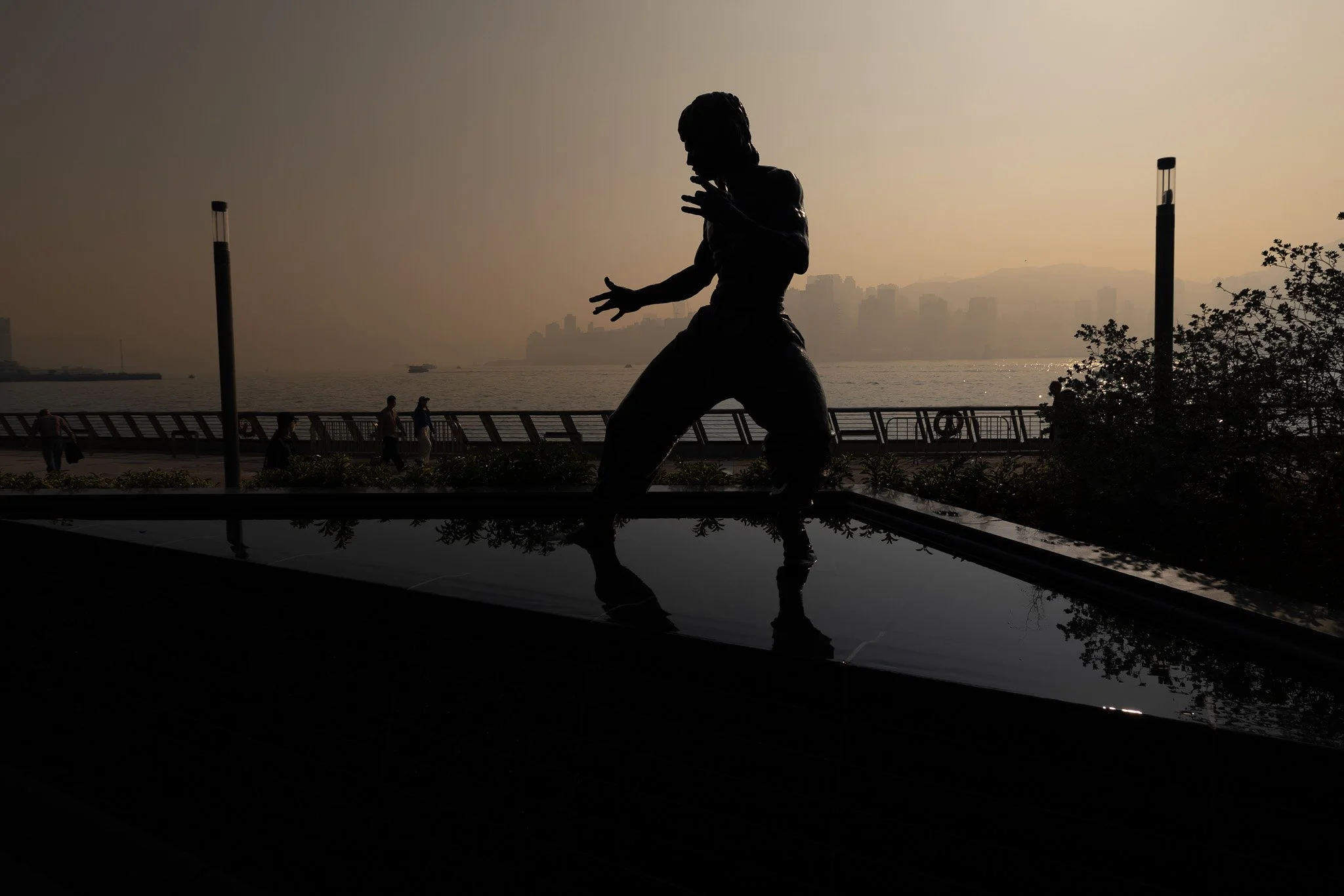
Bruce Lee Statue
A Relaxed Photography Itinerary for Hong Kong
Four to five days gives you space. Space to shoot at dawn without rushing breakfast. Space to revisit a location when the light improves. Space to let Hong Kong unfold rather than chase it.
If you plan to include Lantau or the outlying islands, add a fifth day.
Day One: Victoria Harbour and Central
Begin at dawn along the Tsim Sha Tsui Promenade. The skyline across Victoria Harbour gradually separates from the haze, and the water reflects the first hints of warmth. Arrive before sunrise. The transition is the moment.
Mid-morning, ride the Star Ferry. Not for transport, but for perspective. Stand on the lower deck. Frame through the railings. Let the skyline compress behind passing boats.
Spend the afternoon in Central. Elevated walkways create strong leading lines. Reflections shift constantly on mirrored towers. Return to the harbor for blue hour. This is when Hong Kong becomes luminous rather than bright.
Day Two: Sheung Wan and Man Mo Temple
Start early in Sheung Wan. Shopkeepers lift metal shutters. Deliveries move through narrow lanes. Light stays soft and directional.
Visit Man Mo Temple before midday. Incense coils hang overhead, and shafts of light cut through the smoke if you are lucky. Shoot patiently. This is not a fast location.
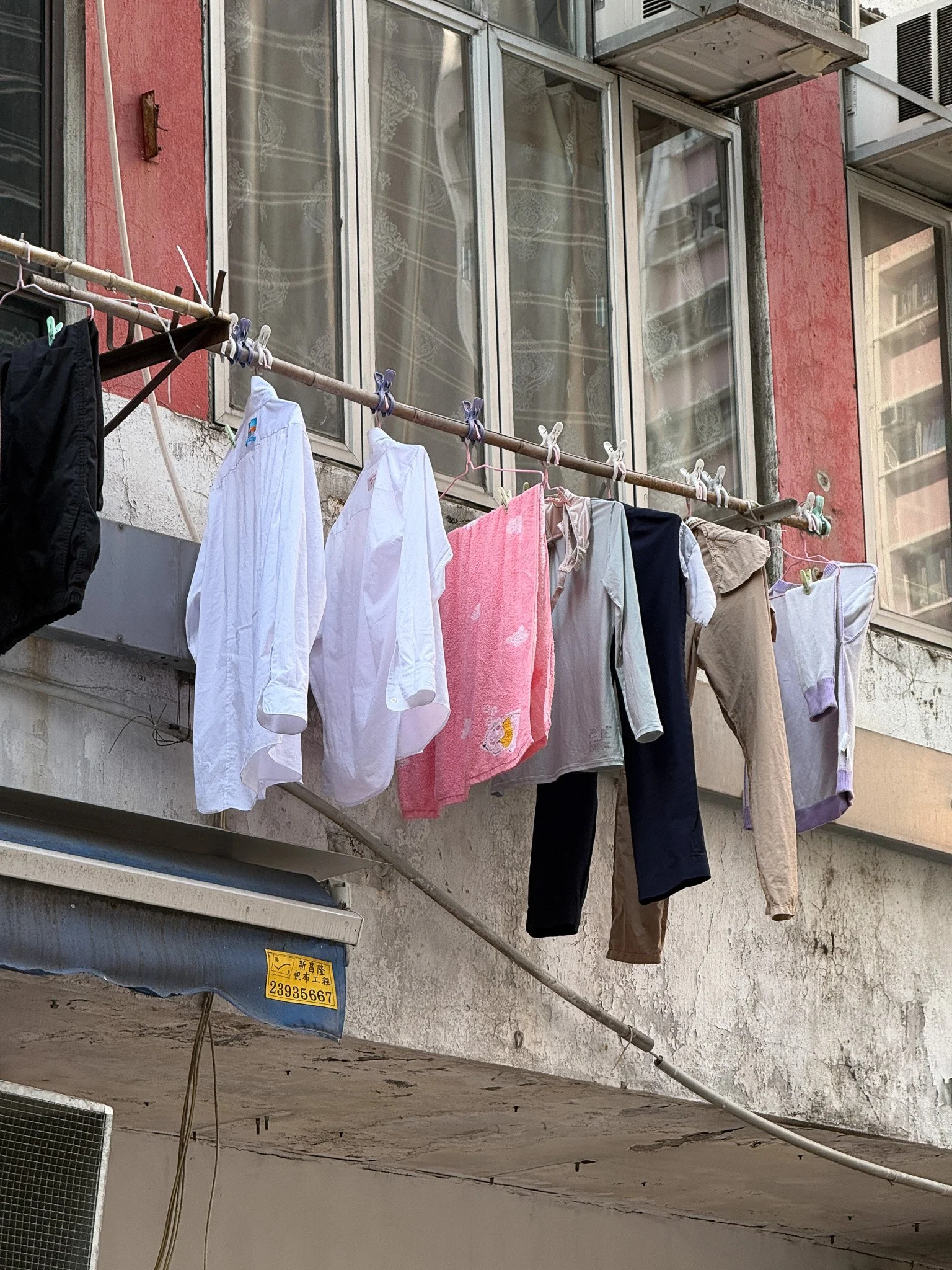
Let the afternoon drift through side streets and small cafés. Look up. Laundry, signage, balconies, layers.
Return in the evening. Neon reflections and tram lights transform the same streets into something entirely different.
Day Three: Kowloon After Dark
Keep the morning unstructured. Edit. Walk slowly. Hong Kong photography can be intense. You need pauses.
After sunset, cross into Kowloon. Temple Street Night Market builds gradually. Neon signs flicker on. Steam rises from food stalls.
Work the edges, not the center. Layer foreground silhouettes against light. Let movement blur slightly. Kowloon rewards patience more than speed.
Day Four: Victoria Peak and Everyday Hong Kong
Arrive at Victoria Peak before the first tour groups. Use longer focal lengths to compress the skyline and harbor into graphic patterns. Wide lenses work, but compression often feels stronger here.
Later, explore Sham Shui Po or Choi Hung Estate. These neighborhoods reveal everyday Hong Kong. Color blocks, basketball courts, stacked apartments, and small hardware shops. Less polished. More intimate.
Optional Day Five: The Islands
Slow the pace. Consider Tai O, with its stilt houses and quiet waterways, or Cheung Chau for coastal light and fishing village atmosphere. The rhythm shifts. So should your shooting style.
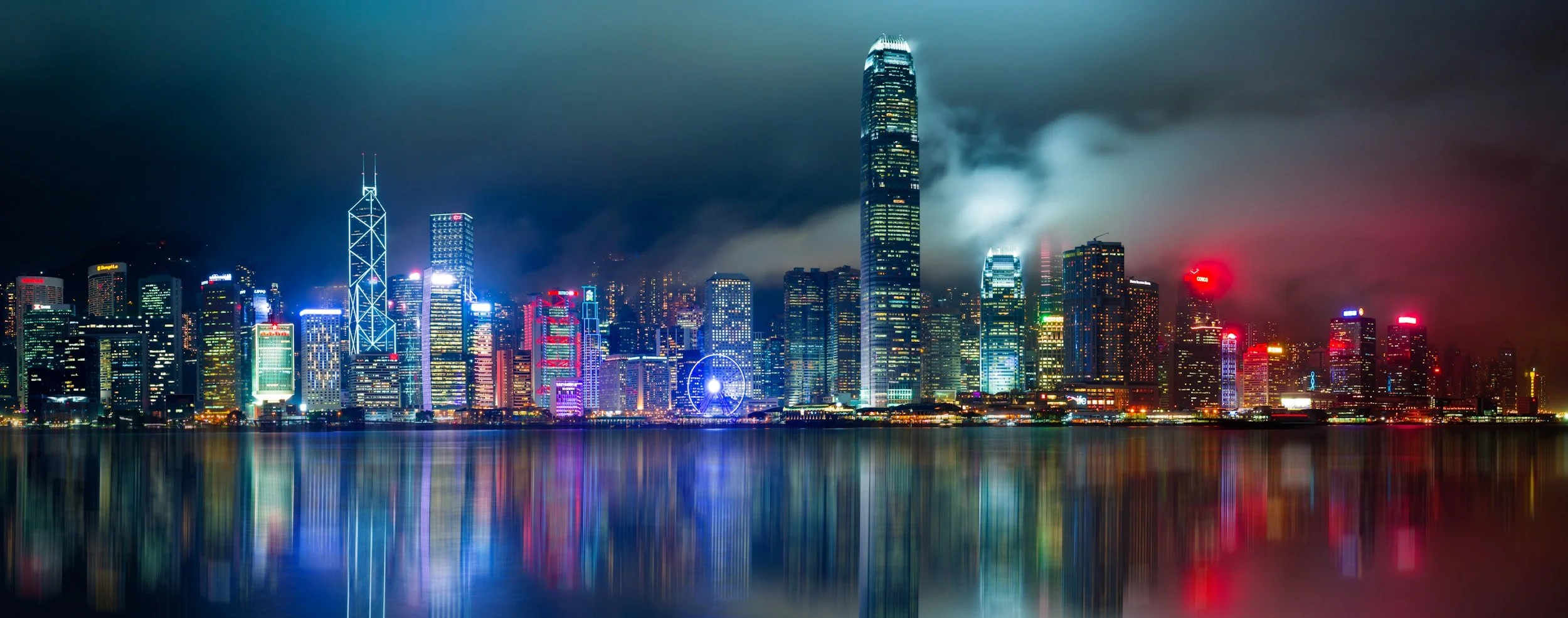
A Long Exposure after Sunset
Best Time to Visit Hong Kong
Hong Kong is photogenic year-round, but light quality makes all the difference.
January and February bring cooler temperatures and lower humidity. Chinese New Year falls in this window and is one of the most spectacular events you can photograph anywhere in Asia. The city transforms with lanterns, firecrackers, and parades. It is worth planning a trip around.
Spring, March through April, brings mist and atmospheric haze. Visibility is softer, which can mute skyline shots but works beautifully for layered mountain compositions and moodier harbor scenes. If you enjoy subtle tonal transitions, this season rewards you.
Summer is hot and humid. Visibility can drop. Storm systems roll in quickly. That said, if you embrace the weather, dramatic clouds and sudden downpours create cinematic conditions. Reflections multiply. Pavement glows. Skies become textured rather than flat.
Typhoon season, typically late summer to early fall, can disrupt plans but also produce extraordinary skies before and after storms. Monitor forecasts carefully.
October through December offers the most consistent conditions. Skies are clearer, humidity drops, and temperatures become comfortable enough to shoot all day. The light feels cleaner. Contrast improves. Sunrise and blue hour along Victoria Harbour are especially strong during these months.
November remains my personal favorite. You get manageable crowds, stable weather, and crisp mornings that make skyline photography far more predictable.
If your goal is clean skyline photography and comfortable shooting days, choose late autumn. If you prefer mood and atmosphere, lean into spring or summer and adapt.
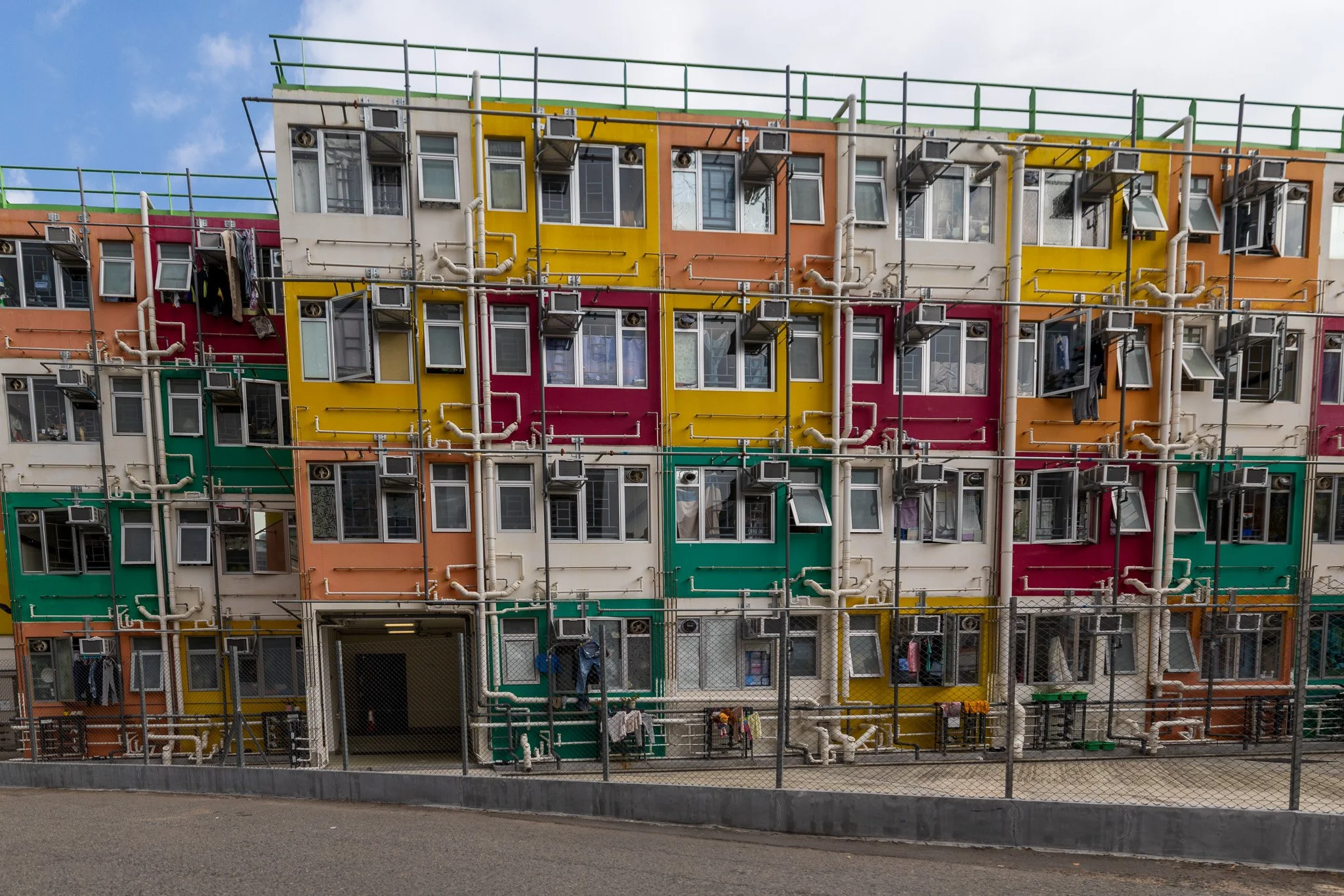
An Incredible Low Housing Development made of Shipping Containers
Getting Around
Hong Kong has one of the most efficient public transport systems in the world, and for photographers, that matters. You can move quickly between neighborhoods without losing light.
The MTR is fast, clean, and intuitive. Trains arrive every few minutes. Stations connect directly to malls, office towers, and elevated walkways, which means you can transition from street level to skyline vantage points without wasting time. If you plan to shoot at dawn in Kowloon and blue hour on Hong Kong Island, the MTR makes it effortless.
Ferries, especially the iconic Star Ferry across Victoria Harbour, are both scenic and practical. Stand outside if the weather allows. The short ride offers layered compositions of boats, skyline, and water reflections that change every minute.
The historic trams on Hong Kong Island move slowly, which is part of their charm. Ride the upper deck. Shoot through the windows. Let the city unfold at street level.
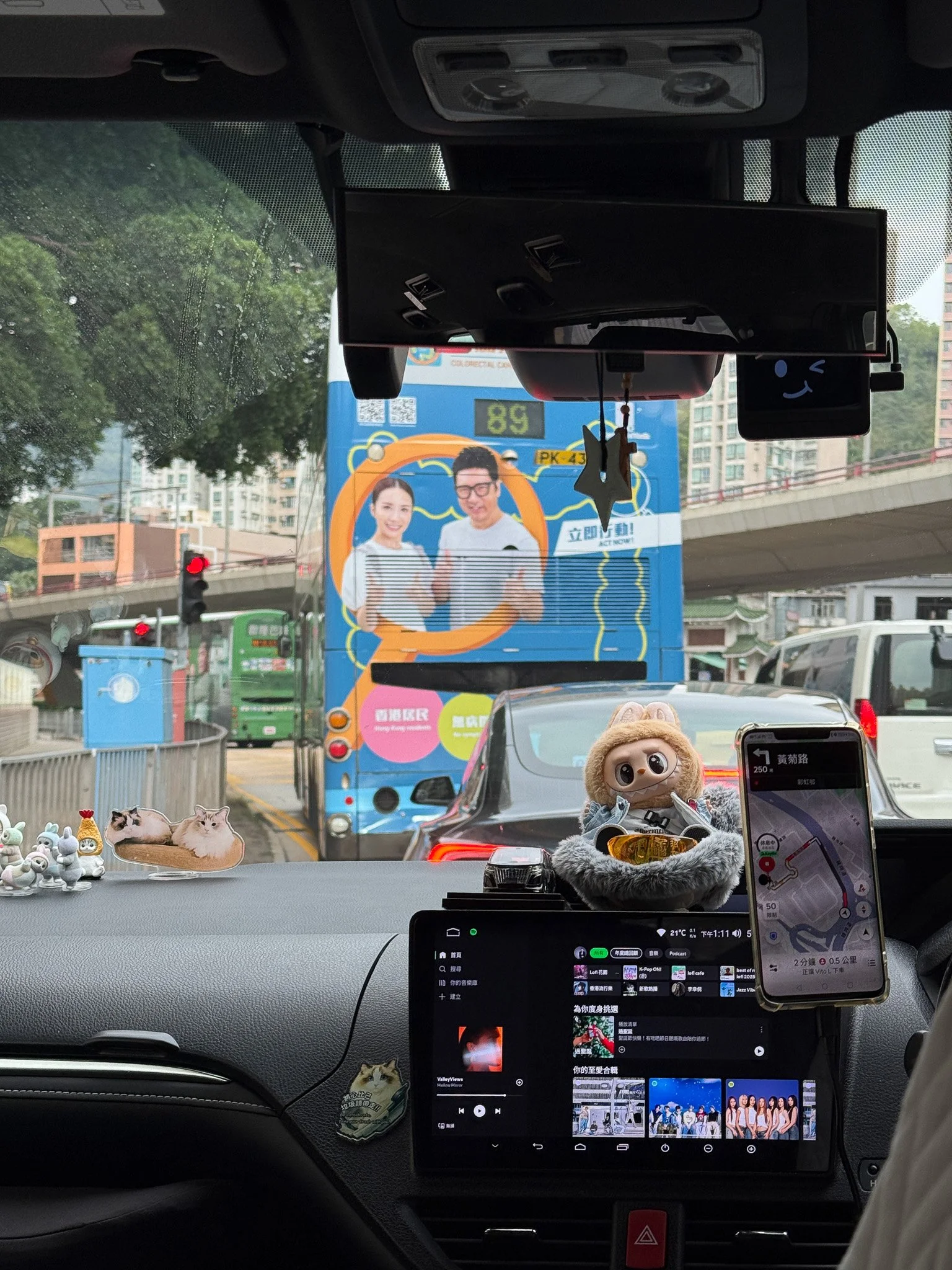
Uber is available and reliable, especially late at night after long shoots. Taxis are plentiful and efficient. Red taxis cover most of the city, green taxis serve the New Territories, and blue taxis serve Lantau Island.
Walking is easy in Central, Sheung Wan, and Tsim Sha Tsui, but remember that Hong Kong feels vertical. Elevators, escalators, and pedestrian bridges become part of your route.
And yes, an Octopus Card is essential. It works on the MTR, buses, ferries, trams, and even convenience stores. Load it once and move freely. When light shifts, you want to react quickly, not stand in line buying tickets.
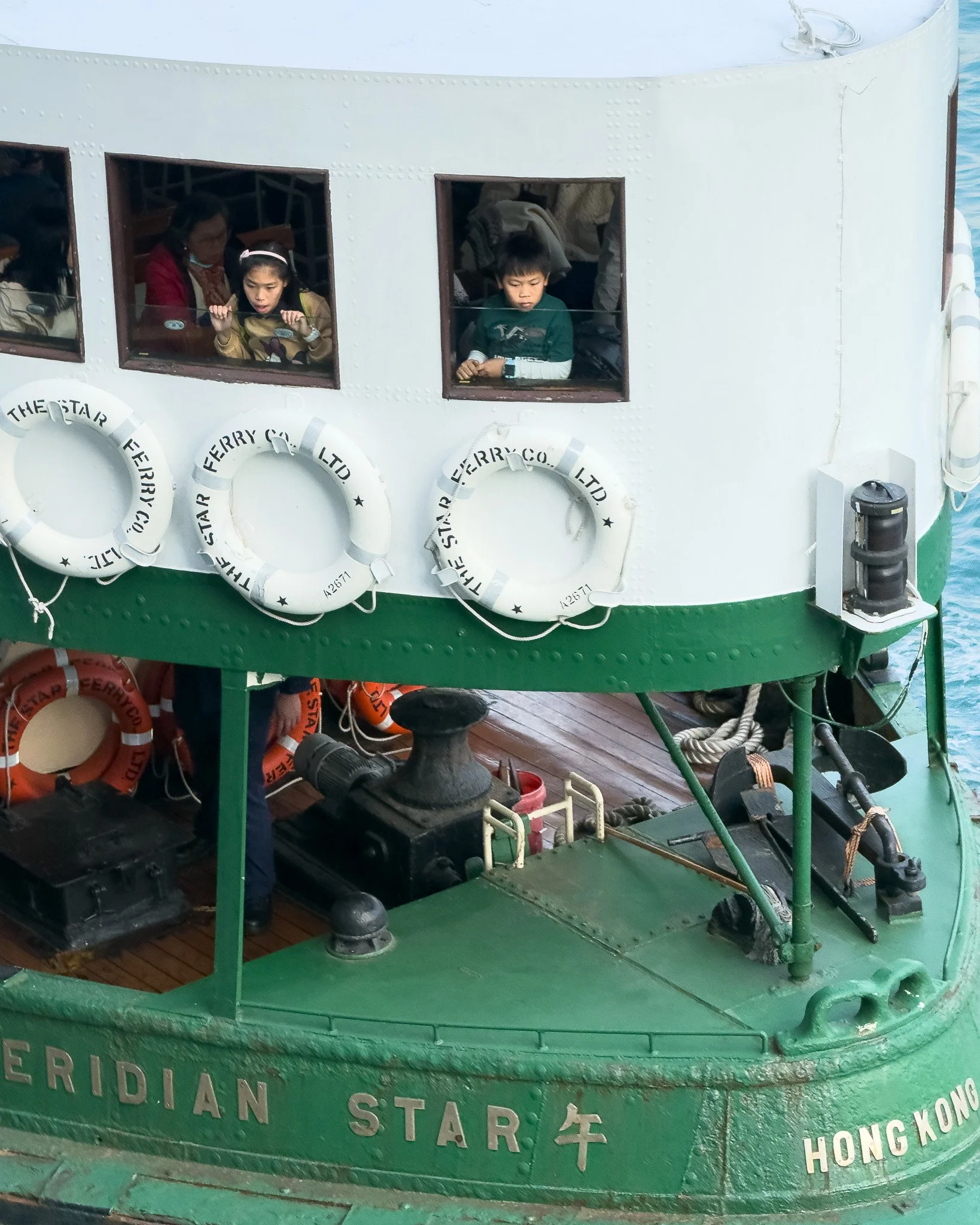
The Star Ferry
Dining and Coffee
Hong Kong is one of the great food cities of the world, and I mean that seriously. It holds more Michelin stars per capita than almost anywhere on earth, but some of the best meals you will have here cost almost nothing and happen at a plastic table on the sidewalk. That combination is part of what makes this city so special.
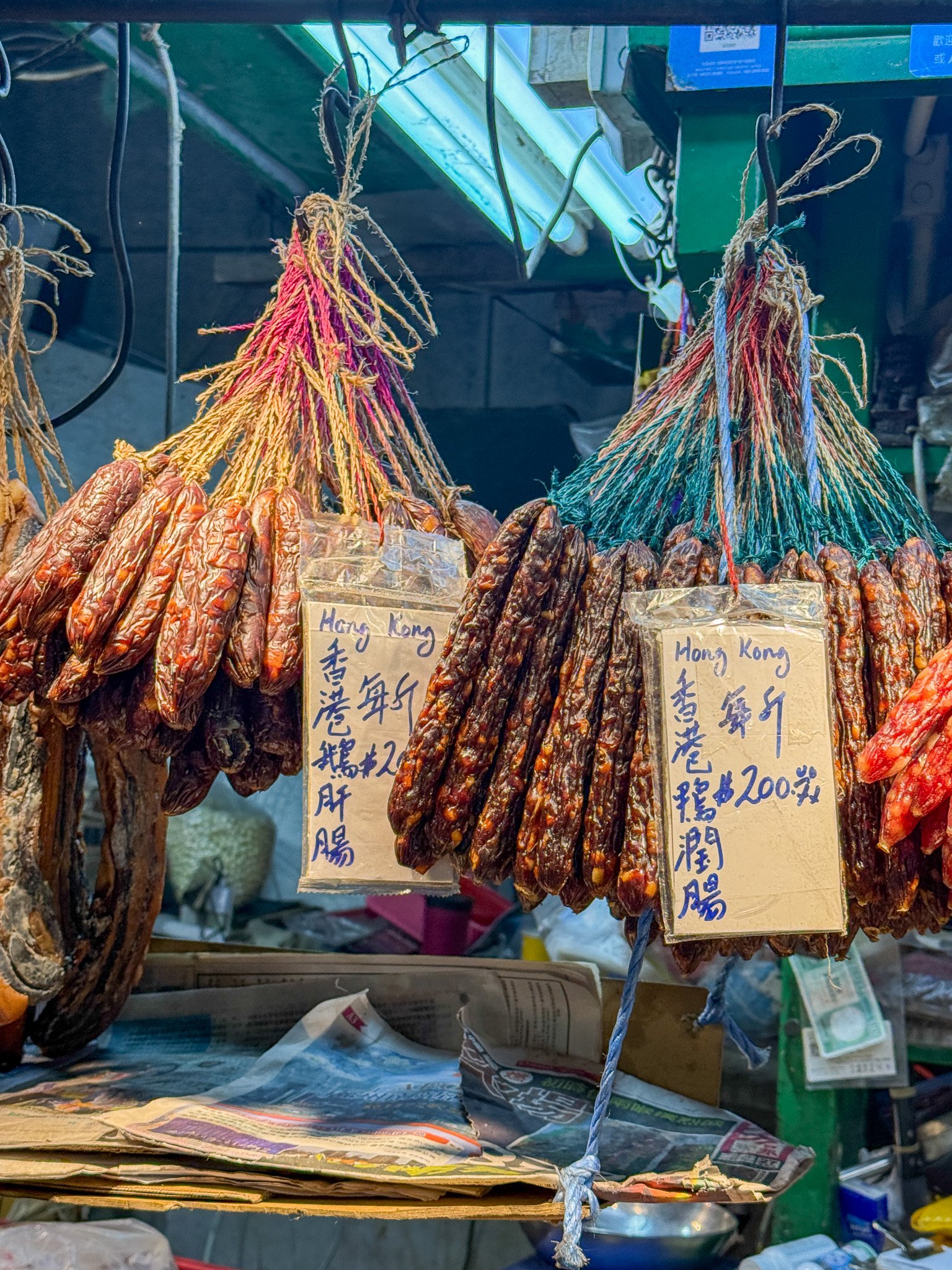
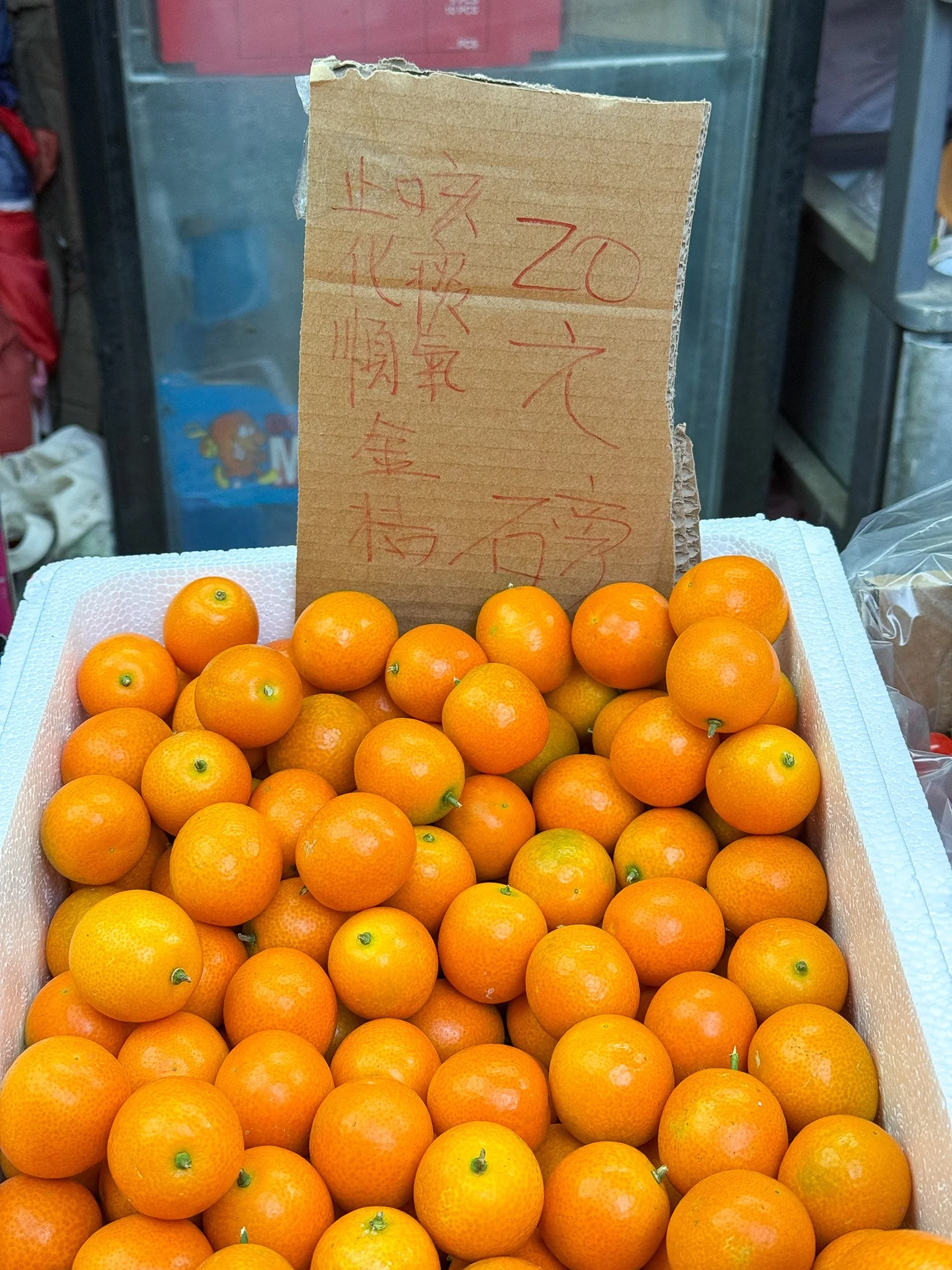
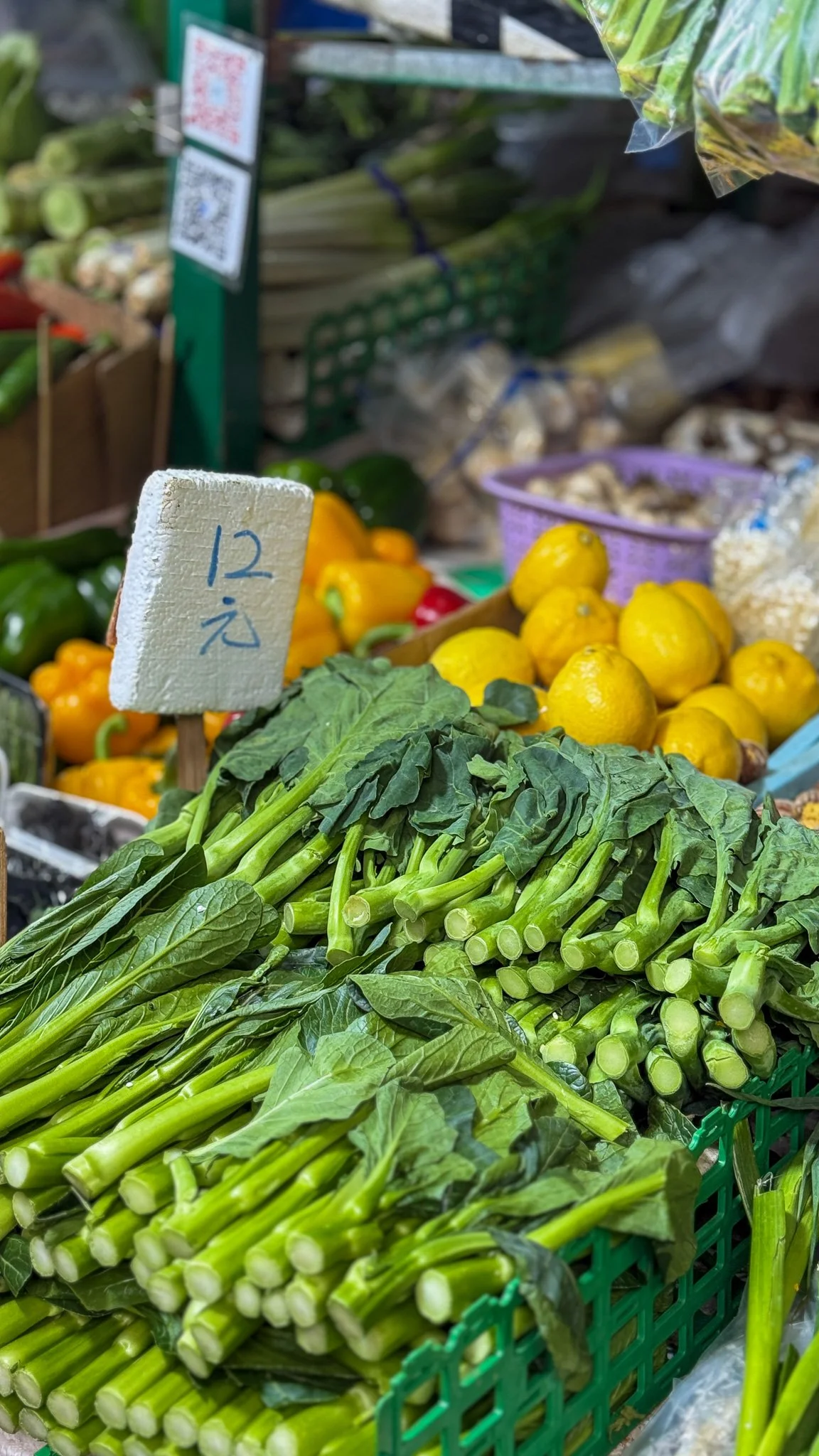
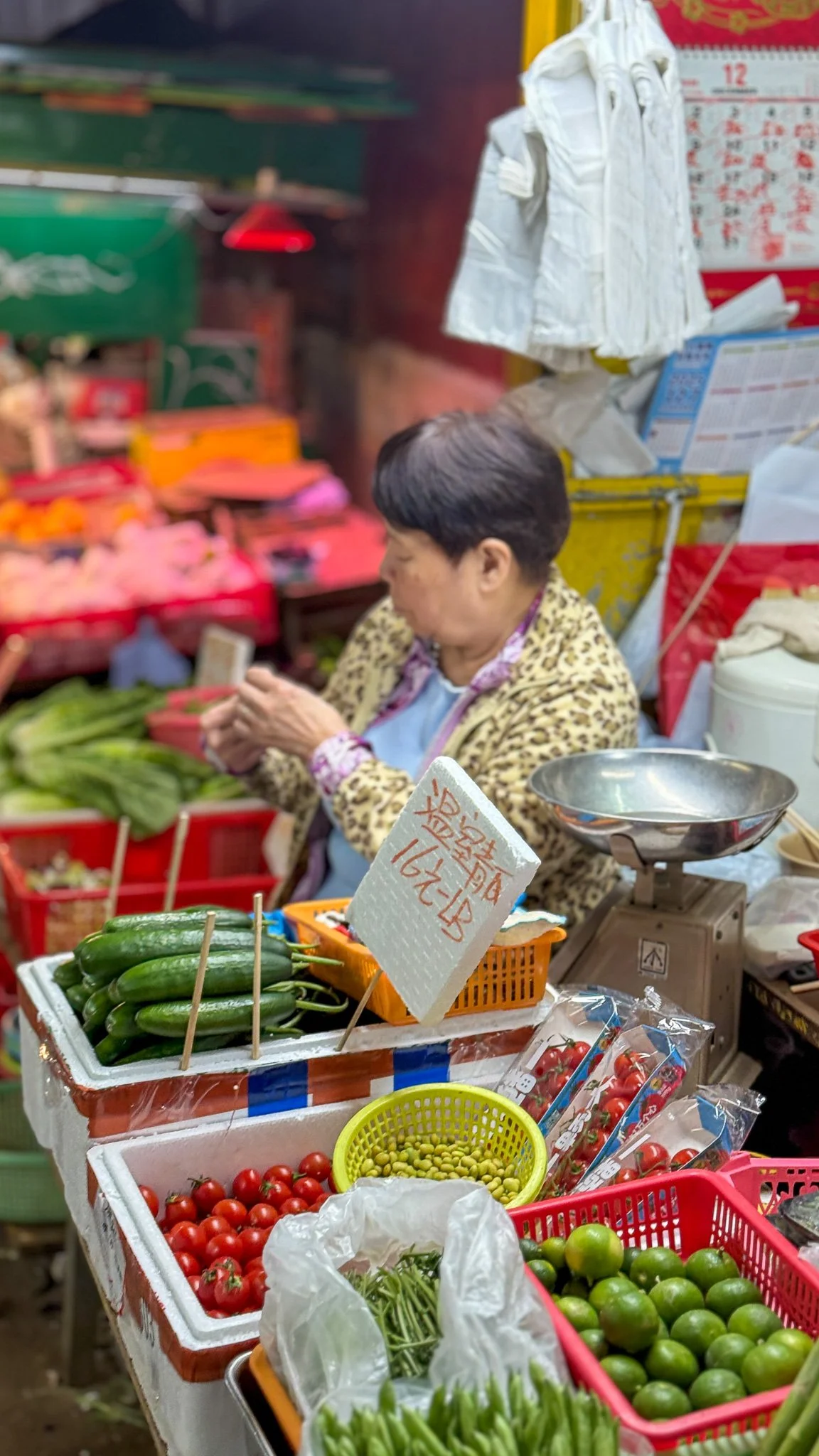
The stars of the show are the seafood and the vegetables. The produce in Hong Kong is extraordinarily fresh, and you feel it in everything from a simple bowl of blanched greens with oyster sauce to a whole steamed fish at a Cantonese restaurant. The wet markets we cover in the photography section tell you everything you need to know about how seriously this city takes its ingredients. Walk through Graham Street in the morning and you will see exactly what is going into the kitchens that evening.
Dim sum is a must, and not just because the food is extraordinary. The ritual of it matters too. Sitting around a table with bamboo steamers stacking up, ordering har gow and siu mai and sticky rice wrapped in lotus leaves, pouring tea for the table before yourself. It is one of the most social and generous food experiences in Asia, and it is something you should do at least twice during your visit, once at a grand traditional venue and once at a local neighborhood spot where no one speaks English and the carts come flying out of the kitchen.
Restaurants
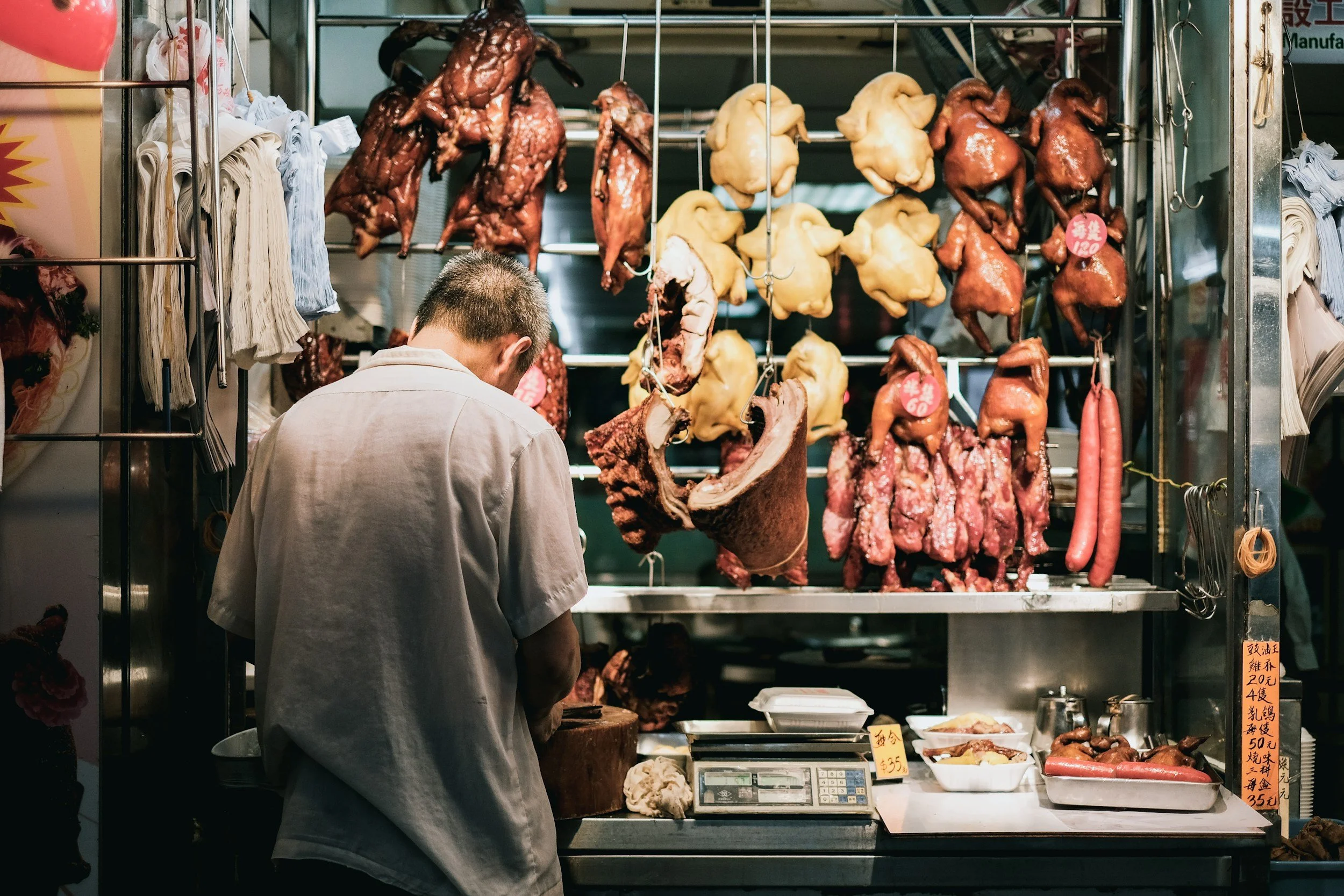
Beyond dim sum, do not miss a bowl of wonton noodle soup from a street-level noodle shop. The broth is everything, built over hours, and a good bowl costs next to nothing. Roast meats, char siu pork, and crispy duck hanging in shopfront windows are another Hong Kong obsession worth pursuing. And if you have not tried an egg tart fresh from Bakehouse, put it at the top of your first morning list. The egg tart croissant was one of the best things I ate on my last trip.
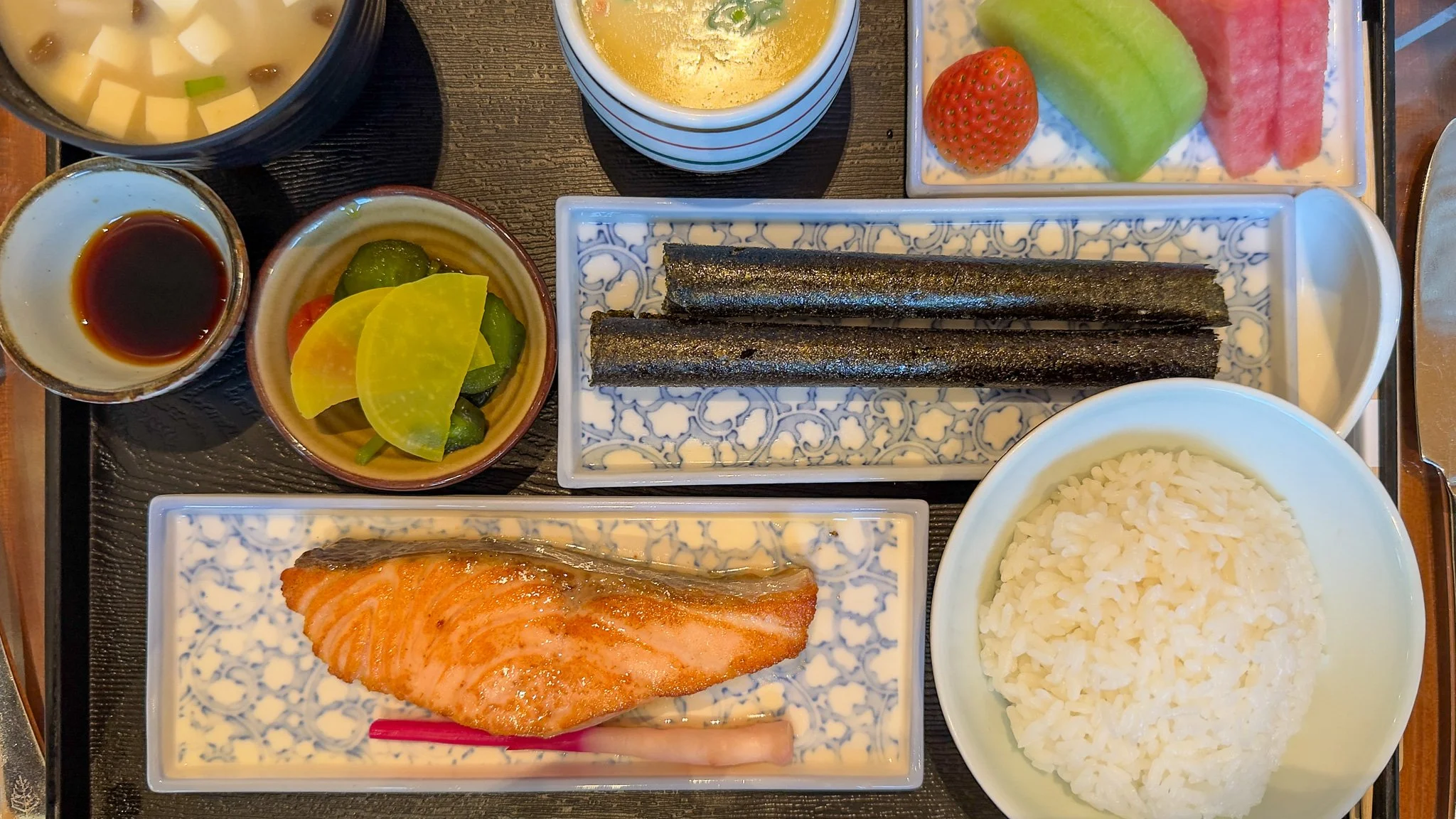
The range here is remarkable. In the same city, you can eat exceptional Cantonese, Japanese, Indian, and Italian food all within a short walk of each other. Hong Kong's position as a global trading city for over a century means the dining scene reflects the world, not just one cuisine. I even had outstanding sushi at Zuma, which is not what you expect to say about a trip to Hong Kong, but the quality here across every category is simply that high.
Yardbird
(33-35 Bridges Street, Sheung Wan) — A fun, casual izakaya-style restaurant famous for its yakitori and whole-chicken dishes. Lively atmosphere, excellent cocktails, and the kind of place where a table of strangers ends up having a great evening together.
Ho Lee Fook
(G/F, 1-5 Elgin Street, Central) — A sleek, modern restaurant in SoHo serving creative Cantonese comfort food. Chef ArChan Chan's take on Hong Kong classics is brilliant, and the setting photographs beautifully. Go for the char siu and whatever roast dish is on the menu that evening.
Tim Ho Wan
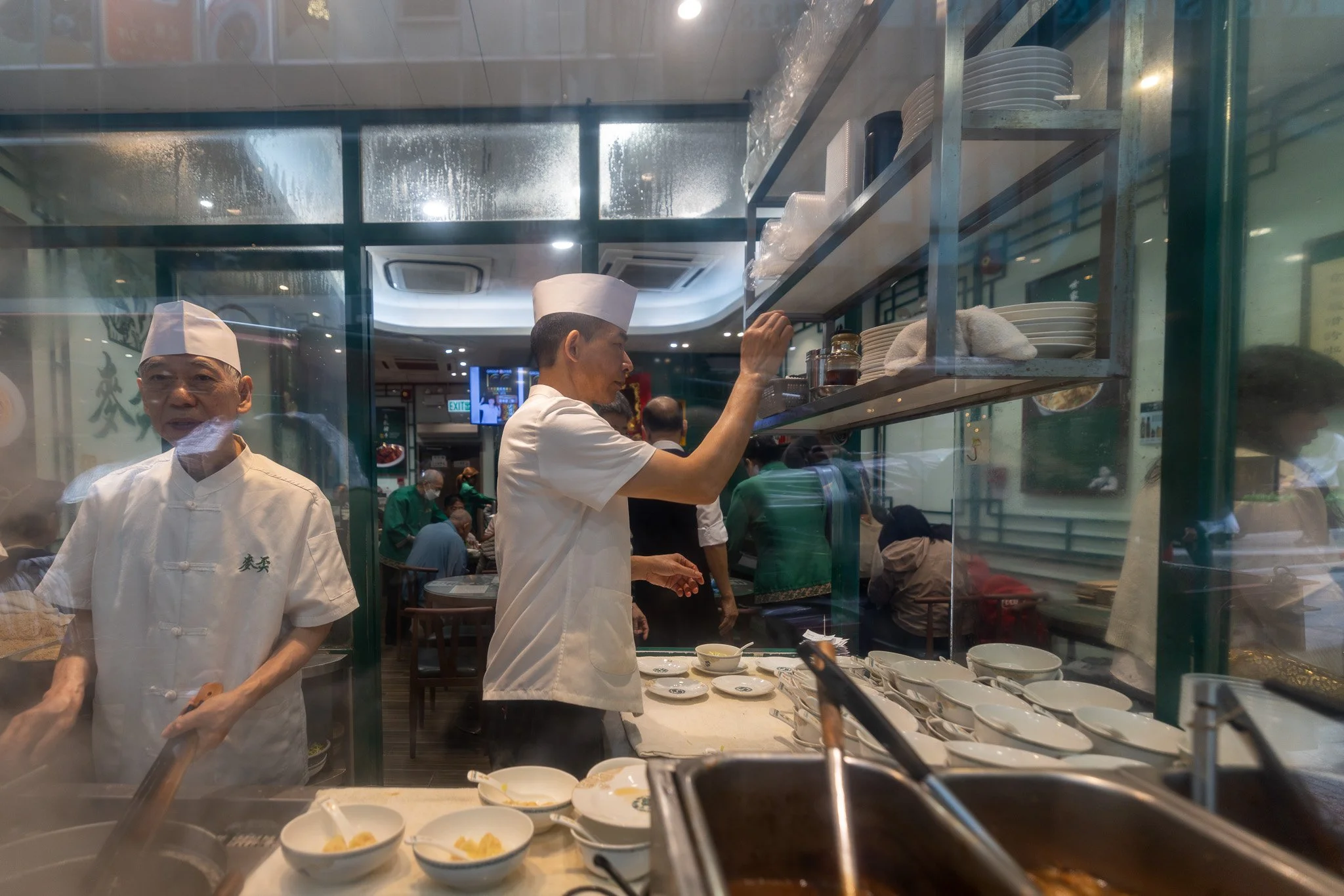
The original dim sum restaurant that earned a Michelin star while charging local prices. The baked BBQ pork buns are the best you'll ever eat. Find a location, join the queue, and eat. No reservations, no ceremony, just extraordinary food.
Tim Ho Wan
Bakehouse
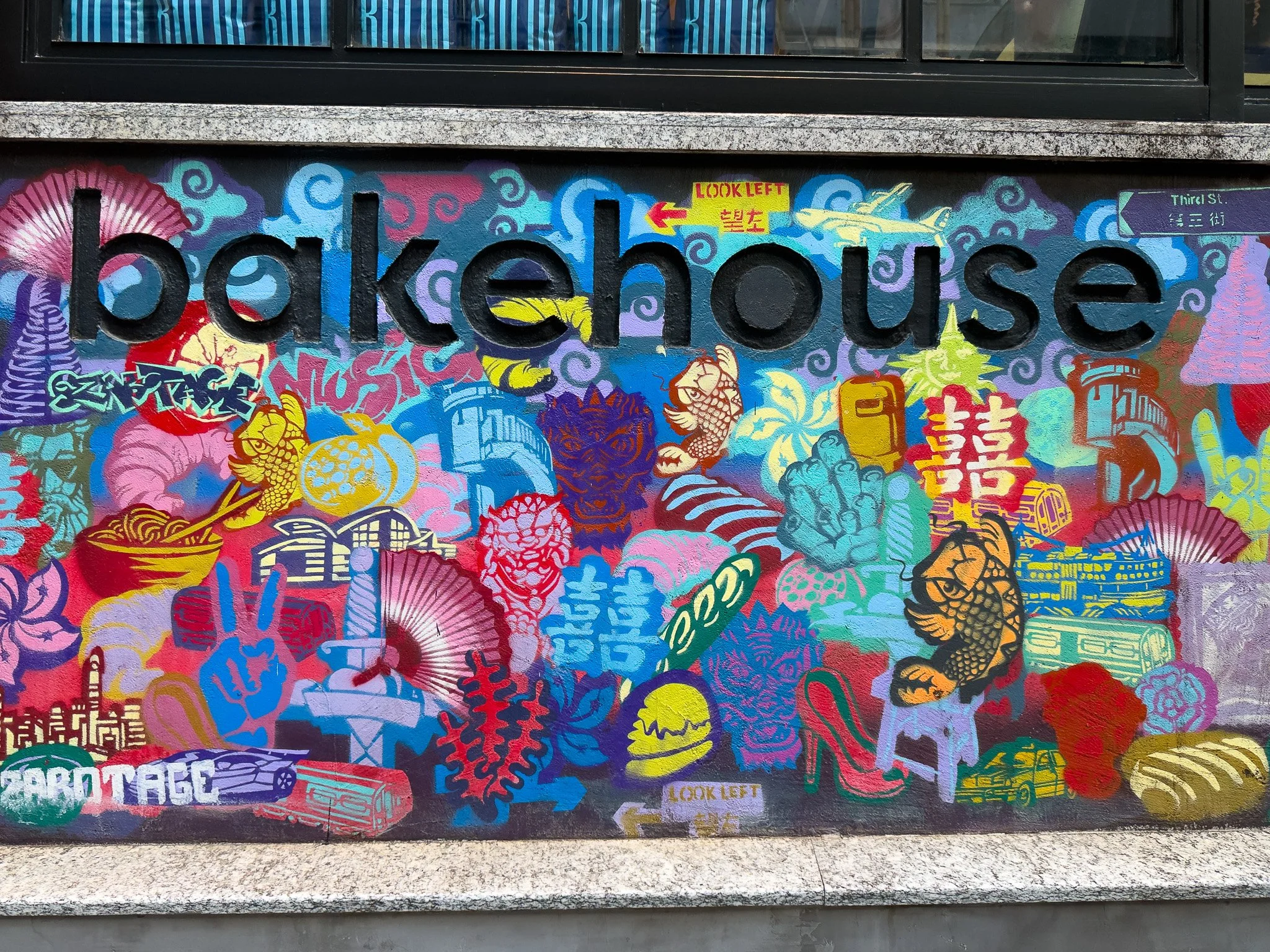
A local favorite for pastries, especially in the morning. Natural window light works beautifully for simple food photography. Go early. Lines build fast.
Coffee Worth Slowing Down For
% Arabica (PMQ, 35 Aberdeen Street, Central) — A beautifully designed Japanese-origin coffee brand with one of its best locations here. The minimalist design and excellent espresso make it a natural stop for editing and people-watching in the PMQ heritage complex.
Cupping Room (multiple locations) — Hong Kong's serious specialty coffee scene has a great home here. The locations tend to be well-lit, spacious, and very good for a few hours of photo editing with a quality flat white.
Teakha (18 Tai Ping Shan Street, Sheung Wan) — A tiny, charming tea house on one of Sheung Wan's most atmospheric streets. More tea than coffee, but the setting is so beautiful and the pace so slow that it is one of the most rewarding places in the city to sit still for an hour. Bring your laptop and your film presets.
Bakehouse (multiple locations, including Star Street, Wan Chai) — A Hong Kong institution for sourdough, pastries, and excellent coffee. The queues are real and they are earned. The egg tart croissant alone is worth planning your morning around. Warm, unpretentious, and always busy with locals. A great spot to fuel up before a long shoot.
Elephant Grounds (multiple locations) — A popular local coffee chain known for its ice cream coffee combination and relaxed neighborhood vibe. The Wan Chai and Tsim Sha Tsui locations are both well set up for longer stays.
Photography Gear to Bring
Hong Kong is a versatile shooting environment that rewards a well-rounded kit. Here is what I would bring.
Camera Body: A mirrorless camera with good high-ISO performance is ideal for night photography and the dark interiors of temples. The Sony A7R V, Canon R5 Mark II, or Nikon Z8 will all handle everything this city throws at you.
Lenses:
Wide-angle (16-35mm): Essential for the skyline, the Monster Building courtyard, and any interior with architectural scale. You will use this more than you expect.
All-around zoom (24-70mm): Your workhorse. Street photography, temples, markets, restaurants, people. This lens stays on the camera for most of the trip.
Telephoto (70-200mm): Excellent for compressing the skyline layers from Victoria Peak, for photographing temple details without getting in people's way, and for street portraits from a respectful distance.
Prime (35mm or 50mm): If you love street photography, a fast prime in the 35mm to 50mm range is wonderful for Mong Kok and the night markets. The rendering is beautiful and the low-light performance is hard to beat.
Accessories:
Tripod: Non-negotiable. The Symphony of Lights show, blue hour from the Promenade, and night shots in Mong Kok all require a stable platform. Bring a compact travel tripod and use it.
ND Filter (6-stop or 10-stop): Useful for smoothing harbor water during the day and creating long-exposure blur in busy market streets.
Polarizing Filter: Helps cut through haze on the harbor and improves sky contrast, especially useful in winter months.
Rain Cover: Always have one. Hong Kong weather can change quickly, and you do not want to cut a shoot short.
Extra Batteries: Cold air conditioning in the MTR and long shooting hours will drain batteries faster than you expect. Bring at least two extras.
From the Connaugh Street Overpasses
Photography Spots in Hong Kong
Hong Kong will test your ability to make decisions. There is so much to photograph that the challenge is not finding subjects; it is choosing where to spend your time. Every neighborhood offers something different, and the city shifts completely between morning, afternoon, and after dark. I have tried to give you a mix here: the iconic locations that belong on every Hong Kong photography trip, the lesser-known spots that most visitors walk right past, and a few places that will push you to work differently than you normally would.
Some of these locations are grand and obvious. Others are ordinary streets where the right light at the right moment turns everything into something worth keeping. All of them have given me photographs I am proud of. Start with the spots that excite you most, revisit the ones you love in a different light, and leave room for the unexpected. Hong Kong will always give you more than you planned for.
Victoria Harbour
Victoria Peak is one of the most famous viewpoints in the world, and it deserves every bit of its reputation. The panorama from 428 meters above sea level encompasses the entire harbor, the Kowloon Peninsula, and on a clear day, the New Territories beyond.
Skip the Sky Terrace 428 crowd and walk five minutes along Lugard Road to the free lookout. It offers the same spectacular view without the admission fee and, more importantly, without shoulder-to-shoulder tourists in every frame. The Peak Circle Walk is a 3.5-kilometer loop with multiple viewpoints and is one of the most enjoyable photography walks in the city.
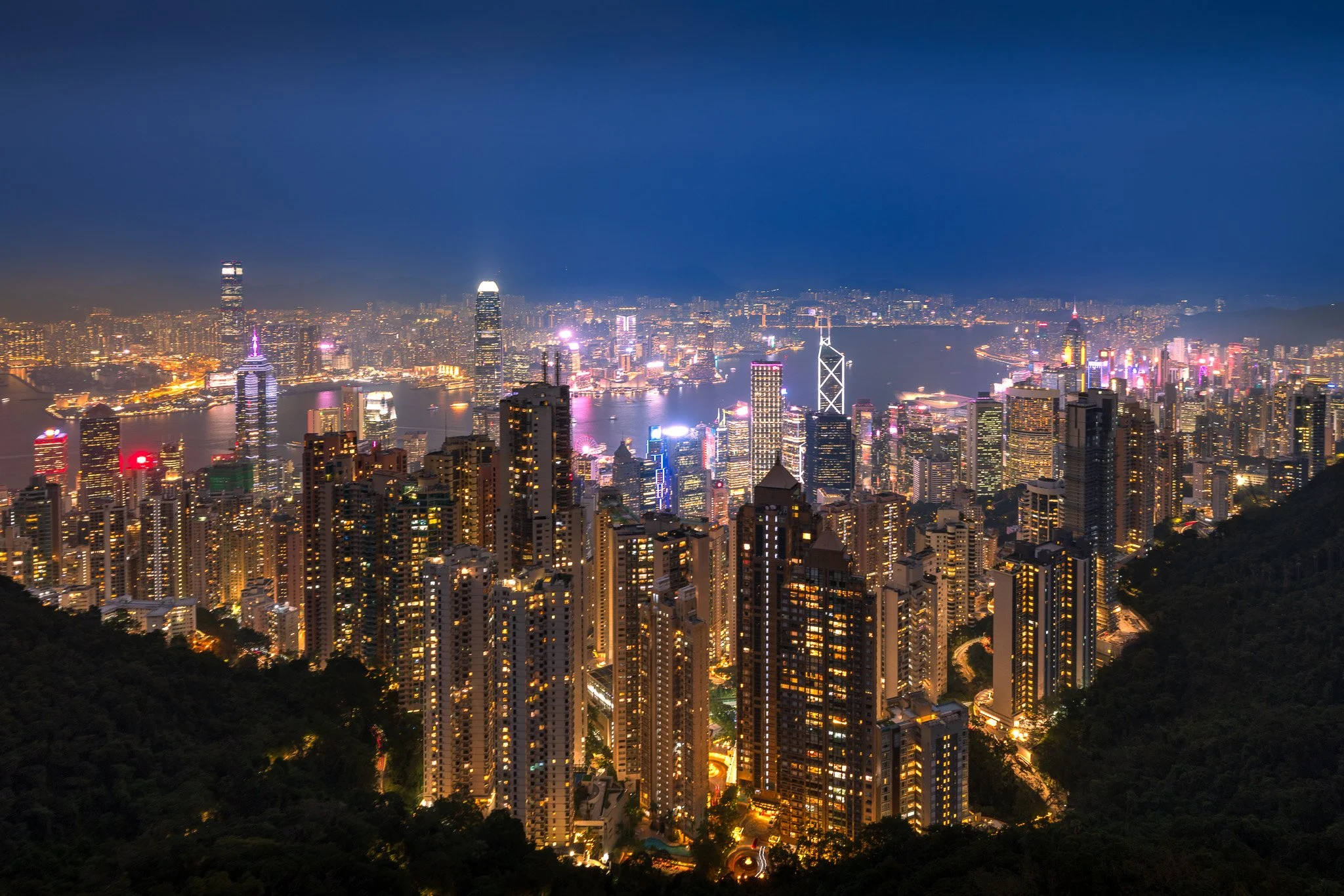
Blue Hour
Pro Tip: Come up by the Peak Tram (book tickets in advance online to avoid the queue) and stay for the sunset and blue hour. The light on the harbor from October to March is some of the clearest and most beautiful you will find. Bring your wide-angle lens and tripod. Early morning on weekdays, the walk is often empty and the city below is wrapped in mist.
Star Ferry
The Star Ferry is not just transport. It is one of the great short journeys in Asia, and every crossing is a different photograph. The seven-minute ride between Tsim Sha Tsui and Central gives you a constantly shifting composition of harbor, sky, skyline, and water. Classic green-and-white ferries, passing container ships, and the Hong Kong Island towers rising from the waterfront create layered frames that change every 30 seconds.
Most tourists photograph the Star Ferry from the shore. Go one step further and ride it, repeatedly, at different times of day. The lower deck has open railings that make natural frames. The upper deck gives you elevation and a wider field of view. Early morning, when mist sits on the harbor, is especially beautiful.
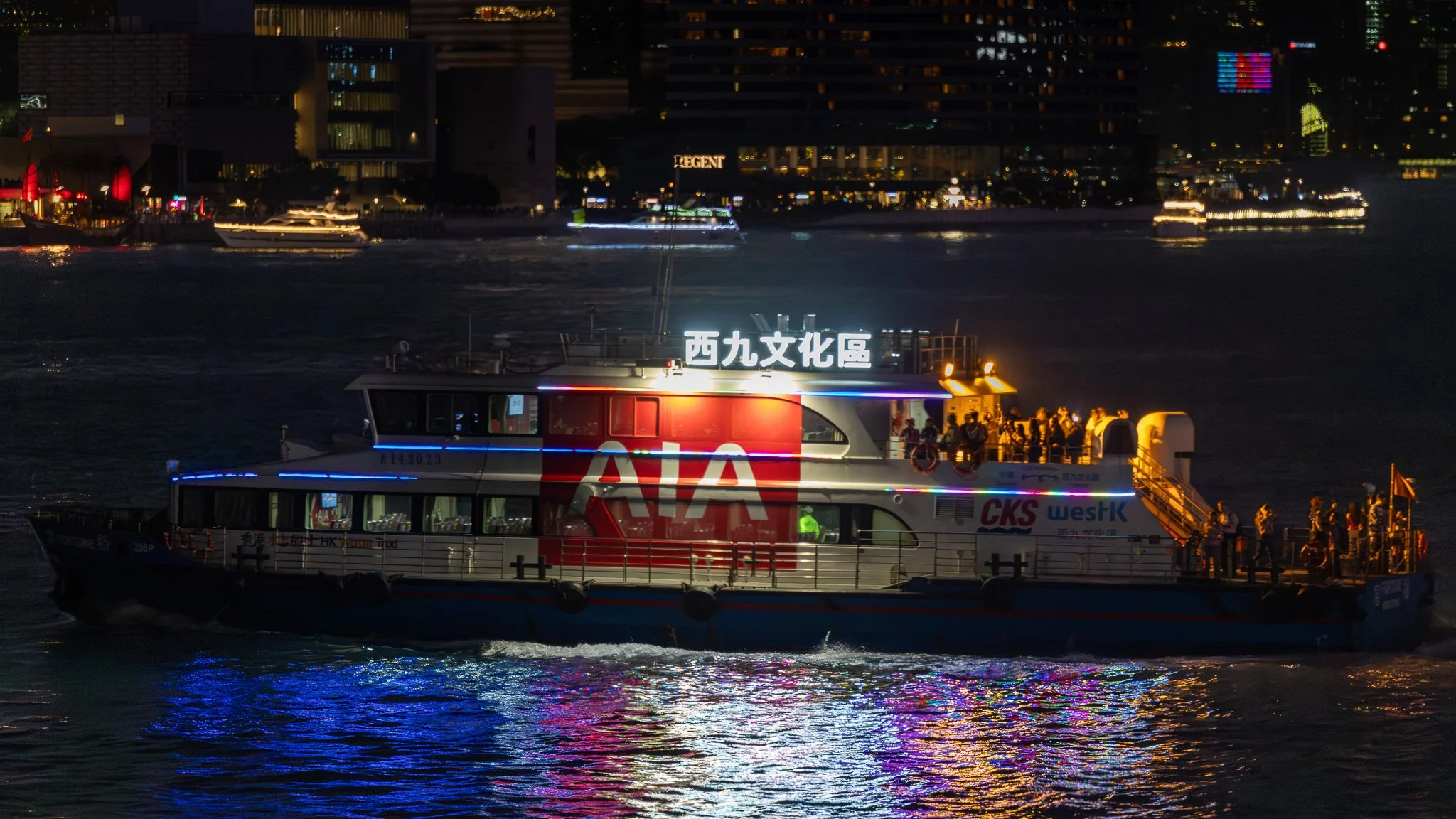
Pro Tip: Ride at sunrise for soft, diffused light and an almost empty boat. Ride again at blue hour, heading back to Kowloon, when the Hong Kong Island skyline is fully lit and reflected in the water. Use a 24-70mm lens and shoot through the ferry railings to add foreground depth. Keep your shutter speed up to freeze the water movement.
Centre for Heritage and Arts
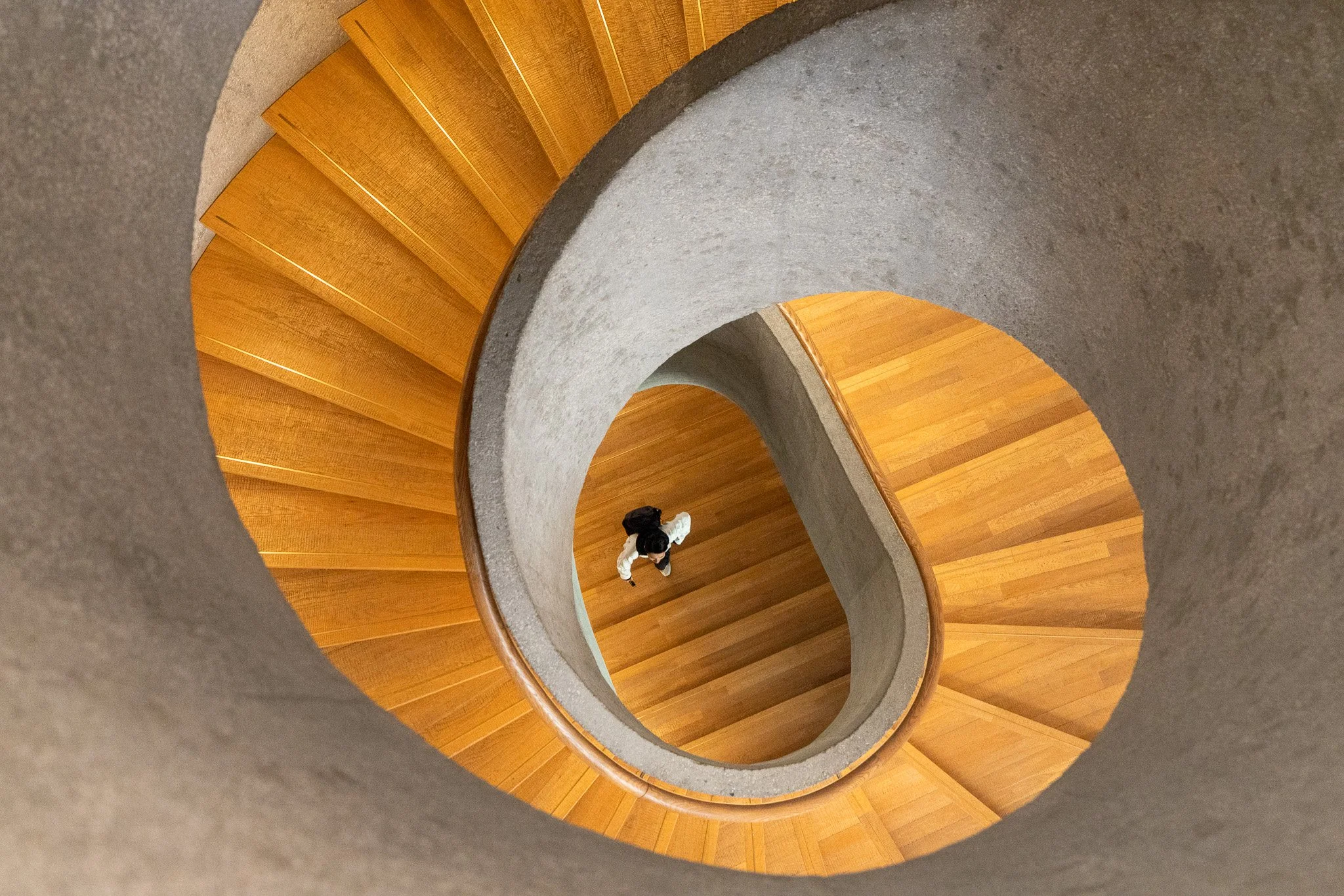
Tai Kwun is one of the most architecturally compelling photography locations in Hong Kong, and one that most visitors completely overlook. The former Central Police Station, magistracy, and Victoria Prison compound was transformed by Herzog and de Meuron into a cultural arts precinct that opened in 2018. The result is a rare thing in Hong Kong: open space, quiet courtyards, and the visual tension between 19th-century colonial masonry and two striking new contemporary buildings clad in recycled aluminum.
The Parade Ground courtyard is the heart of the complex and is surrounded by restored stone colonial buildings on three sides. The interplay of textures, the archways, the overhead sky framed by building edges, and the light at different times of day make this one of the most satisfying architectural photography subjects in the city. The old prison cells and staircases are also extraordinary.
Man Mo Temple
Built in 1847 on Hollywood Road in Sheung Wan, Man Mo Temple is one of the oldest and most atmospheric temples in Hong Kong. The interior is permanently filled with the smoke of dozens of enormous incense coils that hang from the ceiling, each slowly burning down over days. The light that filters through the smoke has a quality that is impossible to replicate artificially.
This is one of my favorite photography spots in the entire city. The contrast between the dark wooden interior, the gold of the statues, and the curling incense smoke creates layered, mysterious images that feel genuinely ancient.
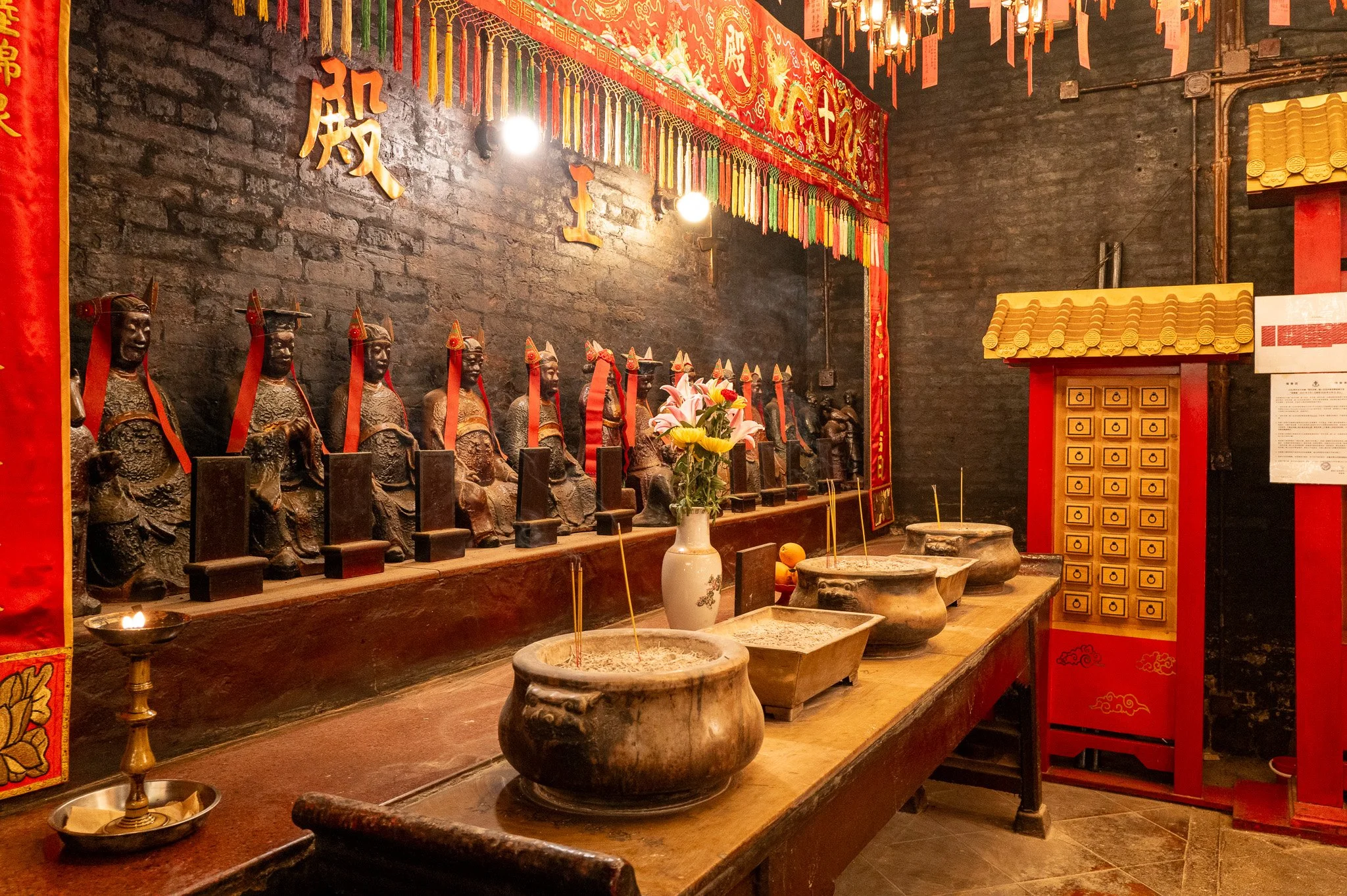
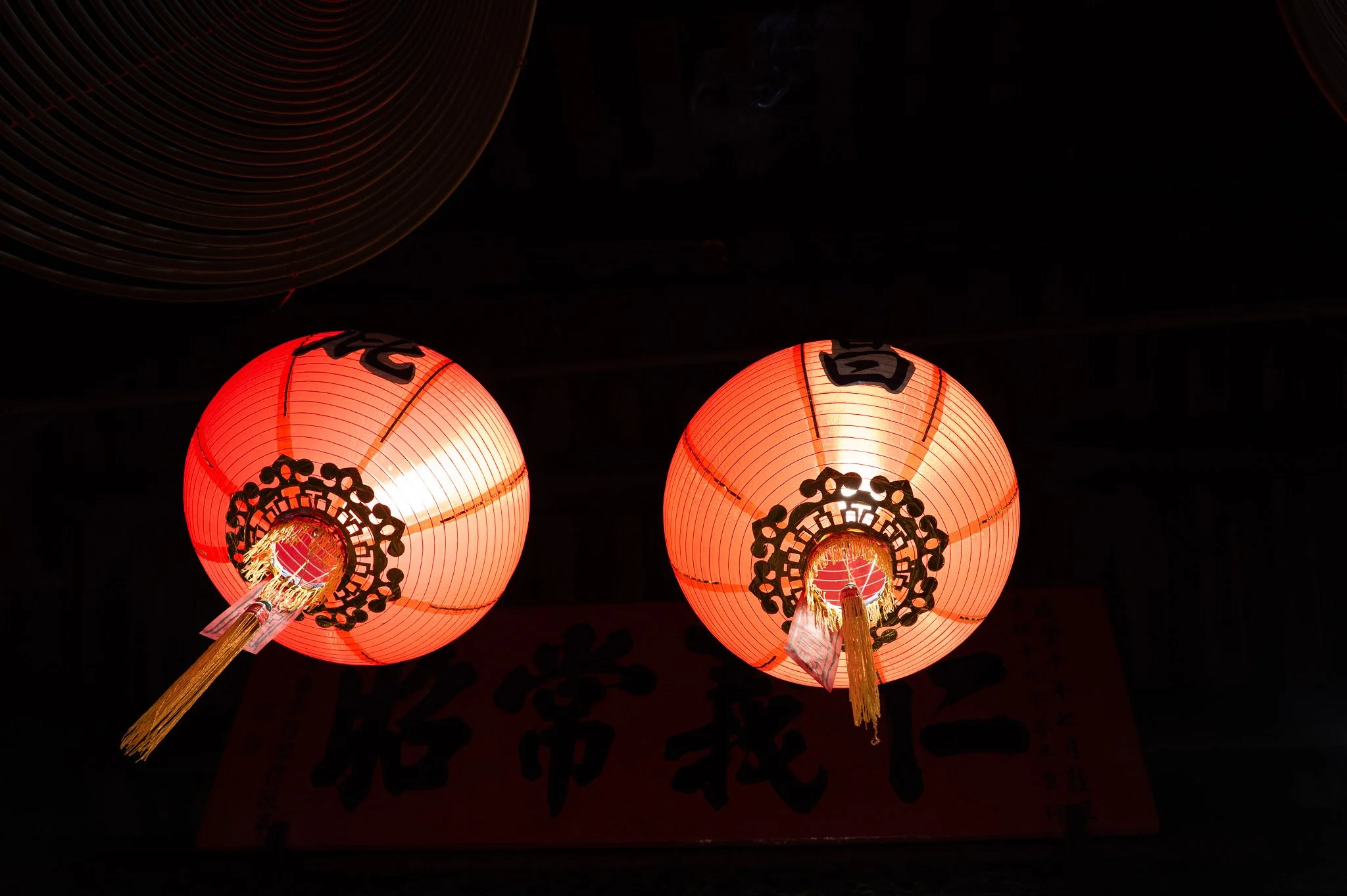
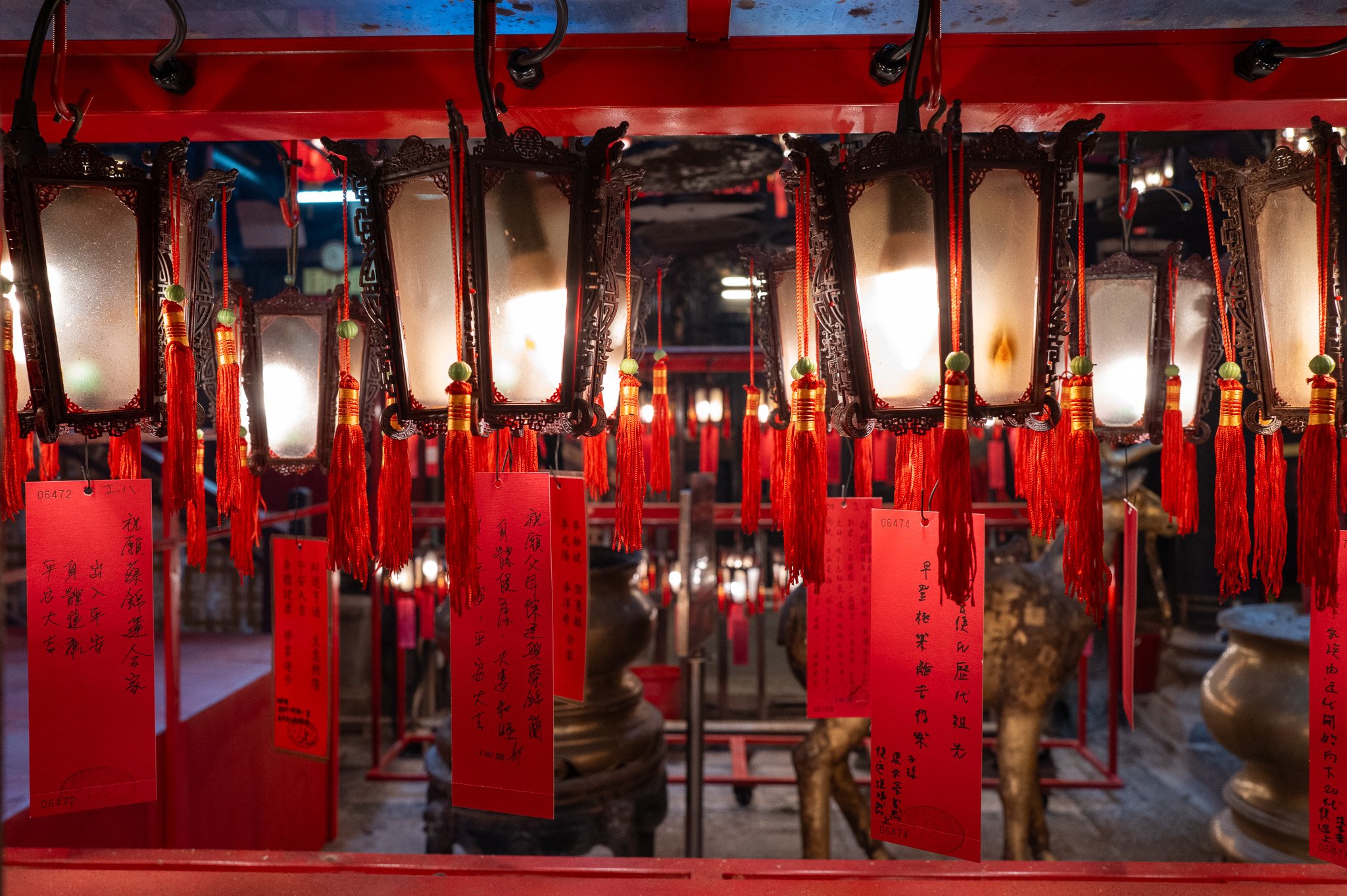
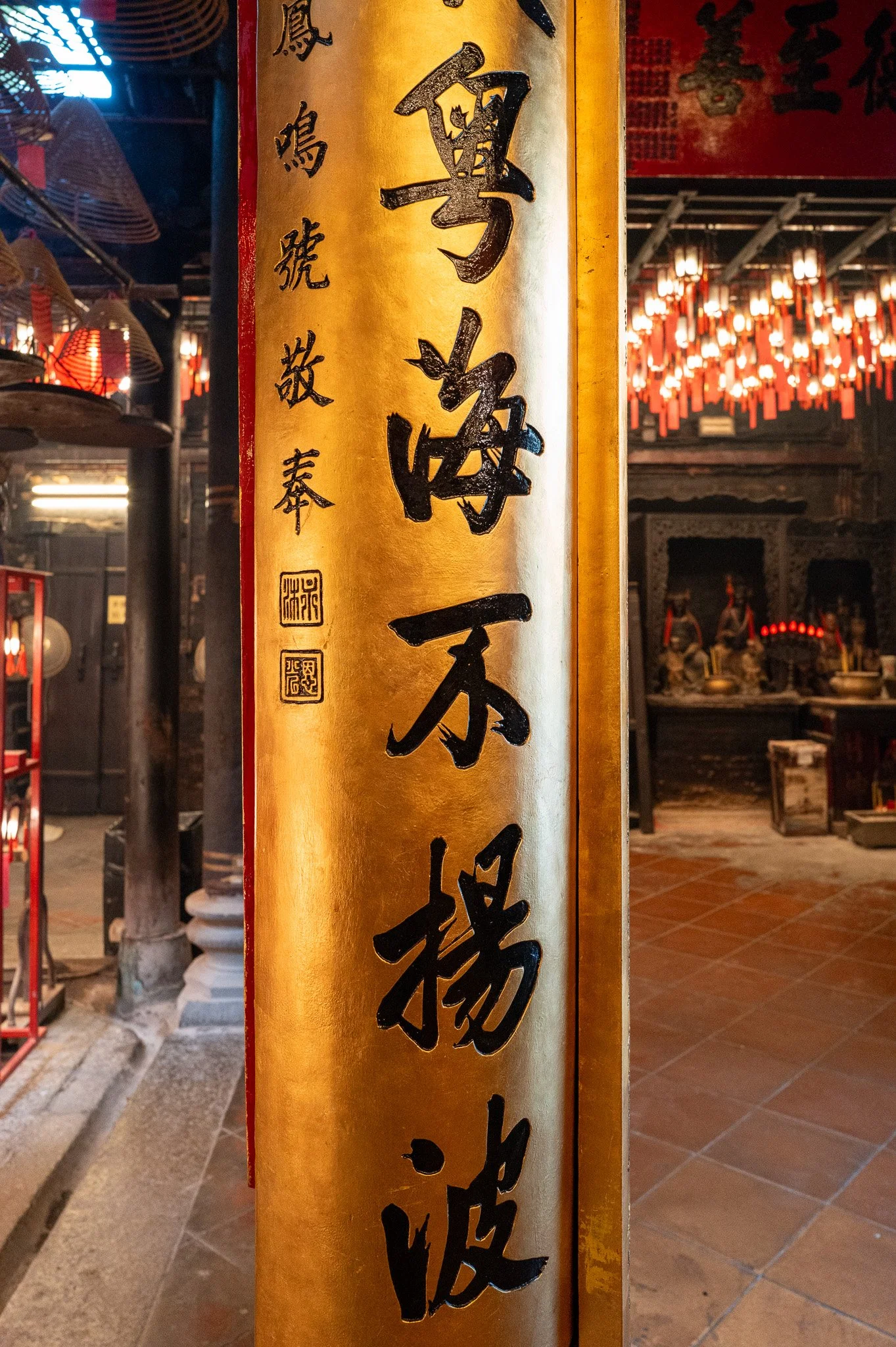
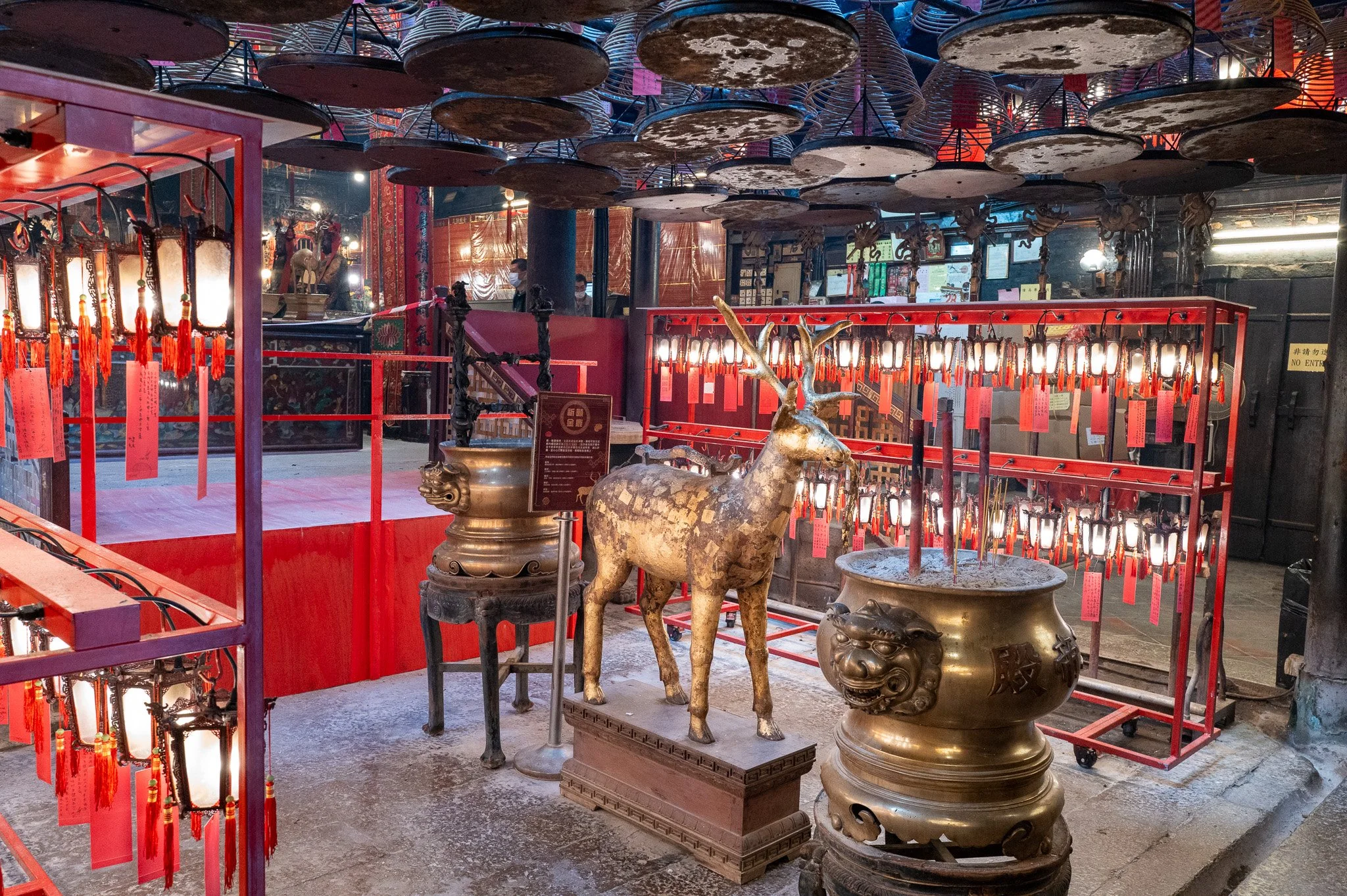
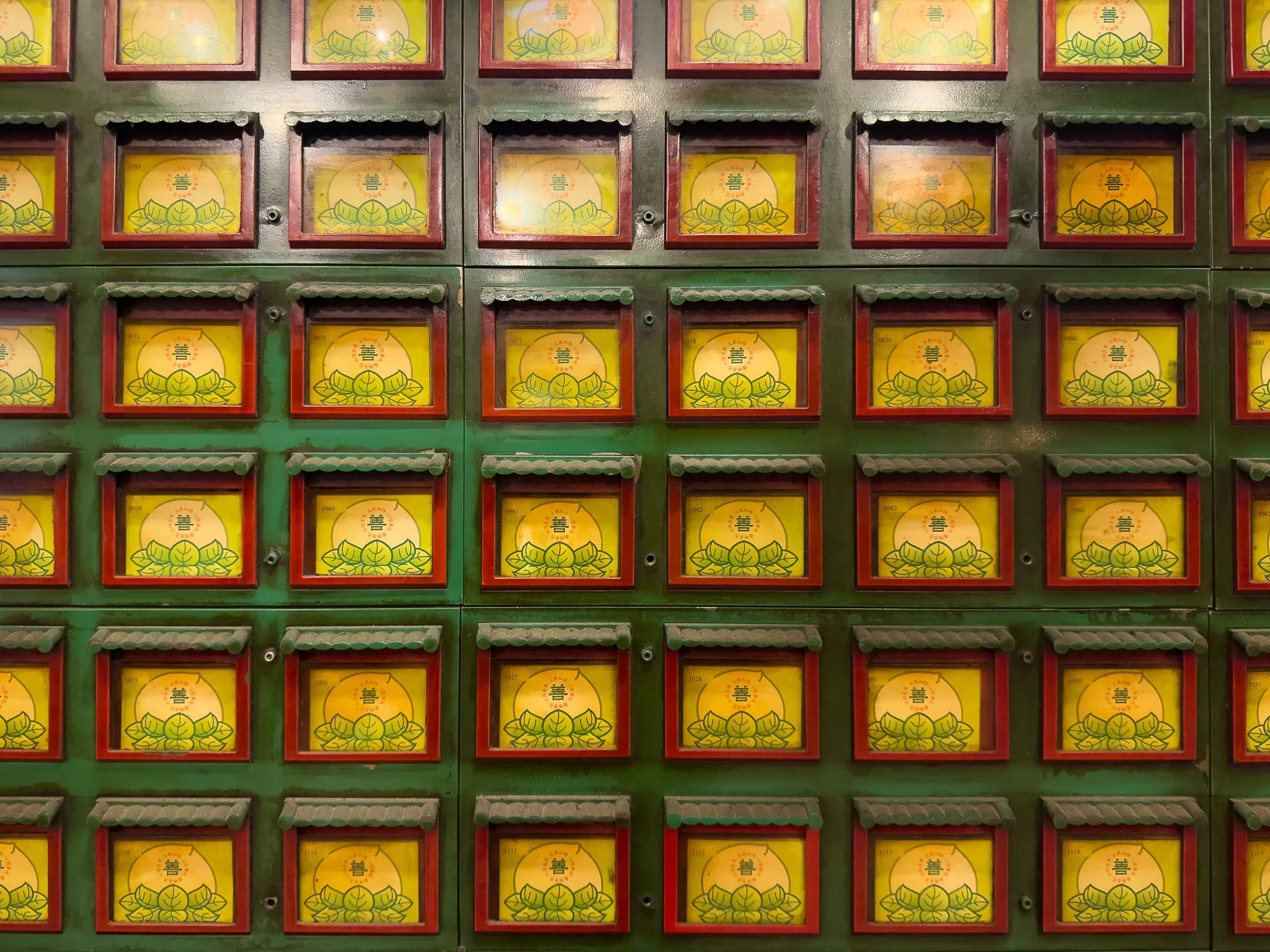
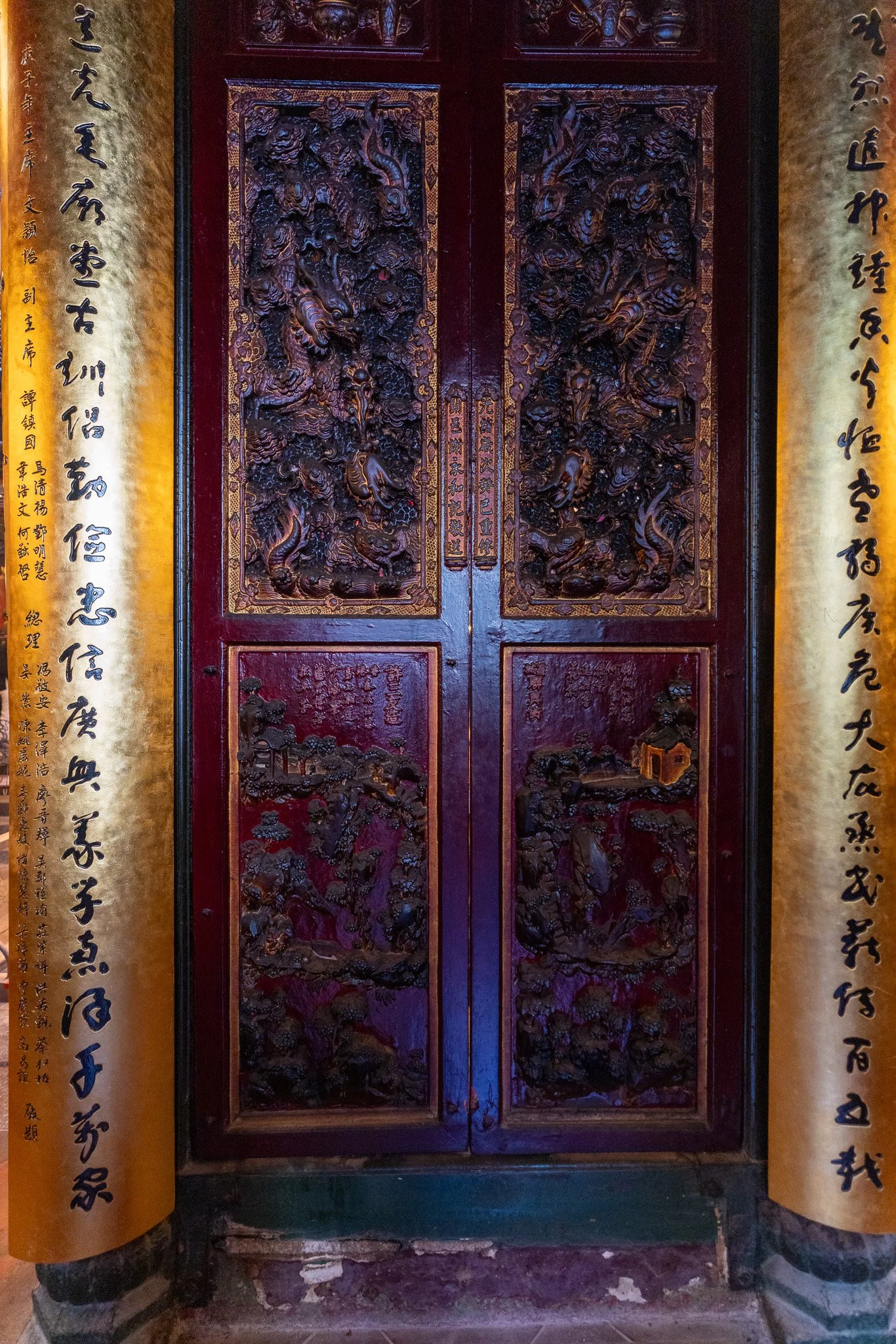
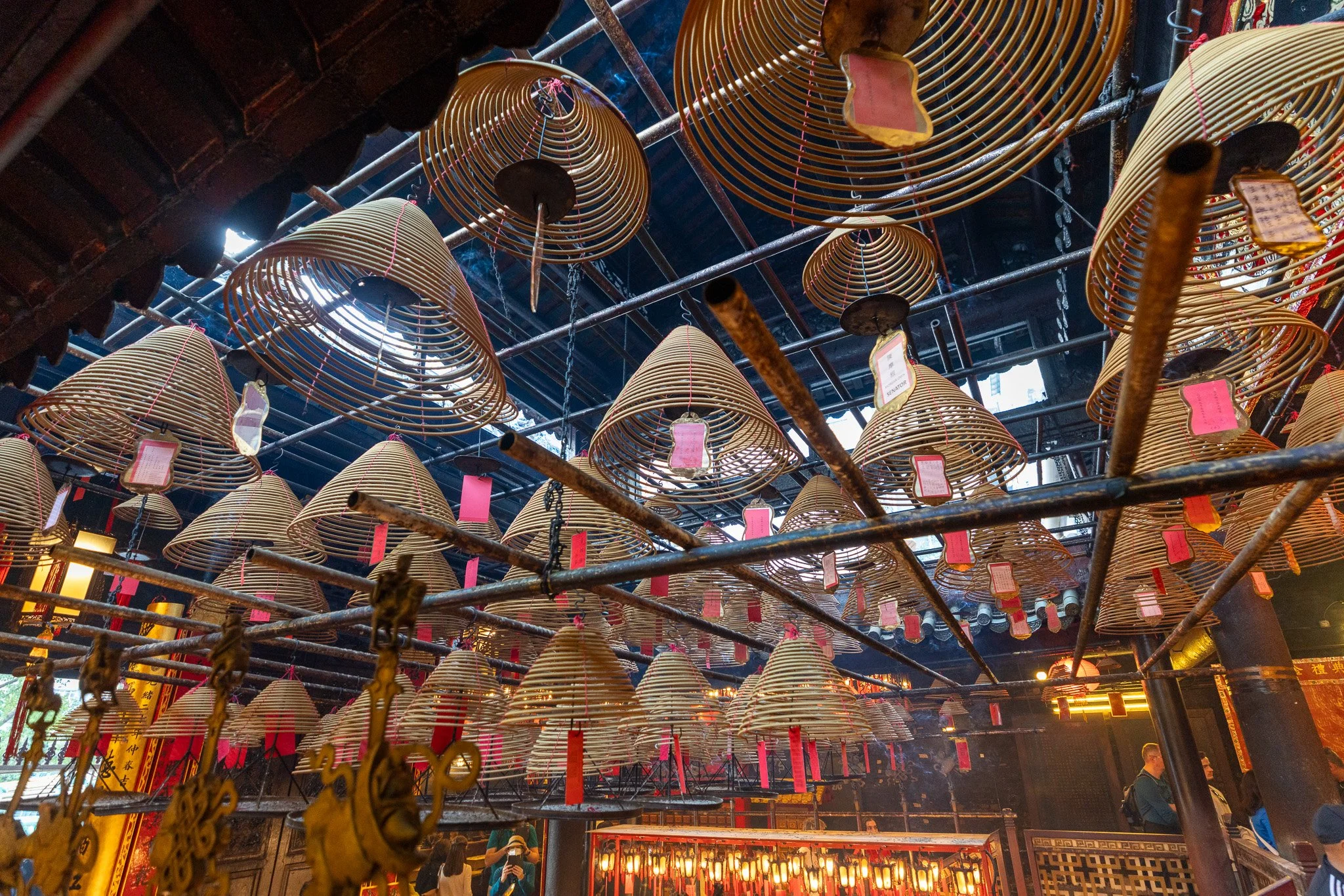
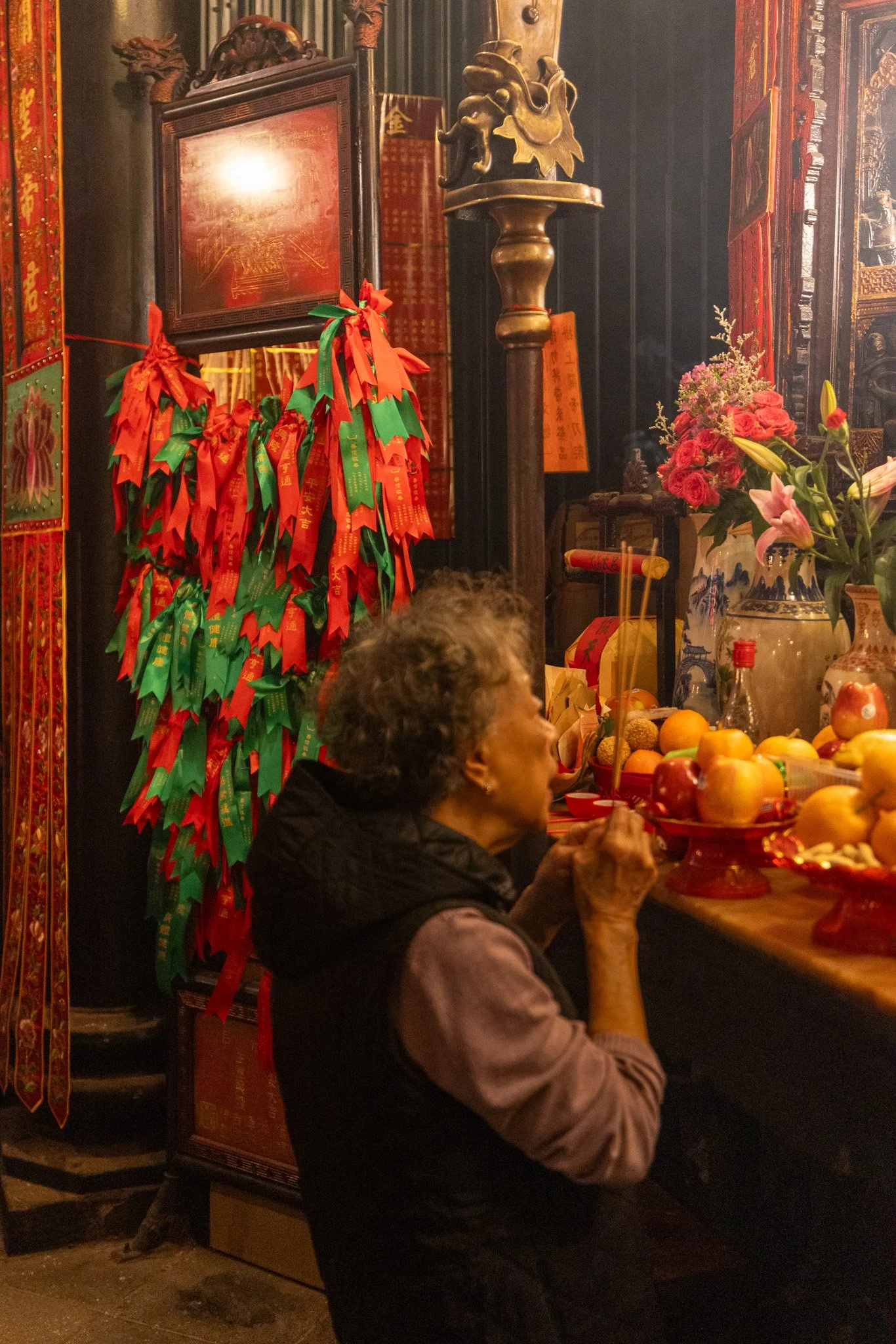
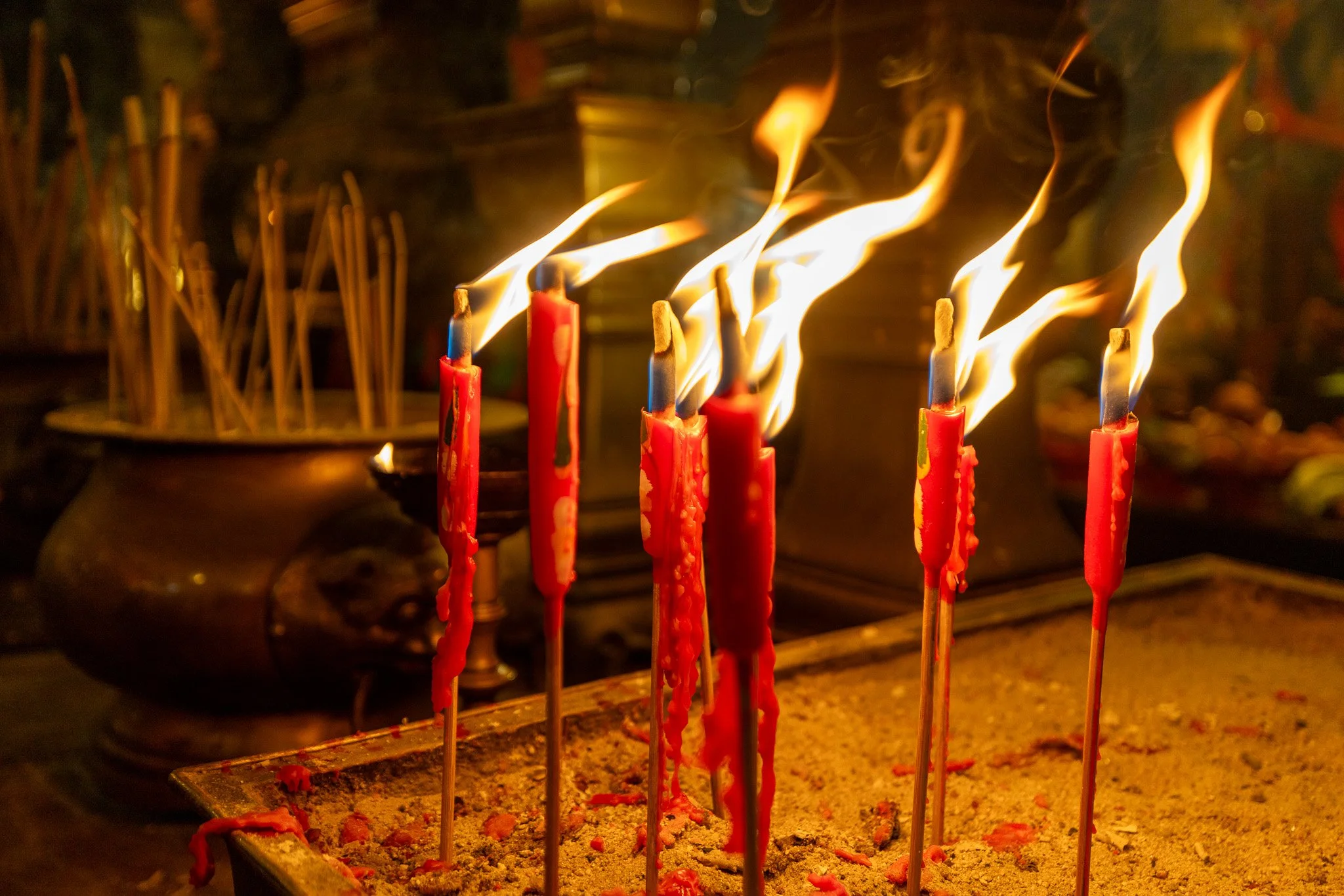
Pro Tip: Visit early morning on a weekday when worshippers are present and the temple is quiet. Raise your ISO to 1600 or higher and shoot wide open to capture the smoky, candle-lit interior without flash. Flash photography is disrespectful and will ruin the mood entirely. Turn it off. Be patient, be quiet, and wait for the light to do the work.
Tsim Sha Tsui Waterfront Promenade
This is the classic Hong Kong shot, and it earns its reputation completely. The Kowloon waterfront stretches for over a mile along Victoria Harbour with the entire Hong Kong Island skyline directly across the water. On a clear evening, the reflection of the towers in the harbor is as dramatic as any city view in the world.
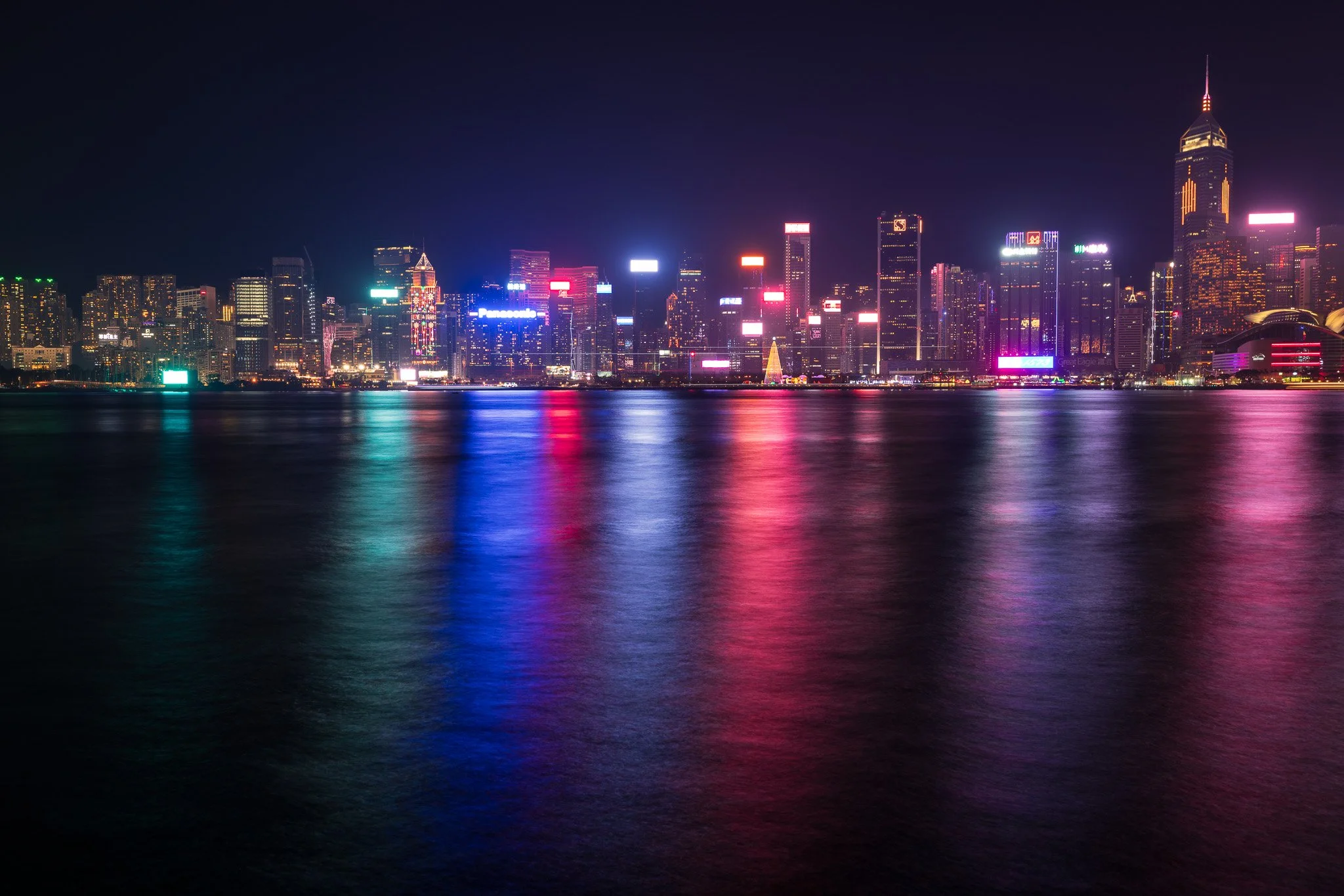
The Symphony of Lights show runs nightly at 8:00 PM, with synchronized lasers, lights, and searchlights across more than 40 buildings on the skyline. Bring your tripod and set up at least 30 minutes early to get your position. Shoot in Bulb mode for the light trails.
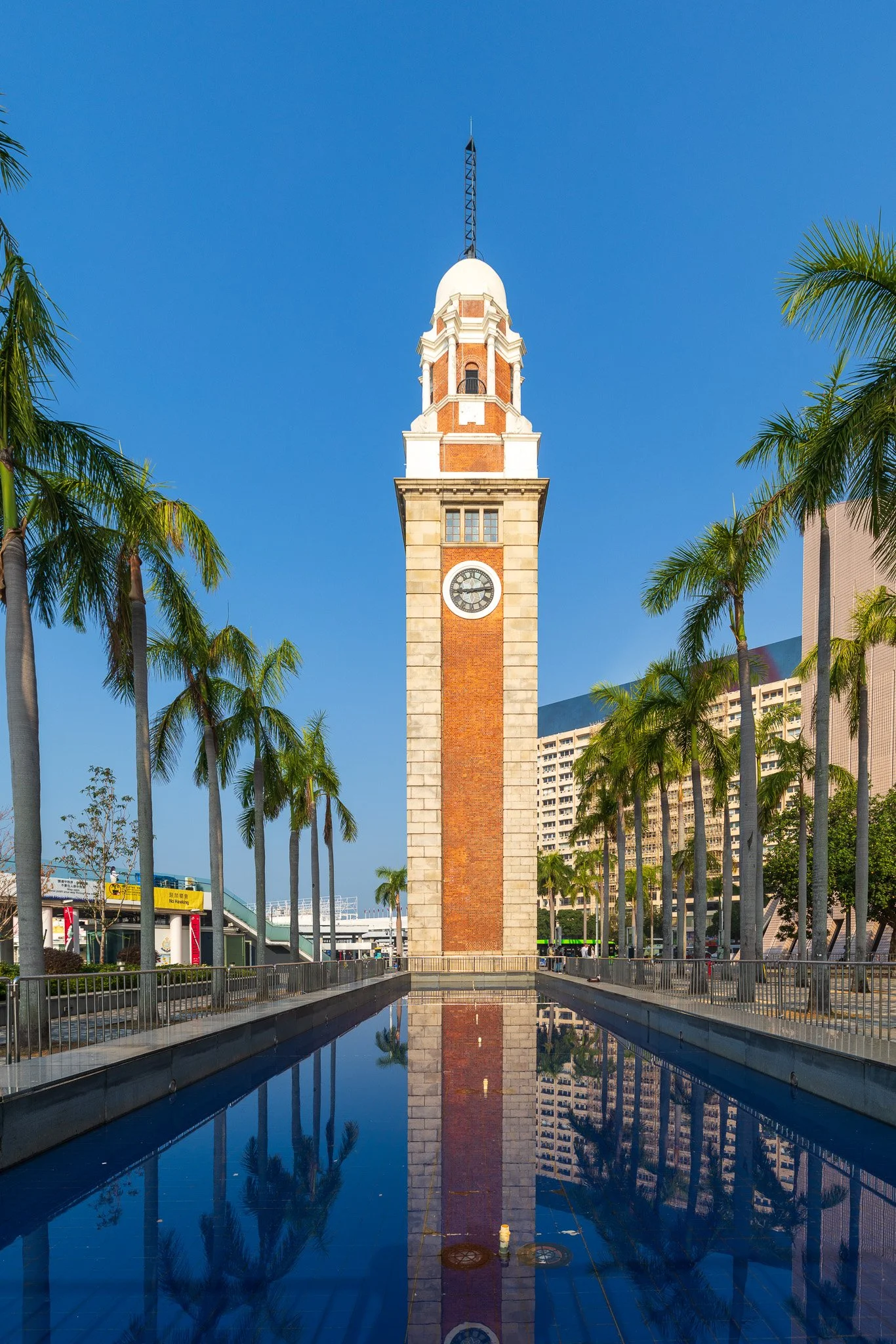
Pro Tip: The best light is the 20 minutes of blue hour just after sunset, before full darkness, when the sky still holds a deep blue and the building lights are fully illuminated. That window of blended light is extraordinary. Arrive at golden hour, watch the sunset, and stay for blue hour. The transition is worth every minute.
Street Photography in Hong Kong
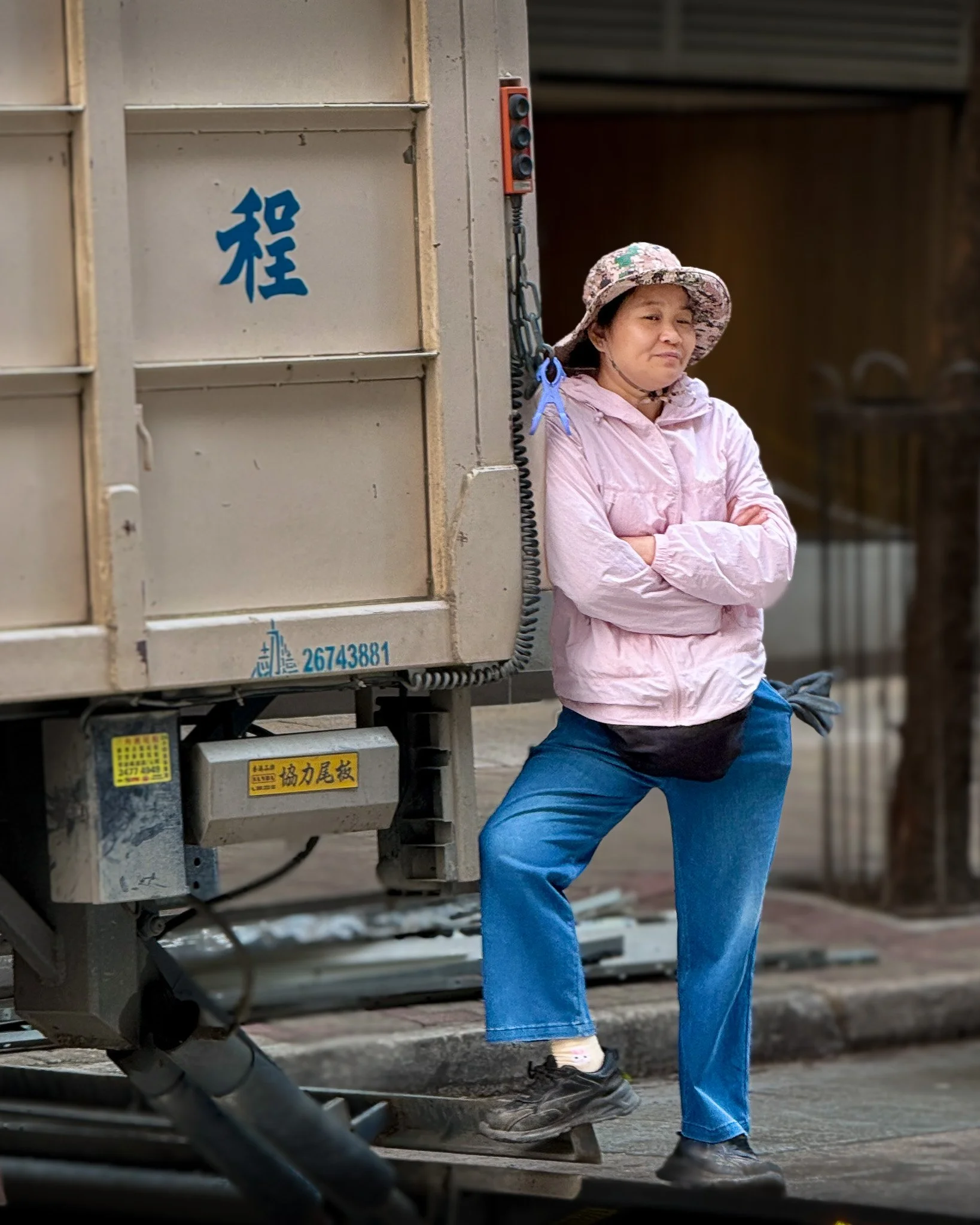
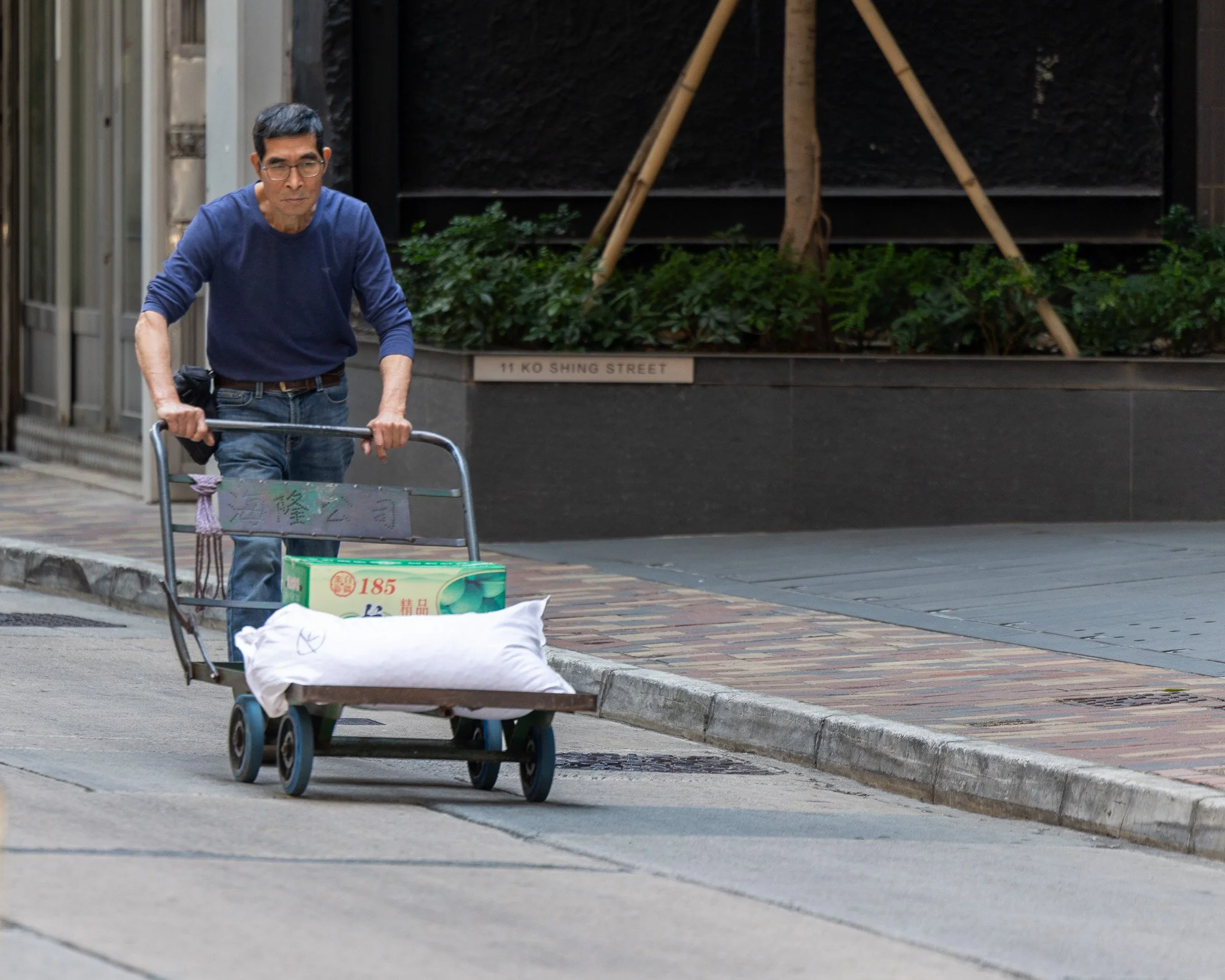
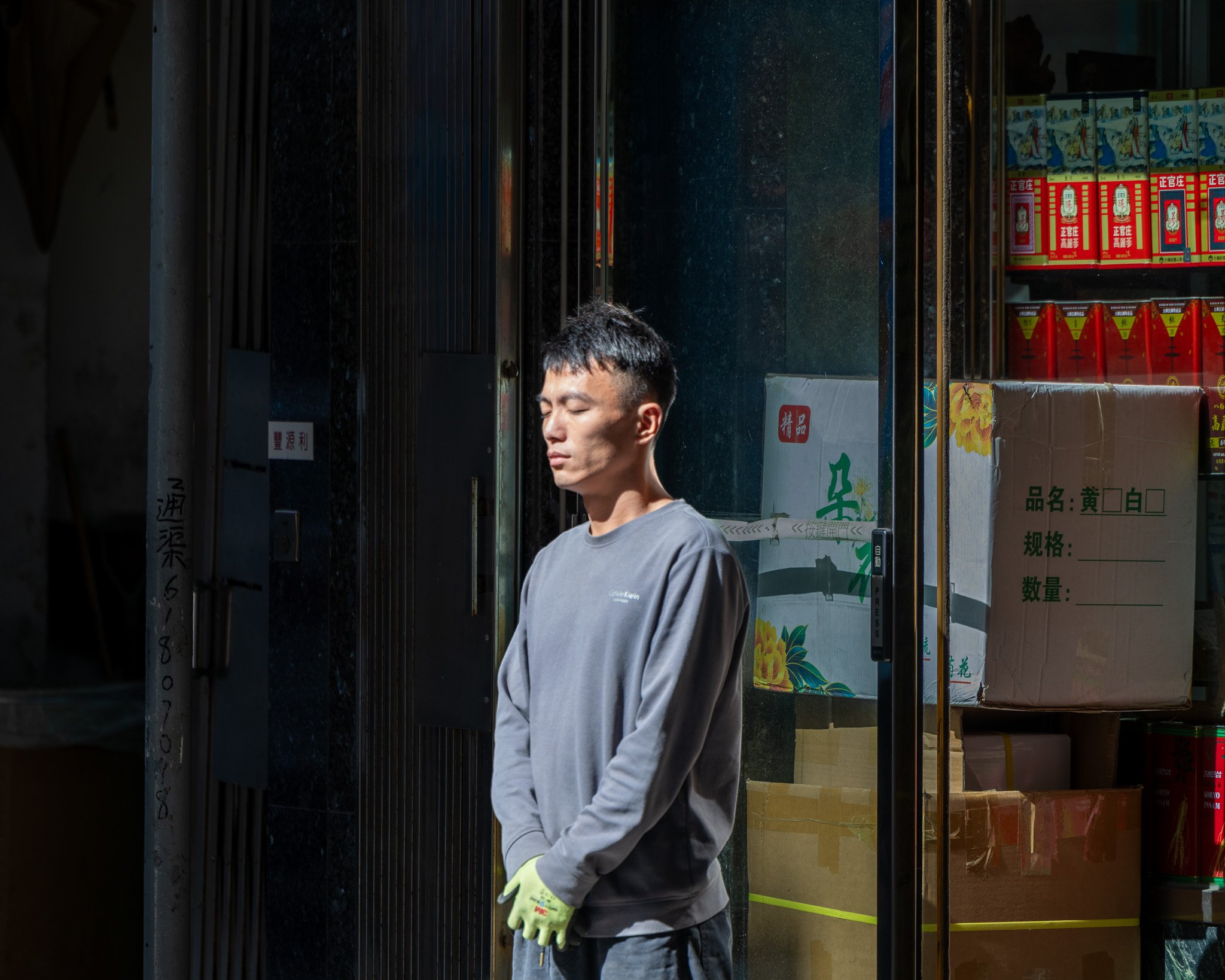
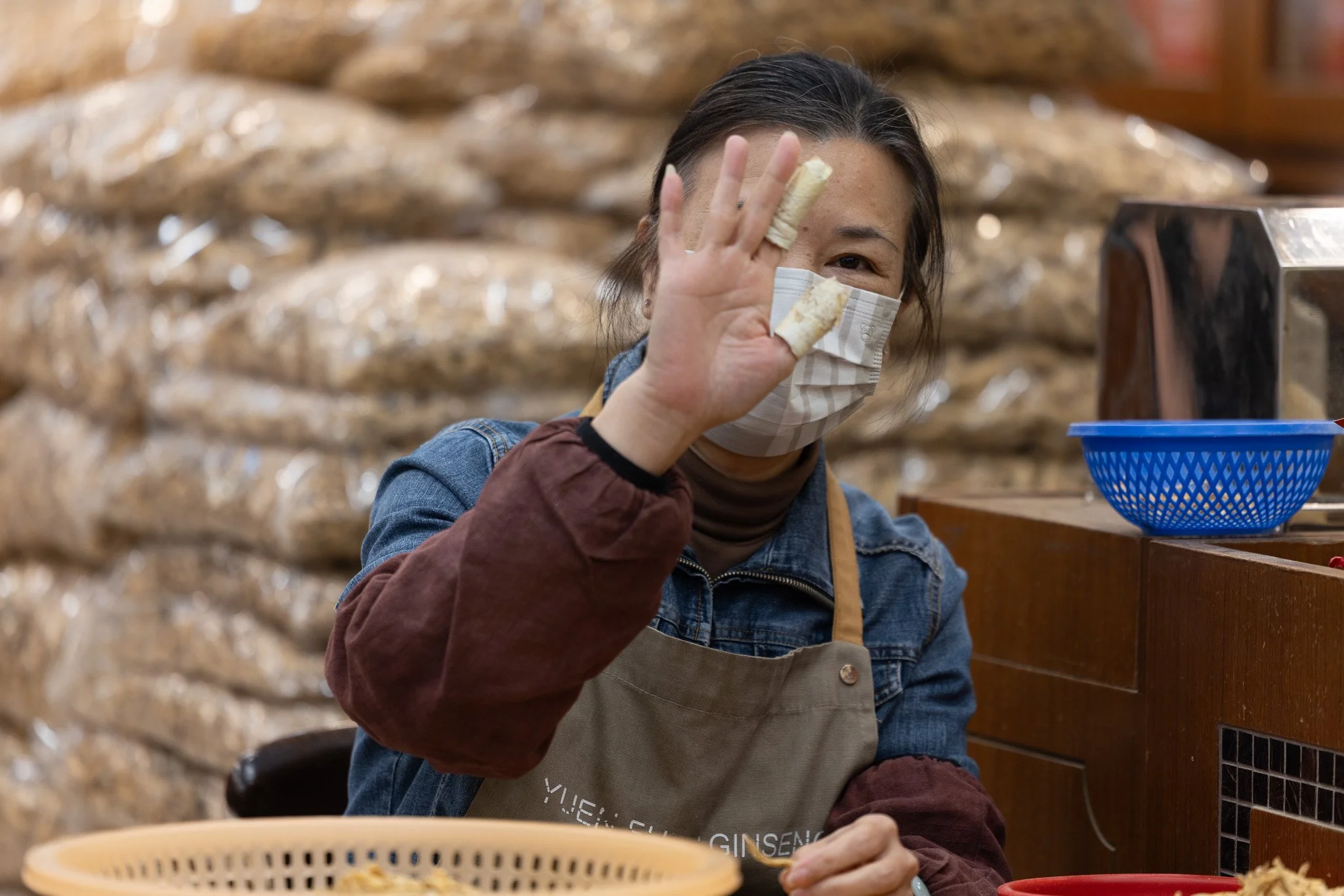
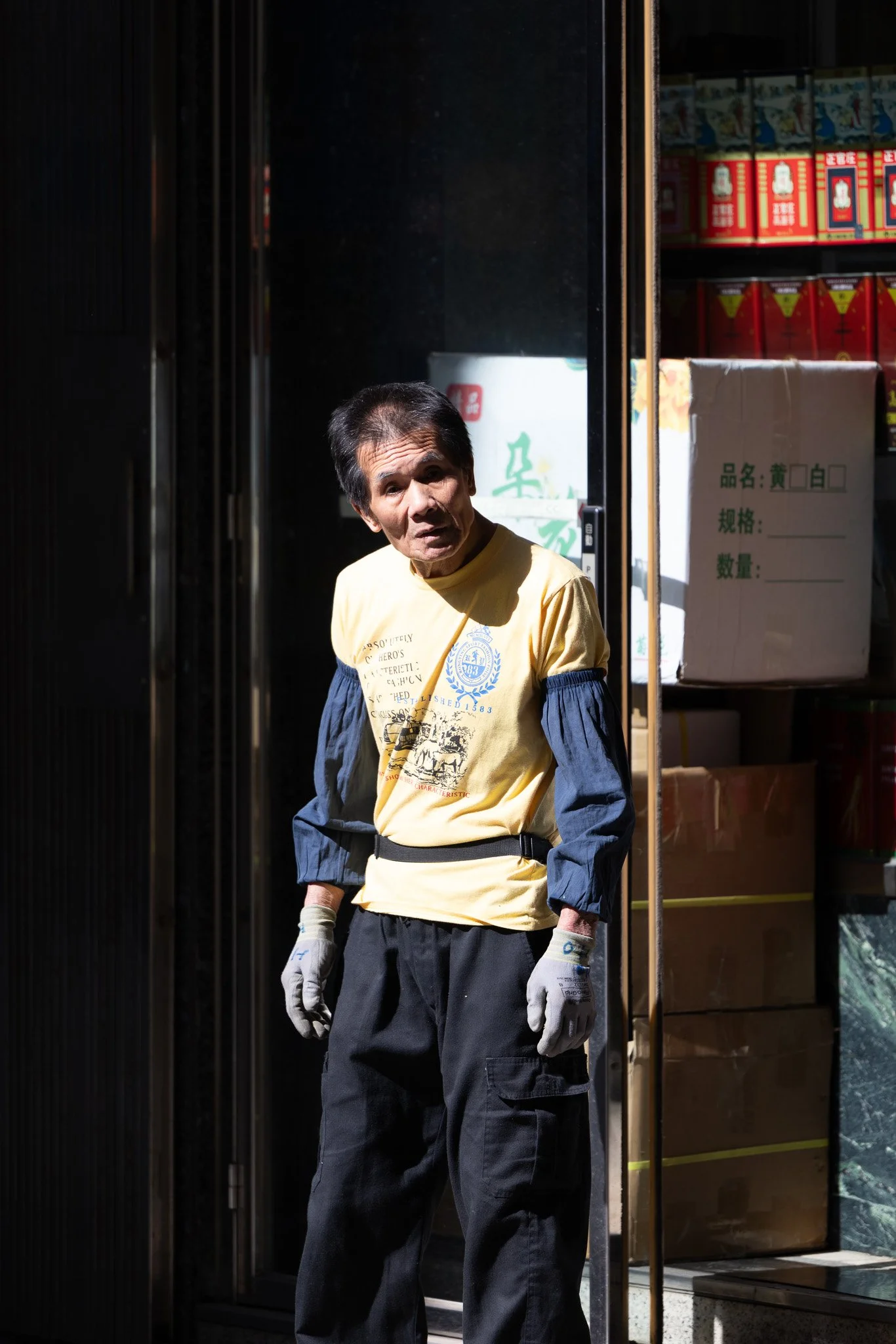
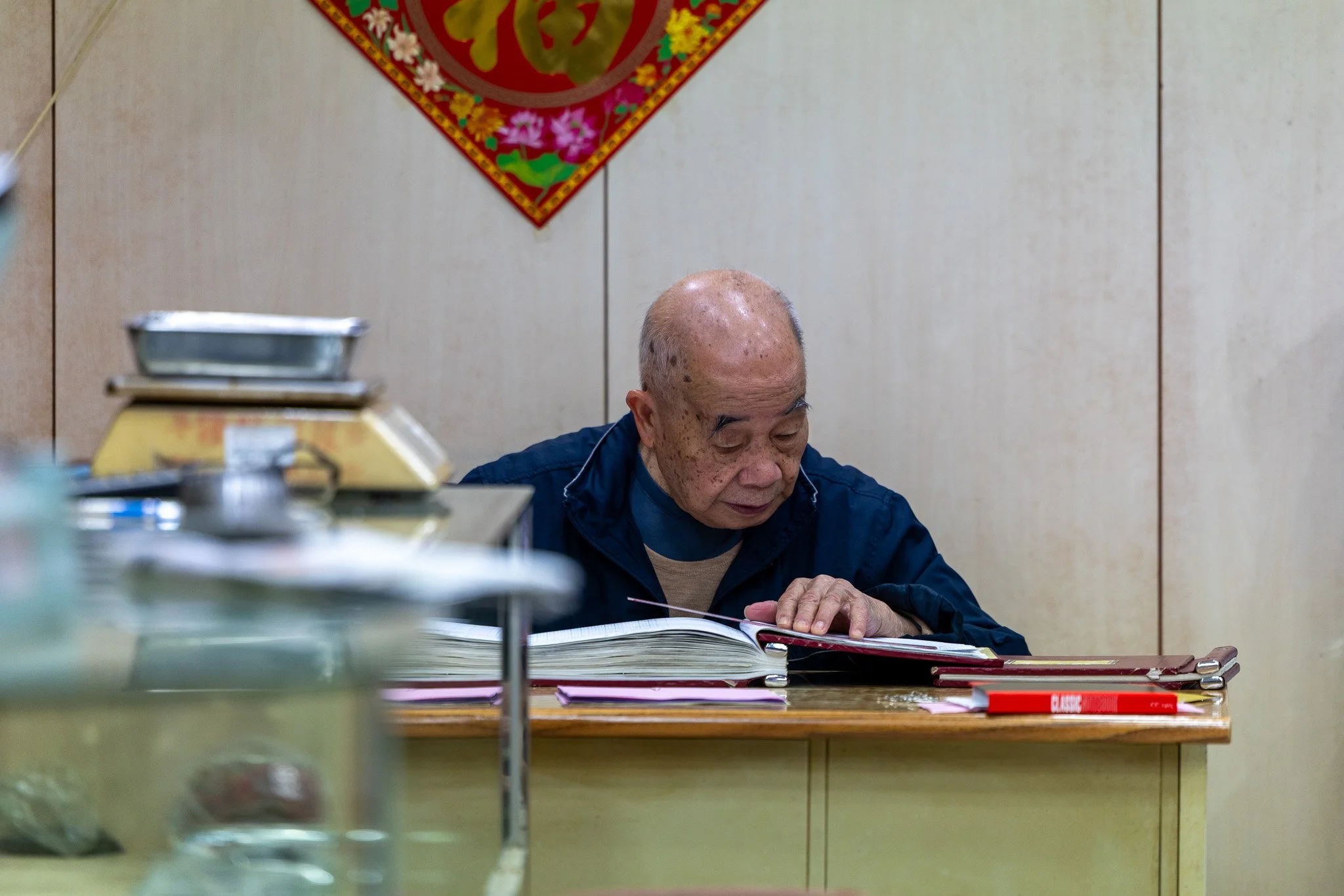
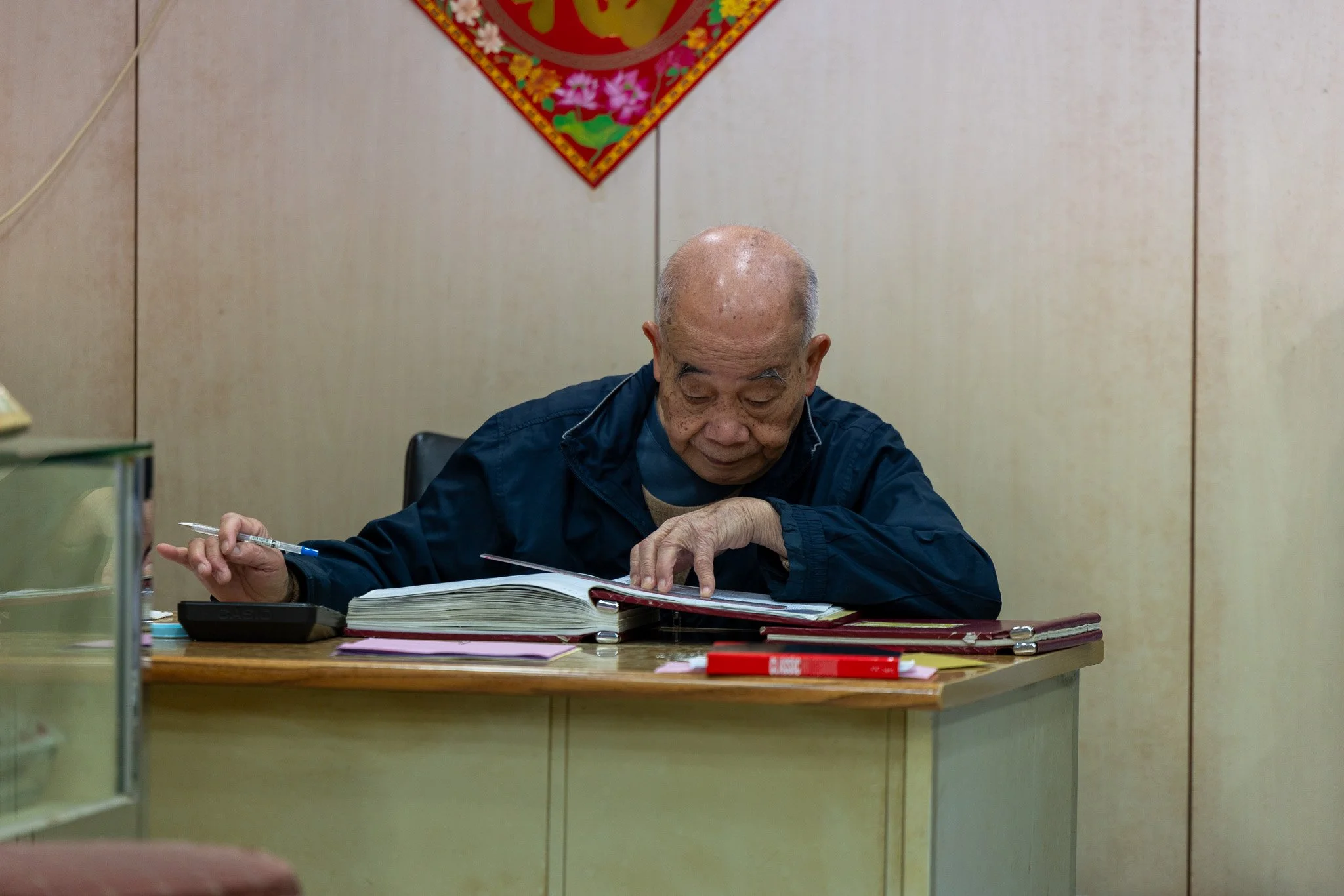
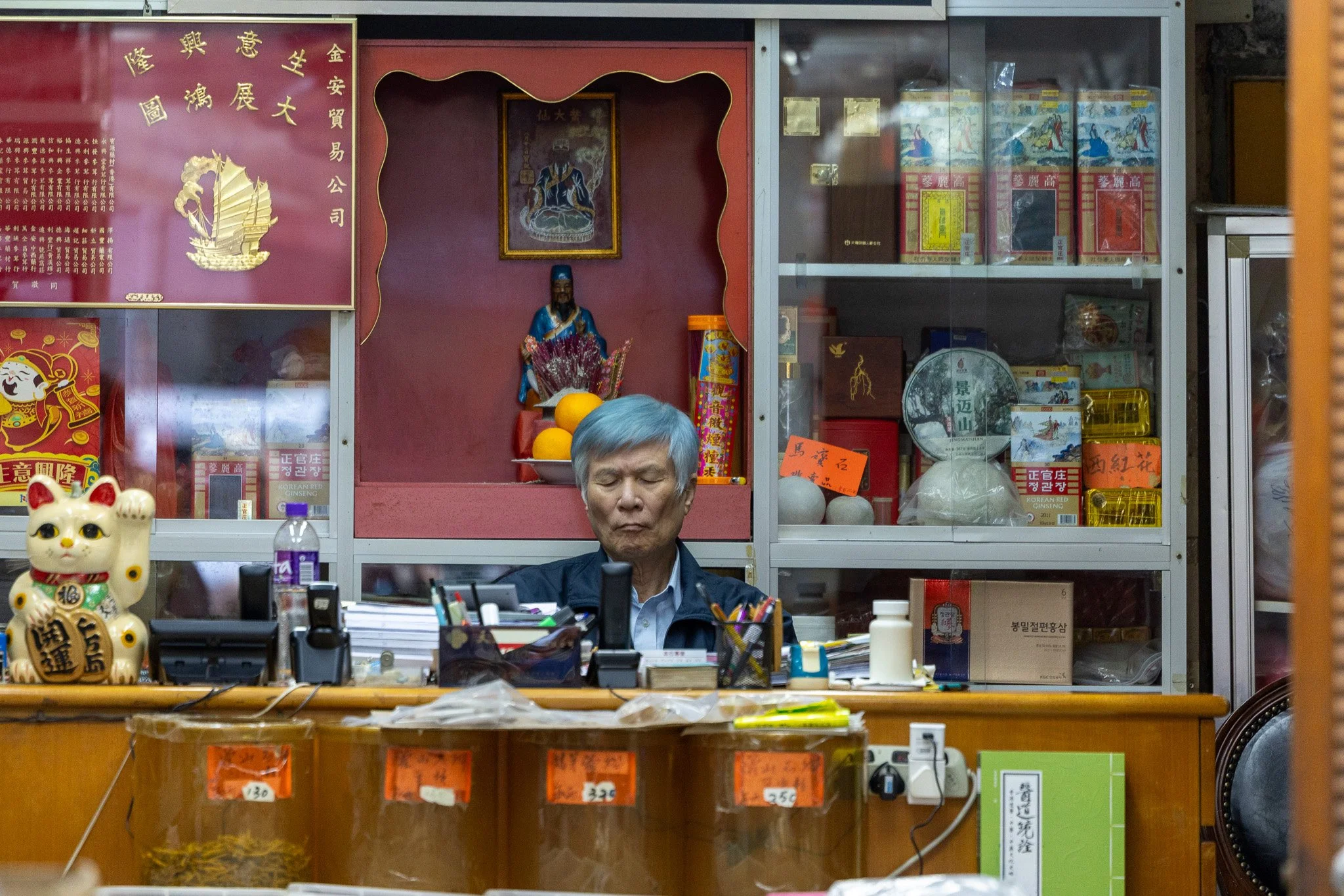
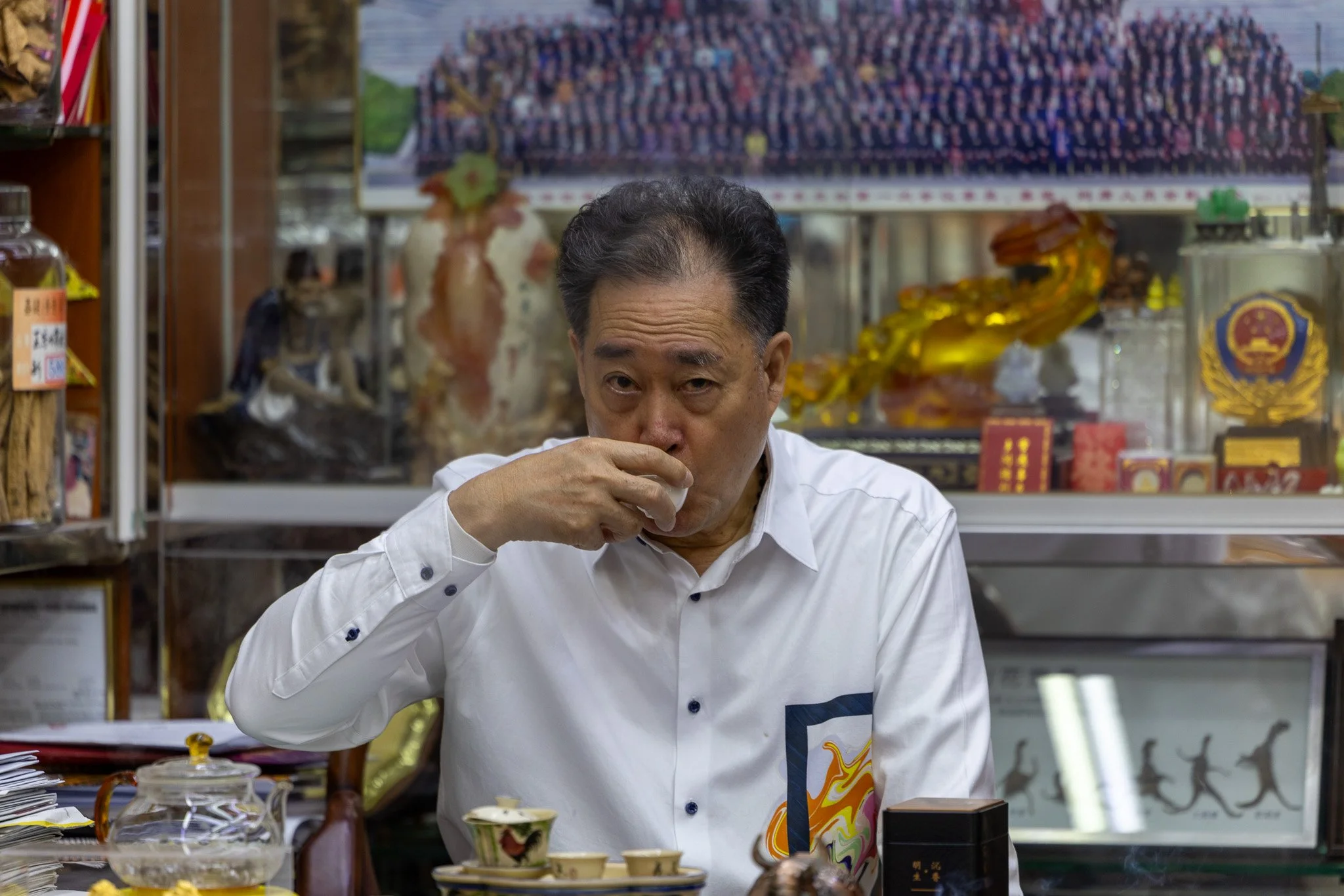
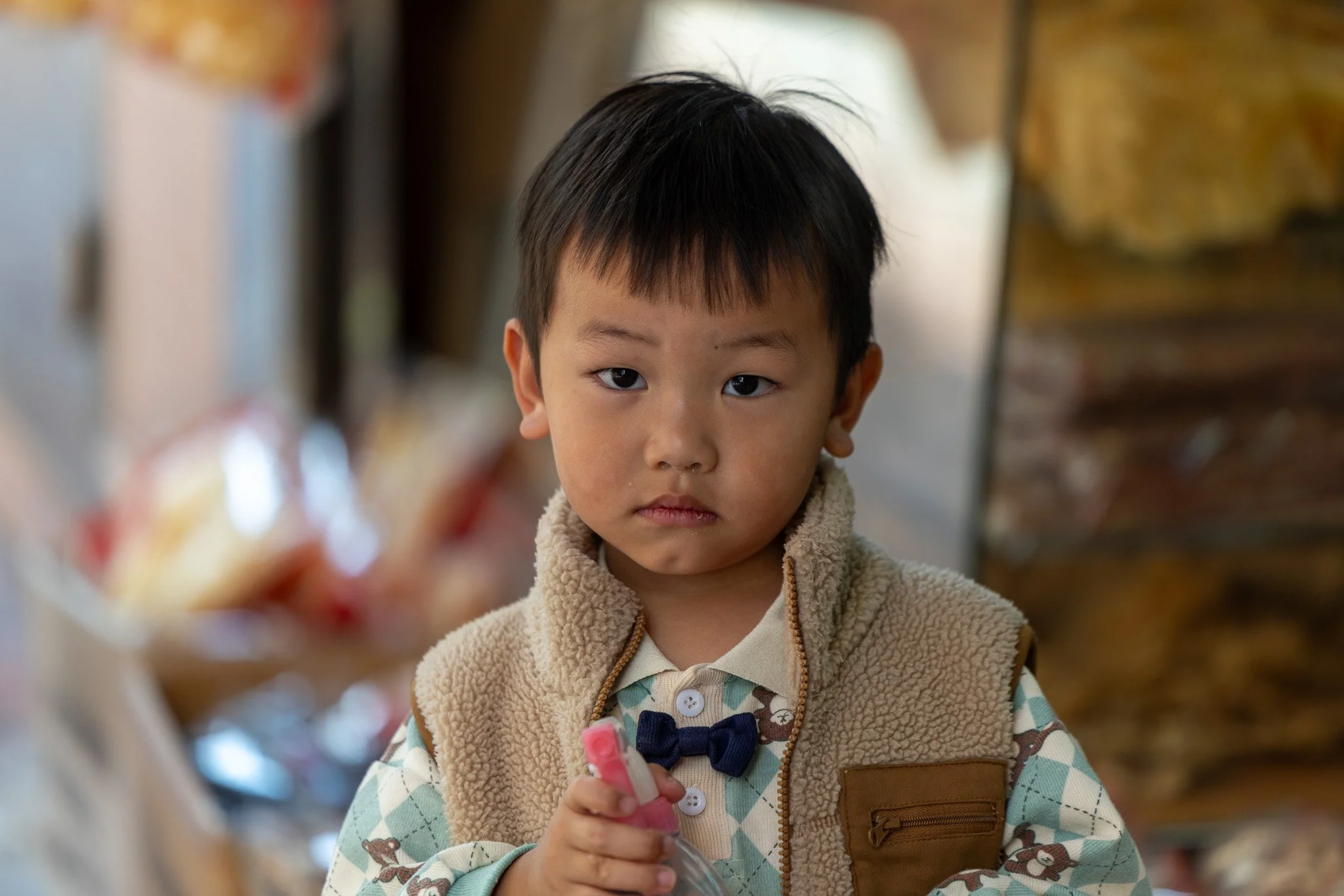
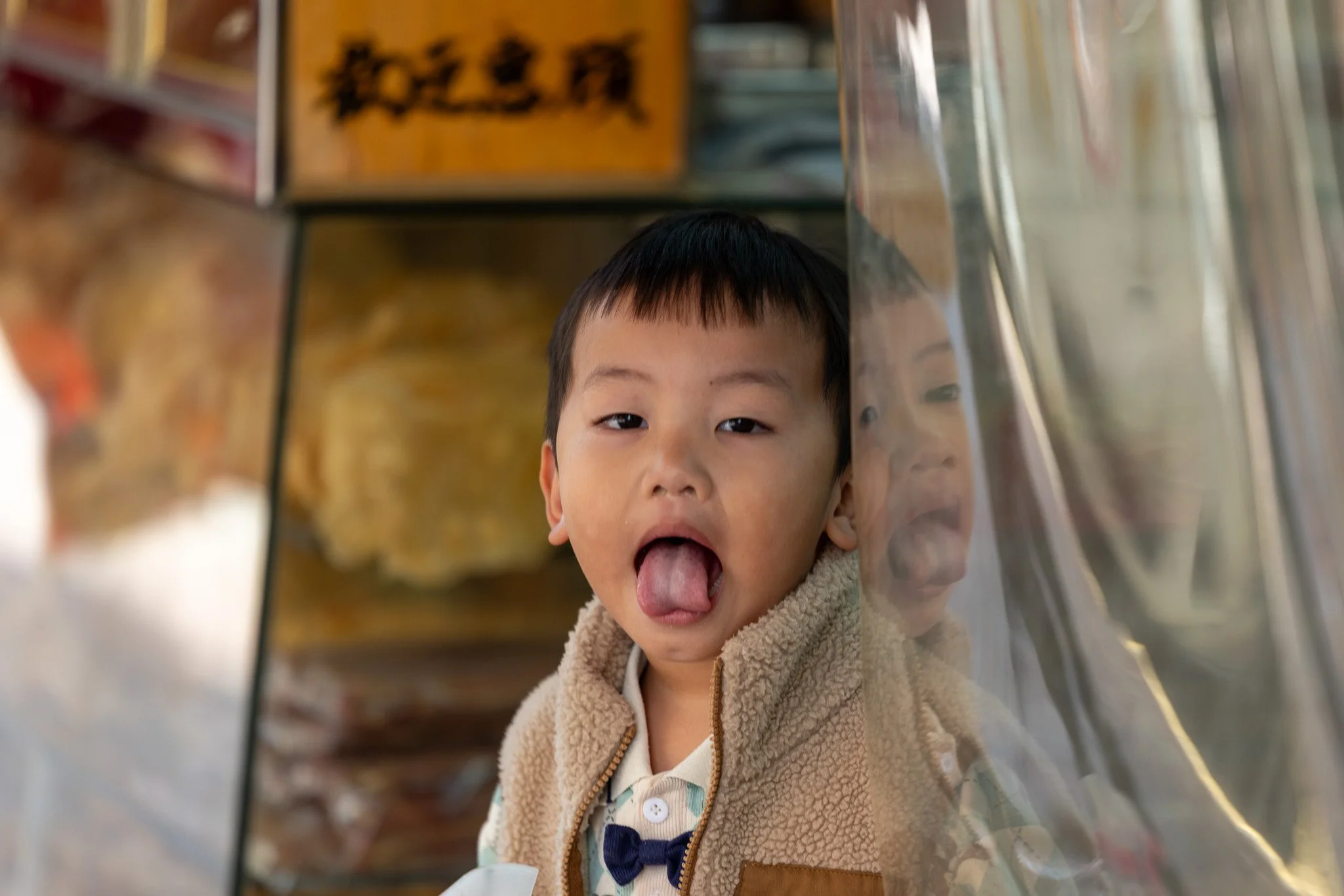
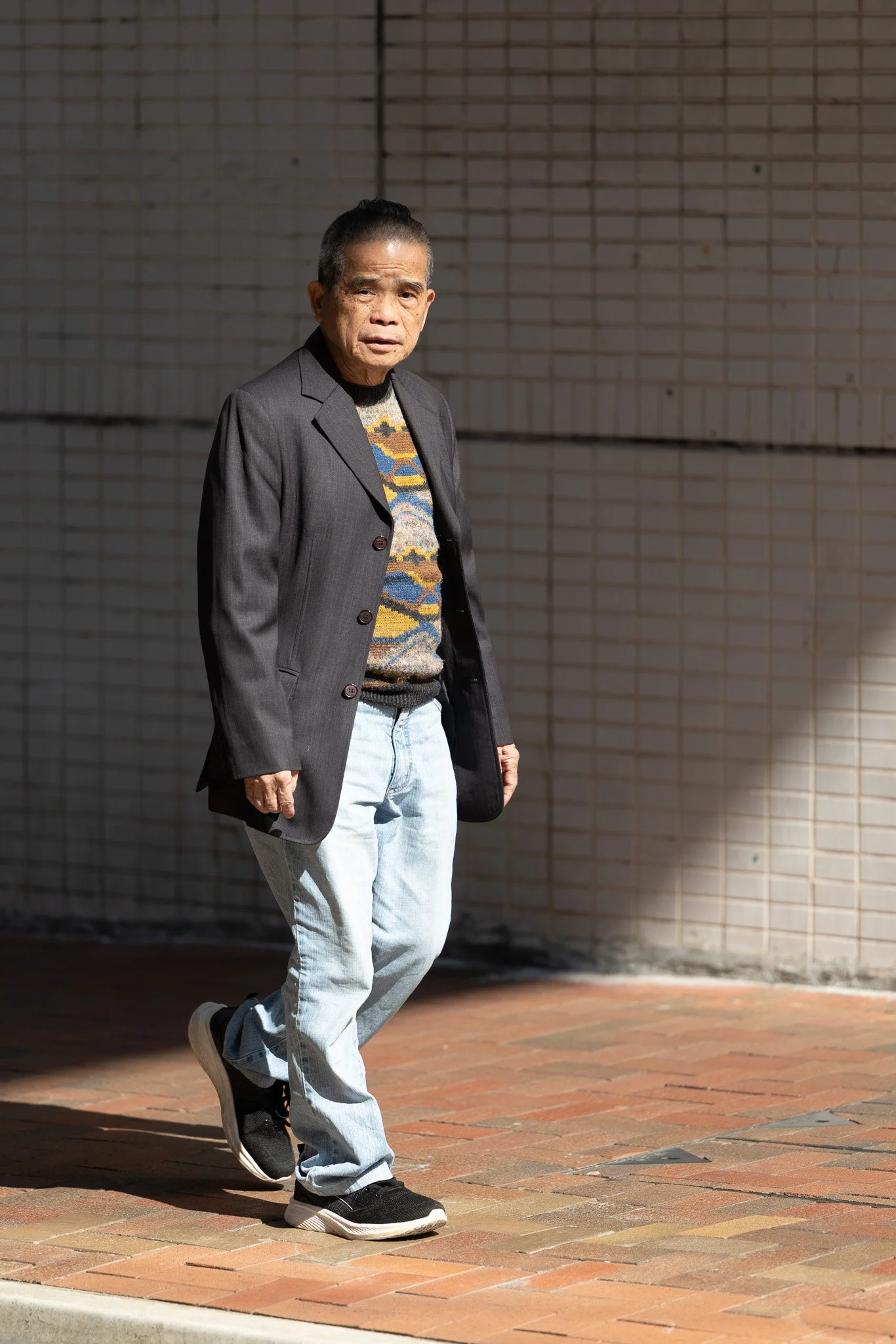
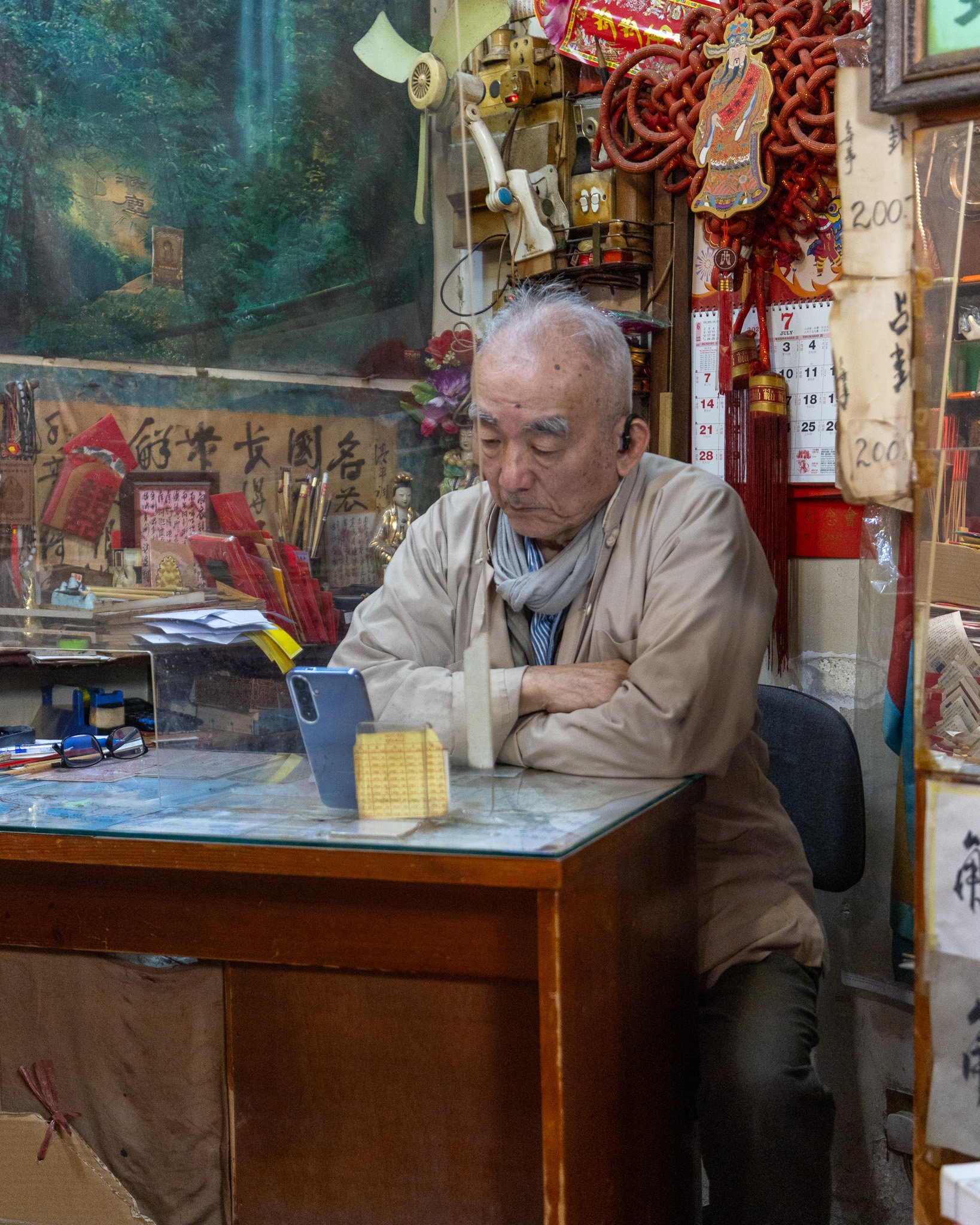
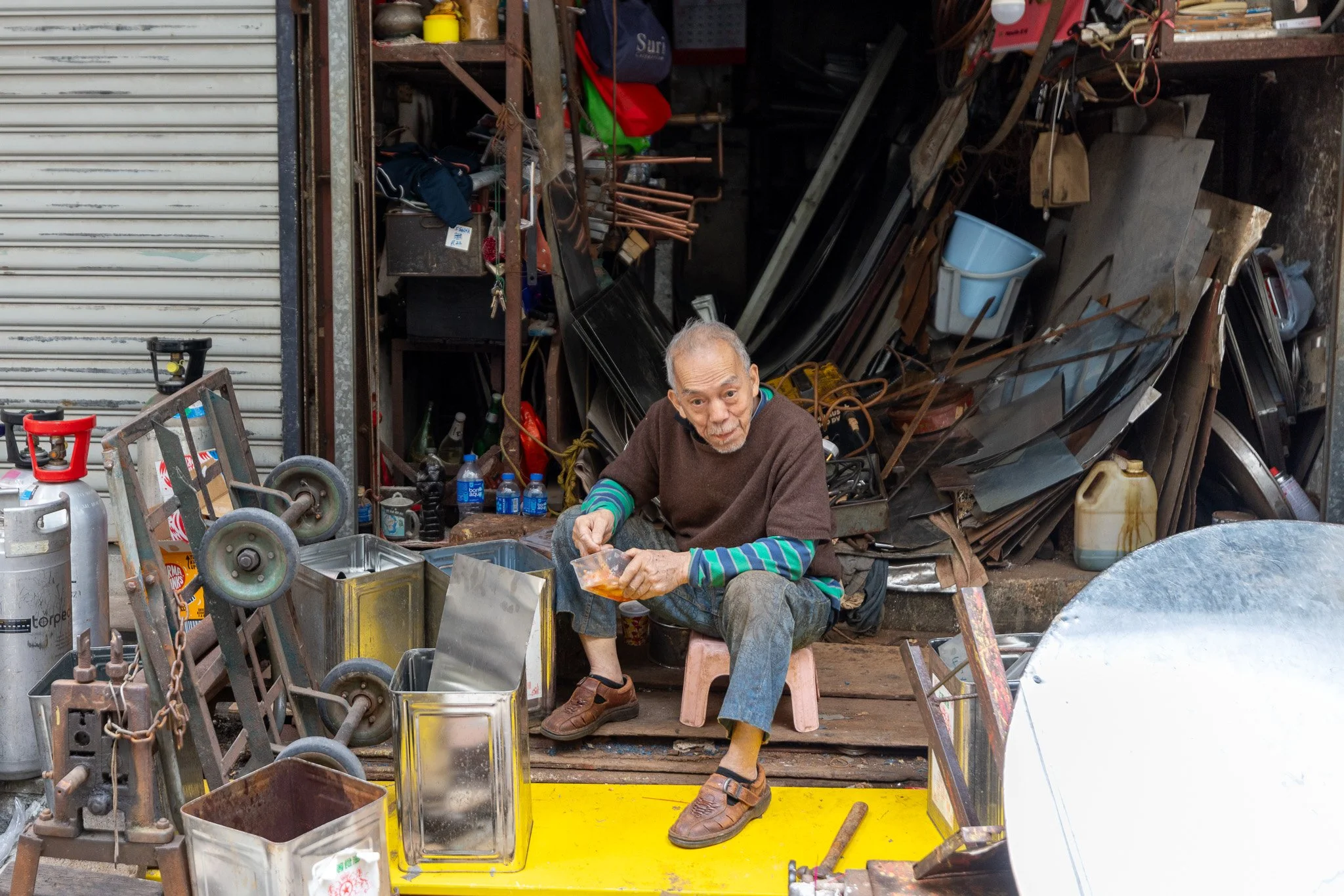
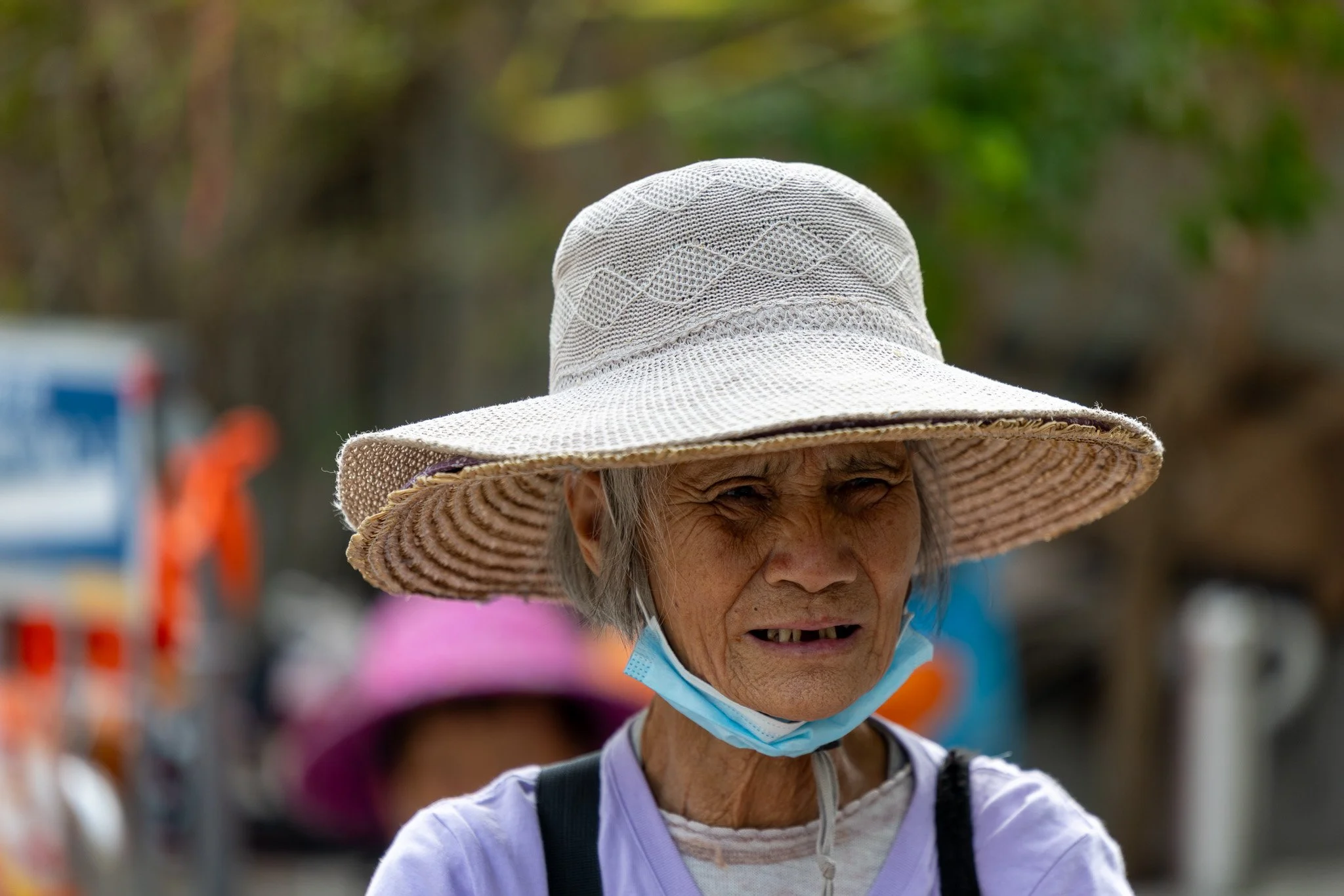
Hong Kong is one of the greatest street photography cities on the planet. The density, the visual complexity, the layering of old and new, the faces, the light, the pace — it all adds up to a city that rewards the patient observer with an almost inexhaustible supply of human moments.
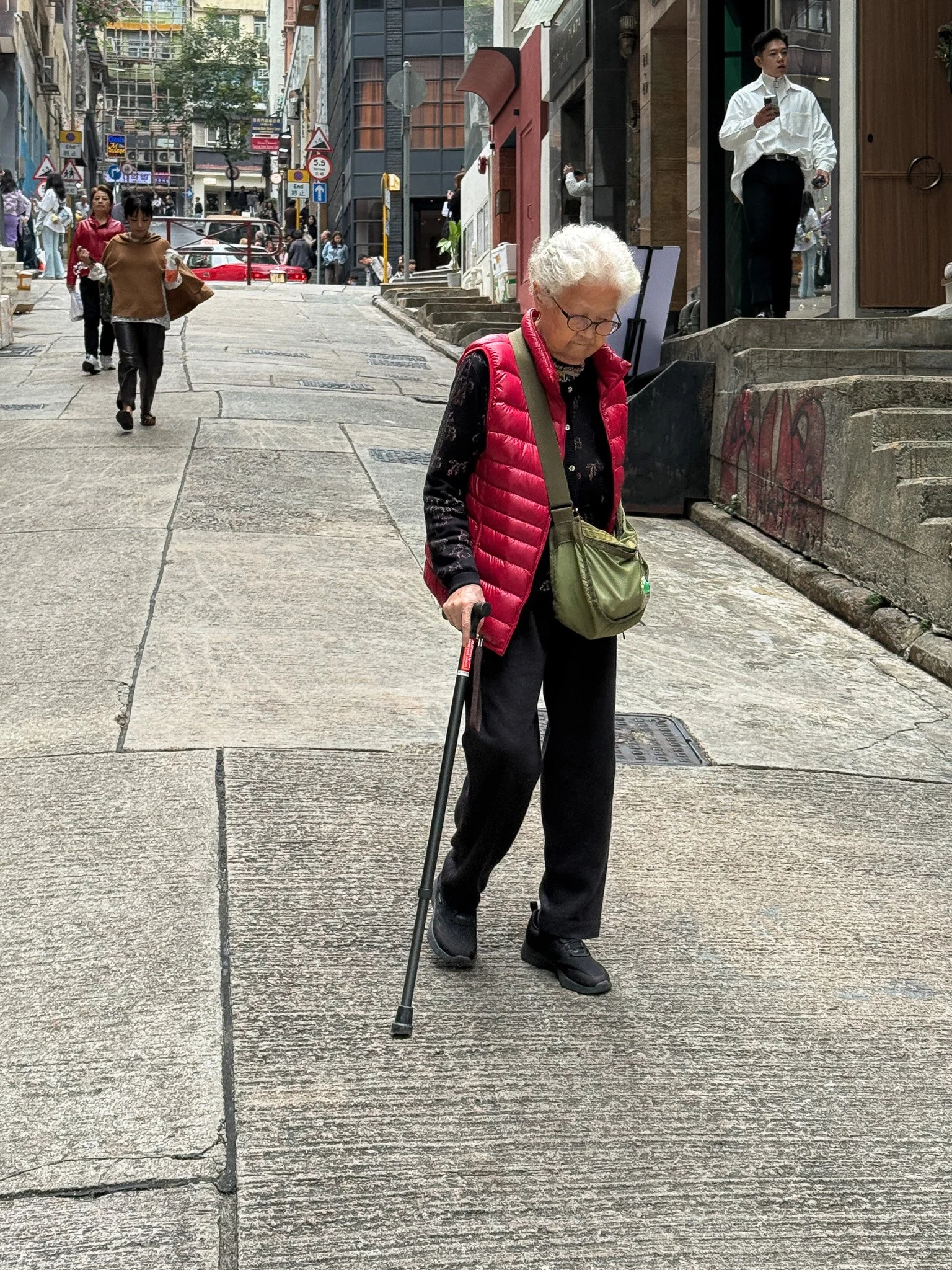
What makes Hong Kong exceptional for street photography is the compression. People navigate narrow sidewalks, steep staircase lanes, crowded market aisles, and fluorescent-lit corridors in enormous numbers and at genuine speed. There is almost nowhere you can stand with a camera and find nothing to photograph. The challenge is not finding subjects. It is slowing down enough to see them.
Where to Work
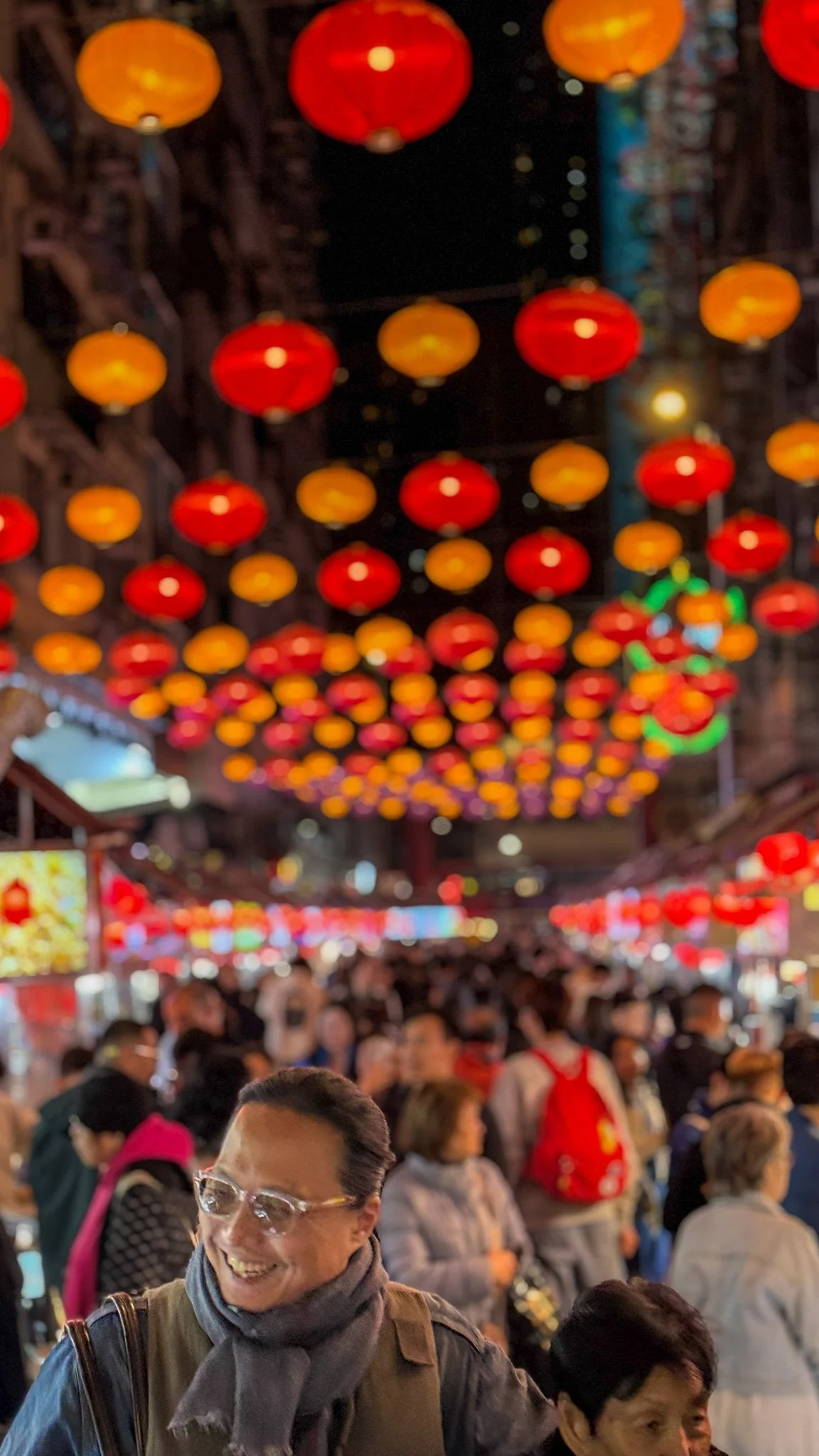
Mong Kok is the most kinetic. The streets around the Ladies Market, Sneakers Street, and the surrounding blocks are densely packed at almost any hour. The mix of shoppers, vendors, tourists, and locals going about their routines creates constant movement and layered backgrounds. Neon signs and shop lighting at night make it one of the best environments for low-light street photography in the world.
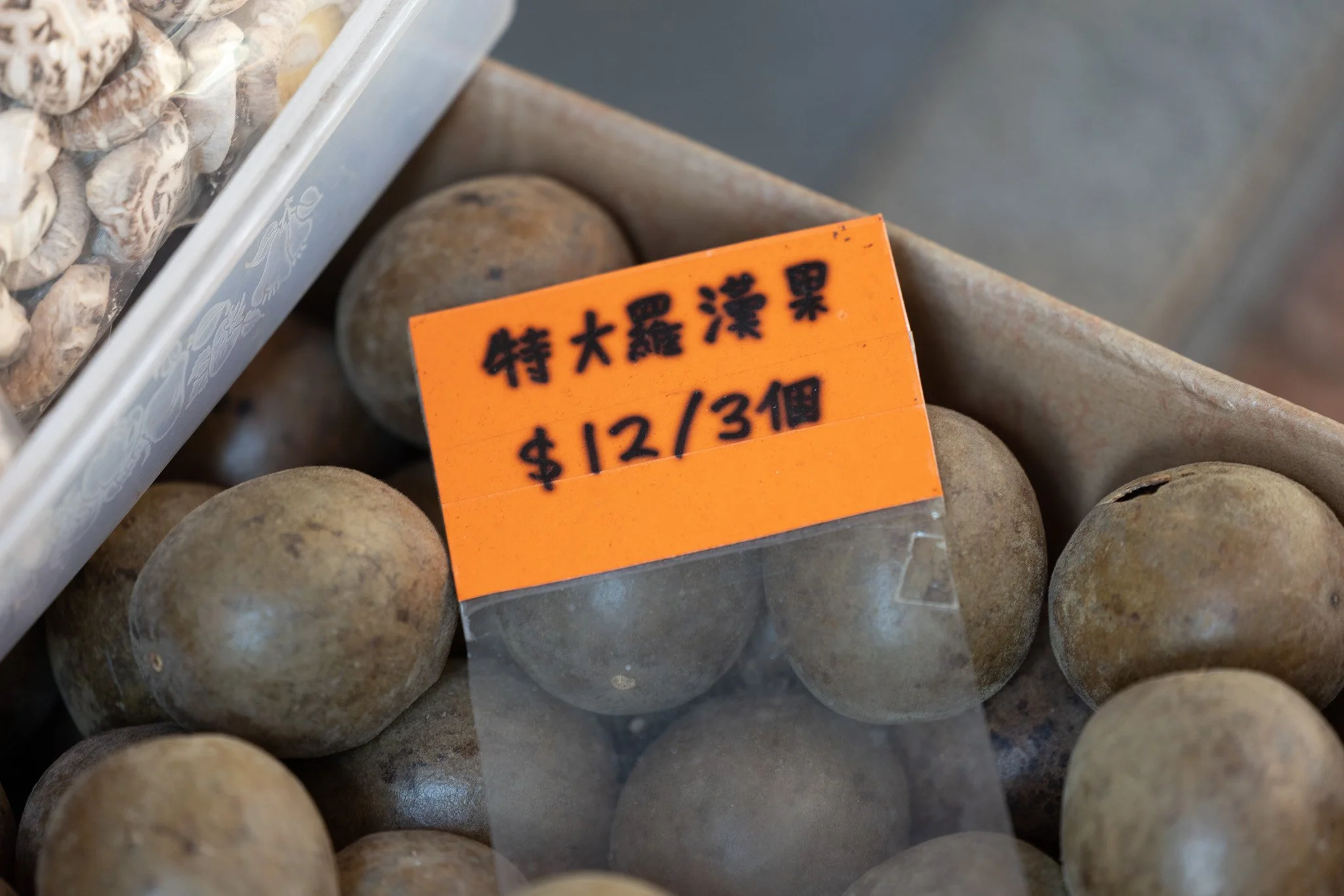
Sheung Wan rewards a slower approach. The backstreets off Queen's Road West and the lanes climbing toward Hollywood Road have a quieter, more contemplative energy. Traditional medicine shops, paper goods suppliers, and old residential buildings give you texture and context that the busier tourist areas do not. This is where you find the older Hong Kong, still holding its ground.
Central at rush hour is a masterclass in urban movement. The elevated walkways, the MTR exits releasing thousands of people onto the street simultaneously, and the visual contrast between suits and street vendors all happen within a few hundred meters of each other. Work the intersections and let the flow come to you.
Wan Chai sits between Central and Causeway Bay and has a personality that belongs entirely to itself. The wet market on Cross Street, the old tong lau buildings with their bamboo-scaffolded facades, and the mixture of old local businesses and newer restaurants give you visual variety in a compact area. It is less photographed than Mong Kok and more rewarding for it.
How to Approach It
Use a small camera and a prime lens. A 35mm or 50mm equivalent keeps you close enough to the action to feel it but gives you enough working distance to compose without intruding. A large telephoto lens signals intent in a way that changes how people behave around you. The less equipment you carry, the more you blend in.
Learn a few words of Cantonese. Even a simple greeting or thank you changes the interaction completely. People respond to genuine curiosity and respect in any language.
Shoot at eye level. Crouch when you need to. Hong Kong's visual richness is not above you — it is at street level, at market stall height, in the faces of people waiting for a tram or eating a bowl of wonton noodles at a plastic table on the sidewalk.
The best light for street photography here is overcast. Flat, diffused light removes harsh shadows and lets the subject, rather than the exposure, do the work. That said, the low directional light of early morning in Sheung Wan and the neon-soaked darkness of Mong Kok at night are both extraordinary in their own way.
A Note on Respect
Hong Kong people are generally tolerant of photographers, but that tolerance is not unlimited. In markets, temples, and residential neighborhoods, photograph the scene rather than forcing portraits. If someone indicates they do not want to be photographed, respect it immediately and without argument. The best street photographs in Hong Kong are almost always made when the photographer is invisible, not when they are asserting their right to shoot.
Pro Tip: Give yourself at least half a day with no agenda and no specific location in mind. Pick a neighborhood, walk slowly, and let the city come to you. Hong Kong rewards wandering more than any route you could plan in advance. The photograph you remember will not be the one you planned to take.
Temple Street Night Market
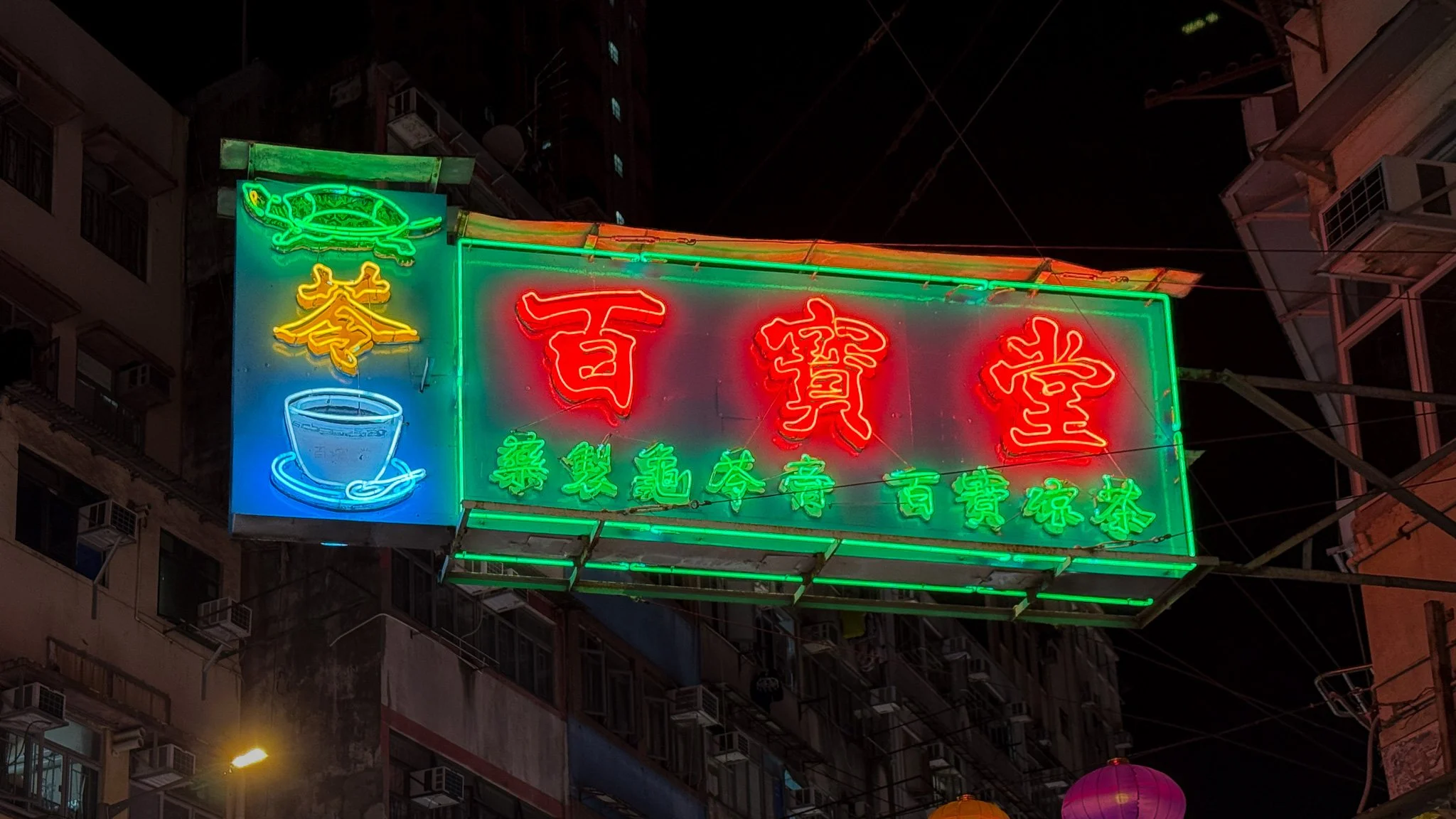
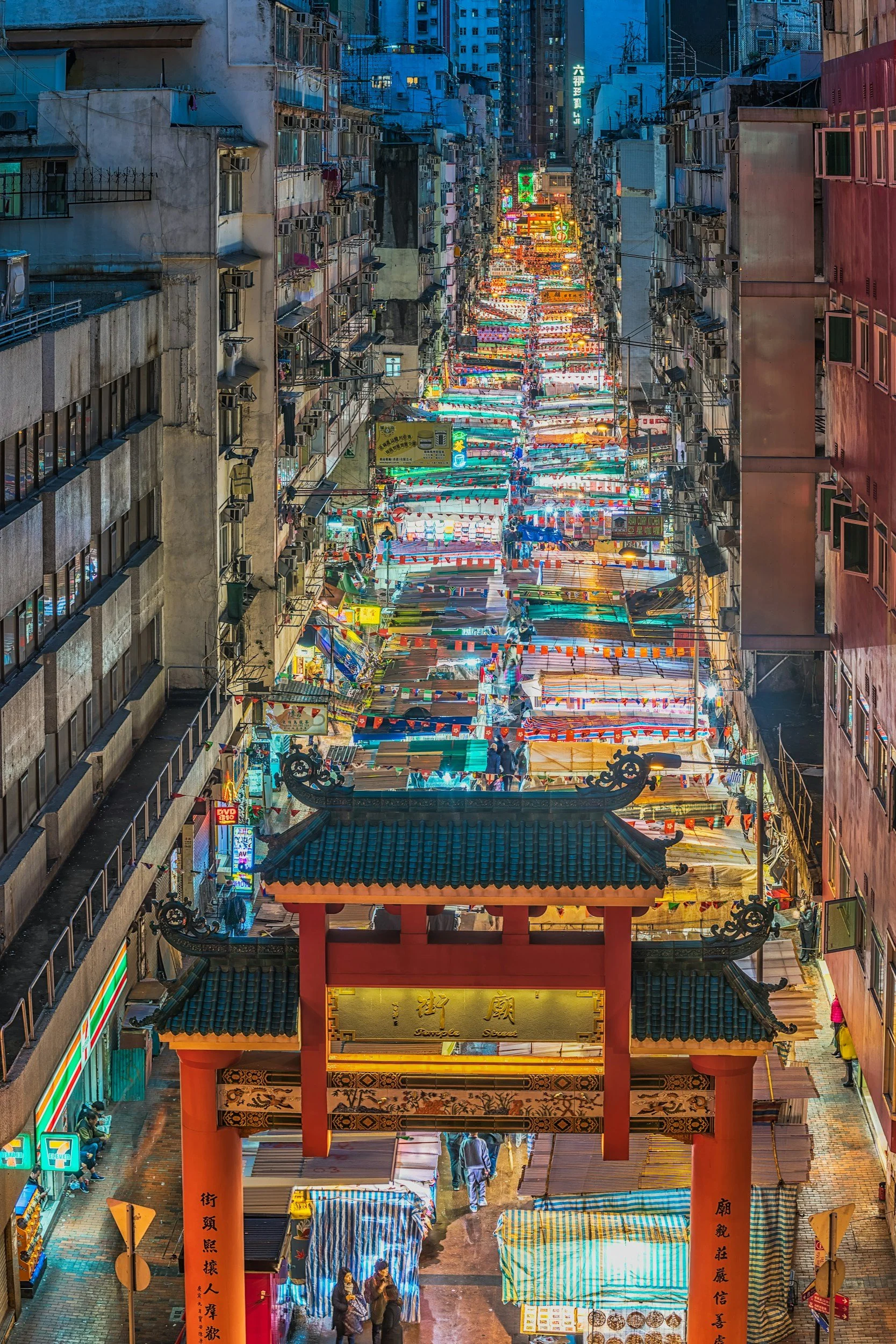
Temple Street in Jordan comes alive after dark. From around 7 PM onwards, stalls fill the street with everything from phone cases to fortune tellers, and the air fills with the smell of clay pot rice and the sound of Cantonese opera drifting from the area near the Tin Hau Temple. This is old Hong Kong in full, unfiltered form, and it is extraordinary to photograph.
The neon signs, the stall lighting, the faces, and the energy create a completely different visual language from the skyline shots across the harbor. This is street photography at its most alive.
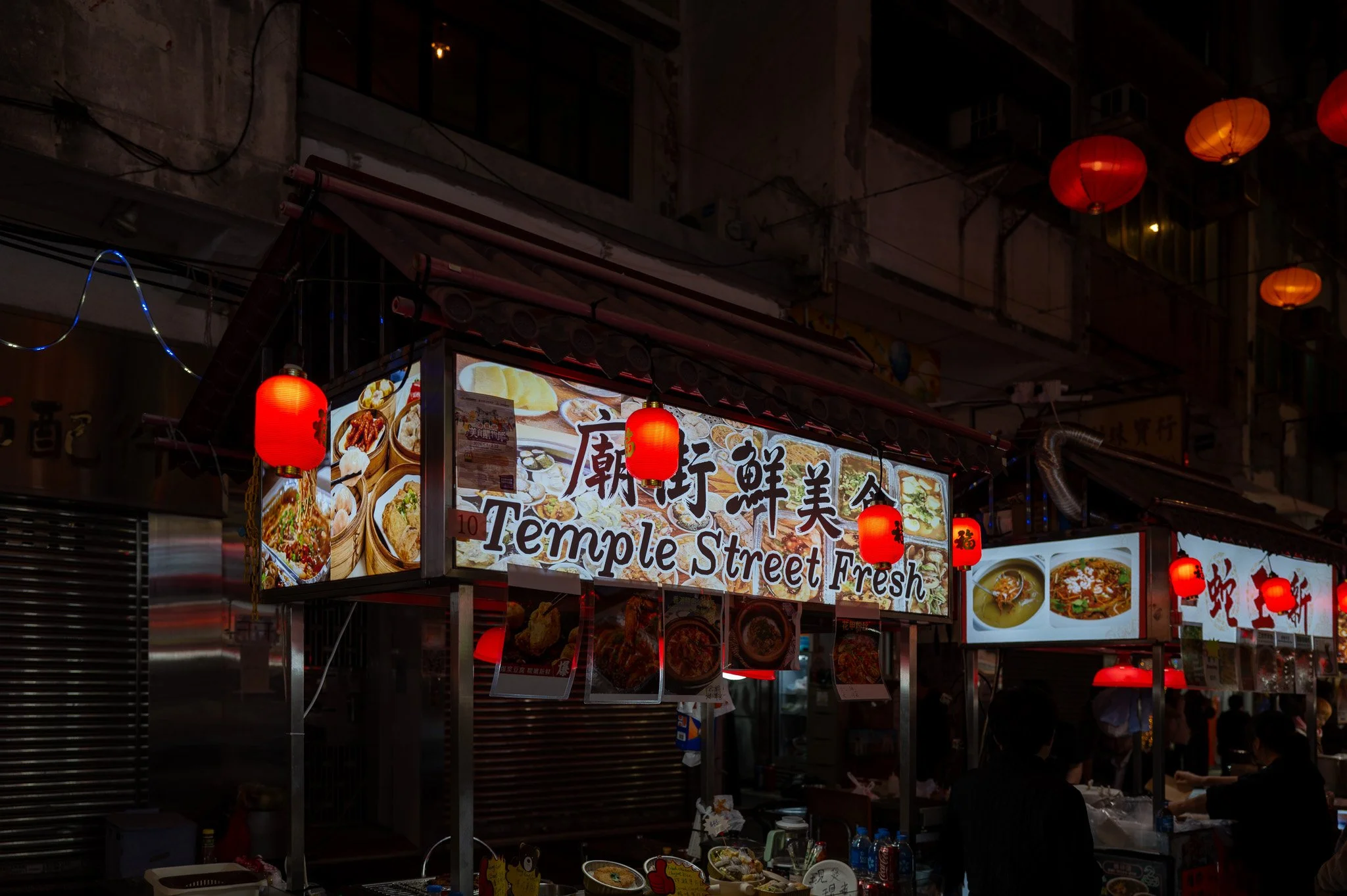
Pro Tip: Shoot with a 35mm or 50mm prime and embrace the imperfection. The light is mixed, the crowd is dense, and everything is happening at once. Let your eyes settle on specific moments rather than trying to capture the whole scene. A vendor arranging their goods, a fortune teller leaning forward over a table, a family sharing a bowl of noodles in a plastic chair. Those are the photos that will mean something later.
Yick Fat Building
The Yick Fat Building in Quarry Bay is one of the most iconic photography subjects in Hong Kong and has been for decades, long before social media made it famous. Five interconnected residential towers rise around a central courtyard, and standing at the base and looking straight up gives you a compressed vertical tunnel of apartment windows, laundry lines, air conditioning units, and the lives of thousands of people stacked almost impossibly on top of each other. It is breathtaking in the truest sense.
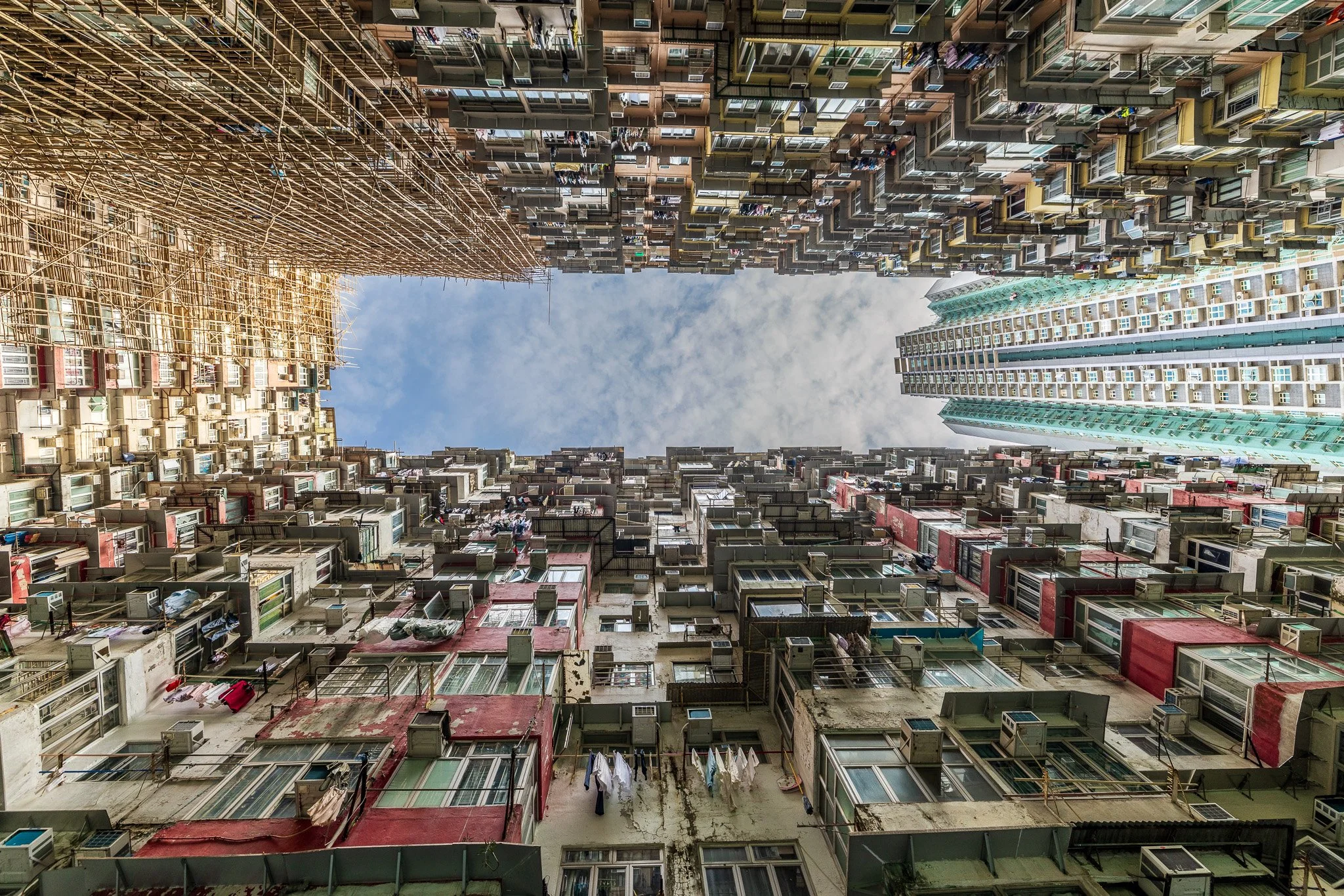
This is one of the most unique architectural compositions you will find anywhere in the world. It is also a real residential building where people live, which means you need to approach it with genuine respect.
Pro Tip: Use a wide-angle lens and stand directly in the center of the courtyard looking straight up. The symmetry is the shot. Shoot in portrait orientation to emphasize the vertical scale. Early morning on a weekday gives you the best light and the least foot traffic. Do not block doorways, do not intrude into private spaces, and keep your visit brief. The residents have seen enough photographers to last several lifetimes.
Sik Suk Yuen Wong Tai Sin Temple
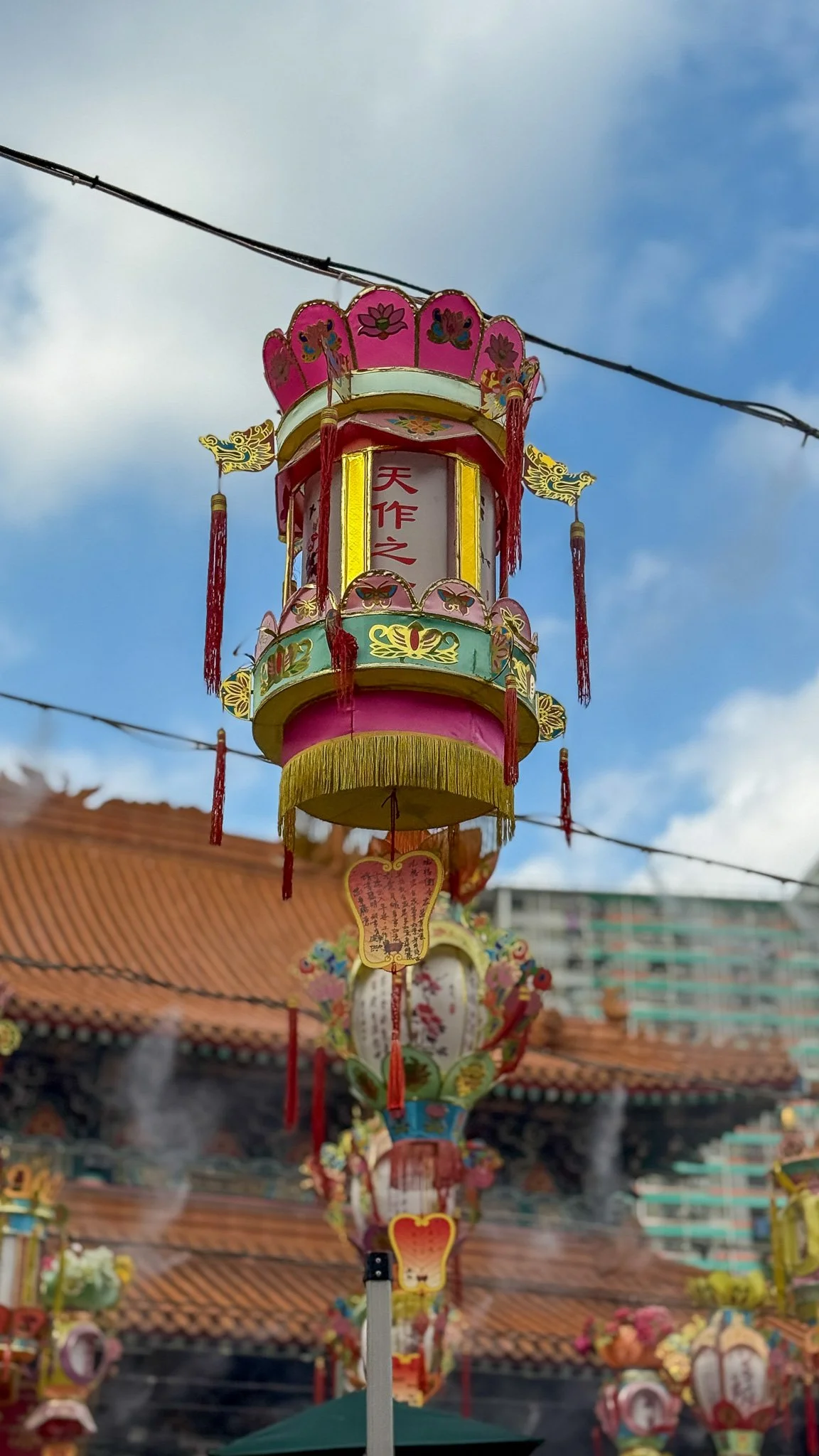
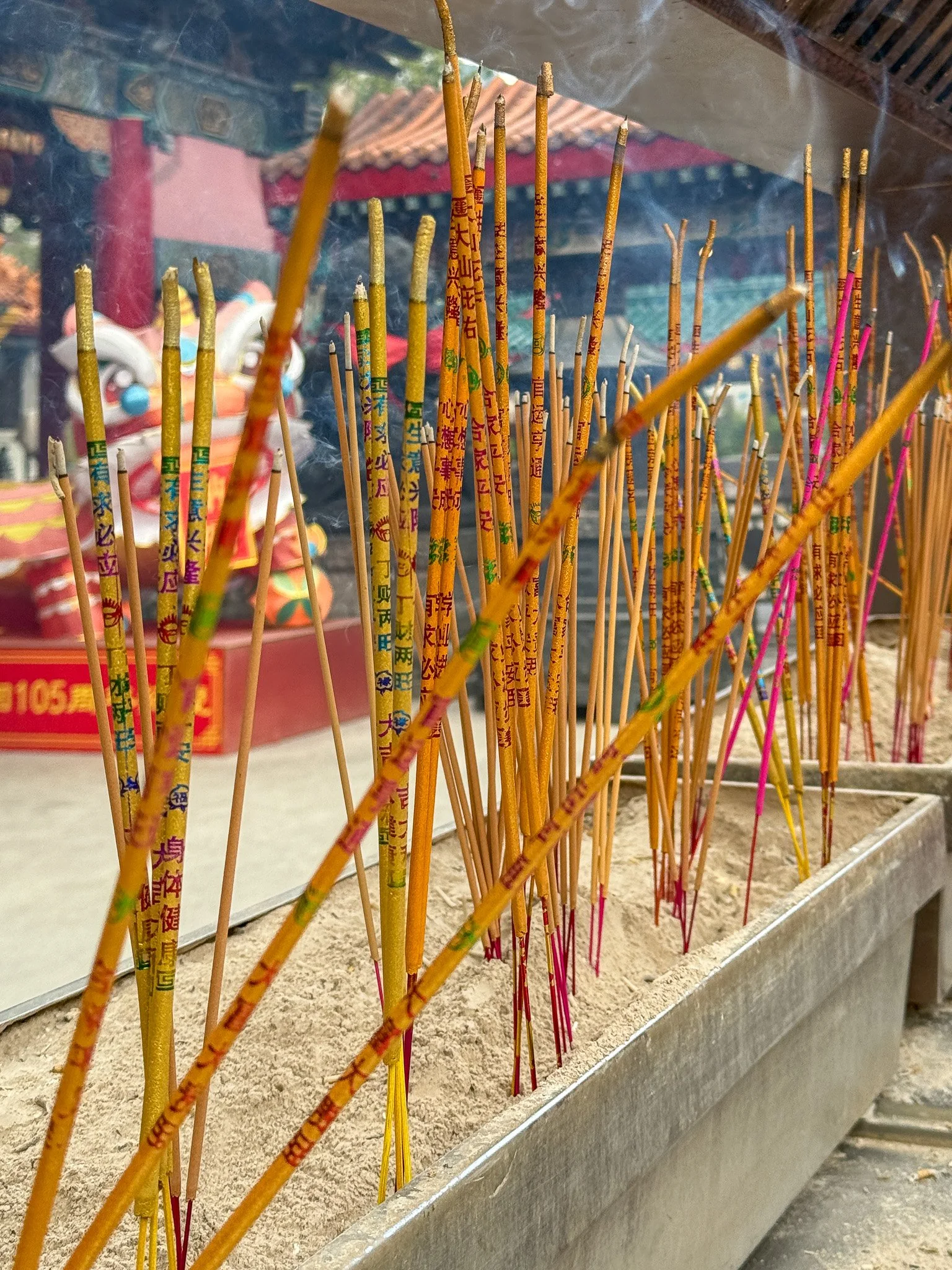
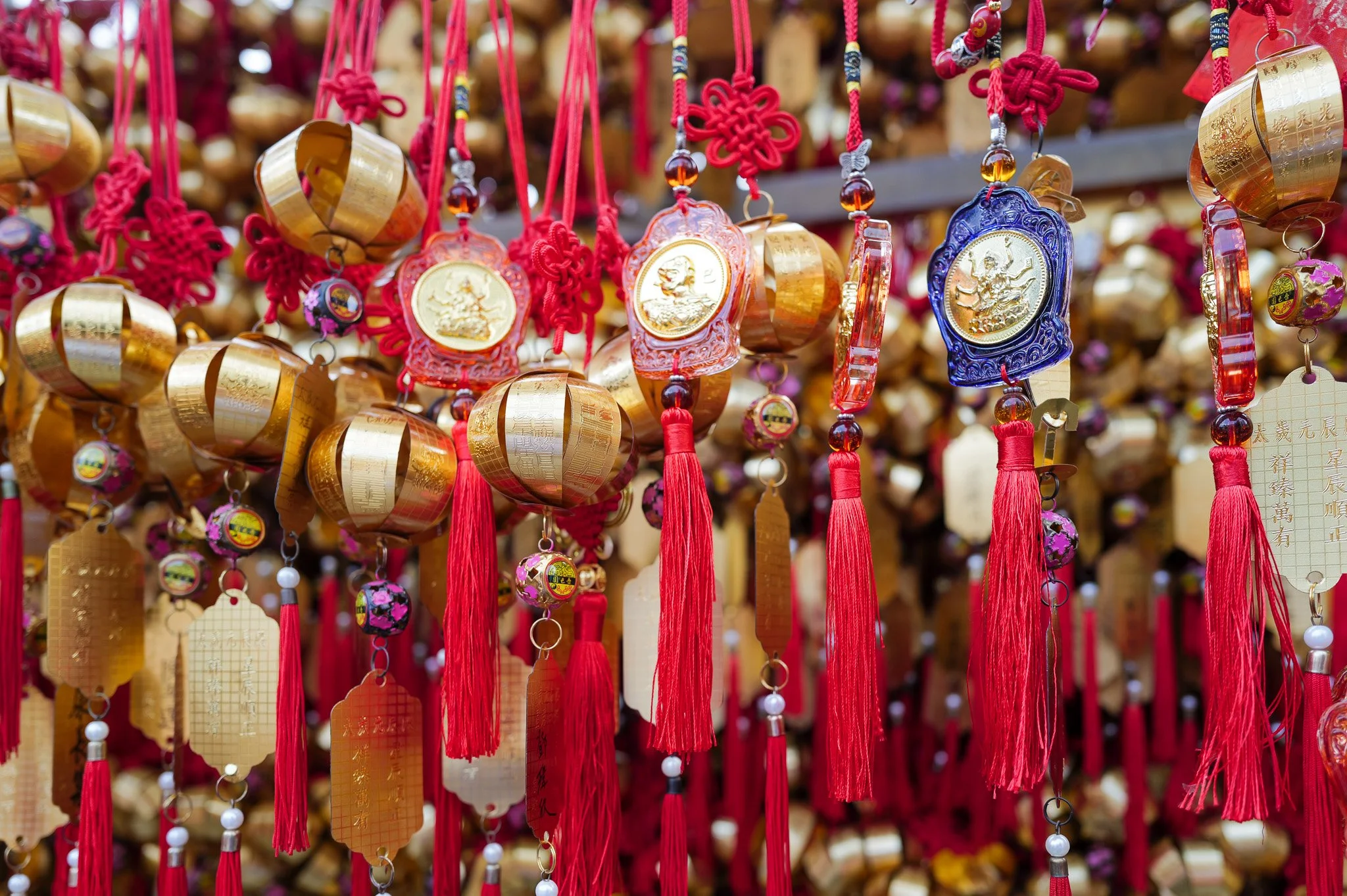
Wong Tai Sin is one of the most visited and most visually intense religious sites in Hong Kong. The 18,000-square-meter Taoist temple complex in Kowloon is dedicated to the Great Immortal Wong and built around the famous belief that "what you request is what you get." On any given morning, hundreds of worshippers fill the open forecourt in front of the Main Altar, burning incense, kneeling in prayer, and shaking bamboo fortune sticks in a ritual called kau cim. The sound, the smoke, and the human devotion make it one of the most moving places to photograph in the entire city.
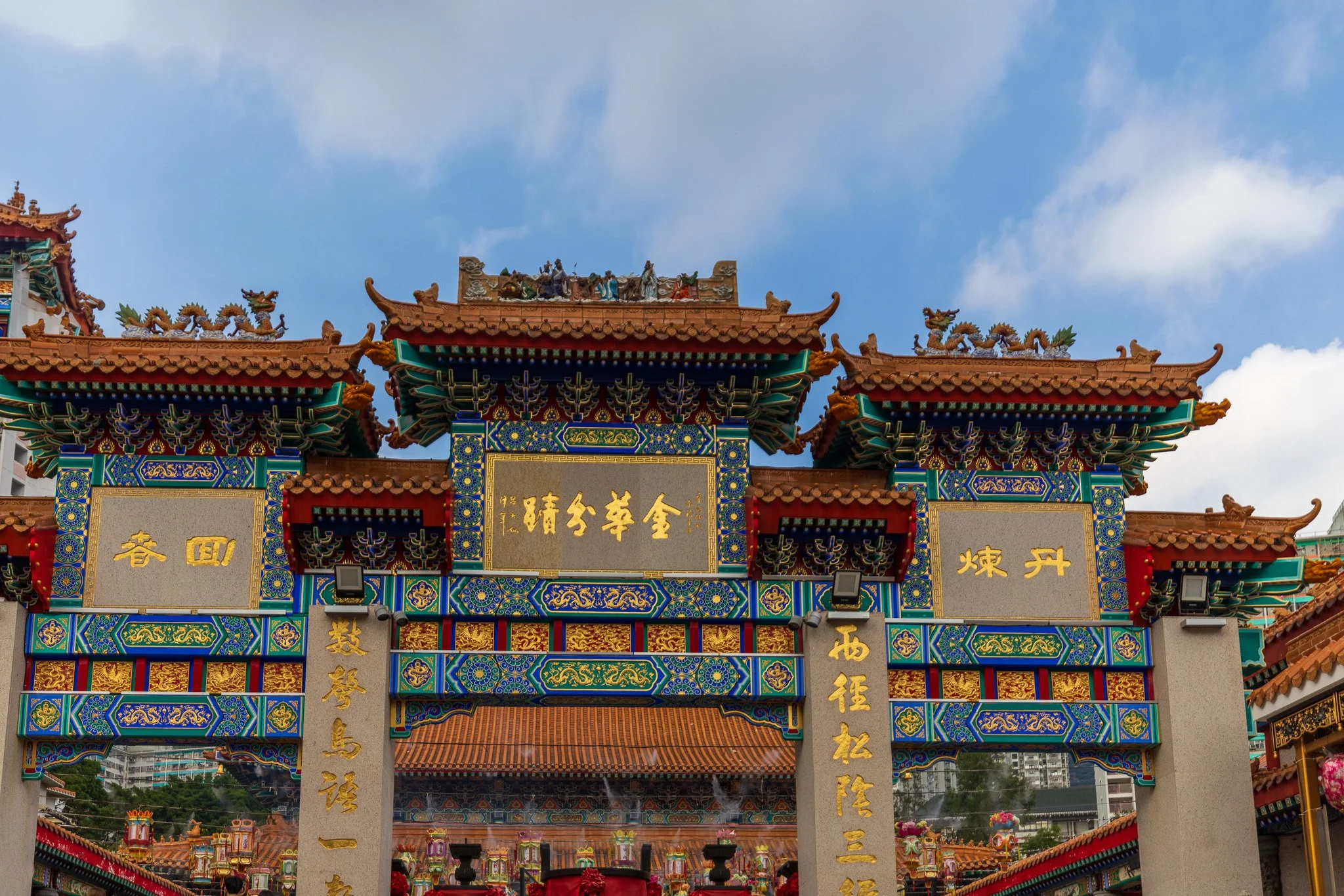
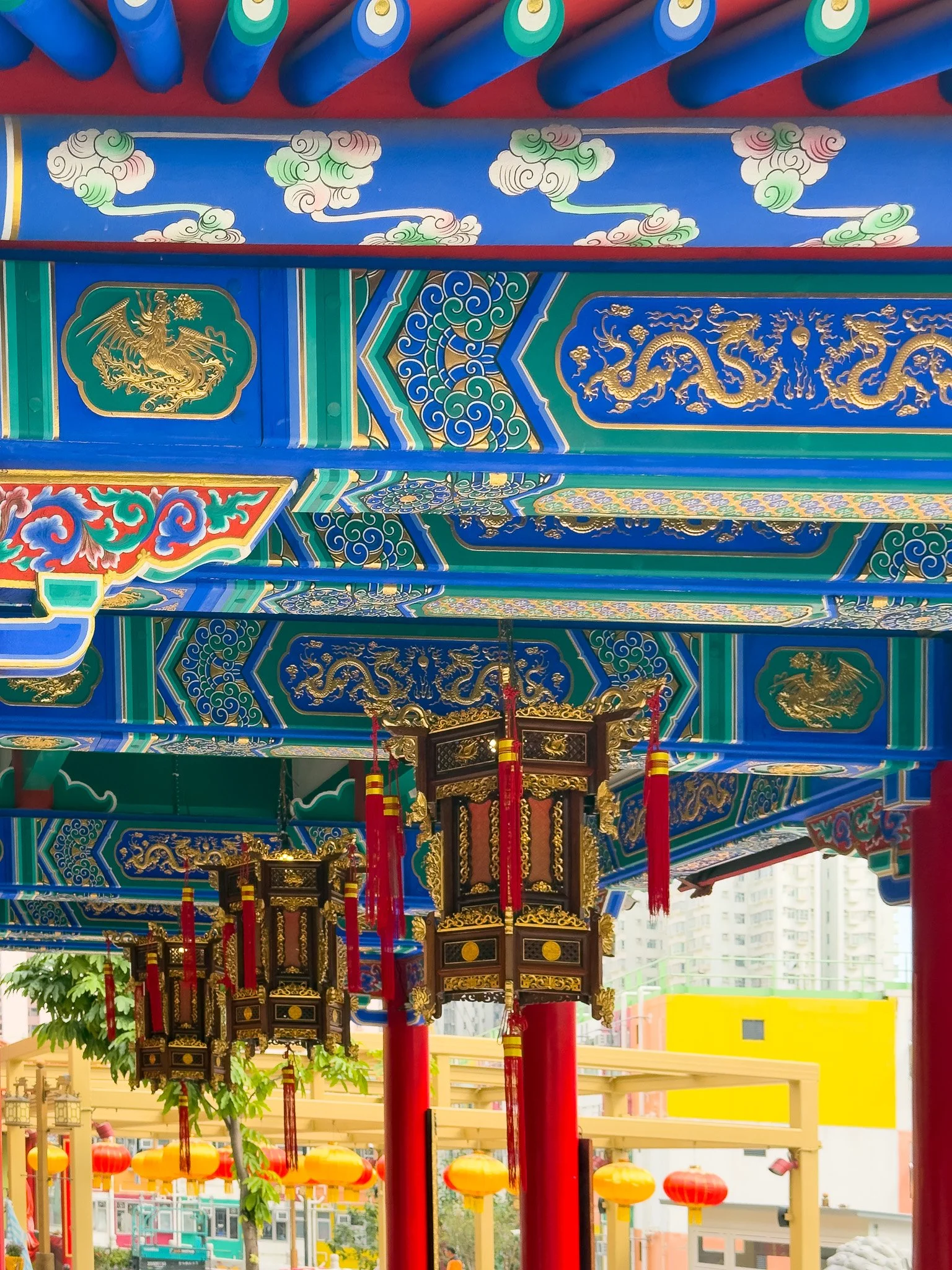
What sets Wong Tai Sin apart from Man Mo Temple is scale and color. Where Man Mo is intimate and dark, Wong Tai Sin is vast and vibrant. The main altar buildings are painted in brilliant red, gold, blue, and yellow, and the contrast between the ornate classical architecture and the modern Kowloon housing blocks visible just beyond the temple walls is a composition that belongs uniquely to Hong Kong. The Good Wish Garden at the rear of the complex adds a quieter, more contemplative space with pavilions, rockeries, and a Nine Dragon Wall.
The temple is also home to all three of Hong Kong's major philosophical traditions simultaneously. Buddhism, Confucianism, and Taoism are each represented in separate halls within the compound, which is unusual and worth understanding before you visit. The Three Saint Hall houses Patriarch Lüzu, Bodhisattva Guanyin, and Lord Guandi side by side.
Pro Tip: Visit on a weekday morning when the light is still low and the worshippers are active but the tour groups have not yet arrived. The forecourt in front of the Main Altar is the primary subject: rows of kneeling figures, rising incense smoke, and the red and gold facade behind them. Use a 70-200mm telephoto to compress the scene and photograph worshippers from a respectful distance without intruding on the moment. Avoid flash entirely. During Chinese New Year and Wong Tai Sin's birthday on the 23rd day of the eighth lunar month, the temple fills to extraordinary capacity and becomes one of the most dramatic and emotionally charged photography environments in Hong Kong.
Xiqu Centre
The Xiqu Centre at the gateway to the West Kowloon Cultural District is one of the most striking pieces of contemporary architecture in Asia. Designed to evoke a traditional Chinese lantern, the seven-story building is wrapped in 13,000 curved aluminum fins arranged in flowing, wave-like patterns that catch and diffuse light differently at every hour of the day. At dusk, when the fins are backlit from inside, the entire building glows.
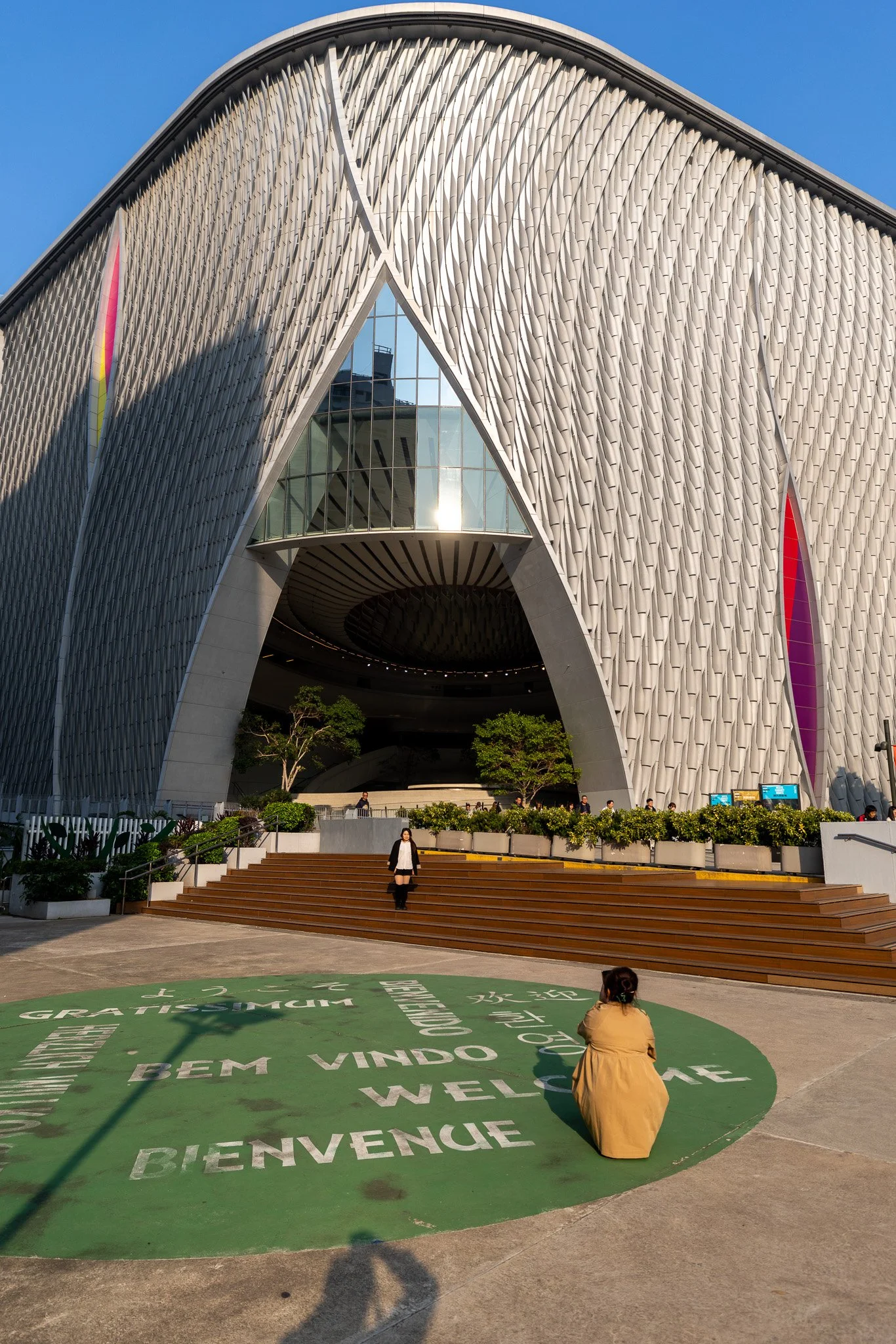
The circular atrium at ground level is open to the public and free to enter. The soaring interior space, with its curved white walls and natural ventilation design, is as photogenic as the exterior. The building is dedicated to Chinese opera and sits on the Kowloon waterfront with partial harbor views from the upper sky gardens.
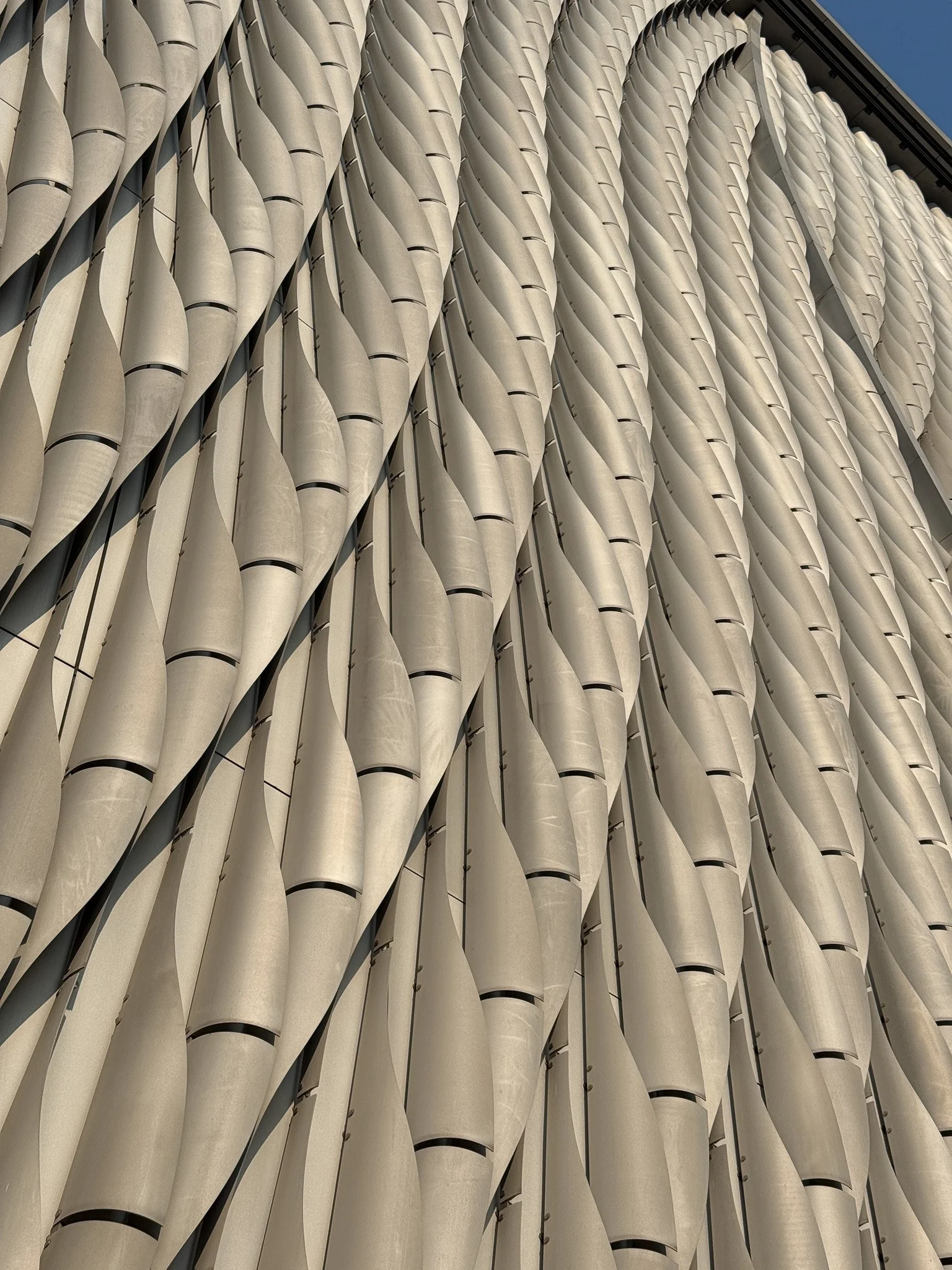
A Very Unique Exterior
Choi Hung Estate
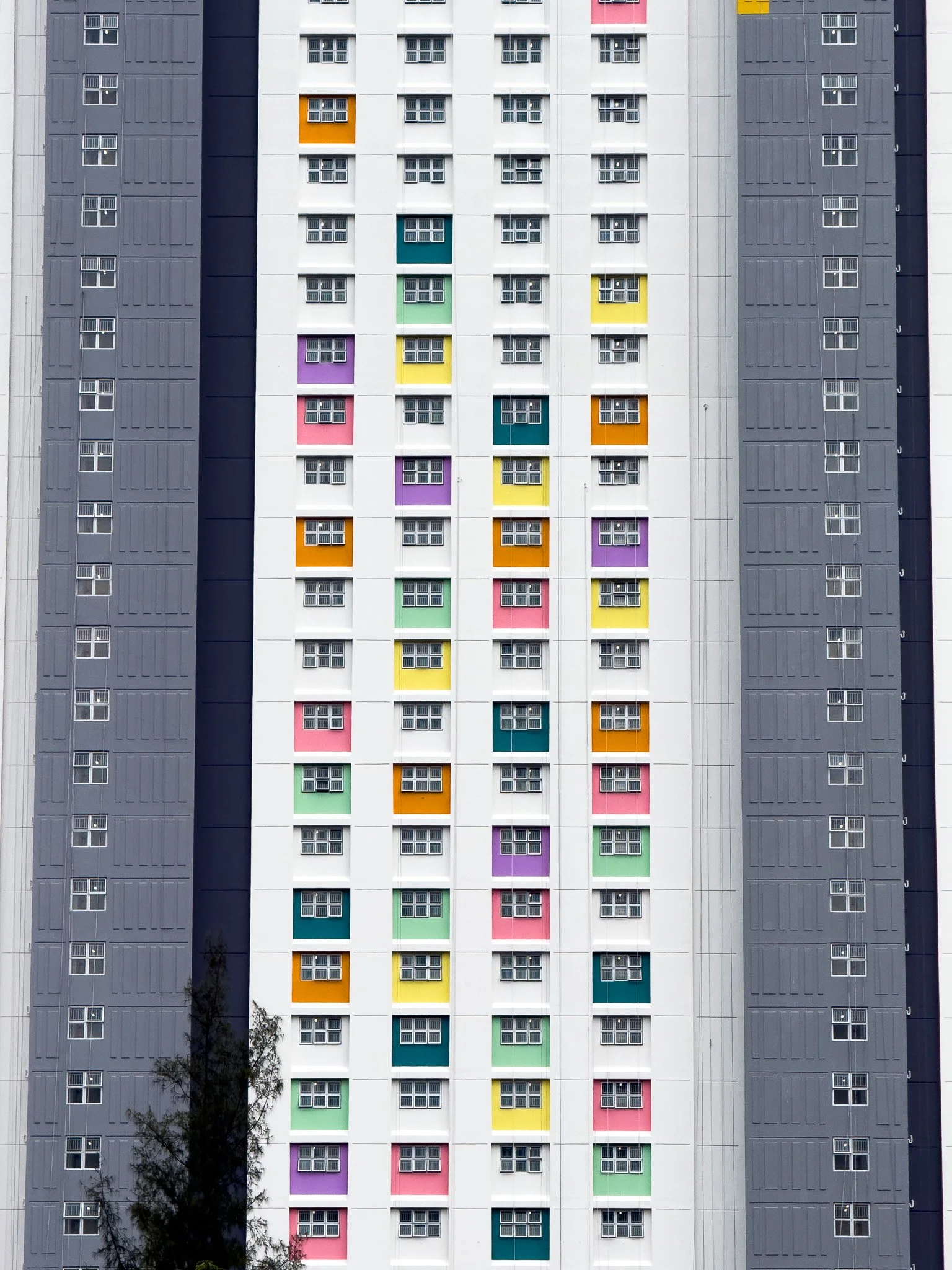
Choi Hung means "rainbow" in Cantonese, and this public housing estate in San Po Kong lives up to the name. The residential blocks are painted in a horizontal spectrum of pastel colors that stretch across several towers, and the open car park level in the middle creates a wide, colorful stage. Basketball players, kids on bikes, and residents going about their morning routine animate the space in a way that adds real life to the geometry.
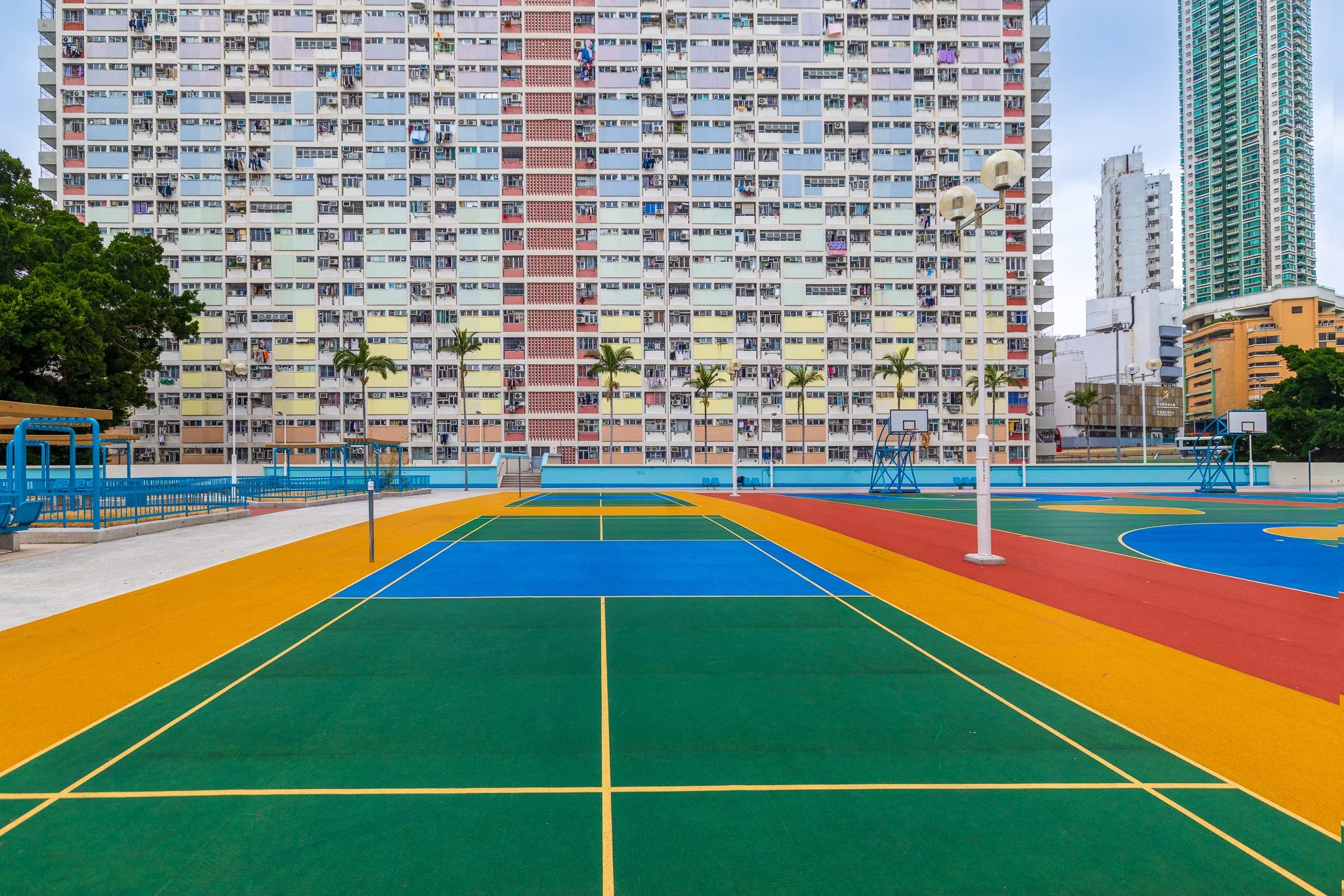
This is one of the most visually compelling architectural photography subjects in Hong Kong, and it is completely free and very accessible.
Pro Tip: Early morning, around 7 to 8 AM, gives you the best light and the most activity. Use a wide-angle lens to capture the full sweep of color across all the blocks. A mid-length zoom (70-100mm equivalent) is great for compressing the basketball court against the painted facade behind it. Be respectful. People live here.
Graham Street & Pottinger
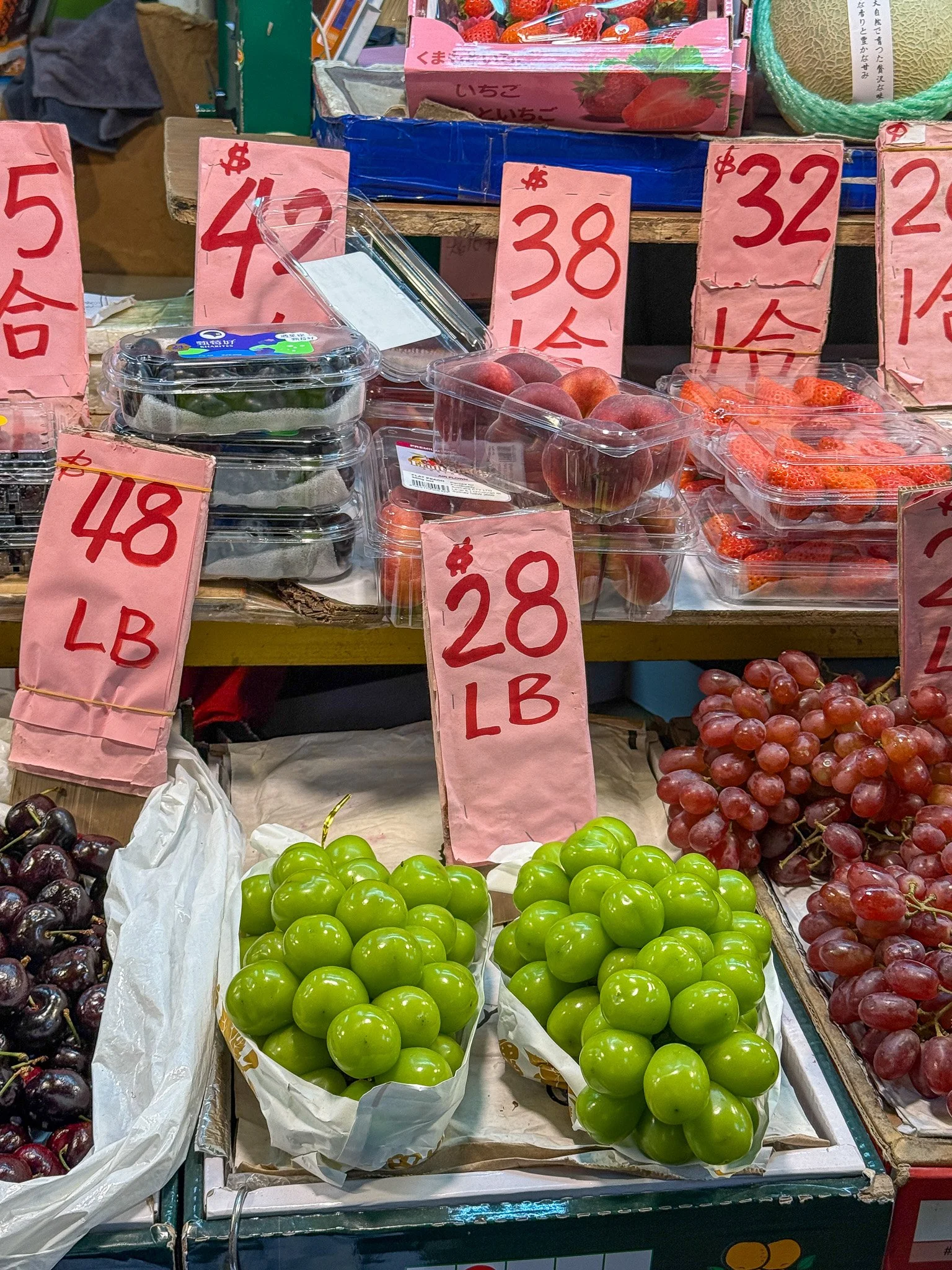
Graham Street is one of the oldest surviving wet markets in Hong Kong, running daily on a steep hillside lane in Central. Vegetable vendors, fishmongers, and fruit stalls crowd both sides of the narrow street, and the visual chaos of fresh produce, hanging signs, and constant movement is exactly the kind of authentic daily life that makes Hong Kong so compelling to photograph. Pottinger Street, running parallel and uphill, is a historic stepped lane paved with granite cobblestones that creates one of the most characterful street scenes in the city.
Together these two streets form a small pocket of old Hong Kong that has somehow survived within walking distance of some of the most expensive real estate on the planet. The contrast itself is worth photographing.
Pro Tip: Both streets are most active in the morning, roughly 8 to 11 AM, when the market is at full pace and the light is still soft. Use a 35mm or 50mm prime and work the edges of the market, looking for color, texture, and the faces of vendors who have been doing this work their whole lives. Ask before photographing individuals and always be respectful. On Pottinger Street, look back down the steps for a compressed view of the cobblestones leading toward the modern city below.
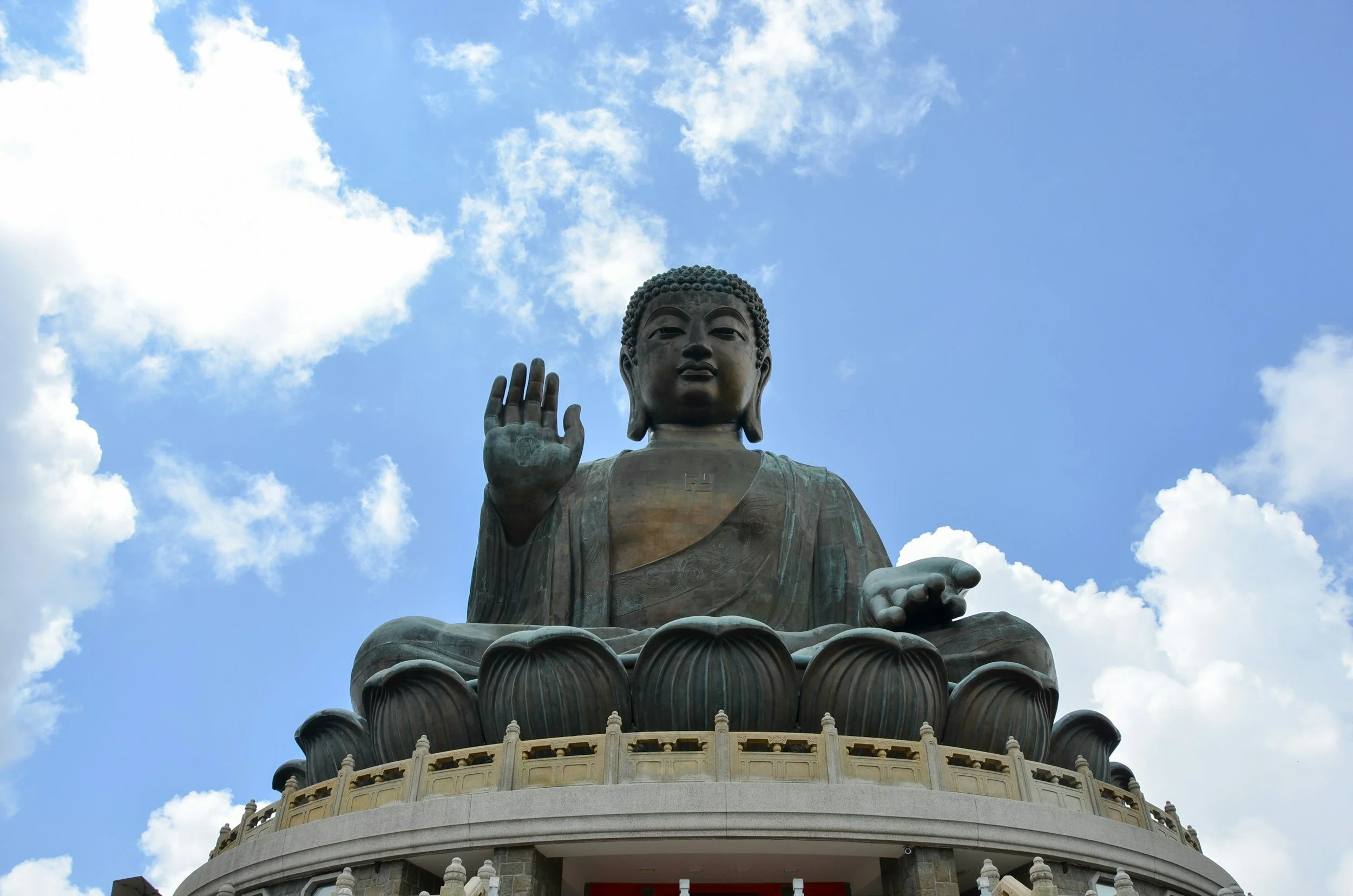
Tian Tan Buddha
Lantau is Hong Kong's largest island and offers a completely different photographic experience from the urban energy of Kowloon and Hong Kong Island. The Ngong Ping 360 cable car takes you over mountains and past the massive Tian Tan Buddha, a 34-meter-tall bronze statue seated on a lotus throne with views of the island's green valleys and distant sea.
Tai O, a short bus ride away, is a traditional stilt fishing village that feels like a window into a completely different Hong Kong. Wooden houses on stilts line the creek channels, old women dry shrimp paste in the sun, and painted fishing boats bob in the water. The colors, textures, and human scale of Tai O are a photographer's gift.
Connaught Road Central Pedestrian Overpass
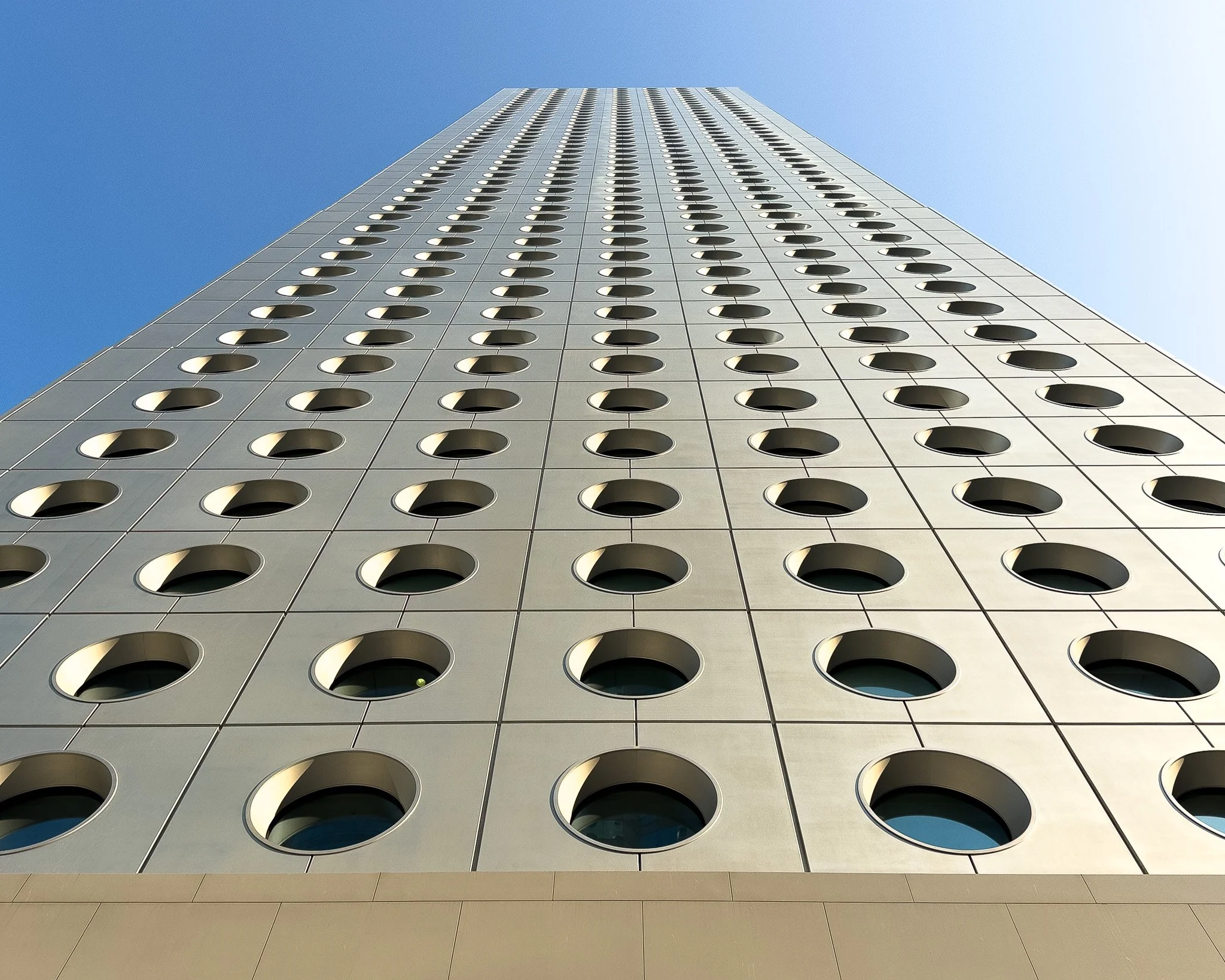
Hong Kong's elevated walkway network is one of the city's most underrated photography subjects. The Connaught Road Central overpass and the broader Central elevated walkway system connect offices, shopping malls, hotels, and the ferry piers in a continuous elevated corridor above street level. From these walkways, you get a completely different perspective on the city: the geometry of the road network below, the rhythm of commuters moving through glass corridors, and the visual compression of Central's skyscrapers at eye level rather than looking up.
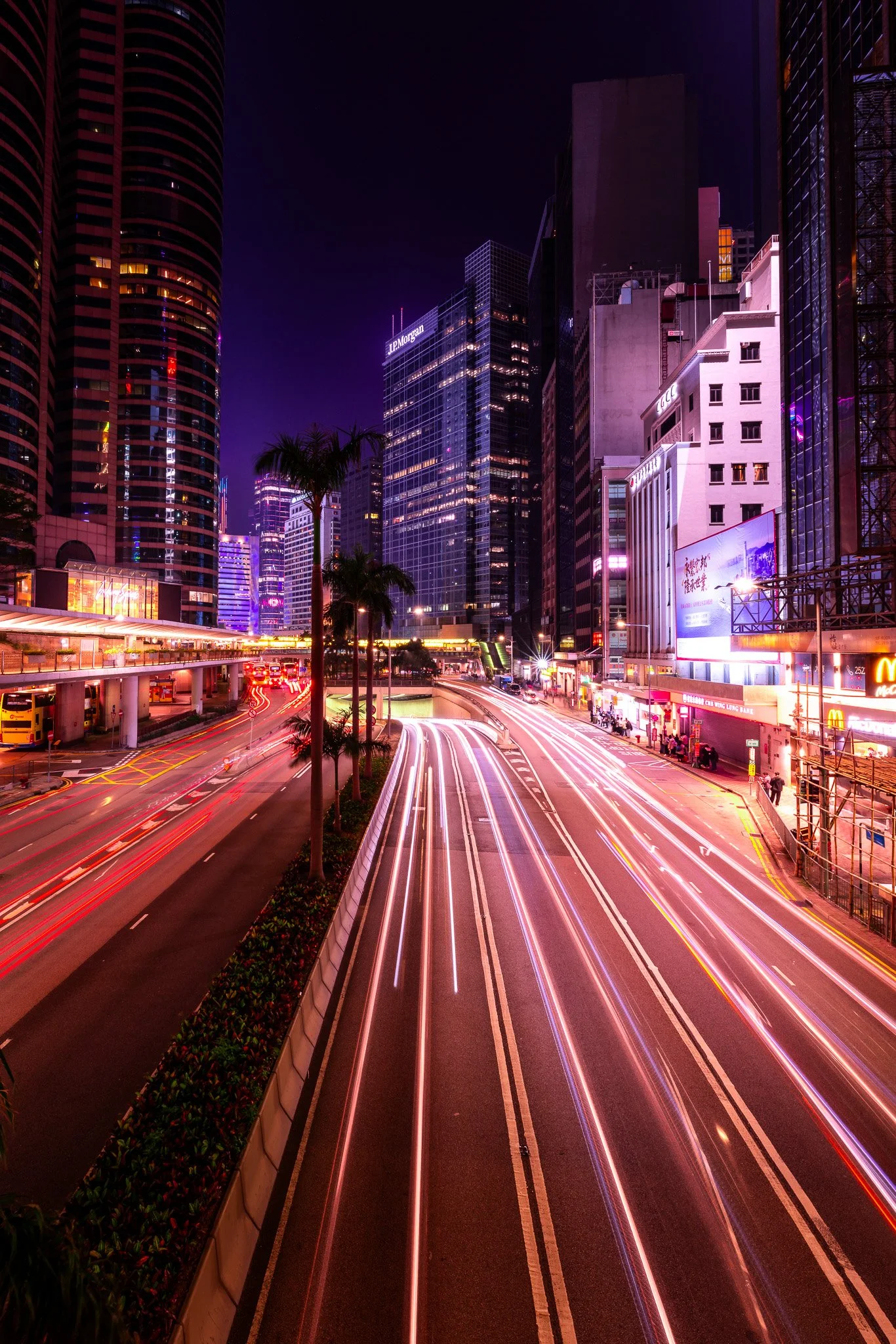
At rush hour, the human flow through these walkways is extraordinary to photograph. The glass walls, the reflections, and the layers of movement create compositions that feel genuinely futuristic.
Pro Tip: Rush hour, roughly 8 to 9 AM and 6 to 7 PM, gives you the most energy and the most interesting human movement. A 24-70mm zoom is ideal here. Look for leading lines created by the walkway structure and use long exposure at quieter moments to blur the movement of commuters. At night, the glass corridors and artificial lighting create strong graphic compositions.
Murals and Street Art
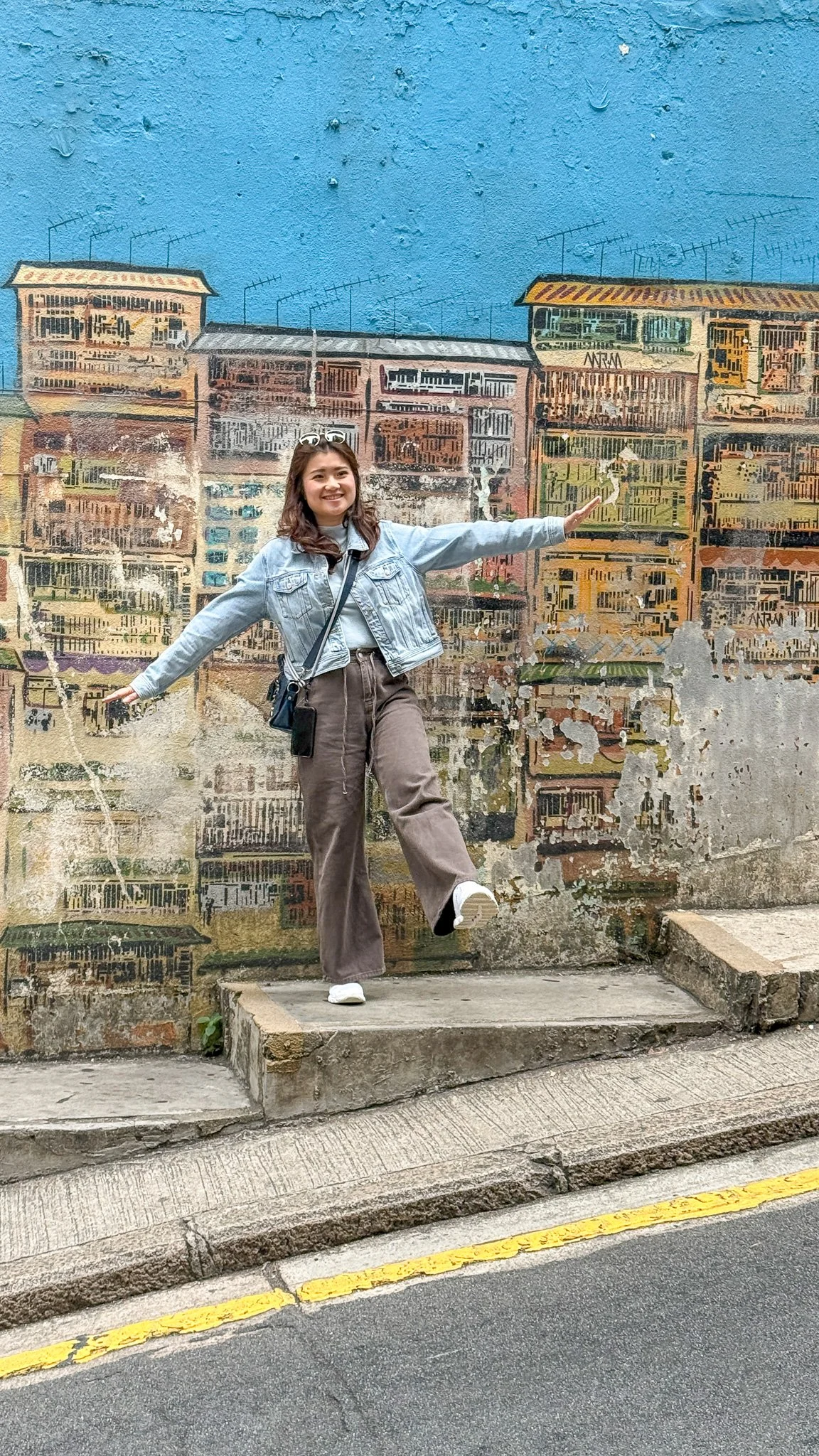
Hong Kong's street art scene is concentrated in SoHo and the surrounding hillside streets of Central and Sheung Wan, and it is more interesting than most visitors realize. The area around Aberdeen Street, Lyndhurst Terrace, and the lanes climbing up toward Hollywood Road is scattered with murals, paste-ups, and commissioned wall pieces that range from large-scale portraits to abstract geometric work. The neighborhood changes constantly, and what was on a wall six months ago may be gone or painted over.
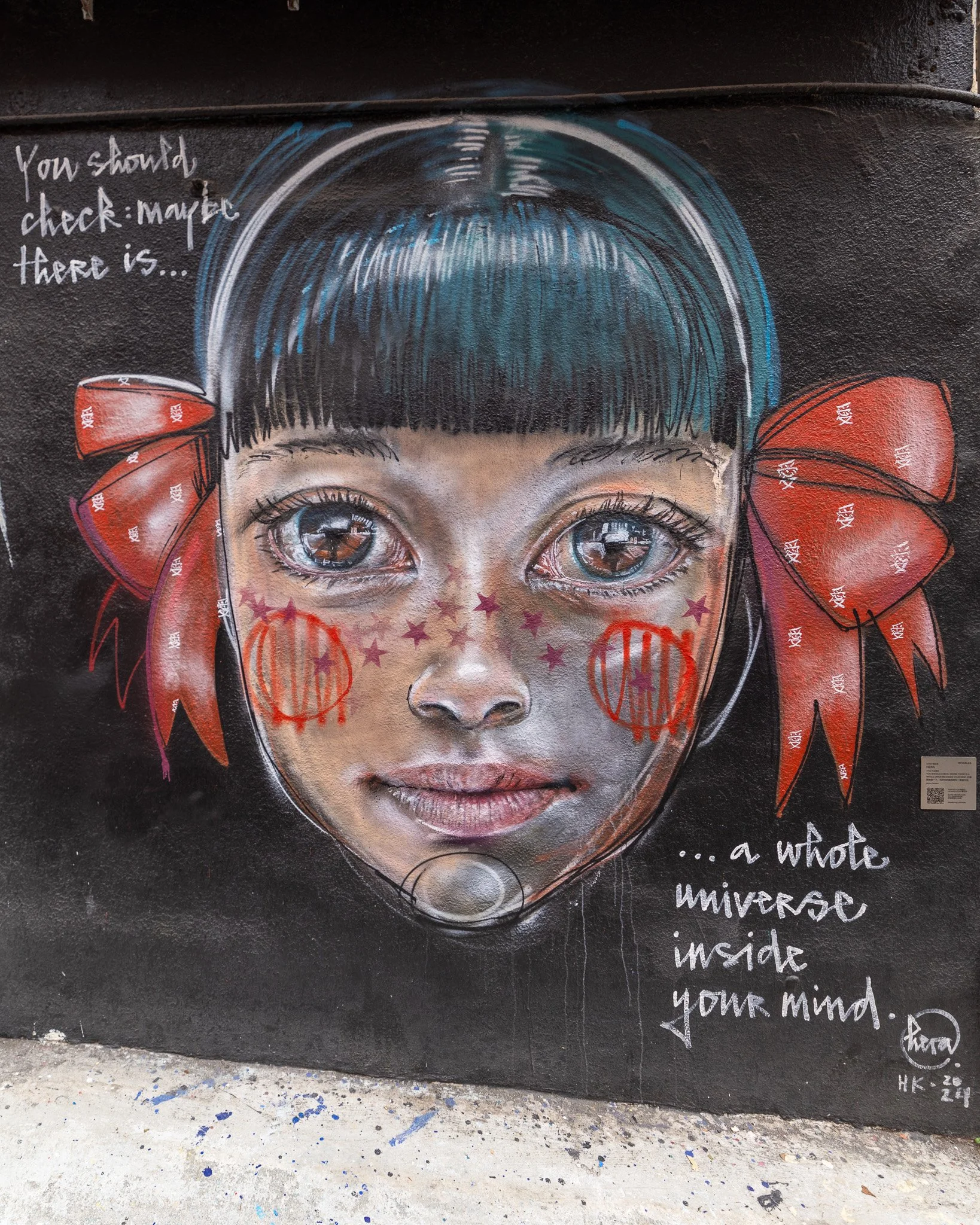
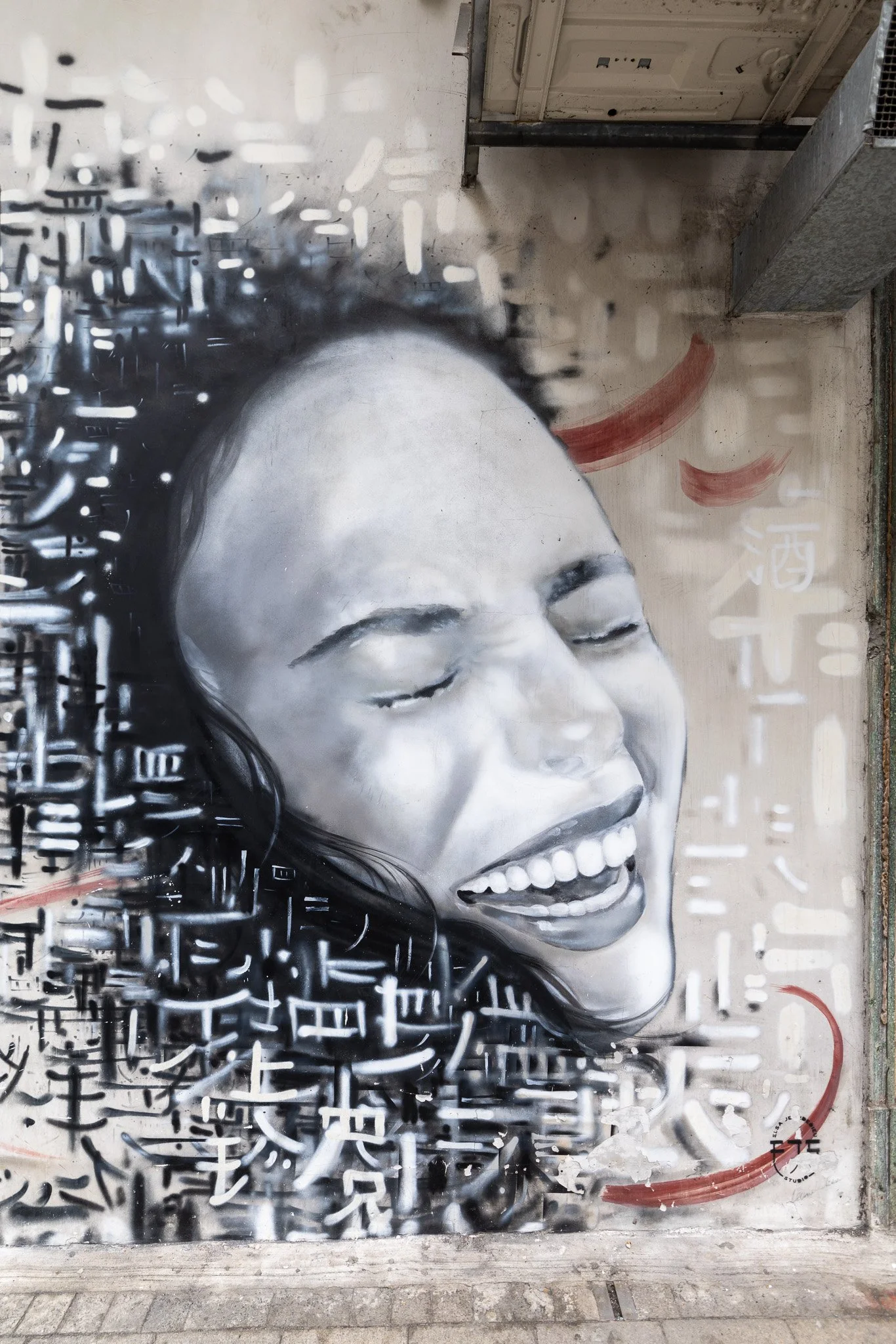
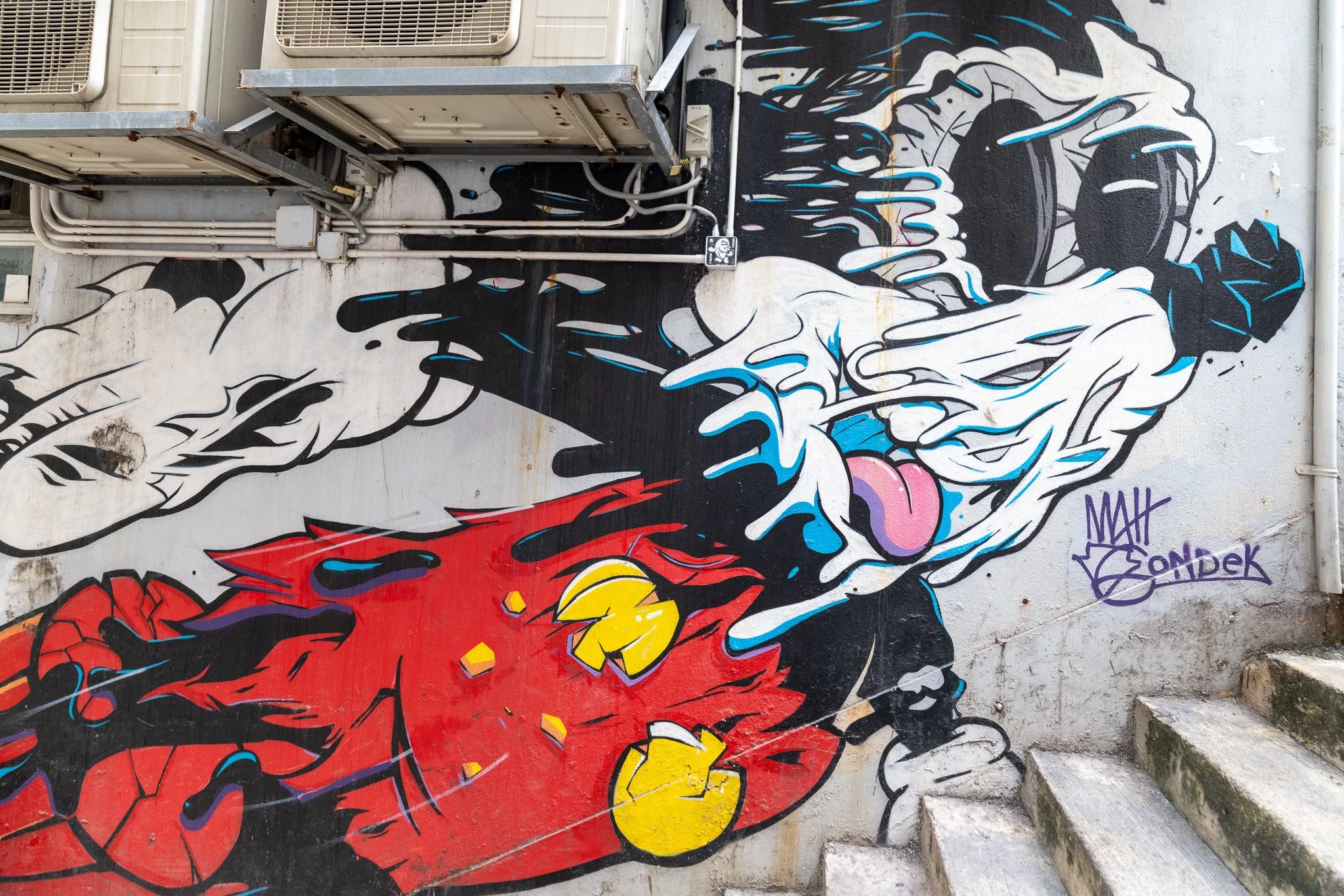
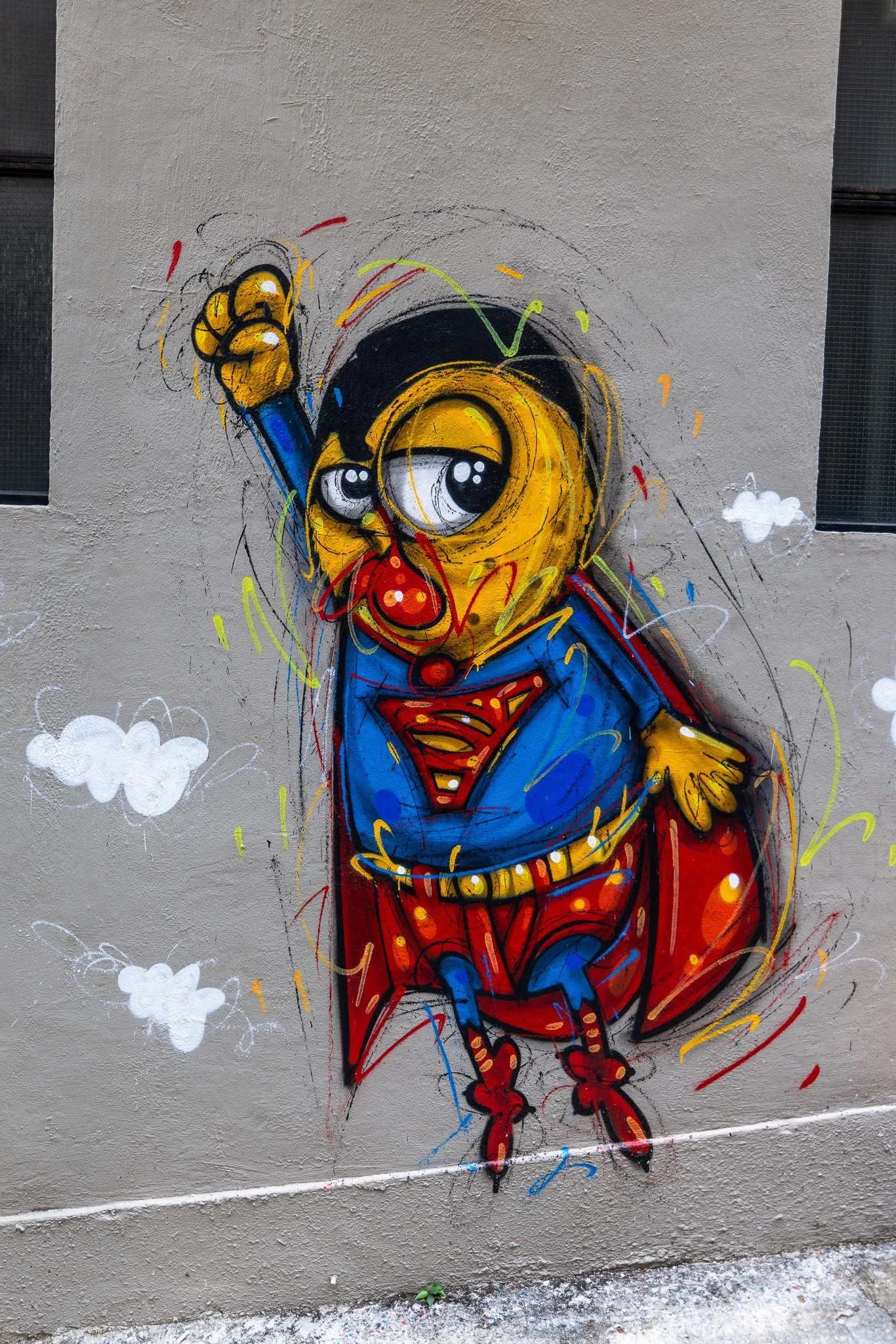
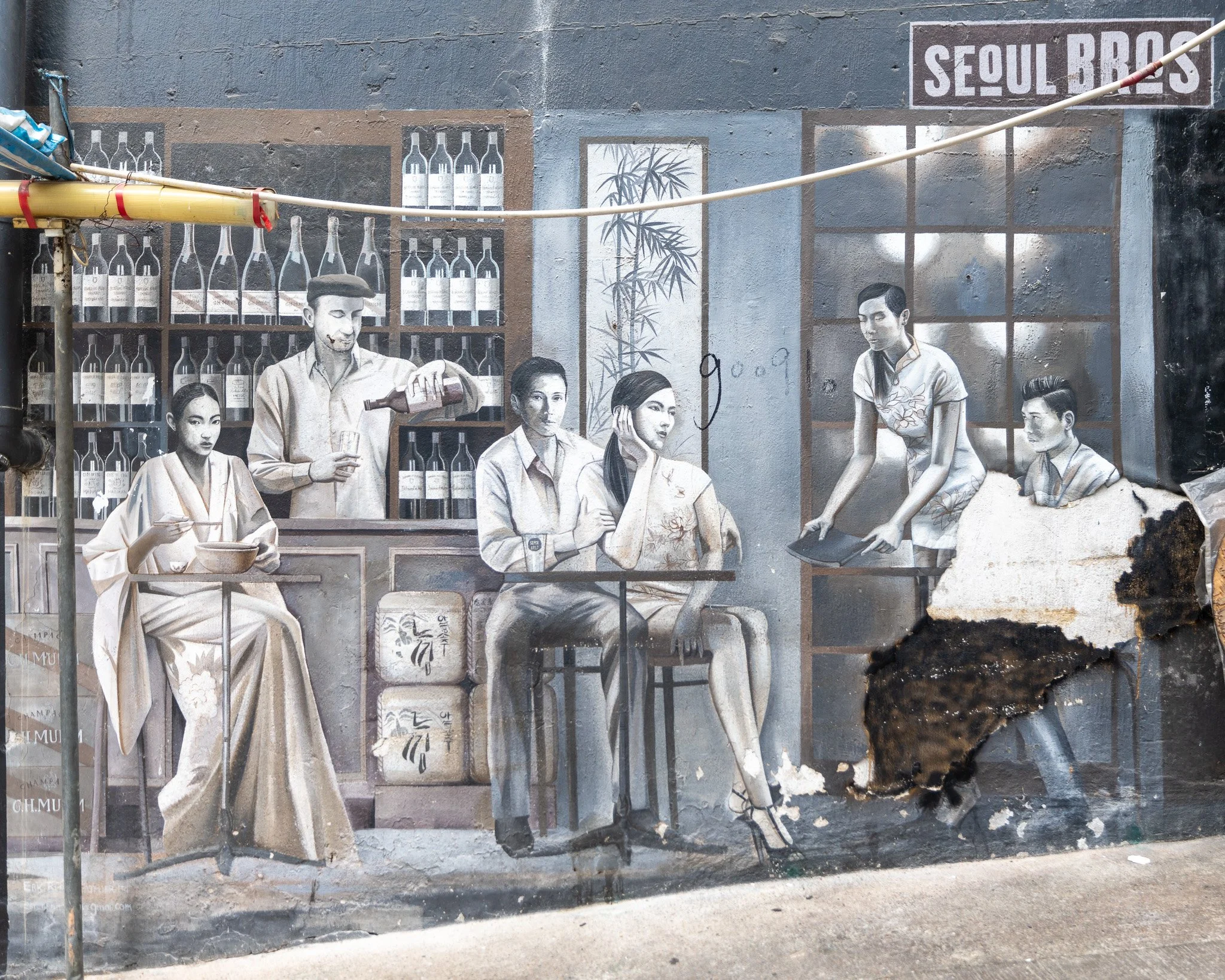
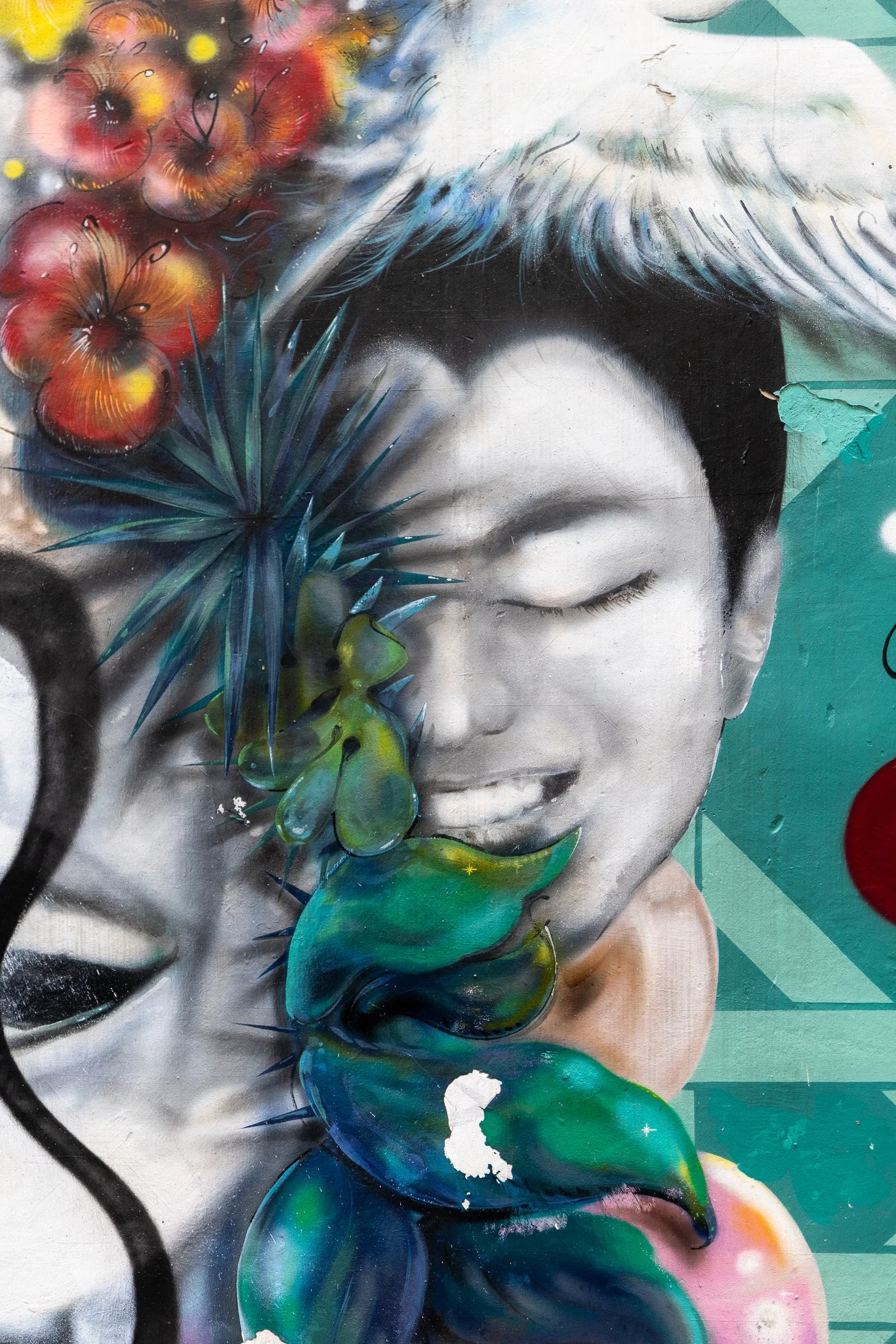
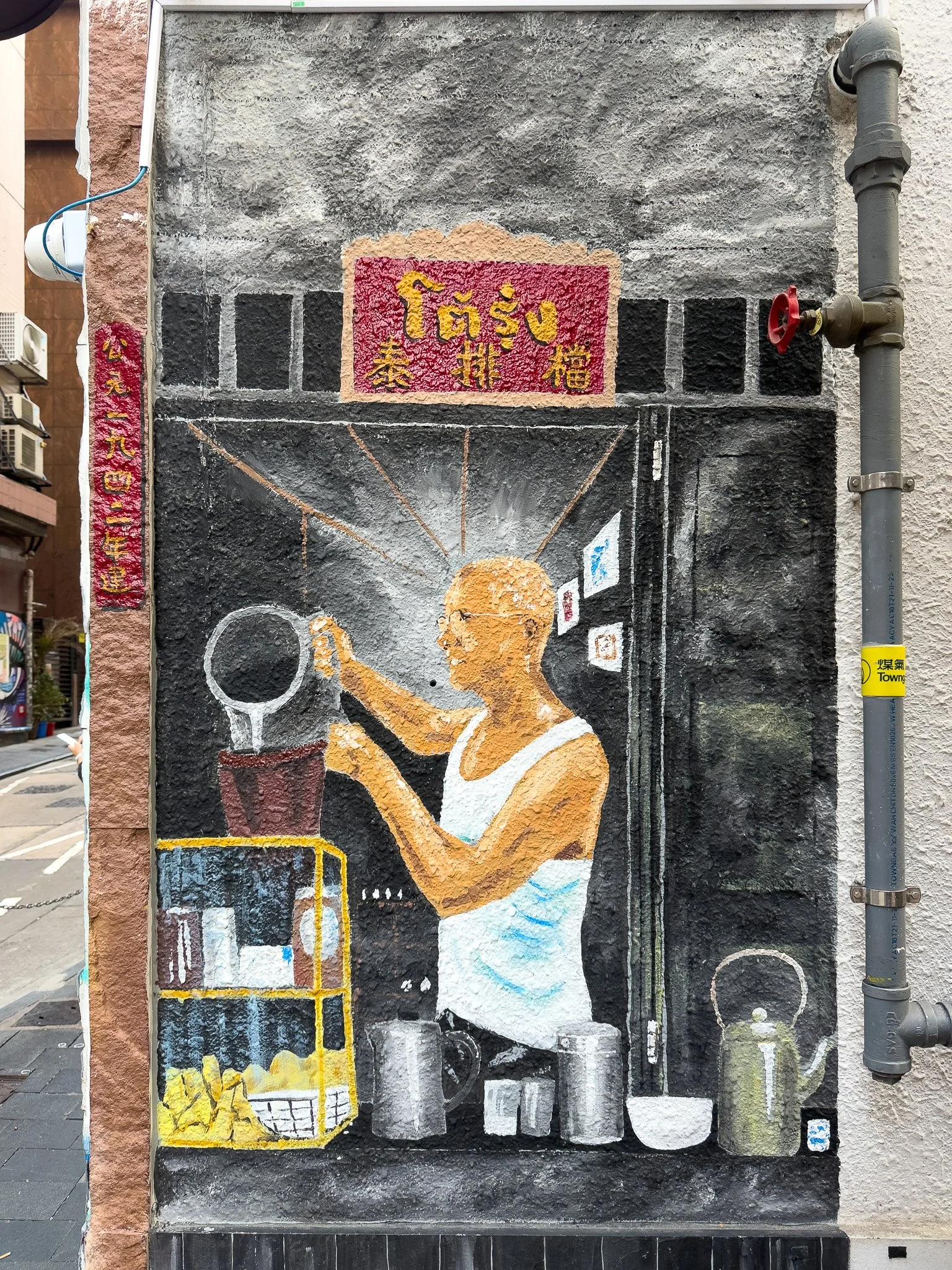
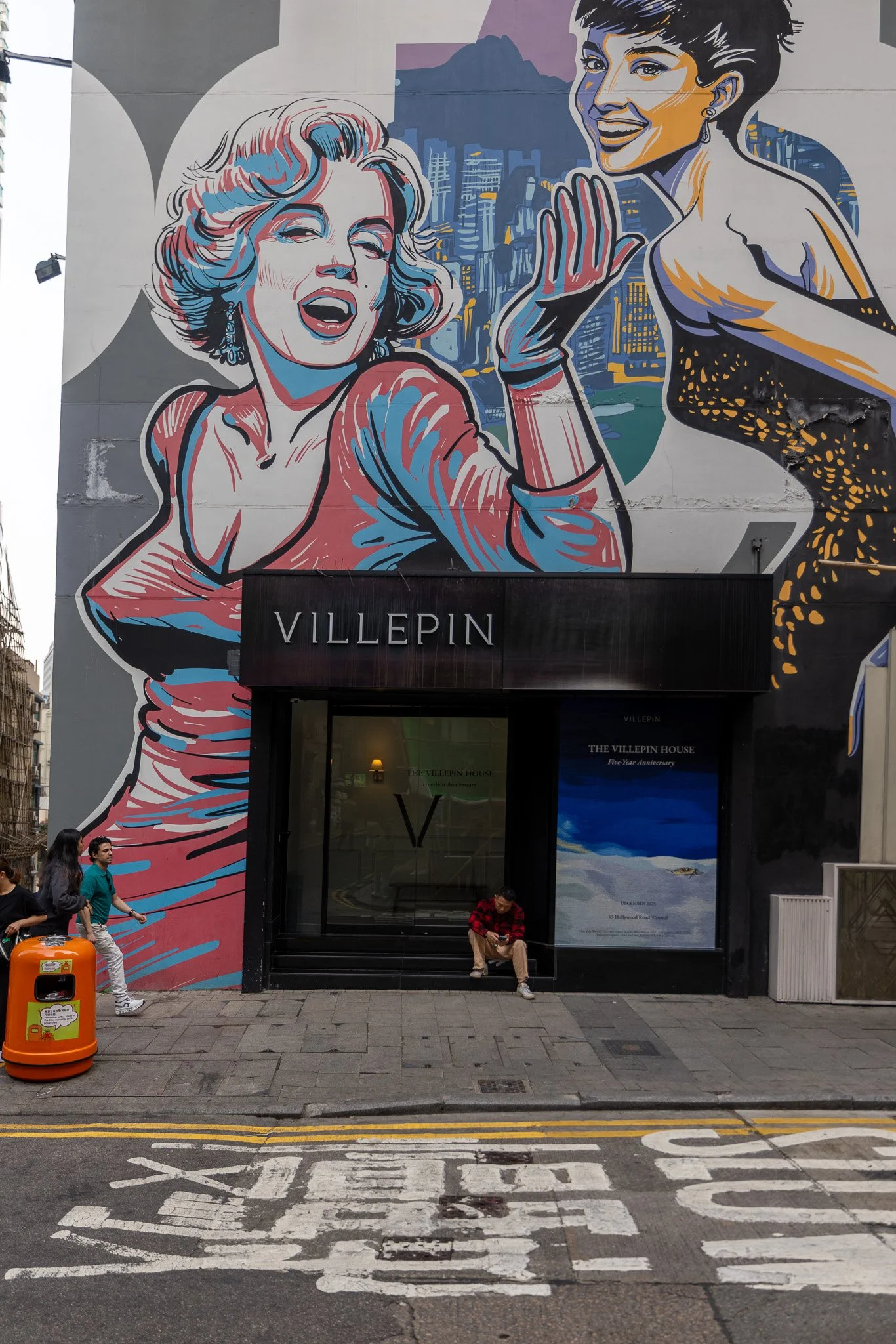
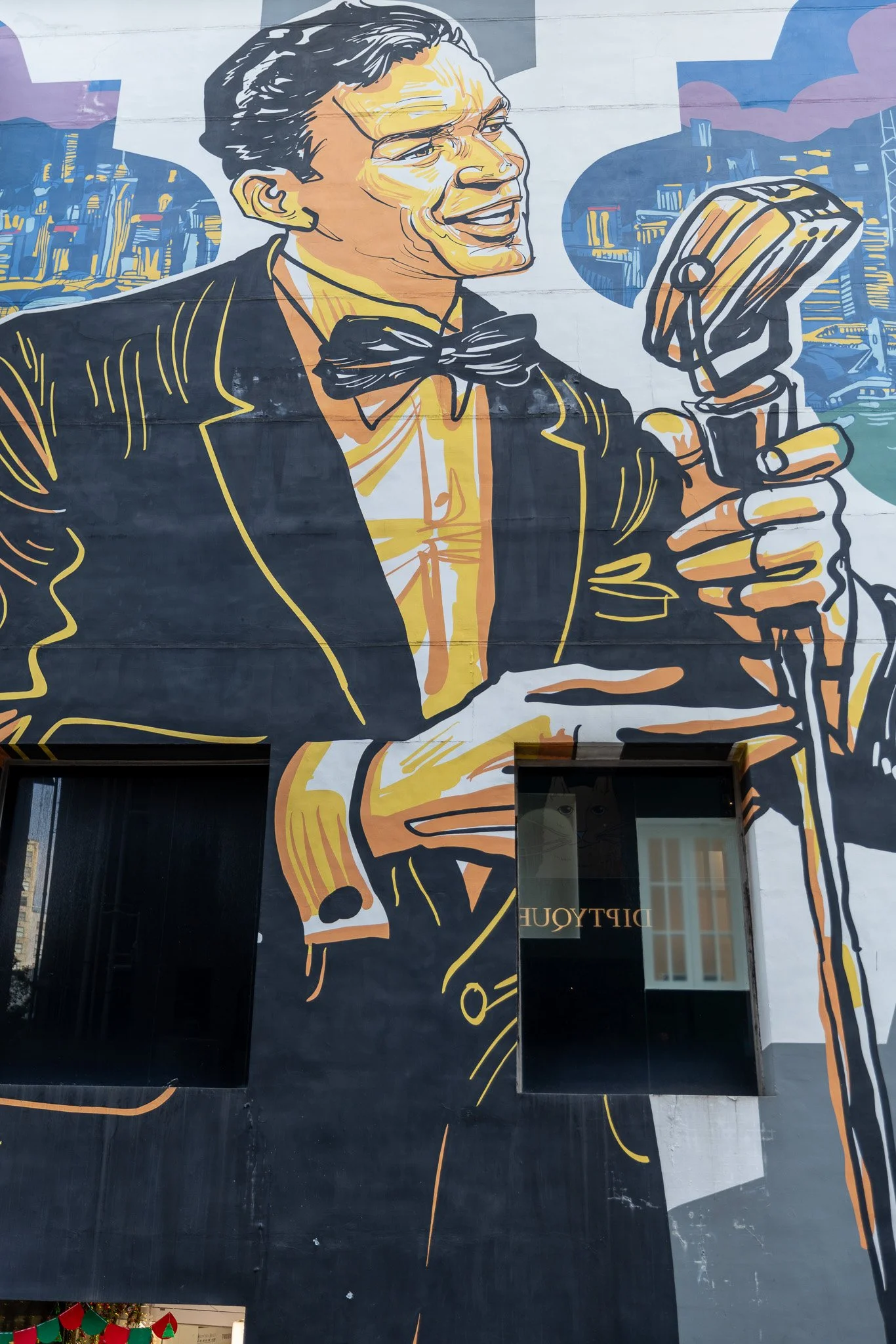
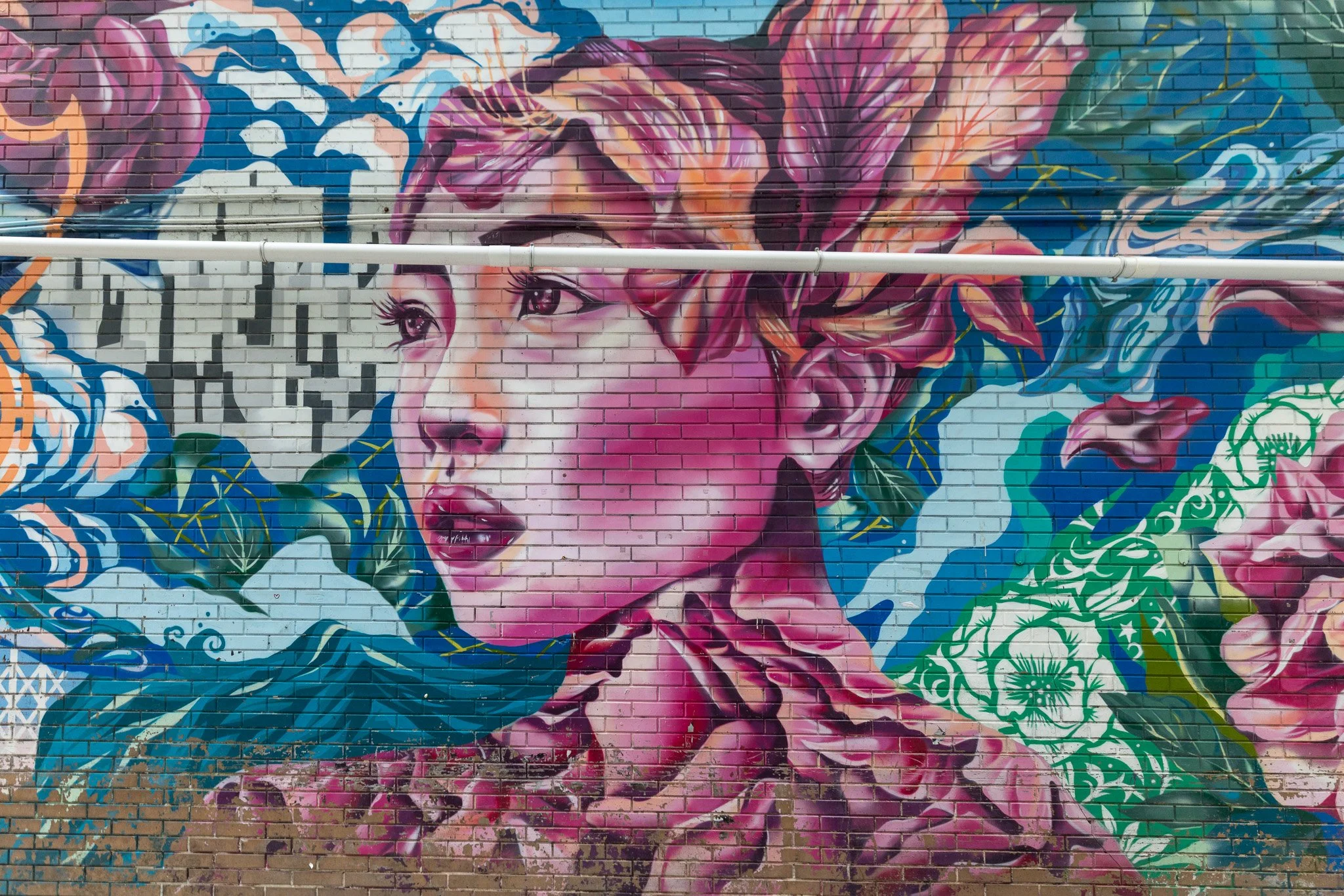
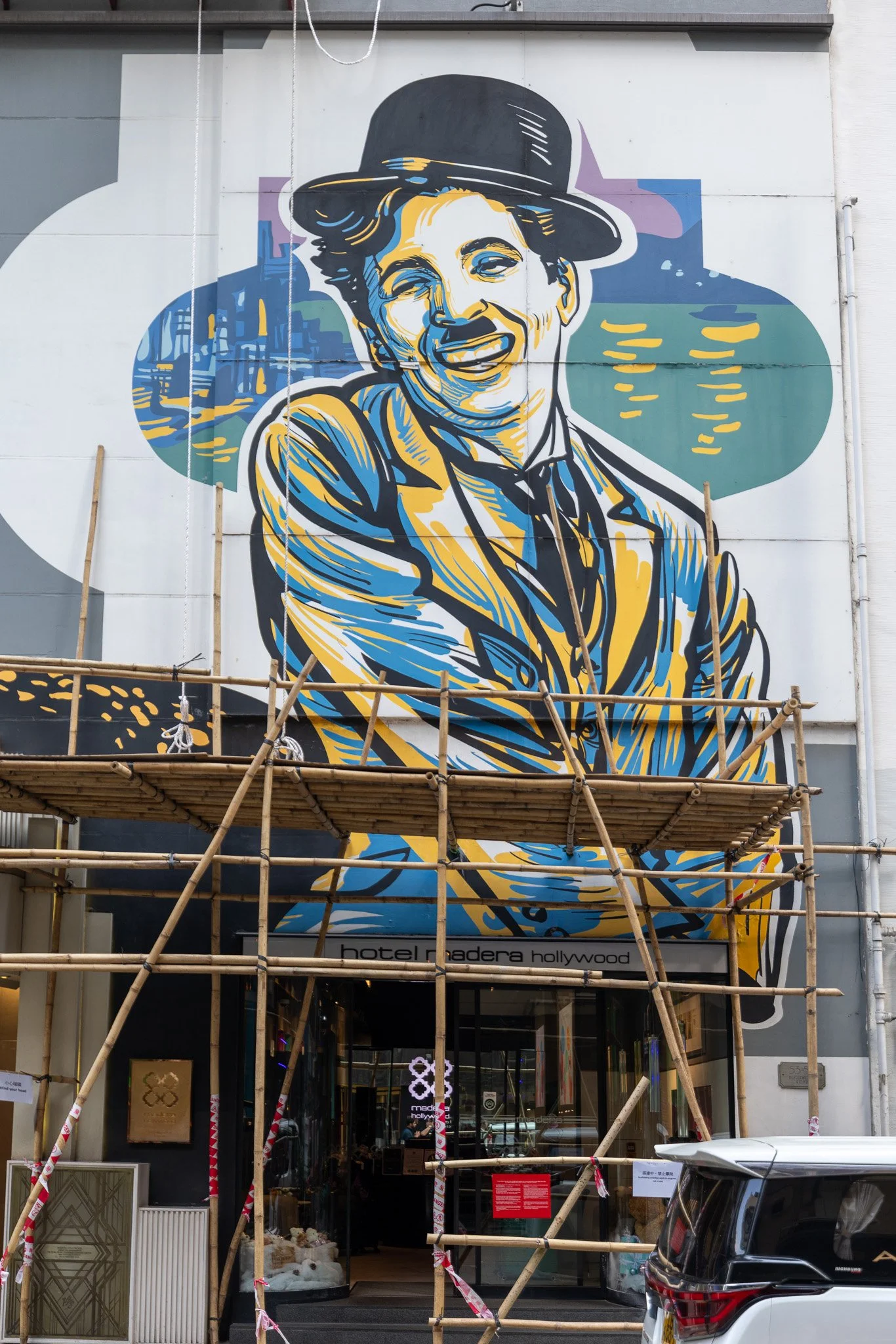
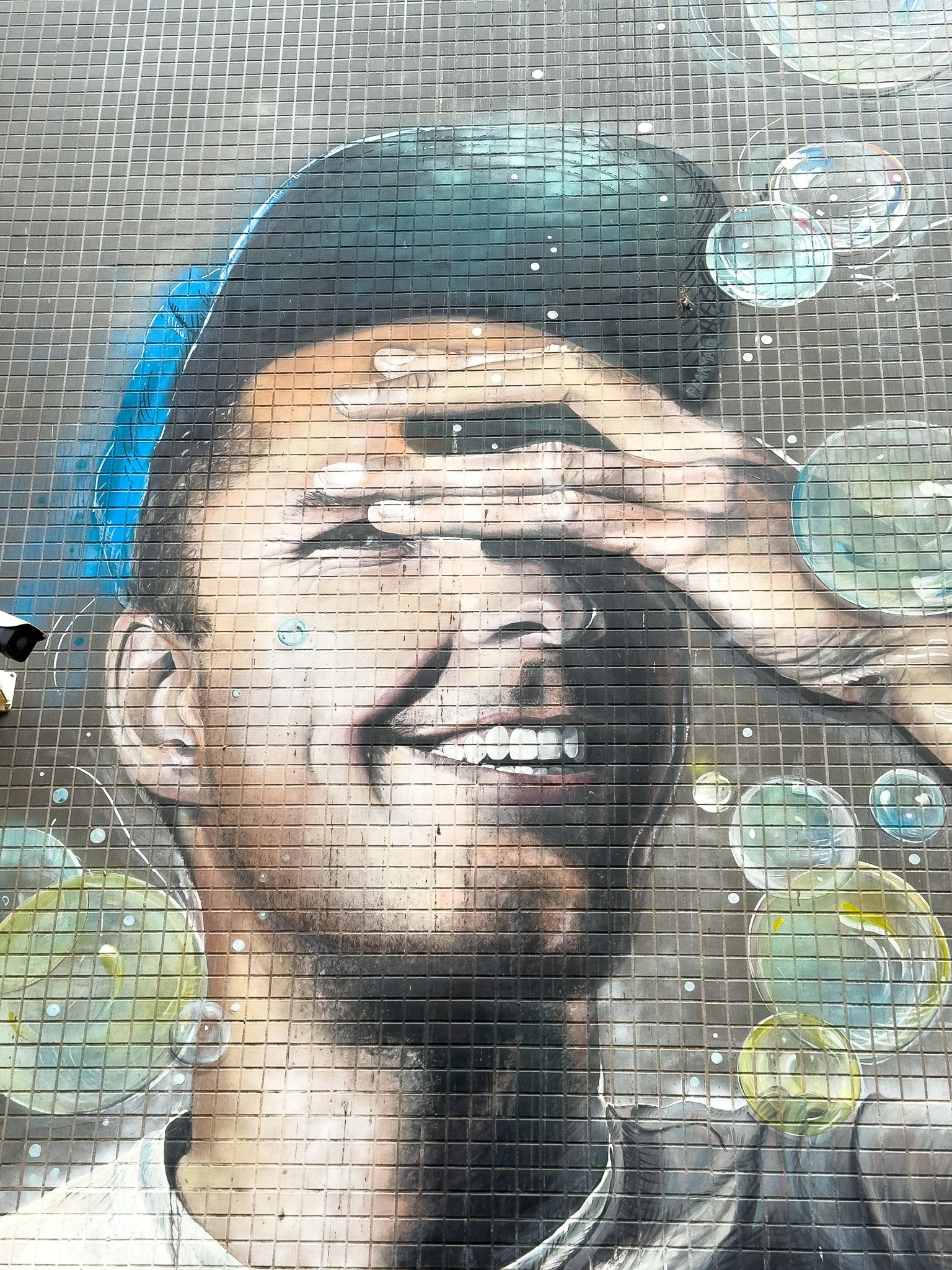
Tank Lane and the nearby staircase alleys are particularly good for finding concentrated street art alongside the textures of the older buildings themselves. Peeling paint, faded tile, rusted metal, and spray paint layers all create surfaces that reward close observation.
Festivals and Events Worth Photographing
Chinese New Year (Late January or February) This is arguably the best time to photograph Hong Kong if you can handle the crowds. The city transforms with red lanterns, flower markets, lion dances, and on the main evening, a spectacular fireworks display over Victoria Harbour. The lantern installations in the streets and the energy in the markets in the days leading up to New Year's Eve are extraordinary to photograph. Temples fill with worshippers, and the flower markets in Victoria Park and Mong Kok run for the week before the holiday.
Photo Tip: Get to the harbor waterfront promenade two to three hours before the fireworks to secure your spot. For the flower markets, go at night when the lights and crowds create the most atmosphere. For lion dances in the streets, follow the sound of drums and be patient; they will come to you.
Cheung Chau Bun Festival (May, during Buddha's Birthday). This is one of Hong Kong's most visually distinctive traditional festivals, held on Cheung Chau Island. The highlight is the Bun Scrambling Competition, where participants race up towers of steamed buns to grab buns at the top. The festival also features elaborate bamboo floats, opera performances, and a parade of children dressed as deities, seemingly floating in midair.
Photo Tip: Take the ferry from Central to Cheung Chau and arrive early. The parade of "floating" children is a wide-angle photograph that stops you in your tracks. Shoot the bun tower competition with a telephoto lens from the crowd.
Hong Kong Rugby Sevens (March or April) The city's biggest annual sporting event is genuinely a spectacle to photograph, not just for the rugby but for the fans. The South Stand in particular is famous worldwide for its elaborate costumes and non-stop energy. This is one of the great people photography events in Asia.
Photo Tip: A 70-200mm lens handles the action on the pitch well. For the crowd, switch to a wider lens and get into the South Stand energy. Shoot in burst mode during tries and conversions.
Mid-Autumn Festival (September or October) Victoria Park fills with lanterns during the Mid-Autumn Festival, creating one of Hong Kong's most beautiful nighttime photography opportunities. Families carry traditional paper lanterns, children play with lantern toys, and the parks glow with warm, soft light. The Tai Hang Fire Dragon Parade is a remarkable spectacle, with a 67-meter-long dragon made of incense sticks carried through the narrow streets of Tai Hang.
Photo Tip: Use a long exposure and a tripod for the Fire Dragon Parade to capture the movement of the incense trails. For the lantern-lit parks, raise your ISO and shoot wide open to preserve the warm ambient light. Do not try to overlight this scene.
Final Thoughts
Hong Kong is one of those cities that stays with you. Long after you are home, you will still be thinking about the way the harbor looked at blue hour, the smoke curling through the ceiling of Man Mo Temple, or the sound of the tram bell rounding a corner in the early morning. The city is endlessly generous with its visuals, its food, and its energy.
For photographers, this city is a masterclass. It teaches you to work in complexity, to find stillness inside chaos, and to look for the quiet human moment inside the overwhelming scale. It will push you to shoot at night, to use your whole focal range, and to slow down when everything around you is moving fast.
Whatever draws you to Hong Kong, whether it is the skyline, the street life, the temples, or the food, the city will give you more than you came for. Go. Take your camera. Come back.
If you are interested in joining one of my photography workshops, you can find the details through the link. You can also follow along on Instagram, Facebook, or subscribe to my newsletter for more travel photography tips and behind-the-scenes insight.
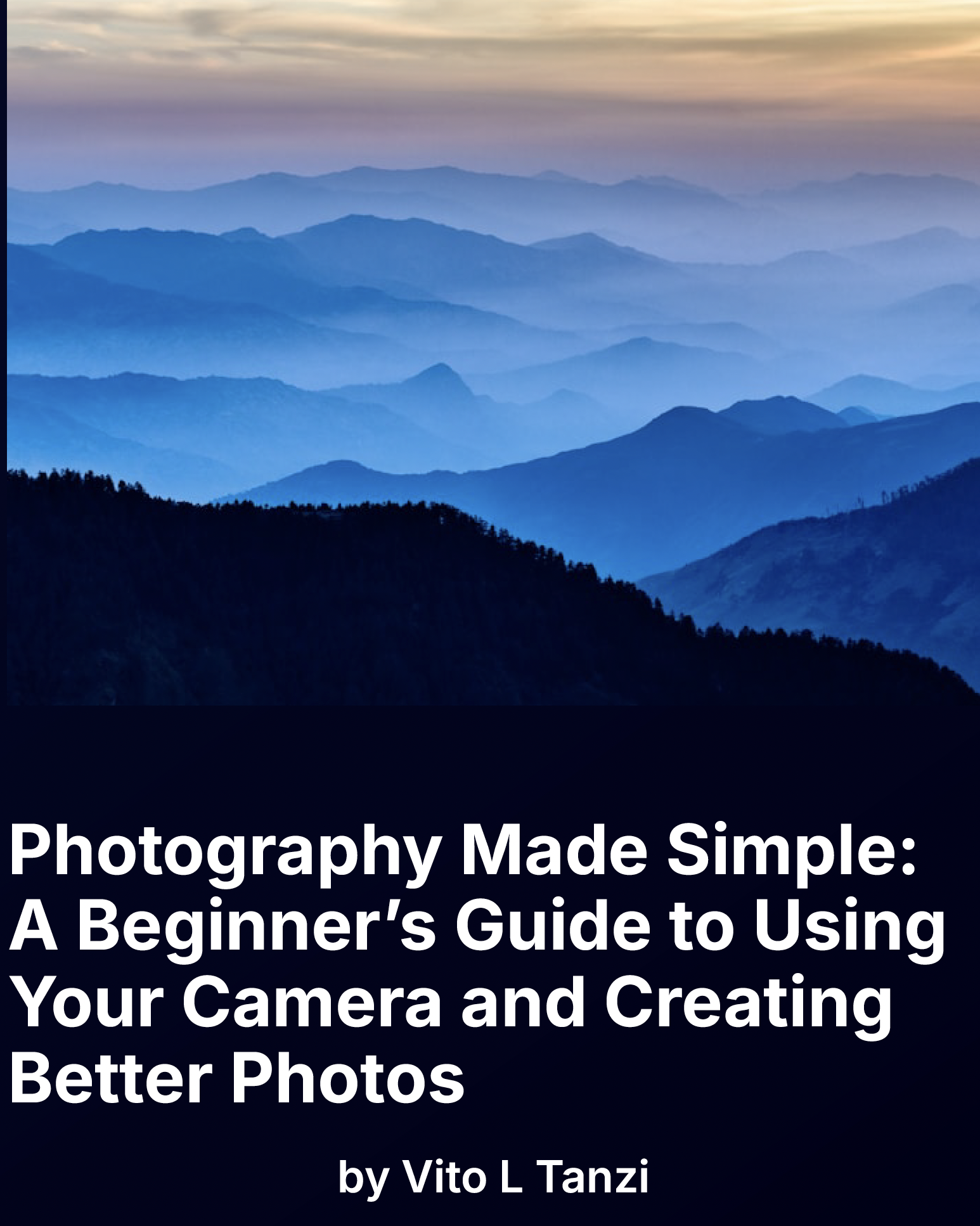
Finally—a beginner-friendly photography guide that makes sense.
If you've ever picked up a camera and thought, "Now what?" this is the book for you.
Photography Made Simple is written for adults who are just starting out and want a clear, encouraging, real-world approach to learning photography. Whether you're using a DSLR, mirrorless, or just your smartphone, this guide walks you through the basics—without the jargon or tech overwhelm.
Inside, you'll learn:
The only camera settings you really need to know to get started
How to shoot sharper, more intentional photos using light and composition
Simple tips for portraits, landscapes, travel, and everyday life
What gear you do (and don’t) need
How to create better photos without upgrading your camera
You’ll also get practical exercises, cheat sheets, and tips for organizing and editing your images—plus the confidence to shoot off Auto Mode for good.
This is not a textbook. It’s a friendly guide to seeing the world with fresh eyes—and finally capturing what you see the way you imagine it.
📸 Format: PDF download
Pages: 100+
Perfect for: Beginners, hobbyists, and anyone ready to take better photos without the stress