Bali, Indonesia Travel & Photography Guide: Best Photo Spots, Things to Do & Hidden Gems
Welcome to Bali, Indonesia - a true paradise on earth. As magical destinations go, Bali is at the top of our list. Our trip to Bali was one of the best trips of our lives, and it completely changed us. It’s the trip that started my love of travel photography. Bali is also a place we constantly dream of returning to visit.
For the longest time, I've wanted to share our Bali adventure with you. However, a setback delayed this blog-I had misplaced an SD Card containing all the photos from Bali, captured on an old Canon point-and-shoot camera. Thank God I found the SD card with my photos, and thanks to my daily diary practice, I'm finally ready to tell our story.
Bali is often referred to as the island of Gods for good reason. It is undoubtedly one of the most beautiful destinations in the world. You will see incredible landscapes, sunsets, wildlife, and stunning temples throughout the country. Add to that endless gorgeous beaches and incredible terraced green rice paddies. Oh, and the food was so fresh and delicious!

A dramatic tropical coastline in Bali, Indonesia, where turquoise water meets steep limestone cliffs and hidden beaches.
Yet, the most beautiful thing in Bali is the Balinese people, who must be one of the kindest people in the world. I think it is due to their practice of canang sari or “daily gratitude”. Canang Sari is a daily offering of thanks and peace to the Hindu gods (85% of Balinese people are Balinese Hindus). The practice is part of a daily expression of gratitude not only for what they have but also for what they want. You will see this everywhere in Bali.
So, each morning, I would witness a local Hindu priest's daily ritual on the beach in front of our hotel. He would carry a round metal tray carrying burning incense and little palm leaf boats filled with colorful flowers, rice, crackers, and candies. He would make his way to a tiny temple, where he would carefully place these items. He then dipped a frangipani flower in water and sprinkled the flower water around the offering. It was a beautiful experience to witness.
In this Photography Guide to Bali, I share the places and experiences that continue to draw me back. You will find my favorite photography locations, guidance on when and where to shoot, practical travel tips, and gear recommendations, along with cultural insights to help you explore and photograph Bali with confidence, respect, and ease.

A Balinese Hindu priest placing a daily canang sari offering, part of Bali’s tradition of gratitude and prayer.
Photographer's Notes
Before you go, here are my own takeaways.
Favorite Season: May and September
Favorite Location: Nusa Dua beach at sunrise, every single morning
Favorite Hotel: The St. Regis Bali Resort
Favorite Restaurant: Kayuputi
Favorite Café: Revolver Espresso
Favorite Food: Gado-gado
Favorite Lens: 15-35mm f/2.8
Would I Return? We've dreamed about going back since the moment we left.
Entry Visa for Bali / Indonesia
Starting in March 2022, foreigners are required to pay for a visa in order to enter Bali. However, you can apply for a Visa on arrival online before you actually arrive. Indonesia e-VOA
Bali Tourist Tax
Since February 14, 2024, all international visitors to Bali must pay a mandatory tourism levy of IDR 150,000 (approximately USD 10) per person, per entry. This is separate from your visa fee and applies to everyone regardless of age, including children and infants.
The easiest way to pay is online before you travel via the official Love Bali website at lovebali.baliprov.go.id. After payment, you receive a QR code by email, which you scan at the checkpoint in Ngurah Rai International Airport or at the seaports. Payment can also be made at cashless counters at the airport on arrival, but paying online in advance is faster and recommended.
Keep your QR code on your phone or print a copy. This is checked separately from your visa and immigration documents.
Areas of Bali
Bali is a huge island, so there are many areas you should consider staying in before selecting your hotel. Here is some information on each area:
Seminyak
This is Bali's busiest beach area and the “party area” of the island. There are tons of places to shop, eat, and drink. We definitely enjoyed having dinner and drinks in Seminyak, but it’s more catered to those looking for bars and nightclubs.
Canggu
Canggu, located 30 minutes north of Seminyak, is currently the trendiest area in Bali. Canggu is popular with surfers, and you see lots of super hip shops, chic restaurants, and new hotels.
Ubud
Ubud is located in Bali's mountainous region. It is here that the vegan and raw dining culture was born. Ubud is known as the cultural hub of Bali, with temples, holistic centers, yoga studios, and local markets on every corner. You can expect a quieter and slower life here, and many more cultural and natural activities. We absolutely loved it!

A carved wooden sculpture found while exploring the cultural heart of Ubud, Bali.
Uluwatu
This is another very popular area with surfers. It is where you will find Pura Uluwatu, an incredible temple on a clifftop, where you can see the Kecak Dance and experience beautiful sunsets. We loved our visit to this area at sunset.
NUSA DUA
Nusa Dua is an area of Bali with luxury resorts on white sandy beaches. The hotels and restaurants in this area are phenomenal, and it is very close to the airport. This is the area we stayed in.
Where to Stay in Bali
Bali is not a one-base island. It changes personality from coast to jungle, and where you choose to sleep shapes everything about your experience. My strong recommendation is to split your stay between two areas.
Split Your Stay: Nusa Dua and Ubud
Nusa Dua is polished, calm, and right on the water. Think wide white-sand beaches, soft morning light, easy access to oceanfront resorts, and sunrises that will make you set your alarm every day. It is also 15 minutes from the airport, which makes it a logical place to land and decompress after a long flight before heading deeper into the island.
Ubud is Bali's cultural and creative heart. Rice terraces, temples, waterfalls, and thick jungle surround the town. Early-morning mist drifts through the palms in a way that feels cinematic without any effort. This is where you slow down, shoot carefully, and let the island come to you.
Spend three to four nights in each area. Bali traffic can be brutal mid-day, so splitting your stay saves you long daily transfers and puts you close to the light when it matters most.

The wide sandy beach at the St. Regis Bali Resort in Nusa Dua.
Luxury Hotels in Bali
The St. Regis Bali Resort (Nusa Dua) — This is where we stayed, and I would go back without hesitation. The property sits directly on the beach with a long, meandering lagoon pool and grounds that reward early-morning walks with a camera.
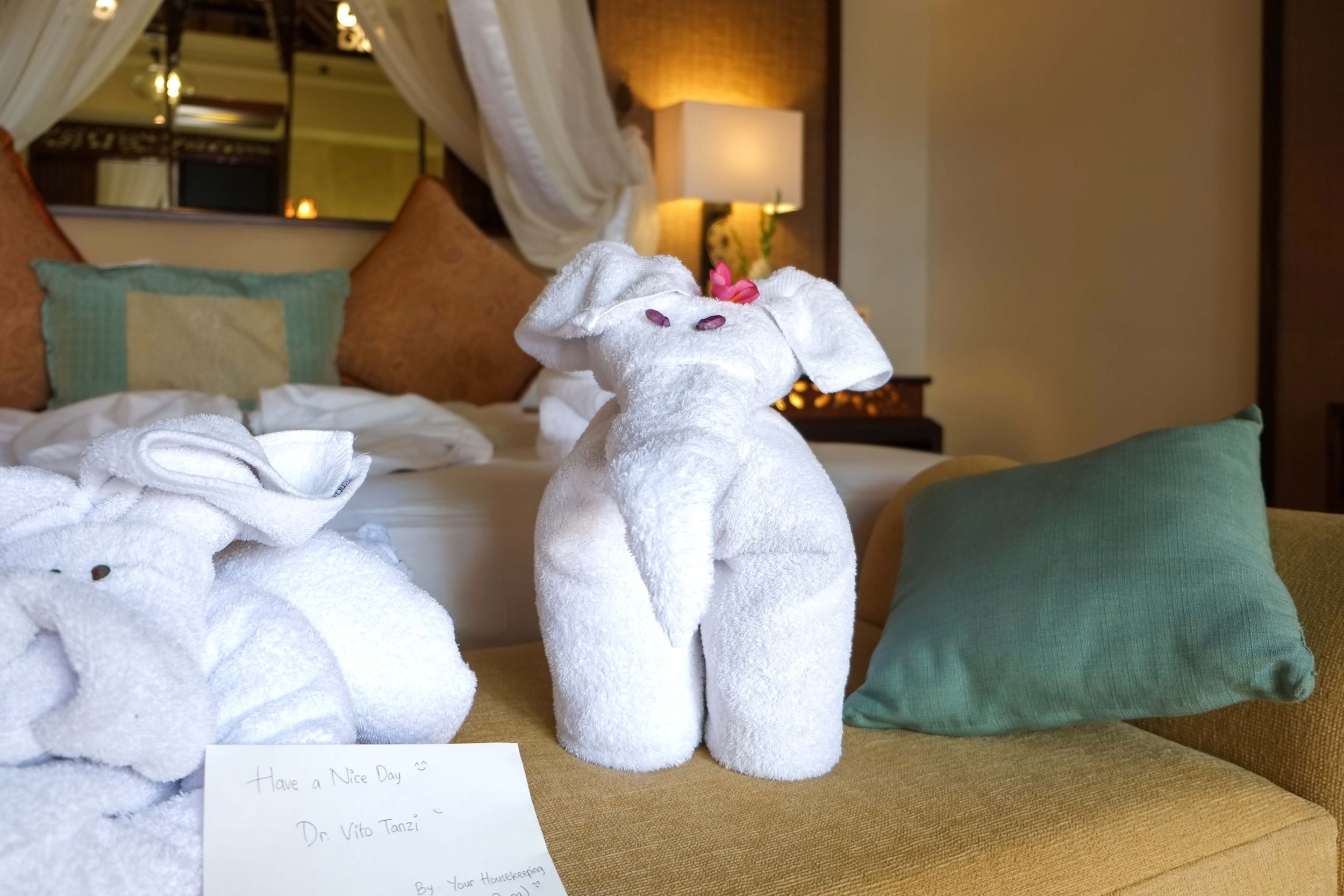
St Regis Bed Decorations
The beachside Kayuputi restaurant is easily one of the island’s best restaurants and we really enjoyed all our meals overlooking the water.


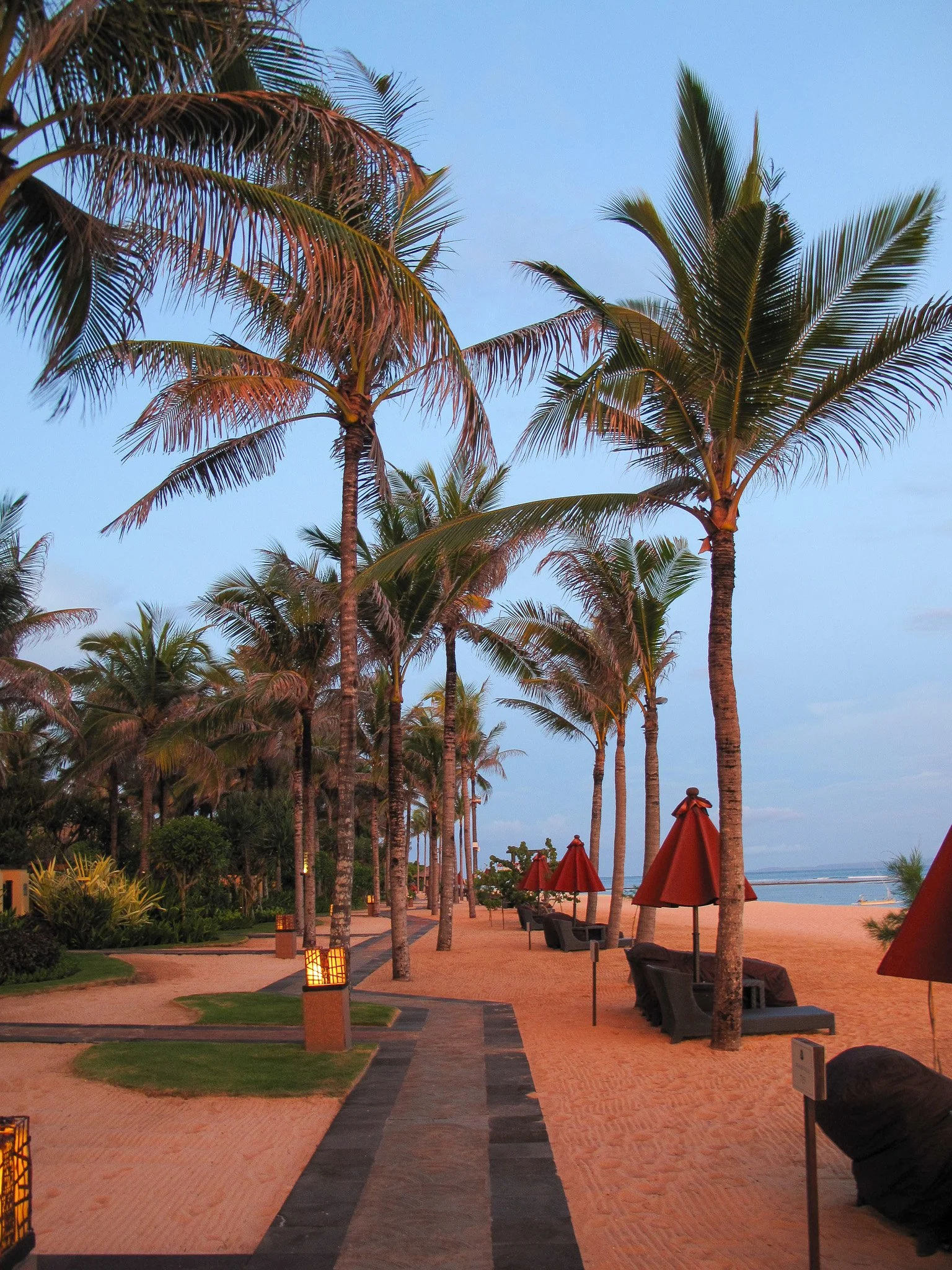

Four Seasons Resort Bali at Sayan (Ubud) — Perched above the Ayung River gorge, this property is one of the most architecturally beautiful resorts I have seen anywhere. The setting is extraordinary for photography: layered rice terraces, jungle canopy, morning light through the mist. Worth the splurge even just for breakfast on the terrace.

The path to the beach at the Four Seasons Hotel in Bali
Alila Seminyak - Eco-friendly elegance meets contemporary luxury with stunning ocean views and top-notch amenities.
Capella Ubud - Voted one of the best resorts in Indonesia. Its 22 one-bedroom tented and batik-draped retreats, hand-painted Mads Lange restaurant, and even saltwater pool all float over the jungle floor.

The pathway through the forest at the Como Shambhala Estate
COMO Shambhala Estate (Ubud) — Twenty-three acres on the hilltops above the Ayung River. Peaceful, spiritual, and beautifully designed. We visited for lunch, and the setting is unlike anything else on the island. More of a wellness retreat than a conventional resort.

From the restaurant at the Como Estate with views of the Forest
Bulgari Resort Bali (Uluwatu) — Teetering on a cliff above the Indian Ocean on Bali's rugged southern tip, this property is as dramatic as resorts get. Fifty-nine private villas, each with a plunge pool and garden, are set into the clifftop. We had dinner here after visiting Uluwatu Temple, and the setting alone is worth a visit. The ocean views at sunset are among the best on the island.
Mid-Range & Boutique Hotels in Bali
Hotel Indigo Bali Seminyak Beach (Seminyak) — Stylish property with vibrant local-inspired decor, multiple pools, and direct beach access. A solid base if you want easy access to Seminyak's restaurants and beach scene.
Capella Ubud (Ubud) — Voted one of the best resorts in Indonesia and consistently one of the most-photographed properties on the island. Twenty-two tented retreats elevated above the jungle floor, each with hand-painted details and a saltwater pool. Strong boutique option if you want Ubud luxury without the Four Seasons price.
Amadea Resort & Villas (Seminyak) — A quieter, well-priced option in the heart of Seminyak. Good base for exploring the coast, and a short ride to most of the area's best restaurants.
How Long to Stay in Bali
Minimum: 7 days. Ideal: 10 to 14 days.
Bali is an island that punishes rushing. Traffic, distances between areas, and the rhythm of the place all push back against a tight itinerary. If you have a week, split it: four nights coastal (Nusa Dua or Jimbaran), three nights in Ubud. That covers the core photography locations without forcing you into back-to-back long drives.
If you have ten to fourteen days, you can add Uluwatu to the south, spend more time in the Ubud region shooting rice terraces and temples at different times of day, and work in a day trip to Tanah Lot on the west coast. That is the pace at which Bali opens up.
A rough outline for a 7-day trip:
Days 1 to 3: Base in Nusa Dua. Sunrise on the beach. Day trip to Uluwatu for sunset and the Kecak Dance. Explore Jimbaran Bay.
Days 4 to 7: Move to Ubud. Shoot Tegallalang Rice Terrace at dawn. Explore Ubud Monkey Forest, Batuan Temple, and the local morning markets. Day trip to Tanah Lot for sunset.

The layered green rice terraces of Tegallalang near Ubud, one of Bali’s most recognizable landscapes.
Best Time to Visit Bali
Dry season: April through October. This is when you want to be in Bali. Clear skies, strong light, and manageable humidity. July and August bring peak crowds, especially at Tegallalang and Uluwatu, so plan sunrise shoots to beat the tour groups.
Shoulder season: April to June and September to October are the photographer's sweet spot. Good light, fewer crowds than peak summer, and temperatures that make early-morning shoots comfortable. May and September are my personal favorites.
Wet season: November through March brings afternoon rain, but it rarely ruins a full day. Mornings often stay clear, which means sunrise shoots still work. The landscape is greener, the light after a rain shower has a particular quality, and the crowds thin significantly. If you can handle the occasional downpour, February can be a rewarding time to visit.
Golden hour in Bali in the dry season runs roughly 6:00 to 7:00 AM and 5:30 to 6:30 PM. Sunsets come early and fast at this latitude. Be in position 30 minutes early.
Getting Around Bali
Bali does not have a reliable public transit system, so you will need to plan transport.
Hire a private driver through your hotel. This was the best decision we made. A driver costs very little relative to the convenience, and it solves the two big problems in Bali: unpredictable traffic and the logistics of carrying camera gear. Your hotel can arrange this easily, and a good driver doubles as a guide.
Grab and Go-Jek are the ride-hailing apps that work in Bali. Uber is not available. Both apps work well in the tourist areas. For day trips to temples or rice terraces, a private driver is more practical than app rides, which can be slow to find in remote areas.
Scooters are popular and everywhere. Be honest with yourself about your experience level. Bali traffic is not forgiving, and riding with a camera bag adds risk. If you are comfortable on a scooter and traveling light, it works well for short local trips. It is not the move for long hauls with gear.
Walking is how you explore Ubud's market area, the Monkey Forest, and the rice terrace trails at Tegallalang. Build time for it. The best photographs in Ubud come from slowing down on foot.
Where to Eat in Bali
Balinese food is built on a foundation of spice. Ginger, galangal, turmeric, lemongrass, coriander, and chili appear in almost every dish. Meals are typically served around a mound of rice with several accompaniments: pork or chicken, fresh fish, tofu or tempeh, eggs, sautéed vegetables, and sambal on the side. Because most Balinese are Hindu, cows are considered sacred, so beef is rare on traditional menus.
Before you leave, make sure you try nasi goreng (fried rice with a sunny-side-up egg), gado-gado (vegetables, tempeh, tofu, and boiled egg with satay sauce — one of the best things I ate on the entire trip), and sate — grilled meat skewers with peanut sauce cooked over open flame.

A delicous meal at the Bulgari Hotel in Bali
Make sure to try one of the dishes below:
Nasi Goreng or Mie Goreng—This is Indonesia’s favorite fried rice (nasi) or fried noodles dish (mie). Usually, it is mixed with vegetables and chicken, but you can always have a vegetarian option. It is served with one sunny-side-up egg.
Gado-gado - Gado gado is essentially an Indonesian-style salad, and after eating it, you’ll never want your basic iceberg, tomato, and cucumber salad again. It’s made with a range of cooked and/or raw vegetables – usually cabbage, green beans, bean sprouts, carrots, and Asian greens – topped with fried tempeh, tofu, boiled eggs, and a delicious satay sauce. Gado-gado is the perfect dish to eat for lunch.
Satay or Sate – Grilled meat skewers served with peanut sauce. Usually, pork or chicken is used.
Sambal - Sambal is a spicy condiment commonly found in Southeast Asian cuisine, particularly in Indonesia, Malaysia, and Singapore. It's typically made from chili peppers, shrimp paste, fish sauce, garlic, ginger, shallots, and lime juice or vinegar. There are many variations of sambal, ranging from mild to extremely spicy, and it's often used as a flavorful accompaniment to dishes like rice, noodles, meats, and seafood.
Here are some picks:
Kayuputi (Nusa Dua, St. Regis Hotel) — Beachfront, elegant, and genuinely exceptional. A five-time Wine Spectator Award winner. We ate here multiple times. The setting overlooks the water, and the food earns every bit of the reputation.
Locavore NXT (Ubud) — One of the most acclaimed restaurants in all of Southeast Asia. The team sources everything from Indonesia, including ingredients from their rooftop food forest and underground mushroom chamber. It is a tasting menu experience, closed on Sundays, and reservations are essential weeks in advance. Ranked in Asia's 50 Best Restaurants.
Mamasan (Seminyak, Jl. Raya Kerobokan 135) — Pan-Asian menu in a 1920s Shanghai-inspired colonial space. Chef Will Meyrick built one of Bali's most consistently great restaurants here. Book ahead; it fills up most evenings.
Sundara (Jimbaran, Four Seasons Hotel) — Beautiful setting overlooking the bay. One of those rare hotel restaurants that deserves a visit regardless of whether you are staying there. The food is as good as the view.
Il Ristorante (Uluwatu, Bulgari Hotel) — Set into the clifftop with dramatic ocean views. Excellent food in one of the island's most dramatic settings.
Zest (Ubud) — Ubud's best-known vegan restaurant. Even if you are not plant-based, the food is creative and good. Worth a lunch stop between temple visits.
Coffee in Bali
Revolver Espresso (Seminyak, Jl. Kayu Aya Gang 51) — Tucked down a side lane off Kayu Aya, this is Bali's original specialty coffee bar, open since 2012. Dark timber, exposed brick, vintage cowboy portraits on the wall, and serious espresso. Go for the coffee and stay for the edit session. Now has multiple Bali locations, but the Seminyak flagship is still the best.
Sisterfields (Seminyak) — Bright, airy, Australian-style all-day café. Good for a long breakfast before a morning shoot. The food is as strong as the coffee.
Seniman Coffee Studio (Ubud) — Ubud's best specialty coffee operation, focused on single-origin Indonesian beans. Low-key, local feel, and a great place to decompress after a Tegallalang dawn shoot.

A carved stone guardian standing watch inside Batuan Temple.
Photography Gear to Bring to Bali
Bali is a destination that rewards both wide and tight glass. You need a wide lens for rice terrace landscapes and temple interiors, and a telephoto for pulling in detail on temple ceremonies and wildlife in the Monkey Forest.
Camera bodies: Canon EOS R5 Mark II, Sony A7R V, or Nikon Z8 are all excellent choices. Bring a weather-sealed body; humidity and afternoon rain are real factors, especially in Ubud.
Lenses:
15–35mm f/2.8 — Your primary lens. Rice terraces, beach sunrises, temple interiors, the Monkey Forest canopy.
24–70mm f/2.8 — Strong all-around option for markets, street scenes, and restaurant photography.
70–200mm f/2.8 — Essential for Uluwatu cliff shots, compression on the temple at Tanah Lot from the elevated viewpoint, and wildlife portraits in the Monkey Forest.
85mm f/1.4 prime — Portraits and ceremony shots with beautiful subject separation.
Accessories:
Sturdy tripod — Non-negotiable for sunrise rice terrace shots and any temple blue-hour work.
3-stop and 6-stop ND filters — For long exposures on waterfalls and the ocean at Tanah Lot.
Rain cover for your bag and camera body — Ubud afternoon rain is fast and heavy.
Extra batteries and cards — Heat drains batteries faster than you expect.
Samsung T7 SSD — Back up every evening.
Drone note: Bali introduced significant new drone regulations in January 2025. Pre-registration via the SIPP-TA (SIPUDI) portal is now mandatory before you fly, regardless of drone weight. This includes sub-250g models. A 5 km no-fly exclusion zone applies around all sacred sites under Bali Regional Regulation No. 12/2024, which means Uluwatu, Tanah Lot, and Tirta Empul are all off limits. Night flying is prohibited with no exceptions. Violators face fines up to IDR 5 billion (approximately USD 308,000) and potential deportation. A tourist was detained at Tegallalang rice terraces in 2025 while flying a sub-250g drone. Check and comply with current DGCA requirements before you pack your drone.
iPhone Tips for Bali
Tegallalang rice terraces — Shoot in ProRAW on iPhone 14 Pro or later. The layered geometry benefits from maximum dynamic range. Shoot from the elevated southern viewpoint, keep the horizon level, and let the green gradients do the work.
Uluwatu at sunset — Switch to the ultrawide for the full clifftop context, then switch to the 3x telephoto to isolate the temple against the sky. The 3x focal length compresses the drama beautifully.
Canang sari offerings — Portrait mode on the offerings themselves. The shallow depth of field separates the flowers and color from the stone pavement below. Shoot at morning when the light is warm and the offerings are freshly placed.
Ubud Monkey Forest — Use Live Photos and shoot in bursts. Monkeys move fast. Portrait mode works well for individual animals when they hold still.
Tanah Lot — At sunset, use the built-in Night mode as the sky darkens. The slow shutter smooths the water around the rock formation and adds drama without a tripod.
Best Photography Locations in Bali
Bali is a photographer's dream, with countless picturesque spots. Here are some of my favorites. I definitely need to go back and photograph more of the island.
A note on entrance fees: Several of Bali's most-visited photography locations now charge admission fees. As of 2025, the Ubud Monkey Forest costs approximately IDR 100,000 on weekdays, Uluwatu Temple costs around IDR 50,000 with the Kecak Fire Dance an additional IDR 150,000, Tirta Empul Temple is approximately IDR 50,000, and the Tegallalang Rice Terrace has small fees at various viewpoints ranging from IDR 15,000 to 50,000 depending on the platform. Fees are paid in Indonesian Rupiah. Bring cash or check current payment options before you go, as pricing can change seasonally.
Tegallalang Rice Terraces
Located about 20 minutes north of Ubud, Tegallalang is the most iconic landscape photograph in Bali, and it earns that status every time. The terraces step down the hillside in long, curved rows, and in the early morning, before the sun burns off the mist, the light turns everything an almost implausible shade of green. UNESCO recognized this landscape, and you will understand why the moment you stand there.
What makes it compelling photographically is not just the scale but the geometry. The curves, the layers, the palm trees breaking the skyline, the occasional farmer moving through the rows below. It takes patience and a willingness to explore beyond the main viewpoint, but the images are there.
📷 Pro Tip: Arrive by 6:30 AM at the latest. The main viewpoint fills with tourists and selfie platforms by 8:00 AM, and the quality of the light drops quickly once the sun is up. Position yourself on the southern ridge looking north for the classic layered shot. A 15–35mm wide lens captures the full sweep; a 70–200mm lets you compress the tiers from across the valley and cut out the crowds. An entry fee is now required at the main access points. Some local access paths along the ridge remain free. Drone flying was enforced here in 2025 and is subject to the temple exclusion rules under regional regulation, so check compliance carefully before flying.
Best time: Sunrise to 8:00 AM. Access: Small entry fee at main entrance. 20-minute drive north of Ubud.

The layered green rice terraces of Tegallalang near Ubud, one of Bali’s most recognizable landscapes.
Uluwatu Temple
Pura Luhur Uluwatu sits on a steep cliff approximately 70 meters above the crashing ocean on Bali's southern tip. It is one of the most dramatic temple settings I have ever stood in. The cliff drops away sharply below you, the ocean stretches to the horizon, and the temple towers against the sky in a way that looks almost architectural. At sunset, the light turns the whole scene orange and gold.
📷 Pro Tip: Arrive at least 45 minutes before sunset to secure a good shooting position both at the temple and at the performance. For the temple, walk the clifftop path south of the main structure to find angles that put the ocean in the background without the crowd in the foreground. A 70–200mm lens compresses the temple against the sea beautifully. For the Kecak Dance, sit on the outer edge of the amphitheater and bring your fastest glass: 85mm f/1.4 or 70–200mm f/2.8 at f/2.8. The fire elements happen in near-darkness and ISO 3200 or higher is normal. Drones are prohibited within 5 km of all temples under Bali Regional Regulation No. 12/2024. Watch for macaque monkeys at the temple; they are bold and will take anything shiny or loose.
Best time: Two hours before sunset through the dance performance. Access: Entry fee applies. 45-minute drive from Nusa Dua. Cover your shoulders and knees; sarong rental available at the entrance.

The sun dropping into the Indian Ocean from the cliffs of Uluwatu in southern Bali.
The Kecak and Fire Dance performance is held every evening at the open-air amphitheater near the temple. Around 75 male dancers take the stage, arms raised, chanting the rhythmic "chak" chorus while acting out scenes from the Hindu Ramayana epic. The combination of fire, shadow, and bodies in motion makes for compelling photography. Read the Ramayana story before you go; the performance is entirely in Balinese and the narrative context enriches what you are seeing.

The Kecak Dance performed at sunset beside Uluwatu Temple, with the Indian Ocean in the background.
Kecak is a traditional Balinese dance involving fire and the Hindu Ramayana story. I would recommend reading the story ahead of time as the entire story portion of the dance is performed in Balinese.
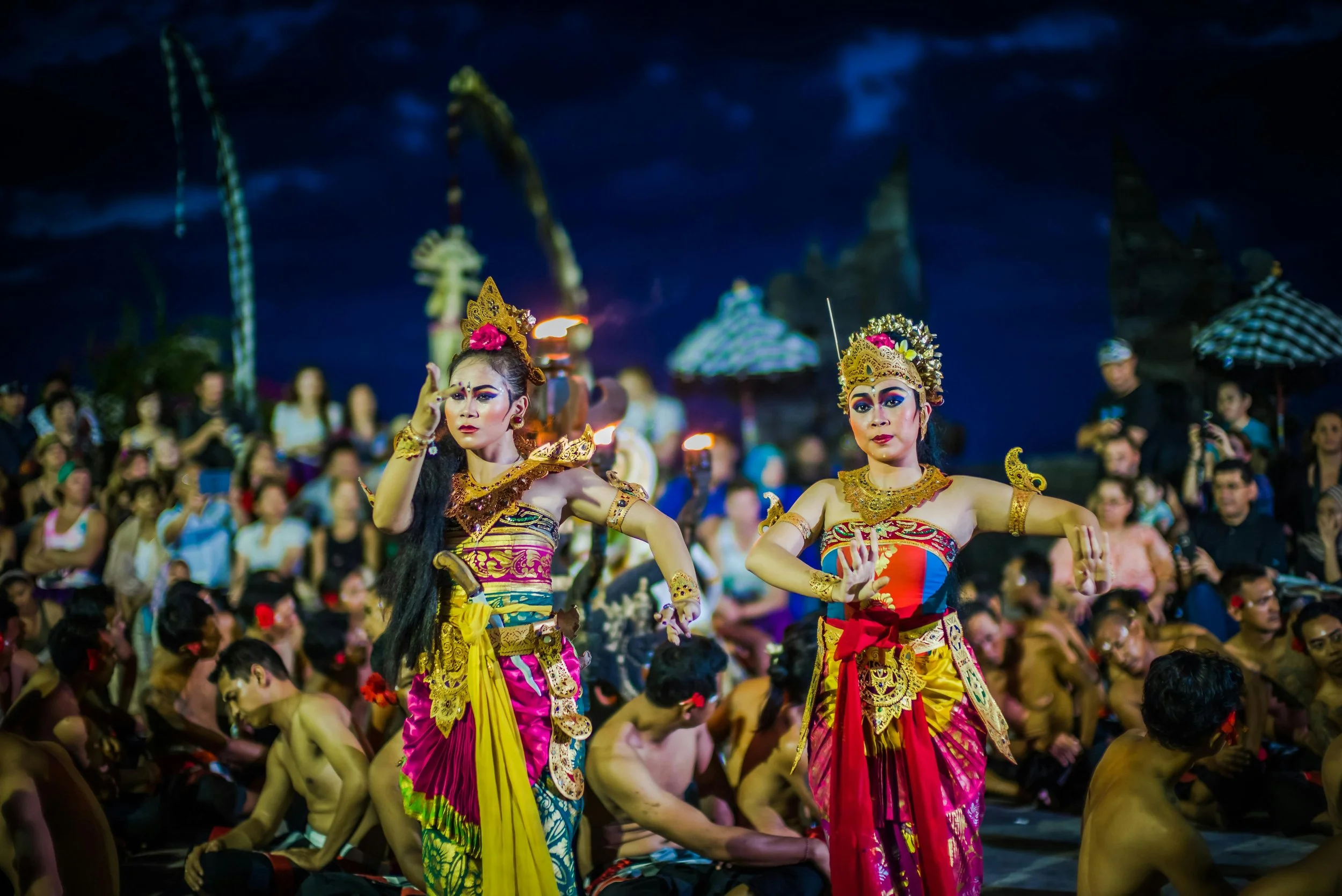
Traditional Balinese dancers performing the Ramayana during the Kecak and Fire Dance at Uluwatu.
It was really a fantastic experience to visit Uluwatu at sunset. I would not miss it.


Silver Making in Prapen
On the way to Ubud, we stopped to visit a local jeweler called Prapen. They will give you a tour of the jewelry-making process. They have a large selection of silver jewelry. It is touristy but fun, and the staff was not pushy in trying to sell you things.

Visiting a Silver Jewelry Shop in Prapen
Ubud Monkey Forest
Around 700 Balinese long-tailed macaques live freely across 30 acres of dense jungle in the heart of Ubud. There are no fences, no barriers. The monkeys move through the canopy, along the stone paths, and occasionally directly across your lens. The forest canopy keeps the light dappled and cool, and the ancient banyan trees that line the main paths are extraordinary photographic subjects in their own right.
Three Hindu temples sit within the forest, and the combination of ancient carved stone, moss, jungle light, and wildlife makes this one of the most layered photography environments in Bali.

The stone entrance to the Sacred Monkey Forest Sanctuary in Ubud, Bali.
📷 Pro Tip: Bring your 70–200mm for wildlife portraits; you can get close, but a little compression helps separate individual animals from the chaotic forest background. The banyan tree root systems near the southern temple are best in mid-morning when side light rakes through the canopy. Remove all food, loose items, and dangling jewelry before entering. The monkeys are fast and opportunistic. A keeper told us they prefer shiny objects and anything in outer pockets. Plan for two hours minimum.
Best time: Early to mid-morning, 8:00 to 11:00 AM. Access: Entry fee. Located in central Ubud, easily walkable from the main market.

A young long tailed macaque sitting in a patch of sunlight inside the Ubud Monkey Forest.
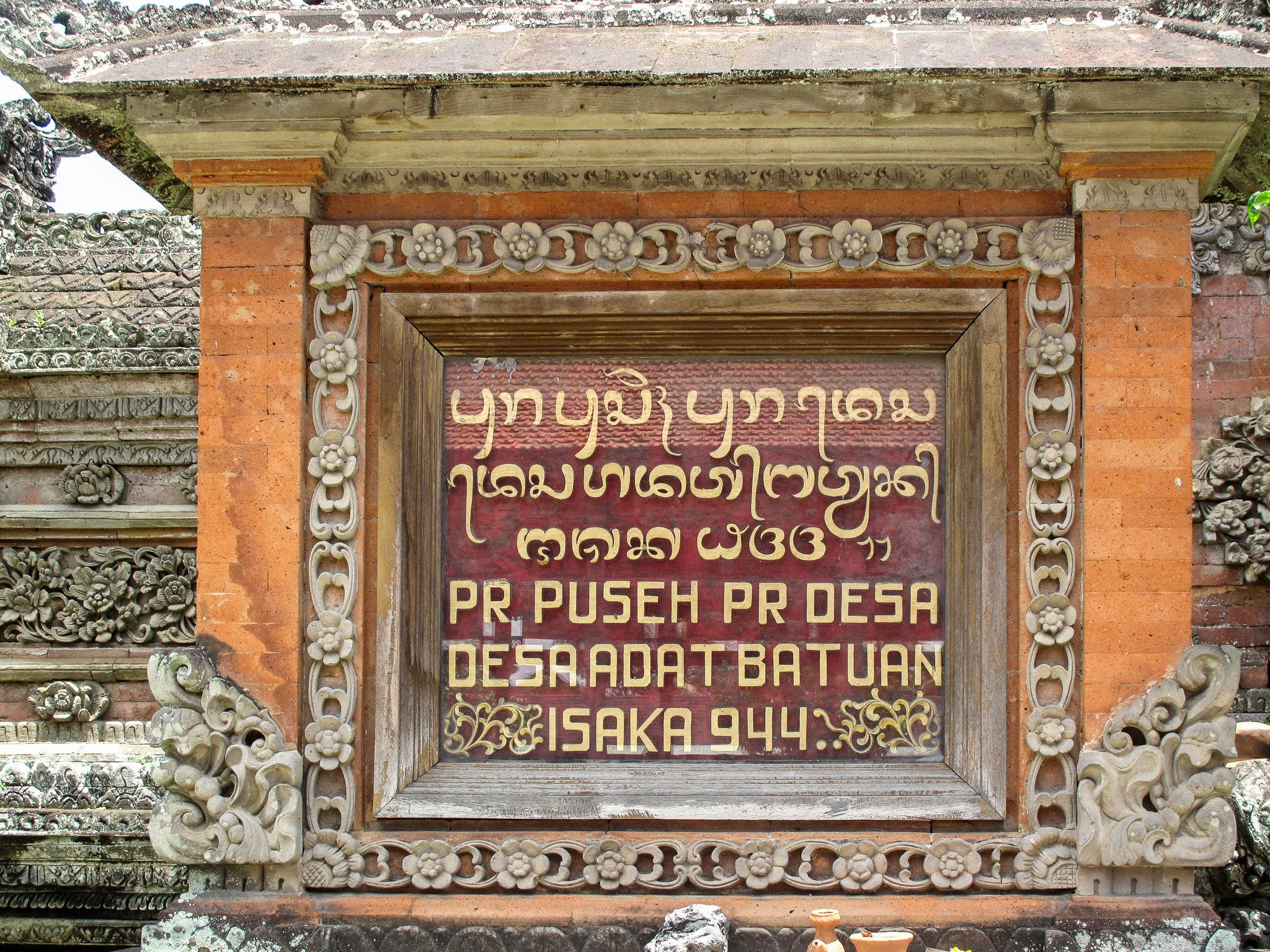
Pura Puseh Desa Batuan (Batuan Temple)
Batuan Temple is one of Bali's oldest, dating to the 11th century, and it sits in the village of Batuan about 10 minutes south of Ubud on the road toward Nusa Dua. Unlike the major tourist temples, Batuan has a quieter, less commercialized feel, and the architecture rewards close attention: three layered courtyards, intricate stone carvings, tiered Meru roofs, and moss-covered walls that tell the age of the place.
📷 Pro Tip: Visit in the morning before 10:00 AM when the light enters the outer courtyards from the east at a low angle, which puts good definition on the carved stone surfaces. A 24–70mm handles most of the architecture well; switch to the 15–35mm for the wider courtyard compositions. A sarong is required and available at the entrance. Photography is generally permitted in the outer courtyards. Ask before photographing any active ceremonies or worshippers, and always keep a respectful distance from offerings.
Best time: 7:00 to 10:00 AM. Access: Small entry fee and sarong requirement. Located in Batuan village, 10 minutes south of Ubud.

The ornate stone and brick architecture of Pura Puseh Desa Batuan, one of Bali’s historic Hindu temples.
The temple is dedicated to Vishnu, the Preserver, and it is one of three temples in the village that together honor the Hindu trinity of creation, preservation, and destruction. The spiritual seriousness of the place is palpable in the best way.

A quiet courtyard surrounded by traditional Balinese architecture at Batuan Temple near Ubud.
The temple is one of the three major temples in the village— the temples are divided into three to honor the gods of creation, preservation, and destruction. Pura Puseh is dedicated to the god Vishnu, the Preserver, and it's a place where local heritage and the timeless tradition of Balinese architectural elegance intertwine.


Cultural Experience: Tirta Empul Temple
Tirta Empul, near Ubud, is one of the holiest sites in Bali. A natural spring feeds a sacred purification pool where Balinese Hindus come to pray, bathe, and seek healing. Local people told us they come here after bad dreams, illness, or periods of sadness, believing the water carries purifying power.
This is a place to observe with respect, not photograph aggressively. Photography is generally permitted from the walkways around the pools, but put the camera down during active ceremonies. Dress modestly, cover your shoulders and knees, and move quietly. The experience of watching the devotion here is worth more than any photograph.
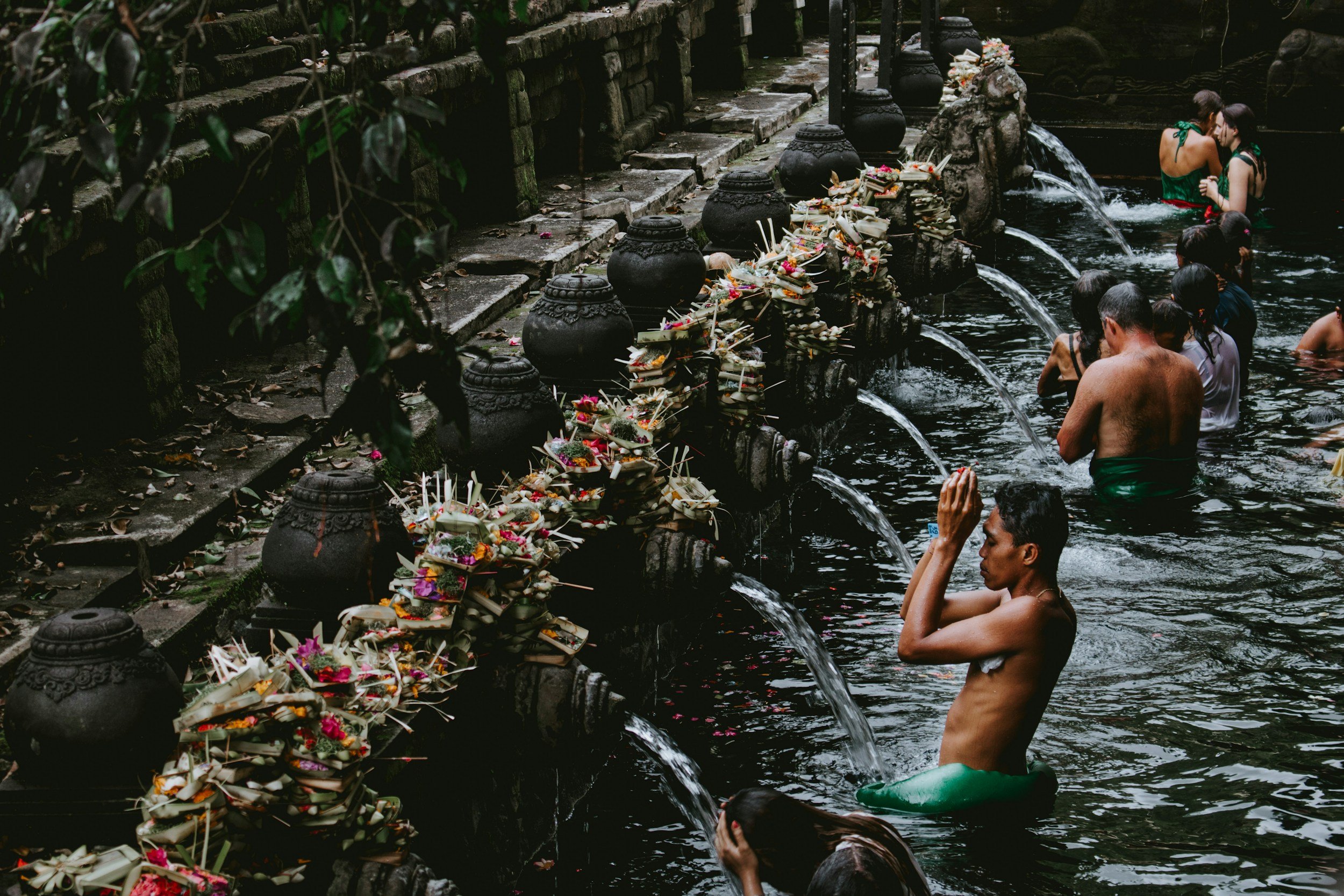
Balinese Hindus taking part in the sacred purification ritual at Tirta Empul Temple near Ubud.
Nusa Dua Beaches and Sunrise
The beaches of Nusa Dua are among the cleanest and most photogenic on the island. White sand, blue-green water, and a long, unbroken shoreline that lets you walk for miles at dawn before the resort guests appear. Our hotel was right on the beach, and I shot sunrise from the shoreline every single morning we were there.
At dawn the light is soft and directional, silhouettes of fishing boats appear offshore, and the water has the kind of glassy quality that makes long-exposure shots work beautifully without much effort.
📷 Pro Tip: Be on the beach 20 minutes before sunrise. Face east and work the water's edge with a 15–35mm wide lens for the full sweep of the sky. Then turn south and look for the fishing boat silhouettes offshore; a 70–200mm at around 200mm flattens the boats against the pastel sky for a cleaner graphic composition. A 3-stop ND filter and tripod let you extend the exposure and smooth the water surface completely. iPhone photographers: turn on Live Photos and use the built-in Long Exposure effect in the Photos app for a no-tripod smoothing option.
Best time: 30 minutes before sunrise. Access: Walk directly from most Nusa Dua beachfront hotels.

White sand, calm water, and palm trees along Nusa Dua Beach in southern Bali.
Between the soft white sand and the intoxicating blue-green colors of the water, you will be in heaven.

Warm evening light settling over the beach and calm waters of Nusa Dua.
Our hotel in Nusa Dua was located right on the beach. We loved walking along the beach collecting seashells.


Place to Photograph on our Next Trip
Handara Gate - An Instagram-famous gate with a stunning backdrop.
The Handara Gate is in north-central Bali near the Munduk region. It is located on the main road in the area, Jl Raya Singaraja-Denpasar, in front of the Handara Golf Resort. While it’s a 1.5 to 2-hour drive from Ubud, it’s a quick 30 minutes from Munduk center.
Jatiluwih Rice Terraces - A UNESCO World Heritage site known for its expansive rice fields.
Pura Lempuyang - Pura Lempuyang, also known as Heaven’s Gate, is no doubt one of the most Instagrammable places in Bali. The iconic photos of its sacred entrance gate are all over the internet.
Kelingking Beach Cliff: Kelingking Beach is located on Nusa Penida Island, in the Klungkung Regency, Bali, Indonesia.
Festivals and Holidays in Bali
Nyepi (Day of Silence) — Bali's most unique cultural event, observed in March each year. For 24 hours, the entire island shuts down. No lights, no traffic, no noise, no activity in the streets. The night before Nyepi, massive parade floats called Ogoh-Ogoh (demon effigies) are paraded through the streets and then burned. The Ogoh-Ogoh processions are extraordinary for photography: fire, crowd, elaborate construction, and high energy. Nyepi itself means no exterior photography unless you are inside a property. Book accommodation well in advance if you want to coincide with this event.
Galungan — A major Balinese Hindu festival that occurs every 210 days according to the Saka calendar, celebrating the victory of good over evil. Every street in Bali is lined with penjor, tall bamboo poles decorated with woven coconut leaves, fruit, and flowers. The scale and beauty of the penjor-lined streets is one of the most visually spectacular things I have seen in any country. The combination of ceremony, traditional dress, and decorated streets makes this one of the best events on the island for photography.
Kecak Dance (nightly at Uluwatu) — While not a festival, the nightly Kecak and Fire Dance at Uluwatu is one of the most photographically compelling performances in Bali. See the Uluwatu section above for logistics. Arrive early for the best position.
Piodalan Ceremonies — Every Balinese temple holds a Piodalan ceremony every 210 days to celebrate its founding anniversary. Dates shift with the Balinese calendar, so check locally. These ceremonies feature elaborate processions, traditional dress, offerings, and music. Tanah Lot's Piodalan draws particularly large gatherings. If your visit coincides with one, it is worth rearranging your day to be there.
Frequently Asked Questions About Visiting Bali
Is Bali expensive?
Not particularly, there's a real range. Local warungs and street food cost very little, and even standout restaurants like Kayuputi and Locavore NXT are reasonable compared to equivalent fine dining elsewhere. Luxury resorts push the budget higher, but you have real control over your spending.
Do you need a visa for Bali?
Yes, most visitors need a paid visa, applied for online in advance through the official e-VOA portal. A separate mandatory tourism levy (IDR 150,000, about USD 10) also applies per person, best paid online before you travel via the Love Bali website.
Do you need a car in Bali?
Yes, effectively. There's no reliable public transit, and Bali traffic is unpredictable. A private driver arranged through your hotel is the best option, solving both the traffic and the gear-carrying logistics at once.
What are the best photo spots in Bali?
Tegallalang Rice Terraces before 8am, Uluwatu Temple at sunset with the Kecak Fire Dance after, and Nusa Dua beach 30 minutes before sunrise are three that consistently deliver. The full list with Pro Tips is above.
Can you fly a drone in Bali?
Only with pre-registration through the SIPP-TA portal, mandatory since January 2025 regardless of drone weight. A 5km no-fly zone applies around all sacred sites, including Uluwatu, Tanah Lot, and Tirta Empul, and night flying is prohibited outright. Check current requirements carefully before you pack one, penalties are severe.
What surprised you most about photographing Bali?
Watching the local Hindu priest perform his canang sari ritual on the beach in front of our hotel each morning. He carried burning incense and little palm-leaf boats filled with flowers, rice, and candies to a tiny temple, then sprinkled frangipani-scented water around the offering. It was quietly beautiful, and it happened every single day, an entire island's worth of daily gratitude in miniature.
How many days do you need in Bali?
Seven days minimum, ten to fourteen is ideal. Split your stay between the coast and Ubud, four nights in Nusa Dua or Jimbaran, three in Ubud, to avoid long daily transfers and be close to the light when it matters.
Is it worth splitting your stay between two areas?
Yes, strongly recommended. Bali changes personality from coast to jungle, and no single base gives you both. Nusa Dua for sunrise beaches and easy airport access, Ubud for rice terraces, temples, and jungle mist.
Final Thoughts
Bali stays with you.
It is in the early morning mist over the rice fields of Ubud. It is in the soft sunrise light along the shores of Nusa Dua. It is in the scent of incense drifting from temple offerings and the rhythm of daily life that feels both grounded and spiritual.
We have dreamed about going back since the moment we left.
Bali offers more than beautiful scenery. It gives you texture, culture, and atmosphere. It challenges you to slow down and look carefully. Whether you are carrying a professional mirrorless body with your favorite lens or simply exploring with your smartphone, the island rewards curiosity and patience.
Ten years later, I still think about the priest on the beach at dawn. The incense smoke catching the morning light. The sound of the ocean behind him. I have been to more beautiful places in a conventional sense, but I have not been to many that gave me back more than they asked for.
Go. Go slowly. Take the early alarm. Talk to people. Eat the gado-gado. And bring your best glass.
Want to improve your photography while exploring some incredible destinations? Join me on one of my photography workshops! You can find all the details, including upcoming destinations and dates, through the links below.
Let's Stay Connected!
More Photography & Travel Guides from Chasing Hippoz:
My Photography & Travel Guide to Singapore — The natural entry point for a Bali trip routed through Southeast Asia. Singapore is a photography city of a completely different kind: clean architecture, extraordinary street food, and a cultural mix that produces some of the most layered people photography in Asia. Fly in, spend three days, then continue south to Bali.
My Photography & Travel Guide to Sri Lanka— The island that comes after Bali for photographers who fall in love with Buddhist and Hindu temple culture, incredible wildlife, and landscapes that feel genuinely off the beaten path. Galle, Tangalle, and the hill country are all remarkable.
My Photography & Travel Guide to the Maldives — The natural pairing for anyone ending a Bali trip with a week of ocean light. The photography shifts completely: water, sky, reef, and some of the best sunset and underwater shooting in the Indian Ocean.
Finally—a beginner-friendly photography guide that makes sense.
If you've ever picked up a camera and thought, "Now what?" this is the book for you.
Photography Made Simple is written for adults who are just starting out and want a clear, encouraging, real-world approach to learning photography. Whether you're using a DSLR, mirrorless, or just your smartphone, this guide walks you through the basics—without the jargon or tech overwhelm.
Inside, you'll learn:
The only camera settings you really need to know to get started
How to shoot sharper, more intentional photos using light and composition
Simple tips for portraits, landscapes, travel, and everyday life
What gear you do (and don’t) need
How to create better photos without upgrading your camera
You’ll also get practical exercises, cheat sheets, and tips for organizing and editing your images—plus the confidence to shoot off Auto Mode for good.
This is not a textbook. It’s a friendly guide to seeing the world with fresh eyes—and finally capturing what you see the way you imagine it.
📸 Format: PDF download
Pages: 100+
Perfect for: Beginners, hobbyists, and anyone ready to take better photos without the stress
✈️ Travel Photography Planning Sessions
One-on-One Trip Planning with a Professional Travel Photographer
Don’t miss the shot. Let me help you plan for it.
Overview
Planning a photography-focused trip can be overwhelming. From figuring out the best places to shoot, to when the light is just right, to knowing which lens to pack — there are a lot of decisions to make.
This one-on-one Zoom session is your chance to get personalized travel photography advice from someone who’s spent the past 25 years exploring cities, coastlines, and wild places around the world — camera in hand.
Whether you're headed to Paris, Patagonia, Tokyo, or Tuscany, I’ll help you make sure your photography trip is well-planned and creatively inspired, so you come home with the images you dreamed of (and then some).
What’s Included
✅ Photography Location Planning
I’ll help you create a customized itinerary of the best photo spots, including off-the-beaten-path gems and iconic views.
✅ Best Times to Shoot
Get expert advice on lighting, golden hour, blue hour, and seasonal conditions for each location.
✅ Gear Recommendations
Not sure whether to bring the telephoto or the prime? We’ll walk through your gear and make sure you’re bringing the right tools for your destination and style.
✅ Hotel and Base Recommendations
Stay where it’s convenient for sunrise shoots and late-night strolls with your camera. I’ll recommend hotels that are photographer-friendly and well-located.
✅ Custom Travel Tips
From sunrise entry times to tripod rules at major landmarks, you’ll get insider tips to save time, avoid tourist traps, and make the most of your trip.
Who It’s For
This service is for anyone who:
Is planning a trip and wants to prioritize photography
Wants expert insight on the best places to shoot and how to get there
Is tired of missing the shot because of poor planning or bad timing
Is a beginner, enthusiast, or professional photographer looking for guidance before a trip
How It Works
Book a Session
Choose a time that works for you and tell me where you're headed.Share Your Plans
You’ll fill out a quick questionnaire so I know your travel dates, interests, and photography style.One-on-One Zoom Call (60 minutes)
We’ll meet via Zoom and walk through your trip together — from location ideas to gear and timing. You'll leave with a custom PDF full of notes and suggestions.Follow-Up Support
Get one round of email Q&A after your session to clarify anything as your plans evolve.
Why Work With Me?
I’ve spent the last 25 years photographing the world — from major cities to remote islands. I know what it’s like to travel and shoot under pressure, and I love helping people get the most out of their trips. This is not just about hitting “popular spots” — it’s about crafting a creative and efficient plan tailored to your trip, your gear, and your goals.
Pricing
$125 / Session
Includes:
60-minute Zoom call
Custom PDF summary with photography spots, gear tips, and travel recommendations
One follow-up email with additional Q&A
Introductory rate available through September 2025
Ready to Plan Your Trip?
Let’s make sure you’re ready — so when the light is perfect, you’re in the right place with the right gear.
Questions?
Please email me at vito@chasinghippoz.com if you're not sure whether this is right for you. I'm happy to chat.