Verona, Italy Travel & Photography Guide: Best Photo Spots, Things to Do & Hidden Gems
I have spent a lot of time in northern Italy over the years, and Verona always surprises me. Not because it is unexpected, but because it is consistently, quietly better than you expect. You think you know what it will feel like, and then you turn a corner off Via Mazzini and the Arena rises up out of the pavement in front of you, 2,000 years of stone holding its ground in the middle of an ordinary afternoon, and for a moment you just stop.
Our hotel sat just steps from the Romeo and Juliet balcony. That alone should tell you something about the scale of this city. Everything is closed. The staff at the hotel treated us like regulars from day one, and dinner on the rooftop, looking out over the terracotta and stone of the old town, was exactly the kind of evening that makes you want to stay longer than you planned. Verona does that. It gets under your skin without trying.
For photographers, the city delivers on multiple fronts. The architecture is Roman, medieval, and Renaissance all within a short walk. The Adige River wraps around the old town and gives you waterfront light at both sunrise and sunset. The streets are narrow enough to create dramatic framing and wide enough to breathe. You can shoot all day here and still feel like you missed things worth coming back for.
In this Photography Guide to Verona, I share the places and experiences that continue to draw me back. You will find my favorite photography locations, guidance on when and where to shoot, practical travel tips, and gear recommendations, along with cultural insights to help you explore and photograph Verona with confidence, respect, and ease.
Ponte Pietra
Photographer's Notes
Before you go, here are my own takeaways.
Favorite Season: Spring
Favorite Location: Arena di Verona
Favorite Hotel: (confirm: Vista Verona or Relais Balcone di Giulietta)
Favorite Restaurant: Trattoria Al Pompiere
Favorite Café: Pasticceria Flego
Favorite Lens: 16-35mm f/2.8
Would I Return? Yes, in the future.
Where to Stay in Verona, Italy
The Historic City Center (Centro Storico) is where you want to be. Everything is walkable, the light in the early morning is extraordinary on the stone streets, and you can be at Ponte Pietra or the Arena before the tour groups arrive. This is not a city where staying on the periphery makes sense.
Luxury Hotels in Verona, Italy
Due Torri Hotel, one of the great historic hotels of northern Italy, occupies a 14th-century palace just off Piazza dei Signori. The hotel has hosted royalty, opera stars, and the occasional sheik, and the rooms reflect centuries of that tradition: marble bathrooms with pink stone, hand-painted ceilings, and balconies looking over Piazza Sant'Anastasia. The Maria Callas suite, named for the soprano who was a regular guest, is the kind of room you book for a birthday you want to remember. Service is attentive without being formal, and the rooftop terrace offers some of the best views of the city at twilight.
Hotel Gabbia d'Oro An opulent boutique property right on Piazza delle Erbe, the Gabbia d'Oro is famous in Verona for its winter garden breakfast room and its deeply personal sense of place. Antiques fill the common areas, the rooms are rich with color and texture, and the central location means you are already standing in one of the best photography spots in the city the moment you step outside. The hotel consistently earns top ratings for both atmosphere and service, and it shows in how guests talk about it: not as a place they stayed, but as a place they experienced.
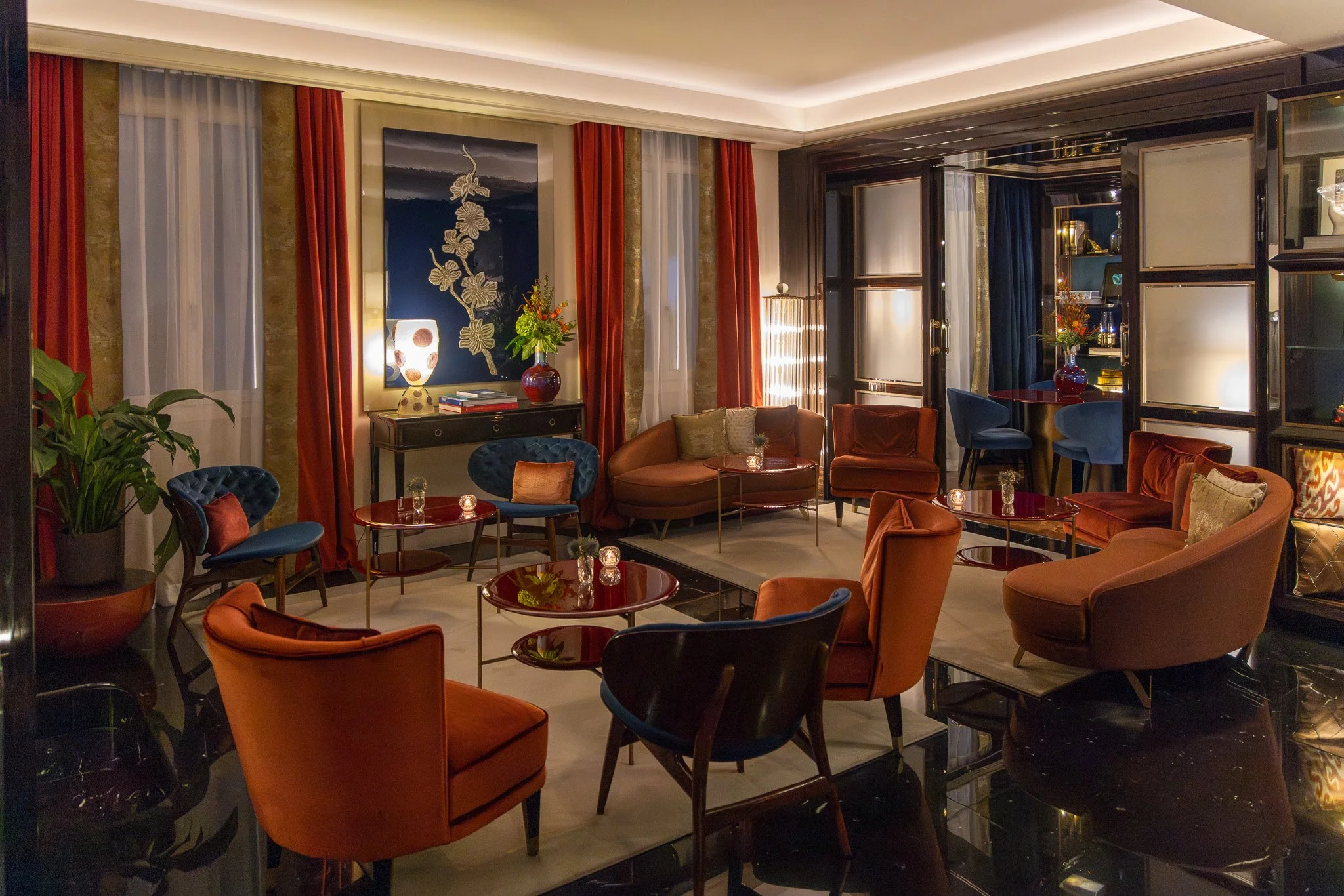
Vista Verona. This is where we stayed, and it delivered on every front. Vista Verona is a boutique five-star in the heart of the old town, and what sets it apart is how it balances contemporary design with a genuine sense of place. The rooms are beautifully appointed, the finishes are exceptional, and the staff were welcoming and attentive from the moment we arrived. The location could not be better for photographers: within minutes of the Arena, Piazza delle Erbe, and Juliet's House, which means early morning starts are effortless. The rooftop restaurant is the real surprise. Dining up there with the old town spread out below you, the terracotta and stone catching the last of the evening light, is one of those Verona moments you do not forget.
Vista Palazzo
Mid-Range and Boutique Hotels in Verona, Italy
Relais Balcone di Giulietta. The property sits literally inside the courtyard of Juliet's House, which means you have access to the balcony and courtyard before and after the daily crowds arrive. That alone is worth it for photographers. The rooms are beautifully done with parquet floors, beamed ceilings, and Jacuzzi bathrooms. Breakfast comes to your room. The staff is warm, genuinely helpful, and clearly proud of what makes this place unique. It is the kind of small hotel where you feel like a guest rather than a customer.
Hotel Accademia A reliable, well-located mid-range option close to the main attractions, the Accademia offers comfortable rooms and solid service without the boutique premium. It is a good base for photographers who want to be central without spending on luxury, and the staff is consistently praised for being helpful and easy to work with.
Hotel Giulietta e Romeo. The name is a bit on the nose, but the location earns it: this cozy hotel sits just a short walk from the Arena and puts you at the center of everything. Rooms are clean and comfortable, the atmosphere is friendly, and the price point makes it an easy choice for travelers who want to spend their budget on experiences rather than accommodation.
How Many Days Should I Visit Verona, Italy?
Three days is the right number for Verona. That gives you enough time to hit the major photography locations at the right light, revisit your favorites, and still have an evening to sit in a piazza with a spritz and do nothing in particular.
A five-day visit makes sense if you want to day-trip to Lake Garda (about thirty minutes west) or Mantua (forty-five minutes east), both of which add excellent photography and are worth the time if your schedule allows.
Day One: Arrive, drop your bags, and walk straight to the Arena. Evening at Piazza delle Erbe. Dinner in the old town.
Day Two: Early morning at Ponte Pietra. Morning at Juliet's House before the crowds. Afternoon at Castelvecchio and the Scaliger Bridge. Sunset from Castel San Pietro.
Day Three: Giardino Giusti in the morning. Piazza dei Signori. San Zeno Maggiore. Final evening golden hour at Ponte Pietra.
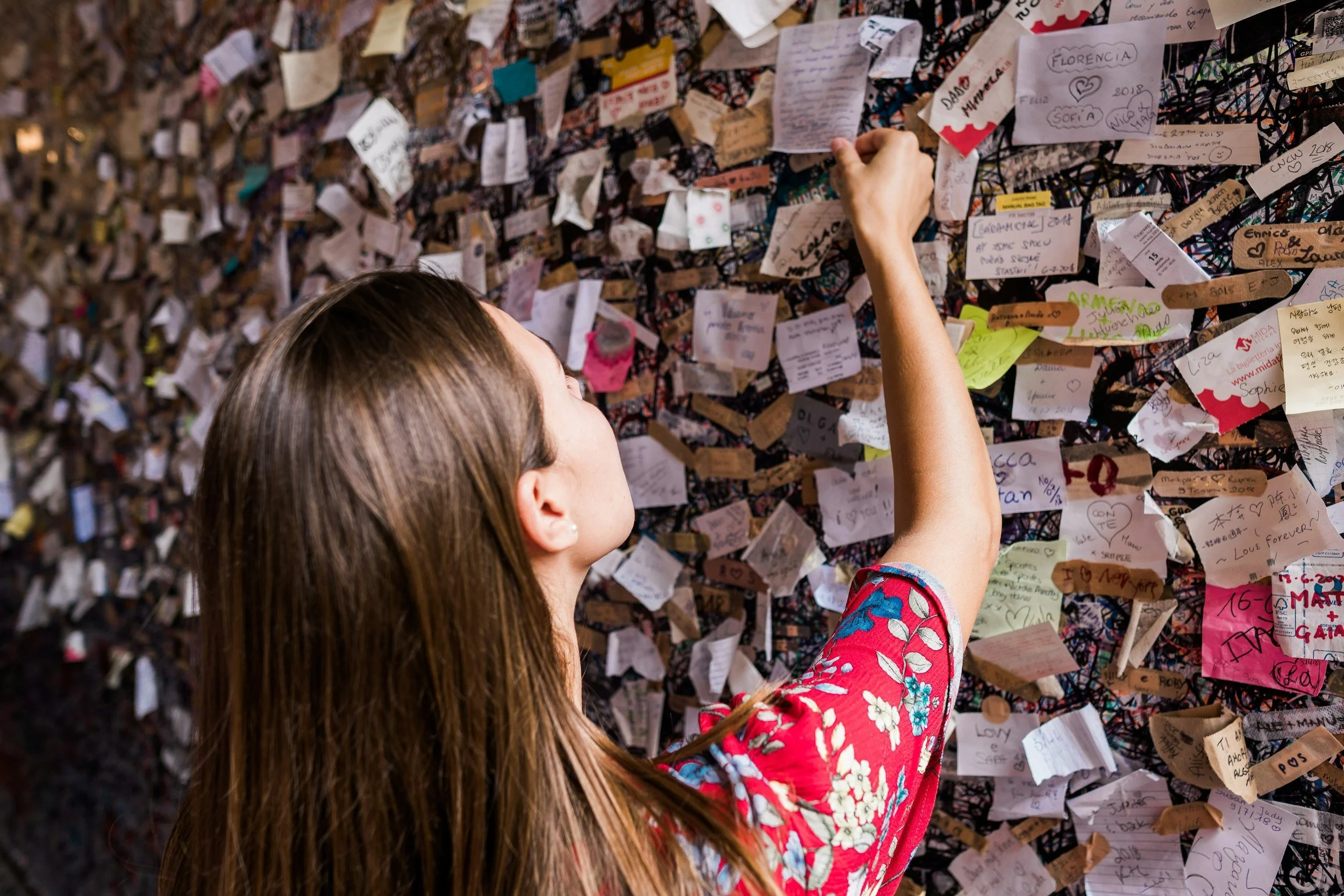
At the Casa di Giulietta
Best Time to Visit Verona, Italy
Spring (April to early June) is the best time for photography. The light is warm and long, the flowers are out, the piazzas are alive but not yet overwhelmed, and the city has a relaxed energy. Late afternoon golden hour in May is exceptional.
Autumn (September to October) runs a close second. Opera season at the Arena brings energy to the city in September, and the light in October has a softer, amber quality that photographs beautifully on the stone facades.
Summer (July and August) is busy, hot, and crowded. Opera at the Arena is a genuine reason to visit in summer, and shooting the amphitheater at blue hour during the season is spectacular. But the midday crowds at Juliet's House and Ponte Pietra are real. Get up early.
Winter (December to January) surprises people. The Christmas markets in Piazza dei Signori are festive and photogenic, the crowds are minimal at most sites, and the cold, low-angle light creates dramatic shadows across the stone. If you are comfortable in the cold, this is a genuinely underrated time to shoot Verona.
Getting Around Verona, Italy
Verona's historic center is compact and almost entirely walkable. From the Arena to Ponte Pietra is about a fifteen-minute walk. From Juliet's House to Castelvecchio is ten minutes. You can cover the entire old town in a day on foot, and for photographers, walking is always the right choice: it keeps you slow, observant, and ready.
For the train station to the center, taxis are the easiest option. Uber is not widely available in Verona, but local taxis are reliable and the fare is modest. Radio Taxi Verona operates in the city.
If you are day-tripping to Lake Garda or the surrounding Valpolicella wine region, renting a car is the most practical option and gives you flexibility to stop wherever the light looks good.
Carrying camera gear through Verona is no problem. The streets are paved and flat through most of the center, and even the climb to Castel San Pietro, while steep, is straightforward.
Where to Eat in Verona, Italy
Verona sits in one of Italy's great wine and food regions. Amarone and Valpolicella come from the hills just north of the city. Risotto all'Amarone, a richly braised risotto made with local wine, is the dish to order if you see it on a menu. The local pasta is bigoli, a thick hand-rolled strand that absorbs sauce beautifully.
Reserve ahead at the top restaurants, especially during opera season and on weekends.
Casa Perbellini 12 Apostoli is the most acclaimed table in Verona, and genuinely one of the finest restaurants in Italy. Chef Giancarlo Perbellini holds three Michelin stars and recently moved his restaurant into the historic 12 Apostoli building, where his career began. The setting is spectacular: frescoed ceilings, curated vintage interiors, and a sense of quiet grandeur that makes the meal feel like an event. The tasting menus are inventive and personal. Book well in advance.
Il Desco A long-standing Michelin-starred institution that has been part of Verona's fine dining scene for decades. The food is refined but not cold, the service is warm, and the setting on Via Dietro San Sebastiano has the kind of intimate feel that makes a special dinner feel genuinely special. The risotto is excellent.
Locanda di Castelvecchio: A classic Veronese restaurant inside the Castelvecchio complex, with traditional local dishes done with real skill. This is the place for authentic regional cooking: pastas, braised meats, and a wine list that takes Amarone seriously.
Trattoria Al Pompiere is one of the best traditional trattorias in the city, beloved by locals and knowledgeable visitors alike. The room is lively, the food is honest and deeply satisfying, and the menu changes with what is good and in season. Go hungry.
Antica Bottega del Vino is more of a wine bar than a restaurant, but the food is excellent, and the cellar is one of the most impressive in the region. This is the place to settle in for an Amarone by the glass, order a plate of local charcuterie, and let the evening run long.
Osteria la Fontanina A romantic, tucked-away osteria that is perfect for a quiet dinner. The setting is charming, the kitchen is straightforward and reliable, and the atmosphere is about as close to a neighborhood secret as Verona still has.
Coffee in Verona, Italy
Pasticceria Flego — A Verona institution. The pastries are exceptional, the coffee is excellent, and the room is always busy with locals. Go in the morning before the tourists find it.
Caffè Borsari — Located just inside the Roman gate of Porta Borsari, this is a beautiful spot for a mid-morning coffee. The architecture of the gate frames the outdoor tables perfectly, and the light is good for people-watching photography.
Café Carducci — Stylish, calm, and well-positioned for people-watching. A good choice for an afternoon editing session or a pre-dinner spritz.
Photography Gear to Bring for Verona, Italy
DSLR and Mirrorless Kit
Verona rewards a two-lens approach: a wide-angle for architecture and cityscapes, and a short telephoto or prime for street work and detail shots.
Camera bodies: Canon EOS R5 Mark II, Sony A7R V, or Nikon Z8 are all excellent here. The high-resolution sensors handle the textures of stone and fresco beautifully, and the dynamic range is essential for managing the contrast between shadowed alleys and bright sky.
Wide-angle (16–35mm): Essential. You will use this constantly at the Arena, Ponte Pietra, and inside the narrow streets of the centro storico. The architecture is large-scale and close, and going wider gives you the leading lines and compression you need.
Standard zoom (24–70mm): The all-around workhorse. Useful for street photography in Piazza delle Erbe and for the more controlled compositions at Juliet's House and Giardino Giusti.
Telephoto (70–200mm): Worth bringing for compression shots from Castel San Pietro looking down toward Ponte Pietra, and for isolating architectural details in the Arena.
Tripod: Bring it. Blue hour and evening long exposures at the Arena and Ponte Pietra are some of the best shots in the city, and a tripod is the difference between a good frame and an exceptional one. A travel tripod works fine on the paved surfaces.
ND filters: A 6-stop or 10-stop ND is useful at Ponte Pietra if you want to smooth the river water in daylight. Also useful at the Arena for long exposures during the day.
Extra batteries and memory cards: The usual. Cold mornings in winter will drain batteries faster.
Samsung T7 SSD: Back up every night. Never leave Verona's images on a single card.
Drone: Drone use in Italian historic centers is restricted and requires permits. The centro storico of Verona falls under local aviation rules that generally prohibit recreational drone flying without authorization. Check current ENAC (Italian Civil Aviation Authority) regulations before you travel and do not assume it is permitted.
iPhone Photography in Verona
Verona is excellent for iPhone photography, and the compact camera advantage is real in the narrow streets.
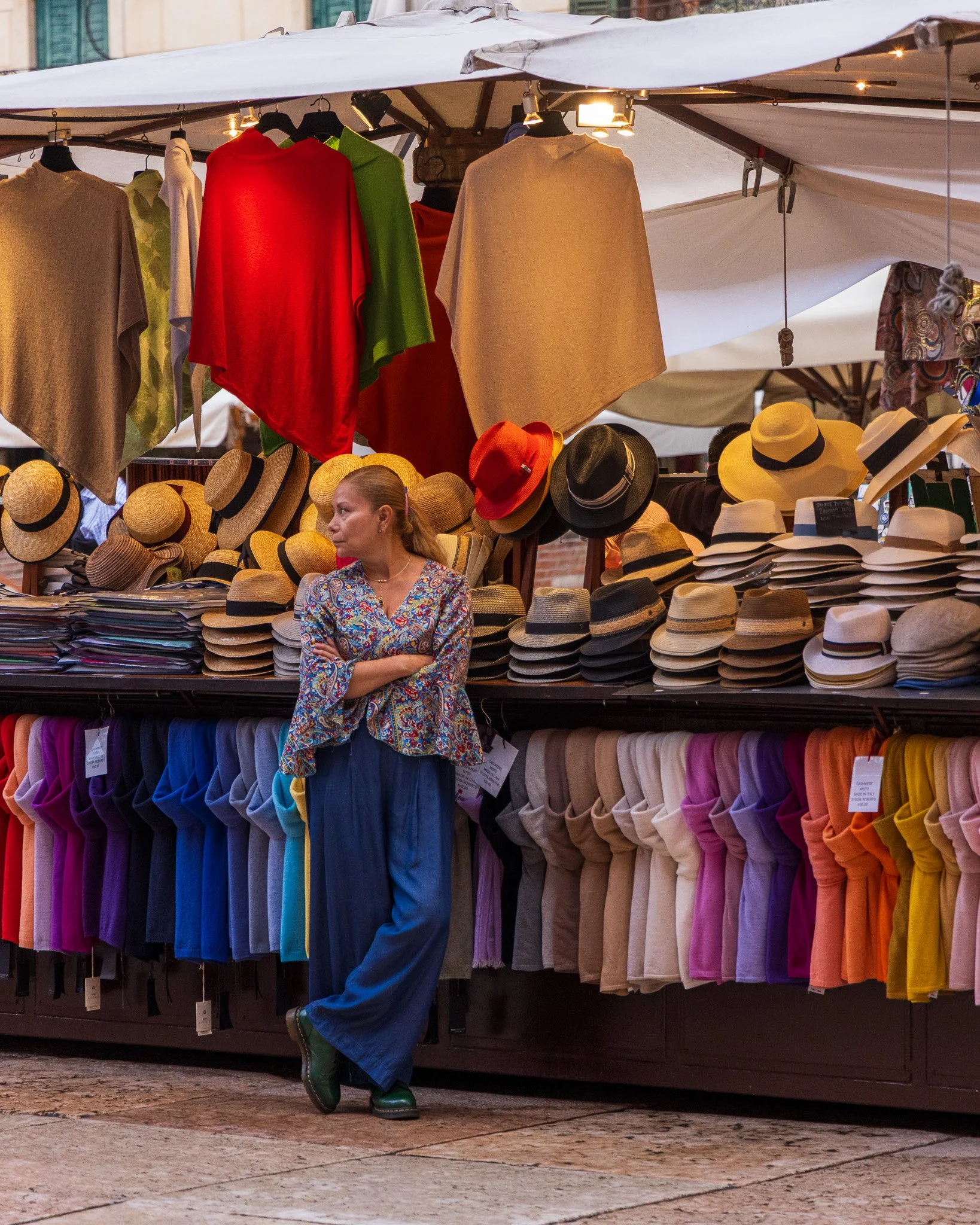
Piazza delle Erbe: Use Portrait Mode on the market stalls and vendors in the morning. The shallow depth of field isolates the color and texture against the soft stone background. Arrive early before the stalls are fully set up and the light is still raking across the facades.
Ponte Pietra at golden hour: Switch to the ultrawide lens and get low on the bridge railing. The iPhone ultrawide at that angle captures the arch curve of the bridge against the warm-lit buildings on the far bank in a way that surprises people. Use Night Mode if you are staying through to blue hour.
Juliet's Balcony before 9 am: This is one of the best situations for iPhone photography in the city. The courtyard is small, the light comes in early and warm, and with almost no one there, you can take your time. Use ProRAW if your phone supports it to retain the detail in the stone.
Castelvecchio and the Scaliger Bridge: The geometric patterns of the medieval battlements photograph well with the standard lens. Look for repeating shapes and the contrast between the red brick and the pale sky.
Verona Cathedral
Photography Locations in Verona, Italy
Arena di Verona
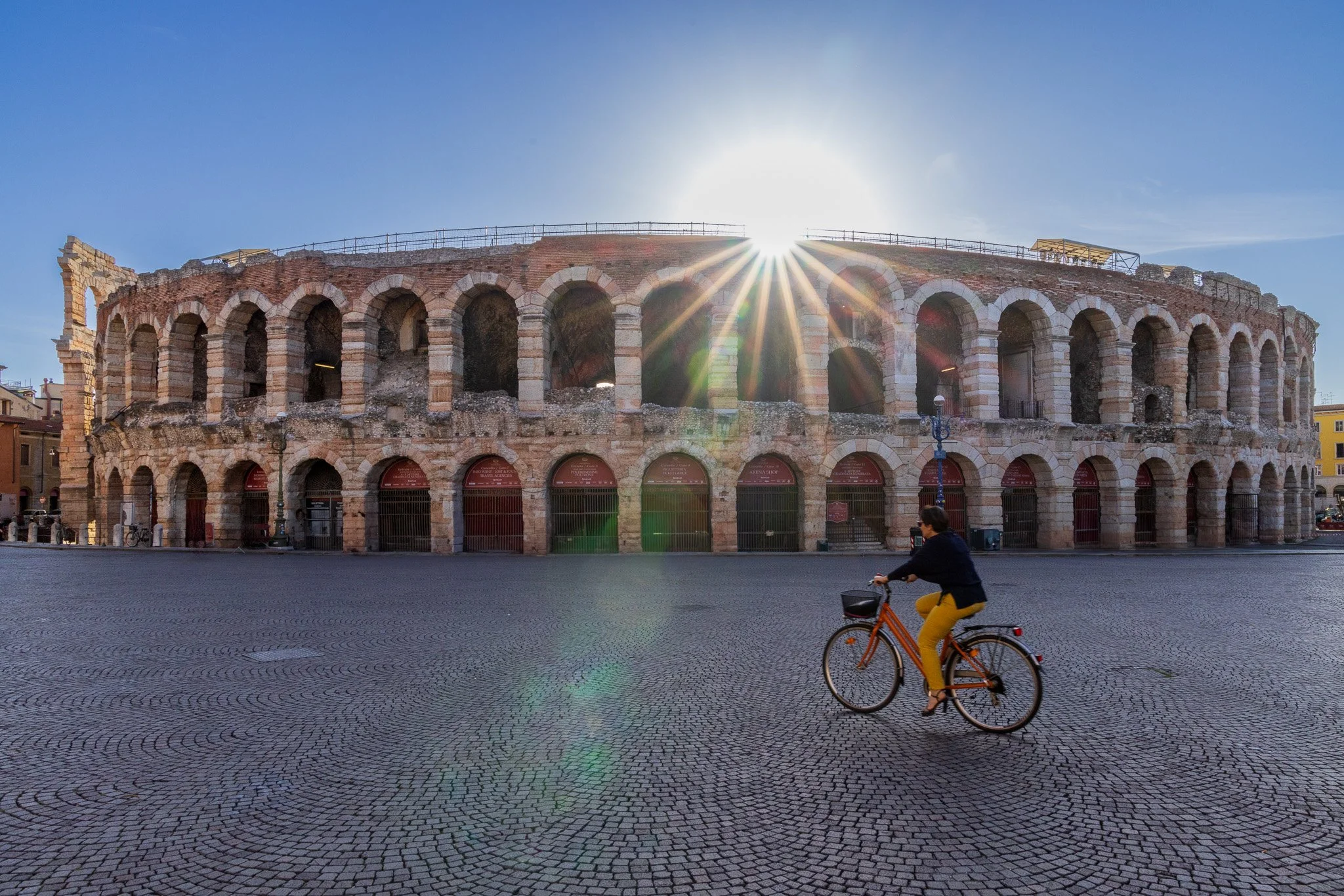
The Arena is one of the best-preserved Roman amphitheaters in the world, and standing in front of it the first time, you understand why. It is enormous and ancient and somehow completely at home in the middle of a modern city. Built in the first century AD for gladiatorial contests, it now hosts one of Europe's great opera festivals every summer, which transforms its meaning entirely without diminishing its weight.
Photographically, the Arena works best at two times: early morning, when the light rakes across the stone from the east and the piazza is empty enough to show its true scale, and blue hour in the evening, when the interior lights glow and the stone facade goes from golden to deep amber. The wide arched facade facing Piazza Bra has a natural geometry that rewards both wide-angle and telephoto approaches.
📷 Pro Tip: Position yourself on the far side of Piazza Bra with a 24–35mm lens and shoot toward the Arena in the last twenty minutes before sunset. The warm light hits the stone directly while the sky behind you goes deep blue, creating a natural split-tone image. At blue hour, move in close to the arches and shoot up at 16–20mm to get the stone curves framing the sky. For opera season, the exterior glows with warm light after dark and the crowd energy gives you excellent street photography opportunities. Access to the interior requires a ticket; the exterior and piazza are free.
Best time: Blue hour and early morning. Access: Exterior free; interior ticketed. A short walk from most hotels in the centro storico.
Ponte Pietra
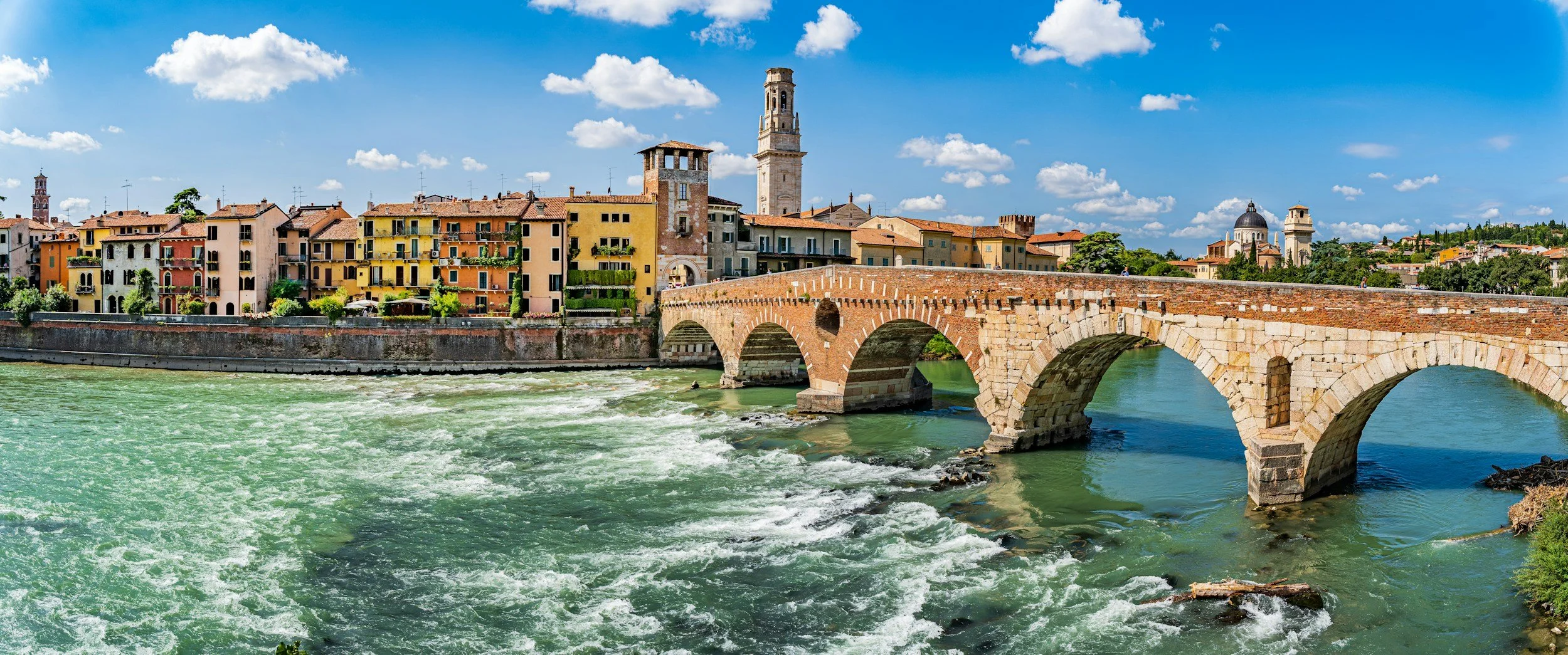
Ponte Pietra is the most photographed spot in Verona, and it earns that distinction every day. The bridge is Roman, dating to roughly 100 BCE, making it one of the oldest surviving bridges in Italy. The arches are original Roman stone on one side, rebuilt medieval stone on the other, and the Adige River wraps around both in a wide, slow bend that reflects the hills and the city beautifully.
The view from the bridge looking east toward Teatro Romano is the classic composition: the Roman theatre on the hillside, the church of Santo Stefano across the water, and the gentle curve of the river. The view from the riverbank looking back at the bridge shows the full arch structure against the warm-colored buildings on the north bank.
📷 Pro Tip: Arrive ninety minutes before sunset and position yourself on the west riverbank, below the bridge level, for the most dramatic angle. The low perspective puts the arches in the foreground and the warm-lit buildings behind them. A wide-angle lens at 16–24mm works best here. For a long-exposure river shot, use a 6-stop ND filter to smooth the water while keeping the stone sharp. The bridge itself gets crowded at golden hour; the best static tripod position is on the east bank looking west, where you can set up without obstructing foot traffic. Early morning (before 7am in summer) gives you the bridge almost entirely to yourself.
Best time: Golden hour and early morning. Access: Free, always open. Walk north from the centro storico along the river for about fifteen minutes.
Castel San Pietro Terrace
Most visitors know Verona from street level. The view from Castel San Pietro, the ruined fortress on the hill above the Teatro Romano, is something different entirely. Standing on the terrace below the castle walls, the entire city opens up in front of you: the curve of the Adige, Ponte Pietra in the middle distance, the Arena to the south, and the terracotta rooftops stretching toward the surrounding hills.
This is the shot that establishes Verona as a place, rather than a collection of monuments. It puts everything in context and gives you the cityscape photograph that no amount of street-level shooting can replicate.
📷 Pro Tip: The terrace is best at golden hour and into blue hour. Position yourself at the western edge of the viewing area with a 35–70mm lens and wait for the light to go warm on the rooftops below. A telephoto (70–200mm) compresses the distance beautifully and pulls Ponte Pietra into the frame as a focal point in front of the city. For sunrise, the light comes from behind you to the east and hits the western facades below; it is worth the early alarm. The climb to the terrace takes about fifteen minutes on foot from Ponte Pietra via the steps at the north end of the bridge. The castle itself is now a hotel but the public terrace below is freely accessible.
Best time: Sunrise and golden hour. Access: Free. On foot via the steps at the north end of Ponte Pietra.
Casa di Giulietta (Juliet's House)
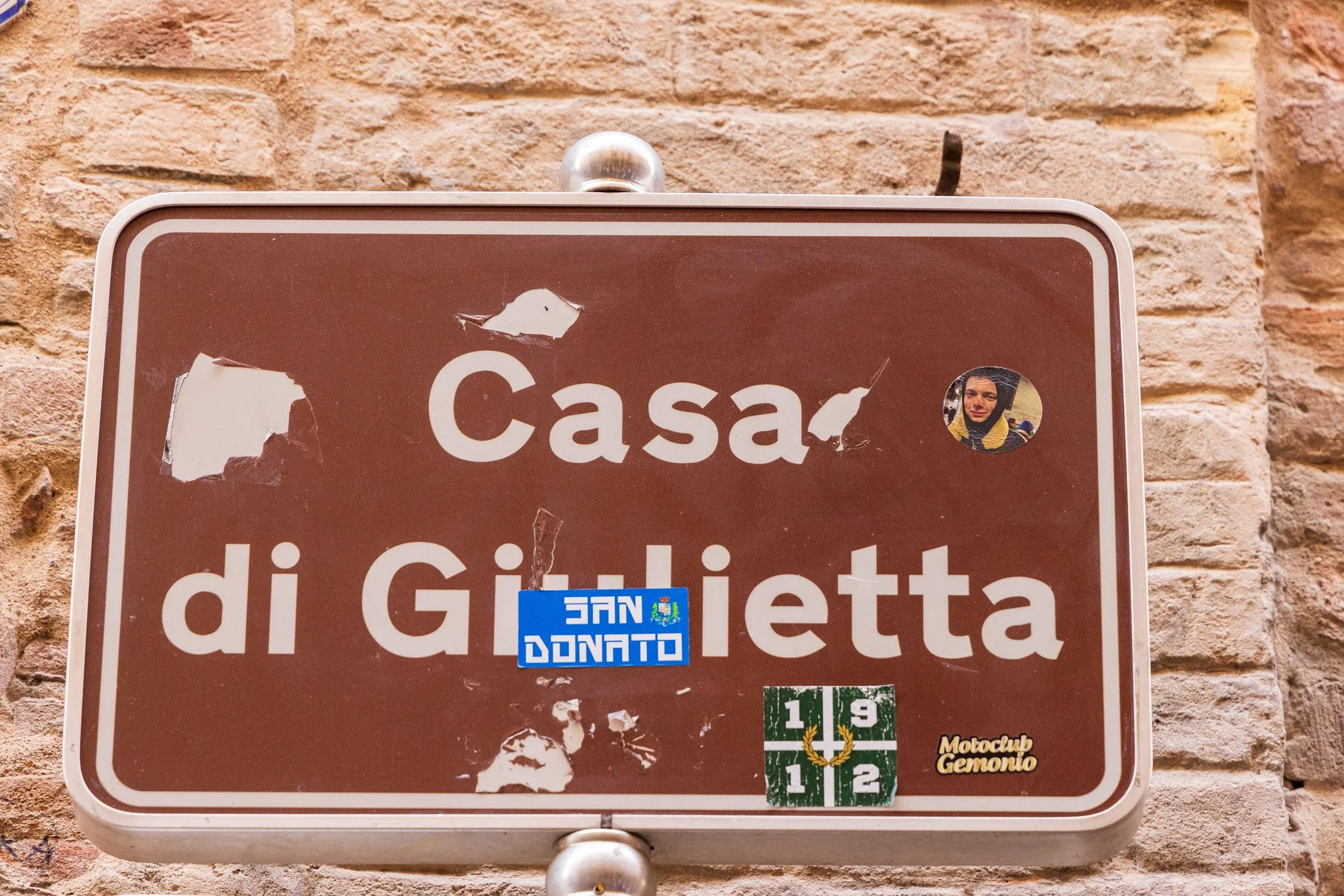
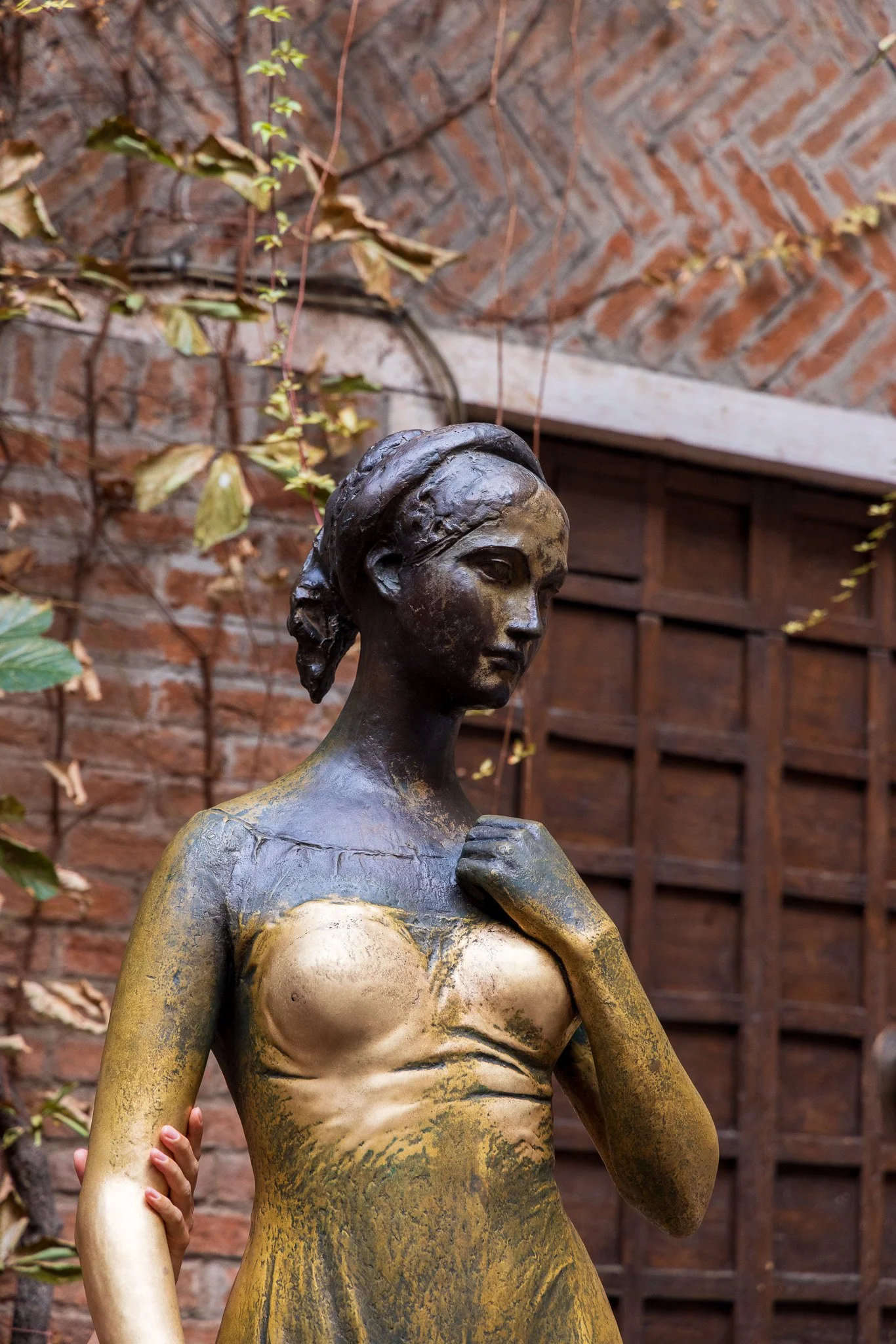
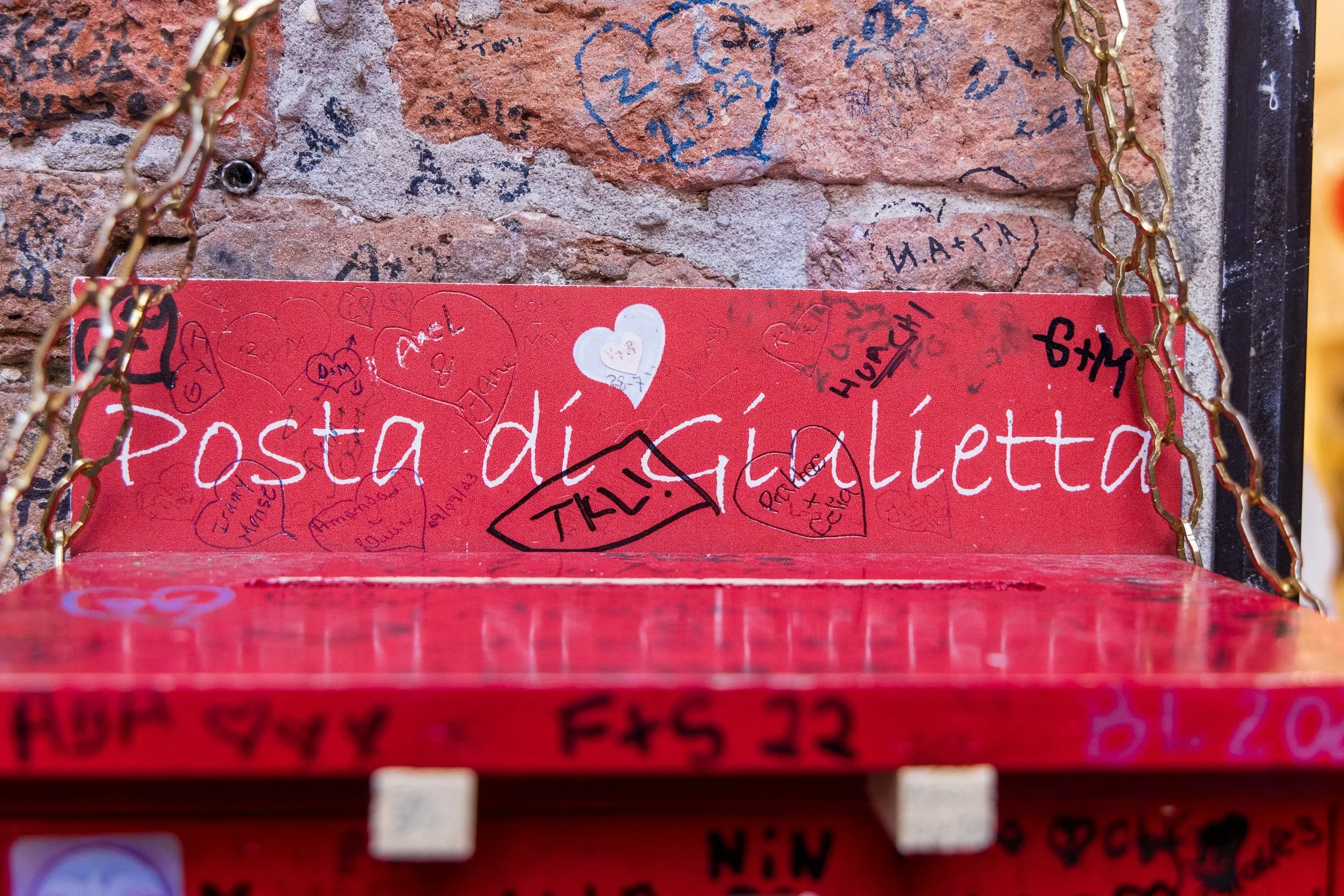
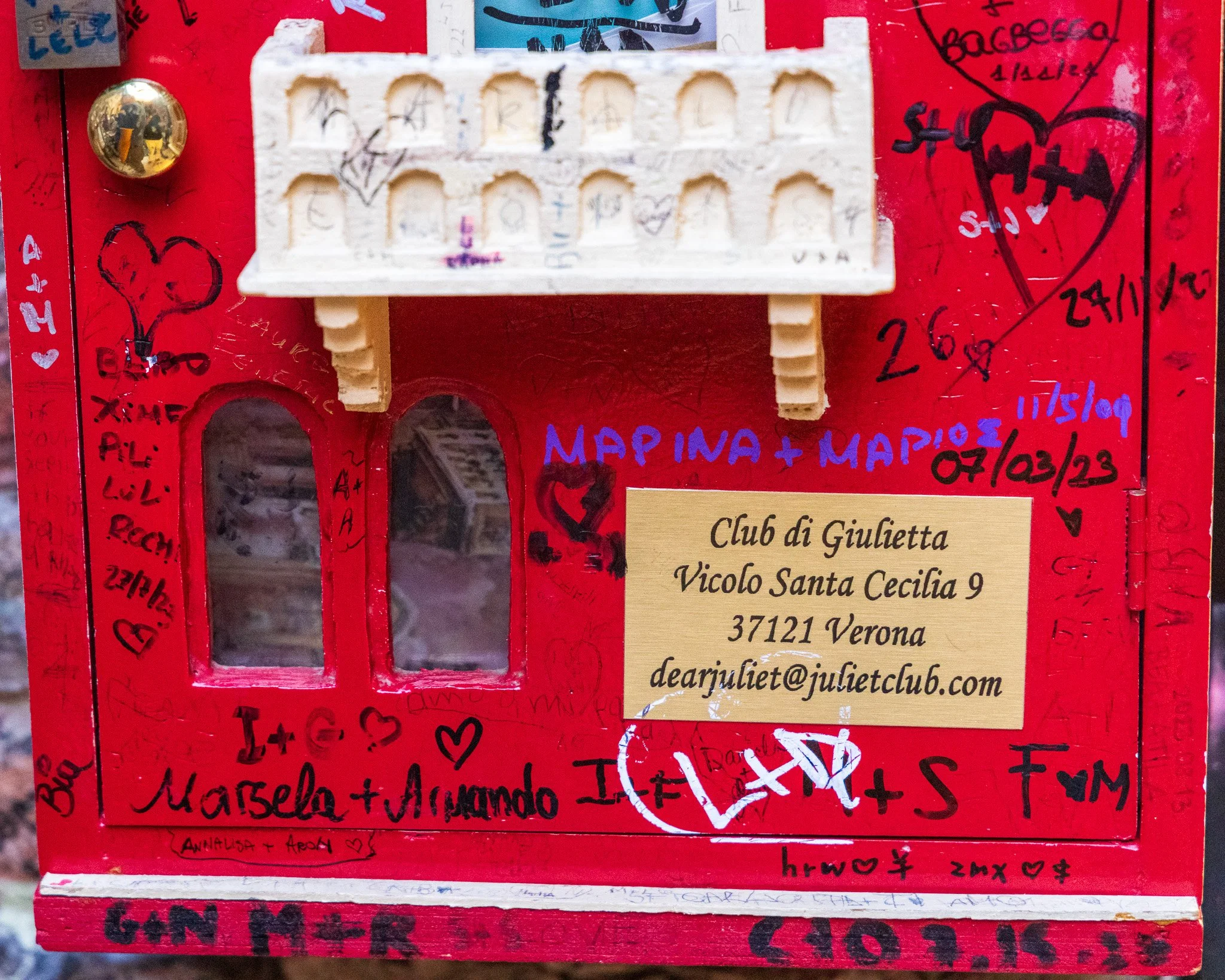
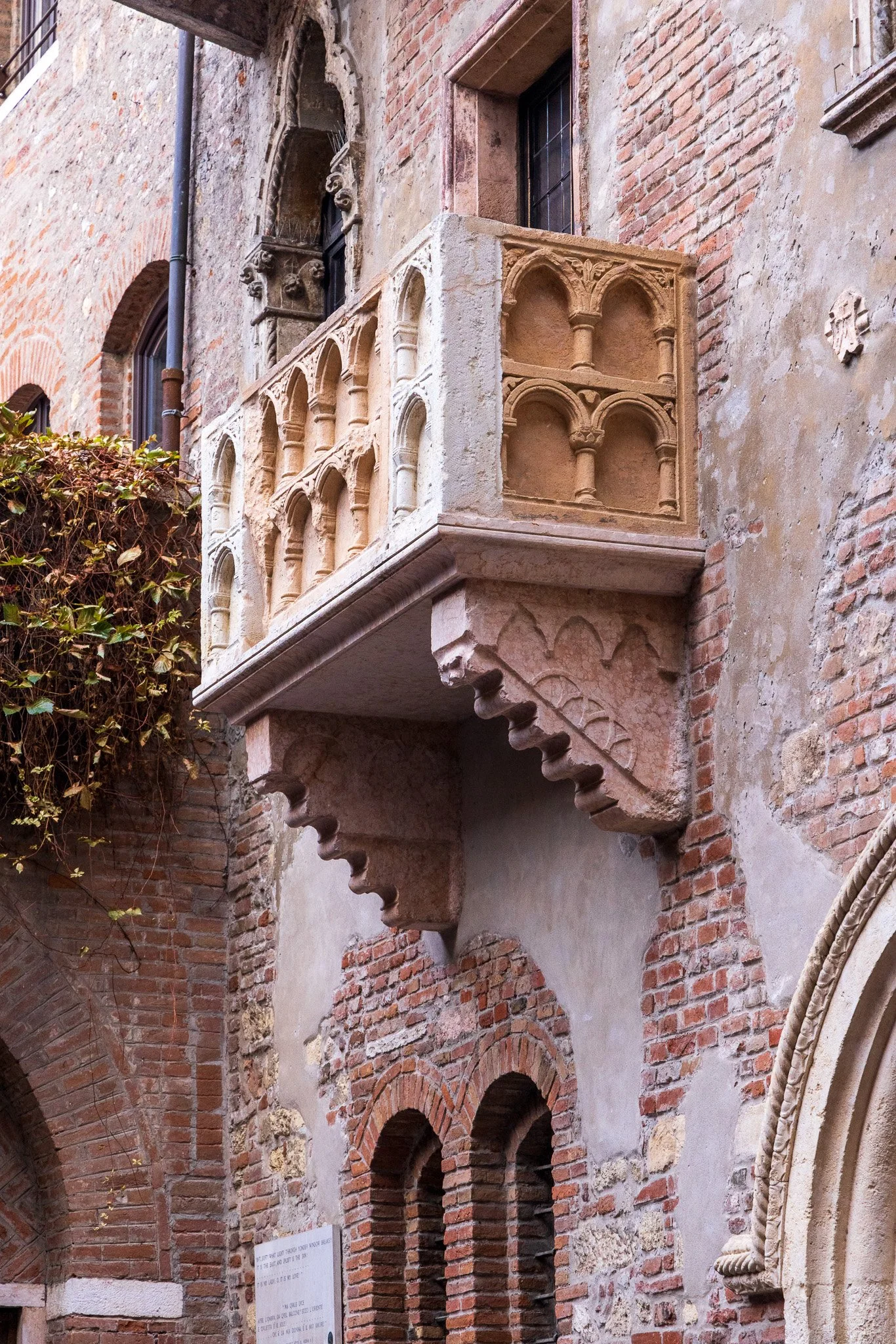
Yes, it is a tourist site built around a literary fiction. And yes, it is still worth photographing. The courtyard of Juliet's House is a small, ivy-covered enclosure with warm stone walls, a wrought-iron gate, and the famous balcony above. The bronze statue of Juliet in the center has been polished to a shine by decades of hands. The courtyard itself is beautiful in morning light, and the mix of texture, architecture, and human detail makes it genuinely compelling as a photography subject.
The challenge is the crowds. By mid-morning, the courtyard is packed. By noon, it is impossible to photograph without dozens of tourists in every frame.
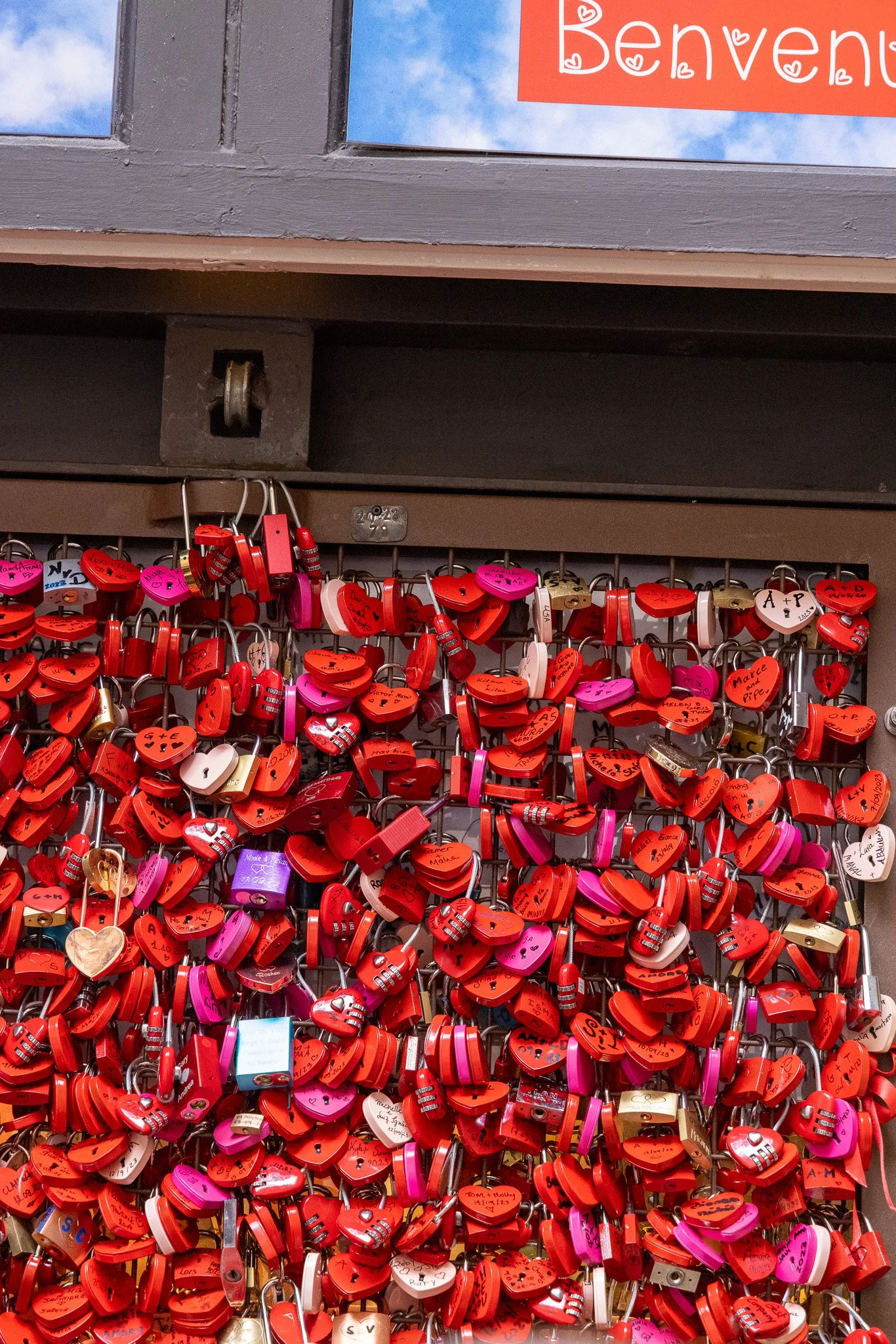
📷 Pro Tip: If you are staying at Relais Balcone di Giulietta, you have access before the courtyard opens to the public. Use it. The light from the east comes over the wall in the early morning and strikes the balcony directly, with no harsh shadows. A 35mm or 50mm prime is ideal here: close enough to capture the character of the stone and the detail of the balcony, wide enough to include the courtyard walls. Shoot toward the ivy-covered walls for frames that feel green and alive. If you do not have early access, arrive right at opening time. The lock on the gate and the wooden door are themselves beautiful details worth shooting. Use the architecture of the entrance arch to frame the interior courtyard for depth.
Best time: Early morning, at or before opening time. Access: The courtyard is free to enter; the house interior is ticketed. Via Cappello 23, a short walk from Piazza delle Erbe.
Piazza delle Erbe
Piazza delle Erbe is the oldest square in Verona and the most alive. The market stalls set up in the morning along the central axis, the surrounding medieval and Renaissance facades form a nearly complete enclosure, and the tower of Torre dei Lamberti anchors the northeast corner. The Palazzo Maffei, with its Baroque statues silhouetted against the sky at the north end, is one of the most striking architectural moments in the city.
The piazza is best for photography in two modes: early morning before the stalls open, when the space is quiet and the architecture is the subject, and during the market hours, when the color and activity of the vendors add life and story to the frame.
📷 Pro Tip: For the wide establishing shot that shows the full length of the piazza with Torre dei Lamberti in the frame, position yourself at the south entrance and use a 16–24mm lens just after sunrise. The warm light rakes across the facades from the east and creates strong shadow detail in the carved stone. For the Palazzo Maffei statues, switch to a 50–70mm lens and shoot from below looking up to silhouette the statues against the sky; this works especially well in the late afternoon when the light comes from the west. The Lion of Saint Mark column in the center of the square is a good framing element for compositions that include the surrounding architecture.
Best time: Early morning for architecture; mid-morning for market activity. Access: Free, always open. Central to the historic district.
Castelvecchio and the Scaliger Bridge
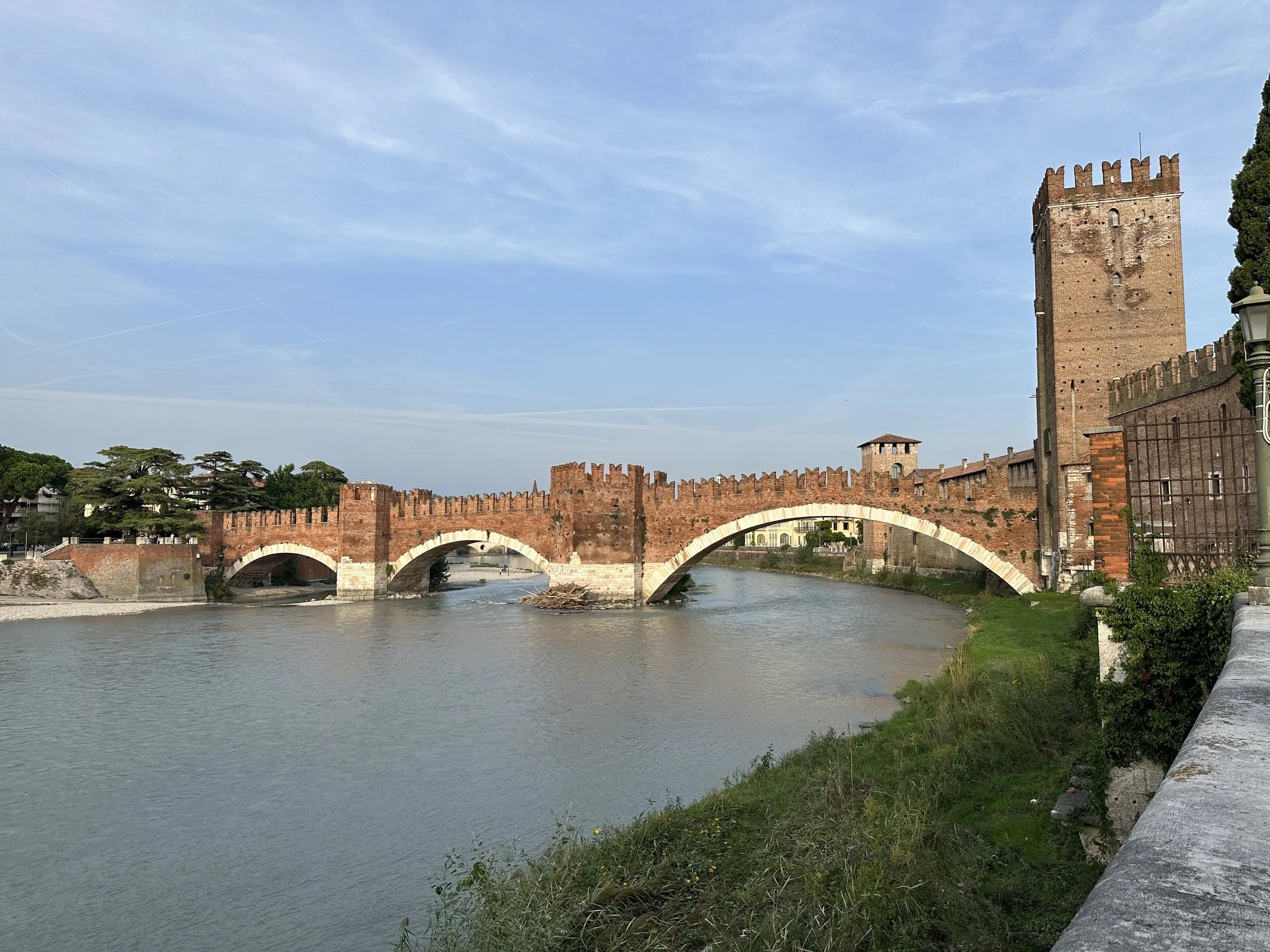
The Castelvecchio is a 14th-century fortress complex on the bank of the Adige, connected to the opposite bank by the Scaliger Bridge, a medieval fortified crossing with distinctive swallow-tail battlements and three red brick arches spanning the river. The bridge was rebuilt after World War II with meticulous historical accuracy. The combination of the castle towers, the crenelated walkway, and the river below creates one of the strongest architectural compositions in the city.
The museum inside the Castelvecchio, designed by Carlo Scarpa, is a masterpiece of adaptive reuse and worth visiting both for the art and for the architecture itself.
📷 Pro Tip: The best view of the Scaliger Bridge is from the riverbank on the south side, shooting slightly upstream with a 24–50mm lens. The three arches read clearly against the sky, and if the light is right, the reflection in the Adige below doubles the geometry. At blue hour, the warm exterior lights on the castle and bridge create a strong contrast against the darkening sky. For the bridge itself, walk out to the mid-point and turn east toward Ponte Pietra: the two bridges in the same frame, separated by the bend of the Adige, is a photograph that reads as quintessentially Verona. The Scaliger Bridge is a public walkway and free to access; the Castelvecchio Museum has an admission fee.
Best time: Golden hour and blue hour. Access: Bridge free; museum ticketed. Lungadige Cangrande, western end of the centro storico.
Giardino Giusti
The Giardino Giusti is a Renaissance garden on the east bank of the Adige, designed in the late sixteenth century and largely intact in its original form. Cypress trees rise in straight columns along the central axis, clipped hedges form geometric patterns, and classical statues punctuate the view at regular intervals. From the upper terraces, the garden drops away below you, and the city spreads out toward the horizon.
It is one of the most ordered, graphic spaces in Verona, and it photographs completely differently from everything else in the city: clean lines, deep greens, and architectural symmetry rather than the warm chaos of the streets.
📷 Pro Tip: Visit in the morning when the garden opens, and the light comes from the east, illuminating the cypress columns with front light and casting long shadows along the central walkway. A 24–50mm lens works well for the formal garden geometry; a 70–100mm lens compresses the cypress rows beautifully from the far end of the central axis. The upper terrace offers a wide city view that is different from Castel San Pietro: lower, closer, and framed by the garden itself. Early visits have the additional advantage of near-solitude, which matters for the long-exposure and contemplative compositions this space rewards.
Best time: Morning when it opens. Access: Ticketed entry. Via Giardino Giusti 2, east of the Adige River.
Special Festivals and Holidays
Verona Opera Festival (June through August) The Arena di Verona opera season is one of the great performing arts experiences in Europe. Productions at the outdoor amphitheater run on most evenings through the summer, and the sight of the ancient stone arena packed with an audience under the open sky, lit by warm stage light, is genuinely extraordinary to photograph. The crowds before and after performances offer excellent street photography. If you are visiting in summer, book tickets and plan at least one evening around a performance. The atmosphere before the show begins, with candles lit in the seating tiers, is one of the iconic visual experiences of Italy.
Vinitaly (April) Held at the Verona Expo center outside the city, Vinitaly is one of the world's largest wine trade fairs and draws an international crowd of producers, sommeliers, and enthusiasts. The city has an elevated energy during Vinitaly week, the restaurants are at their best, and the event itself offers photography of Italian wine culture at its most concentrated. Largely a trade event but open to public visitors with the right ticket.
Christmas Markets (December) Verona's Christmas market in Piazza dei Signori is one of the most beautiful in northern Italy. The medieval loggia and the statue of Dante create a backdrop that most Christmas markets can only dream of. The market typically runs through most of December and the combination of warm lights, festive decoration, and the stone architecture makes for exceptional evening photography.
Tocatì Festival (September) The Tocatì is an annual street games festival that fills the historic center with traditional games, performers, and international participants. It is one of the more genuinely local and photogenic events in the city, not designed for tourists but warmly welcoming of them, and the activity it brings to the piazzas creates street photography opportunities that do not exist at any other time of year.
Frequently Asked Questions About Visiting Verona
Is Verona worth visiting beyond Romeo and Juliet?
Yes, absolutely, the literary connection is almost beside the point once you're there. The Roman Arena alone justifies the trip, one of the best-preserved amphitheaters in the world, still hosting opera performances two thousand years after it was built.
Do you need a car in Verona?
No, the historic center is compact and entirely walkable. A car becomes useful only for day trips to Lake Garda or the Valpolicella wine region.
Is Verona expensive?
It can be, especially three-Michelin-starred Casa Perbellini, but there's real range. Trattoria Al Pompiere and other traditional spots offer honest, satisfying regional cooking at a fair price.
What are the best photo spots in Verona?
The Arena at blue hour, Ponte Pietra at golden hour, and the Castel San Pietro terrace at sunrise for the full cityscape are three that consistently deliver. The full list with Pro Tips is above.
Can you fly a drone in Verona?
No, not without prior authorization. The historic center falls under restricted airspace, and Italian ENAC regulations require permits that aren't typically granted for casual recreational flying here.
What surprised you most about Verona?
The Arena, how perfectly intact it is. You know intellectually that it's a Roman amphitheater, but standing in front of it, two thousand years old and still hosting opera on any given summer night, is genuinely incredible to witness in person.
How many days do you need in Verona?
Three days is the right number, enough to hit the major locations at the right light and still have an evening to sit in a piazza and do nothing in particular.
Is Verona worth combining with Venice or the Dolomites?
Yes, both work beautifully. Venice is ninety minutes east by train and shares centuries of shared history as part of the Venetian Republic. The Dolomites are two hours north and offer some of the most dramatic mountain landscapes in Europe.
Final Thoughts
Verona does not demand much from you. It asks only that you slow down, pay attention, and let the place work on you at its own pace. The light is extraordinary in the morning. The piazzas fill and empty with a rhythm that feels like something the city has been practicing for two thousand years. The wine is excellent. The stone is warm.
I keep coming back to Ponte Pietra at the end of the day when the sun drops behind the hills, and the water goes gold, and the bridges go amber, and for a few minutes everything in the frame is exactly where it should be. That light, in that city, on those bridges, is what I remember most. It is enough to bring anyone back.
Want to improve your photography while exploring some incredible destinations? Join me on one of my photography workshops! You can find all the details, including upcoming destinations and dates, through the links below.
Let's Stay Connected!
Explore More of Italy and the Veneto
My Photography & Travel Guide to Venice, Italy. Venice sits just ninety minutes east of Verona by train and makes a natural extension to any visit. The two cities share a history — the Venetian Republic held Verona for centuries — and together they tell the story of the Veneto more completely than either can alone. My Venice guide covers the sestieri, the vaporetto routes that matter for photography, and how to be at San Marco before the crowds arrive.
My Photography & Travel Guide to the Dolomites, Italy. Two hours north of Verona, the Dolomites are among the most dramatic landscapes I have photographed anywhere in the world, and I have been back five times. If you have extra days and a rental car, the drive north toward Cortina is one of the great scenic routes in Europe. My Dolomites guide covers the locations, the light, and how to plan the trip around the mountain weather.
My Photography & Travel Guide to Florence, Italy Florence is roughly two and a half hours south by high-speed train and pairs naturally with a Verona visit for anyone doing a northern-to-central Italy itinerary. The Uffizi, the Arno at golden hour, and the view from Piazzale Michelangelo are in a different league photographically from any other city in Tuscany.
Finally—a beginner-friendly photography guide that makes sense.
If you've ever picked up a camera and thought, "Now what?" this is the book for you.
Photography Made Simple is written for adults who are just starting out and want a clear, encouraging, real-world approach to learning photography. Whether you're using a DSLR, mirrorless, or just your smartphone, this guide walks you through the basics—without the jargon or tech overwhelm.
Inside, you'll learn:
The only camera settings you really need to know to get started
How to shoot sharper, more intentional photos using light and composition
Simple tips for portraits, landscapes, travel, and everyday life
What gear you do (and don’t) need
How to create better photos without upgrading your camera
You’ll also get practical exercises, cheat sheets, and tips for organizing and editing your images—plus the confidence to shoot off Auto Mode for good.
This is not a textbook. It’s a friendly guide to seeing the world with fresh eyes—and finally capturing what you see the way you imagine it.
📸 Format: PDF download
Pages: 100+
Perfect for: Beginners, hobbyists, and anyone ready to take better photos without the stress