International Travel First Aid & Medical Kit: Essential Packing Checklist
I have traveled to more than 75 countries over 25 years. I have been sick in places where the nearest hospital was hours away, dealt with infected cuts in the field, and sat on charter planes in sub-Saharan Africa, wondering if I packed what I actually needed. I once broke my finger in Italy on a Sunday and had to buddy tape it with gaffer's tape because every pharmacy and hospital in the area was closed. I am a photographer, not a physician. So I did the smart thing. I married one.
This medical kit was prepared by my wife and partner, Dr. Zena Hammoud. Zena is an Infectious Disease physician and Professor of Internal Medicine with 25 years of clinical experience and a deep background in Travel Medicine. She spent 25 years practicing medicine in Lebanon, where she served as Chief Medical Officer of a hospital she helped run, treating thousands of patients from across the Middle East, Africa, Europe, and beyond. She has also traveled to more than 50 countries herself. She knows what people get sick from on the road, what they forget to pack, and what actually works in the field. This list comes directly from her clinical expertise and our years of traveling together.
This is not a panic kit. It is not a pharmacy on wheels. It is a practical, field-tested collection of medications and supplies that handles the most common travel health problems before they derail your trip. Most of what is on this list, you will never use. But the one time you need it, you will be very glad it is there. And if you ever break a finger on a Sunday in Italy, you will wish you had packed the gaffer's tape.
One important note before you read on. This list is educational and based on Dr. Hammoud's clinical experience and our personal travel practice. It is not a substitute for a consultation with your own physician or a certified travel medicine clinic. Some items on this list require a prescription. You should discuss your specific destinations, health history, and planned activities with your doctor before your trip. The CDC recommends visiting a travel medicine clinic at least four to six weeks before international travel, and we echo that completely.
With that said, here is what we carry and why.
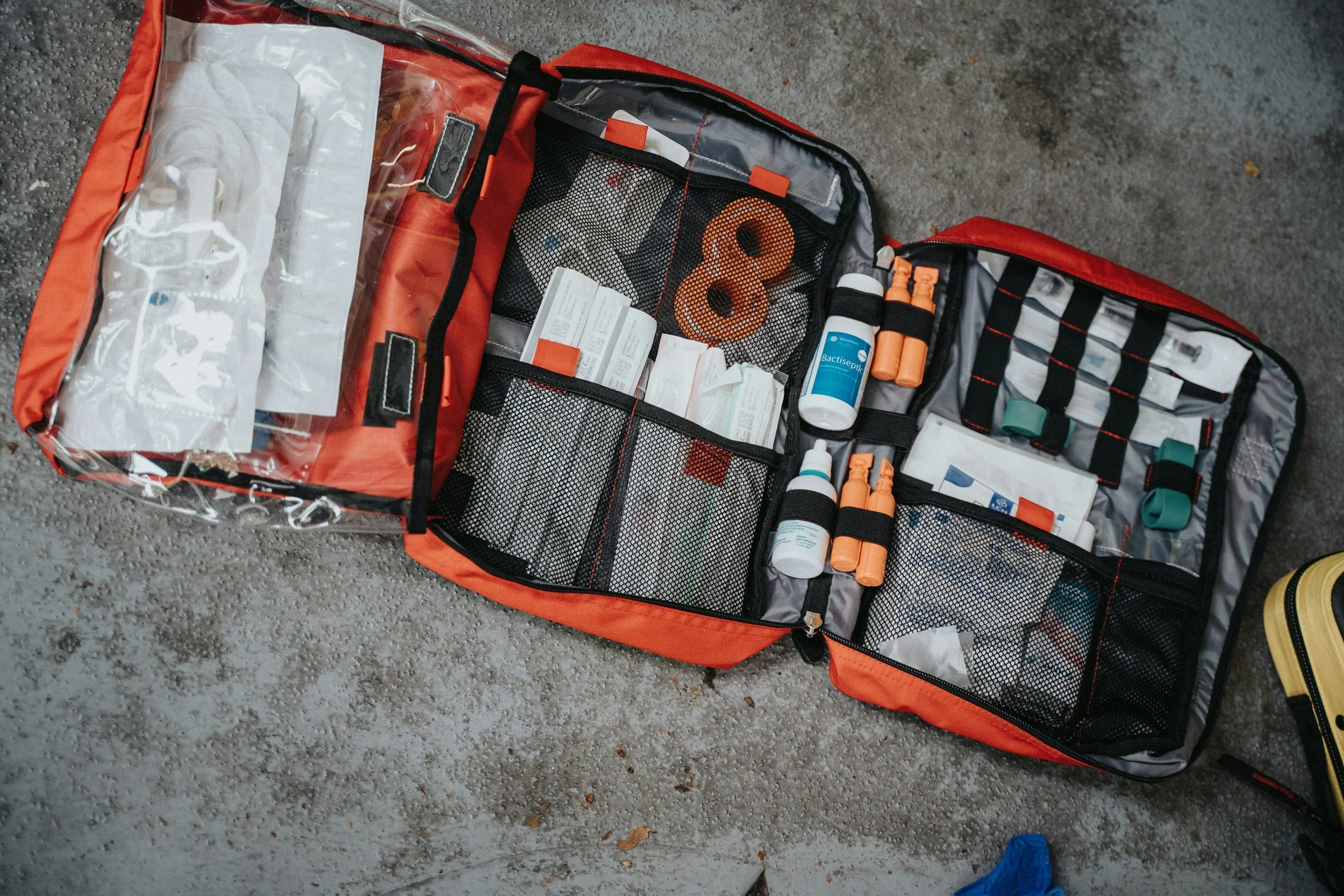
Before You Pack Anything: See a Travel Medicine Physician
This is the step most travelers skip, and it is the most important one on this list.
A travel medicine physician reviews your specific itinerary, not just your destination country. They look at whether you are going to urban hotels or remote bush camps. They check your vaccination history and update what needs updating. They prescribe medications you cannot get over the counter, including antibiotics for traveler's diarrhea, antimalarial prophylaxis, and altitude sickness medications if you are heading to an elevation. They also flag drug interactions with anything you are already taking.
The CDC Yellow Book 2026 edition recommends personalizing your travel health kit based on the availability of local medical care and evacuation routes, your itinerary and planned activities, the duration of your trip, and the medical expertise you have in your group. A travel medicine physician helps you make those decisions before you board the plane, not after something goes wrong.
Find a certified travel clinic through the International Society of Travel Medicine at istm.org or through the CDC's clinic locator at cdc.gov/travel. Book the appointment before you pack a single item.
1. Prescription Medications
These require a visit to your physician before travel. Do not skip this section.
Daily Medications
Bring enough of every daily medication to cover your entire trip plus several extra days for delays, missed connections, or extended stays. Pack all medications in your carry-on luggage, never your checked bag. If your bag is lost, your medications go with it. Keep everything in original labeled containers and carry written copies of all prescriptions, including generic drug names.
Antiviral Medication
If your physician prescribes an antiviral, pack it. This is destination and season specific. Travelers heading to destinations with active influenza, respiratory illness, or other viral outbreaks during their travel window should discuss antiviral prophylaxis or treatment options with their physician before departure.
Antibiotic for Traveler's Diarrhea: Azithromycin or Ciprofloxacin
Traveler's diarrhea is the most common illness affecting international travelers, and it can go from inconvenient to incapacitating quickly. The CDC recommends carrying an antibiotic prescribed by your physician for self-treatment of moderate to severe diarrhea. Azithromycin is now preferred in many regions because of increasing resistance to Ciprofloxacin in South and Southeast Asia. Your travel medicine physician will prescribe based on your specific destinations. Do not use it for mild cases; Imodium handles those. Reserve the antibiotic for when you have a fever, bloody stool, or symptoms that are not improving after 24 hours.
Antimalarial Medication
Malaria prophylaxis is destination-specific. The right drug depends on where you are going and what drug-resistant strains are present in that region. The main options are Atovaquone/Proguanil (Malarone), Doxycycline, and Mefloquine. Your travel medicine physician will prescribe the right one for your itinerary. Do not guess, and do not skip this for Africa, South Asia, or Southeast Asia without a proper discussion first.
Motion Sickness: Scopolamine Patch or Meclizine
Essential for boat travel, small aircraft, and rough road game drives. The Scopolamine patch goes behind your ear the night before and lasts up to three days. Meclizine is the oral alternative. Both require a prescription or physician guidance on dosing.
Altitude Sickness: Acetazolamide (Diamox)
Only relevant if your itinerary includes destinations above 8,000 feet, including parts of Peru, Bolivia, Nepal, Bhutan, or the Ethiopian Highlands. Acetazolamide can prevent Acute Mountain Sickness if started before ascent. It has contraindications your physician will screen for. Do not self-prescribe this one.
EpiPen (Epinephrine Auto-Injector)
If you have any serious allergies, always carry a fresh EpiPen. This is non-negotiable. If you have ever had anaphylaxis or a severe allergic reaction to food, insects, or medications, carry two. Keep one in your carry-on at all times. It is worthless in your checked bag when you need it at the dinner table.
Ondansetron (Zofran) for Anti-Nausea
Worth asking your physician about if you are prone to severe nausea on long trips, in rough sea conditions, or in remote destinations where vomiting from illness could cause rapid dehydration. It dissolves under the tongue and works fast.
2. Over-the-Counter Medications
Anti-Diarrheal: Loperamide (Imodium)
Use this for mild to moderate diarrhea when you need to function, travel, or get on a plane. Do not use it if you have a fever or bloody stool. In those cases, you want the bacteria out, not stopped. Start with Imodium; escalate to your prescription antibiotic if symptoms persist beyond 24 hours or worsen significantly.
Oral Rehydration Salts (ORS)
This is one of the most underrated items in any travel medical kit. Diarrhea, heat exhaustion, and a bad stomach bug all cause rapid dehydration. Sports drinks are not adequate substitutes; ORS packets contain the precise sodium and glucose ratio your body needs to rehydrate effectively. Pack at least six sachets. They weigh almost nothing and take up zero space.
Antihistamine: Loratadine (non-drowsy) and Diphenhydramine (Benadryl)
Loratadine for daytime allergy management and mild allergic reactions. Diphenhydramine for nighttime use, stronger reactions, and as a mild sleep aid on long-haul flights. Between these two, you cover the full range of antihistamine needs on any trip.
Pain Relief and Fever: Ibuprofen and Acetaminophen
Both. Not one. Ibuprofen handles inflammation, muscle pain, and fever with anti-inflammatory action. Acetaminophen is gentler on the stomach and the right choice when Ibuprofen is contraindicated. I carry both and alternate them for fever management when needed. Johns Hopkins Medicine and the CDC both include these as standard travel kit essentials.
Antacid: Pepto-Bismol Tablets and Omeprazole or Famotidine
Pepto-Bismol (Bismuth Subsalicylate) does double duty as an antacid and mild anti-diarrheal. If you are prone to reflux or gastritis, add an acid blocker such as omeprazole or famotidine. Changing cuisine, irregular eating schedules, and jet lag all trigger GI symptoms that antacids address quickly.
Decongestant: Pseudoephedrine or Oxymetazoline Nasal Spray
Flying with sinus congestion without a decongestant causes real pain from pressure changes during descent. Pack both an oral decongestant and a nasal spray. Use the nasal spray 30 minutes before descent on every flight when you are congested. Do not skip this one.
Antifungal Cream: Clotrimazole or Miconazole
Humidity, sweating, wet shoes, and days in the field create ideal conditions for fungal skin infections. A small tube weighs nothing and handles athlete's foot, jock itch, and superficial skin fungal infections quickly. Treat early; fungal infections spread fast in humid and tropical climates.
Hydrocortisone Cream 1%
For rashes, insect bite reactions, and contact dermatitis. Apply to affected areas twice daily. If you spend time in the bush, you will use this.
Insect Repellent: DEET 30 to 50 percent or Picaridin 20 percent
For adults, insect repellent should contain 30 to 50 percent DEET, or up to 20 percent Picaridin. Do not combine DEET-based repellent with sunscreen; apply sunscreen first, then repellent separately. Picaridin is odorless, does not damage gear or camera equipment, and is equally effective. I use Picaridin for most destinations and higher-strength DEET only in high-risk malaria zones. Apply to all exposed skin before any outdoor activity at dawn, dusk, and evening.
Aloe Vera Gel
Sunburn, thermal burns, and generally irritated skin. Pack a small tube. After a full day shooting in the desert or on the savanna, you will reach for it.
Cold Remedies and Throat Lozenges
Long-haul flights, recycled cabin air, and constant climate changes create ideal conditions for respiratory symptoms. Pack a decongestant, a cough suppressant, and a supply of throat lozenges. You will not always be near a pharmacy when your throat starts to scratch on day three of a remote trip.
Melatonin: 0.5mg to 1mg
Low-dose melatonin taken 30 minutes before target sleep time on eastbound long-haul flights reduces jet lag recovery time significantly. Avoid higher doses; they cause grogginess without additional benefit. This is not a sedative; at low doses it signals your circadian rhythm to shift.
Sunscreen: SPF 30 or Higher
The equatorial sun is intense even when temperatures feel moderate. Apply sunscreen every morning before going out, reapply every two hours when outdoors, and do not rely on cloudy skies as protection. UV exposure at high altitude and near the equator is significantly stronger than most travelers expect.
Lip Balm with SPF
Wind, sun, and dry air at altitude crack and burn lips fast. A lip balm with SPF 30 or higher protects against both. Pack two so you always have one accessible.
Electrolyte Tablets
Separate from ORS sachets, electrolyte tablets dissolve quickly in any water bottle and are useful for daily prevention of dehydration during active days in the heat. ORS is for treatment. Electrolyte tablets are for maintenance. Both have a place in the kit.
Water Purification Tablets: Chlorine Dioxide (Aquatabs)
For destinations where water safety is uncertain and bottled water is not available. Chlorine dioxide tablets handle bacteria, viruses, and Giardia with no significant taste. Iodine tablets are a usable backup. Follow the dosing and contact time directions on the packaging.

3. First Aid and Wound Care
Adhesive Bandages in Multiple Sizes
Include standard strips, knuckle bandages, and large wound dressings. Pack waterproof versions if you are near water or in a humid climate.
Sterile Gauze Pads: 2x2 and 4x4 inch
For larger wounds that bandages will not cover, and for cleaning wounds before closure.
Wound Closure Strips (Steri-Strips)
Wound closure strips require some technique. Clean the wound thoroughly before attempting to close it. For lacerations that need closure when you cannot reach a physician quickly, these are the field tool. Learn how to use them before you need them.
QuikClot Hemostatic Gauze
QuikClot Gauze contains clotting agents trusted by the US military that rapidly control severe bleeding where direct pressure alone is insufficient. If you are traveling to remote wilderness areas, doing adventure activities, or on a multi-day safari far from medical care, this belongs in your kit. A deep wound three hours from the nearest hospital is a completely different situation from a cut in a city hotel room.
Elastic Bandage (ACE Wrap): 2-inch and 4-inch
For sprains, to secure larger dressings, and for improvised compression. A twisted ankle on a game drive or hiking trail is not uncommon. Wrap it, elevate it, take Ibuprofen, and reassess.
Medical Adhesive Tape
To secure dressings when bandage adhesive is insufficient.
Antiseptic Wipes
Benzalkonium chloride wipes or alcohol swabs for cleaning wounds before dressing. Do not use hydrogen peroxide on open wounds; it damages tissue. Saline irrigation is better for wound cleaning when available.
Antibiotic Ointment: Neosporin or Bacitracin
Apply to any open wound before dressing. It keeps dressings from sticking, prevents crusting, and provides topical antibacterial coverage. Essential in dusty and tropical environments where wound infection risk is higher.
Blister Care: Moleskin and GlacierGel Hydrogel Pads
Pre-cut moleskin prevents blisters when applied at the first sign of friction. GlacierGel hydrogel pads treat developed blisters and burns with cooling, cushioned protection. If you are walking cobblestones in European cities or hiking in the field, these are not optional.
Splinter and Tick Forceps
Fine-tipped tweezers for splinter removal and tick extraction. For tick removal, grip as close to the skin as possible and pull straight out with steady pressure. Do not twist, crush, or apply heat. After removal, clean the site and monitor for rash or fever in the following two to three weeks. Lyme disease and tick-borne illnesses are not limited to North America.
Small Bandage Scissors
For cutting tape and dressings. TSA permits scissors with blades under four inches from the pivot point in carry-on luggage.
Digital Thermometer
A digital thermometer delivers objective data that changes your treatment decisions in the field. Fever above 38.5°C (101.3°F) in a malaria-endemic region is a medical emergency until proven otherwise. Knowing your temperature accurately is the difference between watching and waiting and getting yourself to a hospital. Pack one. They weigh almost nothing.
Pulse Oximeter
A pulse oximeter is mandatory for any trip involving high altitude. Blood oxygen levels can drop dangerously without obvious symptoms in the first hours of exposure. Normal saturation is 95 to 100 percent. Below 90 percent at altitude is a signal to descend. Modern clip-on oximeters are small, inexpensive, and battery-powered. At sea-level destinations, a pulse oximeter is also useful for monitoring the severity of respiratory illness.
Latex-Free Medical Gloves (x2 pairs minimum)
Use gloves any time you treat a wound, your own or someone else's.
Safety Pins (x6)
For holding slings together, securing improvised dressings, and field repairs. Underestimated and weightless.
Gaffer's Tape
This one comes from personal experience. I broke my finger in Italy on a Sunday. Every pharmacy was closed. Every hospital was closed. Gaffer's tape and a straight pen from my camera bag were the only tools available. Buddy taping a broken finger with gaffer's tape is not ideal. It works. Gaffer's tape is also useful for securing improvised splints, reinforcing dressings that will not stay put, and a dozen other field applications that medical tape is too narrow to handle. Pack a small roll. It weighs almost nothing and you will find uses for it you never expected.
4. Hygiene and Prevention
Hand Sanitizer: 60 percent alcohol minimum
Use it before every meal, after touching shared surfaces in transit, and after any animal contact. Buy a large bottle for your bag and a small refillable travel bottle for your pocket.
Wet Wipes and Tissues
Wet wipes are one of the most used items in any travel kit. Game drives, long bush walks, and remote campsites rarely offer running water when you need it. Pack a travel-sized pack of wet wipes for your daypack and a larger supply in your main bag. Tissues are equally useful and take up almost no space.
Travel Soap
A small bar or bottle of travel soap handles situations where hotel soap is not available, you are camping, or you are at a bush camp with limited facilities. Biodegradable options are worth choosing for remote and natural environments.
Menstrual Supplies
Pack an adequate supply for your entire trip plus extra. Availability and brand familiarity vary enormously by destination, and you do not want to spend time searching in a remote location. Menstrual cups are a compact and reliable option for extended travel.
Personal Toiletry Kit
Organize your personal care items in a dedicated waterproof bag. Include toothbrush, toothpaste, deodorant, razor, and any other personal care items you use daily. Keeping it separate from your medical kit means you can pull it out at security or in a hotel room without disturbing your medical supplies.
Mosquito Net
If you are staying in very basic accommodations, a budget guesthouse, a bush camp without screened windows, or any accommodation where you are uncertain about mosquito protection, pack a lightweight travel mosquito net. A single infected mosquito bite in a malaria zone can end a trip or worse. Most higher-end safari lodges and hotels provide nets, but do not assume.
Medical Alert Card
A legible, laminated card listing your medical conditions, prescription medications, allergies, and implanted devices. Include your primary physician's contact information and your emergency contacts. Keep one in your wallet and one in your medical kit. If you are incapacitated and cannot communicate, this card does the talking for you.
Copies of All Prescriptions
Pack copies of all prescriptions including the generic drug names in your carry-on luggage. If medications are lost, stolen, or held at customs, a written prescription allows a local physician or pharmacist to replace them.
5. Eye, Ear, and Dental
Preservative-Free Lubricating Eye Drops
Long flights, dry cabin air, dust, and wind cause significant eye irritation. Preservative-free artificial tears are safe to use as often as needed. Contact lens wearers should also pack a backup pair of glasses and extra solution.
Swimmer's Ear Prevention Drops: Acetic Acid or Isopropyl Alcohol Solution
If you swim in lakes, rivers, or hotel pools in tropical climates, a few drops after swimming prevents external ear canal infections. Swimmer's ear in the tropics can become serious quickly.
Temporary Dental Repair Kit: Dentemp
A lost filling or crown on day two of a 10-day remote trip is painful and disruptive. Dentemp is available at any pharmacy and takes 30 seconds to apply. It is not permanent, but it gets you through the trip until you can see a dentist at home.

6. The Complete Checklist
Print this. Laminate it. Keep it with your medical kit. Check expiration dates on every item at least 30 days before departure and restock anything used on your last trip.
Prescriptions (require a physician visit before travel)
Daily medications in original containers, enough for trip plus extra days
Antiviral medication if prescribed
Antibiotic for Traveler's Diarrhea (Azithromycin or Ciprofloxacin as directed)
Antimalarial prophylaxis (destination-specific, as prescribed)
Motion sickness medication (Scopolamine patch or Meclizine)
Altitude sickness medication (Acetazolamide, if relevant to itinerary)
EpiPen x2 (if serious allergies; non-negotiable)
Ondansetron anti-nausea (if prescribed)
All personal prescription medications in original labeled containers
Copies of all prescriptions with generic names in carry-on
Over-the-Counter Medications
Loperamide (Imodium) for mild to moderate diarrhea
Oral Rehydration Salts (x6 sachets minimum)
Loratadine non-drowsy antihistamine
Diphenhydramine (Benadryl) for nighttime and stronger reactions
Ibuprofen (pain, fever, inflammation)
Acetaminophen (pain, fever, gentler on stomach)
Pepto-Bismol tablets
Omeprazole or Famotidine (if prone to reflux)
Pseudoephedrine or oxymetazoline nasal spray
Cold remedies and throat lozenges
Antifungal cream (Clotrimazole or Miconazole)
Hydrocortisone cream 1%
Aloe vera gel
Sunscreen SPF 30 or higher
Lip balm with SPF
Insect repellent (DEET 30 to 50 percent, or Picaridin 20 percent)
Electrolyte tablets
Melatonin 0.5mg to 1mg
Water purification tablets (Aquatabs primary, iodine backup)
First Aid and Wound Care
Adhesive bandages, assorted sizes, waterproof versions included
Sterile gauze pads 2x2 and 4x4 inch
Wound closure strips (Steri-Strips)
QuikClot hemostatic gauze (remote and wilderness travel)
Elastic ACE bandage wrap 2-inch and 4-inch
Medical adhesive tape
Antiseptic wipes (benzalkonium chloride or alcohol)
Antibiotic ointment (Neosporin or Bacitracin)
Moleskin blister prevention pads
GlacierGel hydrogel blister and burn pads
Splinter and tick forceps
Small bandage scissors
Digital thermometer
Pulse oximeter (mandatory for high-altitude destinations)
Latex-free medical gloves x2 pairs
Gaffer's tape (buddy taping, improvised splinting, field repairs; ask me how I know)
Hygiene and Prevention
Hand sanitizer with a minimum of 60 percent alcohol
Wet wipes and tissues
Travel soap
Menstrual supplies if applicable
Personal toiletry kit
Mosquito net (if accommodation quality is uncertain)
Medical alert card (laminated, in wallet and in kit)
Water purification tablets
Eye, Ear, and Dental
Preservative-free lubricating eye drops
Backup eyeglasses or contact lenses with solution
Swimmer's ear prevention drops
Temporary dental repair kit (Dentemp)
Documentation
All prescription copies in carry-on
Travel insurance documentation with emergency contact numbers
Medical evacuation coverage confirmed in policy
Primary physician contact information
Emergency contacts list
Embassy contact information for each country visited
Yellow fever certificate (if required for your route)
Full vaccination record
Vaccinations (confirm with travel medicine clinic 4 to 8 weeks before departure)
Yellow fever (certificate required for some routes)
Typhoid
Hepatitis A and B
Tetanus, diphtheria, and pertussis (Tdap) booster
Measles, mumps, and rubella (MMR)
Rabies (if extended remote travel or animal contact likely)
Optional but Smart Additions
Reusable insulated water bottle (LARQ recommended)
Extra hydration powder packets (Nuun or LMNT)
Snake bite kit (deep wilderness destinations)
7. Vaccinations and Health Records
Consult a travel medicine clinic four to eight weeks before departure. This is not optional for international travel, and it is especially important for Africa, South and Southeast Asia, and Latin America. Some vaccines require multiple doses over several weeks, which means you cannot leave this until the week before you fly.
Vaccines commonly recommended for East Africa and many safari destinations include:
Yellow Fever — proof of vaccination may be required at the border depending on your travel route and countries visited. Carry your yellow fever certificate in your travel documents at all times. Some countries will turn you away without it.
Typhoid — recommended for travel to areas with limited access to safe food and water. Available as an injection or oral capsules.
Hepatitis A and B — standard for most international travel. Hepatitis A spreads through contaminated food and water. Hepatitis B through blood and body fluid contact.
Tetanus, Diphtheria, and Pertussis (Tdap) Booster — recommended if you have not had a booster in the past ten years.
Measles, Mumps, and Rubella (MMR) — confirm you are up to date, particularly if you were born before 1957 or have not had two documented doses.
Rabies — recommended if you are spending extended time in remote areas, working with animals, or traveling to regions where prompt access to rabies post-exposure treatment is uncertain. Safari environments, where wildlife contact is possible, make this worth discussing with your travel physician.
Carry your full vaccination record and your yellow fever certificate in your travel documents folder. Keep a digital copy in your phone photos as a backup.
8. Travel Insurance and Important Documents
Medical evacuation coverage is not optional for safari and remote travel. If something serious happens in the Serengeti, the Okavango, or rural Namibia, the cost of a medical evacuation flight to a proper facility can reach tens of thousands of dollars. Standard travel insurance often does not cover this. Make sure yours does.
Comprehensive Travel Insurance with Medical Evacuation — verify that your policy explicitly covers emergency medical evacuation, not just trip cancellation. Companies such as Global Rescue, Medjet, and World Nomads offer policies designed for remote and adventure travel. Read the fine print before you go, not after.
Emergency Contact List — a printed list of emergency contacts including family members, your primary physician, your travel medicine physician, and your travel insurance emergency line. Keep one copy in your travel documents and one in your medical kit.
Embassy Contact Information — know the address and emergency phone number of your home country's embassy or consulate in every country you are visiting. In a medical or legal emergency, your embassy is your first call after your insurer.
9. Optional but Smart Additions
These items are not essential for every trip, but they are worth considering depending on your destination and activities.
Reusable Insulated Water Bottle
Staying hydrated in hot climates is a full-time job. A 32-ounce insulated bottle keeps water cold for hours on a game drive, a hike, or a full day of outdoor shooting. The LARQ self-cleaning bottle is my current pick because it purifies water using UV-C light, which adds an extra layer of protection in destinations where water quality is uncertain.
Extra Hydration Supplies
Beyond ORS and electrolyte tablets, consider packing a small supply of hydration powder packets for days of heavy physical activity or heat exposure. Nuun and LMNT are both travel-friendly options that pack flat and dissolve in any water bottle.
Snake Bite Kit
If you are traveling deep into wilderness areas, especially in sub-Saharan Africa, parts of Asia, or rural Latin America, a snake bite kit is worth including. The most important thing to know about snake bites in the field: immobilize the limb, keep it below heart level, and get to a medical facility as fast as possible. A pressure immobilization bandage slows venom spread for certain species. Do not cut, suck, or apply a tourniquet. Get moving toward medical care immediately.
Final Thoughts
The travelers who never think about their medical kit are the same ones standing in a foreign pharmacy at 10 pm, trying to describe their symptoms in a language they do not speak, hoping the pharmacist understands what they need. Dr. Zena Hammoud has seen what happens when travelers arrive unprepared. After 25 years of treating patients in Lebanon, many of them international travelers who got sick far from home, she built this list to make sure you are not one of them.
Put your kit together at least two weeks before departure. Book the travel medicine clinic appointment earlier, ideally four to six weeks out, so you have time to complete any required vaccinations. Check every expiration date. Restock anything used on your last trip. And if you are heading somewhere genuinely remote, such as a safari in Botswana, a trekking expedition in Nepal, or a photography trip deep in the Namibian desert, take the extended version of this kit seriously and pair it with a Garmin inReach Mini 2. When you are three charter flights from the nearest hospital, your medical kit and your satellite communicator are your safety net.
Zena and I have traveled together across five continents with this exact kit. It has handled everything from severe dehydration in the Moroccan desert to an infected wound in rural Ethiopia. It has never let us down.
The world rewards the prepared traveler. Pack smart, get vaccinated, and go.
If you found this guide useful, subscribe to the Chasing Hippoz newsletter for field-tested gear lists, destination guides, and photography tips from wherever we are shooting next. Follow along on Instagram at @chasinghippoz and share this post with any traveler in your life who is still winging the medical side of their packing.

Are you carrying too much camera equipment, but still coming home disappointed with your travel photographs?
You are not alone. Many photographers fall into the packing trap. They bring too much, plan too little, and spend their trip scrambling to capture photographs instead of enjoying the experience.
Capture the World offers a better approach.
In this practical guide, travel photographer Vito L. Tanzi shares the five step system he uses to plan photography trips, pack with purpose, work with the best light, and return home with stronger images.
Inside, you will learn how to:
• Travel lighter without sacrificing image quality
• Choose destinations that match your photography goals
• Visit at the right time for weather, light, wildlife, festivals, or seasonal conditions
• Build a photography itinerary around sunrise, sunset, blue hour, and changing weather
• Select the equipment you will actually use
• Find promising locations before you arrive
• Avoid the stress and exhaustion that can ruin a photography trip
• Stay flexible when weather, crowds, or travel plans change
This guide includes practical planning advice, useful photography tools, real travel examples, and a complete system you can use again and again.
Whether you are preparing for your first international photography trip or planning a weekend closer to home, Capture the World will help you travel with greater purpose, photograph with more intention, and spend less time worrying about what is inside your camera bag.
Because the best photography trip is not the one where you carry everything.
It is the one where you are ready when the right moment appears.
📸 Format: PDF download
Instant Download