Maldives Travel & Photography Guide: Best Photo Spots, Things to Do & Hidden Gems
For most people, the Maldives is a "Bucket List" destination. If you want to relax on incredible beaches that look like one of those desktop screenshots that you constantly look at on your computer, then you have found the place to visit. The Maldives is a place meant for slowing down and just enjoying life. So your days on the islands will be spent on the beach, swimming, and relaxing!! It does not get much better than that, right?
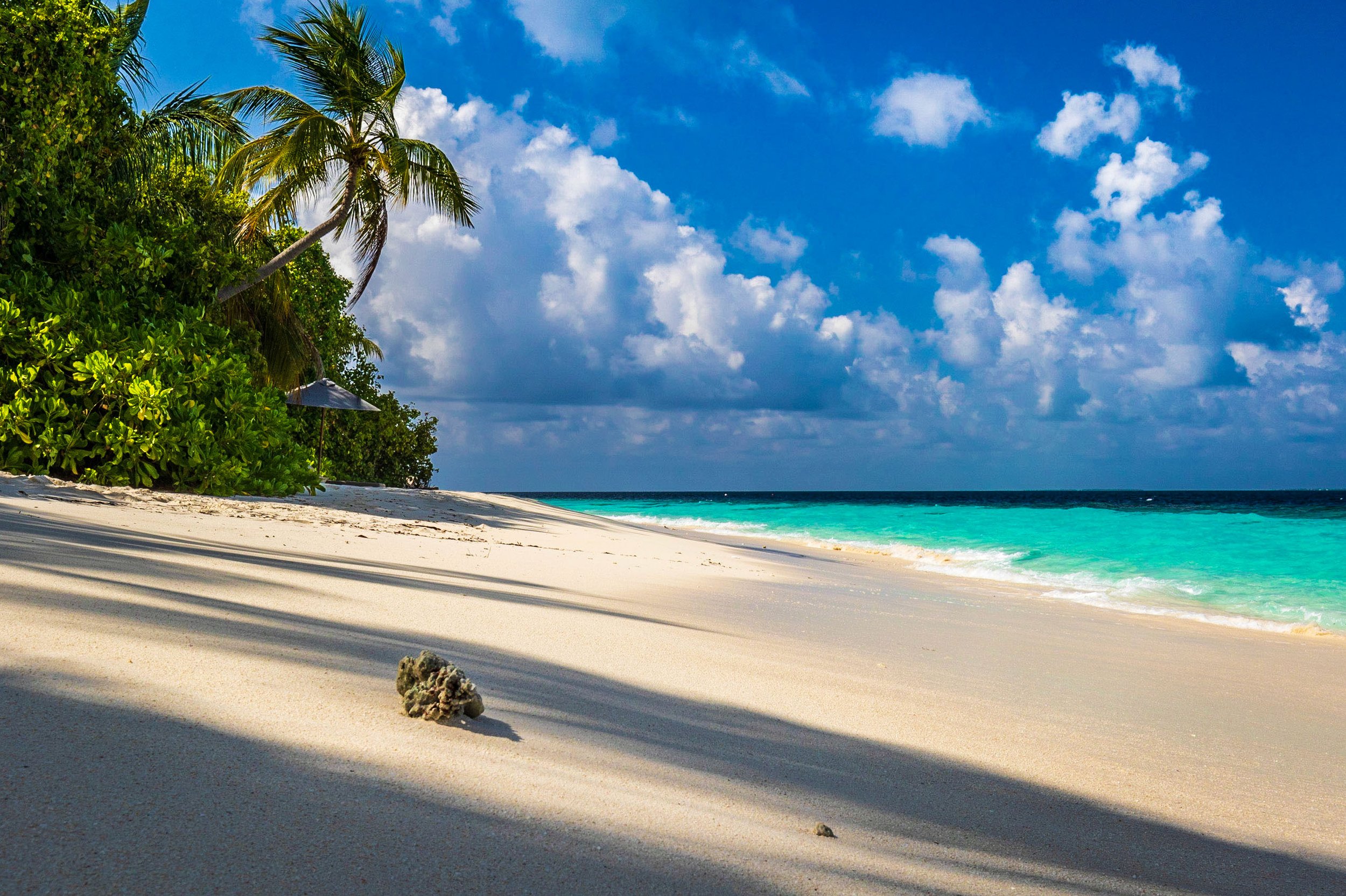
The Maldives is made up of more than 1,000 islands that sit in atolls and are surrounded by some of the best beaches in the world. The Indian Ocean's white sandy beaches have waters that are an incredible combination of blue and green colors. It's heaven on earth!!

The Beach In Front of Our Villa at the Park Hyatt
What most people do not realize is that the islands stretch more than 800 miles. So this is important to realize before booking your hotel accommodation as some hotels are much harder to reach than others.
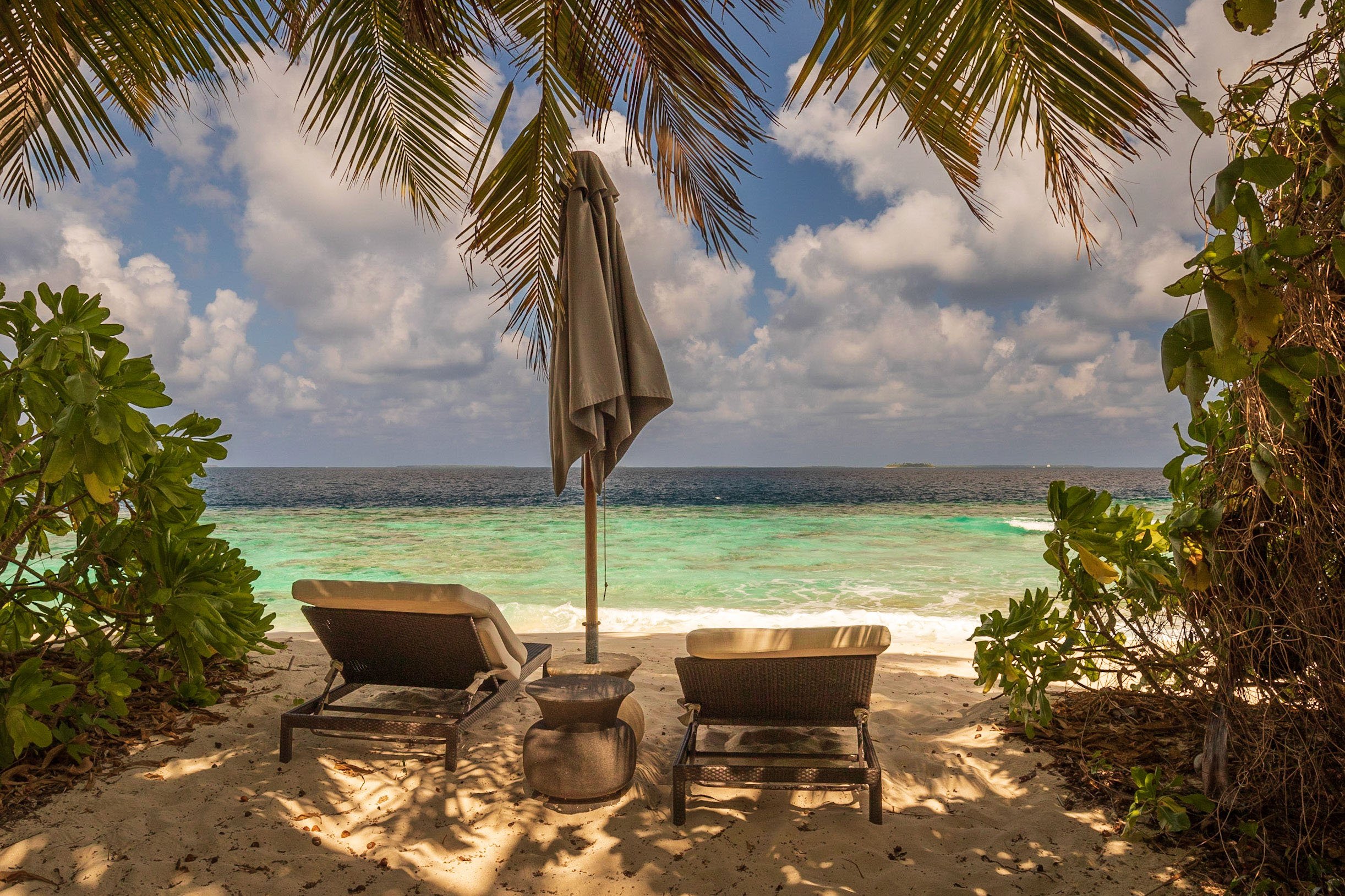
The View from Our Cottage
The Maldives is definitely a place made for relaxation. But you can also snorkel, scuba-dive, swim, take marine tours to see dolphins, and witness some truly unforgettable sunsets.
I’ve visited the Maldives multiple times, and it never gets old. The clarity of the water, the endless sky, the gentle rhythm of island life—it’s a photographer's dream. Whether you're capturing vibrant reef life underwater, sunset silhouettes on a sandbank, or the geometry of overwater bungalows from a drone, there is always something visually stunning to shoot. And what makes the Maldives extra special is that it works just as well for smartphone photography as it does for DSLRs.
In this Photography Guide to the Maldives, I’ll walk you through the best photo spots, share visual tips for both smartphone and pro shooters, and help you decide where to stay, what to pack, and how to move around the islands. Whether you're planning your first trip or your fifth, this guide will help you come home with images that capture the essence of this tropical paradise.
One recommendation I have is to try to stay on more than one island if possible. Each island is unique, and moving around helps you relive the excitement of discovering somewhere new in the Maldives. I can’t recommend it enough.
Photographer's Notes
Before you go, here are my own takeaways.
Favorite Season: January to March
Favorite Location: The overwater villa jetty at blue hour
Favorite Hotel: St. Regis Maldives Vommuli
Favorite Lens: 15-35mm f/2.8 for landscapes and a 100-500mm for Dolphins
Would I Return? Yes, it's a wonderful place for relaxation and beaches.
How to Get to the Maldives
Getting to the Maldives is part of the adventure. Most people will fly to Dubai,Abu Dhabi, or Singapore and then take a short flight to Malé, the capital of the Maldives. You will need to plan how to get to your specific resort, usually through your hotel, prior to leaving.
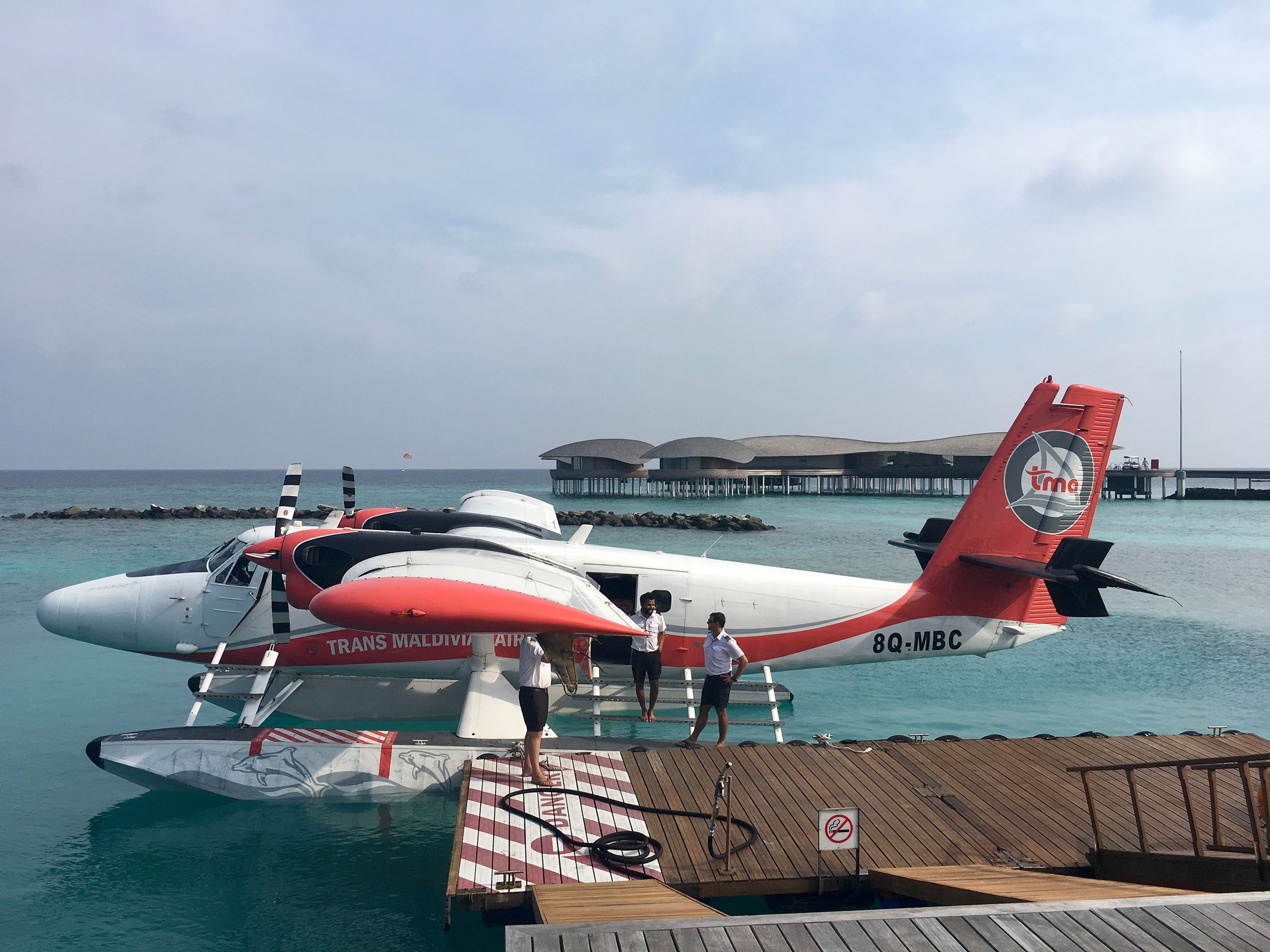
You’ll likely arrive via Malé and take a seaplane or speedboat to your resort. Walking and biking are common on resort islands, and many offer golf carts for guests.
Getting to your hotel is half the fun and involves either hopping onto a speed boat from the airport or flying to one of the further islands in the atolls on a seaplane. Either way, you'll have plenty of time to sit back and enjoy those views. It is the appetizer or amuse-bouche for your vacation.

Usually, your hotel will contact you to arrange your transfer to the hotel prior to departure. This has to be reserved in advance. Don’t leave this till the last minute.
If you’re moving between islands, let the hotels know where you’ll be arriving from and leaving. You won’t have much control over the time if you’re flying between islands as the flights are scheduled.
Where to Stay in the Maldives
When it comes to the Maldives, where you stay becomes part of your photography experience. Most visitors choose one resort island, and the light, landscape, and activities will shape your shots.
Each hotel is situated on its own island, with unique features and distinct personalities. They are not all the same, despite what the water villa and snorkeling photos might lead you to believe. If you enjoy scuba diving, for example, ensure the hotel you’ve chosen offers scuba diving options.
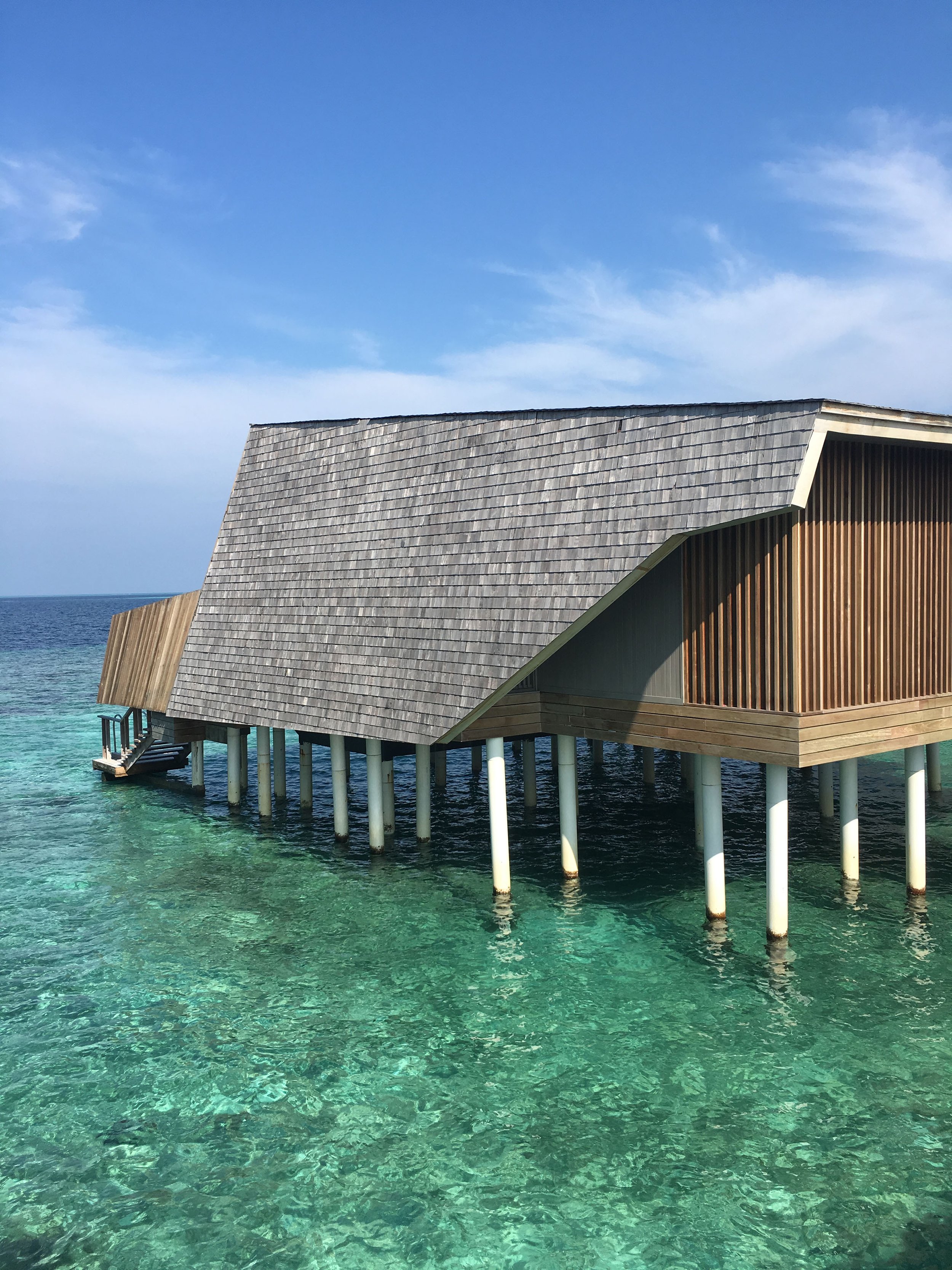
St Regis Maldives
Peak season in the Maldives is from December to April. Of course, the prices during this period will reflect this! While the weather is amazing during peak season Maldivian weather is pretty good all year round.
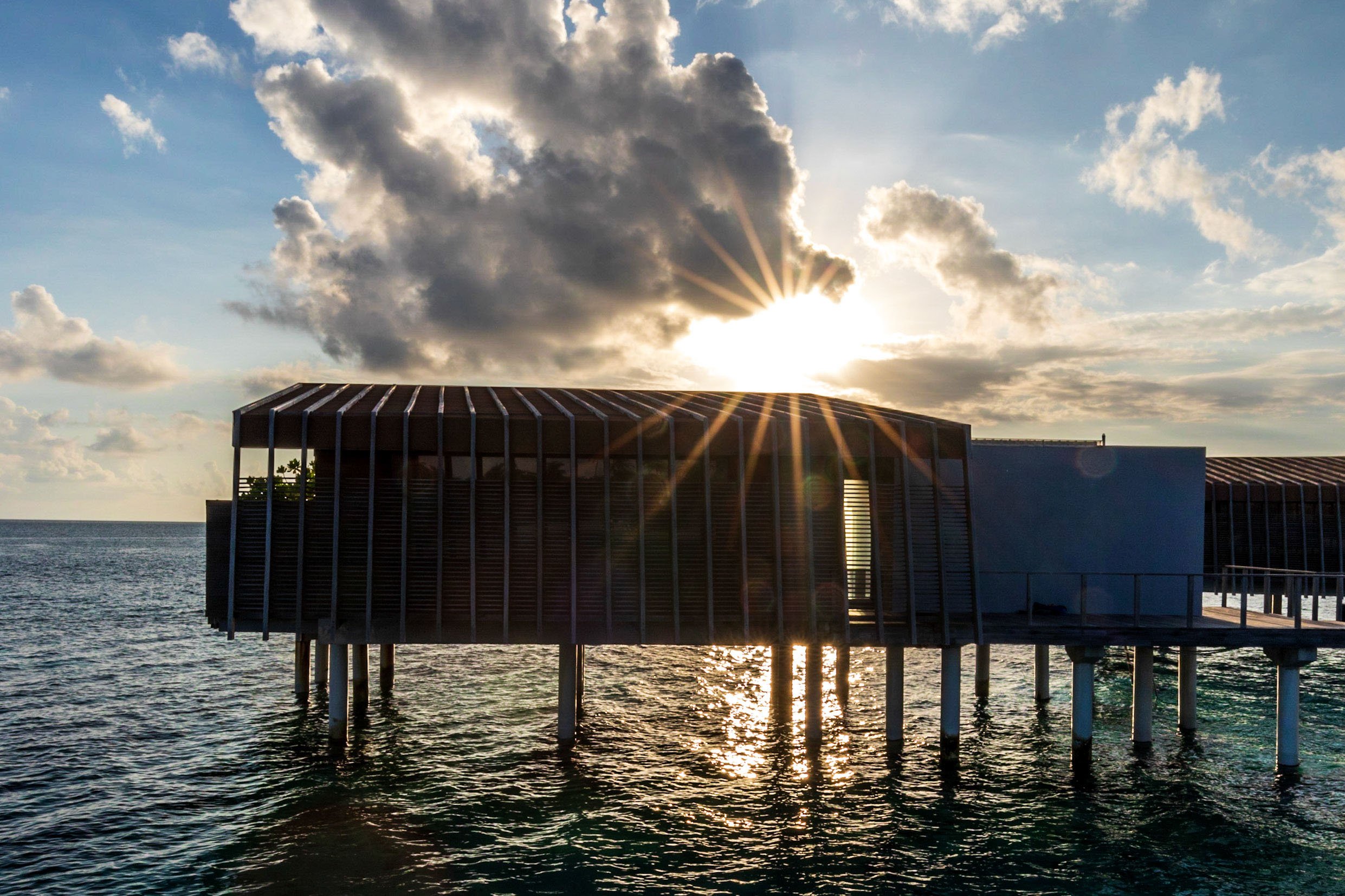
The Park Hyatt
We stayed in 2 hotels on our most recent trip to the Maldives. We started our trip at the Park Hyatt in Hadahaa, which is at the southernmost tip of the country and ended at the St Regis Vommuli. Both of these hotels, like most hotels in the Maldives, are incredible.
Park Hyatt Maldives in Hadahaa
The Park Hyatt Maldives is a hotel that has been on my radar for years. It’s a bit of an adventure getting to the Park Hyatt. But well worth it!! Getting to the hotel involves a commercial flight on a turboprop aircraft from Malé, a buggy ride, and then a 30-minute boat transfer.
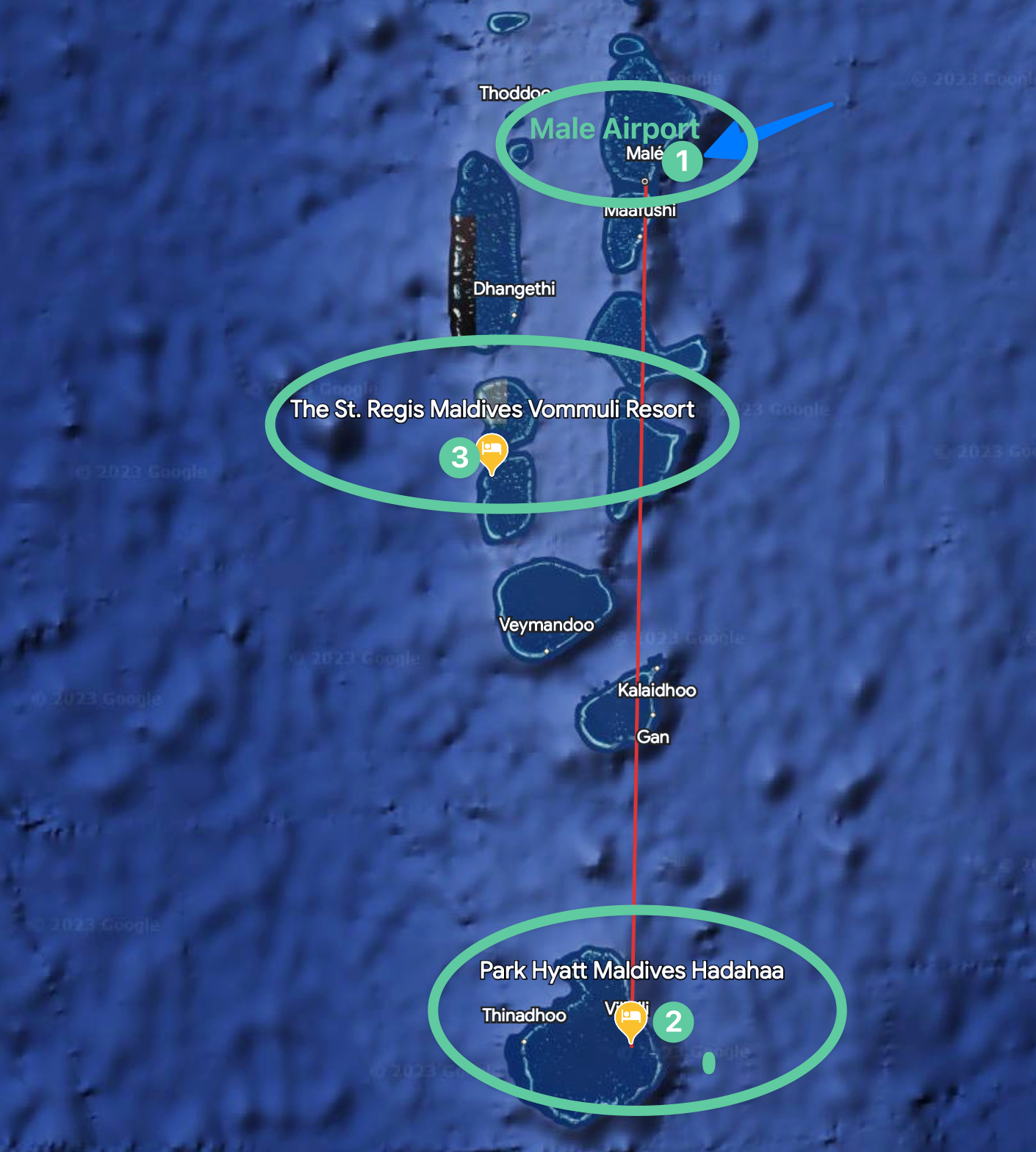
The Park Hyatt is 20 Minutes from the Equator by Boat
Once we landed, we were met at the international arrivals area of Malé airport by a Park Hyatt representative who took our bags and walked us across the covered walkway to the domestic terminal next door. From there, we flew on a Dash-8 plane for about 1 hour and landed at a small airport in Kooddoo. Another Hyatt representative was waiting for us at arrivals. He helped us with luggage, and we hopped in his golf cart for a short ride to the speedboat. We then took a speedboat about 35 minutes south to the resort.
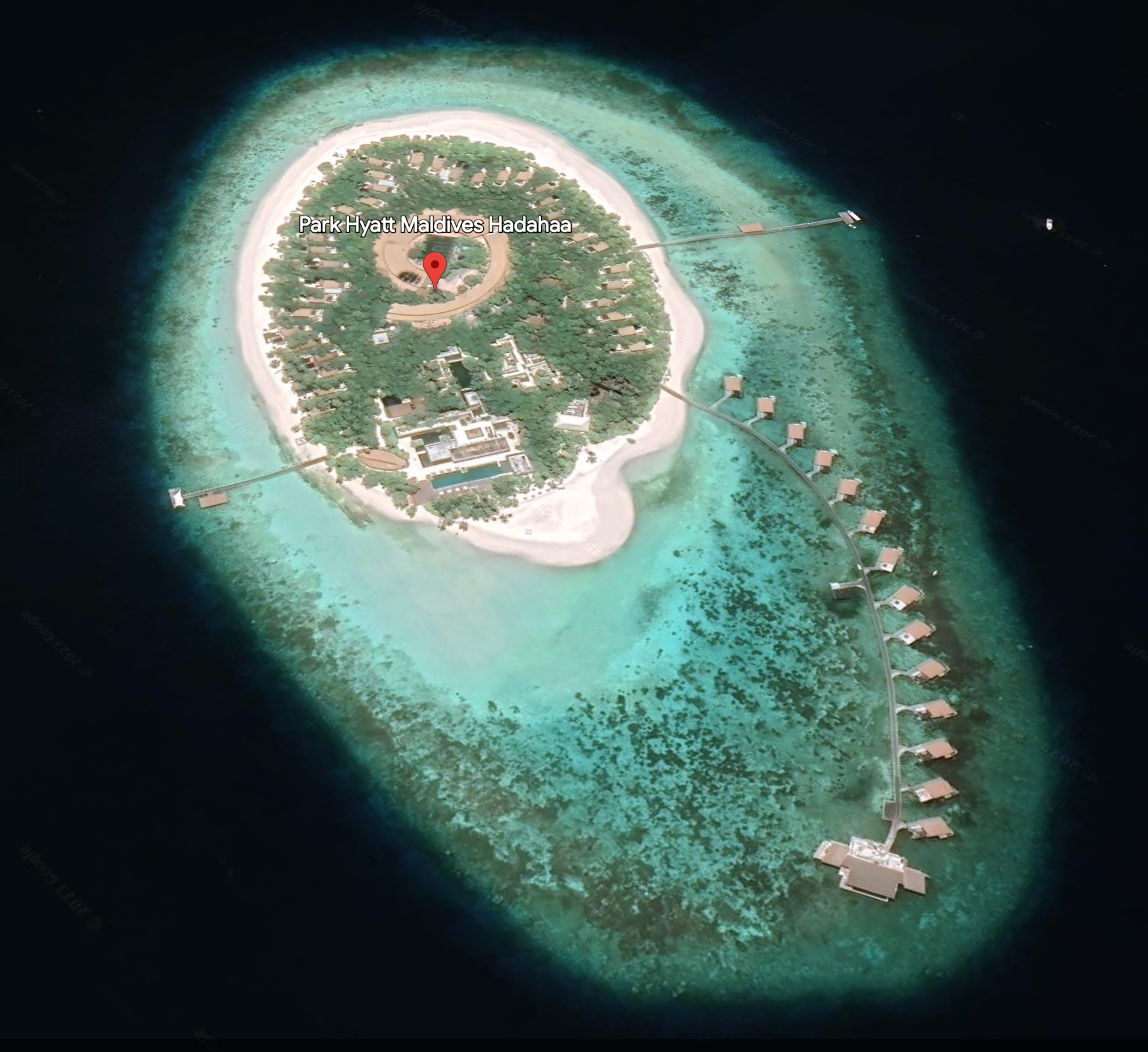
The Park Hyatt
The location of the Park Hyatt is stunning and its blue waters are full of sea life. Being so remote makes it very quiet and private. I loved the white sandy beaches, and the snorkeling was simply incredible.
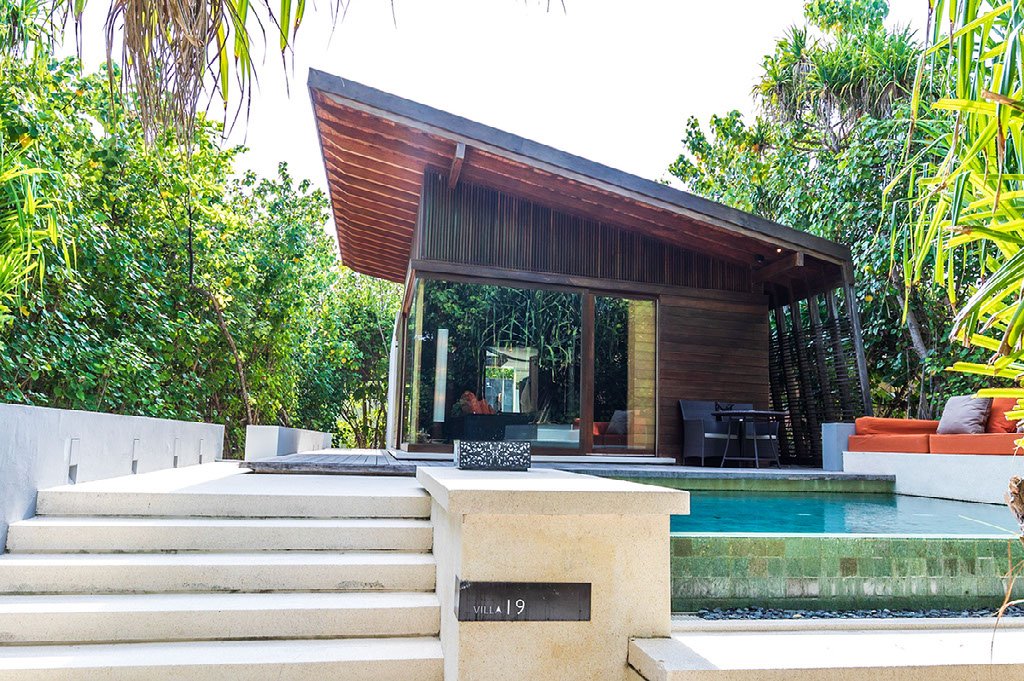
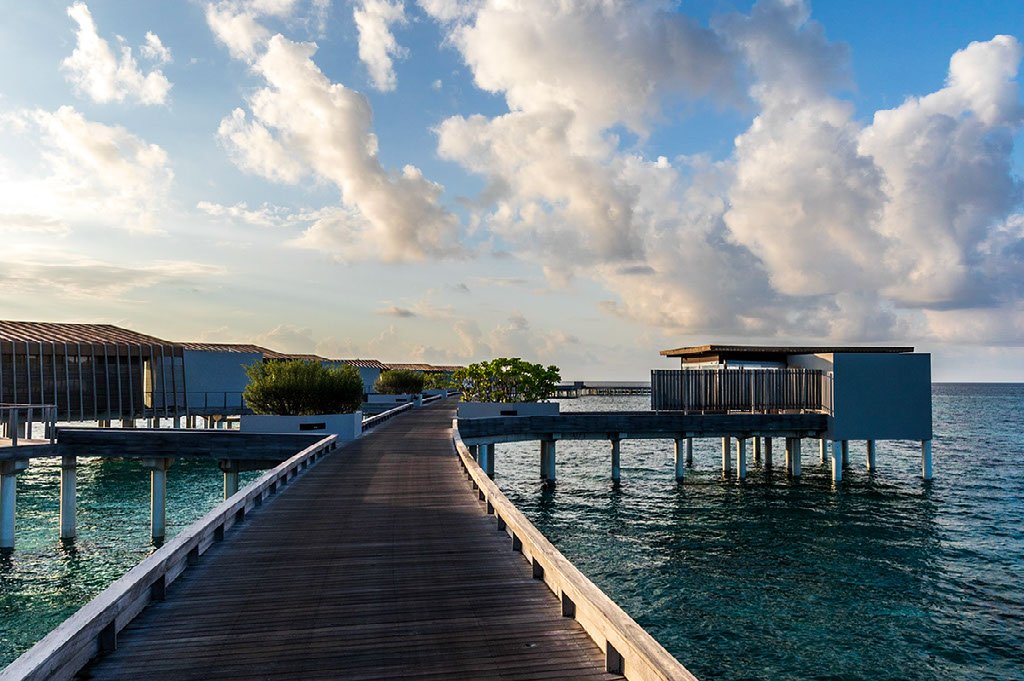
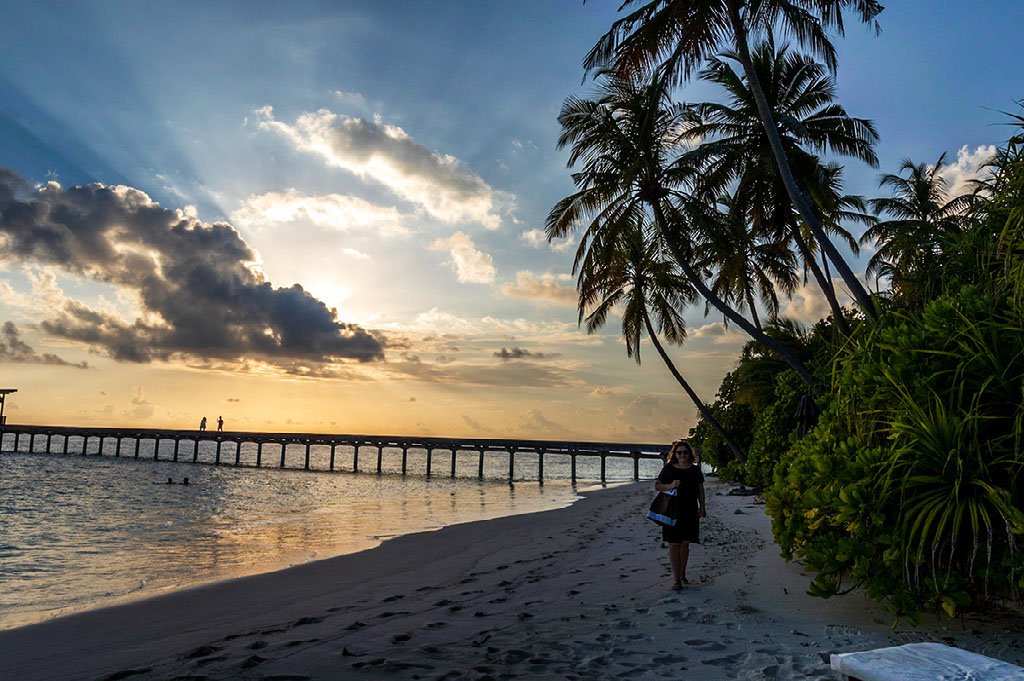
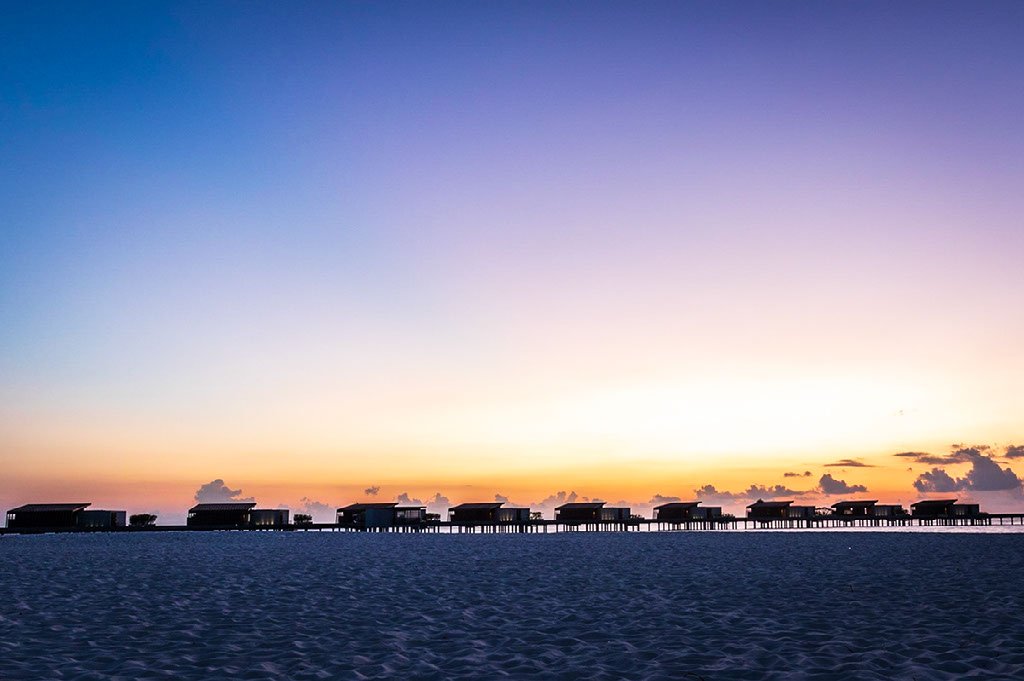
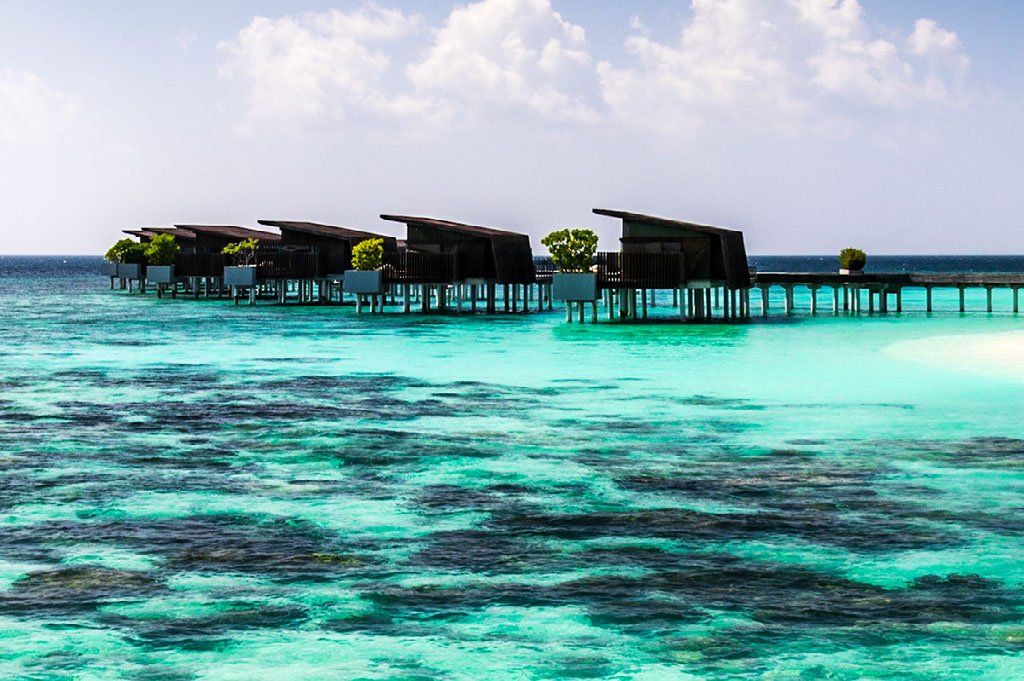
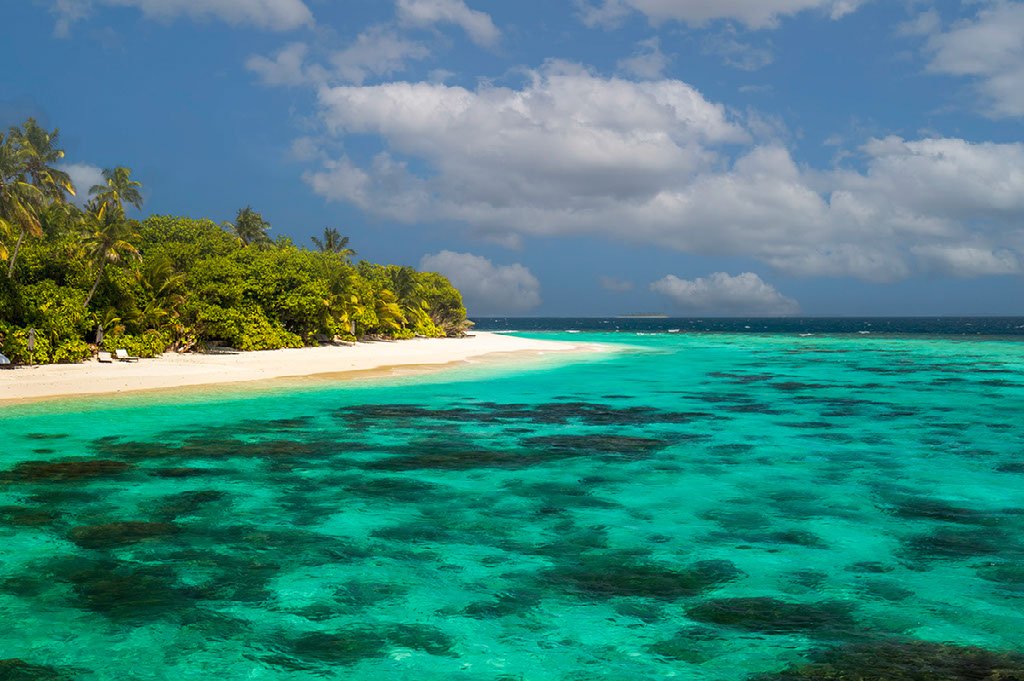
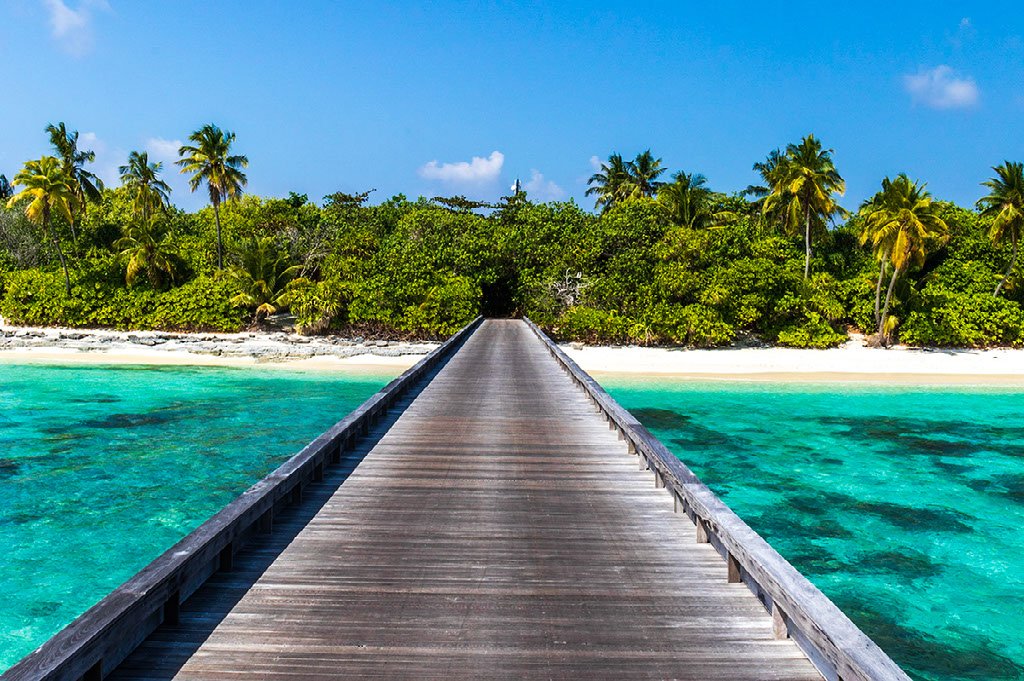
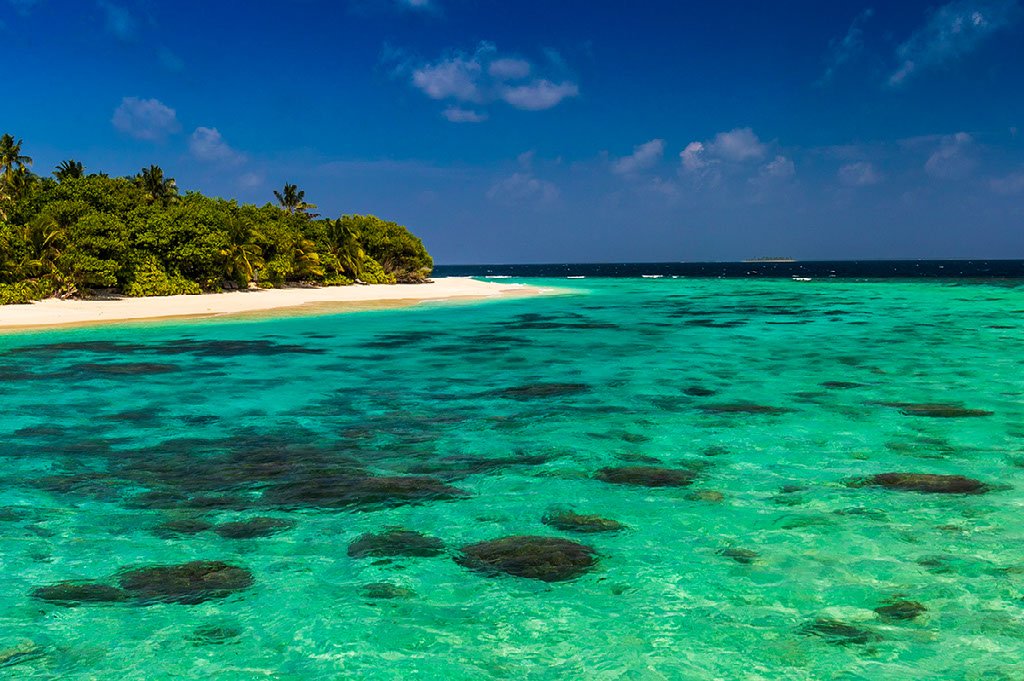
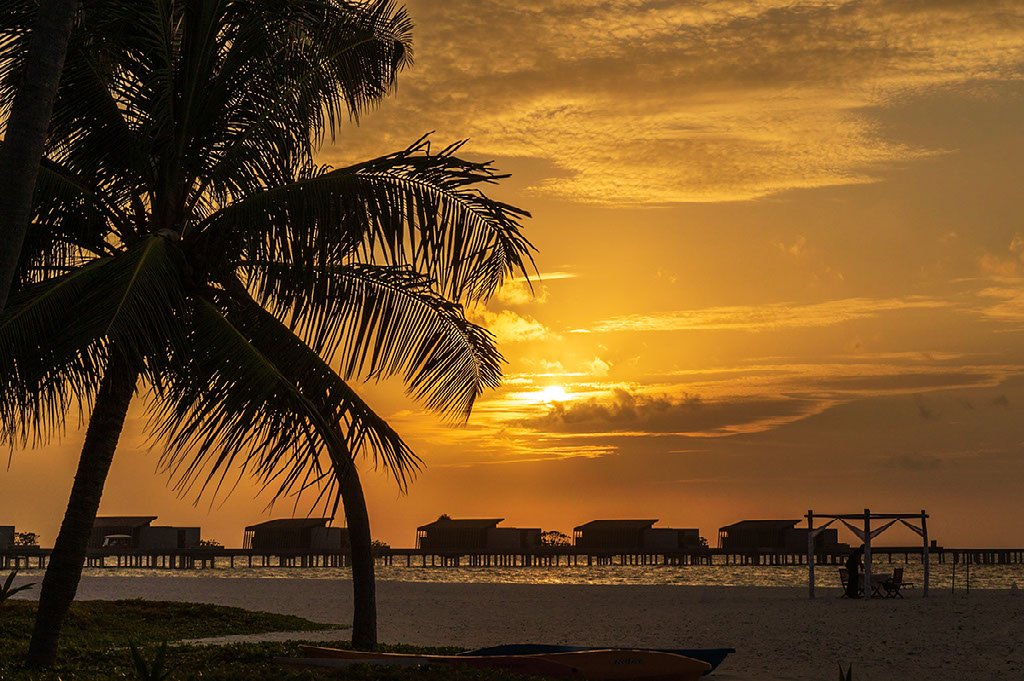
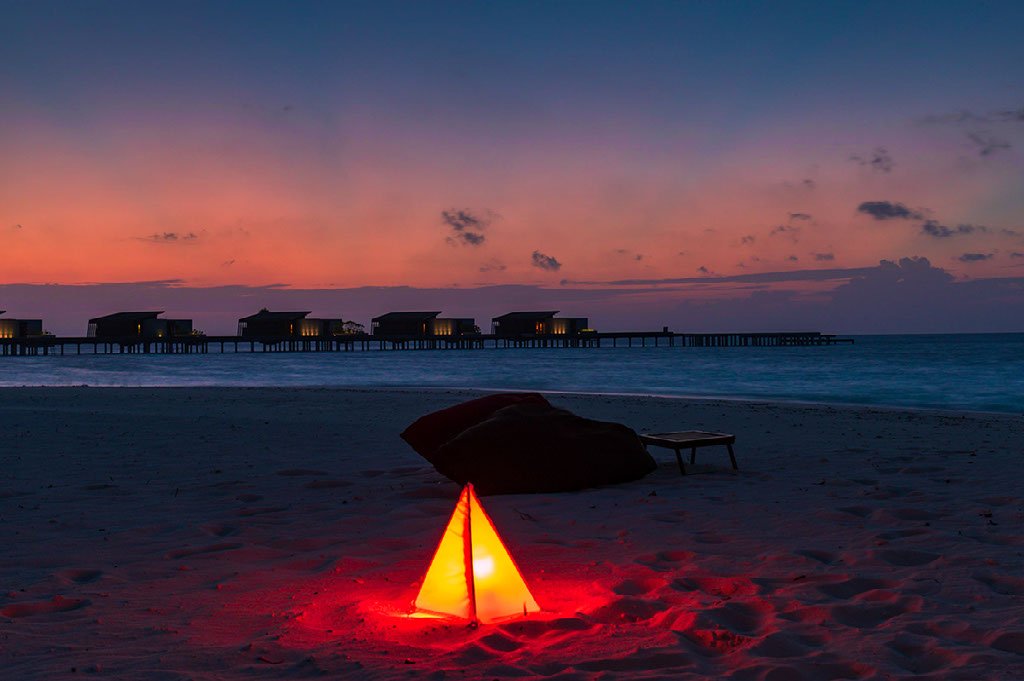
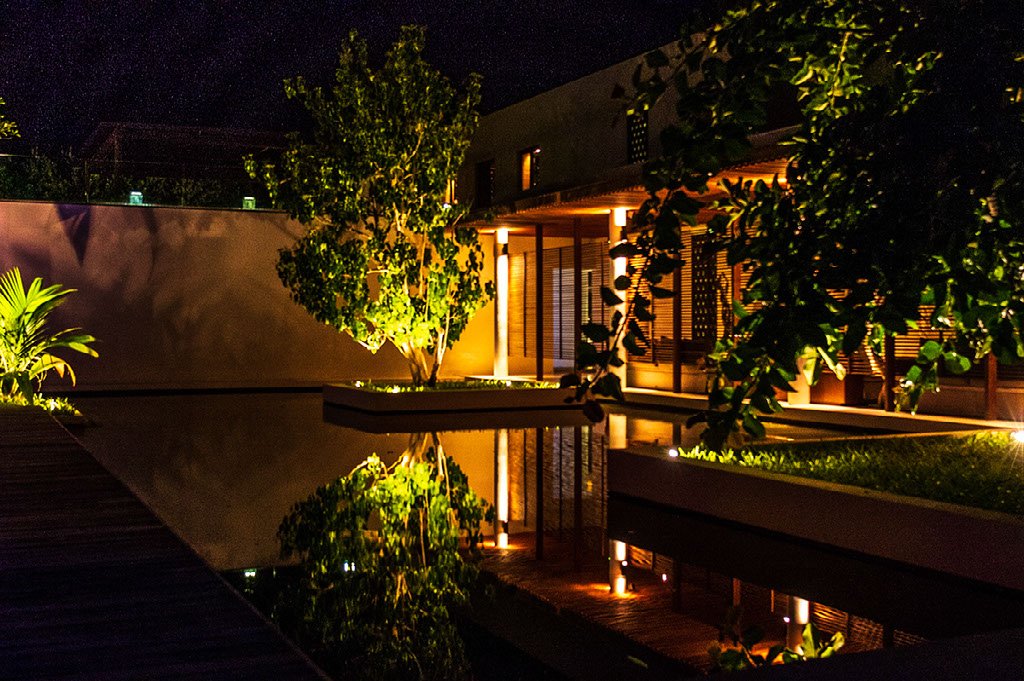
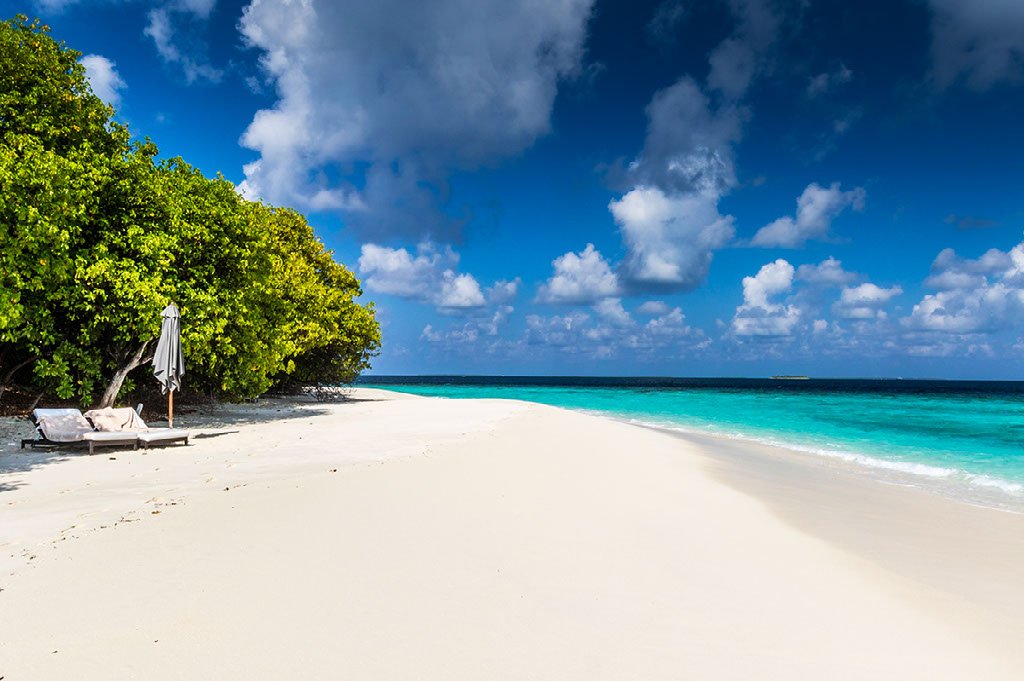
After staying 5 nights at the Park Hyatt, we traveled to our second hotel - the Saint Regis Vommuli, which is located much closer to Malé.
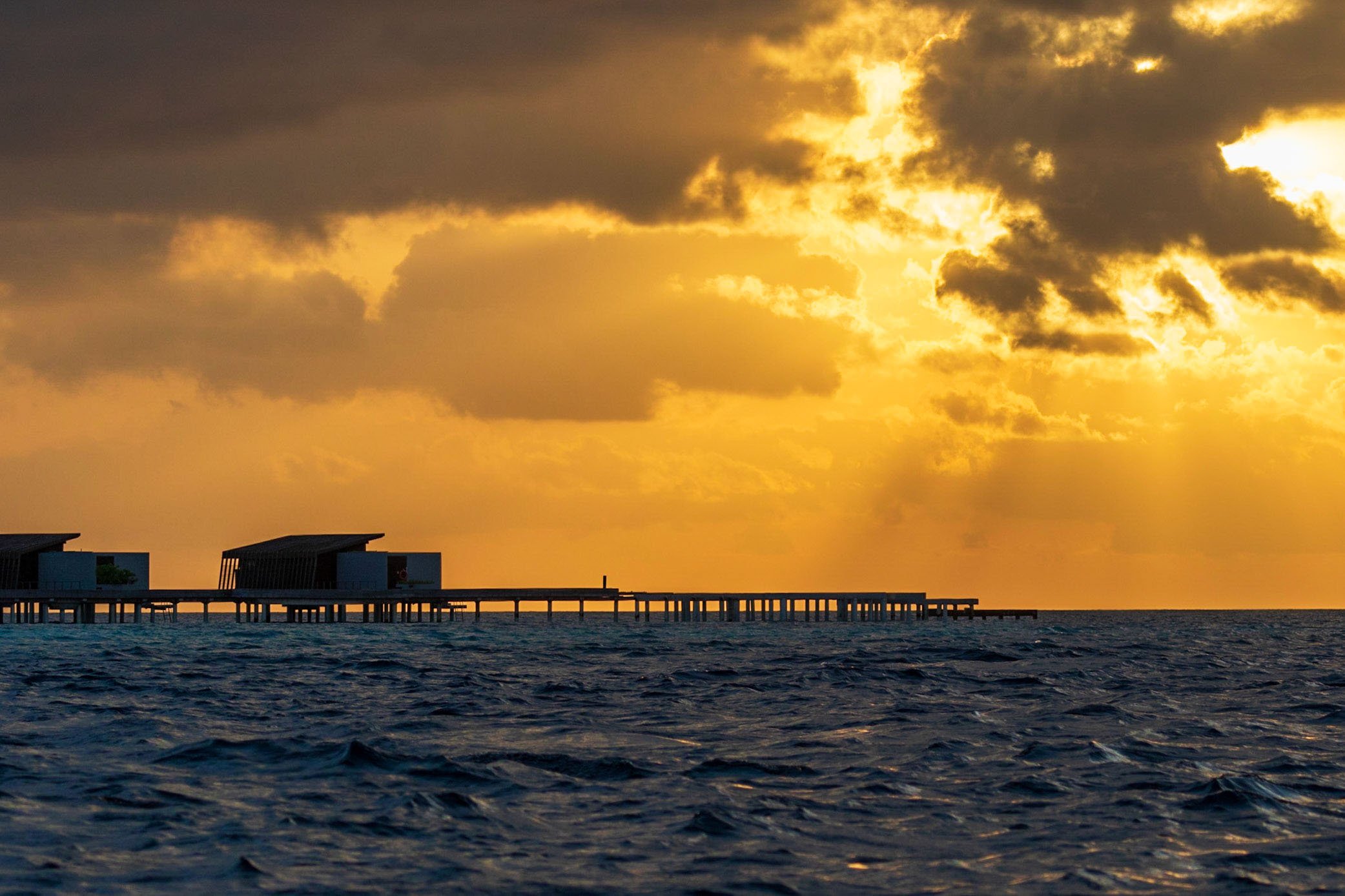
St. Regis Maldives Vommuli Resort
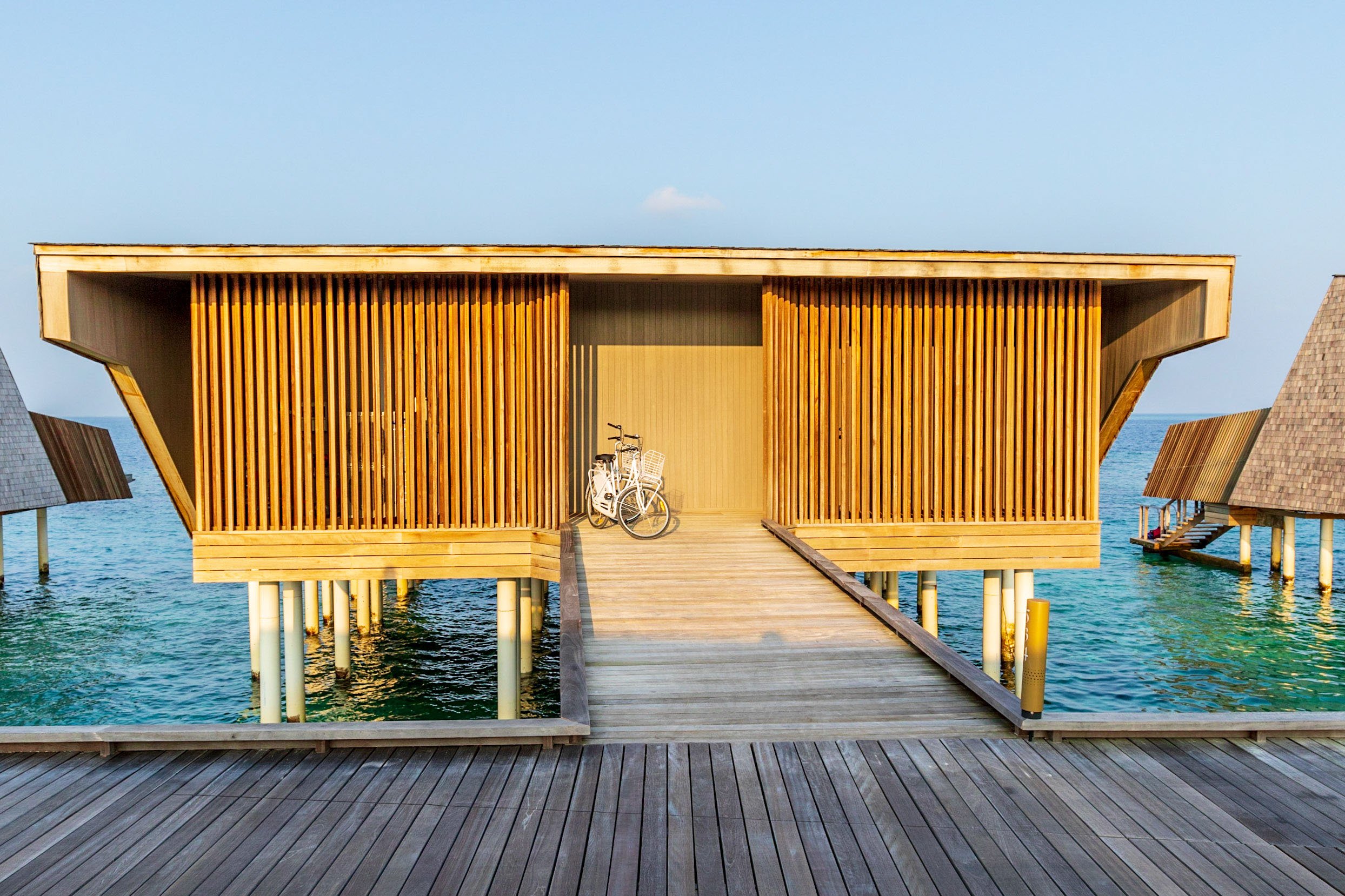
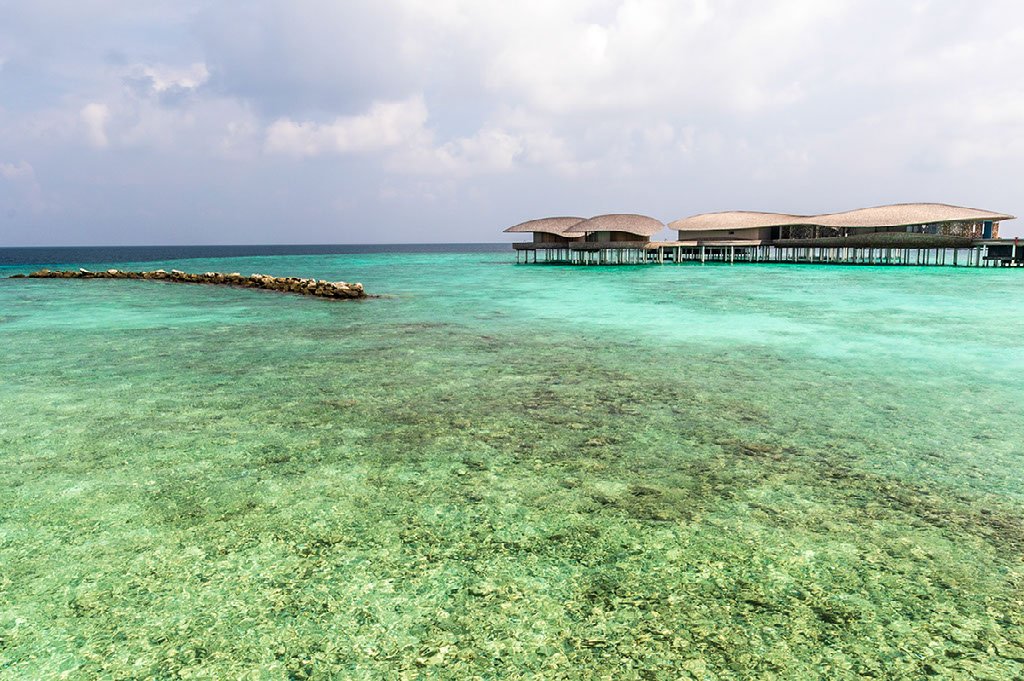
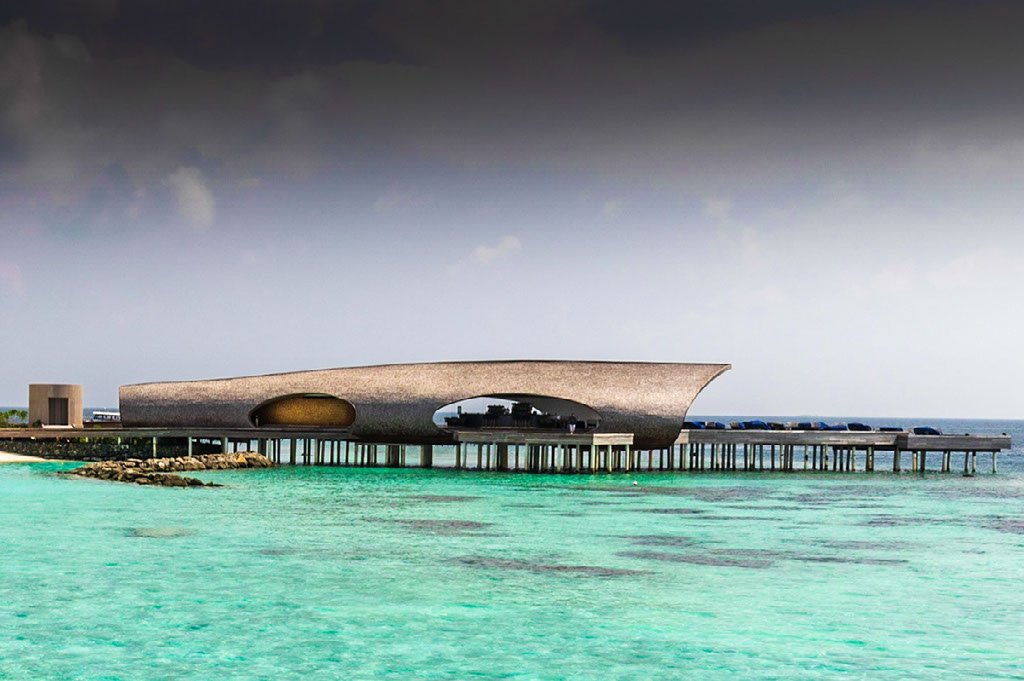
The St. Regis Maldives Vommuli Resort is one of the most picturesque hotels in the world. The Points Guy has a wonderful review. During our stay, we were lucky enough to meet the Architect Wong Chiuman, who designed the hotel. I loved listening to him explain his design. It is truly a masterpiece.

To get to the Saint Regis, once you land in Male, or in our case, land back in Malé, you will take a seaplane to the resort. You'll be greeted by a St. Regis butler as you exit customs and taken to an air-conditioned car to the seaplane terminal on the other side of the airport. The entire experience of getting to the hotel was just wonderful.
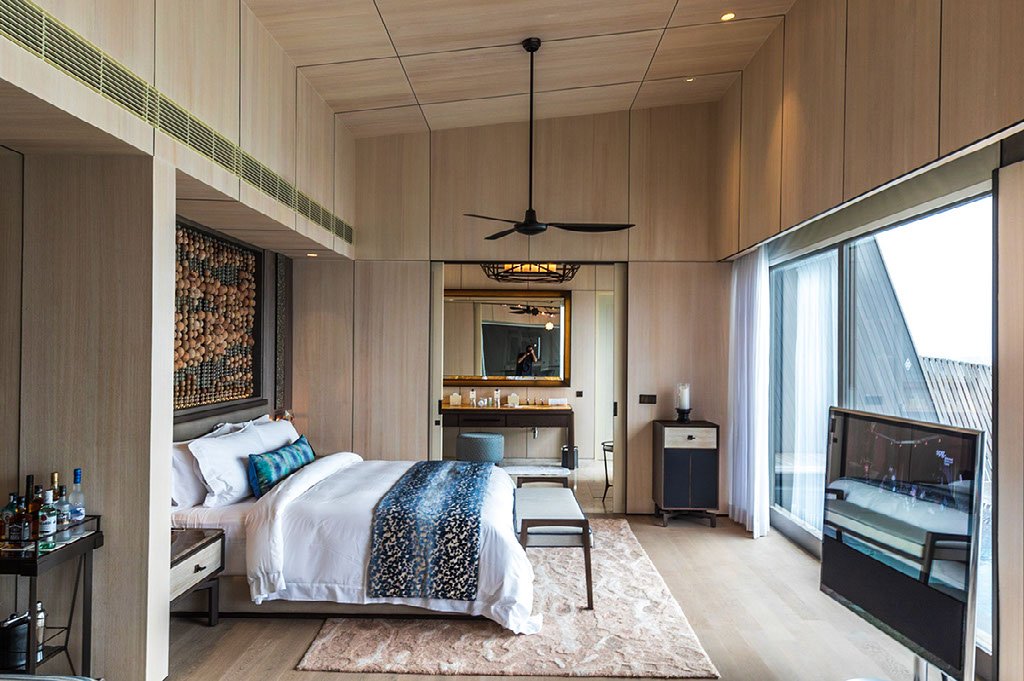
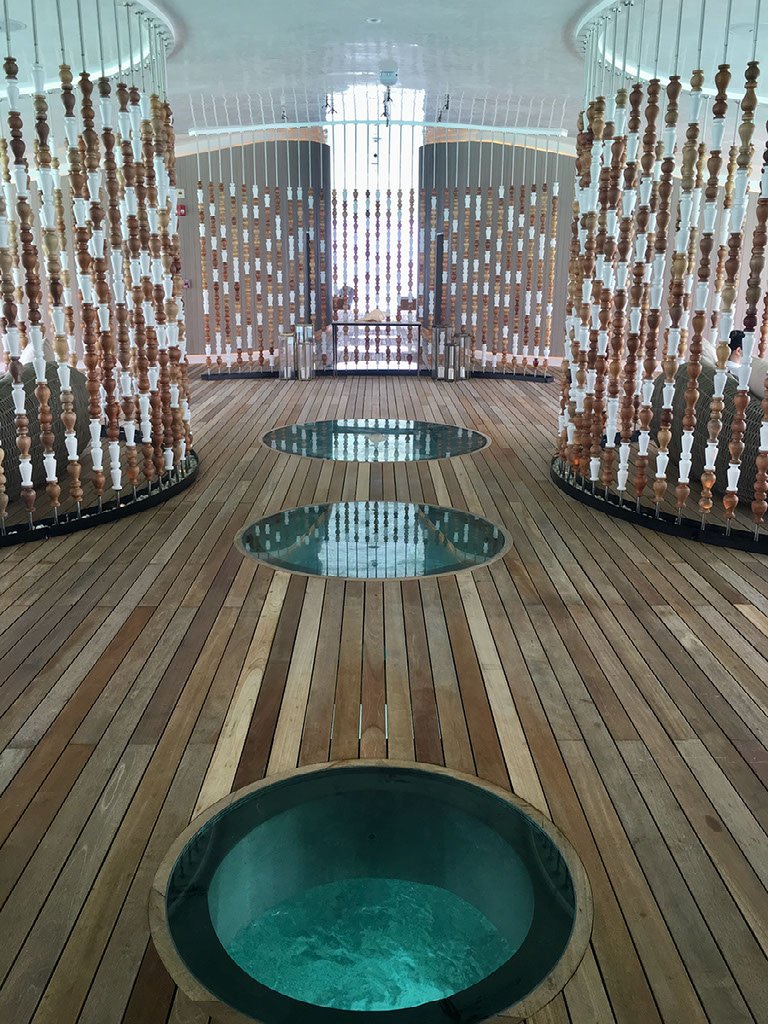
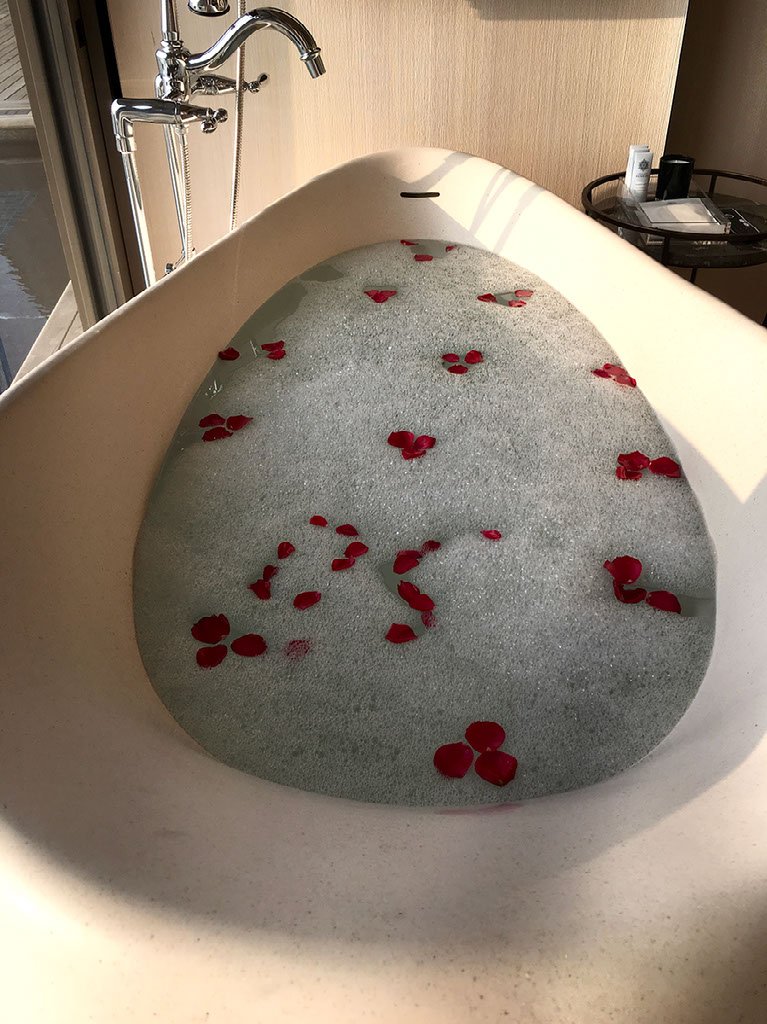
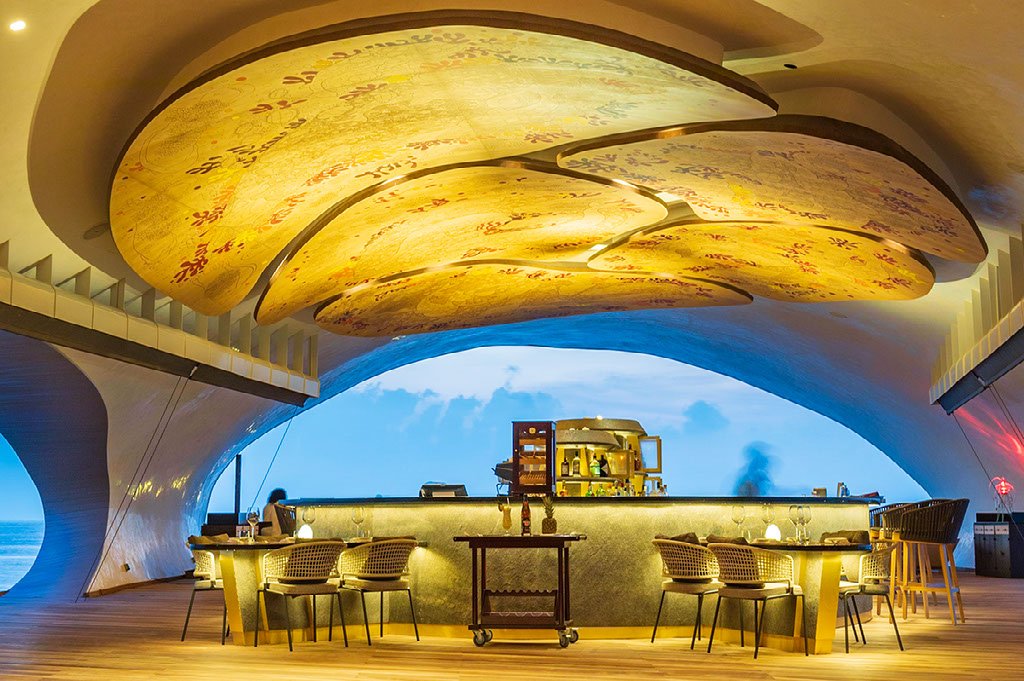
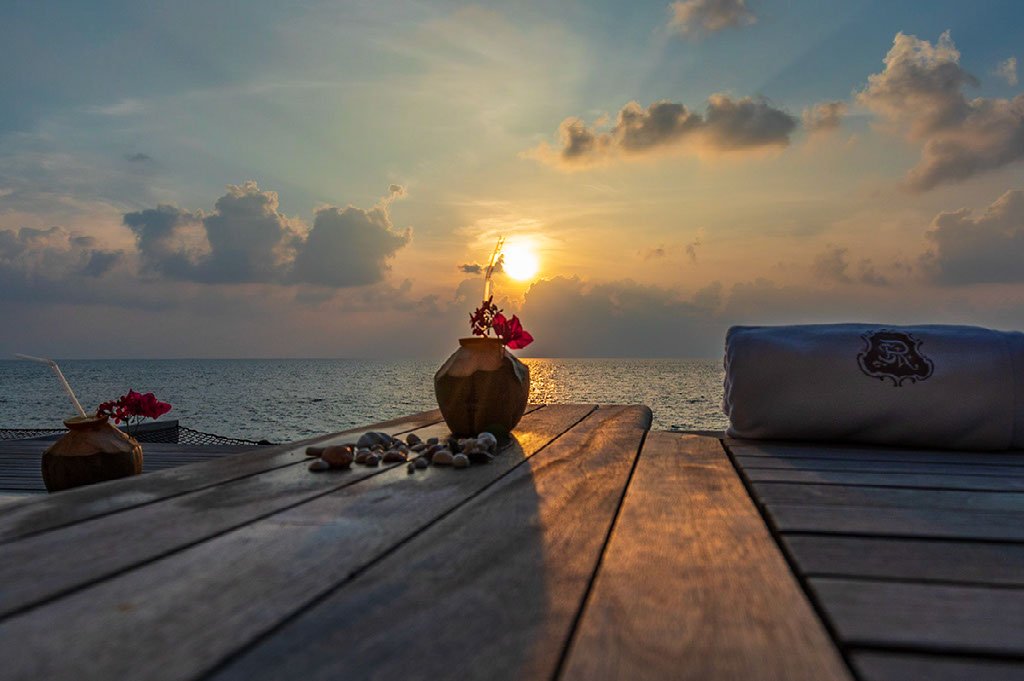
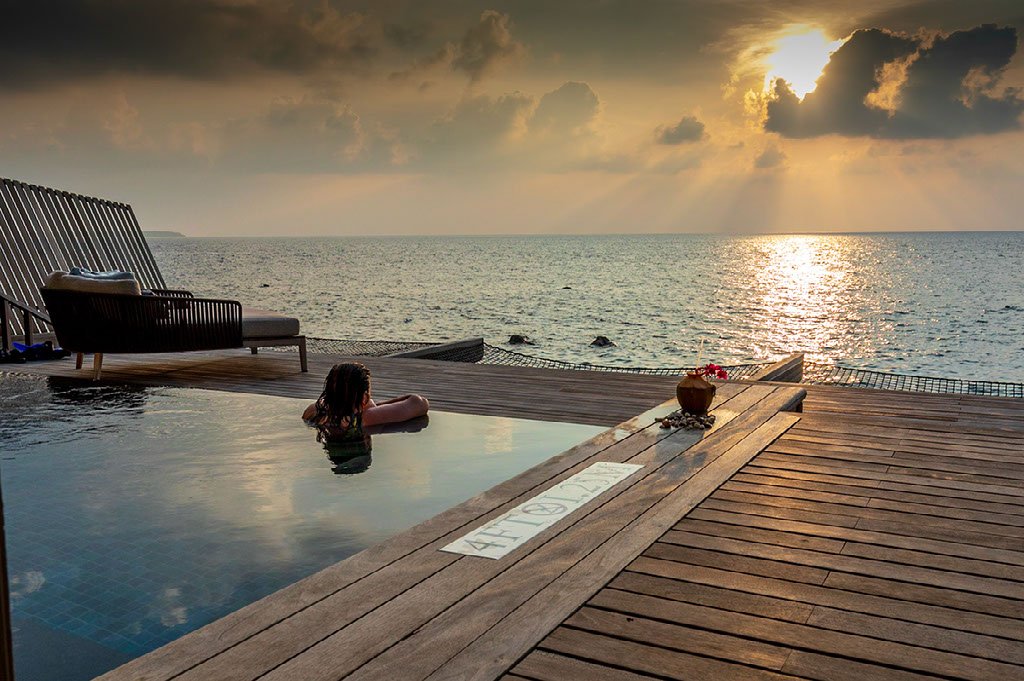
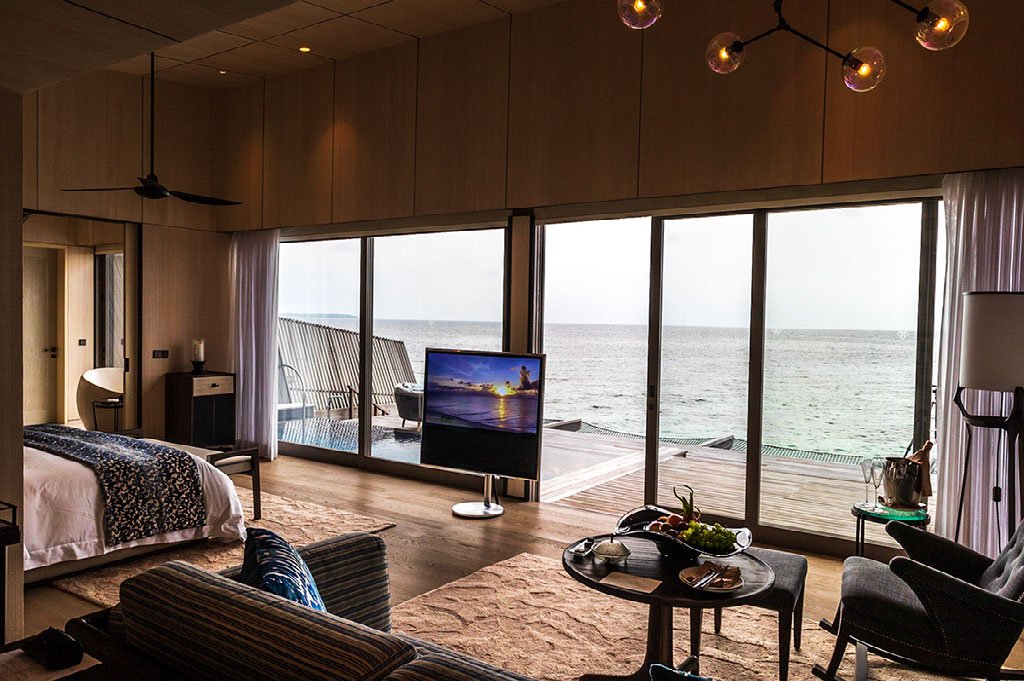
The St. Regis has a lounge in the Male Airport, for you to wait for the seaplane with a seating area and some complimentary snacks. They will also check you into the hotel while you wait. Our butler even recorded a welcome video, which we watched in the lounge. He also realized we would be celebrating my wife's birthday during our stay, so before landing, they had prepared our room with decorations to help celebrate. What an incredible, thoughtful touch!

What to Do & See in the Maldives
The Maldives is a perfect destination for relaxation. It is not a place to go to with long to-do lists. Your days will be spent on the beach or poolside, reading and drinking Pina coladas. If you decide you want to do something more active, I encourage you to try snorkeling or scuba diving.
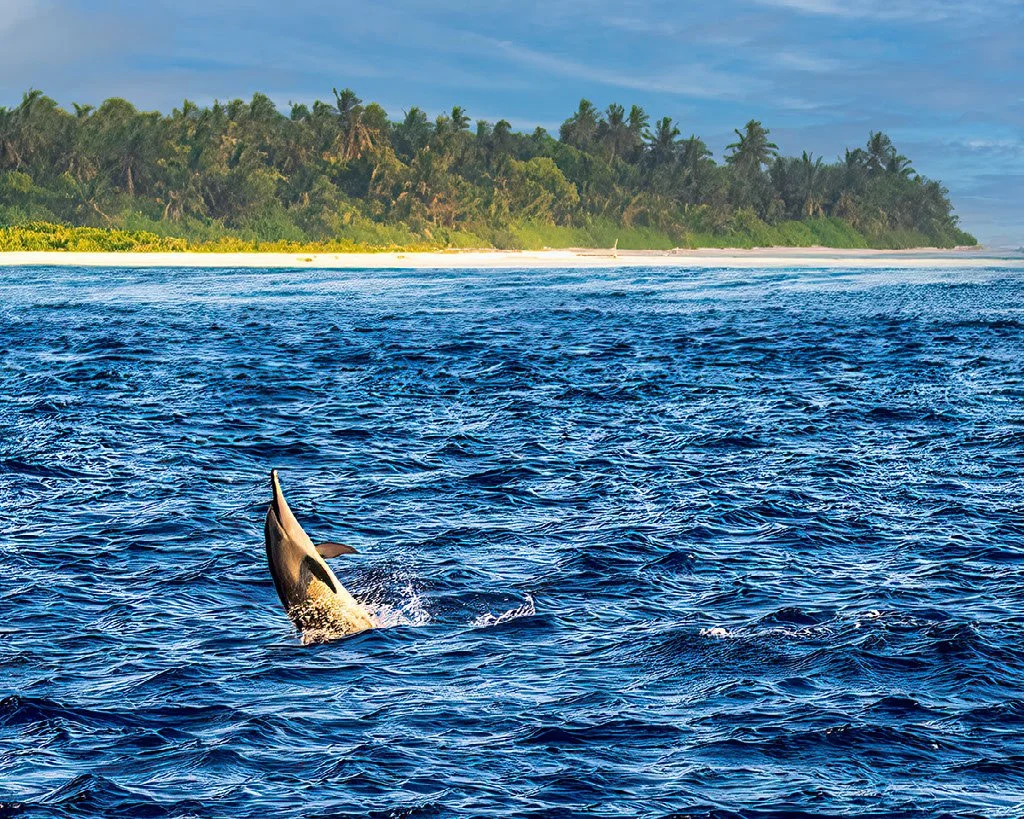
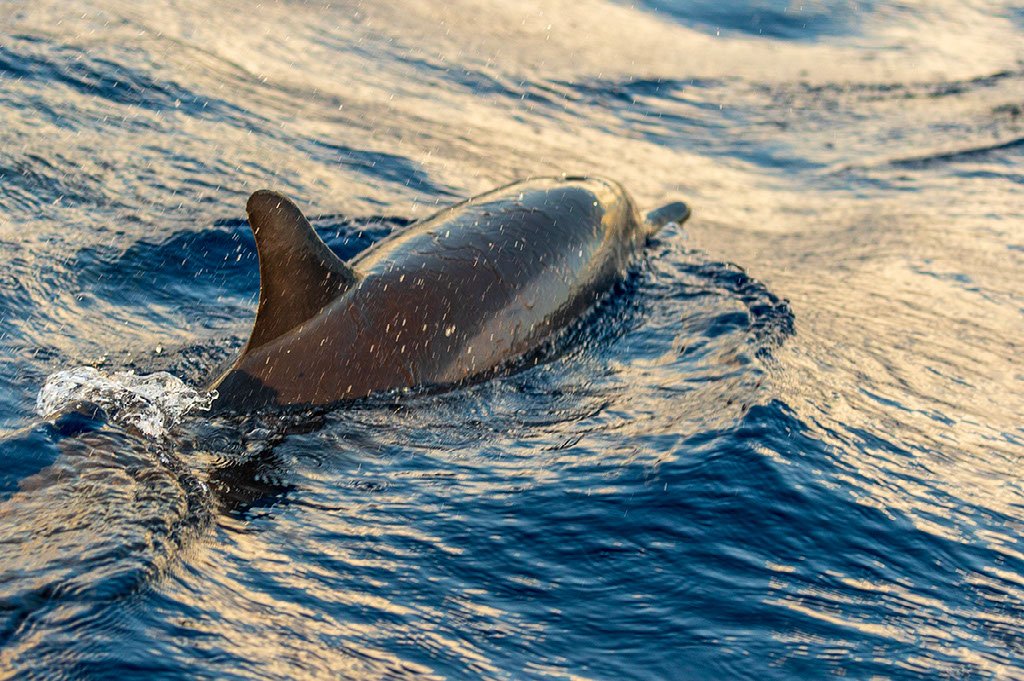
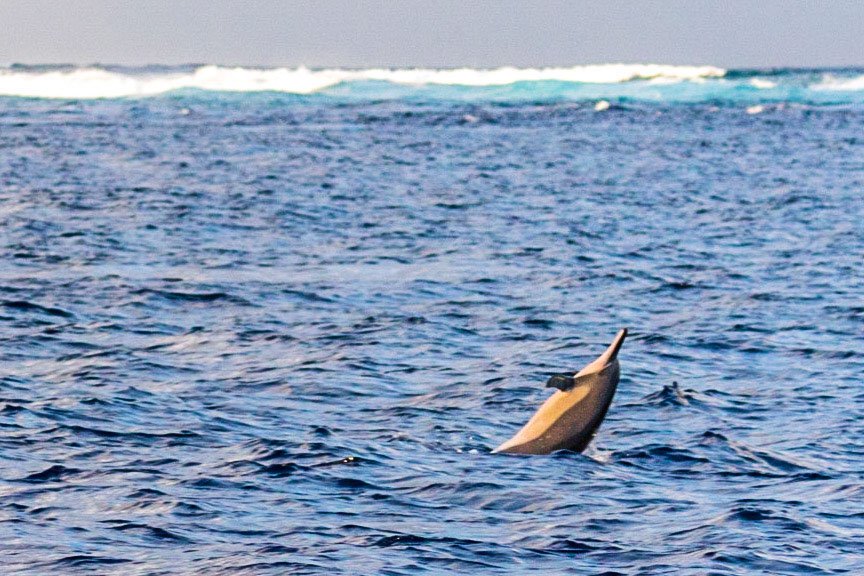
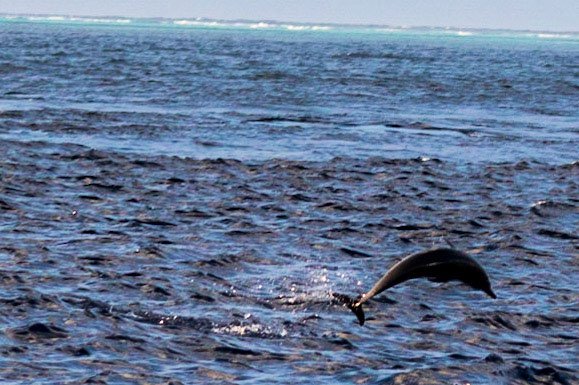
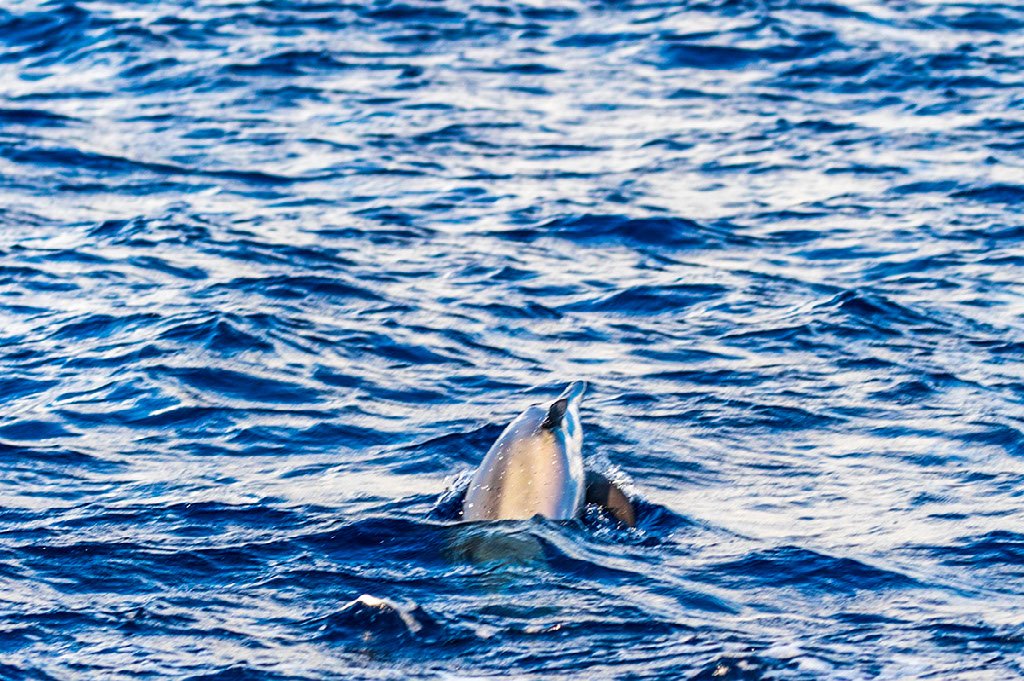
We took a guided tour with a marine biologist to see dolphins, which was simply incredible. We went out for about two hours, and at first, we didn’t see anything. However, on the way back to the hotel, we saw dozens of dolphins swimming around our boat. I would also definitely try to book a romantic dinner on the beach.
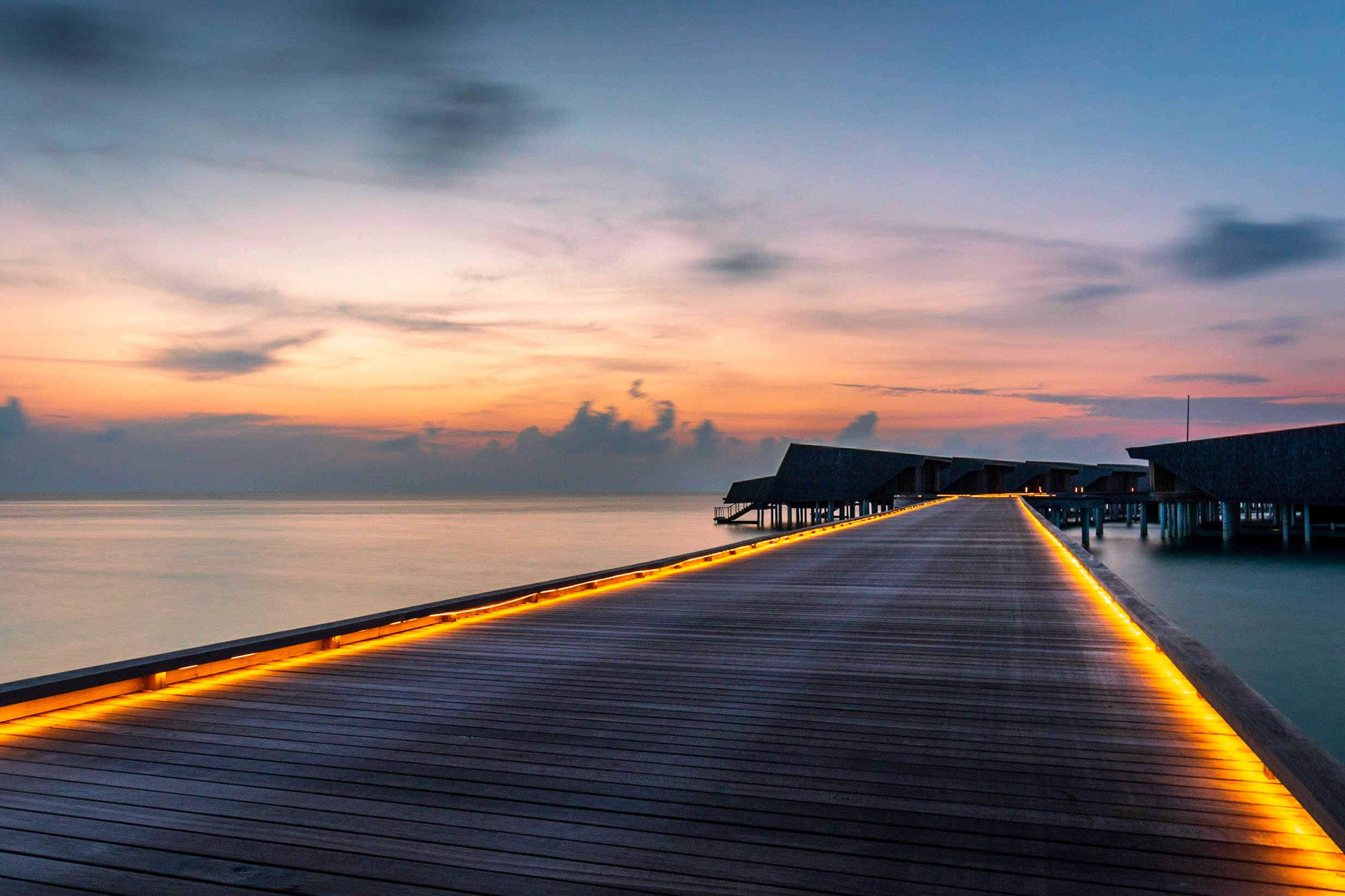
The Overwater Villa Jetty at Blue Hour
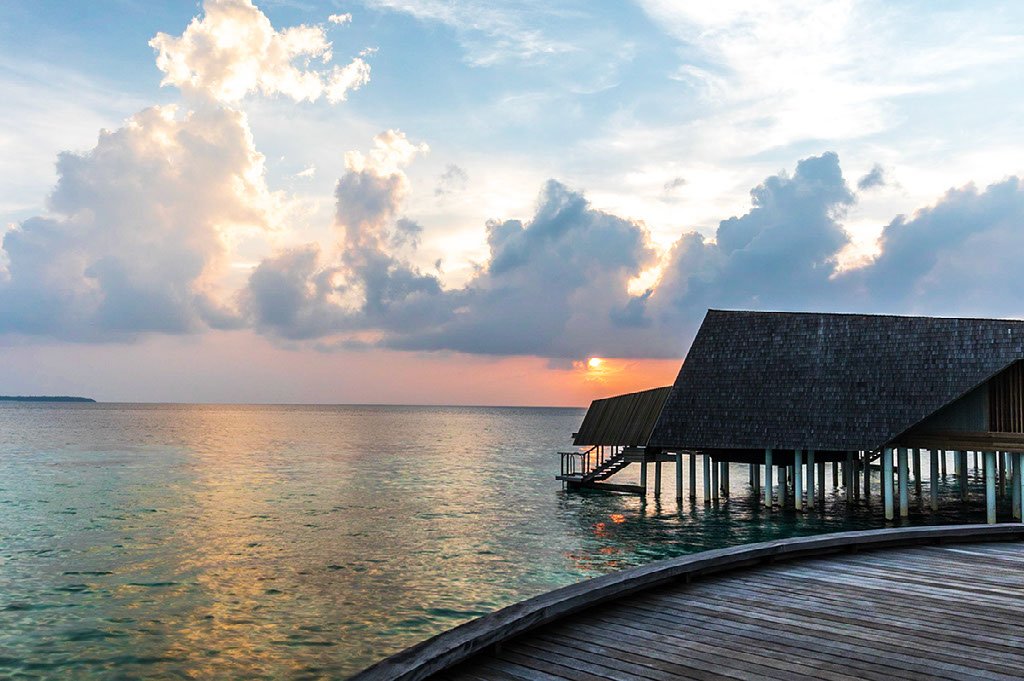
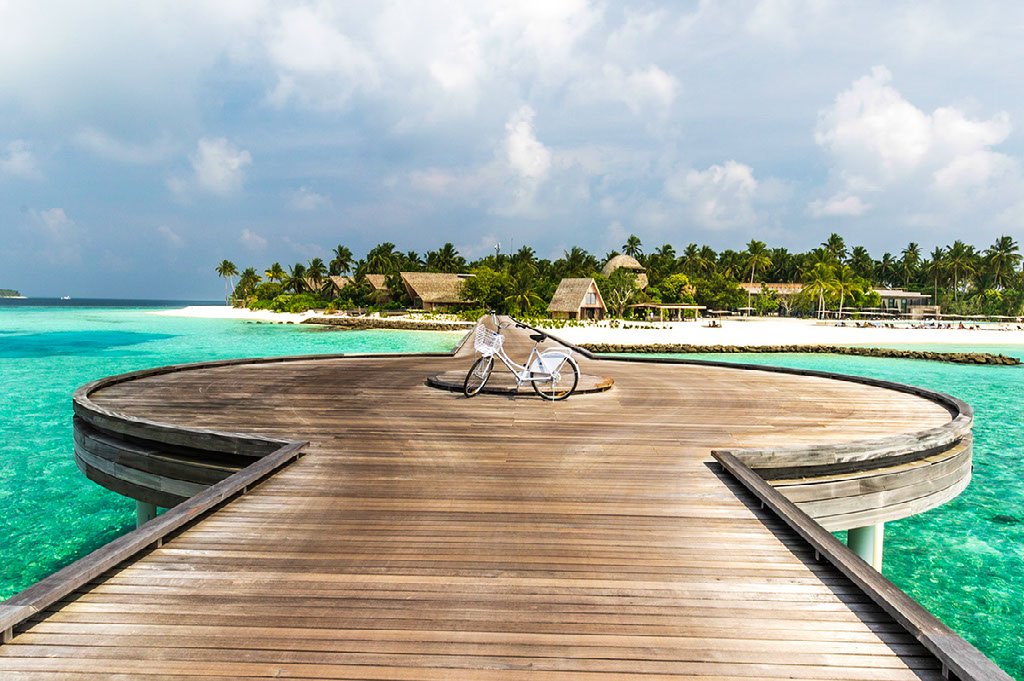
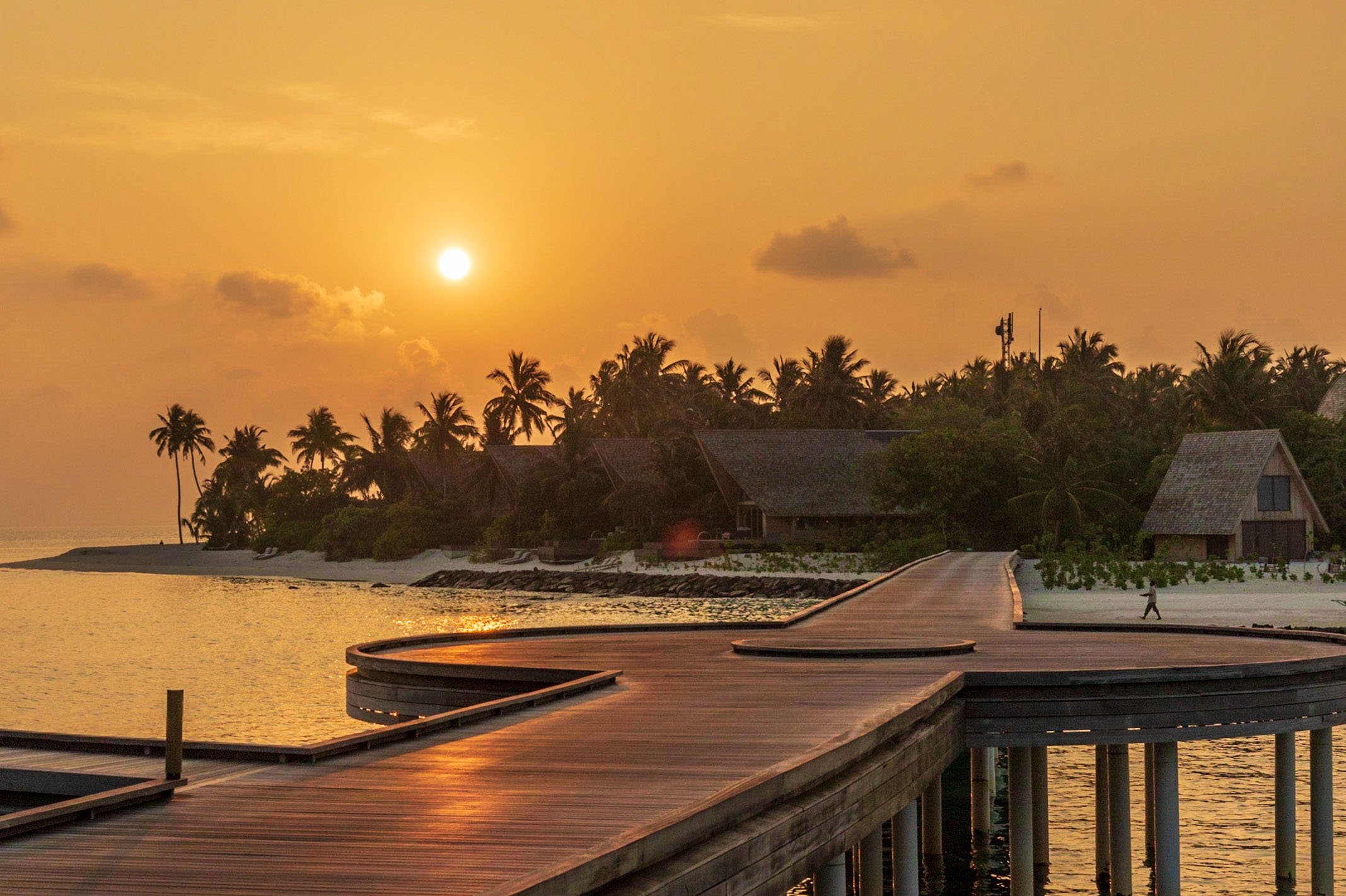
Every overwater villa has a private wooden jetty extending out over the lagoon. This is your single most powerful photography location, and the light at blue hour, roughly 20 to 30 minutes before sunrise and after sunset, transforms it completely. The warm villa lights reflect on the still water below while the sky shifts from deep blue to purple to rose. A 16 to 35mm wide-angle lens pointed back toward the villa with the open water beyond captures the scale and solitude that define the Maldives. Set your tripod on the jetty, use a 10 to 15-second exposure, and shoot before any wind picks up. This image defines the destination.
Pro Tip: Shoot both directions. Pointing inland toward the villa gives you the warm light and architecture. Pointing outward gives you the horizon, the sky, and pure negative space. Both are strong images.
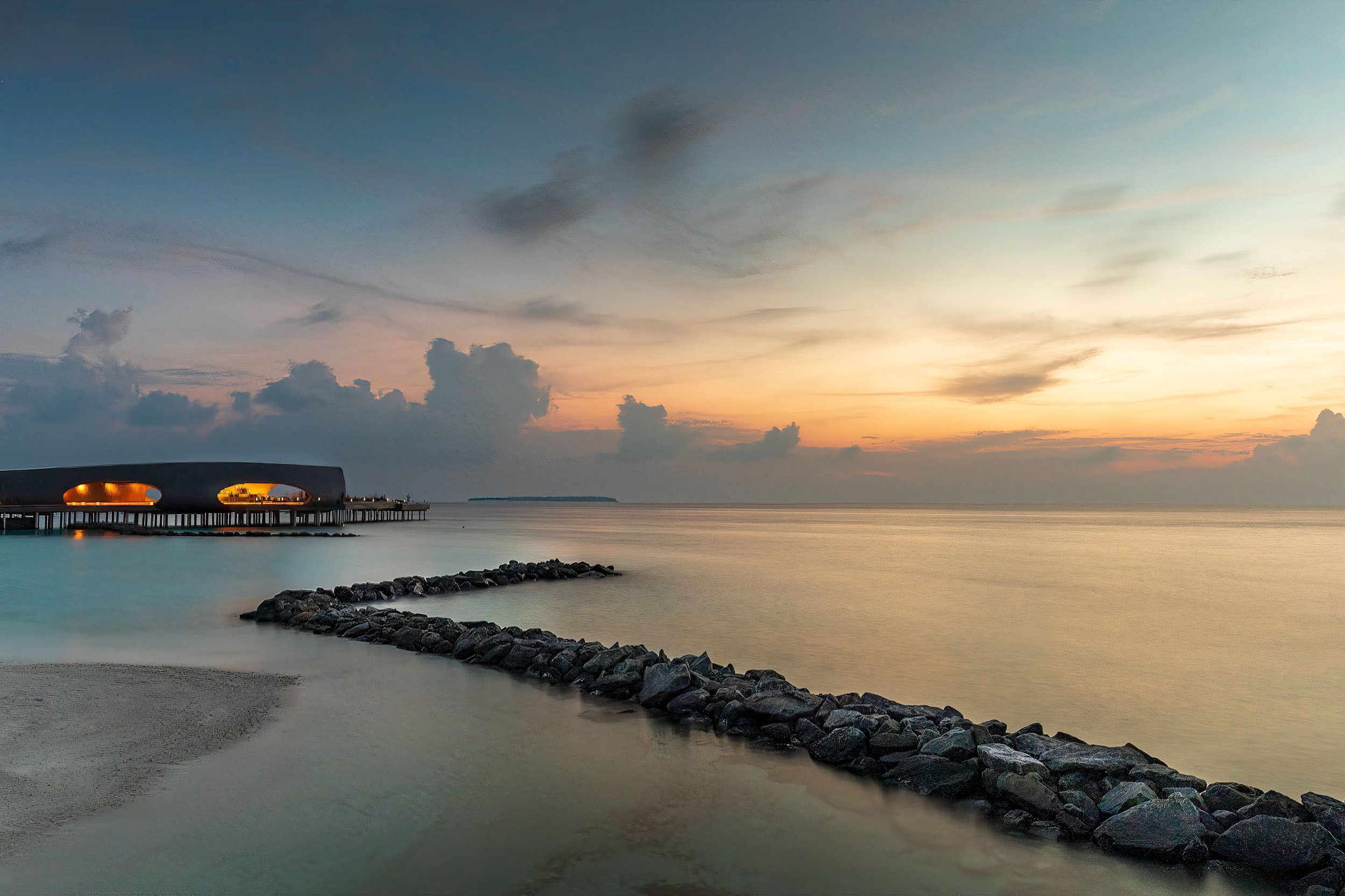
The Sandbank Excursion
Most resorts offer sandbank excursions, a boat ride to a private strip of white sand rising barely above sea level in the middle of the lagoon. At sunset, with the water going turquoise on every side and the sky turning orange above, this is the most cinematic location available in the Maldives. A 24-70mm covers the wide environmental shots. A polarizing filter deepens the color of the water on either side of the sand.
Pro Tip: Book the sandbank excursion for sunset rather than midday. The harsh equatorial sun at noon flattens everything. Late afternoon light, around one hour before sunset, creates long shadows on the sand and saturates the water color.
Underwater and House Reef Photography
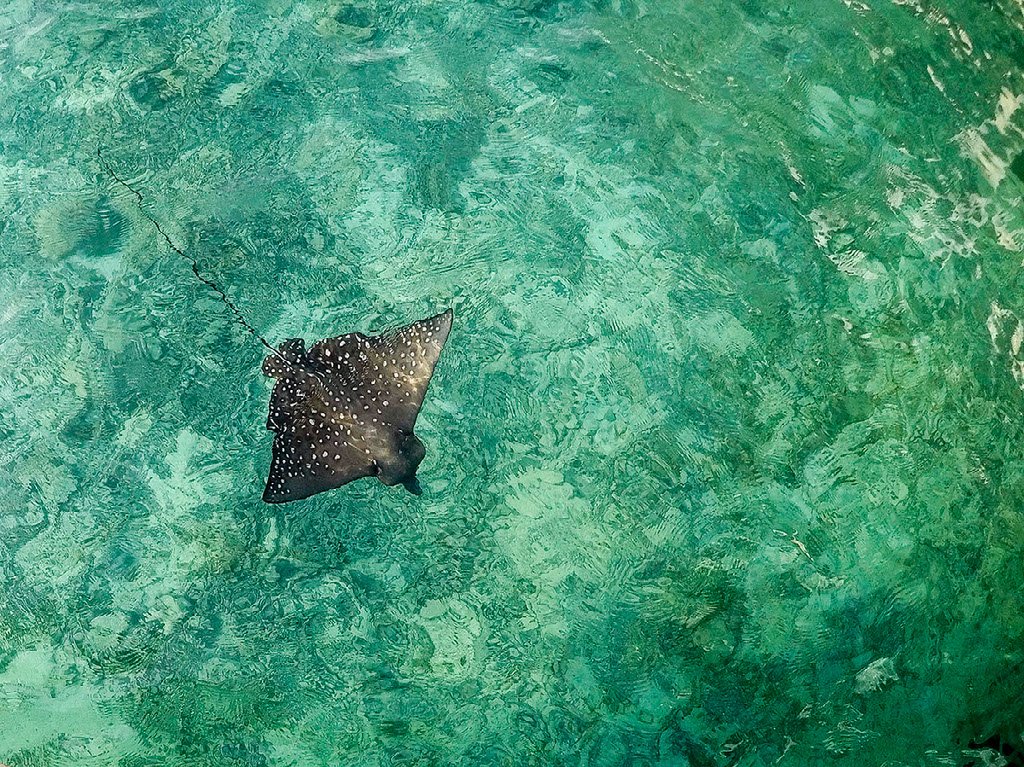
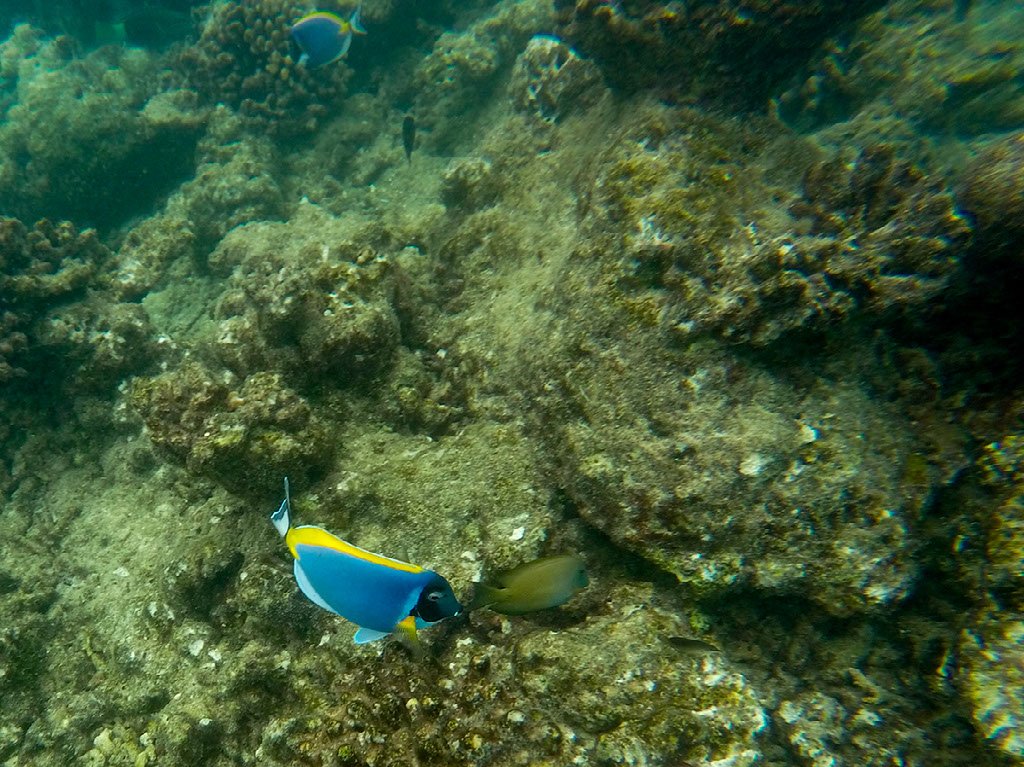
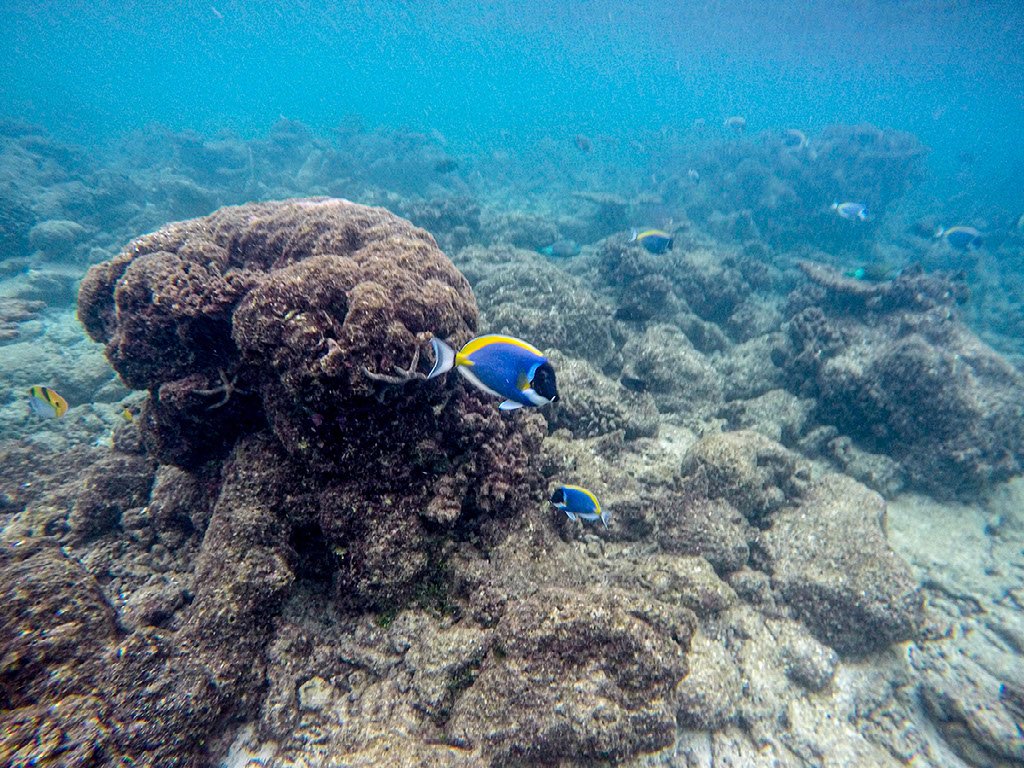
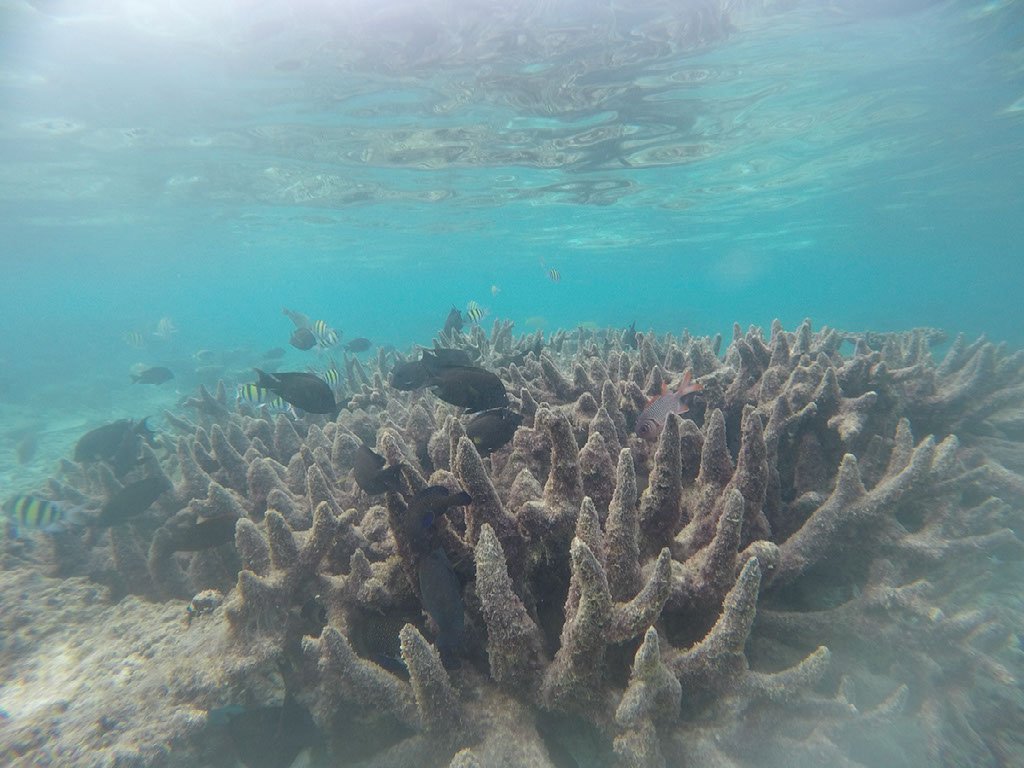
The real Maldives is below the surface. Most resort islands have a house reef within swimming distance of the shore, home to reef fish, sea turtles, eagle rays, and nurse sharks, depending on the atoll. A GoPro or an entry-level underwater housing for your mirrorless body covers this well. Shoot at shallow depth in the first few meters where natural light is strongest, shoot with the sun behind you for the most vivid coral color, and get low and close rather than shooting from above.
Pro Tip: The best underwater light is between 9 a.m. and 11 a.m. when the sun is high enough to penetrate clearly but not yet creating harsh midday contrast. Sea turtles are most active in the morning.
The Resort from a Kayak or Stand-Up Paddleboard
One of the least photographed but most rewarding perspectives in the Maldives is the resort island from water level, slightly offshore. Paddling a kayak or SUP 50 to 100 meters out from the main beach gives you a clean angle on the overwater villas, the palms, and the lagoon color, without any crowds or resort infrastructure in the foreground. Use a waterproof camera bag or dry pouch for your mirrorless body. A 24-70mm covers the full composition.
Pro Tip: Go early in the morning before the wind picks up. Flat water is essential for clean reflections from this angle, and the morning light wraps around the villas from the east in a way that the afternoon light simply does not replicate.
Best Time to Visit the Maldives
From November to April, the dry season brings calm seas and clear skies. This is ideal for sunrise and sunset photography, aerial shots, and underwater clarity.
May to October brings more dramatic skies, scattered rain, and rich, moody light. It’s perfect for capturing texture and drama.
My favorite time? Late March to early April. The weather is stable, the light is buttery, and the water is like glass.
Dry season: Think star trails, drone shots, snorkeling clarity.
Wet season: Great for reflections, stormy skies, black-and-white mood shots.
Photography Gear for the Maldives
The Maldives is not a place where you need to overpack. In fact, the simpler your kit, the better your experience.
DSLR and Mirrorless Kit
For camera bodies, I shoot the Canon EOS R5 Mark II as my primary and carry the Leica Q3 as my walk-around. Either the Sony A7R V or Nikon Z8 would serve you equally well here. All three bodies handle bright, high-contrast tropical light well, and their color science does something wonderful with turquoise water.
For lenses, here is what I bring and why:
Your wide angle (15 to 35mm) earns its place every single day. Overwater villas, lagoons at sunrise, the geometry of a sandbank stretching into the horizon, this is where that focal length shines. The Canon RF 15-35mm f/2.8 is my first choice.
A standard zoom (24 to 70mm) handles nearly everything else. Candid resort moments, food photography, portraits at the water's edge. Versatile and underrated here.
Your telephoto (70 to 200mm) matters more than you might expect. Dolphins from a boat, reef sharks in shallow water, birds on the beach, and isolating a lone villa against a painted sky. Bring it.
A prime lens (50mm or 85mm) is worth the weight if you shoot portraits or want that clean compression for intimate beach shots.
Accessories I never leave home without:
Circular polarizer. This is not optional in the Maldives. It cuts the glare off the water and makes those impossible shades of blue and green actually show up in your files. Put it on your wide angle and leave it there.
ND filters (3, 6, and 10 stop). Long exposures at sunrise on a perfectly still lagoon are some of the best shots you will take here. A 10-stop ND at the right moment is transformative.
A GoPro. Even if you do not scuba dive, snorkeling with a GoPro opens up an entirely different set of images. The reef system here is extraordinary, and a GoPro handles the salt water, the bumps, and the constant submersion without any fuss. Mount it to a float handle, shoot in SuperPhoto mode for stills, and use a red filter to bring the color back into your underwater footage. The current Hero series shoots 5K and handles low-light reef conditions better than any phone housing I have used.
A sturdy travel tripod. Blue hour lasts about 20 minutes in the tropics and moves fast. Have it set up before the light changes.
Lens cloths and silica gel packs. Salt air and humidity will coat your front element. Carry twice as many cloths as you think you need. Store lenses with silica gel every night.
Extra batteries and memory cards. You will be far from any camera shop. Pack double what you think you need.
Samsung T7 SSD for nightly backups. Non-negotiable.
iPhone Photographers for the Maldives
The Maldives might be the single best destination on earth for iPhone photography. Here is how to use it well:
Use Portrait Mode on your resort staff and fellow travelers at the water's edge. The soft background blur against the turquoise water creates images that look like they came off a film set.
For the water itself, use the ultrawide lens in the morning when the lagoon is flat. The low angle and wide perspective exaggerate the scale of the horizon in a way that feels almost unreal.
In the Apple ProRAW format, the latitude for recovering highlights in a blown-out sunset sky is genuinely useful here. Turn it on before golden hour and shoot in it for the rest of the evening.
At night, use Night Mode for bioluminescence if your resort's beach has it. Set your iPhone flat on the sand, point toward the water, and let it expose for 3 to 4 seconds. You will be surprised what it captures.
Drone Note: Drone regulations in the Maldives vary by resort and atoll. Most resorts require you to register your drone in advance and fly only within designated areas. Always check directly with your resort before you travel, as restrictions are enforced and some islands prohibit all drone use to protect wildlife and guest privacy. Flying over another guest's villa without permission is not allowed.
Frequently Asked Questions About Visiting the Maldives
How do you get to your resort once you land in the Maldives?
Most resorts require a seaplane or speedboat transfer arranged in advance through your hotel, not something you book on arrival. Confirm your transfer details well before you leave; this isn't a last-minute logistics to figure out at the airport.
Is the Maldives expensive?
Generally, yes, especially the overwater villa resorts, but there's a real range depending on which island and season you choose. Peak season (December through April) commands the highest prices; visiting in the shoulder months can bring meaningful savings without sacrificing the weather.
Should you stay on more than one island?
Yes, if your trip allows it. Each resort island has its own personality, and moving between two gives you a genuinely different experience rather than one long stay in a single place.
What are the best photo spots in the Maldives?
The overwater villa jetty at blue hour, a sunset sandbank excursion, and the house reef just offshore for underwater photography are three that consistently deliver. The full list with Pro Tips is above.
Can you fly a drone in the Maldives?
It depends on your specific resort and atoll. Most require advance registration and restrict flying to designated areas, and some prohibit it entirely to protect wildlife and guest privacy. Always confirm directly with your resort before you travel.
What surprised you most about photographing the Maldives?
A dolphin tour that seemed to be coming up empty. We were out with a marine biologist for nearly two hours without a single sighting, and then, on the way back to the hotel, dozens of dolphins suddenly appeared around the boat. It was one of those moments you can't plan for, only be lucky enough to witness.
How many days do you need in the Maldives?
Five to seven days minimum, longer if you're splitting your stay across two resorts. The islands reward slowing down, this isn't a destination built for a quick visit.
Do you need to know how to scuba dive to enjoy the Maldives?
No. Snorkeling directly off most resort house reefs gives you excellent access to marine life, sea turtles, reef fish, and often reef sharks, without any diving certification required.
Final Thoughts
The Maldives is one of those destinations that sounds almost too good to be true until you are actually there, standing at the end of a jetty at 6 in the morning with a still lagoon in front of you and the kind of light that makes even a phone snapshot look like a magazine cover. I have been lucky enough to visit multiple times, and the pull of those islands has never faded.
Go. Take more than one island if you can manage it. Shoot at sunrise before the rest of the resort is awake. Swim in the lagoon in the late afternoon when the light goes golden and everything turns amber. And please, turn off the phone for at least a few hours every day. Some places deserve to be experienced, not just photographed.
Want to improve your photography while exploring some incredible destinations? Join me on one of my photography workshops! You can find all the details, including upcoming destinations and dates, through the links below.
Let's Stay Connected!
More Guides to Explore
If the Maldives has you dreaming about the Indian Ocean and Southeast Asia, these guides belong on your list.
My Photography & Travel Guide to Sri Lanka Sri Lanka sits just north of the Maldives and belongs on the same trip. The ancient temples of Galle, wildlife reserves full of elephants and leopards, and a coastline that rivals anything in the region. Fly into Colombo, spend a week, and connect to Malé on the way home.
My Photography & Travel Guide to SingaporeSingapore is one of the most logical stopover cities for a Maldives trip. The airport makes it easy, the food scene makes it worth staying, and the city itself is one of the most photogenic in Asia. Gardens by the Bay, Chinatown, and Little India all reward a camera and a half day of wandering.
My Photography & Travel Guide to Bali, Indonesia If you want to extend your Indian Ocean journey, Bali is a short flight from Singapore and a completely different photographic experience. Rice terraces, temple ceremonies, volcanic landscapes, and one of the warmest photography cultures in the world. A natural companion to any Maldives trip.
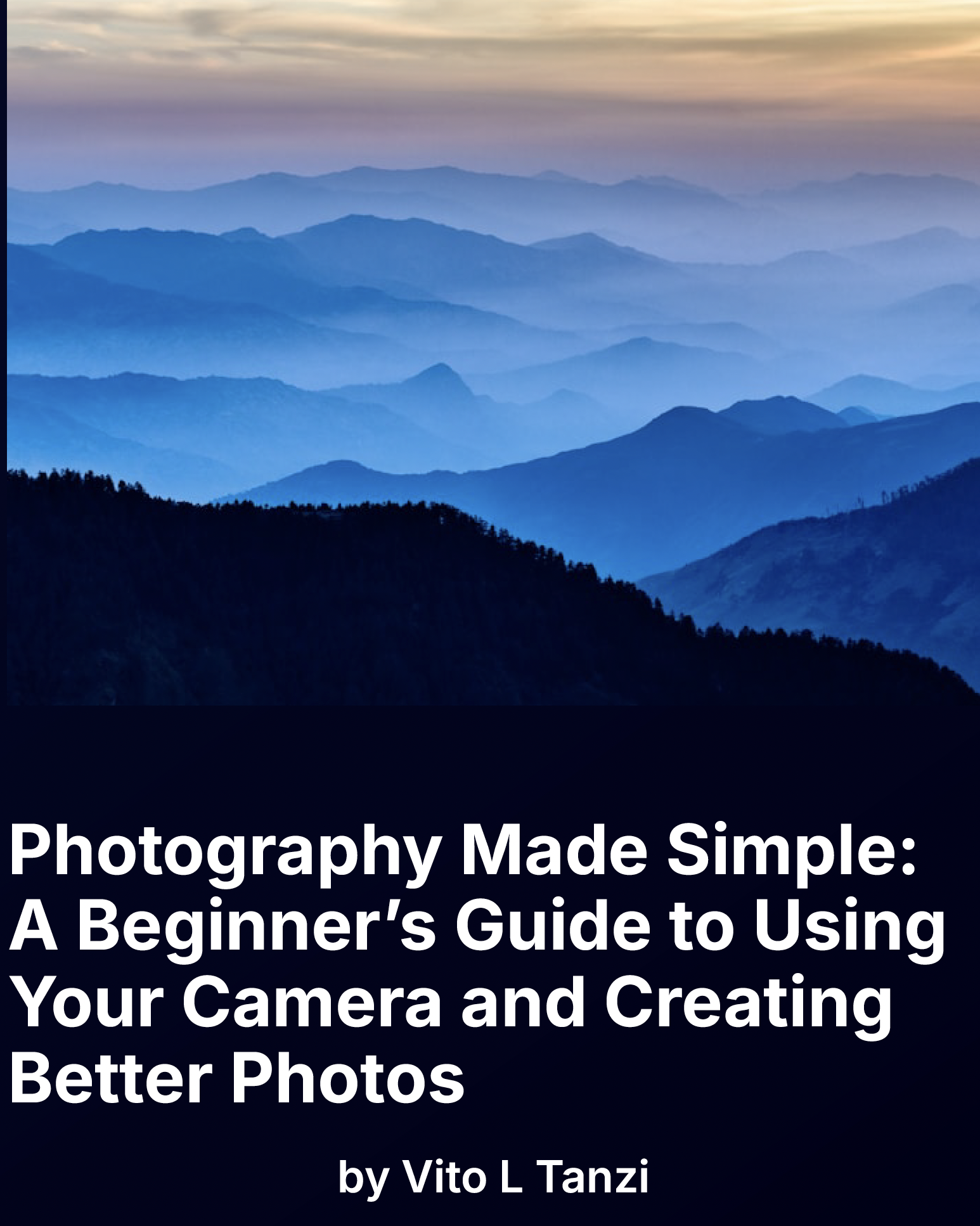
Finally—a beginner-friendly photography guide that makes sense.
If you've ever picked up a camera and thought, "Now what?" this is the book for you.
Photography Made Simple is written for adults who are just starting out and want a clear, encouraging, real-world approach to learning photography. Whether you're using a DSLR, mirrorless, or just your smartphone, this guide walks you through the basics—without the jargon or tech overwhelm.
Inside, you'll learn:
The only camera settings you really need to know to get started
How to shoot sharper, more intentional photos using light and composition
Simple tips for portraits, landscapes, travel, and everyday life
What gear you do (and don’t) need
How to create better photos without upgrading your camera
You’ll also get practical exercises, cheat sheets, and tips for organizing and editing your images—plus the confidence to shoot off Auto Mode for good.
This is not a textbook. It’s a friendly guide to seeing the world with fresh eyes—and finally capturing what you see the way you imagine it.
📸 Format: PDF download
Pages: 100+
Perfect for: Beginners, hobbyists, and anyone ready to take better photos without the stress