London, England Travel & Photography Guide: Best Photo Spots, Things to Do & Hidden Gems
I came to London as a child and honestly did not think much of it. Too grey, too crowded, too busy being itself to notice whether I was enjoying myself. Then I came back in 2017 with a camera, and everything changed. That is the thing about photography: it teaches you to see. When you carry a camera through London, the city stops being a blur of red buses and tourist queues and becomes something else entirely. You start noticing the way morning light catches the stone face of St. Paul's at 7am. You find yourself stopping in the middle of a Chelsea side street because a doorway has been painted exactly the right shade of blue. You wake up early to walk through Hyde Park before the world arrives, and you stand at the edge of the Serpentine in the mist and understand, for the first time, why Turner spent his entire life painting this city's light.
Twelve visits later, I am still not done with it. London is extraordinary for photographers because the subjects are inexhaustible: Tower Bridge at blue hour, the Victorian iron roof of Borough Market on a weekday morning, the murals of Shoreditch that change season to season, the hidden staircases in department stores and gallery wings that most people walk right past. But London does not belong only to photographers. It belongs to anyone who loves great food, extraordinary museums, and the feeling of a city fully alive in every neighborhood at every hour. The food alone will rewrite what you think you know about British cooking.
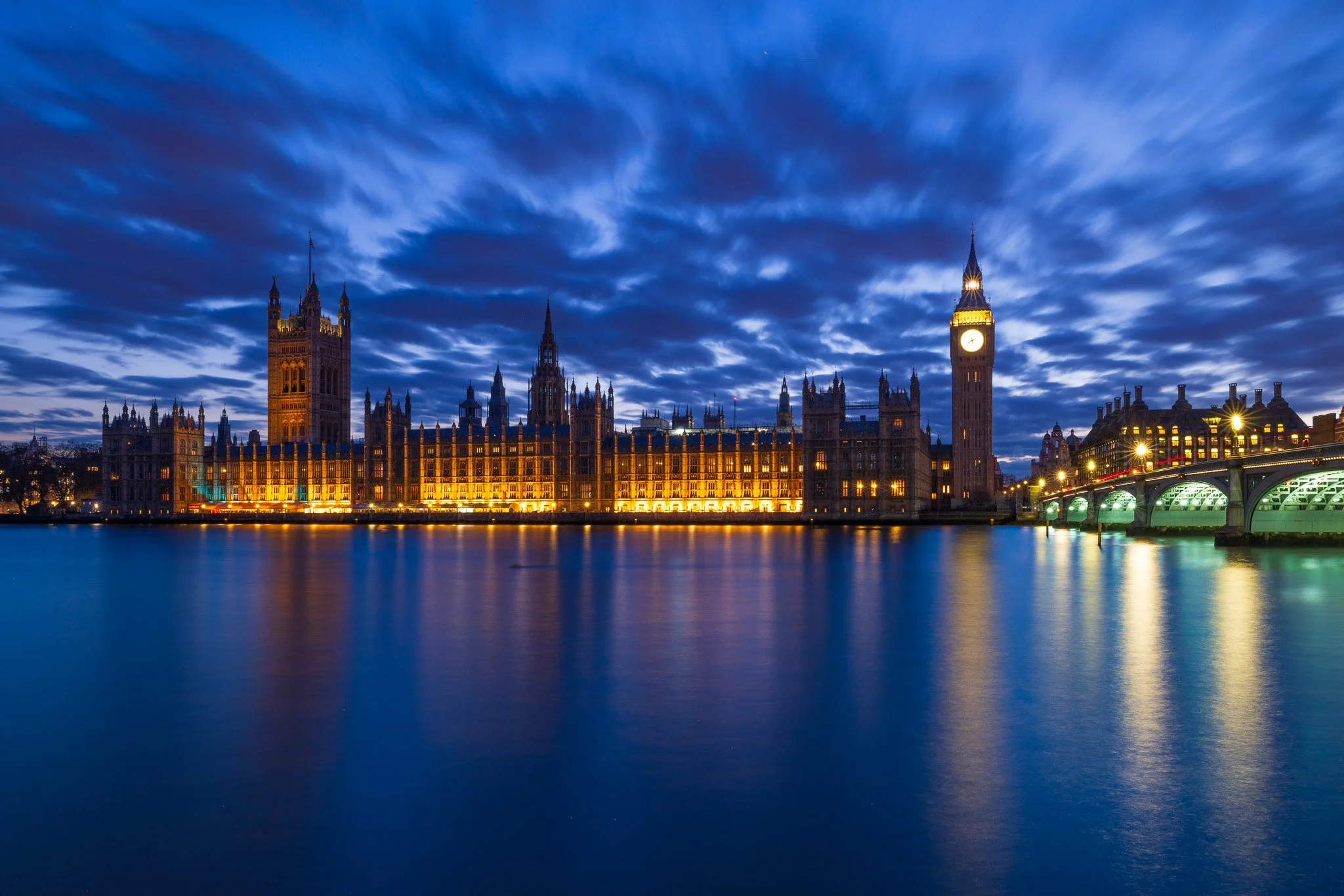
London’s historic architecture and modern skyline come together along the River Thames.
The parks, which cover nearly a fifth of central London, are the city's best-kept secret. And the neighborhoods, from the Moroccan spice stalls of Brixton to the Georgian crescents of Notting Hill to the City's glass-and-steel skyline, feel less like parts of one city and more like a collection of great cities that happen to share a river.
In this Photography Guide to London, I share the places and experiences that continue to draw me back. You will find my favorite photography locations, guidance on when and where to shoot, practical travel tips, and gear recommendations, along with cultural insights to help you explore and photograph London with confidence, respect, and ease.
Photographer's Notes
Before you go, here are my own takeaways.
Favorite Season: Spring
Favorite Sunrise Location: Victoria Embankment
Favorite Sunset Location: Tower Bridge and Westminster Bridge
Favorite Neighborhood: Notting Hill for street photography, Shoreditch for graffiti
Favorite Hotel: The Cadogan, A Belmond Hotel
Favorite Café: Ottolenghi Chelsea
Favorite Lens: 15-35mm f/2.8
Would I Return? Every chance I get. London offers so much to photograph.
Best Time to Visit London, England
For photography and comfort, spring and autumn are the best windows. April through June brings soft, warm light, the parks in full color, and manageable crowds. Golden hour stretches long in May and early June, sometimes past 9pm, giving you hours of workable light. September and October bring cooler temperatures, dramatic skies, and the first autumn color in the Royal Parks. The quality of light in autumn London, low and golden, is among the finest in Europe.
Winter is worth serious consideration for photographers who can handle the cold. The fog that settles over the Thames in December and January turns Tower Bridge and the South Bank into something almost cinematic, soft and quiet and unlike any other time of year. The Christmas lights on Oxford Street and Carnaby Street from late November through early January transform central London into something that looks designed specifically to be photographed. Crowds at the major landmarks are thinner than in any other season.
Summer brings the longest days and the biggest crowds. If you visit between June and August, start early and shoot the iconic locations before 8 am. By mid-morning at Tower Bridge or Buckingham Palace, the tourist density makes clean compositions significantly harder. The upside: long golden hours that run from 4:30 am sunrise to nearly 10 pm sunset.

Members of the Royal Guard riding through Hyde Park in central London.
Where to Stay in London, England?
London is a city of neighborhoods, and where you stay shapes everything about how you experience it. For photographers, the three strongest bases are Knightsbridge/Chelsea (closest to Hyde Park and the Royal Parks), the South Bank/Bankside area (walking distance to Tower Bridge, Borough Market, and the Tate Modern), and Shoreditch (for the East End, street art, and Brick Lane). For those who want the most central position, Covent Garden or Bloomsbury puts you in the middle of everything.
South Bank / Westminster — For Classic London Views Right in the heart of historic London, near Big Ben, the London Eye, Westminster Abbey, and the Thames. Incredibly photogenic, walkable, and well-connected. Best for first-time visitors, photographers chasing skyline shots, and couples. Nearby stations: Waterloo, Westminster.
Shoreditch / East London — For Creative Vibes and Street Photography, London's edgy, artsy side. Vibrant street art, independent cafes, fashion-forward crowds, and some of the city's best food markets. A magnet for photographers interested in urban texture and visual storytelling. Nearby stations: Liverpool Street, Shoreditch High Street.
Covent Garden / Soho / Bloomsbury — For Central Convenience Within walking distance of the West End theaters, museums, shops, and restaurants. Day or night, you are close to everything. Nearby stations: Covent Garden, Leicester Square, Tottenham Court Road.

The historic façade of the Mandarin Oriental Hyde Park in Knightsbridge.
Luxury Hotels in London, England
The Cadogan, A Belmond Hotel — 75 Sloane Street, Chelsea
This is my favorite hotel in London, and I have stayed here enough times to say that with conviction. The Cadogan sits on the curve of Sloane Street between Chelsea and Knightsbridge, five minutes from Sloane Square, ten from Harrods, fifteen from Hyde Park. The building is the real story: Oscar Wilde was once arrested here. Belmond's reimagination preserved every detail of the late-Victorian original, from the sparkling mosaic floors and oak bars to a hand-lathed staircase that has been here since Victoria's time and a crystal-encrusted peacock named Oscar in the lobby. The private garden behind the hotel is a rarity in central London and one of the most peaceful spaces in Chelsea. The restaurant Willet's earned a Michelin Key designation, and the afternoon tea is among the most refined in the neighborhood. For photographers, the position for Hyde Park, the Royal Parks circuit, and the Knightsbridge streets is excellent. Wake up early and you can be at the Serpentine in morning mist before the city has started its day.
Mandarin Oriental Hyde Park — 66 Knightsbridge
The Mandarin Oriental occupies one of the most dramatic positions of any hotel in London: directly on Knightsbridge, facing Hyde Park, with one of the most exuberantly Victorian facades in the city. The interiors were redesigned by Joyce Wang in a reimagination that preserved the heritage and replaced everything that had grown tired. The rooms facing the park are among the finest in London, and the spa has a 25-meter pool surrounded by lights that reflect off the water and ceiling like a night sky. The dining is the headline: Dinner by Heston Blumenthal holds two Michelin stars, with a menu built from historical British recipes researched in the British Library archives. Every dish carries a date from culinary history. The doormen Gregory and Robert out front are exactly what you hope a Knightsbridge hotel doorman will be.
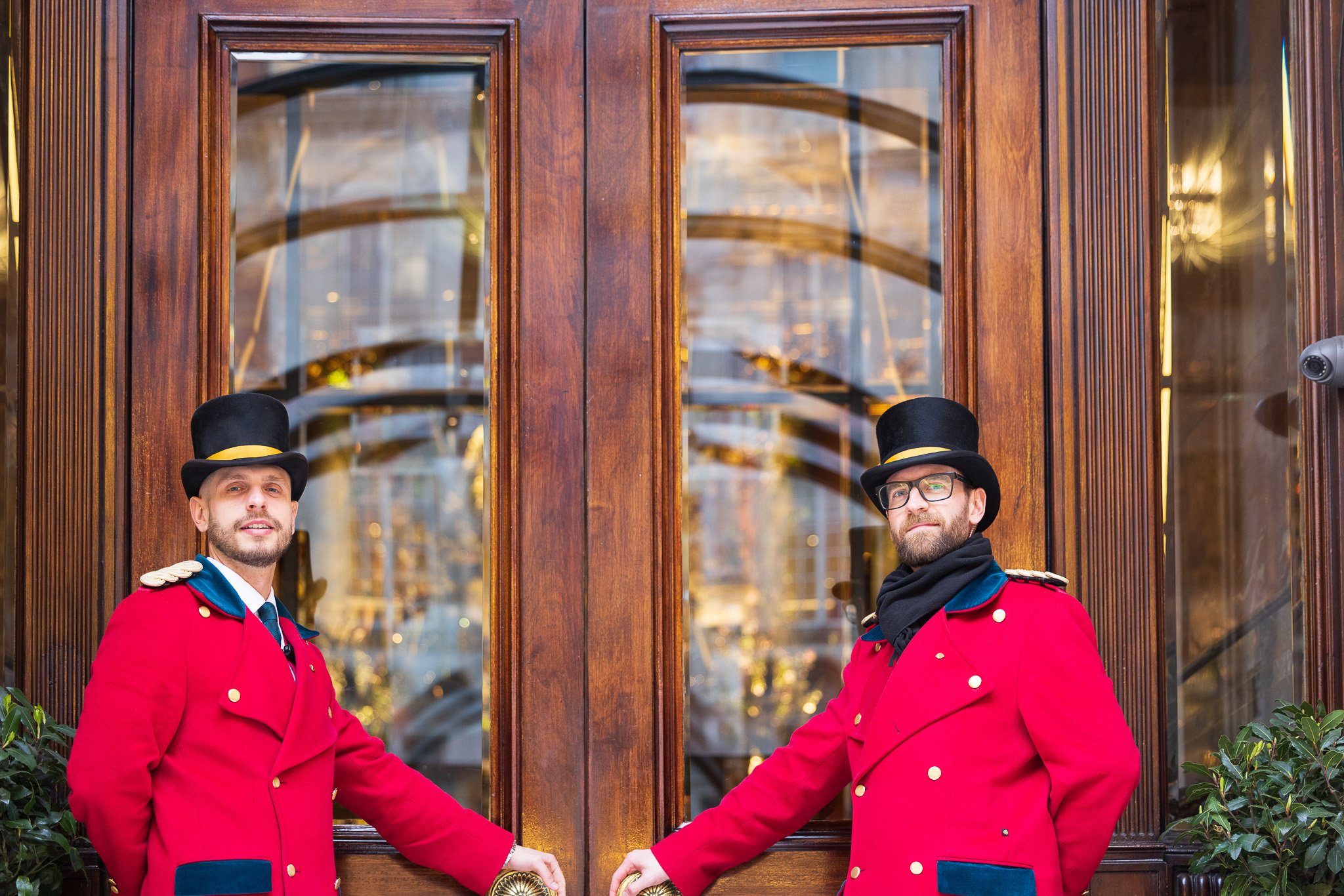
Gregory and Robert welcoming guests at the Mandarin Oriental Hyde Park in Knightsbridge.
Shangri-La at The Shard — 31 St Thomas Street, London Bridge
For photographers who want to sleep inside London's most dramatic view, the Shangri-La is the only answer. The hotel occupies floors 34 through 52 of The Shard, with rooms and suites facing Tower Bridge, the City, and the Thames in every direction. The Sky Pool at 182 meters above the city is the highest swimming pool in Western Europe. The morning room views are extraordinary: Tower Bridge below, the Thames curving toward the City, the Docklands beyond. Book rooms facing Tower Bridge and you have the best Tower Bridge view of any hotel in the city.
Mid-Range Hotels
The Hoxton, Holborn — Design-forward with excellent position near the City, Covent Garden, and Shoreditch. The rooftop bar has one of the better views in this price range. A great home base for photographers covering both East and West London.
citizenM London Bankside — Directly on the South Bank, steps from the Tate Modern and Borough Market. Compact, stylish rooms and exceptional value for the location. If Tower Bridge, Borough Market, and the South Bank are your priorities, this is the most efficient base in London.
The Waldorf Hilton — Edwardian grande dame on the Aldwych, beautifully restored, with excellent central position for the West End, the South Bank, and Covent Garden.

A spectacular view across London and the River Thames from the Shangri La at The Shard.
Getting Around London, England
London's public transport is among the best in the world. The Tube (Underground), buses, and the Elizabeth line (Crossrail) make getting anywhere fast and efficient. Use a contactless bank card, Apple Pay, or Google Pay directly on the barriers; no need to buy an Oyster card anymore. The system accepts contactless tap-in tap-out at every station and on every bus.
Black taxis (Hackney carriages) are excellent for longer distances, and you can hail them anywhere. The FreeNow and Gett apps work well for pre-booking London black cabs, which are a genuine pleasure to ride. Uber and Bolt both operate and are generally cheaper than black cabs. Santander Cycles are available citywide for short trips and work especially well around the Royal Parks.
For photographers, the South Bank between Westminster Bridge and Tower Bridge is best covered on foot: the walk takes about 45 minutes at a camera pace and covers the London Eye, the Tate Modern, the Millennium Bridge view, Shakespeare's Globe, and Borough Market in a single logical line. Shoreditch is best explored on foot from Liverpool Street or Shoreditch High Street. The City of London on weekends, when the streets empty of office workers, is extraordinary for architecture photography and very walkable.

The Millennium Bridge crosses the River Thames toward St. Paul’s Cathedral.
How many days in London?
To do London justice with your camera and still have time for scones, plan for five days minimum. That gives you space to explore different neighborhoods, catch the city in varying light conditions, and allow for the weather flexibility that London demands. Four days’ work if you are focused and efficient, but you will feel the compression.
A practical framework: dedicate your first two days to the core landmarks and South Bank, your third to Hyde Park, Knightsbridge, and the museum district, your fourth to the City and Shoreditch, and your fifth to wherever your best light and energy takes you. Greenwich and Richmond are both within 30 minutes of central London and are worth a half-day each for photographers who want something quieter. A full week gives you room to breathe, revisit locations in different conditions, and spend an afternoon at the Chelsea Flower Show or Portobello Road without feeling like you are missing something else.
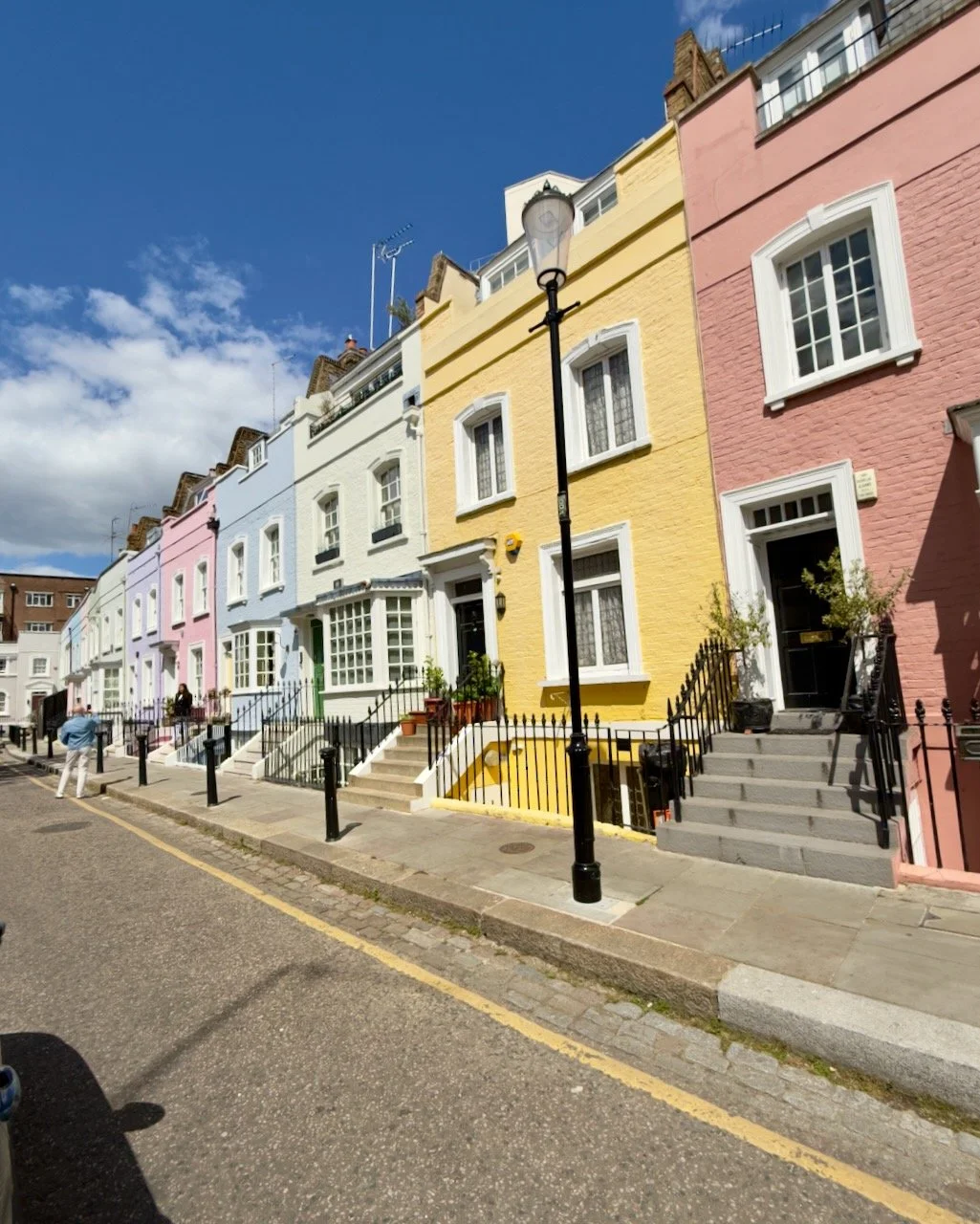
A quiet moment among the movement of central London.
Restaurants, Cafes, & Bakeries
London's restaurant scene underwent one of the most remarkable transformations of any European city over the past twenty years. The city that once had a reputation for terrible food now has more Michelin-starred restaurants than almost anywhere outside Paris and Tokyo. But London's greatest strength is not the top tier alone. It is the extraordinary breadth: the best markets, the most interesting street food, and some of the finest casual cooking in Europe sit alongside world-class fine dining, often within a short walk of each other.
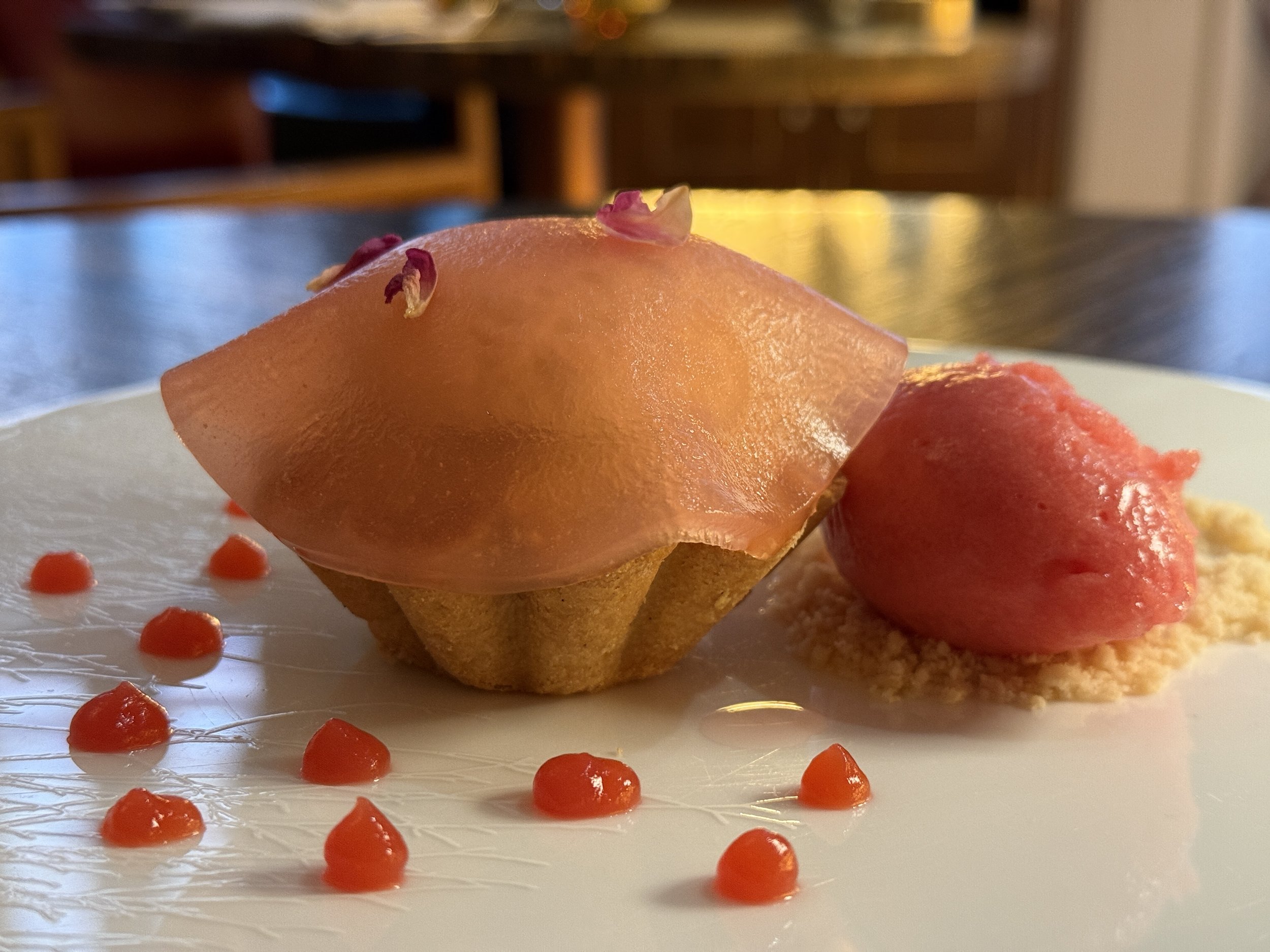
Dining at The LaLee inside The Cadogan in Chelsea.
Compared to Paris, Rome, and other European culinary destinations, the London food scene hasn’t always had a stellar reputation. However, over the last decade, the city has seen a dramatic shift from unremarkable restaurants to a huge selection of delicious options.
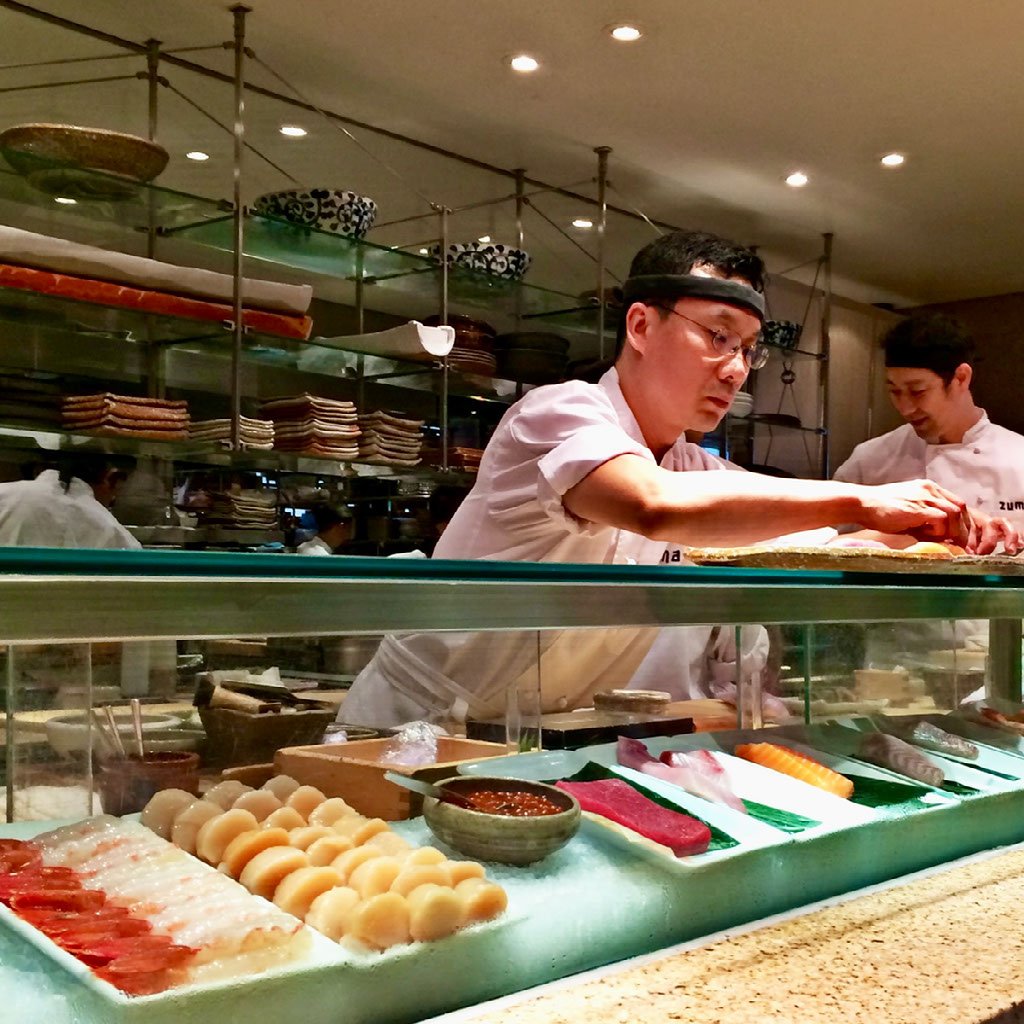
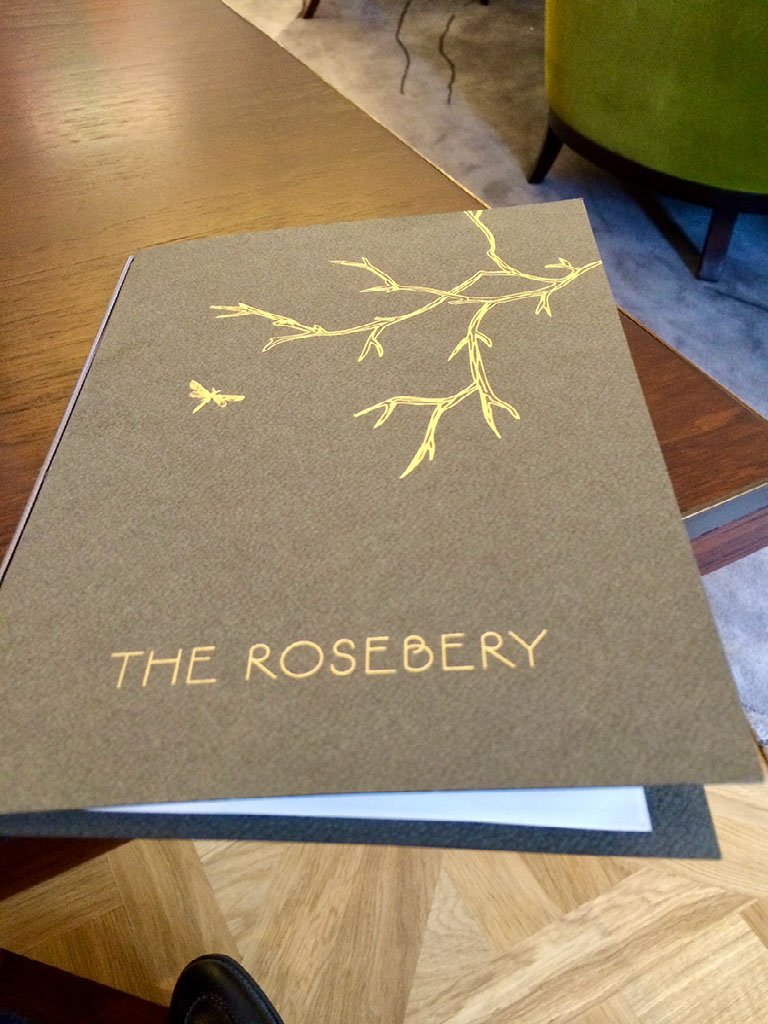
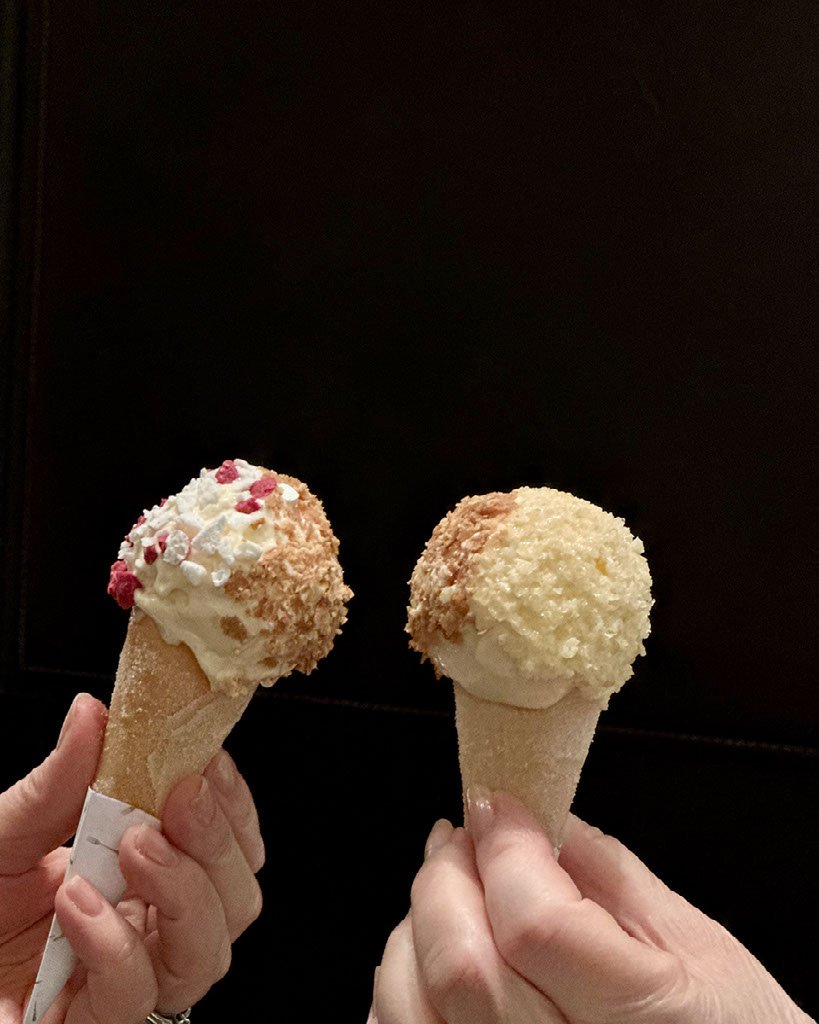
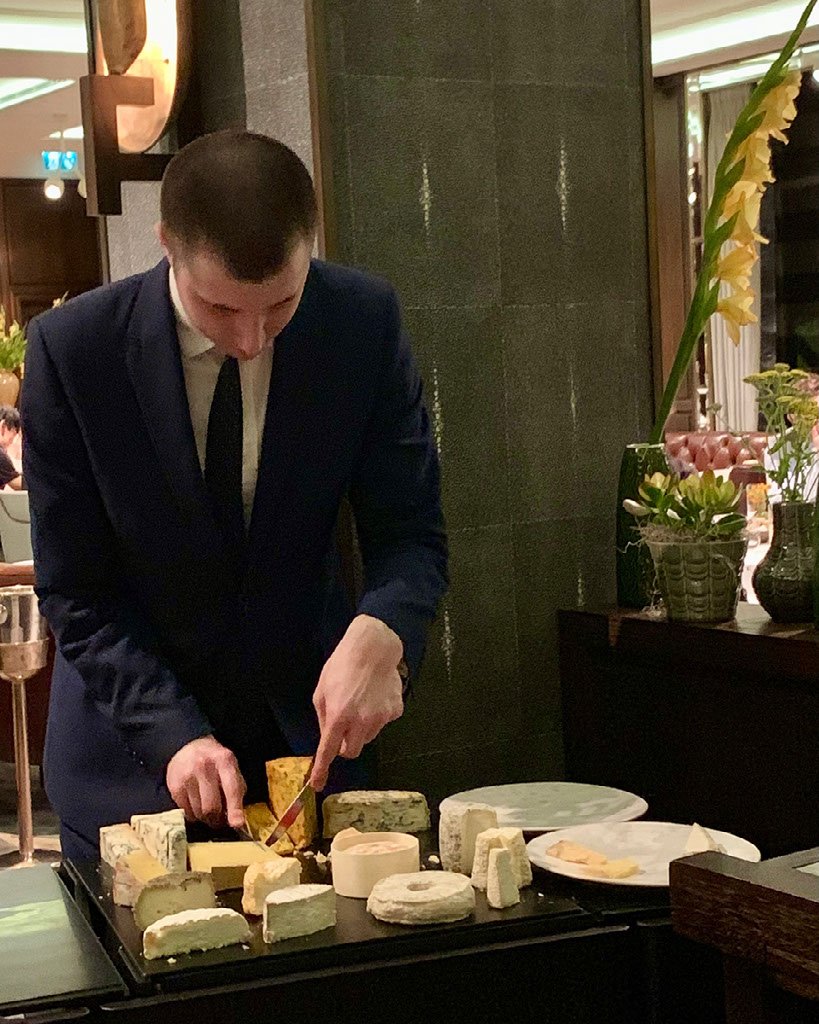
You will definitely not leave London hungry! In fact, there are more than 60 Michelin Star restaurants in the city. However, you do not need to go to expensive restaurants to eat well. There are literally so many great, wonderful, inexpensive restaurants as well. From my short list below, the ones I would highly recommend are Ottolengi, Zuma, and the River Cafe.
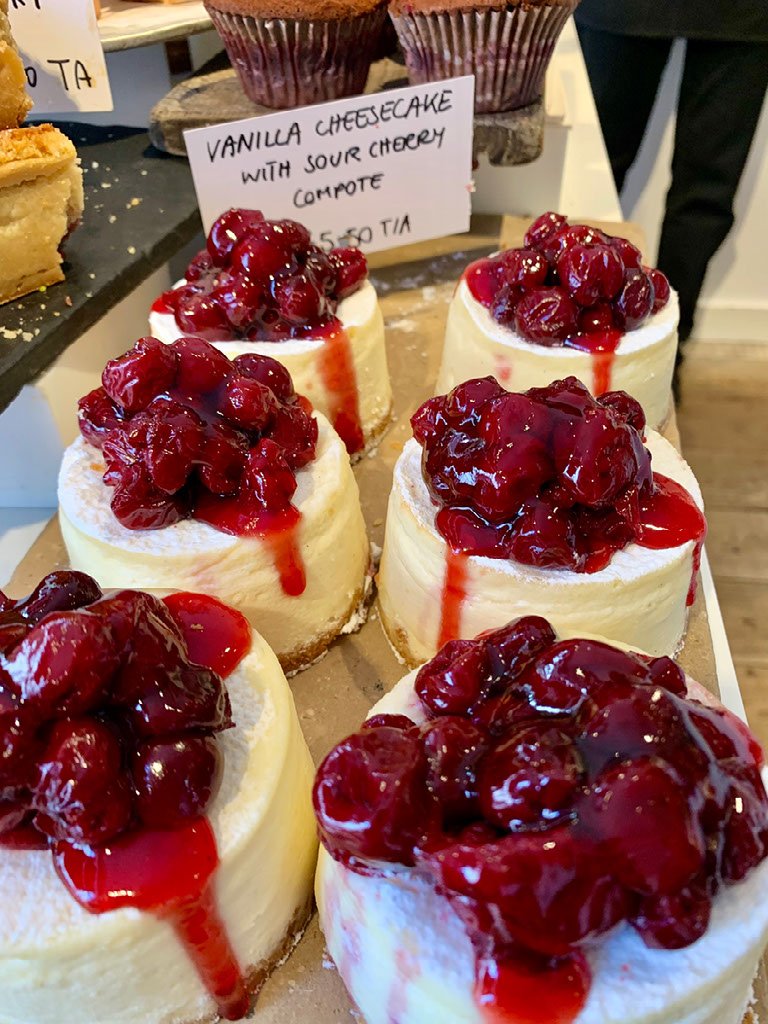
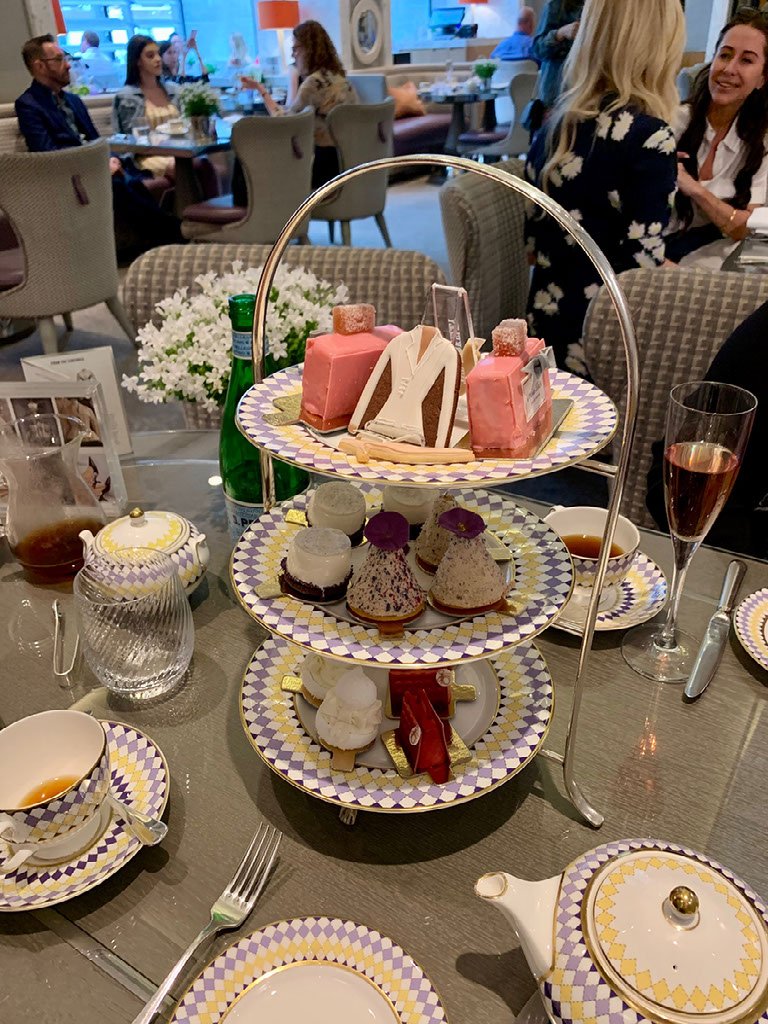
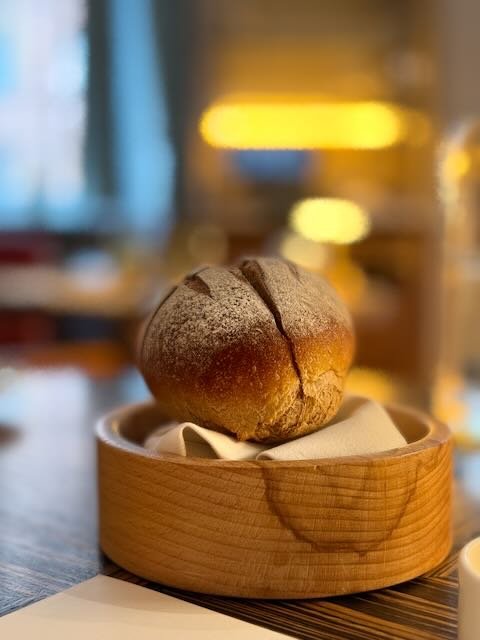

My personal picks, the ones I come back to every visit: Ottolenghi, Zuma, the River Cafe, and The Grill at the Connaught.
Ottolenghi and NOPI — Multiple locations for Ottolenghi; NOPI at 21-22 Warwick Street, Soho. Yotam Ottolenghi's influence on how London eats is difficult to overstate. His delis, scattered across Islington, Notting Hill, and Belgravia, started a vegetable revolution in British cooking that has been running for two decades. The food is rooted in Israeli, Palestinian, and Mediterranean traditions: bold flavors, unexpected combinations, dishes that taste like nothing else in the city. NOPI is his first full-service restaurant in Soho, with whitewashed brick walls, brass pendant lighting, and a menu that moves between the Middle East, Mediterranean, and Asia with genuine authority. Everything is designed for sharing.
Dinner by Heston Blumenthal — Mandarin Oriental Hyde Park, 66 Knightsbridge. Two Michelin stars and one of the most technically inventive restaurants in England. Every dish on the menu is drawn from historical British culinary research, each carrying a date tied to a specific period of British cooking history sourced from the British Library archives. The Meat Fruit dates to 1500: a mandarin-orange-shaped shell of perfectly glazed chicken liver parfait. The Tipsy Cake, from 1810, arrives in a cast-iron skillet with a spit-roasted pineapple alongside. Reserve several weeks ahead and request a window table overlooking Hyde Park.
The River Cafe — Thames Wharf, Rainville Road, Hammersmith. The River Cafe invented modern Italian cooking in London. Ruth Rogers and the late Rose Gray built a restaurant around Italian simplicity and exceptional British ingredients, and it has been one of the best Italian restaurants in Europe since 1987. The wood-fired oven is the heart of everything. Book the outdoor terrace in summer.
Zuma — 5 Raphael Street, Knightsbridge. The standard-bearer for Japanese robatayaki in London since 2002, and still unmatched for its combination of precision cooking and energy. The bar fills with an international crowd by 7pm; the robata grill produces some of the finest skewered proteins in the city. The sake and shochu list is one of the most comprehensive in London.
Locanda Locatelli — 8 Seymour Street, Marylebone. Giorgio Locatelli's Michelin-starred Marylebone institution has been delivering some of the finest Italian cooking in London for over twenty years. The pasta, made fresh daily, is the reason to go. The risottos, the Sicilian desserts, and the ossobuco are all extraordinary. Reserve well ahead for dinner.
The Grill at the Connaught — Carlos Place, Mayfair. One of our favorites in London, full stop. A Mayfair institution that manages to feel both formal and genuinely comfortable at the same time. The room is a deep hunting lodge green, the service is exactly right, and the beef Wellington is as good as any in the city.
Hakkasan — 8 Hanway Place, Fitzrovia. Modern Cantonese cooking in a dramatic subterranean space near Tottenham Court Road. Dim sum at lunch is one of the finest midday meals in London: the har gow, the roast duck puff, and the char siu bao are exceptional. A Michelin-starred restaurant that has remained one of London's most consistent for over twenty years.
Borough Market — 8 Southwark Street, London Bridge. More than a food destination, Borough Market is one of the finest photography subjects in London on a weekday morning before 10 am. Dating back to the 13th century, it is London's oldest food market and one of its most essential experiences. Come hungry. The wild mushroom toast at Brindisa is one of the finest market breakfasts in London.
Franco Manca — Multiple locations. London's best sourdough pizza. The slow-fermented dough, the simple toppings, and the wood-fired ovens produce something genuinely excellent at a fraction of what you would pay anywhere else in central London. The Brixton Market original is the one to visit.
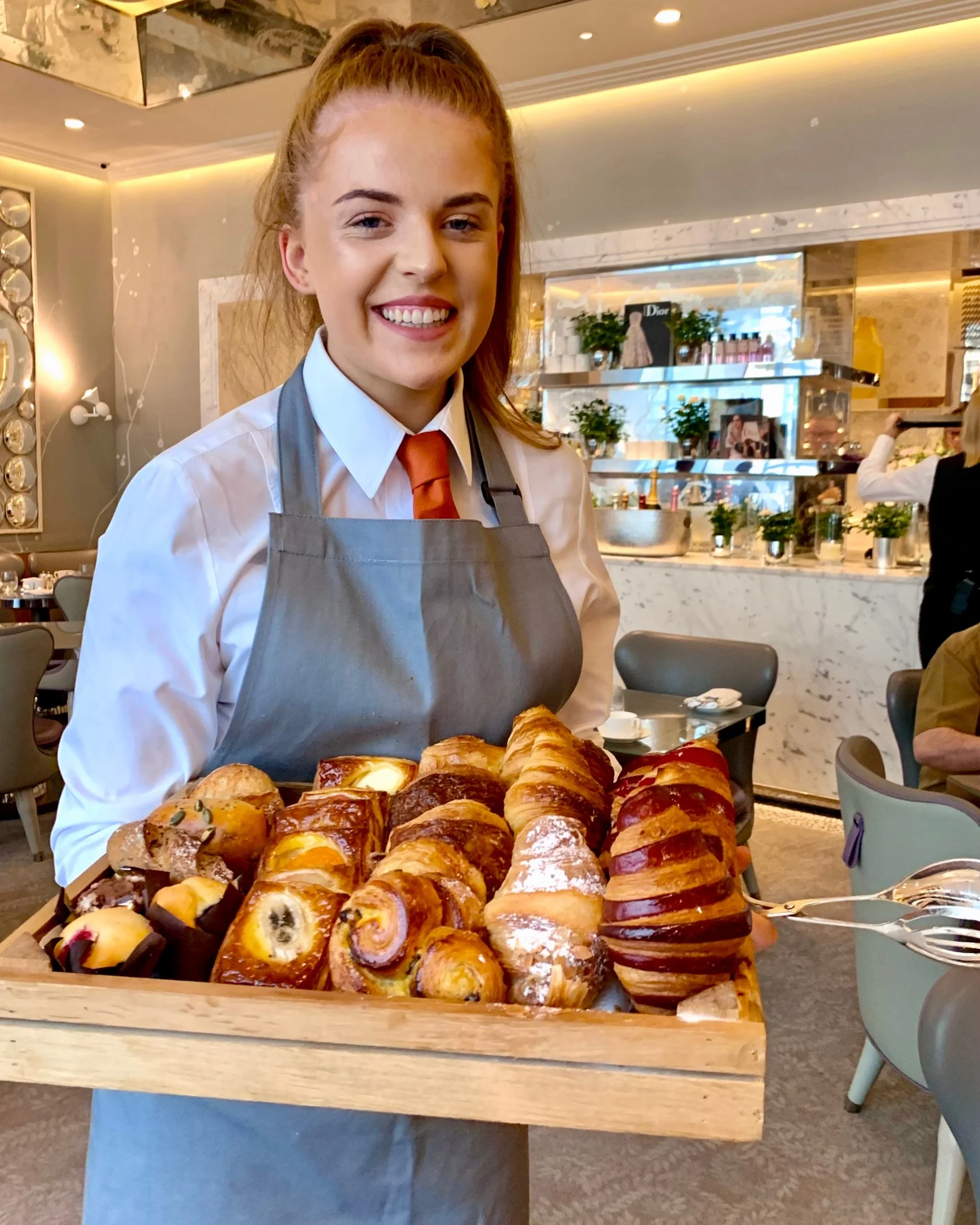
London’s restaurant scene offers everything from casual cafés to world class fine dining.
Afternoon Tea in London, England
If you spend time in London and skip afternoon tea, you have made a mistake. The tradition is entirely genuine and entirely worth an afternoon.
Claridge's in Mayfair is the gold standard; book several weeks ahead. The Dorchester offers an impeccable setting with exceptional finger sandwiches. The Connaught provides the most refined and least theatrical of the grand hotel teas. The Berkeley Pret-a-Portea serves fashion-themed cakes and is the most playful and seasonal option. The Rosebery at Mandarin Oriental delivers serious service in a beautiful room.
Cafés and Bakeries
Monmouth Coffee Company — Borough Market and Covent Garden locations. Exceptional coffee and one of the finest in London.
Arome Coffee — Covent Garden. Fantastic. Do not miss the Honey Butter Toast.
Pophams — One of the best bakeries in London. The pastries are extraordinary.
Fortitude Bakehouse — Excellent bread and coffee in Bloomsbury.
The Roasting Party — Pavillon Street, Chelsea. A gem for specialty coffee in Knightsbridge.
Cedric Grolet at The Berkeley — One of the world's finest pastry chefs. The croissants and fruit tarts are worth planning your morning around.
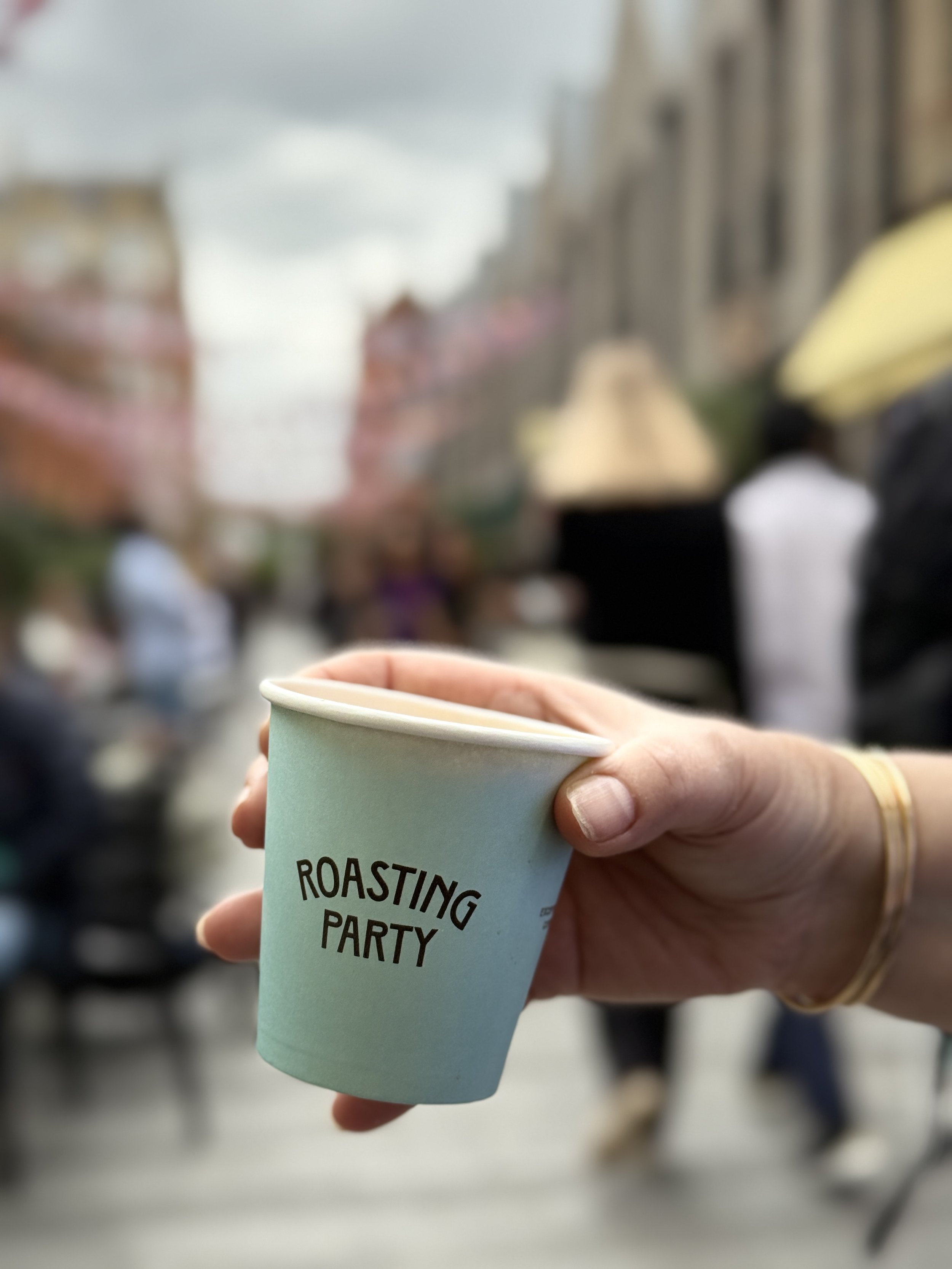
Coffee at The Roasting Party on Pavilion Road in Chelsea.
The RHS Chelsea Flower Show (Only in May)
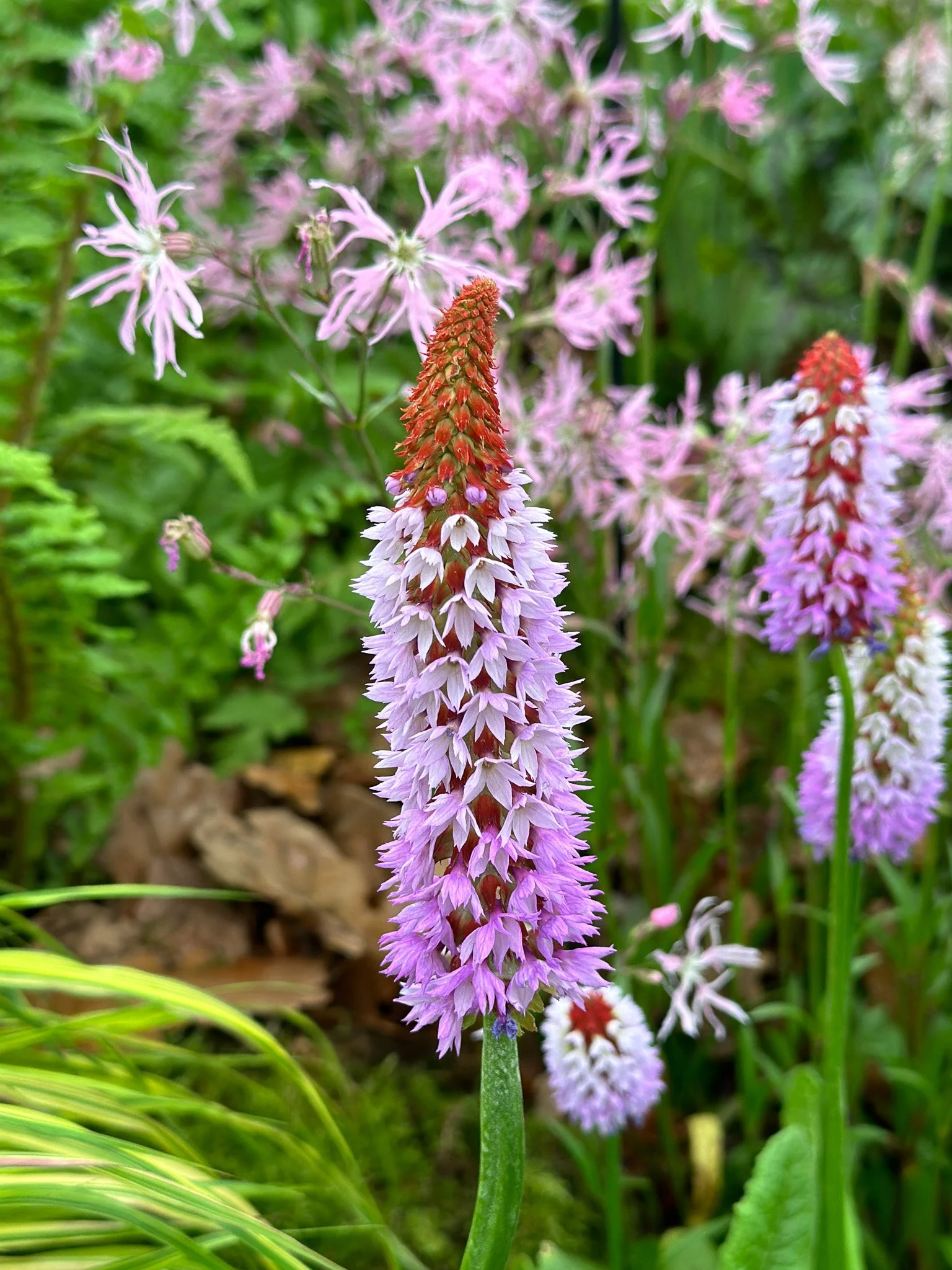
If you want to see and photograph something truly special, the Royal Horticultural Society (RHS) Chelsea Flower Show is simply amazing. The RHS is a charity whose mission is "to inspire a passion for gardening and growing plants, promote the value of gardens, demonstrate how gardening is good for us, and explain the vital role that plants play."

Colorful garden displays at the RHS Chelsea Flower Show, one of London’s great spring events.
The show usually takes place at the end of May, and you have to buy tickets in advance. The flower show rivals the tulips at Keukenhof in the Netherlands. You will be able to visit the incredible gardens with so many varieties of flowers and plants that it will make your head spin. There are something like 800 different types of Roses.

One of the welcoming hosts at the RHS Chelsea Flower Show in London.
“The world’s greatest flower show”



Photography Gear To Bring to London, England
London rewards a full camera kit. Bring a weather-sealed body: the Canon EOS R5 Mark II, Sony A7R V, or Nikon Z8 are all excellent choices. London weather is genuinely unpredictable; a sealed body is not optional, it is essential. I carry the Canon EOS R5 Mark II as my primary body and the Leica Q3 as my walk-around camera throughout every visit.
For lenses, the 16-35mm f/2.8 is your workhorse here. London is a city of grand interiors, Victorian iron roofs, narrow staircases, and wide plazas, and a wide angle serves every one of them. The 24-70mm covers the riverside shots and street scenes. The 70-200mm is essential for Tower Bridge from a distance, for the Changing of the Guard at Buckingham Palace, and for compressing the city skyline from elevated positions. A 35mm or 50mm prime is ideal for Borough Market and Shoreditch street work: unobtrusive, fast, and perfect for low-light market conditions.
Bring a lightweight travel tripod and a Platypod. The Platypod is useful at Baker Street Underground and the King's Cross tunnel, where a full tripod technically violates TfL rules but a low stabilization platform does not. Bring a circular polarizer for glass and water on the Thames, and a 6-stop ND filter for long-exposure work on Millennium Bridge and Westminster Bridge. Extra batteries are essential, especially in winter when the cold drains them faster. I carry the Samsung T7 SSD for field backup.
Drone note: Drones are heavily restricted in central London. The entire zone within 5km of Heathrow and the restricted airspace over the Thames and central London effectively prohibits recreational drone flying in any of the locations covered in this guide. Leave yours at home.
iPhone Tips
The iPhone performs exceptionally well in London across a wide range of situations. For Borough Market, shoot in standard wide mode with Photographic Styles set to a warmer profile; the market light is often low and golden through the Victorian iron roof, and warmer tones preserve the atmosphere. Use Portrait Mode on traders and market characters for subject separation against the stall backgrounds.
For the Baker Street Underground and the King's Cross tunnel, switch to Night mode and brace against the platform wall; the curved Victorian brick vaults respond beautifully to Night mode's longer exposure rendering. At Tower Bridge, shoot from the south bank at blue hour with the standard wide lens and let the iPhone's computational HDR handle the sky-to-water dynamic range. For the Natural History Museum escalator ride through the rotating globe, use the ultrawide and shoot as you ride: a slow upward tilt as you ascend captures the full drama of the globe in a single frame.
Best Photo Spots in London
Interactive London Map: Best Attractions, Photo Spots & Hidden Gems
Hyde Park and the Serpentine
Hyde Park is the Central Park of London and, for photographers, one of its most consistently rewarding subjects across all four seasons. The park stretches 350 acres from Marble Arch in the northeast to Kensington Palace in the west, encompassing the Serpentine Lake, the Long Water, the Diana Memorial Fountain, and the Serpentine Gallery. When I am in London, I visit the park every day. This is a significant reason I always stay in Knightsbridge: the park is five minutes from the front door.
The park changes completely with the seasons. Spring brings daffodils and cherry blossoms along the Flower Walk. Summer fills the Serpentine with rowers and the meadow with sunbathers. Autumn turns the plane trees along the Carriage Drive into cathedral arches of orange and gold. Winter is when the park becomes quietest and, for photographers, most extraordinary.
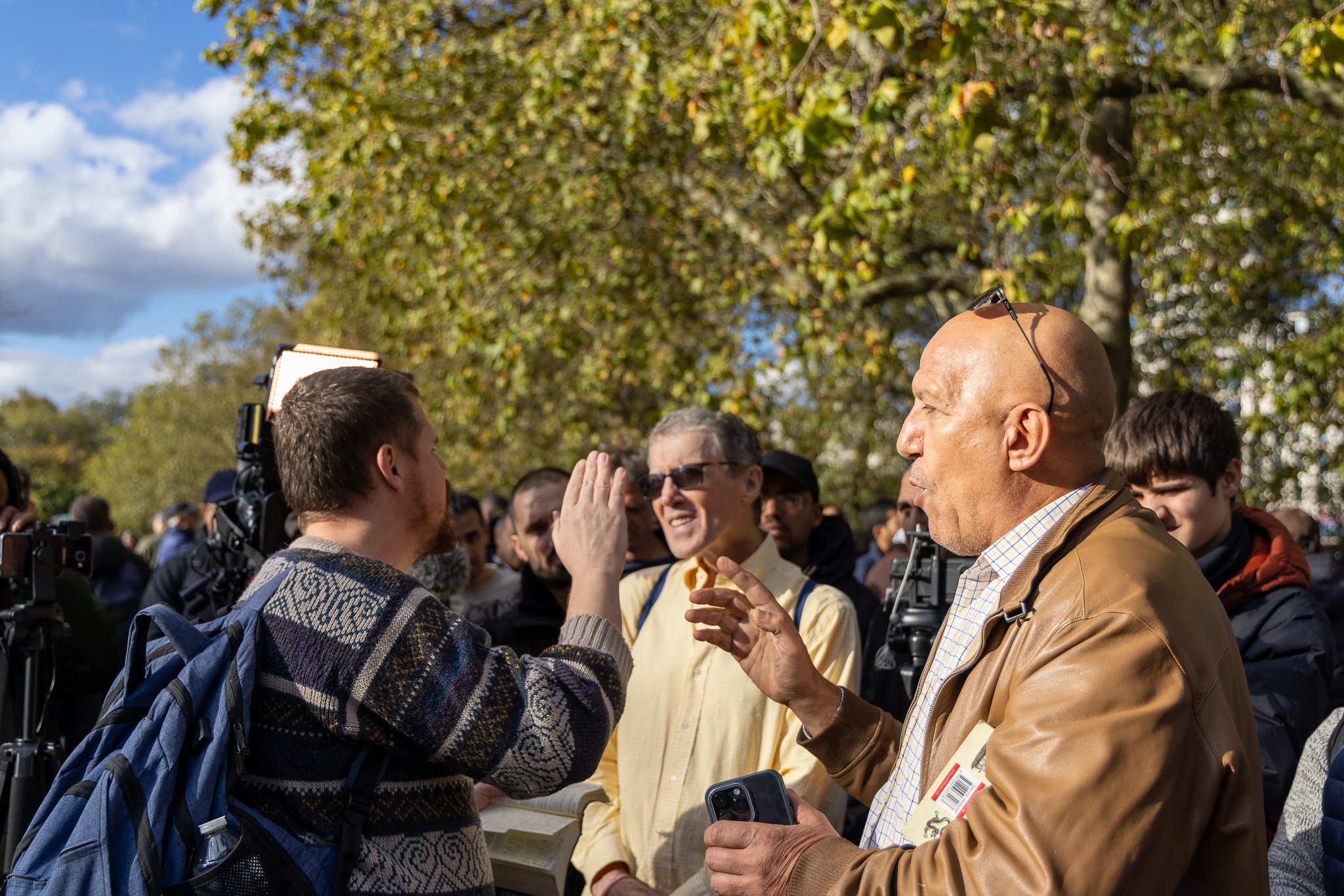
📷 Pro Tip: The Serpentine at 6 am in spring or autumn, with mist rising off the water and the light coming from the east, is one of the finest landscape subjects in London. Shoot from the north bank looking southwest with a 24-70mm; the lake curves away from you, and the far bank trees create a natural frame. The Long Water in Kensington Gardens, looking south toward the bridge, gives a stronger mirror reflection than the main Serpentine. The Kensington Palace facade photographs best at golden hour when the warm light hits the orange-brick front directly from the east. Speakers' Corner on the northeast edge, near Marble Arch, is one of the world's great street photography subjects on Sunday mornings when the orators are active. Take a 35mm prime and work the crowd.
Best time: Sunrise for the Serpentine. Sunday morning for Speakers' Corner. Access: free, open 24 hours.

Early morning along the Serpentine in Hyde Park, one of my favorite places to photograph London.
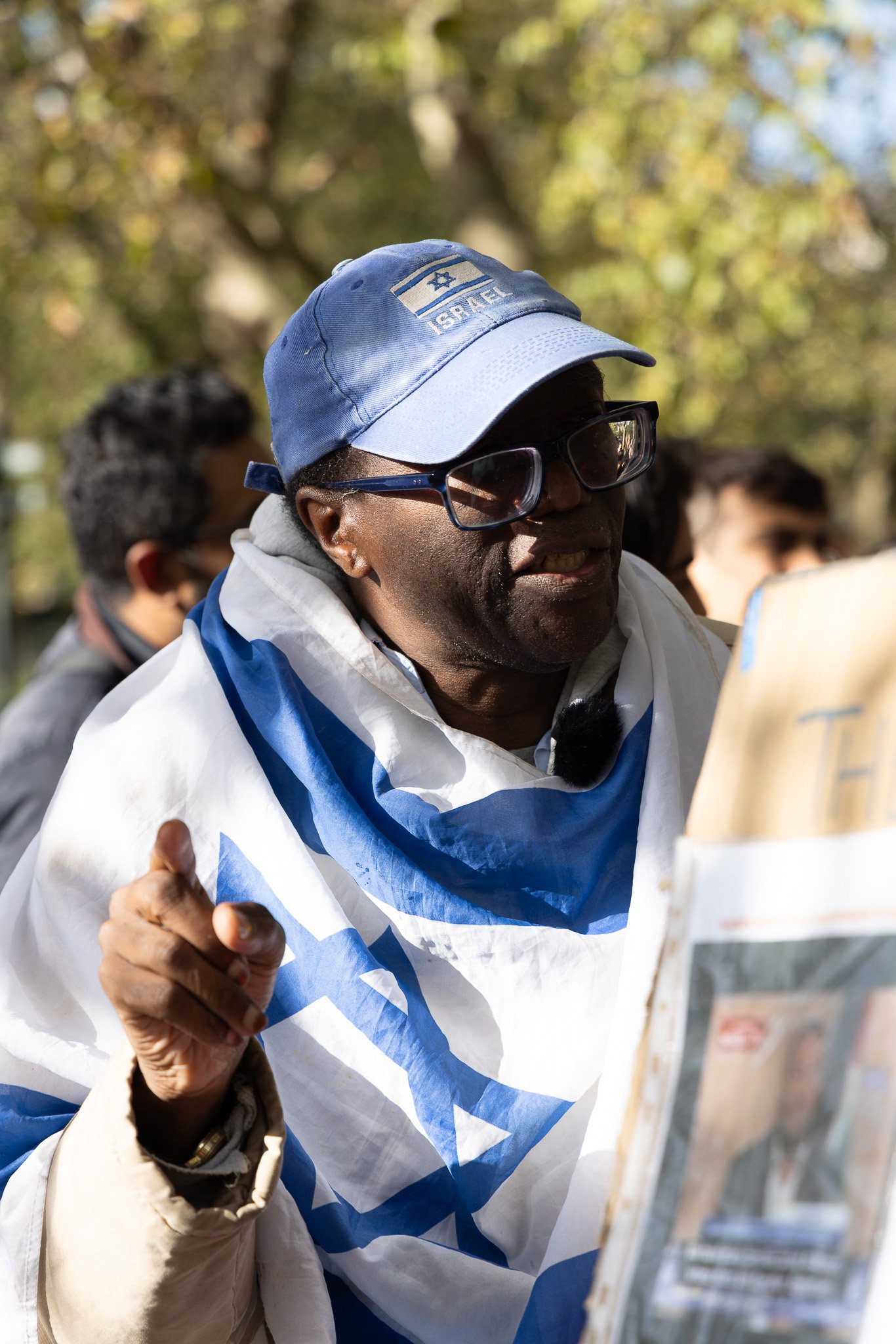
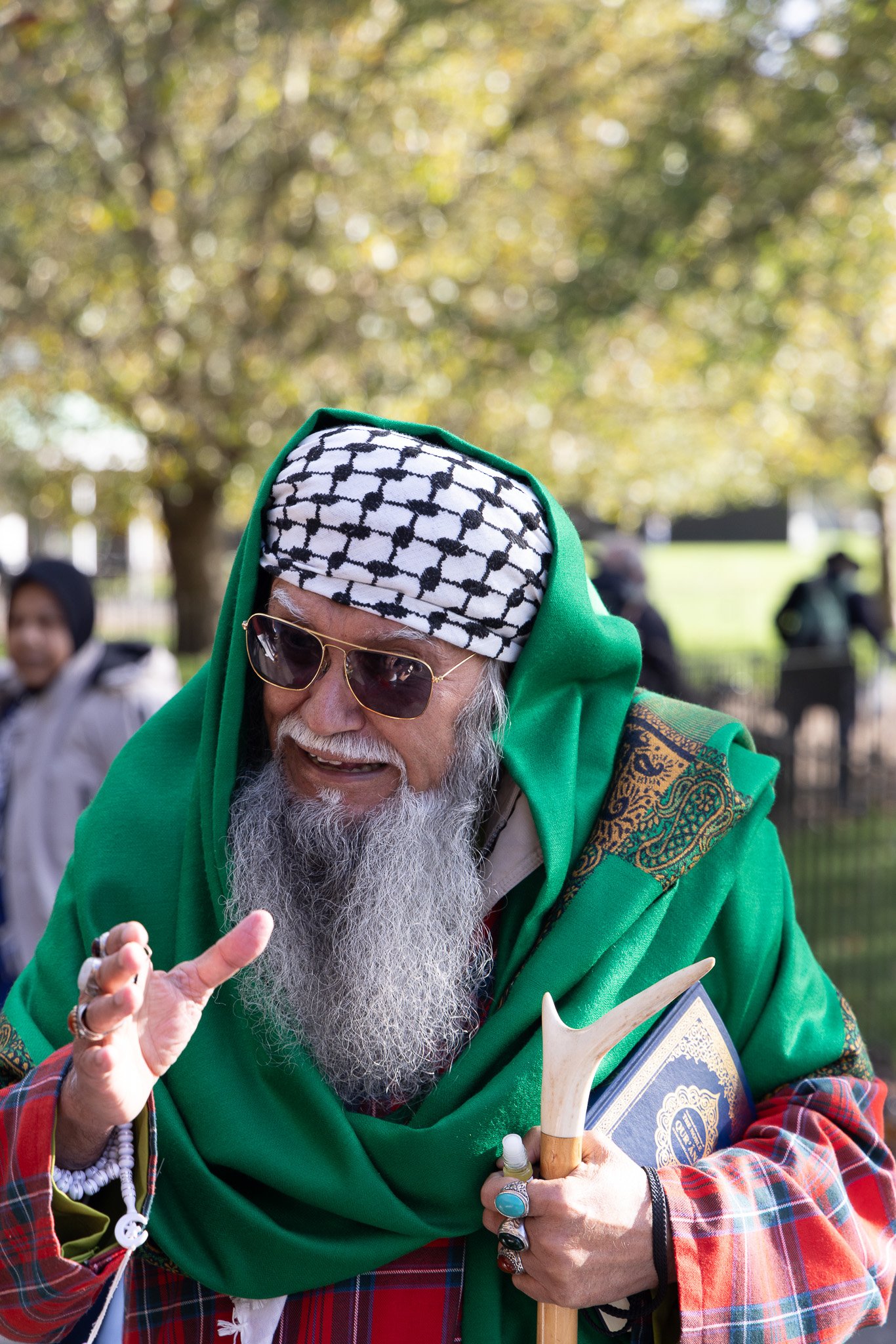
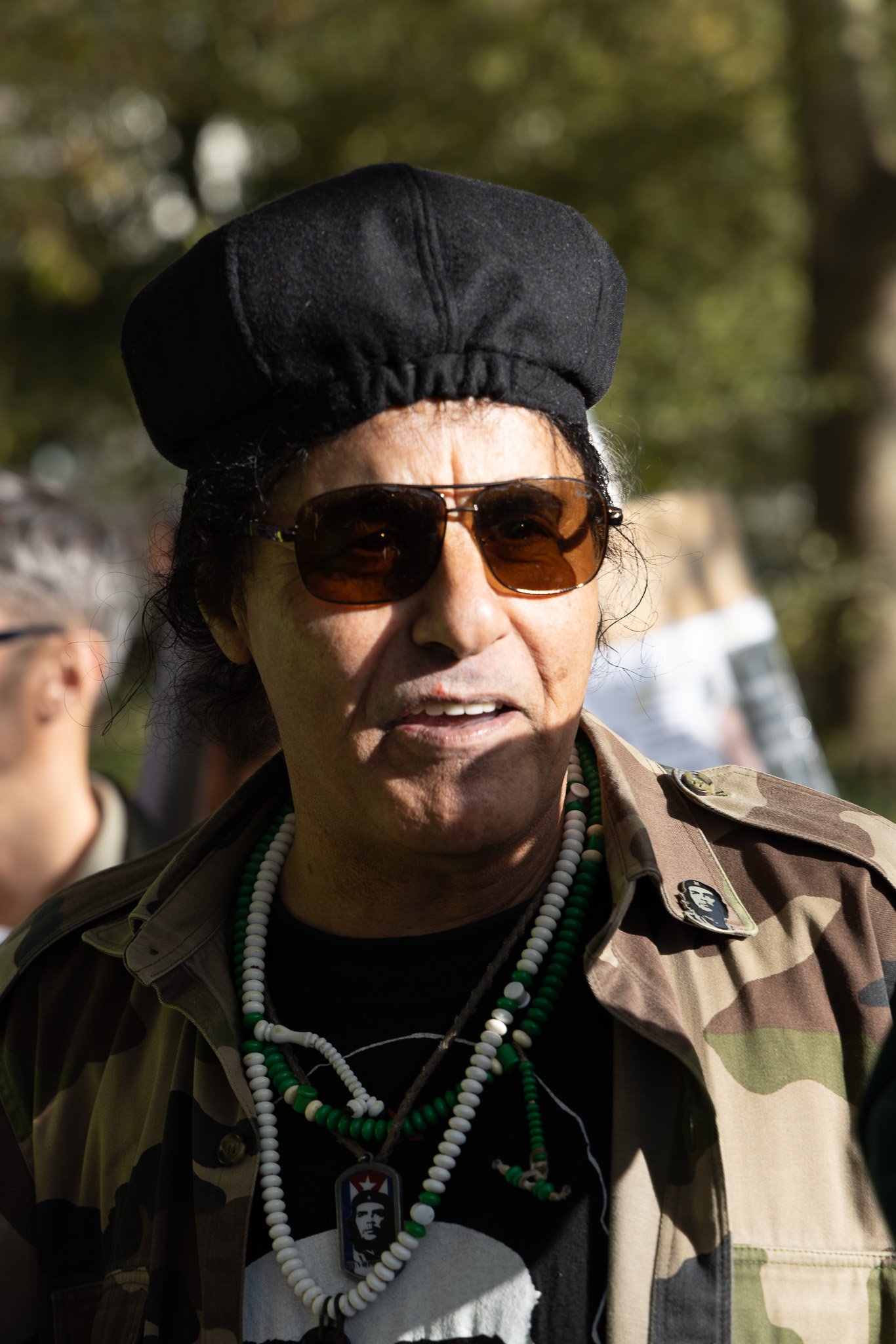
If you want to do something different, you can visit its Speakers’ Corner. This is an open space for public speaking, debates, and demonstrations in London. It is located on the northeast edge of Hyde Park near the Marble Arch and Oxford Street. The general public gathers here to express their views and opinions on anything. It can be very interesting and entertaining.
Science Museum
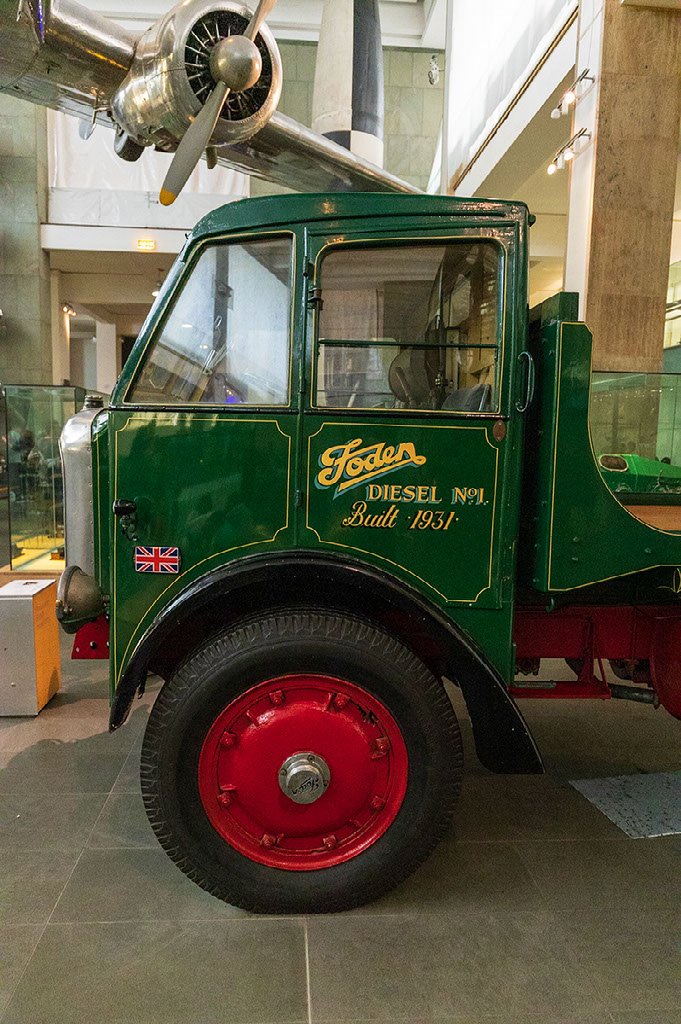
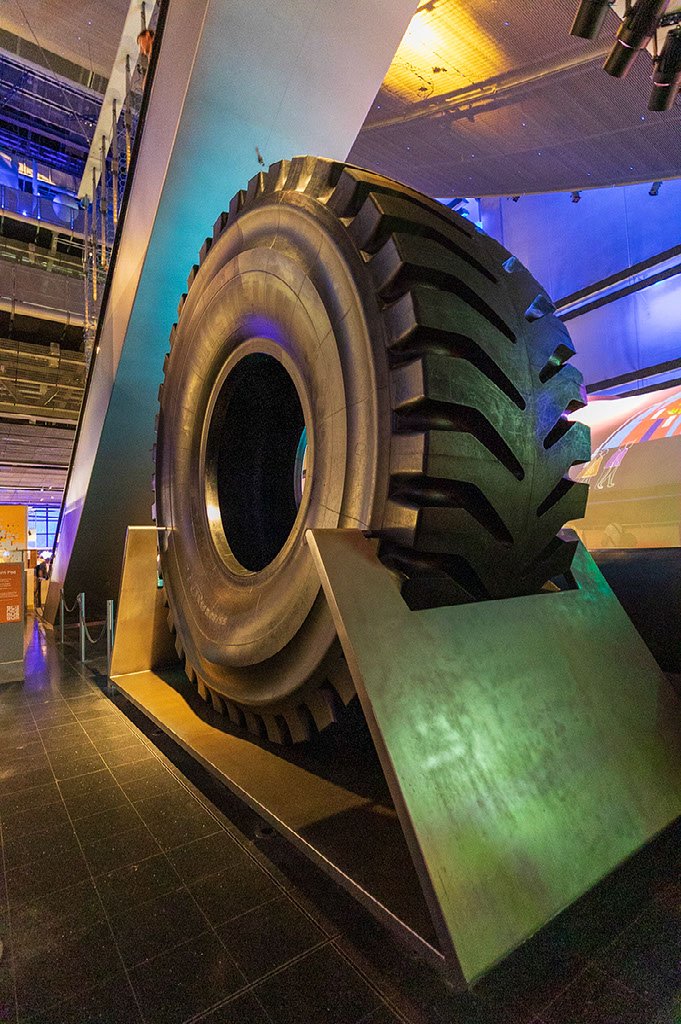
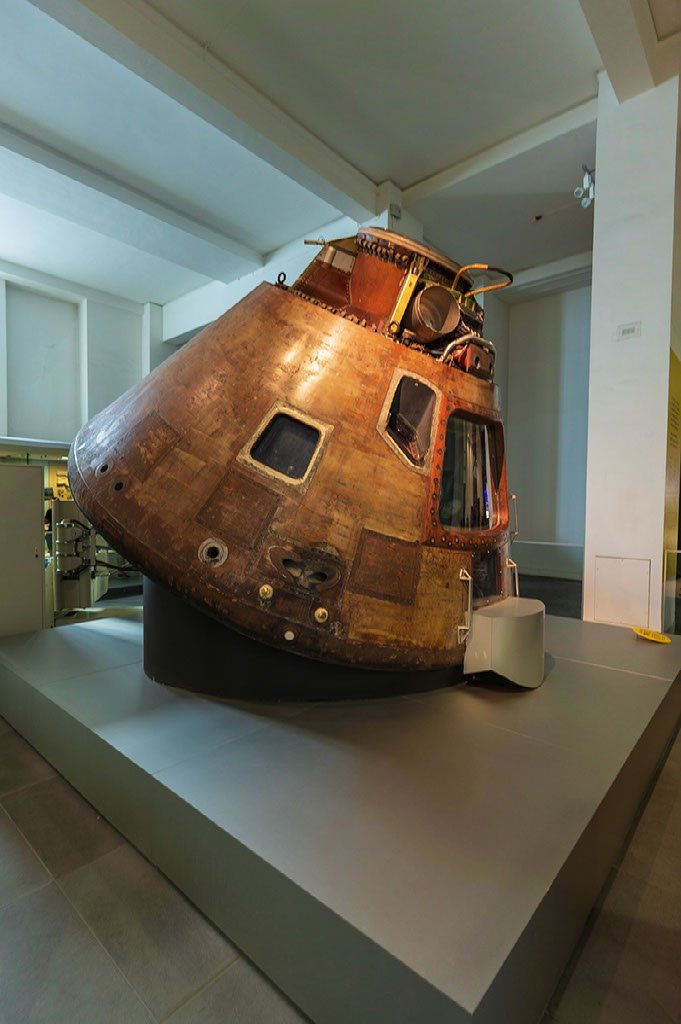
Award-winning exhibitions, iconic objects from the first Apple computer to Apollo 10, and some of the finest interior architectural photography in London. The main gallery, with its tiered iron walkways and Victorian engineering, is extraordinary on its own.
📷 Pro Tip: The upper-level walkways give you elevated sightlines along the length of the main gallery — shoot along the iron railing with a 24–50mm for a strong architectural leading-line image. Free entry. Come on a weekday to avoid school groups.
The British Museum
One of the best museums in the world, housing the Rosetta Stone, the Elgin Marbles, the Lewis Chessmen, and an almost incomprehensible density of human history across its 70 galleries.
📷 Pro Tip: The Great Court, with its spectacular glass-and-steel roof designed by Norman Foster, is one of the finest architectural photography subjects in London. Shoot from the upper level of the circular reading room looking outward toward the soaring geometric roof. Best light comes in the morning. Free entry; no photography restrictions in the public galleries.
Best time: Weekday morning for the Great Court. Free entry.

The spectacular glass roof of the Great Court at the British Museum in London.
The Natural History Museum and the Science Museum
South Kensington houses two of the finest museum buildings in London for photography, and both have free entry. The Natural History Museum's Gothic terracotta facade alone justifies the visit. Inside, the Hintze Hall with its blue whale skeleton suspended from the ceiling is one of the great interior photography subjects in London. The Science Museum's main gallery, with its tiered iron walkways and Victorian engineering, is extraordinary on its own terms.
These two museums sit side by side on Exhibition Road and can be covered in a single morning. Come on a weekday to avoid school groups.
📷 Pro Tip: In the Natural History Museum, the Hintze Hall photographs best from the upper balcony level, looking down on the whale skeleton suspended in the space below. A 16-24mm captures the full skeleton with the decorated ceiling behind it. The escalator in the Earth Galleries takes you through a giant rotating globe; photograph it from below with a wide angle as you ride up. In the Science Museum, the upper-level walkways give you elevated sightlines along the length of the main gallery. Shoot along the iron railing with a 24-50mm for a strong architectural leading-line image. Free entry at both; no photography restrictions in the public galleries.
Best time: Weekday morning before school groups arrive. Access: free entry.

Using reflections to create a different view inside London’s Natural History Museum.
It is home to 80 million plant, animal, fossil, rock, and mineral specimens. Including incredible Dinosaurs.

The grand architecture of the Natural History Museum in South Kensington.
The Escalator in the Natual History Museum is amazing

The dramatic escalator rising through the Earth Galleries at London’s Natural History Museum.
Borough Market
Borough Market is one of London's oldest food markets and one of its finest photography subjects. Dating back to the 13th century, it operates from a Victorian iron-and-glass covered structure at London Bridge and trades from Tuesday through Saturday. The market is at its best before 10 am on a Thursday or Friday, when the produce is freshest, the traders are setting up, and the light shafts through the Victorian roof in a way that makes every frame look deliberate.
The subjects here are inexhaustible: traders' hands arranging vegetables, wheels of cheese stacked at Neal's Yard Dairy, the copper pots at the olive stalls, the steam rising from the hot food vendors. It is also genuinely excellent for breakfast: the wild mushroom toast at Brindisa is one of the finest market breakfasts in London.
📷 Pro Tip: Come Thursday or Friday before 10 am for the best photography conditions. A 35mm or 50mm prime is the right lens: mobile, unobtrusive, and wide enough for environmental shots without going so wide that you lose the compression of the market stalls. Focus on the traders' hands, the stacked produce, and the light falling through the Victorian iron-and-glass roof in shafts. For the roof itself, a 16mm point of view through the structure at a backlit moment captures the geometry and the light simultaneously. Ask permission before photographing individual traders at close range; most are happy to oblige if you approach directly and smile first.
Best time: Thursday or Friday before 10am. Access: free entry. Walk from London Bridge station.
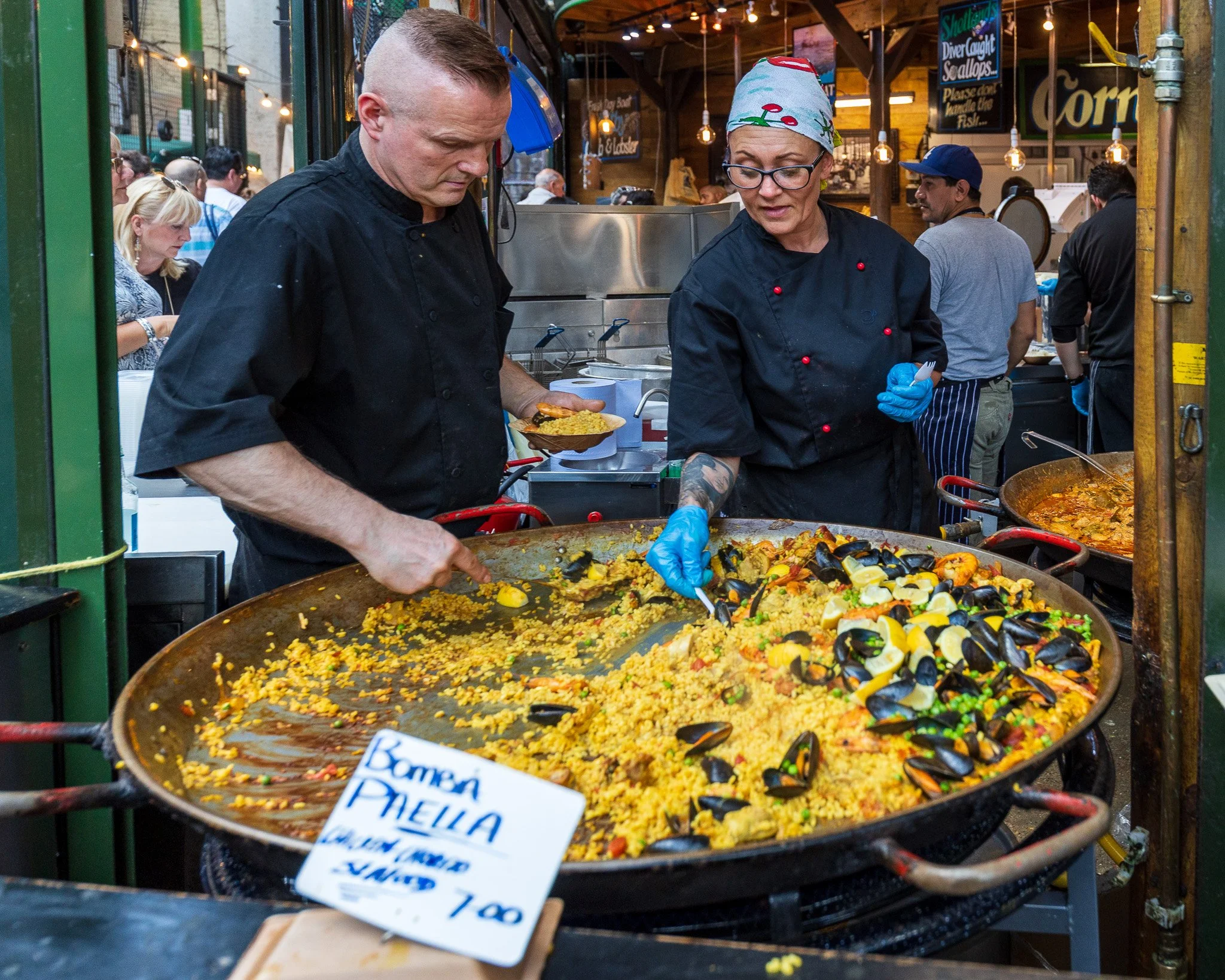
Morning activity inside Borough Market, one of London’s best locations for food and street photography.
Street Photography
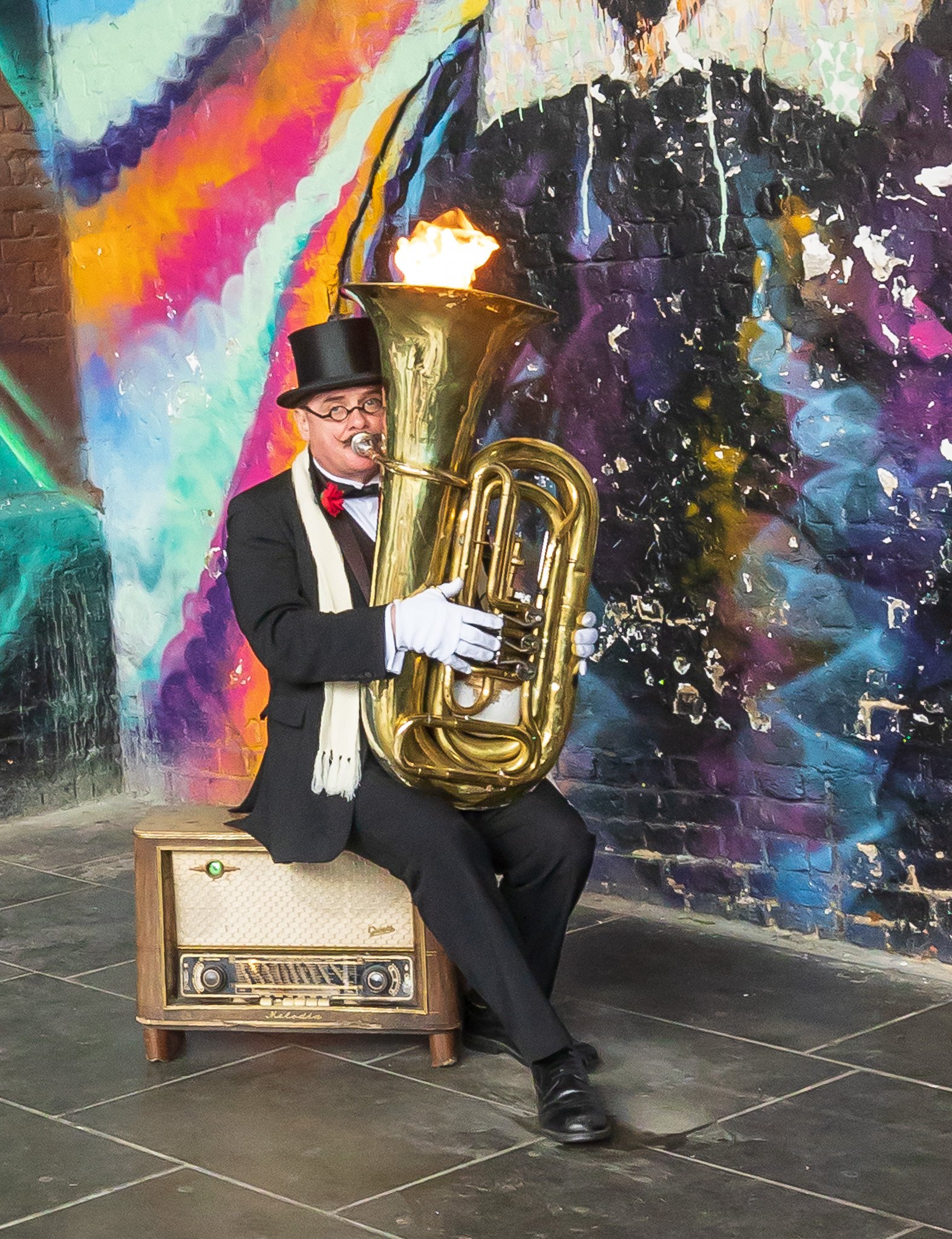
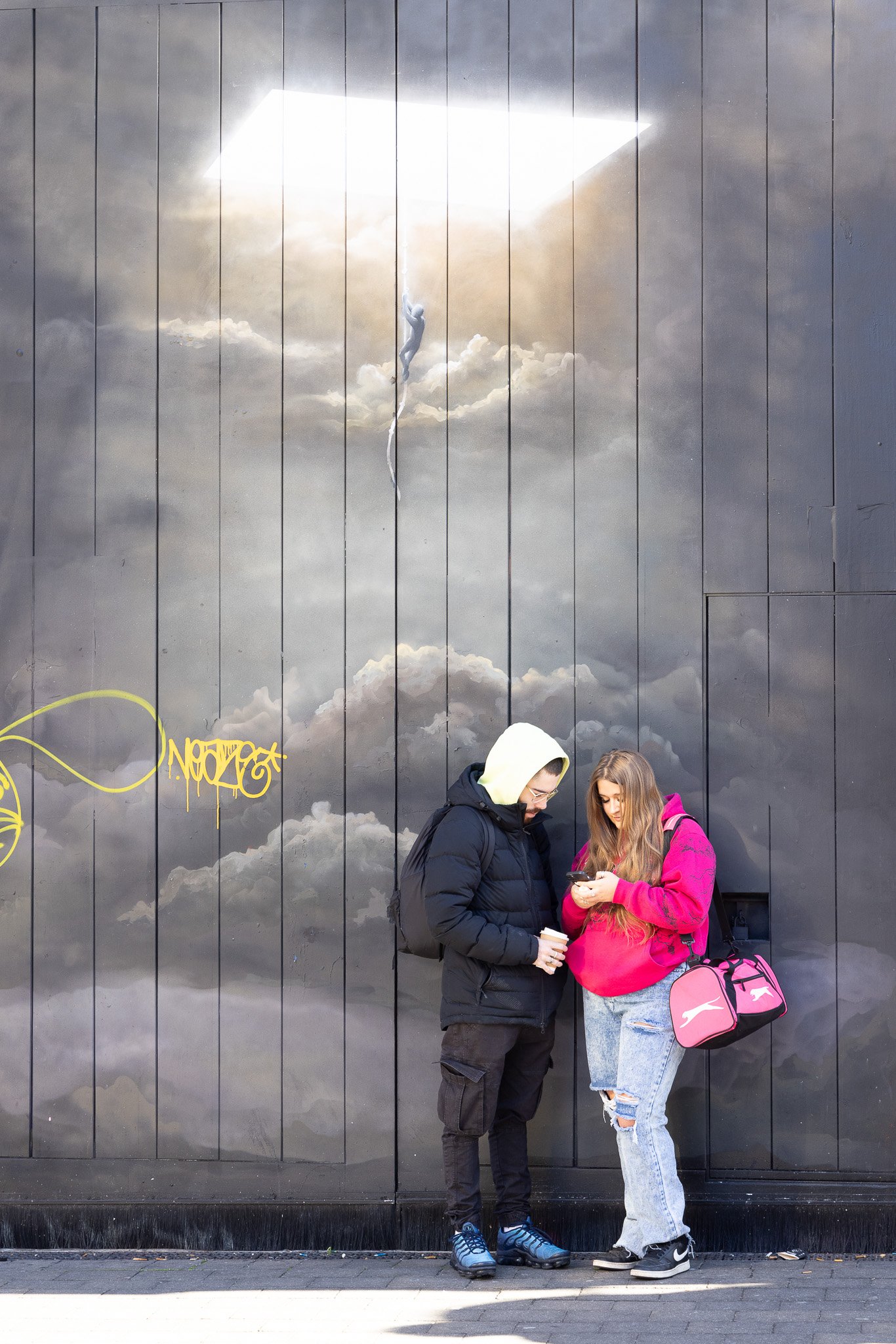
I love walking around the city and taking candid shots of people. London is one of the best places for Street Photography in the world. One of my favorite spots is Portobello Road in Notting Hill.
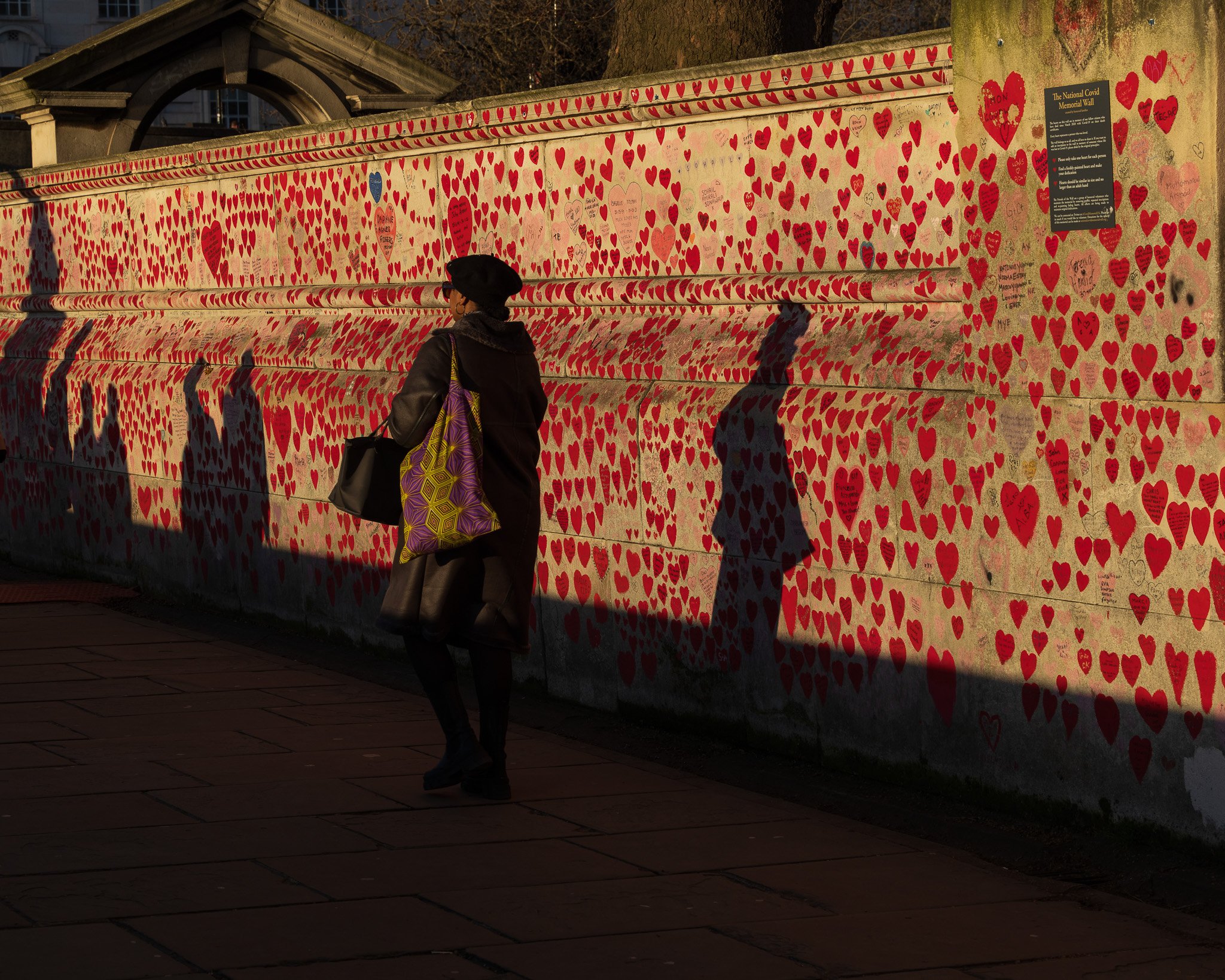
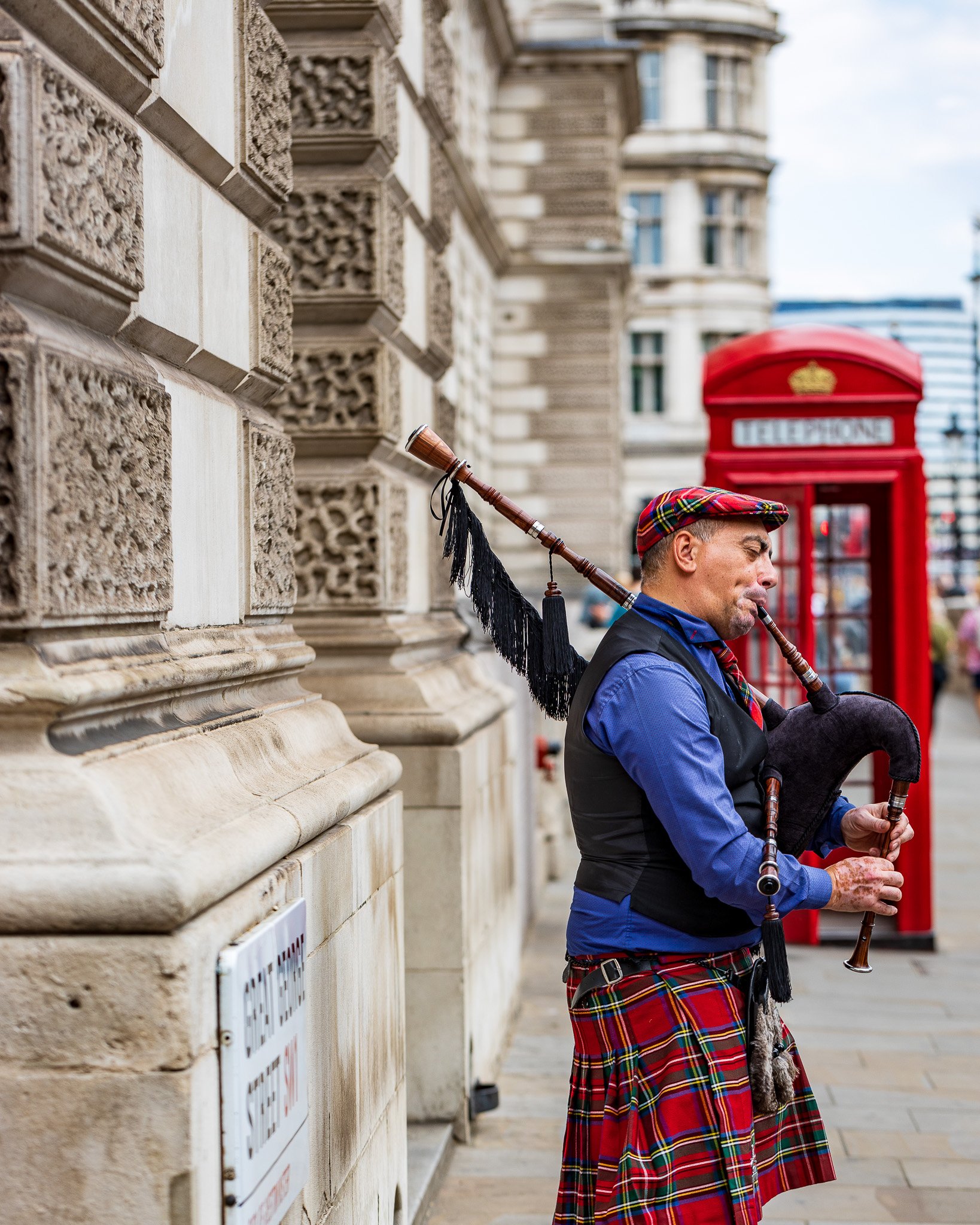
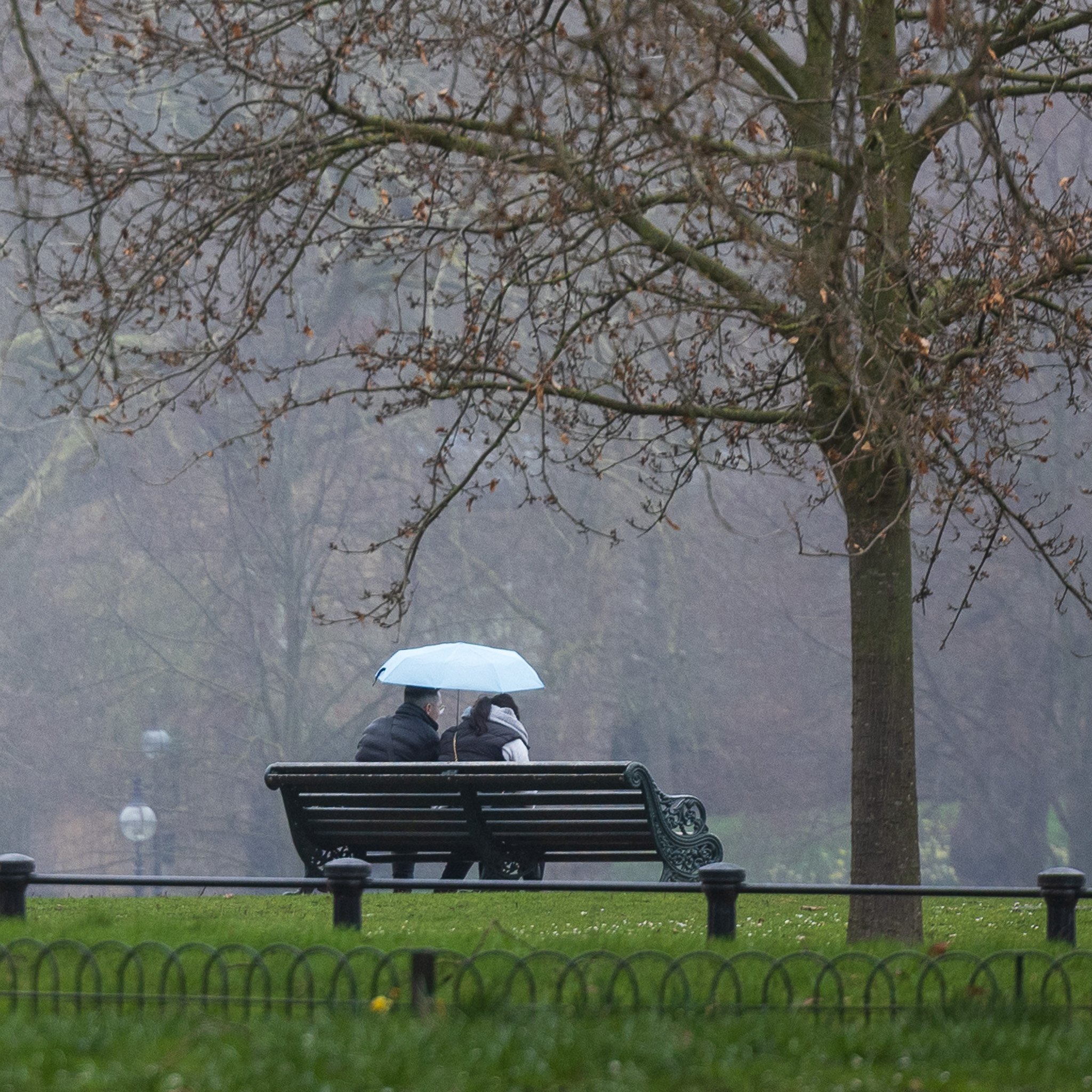
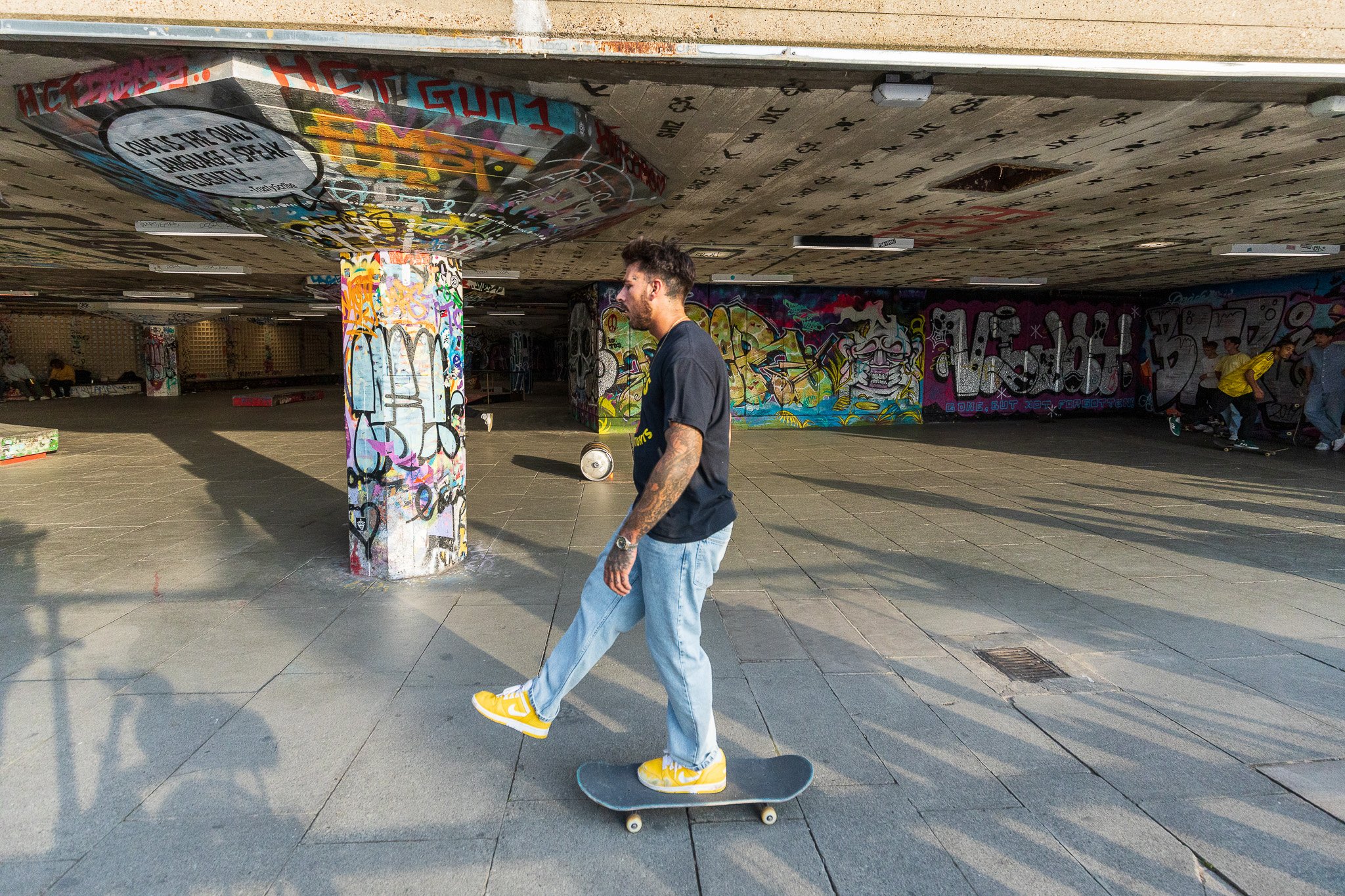


Portobello Road Market
Portobello Road Market on Saturday morning is one of the great photography subjects in London: antique stalls stretching for blocks, vendor portraits, colorful facades, and the compressed energy of a street fully alive with commerce and community. The surrounding Notting Hill neighborhood, with its candy-colored Georgian townhouses on Lansdowne Road and Elgin Crescent, provides some of the finest residential architectural photography in London.
📷 Pro Tip: Arrive by 9 am at the Notting Hill Gate end of Portobello Road and work south. The antique section and the best light are at the northern end; by 11 am, the tourist density makes candid photography significantly harder. Take the Tube to Notting Hill Gate or Ladbroke Grove. For the pastel house facades, the best light hits Lansdowne Road and Elgin Crescent in late afternoon from the west.
Best time: Saturday, 9–11 am for the market. Late afternoon for the residential facades.


St Clement Danes Central Church of the Royal Air Force
St Clement Danes is the Central Church of the Royal Air Force. It is a shrine to all those who have died in service in the Royal Air Force. It is probably not on the normal list of locations to visit in London, but I think it is well worth it. This small church is usually empty.
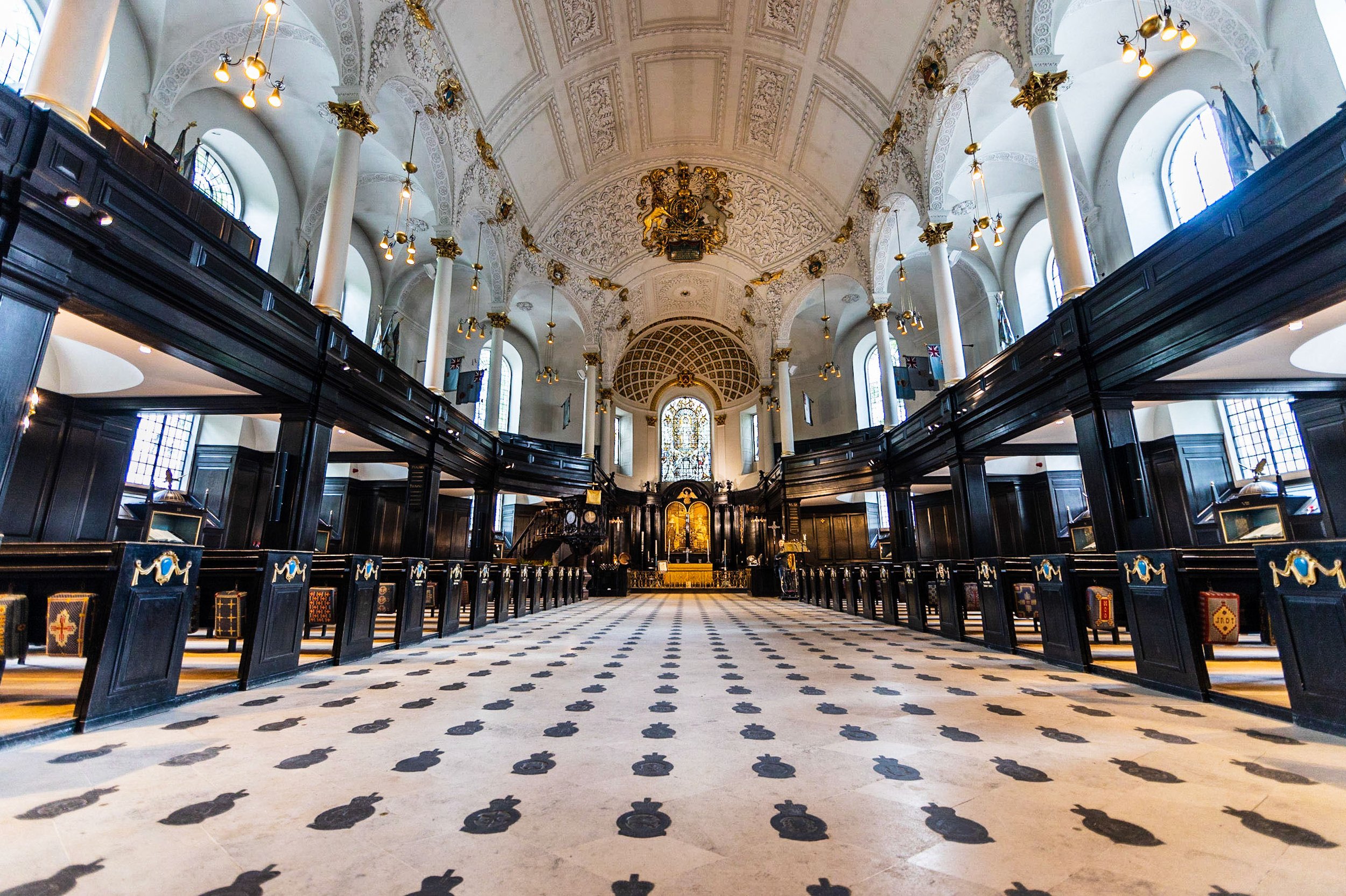
The beautiful interior of St Clement Danes, the Central Church of the Royal Air Force in London.
Somerset House Strand
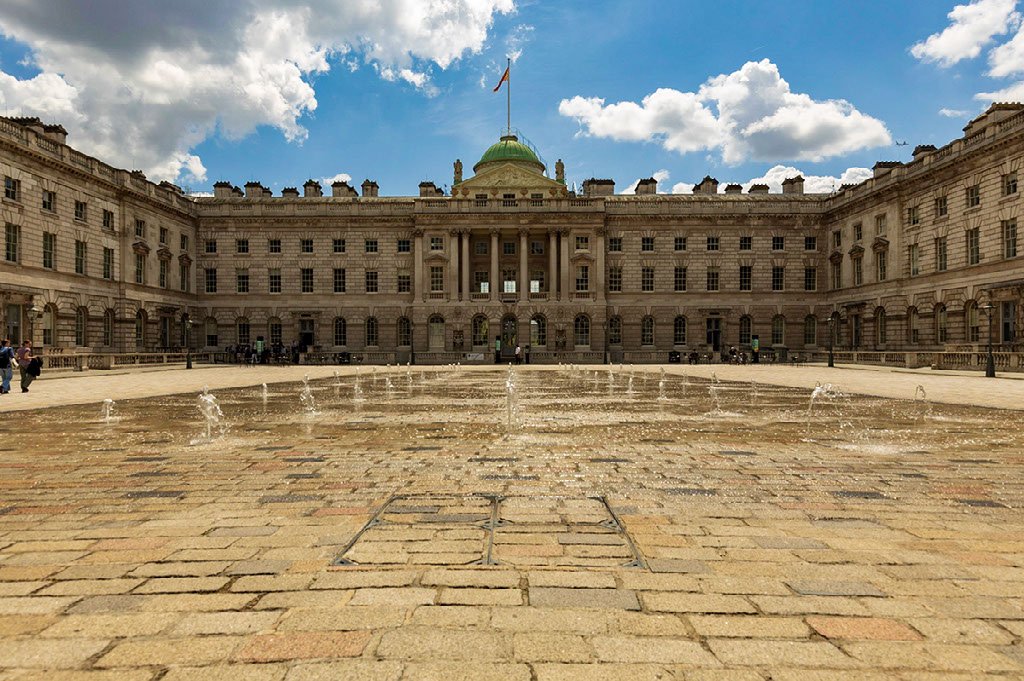
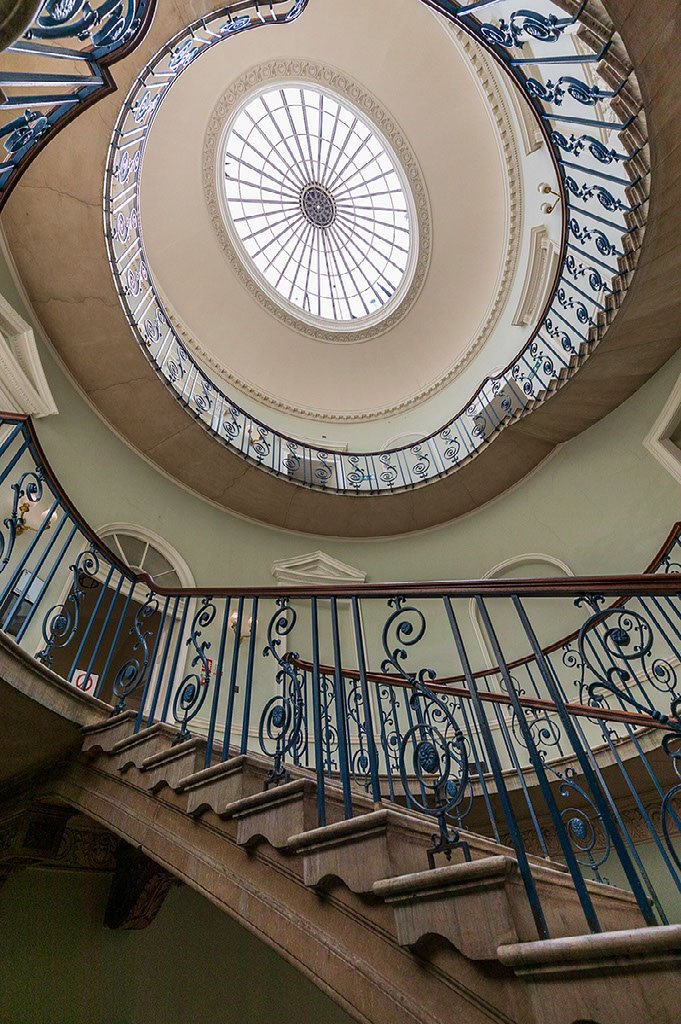
The 18th-century neoclassical palace between the Strand and the river, housing galleries, a courtyard, and one of London's most elegant spiral staircases. The courtyard is formal, symmetrical, and transforms seasonally — skating in winter, open-air cinema in summer.
📷 Pro Tip: The spiral staircase on the right side of the building as you enter from the Strand is an outstanding architectural subject — shoot from the ground floor looking up through the circular void with a 16mm. The courtyard shoots beautifully from the elevated river terrace on the south side, looking back into the formal space.
Tate Modern
The Tate Modern, housed in the former Bankside Power Station, has a free viewing terrace on the third floor of the main building with a direct view south across the Thames toward St. Paul's Cathedral. It is one of the finest free elevated views in London and is often overlooked.
The Tate Britain at Millbank houses three extraordinary spiral staircases, worth photographing specifically. If you love the work of David Hockney, J.M.W. Turner, or Mark Rothko, the permanent collection is essential.
📷 Pro Tip: The Tate Modern's third-floor terrace: go at golden hour when the setting sun catches the St. Paul's dome from the west. For the Tate Britain staircases, shoot from the base of each one looking upward with a 16–24mm — three different staircase geometries, three different compositions.

St. Paul’s Cathedral and the London skyline photographed from Tate Modern during blue hour.
Tate Britain Milbank
If you enjoy art by David Hockney or Mark Rothko, then you will love visiting the Tate Collection. There are also 3 Spiral Staircases to photograph in the Gallery.
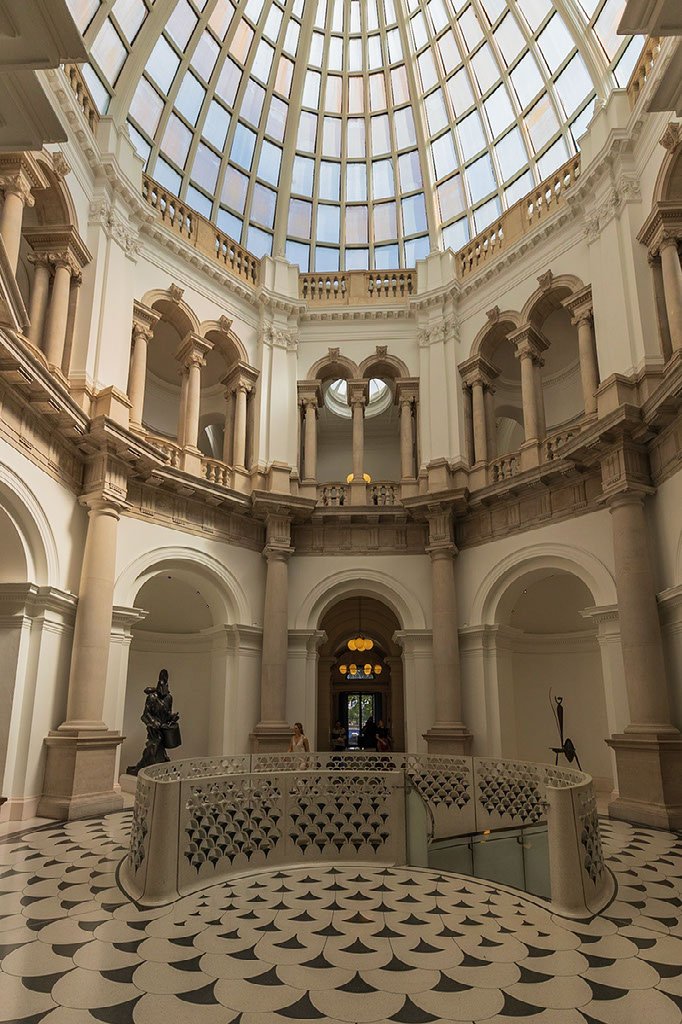
Heals Department Store
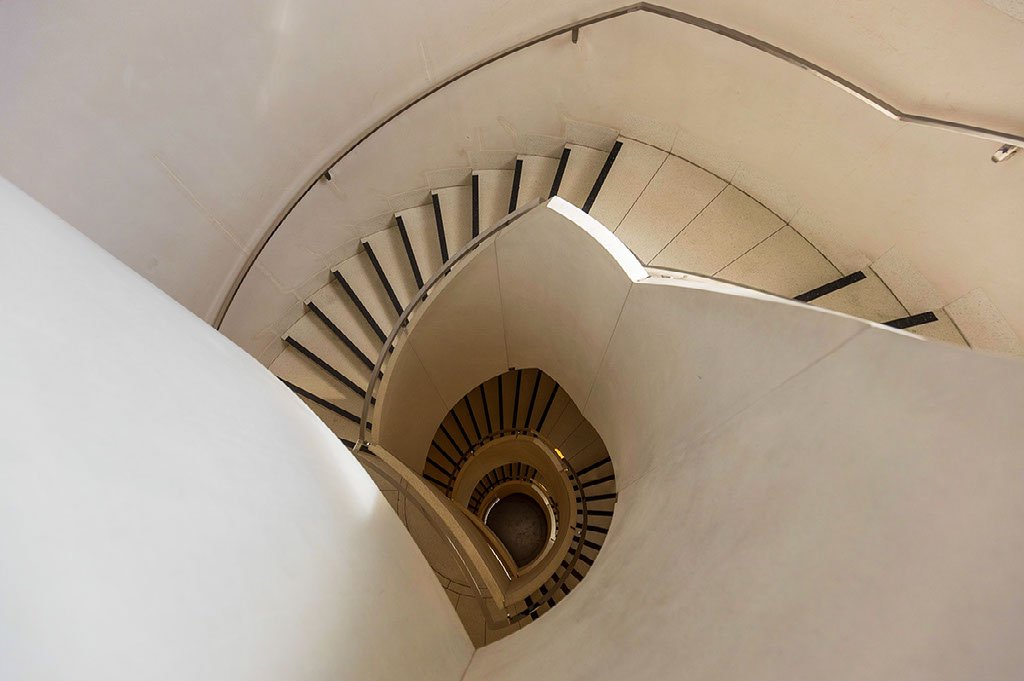
On Tottenham Court Road, Heal's furniture store contains one of the most beautiful staircases in London: the Curved Oak Staircase, designed in 1916 in an Art Deco-inspired style. The sweeping oak banister, the circular void looking down through the floors, and the warm, natural wood tones make it a genuinely exceptional interior photography subject.
📷 Pro Tip: Shoot from above, pointing straight down through the void with a 16–24mm lens — the circular staircase creates a Hitchcock vertigo effect. From below, a 24–35mm captures the full sweep of the ascending curve. Photography is permitted in the store. Come on a weekday when it is quieter.

The historic curved staircase inside Heal’s on Tottenham Court Road, one of London’s hidden architectural photo spots.
King's Cross/St Pancras Connecting Tunnel
The underground tunnel connecting King's Cross and St. Pancras International stations is one of the most unexpected photography subjects in London. The curved corridor, with its ceiling panels and the constant flow of travelers, creates a graphic, compressed architectural subject that most photographers walk through on autopilot.
📷 Pro Tip: Shoot from one end of the tunnel toward the other with a 24–35mm. A slow shutter speed (1/15 to 1/4 second) turns the passing travelers into motion blur against the static walls — a strong long-exposure street image. Off-peak for controlled compositions; peak hours add energy that either works or overwhelms. The Platypod is useful for stabilization without a full tripod.

The illuminated pedestrian tunnel connecting King’s Cross and St Pancras stations in London.
Lloyd's Building
The Lloyd's Building (Richard Rogers, 1986) has all its services on the exterior — ducts, lifts, electrical cables — giving it the "Inside-Out Building" nickname and making it London's most photographically unusual piece of High-Tech architecture. The Gherkin (Foster + Partners, 2003) at 30 St Mary Axe is the more elegant of the two, its diagonal steel grid tapering as it rises above the medieval streets around it.

The exposed pipes and industrial architecture of the Lloyd’s Building in the City of London.
📷 Pro Tip: Both are in the City of London and best photographed from street level on weekday mornings or on weekends when the streets are quiet. The Lloyd's Building at dusk, when its exterior pipes and ducts are illuminated from below, is an extraordinary abstract architectural photograph. A 24–50mm from across Lime Street gives you the full elevation. The Gherkin photographs best from directly below, shooting straight up with a 16mm to capture the spiraling geometric grid against the sky.
Best time: Weekday morning for empty streets. Dusk for the Lloyd's illumination.

The exposed pipes and industrial architecture of the Lloyd’s Building in the City of London.
The Gherkin
This is one of the most recognizable modern buildings in London. Londoners have a lot of opinions on the design of this building.

The distinctive curved architecture of the Gherkin rising above the City of London.
Leadenhall Market and the City of London
Leadenhall Market is a Victorian covered market in the heart of the City of London. Its ornate painted ironwork and arched ceiling create one of the most photogenic interiors in the city. It was a filming location for Diagon Alley in the Harry Potter films, though it photographs better without the props. The surrounding streets of the City, with the Lloyd's Building and the Gherkin within a five-minute walk, give you the full spectrum of London's architectural range: Victorian glass and iron, 1980s High-Tech, and 21st-century towers all competing for the same sky.
📷 Pro Tip: Come on a Saturday or early Sunday when the City is quiet, and the market is nearly empty. The ceiling is the photograph: a 16-24mm lens pointing straight up through the painted ironwork captures the full geometry. The colored panels and symmetrical arches photograph best from the market's central intersection point. For the Lloyd's Building (Richard Rogers, 1986), photograph it at dusk when its exterior pipes and ducts are illuminated from below: a 24-50mm from across Lime Street gives you the full elevation. The Gherkin photographs best from directly below, shooting straight up with a 16mm to capture the spiraling geometric grid against the sky.
Best time: Saturday or Sunday morning for empty streets. Dusk for the Lloyd's illumination. Access: free.

The ornate Victorian roof and colorful interior of Leadenhall Market in the City of London.
Millennium Bridge
This bridge leads towards Saint Paul's Cathedral and was dubbed the "Wobbly Bridge" when it first opened. It had to be shut down for 2 years to fix the wobbling. It is now safe, and I have crossed it many times on the way to Borough Market or Saint Paul's Cathedral.

The Millennium Bridge creates a perfect leading line toward St. Paul’s Cathedral.
Tower Bridge and the South Bank
Tower Bridge is London's most iconic structure and one of the most photographed bridges in the world. Built between 1886 and 1894, it still lifts for river traffic; you can check lift times on the Tower Bridge website. Many visitors call it London Bridge, which is a different, far less interesting bridge about half a mile upstream. The South Bank promenade from the London Eye east toward Tower Bridge, passing the Tate Modern, the Globe Theatre, Borough Market, and the Millennium Bridge crossing, is one of the great urban walking routes in Europe.
The blue hour window here is among the finest in London. When the sky transitions from deep blue to black and the bridge lights come on, the Thames ’ surface carries a perfect reflection from the north bank. Most photographers shoot from the north; the less obvious position is from the south bank, looking back toward the City with the bridge in the left third of the frame and the Shard behind it.
📷 Pro Tip: For Tower Bridge itself, the best position for a full elevation shot is from the Queen's Walk on the south bank, roughly 100 meters east of the bridge. A 35-50mm captures the complete span without distortion. Shoot at blue hour, roughly 20-30 minutes after sunset, when the sky is deep blue and the bridge illumination is fully visible. For the long exposure version, mount on a tripod and expose for 8-15 seconds; the Thames surface becomes a silky plane and the bridge lighting gains a glow. For a different angle, the Millennium Bridge shot looking east gives you the bridge mid-distance with the Shard above it and river movement in the foreground. A 20-second exposure at this position at blue hour is one of the most recognizable London images.
Best time: Blue hour, 20-30 minutes after sunset. Access: free from all riverside positions.

Tower Bridge illuminated by warm evening light over the River Thames.
Did you know it lifts up in the middle when large vessels pass underneath (you can check out lift times on its website), and it gained a glass floor on the high walkways in 2014, allowing visitors to look straight down to the road and river 42 below?
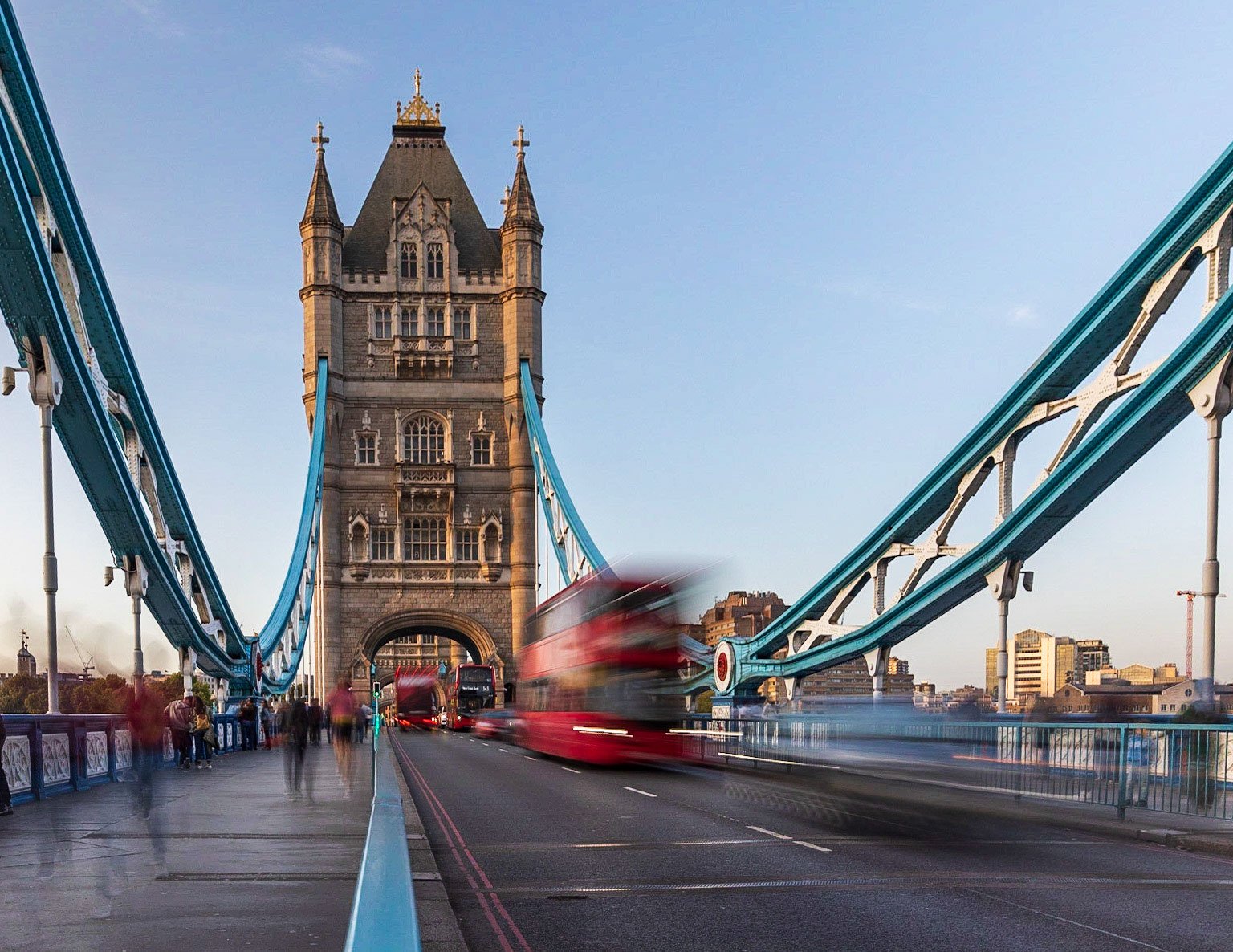
A six second long exposure smooths the River Thames beneath London’s iconic Tower Bridge.
St. Paul's Cathedral
St Paul's, with its world-famous dome, is an iconic feature of the London skyline. They do not allow Photography or Video inside the church, but you should definitely go inside and visit.

The famous dome of St. Paul’s Cathedral rising above the London skyline.
One New Change
1 New Change is located right across from Saint Paul’s. If you go up to the roof, there is a bar called Madison's that has a perfect view of the church.

A rooftop view of St. Paul’s Cathedral from One New Change in the City of London.
Buckingham Palace & Saint James Park
The home of the King of England and the most visited location in London for good reason. The Changing of the Guard ceremony — when it runs — is one of the world's most photographed rituals. St. James's Park, directly in front of the Palace, a 57-acre formal park with a lake, pelicans, and direct sightlines to the Palace and the London Eye, is a genuine joy to walk through on any morning.
📷 Pro Tip: For the Palace itself, the best photography is from the Mall — the wide ceremonial avenue leading toward the Victoria Memorial, with the Palace at the far end. At golden hour from the east, the warm light falls on the east-facing Palace facade. For the Changing of the Guard, position yourself early near the Palace gates and use a 70–200mm to isolate individual guards in the crowd. St. James's Park photographs best at sunrise when the lake is still and the bridge reflections are mirror-sharp.
Best time: Sunrise for St. James's Park. Morning for the Changing of the Guard.

Buckingham Palace and the Victoria Memorial in the heart of ceremonial London.
Baker Street Underground Station
Opened in 1863, Baker Street is one of the oldest metro stations in the world and one of the most visually extraordinary. The Victorian arched ceilings on platforms 5 and 6 of the Circle and Hammersmith and City Lines are decorated with Sherlock Holmes silhouettes in the original glazed terracotta. Almost no visitor ever sees them because they are on the wrong platform.
This is one of the great hidden photography subjects in London, and it requires almost no planning. Step off the train on the right platform, and you have a Victorian brick vault stretching away from you in both directions.
📷 Pro Tip: Take the Circle or Hammersmith and City line to Baker Street and use platforms 5 or 6. I shot this with a Platypod at ISO 100: the low light demands stabilization, and the brick vault ceiling rewards a slow shutter speed. A 16-24mm captures the full arch; position yourself near the center of the platform for the curving perspective of the roof. Come off-peak for fewer people in the frame. Photography of London Underground stations is allowed for personal use without a tripod; a Platypod or beanbag gives you stability without technically violating TfL rules. The Holmes silhouettes are visible in the terracotta tile panels between the arches.
Best time: Off-peak weekday. Access: standard tube fare.

The Baker Street Underground Stop
Burlington Arcade
Opened in 1819, Burlington Arcade is one of the oldest and most elegant covered shopping streets in the world. It was commissioned by Lord George Cavendish, the younger brother of the 5th Duke of Devonshire, and has retained much of its original charm and architecture.
Burlington Arcade is renowned for its high-end boutiques and specialty shops. It houses prestigious brands offering luxury goods such as jewelry, watches, leather goods, and bespoke clothing. Some of the notable retailers include the world-famous perfumery, Penhaligon's, and the iconic British brand, Crockett & Jones

The colors of Burlington Arcade
The Royal Arcade
Opened in 1879, The Royal Arcade is one of the oldest and most elegant shopping arcades in London. It was originally named "The Arcade" but was later renamed "The Royal Arcade" after it became a favored destination of Queen Victoria.

The Royal Arcade
The Shard
The Shard also has a hotel on the 33rd floor called the Shangri-La. The hotel has one of the best views of Tower Bridge. It seems half of Londoners hate it, and the other half love it.
It is full of restaurants, offices, and residents. Western Europe's tallest building and London's one and only 95-story skyscraper, so it's certainly not to be missed. There are bars and restaurants all the way up and a public visiting area called the View from The Shard.
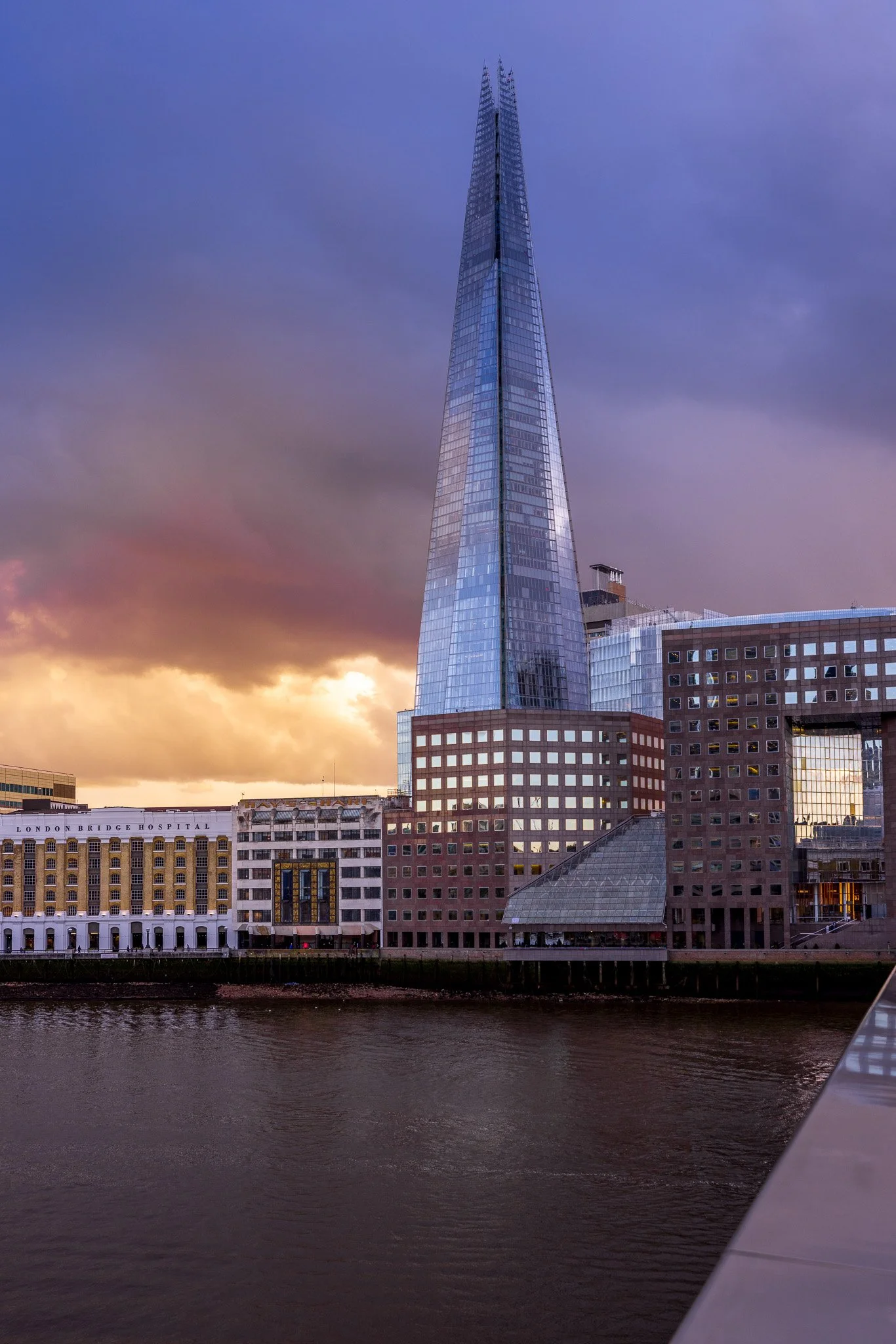
The Shard in London
Big Ben and the Houses of Parliament
Most photographers who see Big Ben for the first time are surprised by how much it rewards careful attention to position and timing. People tend to rush to Westminster Bridge, snap the obvious frame, and move on. That is a mistake. The Elizabeth Tower, which houses the bell everyone calls Big Ben, and the Gothic Revival Palace of Westminster alongside it form one of the most photographically complex subjects in London. The building changes completely with the light, from warm amber at golden hour to near-silhouette at dusk to something almost otherworldly under long exposure at night when the stone glows and the light trails from passing traffic streak across Westminster Bridge.
One of the best and least-used angles in the city is from the north bank of the Thames just east of Westminster Bridge, at the bottom of the staircase that descends from street level to the river. Exit the Tube at Westminster and follow the river east; the staircase brings you below the embankment wall and frames the Elizabeth Tower through its stone arch. It is one of the great framing opportunities in London, and most people walk right past it.
📷 Pro Tip: Westminster Bridge gives you the classic straight-on elevation shot, but it is also the most crowded position. For something cleaner, work from the Lambeth Bridge approach on the south bank, looking northeast, where the tower rises above the Palace roofline with less foot traffic in your foreground. For long exposures, the light trail version from Westminster Bridge is worth the setup: 20-30 second exposures at f/11 with a 6-stop ND filter turn the bus and taxi traffic into solid streaks of red and white converging toward the tower. Shoot at blue hour, roughly 20 minutes after sunset, when the sky is deep blue and the tower clock face is fully illuminated. The staircase framing shot from the Victoria Embankment riverbank, looking up through the stone arch, works best with a 24-35mm in the late afternoon when the tower is lit from the west. At sunset, the Houses of Parliament on the river-facing south flank goes copper and gold; position yourself on Lambeth Bridge for this, looking northeast, and shoot with a 70-200mm to compress the Westminster Bridge reflection in the river below.
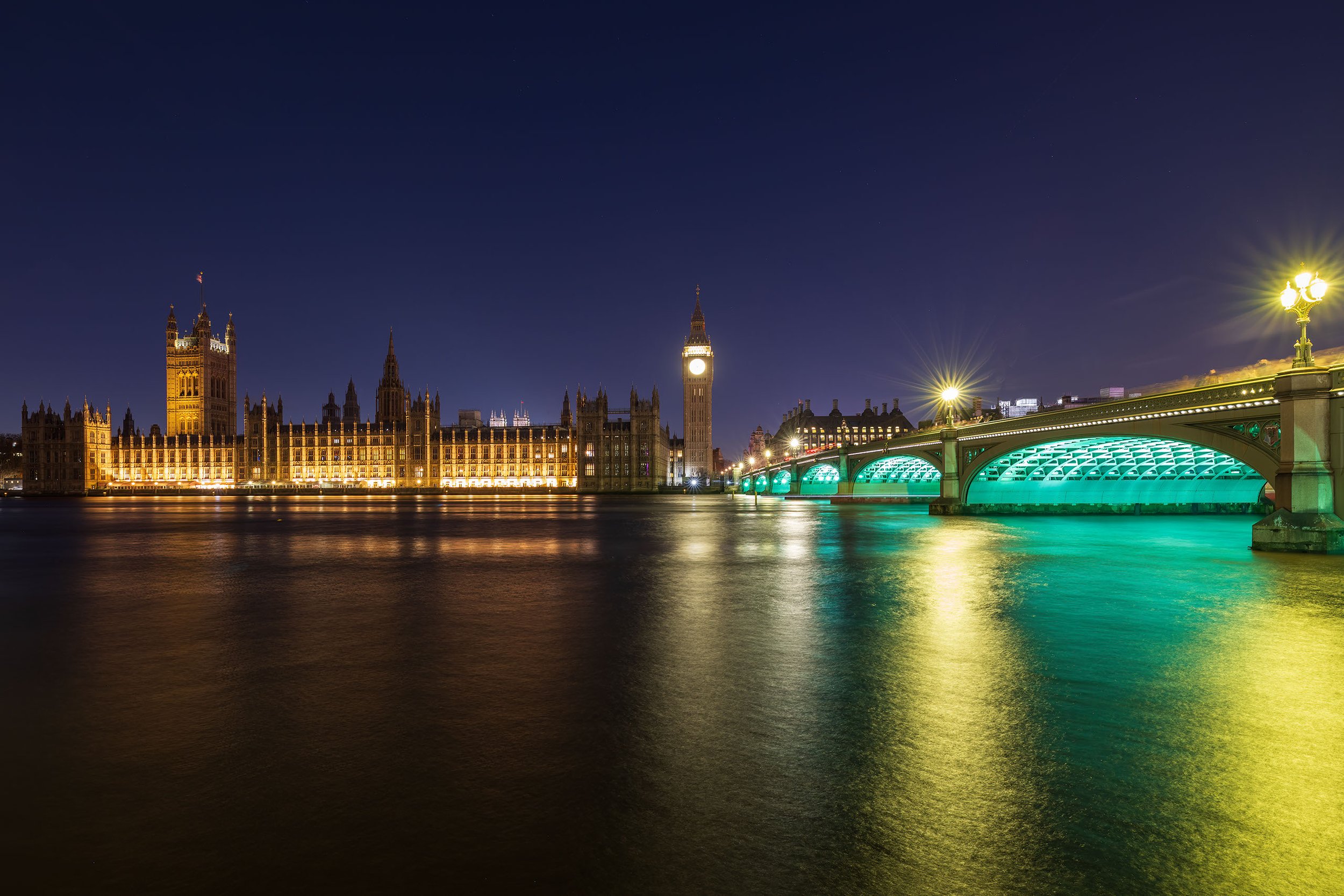
A 20 second long exposure of the Elizabeth Tower and Westminster at blue hour.
Best time: Blue hour for long exposures. Sunset from Lambeth Bridge for the golden stone. Early morning for the staircase framing with nobody in the shot. Access: free from all riverside positions. Tube to Westminster.
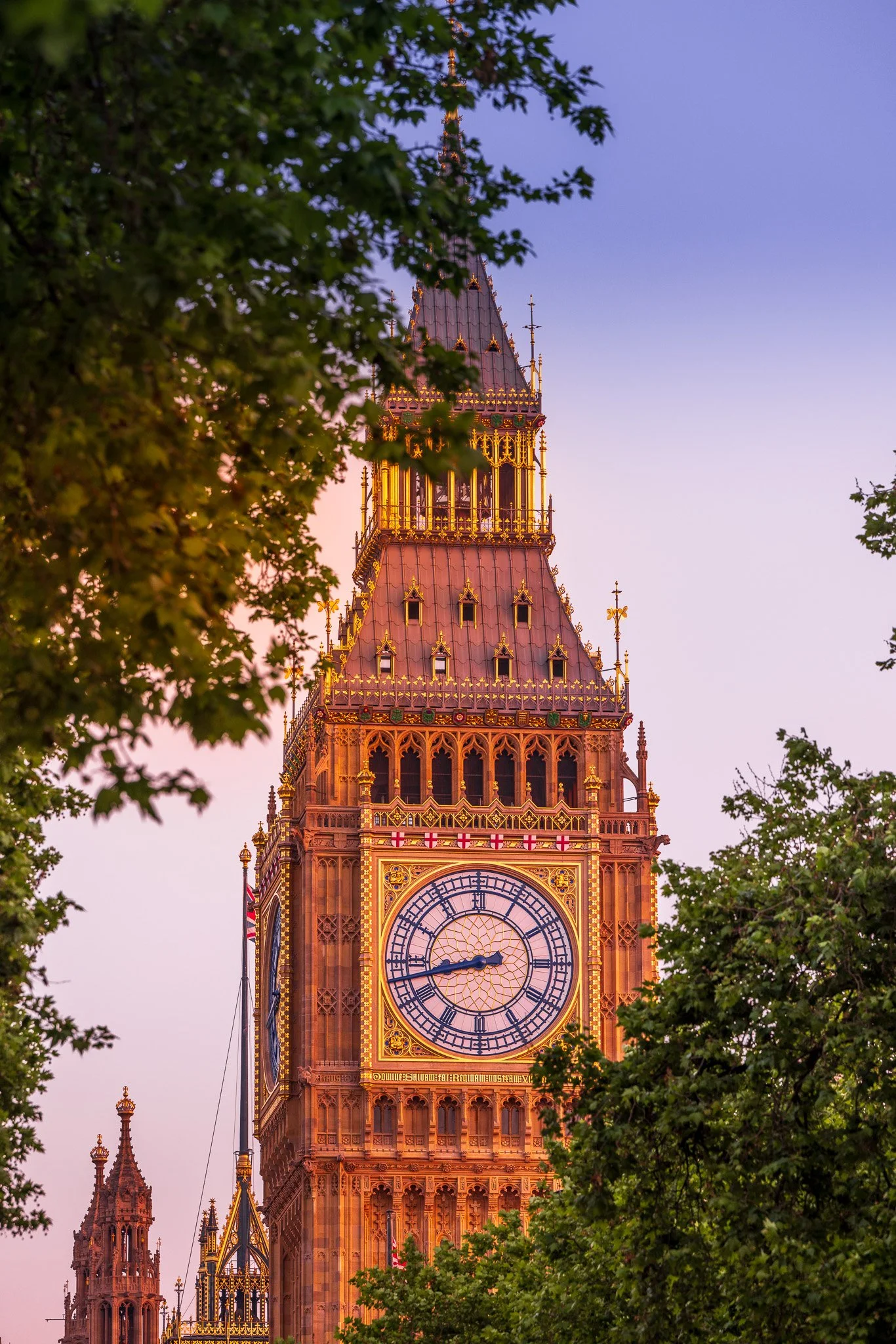
Warm sunset light on the Elizabeth Tower and the Houses of Parliament beside the River Thames.
A quick piece of trivia worth including in your captions: Big Ben is not officially the name of the tower. For hundreds of years, it was called simply the Clock Tower. In 2012, it was renamed the Elizabeth Tower to commemorate Queen Elizabeth II's Diamond Jubilee. What people call Big Ben is technically the 13-ton bell inside the tower. Nobody cares, but it makes for a good conversation at the pub afterward.
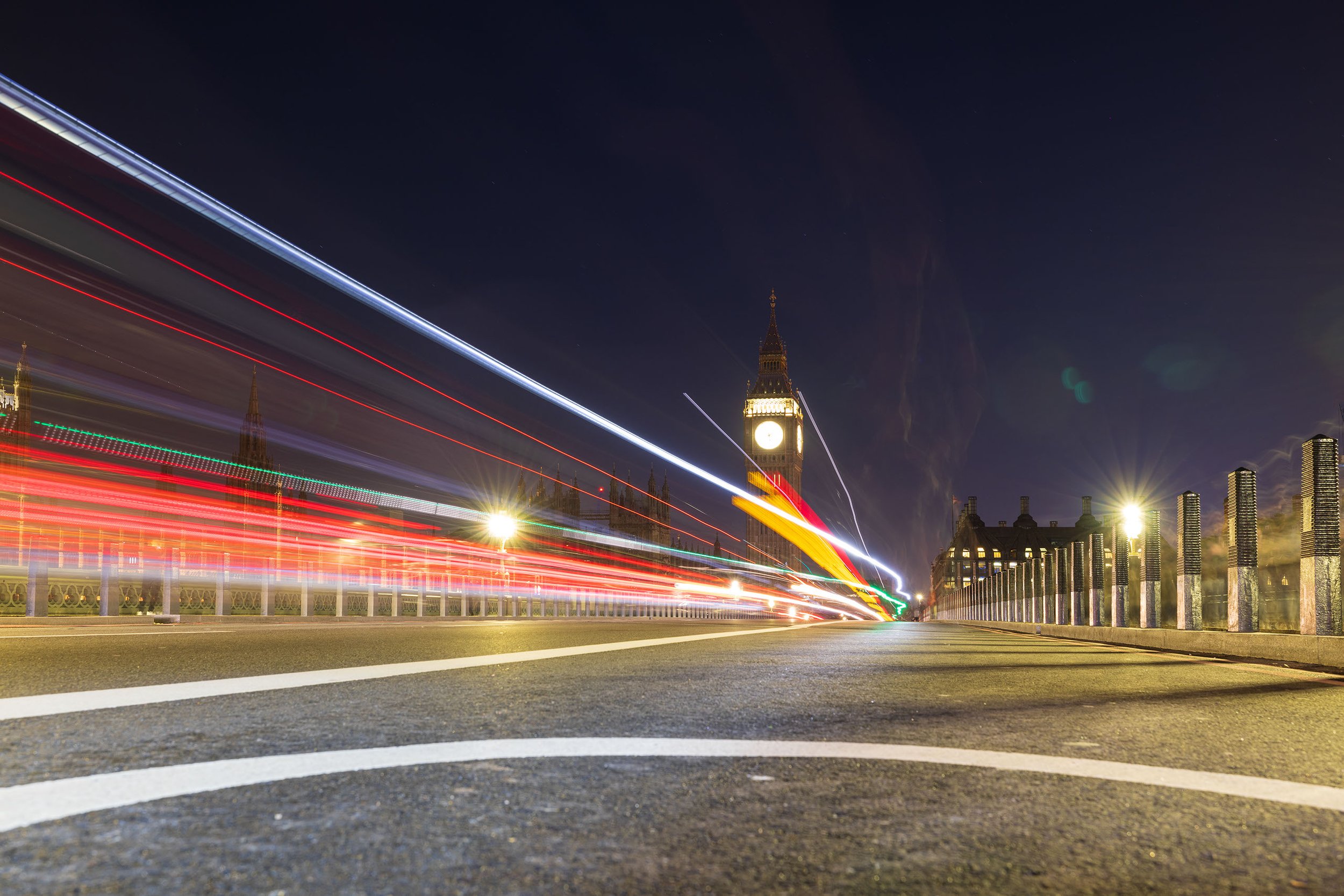
Red light trails from London traffic leading toward Big Ben and the Houses of Parliament.
There is one great location across the river that gives you a very cool framing for the clock. Right across from the London City Marriot Hotel located on Westminster Bridge, there is a staircase that leads down to the river. From there, you will find this location coming out of the Subway (Tube).
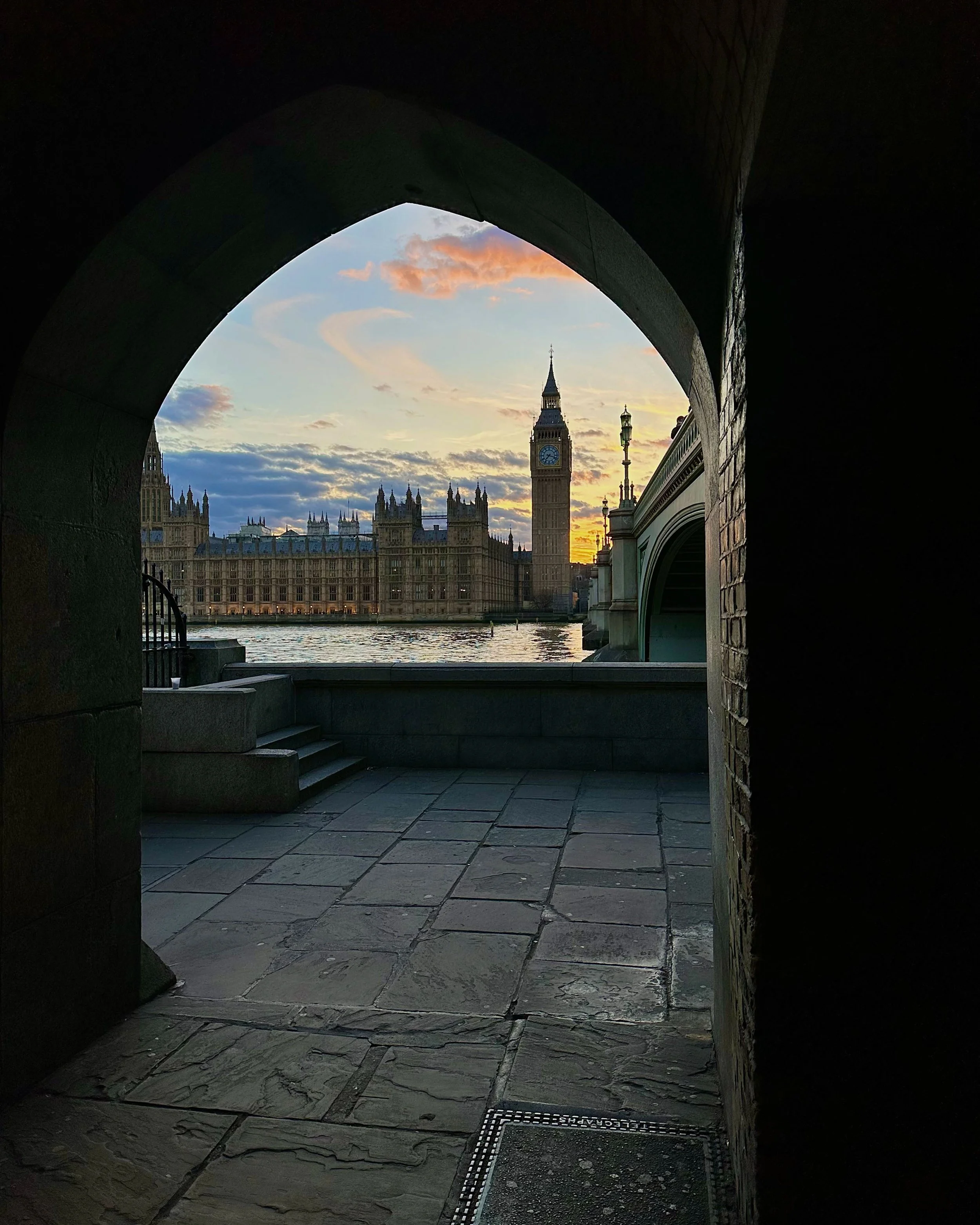
The Elizabeth Tower framed by the entrance to Westminster Underground station.
There is also a wall in honor of those who passed away from Covid.
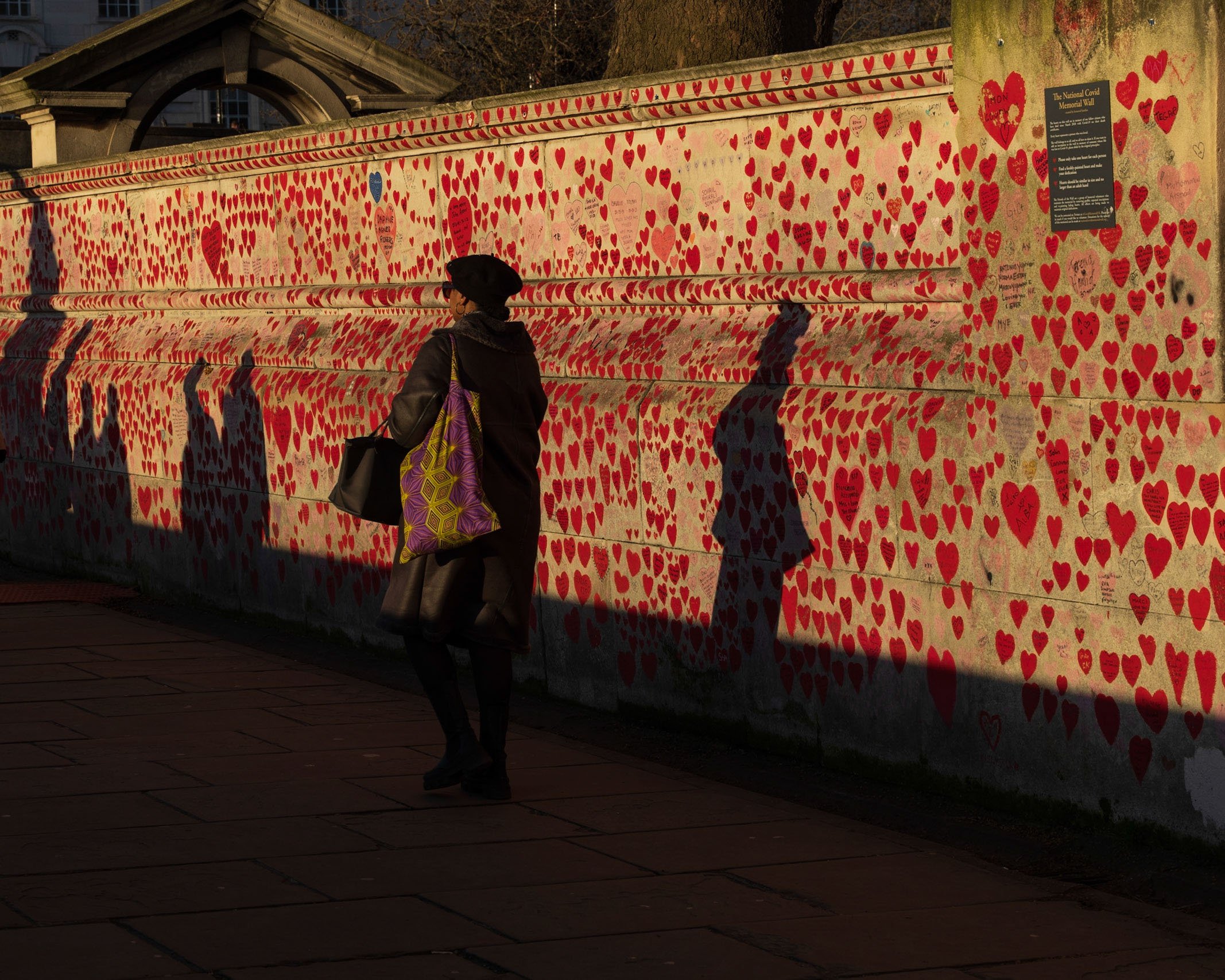
The National Covid Memorial Wall along the Thames opposite the Houses of Parliament.
Westminster Abbey
A royal church with over 1,000 years of history. It is the church that hosts most of the coronations and other national ceremonies of significance, such as the Royal Weddings. One interesting fact is that it has the world's oldest door.
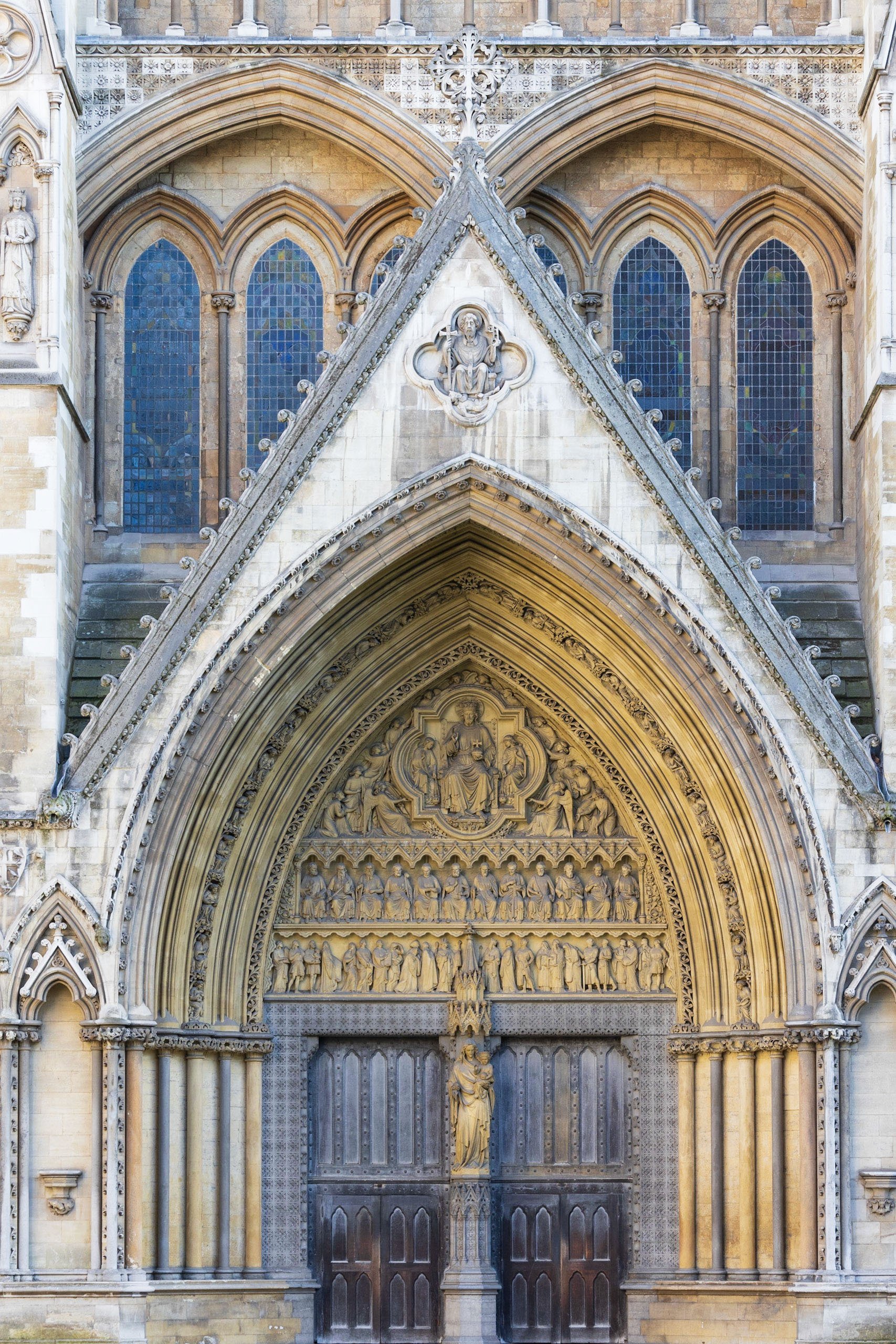
The Gothic façade of Westminster Abbey, one of London’s most important historic churches.
London Eye South Bank
The London Eye at 135 meters is the world's largest cantilevered observation wheel, offering views of 55 of London's most famous landmarks. The South Bank promenade stretching from the London Eye east toward Tower Bridge — passing the Tate Modern, the Globe Theatre, Borough Market, and Shakespeare's Globe — is one of the great urban walking routes in Europe.
📷 Pro Tip: Photograph the Eye itself from the Victoria Embankment on the north bank, shooting south across the Thames. At blue hour with the Eye illuminated, a 35–50mm captures the full wheel reflected in the river below. For the view from inside the Eye, go at sunset for the best light on the city.
Best time: Blue hour for the exterior. Sunset for the view from inside.

The London Eye rising above the South Bank and the River Thames.
Shoreditch and Brick Lane
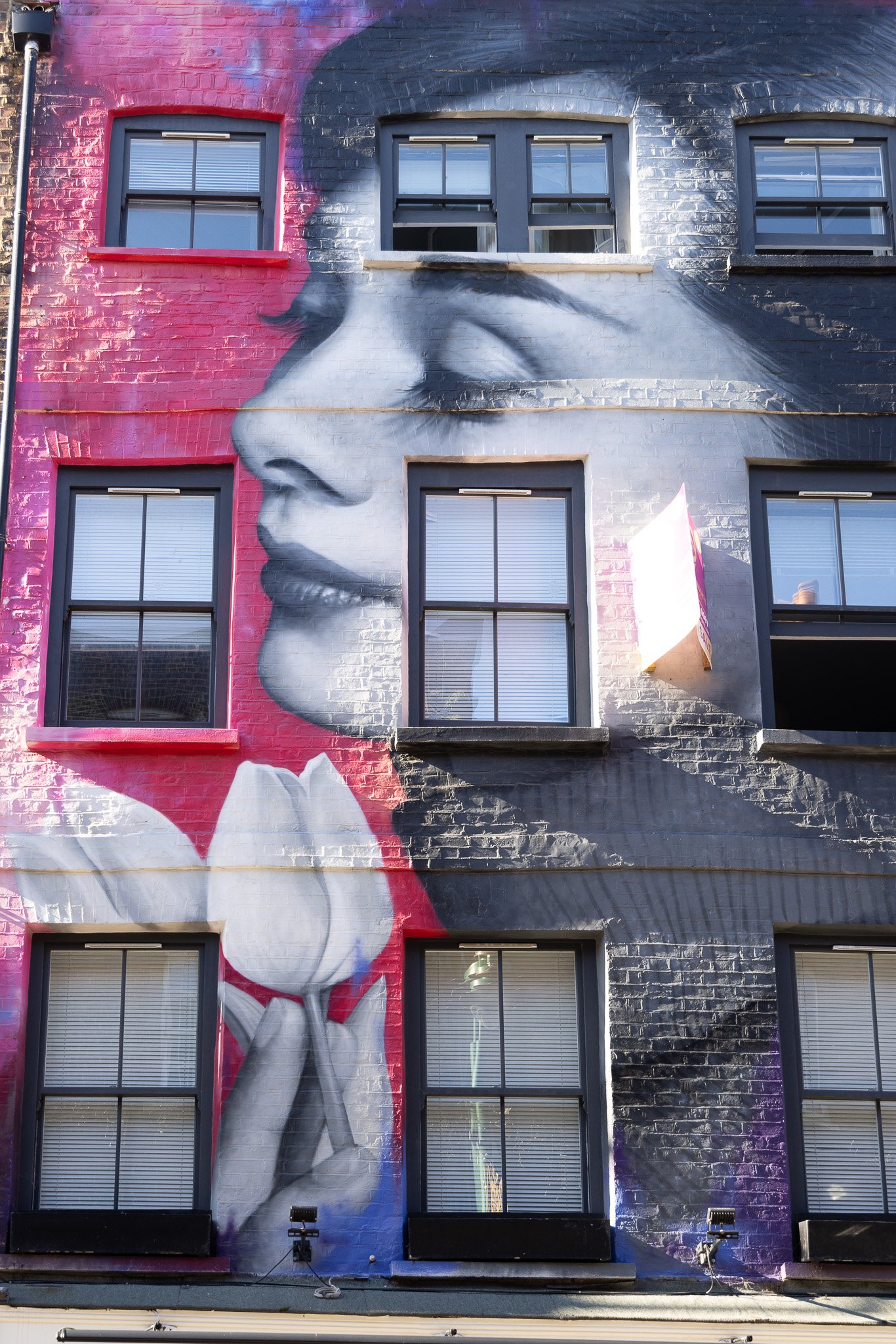
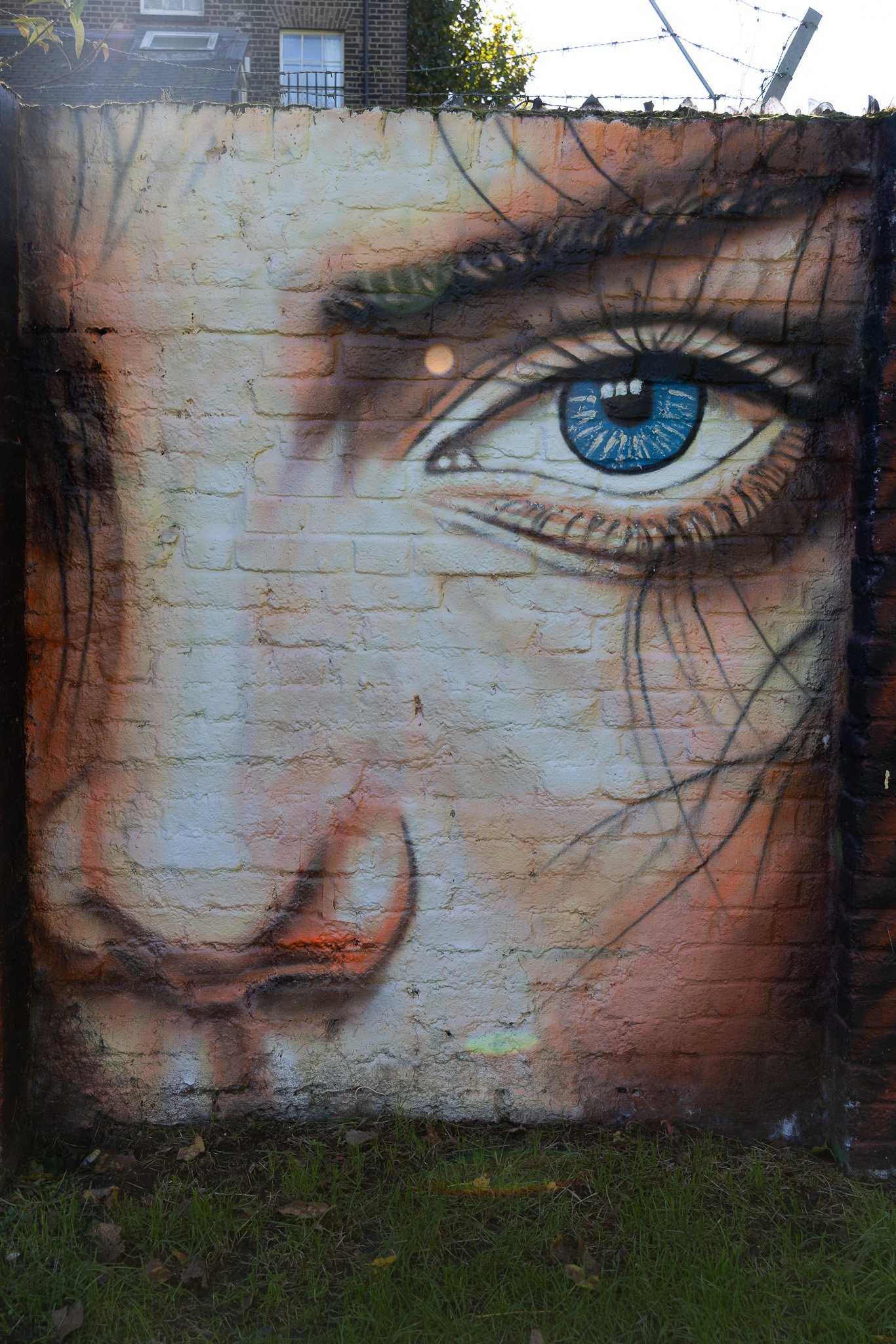
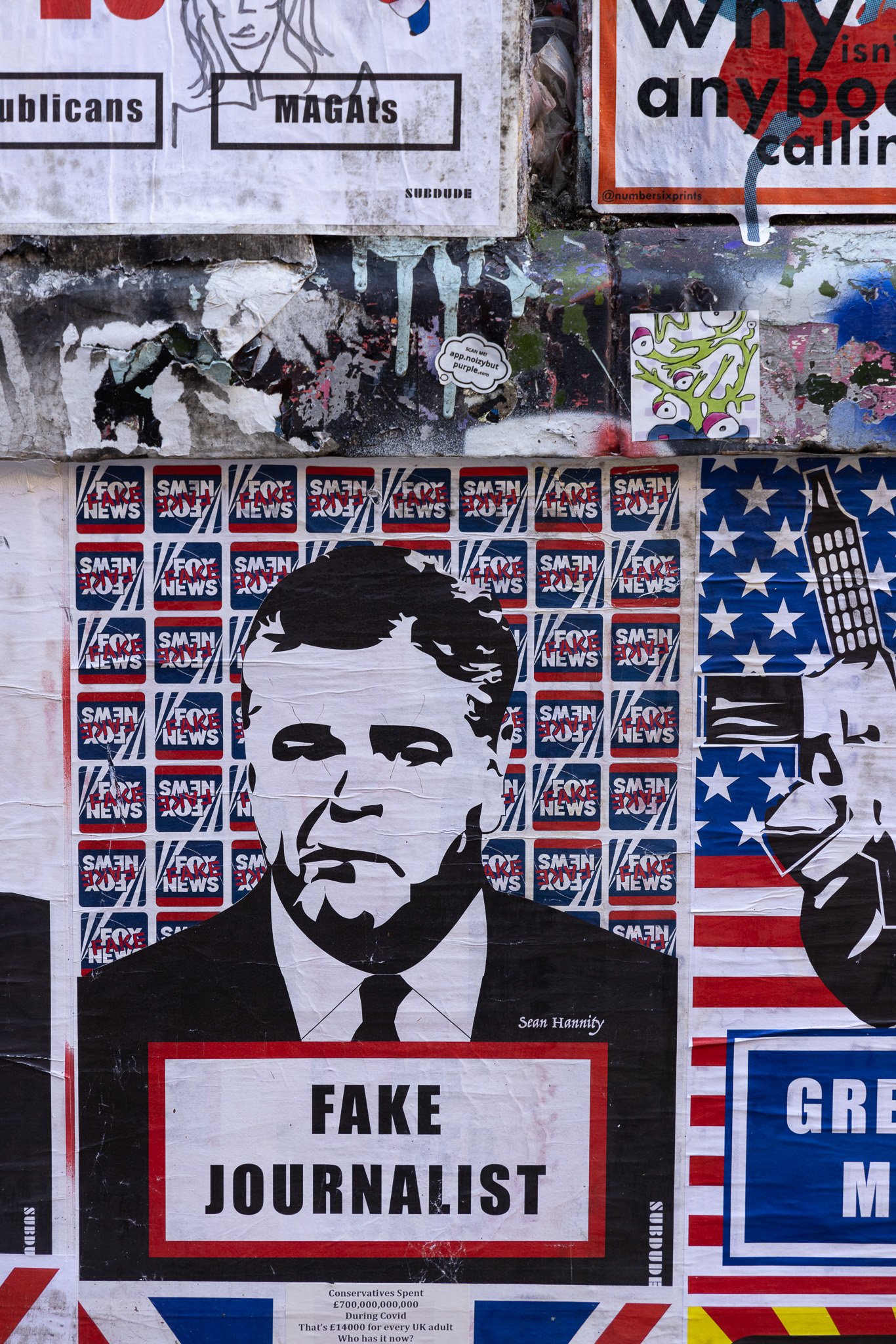
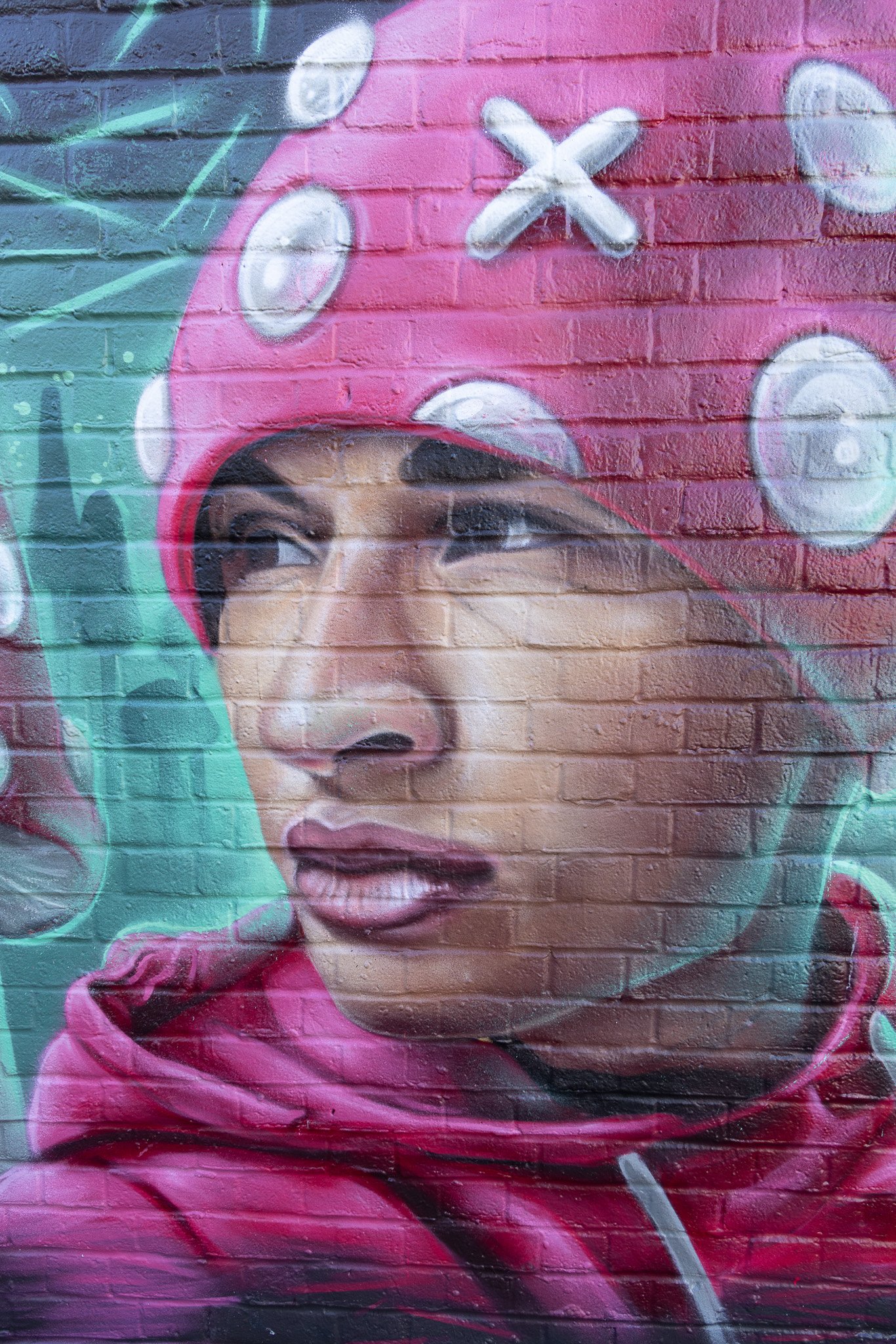
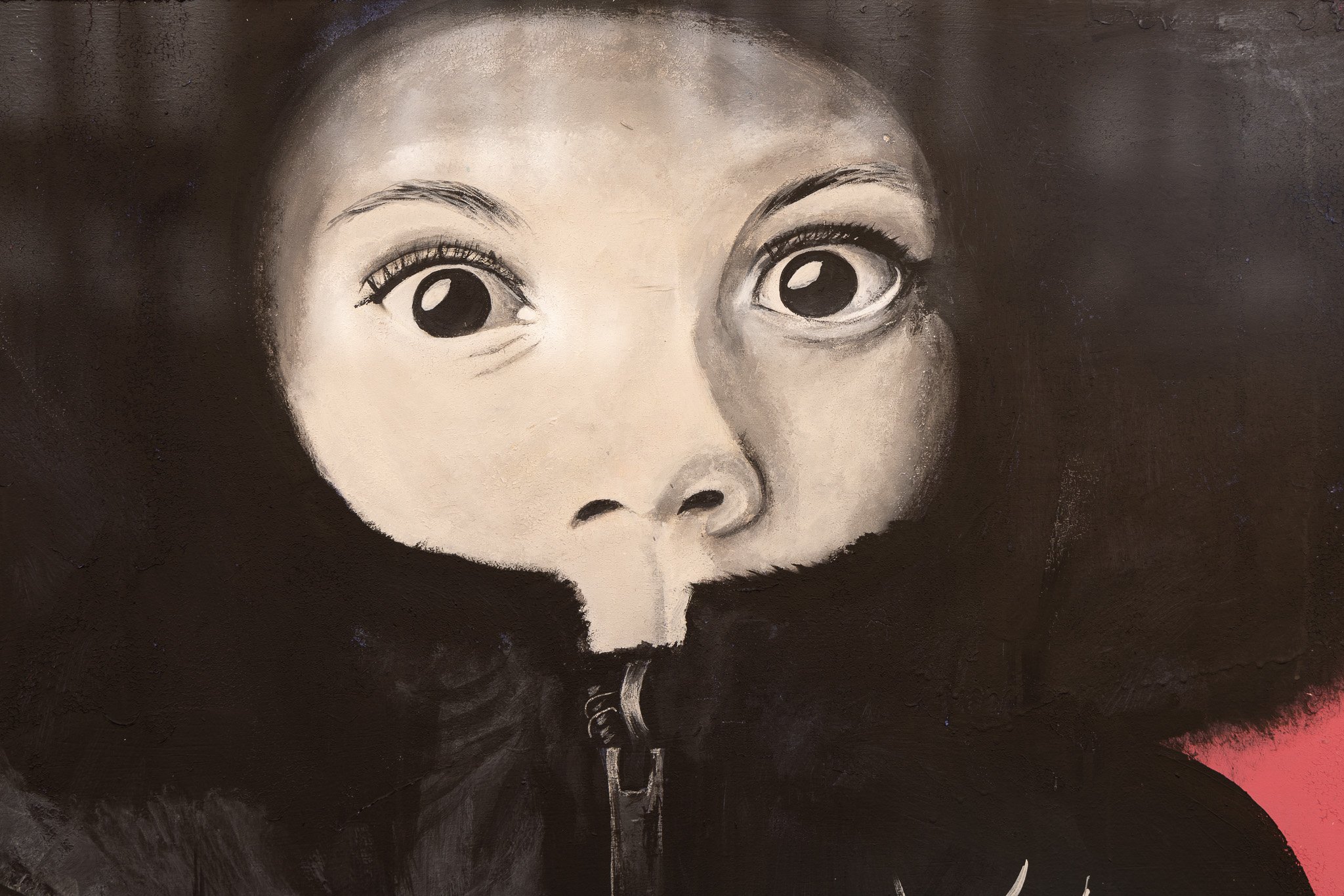
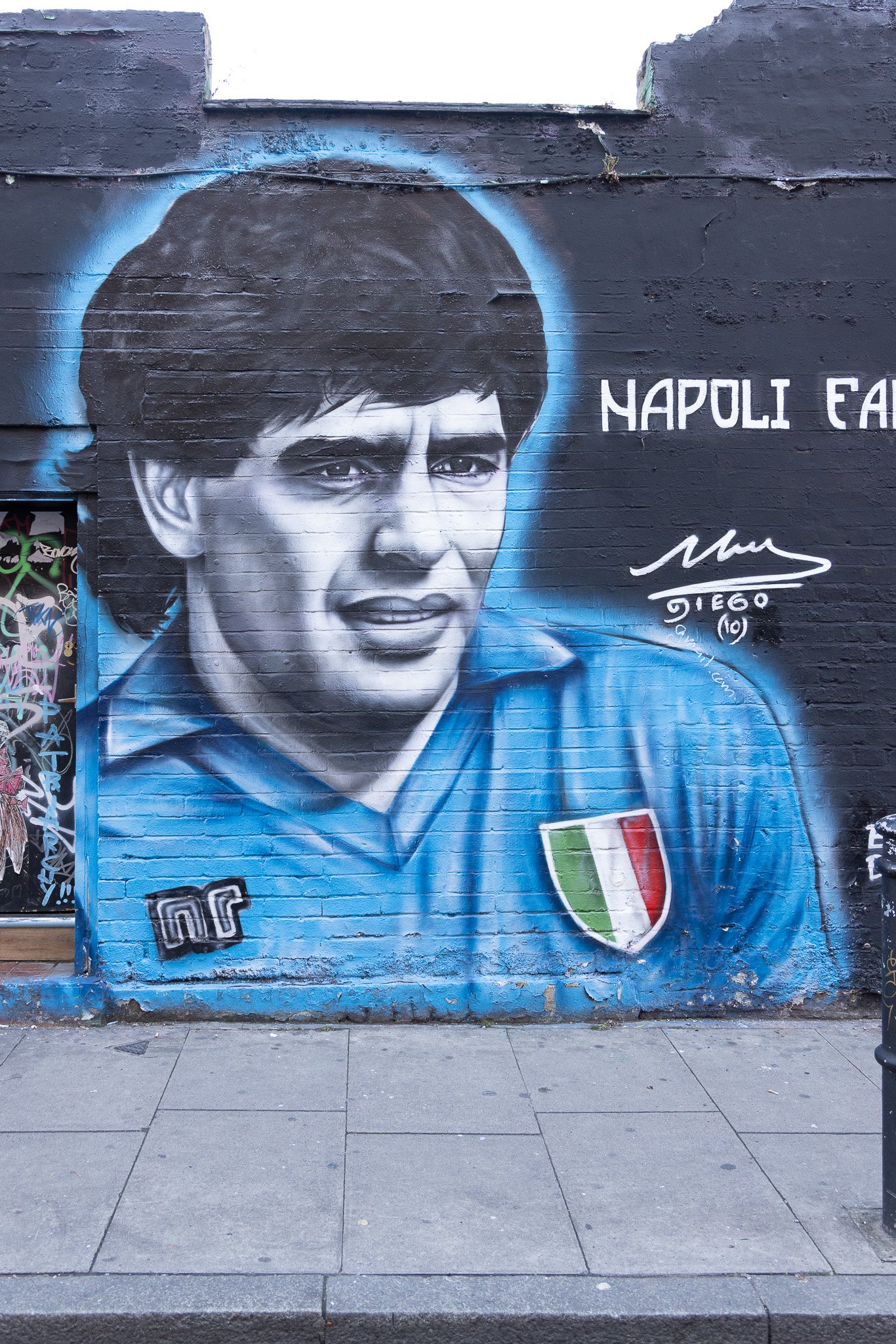
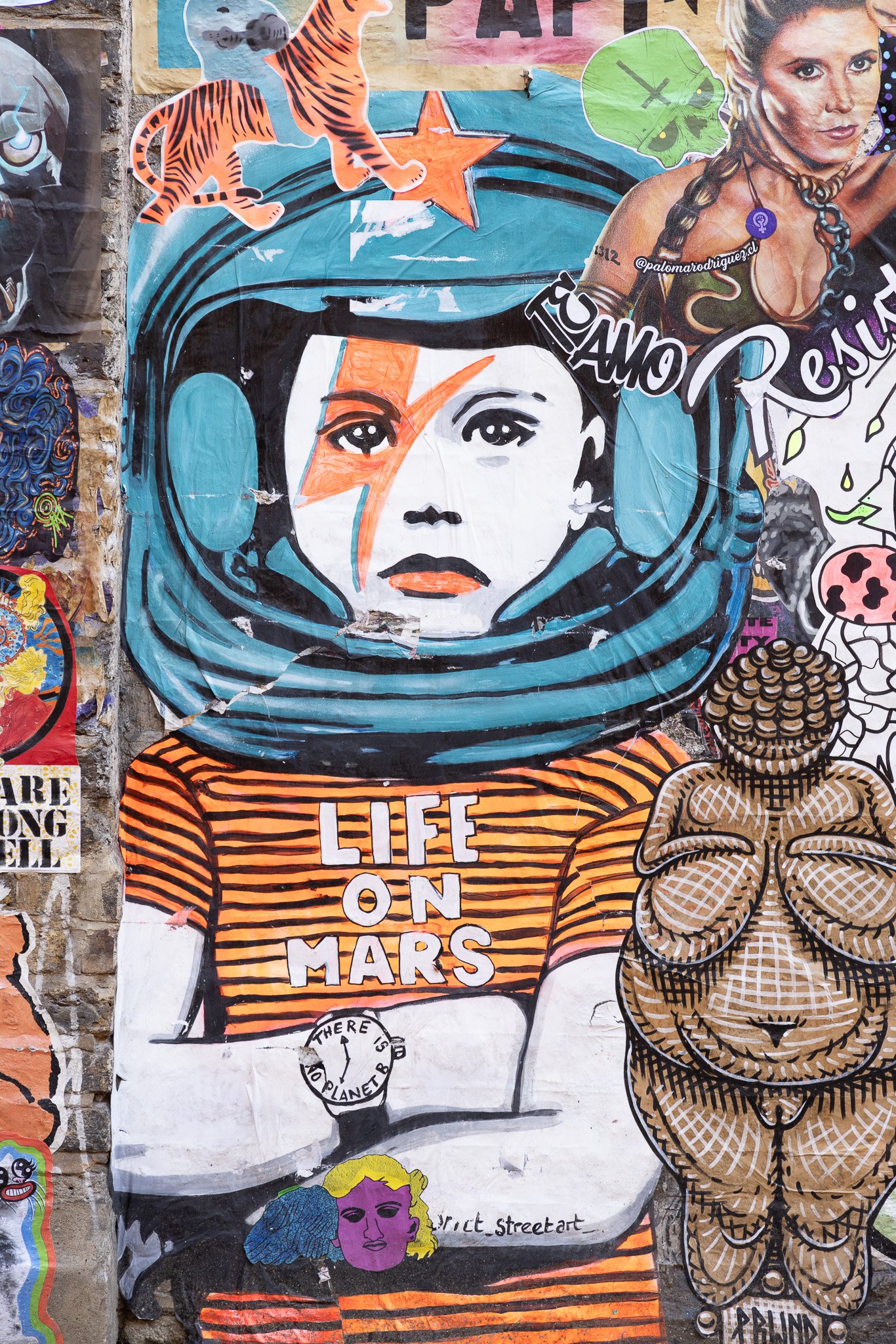
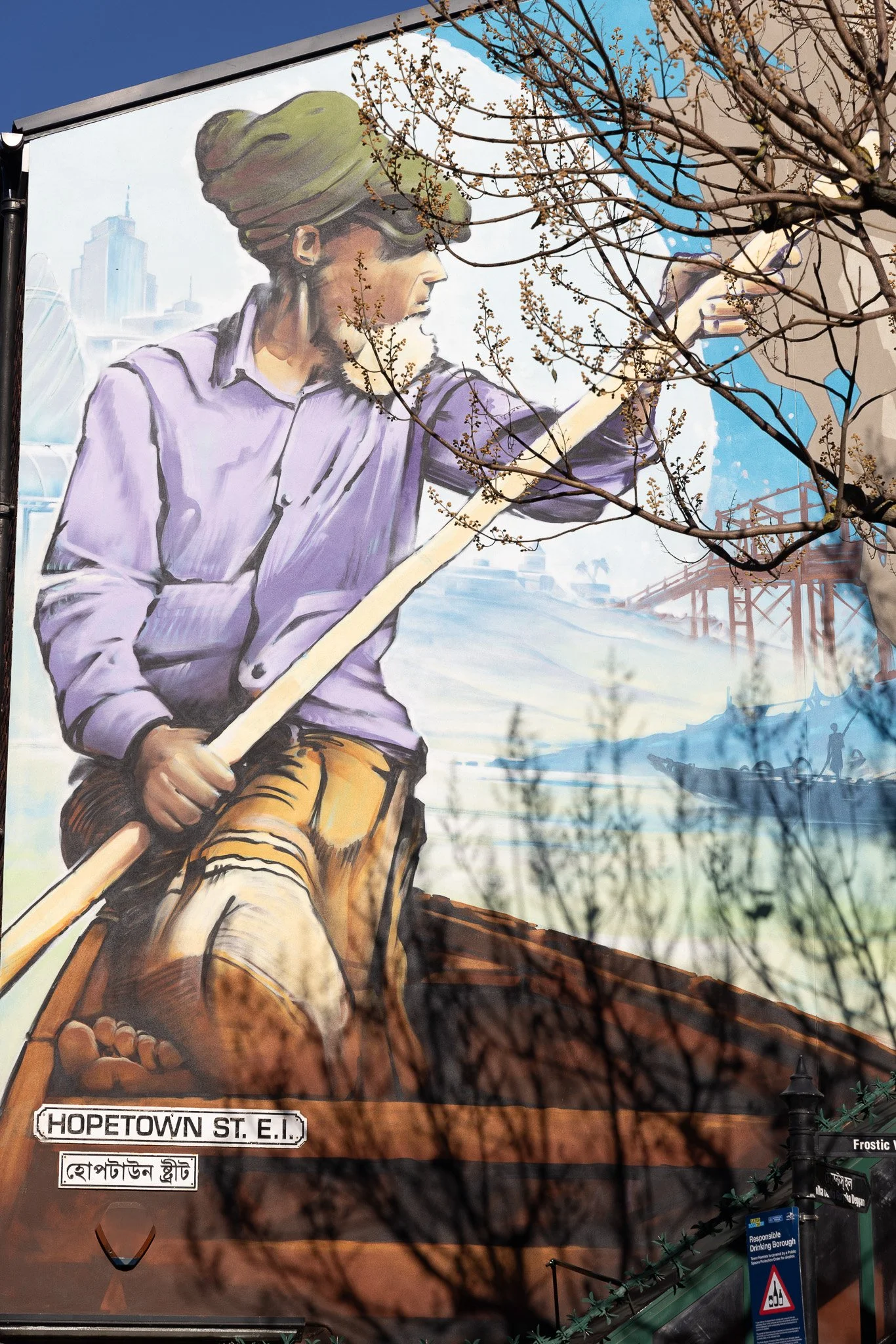
If there is one place in London that represents the city's contemporary creative energy, it is Shoreditch. The walls of Brick Lane, Rivington Street, and the surrounding alleys are London's most continuously updated outdoor gallery: Banksy, Stik, Ben Eine, and dozens of major artists have worked here, and the murals change constantly. This is not a fixed subject. What you photograph in Shoreditch today may not be there in three months.
📷 Pro Tip: Come early morning on a weekday for the cleanest light and fewest people. Large-scale murals on Brick Lane photograph best with a wide-angle (16-24mm) lens from across the street; get the full wall in the frame before moving in for detail crops. Look also for the smaller stencil work and paste-ups in the adjacent alleys; the detail rewards a 35-50mm. For iPhone photographers, use the standard wide lens and shoot in RAW via Halide or ProRAW: the high-contrast murals, bright colors against brick, benefit from the wider dynamic range that RAW preserves. The art changes; check street art publications or Instagram before you visit to know what is current.
Best time: Early weekday morning. Access: free. Tube to Shoreditch High Street or Liverpool Street.

Colorful street art covering the walls of Shoreditch in East London.
I highly recommend the Shoreditch Graffiti Tour with London With a Local. I took it with guide Colin and it is excellent for contextualizing what you are seeing and getting into locations you would otherwise miss entirely.
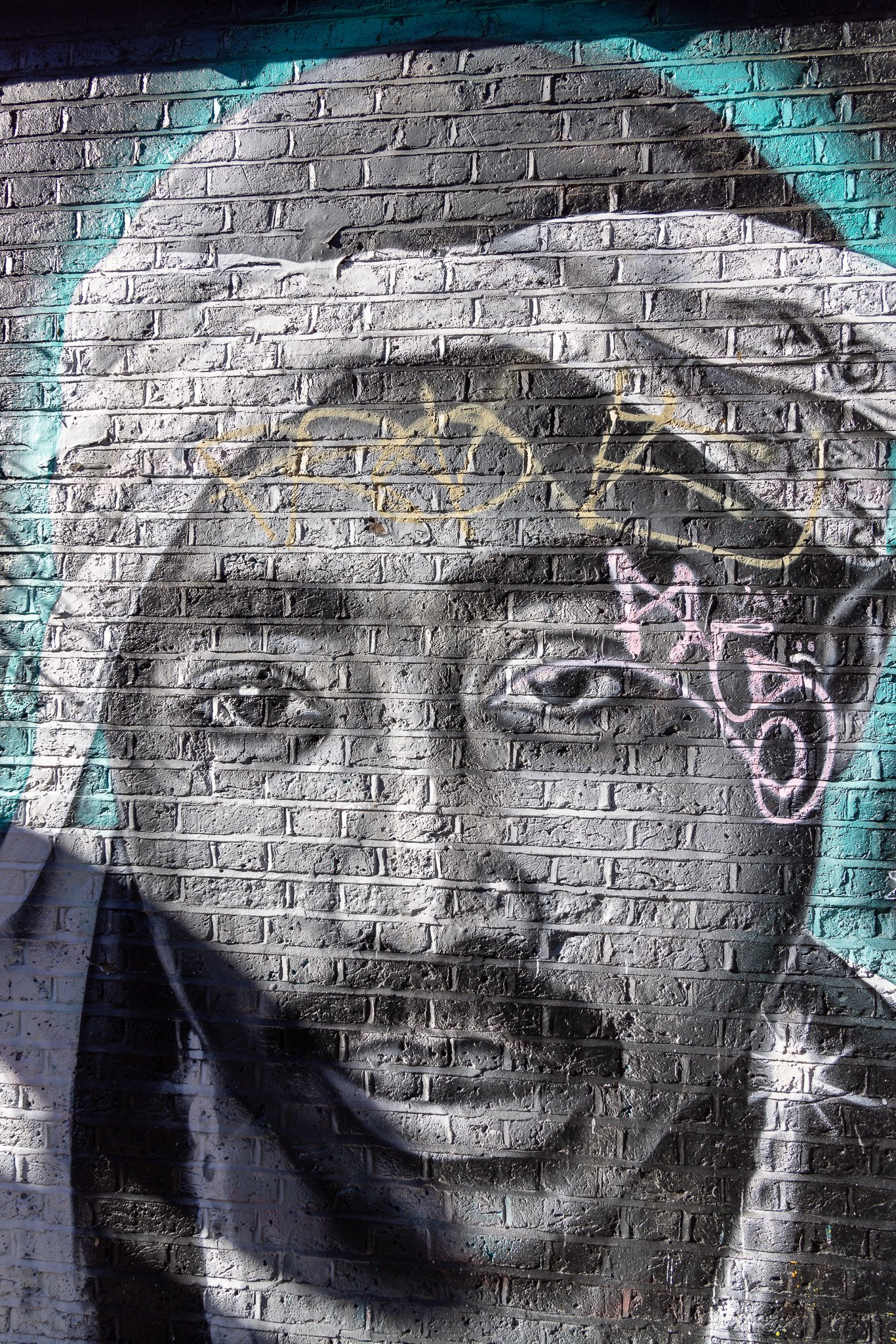
A striking Tupac mural in London’s constantly changing Shoreditch street art scene.
The Graffiti is constantly changing. There are pieces I have photographed and a few months later they are gone.
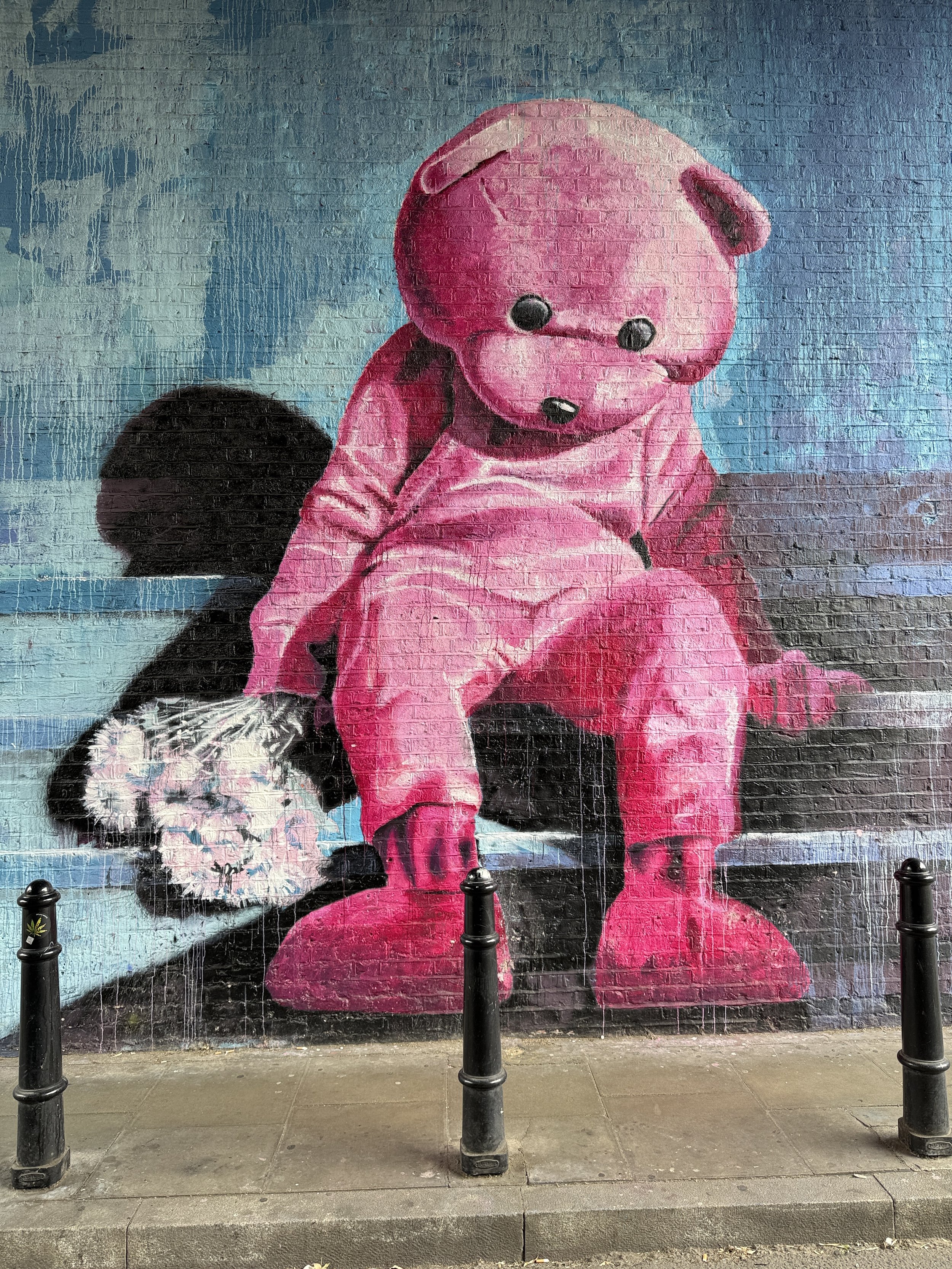
The Hope mural adds another splash of color to the streets of Shoreditch.
Brick Lane
Brick Lane is the heartbeat of Shoreditch’s street art scene. As you stroll down the lane, you’ll spot massive murals, colorful paste-ups, and quirky stencils. Keep an eye out for work by iconic artists like Banksy, Stik, and Ben Eine—their pieces are woven into Shoreditch’s DNA.
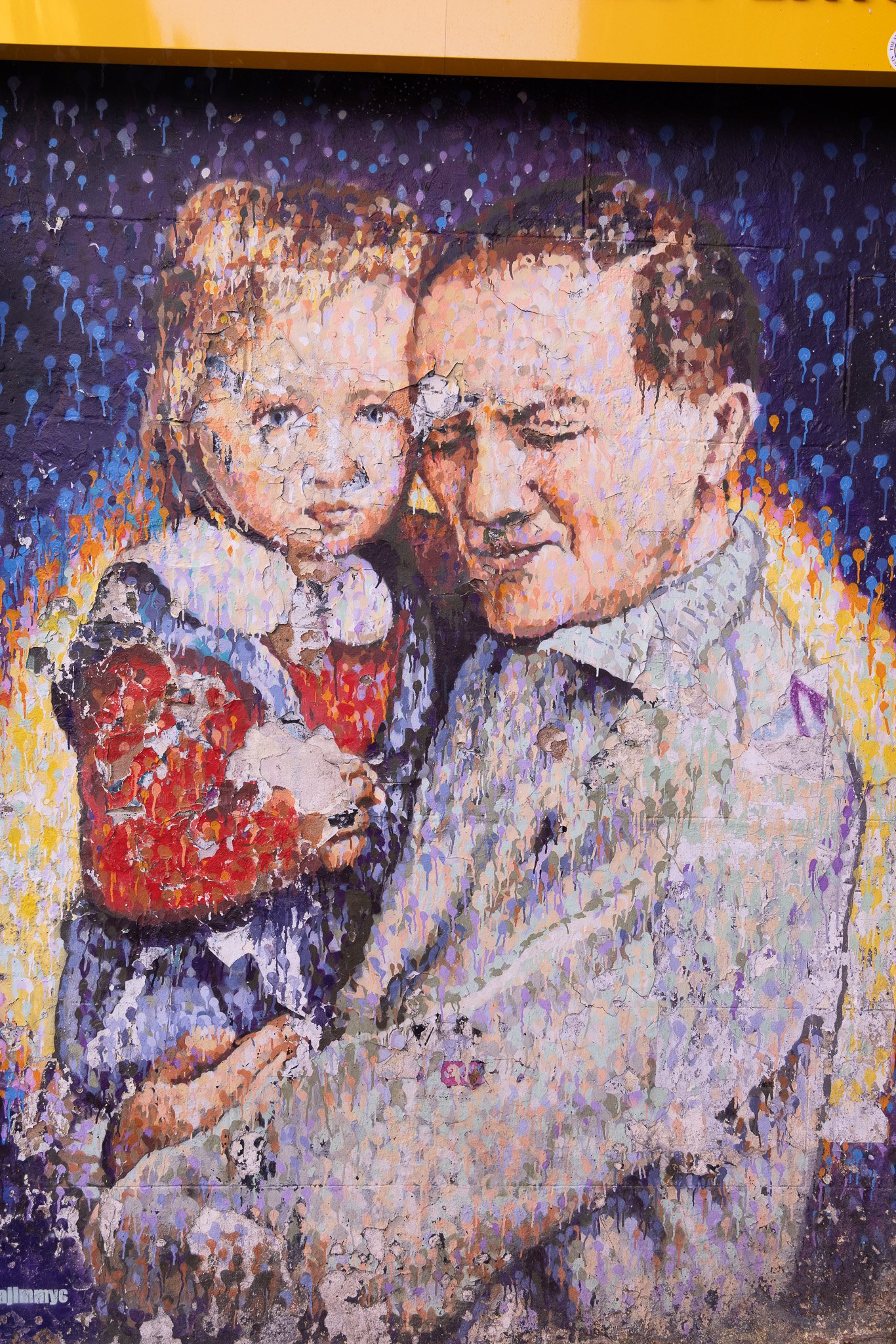


Leake Street Graffiti Tunnel
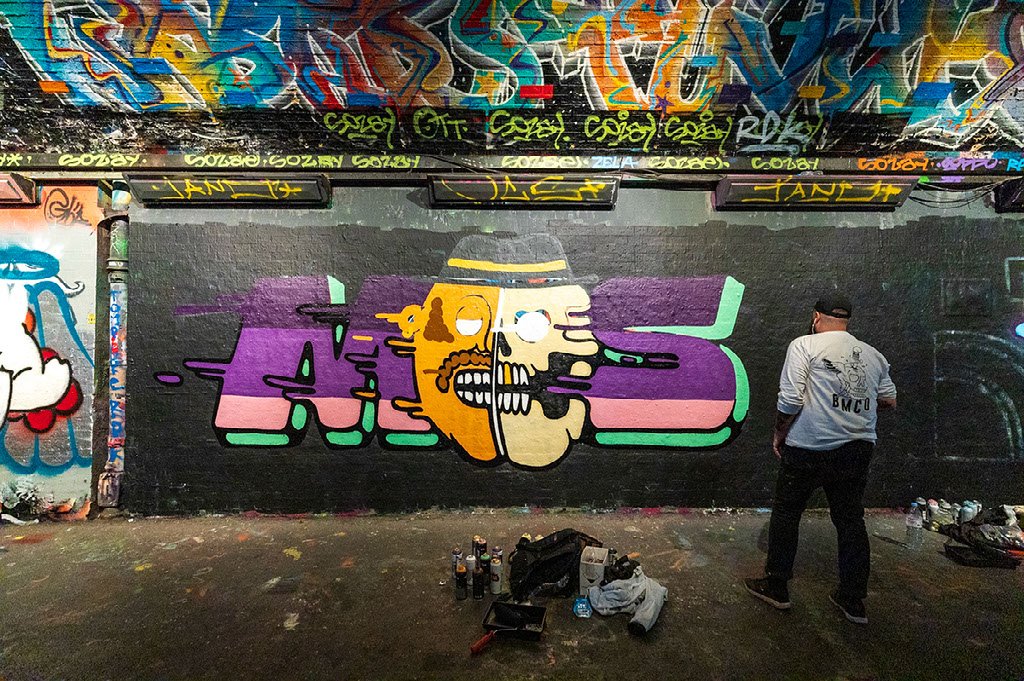
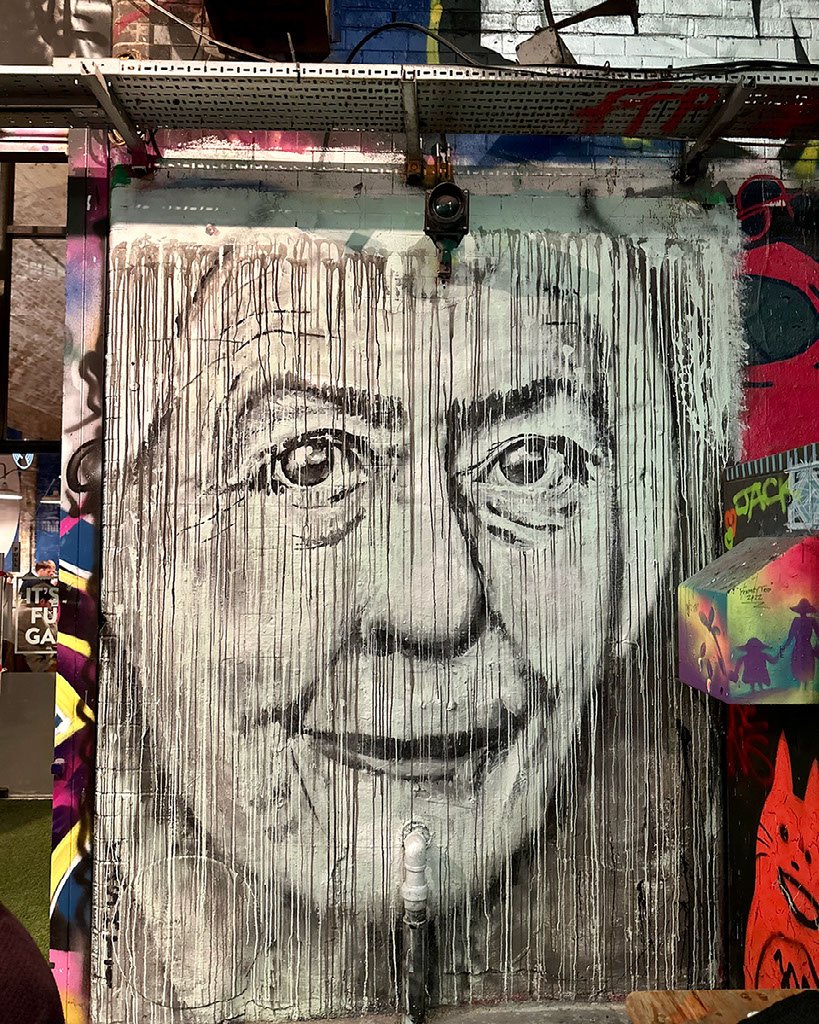
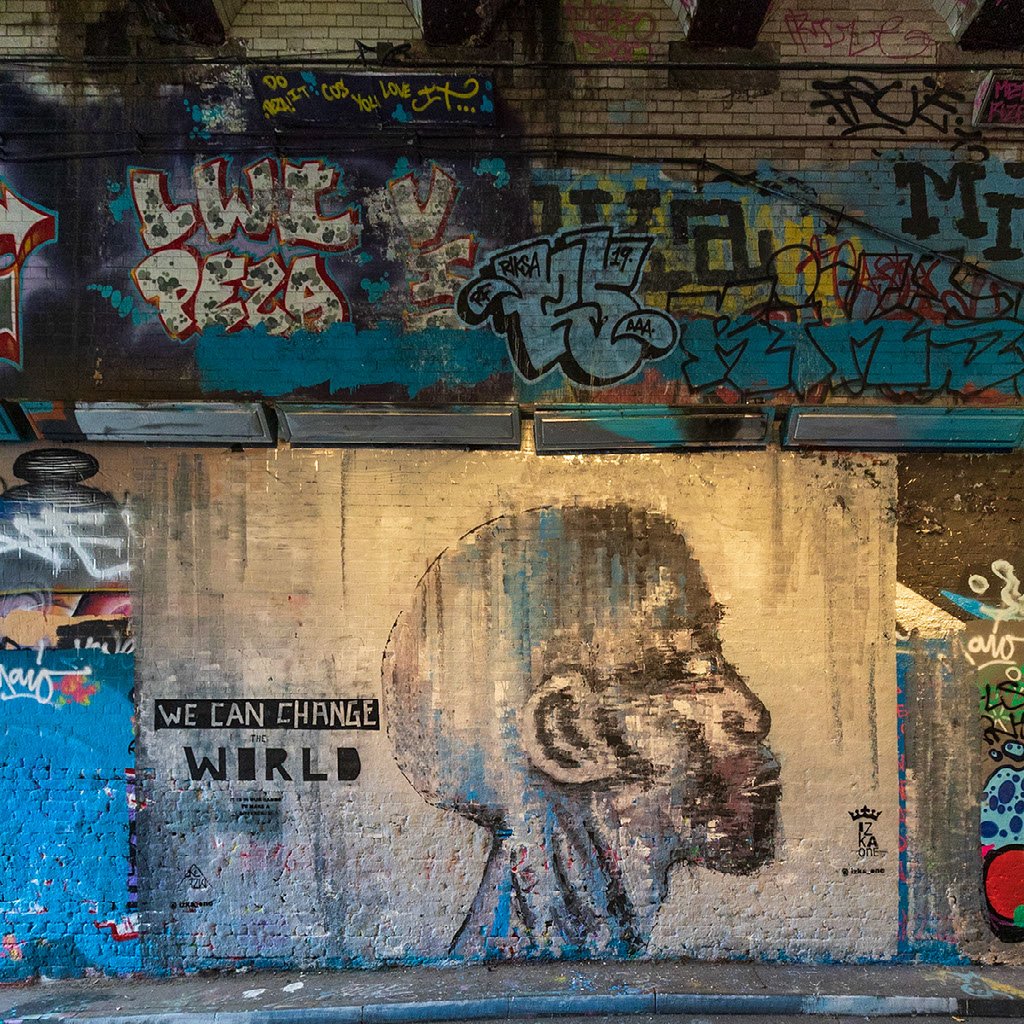
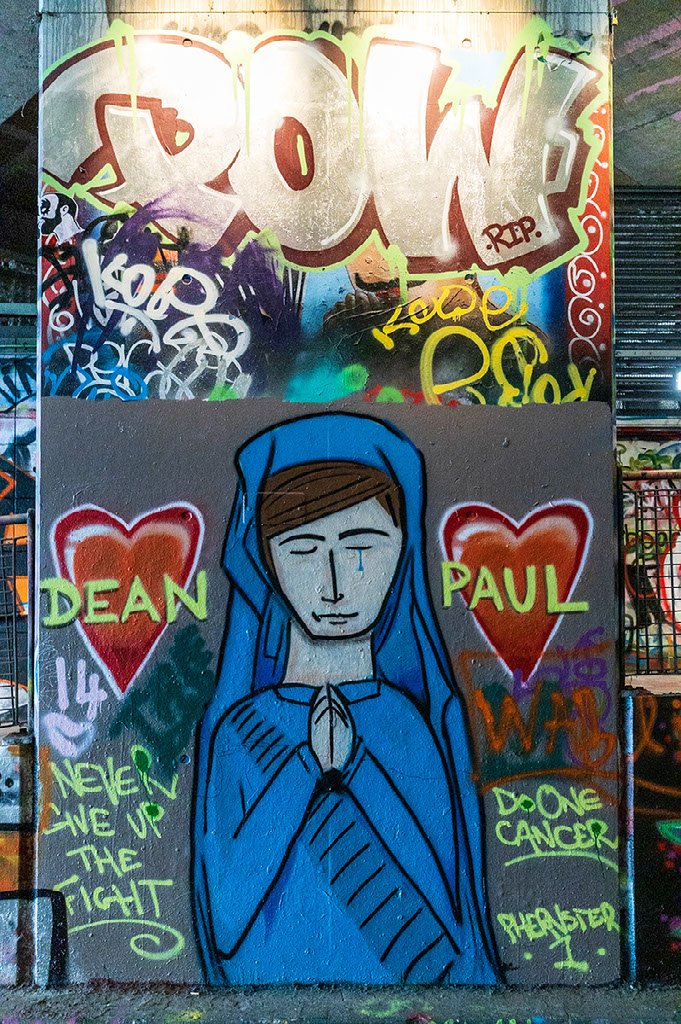
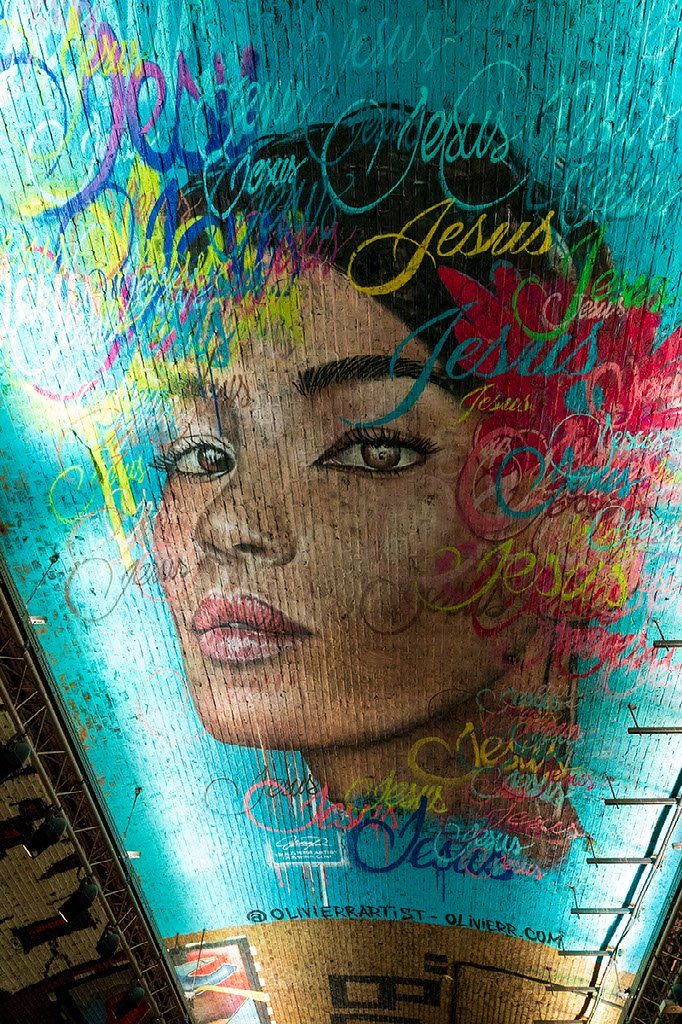
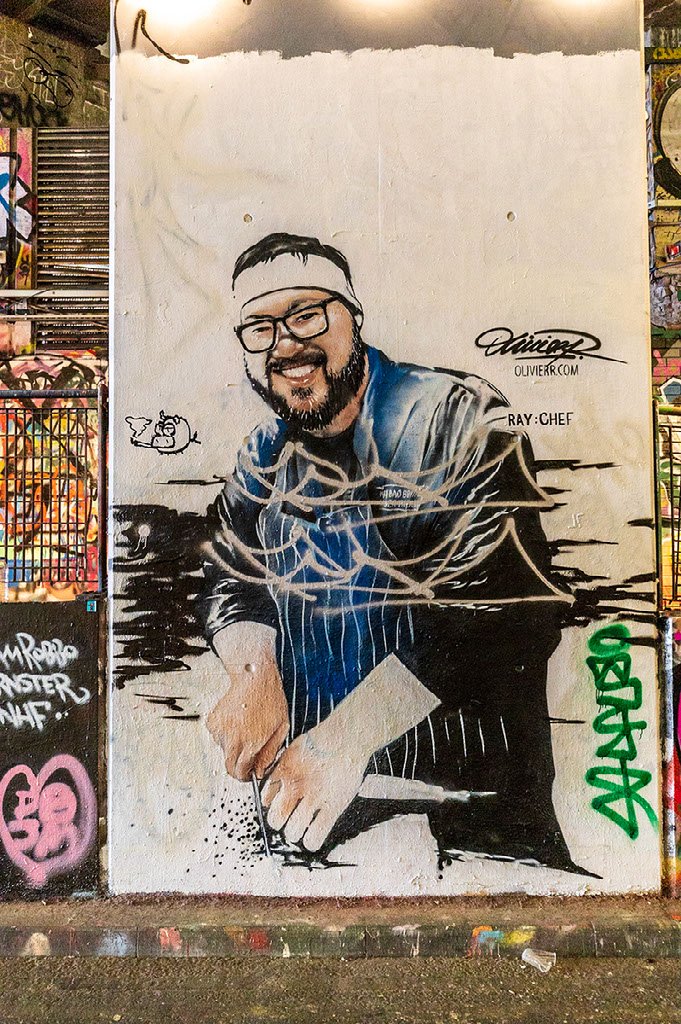
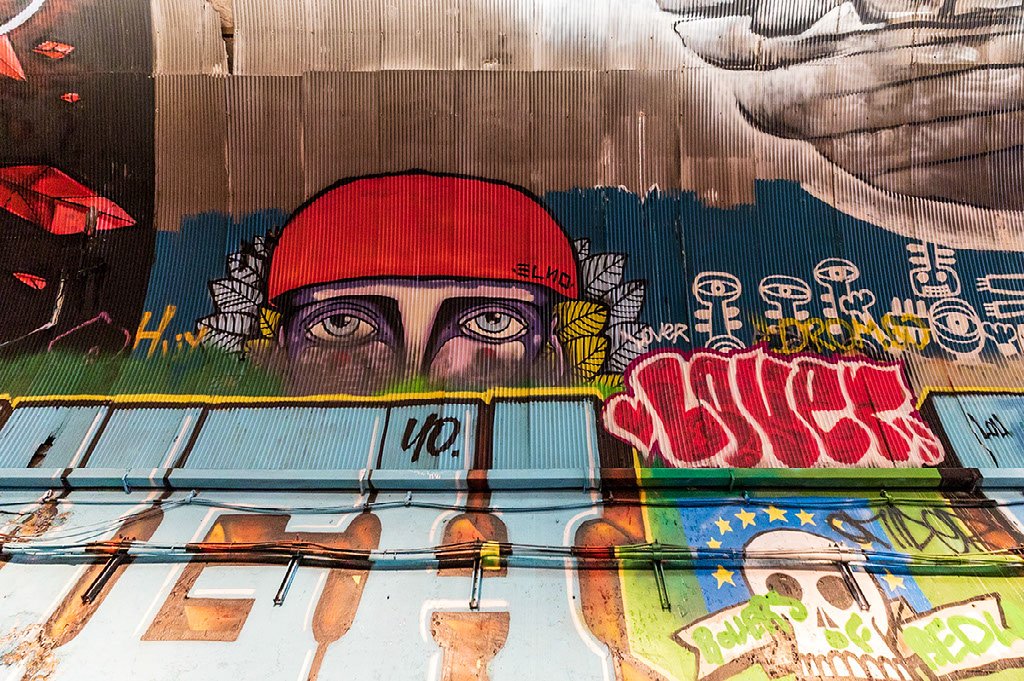
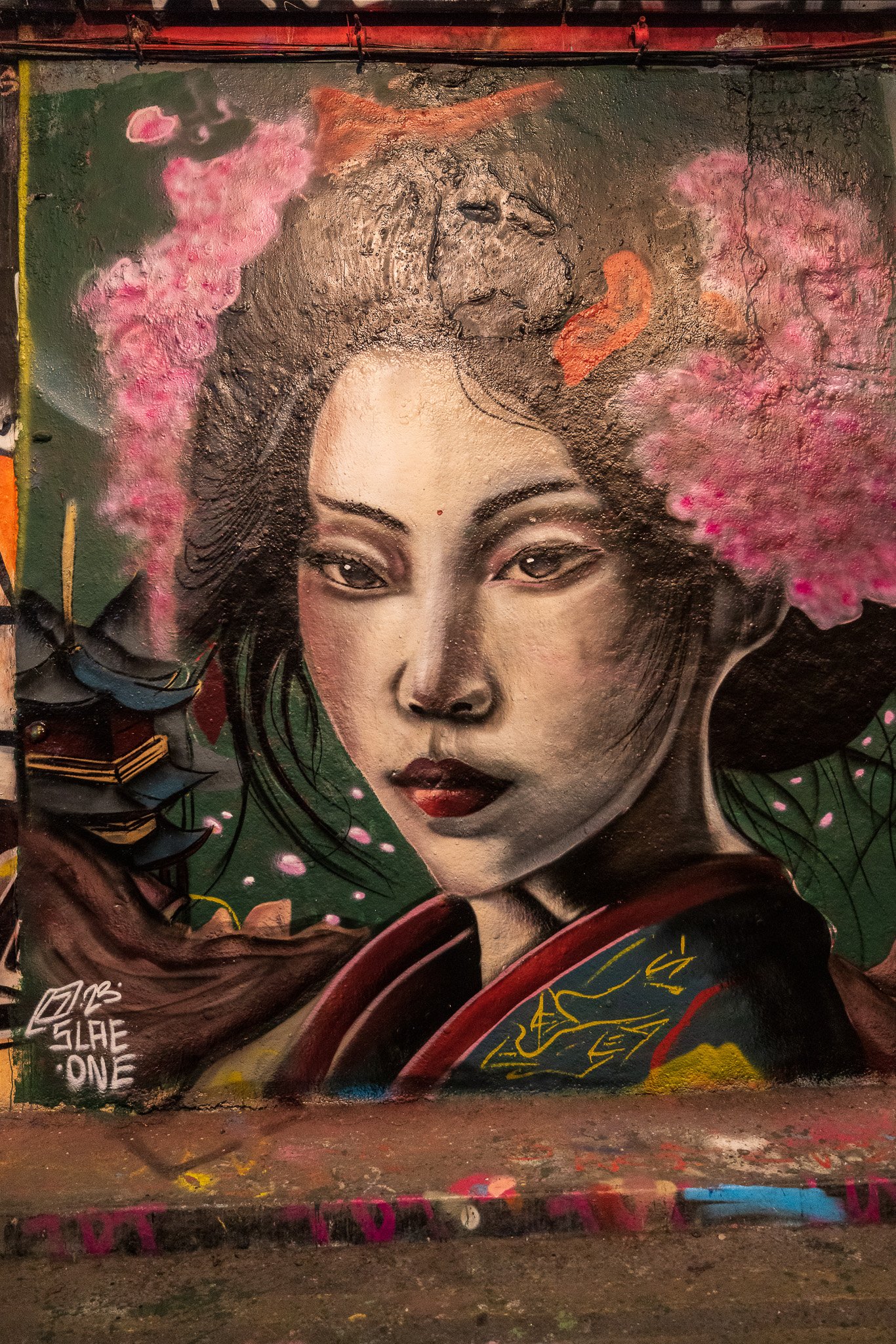
A 300-meter tunnel beneath Waterloo Station, begun in 2008 and now London's largest legal mural wall. The murals change continuously. I have been several times, and the walls are different every visit. Essential for street art photographers.
📷 Pro Tip: The tunnel is artificially lit throughout — consistent, even light that eliminates the exposure challenges of outdoor mural photography. A 24–50mm handle both full-wall compositions and closer detail work. Come in the evening for the best ambient light balance.
Best time: Any time. Evening for atmosphere.

Knightsbridge/Harrods at Night
Harrods at night, illuminated in its thousands of exterior lights, is one of London's most distinctive photographs. The department store on the Brompton Road, owned by the State of Qatar since 2010, is one of the largest and most recognizable in the world — and at night it becomes something genuinely extraordinary to photograph.
📷 Pro Tip: Photograph from directly across Brompton Road at blue hour, when the last color remains in the sky behind the building and the exterior illumination is at its most dramatic. A 24–50mm captures the full facade. The nearby Burlington Arcade and Royal Arcade are equally compelling interior photography subjects during the day.
Best time: Blue hour.

Harrods illuminated at night on Brompton Road in Knightsbridge.
The Queen’s House in Greenwich
Twenty minutes from central London (London Bridge to Maze Hill by train), Greenwich offers two of the finest interior photography subjects in England.
The Queen's House, designed by Inigo Jones and completed in 1635, contains the Tulip Staircase: the first geometric self-supporting spiral staircase in Britain, wrapping upward through the house in a continuous iron spiral of golden tulip patterns.
The Painted Hall in the Old Royal Naval College — described as "the Sistine Chapel of Britain" — is a Baroque ceiling fresco by James Thornhill covering 40,000 square feet, completed in 1726.
📷 Pro Tip: The Tulip Staircase: shoot from below, straight up through the spiral with a 16–24mm. A Platypod against the floor lets you shoot at ISO 100 with a long exposure. The Painted Hall: position yourself at the center of the hall and shoot upward at the ceiling — expose for the warm, detailed paintwork. A wide angle and high ISO handle the low ambient light.
Best time: Weekday morning for both locations.
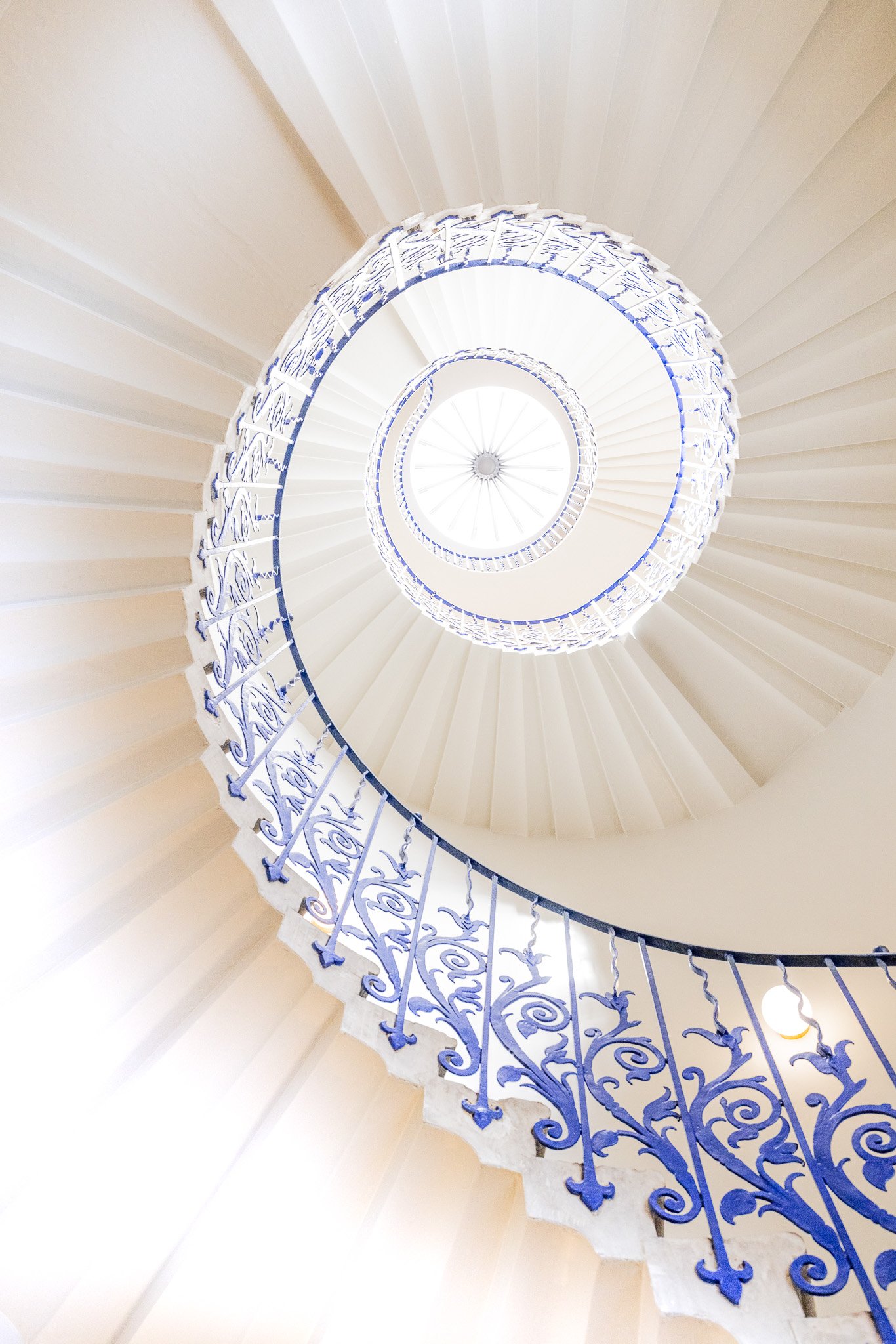
Looking upward through the elegant Tulip Staircase inside the Queen’s House in Greenwich.
The Painted Hall in Old Royal Naval College
The beautiful Painted Hall is an incredible room in the Old Royal Naval College in Greenwich, England. It is just 20 minutes from London by train.
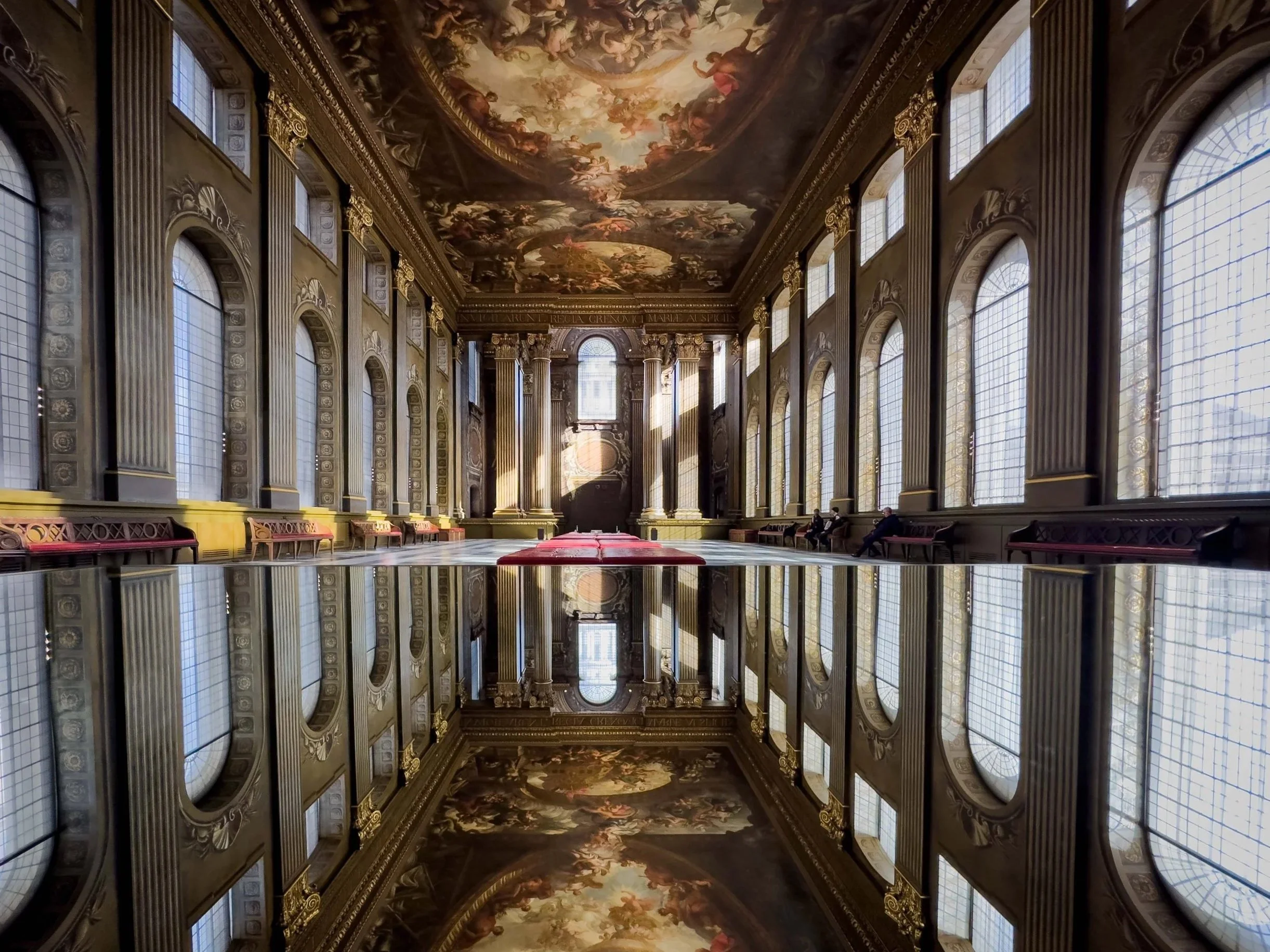
The extraordinary painted ceiling of the Old Royal Naval College in Greenwich.
Festivals & Events in London
Notting Hill Carnival (August) — Held over the August Bank Holiday weekend, the Notting Hill Carnival is Europe's largest street festival and one of the great photography events in the world. Caribbean music, elaborate costumes, steel bands, and an estimated million visitors fill the streets of Notting Hill across two days. The costume parades are extraordinary for color and portraiture. Come early, use a 70-200mm to isolate individual performers from the crowd, and position yourself on the parade route before the main groups pass. Respect the performers and always make eye contact before photographing someone at close range. Go on Monday for the main parade.
Chelsea Flower Show (May) — The Royal Horticultural Society Chelsea Flower Show at the Royal Hospital Chelsea is, by a considerable margin, the most visually extraordinary flower event in the world. The show garden designs change every year and represent the best of contemporary horticultural design. With something like 800 different rose varieties on display, plus the sculpted show gardens and floral artistry throughout, it is a genuine photographic feast. Tickets sell out months in advance; book early. A 70-200mm is ideal for isolating individual flowers and garden details. Come early in the week when the flowers are freshest, and the crowds are thinner.
Christmas in London (late November through January) — The Christmas lights on Oxford Street, Carnaby Street, Covent Garden, and King's Road transform central London from late November through early January. Kew Gardens' Christmas program illuminates the historic gardens with large-scale light installations. Borough Market runs Christmas markets through December. For photographers, the combination of Christmas illumination, long nights, and lower tourist volume makes this one of the most productive times of year to shoot London.
Changing of the Guard (year-round, schedule varies) — The Changing of the Guard ceremony at Buckingham Palace is one of the world's most photographed rituals. The schedule varies by season; check the official royal website before planning your morning around it. Come early, position yourself near the Palace gates, and use a 70-200mm lens to isolate individual guards. The march from Wellington Barracks along Birdcage Walk to the Palace is often less crowded than the Palace itself and gives you the guards in motion.
Guy Fawkes Night (November) — Fireworks displays across London mark Guy Fawkes Night in early November, with major events at Alexandra Palace, Battersea Park, and Victoria Park in East London. Alexandra Palace gives you fireworks against the London skyline and is one of the best elevated positions in the city for this purpose. A 70-200mm, a sturdy tripod, and 2-4 second exposures at f/8 are the technical starting points.
Frequently Asked Questions About Visiting London
Is London expensive?
It can be, but you have real control over it. Hotels and fine dining run high, especially in Knightsbridge and Mayfair, but the Tube is efficient and affordable, many museums are free, and markets like Borough Market let you eat exceptionally well without a West End price tag.
Is London safe?
Yes, for the areas most visitors go. Pickpocketing near major attractions and crowded Tube stations is the main risk, not violent crime. Keep bags zipped, mobile phones in your front pocket, and be mindful in crowds at places like Oxford Street and Camden.
Is the Tube hard to use for first-timers?
No, it's one of the most straightforward metro systems in the world once you've used it once. Tap in and out with a contactless card or phone; there's no need to buy a separate ticket, and the color-coded lines make navigation simple.
What are the best photo spots in London?
Tower Bridge at blue hour, the Serpentine at sunrise in Hyde Park, and Borough Market before 10 am on a weekday are three places I return to constantly. The full list with Pro Tips is below.
Can you fly a drone in London?
No, not realistically. Central London is within restricted airspace around Heathrow and the Thames corridor, and recreational drone flying is effectively prohibited across all locations in this guide. Leave it at home.
What surprised you most about photographing London?
How good the restaurants have become. It's changed dramatically since I was a child, when London didn't have much of a food reputation at all. Now it's one of the best restaurant cities in Europe.
How many days do you need in London?
Five days minimum to do it justice with a camera. Four works if you're efficient, but you'll feel the compression. A full week gives you room to revisit locations in a different light.
Do you need to book attractions in advance?
Yes, for the popular ones. The Chelsea Flower Show, Notting Hill Carnival viewing spots, and several of the grand hotel afternoon teas all sell out weeks ahead. Book online rather than showing up and hoping.
Final Thoughts
London keeps revealing itself. I have been back more than a dozen times as a photographer, and I still find things I have not seen before. That is not a cliché — it is just how this city works. The scale is too large, the neighborhoods too distinct, the light too variable, for a single visit to cover it.
What brings me back, beyond the photography, is the feeling that London is genuinely alive at every hour. The Serpentine in mist at 6 am. Borough Market is filling up at 8. The City of London at noon, suits moving between glass towers and medieval churches in the same block. On Saturday morning, the whole street on Portobello Road was compressed with color. Shoreditch in the evening, the murals changing month to month. And Tower Bridge at blue hour, when the Thames goes silver-dark, and the Gothic towers rise above it illuminated, and the city you thought you understood shows you another face.
Keep coming back. Come in all weather. Come in December when the Christmas lights turn Carnaby Street and Oxford Street into something extraordinary. Come in May for the Chelsea Flower Show. Come in the fog, when London becomes the city that Turner and Dickens wrote about. The grey days are often the best photography days.
Want to improve your photography while exploring some incredible destinations? Join me on one of my photography workshops! You can find all the details, including upcoming destinations and dates, through the links below.
Let's Stay Connected!
London is the natural hub for exploring the rest of Britain and a short hop to the best of Europe. Here is where I would go next.
My Photography & Travel Guide to Edinburgh, Scotland Two hours north by direct train from King's Cross. Edinburgh Castle, the Royal Mile, Arthur's Seat at sunrise, and the most dramatic urban landscape in Britain.
My Photography & Travel Guide to Paris, France Two hours and fifteen minutes from St. Pancras on the Eurostar. The Eiffel Tower at blue hour, the Marais at dawn, Montmartre before the crowds, and the side streets that most photographers never find.
My Photography & Travel Guide to Amsterdam An easy Eurostar connection via Brussels. Canal reflections at dawn, the Jordaan neighborhood, and the light on Dutch Golden Age architecture.
Best Photography Locations in the World My complete curated bucket list with links to every destination guide.
Finally—a beginner-friendly photography guide that makes sense.
If you've ever picked up a camera and thought, "Now what?" this is the book for you.
Photography Made Simple is written for adults who are just starting out and want a clear, encouraging, real-world approach to learning photography. Whether you're using a DSLR, mirrorless, or just your smartphone, this guide walks you through the basics—without the jargon or tech overwhelm.
Inside, you'll learn:
The only camera settings you really need to know to get started
How to shoot sharper, more intentional photos using light and composition
Simple tips for portraits, landscapes, travel, and everyday life
What gear you do (and don’t) need
How to create better photos without upgrading your camera
You’ll also get practical exercises, cheat sheets, and tips for organizing and editing your images—plus the confidence to shoot off Auto Mode for good.
This is not a textbook. It’s a friendly guide to seeing the world with fresh eyes—and finally capturing what you see the way you imagine it.
📸 Format: PDF download
Pages: 100+
Perfect for: Beginners, hobbyists, and anyone ready to take better photos without the stress

🎓 Adobe Lightroom One-to-One Training
Master Post-Processing. Elevate Your Photography.
Post-processing is the final — and arguably most transformative — step in your photography workflow. Adobe Lightroom is an essential tool for today’s digital photographers, combining powerful editing tools with an intuitive system for organizing and showcasing your images professionally.
Whether you're just getting started or looking to refine your editing skills, I offer customized one-to-one Lightroom training designed to help you create images you’ll be proud to share.
---
💻 Why One-to-One Online Lightroom Training?
Over the years, I’ve found that personalized training is the most effective way to learn Lightroom. Unlike group sessions, a one-to-one format allows us to move at your pace, focus on your specific goals, and eliminate the frustration of mismatched experience levels.
Plus, with online sessions via Zoom, you can learn from the comfort of your home — no travel or accommodation needed. It's the most convenient, cost-effective, and time-efficient way to upgrade your editing game.
---
🧠 Tailored Topics to Match Your Goals
Our training is completely customizable, but here’s an outline of the modules we can cover — either in full or à la carte.
---
🔧 Lightroom Setup – Part 1: Getting Started
Set up Lightroom properly for long-term success. We’ll tackle the fundamentals to create an efficient, organized workflow:
- What Lightroom is (and isn’t)
- How the interface and modules work
- Setting preferences for your needs
- Understanding the Catalog and folder system
- Importing images efficiently
- Adding keywords during import
---
🗂 Lightroom Setup – Part 2: Organize Like a Pro
Build a storage system that grows with you:
- Folder structure tips and best practices
- Moving and renaming files within Lightroom
- Reviewing, rating, and filtering images
- Creating Smart Collections and Collection Sets
- Keywording strategies and metadata organization
---
🎨 Lightroom Editing – Part 1: Core Editing Skills
Master the Develop module and create consistent, polished images:
- Global adjustments in the Basic panel
- White balance, contrast, vibrance, and saturation
- Cropping and converting to black & white
- HSL panel tuning
- Sharpening and noise reduction
- Creating and saving presets
- Exporting for print, web, or social media
---
✨ Lightroom Editing – Part 2: Advanced Techniques
Take your editing to the next level with creative, selective tools:
- Radial and Gradient filters
- The Adjustment Brush
- Advanced masking and luminosity adjustments
- Enhancing portraits (skin, eyes, teeth)
- Spot removal and basic cloning
- Merging for HDR and panoramas
---
💼 Session Details & Pricing (USD)
Tailored One-to-One Lightroom Tuition:
- Single Session (2 hours): $199
Before our session, we’ll have a brief consultation to customize your training plan and ensure it meets your exact needs.
---
Ready to take control of your editing workflow and bring out the best in your images?
Let’s work together to turn your vision into vivid, powerful photos.
📩 Get in touch to schedule your personalized Lightroom session.