Ljubljana, Slovenia Travel & Photography Guide: Best Photo Spots, Things to Do & Hidden Gems
People always ask me which European city surprised me the most. Ljubljana is usually my answer.
I had been to Prague, Vienna, Budapest. I knew what a beautiful Central European city looked like. But Ljubljana does something different. It pulls you in quietly. The Ljubljanica River curves gently through the old town, its banks lined with café tables and willow trees. Bridges cross the water every few hundred meters, each one more interesting than the last. Up on the hill, the castle sits above everything, watching over a city that does not feel the need to announce itself. The first time I walked through the pedestrian streets of the old town, I kept stopping. Not because I planned to photograph anything in particular, but because the light kept doing something worth capturing: catching the edge of a carved doorway, pooling on the river at golden hour, turning the cathedral facade the color of warm stone.
What makes Ljubljana work for photographers is the scale. This is a compact, walkable city where every location in this guide is within twenty minutes of the next. You are never rushing between shots. You slow down, and the city rewards you for it. There is a real energy here too, driven by one of the highest concentrations of university students in Europe. The cafés are full. The riverside terraces are full. The streets have life in them at every hour. It reminds me a little of Prague, but without the crowds, and with food that is genuinely better.
In this Photography Guide to Ljubljana, Slovenia, I share the places and experiences that continue to draw me back. You will find my favorite photography locations, guidance on when and where to shoot, practical travel tips, and gear recommendations, along with cultural insights to help you explore and photograph Ljubljana with confidence, respect, and ease.

Photographer's Notes
Before you go, here are my own takeaways.
Favorite Season: May
Favorite Location: The Triple Bridge
Favorite Hotel: InterContinental Ljubljana
Favorite Restaurant: Špajza
Favorite Café: Cafetino
Favorite Lens: 24-70mm f/2.8
Would I Return? It's a lovely city, definitely worth visiting.
Where to Stay in Ljubljana, Slovenia
Stay in or immediately adjacent to the Old Town. Every photography location in this guide is walkable from there, and the cobblestone streets and riverbanks are themselves worth photographing at any hour. The city is small enough that even a hotel a few blocks outside the center puts you within easy walking distance of the Ljubljanica.
Luxury Hotels in Ljubljana, Slovenia
InterContinental Ljubljana | Slovenska cesta 59, city center
This is where I stay when I am in Ljubljana, and it earns its place at the top of the list. The InterContinental is the tallest building in Ljubljana, and the views from the upper floors across the castle and the old town rooftops are genuinely exceptional, especially at golden hour when the light turns everything amber. The rooms are spacious with marble bathrooms, and the B-Restaurant on the upper floors has earned Michelin recognition. The rooftop spa has a pool and panoramic views of the castle that are worth the visit on their own. The hotel sits a ten-minute walk from the Triple Bridge, which is close enough for early morning shoots without being in the thick of the tourist zone.
Vander Urbani Resort | Krojaška ulica 6, Old Town
Tucked into a beautifully renovated 19th-century building in the Old Town, Vander is the most atmospheric luxury option in Ljubljana. The rooftop terrace looks directly over the Ljubljanica and the surrounding rooftops, and it is one of the best spots in the city to watch the evening light settle. Small, personal, and genuinely stylish without being precious about it.
Zlata Ladjica Boutique Hotel | Gornji trg 47, Old Town
A five-star boutique hotel sitting fifty meters from the Cobbler's Bridge, right in the heart of the old town. Elegant rooms, a good restaurant, and free bikes for guests, which is a practical bonus when you want to cover more ground during a long shooting day. The location is hard to beat for photographers who want to be out the door and shooting within two minutes of waking up.
Mid-Range Hotels in Ljubljana, Slovenia
Hotel Cubo | Slovenska cesta 15, city center
A design-forward mid-range option with a central location and a sharp aesthetic. Rooms are compact but well thought through, the staff is excellent, and the location puts you within easy reach of the river and Old Town on foot. A strong value pick for photographers who spend most of their time outside anyway.
City Hotel Ljubljana | Dalmatinova ulica 15, city center
Well-reviewed, consistent, and competitively priced. Free breakfast is included, the location is solid, and recent guest feedback is strong on service. A practical choice that covers the basics without fuss.
ONE66 Hotel | Slovenska cesta 40, city center
One of the most stylish mid-range options in the city, with a strong design sensibility and a bar worth visiting in the evening. Urban, contemporary, and popular with a younger crowd. Good WiFi and comfortable rooms make it a solid base for a longer editing session after a full day of shooting.
How Many Days Should I Stay in Ljubljana, Slovenia?
Three days is the right minimum for Ljubljana. Two gets you the highlights but leaves you feeling like you rushed. Three gives you time to shoot each key location in the right light, do a day trip to Lake Bled, and still have an evening to get lost in the old town without an agenda.
Here is how to think about it:
Three Days: The Complete Picture
Day one is for the old town and the river. Start at Triple Bridge at sunrise before anyone else arrives, work your way along the Ljubljanica to the Dragon Bridge, then spend the morning at the Central Market. Afternoon is for the Cathedral and the side streets. Go up to the castle at golden hour and stay for the view as the city lights come on. Day two is for Lake Bled. Take the 45-minute drive early, shoot the lake at dawn, and come back in the afternoon with time to process what you photographed. Day three is your flex day: a second attempt at the Triple Bridge reflection if the first morning was cloudy, the Franciscan Church at a different light, Tivoli Park if you want green space, or a slow morning editing at a riverfront café.
For photographers specifically, Ljubljana's best light is early morning and evening. The midday hours are for eating, editing, and the Castle visit when the courtyard is busy enough to be interesting but not yet overwhelming. Plan your shooting windows and build everything else around them.
Best Time to Visit Ljubljana
The short answer: April through October. May and September for photographers.
Spring (April to May): The Sweet Spot
May is the best month for photography in Ljubljana. The weather is warm but not hot, the light is soft and directional well into the evening, and the tourist numbers have not yet peaked. The river has strong water after snowmelt, the market is running at full capacity, and the city's café culture moves outside for the season. Golden hour in May runs until after 8pm, which gives you enormous flexibility for riverfront and castle shots.
Summer (June to August): Peak Season
The weather is at its warmest and the city is at its most alive. University students and tourists fill the riverside terraces from mid-morning onward. For photography, plan your key shots for before 8am and after 7pm. The summer solstice gives you nearly fifteen hours of usable daylight, and golden hour stretches luxuriously in the evening. The crowds between those windows are manageable with the right lens choices.
Autumn (September to October): The Photographer's Window
September is genuinely excellent. Crowds drop after the first week, the light softens with the lower sun angle, and the trees along the Ljubljanica start turning in October. The castle and the riverbanks look different in autumn color than they do in summer green, and the lower contrast light is easier to work with for architectural photography.
Winter (November to March): Quiet and Atmospheric
Ljubljana in December, with Christmas market lights reflecting in the river and fog sitting in the valley below the castle, produces images you cannot make any other time of year. It is cold and occasionally wet, but the city does not shut down, and the lack of tourists means you can plant your tripod exactly where you want it.

Getting Around Ljubljana
Ljubljana is one of the most walkable cities in Europe, and the old town is entirely pedestrian. Every photography location in this guide is reachable on foot from a central hotel. The compact scale of the city is one of its best features for photographers: you can move between five different subjects in a single morning without breaking a sweat.
On Foot
Walking is genuinely the right call for almost everything. The old town streets, the riverbanks, the castle hill, and the market are all within fifteen minutes of each other. Wear comfortable shoes with grip. The cobblestones are beautiful and uneven, and they get slippery in the rain.
Free Kavalir Electric Carts
Ljubljana runs a free electric cart service called Kavalir through the pedestrian old town. You can flag one down anywhere in the zone or call for one. It is particularly useful if you are carrying heavy gear and need to move quickly between the lower old town and the castle funicular base without walking uphill.
Buses
The city bus network is clean and reliable. The main routes run along Slovenska cesta and connect the center to outlying neighborhoods. For most photography purposes, you will not need them, but they are useful for reaching Tivoli Park or neighborhoods south of the old town.
Uber and Bolt
Both operate in Ljubljana and are reliable. Bolt tends to have slightly more consistent availability. Use either for airport runs or for getting out to shooting locations beyond walking distance. The taxi apps work well and show binding prices before you confirm.
A note on driving: You do not need a car in Ljubljana itself. The old town is pedestrian-only, parking is limited and expensive in the center, and everything worth photographing is on foot. If you are combining Ljubljana with Lake Bled or the Slovenian countryside, a rental car makes sense for those days. For the city, leave the car at the hotel.
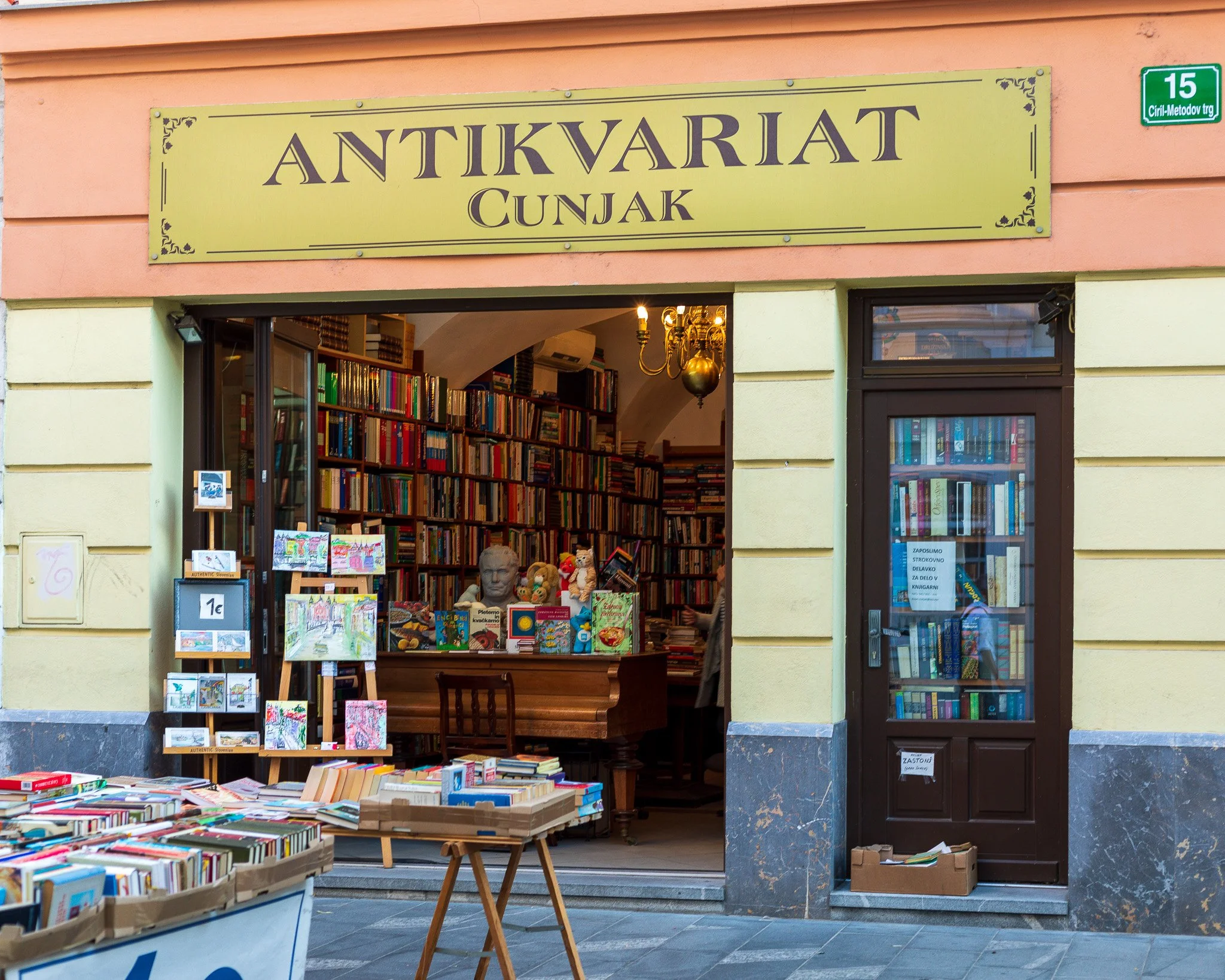
Where to Eat in Ljubljana, Slovenia
Ljubljana surprised me on food. The cuisine sits at a crossroads between Central European and Mediterranean cuisines, with Austrian, Italian, and Balkan influences all appearing on the same plate. I remember a pasta dish that reminded me of Italy in the best way, paired with a Slovenian white wine that was better than anything I expected. The local wine is genuinely excellent and badly underrated outside the country. Spend money on it.
The dining scene is also significantly more affordable than comparable Western European capitals. You can eat very well here without burning through your budget.

Špajza | Gornji trg 28, Old Town
Tucked down a side street near the castle, Špajza has been doing traditional Slovenian home cooking for years. The room is small and cozy, the menu is seasonal and focused, and the food tastes like someone's grandmother made it, which in the best possible way is exactly what you want in a place like this. Duck confit, wild mushroom risotto with Slovenian cheese, stuffed peppers. No reservations taken; arrive before 7pm or expect to wait.
Strelec Restaurant | Ljubljana Castle, Castle Hill
The castle restaurant has serious cooking credentials. Chef Igor Jagodic runs one of the most Michelin-recognized kitchens in Slovenia, and the view over Ljubljana from the castle terrace makes this the most dramatic dinner setting in the city. Book well ahead, particularly in summer. Go for the tasting menu if you have the time.
Gostilna Sokol | Ciril-Metodov trg 18, Old Town
A classic Ljubljana institution for traditional Slovenian cooking at honest prices. Kranjska klobasa sausage, beef goulash, štruklji dumplings. The interior is warm and unpretentious, the portions are generous, and the Slovenian wine list is well chosen. This is the restaurant I send friends to when they want to understand what Slovenian food actually tastes like.
Restaurant Most | Streliška ulica 7, Old Town
A riverside setting, a focused seasonal menu, and an outdoor terrace directly above the Ljubljanica. The combination of Slovenian ingredients and Mediterranean technique works well here. Good for a long lunch on a sunny afternoon, and the river view makes it worth lingering.
Gostilna As | Čopova ulica 5A, city center
One of the more refined dining rooms in Ljubljana, blending Slovenian and Mediterranean influences with real skill. The wine list is one of the most comprehensive in the city for Slovenian producers. Go for dinner.
JB Restaurant | Miklošičeva cesta 19, city center
Ljubljana's flagship fine dining address, run by chef Janez Bratovž, one of the most respected names in Slovenian cooking. The tasting menu showcases local ingredients at their best. For a special occasion or a serious dining night, this is where to go.
Café Culture in Ljubljana, Slovenia
Ljubljana has a strong café culture driven by its large student population. The riverfront terraces are the obvious spots for people watching and photo editing, but the best coffee tends to be found one street back from the obvious tourist route.
Cafetino | Stritarjeva ulica 7, Old Town. A well-run specialty coffee shop right in the old town with good beans and a knowledgeable barista. Your pre-shoot morning stop.
TOZD | Gallusovo nabrežje 27, riverfront. A hip river bar and café with a relaxed energy and decent WiFi. Good for a longer editing session over a flat white while watching pedestrians cross the Cobbler's Bridge.
Kavarna Rog | Cankarjevo nabrežje 5, riverfront. One of the oldest cafés in Ljubljana, right on the river. Unpretentious, always busy with locals, and a great spot for people watching in the late afternoon.
Photography Gear to Bring to Ljubljana, Slovenia
Ljubljana is a city photographer's destination first and foremost. The subjects are architectural, intimate, and human scale. You do not need long glass here. You need versatility and good low-light capability for the blue hour and evening work along the river.
Camera Bodies
Any modern full-frame mirrorless body performs well in Ljubljana. The Canon EOS R5 Mark II, Nikon Z8, and Sony A7R V all handle the low-light conditions along the river at blue hour and in the castle interior without difficulty. The Leica Q3 is an excellent single-body option for street work and the old town alleys where you want to move fast without switching lenses.
Bring two bodies if you can. The light transitions quickly at golden hour, and you will not want to stop shooting to change lenses.
Lenses
A 24-70mm f/2.8 is the lens for Ljubljana. I used it for almost everything: the riverfront architecture, the castle courtyard, the market details, and the bridges. It covers the full range from a wide establishing shot of Triple Bridge to a tight frame on the Dragon Bridge sculptures. This is the one lens you cannot leave behind.
A 16-35mm wide-angle earns its place for the interior of Ljubljana Cathedral, where the Baroque frescoes need width to be captured properly, and for the castle viewpoint, where you want to pull in the full sweep of the city and the surrounding hills. It is also the right tool for the Triple Bridge reflection shot from river level.
A 70-200mm telephoto is useful for compressing the layers of rooftops from the castle viewpoint and for detail shots of the dragon sculptures on the bridge from a distance. It is not essential, but if you have it, it earns its weight on the castle day.
Tripod
Essential for the blue hour river reflections. The Triple Bridge and the Cobbler's Bridge both reward long exposure work when the city lights come on, and the water goes still. A compact travel tripod works for all of these locations. If you travel with a Platypod, it is useful for low-angle shots from the riverbank.
ND Filters
A 6-stop ND filter is worth packing for the river. On overcast days when the water is moving, a 2 to 4-second exposure smooths the surface into a clean mirror for the bridge reflections. A circular polarizer cuts the glare off the wet cobblestones in the old town and deepens the color of the river in the afternoon light.
Backup and Power
Two extra batteries per body. The castle visit and a full golden hour to blue hour session will drain a single battery. Carry a Samsung T7 SSD for end-of-day backups.
iPhone Photography in Ljubljana
Ljubljana is one of the most iPhone-friendly cities I have photographed, partly because the subjects are approachable and partly because the scale is human. The old town alleys, the bridge details, and the river reflections all work beautifully on a phone sensor.
Use the main lens at 24mm equivalent for the Cobbler's Bridge. Stand at the midpoint of the bridge and shoot toward the castle hill in the late afternoon. The arch of the bridge frames the old town perfectly and the 24mm equivalent gives you enough width to include the river on both sides.
Use Portrait Mode on the Dragon Bridge sculptures. The bronze dragons are close enough and detailed enough that Portrait Mode gives you subject separation against the sky that genuinely works. Shoot from below and slightly to the side to get the dragon's open jaw against the clouds.

Two stunning bronze doors were added in 1996 to commemorate a visit by Pope John Paul II.
Photography Locations in Ljubljana, Slovenia
Here is a list of my favorite locations in Ljubljana:
Ljubljana Castle
Ljubljana Castle sits on a forested hill in the center of the city, and it is visible from almost every street in the old town. The views from the castle walls and the watchtower are the obvious draw, but the castle courtyard itself is worth time. It is a working cultural venue with concerts, events, and an atmosphere that changes through the day.
The watchtower gives you a 360-degree panoramic view over the city, and the rooftop platform puts you above the tree line for unobstructed shots in every direction. To the west, the old town rooftops cascade toward the river. To the south and east, the Ljubljana basin opens up with the Alps visible on clear days. To the north, the modern city stretches toward the horizon.
📷 Pro Tip: Take the funicular up in the late afternoon and plan to stay through blue hour. The transition from golden light on the old town rooftops to the city lights coming on below is the shot you came for, and it happens within about forty minutes. Set up on the watchtower platform with a 24-70mm lens around 35mm for a natural perspective that includes the rooftops, the river, and the hills beyond. Bring your tripod for the blue hour exposure. The south wall near the small castle vineyard gives you a slightly different angle than the main platform, with fewer people in frame. Buy your ticket online in advance, especially in summer. Walk down through the old town alleys rather than taking the funicular back; the descent through the cobblestone streets at dusk is one of the best walks in Ljubljana.
Best time: Late afternoon through blue hour. Access: Castle entry €15, or €19 with funicular return. Funicular departs from Krekov trg every 10 minutes, a one-minute ride. Walking up takes roughly 10 minutes from the Old Town.

Franciscan Church of the Annunciation
The Franciscan Church sits directly on Prešeren Square, the main square of Ljubljana, and its red Baroque facade is one of the most immediately recognizable buildings in the city. Built between 1646 and 1660, it anchors the square's northern side and provides a strong vertical element that you cannot avoid including in any wide shot of the area.
For photographers, the church works in two completely different ways: as an exterior architectural subject from the square, and as an interior subject where the Baroque decoration and the light through the tall windows create a completely different image.
📷 Pro Tip: For the exterior, position yourself at the southern end of Prešeren Square and shoot toward the church with a 24-70mm around 28mm. Early morning, before the market and café furniture fills the square, gives you a clean foreground. The warm-toned facade photographs best in the hour after sunrise when the low light hits it directly from the east. For the interior, arrive mid-morning when the natural light through the upper windows is strong enough to illuminate the nave without flash. Use a 16-35mm wide-angle lens to capture the full height of the interior and the ceiling frescoes. Shoot from the rear of the nave looking toward the altar for the classic axial composition. Ask at the entrance before setting up a tripod inside.
Best time: Exterior: early morning. Interior: mid-morning. Access: Free to enter. Modest dress required.

Cobbler's Bridge (Čevljarski Most) and the Ljubljanica River
The Cobbler's Bridge — one of the oldest crossings in Ljubljana, dating to at least the 13th century — is a pedestrian bridge connecting the Old Town to the Breg embankment, and one of the finest vantage points for photographing the Ljubljanica River from mid-water. From the center of the bridge, the river stretches in both directions, framed by the Old Town facades and their reflections in the still water below.
The Ljubljanica River is Ljubljana's most consistently photographic subject. The stretch from Cobbler's Bridge to the Dragon Bridge encompasses the Triple Bridge, the Butchers' Bridge, the Central Market arcades, and the castle above — all within a single 500-meter walk along the embankment.
📷 Pro Tip: The most compelling river shot is a long exposure from the embankment at blue hour, when the café lights begin to glow in the water and the sky above the castle holds its last color. A 16–35mm from the Cobbler's Bridge looking upstream takes in the full Plečnik-designed cityscape. For the reflection shot, shoot perpendicular to the water from the embankment steps using a tripod at river level.
Best time: Blue hour for reflections. Morning for the calm water surface.

Dragon Bridge
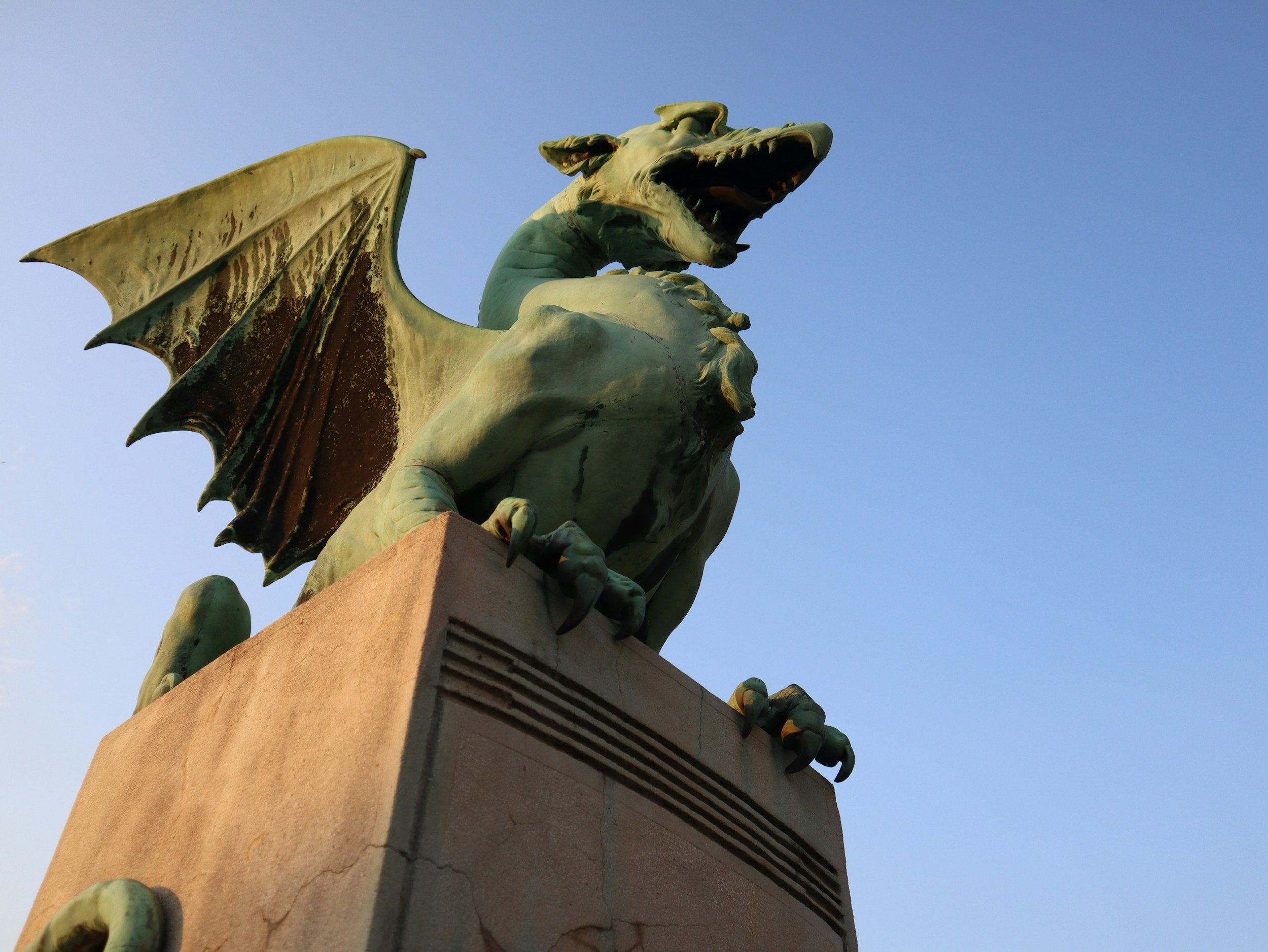
The Dragon Bridge, completed in 1901, is Ljubljana's most photographed bridge. Four bronze dragon statues, one at each corner, sit on pylons over the Ljubljanica River a few hundred meters east of the Triple Bridge. The dragons are the symbol of the city and they are genuinely impressive up close, with scales, teeth, and claws rendered in serious detail.
For photographers, the Dragon Bridge is a detail and architectural location more than a landscape one. The individual dragon sculptures reward close examination, and the bridge's green ironwork against the sky gives you strong graphic compositions in almost any light.
📷 Pro Tip: Get there early morning before the foot traffic builds. The dragons face outward from the bridge corners, which means you can position yourself on the riverbank below and shoot upward for a composition that puts the dragon's head against the sky, the bridge's ironwork, and the old town in the background. A 70-200mm at the longer end lets you isolate a single dragon's head and compress the background into a clean frame. For the full bridge in context, cross to the opposite bank and use a 24-70mm around 35mm; the bridge with its green railings and the castle hill visible behind it is the establishing shot. Early morning light comes from the east and hits the eastern dragons directly; late afternoon light is better for the western side.
Best time: Early morning for light on the east-facing dragons; late afternoon for the west side. Access: Free, always open.
Ljubljana Cathedral (Cathedral of St. Nicholas)
Ljubljana Cathedral sits two minutes from the Triple Bridge at the edge of the Central Market. The green dome and twin towers are visible above the old town rooftops from several points in the city, and the interior is one of the most richly decorated spaces in Slovenia. The frescoes painted by Giulio Quaglio between 1703 and 1706 cover almost every surface of the nave and ceiling.
The two bronze doors added in 1996 to mark a papal visit are worth a close look. The southern door depicts the history of the Ljubljana diocese in 25 relief panels. The detail on both doors rewards a 70-200mm from a few meters back.
📷 Pro Tip: The cathedral interior is the main photographic draw here, and the light is best in the late morning when the sun is high enough to reach through the upper windows without creating harsh contrast. Use a 16-35mm at the widest end and position yourself at the rear of the nave. A longer exposure on a tripod at f/8 lets the frescoes register properly. For the exterior dome and towers, cross to the far side of the square in front of the market and use a 24-70mm at the wider end; from there you can include the market arcade in the foreground for context and depth. The bronze doors shoot well with a 70-200mm from three to four meters back; the detail in the relief panels is the subject, not the full door.
Best time: Interior: late morning for natural light. Exterior: morning or late afternoon. Access: Free to enter.

The cathedral's Baroque design was the work of Jesuit architect Andrea Pozzo, a renowned artist and architect of the Baroque period.

Situated in the heart of Ljubljana’s Old Town, the cathedral is easily recognizable by its green dome and twin towers, making it a central landmark in the city.

As one of Ljubljana’s most important historical and religious sites, the cathedral attracts numerous tourists and pilgrims who come to admire its architectural beauty and spiritual significance.

Novi Trg Fountain
The Novi Trg Fountain is set in the lively Novi Trg square on the south edge of the Old Town, surrounded by historical buildings, outdoor café terraces, and the Cultural and Congress Center. The fountain itself is a modest but charming subject, and the square functions as one of Ljubljana's most active outdoor social spaces on warm evenings.
📷 Pro Tip: Novi Trg is a street photography subject more than an architectural one. Come in the early evening when the café terraces fill and the light is warm and directional. A 35–50mm prime for candid square photography. The fountain makes a good anchor point for wide-angle environmental shots with the surrounding architecture.
Best time: Early evening for the street life.

Triple Bridge and the Ljubljanica River
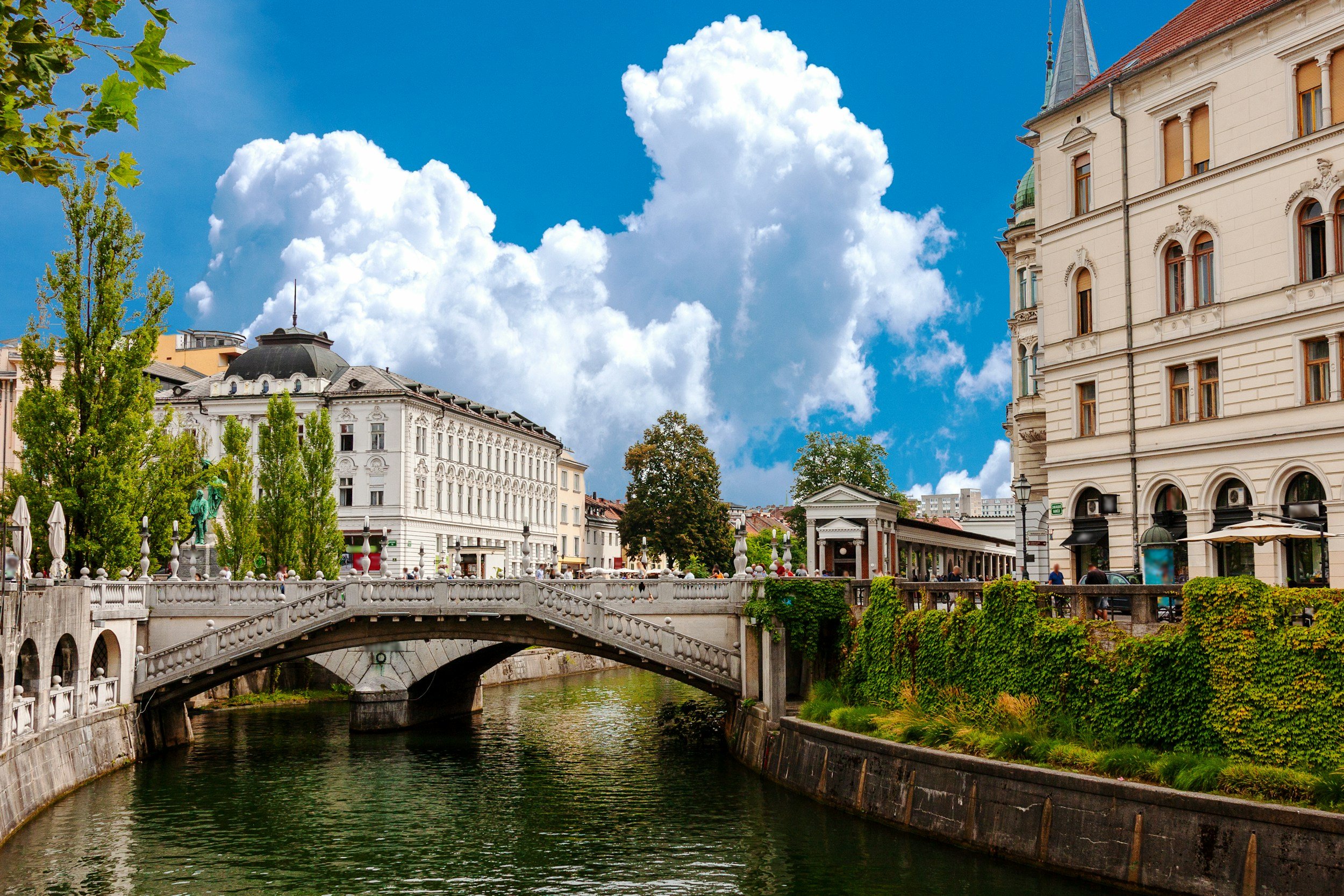
The Triple Bridge, designed by architect Jože Plečnik, is three parallel pedestrian bridges spanning the Ljubljanica at the northern edge of the old town. It connects Prešeren Square to the old town and sits at the heart of Ljubljana's social life. At any hour of the day, people are crossing, sitting on the steps, or leaning over the railings, watching the river. At blue hour, the bridges reflected in still water are one of the defining images of the city.
The river itself is a photography subject in its own right. The willow trees, the covered market arcades on the western bank, the café tables at water level, and the succession of bridges, each with a different character, make the Ljubljanica one of the more rewarding rivers to walk and photograph in Europe.
📷 Pro Tip: For the reflection shot, position yourself on the riverbank downstream of the Triple Bridge, roughly fifteen meters south of the central arch. At blue hour, when the bridge lights come on, and the sky is still a deep blue, the reflection of the three arches in the water makes a near-perfect symmetrical composition. Use a 16-35mm at the wide end and get as low as you can, right down to water level if possible. A 4 to 8-second exposure at f/8 smooths the water surface and renders the bridge lights as clean streaks in the reflection. Arrive before blue hour and scout your exact position while there is still enough light to see the riverbank clearly. A tripod is non-negotiable for this shot. For the bridges themselves in daylight, use a 24-70mm and shoot from the opposite bank to include the full span of all three arches in a single frame.
Best time: Blue hour morning and evening for reflections; any time of day for the bridges and river walk. Access: Free, always open.
Prešeren Square
Prešeren Square is Ljubljana's main gathering point, the pedestrian heart of the city where locals meet and visitors orient themselves. The bronze statue of poet France Prešeren stands at the center, gesturing toward a woman on a building opposite, and the square is framed by the Franciscan Church on one end and the Triple Bridge on the other.
📷 Pro Tip: The classic composition from Prešeren Square is looking east toward the Triple Bridge with the Franciscan Church on the left and the river in the background — a 24–35mm at mid-morning when the east-facing church facade is in full light. For a different angle, position yourself on the Triple Bridge looking back toward Prešeren Square with the Franciscan Church as the main subject — a 50–85mm compresses the pink facade beautifully. In the early morning, before 7am, the square is essentially empty, and the light on the church is exceptional.
Best time: Early morning before 7 am. Late afternoon for the warm light on the church facade.

Ljubljanica River
The Ljubljanica River has been a vital part of Ljubljana's history for centuries. It served as a crucial trade route during Roman times when the city was known as Emona.
The Ljubljanica River is crossed by several notable bridges, each with its own unique design and history. These include the Triple Bridge, Dragon Bridge, Butchers' Bridge, and Cobbler's Bridge, making the river a showcase of architectural diversity.

The Central Market (Plečnik Arcades)
The Central Market is Ljubljana's daily open-air and covered market, designed by Jože Plečnik and running along the Ljubljanica River between the Triple Bridge and the Dragon Bridge. The covered arcades on the western bank house vendors selling meat, cheese, vegetables, and local produce. The open-air market on Vodnik Square runs from early morning, Monday through Saturday.
For photographers, this is the most people-and detail-rich location in Ljubljana. The market vendors, the textures of seasonal produce, the steam from hot food stalls, and the rhythm of local daily life make it a completely different subject from the architectural photography elsewhere in the city.
📷 Pro Tip: Arrive by 8 am, before the tourist groups and the cruise day-trippers fill the square. The morning light rakes across the market stalls from the east, giving you texture on the produce displays and rim light on the vendors' faces. Use a 70-200mm lens from a distance to shoot candid activity without disrupting the flow. For close detail shots of arranged produce, cheese wheels, or stacked herbs, use a 24-70mm lens around 50mm and get to stall level rather than shooting down. The Plečnik Arcades along the riverbank are worth walking through separately: the colonnaded arcade with the river visible through the arches makes a strong architectural composition with a 24mm wide angle. Come back on Saturday for the largest market.
Best time: 8 am to 10 am for light and manageable crowds. Access: Free. Outdoor market Monday to Saturday from approximately 6 am.

There are so many beautiful details to photograph.

Festivals and Holidaysin Slovenia
Ljubljana Festival (July through September)
The Ljubljana Festival is one of the oldest performing arts festivals in Central Europe, running since 1953. Concerts, theater, opera, and dance performances take place in open-air venues across the city, with the castle courtyard and the Congress Square among the main stages. For photographers, the outdoor performances at dusk, with the castle lit behind a live orchestra and an audience filling the square, are the kind of scenes that reward a 70-200mm and patience. Dress code varies by venue; the castle events are generally smart casual.
Ljubljana Jazz Festival (June)
One of the oldest jazz festivals in Europe, running since 1960, with international and regional artists performing in intimate indoor and outdoor venues. The open-air concerts along the riverfront are the most photogenic, with late-evening light and a relaxed crowd that does not object to cameras. Arrive early for the outdoor shows to secure a position with clean sightlines.
Christmas Market (December)
Ljubljana transforms in December. The old town fills with market stalls, the bridges are strung with lights, and the river reflects the whole display back at you. Fog is common in December and it turns the castle lights and the bridge illuminations into something genuinely atmospheric. This is a night photography destination in December; bring your tripod, dress warmly, and plan to stay out until well after dark. The market runs through the Christmas period and the city is genuinely beautiful in the evening light.
Open Kitchen Market (March through October)
Not a festival but worth knowing about. Every Friday, the area near the Central Market becomes an outdoor food market where Ljubljana's best restaurants and food producers set up stalls. It runs from late morning into the evening and is one of the best ways to eat your way through Slovenian cuisine in a single afternoon. The food stalls also make for good documentary photography if you ask permission first.
Frequently Asked Questions About Visiting Ljubljana
Is Ljubljana worth visiting compared to Prague or Vienna?
Yes, genuinely. People often ask which European city surprised me the most, and Ljubljana is usually my answer. I'd already been to Prague, Vienna, and Budapest, so I knew what a beautiful Central European city looked like. Ljubljana does something different, quieter, less crowded, with food that's honestly better than you'd expect.
Is Ljubljana expensive?
No, and this is one of its real advantages. The dining scene is significantly more affordable than comparable Western European capitals, and you can eat very well here without burning through your budget.
Do you need a car in Ljubljana?
No, and the old town is entirely pedestrian anyway. Everything worth photographing is walkable from a central hotel. A car only makes sense if you're combining the city with Lake Bled or the Slovenian countryside.
What are the best photo spots in Ljubljana?
The Triple Bridge at blue hour for the reflection, Ljubljana Castle at golden hour through blue hour, and the Central Market before 10am are three that consistently deliver. The full list with Pro Tips is above.
Can you fly a drone in Ljubljana?
Check current Slovenian and EU drone regulations before flying, particularly around the castle and dense old town areas, which likely carry restrictions given the historic architecture and crowds.
How many days do you need in Ljubljana?
Three days is the right minimum. Two gets you the highlights but leaves you feeling rushed; three gives you time to shoot each location in the right light and still take a day trip to Lake Bled.
Is Ljubljana worth combining with Lake Bled?
Yes, absolutely, don't skip it. Lake Bled is just 45 minutes away by car or bus, and the emerald lake, island church, and cliffside castle make it one of the most photographed destinations in Europe.
Is December a good time to visit for photography?
Yes, if you want atmosphere over crowds. Christmas market lights reflecting in the river and fog sitting in the valley below the castle produce images you can't make any other time of year, and the lack of tourists means you can set up your tripod exactly where you want.
Final Thoughts on Slovenia
Ljubljana stays with you in a way that bigger, louder cities often do not. It is not trying to be the next Prague or the next Vienna. It is entirely itself: compact, creative, genuinely livable, and more photogenic than its reputation suggests. The river curves through the old town as if it were placed there on purpose. The castle sits above everything without dominating. The light in the evening, when the café tables fill and the bridges start to glow in the water below, is the kind of light that makes you stop walking and just look.
What I keep coming back to is the scale. Every location in this guide is within twenty minutes of every other. You are never racing between shots. You move slowly, you see more, and the city rewards the patience. Whether this is your first trip to Central Europe or your fifteenth, Ljubljana deserves more than a day trip from Vienna or a stopover on the way to Bled. Give it three days. Shoot the Triple Bridge at first light. Climb to the castle before the tour groups arrive. Eat well. Wander the market on a Saturday morning with no particular agenda. You will leave wondering why it took you this long to get here.
Ljubljana is the gateway to some of the most rewarding photography destinations in Central Europe. Here is where I would go next.
If you would like to join a future photography workshop, visit my Workshops page for current offerings and upcoming dates. You can also connect with me on Instagram (@chasinghippoz) and Facebook, or subscribe to the newsletter for travel photography tips, destination guides, and behind-the-scenes stories from more than 75 countries. I look forward to sharing the journey with you.
Ljubljana is the gateway to some of the most extraordinary photography destinations in Central Europe. Here is where I would go next.
My Photography & Travel Guide to Lake Bled, Slovenia . Forty-five minutes from Ljubljana by car or bus. The emerald-green lake, the island church, and the medieval castle perched on a cliff above the water make Lake Bled one of the most photographed destinations in Europe. Do not leave Slovenia without it.
My Photography & Travel Guide to Prague, Czech Republic A short flight or an overnight train. Charles Bridge at dawn before the crowds, Old Town Square at blue hour, and the hidden courtyards that most photographers walk right past. The city I have visited a dozen times and still find new.
My Photography & Travel Guide to the Dolomites, Italy Three hours west by car. Tre Cime di Lavaredo at sunrise, the meadows of Alpe di Siusi, and the most dramatic mountain light in Europe. The natural photography extension of any Ljubljana trip.
Finally—a beginner-friendly photography guide that makes sense.
If you've ever picked up a camera and thought, "Now what?" this is the book for you.
Photography Made Simple is written for adults who are just starting out and want a clear, encouraging, real-world approach to learning photography. Whether you're using a DSLR, mirrorless, or just your smartphone, this guide walks you through the basics—without the jargon or tech overwhelm.
Inside, you'll learn:
The only camera settings you really need to know to get started
How to shoot sharper, more intentional photos using light and composition
Simple tips for portraits, landscapes, travel, and everyday life
What gear you do (and don’t) need
How to create better photos without upgrading your camera
You’ll also get practical exercises, cheat sheets, and tips for organizing and editing your images—plus the confidence to shoot off Auto Mode for good.
This is not a textbook. It’s a friendly guide to seeing the world with fresh eyes—and finally capturing what you see the way you imagine it.
📸 Format: PDF download
Pages: 100+
Perfect for: Beginners, hobbyists, and anyone ready to take better photos without the stress