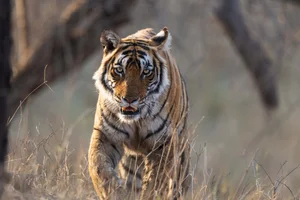
My Photography & Travel Guide to a Safari in Kenya
The magic of a Kenyan safari is hard to match.
It is wide open landscapes, endless skies, and wildlife encounters that feel almost surreal. For photographers, Kenya is one of those rare places that takes your breath away and challenges you to keep up.
The Great Migration alone is worth the journey. Millions of wildebeest and zebras move across the plains in a rhythm that feels both chaotic and perfectly choreographed. It is one of nature’s most dramatic spectacles. Then there are the quieter moments. A cheetah scans the horizon before a hunt. A giraffe reaching gracefully into an acacia tree. Elephants moving slowly through golden light at sunrise.
Kenya rewards patience. It rewards observation.
Beyond the wildlife, the warmth of the people and the richness of local culture add another powerful layer to the experience. The colors, the traditions, the human stories, they deepen the narrative of every trip.
It is no surprise that Kenya remains a bucket list destination. With some of the most celebrated national parks and reserves in the world, it offers the classic safari experience at its finest.
For any photographer ready to tell unforgettable stories through their lens, Kenya delivers in a way few places can.

Amboseli National Park
This Photography & Travel Guide to Kenya is designed for travelers and photographers who value wildlife, culture, and light.
If you are looking for practical travel tips, gear recommendations, and the best photography locations across Kenya’s national parks and reserves, this guide will help you plan a focused and rewarding safari experience.
What Makes a Kenyan Safari So Special?
Kenya sits at the heart of East Africa’s safari experience, and once you arrive, you understand why.
The landscapes feel cinematic. Endless plains stretch toward the horizon. Acacia trees punctuate golden grasslands. Sunrises unfold slowly, painting the sky in soft layers of orange and pink. The light alone is worth the journey.
Then there is the wildlife.
The legendary Maasai Mara National Reserve is one of the most celebrated safari destinations in the world. It is here that the Great Migration unfolds and predators move with quiet confidence through the open savannah. Seeing lions at eye level, elephants crossing the plains, or a cheetah scanning for prey is not just thrilling, it is humbling.
Beyond the Mara, places like Samburu National Reserve offer a different mood. The terrain is more rugged. The light feels harsher and more dramatic. Wildlife species unique to the region add variety to your portfolio.
Of course, many travelers come hoping to see the Big Five: lion, leopard, rhino, elephant, and buffalo. Kenya offers some of the best opportunities in Africa to witness them in their natural environment.
But what truly sets Kenya apart is the cultural depth. The traditions of the Maasai people, their dress, ceremonies, and connection to the land, add a powerful human element to the journey. Safari here is not only about animals. It is about place, people, and perspective.
That combination is what makes Kenya unforgettable.
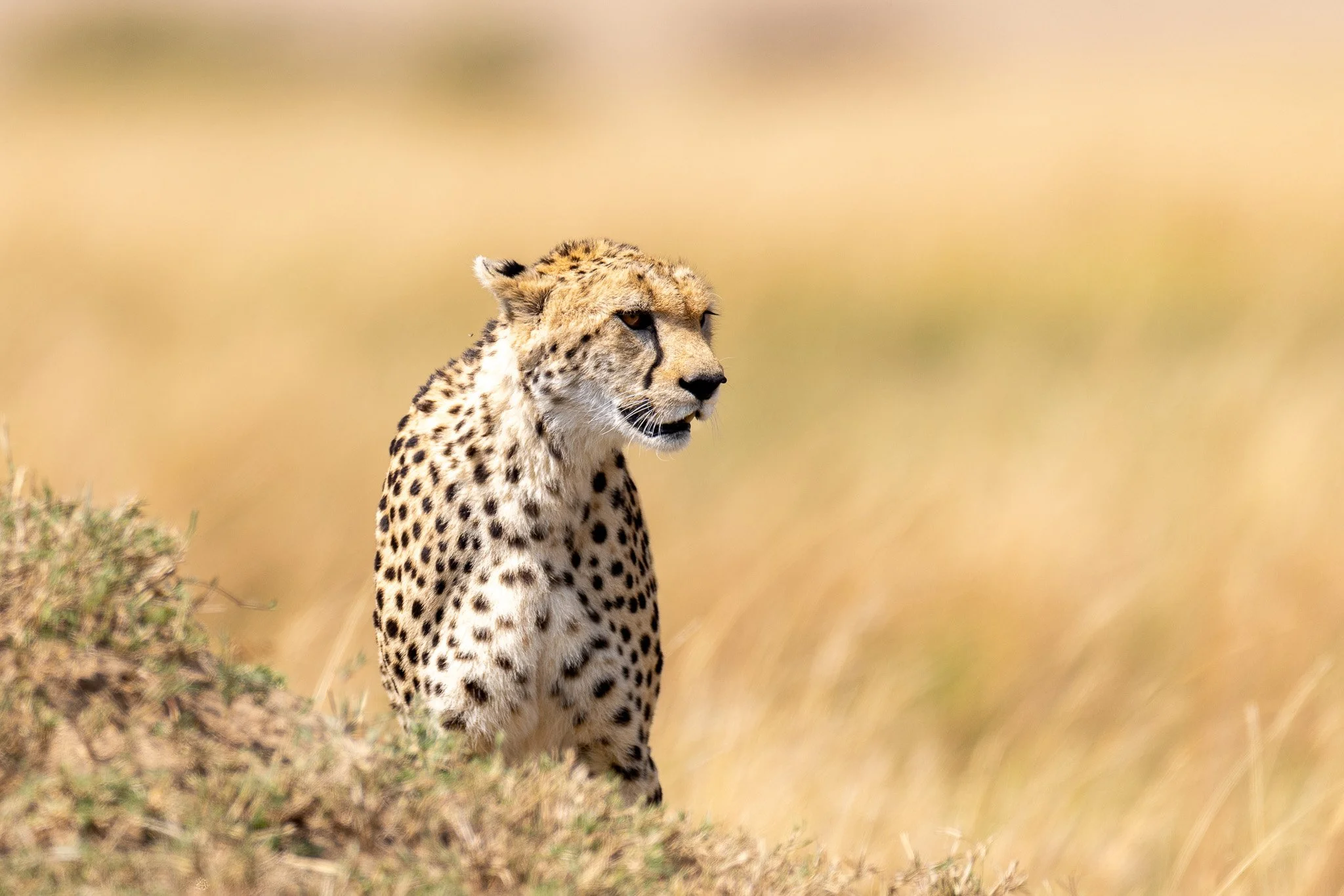
Cheetah on the Mara
Traveling to Kenya - Visa
Kenya requires most foreign visitors to obtain an Electronic Travel Authorization (eTA) before arrival. The process is straightforward, but you must complete it before your trip.
Here is how it works:
1. Apply Online
Visit the official Kenya eTA website and complete the application form. You will need basic personal details, passport information, and your travel itinerary.
2. Upload Required Documents
Typically, you will upload:
• A valid passport, with at least six months’ validity remaining
• A recent passport photo
• Your flight details
• Accommodation confirmation
3. Pay the Fee
The current eTA fee is approximately USD 30, paid online by credit or debit card. The fee is non-refundable once processed. Fee amounts can change, so verify the exact current cost at the official Kenya eTA portal before you apply.
4. Wait for Approval
Approval is usually processed within a few days, but apply at least seven days before departure. Two weeks ahead is better, particularly during peak safari season when processing volumes are higher.
5. Print or Save Your Authorization
Once approved, save a digital copy and bring a printed version with you when you travel.

Mobile Sim Card
Staying connected in Kenya is easy, and I strongly recommend setting this up before your first game drive. You will want access to maps, lodge contacts, and quick photo uploads.
You have two simple options.
Option 1: Buy an eSIM Before You Travel
This is the easiest approach.
You can purchase an international eSIM online before departure through providers such as Airalo or other global eSIM platforms. After purchase, you install it directly on your phone by scanning a QR code. When you land in Kenya, it activates automatically.
This option saves time at the airport and avoids lines. It is perfect if you want instant connectivity the moment you step off the plane.
Make sure your phone is unlocked and compatible with eSIM technology before purchasing.
Option 2: Buy a SIM or eSIM at the Airport
You can also purchase a local SIM card upon arrival at Jomo Kenyatta International Airport in Nairobi. Major Kenyan providers include Safaricom and Airtel Kenya.
Safaricom generally offers the strongest coverage, especially in remote safari areas.
At the airport kiosk, staff will set up your SIM. You will need your passport for registration. The process is straightforward and takes about ten to fifteen minutes.

What I Recommend
If you value convenience, install an eSIM before departure.
If you want the best local coverage at the lowest price, purchase a Safaricom SIM card at the airport.
Either way, do not skip this step. Having reliable data in Kenya makes navigation easier, keeps you in touch with your lodge, and allows you to share those sunrise elephant shots while the experience is still fresh.

Where to Stay
Choosing the right lodge can completely shape your safari experience.
In most cases, your accommodation will be arranged by the safari operator you choose. That said, it is worth understanding the options. Lodges in Kenya range from ultra luxury properties perched above the savannah to intimate tented camps where you fall asleep to the sound of distant lions.
Here are some excellent options to consider.
Luxury Options
Angama Mara
Perched high above the Great Rift Valley, Angama Mara offers sweeping views over the Maasai Mara. The glass-fronted suites allow you to wake up to sunrise over the plains. It is an exceptional base for game drives and hot air balloon safaris.
Saruni Samburu
Located in a private conservancy, Saruni Samburu feels exclusive and intimate. The setting is rugged and dramatic, with excellent opportunities for close wildlife encounters and fewer vehicles.
Segera Retreat
An eco-conscious retreat in Laikipia, Segera blends sustainability with refined design. Private villas, strong conservation values, and curated experiences make it ideal for travelers who value both luxury and purpose.
Mid-Level Options
Mara Serena Safari Lodge
Located in the heart of the Maasai Mara, this lodge offers strong game viewing access and classic safari comfort.
Porini Lion Camp
A tented camp known for its eco tourism focus. Staying inside a conservancy often means fewer vehicles and more intimate wildlife encounters.
Amboseli Serena Safari Lodge
Set near Mount Kilimanjaro, this lodge offers one of Africa's most iconic backdrops. An elephant herd with Kilimanjaro rising behind them is a bucket-list photography moment.
In Nairobi
Tamarind Tree Hotel
If you need a comfortable and reliable base in Nairobi before or after your safari, Tamarind Tree Hotel is a solid choice.
It is clean, modern, and well run, with consistently good service. After a long international flight, simplicity matters. The rooms are comfortable, the restaurant is dependable, and the property feels secure.
Its location is also practical. It sits close to Nairobi National Park, which means you are not far from one of the most unique wildlife parks in the world, where giraffes and rhinos roam with the city skyline in the distance.
How Long Should You Stay?
Plan for at least seven to ten days.
Kenya is not a one-park destination. The landscapes shift dramatically from the Maasai Mara to Samburu to Amboseli. Giving yourself enough time allows you to experience more than just one ecosystem and increases your chances of meaningful wildlife encounters.
A typical rhythm works well.
Two to three nights in one reserve.
Move to a different landscape for another two to three nights.
Allow time for travel between camps.
Wildlife photography rewards patience. The extra day often makes the difference between seeing animals and witnessing behavior.
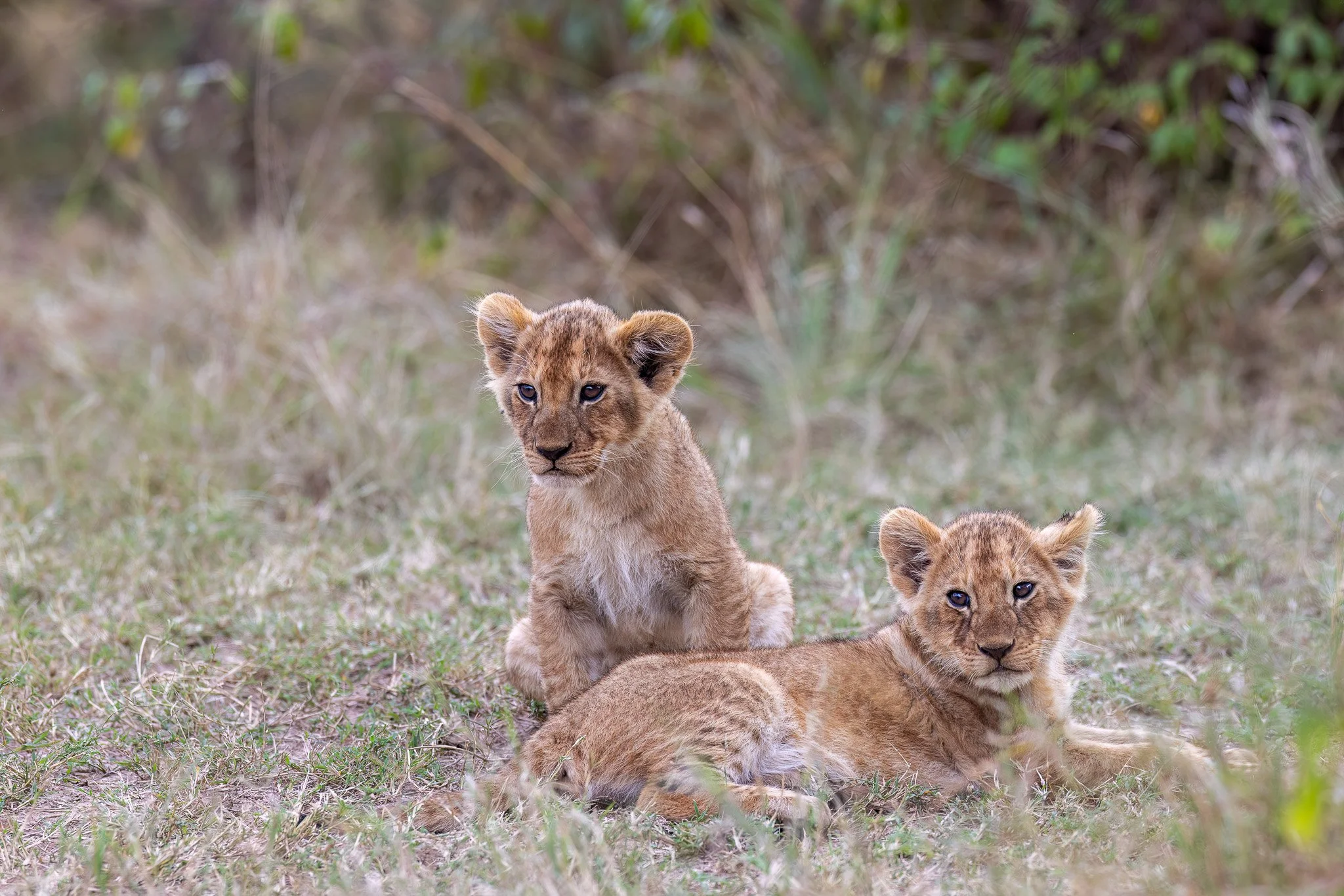
Best Time to Visit Kenya
The dry season, June through October, is widely considered the best time to visit.
During these months, vegetation is thinner, and wildlife gathers around water sources. Visibility improves, and predator action tends to increase. The Great Migration typically crosses the Maasai Mara National Reserve from July to September, offering dramatic river crossings and intense predator interactions.
January and February are also excellent. These months offer strong game viewing, clear skies, and fewer crowds. The light can be particularly beautiful during this period.
If your primary goal is the Great Migration, aim for late July through early September. If you prefer fewer vehicles and still excellent wildlife opportunities, January and February are a wonderful alternative.
Kenya delivers year-round, but timing your visit intentionally can elevate your experience from good to unforgettable.

Getting Around: Transportation Options
Kenya is vast, and most safari destinations are remote. Getting from Nairobi to the bush is part of the adventure.
For longer distances, small charter flights are the most efficient option. Airlines like Safarilink Aviation and AirKenya Express operate daily flights from Nairobi’s Wilson Airport directly into the Maasai Mara, Amboseli, Samburu, and Laikipia.
These flights are quick, usually under an hour, and the views from above are spectacular. You will see winding rivers, scattered wildlife, and endless plains before landing on a small airstrip in the middle of the reserve. It feels cinematic.
Road transfers are another option. They take longer but offer a scenic introduction to the countryside. You will pass small towns, open farmland, and changing landscapes as you head toward your lodge. If you enjoy seeing how the country transitions beyond the airport, this can be rewarding.

Where to Eat in Nairobi: Top Dining Spots and Coffee Shops
Nairobi has a vibrant and surprisingly sophisticated food scene.
After days in the bush, returning to the city offers a chance to explore both traditional Kenyan flavors and creative, globally inspired cuisine. Here are some excellent spots worth your time.
Carnivore Nairobi
Carnivore is legendary.
Known for its open-air meat feast, it offers a lively, energetic atmosphere and a constant rotation of grilled meats carved tableside. It is not subtle, but it is fun. If you want a memorable night out before or after safari, this is a classic.
Talisman
Talisman feels intimate and elegant.
Set in a garden environment, it blends Kenyan, European, and Pan Asian influences into a creative menu. The setting is romantic, the lighting soft, and the food consistently strong. It is ideal for a relaxed evening with thoughtful dishes.
Nyama Mama
For modern Kenyan comfort food, Nyama Mama delivers.
Expect chapati wraps, slow-cooked meats, ugali, and inventive takes on traditional favorites. It is vibrant, approachable, and a great introduction to local flavors.
Mama Oliech Restaurant
If you want authentic Kenyan fish, head to Mama Oliech.
Known for fresh tilapia and traditional preparation methods, it offers a more local, straightforward dining experience. Come hungry and ready to eat like a local.
Harvest Restaurant
Located at Village Market, Harvest offers a refined take on Kenyan ingredients.
The menu highlights fresh, locally sourced produce with creative presentation. It feels modern and polished while still rooted in regional flavors.
Coffee Culture Tip:
Kenya produces some of the best coffee in the world. Take time to visit a local café and enjoy a proper Kenyan brew before your flight. It is a small ritual, but it connects you to the country beyond safari.
Nairobi is more than a stopover city. It is worth slowing down for at least one evening and experiencing its culinary energy before heading back home.

The Best Guides in Kenya
A great guide does more than spot wildlife.
They read the land. They anticipate animal behavior. They position the vehicle for the best light. They know when to wait and when to move. In Kenya, your guide shapes your entire experience.
I highly recommend Simon Kararei, owner of Bella Camp Mara.
Simon brings deep local knowledge, patience, and an intuitive understanding of wildlife behavior. His ability to anticipate action and position the vehicle thoughtfully makes a real difference for photographers. That skill alone can elevate your portfolio.
I also have many friends who have had outstanding experiences with Jonathan Scott and Angela Scott. Their reputation in the Maasai Mara is well earned, with decades of experience and a strong conservation focus.
That said, most reputable lodges and camps in Kenya employ excellent resident guides. Many of them have grown up in these landscapes and know the ecosystems intimately. If you are staying at a well-established camp, you are already in very capable hands.

Simon, the owner of Bellacamp
Basic Swahili Words to Know
You do not need to speak Swahili to travel in Kenya, but learning a few words goes a long way.
Even a simple greeting shows respect and often earns a big smile in return.
Here are some helpful phrases:
Hello – Habari
Good morning – Habari za asubuhi
Goodbye – Kwaheri
Good night – Lala salama
Please – Tafadhali
Thank you – Asante
Sorry – Pole
Excuse me – Samahani
Yes – Ndiyo
No – Hapana
Water – Maji
Food – Chakula
Where? – Wapi?
How much? – Shilingi ngapi?
Help! – Msaada!
I don’t understand – Sielewi
What is your name? – Jina lako ni nani?
My name is… – Jina langu ni…
A quick tip. When someone asks you “Habari?” you can reply with “Nzuri,” which means good.
Small efforts matter. A few words of Swahili help break the ice, especially outside major cities. And when you are traveling to tell stories through your camera, connection always matters.
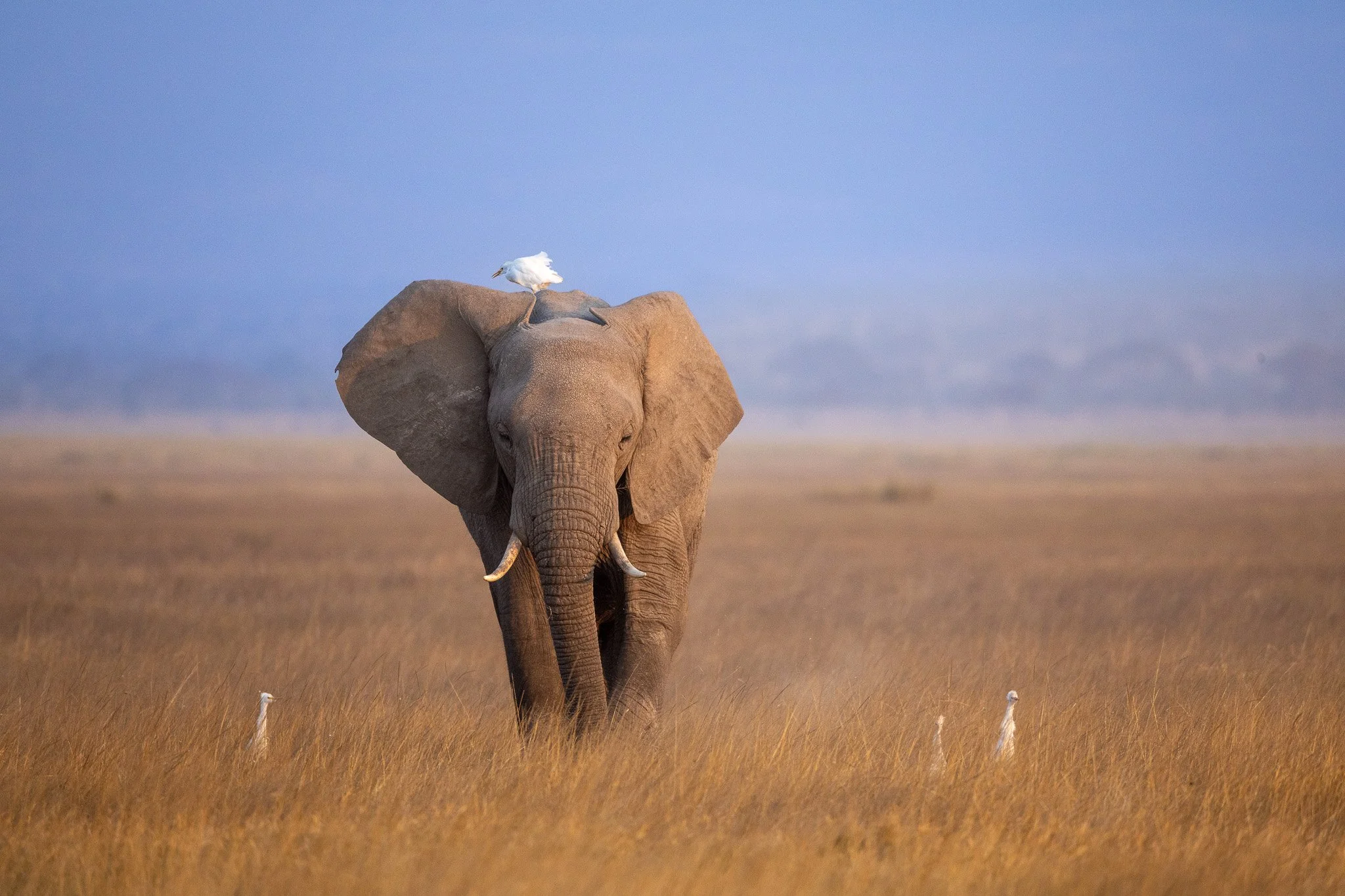
Medication Packing List
When traveling to Kenya, especially for safari in remote areas, preparation matters.
You may be far from major hospitals for part of your trip. Having a small, well organized medical kit gives you peace of mind and allows you to focus on the experience.
Here is a practical medical packing list to consider.

Prescription Medications
• Daily medications, bring enough for your entire trip plus extra in case of delays
• Copies of prescriptions
• Malaria prophylaxis if recommended by your doctor, such as atovaquone proguanil, doxycycline, or similar
• Altitude sickness medication if visiting high altitude areas like Mount Kenya, acetazolamide
• Prescribed antibiotics for traveler’s diarrhea or infections, such as azithromycin or similar
• Epinephrine injector if you have severe allergies
Always carry prescription medications in your carry-on luggage.
Over-the-Counter Medications
• Pain relievers such as acetaminophen or ibuprofen
• Anti-diarrheal medication like loperamide
• Oral rehydration salts
• Antihistamines for allergies or insect bites
• Motion sickness medication for bush flights
• Antacids for indigestion
• Cold remedies and lozenges
• Sleep support, such as melatonin, if you experience jet lag
• Antiviral medication if prescribed by your physician
First Aid Supplies
• Adhesive bandages in various sizes
• Sterile gauze and medical tape
• Antiseptic wipes
• Antibacterial ointment
• Tweezers
• Small travel scissors
• Digital thermometer
Game drives are long and often dusty. Minor cuts and blisters are common.
Preventative Health Items
• Strong insect repellent with DEET or picaridin
• Sunscreen SPF 30 or higher
• Lip balm with SPF
• Mosquito net if staying in very basic accommodations
• Water purification tablets or a portable filter if traveling in remote areas
• Electrolyte tablets to prevent dehydration
• Eye drops for dust and dry conditions
The equatorial sun is intense even when temperatures feel moderate.
Hygiene Essentials
• Alcohol based hand sanitizer
• Wet wipes or tissues
• Menstrual supplies, if applicable
• Personal toiletry kit
Vaccinations and Health Records
Consult a travel medicine clinic 4 to 8 weeks before departure.
Vaccines commonly recommended for Kenya include:
• Yellow fever, proof may be required depending on your travel route
• Typhoid
• Hepatitis A and B
• Tetanus diphtheria pertussis booster
• Measles, mumps, and rubella
• Rabies if spending extended time in remote areas
Carry your yellow fever certificate if applicable.
Travel Insurance and Important Documents
• Comprehensive travel insurance that includes medical evacuation
• Emergency contact list
• Embassy contact information
Evacuation coverage is particularly important for safari travel.
Special Considerations
• Reusable insulated water bottle
• Snake bite kit if traveling deep into rural or wilderness areas
• Extra hydration supplies
This list is a general guide. Your personal health, itinerary, and time of year will influence what you need.
Consult your physician or a travel clinic for personalized advice.
Preparation does not take away from adventure. It enhances it. When you know you are covered medically, you can focus entirely on the landscapes, the wildlife, and the extraordinary experience Kenya offers.

Photography Gear for a Safari in Kenya
A safari demands completely different gear thinking than a city trip. The rules change. Distance is everything. Light is extreme. Dust is constant. And you cannot stop the vehicle, get out, and move closer. What you bring into that Land Cruiser is what you have, and the difference between the right lens and the wrong one is the difference between a frame-filling lion at golden hour and a small orange dot in the grass.
Here is exactly how I pack for Kenya.
Camera Body 1: Your Long Lens Stays On
My primary body is the Canon EOS R5 Mark II, and the 400mm f/2.8 lives on it for the entire trip. I do not take it off. That lens is fast, sharp, and the f/2.8 aperture gives you options at dawn and dusk when the light drops and the cats start moving. It is a heavy lens to travel with, but on safari, it earns every ounce of weight. If you cannot travel with the 400mm f/2.8, the Canon RF 100–500mm f/4.5–7.1 is an excellent alternative that offers more reach in a lighter package.
Camera Body 2: The Versatile Setup
On my second body, I keep the 70–200mm f/2.8 mounted and the 24–105mm in my bag. The 70–200mm handles everything the 400mm cannot: environmental shots where you want the animal in context with the landscape, herd scenes, and anything that gets unexpectedly close to the vehicle. The 24–105mm comes out for camp, the Nairobi stopover, Maasai village visits, and wide landscape shots at sunrise and sunset. Having two bodies means you are never swapping lenses in the field when something is happening in front of you.
No Tripod. Use a Beanbag
This is the single most practical gear adjustment for safari. A tripod is useless from a vehicle window. A beanbag, draped over the windowsill, gives you a stable, low-friction platform that you can pivot smoothly to follow a moving animal. Bring one, or buy one in Nairobi. They are inexpensive, and they transform your keeper rate on moving subjects. Some lodges provide them; confirm with yours in advance.
Essential Accessories
Extra batteries: Game drives run eight to ten hours, from before sunrise to after sunset. Bring at least three batteries per body and keep them charged every evening in camp.
Large, fast memory cards: You will fire long bursts at river crossings and predator interactions. High-speed cards and more of them than you think you need.
Dust protection: The dirt roads in the reserves are dusty in the dry season, and fine red dust finds its way into everything. Use a rain cover for your bag, bring a rocket blower, and clean your front elements before every drive. Sensor dust on a two-week safari is a real issue.
Samsung T7 SSD: Back up every evening in camp. Do not wait until Nairobi.
iPhone Advice
Your iPhone is more useful on a Kenya safari than you might expect, just not for the wildlife.
The animals require reach and tracking autofocus that an iPhone cannot match across open savannah. Use your mirrorless for the wildlife.
Where the iPhone earns its place is in camp, in the Maasai village, and at the Nairobi Giraffe Centre. The Giraffe Centre puts you at eye level with Rothschild giraffes on a raised platform. Use Portrait Mode for giraffe head portraits with soft background separation. You do not need the 400mm here.
In a Maasai village, the iPhone is less intimidating than a full kit. Use the standard lens rather than the ultrawide, and shoot the beadwork, the shuka fabrics, and the faces in natural light. Ask permission before pointing any camera at anyone.
For Mara sunrise landscapes, use ProRAW and the standard lens. The warm low light is well within the iPhone's range, and the ProRAW file gives you room to work in post.
Best Photography Locations in Kenya
Kenya does not have photography locations the way a city does. You are not choosing a viewpoint and parking your tripod. You are choosing a reserve, working with a guide who reads animal behavior, and being in the right place at the right time. That said, each reserve has its own visual character and its own photographic strengths. Here is how I think about each one.
Maasai Mara National Reserve -
If there is one place that defines the classic African safari, it is the Maasai Mara.
The Mara's open savannah is where the quiet photography happens, and it is often the photography I value most. A cheetah scanning the horizon from the top of a termite mound. A lioness moving through golden grass in the last ten minutes of afternoon light. A lone acacia tree silhouetted against a sky that looks painted.
The Mara's plains are vast and open, which means you can read the light from a distance and position the vehicle to use it. There are no trees blocking your angles in the way there are in woodland reserves. The horizon is clean and uncluttered.
📷 Pro Tip: The most valuable light of the day is the 30 minutes after sunrise and the 30 minutes before sunset. During this window, the warm low-angle light turns the golden grass amber and gives everything a depth and richness that midday shooting cannot match. Work with your guide to be in the field during these windows rather than in transit. For cheetah on termite mounds, use 300–400mm and position the vehicle so the sun is behind you or to the side. For the landscape silhouette shots at sunset, drop to a wider focal length (24–70mm), find a lone tree or a herd on the skyline, and expose for the sky. The dark silhouettes of animals against an orange sky are one of the signature images of the Mara.
Best time: Sunrise and sunset year-round. Dry season (June through October) for best visibility and predator activity. Access: Via lodge game drives; conservancy areas allow off-road driving for better positioning.
The Mara River, Maasai Mara National Reserve
The Mara River is where the Great Migration becomes something almost overwhelming to witness. From July through September, wildebeest and zebras cross the river in waves, sometimes tens of thousands at a time. Crocodiles move in from downstream. Lions and hyenas work the banks. The chaos, the noise, the water, and the light combine into one of the most demanding and rewarding photography situations I have ever stood in front of.
The river itself is narrow enough to fill a frame with a 400mm lens and dramatic enough that even a snapshot contains a story. The banks are steep, which means you get a natural elevated position looking down onto the crossing below.
📷 Pro Tip: Your guide will know the crossing points. The main ones along the Mara River are in the central reserve and in the Mara Triangle. Ask your guide to position the vehicle perpendicular to the crossing direction, not parallel to the bank. This gives you a cleaner side-on angle on the animals entering and exiting the water. Use a fast shutter speed of at least 1/1000th to freeze splashing water and moving bodies. Burst mode is essential here. You will fire hundreds of frames in five minutes. For the full scene with context, use the 70–200mm on your second body. For individual animal portraits mid-crossing, the 400mm f/2.8 is exactly the right tool. Arrive at a crossing point early and wait. The migration does not run on a schedule. Patience at the river is everything.
Best time: July through September for the Migration. Game drives year-round, but Migration crossings are the peak photography event. Access: Via your lodge; all game drives are guided.

The Maasai Mara National Reserve has one of the highest concentrations of wildlife in Africa.
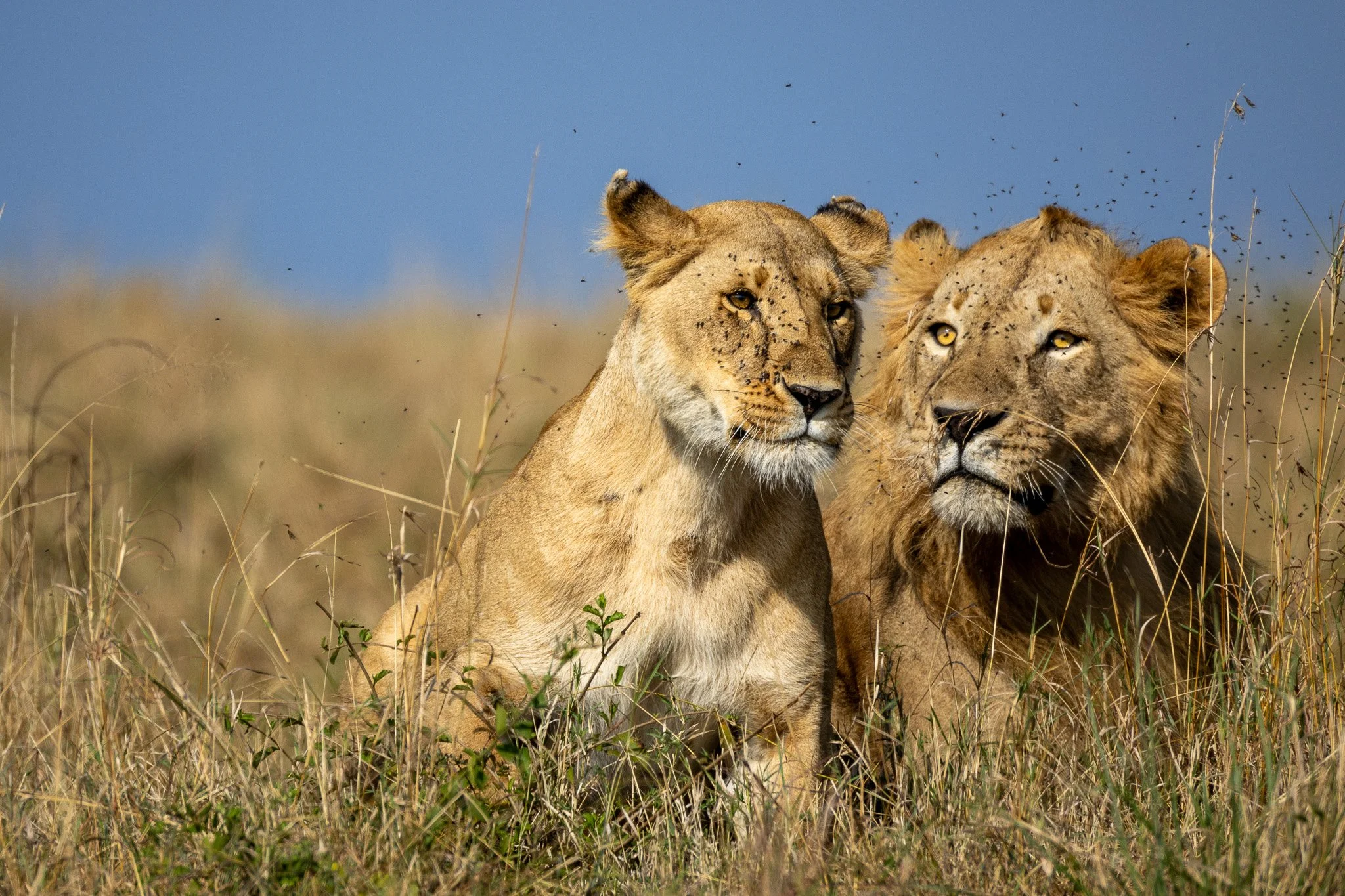
Big cats are everywhere. Lions patrol the open plains. Cheetahs scan the horizon from termite mounds. Leopards rest in riverine trees, often hidden until your guide spots the flick of a tail.
It is also one of the best places in the world to see the Big Five: lion, leopard, elephant, rhino, and buffalo, often within the same trip.
Beyond the headline species, the diversity is remarkable. Giraffes move with slow elegance across the savannah. Hyenas linger near kills. Hippos crowd riverbanks. And for bird photographers, more than 450 species provide endless opportunities, from raptors in flight to colorful lilac-breasted rollers perched in perfect light.
One of my most exciting moments was photographing a serval cat hunting.
The serval is slender, long-legged, and intensely focused. Watching it move silently through tall grass, ears locked onto subtle sounds beneath the surface, was unforgettable. Then the sudden vertical leap. Precision. Power. Silence again.
Moments like that remind you why Kenya is so special.
Wildlife here is not rare. It is alive, active, and constantly unfolding. And if you are patient, it will reward you with moments you never forget.

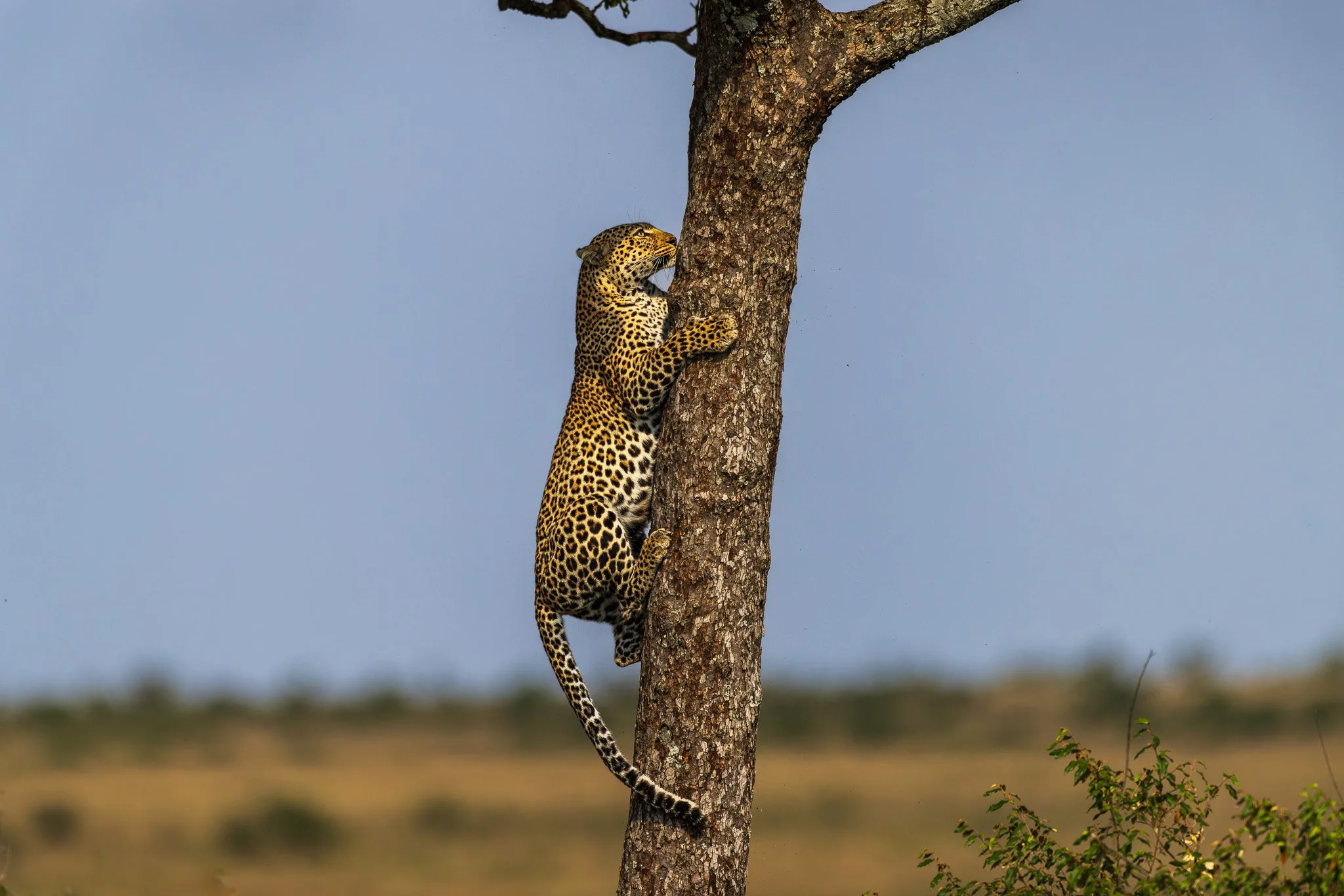
My second bucket list shot I had dreamed of capturing is a Leopard climbing up a tree.
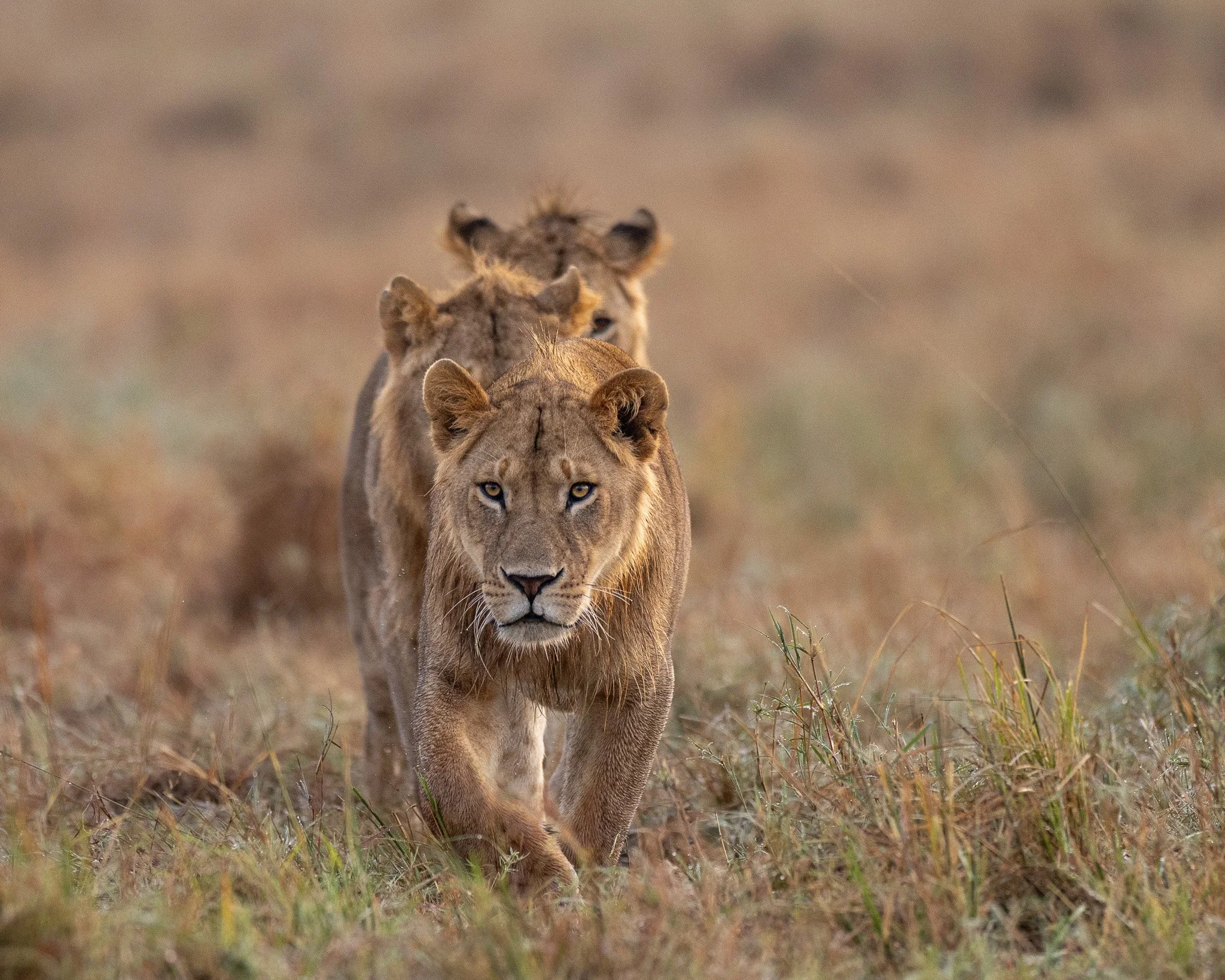
Watching lions in the early morning was pure magic. Just an incredible experience
While most people focus on capturing images of cats there are so many other animals worth photographing.

Stunning Landscapes
The landscapes of the Maasai Mara National Reserve feel almost unreal.
The open savannah stretches to the horizon in every direction. You stand there, and it feels like you have stepped inside a wildlife documentary. Golden grasses ripple in the wind. Flat-topped acacia trees punctuate the skyline. The scale is humbling.
Light transforms everything.
At sunrise, soft pastel tones wash over the plains. In the late afternoon, the grasses glow amber, and the shadows lengthen. When the sun drops low, silhouettes of giraffes and elephants against fiery skies become pure visual poetry.
For photographers, this environment offers clean compositions and dramatic layering.
Best Light:
The first hour after sunrise and the last hour before sunset. The low-angle light adds depth and texture to the landscape.
Lens Strategy:
Use a wide to mid-range lens for sweeping vistas. Switch to a 70 to 200mm lens to compress layers of hills, trees, and wildlife against the horizon.

I loved taking silhouettes of Wildlife.

Amboseli National Park
Amboseli is built around one image: a herd of elephants moving across open plains with the snow-capped peak of Kilimanjaro rising behind them. I have seen this photograph a thousand times, and the first time I saw it in person, it still stopped me. The mountain is enormous. The elephants are enormous. And the flat, wide-open floor of Amboseli gives you a clear line of sight to both.
What makes Amboseli special is its diversity. Marshlands fed by underground springs, open savannahs, and dry lake beds create a mosaic of habitats. That variety means every game drive feels different. You are never quite sure what will appear next, and that sense of anticipation is part of the magic. You can spot lions resting in the tall grass, cheetahs scanning the horizon, and zebras and giraffes moving gracefully across the savannah. Hippos wallow in the marshes, barely visible except for their ears and eyes above the water.
Kilimanjaro is most clearly visible in the early morning before clouds build around the summit. By midday, the peak is almost always obscured. This makes the first two hours after sunrise your primary photography window for the mountain elephant combination.
Amboseli also has some of the most relaxed, approachable elephant herds in Africa. Many of these animals have been studied and observed for decades and show almost no vehicle shyness. You can photograph them at very close range, which means your 70–200mm becomes usable and you can work on intimate elephant portraits, mother and calf interactions, and the texture and detail of these animals up close.
📷 Pro Tip: Arrive at the park gate before sunrise and head directly for the open plains toward Observation Hill or the Enkongo Narok swamp area, where elephants gather to drink and graze in the early morning. Position your vehicle so Kilimanjaro is at roughly a 45-degree angle behind and above the elephants rather than directly behind them; this creates a more dynamic composition than a flat front-on shot. Use the 70–200mm on your second body for the wide elephant-and-mountain scene and the 400mm f/2.8 on your primary body for tight elephant portraits. The dust that elephants kick up in the dry season creates a haze that can both obscure and add mood. The moody, misty shots are not failures; they are a legitimate aesthetic of Amboseli. Shoot them.
Best time: Sunrise to 9 a.m. for Kilimanjaro visibility. Dry season (June through October and January through February) for the best wildlife concentration. Access: Charter flight from Wilson Airport in Nairobi, approximately one hour.

The Majestic Elephants
If there is one reason to visit Amboseli National Park, it is the elephants.
Amboseli is famous for its large herds, including some of the biggest tuskers left in Africa. These are true giants, with long ivory curving toward the ground, moving slowly and confidently across the plains.
Watching them roam beneath Mount Kilimanjaro is one of the most powerful wildlife experiences you can have. The scale is breathtaking. Massive elephants in the foreground. Africa’s tallest mountain rises behind them. Clean horizon. Soft golden light.
It feels timeless.
What makes Amboseli even more special is that its elephant population has been studied for decades. Researchers have documented family structures, behavior, and generational changes. You are not just observing wildlife. You are witnessing well-protected, well-understood family groups that have become ambassadors for conservation.
For photographers, elephants offer emotion and storytelling.
Look for interactions. Calves walking beneath their mothers. Trunks intertwined. Dust rising around their feet at sunset.
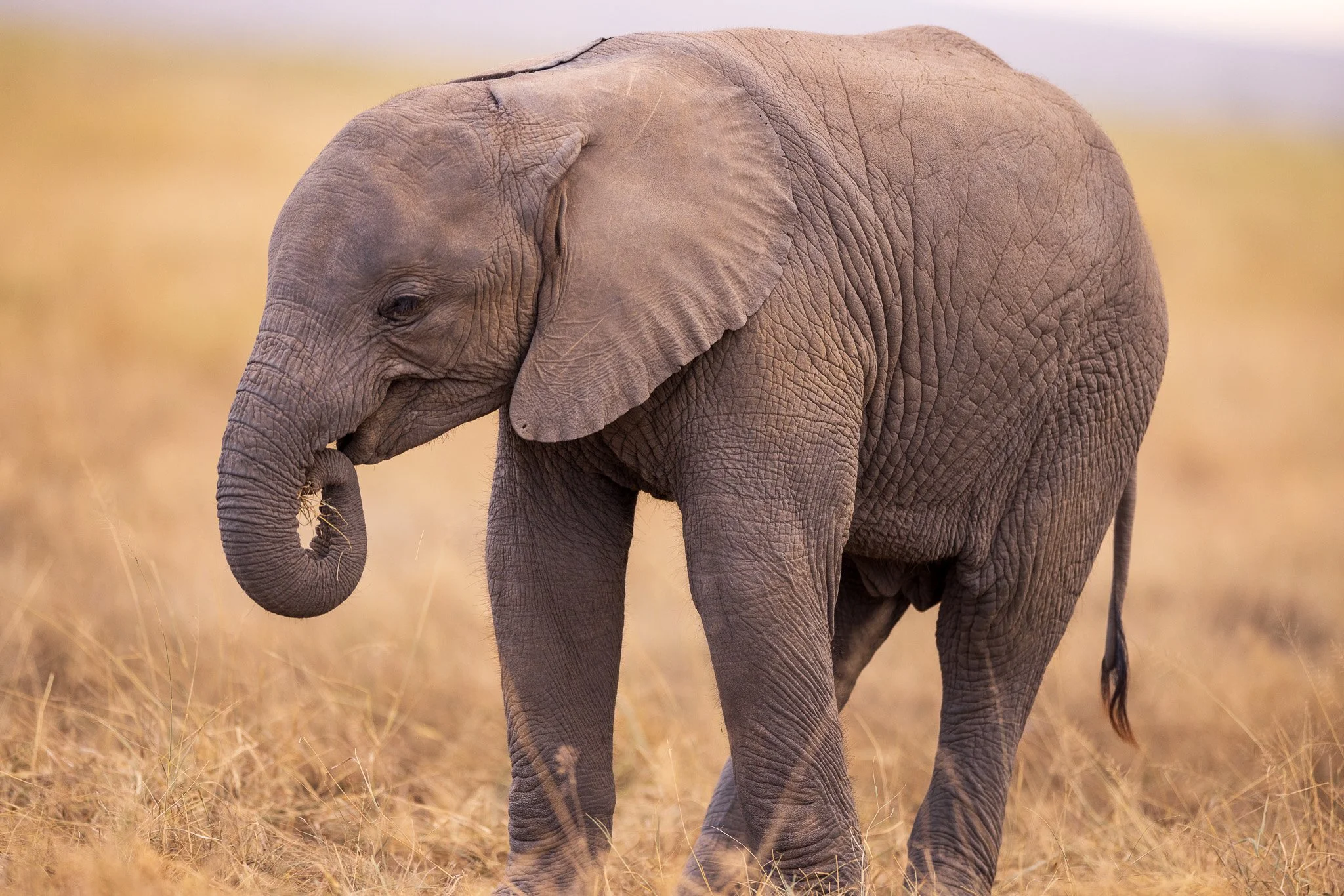
I could not get enough of the incredibly beautiful elephants.

Samburu National Reserve
Samburu is where the palette changes. The landscape is drier, more rugged, and more abstract than the Mara. The Ewaso Ng'iro River runs through the reserve as a green thread through semi-arid scrub, and the animals gather along it in the heat of the day. The light is harsher and more dramatic, and the color tones shift toward red and ochre.
What Samburu offers that nowhere else in Kenya can match is the Samburu Special Five: reticulated giraffe, Grevy's zebra, Somali ostrich, gerenuk, and Beisa oryx. These northern species do not appear in the Mara or Amboseli, and for a photographer building a portfolio of Kenya's wildlife diversity, Samburu is essential.
The reticulated giraffe is visually distinct from the Maasai giraffe you see in the south. Its coat pattern is bolder and more graphic, with larger, clearly defined patches. It photographs beautifully against the scrub landscape.
📷 Pro Tip: The Ewaso Ng'iro River bank is your primary shooting position. Animals come to drink throughout the day, but the riverbank light is best in the early morning and late afternoon when it comes in at a low angle across the water. For gerenuk, which stand on their hind legs to browse acacia branches, the 400mm f/2.8 isolates them cleanly against the open background. The behavior is unusual enough that even a simple frame of the animal upright against a clean background tells a strong story. The sparse vegetation in Samburu means cleaner backgrounds than in the Mara; use this to your advantage for isolating animals against sky or open ground. Slower game drives work better here because the harsher, more graphic landscape rewards looking carefully at individual subjects rather than chasing the density of sightings.
Best time: Early morning and late afternoon. Dry season for the best wildlife concentration along the river. Access: Charter flight from Wilson Airport, approximately one hour.
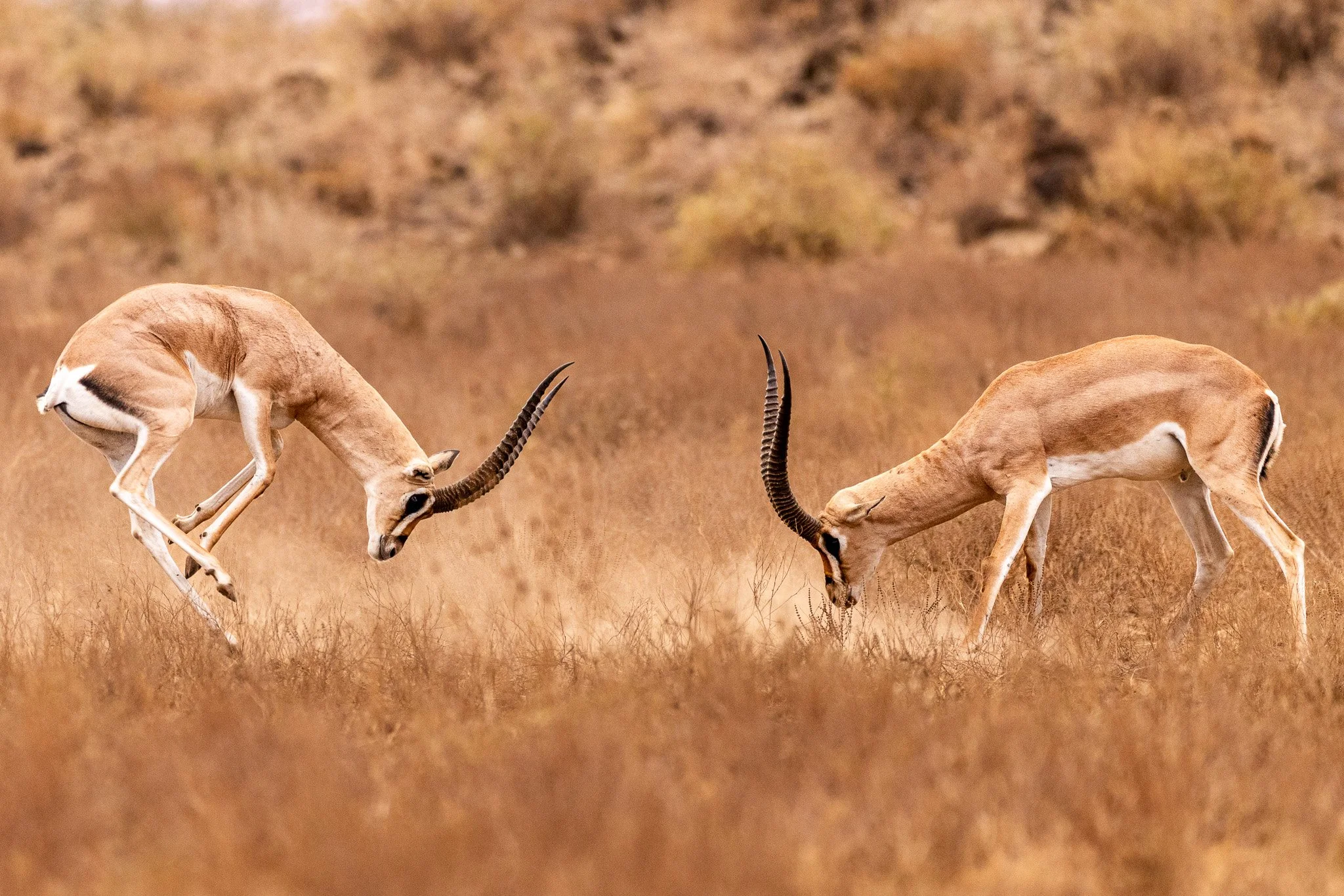
Lake Nakuru National Park
Renowned for its flamingo-lined shoreline and reliable rhino sightings, Lake Nakuru National Park brings a completely different mood compared to Amboseli. The color palette shifts. Think soft pinks along the water, deep greens in the acacia forests, and wide blue skies stretching over the Rift Valley.

This park offers a rare mix of dramatic landscapes, concentrated wildlife, and some of the best birdlife in Kenya. Depending on water levels, thousands of flamingos gather along the lake’s edge, creating sweeping scenes that feel almost surreal. Both black and white rhinos roam here, making Nakuru one of the best places in East Africa to photograph these endangered giants.
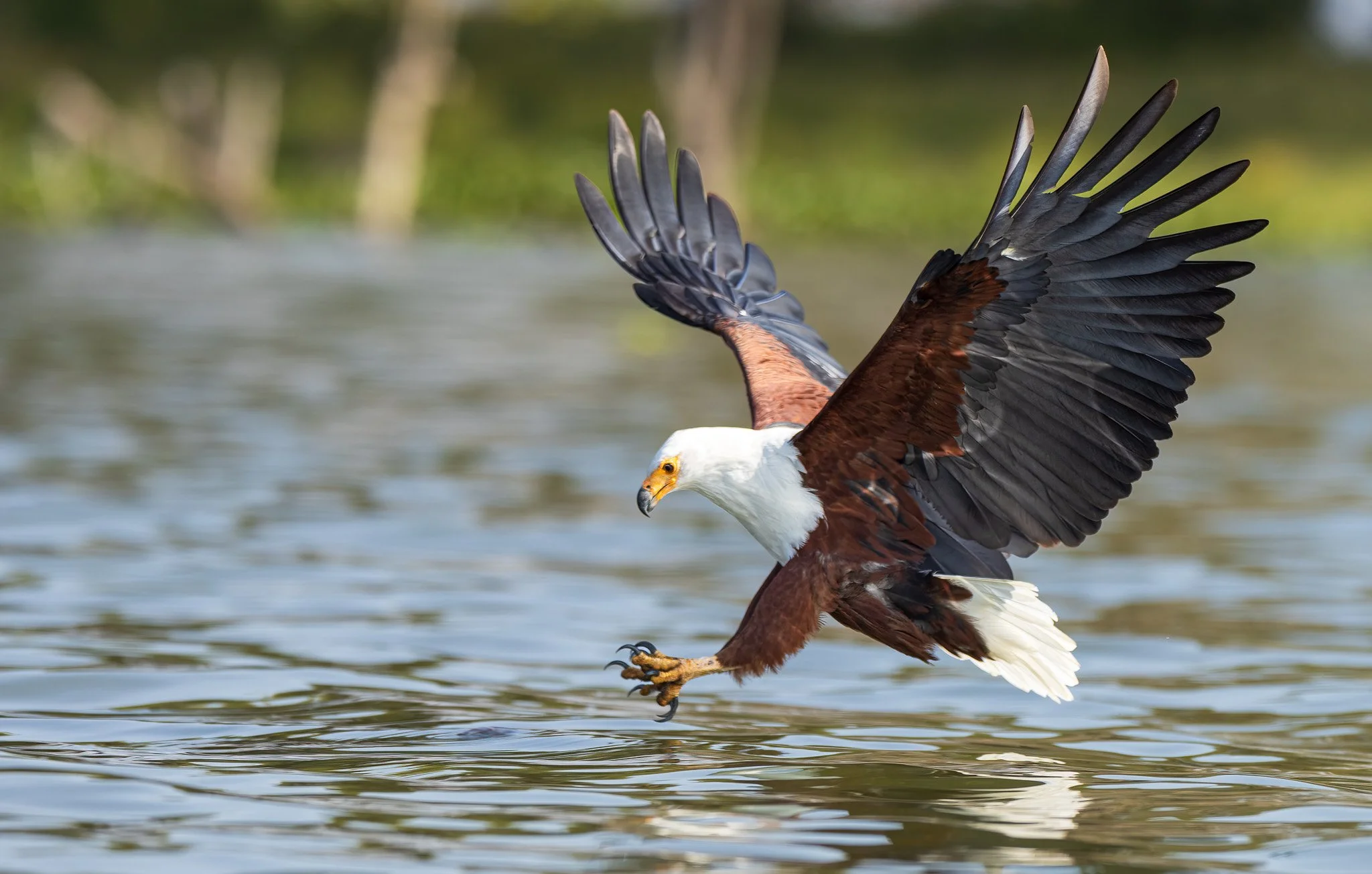
You will also find lions, leopards, buffalo, Rothschild giraffes, and an impressive variety of bird species, including pelicans and African fish eagles. The park is compact, which makes sightings more frequent and photography more manageable.

Just as we were leaving the park we saw a Black Rhino.

Nairobi National Park - Nairobi National Park
One of the few places in the world where you can photograph wildlife against an urban skyline.
Samburu National Reserve - Samburu
Home to unique wildlife species like the Grevy's zebra, reticulated giraffe, and Samburu people, perfect for cultural portraits.
Nairobi: Giraffe Centre and David Sheldrick Wildlife Trust
Most photographers think of Nairobi as a transit stop between the airport and the reserve. It is more than that. Two wildlife conservation sites in the city offer photography that is genuinely excellent and completely different from what you find in the bush.
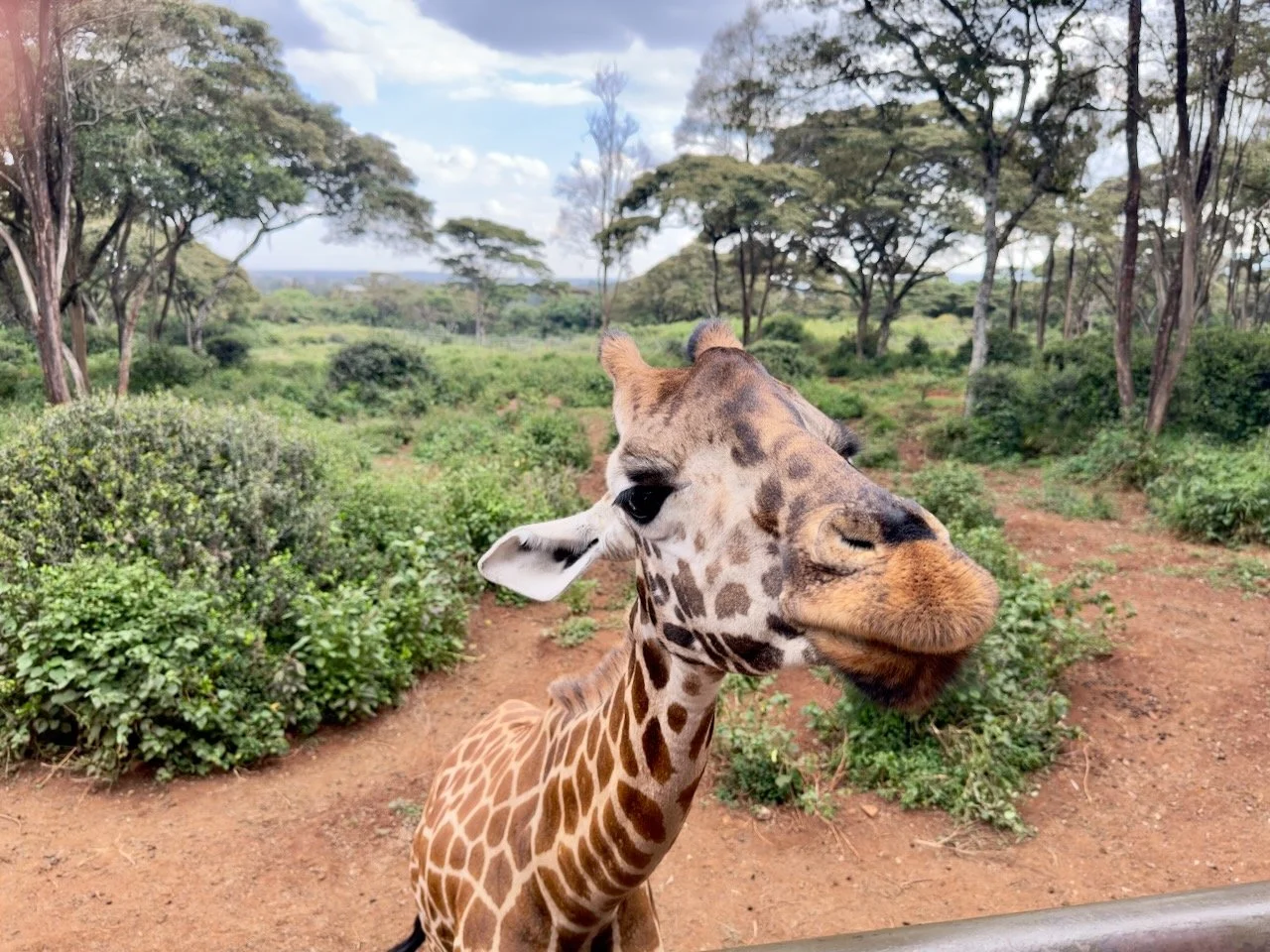
The Giraffe Centre houses Rothschild giraffes, one of the most endangered giraffe subspecies in the world. A raised wooden platform puts you at eye level with their heads. You feed them directly from your hand. The opportunity for eye-level giraffe portraits with natural light is remarkable, and the expressions on their faces at close range are something a 500mm lens across open savannah cannot give you.
The David Sheldrick Wildlife Trust runs an orphaned elephant nursery. Every day at a set time, the young elephants come out for a mud bath. They are young, playful, and completely unafraid of visitors. The scenes are intimate and often genuinely funny. This is not wildlife photography in the traditional sense, but the images are compelling and the conservation story behind them is worth telling.
📷 Pro Tip: At the Giraffe Centre, arrive early when crowds are lightest. Use the 70–200mm or the 24–105mm at the platform; you do not need the 400mm here. The giraffes' faces are at arm's length. Look for the moment when one turns directly toward you, ears forward, eyes wide. That portrait against a soft green background is one of my favorite Kenya images. For the Sheldrick elephant nursery, use the 70–200mm for the full mud bath scene and the 24–105mm for tighter environmental frames. Bring rain protection; the mud flies. Shoot in burst mode during the mud bath; the movement is fast and unpredictable.
Best time: Giraffe Centre is open daily; early morning or late afternoon has the best light. Sheldrick nursery has a set visiting window in the mid-morning; confirm current times before you go. Access: Both are in Nairobi, accessible by Uber.
Special Events and Festivals
The Great Wildebeest Migration (July through September). This is not a festival in the organized sense, but it is the most photographically significant natural event on the African calendar. Roughly 1.5 to 2 million wildebeest, along with zebras and gazelles, move from Tanzania's Serengeti into the Maasai Mara in search of fresh grazing. The river crossings at the Mara River are the peak moments: dangerous, chaotic, and extraordinary to witness. Plan your trip around late July to mid-September if this is your priority. Camps in the Mara book out months in advance for this window.
Lamu Cultural Festival (November) Lamu, on Kenya's northern coast, is a UNESCO World Heritage Site and one of the best-preserved Swahili settlements in East Africa. The annual cultural festival celebrates dhow sailing, donkey racing (Lamu has no cars), traditional Swahili music, and the food and dress of the coastal culture. The narrow lanes, the whitewashed buildings, the boats in the harbor, and the color of the festival clothing make this one of the most purely photogenic events in Kenya. Lamu is a short flight from Nairobi; plan two to three nights.
Madaraka Day (June 1) Kenya's national day marking self-governance. Nairobi's streets come alive with parades, traditional dress, and public celebration. Every ethnic group in Kenya is represented in the performances, and the color and energy of the crowds make it an excellent day for street and portrait photography. It is also simply a meaningful event to witness if you are trying to understand the country beyond its wildlife.
Safaricom International Jazz Festival (February) Nairobi's premier jazz festival draws international and East African musicians for a weekend of outdoor performances. The venue, usually a park or outdoor amphitheater in Nairobi, is relaxed and photogenic, and the combination of live music, Kenyan food vendors, and a diverse local crowd makes for strong people and street photography. If your trip includes a Nairobi stopover in February, this is worth building a day around.

Our Colby Brown Group
Final Thoughts
Kenya does something to you that is hard to put into words until it happens.
You spend a week in the bush, watching animals move through light that photographers spend entire careers chasing, and by the end you realize that what stayed with you most was not the river crossing or the cheetah kill or the elephant herd under Kilimanjaro. It was the silence between those moments. The way the Mara smells before sunrise. The sound of lions in the dark from inside the tent. The patience your guide showed for two hours at a riverbank before anything happened, because he knew something you did not.
Kenya earns its place on every serious photographer's list. Not because it is easy, but because it is real. The wildlife is wild. The landscapes are unscripted. And the images you come home with feel like something you lived, not something you captured.
Go. Stay longer than you planned. And bring more memory cards than you think you need.
If Kenya has ignited your passion for African safari photography, here are three guides worth reading next.
My Photography & Travel Guide to Tanzania. Tanzania is Kenya's natural partner. The Great Migration originates here in the Serengeti before crossing north into the Mara. The Ngorongoro Crater offers a contained wildlife experience unlike anywhere else on the continent, with every member of the Big Five visible in a single day. If Kenya left you wanting more of East Africa, Tanzania is where you go next.
My Photography & Travel Guide to Namibia Namibia is the most visually abstract landscape in Africa, and one of the most extraordinary photography destinations on earth. The red dunes of Sossusvlei at sunrise, the dead trees of Deadvlei, the vast salt pans of Etosha, and the desert-adapted elephants of Damaraland offer a completely different visual vocabulary from Kenya. If your instinct as a photographer is toward landscape and graphic imagery, Namibia will change how you think about Africa.
My Photography & Travel Guide to Cape Town, South Africa Cape Town pairs naturally with an East Africa safari for photographers who want to end a continent-wide trip in a city with world-class food, dramatic mountain and ocean scenery, and a cultural energy that feels unlike anywhere else in Africa. Table Mountain alone is worth the detour. The Cape Peninsula, the Winelands, and the penguin colony at Boulders Beach round out a destination that is as photographically rich as any city on the continent.
Finally—a beginner-friendly photography guide that makes sense.
If you've ever picked up a camera and thought, "Now what?" this is the book for you.
Photography Made Simple is written for adults who are just starting out and want a clear, encouraging, real-world approach to learning photography. Whether you're using a DSLR, mirrorless, or just your smartphone, this guide walks you through the basics—without the jargon or tech overwhelm.
Inside, you'll learn:
The only camera settings you really need to know to get started
How to shoot sharper, more intentional photos using light and composition
Simple tips for portraits, landscapes, travel, and everyday life
What gear you do (and don’t) need
How to create better photos without upgrading your camera
You’ll also get practical exercises, cheat sheets, and tips for organizing and editing your images—plus the confidence to shoot off Auto Mode for good.
This is not a textbook. It’s a friendly guide to seeing the world with fresh eyes—and finally capturing what you see the way you imagine it.
📸 Format: PDF download
Pages: 100+
Perfect for: Beginners, hobbyists, and anyone ready to take better photos without the stress
✈️ Travel Photography Planning Sessions
One-on-One Trip Planning with a Professional Travel Photographer
Don’t miss the shot. Let me help you plan for it.
Overview
Planning a photography-focused trip can be overwhelming. From figuring out the best places to shoot, to when the light is just right, to knowing which lens to pack — there are a lot of decisions to make.
This one-on-one Zoom session is your chance to get personalized travel photography advice from someone who’s spent the past 25 years exploring cities, coastlines, and wild places around the world — camera in hand.
Whether you're headed to Paris, Patagonia, Tokyo, or Tuscany, I’ll help you make sure your photography trip is well-planned and creatively inspired, so you come home with the images you dreamed of (and then some).
What’s Included
✅ Photography Location Planning
I’ll help you create a customized itinerary of the best photo spots, including off-the-beaten-path gems and iconic views.
✅ Best Times to Shoot
Get expert advice on lighting, golden hour, blue hour, and seasonal conditions for each location.
✅ Gear Recommendations
Not sure whether to bring the telephoto or the prime? We’ll walk through your gear and make sure you’re bringing the right tools for your destination and style.
✅ Hotel and Base Recommendations
Stay where it’s convenient for sunrise shoots and late-night strolls with your camera. I’ll recommend hotels that are photographer-friendly and well-located.
✅ Custom Travel Tips
From sunrise entry times to tripod rules at major landmarks, you’ll get insider tips to save time, avoid tourist traps, and make the most of your trip.
Who It’s For
This service is for anyone who:
Is planning a trip and wants to prioritize photography
Wants expert insight on the best places to shoot and how to get there
Is tired of missing the shot because of poor planning or bad timing
Is a beginner, enthusiast, or professional photographer looking for guidance before a trip
How It Works
Book a Session
Choose a time that works for you and tell me where you're headed.Share Your Plans
You’ll fill out a quick questionnaire so I know your travel dates, interests, and photography style.One-on-One Zoom Call (60 minutes)
We’ll meet via Zoom and walk through your trip together — from location ideas to gear and timing. You'll leave with a custom PDF full of notes and suggestions.Follow-Up Support
Get one round of email Q&A after your session to clarify anything as your plans evolve.
Why Work With Me?
I’ve spent the last 25 years photographing the world — from major cities to remote islands. I know what it’s like to travel and shoot under pressure, and I love helping people get the most out of their trips. This is not just about hitting “popular spots” — it’s about crafting a creative and efficient plan tailored to your trip, your gear, and your goals.
Pricing
$125 / Session
Includes:
60-minute Zoom call
Custom PDF summary with photography spots, gear tips, and travel recommendations
One follow-up email with additional Q&A
Introductory rate available through September 2025
Ready to Plan Your Trip?
Let’s make sure you’re ready — so when the light is perfect, you’re in the right place with the right gear.
Questions?
Please email me at vito@chasinghippoz.com if you're not sure whether this is right for you. I'm happy to chat.