Everything I Wish I Knew Before My First Photography Workshop: A Beginner's Guide
What I wish someone had told me before my first workshop, and what I now tell my own students
If I could go back and give one piece of advice to the photographer I was before my first workshop, it would be this: the camera matters far less than finding the right instructor.
All cameras are quite good these days. It's hard to find a bad one. What actually separates a great photograph from an average one is composition, light, reading a scene, and being in the right position at the right moment. Learning how to see and notice things is one of the most important aspects of photography. That's the part nobody's camera can do for them, and it's exactly what a good workshop teaches you.
I have attended more than a dozen photography workshops around the world. Five with Scott Kelby, four with Colby Brown, one with Hudson Henry, and several others. Today I lead my own workshops. Every one of those experiences taught me something, and not all of the lessons were about photography. Some were about what a good workshop looks like. A few taught me what to avoid.
Here's what I know now that I wish I'd known before I attended my first workshop.
My First Workshop, Venice (April 2018)
I still remember sitting there that first morning thinking, I cannot believe I am actually here. Scott Kelby is one of the photographers I admire most. I'd read his books and watched his videos for years. Now I was in Venice, learning from him in person, and the city was doing exactly what Venice does in your dreams.
We photographed the canals at dawn. Learned to use neutral density filters. I learned the hard way the difference between a variable ND filter that is used mainly for video and the type used in photography. Practiced long exposure until it finally clicked, not as a trick you figure out in five minutes, but as a skill that takes real guidance to build. Scott also showed us how to bring a workshop home: organizing in Lightroom, editing in Photoshop, and building a simple Adobe Express page to share our work with friends and family. That was the lesson that stuck with me longest.
Photography doesn't end when you press the shutter. You still have to edit, organize, and share what you made.
By the end of that weekend, I'd learned more than I had in a year of teaching myself. And I'd learned it two ways: from Scott, and from the photographer standing next to me, who noticed a reflection I'd walked right past. That workshop didn't just improve my photography. It changed the direction of my life.
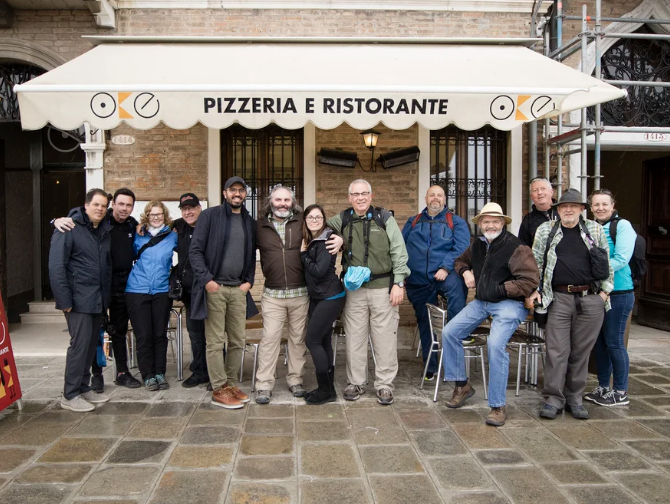
Venice with Scott Kelby
Why Photography Workshops Are Worth It
You learn faster. Watching YouTube videos and reading photography books helps, but nothing replaces having an experienced instructor beside you while you're actually making a photograph. If your settings are off, they can fix it on the spot. If your composition isn't working, they can show you why, while the scene is still in front of you. That kind of hands-on correction is nearly impossible to recreate on your own.
You learn from the other photographers, too. Before my first workshop, I assumed all the learning would come from the instructor. I was wrong. Every photographer notices something different; some bring years of experience, others bring a completely different eye, and some of the best lessons happen over breakfast, in the van between locations, or during a photo review after sunset. The instructor teaches you photography. The group teaches you how differently people see the same scene.
You'll make real friends. Workshops bring together people who already share your obsession, and it doesn't take long for strangers to become friends after a few days chasing sunrises or waiting out the weather together. A lot of those friendships outlast the trip by years. I have traveled to Tanzania with my friend Willey and to Switzerland with Miles.
You can travel with more confidence. Destinations like Madagascar, Mongolia, Namibia, or Kenya can feel intimidating to take on alone. Traveling with an experienced instructor and a group means someone else handles permits, logistics, and language barriers, so you can focus on the photography instead of the itinerary.
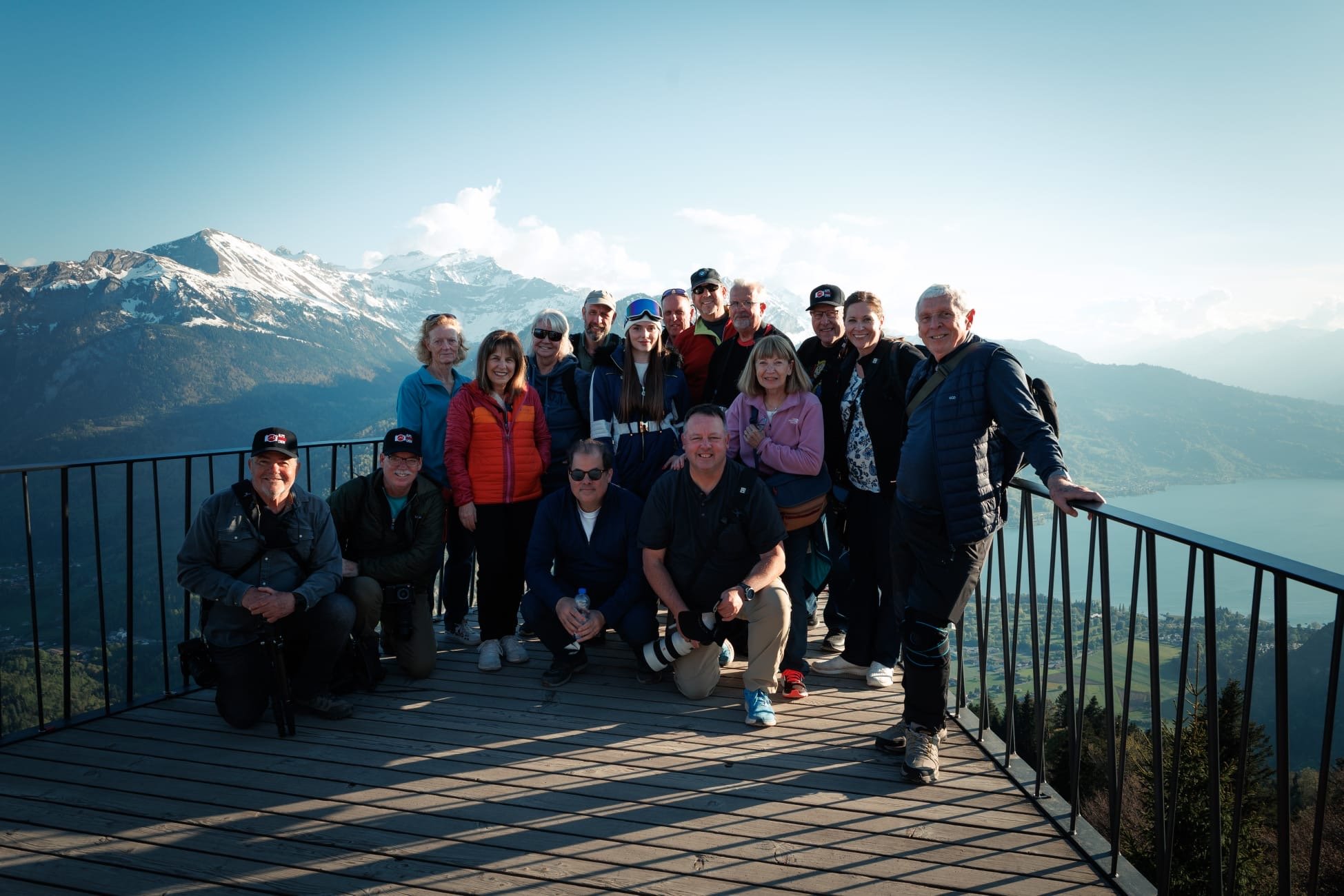
With Scott Kelby in Switzerland
Two Things to Watch For
Not every workshop delivers on the promise, and here's where I'll be direct.
The Taxi Driver Workshop. Some workshops focus more on taking you to photography spots than on teaching photography. You get out of the car, the instructor points to where to stand, everyone takes a similar photograph, and everyone gets back in the van. The images can be beautiful. But you did not learn how to make them yourself, and that's what you actually paid for. If your instructor is more focused on their own photography or on filming content for their YouTube channel than on teaching you, you're not in a workshop. You're on a Taxi Workshop.
The Postcard Problem. A close cousin of the above: everyone in the group comes home with nearly identical portfolios, because the instructor knows the one best angle and puts everyone on it. There's nothing wrong with photographing an iconic location. That's often why you traveled there. But a good instructor pushes you to look behind you, change your height, and find your own frame. Some of your favorite images from a trip should be the ones no one else took.
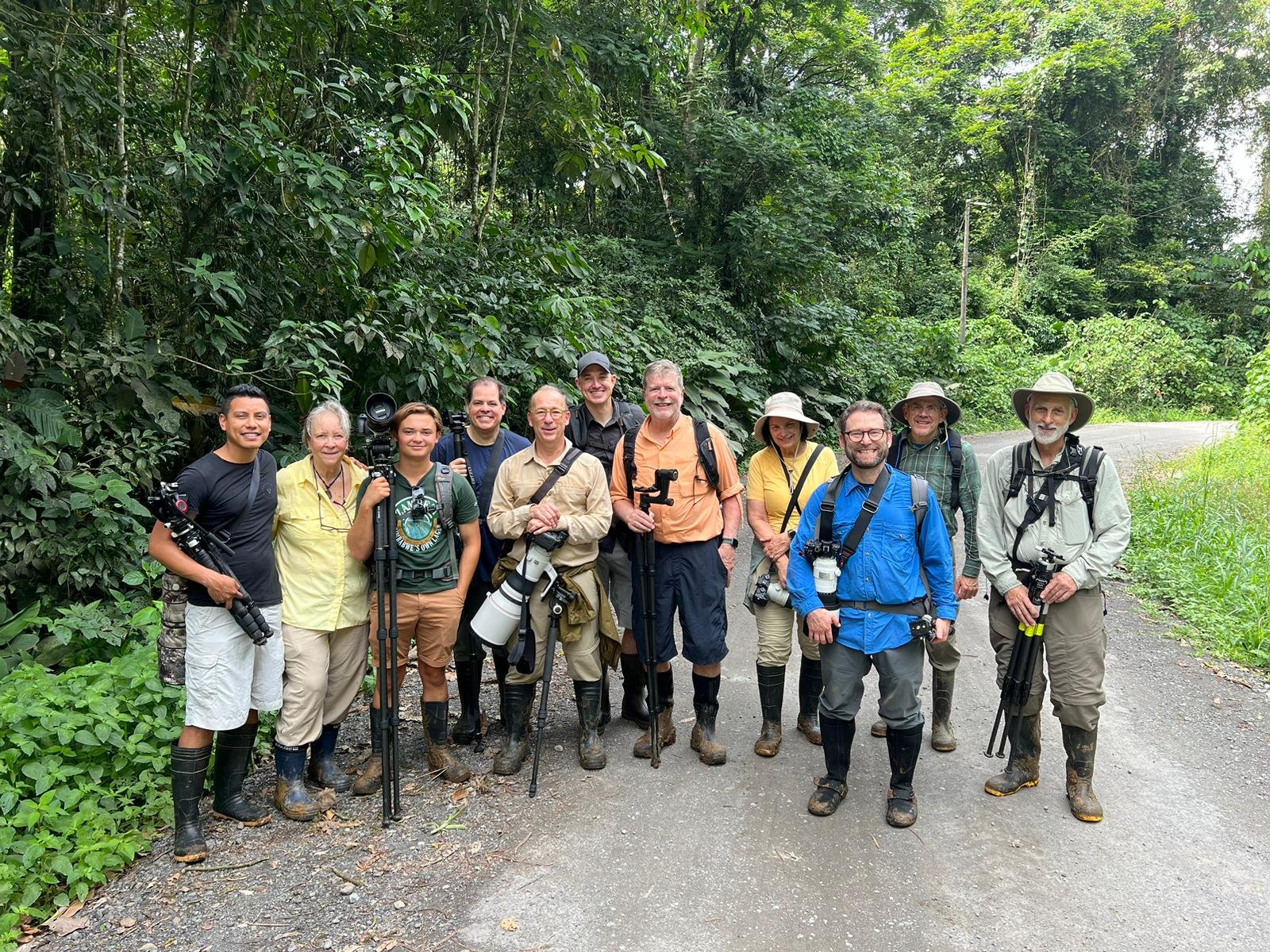
With Colby Brown in Costa Rica
What the Best Instructors Actually Do Differently
Scott Kelby is exactly as funny and generous in person as he is on camera, and that matters because it makes people comfortable asking questions. He runs serious image reviews, sitting the group down to look at everyone's work, which is one of the fastest ways I've seen photographers improve. After the trip ends, he holds a follow-up Zoom and puts together a magazine of each participant's best shots, a small touch that gives the trip a real ending instead of just a flight home.
Hudson Henry teaches alongside two other instructors, Rick LePage and David Archer. Three perspectives on the same scene, one on composition, one on light, one on settings, means far more one-on-one attention than a single instructor can offer. His workshops are very well organized, and he has a terrific group of participants.
Colby Brown, whom I've traveled with in Costa Rica, Namibia, Kenya, and on a snowy owl trip in Canada, brings judgment you can't get from a guidebook: knowing where to position a vehicle for light and a clean background without disturbing the animal only comes from years of doing it. He also thinks more deeply about wildlife ethics than most instructors do. One conversation stuck with me, on trophy hunting and whether license fees genuinely fund conservation, where Colby laid out both sides fairly instead of pushing his own view. I still landed against it, but I understood the disagreement better for having heard it argued honestly.
Brendan van Son has that same well-traveled calm. He's been nearly everywhere, and it shows in how little location rattles him, like when we were in a snowstorm with 60-mile-an-hour winds in the Lofoten Islands.
Scott Bourne taught me something I still use on every wildlife trip: how the sun angle affects bird photography, specifically how feathers and flight gain or lose detail depending on where the light sits.
Nigel Danson and James Popsys know Iceland better than almost anyone I've photographed with, and what stood out most was their willingness to go out no matter the weather. Wind, rain, freezing cold, it didn't matter, and some of Iceland's best light shows up exactly when it's least comfortable to be outside for it.

On the Hudson Henry Workshop in Charleston
Before You Book: What to Ask
What it actually costs. Most established workshops run somewhere between $1,000 and $2,000 per day, which puts a typical trip in the $3,000 to $10,000 range, and remote, multi-instructor expeditions can run higher. That per-day number usually covers hotels, meals, local transportation, and guiding, but "usually" is doing a lot of work in that sentence. Ask exactly what's included before you compare two workshops on price, because a lower sticker price with hotels and transportation billed separately can end up costing more than the trip that looked expensive up front.
Two things to check before you pay a deposit:
Cancellation policy. Know exactly what you get back, and by when, if your plans change or the trip is canceled. Photography workshops often book far in advance, and policies vary enormously between operators.
Single supplement. If you're traveling alone, ask whether solo travelers pay extra to avoid a shared room. This can add hundreds or even thousands of dollars to the price, and it's easy to miss until you're already checking out.
Hotel quality. Ask specifically what hotels are included and take a look at them yourself before you book. In my experience, workshop hotels sometimes fall short of what you'd expect for the price, often because they were chosen for cost or by an operator who doesn't know the city well enough to pick a better option. A great itinerary and a mediocre hotel can still add up to a disappointing trip, so don't assume "included" means "good."
Group size. This is one of the first questions I'd ask before booking anything: how many participants will there be? I've noticed workshops creeping up to 15 or 20 photographers in recent years, and once you cross that line, meaningful one-on-one instruction becomes much harder to deliver. Picture twenty tripods lined up at the same overlook. If one person has a question, nineteen others are standing there waiting. I prefer six to eight participants in my own workshops, small enough that everyone gets real attention instead of just a turn in line.
Local knowledge. Ask how well the instructor actually knows the location. You want someone who has been there enough times to know the light at every hour, the best angles before you arrive, and how to get around without wasting a morning figuring it out. That kind of familiarity doesn't come from a single scouting trip. It comes from going back again and again, and it's the difference between an instructor who's discovering the location alongside you and one who's actually guiding you through it.
A great workshop should prepare you too. Preparation isn't only the participant's job. The instructor should be doing their share of it as well. Before the trip begins, every participant should receive a detailed itinerary, clothing recommendations, a photography gear list, fitness expectations, sunrise and sunset schedules, hotel information, and transportation details. I once didn't get an itinerary until the morning a workshop started. Everything worked out, but I'd have felt far better prepared with even a week's notice.
I also think every workshop should include a video call before the trip, not just to cover gear and logistics, but to introduce the group to each other. By the time you arrive, you shouldn't feel like you're walking into a room full of strangers. Those introductions turn the first dinner into something closer to a reunion than an icebreaker.
Who's there if something goes wrong? This is a question most people don't think to ask until they're already somewhere remote. If someone in the group gets sick, hurt, or needs medical attention far from a hospital, who handles it? In my own workshops, this isn't theoretical. I've been to most of my locations dozens of times, I speak five languages, and my wife, a double board-certified physician, joins nearly every trip. That's not a detail I mention to sound impressive. It's the difference between a stressful situation and a manageable one, and it's worth asking any instructor directly how they'd handle it before you go.
Honest feedback. Watch for whether image reviews are actually useful or just encouraging. "Great shot" feels nice. It doesn't help you improve. I want to hear that my horizon is crooked or my foreground is distracting. A good critique doesn't discourage you. It gives you somewhere to go next.
The full list I run through before booking anything:
How many participants?
How many instructors?
Has the instructor shot this location repeatedly?
Will I get a complete itinerary in advance?
Is there a pre-trip video call?
Will participants be introduced beforehand?
Will I get clothing guidance?
Will I get a gear list?
Is the teaching hands-on and field-based?
Will the instructor help with camera settings directly?
Is there Lightroom or editing instruction?
Are there image reviews?
Is the feedback honest, not just encouraging?
Is there time to shoot independently?
What's the plan if the weather turns?
How physically demanding is it?
Is this a workshop, or a photo tour wearing a workshop's name?
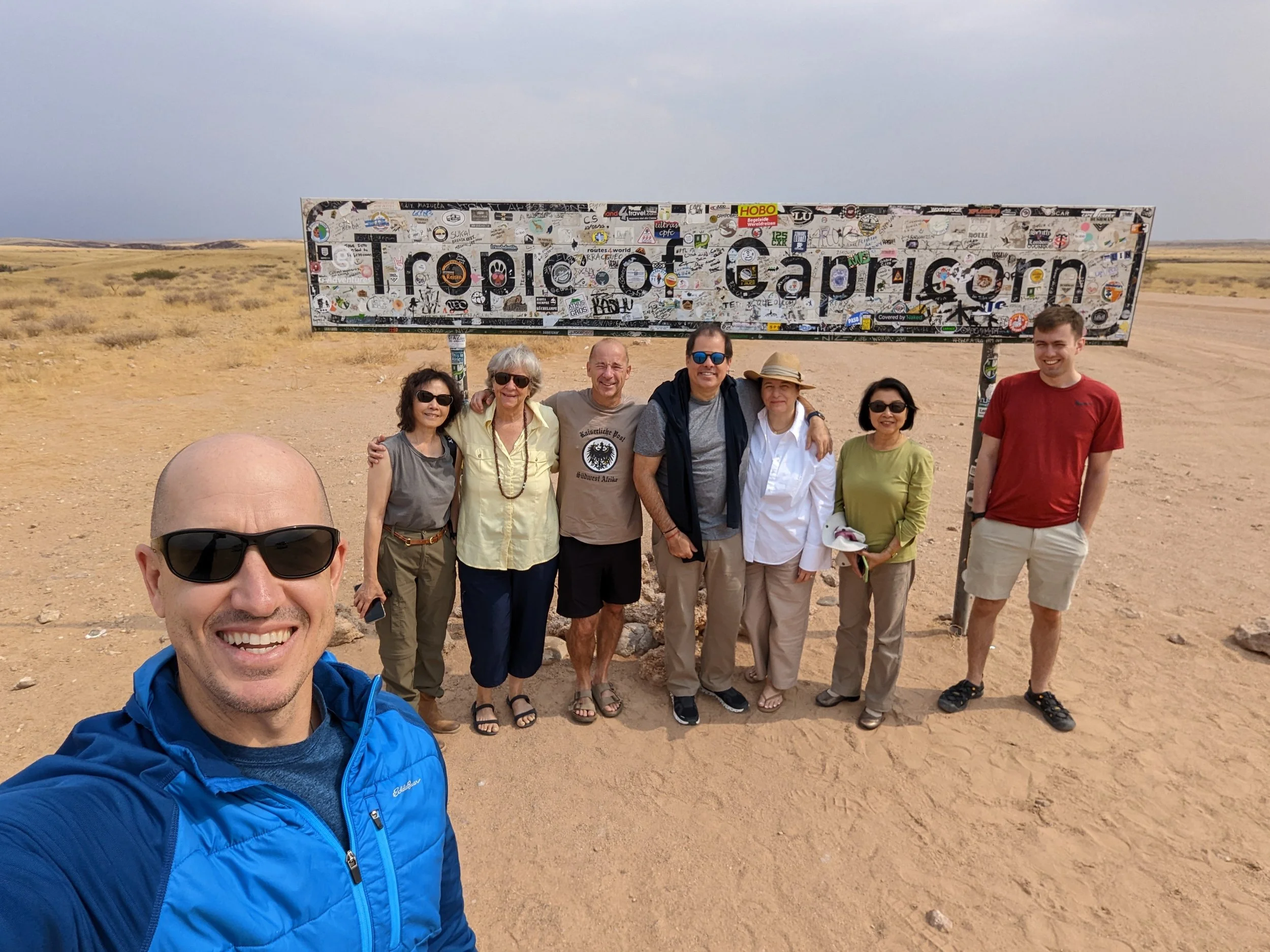
Colby Brown in Namibia
Preparation Begins Before You Board the Plane
A great workshop starts weeks before you ever leave home.
Arrive early. Whenever possible, get in a day or two before the workshop begins. It gives you time to recover from jet lag and learn your surroundings before the group schedule takes over. Those extra days often produce some of your favorite images from the whole trip, simply because you're free to explore at your own pace.
Know your camera. Your instructor should be helping you improve your photography, not explaining where the ISO button is. Before you leave home, make sure you're comfortable changing:
Aperture
Shutter speed
ISO
Exposure compensation
Autofocus modes
The more comfortable you are with your camera, the more you'll actually learn once you're there.
Prepare your gear. Before every workshop, I recommend:
Cleaning your camera and lenses
Charging every battery, and bringing extras
Packing more SD cards than you think you'll need
Backing up your photos, then formatting your cards
Testing all your equipment before you leave home
The last thing you want on a trip like this is an equipment problem you could have caught at home.
Pack the right clothing. Photography often means standing outside for hours in whatever the weather decides to do. Comfortable shoes, real layers, and a rain jacket aren't optional extras. Some of the best photographs happen in conditions that are less than perfect, and you'll only be present for them if you're not miserable.
Write down your questions. You're about to spend several days with an experienced photographer. Use it. Before you leave home, write down every photography question you've been meaning to ask, because the days move fast once the workshop starts, and it's easy to forget what you actually came to ask.
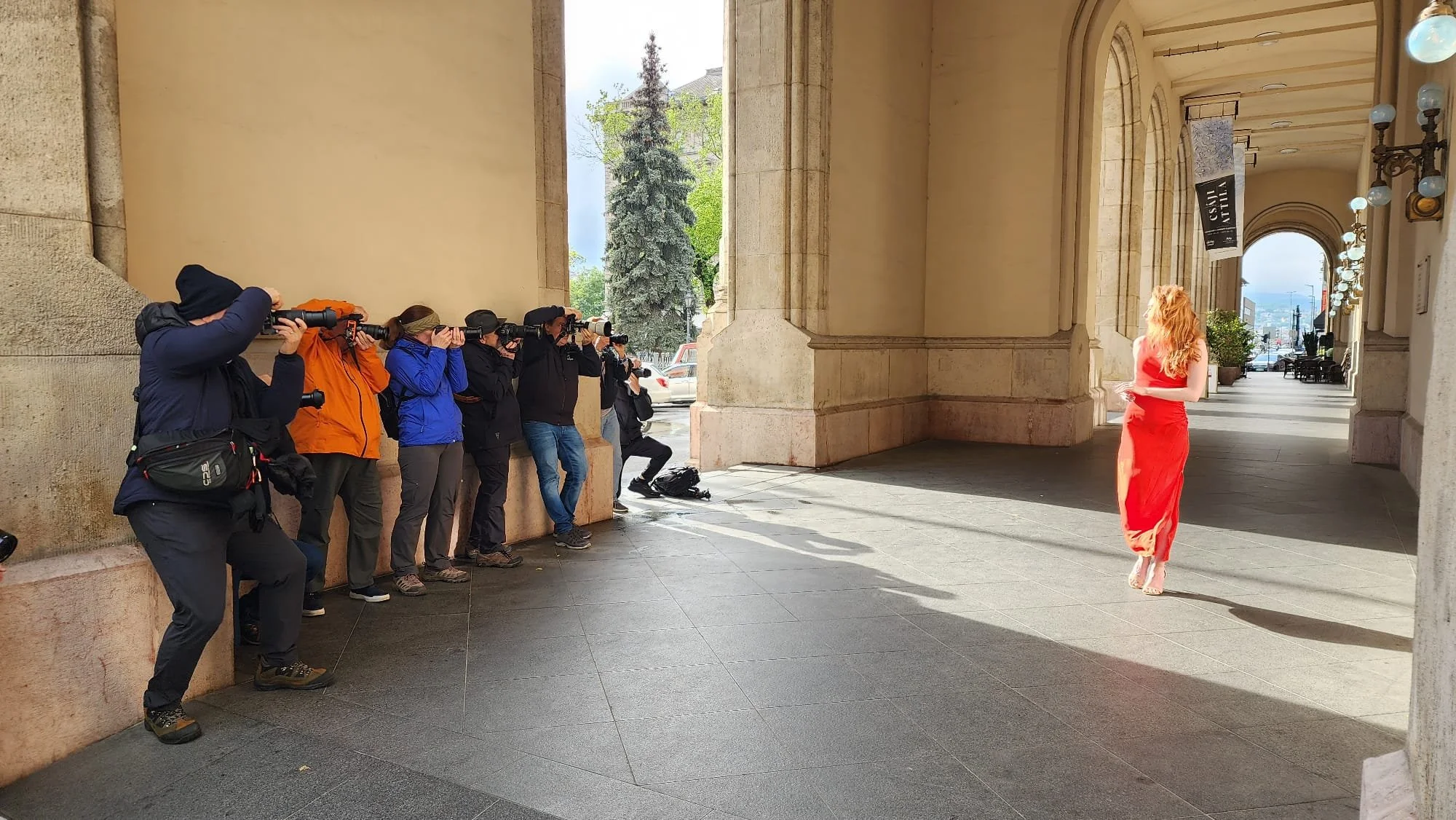
In Budapest with Scott Kelby
What I Do Differently in My Workshops
Every workshop I run is built from this list, including the parts I got wrong as a participant. Small groups, capped at six to eight. A real itinerary, sent early instead of the morning we start. A pre-trip call that's about the people, not just the packing list. Image reviews that offer honest feedback, not just encouragement.
None of that is complicated. Most of it just requires actually doing what I wish someone had done for me the first time.
My goal is not to have everyone leave with the same photograph. It's for everyone to leave a better photographer than they arrived, with the confidence to keep going after the trip ends.
If you're weighing your first workshop, or your fifteenth, I hope this list saves you a few of the mistakes I made getting here. And if you'd like to see how I put all of it into practice, take a look at my DC evening photography workshop, Paris photography workshop, or Amsterdam workshop, or get in touch, and I'll walk you through what a trip with me actually looks like.
Have you been to a workshop that got this right, or one that didn't? I'd love to hear what you learned, and what you'd do differently.
Follow along on Instagram @chasinghippoz for behind-the-scenes from the road, and subscribe to the newsletter to hear about new workshops before they're announced publicly.